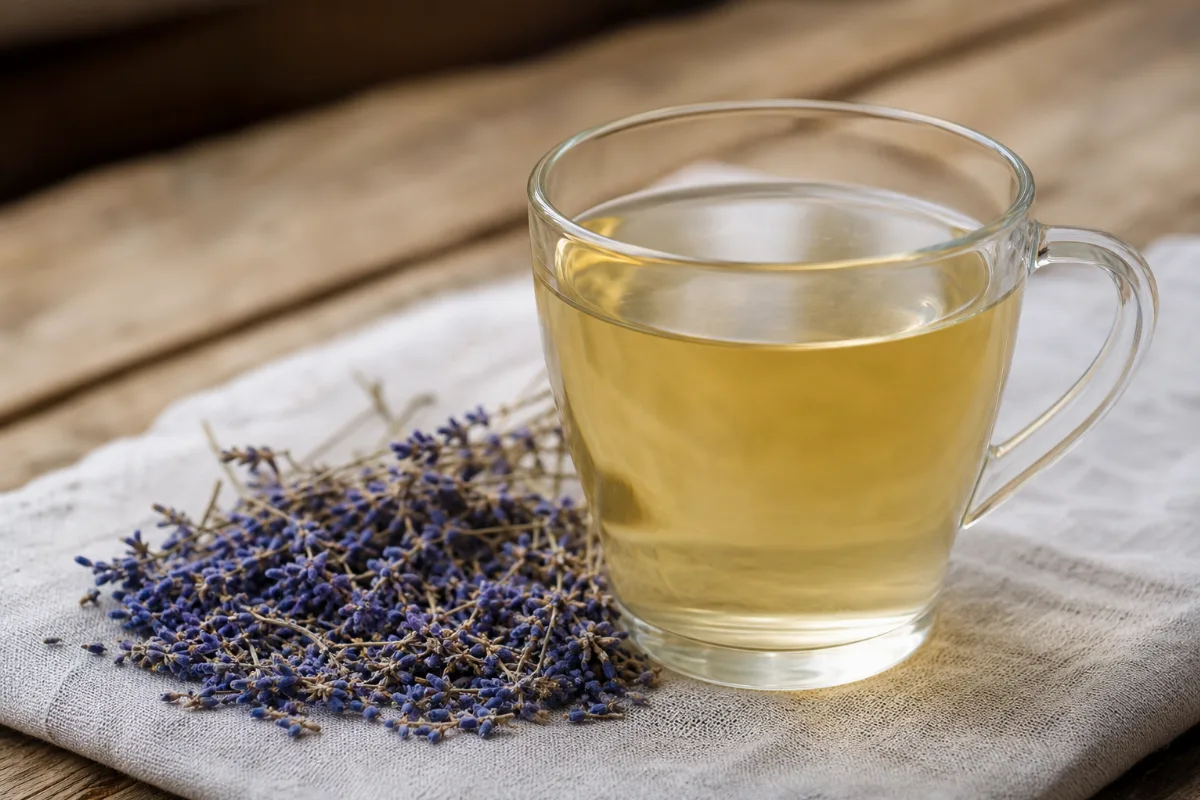
Herbal Teas & Extracts · Herbal tea
Lavender Tea
Lavandula angustifolia Mill. · also called True lavender tea, English lavender tea, lavender flower infusion, lavender herbal tea, té de lavanda (Spanish), tisane de lavande (French)
Lavender tea is a floral, slightly bitter drink made by steeping the dried flower buds of true lavender. It has no caffeine of its own. It is used for calm and sleep, but only three small trials have tested the tea itself, with no placebo drink, and sleep has not been tested at all; the stronger results are for an oil capsule and for smelling the oil, which are different products. The main cautions are possible extra drowsiness with sedatives and alcohol, one case report with the antidepressant sertraline, and no proof of safety in pregnancy or for young children.
General information, not medical advice. Last substantive update · Not medically reviewed. A named clinician has not signed off on this page. How this page is made
About Lavender Tea
Lavender tea is a caffeine-free infusion of the dried flower buds of true lavender (Lavandula angustifolia). It is traditionally drunk for restlessness, mild stress and poor sleep. Three small trials of the tea reported lower anxiety, depression or tiredness scores after two weeks, but none used a placebo drink. The better-studied lavender products are an oral oil capsule and smelled lavender oil, and their results should not be applied to tea.
What it is
Lavender (Lavandula angustifolia, also called true or English lavender) is a shrub in the mint family, grown for its purple flower spikes. Lavender tea is made by steeping the dried flower buds in hot water. It tastes floral and perfumed, with a slightly bitter herbal edge.
Lavender is not the tea plant, so lavender tea has no caffeine of its own. A lab analysis of 33 folk teas that were not from the tea plant found no caffeine, but it does not name lavender, so this rests on the kind of plant lavender is. Blends that include black or green tea do contain caffeine.
Tea, capsule and oil: not the same thing
Lavender tea is a weak water infusion of the buds. Lavender essential oil is a strong distilled oil used for smelling and massage, and it should not be swallowed. The oil capsule that features in most anxiety research (Silexan) is a standardised medicine in Germany, made by one company, and tested in capsule form only.
The reassuring anxiety results belong to the capsule. For tea, only three small trials exist. Results from capsules or from smelling oil have not been shown to carry over to a cup of tea.
What makes it distinctive
Lavender's scent comes mainly from linalool and linalyl acetate, found in the flower oil. In lab and animal work, linalool boosted the calming GABA signal in cells and the oil capsule lowered calcium entry in nerve cells, but no study shows that tea reaches those levels in a person.
The flower also holds water-soluble compounds such as phenolic acids and coumarins, which end up in tea. Almost no research looks at them. How the compounds of the tea behave in the body has not been measured.
What it is used for and what the evidence shows
Two small trials of lavender tea (60 people each, two weeks, no placebo drink) found lower anxiety and depression scores than doing nothing, one in older adults and one in adults with strong reactions to sounds. An 80-woman trial after childbirth found less tiredness and depression at two weeks that was gone by four. We rate these very low. No trial of the tea measured sleep.
For anxiety, the oil capsule has moderate evidence from several 10-week trials, mostly from one maker's programme. Smelling lavender oil has low evidence. Both are different products from tea.
How strong is the research
The tea research is thin: three trials, about 200 people, all short and without a placebo drink. The capsule research is stronger but mostly from one manufacturer. Smelling-oil studies are many but low in quality and hard to blind.
The ratings on this page are our own reading of the evidence, not formal grades, unless a review's own grade is quoted. Only abstracts were read for most studies.
At a glance
Traditional uses history, not proof
- A European herbal tea for restlessness, sleeplessness and a nervous stomach; the German standard licence for lavender tea lists these, as the EU medicines agency review describes
- The EU accepts lavender flower as a traditional herbal medicine for mild mental stress and exhaustion and to aid sleep, based only on long-standing use
- Distilled lavender water was described in old European texts as a calming remedy, and the oil was evaporated into rooms to calm restless children
Studied for research
- Anxiety and low mood: very low certainty for the tea (two small trials without a placebo drink); moderate for an oil capsule and low for smelled oil, which are different products
- Tiredness and low mood after childbirth: very low (one 80-woman trial; the benefit faded by week four)
- Sleep: no tea trial; low evidence for smelled oil and for the capsule in people with anxiety
- Other uses (pain, period pain, menopause, dementia agitation, memory): studied only as smelled oil, low or insufficient, and one study found worse memory
Main compounds
- Linalool and linalyl acetate, the main scent compounds of the flower oil
- Phenolic acids such as rosmarinic acid, tannins and flavonoids, which are water-soluble and end up in tea
- Coumarins such as umbelliferone and herniarin, in the flower rather than the oil
Common forms
- Dried lavender flower buds steeped as a tea (the tea itself)
- Tea blends with other herbs (chamomile, lemon balm) or with true tea, which adds caffeine
- A tincture (alcohol extract) of the flower, a traditional form
- A standardised oil capsule (a different product, a medicine in some countries)
- Essential oil for smelling or massage (not for swallowing)
Research links: Lavender tea for older adults' anxiety and depression, randomised trial (Bazrafshan, 2020), PubMed record · Lavender tea and misophonia, randomised trial (Koroglu Gokbel, 2026), PubMed record · NCCIH (NIH): Lavender, usefulness and safety · EU herbal monograph on lavender flower (EMA) · Research Library · Genes & Biomarkers Library
What it is and its history
- Accepted scientific name
- Lavandula angustifolia Mill.
- Naming authority
- Miller, Gard. Dict. ed. 8 (1768) (NCBI Taxonomy gives 'Mill., 1768'); GBIF accepted name 'Lavandula angustifolia Mill.' (usage key 2927305).
- Synonyms
- Lavandula officinalis Chaix ex Vill. (NCBI synonym; named in the EMA monographs as L. officinalis Chaix); Lavandula delphinensis Jord., 1859; Lavandula fragrans Jord., 1859; Lavandula vera var. ligustica DeNot.; Lavandula angustfolia (GBIF lists this misspelling as a synonym)
- Common names
- Lavender (English); True lavender (English); English lavender (English); Common lavender (English); Garden lavender (English); Narrow-leaved lavender (English); Lavanda (Spanish); Espliego (Spanish); Lavande vraie; lavande officinale (French); Echter Lavendel (German); Lavanda vera (Italian); Alfazema; lavanda (Portuguese)
- Family or group
- Lamiaceae (the mint family, order Lamiales), per GBIF. Other familiar herbs in the same family are mint, rosemary, sage, thyme, basil and lemon balm. Many Lamiaceae plants carry volatile oils in glands on the flowers and leaves.
- Classification
- Plantae > Tracheophyta > Magnoliopsida > Lamiales > Lamiaceae > Lavandula > Lavandula angustifolia
- Native range
- Mediterranean basin (Wikipedia, secondary, citing Kew; NOT verified in a primary flora). It is grown commercially well outside that range (for example Bulgaria, France, Spain, Ukraine and Poland appear in the papers read here).
- Habitat
- Wikipedia (secondary): likes full sun and well-drained neutral to alkaline soil; does best in Mediterranean-type climates with wet winters and dry summers; hardy to roughly USDA zone 5; does not grow well in continuously damp soil. NOT verified in a primary source.
- What it looks like
- Roots: Not described in the sources read.; Stems: Woody-based, strongly aromatic shrub about 1-2 m tall (Wikipedia, secondary).; Leaves: Evergreen, narrow, about 2-6 cm long and 4-6 mm wide (Wikipedia, secondary).; Flowers: Typically purple (lavender-coloured) flowers on spikes 2-8 cm long at the top of slender leafless stems 10-30 cm long (Wikipedia, secondary). Volatile oil collects mainly in the calyx: in L. angustifolia and lavandin inflorescences the calyces were the main sites of volatile compound storage, and the mix of compounds changed as the flowers developed (p20002329).; Fruit: Not described in the sources read.
- Cultivation
- Wikipedia (secondary) describes many garden cultivars (for example Hidcote, Munstead, Sarah). Cultivar and growing site change the oil: new Ukrainian L. angustifolia cultivars grown on the same plots gave linalool anywhere from 26% to 57% and terpinen-4-ol from about 2% to 22% (p35408552), and Spanish oils gave linalool 37-54% (p26441063). So a label that just says "lavender oil" does not fix the chemistry.
- Harvest and processing
- The European Pharmacopoeia defines lavender flower as the dried flowers of L. angustifolia Miller (L. officinalis Chaix), with a minimum essential oil content, and lavender oil as the oil steam-distilled from the flowering tops (as cited in the EU monographs). The flower holds about 1 to 3 percent essential oil (EMA). Tea is made from the dried flower buds, so it carries only a little of the oil; the capsule used in most modern trials is a different, standardised distilled oil. Its exact make-up was not verified here.
- Look-alikes and adulterants
- Name: Lavandin (Lavandula x intermedia Emeric ex Loisel.); Note: A hybrid of true lavender and spike lavender (GBIF lists it as an accepted name, usage key 12021612). It is generally a larger plant that yields more oil and is the cheaper oil often sold as 'lavender' (general knowledge, not from a source read here). The EMA report warns the true species is regularly confused with lavandin and spike lavender, and that without detailed quality specifications a product may contain flowers of different species (s-ema-ar-lavender-2012). Chemically lavandin oil carries camphor (10.11-12.55%), borneol (5.49-8.71%) and eucalyptol (0.47-7.41%) as the typical extras listed for the lavandin cultivars, while the true lavender cultivars grown beside them were characterised by terpinen-4-ol, lavandulyl acetate and lavandulol (p35408552). Camphor and eucalyptol are therefore useful clues when checking an oil.; Name: Spike lavender (Lavandula latifolia Medik.); Note: Broad-leaved lavender from Spain and southern France (GBIF accepted name, key 2927304). Its oil is a different type: in Spanish samples linalool 35-51%, eucalyptol (1,8-cineole) 26-32% and camphor 10-18%, with no large linalyl acetate share (p26441063). The EMA report names it as a confusable species (s-ema-ar-lavender-2012). Oils sold as 'lavender' can include it.; Name: French or Spanish lavender (Lavandula stoechas L.); Note: A separate, easy-to-spot species with dense pine-cone-shaped flower heads topped by large leaf-like bracts, which is often grown in gardens (GBIF accepted name, key 2927303; the flower-head description is general botanical knowledge, not from a source read here). Its oil is chemically different: fenchone and camphor are the main compounds (fenchone 39.9% and camphor 24.2% in Greek inflorescences, p19768993; fenchone, camphor, bornyl acetate and others in Moroccan samples, p36987101), not linalool and linalyl acetate. It is not the species covered by the EMA lavender monographs, so evidence on L. angustifolia should not be applied to it.; Name: Lavender oil adulteration (not a plant); Note: Lavender oil is a known target for adulteration with synthetic linalool or linalyl acetate, cheaper oils or vegetable oil. One analytical study showed these can be detected from marker percentages, mirror-image (enantiomer) ratios and, for dilution with vegetable oil, absolute quantity measurement (p34577081). The main enantiomers expected in genuine L. angustifolia oil are (-)-linalool and (-)-linalyl acetate (p26441063).
- Sustainability and conservation
- Not verified. No IUCN assessment was retrieved. The plant is widely cultivated, and the oil used in medicines comes from cultivated crops (the EMA texts do not describe wild harvest).
Photographs
Traditional use and history history, not clinical proof
| Tradition or era | Documented use | Source |
|---|---|---|
| 15th-century Europe (Hildegard von Bingen, Matthiolus, Paracelsus) and early modern period | Soon after steam distillation was developed, distilled water saturated with lavender oil was described as a sedative ('Nervinum') and used against tooth- and headache, according to the EMA review citing Kroeber (1935) and Madaus (1938). Dodonaeus (1608) is said to have mentioned lavender water as a calming agent, even in epileptic seizures. The EMA text puts Hildegard's name beside the 15th century, although she lived earlier (12th century), so the dating in the secondary source is loose and is NOT verified at the original. | s-ema-ar-lavender-2012 |
| Traditional room use and calming of children (Europe, undated in the EMA text) | The oil was traditionally evaporated into rooms to calm 'excited' children. The EMA review also notes that narcotic effects were described at high concentrations (Guillemain 1989), and that Pabst (1888) counted the oil among strongly toxic substances, so old statements about safety should not be taken at face value. | s-ema-ar-lavender-2012 |
| German standard licence and French herbal medicine (20th century) | The German standard licence for lavender tea lists restlessness, sleeplessness, lack of appetite, nervous irritable stomach, bloating and nervous bowel disorders. French authors cited in the EU review used the flowers as an infusion for conditions such as irritability, insomnia, asthma and rheumatism. These are historical records, not proof that they work. | s-ema-ar-lavender-2012 |
| Bath use in Germany (1976 onward; flower bath licence 1986) | Lavender oil has been marketed as a bath additive since 1976, and a German standard marketing authorisation for lavender flowers as a bath additive for functional circulatory disturbances dates from 1986 (EMA review and 2020 addendum market overview). | s-ema-addendum-lavender-flos-2021 |
| Oral capsules (Germany, 2009) | Soft capsules of lavender oil (Silexan) were authorised in Germany in 2009 for anxious restlessness, which is a modern licensed product, not a traditional use (EMA review). | s-ema-ar-lavender-2012 |
| EU herbal monograph for lavender flower (adopted 27 March 2012; reviewed 2020) | The EU committee on herbal medicines accepted lavender flower as a traditional herbal medicine for relief of mild symptoms of mental stress and exhaustion and to aid sleep, based only on long-standing use. It lists the tea and a tincture. The 2020 review found no new data that would change it. Under 12 is not recommended. | s-ema-monograph-lavender-flower-2012 |
Traditional use shows how it was used. It does not show that it works or is safe today.
What is inside, and how it may work
What it contains and how those compounds act in cells and animals. Laboratory and animal mechanisms are not proven effects in people.
Main compounds
| Compound | Family | Where it is concentrated | Activity studied | Level of evidence |
|---|---|---|---|---|
| Linalool PubChem 6549 | acyclic monoterpene alcohol | Flowers and flowering-top oil 20-50% of the oil according to the EMA report (s-ema-ar-lavender-2012); 26-57% across new Ukrainian L. angustifolia cultivars (p35408552); 37-54% in Spanish oils (p26441063), where the main form was (-)-linalool. CID 6549 is the general (unspecified-form) record; the (R)-(-) form is CID 443158 and the (S)-(+) form is CID 67179. | Positive modulator of GABA-A (alpha1 beta2 gamma2) currents in cells (p28680877); no direct binding to the GABA-A muscimol site or benzodiazepine site in membrane assays (p11507735, p28579958); inhibits NMDA-receptor binding only at millimolar concentrations (p11507735, p28579958); binds the serotonin transporter in rat brain membranes (p28579958); lowers TRPA1 and voltage-gated calcium channel responses in mouse sensory neurons (p37102121); protects neuronal cells from glutamate toxicity at 100 micromolar (p31545255). Linalool odour lowered anxiety-like behaviour in mice through the sense of smell and benzodiazepine-sensitive GABA-A (p30405369). Applied to the skin of 14 people it lowered systolic blood pressure (p15238993). These are compounds of the oil; a water infusion of the buds carries less of the oily compounds, and how much reaches the cup was not measured in the sources read. 43 8 42 29 60 27 34 9 56 | Laboratory research |
| Linalyl acetate PubChem 8294 | monoterpene ester of linalool | Flowers and flowering-top oil 25-46% of the oil (EMA report); 9-24% in Ukrainian cultivars (p35408552); 21-36% in Spanish oil (p26441063); about 52% in the commercial oil used in p28579958 (higher than the EMA range, showing how much oils vary). | No significant change in GABA-A currents in cells (acetylated linalool derivatives, p28680877); did not bind the serotonin transporter, but did bind the NMDA receptor with a lower IC50 (0.74 mM) than linalool (2.97 mM) in rat membranes (p28579958). In human liver preparations it converted to linalool, so part of its action may be through linalool (p36677813). It weakly inhibited CYP3A4 in a test tube (IC50 4.75 microgram/ml) (p36677813). These are compounds of the oil; a water infusion of the buds carries less of the oily compounds, and how much reaches the cup was not measured in the sources read. 43 42 44 56 9 | Laboratory research |
| Umbelliferone PubChem 5281426 | simple coumarin (7-hydroxycoumarin) | Flowers (herb, not the distilled oil) Listed among coumarin derivatives of lavender flower by the EMA report; no content figure given. | No pharmacology in the sources read for this plant. Coumarins as a group matter for blood-thinner interaction questions, but the EMA monograph reports no interactions for the flower and lists none (s-ema-monograph-lavender-flower-2012), and no data on anticoagulant effect of lavender coumarins was found here. 14 15 | Authoritative guidance |
| Herniarin (7-methoxycoumarin) PubChem 10748 | simple coumarin | Flowers (herb, not the distilled oil) Listed among coumarin derivatives of lavender flower by the EMA report; no content figure given. PubChem titles this CID "Methylumbelliferone" (7-methoxycoumarin). | No pharmacology in the sources read for this plant. 14 | Authoritative guidance |
| Rosmarinic acid PubChem 5281792 | phenolic acid (caffeic acid ester) | Flowers (herb) Listed among phenylcarboxylic acids of lavender flower by the EMA report; tannins up to 13% of the herbal substance. No content figure for rosmarinic acid itself. | Water-soluble compounds like this are in tea and tincture but not in the distilled oil; no pharmacology of lavender rosmarinic acid was read. 14 | Authoritative guidance |
Mechanisms, receptors and pathways
| Target or pathway | Gene or receptor | What was found | Level |
|---|---|---|---|
| GABA-A receptor (linalool) | GABRA1 / GABRB2 / GABRG2 | In cells with human GABA-A receptors, linalool boosted GABA-evoked current; its breakdown products and acetylated forms did not. 43 | Laboratory research |
| Calcium channels in nerve cells (oil capsule) | CACNA1B, CACNA1A, CACNA1G | The capsule oil reduced calcium entry through N-type, P/Q-type and T-type channels in nerve tissue and cell lines, in the same range as pregabalin in the same test, without binding pregabalin's site. Lab and animal tissue only; the maker's group did the work. Not shown for tea. 64 49 | Laboratory research |
| Serotonin-1A receptor (oil capsule, human brain imaging) | HTR1A | In 17 healthy men, about 8 weeks of the capsule lowered serotonin-1A binding in several brain regions compared with placebo. The abstract does not say what this means. In mice, an inhaled-oil effect was blocked by a serotonin-1A blocker. 2 13 | Human data |
| Serotonin transporter (lavender oil and linalool) | SLC6A4 (SERT) | A commercial lavender oil, and linalool alone, displaced a serotonin-transporter ligand in rat brain membranes in a dose-dependent way; linalyl acetate did not. Test tube only. Relevant only as a theory for the single sertraline case report. 42 | Laboratory research |
| Benzodiazepine site of GABA-A (conflict) | GABA-A benzodiazepine site | Results conflict: linalool odour in mice was blocked by flumazenil, but lavender oil inhalation was not blocked by picrotoxin and did not displace flumazenil in rat membranes. Unresolved. Do not describe lavender as working like a benzodiazepine drug. 27 13 42 | Mixed |
Absorption, metabolism and elimination
- Absorption
- No human blood levels were found for lavender compounds after drinking lavender tea, or after swallowing the capsule. Linalool applied on the skin reached the body in a 14-person study, and linalool from a curry dish showed up in urine.
- Distribution
- No human tissue distribution data found.
- Metabolism
- Linalool is broken down fast. In human liver preparations linalool was unstable and linalyl acetate turned into linalool, so the ester behaves partly like a pro-drug of linalool. Most urinary linalool was in a glucuronide form after a meal.
- Elimination
- From one man in a skin-absorption case, linalool and linalyl acetate left the blood with a half-life of about 14 minutes (EU review, second-hand). No half-life after drinking tea was found.
- Bioavailability
- Not established in humans for any route. A review says bioavailability data for essential oil compounds are sparse in general.
Isolated compounds versus whole extracts
The oil is mostly two compounds, linalool and linalyl acetate, but the evidence does not say linalool alone does the work, and the flower also holds water-soluble compounds such as phenolic acids and coumarins that are in tea but not in the oil. Results on pure linalool, on the capsule oil, on smelled oil and on tea should not be swapped for each other.
Nutritional composition
A nutrient table is not meaningful for lavender tea. Lavender is used for its aroma and plant compounds. The EU report lists the flower as holding essential oil, coumarins, flavonoids, tannins and phenolic acids; no vitamin or mineral values were found.
1 moderate certainty9 low certainty2 very low certainty3 not enough evidence1 evidence against
What was looked at
The 16 benefits and uses checked for Lavender Tea, each with how strong the evidence is. Tap one to open it.
- Anxiety, low mood and sound sensitivity: lavender tea itselfVery low certainty
- Tiredness, low mood and bonding after childbirth: lavender teaVery low certainty
- Sleep: lavender teaNot enough evidence
- Anxiety: lavender oil capsules (a different product from tea)Moderate certainty
- Anxiety: smelling or massaging with lavender oil (aromatherapy)Low certainty
- Sleep when anxiety is the problem: lavender oil capsulesLow certainty
- Sleep: smelling lavender oil (aromatherapy)Low certainty
- Low mood and depression: lavender oil capsulesLow certainty
- Nerves before surgery and procedures (smelling lavender oil)Low certainty
- Pain after surgery (smelling lavender oil)Low certainty
- Period pain (smelling or massaging with lavender oil)Low certainty
- Menopause symptoms (smelling lavender oil)Low certainty
- Blood pressure and heart rateLow certainty
- Restlessness and agitation in dementiaNot enough evidence
- Memory and thinkingEvidence against
- Nervous stomach, bloating and appetite (traditional use only)Not enough evidence
Lab markers tracked in the studies
Anxiety scale scores (Hamilton, state/trait anxiety)Depression scale scores (Beck, Edinburgh)Sleep quality scores (Pittsburgh Sleep Quality Index and similar)Pain score (visual scale)Systolic blood pressure (top number)
What is Lavender Tea good for?
The main proposed uses and how strong the human evidence is for each. "Very low" is the best rating found for the tea itself, and several uses have no tea trial at all. Each row says whether the results come from tea, from an oil capsule or from smelled oil. Lavender tea is not a replacement for medicine.
Benefits, one by one
Each card is a research question, not a promise. Tap a goal to filter. Open a card to see the studies, doses and limits.
Anxiety, low mood and sound sensitivity: lavender tea itself
Very low certaintyTwo small trials gave lavender tea for two weeks and found lower anxiety and depression scores than people given nothing. Neither used a placebo drink, so expectation may explain part of the result.
3 studiesLavender tea (an infusion of dried flower buds) in the three tea tria…
Studies, doses and limits
What the trials found
Two randomised trials of lavender tea. One in 60 older adults (30 per group, two weeks, no intervention as comparison) found lower depression (16.33 versus 18.33, a difference of -2.00, CI -2.86 to -1.13), state anxiety (-6.40, CI -9.43 to -3.36) and trait anxiety (-4.13, CI -7.66 to -0.60). A 2026 trial in 60 adults with misophonia (strong reactions to sounds) reported better misophonia, anxiety, depression and anger scores with tea than with no intervention; the abstract gives no numbers and the authors urge caution.
Results
Lower self-rated anxiety and depression scores after two weeks of tea, compared with doing nothing.
Effect sizes as reported
Older adults: depression -2.00 points, state anxiety -6.40 points, trait anxiety -4.13 points (differences versus the control group). Misophonia trial: no numbers in the abstract.
Why this rating
Only two small trials (60 people each), no placebo drink, participants knew which group they were in, scores were self-reported, and each lasted two weeks. Results cannot be separated from expectation. Neither abstract names a funder.
Form and dose studied
Lavender tea (an infusion of dried flower buds) in the three tea trials. The oil capsule and aroma results below are different products; amounts are not given here, so ask a doctor or pharmacist.
Who was studied
Older adults; adults with misophonia.
Limits
No placebo, single-blind, short, small, self-reported scores. The misophonia result is described as 'may have been more pronounced'. Not a treatment for anxiety, depression or misophonia.
Why researchers looked
Lavender has a long reputation as a calming plant, and tea is the simplest way to drink it.
Traditional use
Lavender flower tea is a traditional European remedy for restlessness and nervous tension. The EU medicines agency accepts it as a traditional herbal medicine for mild mental stress and exhaustion and to help sleep, based only on long use.
Proposed mechanism Preliminary mechanism
Not shown for the tea. Lab and animal work on lavender oil points to calcium channels, serotonin and GABA signalling, but no study shows that a cup of tea reaches those levels in people.
A proposed mechanism does not show that the effect happens in people.
Lavender tea is not a replacement for care. Tell a doctor about worsening anxiety or low mood.
Tiredness, low mood and bonding after childbirth: lavender tea
Very low certaintyIn one trial of 80 new mothers with poor sleep, a daily cup of lavender tea for two weeks was followed by less tiredness, lower depression scores and better bonding with the baby than usual care. The difference was gone by week four.
2 studiesLavender tea (an infusion of dried flower buds) in the three tea tria…
Studies, doses and limits
What the trials found
A randomised trial in Taiwan of 80 postnatal women with poor sleep (40 per group): one cup of lavender tea a day for two weeks versus routine care. At two weeks the tea group had less fatigue (p=0.014), less depression (p=0.033) and better mother-infant bonding (p=0.049). There were no differences by four weeks.
Results
Small benefit at two weeks, not seen at four weeks.
Effect sizes as reported
Fatigue F=6.281; depression F=4.731 (the abstract gives p values, not score differences).
Why this rating
One trial, 80 people, no placebo drink, a benefit that faded, and the aroma and drink cannot be separated. The abstract does not report a sleep result.
Form and dose studied
Lavender tea (an infusion of dried flower buds) in the three tea trials. The oil capsule and aroma results below are different products; amounts are not given here, so ask a doctor or pharmacist.
Who was studied
Postnatal women with sleep disturbance (Taiwan).
Limits
No placebo; effect not seen at four weeks; funding not stated in the abstract.
Why researchers looked
New mothers often sleep badly and feel tired and low, and a gentle herbal tea is easy to try.
Traditional use
Lavender is traditionally used for nervous restlessness; use after childbirth is not described in the sources read.
Proposed mechanism Unknown
Unknown. The trial also had the women smell the tea first, so aroma and drink cannot be separated.
A proposed mechanism does not show that the effect happens in people.
Safety in pregnancy and breastfeeding has not been established (EU monograph). Ask a doctor or midwife before using lavender tea while breastfeeding.
Sleep: lavender tea
Not enough evidenceNo trial that measured sleep as its main result with lavender tea was found. The EU lists tea for sleep as a traditional use only. Sleep results for lavender come from capsules and from smelling the oil, which are different products.
2 studiesLavender tea (an infusion of dried flower buds) in the three tea tria…
Studies, doses and limits
What the trials found
The postnatal trial enrolled women with poor sleep, but its abstract reports fatigue, depression and bonding, not a sleep result. No other tea trial with a sleep outcome was found in a PubMed search on 2026-10-25.
Results
No evidence from trials of lavender tea for sleep was found.
Why this rating
Traditional use is not proof. No tea trial reports sleep.
Form and dose studied
Lavender tea (an infusion of dried flower buds) in the three tea trials. The oil capsule and aroma results below are different products; amounts are not given here, so ask a doctor or pharmacist.
Limits
Absence of a study is not proof that the tea does nothing.
Why researchers looked
Lavender tea is one of the most common bedtime teas.
Traditional use
The EU herbal monograph accepts lavender flower for mild mental stress and exhaustion and to aid sleep, based only on long-standing use. German tradition lists restlessness and sleeplessness for the tea.
Proposed mechanism Unknown
Not shown for tea.
A proposed mechanism does not show that the effect happens in people.
Lavender may cause drowsiness. Be careful with alcohol and sedating medicines.
Anxiety: lavender oil capsules (a different product from tea)
Moderate certaintyThe strongest lavender result is for one standardised oil capsule, not for tea. Several 10-week placebo-controlled trials found it lowered anxiety scores more than placebo, but almost all came from one manufacturer's programme.
9 studiesA standardised oral lavender oil capsule (Silexan), a licensed medici…
Studies, doses and limits
What the trials found
A 2023 meta-analysis of five placebo-controlled trials (1,213 adults, 10 weeks) found Silexan beat placebo on the Hamilton anxiety scale; the responder rate ratio was 1.34. A 2010 trial in 221 adults with subsyndromal anxiety found a fall of 16.0 points versus 9.5 on placebo. A 2014 trial in 539 adults with generalised anxiety disorder found falls of 14.1 and 12.8 points on the two capsule strengths, 11.3 on paroxetine and 9.5 on placebo; paroxetine did not beat placebo in that trial. A network meta-analysis (2022) of herbs for anxiety found Silexan lowered the scale by 3.84 points (CrI -6.31 to -1.34) and called results preliminary. An international guideline (2022) grades lavender oil capsules as provisionally recommended for anxiety disorders.
Results
Moderate, roughly 3 to 5 points more than placebo on a scale where scores fell by 9 to 16.
Effect sizes as reported
Placebo-controlled pooled difference about 3.8 points (individual-patient meta-analysis, CI 1.28 to 6.37); responder rate ratio 1.34.
Why this rating
Consistent results across several 10-week trials and meta-analyses, but nearly all trials are from one company's programme (authors include company employees), and none is a tea.
Form and dose studied
A standardised oral lavender oil capsule (Silexan), a licensed medicine product in Germany, not a tea. Amounts are in the trial papers; they are not given here.
Who was studied
Adults with subsyndromal anxiety, generalised anxiety disorder or mixed anxiety-depression.
Limits
Ten weeks at most; one sponsor; results apply to this product only, as the authors of the pooled analyses say; not to tea or aromatherapy oil.
Why researchers looked
A German company developed an oral lavender oil capsule (Silexan) and tested it in anxiety.
Traditional use
The capsule is a modern licensed medicine in Germany since 2009, not a traditional use.
Proposed mechanism Preliminary mechanism
Lab work with the oil found less calcium entry into nerve cells and effects on serotonin signalling; a small brain-imaging study in 17 healthy men found changed serotonin-1A binding. Not shown for tea.
A proposed mechanism does not show that the effect happens in people.
Usual side effects are belching and mild stomach upset. Do not swallow ordinary aromatherapy oil.
Anxiety: smelling or massaging with lavender oil (aromatherapy)
Low certaintyMany small studies of smelling lavender oil or using it in massage found lower anxiety scores, but the studies are low in quality and vary a lot.
3 studiesLavender essential oil smelled (inhaled), or used in massage. Not a t…
Studies, doses and limits
What the trials found
A 2019 review and meta-analysis of 65 randomised trials (7,993 people) found inhaled lavender lowered anxiety scale scores (Hedges g -0.73, CI -1.00 to -0.46), and massage with lavender oil too (g -0.66); most trials had a high risk of bias. A 2020 network meta-analysis of 40 trials found inhaled lavender looked best in the first week but the intervals were wide. A 2023 network meta-analysis of 44 trials (3,419 people) found lavender lowered state anxiety by 5.41 points (CrI -7.86 to -2.98).
Results
Short-term lower anxiety scores after smelling lavender; often unblinded because people can smell what they are given.
Effect sizes as reported
Hedges g about -0.7 (inhaled). State anxiety -5.41 points.
Why this rating
Many trials but most with high risk of bias, hard to blind, short, and very different from each other.
Form and dose studied
Lavender essential oil smelled (inhaled), or used in massage. Not a tea and not swallowed.
Who was studied
Adults in many settings, from surgical patients to students.
Limits
Mixed oils and methods; self-rated scores; short sessions. Not tea.
Why researchers looked
Lavender scent is widely used to calm nerves in clinics, dentist chairs and homes.
Traditional use
Lavender water and room scent were used in Europe to calm restless people, as the EU medicines agency review describes from older texts.
Proposed mechanism Preliminary mechanism
Smell pathways to the brain; mouse studies point to serotonin and GABA signalling. Unresolved.
A proposed mechanism does not show that the effect happens in people.
Skin allergy is possible, especially from old, air-exposed oil.
Sleep when anxiety is the problem: lavender oil capsules
Low certaintyIn trials of the oil capsule in people with anxiety, sleep scores improved, but more than 98 percent of the sleep benefit was explained by less anxiety. No trial tested it in people whose only problem is insomnia.
3 studiesA standardised oral lavender oil capsule (Silexan), a licensed medici…
Studies, doses and limits
What the trials found
A secondary analysis of a trial in 212 adults found Silexan beat placebo on anxiety (HAMA, p<0.001) and sleep quality (PSQI, p=0.002), with 98.4 percent of the sleep effect explained by less anxiety. A 2022 review by the programme's own investigators reached the same conclusion. The 2022 network meta-analysis reported a sleep (insomnia) effect as a secondary outcome.
Results
Better sleep alongside less anxiety; no direct sleep effect shown.
Effect sizes as reported
Insomnia SMD -0.48 (CI -0.76 to -0.21) in the network meta-analysis (secondary outcome).
Why this rating
Secondary analyses by the manufacturer's investigators; not trials of insomnia.
Form and dose studied
A standardised oral lavender oil capsule (Silexan), a licensed medicine product in Germany, not a tea. Amounts are in the trial papers; they are not given here.
Who was studied
Adults with anxiety and disturbed sleep.
Limits
Not tea; no trial in people with insomnia alone.
Why researchers looked
Anxiety and poor sleep go together, and the capsule trials measured both.
Proposed mechanism Statistical analysis
A mediation analysis found that the sleep gain followed the fall in anxiety.
A proposed mechanism does not show that the effect happens in people.
See the safety tab.
Sleep: smelling lavender oil (aromatherapy)
Low certaintyPooled studies of smelling lavender oil report better self-rated sleep, but the studies are small, mixed in quality and rarely blind.
5 studiesLavender essential oil smelled (inhaled), or used in massage. Not a t…
Studies, doses and limits
What the trials found
A 2026 meta-analysis of 11 randomised trials in adults (628 people) found better sleep quality (SMD -0.56, CI -0.96 to -0.17). A 2022 meta-analysis of 10 trials in people with cancer (933 people) found lavender SMD -1.06 (CI -1.49 to -0.63). A 2021 review of 34 studies of inhaled aromatherapy found single-oil inhalation did better than mixed oils, with lavender the largest effect. A 2023 meta-analysis of three trials in postpartum mothers found SMD -0.61 (CI -1.07 to -0.15).
Results
Self-rated sleep quality improved modestly in most pooled analyses.
Effect sizes as reported
SMD about -0.6 (adults); -1.06 (people with cancer).
Why this rating
Few trials per analysis, high variation (I2 75 percent in the postpartum analysis), small trials, mostly self-rated and not blinded.
Form and dose studied
Lavender essential oil smelled (inhaled), or used in massage. Not a tea and not swallowed.
Who was studied
Adults, postpartum mothers, people with cancer.
Limits
Not tea. Mixed oils, short follow-up.
Why researchers looked
Lavender sachets and pillow sprays are common bedtime habits.
Traditional use
Lavender pillows and water are old European sleep habits.
Proposed mechanism Unknown
Unknown; the calming smell may act through the brain's smell pathways.
A proposed mechanism does not show that the effect happens in people.
Skin allergy possible; keep oil away from children.
Low mood and depression: lavender oil capsules
Low certaintyIn anxiety trials of the capsule, depressed-mood scores also fell. A single trial in people with mild to moderate depression is small in evidence and was paid for by the maker.
4 studiesA standardised oral lavender oil capsule (Silexan), a licensed medici…
Studies, doses and limits
What the trials found
Pooled data from five anxiety trials found the capsule lowered the depressed-mood item and depression scale totals more than placebo, in people with anxiety who also had some low mood (not diagnosed depression). A manufacturer-funded 2025 trial of 498 adults with mild to moderate depression compared the capsule, sertraline and placebo over 8 weeks; the item-level analysis found the capsule beat placebo on 5 of 9 items (P<0.05, exploratory). The 2022 guideline gives lavender a weaker rating for depression than for anxiety.
Results
Possible mood benefit in people who also have anxiety.
Effect sizes as reported
Not summarised in the abstracts read.
Why this rating
Secondary analyses and one manufacturer-funded trial; not tea.
Form and dose studied
A standardised oral lavender oil capsule (Silexan), a licensed medicine product in Germany, not a tea. Amounts are in the trial papers; they are not given here.
Who was studied
Adults with anxiety plus low mood; adults with mild to moderate depression.
Limits
Exploratory analyses with no correction for multiple testing; 8 weeks.
Why researchers looked
Anxiety and low mood often occur together.
Proposed mechanism Preliminary mechanism
Lab work suggests effects on nerve-cell growth signals; not shown in people.
A proposed mechanism does not show that the effect happens in people.
Belching was the most common capsule effect (16.5 percent on the capsule in the depression trial).
Nerves before surgery and procedures (smelling lavender oil)
Low certaintyPooled trials found lower anxiety before operations with aromatherapy, lavender among the commonest oils. One pooled number is so large that it looks unreliable.
2 studiesLavender essential oil smelled (inhaled) or used in massage. Not a te…
Studies, doses and limits
What the trials found
A 2020 meta-analysis of 20 randomised trials (1,717 adults) found aromatherapy lowered preoperative anxiety (SMD -0.57, CI -0.75 to -0.39); lavender, citrus and rose were the commonest oils; short sessions did better than long ones. A 2024 meta-analysis of 20 lavender studies reported SMD -5.40 (CI -8.76 to -2.04), a size that is unusual and suggests very uneven trials.
Results
Lower anxiety scores before procedures.
Effect sizes as reported
SMD -0.57 (all aromas); -5.40 (lavender only, unreliable size).
Why this rating
Many trials but with bias, variation and short follow-up; the 2024 figure is implausibly large.
Form and dose studied
Lavender essential oil smelled (inhaled) or used in massage. Not a tea and not swallowed. Amounts are in the trial papers.
Who was studied
Adults having surgery or dental work.
Limits
Not tea. Patients usually know what they are smelling.
Why researchers looked
Waiting for surgery is stressful and aroma is cheap and low-risk to try.
Traditional use
Not a traditional use.
Proposed mechanism Unknown
Unknown. The calming smell may act through the brain's smell pathways; not shown in people.
A proposed mechanism does not show that the effect happens in people.
Tell the surgical team about any lavender products.
Pain after surgery (smelling lavender oil)
Low certaintySmelling lavender oil was followed by a small fall in pain scores after surgery, but the effect is tiny and the trials are weak.
2 studiesLavender essential oil smelled (inhaled) or used in massage. Not a te…
Studies, doses and limits
What the trials found
A 2025 review of 15 randomised trials found inhaled lavender significantly reduced postoperative pain; for painkiller use, 3 studies found less and 3 found no clear effect. A 2020 meta-analysis in heart surgery (9 trials, 656 adults) found pain fell by 0.83 points (CI -1.59 to -0.07) and heart rate by 5.49 (CI -9.07 to -1.81).
Results
Small drop in self-rated pain.
Effect sizes as reported
Pain -0.83 points (CI close to zero).
Why this rating
Small effect, interval touching zero, self-rated pain, unblinded.
Form and dose studied
Lavender essential oil smelled (inhaled) or used in massage. Not a tea and not swallowed. Amounts are in the trial papers.
Who was studied
Adults after surgery.
Limits
Not tea; mostly one country's trials.
Why researchers looked
Lavender is used alongside painkillers in some hospitals.
Traditional use
Not a traditional use.
Proposed mechanism Unknown
Unknown. The calming smell may act through the brain's smell pathways; not shown in people.
A proposed mechanism does not show that the effect happens in people.
Not a replacement for pain medicine.
Period pain (smelling or massaging with lavender oil)
Low certaintyTwo Iranian trials in young women found less period pain with lavender oil aroma; both rely on questionnaires and could not be fully blinded.
2 studiesLavender essential oil smelled (inhaled) or used in massage. Not a te…
Studies, doses and limits
What the trials found
A trial in 96 female university students found lower symptom scores with lavender inhalation (p<0.001); bleeding and clots did not differ significantly. A trial in 200 students found less pain after two months than a control group (P<0.01). One author of the first trial works for a pharmaceutical company; the abstract does not say whether it funded the oil.
Results
Lower self-rated period pain.
Effect sizes as reported
Abstracts give p values only.
Why this rating
Small trials in young women from one country, questionnaire outcomes, imperfect blinding.
Form and dose studied
Lavender essential oil smelled (inhaled) or used in massage. Not a tea and not swallowed. Amounts are in the trial papers.
Who was studied
Female students with primary dysmenorrhea.
Limits
Not tea.
Why researchers looked
Period pain is common and women look for gentle options.
Traditional use
Not a traditional use.
Proposed mechanism Unknown
Unknown. The calming smell may act through the brain's smell pathways; not shown in people.
A proposed mechanism does not show that the effect happens in people.
See a doctor for severe or new pain.
Menopause symptoms (smelling lavender oil)
Low certaintyA pooled review found fewer menopause symptoms with lavender aroma, but the studies disagree a lot.
2 studiesLavender essential oil smelled (inhaled) or used in massage. Not a te…
Studies, doses and limits
What the trials found
A 2020 meta-analysis (16 studies, 8 in the pooled analysis, 493 women) found lower menopause symptom scores (SMD -1.39, CI -1.98 to -0.80, I2 76 percent). The authors also report better sleep, lower blood pressure and a worse triglyceride and HDL result. A trial in 100 women (2018) found lower symptom scores; its abstract lists an impossible age range, so details are unreliable.
Results
Lower self-rated symptom scores.
Effect sizes as reported
SMD -1.39.
Why this rating
Very high variation (I2 76 to 95 percent), includes non-randomised studies and mixed scents.
Form and dose studied
Lavender essential oil smelled (inhaled) or used in massage. Not a tea and not swallowed. Amounts are in the trial papers.
Who was studied
Postmenopausal women.
Limits
Not tea. The cholesterol finding went the wrong way and is not explained in the abstract.
Why researchers looked
Hot flushes, poor sleep and low mood are common in menopause.
Traditional use
Not a traditional use.
Proposed mechanism Unknown
Unknown. The calming smell may act through the brain's smell pathways; not shown in people.
A proposed mechanism does not show that the effect happens in people.
Ask a doctor about menopause symptoms.
Blood pressure and heart rate
Low certaintyResults are mixed: some trials report lower heart rate, but a large review found smelled lavender did not lower systolic blood pressure.
3 studiesLavender essential oil smelled (inhaled) or used in massage. Not a te…
Studies, doses and limits
What the trials found
The 2019 anxiety review found inhaled lavender did not significantly lower systolic blood pressure. The 2020 heart-surgery meta-analysis found heart rate fell by 5.49 (CI -9.07 to -1.81), but systolic and diastolic pressure did not differ significantly. The menopause meta-analysis reported falls of about 5 mmHg in two small studies.
Results
No steady effect on blood pressure.
Effect sizes as reported
Heart rate -5.49; blood pressure not significant in the larger analyses.
Why this rating
Mixed results; small studies.
Form and dose studied
Lavender essential oil smelled (inhaled) or used in massage. Not a tea and not swallowed. Amounts are in the trial papers.
Who was studied
Surgery patients, menopausal women, general adults.
Limits
Not tea; no tea trial measured blood pressure.
Why researchers looked
Stress raises pulse and pressure.
Traditional use
Not a traditional use.
Proposed mechanism Unknown
Unknown. The calming smell may act through the brain's smell pathways; not shown in people.
A proposed mechanism does not show that the effect happens in people.
Do not use lavender in place of blood pressure treatment.
Restlessness and agitation in dementia
Not enough evidenceA strict Cochrane review found no convincing evidence that aromatherapy, lavender included, helps agitation in dementia; a newer review disagrees.
2 studiesLavender essential oil smelled (inhaled) or used in massage. Not a te…
Studies, doses and limits
What the trials found
The Cochrane review (2020; 13 trials, 708 people, lavender in 8) found no convincing evidence of benefit: of five better-quality trials, four showed no effect on agitation; cognition was not changed; harms were poorly reported. A 2025 review of 15 trials (693 people) found aromatherapy reduced agitation, with a significant lavender subgroup; it conflicts with the stricter review and gives no effect sizes in its abstract.
Results
Not convincing.
Effect sizes as reported
No numbers in the abstracts.
Why this rating
Small trials, half could not contribute because of poor reporting, reviews disagree.
Form and dose studied
Lavender essential oil smelled (inhaled) or used in massage. Not a tea and not swallowed. Amounts are in the trial papers.
Who was studied
People with dementia, mostly in care homes.
Limits
Not tea.
Why researchers looked
Agitation is hard on people with dementia and carers, and gentle options are attractive.
Traditional use
Not a traditional use.
Proposed mechanism Unknown
Unknown. The calming smell may act through the brain's smell pathways; not shown in people.
A proposed mechanism does not show that the effect happens in people.
Aromas can cause skin or breathing reactions in older adults.
Memory and thinking
Evidence againstIn one older trial, healthy volunteers who smelled lavender did worse on memory and attention tasks, not better. This is evidence against a thinking boost.
1 studiesLavender essential oil smelled (inhaled) or used in massage. Not a te…
Studies, doses and limits
What the trials found
A randomised trial in 144 healthy adults (2003) found lavender scent made working memory and reaction times worse than no scent, though mood scores moved in the expected direction.
Results
Worse on memory and attention tasks.
Effect sizes as reported
No numbers in the record read.
Why this rating
One older, single-session trial in healthy volunteers.
Form and dose studied
Lavender essential oil smelled (inhaled) or used in massage. Not a tea and not swallowed. Amounts are in the trial papers.
Who was studied
Healthy adults.
Limits
Not tea; single session only.
Why researchers looked
Lavender is sometimes sold as a mental booster.
Traditional use
Not a traditional use.
Proposed mechanism Unknown
Unknown. The calming smell may act through the brain's smell pathways; not shown in people.
A proposed mechanism does not show that the effect happens in people.
Lavender may leave some people drowsy.
Nervous stomach, bloating and appetite (traditional use only)
Not enough evidenceGerman herbal tradition lists lavender tea for a nervous, irritable stomach, bloating and poor appetite. No trial of the tea for these was found.
2 studiesLavender tea (an infusion of dried flower buds). Amounts are not give…
Studies, doses and limits
What the trials found
No trial of lavender tea for digestive complaints was found.
Results
No evidence.
Why this rating
Traditional use only.
Form and dose studied
Lavender tea (an infusion of dried flower buds). Amounts are not given here; ask a doctor or pharmacist.
Limits
Absence of trials is not proof that the tea does nothing.
Why researchers looked
Tension and digestion are closely linked in traditional medicine.
Traditional use
The EU assessment report says the German standard licence for lavender tea lists restlessness, sleeplessness, lack of appetite, nervous irritable stomach, bloating and nervous bowel disorders. These are historical records, not proof that the tea works.
Proposed mechanism Unknown
Not studied.
A proposed mechanism does not show that the effect happens in people.
Ask a doctor about long-lasting stomach problems.
Connections to the rest of health
How Lavender Tea connects to the rest of our health knowledge graph. Every link says what kind of connection it is. A safety link (for example to the liver) is a warning, not a benefit. A study that merely mentions a topic never creates a benefit link.
Explore every connection: goals, body systems, organs, symptoms, genes
A. Wellness goals
| Connected to | Kind of connection | Evidence status | Context | Studies |
|---|---|---|---|---|
| Calm Relaxation | Potential benefit | Very low certainty | Anxiety, low mood and sound sensitivity: lavender tea itself: Two small trials gave lavender tea for two weeks and found lower anxiety and depression scores than people given nothing. Neither used a placebo drink, so expectation may explain part of the result. Tiredness, low mood and bonding after childbirth: lavender tea: In one trial of 80 new mothers with poor sleep, a daily cup of lavender tea for two weeks was followed by less tiredness, lower depression scores and better bonding with the baby than usual care. The difference was gone by week four. | 5 40 21 10 19 63 72 |
| Anxiety Support | Potential benefit | Very low certainty | Anxiety, low mood and sound sensitivity: lavender tea itself: Two small trials gave lavender tea for two weeks and found lower anxiety and depression scores than people given nothing. Neither used a placebo drink, so expectation may explain part of the result. Anxiety: smelling or massaging with lavender oil (aromatherapy): Many small studies of smelling lavender oil or using it in massage found lower anxiety scores, but the studies are low in quality and vary a lot. | 5 40 21 19 63 72 25 41 |
| Mood Balance | Potential benefit | Very low certainty | Anxiety, low mood and sound sensitivity: lavender tea itself: Two small trials gave lavender tea for two weeks and found lower anxiety and depression scores than people given nothing. Neither used a placebo drink, so expectation may explain part of the result. Tiredness, low mood and bonding after childbirth: lavender tea: In one trial of 80 new mothers with poor sleep, a daily cup of lavender tea for two weeks was followed by less tiredness, lower depression scores and better bonding with the baby than usual care. The difference was gone by week four. | 5 40 21 10 4 38 48 62 |
| Reduce Fatigue | Potential benefit | Very low certainty | Tiredness, low mood and bonding after childbirth: lavender tea: In one trial of 80 new mothers with poor sleep, a daily cup of lavender tea for two weeks was followed by less tiredness, lower depression scores and better bonding with the baby than usual care. The difference was gone by week four. | 10 21 |
| Better Sleep | Traditional use | Not enough evidence | Sleep: lavender tea: No trial that measured sleep as its main result with lavender tea was found. The EU lists tea for sleep as a traditional use only. Sleep results for lavender come from capsules and from smelling the oil, which are different products. | 21 10 |
| Sleep Quality | Traditional use | Not enough evidence | Sleep: lavender tea: No trial that measured sleep as its main result with lavender tea was found. The EU lists tea for sleep as a traditional use only. Sleep results for lavender come from capsules and from smelling the oil, which are different products. | 21 10 |
| Fall Asleep Faster | Traditional use | Not enough evidence | Sleep: lavender tea: No trial that measured sleep as its main result with lavender tea was found. The EU lists tea for sleep as a traditional use only. Sleep results for lavender come from capsules and from smelling the oil, which are different products. | 21 10 |
| Anxiety Support | Demonstrated clinical effect | Moderate certainty | Anxiety: lavender oil capsules (a different product from tea): The strongest lavender result is for one standardised oil capsule, not for tea. Several 10-week placebo-controlled trials found it lowered anxiety scores more than placebo, but almost all came from one manufacturer's programme. | 18 35 36 46 37 75 62 50 2 |
| Stress Reduction | Demonstrated clinical effect | Moderate certainty | Anxiety: lavender oil capsules (a different product from tea): The strongest lavender result is for one standardised oil capsule, not for tea. Several 10-week placebo-controlled trials found it lowered anxiety scores more than placebo, but almost all came from one manufacturer's programme. | 18 35 36 46 37 75 62 50 2 |
| Calm Relaxation | Demonstrated clinical effect | Moderate certainty | Anxiety: lavender oil capsules (a different product from tea): The strongest lavender result is for one standardised oil capsule, not for tea. Several 10-week placebo-controlled trials found it lowered anxiety scores more than placebo, but almost all came from one manufacturer's programme. | 18 35 36 46 37 75 62 50 2 |
| Stress Reduction | Potential benefit | Low certainty | Anxiety: smelling or massaging with lavender oil (aromatherapy): Many small studies of smelling lavender oil or using it in massage found lower anxiety scores, but the studies are low in quality and vary a lot. Nerves before surgery and procedures (smelling lavender oil): Pooled trials found lower anxiety before operations with aromatherapy, lavender among the commonest oils. One pooled number is so large that it looks unreliable. | 19 63 72 25 41 |
| Better Sleep | Potential benefit | Low certainty | Sleep when anxiety is the problem: lavender oil capsules: In trials of the oil capsule in people with anxiety, sleep scores improved, but more than 98 percent of the sleep benefit was explained by less anxiety. No trial tested it in people whose only problem is insomnia. Sleep: smelling lavender oil (aromatherapy): Pooled studies of smelling lavender oil report better self-rated sleep, but the studies are small, mixed in quality and rarely blind. | 66 68 75 70 11 12 69 33 |
| Sleep Quality | Potential benefit | Low certainty | Sleep when anxiety is the problem: lavender oil capsules: In trials of the oil capsule in people with anxiety, sleep scores improved, but more than 98 percent of the sleep benefit was explained by less anxiety. No trial tested it in people whose only problem is insomnia. Sleep: smelling lavender oil (aromatherapy): Pooled studies of smelling lavender oil report better self-rated sleep, but the studies are small, mixed in quality and rarely blind. | 66 68 75 70 11 12 69 33 |
| Pain Relief | Potential benefit | Low certainty | Pain after surgery (smelling lavender oil): Smelling lavender oil was followed by a small fall in pain scores after surgery, but the effect is tiny and the trials are weak. | 59 1 |
| Womens Wellness | Potential benefit | Low certainty | Period pain (smelling or massaging with lavender oil): Two Iranian trials in young women found less period pain with lavender oil aroma; both rely on questionnaires and could not be fully blinded. | 57 53 |
| Menopause Support | Potential benefit | Low certainty | Menopause symptoms (smelling lavender oil): A pooled review found fewer menopause symptoms with lavender aroma, but the studies disagree a lot. | 61 54 |
| Blood Pressure Support | Low certainty | Blood pressure and heart rate: Results are mixed: some trials report lower heart rate, but a large review found smelled lavender did not lower systolic blood pressure. | 19 1 61 | |
| Heart Health | Low certainty | Blood pressure and heart rate: Results are mixed: some trials report lower heart rate, but a large review found smelled lavender did not lower systolic blood pressure. | 19 1 61 | |
| Brain Health | Not enough evidence | Restlessness and agitation in dementia: A strict Cochrane review found no convincing evidence that aromatherapy, lavender included, helps agitation in dementia; a newer review disagrees. | 3 74 | |
| Mental Clarity | Evidence against | Memory and thinking: In one older trial, healthy volunteers who smelled lavender did worse on memory and attention tasks, not better. This is evidence against a thinking boost. | 45 | |
| Memory Support | Evidence against | Memory and thinking: In one older trial, healthy volunteers who smelled lavender did worse on memory and attention tasks, not better. This is evidence against a thinking boost. | 45 | |
| Digestive Support | Traditional use | Not enough evidence | Nervous stomach, bloating and appetite (traditional use only): German herbal tradition lists lavender tea for a nervous, irritable stomach, bloating and poor appetite. No trial of the tea for these was found. | 22 21 |
B. Body systems
| Connected to | Kind of connection | Evidence status | Context | Studies |
|---|---|---|---|---|
| Stress Mood | Biological association | Very low certainty | Studied for: Anxiety, low mood and sound sensitivity: lavender tea itself Studied for: Tiredness, low mood and bonding after childbirth: lavender tea | 5 40 21 10 18 35 36 46 37 75 62 50 2 19 63 72 4 38 48 25 41 |
| Sleep Recovery | Biological association | Not enough evidence | Studied for: Sleep: lavender tea Studied for: Sleep when anxiety is the problem: lavender oil capsules | 21 10 66 68 75 70 11 12 69 33 |
| Pain Inflammation | Biological association | Low certainty | Studied for: Pain after surgery (smelling lavender oil) | 59 1 |
| Reproductive Health | Biological association | Low certainty | Studied for: Period pain (smelling or massaging with lavender oil) Studied for: Menopause symptoms (smelling lavender oil) | 57 53 61 54 |
| Cardiovascular System | Biological association | Low certainty | Studied for: Blood pressure and heart rate | 19 1 61 |
| Nervous System | Biological association | Not enough evidence | Studied for: Restlessness and agitation in dementia Studied for: Memory and thinking | 3 74 45 |
| Digestive System | Biological association | Not enough evidence | Studied for: Nervous stomach, bloating and appetite (traditional use only) | 22 21 |
C. Body parts and organs
D. Symptoms
| Connected to | Kind of connection | Evidence status | Context | Studies |
|---|---|---|---|---|
| Anxiety | Potential benefit | Very low certainty | Lower self-rated scores against no intervention; no placebo drink. Preparation or compound: Lavender tea (two small trials; stronger evidence is for the oil capsule, a different product) |
5 40 18 |
| Poor sleep | Traditional use | Not enough evidence | Traditional use in the EU; no tea trial measured sleep. Preparation or compound: Lavender tea |
21 |
E. Health conditions
I. Biomarkers
| Connected to | Kind of connection | Evidence status | Context | Studies |
|---|---|---|---|---|
| Anxiety scale scores (Hamilton, state/trait anxiety) | Biological association | Low certainty | Measured in trials: lowered. A lab change is not the same as a health benefit. | 5 18 19 |
| Depression scale scores (Beck, Edinburgh) | Biological association | Very low certainty | Measured in trials: lowered. A lab change is not the same as a health benefit. | 5 10 |
| Sleep quality scores (Pittsburgh Sleep Quality Index and similar) | Biological association | Low certainty | Measured in trials: improved. A lab change is not the same as a health benefit. | 70 66 |
| Pain score (visual scale) | Biological association | Low certainty | Measured in trials: lowered. A lab change is not the same as a health benefit. | 1 |
| Systolic blood pressure (top number) | Biological association | Low certainty | Measured in trials: no clear change. A lab change is not the same as a health benefit. | 19 1 |
J. Genes, receptors and enzymes
| Connected to | Kind of connection | Evidence status | Context | Studies |
|---|---|---|---|---|
| CACNA1B / CACNA1A / CACNA1G (calcium channels) | Preliminary mechanism | In vitro | Calcium entry lowered by the capsule oil in lab tissue. | 64 49 |
| Serotonin 5-HT1A receptor (HTR1A) | Preliminary mechanism | Human | Lowered binding in a brain-imaging study of the capsule in 17 healthy men. | 2 13 |
| SLC6A4 (serotonin transporter) | Preliminary mechanism | In vitro | Bound by lavender oil and linalool in rat brain membranes. | 42 |
L. Active compounds
| Connected to | Kind of connection | Evidence status | Context | Studies |
|---|---|---|---|---|
| Linalool | Biological association | In vitro | Positive modulator of GABA-A (alpha1 beta2 gamma2) currents in cells (p28680877); no direct binding to the GABA-A muscimol site or benzodiazepine site in membrane assays (p11507735, p28579958); inhibits NMDA-receptor binding only at millimolar concentrations (p11507735, p28579958); binds the serotonin transporter in rat brain membranes (p28579958); lowers TRPA1 and voltage-gated calcium channel responses in mouse sensory neurons (p37102121); protects neuronal cells from glutamate toxicity at 100 micromolar (p31545255). Linalool odour lowered anxiety-like behaviour in mice through the sense of smell and benzodiazepine-sensitive GABA-A (p30405369). Applied to the skin of 14 people it lowered systolic blood pressure (p15238993). These are compounds of the oil; a water infusion of the buds carries less of the oily compounds, and how much reaches the cup was not measured in the sources read. Preparation or compound: Flowers and flowering-top oil |
43 8 42 29 60 27 34 9 56 |
| Linalyl acetate | Biological association | In vitro | No significant change in GABA-A currents in cells (acetylated linalool derivatives, p28680877); did not bind the serotonin transporter, but did bind the NMDA receptor with a lower IC50 (0.74 mM) than linalool (2.97 mM) in rat membranes (p28579958). In human liver preparations it converted to linalool, so part of its action may be through linalool (p36677813). It weakly inhibited CYP3A4 in a test tube (IC50 4.75 microgram/ml) (p36677813). These are compounds of the oil; a water infusion of the buds carries less of the oily compounds, and how much reaches the cup was not measured in the sources read. Preparation or compound: Flowers and flowering-top oil |
43 42 44 56 9 |
| Umbelliferone | Biological association | Authoritative guidance | No pharmacology in the sources read for this plant. Coumarins as a group matter for blood-thinner interaction questions, but the EMA monograph reports no interactions for the flower and lists none (s-ema-monograph-lavender-flower-2012), and no data on anticoagulant effect of lavender coumarins was found here. Preparation or compound: Flowers (herb, not the distilled oil) |
14 15 |
| Herniarin (7-methoxycoumarin) | Biological association | Authoritative guidance | No pharmacology in the sources read for this plant. Preparation or compound: Flowers (herb, not the distilled oil) |
14 |
| Rosmarinic acid | Biological association | Authoritative guidance | Water-soluble compounds like this are in tea and tincture but not in the distilled oil; no pharmacology of lavender rosmarinic acid was read. Preparation or compound: Flowers (herb) |
14 |
Each connection is stored with the ingredient, the connected record, the kind of connection, the evidence status, the supporting studies, the preparation or compound involved, and a review date (last reviewed October 25, 2026).
Evidence at a glance: what changed in 3 lab markers
Tap a number to show only those markers. Counts are markers, not people.
The evidence
The research centre for Lavender Tea. Every record here was checked against PubMed or the publisher's page; we never list a study we have not verified.
Evidence by outcome
Bars show how many studies we found for each outcome, not how well it works. People are added up across trials only (reviews are not added, to avoid double counting).
How we rate evidence
High certainty
Several well-run trials or reviews agree; further research is unlikely to change the picture much.
Moderate certainty
Good trials point the same way, but some doubt remains.
Low certainty
Small, short or inconsistent trials. The finding could change with better research.
Very low certainty
Very little or very weak human data. Treat as a possibility only.
Mixed findings
Trials or reviews disagree with each other.
Not enough evidence
Not enough human research to say either way.
Evidence against
Good research found no benefit, or found harm.
We take the reviewers' own risk-of-bias and GRADE statements where they exist, and otherwise judge from study size, design, consistency, directness and whether a product matches what is sold. Many publications do not make evidence high. Method note: We searched PubMed and re-read the abstracts of the three tea trials and the two case reports on 2026-10-25. Other studies, the EU herbal monograph and its review, and the NCCIH fact sheet were reused from an earlier checked lavender record. The FDA food-status entry was read only through a summary and the LactMed entry was not read, so both are marked not verified. Certainty ratings are the compiler's own reading, not formal grades, unless a review's own grade is quoted. No study is cited that we could not verify.
Study library: every study we checked 75
| Study | Design | People | Product, dose, length | Result |
|---|---|---|---|---|
| Abdelhakim 2020 The effect of inhalation aromatherapy in patients undergoing cardiac surgery: A systematic review and meta-analysis of randomized controlled trials. Complement Ther Med · PMID 31987220 · DOI |
Meta-analysis |
656 Adults having heart surgery; 9 randomized trials |
Inhaled aromatherapy (mostly lavender, per the authors) unspecified (essential oil) Not shown here; see the study Varied · vs Control (placebo or usual care) |
Pain fell (mean difference -0.83, 95% CI -1.59 to -0.07, p=0.03) and heart rate fell (-5.49, 95% CI -9.07 to -1.81, p=0.003). Anxiety fell. Mental stress, systolic and diastolic blood pressure showed no significant difference. Pain -0.83 points; heart rate -5.49 beats per minute (Pain -1.59 to -0.07; heart rate -9.07 to -1.81) Methods, limits and fundingOutcomes: Anxiety, pain, stress, heart rate, blood pressure Limitations: Small effect with a confidence interval close to zero. Not lavender-only. Trial quality not reported in abstract. Read: abstract |
| Baldinger 2014 Effects of Silexan on the serotonin-1A receptor and microstructure of the human brain: a randomized, placebo-controlled, double-blind, cross-over study with molecular and structural neuroimaging. Int J Neuropsychopharmacol · PMID 25522403 · DOI |
Controlled trial |
17 Healthy men, randomized crossover with brain PET imaging |
Silexan (oral lavender oil capsule, Lavandula angustifolia) flower At least 8 weeks · vs Placebo |
Receptor binding was lower after Silexan than placebo in temporal/hippocampal and insula/anterior cingulate regions; no change in grey matter volume. Binding potential reduced in two large brain-region clusters Methods, limits and fundingOutcomes: Serotonin-1A receptor binding by PET; grey matter volume Limitations: 17 healthy men only; shows an effect on a brain receptor, not that this causes the anxiolytic effect. Funding and conflicts: Authors include academic psychiatrists; sponsor not stated in the abstract. Registration: ISRCTN30885829 Read: abstract |
| Ball 2020 Aromatherapy for dementia. Cochrane Database Syst Rev · PMID 32813272 · DOI |
Systematic review |
708 13 RCTs in people with dementia (mostly in care homes); lavender in 8 |
Aromatherapy (lavender, lemon balm and others) unspecified Not shown here; see the study Various · vs Placebo aromatherapy or usual care |
No convincing evidence of benefit. Of five better-quality trials, four showed no effect on agitation and one a benefit; behaviour overall: four of five benefited. Cognition: no effect. Harms poorly reported. No pooled estimate Methods, limits and fundingOutcomes: Agitation, behavioural symptoms, adverse events Limitations: Small trials; half could not contribute because of poor reporting. Funding and conflicts: Cochrane review; academic authors. Read: abstract |
| Bartova 2023 Beneficial effects of Silexan on co-occurring depressive symptoms in patients with subthreshold anxiety and anxiety disorders: randomized, placebo-controlled trials revisited. Eur Arch Psychiatry Clin Neurosci · PMID 35262795 · DOI |
Meta-analysis |
Five placebo-controlled trials of Silexan in subthreshold anxiety (3) and anxiety disorders (2) | Silexan (oral lavender oil capsule, Lavandula angustifolia) flower 10 weeks · vs Placebo |
Silexan reduced the HAMA 'depressed mood' item more than placebo (p=0.01) and also MADRS/HAMD totals; patients with more depressive symptoms at baseline improved more. HAMA item 'depressed mood': p=0.01 Methods, limits and fundingOutcomes: HAMA item 'depressed mood'; MADRS or HAMD total in three trials Limitations: These are people with anxiety who also had some low mood, not people diagnosed with depression. Funding and conflicts: Funding not stated in the abstract; the authors are the investigators of the Silexan trials. Read: abstract |
| Bazrafshan 2020 The effect of lavender herbal tea on the anxiety and depression of the elderly: A randomized clinical trial. Complement Ther Med · PMID 32444033 · DOI |
Controlled trial |
60 Older adults (30 per group), no placebo |
Lavender herbal tea tea bag decoction), oral flower Not shown here; see the study 2 weeks · vs No intervention |
Depression 16.33 vs 18.33 (difference -2.00, CI -2.86 to -1.13); state anxiety difference -6.40 (CI -9.43 to -3.36); trait anxiety -4.13 (CI -7.66 to -0.60). Depression MD -2.00; state anxiety -6.40; trait -4.13 (Depression -2.86 to -1.13) Methods, limits and fundingOutcomes: Beck Depression Inventory; Spielberger anxiety Limitations: No placebo; single-blind; short; a tea is a different thing from oil capsules. Funding and conflicts: Not stated in the abstract. Read: abstract |
| Bi 2016 Investigation of free amino acid, total phenolics, antioxidant activity and purine alkaloids to assess the health properties of non-Camellia tea. Acta Pharm Sin B · PMID 27006902 · DOI |
Lab analysis n/a (plant chemistry) |
33 plant species used as folk teas (not from the tea plant); the abstract does not list lavender by name | Dried non-Camellia herbal teas various Not shown here; see the study · vs Green, black and pu-erh tea |
Caffeine, theobromine and theophylline were not detected in the non-Camellia teas tested. Methods, limits and fundingOutcomes: Amino acids, polyphenols, antioxidant activity, purine alkaloids (caffeine, theobromine, theophylline) Limitations: The abstract does not say lavender was one of the 33 species. It supports the general point that herbs which are not the tea plant carry no caffeine of their own; it is not a lavender-specific measurement. Funding and conflicts: Not stated in the abstract (one author is from a company, PhytoMedix). Read: abstract |
| Bingham 2019 Contact allergy and allergic contact dermatitis caused by lavender: A retrospective study from an Australian clinic Contact Dermatitis · PMID 30779160 · DOI |
Case series |
2178 Patients attending patch-testing clinics in Victoria, Australia, 1993 to 2017, tested with lavender |
Lavender patch-test preparations (74% of the allergic patients were tested with lavender absolute) unspecified Not shown here; see the study 1993-2017 (retrospective) |
58 positive reactions in 49 people (2.2% of those tested); 27 were diagnosed with allergic contact dermatitis. Common sources were personal-care products and essential oils. The authors call lavender an uncommon but important cause. 2.2% positive among patients tested Methods, limits and fundingOutcomes: Positive reactions and diagnosed allergic contact dermatitis Limitations: Retrospective clinic data from people already suspected of allergy; not a population rate. Funding and conflicts: Not stated in abstract Read: abstract |
| Brum 2001 Effects of linalool on [(3)H]MK801 and [(3)H] muscimol binding in mouse cortical membranes. Phytother Res · PMID 11507735 · DOI |
Laboratory research in-vitro |
Mouse cortical membranes | Linalool Not shown here; see the study acute |
Linalool inhibited [3H]MK801 binding non-competitively and dose-dependently (IC50 2.97 mM). It had no effect on [3H]muscimol binding, so the authors did not find direct GABA-A binding. IC50 2.97 mM Methods, limits and fundingOutcomes: Binding of [3H]MK801 (NMDA channel) and [3H]muscimol (GABA-A) Limitations: A millimolar IC50 is a high concentration; a binding assay is not proof of a brain effect at ordinary doses. Read: abstract |
| Carrasco 2016 Lavandula angustifolia and Lavandula latifolia Essential Oils from Spain: Aromatic Profile and Bioactivities. Planta Med · PMID 26441063 · DOI |
Composition analysis n/a (plant chemistry) |
True lavender and spike lavender oils from south-east Spain | Steam-distilled essential oils flower Not shown here; see the study |
L. angustifolia: linalool 37-54%, linalyl acetate 21-36%, E-beta-caryophyllene 1-3%. L. latifolia (spike lavender): linalool 35-51%, eucalyptol 26-32%, camphor 10-18%. Main enantiomers found: (-)-linalool, (-)-linalyl acetate, (+)-camphor. Oils inhibited lipoxygenase in test tubes. Eucalyptol and camphor high in spike lavender, linalyl acetate absent from its main list Methods, limits and fundingOutcomes: Composition by GC-MS and chiral GC; antioxidant and lipoxygenase tests Limitations: Samples from one region. Read: abstract |
| Chen 2015 Effects of Lavender Tea on Fatigue, Depression, and Maternal-Infant Attachment in Sleep-Disturbed Postnatal Women. Worldviews Evid Based Nurs · PMID 26523950 · DOI |
Controlled trial |
80 Postnatal women with poor sleep (40 per group) |
Lavender tea (one cup daily after smelling the aroma) flower Not shown here; see the study 2 weeks · vs Routine care only |
Less fatigue (p=0.014), less depression (p=0.033) and better bonding (p=0.049) than control at 2 weeks; no differences by 4 weeks. Fatigue F=6.281; depression F=4.731 Methods, limits and fundingOutcomes: Fatigue, depression (EPDS), bonding Limitations: No placebo; effect did not last to 4 weeks; the aroma and drink effect cannot be separated. Funding and conflicts: Not stated in the abstract. Read: abstract |
| Cheng 2022 Aromatherapy with single essential oils can significantly improve the sleep quality of cancer patients: a meta-analysis. BMC Complement Med Ther · PMID 35836211 · DOI |
Meta-analysis |
933 10 RCTs in cancer patients with sleep problems |
Aromatherapy; single oils; lavender subgroup unspecified Not shown here; see the study Various · vs Control |
Aromatherapy overall SMD -0.79 (CI -0.93 to -0.66); lavender -1.06 (CI -1.49 to -0.63); compound oils -0.21 (no effect). Only one RCT reported headache and sneezing. Lavender SMD -1.06 (-1.49 to -0.63) Methods, limits and fundingOutcomes: Sleep quality (SMD) Limitations: Risk of bias rated moderate; small trials. Funding and conflicts: Academic authors (no funding stated in the abstract). Read: abstract |
| Cheong 2021 A systematic literature review and meta-analysis of the clinical effects of aroma inhalation therapy on sleep problems. Medicine (Baltimore) · PMID 33655928 · DOI |
Meta-analysis |
34 studies of inhaled aromatherapy for sleep problems | Aroma inhalation (many oils) unspecified Not shown here; see the study Various · vs Control |
Effect size 0.6491; single-oil inhalation beat mixed oils; among single oils the lavender effect was the greatest. Effect size 0.65 Methods, limits and fundingOutcomes: Sleep problems (effect size) Limitations: Mixed oils and designs; risk-of-bias details not in the abstract. Funding and conflicts: Academic authors (no funding stated in the abstract). Registration: PROSPERO CRD42020142120 Read: abstract |
| Chioca 2013 Anxiolytic-like effect of lavender essential oil inhalation in mice: participation of serotonergic but not GABAA/benzodiazepine neurotransmission. J Ethnopharmacol · PMID 23524167 · DOI |
Animal research animal |
Male Swiss mice | Lavender essential oil by inhalation (1-5%), species L. angustifolia unspecified Not shown here; see the study acute · vs amyl acetate (neutral odour) and water |
Lavender oil reduced buried marbles and increased open-arm time. The GABA-A blocker picrotoxin did not change the effect, and the oil did not change flunitrazepam binding at the benzodiazepine site. The 5-HT1A blocker WAY100635 blocked the effect, and a tiny dose of oil plus a tiny dose of a 5-HT1A drug worked together. Oil also reduced a drug-induced serotonin syndrome. Not given in the abstract Methods, limits and fundingOutcomes: Marble-burying and elevated plus maze; role of GABA-A/benzodiazepine and 5-HT1A receptors Limitations: Mouse inhalation study; one oil, species composition not given in the abstract. Conflicts with the linalool-odour study (p30405369), which found a flumazenil-blocked effect. Read: abstract |
| Committee on Herbal Medicinal Products (HMPC) 2012 Assessment report on Lavandula angustifolia Miller, aetheroleum and Lavandula angustifolia Miller, flos (EMA/HMPC/143183/2010, final, adopted 27 March 2012) EMA (PDF) · Source |
Authoritative guidance n/a |
n/a unspecified |
Read as full text (46 pages). Gives the Ph. Eur. definition of flower and oil, oil composition ranges (linalool 20-50%, linalyl acetate 25-46% of the oil), the warning that the species is confused with lavandin (L. x intermedia) and spike lavender (L. latifolia), historical use from the 15th century, and animal and one-person human pharmacokinetic data. Secondary citations inside it (for example Jager 1992, Buchbauer 1993, Bickers 2003) were not checked at the original source. Methods, limits and fundingOutcomes: Description, composition, history, pharmacology, pharmacokinetics, toxicology, clinical data review Limitations: A regulatory review of data up to about 2011; secondary citations are not independently verified here. Read: full-text | |
| Committee on Herbal Medicinal Products (HMPC) 2012 Community herbal monograph on Lavandula angustifolia Miller, flos (EMA/HMPC/734125/2010, final) EMA (PDF) · Source |
Authoritative guidance n/a |
n/a unspecified |
Read as full text. Traditional use for mild symptoms of mental stress and exhaustion and to aid sleep. Herbal tea in boiling water, 3 times daily; tincture (1:5, ethanol 50-60%), 3 times daily. Not recommended under 12 years. Material complies with Ph. Eur. 01/2008:1534. Methods, limits and fundingOutcomes: Traditional-use indication, dose, safety statements for lavender flower Limitations: Traditional-use status only. Read: full-text | |
| Debong 2024 Linalool, 1,8-Cineole, and Eugenol Transfer from a Curry Dish into Human Urine. Mol Nutr Food Res · PMID 37953385 · DOI |
Human food study |
18 Lactating mothers (n=18); second group n=6 for glucuronide analysis |
Linalool, 1,8-cineole and eugenol eaten as part of a standard curry dish Not shown here; see the study single meal |
Up to 6 microgram per g creatinine reached urine for linalool, 1,8-cineole and eugenol. Linalool peaked about 2.5 h after the meal. Linalool was 23 times higher after glucuronidase treatment, showing it leaves mostly as a glucuronide. Peak about 2.5 h Methods, limits and fundingOutcomes: Urine concentrations of food odorants Limitations: Linalool eaten in food, not lavender oil; small, nursing women only. Read: abstract |
| Diaz 2016 Prepubertal gynecomastia and chronic lavender exposure: report of three cases J Pediatr Endocrinol Metab · PMID 26353172 · DOI |
Case series |
3 Three boys with prepubertal breast growth and long-term lavender exposure; two used a violet-scented cologne ('agua de violetas') |
Lavender-containing cologne or products unspecified Not shown here; see the study |
One cologne sample was analysed and judged to contain lavender. The authors suggest asking about lavender exposure in children with unexplained breast growth. Association in 3 cases Methods, limits and fundingOutcomes: Breast growth; chemical analysis of one cologne Limitations: Three cases, no control group; the abstract does not say whether the breast growth resolved after stopping, and the analysis of one product cannot be generalised. Funding and conflicts: Not stated in abstract Read: abstract |
| Dold 2023 Efficacy of Silexan in patients with anxiety disorders: a meta-analysis of randomized, placebo-controlled trials. Eur Arch Psychiatry Clin Neurosci · PMID 36717399 · DOI |
Meta-analysis |
1213 Five double-blind placebo-controlled trials of Silexan in subthreshold anxiety, mixed anxiety-depression and GAD (adult outpatients) |
Silexan (oral lavender oil capsule, Lavandula angustifolia) flower 10 weeks · vs Placebo |
Silexan beat placebo on HAMA total, psychic and somatic subscores and self-rated anxiety. Responder rate ratio 1.34; CGI 'much or very much improved' rate ratio 1.51. No significant difference in adverse events, serious adverse events or drop-outs for adverse events. Responder rate ratio 1.34; CGI rate ratio 1.51 Methods, limits and fundingOutcomes: HAMA, self-rated anxiety, CGI, SF-36 Limitations: All five trials are from one company programme; only included; 10 weeks; effect sizes for the HAMA not in the abstract. Funding and conflicts: Authors include employees or paid consultants of the Silexan maker (author list and affiliation). Read: abstract |
| Donelli 2019 Effects of lavender on anxiety: A systematic review and meta-analysis. Phytomedicine · PMID 31655395 · DOI |
Meta-analysis |
7993 65 RCTs (7,993 people) and 25 non-randomized studies of lavender in any form for anxiety; 37 RCTs (3,964 people) pooled |
Lavender (inhaled, oral Silexan, massage) unspecified Not shown here; see the study Various · vs Control, placebo or usual care |
Inhaled lavender lowered anxiety on validated scales (Hedges g -0.73, CI -1.00 to -0.46; 1,682 people) and STAI-State (-5.99, CI -9.39 to -2.59). Oral Silexan for at least 6 weeks lowered HAMA by 2.90 (CI -4.86 to -0.95; 1,173 people). Massage with lavender oil: g -0.66 (-0.97 to -0.35). Inhalation did not lower systolic blood pressure significantly. Most included RCTs had a high overall risk of bias. Inhaled g -0.73; STAI-State MD -5.99; Silexan HAMA MD -2.90; massage g -0.66 (Inhaled -1.00 to -0.46; Silexan -4.86 to -0.95) Methods, limits and fundingOutcomes: Anxiety scales (Hedges g), STAI, HAMA, blood pressure Limitations: Low average study quality, many high-risk-of-bias RCTs, differences in design; not a funded review. Funding and conflicts: Review was not funded (abstract). Registration: PROSPERO CRD42019130126 Read: abstract |
| Doroshyenko 2013 Drug cocktail interaction study on the effect of the orally administered lavender oil preparation silexan on cytochrome P450 enzymes in healthy volunteers Drug Metab Dispos · PMID 23401474 · DOI |
Controlled trial |
16 Healthy adults |
Silexan once daily flower (oil) 11 days · vs Placebo (crossover) |
No relevant effect on CYP1A2, 2C9, 2D6 and 3A4. For the 2C19 test drug omeprazole, one measure was above the pre-set limit, which the authors put down to omeprazole's high variability; other omeprazole measures were close to no change. The authors conclude no clinically relevant inhibition or induction. No relevant enzyme effect at (Predefined no-interaction range for AUC ratio 0.70 to 1.43) Methods, limits and fundingOutcomes: Effect on drug-processing enzymes CYP1A2, 2C9, 2C19, 2D6, 3A4 using test drugs Limitations: 16 people, 11 days; only Silexan, not other lavender products; manufacturer-linked. Funding and conflicts: Some authors are Schwabe employees Read: abstract |
| European Medicines Agency 2012 EU herbal monograph on Lavandula angustifolia Miller, flos (lavender flower), EMA/HMPC/734125/2010 EMA final monograph, adopted 27 March 2012 (published 13 June 2012) · Source |
Authoritative guidance |
General public | Lavender flower (tea, tincture) flower |
Full monograph read. Traditional use for mild mental stress and exhaustion and to aid sleep; tea in boiling water three times daily or tincture three times daily; not recommended under 12; hypersensitivity contraindicated; pregnancy and breastfeeding not recommended; may impair driving, no studies performed; undesirable effects none known; no overdose reported; reproductive, genotoxicity and carcinogenicity tests not performed. Methods, limits and fundingOutcomes: Safety summary Limitations: Traditional-use monograph. Read: full-text |
| European Medicines Agency 2012 EMA assessment report on Lavandula angustifolia Miller, aetheroleum and flos, EMA/HMPC/143183/2010 EMA assessment report (final, 13 June 2012) · Source |
Authoritative guidance |
General public | Lavender oil and flower oil and flower |
Read the safety and conclusion sections. Rodent oral LD50 of lavender oil above (other values or ml/kg reported); oil and linalool not mutagenic in the bacterial tests it cites, but tests did not meet current guidelines; reports of rare contact dermatitis, including two 'pillow' dermatitis cases and an aromatherapy student with hand and arm swelling and breathlessness after a mixed Lavandula, Origanum and Juniperus massage oil; accepts causality for the three Henley gynecomastia cases; concludes 'no major concern' about human toxicity and that oral use cannot be accepted as well-established use because the evidence is not enough. Methods, limits and fundingOutcomes: Safety summary Limitations: Compiled in 2010-2012; later studies are not included. Read: full-text |
| European Medicines Agency 2012 EU herbal monograph on Lavandula angustifolia Miller, aetheroleum (lavender oil), EMA/HMPC/143181/2010 EMA final monograph, adopted 27 March 2012 (published 13 June 2012) · Source |
Authoritative guidance |
General public | Lavender oil oil (steam-distilled flowering tops) |
Full monograph read. Traditional use only: relief of mild symptoms of mental stress and exhaustion and to aid sleep; oral, or per full bath; not recommended under 12; contraindicated with hypersensitivity, and baths contraindicated with open wounds, large skin injuries, acute skin disease, high fever, severe infection, severe circulatory disturbance or heart failure; interactions none reported; pregnancy and breastfeeding not recommended; may impair driving, 'No studies' performed; undesirable effects none known; no case of overdose reported; genotoxicity, carcinogenicity and reproductive toxicity tests not performed. Methods, limits and fundingOutcomes: Safety summary Limitations: Traditional-use monograph; the oil periodic-review outcome after the 2020 call for data was not read. Read: full-text |
| European Medicines Agency 2020 Addendum to assessment report on Lavandula angustifolia Mill., flos, EMA/HMPC/487394/2020 EMA addendum, adopted 18 November 2020 · Source |
Authoritative guidance |
General public | Lavender flower flower |
Read. Periodic review 2012-2020: EudraVigilance search 1996-2020 found 6 reports on 'Lavandula angustifolia', all with other herbs, and the HMPC found no need to change the flower monograph for safety reasons; no new safety data likely to change it. Methods, limits and fundingOutcomes: Safety summary Limitations: Covers the flower monograph only; its tables are largely check-box ticks. Read: full-text |
| Guo 2020 The effectiveness of aromatherapy on preoperative anxiety in adults: A systematic review and meta-analysis of randomized controlled trials. Int J Nurs Stud · PMID 32861206 · DOI |
Meta-analysis |
1717 20 RCTs of aromatherapy for preoperative anxiety in adults |
Aromatherapy (lavender, citrus, rose) unspecified Not shown here; see the study Various · vs Placebo, usual care or no intervention |
Anxiety fell (SMD -0.57, CI -0.75 to -0.39). Lavender, citrus and rose were the commonest oils. Short inhalation sessions did better (mean difference -5.84 on an anxiety scale, CI -8.09 to -3.59) than sessions over 20 minutes (-2.15, CI -3.81 to -0.49). SMD -0.57 (-0.75 to -0.39) Methods, limits and fundingOutcomes: Preoperative anxiety (SMD) Limitations: Risk-of-bias and heterogeneity issues are mentioned by the authors; the authors ask for better trials. Funding and conflicts: Academic authors (no funding stated in the abstract). Read: abstract |
| Hagvall 2008 Lavender oil lacks natural protection against autoxidation, forming strong contact allergens on air exposure Contact Dermatitis · PMID 18759894 · DOI |
Laboratory research |
Chemical analysis, mouse lymph-node assay, and patch testing of patients already allergic to oxidized linalool | Lavender oil, fresh and air-exposed unspecified Not shown here; see the study Air exposure over time · vs Fresh lavender oil |
Lavender oil oxidised in air at the same rate as its pure components and formed the same oxidation products. Its skin-sensitising strength in mice rose with air exposure. Patients allergic to oxidized linalool reacted to air-exposed lavender oil and to oxidized linalyl acetate. Sensitising potency increased after air exposure Methods, limits and fundingOutcomes: Oxidation products; allergen potency in mice; patch-test reactions in people Limitations: Lab, mouse and a selected group of already-allergic patients; says nothing about how common the problem is in the general public. Funding and conflicts: Not stated in abstract Read: abstract |
| Harada 2018 Linalool Odor-Induced Anxiolytic Effects in Mice. Front Behav Neurosci · PMID 30405369 · DOI |
Animal research animal |
Mice (normal and anosmic) | Linalool odour Not shown here; see the study acute · vs flumazenil to block benzodiazepine site |
Linalool odour reduced anxiety-like behaviour without slowing movement. The effect was absent in mice with no sense of smell and was blocked by flumazenil, pointing to benzodiazepine-site GABA-A receptors. Not given in the abstract Methods, limits and fundingOutcomes: Light/dark box and elevated plus maze Limitations: Mouse odour study; conflicts with p23524167 (lavender oil, not blocked by GABA-A tools). It was the smell, via the nose, not blood absorption, that triggered the effect. Read: abstract |
| Hareng 2024 Critical assessment of the endocrine potential of Linalool and Linalyl acetate: proactive testing strategy assessing estrogenic and androgenic activity of Lavender oil main components Arch Toxicol · PMID 37906319 · DOI |
Laboratory research animal |
Cell-based assays and rat guideline studies (uterotrophic, Hershberger, reproductive screening) | Linalool and linalyl acetate (not whole lavender oil) unspecified Not shown here; see the study · vs Vehicle controls |
Guideline cell assays found no relevant estrogen or androgen receptor activity; a yeast screening test hinted at anti-androgen activity that was not confirmed. Rat studies with linalool showed no dose-related changes in hormone-sensitive organ weights, fertility or offspring. The authors conclude the earlier concerns were 'not confirmed'. No endocrine activity found for the two main components in guideline tests Methods, limits and fundingOutcomes: Estrogen and androgen activity Limitations: Tested two single components, not whole lavender oil or finished products; animal and cell tests, not children. All authors are employees of a chemical company that makes linalool and linalyl acetate. Funding and conflicts: Authors are employees of BASF SE, which produces linalool and linalyl acetate Read: abstract |
| Hashimoto 2023 Inhibitory effects of linalool, an essential oil component of lavender, on nociceptive TRPA1 and voltage-gated Ca(2+) channels in mouse sensory neurons. Biochem Biophys Rep · PMID 37102121 · DOI |
In vitro and animal in-vitro |
Mouse sensory neurons; cells expressing TRPA1; mice | Linalool Not shown here; see the study acute |
Linalool did not affect TRPV1 responses but reduced TRPA1 responses to AITC and carvacrol, reduced calcium-channel currents and only slightly reduced sodium currents; it reduced TRPA1-linked pain behaviour in mice. Not given in the abstract Methods, limits and fundingOutcomes: TRPA1 and voltage-gated calcium responses; pain behaviour Limitations: Mouse sensory-neuron work; pain pathway rather than anxiety. Adds to evidence that calcium channels are a target of linalool. Funding and conflicts: No conflict of interest declared. Read: abstract |
| Hawkins 2020 The relationship between lavender and tea tree essential oils and pediatric endocrine disorders: A systematic review of the literature Complement Ther Med · PMID 32147050 · DOI |
Systematic review |
11 Prepubertal children with gynecomastia or premature thelarche exposed to lavender or tea tree oil (4 manuscripts, 11 cases) |
Lavender or tea tree essential oil unspecified Not shown here; see the study |
Four manuscripts describing 11 exposed cases. Reporting of inclusion, demographics, clinical data and causal evidence was found insufficient. No evidence to support a link for tea tree oil, and 'little to no evidence' to support the link for lavender oil. No causal link shown by the reviewers' appraisal tools Methods, limits and fundingOutcomes: Whether the published cases support a causal link Limitations: Review of case reports only; the authors call for epidemiological research. Authors are from an integrative-health school; no conflicts declared. Funding and conflicts: No competing interests declared Read: abstract |
| Hawkins 2022 Prevalence of endocrine disorders among children exposed to Lavender Essential Oil and Tea Tree Essential Oils Int J Pediatr Adolesc Med · PMID 35663791 · DOI |
Cross sectional survey |
556 US children aged 2 to 15 years (mean age 6.33), reported by parents |
Regular exposure to lavender or tea tree essential oil products (by parent report) unspecified Not shown here; see the study · vs Children not regularly exposed |
No cases of prepubertal gynecomastia in either group. Endocrine-disorder risk was 0.0194 in exposed and 0.0069 in unexposed children; risk ratio 2.796. Risk ratio 2.796; not significant (p = 0.458) (0.352 to 22.163) Methods, limits and fundingOutcomes: Prevalence of endocrine disorders including prepubertal gynecomastia Limitations: Parent-reported survey; very few cases overall, so the confidence interval is extremely wide and cannot rule out either no effect or a large increase. Cannot show absence of harm. Funding and conflicts: No competing interests; no significant financial support declared Read: abstract |
| Henley 2007 Prepubertal gynecomastia linked to lavender and tea tree oils N Engl J Med · PMID 17267908 · DOI |
Case series |
3 Three otherwise healthy prepubertal boys with breast tissue growth and normal steroid hormone levels |
Topical products containing lavender and tea tree oils unspecified Not shown here; see the study |
Breast growth coincided with use of products containing lavender and tea tree oils and resolved shortly after the products were stopped in all three boys. In cell-line tests both oils showed estrogen-like and anti-androgen-like activity. The authors concluded repeated topical exposure 'probably caused' the gynecomastia. Association in 3 cases plus laboratory cell tests Methods, limits and fundingOutcomes: Breast growth (gynecomastia) in boys; hormone-like activity of the oils in human cell lines Limitations: Three cases, no control group, mixed products (lavender and tea tree), no re-challenge described in the abstract, cell-line results do not show that skin exposure reaches hormone-active levels in a child. A reply letter exchange followed in the same journal. Funding and conflicts: Not stated in abstract Read: abstract |
| Her 2021 Effect of aromatherapy on sleep quality of adults and elderly people: A systematic literature review and meta-analysis. Complement Ther Med · PMID 34166869 · DOI |
Meta-analysis |
30 studies of aromatherapy and sleep quality in adults and older adults (2011-2019) | Aromatherapy (many oils) unspecified Not shown here; see the study Various · vs Control |
Overall effect size 0.74; larger for aroma massage (1.30) and quasi-experimental designs (1.24). Not specific to lavender. Effect size 0.74 Methods, limits and fundingOutcomes: Sleep quality (effect size) Limitations: Mixes many oils; many quasi-experimental studies. Funding and conflicts: Academic authors (no funding stated in the abstract). Read: abstract |
| Heuberger 2004 Transdermal absorption of (-)-linalool induces autonomic deactivation but has no impact on ratings of well-being in humans. Neuropsychopharmacology · PMID 15238993 · DOI |
Controlled trial |
14 14 healthy adults, breathing masks worn to stop inhalation |
(-)-Linalool applied to the skin Not shown here; see the study single session · vs placebo group |
Systolic blood pressure fell and skin temperature dropped less than in the placebo group. Nothing changed in ratings of well-being. Not given in the abstract Methods, limits and fundingOutcomes: Blood pressure, pulse, skin temperature, breathing, muscle activity, mood ratings Limitations: Small study; shows linalool applied to skin has a body effect without smelling it, but does not measure how much entered the blood. Read: abstract |
| Kasper 2010 Silexan, an orally administered Lavandula oil preparation, is effective in the treatment of 'subsyndromal' anxiety disorder: a randomized, double-blind, placebo controlled trial. Int Clin Psychopharmacol · PMID 20512042 · DOI |
Controlled trial |
221 Adults with anxiety disorder not otherwise specified (subsyndromal anxiety), HAMA 18 or more, 27 practices |
Silexan (oral lavender oil capsule, Lavandula angustifolia) flower 10 weeks · vs Placebo |
HAMA fell 16.0 points (59.3%) on Silexan vs 9.5 (35.4%) on placebo; PSQI fell 5.5 vs 3.8 points. Responders 76.9% vs 49.1%; remitters 60.6% vs 42.6%. HAMA drop 16.0 vs 9.5 points; PSQI drop 5.5 vs 3.8; responders 76.9% vs 49.1% (P<0.001) Methods, limits and fundingOutcomes: HAMA and PSQI total score change Limitations: Primary significance was one-sided (P<0.01); single sponsor; 10 weeks only. Funding and conflicts: Funding not stated in the abstract (Silexan is made by Dr. Willmar Schwabe GmbH & Co. KG; sponsor of this trial not confirmed from the abstract). Read: abstract |
| Kasper 2014 Lavender oil preparation Silexan is effective in generalized anxiety disorder--a randomized, double-blind comparison to placebo and paroxetine. Int J Neuropsychopharmacol · PMID 24456909 · DOI |
Controlled trial |
539 Adults with GAD (DSM-5), HAMA 18 or more, multicentre |
Silexan (oral lavender oil capsule, Lavandula angustifolia) flower Not shown here; see the study 10 weeks · vs Placebo and paroxetine (double-dummy) |
HAMA fell 14.1 (Silexan, 12.8, 11.3 (paroxetine) and 9.5 (placebo) points. Both Silexan doses beat placebo (p<0.01); paroxetine did not in the main analysis (p=0.10). Response (50%+ fall): 60.3%, 51.9%, 43.2%, 37.8%. HAMA drop 14.1 / 12.8 / 11.3 / 9.5 points (The abstract does not give confidence intervals) Methods, limits and fundingOutcomes: HAMA total score change Limitations: Paroxetine did not beat placebo in the main analysis, which weakens the comparison; 10 weeks only; single sponsor. Funding and conflicts: Authors include employees of Dr. Willmar Schwabe GmbH & Co. KG, the maker of Silexan (author affiliations in the abstract); the abstract does not itself state who paid. Read: abstract |
| Kasper 2017 Silexan in generalized anxiety disorder: investigation of the therapeutic dosage range in a pooled data set. Int Clin Psychopharmacol · PMID 28379882 · DOI |
Controlled trial |
925 Pooled analysis of two RCTs in adults with GAD (HAMA 18 or more) |
Silexan (oral lavender oil capsule, Lavandula angustifolia) flower Not shown here; see the study 10 weeks · vs Placebo |
beat placebo on every outcome (responder rates above 60% on HAMA and CGI). beat placebo in one trial and in the pooled analysis. Adverse events similar to placebo at all doses. superior to placebo on all outcomes; numbers not in the abstract Methods, limits and fundingOutcomes: HAMA, Covi, CGI, Sheehan, SF-36 Limitations: Pooled data from the company's own trials; 10 weeks only. Funding and conflicts: Authors include a Silexan-maker employee (Schlaefke S, Dienel A). Read: abstract |
| Kasper 2025 Lavender oil preparation Silexan is effective in mild-to-moderate major depression: a randomized, placebo- and reference-controlled trial. Eur Arch Psychiatry Clin Neurosci · PMID 38558147 · DOI |
Controlled trial |
498 Adults with mild or moderate major depression, MADRS 19-34 |
Silexan (oral lavender oil capsule, Lavandula angustifolia) flower Not shown here; see the study 56 days (8 weeks) · vs Placebo and sertraline (double-dummy) |
Silexan beat placebo by 2.17 MADRS points; sertraline by 2.59. Silexan also beat placebo on the Sheehan Disability Scale (difference 2.40). Eructation was the most frequent adverse effect of Silexan. MADRS difference to placebo 2.17 points (silexan), 2.59 (sertraline); Sheehan 2.40 (1.04 to 3.76) (Silexan 0.58 to 3.76; sertraline 1.02 to 4.17) Methods, limits and fundingOutcomes: MADRS total score change Limitations: A difference of about 2 MADRS points is small; one trial, 8 weeks only; the sponsor is the maker of Silexan. Funding and conflicts: Sponsor is Dr. Willmar Schwabe GmbH & Co. KG; two authors are its employees (conflict statement). Registration: EudraCT 2020-000688-22 Read: abstract |
| Kohlert 2000 Bioavailability and pharmacokinetics of natural volatile terpenes in animals and humans. Planta Med · PMID 10985073 · DOI |
Narrative review mixed |
Literature on natural volatile terpenes | Terpenes including components of essential oils Not shown here; see the study |
Review says few studies of bioavailability and pharmacokinetics of essential oil volatiles exist and that more data are needed, including for safety. The abstract gives no values for linalool. Not applicable Methods, limits and fundingOutcomes: State of knowledge of systemic availability Limitations: Only the abstract was read; the full tables were not available. Read: abstract |
| Koroglu Gokbel 2026 The effect of lavender herbal tea on the mental health of individuals with misophonia: A randomized controlled trial. J Psychiatr Res · PMID 41579454 · DOI |
Controlled trial |
60 Adults (18 and over) diagnosed with misophonia (strong reactions to certain sounds); 30 per group, single centre |
Lavender herbal tea (drunk twice a day) flower Not shown here; see the study 14 days · vs No intervention |
The authors report positive changes in misophonia and related symptoms (anxiety, depression, anger) in the tea group that may have been more pronounced than in the control group. The abstract gives no numbers. The authors say the findings should be read cautiously because of placebo effects and expectation bias. Methods, limits and fundingOutcomes: Misophonia Scale, Beck Depression Inventory II, Anxiety Rating Scale, Trait Anger Scale Limitations: Single-blind (participants knew whether they drank tea), no placebo drink, self-reported scores, one centre, 14 days only, no numbers in the abstract. Funding and conflicts: Authors declare no competing interests. Registration: ClinicalTrials.gov NCT06785649 Read: abstract |
| Kulakaç 2024 Effect of Lavender Oil on Preoperative Anxiety: Systematic Review and Meta-analysis. J Perianesth Nurs · PMID 37966400 · DOI |
Meta-analysis |
20 studies of lavender oil before surgery | Lavender oil (inhaled or applied) unspecified Not shown here; see the study Various · vs Control |
Anxiety was lower with lavender oil than control, SMD -5.40 (CI -8.76 to -2.04). Authors call lavender a potential standalone treatment. SMD -5.40 (-8.76 to -2.04) Methods, limits and fundingOutcomes: Preoperative anxiety (SMD) Limitations: An SMD this large is unusual and suggests very uneven trials; the abstract does not give heterogeneity or risk of bias, so the size should be treated with caution. Funding and conflicts: Academic authors (no funding stated in the abstract). Read: abstract |
| López 2017 Exploring Pharmacological Mechanisms of Lavender (Lavandula angustifolia) Essential Oil on Central Nervous System Targets. Front Pharmacol · PMID 28579958 · DOI |
In vitro and ex vivo pharmacology in-vitro |
Rat brain membranes, human SH-SY5Y cells | Lavender (L. angustifolia) essential oil (about 52% linalyl acetate, 37% linalool by their GC-MS); linalool; linalyl acetate unspecified Not shown here; see the study acute |
No MAO-A inhibition. The oil displaced the SERT ligand citalopram dose-dependently (binding fell to 78% at 4 microlitre/ml and 38% at 8 microlitre/ml); linalool did the same, linalyl acetate did not. No affinity for the GABA-A benzodiazepine site. NMDA binding: oil IC50 0.04 microlitre/ml; linalool IC50 2.97 mM; linalyl acetate IC50 0.74 mM. Oil did not add to neurotoxicity and improved viability of cells exposed to hydrogen peroxide. Not applicable Methods, limits and fundingOutcomes: Binding to MAO-A, SERT, GABA-A (benzodiazepine site) and NMDA receptor; protection against hydrogen peroxide Limitations: Test-tube study with an ordinary commercial oil, not Silexan. Units differ between oil (volume) and pure compounds (millimolar), so the potency cannot be compared directly. Read: full-text |
| Milanos 2017 Metabolic Products of Linalool and Modulation of GABA(A) Receptors. Front Chem · PMID 28680877 · DOI |
Laboratory research in-vitro |
Cells overexpressing human GABA-A receptors (alpha1 beta2 gamma2; whole-cell recordings) | Linalool and its metabolites (hydroxylated, carboxylated, acetylated) Not shown here; see the study acute |
Linalool itself significantly increased GABA-driven currents (positive allosteric effect). Of its derivatives, only those oxygenated at carbon 8 helped; those hydroxylated or carboxylated at C8 were largely ineffective, and acetylated derivatives gave no significant change. The authors conclude that metabolism reduces linalool's effect at this receptor. Not given in the abstract Methods, limits and fundingOutcomes: Chloride current through GABA-A receptors Limitations: Cell model, not whole animals or people; does not show that linalool reaches GABA-A receptors in the brain at useful levels. Read: abstract |
| Mondal 2023 In Vitro Metabolism and CYP-Modulating Activity of Lavender Oil and Its Major Constituents. Molecules · PMID 36677813 · DOI |
Laboratory research in-vitro |
Human liver microsomes and S9 fractions; reporter cells | Lavender oil, linalool, linalyl acetate Not shown here; see the study acute |
Linalool was unstable in liver microsomes (clearance/min/kg) and S9 (7.64). Linalyl acetate converted to linalool in both. Lavender oil weakly inhibited CYP3A4 (IC50 12.0 microgram/ml) and CYP1A2 (21.5); linalyl acetate inhibited CYP3A4 (4.75); linalool inhibited none of the enzymes tested. No meaningful PXR or AhR activation. Not applicable Methods, limits and fundingOutcomes: Metabolic stability, CYP inhibition, PXR and AhR activation Limitations: Test-tube liver preparations; the authors concluded low interaction potential but this is not a human trial. Funding and conflicts: No conflict declared. Read: abstract |
| Moss 2003 Aromas of rosemary and lavender essential oils differentially affect cognition and mood in healthy adults. Int J Neurosci · PMID 12690999 · DOI |
Controlled trial |
144 Healthy adult volunteers, three groups (lavender, rosemary, no odour) |
Lavender essential oil aroma in a cubicle unspecified Not shown here; see the study During one test session · vs No odour |
Lavender made working memory worse and slowed reaction times on memory and attention tasks compared with control; mood content improved relative to control. Significant decrements; numbers not in the abstract Methods, limits and fundingOutcomes: Cognitive Drug Research battery, mood scales Limitations: Healthy young volunteers; single session; participants were not told the aim. Funding and conflicts: Not stated in the abstract. Read: abstract |
| Möller 2019 Efficacy of Silexan in subthreshold anxiety: meta-analysis of randomised, placebo-controlled trials. Eur Arch Psychiatry Clin Neurosci · PMID 29150713 · DOI |
Meta-analysis |
697 Three placebo-controlled trials in subthreshold anxiety (anxiety NOS, restlessness, mixed anxiety-depression); individual patient data |
Silexan (oral lavender oil capsule, Lavandula angustifolia) flower 10 weeks · vs Placebo |
HAMA total score fell 3.83 points more than placebo (95% CI 1.28 to 6.37). Adverse event risk ratio 1.06 (0.85 to 1.33). The authors say results cannot be generalised to other lavender oil products. Mean difference 3.83 HAMA points (1.28 to 6.37) Methods, limits and fundingOutcomes: HAMA total score Limitations: Same company programme; results apply to this product only. Funding and conflicts: Authors include employees of the Silexan maker (affiliation). Read: abstract |
| Möller 2021 Silexan does not affect driving performance after single and multiple dose applications: Results from a double-blind, placebo and reference-controlled study in healthy volunteers. J Psychiatr Res · PMID 33221027 · DOI |
Controlled trial |
75 Healthy volunteers in a driving simulator, crossover |
Silexan (oral lavender oil capsule, Lavandula angustifolia) flower Not shown here; see the study Single doses and 7 days · vs Placebo and lorazepam |
Silexan was equivalent to placebo; were better than lorazepam (difference in SDLP about -8.6 to -5.4 cm, p<0.001). Part 2 SDLP difference vs lorazepam: -8.58 to -5.42 cm (As quoted) Methods, limits and fundingOutcomes: Standard deviation of lane position (SDLP) Limitations: Simulator, healthy people, not people with anxiety. Funding and conflicts: Not stated in the abstract. Read: abstract |
| Möller 2026 Effects of lavender oil preparation silexan on different symptoms of major depression - results from a randomized, controlled trial. Int J Neuropsychopharmacol · PMID 42550483 · DOI |
Controlled trial |
498 Same trial: adults with mild or moderate major depression (item-level analysis) |
Silexan (oral lavender oil capsule, Lavandula angustifolia) flower 8 weeks · vs Placebo and sertraline |
Silexan beat placebo on 5 of 9 items (apparent sadness, reported sadness, reduced appetite, concentration difficulties, lassitude; P<0.05); differences above 0.2 points on 7 of 9. 5 of 9 MADRS items significant (P<0.05) Methods, limits and fundingOutcomes: Pre-planned exploratory analysis of the 9 MADRS items Limitations: Exploratory, no correction for multiple testing; same single trial as 38558147. Funding and conflicts: Sponsor is the maker of Silexan; one author is a salaried employee (conflict statement). Registration: EudraCT 2020-000688-22 Read: abstract |
| Müller 2021 Pharmacological basis of the anxiolytic and antidepressant properties of Silexan®, an essential oil from the flowers of lavender. Neurochem Int · PMID 33181239 · DOI |
Review in-vitro |
Review of lab and clinical background of Silexan | Silexan (oral lavender oil capsule, Lavandula angustifolia) flower Not shown here; see the study |
Summarises that Silexan moderately inhibits T-type and N-type (and some P/Q-type) calcium channels and improves neuroplasticity through CREB activation, and is free of sedative effects and abuse potential in the reviewers' account. Not applicable Methods, limits and fundingOutcomes: Mechanism Limitations: A narrative review by the researchers who developed the product; not an independent source. Funding and conflicts: Funding not stated in the abstract. Read: abstract |
| Müller 2026 Comparative efficacy and acceptability of anxiolytic drugs for the treatment of anxiety disorders: a systematic review and network meta-analysis. Eur Arch Psychiatry Clin Neurosci · PMID 40788541 · DOI |
Network meta analysis |
28637 100 trials of anxiolytic drugs in adults with anxiety disorders |
Silexan (oral lavender oil capsule, Lavandula angustifolia) among conventional drugs flower Not shown here; see the study Various · vs Placebo and other drugs |
Silexan was the only phytopharmaceutical in the analysis; it was 'highly effective' and as acceptable as placebo; only diazepam, agomelatine, clobazam and Silexan had fewer adverse events than placebo. Not given in the abstract Methods, limits and fundingOutcomes: HAM-A efficacy; acceptability (discontinuation) Limitations: Silexan's data are from the same company trials; the abstract gives no numbers; some authors are also Silexan consultants. Funding and conflicts: Funding not stated in the abstract; some authors are also Silexan trial investigators. Read: abstract |
| National Center for Complementary and Integrative Health (NIH) 2025 Lavender (NCCIH Herbs at a Glance) NCCIH web page (last updated February 2025) · Source |
Authoritative guidance |
General public | Lavandula angustifolia flower / flowering tops / oil |
Read. Says some people may have diarrhea, headache, nausea or burping; little is known about safety in pregnancy or breastfeeding; a few cases of breast-tissue swelling have been reported in children using topical lavender products; likely safe to consume in the amounts typically used in foods. Silexan appears only in a reference title. Methods, limits and fundingOutcomes: Safety summary Limitations: Consumer fact sheet without numbers or frequencies. Read: full-text |
| National Library of Medicine (NIH) LactMed: Lavender (NIH Drugs and Lactation Database) NCBI Bookshelf, LactMed · Source |
Authoritative guidance |
Breastfeeding mothers | Lavandula angustifolia flower / flowering tops / oil |
NOT verified from the page itself (it blocked automated access). A web-search summary says the entry reports no data on safety and efficacy in nursing mothers or infants, that lavender components can appear in milk after oral oil, that lavender is GRAS, and that because of estrogen-like and anti-androgen-like activity, topical use around the breast should be avoided. Methods, limits and fundingOutcomes: Safety summary Limitations: Second-hand summary only. Read: summary-only |
| Nikjou 2016 The Effect of Lavender Aromatherapy on the Pain Severity of Primary Dysmenorrhea: A Triple-blind Randomized Clinical Trial. Ann Med Health Sci Res · PMID 28480095 · DOI |
Controlled trial |
200 Female students with primary dysmenorrhea, Ardabil, Iran |
Lavender, smelled unspecified (essential oil) Not shown here; see the study 2 menstrual cycles · vs Diluted milk |
The lavender group had less pain than the control group after two months (P<0.01). Less pain after 2 months Methods, limits and fundingOutcomes: Pain on the visual analogue scale Limitations: Abstract gives no mean scores. Placebo (milk) smells different from lavender, so blinding may have been imperfect. Read: abstract |
| Nikjou 2018 The Effect of Lavender Aromatherapy on the Symptoms of Menopause. J Natl Med Assoc · PMID 29778129 · DOI |
Controlled trial |
100 Menopausal women, Ardabil, Iran |
Lavender, smelled unspecified (essential oil) Not shown here; see the study 12 weeks · vs Diluted milk (cross-over) |
Symptoms fell more with lavender than with the control (P=0.000). Lower symptom score Methods, limits and fundingOutcomes: Menopause symptoms (Greene questionnaire) Limitations: Abstract gives no scores. The abstract lists an impossible age range ("45 and 155"), so some details in it are unreliable. Questionnaire-based. Read: abstract |
| Ozer 2023 Unknown criminals for kidney: Acute interstitial nephritis due to lavender tea. Explore (NY) · PMID 37394293 · DOI |
Case report |
1 One 24-year-old man in Turkey who drank Spanish lavender tea for cold symptoms |
Spanish lavender tea (the abstract does not name the species) Not shown here; see the study |
The man developed acute kidney injury after drinking the tea and was diagnosed with acute interstitial nephritis. The authors warn that herbs used carelessly can have serious consequences. The abstract does not say how he recovered. Methods, limits and fundingOutcomes: Acute kidney injury; diagnosis of acute interstitial nephritis (a kidney inflammation) Limitations: One case. The abstract does not report tests that show the tea was the cause, nor the outcome. "Spanish lavender" is usually a different species from the one on this page. Funding and conflicts: Not stated in the abstract. Read: abstract |
| Pokajewicz 2022 Comparative Evaluation of the Essential Oil of the New Ukrainian Lavandula angustifolia and Lavandula x intermedia Cultivars Grown on the Same Plots. Molecules · PMID 35408552 · DOI |
Composition analysis n/a (plant chemistry) |
Oils from 7 new L. angustifolia and 8 new L. x intermedia cultivars grown on the same plots in Ukraine | Steam-distilled essential oils flower Not shown here; see the study |
71 compounds. Linalool 26.14-57.07% and linalyl acetate 9.08-24.45% in both species. In L. angustifolia: terpinen-4-ol 2.16-22.44%, lavandulyl acetate 2.12-10.23%, lavandulol 1.30-3.14%. In L. x intermedia: camphor 10.11-12.55%, borneol 5.49-8.71%, eucalyptol 0.47-7.41%. The oils did not meet the industry standard mainly because of high terpinen-4-ol. Camphor and eucalyptol (1,8-cineole) mark lavandin Methods, limits and fundingOutcomes: Chemical makeup by GC-MS Limitations: Specific new cultivars from one region and one year; not a global average. Funding and conflicts: No conflict declared. Read: abstract |
| Raisi Dehkordi 2014 Effect of lavender inhalation on the symptoms of primary dysmenorrhea and the amount of menstrual bleeding: A randomized clinical trial. Complement Ther Med · PMID 24731891 · DOI |
Controlled trial |
96 Female university students with moderate to severe period pain, Tehran, Iran |
Lavender oil in a sesame-oil base, inhaled unspecified (essential oil) Not shown here; see the study 4 menstrual cycles · vs Sesame oil only |
Symptoms were lower with lavender (p<0.001). Bleeding was lower but not significantly (p=0.25); clots did not differ (p=0.666). Less period pain; bleeding no clear change Methods, limits and fundingOutcomes: Period pain symptoms (questionnaire); menstrual bleeding (pads used); blood clots Limitations: Young single students only. Questionnaire-based. One author is affiliated with a pharmaceutical company; the abstract does not say whether it supplied the oil. Funding and conflicts: One author is affiliated with Barij Essence Pharmaceutical Company; the abstract does not say whether the company funded the study or supplied the oil. Read: abstract |
| Ramsey 2019 Lavender Products Associated With Premature Thelarche and Prepubertal Gynecomastia: Case Reports and Endocrine-Disrupting Chemical Activities J Clin Endocrinol Metab · PMID 31393563 · DOI |
Case series |
4 Three prepubertal girls with premature breast development and one boy with gynecomastia; all with continuous exposure to lavender-fragranced products |
Lavender-containing fragrances unspecified Not shown here; see the study |
Breast growth went away in all four children when the fragranced products were stopped. Some oil components showed estrogen-like and anti-androgen-like activity in cell tests. The authors say it is unknown whether lavender's hormone-like potency is strong enough to cause these effects. Association in 4 cases plus cell tests Methods, limits and fundingOutcomes: Breast growth in children; estrogen and androgen receptor activity of eight oil components in human cell lines Limitations: Four cases, no control group, and the cause may be multifactorial (the authors' word). Cell results are not proof of effects in a child. Funding and conflicts: Not stated in abstract Read: abstract |
| Ren 2025 Inhalation Aromatherapy With Lavender for Postoperative Pain Management: A Systematic Review of Randomized Controlled Trials. Pain Manag Nurs · PMID 40187937 · DOI |
Systematic review |
Adults after surgery; 15 randomized trials (cardiac and abdominal surgery mostly; 9 from Iran, 5 from the USA) | Inhaled lavender essential oil unspecified (essential oil) Not shown here; see the study Pain checked 5, 30 and 60 minutes after inhaling · vs Placebo, oxygen or no aromatherapy |
Inhaled lavender significantly reduced postoperative pain. For painkiller use, 3 studies found less and 3 found no clear effect. Pain lower; painkiller effect not confirmed (Not given in abstract) Methods, limits and fundingOutcomes: Pain score; painkiller use Limitations: Abstract gives no effect size. Pain was self-rated and patients usually knew what they were smelling. Mostly Iranian trials. Authors call for higher-quality trials. Read: abstract |
| Sabogal-Guáqueta 2019 Linalool attenuates oxidative stress and mitochondrial dysfunction mediated by glutamate and NMDA toxicity. Biomed Pharmacother · PMID 31545255 · DOI |
In vitro and ex vivo in-vitro |
HT-22 mouse neuronal cells; organotypic mouse hippocampal slices | Linalool Not shown here; see the study hours |
Linalool reduced glutamate-induced cell death, reduced mitochondrial reactive oxygen species and calcium, kept mitochondrial membrane potential and protected slices from NMDA damage. Not given in the abstract Methods, limits and fundingOutcomes: Cell death and mitochondrial function after glutamate or NMDA Limitations: Lab only; 100 micromolar is far above what blood levels reported from inhalation or skin application suggest (nanogram per ml range). Read: abstract |
| Salehi-Pourmehr 2020 Does aromatherapy with lavender affect physical and psychological symptoms of menopausal women? A systematic review and meta-analysis. Complement Ther Clin Pract · PMID 32379682 · DOI |
Meta-analysis |
1092 Postmenopausal women; 16 studies in the review, 8 (493 women) in the meta-analysis |
Lavender aromatherapy, alone or with other aromas unspecified (essential oil) Not shown here; see the study Varied · vs Placebo or control |
Menopausal symptoms were lower (SMD -1.39, 95% CI -1.98 to -0.80, I2 76%, four trials, 236 women). Sleep quality improved (SMD -2.16, 95% CI -3.77 to -0.54, I2 95%). Systolic blood pressure fell 5.34 mmHg (95% CI -7.40 to -3.29; two studies, 114 women) and diastolic 5.06 mmHg (95% CI -7.55 to -2.57). The authors also report positive effects on hot flashes, sexual function, self-esteem and anxiety, and a negative effect on triglycerides and HDL (p<0.05). Symptom score SMD -1.39; systolic -5.34 mmHg (Symptoms -1.98 to -0.80; systolic -7.40 to -3.29) Methods, limits and fundingOutcomes: Menopausal symptom scores; sleep; blood pressure; hot flashes; sexual function; self-esteem; anxiety; lipids Limitations: Very high heterogeneity (I2 76% to 95%). Included non-randomized studies and lavender mixed with other scents. Small numbers. The abstract does not say which direction the triglyceride and HDL change went. Read: abstract |
| Sarris 2022 Clinician guidelines for the treatment of psychiatric disorders with nutraceuticals and phytoceuticals: The World Federation of Societies of Biological Psychiatry (WFSBP) and Canadian Network for Mood and Anxiety Treatments (CANMAT) Taskforce. World J Biol Psychiatry · PMID 35311615 · DOI |
Authoritative guidance |
International guideline (WFSBP and CANMAT) on nutraceuticals and phytoceuticals for psychiatric disorders | Silexan (oral lavender oil capsule, Lavandula angustifolia) and other agents unspecified Not shown here; see the study Various |
Lavender was graded '++' (provisionally recommended) for anxiety disorders and '+' (weakly recommended) for unipolar depression; ashwagandha ++, galphimia +, kava minus, chamomile +/- for GAD. Lavender: ++ for anxiety, + for depression Methods, limits and fundingOutcomes: Grade of recommendation Limitations: A guideline grades the evidence; it is not a trial. It refers to oral lavender preparations such as Silexan, as the grading is based on RCT meta-analyses. Funding and conflicts: Funding not stated in the abstract. Read: abstract |
| Sayed 2020 The best route of administration of lavender for anxiety: a systematic review and network meta-analysis. Gen Hosp Psychiatry · PMID 32088511 · DOI |
Network meta analysis |
40 randomized trials (32 in the quantitative analysis) of lavender in any form for anxiety | Lavender by inhalation, massage, foot bath, and oral Silexan unspecified Not shown here; see the study Short to long · vs Placebo or no treatment |
Aromatherapy (inhaled) looked best at week 1 (SMD -0.57, CI -1.14 to 0.01); massage with foot bath looked best at the end of the studies; meta-regression favoured Silexan for longer treatment. One end-of-study estimate has a very wide interval (-7.41 to 5.21). Aromatherapy week 1 SMD -0.57 (-1.14 to 0.01) Methods, limits and fundingOutcomes: Anxiety scales (SMD) Limitations: Mixes very different routes and trial qualities; some intervals are extremely wide. Funding and conflicts: Academic authors (no funding stated in the abstract). Registration: PROSPERO CRD42017076711 Read: abstract |
| Schuwald 2013 Lavender oil-potent anxiolytic properties via modulating voltage dependent calcium channels. PLoS One · PMID 23637742 · DOI |
Laboratory research in-vitro |
Cell, nerve-ending and rodent experiments (physiological nanomolar concentrations matching an human dose) | Silexan (oral lavender oil capsule, Lavandula angustifolia) flower Not shown here; see the study Lab experiments · vs Pregabalin as reference |
Lavender oil (Silexan) reduced calcium entry through several voltage-dependent calcium channel types (N-, P/Q- and T-type), somewhat like pregabalin but without binding pregabalin's site (the alpha-2-delta subunit). Not applicable (lab study) Methods, limits and fundingOutcomes: Voltage-dependent calcium channel activity; behaviour Limitations: Lab and animal work; does not prove the same happens in people at the dose taken. Funding and conflicts: Authors are academic scientists; funding not stated in the abstract. Read: abstract |
| Seet 2021 Moderate serotonin toxicity precipitated by a possible interaction between lavender tea and sertraline. Emerg Med Australas · PMID 34212507 · DOI |
Case report |
1 One patient taking sertraline (details not available: PubMed holds no abstract for this letter) |
Lavender tea with sertraline Not shown here; see the study |
Only the title and authors could be read. The title describes moderate serotonin toxicity possibly set off by lavender tea together with sertraline. Nothing else about the case was read. Methods, limits and fundingOutcomes: Serotonin toxicity (title only) Limitations: Title only. A single case; the title itself says "possible". Cause not proven. Read: title-only |
| Seifritz 2019 Beneficial effects of Silexan on sleep are mediated by its anxiolytic effect. J Psychiatr Res · PMID 31121394 · DOI |
Controlled trial |
212 Adults with anxiety and disturbed sleep (secondary analysis of the Silexan versus placebo trial) |
Silexan (oral lavender oil capsule, Lavandula angustifolia) flower 10 weeks · vs Placebo |
Silexan beat placebo on HAMA (p<0.001) and PSQI (p=0.002). 98.4% of the sleep benefit was explained by the fall in anxiety; the direct effect on sleep was not significant (p=0.958). Indirect (anxiety-mediated) share of the sleep effect 0.984 Methods, limits and fundingOutcomes: Mediation analysis of PSQI change through HAMA change Limitations: Secondary analysis of one trial; shows how the sleep benefit arises but not that it would occur without anxiety. Funding and conflicts: Author affiliation includes the Silexan maker's employee (Schlaefke S). Read: abstract |
| Seifritz 2021 No Abuse Potential of Silexan in Healthy Recreational Drug Users: A Randomized Controlled Trial. Int J Neuropsychopharmacol · PMID 33300578 · DOI |
Controlled trial |
40 Healthy recreational users of central nervous system depressants (34 evaluable), 5-way crossover |
Silexan (oral lavender oil capsule, Lavandula angustifolia) flower Not shown here; see the study Single doses · vs Placebo and lorazepam |
Both Silexan doses were rated similar to placebo; lorazepam differed from both (P<0.001). No sedation from Silexan. Silexan liking similar to placebo Methods, limits and fundingOutcomes: Drug-liking visual analogue scale and other abuse-liability measures Limitations: Single-dose lab study in healthy volunteers, not a treatment trial. Funding and conflicts: Funding not stated in the abstract. Read: abstract |
| Seifritz 2022 Effect of anxiolytic drug silexan on sleep - a narrative review. World J Biol Psychiatry · PMID 36259937 · DOI |
Systematic review |
Narrative review of Silexan and sleep, with a meta-analysis of the HAMA 'insomnia' item | Silexan (oral lavender oil capsule, Lavandula angustifolia) flower 10 weeks · vs Placebo |
In placebo-controlled trials in anxiety disorders, Silexan improved sleep along with anxiety; more than 98% of the sleep effect was mediated by anxiety reduction. 98% of the sleep effect mediated by anxiety Methods, limits and fundingOutcomes: Sleep outcomes; mediation analysis Limitations: Narrative review by the programme's investigators; no trial in people whose main problem is insomnia without anxiety. Funding and conflicts: Funding not stated in the abstract; the authors are investigators of the Silexan trials. Read: abstract |
| Seiiedi-Biarag 2023 The effect of lavender on mothers sleep quality in the postpartum period: a systematic review and meta-analysis. J Complement Integr Med · PMID 35080353 · DOI |
Meta-analysis |
3 trials of lavender for sleep in postpartum mothers | Lavender (various forms) unspecified Not shown here; see the study Various · vs Control |
SMD -0.61 (CI -1.07 to -0.15, p=0.01) favouring lavender; heterogeneity high (I2 75%). SMD -0.61 (-1.07 to -0.15) Methods, limits and fundingOutcomes: Sleep quality (SMD) Limitations: Only 3 trials; high heterogeneity. Funding and conflicts: Academic authors (no funding stated in the abstract). Read: abstract |
| Shen 2026 The Sleep-Enhancing Effect of Lavender Essential Oil in Adults: A Systematic Review and Meta-Analysis. Holist Nurs Pract · PMID 40600743 · DOI |
Meta-analysis |
628 11 RCTs in adults (2014-2024) |
Lavender essential oil unspecified Not shown here; see the study Various · vs Control |
SMD -0.56 (CI -0.96 to -0.17, P=.005); the authors say more high-quality studies are needed. SMD -0.56 (-0.96 to -0.17) Methods, limits and fundingOutcomes: Sleep quality (SMD) Limitations: Small number of trials; quality constraints noted by authors. Funding and conflicts: Academic authors (no funding stated in the abstract). Read: abstract |
| Stea 2014 Essential oils for complementary treatment of surgical patients: state of the art Evid Based Complement Alternat Med · PMID 24707312 · DOI |
Narrative review |
Surgical patients | Essential oils including lavender (aromatherapy) unspecified Not shown here; see the study · vs Various |
Lavender studies for anxiety were positive; pain control results uncertain. The authors remind readers that allergic reactions and toxicity can occur after swallowing essential oils and that use should follow clinical safety standards. Narrative statement Methods, limits and fundingOutcomes: Anxiety, nausea, pain, wound care Limitations: Narrative review; says nothing specific about lavender with anaesthetic drugs. Funding and conflicts: Not stated in abstract Read: abstract |
| Tan 2023 Essential oils for treating anxiety: a systematic review of randomized controlled trials and network meta-analysis. Front Public Health · PMID 37325306 · DOI |
Network meta analysis |
3419 44 RCTs of 10 essential oils in people with anxiety |
Essential oils (lavender among 10) unspecified Not shown here; see the study Various · vs Control |
Essential oils overall lowered state anxiety (WMD -6.63, CI -8.17 to -5.08) and trait anxiety. Lavender: state-anxiety WMD -5.41 (CrI -7.86 to -2.98). Citrus aurantium ranked best. Lavender state anxiety WMD -5.41 (CrI -7.86 to -2.98) Methods, limits and fundingOutcomes: State and trait anxiety (STAI), blood pressure Limitations: Many small trials; ranking among oils is uncertain. Funding and conflicts: Academic authors (no funding stated in the abstract). Registration: PROSPERO CRD42022331319 Read: abstract |
| US Food and Drug Administration (eCFR) 2026 21 CFR 182.20 Essential oils, oleoresins (solvent-free), and natural extractives (US FDA, GRAS list) Code of Federal Regulations, Title 21, section 182.20 · Source |
Authoritative guidance |
General public | Lavender essential oil and extracts oil / extracts |
The section lists lavender (Lavandula officinalis Chaix) among substances generally recognized as safe for their intended use in food; lavender spike (Lavandula latifolia) and lavandin (hybrid) are separate entries. Methods, limits and fundingOutcomes: Safety summary Limitations: Read through an automated page summary of the eCFR text. GRAS status concerns food use and says nothing about medicinal use of concentrated oil. Read: summary-only |
| Xiao 2025 Effects of aromatherapy on agitation and aggression in cognitive impairment: A meta-analysis. J Clin Nurs · PMID 34355444 · DOI |
Meta-analysis |
693 15 RCTs of aromatherapy for agitation and aggression in cognitive impairment |
Aromatherapy (lavender subgroup) unspecified Not shown here; see the study Various · vs Control |
Aromatherapy reduced agitation and aggression; lavender oil subgroup significantly improved; shorter courses (4 weeks or less) did better. Significant; numbers not in the abstract Methods, limits and fundingOutcomes: Agitation, aggression Limitations: The abstract gives no effect sizes; conflicts with the stricter Cochrane review. Funding and conflicts: Academic authors; research support noted. Read: abstract |
| Zhang 2022 Medicinal herbs for the treatment of anxiety: A systematic review and network meta-analysis. Pharmacol Res · PMID 35378276 · DOI |
Network meta analysis |
29 trials of 12 medicinal herbs in adults with diagnosed or subthreshold anxiety | Silexan (oral lavender oil capsule, Lavandula angustifolia) and other herbs unspecified Not shown here; see the study Various · vs Placebo or standard treatment |
Silexan lowered HAMA by 3.84 points versus comparator (95% CrI -6.31 to -1.34) and may also help depression (SMD -0.37, CI -0.53 to -0.20) and insomnia (SMD -0.48, CI -0.76 to -0.21). All herbs were well tolerated. The authors call the results preliminary because sample sizes were unconvincing and placebo effects can be large. HAMA MD -3.84 points (CrI -6.31 to -1.34) Methods, limits and fundingOutcomes: HAMA; acceptability Limitations: Small trials for most herbs; depression and insomnia results come from secondary outcomes. Funding and conflicts: Academic authors (no funding stated in the abstract). Read: abstract |
What we do not know yet
- Only three trials of lavender tea exist, about 200 people in all, none with a placebo drink and none longer than two weeks of tea.
- No tea trial measured sleep, and none counted side effects.
- The strongest lavender evidence is for an oil capsule from one manufacturer; it cannot be applied to tea.
- No study compared lavender tea with placebo tea or with other calming teas.
- No study of lavender tea with alcohol, sedatives, antidepressants or anaesthetics beyond one case report read by title only.
- No survey of contaminants in lavender tea; no study of the tea in pregnancy, breastfeeding or children.
- No measurement of what reaches the cup or the blood when the buds are steeped.
How new research is added
New studies are found by a saved PubMed search and are placed in a review queue. A person reads each one before it changes any evidence rating or safety wording. New publications never change ratings automatically.
Lab markers
What changed in blood or saliva tests during trials. A changed number is not the same as feeling or being healthier, and we give no "normal ranges".
Other 5
Anxiety scale scores (Hamilton, state/trait anxiety)
Lowered in trials
Questionnaires scored by a clinician (Hamilton, HAMA) or by the person (state and trait anxiety) that rate how anxious someone is.
Low certaintyResults and what it means
Why it was measured
Main result in almost every lavender trial.
Statistical vs. clinical meaning
A few scale points; lower than placebo in the capsule trials, about the same size in tea trials against no treatment.
| Study | Result | People | Product |
|---|---|---|---|
| 5 | State anxiety difference -6.40 (CI -9.43 to -3.36); trait anxiety -4.13 (CI -7.66 to -0.60) | 60 older adults | Lavender tea, two weeks, versus no intervention |
| 18 | Lower HAMA total than placebo; responder rate ratio 1.34 | 1,213 adults, five trials | Oil capsule (not tea), 10 weeks |
| 19 | Hedges g -0.73 (CI -1.00 to -0.46) | 1,682 people in the pooled inhaled-lavender trials | Smelled lavender oil (not tea) |
Depression scale scores (Beck, Edinburgh)
Lowered in trials
Self-rated questionnaires that score low mood.
Very low certaintyResults and what it means
Why it was measured
Measured in both tea trials besides anxiety.
Statistical vs. clinical meaning
Small changes in self-rated scores; not a diagnosis or treatment effect.
Sleep quality scores (Pittsburgh Sleep Quality Index and similar)
Improved in trials
Questionnaires on how well and how long someone sleeps.
Low certaintyResults and what it means
Why it was measured
Lavender is mostly bought for sleep.
Statistical vs. clinical meaning
Self-rated; no tea result exists.
Pain score (visual scale)
Lowered in trials
A 0 to 10 self-rating of pain.
Low certaintyResults and what it means
Why it was measured
Main result in the aroma pain trials.
Statistical vs. clinical meaning
Less than one point on a 10-point scale, with a confidence interval close to zero.
| Study | Result | People | Product |
|---|---|---|---|
| 1 | Pain -0.83 points (CI -1.59 to -0.07, p=0.03) | 656 adults after heart surgery, 9 trials | Smelled aromatherapy (lavender among oils); not tea |
Systolic blood pressure (top number)
No clear change in trials
Pressure in the arteries when the heart beats.
Low certaintyResults and what it means
Why it was measured
Stress can raise blood pressure; lavender is said to calm it.
Statistical vs. clinical meaning
No reliable effect.
| Study | Result | People | Product |
|---|---|---|---|
| 19 | Inhaled lavender did not lower systolic blood pressure significantly | Pooled inhaled-lavender trials | Smelled lavender oil; not tea |
| 1 | Systolic and diastolic pressure: no significant difference; heart rate -5.49 (CI -9.07 to -1.81) | 656 adults after heart surgery | Smelled aromatherapy; not tea |
Safety
What studies and official sources say about side effects, medicines and who should check first. Each point shows what kind of evidence it comes from.
Main points to know 7
- Sedating medicines, sleeping pills and alcohol: possible extra drowsiness, never tested with the tea. No study gave lavender tea together with sedatives, sleeping pills or alcohol. The EU assessment report cites mouse work in which lavender oil lengthened drug-induced sleep, and the EU monograph for the flower says lavender may impair the ability to drive or use machines, while noting that no studies had been done. The EU monographs list no known interactions. No source we read gives a specific warning about alcohol; extra drowsiness with alcohol is our cautious reading of the mouse findings, not a sourced finding. In trials of the oil capsule (a different product) there was no sedation or driving impairment compared with placebo, while the sedative lorazepam did impair driving. Treat extra drowsiness as possible, not proven, and wait until you know how you react before driving. Pharmacological theory 22 21 47 67
- Sertraline: one case report of serotonin toxicity after lavender tea (title only). A 2021 letter in Emergency Medicine Australasia describes moderate serotonin toxicity possibly set off by lavender tea together with the antidepressant sertraline. PubMed holds no abstract, so we read only the title; we do not know how much tea, the person's other medicines or the outcome. The title itself says 'possible'. Serotonin toxicity can be serious (agitation, sweating, shaking, fast heartbeat, fever). The EU monograph lists no known interactions. This is one case, not proof; if you take an antidepressant, tell your prescriber before drinking lavender tea regularly. Case report 65 21
- Pregnancy and breastfeeding: not recommended because safety has not been shown. The EU monograph for lavender flower says safety in pregnancy and breastfeeding has not been established and use is not recommended; no fertility data are available. NCCIH says little is known. LactMed was not read directly (second-hand summary only: no data in nursing mothers). We found no human study of lavender tea in pregnancy. This is a precaution, not a measured harm. Authoritative guidance 21 51 52
- Young children: not recommended under 12; breast-growth reports involve lavender oil on the skin, not tea. The EU monograph for lavender flower does not recommend use under 12 because of a lack of data. Separately, case reports describe breast tissue growth in boys and early breast development in girls who used products containing lavender (and tea tree) oil on the skin or hair; it settled in the reported cases after the products were stopped. A 2020 systematic review of 11 cases found 'little to no evidence' for a link with lavender because the reports lacked detail, and a 2022 parent survey of 556 children was too small to settle it. NCCIH mentions these cases for products used on the skin. None of the reports involved drinking lavender tea. Cell tests suggested hormone-like activity, which an industry-funded study of the two main oil components did not confirm. A possible but unproven risk, and for oils on the skin. Case series 32 17 58 30 31 28 51 21
- Kidney: one case of kidney inflammation after 'Spanish lavender' tea. A 2023 case report describes a 24-year-old man who developed acute kidney injury, diagnosed as acute interstitial nephritis, after drinking Spanish lavender tea for cold symptoms. 'Spanish lavender' usually means a different species (Lavandula stoechas) from the true lavender (Lavandula angustifolia) on this page, and the abstract does not name the species or say how he recovered. One case cannot show how often this happens or whether the tea was the cause. People with kidney disease should ask their doctor before drinking herbal teas often. Case report 55
- Allergy: do not use if you are allergic to lavender. The EU monograph lists hypersensitivity as a contraindication. Allergic skin reactions are the best-documented problem with lavender oil on the skin (patch-test clinics: 2.2 percent of 2,178 people tested in Australia reacted to lavender), mainly from air-exposed oil; the EU report calls reactions to the herb very rare. No allergy trial of the tea was found. Authoritative guidance 21 7 26
- Regulators found no safety signal for the flower, but the data are thin. A 2020 EU review of the flower monograph found 6 reports in the EU safety database (1996 to 2020), all with other herbs, and no need to change the monograph. The EU monograph says reproductive, genotoxicity and carcinogenicity tests have not been done. NCCIH says lavender is likely safe in food amounts and oral products can cause diarrhea, headache, nausea or burping. Authoritative guidance 24 21 51
Side effects 5
| Effect | How often | Severity and recovery | Evidence |
|---|---|---|---|
| Belching, nausea, diarrhea, headache (from oral lavender products, mainly the capsule) These come from NCCIH and capsule trials. No tea trial counted side effects. | Belching 16.5% on the capsule in one 8-week trial | mild Presumed reversible | Controlled trial 38 51 18 |
| Drowsiness The EU monograph warns it may impair driving; capsule trials found no impairment compared with placebo. | Not established | mild Not stated | Authoritative guidance 21 47 |
| Allergic reaction Skin allergy is documented for the oil; allergy from the tea is not described in the sources read. | Not established | moderate Usually clears after stopping | Authoritative guidance 21 7 |
| Acute interstitial nephritis (kidney inflammation), one case after 'Spanish lavender' tea Species not named; usually a different lavender. | One reported case | serious Not stated in the abstract | Case report 55 |
| Serotonin toxicity, one case report with sertraline (title only) Read by title only. | One reported case | serious Not stated | Case report 65 |
Liver
No case of liver injury from lavender tea was found in the PubMed searches and records read. That is an absence of evidence found, not proof of safety: the NIH LiverTox entry for lavender was not read for this page. The EU safety review of the flower found 6 reports, all taken with other herbs. 24
How often. No frequency can be given because no cases were found.
Monitoring. No guideline recommends routine liver tests for lavender tea. Yellow skin or eyes, dark urine or severe itching should prompt care.
This is a safety connection. It is not evidence that Lavender Tea supports liver health.
Medicines and supplements 5
| With | Why it matters | Importance | Evidence | What to do |
|---|---|---|---|---|
| Alcohol, sleeping pills, benzodiazepines (such as lorazepam), opioids and other sedating medicines prescription | Theory: lavender oil lengthened drug-induced sleep in mice (EU assessment report), so it could add to sedation. In people, the oil capsule showed no sedation or abuse potential in single-dose and week-long trials and was compared with lorazepam rather than combined with it. | No trial gave lavender with sedatives or alcohol. The EU monographs list no known interactions. No source we read has a specific alcohol warning. | Pharmacological theory Very low certainty 22 21 67 47 | Be cautious with alcohol or sedating medicines until you know how you react. Do not stop a prescribed sedative or anxiety medicine to switch to lavender without your prescriber. |
| Antidepressants that raise serotonin, such as sertraline prescription | Unknown. One case report (read by title only) describes serotonin toxicity possibly set off by lavender tea with sertraline. In the lab, lavender oil and linalool bound the serotonin transporter, which is a theory only. | A single case; the title says 'possible'. The capsule has been compared head to head with sertraline, not combined with it. | Case report Not enough evidence 65 38 | Tell your prescriber before drinking lavender tea regularly with an antidepressant. Seek urgent care for agitation, heavy sweating, shaking, fever or a racing heart. |
| Medicines broken down by liver enzymes (CYP1A2, 2C9, 2C19, 2D6, 3A4) prescription | A 16-person crossover study of the oil capsule (not tea) found no relevant effect on five enzymes; one omeprazole measure exceeded the limit, which the authors blamed on omeprazole's variability. | Reassuring for the capsule; says little about tea. | Controlled trial Low certainty 20 | Mention lavender to your pharmacist if you take narrow-margin medicines such as warfarin or transplant drugs. |
| Other calming herbs and supplements (valerian, kava, melatonin, hops, lemon balm, passionflower) herb | Possible additive drowsiness; this is an assumption from similar calming uses. | No interaction study found. | Pharmacological theory Very low certainty 22 | Add one calming product at a time and watch for drowsiness. Many sleep tea blends contain several of these. |
| Anaesthetics and surgery prescription | Theory only: lavender may add to sedative effects. No study found. | No direct data. | Pharmacological theory Very low certainty 22 | Tell the surgical and anaesthetic team about lavender tea, capsules or oil before an operation. There is no sourced rule on when to stop. |
Who should check first 5
| Situation | Advice | Evidence |
|---|---|---|
| Allergy to lavender or fragrance plants | Do not use. The EU monograph lists hypersensitivity as a contraindication. | Authoritative guidance 21 |
| Pregnancy and breastfeeding | Not recommended: safety has not been established. Ask a doctor or midwife. | Authoritative guidance 21 51 |
| Children under 12 | Not recommended: not enough data. Also keep scented lavender and tea tree products off young children's skin and hair if there is unexplained breast growth, and ask a paediatrician. | Authoritative guidance 21 32 58 |
| Taking sertraline or another serotonin-raising antidepressant | Ask your prescriber first (one case report). | Case report 65 |
| Kidney disease or a past kidney injury from an herbal tea | Ask a doctor before drinking lavender tea often (one case report). | Case report 55 |
Overdose, product quality and regulators
Summary. No poisoning from lavender tea was found. The EU monographs report no case of overdose. Lavender oil has low acute toxicity in animals, but the oil is a different and far more concentrated product than tea. Tea is a weak water extract of the flower buds.
Animal. The EU assessment report cites rodent studies with oral lethal doses of the oil far above anything drunk as tea. Its genotoxicity testing did not meet current guidelines.
Human doses studied. Tea trials lasted 14 days. The longest tea use studied is therefore two weeks. Amounts are in the papers.
High dose or long term signals. No long-term study of lavender tea. The EU monograph says reproductive, genotoxicity and carcinogenicity tests have not been done.
Overdose response. No overdose reported (EU monographs). If a child swallows lavender oil, call a poison centre.
Genotoxicity. Not tested to current standards for the flower.
Toxic or hazardous parts. The part used for tea is the flower bud. Leaves and stems are not described in the sources read.
No survey of heavy metals, pesticides or microbes in lavender tea was found. The EU report warns that true lavender is regularly confused with lavandin and spike lavender, and without good quality specifications a product may hold flowers of different species.
Species mix-ups. True lavender (Lavandula angustifolia) is easily confused with lavandin and spike lavender, which have a different make-up (more camphor and eucalyptol). Spanish lavender (Lavandula stoechas) is a separate plant again. The kidney case report involved 'Spanish lavender'. 22 55
Blends. Lavender tea is often sold in blends. A blend with true tea (Camellia) contains caffeine; a blend with other calming herbs adds their cautions. Read the full ingredient list. This is a label point, not a finding from a source. 6
Food grade versus craft or fragrance lavender. The sources we read do not say whether dried lavender sold for crafts or fragrance is fit to drink, so the safe choice is a product labelled for tea or food. 73
| Body | Action | Date |
|---|---|---|
| European Medicines Agency, Committee on Herbal Medicinal Products (HMPC) (European Union) | Herbal monograph for lavender flower (Lavandula angustifolia Miller, flos): traditional use for relief of mild mental stress and exhaustion and to aid sleep, based only on long-standing use; under 12 not recommended; hypersensitivity contraindicated; pregnancy and breastfeeding not recommended; may impair driving; undesirable effects none known; no overdose reported; no interactions reported. source | 2012-03-27 |
| European Medicines Agency, HMPC (periodic review) (European Union) | 2020 addendum: EU safety-database search 1996 to 2020 found 6 reports on Lavandula angustifolia, all with other herbs; no need to change the flower monograph. source | 2020-11-18 |
| National Center for Complementary and Integrative Health (NIH) (United States) | Fact sheet: possible diarrhea, headache, nausea or burping from oral lavender; little known about pregnancy and breastfeeding; a few cases of breast-tissue swelling in children using lavender products on the skin; likely safe in food amounts. source | 2025-02 |
When to get medical help
- Swelling of the lips, face or throat, trouble breathing, wheeze or hives all over after lavender: call emergency services.
- Agitation, heavy sweating, shaking, fever or a racing heart while taking an antidepressant such as sertraline and drinking lavender tea: seek urgent care.
- Much less urine, swelling, or feeling very unwell after a herbal tea: see a doctor the same day (kidney injury has been reported once).
- Marked drowsiness, confusion or unsteadiness, especially with alcohol or sedatives: do not drive and seek advice.
- A child who has swallowed lavender oil: call your local poison centre or emergency services. Do not make them vomit.
- Breast growth, a lump or tenderness in a child using lavender or tea tree products on the skin: stop them and see a paediatrician.
- Worsening anxiety or low mood, or thoughts of self-harm: lavender tea is not a replacement for care; seek help promptly.
Stop using the product and contact a clinician or emergency service. In the US, Poison Control is 1-800-222-1222.
General information only, not medical advice. Ask a clinician or pharmacist before use, especially with medicines, in pregnancy or with a health condition. See the Natural Remedy Safety guide.
Frequently asked questions
Does lavender tea help with anxiety?
It may, but the evidence for tea is very low. Two small trials (60 people each, two weeks, no placebo drink) found lower anxiety scores than doing nothing. The stronger anxiety results are for an oil capsule, a different product, and for smelling lavender oil. Lavender tea is not a treatment for an anxiety disorder.
Does lavender tea help you sleep?
Does lavender tea contain caffeine?
No caffeine of its own. Lavender is not the tea plant (Camellia sinensis). A lab study of 33 folk teas from other plants found no caffeine, though it does not name lavender, so this rests on what lavender is. Blends with black or green tea do contain caffeine, so read the label.
Is lavender tea the same as lavender oil or Silexan capsules?
No. Tea is a weak water infusion of the buds. The essential oil is a strong distilled oil for smelling and massage, and ordinary aromatherapy oil should not be swallowed. Silexan is a standardised oil capsule sold as a medicine in some countries. Most of the strong anxiety research is on the capsule, not tea.
Can I drink lavender tea with sleeping pills, sedatives or alcohol?
Be cautious. No study tested this with tea. The EU monograph says lavender may impair driving and lists no known interactions, and mouse work found lavender oil lengthened drug-induced sleep. No source we read gives a specific alcohol warning. Extra drowsiness is possible, not proven. Ask a doctor or pharmacist before combining.
Can I drink lavender tea with sertraline or other antidepressants?
Ask your prescriber first. One case report (read by title only) describes moderate serotonin toxicity possibly set off by lavender tea with sertraline. One case cannot show how often it happens. Seek urgent care for agitation, heavy sweating, shaking, fever or a racing heart.
Is lavender tea safe in pregnancy or while breastfeeding?
Is lavender tea safe for children?
The EU does not recommend lavender flower under 12 because of a lack of data. Separate case reports link lavender and tea tree oil used on the skin and hair with breast growth in young children. A 2020 review found little to no evidence for a link with lavender and a 2022 survey was too small to settle it. None involved tea. Ask a paediatrician.
Can lavender tea harm the kidneys?
One case report describes kidney inflammation (acute interstitial nephritis) in a 24-year-old man after drinking 'Spanish lavender' tea for cold symptoms. Spanish lavender is usually a different species, and the abstract does not name it. One case cannot show how often this happens. If you have kidney disease, ask a doctor first.
What are the side effects of lavender?
No tea trial counted side effects. NCCIH lists diarrhea, headache, nausea and burping for oral lavender products, and the oil capsule trials mostly saw mild gut effects such as belching. Drowsiness is possible. Allergy is documented mainly for the oil on skin. A past EU review of the flower found no safety signal.
Does lavender tea help low mood after having a baby?
Maybe a little for a short time. An 80-woman trial found less tiredness and depression and better bonding at two weeks than with routine care, but the differences were gone at four weeks and there was no placebo drink. Safety while breastfeeding has not been established, so ask a doctor or midwife first.
Explore by health goal
Calm RelaxationAnxiety SupportMood BalanceBetter SleepSleep QualityStress ReductionReduce FatigueFall Asleep FasterPain ReliefWomens WellnessMenopause SupportBlood Pressure SupportHeart HealthBrain HealthMental ClarityMemory SupportDigestive Support
Editorial transparency
- Written by
- AlternativeMed editorial team. Research compiled with AI assistance, then checked against PubMed records.
- Medical review
- None. This page has not been reviewed by a physician or pharmacist.
- First published
- 2026-10-25
- Last substantive update
- 2026-10-25
- How we research
- We searched PubMed and re-read the abstracts of the three tea trials and the two case reports on 2026-10-25. Other studies, the EU herbal monograph and its review, and the NCCIH fact sheet were reused from an earlier checked lavender record. The FDA food-status entry was read only through a summary and the LactMed entry was not read, so both are marked not verified. Certainty ratings are the compiler's own reading, not formal grades, unless a review's own grade is quoted. No study is cited that we could not verify.
- How we rate evidence
- See "How we rate evidence" in the Evidence tab.
- Independence
- No product is promoted on this page. No affiliate links are shown. If one is added later it will be labelled and kept apart from the evidence.
Sources 75
Each source was opened and checked. Where we read only the abstract, it says so. The small numbers in the text point here.
- Abdelhakim AM, Hussein AS, Doheim MF, et al.. The effect of inhalation aromatherapy in patients undergoing cardiac surgery: A systematic review and meta-analysis of randomized controlled trials.. Complement Ther Med. 2020. PMID 31987220. DOI 10.1016/j.ctim.2019.102256. (abstract)
- Baldinger P, Höflich AS, Mitterhauser M, et al. Effects of Silexan on the serotonin-1A receptor and microstructure of the human brain: a randomized, placebo-controlled, double-blind, cross-over study with molecular and structural neuroimaging.. Int J Neuropsychopharmacol. 2014. PMID 25522403. DOI 10.1093/ijnp/pyu063. (abstract)
- Ball EL, Owen-Booth B, Gray A, et al. Aromatherapy for dementia.. Cochrane Database Syst Rev. 2020. PMID 32813272. DOI 10.1002/14651858.CD003150.pub3. (abstract)
- Bartova L, Dold M, Volz HP, et al. Beneficial effects of Silexan on co-occurring depressive symptoms in patients with subthreshold anxiety and anxiety disorders: randomized, placebo-controlled trials revisited.. Eur Arch Psychiatry Clin Neurosci. 2023. PMID 35262795. DOI 10.1007/s00406-022-01390-z. (abstract)
- Bazrafshan MR, Jokar M, Shokrpour N, et al. The effect of lavender herbal tea on the anxiety and depression of the elderly: A randomized clinical trial.. Complement Ther Med. 2020. PMID 32444033. DOI 10.1016/j.ctim.2020.102393. (abstract)
- Bi W, He C, Ma Y, et al. Investigation of free amino acid, total phenolics, antioxidant activity and purine alkaloids to assess the health properties of non-Camellia tea.. Acta Pharm Sin B. 2016. PMID 27006902. DOI 10.1016/j.apsb.2015.11.003. (abstract)
- Bingham LJ, Tam MM, Palmer AM, et al.. Contact allergy and allergic contact dermatitis caused by lavender: A retrospective study from an Australian clinic. Contact Dermatitis. 2019. PMID 30779160. DOI 10.1111/cod.13247. (abstract)
- Brum LF, Elisabetsky E, Souza D. Effects of linalool on [(3)H]MK801 and [(3)H] muscimol binding in mouse cortical membranes.. Phytother Res. 2001. PMID 11507735. DOI 10.1002/ptr.973. (abstract)
- Carrasco A, Martinez-Gutierrez R, Tomas V et al.. Lavandula angustifolia and Lavandula latifolia Essential Oils from Spain: Aromatic Profile and Bioactivities.. Planta Med. 2016. PMID 26441063. DOI 10.1055/s-0035-1558095. (abstract)
- Chen SL, Chen CH. Effects of Lavender Tea on Fatigue, Depression, and Maternal-Infant Attachment in Sleep-Disturbed Postnatal Women.. Worldviews Evid Based Nurs. 2015. PMID 26523950. DOI 10.1111/wvn.12122. (abstract)
- Cheng H, Lin L, Wang S, et al. Aromatherapy with single essential oils can significantly improve the sleep quality of cancer patients: a meta-analysis.. BMC Complement Med Ther. 2022. PMID 35836211. DOI 10.1186/s12906-022-03668-0. (abstract)
- Cheong MJ, Kim S, Kim JS, et al. A systematic literature review and meta-analysis of the clinical effects of aroma inhalation therapy on sleep problems.. Medicine (Baltimore). 2021. PMID 33655928. DOI 10.1097/MD.0000000000024652. (abstract)
- Chioca LR, Ferro MM, Baretta IP et al.. Anxiolytic-like effect of lavender essential oil inhalation in mice: participation of serotonergic but not GABAA/benzodiazepine neurotransmission.. J Ethnopharmacol. 2013. PMID 23524167. DOI 10.1016/j.jep.2013.03.028. (abstract)
- Committee on Herbal Medicinal Products (HMPC), European Medicines Agency. Assessment report on Lavandula angustifolia Miller, aetheroleum and Lavandula angustifolia Miller, flos (EMA/HMPC/143183/2010, final, adopted 27 March 2012). EMA (PDF). 2012. (full-text)
- Committee on Herbal Medicinal Products (HMPC), European Medicines Agency. Community herbal monograph on Lavandula angustifolia Miller, flos (EMA/HMPC/734125/2010, final). EMA (PDF). 2012. (full-text)
- Debong MW, N'Diaye K, Schöberl D et al.. Linalool, 1,8-Cineole, and Eugenol Transfer from a Curry Dish into Human Urine.. Mol Nutr Food Res. 2024. PMID 37953385. DOI 10.1002/mnfr.202300396. (abstract)
- Diaz A, Luque L, Badar Z, et al.. Prepubertal gynecomastia and chronic lavender exposure: report of three cases. J Pediatr Endocrinol Metab. 2016. PMID 26353172. DOI 10.1515/jpem-2015-0248. (abstract)
- Dold M, Bartova L, Volz HP, et al. Efficacy of Silexan in patients with anxiety disorders: a meta-analysis of randomized, placebo-controlled trials.. Eur Arch Psychiatry Clin Neurosci. 2023. PMID 36717399. DOI 10.1007/s00406-022-01547-w. (abstract)
- Donelli D, Antonelli M, Bellinazzi C, et al. Effects of lavender on anxiety: A systematic review and meta-analysis.. Phytomedicine. 2019. PMID 31655395. DOI 10.1016/j.phymed.2019.153099. (abstract)
- Doroshyenko O, Rokitta D, Zadoyan G, et al.. Drug cocktail interaction study on the effect of the orally administered lavender oil preparation silexan on cytochrome P450 enzymes in healthy volunteers. Drug Metab Dispos. 2013. PMID 23401474. DOI 10.1124/dmd.112.050203. (abstract)
- European Medicines Agency, Committee on Herbal Medicinal Products (HMPC). EU herbal monograph on Lavandula angustifolia Miller, flos (lavender flower), EMA/HMPC/734125/2010. EMA final monograph, adopted 27 March 2012 (published 13 June 2012). 2012. (full-text)
- European Medicines Agency, HMPC. EMA assessment report on Lavandula angustifolia Miller, aetheroleum and flos, EMA/HMPC/143183/2010. EMA assessment report (final, 13 June 2012). 2012. (full-text)
- European Medicines Agency, Committee on Herbal Medicinal Products (HMPC). EU herbal monograph on Lavandula angustifolia Miller, aetheroleum (lavender oil), EMA/HMPC/143181/2010. EMA final monograph, adopted 27 March 2012 (published 13 June 2012). 2012. (full-text)
- European Medicines Agency, HMPC. Addendum to assessment report on Lavandula angustifolia Mill., flos, EMA/HMPC/487394/2020. EMA addendum, adopted 18 November 2020. 2020. (full-text)
- Guo P, Li P, Zhang X, et al. The effectiveness of aromatherapy on preoperative anxiety in adults: A systematic review and meta-analysis of randomized controlled trials.. Int J Nurs Stud. 2020. PMID 32861206. DOI 10.1016/j.ijnurstu.2020.103747. (abstract)
- Hagvall L, Sköld M, Bråred-Christensson J, et al.. Lavender oil lacks natural protection against autoxidation, forming strong contact allergens on air exposure. Contact Dermatitis. 2008. PMID 18759894. DOI 10.1111/j.1600-0536.2008.01402.x. (abstract)
- Harada H, Kashiwadani H, Kanmura Y et al.. Linalool Odor-Induced Anxiolytic Effects in Mice.. Front Behav Neurosci. 2018. PMID 30405369. DOI 10.3389/fnbeh.2018.00241. (abstract)
- Hareng L, Kolle SN, Gomes C, et al.. Critical assessment of the endocrine potential of Linalool and Linalyl acetate: proactive testing strategy assessing estrogenic and androgenic activity of Lavender oil main components. Arch Toxicol. 2024. PMID 37906319. DOI 10.1007/s00204-023-03623-z. (abstract)
- Hashimoto M, Takahashi K, Ohta T. Inhibitory effects of linalool, an essential oil component of lavender, on nociceptive TRPA1 and voltage-gated Ca(2+) channels in mouse sensory neurons.. Biochem Biophys Rep. 2023. PMID 37102121. DOI 10.1016/j.bbrep.2023.101468. (abstract)
- Hawkins J, Hires C, Dunne E, et al.. The relationship between lavender and tea tree essential oils and pediatric endocrine disorders: A systematic review of the literature. Complement Ther Med. 2020. PMID 32147050. DOI 10.1016/j.ctim.2019.102288. (abstract)
- Hawkins J, Hires C, Dunne E, et al.. Prevalence of endocrine disorders among children exposed to Lavender Essential Oil and Tea Tree Essential Oils. Int J Pediatr Adolesc Med. 2022. PMID 35663791. DOI 10.1016/j.ijpam.2021.10.001. (abstract)
- Henley DV, Lipson N, Korach KS, et al.. Prepubertal gynecomastia linked to lavender and tea tree oils. N Engl J Med. 2007. PMID 17267908. DOI 10.1056/NEJMoa064725. (abstract)
- Her J, Cho MK. Effect of aromatherapy on sleep quality of adults and elderly people: A systematic literature review and meta-analysis.. Complement Ther Med. 2021. PMID 34166869. DOI 10.1016/j.ctim.2021.102739. (abstract)
- Heuberger E, Redhammer S, Buchbauer G. Transdermal absorption of (-)-linalool induces autonomic deactivation but has no impact on ratings of well-being in humans.. Neuropsychopharmacology. 2004. PMID 15238993. DOI 10.1038/sj.npp.1300521. (abstract)
- Kasper S, Gastpar M, Müller WE, et al. Silexan, an orally administered Lavandula oil preparation, is effective in the treatment of 'subsyndromal' anxiety disorder: a randomized, double-blind, placebo controlled trial.. Int Clin Psychopharmacol. 2010. PMID 20512042. DOI 10.1097/YIC.0b013e32833b3242. (abstract)
- Kasper S, Gastpar M, Müller WE, et al. Lavender oil preparation Silexan is effective in generalized anxiety disorder--a randomized, double-blind comparison to placebo and paroxetine.. Int J Neuropsychopharmacol. 2014. PMID 24456909. DOI 10.1017/S1461145714000017. (abstract)
- Kasper S, Möller HJ, Volz HP, et al. Silexan in generalized anxiety disorder: investigation of the therapeutic dosage range in a pooled data set.. Int Clin Psychopharmacol. 2017. PMID 28379882. DOI 10.1097/YIC.0000000000000176. (abstract)
- Kasper S, Volz HP, Möller HJ, et al. Lavender oil preparation Silexan is effective in mild-to-moderate major depression: a randomized, placebo- and reference-controlled trial.. Eur Arch Psychiatry Clin Neurosci. 2025. PMID 38558147. DOI 10.1007/s00406-024-01783-2. (abstract)
- Kohlert C, van Rensen I, März R et al.. Bioavailability and pharmacokinetics of natural volatile terpenes in animals and humans.. Planta Med. 2000. PMID 10985073. DOI 10.1055/s-2000-8616. (abstract)
- Koroglu Gokbel S, Durat G. The effect of lavender herbal tea on the mental health of individuals with misophonia: A randomized controlled trial.. J Psychiatr Res. 2026. PMID 41579454. DOI 10.1016/j.jpsychires.2026.01.028. (abstract)
- Kulakaç N, Sayılan AA. Effect of Lavender Oil on Preoperative Anxiety: Systematic Review and Meta-analysis.. J Perianesth Nurs. 2024. PMID 37966400. DOI 10.1016/j.jopan.2023.07.016. (abstract)
- López V, Nielsen B, Solas M et al.. Exploring Pharmacological Mechanisms of Lavender (Lavandula angustifolia) Essential Oil on Central Nervous System Targets.. Front Pharmacol. 2017. PMID 28579958. DOI 10.3389/fphar.2017.00280. (full-text)
- Milanos S, Elsharif SA, Janzen D et al.. Metabolic Products of Linalool and Modulation of GABA(A) Receptors.. Front Chem. 2017. PMID 28680877. DOI 10.3389/fchem.2017.00046. (abstract)
- Mondal G, Dale OR, Wang YH et al.. In Vitro Metabolism and CYP-Modulating Activity of Lavender Oil and Its Major Constituents.. Molecules. 2023. PMID 36677813. DOI 10.3390/molecules28020755. (abstract)
- Moss M, Cook J, Wesnes K, et al. Aromas of rosemary and lavender essential oils differentially affect cognition and mood in healthy adults.. Int J Neurosci. 2003. PMID 12690999. DOI 10.1080/00207450390161903. (abstract)
- Möller HJ, Volz HP, Dienel A, et al. Efficacy of Silexan in subthreshold anxiety: meta-analysis of randomised, placebo-controlled trials.. Eur Arch Psychiatry Clin Neurosci. 2019. PMID 29150713. DOI 10.1007/s00406-017-0852-4. (abstract)
- Möller HJ, Volz HP, Seifritz E, et al. Silexan does not affect driving performance after single and multiple dose applications: Results from a double-blind, placebo and reference-controlled study in healthy volunteers.. J Psychiatr Res. 2021. PMID 33221027. DOI 10.1016/j.jpsychires.2020.10.028. (abstract)
- Möller HJ, Anghelescu IG, Volz HP, et al. Effects of lavender oil preparation silexan on different symptoms of major depression - results from a randomized, controlled trial.. Int J Neuropsychopharmacol. 2026. PMID 42550483. DOI 10.1093/ijnp/pyag041. (abstract)
- Müller WE, Sillani G, Schuwald A, et al. Pharmacological basis of the anxiolytic and antidepressant properties of Silexan®, an essential oil from the flowers of lavender.. Neurochem Int. 2021. PMID 33181239. DOI 10.1016/j.neuint.2020.104899. (abstract)
- Müller TJ, Künzi A, Heitlinger E, et al. Comparative efficacy and acceptability of anxiolytic drugs for the treatment of anxiety disorders: a systematic review and network meta-analysis.. Eur Arch Psychiatry Clin Neurosci. 2026. PMID 40788541. DOI 10.1007/s00406-025-02082-0. (abstract)
- National Center for Complementary and Integrative Health (NIH). Lavender (NCCIH Herbs at a Glance). NCCIH web page (last updated February 2025). 2025. (full-text)
- National Library of Medicine (NIH). LactMed: Lavender (NIH Drugs and Lactation Database). NCBI Bookshelf, LactMed. . (summary-only)
- Nikjou R, Kazemzadeh R, Rostamnegad M, et al.. The Effect of Lavender Aromatherapy on the Pain Severity of Primary Dysmenorrhea: A Triple-blind Randomized Clinical Trial.. Ann Med Health Sci Res. 2016. PMID 28480095. DOI 10.4103/amhsr.amhsr_527_14. (abstract)
- Nikjou R, Kazemzadeh R, Asadzadeh F, et al.. The Effect of Lavender Aromatherapy on the Symptoms of Menopause.. J Natl Med Assoc. 2018. PMID 29778129. DOI 10.1016/j.jnma.2017.06.010. (abstract)
- Ozer H, Sayan ZA, Baloglu I, et al. Unknown criminals for kidney: Acute interstitial nephritis due to lavender tea.. Explore (NY). 2023. PMID 37394293. DOI 10.1016/j.explore.2023.06.008. (abstract)
- Pokajewicz K, Białoń M, Svydenko L et al.. Comparative Evaluation of the Essential Oil of the New Ukrainian Lavandula angustifolia and Lavandula x intermedia Cultivars Grown on the Same Plots.. Molecules. 2022. PMID 35408552. DOI 10.3390/molecules27072152. (abstract)
- Raisi Dehkordi Z, Hosseini Baharanchi FS, Bekhradi R. Effect of lavender inhalation on the symptoms of primary dysmenorrhea and the amount of menstrual bleeding: A randomized clinical trial.. Complement Ther Med. 2014. PMID 24731891. DOI 10.1016/j.ctim.2013.12.011. (abstract)
- Ramsey JT, Li Y, Arao Y, et al.. Lavender Products Associated With Premature Thelarche and Prepubertal Gynecomastia: Case Reports and Endocrine-Disrupting Chemical Activities. J Clin Endocrinol Metab. 2019. PMID 31393563. DOI 10.1210/jc.2018-01880. (abstract)
- Ren Y, Xiang Y, Li Z, et al.. Inhalation Aromatherapy With Lavender for Postoperative Pain Management: A Systematic Review of Randomized Controlled Trials.. Pain Manag Nurs. 2025. PMID 40187937. DOI 10.1016/j.pmn.2025.03.005. (abstract)
- Sabogal-Guáqueta AM, Hobbie F, Keerthi A et al.. Linalool attenuates oxidative stress and mitochondrial dysfunction mediated by glutamate and NMDA toxicity.. Biomed Pharmacother. 2019. PMID 31545255. DOI 10.1016/j.biopha.2019.109295. (abstract)
- Salehi-Pourmehr H, Ostadrahimi A, Ebrahimpour-Mirzarezaei M, et al.. Does aromatherapy with lavender affect physical and psychological symptoms of menopausal women? A systematic review and meta-analysis.. Complement Ther Clin Pract. 2020. PMID 32379682. DOI 10.1016/j.ctcp.2020.101150. (abstract)
- Sarris J, Ravindran A, Yatham LN, et al. Clinician guidelines for the treatment of psychiatric disorders with nutraceuticals and phytoceuticals: The World Federation of Societies of Biological Psychiatry (WFSBP) and Canadian Network for Mood and Anxiety Treatments (CANMAT) Taskforce.. World J Biol Psychiatry. 2022. PMID 35311615. DOI 10.1080/15622975.2021.2013041. (abstract)
- Sayed AM, Morsy S, Tawfik GM, et al. The best route of administration of lavender for anxiety: a systematic review and network meta-analysis.. Gen Hosp Psychiatry. 2020. PMID 32088511. DOI 10.1016/j.genhosppsych.2020.02.001. (abstract)
- Schuwald AM, Nöldner M, Wilmes T, et al. Lavender oil-potent anxiolytic properties via modulating voltage dependent calcium channels.. PLoS One. 2013. PMID 23637742. DOI 10.1371/journal.pone.0059998. (abstract)
- Seet HR, Rotella JA. Moderate serotonin toxicity precipitated by a possible interaction between lavender tea and sertraline.. Emerg Med Australas. 2021. PMID 34212507. DOI 10.1111/1742-6723.13828. (title-only)
- Seifritz E, Schläfke S, Holsboer-Trachsler E. Beneficial effects of Silexan on sleep are mediated by its anxiolytic effect.. J Psychiatr Res. 2019. PMID 31121394. DOI 10.1016/j.jpsychires.2019.04.013. (abstract)
- Seifritz E, Möller HJ, Volz HP, et al. No Abuse Potential of Silexan in Healthy Recreational Drug Users: A Randomized Controlled Trial.. Int J Neuropsychopharmacol. 2021. PMID 33300578. DOI 10.1093/ijnp/pyaa064. (abstract)
- Seifritz E, Kasper S, Möller HJ, et al. Effect of anxiolytic drug silexan on sleep - a narrative review.. World J Biol Psychiatry. 2022. PMID 36259937. DOI 10.1080/15622975.2021.2013092. (abstract)
- Seiiedi-Biarag L, Mirghafourvand M. The effect of lavender on mothers sleep quality in the postpartum period: a systematic review and meta-analysis.. J Complement Integr Med. 2023. PMID 35080353. DOI 10.1515/jcim-2021-0192. (abstract)
- Shen H, Zhang LJ, Zhu WY. The Sleep-Enhancing Effect of Lavender Essential Oil in Adults: A Systematic Review and Meta-Analysis.. Holist Nurs Pract. 2026. PMID 40600743. DOI 10.1097/HNP.0000000000000734. (abstract)
- Stea S, Beraudi A, De Pasquale D. Essential oils for complementary treatment of surgical patients: state of the art. Evid Based Complement Alternat Med. 2014. PMID 24707312. DOI 10.1155/2014/726341. (abstract)
- Tan L, Liao FF, Long LZ, et al. Essential oils for treating anxiety: a systematic review of randomized controlled trials and network meta-analysis.. Front Public Health. 2023. PMID 37325306. DOI 10.3389/fpubh.2023.1144404. (abstract)
- US Food and Drug Administration (eCFR). 21 CFR 182.20 Essential oils, oleoresins (solvent-free), and natural extractives (US FDA, GRAS list). Code of Federal Regulations, Title 21, section 182.20. 2026. (summary-only)
- Xiao S, Wang Y, Duan S, et al. Effects of aromatherapy on agitation and aggression in cognitive impairment: A meta-analysis.. J Clin Nurs. 2025. PMID 34355444. DOI 10.1111/jocn.15984. (abstract)
- Zhang W, Yan Y, Wu Y, et al. Medicinal herbs for the treatment of anxiety: A systematic review and network meta-analysis.. Pharmacol Res. 2022. PMID 35378276. DOI 10.1016/j.phrs.2022.106204. (abstract)
Where to buy
Check the label first. Whatever you buy, look for these:
- The herb is the first or only ingredient
- Organic or lab-tested if that matters to you
- Loose leaf or tea bags, and how long they have been stored
- If you take medicines or are pregnant, ask a pharmacist about the herb first
Talk to a pharmacist or doctor before you start any supplement, especially if you take medicines. See the Safety tab for interactions.
Support our free guides: as an Amazon Associate we earn from qualifying purchases. Full disclosure.


