Essential Oils & Aromatherapy · Essential oil
Valerian Oil
Valeriana officinalis L. · also called Valerian essential oil, valerian root oil, valerian volatile oil
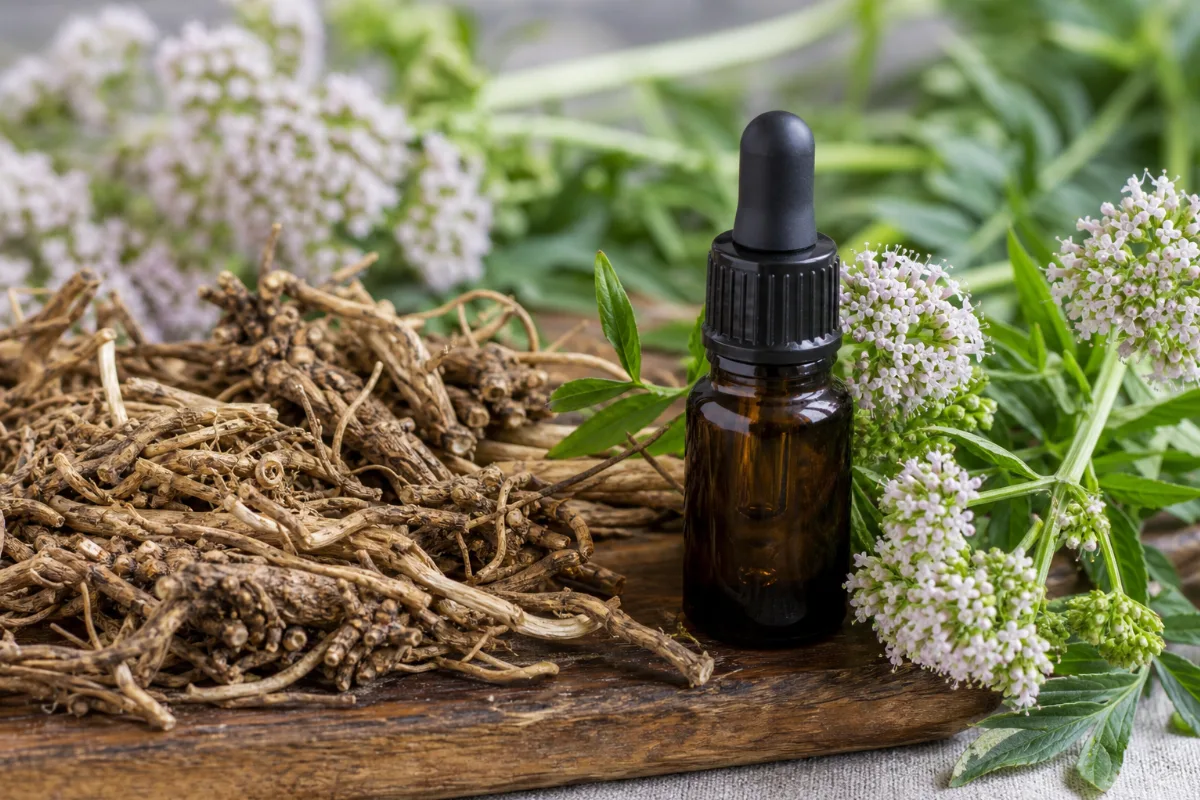
Valerian oil is the strong-smelling oil distilled from the roots and underground parts of the valerian plant. It is used in aromatherapy and massage blends, mostly for calm and sleep. Human research on the oil is very thin: one small headache trial and one marker study. The sleep trials people quote are about valerian root extracts, a different product. The main caution: valerian is a sedating herb, so ask a pharmacist before mixing it with sedatives or alcohol, never swallow the oil, and keep it from children and pets.
General information, not medical advice. Last substantive update · Not medically reviewed. A named clinician has not signed off on this page. How this page is made
About Valerian Oil
Valerian oil is made from the roots of Valeriana officinalis. Human research on the oil is very thin, and the better-known sleep research is about root extracts, a different product. Safety comes first: valerian is a sedating herb, bottled oil must not be swallowed, and children, pregnancy and pets call for extra care.
What valerian oil is
Valerian oil is the essential oil from the roots and underground parts of Valeriana officinalis. GBIF lists it as the accepted name, in the family Caprifoliaceae. Indian valerian (Valeriana jatamansi) and spikenard (Nardostachys jatamansi) are different plants.
A 2004 study found major components including valerenal, bornyl acetate, 15-acetoxy valeranone, valerenic acid and camphene. Oil yield was between 0.67% and 1.1% of the plant material. The makeup changed with cultivar, plant age and harvest time, so bottles may differ.
What people use it for, and how strong the evidence is
People mostly use valerian oil for calm and sleep. For the oil itself, we found one marker study in people with dementia and one mouse study. A scent trial in heart patients found lower headache scores from nitroglycerin, but with no scent placebo.
The sleep research people quote is on valerian root extracts taken by mouth. Those reviews disagree: one called valerian safe and effective for sleep, another found no evidence it treats insomnia, though people reported better sleep quality. That does not carry over to the oil.
The research in one view
Most studies are small or are in animals. In the headache trial a scent is hard to hide from a comparison group. A 2025 review of inhaled aromatherapy for insomnia found lower scores but noted unblinded, varied studies and no purity testing, and it does not name valerian oil. NCCIH says little rigorous research has been done on aromatherapy for insomnia.
No independent trial of valerian oil on sleep scores was found.
Oil, root extract, tea and tincture are different things
The EU regulator approves a dry ethanol extract of the root under medicine rules. It does not cover food supplements, cosmetics or essential oil. The same plant can also be used as a root tea or tincture. Safety statements about the root, such as rare liver injury and withdrawal after long use, come from NCCIH and concern those products. Nothing of the kind was found for the oil, and absence of reports is not proof of safety.
What regulators say
In the EU, a dry ethanolic extract of valerian root is accepted for mild nervous tension and sleep disorders; other root forms are traditional use only. In the US, NCCIH says there is not enough evidence to know if valerian helps any condition. Neither addresses the essential oil. We could not read LiverTox or LactMed for valerian.
At a glance
Traditional uses history, not proof
- Valerian root used in early Greece and Rome for insomnia, migraine, fatigue and stomach cramps (NCCIH). This history is about the root, not the oil.
- Root preparations other than one tested extract are accepted in the EU for traditional use in mild mental stress and sleep (EMA).
Studied for research
- Sleep markers in dementia, valerian oil massage, insufficient
- Sleep in mice, oil given by mouth, insufficient
- Sleep and mild nervous tension, root extracts (a different product), mixed
- Insomnia, inhaled aromatherapy in general, insufficient
- Headache from a nitroglycerin infusion, inhaled oil, very-low
- Germ-killing activity, test tube only, insufficient
Main compounds
- Valerenic acid
- Bornyl acetate
- Valerenal, 15-acetoxy valeranone, camphene, alpha-humulene
Common forms
- Essential oil (steam or water distilled from roots)
- Massage and aromatherapy blends
- Dry root extracts and capsules (different products)
- Root tea and tincture (different products)
Research links: EMA: Valerian root · NCCIH: Valerian · NCCIH: Aromatherapy · Poison Control: Essential oils · Pet Poison Helpline: Essential oils · Nitroglycerin headache trial (abstract) · Dementia massage marker study (abstract) · Research Library · Genes & Biomarkers Library
What it is and its history
- Accepted scientific name
- Valeriana officinalis
- Naming authority
- L.
- Common names
- Valerian (English); Valerian oil (English); Valerian essential oil (English); Common valerian (English); Garden valerian (English)
- Family or group
- Caprifoliaceae, per GBIF.
- Classification
- Plantae > Caprifoliaceae > Valeriana > Valeriana officinalis
- Native range
- NCCIH says valerian is native to Europe and Asia and also grows in North America.
- Habitat
- Not checked.
- What it looks like
- Part used: The oil studied was made from underground parts (roots and rhizomes). NCCIH and EMA also describe roots and rhizomes as the medicinal part.
- Look-alikes and adulterants
- Valeriana jatamansi (Indian valerian, GBIF key 8213018) is a separate accepted species, and spikenard (Nardostachys jatamansi, GBIF key 4095989) is a different plant again. Labels should carry the Latin name.
Traditional use and history history, not clinical proof
| Tradition or era | Documented use | Source |
|---|---|---|
| Ancient Greece and Rome (root) | NCCIH says valerian has been used medicinally since the times of early Greece and Rome, historically for insomnia, migraine, fatigue and stomach cramps. The page is about the root; it says nothing about the essential oil. | NCCIH, Valerian |
| European regulation (root) | The EU regulator says valerian root preparations other than the tested dry extract have 'traditional use' for mild mental stress and aiding sleep, meaning long-standing use of at least 30 years, including at least 15 in the EU, not clinical trial proof. | EMA, Valerianae radix |
Traditional use shows how it was used. It does not show that it works or is safe today.
What is inside, and how it may work
What it contains and how those compounds act in cells and animals. Laboratory and animal mechanisms are not proven effects in people.
Main compounds
| Compound | Family | Where it is concentrated | Activity studied | Level of evidence |
|---|---|---|---|---|
| Valerenic acid PubChem 6440940 | sesquiterpene acid | Root oil Listed as a main component in both cultivars studied; no percentage read. | Named by the 2004 study as one of the major components. Its effects were not tested in the sources read. 3 15 | Laboratory analysis |
| Bornyl acetate PubChem 93009 | monoterpene ester | Root oil Listed as a main component in both cultivars; (-)-bornyl acetate named for Anthose; no percentage read. | Named as a major component. Effects not tested in the sources read. 3 16 | Laboratory analysis |
| Valerenal, 15-acetoxy valeranone, camphene and alpha-humulene | terpenes and related compounds | Root oil Valerenal was a major component in both cultivars; valerenal, valerenic acid and alpha-humulene rose as plants aged. Total oil yield was 0.67 to 1.1% in the plants studied. | Identified only. No effects tested in the abstract. 3 | Laboratory analysis |
Mechanisms, receptors and pathways
| Target or pathway | Gene or receptor | What was found | Level |
|---|---|---|---|
| Monoamine oxidase B (MAOB) and other predicted targets | MAOB, DRD2, MAOA, IL1B, SLC6A4, PTGS2, HTR2A | Computer analysis of 38 oil compounds predicted 103 insomnia-related targets. In mice given a high oral dose, MAOB protein in the brain cortex fell. This is a proposed mechanism from animal and computer work, not shown in people. 5 | Hypothesis, animal and in silico |
| Serotonin (5-HT) | 5-HT | Serum serotonin rose after massage with valerian oil in people with dementia and insomnia. The study did not show that this caused better sleep. 2 | Human biomarker |
Absorption, metabolism and elimination
- Absorption
- Not described in any source read.
- Distribution
- Not established.
- Metabolism
- Not established.
- Elimination
- Not established.
- Bioavailability
- Not established.
Isolated compounds versus whole extracts
Valerian essential oil, dry root extracts, root tea and tincture, and isolated compounds such as valerenic acid are different products. Most sleep and safety research is on oral root products. The oil has a different makeup, and the same plant can give oils that differ with cultivar and age. Root findings do not tell us what the oil does, and the reverse is also true.
Nutritional composition
Valerian oil is not a nutrient.
1 mixed findings1 very low certainty4 not enough evidence
What is Valerian Oil good for?
The uses people ask about and how strong the evidence is for each. Read the certainty label first. Sleep trials of valerian ROOT extracts are a different product from the essential oil, and they are labelled as such below.
Benefits, one by one
Each card is a research question, not a promise. Tap a goal to filter. Open a card to see the studies, doses and limits.
Sleep markers in people with dementia and insomnia (valerian oil massage)
Not enough evidenceA small Korean study compared massage with valerian oil, lavender oil, chamomile oil and blends against massage with plain jojoba oil in people with dementia and insomnia. Valerian oil massage raised a blood marker linked to sleep, serotonin. The study measured blood and urine markers, not how well people slept.
1 studiesNot covered. This page gives no amounts and no way to use the oil.
Studies, doses and limits
What the trials found
Single essential oils were applied by massage and compared with jojoba (vehicle) oil. Blood and urine markers were compared. The number of people is not given in the abstract.
Results
Valerian oil massage gave a significant rise in serum serotonin compared with jojoba oil. Lavender lowered urinary cortisol and chamomile raised urinary norepinephrine. A blend with the most lavender and chamomile and a little valerian (2:2:1) gave the highest serotonin of the blends.
Effect sizes as reported
Significant versus jojoba oil; the abstract gives no figures.
Why this rating
The number of people is not stated. The study measured markers, not sleep. It was a massage, so skin absorption and touch are mixed in. No repeat study was found.
Form and dose studied
Not covered. This page gives no amounts and no way to use the oil.
Who was studied
People with dementia and insomnia in Korea.
Limits
A marker is not a benefit. The abstract does not report sleep scores or side effects.
Why researchers looked
Valerian has a long reputation as a calming herb, and people with dementia often sleep badly.
Traditional use
The root has been used for sleep for a very long time (NCCIH, EMA). That history is about the root, not the oil.
Proposed mechanism Preliminary mechanism
The authors point to serotonin, a brain chemical tied to sleep. This is a proposed link and was not shown to cause better sleep.
A proposed mechanism does not show that the effect happens in people.
Valerian can cause drowsiness. See the Safety tab before using any valerian product with sedatives or alcohol.
Sleep in mice (valerian volatile oil given into the stomach)
Not enough evidenceIn a 2025 mouse study, a high gavage dose of valerian volatile oil made mice move less, fall asleep sooner and sleep longer. Computer work predicted the oil's compounds might act on brain targets such as MAOB. This is animal and computer work only.
1 studiesNot covered. This page gives no amounts and no way to use the oil.
Studies, doses and limits
What the trials found
None. No trial of valerian oil on sleep scores in people was found.
Results
In mice, a high oral dose shortened sleep latency and lengthened sleep. Gas chromatography found 38 active compounds after screening.
Effect sizes as reported
Not given in the abstract.
Why this rating
Animal and computer work only. The oil was given into the stomach, not smelled or put on skin.
Form and dose studied
Not covered. This page gives no amounts and no way to use the oil.
Who was studied
Mice.
Limits
Mouse results do not show a benefit or a safe amount in people.
Why researchers looked
To test whether the oil itself, and not just the root, has sleep-promoting activity.
Traditional use
Not stated.
Proposed mechanism Preliminary mechanism
Computer prediction found 103 possible targets, including MAOB, DRD2, MAOA, IL1B, SLC6A4, PTGS2 and HTR2A. In mice, MAOB protein in the brain cortex fell. These are proposed pathways.
A proposed mechanism does not show that the effect happens in people.
Animal results with swallowed oil. Do not swallow essential oils.
Sleep and mild nervous tension (valerian ROOT extracts, not the essential oil)
Mixed findingsMost valerian research is on dry root extracts taken by mouth, not on the essential oil. The EU medicines regulator accepts one type of root extract for mild nervous tension and sleep problems. A 2024 review of reviews found no clear evidence it treats insomnia, though people reported better sleep quality. These findings must not be carried over to the essential oil.
4 studiesNot covered. This page gives no amounts and no way to use the oil.
Studies, doses and limits
What the trials found
A 2020 review of 60 studies (6,894 people) pooled 10 studies for sleep quality and 8 for anxiety. A 2024 umbrella review of 8 reviews reached a more cautious view. NCCIH calls the sleep evidence inconsistent and notes that a 2017 sleep medicine guideline recommended against valerian for chronic insomnia.
Results
The 2020 review called valerian root safe and effective for sleep and related problems, and said results varied with extract quality. The 2024 umbrella review found no evidence of efficacy for insomnia, though subjective sleep quality seemed better.
Effect sizes as reported
Not given in the abstracts.
Why this rating
Reviews disagree and the studies are varied and often low quality. All of it concerns oral root products.
Form and dose studied
Not covered. This page gives no amounts and no way to use the oil.
Who was studied
Adults and some children aged 7 and over in trials of root products.
Limits
Root extracts and the essential oil are different products with different makeup. The oil's effects cannot be read from these reviews.
Why researchers looked
Valerian root is a long-standing herbal sleep aid.
Traditional use
NCCIH says valerian has been used medicinally since early Greece and Rome, historically for insomnia, migraine, fatigue and stomach cramps.
Proposed mechanism Preliminary mechanism
Not established. Not covered for the oil.
A proposed mechanism does not show that the effect happens in people.
Different product (oral root extracts). Sedative interactions are described for the root, see the Safety tab.
Insomnia with illness (inhaled aromatherapy in general)
Not enough evidenceA 2025 review pooled 27 trials of inhaled aromatherapy for insomnia that comes with another illness. Scores were lower with aromatherapy. But the abstract does not name valerian, and the studies were varied and often not blinded. It cannot tell us what valerian oil does.
2 studiesNot covered. This page gives no amounts and no way to use the oil.
Studies, doses and limits
What the trials found
27 publications with 2,072 patients, many different oils.
Results
Insomnia scores fell by 2.90 points on average (95% CI -3.85 to -1.95), anxiety by 3.97 and depression by 9.58. NCCIH says it is unknown whether aromatherapy helps insomnia because little rigorous research exists.
Effect sizes as reported
MD -2.90 (95% CI -3.85 to -1.95) for insomnia.
Why this rating
Valerian oil is not identified in the abstract. The studies were heterogeneous and often unblinded, and purity was not tested.
Form and dose studied
Not covered. This page gives no amounts and no way to use the oil.
Who was studied
People with insomnia plus other illnesses.
Limits
Not specific to valerian oil.
Why researchers looked
Many people try scents for sleep.
Traditional use
Not stated.
Proposed mechanism Preliminary mechanism
Not established.
A proposed mechanism does not show that the effect happens in people.
A general aromatherapy result; valerian oil is not named.
Headache from a nitroglycerin infusion (smelling valerian oil)
Very low certaintyIn one Iranian trial of 90 heart patients on a cardiac unit, people who smelled valerian oil or lavender oil had lower headache scores than people given usual care only. The control group had no scent, and headache scores also fell in that group.
1 studiesNot covered. This page gives no amounts and no way to use the oil.
Studies, doses and limits
What the trials found
A three-blind randomised trial. Three groups: valerian oil, lavender oil, and a control with usual pain control only. The two oil groups breathed in soaked cotton for 30 minutes. Headache was scored before and at 15, 30 and 60 minutes.
Results
Headache scores fell over time in all three groups. Both oil groups ended lower than the control group (p < 0.001). Valerian and lavender did not differ. The authors also report less painkiller and narcotic use, but the abstract gives no figures.
Effect sizes as reported
p < 0.001 for oil groups versus control; no difference between the two oils.
Why this rating
One trial. No scent placebo, so the smell could not be hidden from the control group. Scores fell without any scent too. The abstract gives no scores or group sizes.
Form and dose studied
Not covered. This page gives no amounts and no way to use the oil.
Who was studied
Adults with coronary artery disease on a cardiac unit in Iran.
Limits
Cannot be applied to other kinds of headache. No repeat trial found. Valerian oil's effect cannot be separated from the effect of expecting relief from a pleasant smell.
Why researchers looked
Nitroglycerin often causes headache, and nurses look for gentle add-ons to usual pain control.
Traditional use
Valerian root was used historically for migraine and headache-type complaints (NCCIH lists migraine). That history is about the root.
Proposed mechanism Preliminary mechanism
Not established.
A proposed mechanism does not show that the effect happens in people.
Headache with heart disease or a nitroglycerin infusion belongs with the care team. Do not use scent in place of their advice.
Germ-killing activity in the test tube
Not enough evidenceA 2004 lab study made valerian oil from two cultivars. One cultivar's oil acted against four test microbes in the dish and the other showed little or no activity. Activity depended on cultivar and plant age.
1 studiesNot covered. This page gives no amounts and no way to use the oil.
Studies, doses and limits
What the trials found
None.
Results
Oil from cultivar Select acted against Aspergillus niger, Escherichia coli, Staphylococcus aureus and Saccharomyces cerevisiae. Cultivar Anthose showed low or no activity against all test microbes, including Pseudomonas aeruginosa.
Effect sizes as reported
Not given in the abstract.
Why this rating
Test-tube study only. Activity differed between two cultivars.
Form and dose studied
Not covered. This page gives no amounts and no way to use the oil.
Who was studied
No people.
Limits
Lab results do not show the oil treats or prevents any infection. Do not use the oil on wounds or infections.
Why researchers looked
Researchers looked at whether the oil could be useful against germs.
Traditional use
Not stated.
Proposed mechanism Preliminary mechanism
Not established.
A proposed mechanism does not show that the effect happens in people.
Test-tube results say nothing about use on the body.
Connections to the rest of health
How Valerian Oil connects to the rest of our health knowledge graph. Every link says what kind of connection it is. A safety link (for example to the liver) is a warning, not a benefit. A study that merely mentions a topic never creates a benefit link.
Explore every connection: goals, body systems, organs, symptoms, genes
A. Wellness goals
| Connected to | Kind of connection | Evidence status | Context | Studies |
|---|---|---|---|---|
| Better Sleep | Not enough evidence | Sleep markers in people with dementia and insomnia (valerian oil massage): A small Korean study compared massage with valerian oil, lavender oil, chamomile oil and blends against massage with plain jojoba oil in people with dementia and insomnia. Valerian oil massage raised a blood marker linked to sleep, serotonin. The study measured blood and urine markers, not how well people slept. | 2 | |
| Better Sleep | Not enough evidence | Sleep in mice (valerian volatile oil given into the stomach): In a 2025 mouse study, a high gavage dose of valerian volatile oil made mice move less, fall asleep sooner and sleep longer. Computer work predicted the oil's compounds might act on brain targets such as MAOB. This is animal and computer work only. | 5 | |
| Better Sleep | Mixed findings | Sleep and mild nervous tension (valerian ROOT extracts, not the essential oil): Most valerian research is on dry root extracts taken by mouth, not on the essential oil. The EU medicines regulator accepts one type of root extract for mild nervous tension and sleep problems. A 2024 review of reviews found no clear evidence it treats insomnia, though people reported better sleep quality. These findings must not be carried over to the essential oil. | 6 7 12 13 | |
| Stress Reduction | Mixed findings | Sleep and mild nervous tension (valerian ROOT extracts, not the essential oil): Most valerian research is on dry root extracts taken by mouth, not on the essential oil. The EU medicines regulator accepts one type of root extract for mild nervous tension and sleep problems. A 2024 review of reviews found no clear evidence it treats insomnia, though people reported better sleep quality. These findings must not be carried over to the essential oil. | 6 7 12 13 | |
| Better Sleep | Not enough evidence | Insomnia with illness (inhaled aromatherapy in general): A 2025 review pooled 27 trials of inhaled aromatherapy for insomnia that comes with another illness. Scores were lower with aromatherapy. But the abstract does not name valerian, and the studies were varied and often not blinded. It cannot tell us what valerian oil does. | 1 9 |
B. Body systems
E. Health conditions
| Connected to | Kind of connection | Evidence status | Context | Studies |
|---|---|---|---|---|
| Insomnia | Not enough evidence | No oil trial with sleep scores found. Preparation or compound: Valerian essential oil massage (markers only); root extracts are a different product |
2 7 | |
| Headache | Very low certainty | One trial in nitroglycerin headache, no scent placebo. Preparation or compound: Valerian essential oil, inhaled |
8 |
I. Biomarkers
| Connected to | Kind of connection | Evidence status | Context | Studies |
|---|---|---|---|---|
| Serum serotonin (5-hydroxytryptamine) | Biological association | Not enough evidence | Measured in trials: increase. A lab change is not the same as a health benefit. | 2 |
| Time to fall asleep (mice) | Biological association | Not enough evidence | Measured in trials: decrease. A lab change is not the same as a health benefit. | 5 |
| Headache severity (visual pain scale) | Biological association | Very low certainty | Measured in trials: decrease. A lab change is not the same as a health benefit. | 8 |
J. Genes, receptors and enzymes
| Connected to | Kind of connection | Evidence status | Context | Studies |
|---|---|---|---|---|
| Monoamine oxidase B (MAOB) | Preliminary mechanism | Hypothesis | Predicted target; protein fell in mouse cortex after a high oral dose. | 5 |
L. Active compounds
| Connected to | Kind of connection | Evidence status | Context | Studies |
|---|---|---|---|---|
| Valerenic acid | Biological association | Laboratory analysis | Named by the 2004 study as one of the major components. Its effects were not tested in the sources read. Preparation or compound: Root oil |
3 15 |
| Bornyl acetate | Biological association | Laboratory analysis | Named as a major component. Effects not tested in the sources read. Preparation or compound: Root oil |
3 16 |
| Valerenal, 15-acetoxy valeranone, camphene and alpha-humulene | Biological association | Laboratory analysis | Identified only. No effects tested in the abstract. Preparation or compound: Root oil |
3 |
Each connection is stored with the ingredient, the connected record, the kind of connection, the evidence status, the supporting studies, the preparation or compound involved, and a review date (last reviewed October 25, 2026).
The evidence
The research centre for Valerian Oil. Every record here was checked against PubMed or the publisher's page; we never list a study we have not verified.
Evidence by outcome
Bars show how many studies we found for each outcome, not how well it works. People are added up across trials only (reviews are not added, to avoid double counting).
How we rate evidence
High certainty
Several well-run trials or reviews agree; further research is unlikely to change the picture much.
Moderate certainty
Good trials point the same way, but some doubt remains.
Low certainty
Small, short or inconsistent trials. The finding could change with better research.
Very low certainty
Very little or very weak human data. Treat as a possibility only.
Mixed findings
Trials or reviews disagree with each other.
Not enough evidence
Not enough human research to say either way.
Evidence against
Good research found no benefit, or found harm.
We take the reviewers' own risk-of-bias and GRADE statements where they exist, and otherwise judge from study size, design, consistency, directness and whether a product matches what is sold. Many publications do not make evidence high. Method note: We read the abstracts of 8 PubMed papers and the EMA, NCCIH, Poison Control and Pet Poison Helpline pages, and checked the plant name in GBIF and the compounds in PubChem. We could not read LiverTox or LactMed for valerian.
Study library: every study we checked 16
| Study | Design | People | Product, dose, length | Result |
|---|---|---|---|---|
| Chen 2025 Inhalation aromatherapy for the treatment of comorbid insomnia: a systematic review and meta-analysis. Front Psychiatry · PMID 40230824 · DOI |
Systematic review and meta analysis of randomised trials |
2072 Patients with insomnia alongside other illnesses (27 publications) |
Inhaled aromatherapy (many different oils and herbs) various Not reported here Varied · vs Varied |
Pooled inhaled aromatherapy lowered insomnia scores (MD -2.90, 95% CI -3.85 to -1.95), anxiety (MD -3.97, 95% CI -5.88 to -2.06) and depression (MD -9.58, 95% CI -15.13 to -4.03). The included studies were heterogeneous, often unblinded, and lacked independent testing of purity. The abstract does not name valerian oil. Pooled mean differences as listed. Methods, limits and fundingOutcomes: Insomnia, anxiety and depression scores Limitations: Valerian oil is not named in the abstract, so this cannot be read as a result for valerian oil. Heterogeneous, unblinded studies. Funding and conflicts: The authors declare no commercial or financial relationships. Read: abstract |
| Lee 2023 Differences in Neurotransmitters Level as Biomarker on Sleep Effects in Dementia Patients with Insomnia after Essential Oils Treatment. Biomol Ther (Seoul) · PMID 36912030 · DOI |
Small intervention study with vehicle oil comparison, Korea |
People with dementia and insomnia (number not given in the abstract) | Single essential oils (valerian, lavender, chamomile) and blends of the three, by massage essential oils Not reported here Not stated in the abstract · vs Jojoba oil massage (vehicle) |
Valerian oil massage raised serum serotonin compared with jojoba oil. Lavender lowered urinary cortisol. Chamomile raised urinary norepinephrine. Of the blends, blend A (lavender:chamomile:valerian 2:2:1) gave the highest serotonin. The abstract reports markers, not sleep scores, and the authors only suggest blend A might help insomnia. Significant rise in serum serotonin with valerian versus jojoba (no figures in abstract). Methods, limits and fundingOutcomes: Sleep-related blood and urine markers: 24-hour urinary free cortisol, serum 5-hydroxytryptamine (serotonin), 24-hour urinary norepinephrine Limitations: Number of people not stated. Markers, not sleep outcomes. Massage, not scent alone. Abstract only. Funding and conflicts: Not stated in the abstract. Read: abstract |
| Letchamo 2004 Essential oil of Valeriana officinalis L. cultivars and their antimicrobial activity as influenced by harvesting time under commercial organic cultivation. J Agric Food Chem · PMID 15186117 · DOI |
Laboratory chemical analysis and microbe test lab |
Two valerian cultivars (Select and Anthose) grown on certified organic fields | Essential oil from the underground parts, made by hydrodistillation roots and other underground parts Not reported here n/a · vs n/a |
Oil yield was 0.67% and 0.87% (Select, 8 and 14 months old) and 0.97% and 1.1% (Anthose). 43 and 53 components were found. Main components were valerenal, bornyl acetate, 15-acetoxy valeranone, valerenic acid and camphene (Select), and valerenal, (-)-bornyl acetate, alpha-humulene, camphene, 15-acetoxy valeranone and valerenic acid (Anthose). Composition changed with cultivar, plant age and harvest time. Select oil acted against four test microbes in the dish; Anthose showed low or no activity. The profile did not match the chemotypes in the literature. Composition varied by cultivar, age and harvest time. Methods, limits and fundingOutcomes: Oil yield and composition; effect on test microbes Limitations: Two cultivars from one grower group. Test-tube microbe results do not show any effect in people. Funding and conflicts: Not stated in the abstract. Read: abstract |
| Mielczarek 2026 Neuroprotective and Neuromodulatory Potential of Valeriana officinalis, Passiflora incarnata, and Ginkgo biloba: Efficacy, Safety, and Regulatory Aspects. Plants (Basel) · PMID 42739461 · DOI |
Narrative review review |
Valerian, passionflower and ginkgo (herbal products, mainly root extracts for valerian) | Valerian (Valeriana officinalis) herbal products not detailed in the abstract Not reported here n/a · vs n/a |
The authors say valerian showed the most consistent clinical evidence of the three for better sleep quality and less anxiety. All three had acceptable safety at recommended amounts, but valerian can strengthen the effect of central nervous system depressants. Narrative statements; no pooled numbers in the abstract. Methods, limits and fundingOutcomes: Efficacy, safety and regulation Limitations: Narrative review, not a systematic one. About herbal products, not the essential oil. Funding and conflicts: The authors declare no conflicts of interest. Read: abstract |
| Muhetaer 2025 Exploring the Effects and Mechanisms of Valerian Volatile Oil in Treating Insomnia Using Network Pharmacology, Molecular Docking, and Molecular Dynamics Simulation-Based Approaches. Int J Mol Sci · PMID 40004189 · DOI |
Chemical analysis, computer prediction and mouse experiment animal and in silico |
Mice (animal experiment); valerian volatile oil analysed by GC-MS | Valerian volatile oil given by gavage (into the stomach) to mice valerian (part not stated in the abstract) Not reported here Not stated in the abstract · vs Control mice |
GC-MS and drug-likeness screening found 38 active compounds. Computer work predicted 103 insomnia-related targets, including MAOB, DRD2, MAOA, IL1B, SLC6A4, PTGS2 and HTR2A. A high gavage dose reduced movement, shortened time to sleep and lengthened sleep in mice. Brain cortex MAOB protein fell. Animal effects at a high oral dose; no numbers in abstract. Methods, limits and fundingOutcomes: Activity, sleep latency and sleep duration in mice; MAOB protein in the brain cortex; predicted targets Limitations: Mice, swallowed oil, not scent. Largely computer prediction. Does not show an effect in people. The abstract's phrase 'protective mechanism' is the authors' own interpretation. Funding and conflicts: The authors declare no conflicts of interest. Read: abstract |
| Shinjyo 2020 Valerian Root in Treating Sleep Problems and Associated Disorders-A Systematic Review and Meta-Analysis. J Evid Based Integr Med · PMID 33086877 · DOI |
Systematic review and meta analysis review |
6894 60 studies of valerian root (10 studies, n=1,065, for sleep quality; 8 studies, n=535, for anxiety) |
Valerian root and rhizome preparations root and rhizome Not reported here n/a · vs n/a |
The authors suggest mixed results across trials may come from variable extract quality, and that more reliable effects could come from whole root. They found no severe adverse events in people aged 7 to 80, and call valerian a safe and effective herb for sleep and related problems, while saying quality control needs revising. The abstract gives no pooled numbers. Not given in the abstract. Methods, limits and fundingOutcomes: Subjective sleep quality; anxiety; adverse events Limitations: About valerian root, not the oil. Conclusion more positive than the 2024 umbrella review; trials differ widely in quality. Funding and conflicts: Declared none. Read: abstract |
| Valente 2024 Does valerian work for insomnia? An umbrella review of the evidence. Eur Neuropsychopharmacol · PMID 38359657 · DOI |
Umbrella review of systematic reviews review |
8 systematic reviews of valerian (herbal products, not the essential oil) for sleep | Valerian herbal products (reviews of root preparations) root (as reviewed) Not reported here n/a · vs n/a |
The authors found a good safety profile but no evidence of efficacy for treating insomnia. Valerian seemed to help subjective sleep quality, but this was not shown with quantitative or objective measures. Studies were few, varied and of low methodological quality. Qualitative; no pooled figure in the abstract. Methods, limits and fundingOutcomes: Sleep outcomes, insomnia Limitations: About valerian root products, not the essential oil. Studies were low quality. Funding and conflicts: Declared none. Read: abstract |
| Yekefallah 2025 Compare the Effect of Aromatherapy with Lavender and Valerian Essential Oil on Headache Caused by Nitroglycerin Infusion, Vital Signs, and Narcotic Use in Patients with Coronary Artery Disease: A Three-Blind, Randomized Controlled Trial. Iran J Nurs Midwifery Res · PMID 41311605 · DOI |
Three blind randomised controlled trial, Iran |
90 Adults with coronary artery disease on a cardiac unit having a nitroglycerin infusion (30 per group) |
Valerian essential oil, or lavender essential oil, inhaled from soaked cotton essential oil (plant part not stated in the abstract) Not reported here 30 minutes; headache scored before and at 15, 30 and 60 minutes · vs Control group: usual pain control only, no scent |
Headache scores fell over time in all three groups. Both oil groups ended with lower scores than the control group (p < 0.001). Valerian and lavender did not differ from each other. The authors conclude the oils reduce headache and painkiller and narcotic use; the abstract gives no figures for painkiller use. Both oils lower than control (p < 0.001); no difference between the two oils. Methods, limits and fundingOutcomes: Headache severity on a visual pain scale; vital signs; narcotic use Limitations: The control group had no scent, so people could not be kept unaware of the smell in the usual way. Scores also fell in the control group. Abstract gives no group sizes, scores or painkiller figures. One trial. Funding and conflicts: Conflict of interest: nothing to declare. Read: abstract |
| n/a NCCIH (US): Aromatherapy (page read 2026-10-25; no date shown) n/a · Source |
Government health page n/a |
n/a | n/a n/a n/a n/a · vs n/a |
Says essential oils are most often inhaled or applied diluted to the skin. Aromatherapy is sometimes used for insomnia, but it is not known whether it helps because little rigorous research has been done. Valerian is not named. Methods, limits and fundingOutcomes: Aromatherapy overview Limitations: General page; no valerian-specific statement. Read: full-text |
| n/a Poison Control (US): Essential oils, poisonous when misused (page read 2026-10-25) n/a · Source |
Poison centre public page n/a |
n/a | n/a n/a n/a n/a · vs n/a |
Says misuse can cause serious poisoning; many oils cause rashes and some are poisonous if absorbed through skin or swallowed; aspirating oil can cause pneumonia; children have thin skin and immature livers and may be more susceptible; oils may interact with medicines; pure oils are potent and are best diluted in a carrier oil for skin contact; do not use on damaged skin; stop and wash off if a rash occurs; it can be hard to know the species, strength or contaminants in a bottle. Keep oils locked up from children and pets. Valerian is not named on the page. Methods, limits and fundingOutcomes: General essential-oil safety Limitations: General guidance; no valerian case. Read: full-text |
| n/a Pet Poison Helpline: Essential oils (page read 2026-10-25) n/a · Source |
Animal poison centre public page n/a |
n/a | n/a n/a n/a n/a · vs n/a |
Says cats and birds are at greatest risk from essential oils. Common signs are drooling, vomiting, lethargy, loss of appetite and irritation, usually within 6 to 8 hours; severe cases can take 3 to 7 days to resolve. Oral exposure is considered the highest-risk route. Its list of oils that can cause poisoning does not name valerian. Methods, limits and fundingOutcomes: Essential-oil risk to pets Limitations: General guidance; valerian is not named. Read: full-text |
| n/a 2025 NCCIH (US): Valerian, usefulness and safety (page read 2026-10-25; last updated May 2025) n/a · Source |
Government health page n/a |
n/a | n/a n/a n/a n/a · vs n/a |
Says not enough evidence to know whether valerian is useful for any condition; evidence for sleep is inconsistent and the American Academy of Sleep Medicine's 2017 guideline recommended against it for chronic insomnia in adults. Side effects include headache, stomach upset, mental dullness, excitability, uneasiness and vivid dreams. Withdrawal symptoms are possible if stopped abruptly after long use. Very rare liver injury, most often with other herbs. Should not be taken with alcohol or sedatives. Little known about pregnancy and breastfeeding. Roots and rhizomes are the part used; the page does not cover the essential oil. Methods, limits and fundingOutcomes: Evidence and safety of valerian root Limitations: About oral root products, not the essential oil. Read: full-text |
| n/a 2026 EMA (EU): Valerianae radix, herbal medicinal product (page read 2026-10-25; updated 11/03/2026) n/a · Source |
Regulator public summary n/a |
n/a | n/a n/a n/a n/a · vs n/a |
A dry ethanolic root extract is accepted for relief of mild nervous tension and sleep disorders on 'well-established use'. Other root preparations (juice, water extracts, tinctures) are 'traditional use' only. Not for under 12s, pregnancy or breastfeeding. Do not drive or operate machinery. Side effects: nausea and abdominal cramps. No interactions described in the literature at the time of assessment. Concerns root medicines, not the essential oil. Methods, limits and fundingOutcomes: Regulatory view of valerian root medicines Limitations: About root medicines; the essential oil is not covered. Read: full-text |
| n/a 2026 GBIF species match API: Valeriana officinalis L. (checked 2026-10-25) n/a · Source |
Taxonomy database n/a |
n/a | n/a n/a n/a n/a · vs n/a |
Valeriana officinalis L., key 2888763, status ACCEPTED, family Caprifoliaceae, exact match. Methods, limits and fundingOutcomes: Accepted name Limitations: Name checking only. Read: full-text |
| n/a 2026 PubChem: (-)-Valerenic acid, CID 6440940 (checked 2026-10-25) n/a · Source |
Chemistry database n/a |
n/a | n/a n/a n/a n/a · vs n/a |
PubChem name search returned (-)-Valerenic acid, CID 6440940, formula C15H22O2. Methods, limits and fundingOutcomes: Compound identity Limitations: Identity only. Read: full-text |
| n/a 2026 PubChem: (-)-Bornyl acetate, CID 93009 (checked 2026-10-25) n/a · Source |
Chemistry database n/a |
n/a | n/a n/a n/a n/a · vs n/a |
PubChem name search returned (-)-bornyl acetate, CID 93009, formula C12H20O2. Methods, limits and fundingOutcomes: Compound identity Limitations: Identity only. Read: full-text |
What we do not know yet
- What the evidence supports: headache is very-low, sleep for the oil is insufficient, and root-extract sleep results are mixed and a different product.
- No trial of valerian oil on sleep scores was found.
- No skin allergy, pregnancy, child or pet data for the oil were found.
- Sedative warnings come from oral root products; none were found for the oil.
- LiverTox and LactMed could not be read.
- The dementia study's abstract gives no group sizes or figures.
How new research is added
New studies are found by a saved PubMed search and are placed in a review queue. A person reads each one before it is added.
Lab markers
What changed in blood or saliva tests during trials. A changed number is not the same as feeling or being healthier, and we give no "normal ranges".
Other 3
Serum serotonin (5-hydroxytryptamine)
Increase in trials
A brain and body chemical measured in blood, linked to mood and sleep.
Not enough evidenceResults and what it means
Why it was measured
The massage study used it as a marker for sleep effects.
Statistical vs. clinical meaning
A higher marker does not mean better sleep; the abstract reports no sleep scores.
Safety implication
None stated.
| Study | Result | People | Product |
|---|---|---|---|
| 2 | Rose significantly with valerian oil massage compared with jojoba oil; highest among blends with blend A. |
Time to fall asleep (mice)
Decrease in trials
How long a mouse takes to fall asleep after treatment.
Not enough evidenceResults and what it means
Why it was measured
Animal test of sleep-promoting activity.
Statistical vs. clinical meaning
Animal result with swallowed oil only.
Safety implication
Drowsiness is the intended effect; this is a reason for caution with sedatives and driving.
| Study | Result | People | Product |
|---|---|---|---|
| 5 | Shorter with a high oral dose of valerian volatile oil in mice. |
Headache severity (visual pain scale)
Decrease in trials
A scale on which people mark how bad their headache is.
Very low certaintyResults and what it means
Why it was measured
Main outcome in the nitroglycerin headache trial.
Statistical vs. clinical meaning
Self-rated, with no scent placebo.
Safety implication
Severe or unusual headache needs medical advice.
| Study | Result | People | Product |
|---|---|---|---|
| 8 | Fell in all groups; lower with valerian or lavender oil than with usual care alone (p < 0.001). |
Safety
What studies and official sources say about side effects, medicines and who should check first. Each point shows what kind of evidence it comes from.
Main points to know 5
- Valerian is a sedating herb: do not combine it with alcohol or sedatives.. NCCIH says valerian root should not be taken with alcohol or sedatives, because it may have a sleep-inducing effect. A 2026 review says valerian can strengthen the effect of medicines that depress the central nervous system. The EU regulator says no interactions were described in the literature when it assessed the root, and also advises not driving or running machinery when using valerian root medicines. All of these statements concern oral root products. We found no statement about the essential oil, so we cannot say it is free of this risk. Ask a pharmacist. Regulatory and review 12 4 13
- Do not swallow bottled valerian oil.. Poison Control says some essential oils are poisonous if swallowed or absorbed through the skin, and that choking some oil into the lungs can cause pneumonia. It does not name valerian, and we found no case of valerian oil poisoning. The only studies that gave valerian oil by mouth were in mice. Do not swallow essential oil. If a child or pet may have swallowed any essential oil, call poison control (US 1-800-222-1222) or your emergency number. Regulatory 10 5
- Skin reactions: no valerian oil data found.. Poison Control says many essential oils can cause rashes and that allergy to an oil is a real possibility. We found no patch-test study, case report or regulator statement on skin sensitisation, irritation or sun reactions for valerian oil. That is a gap in the research, not a sign that it is safe. Stop use and wash off if a rash appears. Do not put essential oil on broken skin. Regulatory 10
- Pregnancy, breastfeeding and young children: avoid unless a doctor says otherwise.. The EU regulator says valerian root medicines are not for children under 12, or for people who are pregnant or breastfeeding. NCCIH says little is known about valerian in pregnancy and breastfeeding. These statements are about root medicines. We found nothing on the essential oil. Poison Control says children may be more susceptible to essential oils. Regulatory 13 12 10
- Pets: cats and birds are at greatest risk from essential oils.. Pet Poison Helpline says cats and birds are at greatest risk from essential oils, and that signs usually appear within 6 to 8 hours. Its list of oils known to cause poisoning does not name valerian, and we found no source on valerian oil in pets. Keep oils and diffusers away from pets and ask a vet. Regulatory 11
Side effects 4
| Effect | How often | Severity and recovery | Evidence |
|---|---|---|---|
| Drowsiness and mental dullness (valerian root products) NCCIH lists mental dullness among side effects of valerian; EMA advises caution when driving. Both are about root products, not the oil. | Not given. | mild to moderate Not stated. | Regulatory 12 13 |
| Headache, stomach upset, nausea and cramps, excitability, uneasiness, vivid dreams (valerian root products) Root products, taken by mouth. | EMA says the frequency is not known. | mild Not stated. | Regulatory 12 13 |
| Withdrawal symptoms after stopping suddenly following long use (valerian root products) NCCIH lists anxiety, irritability, heart disturbances, insomnia and, in rare cases, hallucinations. Root products only. | Not given. | varies Not stated. | Regulatory 12 |
| Side effects of the essential oil in the two human studies Neither abstract reports whether side effects were looked for, so silence is not proof of safety. | Not stated in either abstract. | unknown Not stated. | Clinical trial 8 2 |
Liver
NCCIH says liver injury has been reported in very rare cases with valerian, most often when it was taken with other herbs. That statement is about root products. We found no case of liver injury linked to valerian essential oil. We could not read a LiverTox entry for valerian, and a PubMed case report titled 'A case of valerian-associated hepatotoxicity' has no abstract, so we did not use it. We do not advise swallowing the oil. 12
How often. Very rare with root products (NCCIH). No oil cases found.
Monitoring. Yellow skin or eyes, dark urine, severe tiredness or pain in the upper right belly after any herb, oil or supplement needs a doctor.
This is a safety connection. It is not evidence that Valerian Oil supports liver health.
Medicines and supplements 3
| With | Why it matters | Importance | Evidence | What to do |
|---|---|---|---|---|
| Alcohol, sedatives and other medicines that slow the nervous system sedatives, sleeping pills and alcohol (read-across from root products) | NCCIH advises against taking valerian with alcohol or sedatives, and a 2026 review says valerian strengthens central nervous system depressants. No mechanism is given in the sources we read. | Unknown for the essential oil. Root products are taken by mouth and reach the blood in different ways than a scent or skin oil. | Regulatory and review Not enough evidence 12 4 | Ask a pharmacist before using valerian in any form with sedatives, sleeping pills, anti-anxiety medicines or alcohol. |
| Other medicines regulator found none (root medicines) | The EU regulator says no interactions with other medicines were described in the literature at the time of its assessment of valerian root. | Applies to root medicines only; it conflicts in tone with the NCCIH advice and the 2026 review, so we show both and do not claim certainty either way. | Regulatory Not enough evidence 13 | Tell your pharmacist about any essential oil or herb you use. |
| Prescription and other medicines general essential-oil interactions | Poison Control says essential oils may interact with medicines. No valerian oil interaction was named. | Not established. | Regulatory Not enough evidence 10 | Ask a pharmacist. |
Who should check first 6
| Situation | Advice | Evidence |
|---|---|---|
| Taking sedatives, sleeping pills, anti-anxiety medicines or alcohol | Ask a pharmacist first. NCCIH advises against combining valerian with them. | Regulatory 12 4 |
| Pregnancy or breastfeeding | The EU regulator says valerian root medicines are not for use. No oil data. Ask a doctor or midwife. | Regulatory 13 |
| Children (EU says root medicines not under 12) | Keep the oil away from babies and children and ask a paediatrician. | Regulatory 13 10 |
| Needing to drive or run machinery soon after using valerian products | EMA says valerian root medicines may affect the ability to drive. No oil data. | Regulatory 13 |
| Known allergy to essential oils, or skin that reacts to scented products | Avoid it and ask a doctor about patch testing. | Regulatory 10 |
| Living with cats or birds | Keep oils and diffusers out of their reach and space. Ask a vet. | Regulatory 11 |
Overdose, product quality and regulators
Summary. No poisoning data for valerian essential oil were found. General essential-oil sources warn of poisoning if swallowed, lung damage if aspirated, and risk to pets.
Amounts. No safe amount is established, and this page gives none.
Onset and course. For pets, Pet Poison Helpline says signs usually appear within 6 to 8 hours and severe cases can take 3 to 7 days to resolve. No valerian-specific course for people was found.
Repeated use. Withdrawal symptoms after long use are described for valerian root products (NCCIH). Nothing was found for the oil.
Animal data. A mouse study used a high gavage dose of valerian volatile oil; the abstract describes reduced movement and longer sleep and reports no toxicity data.
Toxic parts. The essential oil is the concentrated form. The studies read made it from roots and underground parts.
Not read. LiverTox, LactMed and any poison-centre or case series for valerian oil could not be found or read.
Essential oil products are not tightly regulated, so what is in the bottle can differ from the label. Valerian oil also varies by plant.
Unknown species, strength and contaminants. Poison Control says it can be hard to know the species, concentration or contaminants in an essential oil bottle. 10
The oil varies by plant, age and harvest. A study of two cultivars found that the oil's makeup changed with cultivar, plant age and harvest time, and did not match the chemotypes in earlier literature. So two bottles may not match. 3
Root extract and essential oil are different products. The EU regulator's approval covers a dry ethanol extract of the root, made under strict medicine quality rules. Food supplements, cosmetics and other products are outside it. The 2020 review says extract quality varies. None of this describes an essential oil. 13 6
Look-alike names. Spikenard (Nardostachys jatamansi) and Indian valerian (Valeriana jatamansi) are different plants from Valeriana officinalis, per GBIF. Check the Latin name on the label. 14
| Body | Action | Date |
|---|---|---|
| EMA / HMPC (EU), Valerianae radix (valerian root) (European Union) | Accepts a dry ethanolic root extract for relief of mild nervous tension and sleep disorders ('well-established use'); other root preparations are traditional use only. Not for children under 12, pregnancy or breastfeeding. Says no interactions were described at assessment. Covers medicines, not essential oil. source | 2026-03-11 |
| NCCIH (US), Valerian (United States) | Says there is not enough evidence to know if valerian is useful for any condition; sleep evidence is inconsistent; the 2017 AASM guideline recommended against it for chronic insomnia. Warns against use with alcohol or sedatives. Little known about pregnancy and breastfeeding. Root-focused. source | 2025-05-01 |
| NCCIH (US), Aromatherapy (United States) | Says it is unknown whether aromatherapy helps insomnia because little rigorous research has been done. Does not name valerian. source | |
| Poison Control (US), Essential oils (United States) | General warnings about poisoning, rashes, aspiration, children and interactions. Does not name valerian. source | |
| Pet Poison Helpline, Essential oils (United States) | Cats and birds are at greatest risk. Does not name valerian in its list of oils known to cause poisoning. source |
When to get medical help
- If a child or pet may have swallowed any essential oil, call poison control (US: 1-800-222-1222; pets: Pet Poison Helpline 800-213-6680) or your emergency number.
- Trouble breathing, swelling of the lips, tongue or face, or a spreading rash after contact is an emergency.
- Very heavy drowsiness, confusion or slowed breathing after swallowing an oil or mixing valerian with sedatives or alcohol needs urgent medical help.
- Yellow skin or eyes, dark urine or upper right belly pain needs a doctor.
Stop using the product and contact a clinician or emergency service. In the US, Poison Control is 1-800-222-1222.
General information only, not medical advice. Ask a clinician or pharmacist before use, especially with medicines, in pregnancy or with a health condition. See the Natural Remedy Safety guide.
Frequently asked questions
Is valerian oil safe to swallow?
We do not advise swallowing oil from a bottle. Poison Control says some essential oils are poisonous if swallowed and can cause pneumonia if inhaled into the lungs. It does not name valerian, and we found no valerian oil poisoning case. If a child or pet may have swallowed any essential oil, call poison control (US 1-800-222-1222) or your emergency number.
Can valerian oil be used with sleeping pills, sedatives or alcohol?
Ask a pharmacist first. NCCIH says valerian should not be taken with alcohol or sedatives, and a 2026 review says it strengthens central nervous system depressants. The EU regulator found no interactions described for the root. These statements are about root products, and nothing was found for the oil.
Does valerian oil help you sleep?
Is valerian oil the same as valerian root supplements?
Does valerian work for insomnia?
Does valerian oil help headaches?
Possibly, but the evidence is very low. In one trial of 90 heart patients, headache from a nitroglycerin infusion was lower after smelling valerian or lavender oil than with usual care alone. The control group had no scent and scores fell there too. Tell your care team about severe or unusual headaches.
Is valerian oil safe in pregnancy or while breastfeeding?
Is valerian oil safe for babies and children?
Is valerian oil safe for cats, dogs and other pets?
Keep it away. Pet Poison Helpline says cats and birds are at greatest risk from essential oils. It does not name valerian, and we found no source on valerian oil in pets, so we cannot say it is safe. Call your vet or a pet poison line if a pet may have been exposed.
Can valerian oil cause an allergic reaction or skin rash?
It may, as any essential oil can, but we found no study of valerian oil allergy. Poison Control says allergy to an essential oil is a real possibility and to stop use and wash off if a rash appears. Breathing trouble or facial swelling is an emergency.
Can valerian cause liver problems?
NCCIH says liver injury has been reported in very rare cases with valerian, most often with other herbs. That is about root products. We found no liver case for the essential oil.
Is valerian oil the same as spikenard oil?
No. Spikenard (Nardostachys jatamansi) and Indian valerian (Valeriana jatamansi) are different plants from Valeriana officinalis, according to GBIF. Check the Latin name on the label.
Explore by health goal
Editorial transparency
- Written by
- AlternativeMed editorial team. Research compiled with AI assistance, then checked against PubMed records.
- Medical review
- None. This page has not been reviewed by a physician or pharmacist.
- First published
- 2026-10-25
- Last substantive update
- 2026-10-25
- How we research
- We read the abstracts of 8 PubMed papers and the EMA, NCCIH, Poison Control and Pet Poison Helpline pages, and checked the plant name in GBIF and the compounds in PubChem. We could not read LiverTox or LactMed for valerian.
- How we rate evidence
- See "How we rate evidence" in the Evidence tab.
- Independence
- No product is promoted on this page. No affiliate links are shown. Trials or assessments linked to industry are labelled.
Sources 16
Each source was opened and checked. Where we read only the abstract, it says so. The small numbers in the text point here.
- Chen HB, Zhang YD, Qin Y, et al. Inhalation aromatherapy for the treatment of comorbid insomnia: a systematic review and meta-analysis.. Front Psychiatry. 2025. PMID 40230824. DOI 10.3389/fpsyt.2025.1485693. (abstract)
- Lee KB, Latif S, Kang YS. Differences in Neurotransmitters Level as Biomarker on Sleep Effects in Dementia Patients with Insomnia after Essential Oils Treatment.. Biomol Ther (Seoul). 2023. PMID 36912030. DOI 10.4062/biomolther.2023.014. (abstract)
- Letchamo W, Ward W, Heard B, et al. Essential oil of Valeriana officinalis L. cultivars and their antimicrobial activity as influenced by harvesting time under commercial organic cultivation.. J Agric Food Chem. 2004. PMID 15186117. DOI 10.1021/jf0353990. (abstract)
- Mielczarek L, Frankowska M, Szurpnicka A, et al. Neuroprotective and Neuromodulatory Potential of Valeriana officinalis, Passiflora incarnata, and Ginkgo biloba: Efficacy, Safety, and Regulatory Aspects.. Plants (Basel). 2026. PMID 42739461. DOI 10.3390/plants15172694. (abstract)
- Muhetaer H, Li H, Wang B, et al. Exploring the Effects and Mechanisms of Valerian Volatile Oil in Treating Insomnia Using Network Pharmacology, Molecular Docking, and Molecular Dynamics Simulation-Based Approaches.. Int J Mol Sci. 2025. PMID 40004189. DOI 10.3390/ijms26041726. (abstract)
- Shinjyo N, Waddell G, Green J. Valerian Root in Treating Sleep Problems and Associated Disorders-A Systematic Review and Meta-Analysis.. J Evid Based Integr Med. 2020. PMID 33086877. DOI 10.1177/2515690X20967323. (abstract)
- Valente V, Machado D, Jorge S, et al. Does valerian work for insomnia? An umbrella review of the evidence.. Eur Neuropsychopharmacol. 2024. PMID 38359657. DOI 10.1016/j.euroneuro.2024.01.008. (abstract)
- Yekefallah L, Mohammadi S, Ebrahimi K, et al. Compare the Effect of Aromatherapy with Lavender and Valerian Essential Oil on Headache Caused by Nitroglycerin Infusion, Vital Signs, and Narcotic Use in Patients with Coronary Artery Disease: A Three-Blind, Randomized Controlled Trial.. Iran J Nurs Midwifery Res. 2025. PMID 41311605. DOI 10.4103/ijnmr.ijnmr_208_23. (abstract)
- n/a. NCCIH (US): Aromatherapy (page read 2026-10-25; no date shown). n/a. . (full-text)
- n/a. Poison Control (US): Essential oils, poisonous when misused (page read 2026-10-25). n/a. . (full-text)
- n/a. Pet Poison Helpline: Essential oils (page read 2026-10-25). n/a. . (full-text)
- n/a. NCCIH (US): Valerian, usefulness and safety (page read 2026-10-25; last updated May 2025). n/a. 2025. (full-text)
- n/a. EMA (EU): Valerianae radix, herbal medicinal product (page read 2026-10-25; updated 11/03/2026). n/a. 2026. (full-text)
- n/a. GBIF species match API: Valeriana officinalis L. (checked 2026-10-25). n/a. 2026. (full-text)
- n/a. PubChem: (-)-Valerenic acid, CID 6440940 (checked 2026-10-25). n/a. 2026. (full-text)
- n/a. PubChem: (-)-Bornyl acetate, CID 93009 (checked 2026-10-25). n/a. 2026. (full-text)