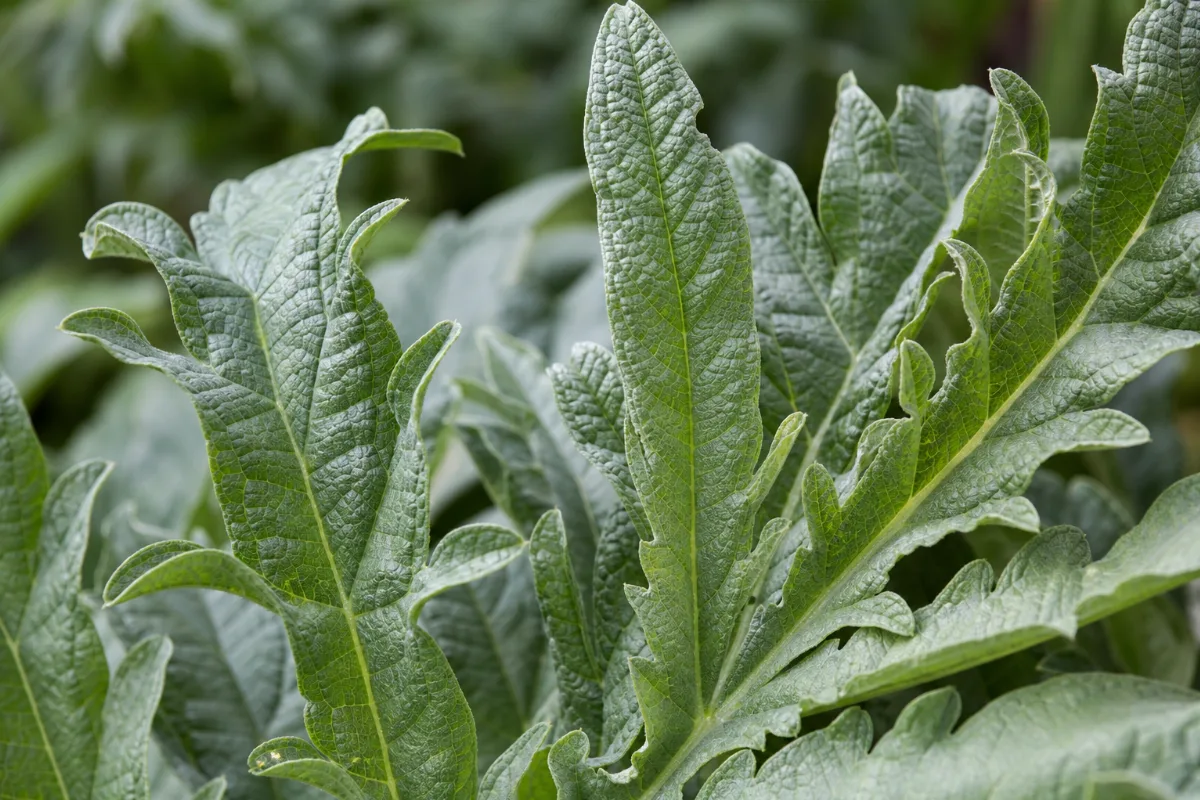
Herbs & Botanicals · Herbs · A bitter leaf used for indigestion and cholesterol, with low to mixed evidence
Artichoke Leaf
Cynara cardunculus L. (also written Cynara scolymus L.) · also called Globe artichoke leaf, artichoke leaf extract, alcachofa (Spanish), artichaut (French), Artischocke (German), carciofo (Italian), alcachofra (Portuguese)
Artichoke leaf extract is made from the leaves of the globe artichoke plant, a Mediterranean member of the daisy family. It is sold as capsules, tablets, teas and drops mainly for indigestion, cholesterol and liver health. In the EU it is accepted only as a traditional herbal medicine for indigestion with fullness and bloating.
General information, not medical advice. Last substantive update · Not medically reviewed. A named clinician has not signed off on this page. How this page is made
About Artichoke Leaf
Artichoke leaf extract comes from the leaves of the globe artichoke (Cynara cardunculus) and is mainly studied for indigestion, cholesterol and fatty liver. The evidence is low to mixed: one placebo-controlled trial supports a modest benefit for indigestion, pooled trials show modest cholesterol drops that Cochrane called not convincing, and small trials in fatty liver look positive. The EU accepts it only as a traditional medicine. It should not be used with gallstones, bile duct blockage, liver disease needing care, daisy-family allergy, or in pregnancy.
What it is
Artichoke leaf extract comes from the leaves of Cynara cardunculus (also called Cynara scolymus), the globe artichoke, a tall thistle-like plant of the daisy family that is native to the Mediterranean. The flower bud is a familiar vegetable. The leaves are bitter and are dried and extracted with water or alcohol to make capsules, tablets, teas and drops.
In this profile artichoke leaf extract is judged on its own. The cooked bud, artichoke juice and the unrelated Jerusalem artichoke are different products.
Traditional and current uses
The EU assessment report says artichoke has been used as food and medicine since ancient times and that the leaf has been used as a bile-stimulating and urine-promoting remedy in European medicine since Roman times. It takes these statements from secondary sources, and they were not checked against ancient texts. In 2019 the EU herbal committee published a monograph accepting artichoke leaf only as a traditional herbal medicine for relief of indigestion with a feeling of fullness, bloating and flatulence. The committee said the clinical data are not enough for a well-established use.
Today it is also sold for cholesterol, liver health, blood sugar and weight. Most of those uses go beyond what the EU accepts.
What is in it and how it works
The leaf contains caffeoylquinic acids such as chlorogenic acid and cynarin, flavonoids such as luteolin glycosides, and a bitter sesquiterpene lactone called cynaropicrin. The European Pharmacopoeia sets a minimum of 0.8% chlorogenic acid. Cynarin was traditionally credited with the effects, but the EU report says newer work points to other acids too.
In lab and animal tests the extract increased bile flow, increased cholesterol loss in the stool of hamsters, and calmed liver inflammation signals in mice. In people, the extract's own compounds are not found in blood after a dose, only their breakdown products, so it is hard to link any effect to one compound. Most of the mechanism work is in animals or cells.
What the research shows
Indigestion, the main use, has one placebo-controlled trial of 244 adults showing a modest benefit over 6 weeks, plus open studies. Cholesterol is mixed: pooled trials show modest drops, but the Cochrane review called the evidence not convincing and one 12-week placebo-controlled trial found no LDL change. Fatty liver, blood sugar, blood pressure and waist size are low or mixed. Bile flow is shown in rats. Hangover is not helped in the one trial.
Most trials are short (6 to 12 weeks), small and measure lab markers rather than outcomes like heart attacks. Some products tested are mixtures with bergamot, red yeast rice or other ingredients. People who want to know how much to take should ask a doctor or pharmacist.
At a glance
Traditional uses history, not proof
- European folk medicine: leaf used as a bile-stimulating and urine-promoting remedy since Roman times, and in bitter liqueurs for indigestion, as reported by the EU assessment from secondary sources.
- EU traditional herbal medicine (monograph 2019): relief of indigestion with a feeling of fullness, bloating and flatulence.
- Modern use: supplements taken for cholesterol, liver health, blood sugar and weight, mostly beyond the EU-accepted use.
Studied for research
- Indigestion (functional dyspepsia), low
- Fatty liver, blood sugar and waist size, low; cholesterol and blood pressure, mixed
- Irritable bowel syndrome, bile flow, metabolic syndrome and blood vessel function, very low
- General liver protection, hangover, and well-being or anxiety, insufficient
Main compounds
- Chlorogenic acid and cynarin, caffeoylquinic acids that mark leaf quality
- Luteolin and its glycosides, flavonoids found in the leaf
- Cynaropicrin, a bitter sesquiterpene lactone linked to allergy in daisy-family plants
Common forms
- Leaf extract in capsules or tablets
- Dried leaf tea or powder
- Fresh leaf juice or liquid extract
- Combination products with bergamot, red yeast rice or other herbs
Research links: EU assessment report on artichoke leaf (European Medicines Agency) · EU herbal medicine page: Cynarae folium (European Medicines Agency) · Artichoke leaf extract for high cholesterol: Cochrane review (abstract) · Artichoke for functional dyspepsia: placebo-controlled trial (abstract) · Artichoke and blood fats: meta-analysis (abstract) · Research Library · Genes & Biomarkers Library
The plant and its history
- Accepted scientific name
- Cynara cardunculus L. (the name used by the EU and the European Pharmacopoeia; globe artichoke is also written Cynara scolymus L.)
- Naming authority
- L. (Linnaeus), Species Plantarum, page 827 (1753) (GBIF). GBIF also lists Cynara scolymus L. as its own accepted species (usageKey 3112361) with about 20 synonyms, while the EU assessment report treats it as the older name for the same plant.
- Synonyms
- Cynara scolymus L. (globe artichoke; treated as a separate species by GBIF but as a synonym by the EU); Cynara cardunculus subsp. scolymus (L.) Hegi; Cynara cardunculus var. scolymus (L.) Benth.; Cynara hortensis Mill.; Cynara esculenta Salisb.; Carduus scolymus (L.) Baill.; Cynara cardunculus var. sativa Moris; Cynara cardunculus subsp. flavescens Wiklund (the EU report says leafy cardoon and globe artichoke are two cultivars of this subspecies, citing ESCOP 2009)
- Common names
- Globe artichoke (English); Artichoke (English); Cardoon (the wild or leaf-stalk form) (English); Alcachofa; alcaucil (Spanish); Artichaut (French); Artischocke (German); Carciofo (Italian); Alcachofra (Portuguese)
- Botanical family
- Asteraceae, the daisy or sunflower family (also called Compositae). Other members include chamomile, echinacea, dandelion, lettuce and ragweed. This matters because people allergic to the family may react to artichoke.
- Classification
- Plantae > Tracheophyta > Magnoliopsida (dicots) > Asterales > Asteraceae > Cynara > Cynara cardunculus
- Native range
- Native to the Mediterranean region: southern Europe, North Africa and the Canary Islands, per the EU assessment report.
- Habitat
- Cultivated crop in Mediterranean and other warm temperate regions. The EU report notes more than 60% of world production came from Italy.
- What the plant looks like
- Roots: Not described in the sources read. The EU report says roots lack the bitter lactone cynaropicrin.; Stems: A tall perennial thistle growing 1.5 to 2 m high (EU report).; Leaves: Arching, deeply lobed, silvery grey-green leaves 50 to 80 cm long. Leaves are the part used for the extract.; Flowers: Large flower head grown from an edible bud 8 to 15 cm across with many triangular scales; the individual florets are purple.; Fruit: Fully developed fruits lack cynaropicrin (EU report). Not otherwise described.
- Cultivation
- The EU report says cultivation in Europe dates back to ancient Greece and Rome, that globe artichokes were first cultivated at Naples around the middle of the 15th century, and that the plant is cultivated in North Africa and other subtropical regions.
- Harvest and processing
- Medicinal material is the dried basal leaf, bought whole or cut from southern Europe and northern Africa. The European Pharmacopoeia requires at least 0.8% chlorogenic acid in the dried leaf. Preparations include dried leaf tea, leaf powder, and dry or soft extracts of dried or fresh leaf made with water or 20% ethanol (EU report).
- Look-alikes and adulterants
- Name: Cardoon (Cynara cardunculus, wild or leaf-stalk form); Note: Same species as globe artichoke in GBIF and the EU report. The EU report treats the two as cultivars of one subspecies.; Name: Jerusalem artichoke (Helianthus tuberosus); Note: A different plant, grown for its tuber, rich in inulin. Not the plant studied here and its research does not apply to artichoke leaf (p32583794).; Name: Bract, receptacle and flower-bud extracts; Note: Other parts of the same plant. A mouse study used a bract extract and found lipid-lowering effects, but results do not transfer to leaf extract (p39728509).
The plant and the parts used

Traditional use and history history, not clinical proof
| Tradition or era | Documented use | Source |
|---|---|---|
| Ancient Egypt, Greece and Rome (as summarised by the EU assessment report) | The report says artichoke was used as food and medicine by the ancient Egyptians, Greeks and Romans, and that the leaf has been used as a bile-stimulating and urine-promoting remedy in European medicine since Roman times. These are statements the report takes from secondary sources and were not checked against ancient texts. | s-ema-ar-cynara-folium |
| 15th to 19th century spread | The report says globe artichokes were first cultivated at Naples about the mid-15th century, were said to have been brought to France by Catherine de Medici, were growing in Henry VIII's garden in 1530, and reached the United States in the 19th century. These are reported as 'said to' history, not checked against original sources. | s-ema-ar-cynara-folium |
| European folk medicine | Alcoholic leaf extract used in a bitter liqueur (about 10 g dried leaf per litre) is documented as a folk remedy for indigestion. The report adds that artichoke has been used for centuries across Europe as a liver and gallbladder remedy and for high cholesterol. | s-ema-ar-cynara-folium |
| Modern European pharmacies (Germany, France) | Products on the market in Germany since 1978 for indigestion; the report also mentions French extract forms in use for at least 35 years. | s-ema-ar-cynara-folium |
| Brazil and worldwide ethnomedicine | The report lists use for liver and gallbladder problems, diabetes, high cholesterol, high blood pressure, anaemia, fevers, ulcers and gout in Brazilian herbal medicine, and a wide range elsewhere. These are traditional uses and not proof they work. | s-ema-ar-cynara-folium |
| EU regulation | A first Community monograph appeared in 2011 and a revised EU herbal monograph for traditional use in 2019, for relief of indigestion with fullness, bloating and flatulence. The report says clinical data are not enough for a well-established use. | s-ema-cynarae-folium-page |
Traditional use shows how a plant was used. It does not show that a supplement works or is safe today.
What is inside, and how it may work
What the plant contains and how those compounds act in cells and animals. Laboratory and animal mechanisms are not proven effects in people.
Main compounds
| Compound | Family | Where it is concentrated | Activity studied | Level of evidence |
|---|---|---|---|---|
| Chlorogenic acid (5-caffeoylquinic acid) PubChem 1794427 | caffeoylquinic acid (phenolic acid) | Leaf The European Pharmacopoeia requires at least 0.8% in dried leaf (EU report). Total phenolic acids are up to 2% of the leaf. | Used as the marker for leaf quality. A review suggests it, with luteolin, may be a key lipid-lowering compound; not shown in people. 60 54 46 | Laboratory research |
| Cynarin (1,3-dicaffeoylquinic acid) PubChem 5281769 | dicaffeoylquinic acid | Leaf Not given as a single figure; the EU report lists dicaffeoylquinic acids within phenolic acids up to 2%. | Traditionally blamed for the bitter taste, bile-stimulating and cholesterol-lowering effects; the EU report says later work suggests mono-caffeoylquinic acids matter too. Hepatoprotective effects of cynarin were shown in cells and rats, not people. 61 54 | Laboratory research |
| Neochlorogenic acid (3-caffeoylquinic acid) PubChem 5280633 | caffeoylquinic acid | Leaf Not given. | Named with chlorogenic acid in the EU report as a possible contributor to the lipid and bile effects. 65 54 | Laboratory research |
| Caffeic acid PubChem 689043 | hydroxycinnamic acid | Leaf (and a body metabolite of the caffeoylquinic acids) Listed as a constituent in the EU report. | In people it appears in blood, mostly as sulfate and glucuronide conjugates, after a leaf extract is taken. 59 54 | Human data |
| Luteolin PubChem 5280445 | flavone | Leaf (as glycosides) Total flavonoids 0.1 to 2% of the leaf (EU report). | Appears in blood as sulfate or glucuronide after a leaf extract. A review suggests it may help lower lipids; not proven in people. 63 54 46 | Human data |
| Luteolin 7-O-glucoside (cynaroside) PubChem 5280637 | flavone glycoside | Leaf Within flavonoids 0.1 to 2%. | Main component of the water-loving rat gut-tissue extract that made the muscle contract. 64 54 50 | Animal research |
| Scolymoside (luteolin 7-rutinoside) PubChem 10461109 | flavone glycoside | Leaf Within flavonoids 0.1 to 2%. | Listed in the EU report as a flavone glycoside of the leaf; no specific activity was read. 66 54 | Laboratory research |
| Cynaropicrin PubChem 119093 | sesquiterpene lactone | Leaf, highest in young leaves; absent from roots and fully developed fruits and flowers Bitter sesquiterpene lactones about 0.4% of the leaf, of which 47 to 83% is cynaropicrin (EU report). | Bitter taste. Sesquiterpene lactones are the compounds linked to allergy to daisy-family plants, so this is a safety-relevant compound. 62 54 32 | Laboratory research |
Mechanisms, receptors and pathways
| Target or pathway | Gene or receptor | What was found | Level |
|---|---|---|---|
| Bile secretion (choleresis) | Not identified | Rats given leaf extract made more bile and more bile acids, similar to a reference bile-boosting drug. The EU report adds that a 1994 human crossover study showed more bile secretion (not read). 42 54 | Animal research |
| Gut muscle and serotonin signalling | Serotonin 5-HT3 and 5-HT2 receptors (not 5-HT4) | One code-named leaf extract made rat ileum contract through 5-HT3 and 5-HT2 receptors and lowered the threshold for gut propulsion; a second extract relaxed it and reduced a serotonin effect. 50 | Animal research |
| Cholesterol excretion | Not identified | Hamsters fed leaf extract for 42 days had lower cholesterol and more bile acids and neutral sterols in faeces. No change at 21 days. 35 | Animal research |
| Cholesterol synthesis in the liver | HMG-CoA reductase, SREBP-2, PCSK9, AMPK (bract extract) | The EU report says inhibition of cholesterol making in liver cells has been seen in lab and animal tests. A bract extract (not leaf) in mice and liver cells changed expression of these fat-handling genes. 54 27 46 | Animal research |
| Liver antioxidant and inflammation pathways | Glutathione, Nrf2/HO-1, NLRP3 inflammasome, MRP2 transporter | Leaf extract in mice on a fatty diet kept more liver glutathione, lowered NLRP3, caspase-1 and interleukin-1 beta levels, lowered HO-1, and raised MRP2. 23 | Animal research |
| LDL oxidation | Oxidised LDL | In 68 adults with metabolic syndrome, 12 weeks of leaf extract lowered oxidised LDL more than placebo, with no change in other antioxidant markers. 37 | Human data |
| Blood vessel lining | Vessel adhesion molecules VCAM-1 and ICAM-1 | Artichoke juice for 6 weeks in 18 people with high blood fats lowered VCAM-1 and ICAM-1 and raised flow-mediated vessel widening, compared with 10 people without juice. 25 | Human data |
| Drug-metabolising enzymes | CYP3A4 and CYP2D6 | In a lab screen, strong inhibition came from two other plants. The artichoke result is not reported in the abstract. 11 54 | Laboratory research |
Absorption, metabolism and elimination
- Absorption
- After water extracts of leaf were given to healthy volunteers, none of the extract's own compounds (caffeoylquinic acids, flavonoids) were detected in plasma or urine. Only metabolites were found (EU report, summarising Wittemer 2002 and 2005 and Rechner 2001; these were not read).
- Distribution
- Not described in the sources read.
- Metabolism
- Caffeoylquinic acids are changed into caffeic acid, ferulic and isoferulic acids and the hydrogenated forms dihydrocaffeic and dihydroferulic acid. All except dihydroferulic acid circulate as sulfates or glucuronides. Luteolin glycosides appear only as luteolin sulfate or glucuronide.
- Elimination
- Caffeic, ferulic and isoferulic acids peaked within about 1 hour and declined over 24 hours; luteolin peaked within about 30 minutes with a two-phase decline; the hydrogenated metabolites appeared 6 to 7 hours after dosing (EU report).
- Bioavailability
- Cannot be given as one number because the original compounds are not found in blood. Doses used in the EU report's crossover study in 14 volunteers were equivalent to 107 and 153.8 mg caffeic acid and 14.4 and 35.2 mg luteolin.
Isolated compounds versus whole extracts
Artichoke leaf extract is a mixture and no single compound explains its effects. Cynarin was traditionally credited with the bile and cholesterol actions, but the EU report says later studies point also to mono-caffeoylquinic acids such as chlorogenic and neochlorogenic acid, and a review points to luteolin as well. None of the trials we read tested a single isolated compound in people. In rat gut tissue two differently made extracts had opposite effects on gut muscle, so the way an extract is made changes what it does. Cooked artichoke hearts, which are food, work differently: a review attributes their effects mainly to soluble fibre such as inulin.
Nutritional composition
The edible globe artichoke bud (the heart and bracts) is a food rich in fibre and inulin. The leaf extract in supplements is a different product from the cooked bud. A review attributes cooked-heart lipid effects mainly to soluble fibre (p30308247). Nutrient values from USDA FoodData Central were not checked for this profile.
2 mixed findings4 low certainty4 very low certainty3 not enough evidence
What was looked at
The 13 benefits and uses checked for Artichoke Leaf, each with how strong the evidence is. Tap one to open it.
- Indigestion (functional dyspepsia): fullness, bloating, nauseaLow certainty
- Irritable bowel syndrome (IBS) symptomsVery low certainty
- Bile flow and fat digestionVery low certainty
- Protecting the liver (lab and animal findings)Not enough evidence
- Well-being and anxiety alongside indigestionNot enough evidence
- High cholesterol and blood fatsMixed findings
- Fatty liver (NAFLD, NASH, MASLD)Low certainty
- Blood pressureMixed findings
- Blood sugar and insulin resistanceLow certainty
- Weight, BMI and waist sizeLow certainty
- Metabolic syndrome: oxidised LDL and triglyceridesVery low certainty
- Blood vessel functionVery low certainty
- Alcohol hangoverNot enough evidence
Lab markers tracked in the studies
Nepean Dyspepsia Index (symptom and quality-of-life score)IBS status and usual bowel patternBile flow and bile acid output (animal)LDL cholesterol ("bad" cholesterol)Total cholesterolTriglycerides (blood fats)HDL cholesterol ("good" cholesterol)Systolic blood pressure (top number, mmHg)Fasting blood glucoseHbA1c (average blood sugar over about three months)Fasting insulin and HOMA-IR (insulin resistance)Waist circumferenceALT (alanine aminotransferase, a liver enzyme)AST (aspartate aminotransferase, a liver and muscle enzyme)Liver fat score (FibroScan CAP) and liver sizeOxidised LDL
What is Artichoke Leaf good for?
The main proposed uses and how strong the human evidence is for each. "Low" means the evidence is limited; "mixed" means trials disagree. This page does not give advice on amounts: ask a doctor or pharmacist.
Benefits, one by one
Each card is a research question, not a promise. Tap a goal to filter. Open a card to see the studies, doses and limits.
Indigestion (functional dyspepsia): fullness, bloating, nausea
Low certaintyArtichoke leaf extract is mainly used and studied for indigestion with a sense of fullness, bloating and flatulence. One placebo-controlled trial of 244 people found a modest improvement over placebo. The other human studies had no placebo group. The EU treats it only as a traditional herbal medicine for this use.
5 studiesTrials used leaf extracts in capsules; the Holtmann trial used a wate…
Studies, doses and limits
What the trials found
One randomised, placebo-controlled trial (Holtmann 2003, 244 adults analysed, 6 weeks) found a larger improvement in overall symptoms and in dyspepsia quality of life with an artichoke leaf extract than with placebo. An open, dose-ranging study (Marakis 2002; 516 people, 454 finished, 2 months) found symptoms fell by about 40% from baseline on either of two doses, with no difference between the doses and no placebo group. An uncontrolled Italian cohort (Sannia 2010, 305 people, 60 days) used a four-herb mixture, so the artichoke share cannot be isolated. Earlier surveillance studies summarised in the EU report were also uncontrolled.
Results
Placebo-controlled: overall symptom improvement 8.3 vs 6.7 points (P < 0.01) and Nepean Dyspepsia Index change -41.1 vs -24.8 (P < 0.01). Open study: about 40% fall in global dyspepsia score from baseline.
Effect sizes as reported
Placebo-controlled trial: improvement score 8.3 +/- 4.6 vs 6.7 +/- 4.8; NDI -41.1 +/- 47.6 vs -24.8 +/- 35.6. No confidence intervals in the abstract.
Why this rating
Only one placebo-controlled trial, with modest differences read from the abstract only. The other studies are open or uncontrolled, and the EU report says clinical data are not enough for a well-established use. No reviewer GRADE rating was found.
Form and dose studied
Trials used leaf extracts in capsules; the Holtmann trial used a water extract (EU report: DER 4-6:1). Doses used in the studies are in the study records.
Who was studied
Adults with functional or mild dyspepsia. Not tested in children; the EU says use under 12 has not been established.
Limits
Few trials, short follow-up (6 weeks to 2 months), no placebo in most studies, and funding not stated in the abstracts. People with gallstones or bile duct problems were not the target group and the EU lists these as contraindications.
Why researchers looked
Dyspepsia (upset stomach without a clear physical cause) is common, and the options are limited. Artichoke leaf is a bitter plant that has been used for it for a long time.
Traditional use
The EU assessment report says artichoke leaf has been used as a bile-stimulating and urine-promoting remedy in European medicine since Roman times, and that leaf extracts and a bitter liqueur made from the leaves have been used for indigestion. The EU herbal committee published a traditional-use monograph in 2019 for it as a herbal medicine for relief of indigestion with a feeling of fullness, bloating and flatulence, based on long use, not on strong trials.
Proposed mechanism Animal research
Possible explanations are more bile flow and effects on gut movement. The EU report says the mechanism is not clarified. Rat experiments show more bile flow and a gut-muscle effect that depends on the extract (see bile flow and IBS below).
A proposed mechanism does not show that the effect happens in people.
Usually well tolerated in these studies; mild stomach upset and allergic reactions are possible. Do not use with bile duct blockage, gallstones or an allergy to daisy-family plants (see safety).
Irritable bowel syndrome (IBS) symptoms
Very low certaintyTwo analyses of the same open studies suggest bowel symptoms eased in people who had both dyspepsia and IBS. There has been no placebo-controlled trial of artichoke leaf in IBS, so this is a lead, not an answer.
3 studiesArtichoke leaf extract at 320 or 640 mg a day in the open study.
Studies, doses and limits
What the trials found
A post-marketing surveillance sub-group (Walker 2001) and a post hoc sub-group of 208 adults from the open Marakis study (Bundy 2004) reported lower IBS symptoms. Both lacked a placebo group, and the second picked the IBS group after the study ended.
Results
IBS incidence fell by 26.4% and dyspepsia scores by 41% after 2 months (Bundy 2004). In the surveillance study 96% of patients rated the extract as good as or better than earlier treatments.
Effect sizes as reported
IBS incidence -26.4% (P < 0.001); total symptom score -41% (P < 0.001); quality of life +20% (Bundy 2004). No intervals given.
Why this rating
The findings come from sub-groups of open studies with no placebo, chosen after the fact. The authors themselves call for a controlled trial.
Form and dose studied
Artichoke leaf extract at 320 or 640 mg a day in the open study.
Who was studied
Adults with dyspepsia who also met IBS criteria.
Limits
No placebo, no blinding, post hoc selection, abstract-only reading, and IBS symptoms can improve on placebo too.
Why researchers looked
IBS and dyspepsia often overlap, so researchers looked at the IBS group inside their dyspepsia studies.
Traditional use
Not a documented traditional use in the EU report, which lists only digestion complaints.
Proposed mechanism Animal research
In rat gut tissue one code-named extract made the muscle contract and another relaxed it, partly through serotonin receptors. The authors suggest one might help IBS with constipation and the other IBS with diarrhoea. This was not tested in people.
A proposed mechanism does not show that the effect happens in people.
No special safety signal beyond the general artichoke safety points.
Bile flow and fat digestion
Very low certaintyArtichoke leaf extract made rats produce more bile. The EU report also cites a human crossover study from 1994 showing more bile secretion, which we could not read. This is the reason bile duct blockage and gallstones are contraindications.
2 studiesRat doses up to 400 mg/kg of leaf extract.
Studies, doses and limits
What the trials found
We found no human trial of bile flow in our own search. The EU report cites Kirchhoff and colleagues (1994), a double-blind placebo-controlled crossover study showing increased bile secretion, and uses it to justify the bile-duct contraindication. We did not read that study.
Results
Rat bile flow rose significantly after one dose and after 7 days of twice-daily dosing; bile acids rose significantly at 400 mg/kg.
Effect sizes as reported
No effect sizes are given in the abstract.
Why this rating
Our rating rests on a rat study we read and a human study we only know through the EU report. No human numbers were checked.
Form and dose studied
Rat doses up to 400 mg/kg of leaf extract.
Who was studied
Anaesthetised rats; human data only through the EU report.
Limits
Animal data cannot be turned into a human benefit. Bile flow is also a safety issue for anyone whose bile ducts are blocked.
Why researchers looked
More bile may help digest fats and may explain the traditional use for indigestion.
Traditional use
Traditional European use as a bile-stimulating (choleretic) plant, recorded by the EU assessment report and by the German Commission E, as quoted there.
Proposed mechanism Animal research
Rats given extract produced more bile and more bile acids in it, similar in size to a reference bile-boosting drug at the top dose. Bile cholesterol and phospholipid did not change significantly.
A proposed mechanism does not show that the effect happens in people.
People with bile duct obstruction, gallstones or inflammation of the bile ducts should not use it (EU contraindication).
Protecting the liver (lab and animal findings)
Not enough evidenceIn mice and cell studies artichoke leaf extract reduced liver damage signs from a fatty, high-cholesterol diet. In people, the liver evidence is only for fatty liver and is covered in the body file under fatty liver. The EU report says liver-protecting effects are documented in cells and rats, not in clinical studies.
3 studiesMouse diet containing 0.5% or 1% of leaf extract.
Studies, doses and limits
What the trials found
No human trial tested general liver protection in healthy livers or liver injury from medicines. The only human liver studies are in fatty liver (see body file).
Results
Mouse study: lower ALT and liver inflammation on the extract than on the same diet without it.
Effect sizes as reported
Qualitative.
Why this rating
Animal and cell findings only; the EU report states the effect has not been documented in clinical studies.
Form and dose studied
Mouse diet containing 0.5% or 1% of leaf extract.
Who was studied
Mice.
Limits
Animal findings do not show a benefit in people. The EU contraindication for liver disease still applies.
Why researchers looked
The plant has a long traditional reputation as a liver remedy.
Traditional use
The EU report records traditional European use as a liver and gallbladder remedy and in Brazil for liver and gallbladder problems.
Proposed mechanism Animal research
In mice on a high-fat, high-cholesterol diet the extract kept more liver glutathione, lowered liver inflammation proteins and raised a bile transporter (MRP2).
A proposed mechanism does not show that the effect happens in people.
See the safety file for liver safety and the contraindication for liver disease needing medical supervision.
Well-being and anxiety alongside indigestion
Not enough evidenceIn the open dose study, anxiety scores fell more on the higher dose. Well-being rose just as much on placebo as on artichoke in a separate cholesterol trial. This is a minor, secondary signal.
2 studiesArtichoke leaf extract 320 or 640 mg a day.
Studies, doses and limits
What the trials found
In the open Marakis study the higher dose reduced state anxiety more than the lower dose (P = 0.03), a secondary outcome without a placebo group. In the 12-week cholesterol trial (in body file) general well-being improved by 11% with extract and 9% with placebo, with no difference between them.
Results
State anxiety: P = 0.03 between the two doses in an open study.
Effect sizes as reported
No effect sizes in the abstract.
Why this rating
A secondary outcome in an open study, plus a null result against placebo in the other trial.
Form and dose studied
Artichoke leaf extract 320 or 640 mg a day.
Who was studied
Adults with dyspepsia.
Limits
Secondary outcome, open design.
Why researchers looked
The dyspepsia studies also measured anxiety and well-being.
Traditional use
No traditional use for mood is listed in the EU report.
Proposed mechanism Pharmacological theory
No mechanism has been proposed.
A proposed mechanism does not show that the effect happens in people.
None specific.
High cholesterol and blood fats
Mixed findingsPooled analyses of trials find artichoke leaf extract lowers total and LDL cholesterol by roughly 12 to 18 mg/dL on average, but the trials differ a lot and the Cochrane review called the evidence "not convincing". A 12-week placebo-controlled trial found only a small change in total cholesterol and none in LDL.
15 studiesLeaf extracts in capsules or tablets (doses in the study records); ju…
Studies, doses and limits
What the trials found
Cochrane (2013): three trials, 262 people, mild side effects, evidence "not convincing". Englisch 2000 (143 people with cholesterol above 7.3 mmol/L, 6 weeks) found total cholesterol fell 18.5% vs 8.6% on placebo. Bundy 2008 (75 adults, 12 weeks) found a 4.2% fall in total cholesterol vs a 1.9% rise on placebo, with no LDL difference. Pooled analyses of 9 and 14 studies found lower total cholesterol, LDL and triglycerides and no clear HDL change. Combination products gave mixed results: red yeast rice plus artichoke lowered LDL, but red yeast rice has statin-like monacolins; two bergamot-plus-artichoke trials were positive but have industry ties; a four-ingredient mix (sterols, bergamot, artichoke, hydroxytyrosol) showed no LDL change in 42 people.
Results
Pooled: total cholesterol about -12 to -18 mg/dL, LDL about -10 to -17 mg/dL, triglycerides about -9 to -13 mg/dL, HDL no clear change.
Effect sizes as reported
Sahebkar 2018 (9 trials, 702 people): total cholesterol -17.6 mg/dL (95% CI -22.0 to -13.3), LDL -14.9 (-20.4 to -9.5), triglycerides -9.2 (-16.2 to -2.1), HDL +1.0 (-1.1 to 3.1). Shahinfar 2021: total cholesterol -17.01 (-23.88 to -10.13), LDL -17.48 (-25.44 to -9.53), HDL +0.78 (-0.93 to 2.49). Jafari 2025: total cholesterol -12.29, LDL -10.31, triglycerides -12.85 mg/dL.
Why this rating
Pooled analyses point down, but Cochrane called the evidence not convincing, the individual trials disagree (one found no LDL effect), most trials are short, and LDL-lowering was larger when starting LDL was high. The Shahinfar review used GRADE but its ratings are not in the abstract.
Form and dose studied
Leaf extracts in capsules or tablets (doses in the study records); juice in two small trials; combination products labelled separately.
Who was studied
Adults with raised cholesterol, some with fatty liver or metabolic syndrome.
Limits
Short trials (6 to 12 weeks), small size, differing products, no heart-attack or stroke outcomes. The Cochrane 2016 update was withdrawn for editorial reasons.
Why researchers looked
High LDL cholesterol raises heart disease risk. Artichoke leaf is one of the best-known herbal products sold for cholesterol.
Traditional use
The EU assessment report lists lipid-lowering as a traditional use in Germany and elsewhere, and says clinical trials support the plausibility but are not enough for a well-established use.
Proposed mechanism Animal research
Possible routes: less cholesterol made in the liver and more bile acids and sterols lost in the stool. Hamsters on extract excreted more bile acids and neutral sterols and had lower cholesterol after 42 days. A bract extract in mice changed fat-handling genes. A review suggests luteolin and chlorogenic acid are key. None of this is proven in people.
A proposed mechanism does not show that the effect happens in people.
No serious problems in these trials. Do not stop a prescribed cholesterol medicine for artichoke.
Fatty liver (NAFLD, NASH, MASLD)
Low certaintySmall trials and pooled analyses suggest artichoke leaf extract lowers liver enzymes and some measures of liver fat in people with fatty liver. The trials are small and short. One 2026 trial in people with obesity found liver fat down but liver enzyme AST up.
8 studiesLeaf extract 600 mg to 2,700 mg a day in trials, 6 weeks to 2 months.
Studies, doses and limits
What the trials found
Panahi 2018 (90 finishers, 2 months) reported lower ALT, AST and liver size, and better liver ultrasound blood-flow measures. Rangboo 2016 (60 people with NASH, 2 months) reported better liver enzymes and lipids. Pooled analyses of five trials (333 people) and of eight trials found lower ALT and AST. A network analysis of 37 trials ranked artichoke best for AST, ALT and LDL among seven natural products, but ranks are not effect sizes. The 2026 SteatoChoke trial in 40 people waiting for weight-loss surgery found lower liver fat score and smaller liver at 6 weeks, but AST went up. A rat study found artichoke weaker than milk thistle. A multi-ingredient capsule that includes artichoke lowered liver fat score, but artichoke cannot be credited alone.
Results
Liver enzymes lower and liver fat measures lower than placebo in small trials, with one trial showing AST higher.
Effect sizes as reported
Kamel 2022 (5 trials, 333 people): ALT standardised difference 1.1 (95% CI 0.79 to 1.73); AST 1.01 (0.52 to 1.51), read as direction only. Moradi 2021 (8 trials): AST P = .001, ALT P = .016. Livogen mix: CAP -34 vs -20 dB/m (P = 0.045).
Why this rating
Several small trials point the same way, but they are short (6 weeks to 2 months), several from Iran, rely on liver enzymes, and one newer trial found AST went up. No histology (liver biopsy) outcome was found.
Form and dose studied
Leaf extract 600 mg to 2,700 mg a day in trials, 6 weeks to 2 months.
Who was studied
Adults with NAFLD or NASH, and adults with obesity before surgery.
Limits
Pilot size, short duration, surrogate markers and unexplained AST rise in one trial.
Why researchers looked
Fatty liver has few treatments and the plant is traditionally linked with the liver.
Traditional use
Traditional liver and gallbladder remedy in Europe (EU report), though not for fatty liver.
Proposed mechanism Animal research
Possible routes: antioxidant effects, lower liver inflammation, less liver fat from better cholesterol handling. Shown in mice and cells, not proven in people.
A proposed mechanism does not show that the effect happens in people.
Liver enzymes can rise in some people (2026 trial) and EU guidance contraindicates use with liver disease needing medical supervision. Check with a doctor before using it with liver disease.
Blood pressure
Mixed findingsOverall, pooled trials found no blood pressure effect. A sub-group of people with high blood pressure showed small drops, and a 2025 pooling found about 2.5 mmHg off systolic pressure. A small trial in people on captopril found a change in BMI but no clear pressure effect.
3 studiesLeaf powder 500 mg twice a day in the hypertension trial.
Studies, doses and limits
What the trials found
Moradi 2021 pooled eight trials: no effect overall, but a drop in people with high blood pressure and a lower diastolic pressure in trials lasting 12 weeks. Jafari 2025 pooled and found small drops. Ardalani 2020 (40 people with high blood pressure on captopril, 8 weeks) found BMI lower than placebo (P = 0.04); the abstract gives no significant blood pressure result.
Results
No effect overall; small drop in sub-groups.
Effect sizes as reported
Moradi 2021: systolic -0.77 mmHg (95% CI -2.76 to 1.22), diastolic -0.11 (-1.72 to 1.50) overall; high blood pressure sub-group systolic -3.19 and diastolic -2.33. Jafari 2025: systolic -2.49 (-4.33 to -0.65), diastolic -1.53 (-3.01 to -0.05).
Why this rating
Two pooled analyses disagree on whether any effect exists, the sub-group result rests on very few trials, and the single trial in hypertension does not show a pressure change in its abstract.
Form and dose studied
Leaf powder 500 mg twice a day in the hypertension trial.
Who was studied
Adults with high blood pressure, fatty liver and metabolic syndrome.
Limits
Short, small trials; sub-group analyses; office readings.
Why researchers looked
Raised blood pressure is a major heart risk and artichoke has a reputation for helping.
Traditional use
Brazilian herbal medicine uses leaf for hypertension (EU report).
Proposed mechanism Pharmacological theory
Not established in people.
A proposed mechanism does not show that the effect happens in people.
Could add to blood pressure medicines in theory; tell the prescriber (see safety file).
Blood sugar and insulin resistance
Low certaintyPooling nine trials found fasting glucose about 5 mg/dL lower on average, with no clear change in insulin, insulin resistance or HbA1c. Results in individual trials depend on the group studied.
5 studiesLeaf extract 600 mg a day (Rondanelli) and 1,800 mg a day (metabolic …
Studies, doses and limits
What the trials found
Jalili 2020 pooled nine trials: fasting glucose lower, others not. Rondanelli 2014 (55 overweight adults with impaired fasting glucose, 8 weeks) found fasting glucose 9.6% lower and HOMA 11.7% lower vs placebo. In 80 adults with metabolic syndrome insulin and insulin resistance fell only in people with the TT version of the TCF7L2 gene (Ebrahimi-Mameghani 2018), a sub-group finding. A bean-plus-artichoke combination (Rondanelli 2011, 39 people) lowered glucose and hunger scores.
Results
Fasting glucose about -5 mg/dL; no overall change in insulin, HOMA-IR or HbA1c.
Effect sizes as reported
Jalili 2020: fasting glucose -5.28 mg/dL (95% CI -8.95 to -1.61); insulin -0.45 (-1.14 to 0.25); HOMA-IR -0.25 (-0.57 to 0.07); HbA1c -0.09 (-0.20 to 0.02). Jafari 2025: insulin -1.83 mU/L, HOMA-IR -0.92, fasting glucose and HbA1c unchanged.
Why this rating
Only fasting glucose moved in the larger pooling and the 2025 pooling found no fasting glucose change; the effect is small and trials are short. Gene sub-group findings are exploratory.
Form and dose studied
Leaf extract 600 mg a day (Rondanelli) and 1,800 mg a day (metabolic syndrome trials).
Who was studied
Overweight adults with impaired fasting glucose; adults with metabolic syndrome.
Limits
Short trials, small, mixed designs, no diabetes outcomes, no hard clinical outcomes.
Why researchers looked
Artichoke leaf is sold for blood sugar support and has a long link with metabolic health.
Traditional use
Brazilian herbal medicine uses leaf for diabetes (EU report).
Proposed mechanism Pharmacological theory
Not established in people.
A proposed mechanism does not show that the effect happens in people.
Could add to diabetes medicines in theory; blood sugar should be watched (see safety file).
Weight, BMI and waist size
Low certaintyPooled trials found a small waist reduction (about 1 cm) and, in the newest pooling, a small BMI change, but no clear change in body weight overall.
4 studiesLeaf extracts.
Studies, doses and limits
What the trials found
Hemati 2021 pooled 10 trials: waist lower; weight and BMI not changed overall; people with high blood pressure lost about 2 kg in a sub-group. Jafari 2025: BMI -0.51 and waist -1.21 cm.
Results
About 1 cm off waist; weight and BMI change small or none.
Effect sizes as reported
Hemati 2021: waist -1.11 cm (95% CI -2.08 to -0.14); weight -0.62 kg (-1.86 to 0.61); BMI -0.12 (-0.43 to 0.20). Jafari 2025: BMI -0.51 (-0.93 to -0.09), waist -1.21 cm (-2.24 to -0.17).
Why this rating
Small effects, short trials and a weight sub-group that rests on few studies.
Form and dose studied
Leaf extracts.
Who was studied
Adults with metabolic problems.
Limits
Weight was seldom the main outcome.
Why researchers looked
Artichoke is promoted for weight control and measured as a secondary outcome in metabolic trials.
Traditional use
No traditional weight-loss use is recorded in the EU report.
Proposed mechanism Pharmacological theory
Not established.
A proposed mechanism does not show that the effect happens in people.
None specific.
Metabolic syndrome: oxidised LDL and triglycerides
Very low certaintyIn adults with metabolic syndrome, 12 weeks of extract lowered oxidised LDL (a lab marker) but not other antioxidant markers, and triglycerides fell only in a gene sub-group of women.
3 studiesLeaf extract 1,800 mg a day for 12 weeks.
Studies, doses and limits
What the trials found
Rezazadeh 2018 (68 finishers) found oxidised LDL fell more than on placebo; MDA, SOD, GPx and total antioxidant capacity did not change. A second report from the same trial in 50 women found no overall change, but triglycerides fell in carriers of the A version of the FTO gene.
Results
Oxidised LDL fell by 266.8 +/- 615.9 ng/L vs 129.5 +/- 591.2 ng/L.
Effect sizes as reported
Oxidised LDL -266.8 +/- 615.9 vs -129.5 +/- 591.2 ng/L (P < 0.05); triglycerides -19.11% vs +10.83% in FTO A-allele carriers.
Why this rating
Lab markers rather than clinical outcomes, one research group, sub-group analyses within one small trial.
Form and dose studied
Leaf extract 1,800 mg a day for 12 weeks.
Who was studied
Adults with metabolic syndrome.
Limits
Gene sub-groups are exploratory.
Why researchers looked
Artichoke polyphenols are antioxidants in the lab.
Proposed mechanism Laboratory research
Antioxidant effects in lab and animal studies.
A proposed mechanism does not show that the effect happens in people.
None specific.
Blood vessel function
Very low certaintyOne small non-randomised study of artichoke juice in 18 people found better blood vessel widening, but it is too small and not placebo-controlled to rely on.
1 studiesFrozen artichoke juice 20 mL a day.
Studies, doses and limits
What the trials found
Lupattelli 2004 gave 20 mL of artichoke juice a day to 18 people with high blood fats for 6 weeks and compared them with 10 similar people without juice. Vessel widening rose from 3.3% to 4.5% and two vessel-wall markers fell. Total and LDL cholesterol fell in both groups.
Results
Flow-mediated dilation 3.3% to 4.5% with juice.
Effect sizes as reported
P < 0.01 for widening; no interval given.
Why this rating
One small non-placebo study of juice, not leaf extract.
Form and dose studied
Frozen artichoke juice 20 mL a day.
Who was studied
Adults with moderately raised blood fats.
Limits
Very small, no placebo, juice not capsules.
Why researchers looked
Healthy vessel lining is an early sign of heart health.
Proposed mechanism Laboratory research
Possible antioxidant and anti-inflammatory effects on vessel cells; shown in cell work, not proven.
A proposed mechanism does not show that the effect happens in people.
None specific.
Alcohol hangover
Not enough evidenceA small trial found artichoke extract did not prevent hangover, and a systematic review found no good evidence that any supplement works for hangover.
2 studiesThree capsules before and after alcohol.
Studies, doses and limits
What the trials found
Pittler 2003 (15 volunteers, crossover) found no difference in hangover severity, mood or thinking tests. The 2005 BMJ review of 8 trials found no compelling evidence that any intervention prevents or treats hangover.
Results
No difference from placebo.
Effect sizes as reported
No significant difference.
Why this rating
Only one small trial, which found nothing; it cannot rule out a small effect.
Form and dose studied
Three capsules before and after alcohol.
Who was studied
Healthy adults.
Limits
Fifteen people.
Why researchers looked
Artichoke extracts are marketed as hangover remedies.
Traditional use
Folk use for hangover is not recorded in the EU report.
Proposed mechanism Pharmacological theory
No mechanism tested.
A proposed mechanism does not show that the effect happens in people.
The review notes abstinence or moderation is the reliable way to avoid hangover.
Connections to the rest of health
How Artichoke Leaf connects to the rest of our health knowledge graph. Every link says what kind of connection it is. A safety link (for example to the liver) is a warning, not a benefit. A study that merely mentions a topic never creates a benefit link.
Explore every connection: goals, body systems, organs, symptoms, genes
A. Wellness goals
| Connected to | Kind of connection | Evidence status | Context | Studies |
|---|---|---|---|---|
| Cholesterol balance | Drug or supplement interaction | Pharmacological theory | Possible added effect with cholesterol medicines; never tested. Preparation or compound: Artichoke leaf extract |
43 6 |
| Blood sugar balance | Drug or supplement interaction | Pharmacological theory | Possible small added effect with diabetes medicines; never tested. Preparation or compound: Artichoke leaf extract |
21 |
| Blood pressure support | Drug or supplement interaction | Pharmacological theory | Possible small added effect with blood pressure medicines; never tested. Preparation or compound: Artichoke leaf extract |
29 1 |
| Digestive Support | Traditional use | Low certainty | Indigestion (functional dyspepsia): fullness, bloating, nausea: Artichoke leaf extract is mainly used and studied for indigestion with a sense of fullness, bloating and flatulence. One placebo-controlled trial of 244 people found a modest improvement over placebo. The other human studies had no placebo group. The EU treats it only as a traditional herbal medicine for this use. | 19 26 45 42 54 |
| Gut Health | Traditional use | Low certainty | Indigestion (functional dyspepsia): fullness, bloating, nausea: Artichoke leaf extract is mainly used and studied for indigestion with a sense of fullness, bloating and flatulence. One placebo-controlled trial of 244 people found a modest improvement over placebo. The other human studies had no placebo group. The EU treats it only as a traditional herbal medicine for this use. | 19 26 45 42 54 |
| Gut Health | Preliminary mechanism | Very low certainty | Irritable bowel syndrome (IBS) symptoms: Two analyses of the same open studies suggest bowel symptoms eased in people who had both dyspepsia and IBS. There has been no placebo-controlled trial of artichoke leaf in IBS, so this is a lead, not an answer. | 4 51 50 |
| Digestive Support | Preliminary mechanism | Very low certainty | Irritable bowel syndrome (IBS) symptoms: Two analyses of the same open studies suggest bowel symptoms eased in people who had both dyspepsia and IBS. There has been no placebo-controlled trial of artichoke leaf in IBS, so this is a lead, not an answer. | 4 51 50 |
| Digestive Support | Biological association | Very low certainty | Bile flow and fat digestion: Artichoke leaf extract made rats produce more bile. The EU report also cites a human crossover study from 1994 showing more bile secretion, which we could not read. This is the reason bile duct blockage and gallstones are contraindications. | 42 54 |
| Liver Support | Biological association | Very low certainty | Bile flow and fat digestion: Artichoke leaf extract made rats produce more bile. The EU report also cites a human crossover study from 1994 showing more bile secretion, which we could not read. This is the reason bile duct blockage and gallstones are contraindications. | 42 54 |
| Liver Support | Preliminary mechanism | Not enough evidence | Protecting the liver (lab and animal findings): In mice and cell studies artichoke leaf extract reduced liver damage signs from a fatty, high-cholesterol diet. In people, the liver evidence is only for fatty liver and is covered in the body file under fatty liver. The EU report says liver-protecting effects are documented in cells and rats, not in clinical studies. | 23 54 3 |
| Mental Clarity | Potential benefit | Not enough evidence | Well-being and anxiety alongside indigestion: In the open dose study, anxiety scores fell more on the higher dose. Well-being rose just as much on placebo as on artichoke in a separate cholesterol trial. This is a minor, secondary signal. | 26 5 |
| Stress Reduction | Potential benefit | Not enough evidence | Well-being and anxiety alongside indigestion: In the open dose study, anxiety scores fell more on the higher dose. Well-being rose just as much on placebo as on artichoke in a separate cholesterol trial. This is a minor, secondary signal. | 26 5 |
| Cholesterol Balance | Demonstrated clinical effect | Mixed findings | High cholesterol and blood fats: Pooled analyses of trials find artichoke leaf extract lowers total and LDL cholesterol by roughly 12 to 18 mg/dL on average, but the trials differ a lot and the Cochrane review called the evidence "not convincing". A 12-week placebo-controlled trial found only a small change in total cholesterol and none in LDL. | 52 53 10 5 43 48 20 46 35 27 6 39 13 49 54 |
| Heart Health | Demonstrated clinical effect | Mixed findings | High cholesterol and blood fats: Pooled analyses of trials find artichoke leaf extract lowers total and LDL cholesterol by roughly 12 to 18 mg/dL on average, but the trials differ a lot and the Cochrane review called the evidence "not convincing". A 12-week placebo-controlled trial found only a small change in total cholesterol and none in LDL. | 52 53 10 5 43 48 20 46 35 27 6 39 13 49 54 |
| Liver Support | Demonstrated clinical effect | Low certainty | Fatty liver (NAFLD, NASH, MASLD): Small trials and pooled analyses suggest artichoke leaf extract lowers liver enzymes and some measures of liver fat in people with fatty liver. The trials are small and short. One 2026 trial in people with obesity found liver fat down but liver enzyme AST up. | 30 36 28 22 24 18 8 12 |
| Metabolic Health | Demonstrated clinical effect | Low certainty | Fatty liver (NAFLD, NASH, MASLD): Small trials and pooled analyses suggest artichoke leaf extract lowers liver enzymes and some measures of liver fat in people with fatty liver. The trials are small and short. One 2026 trial in people with obesity found liver fat down but liver enzyme AST up. | 30 36 28 22 24 18 8 12 |
| Blood Pressure Support | Potential benefit | Mixed findings | Blood pressure: Overall, pooled trials found no blood pressure effect. A sub-group of people with high blood pressure showed small drops, and a 2025 pooling found about 2.5 mmHg off systolic pressure. A small trial in people on captopril found a change in BMI but no clear pressure effect. | 29 20 1 |
| Heart Health | Potential benefit | Mixed findings | Blood pressure: Overall, pooled trials found no blood pressure effect. A sub-group of people with high blood pressure showed small drops, and a 2025 pooling found about 2.5 mmHg off systolic pressure. A small trial in people on captopril found a change in BMI but no clear pressure effect. | 29 20 1 |
| Blood Sugar Balance | Potential benefit | Low certainty | Blood sugar and insulin resistance: Pooling nine trials found fasting glucose about 5 mg/dL lower on average, with no clear change in insulin, insulin resistance or HbA1c. Results in individual trials depend on the group studied. | 21 20 41 9 40 |
| Metabolic Health | Potential benefit | Low certainty | Blood sugar and insulin resistance: Pooling nine trials found fasting glucose about 5 mg/dL lower on average, with no clear change in insulin, insulin resistance or HbA1c. Results in individual trials depend on the group studied. Weight, BMI and waist size: Pooled trials found a small waist reduction (about 1 cm) and, in the newest pooling, a small BMI change, but no clear change in body weight overall. | 21 20 41 9 40 17 1 |
| Weight Management | Potential benefit | Low certainty | Weight, BMI and waist size: Pooled trials found a small waist reduction (about 1 cm) and, in the newest pooling, a small BMI change, but no clear change in body weight overall. | 17 20 1 40 |
| Metabolic Health | Preliminary mechanism | Very low certainty | Metabolic syndrome: oxidised LDL and triglycerides: In adults with metabolic syndrome, 12 weeks of extract lowered oxidised LDL (a lab marker) but not other antioxidant markers, and triglycerides fell only in a gene sub-group of women. | 37 38 9 |
| Heart Health | Preliminary mechanism | Very low certainty | Metabolic syndrome: oxidised LDL and triglycerides: In adults with metabolic syndrome, 12 weeks of extract lowered oxidised LDL (a lab marker) but not other antioxidant markers, and triglycerides fell only in a gene sub-group of women. Blood vessel function: One small non-randomised study of artichoke juice in 18 people found better blood vessel widening, but it is too small and not placebo-controlled to rely on. | 37 38 9 25 |
| Cholesterol Balance | Preliminary mechanism | Very low certainty | Blood vessel function: One small non-randomised study of artichoke juice in 18 people found better blood vessel widening, but it is too small and not placebo-controlled to rely on. | 25 |
| Liver Support | Potential benefit | Not enough evidence | Alcohol hangover: A small trial found artichoke extract did not prevent hangover, and a systematic review found no good evidence that any supplement works for hangover. | 33 34 |
B. Body systems
| Connected to | Kind of connection | Evidence status | Context | Studies |
|---|---|---|---|---|
| Liver and bile system | Contraindication | Authoritative guidance | Do not use with bile duct blockage, gallstones, cholangitis or liver disease needing supervision; AST rise seen in one trial. Preparation or compound: Artichoke leaf extract |
54 18 |
| Immune system (allergy) | Adverse effect or risk | Case series | Allergy to daisy-family plants is a contraindication; contact and airborne allergy are documented. Preparation or compound: Artichoke leaf, sesquiterpene lactones |
54 7 32 |
| Digestive system | Adverse effect or risk | Authoritative guidance | Mild diarrhoea with cramps, nausea and heartburn reported; frequency unknown. Preparation or compound: Artichoke leaf extract |
54 |
| Digestive System | Biological association | Low certainty | Studied for: Indigestion (functional dyspepsia): fullness, bloating, nausea Studied for: Irritable bowel syndrome (IBS) symptoms | 19 26 45 42 54 4 51 50 5 |
| Hepatic System | Biological association | Very low certainty | Studied for: Bile flow and fat digestion Studied for: Protecting the liver (lab and animal findings) | 42 54 23 3 30 36 28 22 24 18 8 12 33 34 |
| Nervous System | Biological association | Not enough evidence | Studied for: Well-being and anxiety alongside indigestion | 26 5 |
| Cardiovascular System | Biological association | Mixed findings | Studied for: High cholesterol and blood fats Studied for: Blood pressure | 52 53 10 5 43 48 20 46 35 27 6 39 13 49 54 29 1 37 38 9 25 |
| Metabolism Weight | Biological association | Mixed findings | Studied for: High cholesterol and blood fats Studied for: Fatty liver (NAFLD, NASH, MASLD) | 52 53 10 5 43 48 20 46 35 27 6 39 13 49 54 30 36 28 22 24 18 8 12 21 41 9 40 17 1 37 38 |
| Endocrine System | Biological association | Low certainty | Studied for: Blood sugar and insulin resistance | 21 20 41 9 40 |
E. Health conditions
| Connected to | Kind of connection | Evidence status | Context | Studies |
|---|---|---|---|---|
| Pregnancy and breastfeeding | Contraindication | Authoritative guidance | EU: do not use for lack of data; high-dose rat study showed lower fetal weight. Preparation or compound: Artichoke leaf extract |
54 16 |
| Gallstones and bile duct obstruction | Contraindication | Authoritative guidance | EU contraindication because artichoke increases bile secretion. Preparation or compound: Artichoke leaf extract |
54 42 |
I. Biomarkers
| Connected to | Kind of connection | Evidence status | Context | Studies |
|---|---|---|---|---|
| Nepean Dyspepsia Index (symptom and quality-of-life score) | Biological association | Low certainty | Measured in trials: lowered. A lab change is not the same as a health benefit. | 19 26 4 |
| IBS status and usual bowel pattern | Biological association | Very low certainty | Measured in trials: lowered. A lab change is not the same as a health benefit. | 4 |
| Bile flow and bile acid output (animal) | Biological association | Very low certainty | Measured in trials: raised. A lab change is not the same as a health benefit. | 42 |
| LDL cholesterol ("bad" cholesterol) | Biological association | Mixed findings | Measured in trials: lowered. A lab change is not the same as a health benefit. | 43 48 10 5 49 |
| Total cholesterol | Biological association | Mixed findings | Measured in trials: lowered. A lab change is not the same as a health benefit. | 43 52 25 |
| Triglycerides (blood fats) | Biological association | Low certainty | Measured in trials: mixed. A lab change is not the same as a health benefit. | 43 25 5 |
| HDL cholesterol ("good" cholesterol) | Biological association | Low certainty | Measured in trials: no-change. A lab change is not the same as a health benefit. | 43 48 30 |
| Systolic blood pressure (top number, mmHg) | Biological association | Mixed findings | Measured in trials: mixed. A lab change is not the same as a health benefit. | 29 20 |
| Fasting blood glucose | Biological association | Low certainty | Measured in trials: lowered. A lab change is not the same as a health benefit. | 21 41 20 |
| HbA1c (average blood sugar over about three months) | Biological association | Low certainty | Measured in trials: no-change. A lab change is not the same as a health benefit. | 21 41 |
| Fasting insulin and HOMA-IR (insulin resistance) | Biological association | Low certainty | Measured in trials: mixed. A lab change is not the same as a health benefit. | 21 20 9 |
| Waist circumference | Biological association | Low certainty | Measured in trials: lowered. A lab change is not the same as a health benefit. | 17 20 |
| ALT (alanine aminotransferase, a liver enzyme) | Biological association | Low certainty | Measured in trials: lowered. A lab change is not the same as a health benefit. | 28 30 20 |
| AST (aspartate aminotransferase, a liver and muscle enzyme) | Biological association | Low certainty | Measured in trials: mixed. A lab change is not the same as a health benefit. | 28 30 18 |
| Liver fat score (FibroScan CAP) and liver size | Biological association | Low certainty | Measured in trials: lowered. A lab change is not the same as a health benefit. | 18 30 |
| Oxidised LDL | Biological association | Very low certainty | Measured in trials: lowered. A lab change is not the same as a health benefit. | 37 |
J. Genes, receptors and enzymes
| Connected to | Kind of connection | Evidence status | Context | Studies |
|---|---|---|---|---|
| Serotonin 5-HT3 and 5-HT2 receptors | Preliminary mechanism | Animal | Involved in the contraction of rat ileum caused by one extract; not shown in people. | 50 |
| TCF7L2 (rs7903146) | Preliminary mechanism | Human | In 80 adults with metabolic syndrome, insulin and insulin resistance fell only in those with the TT genotype; an exploratory sub-group result. | 9 |
| FTO (rs9939609) | Preliminary mechanism | Human | In 50 women with metabolic syndrome, triglycerides fell only in carriers of the A allele; an exploratory sub-group result. | 38 |
| HMGCR (HMG-CoA reductase), SREBF2 (SREBP-2), PCSK9 | Preliminary mechanism | Animal | Bract extract altered expression in mice and liver cells; leaf extract not tested in the study read. | 27 |
| ABCC2 (MRP2 bile transporter) | Preliminary mechanism | Animal | Raised in the liver of mice given leaf extract. | 23 |
| CYP3A4 and CYP2D6 | Preliminary mechanism | In vitro | Included in a lab screen; the artichoke result is not stated in the abstract. | 11 |
K. Biological pathways
| Connected to | Kind of connection | Evidence status | Context | Studies |
|---|---|---|---|---|
| Nrf2 / heme oxygenase-1 antioxidant response and NLRP3 inflammasome | Preliminary mechanism | Animal | Leaf extract reduced HO-1 and NLRP3 pathway proteins in fatty-diet mice. | 23 |
L. Active compounds
| Connected to | Kind of connection | Evidence status | Context | Studies |
|---|---|---|---|---|
| Chlorogenic acid (5-caffeoylquinic acid) | Biological association | In vitro | Used as the marker for leaf quality. A review suggests it, with luteolin, may be a key lipid-lowering compound; not shown in people. Preparation or compound: Leaf |
60 54 46 |
| Cynarin (1,3-dicaffeoylquinic acid) | Biological association | In vitro | Traditionally blamed for the bitter taste, bile-stimulating and cholesterol-lowering effects; the EU report says later work suggests mono-caffeoylquinic acids matter too. Hepatoprotective effects of cynarin were shown in cells and rats, not people. Preparation or compound: Leaf |
61 54 |
| Neochlorogenic acid (3-caffeoylquinic acid) | Biological association | In vitro | Named with chlorogenic acid in the EU report as a possible contributor to the lipid and bile effects. Preparation or compound: Leaf |
65 54 |
| Caffeic acid | Biological association | Human | In people it appears in blood, mostly as sulfate and glucuronide conjugates, after a leaf extract is taken. Preparation or compound: Leaf (and a body metabolite of the caffeoylquinic acids) |
59 54 |
| Luteolin | Biological association | Human | Appears in blood as sulfate or glucuronide after a leaf extract. A review suggests it may help lower lipids; not proven in people. Preparation or compound: Leaf (as glycosides) |
63 54 46 |
| Luteolin 7-O-glucoside (cynaroside) | Biological association | Animal | Main component of the water-loving rat gut-tissue extract that made the muscle contract. Preparation or compound: Leaf |
64 54 50 |
| Scolymoside (luteolin 7-rutinoside) | Biological association | In vitro | Listed in the EU report as a flavone glycoside of the leaf; no specific activity was read. Preparation or compound: Leaf |
66 54 |
| Cynaropicrin | Biological association | In vitro | Bitter taste. Sesquiterpene lactones are the compounds linked to allergy to daisy-family plants, so this is a safety-relevant compound. Preparation or compound: Leaf, highest in young leaves; absent from roots and fully developed fruits and flowers |
62 54 32 |
Each connection is stored with the ingredient, the connected record, the kind of connection, the evidence status, the supporting studies, the preparation or compound involved, and a review date (last reviewed October 25, 2026).
Evidence at a glance: what changed in 16 lab markers
Tap a number to show only those markers. Counts are markers, not people.
The evidence
The research centre for Artichoke Leaf. Every record here was checked against PubMed or the publisher's page; we never list a study we have not verified.
Evidence by outcome
Bars show how many studies we found for each outcome, not how well it works. People are added up across trials only (reviews are not added, to avoid double counting).
How we rate evidence
High certainty
Several well-run trials or reviews agree; further research is unlikely to change the picture much.
Moderate certainty
Good trials point the same way, but some doubt remains.
Low certainty
Small, short or inconsistent trials. The finding could change with better research.
Very low certainty
Very little or very weak human data. Treat as a possibility only.
Mixed findings
Trials or reviews disagree with each other.
Not enough evidence
Not enough human research to say either way.
Evidence against
Good research found no benefit, or found harm.
We take the reviewers' own risk-of-bias and GRADE statements where they exist, and otherwise judge from study size, design, consistency, directness and whether a product matches what is sold. Many publications do not make evidence high. Method note: We searched PubMed, read the EU assessment report on artichoke leaf as extracted text and the EMA herbal page, and checked plant names in GBIF and the NCBI taxonomy and compounds in PubChem. Only abstracts were read for nearly all studies. Some sources were not verified: LiverTox (page could not be opened), LactMed, NCCIH, FDA, the German Commission E and WHO monographs (known only through the EU report) and the EU monograph PDF itself. Certainty ratings are the compiler's own reading, not formal grades. No study is cited that we could not verify.
Study library: every study we checked 66
| Study | Design | People | Product, dose, length | Result |
|---|---|---|---|---|
| Ardalani 2020 The Effect of Cynara scolymus on Blood Pressure and BMI in Hypertensive Patients: A Randomized, Double-Blind, Placebo-Controlled, Clinical Trial. Complement Med Res · PMID 31484191 · DOI |
Controlled trial |
40 Adults with high blood pressure taking captopril |
Artichoke leaf powder capsules leaf (powder) 500 mg twice a day 8 weeks · vs Starch placebo |
Only BMI differed from placebo. The abstract reports no significant blood pressure result, although the authors say blood pressure "could potentially" improve. BMI lower than placebo (P = 0.04). Methods, limits and fundingOutcomes: Blood pressure, BMI Limitations: Forty people. Blood pressure results are not given in the abstract. Only the abstract was read. Read: abstract |
| Awad 2020 Phytochemical Analysis and Toxicity Assessment of Artichoke By-product Extract. Pak J Biol Sci · PMID 31930886 · DOI |
Animal study animal |
30 Adult male rats |
Extract of artichoke by-product (food-factory waste, not a leaf extract) by-product 0.1 to 5 g/kg by mouth 4 weeks · vs Untreated rats |
No changes at up to 5 g/kg. No toxic effect found up to 5 g/kg. Methods, limits and fundingOutcomes: Brain, liver and kidney blood markers and tissue Limitations: By-product rather than leaf extract, in male rats, 4 weeks. Only the abstract was read. Read: abstract |
| Ben Salem 2015 Pharmacological Studies of Artichoke Leaf Extract and Their Health Benefits. Plant Foods Hum Nutr · PMID 26310198 · DOI |
Narrative review |
Experimental and clinical studies | Artichoke leaf extract leaf |
The authors describe antioxidant, bile-boosting, liver-protecting and lipid-lowering effects as shown mostly in animals, and say research is not yet conclusive. Qualitative. Methods, limits and fundingOutcomes: Summary of antioxidant, bile, liver and lipid effects Limitations: A narrative review by authors who also publish original artichoke work. Only the abstract was read. Read: abstract |
| Bundy 2004 Artichoke leaf extract reduces symptoms of irritable bowel syndrome and improves quality of life in otherwise healthy volunteers suffering from concomitant dyspepsia: a subset analysis. J Altern Complement Med · PMID 15353023 · DOI |
Post hoc subset analysis of an open study |
208 Adults with dyspepsia who were found afterwards to also have irritable bowel syndrome (IBS) |
Standardised artichoke leaf extract leaf As in the parent open study (320 or 640 mg a day) 2 months · vs No placebo; before and after |
The number of people meeting IBS criteria fell, bowel pattern moved from alternating constipation/diarrhoea toward normal, and dyspepsia scores improved. IBS incidence fell by 26.4% (p < 0.001); dyspepsia symptom score fell by 41% and quality-of-life score improved by 20% (p < 0.001). Methods, limits and fundingOutcomes: IBS incidence, usual bowel pattern, Nepean Dyspepsia Index Limitations: Chosen after the fact from an open study with no placebo; people were not recruited for IBS. Only the abstract was read. Read: abstract |
| Bundy 2008 Artichoke leaf extract (Cynara scolymus) reduces plasma cholesterol in otherwise healthy hypercholesterolemic adults: a randomized, double blind placebo controlled trial. Phytomedicine · PMID 18424099 · DOI |
Controlled trial |
75 Adults with mild to moderately raised cholesterol (6.0-8.0 mmol/L), otherwise healthy |
Standardised artichoke leaf extract leaf 1,280 mg a day 12 weeks · vs Placebo |
Total cholesterol fell a little more than with placebo. LDL, HDL and triglycerides did not differ between groups. Well-being rose in both groups. Total cholesterol 7.16 to 6.86 mmol/L (-4.2%) with extract vs 6.90 to 7.03 mmol/L (+1.9%) with placebo; P = 0.025. Methods, limits and fundingOutcomes: Plasma total, LDL, HDL cholesterol, triglycerides; well-being Limitations: Modest effect in a fairly healthy group; LDL showed no difference. Funding is not stated in the abstract. Only the abstract was read. Read: abstract |
| Cicero 2023 Three arms, double-blind, non-inferiority, randomized clinical study testing the lipid-lowering effect of a novel dietary supplement containing red yeast rice and artichoke extracts compared to Armolipid Plus and placebo. Arch Med Sci · PMID 37732047 · DOI |
Rct (combination product) |
60 Healthy adults with high cholesterol |
Red yeast rice (low-dose monacolins) plus highly standardised artichoke extract (ATC group); comparison product Armolipid Plus leaf (artichoke) plus red yeast rice 8 weeks · vs Placebo and Armolipid Plus |
LDL fell 26.7% in the red yeast rice plus artichoke group (12.4% after subtracting placebo). Total cholesterol -18.9%; LDL -26.7% (placebo-corrected -12.4%); ApoB -19.6%. Methods, limits and fundingOutcomes: LDL, total cholesterol, ApoB, triglycerides Limitations: Red yeast rice contains statin-like monacolins, so the result cannot be credited to artichoke. Only the abstract was read. Read: abstract |
| Deydier 2023 Occupational Contact Dermatitis Caused by Artichokes. Dermatitis · PMID 34967769 · DOI |
Case series |
10 French workers with skin disease from artichokes (10 of 56 cases retrieved from a national database, 2001-2018) |
Fresh artichokes (workplace exposure) whole plant exposure |
Seven cases of allergic contact dermatitis, two of protein contact dermatitis and one irritant. The usual patch test for sesquiterpene lactones did not always confirm the allergy. 7 allergic, 2 protein, 1 irritant contact dermatitis. Methods, limits and fundingOutcomes: Type of contact dermatitis Limitations: Work exposure to the plant, not use of supplements. Only the abstract was read. Read: abstract |
| Doostkam 2022 Therapeutic Effects of Milk Thistle (Silybum marianum L.) and Artichoke (Cynara scolymus L.) on Nonalcoholic Fatty Liver Disease in Type 2 Diabetic Rats. Can J Gastroenterol Hepatol · PMID 35186807 · DOI |
Animal study animal |
Rats with type 2 diabetes and fatty liver | Commercial artichoke extract (Atheromod-B) and a milk thistle extract 8 weeks · vs Untreated diabetic rats |
Artichoke improved two oxidative-stress measures and lowered triglycerides only; it did not reduce AST or cholesterol or protect the liver tissue, while milk thistle did more. Qualitative. Methods, limits and fundingOutcomes: Glucose tolerance, oxidative stress, liver tests, lipids, liver tissue Limitations: Rats; the study found artichoke weaker than milk thistle. Only the abstract was read. Read: abstract |
| Ebrahimi-Mameghani 2018 TCF7L2-rs7903146 polymorphism modulates the effect of artichoke leaf extract supplementation on insulin resistance in metabolic syndrome: a randomized, double-blind, placebo-controlled trial. J Integr Med · PMID 30177026 · DOI |
Controlled trial |
80 Adults with metabolic syndrome |
Artichoke leaf extract leaf 1,800 mg a day (four tablets) 12 weeks · vs Placebo |
Insulin and HOMA-IR fell only in people with the TT version of the TCF7L2 gene variant. No gene interaction for blood pressure, glucose or lipids. Insulin and HOMA-IR lower in TT genotype (P < 0.05). Methods, limits and fundingOutcomes: Insulin, HOMA-IR, blood pressure, glucose, lipids by gene variant Limitations: Sub-group by gene variant within one trial. Only the abstract was read. Registration: IRCT201409033320N9 Read: abstract |
| Englisch 2000 Efficacy of Artichoke dry extract in patients with hyperlipoproteinemia. Arzneimittelforschung · PMID 10758778 · DOI |
Controlled trial |
143 Adults with total cholesterol above 7.3 mmol/L (280 mg/dL) |
Artichoke leaf dry extract CY450 (water extract, 25-35:1; commercial brand Valverde) leaf 1,800 mg a day 6 weeks · vs Placebo |
Cholesterol fell more with the extract than with placebo, though placebo also fell. No drug-related side effects. Total cholesterol -18.5% vs -8.6% placebo; LDL -22.9% vs -6.3%; LDL/HDL ratio -20.2% vs -7.2% (P = 0.0001 for total and LDL). Methods, limits and fundingOutcomes: Total and LDL cholesterol, LDL/HDL ratio Limitations: Older trial of a branded product; funding is not stated in the abstract, and the abstract promotes the brand. Only the abstract was read. Both groups improved a lot. Read: abstract |
| Feltrin 2020 Effects of Standardized Medicinal Plant Extracts on Drug Metabolism Mediated by CYP3A4 and CYP2D6 Enzymes. Chem Res Toxicol · PMID 32786546 · DOI |
In vitro study in-vitro |
Lab enzyme tests | Standardised extracts of nine plants including Cynara scolymus Lab concentrations Lab experiment · vs Enzyme activity without extract |
The strongest enzyme inhibition came from two other plants (Cecropia glaziovii and yerba mate). The abstract does not report an artichoke effect. Not reported for artichoke in the abstract. Methods, limits and fundingOutcomes: Effect on CYP3A4 and CYP2D6 drug-metabolising enzymes Limitations: A lab test; shows no clinical interaction and the artichoke result is not given in the abstract. Only the abstract was read. Read: abstract |
| Ferro 2022 A new nutraceutical (Livogen Plus) improves liver steatosis in adults with non-alcoholic fatty liver disease. J Transl Med · PMID 35986358 · DOI |
Rct (combination product) |
140 Adults with fatty liver on ultrasound |
Livogen Plus: a mix of many ingredients (curcumin complex, bergamot polyphenols, artichoke leaf extract, black seed oil, fish oil, picroliv root, glutathione, S-adenosyl-methionine and others) leaf (artichoke) in a multi-ingredient mix Six softgel capsules a day 12 weeks · vs Placebo (maltodextrin) |
Liver fat score fell more with the mix than with placebo after adjustment. CAP -34 +/- 5 dB/m vs -20 +/- 5 dB/m (P = 0.045) Methods, limits and fundingOutcomes: Liver fat score (CAP) by transient elastography Limitations: A mix of many ingredients, so artichoke cannot be credited. The result only just reached significance after adjusting for several factors, and the trial was registered after it started. Only the abstract was read. Registration: ISRCTN70887063 (registered retrospectively) Read: abstract |
| Fogacci 2024 A Randomized, Double-Blind, Placebo-Controlled Clinical Trial on the Effect of a Dietary Supplement Containing Dry Artichoke and Bergamot Extracts on Metabolic and Vascular Risk Factors in Individuals with Suboptimal Cholesterol Levels. Nutrients · PMID 38892519 · DOI |
Rct (combination product) |
90 Healthy adults with slightly raised cholesterol |
Combination pill: dry artichoke extract plus bergamot extract leaf (artichoke) plus bergamot fruit One pill a day (strength not in the abstract) 6 weeks, with follow-up at 12 weeks · vs Placebo |
At 6 weeks total, LDL and non-HDL cholesterol and hs-CRP were lower than with placebo. At 12 weeks fatty liver index and vessel reactivity also improved against placebo. Improvements reported with P < 0.05; numbers not in the abstract. Methods, limits and fundingOutcomes: Lipids, insulin sensitivity, hs-CRP, fatty liver indexes Limitations: Two ingredients, so artichoke cannot be credited alone. The company Meda Pharma is named in the conflict statement as a funder that did not influence the work. Only the abstract was read. Funding and conflicts: Meda Pharma named in the conflict statement (said to have had no role in the analysis or writing) Read: abstract |
| Gallo 2023 Contact sensitivity to sesquiterpene lactone mix and artichoke in a patient with severe recurrent dermatitis: A puzzling case. Contact Dermatitis · PMID 36279404 · DOI |
Case report |
1 One person with allergic contact dermatitis from artichoke |
Fresh artichoke (handling) plant (fresh) |
Case report of allergy to artichoke by skin or airborne contact (from the title). Single case. Methods, limits and fundingOutcomes: Allergic contact dermatitis Limitations: Case report. No abstract is available on PubMed, so only the title was read. Read: summary-only |
| Gasparini 2023 Airborne allergic contact dermatitis to artichoke (Cynara cardunculus L.) in a greengrocer. Contact Dermatitis · PMID 37121580 · DOI |
Case report |
1 One person with allergic contact dermatitis from artichoke |
Fresh artichoke (handling) plant (fresh) |
Case report of allergy to artichoke by skin or airborne contact (from the title). Single case. Methods, limits and fundingOutcomes: Allergic contact dermatitis Limitations: Case report in a shop worker handling artichokes. No abstract is available on PubMed, so only the title was read. Read: summary-only |
| Gotardo 2019 The effect of Cynara scolymus (artichoke) on maternal reproductive outcomes and fetal development in rats. Regul Toxicol Pharmacol · PMID 30611817 · DOI |
Animal study animal |
Pregnant Wistar rats | Dry artichoke leaf extract leaf 1, 2 or 4 g/kg a day from gestation day 6 to 19 14 days of pregnancy · vs Untreated pregnant rats |
No malformations were found. Fetal weight and length were lower, mothers gained less weight, and fewer live pups were born at the highest dose. Qualitative in the abstract. Methods, limits and fundingOutcomes: Maternal outcomes, litter size, fetal weight, malformations Limitations: Very high doses in rats. The authors conclude artichoke in pregnancy "clearly has a negative impact on fetuses". Only the abstract was read. Read: abstract |
| Hemati 2021 The effects of supplementation with Cynara scolymus L. on anthropometric indices: A systematic review and dose-response meta-analysis of clinical trials. Complement Ther Med · PMID 33197674 · DOI |
Meta-analysis |
Ten randomised trials | Artichoke supplementation leaf (mostly) Varied Varied · vs Placebo |
Waist was about 1 cm smaller. Weight and BMI did not change overall. People with high blood pressure lost about 2 kg in a subgroup. Waist -1.11 cm; weight -0.62 kg (not significant); BMI -0.12 (not significant); weight in people with high blood pressure -2.34 kg. (Waist -2.08 to -0.14; weight -1.86 to 0.61; BMI -0.43 to 0.20; weight subgroup -3.11 to -1.57) Methods, limits and fundingOutcomes: Body weight, BMI, waist Limitations: Small effects; subgroup finding. Only the abstract was read. Read: abstract |
| Hollander 2026 Artichoke leaf extract reduces steatosis and decreases liver size in prebariatric patients: A randomized placebo-controlled pilot trial - The "SteatoChoke-Study". J Clin Lipidol · PMID 41274796 · DOI |
Controlled trial |
40 Adults with obesity waiting for weight-loss surgery |
Artichoke leaf extract leaf Not given in the abstract 6 weeks · vs Placebo |
Liver fat score and liver size fell compared with placebo. Body-fat percentage fell. Liver enzymes, especially AST, rose in the extract group. CAP and liver lobe diameter lower than placebo (numbers not in the abstract); AST higher. Methods, limits and fundingOutcomes: Liver fat (FibroScan CAP), liver size by ultrasound, blood tests, body composition Limitations: Forty people, one centre, 6 weeks, a pilot. The rise in AST is an unexplained safety signal. Only the abstract was read. Read: abstract |
| Holtmann 2003 Efficacy of artichoke leaf extract in the treatment of patients with functional dyspepsia: a six-week placebo-controlled, double-blind, multicentre trial. Aliment Pharmacol Ther · PMID 14653829 · DOI |
Controlled trial |
247 Adults with functional dyspepsia (247 enrolled; 244 analysed: 129 artichoke, 115 placebo) |
Commercial artichoke leaf extract (brand not named in the abstract) leaf 2 x 320 mg of plant extract three times a day (as worded in the abstract) 6 weeks · vs Placebo |
Symptoms improved more with the extract than with placebo, and the dyspepsia quality-of-life score improved more. Overall symptom improvement score 8.3 +/- 4.6 vs 6.7 +/- 4.8 (P < 0.01). NDI change -41.1 +/- 47.6 vs -24.8 +/- 35.6 (P < 0.01). Methods, limits and fundingOutcomes: Patient-rated overall change in dyspeptic symptoms (weekly, four-point scale); individual symptoms; quality of life (Nepean Dyspepsia Index, NDI) Limitations: Only the abstract was read. The effect on the symptom scale is modest. Funding is not stated in the abstract; the EU assessment report describes the extract as a water extract of leaf (DER 4-6:1). Read: abstract |
| Jafari 2025 Artichoke and cardiometabolic health: A systematic and meta-analytic synthesis of current evidence. Diabetes Metab Syndr · PMID 41270328 · DOI |
Meta-analysis |
Adults in randomised trials (number of trials not in the abstract) | Artichoke supplementation leaf (mostly) Varied Varied · vs Placebo |
Small improvements in BMI, waist, blood pressure, total and LDL cholesterol, triglycerides, insulin, HOMA-IR, ALT and ALP. No change in weight, HDL, fasting glucose, HbA1c or creatinine. AST borderline. BMI -0.51; waist -1.21 cm; systolic -2.49 and diastolic -1.53 mmHg; total cholesterol -12.29, LDL -10.31, triglycerides -12.85 mg/dL; ALT -8.47 U/L. (Systolic -4.33 to -0.65; diastolic -3.01 to -0.05; LDL -18.57 to -2.04) Methods, limits and fundingOutcomes: BMI, waist, blood pressure, lipids, glucose, insulin, liver enzymes, creatinine Limitations: The most recent pooling, but the abstract does not say how many trials or how good they were. Only the abstract was read. Read: abstract |
| Jalili 2020 Effects of Cynara scolymus L. on glycemic indices: A systematic review and meta-analysis of randomized clinical trials. Complement Ther Med · PMID 32951745 · DOI |
Meta-analysis |
Nine randomised trials | Artichoke and artichoke products leaf (mostly) Varied Varied · vs Placebo |
Fasting glucose was slightly lower. Fasting insulin, HOMA-IR and HbA1c did not change significantly overall. Fasting glucose -5.28 mg/dL; insulin -0.45; HOMA-IR -0.25; HbA1c -0.09 (Glucose -8.95 to -1.61; insulin -1.14 to 0.25; HOMA-IR -0.57 to 0.07; HbA1c -0.20 to 0.02) Methods, limits and fundingOutcomes: Fasting glucose, insulin, HOMA-IR, HbA1c Limitations: Only fasting glucose moved. Short trials. Only the abstract was read. Read: abstract |
| Kamel 2022 Therapeutic Potential of Artichoke in the Treatment of Fatty Liver: A Systematic Review and Meta-Analysis. J Med Food · PMID 35763310 · DOI |
Meta-analysis |
333 Five randomised trials of artichoke leaf extract in adults with NAFLD (333 people) |
Artichoke leaf extract leaf Varied Varied · vs Control groups |
ALT, AST, total cholesterol, LDL and triglycerides were lower with the extract. ALT SMD 1.1 (95% CI 0.79 to 1.73); AST SMD 1.01 (0.52 to 1.51); total cholesterol 0.98 (0.53 to 1.43); LDL 0.96 (0.3 to 1.62); triglycerides 0.95 (0.58 to 1.32). The abstract prints these as positive numbers for reductions. (See effect) Methods, limits and fundingOutcomes: ALT, AST, total cholesterol, LDL, triglycerides Limitations: Only five small trials; standardised scores are hard to translate into real units; one 1.1 value sits oddly in the printed interval, so read it as direction only. Only the abstract was read. Registration: PROSPERO CRD42020182502 Read: abstract |
| Liao 2021 Artichoke leaf extract supplementation lowers hepatic oxidative stress and inflammation and increases multidrug resistance-associated protein 2 in mice fed a high-fat and high-cholesterol diet. Food Funct · PMID 34165128 · DOI |
Animal study animal |
24 Female mice fed a high-fat, high-cholesterol diet |
Artichoke leaf extract leaf 0.5% or 1% of the diet 6 weeks · vs Same diet without extract |
The extract reduced diet-induced liver damage signs (raised ALT, inflammation cells), kept more liver glutathione, lowered plasma cholesterol and triglyceride, and lowered liver inflammasome proteins. Qualitative in the abstract. Methods, limits and fundingOutcomes: Liver damage markers, liver inflammation, glutathione, cholesterol precursors Limitations: Mice on an artificial diet; not a human result. Only the abstract was read. Read: abstract |
| Liu 2024 Effects of different natural products in patients with non-alcoholic fatty liver disease - A network meta-analysis of randomized controlled trials. Phytother Res · PMID 38886838 · DOI |
Network meta analysis |
2509 37 randomised trials in adults with NAFLD (2,509 people) testing seven natural products |
Artichoke leaf extract among seven products (curcumin, silymarin, resveratrol, berberine, catechins, naringenin) leaf Varied Varied · vs Placebo and other natural products |
Artichoke leaf extract ranked highest for lowering AST, ALT and LDL cholesterol among the products compared. SUCRA rank scores: AST 99.1%, ALT 88.2%, LDL 88.9% (rank scores, not size of effect). Methods, limits and fundingOutcomes: AST, ALT, lipids, BMI Limitations: Rank scores say which product looked best in the network, not how large or certain the effect is. Few artichoke trials feed into it. Only the abstract was read. Read: abstract |
| Lupattelli 2004 Artichoke juice improves endothelial function in hyperlipemia. Life Sci · PMID 15581909 · DOI |
Non randomised controlled study (small) |
28 18 adults with moderately raised blood fats given juice, plus 10 matched adults as controls |
Frozen artichoke juice (the EU report calls it leaf pressed juice) leaf juice (as described by the EU assessment report) 20 mL a day 6 weeks · vs 10 matched adults with high blood fats, no juice; all on a low-fat diet |
Vessel widening rose with juice and two vessel-wall markers fell. Total and LDL cholesterol fell in the juice group, but also fell in the controls. Triglycerides rose slightly with juice. Flow-mediated dilation 3.3 to 4.5% (P < 0.01) with juice; controls unchanged. LDL 174 to 160 mg/dL (juice) vs 180 to 164 (controls). Methods, limits and fundingOutcomes: Blood vessel widening (brachial flow-mediated dilation), vessel-wall markers, lipids Limitations: Only 28 people; no placebo or blinding in the abstract; controls' cholesterol fell as much, so the cholesterol change is not due to the juice. It is juice, not a leaf extract capsule. Only the abstract was read. Read: abstract |
| Marakis 2002 Artichoke leaf extract reduces mild dyspepsia in an open study. Phytomedicine · PMID 12587688 · DOI |
Open dose ranging study (no placebo) |
516 Adults with self-reported dyspepsia recruited through the media (516 started, 454 finished) |
Standardised artichoke leaf extract leaf 320 mg or 640 mg a day (randomly allocated) 2 months · vs No placebo group; compared with baseline |
All dyspeptic symptoms fell from baseline in both dose groups, with no difference between the two doses. Quality of life improved. State anxiety fell more with the higher dose (secondary outcome). Average 40% fall in global dyspepsia score from baseline in both groups; P = 0.03 for the anxiety difference between doses. Methods, limits and fundingOutcomes: Nepean Dyspepsia Index, State-Trait Anxiety Inventory Limitations: Open study with no placebo and a postal design, so placebo effect and natural recovery cannot be separated from the extract. Only the abstract was read. Read: abstract |
| Mokhtari 2024 Effects of Cynara scolymus L. Bract Extract on Lipid Metabolism Disorders Through Modulation of HMG-CoA Reductase, Apo A-1, PCSK-9, p-AMPK, SREBP-2, and CYP2E1 Expression. Metabolites · PMID 39728509 · DOI |
Animal and cell study animal |
Mice on a high-fat, high-sucrose diet; liver cells (HepG2) | Aqueous extract of artichoke bract (not leaf) bract 100 and 200 mg/kg a day 8 weeks · vs Fenofibrate; untreated |
Bract extract lowered lipids and liver fat in mice and changed fat-handling genes in liver cells; LD50 above 5,000 mg/kg. Qualitative. Methods, limits and fundingOutcomes: Lipids, liver fat, gene expression Limitations: Bract, not leaf; animal and cell data only. Read: abstract |
| Moradi 2021 The effects of Cynara scolymus L. supplementation on liver enzymes: A systematic review and meta-analysis. Int J Clin Pract · PMID 34383355 · DOI |
Meta-analysis |
Eight clinical trials, mostly in adults with fatty liver or overweight | Artichoke supplements leaf extract (as stated by the reviewers: Cynara scolymus supplementation) Varied Varied · vs Placebo |
Pooled AST and ALT were lower than with placebo, especially in people with fatty liver. AST P = .001; ALT P = .016; in NAFLD AST P = .003 and ALT P < .001; ALT in overweight/obese P = .025. (Standardised mean differences used; numbers not in the abstract) Methods, limits and fundingOutcomes: AST and ALT liver enzymes Limitations: The abstract gives P values only. Trials differ in product and dose. Only the abstract was read. Read: abstract |
| Moradi 2021 Effects of artichoke on blood pressure: A systematic review and meta-analysis. Complement Ther Med · PMID 33465383 · DOI |
Meta-analysis |
Eight randomised trials | Artichoke supplementation leaf (as in the trials reviewed) Varied (8 vs 12 weeks compared) Varied · vs Placebo |
Across all trials there was no effect. In a subgroup of people with high blood pressure, small drops were found, and a 12-week group had a lower diastolic pressure. All trials: systolic -0.77 mmHg, diastolic -0.11 mmHg. High blood pressure subgroup: systolic -3.19, diastolic -2.33 mmHg. (All: systolic -2.76 to 1.22; diastolic -1.72 to 1.50. Subgroup: systolic -3.32 to -3.06; diastolic -2.43 to -2.23) Methods, limits and fundingOutcomes: Systolic and diastolic blood pressure Limitations: Overall result is null. The subgroup intervals are unusually narrow, which suggests it rests on very few trials. Only the abstract was read. Read: abstract |
| Panahi 2018 Efficacy of artichoke leaf extract in non-alcoholic fatty liver disease: A pilot double-blind randomized controlled trial. Phytother Res · PMID 29520889 · DOI |
Controlled trial |
100 Adults in Iran with ultrasound-diagnosed NAFLD (100 randomised; 90 finished: 49 extract, 41 placebo) |
Artichoke leaf extract leaf 600 mg a day 2 months · vs Placebo |
Liver ultrasound measures improved, liver enzymes fell, and lipids fell. No side effects were reported. ALT, AST, hepatic vein flow, portal vein diameter and liver size all P < .001 vs placebo; total, LDL and triglyceride lowering P = .01. HDL cholesterol also fell. Methods, limits and fundingOutcomes: Liver ultrasound, AST, ALT, AST/ALT ratio, APRI score, bilirubin, lipids Limitations: A pilot with 90 finishers and only 2 months. The abstract gives P values only. Ultrasound readings depend on the operator. HDL cholesterol (the protective kind) also fell. Only the abstract was read. Funding is not stated in the abstract. Read: abstract |
| Papazoglou EG. 2011 Responses of Cynara cardunculus L. to single and combined cadmium and nickel treatment conditions. Ecotoxicol Environ Saf · PMID 20797786 · DOI |
Plant growth experiment plant |
Cardoon plants in pots with metal-spiked soil | Cynara cardunculus plants (whole plant study) shoots and roots Greenhouse experiment · vs Unspiked soil |
Cadmium and nickel in leaves and shoots rose with soil levels; cardoon showed features of a cadmium accumulator. Shoot Cd up to 235 and Ni up to 440.7 mg/kg under heavy soil contamination. Methods, limits and fundingOutcomes: Metal levels in plant tissue Limitations: Plant science with deliberately contaminated soil, not tested on supplements. Only the abstract was read. Read: abstract |
| Paulsen E. 2017 Systemic allergic dermatitis caused by sesquiterpene lactones. Contact Dermatitis · PMID 27568784 · DOI |
Review |
Literature on people sensitised to Compositae (Asteraceae) plants | Compositae vegetables, teas and herbal remedies various |
People allergic to this plant family are routinely warned against eating these plants. The evidence of reactions is mostly anecdotal, with a few reports and challenges proving it can happen. Artichoke is listed among species suspected of causing such reactions. Qualitative. Methods, limits and fundingOutcomes: Whether eating Compositae plants triggers whole-body allergic skin reactions Limitations: The review says the evidence for artichoke is only suspected, not proven, and rates are unknown. Only the abstract was read. Read: abstract |
| Pittler 2003 Effectiveness of artichoke extract in preventing alcohol-induced hangovers: a randomized controlled trial. CMAJ · PMID 14662662 |
Rct (crossover) |
15 Healthy adult volunteers |
Commercial standardised artichoke extract (capsules) 3 capsules before and after alcohol One occasion per treatment, 1-week washout · vs Placebo capsules |
None of the outcome measures differed between artichoke and placebo. No significant difference. Methods, limits and fundingOutcomes: Hangover severity, mood, thinking tests Limitations: Only 15 people. The authors say larger studies are needed. Only the abstract was read. Read: abstract |
| Pittler 2005 Interventions for preventing or treating alcohol hangover: systematic review of randomised controlled trials. BMJ · PMID 16373736 · DOI |
Systematic review |
Eight randomised trials of eight different hangover treatments | Eight treatments including artichoke (Cynara scolymus) Varied Varied · vs Placebo or comparator |
Only tolfenamic acid, a borage-oil fatty acid and a yeast preparation showed significant differences. Artichoke was not among them. Artichoke: no significant difference. Methods, limits and fundingOutcomes: Hangover symptom scores Limitations: Only one small artichoke trial was included. Only the abstract was read. Read: abstract |
| Qiang 2012 Artichoke extract lowered plasma cholesterol and increased fecal bile acids in Golden Syrian hamsters. Phytother Res · PMID 22183827 · DOI |
Animal study animal |
64 Golden Syrian hamsters |
Artichoke leaf extract leaf 4.5 g/kg of diet 6 weeks · vs Control diet |
After 42 days (not 21) cholesterol and triglycerides were lower and faecal bile acids and sterols were higher. Total cholesterol -15%; non-HDL -29 to -30%; faecal bile acids +25 to +53% (by sex). Methods, limits and fundingOutcomes: Plasma lipids, faecal bile acids and sterols Limitations: Hamsters on a diet; mechanism suggestion only. Only the abstract was read. Read: abstract |
| Rangboo 2016 The Effect of Artichoke Leaf Extract on Alanine Aminotransferase and Aspartate Aminotransferase in the Patients with Nonalcoholic Steatohepatitis. Int J Hepatol · PMID 27293900 · DOI |
Controlled trial |
60 Adults with non-alcoholic steatohepatitis (NASH) |
Artichoke leaf extract leaf 6 tablets a day totalling 2,700 mg of extract 2 months · vs Placebo |
Liver enzymes, triglycerides and total cholesterol improved more than with placebo. Improvement reported; numbers not given in the abstract. Methods, limits and fundingOutcomes: Liver enzymes, triglycerides, cholesterol Limitations: Numbers are not in the abstract. Small and short. Only the abstract was read. Registration: IRCT2014070218321N1 Read: abstract |
| Rezazadeh 2018 Antioxidant response to artichoke leaf extract supplementation in metabolic syndrome: A double-blind placebo-controlled randomized clinical trial. Clin Nutr · PMID 28410922 · DOI |
Controlled trial |
80 Adults with metabolic syndrome (68 finished: 33 extract, 35 placebo) |
Artichoke leaf extract leaf 1,800 mg a day (four tablets) 12 weeks · vs Placebo |
Oxidised LDL fell more than with placebo. Other antioxidant measures did not change. Oxidised LDL -266.8 +/- 615.9 vs -129.5 +/- 591.2 ng/L (P < 0.05). Methods, limits and fundingOutcomes: Oxidised LDL, malondialdehyde, total antioxidant capacity, antioxidant enzymes Limitations: Oxidised LDL is a lab marker, not a clinical outcome. The spread is large compared with the difference. Other measures were null. Only the abstract was read. Registration: IRCT201409033320N9 Read: abstract |
| Rezazadeh 2018 Effects of artichoke leaf extract supplementation on metabolic parameters in women with metabolic syndrome: Influence of TCF7L2-rs7903146 and FTO-rs9939609 polymorphisms. Phytother Res · PMID 29193419 · DOI |
Controlled trial |
50 Women aged 20-50 with metabolic syndrome |
Hydroalcoholic artichoke leaf extract leaf 1,800 mg a day (four tablets) 12 weeks · vs Placebo |
Overall there was no difference from placebo except in women with the A allele of the FTO gene variant, whose triglycerides fell. Triglycerides -19.11% vs +10.83% in FTO A-allele carriers (P < .05). Methods, limits and fundingOutcomes: Metabolic measures, with gene variants checked Limitations: A gene sub-group finding from a small trial; it is a lead for study, not a result to rely on. Only the abstract was read. Read: abstract |
| Riva 2021 Artichoke and Bergamot Phytosome Alliance: A Randomized Double Blind Clinical Trial in Mild Hypercholesterolemia. Nutrients · PMID 35010984 · DOI |
Rct (combination product) |
60 Overweight adults with mild high cholesterol who responded poorly to bergamot |
Bergamot phytosome (600 mg) plus artichoke leaf dry extract (100 mg) leaf (artichoke) plus bergamot fruit 600 mg bergamot phytosome + 100 mg artichoke extract 2 months · vs Placebo |
Total and LDL cholesterol fell more than with placebo; waist and visceral fat also fell. Reported as significant over time vs placebo; numbers not in the abstract. Methods, limits and fundingOutcomes: Lipids, waist, visceral fat (DXA scan) Limitations: Two ingredients. Three authors work for Indena, which makes the ingredient. Only the abstract was read. Funding and conflicts: Industry-linked: three authors are Indena employees Read: abstract |
| Rondanelli 2011 Appetite control and glycaemia reduction in overweight subjects treated with a combination of two highly standardized extracts from Phaseolus vulgaris and Cynara scolymus. Phytother Res · PMID 21308825 · DOI |
Rct (combination product) |
39 Overweight adults (20 extract, 19 placebo) |
Combination of white bean (Phaseolus vulgaris) and Cynara scolymus extracts leaf (artichoke) plus bean 2 months · vs Placebo |
Satiation rose, glucose, HOMA, BMI and hunger fell in the extract group but not controls. Reported significant; numbers not in the abstract. Methods, limits and fundingOutcomes: Satiation score (main), glucose, lipids, BMI, hunger scores Limitations: A two-extract product, only 39 people; artichoke cannot be credited alone. Only the abstract was read. Read: abstract |
| Rondanelli 2014 Metabolic management in overweight subjects with naive impaired fasting glycaemia by means of a highly standardized extract from Cynara scolymus: a double-blind, placebo-controlled, randomized clinical trial. Phytother Res · PMID 23440660 · DOI |
Controlled trial |
55 Overweight adults with impaired fasting glucose (26 extract, 29 placebo) |
Highly standardised Cynara scolymus extract leaf (extract; part not stated in the abstract) 600 mg a day 8 weeks · vs Placebo |
Fasting glucose, HOMA and lipids were lower than placebo; HbA1c fell within the extract group. Fasting glucose -9.6%; HOMA -11.7%; HbA1c -2.3% within the extract group; differences from placebo significant for glucose, HOMA and lipids. Methods, limits and fundingOutcomes: Fasting blood glucose (main), HOMA, HbA1c, lipids, body measures Limitations: 55 people, 8 weeks. Some authors (Riva, Morazzoni, Bombardelli) are linked to an extract maker in other papers, but this abstract does not state funding. Only the abstract was read. Read: abstract |
| Saenz Rodriguez 2002 Choleretic activity and biliary elimination of lipids and bile acids induced by an artichoke leaf extract in rats. Phytomedicine · PMID 12587687 · DOI |
Animal study animal |
Anaesthetised Wistar rats | Artichoke leaf extract leaf Up to 400 mg/kg by mouth Single dose and twice a day for 7 days · vs Dehydrocholic acid (reference choleretic); untreated |
Bile flow rose after one dose and after a week of dosing, similar to the reference drug. Bile acid concentration rose strongly at the top dose. Cholesterol and phospholipid in bile did not change significantly. Bile flow increased significantly; total bile acids increased significantly at 400 mg/kg. Methods, limits and fundingOutcomes: Bile flow; bile acids, cholesterol and phospholipid in bile Limitations: Rats, anaesthetised, doses by body weight; may not carry over to people. Only the abstract was read. Read: abstract |
| Sahebkar 2018 Lipid-lowering activity of artichoke extracts: A systematic review and meta-analysis. Crit Rev Food Sci Nutr · PMID 28609140 · DOI |
Meta-analysis |
702 Nine randomised trials (702 people), various lipid levels |
Artichoke extracts leaf extract (mostly) Varied Varied · vs Placebo |
Total cholesterol, LDL and triglycerides were lower; HDL did not change. The LDL drop was bigger when starting LDL was higher. Total cholesterol -17.6 mg/dL; LDL -14.9 mg/dL; triglycerides -9.2 mg/dL; HDL +1.0 mg/dL (not significant) (TC -22.0 to -13.3; LDL -20.4 to -9.5; TG -16.2 to -2.1; HDL -1.1 to 3.1) Methods, limits and fundingOutcomes: Total, LDL and HDL cholesterol; triglycerides Limitations: Only the abstract was read. Trials differ in product and quality, and the authors suggest it might work alongside lipid-lowering drugs, which was not tested in these trials. Authors include researchers who have also written other artichoke papers. Read: abstract |
| Samaran 2020 Airborne allergic contact dermatitis caused by artichoke. Contact Dermatitis · PMID 32017132 · DOI |
Case report |
1 One person with allergic contact dermatitis from artichoke |
Fresh artichoke (handling) plant (fresh) |
Case report of allergy to artichoke by skin or airborne contact (from the title). Single case. Methods, limits and fundingOutcomes: Allergic contact dermatitis Limitations: Case report. No abstract is available on PubMed, so only the title was read. Read: summary-only |
| Sannia A. 2010 [Phytotherapy with a mixture of dry extracts with hepato-protective effects containing artichoke leaves in the management of functional dyspepsia symptoms]. Minerva Gastroenterol Dietol · PMID 20485248 |
Uncontrolled prospective cohort |
311 Outpatients with functional dyspepsia seen by 33 doctors (305 analysed for symptoms) |
Combination product (Cinarepa): artichoke leaf extract (15% chlorogenic acid, 150 mg per capsule) plus dandelion root, turmeric rhizome and rosemary bud oil leaf (in a mixture) 60 days |
Symptoms fell gradually. A 50% fall in total symptom score was reached by 38% at 30 days and 79% at 60 days. Cholesterol, LDL and triglycerides fell 6-8% in the 50-73 people who had blood tests (P <= 0.001). Methods, limits and fundingOutcomes: Self-rated severity of 8 symptoms; blood lipids and liver tests in a minority Limitations: A mixture of four herbs, so artichoke cannot be credited alone. No control group. Blood tests were optional and done in only 16-23% of people. Only the abstract was read. Read: abstract |
| Santos 2018 The effect of artichoke on lipid profile: A review of possible mechanisms of action. Pharmacol Res · PMID 30308247 · DOI |
Narrative review |
Human intervention studies from 2000 to June 2018 | Artichoke leaf extract and cooked artichoke hearts leaf extract; heart 2 to 3 g/day of extract (as the review states) Varied · vs Varied |
Leaf extract lowered LDL, total cholesterol and triglycerides but not clearly HDL; the cooked heart effects are linked to soluble fibre, especially inulin. Luteolin and chlorogenic acid may be key leaf compounds. LDL 8-49, total cholesterol 12-55 and triglycerides 11-51 mg/dL lower (range across studies, as stated). Methods, limits and fundingOutcomes: Blood lipids Limitations: A narrative review, not a pooled analysis; the mechanism statements are suggestions. Only the abstract was read. Read: abstract |
| Sawicka 2020 Jerusalem artichoke (Helianthus tuberosus L.) as a medicinal plant and its natural products. Cell Mol Biol (Noisy-le-grand) · PMID 32583794 |
Narrative review |
Literature on a different plant | Jerusalem artichoke (Helianthus tuberosus) tubers and aerial parts tuber |
Shows that Jerusalem artichoke is a different species (Helianthus tuberosus), valued for inulin, so it is not the plant studied here. Qualitative. Methods, limits and fundingOutcomes: Use as food and medicine Limitations: Cited only to separate the two plants. Read: abstract |
| Shahinfar 2021 Effects of artichoke leaf extract supplementation or artichoke juice consumption on lipid profile: A systematic review and dose-response meta-analysis of randomized controlled trials. Phytother Res · PMID 34569671 · DOI |
Systematic review and dose response meta analysis |
14 studies (15 effect sizes) of leaf extract; 2 effect sizes for juice | Artichoke leaf extract; artichoke juice leaf extract; juice Varied Varied · vs Placebo or control |
With leaf extract, total and LDL cholesterol fell and HDL did not change. Triglycerides also fell, but the abstract prints the triglyceride numbers identical to the total cholesterol ones, so only the direction is used here. With juice, HDL fell. Leaf extract total cholesterol -17.01 mg/dL; LDL -17.48 mg/dL; HDL +0.78 mg/dL (not significant). Juice: HDL -4.21 mg/dL. (TC -23.88 to -10.13; LDL -25.44 to -9.53; HDL -0.93 to 2.49; juice HDL -5.49 to -2.93) Methods, limits and fundingOutcomes: Total, LDL, HDL cholesterol; triglycerides Limitations: The reviewers rated certainty by GRADE, but the abstract does not give the ratings. Typo-like duplicate numbers in the abstract. Juice results rest on two effect sizes. Only the abstract was read. Read: abstract |
| Stonehouse 2025 The effects of a novel nutraceutical combination on low-density lipoprotein cholesterol and other markers of cardiometabolic health in adults with hypercholesterolaemia: A randomised double-blind placebo-controlled trial. Atherosclerosis · PMID 40147213 · DOI |
Rct (combination product) |
42 Adults with mild high LDL cholesterol and low heart risk |
Capsules with plant sterols, bergamot extract, artichoke leaf extract and hydroxytyrosol leaf (artichoke) in a four-part mix 3 capsules a day 4 months · vs Placebo |
No difference from placebo for LDL cholesterol or any other measure. LDL difference at 4 months -0.12 mmol/L (-0.34 to 0.11) Methods, limits and fundingOutcomes: LDL cholesterol (main outcome), other lipids, oxidative stress markers, blood pressure Limitations: Only 42 people and a four-ingredient mix, so it says little about artichoke alone. A true null result. Only the abstract was read. Read: abstract |
| Verspohl 2008 Effect of two artichoke extracts (36_U and 36_EB) on rat ileum (with respect to bowel syndrome) and the peristaltic threshold. Phytomedicine · PMID 18424104 · DOI |
Animal tissue (ex vivo) study animal |
Isolated rat ileum (a section of small intestine) | Two code-named artichoke extracts: 36_U (water-loving, mainly luteolin glycosides) and 36_EB (fat-loving, mainly cynarin, luteolin, chlorogenic acid) leaf (assumed; the abstract says artichoke extracts) Bath concentrations not given in the abstract Lab experiment · vs Untreated tissue; blocking drugs for serotonin receptors |
Extract 36_U made the gut tissue contract (partly through serotonin 5-HT3 and 5-HT2 receptors). Extract 36_EB relaxed it and reduced a serotonin effect. The authors suggest 36_U might suit IBS with constipation and 36_EB IBS with diarrhoea. Qualitative. Methods, limits and fundingOutcomes: Gut muscle contraction and peristaltic threshold Limitations: A tissue experiment in rats. The authors reach their IBS suggestion by inference, not by testing it in people. Extract names are code names; funding is not stated in the abstract. Read: abstract |
| Walker 2001 Artichoke leaf extract reduces symptoms of irritable bowel syndrome in a post-marketing surveillance study. Phytother Res · PMID 11180525 · DOI |
Post marketing surveillance (uncontrolled), IBS sub group |
Sub-group with IBS symptoms taken from dyspepsia patients monitored in a 6-week surveillance study | Artichoke leaf extract leaf Not given in the abstract 6 weeks · vs No control group |
IBS symptoms fell and doctors and patients rated the extract favourably. 96% of patients rated it as good as or better than earlier treatments. Significant fall in symptom severity (numbers not given in the abstract); 96% rated the extract better than or equal to previous therapies. Methods, limits and fundingOutcomes: Symptom severity; doctor and patient ratings; comparison with earlier treatments Limitations: Uncontrolled, sub-group looked at afterwards; the authors themselves say a controlled trial is needed. The number of people is not in the abstract. Only the abstract was read. Read: abstract |
| Wider 2013 Artichoke leaf extract for treating hypercholesterolaemia. Cochrane Database Syst Rev · PMID 23543518 · DOI |
Systematic review (Cochrane) |
262 Three randomised trials in people with high cholesterol (262 people) |
Artichoke leaf extract alone (combination products excluded) leaf Varied Varied · vs Placebo |
The reviewers found an indication of cholesterol lowering but called the evidence "not convincing". Side effects reported were mild, transient and infrequent. Trial 1: total cholesterol fell 4.2% vs a rise with placebo (P = 0.025). Trial 2: fell 18.5% vs 8.6% with placebo (P = 0.00001). Trial 3: abstract only. Methods, limits and fundingOutcomes: Total cholesterol and safety Limitations: Only three trials; one only available as an abstract. The reviewers rated risk of bias as low, medium and unclear. A 2016 update of this review was withdrawn by Cochrane for editorial reasons, not because of a finding. Only the abstract was read. Read: abstract |
| Wider 2016 WITHDRAWN: Artichoke leaf extract for treating hypercholesterolaemia. Cochrane Database Syst Rev · PMID 27195440 · DOI |
Withdrawn systematic review notice |
Not applicable | Not applicable |
Cochrane withdrew this update because the heart group considered the title low priority and not open to a new author team. It contains no findings. No findings. Methods, limits and fundingOutcomes: Not applicable Limitations: Cited only to explain why there is no newer Cochrane review. Read: abstract |
| s-ema-ar-cynara-folium EMA/HMPC final assessment report on Cynara cardunculus L. (syn. Cynara scolymus L.), folium (EMA/HMPC/194013/2017; document dated 27 March 2018) · Source |
Regulatory assessment report n/a |
Methods, limits and fundingRead: full-text (text extracted from the 58-page PDF; sections on description, history, pharmacology, safety, contraindications and conclusions read) | ||
| s-ema-cynarae-folium-page EMA herbal medicine overview page: Cynarae folium · Source |
Regulatory web page n/a |
Methods, limits and fundingRead: full-text | ||
| s-gbif-cynara-cardunculus GBIF Backbone Taxonomy: Cynara cardunculus L. (usageKey 3112364) · Source |
Reference database n/a |
Methods, limits and fundingRead: full-text (API) | ||
| s-gbif-cynara-scolymus GBIF Backbone Taxonomy: Cynara scolymus L. (usageKey 3112361) · Source |
Reference database n/a |
Methods, limits and fundingRead: full-text (API) | ||
| s-livertox-artichoke LiverTox (NIH) entry on artichoke - NOT verified · Source |
Reference database n/a |
Methods, limits and fundingRead: not read | ||
| s-pubchem-caffeic-acid PubChem compound record CID 689043 (caffeic acid) · Source |
Reference database n/a |
Methods, limits and fundingRead: full-text (PUG REST API) | ||
| s-pubchem-chlorogenic-acid PubChem compound record CID 1794427 (chlorogenic acid) · Source |
Reference database n/a |
Methods, limits and fundingRead: full-text (PUG REST API) | ||
| s-pubchem-cynarin PubChem compound record CID 5281769 (cynarin) · Source |
Reference database n/a |
Methods, limits and fundingRead: full-text (PUG REST API) | ||
| s-pubchem-cynaropicrin PubChem compound record CID 119093 (cynaropicrin) · Source |
Reference database n/a |
Methods, limits and fundingRead: full-text (PUG REST API) | ||
| s-pubchem-luteolin PubChem compound record CID 5280445 (luteolin) · Source |
Reference database n/a |
Methods, limits and fundingRead: full-text (PUG REST API) | ||
| s-pubchem-luteolin-7-glucoside PubChem compound record CID 5280637 (luteolin 7 glucoside) · Source |
Reference database n/a |
Methods, limits and fundingRead: full-text (PUG REST API) | ||
| s-pubchem-neochlorogenic-acid PubChem compound record CID 5280633 (neochlorogenic acid) · Source |
Reference database n/a |
Methods, limits and fundingRead: full-text (PUG REST API) | ||
| s-pubchem-scolymoside PubChem compound record CID 10461109 (scolymoside) · Source |
Reference database n/a |
Methods, limits and fundingRead: full-text (PUG REST API) |
What we do not know yet
- What the evidence supports: indigestion, fatty liver, blood sugar and waist size are low. Cholesterol and blood pressure are mixed. IBS, bile flow, metabolic syndrome and blood vessel function are very low. General liver protection, hangover and anxiety are insufficient.
- What is uncertain: most trials are 6 to 12 weeks and small, use different extracts, and measure lab markers. Many products tested are mixtures. Funding was not stated in most abstracts. The 2016 Cochrane update was withdrawn, so there is no recent Cochrane review.
- What was not checked: the LiverTox, LactMed, NCCIH and FDA entries, the Commission E and WHO monographs, and the EU monograph PDF itself. The EU report's older studies were read only as it describes them.
- No human trial tested artichoke with prescribed medicines, and long-term safety beyond about 12 weeks is unknown.
How new research is added
New studies are found by a saved PubMed search and are placed in a review queue. A person reads each one before it changes any evidence rating or safety wording. New publications never change ratings automatically.
Lab markers
What changed in blood or saliva tests during trials. A changed number is not the same as feeling or being healthier, and we give no "normal ranges".
Metabolic 7
LDL cholesterol ("bad" cholesterol)
Lowered in trials
Cholesterol carried in low-density lipoproteins; high levels raise heart disease risk.
Mixed findingsResults and what it means
Why it was measured
Main target in the cholesterol trials.
Statistical vs. clinical meaning
Pooled results show a drop of about 10 to 17 mg/dL, but two individual trials show none; LDL is a risk marker, not a heart attack outcome.
Safety implication
May interact with cholesterol medicines in theory; do not stop prescribed medicine.
| Study | Result | People | Product |
|---|---|---|---|
| 43 | -14.9 mg/dL (95% CI -20.4 to -9.5) | 9 trials, 702 people | Artichoke extract vs placebo |
| 48 | -17.48 mg/dL (95% CI -25.44 to -9.53) | 14 studies | Leaf extract |
| 10 | LDL fell 22.9% vs 6.3% on placebo (P = 0.0001) | 143 adults, cholesterol above 7.3 mmol/L | 1,800 mg/day, 6 weeks |
| 5 | No significant difference between groups | 75 adults with mild to moderate high cholesterol | 1,280 mg/day, 12 weeks |
| 49 | -0.12 mmol/L (95% CI -0.34 to 0.11) vs placebo, no change | 42 adults | Four-ingredient mix with artichoke, 4 months |
Total cholesterol
Lowered in trials
All cholesterol in the blood.
Mixed findingsResults and what it means
Why it was measured
Reported in nearly every lipid trial.
Statistical vs. clinical meaning
Statistically significant in pooled work but modest and not convincing to Cochrane.
Safety implication
None specific.
| Study | Result | People | Product |
|---|---|---|---|
| 43 | -17.6 mg/dL (95% CI -22.0 to -13.3) | 9 trials, 702 people | Artichoke extract |
| 52 | Trial 1: -4.2% vs placebo rise (P = 0.025); trial 2: -18.5% vs -8.6% (P = 0.00001) | 3 trials, 262 people | Leaf extract |
| 25 | 261 to 244 mg/dL with juice; controls also fell 267 to 249 mg/dL | 28 adults | Juice, 6 weeks, no placebo |
Triglycerides (blood fats)
Mixed results in trials
Fat carried in the blood; high levels add to heart and liver risk.
Low certaintyResults and what it means
Why it was measured
Measured in lipid and fatty liver trials.
Statistical vs. clinical meaning
Small drop in pooling, no change in a good trial, a rise in one small juice study.
Safety implication
None specific.
HDL cholesterol ("good" cholesterol)
No clear change in trials
Cholesterol carried by high-density lipoproteins.
Low certaintyResults and what it means
Why it was measured
Checked for unwanted falls.
Statistical vs. clinical meaning
No clear change from leaf extract; a fall in HDL appeared with juice and in one fatty liver trial.
Safety implication
A fall in HDL would not be a benefit.
Fasting blood glucose
Lowered in trials
Blood sugar after not eating overnight.
Low certaintyResults and what it means
Why it was measured
Main outcome in sugar trials.
Statistical vs. clinical meaning
Small and not seen in every pooling.
Safety implication
May add to diabetes medicines.
HbA1c (average blood sugar over about three months)
No clear change in trials
A blood test that reflects average sugar control over 2-3 months.
Low certaintyResults and what it means
Fasting insulin and HOMA-IR (insulin resistance)
Mixed results in trials
HOMA-IR is a calculated score of insulin resistance; lower is better.
Low certaintyResults and what it means
Why it was measured
Marker of insulin resistance.
Statistical vs. clinical meaning
Two poolings disagree.
Safety implication
None.
| Study | Result | People | Product |
|---|---|---|---|
| 21 | Insulin -0.45 (95% CI -1.14 to 0.25); HOMA-IR -0.25 (-0.57 to 0.07), not significant | 9 trials | Artichoke products |
| 20 | Insulin -1.83 mU/L and HOMA-IR -0.92, both significant | Randomised trials | Artichoke supplements |
| 9 | Insulin and HOMA-IR fell only in TCF7L2 TT genotype (P < 0.05) | 80 adults with metabolic syndrome | 1,800 mg/day, 12 weeks |
Organ function 2
ALT (alanine aminotransferase, a liver enzyme)
Lowered in trials
A blood enzyme that rises with liver cell damage.
Low certaintyResults and what it means
Why it was measured
Main outcome in fatty liver trials; also a safety marker.
Statistical vs. clinical meaning
Consistent direction in small trials; ALT is a surrogate marker, not liver outcome.
Safety implication
A rise would be a warning sign (see safety).
AST (aspartate aminotransferase, a liver and muscle enzyme)
Mixed results in trials
A blood enzyme; high levels can mean liver or muscle injury.
Low certaintyResults and what it means
Why it was measured
Fatty liver trials and safety.
Statistical vs. clinical meaning
Pooled direction is down but one 2026 trial found it up.
Safety implication
A rise in AST in the 2026 trial is an unexplained safety signal.
Other 7
Nepean Dyspepsia Index (symptom and quality-of-life score)
Lowered in trials
A questionnaire that scores dyspepsia symptoms and how much they affect daily life. A lower symptom score and a better quality-of-life score are better.
Low certaintyResults and what it means
Why it was measured
Main outcome in the dyspepsia studies.
Statistical vs. clinical meaning
A questionnaire result, patient-reported, so placebo response matters; only one trial had a placebo.
Safety implication
None.
| Study | Result | People | Product |
|---|---|---|---|
| 19 | Dyspepsia quality-of-life score fell by 41.1 +/- 47.6 with extract vs 24.8 +/- 35.6 with placebo (P < 0.01) | 244 adults with functional dyspepsia | Artichoke leaf extract vs placebo, 6 weeks |
| 26 | Global dyspepsia score fell about 40% from baseline on both doses | 454 completers with self-reported dyspepsia | Artichoke leaf extract, 2 months, no placebo |
| 4 | Total symptom score fell 41% and quality of life improved 20% from baseline (both P < 0.001) | 208 adults with dyspepsia and IBS | Artichoke leaf extract, 2 months, no placebo |
IBS status and usual bowel pattern
Lowered in trials
Whether a person meets the criteria for irritable bowel syndrome, and whether their bowel pattern is normal or alternates between constipation and diarrhoea.
Very low certaintyResults and what it means
Why it was measured
Outcome in the IBS sub-group analysis.
Statistical vs. clinical meaning
Statistically significant but uncontrolled and chosen after the study.
Safety implication
None.
| Study | Result | People | Product |
|---|---|---|---|
| 4 | IBS incidence fell by 26.4% (p < 0.001) and bowel pattern moved from alternating constipation/diarrhoea toward normal (p < 0.001) | 208 adults picked after the study as having IBS | Artichoke leaf extract, 2 months, no placebo |
Bile flow and bile acid output (animal)
Raised in trials
The amount of bile made, and how much of it is bile acids. Measured by collecting bile in anaesthetised rats.
Very low certaintyResults and what it means
Why it was measured
Direct test of the bile-stimulating effect.
Statistical vs. clinical meaning
Rats only; not a human measurement.
Safety implication
The same effect is why bile duct blockage is a contraindication.
| Study | Result | People | Product |
|---|---|---|---|
| 42 | Bile flow rose after one dose and after 7 days; total bile acids rose significantly at 400 mg/kg; bile cholesterol and phospholipid did not change significantly | Anaesthetised Wistar rats | Artichoke leaf extract up to 400 mg/kg |
Systolic blood pressure (top number, mmHg)
Mixed results in trials
Pressure in the arteries when the heart beats.
Mixed findingsResults and what it means
Why it was measured
Outcome in blood pressure analyses.
Statistical vs. clinical meaning
Small and inconsistent; below what most people would notice.
Safety implication
May add to blood pressure medicines.
Waist circumference
Lowered in trials
Distance around the waist.
Low certaintyResults and what it means
Liver fat score (FibroScan CAP) and liver size
Lowered in trials
CAP is a scan score of how much fat is in the liver. Liver size is measured by ultrasound.
Low certaintyResults and what it means
Why it was measured
Direct measures of liver fat.
Statistical vs. clinical meaning
Two small trials; scan readings vary between operators and machines.
Safety implication
None.
Oxidised LDL
Lowered in trials
LDL that has been chemically changed and is thought to be more harmful to artery walls.
Very low certaintyResults and what it means
Why it was measured
Antioxidant outcome in metabolic syndrome.
Statistical vs. clinical meaning
One trial; large spread; other antioxidant markers unchanged.
Safety implication
None.
| Study | Result | People | Product |
|---|---|---|---|
| 37 | -266.8 +/- 615.9 vs -129.5 +/- 591.2 ng/L (P < 0.05) | 68 adults with metabolic syndrome | 1,800 mg/day, 12 weeks |
Safety
What studies and official sources say about side effects, medicines and who should check first. Each point shows what kind of evidence it comes from.
Main points to know 7
- Do not use it if your bile ducts may be blocked, you have gallstones or bile duct inflammation, or you have liver disease that needs medical care. The EU herbal committee lists obstruction of the bile duct, cholangitis, gallstones, liver disease and other bile disorders that need medical supervision as reasons not to use artichoke leaf. The reason given is that artichoke makes the body release more bile. Rats given extract made more bile. Ask a doctor first if you have had gallstones, upper-right belly pain after fatty meals, or yellow skin or eyes. Authoritative guidance 54 55 42
- Allergy to artichoke or to daisy-family (Asteraceae) plants. Artichoke is in the daisy family, which includes chamomile, echinacea, ragweed, dandelion and lettuce. The EU says hypersensitivity to the plant or to the family is a contraindication and that allergic reactions can occur at an unknown rate. Case reports show skin and airborne allergy in people who handle artichokes, including a French series of 10 workers. Authoritative guidance 54 55 7 32
- Avoid in pregnancy and while breastfeeding. The EU says artichoke leaf products should not be used in pregnancy or breastfeeding because there are no data. In pregnant rats given very large doses the extract was linked to smaller fetuses and fewer live pups at the top dose, with no malformations seen. No human pregnancy or breast milk study was found. Authoritative guidance 54 16
- Not established for children under 12. The EU says use under 12 years has not been established because of a lack of data. Its herbal medicines are for adults and adolescents over 12. Authoritative guidance 54 55
- Rises in a liver blood test were seen in one recent trial and one older case. A 2026 trial in 40 people with obesity found AST (a liver enzyme) went up with artichoke even though liver fat fell. The EU report describes a young woman who developed very high liver enzymes while taking a slimming product containing artichoke; her tests improved within three weeks after stopping. Most other trials in fatty liver reported lower enzymes. Stop it and see a doctor if you get symptoms of liver trouble. Controlled trial 18 54
- Medicines that lower cholesterol, blood pressure or blood sugar: tell the prescriber. Trials show small drops in these measures, so in theory artichoke could add to such medicines. No trial tested artichoke alongside a statin, a blood pressure drug or a diabetes drug, and the EU report says no interactions have been reported. Do not stop any prescribed medicine for artichoke. Pharmacological theory 54 43 21 29
- Safety over the long term, and gene-damage tests, are not settled. The EU did not recommend an EU list entry for artichoke leaf because adequate tests of genotoxicity, reproductive toxicity and cancer risk are missing. Most clinical trials last 6 to 12 weeks. The EU says to see a doctor if symptoms last more than 2 weeks while using it for digestion. Authoritative guidance 54 55
Side effects 5
| Effect | How often | Severity and recovery | Evidence |
|---|---|---|---|
| Mild diarrhoea with belly cramps, nausea, heartburn The EU report lists these as reported in clinical trials and says the frequency is not known. In the 516-person open study the reports were constipation (2 people), loose stool (2) and flatulence (1). | Not established | mild Expected to settle after stopping; the sources do not say how long | Authoritative guidance 54 |
| Allergic reactions (skin, hives, airway) The EU says allergic reactions may occur and frequency is not known. Reports include occupational rhinitis and asthma in warehouse workers, a tongue swelling case after eating artichoke, and a possible cross-reaction with inulin-containing foods (all as summarised by the EU report, not read in the originals). A French series described 7 allergic, 2 protein and 1 irritant contact dermatitis in artichoke workers. Three further case reports have titles only. | Not established | mild to severe Stops when the exposure stops; severe reactions need urgent care | Case series 54 7 14 15 44 32 |
| Rise in AST liver enzyme Opposite to the fatty liver trials in people with ordinary NAFLD, where enzymes fell. Cause unknown. | Reported as a significant increase in the extract group of a 40-person trial; the abstract gives no numbers | unclear Not reported | Controlled trial 18 |
| One hypersensitivity reaction in a cholesterol trial The EU report also lists nausea, headache, sleep disturbance and stomach ache in that trial without saying which group had them. | 1 person on extract in a trial of 54 (as summarised in the EU report) | not stated Not stated | Controlled trial 54 |
| No side effects reported Absence of reports in short trials is not proof of safety. | None reported in the 90 people who finished the 2-month NAFLD trial or in the 143-person cholesterol trial | none n/a | Controlled trial 30 10 |
Liver
We found no LiverTox rating (the page could not be opened). The EU assessment report describes one case: a 24-year-old woman who took a slimming product containing artichoke (2 ampoules a day) for about 3 weeks and developed tiredness, hives and very high liver enzymes (ALT about 40 times and AST about 48 times normal); bilirubin and clotting were normal, scans and virus tests were clear, she stopped the product and her tests improved within 3 weeks. The EU assessors said a link is possible, but the product was poorly described and was used off-label. In the clinical trials we read, artichoke more often lowered liver enzymes in people with fatty liver, but a 2026 trial in 40 people with obesity found AST rose. 18 54 58 30 28
How often. No frequency of liver injury is known. We found one case report (through the EU report) and one trial signal (AST rise).
Monitoring. No agency monitoring advice was found. The EU lists liver disease needing medical supervision as a contraindication. Anyone with liver disease should ask a doctor before using it; stop and seek care for yellow skin or eyes, dark urine, pale stools, severe tiredness, or persistent upper-right belly pain.
- .
This is a safety connection. It is not evidence that Artichoke Leaf supports liver health.
Medicines and supplements 7
| With | Why it matters | Importance | Evidence | What to do |
|---|---|---|---|---|
| Prescribed medicines in general prescription | The EU assessment report says interactions with other medicinal products have not been reported. This means no case was found, not that none exist: no interaction trial of artichoke leaf extract with a drug was found. | Authoritative guidance Not enough evidence 54 | Tell your doctor or pharmacist about all supplements you take. | |
| Cholesterol-lowering medicines (statins, ezetimibe, fibrates) and red yeast rice prescription | Artichoke lowered cholesterol modestly in trials, so an added effect is possible. | No trial of artichoke leaf with a statin was found. A trial of red yeast rice plus artichoke lowered LDL, but red yeast rice itself contains statin-like compounds. | Pharmacological theory Not enough evidence 43 6 | Do not replace or stop a cholesterol medicine for artichoke. Tell the prescriber you take it. |
| Blood pressure medicines prescription | Pooled trials show small drops in blood pressure in some groups. | An 8-week trial in people already on captopril gave no clear blood pressure change in its abstract. Any added effect is likely small, but this has not been tested. | Pharmacological theory Not enough evidence 29 1 | Tell the prescriber, especially if you get dizzy. |
| Diabetes medicines and insulin prescription | Fasting glucose was about 5 mg/dL lower in pooled trials. | No trial tested artichoke with diabetes drugs. A small added glucose-lowering effect is possible in theory. | Pharmacological theory Not enough evidence 21 | Tell the prescriber; people on insulin or sulfonylureas should watch for low blood sugar. |
| Medicines broken down by liver enzymes CYP3A4 and CYP2D6 prescription | Lab screening of herbal extracts on these enzymes. | A lab screen of nine standardised extracts including artichoke found strong inhibition only from two other plants; the abstract does not report an artichoke effect. The EU report cites an older enzyme screening that included artichoke but does not give the artichoke result. The EU report also notes none of the artichoke's main compounds were found in human plasma in its pharmacokinetic studies. | Laboratory research Not enough evidence 11 54 | No action is advised from this evidence alone. |
| Other herbs or drugs that increase bile flow, and medicines that can harm the liver herb | More bile flow and a possible effect on liver enzymes. | Not studied. Mentioned because the EU report notes the bile-stimulating effect and liver disease contraindication. | Pharmacological theory Not enough evidence 54 42 | Ask a pharmacist before combining it with other liver-affecting products. |
| Other daisy-family herbs (chamomile, echinacea, dandelion, milk thistle) herb | Shared allergens (sesquiterpene lactones) could add up for allergic people. | Reviewers describe systemic reactions to such plants in sensitised people as mostly anecdotal. Not an effect on drug levels. | Case report Not enough evidence 32 | If you react to one daisy-family plant, check with an allergy specialist before using others. |
Who should check first 6
| Situation | Advice | Evidence |
|---|---|---|
| Allergy to artichoke or to plants in the daisy family (Asteraceae/Compositae) | Do not use. The EU lists hypersensitivity to the active substance or to Asteraceae as a contraindication. | Authoritative guidance 54 55 |
| Blockage of the bile duct, bile duct inflammation (cholangitis), gallstones or other bile disorders that need medical supervision | Do not use. The EU keeps this as a contraindication, not just a warning, because artichoke increases bile secretion. | Authoritative guidance 54 55 |
| Liver disease that needs medical care | Do not use without a doctor's advice. This is part of the same EU contraindication wording. Some small trials tested it in people with fatty liver, which does not make it safe for all liver disease. | Authoritative guidance 54 30 |
| Pregnancy and breastfeeding | Avoid. The EU says do not use because of lack of data. High-dose rat studies showed smaller fetuses. | Authoritative guidance 54 16 |
| Children under 12 | Do not use unless a doctor advises; use is not established. | Authoritative guidance 54 55 |
| Known inulin allergy | Use caution. The EU report describes an inulin anaphylaxis case with a possible cross-reaction to artichoke and judged cross-reaction from artichoke leaf products as extremely low. | Case report 54 |
Overdose, product quality and regulators
Summary. Artichoke leaf extracts showed low acute toxicity in the EU report. Artichoke buds are an ordinary food. Nothing found shows a poisonous plant part, but tests for gene damage, reproduction and cancer are incomplete, so the EU declined to recommend a list entry.
Animal. The EU report says various extracts had low acute toxicity. A 4-week rat study of artichoke by-product extract (not leaf extract) found no changes in brain, liver or kidney markers up to 5 g/kg. A rat pregnancy study with leaf extract at 1, 2 and 4 g/kg found lower fetal weight and length, and fewer live pups at the top dose, with no skeletal or organ malformations. A mouse study of a bract extract reported LD50 above 5,000 mg/kg.
Human doses studied. Trials used leaf extracts up to 2,700 mg a day for up to 12 weeks. The EU report cites post-marketing studies of 417 to 557 people for 4 to 6 weeks and a 6-month open study of 203 people reporting no adverse reactions after 21 weeks; these were not read directly.
High dose or long term signals. No long-term controlled safety data were found. Beyond 12 weeks, safety is unknown.
Overdose response. The EU report says no data are available on overdose.
Genotoxicity. The EU report says artichoke extracts promoted recombination in fruit flies, other lab and animal tests were generally negative except for more gene mutations and chromosome changes in cultured rodent cells at high exposures, and that no one evaluated these. It says adequate tests of reproductive toxicity, genotoxicity and carcinogenicity have not been done and therefore did not support an EU list entry.
Toxic plant parts. Leaves are the part used. The EU report says the bitter sesquiterpene lactones (mainly cynaropicrin, about 0.4% of leaf) are highest in young leaves and absent from roots and fully developed fruits and flowers. These compounds are known to be allergenic. Jerusalem artichoke (Helianthus tuberosus) is a different plant and not studied here.
We found no study that tested commercial artichoke supplements for heavy metals, pesticides, adulteration or label accuracy. Cardoon (the same species) can take up cadmium and nickel from polluted soil in greenhouse experiments.
Metals from soil. In a greenhouse experiment cardoon plants grown in cadmium- and nickel-spiked soil built up high metal levels in their shoots and behaved as a cadmium accumulator. This is plant science, not testing of supplements, but it shows why the growing site matters. 31
Extracts differ widely. The EU report lists leaf preparations from dried or fresh leaf with extract ratios from 2 to 35:1 using water or 20% ethanol, and the European Pharmacopoeia sets a minimum of 0.8% chlorogenic acid in the dried leaf. Products on shelves may not match what the trials tested. 54
Many products are mixtures. Trial products often combine artichoke with bergamot, dandelion, turmeric, red yeast rice or other ingredients, so a label saying artichoke does not tell you which ingredient causes an effect or side effect. 45 6 39
Name confusion. Jerusalem artichoke is a different plant (Helianthus tuberosus) grown for its tuber and inulin, so research on it does not apply to artichoke leaf. 47
| Body | Action | Date |
|---|---|---|
| European Medicines Agency, Committee on Herbal Medicinal Products (HMPC) (European Union) | Traditional-use herbal medicine for relief of digestive disorders such as indigestion with a feeling of fullness, bloating and flatulence. Contraindications: hypersensitivity to Asteraceae; obstruction of bile ducts, cholangitis, liver disease, gallstones and other biliary disorders needing medical supervision. Not recommended in pregnancy and breastfeeding; not established under 12. No EU list entry recommended. A 2024 call for data for a periodic review is listed. source | 2019-02-07 (final monograph, Revision 1; assessment report dated 27 March 2018) |
When to get medical help
- Swelling of the face, lips, tongue or throat, trouble breathing, wheezing or widespread hives after artichoke: call emergency services now (possible severe allergy).
- Yellow skin or eyes, dark urine, pale stools, or severe tiredness with upper-right belly pain: stop it and see a doctor today (possible liver or bile duct problem).
- Severe belly pain, especially after a fatty meal, with fever or vomiting: get urgent care (possible gallstone or bile duct blockage).
- A new skin rash, itching or blisters after handling or taking artichoke: stop it and ask a doctor or pharmacist.
- Diarrhoea or digestive symptoms that last longer than 2 weeks while using it: see a doctor (the EU advice for digestive use).
Stop the supplement and contact a clinician or emergency service. In the US, Poison Control is 1-800-222-1222.
General information only, not medical advice. Ask a clinician or pharmacist before use, especially with medicines, in pregnancy or with a health condition. See the Natural Remedy Safety guide.
Frequently asked questions
Does artichoke leaf extract help indigestion?
Probably a little. One placebo-controlled trial of 244 adults with functional dyspepsia found symptoms and quality of life improved more than with placebo over 6 weeks. Other studies had no placebo group. The EU accepts it as a traditional herbal medicine for indigestion with fullness, bloating and flatulence, not as a proven treatment.
Does artichoke lower cholesterol?
Is artichoke good for fatty liver?
Small trials suggest lower liver enzymes and liver fat, but they are short and the evidence is low. One 2026 trial in people with obesity found AST went up. Anyone with liver disease should ask a doctor first, because the EU lists liver disease needing medical care as a reason not to use it.
Does artichoke lower blood pressure?
Does artichoke help blood sugar or weight?
Does artichoke prevent a hangover?
Can artichoke help irritable bowel syndrome?
Who should not take artichoke leaf?
The EU says not to use it if you are allergic to artichoke or daisy-family plants, or have a bile duct blockage, bile duct inflammation, gallstones or liver disease needing medical supervision. It is also advised against in pregnancy and breastfeeding, and is not established for children under 12.
Is artichoke leaf extract safe for the liver?
Usually it lowered liver enzymes in fatty liver trials, but one 2026 trial found AST rose, and the EU report describes one woman whose liver enzymes rose sharply on a slimming product containing artichoke; they improved after she stopped. We could not read the LiverTox entry. Stop and seek care for yellow skin or eyes, dark urine or severe tiredness.
Is it safe in pregnancy or while breastfeeding?
Does it interact with medicines?
Explore by health goal
Liver SupportHeart HealthMetabolic HealthDigestive SupportGut HealthCholesterol BalanceMental ClarityStress ReductionBlood Pressure SupportBlood Sugar BalanceWeight Management
Editorial transparency
- Written by
- AlternativeMed editorial team. Research compiled with AI assistance, then checked against PubMed records.
- Medical review
- None. This page has not been reviewed by a physician or pharmacist.
- First published
- 2026-10-25
- Last substantive update
- 2026-10-25
- How we research
- We searched PubMed, read the EU assessment report on artichoke leaf as extracted text and the EMA herbal page, and checked plant names in GBIF and the NCBI taxonomy and compounds in PubChem. Only abstracts were read for nearly all studies. Some sources were not verified: LiverTox (page could not be opened), LactMed, NCCIH, FDA, the German Commission E and WHO monographs (known only through the EU report) and the EU monograph PDF itself. Certainty ratings are the compiler's own reading, not formal grades. No study is cited that we could not verify.
- How we rate evidence
- See "How we rate evidence" in the Evidence tab.
- Independence
- No product is promoted on this page. No affiliate links are shown. If one is added later it will be labelled and kept apart from the evidence.
Sources 66
Each source was opened and checked. Where we read only the abstract, it says so. The small numbers in the text point here.
- Ardalani H, Jandaghi P, Meraji A, et al.. The Effect of Cynara scolymus on Blood Pressure and BMI in Hypertensive Patients: A Randomized, Double-Blind, Placebo-Controlled, Clinical Trial.. Complement Med Res. 2020. PMID 31484191. DOI 10.1159/000502280. (abstract)
- Awad OME, El-Sohaimy SA, Ghareeb DA, et al.. Phytochemical Analysis and Toxicity Assessment of Artichoke By-product Extract.. Pak J Biol Sci. 2020. PMID 31930886. DOI 10.3923/pjbs.2020.81.91. (abstract)
- Ben Salem M, Affes H, Ksouda K, et al.. Pharmacological Studies of Artichoke Leaf Extract and Their Health Benefits.. Plant Foods Hum Nutr. 2015. PMID 26310198. DOI 10.1007/s11130-015-0503-8. (abstract)
- Bundy R, Walker AF, Middleton RW, et al.. Artichoke leaf extract reduces symptoms of irritable bowel syndrome and improves quality of life in otherwise healthy volunteers suffering from concomitant dyspepsia: a subset analysis.. J Altern Complement Med. 2004. PMID 15353023. DOI 10.1089/acm.2004.10.667. (abstract)
- Bundy R, Walker AF, Middleton RW, et al.. Artichoke leaf extract (Cynara scolymus) reduces plasma cholesterol in otherwise healthy hypercholesterolemic adults: a randomized, double blind placebo controlled trial.. Phytomedicine. 2008. PMID 18424099. DOI 10.1016/j.phymed.2008.03.001. (abstract)
- Cicero AFG, Fogacci F, Tocci G, et al.. Three arms, double-blind, non-inferiority, randomized clinical study testing the lipid-lowering effect of a novel dietary supplement containing red yeast rice and artichoke extracts compared to Armolipid Plus and placebo.. Arch Med Sci. 2023. PMID 37732047. DOI 10.5114/aoms/167969. (abstract)
- Deydier N, Gourier G, Crepy MN, et al.. Occupational Contact Dermatitis Caused by Artichokes.. Dermatitis. 2023. PMID 34967769. DOI 10.1097/DER.0000000000000825. (abstract)
- Doostkam A, Fathalipour M, Anbardar MH, et al.. Therapeutic Effects of Milk Thistle (Silybum marianum L.) and Artichoke (Cynara scolymus L.) on Nonalcoholic Fatty Liver Disease in Type 2 Diabetic Rats.. Can J Gastroenterol Hepatol. 2022. PMID 35186807. DOI 10.1155/2022/2868904. (abstract)
- Ebrahimi-Mameghani M, Asghari-Jafarabadi M, Rezazadeh K.. TCF7L2-rs7903146 polymorphism modulates the effect of artichoke leaf extract supplementation on insulin resistance in metabolic syndrome: a randomized, double-blind, placebo-controlled trial.. J Integr Med. 2018. PMID 30177026. DOI 10.1016/j.joim.2018.05.006. (abstract)
- Englisch W, Beckers C, Unkauf M, et al.. Efficacy of Artichoke dry extract in patients with hyperlipoproteinemia.. Arzneimittelforschung. 2000. PMID 10758778. DOI 10.1055/s-0031-1300196. (abstract)
- Feltrin C, Farias IV, Sandjo LP, et al.. Effects of Standardized Medicinal Plant Extracts on Drug Metabolism Mediated by CYP3A4 and CYP2D6 Enzymes.. Chem Res Toxicol. 2020. PMID 32786546. DOI 10.1021/acs.chemrestox.0c00182. (abstract)
- Ferro Y, Pujia R, Mazza E, et al.. A new nutraceutical (Livogen Plus) improves liver steatosis in adults with non-alcoholic fatty liver disease.. J Transl Med. 2022. PMID 35986358. DOI 10.1186/s12967-022-03579-1. (abstract)
- Fogacci F, Giovannini M, Di Micoli A, et al.. A Randomized, Double-Blind, Placebo-Controlled Clinical Trial on the Effect of a Dietary Supplement Containing Dry Artichoke and Bergamot Extracts on Metabolic and Vascular Risk Factors in Individuals with Suboptimal Cholesterol Levels.. Nutrients. 2024. PMID 38892519. DOI 10.3390/nu16111587. (abstract)
- Gallo R, Oddenino G, Trave I, et al.. Contact sensitivity to sesquiterpene lactone mix and artichoke in a patient with severe recurrent dermatitis: A puzzling case.. Contact Dermatitis. 2023. PMID 36279404. DOI 10.1111/cod.14238. (summary-only)
- Gasparini G, Gallo R, Trave I, et al.. Airborne allergic contact dermatitis to artichoke (Cynara cardunculus L.) in a greengrocer.. Contact Dermatitis. 2023. PMID 37121580. DOI 10.1111/cod.14328. (summary-only)
- Gotardo AT, Mattos MIDS, Hueza IM, et al.. The effect of Cynara scolymus (artichoke) on maternal reproductive outcomes and fetal development in rats.. Regul Toxicol Pharmacol. 2019. PMID 30611817. DOI 10.1016/j.yrtph.2019.01.004. (abstract)
- Hemati N, Venkatakrishnan K, Yarmohammadi S, et al.. The effects of supplementation with Cynara scolymus L. on anthropometric indices: A systematic review and dose-response meta-analysis of clinical trials.. Complement Ther Med. 2021. PMID 33197674. DOI 10.1016/j.ctim.2020.102612. (abstract)
- Hollander S, Marth E, Scherber PR, et al.. Artichoke leaf extract reduces steatosis and decreases liver size in prebariatric patients: A randomized placebo-controlled pilot trial - The "SteatoChoke-Study".. J Clin Lipidol. 2026. PMID 41274796. DOI 10.1016/j.jacl.2025.10.063. (abstract)
- Holtmann G, Adam B, Haag S, et al.. Efficacy of artichoke leaf extract in the treatment of patients with functional dyspepsia: a six-week placebo-controlled, double-blind, multicentre trial.. Aliment Pharmacol Ther. 2003. PMID 14653829. DOI 10.1046/j.1365-2036.2003.01767.x. (abstract)
- Jafari A, Karimi MA, Mahmoudinezhad M, et al.. Artichoke and cardiometabolic health: A systematic and meta-analytic synthesis of current evidence.. Diabetes Metab Syndr. 2025. PMID 41270328. DOI 10.1016/j.dsx.2025.103328. (abstract)
- Jalili C, Moradi S, Babaei A, et al.. Effects of Cynara scolymus L. on glycemic indices: A systematic review and meta-analysis of randomized clinical trials.. Complement Ther Med. 2020. PMID 32951745. DOI 10.1016/j.ctim.2020.102496. (abstract)
- Kamel AM, Farag MA.. Therapeutic Potential of Artichoke in the Treatment of Fatty Liver: A Systematic Review and Meta-Analysis.. J Med Food. 2022. PMID 35763310. DOI 10.1089/jmf.2022.0025. (abstract)
- Liao GC, Jhuang JH, Yao HT.. Artichoke leaf extract supplementation lowers hepatic oxidative stress and inflammation and increases multidrug resistance-associated protein 2 in mice fed a high-fat and high-cholesterol diet.. Food Funct. 2021. PMID 34165128. DOI 10.1039/d1fo00861g. (abstract)
- Liu H, Li Y, Jin Y, et al.. Effects of different natural products in patients with non-alcoholic fatty liver disease - A network meta-analysis of randomized controlled trials.. Phytother Res. 2024. PMID 38886838. DOI 10.1002/ptr.8182. (abstract)
- Lupattelli G, Marchesi S, Lombardini R, et al.. Artichoke juice improves endothelial function in hyperlipemia.. Life Sci. 2004. PMID 15581909. DOI 10.1016/j.lfs.2004.07.018. (abstract)
- Marakis G, Walker AF, Middleton RW, et al.. Artichoke leaf extract reduces mild dyspepsia in an open study.. Phytomedicine. 2002. PMID 12587688. DOI 10.1078/094471102321621287. (abstract)
- Mokhtari I, Shahat AA, Noman OM, et al.. Effects of Cynara scolymus L. Bract Extract on Lipid Metabolism Disorders Through Modulation of HMG-CoA Reductase, Apo A-1, PCSK-9, p-AMPK, SREBP-2, and CYP2E1 Expression.. Metabolites. 2024. PMID 39728509. DOI 10.3390/metabo14120728. (abstract)
- Moradi S, Shokri-Mashhadi N, Saraf-Bank S, et al.. The effects of Cynara scolymus L. supplementation on liver enzymes: A systematic review and meta-analysis.. Int J Clin Pract. 2021. PMID 34383355. DOI 10.1111/ijcp.14726. (abstract)
- Moradi M, Sohrabi G, Golbidi M, et al.. Effects of artichoke on blood pressure: A systematic review and meta-analysis.. Complement Ther Med. 2021. PMID 33465383. DOI 10.1016/j.ctim.2021.102668. (abstract)
- Panahi Y, Kianpour P, Mohtashami R, et al.. Efficacy of artichoke leaf extract in non-alcoholic fatty liver disease: A pilot double-blind randomized controlled trial.. Phytother Res. 2018. PMID 29520889. DOI 10.1002/ptr.6073. (abstract)
- Papazoglou EG.. Responses of Cynara cardunculus L. to single and combined cadmium and nickel treatment conditions.. Ecotoxicol Environ Saf. 2011. PMID 20797786. DOI 10.1016/j.ecoenv.2010.06.026. (abstract)
- Paulsen E.. Systemic allergic dermatitis caused by sesquiterpene lactones.. Contact Dermatitis. 2017. PMID 27568784. DOI 10.1111/cod.12671. (abstract)
- Pittler MH, White AR, Stevinson C, et al.. Effectiveness of artichoke extract in preventing alcohol-induced hangovers: a randomized controlled trial.. CMAJ. 2003. PMID 14662662. (abstract)
- Pittler MH, Verster JC, Ernst E.. Interventions for preventing or treating alcohol hangover: systematic review of randomised controlled trials.. BMJ. 2005. PMID 16373736. DOI 10.1136/bmj.331.7531.1515. (abstract)
- Qiang Z, Lee SO, Ye Z, et al.. Artichoke extract lowered plasma cholesterol and increased fecal bile acids in Golden Syrian hamsters.. Phytother Res. 2012. PMID 22183827. DOI 10.1002/ptr.3698. (abstract)
- Rangboo V, Noroozi M, Zavoshy R, et al.. The Effect of Artichoke Leaf Extract on Alanine Aminotransferase and Aspartate Aminotransferase in the Patients with Nonalcoholic Steatohepatitis.. Int J Hepatol. 2016. PMID 27293900. DOI 10.1155/2016/4030476. (abstract)
- Rezazadeh K, Aliashrafi S, Asghari-Jafarabadi M, et al.. Antioxidant response to artichoke leaf extract supplementation in metabolic syndrome: A double-blind placebo-controlled randomized clinical trial.. Clin Nutr. 2018. PMID 28410922. DOI 10.1016/j.clnu.2017.03.017. (abstract)
- Rezazadeh K, Rahmati-Yamchi M, Mohammadnejad L, et al.. Effects of artichoke leaf extract supplementation on metabolic parameters in women with metabolic syndrome: Influence of TCF7L2-rs7903146 and FTO-rs9939609 polymorphisms.. Phytother Res. 2018. PMID 29193419. DOI 10.1002/ptr.5951. (abstract)
- Riva A, Petrangolini G, Allegrini P, et al.. Artichoke and Bergamot Phytosome Alliance: A Randomized Double Blind Clinical Trial in Mild Hypercholesterolemia.. Nutrients. 2021. PMID 35010984. DOI 10.3390/nu14010108. (abstract)
- Rondanelli M, Giacosa A, Orsini F, et al.. Appetite control and glycaemia reduction in overweight subjects treated with a combination of two highly standardized extracts from Phaseolus vulgaris and Cynara scolymus.. Phytother Res. 2011. PMID 21308825. DOI 10.1002/ptr.3425. (abstract)
- Rondanelli M, Opizzi A, Faliva M, et al.. Metabolic management in overweight subjects with naive impaired fasting glycaemia by means of a highly standardized extract from Cynara scolymus: a double-blind, placebo-controlled, randomized clinical trial.. Phytother Res. 2014. PMID 23440660. DOI 10.1002/ptr.4950. (abstract)
- Saenz Rodriguez T, Garcia Gimenez D, de la Puerta Vazquez R.. Choleretic activity and biliary elimination of lipids and bile acids induced by an artichoke leaf extract in rats.. Phytomedicine. 2002. PMID 12587687. DOI 10.1078/094471102321621278. (abstract)
- Sahebkar A, Pirro M, Banach M, et al.. Lipid-lowering activity of artichoke extracts: A systematic review and meta-analysis.. Crit Rev Food Sci Nutr. 2018. PMID 28609140. DOI 10.1080/10408398.2017.1332572. (abstract)
- Samaran Q, Clark E, Dereure O, et al.. Airborne allergic contact dermatitis caused by artichoke.. Contact Dermatitis. 2020. PMID 32017132. DOI 10.1111/cod.13480. (summary-only)
- Sannia A.. [Phytotherapy with a mixture of dry extracts with hepato-protective effects containing artichoke leaves in the management of functional dyspepsia symptoms].. Minerva Gastroenterol Dietol. 2010. PMID 20485248. (abstract)
- Santos HO, Bueno AA, Mota JF.. The effect of artichoke on lipid profile: A review of possible mechanisms of action.. Pharmacol Res. 2018. PMID 30308247. DOI 10.1016/j.phrs.2018.10.007. (abstract)
- Sawicka B, Skiba D, Pszczolkowski P, et al.. Jerusalem artichoke (Helianthus tuberosus L.) as a medicinal plant and its natural products.. Cell Mol Biol (Noisy-le-grand). 2020. PMID 32583794. (abstract)
- Shahinfar H, Bazshahi E, Amini MR, et al.. Effects of artichoke leaf extract supplementation or artichoke juice consumption on lipid profile: A systematic review and dose-response meta-analysis of randomized controlled trials.. Phytother Res. 2021. PMID 34569671. DOI 10.1002/ptr.7247. (abstract)
- Stonehouse W, Benassi-Evans B, Louise J.. The effects of a novel nutraceutical combination on low-density lipoprotein cholesterol and other markers of cardiometabolic health in adults with hypercholesterolaemia: A randomised double-blind placebo-controlled trial.. Atherosclerosis. 2025. PMID 40147213. DOI 10.1016/j.atherosclerosis.2025.119177. (abstract)
- Verspohl EJ, Ploch M, Windeck T, et al.. Effect of two artichoke extracts (36_U and 36_EB) on rat ileum (with respect to bowel syndrome) and the peristaltic threshold.. Phytomedicine. 2008. PMID 18424104. DOI 10.1016/j.phymed.2008.02.011. (abstract)
- Walker AF, Middleton RW, Petrowicz O.. Artichoke leaf extract reduces symptoms of irritable bowel syndrome in a post-marketing surveillance study.. Phytother Res. 2001. PMID 11180525. DOI 10.1002/1099-1573(200102)15:1<58::aid-ptr805>3.0.co;2-r. (abstract)
- Wider B, Pittler MH, Thompson-Coon J, et al.. Artichoke leaf extract for treating hypercholesterolaemia.. Cochrane Database Syst Rev. 2013. PMID 23543518. DOI 10.1002/14651858.CD003335.pub3. (abstract)
- Wider B, Pittler MH, Thompson-Coon J, et al.. WITHDRAWN: Artichoke leaf extract for treating hypercholesterolaemia.. Cochrane Database Syst Rev. 2016. PMID 27195440. DOI 10.1002/14651858.CD003335.pub4. (abstract)
- . EMA/HMPC final assessment report on Cynara cardunculus L. (syn. Cynara scolymus L.), folium (EMA/HMPC/194013/2017; document dated 27 March 2018). . . (full-text (text extracted from the 58-page PDF; sections on description, history, pharmacology, safety, contraindications and conclusions read))
- . EMA herbal medicine overview page: Cynarae folium. . . (full-text)
- . GBIF Backbone Taxonomy: Cynara cardunculus L. (usageKey 3112364). . . (full-text (API))
- . GBIF Backbone Taxonomy: Cynara scolymus L. (usageKey 3112361). . . (full-text (API))
- . LiverTox (NIH) entry on artichoke - NOT verified. . . (not read)
- . PubChem compound record CID 689043 (caffeic acid). . . (full-text (PUG REST API))
- . PubChem compound record CID 1794427 (chlorogenic acid). . . (full-text (PUG REST API))
- . PubChem compound record CID 5281769 (cynarin). . . (full-text (PUG REST API))
- . PubChem compound record CID 119093 (cynaropicrin). . . (full-text (PUG REST API))
- . PubChem compound record CID 5280445 (luteolin). . . (full-text (PUG REST API))
- . PubChem compound record CID 5280637 (luteolin 7 glucoside). . . (full-text (PUG REST API))
- . PubChem compound record CID 5280633 (neochlorogenic acid). . . (full-text (PUG REST API))
- . PubChem compound record CID 10461109 (scolymoside). . . (full-text (PUG REST API))
Where to buy
Check the label first. Whatever you buy, look for these:
- The plant part and the extract type or ratio on the label
- A standardized amount of the active compounds, where relevant
- A third-party testing mark (USP, NSF or ConsumerLab)
- Interactions: ask a pharmacist if you take medicines, are pregnant or have a medical condition
Talk to a pharmacist or doctor before you start any supplement, especially if you take medicines. See the Safety tab for interactions.
Support our free guides: as an Amazon Associate we earn from qualifying purchases. Full disclosure.


