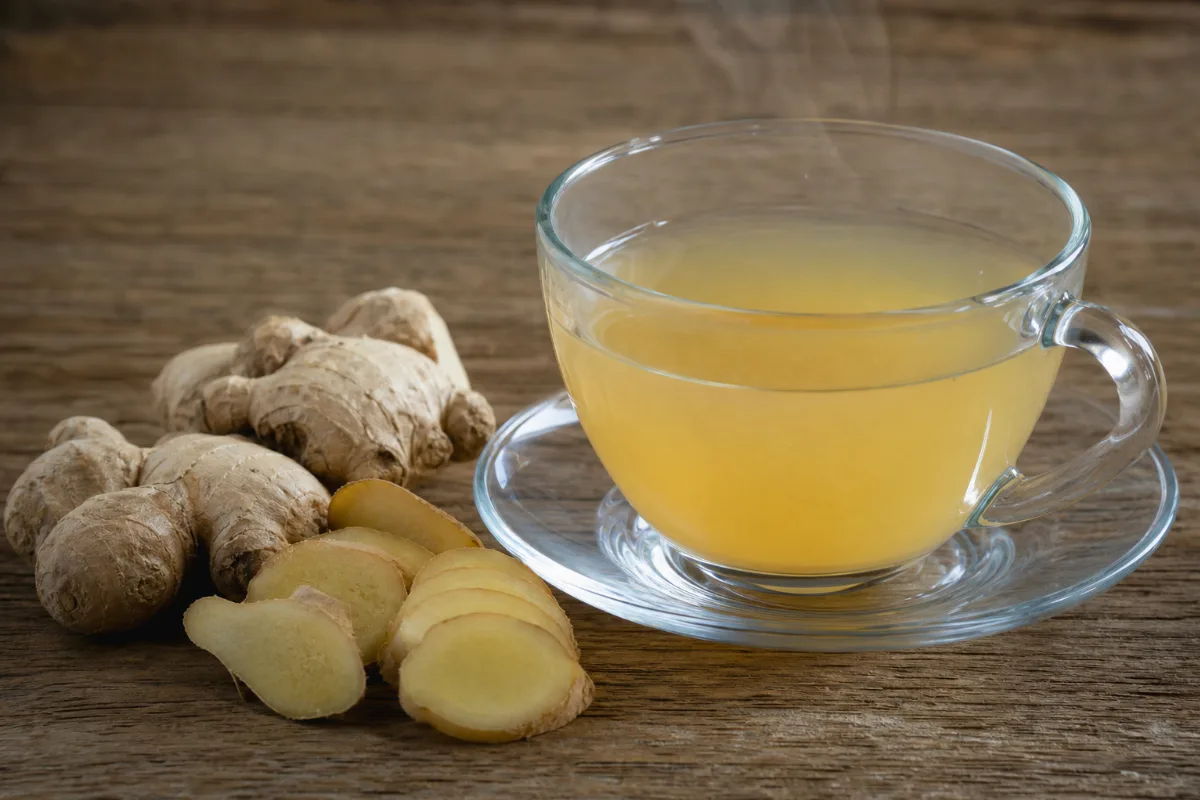
Herbal Teas & Extracts · Herbal tea
Ginger Tea
Zingiber officinale Roscoe · also called Ginger root tea, ginger infusion, jahe tea
Ginger tea is a warm drink made from ginger root and hot water. People drink it for upset stomach and nausea. Most of the nausea research used ginger capsules or powder, not tea, and only one small study tested tea itself. The main caution: if you take blood thinners or diabetes medicine, are pregnant, have gallstones or get heartburn, ask your doctor or pharmacist before drinking a lot of it.
General information, not medical advice. Last substantive update · Not medically reviewed. A named clinician has not signed off on this page. How this page is made
About Ginger Tea
Ginger tea is the root of ginger in hot water. It is caffeine-free on its own, but blends can add tea leaves. The best-studied use is nausea, yet nearly all of that research used capsules or powder with a measured amount of ginger. A cup of tea has an unmeasured amount, so the results do not simply carry over. Check cautions first if you take blood thinners or diabetes medicine, are pregnant, have gallstones or get heartburn.
What ginger tea is
Ginger tea is made from the root (rhizome) of Zingiber officinale Roscoe, in the ginger family, Zingiberaceae (name checked in GBIF). It can be made from fresh root, dried root or a tea bag.
The pungent compounds that give ginger its heat are gingerols; drying and heating turn some of them into shogaols. The amounts in a cup of tea were not found in the sources we read.
Ginger root is not a source of caffeine. That is general background, not something these studies tested. Some tea bags sold as ginger tea add black or green tea leaves or other herbs, which can change that, so read the label.
Tea, powder and capsules are not the same
Almost all the trials we read used capsules, powder or extracts with a known amount of ginger. We found one study of ginger tea itself: 100 women on chemotherapy, not randomised and not blinded.
A cup of tea is a water extract of the root and its strength varies, so the capsule results cannot be assumed for tea. NCCIH also notes that most nausea studies tested supplements, not foods or drinks.
This page gives no amounts, because the studies do not give a tea amount that has been shown to work. Ask a doctor or pharmacist if you want to know what is right for you.
What the research found
Nausea is the best-supported use. In pregnancy, pooled trials of capsules and powders found less nausea than placebo but not clearly less vomiting. After surgery, nausea scores were lower in the first hours. For chemotherapy, reviews disagree on capsules, and the one tea study was small and unblinded.
For pain, reviews of osteoarthritis and period pain are mixed or limited. For blood sugar, one review found lower levels and a newer one found no pooled effect. Migraine evidence is too weak to judge.
Ginger tea is not a treatment for any condition. If you have severe or lasting nausea, vomiting you cannot control, or pain, see a doctor.
At a glance
Traditional uses history, not proof
- Ginger root has long been used in food and medicine for upset stomach and nausea; the EU medicines agency lists powdered ginger root as a well-established medicine for motion-sickness nausea (the powder, not the tea).
- In many traditions a warm ginger drink is used for colds and sore throats; the EU lists common-cold symptoms among traditional uses of the root.
- Ginger is also used for cramps, loss of appetite and minor joint pain in traditional medicine.
Studied for research
- Nausea in early pregnancy (capsules and powders), moderate
- Chemotherapy nausea, tea itself, very low
- Chemotherapy nausea, capsules, mixed
- Nausea after surgery, low
- Motion-sickness nausea, low
- Knee osteoarthritis pain, low
- Period pain, low
- Blood sugar in type 2 diabetes, mixed
- Migraine, insufficient
Main compounds
- 6-Gingerol, the main pungent compound of fresh ginger
- 6-Shogaol, formed when ginger is dried or heated
- Zingerone, formed when ginger is cooked
Common forms
- Fresh sliced or grated root
- Dried ginger tea bag (check for added tea leaves or herbs)
- Ginger powder (used in many trials, not the same as a cup of tea)
- Capsule or extract (used in most nausea trials)
Research links: NCCIH: Ginger · EMA: Ginger root herbal medicine summary · LiverTox: Ginger · LactMed: Ginger · Ginger tea in chemotherapy nausea, study (abstract) · Ginger in pregnancy nausea, meta-analysis (abstract) · Ginger and warfarin, case report (abstract) · Research Library · Genes & Biomarkers Library
What it is and its history
- Accepted scientific name
- Zingiber officinale Roscoe
- Naming authority
- Roscoe
- Common names
- Ginger tea (English); Ginger root tea (English); Ginger infusion (English); Te de jengibre (Spanish); Jahe tea (Indonesian)
- Family or group
- Zingiberaceae
- Classification
- Plantae > Zingiberaceae > Zingiber > Zingiber officinale
- Native range
- Not read in the sources used for this page.
- Habitat
- Not read.
- What it looks like
- Part used: The rhizome (underground stem), fresh or dried.
- Cultivation
- Not read.
- Harvest and processing
- Not described in the sources read for this page. Drying and heating change the mix of compounds (see mechanisms and notes).
- Look-alikes and adulterants
- Name: Blends sold as ginger tea; Note: Some tea bags add black or green tea leaves, other herbs or flavourings. Check the label.; Name: Wild ginger (Asarum species); Note: An unrelated plant group with a similar name; not what ginger tea is made from.
- Sustainability and conservation
- Not assessed in the sources read.
Photographs
Traditional use and history history, not clinical proof
| Tradition or era | Documented use | Source |
|---|---|---|
| Ginger as a medicine | The EU medicines agency lists a long-standing, well-established use of powdered ginger root before travel for motion-sickness nausea, and traditional uses for mild stomach cramps, loss of appetite, minor joint pain and common-cold symptoms. These describe the powder, not a tea. | EMA ginger root monograph (2025), read in the ginger herb record, not re-opened for this page |
Traditional use shows how it was used. It does not show that it works or is safe today.
What is inside, and how it may work
What it contains and how those compounds act in cells and animals. Laboratory and animal mechanisms are not proven effects in people.
Main compounds
| Compound | Family | Where it is concentrated | Activity studied | Level of evidence |
|---|---|---|---|---|
| 6-Gingerol PubChem 442793 | gingerol (pungent compound) | Rhizome | The main pungent compound of fresh ginger. In test-tube and human gut-tissue work it blocked 5-HT3 receptors, a nausea pathway, at low micromolar concentrations. 39 30 | Laboratory research |
| 6-Shogaol PubChem 5281794 | shogaol (formed from gingerol) | Rhizome, more after drying or heating | Also blocked 5-HT3 receptors in the same test-tube and tissue work. How much ends up in a cup of tea was not found in the sources read. 39 30 | Laboratory research |
| Zingerone PubChem 31211 | phenolic ketone (forms when ginger is cooked) | Cooked ginger | Studied mainly in animals for brain-protective effects; not tied to the tea trials. 30 | Animal research |
Mechanisms, receptors and pathways
| Target or pathway | Gene or receptor | What was found | Level |
|---|---|---|---|
| Serotonin 5-HT3 receptor in the gut (candidate for the anti-nausea effect) | HTR3A / HTR3B | Ginger extracts and their pungent compounds (6-gingerol, 6-shogaol) concentration-dependently blocked human 5-HT3 receptors in cell lines and in human gut nerve tissue, in a non-competitive way. Test-tube and tissue evidence only; blood levels in people are lower than the concentrations tested. 39 | Laboratory research |
Absorption, metabolism and elimination
- Absorption
- Not studied for ginger tea in the sources read.
- Distribution
- Not read.
- Metabolism
- Not read.
- Elimination
- Not read.
- Bioavailability
- Not known for tea.
Isolated compounds versus whole extracts
Ginger has been tested in people almost only as whole preparations (powder, capsules, extracts, and once as tea), never as pure gingerol. A tea is a water extract of the root: it carries the water-soluble part and some of the pungent compounds, but the amount is not measured, so results from capsules cannot be carried over to a cup of tea.
Nutritional composition
Ginger tea is a very low-calorie drink and not a meaningful source of vitamins or minerals. Ginger root as a food is covered on its own pages.
1 moderate certainty2 mixed findings5 low certainty3 very low certainty1 not enough evidence
What was looked at
The 12 benefits and uses checked for Ginger Tea, each with how strong the evidence is. Tap one to open it.
- Nausea and vomiting in early pregnancy (trials used capsules and powders, not tea)Moderate certainty
- Chemotherapy nausea: ginger tea itselfVery low certainty
- Chemotherapy nausea: ginger capsules and powderMixed findings
- Nausea after an operation (trials used capsules and powders)Low certainty
- Motion-sickness nauseaLow certainty
- Knee osteoarthritis pain (capsules and extracts)Low certainty
- Period pain (primary dysmenorrhea)Low certainty
- Muscle soreness after hard exerciseVery low certainty
- Indigestion and stomach emptyingVery low certainty
- Blood sugar in type 2 diabetesMixed findings
- Inflammation blood markers (CRP, IL-6, TNF-alpha)Low certainty
- MigraineNot enough evidence
Lab markers tracked in the studies
Nausea scoreNumber of vomiting episodesExtra anti-sickness medicine usedNausea-related quality of lifePain scoreFasting blood glucoseC-reactive protein (CRP)
What is Ginger Tea good for?
The uses people ask about and how strong the evidence is for each. Read the certainty label first: most of these results come from ginger capsules and powders, not from a cup of tea.
Benefits, one by one
Each card is a research question, not a promise. Tap a goal to filter. Open a card to see the studies, doses and limits.
Nausea and vomiting in early pregnancy (trials used capsules and powders, not tea)
Moderate certaintyPooled trials find less nausea than placebo, and about the same as vitamin B6, but not clearly less vomiting. The trials used capsules or powders. We found no trial of ginger tea in pregnancy.
4 studiesNot shown on this page.
Studies, doses and limits
What the trials found
Viljoen 2014 (12 trials, 1,278 pregnant women, oral ginger) found less nausea than placebo. Hu 2022 (13 studies, 1,174 women) agreed for nausea and found no clear difference from vitamin B6. Tiani 2024 (umbrella review of 7 meta-analyses) found the same direction, with low-quality reviews.
Results
Less nausea than placebo; no clear change in vomiting; no significant extra miscarriage, heartburn or drowsiness in the pooled data, though the miscarriage estimate is very imprecise.
Effect sizes as reported
Nausea: mean difference 1.20 (95% CI 0.56 to 1.84) in Viljoen 2014; SMD 0.821 (95% CI 0.585 to 1.056) in Hu 2022. Miscarriage risk ratio 3.14 (95% CI 0.65 to 15.11).
Why this rating
Several pooled analyses point the same way, but the trials are small and differ, the pooled reviews were rated low or critically low quality by one group, and none tested tea. One umbrella review of the field (Crichton 2022) graded this benefit high; Tiani 2024 rated the reviews low. Rating: moderate for capsules and powders, insufficient for tea itself.
Form and dose studied
Not shown on this page.
Who was studied
Pregnant women with nausea; trials of capsules and powders.
Limits
No trial of tea. Products and trial lengths vary; vomiting not clearly reduced.
Why researchers looked
Nausea in pregnancy is common and many women want a non-drug option.
Traditional use
Ginger root has long been used for upset stomach and nausea, and the EU medicines agency lists powdered ginger root as a well-established medicine for motion-sickness nausea (the powder, not a tea).
Proposed mechanism Laboratory research
In test-tube and tissue work, ginger extracts and compounds from the root (6-gingerol, 6-shogaol) blocked human serotonin 5-HT3 receptors, a pathway that drives nausea. Whether the amount reaching the body from a cup of tea is enough has not been shown.
A proposed mechanism does not show that the effect happens in people.
See the safety file: the EU monograph advises avoiding ginger medicines in pregnancy as a precaution.
Chemotherapy nausea: ginger tea itself
Very low certaintyOne small study that was not randomised found lower nausea scores when ginger tea was added to usual anti-sickness medicine. A diet review rated the certainty of that result as very low.
2 studiesNot shown on this page.
Studies, doses and limits
What the trials found
Wazqar 2021: 100 women on cisplatin-based chemotherapy, ginger tea plus usual medicine versus usual medicine, 50 in each group. Scores were lower with tea, with statistically significant differences at the third to fifth measurements. Gala 2022 (systematic review of diet strategies) rated the tea effect as large but with very low certainty.
Results
Lower nausea, vomiting and retching scores with tea at some time points; no ginger-related side effects noted.
Effect sizes as reported
Not given as numbers in the abstract.
Why this rating
One small study that was not randomised or blinded; the tea strength is not described in the abstract; the review rated certainty very low.
Form and dose studied
Not shown on this page.
Who was studied
Women with gynecological cancers on cisplatin-based chemotherapy.
Limits
Not randomised, not blinded, one centre; results do not apply to other chemotherapy or to other people.
Why researchers looked
Chemotherapy sickness is hard to control, so people look for add-ons such as ginger tea.
Traditional use
Ginger root has long been used for upset stomach and nausea, and the EU medicines agency lists powdered ginger root as a well-established medicine for motion-sickness nausea (the powder, not a tea).
Proposed mechanism Laboratory research
In test-tube and tissue work, ginger extracts and compounds from the root (6-gingerol, 6-shogaol) blocked human serotonin 5-HT3 receptors, a pathway that drives nausea. Whether the amount reaching the body from a cup of tea is enough has not been shown.
A proposed mechanism does not show that the effect happens in people.
Do not use as a replacement for the anti-sickness medicine your cancer team prescribes. Ask them first.
Chemotherapy nausea: ginger capsules and powder
Mixed findingsReviews disagree. Some find less severe nausea and vomiting when capsules are added to usual medicine; another finds no overall difference. Results come from capsules, not tea.
3 studiesNot shown on this page.
Studies, doses and limits
What the trials found
Lin 2025 (35 trials, 22 of ginger capsules) found fewer people with severe nausea and vomiting when capsules were added to usual medicine. Choi 2022 (23 trials) found no overall difference in nausea or delayed vomiting, but less acute vomiting in one subgroup. Crichton 2024 (103 adults, placebo-controlled) found less delayed nausea and vomiting and better nausea-related quality of life, with no effect on acute nausea and vomiting.
Results
Mixed. Some benefit for delayed nausea in one trial and for severe nausea in one review; no overall effect in another review.
Effect sizes as reported
Lin 2025: grade 3 acute nausea risk ratio 0.19, high-grade vomiting 0.47. Crichton 2024: delayed nausea in cycle 3, 49% vs 79%.
Why this rating
Reviews reach different answers, trials differ in design, and the strongest review includes ginger-on-the-skin moxibustion trials. A good-quality 103-person placebo-controlled trial was positive for delayed nausea.
Form and dose studied
Not shown on this page.
Who was studied
Adults on moderately to highly sickness-causing chemotherapy.
Limits
Capsules and powders only; subgroup findings may be chance; tea not tested here.
Why researchers looked
Same reason as above; the supplement trials are where most of the research sits.
Traditional use
Ginger root has long been used for upset stomach and nausea, and the EU medicines agency lists powdered ginger root as a well-established medicine for motion-sickness nausea (the powder, not a tea).
Proposed mechanism Laboratory research
In test-tube and tissue work, ginger extracts and compounds from the root (6-gingerol, 6-shogaol) blocked human serotonin 5-HT3 receptors, a pathway that drives nausea. Whether the amount reaching the body from a cup of tea is enough has not been shown.
A proposed mechanism does not show that the effect happens in people.
No serious adverse events in the Crichton 2024 trial. Ask your cancer team before adding ginger supplements.
Nausea after an operation (trials used capsules and powders)
Low certaintyPooled trials find lower nausea scores with ginger than placebo in the first hours after surgery, but little change in vomiting or in how many people need anti-sickness medicine.
2 studiesNot shown on this page.
Studies, doses and limits
What the trials found
Zhu 2021 (14 trials, 1,417 people) and Lu 2022 (14 trials, 1,506 people) both found lower nausea with ginger than with placebo. Vomiting was not clearly changed in either review.
Results
Lower nausea scores in the first 12 hours; vomiting not clearly lower.
Effect sizes as reported
Lu 2022: nausea scores lower at 2, 6 and 12 hours (SMD -1.10, -1.54, -2.04). Zhu 2021: nausea severity MD -0.71 (95% CI -1.37 to -0.06).
Why this rating
Two reviews agree on nausea, but both note varied products, very wide intervals and a need for better trials; no tea trial.
Form and dose studied
Not shown on this page.
Who was studied
Adults having surgery.
Limits
Ginger products vary; vomiting results are not clear; tea not tested.
Why researchers looked
Nausea after surgery is common and delays recovery.
Traditional use
Ginger root has long been used for upset stomach and nausea, and the EU medicines agency lists powdered ginger root as a well-established medicine for motion-sickness nausea (the powder, not a tea).
Proposed mechanism Laboratory research
In test-tube and tissue work, ginger extracts and compounds from the root (6-gingerol, 6-shogaol) blocked human serotonin 5-HT3 receptors, a pathway that drives nausea. Whether the amount reaching the body from a cup of tea is enough has not been shown.
A proposed mechanism does not show that the effect happens in people.
Tell your surgeon about any ginger you use; see the safety file on bleeding.
Motion-sickness nausea
Low certaintyThe EU medicines agency lists powdered ginger root as a well-established use for motion-sickness nausea. The trial we read was a small spinning-drum test with a measured amount of powder.
2 studiesNot shown on this page.
Studies, doses and limits
What the trials found
Lien 2003: 13 volunteers with a history of motion sickness had less nausea, less tachygastria and lower vasopressin with ginger than placebo in a spinning-drum test.
Results
Less nausea; nausea started later and recovery was faster in the test.
Effect sizes as reported
Scores not given as numbers in the abstract beyond direction.
Why this rating
Small crossover trial of 13 people in an artificial test, plus a regulator monograph for the powder. Tea not tested.
Form and dose studied
Not shown on this page.
Who was studied
Healthy volunteers who get motion sickness.
Limits
13 people, spinning-drum test, powder not tea.
Why researchers looked
Ginger is a traditional travel remedy.
Traditional use
Ginger root has long been used for upset stomach and nausea, and the EU medicines agency lists powdered ginger root as a well-established medicine for motion-sickness nausea (the powder, not a tea).
Proposed mechanism Laboratory research
In test-tube and tissue work, ginger extracts and compounds from the root (6-gingerol, 6-shogaol) blocked human serotonin 5-HT3 receptors, a pathway that drives nausea. Whether the amount reaching the body from a cup of tea is enough has not been shown.
A proposed mechanism does not show that the effect happens in people.
None specific.
Knee osteoarthritis pain (capsules and extracts)
Low certaintyPooled trials find small pain relief, but a later review judged the evidence too weak to support oral ginger. More people stopped ginger than placebo.
2 studiesNot shown on this page.
Studies, doses and limits
What the trials found
Bartels 2015: 5 trials, 593 people, small pain and disability reduction versus placebo; more people stopped treatment with ginger. Araya-Quintanilla 2020: pooled oral capsules showed lower pain on a scale but the authors conclude the evidence is insufficient.
Results
Small average pain reduction; reviews disagree on whether it is worth recommending.
Effect sizes as reported
Bartels: pain SMD -0.30; stopping RR 2.33. Araya-Quintanilla: pain 7.88 mm lower on a 100 mm scale.
Why this rating
Two reviews with different conclusions, small trials of poor quality, no tea trials. NCCIH also says much of the research is of poor quality. An umbrella review graded the pain effect high, so the evidence is mixed.
Form and dose studied
Not shown on this page.
Who was studied
Adults with knee osteoarthritis.
Limits
Small trials; capsules and extracts; poor-quality reporting.
Why researchers looked
Ginger is anti-inflammatory in lab tests, so people try it for sore joints.
Traditional use
Ginger is used in many traditions for sore joints and rheumatism.
Proposed mechanism Laboratory research
Lab studies show ginger compounds can block inflammation chemicals; this is lab work, not proof in joints.
A proposed mechanism does not show that the effect happens in people.
More people stopped ginger than placebo in one review.
Period pain (primary dysmenorrhea)
Low certaintyPooled trials find less pain than placebo, and similar pain relief to ordinary painkillers. Safety data were rarely reported.
2 studiesNot shown on this page.
Studies, doses and limits
What the trials found
Moshfeghinia 2024: 12 trials pooled, less pain intensity and shorter pain than placebo; no difference from NSAIDs or exercise. Daily 2015: 4 placebo-controlled trials, lower pain scores.
Results
Lower pain scores than placebo; similar to NSAIDs in the trials that compared them.
Effect sizes as reported
Moshfeghinia: intensity SMD -1.13; duration SMD -0.29; versus NSAIDs SMD 0.01. Daily: -1.85 on a pain scale.
Why this rating
Several small trials pooled in two reviews, with high inconsistency and risk of bias; authors call the evidence suggestive. No tea trials.
Form and dose studied
Not shown on this page.
Who was studied
Women with painful periods.
Limits
High inconsistency; short trials; safety rarely reported.
Why researchers looked
Period cramps are common and many women prefer non-drug options.
Traditional use
Ginger is a folk remedy for cramps.
Proposed mechanism Insufficient
Not established in people.
A proposed mechanism does not show that the effect happens in people.
Safety data were infrequently reported.
Muscle soreness after hard exercise
Very low certaintyTwo small experiments found less soreness a day after hard arm exercise with daily ginger for 11 days.
1 studiesNot shown on this page.
Studies, doses and limits
What the trials found
Black 2010: two double-blind placebo-controlled experiments with 34 and 40 volunteers; raw and heated ginger each reduced next-day pain by about a quarter.
Results
About 25% lower pain at 24 hours; smaller effects on other measures.
Effect sizes as reported
Raw 25% (P = .041); heated 23% (P = .049).
Why this rating
Two small experiments from one team in healthy volunteers; induced soreness; not tea.
Form and dose studied
Not shown on this page.
Who was studied
Healthy young volunteers.
Limits
Tiny samples; not a medical condition.
Why researchers looked
Ginger is anti-inflammatory in rodents.
Traditional use
Not a main traditional claim for this use.
Proposed mechanism Animal research
Rodent work suggests anti-inflammatory effects; not shown here.
A proposed mechanism does not show that the effect happens in people.
None specific.
Indigestion and stomach emptying
Very low certaintyIn 11 people with functional indigestion, ginger sped up stomach emptying after a meal, but symptoms did not change.
1 studiesNot shown on this page.
Studies, doses and limits
What the trials found
Hu 2011: 11 patients with functional dyspepsia; stomach half-emptying time 12.3 vs 16.1 minutes (P <= 0.05); symptoms and gut hormones did not differ.
Results
Faster stomach emptying; no change in symptoms.
Effect sizes as reported
Median half-emptying 12.3 vs 16.1 minutes.
Why this rating
One tiny crossover trial; no symptom benefit; capsules, not tea.
Form and dose studied
Not shown on this page.
Who was studied
11 people with functional dyspepsia.
Limits
Single test meal; 11 people.
Why researchers looked
Ginger is a traditional remedy for upset stomach.
Traditional use
Used for indigestion in many traditions; the EU lists traditional use for mild stomach cramps and loss of appetite.
Proposed mechanism Human data
Ginger stimulated stomach contractions in the ultrasound test.
A proposed mechanism does not show that the effect happens in people.
Heartburn is a listed common effect; see the safety file.
Blood sugar in type 2 diabetes
Mixed findingsReviews disagree: one found lower fasting blood sugar and HbA1c; a newer one found no significant pooled effect.
2 studiesNot shown on this page.
Studies, doses and limits
What the trials found
Ebrahimzadeh 2022: 10 trials, lower fasting glucose and HbA1c, lower blood pressure, no change in blood fats. Schumacher 2024: 5 studies, no significant pooled effect.
Results
Lower in one pooled analysis, not significant in another.
Effect sizes as reported
Ebrahimzadeh: fasting glucose -18.81, HbA1c -0.57. Schumacher: not significant.
Why this rating
Two reviews disagree; very high inconsistency; capsules, not tea.
Form and dose studied
Not shown on this page.
Who was studied
Adults with type 2 diabetes.
Limits
Small, varied trials; people already take diabetes medicine.
Why researchers looked
Ginger compounds affect glucose handling in cells.
Traditional use
Not a main traditional claim.
Proposed mechanism Laboratory research
Cell work suggests effects on glucose uptake; not shown in people here.
A proposed mechanism does not show that the effect happens in people.
If you use diabetes medicine, ginger supplements could add to blood sugar lowering; see the safety file.
Inflammation blood markers (CRP, IL-6, TNF-alpha)
Low certaintyPooled trials of ginger supplements found lower inflammation markers on average, but these are lab numbers, not symptoms.
1 studiesNot shown on this page.
Studies, doses and limits
What the trials found
Rjabi 2025: 29 randomised trials; CRP -0.86 mg/L, TNF-alpha and IL-6 lower; antioxidant markers higher.
Results
Lower average CRP, TNF-alpha, IL-6.
Effect sizes as reported
CRP WMD -0.86 mg/L (95% CI -1.10 to -0.62).
Why this rating
Statistically significant but small shifts, high inconsistency, and markers are not symptoms.
Form and dose studied
Not shown on this page.
Who was studied
Adults, many with long-term conditions.
Limits
High inconsistency; not symptom outcomes.
Why researchers looked
Ginger is often called anti-inflammatory.
Traditional use
Used traditionally for pain and colds.
Proposed mechanism Animal research
Ginger compounds block inflammation chemicals in cells and animals.
A proposed mechanism does not show that the effect happens in people.
None specific.
Migraine
Not enough evidenceA 2026 review of eight trials says it is too uncertain whether ginger helps migraine, mostly because ginger was combined with other drugs.
1 studiesNot shown on this page.
Studies, doses and limits
What the trials found
Atkins 2026: eight randomised trials, 594 people; certainty low to very low.
Results
Too uncertain to conclude.
Effect sizes as reported
Not pooled for ginger alone.
Why this rating
Few trials, mostly ginger given with other drugs or herbs.
Form and dose studied
Not shown on this page.
Who was studied
People with migraine.
Limits
Few trials, combinations, low certainty.
Why researchers looked
Ginger is used for pain and nausea.
Traditional use
Listed among traditional uses in some herbal books.
Proposed mechanism Insufficient
Not established.
A proposed mechanism does not show that the effect happens in people.
None specific.
Connections to the rest of health
How Ginger Tea connects to the rest of our health knowledge graph. Every link says what kind of connection it is. A safety link (for example to the liver) is a warning, not a benefit. A study that merely mentions a topic never creates a benefit link.
Explore every connection: goals, body systems, organs, symptoms, genes
A. Wellness goals
| Connected to | Kind of connection | Evidence status | Context | Studies |
|---|---|---|---|---|
| Nausea Relief | Demonstrated clinical effect | Moderate certainty | Nausea and vomiting in early pregnancy (trials used capsules and powders, not tea): Pooled trials find less nausea than placebo, and about the same as vitamin B6, but not clearly less vomiting. The trials used capsules or powders. We found no trial of ginger tea in pregnancy. Nausea after an operation (trials used capsules and powders): Pooled trials find lower nausea scores with ginger than placebo in the first hours after surgery, but little change in vomiting or in how many people need anti-sickness medicine. | 38 19 36 9 42 25 |
| Pregnancy Support | Demonstrated clinical effect | Moderate certainty | Nausea and vomiting in early pregnancy (trials used capsules and powders, not tea): Pooled trials find less nausea than placebo, and about the same as vitamin B6, but not clearly less vomiting. The trials used capsules or powders. We found no trial of ginger tea in pregnancy. | 38 19 36 9 |
| Nausea Relief | Very low certainty | Chemotherapy nausea: ginger tea itself: One small study that was not randomised found lower nausea scores when ginger tea was added to usual anti-sickness medicine. A diet review rated the certainty of that result as very low. Motion-sickness nausea: The EU medicines agency lists powdered ginger root as a well-established use for motion-sickness nausea. The trial we read was a small spinning-drum test with a measured amount of powder. | 40 17 22 15 | |
| Cancer Support | Very low certainty | Chemotherapy nausea: ginger tea itself: One small study that was not randomised found lower nausea scores when ginger tea was added to usual anti-sickness medicine. A diet review rated the certainty of that result as very low. | 40 17 | |
| Nausea Relief | Mixed findings | Chemotherapy nausea: ginger capsules and powder: Reviews disagree. Some find less severe nausea and vomiting when capsules are added to usual medicine; another finds no overall difference. Results come from capsules, not tea. | 23 7 10 | |
| Cancer Support | Mixed findings | Chemotherapy nausea: ginger capsules and powder: Reviews disagree. Some find less severe nausea and vomiting when capsules are added to usual medicine; another finds no overall difference. Results come from capsules, not tea. | 23 7 10 | |
| Recovery | Demonstrated clinical effect | Low certainty | Nausea after an operation (trials used capsules and powders): Pooled trials find lower nausea scores with ginger than placebo in the first hours after surgery, but little change in vomiting or in how many people need anti-sickness medicine. | 42 25 |
| Travel | Low certainty | Motion-sickness nausea: The EU medicines agency lists powdered ginger root as a well-established use for motion-sickness nausea. The trial we read was a small spinning-drum test with a measured amount of powder. | 22 15 | |
| Joint Health | Low certainty | Knee osteoarthritis pain (capsules and extracts): Pooled trials find small pain relief, but a later review judged the evidence too weak to support oral ginger. More people stopped ginger than placebo. | 4 1 | |
| Pain Relief | Low certainty | Knee osteoarthritis pain (capsules and extracts): Pooled trials find small pain relief, but a later review judged the evidence too weak to support oral ginger. More people stopped ginger than placebo. | 4 1 | |
| Womens Health | Demonstrated clinical effect | Low certainty | Period pain (primary dysmenorrhea): Pooled trials find less pain than placebo, and similar pain relief to ordinary painkillers. Safety data were rarely reported. | 28 11 |
| Pain Relief | Demonstrated clinical effect | Low certainty | Period pain (primary dysmenorrhea): Pooled trials find less pain than placebo, and similar pain relief to ordinary painkillers. Safety data were rarely reported. | 28 11 |
| Pain Relief | Very low certainty | Muscle soreness after hard exercise: Two small experiments found less soreness a day after hard arm exercise with daily ginger for 11 days. | 5 | |
| Sports Recovery | Very low certainty | Muscle soreness after hard exercise: Two small experiments found less soreness a day after hard arm exercise with daily ginger for 11 days. | 5 | |
| Digestive Health | Very low certainty | Indigestion and stomach emptying: In 11 people with functional indigestion, ginger sped up stomach emptying after a meal, but symptoms did not change. | 18 | |
| Blood Sugar | Mixed findings | Blood sugar in type 2 diabetes: Reviews disagree: one found lower fasting blood sugar and HbA1c; a newer one found no significant pooled effect. | 13 33 | |
| Inflammation | Low certainty | Inflammation blood markers (CRP, IL-6, TNF-alpha): Pooled trials of ginger supplements found lower inflammation markers on average, but these are lab numbers, not symptoms. | 32 | |
| Headache | Not enough evidence | Migraine: A 2026 review of eight trials says it is too uncertain whether ginger helps migraine, mostly because ginger was combined with other drugs. | 3 |
B. Body systems
| Connected to | Kind of connection | Evidence status | Context | Studies |
|---|---|---|---|---|
| Digestive system | Adverse effect or risk | Low certainty | Heartburn, stomach upset and diarrhea are the common mild effects. Preparation or compound: Powder, capsules and extracts; tea not measured |
15 2 31 |
| Blood clotting | Drug or supplement interaction | Very low certainty | Possible added bleeding effect with warfarin or antiplatelet drugs: one case, one negative trial and lab tests. Preparation or compound: Ginger root |
21 20 26 41 34 |
| Pregnancy | Contraindication | Low certainty | EU monograph advises avoiding medicinal use as a precaution; trials for nausea found no clear harm but are small. Preparation or compound: Ginger root as medicine |
15 38 |
| Digestive System | Biological association | Moderate certainty | Studied for: Nausea and vomiting in early pregnancy (trials used capsules and powders, not tea) Studied for: Chemotherapy nausea: ginger tea itself | 38 19 36 9 40 17 23 7 10 42 25 22 15 18 |
| Nervous System | Biological association | Low certainty | Studied for: Motion-sickness nausea Studied for: Migraine | 22 15 3 |
| Musculoskeletal System | Biological association | Low certainty | Studied for: Knee osteoarthritis pain (capsules and extracts) Studied for: Muscle soreness after hard exercise | 4 1 5 |
| Reproductive System | Biological association | Low certainty | Studied for: Period pain (primary dysmenorrhea) | 28 11 |
| Endocrine System | Biological association | Mixed findings | Studied for: Blood sugar in type 2 diabetes | 13 33 |
| Immune System | Biological association | Low certainty | Studied for: Inflammation blood markers (CRP, IL-6, TNF-alpha) | 32 |
D. Symptoms
| Connected to | Kind of connection | Evidence status | Context | Studies |
|---|---|---|---|---|
| Nausea and vomiting in pregnancy | Moderate certainty | Pooled trials find less nausea than placebo; vomiting not clearly reduced. Preparation or compound: Ginger capsules and powders (not tea) |
38 19 36 | |
| Chemotherapy-induced nausea and vomiting | Very low certainty | Lower scores in one study; capsule reviews disagree. Preparation or compound: Ginger tea (one small non-randomised study) |
40 17 23 |
I. Biomarkers
| Connected to | Kind of connection | Evidence status | Context | Studies |
|---|---|---|---|---|
| Nausea score | Biological association | Low certainty | Measured in trials: lowered. A lab change is not the same as a health benefit. | 38 25 40 |
| Number of vomiting episodes | Biological association | Low certainty | Measured in trials: no-consistent-change. A lab change is not the same as a health benefit. | 38 25 7 |
| Extra anti-sickness medicine used | Biological association | Low certainty | Measured in trials: lowered. A lab change is not the same as a health benefit. | 42 25 |
| Nausea-related quality of life | Biological association | Low certainty | Measured in trials: improved. A lab change is not the same as a health benefit. | 10 |
| Pain score | Biological association | Low certainty | Measured in trials: lowered. A lab change is not the same as a health benefit. | 4 28 1 |
| Fasting blood glucose | Biological association | Mixed findings | Measured in trials: mixed. A lab change is not the same as a health benefit. | 13 33 |
| C-reactive protein (CRP) | Biological association | Low certainty | Measured in trials: lowered. A lab change is not the same as a health benefit. | 32 |
K. Biological pathways
| Connected to | Kind of connection | Evidence status | Context | Studies |
|---|---|---|---|---|
| Serotonin 5-HT3 receptor signalling | Preliminary mechanism | In vitro | Blocked by ginger extracts and 6-gingerol in test-tube and human gut tissue work. | 39 |
L. Active compounds
| Connected to | Kind of connection | Evidence status | Context | Studies |
|---|---|---|---|---|
| 6-Gingerol | Biological association | In vitro | The main pungent compound of fresh ginger. In test-tube and human gut-tissue work it blocked 5-HT3 receptors, a nausea pathway, at low micromolar concentrations. Preparation or compound: Rhizome |
39 30 |
| 6-Shogaol | Biological association | In vitro | Also blocked 5-HT3 receptors in the same test-tube and tissue work. How much ends up in a cup of tea was not found in the sources read. Preparation or compound: Rhizome, more after drying or heating |
39 30 |
| Zingerone | Biological association | Animal | Studied mainly in animals for brain-protective effects; not tied to the tea trials. Preparation or compound: Cooked ginger |
30 |
Each connection is stored with the ingredient, the connected record, the kind of connection, the evidence status, the supporting studies, the preparation or compound involved, and a review date (last reviewed October 25, 2026).
Evidence at a glance: what changed in 5 lab markers
Tap a number to show only those markers. Counts are markers, not people.
The evidence
The research centre for Ginger Tea. Every record here was checked against PubMed or the publisher's page; we never list a study we have not verified.
Evidence by outcome
Bars show how many studies we found for each outcome, not how well it works. People are added up across trials only (reviews are not added, to avoid double counting).
How we rate evidence
High certainty
Several well-run trials or reviews agree; further research is unlikely to change the picture much.
Moderate certainty
Good trials point the same way, but some doubt remains.
Low certainty
Small, short or inconsistent trials. The finding could change with better research.
Very low certainty
Very little or very weak human data. Treat as a possibility only.
Mixed findings
Trials or reviews disagree with each other.
Not enough evidence
Not enough human research to say either way.
Evidence against
Good research found no benefit, or found harm.
We take the reviewers' own risk-of-bias and GRADE statements where they exist, and otherwise judge from study size, design, consistency, directness and whether a product matches what is sold. Many publications do not make evidence high. Method note: We read the abstracts of 36 PubMed papers, plus the NCCIH, LiverTox and LactMed entries, checked the plant name in GBIF and compounds in PubChem. The EU monograph was read earlier for the ginger herb page and was not re-opened here. We could not read the German Commission E or WHO monographs.
Study library: every study we checked 42
| Study | Design | People | Product, dose, length | Result |
|---|---|---|---|---|
| Araya-Quintanilla 2020 Effectiveness of Ginger on Pain and Function in Knee Osteoarthritis: A PRISMA Systematic Review and Meta-Analysis. Pain Physician · PMID 32214292 |
Meta-analysis |
Knee osteoarthritis; 7 trials, 4 pooled | Oral ginger capsules; topical ginger unspecified Not shown on this page Varied · vs Placebo; standard treatment |
Seven trials met the criteria, four were pooled. Capsules versus placebo: pain 7.88 mm lower on a 100 mm scale (95% CI 3.85 to 11.92); knee function change was not significant. Topical ginger versus standard treatment: no significant difference. The authors conclude there is insufficient evidence for oral ginger for pain relief and function in knee osteoarthritis. Pain MD -7.88 mm (P=0.00); topical vs standard treatment not significant (Pain 3.85 to 11.92 as printed in the abstract) Methods, limits and fundingOutcomes: Pain, knee function Limitations: Authors describe the evidence as heterogeneous and of poor quality. Reaches a more cautious conclusion than Bartels 2015. Capsules; the topical comparison was ginger on the skin. Read: abstract |
| Aregawi 2025 Evaluation of adverse effects and tolerability of dietary ginger supplementation in patients with functional dyspepsia Curr Ther Res Clin Exp · PMID 40474983 · DOI |
Non randomised trial |
47 adults with functional dyspepsia (78.7% female) |
Ginger supplement rhizome Not shown on this page 8 weeks |
47 of 50 patients completed 8 weeks of ginger supplements. Mild, short-lived effects: bloating 14.9%, heartburn 12.8%, diarrhea 10.6%; none caused anyone to stop; 87.2% rated tolerability good or excellent; no severe adverse events. Methods, limits and fundingLimitations: Open-label, no placebo group, 50 people, patients had dyspepsia at the start so symptoms may be from the condition. Read: abstract |
| Atkins 2026 Ginger for the treatment and prevention of migraine headaches: a systematic review and meta-analysis of randomised controlled trials. BMJ Evid Based Med · PMID 42601183 · DOI |
Meta-analysis |
594 Patients with migraine in 8 RCTs |
Ginger (stand-alone or add-on) unspecified Not shown on this page Acute and 3-month prevention · vs Placebo or active drugs (ketoprofen, sumatriptan, valproate, amitriptyline) |
Eight randomised trials. The authors judge the volume of evidence limited and the certainty low or very low, so it is too uncertain whether ginger works as an acute or preventive treatment for migraine. Acute MD -1.27 (1 study); prevention pooled MD -3.18 (Acute -1.46 to -1.08; prevention -3.94 to -2.42) Methods, limits and fundingOutcomes: Headache severity, pain free or relief, attack frequency and duration, associated symptoms; GRADE certainty Limitations: Eight trials, 594 people; most tested ginger combined with other drugs or herbs; certainty low to very low. Not tea. Registration: PROSPERO CRD420251025768 Read: abstract |
| Bartels 2015 Efficacy and safety of ginger in osteoarthritis patients: a meta-analysis of randomized placebo-controlled trials. Osteoarthritis Cartilage · PMID 25300574 · DOI |
Meta-analysis |
593 Osteoarthritis patients; 5 RCTs |
Oral ginger unspecified Not shown on this page Varied · vs Placebo |
Five trials, 593 people with osteoarthritis. Oral ginger gave a small pain reduction (SMD -0.30, 95% CI -0.50 to -0.09) and a small reduction in disability (SMD -0.22, 95% CI -0.39 to -0.04) versus placebo. People on ginger were more than twice as likely to stop treatment (RR 2.33, 95% CI 1.04 to 5.22). Pain SMD -0.30 (P=0.005); disability SMD -0.22 (P=0.01); discontinuation RR 2.33 (Pain -0.50 to -0.09; disability -0.39 to -0.04; discontinuation 1.04-5.22) Methods, limits and fundingOutcomes: Pain, disability, withdrawals due to adverse events Limitations: Five small trials, several with inadequate intention-to-treat analysis; authors rate evidence moderate quality. Oral ginger supplements, not tea. A later review (Araya-Quintanilla 2020) reached a more cautious conclusion. Registration: PROSPERO CRD42011001777 Read: abstract |
| Black 2010 Ginger (Zingiber officinale) reduces muscle pain caused by eccentric exercise. J Pain · PMID 20418184 · DOI |
Controlled trial |
74 Healthy volunteers after arm exercise that induces soreness (34 raw-ginger study, 40 heated-ginger study) |
Raw ginger; heat-treated ginger rhizome Not shown on this page 11 days · vs Placebo |
Two double-blind placebo-controlled experiments in 74 volunteers. Eleven days of raw ginger and of heat-treated ginger each cut pain 24 hours after hard arm exercise by about a quarter versus placebo (raw 25%, P = .041; heated 23%, P = .049). Effects on other measures were smaller. Raw -0.78 SD (P=0.041); heated -0.57 SD (P=0.049) Methods, limits and fundingOutcomes: Pain 24 hours after exercise, plasma PGE2, arm volume, range of motion, strength Limitations: Two small experiments (34 and 40 volunteers) by the same team; induced muscle soreness in healthy people, not a medical condition. Ginger eaten daily as raw or heated ginger, not tea. Read: abstract |
| Chiang 2006 Ginger significantly decreased the oral bioavailability of cyclosporine in rats Am J Chin Med · PMID 17080549 · DOI |
Animal research animal |
rats | Ginger juice rhizome Not shown on this page single dose · vs Cyclosporine alone |
Ginger juice (5 ml/kg) given with oral cyclosporine lowered Cmax by 70.9% and AUC by 63.1%; given 2 hours earlier, by 51.4% and 40.3%. Intravenous cyclosporine was unchanged, so the effect is on absorption. Authors say patients on cyclosporine should be discouraged from ginger products. Methods, limits and fundingLimitations: Rats, ginger juice, single study; human relevance not shown. Read: abstract |
| Choi 2022 Effects of Ginger Intake on Chemotherapy-Induced Nausea and Vomiting: A Systematic Review of Randomized Clinical Trials. Nutrients · PMID 36501010 · DOI |
Meta-analysis |
Chemotherapy patients; 23 RCTs | Ginger supplements vs placebo or antiemetics rhizome (unspecified) Not shown on this page Subgroup: more than 4 days · vs Placebo or antiemetic agents |
23 randomised trials. Overall, acute nausea (p = 0.53), delayed nausea (p = 0.31), acute vomiting (p = 0.09) and delayed vomiting (p = 0.89) did not differ significantly between ginger and control groups. One subgroup had significantly less acute vomiting (odds ratio 0.30, 95% CI 0.12 to 0.79). Subgroup acute vomiting OR 0.30 (P=0.02) (95% CI 0.12-0.79) Methods, limits and fundingOutcomes: Acute and delayed nausea and vomiting Limitations: The subgroup finding comes from splitting trials by amount and length, so it may be chance. The authors say they could not confirm an effect on nausea or on delayed vomiting. Supplements, not tea. Read: abstract |
| Chuah 2011 The effects of ginger on gallbladder motility in healthy male humans J Neurogastroenterol Motil · PMID 22148111 · DOI |
Controlled trial |
19 healthy men aged about 21 |
Ginger capsules rhizome Not shown on this page single dose, crossover · vs Placebo (starch) |
No difference between ginger and placebo in gallbladder volume or ejection fraction after a test meal, or in bloating, fullness, nausea or discomfort scores. Methods, limits and fundingLimitations: 19 healthy young men, one single capsule dose; no people with gallstones, so it says nothing about gallstone safety. Read: abstract |
| Crichton 2022 Orally consumed ginger and human health: an umbrella review. Am J Clin Nutr · PMID 35147170 · DOI |
Systematic review |
24 systematic reviews of oral ginger in humans | Oral ginger of any type unspecified Not shown on this page Up to 3 months · vs Various |
Strongest evidence: pregnancy nausea (large effect, GRADE high), osteoarthritis pain (small effect, GRADE high), glycemic control (GRADE very low to moderate). Dysmenorrhea, postoperative nausea, chemotherapy vomiting, blood pressure, weight: low to moderate. Lipids: very low. Effect sizes graded: large (pregnancy nausea); small (osteoarthritis pain); small (lipids) Methods, limits and fundingOutcomes: Any health outcome; AMSTAR-2 and GRADE graded Limitations: Substantial inconsistency and poor reporting of products across the source reviews. Ginger here means oral forms mostly capsules, not tea; GRADE grades are the authors' own. Read: abstract |
| Crichton 2024 Effect of a Standardized Ginger Root Powder Regimen on Chemotherapy-Induced Nausea and Vomiting: A Multicenter, Double-Blind, Placebo-Controlled Randomized Trial. J Acad Nutr Diet · PMID 37699474 · DOI |
Controlled trial |
103 Chemotherapy-naive adults starting moderately to highly emetogenic chemotherapy, two Australian hospitals |
Standardized ginger root powder capsules (4 capsules, 84 mg/day gingerols and shogaols) rhizome (root) Not shown on this page 5 days from chemotherapy day, cycles 1 to 3 · vs Placebo, on top of usual antiemetics |
103 adults on moderately to highly sickness-causing chemotherapy. Ginger capsules improved nausea-related quality of life (P = 0.003), overall chemotherapy-sickness quality of life (P < 0.001), delayed nausea severity (P = 0.003) and fatigue (P = 0.002) versus placebo. Delayed nausea in cycle 3 was 49% vs 79% and delayed vomiting 2% vs 23%. No effect on anticipatory or acute nausea and vomiting, anxiety or depression. No serious adverse events. Nausea QoL change P=0.003, partial eta squared 0.09; overall CINV QoL P<0.001 Methods, limits and fundingOutcomes: Nausea-related quality of life (primary); delayed nausea and vomiting; fatigue; nutrition Limitations: Two hospitals, 103 people; many outcomes were tested (the authors used a stricter P = 0.003 cut-off). Capsules with a measured amount of ginger compounds, not tea. Funding not recorded here. Read: abstract |
| Daily 2015 Efficacy of Ginger for Alleviating the Symptoms of Primary Dysmenorrhea: A Systematic Review and Meta-analysis of Randomized Clinical Trials. Pain Med · PMID 26177393 · DOI |
Meta-analysis |
Women with primary dysmenorrhea; 7 RCTs, 4 pooled | Ginger powder rhizome Not shown on this page First 3-4 days of the menstrual cycle · vs Placebo |
Four placebo-controlled trials pooled: significantly lower pain scores (-1.85, 95% CI -2.87 to -0.84, P = 0.0003) in the first 3 to 4 days of the period. Pain VAS -1.85 (P=0.0003) (95% CI -2.87 to -0.84) Methods, limits and fundingOutcomes: Pain on visual analogue scale Limitations: Only four trials pooled; the authors call the evidence suggestive. Six of seven trials had low to moderate risk of bias. Powder, not tea. Read: abstract |
| Drugs and Lactation Database (LactMed) 2026 Ginger (LactMed) LactMed (record dated 2026 Oct 15) · PMID 30000845 |
Authoritative guidance |
Ginger rhizome |
Abstract read via PubMed: very limited data on ginger in nursing mothers or infants; GRAS as a food flavouring including during lactation; as a medicinal generally well tolerated, with occasional bad taste, heartburn, abdominal discomfort, weight gain, headache, dry mouth and nausea; states 'ginger can increase bleeding risk when taken with warfarin'. A systematic review found weak evidence that ginger may raise milk supply after vaginal birth but not after caesarean. Methods, limits and fundingLimitations: Summary text only; it cites no numbers for the warfarin statement here. Read: summary-only | |
| Ebrahimzadeh 2022 The effect of ginger supplementation on metabolic profiles in patients with type 2 diabetes mellitus: A systematic review and meta-analysis of randomized controlled trials. Complement Ther Med · PMID 35031435 · DOI |
Meta-analysis |
Adults with type 2 diabetes; 10 articles | Ginger supplements unspecified Not shown on this page Varied · vs Control |
Ten trials in type 2 diabetes. Lower fasting glucose (weighted mean difference -18.81, 95% CI -28.70 to -8.92) and HbA1c (-0.57, 95% CI -0.93 to -0.20), and lower blood pressure. No change in triglycerides or cholesterol. FBS WMD -18.81; HbA1c WMD -0.57; SBP -4.20; DBP -1.61 (FBS -28.70 to -8.92 (I2 77.4%); HbA1c -0.93 to -0.20 (I2 88.6%)) Methods, limits and fundingOutcomes: Fasting glucose, HbA1c, blood pressure, lipids Limitations: Very high inconsistency between trials; small trials of mixed quality; capsules and powders. A newer analysis (Schumacher 2024) disagrees. Read: abstract |
| Egashira 2012 Food-drug interaction of tacrolimus with pomelo, ginger, and turmeric juice in rats Drug Metab Pharmacokinet · PMID 22123127 · DOI |
Animal research animal |
rats | Ginger juice rhizome · vs Water |
Tacrolimus AUC was significantly larger in rats pre-treated with ginger juice than with water (also with turmeric, grapefruit, pomelo). Methods, limits and fundingLimitations: Rats; the abstract gives no ginger-specific numbers; human relevance not shown. Read: abstract |
| European Medicines Agency 2025 EU herbal monograph on Zingiber officinale Roscoe, rhizoma, Final Revision 1 (EMA/HMPC/885789/2022) EMA monograph, adopted 7 May 2025 · Source |
Authoritative guidance |
Ginger rhizome powder, tinctures rhizome |
Reused from the ginger herb record, where the monograph text was read; it was not re-opened for this page. Well-established use: powdered ginger root before travel for motion-sickness nausea and vomiting (adults). Contraindication: hypersensitivity only. Not recommended under 18 years. No interactions known. Pregnancy: moderate amount of data (300 to 1000 outcomes) showing no malformation or foetal toxicity, but avoiding use is preferable as a precaution; lactation not recommended. Common effects (1 in 100 to under 1 in 10): stomach upset, belching, indigestion, heartburn, nausea. No overdose reported. In pregnant rodents ginger powder or water extracts raised embryo resorption at doses from slightly above to a few times higher than human medicine doses. Adequate reproductive, genotoxicity and carcinogenicity tests were not done. Methods, limits and fundingLimitations: Concerns the powder and extracts used as medicines, not tea. Not re-opened in this build. Read: summary-only | |
| GBIF Secretariat 2026 GBIF Backbone Taxonomy: Zingiber officinale Roscoe (usageKey 2757280) API / web page · Source |
Database record n/a |
n/a | n/a |
Match on 2026-10-25: accepted species, exact match, family Zingiberaceae, order Zingiberales. Methods, limits and fundingOutcomes: n/a Limitations: Name database only; synonym list not reviewed. Read: full-text |
| Gala 2022 Dietary strategies for chemotherapy-induced nausea and vomiting: A systematic review. Clin Nutr · PMID 36067586 · DOI |
Systematic review |
21 Adults having chemotherapy (21 studies of diet strategies) |
Dietary strategies including ginger tea tea Not shown on this page · vs No intervention, usual care or other strategies |
The best-supported strategy was personal nutrition education and support from a dietitian (GRADE: high). The authors found a statistically significant, very large positive effect of ginger tea on overall nausea and vomiting severity, but their certainty in that effect was very low. Ginger tea: large effect, certainty very low (authors) Methods, limits and fundingOutcomes: Incidence and severity of chemotherapy-induced nausea and vomiting Limitations: The ginger tea finding rests on the single small study listed above. Abstract only. Funding and conflicts: Funding not stated in the abstract. Read: abstract |
| Hu 2011 Effect of ginger on gastric motility and symptoms of functional dyspepsia. World J Gastroenterol · PMID 21218090 · DOI |
Controlled trial |
11 Patients with functional dyspepsia, crossover, Taiwan |
Ginger capsules unspecified Not shown on this page Single test meal · vs Placebo (crossover) |
Eleven patients were studied twice. Stomach emptying was faster after ginger than placebo (median half-emptying time 12.3 vs 16.1 minutes, P <= 0.05). Fundus size, symptoms and gut hormones did not differ. Half-emptying 12.3 min (8.5-17.0) vs 16.1 min (8.3-22.6), P<=0.05 (Ranges given as min-max, not confidence intervals) Methods, limits and fundingOutcomes: Gastric half-emptying time (ultrasound), antral contractions, symptoms, GLP-1, motilin, ghrelin Limitations: Only 11 people with functional dyspepsia, single test meal; symptoms did not change. Capsules, not tea. Read: abstract |
| Hu 2022 Effect of ginger in the treatment of nausea and vomiting compared with vitamin B6 and placebo during pregnancy: a meta-analysis. J Matern Fetal Neonatal Med · PMID 31937153 · DOI |
Meta-analysis |
1174 Pregnant women, 13 RCTs |
oral ginger (preparations varied between trials) rhizome (unspecified) Not shown on this page Varied · vs Placebo; vitamin B6 |
Versus placebo, ginger improved general symptoms and nausea (nausea SMD 0.821, 95% CI 0.585 to 1.056) but not vomiting. Versus vitamin B6 there was no significant difference on any outcome. vs placebo: general symptoms OR 7.475; nausea SMD 0.821; vomiting SMD 0.549 (not significant). vs B6: all not significant (General symptoms OR 4.133-13.520; nausea SMD 0.585-1.056; vomiting SMD -0.268 to 1.365; vs B6 nausea SMD -0.102 to 0.500) Methods, limits and fundingOutcomes: General NVP symptoms, nausea severity, vomiting Limitations: High inconsistency between trials for vomiting and for the vitamin B6 comparison; the authors ask for larger, better-designed trials. Products were supplements, not tea. Read: abstract |
| Jiang 2005 Effect of ginkgo and ginger on the pharmacokinetics and pharmacodynamics of warfarin in healthy subjects Br J Clin Pharmacol · PMID 15801937 · DOI |
Controlled trial |
12 healthy men |
Ginger herbal product, 'recommended doses' rhizome 7 days before and 7 days after a single 25 mg warfarin dose · vs Warfarin alone |
INR and platelet aggregation were not affected by ginger alone. Ratio of S-warfarin clearance with ginger vs warfarin alone 1.05 (90% CI 0.97-1.13); R-warfarin 1.02 (0.95-1.10); INR AUC ratio 1.01 (0.93-1.15). No effect on CYP2C9 marker. Authors conclude ginger at recommended doses did not significantly affect clotting status or warfarin pharmacokinetics or pharmacodynamics in healthy subjects. INR AUC ratio 1.01 (0.93-1.15) Methods, limits and fundingOutcomes: Warfarin PK/PD, INR, platelet aggregation Limitations: 12 healthy men, single warfarin dose, 7 days of ginger before; open-label crossover. Not patients on long-term warfarin; short exposure; one commercial product. Read: abstract |
| Krüth 2004 Ginger-associated overanticoagulation by phenprocoumon Ann Pharmacother · PMID 14742762 · DOI |
Case report |
1 76-year-old woman on phenprocoumon |
Ginger products (unspecified) rhizome Several weeks |
A 76-year-old woman on long-term phenprocoumon (a warfarin-type drug) with stable INR began ginger products; weeks later INR rose up to 10 with nosebleed. INR normalised after ginger was stopped and vitamin K1 given. Authors rate causality 'probable'. Methods, limits and fundingOutcomes: INR, bleeding Limitations: One case; ginger product, dose and other factors not stated in the abstract. Read: abstract |
| Lien 2003 Effects of ginger on motion sickness and gastric slow-wave dysrhythmias induced by circular vection. Am J Physiol Gastrointest Liver Physiol · PMID 12576305 · DOI |
Controlled trial |
13 Volunteers with a history of motion sickness, spinning-drum (circular vection) test, Taiwan |
Ginger unspecified Not shown on this page Single session · vs Placebo (crossover) |
In 13 volunteers with a history of motion sickness, pre-treatment with ginger reduced nausea, abnormal fast stomach rhythm (tachygastria) and the stress hormone vasopressin during a spinning-drum test. Nausea started later and recovery was faster. Not given in abstract Methods, limits and fundingOutcomes: Nausea score 0-3, stomach rhythm (electrogastrogram), plasma vasopressin Limitations: Only 13 volunteers who get motion sickness, a spinning-drum test and not real travel. Ginger given as a measured amount of powder, not tea. Read: abstract |
| Lin 2025 Efficacy and Safety of Ginger on Chemotherapy-Induced Nausea and Vomiting: A Systematic Review and Meta-analysis of Randomized Controlled Trials. Cancer Nurs · PMID 38625733 · DOI |
Meta-analysis |
Chemotherapy patients; 35 RCTs (22 ginger capsules, 13 ginger-partitioned moxibustion) | Ginger capsules, plus ginger-partitioned moxibustion (ginger slice heated on the skin) rhizome (unspecified) Not shown on this page Varied · vs Standard antiemetics alone or placebo |
Ginger capsules added to standard anti-sickness drugs reduced the number of people with grade 3 acute nausea (risk ratio 0.19, P < .001) and with high-grade overall vomiting (risk ratio 0.47, P = .01). The authors say it enhanced the management of severe nausea and vomiting, particularly with highly emetogenic chemotherapy. Grade 3 acute nausea RR 0.19 (P<0.001); high-grade overall vomiting RR 0.47 (P=0.01) Methods, limits and fundingOutcomes: Incidence and severity of CINV Limitations: Includes 13 trials of ginger-partitioned moxibustion (ginger placed on the skin and heated), which is not drinking ginger. The abstract does not give patient numbers or the risk of bias. Tested capsules, not tea. Pooled results conflict with another review (Choi 2022). Registration: PROSPERO CRD4202232104 Read: abstract |
| LiverTox 2024 Ginger (LiverTox) LiverTox: Clinical and Research Information on Drug-Induced Liver Injury (entry dated 2024 Feb 10) · PMID 38381909 |
Authoritative guidance |
Ginger rhizome |
Opening statement read via PubMed: ginger is generally recognized as safe (GRAS) and has not been linked to serum aminotransferase elevations nor to instances of clinically apparent liver injury. Methods, limits and fundingLimitations: Only the abstract-level opening statement was read; the full web page blocks automated access, so any likelihood score or reference list was not read. Read: summary-only | |
| Lu 2022 The preventive and relieving effects of ginger on postoperative nausea and vomiting: A systematic review and meta-analysis of randomized controlled trials. Int J Nurs Stud · PMID 34700257 · DOI |
Meta-analysis |
1506 Surgical patients; 14 RCTs |
oral ginger (preparations varied between trials) unspecified Not shown on this page Varied · vs Placebo |
14 trials, 1,506 people. Nausea scores were lower with ginger than with placebo at 2, 6 and 12 hours after surgery. Vomiting, nausea and vomiting combined, and anti-sickness drug use did not differ significantly (except in the recovery room). Nausea SMD -1.10 at 2 h; -1.54 at 6 h; -2.04 at 12 h (2 h -1.95 to -0.25; 6 h -3.05 to -0.03; 12 h -3.67 to -0.41) Methods, limits and fundingOutcomes: Nausea score, vomiting episodes, antiemetic use Limitations: Very wide intervals; ginger products varied; the authors ask for higher-quality trials. Not tea. Registration: PROSPERO CRD42020220916 Read: abstract |
| Lumb 1994 Effect of dried ginger on human platelet function Thromb Haemost · PMID 8165628 |
Controlled trial |
8 healthy men |
Dried ginger capsules rhizome Not shown on this page Single dose, tested at 3 h and 24 h · vs Placebo |
In healthy men, dried ginger alone made no difference to bleeding time, platelet count, thromboelastography or whole-blood platelet aggregometry at 3 and 24 hours versus placebo. Methods, limits and fundingOutcomes: Platelet function Limitations: Eight healthy men; single dose; short. Cannot speak to repeated or higher doses or to fresh ginger. Read: abstract |
| McEwen 2015 The influence of herbal medicine on platelet function and coagulation: a narrative review Semin Thromb Hemost · PMID 25839871 · DOI |
Systematic review |
Herbal medicines rhizome |
Lists ginger among herbs reported to reduce platelet aggregation (in vitro studies showed promise) and says repeat platelet and coagulation testing may be needed in patients on warfarin after herbs are excluded. Ginger is not among the herbs it names as interacting with warfarin, clopidogrel or aspirin. Methods, limits and fundingLimitations: Narrative review, abstract only. Read: abstract | |
| Moshfeghinia 2024 Ginger for Pain Management in Primary Dysmenorrhea: A Systematic Review and Meta-Analysis. J Integr Complement Med · PMID 38770631 · DOI |
Meta-analysis |
Women with primary dysmenorrhea; 24 studies, 12 pooled | Ginger unspecified Not shown on this page Usually the first days of the period · vs Placebo; NSAIDs; exercise |
12 trials pooled. Ginger gave less pain intensity (SMD -1.13, 95% CI -1.59 to -0.68) and a shorter pain duration (SMD -0.29, 95% CI -0.46 to -0.12) than placebo. No difference from anti-inflammatory painkillers (NSAIDs) or exercise for pain intensity. Intensity SMD -1.13; duration SMD -0.29; vs NSAIDs SMD 0.01 (Intensity -1.59 to -0.68 (I2 81.05%); duration -0.46 to -0.12; vs NSAIDs -0.24 to 0.25) Methods, limits and fundingOutcomes: Pain intensity and duration Limitations: High inconsistency between trials; risk of bias in many; safety data infrequently reported. Mostly powders and capsules during the first days of the period, not tea. Registration: PROSPERO CRD42023418001 Read: abstract |
| Mustafa 2024 First report of aflatoxin and ochratoxin contamination in ginger collected from different agroclimatic zones from Punjab, Pakistan Toxicon · PMID 39433257 · DOI |
Other in-vitro |
ginger samples | Raw and dried ginger rhizome rhizome |
All raw and commercial powder ginger samples were contaminated with aflatoxin B1 (29.88-1060.12 ug/kg), many above the authors' stated permissible limits; ochratoxin A 0.05-3.42 ug/kg; lower-altitude samples more contaminated. Authors advise cooler storage. Methods, limits and fundingLimitations: One region (Punjab, Pakistan); 'permissible limit' not specified in the abstract; says nothing about ginger sold elsewhere. Read: abstract |
| NCBI PubChem 2026 PubChem compound records: 6-gingerol (CID 442793), 6-shogaol (CID 5281794), zingerone (CID 31211) API / web page · Source |
Database record n/a |
n/a | n/a |
Names and formulas confirmed by the PubChem API on 2026-10-25: 6-gingerol C17H26O4, shogaol C17H24O3, zingerone C11H14O3. Methods, limits and fundingOutcomes: n/a Limitations: Identity check only; says nothing about activity. Read: full-text |
| National Center for Complementary and Integrative Health (NIH) 2025 Ginger (NCCIH Herbs at a Glance) NCCIH web page (last updated February 2025) · Source |
Authoritative guidance |
Ginger (Zingiber officinale) rhizome |
Page text read. Says ginger has been taken safely by mouth as a dietary supplement in many research studies. Oral side effects named: abdominal discomfort, heartburn, diarrhea, mouth or throat irritation. Says ginger supplements in pregnancy 'may be safe' and to consult a provider; little is known about safety while breastfeeding; tells people on medicines to talk to a provider because herbs and medicines can interact. The page did not mention blood thinners, gallstones or doses. Read again on 2026-10-25 for this page (last updated February 2025). It also says much of the knee-osteoarthritis research was poor quality. Methods, limits and fundingLimitations: Consumer fact sheet; no numbers or frequencies. Silent on bleeding, gallstones and dosing. Read: full-text | |
| Rjabi 2025 Antioxidant and anti-inflammatory effects of ginger supplementation in adults: a GRADE-assessed systematic review and dose-response meta-analysis of randomised controlled trials. Inflammopharmacology · PMID 41123858 · DOI |
Meta-analysis |
Adults in 29 RCTs, many with underlying health conditions | Ginger supplements unspecified Not shown on this page Various · vs Placebo or control |
29 randomised trials. Ginger supplements lowered CRP (-0.86 mg/L, 95% CI -1.10 to -0.62), TNF-alpha, IL-6 and malondialdehyde, and raised total antioxidant capacity and superoxide dismutase. The authors say to interpret cautiously because of high heterogeneity. CRP WMD -0.86 mg/L; TNF-alpha -1.90 pg/mL; IL-6 -1.15 pg/mL; TAC +0.22 mmol/L; MDA -0.76 umol/L; SOD +48.12 U/L (CRP -1.10 to -0.62; TNF-alpha -2.61 to -1.18; IL-6 -1.90 to -0.41; TAC 0.06 to 0.38; MDA -1.19 to -0.33; SOD 30.57 to 65.58) Methods, limits and fundingOutcomes: CRP, TNF-alpha, IL-6, total antioxidant capacity, malondialdehyde, superoxide dismutase Limitations: High inconsistency; the abstract does not give a GRADE rating for each outcome. These are blood markers, not symptoms. Supplements, not tea. Registration: PROSPERO CRD420251011148 Read: abstract |
| Schumacher 2024 The effect of oral supplementation of ginger on glycemic control of patients with type 2 diabetes mellitus - A systematic review and meta-analysis. Clin Nutr ESPEN · PMID 39053695 · DOI |
Meta-analysis |
Adults with type 2 diabetes; 5 studies | Ginger powder capsules twice daily rhizome powder Not shown on this page 4 to 12 weeks · vs Placebo or control |
Five studies in type 2 diabetes. The pooled analysis found no significant effect on fasting blood glucose or HbA1c, although two single studies showed a drop in fasting glucose. Not significant when pooled Methods, limits and fundingOutcomes: Fasting blood sugar (FBS), HbA1c Limitations: Five studies only. Disagrees with the larger 2022 pooled analysis, so the blood sugar finding is not settled. Capsules of powder. Read: abstract |
| Talasaz 2025 Pharmacokinetic and pharmacodynamic interactions between food or herbal products and oral anticoagulants: evidence review, practical recommendations, and knowledge gaps Semin Thromb Hemost · PMID 39288907 · DOI |
Systematic review |
Food and herbal products with oral anticoagulants rhizome |
Authors say RCT evidence is slim and conclusions limited; their summary states that ginger, even in small quantities, and mango (more than one fruit) can potentiate warfarin effects. The abstract does not say which studies this rests on. Methods, limits and fundingLimitations: Abstract only read; the authors themselves note small studies, conflicting results and variable herbal product content. Read: abstract | |
| Tan 2021 Warfarin and food, herbal or dietary supplement interactions: A systematic review Br J Clin Pharmacol · PMID 32478963 · DOI |
Systematic review |
149 warfarin users |
Foods, herbs and supplements with warfarin rhizome |
149 articles covering 78 foods, herbs or supplements; the conclusion names ginger among items that clinicians should know raise bleeding risk with warfarin, alongside ginkgo, green tea, St John's wort and others. Details specific to ginger were not in the abstract. Methods, limits and fundingLimitations: Abstract only read; reports are mostly case reports and small studies of mixed quality. Read: abstract |
| Tiani 2024 The use of ginger bioactive compounds in pregnancy: an evidence scan and umbrella review of existing meta-analyses Adv Nutr · PMID 39343171 · DOI |
Umbrella review |
Seven meta-analyses of ginger for nausea and vomiting of pregnancy (22 independent studies) | Dietary ginger preparations (mixed) rhizome Varied · vs Placebo or conventional medicines |
Most of the seven meta-analyses found significantly less nausea than placebo, or results equal to usual treatment, and no evidence of significant side effects. The quality of the meta-analyses ranged from critically low to low. Direction reported; the authors call the studies heterogeneous and of low quality Methods, limits and fundingOutcomes: Nausea and vomiting in pregnancy; maternal and newborn outcomes Limitations: Dietary preparations were pooled, so it does not say what a cup of tea does. Quality of the pooled reviews is low. Funding and conflicts: Funding not stated in the abstract. Read: abstract |
| Vaes 2000 Interactions of warfarin with garlic, ginger, ginkgo, or ginseng: nature of the evidence Ann Pharmacother · PMID 11144706 · DOI |
Systematic review |
Ginger (and garlic, ginkgo, ginseng) rhizome |
Searches to 1999 concluded evidence is lacking for an interaction of warfarin with garlic or ginger; true risks hard to characterise because of limited reports. Methods, limits and fundingLimitations: Dated (searches to 1999); before the 2004 phenprocoumon case. Read: abstract | |
| Viljoen 2014 A systematic review and meta-analysis of the effect and safety of ginger in the treatment of pregnancy-associated nausea and vomiting. Nutr J · PMID 24642205 · DOI |
Meta-analysis |
1278 Pregnant women with nausea and vomiting, 12 RCTs |
oral ginger (preparations varied between trials) rhizome (unspecified) Not shown on this page Varied · vs Placebo or vitamin B6 |
Nausea improved versus placebo (mean difference 1.20, 95% CI 0.56 to 1.84); vomiting episodes did not significantly change (p = 0.06). No significant extra risk of spontaneous abortion (RR 3.14, 95% CI 0.65 to 15.11, a very imprecise estimate), heartburn or drowsiness. Nausea MD 1.20; vomiting MD 0.72 (not significant) (Nausea 95% CI 0.56-1.84; vomiting 95% CI -0.03 to 1.46; spontaneous abortion RR 3.14, 95% CI 0.65-15.11) Methods, limits and fundingOutcomes: Nausea symptoms, vomiting episodes, miscarriage, heartburn, drowsiness Limitations: Authors call the evidence low quality: few studies, variable outcome reporting. The wide interval on miscarriage means a risk cannot be ruled out. The trials used ginger capsules, powders or extracts, not tea. Registration: PROSPERO CRD42011001237 Read: abstract |
| Walstab 2013 Ginger and its pungent constituents non-competitively inhibit activation of human recombinant and native 5-HT3 receptors of enteric neurons Neurogastroenterol Motil · PMID 23490018 · DOI |
In vitro + ex vivo human tissue in-vitro |
HEK293 cells with human 5-HT3A or 5-HT3AB receptors; human submucous plexus preparations | Ginger extracts, 6-gingerol, 6-shogaol rhizome Not shown on this page acute · vs serotonin / 2-methyl-5-HT |
Concentration-dependent, non-competitive inhibition of both receptors; ginger extract did not displace the radioligand; 6-gingerol blocked 5-HT3 responses in human enteric neurons without general neurotoxicity. see results Methods, limits and fundingOutcomes: Calcium influx; binding Limitations: Test-tube and tissue work; blood levels in people are lower than the micromolar range tested. Read: abstract |
| Wazqar 2021 A Quasi-Experimental Study of the Effect of Ginger Tea on Preventing Nausea and Vomiting in Patients With Gynecological Cancers Receiving Cisplatin-Based Regimens. Cancer Nurs · PMID 33867429 · DOI |
Quasi experimental (not randomised) |
100 Women with gynecological cancers on cisplatin-based chemotherapy |
Ginger tea added to standard anti-sickness medicine rhizome (tea) Not shown on this page Over the chemotherapy cycle (measured at five time points) · vs Standard anti-sickness medicine alone (50 vs 50) |
Total scores were lower in the ginger tea group at every measurement. The differences between groups were statistically significant at the third (P < .05), fourth (P < .01) and fifth (P < .05) measurements. No ginger-related side effects were noted. Lower nausea, vomiting and retching scores with tea at later time points Methods, limits and fundingOutcomes: Nausea, vomiting and retching on the Modified Rhodes Index Limitations: Not randomised and not blinded (people knew they were drinking ginger tea). The abstract does not say how the tea was made or how much ginger it held, and gives no exact scores. It is the only trial of tea itself that we found. Funding and conflicts: The authors report no funding or conflicts of interest. Read: abstract |
| Young 2006 Synergistic effect of ginger and nifedipine on human platelet aggregation: a study in hypertensive patients and normal volunteers Am J Chin Med · PMID 16883626 · DOI |
Clinical lab |
volunteers and hypertensive patients | Ginger with nifedipine rhizome Not shown on this page · vs Nifedipine alone |
Ginger or aspirin each added to the platelet-lowering effect of the blood-pressure drug nifedipine in volunteers and hypertensive patients, in a laboratory platelet-aggregation test. The authors suggest the combination might be of value for heart disease; it is not a bleeding measure. Methods, limits and fundingLimitations: Abstract gives no numbers or sample size; surrogate platelet test only; no bleeding outcome. Read: abstract |
| Zhu 2021 Efficacy of Ginger in Preventing Postoperative Nausea and Vomiting: A Systematic Review and Meta-Analysis. J Nurs Scholarsh · PMID 34312974 · DOI |
Meta-analysis |
1417 Surgical patients; 14 RCTs |
oral ginger (preparations varied between trials) unspecified Not shown on this page Varied · vs Placebo; prophylactic antiemetics |
14 trials, 1,417 people. Versus placebo, ginger gave lower nausea severity (mean difference -0.71, 95% CI -1.37 to -0.06) and less rescue anti-sickness medicine (risk ratio 0.71). Vomiting incidence did not differ significantly. Versus a standard anti-sickness drug, nausea incidence was a little lower with ginger (risk ratio 0.75, 95% CI 0.56 to 0.99). Nausea severity MD -0.71; nausea incidence beyond 6 h RR 0.68; vomiting RR 0.78 (not significant) (Severity -1.37 to -0.06; incidence 0.55-0.85; vomiting 0.42-1.44) Methods, limits and fundingOutcomes: Nausea severity, nausea and vomiting incidence, rescue antiemetic use Limitations: Ginger products varied. The authors say more trials against standard anti-sickness drugs are needed before ginger could replace them. Read: abstract |
What we do not know yet
- No study tested ginger tea in people taking warfarin, other blood thinners or around surgery.
- The amount of active ginger compounds in a cup of tea has not been measured in the sources we read.
- Only one study of ginger tea itself was found (100 women on chemotherapy, not randomised, not blinded). No trial of tea in pregnancy, after surgery or for motion sickness was found.
- The amount of ginger in a cup of tea is not fixed, so results from capsules and powders cannot be assumed to carry over.
- No study of ginger tea in people who take blood thinners.
How new research is added
New studies are found by a saved PubMed search and are placed in a review queue. A person reads each one before it is added.
Lab markers
What changed in blood or saliva tests during trials. A changed number is not the same as feeling or being healthier, and we give no "normal ranges".
Metabolic 1
Fasting blood glucose
Mixed results in trials
Blood sugar after a night without food.
Mixed findingsResults and what it means
Why it was measured
A basic measure of blood sugar control.
Statistical vs. clinical meaning
The two reviews disagree.
Safety implication
Could add to diabetes medicine effects.
Inflammatory 1
C-reactive protein (CRP)
Lowered in trials
A blood protein made by the liver when there is inflammation. Higher means more inflammation.
Low certaintyResults and what it means
Why it was measured
A cheap general inflammation test.
Statistical vs. clinical meaning
Statistically significant on average; a fall under 1 mg/L is small and its clinical meaning is not shown.
Safety implication
None directly.
| Study | Result | People | Product |
|---|---|---|---|
| 32 | WMD -0.86 mg/L (95% CI -1.10 to -0.62) across 29 trials | Adults, many with long-term conditions | Ginger supplements |
Other 5
Nausea score
Lowered in trials
A rating, usually 0 to 10 or a short questionnaire, of how sick a person feels.
Low certaintyResults and what it means
Why it was measured
It is the main thing people want relieved.
Statistical vs. clinical meaning
Lower on average in several reviews. Trials are small and differ; only one tea study.
Safety implication
None directly.
| Study | Result | People | Product |
|---|---|---|---|
| 38 | Mean difference 1.20 lower nausea versus placebo (95% CI 0.56 to 1.84), 12 trials | Pregnant women | Oral ginger (capsules, powder, extracts) |
| 25 | Lower nausea scores at 2, 6 and 12 hours after surgery | 14 trials, 1,506 patients | Ginger (mixed forms) |
| 40 | Lower total nausea, vomiting and retching scores with tea; significant at three of five time points | 100 women on chemotherapy | Ginger tea |
Number of vomiting episodes
No-consistent-change in trials
How many times a person is sick (vomits).
Low certaintyResults and what it means
Why it was measured
Vomiting can cause dehydration and weight loss.
Statistical vs. clinical meaning
Across three settings, vomiting is not clearly reduced even when nausea is.
Safety implication
If you cannot keep fluids down, see a doctor.
| Study | Result | People | Product |
|---|---|---|---|
| 38 | No significant change versus placebo (p = 0.06) | Pregnant women | Oral ginger |
| 25 | No significant difference after surgery except in the recovery room | Surgical patients | Ginger |
| 7 | No significant difference overall; less acute vomiting in one subgroup | Chemotherapy patients | Ginger supplements |
Extra anti-sickness medicine used
Lowered in trials
How many people needed an additional anti-sickness drug.
Low certaintyResults and what it means
Why it was measured
A practical sign of whether symptoms were controlled.
Statistical vs. clinical meaning
The two reviews disagree on this outcome.
Safety implication
None.
Nausea-related quality of life
Improved in trials
A questionnaire on how nausea affects daily life.
Low certaintyResults and what it means
Why it was measured
Shows whether the person feels better in real life, not just on a score.
Statistical vs. clinical meaning
One placebo-controlled trial; the authors called the improvement clinically relevant.
Safety implication
None.
| Study | Result | People | Product |
|---|---|---|---|
| 10 | Improved with ginger capsules versus placebo (P = 0.003) | 103 adults on chemotherapy | Standardised ginger capsules |
Pain score
Lowered in trials
A rating of how much something hurts, usually 0 to 10 or 0 to 100.
Low certaintyResults and what it means
Why it was measured
Pain relief is the main goal for joint and period pain.
Statistical vs. clinical meaning
Statistically significant in most reviews, with small to moderate size; quality limited.
Safety implication
None directly.
Safety
What studies and official sources say about side effects, medicines and who should check first. Each point shows what kind of evidence it comes from.
Main points to know 7
- Ginger tea is a mild drink for most people, but it is not risk free. Ginger taken by mouth has been used safely in many studies, according to NCCIH (the US government's complementary-health centre). The common problems are mild: stomach upset, heartburn, diarrhea, mouth or throat irritation. These sources mostly describe capsules and powders. How much ginger is in a cup of tea changes a lot from cup to cup, so tea is a milder and less measured exposure, not a proven-safe one. Authoritative guidance 31 15 2
- Blood thinners: the evidence is mixed, so be careful with strong or frequent ginger. In lab tests ginger can make platelets less sticky. In a trial of healthy men, dried ginger changed no platelet or bleeding measure, and in another small trial it did not change warfarin levels or the INR. Against that, one case report describes a 76-year-old woman on a warfarin-type drug (phenprocoumon) whose INR rose to 10 with a nosebleed some weeks after starting ginger products. NIH's LactMed says ginger can increase bleeding risk with warfarin, and two reviews list ginger among foods and herbs that may do so. No trial has tested ginger in people who take blood thinners or are having surgery. If you take warfarin or another blood thinner, tell your prescriber how much ginger tea you drink. Case report 26 20 21 12 35 34 27
- Diabetes and blood-pressure medicine: possible added effect, not yet studied as an interaction. Some pooled trials of ginger supplements found lower blood sugar and blood pressure in people with type 2 diabetes, though a newer review found no significant pooled effect on blood sugar. Nobody has tested ginger together with diabetes or blood-pressure medicines as an interaction, so the risk is theoretical. If you take these medicines and drink a lot of ginger tea, watch your readings and tell your pharmacist. Pharmacological theory 13 33
- Pregnancy: used for nausea in trials, but the EU monograph advises avoiding ginger medicines. Meta-analyses of trials in pregnant women found less nausea with ginger capsules and powders. In 12 trials (1,278 women) there was no significant excess of miscarriage, heartburn or drowsiness, but the miscarriage estimate was very imprecise (risk ratio 3.14, 95% CI 0.65 to 15.11), so a risk cannot be ruled out. The EU monograph says a moderate amount of data shows no malformation or foetal toxicity, yet advises avoiding ginger medicines in pregnancy as a precaution, partly because pregnant rodents given ginger powder or water extracts had more embryo losses. NCCIH says supplements 'may be safe' and to ask your provider. No pregnancy trial of ginger tea was found. Ask your midwife or doctor before relying on it. Meta-analysis 38 19 36 15 31
- Heartburn and reflux. The EU monograph lists heartburn, indigestion and belching as common (1 in 100 to under 1 in 10 people). In an 8-week open-label study of 47 people with indigestion, heartburn (12.8%), bloating (14.9%) and diarrhea (10.6%) were mild and short-lived. If you already have reflux, strong ginger may make heartburn worse in some people. We found no trial designed for people with reflux. Authoritative guidance 15 31 2
- Surgery and gallstones: precautions without measured risk. Because of the platelet effect, surgeons are often told about ginger supplements; we found no trial of ginger and surgical bleeding, so this is a precaution. For gallstones, the only study was in 19 healthy young men and found no change in gallbladder emptying; it says nothing about people who have gallstones. Ask your doctor if you have gallstones or bile-duct disease. Pharmacological theory 27 8
- Caffeine and blends. Ginger root is not a source of caffeine, which is general background rather than something tested in the studies here. Tea bags sold as ginger tea may add black or green tea leaves, which do contain caffeine, or other herbs, so check the ingredients on the label. Authoritative guidance
Side effects 6
| Effect | How often | Severity and recovery | Evidence |
|---|---|---|---|
| Heartburn The pregnancy meta-analysis found no significant excess heartburn versus placebo. The open-label study had no comparison group. | EU monograph: common (1 in 100 to under 1 in 10). Open-label study: 12.8% of 47 people. | mild Reversible | Authoritative guidance 15 31 2 38 |
| Stomach upset, indigestion, belching, nausea LactMed also lists abdominal discomfort as occasional. | EU monograph: common (1 in 100 to under 1 in 10) | mild Reversible | Authoritative guidance 15 12 |
| Bloating and diarrhea No placebo group; people had indigestion at the start. | Bloating 14.9% and diarrhea 10.6% (47 people with indigestion, open-label) | mild Reversible | Non randomised trial 2 31 |
| Mouth or throat irritation, bad taste, dry mouth No percentages in the sources we read. | Not established | mild Reversible | Authoritative guidance 31 12 |
| Allergic reaction Allergy to ginger is the one contraindication in the EU monograph. | Frequency not known (EU monograph) | variable Usually reversible on stopping | Authoritative guidance 15 |
| Raised INR and nosebleed in a warfarin-type drug user One case report; no rate. | Not established | potentially serious INR returned to normal after ginger was stopped and vitamin K1 was given | Case report 21 |
Liver
NIH's LiverTox says ginger is generally recognized as safe and has not been linked to blood liver-enzyme rises or to clinically apparent liver injury. We read only the opening statement of the LiverTox entry. We found no case reports of liver injury from ginger. Lab and animal work showing ginger protects the liver is not evidence of safety or benefit in people. 24
How often. No cases found, so no rate can be given.
Monitoring. No guideline suggests routine liver tests for ginger users.
This is a safety connection. It is not evidence that Ginger Tea supports liver health.
Medicines and supplements 6
| With | Why it matters | Importance | Evidence | What to do |
|---|---|---|---|---|
| Warfarin and similar blood thinners (vitamin K blockers) prescription | Ginger reduced platelet stickiness in lab tests; not shown to change warfarin levels in healthy men. One patient on phenprocoumon had an INR up to 10 with a nosebleed some weeks after starting ginger products. | Evidence conflicts: one negative healthy-volunteer study, one case report, and reviews that list ginger among bleeding-risk items. A real effect in some people cannot be excluded. | Case report Very low certainty 20 21 37 35 34 12 | If you take warfarin, keep your ginger intake steady and tell your clinic; ask for an INR check after any change. |
| Aspirin and other antiplatelet drugs prescription | Ginger and aspirin each added to nifedipine's platelet-lowering effect in a lab test; dried ginger alone changed no platelet measure in healthy men. | Platelet tests only; no bleeding outcome. Added bleeding risk is plausible but not shown. | Controlled trial Not enough evidence 41 26 27 | Tell your prescriber if you drink a lot of ginger tea or use ginger supplements with antiplatelet drugs. |
| Surgery and anaesthesia other | Theoretical bleeding concern from the platelet effects above; no surgical-bleeding trial was found. | Unknown. The sources we read give no stopping time. | Pharmacological theory Not enough evidence 27 | Tell your surgeon and anaesthetist about regular ginger use and ask whether to pause it. |
| Diabetes medicines and blood-pressure medicines prescription | Pooled trials of ginger supplements found lower blood sugar and blood pressure; a newer review found no pooled blood-sugar effect. It has not been tested as an interaction. | Not studied as an interaction. | Pharmacological theory Not enough evidence 13 33 | If you take these medicines, watch readings if you suddenly drink much more ginger tea. |
| Cyclosporine and tacrolimus (transplant medicines) prescription | In rats, ginger juice lowered oral cyclosporine absorption and raised tacrolimus levels; no human trial. | Animal data only. | Animal research Very low certainty 6 14 | Transplant patients should ask their transplant team before regular ginger products. |
| EU monograph overall regulatory | The EU herbal monograph (2025) states no interactions are known for ginger root at medicinal amounts; it does not discuss bleeding. | Absence of reports is not proof of safety. | Authoritative guidance Low certainty 15 | Still mention regular ginger use to your pharmacist. |
Who should check first 10
| Situation | Advice | Evidence |
|---|---|---|
| Allergy to ginger | Do not use. This is the only contraindication in the EU monograph. | Authoritative guidance 15 |
| Taking warfarin or other blood thinners | Not an official contraindication in the sources read, but reviews and a case report warn of bleeding risk. Ask your prescriber and keep your intake steady. | Case report 21 35 34 20 |
| Bleeding disorder or surgery planned | Precaution only: no bleeding trials found. Tell the surgical team. | Pharmacological theory 27 |
| Taking diabetes or blood-pressure medicines | Possible added lowering; not tested as an interaction. Tell your pharmacist. | Pharmacological theory 13 |
| Pregnancy | EU monograph: preferable to avoid medicinal use. Trials for nausea used capsules and powders and found no clear harm, but the miscarriage estimate is very imprecise. Decide with your midwife or doctor. | Authoritative guidance 15 38 31 |
| Breastfeeding | EU monograph does not recommend medicinal use; LactMed says food amounts are generally regarded as safe, with very limited data. | Authoritative guidance 15 12 |
| Children and teenagers under 18 | EU monograph does not recommend the medicinal uses under 18 because data are insufficient. | Authoritative guidance 15 |
| Gallstones or bile-duct disease | No evidence either way; ask your doctor. | Pharmacological theory 8 |
| Reflux or frequent heartburn | Heartburn is a listed common effect; stop and see a doctor if symptoms worsen. | Authoritative guidance 15 2 |
| Organ transplant on cyclosporine or tacrolimus | Ask the transplant team; animal studies suggest altered drug levels. | Animal research 6 14 |
Overdose, product quality and regulators
Summary. The EU monograph says repeat-dose studies up to 12 months with ethanolic ginger extracts found toxic effects only at doses higher than people normally take, and no overdose has been reported. Reproductive, genotoxicity and cancer tests were judged inadequate.
Animal. Per the EU monograph: pregnant rodents given ginger powder or water extracts showed more embryo resorption at doses from slightly above to a few times higher than human medicine doses; another rat study with an ethanolic extract found no adverse effects.
Human doses studied. Trials used capsules or powders. No amounts are given on this page. No human trial longer than about 3 months was found.
High dose or long term signals. Heartburn and stomach effects are the signal at supplement amounts.
Overdose response. No case of overdose reported (EU monograph). If you feel very unwell after taking a lot of ginger, call a doctor or poison control.
Genotoxicity. Adequate genotoxicity tests have not been done, per the EU monograph.
Toxic or hazardous parts. Only the root (rhizome) is used. No source describing toxic leaves or stems was found; unknown, not assumed safe.
Documented problems are mould toxins in raw and powdered ginger from one region, and a historical deliberate poisoning of an alcohol-based 'Jamaica ginger' extract. We did not find a modern survey of heavy metals or pesticides in ginger tea products that we could verify.
Aflatoxin and ochratoxin. All raw ginger and commercial powder samples from Punjab, Pakistan carried aflatoxin B1 (29.88 to 1060.12 ug/kg), many above the authors' permissible limits; ochratoxin A ranged 0.05 to 3.42 ug/kg. This is one region; it does not show what is sold elsewhere. The authors advise cooler storage. 29
Content varies between products. LactMed notes supplements may differ from their labels. Tea bags and loose ginger are not standardised, so the amount of ginger in a cup varies. 12
| Body | Action | Date |
|---|---|---|
| NIH National Center for Complementary and Integrative Health (NCCIH) (United States) | Ginger has been used safely by mouth in many studies; side effects are abdominal discomfort, heartburn, diarrhea, mouth and throat irritation. Supplements in pregnancy 'may be safe'; talk to a provider. Little is known about breastfeeding. Supplements are not approved by the FDA before sale. The page does not mention blood thinners or gallstones. source | Last updated February 2025 |
| NIH LiverTox (United States) | Ginger generally recognized as safe; not linked to liver-enzyme rises or clinically apparent liver injury. source | Entry dated 2024-02-10 |
| NIH LactMed (United States) | Very limited data in nursing mothers; generally recognized as safe as a food flavouring; mild occasional side effects; says ginger can increase bleeding risk with warfarin. source | Record dated 2026-10-15 |
When to get medical help
- Swelling of the face or throat, trouble breathing, or widespread hives after ginger: get emergency help.
- If you take a blood thinner: unusual bruising, nosebleeds that will not stop, blood in urine or stool, black stools, or a very high INR: contact your clinic the same day.
- Vomiting blood or black tarry stools: emergency care.
- Severe or lasting heartburn or stomach pain after starting ginger: stop and see a doctor.
- Pregnant with bleeding or cramps, or vomiting so much you cannot keep fluids down: call your midwife or doctor; do not rely on ginger.
- Chemotherapy: if you cannot keep drinks down, tell your cancer team the same day.
Stop using the product and contact a clinician or emergency service. In the US, Poison Control is 1-800-222-1222.
General information only, not medical advice. Ask a clinician or pharmacist before use, especially with medicines, in pregnancy or with a health condition. See the Natural Remedy Safety guide.
Frequently asked questions
Does ginger tea help with nausea?
It may, but the proof is for capsules and powders, not tea. Pooled trials of those find less nausea in early pregnancy and in the first hours after surgery. The one study of ginger tea itself (100 women on chemotherapy) found lower nausea scores, but it was small and not blinded, and a review rated the certainty very low. See a doctor for severe or lasting nausea.
Is ginger tea safe in pregnancy?
Not settled. Trials of ginger capsules and powders for pregnancy nausea found less nausea and no clear harm, but the miscarriage estimate was very imprecise (risk ratio 3.14, 95% CI 0.65 to 15.11). The EU monograph advises avoiding ginger medicines in pregnancy as a precaution; NCCIH says supplements may be safe. No pregnancy study of ginger tea was found. Ask your midwife or doctor.
Does ginger tea help with chemotherapy nausea?
Unclear. One small study that was not randomised found lower scores when ginger tea was added to usual medicine, with very low certainty. For capsules, reviews disagree: one found fewer people with severe nausea, another found no overall difference. Tell your cancer team before adding ginger.
Is ginger tea as good as ginger capsules?
Does ginger tea have caffeine?
Ginger root itself is not a source of caffeine, though that is general background and not something these studies measured. Tea bags sold as ginger tea may add black or green tea leaves, which do have caffeine, so check the ingredient list.
Is ginger tea safe with blood thinners like warfarin?
Be careful. The evidence is mixed: two small trials in healthy men found no effect on platelets or warfarin, but one case report describes an INR up to 10 with a nosebleed after ginger products, and LactMed says ginger can increase bleeding risk with warfarin. Tell your prescriber how much ginger tea you drink and keep your intake steady.
Can ginger tea affect diabetes or blood-pressure medicine?
Is ginger tea safe with gallstones?
We do not know. The only study, in 19 healthy young men, found no change in gallbladder emptying, and it says nothing about people who have gallstones. Ask your doctor.
Can ginger tea cause heartburn?
Should I stop ginger tea before surgery?
Does ginger tea help with period pain or arthritis?
Can children or breastfeeding mothers drink ginger tea?
Explore by health goal
Nausea ReliefPain ReliefCancer SupportPregnancy SupportRecoveryTravelJoint HealthWomens HealthSports RecoveryDigestive HealthBlood SugarInflammationHeadache
Editorial transparency
- Written by
- AlternativeMed editorial team. Research compiled with AI assistance, then checked against PubMed records.
- Medical review
- None. This page has not been reviewed by a physician or pharmacist.
- First published
- 2026-10-25
- Last substantive update
- 2026-10-25
- How we research
- We read the abstracts of 36 PubMed papers, plus the NCCIH, LiverTox and LactMed entries, checked the plant name in GBIF and compounds in PubChem. The EU monograph was read earlier for the ginger herb page and was not re-opened here. We could not read the German Commission E or WHO monographs.
- How we rate evidence
- See "How we rate evidence" in the Evidence tab.
- Independence
- No product is promoted on this page. No affiliate links are shown.
Sources 42
Each source was opened and checked. Where we read only the abstract, it says so. The small numbers in the text point here.
- Araya-Quintanilla F, Gutierrez-Espinoza H, Munoz-Yanez MJ, et al.. Effectiveness of Ginger on Pain and Function in Knee Osteoarthritis: A PRISMA Systematic Review and Meta-Analysis.. Pain Physician. 2020. PMID 32214292. (abstract)
- Aregawi LG, Zoltan C. Evaluation of adverse effects and tolerability of dietary ginger supplementation in patients with functional dyspepsia. Curr Ther Res Clin Exp. 2025. PMID 40474983. DOI 10.1016/j.curtheres.2025.100792. (abstract)
- Atkins T, Manger S, Albarqouni L. Ginger for the treatment and prevention of migraine headaches: a systematic review and meta-analysis of randomised controlled trials.. BMJ Evid Based Med. 2026. PMID 42601183. DOI 10.1136/bmjebm-2025-114382. (abstract)
- Bartels EM, Folmer VN, Bliddal H, et al.. Efficacy and safety of ginger in osteoarthritis patients: a meta-analysis of randomized placebo-controlled trials.. Osteoarthritis Cartilage. 2015. PMID 25300574. DOI 10.1016/j.joca.2014.09.024. (abstract)
- Black CD, Herring MP, Hurley DJ, et al.. Ginger (Zingiber officinale) reduces muscle pain caused by eccentric exercise.. J Pain. 2010. PMID 20418184. DOI 10.1016/j.jpain.2009.12.013. (abstract)
- Chiang HM, Chao PD, Hsiu SL, et al.. Ginger significantly decreased the oral bioavailability of cyclosporine in rats. Am J Chin Med. 2006. PMID 17080549. DOI 10.1142/S0192415X06004338. (abstract)
- Choi J, Lee J, Kim K, et al.. Effects of Ginger Intake on Chemotherapy-Induced Nausea and Vomiting: A Systematic Review of Randomized Clinical Trials.. Nutrients. 2022. PMID 36501010. DOI 10.3390/nu14234982. (abstract)
- Chuah SK, Wu KL, Tai WC, et al.. The effects of ginger on gallbladder motility in healthy male humans. J Neurogastroenterol Motil. 2011. PMID 22148111. DOI 10.5056/jnm.2011.17.4.411. (abstract)
- Crichton M, Davidson AR, Innerarity C, et al.. Orally consumed ginger and human health: an umbrella review.. Am J Clin Nutr. 2022. PMID 35147170. DOI 10.1093/ajcn/nqac035. (abstract)
- Crichton M, Marshall S, Isenring E, et al.. Effect of a Standardized Ginger Root Powder Regimen on Chemotherapy-Induced Nausea and Vomiting: A Multicenter, Double-Blind, Placebo-Controlled Randomized Trial.. J Acad Nutr Diet. 2024. PMID 37699474. DOI 10.1016/j.jand.2023.09.003. (abstract)
- Daily JW, Zhang X, Kim DS, et al.. Efficacy of Ginger for Alleviating the Symptoms of Primary Dysmenorrhea: A Systematic Review and Meta-analysis of Randomized Clinical Trials.. Pain Med. 2015. PMID 26177393. DOI 10.1111/pme.12853. (abstract)
- Drugs and Lactation Database (LactMed), NICHD. Ginger (LactMed). LactMed (record dated 2026 Oct 15). 2026. PMID 30000845. (summary-only)
- Ebrahimzadeh A, Ebrahimzadeh A, Mirghazanfari SM, et al.. The effect of ginger supplementation on metabolic profiles in patients with type 2 diabetes mellitus: A systematic review and meta-analysis of randomized controlled trials.. Complement Ther Med. 2022. PMID 35031435. DOI 10.1016/j.ctim.2022.102802. (abstract)
- Egashira K, Sasaki H, Higuchi S, et al.. Food-drug interaction of tacrolimus with pomelo, ginger, and turmeric juice in rats. Drug Metab Pharmacokinet. 2012. PMID 22123127. DOI 10.2133/dmpk.dmpk-11-rg-105. (abstract)
- European Medicines Agency, Committee on Herbal Medicinal Products (HMPC). EU herbal monograph on Zingiber officinale Roscoe, rhizoma, Final Revision 1 (EMA/HMPC/885789/2022). EMA monograph, adopted 7 May 2025. 2025. (summary-only)
- GBIF Secretariat. GBIF Backbone Taxonomy: Zingiber officinale Roscoe (usageKey 2757280). API / web page. 2026. (full-text)
- Gala D, Wright HH, Zigori B, Marshall S, Crichton M. Dietary strategies for chemotherapy-induced nausea and vomiting: A systematic review.. Clin Nutr. 2022. PMID 36067586. DOI 10.1016/j.clnu.2022.08.003. (abstract)
- Hu ML, Rayner CK, Wu KL, et al.. Effect of ginger on gastric motility and symptoms of functional dyspepsia.. World J Gastroenterol. 2011. PMID 21218090. DOI 10.3748/wjg.v17.i1.105. (abstract)
- Hu Y, Amoah AN, Zhang H, et al.. Effect of ginger in the treatment of nausea and vomiting compared with vitamin B6 and placebo during pregnancy: a meta-analysis.. J Matern Fetal Neonatal Med. 2022. PMID 31937153. DOI 10.1080/14767058.2020.1712714. (abstract)
- Jiang X, Williams KM, Liauw WS, et al.. Effect of ginkgo and ginger on the pharmacokinetics and pharmacodynamics of warfarin in healthy subjects. Br J Clin Pharmacol. 2005. PMID 15801937. DOI 10.1111/j.1365-2125.2005.02322.x. (abstract)
- Krüth P, Brosi E, Fux R, et al.. Ginger-associated overanticoagulation by phenprocoumon. Ann Pharmacother. 2004. PMID 14742762. DOI 10.1345/aph.1D225. (abstract)
- Lien HC, Sun WM, Chen YH, et al.. Effects of ginger on motion sickness and gastric slow-wave dysrhythmias induced by circular vection.. Am J Physiol Gastrointest Liver Physiol. 2003. PMID 12576305. DOI 10.1152/ajpgi.00164.2002. (abstract)
- Lin CY, Huang SH, Tam KW, et al.. Efficacy and Safety of Ginger on Chemotherapy-Induced Nausea and Vomiting: A Systematic Review and Meta-analysis of Randomized Controlled Trials.. Cancer Nurs. 2025. PMID 38625733. DOI 10.1097/NCC.0000000000001355. (abstract)
- LiverTox, NIDDK. Ginger (LiverTox). LiverTox: Clinical and Research Information on Drug-Induced Liver Injury (entry dated 2024 Feb 10). 2024. PMID 38381909. (summary-only)
- Lu C, Chen X, Yan X, et al.. The preventive and relieving effects of ginger on postoperative nausea and vomiting: A systematic review and meta-analysis of randomized controlled trials.. Int J Nurs Stud. 2022. PMID 34700257. DOI 10.1016/j.ijnurstu.2021.104094. (abstract)
- Lumb AB. Effect of dried ginger on human platelet function. Thromb Haemost. 1994. PMID 8165628. (abstract)
- McEwen BJ. The influence of herbal medicine on platelet function and coagulation: a narrative review. Semin Thromb Hemost. 2015. PMID 25839871. DOI 10.1055/s-0035-1549089. (abstract)
- Moshfeghinia R, Salmanpour N, Ghoshouni H, et al.. Ginger for Pain Management in Primary Dysmenorrhea: A Systematic Review and Meta-Analysis.. J Integr Complement Med. 2024. PMID 38770631. DOI 10.1089/jicm.2023.0799. (abstract)
- Mustafa G, Arif MAR, Bakhsh M, et al.. First report of aflatoxin and ochratoxin contamination in ginger collected from different agroclimatic zones from Punjab, Pakistan. Toxicon. 2024. PMID 39433257. DOI 10.1016/j.toxicon.2024.108138. (abstract)
- NCBI PubChem. PubChem compound records: 6-gingerol (CID 442793), 6-shogaol (CID 5281794), zingerone (CID 31211). API / web page. 2026. (full-text)
- National Center for Complementary and Integrative Health (NIH). Ginger (NCCIH Herbs at a Glance). NCCIH web page (last updated February 2025). 2025. (full-text)
- Rjabi S, Barbarz H, Makhtoomi M, et al.. Antioxidant and anti-inflammatory effects of ginger supplementation in adults: a GRADE-assessed systematic review and dose-response meta-analysis of randomised controlled trials.. Inflammopharmacology. 2025. PMID 41123858. DOI 10.1007/s10787-025-01994-6. (abstract)
- Schumacher JC, Mueller V, Sousa C, et al.. The effect of oral supplementation of ginger on glycemic control of patients with type 2 diabetes mellitus - A systematic review and meta-analysis.. Clin Nutr ESPEN. 2024. PMID 39053695. DOI 10.1016/j.clnesp.2024.07.011. (abstract)
- Talasaz AH, McGonagle B, HajiQasemi M, et al.. Pharmacokinetic and pharmacodynamic interactions between food or herbal products and oral anticoagulants: evidence review, practical recommendations, and knowledge gaps. Semin Thromb Hemost. 2025. PMID 39288907. DOI 10.1055/s-0044-1790258. (abstract)
- Tan CSS, Lee SWH. Warfarin and food, herbal or dietary supplement interactions: A systematic review. Br J Clin Pharmacol. 2021. PMID 32478963. DOI 10.1111/bcp.14404. (abstract)
- Tiani KA, Arenaz CM, Spill MK, et al.. The use of ginger bioactive compounds in pregnancy: an evidence scan and umbrella review of existing meta-analyses. Adv Nutr. 2024. PMID 39343171. DOI 10.1016/j.advnut.2024.100308. (abstract)
- Vaes LP, Chyka PA. Interactions of warfarin with garlic, ginger, ginkgo, or ginseng: nature of the evidence. Ann Pharmacother. 2000. PMID 11144706. DOI 10.1345/aph.10031. (abstract)
- Viljoen E, Visser J, Koen N, et al.. A systematic review and meta-analysis of the effect and safety of ginger in the treatment of pregnancy-associated nausea and vomiting.. Nutr J. 2014. PMID 24642205. DOI 10.1186/1475-2891-13-20. (abstract)
- Walstab J, Krüger D, Stark T et al.. Ginger and its pungent constituents non-competitively inhibit activation of human recombinant and native 5-HT3 receptors of enteric neurons. Neurogastroenterol Motil. 2013. PMID 23490018. DOI 10.1111/nmo.12107. (abstract)
- Wazqar DY, Thabet HA, Safwat AM. A Quasi-Experimental Study of the Effect of Ginger Tea on Preventing Nausea and Vomiting in Patients With Gynecological Cancers Receiving Cisplatin-Based Regimens.. Cancer Nurs. 2021. PMID 33867429. DOI 10.1097/NCC.0000000000000939. (abstract)
- Young HY, Liao JC, Chang YS, et al.. Synergistic effect of ginger and nifedipine on human platelet aggregation: a study in hypertensive patients and normal volunteers. Am J Chin Med. 2006. PMID 16883626. DOI 10.1142/S0192415X06004089. (abstract)
- Zhu W, Dai Y, Huang M, et al.. Efficacy of Ginger in Preventing Postoperative Nausea and Vomiting: A Systematic Review and Meta-Analysis.. J Nurs Scholarsh. 2021. PMID 34312974. DOI 10.1111/jnu.12691. (abstract)
Where to buy
Check the label first. Whatever you buy, look for these:
- The herb is the first or only ingredient
- Organic or lab-tested if that matters to you
- Loose leaf or tea bags, and how long they have been stored
- If you take medicines or are pregnant, ask a pharmacist about the herb first
Talk to a pharmacist or doctor before you start any supplement, especially if you take medicines. See the Safety tab for interactions.
Support our free guides: as an Amazon Associate we earn from qualifying purchases. Full disclosure.


