Herbal Teas & Extracts · Herbal tea
Turmeric Tea
Curcuma longa L. · also called Turmeric root tea, turmeric infusion, golden milk (with milk), haldi tea
Turmeric tea is a warm yellow drink made from the turmeric root and hot water. People drink it for joints, digestion and general health. We found no trial of the tea itself; the studies used curcumin capsules and extracts. The main cautions: liver injury has been reported with turmeric supplements, and some turmeric powder has been mixed with lead pigment. Ask a doctor if you have gallstones, liver disease or take blood thinners or diabetes medicine.
General information, not medical advice. Last substantive update · Not medically reviewed. A named clinician has not signed off on this page. How this page is made
About Turmeric Tea
Turmeric tea is turmeric root in hot water. No trial has tested the tea itself, and nobody has shown how much curcumin is in a cup, so supplement results cannot be assumed for it. Check the cautions first: liver injury has been reported with turmeric supplements, some powder has been mixed with lead pigment, and the EU advises against turmeric with gallstones or liver disease.
What turmeric tea is
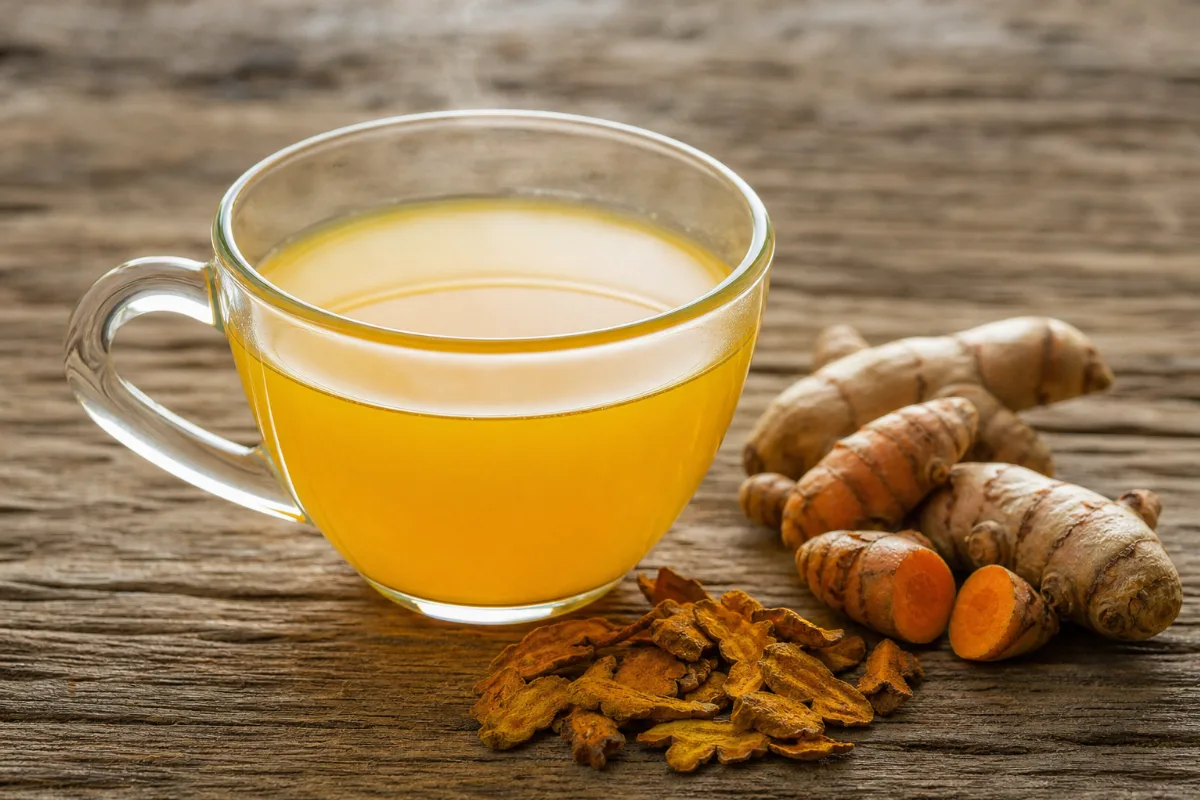
Turmeric tea is made from the rhizome (underground stem) of Curcuma longa L., in the ginger family, Zingiberaceae (name checked in GBIF). It can be made from fresh root, dried root or powder, and golden milk uses milk.
The yellow colour comes from curcuminoids, mainly curcumin. They are poorly absorbed by the body. One lab paper detected curcuminoids in turmeric tea samples, but no amount per cup was found.
Turmeric root is not known as a source of caffeine. That is general background, not something the studies tested. Blends with black tea, green tea or chai spices can add caffeine, so read the label.
Tea, powder and capsules are not the same
Nearly all trials used curcumin or turmeric extract capsules, often made for better absorption. We found no trial of turmeric tea or golden milk; the only papers are lab chemistry and food science.
In one human study plain curcumin gave almost no blood level, while adding black pepper extract raised it about 20-fold. Many tea blends contain pepper, and no one knows if that changes risk.
This page gives no amounts, because no study shows an amount of tea that works. Ask a doctor or pharmacist what is right for you.
What the research found
The best-supported results are for supplements: lower CRP, lower blood sugar and HbA1c in type 2 diabetes, and less knee osteoarthritis pain than placebo, about the same as anti-inflammatory pills. Cholesterol, depression and fatty liver results are small or rated low quality. Memory results are mixed, and a large trial found no benefit for radiation skin reactions.
Turmeric tea is not a treatment for any condition. If you have joint pain, indigestion that will not go away, or low mood, see a doctor.
At a glance
Traditional uses history, not proof
- Turmeric root has long been used in food and in Chinese, Indian (Ayurvedic) and other traditional medicine.
- The EU medicines agency accepts turmeric rhizome as a traditional medicine for mild digestive complaints such as fullness and wind, based on long use only; its monograph lists a herbal tea form.
Studied for research
- Knee osteoarthritis pain (capsules and extracts), low
- Blood markers of inflammation, CRP (supplements), moderate
- Indigestion (capsules), low
- Ulcerative colitis (oral curcumin), low
- Blood sugar in type 2 diabetes (supplements), moderate
- Fatty liver (supplements), low
- Cholesterol and blood fats (supplements), low
- Depressive symptoms (supplements), low
- Memory and thinking (supplements), mixed
- Radiation skin reaction, against
- The tea itself, insufficient
Main compounds
- Curcumin, the main yellow curcuminoid
- Demethoxycurcumin
- Bisdemethoxycurcumin
Common forms
- Fresh sliced or grated root
- Dried root or powder (check for lead testing)
- Tea bags and blends (some add black pepper, ginger or black tea)
- Golden milk: turmeric in milk (no health trials found)
- Curcumin capsules and extracts (used in the trials; not the same as tea)
Research links: NCCIH: Turmeric · EMA: Curcuma longa rhizome herbal monograph · Turmeric liver injury, US case series (abstract) · Lead chromate in turmeric across South Asia (abstract) · Bioavailability of curcumin (abstract) · Curcumin and knee osteoarthritis, meta-analysis (abstract) · Research Library · Genes & Biomarkers Library
What it is and its history
- Accepted scientific name
- Curcuma longa L.
- Naming authority
- L.
- Common names
- Turmeric tea (English); Turmeric root tea (English); Turmeric infusion (English); Golden milk (turmeric with milk) (English); Te de curcuma (Spanish); Haldi tea (Hindi)
- Family or group
- Zingiberaceae
- Classification
- Plantae > Zingiberaceae > Curcuma > Curcuma longa
- Native range
- Not read in the sources used for this page.
- Habitat
- Not read.
- What it looks like
- Part used: The rhizome (underground stem), fresh or dried.
- Cultivation
- Not read.
- Harvest and processing
- Roots are dried and often polished; polishing is where yellow lead pigment has been added in some places (see safety).
- Look-alikes and adulterants
- Name: Java turmeric (Curcuma zanthorrhiza); Note: A related plant sold under similar names; not the same species.; Name: Blends sold as turmeric tea; Note: Some add black pepper, ginger, black or green tea, or other herbs. Check the label.
- Sustainability and conservation
- Not assessed in the sources read.
Photographs
Traditional use and history history, not clinical proof
| Tradition or era | Documented use | Source |
|---|---|---|
| Turmeric as a medicine | The EU medicines agency accepts powdered turmeric rhizome as a traditional herbal medicine for mild digestive complaints such as fullness, slow digestion and wind, based on long use rather than trials. Its monograph lists a herbal tea among the forms. NCCIH says turmeric has been used in Chinese, Indian (Ayurvedic) and other traditional medicine systems. | EMA/HMPC monograph (2018) and NCCIH, read earlier for the turmeric herb record, not re-opened |
Traditional use shows how it was used. It does not show that it works or is safe today.
What is inside, and how it may work
What it contains and how those compounds act in cells and animals. Laboratory and animal mechanisms are not proven effects in people.
Main compounds
| Compound | Family | Where it is concentrated | Activity studied | Level of evidence |
|---|---|---|---|---|
| Curcumin PubChem 969516 | curcuminoid (yellow pigment) | Rhizome | The best-studied turmeric compound. Poorly absorbed, quickly broken down and quickly removed from the body. Anti-inflammatory activity is shown in lab and animal work. 2 19 | Laboratory research |
| Demethoxycurcumin PubChem 5469424 | curcuminoid | Rhizome | A related curcuminoid detected with curcumin in turmeric tea samples in a lab method paper; no per-cup amount given. 32 19 | Laboratory research |
| Bisdemethoxycurcumin PubChem 5315472 | curcuminoid | Rhizome | The third main curcuminoid, detected in the same tea samples. 32 19 | Laboratory research |
Mechanisms, receptors and pathways
| Target or pathway | Gene or receptor | What was found | Level |
|---|---|---|---|
| Drug-processing enzymes and transporters (CYP enzymes, P-glycoprotein) | CYP, ABCB1 | Curcumin and piperine inhibit drug-processing enzymes and transporters in lab studies, which is how they could change drug levels. Human evidence is limited to one trial. 3 26 | Laboratory research |
Absorption, metabolism and elimination
- Absorption
- In one human study, plain curcumin gave undetectable or very low blood levels; black pepper extract raised levels about 20-fold.
- Distribution
- Not read.
- Metabolism
- Rapid metabolism in the liver and gut wall (study text).
- Elimination
- Rapid elimination (review).
- Bioavailability
- Poor on its own. Not studied for tea.
Isolated compounds versus whole extracts
Most trials used curcumin or turmeric extract, often built for better absorption. A tea is a water infusion of the whole root or powder. Curcumin dissolves poorly in water, but the amount in a cup has not been measured here, so supplement results cannot be carried over to tea.
Nutritional composition
Turmeric tea is not a studied source of vitamins or minerals in the sources read. Turmeric root as a food is covered on its own pages.
2 moderate certainty1 mixed findings6 low certainty1 not enough evidence1 evidence against
What was looked at
The 11 benefits and uses checked for Turmeric Tea, each with how strong the evidence is. Tap one to open it.
- Knee and other osteoarthritis pain (trials used curcumin or extract capsules, not tea)Low certainty
- Blood markers of inflammation (CRP), from curcumin supplementsModerate certainty
- Indigestion (functional dyspepsia), from turmeric capsulesLow certainty
- Ulcerative colitis, from oral curcuminLow certainty
- Turmeric tea or golden milk itselfNot enough evidence
- Blood sugar in type 2 diabetes, from curcumin supplementsModerate certainty
- Fatty liver (NAFLD), from curcumin supplementsLow certainty
- Cholesterol and blood fats, from turmeric or curcumin supplementsLow certainty
- Depressive symptoms, from curcumin supplementsLow certainty
- Memory and thinking, from curcumin supplementsMixed findings
- Skin reaction to breast radiation therapy, from oral curcuminEvidence against
Lab markers tracked in the studies
C-reactive protein (CRP)WOMAC pain scoreDyspepsia severity score (SODA)Fasting blood glucoseGlycated haemoglobin (HbA1c)Liver enzymes (ALT and AST)
What is Turmeric Tea good for?
The uses people ask about and how strong the evidence is for each. Read the certainty label first: every result here comes from curcumin or turmeric extract supplements, not from a cup of tea.
Benefits, one by one
Each card is a research question, not a promise. Tap a goal to filter. Open a card to see the studies, doses and limits.
Knee and other osteoarthritis pain (trials used curcumin or extract capsules, not tea)
Low certaintyPooled trials of curcumin or turmeric extract found less pain and stiffness than placebo and about the same as anti-inflammatory pain pills. None tested tea.
4 studiesNot shown on this page.
Studies, doses and limits
What the trials found
Zeng 2021 (15 trials, 1,621 people) found lower pain, function and stiffness scores than placebo with similar side effects, and a similar effect to anti-inflammatory pills. A 367-person trial found an extract non-inferior to ibuprofen over 4 weeks. Zeng 2022 (29 trials, 2,396 people, several arthritis types) found improved pain and inflammation levels but called the trials low quality.
Results
Less pain and stiffness than placebo; similar to anti-inflammatory pills, with fewer stomach complaints in one trial.
Effect sizes as reported
Zeng 2021: all three WOMAC scores lower than placebo. Kuptniratsaikul 2014: non-inferior to ibuprofen for WOMAC total (P=0.010).
Why this rating
The pooled results point one way, but the trials are small and short, products vary, the authors of the larger review call the trials low quality, and none used tea.
Form and dose studied
Not shown on this page.
Who was studied
Adults with knee osteoarthritis; capsules and extracts.
Limits
No trial of tea. Products and trial lengths vary. NCCIH says higher-quality studies are needed.
Why researchers looked
Joint pain is common and many people look for options other than pain pills.
Traditional use
Turmeric root has long been used in food and in traditional medicine; the EU medicines agency accepts turmeric rhizome as a traditional medicine for mild digestive complaints, based on long use only.
Proposed mechanism Laboratory research
Curcumin and related compounds from the root affect inflammation signals in lab and animal work. Curcumin is poorly absorbed, so how much of this applies to a cup of tea is unknown.
A proposed mechanism does not show that the effect happens in people.
See the safety file: liver injury has been reported with concentrated turmeric and curcumin supplements.
Blood markers of inflammation (CRP), from curcumin supplements
Moderate certaintyPooled trials of curcumin supplements found lower CRP, a blood marker of inflammation. A marker is not a symptom or disease.
2 studiesNot shown on this page.
Studies, doses and limits
What the trials found
Gorabi 2022 pooled 9 studies of CRP and 23 of hs-CRP in people with inflammation-related conditions and found lower levels than placebo. Jafari 2024 (103 RCTs, 7,216 people, 42 outcomes) rated the credibility of the CRP result as high by GRADE, while warning about the methods of the included trials.
Results
CRP lower than with placebo.
Effect sizes as reported
CRP weighted mean difference -3.67 mg/L (95% CI -6.96 to -0.38) in Gorabi 2022.
Why this rating
Two pooled analyses agree, and one rates the CRP finding high on GRADE; but the trials used supplements, not tea, and the marker is not a health outcome by itself.
Form and dose studied
Not shown on this page.
Who was studied
Adults with conditions linked to inflammation.
Limits
A lower marker does not prove better health. No tea trial.
Why researchers looked
CRP is a simple blood test for general inflammation.
Traditional use
Turmeric root has long been used in food and in traditional medicine; the EU medicines agency accepts turmeric rhizome as a traditional medicine for mild digestive complaints, based on long use only.
Proposed mechanism Laboratory research
Curcumin and related compounds from the root affect inflammation signals in lab and animal work. Curcumin is poorly absorbed, so how much of this applies to a cup of tea is unknown.
A proposed mechanism does not show that the effect happens in people.
See the safety file.
Indigestion (functional dyspepsia), from turmeric capsules
Low certaintyOne 132-person trial found turmeric capsules eased indigestion about as much as omeprazole over 4 weeks. It was one trial, and not tea.
2 studiesNot shown on this page.
Studies, doses and limits
What the trials found
Yongwatana 2022 randomised 132 adults with dyspepsia to Curcuma longa, omeprazole or placebo for 4 weeks. Pain and non-pain scores fell more than with placebo and did not differ from omeprazole.
Results
Lower dyspepsia scores than placebo; no difference from omeprazole.
Effect sizes as reported
Pain change -16.98 vs -10.53 with placebo (P<0.001).
Why this rating
Only one trial of this kind was read, it was short and in one setting, and it used capsules.
Form and dose studied
Not shown on this page.
Who was studied
Adults with functional dyspepsia.
Limits
Single trial; 4 weeks; no tea.
Why researchers looked
The EU medicines agency lists turmeric rhizome as a traditional medicine for fullness, slow digestion and wind.
Traditional use
Turmeric root has long been used in food and in traditional medicine; the EU medicines agency accepts turmeric rhizome as a traditional medicine for mild digestive complaints, based on long use only. This is the only use for which the EU names a herbal tea form, and it is a regulatory category, not trial proof.
Proposed mechanism Laboratory research
Curcumin and related compounds from the root affect inflammation signals in lab and animal work. Curcumin is poorly absorbed, so how much of this applies to a cup of tea is unknown.
A proposed mechanism does not show that the effect happens in people.
Bile-duct and gallstone cautions apply (see safety).
Ulcerative colitis, from oral curcumin
Low certaintyA review of trials found oral curcumin may help bring on remission in mild-to-moderate ulcerative colitis. It was studied as a supplement, never as tea, and it is not a replacement for medical care.
1 studiesNot shown on this page.
Studies, doses and limits
What the trials found
Goulart 2020 pooled randomised trials of oral curcumin in mild-to-moderate active ulcerative colitis and concluded it can help induce remission, but noted the trials did not standardise amounts or routes.
Results
Authors report help with remission.
Effect sizes as reported
The abstract gives no numbers.
Why this rating
A single pooled analysis with few trials and no standard product; the abstract has no effect sizes.
Form and dose studied
Not shown on this page.
Who was studied
Adults with mild-to-moderate ulcerative colitis.
Limits
Few trials; non-standard products; no tea.
Why researchers looked
Many people with colitis look for add-on options.
Traditional use
Turmeric root has long been used in food and in traditional medicine; the EU medicines agency accepts turmeric rhizome as a traditional medicine for mild digestive complaints, based on long use only.
Proposed mechanism Laboratory research
Curcumin and related compounds from the root affect inflammation signals in lab and animal work. Curcumin is poorly absorbed, so how much of this applies to a cup of tea is unknown.
A proposed mechanism does not show that the effect happens in people.
Anyone with colitis should keep taking prescribed medicine and talk with their doctor first.
Turmeric tea or golden milk itself
Not enough evidenceWe found no trial of turmeric tea or golden milk in people. The only papers about them are lab chemistry and food science.
5 studiesNot shown on this page.
Studies, doses and limits
What the trials found
Our PubMed searches found one lab-method paper on turmeric tea and two food-science papers on golden milk (antioxidant activity in the milk, shelf life of the powder). NCCIH says there is not enough evidence to conclude benefit for most conditions.
Results
No health effect of the drink itself has been shown.
Effect sizes as reported
No effect sizes exist for tea.
Why this rating
There are no human trials of the drink, so supplement results cannot be carried over.
Form and dose studied
Not shown on this page.
Limits
No human data on tea or golden milk at all.
Why researchers looked
People ask whether the drink gives the same effects as the supplement trials.
Traditional use
Turmeric root has long been used in food and in traditional medicine; the EU medicines agency accepts turmeric rhizome as a traditional medicine for mild digestive complaints, based on long use only.
Proposed mechanism Other
A lab method paper detected curcuminoids in turmeric tea samples, but gave no amount per cup and measured nothing in people.
A proposed mechanism does not show that the effect happens in people.
See the safety file.
Blood sugar in type 2 diabetes, from curcumin supplements
Moderate certaintyPooled trials of curcumin supplements found lower fasting glucose and HbA1c than placebo in type 2 diabetes. These were supplements, not tea.
3 studiesNot shown on this page.
Studies, doses and limits
What the trials found
Mokgalaboni 2024 pooled 18 trials (1,382 people) and found lower fasting glucose and HbA1c and lower CRP than placebo. Jafari 2024 rated fasting blood sugar high on GRADE.
Results
Lower glucose and HbA1c than placebo.
Effect sizes as reported
Fasting glucose MD -11.48 mg/dL (95% CI -14.26 to -8.70); HbA1c MD -0.54% (95% CI -0.73 to -0.35).
Why this rating
Two pooled analyses agree and one grades glucose high, but trials are small, products and absorption-boosted forms differ, and none tested tea.
Form and dose studied
Not shown on this page.
Who was studied
Adults with type 2 diabetes; supplements.
Limits
Best dose and duration unknown; no tea; diabetes medicine caution applies.
Why researchers looked
Type 2 diabetes is common and people look for add-on options.
Traditional use
Turmeric root has long been used in food and in traditional medicine; the EU medicines agency accepts turmeric rhizome as a traditional medicine for mild digestive complaints, based on long use only.
Proposed mechanism Laboratory research
Curcumin and related compounds from the root affect inflammation signals in lab and animal work. Curcumin is poorly absorbed, so how much of this applies to a cup of tea is unknown.
A proposed mechanism does not show that the effect happens in people.
If you take diabetes medicine, ask your doctor or pharmacist about turmeric products.
Fatty liver (NAFLD), from curcumin supplements
Low certaintyA pooled analysis of 16 trials found better ultrasound findings and lower liver enzymes with curcumin supplements. Turmeric supplements have also been linked to liver injury in some people, so this deserves care.
2 studiesNot shown on this page.
Studies, doses and limits
What the trials found
Ngu 2022 pooled 16 RCTs (1,028 people): better NAFLD severity and steatosis resolution on ultrasound, and lower AST and ALT, total cholesterol and BMI.
Results
Better ultrasound and lower liver enzymes.
Effect sizes as reported
Steatosis resolution RR 3.96 (95% CI 1.54 to 10.17); ALT MD -7.02; AST MD -4.00.
Why this rating
One pooled analysis with an ultrasound-based main result; NCCIH says it is unclear which measures improve. No tea.
Form and dose studied
Not shown on this page.
Who was studied
Adults with NAFLD; supplements.
Limits
Ultrasound is a rough measure; a liver-injury signal exists for the same products.
Why researchers looked
Fatty liver is common and has few treatments.
Traditional use
Turmeric root has long been used in food and in traditional medicine; the EU medicines agency accepts turmeric rhizome as a traditional medicine for mild digestive complaints, based on long use only.
Proposed mechanism Laboratory research
Curcumin and related compounds from the root affect inflammation signals in lab and animal work. Curcumin is poorly absorbed, so how much of this applies to a cup of tea is unknown.
A proposed mechanism does not show that the effect happens in people.
See the safety file: liver injury reports.
Cholesterol and blood fats, from turmeric or curcumin supplements
Low certaintyPooled trials found small average improvements in cholesterol and triglycerides. The changes were small and the trials differed a lot.
2 studiesNot shown on this page.
Studies, doses and limits
What the trials found
Dehzad 2023 pooled 64 RCTs and found small improvements in total cholesterol, triglycerides, LDL and HDL, but not in apolipoproteins A or B, with large differences between studies.
Results
Small average changes in blood fats.
Effect sizes as reported
Total cholesterol WMD -3.99 mg/dL (95% CI -5.33 to -2.65); LDL -4.89 mg/dL.
Why this rating
The changes are small, the results differ a lot between trials, and the authors say studies did not address potency or purity.
Form and dose studied
Not shown on this page.
Who was studied
Adults; supplements.
Limits
Large heterogeneity; no tea.
Why researchers looked
Cholesterol is a common heart-health target.
Traditional use
Turmeric root has long been used in food and in traditional medicine; the EU medicines agency accepts turmeric rhizome as a traditional medicine for mild digestive complaints, based on long use only.
Proposed mechanism Laboratory research
Curcumin and related compounds from the root affect inflammation signals in lab and animal work. Curcumin is poorly absorbed, so how much of this applies to a cup of tea is unknown.
A proposed mechanism does not show that the effect happens in people.
See the safety file.
Depressive symptoms, from curcumin supplements
Low certaintyA pooled analysis of 10 trials found lower depression scores with curcumin, but the authors rate the evidence quality low. It is not a replacement for care.
1 studiesNot shown on this page.
Studies, doses and limits
What the trials found
Wang 2021 pooled 10 trials (594 people): depressive symptoms were lower (SMD -0.32) and response rates higher, with no difference in drop-outs. Three trials were at high risk of bias.
Results
Small average reduction in symptoms.
Effect sizes as reported
SMD -0.32 (95% CI -0.50 to -0.13); response OR 3.20 (95% CI 1.28 to 7.99).
Why this rating
The authors themselves call the evidence quality low, with some trials at high risk of bias. No tea.
Form and dose studied
Not shown on this page.
Who was studied
People with depression or depressive symptoms; supplements.
Limits
Low quality; no tea.
Why researchers looked
People look for add-on options for low mood.
Traditional use
Turmeric root has long been used in food and in traditional medicine; the EU medicines agency accepts turmeric rhizome as a traditional medicine for mild digestive complaints, based on long use only.
Proposed mechanism Laboratory research
Curcumin and related compounds from the root affect inflammation signals in lab and animal work. Curcumin is poorly absorbed, so how much of this applies to a cup of tea is unknown.
A proposed mechanism does not show that the effect happens in people.
Do not stop prescribed depression treatment; talk with your doctor.
Memory and thinking, from curcumin supplements
Mixed findingsA pooled analysis found no overall effect on thinking tests in people, with small gains in working memory and speed in subgroups. Animal models of Alzheimer disease did improve, which does not carry over automatically.
1 studiesNot shown on this page.
Studies, doses and limits
What the trials found
Yu 2025 included 10 human studies (531 people): no significant effect on global cognition (SMD 0.14, 95% CI -0.78 to 1.07), improvements in working memory and processing speed in subgroups, and more adverse events with curcumin. In 25 animal studies memory was consistently better.
Results
No overall effect in people.
Effect sizes as reported
Global cognition SMD 0.14 (95% CI -0.78 to 1.07).
Why this rating
Human results are inconsistent and limited to some domains; animal results are strong but not human proof.
Form and dose studied
Not shown on this page.
Who was studied
Older adults and others; supplements.
Limits
Inconsistent human findings; no tea.
Why researchers looked
People ask about turmeric and the ageing brain.
Traditional use
Turmeric root has long been used in food and in traditional medicine; the EU medicines agency accepts turmeric rhizome as a traditional medicine for mild digestive complaints, based on long use only.
Proposed mechanism Animal research
Curcumin and related compounds from the root affect inflammation signals in lab and animal work. Curcumin is poorly absorbed, so how much of this applies to a cup of tea is unknown.
A proposed mechanism does not show that the effect happens in people.
Adverse events were higher with curcumin in the pooled data.
Skin reaction to breast radiation therapy, from oral curcumin
Evidence againstA large trial of 686 women found oral curcumin did not reduce skin reactions to radiation compared with placebo.
1 studiesNot shown on this page.
Studies, doses and limits
What the trials found
Ryan Wolf 2018 randomised 686 breast cancer patients to curcumin capsules or placebo through radiation therapy. Severity at the end of therapy did not differ (B 0.044, 95% CI -0.101 to 0.188, P=0.552).
Results
No benefit beyond placebo.
Effect sizes as reported
B 0.044 (95% CI -0.101 to 0.188), P=0.552.
Why this rating
A large, well-designed placebo-controlled trial found no significant effect.
Form and dose studied
Not shown on this page.
Who was studied
Women with breast cancer during radiation therapy.
Limits
Skin rating varied; no tea.
Why researchers looked
Radiation skin reactions are common and have no standard cure.
Traditional use
Turmeric root has long been used in food and in traditional medicine; the EU medicines agency accepts turmeric rhizome as a traditional medicine for mild digestive complaints, based on long use only.
Proposed mechanism Laboratory research
Curcumin and related compounds from the root affect inflammation signals in lab and animal work. Curcumin is poorly absorbed, so how much of this applies to a cup of tea is unknown.
A proposed mechanism does not show that the effect happens in people.
Talk with the cancer team before using any supplement during treatment.
Connections to the rest of health
How Turmeric Tea connects to the rest of our health knowledge graph. Every link says what kind of connection it is. A safety link (for example to the liver) is a warning, not a benefit. A study that merely mentions a topic never creates a benefit link.
Explore every connection: goals, body systems, organs, symptoms, genes
A. Wellness goals
| Connected to | Kind of connection | Evidence status | Context | Studies |
|---|---|---|---|---|
| Joint Health | Low certainty | Knee and other osteoarthritis pain (trials used curcumin or extract capsules, not tea): Pooled trials of curcumin or turmeric extract found less pain and stiffness than placebo and about the same as anti-inflammatory pain pills. None tested tea. | 35 15 36 20 | |
| Pain Relief | Low certainty | Knee and other osteoarthritis pain (trials used curcumin or extract capsules, not tea): Pooled trials of curcumin or turmeric extract found less pain and stiffness than placebo and about the same as anti-inflammatory pain pills. None tested tea. | 35 15 36 20 | |
| Inflammation Support | Demonstrated clinical effect | Moderate certainty | Blood markers of inflammation (CRP), from curcumin supplements: Pooled trials of curcumin supplements found lower CRP, a blood marker of inflammation. A marker is not a symptom or disease. | 10 14 |
| Gut Digestive Health | Low certainty | Indigestion (functional dyspepsia), from turmeric capsules: One 132-person trial found turmeric capsules eased indigestion about as much as omeprazole over 4 weeks. It was one trial, and not tea. Ulcerative colitis, from oral curcumin: A review of trials found oral curcumin may help bring on remission in mild-to-moderate ulcerative colitis. It was studied as a supplement, never as tea, and it is not a replacement for medical care. | 33 6 11 | |
| General Wellness | Not enough evidence | Turmeric tea or golden milk itself: We found no trial of turmeric tea or golden milk in people. The only papers about them are lab chemistry and food science. | 32 13 28 1 20 | |
| Blood Sugar Support | Demonstrated clinical effect | Moderate certainty | Blood sugar in type 2 diabetes, from curcumin supplements: Pooled trials of curcumin supplements found lower fasting glucose and HbA1c than placebo in type 2 diabetes. These were supplements, not tea. | 18 14 20 |
| Liver Support | Low certainty | Fatty liver (NAFLD), from curcumin supplements: A pooled analysis of 16 trials found better ultrasound findings and lower liver enzymes with curcumin supplements. Turmeric supplements have also been linked to liver injury in some people, so this deserves care. | 22 20 | |
| Heart Health | Low certainty | Cholesterol and blood fats, from turmeric or curcumin supplements: Pooled trials found small average improvements in cholesterol and triglycerides. The changes were small and the trials differed a lot. | 4 14 | |
| Mood Support | Low certainty | Depressive symptoms, from curcumin supplements: A pooled analysis of 10 trials found lower depression scores with curcumin, but the authors rate the evidence quality low. It is not a replacement for care. | 31 | |
| Memory Focus | Mixed findings | Memory and thinking, from curcumin supplements: A pooled analysis found no overall effect on thinking tests in people, with small gains in working memory and speed in subgroups. Animal models of Alzheimer disease did improve, which does not carry over automatically. | 34 | |
| Skin Health | Evidence against | Skin reaction to breast radiation therapy, from oral curcumin: A large trial of 686 women found oral curcumin did not reduce skin reactions to radiation compared with placebo. | 25 |
B. Body systems
| Connected to | Kind of connection | Evidence status | Context | Studies |
|---|---|---|---|---|
| Liver and digestive system | Adverse effect or risk | Low certainty | Liver injury reports with supplements; stomach upset is the common mild effect. Preparation or compound: Turmeric and curcumin supplements; tea not measured |
12 17 20 |
| Kidney stones | Adverse effect or risk | Very low certainty | Higher urine oxalate in 11 healthy adults. Preparation or compound: Supplement-level turmeric powder |
29 |
| Musculoskeletal System | Biological association | Low certainty | Studied for: Knee and other osteoarthritis pain (trials used curcumin or extract capsules, not tea) | 35 15 36 20 |
| Immune System | Biological association | Moderate certainty | Studied for: Blood markers of inflammation (CRP), from curcumin supplements | 10 14 |
| Digestive System | Biological association | Low certainty | Studied for: Indigestion (functional dyspepsia), from turmeric capsules Studied for: Ulcerative colitis, from oral curcumin | 33 6 11 32 13 28 1 20 22 |
| Endocrine System | Biological association | Moderate certainty | Studied for: Blood sugar in type 2 diabetes, from curcumin supplements | 18 14 20 |
| Cardiovascular System | Biological association | Low certainty | Studied for: Cholesterol and blood fats, from turmeric or curcumin supplements | 4 14 |
| Nervous System | Biological association | Low certainty | Studied for: Depressive symptoms, from curcumin supplements Studied for: Memory and thinking, from curcumin supplements | 31 34 |
| Integumentary System | Biological association | Evidence against | Studied for: Skin reaction to breast radiation therapy, from oral curcumin | 25 |
D. Symptoms
| Connected to | Kind of connection | Evidence status | Context | Studies |
|---|---|---|---|---|
| Knee osteoarthritis | Low certainty | Pooled trials find less pain than placebo; none tested tea. Preparation or compound: Curcumin or turmeric extract capsules (not tea) |
35 15 | |
| Drug-induced liver injury | Adverse effect or risk | Low certainty | Case series; none found for tea. Preparation or compound: Turmeric and curcumin supplements (not tea) |
12 17 23 |
G. Root causes and contributing factors
| Connected to | Kind of connection | Evidence status | Context | Studies |
|---|---|---|---|---|
| Heavy metal exposure (lead) | Adverse effect or risk | Low certainty | Lead chromate found in some turmeric in South Asia; not measured in tea. Preparation or compound: Adulterated turmeric roots and powder |
8 7 |
I. Biomarkers
| Connected to | Kind of connection | Evidence status | Context | Studies |
|---|---|---|---|---|
| C-reactive protein | Moderate certainty | Lower CRP in pooled trials. Preparation or compound: Curcumin supplements (not tea) |
10 14 | |
| C-reactive protein (CRP) | Biological association | Moderate certainty | Measured in trials: lowered. A lab change is not the same as a health benefit. | 10 14 |
| WOMAC pain score | Biological association | Low certainty | Measured in trials: lowered. A lab change is not the same as a health benefit. | 35 15 |
| Dyspepsia severity score (SODA) | Biological association | Low certainty | Measured in trials: lowered. A lab change is not the same as a health benefit. | 33 |
| Fasting blood glucose | Biological association | Moderate certainty | Measured in trials: lowered. A lab change is not the same as a health benefit. | 18 14 |
| Glycated haemoglobin (HbA1c) | Biological association | Moderate certainty | Measured in trials: lowered. A lab change is not the same as a health benefit. | 18 |
| Liver enzymes (ALT and AST) | Biological association | Low certainty | Measured in trials: lowered. A lab change is not the same as a health benefit. | 22 12 |
J. Genes, receptors and enzymes
| Connected to | Kind of connection | Evidence status | Context | Studies |
|---|---|---|---|---|
| HLA-B*35:01 | Preliminary mechanism | Case series | More common in people with turmeric-linked liver injury in ten US cases; an association, not a test. | 12 |
L. Active compounds
| Connected to | Kind of connection | Evidence status | Context | Studies |
|---|---|---|---|---|
| Curcumin | Biological association | In vitro | The best-studied turmeric compound. Poorly absorbed, quickly broken down and quickly removed from the body. Anti-inflammatory activity is shown in lab and animal work. Preparation or compound: Rhizome |
2 19 |
| Demethoxycurcumin | Biological association | In vitro | A related curcuminoid detected with curcumin in turmeric tea samples in a lab method paper; no per-cup amount given. Preparation or compound: Rhizome |
32 19 |
| Bisdemethoxycurcumin | Biological association | In vitro | The third main curcuminoid, detected in the same tea samples. Preparation or compound: Rhizome |
32 19 |
Each connection is stored with the ingredient, the connected record, the kind of connection, the evidence status, the supporting studies, the preparation or compound involved, and a review date (last reviewed October 25, 2026).
The evidence
The research centre for Turmeric Tea. Every record here was checked against PubMed or the publisher's page; we never list a study we have not verified.
Evidence by outcome
Bars show how many studies we found for each outcome, not how well it works. People are added up across trials only (reviews are not added, to avoid double counting).
How we rate evidence
High certainty
Several well-run trials or reviews agree; further research is unlikely to change the picture much.
Moderate certainty
Good trials point the same way, but some doubt remains.
Low certainty
Small, short or inconsistent trials. The finding could change with better research.
Very low certainty
Very little or very weak human data. Treat as a possibility only.
Mixed findings
Trials or reviews disagree with each other.
Not enough evidence
Not enough human research to say either way.
Evidence against
Good research found no benefit, or found harm.
We take the reviewers' own risk-of-bias and GRADE statements where they exist, and otherwise judge from study size, design, consistency, directness and whether a product matches what is sold. Many publications do not make evidence high. Method note: We read the abstracts of 29 PubMed papers, checked the plant name in GBIF and compounds in PubChem, and used earlier readings of the NCCIH and EU monograph pages. LiverTox could not be opened, and the TGA and EFSA statements are reported from summaries.
Study library: every study we checked 36
| Study | Design | People | Product, dose, length | Result |
|---|---|---|---|---|
| AlternativeMed editorial search 2026 PubMed searches for turmeric tea and golden milk (2026-10-25) Web page / database · Source |
Literature search n/a |
n/a | n/a |
Searching for "turmeric tea" in titles returned one paper (a lab-chemistry method). Searching "golden milk turmeric" returned two food-science papers. No trial of turmeric tea or golden milk in people was found. Methods, limits and fundingOutcomes: n/a Limitations: Searches in one database; a trial that used different words could be missed. Read: full-text |
| Anand 2007 Bioavailability of curcumin: problems and promises. Mol Pharm · PMID 17999464 · DOI |
Narrative review mixed |
Review of curcumin research | Curcumin Not shown on this page |
Reviews curcumin as poorly absorbed, quickly broken down and quickly removed from the body, and lists attempts to improve this (piperine, liposomes, nanoparticles, phospholipid complexes). Methods, limits and fundingOutcomes: Bioavailability Limitations: A review of mostly lab and early studies. Read: abstract |
| Bahramsoltani 2017 Pharmacokinetic interactions of curcuminoids with conventional drugs: A review. J Ethnopharmacol · PMID 28734960 · DOI |
Review mixed |
Review of curcumin and drug studies | Curcumin Not shown on this page |
Curcumin changed drug blood levels in lab and animal work (CYP enzymes, P-glycoprotein). Only one human trial showed a clear change. The authors urge caution. Methods, limits and fundingOutcomes: Drug interactions Limitations: Mostly lab and animal evidence. Read: abstract |
| Dehzad 2023 Effects of curcumin/turmeric supplementation on lipid profile: A GRADE-assessed systematic review and dose-response meta-analysis of randomized controlled trials. Complement Ther Med · PMID 37230418 · DOI |
Meta analysis (GRADE assessed) |
Adults, 64 RCTs | Turmeric or curcumin supplements (not tea) rhizome extract Not shown on this page Varied · vs Placebo |
Small average improvements: total cholesterol -3.99 mg/dL, triglycerides -6.69 mg/dL, LDL -4.89 mg/dL, HDL +1.80 mg/dL. No change in apolipoprotein A or B. Between-study differences were large. TC WMD -3.99 mg/dL (TC -5.33 to -2.65) Methods, limits and fundingOutcomes: Total cholesterol, triglycerides, LDL, HDL, apolipoproteins Limitations: Large heterogeneity; studies did not address potency, purity or what was eaten with it (authors). Read: abstract |
| European Food Safety Authority 2010 EFSA re-evaluation of curcumin (E 100) as a food colour (2010; exposure 2014), as reported by trade press Web page / database · Source |
Authoritative guidance n/a |
n/a | n/a |
Set an acceptable daily intake for curcumin as an additive. This covers the food colour, not supplement-level use or liver injury. Methods, limits and fundingOutcomes: n/a Limitations: EFSA opinion not read; trade-press report only. NOT verified. Read: summary-only |
| European Medicines Agency 2018 EMA/HMPC European Union herbal monograph on Curcuma longa L., rhizoma (2018) Web page / database · Source |
Authoritative guidance n/a |
n/a | n/a |
Traditional-use medicine for mild digestive complaints (fullness, slow digestion, wind). Contraindication: hypersensitivity. Not recommended with bile-duct obstruction, cholangitis, liver disease or gallstones; not recommended in pregnancy or breastfeeding; not for under 18. No interactions reported. Possible mild dry mouth, wind and stomach irritation. It predates most liver-injury case series. Methods, limits and fundingOutcomes: n/a Limitations: Read in full for the turmeric herb record; not re-opened for this page. Read: summary-only |
| Forsyth 2019 Turmeric means "yellow" in Bengali: Lead chromate pigments added to turmeric threaten public health across Bangladesh. Environ Res · PMID 31550596 · DOI |
Field and market study |
524 Bangladesh: 152 interviews and 524 samples of turmeric, pigments, dust and soil |
Turmeric roots and powder (not tea) rhizome / powder Not shown on this page |
Lead chromate yellow pigment was found being added to turmeric in 7 of the 9 major turmeric-producing districts, to make roots look brighter. Pigments contained 2-10% lead by weight. 7 of 9 districts (n/a) Methods, limits and fundingOutcomes: Lead, chromium, pigment use Limitations: One country; tea products were not tested. Read: abstract |
| Forsyth 2024 Evidence of turmeric adulteration with lead chromate across South Asia. Sci Total Environ · PMID 39053552 · DOI |
Market survey with lab analysis |
356 356 turmeric samples (180 dried roots and 176 powders) from 23 cities in India, Pakistan, Sri Lanka and Nepal |
Turmeric roots and powder (not tea) rhizome / powder Not shown on this page Dec 2020 to Mar 2021 |
14% of samples (51) had lead above 2 micrograms per gram. Samples at 18 or above had lead-to-chromium ratios near 1:1, suggesting lead chromate pigment. Some places had very high lead. 14% above 2 ug/g (n/a) Methods, limits and fundingOutcomes: Lead and chromium Limitations: South Asian markets only; tea products were not tested. Read: abstract |
| GBIF Secretariat 2026 GBIF Backbone Taxonomy: Curcuma longa L. (usageKey 2757624) Web page / database · Source |
Database record n/a |
n/a | n/a |
Accepted species, family Zingiberaceae, order Zingiberales, with 13 listed synonyms. Methods, limits and fundingOutcomes: n/a Limitations: Name database only. Read: full-text |
| Gorabi 2022 Effect of curcumin on C-reactive protein as a biomarker of systemic inflammation: An updated meta-analysis of randomized controlled trials. Phytother Res · PMID 34586711 · DOI |
Meta-analysis |
People with inflammation-related conditions; 9 studies (CRP) and 23 studies (hs-CRP) | Curcumin supplements (not tea) rhizome extract Not shown on this page Varied · vs Placebo |
CRP was lower than with placebo (weighted mean difference -3.67 mg/L). hs-CRP was also lower. Effects were seen at lower amounts and shorter or longer durations in different subgroups. CRP WMD -3.67 mg/L (95% CI -6.96 to -0.38) Methods, limits and fundingOutcomes: CRP and hs-CRP (blood markers of inflammation) Limitations: Blood marker only, not a symptom or disease outcome. Study sizes and conditions differ. Read: abstract |
| Goulart 2020 Curcumin therapy for ulcerative colitis remission: systematic review and meta-analysis. Expert Rev Gastroenterol Hepatol · PMID 32772752 · DOI |
Meta-analysis |
Adults with mild-to-moderate active ulcerative colitis, oral curcumin RCTs | Oral curcumin (not tea) rhizome extract Not shown on this page Varied · vs Placebo or usual care |
The authors conclude curcumin can help induce remission in ulcerative colitis. They also note the studies did not use standard amounts or routes. Not given in abstract (Not given in abstract) Methods, limits and fundingOutcomes: Remission Limitations: Few trials; no standard product; the abstract gives no numbers. Read: abstract |
| Halegoua-DeMarzio 2023 Liver Injury Associated with Turmeric-A Growing Problem: Ten Cases from the Drug-Induced Liver Injury Network [DILIN]. Am J Med · PMID 36252717 · DOI |
Case series |
10 Ten people with liver injury linked to turmeric (US Drug-Induced Liver Injury Network, 2004-2022) |
Turmeric supplements; 3 of 7 tested products also had black pepper (piperine) rhizome supplements (not tea) Not shown on this page 1 to 4 months before illness (typical) |
Nine cases were liver-cell injury and one mixed. Five were hospitalised and one died of acute liver failure. Seven of ten carried HLA-B*35:01 (allele frequency 0.45 versus 0.056-0.069 in controls). Turmeric was confirmed in all seven products tested. 7/10 carried HLA-B*35:01 (n/a) Methods, limits and fundingOutcomes: Liver injury pattern, HLA genes Limitations: Case series: shows it happens, not how often. Supplements, not tea. Read: abstract |
| Idowu-Adebayo 2022 Turmeric-Fortified Cow and Soya Milk: Golden Milk as a Street Food to Support Consumer Health. Foods · PMID 35206034 · DOI |
Food science study lab |
Lab food samples | Turmeric paste in cow or soya milk (golden milk) rhizome paste Not shown on this page |
Adding turmeric increased phenol content and antioxidant activity in the milks. No health outcome in people was measured. Methods, limits and fundingOutcomes: Protein, minerals, phenols, antioxidant activity of the milks Limitations: Food chemistry only; no people studied. Read: abstract |
| Jafari 2024 Curcumin on Human Health: A Comprehensive Systematic Review and Meta-Analysis of 103 Randomized Controlled Trials. Phytother Res · PMID 39478418 · DOI |
Meta analysis (umbrella of outcomes) |
7216 Adults in 103 RCTs, 42 outcomes |
Curcuma longa / curcumin supplements vs placebo (not tea) rhizome extract Not shown on this page Varied · vs Placebo |
23 of 42 outcomes were statistically significant. Credibility was rated high for fasting blood sugar, CRP, HDL cholesterol and weight; moderate for 10 others; low or very low for 28. 23/42 outcomes significant (See paper) Methods, limits and fundingOutcomes: 42 outcomes (blood sugar, CRP, lipids, weight, others) Limitations: The authors point to limits in the methods of the included trials. Read: abstract |
| Kuptniratsaikul 2014 Efficacy and safety of Curcuma domestica extracts compared with ibuprofen in patients with knee osteoarthritis: a multicenter study. Clin Interv Aging · PMID 24672232 · DOI |
Controlled trial |
367 Adults with primary knee osteoarthritis and a pain score of 5 or more |
Curcuma domestica (longa) extract capsules (not tea) rhizome extract Not shown on this page 4 weeks · vs Ibuprofen |
Extract was non-inferior to ibuprofen on WOMAC total, pain and function at week 4; stiffness showed a trend only (P=0.060). Number of people with side effects was similar, with more belly pain/discomfort on ibuprofen. Non-inferiority P=0.010 (total) (See paper) Methods, limits and fundingOutcomes: WOMAC total, pain, stiffness, function; side effects Limitations: Only 4 weeks; no placebo arm; open comparison with a drug. Read: abstract |
| Liu 2013 Curcumin alters the pharmacokinetics of warfarin and clopidogrel in Wistar rats but has no effect on anticoagulation or antiplatelet aggregation. Planta Med · PMID 23807811 · DOI |
Animal (rats) animal |
Wistar rats | Curcumin with warfarin or clopidogrel pure curcumin Not shown on this page 7 days · vs Drug alone |
Curcumin raised blood levels of both drugs at the highest amount, but did not change clotting or platelet measures. Methods, limits and fundingOutcomes: Drug blood levels, clotting measures Limitations: Rat study; not shown in people. Read: abstract |
| Lombardi 2021 Acute liver injury following turmeric use in Tuscany: An analysis of the Italian Phytovigilance database and systematic review of case reports. Br J Clin Pharmacol · PMID 32656820 · DOI |
Case series + systematic review |
30 7 Tuscan cases plus 23 published cases |
Curcuma longa supplements, mostly high-absorption, high-amount forms (not tea) rhizome supplements Not shown on this page Varied |
All seven Tuscan cases involved formulations built for high absorption at high amounts, and most improved after stopping. In the 23 published cases most people also took another medicine, and 16 improved after stopping. 16 of 23 improved on stopping (n/a) Methods, limits and fundingOutcomes: Acute hepatitis, causality (RUCAM) Limitations: Spontaneous reports; poorly regulated products; other medicines may have played a part. Read: abstract |
| Mokgalaboni 2024 Curcumin Attenuates Hyperglycemia and Inflammation in Type 2 Diabetes Mellitus: Quantitative Analysis of Randomized Controlled Trial. Nutrients · PMID 39683570 · DOI |
Meta-analysis |
1382 Adults with type 2 diabetes, 18 trials (mean age 55.9) |
Curcumin supplements (not tea) rhizome extract Not shown on this page Varied · vs Placebo |
Fasting blood glucose fell by 11.48 mg/dL and HbA1c by 0.54 percentage points versus placebo. CRP also fell. The authors note earlier findings were inconsistent, probably due to small trials. Glucose MD -11.48 mg/dL; HbA1c MD -0.54% (Glucose -14.26 to -8.70; HbA1c -0.73 to -0.35) Methods, limits and fundingOutcomes: Fasting blood glucose, HbA1c, CRP Limitations: Small trials; best dose and duration unknown; absorption-boosted formulations may differ. Read: abstract |
| NCBI PubChem 2026 PubChem compound records: curcumin (CID 969516), demethoxycurcumin (CID 5469424), bisdemethoxycurcumin (CID 5315472) Web page / database · Source |
Database record n/a |
n/a | n/a |
Names and formulas confirmed: curcumin C21H20O6, demethoxycurcumin C20H18O5, bisdemethoxycurcumin C19H16O4. Methods, limits and fundingOutcomes: n/a Limitations: Identity check only. Read: full-text |
| NCCIH (NIH) 2025 NCCIH: Turmeric Web page / database · Source |
Authoritative guidance n/a |
n/a | n/a |
Turmeric is used as spice and in traditional medicine. Oral turmeric in usual amounts is likely safe for a short time, but highly bioavailable curcumin products may harm the liver (stop and talk with a provider). Supplements in pregnancy may be unsafe. Evidence for most conditions is insufficient; knee osteoarthritis results are positive but need higher-quality studies. Side effects listed: nausea, vomiting, acid reflux, stomach upset, diarrhea, constipation. Methods, limits and fundingOutcomes: n/a Limitations: Page read in the turmeric herb record; not re-opened for this page. Read: summary-only |
| Neerati 2014 Evaluation of the effect of curcumin capsules on glyburide therapy in patients with type-2 diabetes mellitus. Phytother Res · PMID 25044423 · DOI |
Rct (open label) |
8 Eight people with type 2 diabetes taking glyburide |
Curcumin capsules with glyburide (not tea) rhizome extract Not shown on this page 10 days · vs Glyburide alone |
Glucose fell, some drug-level measures changed and no one had low blood sugar. The authors suggest this may help control; the study cannot show safety. Methods, limits and fundingOutcomes: Glyburide blood levels, glucose, lipids, hypoglycaemia Limitations: Only eight people, open-label, short. Read: abstract |
| Ngu 2022 Curcumin as adjuvant treatment in patients with non-alcoholic fatty liver (NAFLD) disease: A systematic review and meta-analysis. Complement Ther Med · PMID 35661765 · DOI |
Meta-analysis |
1028 Adults with non-alcoholic fatty liver disease, 16 RCTs |
Curcumin supplements (not tea) rhizome extract Not shown on this page Varied · vs Placebo |
Better ultrasound findings and steatosis resolution; lower AST (MD -4.00) and ALT (MD -7.02), total cholesterol and BMI. Steatosis resolution RR 3.96 (RR 1.54 to 10.17) Methods, limits and fundingOutcomes: Liver ultrasound findings, liver enzymes (AST, ALT), cholesterol, BMI Limitations: Ultrasound is a rough measure; authors say promotion as add-on treatment "might be justified" only. Read: abstract |
| Papke DJ Jr 2025 Turmeric supplement-associated hepatitis: a clinicopathological series of 11 cases highlighting pan-lobular and zone 3 injury. Histopathology · PMID 39381846 · DOI |
Case series |
11 11 people with liver injury attributed to turmeric supplements (10 women, median age 58) |
Over-the-counter turmeric supplements (not tea) rhizome supplements Not shown on this page Varied |
Eight biopsies showed acute hepatitis. All stopped the supplements and liver tests returned to normal in all; four also took steroids. Causality was probable in eight and possible in three. 11/11 normalised (n/a) Methods, limits and fundingOutcomes: Biopsy findings, liver tests Limitations: Retrospective, single-centre archive review. Read: abstract |
| Rasyid 1999 The effect of curcumin and placebo on human gall-bladder function: an ultrasound study. Aliment Pharmacol Ther · PMID 10102956 · DOI |
Rct (crossover) |
12 12 healthy volunteers |
Pure curcumin vs placebo (not tea) pure curcumin Not shown on this page Single dose, ultrasound for 2 h · vs Placebo |
Gall-bladder volume shrank after curcumin versus placebo (the authors conclude curcumin makes the human gall-bladder contract). 29.3% volume reduction at 2 h (P value not shown here) Methods, limits and fundingOutcomes: Gall-bladder volume Limitations: 12 healthy people; not people with gallstones. Read: abstract |
| Ryan Wolf 2018 Oral curcumin for radiation dermatitis: a URCC NCORP study of 686 breast cancer patients. Support Care Cancer · PMID 29192329 · DOI |
Controlled trial |
686 Women with breast cancer having radiation therapy |
Oral curcumin capsules (not tea) rhizome extract Not shown on this page Through radiation therapy plus 1 week · vs Placebo |
Curcumin did not reduce radiation dermatitis severity compared with placebo. A small trend (7.4% vs 12.9% with the highest severity scores) was not significant. B 0.044 (-0.101 to 0.188) Methods, limits and fundingOutcomes: Radiation dermatitis severity Limitations: Skin rating varied between raters. This is a null result. Read: abstract |
| Shoba 1998 Influence of piperine on the pharmacokinetics of curcumin in animals and human volunteers. Planta Med · PMID 9619120 · DOI |
Pharmacokinetic study (rats and healthy volunteers) |
Rats and healthy human volunteers | Curcumin with or without piperine (not tea) pure curcumin Not shown on this page Single dose · vs Curcumin alone |
In people, curcumin alone gave undetectable or very low blood levels. Adding piperine from black pepper gave much higher levels, an increase of about 2000%. Bioavailability +2000% (humans) (P<0.001 at 1 h) Methods, limits and fundingOutcomes: Blood levels of curcumin Limitations: Old, small study; pure curcumin, not tea. Read: abstract |
| Stati 2021 Curcuma longa Hepatotoxicity: A Baseless Accusation. Cases Assessed for Causality Using RUCAM Method. Front Pharmacol · PMID 34776989 · DOI |
Narrative review of cases mixed |
Published hepatotoxicity reports | Curcuma longa products, often with piperine (not tea) rhizome supplements Not shown on this page |
Argues the blame on Curcuma longa itself is overstated and speculates that piperine from black pepper, often added to boost absorption, could be the driver. It calls for human trials to settle this. Methods, limits and fundingOutcomes: Causality of liver injury Limitations: A viewpoint, not new data; the dispute is unsettled. Read: abstract |
| Talukdar 2025 Development and Fuzzy Logic-Based Optimization of Golden Milk Formulations Using RW-Dried Turmeric Powder: A Study on Shelf Life, Sensory Attributes, and Functional Properties. Foods · PMID 40941063 · DOI |
Food science study lab |
Lab food samples | Dried turmeric powder in golden milk, fortified rhizome powder Not shown on this page |
Study of shelf life and taste of fortified turmeric powder for golden milk. No health outcome in people was measured. Methods, limits and fundingOutcomes: Shelf life, sensory scores, curcumin content Limitations: Food technology paper; no people studied. Read: abstract |
| Tang 2008 Effect of cinnamon and turmeric on urinary oxalate excretion, plasma lipids, and plasma glucose in healthy subjects. Am J Clin Nutr · PMID 18469248 · DOI |
Rct (crossover) |
11 11 healthy adults, 8-week crossover |
Supplemental turmeric (and cinnamon) providing oxalate turmeric powder (not tea) Not shown on this page 4 weeks each · vs Water only / cinnamon |
Turmeric led to significantly higher urinary oxalate than cinnamon or water. About 91% of the oxalate in turmeric was water soluble, which the authors say is the main cause. They warn this may raise kidney stone risk in susceptible people. Higher urinary oxalate (n/a) Methods, limits and fundingOutcomes: Urinary oxalate Limitations: 11 healthy people; supplement-level turmeric, not tea. Read: abstract |
| Therapeutic Goods Administration (Australia) 2023 TGA safety alert: medicines containing turmeric or curcumin and the risk of liver injury Web page / database · Source |
Authoritative guidance n/a |
n/a | n/a |
Reports 18 cases up to June 2023; the agency calls the risk rare and says it does not appear related to turmeric as food. Methods, limits and fundingOutcomes: n/a Limitations: Page could not be opened earlier; figures come from a search summary. NOT verified. Read: summary-only |
| Wang 2021 The efficacy and acceptability of curcumin for the treatment of depression or depressive symptoms: A systematic review and meta-analysis. J Affect Disord · PMID 33418373 · DOI |
Meta-analysis |
594 People with depression or depressive symptoms, 10 trials |
Curcumin supplements (not tea) rhizome extract Not shown on this page Varied · vs Placebo |
Symptoms were lower (SMD -0.32) and response rates higher (OR 3.20). Drop-outs and digestive or nerve-related side effects did not differ. The authors rate the evidence quality as low. SMD -0.32 (95% CI -0.50 to -0.13) Methods, limits and fundingOutcomes: Depressive symptoms, response rate, drop-outs, side effects Limitations: Three of ten trials at high risk of bias; evidence quality low (authors). Read: abstract |
| Yang 2022 Solvent terminated natural deep eutectic solvent microextraction for concentration of curcuminoids in Curcumae Longae Rhizoma and turmeric tea. J Sep Sci · PMID 35412014 · DOI |
Laboratory method paper lab |
Lab samples of turmeric rhizome and turmeric tea | n/a (chemistry method) rhizome / tea samples Not shown on this page |
A new lab method detected bisdemethoxycurcumin, demethoxycurcumin and curcumin in turmeric rhizome and in turmeric tea samples. The abstract gives no per-cup amounts. Methods, limits and fundingOutcomes: Detection of three curcuminoids Limitations: A chemistry method paper; it does not measure how much ends up in a cup or what it does in the body. Read: abstract |
| Yongwatana 2022 Curcuma longa Linn versus omeprazole in treatment of functional dyspepsia: A randomized, double-blind, placebo-controlled trial. J Gastroenterol Hepatol · PMID 34652861 · DOI |
Controlled trial |
132 Adults with functional dyspepsia (Rome IV) |
Curcuma longa capsules (not tea) rhizome Not shown on this page 4 weeks · vs Omeprazole and placebo |
Pain and non-pain symptom scores fell more with Curcuma longa than placebo, and were not different from omeprazole. Quality-of-life change was highest with Curcuma longa but not significantly different from the others (P=0.055). Pain change -16.98 vs -10.53 (placebo), P<0.001 (Not given) Methods, limits and fundingOutcomes: Severity of Dyspepsia Assessment (SODA), quality of life Limitations: Single country, 4 weeks, three arms of about 44 people each. Read: abstract |
| Yu 2025 Targeting cognitive aging with curcumin supplementation: A systematic review and meta-analysis. J Prev Alzheimers Dis · PMID 40579315 · DOI |
Meta-analysis |
531 Ten human studies (plus 25 animal studies) |
Curcumin supplements (not tea) rhizome extract Not shown on this page Varied · vs Placebo |
No significant effect on global cognition (SMD 0.14). Working memory and processing speed improved in subgroups. Adverse events were higher with curcumin. Animal Alzheimer models improved consistently. Global cognition SMD 0.14 (-0.78 to 1.07) Methods, limits and fundingOutcomes: Global cognition, working memory, processing speed, adverse events Limitations: Human findings inconsistent; animal results do not carry over to people. Read: abstract |
| Zeng 2021 The efficacy and safety of Curcuma longa extract and curcumin supplements on osteoarthritis: a systematic review and meta-analysis. Biosci Rep · PMID 34017975 · DOI |
Meta-analysis |
1621 People with osteoarthritis, 15 RCTs |
Curcumin or Curcuma longa extract capsules (not tea) rhizome extract Not shown on this page Varied · vs Placebo, or anti-inflammatory pain pills (NSAIDs) |
Lower pain, function and stiffness scores than placebo. Similar effect to NSAIDs, with fewer side effects. Adding it to NSAIDs also lowered pain scores. Side effects were similar to placebo. See results (Not given in abstract) Methods, limits and fundingOutcomes: Pain (VAS, WOMAC), stiffness, function, side effects Limitations: Authors recommend use for more than 12 weeks; the abstract gives no certainty grade per outcome. Products and trial quality varied. Read: abstract |
| Zeng 2022 Efficacy and Safety of Curcumin and Curcuma longa Extract in the Treatment of Arthritis: A Systematic Review and Meta-Analysis of Randomized Controlled Trial. Front Immunol · PMID 35935936 · DOI |
Meta-analysis |
2396 People with arthritis (osteoarthritis, rheumatoid, ankylosing spondylitis, juvenile, gout/high uric acid), 29 RCTs |
Curcumin or Curcuma longa extract capsules (not tea) rhizome extract Not shown on this page 4 to 36 weeks · vs Mostly placebo |
Curcumin and Curcuma longa extract improved inflammation and pain levels and were safe across the studies. The authors call the RCTs low quality and few, and say conclusions need careful reading. See results (Not given in abstract) Methods, limits and fundingOutcomes: Symptoms, inflammation, safety Limitations: Low quality and small number of trials per arthritis type (authors). Read: abstract |
What we do not know yet
- No trial of turmeric tea or golden milk in people was found.
- The amount of curcumin in a cup of tea has not been measured.
- No study tests turmeric tea with blood thinners, in pregnancy or in children.
- No survey of lead in turmeric tea products was found.
- LiverTox could not be opened; TGA and EFSA records are not verified.
How new research is added
New studies are found by a saved PubMed search and are placed in a review queue. A person reads each one before it is added.
Lab markers
What changed in blood or saliva tests during trials. A changed number is not the same as feeling or being healthier, and we give no "normal ranges".
Metabolic 1
Glycated haemoglobin (HbA1c)
Lowered in trials
A blood test showing average blood sugar over about 3 months.
Moderate certaintyResults and what it means
Why it was measured
It shows long-term blood sugar control.
Statistical vs. clinical meaning
Lower on average; small trials.
Safety implication
As above.
| Study | Result | People | Product |
|---|---|---|---|
| 18 | Lower by 0.54 percentage points versus placebo (95% CI -0.73 to -0.35) | 1,382 adults with type 2 diabetes | Curcumin supplements |
Other 5
C-reactive protein (CRP)
Lowered in trials
A blood marker that rises with general inflammation.
Moderate certaintyResults and what it means
Why it was measured
It is a simple measure used in many turmeric trials.
Statistical vs. clinical meaning
Lower on average in supplement trials; it is a marker, not a symptom.
Safety implication
None directly.
WOMAC pain score
Lowered in trials
A questionnaire score for knee or hip pain from osteoarthritis.
Low certaintyResults and what it means
Why it was measured
It is the main outcome of osteoarthritis trials.
Statistical vs. clinical meaning
Lower on average; short trials, no tea.
Safety implication
See the safety file.
Dyspepsia severity score (SODA)
Lowered in trials
A questionnaire rating indigestion pain and other symptoms.
Low certaintyResults and what it means
Why it was measured
It shows how bad indigestion feels.
Statistical vs. clinical meaning
One trial of 4 weeks.
Safety implication
None directly.
| Study | Result | People | Product |
|---|---|---|---|
| 33 | Pain score change -16.98 vs -10.53 with placebo; no difference from omeprazole | 132 adults with functional dyspepsia | Curcuma longa capsules |
Fasting blood glucose
Lowered in trials
Blood sugar measured after not eating overnight.
Moderate certaintyResults and what it means
Why it was measured
It is the basic measure of blood sugar control.
Statistical vs. clinical meaning
Lower on average in supplement trials.
Safety implication
If you take diabetes medicine, tell your doctor or pharmacist.
Liver enzymes (ALT and AST)
Lowered in trials
Blood tests that rise when liver cells are stressed.
Low certaintyResults and what it means
Why it was measured
Used to track fatty liver; also used to spot liver injury.
Statistical vs. clinical meaning
Lower in NAFLD trials; separately, turmeric supplements have caused raised enzymes and injury in case reports.
Safety implication
See the safety file.
| Study | Result | People | Product |
|---|---|---|---|
| 22 | ALT lower by 7.02 and AST lower by 4.00 versus placebo | 1,028 adults with NAFLD | Curcumin supplements |
Safety
What studies and official sources say about side effects, medicines and who should check first. Each point shows what kind of evidence it comes from.
Main points to know 7
- Liver injury has been reported with turmeric and curcumin supplements, and it can be serious. Several case series describe jaundice, dark urine, itching, tiredness and nausea after weeks to months of turmeric or curcumin supplements. In ten US cases, five people were hospitalised and one died of acute liver failure; illness started 1 to 4 months after starting. Italian cases involved high-absorption, high-amount products. In an 11-case US series all recovered after stopping. These reports involve concentrated supplements, not tea. We found no case report from turmeric tea alone, which is not proof that tea is free of risk. Case series show that this happens, not how often; Australia's TGA calls the risk rare (its word, summary only). One review argues black pepper extract, often added to these products, may be the real driver, so the question is not settled. NCCIH says to stop the product and talk with a provider if liver warning signs appear. Case series 12 17 23 27 30 20
- A cup of tea probably contains little curcumin, but nobody has measured it. Curcumin is poorly absorbed on its own: in one human study, plain curcumin gave undetectable or very low blood levels, and adding black pepper extract raised levels about 20-fold. A lab paper detected curcuminoids in turmeric tea samples but gave no per-cup amount. So tea is not the same product as the supplements in the trials or the liver reports. Blends with black pepper are common in tea and golden milk, and whether that matters for risk is not known. Pharmacokinetic 2 26 32
- Some turmeric powder has been mixed with lead chromate to make it look more yellow. A study of 356 turmeric samples (roots and powders) from India, Pakistan, Sri Lanka and Nepal found 14 percent with lead above 2 micrograms per gram, and samples with very high lead had lead-to-chromium ratios suggesting lead chromate pigment. A Bangladesh study found yellow lead-chromate pigment added to turmeric roots in 7 of 9 major turmeric-producing districts. Lead is harmful, especially to children and in pregnancy. No source we read tested turmeric tea products, so we cannot say how common this is in tea sold elsewhere. Other 8 7
- Gallstones, bile-duct disease and liver disease: the EU advises against turmeric. The EU herbal monograph says turmeric rhizome is not recommended with bile-duct obstruction, cholangitis, liver disease, gallstones or other biliary diseases, because it may stimulate bile flow. In a small crossover study of 12 healthy volunteers, pure curcumin made the gall-bladder contract. That study did not include people with gallstones. Authoritative guidance 6 24
- Kidney stones: turmeric contains water-soluble oxalate. In an 8-week crossover study of 11 healthy adults, supplement-level turmeric raised urine oxalate more than cinnamon or water. About 91 percent of the oxalate in turmeric was water soluble, which the authors give as the main reason, and they warn of a possible kidney-stone risk in susceptible people. The study used turmeric powder, not tea, and healthy volunteers. Controlled trial 29
- Blood thinners, diabetes medicine and surgery: evidence is thin, so ask. Rat work showed curcumin raised blood levels of warfarin and clopidogrel without changing clotting measures. A small open-label study of 8 people on glyburide found lower glucose and no low blood sugar. A review calls for caution with many drug classes because curcumin affects drug-processing enzymes in the lab. None of this is a tested tea interaction, and the EU monograph reports no interactions. Tell your doctor or pharmacist about turmeric products, especially before surgery. Animal research 16 21 3 6
- Pregnancy, breastfeeding and under-18s: not recommended as a medicine. The EU monograph says use in pregnancy, breastfeeding and under 18 is not recommended because safety has not been established. NCCIH says turmeric supplements in pregnancy may be unsafe and little is known about amounts above food levels while breastfeeding. Authoritative guidance 6 20
Side effects 6
| Effect | How often | Severity and recovery | Evidence |
|---|---|---|---|
| Stomach upset, nausea, reflux, diarrhea or constipation Reported with turmeric and curcumin products; tea not measured. | NCCIH lists these; no rate given in the summary read | mild Reversible | Authoritative guidance 20 |
| Dry mouth, wind and stomach irritation | EU monograph: frequency unknown | mild Reversible | Authoritative guidance 6 |
| Allergy (hypersensitivity) The only contraindication listed by the EU monograph. | Not given | variable Usually reversible | Authoritative guidance 6 |
| Liver injury (supplements) Concentrated supplements; none found for tea. | Rare; no rate measured | can be severe Most recovered after stopping; one death in 10 US cases | Case series 12 23 |
| Gall-bladder contraction, possible pain with gallstones | Not measured in people with gallstones | unknown Unknown | Controlled trial 24 6 |
| Higher urine oxalate (kidney-stone risk in susceptible people) Powder not tea. | 11 healthy adults, supplement-level turmeric | unknown Unknown | Controlled trial 29 |
Liver
Turmeric and curcumin supplements are a recognised cause of herb-induced liver injury, but the evidence is case reports and case series, which cannot give a rate. US DILIN: ten adjudicated cases, five hospitalised, one death; seven carried HLA-B*35:01; three of seven tested products also contained black pepper. Italy: seven Tuscan cases with high-absorption, high-amount products, most improving on stopping, plus 23 published cases. A US pathology series of 11 cases all recovered after stopping, four with steroids. A 2021 review argues the blame on Curcuma longa is overstated and that piperine may be involved. Most cases involve supplements, not tea or food; Australia's TGA says the risk does not appear related to turmeric as food (summary only). No case from tea alone was found. 12 17 23 27
How often. No rate could be calculated from case series.
Monitoring. No guideline read suggests routine liver tests for turmeric tea drinkers.
- Halegoua-DeMarzio 2023 (DILIN) (10 patients). Hepatocellular (9) or mixed (1); 8 women; 5 hospitalised; turmeric in all 7 products tested, 3 also piperine; 7 of 10 HLA-B*35:01 Other possible causes: Some products had other ingredients 12
- Lombardi 2021 (Tuscany + review) (7 patients). Acute hepatitis with high-absorption, high-amount products; 23 further published cases Other possible causes: Most review cases also took another medicine 17
- Papke 2025 (pathology series) (11 patients). 10 women; acute hepatitis on biopsy in 8 Other possible causes: Retrospective 23
This is a safety connection. It is not evidence that Turmeric Tea supports liver health.
Medicines and supplements 4
| With | Why it matters | Importance | Evidence | What to do |
|---|---|---|---|---|
| Warfarin and clopidogrel (blood thinners) prescription | Curcumin raised blood levels of both drugs in rats at the highest amount tested. | No change in clotting or platelet measures in rats; no human data read. | Animal research Very low certainty 16 | Tell your prescriber about turmeric products. |
| Glyburide and other diabetes medicines prescription | Curcumin supplements lowered glucose in trials; may add to the drug effect. | 8 people on glyburide had lower glucose and no low blood sugar; open-label and tiny. | Controlled trial Very low certainty 21 18 | Ask your doctor or pharmacist; watch for shaky, sweaty or confused feelings. |
| Medicines processed by liver enzymes (CYP) or P-glycoprotein prescription | Curcumin and black pepper extract inhibit drug-processing enzymes in the lab. | Mostly lab and animal evidence; one human trial showed a clear change. | Laboratory research Very low certainty 3 26 | Ask a pharmacist, especially with narrow-margin medicines. |
| Black pepper (piperine) food | Piperine raised curcumin levels about 20-fold in one human study. | Not a harm by itself, but it means black-pepper blends deliver more curcumin; whether that raises liver risk is unsettled. | Pharmacokinetic Low certainty 26 27 12 | Check blends for added pepper. |
Who should check first 6
| Situation | Advice | Evidence |
|---|---|---|
| Allergy to turmeric | Do not use. This is the contraindication in the EU monograph. | Authoritative guidance 6 |
| Bile-duct obstruction, cholangitis, liver disease or gallstones | The EU advises against turmeric. Ask your doctor before using it. | Authoritative guidance 6 24 |
| Past liver injury linked to turmeric or curcumin | Do not restart without medical advice. | Case series 12 23 |
| History of kidney stones | Turmeric contains water-soluble oxalate; ask your doctor. | Controlled trial 29 |
| Taking blood thinners or diabetes medicine, or before surgery | Not an official contraindication in the sources read; ask your prescriber or pharmacist. | Animal research 16 21 3 |
| Pregnancy, breastfeeding, children under 18 | Not recommended as a medicine (EU); NCCIH says supplements in pregnancy may be unsafe. | Authoritative guidance 6 20 |
Overdose, product quality and regulators
Summary. Turmeric as a food has a long history. The serious signal is an unpredictable liver reaction in some people taking concentrated supplements.
Animal. Rat work on warfarin and clopidogrel is covered under interactions. The EU monograph notes that adequate reproductive-toxicity, genotoxicity and carcinogenicity tests have not been done for the herbal preparations.
Human doses studied. Trials used capsules and extracts. No amounts are given on this page. No trial of tea was found.
High dose or long term signals. Liver injury has occurred with supplements; urine oxalate rises with supplement-level turmeric.
Overdose response. The EU monograph reports no case of overdose. If someone feels very unwell, call a doctor or poison centre.
Genotoxicity. Adequate tests have not been done for the herbal preparations (EU monograph).
Toxic or hazardous parts. The rhizome is the part used. No source read describes toxic leaves in tea use.
The documented problem is lead chromate added to some turmeric to brighten the colour. We did not find a survey of lead in turmeric tea products.
Lead chromate adulteration, South Asia. 14% of 356 samples had lead above 2 micrograms per gram; very high levels in some cities; lead-to-chromium ratios suggested lead chromate in the highest samples. 8
Lead chromate pigment in Bangladesh. Pigment was added to roots in 7 of 9 major turmeric-producing districts; pigments contained 2-10% lead by weight. 7
Content varies between products. Turmeric tea bags and loose powder are not standardised; the amount of curcuminoids in a cup was not found in the sources read. 32
| Body | Action | Date |
|---|---|---|
| European Medicines Agency, HMPC (European Union) | Herbal monograph on Curcuma longa rhizome: traditional use for mild digestive complaints; contraindication hypersensitivity; not recommended with bile-duct obstruction, cholangitis, liver disease or gallstones, in pregnancy, breastfeeding or under 18; no interactions reported. source | 2018-09-25 |
| US NIH, NCCIH (USA) | Oral turmeric in usual amounts is likely safe for a short time; highly bioavailable curcumin may harm the liver; supplements in pregnancy may be unsafe; evidence insufficient for most conditions. source | 2025-04 |
When to get medical help
- Yellow skin or eyes, dark urine or pale stools: stop turmeric or curcumin and get medical care the same day.
- Severe itching, nausea, vomiting, loss of appetite, unusual tiredness or pain in the upper right belly: stop and see a doctor promptly.
- Severe pain in the upper belly or right shoulder after meals, with fever or vomiting (possible gallstone or bile-duct blockage): seek care urgently.
- Swelling of the lips or face, hives or trouble breathing: call emergency services.
- Severe flank pain or blood in the urine (possible kidney stone): seek care.
- Shaking, sweating or confusion if you take diabetes medicines: check blood sugar and seek care.
- Unusual bruising or bleeding if you take blood thinners: contact your prescriber.
Stop using the product and contact a clinician or emergency service. In the US, Poison Control is 1-800-222-1222.
General information only, not medical advice. Ask a clinician or pharmacist before use, especially with medicines, in pregnancy or with a health condition. See the Natural Remedy Safety guide.
Frequently asked questions
Does turmeric tea help with arthritis or inflammation?
Does turmeric tea contain much curcumin?
Can turmeric tea harm the liver?
Liver injury has been reported with turmeric and curcumin supplements, including one death among ten US cases. Those were concentrated products. We found no case from tea alone, which is not proof of safety. If you notice yellow skin or eyes, dark urine or severe itching, stop and see a doctor.
Does black pepper in turmeric tea matter?
Is turmeric tea safe in pregnancy or while breastfeeding?
Is turmeric powder ever contaminated with lead?
Yes, in some places. A study of 356 samples from four South Asian countries found 14 percent with lead above 2 micrograms per gram, and samples with the highest lead looked like lead chromate pigment. A Bangladesh study found pigment added in 7 of 9 major growing districts. Tea products were not tested.
Is turmeric tea safe with gallstones or bile-duct problems?
Can turmeric tea cause kidney stones?
It might in people prone to stones. In 11 healthy adults, supplement-level turmeric raised urine oxalate, and most of its oxalate dissolves in water. That study used powder, not tea. Ask your doctor if you have had stones.
Can I drink turmeric tea with blood thinners or diabetes medicine?
Does turmeric tea have caffeine?
Turmeric root is not known as a caffeine source, but none of the studies we read tested this. Blends with black tea, green tea or chai spices can add caffeine, so check the label.
Is turmeric tea the same as curcumin capsules or golden milk?
Does turmeric help with blood sugar, cholesterol or depression?
Explore by health goal
Gut Digestive HealthJoint HealthPain ReliefInflammation SupportGeneral WellnessBlood Sugar SupportLiver SupportHeart HealthMood SupportMemory FocusSkin Health
Editorial transparency
- Written by
- AlternativeMed editorial team. Research compiled with AI assistance, then checked against PubMed records.
- Medical review
- None. This page has not been reviewed by a physician or pharmacist.
- First published
- 2026-10-25
- Last substantive update
- 2026-10-25
- How we research
- We read the abstracts of 29 PubMed papers, checked the plant name in GBIF and compounds in PubChem, and used earlier readings of the NCCIH and EU monograph pages. LiverTox could not be opened, and the TGA and EFSA statements are reported from summaries.
- How we rate evidence
- See "How we rate evidence" in the Evidence tab.
- Independence
- No product is promoted on this page. No affiliate links are shown.
Sources 36
Each source was opened and checked. Where we read only the abstract, it says so. The small numbers in the text point here.
- AlternativeMed editorial search. PubMed searches for turmeric tea and golden milk (2026-10-25). Web page / database. 2026. (full-text)
- Anand P, Kunnumakkara AB, Newman RA et al.. Bioavailability of curcumin: problems and promises.. Mol Pharm. 2007. PMID 17999464. DOI 10.1021/mp700113r. (abstract)
- Bahramsoltani R, Rahimi R, Farzaei MH. Pharmacokinetic interactions of curcuminoids with conventional drugs: A review.. J Ethnopharmacol. 2017. PMID 28734960. DOI 10.1016/j.jep.2017.07.022. (abstract)
- Dehzad MJ, Ghalandari H, Amini MR et al.. Effects of curcumin/turmeric supplementation on lipid profile: A GRADE-assessed systematic review and dose-response meta-analysis of randomized controlled trials.. Complement Ther Med. 2023. PMID 37230418. DOI 10.1016/j.ctim.2023.102955. (abstract)
- European Food Safety Authority. EFSA re-evaluation of curcumin (E 100) as a food colour (2010; exposure 2014), as reported by trade press. Web page / database. 2010. (summary-only)
- European Medicines Agency, HMPC. EMA/HMPC European Union herbal monograph on Curcuma longa L., rhizoma (2018). Web page / database. 2018. (summary-only)
- Forsyth JE, Nurunnahar S, Islam SS et al.. Turmeric means "yellow" in Bengali: Lead chromate pigments added to turmeric threaten public health across Bangladesh.. Environ Res. 2019. PMID 31550596. DOI 10.1016/j.envres.2019.108722. (abstract)
- Forsyth JE, Mistree D, Nash E et al.. Evidence of turmeric adulteration with lead chromate across South Asia.. Sci Total Environ. 2024. PMID 39053552. DOI 10.1016/j.scitotenv.2024.175003. (abstract)
- GBIF Secretariat. GBIF Backbone Taxonomy: Curcuma longa L. (usageKey 2757624). Web page / database. 2026. (full-text)
- Gorabi AM, Abbasifard M, Imani D et al.. Effect of curcumin on C-reactive protein as a biomarker of systemic inflammation: An updated meta-analysis of randomized controlled trials.. Phytother Res. 2022. PMID 34586711. DOI 10.1002/ptr.7284. (abstract)
- Goulart RA, Barbalho SM, Rubira CJ et al.. Curcumin therapy for ulcerative colitis remission: systematic review and meta-analysis.. Expert Rev Gastroenterol Hepatol. 2020. PMID 32772752. DOI 10.1080/17474124.2020.1808460. (abstract)
- Halegoua-DeMarzio D, Navarro V, Ahmad J et al.. Liver Injury Associated with Turmeric-A Growing Problem: Ten Cases from the Drug-Induced Liver Injury Network [DILIN].. Am J Med. 2023. PMID 36252717. DOI 10.1016/j.amjmed.2022.09.026. (abstract)
- Idowu-Adebayo F, Fogliano V, Linnemann A. Turmeric-Fortified Cow and Soya Milk: Golden Milk as a Street Food to Support Consumer Health.. Foods. 2022. PMID 35206034. DOI 10.3390/foods11040558. (abstract)
- Jafari A, Abbastabar M, Alaghi A et al.. Curcumin on Human Health: A Comprehensive Systematic Review and Meta-Analysis of 103 Randomized Controlled Trials.. Phytother Res. 2024. PMID 39478418. DOI 10.1002/ptr.8340. (abstract)
- Kuptniratsaikul V, Dajpratham P, Taechaarpornkul W et al.. Efficacy and safety of Curcuma domestica extracts compared with ibuprofen in patients with knee osteoarthritis: a multicenter study.. Clin Interv Aging. 2014. PMID 24672232. DOI 10.2147/CIA.S58535. (abstract)
- Liu AC, Zhao LX, Lou HX. Curcumin alters the pharmacokinetics of warfarin and clopidogrel in Wistar rats but has no effect on anticoagulation or antiplatelet aggregation.. Planta Med. 2013. PMID 23807811. DOI 10.1055/s-0032-1328652. (abstract)
- Lombardi N, Crescioli G, Maggini V et al.. Acute liver injury following turmeric use in Tuscany: An analysis of the Italian Phytovigilance database and systematic review of case reports.. Br J Clin Pharmacol. 2021. PMID 32656820. DOI 10.1111/bcp.14460. (abstract)
- Mokgalaboni K, Mashaba RG, Phoswa WN et al.. Curcumin Attenuates Hyperglycemia and Inflammation in Type 2 Diabetes Mellitus: Quantitative Analysis of Randomized Controlled Trial.. Nutrients. 2024. PMID 39683570. DOI 10.3390/nu16234177. (abstract)
- NCBI PubChem. PubChem compound records: curcumin (CID 969516), demethoxycurcumin (CID 5469424), bisdemethoxycurcumin (CID 5315472). Web page / database. 2026. (full-text)
- NCCIH (NIH). NCCIH: Turmeric. Web page / database. 2025. (summary-only)
- Neerati P, Devde R, Gangi AK. Evaluation of the effect of curcumin capsules on glyburide therapy in patients with type-2 diabetes mellitus.. Phytother Res. 2014. PMID 25044423. DOI 10.1002/ptr.5201. (abstract)
- Ngu MH, Norhayati MN, Rosnani Z et al.. Curcumin as adjuvant treatment in patients with non-alcoholic fatty liver (NAFLD) disease: A systematic review and meta-analysis.. Complement Ther Med. 2022. PMID 35661765. DOI 10.1016/j.ctim.2022.102843. (abstract)
- Papke DJ Jr, Viveiros K, Zota V et al.. Turmeric supplement-associated hepatitis: a clinicopathological series of 11 cases highlighting pan-lobular and zone 3 injury.. Histopathology. 2025. PMID 39381846. DOI 10.1111/his.15333. (abstract)
- Rasyid A, Lelo A. The effect of curcumin and placebo on human gall-bladder function: an ultrasound study.. Aliment Pharmacol Ther. 1999. PMID 10102956. DOI 10.1046/j.1365-2036.1999.00464.x. (abstract)
- Ryan Wolf J, Heckler CE, Guido JJ et al.. Oral curcumin for radiation dermatitis: a URCC NCORP study of 686 breast cancer patients.. Support Care Cancer. 2018. PMID 29192329. DOI 10.1007/s00520-017-3957-4. (abstract)
- Shoba G, Joy D, Joseph T et al.. Influence of piperine on the pharmacokinetics of curcumin in animals and human volunteers.. Planta Med. 1998. PMID 9619120. DOI 10.1055/s-2006-957450. (abstract)
- Stati G, Rossi F, Sancilio S et al.. Curcuma longa Hepatotoxicity: A Baseless Accusation. Cases Assessed for Causality Using RUCAM Method.. Front Pharmacol. 2021. PMID 34776989. DOI 10.3389/fphar.2021.780330. (abstract)
- Talukdar P, Baruah KN, Barman PJ et al.. Development and Fuzzy Logic-Based Optimization of Golden Milk Formulations Using RW-Dried Turmeric Powder: A Study on Shelf Life, Sensory Attributes, and Functional Properties.. Foods. 2025. PMID 40941063. DOI 10.3390/foods14172948. (abstract)
- Tang M, Larson-Meyer DE, Liebman M. Effect of cinnamon and turmeric on urinary oxalate excretion, plasma lipids, and plasma glucose in healthy subjects.. Am J Clin Nutr. 2008. PMID 18469248. DOI 10.1093/ajcn/87.5.1262. (abstract)
- Therapeutic Goods Administration (Australia). TGA safety alert: medicines containing turmeric or curcumin and the risk of liver injury. Web page / database. 2023. (summary-only)
- Wang Z, Zhang Q, Huang H et al.. The efficacy and acceptability of curcumin for the treatment of depression or depressive symptoms: A systematic review and meta-analysis.. J Affect Disord. 2021. PMID 33418373. DOI 10.1016/j.jad.2020.12.158. (abstract)
- Yang L, Xie LY, Chen X et al.. Solvent terminated natural deep eutectic solvent microextraction for concentration of curcuminoids in Curcumae Longae Rhizoma and turmeric tea.. J Sep Sci. 2022. PMID 35412014. DOI 10.1002/jssc.202200110. (abstract)
- Yongwatana K, Harinwan K, Chirapongsathorn S et al.. Curcuma longa Linn versus omeprazole in treatment of functional dyspepsia: A randomized, double-blind, placebo-controlled trial.. J Gastroenterol Hepatol. 2022. PMID 34652861. DOI 10.1111/jgh.15705. (abstract)
- Yu L, Li N, Li B et al.. Targeting cognitive aging with curcumin supplementation: A systematic review and meta-analysis.. J Prev Alzheimers Dis. 2025. PMID 40579315. DOI 10.1016/j.tjpad.2025.100248. (abstract)
- Zeng L, Yu G, Hao W et al.. The efficacy and safety of Curcuma longa extract and curcumin supplements on osteoarthritis: a systematic review and meta-analysis.. Biosci Rep. 2021. PMID 34017975. DOI 10.1042/BSR20210817. (abstract)
- Zeng L, Yang T, Yang K et al.. Efficacy and Safety of Curcumin and Curcuma longa Extract in the Treatment of Arthritis: A Systematic Review and Meta-Analysis of Randomized Controlled Trial.. Front Immunol. 2022. PMID 35935936. DOI 10.3389/fimmu.2022.891822. (abstract)
Where to buy
Check the label first. Whatever you buy, look for these:
- The herb is the first or only ingredient
- Organic or lab-tested if that matters to you
- Loose leaf or tea bags, and how long they have been stored
- If you take medicines or are pregnant, ask a pharmacist about the herb first
Talk to a pharmacist or doctor before you start any supplement, especially if you take medicines. See the Safety tab for interactions.
Support our free guides: as an Amazon Associate we earn from qualifying purchases. Full disclosure.


