Herbal Teas & Extracts · Herbal tea
Cinnamon Tea
Cinnamomum verum and C. cassia (C. aromaticum) · also called Cinnamon bark tea, Ceylon cinnamon tea, cassia tea, canela
Cinnamon tea is a drink made by steeping cinnamon bark in water. The bark is either Ceylon cinnamon, which is low in coumarin, or cassia, the common supermarket kind, which is high in it. One small test found the tea slightly lowered blood sugar after a sugar drink; most other results come from capsules, not tea. The main cautions are cassia coumarin and the liver, and diabetes medicines.
General information, not medical advice. Last substantive update · Not medically reviewed. A named clinician has not signed off on this page. How this page is made
About Cinnamon Tea
Cinnamon tea is a bark infusion of Ceylon cinnamon or cassia. The tea has one small blood-sugar test; most trials used capsules. Cassia carries coumarin, with a European intake limit, and liver injury is rare but reported. Cautions: diabetes and blood-thinner medicines, liver disease, allergy, pregnancy.
What it is
Cinnamon tea is made from the inner bark of Cinnamomum trees. Ceylon cinnamon (Cinnamomum verum) is called "true" cinnamon and grows mainly in Sri Lanka. Cassia (Cinnamomum cassia, also called C. aromaticum) is grown in southeastern Asia and is the most common type sold in North America.
Cinnamon is not the tea plant (Camellia sinensis), so no caffeine is expected in a pure cinnamon tea. No source we read measured it, so this is an inference. Tea bags may blend cinnamon with true tea, so read the label.
Ceylon or cassia
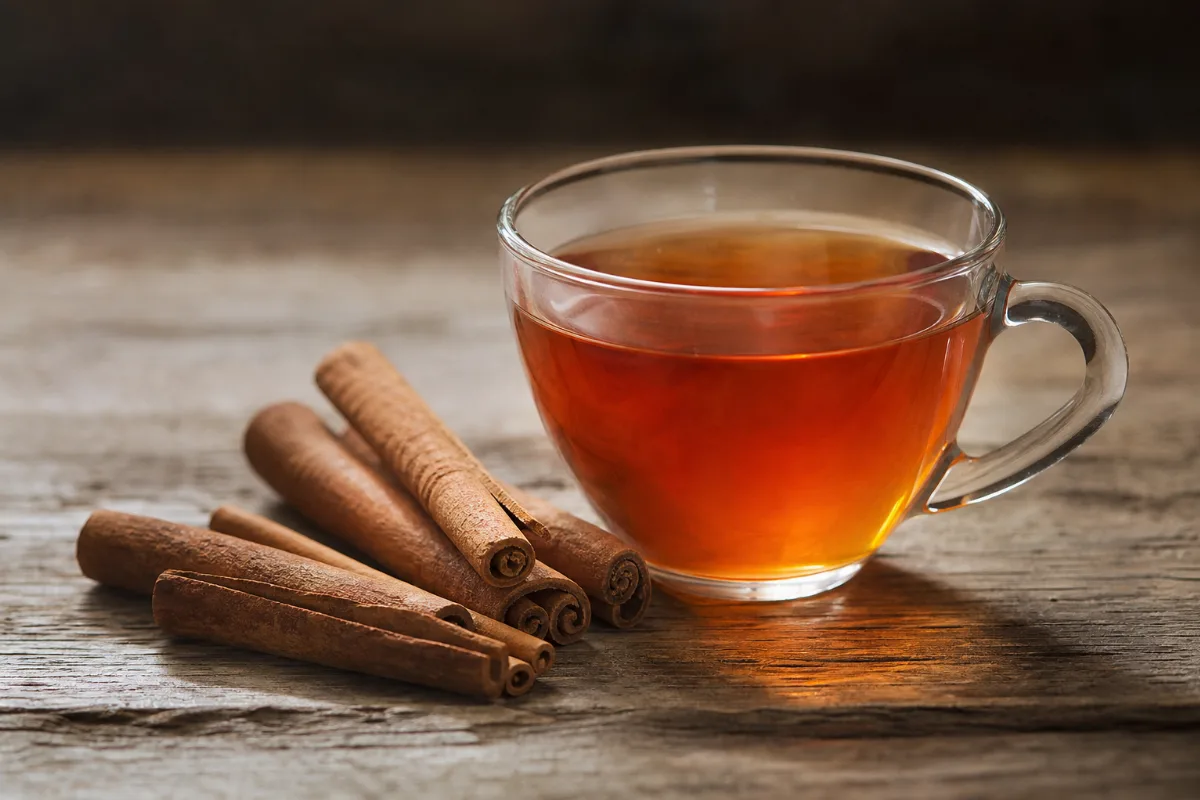
The two are different species with very different coumarin. The German risk agency BfR says cassia averages about 3,000 mg of coumarin per kg and Ceylon has low levels that it considers safe. In an Italian survey of cinnamon samples only 39 percent were Ceylon. Powders are hard to tell apart; sticks differ, with Ceylon quills made of several fine rolled layers.
What the research shows
For the tea: a randomised test in adults without diabetes found a slightly lower blood-sugar peak after a glucose drink with cinnamon tea, and a crossover test found a cinnamon infusion did not change energy use and slightly lowered fullness.
For type 2 diabetes the studies used capsules, powders or extracts. A 2025 pooling of 28 trials found lower blood sugar with very uneven results; the 2012 Cochrane review found not enough evidence. NCCIH says research does not clearly support cinnamon for any health condition.
Tea, capsule and extract
A cup of tea is a water infusion of the bark. The trials of blood sugar, blood fats, blood pressure and weight mostly used capsules, powders or standardised extracts, which are more concentrated. Results from one form should not be assumed for another. Any amounts are a question for your doctor or pharmacist.
At a glance
Traditional uses history, not proof
- China, India and Persia: NCCIH says cinnamon bark has a long history in traditional medicine and cooking, for inflammation, nerve pain, heart disease, cough and other conditions
- Today: NCCIH says cinnamon products are promoted for diabetes and weight loss, and that research does not clearly support any health use
- Europe: an EU herbal monograph on Ceylon cinnamon bark exists (not read for this page)
Studied for research
- Blood sugar after a glucose drink (the tea), low (one small test)
- Type 2 diabetes blood sugar and HbA1c (capsules, not tea), mixed
- Blood fats, blood pressure, weight (supplements, not tea), low
- Fullness and appetite (the infusion), very low
- PCOS and period pain, low to very low (mostly not tea)
Main compounds
- Coumarin: much higher in cassia than in Ceylon; the liver-safety concern
- Cinnamaldehyde: the main flavour compound; linked to mouth allergy with gum
- Eugenol and plant polyphenols
- No caffeine expected: cinnamon is not the tea plant (an inference; no source measured it)
Common forms
- Tea from cinnamon bark sticks or ground bark steeped in water
- Tea bags, often blends with other herbs or true tea
- Capsules, powders and extracts (most trials used these; results do not carry over to tea)
- Cinnamon and cassia essential oils (separate products, not drinks)
Research links: German BfR: FAQ on coumarin in cinnamon · NCCIH: Cinnamon, usefulness and safety · Effect of cinnamon tea on postprandial glucose (2015) · Cochrane review: cinnamon for diabetes mellitus (2012) · Toxicology and risk assessment of coumarin (2010) · Research Library · Genes & Biomarkers Library
What it is and its history
- Accepted scientific name
- Cinnamomum verum J.Presl (Ceylon cinnamon, "true" cinnamon) and cassia cinnamon (Cinnamomum aromaticum Nees, also called C. cassia) (Lauraceae)
- Naming authority
- GBIF API checked 2026-10-25: C. verum J.Presl ACCEPTED (key 3033987); C. aromaticum Nees ACCEPTED (key 3033982); C. burmannii (Nees & T.Nees) Blume ACCEPTED (key 3033985), the species used in the one cinnamon tea trial. GBIF also lists a name C. cassia Siebold as accepted (key 104813361) and other C. cassia names as synonyms of C. aromaticum or C. burmannii, so the cassia name is used differently in different sources.
- Synonyms
- NCCIH lists Cinnamomum zeylanicum and Laurus cinnamomum as other names for C. verum, and Cinnamomum cassia as another name for C. aromaticum.
- Common names
- Cinnamon tea (English); Cinnamon bark tea (English (graph summary)); Ceylon cinnamon (English (NCCIH)); True cinnamon (English (NCCIH)); Cassia cinnamon (English (NCCIH)); Canela (Spanish)
- Family or group
- Lauraceae (laurel family)
- Classification
- Plantae > Tracheophyta > Laurales > Lauraceae > Cinnamomum > Cinnamomum verum; Cinnamomum aromaticum (cassia)
- Native range
- NCCIH says Ceylon cinnamon grows mainly in Sri Lanka and cassia is grown in areas of southeastern Asia.
- Habitat
- Not verified.
- What it looks like
- Roots: Not verified.; Stems: The inner bark is used. NCCIH says cinnamon is the dried bark of various Cinnamomum trees.; Leaves: Not verified.; Flowers: Not verified.; Fruit: Not verified.
- Cultivation
- Not verified.
- Harvest and processing
- Cinnamon sticks are rolled bark; the BfR says Ceylon sticks look like a cut cigar with several fine rolled layers. Powders of the two kinds are hard to tell apart.
- Look-alikes and adulterants
- Name: Cassia vs Ceylon cinnamon; Note: Different species with very different coumarin levels; cassia is the common supermarket type.; Name: Cinnamon essential oil and cassia oil; Note: Separate concentrated products, never a tea. See the linked oil pages.; Name: Cinnamon supplements; Note: Capsules and extracts used in most blood-sugar trials; not the same as tea.
- Sustainability and conservation
- Not verified.
Photographs
Traditional use and history history, not clinical proof
| Tradition or era | Documented use | Source |
|---|---|---|
| Traditional medicine in China, India and Persia | NCCIH says the bark, leaves, flowers, fruits and roots have a long history of use in traditional medicine and cuisine, and that cinnamon was thought to help inflammation, nerve pain, heart disease, cough and other conditions. | s-nccih-cinnamon |
| Today | NCCIH says cinnamon is promoted as a supplement for diabetes and weight loss, Ceylon cinnamon for hay fever, and cassia as a mosquito repellent on skin. | s-nccih-cinnamon |
| Europe | A 2011 EU herbal monograph on Ceylon cinnamon bark exists. | s-ema-hmpc-cinnamon |
Traditional use shows how it was used. It does not show that it works or is safe today.
What is inside, and how it may work
What it contains and how those compounds act in cells and animals. Laboratory and animal mechanisms are not proven effects in people.
Main compounds
| Compound | Family | Where it is concentrated | Activity studied | Level of evidence |
|---|---|---|---|---|
| Coumarin PubChem 323 | Benzopyrone (plant chemical) | Bark, much higher in cassia Cassia about 3,000 mg/kg on average, highest measured 10,000 mg/kg (BfR); not measured in tea | Liver toxin in animals and in a sensitive group of people when taken as a drug. 24 10 1 | Human data |
| Cinnamaldehyde PubChem 637511 | Aldehyde (flavour compound) | Bark | The main flavour compound; linked to mouth allergy reactions in case reports on cinnamon gum. 24 16 19 | Human data |
| Eugenol PubChem 3314 | Phenolic compound | Bark Highest in C. verum in one lab comparison (5.77 percent of the extract profile) | A flavour compound; no tea-specific effect shown. 24 26 | Laboratory research |
| Polyphenols | Plant antioxidants | Bark | The authors of the one tea trial found high antioxidant capacity in the tea by lab chemistry and suggest polyphenols. 3 | Laboratory research |
Mechanisms, receptors and pathways
| Target or pathway | Gene or receptor | What was found | Level |
|---|---|---|---|
| Sugar digestion and cell sugar uptake | Alpha-amylase, alpha-glucosidase, GLUT4 | In lab dishes a Ceylon cinnamon extract blocked sugar-digesting enzymes and increased cell sugar uptake; animal studies found lower fasting glucose and HbA1c. This is the authors' summary of lab and animal work; it is not shown for tea in people. 27 | Laboratory research |
Absorption, metabolism and elimination
- Absorption
- Not found for cinnamon tea.
- Distribution
- Not found.
- Metabolism
- Not found.
- Elimination
- Not found.
- Bioavailability
- Not found for tea; no study measured coumarin in a cup of tea.
Isolated compounds versus whole extracts
A cup of cinnamon tea is a water infusion of the bark. Most blood-sugar, blood-fat and weight results come from capsules, powders or standardised extracts, which are more concentrated, and lab results often come from isolated compounds. Cassia coumarin findings also come from foods and drugs rather than tea. Do not assume any of these carry across. Amounts are not given here. Ask a doctor or pharmacist.
Nutritional composition
No caffeine is expected in a pure cinnamon bark tea because cinnamon is not the tea plant (inference; not measured in any source we read).
1 mixed findings7 low certainty3 very low certainty
What was looked at
The 11 benefits and uses checked for Cinnamon Tea, each with how strong the evidence is. Tap one to open it.
- Blood sugar after a glucose drink: cinnamon tea (one short test)Low certainty
- Blood sugar and HbA1c in type 2 diabetes: cinnamon capsules and powders (not tea)Mixed findings
- Ceylon cinnamon (Cinnamomum verum) on blood sugar, as capsules or extractLow certainty
- Cassia cinnamon (Cinnamomum cassia) in impaired glucose toleranceLow certainty
- Blood fats: cholesterol and triglycerides (cinnamon supplements)Low certainty
- Blood pressure (cinnamon supplements)Low certainty
- Body weight and BMI (cinnamon supplements)Low certainty
- Fullness and appetite: cinnamon infusion (one test)Very low certainty
- PCOS: insulin resistance (cinnamon powder capsules)Low certainty
- PCOS: a marjoram-and-cinnamon herbal tea blend (pilot)Very low certainty
- Painful periods (primary dysmenorrhoea): cinnamon, fennel and gingerVery low certainty
Lab markers tracked in the studies
Fasting blood glucoseHbA1c (blood sugar over about 3 months)Blood sugar after a glucose drinkTriglyceridesTotal cholesterolSystolic blood pressureBody mass index (BMI)
What is Cinnamon Tea good for?
Only three of these results used a tea or infusion: two single short tests and one pilot of a marjoram-and-cinnamon blend. The rest came from capsules, powders or extracts and should not be assumed to apply to tea.
Benefits, one by one
Each card is a research question, not a promise. Tap a goal to filter. Open a card to see the studies, doses and limits.
Blood sugar after a glucose drink: cinnamon tea (one short test)
Low certaintyOne small randomised test in people without diabetes found cinnamon tea slightly lowered blood sugar after a glucose drink. It was a single short test.
1 studiesThe tea is a plain water infusion of the bark. Trials mostly used cap…
Studies, doses and limits
What the trials found
In a randomised trial in adults without diabetes, a glucose drink was taken with or without cinnamon tea made from Cinnamomum burmannii, a cassia-group cinnamon. Blood sugar after the drink was slightly lower with the tea, and the highest blood sugar reached was significantly lower (p < 0.05). This is the only trial of an actual cinnamon tea for blood sugar that we found. It was a single sitting and says nothing about lasting effects or about people with diabetes.
Results
Slightly lower peak blood sugar after one glucose drink (non-diabetic adults).
Effect sizes as reported
Small difference in peak sugar; exact numbers were not read.
Why this rating
One small trial, one sitting, no long-term follow-up, and the number of participants was not in the abstract.
Form and dose studied
The tea is a plain water infusion of the bark. Trials mostly used capsules, powders or extracts, which are more concentrated. Amounts are not given here. Ask a doctor or pharmacist.
Who was studied
Adults without diabetes.
Limits
Not a result for people with diabetes. The species (C. burmannii) is in the cassia group, so coumarin applies.
Why researchers looked
Cinnamon is best known as a possible blood-sugar helper, and tea is the form many people drink.
Traditional use
NCCIH says cinnamon bark has a long history in traditional medicine in China, India and Persia, and that today it is promoted as a supplement for diabetes.
Proposed mechanism Not established
Not shown. The authors suggest polyphenols in the tea, which they found have high antioxidant activity in lab chemistry, but they did not test how the tea acts in the body.
A proposed mechanism does not show that the effect happens in people.
Cassia contains coumarin; see the Safety tab.
Blood sugar and HbA1c in type 2 diabetes: cinnamon capsules and powders (not tea)
Mixed findingsMany trials gave cinnamon capsules or powder to people with type 2 diabetes. Results are mixed: some pooled results show lower blood sugar, but the trials differ a lot, and the Cochrane review found not enough evidence.
4 studiesCapsules, powders or extracts, not tea. Amounts are not given here. A…
Studies, doses and limits
What the trials found
A 2025 meta-analysis of 28 trials (3,054 people with type 2 diabetes, 30 to 120 days) found lower fasting glucose (about 15 mg/dL), after-meal glucose and HbA1c (about 0.56) and lower insulin resistance, but results varied a great deal between trials (I-squared 88 to 100 percent). A 2013 meta-analysis of 10 trials (543 people) found lower fasting glucose but no significant HbA1c change. The 2012 Cochrane review of 10 trials (577 people, mostly cassia) found the fasting glucose effect inconclusive, no significant HbA1c, insulin or after-meal difference, and not enough evidence to support cinnamon for diabetes. In a 160-person trial where capsules were added to usual diabetes tablets, HbA1c was 0.2 points lower and fasting sugar 0.55 mmol/L lower than placebo, which the authors call modest. NCCIH says research does not clearly support cinnamon for diabetes, partly because trials often do not say which species was tested.
Results
Mixed. Newer pooled results lean positive; the Cochrane review did not find a clear benefit.
Effect sizes as reported
Fasting glucose about 15 to 25 mg/dL lower in two meta-analyses; HbA1c about 0.2 to 0.6 points lower in the newer ones, not significant in two others.
Why this rating
Pooled results conflict, trials are small, species are mixed, and heterogeneity is very high. The Cochrane review rated most trials at high or unclear risk of bias.
Form and dose studied
Capsules, powders or extracts, not tea. Amounts are not given here. Ask a doctor or pharmacist.
Who was studied
Adults with type 2 diabetes, many already on diabetes medicines.
Limits
Capsules and powders are not tea. No trial measured long-term diabetes complications.
Why researchers looked
Cinnamon has been tested for years as an add-on in type 2 diabetes.
Traditional use
Cinnamon products are promoted today as dietary supplements for diabetes (NCCIH).
Proposed mechanism Lab and animal
Lab and animal work suggests cinnamon extracts may slow sugar digestion and help cells take up sugar. This is not shown for a cup of tea.
A proposed mechanism does not show that the effect happens in people.
May add to diabetes medicines; see the Safety tab.
Ceylon cinnamon (Cinnamomum verum) on blood sugar, as capsules or extract
Low certaintyCeylon cinnamon is the low-coumarin kind. One 210-person trial of a Ceylon extract reported lower blood sugar; a small test of Ceylon capsules found no effect. It was not tested as tea.
3 studiesA standardised extract and capsules, not tea. Amounts are not given h…
Studies, doses and limits
What the trials found
A 2025 randomised trial in Sri Lanka gave 210 adults with type 2 diabetes a standardised Ceylon cinnamon extract (two strengths) or placebo; 186 finished 4 months. Fasting glucose and HbA1c fell compared with the start, with lower insulin resistance, and cholesterol was lower in the higher-strength group. The authors hold patents, which is a possible interest to bear in mind. In contrast, a crossover test in 10 people with impaired glucose tolerance found Ceylon cinnamon capsules had no effect on blood sugar or insulin after a glucose drink. A 2012 review found no human studies of Ceylon cinnamon at that time.
Results
Positive in one 210-person extract trial; no effect in a 10-person single test.
Effect sizes as reported
Changes from baseline in fasting glucose and HbA1c; the abstract gives no clear between-group figure.
Why this rating
One new trial by authors with patents, one tiny null test, neither using tea.
Form and dose studied
A standardised extract and capsules, not tea. Amounts are not given here. Ask a doctor or pharmacist.
Who was studied
Adults with type 2 diabetes (extract trial); adults with impaired glucose tolerance (capsule test).
Limits
Not tea. The extract may be more concentrated than any tea.
Why researchers looked
People who want to avoid coumarin ask whether Ceylon cinnamon works as well as cassia.
Traditional use
Ceylon cinnamon is called "true" cinnamon and grows mainly in Sri Lanka (NCCIH).
Proposed mechanism Lab and animal
A 2012 review of Ceylon cinnamon found only lab and animal studies, where extracts blocked sugar-digesting enzymes and increased cell sugar uptake. These are lab findings.
A proposed mechanism does not show that the effect happens in people.
Ceylon has far less coumarin than cassia (see the Safety tab).
Cassia cinnamon (Cinnamomum cassia) in impaired glucose tolerance
Low certaintyA small 12-week trial of cassia capsules in people with impaired glucose tolerance found no change in insulin sensitivity, blood sugar or liver tests.
1 studiesCapsules, powders or extracts, not tea. Amounts are not given here. A…
Studies, doses and limits
What the trials found
Twenty-one people with impaired glucose tolerance were randomly given cassia capsules or placebo for 12 weeks; 17 finished. There was no significant change in insulin sensitivity measured by a clamp, HbA1c, fasting glucose, BMI, blood fats or liver enzymes.
Results
No effect.
Why this rating
Very small; capsules; one trial.
Form and dose studied
Capsules, powders or extracts, not tea. Amounts are not given here. Ask a doctor or pharmacist.
Who was studied
Adults with impaired glucose tolerance.
Limits
Seventeen completers; short.
Why researchers looked
Cassia is the common supermarket cinnamon, so its effect on early blood-sugar problems matters.
Traditional use
Cassia is the most common type sold in North America (NCCIH).
Proposed mechanism Not established
Not studied in this trial.
A proposed mechanism does not show that the effect happens in people.
Cassia contains coumarin; see the Safety tab.
Blood fats: cholesterol and triglycerides (cinnamon supplements)
Low certaintyPooled trials of cinnamon supplements found lower triglycerides and total cholesterol on average. LDL and HDL were not clearly changed. These were not tea trials.
2 studiesCapsules, powders or extracts, not tea. Amounts are not given here. A…
Studies, doses and limits
What the trials found
A 2017 meta-analysis of 13 trials (750 people) found significantly lower triglycerides and total cholesterol, but no significant change in LDL or HDL (HDL rose only after one study was dropped). No link was found between the amount used and the change. A 2013 meta-analysis of people with type 2 diabetes (543 people) found lower total cholesterol, LDL and triglycerides and higher HDL, with high variation between trials.
Results
Lower triglycerides and total cholesterol.
Effect sizes as reported
Triglycerides about 24 mg/dL lower and total cholesterol about 14 mg/dL lower in the 2017 pooling.
Why this rating
Small trials, mixed products and species, high variation; supplements, not tea.
Form and dose studied
Capsules, powders or extracts, not tea. Amounts are not given here. Ask a doctor or pharmacist.
Who was studied
Adults, many with diabetes or metabolic problems.
Limits
Not tea.
Why researchers looked
Cinnamon polyphenols were thought to help blood fats.
Traditional use
Not part of the traditional uses in the sources read.
Proposed mechanism Not established
Not shown.
A proposed mechanism does not show that the effect happens in people.
See Safety tab for cassia.
Blood pressure (cinnamon supplements)
Low certaintyA pooling of 9 small trials found a modest fall in blood pressure with cinnamon supplements. The authors say better trials in people with high blood pressure are needed.
1 studiesCapsules, powders or extracts, not tea. Amounts are not given here. A…
Studies, doses and limits
What the trials found
A 2020 meta-analysis of 9 trials (641 adults) found systolic pressure fell by about 5 mmHg and diastolic by about 3 mmHg with cinnamon supplements. The authors say there were few studies in people with high blood pressure and sample sizes were small.
Results
Modest fall in blood pressure.
Effect sizes as reported
Systolic about -5.2 mmHg (CI -9.35 to -0.99); diastolic about -3.4 mmHg (CI -5.67 to -1.04).
Why this rating
Small trials; supplements, not tea.
Form and dose studied
Capsules, powders or extracts, not tea. Amounts are not given here. Ask a doctor or pharmacist.
Who was studied
Adults, mostly without proven high blood pressure.
Limits
Not tea.
Why researchers looked
Cinnamon has been tested for blood pressure alongside blood sugar.
Traditional use
Not part of the traditional uses in the sources read.
Proposed mechanism Not established
Not shown.
A proposed mechanism does not show that the effect happens in people.
Could add to blood-pressure medicines in theory; ask a pharmacist.
Body weight and BMI (cinnamon supplements)
Low certaintyPooled trials found very small average falls in weight and BMI with cinnamon supplements. Waist size and body fat did not change significantly.
1 studiesCapsules, powders or extracts, not tea. Amounts are not given here. A…
Studies, doses and limits
What the trials found
A 2020 meta-analysis of 21 trials (1,480 adults) found weight about 0.9 kg lower and BMI about 0.4 kg/m2 lower than controls. Waist size and body fat did not change significantly. NCCIH says it is unclear whether cinnamon helps with weight loss.
Results
Very small average falls in weight and BMI.
Effect sizes as reported
Weight -0.92 kg (CI -1.51 to -0.33); BMI -0.40 kg/m2 (CI -0.57 to -0.22).
Why this rating
Tiny effect, high variation between trials; supplements, not tea.
Form and dose studied
Capsules, powders or extracts, not tea. Amounts are not given here. Ask a doctor or pharmacist.
Who was studied
Adults.
Limits
Not tea.
Why researchers looked
People look for natural help with weight.
Traditional use
NCCIH says cinnamon is promoted today for weight loss.
Proposed mechanism Not established
Not shown.
A proposed mechanism does not show that the effect happens in people.
A 34-year-old woman had a probable liver injury after long cinnamon use for weight loss; see Safety tab.
Fullness and appetite: cinnamon infusion (one test)
Very low certaintyIn one small crossover test, a cinnamon infusion did not change energy use and lowered the feeling of fullness slightly. People ate a bit more at the next meal.
1 studiesThe tea is a plain water infusion of the bark. Trials mostly used cap…
Studies, doses and limits
What the trials found
In 21 healthy adults, a cinnamon infusion at breakfast did not change energy use, fat or sugar burning, or hunger, compared with water. Fullness was lower (p = 0.021) and the next meal was larger (p = 0.05). Food eaten over the whole day did not differ.
Results
No help for appetite; slightly less fullness.
Effect sizes as reported
Fullness lower, p = 0.021; next meal larger, p = 0.05.
Why this rating
One open (not blinded) crossover test with one dose in healthy people.
Form and dose studied
The tea is a plain water infusion of the bark. Trials mostly used capsules, powders or extracts, which are more concentrated. Amounts are not given here. Ask a doctor or pharmacist.
Who was studied
Healthy adults.
Limits
Species not stated in the abstract.
Why researchers looked
Cinnamon is often said to curb appetite.
Traditional use
NCCIH lists weight loss among today's promoted uses.
Proposed mechanism Not established
Not shown.
A proposed mechanism does not show that the effect happens in people.
None specific.
PCOS: insulin resistance (cinnamon powder capsules)
Low certaintyOne trial in 66 women with PCOS found cinnamon capsules lowered fasting insulin and insulin resistance. Hormones such as testosterone did not differ from placebo.
1 studiesCapsules, powders or extracts, not tea. Amounts are not given here. A…
Studies, doses and limits
What the trials found
In a randomised, placebo-controlled trial of 66 women with PCOS who were also taking a progestin, 12 weeks of cinnamon powder capsules lowered fasting insulin (p = .024) and insulin resistance (HOMA-IR, p = .014) compared with placebo. LDL fell as well. Other measures, including male hormones, did not differ from placebo.
Results
Lower fasting insulin and insulin resistance.
Effect sizes as reported
Fasting insulin p = .024; HOMA-IR p = .014.
Why this rating
One trial in Iran; capsules, not tea.
Form and dose studied
Capsules, powders or extracts, not tea. Amounts are not given here. Ask a doctor or pharmacist.
Who was studied
Women with PCOS.
Limits
Participants also took a hormone medicine.
Why researchers looked
PCOS often comes with insulin resistance, so blood-sugar helpers are tested.
Traditional use
Not part of the traditional uses in the sources read.
Proposed mechanism Not established
Not shown.
A proposed mechanism does not show that the effect happens in people.
Ask a doctor about combining with PCOS medicines.
PCOS: a marjoram-and-cinnamon herbal tea blend (pilot)
Very low certaintyA small pilot trial gave women with PCOS a marjoram-and-cinnamon tea for 3 months. Hormone numbers changed in both the tea and the placebo groups, so it does not show a clear benefit.
1 studiesThe tea is a plain water infusion of the bark. Trials mostly used cap…
Studies, doses and limits
What the trials found
Sixty women with PCOS were randomly given a twice-daily herbal tea blend of marjoram and cinnamon or a placebo tea for 3 months; only 36 finished. No major side effects were reported. In the tea group follicle-stimulating hormone rose and anti-Mullerian hormone fell; in the placebo group anti-Mullerian hormone also fell, and prolactin and HDL rose. The authors say this pilot suggests hormone effects, but the placebo group changed too.
Results
No clear benefit shown; no major side effects.
Effect sizes as reported
Within-group hormone changes only.
Why this rating
Pilot trial, 24 of 60 did not finish, two herbs in one tea, and the placebo group changed too.
Form and dose studied
The tea is a plain water infusion of the bark. Trials mostly used capsules, powders or extracts, which are more concentrated. Amounts are not given here. Ask a doctor or pharmacist.
Who was studied
Women with PCOS.
Limits
Cinnamon cannot be separated from marjoram.
Why researchers looked
Herbal teas are popular in PCOS.
Traditional use
Not part of the traditional uses in the sources read.
Proposed mechanism Not established
Not shown.
A proposed mechanism does not show that the effect happens in people.
No major side effects reported.
Painful periods (primary dysmenorrhoea): cinnamon, fennel and ginger
Very low certaintyA pooling of 9 studies found lower period-pain scores with cinnamon, fennel or ginger than with placebo. The abstract does not say whether cinnamon was taken as tea.
1 studiesForm not stated. Amounts are not given here. Ask a doctor or pharmaci…
Studies, doses and limits
What the trials found
A 2020 meta-analysis of 9 studies (647 women) found lower pain scores than placebo for cinnamon, fennel and ginger, and a shorter pain duration with cinnamon. The authors say further studies are needed.
Results
Lower pain scores than placebo for cinnamon, fennel and ginger.
Effect sizes as reported
Cinnamon versus placebo: pain score difference about 1.8 (CI 1.33 to 2.30).
Why this rating
Pooled three different herbs; form and study quality for the cinnamon studies are not in the abstract.
Form and dose studied
Form not stated. Amounts are not given here. Ask a doctor or pharmacist.
Who was studied
Women with period pain.
Limits
Not shown to be tea.
Why researchers looked
Warm spice drinks are a common home remedy for period pain.
Traditional use
Not part of the traditional uses in the sources read.
Proposed mechanism Not established
Not shown.
A proposed mechanism does not show that the effect happens in people.
None specific.
Connections to the rest of health
How Cinnamon Tea connects to the rest of our health knowledge graph. Every link says what kind of connection it is. A safety link (for example to the liver) is a warning, not a benefit. A study that merely mentions a topic never creates a benefit link.
Explore every connection: goals, body systems, organs, symptoms, genes
A. Wellness goals
| Connected to | Kind of connection | Evidence status | Context | Studies |
|---|---|---|---|---|
| Blood Sugar Balance | Potential benefit | Low certainty | Blood sugar after a glucose drink: cinnamon tea (one short test): One small randomised test in people without diabetes found cinnamon tea slightly lowered blood sugar after a glucose drink. It was a single short test. Blood sugar and HbA1c in type 2 diabetes: cinnamon capsules and powders (not tea): Many trials gave cinnamon capsules or powder to people with type 2 diabetes. Results are mixed: some pooled results show lower blood sugar, but the trials differ a lot, and the Cochrane review found not enough evidence. | 3 36 2 17 18 28 31 27 32 12 |
| Metabolic Health | Potential benefit | Mixed findings | Blood sugar and HbA1c in type 2 diabetes: cinnamon capsules and powders (not tea): Many trials gave cinnamon capsules or powder to people with type 2 diabetes. Results are mixed: some pooled results show lower blood sugar, but the trials differ a lot, and the Cochrane review found not enough evidence. Body weight and BMI (cinnamon supplements): Pooled trials found very small average falls in weight and BMI with cinnamon supplements. Waist size and body fat did not change significantly. | 36 2 17 18 34 |
| Cholesterol Balance | Potential benefit | Low certainty | Blood fats: cholesterol and triglycerides (cinnamon supplements): Pooled trials of cinnamon supplements found lower triglycerides and total cholesterol on average. LDL and HDL were not clearly changed. These were not tea trials. | 21 2 |
| Heart Health | Potential benefit | Low certainty | Blood fats: cholesterol and triglycerides (cinnamon supplements): Pooled trials of cinnamon supplements found lower triglycerides and total cholesterol on average. LDL and HDL were not clearly changed. These were not tea trials. Blood pressure (cinnamon supplements): A pooling of 9 small trials found a modest fall in blood pressure with cinnamon supplements. The authors say better trials in people with high blood pressure are needed. | 21 2 11 |
| Blood Pressure Support | Potential benefit | Low certainty | Blood pressure (cinnamon supplements): A pooling of 9 small trials found a modest fall in blood pressure with cinnamon supplements. The authors say better trials in people with high blood pressure are needed. | 11 |
| Weight Management | Potential benefit | Low certainty | Body weight and BMI (cinnamon supplements): Pooled trials found very small average falls in weight and BMI with cinnamon supplements. Waist size and body fat did not change significantly. Fullness and appetite: cinnamon infusion (one test): In one small crossover test, a cinnamon infusion did not change energy use and lowered the feeling of fullness slightly. People ate a bit more at the next meal. | 34 29 |
| Womens Wellness | Potential benefit | Low certainty | PCOS: insulin resistance (cinnamon powder capsules): One trial in 66 women with PCOS found cinnamon capsules lowered fasting insulin and insulin resistance. Hormones such as testosterone did not differ from placebo. PCOS: a marjoram-and-cinnamon herbal tea blend (pilot): A small pilot trial gave women with PCOS a marjoram-and-cinnamon tea for 3 months. Hormone numbers changed in both the tea and the placebo groups, so it does not show a clear benefit. | 12 22 33 |
| Hormone Balance | Potential benefit | Low certainty | PCOS: insulin resistance (cinnamon powder capsules): One trial in 66 women with PCOS found cinnamon capsules lowered fasting insulin and insulin resistance. Hormones such as testosterone did not differ from placebo. PCOS: a marjoram-and-cinnamon herbal tea blend (pilot): A small pilot trial gave women with PCOS a marjoram-and-cinnamon tea for 3 months. Hormone numbers changed in both the tea and the placebo groups, so it does not show a clear benefit. | 12 22 |
B. Body systems
| Connected to | Kind of connection | Evidence status | Context | Studies |
|---|---|---|---|---|
| Endocrine system | Drug or supplement interaction | Low certainty | May add to diabetes medicines; low-sugar risk is theoretical. Preparation or compound: Cinnamon supplements |
18 17 |
| Cardiovascular system | Drug or supplement interaction | Not enough evidence | One fatal bleeding case report with an anticoagulant; cause not proven. Preparation or compound: Ginger and cinnamon mixture |
20 |
| Endocrine system | Potential benefit | Mixed findings | One small tea test; mixed supplement trials for blood sugar. Preparation or compound: Cinnamon tea and supplements |
3 36 17 |
| Endocrine System | Biological association | Low certainty | Studied for: Blood sugar after a glucose drink: cinnamon tea (one short test) Studied for: Blood sugar and HbA1c in type 2 diabetes: cinnamon capsules and powders (not tea) | 3 36 2 17 18 28 31 27 32 21 12 22 |
| Metabolism Weight | Biological association | Low certainty | Studied for: Blood sugar after a glucose drink: cinnamon tea (one short test) Studied for: Blood sugar and HbA1c in type 2 diabetes: cinnamon capsules and powders (not tea) | 3 36 2 17 18 32 21 34 29 |
| Cardiovascular System | Biological association | Low certainty | Studied for: Blood pressure (cinnamon supplements) | 11 |
| Reproductive System | Biological association | Low certainty | Studied for: PCOS: insulin resistance (cinnamon powder capsules) Studied for: PCOS: a marjoram-and-cinnamon herbal tea blend (pilot) | 12 22 33 |
C. Body parts and organs
| Connected to | Kind of connection | Evidence status | Context | Studies |
|---|---|---|---|---|
| Liver | Adverse effect or risk | Low certainty | Rare case reports and a European coumarin limit; a pooled trial analysis showed no overall enzyme change. Rare case reports; European coumarin limit. Preparation or compound: Cassia cinnamon (coumarin) |
13 4 35 1 23 |
I. Biomarkers
| Connected to | Kind of connection | Evidence status | Context | Studies |
|---|---|---|---|---|
| Fasting blood glucose | Biological association | Mixed findings | Measured in trials: mixed. A lab change is not the same as a health benefit. | 36 2 17 32 |
| HbA1c (blood sugar over about 3 months) | Biological association | Mixed findings | Measured in trials: mixed. A lab change is not the same as a health benefit. | 36 2 18 17 |
| Blood sugar after a glucose drink | Biological association | Low certainty | Measured in trials: mixed. A lab change is not the same as a health benefit. | 3 31 |
| Triglycerides | Biological association | Low certainty | Measured in trials: lowered. A lab change is not the same as a health benefit. | 21 2 |
| Total cholesterol | Biological association | Low certainty | Measured in trials: lowered. A lab change is not the same as a health benefit. | 21 2 |
| Systolic blood pressure | Biological association | Low certainty | Measured in trials: lowered. A lab change is not the same as a health benefit. | 11 |
| Body mass index (BMI) | Biological association | Low certainty | Measured in trials: lowered. A lab change is not the same as a health benefit. | 34 |
K. Biological pathways
| Connected to | Kind of connection | Evidence status | Context | Studies |
|---|---|---|---|---|
| Sugar digestion and uptake (alpha-amylase, GLUT4) | Preliminary mechanism | In vitro | Proposed in a review of lab and animal work on Ceylon cinnamon extract; unconfirmed for tea. | 27 |
L. Active compounds
| Connected to | Kind of connection | Evidence status | Context | Studies |
|---|---|---|---|---|
| Coumarin | Biological association | Human | Liver toxin in animals and in a sensitive group of people when taken as a drug. Preparation or compound: Bark, much higher in cassia |
24 10 1 |
| Cinnamaldehyde | Biological association | Human | The main flavour compound; linked to mouth allergy reactions in case reports on cinnamon gum. Preparation or compound: Bark |
24 16 19 |
| Eugenol | Biological association | In vitro | A flavour compound; no tea-specific effect shown. Preparation or compound: Bark |
24 26 |
| Polyphenols | Biological association | In vitro | The authors of the one tea trial found high antioxidant capacity in the tea by lab chemistry and suggest polyphenols. Preparation or compound: Bark |
3 |
Each connection is stored with the ingredient, the connected record, the kind of connection, the evidence status, the supporting studies, the preparation or compound involved, and a review date (last reviewed October 25, 2026).
The evidence
The research centre for Cinnamon Tea. Every record here was checked against PubMed or the publisher's page; we never list a study we have not verified.
Evidence by outcome
Bars show how many studies we found for each outcome, not how well it works. People are added up across trials only (reviews are not added, to avoid double counting).
How we rate evidence
High certainty
Several well-run trials or reviews agree; further research is unlikely to change the picture much.
Moderate certainty
Good trials point the same way, but some doubt remains.
Low certainty
Small, short or inconsistent trials. The finding could change with better research.
Very low certainty
Very little or very weak human data. Treat as a possibility only.
Mixed findings
Trials or reviews disagree with each other.
Not enough evidence
Not enough human research to say either way.
Evidence against
Good research found no benefit, or found harm.
We take the reviewers' own risk-of-bias and GRADE statements where they exist, and otherwise judge from study size, design, consistency, directness and whether a product matches what is sold. Many publications do not make evidence high. Method note: We read the BfR coumarin FAQ and the NCCIH cinnamon page in full, took the LiverTox and LactMed summaries from their PubMed records, checked plant names through GBIF and compounds through PubChem, searched PubMed, and read every cited abstract directly. The EU herbal monograph PDF could not be decoded and the EFSA coumarin opinion was not opened; both are marked as not verified. The no-caffeine statement is an inference and is labelled so. Certainty ratings are our own reading, not formal grades.
Study library: every study we checked 36
| Study | Design | People | Product, dose, length | Result |
|---|---|---|---|---|
| Abraham 2010 Toxicology and risk assessment of coumarin: focus on human data. Mol Nutr Food Res · PMID 20024932 · DOI |
Review mixed |
Human coumarin data (patients given coumarin as a drug) plus a German consumption survey of over 1000 people | Coumarin Not reproduced here |
Coumarin damages the liver and is carcinogenic in animals. EFSA discounted a genotoxic mechanism in 2004, which allowed a tolerable daily intake (TDI) of 0.1 mg per kg of body weight. Human drug data showed a subgroup more sensitive than the animal species, and also supported 0.1 mg/kg. Heavy consumers of cassia can reach a daily coumarin intake equal to the TDI. TDI 0.1 mg/kg body weight a day Methods, limits and fundingOutcomes: Liver toxicity, tolerable daily intake Limitations: A review by authors from the German BfR (the agency that issues the limit). Coumarin was studied as a drug and in food; not as tea. Funding and conflicts: Authors work at the German Federal Institute for Risk Assessment, which issues coumarin advice. Read: abstract |
| Allen 2013 Cinnamon use in type 2 diabetes: an updated systematic review and meta-analysis. Ann Fam Med · PMID 24019277 · DOI |
Meta-analysis |
543 Adults with type 2 diabetes in 10 randomised trials |
Cinnamon supplements (species mixed) bark Not reproduced here 4 to 18 weeks · vs Control |
Fasting glucose fell by about 25 mg/dL. Total cholesterol, LDL and triglycerides fell and HDL rose slightly. HbA1c did not change significantly (-0.16 percent, 95 percent CI -0.39 to 0.02). Variation between trials was high (I-squared about 67 to 95 percent). Lower fasting glucose and blood fats; no significant HbA1c change Methods, limits and fundingOutcomes: HbA1c, fasting glucose, cholesterol, triglycerides Limitations: Small trials with high heterogeneity; the authors say preferred amount and length of use are unclear. Not tea. Funding and conflicts: Not stated in the abstract. Read: abstract |
| Bernardo 2015 Effect of Cinnamon Tea on Postprandial Glucose Concentration. J Diabetes Res · PMID 26258147 · DOI |
Controlled trial |
Adults without diabetes (number not given in the abstract) | Cinnamon tea made from Cinnamomum burmannii (a cassia-group cinnamon) bark Not reproduced here Single sitting · vs Glucose test drink without tea |
Cinnamon tea slightly lowered blood sugar after the glucose drink. The highest blood sugar reached, and its change, were significantly lower with the tea (p < 0.05). The authors also found high antioxidant activity in the tea by lab chemistry. Small drop in peak sugar after one glucose drink Methods, limits and fundingOutcomes: Blood sugar after a glucose drink, peak blood sugar Limitations: The only trial of an actual cinnamon tea that we read. One short test in people without diabetes; the number of participants is not in the abstract; it says nothing about long-term use or about diabetes. The plant was C. burmannii, a cassia-group species, so it likely contains coumarin (not measured in the abstract). Funding and conflicts: Not stated in the abstract. Read: abstract |
| Brancheau 2015 Do cinnamon supplements cause acute hepatitis? Am J Case Rep · PMID 25923145 · DOI |
Case report |
1 73-year-old woman who was also taking a statin |
Cinnamon supplements (species not stated) Not reproduced here About 1 week before symptoms |
Abdominal pain, vomiting and diarrhoea with hepatitis about a week after starting cinnamon supplements. No other cause was found. Cinnamon and the statin were stopped, and the statin was later restarted without problems. The authors suspected a cinnamon-statin combination. One case Methods, limits and fundingOutcomes: Liver injury Limitations: One case; cause not proven; supplements, not tea; species unknown. Funding and conflicts: Not stated in the abstract. Read: abstract |
| Calapai 2014 Oral adverse reactions due to cinnamon-flavoured chewing gums consumption. Oral Dis · PMID 24004186 · DOI |
Review |
Case reports of oral reactions to cinnamon gum | Cinnamon-flavoured products flavouring Not reproduced here |
Cinnamon-flavoured toothpaste, gum, food, sweets and mouthwash can cause mouth reactions. The most common is contact stomatitis, which can look like other mouth problems and be misdiagnosed. Contact stomatitis is the most common reaction Methods, limits and fundingOutcomes: Oral adverse reactions Limitations: Review of case reports; not tea. Funding and conflicts: Not stated in the abstract. Read: abstract |
| Drugs and Lactation Database (LactMed) 2026 Cinnamon (LactMed) LactMed (record dated 2026-10-15) · PMID 40986675 |
Database entry |
not applicable | Cinnamon (Ceylon and cassia) bark |
LactMed says no data exist on the safety of cinnamon in nursing mothers or infants. It says cinnamon is generally well tolerated, with occasional bloating, indigestion, heartburn and nausea. It says cassia (Chinese cinnamon) contains high amounts of coumarin, which it calls toxic, and that Ceylon cinnamon is generally recognised as safe as a flavouring by the US FDA. Reference summary Methods, limits and fundingOutcomes: Regulatory or reference summary Limitations: Summary text of the PubMed record was read. The FDA statement is known only through LactMed. Funding and conflicts: Not applicable (official reference). Read: summary-only |
| European Food Safety Authority 2004 EFSA opinion on coumarin in flavourings (2004) EFSA opinion |
Authoritative guidance |
not applicable | Cinnamon (Ceylon and cassia) bark |
Known only through Abraham 2010 (PubMed 20024932), which says EFSA in 2004 discounted a genotoxic mechanism and so allowed a TDI of 0.1 mg/kg body weight. The opinion itself was not opened. Reference summary Methods, limits and fundingOutcomes: Regulatory or reference summary Limitations: NOT VERIFIED at the source. Funding and conflicts: Not applicable (official reference). Read: not-read |
| European Medicines Agency 2011 Community herbal monograph on Cinnamomum verum J.S. Presl, cortex and aetheroleum (EMA/HMPC) EMA herbal monograph (compiled 10 May 2011) · Source |
Authoritative guidance |
not applicable | Cinnamon (Ceylon and cassia) bark |
The monograph exists. The PDF was downloaded but its text could not be decoded, so nothing in it was read for this page. Earlier search-result text described a traditional use for mild spasmodic stomach and bowel complaints. Reference summary Methods, limits and fundingOutcomes: Regulatory or reference summary Limitations: NOT VERIFIED: contents not read. Nothing on this page depends on it. Funding and conflicts: Not applicable (official reference). Read: not-read |
| GBIF Secretariat 2026 GBIF species match: Cinnamomum verum, C. aromaticum, C. burmannii and C. cassia GBIF API, checked 2026-10-25 · Source |
Database entry |
not applicable | Cinnamon (Ceylon and cassia) bark |
C. verum J.Presl: ACCEPTED (usageKey 3033987), family Lauraceae. C. aromaticum Nees: ACCEPTED (3033982). C. burmannii (Nees & T.Nees) Blume: ACCEPTED (3033985). GBIF also lists a name Cinnamomum cassia Siebold as accepted (104813361) and other C. cassia names as synonyms of C. aromaticum or C. burmannii, so the cassia name is used differently in different sources. NCCIH treats C. aromaticum and C. cassia as the same plant. Reference summary Methods, limits and fundingOutcomes: Regulatory or reference summary Limitations: The cassia naming is unsettled in GBIF; this page follows the sources it cites and says "cassia". Funding and conflicts: Not applicable (official reference). Read: api |
| German Federal Institute for Risk Assessment (BfR) 2012 FAQ on coumarin in cinnamon and other foods BfR frequently asked questions (page dated 2012 in its text) · Source |
Authoritative guidance |
not applicable | Cinnamon (Ceylon and cassia) bark |
Read on 2026-10-25. The tolerable daily intake (TDI) for coumarin is 0.1 mg per kg of body weight a day, and it also applies to especially sensitive consumers. A slight excess for one to two weeks can be seen as safe, so a health risk is only possible with very large amounts of high-coumarin cassia over a long time. Cassia averages about 3,000 mg coumarin per kg (highest measured 10,000 mg/kg); Ceylon cinnamon has low levels that the BfR considers safe. Powder is hard to tell apart; sticks differ: Ceylon quills have several fine rolled layers, like a cut cigar. Cinnamon food supplements may contain high coumarin and may exceed the TDI. Reference summary Methods, limits and fundingOutcomes: Regulatory or reference summary Limitations: The FAQ is about cinnamon in food and supplements; it gives no figure for coumarin in tea. Funding and conflicts: Not applicable (official reference). Read: full-text |
| Hadi 2020 The effect of cinnamon supplementation on blood pressure in adults: A systematic review and meta-analysis of randomized controlled trials. Clin Nutr ESPEN · PMID 32220351 · DOI |
Meta-analysis |
641 Adults in 9 randomised trials |
Cinnamon supplements (species mixed) bark Not reproduced here Various · vs Control |
Blood pressure fell by about 5 mmHg (systolic) and 3 mmHg (diastolic). The authors note limited trials in people with high blood pressure and small samples. Modest fall in blood pressure Methods, limits and fundingOutcomes: Systolic and diastolic blood pressure Limitations: Small trials, mixed species, not tea; the authors ask for better trials in people with high blood pressure. Funding and conflicts: Not stated in the abstract. Read: abstract |
| Hajimonfarednejad 2018 Insulin resistance improvement by cinnamon powder in polycystic ovary syndrome: A randomized double-blind placebo controlled clinical trial. Phytother Res · PMID 29250843 · DOI |
Controlled trial |
66 Women with PCOS, also taking a progestin drug |
Cinnamon powder capsules (species not stated in the abstract) bark Not reproduced here 12 weeks · vs Placebo capsules |
Fasting insulin and insulin resistance (HOMA-IR) fell compared with placebo. LDL fell compared with the start and compared with placebo. Other measures, including male hormones, did not differ from placebo. Lower fasting insulin and insulin resistance; other measures unchanged Methods, limits and fundingOutcomes: Insulin resistance, fasting insulin, blood sugar, blood fats, androgens Limitations: Capsules, not tea; one trial from Iran; participants also took a hormone medicine. Funding and conflicts: Not stated in the abstract. Read: abstract |
| Hoofnagle JH. NIDDK. 2026 Cinnamon (LiverTox) LiverTox, NIDDK (record dated 2026-07-01) · PMID 42551031 |
Database entry |
not applicable | Cinnamon (Ceylon and cassia) bark |
The record says cinnamon used as an herbal medicine is generally well tolerated but has been implicated in isolated, rare reports of acute liver injury. Reference summary Methods, limits and fundingOutcomes: Regulatory or reference summary Limitations: Only the short summary text in the PubMed record was read; the full LiverTox page, with its likelihood score, was not opened. Funding and conflicts: Not applicable (official reference). Read: summary-only |
| Iwata 2016 The Relation between Hepatotoxicity and the Total Coumarin Intake from Traditional Japanese Medicines Containing Cinnamon Bark. Front Pharmacol · PMID 27378929 · DOI |
Case series |
129 Japanese outpatients taking Kampo medicines that contain cinnamon bark |
Cinnamon-bark Kampo medicines (including decoctions) bark Not reproduced here Retrospective · vs Intake below versus above the TDI |
About 76 percent of the 129 patients had a calculated coumarin intake above the European TDI. Liver test abnormalities were as common in those above (17.3 percent) as below (19.4 percent) the TDI, and none was traced to cinnamon bark. No extra liver abnormalities above the TDI in this group Methods, limits and fundingOutcomes: Liver tests and coumarin intake Limitations: Retrospective; Kampo products, not tea; the species of bark is not given in the abstract. Funding and conflicts: Not stated in the abstract. Read: abstract |
| Johnson-Arbor 2021 Stoned on spices: a mini-review of three commonly abused household spices. Clin Toxicol (Phila) · PMID 33191804 · DOI |
Review |
Poison-centre review of misuse of nutmeg, cinnamon and vanilla | Ground cinnamon and cinnamon oils bark Not reproduced here |
Cinnamon oils contain local irritants that can cause dermatitis or ulcers on the skin. Ground cinnamon contains cellulose fibres that persist in the body, and breathing in the powder can cause long-lasting lung inflammation and scarring. Misuse mostly causes mild to moderate symptoms but more serious poisonings may need hospital care. Inhaling dry cinnamon powder can harm the lungs Methods, limits and fundingOutcomes: Harm from misuse Limitations: A mini-review, not about tea. Included because it explains why dry powder is dangerous to inhale. Funding and conflicts: Not stated in the abstract. Read: abstract |
| Kalogirou 2026 Cinnamon-Induced Contact Stomatitis: A Retrospective Study of 74 Cases and Literature Review. Oral Dis · PMID 40914980 · DOI |
Case series |
74 Patients with mouth lesions after cinnamon gum or sweets |
Cinnamon-flavoured chewing gum and sweets flavouring Not reproduced here Retrospective |
Lesions were mainly on the cheek lining (67 of 74) and the side of the tongue (50 of 74). All cleared within a week after stopping the cinnamon product. A literature review found 40 more well-documented cases. All 74 recovered within a week of stopping Methods, limits and fundingOutcomes: Mouth lesions and recovery Limitations: Gum and sweets, not tea; but it shows cinnamon flavour can cause a mouth allergy. Funding and conflicts: Not stated in the abstract. Read: abstract |
| Leach 2012 Cinnamon for diabetes mellitus. Cochrane Database Syst Rev · PMID 22972104 · DOI |
Systematic review |
577 People with type 1 or type 2 diabetes in 10 randomised trials |
Oral cinnamon products (mostly Cinnamomum cassia) bark Not reproduced here 4 to 16 weeks · vs Placebo, active drug or no treatment |
The effect on fasting blood sugar was inconclusive. No significant difference in HbA1c, insulin or after-meal sugar. Adverse reactions were infrequent and generally mild. The authors concluded there is not enough evidence to support cinnamon for diabetes. No clear benefit shown; evidence insufficient Methods, limits and fundingOutcomes: Blood sugar, HbA1c, insulin, adverse effects Limitations: Risk of bias was high or unclear in all but two trials. The review is from 2012, so newer trials are not included. Cochrane review; conflict of interest: none known. Funding and conflicts: Cochrane review; the authors state no known conflict of interest. Read: abstract |
| Lira Neto 2022 Efficacy of Cinnamon as an Adjuvant in Reducing the Glycemic Biomarkers of Type 2 Diabetes Mellitus: A Three-Month, Randomized, Triple-Blind, Placebo-Controlled Clinical Trial. J Am Nutr Assoc · PMID 33605836 · DOI |
Controlled trial |
160 Adults with type 2 diabetes already taking oral diabetes medicines (HbA1c 6.0 percent or more) |
Cinnamon capsules (species not stated in the abstract) Not reproduced here 90 days · vs Placebo capsules |
HbA1c fell by 0.2 percentage points and fasting blood sugar by 0.55 mmol/L more than with placebo. The authors call the reductions modest. HbA1c 0.2 points lower than placebo Methods, limits and fundingOutcomes: HbA1c, fasting glucose, insulin, insulin resistance Limitations: Capsules, not tea. Brazilian primary-care units; the species was not stated. Modest changes. Funding and conflicts: Publication type lists non-US government research support; no industry link seen in the abstract. Read: abstract |
| Lungarini 2008 Coumarin and cinnamaldehyde in cinnamon marketed in Italy: a natural chemical hazard? Food Addit Contam Part A Chem Anal Control Expo Risk Assess · PMID 19680836 · DOI |
Laboratory survey not applicable |
84 34 cinnamon samples and 50 cinnamon-containing foods bought in Italy |
Retail cinnamon and cinnamon foods bark Not reproduced here |
About 51 percent of cinnamon samples were cassia, 10 percent probably a blend, and only 39 percent actually Ceylon cinnamon. Cinnamon-containing foods often exceeded the EU flavouring limit for coumarin. Most "cinnamon" sold was cassia Methods, limits and fundingOutcomes: Coumarin and cinnamaldehyde content; which species was sold Limitations: One country in about 2008; teas were not tested. Funding and conflicts: Not stated in the abstract. Read: abstract |
| Maadarani 2019 Adding Herbal Products to Direct-Acting Oral Anticoagulants Can Be Fatal. Eur J Case Rep Intern Med · PMID 31508385 · DOI |
Case report |
1 80-year-old man with atrial fibrillation, taking the anticoagulant dabigatran |
A boiled mixture of ginger and cinnamon (species not stated) Not reproduced here Bleeding began 3 days after he started it |
Vomiting blood and black stool began 3 days after he started the boiled ginger-and-cinnamon mixture. He had shock from stomach or gut bleeding and died within 24 hours despite a reversal agent for dabigatran. The authors conclude the herbs interacted with the drug. One fatal case Methods, limits and fundingOutcomes: Bleeding Limitations: One case. Ginger was in the mixture too, so cinnamon cannot be singled out as the cause. The authors infer the interaction; it was not proven. Funding and conflicts: Authors declare no competing interests. Read: abstract |
| Maierean 2017 The effects of cinnamon supplementation on blood lipid concentrations: A systematic review and meta-analysis. J Clin Lipidol · PMID 28887086 · DOI |
Meta-analysis |
750 Adults in 13 randomised trials |
Cinnamon supplements bark Not reproduced here Various · vs Control |
Triglycerides and total cholesterol fell significantly. LDL and HDL did not change significantly overall (HDL rose only after one study was removed). No link was found between the amount used and the change. Lower triglycerides and total cholesterol; LDL and HDL not clearly changed Methods, limits and fundingOutcomes: LDL, HDL, triglycerides, total cholesterol Limitations: Mixed populations and products; not tea. Funding and conflicts: Not stated in the abstract. Read: abstract |
| Majeed 2025 Safety and effectiveness of marjoram and cinnamon herbal tea supplementation in managing polycystic ovary syndrome: a pilot randomized, double-blind, controlled trial. Ann Med Surg (Lond) · PMID 41377384 · DOI |
Controlled trial |
60 Women with polycystic ovary syndrome (PCOS) |
Herbal tea blend of marjoram and cinnamon (species not stated in the abstract) Not reproduced here 3 months, tea twice daily · vs Placebo tea |
Only 36 of 60 women completed. No major side effects in either group. Several hormone and blood-fat values changed within each group: in the herbal-tea group follicle-stimulating hormone rose and anti-Mullerian hormone fell; in the placebo group anti-Mullerian hormone also fell, and prolactin and HDL rose. Within-group changes in the hormone numbers; the abstract does not show a clear tea-versus-placebo difference Methods, limits and fundingOutcomes: Hormone levels and blood fats, side effects Limitations: A small pilot with a large dropout (24 of 60 did not finish). The tea was a blend, so the effect cannot be credited to cinnamon. The abstract reports changes inside each group, and the placebo group also changed, so no benefit is shown. Funding and conflicts: Not stated in the abstract. Read: abstract |
| Mousavi 2021 What is the influence of cinnamon supplementation on liver enzymes? A systematic review and meta-analysis of randomized controlled trials. Phytother Res · PMID 34212447 · DOI |
Meta-analysis |
256 Adults in 7 trials (9 treatment arms) |
Cinnamon supplements bark Not reproduced here Various · vs Control |
No significant effect on ALT, AST or ALP overall. ALT and AST were lower in people with type 2 diabetes and in longer trials. The authors ask for studies in people with abnormal liver tests. No overall change in liver enzymes Methods, limits and fundingOutcomes: ALT, AST, ALP (liver enzymes) Limitations: Short trials in mostly healthy or diabetic people; cannot rule out rare, individual reactions. Funding and conflicts: Not stated in the abstract. Read: abstract |
| NCBI PubChem 2026 PubChem: coumarin, cinnamaldehyde, eugenol PubChem API, checked 2026-10-25 · Source |
Database entry |
not applicable | Cinnamon (Ceylon and cassia) bark |
Coumarin CID 323 (C9H6O2). Cinnamaldehyde CID 637511 (C9H8O). Eugenol CID 3314 (C10H12O2). Reference summary Methods, limits and fundingOutcomes: Regulatory or reference summary Limitations: Identity check only. Funding and conflicts: Not applicable (official reference). Read: api |
| Neto 2019 Maternal cinnamon intake during lactation led to visceral obesity and hepatic metabolic dysfunction in the adult male offspring. Endocrine · PMID 30276593 · DOI |
Animal experiment rat |
Nursing rats and their adult male offspring | Cinnamon aqueous (water) extract bark Not reproduced here The whole nursing period · vs Control rats |
Adult male offspring of mothers given cinnamon water extract during nursing had more belly fat, higher leptin and insulin, and mild fatty liver. Adverse effects in rat offspring Methods, limits and fundingOutcomes: Body fat, hormones and liver in adult offspring Limitations: Animal study with a large extract dose given to rats; it cannot be read as a result for a human cup of tea. Funding and conflicts: Not stated in the abstract. Read: abstract |
| Rana 2023 Discrimination of four Cinnamomum species by proximate, antioxidant, and chemical profiling: towards quality assessment and authenticity. J Food Sci Technol · PMID 37599847 · DOI |
Laboratory survey not applicable |
Four Cinnamomum species (lab analysis) | Cinnamomum verum, burmannii, cassia and loureiroi samples bark Not reproduced here |
The authors describe C. verum as the highly valued, non-hepatotoxic species that is often adulterated with cheaper, hepatotoxic ones (C. burmannii, C. cassia, C. loureiroi). In their chemical profiling C. verum had the highest eugenol (5.77 percent) and the lowest coumarin (1.90 percent) of the four. Ceylon (C. verum) lowest in coumarin of the four Methods, limits and fundingOutcomes: Composition, antioxidant tests, coumarin and eugenol content Limitations: Methanol extracts and a lab method, not a cup of tea; the unit behind the percentages is not explained in the abstract. Funding and conflicts: Authors declare no conflict of interest. Read: abstract |
| Ranasinghe 2012 Efficacy and safety of 'true' cinnamon (Cinnamomum zeylanicum) as a pharmaceutical agent in diabetes: a systematic review and meta-analysis. Diabet Med · PMID 22671971 · DOI |
Systematic review mixed |
Studies of Ceylon cinnamon (C. zeylanicum) extracts: 16 lab and animal studies, no human trials | Cinnamomum zeylanicum extracts bark Not reproduced here |
The authors found 16 studies and no human studies. In lab dishes the extract blocked sugar-digesting enzymes (pancreatic alpha-amylase and alpha-glucosidase) and increased cell sugar uptake. In animals it lowered fasting glucose, LDL and HbA1c and raised HDL. They say randomised trials are needed. Lab and animal findings only Methods, limits and fundingOutcomes: Effects on sugar handling in cells and animals Limitations: This 2012 review found no human studies, so it supports mechanisms, not benefit in people. Funding and conflicts: Not stated in the abstract. Read: abstract |
| Ranasinghe 2025 Efficacy and Safety of Cinnamomum zeylanicum (Ceylon cinnamon) for diabetes mellitus: a randomized, double blind, placebo-controlled clinical trial. Diabetes Metab Syndr · PMID 41412108 · DOI |
Controlled trial |
210 Adults with type 2 diabetes in Sri Lanka (186 completed 4 months) |
Ceylon cinnamon (Cinnamomum zeylanicum) extract, two strengths bark Not reproduced here 4 months · vs Placebo |
Fasting glucose and HbA1c fell in the extract groups compared with their starting values, with lower insulin resistance and better beta-cell function. Total and LDL cholesterol were lower in the higher-strength group. The authors call the results promising. Falls in fasting glucose and HbA1c from baseline in the extract groups Methods, limits and fundingOutcomes: Fasting glucose and HbA1c (main); blood fats, insulin resistance, blood pressure Limitations: A standardised extract, not tea. The abstract gives changes against baseline and a regression result rather than a clear between-group number. The authors declare patents issued to the Sri Lankan intellectual property office: a possible interest to bear in mind. Funding and conflicts: Authors declare a patent (Sri Lanka National Intellectual Property Office). Registered in the Sri Lanka Clinical Trials Registry. Read: abstract |
| Soares APDC 2022 Cinnamon Infusion Reduces Satiety and Increases Energy Intake: A Randomized Crossover Trial. Ann Nutr Metab · PMID 35830848 · DOI |
Controlled trial |
21 Healthy adult volunteers |
Cinnamon infusion (Cinnamomum sp., species not stated in the abstract) bark (presumed) Not reproduced here Single breakfast, crossover with at least 7 days between · vs Water |
The infusion did not change energy use, fat or sugar burning, or the hunger score. Fullness was lower (p = 0.021) and the first meal afterwards was larger (p = 0.05) than with water. Food eaten across the whole day did not differ. Slightly less fullness and a bigger next meal after one cup-type dose Methods, limits and fundingOutcomes: Energy use, hunger and fullness, food eaten at the next meal Limitations: Open (not blinded) crossover with 21 healthy people and one dose, so it cannot show effects on weight over time. The species was not stated in the abstract. Funding and conflicts: Not stated in the abstract. Read: abstract |
| US National Center for Complementary and Integrative Health 2026 Cinnamon: Usefulness and Safety (NCCIH) NCCIH Health Info page · Source |
Authoritative guidance |
not applicable | Cinnamon (Ceylon and cassia) bark |
Read on 2026-10-25. Research does not clearly support cinnamon for any health condition; it is unclear whether supplements help diabetes or weight loss, and studies often do not say which species or part was tested. Likely safe in food amounts; larger amounts or long use can cause stomach problems or allergic reactions. Coumarin-liver interactions have been reported with cassia; some cassia products contain high levels; prolonged use could be an issue for sensitive people such as those with liver disease. Ceylon may contain a trace of coumarin. Some topical oil or powder may irritate the skin. Theoretical interactions with an anticancer medicine and with nicotine. Studies suggest food amounts are safe in pregnancy; larger amounts of Ceylon are considered unsafe in pregnancy. Little is known about larger amounts while breastfeeding. Warns against the cinnamon challenge. Reference summary Methods, limits and fundingOutcomes: Regulatory or reference summary Limitations: The page covers cinnamon in general (food, supplements, oils); it does not discuss tea separately. Funding and conflicts: Not applicable (official reference). Read: full-text |
| Wickenberg 2012 Ceylon cinnamon does not affect postprandial plasma glucose or insulin in subjects with impaired glucose tolerance. Br J Nutr · PMID 21929834 · DOI |
Controlled trial |
10 People with impaired glucose tolerance |
Ceylon cinnamon (Cinnamomum zeylanicum) capsules bark Not reproduced here Single test, crossover · vs Placebo capsules |
Ceylon cinnamon capsules had no significant effect on blood sugar or insulin response after the glucose drink. No effect Methods, limits and fundingOutcomes: Blood sugar and insulin after a standard glucose drink Limitations: Only 10 people and one test; capsules, not tea. The abstract notes the German risk agency has suggested Ceylon cinnamon, or water extracts of cassia, to lower coumarin exposure. Funding and conflicts: Publication type lists non-US government research support; no industry link seen in the abstract. Read: abstract |
| Wickenberg 2014 Cassia cinnamon does not change the insulin sensitivity or the liver enzymes in subjects with impaired glucose tolerance. Nutr J · PMID 25249415 · DOI |
Controlled trial |
21 People with impaired glucose tolerance (17 completed) |
Cassia cinnamon (Cinnamomum cassia) capsules bark Not reproduced here 12 weeks · vs Placebo capsules |
No significant change in insulin sensitivity, HbA1c, fasting glucose, BMI, blood fats or liver enzymes. No effect on any measure Methods, limits and fundingOutcomes: Insulin sensitivity (clamp), HbA1c, fasting glucose, weight, blood fats, liver enzymes Limitations: Small; 8 controls and 9 treated people finished; capsules, not tea; liver enzymes tested over 12 weeks only. Funding and conflicts: Publication type lists non-US government research support; no industry link seen in the abstract. Read: abstract |
| Xu 2020 Efficacy of herbal medicine (cinnamon/fennel/ginger) for primary dysmenorrhea: a systematic review and meta-analysis of randomized controlled trials. J Int Med Res · PMID 32603204 · DOI |
Meta-analysis |
647 Women with primary period pain in 9 studies of cinnamon, fennel or ginger |
Cinnamon, fennel or ginger (separately versus placebo; forms mixed) bark (cinnamon) Not reproduced here One cycle or longer · vs Placebo |
Cinnamon reduced pain intensity and shortened pain compared with placebo, as did ginger and fennel. The authors say further studies are needed. Lower pain scores than placebo, for cinnamon, fennel and ginger Methods, limits and fundingOutcomes: Pain intensity and pain duration Limitations: Pooled three different herbs; the abstract does not report the form (tea, capsule or powder) or study quality for the cinnamon trials. Cinnamon-specific numbers rest on a few small studies. Funding and conflicts: Not stated in the abstract. Read: abstract |
| Yazdanpanah 2020 Effects of cinnamon supplementation on body weight and composition in adults: A systematic review and meta-analysis of controlled clinical trials. Phytother Res · PMID 31800140 · DOI |
Meta-analysis |
1480 Adults in 21 randomised trials |
Cinnamon supplements bark Not reproduced here Various · vs Control |
Body weight fell by about 0.9 kg and BMI by about 0.4 kg/m2 more than in controls. Waist size and body fat did not change significantly. Variation between trials was high (I-squared about 79 to 84 percent for weight and BMI). Small average falls in weight and BMI Methods, limits and fundingOutcomes: Weight, BMI, waist, waist-to-hip ratio, body fat Limitations: Very small effects, high variation, supplements not tea. The authors ask for better long trials. Funding and conflicts: Not stated in the abstract. Read: abstract |
| Yesukumar 2025 Probable Cinnamon-Induced Mixed Hepatocellular-Cholestatic Liver Injury in a Young Woman: A Case Report. Cureus · PMID 41158894 · DOI |
Case report |
1 34-year-old woman |
Cinnamon taken for a long time for weight loss (form and species not stated) Not reproduced here Prolonged |
Abdominal pain, jaundice and dark urine with a mixed liver injury pattern. Cinnamon was stopped, she was treated without drugs targeted to the liver, and her liver tests returned to normal. The authors call it a probable cinnamon-induced injury. One case; full recovery Methods, limits and fundingOutcomes: Liver injury Limitations: One case; "probable" not proven; form and species not stated. Funding and conflicts: Authors declare no financial relationships or support. Read: abstract |
| de Moura 2025 Effects of cinnamon supplementation on metabolic biomarkers in individuals with type 2 diabetes: a systematic review and meta-analysis. Nutr Rev · PMID 38917435 · DOI |
Meta-analysis |
3054 Adults with type 2 diabetes in 28 randomised trials |
Cinnamon supplements (mostly capsules; species mixed) bark (mostly) Not reproduced here 30 to 120 days · vs Placebo or no treatment |
Cinnamon groups had lower fasting glucose (about 15 mg/dL), after-meal glucose (about 39 mg/dL), HbA1c (about 0.56) and insulin resistance (HOMA-IR about 0.76) than controls. Results varied a lot between trials (I-squared 88 to 100 percent for the sugar measures, 94 percent for HbA1c). The authors say benefits were clearest for capsules. Lower fasting glucose, HbA1c and insulin resistance, with very high variation between trials Methods, limits and fundingOutcomes: Fasting and after-meal blood sugar, HbA1c, insulin resistance, blood fats, BMI Limitations: Mostly capsules and powders, not tea. Very high heterogeneity. Species were mixed. GRADE was used but ratings are not in the part of the abstract we read. Funding and conflicts: Not stated in the abstract; PROSPERO-registered review. Read: abstract |
What we do not know yet
- Only one trial of actual cinnamon tea for blood sugar was found: a single short test in people without diabetes.
- No trial of cinnamon tea in people with diabetes was found.
- No study measured coumarin in a cup of cinnamon tea.
- No study of cinnamon tea in pregnancy, breastfeeding or children was found.
- No study of cinnamon with warfarin was found; the one anticoagulant case report involved ginger as well.
- The EU monograph for Ceylon cinnamon bark and the EFSA coumarin opinion were not read.
How new research is added
New studies are found by a saved PubMed search and placed in a review queue. A person checks each one before it is added.
Lab markers
What changed in blood or saliva tests during trials. A changed number is not the same as feeling or being healthier, and we give no "normal ranges".
Metabolic 4
Fasting blood glucose
Mixed results in trials
Blood sugar after a night without food.
Mixed findingsResults and what it means
Why it was measured
Main outcome in diabetes trials.
Statistical vs. clinical meaning
Pooled results disagree; heterogeneity very high.
Safety implication
Lower blood sugar can add to the effect of diabetes medicines.
| Study | Result | People | Product |
|---|---|---|---|
| 36 | About 15 mg/dL lower than control (I-squared 88 percent) | 3,054 adults with type 2 diabetes, 28 trials | Cinnamon supplements, mostly capsules |
| 2 | About 25 mg/dL lower (I-squared high) | 543 adults with type 2 diabetes, 10 trials | Cinnamon supplements |
| 17 | Inconclusive | 577 people with diabetes, 10 trials | Oral cinnamon, mostly cassia |
| 32 | No significant change | 21 adults with impaired glucose tolerance | Cassia capsules, 12 weeks |
HbA1c (blood sugar over about 3 months)
Mixed results in trials
A blood test showing average blood sugar over the past two to three months.
Mixed findingsResults and what it means
Why it was measured
Main long-term measure of diabetes control.
Statistical vs. clinical meaning
Effects are small, if present.
Safety implication
See Safety tab for medicine interactions.
| Study | Result | People | Product |
|---|---|---|---|
| 36 | About 0.56 lower (I-squared 94 percent) | 3,054 adults with type 2 diabetes | Cinnamon supplements |
| 2 | No significant change (-0.16 percent; CI -0.39 to 0.02) | 543 adults with type 2 diabetes | Cinnamon supplements |
| 18 | 0.2 percentage points lower than placebo | 160 adults on diabetes tablets | Cinnamon capsules, 90 days |
| 17 | No significant difference | 577 people with diabetes | Oral cinnamon, mostly cassia |
Triglycerides
Lowered in trials
A type of fat in the blood.
Low certaintyResults and what it means
Total cholesterol
Lowered in trials
All cholesterol carried in the blood.
Low certaintyResults and what it means
Other 3
Blood sugar after a glucose drink
Mixed results in trials
Blood sugar measured after a standard sugar drink.
Low certaintyResults and what it means
Why it was measured
Shows how fast the body handles sugar.
Statistical vs. clinical meaning
One small positive tea test and one small null capsule test.
Safety implication
None specific.
Systolic blood pressure
Lowered in trials
The upper number of a blood-pressure reading.
Low certaintyBody mass index (BMI)
Lowered in trials
Weight in relation to height.
Low certaintySafety
What studies and official sources say about side effects, medicines and who should check first. Each point shows what kind of evidence it comes from.
Main points to know 9
- Cassia cinnamon contains coumarin, which can harm the liver in sensitive people. Cassia (Cinnamomum cassia, also called C. aromaticum) is the common supermarket cinnamon and contains much more coumarin than Ceylon cinnamon (C. verum). The German risk agency BfR says cassia averages about 3,000 mg of coumarin per kg, with a highest measured level of 10,000 mg/kg. Europe's tolerable daily intake (TDI) for coumarin is 0.1 mg per kg of body weight a day, set by EFSA in 2004 and confirmed by BfR scientists using human drug data (we read the BfR, not the EFSA opinion itself), which showed a subgroup of people is more sensitive than animals. BfR says the limit applies to especially sensitive consumers too. A slight excess for a week or two is seen as safe, so the risk is for very large amounts of high-coumarin cassia over a long time. Heavy cassia users can reach the limit. We found no study that measured coumarin in a cup of cinnamon tea, so how much a tea delivers is not known. Authoritative guidance 10 1 30 7
- Ceylon and cassia are different, and labels often do not say which. In an Italian survey of 34 cinnamon samples, about 51 percent were cassia, 10 percent probably a blend and only 39 percent Ceylon. A 2023 lab comparison said the cheaper, liver-toxic species are used to adulterate Ceylon. NCCIH notes products often do not say the species or plant part. BfR says powder is hard to tell apart; Ceylon sticks look like a cut cigar with several fine rolled layers. A tea-bag blend may not say which cinnamon it holds. The tea trial we found used C. burmannii, which is in the cassia group. Laboratory survey 19 26 30 10 3
- Liver injury is rare, but reported. LiverTox says cinnamon used as an herbal medicine is generally well tolerated but has been implicated in isolated, rare reports of acute liver injury. We found two case reports, both with supplements: a 73-year-old woman with hepatitis a week after starting cinnamon supplements while on a statin, and a 34-year-old woman with a probable mixed liver injury after long use for weight loss. Both recovered after stopping. Neither proves cinnamon was the cause. A pooling of 7 trials (256 people) found no overall change in liver enzymes. Case report 13 4 35 23
- Blood-thinning medicines: one fatal case report, and no good studies. A 2019 case report describes an 80-year-old man on the anticoagulant dabigatran who had fatal bleeding three days after starting a boiled mixture of ginger and cinnamon. Ginger was in the mixture, so cinnamon cannot be singled out, and the report did not prove cause. Cassia coumarin has a name similar to the "coumarin" blood thinners such as warfarin but is a different substance, and we found no study of cinnamon with warfarin. This is an unknown, not a clearance. If you take a blood thinner, ask your pharmacist before using cinnamon tea regularly. Case report 20
- Diabetes medicines: blood sugar could drop too low. Cinnamon lowers blood sugar a little in many trials. Taken with insulin or sugar-lowering tablets it could in theory add to their effect. Trials that added cinnamon capsules to usual diabetes tablets did not report severe low sugar in the abstracts we read, but no trial was designed to test this. Tell the person who manages your diabetes before using cinnamon tea regularly. Pharmacological theory 18 17
- Pregnancy and breastfeeding: keep to food amounts. NCCIH says studies suggest cassia and Ceylon are safe in pregnancy in amounts commonly found in food, but larger amounts of Ceylon in pregnancy are considered unsafe. NCCIH says little is known about larger amounts while breastfeeding, and LactMed says no data exist on cinnamon in nursing mothers or infants. In rats, a cinnamon water extract given to nursing mothers led to belly fat, high insulin and mild fatty liver in their grown male offspring; this is animal evidence only. If you are pregnant or nursing, ask your clinician about regular cinnamon tea. Authoritative guidance 30 6 25
- Cinnamon can cause mouth and skin allergy. Cinnamon flavouring can cause an allergic-type inflammation inside the mouth. In a series of 74 patients, lesions on the cheek lining and tongue all cleared within a week after stopping cinnamon gum or sweets. This was seen with gum and sweets, not tea, but it shows cinnamon allergy is real. NCCIH also says cinnamon oil or powder on the skin may cause irritation or dermatitis. Case series 16 5 30
- Never swallow or breathe in dry cinnamon powder. NCCIH warns against the "cinnamon challenge", an unsafe internet dare of swallowing dry cinnamon powder, and says serious harm is possible. A poison-centre review says ground cinnamon contains cellulose fibres that persist in the lungs, and breathing in the powder can cause long-lasting lung inflammation and scarring. Authoritative guidance 30 15
- Caffeine. Cinnamon is not the tea plant (Camellia sinensis), so a pure cinnamon bark tea is not expected to contain caffeine. No source we read measured caffeine in cinnamon tea, so this is an inference. Many tea bags blend cinnamon with black or green tea or other herbs, so read the label. Inference 30
Side effects 4
| Effect | How often | Severity and recovery | Evidence |
|---|---|---|---|
| Stomach upset: bloating, indigestion, heartburn, nausea NCCIH says larger amounts or long use are sometimes linked to stomach problems. | Occasional (LactMed) | mild Not stated | Authoritative guidance 6 30 |
| Allergic reactions, including mouth inflammation Seen with gum and sweets; not shown for tea. | Not known | mild to moderate Cleared within a week of stopping in 74 gum and sweet cases | Case series 16 5 |
| Liver injury (rare reports, cassia coumarin the main concern) Supplements, not tea. | Isolated, rare (LiverTox) | serious in the reports Both case reports recovered after stopping | Case report 13 4 35 |
| No major side effects in a 3-month marjoram-and-cinnamon tea trial Small pilot; only 36 of 60 finished. | Not given | none major Not applicable | Controlled trial 22 |
Liver
Liver is the main safety question, and it is mostly about cassia. Coumarin, found in much higher amounts in cassia than in Ceylon cinnamon, harms the liver in animals and in a sensitive subgroup of people when taken as a drug. The European tolerable daily intake of 0.1 mg per kg of body weight a day comes from this. LiverTox calls cinnamon generally well tolerated with isolated, rare reports of acute liver injury. We found two published case reports, both with supplements. A pooling of 7 trials (256 people) found no overall change in ALT, AST or ALP, and a 12-week trial of cassia capsules found no change in liver enzymes. A Japanese series of 129 patients on cinnamon-bark Kampo medicines had a calculated coumarin intake above the TDI in 76 percent, but liver test abnormalities were no more common than below it and none was traced to cinnamon. No liver study of cinnamon tea itself was found. 13 4 35 23 14 1 32
How often. No reliable frequency exists. LiverTox calls the reports isolated and rare.
Monitoring. No tea-specific monitoring advice exists. Yellow skin or eyes, dark urine or pale stools need medical care. If you have liver disease, ask your doctor before using cassia often.
- .
- .
This is a safety connection. It is not evidence that Cinnamon Tea supports liver health.
Medicines and supplements 5
| With | Why it matters | Importance | Evidence | What to do |
|---|---|---|---|---|
| Diabetes medicines (insulin, sulfonylureas, others) prescription | Cinnamon can lower blood sugar a little, so effects could add. | Trials that added cinnamon capsules to usual diabetes tablets did not report severe low sugar in the abstracts we read. None was designed to test this. | Pharmacological theory Low certainty 18 17 | Tell your doctor or pharmacist before regular use. Know the signs of low sugar: shakiness, sweating, confusion. |
| Anticoagulants (dabigatran and other blood thinners, warfarin) prescription | Not known. Ginger and cinnamon were taken together in the one reported case. | One fatal bleeding case report with dabigatran and a boiled ginger-and-cinnamon mixture; cause not proven. No study of cinnamon with warfarin was found. | Case report Not enough evidence 20 | Ask your pharmacist before regular use if you take a blood thinner. |
| Medicines and supplements that can harm the liver, and statins prescription | Cassia coumarin can stress the liver; the hepatitis case report involved a statin. | One case report only. | Case report Very low certainty 4 1 | Ask your doctor before regular cassia use if you take such medicines. |
| Blood-pressure and cholesterol medicines prescription | Small blood-pressure and cholesterol falls were seen in supplement trials. | Not tested directly. | Pharmacological theory Not enough evidence 11 21 | Mention regular cinnamon use at medicine reviews. |
| An anticancer medicine and nicotine (NCCIH, theoretical) prescription | NCCIH says research partly funded by NCCIH gives theoretical reasons to suspect some cinnamon components may interact; the medicine is not named on the page we read. | No clinical data seen. | Pharmacological theory Not enough evidence 30 | Check with your cancer team or pharmacist. |
Who should check first 8
| Situation | Advice | Evidence |
|---|---|---|
| Allergy to cinnamon, or past mouth reactions to cinnamon gum or sweets | Avoid | Case series 16 5 |
| Liver disease, or medicines that can harm the liver | Ask your doctor first; avoid frequent cassia | Authoritative guidance 30 1 13 |
| Taking diabetes medicines | Ask your doctor or pharmacist first | Pharmacological theory 17 |
| Taking a blood thinner | Ask your pharmacist first | Case report 20 |
| Pregnancy | Food amounts only; ask your clinician about regular tea | Authoritative guidance 30 |
| Breastfeeding | No data; ask your clinician | Authoritative guidance 6 30 25 |
| Children | The coumarin limit is set per kilo of body weight, so a smaller child reaches it sooner. Ask a doctor or pharmacist before regular cassia use. | Authoritative guidance 10 |
| Mouth sores or inflammation | Stop cinnamon products until healed and see a clinician if it persists | Case series 16 |
Overdose, product quality and regulators
Summary. Coumarin is the toxic ingredient of concern. It damages the liver in animals and in a sensitive group of people when taken as a drug, and the European limit was set from this. EFSA discounted a genotoxic mechanism in 2004, according to the BfR review. No overdose or toxicity study of cinnamon tea itself was found.
Animal. Coumarin causes liver damage and is carcinogenic in animals (BfR review). A rat study of cinnamon water extract in nursing mothers showed effects on the offspring.
Human doses studied. Trials used capsules, powders and extracts, and one used a tea; amounts are not reproduced here and are not those of a cup of tea.
High dose or long term signals. Prolonged use of cassia could be an issue for sensitive people, such as those with liver disease (NCCIH). Dry powder inhaled can harm the lungs.
Overdose response. No overdose from tea reported in the sources read. Swallowing or inhaling dry powder can cause harm that sometimes needs hospital care.
Genotoxicity. EFSA discounted a genotoxic mechanism for coumarin in 2004, per the BfR review; the opinion itself was not opened.
Toxic or hazardous parts. Cassia bark is the high-coumarin part. Ceylon bark is low. Cinnamon oil and leaf products are different, stronger products.
The main quality issue found is species mix-up: cheaper cassia sold or blended as cinnamon. No heavy-metal or pesticide study of cinnamon tea was read.
Cassia sold as cinnamon. In 34 cinnamon samples bought in Italy, about 51 percent were cassia, 10 percent probably a blend and 39 percent Ceylon. Cinnamon-containing foods often exceeded the EU flavouring limit for coumarin. 19
Adulteration of Ceylon cinnamon. A 2023 lab study says Ceylon cinnamon is frequently adulterated with cheaper, liver-toxic species and that chemical profiling can detect it. 26
Supplements. BfR says cinnamon food supplements may contain high levels of coumarin that vary with the type and processing. 10
| Body | Action | Date |
|---|---|---|
| German Federal Institute for Risk Assessment (BfR) (Germany) | FAQ on coumarin in cinnamon: tolerable daily intake 0.1 mg coumarin per kg body weight a day, also protecting sensitive consumers; Ceylon low in coumarin and safe in the BfR view; large amounts of cassia over long periods not advised; supplements may contain high coumarin. source | 2012 |
| US National Center for Complementary and Integrative Health (NCCIH) (United States) | Likely safe in food amounts; research does not clearly support cinnamon for any condition; cassia coumarin and liver reports; pregnancy and breastfeeding statements; warns against the cinnamon challenge. source | |
| LiverTox, NIDDK (United States) | Cinnamon generally well tolerated, with isolated, rare reports of acute liver injury. source | 2026-07-01 |
| LactMed, US National Library of Medicine (United States) | No data on cinnamon in nursing mothers or infants; cassia has high coumarin; Ceylon cinnamon is generally recognised as safe as a flavouring by the FDA, as LactMed states. source | 2026-10-15 |
When to get medical help
- Yellow skin or eyes, dark urine, pale stools or severe belly pain: stop and get medical care.
- Vomiting blood, black stools or unusual bleeding if you take a blood thinner: emergency care.
- Shakiness, sweating, confusion or fainting if you take diabetes medicines (low blood sugar): treat as your care team advised and get help.
- Swelling of the lips, face or throat, hives, wheeze or trouble breathing after cinnamon: emergency care.
- Coughing, choking or breathlessness after breathing in dry cinnamon powder: get medical care.
Stop using the product and contact a clinician or emergency service. In the US, Poison Control is 1-800-222-1222.
General information only, not medical advice. Ask a clinician or pharmacist before use, especially with medicines, in pregnancy or with a health condition. See the Natural Remedy Safety guide.
Frequently asked questions
What is cinnamon tea?
Is cinnamon tea the same as Ceylon cinnamon tea?
Does cinnamon tea contain caffeine?
A pure cinnamon bark tea is not expected to, because cinnamon is not the tea plant. This is an inference: no source we read measured caffeine. Blends with black or green tea do contain caffeine, so read the label.
What is coumarin and why does it matter?
Does cinnamon tea lower blood sugar?
Can cinnamon tea replace diabetes medicine?
Can cinnamon tea help with weight loss?
Is cinnamon tea safe for the liver?
Does cinnamon tea interact with medicines?
Is cinnamon tea safe in pregnancy or breastfeeding?
Can children drink cinnamon tea?
No tea-specific study was found. The coumarin limit is per kilo of body weight, so a small child reaches it sooner. Ask a doctor or pharmacist about regular cassia use.
Explore by health goal
Blood Sugar BalanceWomens WellnessMetabolic HealthHeart HealthWeight ManagementHormone BalanceCholesterol BalanceBlood Pressure Support
Editorial transparency
- Written by
- AlternativeMed editorial team. Research compiled with AI assistance, then checked against the original sources.
- Medical review
- None. This page has not been reviewed by a physician or pharmacist.
- First published
- 2026-10-25
- Last substantive update
- 2026-10-25
- How we research
- We read the BfR coumarin FAQ and the NCCIH cinnamon page in full, took the LiverTox and LactMed summaries from their PubMed records, checked plant names through GBIF and compounds through PubChem, searched PubMed, and read every cited abstract directly. The EU herbal monograph PDF could not be decoded and the EFSA coumarin opinion was not opened; both are marked as not verified. The no-caffeine statement is an inference and is labelled so. Certainty ratings are our own reading, not formal grades.
- How we rate evidence
- See "How we rate evidence" in the Evidence tab.
- Independence
- No product is promoted on this page. No affiliate links are shown. One trial of a Ceylon extract was by authors who hold patents; this is flagged where it is used.
Sources 36
Each source was opened and checked. Where we read only the abstract, it says so. The small numbers in the text point here.
- Abraham K, Wöhrlin F, Lindtner O, Heinemeyer G, Lampen A.. Toxicology and risk assessment of coumarin: focus on human data.. Mol Nutr Food Res. 2010. PMID 20024932. DOI 10.1002/mnfr.200900281. (abstract)
- Allen RW, Schwartzman E, Baker WL, Coleman CI, Phung OJ.. Cinnamon use in type 2 diabetes: an updated systematic review and meta-analysis.. Ann Fam Med. 2013. PMID 24019277. DOI 10.1370/afm.1517. (abstract)
- Bernardo MA, Silva ML, Santos E, Moncada MM, Brito J, Proença L et al.. Effect of Cinnamon Tea on Postprandial Glucose Concentration.. J Diabetes Res. 2015. PMID 26258147. DOI 10.1155/2015/913651. (abstract)
- Brancheau D, Patel B, Zughaib M.. Do cinnamon supplements cause acute hepatitis?. Am J Case Rep. 2015. PMID 25923145. DOI 10.12659/AJCR.892804. (abstract)
- Calapai G, Miroddi M, Mannucci C, Minciullo P, Gangemi S.. Oral adverse reactions due to cinnamon-flavoured chewing gums consumption.. Oral Dis. 2014. PMID 24004186. DOI 10.1111/odi.12170. (abstract)
- Drugs and Lactation Database (LactMed), US National Library of Medicine.. Cinnamon (LactMed). LactMed (record dated 2026-10-15). 2026. PMID 40986675. (summary-only)
- European Food Safety Authority. EFSA opinion on coumarin in flavourings (2004). EFSA opinion. 2004. (not-read)
- European Medicines Agency, Committee on Herbal Medicinal Products. Community herbal monograph on Cinnamomum verum J.S. Presl, cortex and aetheroleum (EMA/HMPC). EMA herbal monograph (compiled 10 May 2011). 2011. (not-read)
- GBIF Secretariat. GBIF species match: Cinnamomum verum, C. aromaticum, C. burmannii and C. cassia. GBIF API, checked 2026-10-25. 2026. (api)
- German Federal Institute for Risk Assessment (BfR). FAQ on coumarin in cinnamon and other foods. BfR frequently asked questions (page dated 2012 in its text). 2012. (full-text)
- Hadi A, Campbell MS, Hassani B, Pourmasoumi M, Salehi-Sahlabadi A, Hosseini SA.. The effect of cinnamon supplementation on blood pressure in adults: A systematic review and meta-analysis of randomized controlled trials.. Clin Nutr ESPEN. 2020. PMID 32220351. DOI 10.1016/j.clnesp.2020.01.002. (abstract)
- Hajimonfarednejad M, Nimrouzi M, Heydari M, Zarshenas MM, Raee MJ, Jahromi BN.. Insulin resistance improvement by cinnamon powder in polycystic ovary syndrome: A randomized double-blind placebo controlled clinical trial.. Phytother Res. 2018. PMID 29250843. DOI 10.1002/ptr.5970. (abstract)
- Hoofnagle JH. NIDDK.. Cinnamon (LiverTox). LiverTox, NIDDK (record dated 2026-07-01). 2026. PMID 42551031. (summary-only)
- Iwata N, Kainuma M, Kobayashi D, Kubota T, Sugawara N, Uchida A et al.. The Relation between Hepatotoxicity and the Total Coumarin Intake from Traditional Japanese Medicines Containing Cinnamon Bark.. Front Pharmacol. 2016. PMID 27378929. DOI 10.3389/fphar.2016.00174. (abstract)
- Johnson-Arbor K, Smolinske S.. Stoned on spices: a mini-review of three commonly abused household spices.. Clin Toxicol (Phila). 2021. PMID 33191804. DOI 10.1080/15563650.2020.1840579. (abstract)
- Kalogirou EM, Aktypi-Bampouranou A, Vasilaki M, Chatzidimitriou K, Tosios KI.. Cinnamon-Induced Contact Stomatitis: A Retrospective Study of 74 Cases and Literature Review.. Oral Dis. 2026. PMID 40914980. DOI 10.1111/odi.70081. (abstract)
- Leach MJ, Kumar S.. Cinnamon for diabetes mellitus.. Cochrane Database Syst Rev. 2012. PMID 22972104. DOI 10.1002/14651858.CD007170.pub2. (abstract)
- Lira Neto JCG, Damasceno MMC, Ciol MA, de Freitas RWJF, de Araújo MFM, Teixeira CRS et al.. Efficacy of Cinnamon as an Adjuvant in Reducing the Glycemic Biomarkers of Type 2 Diabetes Mellitus: A Three-Month, Randomized, Triple-Blind, Placebo-Controlled Clinical Trial.. J Am Nutr Assoc. 2022. PMID 33605836. DOI 10.1080/07315724.2021.1878967. (abstract)
- Lungarini S, Aureli F, Coni E.. Coumarin and cinnamaldehyde in cinnamon marketed in Italy: a natural chemical hazard?. Food Addit Contam Part A Chem Anal Control Expo Risk Assess. 2008. PMID 19680836. DOI 10.1080/02652030802105274. (abstract)
- Maadarani O, Bitar Z, Mohsen M.. Adding Herbal Products to Direct-Acting Oral Anticoagulants Can Be Fatal.. Eur J Case Rep Intern Med. 2019. PMID 31508385. DOI 10.12890/2019_001190. (abstract)
- Maierean SM, Serban MC, Sahebkar A, Ursoniu S, Serban A, Penson P et al.. The effects of cinnamon supplementation on blood lipid concentrations: A systematic review and meta-analysis.. J Clin Lipidol. 2017. PMID 28887086. DOI 10.1016/j.jacl.2017.08.004. (abstract)
- Majeed NG, Gubari MIM, Mohammed PA, Tahir KS, Abdul Aziz JM, Omar JK et al.. Safety and effectiveness of marjoram and cinnamon herbal tea supplementation in managing polycystic ovary syndrome: a pilot randomized, double-blind, controlled trial.. Ann Med Surg (Lond). 2025. PMID 41377384. DOI 10.1097/MS9.0000000000004181. (abstract)
- Mousavi SM, Jayedi A, Bagheri A, Zargarzadeh N, Wong A, Persad E et al.. What is the influence of cinnamon supplementation on liver enzymes? A systematic review and meta-analysis of randomized controlled trials.. Phytother Res. 2021. PMID 34212447. DOI 10.1002/ptr.7200. (abstract)
- NCBI PubChem. PubChem: coumarin, cinnamaldehyde, eugenol. PubChem API, checked 2026-10-25. 2026. (api)
- Neto JGO, Bento-Bernardes T, Pazos-Moura CC, Oliveira KJ.. Maternal cinnamon intake during lactation led to visceral obesity and hepatic metabolic dysfunction in the adult male offspring.. Endocrine. 2019. PMID 30276593. DOI 10.1007/s12020-018-1775-1. (abstract)
- Rana P, Sheu SC.. Discrimination of four Cinnamomum species by proximate, antioxidant, and chemical profiling: towards quality assessment and authenticity.. J Food Sci Technol. 2023. PMID 37599847. DOI 10.1007/s13197-023-05788-y. (abstract)
- Ranasinghe P, Jayawardana R, Galappaththy P, Constantine GR, de Vas Gunawardana N, Katulanda P.. Efficacy and safety of 'true' cinnamon (Cinnamomum zeylanicum) as a pharmaceutical agent in diabetes: a systematic review and meta-analysis.. Diabet Med. 2012. PMID 22671971. DOI 10.1111/j.1464-5491.2012.03718.x. (abstract)
- Ranasinghe P, Galappatthy P, Constantine GR, Jayawardena R, Weeratunga HD, Premakumara S et al.. Efficacy and Safety of Cinnamomum zeylanicum (Ceylon cinnamon) for diabetes mellitus: a randomized, double blind, placebo-controlled clinical trial.. Diabetes Metab Syndr. 2025. PMID 41412108. DOI 10.1016/j.dsx.2025.103357. (abstract)
- Soares APDC, de Faria NC, Graciano GF, Dos Santos ALS, Valenzuela VDC, Toulson Davisson Correia MI et al.. Cinnamon Infusion Reduces Satiety and Increases Energy Intake: A Randomized Crossover Trial.. Ann Nutr Metab. 2022. PMID 35830848. DOI 10.1159/000525949. (abstract)
- US National Center for Complementary and Integrative Health. Cinnamon: Usefulness and Safety (NCCIH). NCCIH Health Info page. 2026. (full-text)
- Wickenberg J, Lindstedt S, Berntorp K, Nilsson J, Hlebowicz J.. Ceylon cinnamon does not affect postprandial plasma glucose or insulin in subjects with impaired glucose tolerance.. Br J Nutr. 2012. PMID 21929834. DOI 10.1017/S0007114511005113. (abstract)
- Wickenberg J, Lindstedt S, Nilsson J, Hlebowicz J.. Cassia cinnamon does not change the insulin sensitivity or the liver enzymes in subjects with impaired glucose tolerance.. Nutr J. 2014. PMID 25249415. DOI 10.1186/1475-2891-13-96. (abstract)
- Xu Y, Yang Q, Wang X.. Efficacy of herbal medicine (cinnamon/fennel/ginger) for primary dysmenorrhea: a systematic review and meta-analysis of randomized controlled trials.. J Int Med Res. 2020. PMID 32603204. DOI 10.1177/0300060520936179. (abstract)
- Yazdanpanah Z, Azadi-Yazdi M, Hooshmandi H, Ramezani-Jolfaie N, Salehi-Abargouei A.. Effects of cinnamon supplementation on body weight and composition in adults: A systematic review and meta-analysis of controlled clinical trials.. Phytother Res. 2020. PMID 31800140. DOI 10.1002/ptr.6539. (abstract)
- Yesukumar SJ, Bakir L, Mohamed IA, Danjuma M.. Probable Cinnamon-Induced Mixed Hepatocellular-Cholestatic Liver Injury in a Young Woman: A Case Report.. Cureus. 2025. PMID 41158894. DOI 10.7759/cureus.93328. (abstract)
- de Moura SL, Gomes BGR, Guilarducci MJ, Coelho OGL, Guimarães NS, Gomes JMG.. Effects of cinnamon supplementation on metabolic biomarkers in individuals with type 2 diabetes: a systematic review and meta-analysis.. Nutr Rev. 2025. PMID 38917435. DOI 10.1093/nutrit/nuae058. (abstract)
Where to buy
Check the label first. Whatever you buy, look for these:
- The herb is the first or only ingredient
- Organic or lab-tested if that matters to you
- Loose leaf or tea bags, and how long they have been stored
- If you take medicines or are pregnant, ask a pharmacist about the herb first
Talk to a pharmacist or doctor before you start any supplement, especially if you take medicines. See the Safety tab for interactions.
Support our free guides: as an Amazon Associate we earn from qualifying purchases. Full disclosure.


