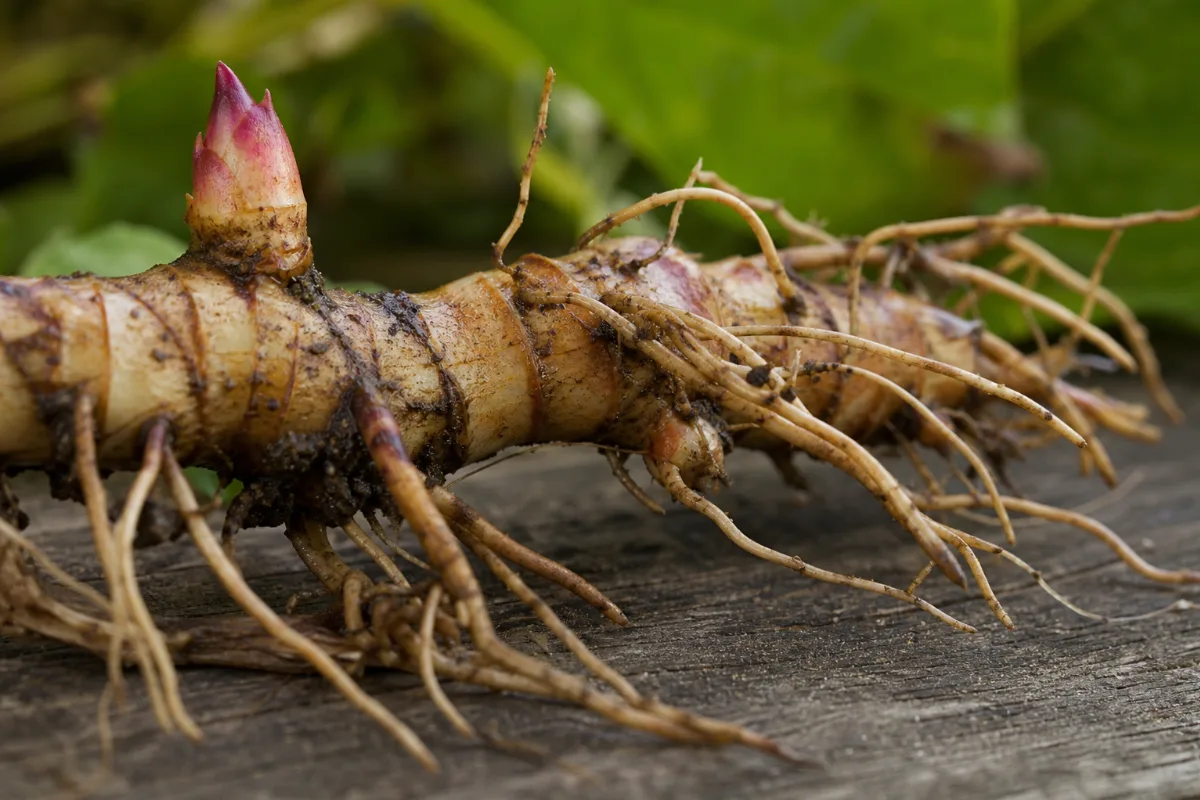
Herbs & Botanicals · Root source of resveratrol
Japanese knotweed
Reynoutria japonica · also called Hu zhang, huzhang, itadori, Asian knotweed, Japanese fleece flower, Mexican bamboo, donkey rhubarb
Japanese knotweed is a tall, fast-spreading plant. Its root, called hu zhang in Chinese medicine, is a main commercial source of resveratrol and also holds laxative-type compounds such as emodin. It is sold for heart and blood-sugar health and, more recently, for Lyme disease symptoms, but human evidence is thin: most trials tested pure resveratrol, not the root, and the Lyme findings come from laboratory dishes only. The key cautions are a possible laxative effect, medicine interactions, and that Lyme disease needs medical care.
General information, not medical advice. Last substantive update · Not medically reviewed. A named clinician has not signed off on this page. How this page is made
About Japanese knotweed
Japanese knotweed (Reynoutria japonica, also called Polygonum cuspidatum) is a tall perennial plant. The dried root and underground stem, hu zhang, is used in Chinese medicine and is a main commercial source of resveratrol. This page explains what is known, what is not, and the safety points to check first.
What it is
Japanese knotweed is a tall, fast-spreading plant in the knotweed family. The medicinal part is the dried root and underground stem, called hu zhang in Chinese medicine. Reviews say about 110 compounds have been found in it.
Its main active groups are stilbenes (resveratrol and polydatin), anthraquinones (such as emodin) and flavonoids.
What makes it distinctive
The root is a major commercial source of resveratrol, the compound behind many supplements. It also contains emodin, an anthraquinone from the same chemical class as the laxatives in rhubarb root and senna.
That mix is why research on pure resveratrol cannot simply be applied to the root. Emodin adds a laxative effect and safety questions that pure resveratrol capsules do not have.
Historical and current uses
In Chinese, Japanese and Korean medicine hu zhang is used to cool heat, move blood and treat jaundice, scalds, favus and constipation. Fresh plant has been applied to burns and boils.
Today it is sold as a resveratrol source and, in the last few years, as part of plans for lingering symptoms attributed to Lyme disease. That Lyme use is a modern trend, not a tradition.
What the research shows
Human trials mostly used pure resveratrol. Pooled results show no clear effect on blood pressure, cholesterol, inflammation markers or liver enzymes, and blood sugar results disagree between reviews. A review of memory trials found small gains on one test.
Herbal mixtures that included knotweed helped symptoms of chest infections in trials, but knotweed was never tested alone and most patients also took antibiotics.
In laboratory dishes, knotweed extract slowed the Lyme bacterium but did not clear it. There are no animal or human trials.
At a glance
Traditional uses history, not proof
- Chinese, Japanese and Korean medicine: the dried root and stem (hu zhang) to cool heat, move blood and treat jaundice, scalds and constipation
- Fresh plant applied to burns, scalds and boils in tradition
Studied for research
- Blood sugar, very low certainty (isolated resveratrol; the reviews disagree)
- Blood pressure and cholesterol, low certainty (pooled trials of isolated resveratrol found no clear benefit)
- Lyme disease, insufficient (laboratory dishes only)
- Respiratory infections, very low certainty (only inside herbal mixtures, usually with antibiotics)
Main compounds
- Resveratrol and polydatin (stilbenes)
- Emodin and other anthraquinones
- Flavonoids and about 110 compounds in all
Common forms
- Dried root or rhizome (hu zhang) and decoction in tradition
- Capsules, powders and extracts, some labelled for resveratrol
- Fresh plant (topical) in tradition
Research links: Review of Reynoutria japonica for heart and digestive illness (Frontiers in Pharmacology, 2022) · Natural and botanical medicines tested against Lyme bacteria in the lab (Frontiers in Medicine, 2020) · Herbal supplements used for persistent Lyme symptoms: review (2023) · Research Library · Genes & Biomarkers Library
The plant and its history
- Accepted scientific name
- Reynoutria japonica Houtt.
- Naming authority
- Houtt. (GBIF accepted name, usageKey 2889173).
- Synonyms
- Fallopia japonica (Houtt.) Ronse Decr. (stated as a synonym in the 2022 Frontiers abstract); Polygonum cuspidatum Sieb. et Zucc. (name used in the 2023 review and Chinese Pharmacopoeia usage; a GBIF match on this name returned only the family, so the synonym link was not confirmed in GBIF)
- Common names
- Japanese knotweed (English); Asian knotweed (English); Japanese fleece flower (English); Mexican bamboo (English); Donkey rhubarb (English); Hu zhang (Huzhang) (Chinese (pinyin)); Itadori (Japanese); Hierba nudosa japonesa (Spanish)
- Botanical family
- Polygonaceae (knotweed or buckwheat family).
- Classification
- Plantae > Caryophyllales > Polygonaceae > Reynoutria > Reynoutria japonica
- Native range
- Not verified in a source read. The 2022 review names China, Japan and Korea as places where it is used as medicine, and says it is invasive in the United States and many European countries.
- Habitat
- Not verified in a source read.
- What the plant looks like
- Roots: Medicinal part is the dried root and rhizome (underground stem) called hu zhang; the 2022 review abstract says 'dry roots and stems'.; Stems: Not verified.; Leaves: Leaves and flowers have different constituents from the rhizome (Ke 2023 abstract).; Flowers: Not verified.; Fruit: Not verified.
- Cultivation
- Not verified; described as an invasive plant.
- Harvest and processing
- Not verified. Whether a product is made from cultivated or wild plants is rarely stated on labels.
- Look-alikes and adulterants
- Name: Polygonum multiflorum (fo-ti, He Shou Wu); Note: A different Chinese medicine plant that also contains emodin (named in the 2016 emodin review). Not interchangeable.; Name: Rhubarb (Rheum palmatum); Note: Another emodin-containing root used as a laxative (named in the 2016 emodin review). Not interchangeable.; Name: Other knotweed species and hybrids; Note: Not verified from any source read; check the Latin name on a label.
- Sustainability and conservation
- Not applicable in the usual sense: regarded as an invasive plant; no IUCN assessment was retrieved.
Traditional use and history history, not clinical proof
| Tradition or era | Documented use | Source |
|---|---|---|
| Traditional Chinese, Japanese and Korean medicine | The dry root and stem (hu zhang) is used to invigorate blood, cool heat and resolve toxicity, for favus, jaundice, scalds and constipation, according to the 2022 review abstract. | p35770098 |
| Chinese Pharmacopoeia | The root is included in the pharmacopoeia under the name Huzhang; clinic uses listed include dizziness, headaches, traumatic injuries and burns (2023 review abstract). Wikipedia-only history claims were not used and are NOT verified. | p36620922 |
| Modern supplement trend | Marketed as a resveratrol source and, more recently, for persistent symptoms attributed to Lyme disease. The Lyme use is a recent practitioner trend (2023 review), not an old tradition. | p37101730 |
Traditional use shows how a plant was used. It does not show that a supplement works or is safe today.
What is inside, and how it may work
What the plant contains and how those compounds act in cells and animals. Laboratory and animal mechanisms are not proven effects in people.
Main compounds
| Compound | Family | Where it is concentrated | Activity studied | Level of evidence |
|---|---|---|---|---|
| trans-Resveratrol PubChem 445154 | stilbene | Root Content varies between products; the existing summary says the root is a major commercial source and contains more polydatin than resveratrol (summary-only). | Studied in most human trials of 'resveratrol'; poorly absorbed with low blood levels and short half-life; modulates drug-metabolising enzymes in people. 1 3 26 | Human data |
| Polydatin (piceid) PubChem 5281718 | stilbene glycoside (resveratrol bound to a sugar) | Root Not stated in a source read. | Little human research on its own; one trial used a polydatin plus palmitoylethanolamide combination for IBS pain. 4 26 | Human data |
| Emodin PubChem 3220 | anthraquinone | Root Not stated in a source read. | Laxative-type class; binds human oestrogen receptors in the lab; liver, kidney and reproductive toxicity in animals at high dose and long duration. 6 15 9 26 | Animal research |
| Emodin 8-O-beta-D-glucoside | anthraquinone glycoside | Root Not stated in a source read. | Isolated from the root with emodin as an oestrogenic principle in cells. 15 | Laboratory research |
| Flavonoids and other anthraquinones PubChem not assigned | flavonoids; anthraquinones | Root About 110 compounds have been isolated from hu zhang in total (2022 abstract). | Named with stilbenes and anthraquinones as the main active groups; individual compounds not covered here. 13 11 | Review |
Mechanisms, receptors and pathways
| Target or pathway | Gene or receptor | What was found | Level |
|---|---|---|---|
| Liver drug-metabolising enzymes | CYP3A4, CYP2D6, CYP2C9 (inhibited); CYP1A2 (induced) | In 42 healthy volunteers, isolated resveratrol inhibited CYP3A4, CYP2D6 and CYP2C9 and induced CYP1A2; in 12 volunteers it raised carbamazepine exposure. 3 2 | Human data |
| Oestrogen receptors | ER alpha and ER beta | Emodin blocked 17-beta-estradiol binding to human oestrogen receptors and made MCF-7 cells multiply in the lab. 15 | Laboratory research |
| Liver enzyme pathways | CYP2E1, FXR/BSEP | In rodents emodin lowered ALT, AST and ALP in injured liver, linked to lower CYP2E1 and activation of FXR/BSEP, but raised AST at high dose and long duration in healthy animals. 9 | Animal research |
| Borrelia burgdorferi viability | Bacterial cells | Knotweed extract inhibited growing and stationary-phase Lyme bacteria in dishes but did not clear them on subculture. 7 | Laboratory research |
| Gut mast cells | Mast-cell activation | Proposed for PEA plus polydatin; mast-cell counts did not change in the IBS trial. 4 | Human data |
Absorption, metabolism and elimination
- Absorption
- Isolated trans-resveratrol: peak blood levels 0.8 to 1.5 hours after a dose and low even at high doses, with high person-to-person variation (healthy volunteers). Emodin: poor oral bioavailability in rats because of extensive glucuronidation. No pharmacokinetic study of knotweed root or its extracts in people was found.
- Distribution
- Not found.
- Metabolism
- Emodin: extensive glucuronidation (rats). Resveratrol: strong effects on liver CYP enzymes in people.
- Elimination
- Resveratrol half-life 1 to 3 hours after one dose and 2 to 5 hours after repeated dosing (healthy volunteers).
- Bioavailability
- Low for resveratrol and emodin in the studies read; the 2023 review says pharmacokinetics of the plant need further investigation.
Isolated compounds versus whole extracts
Knotweed root is a mixture of about 110 compounds. Almost all human trials tested isolated resveratrol or, in one case, a polydatin combination, so their results and side effects cannot be carried over to the whole root, a decoction or a mixed extract. The root also contains emodin-type anthraquinones that are absent from pure resveratrol capsules and carry their own safety questions (laxative effect, animal liver and reproductive toxicity, oestrogen-receptor binding). Standardised extracts and whole-root powders differ again.
Nutritional composition
Not a nutrient; no essential role. The root is a medicinal plant, not a food in the sources read.
3 low certainty6 very low certainty4 not enough evidence
What is Japanese knotweed good for?
The main proposed uses and how strong the human evidence is for each. 'Low' is the best rating any knotweed use reached here. 'Very low' and 'insufficient' mean few, small, mixed, lab-only or animal-only studies, and none of these is a proven treatment for you. Most human data are for pure resveratrol, so they may not carry over to the whole root. Ratings are this profile's own reading, not formal grades. Lyme disease and infections need a doctor.
Benefits, one by one
Each card is a research question, not a promise. Tap a goal to filter. Open a card to see the studies, doses and limits.
Blood sugar and type 2 diabetes (resveratrol)
Very low certaintyTrials of isolated resveratrol, the compound sold from knotweed, show small and inconsistent effects on blood sugar. No trial of the root itself was found.
2 studiesIsolated resveratrol (the compound sold from knotweed), not knotweed …
Studies, doses and limits
What the trials found
Cochrane review (3 small trials, 50 people with type 2 diabetes, 4 to 5 weeks): no change in HbA1c, fasting glucose or insulin resistance (very low certainty). Umbrella review of 11 meta-analyses in type 2 diabetes: most effects trivial or low certainty, but HbA1c fell in the short term (under 12 weeks) with moderate GRADE; the authors still said the evidence does not support resveratrol for cardiometabolic risk factors.
Results
Mixed and weak. The Cochrane review and the umbrella review disagree on HbA1c.
Effect sizes as reported
Cochrane: HbA1c MD 0.1% (95% CI -0.02 to 0.2); fasting glucose MD 2 mg/dL (95% CI -2 to 7). Umbrella: HbA1c MD -1.05% (95% CI -2.09 to -0.02; 6 trials).
Why this rating
Few, short, small trials of isolated resveratrol; the two reviews disagree; nothing on knotweed root.
Form and dose studied
Isolated resveratrol (the compound sold from knotweed), not knotweed root or whole extracts.
Who was studied
Adults with type 2 diabetes, metabolic syndrome or fatty liver disease.
Limits
Results cannot be applied to the root, which also contains emodin-type compounds and has not been tested for blood sugar in people.
Why researchers looked
Knotweed root is a commercial source of resveratrol, which has lowered blood sugar in animals.
Traditional use
Hu zhang is not a traditional blood-sugar herb in the sources read; the interest comes from its resveratrol content.
Proposed mechanism Laboratory research
Lab work on resveratrol and polydatin points to effects on cell-energy pathways. This was not read in detail here and has not been shown to explain any effect in people.
A proposed mechanism does not show that the effect happens in people.
Resveratrol may add to the effect of diabetes medicines (no interaction study read). Ask a doctor or pharmacist if you take any.
Blood pressure (resveratrol)
Low certaintyPooled trials of isolated resveratrol found no clear overall change in blood pressure. Some subgroups looked better, but that is weak evidence.
2 studiesIsolated resveratrol (the compound sold from knotweed), not knotweed …
Studies, doses and limits
What the trials found
Meta-analysis of 17 trials: systolic BP fell 2.5 mmHg on average, but the confidence interval crossed zero (not significant); diastolic and mean pressures also not significant. Subsets with higher daily dose and with diabetes showed significant falls. A second meta-analysis of 10 trials (Sahebkar 2015) found no change in systolic or diastolic pressure.
Results
Null overall; positive only in subgroups.
Effect sizes as reported
Systolic WMD -2.5 mmHg (95% CI -5.5 to 0.6; I2 62%); diastolic -0.5 mmHg (95% CI -2.2 to 1.3).
Why this rating
Moderate to high inconsistency; positive results come from subgroup analyses; isolated resveratrol only.
Form and dose studied
Isolated resveratrol (the compound sold from knotweed), not knotweed root or whole extracts.
Who was studied
Adults in 17 randomised trials, some with diabetes or obesity.
Limits
Subgroup findings may be chance. Only abstracts were read.
Why researchers looked
Resveratrol is marketed for heart health, so blood pressure is a common outcome.
Traditional use
Hu zhang was traditionally used to move blood and clear heat; blood pressure was not a traditional target in the sources read.
Proposed mechanism Animal research
Proposed effects on blood vessel lining and nitric oxide come from lab and animal work.
A proposed mechanism does not show that the effect happens in people.
Do not stop or change blood pressure medicines because of any supplement.
Cholesterol and blood fats (resveratrol)
Low certaintyA meta-analysis of 10 trials found no benefit of isolated resveratrol on total or LDL cholesterol or triglycerides, and HDL ('good') cholesterol was slightly lower.
2 studiesIsolated resveratrol (the compound sold from knotweed), not knotweed …
Studies, doses and limits
What the trials found
Meta-analysis of 10 randomised trials (Sahebkar 2015): no significant change in total cholesterol, LDL or triglycerides; HDL cholesterol was lower. The umbrella review (type 2 diabetes, metabolic syndrome, fatty liver) found lipid effects that were trivial or low certainty.
Results
Null or slightly unfavourable on HDL.
Effect sizes as reported
Total cholesterol WMD 1.49 mg/dL (95% CI -14.96 to 17.93); LDL WMD -0.31 mg/dL; triglycerides WMD 2.67 mg/dL; HDL WMD -4.18 mg/dL (95% CI -6.54 to -1.82).
Why this rating
Small, older meta-analysis of isolated resveratrol; no trial of the root.
Form and dose studied
Isolated resveratrol (the compound sold from knotweed), not knotweed root or whole extracts.
Who was studied
Adults in 10 randomised trials.
Limits
Search ended in 2014; newer trials not covered.
Why researchers looked
Chinese reviews say hu zhang has anti-atherosclerosis effects, and resveratrol is studied for blood fats.
Traditional use
Hu zhang is described in reviews as traditionally used to resolve toxicity and invigorate blood; lowering blood fats is a modern framing.
Proposed mechanism Animal research
Reviews list anti-atherosclerotic activity for the plant, mainly from lab and animal work.
A proposed mechanism does not show that the effect happens in people.
None specific beyond general resveratrol cautions.
Inflammation marker (C-reactive protein)
Very low certaintyIsolated resveratrol did not change C-reactive protein, a blood marker of inflammation, in a meta-analysis of 10 trials. Knotweed's anti-inflammatory reputation rests mostly on lab and animal work.
3 studiesIsolated resveratrol (the compound sold from knotweed), not knotweed …
Studies, doses and limits
What the trials found
Sahebkar 2015 meta-analysis: CRP WMD -0.144 mg/L (95% CI -0.968 to 0.680), no significant effect. The umbrella review found inflammation markers improved in fatty liver but with trivial or low-certainty effects. Reviews of the whole plant (Ke 2023) list anti-inflammatory effects as lab and animal findings.
Results
Null in people; positive in the lab.
Effect sizes as reported
CRP WMD -0.144 mg/L (95% CI -0.968 to 0.680; p=0.731).
Why this rating
Human data are for isolated resveratrol; whole-plant findings are lab and animal.
Form and dose studied
Isolated resveratrol (the compound sold from knotweed), not knotweed root or whole extracts.
Who was studied
Adults in randomised trials.
Limits
A lab effect on inflammation is not evidence of a health benefit.
Why researchers looked
Reviews describe knotweed extracts and compounds as anti-inflammatory and antioxidant in cells and animals.
Traditional use
Hu zhang is traditionally used for skin inflammation, burns and scalds.
Proposed mechanism Laboratory research
Resveratrol, polydatin and emodin dampen inflammatory signals in cell and animal experiments.
A proposed mechanism does not show that the effect happens in people.
Emodin-type compounds can irritate the gut (see Safety).
Memory, thinking and mood (resveratrol)
Low certaintyA review of 10 trials of isolated resveratrol found small gains on one memory test (delayed recognition) and slightly lower negative mood, but the literature is inconsistent and limited.
3 studiesIsolated resveratrol (the compound sold from knotweed), not knotweed …
Studies, doses and limits
What the trials found
Marx 2018 systematic review (10 randomised trials): 3 found improvement, 2 mixed, 5 no effect. Pooled results showed a small gain in delayed recognition (3 studies, 166 people) and a small fall in negative mood (3 studies, 163 people). A 2025 meta-analysis in postmenopausal women (10 trials, 928 women) found no significant effect on cognition, memory or mood.
Results
Inconsistent: small positive pooled results on two measures, null in other reviews.
Effect sizes as reported
Delayed recognition SMD 0.39 (95% CI 0.08 to 0.70); negative mood SMD -0.18 (95% CI -0.31 to -0.05).
Why this rating
Pooled results rest on three trials per outcome; authors call the literature inconsistent and limited.
Form and dose studied
Isolated resveratrol (the compound sold from knotweed), not knotweed root or whole extracts.
Who was studied
Healthy adults and clinical groups; postmenopausal women in the 2025 review.
Limits
MSK (summary only) also reports no cognitive benefit in recent trials; not re-read.
Why researchers looked
Resveratrol is studied for brain health because of lab findings on blood flow and nerve-cell protection.
Traditional use
No traditional use of hu zhang for memory was found in the sources read.
Proposed mechanism Animal research
Proposed effects on brain blood flow and antioxidant defences come from lab and animal work.
A proposed mechanism does not show that the effect happens in people.
No cognitive trial of knotweed root was found.
Lyme disease and persistent symptoms
Not enough evidenceKnotweed extract slowed or killed the Lyme bacterium in laboratory dishes, which is why it appears in some Lyme supplement plans. No animal or human trial shows it treats Lyme disease.
3 studiesExtracts tested in dishes; not comparable to capsules or teas.
Studies, doses and limits
What the trials found
Feng 2020 (laboratory): of 15 natural products, knotweed extract was among the two most active against growing and stationary-phase B. burgdorferi in dishes, but in 21-day subculture it did not clear the bacteria (only Cryptolepis did). Thompson 2023 review of 18 Lyme-linked herbs: 7 had lab activity including knotweed; animal and clinical trial data are lacking. The IDSA/AAN/ACR 2020 guideline covers diagnosis and treatment of Lyme disease and is the clinical standard.
Results
Lab only. No evidence in animals or people.
Effect sizes as reported
Knotweed extract MIC for growing B. burgdorferi 0.25 to 0.5% in culture.
Why this rating
Laboratory dish findings only; no in-vivo or clinical data.
Form and dose studied
Extracts tested in dishes; not comparable to capsules or teas.
Who was studied
None in people.
Limits
A dish result does not show that a supplement reaches or kills the bacterium in the body.
Why researchers looked
Herbal practitioners use knotweed for symptoms that last after Lyme treatment; a lab study tested it against the bacterium.
Traditional use
Not a traditional Lyme herb. Use in Lyme care is a recent trend, not a Chinese or Japanese tradition.
Proposed mechanism Laboratory research
A knotweed extract was active against growing and non-growing forms of Borrelia burgdorferi in culture. The active compounds were not identified.
A proposed mechanism does not show that the effect happens in people.
Lyme disease needs medical care. Untreated or incompletely treated infection can involve nerves, heart and joints. Herbs can also interact with medicines (see Safety).
Acute respiratory infections (in herbal mixtures)
Very low certaintyChinese herbal mixtures that included knotweed helped symptoms of chest and throat infections in small trials, but knotweed was never tested alone and most patients also took antibiotics.
1 studiesHerbal formulas that include knotweed root.
Studies, doses and limits
What the trials found
Systematic review (8 randomised trials, 1,123 people with acute respiratory infections): mixtures containing knotweed raised the symptom-improvement rate (RR 1.14; 7 trials), shortened fever and improved a lung injury score without increasing adverse events (RR 0.33, 95% CI 0.11 to 1.00; p=0.05). All trials used knotweed as one ingredient of a mixture and in all but one trial antibiotics were also given.
Results
Small positive result for combinations; not attributable to knotweed.
Effect sizes as reported
Symptom improvement RR 1.14 (95% CI 1.09 to 1.20; I2 0%).
Why this rating
Knotweed cannot be separated from the other herbs and antibiotics; only one trial lacked antibiotics; authors call the evidence limited.
Form and dose studied
Herbal formulas that include knotweed root.
Who was studied
Adults and children with acute respiratory infections.
Limits
Funding and trial quality were not read beyond the abstract.
Why researchers looked
Knotweed is used in Chinese medicine to clear heat and relieve cough.
Traditional use
Hu zhang is traditionally used to clear heat and resolve phlegm, according to the review authors.
Proposed mechanism Pharmacological theory
Not established. The review notes resveratrol and glycosides as possible active parts.
A proposed mechanism does not show that the effect happens in people.
Chest infections with fever, breathlessness or in children and older people need medical assessment.
Constipation and bowel movements
Not enough evidenceKnotweed root has long been used for constipation and contains laxative-type anthraquinones such as emodin. No trial of knotweed alone for constipation was found.
3 studiesDried root or decoction in traditional use.
Studies, doses and limits
What the trials found
Liu 2022 review lists constipation among the traditional uses of hu zhang; the Dong 2016 emodin review names Polygonum cuspidatum as an emodin-containing herb. The stimulant-laxative class is reviewed by Whorwell 2024 (senna and others, not knotweed). No clinical trial of knotweed alone for constipation was found in the sources read.
Results
No direct human evidence for the plant.
Effect sizes as reported
None.
Why this rating
No trial; class-level inference only.
Form and dose studied
Dried root or decoction in traditional use.
Who was studied
None studied.
Limits
The Whorwell review covers senna and other drugs, not knotweed.
Why researchers looked
Anthraquinones such as emodin are the compound class behind plant stimulant laxatives such as rhubarb root and senna.
Traditional use
Reviews list constipation among traditional uses of hu zhang.
Proposed mechanism Pharmacological theory
Anthraquinones act on the gut lining and gut movement; this is inferred from related plants and the compound class, not tested for knotweed here.
A proposed mechanism does not show that the effect happens in people.
A laxative effect can cause cramps, loose stools and loss of fluids and salts if overused (see Safety).
Irritable bowel syndrome pain (polydatin combination)
Very low certaintyOne 12-week trial of a supplement combining palmitoylethanolamide and polydatin found less belly pain than placebo in people with irritable bowel syndrome. It was a combination, so polydatin's own role is unknown.
1 studiesA branded palmitoylethanolamide 200 mg plus polydatin 20 mg combinati…
Studies, doses and limits
What the trials found
Cremon 2017 (randomised, double-blind, placebo-controlled pilot, 54 people with IBS plus 12 controls, 12 weeks): the combination did not change mast-cell count or the gut biology measured, but abdominal pain severity improved against placebo (p<0.05).
Results
Possible pain benefit from a combination product.
Effect sizes as reported
Pain severity improved (p<0.05; numbers not in the abstract).
Why this rating
Small pilot; combination product; funding not stated in the abstract; mechanism not supported.
Form and dose studied
A branded palmitoylethanolamide 200 mg plus polydatin 20 mg combination (the polydatin source was not stated).
Who was studied
Adults with irritable bowel syndrome.
Limits
Cannot be used to claim that knotweed helps IBS.
Why researchers looked
Polydatin, found in knotweed, is thought to quiet gut immune cells together with palmitoylethanolamide.
Traditional use
Not a traditional use.
Proposed mechanism Human data
The authors propose reduced mast-cell activation, but mast-cell counts did not change in the trial.
A proposed mechanism does not show that the effect happens in people.
Did not raise safety concerns in the abstract; not otherwise assessed.
Postmenopausal pain and bone breakdown (resveratrol)
Very low certaintyIn women after menopause, pooled trials of isolated resveratrol found lower pain scores and a lower bone-breakdown marker, but no change in menopausal symptoms, mood, cognition or blood fats.
2 studiesIsolated resveratrol (the compound sold from knotweed), not knotweed …
Studies, doses and limits
What the trials found
Wu 2025 meta-analysis (10 randomised trials, 928 postmenopausal women): pain scores and a bone-breakdown marker (CTX) fell; no significant effect on cognition, mood, glucose, lipids, blood pressure, sleep, menopausal symptoms, quality of life or the other bone markers.
Results
Small benefit on pain and one bone marker; null on most other outcomes.
Effect sizes as reported
Pain VAS WMD -7.585 (95% CI -12.912 to -2.257); CTX WMD -0.137 (95% CI -0.204 to -0.070).
Why this rating
Small trials; only abstract read; isolated resveratrol.
Form and dose studied
Isolated resveratrol (the compound sold from knotweed), not knotweed root or whole extracts.
Who was studied
Postmenopausal women.
Limits
One bone marker is not a fracture outcome.
Why researchers looked
Resveratrol is studied for its oestrogen-like lab effects in postmenopausal women.
Traditional use
Not a traditional use.
Proposed mechanism Laboratory research
Oestrogen-receptor effects are shown in the lab for knotweed's emodin; resveratrol's receptor action was not read here.
A proposed mechanism does not show that the effect happens in people.
Because emodin from knotweed binds oestrogen receptors in the lab, women with hormone-sensitive conditions should ask a doctor first (see Safety).
Liver health and fatty liver (resveratrol)
Very low certaintyPooled trials of isolated resveratrol found no change in liver enzymes. Animal studies of emodin show both liver protection and liver harm depending on dose and time.
3 studiesIsolated resveratrol (people); isolated emodin (rodents).
Studies, doses and limits
What the trials found
Darand 2021 meta-analysis (15 trials, 714 people): ALT, AST, GGT, ALP and bilirubin did not change significantly. Hu 2025 meta-analysis of 28 rodent studies: emodin lowered liver enzymes in injured animals but higher doses and longer treatment raised AST in healthy animals. Umbrella review: some improvement in body weight and inflammation markers in fatty liver, but effects trivial or low certainty.
Results
Null in people (resveratrol); dose-dependent benefit and harm in animals (emodin).
Effect sizes as reported
Human ALT WMD 0 IU/L (95% CI -3.17 to 3.17); AST WMD -2.40 IU/L (95% CI -5.45 to 0.65). Rodent AST up at high dose SMD 2.19 (95% CI 0.91 to 3.47).
Why this rating
Human data are isolated resveratrol; animal data are isolated emodin; none is the whole root.
Form and dose studied
Isolated resveratrol (people); isolated emodin (rodents).
Who was studied
Adults in 15 trials; rats and mice.
Limits
Animal dose thresholds cannot be applied to people.
Why researchers looked
Knotweed constituents are studied for protecting the liver; emodin can also be toxic in animals.
Traditional use
Hu zhang is traditionally used for jaundice, according to the 2022 review abstract.
Proposed mechanism Animal research
In rodents, emodin lowers liver enzymes in injured liver through CYP2E1 and bile-acid pathways, but raises them at high dose or long duration in healthy animals.
A proposed mechanism does not show that the effect happens in people.
Liver cautions are covered in Safety. Report yellow skin or eyes or dark urine promptly.
Anti-ageing and longevity claims
Not enough evidenceMarketing links resveratrol to ageing and long life. The 2011 expert review found the evidence not strong enough to recommend it to people beyond what food supplies.
1 studiesIsolated resveratrol (the compound sold from knotweed), not knotweed …
Studies, doses and limits
What the trials found
Vang 2011 systematic review of human and animal resveratrol literature: published evidence is not sufficient to justify recommending resveratrol to people beyond dietary amounts; animal data promising. Newer trials exist and are summarised in the more recent meta-analyses in this profile.
Results
No human evidence of longer life.
Effect sizes as reported
None.
Why this rating
No human outcome data on lifespan or ageing markers were found for knotweed.
Form and dose studied
Isolated resveratrol (the compound sold from knotweed), not knotweed root or whole extracts.
Who was studied
Not applicable.
Limits
Dated (2011).
Why researchers looked
Resveratrol drew attention from lab and animal ageing research.
Traditional use
Not a traditional use of hu zhang in the sources read.
Proposed mechanism Laboratory research
Lab work on cell pathways; not shown in people.
A proposed mechanism does not show that the effect happens in people.
None specific.
Traditional uses: burns, boils, jaundice and 'heat'
Not enough evidenceIn Chinese medicine hu zhang is used to cool heat, move blood, treat jaundice, and (applied fresh) burns, scalds and boils. These are traditional uses; no human trials were found.
2 studiesDried root; fresh plant (topical) in tradition.
Studies, doses and limits
What the trials found
Liu 2022 and Ke 2023 reviews describe these traditional and clinic uses, and lab or animal anti-inflammatory, antioxidant and antimicrobial findings. No clinical trial of the plant on skin conditions was found in the sources read.
Results
Traditional use only.
Effect sizes as reported
None.
Why this rating
Tradition and lab data; no trials.
Form and dose studied
Dried root; fresh plant (topical) in tradition.
Who was studied
None studied.
Limits
Fresh plant on broken skin is untested; irritation is possible.
Why researchers looked
Long traditional use in China, Japan and Korea.
Traditional use
Reviews state it is used for favus (a fungal skin disease), jaundice, scald and constipation, and to invigorate blood, cool heat and resolve toxicity.
Proposed mechanism Laboratory research
Anti-inflammatory and antimicrobial lab effects have been reported for the plant's stilbenes, anthraquinones and flavonoids.
A proposed mechanism does not show that the effect happens in people.
Burns and infected wounds need medical care.
Connections to the rest of health
How Japanese knotweed connects to the rest of our health knowledge graph. Every link says what kind of connection it is. A safety link (for example to the liver) is a warning, not a benefit. A study that merely mentions a topic never creates a benefit link.
Explore every connection: goals, body systems, organs, symptoms, genes
A. Wellness goals
| Connected to | Kind of connection | Evidence status | Context | Studies |
|---|---|---|---|---|
| Blood Sugar Balance | Very low certainty | Blood sugar and type 2 diabetes (resveratrol): Trials of isolated resveratrol, the compound sold from knotweed, show small and inconsistent effects on blood sugar. No trial of the root itself was found. | 10 22 | |
| Metabolic Health | Very low certainty | Blood sugar and type 2 diabetes (resveratrol): Trials of isolated resveratrol, the compound sold from knotweed, show small and inconsistent effects on blood sugar. No trial of the root itself was found. | 10 22 | |
| Blood Pressure Support | Low certainty | Blood pressure (resveratrol): Pooled trials of isolated resveratrol found no clear overall change in blood pressure. Some subgroups looked better, but that is weak evidence. | 8 16 | |
| Heart Health | Low certainty | Blood pressure (resveratrol): Pooled trials of isolated resveratrol found no clear overall change in blood pressure. Some subgroups looked better, but that is weak evidence. Cholesterol and blood fats (resveratrol): A meta-analysis of 10 trials found no benefit of isolated resveratrol on total or LDL cholesterol or triglycerides, and HDL ('good') cholesterol was slightly lower. | 8 16 22 | |
| Cholesterol Balance | Low certainty | Cholesterol and blood fats (resveratrol): A meta-analysis of 10 trials found no benefit of isolated resveratrol on total or LDL cholesterol or triglycerides, and HDL ('good') cholesterol was slightly lower. | 16 22 | |
| Inflammation Balance | Very low certainty | Inflammation marker (C-reactive protein): Isolated resveratrol did not change C-reactive protein, a blood marker of inflammation, in a meta-analysis of 10 trials. Knotweed's anti-inflammatory reputation rests mostly on lab and animal work. | 16 22 11 | |
| Cellular Protection | Very low certainty | Inflammation marker (C-reactive protein): Isolated resveratrol did not change C-reactive protein, a blood marker of inflammation, in a meta-analysis of 10 trials. Knotweed's anti-inflammatory reputation rests mostly on lab and animal work. | 16 22 11 | |
| Memory Support | Low certainty | Memory, thinking and mood (resveratrol): A review of 10 trials of isolated resveratrol found small gains on one memory test (delayed recognition) and slightly lower negative mood, but the literature is inconsistent and limited. | 14 21 25 | |
| Mood Balance | Low certainty | Memory, thinking and mood (resveratrol): A review of 10 trials of isolated resveratrol found small gains on one memory test (delayed recognition) and slightly lower negative mood, but the literature is inconsistent and limited. | 14 21 25 | |
| Brain Health | Low certainty | Memory, thinking and mood (resveratrol): A review of 10 trials of isolated resveratrol found small gains on one memory test (delayed recognition) and slightly lower negative mood, but the literature is inconsistent and limited. | 14 21 25 | |
| Immune Support | Not enough evidence | Lyme disease and persistent symptoms: Knotweed extract slowed or killed the Lyme bacterium in laboratory dishes, which is why it appears in some Lyme supplement plans. No animal or human trial shows it treats Lyme disease. | 7 17 12 | |
| Immune Support | Very low certainty | Acute respiratory infections (in herbal mixtures): Chinese herbal mixtures that included knotweed helped symptoms of chest and throat infections in small trials, but knotweed was never tested alone and most patients also took antibiotics. | 19 | |
| Breathing Support | Very low certainty | Acute respiratory infections (in herbal mixtures): Chinese herbal mixtures that included knotweed helped symptoms of chest and throat infections in small trials, but knotweed was never tested alone and most patients also took antibiotics. | 19 | |
| Digestive Support | Not enough evidence | Constipation and bowel movements: Knotweed root has long been used for constipation and contains laxative-type anthraquinones such as emodin. No trial of knotweed alone for constipation was found. | 13 6 20 | |
| Gut Health | Not enough evidence | Constipation and bowel movements: Knotweed root has long been used for constipation and contains laxative-type anthraquinones such as emodin. No trial of knotweed alone for constipation was found. | 13 6 20 | |
| Digestive Support | Very low certainty | Irritable bowel syndrome pain (polydatin combination): One 12-week trial of a supplement combining palmitoylethanolamide and polydatin found less belly pain than placebo in people with irritable bowel syndrome. It was a combination, so polydatin's own role is unknown. | 4 | |
| Gut Health | Very low certainty | Irritable bowel syndrome pain (polydatin combination): One 12-week trial of a supplement combining palmitoylethanolamide and polydatin found less belly pain than placebo in people with irritable bowel syndrome. It was a combination, so polydatin's own role is unknown. | 4 | |
| Womens Wellness | Very low certainty | Postmenopausal pain and bone breakdown (resveratrol): In women after menopause, pooled trials of isolated resveratrol found lower pain scores and a lower bone-breakdown marker, but no change in menopausal symptoms, mood, cognition or blood fats. | 21 15 | |
| Menopause Support | Very low certainty | Postmenopausal pain and bone breakdown (resveratrol): In women after menopause, pooled trials of isolated resveratrol found lower pain scores and a lower bone-breakdown marker, but no change in menopausal symptoms, mood, cognition or blood fats. | 21 15 | |
| Bone Health | Very low certainty | Postmenopausal pain and bone breakdown (resveratrol): In women after menopause, pooled trials of isolated resveratrol found lower pain scores and a lower bone-breakdown marker, but no change in menopausal symptoms, mood, cognition or blood fats. | 21 15 | |
| Liver Support | Very low certainty | Liver health and fatty liver (resveratrol): Pooled trials of isolated resveratrol found no change in liver enzymes. Animal studies of emodin show both liver protection and liver harm depending on dose and time. | 5 9 22 | |
| Healthy Aging | Not enough evidence | Anti-ageing and longevity claims: Marketing links resveratrol to ageing and long life. The 2011 expert review found the evidence not strong enough to recommend it to people beyond what food supplies. | 18 | |
| Anti Aging Support | Not enough evidence | Anti-ageing and longevity claims: Marketing links resveratrol to ageing and long life. The 2011 expert review found the evidence not strong enough to recommend it to people beyond what food supplies. | 18 | |
| Longevity | Not enough evidence | Anti-ageing and longevity claims: Marketing links resveratrol to ageing and long life. The 2011 expert review found the evidence not strong enough to recommend it to people beyond what food supplies. | 18 | |
| Healthy Skin | Not enough evidence | Traditional uses: burns, boils, jaundice and 'heat': In Chinese medicine hu zhang is used to cool heat, move blood, treat jaundice, and (applied fresh) burns, scalds and boils. These are traditional uses; no human trials were found. | 13 11 | |
| Inflammation Balance | Not enough evidence | Traditional uses: burns, boils, jaundice and 'heat': In Chinese medicine hu zhang is used to cool heat, move blood, treat jaundice, and (applied fresh) burns, scalds and boils. These are traditional uses; no human trials were found. | 13 11 |
B. Body systems
| Connected to | Kind of connection | Evidence status | Context | Studies |
|---|---|---|---|---|
| Metabolism Weight | Biological association | Very low certainty | Studied for: Blood sugar and type 2 diabetes (resveratrol) Studied for: Cholesterol and blood fats (resveratrol) | 10 22 16 5 9 |
| Blood Sugar Support | Biological association | Very low certainty | Studied for: Blood sugar and type 2 diabetes (resveratrol) | 10 22 |
| Cardiovascular System | Biological association | Low certainty | Studied for: Blood pressure (resveratrol) Studied for: Cholesterol and blood fats (resveratrol) | 8 16 22 11 |
| Immune System | Biological association | Very low certainty | Studied for: Inflammation marker (C-reactive protein) Studied for: Lyme disease and persistent symptoms | 16 22 11 7 17 12 19 |
| Nervous System | Biological association | Low certainty | Studied for: Memory, thinking and mood (resveratrol) | 14 21 25 |
| Respiratory Health | Biological association | Very low certainty | Studied for: Acute respiratory infections (in herbal mixtures) | 19 |
| Digestive System | Biological association | Not enough evidence | Studied for: Constipation and bowel movements Studied for: Irritable bowel syndrome pain (polydatin combination) | 13 6 20 4 |
| Bones Joints Muscles | Biological association | Very low certainty | Studied for: Postmenopausal pain and bone breakdown (resveratrol) | 21 15 |
| Hormone Health | Biological association | Very low certainty | Studied for: Postmenopausal pain and bone breakdown (resveratrol) | 21 15 |
| Liver Detox | Biological association | Very low certainty | Studied for: Liver health and fatty liver (resveratrol) | 5 9 22 |
| Whole Body Balance | Biological association | Not enough evidence | Studied for: Anti-ageing and longevity claims | 18 |
| Skin Hair Beauty | Biological association | Not enough evidence | Studied for: Traditional uses: burns, boils, jaundice and 'heat' | 13 11 |
| Integumentary System | Biological association | Not enough evidence | Studied for: Traditional uses: burns, boils, jaundice and 'heat' | 13 11 |
C. Body parts and organs
| Connected to | Kind of connection | Evidence status | Context | Studies |
|---|---|---|---|---|
| Liver | Adverse effect or risk | Animal | Liver enzymes rose in healthy rodents at higher dose and longer duration; human data lacking. Emodin raised liver enzymes in healthy rodents at higher dose and longer duration; no human data. Preparation or compound: Emodin (rodents) |
9 6 |
| Digestive system | Adverse effect or risk | Low certainty | Laxative-type effects expected from the compound class; not tested for knotweed. Preparation or compound: Root (anthraquinone content) |
6 13 |
| Reproductive system | Adverse effect or risk | In vitro | Oestrogen-receptor binding in cells; reproductive toxicity in animals at high dose. Preparation or compound: Emodin |
15 6 |
D. Symptoms
E. Health conditions
| Connected to | Kind of connection | Evidence status | Context | Studies |
|---|---|---|---|---|
| Lyme disease | Not enough evidence | Lab activity in dishes only; guideline care is the standard. Preparation or compound: Knotweed extract (lab) |
7 12 | |
| Lyme disease | Biological association | Not enough evidence | Activity against the Lyme bacterium in laboratory dishes only; no animal or human data. Preparation or compound: Root extract (lab) |
7 17 |
I. Biomarkers
| Connected to | Kind of connection | Evidence status | Context | Studies |
|---|---|---|---|---|
| HbA1c (3-month blood sugar average) | Biological association | Very low certainty | Measured in trials: mixed. A lab change is not the same as a health benefit. | 10 22 |
| Fasting blood glucose | Biological association | Low certainty | Measured in trials: no-change. A lab change is not the same as a health benefit. | 10 16 |
| Insulin resistance index | Biological association | Very low certainty | Measured in trials: no-change. A lab change is not the same as a health benefit. | 10 |
| Systolic blood pressure | Biological association | Low certainty | Measured in trials: no-change. A lab change is not the same as a health benefit. | 8 16 |
| LDL and HDL cholesterol | Biological association | Low certainty | Measured in trials: no-change. A lab change is not the same as a health benefit. | 16 |
| C-reactive protein (CRP) | Biological association | Low certainty | Measured in trials: no-change. A lab change is not the same as a health benefit. | 16 |
| Delayed recognition (memory test) | Biological association | Low certainty | Measured in trials: raised. A lab change is not the same as a health benefit. | 14 |
| Negative mood score | Biological association | Low certainty | Measured in trials: lowered. A lab change is not the same as a health benefit. | 14 |
| Lyme bacterium in culture (lab dish) | Biological association | Not enough evidence | Measured in trials: lowered. A lab change is not the same as a health benefit. | 7 |
| Liver enzymes (ALT and AST) | Biological association | Low certainty | Measured in trials: no-change. A lab change is not the same as a health benefit. | 5 9 |
| Symptom improvement rate (respiratory infection) | Biological association | Very low certainty | Measured in trials: raised. A lab change is not the same as a health benefit. | 19 |
| Pain score (visual analogue scale) | Biological association | Very low certainty | Measured in trials: lowered. A lab change is not the same as a health benefit. | 21 |
| CTX (bone-breakdown marker) | Biological association | Very low certainty | Measured in trials: lowered. A lab change is not the same as a health benefit. | 21 |
| Abdominal pain severity (IBS) | Biological association | Very low certainty | Measured in trials: lowered. A lab change is not the same as a health benefit. | 4 |
J. Genes, receptors and enzymes
| Connected to | Kind of connection | Evidence status | Context | Studies |
|---|---|---|---|---|
| CYP3A4, CYP2D6, CYP2C9 (inhibited) and CYP1A2 (induced) | Preliminary mechanism | Human | Drug-metabolising enzymes altered by isolated resveratrol in healthy volunteers. | 3 2 |
| ESR1 and ESR2 (oestrogen receptors alpha and beta) | Preliminary mechanism | In vitro | Emodin competes with estradiol for binding in the lab. | 15 |
| CYP2E1 and FXR/BSEP (liver pathways) | Preliminary mechanism | Animal | Emodin's reported liver pathways in rodents. | 9 |
L. Active compounds
| Connected to | Kind of connection | Evidence status | Context | Studies |
|---|---|---|---|---|
| trans-Resveratrol | Biological association | Human | Studied in most human trials of 'resveratrol'; poorly absorbed with low blood levels and short half-life; modulates drug-metabolising enzymes in people. Preparation or compound: Root |
1 3 26 |
| Polydatin (piceid) | Biological association | Human | Little human research on its own; one trial used a polydatin plus palmitoylethanolamide combination for IBS pain. Preparation or compound: Root |
4 26 |
| Emodin | Biological association | Animal | Laxative-type class; binds human oestrogen receptors in the lab; liver, kidney and reproductive toxicity in animals at high dose and long duration. Preparation or compound: Root |
6 15 9 26 |
| Emodin 8-O-beta-D-glucoside | Biological association | In vitro | Isolated from the root with emodin as an oestrogenic principle in cells. Preparation or compound: Root |
15 |
| Flavonoids and other anthraquinones | Biological association | Review | Named with stilbenes and anthraquinones as the main active groups; individual compounds not covered here. Preparation or compound: Root |
13 11 |
Each connection is stored with the ingredient, the connected record, the kind of connection, the evidence status, the supporting studies, the preparation or compound involved, and a review date (last reviewed October 25, 2026).
The evidence
The research centre for Japanese knotweed. Every record here was checked against PubMed or the publisher's page; we never list a study we have not verified.
Evidence by outcome
Bars show how many studies we found for each outcome, not how well it works. People are added up across trials only (reviews are not added, to avoid double counting).
How we rate evidence
High certainty
Several well-run trials or reviews agree; further research is unlikely to change the picture much.
Moderate certainty
Good trials point the same way, but some doubt remains.
Low certainty
Small, short or inconsistent trials. The finding could change with better research.
Very low certainty
Very little or very weak human data. Treat as a possibility only.
Mixed findings
Trials or reviews disagree with each other.
Not enough evidence
Not enough human research to say either way.
Evidence against
Good research found no benefit, or found harm.
We take the reviewers' own risk-of-bias and GRADE statements where they exist, and otherwise judge from study size, design, consistency, directness and whether a product matches what is sold. Many publications do not make evidence high. Method note: We started from an existing summary of this herb and searched PubMed for the main uses and safety topics. We checked identity records (GBIF, PubChem) and looked for NIH NCCIH, EMA, LiverTox and LactMed pages on knotweed, which could not be opened or found. We recorded each study's design, people, product and result as reported. Only abstracts were read. Certainty ratings are the compiler's own reading, not formal grades. No study is cited that we could not verify.
Study library: every study we checked 27
| Study | Design | People | Product, dose, length | Result |
|---|---|---|---|---|
| Almeida 2009 Pharmacokinetic and safety profile of trans-resveratrol in a rising multiple-dose study in healthy volunteers. Molecular nutrition & food research · PMID 19194969 · DOI |
Controlled trial |
40 healthy adults (4 groups of 10) Healthy adults, 5 men and 5 women per group. |
trans-Resveratrol (isolated) n/a (isolated compound) 25, 50, 100 or 150 mg six times a day for 13 doses (as tested) 13 doses · vs Placebo |
Peak blood levels were reached 0.8 to 1.5 hours after a dose and were low despite the high doses. Half-life 2 to 5 hours with repeated dosing. Adverse events were mild and similar across groups. Cmax 3.89, 7.39, 23.1 and 63.8 ng/mL at the four dose levels. Methods, limits and fundingOutcomes: Blood levels of trans-resveratrol and adverse events Limitations: Small, short, healthy volunteers. Isolated trans-resveratrol, not knotweed root. Only the abstract was read. Funding and conflicts: Not stated in the abstract. Read: abstract |
| Bedada 2015 Effect of resveratrol on the pharmacokinetics of carbamazepine in healthy human volunteers. Phytotherapy research : PTR · PMID 25624269 · DOI |
Clinical trial |
12 healthy volunteers Healthy adult volunteers. |
Resveratrol (isolated) with carbamazepine n/a (isolated compound) 500 mg once daily for 10 days, then one 200 mg carbamazepine dose (as tested) 10 days · vs Own control phase (open-label, sequential) |
After resveratrol, carbamazepine peak level and exposure rose and clearance fell, consistent with CYP3A4 inhibition. Cmax, AUC and half-life significantly higher; clearance lower (values not in the abstract). Methods, limits and fundingOutcomes: Carbamazepine blood levels and half-life Limitations: Small, open-label, sequential, single carbamazepine dose; healthy people. Not tested with knotweed root. Funding and conflicts: Not stated in the abstract. Read: abstract |
| Chow 2010 Resveratrol modulates drug- and carcinogen-metabolizing enzymes in a healthy volunteer study. Cancer prevention research (Philadelphia, Pa.) · PMID 20716633 · DOI |
Clinical trial |
42 healthy volunteers Healthy adult volunteers. |
Resveratrol (isolated) n/a (isolated compound) 1 g once daily (as tested) 4 weeks · vs Own baseline (before and after) |
Resveratrol inhibited CYP3A4, CYP2D6 and CYP2C9 and induced CYP1A2. The authors warn that pharmacological doses could increase adverse drug reactions or change drug effect. Qualitative inhibition/induction of enzyme activity indices (numbers not in the abstract). Methods, limits and fundingOutcomes: Activity of drug-metabolising enzymes CYP1A2, CYP2D6, CYP2C9, CYP3A4 and phase II enzymes Limitations: Before/after design with no placebo group. Pharmacological dose of isolated resveratrol; the amount delivered by a knotweed supplement is not known. Funding and conflicts: Research support from the US National Institutes of Health (extramural), per PubMed record. Read: abstract |
| Cremon 2017 Randomised clinical trial: the analgesic properties of dietary supplementation with palmitoylethanolamide and polydatin in irritable bowel syndrome. Alimentary pharmacology & therapeutics · PMID 28164346 · DOI |
Controlled trial |
54 IBS patients and 12 healthy controls Adults with irritable bowel syndrome. |
Palmitoylethanolamide 200 mg + polydatin 20 mg combination supplement (branded combination, twice daily) n/a (isolated compounds) 200 mg PEA/20 mg polydatin twice daily 12 weeks · vs Placebo |
The supplement did not change the biological profile, including mast cell count, but abdominal pain was better than placebo (p<0.05). Abdominal pain severity improved vs placebo (p<0.05; numbers not in the abstract). Methods, limits and fundingOutcomes: Mast cell count, gut biology, abdominal pain Limitations: A combination product: any effect cannot be assigned to polydatin alone. Small pilot trial. Funding is not stated in the abstract; check the full text for sponsor. Funding and conflicts: Not stated in the abstract. Read: abstract |
| Darand 2021 Effects of resveratrol supplementation on liver enzymes: A systematic review and meta-analysis of randomised controlled trials. International journal of clinical practice · PMID 32869460 · DOI |
Meta-analysis |
15 RCTs, 714 participants Adults in randomised trials of resveratrol. |
Resveratrol supplements (isolated) n/a (isolated compound) Varied Varied · vs Placebo/control |
No significant change in any liver enzyme; results varied by dose, study length and population. ALT WMD 0 IU/L (95% CI -3.17 to 3.17); AST WMD -2.40 IU/L (95% CI -5.45 to 0.65). (-3.17 to 3.17) Methods, limits and fundingOutcomes: ALT, AST, GGT, ALP, bilirubin Limitations: High inconsistency (I2 74% to 83% for ALT and AST). Isolated resveratrol, not root or emodin. Only the abstract was read. Funding and conflicts: Not stated in the abstract. Read: abstract |
| Dong 2016 Emodin: A Review of its Pharmacology, Toxicity and Pharmacokinetics. Phytotherapy research : PTR · PMID 27188216 · DOI |
Narrative review review (mainly animal and lab) |
Review of laboratory, animal and a few human reports on emodin. | Emodin (anthraquinone found in Rheum palmatum, Polygonum cuspidatum and Polygonum multiflorum) root (source herbs) Not applicable (review) Not applicable · vs None |
Emodin has anticancer, liver-protective, anti-inflammatory, antioxidant and antimicrobial effects in the lab, but can also cause liver, kidney and reproductive toxicity, particularly at high doses and with long-term use. Oral bioavailability in rats is poor because of extensive glucuronidation. No effect sizes. Methods, limits and fundingOutcomes: Pharmacology, toxicity, pharmacokinetics of emodin Limitations: About an isolated compound, mostly animal and cell data; not the same as eating or taking the whole root. Only the abstract was read. Funding and conflicts: Not stated in the abstract. Read: abstract |
| Feng 2020 Evaluation of Natural and Botanical Medicines for Activity Against Growing and Non-growing Forms of B. burgdorferi. Frontiers in medicine · PMID 32154254 · DOI |
Laboratory research bacteria in the lab |
Borrelia burgdorferi grown in the laboratory (growing and stationary-phase forms). | Extract of Polygonum cuspidatum (Japanese knotweed) among 15 natural products root (extract, source not detailed in the abstract) 1% extract in culture Culture and 21-day subculture · vs Doxycycline and cefuroxime; untreated controls |
Knotweed extract was among the two most active products and active against both growing and stationary-phase bacteria in dishes (MIC 0.25 to 0.5% for growing forms). In subculture only Cryptolepis extract wiped out the bacteria; knotweed did not. MIC for growing B. burgdorferi 0.25 to 0.5% (knotweed extract). Methods, limits and fundingOutcomes: Killing of growing and stationary-phase Borrelia in dishes Limitations: Laboratory dish study. No animal or human data. Does not show a person can clear Lyme with knotweed. Funding and conflicts: Not stated in the abstract. Read: abstract |
| Fogacci 2019 Effect of resveratrol on blood pressure: A systematic review and meta-analysis of randomized, controlled, clinical trials. Critical reviews in food science and nutrition · PMID 29359958 · DOI |
Meta-analysis |
17 trials Adults in randomised trials of resveratrol and blood pressure. |
Resveratrol supplements (isolated) n/a (isolated compound) Varied; subgroup at 300 mg/day or more Not stated in the abstract · vs Placebo/control |
No significant change overall; significant changes only in subsets (higher daily dose and people with diabetes). Fairly well tolerated; no serious adverse events in most trials. Systolic BP WMD -2.5 mmHg (95% CI -5.5 to 0.6; p=0.116; I2 62%); diastolic -0.5 mmHg (95% CI -2.2 to 1.3). (-5.5 to 0.6) Methods, limits and fundingOutcomes: Systolic, diastolic and mean blood pressure Limitations: Moderate to high inconsistency between trials. Positive findings come from subgroups. Only the abstract was read. Funding and conflicts: Not stated in the abstract. Read: abstract |
| Hu 2025 The efficacy and toxicity equilibrium of emodin for liver injury: A bidirectional meta-analysis and machine learning. Phytomedicine : international journal of phytotherapy and phytopharmacology · PMID 40339537 · DOI |
Meta-analysis rodent |
28 rodent studies, 537 animals Rats and mice with and without liver injury. |
Emodin (isolated compound) n/a (compound) Machine-learning estimate of a threshold in rodents (not applicable to people) Rodent study durations · vs Control animals |
At controlled doses and durations emodin lowered liver enzymes in injured animals; higher doses and longer durations raised AST in healthy animals. AST up in healthy animals at high dose/long duration (SMD 2.19, 95% CI 0.91 to 3.47). Protective effect in injured animals (AST SMD -3.29). Methods, limits and fundingOutcomes: Blood liver enzymes (AST, ALT, ALP) in rodents Limitations: Animal studies only; the dose threshold the authors report cannot be applied to people. Only the abstract was read. Funding and conflicts: Not stated in the abstract. Read: abstract |
| Jeyaraman 2020 Resveratrol for adults with type 2 diabetes mellitus. The Cochrane database of systematic reviews · PMID 31978258 · DOI |
Systematic review |
3 RCTs, 50 participants Adults with type 2 diabetes. |
Oral resveratrol (isolated, not combined with other plant polyphenols) n/a (isolated compound) 10, 150 or 1000 mg daily (as tested in the trials) 4 to 5 weeks · vs Placebo |
Neutral effects on HbA1c, fasting glucose and insulin resistance; no adverse events observed; very low-certainty evidence. Authors: research insufficient to judge benefit or harm. HbA1c MD 0.1% (95% CI -0.02 to 0.2); fasting glucose MD 2 mg/dL (95% CI -2 to 7); HOMA-style insulin resistance MD -0.35 (95% CI -0.99 to 0.28). Methods, limits and fundingOutcomes: HbA1c, fasting glucose, insulin resistance, adverse events Limitations: Only three small, short trials. About isolated resveratrol, not knotweed root. Only the abstract was read. Funding and conflicts: Not stated in the abstract. Read: abstract |
| Ke 2023 Advances for pharmacological activities of Polygonum cuspidatum - A review. Pharmaceutical biology · PMID 36620922 · DOI |
Narrative review review |
Review of laboratory, animal and clinical reports on Polygonum cuspidatum. | Polygonum cuspidatum root and extracts (hu zhang) root/rhizome (aerial parts also discussed) Not applicable (review) Not applicable · vs None |
Rhizomes, leaves and flowers have different constituents; flavonoids, anthraquinones and stilbenes. Anti-inflammatory, antioxidant, anticancer and heart-protective effects reported (mostly lab and animal). Clinic uses listed include dizziness, headaches, traumatic injuries and burns. Root is in the Chinese Pharmacopoeia as Huzhang. Pharmacokinetics need more study. No effect sizes (narrative review). Methods, limits and fundingOutcomes: Constituents, pharmacology, clinical applications, pharmacokinetics Limitations: Only the abstract was read. Most pharmacology is lab or animal work. Funding and conflicts: Not stated in the abstract. Read: abstract |
| Lantos 2021 Clinical Practice Guidelines by the Infectious Diseases Society of America (IDSA), American Academy of Neurology (AAN), and American College of Rheumatology (ACR): 2020 Guidelines for the Prevention, Diagnosis and Treatment of Lyme Disease. Clinical infectious diseases : an official publication of the Infectious Diseases Society of America · PMID 33483734 · DOI |
Guideline n/a (guideline) |
Lyme disease guidance for clinicians (North America). | Not applicable (guideline) n/a Not applicable Not applicable · vs None |
Sets out evidence-based care for Lyme disease including early skin rash, nervous system, heart and joint forms. The abstract does not mention herbal products. No effect sizes. Methods, limits and fundingOutcomes: Prevention, diagnosis and treatment of Lyme disease Limitations: Only the abstract was read, so what the guideline says about specific treatments is not reproduced here. Funding and conflicts: Not stated in the abstract. Read: abstract |
| Liu 2022 The Invasive Species Reynoutria japonica Houtt. as a Promising Natural Agent for Cardiovascular and Digestive System Illness. Frontiers in pharmacology · PMID 35770098 · DOI |
Narrative review review |
Review of laboratory, animal and some clinical literature on hu zhang (Reynoutria japonica). | Dried root and stem (Polygoni Cuspidati Rhizoma et Radix, hu zhang) root/rhizome and stem Not applicable (review) Not applicable · vs None |
About 110 compounds identified; anthraquinones, stilbenes and flavonoids named as the main active groups. Traditional uses include jaundice, scald and constipation. Described as invasive in the United States and many European countries. The authors state it has no obvious toxicity. No effect sizes (narrative review). Methods, limits and fundingOutcomes: Traditional uses, main compound groups, pharmacology, toxicity statement Limitations: Only the abstract was read here. The "no obvious toxicity" statement sits against animal findings for emodin (p27188216) and is not backed by a human safety study. Listed as a systematic review in PubMed but described by the authors as a general review. Funding and conflicts: Not stated in the abstract. Read: abstract |
| Marx 2018 Effect of resveratrol supplementation on cognitive performance and mood in adults: a systematic literature review and meta-analysis of randomized controlled trials. Nutrition reviews · PMID 29596658 · DOI |
Meta-analysis |
10 studies (meta-analysis of 3 per outcome) Healthy adults and clinical groups. |
Resveratrol supplements (isolated) n/a (isolated compound) Varied Varied · vs Placebo |
3 studies improved some cognitive measures, 2 were mixed and 5 found no effect. Pooled: small gain on delayed recognition and a small fall in negative mood. Delayed recognition SMD 0.39 (95% CI 0.08 to 0.70; 3 studies, 166 people); negative mood SMD -0.18 (95% CI -0.31 to -0.05; 3 studies, 163 people). (0.08 to 0.70) Methods, limits and fundingOutcomes: Processing speed, number facility, memory, mood Limitations: Authors call the literature inconsistent and limited. Pooled findings rest on three studies each. Isolated resveratrol. Only the abstract was read. Funding and conflicts: Not stated in the abstract. Read: abstract |
| Matsuda 2001 Phytoestrogens from the roots of Polygonum cuspidatum (Polygonaceae): structure-requirement of hydroxyanthraquinones for estrogenic activity. Bioorganic & medicinal chemistry letters · PMID 11459643 · DOI |
Laboratory research cell/in-vitro |
Cell lines (MCF-7 breast cancer cells) and receptor-binding assays. | Methanol extract of Polygonum cuspidatum root; emodin and emodin 8-O-glucoside isolated from it root 30 or 100 microg/mL extract in cells Not applicable · vs Untreated cells |
The root extract made oestrogen-sensitive MCF-7 cells multiply faster. Emodin and emodin glucoside were the active compounds; emodin blocked 17-beta-estradiol binding to human oestrogen receptors alpha and beta. Emodin Ki 0.77 microM (ER-alpha) and 1.5 microM (ER-beta). Methods, limits and fundingOutcomes: Cell growth and binding to human estrogen receptors Limitations: Test-tube work only; no human or animal data in the abstract. Does not show that a person taking knotweed would have an oestrogen-like effect. Funding and conflicts: Not stated in the abstract. Read: abstract |
| Sahebkar 2015 Lack of efficacy of resveratrol on C-reactive protein and selected cardiovascular risk factors--Results from a systematic review and meta-analysis of randomized controlled trials. International journal of cardiology · PMID 25885871 · DOI |
Meta-analysis |
10 RCTs (11 arms) Adults in randomised trials of resveratrol. |
Resveratrol supplements (isolated) n/a (isolated compound) Varied Not stated in the abstract · vs Placebo/control |
No benefit on CRP, total or LDL cholesterol, triglycerides, glucose or blood pressure; HDL cholesterol was slightly lower. CRP WMD -0.144 mg/L (95% CI -0.968 to 0.680); HDL WMD -4.18 mg/dL (95% CI -6.54 to -1.82). (-0.968 to 0.680) Methods, limits and fundingOutcomes: C-reactive protein, cholesterol, triglycerides, glucose, blood pressure Limitations: Older search (to August 2014); small trials. About isolated resveratrol. Only the abstract was read. Funding and conflicts: Not stated in the abstract. Read: abstract |
| Thompson 2023 A Comprehensive Review of Herbal Supplements Used for Persistent Symptoms Attributed to Lyme Disease. Integrative medicine (Encinitas, Calif.) · PMID 37101730 |
Narrative review review |
Review of evidence for 18 herbs used for persistent symptoms attributed to Lyme disease. | 18 herbal supplements, including Japanese knotweed (Polygonum cuspidatum) mixed Not applicable Not applicable · vs None |
Seven of 18 herbs, including Japanese knotweed, had some lab activity against B. burgdorferi. Clinical trial and in-vivo data are lacking. Many compounds have drug interactions and additive effects that could raise the risk of bleeding, low blood pressure and low blood sugar. No effect sizes. Methods, limits and fundingOutcomes: Antimicrobial activity, safety, drug interactions Limitations: Narrative review; only the abstract was read. Does not isolate knotweed. Funding and conflicts: Not stated in the abstract. Read: abstract |
| Vang 2011 What is new for an old molecule? Systematic review and recommendations on the use of resveratrol. PloS one · PMID 21698226 · DOI |
Systematic review review (human and animal) |
Review of human and animal resveratrol literature (2010 expert conference). | Resveratrol (isolated) n/a (isolated compound) Not applicable Not applicable · vs None |
Published evidence not strong enough to justify recommending resveratrol to people beyond what diet provides; animal data promising and call for human trials. No effect sizes. Methods, limits and fundingOutcomes: Whether resveratrol can be recommended; side effects; dose; mechanisms Limitations: Published 2011; newer trials exist (see the more recent meta-analyses). Only the abstract was read. Funding and conflicts: Not stated in the abstract. Read: abstract |
| Wang 2022 Reynoutria japonica Houtt for Acute Respiratory Tract Infections in Adults and Children: A Systematic Review. Frontiers in pharmacology · PMID 35281919 · DOI |
Systematic review |
8 RCTs, 1,123 participants Adults and children with acute respiratory tract infections (mostly in China). |
Reynoutria japonica (Fallopia japonica) as part of herbal mixtures (formulas) root (as part of formulas) Not stated in the abstract Not stated in the abstract · vs Usual care; in most trials antibiotics were also given in the herbal group |
Herbal mixtures including knotweed raised the symptom improvement rate and shortened fever; adverse events were not increased. Only one trial used knotweed in a mixture without antibiotics. Symptom improvement RR 1.14 (95% CI 1.09 to 1.20; 7 trials, 1,013 people; I2 0%). Adverse events RR 0.33 (95% CI 0.11 to 1.00; p=0.05; 5 trials, 676 people). (1.09 to 1.20) Methods, limits and fundingOutcomes: Symptom improvement rate, fever clearance time, Murray lung injury score, adverse effects Limitations: All trials used knotweed inside a mixture, so its own effect cannot be separated. Mostly combined with antibiotics. Only the abstract was read; funding not stated. Funding and conflicts: Not stated in the abstract. Read: abstract |
| Whorwell 2024 Review article: do stimulant laxatives damage the gut? A critical analysis of current knowledge. Therapeutic advances in gastroenterology · PMID 38887508 · DOI |
Narrative review review |
Review of 43 publications on stimulant laxatives. | Stimulant laxatives bisacodyl, sodium picosulfate and senna (not knotweed) n/a Not applicable Not applicable · vs None |
At very high doses changes to surface gut cells were reversible and not considered clinically relevant; no convincing link with colon cancer found. Many harm studies did not account for confounders. No effect sizes. Methods, limits and fundingOutcomes: Gut structure changes, nerve and muscle effects, colon cancer risk Limitations: Reviewed senna and other stimulant laxatives, not knotweed. Useful only to show what is known about the laxative class. Funding and conflicts: Not stated in the abstract. Read: abstract |
| Wu 2025 Effects of resveratrol on postmenopausal women: a systematic review and meta-analysis. Frontiers in pharmacology · PMID 40771919 · DOI |
Meta-analysis |
10 RCTs, 928 participants Postmenopausal women. |
Resveratrol supplements (isolated) n/a (isolated compound) Varied Varied · vs Placebo/control |
Lower pain scores and a lower bone-breakdown marker (CTX); no significant effect on cognition, mood, glucose, lipids, blood pressure, sleep, menopausal symptoms or quality of life. Pain VAS WMD -7.585 (95% CI -12.912 to -2.257); CTX WMD -0.137 (95% CI -0.204 to -0.070). (-12.912 to -2.257) Methods, limits and fundingOutcomes: Pain scores, bone markers, cognition, mood, metabolism, menopausal symptoms Limitations: Small trials; isolated resveratrol. Only the abstract was read. Funding and conflicts: Not stated in the abstract. Read: abstract |
| Zeraattalab-Motlagh 2021 The effects of resveratrol supplementation in patients with type 2 diabetes, metabolic syndrome, and nonalcoholic fatty liver disease: an umbrella review of meta-analyses of randomized controlled trials. The American journal of clinical nutrition · PMID 34320173 · DOI |
Umbrella review |
11 + 17 + 10 meta-analyses (about 1,476 / 727 / 271 people) Adults with type 2 diabetes, metabolic syndrome or fatty liver disease. |
Resveratrol supplements (isolated) n/a (isolated compound) Varied across trials Mostly short term · vs Placebo/control |
Most effects were trivial in size or rated very low to low certainty; HbA1c fell in the short term with moderate GRADE. The authors conclude current evidence does not support resveratrol for cardiometabolic risk factors. HbA1c MD -1.05% (95% CI -2.09 to -0.02; 6 trials; GRADE moderate), under 12 weeks. (-2.09 to -0.02) Methods, limits and fundingOutcomes: Blood pressure, lipids, glucose, insulin resistance, waist, weight, inflammation markers Limitations: Umbrella review of meta-analyses; its HbA1c finding contrasts with the Cochrane review (p31978258) which found no HbA1c change in 3 trials. About isolated resveratrol. Only the abstract was read. Funding and conflicts: Not stated in the abstract. Read: abstract |
| s-eu-invasive-reynoutria Neobiota.lu note on EU invasive alien species list and Reynoutria japonica (Regulation 2025/1422 mentioned) · Source |
Secondary web page n/a |
Methods, limits and fundingRead: summary-only | ||
| s-gbif-reynoutria-japonica GBIF Backbone: Reynoutria japonica Houtt. (usageKey 2889173) · Source |
Reference database n/a |
Methods, limits and fundingRead: full-text | ||
| s-msk-resveratrol Memorial Sloan Kettering Cancer Center: Resveratrol (patient education herb page) · Source |
Patient education page n/a |
Methods, limits and fundingRead: summary-only | ||
| s-pubchem-knotweed-compounds PubChem compound records: resveratrol (CID 445154), polydatin (CID 5281718), emodin (CID 3220) · Source |
Reference database n/a |
Methods, limits and fundingRead: full-text | ||
| s-regulators-japanese-knotweed-not-found Regulator lookups for Japanese knotweed (EMA/HMPC, NCCIH, LiverTox, LactMed): not found or not readable · Source |
Regulatory search n/a |
Methods, limits and fundingRead: summary-only |
What we do not know yet
- No trial of Japanese knotweed root or a standardised extract on blood sugar, blood pressure, cholesterol, memory or Lyme disease was found.
- Almost all human data are for pure resveratrol, whose amount in knotweed products varies and is not known from the sources read.
- No animal or human study shows knotweed treats Lyme disease.
- No human safety study of the root was found.
- No pharmacokinetic study of knotweed root in people was found.
- No regulator statement (EMA/HMPC, NCCIH, LiverTox, LactMed) on knotweed was read.
- Pregnancy, breastfeeding and children: no safety data.
- Contamination and wild-harvest studies: none found.
- Only abstracts were read.
How new research is added
New studies are found by a saved PubMed search and are placed in a review queue. A person reads each one before it changes any evidence rating, safety wording or dose information. New publications never change ratings automatically.
Lab markers
What changed in blood or saliva tests during trials. A changed number is not the same as feeling or being healthier, and we give no "normal ranges".
Metabolic 2
HbA1c (3-month blood sugar average)
Mixed results in trials
A blood test that shows average blood sugar over about three months.
Very low certaintyResults and what it means
Why it was measured
Used to follow long-term blood sugar control in diabetes.
Statistical vs. clinical meaning
The two reviews disagree; very wide interval in the umbrella review.
Safety implication
Can add to the effect of diabetes medicines.
Fasting blood glucose
No clear change in trials
Blood sugar after an overnight fast.
Low certaintyResults and what it means
Why it was measured
A basic marker of blood sugar control.
Statistical vs. clinical meaning
Consistent null results across two reviews.
Safety implication
Not applicable.
Other 12
Insulin resistance index
No clear change in trials
A calculated score of how hard the body works to control sugar.
Very low certaintySystolic blood pressure
No clear change in trials
The top number of a blood pressure reading.
Low certaintyResults and what it means
Why it was measured
High pressure raises heart and stroke risk.
Statistical vs. clinical meaning
Null in both; subgroup positives only.
Safety implication
Do not change blood pressure medicines.
LDL and HDL cholesterol
No clear change in trials
LDL is often called 'bad' and HDL 'good' cholesterol.
Low certaintyResults and what it means
Why it was measured
Part of heart-disease risk.
Statistical vs. clinical meaning
One older meta-analysis.
Safety implication
A small HDL fall is the opposite of what was hoped.
| Study | Result | People | Product |
|---|---|---|---|
| 16 | LDL WMD -0.31 mg/dL (no effect); HDL WMD -4.18 mg/dL (95% CI -6.54 to -1.82), a small fall. | Adults in 10 trials | Isolated resveratrol |
C-reactive protein (CRP)
No clear change in trials
A blood marker that rises with inflammation.
Low certaintyDelayed recognition (memory test)
Raised in trials
A test of whether you recognise items shown earlier.
Low certaintyResults and what it means
Why it was measured
A simple measure of memory.
Statistical vs. clinical meaning
Three studies; authors call results inconsistent.
Safety implication
A test score is not everyday memory.
| Study | Result | People | Product |
|---|---|---|---|
| 14 | SMD 0.39 (95% CI 0.08 to 0.70); 3 studies, 166 people. | Healthy adults and clinical groups | Isolated resveratrol |
Negative mood score
Lowered in trials
Self-rated sadness, tension or irritability.
Low certaintyLyme bacterium in culture (lab dish)
Lowered in trials
How well the bacteria that cause Lyme disease survive in a laboratory dish.
Not enough evidenceResults and what it means
Why it was measured
A first screen for anti-bacterial activity.
Statistical vs. clinical meaning
Laboratory only; no human relevance shown.
Safety implication
Not a measure of anything in a person.
| Study | Result | People | Product |
|---|---|---|---|
| 7 | Knotweed extract inhibited growing bacteria (MIC 0.25 to 0.5%) and stationary forms in dishes; did not clear them in 21-day subculture. | Bacteria in dishes | Japanese knotweed root extract at 1% |
Liver enzymes (ALT and AST)
No clear change in trials
Blood tests that rise when liver cells are damaged.
Low certaintyResults and what it means
Why it was measured
Common check for liver harm or fatty liver.
Statistical vs. clinical meaning
Human null with high inconsistency; animal results are dose-dependent.
Safety implication
Animal findings are a reason for caution with emodin-rich products.
Symptom improvement rate (respiratory infection)
Raised in trials
The share of patients whose symptoms improved by the end of treatment.
Very low certaintyResults and what it means
Why it was measured
Main outcome in the respiratory infection trials.
Statistical vs. clinical meaning
Not attributable to knotweed alone.
Safety implication
Adverse events not increased (RR 0.33, p=0.05).
| Study | Result | People | Product |
|---|---|---|---|
| 19 | RR 1.14 (95% CI 1.09 to 1.20); 7 trials, 1,013 people. | Adults and children with acute respiratory infections | Knotweed-containing herbal mixtures, mostly with antibiotics |
Pain score (visual analogue scale)
Lowered in trials
A 0 to 100 self-rating of pain.
Very low certaintyCTX (bone-breakdown marker)
Lowered in trials
A blood marker of how fast bone is being broken down.
Very low certaintyResults and what it means
Abdominal pain severity (IBS)
Lowered in trials
Self-rated belly pain in irritable bowel syndrome.
Very low certaintyResults and what it means
Safety
What studies and official sources say about side effects, medicines and who should check first. Each point shows what kind of evidence it comes from.
Main points to know 7
- The root is not the same as resveratrol capsules. Nearly all human safety and effect data are for isolated resveratrol. Knotweed root also contains emodin and other anthraquinones that act on the bowel and, in animals, can affect the liver, kidneys and reproduction at high doses. No human safety study of the root was found. Mixed 13 6 5
- Laxative effect from anthraquinones. The root contains emodin-type compounds, the same class as rhubarb root and senna. Cramps, loose stools and diarrhoea are therefore plausible, especially with repeated use. This is inferred from the compound class and the traditional constipation use, not from a knotweed trial. Pharmacological theory 6 13 20
- Liver: animal warning, no human case found. Emodin lowered liver enzymes in injured rodents but raised AST in healthy rodents at higher doses and longer durations. In people, isolated resveratrol did not change liver enzymes across 15 trials. No case of liver injury from knotweed was found, and LiverTox was not readable, so absence of reports is not proof of safety. Animal research 9 6 5 27
- Medicine interactions. In healthy volunteers, resveratrol slowed the breakdown of drugs handled by CYP3A4, CYP2D6 and CYP2C9 and raised levels of carbamazepine. A review of Lyme-linked herbs lists bleeding, low blood pressure and low blood sugar as possible additive risks. Resveratrol is also reported to affect platelets in lab tests (MSK, summary only). These were studied with isolated resveratrol, not knotweed root. Human data 3 2 17 25
- Oestrogen-like activity. Emodin from Polygonum cuspidatum root stimulated oestrogen-sensitive breast cancer cells and bound human oestrogen receptors in the lab. No human study shows what this means for someone taking knotweed. People with hormone-sensitive conditions should ask a doctor first. Laboratory research 15
- Lyme disease needs medical care. A knotweed extract slowed Lyme bacteria in laboratory dishes, but it did not clear them in 21-day subculture and no animal or human data exist. Lyme disease is treated with antibiotics under clinical guidelines. Using herbs instead of care, or alongside it without telling your doctor, is not supported by the evidence read. Laboratory research 7 17 12
- Invasive plant: do not harvest or spread it carelessly. Japanese knotweed is described as invasive in the United States and many European countries. Digging, cutting or moving it can spread it, and its sale or transport may be regulated where you live. Wild plants may grow in polluted places. No study of wild-harvest contamination was found. Regulatory 13 23
Side effects 4
| Effect | How often | Severity and recovery | Evidence |
|---|---|---|---|
| Loose stools, cramps or diarrhoea Inferred from the anthraquinone content and the traditional constipation use. The Whorwell review covers senna and other drugs, not knotweed. | Not established | mild to moderate Expected to ease when stopped (not studied for knotweed) | Pharmacological theory 6 13 20 |
| Mild side effects in resveratrol trials Rising-dose trial in 40 healthy adults: adverse events mild and similar to placebo. Blood-pressure meta-analysis: fairly well tolerated, no serious events in most trials. Cochrane: no adverse events in three small trials. | Not established | mild Not stated | Systematic review 1 8 10 |
| No excess adverse events in knotweed-containing respiratory mixtures RR 0.33 (95% CI 0.11 to 1.00; p=0.05; 5 trials, 676 people). Knotweed was one ingredient of a mixture, so this does not clear the plant alone. | Not established | not stated Not stated | Systematic review 19 |
| Possible liver, kidney or reproductive harm at high dose or long use Emodin findings in animals; the doses involved cannot be translated into amounts for people. | Not established | potentially serious (animal data) Not studied | Animal research 6 9 |
Liver
No human case of liver injury from knotweed was found in the sources read, and no LiverTox entry could be opened. In rodents, emodin lowered liver enzymes in injured animals but raised AST in healthy animals at higher doses and longer durations. In 15 human trials, isolated resveratrol did not change liver enzymes on average, though results varied between trials. 9 6 5 27
How often. No frequency of liver injury in people is available. Not finding reports is not proof of safety.
Monitoring. No agency monitoring advice was found. Stop and seek care for yellow skin or eyes, dark urine, pale stools or unexplained tiredness. Ask your doctor about liver tests if you already have liver disease or take liver-affecting medicines.
This is a safety connection. It is not evidence that Japanese knotweed supports liver health.
Medicines and supplements 6
| With | Why it matters | Importance | Evidence | What to do |
|---|---|---|---|---|
| Medicines broken down by liver enzymes CYP3A4, CYP2D6 or CYP2C9 (for example carbamazepine) prescription | Resveratrol inhibited CYP3A4, CYP2D6 and CYP2C9 and induced CYP1A2 in healthy volunteers; carbamazepine levels rose after resveratrol. | Could raise or lower the effect of some medicines. Studied with isolated resveratrol in healthy volunteers; knotweed capsules vary in resveratrol content. | Human data Low certainty 3 2 | Tell your doctor or pharmacist before starting knotweed if you take prescription medicines, especially ones with a narrow safety margin. |
| Blood thinners and antiplatelet medicines (for example warfarin, aspirin, clopidogrel) and NSAIDs prescription | Resveratrol inhibited platelet clumping in lab tests; MSK says it may raise bleeding risk with blood thinners; the Lyme herb review lists bleeding as a possible additive risk. | Clinical relevance not determined; no knotweed-specific study. | Laboratory research Very low certainty 25 17 | Do not combine without asking your doctor or pharmacist. Mention it before surgery or dental work. |
| Diabetes medicines prescription | Theory: possible additive blood-sugar lowering; the Lyme herb review lists low blood sugar as a possible additive risk. Resveratrol trials found little effect on glucose. | No interaction study found. | Pharmacological theory Very low certainty 17 10 | Ask your doctor or pharmacist how to monitor your blood sugar if you add knotweed. |
| Blood pressure medicines prescription | Theory: possible additive effect on blood pressure; the Lyme herb review lists low blood pressure as a possible additive risk; pooled resveratrol trials showed no clear change. | No interaction study found. | Pharmacological theory Very low certainty 17 8 | Do not stop or change blood pressure medicines. Tell your doctor or pharmacist. |
| Hormone therapy, oestrogen medicines or oestrogen-blocking medicines prescription | Emodin from the root bound human oestrogen receptors alpha and beta in the lab. | No human interaction study. | Laboratory research Not enough evidence 15 | Ask your doctor before use if you take hormone-related medicines or have had a hormone-sensitive cancer. |
| Other laxatives or herbs containing anthraquinones (rhubarb root, senna, cascara, aloe latex) herb | Theory: stacking compounds from the same class could add to the laxative effect. | No study. | Pharmacological theory Not enough evidence 6 | Avoid stacking several laxative herbs. |
Who should check first 7
| Situation | Advice | Evidence |
|---|---|---|
| Pregnancy and breastfeeding | Avoid. No pregnancy or breastfeeding safety data for knotweed were found, and emodin showed reproductive toxicity in animals at high doses. LactMed was not read. | Animal research 6 27 |
| Children | Not studied for safety as a supplement; the respiratory infection trials included children but used mixtures. Ask a paediatrician. | Insufficient 19 |
| Hormone-sensitive conditions (some breast, uterine or ovarian cancers, endometriosis) | Speak to your doctor before use because of emodin's oestrogen-receptor binding in the lab. | Laboratory research 15 |
| Liver disease, or taking medicines that can affect the liver | Speak to your doctor first because of animal liver findings for emodin and unknown human risk. | Animal research 9 6 |
| Bowel blockage, inflammatory bowel disease, severe constipation or unexplained belly pain | Common caution for stimulant laxatives; not tested for knotweed. See a doctor rather than self-treating. | Pharmacological theory 20 |
| Taking blood thinners, or planned surgery | Ask your doctor or pharmacist first. Sources suggest possible effects on platelets (lab). | Laboratory research 25 17 |
| Lyme disease, tick bite with rash, or symptoms after a tick bite | See a doctor. Do not use knotweed instead of medical care. | Guideline 12 7 |
Overdose, product quality and regulators
Summary. The 2022 review says the plant has no obvious toxicity; the 2016 emodin review says emodin can cause liver, kidney and reproductive toxicity, particularly at high doses and with long-term use. Both are about animal and lab data. We state both and do not resolve the conflict. No human toxicity study of knotweed root was found.
Animal. Emodin: liver enzymes rose in healthy rodents at higher doses and longer durations in a meta-analysis of 28 rodent studies.
Human doses studied. Human trials of isolated resveratrol reported mild or no adverse events at the amounts tested; no trial of the root.
High dose or long term signals. Animal: emodin liver, kidney and reproductive toxicity at high dose and long duration. Human: resveratrol in the 40-person rising-dose trial had mild events only.
Overdose response. No overdose case in people was found.
Genotoxicity. Not assessed in the sources read.
Toxic plant parts. Root and rhizome are the medicinal parts. Aerial parts have different constituents (Ke 2023); their safety was not assessed.
No study of contamination, adulteration or substitution in knotweed products was found. Content of resveratrol, polydatin and emodin is said to vary between products; the existing summary says labels may not state compound content (summary-only).
| Body | Action | Date |
|---|---|---|
| Chinese Pharmacopoeia (China) | The root is included under the name Huzhang (stated in the 2023 review abstract). source |
When to get medical help
- Yellow skin or eyes, dark urine, pale stools or severe unexplained tiredness.
- Severe or lasting stomach pain, ongoing diarrhoea or vomiting, dizziness or signs of dehydration.
- Unusual bruising, nosebleeds, blood in urine or stool, especially if you take blood thinners.
- A spreading red rash after a tick bite, fever, new joint swelling, facial weakness or heart palpitations (possible Lyme disease: seek medical care).
- Swelling of the lips or throat, hives or trouble breathing (possible allergy).
- Breast lumps or unusual vaginal bleeding if you have a hormone-sensitive condition.
Stop the supplement and contact a clinician or emergency service. In the US, Poison Control is 1-800-222-1222.
General information only, not medical advice. Ask a clinician or pharmacist before use, especially with medicines, in pregnancy or with a health condition. See the Natural Remedy Safety guide.
Frequently asked questions
What is Japanese knotweed?
Is Japanese knotweed the same as resveratrol?
Does Japanese knotweed treat Lyme disease?
Is it safe to take Japanese knotweed with Lyme antibiotics?
Can Japanese knotweed lower blood sugar or blood pressure?
Does it act as a laxative?
Is it bad for the liver?
Can it interact with blood thinners or other medicines?
Does it have oestrogen-like effects?
In the lab, emodin from the root attached to oestrogen receptors and made oestrogen-sensitive cells multiply. No human study shows what this means. People with hormone-sensitive conditions should ask a doctor first.
Is it safe in pregnancy or breastfeeding?
It should be avoided. No safety data for knotweed in pregnancy or breastfeeding were found, and emodin showed reproductive toxicity in animals at high doses.
Is Japanese knotweed an invasive plant, and can I harvest it myself?
How much should I take?
Amounts are not covered on this page because no safe or effective amount has been shown for the root. Ask a doctor or pharmacist about amounts for your situation.
Explore by health goal
Heart HealthInflammation BalanceImmune SupportDigestive SupportGut HealthBlood Sugar BalanceMetabolic HealthBlood Pressure SupportCholesterol BalanceCellular ProtectionMemory SupportMood BalanceBrain HealthBreathing SupportWomens WellnessMenopause SupportBone HealthLiver SupportHealthy AgingAnti Aging SupportLongevityHealthy Skin
Editorial transparency
- Written by
- AlternativeMed editorial team. Research compiled with AI assistance, then checked against PubMed records.
- Medical review
- None. This page has not been reviewed by a physician or pharmacist.
- First published
- 2026-10-25
- Last substantive update
- 2026-10-25
- How we research
- We started from an existing summary of this herb and searched PubMed for the main uses and safety topics. We checked identity records (GBIF, PubChem) and looked for NIH NCCIH, EMA, LiverTox and LactMed pages on knotweed, which could not be opened or found. We recorded each study's design, people, product and result as reported. Only abstracts were read. Certainty ratings are the compiler's own reading, not formal grades. No study is cited that we could not verify.
- How we rate evidence
- See "How we rate evidence" in the Evidence tab.
- Independence
- No product is promoted on this page. No affiliate links are shown. If one is added later it will be labelled and kept apart from the evidence.
Sources 27
Each source was opened and checked. Where we read only the abstract, it says so. The small numbers in the text point here.
- Almeida L, Vaz-da-Silva M, Falcão A, et al.. Pharmacokinetic and safety profile of trans-resveratrol in a rising multiple-dose study in healthy volunteers.. Molecular nutrition & food research. 2009. PMID 19194969. DOI 10.1002/mnfr.200800177. (abstract)
- Bedada SK, Nearati P. Effect of resveratrol on the pharmacokinetics of carbamazepine in healthy human volunteers.. Phytotherapy research : PTR. 2015. PMID 25624269. DOI 10.1002/ptr.5302. (abstract)
- Chow HH, Garland LL, Hsu CH, et al.. Resveratrol modulates drug- and carcinogen-metabolizing enzymes in a healthy volunteer study.. Cancer prevention research (Philadelphia, Pa.). 2010. PMID 20716633. DOI 10.1158/1940-6207.CAPR-09-0155. (abstract)
- Cremon C, Stanghellini V, Barbaro MR, et al.. Randomised clinical trial: the analgesic properties of dietary supplementation with palmitoylethanolamide and polydatin in irritable bowel syndrome.. Alimentary pharmacology & therapeutics. 2017. PMID 28164346. DOI 10.1111/apt.13958. (abstract)
- Darand M, Farrokhzad A, Ghavami A, et al.. Effects of resveratrol supplementation on liver enzymes: A systematic review and meta-analysis of randomised controlled trials.. International journal of clinical practice. 2021. PMID 32869460. DOI 10.1111/ijcp.13692. (abstract)
- Dong X, Fu J, Yin X, et al.. Emodin: A Review of its Pharmacology, Toxicity and Pharmacokinetics.. Phytotherapy research : PTR. 2016. PMID 27188216. DOI 10.1002/ptr.5631. (abstract)
- Feng J, Leone J, Schweig S, et al.. Evaluation of Natural and Botanical Medicines for Activity Against Growing and Non-growing Forms of B. burgdorferi.. Frontiers in medicine. 2020. PMID 32154254. DOI 10.3389/fmed.2020.00006. (abstract)
- Fogacci F, Tocci G, Presta V, et al.. Effect of resveratrol on blood pressure: A systematic review and meta-analysis of randomized, controlled, clinical trials.. Critical reviews in food science and nutrition. 2019. PMID 29359958. DOI 10.1080/10408398.2017.1422480. (abstract)
- Hu S, Guo X, Tu L, et al.. The efficacy and toxicity equilibrium of emodin for liver injury: A bidirectional meta-analysis and machine learning.. Phytomedicine : international journal of phytotherapy and phytopharmacology. 2025. PMID 40339537. DOI 10.1016/j.phymed.2025.156650. (abstract)
- Jeyaraman MM, Al-Yousif NSH, Singh Mann A, et al.. Resveratrol for adults with type 2 diabetes mellitus.. The Cochrane database of systematic reviews. 2020. PMID 31978258. DOI 10.1002/14651858.CD011919.pub2. (abstract)
- Ke J, Li MT, Xu S, et al.. Advances for pharmacological activities of Polygonum cuspidatum - A review.. Pharmaceutical biology. 2023. PMID 36620922. DOI 10.1080/13880209.2022.2158349. (abstract)
- Lantos PM, Rumbaugh J, Bockenstedt LK, et al.. Clinical Practice Guidelines by the Infectious Diseases Society of America (IDSA), American Academy of Neurology (AAN), and American College of Rheumatology (ACR): 2020 Guidelines for the Prevention, Diagnosis and Treatment of Lyme Disease.. Clinical infectious diseases : an official publication of the Infectious Diseases Society of America. 2021. PMID 33483734. DOI 10.1093/cid/ciab049. (abstract)
- Liu S, Zhang R, Zhang X, et al.. The Invasive Species Reynoutria japonica Houtt. as a Promising Natural Agent for Cardiovascular and Digestive System Illness.. Frontiers in pharmacology. 2022. PMID 35770098. DOI 10.3389/fphar.2022.863707. (abstract)
- Marx W, Kelly JT, Marshall S, et al.. Effect of resveratrol supplementation on cognitive performance and mood in adults: a systematic literature review and meta-analysis of randomized controlled trials.. Nutrition reviews. 2018. PMID 29596658. DOI 10.1093/nutrit/nuy010. (abstract)
- Matsuda H, Shimoda H, Morikawa T, et al.. Phytoestrogens from the roots of Polygonum cuspidatum (Polygonaceae): structure-requirement of hydroxyanthraquinones for estrogenic activity.. Bioorganic & medicinal chemistry letters. 2001. PMID 11459643. DOI 10.1016/s0960-894x(01)00318-3. (abstract)
- Sahebkar A, Serban C, Ursoniu S, et al.. Lack of efficacy of resveratrol on C-reactive protein and selected cardiovascular risk factors--Results from a systematic review and meta-analysis of randomized controlled trials.. International journal of cardiology. 2015. PMID 25885871. DOI 10.1016/j.ijcard.2015.04.008. (abstract)
- Thompson A, Hynicka LM, Shere-Wolfe KD. A Comprehensive Review of Herbal Supplements Used for Persistent Symptoms Attributed to Lyme Disease.. Integrative medicine (Encinitas, Calif.). 2023. PMID 37101730. (abstract)
- Vang O, Ahmad N, Baile CA, et al.. What is new for an old molecule? Systematic review and recommendations on the use of resveratrol.. PloS one. 2011. PMID 21698226. DOI 10.1371/journal.pone.0019881. (abstract)
- Wang ZJ, Trill J, Tan LL, et al.. Reynoutria japonica Houtt for Acute Respiratory Tract Infections in Adults and Children: A Systematic Review.. Frontiers in pharmacology. 2022. PMID 35281919. DOI 10.3389/fphar.2022.787032. (abstract)
- Whorwell P, Lange R, Scarpignato C. Review article: do stimulant laxatives damage the gut? A critical analysis of current knowledge.. Therapeutic advances in gastroenterology. 2024. PMID 38887508. DOI 10.1177/17562848241249664. (abstract)
- Wu W, Meng T, Jin F, et al.. Effects of resveratrol on postmenopausal women: a systematic review and meta-analysis.. Frontiers in pharmacology. 2025. PMID 40771919. DOI 10.3389/fphar.2025.1588284. (abstract)
- Zeraattalab-Motlagh S, Jayedi A, Shab-Bidar S. The effects of resveratrol supplementation in patients with type 2 diabetes, metabolic syndrome, and nonalcoholic fatty liver disease: an umbrella review of meta-analyses of randomized controlled trials.. The American journal of clinical nutrition. 2021. PMID 34320173. DOI 10.1093/ajcn/nqab250. (abstract)
- . Neobiota.lu note on EU invasive alien species list and Reynoutria japonica (Regulation 2025/1422 mentioned). . . (summary-only)
- . GBIF Backbone: Reynoutria japonica Houtt. (usageKey 2889173). . . (full-text)
- . Memorial Sloan Kettering Cancer Center: Resveratrol (patient education herb page). . . (summary-only)
- . PubChem compound records: resveratrol (CID 445154), polydatin (CID 5281718), emodin (CID 3220). . . (full-text)
- . Regulator lookups for Japanese knotweed (EMA/HMPC, NCCIH, LiverTox, LactMed): not found or not readable. . . (summary-only)