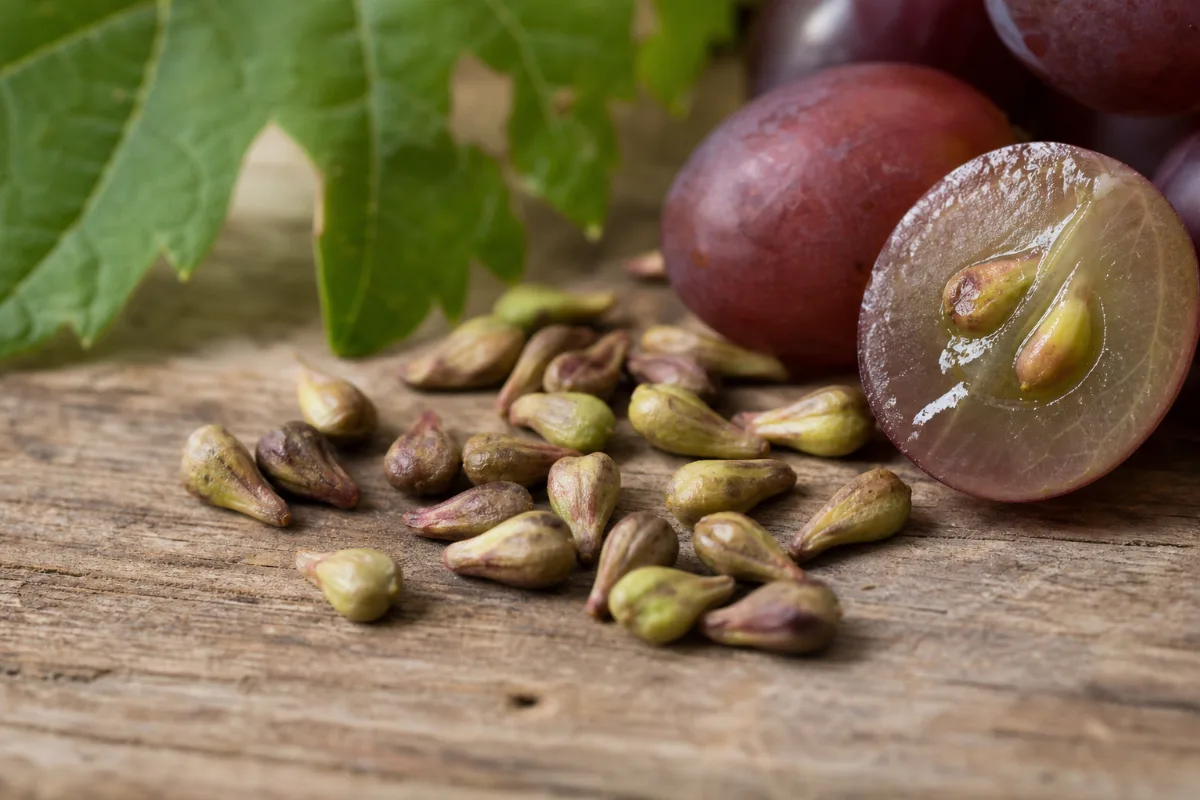
Herbs & Botanicals · Winemaking-seed antioxidant extract
Grape Seed Extract
Vitis vinifera · also called GSE, grape seed proanthocyanidin extract (GSPE), OPC (label term)
Grape seed extract is a supplement made from the seeds left over from winemaking. It is sold for blood pressure, cholesterol and circulation. Trials show small average changes in some blood tests, but results are mixed and mostly short. The main caution is for people on blood thinners or heading for surgery, because lab tests show it can slow clotting.
General information, not medical advice. Last substantive update · Not medically reviewed. A named clinician has not signed off on this page. How this page is made
About Grape Seed Extract
Grape seed extract comes from the seeds of wine grapes (Vitis vinifera). It is rich in proanthocyanidins, also called OPCs. Trials show small changes in blood pressure and cholesterol in some groups, with low certainty. The main cautions are blood thinners, surgery, other medicines, iron, pregnancy and product strength.
What it is
Grape seed extract is made from the seeds left behind when grapes are pressed for wine. The seeds are rich in proanthocyanidins, a group of plant compounds also sold as OPCs, along with catechins and gallic acid.
Do not confuse it with grapefruit seed extract. Both are called GSE, but they are different products.
How it might work
Lab and animal work suggests the compounds act as antioxidants and may relax blood vessels. In test-tube blood, the extract also slowed clotting. These ideas have not been proven to explain benefits in people.
What the research shows
Reviews of small trials found slightly lower blood pressure and small falls in LDL cholesterol and triglycerides. The two main blood pressure reviews disagree on the top number, and trials were very different from each other.
For leg veins, thinking and memory, skin wounds and tooth decay, the evidence is too thin to judge. In women with hard breast tissue after radiotherapy, a trial found no benefit over placebo.
Product strength and quality
NCCIH notes that the make-up of grape seed products varied across studies, so one trial result may not apply to another product. We did not find an independent survey of what commercial products actually contain. Ask a pharmacist or doctor about amounts and about whether it suits you.
At a glance
Traditional uses history, not proof
- No long traditional medicine use of the seed was verified in the sources we read; it is a modern winemaking by-product used as a supplement.
Studied for research
- Blood pressure, low certainty (small falls; two reviews disagree on the top number)
- Cholesterol and triglycerides, low certainty (small falls in LDL and triglycerides)
- Blood sugar and inflammation markers, low certainty (mixed)
- Leg vein problems, insufficient (only one grape seed trial in the Cochrane review)
- Thinking and memory, insufficient (no consistent benefit in healthy young adults)
- Hard breast tissue after radiotherapy, evidence against (placebo-controlled trial found no benefit)
- Skin wounds and tooth decay, insufficient (lab and animal work)
Main compounds
- Proanthocyanidins (procyanidins), the main marketed group
- Catechin and epicatechin
- Gallic acid
Common forms
- Capsules and tablets
- Liquid extracts
- Skin products
- Mouthrinses
Research links: Blood pressure meta-analysis, 2022 (PubMed) · Cholesterol meta-analysis, 2020 (PubMed) · NIH NCCIH: Grape Seed Extract · Research Library · Genes & Biomarkers Library
The plant and its history
- Accepted scientific name
- Vitis vinifera L.
- Naming authority
- L. (GBIF backbone)
- Common names
- Grape seed extract (English); Grape seed proanthocyanidin extract (GSPE) (English)
- Botanical family
- Vitaceae, the grape family.
- Classification
- Plantae > Tracheophyta > Magnoliopsida > Vitales > Vitaceae > Vitis > Vitis vinifera
- Native range
- Not verified in a source read.
- Habitat
- Not verified in a source read.
- What the plant looks like
- Roots: Not verified.; Stems: Not verified.; Leaves: Not verified.; Flowers: Not verified.; Fruit: The grape berry holds the seeds that are extracted. Memorial Sloan Kettering notes that seeds are a by-product of winemaking.
- Cultivation
- Not verified from a source read.
- Harvest and processing
- Seeds are a by-product of wine production (MSK). Details of extraction were not verified.
- Look-alikes and adulterants
- Name: Grapefruit seed extract; Note: Same abbreviation (GSE) but made from a citrus fruit and not the same product (MSK).; Name: Grape skin extract and whole grape or red wine; Note: Different parts with different mixes of compounds; the animal safety study tested seed and skin extracts separately.; Name: Pine bark extract; Note: Another source of proanthocyanidins sold for similar uses; a separate herb.
The plant and the parts used
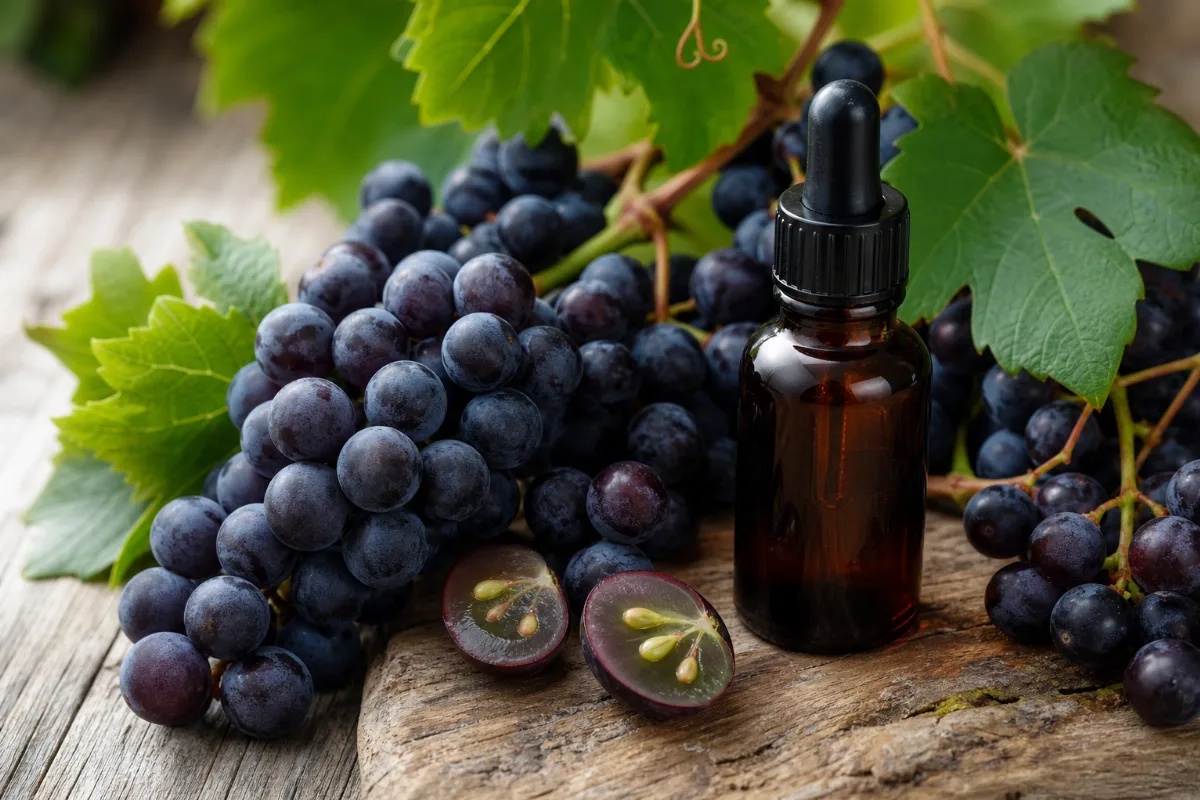
Traditional use and history history, not clinical proof
| Tradition or era | Documented use | Source |
|---|---|---|
| Modern supplement | Grape seed extract is marketed as a dietary supplement for blood pressure, cholesterol, skin wound healing and tooth decay (NCCIH). A review of one branded extract traces its development from 1947 (Masquelier). We did not find a verified traditional medicine use of the seed itself. | s-nccih-grape-seed-extract |
Traditional use shows how a plant was used. It does not show that a supplement works or is safe today.
What is inside, and how it may work
What the plant contains and how those compounds act in cells and animals. Laboratory and animal mechanisms are not proven effects in people.
Main compounds
| Compound | Family | Where it is concentrated | Activity studied | Level of evidence |
|---|---|---|---|---|
| Procyanidin B2 (an example proanthocyanidin dimer) PubChem 122738 | proanthocyanidins (condensed tannins) | Seed | Proanthocyanidins are the main marketed group. Their activity in people is not proven; lab work suggests antioxidant effects. 22 21 | Laboratory research |
| Catechin PubChem 9064 | flavan-3-ols | Seed | Building block of proanthocyanidins; present in the extract. 22 15 | Laboratory research |
| Epicatechin PubChem 72276 | flavan-3-ols | Seed | Building block of proanthocyanidins; present in the extract. 22 15 | Laboratory research |
| Gallic acid PubChem 370 | phenolic acid | Seed | Minor phenolic in the extract; no human effect established. 22 | Laboratory research |
Mechanisms, receptors and pathways
| Target or pathway | Gene or receptor | What was found | Level |
|---|---|---|---|
| Platelet aggregation and clotting | Platelet ADP response, VASP phosphorylation | In test-tube blood, the extract lowered ADP-induced platelet aggregation and slowed clotting at higher concentrations. 5 | Laboratory research |
| Drug-metabolising enzymes | CYP2C9, CYP3A4 | In human liver microsomes, grape seed inhibited CYP2C9 and CYP3A4 by 50% or more at 10 micromolar. 7 | Laboratory research |
| Blood vessels and pressure | Not established | Human trials show small blood pressure falls but the mechanism is unproven in people. 18 9 | Human data |
Absorption, metabolism and elimination
- Absorption
- No human blood-level data were read. A review of one branded extract says the extract's metabolic fate in humans still needs work.
- Distribution
- Not found.
- Metabolism
- Not found for humans. A trial abstract (PRECISE) found that blood pressure responders differed in how their gut bacteria broke down catechins.
- Elimination
- Not found.
- Bioavailability
- Not established from the sources read.
Isolated compounds versus whole extracts
Grape seed extract is a mixed extract; the effect cannot be assigned to one compound. Trials used different products, so isolated catechins and whole seed extracts should not be treated as the same.
Nutritional composition
Grape seed extract is not a food source of a nutrient; a nutrient table is not meaningful. MSK says people generally eat 460 to 1000 mg a day of proanthocyanidin-type substances in foods.
4 low certainty3 not enough evidence1 evidence against
What was looked at
The 8 benefits and uses checked for Grape Seed Extract, each with how strong the evidence is. Tap one to open it.
- Blood pressure and heart rateLow certainty
- Cholesterol and triglyceridesLow certainty
- Blood sugar and inflammation markersLow certainty
- Antioxidant and oxidative-stress markersLow certainty
- Leg vein problems (chronic venous insufficiency)Not enough evidence
- Thinking and memoryNot enough evidence
- Hard breast tissue after radiotherapyEvidence against
- Skin wound healing and tooth decayNot enough evidence
Lab markers tracked in the studies
Systolic blood pressure (the top number)Diastolic blood pressure (the bottom number)Resting heart rateFlow-mediated dilation (FMD)LDL cholesterolTriglyceridesHDL cholesterol and total cholesterolFasting blood glucoseC-reactive protein (CRP, hs-CRP)Malondialdehyde and oxidised LDLLeg swelling (oedema, ankle circumference)Area of hard breast tissueComputerised cognitive test scores
What is Grape Seed Extract good for?
The main proposed uses and how strong the human evidence is for each. Low is the best rating any use receives here.
Benefits, one by one
Each card is a research question, not a promise. Tap a goal to filter. Open a card to see the studies, doses and limits.
Blood pressure and heart rate
Low certaintySeveral small trials found slightly lower blood pressure in people taking grape seed extract. Two reviews agree on a small fall in diastolic pressure but disagree on systolic pressure. It is not a replacement for blood pressure treatment.
5 studiesTrials used different grape seed extracts, often called GSE or GSPE (…
Studies, doses and limits
What the trials found
A 2016 meta-analysis of 16 trials (810 people) found falls in both systolic and diastolic pressure, larger in younger people, people with obesity and people with metabolic syndrome. A 2022 meta-analysis of 19 trials found lower diastolic pressure and heart rate but no significant change in systolic pressure or in blood-vessel widening (flow-mediated dilation). Single trials: in people with metabolic syndrome, 4 weeks of grape seed extract lowered both pressures versus placebo; a 12-week cross-over trial of a bilberry plus grape seed combination in 14 people lowered ambulatory pressure but cannot be credited to grape seed alone.
Results
Small average falls of a few mmHg in some groups, with large differences between trials.
Effect sizes as reported
2016: systolic WMD -6.08 mmHg (CI -10.74 to -1.42), diastolic -2.80 (CI -4.42 to -1.19). 2022: diastolic -2.20 mmHg (CI -3.79 to -0.60; I2 88.8%), heart rate -1.25 bpm (CI -2.32 to -0.19), systolic -3.55 (CI -7.59 to 0.49; I2 97.4%), FMD +1.02% (CI -0.62 to 2.66). PRECISE combination trial: systolic -4.7, diastolic -2.3 mmHg.
Why this rating
The two meta-analyses disagree on systolic pressure, heterogeneity is very high (I2 up to 97%), and most trials are small. We found no reviewer GRADE rating, so this is our own judgement.
Form and dose studied
Trials used different grape seed extracts, often called GSE or GSPE (grape seed proanthocyanidin extract). Products differ in how much proanthocyanidin they contain, so results from one trial cannot be assumed for another product. Amounts are a question for a doctor or pharmacist.
Who was studied
Adults with and without raised risk: healthy, obese, metabolic syndrome. The 2016 authors call for a large long trial in people with high blood pressure.
Limits
Small, short trials with different products; high heterogeneity. One trial is a combination product with an industry-linked author.
Why researchers looked
Grape seed extract is one of the most popular supplements for blood pressure and circulation, and about 20 trials have now tested it.
Traditional use
Grape seed extract is a modern supplement made from the seeds left over from winemaking. It has no long traditional medicine history that we could verify in the sources we read.
Proposed mechanism Preliminary mechanism
Lab and animal work suggests the polyphenols (proanthocyanidins, catechins) may act as antioxidants and may relax blood vessels. This has not been shown to explain effects in people.
A proposed mechanism does not show that the effect happens in people.
Not a substitute for prescribed blood pressure medicine. Talk to a doctor before adding it if you take blood pressure drugs (see the Safety tab).
Cholesterol and triglycerides
Low certaintyReviews found small falls in LDL (bad) cholesterol and triglycerides, but no overall change in total or HDL cholesterol. The people who run the NIH information service say these results are not definite.
3 studiesTrials used different grape seed extracts, often called GSE or GSPE (…
Studies, doses and limits
What the trials found
A 2020 meta-analysis of 11 trials (536 people) found lower LDL cholesterol and triglycerides but no overall change in total or HDL cholesterol; the falls in total and HDL cholesterol appeared only in short trials (under 10 weeks) and in trials with lower daily amounts. A separate 2020 meta-analysis of 50 trials found small falls in total cholesterol, LDL and triglycerides and no change in HDL. NCCIH says these conclusions are not definite because trials were small and the products differed.
Results
Small average changes; whether they lower heart attack or stroke risk has not been tested.
Effect sizes as reported
11-trial review: LDL -0.17 mmol/l (CI -0.34 to -0.01), triglycerides -0.11 mmol/l (CI -0.18 to -0.05). 50-trial review: total cholesterol WMD -6.03 (CI -9.71 to -2.35), LDL -4.97 (CI -8.37 to -1.57), triglycerides -6.55 (CI -9.28 to -3.83); units as reported.
Why this rating
Two meta-analyses lean the same way but the LDL interval in one almost touches zero, trials are small, and products differ. Blood-fat changes are not heart-health outcomes.
Form and dose studied
Trials used different grape seed extracts, often called GSE or GSPE (grape seed proanthocyanidin extract). Products differ in how much proanthocyanidin they contain, so results from one trial cannot be assumed for another product. Amounts are a question for a doctor or pharmacist.
Who was studied
Adults, many with raised cholesterol or metabolic problems.
Limits
Different products and trial lengths; no outcome trials; one review had a published erratum we did not read.
Why researchers looked
Polyphenol-rich foods are studied for blood fats, and grape seed extract is sold for cholesterol.
Traditional use
Grape seed extract is a modern supplement made from the seeds left over from winemaking. It has no long traditional medicine history that we could verify in the sources we read.
Proposed mechanism Preliminary mechanism
Lab and animal work suggests the polyphenols (proanthocyanidins, catechins) may act as antioxidants and may relax blood vessels. This has not been shown to explain effects in people.
A proposed mechanism does not show that the effect happens in people.
Do not stop or replace cholesterol medicine with a supplement.
Blood sugar and inflammation markers
Low certaintyPooled results show a very small average fall in fasting blood sugar and in one inflammation marker (CRP), with no change in long-term blood sugar (HbA1c). Memorial Sloan Kettering calls results mixed.
4 studiesTrials used different grape seed extracts, often called GSE or GSPE (…
Studies, doses and limits
What the trials found
A 2020 meta-analysis of 50 trials found fasting glucose and CRP slightly lower and no change in HbA1c. A 2021 meta-analysis found lower high-sensitivity CRP but no significant change in ordinary CRP or white blood cell count. A 12-week trial of a bilberry plus grape seed combination found no change in glucose.
Results
Marker changes only; no study showed fewer cases of diabetes or less illness.
Effect sizes as reported
Fasting glucose WMD -2.01 (CI -3.14 to -0.86); CRP WMD -0.81 (CI -1.25 to -0.38); HbA1c no change. hs-CRP WMD -0.48 mg/L (CI -0.94 to -0.03); CRP -0.36 mg/L (CI -1.02 to 0.30).
Why this rating
Results are inconsistent between markers and reviews, and the effects are small.
Form and dose studied
Trials used different grape seed extracts, often called GSE or GSPE (grape seed proanthocyanidin extract). Products differ in how much proanthocyanidin they contain, so results from one trial cannot be assumed for another product. Amounts are a question for a doctor or pharmacist.
Who was studied
Adults, many with metabolic problems.
Limits
Surrogate markers only; mixed products.
Why researchers looked
Because blood vessels and metabolism are linked, trials often measure sugar and inflammation markers too.
Traditional use
Grape seed extract is a modern supplement made from the seeds left over from winemaking. It has no long traditional medicine history that we could verify in the sources we read.
Proposed mechanism Preliminary mechanism
Lab and animal work suggests the polyphenols (proanthocyanidins, catechins) may act as antioxidants and may relax blood vessels. This has not been shown to explain effects in people.
A proposed mechanism does not show that the effect happens in people.
Not a substitute for diabetes treatment.
Antioxidant and oxidative-stress markers
Low certaintyIn trials, blood markers of oxidative damage fell on average. This shows a change in the lab test, not a proven health benefit.
2 studiesTrials used different grape seed extracts, often called GSE or GSPE (…
Studies, doses and limits
What the trials found
A 2021 meta-analysis of 19 trials found lower malondialdehyde and oxidised LDL, and only a marginal rise in total antioxidant capacity (the interval touched zero).
Results
Lipid-oxidation markers lower; total antioxidant capacity not clearly changed.
Effect sizes as reported
Malondialdehyde SMD -1.04 (CI -1.65 to -0.42); oxidised LDL SMD -0.44 (CI -0.75 to -0.13); total antioxidant capacity SMD 0.49 (CI -0.05 to 1.04).
Why this rating
A marker change is not a clinical benefit, and the review's authors describe the inflammatory effect as neutral or mild.
Form and dose studied
Trials used different grape seed extracts, often called GSE or GSPE (grape seed proanthocyanidin extract). Products differ in how much proanthocyanidin they contain, so results from one trial cannot be assumed for another product. Amounts are a question for a doctor or pharmacist.
Who was studied
Adults in controlled trials.
Limits
Surrogate markers; mixed products.
Why researchers looked
The extract is rich in proanthocyanidins and is mostly marketed for its antioxidant activity.
Traditional use
Grape seed extract is a modern supplement made from the seeds left over from winemaking. It has no long traditional medicine history that we could verify in the sources we read.
Proposed mechanism Laboratory research
Lab and animal work suggests the polyphenols (proanthocyanidins, catechins) may act as antioxidants and may relax blood vessels. This has not been shown to explain effects in people.
A proposed mechanism does not show that the effect happens in people.
No specific caution.
Leg vein problems (chronic venous insufficiency)
Not enough evidenceGrape seed extract is sold for tired, swollen legs. A large Cochrane review of vein-support drugs found they probably reduce leg swelling slightly as a group, but only one included trial used grape seed extract.
1 studiesTrials used different grape seed extracts, often called GSE or GSPE (…
Studies, doses and limits
What the trials found
Cochrane 2020 (56 trials, 7,690 people) found that oral vein-support products as a class probably reduce leg swelling slightly and make little or no difference to quality of life or ulcer healing. One of the 56 trials tested grape seed extract; the abstract does not separate its result.
Results
Class-level result only; nothing specific to grape seed.
Effect sizes as reported
Class-wide: swelling RR 0.70 (CI 0.63 to 0.78); ankle circumference -4.27 mm (CI -5.61 to -2.93); quality of life SMD -0.06 (CI -0.22 to 0.10).
Why this rating
The best review covers a drug class and includes one grape seed trial, so grape seed itself is not judged.
Form and dose studied
Trials used different grape seed extracts, often called GSE or GSPE (grape seed proanthocyanidin extract). Products differ in how much proanthocyanidin they contain, so results from one trial cannot be assumed for another product. Amounts are a question for a doctor or pharmacist.
Who was studied
Adults with chronic venous insufficiency.
Limits
One grape seed trial among 56; short follow-up.
Why researchers looked
Early work on grape seed proanthocyanidins focused on the strength of small blood vessels.
Traditional use
Grape seed extract is a modern supplement made from the seeds left over from winemaking. It has no long traditional medicine history that we could verify in the sources we read.
Proposed mechanism Preliminary mechanism
Lab and animal work suggests the polyphenols (proanthocyanidins, catechins) may act as antioxidants and may relax blood vessels. This has not been shown to explain effects in people.
A proposed mechanism does not show that the effect happens in people.
Phlebotonics as a class probably raise side effects slightly, mostly stomach and gut complaints (RR 1.14).
Thinking and memory
Not enough evidenceOne careful trial in healthy young adults found no consistent benefit for thinking tests. Older or impaired groups were not tested here.
1 studiesTrials used different grape seed extracts, often called GSE or GSPE (…
Studies, doses and limits
What the trials found
A randomised trial in 60 healthy adults aged 18 to 30 gave 400 mg of a highly purified grape seed polyphenol extract once and then daily for 12 weeks. It found no consistent cognitive benefit versus placebo, though some reaction-time and psychomotor results favoured the extract and the placebo also improved some scores.
Results
No consistent benefit.
Why this rating
A single trial in a population unlikely to show gains.
Form and dose studied
Trials used different grape seed extracts, often called GSE or GSPE (grape seed proanthocyanidin extract). Products differ in how much proanthocyanidin they contain, so results from one trial cannot be assumed for another product. Amounts are a question for a doctor or pharmacist.
Who was studied
Healthy adults 18 to 30.
Limits
One trial, healthy young people only.
Why researchers looked
Grape polyphenols are tested for brain function because they may help blood flow.
Traditional use
Grape seed extract is a modern supplement made from the seeds left over from winemaking. It has no long traditional medicine history that we could verify in the sources we read.
Proposed mechanism Preliminary mechanism
Lab and animal work suggests the polyphenols (proanthocyanidins, catechins) may act as antioxidants and may relax blood vessels. This has not been shown to explain effects in people.
A proposed mechanism does not show that the effect happens in people.
No specific caution.
Hard breast tissue after radiotherapy
Evidence againstA randomised trial in women with breast hardening after radiotherapy found that grape seed proanthocyanidin extract did not work better than placebo.
2 studiesTrials used different grape seed extracts, often called GSE or GSPE (…
Studies, doses and limits
What the trials found
A double-blind trial of 66 women about 10.8 years after breast radiotherapy compared the IH636 extract (44 women) with placebo (22). At least half of the hardened area cleared in 29.5% on the extract and 27% on placebo, which was not a significant difference.
Results
No benefit shown.
Effect sizes as reported
13/44 vs 6/22 with at least 50% reduction (not significant).
Why this rating
A small but well-designed double-blind phase II trial with a null result; the finding is also reported by Memorial Sloan Kettering.
Form and dose studied
Trials used different grape seed extracts, often called GSE or GSPE (grape seed proanthocyanidin extract). Products differ in how much proanthocyanidin they contain, so results from one trial cannot be assumed for another product. Amounts are a question for a doctor or pharmacist.
Who was studied
Women with moderate or marked breast induration after radiotherapy.
Limits
One product, one trial.
Why researchers looked
The extract has antioxidant effects in lab and animal work, so it was tested for radiation-related tissue damage.
Traditional use
Grape seed extract is a modern supplement made from the seeds left over from winemaking. It has no long traditional medicine history that we could verify in the sources we read.
Proposed mechanism Animal research
Lab and animal work suggests the polyphenols (proanthocyanidins, catechins) may act as antioxidants and may relax blood vessels. This has not been shown to explain effects in people.
A proposed mechanism does not show that the effect happens in people.
Anyone in cancer treatment should check any supplement with the cancer team first.
Skin wound healing and tooth decay
Not enough evidenceLab and animal results suggest grape seed extract on the skin or as a mouthrinse might help, but there is almost no human research.
2 studiesTrials used different grape seed extracts, often called GSE or GSPE (…
Studies, doses and limits
What the trials found
NCCIH says experimental models suggest wound-healing benefit, only a very small amount of human research exists, and the evidence cannot show benefit. For tooth decay, laboratory studies suggest a mouthrinse might help, but there is not enough human research to judge. A narrative review in dermatologic surgery lists grape seed extract among products with some evidence for wound healing, with studies that were small and often flawed.
Results
No human conclusion.
Why this rating
NCCIH states the human evidence is not enough to conclude.
Form and dose studied
Trials used different grape seed extracts, often called GSE or GSPE (grape seed proanthocyanidin extract). Products differ in how much proanthocyanidin they contain, so results from one trial cannot be assumed for another product. Amounts are a question for a doctor or pharmacist.
Who was studied
Not established.
Limits
Lab and animal evidence only; no reviewers' GRADE.
Why researchers looked
Topical and mouthrinse forms exist, based on antioxidant and antibacterial lab results.
Traditional use
Grape seed extract is a modern supplement made from the seeds left over from winemaking. It has no long traditional medicine history that we could verify in the sources we read.
Proposed mechanism Animal research
Animal and lab work suggests faster wound closure and reduced plaque bacteria; human proof is lacking.
A proposed mechanism does not show that the effect happens in people.
Skin products can cause contact reactions in some people; check with a pharmacist.
Connections to the rest of health
How Grape Seed Extract connects to the rest of our health knowledge graph. Every link says what kind of connection it is. A safety link (for example to the liver) is a warning, not a benefit. A study that merely mentions a topic never creates a benefit link.
Explore every connection: goals, body systems, organs, symptoms, genes
A. Wellness goals
| Connected to | Kind of connection | Evidence status | Context | Studies |
|---|---|---|---|---|
| Cholesterol balance | Potential benefit | Low certainty | Small falls in LDL and triglycerides in meta-analyses. Cholesterol and triglycerides: Reviews found small falls in LDL (bad) cholesterol and triglycerides, but no overall change in total or HDL cholesterol. The people who run the NIH information service say these results are not definite. Preparation or compound: Grape seed extract |
1 2 21 |
| Blood Pressure Support | Potential benefit | Low certainty | Blood pressure and heart rate: Several small trials found slightly lower blood pressure in people taking grape seed extract. Two reviews agree on a small fall in diastolic pressure but disagree on systolic pressure. It is not a replacement for blood pressure treatment. | 18 9 14 10 21 |
| Heart Health | Potential benefit | Low certainty | Blood pressure and heart rate: Several small trials found slightly lower blood pressure in people taking grape seed extract. Two reviews agree on a small fall in diastolic pressure but disagree on systolic pressure. It is not a replacement for blood pressure treatment. Cholesterol and triglycerides: Reviews found small falls in LDL (bad) cholesterol and triglycerides, but no overall change in total or HDL cholesterol. The people who run the NIH information service say these results are not definite. | 18 9 14 10 21 1 2 12 |
| Blood Sugar Balance | Preliminary mechanism | Low certainty | Blood sugar and inflammation markers: Pooled results show a very small average fall in fasting blood sugar and in one inflammation marker (CRP), with no change in long-term blood sugar (HbA1c). Memorial Sloan Kettering calls results mixed. | 2 8 10 20 |
| Inflammation Balance | Preliminary mechanism | Low certainty | Blood sugar and inflammation markers: Pooled results show a very small average fall in fasting blood sugar and in one inflammation marker (CRP), with no change in long-term blood sugar (HbA1c). Memorial Sloan Kettering calls results mixed. | 2 8 10 20 |
| Healthy Aging | Preliminary mechanism | Low certainty | Antioxidant and oxidative-stress markers: In trials, blood markers of oxidative damage fell on average. This shows a change in the lab test, not a proven health benefit. | 8 20 |
| Heart Health | Preliminary mechanism | Low certainty | Antioxidant and oxidative-stress markers: In trials, blood markers of oxidative damage fell on average. This shows a change in the lab test, not a proven health benefit. | 8 20 |
| Healthy Circulation | Potential benefit | Not enough evidence | Leg vein problems (chronic venous insufficiency): Grape seed extract is sold for tired, swollen legs. A large Cochrane review of vein-support drugs found they probably reduce leg swelling slightly as a group, but only one included trial used grape seed extract. | 12 |
| Cognitive Performance | Potential benefit | Not enough evidence | Thinking and memory: One careful trial in healthy young adults found no consistent benefit for thinking tests. Older or impaired groups were not tested here. | 3 |
| Memory Support | Potential benefit | Not enough evidence | Thinking and memory: One careful trial in healthy young adults found no consistent benefit for thinking tests. Older or impaired groups were not tested here. | 3 |
| Womens Wellness | Potential benefit | Evidence against | Hard breast tissue after radiotherapy: A randomised trial in women with breast hardening after radiotherapy found that grape seed proanthocyanidin extract did not work better than placebo. | 6 20 |
| Healthy Skin | Potential benefit | Evidence against | Hard breast tissue after radiotherapy: A randomised trial in women with breast hardening after radiotherapy found that grape seed proanthocyanidin extract did not work better than placebo. | 6 20 |
| Healthy Skin | Preliminary mechanism | Not enough evidence | Skin wound healing and tooth decay: Lab and animal results suggest grape seed extract on the skin or as a mouthrinse might help, but there is almost no human research. | 21 13 |
B. Body systems
| Connected to | Kind of connection | Evidence status | Context | Studies |
|---|---|---|---|---|
| Cardiovascular System | Biological association | Low certainty | Studied for: Blood pressure and heart rate Studied for: Cholesterol and triglycerides | 18 9 14 10 21 1 2 8 20 12 |
| Metabolism Weight | Biological association | Low certainty | Studied for: Cholesterol and triglycerides Studied for: Blood sugar and inflammation markers | 1 2 21 8 10 20 |
| Nervous System | Biological association | Not enough evidence | Studied for: Thinking and memory | 3 |
| Integumentary System | Biological association | Evidence against | Studied for: Hard breast tissue after radiotherapy Studied for: Skin wound healing and tooth decay | 6 20 21 13 |
C. Body parts and organs
| Connected to | Kind of connection | Evidence status | Context | Studies |
|---|---|---|---|---|
| Blood vessels | Potential benefit | Low certainty | Small falls in blood pressure in some trials; very mixed between reviews. Preparation or compound: Grape seed extract |
18 9 |
E. Health conditions
| Connected to | Kind of connection | Evidence status | Context | Studies |
|---|---|---|---|---|
| High blood pressure | Potential benefit | Low certainty | Small falls in some groups; reviews disagree on systolic pressure. Preparation or compound: Grape seed extract |
18 9 |
| High cholesterol | Potential benefit | Low certainty | Small falls in LDL and triglycerides. Preparation or compound: Grape seed extract |
1 |
I. Biomarkers
| Connected to | Kind of connection | Evidence status | Context | Studies |
|---|---|---|---|---|
| Systolic blood pressure (the top number) | Biological association | Low certainty | Measured in trials: mixed. A lab change is not the same as a health benefit. | 18 9 14 10 |
| Diastolic blood pressure (the bottom number) | Biological association | Low certainty | Measured in trials: lowered. A lab change is not the same as a health benefit. | 18 9 |
| Resting heart rate | Biological association | Low certainty | Measured in trials: lowered. A lab change is not the same as a health benefit. | 9 |
| Flow-mediated dilation (FMD) | Biological association | Low certainty | Measured in trials: no-change. A lab change is not the same as a health benefit. | 9 |
| LDL cholesterol | Biological association | Low certainty | Measured in trials: lowered. A lab change is not the same as a health benefit. | 1 2 |
| Triglycerides | Biological association | Low certainty | Measured in trials: lowered. A lab change is not the same as a health benefit. | 1 2 |
| HDL cholesterol and total cholesterol | Biological association | Low certainty | Measured in trials: mixed. A lab change is not the same as a health benefit. | 1 2 |
| Fasting blood glucose | Biological association | Low certainty | Measured in trials: lowered. A lab change is not the same as a health benefit. | 2 10 |
| C-reactive protein (CRP, hs-CRP) | Biological association | Low certainty | Measured in trials: mixed. A lab change is not the same as a health benefit. | 2 8 |
| Malondialdehyde and oxidised LDL | Biological association | Low certainty | Measured in trials: lowered. A lab change is not the same as a health benefit. | 8 |
| Leg swelling (oedema, ankle circumference) | Biological association | Not enough evidence | Measured in trials: lowered. A lab change is not the same as a health benefit. | 12 |
| Area of hard breast tissue | Biological association | Evidence against | Measured in trials: no-change. A lab change is not the same as a health benefit. | 6 |
| Computerised cognitive test scores | Biological association | Not enough evidence | Measured in trials: no-change. A lab change is not the same as a health benefit. | 3 |
J. Genes, receptors and enzymes
| Connected to | Kind of connection | Evidence status | Context | Studies |
|---|---|---|---|---|
| CYP3A4 and CYP2C9 | Preliminary mechanism | In vitro | Inhibited in the lab by grape seed extract. | 7 |
L. Active compounds
| Connected to | Kind of connection | Evidence status | Context | Studies |
|---|---|---|---|---|
| Procyanidin B2 (an example proanthocyanidin dimer) | Biological association | In vitro | Proanthocyanidins are the main marketed group. Their activity in people is not proven; lab work suggests antioxidant effects. Preparation or compound: Seed |
22 21 |
| Catechin | Biological association | In vitro | Building block of proanthocyanidins; present in the extract. Preparation or compound: Seed |
22 15 |
| Epicatechin | Biological association | In vitro | Building block of proanthocyanidins; present in the extract. Preparation or compound: Seed |
22 15 |
| Gallic acid | Biological association | In vitro | Minor phenolic in the extract; no human effect established. Preparation or compound: Seed |
22 |
Each connection is stored with the ingredient, the connected record, the kind of connection, the evidence status, the supporting studies, the preparation or compound involved, and a review date (last reviewed October 25, 2026).
Evidence at a glance: what changed in 13 lab markers
Tap a number to show only those markers. Counts are markers, not people.
The evidence
The research centre for Grape Seed Extract. Every record here was checked against PubMed or the publisher's page; we never list a study we have not verified.
Evidence by outcome
Bars show how many studies we found for each outcome, not how well it works. People are added up across trials only (reviews are not added, to avoid double counting).
How we rate evidence
High certainty
Several well-run trials or reviews agree; further research is unlikely to change the picture much.
Moderate certainty
Good trials point the same way, but some doubt remains.
Low certainty
Small, short or inconsistent trials. The finding could change with better research.
Very low certainty
Very little or very weak human data. Treat as a possibility only.
Mixed findings
Trials or reviews disagree with each other.
Not enough evidence
Not enough human research to say either way.
Evidence against
Good research found no benefit, or found harm.
We take the reviewers' own risk-of-bias and GRADE statements where they exist, and otherwise judge from study size, design, consistency, directness and whether a product matches what is sold. Many publications do not make evidence high. Method note: We started from our existing grape seed extract summary, re-opened the PubMed records it relied on, added safety and interaction searches, and checked names with GBIF and PubChem.
Study library: every study we checked 22
| Study | Design | People | Product, dose, length | Result |
|---|---|---|---|---|
| Anjom-Shoae 2020 Effects of grape seed extract on dyslipidaemia: a systematic review and dose-response meta-analysis of randomised controlled trials. British Journal of Nutrition · PMID 32138795 · DOI |
Meta-analysis |
536 Adults in 11 randomised trials |
Grape seed extract (various products) seed · vs Placebo or control |
Small falls in LDL cholesterol and triglycerides. No overall change in total or HDL cholesterol. Study quality was scored with the Jadad scale. LDL -0.17 mmol/l; triglycerides -0.11 mmol/l (LDL -0.34 to -0.01; triglycerides -0.18 to -0.05) Methods, limits and fundingOutcomes: Serum LDL, HDL, total cholesterol, triglycerides Limitations: Small trials; differing products; the LDL interval almost touches zero. NCCIH says the conclusions are not definite. Funding and conflicts: Not stated in the abstract Read: abstract |
| Asbaghi 2020 The effects of grape seed extract on glycemic control, serum lipoproteins, inflammation, and body weight: A systematic review and meta-analysis of randomized controlled trials. Phytotherapy Research · PMID 31880030 · DOI |
Meta-analysis |
Adults in 50 randomised trials | Grape seed extract (various products) seed · vs Placebo or control |
Small average falls in fasting glucose, total and LDL cholesterol, triglycerides and CRP. No change in HbA1c, HDL cholesterol or body measures. Fasting glucose WMD -2.01; LDL -4.97; triglycerides -6.55; CRP -0.81 (units as reported) (Glucose -3.14 to -0.86; LDL -8.37 to -1.57; triglycerides -9.28 to -3.83; CRP -1.25 to -0.38) Methods, limits and fundingOutcomes: Fasting glucose, HbA1c, lipids, CRP, body measures Limitations: Abstract does not give total participants. The journal published an erratum in 2022 (Phytother Res 36(3):1413); we did not read its content. Funding and conflicts: Not stated in the abstract Read: abstract |
| Bell 2022 Grape seed polyphenol extract and cognitive function in healthy young adults: a randomised, placebo-controlled, parallel-groups acute-on-chronic trial. Nutritional Neuroscience · PMID 31942838 · DOI |
Controlled trial |
60 Healthy adults aged 18 to 30 |
Highly purified grape seed polyphenol extract (GSPE) seed 400 mg (as in the trial) One dose, then daily for 12 weeks · vs Placebo |
No consistent pattern of cognitive benefit versus placebo, either after one dose or after 12 weeks. A few reaction-time and psychomotor differences appeared, and placebo also improved some scores. No consistent benefit Methods, limits and fundingOutcomes: Computerised cognitive tests; mood Limitations: Healthy young adults only; the authors say older or impaired groups may respond differently. Funding and conflicts: Not stated in the abstract Read: abstract |
| Bentivegna 2002 Subchronic 3-month oral toxicity study of grape seed and grape skin extracts. Food and Chemical Toxicology · PMID 12419686 · DOI |
Animal research animal |
Sprague-Dawley rats, 20 per sex per group | Meganatural grape seed extract (GSE) and grape skin extract in the diet seed At least 3 months · vs Control diet |
No treatment-related changes of toxic importance. Highest dietary level (2.5%) was the no-observed-adverse-effect level. NOAEL 2.5% of diet, about 1.78 g/kg/day (males) and 2.15 g/kg/day (females) Methods, limits and fundingOutcomes: General toxicity, organ weights, tissue examination Limitations: Rats, not people; a single commercial extract. Funding and conflicts: Conducted on a commercial extract; funding not stated in the abstract Read: abstract |
| Bijak 2019 Dual Anticoagulant/Antiplatelet Activity of Polyphenolic Grape Seeds Extract. Nutrients · PMID 30621248 · DOI |
Laboratory research in-vitro |
Human blood samples tested in the lab | Polyphenolic grape seed extract seed 7.5 and 15 micrograms/mL in test tubes Lab test · vs Untreated blood |
The extract reduced platelet clumping and, at the higher concentration, slowed clotting in the test tube. This is lab work, not a human trial. Lower ADP-induced aggregation at 7.5 and 15 micrograms/mL; clotting-time effects clear only at 15 Methods, limits and fundingOutcomes: Platelet aggregation, clotting times, thromboelastometry Limitations: Test-tube concentrations; whether supplements reach these blood levels is not shown. Funding and conflicts: Authors declare no conflicts Read: abstract |
| Brooker 2006 Double-blind, placebo-controlled, randomised phase II trial of IH636 grape seed proanthocyanidin extract (GSPE) in patients with radiation-induced breast induration. Radiotherapy and Oncology · PMID 16546280 · DOI |
Controlled trial |
66 Women with moderate or marked breast hardening about 10.8 years after radiotherapy for early breast cancer |
IH636 grape seed proanthocyanidin extract (GSPE) capsules seed 100 mg three times a day (as in the trial) 6 months of treatment, outcome at 12 months · vs Placebo |
At least half the hardened area cleared in 13 of 44 (29.5%) on GSPE and 6 of 22 (27%) on placebo, not significant. No difference in any other measure. The trial did not show benefit. 13/44 vs 6/22 with at least 50% reduction (NS) Methods, limits and fundingOutcomes: Percent change in area of palpable breast hardening; photos; self-rated hardness, pain, tenderness Limitations: Small phase II trial; one product (IH636). Funding and conflicts: Not stated in the abstract (the extract is a named commercial product) Read: abstract |
| Etheridge 2007 An in vitro evaluation of cytochrome P450 inhibition and P-glycoprotein interaction with goldenseal, Ginkgo biloba, grape seed, milk thistle, and ginseng extracts and their constituents. Planta Medica · PMID 17611934 · DOI |
Laboratory research in-vitro |
Human liver microsomes and a P-glycoprotein test system | Grape seed extract (and four other herbs) seed 10 micromolar (lab concentration) Lab test · vs Untreated enzymes |
Grape seed extract inhibited CYP2C9 and CYP3A4 by 50% or more at 10 micromolar. The authors suggest drug clearance might fall, but this was not tested in people. 50% or more inhibition of CYP2C9 and CYP3A4 at 10 micromolar Methods, limits and fundingOutcomes: Inhibition of CYP1A2, 2C8, 2C9, 2C19, 2D6, 2E1, 3A4; P-glycoprotein Limitations: Lab only; not shown in people. Funding and conflicts: Not stated in the abstract Read: abstract |
| Foshati 2021 The effect of grape seed extract supplementation on oxidative stress and inflammation: A systematic review and meta-analysis of controlled trials. International Journal of Clinical Practice · PMID 34107109 · DOI |
Meta-analysis |
Adults in 23 studies (19 in the meta-analysis) | Grape seed extract (various products) seed · vs Placebo or control |
Lower malondialdehyde, oxidised LDL and hs-CRP. Total antioxidant capacity rose only marginally. CRP and white blood cell count did not change significantly. MDA SMD -1.04; oxLDL SMD -0.44; hs-CRP WMD -0.48 mg/L (MDA -1.65 to -0.42; oxLDL -0.75 to -0.13; hs-CRP -0.94 to -0.03) Methods, limits and fundingOutcomes: Malondialdehyde, oxidised LDL, total antioxidant capacity, CRP, hs-CRP, white blood cell count Limitations: Blood markers, not illness outcomes; the hs-CRP interval nearly touches zero. Funding and conflicts: Not stated in the abstract Read: abstract |
| Foshati 2022 The effect of grape (Vitis vinifera) seed extract supplementation on flow-mediated dilation, blood pressure, and heart rate: A systematic review and meta-analysis of controlled trials with duration- and dose-response analysis. Pharmacological Research · PMID 34798267 · DOI |
Meta-analysis |
Adults in 19 controlled trials | Grape seed extract (various products) seed · vs Placebo or control |
Diastolic pressure and heart rate fell slightly. No significant change in FMD or systolic pressure. Results varied a lot between trials; dose, duration and participant type may explain it. Diastolic WMD -2.20 mmHg; heart rate WMD -1.25 bpm; systolic WMD -3.55 mmHg (not significant); FMD WMD 1.02% (not significant) (Diastolic -3.79 to -0.60 (I2 88.8%); heart rate -2.32 to -0.19 (I2 59.5%); systolic -7.59 to 0.49 (I2 97.4%); FMD -0.62 to 2.66 (I2 92.0%)) Methods, limits and fundingOutcomes: Flow-mediated dilation (FMD), systolic and diastolic blood pressure, heart rate Limitations: Very high heterogeneity (I2 up to 97%); total participants not stated in the abstract (NCCIH reports 1,080). Funding and conflicts: Not stated in the abstract Read: abstract |
| Grohmann 2023 A grape seed and bilberry extract reduces blood pressure in individuals at risk of developing type 2 diabetes: the PRECISE study, a double-blind placebo-controlled cross-over intervention study. Frontiers in Nutrition · PMID 37351191 · DOI |
Controlled trial |
14 Adults aged 45 or older, BMI above 28, at higher risk of type 2 diabetes |
Bilberry plus grape seed extract combination (a mixed product, not grape seed alone) seed + bilberry fruit 250 mg bilberry + 300 mg grape seed extract a day (as in the trial) 12 weeks per phase, cross-over · vs 550 mg control extract |
Glucose and cholesterol did not change. Ambulatory systolic and diastolic pressure fell. Only 8 of 14 people were responders. Systolic -4.7 mmHg (p < 0.001); diastolic -2.3 mmHg (p = 0.0009) Methods, limits and fundingOutcomes: Glucose, cholesterol, 24-hour blood pressure, gut microbiota Limitations: Only 14 people; a combination with bilberry, so the effect cannot be given to grape seed alone. Funding and conflicts: Industry link: one author is employed by By-Health Co., Ltd. and another sits on its academic advisory board Read: abstract |
| Hurrell 1999 Inhibition of non-haem iron absorption in man by polyphenolic-containing beverages. British Journal of Nutrition · PMID 10999016 |
Other human |
Adult volunteers given a bread meal with different drinks | Tea, coffee, cocoa and herb teas (not grape seed) varied Single meals · vs Water |
Drinks rich in polyphenols cut iron absorption from a meal by half or more, in proportion to polyphenol content. Grape seed was not tested. We cite this only as a reason to ask whether grape seed polyphenols could act the same way. Reductions of 47% to 94% depending on the drink Methods, limits and fundingOutcomes: Iron absorption from a meal Limitations: Not a grape seed study; read from the abstract. Funding and conflicts: Not stated in the abstract Read: abstract |
| Martinez-Zapata 2020 Phlebotonics for venous insufficiency. Cochrane Database of Systematic Reviews · PMID 33141449 · DOI |
Systematic review |
7690 Adults with chronic venous insufficiency; 56 trials with usable data, of which one tested grape seed extract |
Oral phlebotonics (rutosides, diosmin-type products, calcium dobesilate, pine bark, grape seed extract and others) varied · vs Placebo |
As a class, phlebotonics probably reduce leg swelling slightly (moderate certainty) but make little or no difference to quality of life and may not affect ulcer healing. They probably raise adverse events slightly, mostly stomach and gut complaints. Only one of the included trials tested grape seed extract, so the review says almost nothing on its own. Oedema RR 0.70; ankle circumference MD -4.27 mm; adverse events RR 1.14 (class-wide) (Oedema 0.63 to 0.78; ankle -5.61 to -2.93; adverse events 1.02 to 1.27) Methods, limits and fundingOutcomes: Leg swelling (oedema), quality of life, ulcer healing, adverse events Limitations: Findings are for the whole drug class. Only short-term safety data. The one grape seed trial is not separated in the abstract. Funding and conflicts: Cochrane authors report no known conflicts Read: abstract |
| Reddy 2013 Common complementary and alternative therapies with potential use in dermatologic surgery: risks and benefits. Journal of the American Academy of Dermatology · PMID 21890235 · DOI |
Narrative review |
Review of complementary products used around skin surgery | Many products, including grape seed extract varied |
Lists grape seed extract among products with some evidence of benefit for wound healing or swelling, and says some products in the group can inhibit platelets. The abstract does not describe a grape-seed-specific bleeding case. Not applicable Methods, limits and fundingOutcomes: Possible benefits and complications around surgery Limitations: Narrative review of small studies with design flaws; abstract only. Funding and conflicts: Not stated in the abstract Read: abstract |
| Sivaprakasapillai 2009 Effect of grape seed extract on blood pressure in subjects with the metabolic syndrome. Metabolism · PMID 19608210 · DOI |
Controlled trial |
Adults with metabolic syndrome | Grape seed extract seed 150 or 300 mg a day (as in the trial) 4 weeks · vs Placebo |
Both systolic and diastolic pressure were lower than with placebo. No change in blood lipids or glucose. Direction: lower systolic and diastolic; numbers not given in the abstract Methods, limits and fundingOutcomes: Ambulatory blood pressure, lipids, glucose Limitations: Short (4 weeks); number of participants not stated in the abstract. Funding and conflicts: Not stated in the abstract Read: abstract |
| Weseler 2017 Masquelier's grape seed extract: from basic flavonoid research to a well-characterized food supplement with health benefits. Nutrition Journal · PMID 28103873 · DOI |
Narrative review |
Review of one specific, well-characterised grape seed extract | Masquelier's grape seed extract (monomeric and oligomeric flavan-3-ols) seed |
Describes how the composition of one extract was characterised and notes that careful standardisation is needed to link a product to an effect. Mentions an 8-week study in healthy people and a link to vascular changes. Not applicable Methods, limits and fundingOutcomes: Composition and research history Limitations: Narrative review of one branded extract; abstract only. Funding and conflicts: Not stated in the abstract (review concerns a branded extract) Read: abstract |
| Yamakoshi 2002 Safety evaluation of proanthocyanidin-rich extract from grape seeds. Food and Chemical Toxicology · PMID 11955665 · DOI |
Animal research animal |
Fischer 344 rats; mouse and bacterial/cell mutation tests | Proanthocyanidin-rich grape seed extract seed Acute dosing and 90 days in diet · vs Control diet |
No acute toxicity at 2 and 4 g/kg. No mutagenicity in the bacterial, cell and mouse tests. No signs of toxicity at up to 2% of diet for 90 days. NOAEL 2% of diet, about 1410 (males) and 1501 (females) mg/kg/day Methods, limits and fundingOutcomes: Acute and 90-day toxicity; mutation tests Limitations: Rats and lab tests, not people. Funding and conflicts: Not stated in the abstract Read: abstract |
| Zamani 2022 The effect of grape products on liver enzymes: A systematic review and meta-analysis of randomized controlled trials. Phytotherapy Research · PMID 36264051 · DOI |
Meta-analysis |
Adults in 11 randomised trials of grape products (not only the seed extract) | Grape products including grape seed extract seed+other grape products At least 2 weeks · vs Placebo or control |
Across all grape products, ALP fell and ALT and AST did not change overall. In subgroups, enzymes fell when trials ran 12 weeks or longer and when grape seed extract was used. The authors say the effects were small and may not matter clinically. No liver injury is described. ALP fall significant (p = .010); ALT p = .234; AST p = .300 (Not given in the abstract) Methods, limits and fundingOutcomes: ALT, AST, ALP Limitations: Mixed grape products; varied doses and durations; enzyme changes are not injury reports. Funding and conflicts: Not stated in the abstract Read: abstract |
| Zhang 2016 The impact of grape seed extract treatment on blood pressure changes: A meta-analysis of 16 randomized controlled trials. Medicine (Baltimore) · PMID 27537554 · DOI |
Meta-analysis |
810 Adults in 16 trials from 12 articles (healthy, obese, metabolic syndrome and other groups) |
Grape seed extract (various products) seed · vs Placebo or control |
Pooled falls in both systolic and diastolic pressure; larger in younger people, people with obesity and people with metabolic syndrome. The authors say confirmation in a large, long trial in people with high blood pressure is needed. Systolic WMD -6.077 mmHg; diastolic WMD -2.803 mmHg (Systolic -10.736 to -1.419; diastolic -4.417 to -1.189) Methods, limits and fundingOutcomes: Systolic and diastolic blood pressure Limitations: Small total sample; products and doses differed; abstract read only. Funding and conflicts: Authors report no conflicts of interest Read: abstract |
| s-gbif-vitis-vinifera GBIF backbone: Vitis vinifera L. (usageKey 5372392) · Source |
Reference database n/a |
Methods, limits and fundingRead: full-text | ||
| s-msk-grape-seed Memorial Sloan Kettering Cancer Center: Grape Seed (Integrative Medicine herb page, 2022) · Source |
Authoritative guidance n/a |
Methods, limits and fundingRead: full-text | ||
| s-nccih-grape-seed-extract NCCIH: Grape Seed Extract (updated February 2025) · Source |
Authoritative guidance n/a |
Methods, limits and fundingRead: full-text | ||
| s-pubchem-grape-seed-compounds PubChem compound records: procyanidin B2 (CID 122738), gallic acid (CID 370), catechin (CID 9064), epicatechin (CID 72276) · Source |
Reference database n/a |
Methods, limits and fundingRead: full-text |
What we do not know yet
- No large, long trial in people with diagnosed high blood pressure.
- No trial of heart attacks, strokes or deaths.
- Only one grape seed trial sits in the Cochrane venous review.
- No human study of blood thinner, CYP or iron interactions with grape seed.
- No independent survey of commercial product contents.
- NIH LiverTox, LactMed and European regulator pages were not read or not found.
- No safety data for children.
How new research is added
New studies are found by a saved PubMed search and placed in a review queue. A person reads each one before it is added.
Lab markers
What changed in blood or saliva tests during trials. A changed number is not the same as feeling or being healthier, and we give no "normal ranges".
Metabolic 4
LDL cholesterol
Lowered in trials
The cholesterol carried in low-density lipoprotein particles, often called bad cholesterol.
Low certaintyResults and what it means
Why it was measured
A standard heart-risk marker.
Statistical vs. clinical meaning
Small change; lower LDL is a marker, not fewer heart attacks.
Safety implication
Do not replace prescribed statins.
Triglycerides
Lowered in trials
A type of blood fat.
Low certaintyResults and what it means
Why it was measured
A standard heart and metabolic risk marker.
Statistical vs. clinical meaning
Small and consistent in direction, but a marker only.
Safety implication
None specific.
HDL cholesterol and total cholesterol
Mixed results in trials
HDL is often called good cholesterol; total cholesterol is the sum of all types.
Low certaintyResults and what it means
Why it was measured
Part of a standard lipid panel.
Statistical vs. clinical meaning
The two reviews disagree on total cholesterol.
Safety implication
None specific.
Fasting blood glucose
Lowered in trials
Blood sugar after not eating for several hours.
Low certaintyResults and what it means
Why it was measured
A marker of diabetes risk.
Statistical vs. clinical meaning
A very small average fall; HbA1c did not move.
Safety implication
None specific.
Inflammatory 1
C-reactive protein (CRP, hs-CRP)
Mixed results in trials
A blood marker of general inflammation.
Low certaintyResults and what it means
Why it was measured
Used as an inflammation marker in heart risk.
Statistical vs. clinical meaning
Two reviews, two partly different answers.
Safety implication
None specific.
Other 8
Systolic blood pressure (the top number)
Mixed results in trials
The pressure in the arteries when the heart beats.
Low certaintyResults and what it means
Why it was measured
The main outcome in most grape seed trials.
Statistical vs. clinical meaning
The two meta-analyses disagree. A few mmHg matters at population level but is small for one person.
Safety implication
None specific.
Diastolic blood pressure (the bottom number)
Lowered in trials
The pressure in the arteries between heartbeats.
Low certaintyResults and what it means
Why it was measured
A secondary outcome in nearly every blood pressure trial.
Statistical vs. clinical meaning
Both reviews found a small fall; heterogeneity is high.
Safety implication
None specific.
Resting heart rate
Lowered in trials
Beats per minute.
Low certaintyResults and what it means
Flow-mediated dilation (FMD)
No clear change in trials
An ultrasound test of how well an artery widens when blood flow increases.
Low certaintyResults and what it means
Why it was measured
A measure of blood-vessel lining health.
Statistical vs. clinical meaning
No clear change, with very high variation between trials.
Safety implication
None specific.
| Study | Result | People | Product |
|---|---|---|---|
| 9 | WMD +1.02% (CI -0.62 to 2.66), not significant; I2 92.0% | Adults, trials of FMD | Grape seed extract |
Malondialdehyde and oxidised LDL
Lowered in trials
Blood markers of fat oxidation, used as signs of oxidative stress.
Low certaintyResults and what it means
Why it was measured
Used to test the antioxidant claim.
Statistical vs. clinical meaning
Lab marker change; unclear health meaning.
Safety implication
None specific.
| Study | Result | People | Product |
|---|---|---|---|
| 8 | Malondialdehyde SMD -1.04 (CI -1.65 to -0.42); oxidised LDL SMD -0.44 (CI -0.75 to -0.13) | Adults, 19 trials | Grape seed extract |
Leg swelling (oedema, ankle circumference)
Lowered in trials
Fluid swelling in the lower legs, measured by symptoms or ankle size.
Not enough evidenceResults and what it means
Why it was measured
Main outcome in vein-support trials.
Statistical vs. clinical meaning
Class-level moderate certainty; nothing specific for grape seed.
Safety implication
Class-wide adverse events RR 1.14.
| Study | Result | People | Product |
|---|---|---|---|
| 12 | Oedema RR 0.70 (CI 0.63 to 0.78); ankle circumference MD -4.27 mm (CI -5.61 to -2.93); class-wide, one grape seed trial | Chronic venous insufficiency, 56 trials | Phlebotonics as a class |
Area of hard breast tissue
No clear change in trials
The measured surface area of palpable hardness after radiotherapy.
Evidence againstResults and what it means
Why it was measured
Primary endpoint of the radiotherapy trial.
Statistical vs. clinical meaning
The trial did not show benefit.
Safety implication
None specific.
| Study | Result | People | Product |
|---|---|---|---|
| 6 | At least 50% reduction in 13/44 (29.5%) vs 6/22 (27%), not significant | Women after breast radiotherapy | IH636 grape seed extract |
Computerised cognitive test scores
No clear change in trials
Reaction times, memory and attention scores on a test battery.
Not enough evidenceResults and what it means
Why it was measured
Used to test thinking and focus claims.
Statistical vs. clinical meaning
One trial in healthy young adults.
Safety implication
None specific.
| Study | Result | People | Product |
|---|---|---|---|
| 3 | No consistent cognitive pattern versus placebo after one dose or 12 weeks | 60 healthy adults aged 18 to 30 | Grape seed polyphenol extract |
Safety
What studies and official sources say about side effects, medicines and who should check first. Each point shows what kind of evidence it comes from.
Main points to know 7
- Tell your doctor if you take blood thinners or have surgery planned. In test-tube work, grape seed extract reduced platelet clumping and slowed clotting. Memorial Sloan Kettering lists anticoagulant and antiplatelet drugs as a possible interaction but says the real-life importance is not known. We found no human bleeding case report in the sources we read. Many surgeons ask people to stop supplements before an operation, so tell the surgical team. Pharmacological theory 5 20 13
- It may add to blood pressure medicine. Meta-analyses found small falls in blood pressure. If you already take blood pressure medicine, an added effect is possible, which is a reason to check with your doctor or pharmacist. No trial tested this pairing, so this is theory. Pharmacological theory 18 9
- Lab work suggests it may change how some medicines are cleared. In human liver tissue in the lab, grape seed extract inhibited the CYP2C9 and CYP3A4 enzymes that process many drugs. MSK also mentions UGT enzymes. Whether this happens in people taking supplements is not established. Laboratory research 7 20
- Possible lower iron absorption. Polyphenol-rich drinks cut iron absorption from a meal by half or more in a human study. Grape seed extract was not tested, so this is an open question for people with low iron. Pharmacological theory 11
- Pregnancy and breastfeeding: not enough data. NCCIH says little is known about safety in pregnancy or breastfeeding. It is sensible to avoid it unless a clinician agrees. Authoritative guidance 21
- Do not confuse with grapefruit seed extract. Both are called GSE. They are different products with different effects (Memorial Sloan Kettering). Check the label for Vitis vinifera. Authoritative guidance 20
- Products differ in strength. NCCIH notes that the composition of grape seed products varied across studies. Label claims of proanthocyanidin (OPC) content were not independently checked by us. Authoritative guidance 21
Side effects 3
| Effect | How often | Severity and recovery | Evidence |
|---|---|---|---|
| Stomach and gut upset MSK lists gastrointestinal upset as the adverse reaction. NCCIH says grape seed extract is generally well tolerated by mouth or on the skin. In the Cochrane review of vein-support products as a group, gastrointestinal complaints were the most frequent adverse events (class-wide, not grape seed alone). | Not established | mild Not described in the sources read; presumed to settle after stopping. | Authoritative guidance 20 21 |
| Skin or allergic reaction A review of products used around skin surgery lists contact dermatitis among possible complications for some products; the abstract does not name a grape seed case. We found no grape seed allergy case reports in the sources read. | Not established | not established Not established | Insufficient 13 |
| Possible increased bleeding tendency Platelet and clotting effects were seen in the lab and are mentioned in a dermatologic surgery review. No human bleeding report was found. | Not established | not established Not established | Laboratory research 5 13 |
Liver
We found no published human case of liver injury from grape seed extract in the sources we read. A 2022 meta-analysis of 11 trials of grape products does not describe any liver injury; ALP fell, and ALT, AST and ALP fell in subgroups using grape seed extract or lasting 12 weeks or longer, though the authors say the changes were small. The NIH LiverTox page could not be opened (a browser check blocked access), so we cannot say what it states. 17
How often. No frequency of liver injury was found. Not finding reports is not proof of safety.
Monitoring. No agency monitoring advice was found. Stop and get care for yellow skin or eyes, dark urine or strong tummy pain.
This is a safety connection. It is not evidence that Grape Seed Extract supports liver health.
Medicines and supplements 6
| With | Why it matters | Importance | Evidence | What to do |
|---|---|---|---|---|
| Blood thinners and antiplatelet drugs (warfarin, apixaban, clopidogrel, aspirin and similar) prescription | In the lab, the extract inhibited platelet aggregation and slowed clotting. | MSK lists the pairing as a possible interaction; clinical relevance not yet determined. No human INR or bleeding study was found. | Laboratory research Very low certainty 5 20 | Ask your prescriber or pharmacist before combining. Tell the surgical team before an operation. |
| Blood pressure medicines prescription | Additive lowering of blood pressure is plausible because meta-analyses show small falls. | No trial tested the combination. | Pharmacological theory Very low certainty 18 9 | Check with your doctor, especially if you are already on several blood pressure drugs or feel dizzy. |
| Medicines cleared by CYP3A4 or CYP2C9, or by UGT enzymes prescription | Grape seed extract inhibited CYP2C9 and CYP3A4 in human liver microsomes in the lab; MSK reports in vitro UGT modulation. | Clinical relevance undetermined (MSK). No human pharmacokinetic study was found. | Laboratory research Very low certainty 7 20 | Ask a pharmacist, particularly if your medicine has a narrow safety margin. |
| Iron supplements and iron from food nutrient | Polyphenols can bind iron in the gut. Hurrell et al. showed this for tea, coffee, cocoa and herb teas, not for grape seed. | Not tested for grape seed extract. | Pharmacological theory Very low certainty 11 | If you have low iron or anaemia, ask about spacing it from iron. The study does not tell us the size of any effect. |
| Cancer treatment (chemotherapy, radiotherapy) prescription | Lab studies hint at effects with doxorubicin (MSK); a radiotherapy trial found no benefit. | Antioxidants might interact with some cancer treatments; the sources we read do not settle this. | Laboratory research Not enough evidence 20 6 | Tell the cancer team about any supplement before starting. |
| Diabetes medicines and cholesterol medicines prescription | Small average falls in glucose and LDL were seen in meta-analyses. | No trial tested the pairing. | Pharmacological theory Very low certainty 2 1 | Mention it to your doctor if you monitor blood sugar closely. |
Who should check first 5
| Situation | Advice | Evidence |
|---|---|---|
| Allergy to grapes or grape seed products or a past reaction to a grape seed supplement | Do not use. (General caution; no grape seed allergy case was found in the sources read.) | Pharmacological theory |
| Planned surgery or a bleeding disorder | Discuss with the prescriber or surgeon first because of the in vitro platelet and clotting effects. | Pharmacological theory 5 13 |
| Pregnancy or breastfeeding | Not enough safety data (NCCIH). Avoid unless a clinician agrees. | Authoritative guidance 21 |
| Children | We found no safety data for children in the sources read. Ask a paediatrician. | Insufficient |
| Taking blood thinners, blood pressure drugs or CYP-processed medicines | Ask a pharmacist before starting. | Pharmacological theory 5 20 7 |
Overdose, product quality and regulators
Summary. Animal tests found no toxicity at high dietary levels. Human long-term safety data are limited to what is described in trials and NCCIH.
Animal. Rats fed grape seed extract for 90 days showed no treatment-related toxic changes; the no-observed-adverse-effect level was 2.5% of diet (about 1.78 g/kg/day) in one study and 2% (about 1.4 to 1.5 g/kg/day) in another. The second study found no mutagenicity in bacterial, cell and mouse tests.
Human doses studied. Individual trials we read ran from a single dose to 12 weeks; amounts differ by product and are not repeated here.
High dose or long term signals. No overdose or long-term toxicity report was found in the sources read. Absence of reports is not proof.
Overdose response. Not found.
Genotoxicity. Negative in one safety package (bacterial reverse mutation, chromosomal aberration in CHL cells, mouse micronucleus).
Toxic plant parts. Grape seeds are eaten with grapes. We found no toxic plant part in the sources read. Do not confuse with grapefruit seed extract, which is a different product.
We did not find a published survey of contamination or adulteration of grape seed extract supplements in the sources we read. NCCIH notes that composition varied across studies.
Proanthocyanidin (OPC) content varies. NCCIH says the composition of grape seed products varied from study to study. A review of one branded extract stresses the need for careful standardisation to link a product to a health effect. 21 15
Name confusion. Grapefruit seed extract has the same abbreviation (GSE) but is a different product (MSK). 20
| Body | Action | Date |
|---|---|---|
| NIH National Center for Complementary and Integrative Health (NCCIH) (United States) | Herbs at a Glance: Grape Seed Extract. Generally well tolerated by mouth or on the skin; little known for pregnancy and breastfeeding; supplements are not approved by the FDA before sale. source | 2025-02 |
| Memorial Sloan Kettering Cancer Center (United States) | Integrative Medicine herb monograph: Grape Seed. Lists adverse reactions and in vitro interactions. source | 2022 |
When to get medical help
- Yellow skin or eyes, dark urine or strong right-sided belly pain.
- Unusual bruising, bleeding gums, black stools or blood in urine, especially if you take blood thinners.
- Swelling of the face or lips, hives or trouble breathing after taking it.
- Dizziness or fainting, especially if you take blood pressure medicine.
- Continuing stomach upset or vomiting.
Stop the supplement and contact a clinician or emergency service. In the US, Poison Control is 1-800-222-1222.
General information only, not medical advice. Ask a clinician or pharmacist before use, especially with medicines, in pregnancy or with a health condition. See the Natural Remedy Safety guide.
Frequently asked questions
What is grape seed extract?
Does grape seed extract lower blood pressure?
Does it lower cholesterol?
Does it help varicose veins or heavy legs?
Not shown for grape seed itself. A Cochrane review of vein-support products found a slight benefit for swelling as a class, but only one of 56 trials used grape seed extract.
Is it safe with blood thinners?
Should I stop it before surgery?
Can it affect other medicines?
Does it harm the liver?
We found no human case of liver injury in the sources we read, and a 2022 meta-analysis of grape products does not describe any. The NIH LiverTox page could not be opened, so that source is unchecked.
Does it affect iron?
Possibly. Tea, coffee, cocoa and herb teas cut iron absorption in a human study. Grape seed extract was not tested. If you have low iron, ask about it.
Is it safe in pregnancy or breastfeeding?
Not enough is known (NCCIH). It is sensible to avoid it unless a clinician agrees.
Does the OPC number on the label matter?
Explore by health goal
Heart HealthHealthy SkinBlood Pressure SupportCholesterol BalanceBlood Sugar BalanceInflammation BalanceHealthy AgingHealthy CirculationCognitive PerformanceMemory SupportWomens Wellness
Editorial transparency
- Written by
- AlternativeMed editorial team. Research compiled with AI assistance, then checked against PubMed records.
- Medical review
- None. This page has not been reviewed by a physician or pharmacist.
- First published
- 2026-10-25
- Last substantive update
- 2026-10-25
- How we research
- We started from our existing grape seed extract summary, re-opened the PubMed records it relied on, added safety and interaction searches, and checked names with GBIF and PubChem.
- How we rate evidence
- See "How we rate evidence" in the Evidence tab.
- Independence
- No product is promoted on this page. No affiliate links are shown. Industry links are flagged where an abstract states them.
Sources 22
Each source was opened and checked. Where we read only the abstract, it says so. The small numbers in the text point here.
- Anjom-Shoae J, Milajerdi A, Larijani B, et al.. Effects of grape seed extract on dyslipidaemia: a systematic review and dose-response meta-analysis of randomised controlled trials.. British Journal of Nutrition. 2020. PMID 32138795. DOI 10.1017/S0007114520000902. (abstract)
- Asbaghi O, Nazarian B, Reiner Z, et al.. The effects of grape seed extract on glycemic control, serum lipoproteins, inflammation, and body weight: A systematic review and meta-analysis of randomized controlled trials.. Phytotherapy Research. 2020. PMID 31880030. DOI 10.1002/ptr.6518. (abstract)
- Bell L, Whyte AR, Lamport DJ, et al.. Grape seed polyphenol extract and cognitive function in healthy young adults: a randomised, placebo-controlled, parallel-groups acute-on-chronic trial.. Nutritional Neuroscience. 2022. PMID 31942838. DOI 10.1080/1028415X.2019.1708033. (abstract)
- Bentivegna SS, Whitney KM. Subchronic 3-month oral toxicity study of grape seed and grape skin extracts.. Food and Chemical Toxicology. 2002. PMID 12419686. DOI 10.1016/s0278-6915(02)00155-2. (abstract)
- Bijak M, Sut A, Kosiorek A, et al.. Dual Anticoagulant/Antiplatelet Activity of Polyphenolic Grape Seeds Extract.. Nutrients. 2019. PMID 30621248. DOI 10.3390/nu11010093. (abstract)
- Brooker S, Martin S, Pearson A, et al.. Double-blind, placebo-controlled, randomised phase II trial of IH636 grape seed proanthocyanidin extract (GSPE) in patients with radiation-induced breast induration.. Radiotherapy and Oncology. 2006. PMID 16546280. DOI 10.1016/j.radonc.2006.02.008. (abstract)
- Etheridge AS, Black SR, Patel PR, et al.. An in vitro evaluation of cytochrome P450 inhibition and P-glycoprotein interaction with goldenseal, Ginkgo biloba, grape seed, milk thistle, and ginseng extracts and their constituents.. Planta Medica. 2007. PMID 17611934. DOI 10.1055/s-2007-981550. (abstract)
- Foshati S, Rouhani MH, Amani R. The effect of grape seed extract supplementation on oxidative stress and inflammation: A systematic review and meta-analysis of controlled trials.. International Journal of Clinical Practice. 2021. PMID 34107109. DOI 10.1111/ijcp.14469. (abstract)
- Foshati S, Nouripour F, Sadeghi E, et al.. The effect of grape (Vitis vinifera) seed extract supplementation on flow-mediated dilation, blood pressure, and heart rate: A systematic review and meta-analysis of controlled trials with duration- and dose-response analysis.. Pharmacological Research. 2022. PMID 34798267. DOI 10.1016/j.phrs.2021.105905. (abstract)
- Grohmann T, Walker AW, Russell WR, et al.. A grape seed and bilberry extract reduces blood pressure in individuals at risk of developing type 2 diabetes: the PRECISE study, a double-blind placebo-controlled cross-over intervention study.. Frontiers in Nutrition. 2023. PMID 37351191. DOI 10.3389/fnut.2023.1139880. (abstract)
- Hurrell RF, Reddy M, Cook JD. Inhibition of non-haem iron absorption in man by polyphenolic-containing beverages.. British Journal of Nutrition. 1999. PMID 10999016. (abstract)
- Martinez-Zapata MJ, Vernooij RW, Simancas-Racines D, et al.. Phlebotonics for venous insufficiency.. Cochrane Database of Systematic Reviews. 2020. PMID 33141449. DOI 10.1002/14651858.CD003229.pub4. (abstract)
- Reddy KK, Grossman L, Rogers GS. Common complementary and alternative therapies with potential use in dermatologic surgery: risks and benefits.. Journal of the American Academy of Dermatology. 2013. PMID 21890235. DOI 10.1016/j.jaad.2011.06.030. (abstract)
- Sivaprakasapillai B, Edirisinghe I, Randolph J, et al.. Effect of grape seed extract on blood pressure in subjects with the metabolic syndrome.. Metabolism. 2009. PMID 19608210. DOI 10.1016/j.metabol.2009.05.030. (abstract)
- Weseler AR, Bast A. Masquelier's grape seed extract: from basic flavonoid research to a well-characterized food supplement with health benefits.. Nutrition Journal. 2017. PMID 28103873. DOI 10.1186/s12937-016-0218-1. (abstract)
- Yamakoshi J, Saito M, Kataoka S, Kikuchi M. Safety evaluation of proanthocyanidin-rich extract from grape seeds.. Food and Chemical Toxicology. 2002. PMID 11955665. DOI 10.1016/s0278-6915(02)00006-6. (abstract)
- Zamani M, Ashtary-Larky D, Hafizi N, et al.. The effect of grape products on liver enzymes: A systematic review and meta-analysis of randomized controlled trials.. Phytotherapy Research. 2022. PMID 36264051. DOI 10.1002/ptr.7653. (abstract)
- Zhang H, Liu S, Li L, et al.. The impact of grape seed extract treatment on blood pressure changes: A meta-analysis of 16 randomized controlled trials.. Medicine (Baltimore). 2016. PMID 27537554. DOI 10.1097/MD.0000000000004247. (abstract)
- . GBIF backbone: Vitis vinifera L. (usageKey 5372392). . . (full-text)
- . Memorial Sloan Kettering Cancer Center: Grape Seed (Integrative Medicine herb page, 2022). . . (full-text)
- . NCCIH: Grape Seed Extract (updated February 2025). . . (full-text)
- . PubChem compound records: procyanidin B2 (CID 122738), gallic acid (CID 370), catechin (CID 9064), epicatechin (CID 72276). . . (full-text)
Where to buy
Check the label first. Whatever you buy, look for these:
- The plant part and the extract type or ratio on the label
- A standardized amount of the active compounds, where relevant
- A third-party testing mark (USP, NSF or ConsumerLab)
- Interactions: ask a pharmacist if you take medicines, are pregnant or have a medical condition
Talk to a pharmacist or doctor before you start any supplement, especially if you take medicines. See the Safety tab for interactions.
Support our free guides: as an Amazon Associate we earn from qualifying purchases. Full disclosure.


