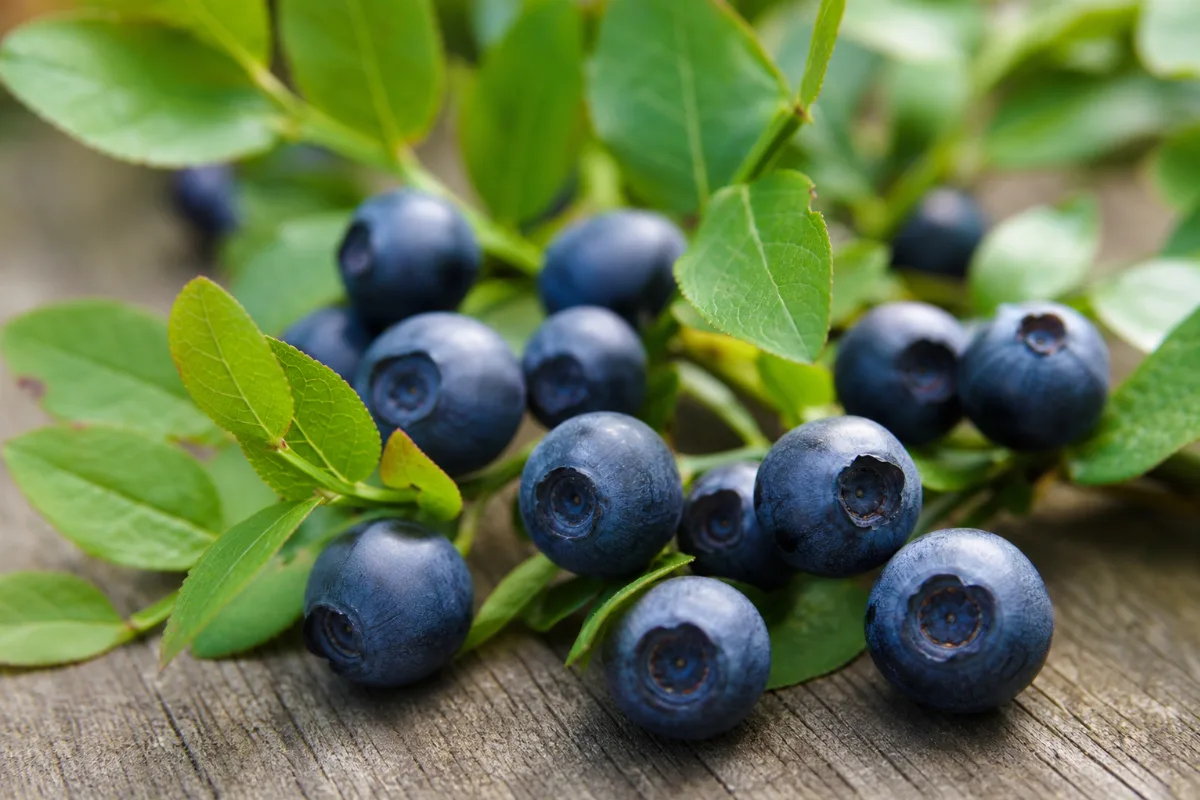
Herbs & Botanicals · Herbs · European berry used for eye comfort and circulation, with weak evidence and a famous night-vision story that did not hold up
Bilberry
Vaccinium myrtillus L. · also called Bilberry, blaeberry, European blueberry, dwarf bilberry, Heidelbeere (German), myrtille (French), mirtillo nero (Italian). Not the same as North American blueberry (Vaccinium corymbosum and others) or bilberry leaf.
Bilberry is a low shrub in the heath family whose dark blue-purple berries are eaten as food and used as a herbal remedy in Europe. The fruit and its standardised extracts are rich in anthocyanins and are sold mainly for eye health and circulation. The best-known claim, better night vision, is not supported by rigorous trials in healthy people, and the World War II pilot story behind it is not documented. Small trials suggest it may ease screen-related eye strain, but nothing about bilberry is rated above low certainty, and it does not replace eye care. Bilberry leaf is a different, older remedy for diabetes and is not the same product.
General information, not medical advice. Last substantive update · Not medically reviewed. A named clinician has not signed off on this page. How this page is made
About Bilberry
Bilberry (Vaccinium myrtillus) is a European berry whose fruit and standardised extracts are sold mainly for eye health and circulation. The most famous claim, better night vision, is not supported by rigorous trials in healthy people, and the story that World War II pilots ate bilberry jam is not documented. The most encouraging human evidence is for screen-related eye strain, from two small placebo-controlled trials rated low certainty. Evidence for glaucoma, dry eye, focusing and diabetic eye disease is very low, with many studies using combination products or having authors linked to the maker. A pooled analysis of randomised trials found no clear effect on fasting glucose, cholesterol or blood pressure. EU traditional uses (mild diarrhoea, minor mouth inflammation, leg heaviness) rest on long use, not trials. Safety: no liver injury has been documented, but bilberry might add to the effect of blood thinners and diabetes medicines (theory with little human evidence), and use in pregnancy and breastfeeding is not established. Keep bilberry fruit, bilberry leaf and North American blueberry separate. Ask a doctor or pharmacist about amounts.
What it is
Bilberry, Vaccinium myrtillus, is a low deciduous shrub in the heath family (Ericaceae) with dark blue-purple berries. It grows in Europe and is sometimes called blaeberry or European blueberry. It is a relative of North American blueberries, cranberries and lingonberries, but these are different species and should not be treated as the same product.
Three things get called bilberry: the fruit and its extracts (nearly all the research), the dried fruit used as tea, and the leaf, an older folk remedy for diabetes. They have different uses and different safety questions.
What makes it distinctive
Bilberry is rich in anthocyanins, the pigments that make the berry blue-purple. A standardised extract can hold about 36% anthocyanins. Anthocyanins are thought to have antioxidant and blood-vessel effects, but the body absorbs them poorly: about 1% in rats.
No single compound has been shown to explain bilberry's effects. A whole standardised extract did better than a purified one on blood levels in rats, while trials of isolated anthocyanins have given mixed results.
Historical and current uses
In Europe dried berries were used for mild diarrhoea and as a mouth rinse, fresh-fruit extract for leg heaviness and fragile small blood vessels, and the leaf for diabetes. The EU recognises the berry uses as traditional medicine based on long use rather than proof from trials.
The night-vision use is modern. It is often linked to a story that British pilots in World War II ate bilberry jam. The one source read says that story has no documented evidence, so it should not be repeated as fact.
What the research shows
Eyes: a systematic review found the better trials negative for night vision in healthy people. Two small randomised trials in screen workers found some relief of eye tiredness. For glaucoma, dry eye, focusing and diabetic eye disease the evidence is very low and often involves combination products such as bilberry with pine bark.
Body: a pooled analysis of randomised trials found no significant effect on fasting glucose, total cholesterol, triglycerides or blood pressure, and only a borderline effect on HbA1c. A small open-label trial after a heart attack found people walked further, but people knew what they were taking. Inflammation markers moved in different directions in different trials.
Traditional uses (diarrhoea, mouth inflammation, leg heaviness) have no trials of bilberry alone. Many eye and mouth-sore studies are from teams linked to the makers of branded extracts.
At a glance
Traditional uses history, not proof
- European traditional use of dried berries (tea or a boiled drink) for mild diarrhoea, and as a mouth rinse for minor mouth inflammation (recognised by the EU as traditional use)
- Fresh-fruit extract for leg heaviness related to minor vein problems and for fragile small blood vessels (EU traditional use)
- Bilberry leaf as a folk remedy for diabetes before insulin was discovered (a review judged the research disappointing)
- In European folk medicine, reportedly to stop milk flow (LactMed; no lactation studies)
Studied for research
- Tired eyes from screen work, low certainty (two small placebo-controlled trials in Japan)
- Night vision in healthy eyes, evidence against (better trials were negative)
- Glaucoma and high eye pressure, dry eye, focusing, diabetic eye disease, very low certainty (small, mixed-product or non-randomised studies)
- Blood sugar, cholesterol, blood pressure, inflammation, recovery after a heart attack: mixed or low to very low certainty
- Leg circulation, diarrhoea and mouth inflammation: traditional use, insufficient trial evidence
Main compounds
- Anthocyanins (the blue-purple pigments; delphinidin, cyanidin, petunidin, peonidin and malvidin glycosides)
- Tannins (astringent compounds, especially in dried fruit)
- Other polyphenols such as quercetin and phenolic acids
Common forms
- Standardised fruit extracts (for example Mirtoselect, standardised to 36% anthocyanins), used in most eye trials
- Combination products (bilberry with pine bark, or with chokeberry and honeysuckle, or with fish oil and lutein); results cannot be credited to bilberry alone
- Juice, whole berries and freeze-dried fruit, used in diet trials
- Dried berry tea or decoction and bilberry leaf: traditional forms, much less studied
Research links: EU herbal monograph on fresh bilberry fruit (EMA, 2015) · EU committee opinion on dried bilberry fruit (EMA, 2015) · NIH LiverTox: Bilberry · NIH LactMed: Bilberry · Research Library · Genes & Biomarkers Library
The plant and its history
- Accepted scientific name
- Vaccinium myrtillus L. (bilberry, European blueberry, blaeberry)
- Naming authority
- Linnaeus (L.). GBIF backbone: accepted species, usageKey 2882833, exact match.
- Common names
- Bilberry (English); Blaeberry (English); European blueberry (English); Dwarf bilberry (English); Heidelbeere / Blaubeere (German); Myrtille (French); Mirtillo nero (Italian); Arandano (also used for other Vaccinium berries) (Spanish); Blabar (Swedish); Kangasmustikka (Finnish)
- Botanical family
- Ericaceae (heath family), the same family as blueberry, cranberry, lingonberry and heather.
- Classification
- Plantae > Tracheophyta > Magnoliopsida > Ericales > Ericaceae > Vaccinium > Vaccinium myrtillus
- Native range
- Not verified from a primary source read for this file. LiverTox describes bilberry as a deciduous perennial shrub native to Europe and North America producing dark purple berries that resemble blueberries; this is one secondary statement and the range was not checked.
- Habitat
- Not verified in a source read for this file.
- What the plant looks like
- Roots: Not verified in a source read.; Stems: Low deciduous shrub (LiverTox describes a deciduous perennial shrub); details not verified.; Leaves: Leaves are a separate traditional medicine (diabetes) and are not covered by the EU monographs; leaf composition varies by country (Stefanescu 2022).; Flowers: Not verified in a source read.; Fruit: Dark blue-purple berry; the fruit and its extracts are the part with research and EU monographs.
- Cultivation
- Not verified from a source read. Finnish 'domestic bilberries' picked and frozen for sale are mentioned in a norovirus outbreak report.
- Harvest and processing
- EU monographs describe three forms: fresh fruit (a dry extract with 36% anthocyanosides, 25% anthocyanidins, in the fresh-fruit monograph), dried fruit (tea or decoction) and commercial standardised extracts such as Mirtoselect. Not further verified.
- Look-alikes and adulterants
- Name: Vaccinium uliginosum (bog bilberry); Note: A separate species (GBIF accepted). Do not assume it has the same safety record; some reviews discuss alleged toxicity of its fruit, which we did not read.; Name: Vaccinium corymbosum and V. angustifolium (North American blueberries); Note: Different species (GBIF accepted). Some papers use 'blueberry (Vaccinium myrtillus)' loosely, so check the Latin name.; Name: Vaccinium vitis-idaea (lingonberry) and V. macrocarpon (cranberry); Note: Red-fruited relatives (GBIF accepted). Not interchangeable with bilberry.; Name: Bilberry leaf vs bilberry fruit; Note: Same plant, different parts with different traditional uses and different regulatory status. Nearly all modern trials used fruit.
- Sustainability and conservation
- Not verified. No IUCN assessment was retrieved.
Traditional use and history history, not clinical proof
| Tradition or era | Documented use | Source |
|---|---|---|
| European traditional medicine, fruit | LiverTox summarises traditional use of bilberry for varicose veins, venous insufficiency, fatigue, diarrhea and gastrointestinal complaints. The EU recognises dried fruit for mild diarrhoea and minor mouth inflammation, and fresh-fruit extract for leg heaviness and fragile small blood vessels, all as traditional use based on long-standing use rather than proof from trials. | s-ema-hmpc-bilberry-siccus-opinion |
| European folk medicine, leaf for diabetes | Bilberry leaves were among the most frequently used antidiabetic plant remedies before insulin was discovered. A review of the research concluded results were more or less disappointing and did not support this use. | p20503920 |
| European folk medicine, lactation | LactMed notes bilberry was reportedly used as a European folk medicine to stop milk flow. No lactation studies support or refute this. | s-lactmed-bilberry |
| World War II pilots and bilberry jam (NOT verified) | A popular story says British pilots ate bilberry jam to improve night vision. The one source read (a McGill science-communication page, read as a summary) says there is no documented evidence for this, mentions a suggestion that the rumour was spread to distract Germans from radar work and notes other versions credit carrots. No wartime record was found. Treat as an unproven story, not a fact. It is the likely origin of the night-vision claim. | s-mcgill-bilberry-wwii |
| Modern European regulation | The EU HMPC adopted herbal monographs for fresh and dried bilberry fruit on 29 September 2015 and reviewed them in 2023 with no change. | s-ema-hmpc-bilberry-addendum |
| Modern supplement use for eye health | Standardised extracts (for example Mirtoselect) are sold for eye and circulation health. Trials since the 1960s have tested them for night vision (older French trial located in PubMed but not read); the modern trials are summarised in the eye-health file. | p14711439 |
| Claims from Wikipedia or general web sources (NOT verified) | Other historical claims seen in secondary sources (specific dates, regions or ancient authors) were not verified and are not repeated here. | s-mcgill-bilberry-wwii |
Traditional use shows how a plant was used. It does not show that a supplement works or is safe today.
What is inside, and how it may work
What the plant contains and how those compounds act in cells and animals. Laboratory and animal mechanisms are not proven effects in people.
Main compounds
| Compound | Family | Where it is concentrated | Activity studied | Level of evidence |
|---|---|---|---|---|
| Anthocyanins (glycosides of delphinidin, cyanidin, petunidin, peonidin and malvidin; glucosides, galactosides and arabinosides) | anthocyanins (flavonoid pigments) | Fruit (skin and flesh) A bilberry extract used in a rat study contained 15 different anthocyanins. EU fresh-fruit monograph extract: 36% anthocyanosides = 25% anthocyanidins. Mirtoselect and the Hoggard extract: 36% anthocyanins. | Antioxidant and anti-inflammatory activity in lab work; thought to be the main source of the blue-purple colour and the proposed effects. Absorbed poorly (about 1% in rats). 16 43 15 | Animal research |
| Cyanidin 3-O-glucoside PubChem 197081 | anthocyanin | Fruit | One of the main bilberry anthocyanins; PubChem record is the chloride salt. 52 16 | Laboratory research |
| Delphinidin 3-glucoside PubChem 165558 | anthocyanin | Fruit | Trihydroxy (delphinidin-type) anthocyanin, the type tested in the isolated-anthocyanin cholesterol trial (no effect). 52 2 | Human data |
| Malvidin 3-glucoside PubChem 443652 | anthocyanin | Fruit | Anthocyanin; methylated forms (malvidin, peonidin) were the main forms found in rat liver and kidney after an oral dose. 52 16 | Animal research |
| Petunidin 3-glucoside PubChem 443651 | anthocyanin | Fruit | Anthocyanin in the 15-anthocyanin bilberry extract. 52 16 | Animal research |
| Peonidin 3-glucoside PubChem 443654 | anthocyanin | Fruit | Anthocyanin in the 15-anthocyanin bilberry extract. 52 16 | Animal research |
| Tannins (hydrolysable and condensed) | tannins | Fruit, especially dried fruit A European quality standard for dried bilberry sets a minimum tannin content (reduced from 1.0% to 0.8%, expressed as pyrogallol, in the 10th edition). | Astringent compounds behind the traditional use of dried fruit for mild diarrhoea and mouth inflammation. Not tested in clinical trials of dried bilberry. 42 11 | Traditional use |
| Quercetin and p-coumaric acid (and other polyphenol metabolites) PubChem 5280343 | flavonoid and phenolic acid | Fruit | Plasma quercetin and p-coumaric acid rose after bilberry juice; hippuric acid and other phenolic acids rose after bilberry intake. These are products of the berry's polyphenols and gut bacteria. 19 6 41 52 | Human data |
Mechanisms, receptors and pathways
| Target or pathway | Gene or receptor | What was found | Level |
|---|---|---|---|
| Nitric oxide and blood vessel widening | NO-cGMP pathway (nitric oxide signalling) | In people with high cholesterol, 320 mg a day of purified anthocyanins from berries (species not named) improved flow-mediated dilation and raised cGMP; blocking the pathway removed the effect. The berry source is not named in the abstract, so this may not apply to bilberry itself. 40 | Human data |
| Retinal blood-vessel leakage and VEGF | VEGF; tight-junction proteins (zonula occludens-1, occludin, claudin-5) | In diabetic rats, bilberry extract reduced retinal VEGF and leakage and preserved tight-junction proteins; blood sugar was not changed. A second rat study found reduced retinal oxidation markers, VEGF and MMP-9. 21 30 | Animal research |
| Slower carbohydrate digestion or absorption | Not identified | The authors of the acute type 2 diabetes trial think the lower glucose after a carbohydrate drink most likely reflects slower digestion or absorption. This is a proposal, not a proven mechanism. 15 | Human data |
| Platelet activation | P-selectin | An anthocyanin supplement (berry source not named) lowered ADP-induced P-selectin by 40% in a before-after study without a placebo group. 1 | Human data |
| Blood microvesicles and endothelial cells | P2X7 receptor | After a heart attack, 8 weeks of bilberry reduced blood platelet and endothelial microvesicles; in cells the extract reduced endothelial vesicle release through P2X7-related pathways. 5 | Laboratory research |
| Inflammation signalling | NF-kappaB (CRP, IL-6, TNF-alpha, IL-15) | Bilberry juice lowered several NF-kappaB-related markers in people at heart risk, while TNF-alpha rose. In cells, quercetin, epicatechin and resveratrol inhibited NF-kappaB activation. 19 | Human data |
| Liver fat and cholesterol handling | Hepatic cholesterol and inflammatory genes | In mice on a Western-type diet, Mirtoselect reduced liver fat, cholesterol crystals, inflammation and fibrosis. 27 | Animal research |
Absorption, metabolism and elimination
- Absorption
- Anthocyanins are poorly absorbed. In rats given a bilberry extract by mouth, plasma anthocyanins peaked at 1.2 micromolar after 15 minutes and bioavailability was 0.61 to 1.82% (0.93% for the mixture). In people, blood anthocyanin-derived metabolites rose during 8 weeks of freeze-dried bilberry, and plasma phenolic acids (p-coumaric, hippuric, protocatechuic) rose after bilberry juice or a bilberry-grape mix.
- Distribution
- In rats, methylated anthocyanins (peonidin, malvidin and others) were the main forms found in liver and kidney, different from the pattern in blood. No human tissue distribution data were found.
- Metabolism
- Rats: methylated forms in tissues. People: gut bacteria turn anthocyanins into smaller phenolic acids such as hippuric acid; serum hippuric acid rose after bilberry intake in a 47-person trial. Details in humans are incomplete.
- Elimination
- In rats, after intravenous dosing only 30.8% appeared in urine and 13.4% in bile in the first 4 hours. Human elimination data were not found.
- Bioavailability
- About 1% of anthocyanins in rats. In a rat comparison, a whole standardised bilberry extract (Mirtoselect) gave higher blood levels than a more purified anthocyanin extract, even though the purified extract had more anthocyanin per dose (authors link this to the non-anthocyanin part of the extract). Human bioavailability numbers were not found.
Isolated compounds versus whole extracts
No single compound has been shown to explain bilberry's effects. Anthocyanins get most of the attention, but the evidence is mixed on whether isolating them works. A rat study found the whole extract gave higher blood anthocyanin levels than a purified anthocyanin extract. A registry study found a whole standardised extract (Mirtoselect) did better than a generic bilberry extract on retinal blood flow. But trials of purified anthocyanins from berries gave positive results in some settings (blood vessel widening, fatty liver) and an isolated bilberry anthocyanin trial in 52 people with high cholesterol found no effect at all. The practical lesson is that results from one extract should not be assumed for another, and results from berries are not automatically results for bilberry.
Nutritional composition
Bilberries are a food as well as a supplement. A nutrient table was not read for this file, so no vitamin or mineral values are given. For scale, the heart-attack trial used 40 g of freeze-dried bilberry a day, stated as equal to about 480 g of fresh berries, and the metabolic-syndrome diet trial used the equivalent of 400 g fresh bilberries a day. Typical supplements deliver far less than this.
2 mixed findings3 low certainty6 very low certainty6 not enough evidence1 evidence against
What was looked at
The 18 benefits and uses checked for Bilberry, each with how strong the evidence is. Tap one to open it.
- Night vision in people with normal eyesightEvidence against
- Night vision in people with eye disease (night blindness, retinal disease)Not enough evidence
- Tired eyes from screen work (eye strain, asthenopia)Low certainty
- Eye focusing, myopia and age-related near vision (presbyopia)Very low certainty
- Dry eyeVery low certainty
- Glaucoma and high eye pressureVery low certainty
- Diabetic retinopathy and other retinal blood-vessel diseaseVery low certainty
- Blood sugar and type 2 diabetesMixed findings
- Cholesterol and blood fatsLow certainty
- Blood pressureLow certainty
- Recovery after a heart attack and blood vessel functionVery low certainty
- Low-grade inflammationMixed findings
- Leg heaviness, minor vein problems and fragile small blood vesselsNot enough evidence
- Mild diarrhea (dried fruit)Not enough evidence
- Mouth inflammation and mouth sores from cancer treatment (oral mucositis)Not enough evidence
- Memory and thinkingNot enough evidence
- Fatty liver (NAFLD)Very low certainty
- Exercise recovery and muscle sorenessNot enough evidence
Lab markers tracked in the studies
Critical flicker fusion frequency (CFF)Focusing-muscle tension (HFC-1)Amplitude of accommodationContrast sensitivity in dim light (mesopic)Night visual acuityTear volume (Schirmer test)Eye pressure (IOP)Blood flow to the eye and retinaVisual field mean deviationHbA1c (long-term blood sugar)Fasting blood glucoseBlood sugar and insulin rise after a carbohydrate mealLDL cholesterolTriglyceridesSystolic blood pressureHigh-sensitivity C-reactive protein (hs-CRP)Six-minute walk distanceFlow-mediated dilation (FMD)ALT (liver enzyme) as a marker of fatty liverOxidised LDL (ex vivo)
What is Bilberry good for?
The main proposed uses and how strong the human evidence is for each. "Low" is the best rating any bilberry use reached here. "Against" means the better trials found no benefit. "Very low" and "insufficient" mean few, small, uncontrolled or mixed-product studies, and none of these is a proven treatment for you. Many trials used branded extracts, some with authors linked to the maker, so results may not carry over to other products. Ratings are this profile's own reading, not formal grades. Eye problems need an eye doctor; do not use bilberry in place of treatment.
Benefits, one by one
Each card is a research question, not a promise. Tap a goal to filter. Open a card to see the studies, doses and limits.
Night vision in people with normal eyesight
Evidence againstThis is the best-known claim and it did not hold up. A systematic review found that the better-designed trials, including all four most recent randomised trials, were negative. A small US Navy laboratory trial in young men with good eyesight also found no change in night vision after three weeks. A few older and weaker trials were positive. The popular World War II pilot story has no documented source.
3 studiesExtracts standardised to anthocyanosides were tested; the doses and s…
Studies, doses and limits
What the trials found
Canter and Ernst (2004) systematically reviewed placebo-controlled trials of Vaccinium myrtillus anthocyanosides. They found 30 trials with outcomes relevant to vision in low light; 12 were placebo-controlled. The 4 most recent trials were all randomised and negative. One further randomised trial and 7 non-randomised controlled trials were positive. Negative results went with stricter methods, lower doses and extracts from other regions. Eleven of the 12 placebo-controlled trials tested healthy people with normal or above-average eyesight. The authors concluded that the idea that bilberry anthocyanosides improve normal night vision is not supported by rigorous clinical studies. Muth and colleagues (2000, US Naval Aerospace Medical Research Laboratory) tested 15 young men with good vision in a double-blind crossover: bilberry extract (25% anthocyanosides) three times a day for 21 days made no difference to night visual acuity or night contrast sensitivity.
Results
No good evidence of a benefit for night vision in healthy people. Some older, weaker trials were positive.
Effect sizes as reported
Muth 2000: no difference in night acuity or night contrast sensitivity (n=15). Canter 2004: 4 of the most recent randomised trials negative.
Why this rating
A systematic review judged the idea unsupported by rigorous trials, and a later small trial was also negative. This is evidence against the claim for healthy eyes, though the trials were small and tested older products.
Form and dose studied
Extracts standardised to anthocyanosides were tested; the doses and sources varied. Plain berries were not tested for this.
Who was studied
Mostly young healthy volunteers.
Limits
Abstracts only. The review is from 2004 and the trials were small. It does not tell us about people with eye disease.
Why researchers looked
Bilberry became famous for night vision because of a story that British pilots in World War II ate bilberry jam. Researchers have since tested it in controlled trials.
Traditional use
Bilberry has been eaten for centuries in northern Europe as a fruit and used in folk medicine, mostly for the gut and circulation. Its use for night vision is modern and linked to the pilot story. The one source we found on that story (a McGill science-communication page, a secondary source) says there is no documented evidence that pilots ate bilberry jam and mentions a suggestion that the rumour was started to distract the Germans from radar work. Treat the story as unproven.
Proposed mechanism Preliminary mechanism
Anthocyanins are thought to help the light-sensitive pigment in the retina recover after bright light, based on older lab work. This has not been shown to matter in people.
A proposed mechanism does not show that the effect happens in people.
See an eye doctor for any new or worsening vision problem. Bilberry does not replace eye drops, laser or surgery. Tell your doctor if you take blood thinners or have surgery planned (see the safety section).
Night vision in people with eye disease (night blindness, retinal disease)
Not enough evidenceAlmost no rigorous research has been done here. The same review that found no effect in healthy people also found a complete absence of rigorous trials in people with a medical cause of poor night vision. So we do not know.
1 studiesNot established.
Studies, doses and limits
What the trials found
Canter and Ernst (2004) wrote that there is a complete absence of rigorous research into the effects of the extract on subjects suffering impaired night vision due to pathological eye conditions. They said evidence from weaker trials, animal studies, trials of synthetic anthocyanosides and a randomised trial of black currant (Ribes nigrum, a different plant) might justify new trials in such people. We found no such trial of bilberry alone.
Results
Unknown. No rigorous human trials found.
Why this rating
No adequate human trials were found.
Form and dose studied
Not established.
Who was studied
People with impaired night vision from eye disease.
Limits
The search was not exhaustive; a newer trial may exist that we did not find.
Why researchers looked
If bilberry helps at all, it might help people whose night vision is already poor.
Traditional use
No documented traditional use specifically for night blindness was found in the sources we read.
Proposed mechanism Preliminary mechanism
Same idea as above: support for the retina's light-sensitive pigment. Not shown in people.
A proposed mechanism does not show that the effect happens in people.
See an eye doctor for any new or worsening vision problem. Bilberry does not replace eye drops, laser or surgery. Tell your doctor if you take blood thinners or have surgery planned (see the safety section).
Tired eyes from screen work (eye strain, asthenopia)
Low certaintyThis is the use with the most encouraging human trials. In Japan, two placebo-controlled trials of bilberry extract in screen workers found some improvements in eye-tiredness symptoms and in lab measures of eye focusing. Both are small, and in one of them two authors work for the extract maker. The results are promising but not settled.
3 studiesBilberry fruit extracts were tested in capsule form. A three-ingredie…
Studies, doses and limits
What the trials found
Ozawa and colleagues (2015, Keio University) randomised 88 screen workers aged 20 to 40 with lower flicker-fusion and near-point scores to bilberry extract (480 mg a day) or placebo for 8 weeks; 80 finished. The fall in critical flicker fusion after a screen task was smaller with bilberry (95% CI 0.10 to 1.60, p=0.023). The near point of accommodation did not differ. Of the questionnaire symptoms, ocular fatigue, pain, heaviness, uncomfortable feeling and foreign-body feeling were lessened more with bilberry at week 8 (p<0.05). There were no severe adverse events. Kosehira and colleagues (2020) randomised 109 healthy adults to a standardised bilberry extract (240 mg a day) or placebo for 12 weeks. After screen tasks, the lab measure of eye-muscle tension (HFC-1) was better with bilberry at weeks 8 and 12 (p=0.014 and 0.017). Two authors are employees of the company that makes the extract. Kawabata and Tsuji (2011) tested a three-ingredient mixture (fish oil, bilberry extract, lutein) in 20 people for 4 weeks and saw improvements in symptoms, but this cannot be credited to bilberry.
Results
Some improvement in eye-tiredness symptoms and in focusing-muscle measures after screen work, in small trials.
Effect sizes as reported
Ozawa 2015: CFF difference 95% CI 0.10 to 1.60 (p=0.023). Kosehira 2020: HFC-1 p=0.014 (week 8), p=0.017 (week 12).
Why this rating
Two randomised, placebo-controlled trials point the same way, but they are small, tested different products, and one has industry-linked authors. Many outcomes were tested in the Ozawa trial, so some findings may be chance. One of the two extracts is a branded product.
Form and dose studied
Bilberry fruit extracts were tested in capsule form. A three-ingredient mix was also tested but is not counted here.
Who was studied
Healthy adults, mostly young and middle-aged, doing screen work.
Limits
Only abstracts were read. Funding for the Ozawa trial was not stated in the abstract. Symptoms are self-reported, so placebo effects are possible. Resting your eyes, good lighting and screen breaks remain the standard advice.
Why researchers looked
Long screen work tires the focusing muscle inside the eye. Bilberry is sold for eye comfort, so researchers in Japan tested it.
Traditional use
Not a traditional use. It is a modern use of a fruit extract.
Proposed mechanism Preliminary mechanism
Anthocyanins may relax the eye's focusing (ciliary) muscle or improve blood flow to it. This is a hypothesis from lab work.
A proposed mechanism does not show that the effect happens in people.
See an eye doctor for any new or worsening vision problem. Bilberry does not replace eye drops, laser or surgery. Tell your doctor if you take blood thinners or have surgery planned (see the safety section).
Eye focusing, myopia and age-related near vision (presbyopia)
Very low certaintyA small crossover trial of a fermented bilberry extract in 30 people with nearsightedness found better focusing amplitude and contrast sensitivity at dim light after one month. Two small trials of a three-berry mix in people over 50 saw some improvement in near vision. These are early results from very small groups.
3 studiesYeast-fermented bilberry extract (a different product from plain extr…
Studies, doses and limits
What the trials found
Kamiya and colleagues (2013) studied 30 volunteers with myopia (average age 39.5) in a randomised, placebo-controlled crossover study of yeast-fermented bilberry extract, 400 mg a day for one month. The amplitude of accommodation rose from 4.62 to 5.33 D (p=0.002) and mesopic contrast sensitivity from 1.04 to 1.13 (p=0.009); the placebo group had no significant change and no other measure changed. Szumny and colleagues (2024 and 2026) tested a combination extract of chokeberry (Aronia), honeysuckle berry and bilberry in 23 adults over 50 with presbyopia. In the 2024 paper near visual acuity improved in 92.3% in a later cycle but not in the first 6 weeks; the authors call it preliminary. The 2026 crossover paper reports modest improvements in selected outcomes including near contrast sensitivity. Neither paper can be credited to bilberry alone.
Results
Small gains in focusing and contrast in tiny early trials.
Effect sizes as reported
Kamiya 2013: accommodation 4.62 to 5.33 D (p=0.002); contrast sensitivity 1.04 to 1.13 (p=0.009).
Why this rating
Very small groups, one fermented extract, a three-berry combination, and results that were measured within groups rather than clearly between groups. Not enough to rely on.
Form and dose studied
Yeast-fermented bilberry extract (a different product from plain extract) and a three-berry extract.
Who was studied
Healthy volunteers with myopia (average age 39.5) and adults over 50 with presbyopia.
Limits
Abstracts only. Funding not stated for Kamiya. Glasses and eye exams remain the proven way to correct vision.
Why researchers looked
The focusing muscle and the lens change with age. Some researchers have tested bilberry for this.
Traditional use
Not a traditional use.
Proposed mechanism Preliminary mechanism
Possible effects on the focusing muscle and on blood flow. Lab idea only.
A proposed mechanism does not show that the effect happens in people.
See an eye doctor for any new or worsening vision problem. Bilberry does not replace eye drops, laser or surgery. Tell your doctor if you take blood thinners or have surgery planned (see the safety section).
Dry eye
Very low certaintyOne very small trial of a branded bilberry extract (Mirtoselect) in 21 people with dry-eye symptoms found a gain in tear production after 4 weeks. The authors work for the maker. It is too small to rely on.
2 studiesMirtoselect, a standardised fruit extract.
Studies, doses and limits
What the trials found
Riva and colleagues (2017) enrolled 22 otherwise healthy adults with dry-eye symptoms; 21 finished (11 on the extract, 10 on placebo). After 4 weeks tear volume by the Schirmer test improved with Mirtoselect (p=0.019) and not with placebo, and the blood antioxidant measure BAP improved (p=0.003). The authors are linked to Indena, which makes Mirtoselect. A treatment of the three-berry extract in presbyopia (Szumny 2024) also reported better tear wetting in some people, then a fading effect.
Results
Tear production improved in a tiny trial.
Effect sizes as reported
Riva 2017: Schirmer p=0.019 within the extract group; BAP p=0.003.
Why this rating
21 people, 4 weeks, industry-linked authors, a branded extract. Dry eye has many causes and needs an eye exam.
Form and dose studied
Mirtoselect, a standardised fruit extract.
Who was studied
Adults with dry-eye symptoms.
Limits
Abstract only. Dose was not stated in the abstract. The abstract does not say that the two groups were compared head to head for tear volume.
Why researchers looked
Anthocyanins are antioxidants, and researchers asked whether that helps tears and the eye surface.
Traditional use
Not a traditional use.
Proposed mechanism Preliminary mechanism
Antioxidant and anti-inflammatory effects seen in lab work; the same study also found higher anthocyanin blood levels in rats for the whole extract than for a purified one.
A proposed mechanism does not show that the effect happens in people.
See an eye doctor for any new or worsening vision problem. Bilberry does not replace eye drops, laser or surgery. Tell your doctor if you take blood thinners or have surgery planned (see the safety section).
Glaucoma and high eye pressure
Very low certaintyThe glaucoma evidence is thin. A retrospective chart review in Korea found better visual field scores in people with normal-tension glaucoma who had been taking bilberry anthocyanins. Italian trials of Mirtogenol, a mix of bilberry extract and pine bark extract, found lower eye pressure in people with high eye pressure. Mirtogenol is a combination product, and the studies are small and not clearly independent. Do not use bilberry in place of eye drops.
3 studiesUnspecified anthocyanins in the chart review; Mirtogenol (bilberry ex…
Studies, doses and limits
What the trials found
Shim and colleagues (2012) reviewed charts of 332 adults with normal-tension glaucoma: 132 on anthocyanins, 103 on Ginkgo biloba extract and 97 on nothing, with average treatment about 24 months. In the anthocyanin group best-corrected visual acuity improved from 0.16 to 0.11 logMAR (p=0.008) and visual field mean deviation from -6.44 to -5.34 (p=0.001). This was a retrospective review, not a randomised trial. Steigerwalt and colleagues tested Mirtogenol, a combination of Mirtoselect and Pycnogenol (pine bark extract). In 38 people with high eye pressure (2008) pressure fell from 25.2 to 22.0 mmHg at 3 months, lower than in untreated controls (p<0.05). In 79 people (2010) Mirtogenol alone lowered pressure from 38.1 to 29.0 mmHg over 16 weeks, while latanoprost drops lowered it from 37.7 to 27.2 mmHg in 4 weeks; the combination reached 23.0 mmHg at 24 weeks versus 27.2 mmHg with latanoprost alone. These results cannot be credited to bilberry alone. The Mirtogenol trials were not placebo-controlled.
Results
Possible small gains in visual field and eye pressure, in weak study designs.
Effect sizes as reported
Shim 2012: visual field mean deviation -6.44 to -5.34 (p=0.001). Steigerwalt 2008: IOP 25.2 to 22.0 mmHg at 3 months (p<0.05 vs untreated).
Why this rating
One retrospective chart review and small combination-product trials without placebo, with industry-linked authors. Mirtogenol includes pine bark extract, so effects cannot be assigned to bilberry.
Form and dose studied
Unspecified anthocyanins in the chart review; Mirtogenol (bilberry extract plus pine bark extract) in the trials.
Who was studied
People with normal-tension glaucoma and people with high eye pressure and no damage.
Limits
Abstracts only. Glaucoma can cause permanent vision loss if untreated. Eye pressure changes in a short trial do not show that vision is protected.
Why researchers looked
Glaucoma damages the optic nerve. Some researchers think poor blood flow plays a part, and anthocyanins might help blood flow.
Traditional use
Not a traditional use.
Proposed mechanism Preliminary mechanism
Possible improvement of blood flow to the eye. Not shown to protect the optic nerve in people.
A proposed mechanism does not show that the effect happens in people.
Do not stop or skip prescribed glaucoma treatment. If you use pressure-lowering drops, tell your eye doctor about any supplement.
Diabetic retinopathy and other retinal blood-vessel disease
Very low certaintyIn rats with diabetes, bilberry extract reduced leakage from retinal blood vessels and signs of retinal damage. In people the evidence is a single registry of 140 patients with mixed retinal diseases who chose their own treatment group. That kind of study cannot show that bilberry works. No randomised trial of bilberry for diabetic retinopathy was found.
3 studiesMirtoselect and a generic bilberry extract (registry); extracts in ra…
Studies, doses and limits
What the trials found
Animal studies: Kim and colleagues (2015) gave a Vaccinium myrtillus extract (100 mg/kg) to diabetic rats for 6 weeks. Retinal leakage and VEGF fell and the vessel barrier proteins were better preserved; blood sugar was not changed. Petrovic and colleagues (2025) found lower retinal oxidation markers and normalised VEGF and MMP-9 in diabetic rats after 14 days. Human data: Gizzi and colleagues (2016) followed 140 people with different retinal blood-vessel diseases who chose their own group: standard care only (38), standard care plus Mirtoselect (47) or standard care plus a generic bilberry extract (55). After 6 months retinal blood-flow measures improved in both extract groups, more with Mirtoselect. Retinal blood flow is not the same as vision, the groups were self-selected, and diseases were mixed. We could not find an older Italian clinical study that some reviews mention, so it is not cited here.
Results
Rat studies: less vessel leakage. People: a self-selected registry shows only that blood-flow numbers moved.
Effect sizes as reported
Gizzi 2016: improvements in retinal blood-flow parameters, larger with Mirtoselect (no numbers in the abstract).
Why this rating
The only human data are non-randomised and the studies in rats cannot be assumed to work in people.
Form and dose studied
Mirtoselect and a generic bilberry extract (registry); extracts in rats.
Who was studied
People with different retinal vascular diseases (registry); diabetic rats.
Limits
Abstracts only. Diabetic eye disease needs regular exams, tight blood sugar and blood pressure control, and treatment from an eye doctor.
Why researchers looked
Diabetes can damage the small blood vessels of the retina. Bilberry anthocyanins are thought to protect small vessels, so this has been a long-standing idea.
Traditional use
Traditional European medicine used bilberry for circulation problems. Its use in eye disease is modern.
Proposed mechanism Animal research
In diabetic rats, bilberry extract reduced retinal VEGF and kept tight-junction proteins in the retina's vessels intact, and in another rat study reduced retinal oxidation markers. These are animal findings only.
A proposed mechanism does not show that the effect happens in people.
See an eye doctor for any new or worsening vision problem. Bilberry does not replace eye drops, laser or surgery. Tell your doctor if you take blood thinners or have surgery planned (see the safety section).
Blood sugar and type 2 diabetes
Mixed findingsResults are mixed. One very small trial found bilberry extract lowered blood sugar and insulin after a carbohydrate drink in 8 men with type 2 diabetes. A 4-week trial in 20 people with type 2 diabetes found no clear effect on HbA1c compared with placebo. A pooled analysis of 8 trials found no significant change in fasting glucose and only a borderline change in HbA1c. This is about the fruit; the leaf is a separate and older folk remedy.
7 studiesFruit extracts, freeze-dried fruit and juice in different trials; a s…
Studies, doses and limits
What the trials found
Talebi and colleagues (2025) pooled randomised trials of Vaccinium myrtillus (11 trials, 409 people; 8 in the meta-analysis). Long-term effect on fasting glucose was not significant (-0.08 mmol/L, 95% CI -0.22 to 0.07). HbA1c showed a borderline reduction (WMD -1.63, 95% CI -3.36 to 0.11, p=0.06); the printed HbA1c figure looks unusually large, so read it cautiously. Chan and colleagues (2021) randomised 20 Chinese adults with type 2 diabetes in a crossover trial: 1.4 g a day of bilberry extract for 4 weeks. HbA1c fell 0.31 points but this was not significantly different from placebo, and there was no change in blood pressure, lipids or antioxidant markers. Hoggard and colleagues (2013) gave a single dose of a standardised extract (0.47 g, 36% anthocyanins) to 8 men with diet-controlled type 2 diabetes before a carbohydrate drink; the rise in glucose (p=0.003) and insulin (p=0.03) was lower than with placebo. de Mello and colleagues (2017) found that a rise in blood hippuric acid after eating bilberries was linked with better fasting glucose and insulin secretion in 47 people (a correlation, not proof). Aboufarrag and colleagues (2022) found no effect of isolated bilberry anthocyanins on glucose markers over 28 days in 52 people with high cholesterol.
Results
A short-lived drop in blood sugar after a carbohydrate drink in one tiny trial; no clear effect on long-term control in other trials.
Effect sizes as reported
Talebi 2025: fasting glucose WMD -0.08 mmol/L (CI -0.22 to 0.07); HbA1c WMD -1.63 (CI -3.36 to 0.11; p=0.06). Chan 2021: HbA1c -0.31 +/- 0.58% (not different from placebo). Hoggard 2013: glucose iAUC p=0.003.
Why this rating
A pooled analysis found no significant effect on fasting glucose and a borderline effect on HbA1c; small trials point in different directions; trials were short. The one positive trial had 8 people and looked only at one meal.
Form and dose studied
Fruit extracts, freeze-dried fruit and juice in different trials; a standardised 36% anthocyanin extract in the acute trial.
Who was studied
People with type 2 diabetes controlled by diet, adults with metabolic syndrome, healthy adults.
Limits
Abstracts only. Short trials; HbA1c reflects about 3 months. Funding not stated in most abstracts.
Why researchers looked
Bilberry is rich in anthocyanins, which may slow how fast carbohydrate is digested. Bilberry leaf was a popular diabetes remedy in Europe before insulin was discovered.
Traditional use
Bilberry leaf tea was widely used for diabetes in Europe before insulin. A review of the century of leaf research judged the results more or less disappointing and not supportive of that traditional use.
Proposed mechanism Preliminary mechanism
Berry polyphenols may slow carbohydrate digestion or absorption, which could lower the blood sugar rise after a meal. The authors of the acute trial suggested this is the most likely route. It has not been proven.
A proposed mechanism does not show that the effect happens in people.
If you take diabetes medicines, ask your doctor or pharmacist before adding bilberry, especially leaf products, because blood sugar could fall further. Do not stop prescribed treatment.
Cholesterol and blood fats
Low certaintyStudies disagree. A pooled analysis of randomised trials found no significant change in total cholesterol, triglycerides or HDL, with small differences for LDL and triglycerides in some subgroups. A 4-week trial of isolated bilberry anthocyanins in people with high cholesterol found no effect on any blood-fat marker. Trials using a purified berry anthocyanin mix did report better numbers, but it is not clear those were bilberry-only products.
5 studiesFruit powder, extract, juice and isolated anthocyanins.
Studies, doses and limits
What the trials found
Talebi and colleagues (2025): total cholesterol WMD -0.11 mmol/L (CI -0.30 to 0.08), triglycerides -0.07 mmol/L (CI -0.32 to 0.19) and HDL -0.02 mmol/L, none significant. The authors report a significant LDL change in long-term trials (WMD 0.07 mmol/L, CI 0.01 to 0.14, p=0.01, a value that is positive as printed) and a significant triglyceride change in trials of 4 weeks or less or with crossover designs. Aboufarrag and colleagues (2022) gave 320 mg a day of isolated bilberry or black rice anthocyanins to 52 people with high cholesterol for 28 days in a crossover trial: no significant change in any blood-fat marker, glucose marker or HDL function. Arevstrom and colleagues (2019): after a heart attack, 40 g a day of freeze-dried bilberry for 8 weeks lowered ex vivo oxidised LDL (ratio 0.80, CI 0.66 to 0.96) but total and LDL cholesterol did not differ between groups. Zhu and colleagues (2011) and Aboonabi and colleagues (2020) reported falls in LDL and triglycerides with anthocyanin supplements, but the abstracts do not name the berry source, and the second study had no placebo group; they are not counted as bilberry evidence.
Results
No consistent effect on cholesterol or triglycerides in trials of bilberry itself.
Effect sizes as reported
Talebi 2025: total cholesterol -0.11 mmol/L (CI -0.30 to 0.08); triglycerides -0.07 mmol/L (CI -0.32 to 0.19). Aboufarrag 2022: no significant change.
Why this rating
Pooled data show no clear effect; a well-designed crossover trial was null; positive anthocyanin trials do not clearly involve bilberry.
Form and dose studied
Fruit powder, extract, juice and isolated anthocyanins.
Who was studied
Adults with high cholesterol, metabolic syndrome or after a heart attack.
Limits
Abstracts only. Short trials. Do not use as a replacement for cholesterol medicine.
Why researchers looked
Anthocyanins are studied for heart health because berry-rich diets are linked with lower heart risk in population studies.
Traditional use
Not a traditional use of bilberry.
Proposed mechanism Animal research
Anthocyanins may affect fat handling and inflammation in animal studies. Not established in people.
A proposed mechanism does not show that the effect happens in people.
Do not stop cholesterol medicine. Tell your doctor about supplements.
Blood pressure
Low certaintyBilberry has not been shown to lower blood pressure. A pooled analysis found a small and non-significant fall of a few points, and the 20-person diabetes trial saw none.
2 studiesFruit products, various.
Studies, doses and limits
What the trials found
Talebi and colleagues (2025): systolic blood pressure WMD -2.75 mmHg (95% CI -6.38 to 0.89, p=0.13) and diastolic -1.00 mmHg (CI -4.66 to 2.65, p=0.59). Chan and colleagues (2021) found no effect on blood pressure in 20 people with type 2 diabetes.
Results
No clear effect.
Effect sizes as reported
Talebi 2025: SBP -2.75 mmHg (CI -6.38 to 0.89).
Why this rating
Pooled estimate crossed zero; the trials were small and short.
Form and dose studied
Fruit products, various.
Who was studied
Adults in several groups.
Limits
Abstracts only.
Why researchers looked
Anthocyanins may relax blood vessels in lab studies.
Traditional use
Not a traditional use.
Proposed mechanism Preliminary mechanism
Lab work suggests some effects on the cells lining blood vessels. Not shown to matter in people.
A proposed mechanism does not show that the effect happens in people.
If you take blood pressure medicine, do not change it because of a supplement.
Recovery after a heart attack and blood vessel function
Very low certaintyA small open-label trial in 50 people after a heart attack found they walked 38 metres further after 8 weeks of a very large daily amount of freeze-dried bilberry. Because people knew what they were taking, this can be affected by expectation. A larger double-blind trial is needed. Studies of purified berry anthocyanins also found better blood vessel widening, but it is unclear if those were bilberry.
4 studiesFreeze-dried bilberry powder (a food-like product) and purified antho…
Studies, doses and limits
What the trials found
Arevstrom and colleagues (2019, Sweden) allocated patients within 24 hours of a heart procedure to freeze-dried bilberry powder (40 g a day, equal to about 480 g fresh berries) plus standard care, or standard care alone, for 8 weeks; 50 finished. hs-CRP did not differ. The 6-minute walk distance rose 38 m more in the bilberry group (95% CI 14 to 62, p=0.003). Ex vivo oxidised LDL was lower (ratio 0.80, CI 0.66 to 0.96, p=0.017). The study was open label. A follow-up analysis by Bryl-Gorecka and colleagues (2020) reported fewer platelet and endothelial microvesicles in the bilberry group and lab results in cells. Zhu and colleagues (2011) found better flow-mediated dilation (28.4% vs 2.2%) with 320 mg a day of purified anthocyanins in 150 people with high cholesterol; the abstract does not name the berry source. The European regulator's 2023 review noted this trial and judged it did not change its monographs because no matching medicine is sold in the EU.
Results
A longer walk distance in a small open-label trial. Lab markers moved in the expected direction.
Effect sizes as reported
Arevstrom 2019: 6MWT +38 m (CI 14 to 62; p=0.003); oxidised LDL ratio 0.80 (CI 0.66 to 0.96).
Why this rating
One small unblinded trial, a large dose, and lab-marker follow-ups from the same group. The authors themselves call for a larger double-blind trial.
Form and dose studied
Freeze-dried bilberry powder (a food-like product) and purified anthocyanins in other trials.
Who was studied
People after a heart attack and a heart procedure; adults with high cholesterol.
Limits
Abstracts only. Cardiac rehabilitation and prescribed heart medicines are the proven care.
Why researchers looked
After a heart attack, researchers look for cheap diet-based ways to support recovery. Bilberries are rich in anthocyanins.
Traditional use
Bilberry was used in folk medicine for circulation, not for heart attacks.
Proposed mechanism Laboratory research
Anthocyanins may reduce inflammation and help the lining of blood vessels in cell and animal work. In cells, bilberry extract reduced release of vessel-lining vesicles through P2X7-related pathways.
A proposed mechanism does not show that the effect happens in people.
People after a heart attack take blood-thinning medicines. Talk to your cardiologist before adding any supplement (see the safety section on bleeding).
Low-grade inflammation
Mixed findingsBilberry has been tested for markers of inflammation in blood. Some trials saw small drops in markers such as CRP and IL-6, others saw no change, and one trial saw TNF-alpha go up. A trial in runners found slightly worse muscle soreness and CRP with bilberry juice. The picture is mixed.
5 studiesWhole berries, juice and a bilberry-grape juice mix.
Studies, doses and limits
What the trials found
Kolehmainen and colleagues (2012) fed 15 people with features of metabolic syndrome a diet rich in bilberries (about 400 g fresh weight a day) against 12 on a usual diet: hs-CRP, IL-6, IL-12 and LPS tended to fall and an inflammation score differed (p=0.024), with no change in weight, glucose or lipids. Karlsen and colleagues (2010) gave bilberry juice or water to 62 people at heart risk for 4 weeks: CRP, IL-6, IL-15 and MIG fell, and TNF-alpha unexpectedly rose. Talebi and colleagues (2025) found no significant change in hs-CRP (WMD -8.22 mg/L, CI -20.24 to 3.81) or IL-6. Lynn and colleagues (2018) gave 21 runners bilberry juice around a half marathon: the juice had a possibly harmful effect on soreness and a likely harmful effect on CRP at 24 hours (effect size 0.56). Bohn and colleagues (2021) found lower inflammation markers in older men with memory complaints on a bilberry and red grape juice mix, with no memory benefit.
Results
Mixed: some markers fell, others did not, and some moved the wrong way.
Effect sizes as reported
Talebi 2025: hs-CRP WMD -8.22 mg/L (CI -20.24 to 3.81). Lynn 2018: CRP effect size 0.56 (likely harmful) at 24 h.
Why this rating
Small trials with different foods, doses and designs disagree. Blood markers are not the same as feeling better or staying healthier.
Form and dose studied
Whole berries, juice and a bilberry-grape juice mix.
Who was studied
Adults with metabolic syndrome or heart risk, older men with memory complaints, runners.
Limits
Abstracts only. Diet trials without placebo (Kolehmainen) can be influenced by other food changes.
Why researchers looked
Anthocyanins and other berry polyphenols have anti-inflammatory effects in lab work.
Traditional use
Not a traditional use as such.
Proposed mechanism Laboratory research
Anthocyanin-rich extracts reduce inflammation signals in cells and animals. Human relevance is unclear.
A proposed mechanism does not show that the effect happens in people.
None specific.
Leg heaviness, minor vein problems and fragile small blood vessels
Not enough evidenceThis is a European traditional use. The EU herbal monograph allows a standardised dry extract of fresh bilberry fruit for relief of leg heaviness related to minor vein problems and for fragile skin capillaries, based on long use only. No placebo-controlled trial of bilberry alone for varicose veins or chronic venous insufficiency was found in this search. Tell a doctor about sudden swelling of one leg, skin changes or ulcers.
1 studiesA dry fruit extract standardised to anthocyanosides is the EU-listed …
Studies, doses and limits
What the trials found
The EU monograph is a traditional-use document, not proof from trials. A search of PubMed for bilberry with venous insufficiency, microangiopathy or capillary fragility found no placebo-controlled trial of bilberry alone. A combination product trial in venous insufficiency (Linfavenix) was found, but its abstract does not say it contained bilberry, so it is not used.
Results
No good trial evidence for bilberry alone; recognised as a traditional use in the EU.
Why this rating
No placebo-controlled human trial of bilberry alone was found; regulator support is traditional use only.
Form and dose studied
A dry fruit extract standardised to anthocyanosides is the EU-listed preparation.
Who was studied
Adults with minor venous symptoms.
Limits
Monograph read in full. Trial literature was searched through PubMed only and may be incomplete.
Why researchers looked
Bilberry anthocyanins have long been sold in Europe for circulation, leg heaviness and fragile blood vessels.
Traditional use
The EU herbal monograph on fresh bilberry fruit (adopted 29 September 2015) recognises two traditional uses: relief of discomfort and heaviness of legs related to minor venous circulatory disturbances, and relief of symptoms of cutaneous capillary fragility. The regulator states these are based exclusively on long-standing use. The monograph's extract is a dry extract with 36% anthocyanosides. It advises a doctor if there is skin inflammation, thrombophlebitis, hard tissue under the skin, severe pain, ulcers, sudden swelling of one or both legs, heart or kidney insufficiency, or if symptoms last longer than 2 weeks. It is not recommended under 18, nor in pregnancy and breastfeeding for lack of data.
Proposed mechanism Pharmacological theory
Anthocyanins are thought to strengthen small vessel walls and improve how small arteries contract. These ideas come from older lab and animal work.
A proposed mechanism does not show that the effect happens in people.
Sudden leg swelling, pain, redness or warmth can be a blood clot and needs urgent medical care.
Mild diarrhea (dried fruit)
Not enough evidenceIn Europe, dried bilberries (as a tea or a boiled drink) are a traditional remedy for mild diarrhea because of their tannins. The EU monograph recognises this as a traditional use only. No trial of dried bilberry for diarrhea was found in PubMed. See a doctor if diarrhea lasts more than 3 days or comes with fever, blood or dehydration.
3 studiesDried fruit as a tea or decoction is the traditional preparation name…
Studies, doses and limits
What the trials found
No clinical trial of dried bilberry for diarrhea was found in PubMed. Reviews describe the traditional use. A Finnish outbreak report is a reminder that unheated frozen bilberries have caused norovirus illness (see the safety file).
Results
No trial evidence; traditional use recognised by the EU.
Why this rating
No human trials found.
Form and dose studied
Dried fruit as a tea or decoction is the traditional preparation named by the EU.
Who was studied
Adolescents and adults for the traditional use.
Limits
The final adopted wording for dried fruit was not read, only the draft and the HMPC opinion.
Why researchers looked
Dried bilberries are rich in tannins, plant compounds that have a drying, astringent effect on the gut lining.
Traditional use
The EU draft monograph on dried bilberry fruit lists symptomatic treatment of mild diarrhoea as a traditional use, taken as a tea or decoction, with advice to see a doctor if symptoms last more than 3 days. The adopted opinion (25 of 27 votes, 29 September 2015) confirms a monograph was established; the adopted monograph text itself was not read. Not recommended under 12.
Proposed mechanism Pharmacological theory
Tannins bind proteins in the gut lining and may reduce secretions. A pharmacological theory.
A proposed mechanism does not show that the effect happens in people.
Diarrhea lasting more than 3 days, blood in stool, fever or severe dehydration needs medical care.
Mouth inflammation and mouth sores from cancer treatment (oral mucositis)
Not enough evidenceDried bilberry as a mouth rinse is a traditional European use for minor mouth inflammation. For painful mouth sores during cancer treatment, a branded three-extract mixture that includes bilberry (SAMITAL) was tested in children in small uncontrolled studies from the maker's team. It is not bilberry alone and the studies are not placebo-controlled.
6 studiesA branded oral suspension of three extracts; traditional mouth rinse …
Studies, doses and limits
What the trials found
Bertoglio and colleagues (2012) followed 20 children on chemotherapy in a case series of SAMITAL (bilberry, Macleaya cordata and Echinacea angustifolia extracts): mean gut mucositis grade fell from 3.2 to 0.4 (p<0.001). Massano and colleagues (2022) ran an open-label feasibility study in 18 children: no related side effects and no systemic absorption detected, but compliance was between 2% and 100% and the taste was rated poor. Morazzoni and colleagues (2013) is a review by the maker's staff. Authors in these papers are linked to the maker (Indena). In hamsters, Davarmanesh and colleagues (2013) found lower mouth-sore scores with bilberry extract pretreatment.
Results
Uncontrolled reports of milder mouth sores with a three-extract combination; no controlled human trial of bilberry alone.
Effect sizes as reported
Bertoglio 2012: mean mucositis grade 3.2 to 0.4 (p<0.001) in 20 children (uncontrolled).
Why this rating
Combination product, uncontrolled studies and industry-linked authors; animal study for bilberry alone.
Form and dose studied
A branded oral suspension of three extracts; traditional mouth rinse made from dried fruit.
Who was studied
Children on cancer treatment (SAMITAL studies).
Limits
Abstracts only. People on cancer treatment should only use supplements with their oncology team's approval.
Why researchers looked
Bilberry's tannins and anthocyanins are thought to calm irritated mucous membranes.
Traditional use
The EU draft monograph on dried fruit lists symptomatic treatment of minor inflammations of the oral mucosa as a traditional use, as a mouth rinse. One HMPC member preferred wording about mild irritation rather than inflammation.
Proposed mechanism Animal research
Anthocyanins and tannins have anti-inflammatory and astringent effects in cells. In hamsters, bilberry extract given before chemotherapy lowered mouth-sore scores.
A proposed mechanism does not show that the effect happens in people.
Never use unapproved products during chemotherapy or radiotherapy without asking your oncology team.
Memory and thinking
Not enough evidenceA 9-week trial in 60 older men with memory complaints found no change in memory test scores with a bilberry and red grape juice mix. Animal and cell studies are more optimistic, but they have not been confirmed in people.
1 studiesA 50/50 bilberry and red grape juice.
Studies, doses and limits
What the trials found
Bohn and colleagues (2021) randomised 60 men aged 67 or older with subjective memory impairment to a bilberry and red grape juice mix or placebo juice for 9 weeks: memory and motor test scores did not differ from placebo, although inflammation and tissue-damage blood markers fell more in the juice group. The mixed juice means the result cannot be credited to bilberry alone.
Results
No improvement in memory tests.
Effect sizes as reported
Bohn 2021: no difference in memory scores.
Why this rating
One small trial of a mixed juice; no trial of bilberry alone.
Form and dose studied
A 50/50 bilberry and red grape juice.
Who was studied
Older men with memory complaints.
Limits
Abstract only. The last author has interests in a juice company.
Why researchers looked
Anthocyanins are studied for brain health because they reach the brain in animal studies and reduce inflammation.
Traditional use
Not a traditional use.
Proposed mechanism Animal research
Mouse studies of bilberry anthocyanins found less brain inflammation and better behaviour in Alzheimer-type models. Not shown in people.
A proposed mechanism does not show that the effect happens in people.
None specific.
Fatty liver (NAFLD)
Very low certaintyOne 12-week pilot trial of 74 people with fatty liver found a purified anthocyanin mix from bilberry and black currant lowered the liver enzyme ALT more than placebo. It is a mixed purified product, not bilberry alone, and the trial was small.
2 studiesPurified anthocyanin from bilberry and black currant.
Studies, doses and limits
What the trials found
Zhang and colleagues (2015) randomised 74 adults with non-alcoholic fatty liver disease to 320 mg a day of purified anthocyanin from bilberry and black currant or placebo for 12 weeks. ALT fell 19.1% on anthocyanin and rose 3.1% on placebo (P<0.05); 2-hour glucose fell 18.7% versus 3.8% (P=0.02); fasting glucose and insulin resistance did not differ from placebo. No conflicts of interest were declared. Here ALT is a marker of the disease being treated, and is separate from the safety question of whether bilberry harms the liver (see the safety file).
Results
Lower ALT in a small pilot of a mixed purified product.
Effect sizes as reported
Zhang 2015: ALT -19.1% vs +3.1% (P<0.05).
Why this rating
One pilot trial of a purified bilberry and black currant product.
Form and dose studied
Purified anthocyanin from bilberry and black currant.
Who was studied
Adults with NAFLD.
Limits
Abstract only.
Why researchers looked
Anthocyanins reduced liver fat in several mouse studies, so researchers tried them in people.
Traditional use
Not a traditional use.
Proposed mechanism Animal research
In mice fed a high-fat diet, Mirtoselect (bilberry extract) reduced liver fat, inflammation and fibrosis. Not established in people.
A proposed mechanism does not show that the effect happens in people.
Fatty liver needs medical follow-up; do not rely on supplements.
Exercise recovery and muscle soreness
Not enough evidenceIn a small trial of runners, bilberry juice did not reduce soreness or inflammation and may have made them slightly worse. There is no good evidence that bilberry helps recovery.
1 studiesBilberry juice.
Studies, doses and limits
What the trials found
Lynn and colleagues (2018) gave 21 recreational runners bilberry juice (2 x 200 ml a day) or an energy-matched drink for 5 days before a half marathon, on race day and for 2 days after. Bilberry juice had a possibly harmful effect on muscle soreness before to just after the race (+11.6%, 90% CI +/-14.7%) and a likely harmful effect on CRP 24 hours later (effect size 0.56). Differences at other times were unclear or trivial.
Results
No benefit; possible small harm in one small trial.
Effect sizes as reported
Lynn 2018: soreness +11.6% (90% CI +/-14.7%); CRP effect size 0.56 at 24 h.
Why this rating
One tiny single-blind trial using non-standard statistics.
Form and dose studied
Bilberry juice.
Who was studied
Recreational runners.
Limits
Abstract only.
Why researchers looked
Polyphenol-rich fruits are often tested for exercise recovery.
Traditional use
Not a traditional use.
Proposed mechanism Preliminary mechanism
Antioxidant and anti-inflammatory ideas from lab work.
A proposed mechanism does not show that the effect happens in people.
None specific.
Connections to the rest of health
How Bilberry connects to the rest of our health knowledge graph. Every link says what kind of connection it is. A safety link (for example to the liver) is a warning, not a benefit. A study that merely mentions a topic never creates a benefit link.
Explore every connection: goals, body systems, organs, symptoms, genes
A. Wellness goals
| Connected to | Kind of connection | Evidence status | Context | Studies |
|---|---|---|---|---|
| Healthy Aging | Potential benefit | Evidence against | Night vision in people with normal eyesight: This is the best-known claim and it did not hold up. A systematic review found that the better-designed trials, including all four most recent randomised trials, were negative. A small US Navy laboratory trial in young men with good eyesight also found no change in night vision after three weeks. A few older and weaker trials were positive. The popular World War II pilot story has no documented source. Night vision in people with eye disease (night blindness, retinal disease): Almost no rigorous research has been done here. The same review that found no effect in healthy people also found a complete absence of rigorous trials in people with a medical cause of poor night vision. So we do not know. | 7 28 50 18 36 37 31 32 33 34 22 19 38 24 6 |
| Reduce Fatigue | Potential benefit | Low certainty | Tired eyes from screen work (eye strain, asthenopia): This is the use with the most encouraging human trials. In Japan, two placebo-controlled trials of bilberry extract in screen workers found some improvements in eye-tiredness symptoms and in lab measures of eye focusing. Both are small, and in one of them two authors work for the extract maker. The results are promising but not settled. | 29 23 20 |
| Mental Clarity | Potential benefit | Low certainty | Tired eyes from screen work (eye strain, asthenopia): This is the use with the most encouraging human trials. In Japan, two placebo-controlled trials of bilberry extract in screen workers found some improvements in eye-tiredness symptoms and in lab measures of eye focusing. Both are small, and in one of them two authors work for the extract maker. The results are promising but not settled. | 29 23 20 |
| Blood Sugar Balance | Preliminary mechanism | Very low certainty | Diabetic retinopathy and other retinal blood-vessel disease: In rats with diabetes, bilberry extract reduced leakage from retinal blood vessels and signs of retinal damage. In people the evidence is a single registry of 140 patients with mixed retinal diseases who chose their own treatment group. That kind of study cannot show that bilberry works. No randomised trial of bilberry for diabetic retinopathy was found. | 21 30 12 |
| Healthy Aging | Preliminary mechanism | Very low certainty | Diabetic retinopathy and other retinal blood-vessel disease: In rats with diabetes, bilberry extract reduced leakage from retinal blood vessels and signs of retinal damage. In people the evidence is a single registry of 140 patients with mixed retinal diseases who chose their own treatment group. That kind of study cannot show that bilberry works. No randomised trial of bilberry for diabetic retinopathy was found. | 21 30 12 |
| Blood Sugar Balance | Potential benefit | Mixed findings | Blood sugar and type 2 diabetes: Results are mixed. One very small trial found bilberry extract lowered blood sugar and insulin after a carbohydrate drink in 8 men with type 2 diabetes. A 4-week trial in 20 people with type 2 diabetes found no clear effect on HbA1c compared with placebo. A pooled analysis of 8 trials found no significant change in fasting glucose and only a borderline change in HbA1c. This is about the fruit; the leaf is a separate and older folk remedy. | 38 8 15 41 2 14 9 |
| Metabolic Health | Potential benefit | Mixed findings | Blood sugar and type 2 diabetes: Results are mixed. One very small trial found bilberry extract lowered blood sugar and insulin after a carbohydrate drink in 8 men with type 2 diabetes. A 4-week trial in 20 people with type 2 diabetes found no clear effect on HbA1c compared with placebo. A pooled analysis of 8 trials found no significant change in fasting glucose and only a borderline change in HbA1c. This is about the fruit; the leaf is a separate and older folk remedy. Fatty liver (NAFLD): One 12-week pilot trial of 74 people with fatty liver found a purified anthocyanin mix from bilberry and black currant lowered the liver enzyme ALT more than placebo. It is a mixed purified product, not bilberry alone, and the trial was small. | 38 8 15 41 2 14 9 39 27 |
| Cholesterol Balance | Potential benefit | Low certainty | Cholesterol and blood fats: Studies disagree. A pooled analysis of randomised trials found no significant change in total cholesterol, triglycerides or HDL, with small differences for LDL and triglycerides in some subgroups. A 4-week trial of isolated bilberry anthocyanins in people with high cholesterol found no effect on any blood-fat marker. Trials using a purified berry anthocyanin mix did report better numbers, but it is not clear those were bilberry-only products. | 38 2 3 40 1 |
| Heart Health | Potential benefit | Low certainty | Cholesterol and blood fats: Studies disagree. A pooled analysis of randomised trials found no significant change in total cholesterol, triglycerides or HDL, with small differences for LDL and triglycerides in some subgroups. A 4-week trial of isolated bilberry anthocyanins in people with high cholesterol found no effect on any blood-fat marker. Trials using a purified berry anthocyanin mix did report better numbers, but it is not clear those were bilberry-only products. Blood pressure: Bilberry has not been shown to lower blood pressure. A pooled analysis found a small and non-significant fall of a few points, and the 20-person diabetes trial saw none. | 38 2 3 40 1 8 5 42 |
| Blood Pressure Support | Potential benefit | Low certainty | Blood pressure: Bilberry has not been shown to lower blood pressure. A pooled analysis found a small and non-significant fall of a few points, and the 20-person diabetes trial saw none. | 38 8 |
| Endurance Support | Potential benefit | Very low certainty | Recovery after a heart attack and blood vessel function: A small open-label trial in 50 people after a heart attack found they walked 38 metres further after 8 weeks of a very large daily amount of freeze-dried bilberry. Because people knew what they were taking, this can be affected by expectation. A larger double-blind trial is needed. Studies of purified berry anthocyanins also found better blood vessel widening, but it is unclear if those were bilberry. | 3 5 40 42 |
| Inflammation Balance | Potential benefit | Mixed findings | Low-grade inflammation: Bilberry has been tested for markers of inflammation in blood. Some trials saw small drops in markers such as CRP and IL-6, others saw no change, and one trial saw TNF-alpha go up. A trial in runners found slightly worse muscle soreness and CRP with bilberry juice. The picture is mixed. | 22 19 38 24 6 |
| Heart Health | Traditional use | Not enough evidence | Leg heaviness, minor vein problems and fragile small blood vessels: This is a European traditional use. The EU herbal monograph allows a standardised dry extract of fresh bilberry fruit for relief of leg heaviness related to minor vein problems and for fragile skin capillaries, based on long use only. No placebo-controlled trial of bilberry alone for varicose veins or chronic venous insufficiency was found in this search. Tell a doctor about sudden swelling of one leg, skin changes or ulcers. | 43 |
| Digestive Support | Traditional use | Not enough evidence | Mild diarrhea (dried fruit): In Europe, dried bilberries (as a tea or a boiled drink) are a traditional remedy for mild diarrhea because of their tannins. The EU monograph recognises this as a traditional use only. No trial of dried bilberry for diarrhea was found in PubMed. See a doctor if diarrhea lasts more than 3 days or comes with fever, blood or dehydration. Mouth inflammation and mouth sores from cancer treatment (oral mucositis): Dried bilberry as a mouth rinse is a traditional European use for minor mouth inflammation. For painful mouth sores during cancer treatment, a branded three-extract mixture that includes bilberry (SAMITAL) was tested in children in small uncontrolled studies from the maker's team. It is not bilberry alone and the studies are not placebo-controlled. | 44 45 35 4 25 26 10 |
| Gut Health | Traditional use | Not enough evidence | Mild diarrhea (dried fruit): In Europe, dried bilberries (as a tea or a boiled drink) are a traditional remedy for mild diarrhea because of their tannins. The EU monograph recognises this as a traditional use only. No trial of dried bilberry for diarrhea was found in PubMed. See a doctor if diarrhea lasts more than 3 days or comes with fever, blood or dehydration. | 44 45 35 |
| Memory Support | Potential benefit | Not enough evidence | Memory and thinking: A 9-week trial in 60 older men with memory complaints found no change in memory test scores with a bilberry and red grape juice mix. Animal and cell studies are more optimistic, but they have not been confirmed in people. | 6 |
| Brain Health | Potential benefit | Not enough evidence | Memory and thinking: A 9-week trial in 60 older men with memory complaints found no change in memory test scores with a bilberry and red grape juice mix. Animal and cell studies are more optimistic, but they have not been confirmed in people. | 6 |
| Liver Support | Potential benefit | Very low certainty | Fatty liver (NAFLD): One 12-week pilot trial of 74 people with fatty liver found a purified anthocyanin mix from bilberry and black currant lowered the liver enzyme ALT more than placebo. It is a mixed purified product, not bilberry alone, and the trial was small. | 39 27 |
| Muscle Recovery | Potential benefit | Not enough evidence | Exercise recovery and muscle soreness: In a small trial of runners, bilberry juice did not reduce soreness or inflammation and may have made them slightly worse. There is no good evidence that bilberry helps recovery. | 24 |
B. Body systems
| Connected to | Kind of connection | Evidence status | Context | Studies |
|---|---|---|---|---|
| Eye and vision | Potential benefit | Very low certainty | Possible small help for screen-related eye strain; no good evidence for night vision in healthy eyes; glaucoma and retina evidence is weak. Preparation or compound: Bilberry fruit extracts (Mirtoselect, Mirtogenol, others) |
7 29 23 32 |
| Blood thinning and bleeding | Drug or supplement interaction | Very low certainty | Possible effect on platelets and bleeding with anticoagulants (theory and review statements). Preparation or compound: Bilberry fruit extracts |
49 13 1 |
| Blood sugar medicines | Drug or supplement interaction | Very low certainty | Possible added blood sugar lowering; mainly a leaf concern. Preparation or compound: Bilberry fruit extract; bilberry leaf (traditional) |
15 14 |
| Liver | Adverse effect or risk | Low certainty | No link to liver injury in LiverTox; likelihood score E. No liver injury linked to bilberry in LiverTox (likelihood score E). Preparation or compound: Bilberry fruit and extracts |
49 |
| Stomach and bowel | Adverse effect or risk | Low certainty | Nausea, stomach discomfort; one report of diarrhoea and abdominal pain with an off-label decoction. Preparation or compound: Bilberry decoction; extracts |
49 42 |
| Allergy | Contraindication | Low certainty | Avoid if allergic to bilberry, blueberry, cranberry or other Vaccinium berries. Preparation or compound: Bilberry and other Vaccinium fruit |
48 17 |
| Pregnancy and breastfeeding | Contraindication | Not enough evidence | Not recommended for lack of data (fresh-fruit monograph); LactMed has no data. Preparation or compound: Bilberry extracts and leaf |
43 48 |
| Contaminated frozen berries | Adverse effect or risk | Low certainty | Norovirus outbreaks linked to frozen domestic bilberries in Finland. Preparation or compound: Frozen bilberries eaten unheated |
35 |
| Nervous System | Biological association | Evidence against | Studied for: Night vision in people with normal eyesight Studied for: Night vision in people with eye disease (night blindness, retinal disease) | 7 28 50 29 23 20 18 36 37 31 32 33 34 21 30 12 6 |
| Cardiovascular System | Biological association | Very low certainty | Studied for: Glaucoma and high eye pressure Studied for: Cholesterol and blood fats | 32 33 34 38 2 3 40 1 8 5 42 22 19 24 6 43 |
| Endocrine System | Biological association | Very low certainty | Studied for: Diabetic retinopathy and other retinal blood-vessel disease Studied for: Blood sugar and type 2 diabetes | 21 30 12 38 8 15 41 2 14 9 |
| Metabolism Weight | Biological association | Mixed findings | Studied for: Blood sugar and type 2 diabetes | 38 8 15 41 2 14 9 |
| Immune System | Biological association | Mixed findings | Studied for: Low-grade inflammation Studied for: Mouth inflammation and mouth sores from cancer treatment (oral mucositis) | 22 19 38 24 6 4 25 26 10 44 45 |
| Digestive System | Biological association | Not enough evidence | Studied for: Mild diarrhea (dried fruit) Studied for: Mouth inflammation and mouth sores from cancer treatment (oral mucositis) | 44 45 35 4 25 26 10 |
| Hepatic System | Biological association | Very low certainty | Studied for: Fatty liver (NAFLD) | 39 27 |
| Musculoskeletal System | Biological association | Not enough evidence | Studied for: Exercise recovery and muscle soreness | 24 |
D. Symptoms
| Connected to | Kind of connection | Evidence status | Context | Studies |
|---|---|---|---|---|
| Eye strain from screen work | Potential benefit | Low certainty | Two small placebo-controlled trials in Japan found some relief; one has industry-linked authors. Preparation or compound: Standardised bilberry fruit extract |
29 23 |
| Night vision in healthy eyes | Potential benefit | Evidence against | The better randomised trials were negative; the World War II pilot story is not documented. Preparation or compound: Bilberry anthocyanoside extracts |
7 28 50 |
| Glaucoma and high eye pressure | Potential benefit | Very low certainty | A chart review and small trials of a bilberry and pine bark mix; not a replacement for eye drops. Preparation or compound: Anthocyanins; Mirtogenol (combination) |
32 33 34 |
| Type 2 diabetes | Potential benefit | Mixed findings | No significant effect on fasting glucose in a pooled analysis; one tiny acute trial lowered post-meal glucose. Preparation or compound: Bilberry fruit extract |
38 8 15 |
E. Health conditions
| Connected to | Kind of connection | Evidence status | Context | Studies |
|---|---|---|---|---|
| Pregnancy and breastfeeding | Contraindication | Not enough evidence | Not established; fresh-fruit extract monograph does not recommend use. Preparation or compound: Bilberry extracts |
43 48 |
I. Biomarkers
| Connected to | Kind of connection | Evidence status | Context | Studies |
|---|---|---|---|---|
| Critical flicker fusion frequency (CFF) | Biological association | Low certainty | Measured in trials: raised. A lab change is not the same as a health benefit. | 29 |
| Focusing-muscle tension (HFC-1) | Biological association | Low certainty | Measured in trials: mixed. A lab change is not the same as a health benefit. | 23 |
| Amplitude of accommodation | Biological association | Very low certainty | Measured in trials: raised. A lab change is not the same as a health benefit. | 18 |
| Contrast sensitivity in dim light (mesopic) | Biological association | Very low certainty | Measured in trials: mixed. A lab change is not the same as a health benefit. | 18 28 |
| Night visual acuity | Biological association | Evidence against | Measured in trials: no-change. A lab change is not the same as a health benefit. | 28 7 |
| Tear volume (Schirmer test) | Biological association | Very low certainty | Measured in trials: raised. A lab change is not the same as a health benefit. | 31 36 |
| Eye pressure (IOP) | Biological association | Very low certainty | Measured in trials: lowered. A lab change is not the same as a health benefit. | 33 34 |
| Blood flow to the eye and retina | Biological association | Very low certainty | Measured in trials: raised. A lab change is not the same as a health benefit. | 33 12 |
| Visual field mean deviation | Biological association | Very low certainty | Measured in trials: raised. A lab change is not the same as a health benefit. | 32 |
| HbA1c (long-term blood sugar) | Biological association | Low certainty | Measured in trials: mixed. A lab change is not the same as a health benefit. | 38 8 |
| Fasting blood glucose | Biological association | Low certainty | Measured in trials: no-change. A lab change is not the same as a health benefit. | 38 2 |
| Blood sugar and insulin rise after a carbohydrate meal | Biological association | Very low certainty | Measured in trials: lowered. A lab change is not the same as a health benefit. | 15 |
| LDL cholesterol | Biological association | Low certainty | Measured in trials: mixed. A lab change is not the same as a health benefit. | 38 2 3 |
| Triglycerides | Biological association | Low certainty | Measured in trials: mixed. A lab change is not the same as a health benefit. | 38 2 |
| Systolic blood pressure | Biological association | Low certainty | Measured in trials: no-change. A lab change is not the same as a health benefit. | 38 8 |
| High-sensitivity C-reactive protein (hs-CRP) | Biological association | Mixed findings | Measured in trials: mixed. A lab change is not the same as a health benefit. | 38 19 3 24 |
| Six-minute walk distance | Biological association | Very low certainty | Measured in trials: raised. A lab change is not the same as a health benefit. | 3 |
| Flow-mediated dilation (FMD) | Biological association | Very low certainty | Measured in trials: raised. A lab change is not the same as a health benefit. | 40 |
| ALT (liver enzyme) as a marker of fatty liver | Biological association | Very low certainty | Measured in trials: lowered. A lab change is not the same as a health benefit. | 39 |
| Oxidised LDL (ex vivo) | Biological association | Very low certainty | Measured in trials: lowered. A lab change is not the same as a health benefit. | 3 |
J. Genes, receptors and enzymes
| Connected to | Kind of connection | Evidence status | Context | Studies |
|---|---|---|---|---|
| VEGFA (vascular endothelial growth factor) | Preliminary mechanism | Animal | Reduced in retinas of diabetic rats given bilberry extract. | 21 30 |
| MMP9 (matrix metalloproteinase 9) | Preliminary mechanism | Animal | Normalised in retinas of diabetic rats after bilberry extract. | 30 |
| P2RX7 (P2X7 receptor) | Preliminary mechanism | In vitro | Bilberry extract protected endothelial cells from P2X7-induced vesicle release. | 5 |
| TNF (tumour necrosis factor alpha) | Preliminary mechanism | Human | Rose unexpectedly after bilberry juice in one trial and fell in another juice trial. | 19 6 |
K. Biological pathways
| Connected to | Kind of connection | Evidence status | Context | Studies |
|---|---|---|---|---|
| NO-cGMP signalling | Preliminary mechanism | Human | Linked to improved flow-mediated dilation with purified berry anthocyanins in people. | 40 |
| NF-kappaB signalling | Preliminary mechanism | Human | Several inflammatory markers regulated by NF-kappaB changed after bilberry juice. | 19 |
| P-selectin (platelets) | Preliminary mechanism | Human | Lower ADP-induced P-selectin with an anthocyanin supplement of unnamed berry source. | 1 |
L. Active compounds
| Connected to | Kind of connection | Evidence status | Context | Studies |
|---|---|---|---|---|
| Anthocyanins (glycosides of delphinidin, cyanidin, petunidin, peonidin and malvidin; glucosides, galactosides and arabinosides) | Biological association | Animal | Antioxidant and anti-inflammatory activity in lab work; thought to be the main source of the blue-purple colour and the proposed effects. Absorbed poorly (about 1% in rats). Preparation or compound: Fruit (skin and flesh) |
16 43 15 |
| Cyanidin 3-O-glucoside | Biological association | In vitro | One of the main bilberry anthocyanins; PubChem record is the chloride salt. Preparation or compound: Fruit |
52 16 |
| Delphinidin 3-glucoside | Biological association | Human | Trihydroxy (delphinidin-type) anthocyanin, the type tested in the isolated-anthocyanin cholesterol trial (no effect). Preparation or compound: Fruit |
52 2 |
| Malvidin 3-glucoside | Biological association | Animal | Anthocyanin; methylated forms (malvidin, peonidin) were the main forms found in rat liver and kidney after an oral dose. Preparation or compound: Fruit |
52 16 |
| Petunidin 3-glucoside | Biological association | Animal | Anthocyanin in the 15-anthocyanin bilberry extract. Preparation or compound: Fruit |
52 16 |
| Peonidin 3-glucoside | Biological association | Animal | Anthocyanin in the 15-anthocyanin bilberry extract. Preparation or compound: Fruit |
52 16 |
| Tannins (hydrolysable and condensed) | Biological association | Traditional use | Astringent compounds behind the traditional use of dried fruit for mild diarrhoea and mouth inflammation. Not tested in clinical trials of dried bilberry. Preparation or compound: Fruit, especially dried fruit |
42 11 |
| Quercetin and p-coumaric acid (and other polyphenol metabolites) | Biological association | Human | Plasma quercetin and p-coumaric acid rose after bilberry juice; hippuric acid and other phenolic acids rose after bilberry intake. These are products of the berry's polyphenols and gut bacteria. Preparation or compound: Fruit |
19 6 41 52 |
Each connection is stored with the ingredient, the connected record, the kind of connection, the evidence status, the supporting studies, the preparation or compound involved, and a review date (last reviewed October 25, 2026).
Evidence at a glance: what changed in 20 lab markers
Tap a number to show only those markers. Counts are markers, not people.
The evidence
The research centre for Bilberry. Every record here was checked against PubMed or the publisher's page; we never list a study we have not verified.
Evidence by outcome
Bars show how many studies we found for each outcome, not how well it works. People are added up across trials only (reviews are not added, to avoid double counting).
How we rate evidence
High certainty
Several well-run trials or reviews agree; further research is unlikely to change the picture much.
Moderate certainty
Good trials point the same way, but some doubt remains.
Low certainty
Small, short or inconsistent trials. The finding could change with better research.
Very low certainty
Very little or very weak human data. Treat as a possibility only.
Mixed findings
Trials or reviews disagree with each other.
Not enough evidence
Not enough human research to say either way.
Evidence against
Good research found no benefit, or found harm.
We take the reviewers' own risk-of-bias and GRADE statements where they exist, and otherwise judge from study size, design, consistency, directness and whether a product matches what is sold. Many publications do not make evidence high. Method note: We searched PubMed, EU herbal monographs and assessment documents, LiverTox, LactMed and other sources, and recorded each study's design, people, product and result as reported. Only abstracts were read for most studies; the EU documents were read as PDFs. LiverTox and LactMed were read from public mirrors because the live pages blocked automatic access, and the final adopted EU dried-fruit monograph text was not read (the draft and the committee opinion were). Several agency pages (NCCIH, FDA, Commission E, ESCOP, WHO) were not opened and are marked not verified. Certainty ratings are the compiler's own reading, not formal grades. No study is cited that we could not verify.
Study library: every study we checked 52
| Study | Design | People | Product, dose, length | Result |
|---|---|---|---|---|
| Aboonabi 2020 Anthocyanins in berries exhibited anti-atherogenicity and antiplatelet activities in a metabolic syndrome population. Nutr Res · PMID 32217379 · DOI |
Cohort study |
55 Healthy adults and people with metabolic syndrome (two groups) |
Anthocyanin supplement (source species not named in the abstract) fruit 320 mg twice daily 4 weeks · vs Before-after comparison |
In the metabolic-syndrome group fasting glucose fell 13.3%, triglycerides 24.9% and LDL 33.1%. P-selectin after ADP stimulation was 40% lower. hs-CRP fell 28% in women. P-selectin -40% (P<0.05); LDL -33.1%; triglycerides -24.9% Methods, limits and fundingOutcomes: Platelet activation (P-selectin), glucose, lipids, hs-CRP Limitations: Before-after design with no placebo group; large numbers for a short study; the berry source is not stated in the abstract. Abstract only. Funding and conflicts: Not stated in the abstract. Read: abstract |
| Aboufarrag 2022 No Effect of Isolated Anthocyanins from Bilberry Fruit and Black Rice on LDL Cholesterol or other Biomarkers of Cardiovascular Disease in Adults with Elevated Cholesterol: A Randomized, Placebo-Controlled, Cross-Over Trial. Mol Nutr Food Res · PMID 35385209 · DOI |
Controlled trial |
52 Adults with high cholesterol (crossover, three arms) |
Isolated anthocyanin capsules from bilberry (rich in delphinidin-type) or from black rice, versus placebo fruit 320 mg anthocyanins a day 28 days · vs Placebo |
Neither anthocyanin treatment changed lipoproteins, glucose markers, HDL function or bile acids compared with placebo. No significant change for any outcome Methods, limits and fundingOutcomes: LDL and other cholesterol markers, glucose markers, HDL function, bile acids Limitations: Short duration (28 days), isolated anthocyanins rather than whole extract. Abstract only. Funding and conflicts: No conflict of interest declared. Read: abstract |
| Arevström 2019 Freeze-dried bilberry (Vaccinium myrtillus) dietary supplement improves walking distance and lipids after myocardial infarction: an open-label randomized clinical trial. Nutr Res · PMID 30803503 · DOI |
Controlled trial |
50 Adults within 24 hours of a heart procedure after a heart attack; 50 finished; open label (no blinding) |
Freeze-dried bilberry powder added to standard care fruit 40 g a day (equal to about 480 g fresh berries) 8 weeks · vs Standard medical therapy alone |
hs-CRP did not differ. Walk distance rose 38 m more in the bilberry group. Ex vivo oxidised LDL was lower (ratio 0.80). Total and LDL cholesterol did not differ. 6-minute walk: +38 m (p=0.003); oxidised LDL ratio 0.80 (p=0.017); hs-CRP no difference (6MWT 14 to 62 m; oxidised LDL 0.66 to 0.96) Methods, limits and fundingOutcomes: hs-CRP (main blood outcome), 6-minute walk test (main clinical outcome), oxidised LDL, cholesterol Limitations: Open label with no placebo, so expectation can affect walking. The dose is very large for a supplement. Authors call for a larger double-blind trial. Abstract only. Funding and conflicts: Not stated in the abstract. Read: abstract |
| Bertoglio 2012 Management of gastrointestinal mucositis due to cancer therapies in pediatric patients: results of a case series with SAMITAL(®). Future Oncol · PMID 23148620 · DOI |
Case series |
20 Children having chemotherapy with gastrointestinal mucositis |
SAMITAL oral suspension (bilberry, Macleaya cordata fruit, Echinacea angustifolia root extracts) fruit Through successive chemotherapy cycles |
Mean mucositis grade fell from 3.2 to 0.4 (p<0.001); pain, erosions and bleeding lessened. Mean grade 3.2 -> 0.4 (p<0.001) Methods, limits and fundingOutcomes: Mucositis grade, pain, nutrition Limitations: Uncontrolled case series; mucositis often improves by itself; combination product; authors include the maker's staff. Funding and conflicts: Industry-linked (Indena authors). Read: abstract |
| Bryl-Górecka 2020 Bilberry Supplementation after Myocardial Infarction Decreases Microvesicles in Blood and Affects Endothelial Vesiculation. Mol Nutr Food Res · PMID 32846041 · DOI |
Cohort study |
Patients after heart attack in an open-label study with 8 weeks of bilberry extract; plus cell experiments | Bilberry extract fruit 8 weeks |
Platelet and endothelial microvesicles decreased with the extract; in cells the extract reduced endothelial vesicle release by P2X7-related mechanisms. Lower microvesicle counts (numbers not in the abstract) Methods, limits and fundingOutcomes: Platelet-derived and endothelial-derived microvesicles in blood Limitations: Same trial group as the open-label heart-attack trial. Lab marker, not a clinical outcome. Abstract only. Funding and conflicts: One author is a founder and shareholder of a technology company that sold the acoustic method used; no conflict regarding bilberry stated. Read: abstract |
| Bøhn 2021 Bilberry/red grape juice decreases plasma biomarkers of inflammation and tissue damage in aged men with subjective memory impairment -a randomized clinical trial. BMC Nutr · PMID 34802467 · DOI |
Controlled trial |
60 Men aged 67 or older with subjective memory impairment |
50/50 mix of bilberry and red grape juice fruit 9 weeks · vs Calorie-matched placebo juice |
Memory and motor test scores were not different from placebo. Several inflammation markers and LDH fell more in the juice group. No difference in memory scores; LDH 362 -> 346 U/L Methods, limits and fundingOutcomes: Memory and motor tests (CANTAB, pegboard), inflammation and tissue-damage markers Limitations: Mixed juice, so not bilberry alone. Last author has interests in a company (Vitas AS). Funding and conflicts: One author has interests in Vitas AS. Registration: NCT00972972 Read: abstract |
| Canter 2004 Anthocyanosides of Vaccinium myrtillus (bilberry) for night vision--a systematic review of placebo-controlled trials. Surv Ophthalmol · PMID 14711439 · DOI |
Systematic review |
Mostly healthy adults with normal vision; 12 placebo-controlled trials out of 30 trials found | Bilberry fruit anthocyanosides (extracts) fruit Various (lower doses and extracts from different regions in the negative trials) Various · vs Placebo |
Of 12 placebo-controlled trials, the 4 most recent were randomised and negative. One further randomised trial and 7 non-randomised controlled trials reported benefit. Negative results went with stricter methods, lower doses and extracts from different regions. The idea that bilberry anthocyanosides improve normal night vision was not supported by rigorous trials. No rigorous research was found in people with impaired night vision from eye disease. 30 trials found; 12 placebo-controlled; 5 randomised (4 negative, 1 positive); 7 non-randomised positive Methods, limits and fundingOutcomes: Night vision and vision in reduced light Limitations: Abstract only. Most trials were in healthy people. Older trials were often small and not randomised. Search date is old (published 2004). Read: abstract |
| Chan 2021 Impact of short-term bilberry supplementation on glycemic control, cardiovascular disease risk factors, and antioxidant status in Chinese patients with type 2 diabetes. Phytother Res · PMID 33599340 · DOI |
Controlled trial |
20 Chinese adults with type 2 diabetes (crossover) |
Bilberry extract fruit 1.4 g a day 4 weeks, 6-week washout · vs Matching placebo |
No effect on weight, blood pressure or lipids. HbA1c fell by 0.31 percentage points on bilberry but this was not significantly different from placebo. No differences in antioxidant, oxidative stress or inflammation markers. HbA1c -0.31 +/- 0.58% (not different from placebo) Methods, limits and fundingOutcomes: HbA1c, blood pressure, lipids, antioxidant and inflammation markers Limitations: Only 20 people and 4 weeks; HbA1c needs about 3 months to reflect change. Abstract only. Funding and conflicts: Not stated in the abstract. Read: abstract |
| Chehri 2022 Phytochemical and pharmacological anti-diabetic properties of bilberries (Vaccinium myrtillus), recommendations for future studies. Prim Care Diabetes · PMID 34996690 · DOI |
Review |
Review of bilberries and diabetes | Bilberry (Vaccinium myrtillus) fruit |
Narrative review of the anthocyanin content of bilberry and its possible role in preventing and treating diabetes. Narrative review Methods, limits and fundingOutcomes: Diabetes Limitations: Abstract only. Read: abstract |
| Davarmanesh 2013 Protective effect of bilberry extract as a pretreatment on induced oral mucositis in hamsters. Oral Surg Oral Med Oral Pathol Oral Radiol · PMID 24080533 · DOI |
Animal research animal |
24 Hamsters given chemotherapy to cause mouth sores |
Standardised bilberry extract (anthocyanosides) fruit 7 days before chemotherapy · vs Water pretreatment |
Lower clinical and tissue scores and less weight loss with bilberry. p<0.05 Methods, limits and fundingOutcomes: Oral mucositis scores Limitations: Hamster study. Read: abstract |
| Gaspar 2021 Quality Assessment of Bilberry Fruits (Vaccinium myrtillus) and Bilberry-Containing Dietary Supplements. J Agric Food Chem · PMID 33587635 · DOI |
Other |
Fresh and dried bilberries and bilberry dietary supplements on sale | Quality testing by HPLC fingerprint fruit |
91% of dried bilberry samples were of good quality. Of the supplements, 45% were of unacceptable quality (some had no bilberry, almost no anthocyanin or tannin, or anthocyanins from other sources). Three bilberry juices were good. 45% of supplements unacceptable Methods, limits and fundingOutcomes: Identity, anthocyanin and tannin content, adulteration Limitations: Number of products tested not given in the abstract; abstract only. Read: abstract |
| Gizzi 2016 Bilberry extracts are not created equal: the role of non anthocyanin fraction. Discovering the "dark side of the force" in a preliminary study. Eur Rev Med Pharmacol Sci · PMID 27338070 |
Cohort study |
140 Adults with different retinal vascular diseases who chose their own group (registry) |
Mirtoselect versus a generic bilberry extract versus standard care only fruit 6 months · vs Standard management only |
Retinal blood flow velocity improved in both extract groups, with an advantage for Mirtoselect over the generic extract. No side effects were reported. Improvements in all tested parameters, larger with Mirtoselect Methods, limits and fundingOutcomes: Retinal blood flow measurements Limitations: Not randomised: people chose their group. Retinal diseases of different types were mixed. Blood flow is not vision. Abstract only. Funding and conflicts: Not stated in the abstract; product-evaluation registry. Read: abstract |
| Hatfield 2022 Dietary supplements and bleeding. Proc (Bayl Univ Med Cent) · PMID 36304597 · DOI |
Review |
Review of supplements and bleeding risk | Herbal and dietary supplements including bilberry unspecified |
Lists bilberry among supplements associated with bleeding risk in patients on anticoagulants, and says no evidence was found for bleeding with these supplements independent of anticoagulants. Advises stopping non-essential supplements 2 weeks before surgery. Narrative review Methods, limits and fundingOutcomes: Bleeding risk with supplements Limitations: Review of limited evidence; the abstract does not give the underlying bilberry data. Read: abstract |
| Helmstädter 2010 Vaccinium myrtillus as an antidiabetic medicinal plant--research through the ages. Pharmazie · PMID 20503920 |
Review |
Historical and clinical review of bilberry leaf for diabetes | Bilberry leaf (Vaccinium myrtillus) leaf |
Bilberry leaves were among the most used plant remedies for diabetes before insulin. After many animal, clinical and chemical studies, the authors judged the results more or less disappointing and not supportive of the traditional use. Narrative review Methods, limits and fundingOutcomes: Antidiabetic use of bilberry leaf Limitations: Abstract only; the review is about leaf, not fruit. Read: abstract |
| Hoggard 2013 A single supplement of a standardised bilberry (Vaccinium myrtillus L.) extract (36 % wet weight anthocyanins) modifies glycaemic response in individuals with type 2 diabetes controlled by diet and lifestyle. J Nutr Sci · PMID 25191571 · DOI |
Controlled trial |
8 Men with type 2 diabetes controlled by diet and lifestyle (crossover) |
Standardised bilberry extract (36% anthocyanins) fruit 0.47 g single dose (about 50 g fresh bilberries) Single dose, then 2-week washout · vs Placebo |
Incremental area under the curve for glucose (p=0.003) and for insulin (p=0.03) was lower than with placebo. Glucose iAUC p=0.003; insulin iAUC p=0.03 Methods, limits and fundingOutcomes: Blood sugar and insulin after a carbohydrate drink Limitations: Only 8 men and a single dose; shows an acute effect after a drink, not long-term control. Abstract only. Funding and conflicts: Not stated in the abstract. Read: abstract |
| Ichiyanagi 2006 Bioavailability and tissue distribution of anthocyanins in bilberry (Vaccinium myrtillus L.) extract in rats. J Agric Food Chem · PMID 16939312 · DOI |
Animal research animal |
Rats | Bilberry extract (Bilberon 25; 15 anthocyanins) fruit 400 mg/kg by mouth (153.2 mg/kg anthocyanins) Single dose · vs Intravenous comparison |
Anthocyanins peaked about 15 minutes after dosing at 1.2 micromolar; bioavailability was 0.61-1.82% (0.93% for the mixture). Methylated anthocyanins were the main forms in liver and kidney. Bioavailability about 0.93% Methods, limits and fundingOutcomes: Plasma anthocyanins and tissue distribution Limitations: Rat study. Read: abstract |
| Jiang 2023 Blueberry (Vaccinium myrtillus) Induced Anaphylaxis in a Chinese Child with Lipid Transfer Protein Sensitization. J Asthma Allergy · PMID 38022748 · DOI |
Case report |
1 A 12-year-old girl in China with pollen and lipid transfer protein sensitisation |
Blueberry (labelled Vaccinium myrtillus by the authors) eaten at breakfast fruit Single episode |
Anaphylaxis within 30 minutes of breakfast that included blueberry; prick test positive to blueberry, cherry, kiwifruit and pear; recovered with epinephrine. Single case Methods, limits and fundingOutcomes: Anaphylaxis Limitations: One case with several foods eaten together. The species label may refer to commercial blueberry rather than European bilberry, so it is used only as a general fruit-allergy example. Read: abstract |
| Kamiya 2013 Effect of fermented bilberry extracts on visual outcomes in eyes with myopia: a prospective, randomized, placebo-controlled study. J Ocul Pharmacol Ther · PMID 23113643 · DOI |
Controlled trial |
30 Healthy middle-aged volunteers with myopia (average age 39.5); one eye per person tested (crossover) |
Yeast-fermented bilberry extract fruit 400 mg a day 1 month · vs Placebo |
Accommodation amplitude rose from 4.62 to 5.33 D and mesopic contrast sensitivity from 1.04 to 1.13 on the extract; no change in the placebo group and no change in other measures. Accommodation amplitude: 4.62 -> 5.33 D (p=0.002); mesopic AULCSF: 1.04 -> 1.13 (p=0.009) Methods, limits and fundingOutcomes: Visual acuity, refraction, pupil constriction, accommodation amplitude, mesopic contrast sensitivity Limitations: Small; before-after comparison inside each group rather than a direct comparison between groups. Fermented extract is a different product from plain bilberry extract. Abstract only. Funding not stated in the abstract. Read: abstract |
| Karlsen 2010 Bilberry juice modulates plasma concentration of NF-kappaB related inflammatory markers in subjects at increased risk of CVD. Eur J Nutr · PMID 20119859 · DOI |
Controlled trial |
62 Adults at increased risk of cardiovascular disease |
Bilberry juice fruit 4 weeks · vs Water |
CRP, IL-6, IL-15 and MIG fell; unexpectedly TNF-alpha rose. No difference in other clinical measures, oxidative stress or antioxidant status. Significant decreases in CRP, IL-6, IL-15, MIG; increase in TNF-alpha Methods, limits and fundingOutcomes: Inflammation markers (CRP, IL-6, IL-15, MIG, TNF-alpha), antioxidant status Limitations: Water control, so people knew what they drank. Mixed direction of change makes the result hard to read. Abstract only. Funding and conflicts: Not stated in the abstract. Read: abstract |
| Kawabata 2011 Effects of dietary supplementation with a combination of fish oil, bilberry extract, and lutein on subjective symptoms of asthenopia in humans. Biomed Res · PMID 22199129 · DOI |
Controlled trial |
20 Adults with eye-tiredness symptoms (11 active, 9 placebo) |
Combination supplement: fish oil, bilberry extract (59 mg anthocyanidin a day) and lutein fruit See substance 4 weeks · vs Placebo |
Symptoms such as stiff shoulders, frustration, dry eye and stuffy head improved in the active group, and mental fatigue score improved. No side effects. Not given in the abstract Methods, limits and fundingOutcomes: Questionnaire of eye-tiredness symptoms and a mental fatigue scale Limitations: Tiny trial of a three-ingredient combination; cannot be credited to bilberry. Authors work for the maker (Nippon Suisan). Abstract only. Funding and conflicts: Author affiliation with Nippon Suisan Kaisha (industry-linked). Read: abstract |
| Kim 2015 Vaccinium myrtillus extract prevents or delays the onset of diabetes--induced blood-retinal barrier breakdown. Int J Food Sci Nutr · PMID 25582181 · DOI |
Animal research animal |
Rats made diabetic with streptozotocin | Vaccinium myrtillus extract fruit 100 mg/kg by mouth 6 weeks · vs Untreated diabetic rats |
Retinal leakage and VEGF were reduced and tight-junction proteins were better preserved in treated rats. Blood sugar was not changed. Reduced fluorescein leakage Methods, limits and fundingOutcomes: Leakage from retinal blood vessels, VEGF and tight-junction proteins Limitations: Rat study; cannot be assumed to apply to people. Read: abstract |
| Kolehmainen 2012 Bilberries reduce low-grade inflammation in individuals with features of metabolic syndrome. Mol Nutr Food Res · PMID 22961907 · DOI |
Controlled trial |
27 Adults with features of metabolic syndrome |
Whole bilberries as part of the diet (equivalent to 400 g fresh bilberries a day) fruit 400 g fresh equivalent a day · vs Habitual diet (no placebo) |
No differences in weight, glucose or lipids. hs-CRP, IL-6, IL-12 and LPS tended to fall; an inflammation score differed between groups (p=0.024). Inflammation score p=0.024; individual markers 'tended' to fall Methods, limits and fundingOutcomes: Body weight, glucose, lipids, inflammation markers, gene expression Limitations: Small, open diet trial without a placebo; very large daily amount of berries. Abstract only. Funding and conflicts: Not stated in the abstract. Read: abstract |
| Kosehira 2020 A 12-Week-Long Intake of Bilberry Extract (Vaccinium myrtillus L.) Improved Objective Findings of Ciliary Muscle Contraction of the Eye: A Randomized, Double-Blind, Placebo-Controlled, Parallel-Group Comparison Trial. Nutrients · PMID 32106548 · DOI |
Controlled trial |
109 Healthy adults aged 20-60 doing screen tasks |
Standardised bilberry extract (SBE) fruit 240 mg once a day 12 weeks · vs Placebo |
After-task HFC-1 values were better with bilberry than placebo at weeks 8 and 12. The change across the task was better at weeks 4 and 12. Post-load HFC-1: p=0.014 (week 8), p=0.017 (week 12); change across task: p=0.018 (week 4), p=0.049 (week 12) Methods, limits and fundingOutcomes: Ciliary muscle tension after screen tasks (high-frequency component HFC-1) Limitations: HFC-1 is a lab measure of eye muscle tension, not a symptom. Two authors work for the company that makes the extract (Omnica). Abstract only. Funding and conflicts: Two authors are employees of Omnica Co., Ltd. (industry-linked). Read: abstract |
| Lynn 2018 Effect of bilberry juice on indices of muscle damage and inflammation in runners completing a half-marathon: a randomised, placebo-controlled trial. J Int Soc Sports Nutr · PMID 29743826 · DOI |
Controlled trial |
21 Recreational runners in a half marathon |
Bilberry juice fruit 2 x 200 ml a day 5 days before, race day and 2 days after · vs Energy-matched drink |
Bilberry juice had a possibly harmful effect on muscle soreness and a likely harmful effect on CRP at 24 h; other time points were unclear or trivial. DOMS +11.6% (90% CI +/-14.7%); CRP effect size 0.56 at 24 h Methods, limits and fundingOutcomes: Muscle soreness, creatine kinase, CRP Limitations: Tiny, single-blind; results are statistical inferences, not significance tests. Authors call it unexpected and preliminary. Funding and conflicts: No competing interests declared. Read: abstract |
| Massano 2022 Administration of Samital® in children with oral mucositis: a feasibility study. Eur Rev Med Pharmacol Sci · PMID 36459038 · DOI |
Case series |
18 Children having cancer treatment (open-label feasibility study) |
SAMITAL: a combination of standardised extracts of bilberry, Macleaya cordata and Echinacea angustifolia fruit |
No product-related side effects; no absorption of metabolites detected in blood. Compliance was 2 to 100% and taste was rated poorly. No effect size reported Methods, limits and fundingOutcomes: Safety, dose, taste and compliance for mouth sores (oral mucositis) Limitations: Feasibility study, not an efficacy trial. Three-extract combination. Authors work with the maker (Indena). Funding and conflicts: Industry-linked (Indena authors). Read: abstract |
| Morazzoni 2013 SAMITAL®: a new botanical drug for the treatment of mucositis induced by oncological therapies. Future Oncol · PMID 24156331 · DOI |
Review |
Review of a three-extract mouth-sore product | SAMITAL (bilberry, Macleaya cordata, Echinacea angustifolia) fruit |
Reports that pilot trials showed reduced mucositis and pain; phase II trials were ongoing at the time. No numbers in the abstract Methods, limits and fundingOutcomes: Mucositis, pain, quality of life Limitations: Written by the maker's staff (Indena); combination product; abstract only. Funding and conflicts: Industry-linked (Indena authors). Read: abstract |
| Morrison 2015 Mirtoselect, an anthocyanin-rich bilberry extract, attenuates non-alcoholic steatohepatitis and associated fibrosis in ApoE(∗)3Leiden mice. J Hepatol · PMID 25514555 · DOI |
Animal research animal |
ApoE*3Leiden mice on a Western-type diet | Mirtoselect bilberry extract fruit 0.1% of diet 20 weeks · vs Diet without extract |
Less liver fat, inflammation and fibrosis than the control diet. Not given as numbers in the abstract Methods, limits and fundingOutcomes: Fatty liver, inflammation and fibrosis Limitations: Mouse study. Read: abstract |
| Muth 2000 The effect of bilberry nutritional supplementation on night visual acuity and contrast sensitivity. Altern Med Rev · PMID 10767671 |
Controlled trial |
15 Young men with good eyesight (crossover, 8 then 7 per order) |
Bilberry extract capsules (25% anthocyanosides) fruit 160 mg extract three times a day 21 days per period, one-month washout · vs Placebo capsules |
No difference in night visual acuity or night contrast sensitivity between bilberry and placebo. No difference Methods, limits and fundingOutcomes: Night visual acuity and night contrast sensitivity Limitations: Very small, young healthy men with good vision only. Cannot say anything about people with eye disease. Abstract only. Funding and conflicts: Funding not stated in the abstract; US Naval laboratory authors. Read: abstract |
| Ozawa 2015 Bilberry extract supplementation for preventing eye fatigue in video display terminal workers. J Nutr Health Aging · PMID 25923485 · DOI |
Controlled trial |
80 Office workers aged 20-40 using screens; 281 screened, 88 enrolled with lower flicker fusion and near-point scores, 80 completed |
Bilberry extract supplement fruit 480 mg a day 8 weeks · vs Placebo (vehicle) |
The fall in CFF caused by screen work was smaller after 8 weeks on bilberry than on placebo. Near point of accommodation did not differ. Eye-tiredness sensation, pain, heaviness, uncomfortable feeling and foreign-body feeling were reduced more with bilberry at week 8. No severe adverse events in either group. CFF difference: 95% CI 0.10 to 1.60, p=0.023 (0.10 to 1.60 (CFF)) Methods, limits and fundingOutcomes: Critical flicker fusion (CFF), near point of accommodation, tear film break-up time, 18 symptoms of eye fatigue after a screen-work load Limitations: Selected people with lower scores at the start; many symptoms and measures were tested, so some positive findings may be chance. Abstract only. Funding not stated in the abstract. Read: abstract |
| Petrović 2025 Biochemical Study of Bilberry Extract Potential in Preventing Retinal Damage in Rat Model of Diabetes Induced by Streptozotocin/Nicotinamide. Life (Basel) · PMID 40724509 · DOI |
Animal research animal |
Rats with diabetes induced by streptozotocin and nicotinamide | Anthocyanin-rich bilberry extract fruit 14 days · vs Untreated diabetic rats |
Non-fasting glucose, retinal oxidation markers fell and VEGF and MMP-9 normalised; LDL partly improved. Fasting glucose and insulin did not change. Not given as numbers in the abstract Methods, limits and fundingOutcomes: Blood sugar, lipids and retinal oxidative stress markers Limitations: Rat study, 14 days. Funding and conflicts: No conflicts declared. Read: abstract |
| Riva 2017 The effect of a natural, standardized bilberry extract (Mirtoselect®) in dry eye: a randomized, double blinded, placebo-controlled trial. Eur Rev Med Pharmacol Sci · PMID 28617532 |
Controlled trial |
21 Otherwise healthy adults with dry-eye symptoms (22 enrolled, 21 finished: 11 extract, 10 placebo); a separate rat part measured absorption |
Mirtoselect (standardised bilberry fruit extract) fruit 4 weeks · vs Placebo |
Schirmer values improved with the extract (p=0.019) and not with placebo. Blood antioxidant potential (BAP) improved (p=0.003). Rat part: blood levels of anthocyanins were higher for Mirtoselect than for a purified anthocyanin extract. Schirmer: p=0.019 within the extract group; BAP: p=0.003 Methods, limits and fundingOutcomes: Tear volume (Schirmer test), pupil constriction, blood antioxidant markers (BAP, d-ROMs) Limitations: Very small and short. The abstract does not say that groups were compared directly for tear volume. Authors are linked to Indena, the company that makes Mirtoselect. Funding and conflicts: Authors include Indena SpA staff (industry-linked); first author affiliation is Indena. Read: abstract |
| Shim 2012 Ginkgo biloba extract and bilberry anthocyanins improve visual function in patients with normal tension glaucoma. J Med Food · PMID 22870951 · DOI |
Cohort study |
332 Adults with normal-tension glaucoma; chart review (132 on anthocyanins, 103 on ginkgo extract, 97 on no medicine) |
Bilberry anthocyanins (product not specified) compared with Ginkgo biloba extract fruit Average treatment about 24 months · vs No medication group |
After anthocyanin treatment, visual acuity improved from 0.16 to 0.11 logMAR (p=0.008) and visual field mean deviation from -6.44 to -5.34 (p=0.001). Ginkgo also improved visual field. Eye pressure and blood pressure are listed as measured; the abstract does not give their results. BCVA 0.16 -> 0.11 logMAR (p=0.008); HVF MD -6.44 -> -5.34 (p=0.001) Methods, limits and fundingOutcomes: Visual field (Humphrey mean deviation), best-corrected visual acuity, eye pressure Limitations: Retrospective chart review, not a randomised trial: people were not randomly assigned, so other differences may explain results. Product details unknown. Abstract only. Read: abstract |
| Steigerwalt 2008 Effects of Mirtogenol on ocular blood flow and intraocular hypertension in asymptomatic subjects. Mol Vis · PMID 18618008 |
Controlled trial |
38 Adults with asymptomatic ocular hypertension |
Mirtogenol (Mirtoselect bilberry extract plus Pycnogenol pine bark extract) fruit 6 months · vs No treatment (untreated control group) |
IOP fell from 25.2 to 22.2 mmHg after 2 months and to 22.0 mmHg after 3 months, lower than untreated controls (p<0.05). 19 of 20 treated people had lower pressure. Ocular blood flow improved significantly versus controls at 3 months. IOP 25.2 -> 22.0 mmHg at 3 months (p<0.05 vs control) Methods, limits and fundingOutcomes: Eye pressure and ocular blood flow Limitations: Product evaluation study, not placebo-controlled; combination product; small. Abstract only. Funding and conflicts: Product evaluation by authors linked to the product makers (industry-linked; not fully read). Read: abstract |
| Steigerwalt RD Jr 2010 Mirtogenol potentiates latanoprost in lowering intraocular pressure and improves ocular blood flow in asymptomatic subjects. Clin Ophthalmol · PMID 20505841 · DOI |
Controlled trial |
79 Adults with asymptomatic ocular hypertension (high eye pressure), 24 weeks |
Mirtogenol (a combination of Mirtoselect bilberry extract and Pycnogenol pine bark extract), alone and with latanoprost eye drops fruit 24 weeks · vs Latanoprost eye drops alone |
Mirtogenol alone lowered IOP from 38.1 to 29.0 mmHg after 16 weeks; latanoprost lowered it from 37.7 to 27.2 mmHg within 4 weeks. The combination reached 23.0 mmHg at 24 weeks versus 27.2 for latanoprost alone. Blood flow measures improved in all groups. IOP: Mirtogenol 38.1 -> 29.0 mmHg; combination 38.0 -> 23.0 mmHg vs latanoprost 27.2 mmHg at 24 weeks Methods, limits and fundingOutcomes: Eye pressure (IOP) and retinal blood flow Limitations: A combination of two plant extracts, so the result cannot be credited to bilberry alone. No placebo group is described. Authors include people linked to the makers of the product. Abstract only. Funding and conflicts: Authors include staff of companies that sell the ingredients (industry-linked; affiliations not fully read). Read: abstract |
| Summa 2024 Norovirus GII.17 Caused Five Outbreaks Linked to Frozen Domestic Bilberries in Finland, 2019. Food Environ Virol · PMID 38466479 · DOI |
Cohort study |
79 People at five outbreaks in Finland, 2019 |
Frozen domestic bilberries eaten unheated fruit |
Eating foods with unheated bilberries made people about three times more likely to be ill (RR 3.1). Identical norovirus was found in frozen berries and patients. RR 3.1 (1.2 to 8.1) Methods, limits and fundingOutcomes: Norovirus illness Limitations: Retrospective outbreak study; frozen industrially packed berries. Read: abstract |
| Szumny 2024 Extract from Aronia melanocarpa, Lonicera caerulea, and Vaccinium myrtillus Improves near Visual Acuity in People with Presbyopia. Nutrients · PMID 38612968 · DOI |
Controlled trial |
23 Adults over 50 with presbyopia who work at screens; crossover with 17-week design |
Combination extract of chokeberry (Aronia), honeysuckle berry (Lonicera caerulea) and bilberry (AKB) fruit 6-week periods · vs Placebo |
No change in visual acuity in the first 6 weeks; in a later cycle near visual acuity improved in 92.3% of people. Tear (Schirmer) improvement appeared at week 6 in 80%, weakening to 61.5% later. Described by the authors as preliminary. Near acuity improved in 92.3% in the later cycle Methods, limits and fundingOutcomes: Near and distance visual acuity, contrast, eye pressure, tear tests Limitations: Three-berry combination, 23 people, preliminary. Cannot be credited to bilberry alone. Abstract only. Read: abstract |
| Szumny 2026 Standardized Berry Extract Improves Selected Visual Function Outcomes in Presbyopia: A Randomized, Double-Blind, Placebo-Controlled Crossover Trial with Exploratory Biomarker Analysis. Nutrients · PMID 41901190 · DOI |
Controlled trial |
23 Adults over 50 with presbyopia |
AKB extract (Aronia melanocarpa, Lonicera caerulea and Vaccinium myrtillus; anthocyanins at least 25%, iridoids at least 4.5%) fruit 400 mg twice daily 6 weeks per period, 5-week washout · vs Placebo |
Compared with placebo, the extract was associated with improvements in selected visual-function outcomes, including near contrast sensitivity and visual-field measures. Authors call the findings preliminary because of small size. Modest, exploratory improvements Methods, limits and fundingOutcomes: Visual function and blood biomarkers Limitations: Same research group and same three-berry extract as the 2024 paper; 23 people; cannot be credited to bilberry alone. Abstract only. Funding and conflicts: No conflicts declared. Read: abstract |
| Talebi 2025 Investigating the Effects of Vaccinium myrtillus Supplementation on Cardiometabolic Indices: A Systematic Review and Meta-Analysis. Phytother Res · PMID 40751398 · DOI |
Meta-analysis |
409 Adults in 11 randomised trials (8 pooled) of bilberry (Vaccinium myrtillus) fruit products |
Bilberry supplements, extracts, juice or powder fruit Various At least 1 week; long-term subgroups pooled separately · vs Control groups |
Fasting glucose: no significant change. HbA1c: borderline (p=0.06). Total cholesterol, triglycerides and HDL: no significant change overall. Blood pressure, weight, hs-CRP and IL-6: no significant change. The authors report a significant LDL change in long-term trials and a significant triglyceride change in short or crossover trials. They conclude bilberry may help HbA1c and triglycerides but not other measures. Fasting glucose WMD -0.08 mmol/L; HbA1c WMD -1.63 (p=0.06); total cholesterol -0.11 mmol/L; triglycerides -0.07 mmol/L; HDL -0.02 mmol/L; LDL +0.07 mmol/L (p=0.01); systolic -2.75 mmHg; diastolic -1.00 mmHg (FBG -0.22 to 0.07; HbA1c -3.36 to 0.11; TC -0.30 to 0.08; TG -0.32 to 0.19; HDL -0.10 to 0.07; LDL 0.01 to 0.14; SBP -6.38 to 0.89; DBP -4.66 to 2.65) Methods, limits and fundingOutcomes: Blood sugar (fasting glucose, HbA1c), cholesterol, triglycerides, blood pressure, weight, inflammation markers Limitations: Small trials, mixed products, short durations. The abstract writes some confidence intervals with percent signs and the HbA1c effect (-1.63) looks too large to be plausible, so the pooled numbers should be read with caution. Abstract only. Funding and conflicts: Not stated in the abstract. Read: abstract |
| Zhang 2015 A CONSORT-compliant, randomized, double-blind, placebo-controlled pilot trial of purified anthocyanin in patients with nonalcoholic fatty liver disease. Medicine (Baltimore) · PMID 25997043 · DOI |
Controlled trial |
74 Adults with non-alcoholic fatty liver disease |
Purified anthocyanin from bilberry and black currant (not whole bilberry) fruit 320 mg a day 12 weeks · vs Placebo |
ALT fell 19.1% on anthocyanin versus a 3.1% rise on placebo. 2-hour glucose fell 18.7% versus 3.8%. Fasting glucose and insulin resistance fell from baseline but not significantly versus placebo. ALT -19.1% vs +3.1% (P<0.05); 2-h glucose -18.7% vs -3.8% (P=0.02) Methods, limits and fundingOutcomes: ALT, liver injury markers, insulin resistance, 2-hour glucose Limitations: Pilot trial; a mixed purified bilberry and black currant extract, not bilberry alone. Abstract only. Funding and conflicts: No conflicts of interest declared. Registration: NCT01940263 Read: abstract |
| Zhu 2011 Purified anthocyanin supplementation improves endothelial function via NO-cGMP activation in hypercholesterolemic individuals. Clin Chem · PMID 21926181 · DOI |
Controlled trial |
150 Adults with high cholesterol (long-term arm: 150 people) |
Purified anthocyanins isolated from berries (species not named in the abstract) fruit 320 mg a day 12 weeks (long-term arm) · vs Placebo |
Flow-mediated dilation, cGMP and HDL rose; LDL and sVCAM-1 fell versus placebo. FMD +28.4% vs +2.2%; cGMP +12.6% vs -1.2% Methods, limits and fundingOutcomes: Flow-mediated dilation (blood vessel widening), cGMP, HDL, LDL, sVCAM-1 Limitations: The abstract does not say which berry the anthocyanins came from, so it is not counted as bilberry-specific evidence. Abstract only. Funding and conflicts: Not stated in the abstract. Read: abstract |
| de Mello 2017 Fasting serum hippuric acid is elevated after bilberry (Vaccinium myrtillus) consumption and associates with improvement of fasting glucose levels and insulin secretion in persons at high risk of developing type 2 diabetes. Mol Nutr Food Res · PMID 28556578 · DOI |
Controlled trial |
47 People with features of metabolic syndrome, 8-week berry diets |
Bilberry-enriched diet versus other berry diet versus control diet fruit Diet amounts not stated in the abstract 8 weeks · vs Control diet |
Hippuric acid rose in the bilberry group only and correlated with improved fasting glucose (r=-0.54) and insulin secretion (r=0.59). Correlation with fasting glucose r=-0.54 Methods, limits and fundingOutcomes: Serum hippuric acid and its link to glucose and insulin secretion Limitations: Correlations in a small group; shows association, not cause. Abstract only. Funding and conflicts: Not stated in the abstract. Read: abstract |
| s-ema-hmpc-bilberry-addendum EMA HMPC: Addendum to assessment report on Vaccinium myrtillus fructus recens and fructus siccus (EMA/HMPC/883967/2022; 12 May 2023) · Source |
Authoritative guidance n/a |
Methods, limits and fundingRead: full-text | ||
| s-ema-hmpc-bilberry-recens EMA HMPC: European Union herbal monograph on Vaccinium myrtillus L., fructus recens (EMA/HMPC/375808/2014; final; adopted 29 September 2015) · Source |
Authoritative guidance n/a |
Methods, limits and fundingRead: full-text | ||
| s-ema-hmpc-bilberry-siccus-draft EMA HMPC: draft EU herbal monograph on Vaccinium myrtillus L., fructus siccus (EMA/HMPC/678995/2013; draft of 28 January 2015) · Source |
Authoritative guidance n/a |
Methods, limits and fundingRead: full-text | ||
| s-ema-hmpc-bilberry-siccus-opinion EMA HMPC: Opinion on the EU herbal monograph on Vaccinium myrtillus L., fructus siccus (EMA/HMPC/642020/2015; 29 September 2015) · Source |
Authoritative guidance n/a |
Methods, limits and fundingRead: full-text | ||
| s-gbif-vaccinium-myrtillus GBIF Backbone: Vaccinium myrtillus L. (usageKey 2882833) · Source |
Reference database n/a |
Methods, limits and fundingRead: full-text | ||
| s-gbif-vaccinium-relatives GBIF Backbone: related Vaccinium species (V. uliginosum 8073364, V. corymbosum 2882849, V. angustifolium 2882868, V. vitis-idaea 2882835, V. macrocarpon 2882841) · Source |
Reference database n/a |
Methods, limits and fundingRead: full-text | ||
| s-lactmed-bilberry LactMed: Bilberry (NCBI Bookshelf NBK501825; last revised 17 May 2021) · Source |
Authoritative guidance n/a |
Methods, limits and fundingRead: full-text | ||
| s-livertox-bilberry LiverTox: Bilberry (NCBI Bookshelf NBK548250; last update 20 February 2019) · Source |
Authoritative guidance n/a |
Methods, limits and fundingRead: full-text | ||
| s-mcgill-bilberry-wwii McGill Office for Science and Society: bilberry jam and pilots' night vision (page node 7717) · Source |
Secondary source n/a |
Methods, limits and fundingRead: summary-only | ||
| s-ncbi-taxonomy-vaccinium-myrtillus NCBI Taxonomy: Vaccinium myrtillus (taxid 180763) · Source |
Reference database n/a |
Methods, limits and fundingRead: full-text | ||
| s-pubchem-bilberry-compounds PubChem: bilberry compound records (name lookup via PUG REST) · Source |
Reference database n/a |
Methods, limits and fundingRead: full-text |
What we do not know yet
- What the evidence supports: a possible small relief of screen-related eye tiredness, and small, inconsistent effects on blood sugar markers. Nothing about bilberry is rated above low certainty.
- What is against it: the night-vision claim for healthy eyes. The better trials were negative and the famous pilot story is not documented.
- What is uncertain: glaucoma, dry eye, focusing, diabetic eye disease and macular disease. Studies are tiny, non-randomised or use mixed products such as bilberry with pine bark, and many authors are linked to the makers.
- No placebo-controlled trial of bilberry alone was found for leg circulation (venous insufficiency), diarrhoea or mouth inflammation, the EU traditional uses.
- Safety gaps: no direct test of bilberry with warfarin or with diabetes medicines; bilberry leaf has little controlled safety data; long-term use beyond about six months is not documented; final wording of the EU dried-fruit monograph on pregnancy was not checked.
- Quality gap: results of one branded extract may not apply to another, and the fruit, leaf and North American blueberry are different products.
- Only abstracts were read for most papers, so funding, bias and many details are not verified.
How new research is added
New studies are found by a saved PubMed search and are placed in a review queue. A person reads each one before it changes any evidence rating, safety wording or dose information. New publications never change ratings automatically.
Lab markers
What changed in blood or saliva tests during trials. A changed number is not the same as feeling or being healthier, and we give no "normal ranges".
Metabolic 5
HbA1c (long-term blood sugar)
Mixed results in trials
A blood test that shows average blood sugar over about 3 months.
Low certaintyResults and what it means
Why it was measured
The standard measure of long-term diabetes control.
Statistical vs. clinical meaning
Borderline in a pooled analysis; null in the one trial in people with diabetes. Trials were too short for HbA1c to change fully.
Safety implication
Do not change diabetes treatment.
| Study | Result | People | Product |
|---|---|---|---|
| 38 | Pooled WMD -1.63 (CI -3.36 to 0.11; p=0.06) in 3 trials, borderline; the printed size is unusually large. | Adults in randomised trials | Bilberry products, various |
| 8 | Fell 0.31 +/- 0.58% on bilberry, not significantly different from placebo. | 20 adults with type 2 diabetes | Bilberry extract 1.4 g a day, 4 weeks |
Fasting blood glucose
No clear change in trials
Blood sugar after not eating overnight.
Low certaintyResults and what it means
Why it was measured
A routine diabetes and prediabetes test.
Statistical vs. clinical meaning
Consistently no significant change.
Safety implication
None specific.
Blood sugar and insulin rise after a carbohydrate meal
Lowered in trials
How high blood sugar and insulin rise after drinking a sugar-containing drink, summarised as area under the curve (iAUC).
Very low certaintyResults and what it means
Why it was measured
A measure of how well the body copes with a sugar load.
Statistical vs. clinical meaning
Eight men and one dose; an acute effect rather than long-term control.
Safety implication
Could add to the effect of diabetes medicines (see safety).
| Study | Result | People | Product |
|---|---|---|---|
| 15 | Glucose iAUC lower than placebo (p=0.003); insulin iAUC lower (p=0.03). | 8 men with diet-controlled type 2 diabetes | Standardised bilberry extract single dose (0.47 g, 36% anthocyanins) |
LDL cholesterol
Mixed results in trials
The cholesterol carried in LDL particles, often called bad cholesterol.
Low certaintyResults and what it means
Why it was measured
A main heart-risk marker.
Statistical vs. clinical meaning
No consistent reduction. The pooled result was statistically significant but positive in sign, which is the opposite of the hoped-for direction, and it is not explained in the abstract.
Safety implication
None specific.
| Study | Result | People | Product |
|---|---|---|---|
| 38 | Pooled WMD +0.07 mmol/L (CI 0.01 to 0.14; p=0.01) in long-term trials as printed in the abstract. | Adults in randomised trials | Bilberry products, various |
| 2 | No significant change versus placebo. | 52 adults with high cholesterol | Isolated bilberry anthocyanins 320 mg a day, 28 days |
| 3 | Total and LDL cholesterol did not differ between groups. | 50 people after a heart attack | Freeze-dried bilberry 40 g a day, 8 weeks |
Triglycerides
Mixed results in trials
A type of fat in the blood.
Low certaintyResults and what it means
Why it was measured
A heart and metabolic risk marker.
Statistical vs. clinical meaning
No overall effect; the subgroup result may be chance.
Safety implication
None specific.
| Study | Result | People | Product |
|---|---|---|---|
| 38 | Overall WMD -0.07 mmol/L (CI -0.32 to 0.19; p=0.62), but a significant change in crossover trials and trials of 4 weeks or less. | Adults in randomised trials | Bilberry products, various |
| 2 | No significant change. | 52 adults with high cholesterol | Isolated bilberry anthocyanins, 28 days |
Inflammatory 1
High-sensitivity C-reactive protein (hs-CRP)
Mixed results in trials
A blood marker of general inflammation.
Mixed findingsResults and what it means
Why it was measured
Used as a sign of low-grade inflammation and heart risk.
Statistical vs. clinical meaning
Results go in different directions.
Safety implication
None specific.
| Study | Result | People | Product |
|---|---|---|---|
| 38 | WMD -8.22 mg/L (CI -20.24 to 3.81; p=0.18). | Adults in randomised trials | Bilberry products, various |
| 19 | CRP fell with bilberry juice versus water. | 62 adults at heart risk | Bilberry juice, 4 weeks |
| 3 | No difference between groups. | 50 people after a heart attack | Freeze-dried bilberry, 8 weeks |
| 24 | Likely harmful effect (effect size 0.56) at 24 h after a half marathon. | 21 runners | Bilberry juice around a race |
Organ function 1
ALT (liver enzyme) as a marker of fatty liver
Lowered in trials
A liver enzyme that rises when liver cells are injured.
Very low certaintyResults and what it means
Why it was measured
Used here as a measure of fatty liver disease activity. Separate from safety.
Statistical vs. clinical meaning
Small pilot of a mixed product.
Safety implication
Liver safety of bilberry itself is covered in the safety file.
| Study | Result | People | Product |
|---|---|---|---|
| 39 | -19.1% on anthocyanin versus +3.1% on placebo (P<0.05). | 74 adults with NAFLD | Purified anthocyanin from bilberry and black currant 320 mg a day, 12 weeks |
Other 13
Critical flicker fusion frequency (CFF)
Raised in trials
The speed at which a flickering light looks steady. Eye tiredness lowers it.
Low certaintyResults and what it means
Why it was measured
A lab measure of visual fatigue after screen work.
Statistical vs. clinical meaning
Statistically significant but the size of the change is small, and it is a lab test rather than how people feel.
Safety implication
None specific.
| Study | Result | People | Product |
|---|---|---|---|
| 29 | The screen-work-induced drop in CFF was smaller on bilberry than placebo at 8 weeks (95% CI 0.10 to 1.60, p=0.023). | Office workers aged 20-40, 80 completed | Bilberry extract 480 mg a day, 8 weeks |
Focusing-muscle tension (HFC-1)
Mixed results in trials
An instrument reading related to how tense the eye's focusing muscle is after near work. Lower tension is better.
Low certaintyResults and what it means
Why it was measured
A lab measure used in the 2020 Japanese trial.
Statistical vs. clinical meaning
Measurement of muscle tension is not the same as relief of symptoms. Authors are employees of the extract maker.
Safety implication
None specific.
| Study | Result | People | Product |
|---|---|---|---|
| 23 | After-task HFC-1 values were better on bilberry than placebo at weeks 8 and 12 (p=0.014; p=0.017); change across the task better at weeks 4 and 12 (p=0.018; p=0.049). | 109 healthy adults, 20-60 years | Standardised bilberry extract 240 mg a day, 12 weeks |
Amplitude of accommodation
Raised in trials
How much the eye can change focus from far to near, measured in dioptres (D).
Very low certaintyResults and what it means
Why it was measured
Used in the myopia trial.
Statistical vs. clinical meaning
Small trial; within-group comparison.
Safety implication
None specific.
| Study | Result | People | Product |
|---|---|---|---|
| 18 | Rose from 4.62 to 5.33 D in the extract group (p=0.002); no significant change in the placebo group. | 30 adults with myopia | Fermented bilberry extract 400 mg a day, 1 month |
Contrast sensitivity in dim light (mesopic)
Mixed results in trials
How well the eye sees faint differences between light and dark in dim light.
Very low certaintyResults and what it means
Why it was measured
A lab measure of low-light vision quality.
Statistical vs. clinical meaning
One positive small trial and one negative small trial. Results disagree.
Safety implication
None specific.
| Study | Result | People | Product |
|---|---|---|---|
| 18 | Mesopic AULCSF rose from 1.04 to 1.13 (p=0.009) in the extract group; no change in controls. | 30 adults with myopia | Fermented bilberry extract 400 mg a day, 1 month |
| 28 | No difference in night contrast sensitivity versus placebo. | 15 young men with good vision | Bilberry extract 160 mg three times a day, 21 days |
Night visual acuity
No clear change in trials
How sharp vision is in near-dark conditions.
Evidence againstResults and what it means
Why it was measured
The classic bilberry outcome.
Statistical vs. clinical meaning
Rigorous trials do not support an improvement in healthy eyes.
Safety implication
None specific.
| Study | Result | People | Product |
|---|---|---|---|
| 28 | No difference between bilberry and placebo at any time point. | 15 young men with good vision | Bilberry extract 160 mg three times a day, 21 days |
| 7 | The most recent randomised trials were negative; some older non-randomised trials were positive. | Healthy people, mostly | Anthocyanosides, various |
Tear volume (Schirmer test)
Raised in trials
A paper strip in the lower eyelid measures how much tear fluid wets it in a few minutes. Higher means more tears.
Very low certaintyResults and what it means
Why it was measured
A standard dry-eye test.
Statistical vs. clinical meaning
Very small and brief; a test number is not the same as comfortable eyes.
Safety implication
None specific.
Eye pressure (IOP)
Lowered in trials
Pressure of fluid inside the eye, measured in mmHg. High pressure raises glaucoma risk.
Very low certaintyResults and what it means
Why it was measured
The main treatable risk factor in glaucoma.
Statistical vs. clinical meaning
Combination product with pine bark extract; no placebo; industry-linked.
Safety implication
If you use eye-pressure drops, your doctor needs to know about any supplement that may add to the effect.
| Study | Result | People | Product |
|---|---|---|---|
| 33 | Mirtogenol lowered IOP from 25.2 to 22.0 mmHg at 3 months, lower than untreated controls (p<0.05). | 38 adults with ocular hypertension | Mirtogenol (bilberry plus pine bark extract) |
| 34 | Mirtogenol alone: 38.1 to 29.0 mmHg at 16 weeks; with latanoprost 23.0 mmHg versus 27.2 mmHg for latanoprost alone at 24 weeks. | 79 adults with ocular hypertension | Mirtogenol with or without latanoprost |
Blood flow to the eye and retina
Raised in trials
Speed of blood in the arteries that feed the eye, measured by Doppler imaging.
Very low certaintyResults and what it means
Why it was measured
Poor eye blood flow is a proposed factor in glaucoma and retinal disease.
Statistical vs. clinical meaning
Blood flow is not vision. Studies were not blinded and mixed combination products.
Safety implication
None specific.
| Study | Result | People | Product |
|---|---|---|---|
| 33 | Blood flow in central retinal, ophthalmic and posterior ciliary arteries improved versus baseline and control at 3 months (p<0.05). | 38 adults with ocular hypertension | Mirtogenol |
| 12 | Retinal blood-flow velocity improved in both extract groups, more with Mirtoselect. | 140 patients with retinal vasculopathies, self-selected groups | Mirtoselect or generic bilberry extract plus standard care |
Visual field mean deviation
Raised in trials
A summary number from the visual field test: closer to zero means a more normal field.
Very low certaintyResults and what it means
Why it was measured
A main follow-up measure in glaucoma.
Statistical vs. clinical meaning
Retrospective chart review; improvement may be due to learning effect or other differences between groups.
Safety implication
Not a replacement for glaucoma treatment.
| Study | Result | People | Product |
|---|---|---|---|
| 32 | Improved from -6.44 to -5.34 (p=0.001) after anthocyanin treatment, and from -5.25 to -4.31 after ginkgo. | 332 adults with normal-tension glaucoma (chart review) | Anthocyanins (product not specified), about 24 months |
Systolic blood pressure
No clear change in trials
The upper number in a blood pressure reading.
Low certaintyResults and what it means
Why it was measured
A main heart-risk factor.
Statistical vs. clinical meaning
Not significant.
Safety implication
None specific.
Six-minute walk distance
Raised in trials
How far a person can walk in 6 minutes, a measure of exercise capacity.
Very low certaintyResults and what it means
Why it was measured
Main clinical outcome in the heart-attack recovery trial.
Statistical vs. clinical meaning
An unblinded trial; expectation can raise walking distance.
Safety implication
People after a heart attack take blood-thinning drugs: check with the cardiologist.
| Study | Result | People | Product |
|---|---|---|---|
| 3 | Rose 38 m more than control (95% CI 14 to 62, p=0.003). | 50 people after a heart attack, open label | Freeze-dried bilberry 40 g a day, 8 weeks |
Flow-mediated dilation (FMD)
Raised in trials
How well the main artery of the arm widens after a brief blockage of flow. A measure of blood vessel lining health.
Very low certaintyResults and what it means
Why it was measured
A research marker of blood vessel function.
Statistical vs. clinical meaning
Species not named in the abstract, so this is not counted as specific to bilberry.
Safety implication
None specific.
| Study | Result | People | Product |
|---|---|---|---|
| 40 | FMD +28.4% versus +2.2% with placebo over 12 weeks; also higher cGMP and HDL, lower LDL and sVCAM-1. | 150 adults with high cholesterol | Purified anthocyanins from berries (species not named) 320 mg a day |
Oxidised LDL (ex vivo)
Lowered in trials
A lab measure of how easily LDL particles oxidise, a step in artery damage.
Very low certaintyResults and what it means
Why it was measured
A research marker, not a clinical outcome.
Statistical vs. clinical meaning
Lab marker in an unblinded trial.
Safety implication
None specific.
| Study | Result | People | Product |
|---|---|---|---|
| 3 | Geometric mean ratio 0.80 (CI 0.66 to 0.96; p=0.017) versus control. | 50 people after a heart attack | Freeze-dried bilberry 40 g a day, 8 weeks |
Safety
What studies and official sources say about side effects, medicines and who should check first. Each point shows what kind of evidence it comes from.
Main points to know 7
- Know which bilberry you are buying: fruit, leaf, or blueberry. Bilberry (Vaccinium myrtillus) fruit and its standardised extracts are the part nearly all the research and the EU monographs cover. Bilberry leaf is a different, older folk remedy for diabetes and is much less studied. North American blueberry (for example Vaccinium corymbosum) is a different plant. Eye-health products sold as 'bilberry' may be made from any of these, or may not contain bilberry at all: one German quality study found 45% of bilberry supplements tested were of unacceptable quality, some with no bilberry in them. Read the label for the Latin name and the part used. Other 11 43 14
- Bilberry does not replace eye care. No trial shows that bilberry treats or prevents glaucoma, diabetic eye disease, macular degeneration or cataract. Sudden loss of vision, flashes of light, a curtain over the vision, severe eye pain, or new double vision need urgent care. Do not skip prescribed eye drops or eye exams in favour of a supplement. Authoritative guidance 49 7
- Bleeding: a theory, with little human evidence. LiverTox says bilberry may affect platelet aggregation and predispose to excessive bleeding in people on anticoagulants such as warfarin. A 2022 review lists bilberry among supplements associated with bleeding risk in people on anticoagulants, and says no evidence was found for bleeding with these supplements independent of anticoagulants. The EU monographs report no known interactions. Lab and small human studies of berry anthocyanins show less platelet activation (a 40% fall in one marker in a no-placebo study of an anthocyanin supplement whose berry source is not named), which is why the theory exists. No verified human case report of bleeding caused by bilberry was found in this search. In practice: the evidence is thin, but it is sensible to tell your prescriber or pharmacist if you take warfarin, other blood thinners or antiplatelet medicines, and to tell your surgeon about supplements. Pharmacological theory 49 13 1 43
- Low blood sugar: mainly a leaf question. Bilberry leaf was a traditional diabetes remedy in Europe. Bilberry fruit extract lowered the blood sugar rise after a drink in 8 men with type 2 diabetes. In the longer trials of fruit products, the abstracts read did not report episodes of low blood sugar, but they were small and the abstracts do not say they looked for them. If you take insulin or tablets that lower blood sugar, ask your doctor or pharmacist before using bilberry, particularly any leaf product, and check your blood sugar as advised. Pharmacological theory 14 15 8 38
- Pregnancy and breastfeeding: food amounts are fine, supplements are not established. The EU monograph on fresh bilberry fruit extract says safety in pregnancy and breastfeeding has not been established and use is not recommended. For dried fruit, the draft monograph said it could be used, but the committee's recorded opinion includes a member who did not support use in pregnancy and lactation because the data presented were insufficient. LactMed has no data on bilberry in breast milk or on nursing mothers and infants, notes bilberry was reportedly used in European folk medicine to stop milk flow, and makes no recommendation on large amounts while breastfeeding. Eating bilberries as food is different from taking a concentrated extract or leaf product. Ask your doctor or midwife. Authoritative guidance 43 44 45 48
- Liver: no link found. LiverTox (read from a mirror of the 2019 entry) says neither fresh bilberries nor fruit or plant extracts have been implicated in raised liver enzymes or clinically apparent liver injury, with a likelihood score of E (unlikely cause). That reflects a lack of reports, not proof of safety for every product, especially leaf products and multi-ingredient supplements. Authoritative guidance 49
- Frozen or raw berries can carry norovirus. In Finland in 2019 five outbreaks of norovirus illness were linked to frozen domestic bilberries eaten without heating. People who ate unheated bilberries were three times more likely to be ill. Heating frozen berries before eating is the suggested protection. Other 35
Side effects 6
| Effect | How often | Severity and recovery | Evidence |
|---|---|---|---|
| Nausea and stomach discomfort LiverTox describes side effects as few and generally mild, possibly stomach upset such as nausea or abdominal discomfort. No frequency is given. | Not established | mild Presumed reversible when stopped | Authoritative guidance 49 |
| Diarrhoea and abdominal pain (single report) The case involved an off-label bilberry decoction; the reporter rated causality as 'possible'. The regulator said this limited data did not trigger a change to the monograph. | One EudraVigilance case in the 2015-2022 review period | mild to moderate The report said symptoms persisted after the product was withdrawn | Case report 42 |
| Allergic reaction to fruit LactMed advises avoiding bilberry in people allergic to bilberry, cranberry, blueberry and other Vaccinium species. One case report describes anaphylaxis after breakfast that included blueberry (labelled Vaccinium myrtillus) in a child with lipid transfer protein and pollen sensitisation; several foods were eaten together. | Not established | mild to severe Recovery after treatment in the case described | Case report 17 48 |
| Possibly more soreness and inflammation after hard exercise Bilberry juice had a possibly harmful effect on muscle soreness and a likely harmful effect on CRP at 24 hours in a half-marathon trial; authors call the results unexpected and preliminary. | 21 runners, one trial | mild Not stated | Controlled trial 24 |
| No serious adverse events in the eye and metabolic trials read Several trials report no serious adverse events or no side effects. Small trials of a few weeks cannot rule out rarer or longer-term problems. | Not established | none reported n/a | Controlled trial 29 34 33 25 |
| None known (regulator's wording) Both EU monographs state undesirable effects are none known and no case of overdose has been reported, and advise seeing a doctor if reactions occur. | Not established | n/a n/a | Authoritative guidance 43 44 |
Liver
We found no published human case of liver injury from bilberry fruit or extracts. LiverTox (read from a 2019 mirror) says neither fresh bilberries nor fruit or plant extracts have been implicated in raised liver enzymes or clinically apparent acute liver injury and gives a likelihood score of E (unlikely cause). In the one mouse study read (Mirtoselect on a fatty diet), liver fat, inflammation and fibrosis were lower, not higher. A trial in people with fatty liver found lower ALT with a purified bilberry and black currant anthocyanin mix; that is a disease marker, not a safety finding. The sources read do not report liver injury from bilberry leaf either, but leaf products are less documented and are not covered by the EU monographs. 49 39 27
How often. No frequency of liver injury is available. Absence of reports is not proof that no product can harm the liver, particularly mislabelled or multi-ingredient products.
Monitoring. No agency monitoring advice was found. Stop and seek care for yellow skin or eyes, dark urine or severe upper belly pain.
This is a safety connection. It is not evidence that Bilberry supports liver health.
Medicines and supplements 6
| With | Why it matters | Importance | Evidence | What to do |
|---|---|---|---|---|
| Warfarin and other anticoagulants prescription | Possible effect on platelet function (theory). LiverTox lists it as a possible bleeding risk. | Authoritative sources mention a possible bleeding risk; no verified clinical interaction case or trial was found. | Pharmacological theory Very low certainty 49 13 | Tell your prescriber or pharmacist if you take warfarin, a newer blood thinner, or aspirin-type medicines, and if you plan to use bilberry in supplement amounts. Do not stop prescribed medicine. |
| Antiplatelet medicines and supplements that thin blood (for example ginkgo, garlic, fish oil, high-dose vitamin E) supplement | Additive effect on platelets is theoretical. | No study was found testing bilberry together with these. | Pharmacological theory Not enough evidence 13 | Mention all supplements to your doctor. The 2022 bleeding review advises stopping non-essential supplements about 2 weeks before surgery. |
| Insulin and diabetes medicines prescription | Bilberry fruit extract lowered post-meal blood sugar in a small acute trial; leaf was a historical diabetes remedy. Additive effect is theoretical. | In 8 men with diabetes a single dose lowered glucose and insulin after a carbohydrate drink. No trial tested bilberry with diabetes drugs for low blood sugar. | Pharmacological theory Very low certainty 15 14 8 | Ask your doctor or pharmacist before using bilberry, especially leaf products; know the signs of low blood sugar (shaking, sweating, hunger, confusion). |
| Glaucoma and eye-pressure drops (for example latanoprost) prescription | In one trial a bilberry plus pine bark product lowered eye pressure further when added to latanoprost. | The trial (79 people) found lower pressure with the combination than with latanoprost alone; it is a combination product with industry-linked authors, and no safety problem was reported. | Controlled trial Very low certainty 34 | Tell your eye doctor about any supplement; pressure checks should continue. |
| Medicines processed by the liver (general drug metabolism) prescription | LiverTox states bilberry shows minimal effect on drug metabolism. | No clinical study of bilberry with specific drugs was read. | Authoritative guidance Low certainty 49 | No known problem, but the evidence is general rather than drug-by-drug. Ask your pharmacist. |
| Other medicines and supplements other | The EU monographs report no interactions. | 'None reported' means none have been documented, not that none exist. | Authoritative guidance Low certainty 43 44 | Keep an up-to-date list of everything you take and share it with your pharmacist. |
Who should check first 8
| Situation | Advice | Evidence |
|---|---|---|
| Allergy to bilberry or another Vaccinium berry, or a past reaction to a bilberry product | Do not use. The EU monographs list hypersensitivity as the contraindication, and LactMed advises avoiding bilberry in people allergic to bilberry, cranberry, blueberry and other Vaccinium species. | Authoritative guidance 43 44 48 |
| Children and adolescents | Not recommended: the EU monograph on fresh bilberry extract says use under 18 is not established; for dried fruit the draft says under 12. One small study of a bilberry-containing product (SAMITAL) was done in children on cancer treatment, under specialist care. | Authoritative guidance 43 44 25 |
| Pregnancy and breastfeeding | Do not take extracts or leaf products unless your doctor agrees. EU fresh-fruit monograph: not recommended for lack of data. Dried fruit: draft allowed use, one committee member disagreed. LactMed: no data. | Authoritative guidance 43 45 48 |
| Taking anticoagulants, antiplatelet medicines, or having surgery planned | Talk to your prescriber or surgeon first because of the theoretical bleeding risk; the 2022 review advises stopping non-essential supplements about 2 weeks before surgery. | Pharmacological theory 49 13 |
| Taking insulin or other blood sugar medicines | Ask your doctor or pharmacist before use, especially for leaf products; monitor blood sugar. | Pharmacological theory 15 14 |
| Leg symptoms: sudden swelling of one or both legs, skin inflammation, thrombophlebitis, hard tissue under the skin, severe pain, ulcers, heart or kidney insufficiency | See a doctor instead of self-treating with bilberry. This is the EU monograph's precaution for the leg-heaviness use. | Authoritative guidance 43 |
| Eye disease: glaucoma, diabetic retinopathy, macular degeneration, sudden visual changes | See an eye doctor. Bilberry is not a proven treatment and must not delay or replace care. | Authoritative guidance 7 49 |
| Frozen berries for people with weak immunity, pregnancy, young children or older adults | Heat frozen berries before eating, as suggested by the Finnish norovirus investigation. | Other 35 |
Overdose, product quality and regulators
Summary. Bilberry fruit and fruit extracts have a long record of use as food and as medicines, and the sources read report no overdose cases and no liver injury. The evidence is mainly an absence of reports, plus short trials. For bilberry leaf, no toxicity cases were found in the sources read.
Animal. No full animal toxicity data were read. The EU 2023 review mentions a US National Toxicology Program test of an uncharacterised bilberry fruit extract: it was mutagenic in one strain of Salmonella (TA98) with or without liver enzymes added and not mutagenic in another (TA100); in mice, a micronucleus test was negative. The regulator said the extract was not completely characterised, so the finding did not trigger a revision.
Human doses studied. Studies read used fruit extracts for 1 to 24 weeks and freeze-dried fruit for 8 weeks (a large daily amount equal to about 480 g fresh berries) after a heart attack. Doses are in the study records. Long-term safety beyond about six months is not documented in the sources read.
High dose or long term signals. No overdose has been reported in the EU monographs. No long-term safety study was found.
Overdose response. No overdose case was found. EU monographs: no case of overdose reported.
Genotoxicity. One uncharacterised bilberry fruit extract was positive in a Salmonella test (strain TA98) and negative in a mouse micronucleus test (NTP, as summarised by EMA 2023). Its relevance to standard extracts is unclear.
Toxic plant parts. No toxic part of the fruit was identified. For bilberry leaf, no human toxicity case was found in the sources read. Some older reference books warn against long, high-dose leaf use; we could not find a source to verify that, so it is not stated as fact. Leaf is not covered by the EU monographs.
The proven quality problem is product quality and fraud, and, for frozen berries, norovirus. Cheaper berries or dyes can replace real bilberry in extracts.
Weak or fake bilberry supplements. A German study using HPLC fingerprinting found 91% of dried bilberries were of good quality, but 45% of dietary supplements tested were of unacceptable quality: some had no bilberry, almost no anthocyanin or tannin, or anthocyanins from other sources. Three bilberry juices were fine. The study also looked for mixing with other Vaccinium species or elderberry. 11
Norovirus in frozen berries. Five norovirus outbreaks in Finland in 2019 were linked to frozen domestic bilberries; identical norovirus GII.17 was found in the berries and in patients. Unheated bilberries were associated with a threefold higher chance of illness (RR 3.1, CI 1.2 to 8.1). 35
Bilberry versus blueberry labels. The word 'bilberry' is used for Vaccinium myrtillus in Europe, while 'blueberry' usually means North American species such as Vaccinium corymbosum. Some papers call blueberry 'Vaccinium myrtillus' loosely. The EU monographs cover V. myrtillus fruit only. 47 46 17
Branded extracts. Results of Mirtoselect (standardised to 36% anthocyanins) and combination products such as Mirtogenol and SAMITAL do not carry over to other products. One registry study compared Mirtoselect with a generic bilberry extract and found larger improvements with Mirtoselect. 12 31 34
| Body | Action | Date |
|---|---|---|
| European Medicines Agency, Committee on Herbal Medicinal Products (HMPC) (European Union) | Herbal monograph on Vaccinium myrtillus L., fructus recens (fresh fruit; dry extract with 36% anthocyanosides): traditional use to relieve leg heaviness related to minor venous circulatory disturbances and cutaneous capillary fragility. Not recommended under 18, nor in pregnancy and lactation for lack of data. Interactions none reported; undesirable effects none known; no overdose reported. source | 2015-09-29 |
| European Medicines Agency, Committee on Herbal Medicinal Products (HMPC) (European Union) | Herbal monograph on Vaccinium myrtillus L., fructus siccus (dried fruit): traditional use for symptomatic treatment of mild diarrhoea (tea or decoction; see a doctor if more than 3 days) and minor inflammations of the oral mucosa (mouth rinse; see a doctor after 1 week). The draft is not recommended under 12 and said use in pregnancy and lactation is possible; the committee opinion records a member who disagreed on pregnancy and lactation. source | 2015-09-29 |
| EMA HMPC (periodic review) (European Union) | Addendum 2023: PubMed searched to May 2022; 353 new references, 3 relevant, none triggered a revision. One EudraVigilance case (diarrhoea, abdominal pain with an off-label decoction, causality possible). NTP mutagenicity findings on an uncharacterised extract noted. Kosehira 2020 (eye) and Arevstrom 2019 (heart attack) were noted but did not change the monographs. source | 2023-05-12 |
| NIH LiverTox (United States) | Bilberry: not linked to raised liver enzymes or clinically apparent liver injury; likelihood score E (unlikely cause); minimal effect on drug metabolism; may affect platelet aggregation and predispose to bleeding with anticoagulants such as warfarin; side effects few and mild. source | 2019-02-20 |
| NIH LactMed (United States) | Bilberry: no data on excretion into breast milk or on safety in nursing mothers or infants; reportedly used in European folk medicine to stop milk flow; avoid if allergic to Vaccinium species; no recommendation on large quantities. source | 2021-05-17 |
When to get medical help
- Sudden loss of vision, a curtain or shadow over the vision, flashes of light, new floaters in numbers, severe eye pain or redness: seek urgent eye care. Do not wait for a supplement to work.
- Throat or face swelling, wheezing, hives or trouble breathing after eating bilberries or a bilberry product: call emergency services (possible severe allergy).
- Black or bloody stools, vomiting blood, nosebleeds that will not stop, blood in urine, or large unexplained bruises, especially if you take a blood thinner: get medical care now.
- Sudden swelling, pain, redness or warmth of one leg: possible blood clot, get urgent care. Do not treat with bilberry.
- Shaking, sweating, confusion or fainting while using bilberry (especially leaf) with diabetes medicines: check blood sugar and treat low blood sugar; tell your doctor.
- Diarrhoea lasting more than 3 days, blood in the stool, fever or signs of dehydration: see a doctor; do not keep treating it with bilberry.
- Yellow skin or eyes, dark urine or severe upper-belly pain: stop the product and get medical care. (No link to bilberry has been found, but any supplement can be mislabelled.)
Stop the supplement and contact a clinician or emergency service. In the US, Poison Control is 1-800-222-1222.
General information only, not medical advice. Ask a clinician or pharmacist before use, especially with medicines, in pregnancy or with a health condition. See the Natural Remedy Safety guide.
Frequently asked questions
Does bilberry improve night vision?
Probably not in people with normal eyesight. A systematic review found the better-designed trials, including the four most recent randomised ones, were negative, and a small US Navy laboratory trial in young men found no change after three weeks. Some older, weaker trials were positive. No rigorous trials exist in people whose night vision is poor because of eye disease. This is rated as evidence against for healthy eyes.
Did World War II pilots really eat bilberry jam to see at night?
That is not documented. The one source read, a McGill science-communication page, says there is no evidence that pilots ate bilberry jam and mentions a suggestion that the story was spread to distract the Germans from radar work. We found no wartime record, so treat it as a popular story, not a fact. It is likely where the night-vision idea started.
Can bilberry help tired eyes from screens?
Maybe a little. Two randomised, placebo-controlled trials in Japan found some improvement in eye-tiredness symptoms and in lab measures of the eye's focusing muscle after weeks of bilberry extract. Both are small, different products were used, and two authors of one trial work for the maker. The evidence is low certainty. Screen breaks and good lighting remain the standard advice.
Is bilberry good for glaucoma or diabetic eye disease?
That is not shown. For glaucoma there is one retrospective chart review and small trials of a bilberry and pine bark mix, which cannot be credited to bilberry alone. For diabetic eye disease, the studies are in rats and one self-selected registry in people. Neither is a reason to skip eye drops, exams or treatment. See an eye doctor for any vision change.
What is the difference between bilberry, blueberry and bilberry leaf?
Bilberry is Vaccinium myrtillus, a European berry. North American blueberries are different species such as Vaccinium corymbosum, and some papers use the names loosely. Bilberry leaf is another part of the same plant, an old folk remedy for diabetes that is much less studied and is not covered by the EU monographs. Results for one cannot be assumed for the others.
Does bilberry lower blood sugar or cholesterol?
Not reliably. A pooled analysis of randomised trials found no significant change in fasting glucose and only a borderline change in HbA1c, and no significant change in total cholesterol or triglycerides. One tiny trial found a lower blood sugar rise after a carbohydrate drink. Isolated bilberry anthocyanins had no effect in a 52-person trial. Do not use it in place of diabetes or cholesterol treatment.
Is bilberry a blood thinner? Is it risky with warfarin?
There is a theory but little human evidence. LiverTox says bilberry may affect platelets and could raise bleeding risk in people on anticoagulants such as warfarin, and a 2022 review lists it among supplements associated with bleeding risk in people on anticoagulants while finding no evidence of bleeding without them. No verified human bleeding case was found. Tell your prescriber and your surgeon about any bilberry supplement.
Can bilberry cause low blood sugar if I have diabetes?
It is a possible concern, mainly for bilberry leaf, which was a traditional diabetes remedy, and for concentrated extracts. A fruit extract lowered the blood sugar rise after a drink in 8 men with type 2 diabetes. No trial looked for low blood sugar when bilberry was added to diabetes medicines. Ask your doctor or pharmacist before using it, and do not change prescribed treatment.
Does bilberry harm the liver?
No link has been found. LiverTox (read from a 2019 copy) says neither fresh bilberries nor fruit or plant extracts have been implicated in raised liver enzymes or clinically apparent liver injury, with a likelihood score of E (unlikely cause). That reflects an absence of reports, so mislabelled or multi-ingredient products are still a question.
Is bilberry safe in pregnancy or while breastfeeding?
It is not established. The EU monograph on fresh bilberry extract says use in pregnancy and breastfeeding is not recommended for lack of data. For dried fruit, one committee member did not support use in pregnancy and lactation. LactMed has no data and notes bilberry was reportedly used in European folk medicine to stop milk flow. Eating the berries as food is different from taking concentrated products. Ask your doctor or midwife.
What is bilberry traditionally used for in Europe?
Dried berries as tea or a boiled drink were used for mild diarrhoea and as a mouth rinse for minor mouth inflammation. Fresh-fruit extract is recognised for leg heaviness from minor vein problems and for fragile small blood vessels. The EU treats these as traditional uses based on long use, not as proven by trials. See a doctor if diarrhoea lasts more than 3 days or if there is sudden leg swelling.
Are bilberry supplements all the same quality?
No. A German study found 45% of the bilberry supplements tested were of unacceptable quality, including some with no bilberry in them, while 91% of dried berries were good. Frozen berries have also caused norovirus outbreaks when eaten unheated. Ask a doctor or pharmacist about amounts and products, and check the label for the Latin name Vaccinium myrtillus and the part used.
Explore by health goal
Healthy AgingHeart HealthBlood Sugar BalanceMetabolic HealthDigestive SupportReduce FatigueMental ClarityCholesterol BalanceBlood Pressure SupportEndurance SupportInflammation BalanceGut HealthMemory SupportBrain HealthLiver SupportMuscle Recovery
Editorial transparency
- Written by
- AlternativeMed editorial team. Research compiled with AI assistance, then checked against PubMed records.
- Medical review
- None. This page has not been reviewed by a physician or pharmacist.
- First published
- 2026-10-25
- Last substantive update
- 2026-10-25
- How we research
- We searched PubMed, EU herbal monographs and assessment documents, LiverTox, LactMed and other sources, and recorded each study's design, people, product and result as reported. Only abstracts were read for most studies; the EU documents were read as PDFs. LiverTox and LactMed were read from public mirrors because the live pages blocked automatic access, and the final adopted EU dried-fruit monograph text was not read (the draft and the committee opinion were). Several agency pages (NCCIH, FDA, Commission E, ESCOP, WHO) were not opened and are marked not verified. Certainty ratings are the compiler's own reading, not formal grades. No study is cited that we could not verify.
- How we rate evidence
- See "How we rate evidence" in the Evidence tab.
- Independence
- No product is promoted on this page. No affiliate links are shown. If one is added later it will be labelled and kept apart from the evidence.
Sources 52
Each source was opened and checked. Where we read only the abstract, it says so. The small numbers in the text point here.
- Aboonabi A, Meyer RR, Gaiz A et al.. Anthocyanins in berries exhibited anti-atherogenicity and antiplatelet activities in a metabolic syndrome population.. Nutr Res. 2020. PMID 32217379. DOI 10.1016/j.nutres.2020.02.011. (abstract)
- Aboufarrag H, Hollands WJ, Percival J et al.. No Effect of Isolated Anthocyanins from Bilberry Fruit and Black Rice on LDL Cholesterol or other Biomarkers of Cardiovascular Disease in Adults with Elevated Cholesterol: A Randomized, Placebo-Controlled, Cross-Over Trial.. Mol Nutr Food Res. 2022. PMID 35385209. DOI 10.1002/mnfr.202101157. (abstract)
- Arevström L, Bergh C, Landberg R et al.. Freeze-dried bilberry (Vaccinium myrtillus) dietary supplement improves walking distance and lipids after myocardial infarction: an open-label randomized clinical trial.. Nutr Res. 2019. PMID 30803503. DOI 10.1016/j.nutres.2018.11.008. (abstract)
- Bertoglio JC, Folatre I, Bombardelli E et al.. Management of gastrointestinal mucositis due to cancer therapies in pediatric patients: results of a case series with SAMITAL(®).. Future Oncol. 2012. PMID 23148620. DOI 10.2217/fon.12.132. (abstract)
- Bryl-Górecka P, Sathanoori R, Arevström L et al.. Bilberry Supplementation after Myocardial Infarction Decreases Microvesicles in Blood and Affects Endothelial Vesiculation.. Mol Nutr Food Res. 2020. PMID 32846041. DOI 10.1002/mnfr.202000108. (abstract)
- Bøhn SK, Myhrstad MCW, Thoresen M et al.. Bilberry/red grape juice decreases plasma biomarkers of inflammation and tissue damage in aged men with subjective memory impairment -a randomized clinical trial.. BMC Nutr. 2021. PMID 34802467. DOI 10.1186/s40795-021-00482-8. (abstract)
- Canter PH, Ernst E. Anthocyanosides of Vaccinium myrtillus (bilberry) for night vision--a systematic review of placebo-controlled trials.. Surv Ophthalmol. 2004. PMID 14711439. DOI 10.1016/j.survophthal.2003.10.006. (abstract)
- Chan SW, Chu TTW, Choi SW et al.. Impact of short-term bilberry supplementation on glycemic control, cardiovascular disease risk factors, and antioxidant status in Chinese patients with type 2 diabetes.. Phytother Res. 2021. PMID 33599340. DOI 10.1002/ptr.7038. (abstract)
- Chehri A, Yarani R, Yousefi Z et al.. Phytochemical and pharmacological anti-diabetic properties of bilberries (Vaccinium myrtillus), recommendations for future studies.. Prim Care Diabetes. 2022. PMID 34996690. DOI 10.1016/j.pcd.2021.12.017. (abstract)
- Davarmanesh M, Miri R, Haghnegahdar S et al.. Protective effect of bilberry extract as a pretreatment on induced oral mucositis in hamsters.. Oral Surg Oral Med Oral Pathol Oral Radiol. 2013. PMID 24080533. DOI 10.1016/j.oooo.2013.07.004. (abstract)
- Gaspar DP, Lechtenberg M, Hensel A. Quality Assessment of Bilberry Fruits (Vaccinium myrtillus) and Bilberry-Containing Dietary Supplements.. J Agric Food Chem. 2021. PMID 33587635. DOI 10.1021/acs.jafc.0c07784. (abstract)
- Gizzi C, Belcaro G, Gizzi G et al.. Bilberry extracts are not created equal: the role of non anthocyanin fraction. Discovering the "dark side of the force" in a preliminary study.. Eur Rev Med Pharmacol Sci. 2016. PMID 27338070. (abstract)
- Hatfield J, Saad S, Housewright C. Dietary supplements and bleeding.. Proc (Bayl Univ Med Cent). 2022. PMID 36304597. DOI 10.1080/08998280.2022.2121575. (abstract)
- Helmstädter A, Schuster N. Vaccinium myrtillus as an antidiabetic medicinal plant--research through the ages.. Pharmazie. 2010. PMID 20503920. (abstract)
- Hoggard N, Cruickshank M, Moar KM et al.. A single supplement of a standardised bilberry (Vaccinium myrtillus L.) extract (36 % wet weight anthocyanins) modifies glycaemic response in individuals with type 2 diabetes controlled by diet and lifestyle.. J Nutr Sci. 2013. PMID 25191571. DOI 10.1017/jns.2013.16. (abstract)
- Ichiyanagi T, Shida Y, Rahman MM et al.. Bioavailability and tissue distribution of anthocyanins in bilberry (Vaccinium myrtillus L.) extract in rats.. J Agric Food Chem. 2006. PMID 16939312. DOI 10.1021/jf0602370. (abstract)
- Jiang N, Xiang L, Guan H et al.. Blueberry (Vaccinium myrtillus) Induced Anaphylaxis in a Chinese Child with Lipid Transfer Protein Sensitization.. J Asthma Allergy. 2023. PMID 38022748. DOI 10.2147/JAA.S436561. (abstract)
- Kamiya K, Kobashi H, Fujiwara K et al.. Effect of fermented bilberry extracts on visual outcomes in eyes with myopia: a prospective, randomized, placebo-controlled study.. J Ocul Pharmacol Ther. 2013. PMID 23113643. DOI 10.1089/jop.2012.0098. (abstract)
- Karlsen A, Paur I, Bøhn SK et al.. Bilberry juice modulates plasma concentration of NF-kappaB related inflammatory markers in subjects at increased risk of CVD.. Eur J Nutr. 2010. PMID 20119859. DOI 10.1007/s00394-010-0092-0. (abstract)
- Kawabata F, Tsuji T. Effects of dietary supplementation with a combination of fish oil, bilberry extract, and lutein on subjective symptoms of asthenopia in humans.. Biomed Res. 2011. PMID 22199129. DOI 10.2220/biomedres.32.387. (abstract)
- Kim J, Kim CS, Lee YM et al.. Vaccinium myrtillus extract prevents or delays the onset of diabetes--induced blood-retinal barrier breakdown.. Int J Food Sci Nutr. 2015. PMID 25582181. DOI 10.3109/09637486.2014.979319. (abstract)
- Kolehmainen M, Mykkänen O, Kirjavainen PV et al.. Bilberries reduce low-grade inflammation in individuals with features of metabolic syndrome.. Mol Nutr Food Res. 2012. PMID 22961907. DOI 10.1002/mnfr.201200195. (abstract)
- Kosehira M, Machida N, Kitaichi N. A 12-Week-Long Intake of Bilberry Extract (Vaccinium myrtillus L.) Improved Objective Findings of Ciliary Muscle Contraction of the Eye: A Randomized, Double-Blind, Placebo-Controlled, Parallel-Group Comparison Trial.. Nutrients. 2020. PMID 32106548. DOI 10.3390/nu12030600. (abstract)
- Lynn A, Garner S, Nelson N et al.. Effect of bilberry juice on indices of muscle damage and inflammation in runners completing a half-marathon: a randomised, placebo-controlled trial.. J Int Soc Sports Nutr. 2018. PMID 29743826. DOI 10.1186/s12970-018-0227-x. (abstract)
- Massano D, Paratella A, Affinita MC et al.. Administration of Samital® in children with oral mucositis: a feasibility study.. Eur Rev Med Pharmacol Sci. 2022. PMID 36459038. DOI 10.26355/eurrev_202211_30393. (abstract)
- Morazzoni P, Petrangolini G, Bombardelli E et al.. SAMITAL®: a new botanical drug for the treatment of mucositis induced by oncological therapies.. Future Oncol. 2013. PMID 24156331. DOI 10.2217/fon.13.165. (abstract)
- Morrison MC, Liang W, Mulder P et al.. Mirtoselect, an anthocyanin-rich bilberry extract, attenuates non-alcoholic steatohepatitis and associated fibrosis in ApoE(∗)3Leiden mice.. J Hepatol. 2015. PMID 25514555. DOI 10.1016/j.jhep.2014.12.011. (abstract)
- Muth ER, Laurent JM, Jasper P. The effect of bilberry nutritional supplementation on night visual acuity and contrast sensitivity.. Altern Med Rev. 2000. PMID 10767671. (abstract)
- Ozawa Y, Kawashima M, Inoue S et al.. Bilberry extract supplementation for preventing eye fatigue in video display terminal workers.. J Nutr Health Aging. 2015. PMID 25923485. DOI 10.1007/s12603-014-0573-6. (abstract)
- Petrović M, Trenkić M, Veselinović M et al.. Biochemical Study of Bilberry Extract Potential in Preventing Retinal Damage in Rat Model of Diabetes Induced by Streptozotocin/Nicotinamide.. Life (Basel). 2025. PMID 40724509. DOI 10.3390/life15071006. (abstract)
- Riva A, Togni S, Franceschi F et al.. The effect of a natural, standardized bilberry extract (Mirtoselect®) in dry eye: a randomized, double blinded, placebo-controlled trial.. Eur Rev Med Pharmacol Sci. 2017. PMID 28617532. (abstract)
- Shim SH, Kim JM, Choi CY et al.. Ginkgo biloba extract and bilberry anthocyanins improve visual function in patients with normal tension glaucoma.. J Med Food. 2012. PMID 22870951. DOI 10.1089/jmf.2012.2241. (abstract)
- Steigerwalt RD, Gianni B, Paolo M et al.. Effects of Mirtogenol on ocular blood flow and intraocular hypertension in asymptomatic subjects.. Mol Vis. 2008. PMID 18618008. (abstract)
- Steigerwalt RD Jr, Belcaro G, Morazzoni P et al.. Mirtogenol potentiates latanoprost in lowering intraocular pressure and improves ocular blood flow in asymptomatic subjects.. Clin Ophthalmol. 2010. PMID 20505841. DOI 10.2147/opth.s9899. (abstract)
- Summa M, Tuutti E, Al-Hello H et al.. Norovirus GII.17 Caused Five Outbreaks Linked to Frozen Domestic Bilberries in Finland, 2019.. Food Environ Virol. 2024. PMID 38466479. DOI 10.1007/s12560-024-09587-2. (abstract)
- Szumny D, Kucharska AZ, Czajor K et al.. Extract from Aronia melanocarpa, Lonicera caerulea, and Vaccinium myrtillus Improves near Visual Acuity in People with Presbyopia.. Nutrients. 2024. PMID 38612968. DOI 10.3390/nu16070926. (abstract)
- Szumny D, Kucharska AZ, Czajor K et al.. Standardized Berry Extract Improves Selected Visual Function Outcomes in Presbyopia: A Randomized, Double-Blind, Placebo-Controlled Crossover Trial with Exploratory Biomarker Analysis.. Nutrients. 2026. PMID 41901190. DOI 10.3390/nu18061016. (abstract)
- Talebi S, Shirani M, Mahdavi A et al.. Investigating the Effects of Vaccinium myrtillus Supplementation on Cardiometabolic Indices: A Systematic Review and Meta-Analysis.. Phytother Res. 2025. PMID 40751398. DOI 10.1002/ptr.70054. (abstract)
- Zhang PW, Chen FX, Li D et al.. A CONSORT-compliant, randomized, double-blind, placebo-controlled pilot trial of purified anthocyanin in patients with nonalcoholic fatty liver disease.. Medicine (Baltimore). 2015. PMID 25997043. DOI 10.1097/MD.0000000000000758. (abstract)
- Zhu Y, Xia M, Yang Y et al.. Purified anthocyanin supplementation improves endothelial function via NO-cGMP activation in hypercholesterolemic individuals.. Clin Chem. 2011. PMID 21926181. DOI 10.1373/clinchem.2011.167361. (abstract)
- de Mello VD, Lankinen MA, Lindström J et al.. Fasting serum hippuric acid is elevated after bilberry (Vaccinium myrtillus) consumption and associates with improvement of fasting glucose levels and insulin secretion in persons at high risk of developing type 2 diabetes.. Mol Nutr Food Res. 2017. PMID 28556578. DOI 10.1002/mnfr.201700019. (abstract)
- . EMA HMPC: Addendum to assessment report on Vaccinium myrtillus fructus recens and fructus siccus (EMA/HMPC/883967/2022; 12 May 2023). . . (full-text)
- . EMA HMPC: European Union herbal monograph on Vaccinium myrtillus L., fructus recens (EMA/HMPC/375808/2014; final; adopted 29 September 2015). . . (full-text)
- . EMA HMPC: draft EU herbal monograph on Vaccinium myrtillus L., fructus siccus (EMA/HMPC/678995/2013; draft of 28 January 2015). . . (full-text)
- . EMA HMPC: Opinion on the EU herbal monograph on Vaccinium myrtillus L., fructus siccus (EMA/HMPC/642020/2015; 29 September 2015). . . (full-text)
- . GBIF Backbone: Vaccinium myrtillus L. (usageKey 2882833). . . (full-text)
- . GBIF Backbone: related Vaccinium species (V. uliginosum 8073364, V. corymbosum 2882849, V. angustifolium 2882868, V. vitis-idaea 2882835, V. macrocarpon 2882841). . . (full-text)
- . LactMed: Bilberry (NCBI Bookshelf NBK501825; last revised 17 May 2021). . . (full-text)
- . LiverTox: Bilberry (NCBI Bookshelf NBK548250; last update 20 February 2019). . . (full-text)
- . McGill Office for Science and Society: bilberry jam and pilots' night vision (page node 7717). . . (summary-only)
- . NCBI Taxonomy: Vaccinium myrtillus (taxid 180763). . . (full-text)
- . PubChem: bilberry compound records (name lookup via PUG REST). . . (full-text)
Where to buy
Check the label first. Whatever you buy, look for these:
- The plant part and the extract type or ratio on the label
- A standardized amount of the active compounds, where relevant
- A third-party testing mark (USP, NSF or ConsumerLab)
- Interactions: ask a pharmacist if you take medicines, are pregnant or have a medical condition
Talk to a pharmacist or doctor before you start any supplement, especially if you take medicines. See the Safety tab for interactions.
Support our free guides: as an Amazon Associate we earn from qualifying purchases. Full disclosure.


