Herbs & Botanicals · Herbs · European folk remedy for colds
Elderberry
Sambucus nigra L. · also called Black elder, European elder, European elderberry, elder (saúco in Spanish, sureau noir in French, Schwarzer Holunder in German)
Elderberry is the dark purple berry of the elder tree, Sambucus nigra, a shrub of Europe and nearby regions. Cooked berries are made into syrups, juices, capsules and gummies, mostly for colds and flu. Raw or unripe berries, leaves, stems and bark are poisonous. Trials on colds and flu are small and mixed.
General information, not medical advice. Last substantive update · Not medically reviewed. A named clinician has not signed off on this page. How this page is made
About Elderberry
Elderberry (Sambucus nigra) is the dark berry of the elder tree. It is made into syrups, juices, capsules and gummies, mainly for colds and flu. Important: raw or unripe berries, and the leaves, stems, bark and roots, are poisonous. Cooking removes the main hazard, so only ripe, cooked or properly processed berries should be used. For colds and flu the human evidence is low and mixed: two small older trials were positive and one later trial found no benefit. It is not proven to prevent colds. Pregnancy, breastfeeding and children are not recommended because safety data are missing.
What it is
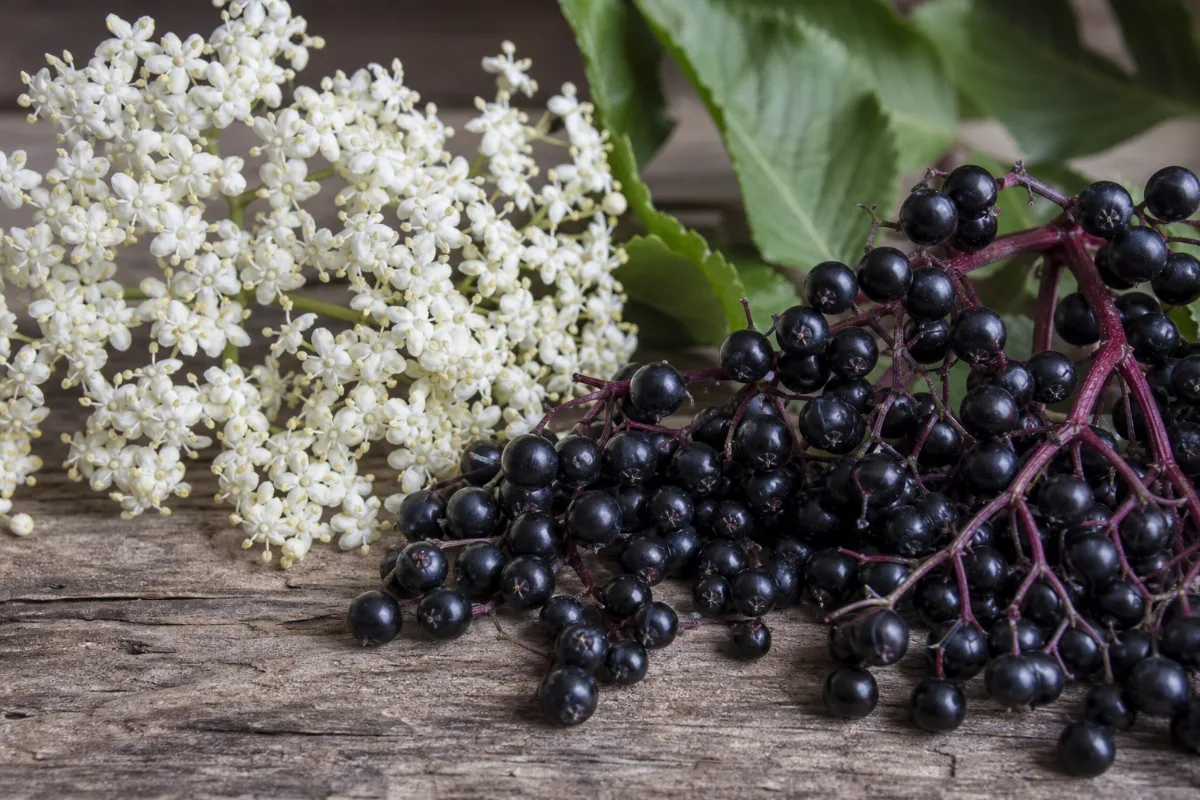
Elderberry is the fruit of Sambucus nigra, also called black elder or European elder. It is a shrub or small tree of Europe and nearby regions. The flowers are small and creamy white, and the ripe berries are dark purple.
The word "elderberry" is used loosely. In North America it often means a related plant, Sambucus canadensis, and labels rarely say which species is in a product. Elder flower is a different plant part with its own traditional uses.
Raw elderberry and other parts are poisonous
Raw or unripe elderberries, and the leaves, stems, bark and roots of the elder tree, are poisonous. They contain cyanide-producing substances and other toxins. They can cause nausea, vomiting and severe diarrhoea.
Cooking removes the main hazard, according to NIH, Memorial Sloan Kettering and the European Medicines Agency. Ripe, cooked or dried berries are considered safe to eat. Do not eat the berries raw, and do not press whole bunches with their leaves and twigs into juice or syrup.
This is not only a theory. In 1983 in California, people became ill after drinking uncooked juice made by pressing wild elderberry bunches together with leaves and branches. Everyone recovered.
What makes it distinctive
The berries are rich in anthocyanins, the purple pigments. The two main ones are cyanidin-3-glucoside and cyanidin-3-sambubioside. They also hold flavonols such as rutin.
In people, these pigments are absorbed in small amounts and mostly leave the body as breakdown products. A health effect of the pure pigments from elderberry has not been shown. Lab work on viruses and immune cells comes from dishes and animals, not from people.
Results do not carry between products. Flowers, berries and leaves differ in chemistry, and so do European and American elderberry, and branded syrups and extracts.
Historical and current uses
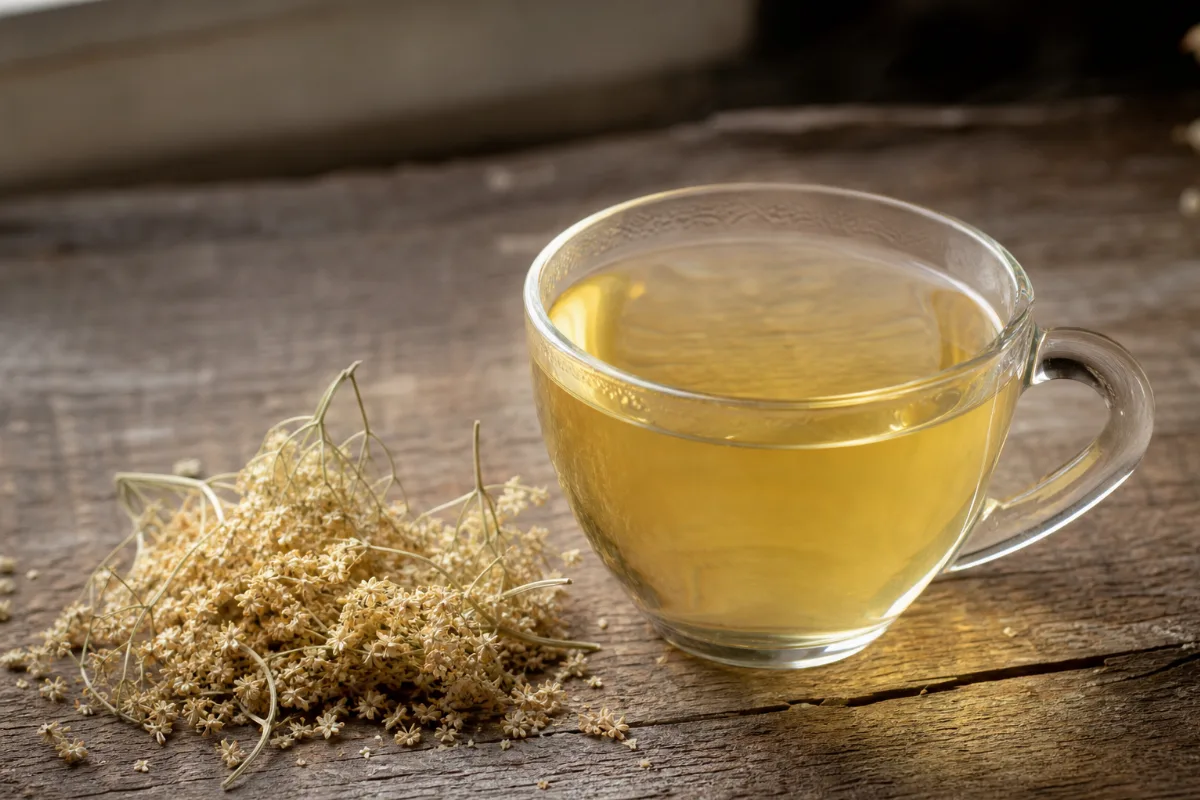
European handbooks list elder flower tea, taken hot, for early cold symptoms and as a sweat-inducing drink. Reviews describe berries as a folk remedy for colds, flu and chest problems across many cultures. Berries and flowers are also food: jam, jelly, wine, soup and cordials.
The popular claim that Hippocrates called the elder a medicine chest could not be confirmed in any source we read. The EU has a traditional-use monograph for the flower only. We found no EU monograph for the berry.
What the research shows
Colds and flu are the main use, and the evidence is low and mixed. A 1995 trial in a kibbutz and a 2004 trial of 60 adults found flu symptoms eased days sooner on a syrup. A 2020 trial of 87 people in emergency rooms found no benefit. A 2021 review of 5 trials said elderberry may shorten flu, but that the evidence is uncertain.
For colds, one trial of 312 air travellers found fewer cold days and milder symptoms, although the number of colds did not differ and the maker funded it. Elderberry does not look like it stops you catching colds. No trial has shown it works better than the antiviral drug oseltamivir.
For other uses the evidence is thin. Two human trials found no change in cholesterol. Blood sugar, weight, gut bacteria and memory rest on tiny, short studies, and much of the rest is lab or mouse work. Most trials last days to 12 weeks, and for most studies only abstracts were read.
Root, leaf, powder, extract: what is the difference?
Syrup or liquid extract
Elderberry extract or cooked berries in a sugary base, taken by the spoonful.
The form used in the flu trials (15 ml four times a day for 5 days). Two small trials of one branded syrup were positive and a 2020 trial of another liquid extract found no benefit, so one product's results do not carry to another.
Capsule or tablet extract
Dried berry extract, usually described by its anthocyanin content.
Used in the air-travel cold trial (600 to 900 mg a day) and a 12-week heart-markers safety study. Results belong to that product.
Juice
Juice or concentrate, often of American elderberry in US research.
Studied in small pilot trials of memory, glucose and fuel use. American elderberry results cannot be assumed to apply to European elderberry.
Gummies and lozenges
Chewables and slow-dissolving tablets, often with sugar, vitamins or zinc.
No gummy trial was found. One lozenge trial exists but only a secondary report of it was found. Check the label for added sugar and for how much elderberry extract each serving holds.
Elder flower tea or tincture
Dried flowers steeped in hot water, or flower extract in alcohol.
A different plant part from the berry. The EU monograph supports traditional use for early cold symptoms, based on long use and not on trials.
Home-made berry syrup, tea or wine
Berries cooked at home.
No trial exists, and strength varies. Raw or unripe berries, stems and leaves are poisonous, so berries must be cooked and stems and leaves left out.
At a glance
Traditional uses history, not proof
- In European folk medicine, berries (and flowers) used for colds, fevers and chest complaints
- Elder flower tea, taken hot, listed in European handbooks for early cold symptoms and as a sweat-inducing drink
- Berries and flowers also used as food: jam, jelly, wine, soup and cordials
Studied for research
- Flu symptoms and how long they last (results mixed)
- Colds and upper respiratory symptoms (low certainty)
- Preventing colds and flu (little evidence)
- Cholesterol and blood fats (no benefit in two human trials)
- Blood sugar, weight and gut bacteria (very early, small studies)
- Memory in mild cognitive impairment (one small pilot)
Main compounds
- Anthocyanins such as cyanidin-3-glucoside and cyanidin-3-sambubioside (the purple pigments)
- Flavonols such as rutin and quercetin
- Cyanide-releasing glycosides and lectins in raw or unripe berries, leaves, stems and bark (the reason these must not be eaten raw)
Common forms
- Cooked-berry syrup or juice
- Capsule or tablet extract of the berry
- Lozenges and gummies (often with added sugar, vitamins or zinc)
- Elder flower tea or tincture (a different plant part)
Research links: NIH NCCIH: Elderberry · Memorial Sloan Kettering: Elderberry · EU herbal monograph on elder flower (EMA) · PubMed: elderberry randomized trials · Research Library · Genes & Biomarkers Library
The plant and its history
- Accepted scientific name
- Sambucus nigra L.
- Naming authority
- L. (Linnaeus), Species Plantarum, page 269 (1753) (GBIF publishedIn field)
- Synonyms
- Sambucus nigra var. nigra; Sambucus nigra subsp. vulgaris Ehrh.; Sambucus arborescens Gilib.; Sambucus medullosa Gilib.; Sambucus florida Salisb.; Sambucus graveolens Willd.; Sambucus hirta Tausch; Sambucus lucida Tausch; Sambucus mexicana C.Presl; Sambucus nigra var. alba Weston; Sambucus nigra var. leucocarpa Hayne
- Common names
- Elder; elderberry; black elder (English); European elder; European elderberry; European black elderberry (English); Sauco (written saúco in Spanish); sabugo (Spanish (GBIF lists 'Sauco' without a language tag and 'sabugo' as Spanish)); Sabugueiro (Portuguese); Sureau noir; grand sureau (French); Schwarzer Holunder (German); Sambuco nero; sambuco comune (Italian); Gewone vlier (Dutch); Almindelig hyld (Danish); Svarthyll (Norwegian); Fläder; vanlig fläder; äkta fläder (Swedish); Mustaselja (Finnish); Zamboukkos; koufoxylia (Greek (transliterated)); Ysgawen (Welsh)
- Botanical family
- Adoxaceae (muskroot family, order Dipsacales) in NCBI Taxonomy, which is the family name used by most current plant-classification work. GBIF's backbone currently files the genus under Viburnaceae and treats Adoxaceae as a synonym of it (checked in the GBIF API), so websites disagree. Older papers, including a paper cited here (p10854744, dated 2000), still say Caprifoliaceae (honeysuckle family), because the elders and viburnums were once placed there. Kew POWO was not checked, so which family name is 'correct' today should be confirmed there.
- Classification
- Plantae > Tracheophyta > Magnoliopsida > Dipsacales > Adoxaceae (NCBI Taxonomy); Viburnaceae (GBIF backbone) > Sambucus > Sambucus nigra
- Native range
- Wikipedia (secondary): native to the Azores, Europe and the Middle East, reaching as far east as Turkey, and common across the British Isles; introduced to parts of most other continents. Kew POWO native-range data were not retrieved.
- Habitat
- Wikipedia (secondary): woodland, grassland, hedgerows, scrub, river banks, roadsides, railway banks and waste ground; usually open or disturbed, nutrient-rich sites; not drought tolerant and avoids saline soils.
- What the plant looks like
- Roots: Not described in the sources read.; Stems: Wikipedia (secondary): usually a deciduous shrub or small tree, often 6-10 m tall (rarely 15 m); young stems hollow; bark light yellowish-grey when young, becoming coarse and deeply furrowed.; Leaves: Wikipedia (secondary): opposite, pinnate, 10-30 cm long, usually 5-7 (rarely 9) leaflets, each 5-12 cm long with a serrated edge.; Flowers: Wikipedia (secondary): ivory-white, 5.5-7.5 mm across, five petals, in flat-topped clusters (corymbs) 8-24 cm wide, late May to July. The dried flowers are the herbal drug 'Sambuci flos' (EMA assessment report).; Fruit: Wikipedia (secondary): glossy dark purple to black drupe, 5-6 mm across, with 3-5 seeds, in drooping clusters; the colour comes from anthocyanins.
- Cultivation
- Wikipedia (secondary): grown as an ornamental and commercially for flowers and fruit; vigorous, tolerant of sun or part shade; does poorly in deep shade or dry conditions. Yields, spacing and agronomy were not verified.
- Harvest and processing
- Flowers: the EMA assessment report says elder flower is the dried flowers of S. nigra, and the European Pharmacopoeia requires not less than 0.80% flavonoids, calculated as isoquercitroside, on the dried drug (Ph. Eur. ref. 1217, as quoted by EMA). Berries: a Californian poisoning report (s-extoxnet-mmwr-1984-elderberry, secondary) and Wikipedia advise that berries are eaten cooked and that leaves and stems should not be crushed into juice. Commercial drying, extraction and juice-pressing practice was not verified.
- Look-alikes and adulterants
- Name: Sambucus canadensis (American elder, American black elderberry); Note: Closest relative, native to North America east of the Rockies (Wikipedia, secondary). GBIF treats it as a separate accepted species (key 6369819) and lists S. nigra subsp. canadensis (L.) Bolli as its synonym. Other authorities, following Bolli's 1994 revision, treat it as a subspecies of S. nigra; a web-search summary of a botanical database page says these are so similar that some specimens cannot be told apart with certainty, and that botanical authorities disagree (the underlying pages were not opened). Much 'elderberry' research in North America (for example p20931079, p39057683) is on this plant. The two should not be assumed to have identical chemistry: in S. canadensis one study found cyanogenic glycosides (the sambunigrin form) in only some wild populations (p10854744), and a 2024 method paper found (R)-prunasin in leaves but no sambunigrin (p39057683).; Name: Sambucus ebulus (dwarf elder, danewort); Note: A toxic, herbaceous look-alike: a 1-2 m perennial from a creeping rhizome with unbranched stems, flat flower clusters 10-15 cm across, a foetid smell and small black berries 5-6 mm across (Wikipedia, secondary, which says all parts are toxic). The review p25723322 says its use as food is restricted by toxicity and describes ribosome-inactivating proteins (ebulin) as a toxicity concern. Do not rely on colour or richness of the fruit to tell the two apart: in a fruit analysis p26409176, S. ebulus had the highest levels of most phenolics. S. nigra is a woody shrub or tree; S. ebulus dies back to the ground each year (the growth-form difference is the simplest field check, but this contrast is stated from the Wikipedia descriptions only).; Name: Sambucus racemosa (red elder); Note: Bright red berries in cone-shaped clusters (panicles) 3-6 cm across, not flat clusters of black berries (Wikipedia, secondary, which says the stems, roots and foliage are poisonous and the raw fruit can cause nausea). Not a risk of confusion when the berries are ripe and coloured, but leaves and flowers look similar.; Name: Sambucus nigra subsp. caerulea / Sambucus cerulea (blue elderberry); Note: Western North American blue-berried elder. NCBI lists subsp. caerulea (taxid 57006) under S. nigra; the fruit study p26409176 analysed S. cerulea separately. Not further checked.
- Sustainability and conservation
- IUCN Red List: Least Concern, per Wikipedia (secondary); the IUCN page itself was not retrieved. Wild-harvest pressure was not assessed.
The plant and the parts used
Traditional use and history history, not clinical proof
| Tradition or era | Documented use | Source |
|---|---|---|
| Ancient Greece onward (general statement by EMA) | The EMA assessment report says elder is 'a highly valued plant with a history dating back to ancient Greece' and that elder flower use has been continuously documented in handbooks, pharmacopoeias and scientific literature. The report gives no ancient text, author or specific use for the Greek period. | s-ema-ar-sambucus-nigra-flos |
| Antiquity: Hippocrates and the 'medicine chest' idea | Popular sources say Hippocrates called the elder a 'medicine chest'. NOT verified: no primary text or authoritative source read here confirms it, and the EMA report makes no such statement. | not verified in any retrieved source |
| Twentieth-century European handbooks (Madaus 1938; Hagers Handbuch; Standardzulassungen 1986/1997; Bisset and Wichtl 2001) | Elder flower infusion used as a sweat-inducing (diaphoretic) tea at the start of a cold or feverish chill and as a gargle; also against catarrhal conditions such as laryngitis, bronchitis, cough and whooping cough (Madaus 1938). Typical recorded doses were 3-4 g of dried flowers in about 150 ml hot water, several times a day; Madaus gave 5-15 g of dried flowers daily as an infusion. Quoted from EMA's table of historical data; the original handbooks were not checked. | s-ema-ar-sambucus-nigra-flos |
| British Herbal Pharmacopoeia (1976, 1983) and British Herbal Compendium (1992) | Flowers for the common cold and feverish conditions: 2-5 g dried flowers as an infusion three times daily (preferably hot); liquid extract 1:1 in 25% ethanol 2-5 ml three times daily; tincture 1:5 in 25% ethanol 10-25 ml three times daily. | s-ema-ar-sambucus-nigra-flos |
| Polish herbal tradition (Receptariusz Zielarski, Gobiec 1967) | Flowers as a mild sweat-inducing, urine-increasing (diuretic) and expectorant tea. EMA decided that diaphoretic and diuretic uses are effects, not stand-alone indications, and folded them into the 'early cold' indication. | s-ema-ar-sambucus-nigra-flos |
| Berries (fruit): colds, influenza and respiratory problems; and food | Reviews describe elderberry as traditionally used to treat or prevent colds, influenza and respiratory problems, with a 'long ethnobotanical history across many disparate cultures'. Berries are also cooked into jams, jelly, wine and soup (Wikipedia, secondary). The EMA monograph discussed here covers the flower only; the EMA page read did not say whether any European herbal monograph exists for the berry. | p28198157; p33827515; s-wikipedia-sambucus-nigra; s-ema-sambuci-flos-page |
| Food and flavouring use of the flower | EMA states elder flower is widely used as a food flavouring (for example cordials) as well as a medicinal herb, and is an ingredient of many combination products on the European market. | s-ema-ar-sambucus-nigra-flos |
| Folklore | Early Scandinavian and English folklore linked the tree with a goddess called the Elder Mother, and hollow branches were used as bellows (Wikipedia, secondary; the 'Judas tree' story on the same page is flagged there as needing a citation). Folklore, not evidence. | s-wikipedia-sambucus-nigra |
| Modern regulatory status (European Union) | The HMPC (EMA herbal committee) has a monograph for elder flower as a traditional herbal medicine 'for the relief of early symptoms of common cold' in adolescents (over 12) and adults, based only on long-standing use, with 30 years of use including 15 in the EU. First monograph 3 July 2008, revision 1 27 June 2018; the page read showed a periodic review (call for data) under way in 2024-2025. Tea dose in the assessment report: 2-5 g of flowers in 150 ml boiling water three times daily (6-15 g a day); see a doctor if symptoms last more than 1 week. The assessment report found no clinical studies of its own and 'no data' on pharmacokinetics, and said use in pregnancy and breast-feeding cannot be recommended for lack of data. A European Union list entry was not supported because of missing genotoxicity data. | s-ema-sambuci-flos-page; s-ema-ar-sambucus-nigra-flos |
| Important note | Everything above describes tradition and regulatory wording, not proof. A traditional-use monograph is explicitly based on long use, not on trials. Clinical evidence on the berry is assessed in the benefits files (a 2021 systematic review rated the certainty of evidence for colds and influenza as uncertain: p33827515). | p33827515; s-ema-ar-sambucus-nigra-flos |
Traditional use shows how a plant was used. It does not show that a supplement works or is safe today.
What is inside, and how it may work
What the plant contains and how those compounds act in cells and animals. Laboratory and animal mechanisms are not proven effects in people.
Main compounds
| Compound | Family | Where it is concentrated | Activity studied | Level of evidence |
|---|---|---|---|---|
| Cyanidin-3-glucoside (kuromanin; chrysanthemin) PubChem 441667 | anthocyanin (cyanidin glycoside) | Berry (fruit skin and juice) One of the two major anthocyanins in a commercial elderberry extract; 12 g of that extract supplied 720 mg total anthocyanins (p12097661). Total anthocyanins in berries: 3343 to 7729 ug/g in one Slovenian study depending on altitude, wet/dry basis not stated in the abstract (p27734518). | Antioxidant capacity in test-tube assays (reviews). In people: absorbed in small amounts, excreted mostly as breakdown and conjugated products (p12097661, p23604435). A health effect of the pure compound from elderberry has not been shown. 77 28 12 53 18 70 | Human (absorption data only) |
| Cyanidin-3-sambubioside PubChem 3084569 | anthocyanin (cyanidin with a two-sugar sambubiose) | Berry The other major anthocyanin in elderberry extract next to cyanidin-3-glucoside (p12097661, p18040528). Exact share not stated in the abstracts. | Excreted intact and as a methylated peonidin form in urine (p12097661). Sambubioside sugar is typical of elder. 77 28 12 | Human (absorption data only) |
| Cyanidin-3-sambubioside-5-glucoside PubChem 15126290 | anthocyanin | Berry Not quantified in the abstracts read. | Named in the elderberry literature as an anthocyanin of the fruit; NOT confirmed in any abstract I read, so treat as reported but unverified here. 48 | Theory |
| Peonidin-3-glucoside and peonidin-3-sambubioside (body-made metabolites) PubChem 14311152 | methylated anthocyanin metabolites | Not in the plant as such; made in the body Found in urine of elderly women within 4 h of elderberry extract (p12097661). | Shows methylation of cyanidin to peonidin occurs in people; glucuronide forms were also seen. 77 | Human data |
| Rutin PubChem 5280805 | flavonol glycoside (quercetin-3-rutinoside) | Flower and berry Rutin was the main flavonol in every elderberry fruit sample tested, across four Sambucus species and eight hybrids (p26409176). In flowers: flavonoids up to 3% of the dried flower, with rutin among the chief components (EMA, quoting WHO 2002). | Reported in vitro to inhibit xanthine oxidase, which led EMA to note a theoretical effect on caffeine and theophylline levels (Nagao 1999, via EMA); not tested with elder in people. 52 | Laboratory research |
| Quercetin PubChem 5280343 | flavonol aglycone | Flower and berry (mostly as glycosides) 13 different quercetin glycosides were quantified in elderberry fruit (p26409176). Free quercetin amount not given. | In the flower-extract study, inhibition of the signalling enzyme PI3K was suggested to be partly due to quercetin (as discussed by EMA); a lab suggestion only. 52 32 | Laboratory research |
| Isoquercitrin (isoquercitroside; quercetin-3-glucoside) PubChem 5484006 | flavonol glycoside | Flower The European Pharmacopoeia uses it as the yardstick: dried flowers must contain at least 0.80% flavonoids calculated as isoquercitroside (EMA). | Quality marker; no separate activity data read. | Theory |
| Kaempferol and its glycosides (astragalin, nicotiflorin) PubChem 5280863 | flavonol | Flower; also berry Named among the chief flower flavonoids (EMA). 7 kaempferol glycosides were quantified in fruit (p26409176). | No separate activity data read. 52 | Theory |
| Hyperoside (quercetin-3-galactoside) PubChem 5281643 | flavonol glycoside | Flower Named among the flower flavonoids (EMA, Willer 1997 and WHO 2002). | No activity data read. | Theory |
| Chlorogenic acid and other caffeoylquinic acids PubChem 1794427 | phenolic acid (hydroxycinnamic acid esters) | Berry and flower Hydroxycinnamic acids (caffeoylquinic and p-coumaroylquinic acids) were the main phenolic group in elderberry fruit (p26409176). In flowers: caffeic acid derivatives about 3% (EMA). | The antibacterial effect of elder-flower extract has been attributed to chlorogenic and caffeic acids (Izzo 1995, as reported by EMA); not tested on the pure compounds here. 52 | Laboratory research |
| Caffeic acid PubChem 689043 | phenolic acid | Flower Part of the 'caffeic acid derivatives' group; no separate amount. | See chlorogenic acid. | Laboratory research |
| Flavanols: catechin, epicatechin, procyanidins | flavan-3-ols | Berry 2% to 30% of the total phenolics measured in elderberry fruit samples (p26409176). | No activity data read. 52 | Theory |
| alpha- and beta-Amyrin PubChem 73170 | pentacyclic triterpenes (mostly as fatty acid esters) | Flower About 1% of the dried flower (EMA, quoting Bisset and Wichtl 2001). | No activity data read. | Theory |
| Oleanolic acid and ursolic acid PubChem 10494 | triterpene acids | Flower About 0.85% combined, with 20-beta-hydroxyursolic acid (EMA). | No activity data read. | Theory |
| Plant sterols (beta-sitosterol, stigmasterol, campesterol) PubChem 222284 | sterols | Flower About 0.11% of the dried flower (EMA, quoting WHO 2002). | No activity data read. | Theory |
| Volatile oil (fatty acids, ethers, ketones, aldehydes and others) | essential oil | Flower Complex; palmitic, linoleic and linolenic acids named (EMA). | No activity data read. Gives elder flower its scent. | Theory |
| Cyanogenic glycosides: sambunigrin ((S)-prunasin) and (R)-prunasin PubChem 91434 | cyanide-releasing glycosides | Leaf, stem, unripe fruit, bark and root; ripe berries and flowers the lowest In one Slovenian study berries held 0.11 ug/g (foothill) to 0.59 ug/g (hilltop) cyanogenic glycosides, the lowest of leaf, flower and berry; basis not stated in the abstract (p27734518). A 2024 method paper on American elderberry found (R)-prunasin in leaves but did not detect sambunigrin (p39057683); a 2000 paper on S. canadensis populations found the sambunigrin form only in some populations (p10854744). | Release hydrogen cyanide when the plant tissue is crushed and the glycoside breaks down (general chemistry; the abstracts say 'toxic'). Wikipedia (secondary) says all green parts hold them and all parts except flowers and ripe berries are poisonous to mammals. This is the basis of the advice to cook berries and avoid leaves and stems. 70 43 13 83 85 | In vitro (chemical analysis) |
| Lectins and ribosome-inactivating proteins (RIPs), e.g. Sam n 1 (allergen) and nigrin b | proteins | Pollen, flower, berry (Sam n 1); bark (nigrin b) Sam n 1 is a 33.2 kDa protein found in elderberry pollen, flowers and berries (p14656358). Nigrin b was isolated from bark (p9195017). | Sam n 1 is a candidate major allergen: 0.6% of 3668 randomly tested people in one Vienna clinic showed an allergic skin or blood test to elderberry (p14656358). Nigrin b is a ricin-like protein but much less toxic to cells and mice (p9195017). Lectins are often said to make elderberry unsafe raw or to bind viruses; the lectin claims for berries rest on narrative reviews (p35336621). 27 11 55 | Laboratory research |
| High-molecular-weight acidic polysaccharides (pectin-type) | polysaccharides | Berry and flower Not quantified in the abstracts read. | In a Japanese study of concentrated elderberry juice, the large-molecule fraction containing acidic polysaccharides protected mice from influenza and raised antibody and IgA levels (p22972323). EMA reports that large-molecule fractions from flowers were more active than those from berries in a complement and macrophage lab test (Barsett 2012, via EMA). 45 | Animal research |
| 5,7,3',4'-Tetra-O-methylquercetin (compound 1) and dihydromyricetin (compound 3) PubChem 161557 | flavonoids tested in an influenza binding study | Berry extract (compound 1 and a related flavanonol ester); both reference compounds were synthesised Not quantified. The study found compound 1 and a related compound 2 stuck to virus particles in an elderberry extract, then made compound 1 and dihydromyricetin (the matching 3-hydroxyflavonone of compound 2) in the lab to test them. | In cells, the lab-made compounds blocked H1N1 influenza infection with IC50 0.13 ug/mL (compound 1) and 2.8 ug/mL (dihydromyricetin); the whole elderberry extract needed 252 ug/mL (p19682714). Test-tube result by a company laboratory; dihydromyricetin was made synthetically, not shown to be present in elderberry itself. 68 | Laboratory research |
| Sambucoside | unclear | not established Named in the research brief, but no PubChem entry or abstract was found under this name; it is not recorded here as a verified elderberry compound. | None verified. | Theory |
Mechanisms, receptors and pathways
| Target or pathway | Gene or receptor | What was found | Level |
|---|---|---|---|
| Direct binding to influenza virus particles (entry block) | viral surface proteins (not named in the abstract) | In cells, an elderberry fruit extract blocked human influenza A (H1N1) infection with IC50 252 +/- 34 ug/mL. Flavonoids in the extract stuck to virus particles and, when bound, stopped them infecting cells; lab-made 5,7,3',4'-tetra-O-methylquercetin (IC50 0.13 ug/mL) and dihydromyricetin (2.8 ug/mL) did the same. The authors compare these figures with oseltamivir and amantadine, but a cell-culture IC50 of a pure compound is not comparable with a person drinking a syrup. The abstract does not say which viral protein is bound. 68 | Laboratory research |
| Hemagglutinin and neuraminidase of influenza | HA, NA (viral proteins) | Often said to be the targets of elderberry. No abstract read here shows that elderberry or any of its compounds inhibits neuraminidase, and the Roschek abstract says only that virions are bound and cell entry or recognition is blocked. A search for primary papers on elderberry and neuraminidase found none. Treat as a proposal, not a finding. 68 64 | Theory |
| Activity of whole extracts against influenza A and B and respiratory bacteria | not applicable | A standardized liquid extract (Rubini, BerryPharma AG) reduced growth of Streptococcus pyogenes, group C and G streptococci and Branhamella catarrhalis in broth, and reduced spread of an H5N1 influenza A strain from a patient and an influenza B strain in cell culture. Cell-culture data only; no numbers captured from the abstract. 46 | Laboratory research |
| Immune stimulation by large-molecule (polysaccharide) fraction | immune response in mice (IgA, neutralizing antibody) | Concentrated elderberry juice was weak against influenza in cell culture but had a relatively strong effect in infected mice. Fed by mouth, the high-molecular-weight fractions lowered virus in lung washings and raised influenza-specific neutralizing antibody in blood and secretory IgA in lung washings and faeces; the acidic-polysaccharide fraction worked best. The authors conclude the benefit came from immune stimulation rather than direct killing of virus. 45 | Animal research |
| Inflammatory cytokines in blood cells (RAISED, not lowered) | IL1B, TNF, IL6, CXCL8 (IL-8) | Branded elderberry products (Sambucol range) increased production of IL-1 beta, TNF-alpha, IL-6 and IL-8 by monocytes from 12 healthy donors in the lab, by 2- to 45-fold, with TNF-alpha up 44.9-fold; LPS, a known activator, gave 3.6- to 10.7-fold. The authors read this as immune activation. This is the opposite of the 'calms inflammation' message often attached to elderberry, and it was seen in white blood cells in a dish. 9 | Laboratory research |
| Cytokines after ingestion; no clinical inflammation outcomes | cytokine panel | A 2021 systematic review (five randomized trials) found no study linking elderberry to clinical inflammation outcomes. Three studies measured cytokine production ex vivo after people ingested elderberry; elderberry had some effect on inflammatory markers, but this may fade with continued use. The review was prompted by worry that elderberry might over-stimulate immunity ('cytokine storm') and found no clinical evidence either way. 76 | Human (ex vivo markers, not symptoms) |
| Anti-inflammatory signalling in the flower | NFKB1 (NF-kB), PIK3CA/PI3K pathway | Aqueous elder FLOWER extract strongly reduced cytokine release, integrin activation and the oxidative burst in macrophages and neutrophils exposed to gum-disease bacteria or their components, and blocked activation of NF-kB and PI3K. This is flower, not berry; cells, not people. EMA notes the PI3K effect may partly be quercetin. 32 82 | Laboratory research |
| Complement system and macrophage nitric oxide | complement fixation; NO production | Large-molecule (pectin-like) fractions of flowers and berries activated complement and stimulated macrophage nitric oxide in a lab assay; flower fractions were more active than berry fractions (Barsett 2012, as summarised by EMA; original not read). 82 | Laboratory research |
| Coronavirus (SARS-CoV-2) | not applicable | In a German lab test, elderberry juice was tested alongside black chokeberry, pomegranate and green tea against SARS-CoV-2, influenza A and adenovirus. The abstract reports the three others reduced SARS-CoV-2 and influenza A titers by at least 80% or 99% and does not report a reduction for elderberry juice. Two authors are partners of a company (CogniVerde GmbH). Narrative reviews that say polyphenols and lectins in elderberry 'inhibit coronaviruses' (p35336621) are not backed by a primary result in the papers read here. 20 55 | Laboratory research |
| Xanthine oxidase (drug-handling enzyme) | XDH | Rutin and quercetin from elder flower inhibit xanthine oxidase in the lab (Nagao 1999, via EMA), so EMA notes elder flower might in theory change blood levels of caffeine and theophylline. No test with elder products was found. 82 | Theory |
| Blood sugar handling | glucose uptake; insulin secretion | An aqueous elder flower extract increased glucose uptake and insulin release in rat muscle and rat pancreatic cells in the lab (Gray 2000, via EMA; original not read). The active compounds were not identified. Flower, rat, lab. 82 | Animal research |
| Urine flow (diuretic effect) | not applicable | Elder flower infusion increased urine output in rats, more than theophylline in one study (Rebuelta 1983, via EMA); another used an intraperitoneal injection (Beaux 1999). Flower, rats. 82 | Animal research |
| Allergy | IgE response to Sam n 1 (ribosome-inactivating-protein-like) | Allergy to elderberry pollen, flower and berry was linked to a 33.2 kDa protein resembling ribosome-inactivating proteins: 0.6% of 3668 patients tested in a Vienna clinic were sensitised; nine were studied in detail. It did not cross-react with birch, grass or mugwort pollen extracts. 27 | Laboratory research |
| Protein-synthesis shutdown by ribosome-inactivating proteins (toxicity route) | 28S ribosomal RNA N-glycosidase activity | Type 2 RIPs such as nigrin b (bark of S. nigra) cut ribosomal RNA and stop protein synthesis, like ricin, but nigrin b is far less toxic to cells and mice. Dwarf elder (S. ebulus) holds ebulin, a RIP, and the review p25723322 raises concern about its toxicity. The RIP content of ripe S. nigra berries was not quantified in the sources read. 11 39 | Laboratory research |
| Cyanide release (toxicity route) | cyanogenic glycoside breakdown (beta-glucosidase) | Sambunigrin/prunasin-type glycosides can release hydrogen cyanide when plant tissue is crushed. They are highest in leaves and green parts and lowest in berries (p27734518). In the 1983 Californian outbreak, juice crushed from berries with leaves and branches made 11 of 25 people vomit within 15 minutes; severity tracked the amount drunk, and the newsletter report says no cyanide tests are described. 70 43 83 | Laboratory research |
| Antioxidant capacity | not applicable (assay chemistry) | American elderberry accessions had total phenolic and anthocyanin contents and antioxidant capacities (FRAP, DPPH) similar to black raspberries and blackberries; anthocyanins ranged 1308 to 4004 ug cyanidin-3-glucoside equivalents per g fresh weight. Test-tube antioxidant scores do not show that eating the fruit changes antioxidant status in the body. 62 48 | Laboratory research |
Absorption, metabolism and elimination
- Absorption
- Anthocyanins, the main berry pigments, are poorly absorbed as the intact molecule. In four elderly women given 12 g elderberry extract (720 mg total anthocyanins), only 554 +/- 90 ug (0.077% of the dose) appeared in urine within 4 h (p12097661). In six healthy volunteers given 278 mg or 1852 mg total anthocyanins as elderberry extract, 0.39% and 0.27% of the dose was excreted unchanged in urine over 7 h, the half-life was 1.85 h and 2.57 h, and exposure rose roughly in proportion to the dose (p18040528). At 147.3 mg total anthocyanins, urinary excretion was 0.37% over 7 h and, per milligram, absorption was 5.3 (Cmax) to 6.2 times (AUC) greater from elderberry extract than from blackcurrant juice (p15176653). An earlier Tufts study found intact glycosides in plasma and urine, mostly excreted within 4 h (p12044949; participant number not in the abstract). Human blood levels of flavonols (rutin, quercetin) or phenolic acids from elderberry were not found, and EMA states there are no pharmacokinetic data for the flower.
- Distribution
- No elderberry tissue-distribution data in people were found.
- Metabolism
- Cyanidin-3-glucoside and cyanidin-3-sambubioside were found in urine together with four metabolites: peonidin-3-glucoside, peonidin-3-sambubioside and glucuronide conjugates of peonidin and of cyanidin-3-glucoside, showing that people methylate and glucuronidate these pigments (p12097661). A carbon-13-labelled cyanidin-3-glucoside study (not elderberry, eight men, 500 mg) found the intact pigment is only part of the story: relative bioavailability was 12.38 +/- 1.38%, labelled metabolites peaked in serum at about 10 h (5.97 +/- 2.14 umol/L), and they were phenolic, hippuric, phenylacetic and phenylpropenoic acids, still present for up to 48 h (p23604435).
- Elimination
- Intact elderberry anthocyanins leave quickly: urinary excretion mostly within 4-7 h, half-life about 1.7-2.6 h, renal clearance 169-196 ml/min (p18040528, p15176653). Breakdown products last far longer; half-lives of 12.4 to 51.6 h for the labelled metabolites in the C3G tracer study (p23604435). In that study 43.9 +/- 25.9% of the carbon-13 label was recovered in urine, breath and faeces combined.
- Bioavailability
- Low for the intact pigments (well under 1% in urine) but higher if metabolites are counted (about 12% for pure cyanidin-3-glucoside in eight men). Studies used extracts or juices, 4-8 people, single doses, and mostly measured only the intact pigments; blood levels of metabolites after eating elderberry were not measured. Absorption from the whole berry, cooked syrup or capsule may differ.
Isolated compounds versus whole extracts
Elderberry results do not transfer cleanly between parts, products or compounds. (1) Part: flowers (the EMA monograph) and berries (most research and supplements) have different chemistry. Flowers carry flavonols, triterpenes and caffeic acid derivatives; berries carry anthocyanins; leaves, stems, bark and roots hold the most cyanide-releasing glycosides and, in bark, ricin-like proteins. (2) Compound versus extract: the flavonoids that bound influenza virus in the Roschek study were not the main anthocyanins, and the lab-made compounds worked at far lower concentrations than the whole extract (0.13 to 2.8 versus 252 ug/mL), but a pure compound in a dish says little about a syrup in a person. (3) Whole versus fraction: in the Kinoshita study the juice looked weak in cell culture but worked in mice, and the effect was tied to a large-molecule polysaccharide fraction, not to the colourful anthocyanins. (4) Product: Sambucol, Rubini extract, concentrated juice and capsules are different products with different preparation, so effects of one cannot be assumed for another, and many trials are of single branded products. (5) Species: S. nigra (European), S. canadensis (American) and S. ebulus differ in chemistry and toxicity, yet are all sold or discussed as 'elderberry'. (6) Preparation: cooking is advised for berries; a raw berry-and-leaf juice caused an outbreak of vomiting.
Nutritional composition
Elderberries are a food as well as a remedy, so a nutrient table is meaningful. USDA FoodData Central (SR Legacy, 'Elderberries, raw', FDC id 171727), per 100 g raw berries: energy 73 kcal; water 79.8 g; carbohydrate 18.4 g; fibre 7.0 g; protein 0.66 g; fat 0.5 g; vitamin C 36 mg; vitamin B6 0.23 mg; vitamin A 30 ug RAE; folate 6 ug; calcium 38 mg; iron 1.6 mg; magnesium 5 mg; phosphorus 39 mg; potassium 280 mg. Eating raw berries is not advised (see safety), so these are values for the raw fruit as analysed, not an endorsement. The anthocyanin pigments are not in this table; they were 1308-4004 ug/g fresh weight in American elderberry accessions (p20931079). Elder flower is described by EMA as 8-9% minerals, high in potassium (quoting older handbooks). A dose of syrup, juice or extract supplies far less than 100 g of fruit.
Products, quality and comparisons
Independent evidence comes first. Nothing in this section is a paid ranking. If a product link is added later, it will be marked clearly as an affiliate link and will never change what the research says.
Quality indicators
- Species and plant part stated (Sambucus nigra berry, or S. canadensis; flower is a different product)
- Marker named with percentage and test method (for example anthocyanins by HPLC)
- Same extract and daily mg as a published trial, if you want to match research
- No hidden proprietary blend
- Sugar per serving (syrups and gummies) and other added ingredients shown
- Lot number and a certificate of analysis available on request
- Independent seal checked on the certifier's own website
Identity and authenticity
- BAPP's 2021 report on 532 commercial elderberry samples (bulk powders, bulk extracts and finished supplements) found 58 (10.9%) failed identity specifications; the common adulterant was black rice (Oryza sativa) extract. We read this through a trade-news report, and the BAPP director said the overall share of fraudulent material on the market is unclear.
- A 2023 review reports that in a study of 31 supplements, more than 60% of those claiming European elderberry had anthocyanin profiles that differed significantly from authentic elderberry; the study's authors pointed to black rice, purple carrot and elder flower. We did not read the original study.
- A 2022 review of 'immune health' botanicals says elderberry products can be adulterated with lower-grade ingredients, non-target plants and synthetic compounds.
- These findings describe the products tested and cannot be applied to any single brand.
Standardization and extract strength
- Standardization states how much of a marker the product holds, usually anthocyanins (the purple pigments) or total polyphenols. One trial extract is described as 15% anthocyanins and 22% polyphenols.
- Natural levels vary: a 2023 review lists elderberry fruit anthocyanins from about 391 to 806 mg per 100 g fresh fruit for S. nigra and 207 to 1,005 mg per 100 g for S. canadensis in one study, and wider ranges by cultivar and harvest year.
- S. nigra and S. canadensis differ chemically (the authors say S. canadensis has more acylated anthocyanins); trials on one species should not be assumed to apply to the other.
- ConsumerLab's 2020 test of 11 products found anthocyanins from 0.03 mg to 69.3 mg per daily serving, only one product meeting the USP standard of at least 17% anthocyanosides by extract weight, and most below 1% anthocyanins. This is a for-profit tester and the full report is paywalled.
- Serving size is NOT the same as anthocyanin content: mg of anthocyanins = serving mg x percent.
Third-party testing
- US supplements are not approved by FDA before sale; makers must follow good manufacturing practice (NCCIH).
- Third-party programmes (USP, NSF, ConsumerLab and others) differ in what they test, and a seal is a statement about that programme, not a guarantee of effect.
- We found no publicly readable independent test of elderberry gummies or syrups with sugar and anthocyanin figures; ConsumerLab's detail sits behind membership.
Contaminants and adulterants
- Natural toxin: NCCIH says raw or unripe berries and other parts of the tree contain poisonous cyanide-producing substances, large quantities may cause serious illness, and cooking destroys them.
- A 2021 laboratory study of American elderberry found cyanogenic glycosides in fruit tissues at 0.12 to 6.38 ug/g, none quantifiable in commercial juice, and the highest levels in stems and green berries; the authors say the levels pose no threat to consumers of fresh and processed fruit.
- Heavy metals, pesticides, microbes and mould: the sources we read did not give elderberry-specific rates.
Reading a product label
- Find the botanical name (Sambucus nigra, or S. canadensis) and the plant part (berry or flower).
- Is it extract, juice, syrup or powder? Note mg or ml per serving and servings per day.
- Look for a named marker and percentage (anthocyanins) and the test method.
- For syrups and gummies, read sugar per serving and compare with the elderberry amount.
- Compare mg per day and extract type with a trial, not with another bottle.
- Check other ingredients (vitamin C, zinc, echinacea) and any proprietary blend.
- Check cautions (pregnancy, breastfeeding, medicines, autoimmune disease).
- Find the lot number and ask for a certificate of analysis.
- Check any seal on the certifier's own site.
Certifications and what they actually mean
| Certification | What it means | What it does not tell you |
|---|---|---|
| USP Verified | Run by US Pharmacopeia, which also publishes an elderberry extract standard that ConsumerLab quotes (at least 17% anthocyanosides by extract weight). | We did not read USP's own pages, so check the exact product on USP's site. |
| NSF Certified for Sport / NSF Contents Certified | NSF is an independent certifier; the 2021 BAPP survey used NSF International as one of its testing laboratories. | We did not read NSF's programme description; check the product on NSF's site. |
| ConsumerLab seal | ConsumerLab runs a paid testing programme and publishes elderberry reviews. | For-profit; the manufacturer pays for the seal programme; full reports are membership-only so not verifiable here. |
| GMP statement (cGMP) | Maker says it follows good manufacturing practice, which US law requires. | Not a quality seal on its own and not an independent test. |
| Organic | Farming and processing standard. | Says nothing about anthocyanin content, species or adulteration unless tested. |
| Vegan, non-GMO, gluten-free, no artificial colours | Ingredient and process claims. | Not quality or potency claims; 'no colours' is worth checking given the black rice and blue colourant adulteration reports. |
Comparing price and servings
Do not compare bottle prices. Step 1: cost per serving = bottle price / servings per bottle. Step 2: servings per day needed to reach the studied daily amount (studied mg per day / mg of extract per serving; for syrup, ml per day / ml per serving). Step 3: cost per day = cost per serving x servings per day. If an anthocyanin percentage is stated, cost per 10 mg of anthocyanins = bottle price / (servings x mg per serving x percent / 10); use only products of the same extract type. Leave prices blank until a real current product is entered; no prices are included here.
Extract types compared
| Extract | Plant part | Standardization | Trials | Evidence note | Safety note | Limitations | Studies |
|---|---|---|---|---|---|---|---|
| Elderberry syrup (Sambucol-type, standardized extract) | berry | 38% standardized extract per the 2020 Harnett review; abstracts do not state the standard | Zakay-Rones 2004 (15 ml four times a day, 5 days, n=60); Zakay-Rones 1995 (n=27 per review) | Both positive for flu symptom relief; both small; the 1995 paper also reports cell-culture antiviral work. | No serious adverse events in the rapid review | Older, small trials; a 2020 trial of another liquid extract found no benefit. | 80 79 31 |
| Membrane-filtered extract capsules (BerryPharma by Iprona AG per full text) | berry | 15% anthocyanins, 22% polyphenols | Tiralongo 2016 (600-900 mg a day, 15-16 days, n=312) | Fewer cold days and lower symptom score, but cold numbers did not differ; p-values differ between abstract and results. | Five people reported mild events; no causal link shown | Maker-funded; single trial. | 73 |
| Proprietary lozenge | berry | Not stated | Kong 2009 (4 x 175 mg a day, 2 days, n=64), via secondary review | Reported quicker symptom relief; original not on PubMed. | Not in the sources we read | Secondary source only; 'some concerns' on bias. | 3 31 |
| Liquid elderberry extract tested in US emergency rooms | berry | Not in abstract; 15 ml held 5.7 g extract | Macknin 2020 (n=87) | No benefit for duration or severity of influenza. | Not reported in abstract | Patients chose whether to also take oseltamivir. | 49 |
| American elderberry juice (S. canadensis) | berry | Not stated | Curtis 2024 (15 mL/day for 6 months, n=24); Rust 2023 (n=9); Teets 2024 (n=18) | Preliminary results on cognition, inflammation markers, glucose and fuel use. | Well tolerated in the small trials | Different species from European S. nigra; tiny trials. | 17 69 72 |
| Spray-dried extract powder (10% anthocyanins) | berry | 10% anthocyanins | Murkovic 2004 (400 mg three times a day, 2 weeks, n=34) | No significant effect on cholesterol or LDL oxidation. | Not reported in abstract | Low dose according to the authors. | 56 |
| High-anthocyanin extract for heart and safety markers | berry | 500 mg a day of anthocyanins as cyanidin glycosides | Curtis 2009 (12 weeks, n=52) | No change in heart-risk markers; liver and kidney tests unchanged. | Apparently safe in healthy postmenopausal women over 12 weeks | Healthy women only. | 16 |
| Elder flower (tea, liquid extract, tincture) | flower | Ph. Eur. monograph for the herbal substance | None cited; EU monograph rests on long-standing use | Traditional use for early cold symptoms. | No undesirable effects known; not recommended in pregnancy or lactation or under 12 | Different plant part from the berry products in the trials. | 1 |
Compare Elderberry with another ingredient
Elderberry vs Echinacea
Both are marketed for colds and flu and both have mixed evidence. No trial compares them directly. Elderberry's best results come from a few small trials of specific products; echinacea has more trials but very different products and mostly non-significant results.
| Elderberry | Echinacea | |
|---|---|---|
| Benefits studied | Duration and severity of colds and flu, mostly in adults | Preventing and treating the common cold |
| Evidence certainty | low: the 2019 meta-analysis (180 people) reports a large effect but gives no numbers in its abstract; the 2020 rapid review of 5 studies says symptoms may be shorter in adults when taken within 48 hours but did no pooling or grading; the 2020 emergency-room trial of 87 people found no benefit; a 2026 overview of herbal reviews counts black elderberry among those showing some benefit, with weak primary studies | low: a 2014 Cochrane review of 24 trials (4,631 people) did not pool the results; none of 12 prevention comparisons was significant (post hoc pooling suggests a 10-20% relative risk reduction) and only 1 of 7 treatment trials showed a shorter cold; conclusion: not shown to help, a weak benefit is possible |
| Typical studied dose | Varies by product: 60 ml a day of syrup for 5 days; 600-900 mg a day of extract capsules for about 15-16 days; 4 x 175 mg lozenges for 2 days | Varies widely by species, part and extract; not tabulated here |
| Head-to-head trial | None found | None found against elderberry; one combination echinacea drink (said by a review to contain elderberry juice) was noninferior to oseltamivir in 473 flu patients |
| Safety and interactions | No serious events in the short trials; raw berries poisonous; pregnancy data lacking; one case report of liver injury in a cancer patient taking pazopanib (cause not proven) | No significant difference in dropouts or adverse effects in treatment trials; a trend to more dropouts in prevention trials |
| Forms | Syrup, capsule, lozenge, juice, gummy | Tablets, tinctures, teas, pressed juice |
| Cost note | Use the price-per-day formula; no prices stored | Use the same formula |
Elderberry vs Vitamin C
Vitamin C is taken every day to shorten colds a little, while elderberry is studied after symptoms begin. They have never been tested against each other. Vitamin C's main strength is for people under extreme physical stress.
| Elderberry | Vitamin C | |
|---|---|---|
| Benefits studied | Duration and severity of colds and flu | Cold prevention and shortening |
| Evidence certainty | low: the 2019 meta-analysis (180 people) reports a large effect but gives no numbers in its abstract; the 2020 rapid review of 5 studies says symptoms may be shorter in adults when taken within 48 hours but did no pooling or grading; the 2020 emergency-room trial of 87 people found no benefit; a 2026 overview of herbal reviews counts black elderberry among those showing some benefit, with weak primary studies | mixed: the 2013 Cochrane review (29 comparisons, 11,306 people) found no reduction in cold risk in the general community (RR 0.97, 0.94-1.00) but a halving of risk in 598 people under heavy exercise stress (RR 0.48, 0.35-0.64); regular use shortened colds 8% in adults and 14% in children; no consistent effect when taken only after a cold started |
| Typical studied dose | Varies by product: 60 ml a day of syrup for 5 days; 600-900 mg a day of extract capsules for about 15-16 days; 4 x 175 mg lozenges for 2 days | 0.2 g a day or more in the review's trials; 1-2 g a day in children shortened colds by 18% |
| Head-to-head trial | None found | None found |
| Safety and interactions | See the elderberry safety notes | The review calls it low cost and safe; not re-verified here |
| Forms | Syrup, capsule, lozenge, juice, gummy | Tablets, powders, foods |
| Cost note | Formula | Formula |
Elderberry vs Zinc
Both are taken at the first sign of a cold and both have uneven evidence. Zinc's review is more recent and graded; it suggests a possible shortening of colds with more side effects such as bad taste and nausea. No trial compares the two.
| Elderberry | Zinc | |
|---|---|---|
| Benefits studied | Duration and severity of colds and flu | Prevention and treatment of the common cold |
| Evidence certainty | low: the 2019 meta-analysis (180 people) reports a large effect but gives no numbers in its abstract; the 2020 rapid review of 5 studies says symptoms may be shorter in adults when taken within 48 hours but did no pooling or grading; the 2020 emergency-room trial of 87 people found no benefit; a 2026 overview of herbal reviews counts black elderberry among those showing some benefit, with weak primary studies | low: 2024 Cochrane review of 34 trials (8,526 people): little or no effect on preventing colds (RR 0.93, 0.85-1.01); used as treatment may shorten colds (-2.37 days, -4.21 to -0.53; low certainty; very uneven results) |
| Typical studied dose | Varies by product: 60 ml a day of syrup for 5 days; 600-900 mg a day of extract capsules for about 15-16 days; 4 x 175 mg lozenges for 2 days | Zinc gluconate lozenges 45 to 276 mg a day for 4.5 to 21 days in the review's lozenge trials |
| Head-to-head trial | None found | None found |
| Safety and interactions | See elderberry notes | Non-serious adverse events probably more common with treatment (RR 1.34, 1.15-1.55; moderate certainty) |
| Forms | Syrup, capsule, lozenge, juice, gummy | Lozenges, tablets, syrups, nasal |
| Cost note | Formula | Formula |
Elderberry vs Vitamin D
Vitamin D is used for prevention in people who are low in it, elderberry for symptoms after infection starts. The two do different jobs in the research and have not been compared.
| Elderberry | Vitamin D | |
|---|---|---|
| Benefits studied | Duration and severity of colds and flu | Preventing acute respiratory infections |
| Evidence certainty | low: the 2019 meta-analysis (180 people) reports a large effect but gives no numbers in its abstract; the 2020 rapid review of 5 studies says symptoms may be shorter in adults when taken within 48 hours but did no pooling or grading; the 2020 emergency-room trial of 87 people found no benefit; a 2026 overview of herbal reviews counts black elderberry among those showing some benefit, with weak primary studies | mixed: the 2017 individual-participant meta-analysis (11,321 people) found a lower risk (adjusted OR 0.88, 0.81-0.96), mainly in people with very low levels; the 2025 update of 40 trials (61,589 people) found OR 0.94 (0.88-1.00, p=0.057), not statistically significant |
| Typical studied dose | Varies by product: 60 ml a day of syrup for 5 days; 600-900 mg a day of extract capsules for about 15-16 days; 4 x 175 mg lozenges for 2 days | Daily, weekly or bolus doses; the 2025 update found no effect modification by dose size |
| Head-to-head trial | None found | None found |
| Safety and interactions | See elderberry notes | No change in serious adverse events in either meta-analysis |
| Forms | Syrup, capsule, lozenge, juice, gummy | Capsules, drops, tablets |
| Cost note | Formula | Formula |
Elderberry vs Andrographis (Andrographis paniculata)
Andrographis has more trials with larger reported effects, but the reviewers call the quality poor and many used mixtures. Elderberry's trials are fewer and also small. There is no direct comparison.
| Elderberry | Andrographis (Andrographis paniculata) | |
|---|---|---|
| Benefits studied | Duration and severity of colds and flu | Symptom relief in acute respiratory tract infections (cough, sore throat, time to recovery) |
| Evidence certainty | low: the 2019 meta-analysis (180 people) reports a large effect but gives no numbers in its abstract; the 2020 rapid review of 5 studies says symptoms may be shorter in adults when taken within 48 hours but did no pooling or grading; the 2020 emergency-room trial of 87 people found no benefit; a 2026 overview of herbal reviews counts black elderberry among those showing some benefit, with weak primary studies | low: 2017 review of 33 trials (7,175 people): cough SMD -0.39 (-0.67 to -0.10) and sore throat SMD -1.13 (-1.37 to -0.89) versus placebo, but methodological quality overall poor |
| Typical studied dose | Varies by product: 60 ml a day of syrup for 5 days; 600-900 mg a day of extract capsules for about 15-16 days; 4 x 175 mg lozenges for 2 days | Varied; not tabulated here |
| Head-to-head trial | None found | None found |
| Safety and interactions | See elderberry notes | No major adverse events; minor ones mostly gastrointestinal |
| Forms | Syrup, capsule, lozenge, juice, gummy | Capsules and tablets, often in mixtures |
| Cost note | Formula | Formula |
Other supplements people compare it with
- Echinacea (Colds): Cochrane review: not shown to treat colds; a weak benefit may exist Evidence: low. 42
- Vitamin C (Colds (regular use), people under heavy exercise stress): No cold prevention in the general public; halved risk in people under extreme physical stress; modest shortening of colds with daily use Evidence: mixed. 35
- Zinc (lozenges and others) (Cold duration): May shorten colds; more non-serious side effects Evidence: low. 59
- Vitamin D (Preventing respiratory infections): 2017 benefit shrank to non-significant in the 2025 update Evidence: mixed. 50 41
- Andrographis paniculata (Cough, sore throat): Larger reported effects but poor trial quality Evidence: low. 38
- Ginseng, ivy leaf and eucalyptus (Acute respiratory infections): Listed with echinacea and black elderberry as showing some benefit in a 2026 overview of reviews; we read only its abstract Evidence: low. 6
Where to buy
Check the label first. Whatever you buy, look for these:
- The plant part and the extract type or ratio on the label
- A standardized amount of the active compounds, where relevant
- A third-party testing mark (USP, NSF or ConsumerLab)
- Interactions: ask a pharmacist if you take medicines, are pregnant or have a medical condition
Talk to a pharmacist or doctor before you start any supplement, especially if you take medicines. See the Safety tab for interactions.
Support our free guides: as an Amazon Associate we earn from qualifying purchases. Full disclosure.
3 low certainty3 very low certainty7 not enough evidence
What was looked at
The 13 benefits and uses checked for Elderberry, each with how strong the evidence is. Tap one to open it.
- Treating influenza (flu symptoms and how long they last)Low certainty
- Colds and upper respiratory symptoms (how long and how bad)Low certainty
- Preventing colds and flu (taking it before you get sick)Not enough evidence
- Effects on the immune system (cytokines and 'immune boosting')Not enough evidence
- Antiviral and antibacterial action in laboratory studiesNot enough evidence
- Thinking and memory in mild cognitive impairmentNot enough evidence
- Cholesterol and blood fatsLow certainty
- Blood pressure and heart-risk markersNot enough evidence
- Blood-vessel lining (endothelium)Not enough evidence
- Blood sugar and insulin responseVery low certainty
- Weight and how the body burns fuelVery low certainty
- Gut bacteriaVery low certainty
- Antioxidant status and inflammation markersNot enough evidence
Lab markers tracked in the studies
Inflammatory cytokines (IL-1 beta, TNF-alpha, IL-6, IL-8)Influenza antibody level (HI titre)Low-grade inflammation proteins (vasorin, complement factor D and others)Days of illness (cold or flu symptom duration)Cognitive flexibility and visuospatial problem solving (test scores)Total cholesterolTriglycerides (fasting and after a fatty meal)LDL oxidation resistanceBlood pressure and pulseBlood glucose after a mealInsulin responseFuel burned (respiratory quotient)Inflammation markers (MCP-1, TNF-alpha, IL-6 and others)Liver and kidney blood tests (safety)Gut bacteria mix
What is Elderberry good for?
The main proposed uses and how strong the human evidence is for each. "Low" and "very low certainty" mean small or inconsistent trials and a result that could change. "Insufficient" means there is not enough human evidence to say. Open any use for the studies, doses and limits.
Benefits, one by one
Each card is a research question, not a promise. Tap a goal to filter. Open a card to see the studies, doses and limits.
Treating influenza (flu symptoms and how long they last)
Low certaintyTwo small older trials of a syrup extract (Sambucol-type) found people with flu got better days sooner. A later, larger-quality trial in emergency rooms found no benefit. Reviewers rate the overall evidence as uncertain, so elderberry is not a proven flu treatment.
7 studiesSyrup or liquid extract about 15 ml four times a day for 5 days in th…
Studies, doses and limits
What the trials found
Zakay-Rones 1995: during an influenza B outbreak in a kibbutz, 93.3% of people on Sambucol improved within 2 days versus 91.7% of placebo patients within 6 days (p<0.001), and nearly 90% were cured in 2 to 3 days versus at least 6 days on placebo; group sizes were not in the abstract. Zakay-Rones 2004: 60 adults, 15 ml of syrup four times a day for 5 days, symptoms relieved about 4 days earlier and less rescue medication used. Macknin 2020: 87 patients in emergency rooms with PCR-confirmed influenza, 5 days of extract (15 ml twice a day for ages 5 to 12; 15 ml four times a day over 12) showed no benefit: time to mild symptoms 4.9 vs 5.3 days (p=0.57), full resolution 8.7 vs 8.6 days (p=0.87). A post hoc look suggested elderberry without oseltamivir was about 2 days worse than placebo alone. Wieland 2021 (5 randomised trials, GRADE) concluded elderberry may reduce influenza duration but the evidence is uncertain, and that an elderberry product was associated with fewer complications and adverse events than oseltamivir in one trial. The 2026 overview of herbal reviews (Aghajafari) found elderberry among seven herbal reviews showing some benefit for acute respiratory infections, while calling the benefit modest and the primary studies flawed.
Results
Mixed. Two early small trials, run by the same research group and published in 1995 and 2004, found large symptom benefits. The 2020 emergency-room trial found none. No trial has shown that elderberry works better than the antiviral drug oseltamivir.
Effect sizes as reported
About 4 days earlier symptom relief (Zakay-Rones 2004; CI not in abstract). No difference in the 2020 trial: 4.9 vs 5.3 days, p=0.57; 8.7 vs 8.6 days, p=0.87 (Macknin 2020). Pooled numbers were not in the abstract of Wieland 2021.
Why this rating
Wieland 2021 rated the evidence as uncertain (GRADE). The three trials point in different directions; the positive ones were small and from one research group, and the one independent, registered, larger trial was null. Raised to no higher than low.
Form and dose studied
Syrup or liquid extract about 15 ml four times a day for 5 days in the positive trials (Zakay-Rones 2004). The first trial used Sambucol; the 2020 trial named only 'elderberry extract'. Results from one product do not carry to another. Treatment trials started within 48 hours of symptoms.
Who was studied
Adults in Israel and Norway (1990s); patients aged 5 and up in US emergency rooms (2018 to 2019). No trials in pregnancy, babies, or people with weak immune systems were found.
Limits
Few and small trials; the two positive ones are old and from one group, with patient-recorded symptoms; product names and some doses are not in the abstracts; no study compared elderberry with oseltamivir head to head in a way that proves equal benefit. Abstracts only were read for this profile.
Why researchers looked
Elderberry syrup is one of the most popular home remedies for flu, and a few trials started in the 1990s looked at whether it shortens illness.
Traditional use
Elderberry has been used in European folk medicine for centuries for colds, flu and sinus complaints (Zakay-Rones 2004 and Macknin 2020 both describe this use).
Proposed mechanism Laboratory research
In the lab, elderberry extracts slowed the growth of several influenza strains in cells (Zakay-Rones 1995, Krawitz 2011), and in infected mice the polysaccharide part of the juice cut virus in the lungs and raised antibody and secretory IgA (Kinoshita 2012). These are cell and animal results; they have not been shown to explain a benefit in people.
A proposed mechanism does not show that the effect happens in people.
No serious harms were reported in these trials. The cytokine-storm worry is discussed under immune effects. See the safety tab, including the warning that raw or unripe elderberry parts are poisonous.
Colds and upper respiratory symptoms (how long and how bad)
Low certaintyOne trial in air travellers found people on elderberry had fewer sick days and milder colds. A meta-analysis of small trials pooled a large symptom benefit. The best-quality review still calls the evidence uncertain. It does not look like elderberry stops you catching colds.
8 studiesThe air-travel trial used a standardised membrane-filtered extract (n…
Studies, doses and limits
What the trials found
Tiralongo 2016: 312 economy-class air passengers took a standardised membrane-filtered elderberry extract (brand and dose not in abstract) around a flight. Colds: 17 episodes in the placebo group vs 12 on elderberry (p=0.4, not significant). Cold days were 117 vs 57 (p=0.02) and the average symptom score over those days 583 vs 247 (p=0.05). Hawkins 2019 meta-analysis (180 participants in total) reported a large pooled effect on upper respiratory symptoms, with no numbers in the abstract. Wieland 2021 (5 randomised trials, GRADE) concluded elderberry may not lower the risk of getting a cold, and may reduce cold duration and severity but the evidence is uncertain. van der Gaag 2021 (33 food studies) reported elderberry repeatedly showed favourable effects on duration of upper respiratory infections but advised prudent conclusions because studies were few, diverse and from only a few research groups. The 2022 Crawford review of supplements in healthy people (39 trials across 8 ingredients) said gaps stop firm statements. Vlachojannis 2010 and Ulbricht 2014 are older reviews that add no new trial numbers.
Results
Possible shorter and milder colds, based on one air-travel trial and small pooled analyses. No clear effect on how often people get a cold.
Effect sizes as reported
Cold days 117 vs 57, p=0.02; symptom score 583 vs 247, p=0.05; episodes 17 vs 12, p=0.4 (Tiralongo 2016). Hawkins 2019: 'large' pooled effect, value not in abstract.
Why this rating
Wieland 2021 graded the evidence uncertain. The main positive trial is a single one with only 29 colds in total and a borderline symptom p-value; the meta-analysis pools very few participants (180) and its authors are more positive than the GRADE review.
Form and dose studied
The air-travel trial used a standardised membrane-filtered extract (name and dose not in abstract). Syrups, gummies, capsules and juices differ in elderberry content, so one product's result does not carry to another.
Who was studied
Healthy adult air travellers (Tiralongo); mixed adult groups with colds or flu in the pooled analyses. Few data in children or older adults.
Limits
Few trials, small samples, a main finding based on 29 cold episodes; products and doses vary; abstracts only were read.
Why researchers looked
Elderberry is sold mainly to people hoping to shorten a cold or to protect them during travel and cold-and-flu season.
Traditional use
Used in folk medicine for colds and sinus problems in Europe (Zakay-Rones 2004).
Proposed mechanism Laboratory research
Possible mechanisms are antiviral action in lab dishes, antibacterial action against several throat and nose bacteria in lab dishes (Krawitz 2011, Rubini extract), and immune stimulation (cytokine increases in blood cells in dishes). None has been shown to cause shorter colds in people.
A proposed mechanism does not show that the effect happens in people.
No serious harms reported in these trials. Raw or unripe elderberry is poisonous; see the safety tab.
Preventing colds and flu (taking it before you get sick)
Not enough evidenceThere is little good evidence that elderberry prevents colds or flu. The one prevention-style trial found no significant drop in the number of colds. Some trials in children used combined products, so elderberry cannot be credited.
7 studiesTiralongo: standardised extract around a flight. Giannattasio: Stimun…
Studies, doses and limits
What the trials found
Tiralongo 2016 (312 air passengers) was the one prevention-style trial: 17 colds in the placebo group vs 12 on elderberry, p=0.4, so no significant reduction in the number of colds. Wieland 2021 concluded elderberry may not reduce the risk of developing the common cold. Two children's studies used multi-ingredient supplements: Giannattasio 2022 (298 children with recurrent respiratory infections, no placebo, supplement with Sambucus nigra, beta-glucan, zinc and vitamin D3 for 4 months) found fewer upper and lower respiratory infections (p<0.001, p=0.003) and shorter infections; Della Volpe 2019 (198 children, seven-ingredient supplement with Sambucus nigra, zinc, a Lactobacillus strain, arabinogalactans and vitamins) found fewer upper airway infections than standard care. Because several ingredients (zinc and vitamin D among them) were given together, and neither study used a placebo, these results cannot be credited to elderberry alone.
Results
No clear prevention effect shown for elderberry on its own. Combination products in children showed benefit in open studies, which cannot be credited to elderberry.
Effect sizes as reported
Colds 17 vs 12, p=0.4 (Tiralongo 2016). Combination trials: infections lower, p<0.001 upper and p=0.003 lower (Giannattasio 2022); numbers for Della Volpe 2019 not in abstract.
Why this rating
The only trial of elderberry alone found no significant difference in cold numbers, and the positive children's studies used mixtures without placebo groups.
Form and dose studied
Tiralongo: standardised extract around a flight. Giannattasio: Stimunex gocce (multi-ingredient) daily for 4 months. Della Volpe: 10 or 15 ml of a seven-ingredient supplement for 45 to 90 days.
Who was studied
Air travellers; children aged 12 months to about 8 years with recurrent infections or ear effusion.
Limits
Combination products; open designs; parent-reported outcomes; very few prevention trials of elderberry alone; abstracts only read.
Why researchers looked
Many people take elderberry daily through the cold season hoping to avoid getting sick.
Traditional use
Elderberry has been used in folk medicine as a general winter and immune tonic; no precise traditional prevention regimen is documented in the sources read.
Proposed mechanism Preliminary mechanism
Elderberry extracts raise cytokine and antibody-related immune signals in cells and mice (Barak 2001, Stich 2022, Kinoshita 2012). Whether this reduces infection in healthy people has not been shown.
A proposed mechanism does not show that the effect happens in people.
The supplement trials reported no adverse events in the abstracts (Giannattasio 2022 explicitly). See the safety tab for guidance on elderberry products for children.
Effects on the immune system (cytokines and 'immune boosting')
Not enough evidenceIn lab dishes, elderberry products make immune cells release more inflammatory signals. Reviews found some effect on blood markers in people, but no evidence of an overactive immune response, and no proof this helps you fight infections. A theoretical worry about a 'cytokine storm' in severe viral illness has not been shown.
6 studiesSambucol formulations (Barak 2001/2002); water extract EC15 and polys…
Studies, doses and limits
What the trials found
No trial measured whether elderberry-driven cytokine changes protect against infection. Wieland 2021 found no clinical inflammation outcomes in its trials but found three studies measuring cytokines ex vivo after elderberry intake, some effect on inflammatory markers that may fade with ongoing supplementation, and one small study in which elderberry was as effective or less effective than diclofenac at reducing cytokines over time. The authors found no evidence that elderberry overstimulates the immune system. Asgary 2022 (narrative COVID-19 review) says the cytokine-storm worry lacks enough evidence yet but advises caution about therapeutic use in COVID-19. Curtis 2024 found some low-grade inflammation proteins fell in 12 people with mild cognitive impairment who gave blood (see the mild cognitive impairment entry).
Results
The immune effects are mostly lab-dish and animal findings. Reviewers found no evidence of immune overstimulation in people, but also no proof of clinical benefit from these changes.
Effect sizes as reported
Cytokines 2 to 45 fold higher in cell dishes; TNF-alpha 44.9 fold (Barak 2001). 1.3 to 6.2 fold (Barak 2002). No human effect sizes with CIs in the abstracts read.
Why this rating
Mechanism findings come from cell and mouse work with manufacturer-linked products; human data are limited to a few small ex vivo cytokine measurements summarised by Wieland 2021, without GRADE-rated clinical outcomes.
Form and dose studied
Sambucol formulations (Barak 2001/2002); water extract EC15 and polysaccharide fractions (Stich 2022); concentrated juice (Kinoshita 2012). The alcohol extract was inactive in one comparison, so the type of extract matters.
Who was studied
Cells from healthy donors; mice; no human trials of immune function in elderly or immunocompromised people were found.
Limits
Mostly in vitro and mouse; cell responses may not match what happens in the body; abstracts only read.
Why researchers looked
Elderberry is marketed as an immune booster, so researchers have tested what it does to immune cells and cytokines (immune signalling proteins).
Traditional use
Folk use as a general tonic for immunity; no formal traditional description of immune action in the sources read.
Proposed mechanism Laboratory research
Cytokines (IL-1 beta, TNF-alpha, IL-6, IL-8) rose 2 to 45 fold in blood monocytes from 12 healthy donors exposed to Sambucol products (Barak 2001) and 1.3 to 6.2 fold in a second study (Barak 2002). A water extract and its polysaccharide fractions matured dendritic cells, stimulated T cells and raised IL-6, TNF-alpha and IFN-gamma, while an alcohol extract did not (Stich 2022). In mice the juice's large-molecule fraction raised neutralising antibody and secretory IgA (Kinoshita 2012). Immune stimulation in a dish is not the same as better protection in a person.
A proposed mechanism does not show that the effect happens in people.
Because elderberry can raise cytokines in the lab, people with autoimmune disease or on immune-suppressing medicine should ask a clinician first; see the safety tab. A case report links elderberry to autoimmune hepatitis (Cureus 2022; not read for this profile).
Antiviral and antibacterial action in laboratory studies
Not enough evidenceIn lab dishes, elderberry extracts slowed the spread of several influenza viruses and of bacteria that infect the throat and nose. These findings are a reason to study the herb; they do not show it treats infections in people.
3 studiesSambucol (Zakay-Rones 1995); Rubini liquid extract (Krawitz 2011) at …
Studies, doses and limits
What the trials found
No human study measured viral load or bacterial infection after taking elderberry. The human results are in the flu and cold entries.
Results
Antiviral and antibacterial action in dishes and mice; not demonstrated in people.
Effect sizes as reported
Qualitative in the abstracts read; no numbers extracted.
Why this rating
Only cell-culture and mouse evidence, with no human confirmation of the same effect.
Form and dose studied
Sambucol (Zakay-Rones 1995); Rubini liquid extract (Krawitz 2011) at 5 to 20% in culture; concentrated juice (Kinoshita 2012). Concentrations in dishes are not the levels reached in the body.
Who was studied
Cell cultures and mice.
Limits
Not human evidence; some tested products are made by the same companies that fund or sell them (conflicts not stated in abstracts); abstracts only read.
Why researchers looked
Early lab work in the 1990s led to the human flu trials, and newer work tests extracts against other viruses and bacteria.
Traditional use
Not a traditional use; this is modern laboratory research.
Proposed mechanism Laboratory research
Zakay-Rones 1995 found Sambucol blocked replication of several human and animal influenza strains in dog kidney cells. Krawitz 2011 found the Rubini elderberry liquid extract (BerryPharma) inhibited Streptococcus pyogenes, group C and G streptococci and Branhamella catarrhalis, and spread of H5N1 influenza A and an influenza B strain in cell culture. Kinoshita 2012 saw weak activity in cell culture but a stronger effect in infected mice.
A proposed mechanism does not show that the effect happens in people.
Not applicable to the lab findings.
Thinking and memory in mild cognitive impairment
Not enough evidenceOne small pilot trial gave elderberry juice to 24 people with mild memory and thinking problems for 6 months. It found no clear gain on memory tests and only a borderline sign of better cognitive flexibility. It is far too small to say elderberry helps the brain.
2 studiesAmerican elderberry (Sambucus nigra subsp. canadensis) juice, 5 mL th…
Studies, doses and limits
What the trials found
Curtis 2024: 24 adults with mild cognitive impairment (mean age 76.3) were randomised to American elderberry juice (n=11) or placebo juice (n=13), 5 mL three times a day for 6 months. Dose compliance was about 97%. Visuospatial problem solving trended better on elderberry from baseline to 6 months (p=0.09, not significant). Musich 2025 is a secondary analysis of the same trial using composite scores: a condition-by-time interaction on global cognitive flexibility (p=0.049) with elderberry latency scores going from 29.89 (SE 18.12) to 18.57 (SE 9.68), with no such change on placebo; the authors describe this as a trend. The second paper is not independent evidence.
Results
Feasible and well tolerated; no clear cognitive benefit; one borderline cognitive-flexibility signal in a 24-person pilot.
Effect sizes as reported
Visuospatial trend p=0.09 (Curtis 2024); cognitive flexibility interaction p=0.049, latency 29.89 to 18.57 (Musich 2025).
Why this rating
A single 24-person pilot trial (plus its own secondary analysis) with borderline p-values and many outcomes tested.
Form and dose studied
American elderberry (Sambucus nigra subsp. canadensis) juice, 5 mL three times a day for 6 months. This is a different subspecies from the European Sambucus nigra used in most cold and flu products.
Who was studied
Adults with mild cognitive impairment, mean age 76. No data in healthy adults or in people with dementia.
Limits
Very small, single trial; many outcomes; blood markers in only 12 people; the juice is a different subspecies from the flu trials; abstracts only read.
Why researchers looked
Elderberries are rich in anthocyanins (purple plant pigments). Other berries high in these have been linked in studies to slower cognitive decline, so researchers tested elderberry juice in people with mild cognitive impairment.
Traditional use
No traditional brain use was found in the sources read.
Proposed mechanism Preliminary mechanism
The authors suggest anthocyanin-linked anti-inflammatory effects might help. In 12 people who gave blood, several low-grade inflammation proteins (vasorin, prenylcysteine oxidase 1, complement factor D) fell over time on elderberry while some rose on placebo. This is an early signal in a very small group, not an established mechanism.
A proposed mechanism does not show that the effect happens in people.
Well tolerated in the trial (high compliance, low dropout). See the safety tab.
Cholesterol and blood fats
Low certaintyTwo human trials found no meaningful effect of elderberry on cholesterol or blood fats. In mice, elderberry extract lowered cholesterol in the artery wall. So the animal results have not been confirmed in people.
4 studiesCapsules with 400 mg powder (10% anthocyanins) three times daily for …
Studies, doses and limits
What the trials found
Study 1 (2004, Graz, 34 healthy young volunteers): 400 mg spray-dried elderberry powder (10% anthocyanins) three times daily for 2 weeks versus placebo. Cholesterol went from 199 to 190 mg/dl with elderberry and from 192 to 196 mg/dl with placebo, a change that was not statistically significant. LDL oxidation resistance did not change. In 6 people given 50 ml of juice with a fatty breakfast, the rise in triglycerides was not significantly different. Study 2 (2009, UK, 52 postmenopausal women): 500 mg/day anthocyanins from elderberry extract for 12 weeks. Blood lipids and other cardiovascular risk markers did not change significantly. Animal: in apoE-deficient mice, 1.25% elderberry extract for 6 weeks left blood lipids unchanged but reduced total cholesterol in the aorta, and raised an HDL-linked enzyme (PON1). In obese mice, 0.25% and 1.25% extract for 16 weeks lowered serum triglycerides.
Results
No cholesterol or lipid benefit in two human trials; reduced aortic cholesterol and triglycerides in mice.
Effect sizes as reported
Human: cholesterol 199 to 190 mg/dl (elderberry) vs 192 to 196 mg/dl (placebo), not significant; no confidence intervals or per-lipid numbers given in the abstracts. Mouse numbers not given in abstracts.
Why this rating
Two small, healthy-volunteer trials found nothing; the only positive findings are in mice. This rating is the compiler's. The human evidence points toward no effect at the doses tried.
Form and dose studied
Capsules with 400 mg powder (10% anthocyanins) three times daily for 2 weeks; extract giving 500 mg/day anthocyanins for 12 weeks.
Who was studied
Healthy young adults and healthy postmenopausal women. Nobody with high cholesterol was tested.
Limits
Healthy people with normal lipids have little room to improve. The authors of study 1 suggest higher doses might lower postprandial lipids; this was not tested. Abstracts give few numbers.
Why researchers looked
Berry anthocyanins are studied for heart health, and an early pilot study reported lower cholesterol after elderberry juice.
Traditional use
Elderberry is traditionally used for colds and fevers, not for cholesterol. Cholesterol is a modern research question.
Proposed mechanism Animal research
Mouse work suggests changes in liver gene activity linked to HDL function and cholesterol handling. This has not been shown in people.
A proposed mechanism does not show that the effect happens in people.
Elderberry products in these trials were reported as well tolerated. Raw or unripe berries, bark, leaves and stems are not safe to eat; see the safety file.
Blood pressure and heart-risk markers
Not enough evidenceOne 12-week trial in postmenopausal women measured blood pressure, pulse, inflammation, platelet activity, lipids and glucose and found no significant change with elderberry extract. No trial has tested elderberry in people with high blood pressure.
2 studiesExtract giving 500 mg/day anthocyanins, 12 weeks.
Studies, doses and limits
What the trials found
Curtis 2009 (52 healthy postmenopausal women, 26 per group): 500 mg/day anthocyanins from elderberry extract for 12 weeks. Blood pressure and pulse were measured at baseline and week 12. The authors report no significant change in cardiovascular risk biomarkers and conclude the extract was 'ineffective in altering biomarkers of CVD risk' in these women. A 2026 narrative review (Olas) collects lab, animal and other findings on heart protection, but its abstract gives no numbers and no grade for human evidence.
Results
No change in cardiovascular risk markers in healthy women.
Effect sizes as reported
No numbers for blood pressure are given in the abstract; the paper states no significant change.
Why this rating
One trial, healthy women, no separate blood-pressure result reported in the abstract. Not tested in hypertension.
Form and dose studied
Extract giving 500 mg/day anthocyanins, 12 weeks.
Who was studied
Healthy postmenopausal women with an average BMI of 24.7.
Limits
Healthy people with normal readings; a benefit in high blood pressure cannot be ruled in or out.
Why researchers looked
Anthocyanin-rich foods are studied for vascular health.
Traditional use
No traditional use for blood pressure is described in the sources read for this profile.
Proposed mechanism Laboratory research
Lab studies suggest anthocyanins can protect blood-vessel cells and affect nitric oxide signalling; this is a theory from cell work.
A proposed mechanism does not show that the effect happens in people.
Elderberry products in these trials were reported as well tolerated. Raw or unripe berries, bark, leaves and stems are not safe to eat; see the safety file.
Blood-vessel lining (endothelium)
Not enough evidenceIn a dish, elderberry extract protected the cells that line blood vessels from inflammatory damage and kept immune cells from sticking to them. This is lab work only; it has not been tested in people for vessel function.
3 studies50 ug/mL extract in cell culture.
Studies, doses and limits
What the trials found
No human trial of vessel function (such as flow-mediated dilation) with elderberry was found. The only evidence is human umbilical vein cells in a dish treated with 50 ug/mL extract.
Results
Less cell death, less oxidative stress and less monocyte adhesion in cultured vessel cells.
Effect sizes as reported
No numbers in the abstract.
Why this rating
Cell-culture study only; concentrations may not be reachable in the body, and absorption of elderberry anthocyanins is low (0.077% of an oral dose excreted in urine in four women).
Form and dose studied
50 ug/mL extract in cell culture.
Who was studied
Cultured human umbilical vein cells.
Limits
No animal or human test of the same effect.
Why researchers looked
Damage to the vessel lining is an early step in artery disease, so researchers test plant compounds on these cells.
Traditional use
No traditional use is described.
Proposed mechanism Laboratory research
In cells, the extract raised Akt, eNOS and Nrf2 and lowered NOX-4 and NF-kB, and reduced VCAM-1, IL-6 and MCP-1 after an inflammatory trigger (TNF-alpha).
A proposed mechanism does not show that the effect happens in people.
Elderberry products in these trials were reported as well tolerated. Raw or unripe berries, bark, leaves and stems are not safe to eat; see the safety file.
Blood sugar and insulin response
Very low certaintyTwo small one-week crossover trials in overweight adults gave mixed results: one found no difference in blood glucose or insulin after a meal, the other found lower glucose after a meal. Lab and mouse work points the same way but is not proof for people.
5 studiesElderberry juice twice daily (volume not stated in the abstracts), 1 …
Studies, doses and limits
What the trials found
Rust 2023 (pilot, overweight/obese adults, 9 analysed, crossover): elderberry juice twice daily for 1 week versus sugar-matched placebo. Blood glucose and insulin responses to a 3-hour meal test did not differ. Teets 2024 (18 adults, same design and group): the abstract reports significantly lower blood glucose after the meal test with juice, but gives no numbers. Animal: obese mice on 0.25% or 1.25% extract for 16 weeks had lower HOMA and serum insulin (0.25% group). In vitro: extracts raised glucose uptake in insulin-resistant fat cells and in human muscle cells, and blocked digestive enzymes.
Results
One pilot found no glucose effect; one found lower after-meal glucose. Both were one week long.
Effect sizes as reported
Teets 2024: lower after-meal glucose, no values in the abstract. Rust 2023: no difference in glucose or insulin response.
Why this rating
Two tiny short trials from the same group disagree; the abstracts give no numbers for the positive result; the rest is mice and cells. This rating is the compiler's.
Form and dose studied
Elderberry juice twice daily (volume not stated in the abstracts), 1 week each period.
Who was studied
Overweight or obese adults without chronic illness. People with diabetes were not tested.
Limits
No fasting glucose or HbA1c outcome in the abstracts; 1 week only; juice contains its own sugar; not tested in diabetes. Nothing here supports using elderberry in place of diabetes treatment.
Why researchers looked
Berry anthocyanins are studied for how the body handles sugar, especially in people carrying extra weight.
Traditional use
No traditional use for blood sugar is described in the sources read for this profile.
Proposed mechanism Laboratory research
Test-tube work shows elderberry extracts block starch- and sugar-digesting enzymes (alpha-amylase, alpha-glucosidase) and raise glucose uptake in fat and muscle cells; in obese mice the extract lowered an insulin-resistance score (HOMA). Gut bacteria changes have also been proposed as a link.
A proposed mechanism does not show that the effect happens in people.
Elderberry products in these trials were reported as well tolerated. Raw or unripe berries, bark, leaves and stems are not safe to eat; see the safety file. If you take diabetes medicine, ask your doctor before adding elderberry as a treatment.
Weight and how the body burns fuel
Very low certaintyIn mice on a high-fat diet, elderberry kept weight and body fat down. In people, two one-week trials found the body burned more carbohydrate (one trial) or more fat (the other) with elderberry juice, so they disagree. No human trial has shown weight loss.
4 studiesElderberry juice twice daily, 1 week.
Studies, doses and limits
What the trials found
Rust 2023 (9 analysed): more carbohydrate and less fat burned during the meal test with elderberry juice (carbohydrate 3.38 vs 2.88 g per interval, p = 0.0113; fat 1.17 vs 1.47 g with juice vs placebo, p = 0.0189; respiratory quotient 0.87 vs 0.84, p = 0.0114). Teets 2024 (18 adults): the abstract reports fat burning significantly higher with juice, both after a meal and during 30 minutes of moderate activity. The two trials from the same group point in opposite directions. Mouse studies: 10% elderberry juice powder in a high-fat diet gave less weight gain, smaller fat pads and less body fat than control, with or without a running wheel; 16 weeks of extract in obese mice lowered liver weight.
Results
No body-weight or body-fat result in people; mixed fuel-burning results; less weight gain in mice.
Effect sizes as reported
Rust 2023 numbers above; Teets 2024 and the mouse studies give no numbers in their abstracts.
Why this rating
Contradictory small human pilots, no weight outcome, and the strongest finding is in mice at a very high dietary share. Compiler's rating.
Form and dose studied
Elderberry juice twice daily, 1 week.
Who was studied
Overweight or obese adults.
Limits
Only 1 week; no weight loss measured; changes in fuel burning do not mean weight loss.
Why researchers looked
Obesity is a major health problem and polyphenol-rich berries are tested for effects on weight and metabolism.
Traditional use
No traditional use for weight is described.
Proposed mechanism Animal research
Mouse work links the effect to the gut bacteria (more Bifidobacterium and Akkermansia). In people this is a hypothesis.
A proposed mechanism does not show that the effect happens in people.
Elderberry products in these trials were reported as well tolerated. Raw or unripe berries, bark, leaves and stems are not safe to eat; see the safety file.
Gut bacteria
Very low certaintyIn three studies, elderberry changed the mix of gut bacteria: more Bifidobacterium and Faecalibacterium in one trial, and individual shifts including more Akkermansia in another. These are changes in bacteria, not proven health benefits.
3 studiesJuice twice daily for 1 week; or 300 mg purified extract twice daily …
Studies, doses and limits
What the trials found
Teets 2024 (18 overweight adults, crossover, 1 week with controlled feeding): elderberry juice increased Firmicutes and Actinobacteria and decreased Bacteroidetes; at genus level more Faecalibacterium, Ruminococcaceae and Bifidobacterium and fewer Bacteroides and lactic acid-producing bacteria. Reider 2022 (ELDERGUT, single-arm, 300 mg extract twice daily for 3 weeks): shifts were highly individual, and Akkermansia kept increasing in some people after stopping. Mice: elderberry juice powder increased Bifidobacterium and Akkermansia and prevented Desulfovibrio.
Results
Shifts in bacteria groups; no digestive symptom benefit shown.
Effect sizes as reported
No numbers in the abstracts.
Why this rating
Small trials, one without a placebo, bacteria counts rather than symptoms; no one knows whether these changes help. Compiler's rating.
Form and dose studied
Juice twice daily for 1 week; or 300 mg purified extract twice daily for 3 weeks.
Who was studied
Overweight adults; healthy adults.
Limits
Reider 2022 had no placebo group and the extract maker employs one author. No trial tested constipation, IBS or other digestive symptoms.
Why researchers looked
Anthocyanins are poorly absorbed, so most reach the large intestine where gut bacteria break them down and may be changed in turn.
Traditional use
Elderberry is not described as a traditional gut remedy in the sources read for this profile.
Proposed mechanism Preliminary mechanism
Gut bacteria turn anthocyanins into smaller compounds that may be the active ones; this is the proposed mechanism.
A proposed mechanism does not show that the effect happens in people.
Elderberry products in these trials were reported as well tolerated. Raw or unripe berries, bark, leaves and stems are not safe to eat; see the safety file.
Antioxidant status and inflammation markers
Not enough evidenceElderberry is rich in antioxidants and calms inflammation signals in cells and mice. In people, the one trial that tested LDL oxidation found no change, and the 12-week trial found no change in inflammation markers.
6 studiesAs in the trials above.
Studies, doses and limits
What the trials found
Murkovic 2004 (34 healthy volunteers): LDL resistance to copper-induced oxidation did not change after 2-3 weeks of 400 mg elderberry powder three times daily. Curtis 2009 (52 postmenopausal women): inflammatory biomarkers and platelet reactivity showed no significant change after 12 weeks of 500 mg/day anthocyanins. Animal: obese mice had lower serum MCP-1 and TNF-alpha with elderberry extract; apoE-deficient mice had lower CCL2. In vitro: lower oxidative stress in fat cells and lower inflammatory signals in immune cells and vessel cells.
Results
No change in LDL oxidation or inflammation markers in healthy people; lower inflammation markers in mice and cells.
Effect sizes as reported
No numbers in the abstracts for the human null results.
Why this rating
Human trials found nothing; positive findings are only in animals and cells. Cold and flu uses are covered in the mind and immune file, not here.
Form and dose studied
As in the trials above.
Who was studied
Healthy volunteers.
Limits
Healthy people with normal markers; no inflammation trial in people with inflammatory disease was found.
Why researchers looked
Elderberry anthocyanins are strong antioxidants in the lab, so researchers ask whether eating them changes antioxidant or inflammatory markers in the body.
Traditional use
Elderberry has a long traditional use as a general health plant; antioxidant claims are modern.
Proposed mechanism Laboratory research
In cells, the extract lowered reactive oxygen species and inflammatory signals (TNF-alpha, IL-6, COX-2, iNOS); in obese mice it lowered MCP-1 and TNF-alpha. Absorbed levels in people are very low.
A proposed mechanism does not show that the effect happens in people.
Elderberry products in these trials were reported as well tolerated. Raw or unripe berries, bark, leaves and stems are not safe to eat; see the safety file.
Connections to the rest of health
How Elderberry connects to the rest of our health knowledge graph. Every link says what kind of connection it is. A safety link (for example to the liver) is a warning, not a benefit. A study that merely mentions a topic never creates a benefit link.
Explore every connection: goals, body systems, organs, symptoms, genes
A. Wellness goals
| Connected to | Kind of connection | Evidence status | Context | Studies |
|---|---|---|---|---|
| Immune support | Biological association | Very low certainty | Marketing and traditional claims relate to immune support; the safety question is whether it overstimulates immunity. A review found no evidence it does, but calls the evidence uncertain. Preparation or compound: Elderberry products |
76 8 |
| Immune Support | Potential benefit | Low certainty | Treating influenza (flu symptoms and how long they last): Two small older trials of a syrup extract (Sambucol-type) found people with flu got better days sooner. A later, larger-quality trial in emergency rooms found no benefit. Reviewers rate the overall evidence as uncertain, so elderberry is not a proven flu treatment. Colds and upper respiratory symptoms (how long and how bad): One trial in air travellers found people on elderberry had fewer sick days and milder colds. A meta-analysis of small trials pooled a large symptom benefit. The best-quality review still calls the evidence uncertain. It does not look like elderberry stops you catching colds. | 79 80 49 76 6 45 46 73 33 86 15 75 74 29 19 9 71 |
| Immune Support | Preliminary mechanism | Not enough evidence | Effects on the immune system (cytokines and 'immune boosting'): In lab dishes, elderberry products make immune cells release more inflammatory signals. Reviews found some effect on blood markers in people, but no evidence of an overactive immune response, and no proof this helps you fight infections. A theoretical worry about a 'cytokine storm' in severe viral illness has not been shown. Antiviral and antibacterial action in laboratory studies: In lab dishes, elderberry extracts slowed the spread of several influenza viruses and of bacteria that infect the throat and nose. These findings are a reason to study the herb; they do not show it treats infections in people. | 9 10 71 45 76 8 79 46 |
| Inflammation Balance | Preliminary mechanism | Not enough evidence | Effects on the immune system (cytokines and 'immune boosting'): In lab dishes, elderberry products make immune cells release more inflammatory signals. Reviews found some effect on blood markers in people, but no evidence of an overactive immune response, and no proof this helps you fight infections. A theoretical worry about a 'cytokine storm' in severe viral illness has not been shown. Antioxidant status and inflammation markers: Elderberry is rich in antioxidants and calms inflammation signals in cells and mice. In people, the one trial that tested LDL oxidation found no change, and the 12-week trial found no change in inflammation markers. | 9 10 71 45 76 8 56 16 25 24 81 26 |
| Brain Health | Potential benefit | Not enough evidence | Thinking and memory in mild cognitive impairment: One small pilot trial gave elderberry juice to 24 people with mild memory and thinking problems for 6 months. It found no clear gain on memory tests and only a borderline sign of better cognitive flexibility. It is far too small to say elderberry helps the brain. | 17 57 |
| Memory Support | Potential benefit | Not enough evidence | Thinking and memory in mild cognitive impairment: One small pilot trial gave elderberry juice to 24 people with mild memory and thinking problems for 6 months. It found no clear gain on memory tests and only a borderline sign of better cognitive flexibility. It is far too small to say elderberry helps the brain. | 17 57 |
| Cognitive Performance | Potential benefit | Not enough evidence | Thinking and memory in mild cognitive impairment: One small pilot trial gave elderberry juice to 24 people with mild memory and thinking problems for 6 months. It found no clear gain on memory tests and only a borderline sign of better cognitive flexibility. It is far too small to say elderberry helps the brain. | 17 57 |
| Cholesterol Balance | Potential benefit | Low certainty | Cholesterol and blood fats: Two human trials found no meaningful effect of elderberry on cholesterol or blood fats. In mice, elderberry extract lowered cholesterol in the artery wall. So the animal results have not been confirmed in people. | 56 16 24 25 |
| Heart Health | Potential benefit | Low certainty | Cholesterol and blood fats: Two human trials found no meaningful effect of elderberry on cholesterol or blood fats. In mice, elderberry extract lowered cholesterol in the artery wall. So the animal results have not been confirmed in people. Blood pressure and heart-risk markers: One 12-week trial in postmenopausal women measured blood pressure, pulse, inflammation, platelet activity, lipids and glucose and found no significant change with elderberry extract. No trial has tested elderberry in people with high blood pressure. | 56 16 24 25 60 |
| Blood Pressure Support | Potential benefit | Not enough evidence | Blood pressure and heart-risk markers: One 12-week trial in postmenopausal women measured blood pressure, pulse, inflammation, platelet activity, lipids and glucose and found no significant change with elderberry extract. No trial has tested elderberry in people with high blood pressure. | 16 60 |
| Heart Health | Preliminary mechanism | Not enough evidence | Blood-vessel lining (endothelium): In a dish, elderberry extract protected the cells that line blood vessels from inflammatory damage and kept immune cells from sticking to them. This is lab work only; it has not been tested in people for vessel function. | 26 77 60 |
| Healthy Aging | Preliminary mechanism | Not enough evidence | Blood-vessel lining (endothelium): In a dish, elderberry extract protected the cells that line blood vessels from inflammatory damage and kept immune cells from sticking to them. This is lab work only; it has not been tested in people for vessel function. Antioxidant status and inflammation markers: Elderberry is rich in antioxidants and calms inflammation signals in cells and mice. In people, the one trial that tested LDL oxidation found no change, and the 12-week trial found no change in inflammation markers. | 26 77 60 56 16 25 24 81 |
| Blood Sugar Balance | Potential benefit | Very low certainty | Blood sugar and insulin response: Two small one-week crossover trials in overweight adults gave mixed results: one found no difference in blood glucose or insulin after a meal, the other found lower glucose after a meal. Lab and mouse work points the same way but is not proof for people. | 69 72 25 81 36 |
| Metabolic Health | Potential benefit | Very low certainty | Blood sugar and insulin response: Two small one-week crossover trials in overweight adults gave mixed results: one found no difference in blood glucose or insulin after a meal, the other found lower glucose after a meal. Lab and mouse work points the same way but is not proof for people. Weight and how the body burns fuel: In mice on a high-fat diet, elderberry kept weight and body fat down. In people, two one-week trials found the body burned more carbohydrate (one trial) or more fat (the other) with elderberry juice, so they disagree. No human trial has shown weight loss. | 69 72 25 81 36 54 |
| Weight Management | Potential benefit | Very low certainty | Weight and how the body burns fuel: In mice on a high-fat diet, elderberry kept weight and body fat down. In people, two one-week trials found the body burned more carbohydrate (one trial) or more fat (the other) with elderberry juice, so they disagree. No human trial has shown weight loss. | 69 72 54 25 |
| Gut Health | Preliminary mechanism | Very low certainty | Gut bacteria: In three studies, elderberry changed the mix of gut bacteria: more Bifidobacterium and Faecalibacterium in one trial, and individual shifts including more Akkermansia in another. These are changes in bacteria, not proven health benefits. | 72 67 54 |
| Digestive Support | Preliminary mechanism | Very low certainty | Gut bacteria: In three studies, elderberry changed the mix of gut bacteria: more Bifidobacterium and Faecalibacterium in one trial, and individual shifts including more Akkermansia in another. These are changes in bacteria, not proven health benefits. | 72 67 54 |
B. Body systems
| Connected to | Kind of connection | Evidence status | Context | Studies |
|---|---|---|---|---|
| Digestive system | Adverse effect or risk | Moderate certainty | Same gut effects; a documented outbreak after uncooked juice made with leaves and branches. Preparation or compound: Raw plant material |
14 58 |
| Hepatic system | Adverse effect or risk | Very low certainty | As for liver: case-report level only. Preparation or compound: Elderberry supplements |
65 5 |
| Immune system | Biological association | Very low certainty | Inflammatory cytokines rose 2 to 45 fold in monocytes from 12 donors; no clinical harm shown; a cytokine-storm risk is theoretical. Studied for: Treating influenza (flu symptoms and how long they last) Preparation or compound: Elderberry products in cells |
9 76 8 79 80 49 6 45 46 73 33 86 15 75 74 29 19 71 10 56 16 25 24 81 26 |
| Immune system | Drug or supplement interaction | Very low certainty | EMA: theoretical interference with immunosuppressants and corticosteroids; no human report found. Preparation or compound: Elderberry with immunosuppressants |
22 9 |
| Immune system | Contraindication | Very low certainty | Precautionary; one autoimmune hepatitis case report; no trial. Preparation or compound: Autoimmune disease or transplant |
65 51 22 |
| Respiratory system | Adverse effect or risk | Low certainty | Hay-fever-type symptoms and breathlessness in people allergic to elderberry (nine patients studied in detail). Preparation or compound: Elder pollen, flower, berry |
27 |
| Reproductive system | Contraindication | Not enough evidence | Not recommended in pregnancy and breastfeeding because safety has not been established. Preparation or compound: Elderberry fruit and flower |
22 23 37 |
| Respiratory System | Biological association | Low certainty | Studied for: Treating influenza (flu symptoms and how long they last) Studied for: Colds and upper respiratory symptoms (how long and how bad) | 79 80 49 76 6 45 46 73 33 86 15 75 74 29 19 9 71 |
| Nervous System | Biological association | Not enough evidence | Studied for: Thinking and memory in mild cognitive impairment | 17 57 |
| Cardiovascular System | Biological association | Low certainty | Studied for: Cholesterol and blood fats Studied for: Blood pressure and heart-risk markers | 56 16 24 25 60 26 77 81 |
| Endocrine System | Biological association | Very low certainty | Studied for: Blood sugar and insulin response | 69 72 25 81 36 |
| Metabolism Weight | Biological association | Very low certainty | Studied for: Blood sugar and insulin response Studied for: Weight and how the body burns fuel | 69 72 25 81 36 54 |
| Digestive System | Biological association | Very low certainty | Studied for: Gut bacteria | 72 67 54 |
C. Body parts and organs
| Connected to | Kind of connection | Evidence status | Context | Studies |
|---|---|---|---|---|
| Gut | Adverse effect or risk | Moderate certainty | Nausea, vomiting, cramps and severe diarrhoea from cyanogenic glycosides and lectins; cooking removes the main problem. A safety relationship, not a benefit. Preparation or compound: Raw or unripe berries, leaves, stems, bark |
58 14 22 51 |
| Nervous system | Adverse effect or risk | Low certainty | Dizziness, numbness, weakness and stupor in the most ill people in one outbreak; cyanide levels later normal. Preparation or compound: Uncooked juice with leaves and branches |
14 |
| Liver | Adverse effect or risk | Very low certainty | Two single case reports of liver injury (autoimmune hepatitis; grade 3 enzyme rise with pazopanib). Safety relationship, not a benefit. Frequency unknown. Preparation or compound: Elderberry supplements, extract unspecified |
65 5 51 |
| Pancreas | Adverse effect or risk | Not enough evidence | Single case reports of mild acute pancreatitis; causality only possible. Preparation or compound: Black elderberry extract |
21 51 |
| Liver | Drug or supplement interaction | Not enough evidence | Single case; pazopanib also harms the liver; weak or insignificant CYP3A4 effect in vitro. Preparation or compound: Elderberry with pazopanib (CYP3A4) |
5 22 |
D. Symptoms
| Connected to | Kind of connection | Evidence status | Context | Studies |
|---|---|---|---|---|
| Influenza | Potential benefit | Low certainty | Two small older trials found flu symptoms eased sooner; a 2020 trial found no benefit. Preparation or compound: Syrup, about 15 ml four times a day for 5 days |
79 80 49 76 |
| Common cold | Potential benefit | Low certainty | One trial in air travellers found fewer cold days and milder symptoms; the number of colds did not differ. Preparation or compound: Extract capsules, 600 to 900 mg a day |
73 33 75 |
| High cholesterol | Potential benefit | Low certainty | Two human trials found no meaningful effect on cholesterol or blood fats. Preparation or compound: Extract powder or anthocyanin extract |
56 16 |
G. Root causes and contributing factors
| Connected to | Kind of connection | Evidence status | Context | Studies |
|---|---|---|---|---|
| Medication side effects | Drug or supplement interaction | Not enough evidence | Possible effects with diabetes drugs, diuretics, laxatives, immunosuppressants and cancer drugs are mostly theory. Preparation or compound: Elderberry with prescription drugs |
51 22 5 |
I. Biomarkers
| Connected to | Kind of connection | Evidence status | Context | Studies |
|---|---|---|---|---|
| Blood glucose | Drug or supplement interaction | Not enough evidence | MSK lists hypoglycaemic activity and possible additive effect; no trial. Preparation or compound: Elderberry with diabetes drugs |
51 |
| Inflammatory cytokines (IL-1 beta, TNF-alpha, IL-6, IL-8) | Biological association | Not enough evidence | Measured in trials: raised. A lab change is not the same as a health benefit. | 9 10 71 76 8 |
| Influenza antibody level (HI titre) | Biological association | Very low certainty | Measured in trials: raised. A lab change is not the same as a health benefit. | 79 45 |
| Low-grade inflammation proteins (vasorin, complement factor D and others) | Biological association | Not enough evidence | Measured in trials: lowered. A lab change is not the same as a health benefit. | 17 |
| Days of illness (cold or flu symptom duration) | Biological association | Low certainty | Measured in trials: mixed. A lab change is not the same as a health benefit. | 80 79 73 49 |
| Cognitive flexibility and visuospatial problem solving (test scores) | Biological association | Not enough evidence | Measured in trials: mixed. A lab change is not the same as a health benefit. | 17 57 |
| Total cholesterol | Biological association | Low certainty | Measured in trials: no-change. A lab change is not the same as a health benefit. | 56 16 |
| Triglycerides (fasting and after a fatty meal) | Biological association | Not enough evidence | Measured in trials: mixed. A lab change is not the same as a health benefit. | 56 25 |
| LDL oxidation resistance | Biological association | Not enough evidence | Measured in trials: no-change. A lab change is not the same as a health benefit. | 56 |
| Blood pressure and pulse | Biological association | Not enough evidence | Measured in trials: no-change. A lab change is not the same as a health benefit. | 16 |
| Blood glucose after a meal | Biological association | Very low certainty | Measured in trials: mixed. A lab change is not the same as a health benefit. | 69 72 |
| Insulin response | Biological association | Not enough evidence | Measured in trials: mixed. A lab change is not the same as a health benefit. | 69 25 |
| Fuel burned (respiratory quotient) | Biological association | Very low certainty | Measured in trials: mixed. A lab change is not the same as a health benefit. | 69 72 |
| Inflammation markers (MCP-1, TNF-alpha, IL-6 and others) | Biological association | Not enough evidence | Measured in trials: mixed. A lab change is not the same as a health benefit. | 16 25 26 |
| Liver and kidney blood tests (safety) | Biological association | Low certainty | Measured in trials: no-change. A lab change is not the same as a health benefit. | 16 |
| Gut bacteria mix | Biological association | Very low certainty | Measured in trials: mixed. A lab change is not the same as a health benefit. | 72 67 |
J. Genes, receptors and enzymes
| Connected to | Kind of connection | Evidence status | Context | Studies |
|---|---|---|---|---|
| IL1B (IL-1 beta) | Preliminary mechanism | In vitro | Production by monocytes raised by elderberry products in a lab test | 9 |
| TNF (TNF-alpha) | Preliminary mechanism | In vitro | Raised 44.9-fold in monocytes by one elderberry product in a lab test; ex vivo cytokine changes after ingestion also reported | 9 76 |
| IL6 (IL-6) | Preliminary mechanism | In vitro | Raised in the same monocyte test | 9 |
| CXCL8 (IL-8) | Preliminary mechanism | In vitro | Raised in the same monocyte test | 9 |
| Xanthine oxidase (XDH) | Preliminary mechanism | Theory | Inhibited by rutin and quercetin in the lab; EMA flags a theoretical caffeine/theophylline interaction | 82 |
| IgE-mediated allergy to Sam n 1 | Preliminary mechanism | In vitro | Elderberry allergy in 0.6% of 3668 tested patients | 27 |
K. Biological pathways
| Connected to | Kind of connection | Evidence status | Context | Studies |
|---|---|---|---|---|
| NF-kB signalling (NFKB1) | Preliminary mechanism | In vitro | Elder flower extract blocked NF-kB activation in macrophages and neutrophils exposed to gum-disease bacteria | 32 |
| PI3K signalling | Preliminary mechanism | In vitro | Same flower study; EMA notes quercetin may contribute | 32 82 |
| Complement activation and macrophage nitric oxide | Preliminary mechanism | In vitro | Pectin-like fractions of flower and berry were active in a lab assay (via EMA) | 82 |
| Mucosal antibody response (secretory IgA, influenza neutralizing antibody) | Preliminary mechanism | Animal | Raised in infected mice fed the high-molecular-weight fraction of elderberry juice | 45 |
| Influenza virus entry (virion binding) | Preliminary mechanism | In vitro | Flavonoids bound H1N1 virions and blocked infection of cells; the viral protein bound is not identified | 68 |
| Phase II metabolism: methylation and glucuronidation | Preliminary mechanism | Human | Cyanidin pigments are methylated to peonidin and conjugated to glucuronides in people; the enzymes were not identified in the study | 77 |
| Gut-microbiome breakdown of anthocyanins | Preliminary mechanism | Human | Phenolic, hippuric and phenylpropenoic acids appear after cyanidin-3-glucoside, with a large share in faeces; microbiome role is plausible but not tested in that study | 18 |
| Insulin secretion and muscle glucose uptake | Preliminary mechanism | Animal | Elder flower extract raised both in rat cells (via EMA) | 82 |
| Ribosome inactivation (rRNA N-glycosidase) | Preliminary mechanism | In vitro | Mechanism of nigrin b and dwarf-elder ebulin toxicity | 11 39 |
| Cyanogenic glycoside breakdown to hydrogen cyanide | Preliminary mechanism | In vitro | Toxicity route for leaves, stems, unripe fruit | 70 43 |
L. Active compounds
| Connected to | Kind of connection | Evidence status | Context | Studies |
|---|---|---|---|---|
| Cyanidin-3-glucoside (kuromanin; chrysanthemin) | Biological association | Human (absorption data only) | Antioxidant capacity in test-tube assays (reviews). In people: absorbed in small amounts, excreted mostly as breakdown and conjugated products (p12097661, p23604435). A health effect of the pure compound from elderberry has not been shown. Preparation or compound: Berry (fruit skin and juice) |
77 28 12 53 18 70 |
| Cyanidin-3-sambubioside | Biological association | Human (absorption data only) | Excreted intact and as a methylated peonidin form in urine (p12097661). Sambubioside sugar is typical of elder. Preparation or compound: Berry |
77 28 12 |
| Cyanidin-3-sambubioside-5-glucoside | Biological association | Theory | Named in the elderberry literature as an anthocyanin of the fruit; NOT confirmed in any abstract I read, so treat as reported but unverified here. Preparation or compound: Berry |
48 |
| Peonidin-3-glucoside and peonidin-3-sambubioside (body-made metabolites) | Biological association | Human | Shows methylation of cyanidin to peonidin occurs in people; glucuronide forms were also seen. Preparation or compound: Not in the plant as such; made in the body |
77 |
| Rutin | Biological association | In vitro | Reported in vitro to inhibit xanthine oxidase, which led EMA to note a theoretical effect on caffeine and theophylline levels (Nagao 1999, via EMA); not tested with elder in people. Preparation or compound: Flower and berry |
52 |
| Quercetin | Biological association | In vitro | In the flower-extract study, inhibition of the signalling enzyme PI3K was suggested to be partly due to quercetin (as discussed by EMA); a lab suggestion only. Preparation or compound: Flower and berry (mostly as glycosides) |
52 32 |
| Isoquercitrin (isoquercitroside; quercetin-3-glucoside) | Biological association | Theory | Quality marker; no separate activity data read. Preparation or compound: Flower |
|
| Kaempferol and its glycosides (astragalin, nicotiflorin) | Biological association | Theory | No separate activity data read. Preparation or compound: Flower; also berry |
52 |
| Hyperoside (quercetin-3-galactoside) | Biological association | Theory | No activity data read. Preparation or compound: Flower |
|
| Chlorogenic acid and other caffeoylquinic acids | Biological association | In vitro | The antibacterial effect of elder-flower extract has been attributed to chlorogenic and caffeic acids (Izzo 1995, as reported by EMA); not tested on the pure compounds here. Preparation or compound: Berry and flower |
52 |
| Caffeic acid | Biological association | In vitro | See chlorogenic acid. Preparation or compound: Flower |
|
| Flavanols: catechin, epicatechin, procyanidins | Biological association | Theory | No activity data read. Preparation or compound: Berry |
52 |
| alpha- and beta-Amyrin | Biological association | Theory | No activity data read. Preparation or compound: Flower |
|
| Oleanolic acid and ursolic acid | Biological association | Theory | No activity data read. Preparation or compound: Flower |
|
| Plant sterols (beta-sitosterol, stigmasterol, campesterol) | Biological association | Theory | No activity data read. Preparation or compound: Flower |
|
| Volatile oil (fatty acids, ethers, ketones, aldehydes and others) | Biological association | Theory | No activity data read. Gives elder flower its scent. Preparation or compound: Flower |
|
| Cyanogenic glycosides: sambunigrin ((S)-prunasin) and (R)-prunasin | Biological association | In vitro (chemical analysis) | Release hydrogen cyanide when the plant tissue is crushed and the glycoside breaks down (general chemistry; the abstracts say 'toxic'). Wikipedia (secondary) says all green parts hold them and all parts except flowers and ripe berries are poisonous to mammals. This is the basis of the advice to cook berries and avoid leaves and stems. Preparation or compound: Leaf, stem, unripe fruit, bark and root; ripe berries and flowers the lowest |
70 43 13 83 85 |
| Lectins and ribosome-inactivating proteins (RIPs), e.g. Sam n 1 (allergen) and nigrin b | Biological association | In vitro | Sam n 1 is a candidate major allergen: 0.6% of 3668 randomly tested people in one Vienna clinic showed an allergic skin or blood test to elderberry (p14656358). Nigrin b is a ricin-like protein but much less toxic to cells and mice (p9195017). Lectins are often said to make elderberry unsafe raw or to bind viruses; the lectin claims for berries rest on narrative reviews (p35336621). Preparation or compound: Pollen, flower, berry (Sam n 1); bark (nigrin b) |
27 11 55 |
| High-molecular-weight acidic polysaccharides (pectin-type) | Biological association | Animal | In a Japanese study of concentrated elderberry juice, the large-molecule fraction containing acidic polysaccharides protected mice from influenza and raised antibody and IgA levels (p22972323). EMA reports that large-molecule fractions from flowers were more active than those from berries in a complement and macrophage lab test (Barsett 2012, via EMA). Preparation or compound: Berry and flower |
45 |
| 5,7,3',4'-Tetra-O-methylquercetin (compound 1) and dihydromyricetin (compound 3) | Biological association | In vitro | In cells, the lab-made compounds blocked H1N1 influenza infection with IC50 0.13 ug/mL (compound 1) and 2.8 ug/mL (dihydromyricetin); the whole elderberry extract needed 252 ug/mL (p19682714). Test-tube result by a company laboratory; dihydromyricetin was made synthetically, not shown to be present in elderberry itself. Preparation or compound: Berry extract (compound 1 and a related flavanonol ester); both reference compounds were synthesised |
68 |
| Sambucoside | Biological association | Theory | None verified. Preparation or compound: not established |
Each connection is stored with the ingredient, the connected record, the kind of connection, the evidence status, the supporting studies, the preparation or compound involved, and a review date (last reviewed October 24, 2026).
Evidence at a glance: what changed in 15 lab markers
Tap a number to show only those markers. Counts are markers, not people.
The evidence
The research centre for Elderberry. Every record here was checked against PubMed or the publisher's page; we never list a study we have not verified.
Evidence by outcome
Bars show how many studies we found for each outcome, not how well it works. People are added up across trials only (reviews are not added, to avoid double counting).
How we rate evidence
High certainty
Several well-run trials or reviews agree; further research is unlikely to change the picture much.
Moderate certainty
Good trials point the same way, but some doubt remains.
Low certainty
Small, short or inconsistent trials. The finding could change with better research.
Very low certainty
Very little or very weak human data. Treat as a possibility only.
Mixed findings
Trials or reviews disagree with each other.
Not enough evidence
Not enough human research to say either way.
Evidence against
Good research found no benefit, or found harm.
We take the reviewers' own risk-of-bias and GRADE statements where they exist, and otherwise judge from study size, design, consistency, directness and whether a product matches what is sold. Many publications do not make evidence high. Method note: We searched PubMed, NIH NCCIH, Memorial Sloan Kettering, the European Medicines Agency and other regulators' pages, opened each source and recorded the study design, people, product, dose and result as reported. Abstracts only for most studies; full texts for a few guidance pages. Some sources (the original CDC poisoning report, the German Commission E, Health Canada and the NIH LiverTox entry) could not be read directly, and anything we say about them is second-hand or left out. No study is cited that we could not verify.
Study library: every study we checked 86
| Study | Design | People | Product, dose, length | Result |
|---|---|---|---|---|
EMA/HMPC European Union herbal monograph on Sambucus nigra L., flos (elder flower), EMA/HMPC/611512/2016, adopted 27 March 2018 · Source |
Authoritative guidance |
unspecified |
Traditional-use monograph for the FLOWER (not the berry): herbal tea 2-5 g in 150 ml boiling water three times daily, decoction 3-6 g in 200 ml divided into 2 doses, liquid extract (1:1, 25% ethanol) 2-5 ml three times daily, tincture (1:5, 25% ethanol) 10-25 ml three times daily; for relief of early cold symptoms; see a doctor if symptoms last over 1 week; not recommended under 12 or in pregnancy and lactation; no undesirable effects known; no overdose reported; interactions none reported; reproductive toxicity, genotoxicity and carcinogenicity tests not performed. Methods, limits and fundingLimitations: Flower only; based exclusively on long-standing use, not on clinical trials; no equivalent EU monograph for the berry was found. Read: full-text | |
BAPP report on elder berry adulteration (HerbalEGram, March 2021), as reported by NutraIngredients, 24 March 2021 · Source |
Authoritative guidance |
unspecified |
Of 532 commercial elderberry samples (bulk powders, bulk extracts and finished supplements labelled European or American elder) tested by industry and independent laboratories, 58 (10.9%) failed identity specifications; black rice (Oryza sativa) extract was the frequent adulterant. The BAPP director cautioned that the overall share of fraudulent material on the market is unclear. Methods, limits and fundingLimitations: Read through a trade-news report, not the original report; testing methods not named; many samples were tested by companies using their own labs. Read: summary-only | |
Kong F. Pilot clinical study on a proprietary elderberry extract: efficacy in addressing influenza symptoms. Online J Pharmacol Pharmacokinet 2009, as summarised by Harnett 2020 (PMID 32864330) · Source |
Controlled trial |
unspecified |
Per the 2020 rapid review: proprietary elderberry extract 175 mg slow-dissolve lozenge, 4 lozenges a day for 2 days, 64 people aged 16-60 with influenza; at 48 hours 28% had no symptoms and 60% some relief; fever fell from 2.67 to 0.47 and headache from 4.47 to 1.53 (both p<0.0001), while placebo headache rose. Review rated it 'some concerns' for risk of bias. Methods, limits and fundingLimitations: Original paper is not on PubMed; figures taken from a secondary review. Read: summary-only | |
ConsumerLab news release, 12 March 2020: Elderberry supplements, big differences among products · Source |
Other |
unspecified |
Review of 11 products (liquid, gummies, syrup, effervescent tablets and others): total phenolics ranged from 5.5 to 134.1 mg and anthocyanins from 0.03 to 69.3 mg per daily serving; only one product met the USP monograph standard of at least 17% anthocyanosides by extract weight; most contained less than 1% anthocyanins. Methods, limits and fundingLimitations: For-profit tester; the full review is behind a membership wall; the release gives no sugar or labelling findings and does not say which species the products used. Read: summary-only | |
| Agarwal 2024 Elderberry interaction with pazopanib in a patient with soft-tissue sarcoma: A case report and literature review. Mol Clin Oncol · PMID 38596626 · DOI |
Case report |
1 Middle-aged woman with localised sarcoma taking over-the-counter elderberry for years |
Elderberry supplement (the abstract calls it elderberry flower extract) with pazopanib 400 then 800 mg daily and radiation unspecified Elderberry for years; pazopanib 4 weeks |
By week 3 on pazopanib she had intense nausea and loose stools; by week 4 liver enzymes had risen about fivefold (grade 3 liver injury). All medicines including elderberry were stopped; enzymes normalised within 2 to 4 weeks; pazopanib was restarted without recurrence. The authors propose an interaction through CYP3A4 and note that small in vitro studies show weak CYP3A4 inhibition by elderberry. Methods, limits and fundingOutcomes: Nausea, loose stools, liver enzymes Limitations: Single case; pazopanib itself can injure the liver and was introduced just before the event; the interaction is a hypothesis; the pazopanib restart without elderberry fits but does not prove it. Read: abstract |
| Aghajafari 2026 Benefits and Harms of Herbal Medicines for Preventing and Treating Acute Respiratory Infections: An Overview of Systematic Reviews. Phytother Res · PMID 42839197 · DOI |
Systematic review |
Overview of 18 systematic reviews of herbal medicines for acute respiratory infections (13 rated high quality, 5 moderate by AMSTAR-2) | Sixteen herbal medicines including black elderberry unspecified · vs Various |
Seven reviews, of ginseng, ivy leaf, echinacea, eucalyptus and black elderberry, showed some benefit in managing acute respiratory infections; evidence for the other 11 was insufficient or inconclusive. No serious adverse events were reported but harms were likely under-reported. The authors conclude benefits are modest and the primary studies have methodological flaws. Modest benefit overall; elderberry-specific numbers not in abstract Methods, limits and fundingOutcomes: Infection rates, symptom resolution, duration and severity Limitations: Abstract only; elderberry results are not separated out in the abstract. Published online October 2026. Funding and conflicts: Not stated in abstract Read: abstract |
| Appenteng 2021 Cyanogenic Glycoside Analysis in American Elderberry. Molecules · PMID 33806603 · DOI |
Laboratory research in-vitro |
American elderberry (Sambucus nigra subsp. canadensis) tissues and commercial juice | American elderberry fruit tissues, pressed juice, seeds, stems, green berries fruit+seeds+stems |
No quantifiable cyanogenic glycosides in commercial juice. In fruit tissues of the cultivars studied 0.12 to 6.38 ug/g; in pressed juice 0.29 to 2.36 ug/mL; in seeds 0.12 to 2.38 ug/g. Total cyanogenic potential was highest in stems and green berries. The authors say levels were low and pose no threat to consumers of fresh and processed American elderberry products. Methods, limits and fundingOutcomes: Cyanogenic glycosides and total cyanogenic potential Limitations: Subspecies canadensis, not the European S. nigra subsp. nigra; lab analysis, not a poisoning study. Read: abstract |
| Asgary 2022 The Pros and Cons of Using Elderberry (Sambucus nigra) for Prevention and Treatment of COVID-19. Adv Biomed Res · PMID 36518861 · DOI |
Systematic review |
Narrative review of elderberry and COVID-19 | Elderberry (Sambucus nigra) unspecified |
The authors conclude evidence suggests elderberry is appropriate for prevention and initial treatment of viral disease, say the cytokine-storm concern is not yet supported by enough evidence, but warn it might provoke a cytokine storm if used as a treatment in COVID-19 patients and call for more research. Not applicable Methods, limits and fundingOutcomes: Evidence for prevention and early treatment of viral disease; cytokine storm concern Limitations: Narrative review; no COVID-19 trial of elderberry turned up in our PubMed search; the review's own statements rest on indirect evidence. Funding and conflicts: No conflict declared Read: abstract |
| Barak 2001 The effect of Sambucol, a black elderberry-based, natural product, on the production of human cytokines: I. Inflammatory cytokines. Eur Cytokine Netw · PMID 11399518 |
Laboratory research in-vitro |
12 Blood monocytes from 12 healthy donors, cultured with Sambucol products |
Sambucol elderberry extract, black elderberry syrup, Immune System and Kids formulas fruit Laboratory incubation · vs LPS (known activator) |
Inflammatory cytokine production rose significantly, mostly with Sambucol Black Elderberry Extract (2 to 45 fold), against 3.6 to 10.7 fold for LPS. TNF-alpha rose 44.9 fold. The authors read this as activation of the healthy immune system. 2 to 45 fold higher cytokine production; TNF-alpha 44.9 fold Methods, limits and fundingOutcomes: Production of IL-1 beta, TNF-alpha, IL-6 and IL-8 Limitations: Abstract only. Cells in a dish, not people; shows an immune-stimulating effect, which is not the same as protection from infection; manufacturer-linked product. Funding and conflicts: Not stated in abstract Read: abstract |
| Barak 2002 The effect of herbal remedies on the production of human inflammatory and anti-inflammatory cytokines. Isr Med Assoc J · PMID 12455180 |
Laboratory research in-vitro |
12 Blood monocytes from 12 healthy donors |
Sambucol Black Elderberry Extract, Active Defense Formula and Sambucol for Kids (compared with Protec and Chizukit N) fruit Laboratory incubation · vs LPS and other herbal products |
The three Sambucol formulations increased production of all five cytokines (1.3 to 6.2 fold) compared with control, a much larger effect than the two comparison products. 1.3 to 6.2 fold higher cytokine production Methods, limits and fundingOutcomes: IL-1 beta, TNF-alpha, IL-6, IL-8 and the anti-inflammatory IL-10 Limitations: Abstract only. Cells in a dish; small donor group; manufacturer-linked product. Funding and conflicts: Not stated in abstract Read: abstract |
| Battelli 1997 Toxicity and cytotoxicity of nigrin b, a two-chain ribosome-inactivating protein from Sambucus nigra: comparison with ricin. Arch Toxicol · PMID 9195017 · DOI |
In vitro and mouse toxicity study animal |
HeLa cells and mice | Nigrin b (isolated from bark) bark · vs ricin |
Nigrin b has ricin-like structure and activity but is much less toxic to cells and mice; less was bound and more degraded by cells. Methods, limits and fundingOutcomes: Cell binding, uptake, cytotoxicity, mouse toxicity Limitations: Bark protein; not the berry. Read: abstract |
| Bitsch 2004 Bioavailability of anthocyanidin-3-glycosides following consumption of elderberry extract and blackcurrant juice. Int J Clin Pharmacol Ther · PMID 15176653 · DOI |
Exploratory comparison of two products in the same volunteers |
6 6 healthy volunteers |
Elderberry extract vs blackcurrant juice fruit 30 ml elderberry extract (147.3 mg anthocyanins) vs 137 ml blackcurrant juice (144.8 mg) single dose, 7 h · vs blackcurrant juice |
Urinary excretion 0.37% (elderberry) vs 0.04% (blackcurrant); dose-normalized Cmax and AUC 5.3- and 6.2-fold higher with elderberry; half-life about 1.7 h for both. Methods, limits and fundingOutcomes: Plasma and urine anthocyanins Limitations: Six people; single dose; exploratory. Read: abstract |
| Buhrmester 2000 Sambunigrin and cyanogenic variability in populations of Sambucus canadensis L. (Caprifoliaceae). Biochem Syst Ecol · PMID 10854744 · DOI |
Plant chemistry survey in-vitro |
nine populations of S. canadensis in east-central Illinois | Plant tissue tests |
In most populations all or most plants did not make cyanogenic glycosides; in one all did; in another it varied; the glycoside was (S)-sambunigrin. Methods, limits and fundingOutcomes: Presence of cyanogenic glycosides Limitations: Qualitative presence/absence test; American elder only. Read: abstract |
| Centers for Disease Control 1984 Poisoning from Elderberry Juice - California (MMWR 1984;33(13):173-174) MMWR Morbidity and Mortality Weekly Report · Source |
Case series |
25 People at a group gathering in Monterey County, California, 26 August 1983; 11 of 25 ill, 8 flown to hospital |
Homemade juice from wild elderberries pressed together with leaves and branches, mixed with apple juice, water and sugar, stored overnight, served unheated berries+leaves+stems Single event · vs People who drank only tea stayed well |
Read in full (via page fetch). Within 15 minutes of drinking, 11 of 25 people had nausea and vomiting. The eight most ill had nausea, vomiting, abdominal cramps and weakness; some had dizziness and numbness; one was stuporous and kept overnight (he had drunk five glasses). Blood gases and, later, serum cyanide levels were normal. Illness tracked with how much juice was drunk. All recovered quickly. The editorial note says fresh leaves, flowers, bark, young buds and roots contain a bitter alkaloid and a glucoside that can release hydrocyanic acid, most in young leaves; the report does not formally confirm the cause but the crushed leaves and branches are the likely source. Staff were told uncooked berries may cause nausea and leaves and stems should not be crushed into juice. The CDC found no other elderberry juice poisoning reports in the previous 20 years and mentions older reports in children with the related Sambucus canadensis. Secondary sources say the plant was Sambucus mexicana. Methods, limits and fundingOutcomes: Symptoms and outcome Limitations: One outbreak; cause inferred, not proven; juice was uncooked and made with leaves and branches, so it does not show what commercial cooked products do. Read: full-text |
| Crawford 2022 Select Dietary Supplement Ingredients for Preserving and Protecting the Immune System in Healthy Individuals: A Systematic Review. Nutrients · PMID 36364865 · DOI |
Systematic review |
39 randomised trials of eight single-ingredient supplements (including elderberry) in healthy children, adults and older adults facing stressors such as air travel, exercise or winter weather | Echinacea, elderberry, garlic, vitamins A, C, D, E and zinc unspecified · vs Various |
Some studies point to benefit, but the authors say specific gaps stop them making firm statements about the overall evidence for these supplements. No pooled numbers in abstract Methods, limits and fundingOutcomes: Immune health, resisting or recovering from illness Limitations: Abstract only; elderberry results are not separated out in the abstract. Funding and conflicts: No conflict declared; funders had no role in the review Read: abstract |
| Curtis 2009 Cardiovascular disease risk biomarkers and liver and kidney function are not altered in postmenopausal women after ingesting an elderberry extract rich in anthocyanins for 12 weeks. J Nutr · PMID 19793846 · DOI |
Controlled trial |
52 Healthy postmenopausal women, mean age 58.2 y, BMI 24.7, Norwich, UK (26 per group) |
Elderberry extract rich in anthocyanins (cyanidin glycosides) fruit 500 mg/day anthocyanins (2 capsules twice a day) 12 weeks · vs Placebo capsules |
No significant change in cardiovascular risk biomarkers; liver and kidney tests stayed within clinically acceptable ranges; no build-up of anthocyanins in plasma; breakdown after a test dose rose (P = 0.02) No effect on any cardiovascular risk marker measured; no sign of liver or kidney harm Methods, limits and fundingOutcomes: Inflammatory biomarkers, platelet reactivity, blood lipids, glucose, blood pressure, pulse, and liver and kidney tests Limitations: Healthy women with normal markers had little room to improve; abstract gives no per-marker numbers; one extract and dose only Read: abstract |
| Curtis 2024 Feasibility and Preliminary Efficacy of American Elderberry Juice for Improving Cognition and Inflammation in Patients with Mild Cognitive Impairment. Int J Mol Sci · PMID 38673938 · DOI |
Controlled trial |
24 Adults with mild cognitive impairment (mean age 76.3), United States |
American elderberry (Sambucus nigra subsp. canadensis) juice fruit 5 mL three times a day 6 months · vs Placebo juice |
Feasible and well tolerated (about 97% dose compliance). Elderberry showed only a trend (p=0.09) towards faster visuospatial problem solving from baseline to 6 months. Several low-grade inflammation proteins (vasorin, prenylcysteine oxidase 1, complement factor D) fell over time in the elderberry group while several rose on placebo. The authors call the findings preliminary. Visuospatial problem solving trend p=0.09 (not significant); inflammation markers measured in only 12 people (7 elderberry, 5 placebo) Methods, limits and fundingOutcomes: Cognition (global, verbal memory, language, visuospatial flexibility) and, in 12 people, blood inflammation markers Limitations: Abstract only. Pilot trial with 24 people, 12 with blood tests; no significant cognitive benefit on the main tests; many outcomes tested; no correction for multiple tests is stated; not about colds or flu (included here because it is the only brain-related human elderberry trial found). Funding and conflicts: Authors declare no conflicts; sponsors had no role Read: abstract |
| Czank 2013 Human metabolism and elimination of the anthocyanin, cyanidin-3-glucoside: a (13)C-tracer study. Am J Clin Nutr · PMID 23604435 · DOI |
Human isotope tracer study |
8 8 healthy men |
13C-labelled cyanidin-3-glucoside (not elderberry) pure compound 500 mg single dose, 48 h sampling |
Relative bioavailability 12.38 +/- 1.38%; 43.9 +/- 25.9% of label recovered in urine, breath and faeces; serum metabolites peaked about 10 h; half-lives 12-52 h; metabolites were phenolic, hippuric, phenylacetic and phenylpropenoic acids. Methods, limits and fundingOutcomes: Absorption, metabolism and elimination of the labelled compound Limitations: Pure compound, not elderberry; eight men; huge variation between people. Registration: NCT01106729 Read: abstract |
| Della Volpe 2019 The effects of oral supplements with Sambucus nigra, Zinc, Tyndallized Lactobacillus acidophilus (HA122), Arabinogalactans, vitamin D, vitamin E and vitamin C in otitis media with effusion in children: a randomized controlled trial. Eur Rev Med Pharmacol Sci · PMID 31364144 · DOI |
Controlled trial |
198 Children aged 12 to 96 months with recurrent upper airway infections and otitis media with effusion (glue ear) |
Oral supplement with Sambucus nigra, zinc, tyndallized Lactobacillus acidophilus HA122, arabinogalactans and vitamins C, D and E unspecified 10 ml or 15 ml daily in three different schedules 45 to 90 days · vs Standard treatment for rhinitis and ear effusion |
All three supplement groups had fewer upper airway infections and less ear effusion than the control group, whatever the schedule. Reduction versus control (numbers not in abstract) Methods, limits and fundingOutcomes: Upper airway infection episodes, ear findings and hearing tests Limitations: Abstract only. Seven ingredients together, so no effect can be given to elderberry alone; no placebo; numbers not in abstract. Funding and conflicts: Not stated in abstract Read: abstract |
| Eggers 2022 Antiviral activity of plant juices and green tea against SARS-CoV-2 and influenza virus. Phytother Res · PMID 35229364 · DOI |
In vitro study in-vitro |
surrogate and respiratory viruses in the lab | Juices of black chokeberry, elderberry and pomegranate; green tea fruit juice not captured · vs untreated virus |
Chokeberry, pomegranate and green tea cut SARS-CoV-2 and influenza A titers by at least 80% or 99%; the abstract names no such reduction for elderberry juice. Methods, limits and fundingOutcomes: Virus infectivity Limitations: Elderberry result is not stated in the abstract; the full text was not read. Funding and conflicts: Two authors are partners of CogniVerde GmbH. Read: abstract |
| Espinal 2026 Black Elderberry Exposure in Apparent Idiopathic Mild Acute Pancreatitis: A Case Report. Cureus · PMID 42572604 · DOI |
Case report |
1 75-year-old woman with high blood pressure and high cholesterol, daily black elderberry extract plus losartan, atenolol, niacin, aspirin and latanoprost |
Black elderberry extract unspecified Daily use (duration not in abstract) |
Sudden severe upper belly pain with lipase 3016 U/L; scan normal-looking pancreas; triglycerides 105 mg/dL; no alcohol. She improved with supportive care and stopping elderberry. The authors rate causality as only possible because hidden gallbladder disease and her other medicines could not be excluded. Methods, limits and fundingOutcomes: Acute pancreatitis Limitations: Single case; causality possible only. Read: abstract |
| European Medicines Agency 2014 Assessment report on Sambucus nigra L., fructus (EMA/HMPC/44208/2012) EMA assessment report, final, 28 January 2014 · Source |
Authoritative guidance |
Sambucus nigra dried ripe berries fruit |
Read in full (25 pages). Concluded a Community herbal monograph on elderberry fruit cannot be established at present (clinical studies not enough for well-established use; traditional-use information incomplete). Safety: unripe berries contain cyanogenic glycosides and should be avoided; leaves, bark and roots can cause nausea, vomiting or severe diarrhoea; crushing leaves and stems releases hydrogen cyanide; heat treatment of fruit and juice is recommended; ripe, cooked or dried fruits are considered safe to consume; bark lectins (nigrin b, ricin-like but less toxic in cell tests) should be avoided. EFSA 2012 compendium: S-sambunigrin, 3 to 17 mg HCN per 100 g fresh leaf and 3 mg HCN per 100 g fruit. No acute, repeated-dose, reproductive or genotoxicity data on elderberry were found. Rat study: aqueous extract shortened pentobarbitone sleep induction time and slightly lengthened sleep. In vitro: Sambucus showed an insignificant effect on CYP3A4 in a combination product. Adverse event reports: abdominal pain (Canada, 48-year-old woman, syrup); leg oedema or knee pain and an INR change (Norway, two people aged 75); 26 reports with an Andrographis/Salix/Sambucus combination, 22 of them allergic reactions (Australia). Describes the 1984 California juice poisoning. Theoretical interference with immunosuppressants and corticosteroids because of possible immunostimulating activity (based on Barak 2001). Not recommended in pregnancy, lactation and under 18 years because of insufficient data. Overdose, abuse and withdrawal: none reported. Methods, limits and fundingOutcomes: Regulatory assessment and safety review Limitations: Dated 2014 (literature to about 2012). Pharmacovigilance reports are unverified spontaneous reports with no denominator. The text of the INR report says increased while its table says decreased. Read: abstract | |
| European Medicines Agency 2018 European Union herbal monograph on Sambucus nigra L., flos (EMA/HMPC/611512/2016) EMA monograph, adopted 27 March 2018 (first adopted 3 July 2008) · Source |
Authoritative guidance |
Elder flower (Sambucus nigra flowers) tea, liquid extract, tincture flower |
Read in full (7 pages). Traditional use for relief of early cold symptoms. Contraindication: hypersensitivity. Not recommended under 12 years. See a doctor if symptoms last more than 1 week or if breathlessness, fever or purulent sputum occurs. Interactions: none reported. Pregnancy and lactation: safety not established, use not recommended; no fertility data. No studies on driving. Undesirable effects: none known. This is about the flower, not the berry. Methods, limits and fundingOutcomes: Regulatory safety statements Limitations: Flower only; does not cover berries, leaves or bark. Read: abstract | |
| Farrell 2015 Anthocyanin-rich black elderberry extract improves markers of HDL function and reduces aortic cholesterol in hyperlipidemic mice. Food Funct · PMID 25758596 · DOI |
Animal research animal |
Male apoE-deficient mice (prone to high cholesterol and artery plaque), 10 weeks old | Black elderberry extract, 13% anthocyanins fruit 1.25% of the diet 6 weeks · vs Control diet |
Blood lipids did not differ between groups; AST and fasting glucose were lower; PON1 activity (an HDL-linked antioxidant enzyme) was higher; CCL2 was lower; total cholesterol in the aorta was significantly reduced Less cholesterol in the artery wall of mice despite unchanged blood lipids Methods, limits and fundingOutcomes: Blood lipids, HDL function markers, gene activity, cholesterol in the aorta Limitations: Mice; one dose; 6 weeks; group sizes not in abstract Funding and conflicts: None stated in abstract Read: abstract |
| Farrell 2015 Black elderberry extract attenuates inflammation and metabolic dysfunction in diet-induced obese mice. Br J Nutr · PMID 26314315 · DOI |
Animal research animal |
56 Male C57BL/6J mice on a high-fat diet (low-fat 8, high-fat 16, two extract groups 16 each) |
Anthocyanin-rich black elderberry extract fruit 0.25% or 1.25% of the diet (about 20-40 and 100-200 mg anthocyanin per kg body weight) 16 weeks · vs High-fat diet without extract; low-fat diet |
Both extract groups had lower liver weight, serum triglycerides, HOMA and serum MCP-1 than high-fat controls; the 0.25% group also had lower insulin and TNF-alpha; lower liver fat-making gene activity Improved several metabolic and inflammation measures in obese mice Methods, limits and fundingOutcomes: Liver weight, blood fats, insulin resistance (HOMA), inflammation markers, gene activity Limitations: Mice, not people; doses are large relative to normal intake; abstract gives no exact values Funding and conflicts: None stated in abstract Read: abstract |
| Festa 2023 Elderberry extract improves molecular markers of endothelial dysfunction linked to atherosclerosis. Food Sci Nutr · PMID 37457144 · DOI |
Laboratory research in-vitro |
Human umbilical vein endothelial cells (HUVEC) and monocytes in a dish | Elderberry extract fruit 50 ug/mL · vs Cells without extract |
Extract blocked TNF-alpha-induced cell death and reactive oxygen species, raised Akt, eNOS and Nrf2, lowered NOX-4 and NF-kB, stopped monocytes sticking to the cells and lowered IL-6, MCP-1 and VCAM-1 Healthier blood-vessel-cell markers in a dish Methods, limits and fundingOutcomes: Cell survival, oxidative stress, eNOS, Akt, Nrf2, NOX-4, NF-kB, monocyte sticking, IL-6, MCP-1, VCAM-1 Limitations: Cells in a dish from umbilical cords; no human or animal test; concentration may not be reachable by eating elderberry Funding and conflicts: No conflict declared Read: abstract |
| Forster-Waldl 2003 Type I allergy to elderberry (Sambucus nigra) is elicited by a 33.2 kDa allergen with significant homology to ribosomal inactivating proteins. Clin Exp Allergy · PMID 14656358 · DOI |
Case series |
9 Patients with summer hay fever tested for elderberry sensitisation; nine studied in detail |
Elderberry pollen, flower and berry extracts pollen+flower+fruit |
0.6% of 3668 patients tested had a positive skin prick test and/or RAST to elderberry. Nine had allergic symptoms (rhinoconjunctivitis and breathlessness) after contact with flowers or food products. IgE bound a 33.2 kDa protein present in pollen, flowers and berries, proposed as the allergen Sam n 1; no cross-reactivity with birch, grass or mugwort pollen extracts was found. 0.6% of 3668 tested patients sensitised Methods, limits and fundingOutcomes: IgE reactivity and allergen identification Limitations: Patients tested in a routine allergy setting, not the general public, so 0.6% is not a population rate. Read: abstract |
| Frank 2007 Absorption and excretion of elderberry (Sambucus nigra L.) anthocyanins in healthy humans. Methods Find Exp Clin Pharmacol · PMID 18040528 · DOI |
Dose comparison pharmacokinetic study |
6 6 healthy volunteers |
Commercial elderberry extract fruit 30 ml (278 mg anthocyanins) or 200 ml (1852 mg) single dose, 7 h |
Excreted unchanged 0.39% and 0.27%; half-life 1.85 and 2.57 h; renal clearance 196 and 169 ml/min; exposure about dose-proportional; low bioavailability. Methods, limits and fundingOutcomes: Plasma and urine cyanidin-3-sambubioside and cyanidin-3-glucoside Limitations: Six people; intact pigments only. Read: abstract |
| Giannattasio 2022 Primary care experience on Stimunex(®) gocce in children with recurrent respiratory infections: a real-world study during the COVID-19 pandemic era. Allergol Immunopathol (Madr) · PMID 35527651 · DOI |
Controlled trial |
298 Children with recurrent respiratory infections, Italian primary care (open, randomised, no placebo) |
Stimunex gocce: a multi-ingredient supplement with Sambucus nigra extract, beta-glucan, zinc and vitamin D3 unspecified Dose not given in abstract 4 months of treatment, then follow-up · vs Standard therapy only (no placebo) |
Children given the supplement had significantly fewer upper and lower respiratory infections (p<0.001 and 0.003) and shorter infections (p<0.001), and parents rated symptoms as milder. No adverse events. Fewer infections (p<0.001 upper, p=0.003 lower); shorter duration p<0.001 Methods, limits and fundingOutcomes: Number and duration of respiratory infections, parent-perceived severity, medicine use, school absence Limitations: Abstract only. Four ingredients together, so no effect can be given to elderberry alone; unblinded with no placebo, and parent-reported outcomes are open to bias; real-world design. Funding and conflicts: No conflict declared Read: abstract |
| Goh 2024 Effect of Dietary Supplementation with Lutein, Zeaxanthin, and Elderberries on Dry Eye Disease (DED) and Immunity: A Randomized Controlled Trial. Nutrients · PMID 39770987 · DOI |
Controlled trial |
110 Adults with dry eye symptoms |
Combined supplement: lutein 6 mg + zeaxanthin 1 mg + elderberry extract 100 mg berry 100 mg elderberry extract once a day in the combination 20 days · vs Placebo |
Eye score fell from 38.15 to 18.26 (52.2%) in the supplement group; immune questionnaire improved 15.9% but not significantly different from placebo. OSDI 38.15 to 18.26 Methods, limits and fundingOutcomes: Ocular Surface Disease Index; Immune Status Questionnaire Limitations: Elderberry cannot be separated from lutein and zeaxanthin; short; maker-employed authors. Funding and conflicts: Two authors employed by supplement manufacturers Read: abstract |
| Harnett J et al. 2020 The effects of Sambucus nigra berry on acute respiratory viral infections: A rapid review of clinical studies. Adv Integr Med · PMID 32864330 · DOI |
Systematic review |
936 Adults in five clinical studies of S. nigra berry products |
Mono-herbal S. nigra berry products (syrup, extract capsule, lozenge) and one poly-herbal product berry Varied Up to 16 days · vs Placebo (and oseltamivir in one study) |
Taken within 48 hours of onset, products may reduce duration and severity of cold and flu symptoms in adults; symptoms fell by an average of 50% within 2-4 days in most adults; cough and medicine use results unclear; no serious adverse events; no evidence for COVID-19; no reliable evidence in pregnancy or breastfeeding. Three of the five studies were rated low risk of bias; two had some concerns. Methods, limits and fundingOutcomes: Duration and severity of colds and influenza Limitations: A rapid review: no meta-analysis, no formal certainty grade; it pre-dates the 2020 Macknin null trial. Read: abstract |
| Harokopakis 2006 Inhibition of proinflammatory activities of major periodontal pathogens by aqueous extracts from elder flower (Sambucus nigra). J Periodontol · PMID 16460254 · DOI |
In vitro study in-vitro |
monocytes/macrophages and neutrophils in culture | Aqueous elder flower extract flower not captured · vs untreated cells |
Extract potently inhibited all tested pro-inflammatory activities and blocked NF-kB and PI3K activation. Methods, limits and fundingOutcomes: Cytokine production, integrin activation, oxidative burst, NF-kB, PI3K Limitations: Flower, not berry; cells only. Read: abstract |
| Hawkins 2019 Black elderberry (Sambucus nigra) supplementation effectively treats upper respiratory symptoms: A meta-analysis of randomized, controlled clinical trials. Complement Ther Med · PMID 30670267 · DOI |
Meta-analysis |
180 Pooled randomised controlled trials of black elderberry for upper respiratory symptoms (180 participants in total; number of trials not in abstract) |
Black elderberry (Sambucus nigra) supplements fruit · vs Placebo |
The authors report a large pooled effect size in favour of elderberry for reducing upper respiratory symptoms and describe it as a possible alternative to antibiotics and antivirals for routine colds and flu. Large mean effect size (value not in abstract) Methods, limits and fundingOutcomes: Upper respiratory symptom scores Limitations: Abstract only. Very small pooled sample (180 people); it pools different products, doses and illnesses; pooled number not given in the abstract; the authors' wording is more positive than the GRADE-based Wieland 2021 review. This review predates the null Macknin 2020 trial. Funding and conflicts: Not stated in abstract Read: abstract |
| Health Canada Health Canada Natural Health Products Ingredients Database: Elder (Sambucus) Health Canada NHPID (not reached) · Source |
Authoritative guidance |
Elder unspecified |
The database could not be reached from our computer. No Health Canada statement is used in this file. Methods, limits and fundingOutcomes: Not read Limitations: Not read. Read: summary-only | |
| Hemila H et al. 2013 Vitamin C for preventing and treating the common cold. Cochrane Database Syst Rev · PMID 23440782 · DOI |
Systematic review |
11306 29 trial comparisons in the general community plus 5 trials in marathon runners, skiers and soldiers |
Vitamin C (0.2 g/day or more) unspecified 0.2 g/day or more; 1-2 g/day in children Varied · vs Placebo |
Regular vitamin C did not reduce cold incidence in the general community (RR 0.97, 95% CI 0.94-1.00) but did in 598 people under heavy exercise stress (RR 0.48, 0.35-0.64); colds were shorter by 8% in adults (3-12%) and 14% in children (7-21%); therapeutic use after a cold began showed no consistent effect. RR 0.97 (general); 0.48 (extreme exercise) (0.94-1.00; 0.35-0.64) Methods, limits and fundingOutcomes: Cold incidence; duration; severity Limitations: Therapeutic trials were few; no GRADE rating in the abstract. Read: abstract |
| Ho 2017 Phenolic Elderberry Extracts, Anthocyanins, Procyanidins, and Metabolites Influence Glucose and Fatty Acid Uptake in Human Skeletal Muscle Cells. J Agric Food Chem · PMID 28303711 · DOI |
Laboratory research in-vitro |
Human skeletal muscle cells in a dish, plus enzyme tests | Phenolic elderberry extracts and isolated anthocyanins, procyanidins and metabolites fruit · vs Untreated cells; acarbose as a positive control |
Glucose and oleic acid uptake rose in muscle cells with the extracts; cyanidin-3-glucoside and cyanidin-3-sambubioside gave the strongest effect; the isolated compounds blocked alpha-amylase and alpha-glucosidase better than acarbose Cell and enzyme effects; no numbers in the abstract Methods, limits and fundingOutcomes: Glucose and oleic acid uptake, antioxidant activity, enzyme inhibition Limitations: Cells and test-tube enzymes; absorbed anthocyanins are far lower than lab concentrations (see 12097661) Funding and conflicts: None stated in abstract Read: abstract |
| Holst 2014 Echinacea and elderberry-should they be used against upper respiratory tract infections during pregnancy? Front Pharmacol · PMID 24624087 · DOI |
Systematic review |
Pregnancy safety review of echinacea and elderberry | Elderberry preparations unspecified |
No animal or human studies of elderberry safety in pregnancy were found. Three efficacy trials of two elderberry preparations (1995 to 2013) gave treatment to only 77 people. The authors say that, because of the lack of evidence of efficacy and safety, health professionals should not advise pregnant women to use echinacea or elderberry for upper respiratory infections. Methods, limits and fundingOutcomes: Safety in pregnancy Limitations: Search to November 2013. Read: abstract |
| Hu 2017 Andrographis paniculata (Chuan Xin Lian) for symptomatic relief of acute respiratory tract infections in adults and children: A systematic review and meta-analysis. PLoS One · PMID 28783743 · DOI |
Meta-analysis |
7175 33 randomized trials in adults and children with acute respiratory tract infections |
Oral Andrographis paniculata alone or in herbal mixtures unspecified Varied Varied · vs Placebo, usual care or other herbal therapies |
Improved cough (SMD -0.39, -0.67 to -0.10; n=596) and sore throat (SMD -1.13, -1.37 to -0.89; n=314) versus placebo; shortened time to resolution versus usual care; no major adverse events, minor ones mainly gastrointestinal; overall methodological quality poor. Cough SMD -0.39; sore throat SMD -1.13 (-0.67 to -0.10; -1.37 to -0.89) Methods, limits and fundingOutcomes: Symptom improvement; adverse events Limitations: Poor quality, heterogeneous trials; products seldom had quality-control details. Read: abstract |
| Jimenez 2015 Ebulin from dwarf elder (Sambucus ebulus L.): a mini-review. Toxins (Basel) · PMID 25723322 · DOI |
Narrative mini review in-vitro |
literature on dwarf elder ribosome-inactivating proteins | Sambucus ebulus proteins mixed |
Dwarf elder is a medicinal plant whose usefulness as food is restricted by toxicity; lists lectins and single-chain RIPs (ebulin) and highlights concern about ebulin toxicity. Methods, limits and fundingOutcomes: Isoforms, function, toxicity concerns Limitations: Review; abstract only. Read: abstract |
| Jimenez 2017 Lectin Digestibility and Stability of Elderberry Antioxidants to Heat Treatment In Vitro. Molecules · PMID 28067841 · DOI |
Laboratory research in-vitro |
Lectins from elderberry fruits and bark tested with simulated stomach and gut fluids | Elderberry fruit and bark lectins fruit+bark Boiling 5 to 10 minutes |
Native lectins (some are type II ribosome-inactivating proteins related to the allergen Sam n1) resisted digestive enzymes, but 5 to 10 minutes in a boiling water bath made them fully digestible. Anthocyanins and antioxidant activity changed by less than 10% over up to 20 minutes of heating. The authors conclude brief heat reduces potential allergy-related risks without seriously affecting antioxidant properties. Methods, limits and fundingOutcomes: Lectin breakdown by digestive enzymes; anthocyanin stability Limitations: Test-tube study; allergy risk reduction is the authors' inference. Read: abstract |
| Jolliffe DA et al. 2025 Vitamin D supplementation to prevent acute respiratory infections: systematic review and meta-analysis of stratified aggregate data. Lancet Diabetes Endocrinol · PMID 39993397 · DOI |
Meta-analysis |
61589 40 randomized trials |
Vitamin D unspecified Varied Varied · vs Placebo |
Updated overall effect OR 0.94 (95% CI 0.88-1.00, p=0.057): no statistically significant protection; no effect modification by age, baseline status, dosing frequency or dose size; no change in serious adverse events; funnel plot asymmetry (Egger p=0.0020). OR 0.94 (0.88-1.00) Methods, limits and fundingOutcomes: Risk of acute respiratory infection Limitations: Possible small-study bias. Funding and conflicts: No funding Read: abstract |
| Karsch-Volk 2014 Echinacea for preventing and treating the common cold. Cochrane Database Syst Rev · PMID 24554461 · DOI |
Systematic review |
4631 People in 24 double-blind trials (33 comparisons) |
Echinacea mono-preparations (various species and parts) unspecified Varied Varied · vs Placebo |
Authors did not pool because of heterogeneity. None of the 12 prevention comparisons was significant, though post hoc pooling suggests a 10-20% relative risk reduction; only 1 of 7 treatment trials reporting duration showed a significant effect. Conclusion: not shown to help treat colds, a weak benefit is possible. Methods, limits and fundingOutcomes: Colds prevented; cold duration; dropouts Limitations: Very varied products; 8 trials at high risk of bias. Funding and conflicts: Some review authors took part in included trials Read: abstract |
| Kasote 2024 A Novel UHPLC-MS/MS Based Method for Isomeric Separation and Quantitative Determination of Cyanogenic Glycosides in American Elderberry. Metabolites · PMID 39057683 · DOI |
Laboratory research in-vitro |
Leaf and fruit samples of American elderberry | American elderberry leaf and fruit leaf+fruit |
Of the glycosides tested, only (R)-prunasin was detected in the leaf samples. The abstract does not give fruit values. Methods, limits and fundingOutcomes: Cyanogenic glycosides including sambunigrin and (R)-prunasin Limitations: Method paper; American elderberry; abstract only. Read: abstract |
| Khalil 2026 Elderberry (Sambucus nigra L.): an ethnopharmacological, phytochemical and biological review for a prospective nutraceutical plant. Inflammopharmacology · PMID 41665742 · DOI |
Systematic review |
Narrative review | Sambucus nigra unspecified |
States elderberry has traditionally been used as herbal teas, syrups or juices for respiratory, febrile and other conditions. Methods, limits and fundingOutcomes: Traditional use, chemistry, biology Limitations: Narrative review; no traditional doses in the abstract. Read: abstract |
| Kinoshita 2012 Anti-influenza virus effects of elderberry juice and its fractions. Biosci Biotechnol Biochem · PMID 22972323 · DOI |
Animal research animal |
Mice infected with human influenza A virus (and cell culture) | Concentrated elderberry juice and its high-molecular-weight (polysaccharide) fractions fruit Oral, doses not in abstract · vs Untreated mice |
Juice had a relatively strong effect in infected mice though weak in cell culture; high-molecular-weight fractions suppressed viral replication in lung fluid and raised neutralising antibody and secretory IgA in blood, lung fluid and faeces. Qualitative; numbers not in abstract Methods, limits and fundingOutcomes: Viral replication in lung fluid, influenza-specific neutralising antibody, secretory IgA Limitations: Abstract only. Mouse study; does not show the same in people. Funding and conflicts: Not stated in abstract Read: abstract |
| Krawitz 2011 Inhibitory activity of a standardized elderberry liquid extract against clinically-relevant human respiratory bacterial pathogens and influenza A and B viruses. BMC Complement Altern Med · PMID 21352539 · DOI |
Laboratory research in-vitro |
Laboratory cultures of respiratory bacteria and influenza viruses | Rubini standardised elderberry liquid extract (BerryPharma AG) fruit 5% to 20% extract in culture · vs Untreated cultures |
The extract inhibited growth of the tested bacteria and the spread of the two influenza strains in cell culture. Qualitative; numbers not in abstract Methods, limits and fundingOutcomes: Bacterial growth (Streptococcus pyogenes, group C and G streptococci, Branhamella catarrhalis); propagation of H5N1 influenza A and an influenza B strain Limitations: Abstract only. Cell and culture work only; concentrations used in a dish are not the same as levels reached in the body. Funding and conflicts: Not stated in abstract (BerryPharma makes the product) Read: abstract |
| Langhammer 2014 In vitro inhibition of human CYP1A2, CYP2D6, and CYP3A4 by six herbs commonly used in pregnancy. Phytother Res · PMID 23843424 · DOI |
Laboratory research in-vitro |
Recombinant human CYP enzymes tested with six herb extracts | Black elderberry, cranberry, fennel, ginger, horsetail and raspberry leaf extracts fruit · vs Positive inhibitor controls |
The abstract names fennel, horsetail and raspberry leaf as the most potent inhibitors and as possibly clinically relevant; it gives no elderberry values and does not name elderberry among those of concern. Methods, limits and fundingOutcomes: CYP1A2, 2D6, 3A4 inhibition (IC50) Limitations: Abstract gives no elderberry numbers; lab study only. Read: abstract |
| Liu 2022 Elderberry (Sambucus nigra L.): Bioactive Compounds, Health Functions, and Applications. J Agric Food Chem · PMID 35348337 · DOI |
Narrative review |
literature on elderberry | Elderberry fruit/mixed |
Elderberry holds phenolics and terpenoids; activities seen in vitro and in vivo (antioxidant, anti-inflammatory, anti-influenza and others); limited clinical trials support health benefits. Methods, limits and fundingOutcomes: Compounds and health functions Limitations: Narrative review; abstract only. Read: abstract |
| Macknin 2020 Elderberry Extract Outpatient Influenza Treatment for Emergency Room Patients Ages 5 and Above: a Randomized, Double-Blind, Placebo-Controlled Trial. J Gen Intern Med · PMID 32929634 · DOI |
Controlled trial |
87 Patients over age 4 (enrolled aged 5 and up) with under 48 hours of influenza symptoms and a positive PCR test, three emergency rooms in Ohio, USA |
Elderberry extract (liquid); product name not given in abstract fruit Ages 5 to 12: 15 ml (5.7 g) twice a day; over 12: 15 ml four times a day. Patients could also choose standard oseltamivir. 5 days · vs Placebo |
No benefit: 4.9 +/- 2.8 days (placebo) vs 5.3 +/- 3.6 days (elderberry), p=0.57; complete resolution 8.7 +/- 3.8 vs 8.6 +/- 3.9 days, p=0.87. A post hoc analysis suggested elderberry taken alone (without oseltamivir) was about 2 days worse than placebo alone. No difference in time to mild symptoms (p=0.57) or full resolution (p=0.87) Methods, limits and fundingOutcomes: Days until all symptoms none or mild for 21.5 hours (primary); days to complete resolution Limitations: Abstract only. Small (powered above 0.90 to detect a 2-day benefit); the 'worse than placebo' finding is post hoc and from small subgroups; patients chose whether to take oseltamivir, which breaks the randomisation for that comparison; different ages and dose schedules. Funding and conflicts: The lead author reported being a vegan for 10 years, the Wendel Family Foundation supports plant-based nutrition, and he explored a patent for an oseltamivir-plus-elderberry drug (not pursued). Registered NCT03410862. Read: abstract |
| Martineau AR et al. 2017 Vitamin D supplementation to prevent acute respiratory tract infections: systematic review and meta-analysis of individual participant data. BMJ · PMID 28202713 · DOI |
Meta-analysis |
11321 25 randomized trials, ages 0-95 |
Vitamin D2 or D3 unspecified Daily, weekly or bolus doses Varied · vs Placebo |
Overall reduced risk (adjusted OR 0.88, 0.81-0.96); protection seen with daily or weekly dosing (OR 0.81, 0.72-0.91) but not with bolus doses; strongest in people with baseline levels below 25 nmol/L (OR 0.30, 0.17-0.53); no change in serious adverse events; authors rated evidence high quality. Adjusted OR 0.88 (0.81-0.96) Methods, limits and fundingOutcomes: Risk of acute respiratory tract infection Limitations: Later larger trials weakened the overall finding (see 2025 update). Read: abstract |
| Memorial Sloan Kettering Cancer Center 2023 Elderberry (Memorial Sloan Kettering Integrative Medicine, About Herbs) MSK web page (last updated 27 March 2023) · Source |
Authoritative guidance |
Elderberry (black elder) fruit and flower products fruit |
Read in full (via page fetch). Says raw or unripe berries contain cyanogenic glycosides and must be cooked enough to avoid cyanide toxicity; leaves and stems also contain them and should not be eaten; bark, leaves and raw berries have caused poisoning. Advises avoiding use in pregnancy and breastfeeding. Infrequent type 1 allergy and gut upset. Lists case reports: 11 people with nausea and vomiting after raw elderberry juice (one hospitalised); acute pancreatitis in a 51-year-old man (resolved with steroids); autoimmune hepatitis in a 60-year-old woman with Hashimoto thyroiditis after long-term supplement use (liver tests normalised after stopping and immunosuppressive treatment). Interactions listed on theoretical grounds: antidiabetic drugs (hypoglycaemic activity), diuretics (promotes urination), laxatives (laxative effects); says clinical relevance is not determined for each. Cites an in vitro study of CYP3A4 inhibition without discussing it. Notes the FDA has stopped unsubstantiated disease claims. Methods, limits and fundingOutcomes: Safety summary Limitations: Page summary; the original case reports (other than the autoimmune hepatitis one) were not individually located. Read: abstract | |
| Mikulic-Petkovsek 2015 Fruit Phenolic Composition of Different Elderberry Species and Hybrids. J Food Sci · PMID 26409176 · DOI |
Plant chemistry survey in-vitro |
fruit of S. nigra, S. cerulea, S. ebulus, S. racemosa and 8 hybrids | Fruit extracts fruit · vs species comparison |
Hydroxycinnamic acids were the main phenolics; flavanols 2-30%; 13 quercetin, 7 kaempferol and 8 isorhamnetin glycosides; rutin the main flavonol everywhere; S. ebulus had the highest levels of total hydroxycinnamic acids, catechin, epicatechin and most flavonols. Methods, limits and fundingOutcomes: Phenolic profile by species Limitations: Chemistry only; no amounts captured here beyond the ranges in the abstract. Read: abstract |
| Milbury 2002 Bioavailablility of elderberry anthocyanins. Mech Ageing Dev · PMID 12044949 · DOI |
Human pharmacokinetic study |
participant number not given in the abstract | Elderberry anthocyanins fruit not given in the abstract single feeding |
Anthocyanins appeared as intact glycosides in plasma and urine; plasma levels fell with first-order kinetics; most excreted in urine within 4 h. Methods, limits and fundingOutcomes: Anthocyanins in plasma and urine Limitations: Abstract has no numbers for dose, n or concentrations. Read: abstract |
| Minj 2024 Diet-Induced Rodent Obesity Is Prevented and the Fecal Microbiome Is Improved with Elderberry (Sambucus nigra ssp. canadensis) Juice Powder. J Agric Food Chem · PMID 38776153 · DOI |
Animal research animal |
Male C57BL/6J mice on a high-fat diet, with or without a running wheel | Elderberry juice powder (American elderberry, S. nigra ssp. canadensis) fruit 10% of the diet · vs High-fat diet without juice powder |
Mice given elderberry gained less weight and had smaller fat pads and less body fat whether or not they had a wheel; more Bifidobacterium and Akkermansia and less Desulfovibrio Less weight gain and body fat in mice Methods, limits and fundingOutcomes: Body weight gain, fat pads, body fat, gut bacteria Limitations: Mice; very high dose as a share of the diet; American elderberry subspecies; duration and group sizes not in abstract Funding and conflicts: None stated in abstract Read: abstract |
| Mocanu 2022 Elderberries-A Source of Bioactive Compounds with Antiviral Action. Plants (Basel) · PMID 35336621 · DOI |
Narrative review |
literature on elderberry | Elderberry fruit |
States that polyphenols and lectins give elderberry the ability to inhibit coronaviruses; summarises composition and uses. Methods, limits and fundingOutcomes: Composition and activities Limitations: Narrative review; the coronavirus statement is not tied to a primary result in the abstract. Funding and conflicts: No conflict declared Read: abstract |
| Murkovic 2004 Effects of elderberry juice on fasting and postprandial serum lipids and low-density lipoprotein oxidation in healthy volunteers: a randomized, double-blind, placebo-controlled study. Eur J Clin Nutr · PMID 14749743 · DOI |
Controlled trial |
34 Healthy young volunteers, Graz, Austria (study A: 34; sub-group of 14 continued a third week; study B: 6 people, single dose, no placebo group described) |
Spray-dried elderberry juice powder capsules, 10% anthocyanins fruit 400 mg three times daily (equal to 5 ml juice); study B: one 50 ml dose of juice with a high-fat breakfast 2 weeks (3 weeks in sub-group) · vs Placebo capsules (study A); same people with and without juice (study B) |
Cholesterol 199 to 190 mg/dl with elderberry versus 192 to 196 mg/dl with placebo; the change was small and not statistically significant. LDL oxidation resistance did not change within 3 weeks. Rise in triglycerides after the fatty breakfast did not differ with and without juice (6 people). No significant effect on cholesterol, LDL oxidation or postprandial triglycerides; authors call it a minor effect at this low dose Methods, limits and fundingOutcomes: Total cholesterol, resistance of LDL to copper-induced oxidation, postprandial triglycerides Limitations: Low dose; short; small; the single-dose part had only 6 people; abstract gives no p-values or confidence intervals; the authors' conclusion that higher doses might lower postprandial lipids is a hypothesis, not a finding Read: abstract |
| Musich 2025 Preliminary Effects of American Elderberry Juice on Cognitive Functioning in Mild Cognitive Impairment Patients: A Secondary Analysis of Cognitive Composite Scores in a Randomized Clinical Trial. Antioxidants (Basel) · PMID 40002317 · DOI |
Controlled trial |
24 Same 24 adults with mild cognitive impairment as the 2024 trial (secondary analysis) |
American elderberry juice fruit Per original trial (5 mL three times a day) 6 months · vs Placebo juice |
A significant condition-by-time interaction for global cognitive flexibility (p=0.049): the elderberry group's cognitive-flexibility latency scores trended better from baseline (29.89, SE 18.12) to 6 months (18.57, SE 9.68), the placebo group did not. The authors call this preliminary. Interaction p=0.049; latency 29.89 (SE 18.12) to 18.57 (SE 9.68) in the elderberry group Methods, limits and fundingOutcomes: Composite z-scores for global cognition and each cognitive domain Limitations: Abstract only. Secondary analysis of the same 24-person pilot, so it is not independent evidence; borderline p-value; the within-group change was described as 'trending', not significant. Funding and conflicts: Authors declare no conflicts; sponsors had no role Read: abstract |
| National Center for Complementary and Integrative Health (NIH) 2024 Elderberry (NCCIH Herbs at a Glance) NCCIH web page (last updated November 2024) · Source |
Authoritative guidance |
Sambucus nigra (elderberry), mainly fruit fruit |
Read in full (via page fetch). Says raw or unripe elderberries and other parts of the elder tree, such as leaves and stems, contain cyanide-producing substances that can cause nausea, vomiting and severe diarrhoea; cooking eliminates the toxin; large quantities may cause serious illness. Little is known about safety in pregnancy or breastfeeding. Tells people who take any medicine to speak to their provider first. Notes that supplements are not FDA-approved before sale and that the FDA and FTC have acted against unsubstantiated COVID-19 claims for elderberry products. Says a small number of studies looked at colds and flu and that some preliminary research suggests it may relieve symptoms. Does not mention bark, cytokines, autoimmune disease, children or side effects beyond gut symptoms. Methods, limits and fundingOutcomes: Safety summary Limitations: Brief page; no frequencies, no interaction list. Read: abstract | |
| Nault 2024 Zinc for prevention and treatment of the common cold. Cochrane Database Syst Rev · PMID 38719213 · DOI |
Systematic review |
8526 34 randomized trials (15 prevention, 19 treatment); 22 in adults, 12 in children |
Zinc (lozenges, tablets, syrups, nasal) unspecified Zinc gluconate lozenges 45-276 mg/day 4.5-21 days · vs Placebo |
Little or no effect on preventing colds (RR 0.93, 0.85-1.01; low certainty); used as treatment may shorten colds (MD -2.37 days, -4.21 to -0.53; low certainty; I2 97%); non-serious adverse events probably more common with treatment (RR 1.34, 1.15-1.55; moderate certainty). Treatment duration MD -2.37 days (-4.21 to -0.53) Methods, limits and fundingOutcomes: Cold risk; duration; adverse events Limitations: Very variable products and results; many trials at unclear or high risk of bias. Read: abstract |
| Olas 2026 Comparative Review of Cardioprotective Potential of Various Parts of Sambucus nigra L., Sambucus williamsii Hance, and Their Products. Int J Mol Sci · PMID 41516333 · DOI |
Narrative review |
Review of cardioprotective research on S. nigra and S. williamsii in various models | Various parts of S. nigra and S. williamsii various |
The abstract describes the aim (overview and comparison of cardioprotective potential in various models) and says the plants contain compounds with antioxidant, antidiabetic and anti-inflammatory activity; it gives no numbers and no grading of human evidence Narrative overview; abstract reports no effect sizes Methods, limits and fundingOutcomes: Overview of heart-protective potential and mechanisms Limitations: Abstract only; appears to be a narrative review mixing lab, animal and some human data; no stated method for searching or rating the evidence Funding and conflicts: No conflicts declared Read: abstract |
| Osman 2023 Elderberry Extracts: Characterization of the Polyphenolic Chemical Composition, Quality Consistency, Safety, Adulteration, and Attenuation of Oxidative Stress- and Inflammation-Induced Health Disorders. Molecules · PMID 37049909 · DOI |
Systematic review |
Narrative review of elderberry (S. nigra and S. canadensis) extract composition, quality and adulteration | Elderberry extracts and supplements fruit |
From the adulteration section (read in a partial text): the commonest adulterant named is black rice extract; a study of 31 supplements found black rice, purple carrot and S. nigra flowers; more than 60% of supplements claiming European elderberry had anthocyanin profiles that differed significantly from authentic elderberry; adulterators now use methods that evade common checks. An HPTLC study found most marketed S. nigra products lacked rutin, chlorogenic acid or isoquercitrin. The safety section of the paper was not available to us. Methods, limits and fundingOutcomes: Quality consistency and adulteration Limitations: Review; partial text only; the underlying surveys were not read. Read: full-text |
| Ozgen 2010 Total phenolic, anthocyanin contents and antioxidant capacity of selected elderberry (Sambucus canadensis L.) accessions. Pharmacogn Mag · PMID 20931079 · DOI |
Plant chemistry survey in-vitro |
14 14 S. canadensis accessions grown at one Ohio site |
Fruit fruit · vs other dark fruit (literature comparison) |
Anthocyanins 1308-4004 ug cyanidin-3-glucoside equivalents per g fresh weight (CV 37.5%); contents similar to black raspberries and blackberries; strong correlation between phenolics and antioxidant capacity. Methods, limits and fundingOutcomes: Total phenolics, monomeric anthocyanins, FRAP, DPPH Limitations: American elder, not S. nigra; one site; antioxidant assays are test-tube measures. Funding and conflicts: No conflict declared Read: abstract |
| Pascut 2026 Multi-Matrix Assessment of Potentially Toxic Elements Across Soil and Sambucus nigra Organs: Spatial Patterns, Regulatory Compliance, and Dietary Exposure of Edible Fruits. Foods · PMID 42883679 · DOI |
Laboratory research in-vitro |
470 470 samples of soil and four S. nigra organs from 94 sites in Oradea, Romania |
Wild Sambucus nigra fruit, bark and other organs fruit+bark |
In fruits chromium and nickel were detected in 97.9% and 94.7% of samples; lead, cadmium, arsenic and antimony mainly in the central urban sector; mercury stayed below detection. No fruit sample exceeded the EU maximum levels for lead or cadmium. Screening exposure estimates for the other elements were below 1 (no appreciable non-cancer concern under the assumptions used). Highest levels were in the central urban sector. Methods, limits and fundingOutcomes: Heavy metals and other elements by ICP-MS Limitations: One Romanian city; wild urban fruit, not commercial supplements. Read: abstract |
| Porter 2017 A Review of the Antiviral Properties of Black Elder (Sambucus nigra L.) Products. Phytother Res · PMID 28198157 · DOI |
Narrative review |
literature on elderberry antiviral research | Black elder products mixed varies varies |
Antiviral and antimicrobial properties shown in extracts; extent not well known; FDA status 'generally recognized as safe'; no studies comparing S. nigra products with standard antivirals, so detailed recommendations are impractical. Methods, limits and fundingOutcomes: Antiviral and antimicrobial properties; safety Limitations: Narrative review; abstract only. Read: abstract |
| Ramachandran 2022 A Plausible Association Between the Use of Elderberry and Autoimmune Hepatitis. Cureus · PMID 35602846 · DOI |
Case report |
1 One patient who developed autoimmune hepatitis during long-term elderberry-containing supplement use |
Elderberry-containing supplements unspecified Long-term |
Authors describe a probable association between long-term elderberry-containing supplements and autoimmune hepatitis and note concern about elderberry and overproduction of inflammatory cytokines. They say there were no clear earlier reports linking elderberry to autoimmune or drug-induced hepatitis. MSK's summary adds: a 60-year-old woman with Hashimoto thyroiditis; liver tests normalised after stopping the supplements and receiving immunosuppressive therapy (details taken from MSK, not from the paper). Methods, limits and fundingOutcomes: Liver injury / autoimmune hepatitis Limitations: Single case; abstract gives no dose or product; cannot show cause; autoimmune hepatitis may occur without supplements. Read: abstract |
| Raus 2015 Effect of an Echinacea-Based Hot Drink Versus Oseltamivir in Influenza Treatment: A Randomized, Double-Blind, Double-Dummy, Multicenter, Noninferiority Clinical Trial. Curr Ther Res Clin Exp · PMID 26265958 · DOI |
Controlled trial |
473 Patients with influenza symptoms for 48 h or less (Czech Republic) |
Echinaforce Hotdrink (echinacea-based; the 2020 Harnett review says it also contained elderberry juice) unspecified Per product schedule 10 days · vs Oseltamivir 5 days then placebo |
Recovery 50.2% vs 48.8% at day 5 and 90.1% vs 84.8% at day 10 (echinacea drink vs oseltamivir), meeting the noninferiority test; complications 2.46% vs 6.45% (P=0.076). Noninferior to oseltamivir (0.487-0.5265 (Wilcoxon)) Methods, limits and fundingOutcomes: Share recovered Limitations: Combination product, so elderberry's part cannot be separated; maker-linked authors. Read: abstract |
| Reider 2022 Short- and Long-Term Effects of a Prebiotic Intervention with Polyphenols Extracted from European Black Elderberry-Sustained Expansion of Akkermansia spp. J Pers Med · PMID 36143265 · DOI |
Single arm trial |
Healthy adults, ELDERGUT trial, Austria (number of participants not stated in the abstract) | Purified European black elderberry extract, standardised for polyphenols and anthocyanins fruit 300 mg twice daily 3 weeks baseline, 3 weeks intervention, 3 weeks washout |
Well tolerated; microbiome changes were highly individual with a shift in diversity soon after starting and again after stopping; Akkermansia kept rising in some people after the supplement ended Individual shifts in gut bacteria; no health benefit measured Methods, limits and fundingOutcomes: Gut bacteria (16S sequencing), patient-reported outcomes Limitations: No placebo group; number of people not in the abstract; shows a change in bacteria, not a health benefit; one author is employed by the extract maker Funding and conflicts: One author employed by IPRONA AG/SPA (extract maker); others declared none Read: abstract |
| Roschek B Jr 2009 Elderberry flavonoids bind to and prevent H1N1 infection in vitro. Phytochemistry · PMID 19682714 · DOI |
In vitro binding and infection assay in-vitro |
H1N1 virus in cell culture | Elderberry fruit extract; synthesized flavonoids fruit extract IC50 252 +/- 34 ug/mL; compound 1 IC50 0.13 ug/mL; dihydromyricetin 2.8 ug/mL · vs oseltamivir 0.32 uM and amantadine 27 uM quoted for comparison |
Extract inhibited infection; two elderberry flavonoid species bound to virions; two lab-made compounds blocked infection. Methods, limits and fundingOutcomes: H1N1 infection in cells; which compounds bound virions Limitations: Cell culture only; compound 1 and dihydromyricetin were synthesised; viral target not named in the abstract; comparison with drugs is across different assays. Funding and conflicts: Authors affiliated with HerbalScience Group LLC; no conflict-of-interest statement in the abstract. Read: abstract |
| Rust 2023 One-Week Elderberry Juice Treatment Increases Carbohydrate Oxidation after a Meal Tolerance Test and Is Well Tolerated in Adults: A Randomized Controlled Pilot Study. Nutrients · PMID 37432227 · DOI |
Controlled trial |
9 Overweight and obese adults (22 recruited, 9 analysed; 18 F / 4 M recruited), Spokane, USA |
100% elderberry juice fruit Twice daily (volume not stated in abstract) Two 1-week periods separated by a 3-week washout (crossover) · vs Sugar-matched placebo drink |
Carbohydrate burning higher with juice (3.38 vs 2.88 g per interval, p = 0.0113); fat burning higher with placebo (1.17 vs 1.47 g, juice vs placebo, p = 0.0189); respiratory quotient 0.87 vs 0.84 (juice vs placebo, p = 0.0114); energy expenditure not different; no difference in serum glucose or insulin response Shift toward burning carbohydrate rather than fat; no change in glucose or insulin response Methods, limits and fundingOutcomes: Fuel burned (indirect calorimetry), blood glucose and insulin during a 3-hour meal tolerance test Limitations: Pilot; only 9 people analysed; 1 week; free-living diet; juice also contains sugar; authors say controlled feeding and a larger sample are needed Funding and conflicts: No conflict of interest declared Read: abstract |
| Senica 2017 The higher the better? Differences in phenolics and cyanogenic glycosides in Sambucus nigra leaves, flowers and berries from different altitudes. J Sci Food Agric · PMID 27734518 · DOI |
Laboratory research in-vitro |
Plant samples from different altitudes in Slovenia | Sambucus nigra leaves, flowers, berries leaf+flower+fruit |
Berries had the lowest cyanogenic glycoside levels of the parts tested: 0.11 ug/g at the foothills and 0.59 ug/g at the hilltop; more were always found at the hilltop. The authors say foothill berries and flowers had the lowest levels of both beneficial and harmful compounds. Methods, limits and fundingOutcomes: Cyanogenic glycosides (CGG) and phenolics Limitations: Lab analysis of plants; leaf figures not in the abstract. Read: abstract |
| Stich 2022 Polysaccharides from European Black Elderberry Extract Enhance Dendritic Cell Mediated T Cell Immune Responses. Int J Mol Sci · PMID 35409309 · DOI |
Laboratory research in-vitro |
Human dendritic cells and T cells in the laboratory | Water extract of European black elderberry (EC15) and polysaccharide fractions, compared with an alcohol extract (EE25) fruit Laboratory incubation · vs Alcohol extract; immature cells |
The water extract and its polysaccharide fractions matured dendritic cells, stimulated T cells and raised IL-6, TNF-alpha and IFN-gamma; the alcohol extract did not. Qualitative; numbers not in abstract Methods, limits and fundingOutcomes: Dendritic cell maturation, T cell stimulation, cytokines (IL-6, TNF-alpha, IFN-gamma) Limitations: Abstract only. Cells in a dish; extract-specific (alcohol extract was inactive); one author is employed by a company named in the conflict statement. Funding and conflicts: One author employed at IPRONA AG/SPA; others declare none Read: abstract |
| Teets 2024 A One-Week Elderberry Juice Intervention Augments the Fecal Microbiota and Suggests Improvement in Glucose Tolerance and Fat Oxidation in a Randomized Controlled Trial. Nutrients · PMID 39458549 · DOI |
Controlled trial |
18 Overweight or obese adults (BMI > 25) without chronic illness who completed the trial, Washington State, USA |
Elderberry juice fruit Twice daily (volume not stated in abstract) Two 1-week periods separated by a washout (5-week crossover), 4 days of controlled feeding in each · vs Placebo drink |
Juice increased Firmicutes and Actinobacteria and decreased Bacteroidetes; at genus level more Faecalibacterium, Ruminococcaceae and Bifidobacterium and fewer Bacteroides and lactic acid-producing bacteria; blood glucose after the meal test was significantly lower; fat burning was significantly higher during the meal test and during moderate activity Lower after-meal glucose and more fat burning; microbiota shifted. Numbers, p-values and CIs not given in the abstract Methods, limits and fundingOutcomes: Stool bacteria, blood glucose after a meal tolerance test, fat burning at rest and during 30 minutes of moderate activity Limitations: Only abstract read, so no effect sizes; 1 week; small; the authors say a link between the microbiota changes and the glucose result is suggested, not proven; this result conflicts with the earlier pilot from the same group (no glucose difference, less fat burning) Funding and conflicts: No conflicts declared Read: abstract |
| Tiralongo 2016 Elderberry Supplementation Reduces Cold Duration and Symptoms in Air-Travellers: A Randomized, Double-Blind Placebo-Controlled Clinical Trial. Nutrients · PMID 27023596 · DOI |
Controlled trial |
312 Economy-class air passengers travelling from Australia overseas |
Standardised membrane-filtered elderberry (Sambucus nigra L.) extract capsules; brand and dose not given in abstract fruit Around the flight (symptoms recorded in a daily diary; surveys at baseline, before travel and 4 days after) · vs Placebo |
More colds happened in the placebo group (17 vs 12 episodes) but the difference was not significant (p=0.4). Total days of cold were longer on placebo (117 vs 57, p=0.02) and the average symptom score over those days was higher (583 vs 247, p=0.05). Cold episodes: 17 (placebo) vs 12 (elderberry), p=0.4 (not significant). Cold days: 117 vs 57, p=0.02. Symptom score: 583 vs 247, p=0.05. Methods, limits and fundingOutcomes: Cold episodes, cold duration and severity (Jackson score, WURSS-21), quality of life (SF-12) Limitations: Abstract only. Prevention trial in which only a small number of people got colds (29 episodes in total), so the duration finding rests on few people; the p=0.05 symptom result is borderline; product brand and dose not in the abstract; one setting (air travel). Funding and conflicts: Not stated in abstract Read: abstract |
| Ulbricht 2014 An evidence-based systematic review of elderberry and elderflower (Sambucus nigra) by the Natural Standard Research Collaboration. J Diet Suppl · PMID 24409980 · DOI |
Systematic review |
Evidence review of elderberry and elderflower (Sambucus nigra), clinical trials plus folklore and pharmacology | Elderberry and elderflower fruit+flower · vs Various |
The abstract describes the scope (clinical trials, expert opinion, traditional use, interactions, adverse effects, dosing) but does not give the grades or conclusions. Not given in abstract Methods, limits and fundingOutcomes: Safety and efficacy, graded with the Natural Standard method Limitations: Abstract only; no results or grades in the abstract, so nothing from this review is used for a rating. Funding and conflicts: Not stated in abstract Read: abstract |
| Vlachojannis 2010 A systematic review on the sambuci fructus effect and efficacy profiles. Phytother Res · PMID 19548290 · DOI |
Systematic review |
Review of in vitro, animal and human studies of European elder fruit (Sambuci fructus) | Elderberry fruit preparations including the aqueous extract Sambucol fruit · vs Various |
Two exploratory human studies and one open study in chimpanzees, plus several lab studies, suggest Sambucol may be useful for viral influenza. The authors say promising effects need more rigorous studies before elderberry is recommended for prevention or treatment. Not given in abstract Methods, limits and fundingOutcomes: Pharmacological and clinical effects Limitations: Abstract only; older review (2010); based on very few human studies; written before the 2016 and 2020 trials. Funding and conflicts: Not stated in abstract Read: abstract |
| Wieland 2021 Elderberry for prevention and treatment of viral respiratory illnesses: a systematic review. BMC Complement Med Ther · PMID 33827515 · DOI |
Systematic review |
Five randomised trials of elderberry for treating or preventing viral respiratory illness (1,187 records screened) | Elderberry products (various) fruit · vs Placebo or oseltamivir |
Elderberry may not reduce the risk of getting a cold. It may shorten and ease colds, and may shorten influenza, but the review rated this evidence as uncertain (GRADE). One trial found an elderberry-containing product linked to fewer complications and side effects than oseltamivir. No clinical inflammation outcomes were found; three studies measured cytokines in blood samples taken after elderberry and found some effect that may fade with ongoing use. The authors found no evidence that elderberry overstimulates the immune system. Duration of colds and flu: possibly shorter, uncertain. Cold risk: possibly no change. Numbers not in abstract. Methods, limits and fundingOutcomes: New illnesses, severity and duration of illness, inflammation outcomes Limitations: Abstract only; pooled numbers not in the abstract; few, small trials; the authors call the evidence on both benefits and harms uncertain. Funding and conflicts: One author is an editor at BMC Complementary Medicine and Therapies; no other competing interests declared. Read: abstract |
| Wu 2002 Absorption and metabolism of anthocyanins in elderly women after consumption of elderberry or blueberry. J Nutr · PMID 12097661 · DOI |
Pharmacokinetic study |
4 Four elderly women given elderberry extract (six given blueberry) |
Elderberry extract fruit 12 g extract (720 mg total anthocyanins) Single dose |
Total urinary excretion was 554 +/- 90 ug (0.077% of the dose in 4 hours); cyanidin was changed in the body to peonidin and glucuronide forms Very little of the anthocyanin dose was absorbed and excreted Methods, limits and fundingOutcomes: Anthocyanins and their products in urine Limitations: Four women; single dose; urine only; says nothing about benefit Funding and conflicts: None stated in abstract Read: abstract |
| You 2022 Label compliance for ingredient verification: regulations, approaches, and trends for testing botanical products marketed for 'immune health' in the United States. Crit Rev Food Sci Nutr · PMID 36123797 · DOI |
Systematic review |
Review of testing methods for elderberry, turmeric and functional mushrooms | Botanical immune-health products unspecified |
Says top-selling botanicals such as elderberry are open to adulteration through lower-grade ingredients, non-target plants and synthetic compounds; reviews chromatography, spectroscopy and DNA methods for checking labels. Methods, limits and fundingOutcomes: Adulteration and label verification Limitations: Methods review; abstract gives no product counts. Read: abstract |
| Zakay-Rones 1995 Inhibition of several strains of influenza virus in vitro and reduction of symptoms by an elderberry extract (Sambucus nigra L.) during an outbreak of influenza B Panama. J Altern Complement Med · PMID 9395631 · DOI |
Controlled trial |
People in an agricultural community (kibbutz) during an influenza B/Panama outbreak in 1993; group sizes not in abstract | Sambucol standardised elderberry extract (syrup) fruit Dose not given in abstract 6 days of recording · vs Placebo |
Symptom improvement including fever within 2 days in 93.3% of the Sambucol group versus 91.7% improving within 6 days in the placebo group (p<0.001). Complete cure in 2 to 3 days in nearly 90% on Sambucol versus at least 6 days on placebo (p<0.001). Convalescent blood tests showed higher influenza B antibody titres in the Sambucol group. Lab part of the paper: the extract also blocked replication of several human and animal influenza strains in dog kidney cells. Improvement within 2 days 93.3% versus within 6 days 91.7%; complete cure in 2 to 3 days vs at least 6 days (p<0.001) Methods, limits and fundingOutcomes: Fever, feeling of improvement, complete cure; influenza antibody (HI) titres Limitations: Abstract only. Group sizes and dose not in the abstract. Small trial in one community; influenza diagnosis was clinical during an outbreak (lab confirmation not stated in abstract); product maker's affiliated research group; outcomes are patient-reported; never independently replicated in the same form. Funding and conflicts: Not stated in abstract Read: abstract |
| Zakay-Rones 2004 Randomized study of the efficacy and safety of oral elderberry extract in the treatment of influenza A and B virus infections. J Int Med Res · PMID 15080016 · DOI |
Controlled trial |
60 Adults aged 18 to 54 with influenza-like symptoms for 48 hours or less, Norway, 1999-2000 season |
Elderberry syrup (Sambucol-type standardised extract; product name not stated in abstract) fruit 15 ml four times a day 5 days · vs Placebo syrup |
Symptoms relieved on average 4 days earlier with elderberry, and significantly less rescue medication was used. The authors call it an efficient, safe and cost-effective treatment and say a larger study is needed. Symptoms relieved about 4 days earlier (p-value and CI not in abstract) Methods, limits and fundingOutcomes: Symptoms on a visual analogue scale; rescue medication use Limitations: Abstract only. Small (n=60); self-recorded symptom scores; influenza infection confirmation not stated in the abstract; exact product and funding not stated in the abstract; the authors themselves asked for a larger study. Funding and conflicts: Not stated in abstract Read: abstract |
| Zielinska-Wasielica 2019 Elderberry (Sambucus nigra L.) Fruit Extract Alleviates Oxidative Stress, Insulin Resistance, and Inflammation in Hypertrophied 3T3-L1 Adipocytes and Activated RAW 264.7 Macrophages. Foods · PMID 31398785 · DOI |
Laboratory research in-vitro |
Mouse fat cells (3T3-L1) and mouse immune cells (RAW 264.7) in a dish | Elderberry fruit extract fruit · vs Untreated cells |
Less oxidative stress in enlarged fat cells; leptin down and adiponectin up; more glucose uptake in fat cells; fewer inflammatory signals in activated immune cells; extract blocked alpha-amylase, alpha-glucosidase and pancreatic lipase in a test tube Changes in cell markers; no numbers in the abstract Methods, limits and fundingOutcomes: Reactive oxygen species, adipokines, glucose uptake, inflammatory genes, digestive enzyme inhibition Limitations: Cells in a dish; concentrations may not be reachable in the body; the authors themselves call for animal studies next Funding and conflicts: None stated in abstract Read: abstract |
| s-ema-ar-sambucus-nigra-flos EMA/HMPC Assessment report on Sambucus nigra L., flos (EMA/HMPC/611504/2016), Final, 20 March 2018 · Source |
Authoritative guidance n/a |
Methods, limits and fundingRead: full-text | ||
| s-extoxnet-mmwr-1984-elderberry Cooperative Extension Univ. of California Environmental Toxicology Newsletter reproducing MMWR 6 April 1984 'Poisoning from Elderberry Juice - California' · Source |
Outbreak report (secondary reproduction) n/a |
Methods, limits and fundingRead: summary-only | ||
| s-gbif-sambucus-nigra GBIF backbone: Sambucus nigra L. (usageKey 2888728) · Source |
Reference database n/a |
Methods, limits and fundingRead: full-text | ||
| s-wikipedia-sambucus-nigra Wikipedia: Sambucus nigra · Source |
Secondary encyclopedia n/a |
Methods, limits and fundingRead: summary-only | ||
| van der Gaag 2021 Food or medication? The therapeutic effects of food on the duration and incidence of upper respiratory tract infections: a Review of the literature. Crit Rev Food Sci Nutr · PMID 32648776 · DOI |
Systematic review |
33 randomised and case-control studies of whole foods and upper respiratory tract infections | Foods including elderberry fruit · vs Various |
Duration was shortened by elderberry, kiwi, probiotics and fish oil in some studies. After taking risk of bias and repetition into account, probiotics and elderberry repeatedly showed favourable effects. The authors call for prudent conclusions because studies were diverse and came from only a few research groups. Not given in abstract Methods, limits and fundingOutcomes: Incidence and duration of upper respiratory tract infections Limitations: Abstract only; elderberry results are not separated out in the abstract, and the review is a broad food review with diverse studies. Funding and conflicts: Not stated in abstract Read: abstract |
What we do not know yet
- What the evidence supports: a few small trials found flu and cold symptoms eased sooner, and short trials reported few safety problems.
- What is uncertain: whether elderberry shortens flu or colds at all, since one independent trial found no benefit and the best review calls the evidence uncertain, and which product and dose to use.
- Little or no human evidence: preventing colds and flu, immune effects, memory, blood pressure, blood sugar, weight, gut health, pregnancy, children and people with weak immune systems.
- No trial compared elderberry head to head with oseltamivir, echinacea, vitamin C, zinc, vitamin D or andrographis, and no trial compared doses.
- The two positive flu trials are old and small and came from one research group. The larger 2020 trial found no benefit, and a post hoc look suggested elderberry without oseltamivir did worse than placebo.
- Safety gaps: no rate for any side effect, no studies of the cytokine-storm worry or of transplant patients, no interaction trials, no pregnancy or breastfeeding data, and no data on long-term use beyond 6 months.
- Product gaps: many trials tested one branded product, several used American elderberry (a different species) juice, and no independent public test of syrups or gummies with sugar and anthocyanin figures was found.
- For most studies only abstracts were read, so funding, conflicts of interest and risk of bias are not verified. The EU monograph covers the flower only, and the German Commission E and Health Canada records were not read.
How new research is added
New studies are found by a saved PubMed search and are placed in a review queue. A person reads each one before it changes any evidence rating, safety wording or dose information. New publications never change ratings automatically.
Lab markers
What changed in blood or saliva tests during trials. A changed number is not the same as feeling or being healthier, and we give no "normal ranges".
Metabolic 4
Total cholesterol
No clear change in trials
The amount of cholesterol carried in the blood by all particles.
Low certaintyResults and what it means
Why it was measured
Used to estimate heart and artery risk.
Statistical vs. clinical meaning
The small fall with elderberry was not statistically significant and is within what chance can produce. A cholesterol number is a marker, not a heart outcome.
Safety implication
None reported.
| Study | Result | People | Product |
|---|---|---|---|
| 56 | 199 to 190 mg/dl with elderberry vs 192 to 196 mg/dl with placebo; not significant | 34 healthy young volunteers | 400 mg elderberry powder (10% anthocyanins) three times daily, 2 weeks |
| 16 | Lipids: no significant change (no values in abstract) | 52 healthy postmenopausal women | Extract giving 500 mg/day anthocyanins, 12 weeks |
Triglycerides (fasting and after a fatty meal)
Mixed results in trials
Blood fat that rises after eating and is linked to heart risk when high.
Not enough evidenceResults and what it means
Why it was measured
Tested to see if elderberry blunts the rise in blood fat after a fatty meal.
Statistical vs. clinical meaning
Human data are 6 people with no effect; the mouse finding has not been tested in people.
Safety implication
None reported.
| Study | Result | People | Product |
|---|---|---|---|
| 56 | Rise after a high-fat breakfast not significantly different with and without 50 ml juice | 6 healthy volunteers | Single 50 ml elderberry juice dose |
| 25 | Serum triglycerides lower than high-fat-diet controls at both extract doses (mice) | Obese C57BL/6J mice | 0.25% or 1.25% extract in diet, 16 weeks |
Blood glucose after a meal
Mixed results in trials
Sugar in the blood, measured here during a 3-hour meal tolerance test.
Very low certaintyResults and what it means
Why it was measured
Shows how the body handles a meal's carbohydrate.
Statistical vs. clinical meaning
Two one-week pilots from the same group disagree. A one-week after-meal reading is not a measure of long-term blood sugar control.
Safety implication
Not a treatment for diabetes; people on glucose-lowering medicine should ask a doctor.
| Study | Result | People | Product |
|---|---|---|---|
| 69 | No difference in serum glucose response between juice and placebo | 9 overweight or obese adults analysed | Elderberry juice twice daily, 1 week, crossover |
| 72 | Blood glucose after the meal test significantly lower with juice (no values in abstract) | 18 overweight or obese adults | Elderberry juice twice daily, 1 week, crossover |
Insulin response
Mixed results in trials
The hormone released after eating that moves sugar into cells.
Not enough evidenceResults and what it means
Why it was measured
Used to judge insulin sensitivity.
Statistical vs. clinical meaning
Human pilot found nothing; the mouse finding is not tested in people.
Safety implication
None reported.
Organ function 1
Liver and kidney blood tests (safety)
No clear change in trials
Blood tests such as ALT, bilirubin, albumin, urea and creatinine that show how the liver and kidneys are working.
Low certaintyResults and what it means
Why it was measured
Checked as a safety measure, not as a benefit.
Statistical vs. clinical meaning
One 12-week trial in healthy women found no change; this is reassuring but not proof of safety for everyone.
Safety implication
No liver or kidney signal in this trial. Not a benefit.
| Study | Result | People | Product |
|---|---|---|---|
| 16 | Liver and kidney tests (bilirubin, albumin, urea, creatinine, alkaline phosphatase, ALT, GGT) stayed within clinically acceptable ranges | 52 healthy postmenopausal women | 500 mg/day anthocyanins from elderberry extract, 12 weeks |
Other 10
Inflammatory cytokines (IL-1 beta, TNF-alpha, IL-6, IL-8)
Raised in trials
Small proteins immune cells release to coordinate defence and inflammation.
Not enough evidenceResults and what it means
Why it was measured
Used to test whether elderberry activates or calms immune cells, and to check the worry that it could overstimulate the immune system.
Statistical vs. clinical meaning
Cytokine changes in a cell dish show the extract can stimulate immune cells. They are not a clinical benefit, and nobody has shown that they protect against infection or cause harm in people.
Safety implication
Raised cytokines in the lab are the basis for the theoretical 'cytokine storm' worry. Wieland 2021 found no evidence of overstimulation in people, and Asgary 2022 says evidence for the worry is lacking but urges caution in severe COVID-19.
| Study | Result | People | Product |
|---|---|---|---|
| 9 | Inflammatory cytokine production 2 to 45 fold higher than control with Sambucol Black Elderberry Extract; TNF-alpha 44.9 fold; LPS gave 3.6 to 10.7 fold | Blood monocytes from 12 healthy donors (cell dish) | Sambucol products incubated with the cells |
| 10 | Five cytokines (IL-1 beta, TNF-alpha, IL-6, IL-8, IL-10) raised 1.3 to 6.2 fold versus control | Blood monocytes from 12 healthy donors (cell dish) | Sambucol Black Elderberry Extract, Active Defense Formula, Sambucol for Kids |
| 71 | IL-6, TNF-alpha and IFN-gamma increased with the water extract and polysaccharide fractions, not with the alcohol extract | Human dendritic cell and T cell cultures | EC15 water extract and fractions versus EE25 alcohol extract |
| 76 | Three studies measured cytokines ex vivo after people ingested elderberry; some effect on inflammatory markers that may decline with ongoing supplementation | Human studies summarised by the review | Elderberry products (various) |
Influenza antibody level (HI titre)
Raised in trials
A blood test of how much antibody a person has against the flu virus, measured by how well the serum blocks the virus from clumping red blood cells.
Very low certaintyResults and what it means
Why it was measured
Shows whether the immune system mounted a response to the infection.
Statistical vs. clinical meaning
A higher antibody level after illness shows an immune response, not that the person was better protected. Human data come from one old trial without numbers in its abstract; the second row is in mice.
Safety implication
None identified.
| Study | Result | People | Product |
|---|---|---|---|
| 79 | Convalescent-phase mean and geometric mean HI titres to influenza B were higher in the Sambucol group than in the control group (numbers not in abstract) | People in a kibbutz during an influenza B outbreak | Sambucol, 6 days of follow-up |
| 45 | Higher influenza-specific neutralising antibody in serum and higher secretory IgA in lung fluid and faeces in infected mice | Mice infected with human influenza A | High-molecular-weight fractions of concentrated elderberry juice |
Low-grade inflammation proteins (vasorin, complement factor D and others)
Lowered in trials
Blood proteins that rise or fall with long-lasting, low-level inflammation in the body.
Not enough evidenceResults and what it means
Why it was measured
Tested to see whether elderberry's anthocyanins lower inflammation linked to cognitive decline.
Statistical vs. clinical meaning
Markers were measured in only 12 people and are not tied to a clinical benefit; the authors call the findings preliminary.
Safety implication
None identified.
| Study | Result | People | Product |
|---|---|---|---|
| 17 | Several low-grade inflammation markers (vasorin, prenylcysteine oxidase 1, complement factor D) decreased or trended down over 6 months on elderberry; several rose on placebo; one marker (alpha-2-macroglobulin) rose on elderberry | 12 adults with mild cognitive impairment (7 elderberry, 5 placebo) who gave blood | American elderberry juice 5 mL three times a day for 6 months |
Days of illness (cold or flu symptom duration)
Mixed results in trials
How many days a person reports cold or flu symptoms, measured by a diary or symptom scale.
Low certaintyResults and what it means
Why it was measured
The main outcome for treatment trials. It is a self-reported clinical outcome, not a lab test.
Statistical vs. clinical meaning
Self-reported days of illness is a real clinical outcome, but it relies on people recalling and scoring their own symptoms, and the null 2020 trial makes the picture mixed.
Safety implication
None identified.
| Study | Result | People | Product |
|---|---|---|---|
| 80 | Symptoms relieved about 4 days earlier with elderberry; less rescue medication | 60 adults with influenza-like illness | Elderberry syrup 15 ml four times a day for 5 days |
| 79 | Complete cure in 2 to 3 days in nearly 90% on Sambucol vs at least 6 days on placebo (p<0.001) | Kibbutz members with influenza B | Sambucol |
| 73 | Cold days 117 (placebo) vs 57 (elderberry), p=0.02; average symptom score 583 vs 247, p=0.05 | 312 air passengers | Standardised elderberry extract around a flight |
| 49 | Time to mild symptoms 4.9 (placebo) vs 5.3 (elderberry) days, p=0.57; full resolution 8.7 vs 8.6 days, p=0.87 | 87 emergency-room patients with PCR-confirmed influenza | Elderberry extract 5 days |
Cognitive flexibility and visuospatial problem solving (test scores)
Mixed results in trials
Computer or paper tests of how quickly a person switches between rules or solves visual puzzles; shorter response times mean faster performance.
Not enough evidenceResults and what it means
Why it was measured
Used to see whether elderberry juice slows thinking decline in people with mild cognitive impairment.
Statistical vs. clinical meaning
Borderline statistics in a 24-person pilot; both papers describe a trend rather than a clear benefit.
Safety implication
None identified.
| Study | Result | People | Product |
|---|---|---|---|
| 17 | Visuospatial problem solving trended faster on elderberry from baseline to 6 months (p=0.09, not significant) | 24 adults with mild cognitive impairment | American elderberry juice, 6 months |
| 57 | Condition-by-time interaction for global cognitive flexibility p=0.049; elderberry latency composite 29.89 (SE 18.12) to 18.57 (SE 9.68) | Same 24 adults (secondary analysis) | American elderberry juice, 6 months |
LDL oxidation resistance
No clear change in trials
How long LDL particles resist damage by oxygen in a lab test; damaged LDL is thought to promote artery plaque.
Not enough evidenceResults and what it means
Why it was measured
Used as a measure of antioxidant protection of blood fats.
Statistical vs. clinical meaning
A lab-test marker in a 14-person sub-group; no change was seen.
Safety implication
None reported.
| Study | Result | People | Product |
|---|---|---|---|
| 56 | Resistance to copper-induced oxidation of LDL did not change within 3 weeks | Sub-group of 14 volunteers | 400 mg elderberry powder three times daily, 3 weeks |
Blood pressure and pulse
No clear change in trials
The force of blood on artery walls and the heart rate.
Not enough evidenceResults and what it means
Why it was measured
Checked as part of cardiovascular risk and safety.
Statistical vs. clinical meaning
Healthy women with normal readings, and no separate blood pressure numbers in the abstract. Not tested in people with high blood pressure.
Safety implication
No blood pressure harm reported.
| Study | Result | People | Product |
|---|---|---|---|
| 16 | Blood pressure and pulse were measured; the authors report no significant change in cardiovascular risk markers (no values in the abstract) | 52 healthy postmenopausal women | Extract giving 500 mg/day anthocyanins, 12 weeks |
Fuel burned (respiratory quotient)
Mixed results in trials
A breath test (indirect calorimetry) showing whether the body is burning mostly carbohydrate (higher value) or fat (lower value).
Very low certaintyResults and what it means
Why it was measured
Used to see whether a food shifts the body toward burning fat or carbohydrate.
Statistical vs. clinical meaning
The two trials went in opposite directions on fat versus carbohydrate. A shift in fuel mix is not weight loss.
Safety implication
None reported.
| Study | Result | People | Product |
|---|---|---|---|
| 69 | Carbohydrate burned 3.38 vs 2.88 g per interval with juice vs placebo (p = 0.0113); fat 1.17 vs 1.47 g (p = 0.0189); respiratory quotient 0.87 vs 0.84 (juice vs placebo, p = 0.0114); energy expenditure no different | 9 overweight or obese adults | Elderberry juice twice daily, 1 week |
| 72 | Fat burning significantly higher with juice during the meal test and during 30 minutes of moderate activity (no values in abstract) | 18 overweight or obese adults | Elderberry juice twice daily, 1 week |
Inflammation markers (MCP-1, TNF-alpha, IL-6 and others)
Mixed results in trials
Blood and tissue signals that rise with inflammation.
Not enough evidenceResults and what it means
Why it was measured
Used to test whether elderberry calms inflammation.
Statistical vs. clinical meaning
Human trial: no change; the positive findings are in mice and cells only.
Safety implication
None reported.
| Study | Result | People | Product |
|---|---|---|---|
| 16 | Inflammatory biomarkers: no significant change (no values in abstract) | 52 healthy postmenopausal women | 500 mg/day anthocyanins, 12 weeks |
| 25 | Serum MCP-1 lower at both doses; TNF-alpha lower at 0.25% dose | Obese mice | 0.25% or 1.25% extract in diet, 16 weeks |
| 26 | Lower IL-6, MCP-1 and VCAM-1 after an inflammatory trigger | Human vessel cells in a dish | 50 ug/mL extract |
Gut bacteria mix
Mixed results in trials
Counts of bacterial groups in stool, measured by DNA sequencing.
Very low certaintyResults and what it means
Why it was measured
Used to test whether elderberry feeds helpful gut bacteria.
Statistical vs. clinical meaning
These are changes in bacteria counts. Which changes are good, and whether they affect health, is not established.
Safety implication
None reported.
| Study | Result | People | Product |
|---|---|---|---|
| 72 | More Faecalibacterium, Ruminococcaceae and Bifidobacterium; fewer Bacteroides and lactic acid-producing bacteria | 18 overweight or obese adults | Elderberry juice twice daily, 1 week |
| 67 | Highly individual shifts in diversity; Akkermansia kept rising in some people after stopping | Healthy adults (number not stated in abstract) | 300 mg extract twice daily, 3 weeks |
Dosage and forms
What researchers actually gave people in trials. These are study numbers, not advice for you.
Study doses are not advice and may not suit you. Ask a clinician or pharmacist.
How to read these numbers: four different kinds of dose
There are four different kinds of numbers and they must not be mixed. (1) Studied doses are what volunteers took in trials. They differ a lot because the products differ: a syrup at 15 ml four times a day for 5 days (60 ml a day); membrane-filtered extract capsules at 600 mg a day, rising to 900 mg a day during air travel, for about 15 to 16 days; a 175 mg lozenge four times a day for 2 days (secondary source); a juice at 5 mL three times a day for 6 months in older adults with memory problems; and 500 mg a day of anthocyanins for 12 weeks in a safety and heart-markers study. Most flu and cold trials are short, 2 to 16 days, and most started within 48 hours of the first symptoms. There is no study that compares one dose with another, so no best dose can be named. (2) Label serving sizes are chosen by the maker. Syrups, gummies, juices and capsules contain very different amounts of berry extract, and in a 2020 test of 11 products the anthocyanins per daily serving ranged from 0.03 mg to 69.3 mg. (3) Official recommendations: the European Medicines Agency has a traditional-use monograph only for the elder FLOWER (tea 2 to 5 g in 150 ml three times a day, liquid extract 2 to 5 ml, tincture 10 to 25 ml, for early cold symptoms, not for more than a week without seeing a doctor, not for under 12s or in pregnancy). We found no EU monograph for the berry. NCCIH gives no dose. (4) Traditional amounts for the berry could not be verified from an authoritative source. None of these is a prescription. People who are pregnant or breastfeeding, who take medicines (especially cancer medicines), or who have a serious illness should ask a clinician first. Raw or unripe berries, leaves, stems and bark should not be eaten; NCCIH says cooking destroys the poisonous substances.
Doses used in studies 5
Preventing and shortening colds
Economy-class air travellers · 312 people · compared with placebo capsules
600 mg a day for 10 days before travel, then 900 mg a day (3 x 300 mg capsules) during travel and for 4-5 days after arrival · 15-16 days
Membrane-filtered elderberry extract capsules · berry · 15% anthocyanins and 22% polyphenols per the full text (about 90-135 mg anthocyanins a day, authors' calculation)
What the trial found
Number of colds did not differ significantly (17 vs 12), but cold days were 57 vs 117 and symptom score 247 vs 583 in favour of elderberry; the abstract and results give different p-values.
Flu symptoms
People aged 16-60 with influenza · 64 people · compared with placebo lozenge
4 lozenges of 175 mg a day · 2 days
Proprietary elderberry extract lozenge · berry
What the trial found
At 48 hours 28% had no symptoms and 60% had some relief; fever and headache scores fell more than placebo (p<0.0001).
Heart-risk markers and safety
Healthy postmenopausal women · 52 people · compared with placebo
2 capsules twice a day (500 mg/day anthocyanins) · 12 weeks
Elderberry extract rich in cyanidin glycosides · berry · Dose given as 500 mg anthocyanins a day
What the trial found
No change in cardiovascular risk markers; liver and kidney tests stayed in acceptable ranges; judged apparently safe but ineffective for these markers.
Cholesterol and LDL oxidation
Healthy young volunteers · 34 people · compared with placebo capsules
400 mg three times a day (equivalent to 5 ml juice each) · 2 weeks
Spray-dried elderberry extract powder · berry · 10% anthocyanins
What the trial found
Small non-significant cholesterol change (199 to 190 mg/dl vs 192 to 196); no change in LDL oxidation.
Dry eye score and immune questionnaire
Adults with dry eye symptoms · 110 people · compared with placebo
100 mg elderberry extract once a day plus lutein 6 mg and zeaxanthin 1 mg · 20 days
Elderberry extract inside a lutein and zeaxanthin supplement · berry
What the trial found
Dry eye score fell from 38.15 to 18.26; immune questionnaire improvement was not significantly different from placebo.
Traditional preparations Ayurveda, not clinical dosing
Elder flower tea (infusion)
European traditional herbal medicine (EU herbal monograph, flower)
2-5 g of the dried flower in 150 ml boiling water, three times a day
Adolescents over 12, adults and the elderly; for relief of early symptoms of the common cold; see a doctor if symptoms last longer than 1 week. This is the FLOWER, not the berry.
Elder flower decoction
European traditional herbal medicine (EU herbal monograph, flower)
3-6 g of the comminuted flower in 200 ml water, divided into 2 doses a day
Same age group and indication as the tea.
Elder flower liquid extract (1:1, 25% ethanol) and tincture (1:5, 25% ethanol)
European traditional herbal medicine (EU herbal monograph, flower)
Liquid extract 2-5 ml three times a day; tincture 10-25 ml three times a day
The monograph lists the single doses in the same order as the preparations (liquid extract, then tincture). Contains alcohol, so the label must say so. Not recommended under 12 years, or in pregnancy and breastfeeding.
Berry tea, syrup or juice
European folk medicine for chills, fevers and respiratory complaints
No authoritative amount found.
A 2026 review says elderberry has traditionally been used as teas, syrups or juices for respiratory and feverish conditions. We found no pharmacopoeia or official monograph for the BERRY with a dose, so no number is given. NCCIH warns that raw or unripe berries and other parts of the tree contain poisonous cyanide-producing substances and that cooking destroys them.
Forms and preparations
Syrup (elderberry extract in a sugary base)
Liquid made from elderberry extract or cooked berries, taken by the spoon or in ml.
Studied for, and limits
Studied for
Influenza and cold symptoms (15 ml four times a day for 5 days in the trials)
Can results be compared?
Doses given as ml are not the same as mg of extract; one trial states 15 ml contained 5.7 g of extract, others do not say.
Limits
Two small older trials were positive and a 2020 trial of 87 people found no benefit; most syrups on shelves have never been tested; contains sugar or sweeteners.
Capsule or tablet extract
Dried extract of the berry, usually described by its anthocyanin or polyphenol content.
Studied for, and limits
Studied for
Colds in air travellers (600 to 900 mg a day); heart-risk markers and safety (500 mg a day of anthocyanins)
Can results be compared?
Extracts differ in anthocyanin percent (one trial extract was 15%); results belong to that product.
Limits
Cold trial was maker-funded with few colds; heart-marker study found no effect.
Lozenge
Slow-dissolving tablet of berry extract.
Studied for, and limits
Studied for
Influenza symptoms (4 x 175 mg a day for 2 days, one trial)
Can results be compared?
Single proprietary product.
Limits
Only a secondary report of one trial was found; original not in PubMed.
Juice or juice concentrate
100% juice or concentrated juice, often of American elderberry (S. canadensis) in US research.
Studied for, and limits
Studied for
Memory in mild cognitive impairment (5 mL three times a day for 6 months); fuel use and glucose (one week, twice a day)
Can results be compared?
American elderberry trials cannot be assumed to apply to S. nigra products.
Limits
Small pilot trials (9, 18 and 24 people); results of the two one-week trials disagree on fat oxidation.
Gummy
Chewable gummy with elderberry extract plus sweeteners and often vitamins or zinc.
Studied for, and limits
Studied for
No gummy-specific human trial found
Can results be compared?
Gummies were among the forms ConsumerLab tested in 2020, but its public release gives no gummy-by-gummy results.
Limits
No trial data; gummies typically contain sugar or other sweeteners, so check the Supplement Facts panel for added sugar and for how much elderberry extract each serving holds.
Elder flower tea or tincture
Dried flowers steeped in water, or flower extract in alcohol.
Studied for, and limits
Studied for
Early cold symptoms (traditional use, EU monograph)
Can results be compared?
A different plant part from the berry, with its own traditional doses.
Limits
Rests on long-standing use only; the monograph cites no clinical trials as its basis.
Home-made berry syrup, tea or wine
Berries cooked at home.
Combination products
Elderberry mixed with echinacea, zinc, vitamin C or other ingredients.
Safety
What studies and official sources say about side effects, medicines and who should check first. Each point shows what kind of evidence it comes from.
Main points to know 10
- Raw or unripe berries, and the leaves, stems, bark and roots, are poisonous; cooking removes the problem. NCCIH says raw or unripe elderberries and other parts of the elder tree, such as leaves and stem, contain cyanide-producing substances that can cause nausea, vomiting and severe diarrhoea, and that cooking eliminates the toxin. Memorial Sloan Kettering says berries must be cooked enough, and that leaves and stems should not be eaten. The European Medicines Agency report adds that bark contains toxic lectins and that crushing leaves and stems releases hydrocyanic acid. Heat is recommended for fruit and juice, and ripe, cooked or dried fruits are called safe to consume. Do not pick wild elder and press whole bunches with leaves and twigs. Authoritative guidance 58 51 22 14 40
- A real poisoning outbreak: juice pressed from raw berries with leaves and branches. In August 1983 in California, 11 of 25 people at a gathering developed nausea and vomiting within 15 minutes of drinking uncooked juice made by pressing wild elderberry bunches with their leaves and branches. The eight most ill had cramps and weakness, and some had dizziness and numbness. One person who drank five glasses was stuporous and kept overnight. Blood cyanide levels, measured later, were normal, and everyone recovered quickly. The more juice people drank, the worse the illness. The CDC report says the crushed leaves and branches were the likely source and did not formally prove the cause. Case series 14 22 51
- Ripe, cooked berries and commercial products: the measured levels are low. A lab study of American elderberry found no quantifiable cyanogenic glycosides in commercial juice and 0.12 to 6.38 ug/g in fruit tissues, with the highest potential in stems and green berries, and concluded these levels pose no threat from fresh or processed products. A Slovenian study of European elderberry found the lowest levels in berries compared with leaves and flowers (0.11 to 0.59 ug/g). EMA states the poisoning risk is mostly about unripe fruit and other plant parts, and that long food use of cooked ripe fruit does not suggest a high risk. These are lab measurements and agency judgement, not a trial of poisoning. Laboratory research 7 70 22
- Short-term trials show few safety signals, but they were small and report little detail. A 2021 systematic review of five randomised trials concluded elderberry may be a safe option for treating viral respiratory illness and found no evidence that it overstimulates the immune system, while saying the evidence on both benefits and harms is uncertain. A 60-person influenza trial (15 mL syrup four times a day for 5 days) and a 312-person air-traveller trial reported no safety problems in their abstracts, but the abstracts give no adverse-event counts. These studies cannot rule out reactions that are uncommon or that appear only with longer use. Systematic review 76 80 73 33 49
- Pregnancy and breastfeeding: avoid it. NCCIH says little is known about safety in pregnancy or breastfeeding. EMA says safety has not been established and use is not recommended because of a potential risk of toxicity (berries) or lack of data (flowers). Memorial Sloan Kettering advises avoiding it. A 2014 review found no animal or human safety studies of elderberry in pregnancy. This is caution from missing data, not proof of harm. Authoritative guidance 58 22 23 51 37
- Children: not enough safety data for general use. EMA does not recommend elderberry fruit for children and adolescents under 18 because of insufficient safety and efficacy data, and does not recommend the flower monograph use under 12. A 2020 emergency-room influenza trial included children from age 5 (87 patients overall) but its abstract does not report adverse events. Children are also a group in whom older anecdotal poisoning with a related species (Sambucus canadensis) is mentioned by the CDC. Authoritative guidance 22 23 49 14
- Immune cautions: theory about immunostimulation, plus one autoimmune hepatitis case report. In a lab study, blood cells from 12 healthy donors made 2 to 45 times more inflammatory cytokines (IL-1 beta, TNF-alpha, IL-6, IL-8) when exposed to an elderberry product. Because of that, EMA says elderberry might theoretically interfere with immunosuppressant drugs and corticosteroids. A 2022 case report links long-term elderberry-containing supplements with autoimmune hepatitis, and a review says a cytokine storm is a worry but there is not yet enough evidence for it. A systematic review found no clinical studies of inflammation harms. All of this is theory or single-case evidence, not proven harm. Pharmacological theory 9 22 65 76 8 51
- Allergy: uncommon type I reactions are described. A study of 3668 patients in a routine allergy setting found 0.6% sensitised to elderberry, and nine patients had hay-fever-type symptoms and breathlessness after contact with flowers or food products. A protein related to ricin-like lectins is the proposed allergen (Sam n 1). Memorial Sloan Kettering lists type 1 allergy as infrequent. EMA lists hypersensitivity as a contraindication for the flower. Short boiling made the related lectins digestible in a test tube. Case series 27 40 51 23
- Possible interaction with some medicines, mostly theoretical. Memorial Sloan Kettering lists antidiabetic drugs, diuretics and laxatives as possible additive interactions with elderberry, and says the clinical relevance is not determined. One case report describes grade 3 liver enzyme rises in a woman who took elderberry with the cancer drug pazopanib; the authors propose a CYP3A4 interaction, but pazopanib can itself injure the liver. Ask your pharmacist before combining elderberry with prescribed medicines. Pharmacological theory 51 5 22
- Single case reports of liver and pancreas problems. One 2022 case report describes autoimmune hepatitis during long-term elderberry-containing supplement use, and one 2026 case report describes mild acute pancreatitis in a 75-year-old woman who stopped elderberry and improved, with cause rated only possible. Memorial Sloan Kettering lists a separate pancreatitis case in a 51-year-old man. No study counts how often these happen; they may be coincidence. Case report 65 21 51
Side effects 9
| Effect | How often | Severity and recovery | Evidence |
|---|---|---|---|
| Nausea, vomiting and diarrhoea from raw or unripe berries, leaves, stems or bark NCCIH names nausea, vomiting and severe diarrhoea; in the 1983 outbreak, 11 of 25 people had nausea and vomiting after uncooked juice made with leaves and branches. No frequency for products made from cooked ripe berries was found. | Not established | moderate Reversible; all recovered in the one reported outbreak | Case series 14 58 22 51 |
| Dizziness, numbness, weakness and stupor after uncooked juice with leaves and branches Seen in the most ill of the eight who went to hospital; one person who drank five glasses was stuporous and stayed overnight. Cyanide levels measured later were normal. | Not established | severe Reversible within hours in the report; no deaths | Case series 14 |
| Stomach upset or abdominal pain with cooked products MSK lists gut distress as infrequent; one Canadian report was abdominal pain after syrup in a 48-year-old woman. No percentages were in the sources we read. | Not established | mild Presumed reversible | Authoritative guidance 51 22 |
| Type I allergy (runny nose, itchy eyes, breathlessness) Sensitisation in 0.6% of 3668 patients tested in an allergy clinic setting (not a population rate). Australian reports of a combination product (Andrographis, Salix, Sambucus) included 22 allergic reactions among 26 events, so elderberry's part is unclear. No rate for ordinary users. | Not established | mild Reversible | Case series 27 51 22 |
| Liver injury or autoimmune hepatitis Two case reports (one confounded by a cancer drug). No rate is known; do not read this as a common effect. | Not established | severe Liver tests normalised after stopping in the reports | Case report 65 5 51 |
| Acute pancreatitis Two single cases; causality only possible in the 2026 report. | Not established | moderate Resolved after stopping and supportive care/steroids in the reports | Case report 21 51 |
| Changes in blood clotting test (INR) A spontaneous report from Norway in a 75-year-old woman taking an elderberry food supplement; the source text says increased INR but its table says decreased. Unverified and without other details. | Not established | unknown Unknown | Case report 22 |
| Leg swelling or knee pain Single spontaneous reports from Norway in two 75-year-olds (one listed as oedema of the legs in the table, one as knee pain in the text). Unverified. | Not established | unknown Unknown | Case report 22 |
| Worsening of symptoms in influenza when taken alone (post hoc finding) In one 87-patient trial, post hoc analysis suggested elderberry without oseltamivir was about 2 days worse than placebo without oseltamivir. This was not a planned analysis and does not prove harm. | Not established | unknown Unknown | Controlled trial 49 |
Liver
Liver injury is not an established effect of elderberry. We found two single case reports. A 2022 report describes a patient who developed autoimmune hepatitis during long-term use of elderberry-containing supplements; the authors call the link probable and note that there were no clear earlier reports. Memorial Sloan Kettering summarises it as a 60-year-old woman with Hashimoto thyroiditis whose liver tests normalised after she stopped the supplements and received immunosuppressive treatment (we read the MSK summary, not the full paper). A 2024 report describes a woman who had taken over-the-counter elderberry for years, started the cancer drug pazopanib, and four weeks later had liver enzymes about five times higher (grade 3 liver injury) with nausea and loose stools; everything including elderberry was stopped, enzymes were normal within four weeks, and pazopanib was restarted without recurrence. Pazopanib can itself harm the liver, so elderberry cannot be named as the cause. We could not read the NIH LiverTox record for elderberry (the site blocked automated access), so we do not know whether it has an entry or a likelihood score. Animal studies in which elderberry protected the livers of rats from other toxins are not safety data for people. Practical points: tell your doctor about elderberry if liver tests are abnormal or you start a new drug that can affect the liver, and stop and seek care for jaundice, dark urine or severe itching. 65 5 51
How often. No source we read gives the number of liver problems per elderberry user. Do not quote a percentage and do not call it rare or common; the evidence is two case reports.
Monitoring. No guideline on routine liver tests for elderberry users was found.
- Ramachandran 2022 (1 patients). Autoimmune hepatitis during long-term elderberry-containing supplement use (patient details from MSK summary: 60-year-old woman with Hashimoto thyroiditis and medullary sponge kidneys). Other possible causes: Autoimmune hepatitis can occur without supplements; she had other autoimmune and kidney conditions; supplement composition and dose not in the abstract. 65
- Agarwal 2024 (1 patients). Middle-aged woman with sarcoma; grade 3 liver injury (about fivefold rise in liver enzymes) with severe nausea and loose stools in week 4 of pazopanib 800 mg daily plus radiation. Other possible causes: Pazopanib is itself a liver-injuring drug and was newly started; radiation; elderberry taken for years without prior problems. 5
This is a safety connection. It is not evidence that Elderberry supports liver health.
Medicines and supplements 8
| With | Why it matters | Importance | Evidence | What to do |
|---|---|---|---|---|
| Immunosuppressant drugs and corticosteroids (for example after a transplant or for autoimmune disease) prescription | Lab work shows elderberry products raising inflammatory cytokines (2 to 45 fold in cells from 12 donors), so EMA says it might in theory interfere with immunosuppressants and corticosteroids. A systematic review found no clinical studies of this question. | Unknown. Rejection or flare would be serious, but there is no human report of it with elderberry. | Pharmacological theory Very low certainty 22 9 76 | Do not use unless the transplant or specialist team agrees. Do not stop prescribed medicine on your own. |
| Medicines for diabetes prescription | MSK says elderberry has hypoglycaemic (sugar-lowering) activity and may add to antidiabetic drugs. The basis is not given on the page. | Clinical relevance not determined. We found no trial in people taking diabetes drugs. | Pharmacological theory Not enough evidence 51 | If you take diabetes medicine, tell your prescriber and watch your blood sugar. Note syrups and gummies often contain sugar (check the label). |
| Diuretics (water pills) prescription | MSK says elderberry promotes urination and may add to diuretics. EMA found no data supporting a laxative or similar effect. | Clinical relevance not determined; no human data found. | Pharmacological theory Not enough evidence 51 22 | Mention elderberry to your prescriber if you take a diuretic. |
| Laxatives otc | MSK says elderberry has reported laxative effects that may add to laxatives. EMA states no studies support a laxative effect. | Conflicting sources; clinical relevance not determined. | Pharmacological theory Not enough evidence 51 22 | Avoid stacking with laxatives; stop if you get diarrhoea. |
| Pazopanib and other drugs cleared by liver enzyme CYP3A4 prescription | One case report of grade 3 liver injury with pazopanib and long-term elderberry; the authors propose CYP3A4 inhibition. In vitro, EMA reports an insignificant effect of Sambucus on CYP3A4 in a combination product, and the case authors cite small studies showing weak inhibition. A separate in vitro test of six herbs did not name elderberry among the potent inhibitors (abstract only). | Single case; pazopanib is itself hepatotoxic. Interaction is a hypothesis. | Case report Not enough evidence 5 22 47 | If you take cancer drugs or other narrow-margin medicines, ask the oncology team or a pharmacist before using elderberry. |
| Warfarin and other blood thinners (INR) prescription | One Norwegian spontaneous report of an INR change in a 75-year-old woman using an elderberry food supplement (source text and table disagree on whether it rose or fell). No mechanism or trial. | Single unverified report. | Case report Not enough evidence 22 | If you take warfarin, tell the clinic that manages your INR before starting elderberry. |
| Sedatives and anaesthetic-type drugs prescription | In rats an aqueous elderberry extract shortened pentobarbitone sleep induction and slightly lengthened sleeping time; a review notes central depression and analgesia in rats. EMA considers any such effect in people unlikely to be clinically relevant and says data are not enough to conclude. | Animal data only. | Animal research Not enough evidence 22 75 | No special action beyond telling your prescriber you use it. |
| Oseltamivir (Tamiflu) and influenza treatment prescription | No interaction found. One trial post hoc suggested elderberry without oseltamivir did worse than placebo without it; a systematic review reported an elderberry-containing product with a lower risk of complications and adverse events than oseltamivir in a comparison trial. | No safety interaction shown; the trial finding is post hoc. | Controlled trial Very low certainty 49 76 | Do not use elderberry in place of prescribed flu treatment if you are at high risk; see a clinician. |
Who should check first 12
| Situation | Advice | Evidence |
|---|---|---|
| Raw or unripe berries, leaves, stems, bark or roots | Do not eat or juice them. Cook ripe berries thoroughly. Do not crush leaves and stems into juice or syrup. | Authoritative guidance 58 51 22 14 |
| Pregnancy | Avoid. Safety is not established (EMA, NCCIH, MSK) and a review found no pregnancy safety studies of elderberry. This is caution from missing data. | Authoritative guidance 22 23 51 37 58 |
| Breastfeeding | Avoid. NCCIH says little is known; EMA and MSK advise against. | Authoritative guidance 58 22 51 |
| Children | Fruit: not recommended under 18 without medical advice (EMA, insufficient data). Flower: not recommended under 12 (EMA monograph). | Authoritative guidance 22 23 |
| Known allergy to elderberry or elder flower | Do not use. Hypersensitivity is the EU monograph contraindication for the flower; type I allergy to elder pollen, flowers and berries is documented. | Authoritative guidance 23 27 |
| Organ transplant or treatment with immunosuppressants | Do not use unless the transplant or specialist team approves. Based on theory about immunostimulation (EMA), not on a reported case. | Pharmacological theory 22 9 |
| Autoimmune disease | Take care and speak to your specialist first. One case report links long-term elderberry supplements with autoimmune hepatitis. NCCIH does not give guidance on this. Evidence is a single case plus lab theory. | Case report 65 51 76 |
| Severe infection with high-grade inflammation (for example severe COVID-19) | Do not use as treatment. A review raises a cytokine-storm worry if given therapeutically to COVID-19 patients, but says there is not enough evidence either way. Labelled theoretical; no human report was found. | Pharmacological theory 8 76 58 |
| Cancer treatment (especially drugs cleared by CYP3A4) | Ask the oncology team first. One case of liver injury with pazopanib; interaction is only a hypothesis. | Case report 5 |
| Diabetes medicines, diuretics or laxatives | Tell your prescriber; MSK lists possible additive effects, relevance not determined. | Pharmacological theory 51 |
| History of pancreatitis or unexplained liver test changes | Cautious approach: two single case reports of pancreatitis and one of autoimmune hepatitis exist. This is precaution, not an official contraindication. | Case report 21 65 51 |
| Upcoming surgery | No elderberry-specific guidance was found. Tell the surgical team about all supplements. | Authoritative guidance 58 |
Overdose, product quality and regulators
Summary. Raw or unripe berries and other plant parts can cause gut poisoning because of cyanogenic glycosides and lectins; cooking removes the main problem. For ripe, cooked berries, EMA found toxicological data limited but saw no signal of concern. No formal overdose, repeated-dose, reproductive or genotoxicity studies of elderberry were found.
Animal. EMA reports no acute toxicity, repeated-dose toxicity or reproductive and developmental toxicity data on elderberry. Rat work found a pentobarbitone interaction (shorter sleep induction, slightly longer sleep). Many recent rat studies show elderberry protecting against other toxins; those are not safety data.
Human doses studied. Syrup 15 mL four times daily for 5 days (Zakay-Rones, 60 adults). An emergency-room trial used 15 mL (5.7 g) twice a day for ages 5 to 12 or four times a day over 12, for 5 days (87 patients). Elder flower in the EU monograph: tea 2 to 5 g in 150 mL three times a day, with a doctor consulted if symptoms last over 1 week. Long-term safety of berry products is not established.
High dose or long term signals. Large quantities of raw material may cause serious illness (NCCIH). A cytokine-producing effect was seen in cells; whether long-term use affects the immune system in people is not known. Single case reports of autoimmune hepatitis and pancreatitis follow weeks to years of use.
Overdose response. The only documented poisoning is the 1983 outbreak with uncooked juice including leaves and branches: nausea, vomiting, cramps, weakness, dizziness, numbness, one case of stupor; no specific antidote was given because blood gases were normal, and all recovered. EMA lists overdose, abuse and withdrawal as none reported for cooked fruit preparations.
Genotoxicity. EMA found no genotoxicity data on elderberry.
Cyanide figures. EFSA's 2012 compendium (quoted by EMA) gives S-sambunigrin at 3 to 17 mg HCN per 100 g fresh leaf and 3 mg HCN per 100 g fruit. Lab studies of fruit report 0.12 to 6.38 ug/g glycosides in American elderberry fruit tissues and 0.11 to 0.59 ug/g in European berries. These come from different methods and units and should not be compared directly.
The main documented quality problems are plant parts that should not be in the product (leaves, stems), adulteration of extracts with cheaper anthocyanin sources, and variable composition. Heavy-metal data on wild fruit from one city did not exceed EU limits for lead and cadmium.
Wrong plant parts in homemade juice and syrups. The poisoning outbreak followed pressing berries with leaves and branches; EMA says leaves and stems should not be crushed in. Cyanogenic potential was highest in stems and green berries in a lab study of American elderberry. 14 22 7
Adulteration of extracts. A review reports black rice extract as the common adulterant; one study of 31 supplements found black rice, purple carrot and S. nigra flowers; more than 60% of supplements claiming European elderberry had anthocyanin profiles that differed significantly from authentic elderberry. We did not read the underlying surveys. 61
Weak labelling of marker compounds. An HPTLC study cited in the same review found most marketed S. nigra products did not contain rutin, chlorogenic acid or isoquercitrin. 61
Species and growing conditions. Cyanogenic glycoside levels in S. nigra rose at higher altitude; American elderberry (subsp. canadensis) and European S. nigra are different plants, and the 1983 outbreak involved a western US species. No source we read compares poisoning risk between species. 70 7 14
Heavy metals in wild fruit. In 470 samples from 94 sites around Oradea, Romania, no fruit sample exceeded EU maximum levels for lead or cadmium; chromium and nickel were detected in most fruit; mercury was not detected. Highest levels were in the central urban area. This does not describe commercial supplements. 63
Sugar content and added ingredients. No source we read analysed sugar or additives in elderberry syrups and gummies; read the label if you have diabetes. 51
| Body | Action | Date |
|---|---|---|
| European Medicines Agency, Committee on Herbal Medicinal Products (HMPC) - elderberry fruit (European Union) | No Community herbal monograph for Sambucus nigra fruit can be established (assessment report): clinical studies not enough for well-established use, traditional-use data incomplete. Unripe berries, leaves, bark and roots to be avoided; heat treatment recommended; not recommended in pregnancy, lactation or under 18. source | 2014-01-28 |
| European Medicines Agency, HMPC - elder flower monograph (European Union) | Traditional herbal medicinal product for relief of early cold symptoms (tea, liquid extract, tincture). Contraindicated with hypersensitivity. Not recommended under 12. Pregnancy and lactation not recommended (safety not established). Interactions none reported; undesirable effects none known. source | 2018-03-27 |
| National Center for Complementary and Integrative Health (NCCIH, NIH) (United States) | Raw or unripe berries and other elder tree parts can cause nausea, vomiting and severe diarrhoea; cooking eliminates the toxin; large quantities may cause serious illness. Little is known about safety in pregnancy or breastfeeding. Insufficient evidence for COVID-19. source | 2024-11-01 |
When to get medical help
- Repeated vomiting, severe diarrhoea or bad belly cramps after eating raw or unripe berries, or juice made with leaves and stems: get medical care, and call your local poison centre or emergency number.
- Confusion, extreme drowsiness, severe dizziness or numbness after raw elder juice or plant material: emergency care now.
- Swelling of the lips or face, wheeze, trouble breathing or a spreading rash after elderberry or elder flower: stop and get emergency help.
- Yellow skin or eyes (jaundice), dark urine, pale stools or severe itching: stop elderberry and get medical care the same day.
- Sudden severe pain in the upper belly that goes to the back, with vomiting: stop elderberry and seek urgent care.
- If you are pregnant, have had a transplant or take immunosuppressants and have taken elderberry: tell your doctor or transplant team before the next dose.
- If you use warfarin and notice unusual bruising or bleeding after starting elderberry: contact your clinic the same day.
Stop the supplement and contact a clinician or emergency service. In the US, Poison Control is 1-800-222-1222.
General information only, not medical advice. Ask a clinician or pharmacist before use, especially with medicines, in pregnancy or with a health condition. See the Natural Remedy Safety guide.
Frequently asked questions
Is elderberry safe raw?
No. Raw or unripe elderberries, and the leaves, stems, bark and roots of the elder tree, are poisonous. They contain cyanide-producing substances that can cause nausea, vomiting and severe diarrhoea. Cooking removes the hazard, according to NIH, Memorial Sloan Kettering and the European Medicines Agency. Ripe, cooked or dried berries are considered safe. Do not press whole bunches with leaves and twigs into juice. If you get repeated vomiting, bad cramps, confusion or severe dizziness after raw berries or juice, get medical care.
Does elderberry help colds and flu?
Possibly a little, but it is not proven. Two small older trials of a syrup found flu symptoms eased days sooner. A 2020 trial of 87 people in emergency rooms found no benefit. A 2021 review said elderberry may shorten flu but the evidence is uncertain. For colds, one trial in air travellers found fewer sick days and milder symptoms, but the best review still calls the evidence uncertain.
What is elderberry good for?
It is mainly taken for colds and flu. The evidence is low and mixed. For cholesterol, two human trials found no effect. Blood sugar, weight, gut bacteria, memory and heart markers have only very small, early or negative studies, and most antiviral and immune findings come from lab dishes and animals.
Does elderberry prevent colds or flu?
Does elderberry boost the immune system?
Is elderberry safe in general?
Short trials reported few safety problems, but they were small and the abstracts give little detail. A 2021 review found no sign of immune overstimulation but called the evidence on harms uncertain. Long-term safety is unknown. The main cautions are raw plant parts, pregnancy and breastfeeding, immune-suppressing drugs, and rare case reports of liver and pancreas problems.
Who should avoid elderberry?
Avoid it in pregnancy and breastfeeding, because safety has not been established. The EU agency does not recommend the fruit under 18. Do not use it if you are allergic to elder. If you have had a transplant or take immunosuppressants, use it only if your specialist agrees. Ask first if you have an autoimmune condition, take cancer drugs, or have had liver or pancreas problems.
Can elderberry damage the liver?
Rarely, if at all. We found two single case reports. One links long-term elderberry-containing supplements with autoimmune hepatitis. The other involved a woman on a cancer drug that can itself harm the liver, so elderberry cannot be named as the cause. No study counts how often this happens. Stop and get care for yellow skin or eyes, dark urine or severe itching.
Does elderberry interact with medicines?
Mostly in theory. In the lab, elderberry raised inflammatory signals, so the EU agency says it might interfere with immunosuppressants and steroids. Memorial Sloan Kettering lists possible added effects with diabetes drugs, diuretics and laxatives, but says the clinical importance is not known. Ask a pharmacist before combining it with prescribed medicines, and never stop a prescribed medicine on your own.
How much elderberry is used in studies?
Doses differ because products differ. In flu trials, a syrup was taken at 15 ml four times a day for 5 days. In the air-travel trial, capsules gave 600 mg a day for 10 days, then 900 mg a day during travel. Most trials were short and started within 48 hours of symptoms. No trial compared doses, so no best dose can be named, and we found no official dose for the berry.
Does elderberry lower cholesterol?
Are elderberry supplements all the same?
No. Syrups, capsules, juices and gummies hold very different amounts of berry extract, and trial results belong to the specific product tested. In a 2020 test of 11 products, anthocyanins per daily serving ranged from 0.03 mg to 69.3 mg. A 2021 report found about 1 in 10 commercial elderberry samples failed identity tests, often because of black rice extract.
Explore by health goal
Immune SupportHeart HealthInflammation BalanceHealthy AgingMetabolic HealthBrain HealthMemory SupportCognitive PerformanceCholesterol BalanceBlood Pressure SupportBlood Sugar BalanceWeight ManagementGut HealthDigestive Support
Editorial transparency
- Written by
- AlternativeMed editorial team. Research compiled with AI assistance, then checked against PubMed records.
- Medical review
- None. This page has not been reviewed by a physician or pharmacist.
- First published
- 2026-10-24
- Last substantive update
- 2026-10-24
- How we research
- We searched PubMed, NIH NCCIH, Memorial Sloan Kettering, the European Medicines Agency and other regulators' pages, opened each source and recorded the study design, people, product, dose and result as reported. Abstracts only for most studies; full texts for a few guidance pages. Some sources (the original CDC poisoning report, the German Commission E, Health Canada and the NIH LiverTox entry) could not be read directly, and anything we say about them is second-hand or left out. No study is cited that we could not verify.
- How we rate evidence
- See "How we rate evidence" in the Evidence tab.
- Independence
- No product is promoted on this page. No affiliate links are shown. If one is added later it will be labelled and kept apart from the evidence.
Sources 86
Each source was opened and checked. Where we read only the abstract, it says so. The small numbers in the text point here.
- . EMA/HMPC European Union herbal monograph on Sambucus nigra L., flos (elder flower), EMA/HMPC/611512/2016, adopted 27 March 2018. . . (full-text)
- . BAPP report on elder berry adulteration (HerbalEGram, March 2021), as reported by NutraIngredients, 24 March 2021. . . (summary-only)
- . Kong F. Pilot clinical study on a proprietary elderberry extract: efficacy in addressing influenza symptoms. Online J Pharmacol Pharmacokinet 2009, as summarised by Harnett 2020 (PMID 32864330). . . (summary-only)
- . ConsumerLab news release, 12 March 2020: Elderberry supplements, big differences among products. . . (summary-only)
- Agarwal N, Mangla A. Elderberry interaction with pazopanib in a patient with soft-tissue sarcoma: A case report and literature review.. Mol Clin Oncol. 2024. PMID 38596626. DOI 10.3892/mco.2024.2734. (abstract)
- Aghajafari F, Choi B, Bhatt D, et al.. Benefits and Harms of Herbal Medicines for Preventing and Treating Acute Respiratory Infections: An Overview of Systematic Reviews.. Phytother Res. 2026. PMID 42839197. DOI 10.1002/ptr.70464. (abstract)
- Appenteng MK, Krueger R, Johnson MC, et al.. Cyanogenic Glycoside Analysis in American Elderberry.. Molecules. 2021. PMID 33806603. DOI 10.3390/molecules26051384. (abstract)
- Asgary S, Pouramini A. The Pros and Cons of Using Elderberry (Sambucus nigra) for Prevention and Treatment of COVID-19.. Adv Biomed Res. 2022. PMID 36518861. DOI 10.4103/abr.abr_146_21. (abstract)
- Barak V, Halperin T, Kalickman I. The effect of Sambucol, a black elderberry-based, natural product, on the production of human cytokines: I. Inflammatory cytokines.. Eur Cytokine Netw. 2001. PMID 11399518. (abstract)
- Barak V, Birkenfeld S, Halperin T, et al.. The effect of herbal remedies on the production of human inflammatory and anti-inflammatory cytokines.. Isr Med Assoc J. 2002. PMID 12455180. (abstract)
- Battelli MG, Citores L, Buonamici L et al.. Toxicity and cytotoxicity of nigrin b, a two-chain ribosome-inactivating protein from Sambucus nigra: comparison with ricin.. Arch Toxicol. 1997. PMID 9195017. DOI 10.1007/s002040050399. (abstract)
- Bitsch I, Janssen M, Netzel M et al.. Bioavailability of anthocyanidin-3-glycosides following consumption of elderberry extract and blackcurrant juice.. Int J Clin Pharmacol Ther. 2004. PMID 15176653. DOI 10.5414/cpp42293. (abstract)
- Buhrmester RA, Ebinger JE, Seigler DS. Sambunigrin and cyanogenic variability in populations of Sambucus canadensis L. (Caprifoliaceae).. Biochem Syst Ecol. 2000. PMID 10854744. DOI 10.1016/s0305-1978(99)00105-2. (abstract)
- Centers for Disease Control. Poisoning from Elderberry Juice - California (MMWR 1984;33(13):173-174). MMWR Morbidity and Mortality Weekly Report. 1984. (full-text)
- Crawford C, Brown LL, Costello RB, et al.. Select Dietary Supplement Ingredients for Preserving and Protecting the Immune System in Healthy Individuals: A Systematic Review.. Nutrients. 2022. PMID 36364865. DOI 10.3390/nu14214604. (abstract)
- Curtis PJ, Kroon PA, Hollands WJ, et al.. Cardiovascular disease risk biomarkers and liver and kidney function are not altered in postmenopausal women after ingesting an elderberry extract rich in anthocyanins for 12 weeks.. J Nutr. 2009. PMID 19793846. DOI 10.3945/jn.109.113126. (abstract)
- Curtis AF, Musich M, Costa AN, et al.. Feasibility and Preliminary Efficacy of American Elderberry Juice for Improving Cognition and Inflammation in Patients with Mild Cognitive Impairment.. Int J Mol Sci. 2024. PMID 38673938. DOI 10.3390/ijms25084352. (abstract)
- Czank C, Cassidy A, Zhang Q et al.. Human metabolism and elimination of the anthocyanin, cyanidin-3-glucoside: a (13)C-tracer study.. Am J Clin Nutr. 2013. PMID 23604435. DOI 10.3945/ajcn.112.049247. (abstract)
- Della Volpe A, Ricci G, Ralli M, et al.. The effects of oral supplements with Sambucus nigra, Zinc, Tyndallized Lactobacillus acidophilus (HA122), Arabinogalactans, vitamin D, vitamin E and vitamin C in otitis media with effusion in children: a randomized controlled trial.. Eur Rev Med Pharmacol Sci. 2019. PMID 31364144. DOI 10.26355/eurrev_201907_18460. (abstract)
- Eggers M, Jungke P, Wolkinger V et al.. Antiviral activity of plant juices and green tea against SARS-CoV-2 and influenza virus.. Phytother Res. 2022. PMID 35229364. DOI 10.1002/ptr.7431. (abstract)
- Espinal V, Rajesh K, Lazaro E. Black Elderberry Exposure in Apparent Idiopathic Mild Acute Pancreatitis: A Case Report.. Cureus. 2026. PMID 42572604. DOI 10.7759/cureus.112391. (abstract)
- European Medicines Agency, Committee on Herbal Medicinal Products (HMPC). Assessment report on Sambucus nigra L., fructus (EMA/HMPC/44208/2012). EMA assessment report, final, 28 January 2014. 2014. (abstract)
- European Medicines Agency, Committee on Herbal Medicinal Products (HMPC). European Union herbal monograph on Sambucus nigra L., flos (EMA/HMPC/611512/2016). EMA monograph, adopted 27 March 2018 (first adopted 3 July 2008). 2018. (abstract)
- Farrell N, Norris G, Lee SG, et al.. Anthocyanin-rich black elderberry extract improves markers of HDL function and reduces aortic cholesterol in hyperlipidemic mice.. Food Funct. 2015. PMID 25758596. DOI 10.1039/c4fo01036a. (abstract)
- Farrell NJ, Norris GH, Ryan J, et al.. Black elderberry extract attenuates inflammation and metabolic dysfunction in diet-induced obese mice.. Br J Nutr. 2015. PMID 26314315. DOI 10.1017/S0007114515002962. (abstract)
- Festa J, Hussain A, Hackney A, et al.. Elderberry extract improves molecular markers of endothelial dysfunction linked to atherosclerosis.. Food Sci Nutr. 2023. PMID 37457144. DOI 10.1002/fsn3.3393. (abstract)
- Forster-Waldl E, Marchetti M, Scholl I, et al.. Type I allergy to elderberry (Sambucus nigra) is elicited by a 33.2 kDa allergen with significant homology to ribosomal inactivating proteins.. Clin Exp Allergy. 2003. PMID 14656358. DOI 10.1111/j.1365-2222.2003.01811.x. (abstract)
- Frank T, Janssen M, Netzet G et al.. Absorption and excretion of elderberry (Sambucus nigra L.) anthocyanins in healthy humans.. Methods Find Exp Clin Pharmacol. 2007. PMID 18040528. DOI 10.1358/mf.2007.29.8.1116309. (abstract)
- Giannattasio A, Poggi E, Trapani G, et al.. Primary care experience on Stimunex(®) gocce in children with recurrent respiratory infections: a real-world study during the COVID-19 pandemic era.. Allergol Immunopathol (Madr). 2022. PMID 35527651. DOI 10.15586/aei.v50i3.562. (abstract)
- Goh KM, Tan ESS, Lim CSY et al.. Effect of Dietary Supplementation with Lutein, Zeaxanthin, and Elderberries on Dry Eye Disease (DED) and Immunity: A Randomized Controlled Trial.. Nutrients. 2024. PMID 39770987. DOI 10.3390/nu16244366. (abstract)
- Harnett J et al.. The effects of Sambucus nigra berry on acute respiratory viral infections: A rapid review of clinical studies.. Adv Integr Med. 2020. PMID 32864330. DOI 10.1016/j.aimed.2020.08.001. (abstract)
- Harokopakis E, Albzreh MH, Haase EM et al.. Inhibition of proinflammatory activities of major periodontal pathogens by aqueous extracts from elder flower (Sambucus nigra).. J Periodontol. 2006. PMID 16460254. DOI 10.1902/jop.2006.050232. (abstract)
- Hawkins J, Baker C, Cherry L, et al.. Black elderberry (Sambucus nigra) supplementation effectively treats upper respiratory symptoms: A meta-analysis of randomized, controlled clinical trials.. Complement Ther Med. 2019. PMID 30670267. DOI 10.1016/j.ctim.2018.12.004. (abstract)
- Health Canada. Health Canada Natural Health Products Ingredients Database: Elder (Sambucus). Health Canada NHPID (not reached). . (summary-only)
- Hemila H et al.. Vitamin C for preventing and treating the common cold.. Cochrane Database Syst Rev. 2013. PMID 23440782. DOI 10.1002/14651858.CD000980.pub4. (abstract)
- Ho GT, Kase ET, Wangensteen H, et al.. Phenolic Elderberry Extracts, Anthocyanins, Procyanidins, and Metabolites Influence Glucose and Fatty Acid Uptake in Human Skeletal Muscle Cells.. J Agric Food Chem. 2017. PMID 28303711. DOI 10.1021/acs.jafc.6b05582. (abstract)
- Holst L, Havnen GC, Nordeng H. Echinacea and elderberry-should they be used against upper respiratory tract infections during pregnancy?. Front Pharmacol. 2014. PMID 24624087. DOI 10.3389/fphar.2014.00031. (abstract)
- Hu XY, Wu RH, Logue M et al.. Andrographis paniculata (Chuan Xin Lian) for symptomatic relief of acute respiratory tract infections in adults and children: A systematic review and meta-analysis.. PLoS One. 2017. PMID 28783743. DOI 10.1371/journal.pone.0181780. (abstract)
- Jimenez P, Tejero J, Cordoba-Diaz D et al.. Ebulin from dwarf elder (Sambucus ebulus L.): a mini-review.. Toxins (Basel). 2015. PMID 25723322. DOI 10.3390/toxins7030648. (abstract)
- Jimenez P, Cabrero P, Cordoba-Diaz D, et al.. Lectin Digestibility and Stability of Elderberry Antioxidants to Heat Treatment In Vitro.. Molecules. 2017. PMID 28067841. DOI 10.3390/molecules22010095. (abstract)
- Jolliffe DA et al.. Vitamin D supplementation to prevent acute respiratory infections: systematic review and meta-analysis of stratified aggregate data.. Lancet Diabetes Endocrinol. 2025. PMID 39993397. DOI 10.1016/S2213-8587(24)00348-6. (abstract)
- Karsch-Volk M, Barrett B, Kiefer D et al.. Echinacea for preventing and treating the common cold.. Cochrane Database Syst Rev. 2014. PMID 24554461. DOI 10.1002/14651858.CD000530.pub3. (abstract)
- Kasote DM, Lei Z, Kranawetter CD, et al.. A Novel UHPLC-MS/MS Based Method for Isomeric Separation and Quantitative Determination of Cyanogenic Glycosides in American Elderberry.. Metabolites. 2024. PMID 39057683. DOI 10.3390/metabo14070360. (abstract)
- Khalil AM, Kamal RM, El-Shiekh RA et al.. Elderberry (Sambucus nigra L.): an ethnopharmacological, phytochemical and biological review for a prospective nutraceutical plant.. Inflammopharmacology. 2026. PMID 41665742. DOI 10.1007/s10787-025-02017-0. (abstract)
- Kinoshita E, Hayashi K, Katayama H, et al.. Anti-influenza virus effects of elderberry juice and its fractions.. Biosci Biotechnol Biochem. 2012. PMID 22972323. DOI 10.1271/bbb.120112. (abstract)
- Krawitz C, Mraheil MA, Stein M, et al.. Inhibitory activity of a standardized elderberry liquid extract against clinically-relevant human respiratory bacterial pathogens and influenza A and B viruses.. BMC Complement Altern Med. 2011. PMID 21352539. DOI 10.1186/1472-6882-11-16. (abstract)
- Langhammer AJ, Nilsen OG. In vitro inhibition of human CYP1A2, CYP2D6, and CYP3A4 by six herbs commonly used in pregnancy.. Phytother Res. 2014. PMID 23843424. DOI 10.1002/ptr.5037. (abstract)
- Liu D, He XQ, Wu DT et al.. Elderberry (Sambucus nigra L.): Bioactive Compounds, Health Functions, and Applications.. J Agric Food Chem. 2022. PMID 35348337. DOI 10.1021/acs.jafc.2c00010. (abstract)
- Macknin M, Wolski K, Negrey J, et al.. Elderberry Extract Outpatient Influenza Treatment for Emergency Room Patients Ages 5 and Above: a Randomized, Double-Blind, Placebo-Controlled Trial.. J Gen Intern Med. 2020. PMID 32929634. DOI 10.1007/s11606-020-06170-w. (abstract)
- Martineau AR et al.. Vitamin D supplementation to prevent acute respiratory tract infections: systematic review and meta-analysis of individual participant data.. BMJ. 2017. PMID 28202713. DOI 10.1136/bmj.i6583. (abstract)
- Memorial Sloan Kettering Cancer Center. Elderberry (Memorial Sloan Kettering Integrative Medicine, About Herbs). MSK web page (last updated 27 March 2023). 2023. (abstract)
- Mikulic-Petkovsek M, Ivancic A, Todorovic B et al.. Fruit Phenolic Composition of Different Elderberry Species and Hybrids.. J Food Sci. 2015. PMID 26409176. DOI 10.1111/1750-3841.13008. (abstract)
- Milbury PE, Cao G, Prior RL et al.. Bioavailablility of elderberry anthocyanins.. Mech Ageing Dev. 2002. PMID 12044949. DOI 10.1016/s0047-6374(01)00383-9. (abstract)
- Minj J, Riordan J, Teets C, et al.. Diet-Induced Rodent Obesity Is Prevented and the Fecal Microbiome Is Improved with Elderberry (Sambucus nigra ssp. canadensis) Juice Powder.. J Agric Food Chem. 2024. PMID 38776153. DOI 10.1021/acs.jafc.4c01211. (abstract)
- Mocanu ML, Amariei S. Elderberries-A Source of Bioactive Compounds with Antiviral Action.. Plants (Basel). 2022. PMID 35336621. DOI 10.3390/plants11060740. (abstract)
- Murkovic M, Abuja PM, Bergmann AR, et al.. Effects of elderberry juice on fasting and postprandial serum lipids and low-density lipoprotein oxidation in healthy volunteers: a randomized, double-blind, placebo-controlled study.. Eur J Clin Nutr. 2004. PMID 14749743. DOI 10.1038/sj.ejcn.1601773. (abstract)
- Musich M, Curtis AF, Ferguson BJ, et al.. Preliminary Effects of American Elderberry Juice on Cognitive Functioning in Mild Cognitive Impairment Patients: A Secondary Analysis of Cognitive Composite Scores in a Randomized Clinical Trial.. Antioxidants (Basel). 2025. PMID 40002317. DOI 10.3390/antiox14020131. (abstract)
- National Center for Complementary and Integrative Health (NIH). Elderberry (NCCIH Herbs at a Glance). NCCIH web page (last updated November 2024). 2024. (abstract)
- Nault D, Machingo TA, Shipper AG et al.. Zinc for prevention and treatment of the common cold.. Cochrane Database Syst Rev. 2024. PMID 38719213. DOI 10.1002/14651858.CD014914.pub2. (abstract)
- Olas B. Comparative Review of Cardioprotective Potential of Various Parts of Sambucus nigra L., Sambucus williamsii Hance, and Their Products.. Int J Mol Sci. 2026. PMID 41516333. DOI 10.3390/ijms27010460. (abstract)
- Osman AG, Avula B, Katragunta K, et al.. Elderberry Extracts: Characterization of the Polyphenolic Chemical Composition, Quality Consistency, Safety, Adulteration, and Attenuation of Oxidative Stress- and Inflammation-Induced Health Disorders.. Molecules. 2023. PMID 37049909. DOI 10.3390/molecules28073148. (full-text)
- Ozgen M, Scheerens JC, Reese RN et al.. Total phenolic, anthocyanin contents and antioxidant capacity of selected elderberry (Sambucus canadensis L.) accessions.. Pharmacogn Mag. 2010. PMID 20931079. DOI 10.4103/0973-1296.66936. (abstract)
- Pascut CG, Bartha S, Timis-Gansac V, et al.. Multi-Matrix Assessment of Potentially Toxic Elements Across Soil and Sambucus nigra Organs: Spatial Patterns, Regulatory Compliance, and Dietary Exposure of Edible Fruits.. Foods. 2026. PMID 42883679. DOI 10.3390/foods15193573. (abstract)
- Porter RS, Bode RF. A Review of the Antiviral Properties of Black Elder (Sambucus nigra L.) Products.. Phytother Res. 2017. PMID 28198157. DOI 10.1002/ptr.5782. (abstract)
- Ramachandran A, Antala D, Pudasainee P, et al.. A Plausible Association Between the Use of Elderberry and Autoimmune Hepatitis.. Cureus. 2022. PMID 35602846. DOI 10.7759/cureus.24250. (abstract)
- Raus K, Pleschka S, Klein P et al.. Effect of an Echinacea-Based Hot Drink Versus Oseltamivir in Influenza Treatment: A Randomized, Double-Blind, Double-Dummy, Multicenter, Noninferiority Clinical Trial.. Curr Ther Res Clin Exp. 2015. PMID 26265958. DOI 10.1016/j.curtheres.2015.04.001. (abstract)
- Reider S, Watschinger C, Langle J, et al.. Short- and Long-Term Effects of a Prebiotic Intervention with Polyphenols Extracted from European Black Elderberry-Sustained Expansion of Akkermansia spp.. J Pers Med. 2022. PMID 36143265. DOI 10.3390/jpm12091479. (abstract)
- Roschek B Jr, Fink RC, McMichael MD et al.. Elderberry flavonoids bind to and prevent H1N1 infection in vitro.. Phytochemistry. 2009. PMID 19682714. DOI 10.1016/j.phytochem.2009.06.003. (abstract)
- Rust BM, Riordan JO, Carbonero FG, et al.. One-Week Elderberry Juice Treatment Increases Carbohydrate Oxidation after a Meal Tolerance Test and Is Well Tolerated in Adults: A Randomized Controlled Pilot Study.. Nutrients. 2023. PMID 37432227. DOI 10.3390/nu15092072. (abstract)
- Senica M, Stampar F, Veberic R, et al.. The higher the better? Differences in phenolics and cyanogenic glycosides in Sambucus nigra leaves, flowers and berries from different altitudes.. J Sci Food Agric. 2017. PMID 27734518. DOI 10.1002/jsfa.8085. (abstract)
- Stich L, Plattner S, McDougall G, et al.. Polysaccharides from European Black Elderberry Extract Enhance Dendritic Cell Mediated T Cell Immune Responses.. Int J Mol Sci. 2022. PMID 35409309. DOI 10.3390/ijms23073949. (abstract)
- Teets C, Ghanem N, Ma G, et al.. A One-Week Elderberry Juice Intervention Augments the Fecal Microbiota and Suggests Improvement in Glucose Tolerance and Fat Oxidation in a Randomized Controlled Trial.. Nutrients. 2024. PMID 39458549. DOI 10.3390/nu16203555. (abstract)
- Tiralongo E, Wee SS, Lea RA. Elderberry Supplementation Reduces Cold Duration and Symptoms in Air-Travellers: A Randomized, Double-Blind Placebo-Controlled Clinical Trial.. Nutrients. 2016. PMID 27023596. DOI 10.3390/nu8040182. (abstract)
- Ulbricht C, Basch E, Cheung L, et al.. An evidence-based systematic review of elderberry and elderflower (Sambucus nigra) by the Natural Standard Research Collaboration.. J Diet Suppl. 2014. PMID 24409980. DOI 10.3109/19390211.2013.859852. (abstract)
- Vlachojannis JE, Cameron M, Chrubasik S. A systematic review on the sambuci fructus effect and efficacy profiles.. Phytother Res. 2010. PMID 19548290. DOI 10.1002/ptr.2729. (abstract)
- Wieland LS, Piechotta V, Feinberg T, et al.. Elderberry for prevention and treatment of viral respiratory illnesses: a systematic review.. BMC Complement Med Ther. 2021. PMID 33827515. DOI 10.1186/s12906-021-03283-5. (abstract)
- Wu X, Cao G, Prior RL. Absorption and metabolism of anthocyanins in elderly women after consumption of elderberry or blueberry.. J Nutr. 2002. PMID 12097661. DOI 10.1093/jn/132.7.1865. (abstract)
- You H, Abraham EJ, Mulligan J et al.. Label compliance for ingredient verification: regulations, approaches, and trends for testing botanical products marketed for 'immune health' in the United States.. Crit Rev Food Sci Nutr. 2022. PMID 36123797. DOI 10.1080/10408398.2022.2124230. (abstract)
- Zakay-Rones Z, Varsano N, Zlotnik M, et al.. Inhibition of several strains of influenza virus in vitro and reduction of symptoms by an elderberry extract (Sambucus nigra L.) during an outbreak of influenza B Panama.. J Altern Complement Med. 1995. PMID 9395631. DOI 10.1089/acm.1995.1.361. (abstract)
- Zakay-Rones Z, Thom E, Wollan T, et al.. Randomized study of the efficacy and safety of oral elderberry extract in the treatment of influenza A and B virus infections.. J Int Med Res. 2004. PMID 15080016. DOI 10.1177/147323000403200205. (abstract)
- Zielinska-Wasielica J, Olejnik A, Kowalska K, et al.. Elderberry (Sambucus nigra L.) Fruit Extract Alleviates Oxidative Stress, Insulin Resistance, and Inflammation in Hypertrophied 3T3-L1 Adipocytes and Activated RAW 264.7 Macrophages.. Foods. 2019. PMID 31398785. DOI 10.3390/foods8080326. (abstract)
- . EMA/HMPC Assessment report on Sambucus nigra L., flos (EMA/HMPC/611504/2016), Final, 20 March 2018. . . (full-text)
- . Cooperative Extension Univ. of California Environmental Toxicology Newsletter reproducing MMWR 6 April 1984 'Poisoning from Elderberry Juice - California'. . . (summary-only)
- . GBIF backbone: Sambucus nigra L. (usageKey 2888728). . . (full-text)
- . Wikipedia: Sambucus nigra. . . (summary-only)
- van der Gaag EJ, Hummel TZ. Food or medication? The therapeutic effects of food on the duration and incidence of upper respiratory tract infections: a Review of the literature.. Crit Rev Food Sci Nutr. 2021. PMID 32648776. DOI 10.1080/10408398.2020.1784087. (abstract)


