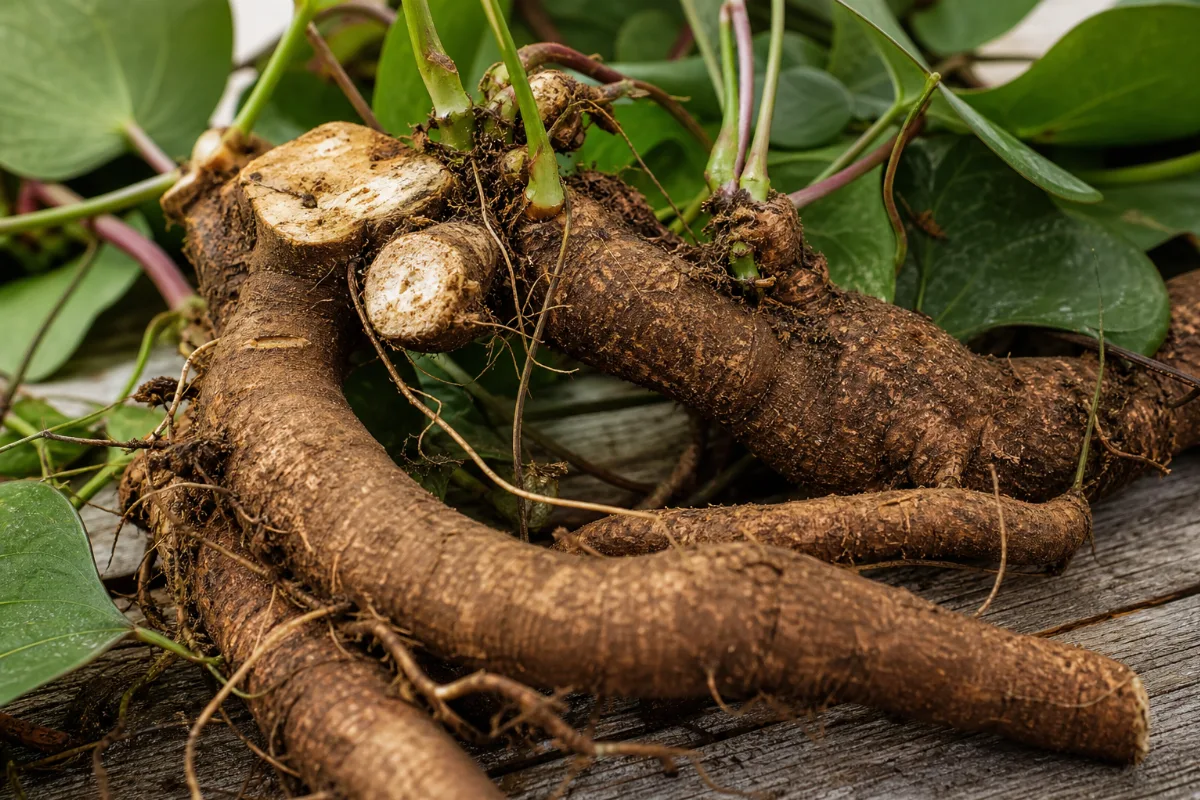
Herbs & Botanicals · Herbs · Smilax root with limited human research; mostly animal and lab studies
Sarsaparilla
Smilax ornata Lem., S. officinalis Kunth, S. glabra Roxb., S. china L. and related Smilax species · also called Sarsaparilla, zarzaparrilla, Jamaican sarsaparilla, Tufuling, China root
Sarsaparilla is the root or underground stem of several Smilax vines. It contains steroid-like saponins and flavonoids such as astilbin. It is a traditional remedy for rheumatism and skin disease and a flavouring for drinks.
General information, not medical advice. Last substantive update · Not medically reviewed. A named clinician has not signed off on this page. How this page is made
About Sarsaparilla
Sarsaparilla is the root of several Smilax vines used in folk medicine and as a flavouring. Human research is limited: Chinese trials of multi-herb gout formulae, one case report and old historical reports. Most other results are from animals or cells. Safety at medicine-level amounts is not established.
What it is
Sarsaparilla comes from Smilax species such as S. ornata (Jamaican), S. officinalis, S. glabra and S. china. GBIF treats S. regelii as a synonym of S. ornata. Indian sarsaparilla (Hemidesmus indicus) is a different plant, and root beer flavouring is not the same as root products for health.
Traditional and current uses
Jamaican folk medicine uses a root decoction for rheumatism. Chinese medicine uses Smilax glabra rhizome (Tufuling) for dampness, joint movement and detoxification. Older writings mention it for syphilis and skin disease.
What the research shows
A 2026 review of 56 trials (4,605 people) found formulae containing Tufuling linked with lower pain, uric acid, CRP and ESR in gout, with low to moderate certainty. A 12-week placebo-controlled trial of a multi-herb liquid also lowered uric acid and flares. Other uses rest on rat, mouse and cell studies. The saponins are chemical starting materials for steroid drugs in the lab, but no human study shows testosterone effects.
At a glance
Traditional uses history, not proof
- Jamaican decoction of dried rhizome for chronic rheumatism (p31676403)
- Chinese medicine: Smilax glabra rhizome (Tufuling) for detoxification, dampness and joint movement (p42460320)
- 17th and 18th century writings on venereal disease (p30895335)
Studied for research
- Gout and uric acid (Chinese multi-herb formulae), low
- Joint pain and swelling, very low
- Skin and psoriasis, insufficient
- Hormone or muscle claims, insufficient (not supported)
Main compounds
- Steroidal saponins including sarsasaponin, sarsaparilloside and parillin
- Sarsasapogenin and smilagenin (formed by acid hydrolysis in the lab)
- Flavonoids such as astilbin, engeletin and taxifolin
- Stilbenes: resveratrol and oxyresveratrol
Common forms
- Dried root or rhizome decoction (traditional)
- Root powder capsules
- Tinctures
- Chinese multi-herb formulae (clinical trials)
Research links: Tufuling gout systematic review (abstract) · Compound tufuling oral liquid trial · Sarsaparilla adulteration study · Research Library · Genes & Biomarkers Library
The plant and its history
- Accepted scientific name
- Smilax ornata Lem. (Jamaican sarsaparilla); also Smilax officinalis Kunth, Smilax glabra Roxb. and Smilax china L.
- Naming authority
- Lem. (GBIF accepted name for S. ornata)
- Synonyms
- Smilax regelii Killip & C.V.Morton (GBIF treats it as a synonym of S. ornata)
- Common names
- Sarsaparilla (English); Jamaican sarsaparilla (English); Zarzaparrilla (Spanish); Tufuling (S. glabra rhizome) (Chinese); China root (S. china) (English)
- Botanical family
- Smilacaceae (greenbrier family). Indian sarsaparilla, Hemidesmus indicus, is in Apocynaceae and is a different plant.
- Classification
- Plantae > Tracheophyta > Liliopsida > Liliales > Smilacaceae > Smilax > Smilax ornata
- Native range
- Not verified in the sources read.
- Habitat
- Not verified.
- What the plant looks like
- Roots: Rhizome and root are the parts used.; Stems: Not verified.; Leaves: Not verified.; Flowers: Not verified.; Fruit: Not verified.
- Cultivation
- Not verified.
- Harvest and processing
- Not verified.
- Look-alikes and adulterants
- Name: Hemidesmus indicus (Indian sarsaparilla); Note: Apocynaceae; different chemistry (aromatic aldehydes, triterpenes) and uses; review says safety in humans not fully assessed.; Name: Decalepis hamiltonii; Note: Red-listed plant named as a market adulterant of sarsaparilla.; Name: Smilax glabra / S. china; Note: Chinese Tufuling and China root; related but separate species with flavonoids such as astilbin.
- Sustainability and conservation
- Decalepis hamiltonii (adulterant) is IUCN Red-listed; status of Smilax species not verified.
Traditional use and history history, not clinical proof
| Tradition or era | Documented use | Source |
|---|---|---|
| Spanish America and Europe, 1500s onward | Two physicians of the late 1600s and early 1700s wrote on treating gonorrhoea and syphilis; the history paper's title sets mercury against sarsaparilla (abstract mentions mercury; sarsaparilla details not read). | p30895335 |
| Jamaica | Dried rhizome decoction given for chronic rheumatism and rheumatoid arthritis. | p31676403 |
| Traditional Chinese medicine | Smilax glabra rhizome (Tufuling) for detoxification, removing dampness and joint movement. | p42460320 |
| 20th century | Combined with dapsone for leprosy in a 1959 report; no abstract available. | p14438529 |
| Modern | Flavouring in foods and drinks such as root beer, and sold as tea or supplement; health benefits poorly established. | s-webmd-sarsaparilla |
Traditional use shows how a plant was used. It does not show that a supplement works or is safe today.
What is inside, and how it may work
What the plant contains and how those compounds act in cells and animals. Laboratory and animal mechanisms are not proven effects in people.
Main compounds
| Compound | Family | Where it is concentrated | Activity studied | Level of evidence |
|---|---|---|---|---|
| Sarsasapogenin (and sarsasaponin glycosides) PubChem 92095 | steroidal sapogenin | Root / rhizome Not stated in the sources read | Sapogenin released from sarsasaponin by acid; sarsasapogenin glycoside isolated from S. officinalis. Sapogenins are used as starting materials for steroid drugs in the lab. 9 19 | Laboratory research |
| Smilagenin PubChem 91439 | steroidal sapogenin | Root Not stated in the sources read | Epimer of sarsasapogenin formed during acid hydrolysis. 19 | Laboratory research |
| Parillin and sarsaparillosides PubChem 197977 | steroidal saponin | Root (S. ornata sample) Not stated in the sources read | Five saponins isolated including new sarsaparillosides B and C; one active against HT29 colon cancer cells in the dish. 10 | Laboratory research |
| Astilbin PubChem 119258 | flavonoid (dihydroflavanol) | Rhizome of S. glabra Not stated in the sources read | Main source plant; unstable and poorly bioavailable; mouse anti-gout and anti-inflammatory activity. 29 17 | Animal research |
| Engeletin PubChem 6453452 | flavonoid | Rhizome Not stated in the sources read | Suggested by docking in the psoriasis mouse study. 27 | Laboratory research |
| Taxifolin PubChem 439533 | flavonoid | Rhizome of S. glabra Not stated in the sources read | Identified in the water extract. 17 | Animal research |
| trans-Resveratrol PubChem 445154 | stilbene | Rhizome / root Not stated in the sources read | Found in S. glabra water extract; measured in rat blood after S. china extract. 17 11 | Animal research |
| Oxyresveratrol PubChem 5281717 | stilbene | Root of S. china Not stated in the sources read | Measured in rat blood after oral S. china extract. 11 | Animal research |
| Diosgenin and beta-sitosterol PubChem 99474 | steroid / sterol | Rhizome (database prediction) Not stated in the sources read | Named by network pharmacology for Tufuling; computer prediction only. Beta-sitosterol PubChem CID 222284. 18 | Laboratory research |
Mechanisms, receptors and pathways
| Target or pathway | Gene or receptor | What was found | Level |
|---|---|---|---|
| Uric acid production | xanthine oxidase | S. glabra water extract lowered liver xanthine oxidase and uric acid in gout mice. 17 | Animal research |
| Inflammatory messengers | TNF-alpha, IL-1beta, IL-6 | Extract lowered these signals in gout mice; computer docking links diosgenin to PTGS2 (prediction only). 17 18 | Animal research |
| Bradykinin and prostaglandin swelling | PGE2, bradykinin | S. ornata methanol extract reduced swelling from these messengers in rats. 15 | Animal research |
| IL-17 skin pathway | IL-17A, RORgt, STAT3 | S. china fraction eased psoriasis-like mouse skin. 27 | Animal research |
| Drug transport pump | P-glycoprotein | S. glabra raised gut P-gp gene activity 2.54 times in rats and changed methotrexate exposure. 16 | Animal research |
| Red cell membrane | membrane cholesterol (saponin action) | S. officinalis steroidal saponins broke red cells in lab test. 23 | Laboratory research |
| Cell stress and growth | glutathione, ERK1/2 | S. glabra extract disturbed glutathione balance in cancer cells. 25 | Laboratory research |
| Antioxidant pathway | Nrf2/HO-1 | S. glabra activated Nrf2/HO-1 in cisplatin kidney injury models. 30 | Animal research |
Absorption, metabolism and elimination
- Absorption
- Astilbin is mainly absorbed in its intact form but has poor bioavailability (review). Oxyresveratrol and resveratrol were measured in rat blood after Smilax china extract; no figures were taken.
- Distribution
- No human data.
- Metabolism
- Astilbin: only one metabolite, 3'-O-methylastilbin, was found (review).
- Elimination
- Not found.
- Bioavailability
- Poor for astilbin. No human sarsaparilla-extract study found.
Isolated compounds versus whole extracts
Studies on isolated astilbin or sapogenins do not show what a whole root does. Gout trials used multi-herb formulae. The traditional S. ornata decoction and the Chinese Tufuling formulae differ in species, preparation and use.
Nutritional composition
Sarsaparilla root is not a nutrient source; no vitamin or mineral analysis was read. Its content of interest is steroidal saponins and flavonoids.
1 low certainty1 very low certainty6 not enough evidence
What was looked at
The 8 benefits and uses checked for Sarsaparilla, each with how strong the evidence is. Tap one to open it.
- Gout flares and uric acid (Smilax glabra, Chinese medicine)Low certainty
- Rheumatic joint pain and swelling (traditional use)Very low certainty
- Skin conditions including psoriasisNot enough evidence
- Leprosy, syphilis and skin infection (historical use)Not enough evidence
- Cancer cell studies (lab only)Not enough evidence
- Kidney protection after toxic injury (animal)Not enough evidence
- Seizure activity (mouse)Not enough evidence
- Hormone or muscle-building claimsNot enough evidence
Lab markers tracked in the studies
Serum uric acidC-reactive protein (CRP)Erythrocyte sedimentation rate (ESR)
What is Sarsaparilla good for?
The main proposed uses and how strong the human evidence is for each. Low means small or inconsistent studies, very low means one uncontrolled report or only animal results, and insufficient means no human evidence. Nothing about sarsaparilla is rated higher than low. Smilax glabra (China root, Tufuling) and the American sarsaparillas are different species, and Indian sarsaparilla is a different plant altogether. Ask a doctor or pharmacist about amounts.
Benefits, one by one
Each card is a research question, not a promise. Tap a goal to filter. Open a card to see the studies, doses and limits.
Gout flares and uric acid (Smilax glabra, Chinese medicine)
Low certaintyChinese formulae that contain Smilax glabra (Tufuling) have been tested in gout. Most trials combined it with other herbs or with drugs, so the effect cannot be given to the plant alone.
4 studiesMulti-herb formulae in Chinese trials; no single-herb dose or product…
Studies, doses and limits
What the trials found
A 2026 systematic review pooled 56 trials (4,605 people) of formulae containing Tufuling: with Western medicine or as full Chinese-medicine care they were linked with lower pain, uric acid, CRP and ESR than Western medicine alone; the authors rate certainty low to moderate. One double-blind, placebo-controlled trial of a multi-herb oral liquid (n = 210, 12 weeks) lowered uric acid more than placebo and had fewer flares. A 2005 trial (n = 90) of a multi-herb granule found a higher cure rate than diclofenac, with no placebo group.
Results
Compound tufuling oral liquid: uric acid fell 74.26 vs 28.81 umol/L (P = 0.004); flares from week 6 to 12 were 21.93% vs 50.88% (P < 0.001). Rebixiao granules: cure rate 26.7% vs 10.0% (P < 0.01).
Effect sizes as reported
Compound tufuling: uric acid drop 74.26 umol/L (95% CI 56.74-91.77) vs 28.81 (4.91-52.71). Meta-analysis pooled figures not given in the abstract.
Why this rating
Positive in several Chinese trials and a review, but every product was a multi-herb formula, trials were short and reporting was incomplete. No trial tested Smilax glabra alone.
Form and dose studied
Multi-herb formulae in Chinese trials; no single-herb dose or product recommended here. Not the same as sarsaparilla sold in Western supplements.
Who was studied
Adults with gout in China.
Limits
Formulae, not single herb; mostly short; mostly Chinese-language trial reports; control was often a drug, not placebo.
Why researchers looked
Smilax glabra rhizome is a long-standing Chinese-medicine ingredient for 'damp-heat' joint problems, and mouse work shows lower uric acid and less joint swelling.
Traditional use
Sarsaparilla root (Smilax species) was used in Central and South America and later in Europe for skin disease, rheumatism and as a tonic; Chinese medicine uses Smilax glabra rhizome (Tufuling) for 'dampness', joint movement and detoxification (p42460320, p31676403).
Proposed mechanism Animal research
In gout mice, a water extract lowered uric acid, liver xanthine oxidase and inflammatory signals (TNF-alpha, IL-1beta, IL-6).
A proposed mechanism does not show that the effect happens in people.
Smilax in these formulae is Smilax glabra (China), not Jamaican or Honduran sarsaparilla. See the safety section.
Rheumatic joint pain and swelling (traditional use)
Very low certaintySarsaparilla is traditionally taken for rheumatism. Rat studies of Jamaican sarsaparilla (Smilax ornata) show less swelling and pain response. No human trial of sarsaparilla alone for arthritis was found.
3 studiesRat doses were 200-400 mg/kg of methanol extract; the case used 425 m…
Studies, doses and limits
What the trials found
No controlled human trial of Smilax ornata or S. officinalis for arthritis was found. One case report of a 73-year-old woman with psoriatic arthritis used sarsaparilla root capsules alongside acupuncture, turmeric and vitamin D3; she improved, but four treatments were used at once.
Results
Rats: lower paw swelling and delayed pain response versus control (P < 0.05 for pain). Case report: improved range of motion and less swelling and stiffness.
Why this rating
Only rat models and one uncontrolled case report; the case report cannot separate sarsaparilla from the other treatments.
Form and dose studied
Rat doses were 200-400 mg/kg of methanol extract; the case used 425 mg of unstandardised root powder daily. No recommendation.
Who was studied
Rats; one older woman.
Limits
Case report, animal data; extracts used in rats are not the same as capsules or tea.
Why researchers looked
Folk use of S. ornata decoction for chronic rheumatism led researchers to test it in rats.
Traditional use
Sarsaparilla root (Smilax species) was used in Central and South America and later in Europe for skin disease, rheumatism and as a tonic; Chinese medicine uses Smilax glabra rhizome (Tufuling) for 'dampness', joint movement and detoxification (p42460320, p31676403).
Proposed mechanism Animal research
Rat results suggest reduced bradykinin and prostaglandin E2 swelling; authors say it may block those messengers.
A proposed mechanism does not show that the effect happens in people.
See safety section: kidney and drug-interaction cautions.
Skin conditions including psoriasis
Not enough evidenceSarsaparilla and China root are traditional skin remedies. A mouse psoriasis model responded to a Smilax china fraction. There is no human psoriasis trial.
3 studiesNone recommended; mouse used an isolated fraction.
Studies, doses and limits
What the trials found
No controlled human trial for any skin condition was found. The only human report found is a single case of psoriatic arthritis (joints, with acupuncture and other supplements). Natural Medicines states there is insufficient evidence for psoriasis.
Results
Mice: lower psoriasis-like skin scores and cytokines with 100 or 200 mg/kg of a fraction versus untreated; methotrexate was the comparison.
Why this rating
No human trial; mouse fraction only.
Who was studied
Mice.
Limits
Isolated fraction, imiquimod mouse skin model.
Why researchers looked
Traditional use for skin disease and abscesses; herb reference pages list psoriasis as a popular use.
Traditional use
Sarsaparilla root (Smilax species) was used in Central and South America and later in Europe for skin disease, rheumatism and as a tonic; Chinese medicine uses Smilax glabra rhizome (Tufuling) for 'dampness', joint movement and detoxification (p42460320, p31676403).
Proposed mechanism Animal research
In mice, an ethyl acetate fraction of Smilax china rhizome reduced skin thickening and IL-17 pathway signals; astilbin, engeletin and resveratrol are the main compounds suggested.
A proposed mechanism does not show that the effect happens in people.
None specific found.
Leprosy, syphilis and skin infection (historical use)
Not enough evidenceSarsaparilla appears in 17th and 18th century writings on venereal disease, and a 1959 report combined it with dapsone for leprosy. No modern trial supports these uses.
2 studiesNone.
Studies, doses and limits
What the trials found
A 1959 leprosy report (Rollier) exists but has no abstract, so no result was read. Nothing modern was found.
Results
Not available
Why this rating
No readable human result; history only.
Who was studied
People with leprosy in 1959 (title only).
Limits
History only.
Why researchers looked
Historical record of trade and use.
Traditional use
A history paper on two physicians of the 1600s and 1700s sets mercury against sarsaparilla for gonorrhoea and syphilis.
Proposed mechanism Traditional use
Historical accounts only; no mechanism established.
A proposed mechanism does not show that the effect happens in people.
Do not use sarsaparilla instead of antibiotics or standard treatment for leprosy, syphilis or any infection.
Cancer cell studies (lab only)
Not enough evidenceIn dishes and mice, Smilax glabra extracts slowed cancer cells. This is early lab work with no human trial.
3 studiesNone.
Studies, doses and limits
What the trials found
No human cancer trial of sarsaparilla was found. Natural Medicines states there is insufficient evidence for cancer.
Results
Cell growth slowed in the dish and in mice (figures not taken).
Why this rating
Cell and mouse studies only.
Who was studied
Cell lines, mice.
Limits
Lab only; no safe human amount known.
Why researchers looked
Extract of Smilax glabra rhizome has shown growth-slowing effects on many cancer cell lines.
Proposed mechanism Laboratory research
The water extract changed cell glutathione balance and triggered S-phase arrest, apoptosis and autophagy; one root saponin was active against colon cancer cells.
A proposed mechanism does not show that the effect happens in people.
Do not use sarsaparilla in place of cancer treatment.
Kidney protection after toxic injury (animal)
Not enough evidenceIn mice, Smilax glabra extracts reduced kidney injury from cisplatin and from high uric acid. This does not show that sarsaparilla is safe for human kidneys; sources also advise caution.
3 studiesMouse doses 1.95-3.9 g/kg of extract in the cisplatin study.
Studies, doses and limits
What the trials found
No human trial found.
Results
Less kidney injury and oxidative stress in mice given cisplatin; improved kidney tissue in gout mice.
Why this rating
Mice and cells only.
Form and dose studied
Mouse doses 1.95-3.9 g/kg of extract in the cisplatin study.
Who was studied
Mice.
Limits
Animal data conflict with human-source warnings about kidney problems; neither is trial-tested in people.
Why researchers looked
Smilax glabra is used in Chinese medicine for detoxification.
Traditional use
Chinese medicine uses Tufuling to clear dampness and toxins.
Proposed mechanism Animal research
Extract switched on the Nrf2/HO-1 antioxidant pathway in mouse kidneys and kidney cells.
A proposed mechanism does not show that the effect happens in people.
Natural Medicines advises people with kidney disease to avoid sarsaparilla.
Seizure activity (mouse)
Not enough evidenceA Smilax china extract reduced seizure measures in mice. No human data.
1 studiesNone.
Studies, doses and limits
What the trials found
No human data found.
Results
Shorter hind-leg extension and later seizure onset in mice.
Why this rating
Mouse screening only.
Who was studied
Mice.
Limits
Abstract does not give the nerve-toxicity result.
Why researchers looked
Screening of Smilax china rhizome.
Proposed mechanism Animal research
Not established.
A proposed mechanism does not show that the effect happens in people.
Do not use for seizures.
Hormone or muscle-building claims
Not enough evidenceOlder sales pages said sarsaparilla contains or raises testosterone. No human study showing that was found. Sarsaparilla saponins can be turned into steroid-like chemicals in the lab with acid, but this is not shown to happen in the body.
3 studiesNone.
Studies, doses and limits
What the trials found
No human trial of testosterone, muscle or hormones with sarsaparilla was found. The tincture-chemistry paper concerns test-tube hydrolysis only.
Results
No human result exists.
Why this rating
No human data; claim not supported.
Limits
The claim is not supported by anything read.
Why researchers looked
The saponins' sapogenin core is steroid-like, which led to the claim.
Traditional use
Used as folk tonic.
Proposed mechanism Laboratory research
Lab acid treatment converts sarsasaponin to sarsasapogenin and smilagenin; no body conversion shown.
A proposed mechanism does not show that the effect happens in people.
Not advised as a hormone product; ask a doctor about low testosterone.
Connections to the rest of health
How Sarsaparilla connects to the rest of our health knowledge graph. Every link says what kind of connection it is. A safety link (for example to the liver) is a warning, not a benefit. A study that merely mentions a topic never creates a benefit link.
Explore every connection: goals, body systems, organs, symptoms, genes
A. Wellness goals
| Connected to | Kind of connection | Evidence status | Context | Studies |
|---|---|---|---|---|
| Joint Support | Demonstrated clinical effect | Low certainty | Gout flares and uric acid (Smilax glabra, Chinese medicine): Chinese formulae that contain Smilax glabra (Tufuling) have been tested in gout. Most trials combined it with other herbs or with drugs, so the effect cannot be given to the plant alone. | 18 28 12 17 |
| Inflammation Balance | Demonstrated clinical effect | Low certainty | Gout flares and uric acid (Smilax glabra, Chinese medicine): Chinese formulae that contain Smilax glabra (Tufuling) have been tested in gout. Most trials combined it with other herbs or with drugs, so the effect cannot be given to the plant alone. | 18 28 12 17 |
| Metabolic Health | Demonstrated clinical effect | Low certainty | Gout flares and uric acid (Smilax glabra, Chinese medicine): Chinese formulae that contain Smilax glabra (Tufuling) have been tested in gout. Most trials combined it with other herbs or with drugs, so the effect cannot be given to the plant alone. | 18 28 12 17 |
| Joint Support | Traditional use | Very low certainty | Rheumatic joint pain and swelling (traditional use): Sarsaparilla is traditionally taken for rheumatism. Rat studies of Jamaican sarsaparilla (Smilax ornata) show less swelling and pain response. No human trial of sarsaparilla alone for arthritis was found. | 14 15 20 |
| Inflammation Balance | Traditional use | Very low certainty | Rheumatic joint pain and swelling (traditional use): Sarsaparilla is traditionally taken for rheumatism. Rat studies of Jamaican sarsaparilla (Smilax ornata) show less swelling and pain response. No human trial of sarsaparilla alone for arthritis was found. Skin conditions including psoriasis: Sarsaparilla and China root are traditional skin remedies. A mouse psoriasis model responded to a Smilax china fraction. There is no human psoriasis trial. | 14 15 20 27 1 |
| Healthy Skin | Traditional use | Not enough evidence | Skin conditions including psoriasis: Sarsaparilla and China root are traditional skin remedies. A mouse psoriasis model responded to a Smilax china fraction. There is no human psoriasis trial. | 27 20 1 |
| Immune Support | Traditional use | Not enough evidence | Leprosy, syphilis and skin infection (historical use): Sarsaparilla appears in 17th and 18th century writings on venereal disease, and a 1959 report combined it with dapsone for leprosy. No modern trial supports these uses. | 22 24 |
| Longevity | Preliminary mechanism | Not enough evidence | Cancer cell studies (lab only): In dishes and mice, Smilax glabra extracts slowed cancer cells. This is early lab work with no human trial. | 25 10 1 |
| Liver Support | Preliminary mechanism | Not enough evidence | Kidney protection after toxic injury (animal): In mice, Smilax glabra extracts reduced kidney injury from cisplatin and from high uric acid. This does not show that sarsaparilla is safe for human kidneys; sources also advise caution. | 30 17 1 |
| Calm Relaxation | Preliminary mechanism | Not enough evidence | Seizure activity (mouse): A Smilax china extract reduced seizure measures in mice. No human data. | 26 |
| Mens Vitality | Traditional use | Not enough evidence | Hormone or muscle-building claims: Older sales pages said sarsaparilla contains or raises testosterone. No human study showing that was found. Sarsaparilla saponins can be turned into steroid-like chemicals in the lab with acid, but this is not shown to happen in the body. | 19 9 2 |
| Hormone Balance | Traditional use | Not enough evidence | Hormone or muscle-building claims: Older sales pages said sarsaparilla contains or raises testosterone. No human study showing that was found. Sarsaparilla saponins can be turned into steroid-like chemicals in the lab with acid, but this is not shown to happen in the body. | 19 9 2 |
B. Body systems
| Connected to | Kind of connection | Evidence status | Context | Studies |
|---|---|---|---|---|
| Pregnancy and breastfeeding | Contraindication | Very low certainty | Avoid; data lacking. Preparation or compound: Sarsaparilla (Smilax spp.) |
1 2 |
| Musculoskeletal System | Biological association | Low certainty | Studied for: Gout flares and uric acid (Smilax glabra, Chinese medicine) Studied for: Rheumatic joint pain and swelling (traditional use) | 18 28 12 17 14 15 20 |
| Metabolism Weight | Biological association | Low certainty | Studied for: Gout flares and uric acid (Smilax glabra, Chinese medicine) | 18 28 12 17 |
| Integumentary System | Biological association | Not enough evidence | Studied for: Skin conditions including psoriasis Studied for: Leprosy, syphilis and skin infection (historical use) | 27 20 1 22 24 |
| Immune System | Biological association | Not enough evidence | Studied for: Skin conditions including psoriasis Studied for: Leprosy, syphilis and skin infection (historical use) | 27 20 1 22 24 25 10 |
| Urinary System | Biological association | Not enough evidence | Studied for: Kidney protection after toxic injury (animal) | 30 17 1 |
| Nervous System | Biological association | Not enough evidence | Studied for: Seizure activity (mouse) | 26 |
| Endocrine System | Biological association | Not enough evidence | Studied for: Hormone or muscle-building claims | 19 9 2 |
C. Body parts and organs
| Connected to | Kind of connection | Evidence status | Context | Studies |
|---|---|---|---|---|
| Kidneys | Contraindication | Very low certainty | Avoid in kidney disease as advised by reference sources. Preparation or compound: Sarsaparilla (Smilax spp.) |
1 |
| Gut | Adverse effect or risk | Very low certainty | Upset stomach with large amounts. Preparation or compound: Sarsaparilla saponins |
1 2 |
E. Health conditions
I. Biomarkers
| Connected to | Kind of connection | Evidence status | Context | Studies |
|---|---|---|---|---|
| Serum uric acid | Biological association | Low certainty | Measured in trials: lowered. A lab change is not the same as a health benefit. | 28 12 18 |
| C-reactive protein (CRP) | Biological association | Low certainty | Measured in trials: lowered. A lab change is not the same as a health benefit. | 18 |
| Erythrocyte sedimentation rate (ESR) | Biological association | Low certainty | Measured in trials: lowered. A lab change is not the same as a health benefit. | 18 |
J. Genes, receptors and enzymes
K. Biological pathways
L. Active compounds
| Connected to | Kind of connection | Evidence status | Context | Studies |
|---|---|---|---|---|
| Sarsasapogenin (and sarsasaponin glycosides) | Biological association | In vitro | Sapogenin released from sarsasaponin by acid; sarsasapogenin glycoside isolated from S. officinalis. Sapogenins are used as starting materials for steroid drugs in the lab. Preparation or compound: Root / rhizome |
9 19 |
| Smilagenin | Biological association | In vitro | Epimer of sarsasapogenin formed during acid hydrolysis. Preparation or compound: Root |
19 |
| Parillin and sarsaparillosides | Biological association | In vitro | Five saponins isolated including new sarsaparillosides B and C; one active against HT29 colon cancer cells in the dish. Preparation or compound: Root (S. ornata sample) |
10 |
| Astilbin | Biological association | Animal | Main source plant; unstable and poorly bioavailable; mouse anti-gout and anti-inflammatory activity. Preparation or compound: Rhizome of S. glabra |
29 17 |
| Engeletin | Biological association | In vitro | Suggested by docking in the psoriasis mouse study. Preparation or compound: Rhizome |
27 |
| Taxifolin | Biological association | Animal | Identified in the water extract. Preparation or compound: Rhizome of S. glabra |
17 |
| trans-Resveratrol | Biological association | Animal | Found in S. glabra water extract; measured in rat blood after S. china extract. Preparation or compound: Rhizome / root |
17 11 |
| Oxyresveratrol | Biological association | Animal | Measured in rat blood after oral S. china extract. Preparation or compound: Root of S. china |
11 |
| Diosgenin and beta-sitosterol | Biological association | In vitro | Named by network pharmacology for Tufuling; computer prediction only. Beta-sitosterol PubChem CID 222284. Preparation or compound: Rhizome (database prediction) |
18 |
Each connection is stored with the ingredient, the connected record, the kind of connection, the evidence status, the supporting studies, the preparation or compound involved, and a review date (last reviewed October 25, 2026).
Evidence at a glance: what changed in 3 lab markers
Tap a number to show only those markers. Counts are markers, not people.
The evidence
The research centre for Sarsaparilla. Every record here was checked against PubMed or the publisher's page; we never list a study we have not verified.
Evidence by outcome
Bars show how many studies we found for each outcome, not how well it works. People are added up across trials only (reviews are not added, to avoid double counting).
How we rate evidence
High certainty
Several well-run trials or reviews agree; further research is unlikely to change the picture much.
Moderate certainty
Good trials point the same way, but some doubt remains.
Low certainty
Small, short or inconsistent trials. The finding could change with better research.
Very low certainty
Very little or very weak human data. Treat as a possibility only.
Mixed findings
Trials or reviews disagree with each other.
Not enough evidence
Not enough human research to say either way.
Evidence against
Good research found no benefit, or found harm.
We take the reviewers' own risk-of-bias and GRADE statements where they exist, and otherwise judge from study size, design, consistency, directness and whether a product matches what is sold. Many publications do not make evidence high. Method note: We searched PubMed and read the abstracts of about 22 papers, checked plant names in GBIF and NCBI Taxonomy and compounds in PubChem, and read summaries of consumer and database pages (WebMD, Natural Medicines). No NCCIH, EMA, LiverTox or LactMed entry was found. Not verified: Commission E, the digoxin and bismuth absorption claim from herb-reference sites, and funding for most trials. Only abstracts were read for studies.
Study library: every study we checked 30
| Study | Design | People | Product, dose, length | Result |
|---|---|---|---|---|
| 2026 Natural Medicines (via vital.ly): Sarsaparilla monograph · Source |
Authoritative guidance |
Paid-database monograph as shown on a reseller page. Says safety at medicinal amounts is not established, upset stomach at large amounts, avoid in pregnancy and breastfeeding, might worsen kidney disease. Interactions rated moderate: digoxin (may lower potassium and so worsen digoxin effects) and lithium (may act like a diuretic and slow lithium clearance); may add to herbs containing cardiac glycosides. States insufficient evidence for cancer, rheumatoid arthritis and psoriasis. No mention of bismuth, haemolysis or testosterone. Methods, limits and fundingLimitations: Secondhand through a reseller page; read through a page summary on 2026-10-25. Read: summary-only | ||
| 2026 WebMD: Sarsaparilla (uses, side effects, pregnancy, interactions) · Source |
Authoritative guidance |
Consumer health page. Says sarsaparilla is mainly a flavouring (for example root beer), sold as tea or supplement, with poorly established health benefits; common side effects are more urination and upset stomach; serious allergic reaction can occur; pregnancy and breast milk effects unknown; kidney and liver problems listed to discuss with a provider; water pills (diuretics) flagged; says it may alter blood levels of some medicines. No mention of lithium, digoxin, bismuth, testosterone or haemolysis. Methods, limits and fundingLimitations: Consumer page, not a regulator. Read through a page summary on 2026-10-25; page date not seen. Read: summary-only | ||
| 2026 Herb reference sites (RxList and others) reported in a web search summary: sarsaparilla may increase absorption of digoxin and bismuth · Source |
Pharmacological theory |
A web search summary said herb reference sites list digoxin as a possible interaction and say sarsaparilla may increase absorption of digitalis and bismuth, with a theory that saponins raise absorption of other substances. No human data were found. Methods, limits and fundingLimitations: NOT verified: the pages themselves were not opened (one blocked), only a search summary was seen. Treat as a claim, not a finding. Read: summary-only | ||
| 2026 LiverTox and LactMed (no sarsaparilla entry found) · Source |
Authoritative guidance |
A search of NCBI Bookshelf for sarsaparilla with LiverTox or LactMed returned no records, and a web search found no LiverTox entry. Methods, limits and fundingLimitations: NOT verified beyond those searches. Read: summary-only | ||
| 2026 GBIF Backbone: Smilax ornata, S. officinalis, S. glabra, S. china; S. regelii as synonym · Source |
Authoritative guidance |
GBIF match 2026-10-25: Smilax ornata Lem. accepted (key 5295217); Smilax regelii Killip & C.V.Morton is a synonym of it; Smilax officinalis Kunth accepted (5295116); Smilax glabra Roxb. accepted (5295506); Smilax china L. accepted (5295472); all family Smilacaceae. Hemidesmus indicus (L.) R.Br. accepted (8125676), family Apocynaceae. Methods, limits and fundingLimitations: API match only. Read: full-text | ||
| 2026 NCCIH Herbs at a Glance (no sarsaparilla or Smilax entry found) · Source |
Authoritative guidance |
The Herbs at a Glance index has no sarsaparilla or Smilax fact sheet. Methods, limits and fundingLimitations: Checked by page summary on 2026-10-25; the full A-Z list was not searched. Read: summary-only | ||
| 2026 EMA / HMPC herbal monographs (no Smilax or sarsaparilla monograph found) · Source |
Authoritative guidance |
A web search found no EMA HMPC monograph for Smilax or sarsaparilla. The EMA site itself blocked an automated request, so this is NOT verified. Methods, limits and fundingLimitations: Could not read the EMA site directly. Read: summary-only | ||
| 2026 Commission E negative monograph for Sarsaparillae radix (second-hand) · Source |
Authoritative guidance |
A cosmetics-ingredient page states there is a negative Commission E monograph for sarsaparilla root. Methods, limits and fundingLimitations: NOT verified: second-hand claim; the monograph was not read. Read: summary-only | ||
| Bernardo 1996 Steroidal saponins from Smilax officinalis. Phytochemistry · PMID 8862038 · DOI |
Laboratory research in-vitro |
Not applicable Chemistry |
Rhizomes of Smilax officinalis rhizome |
Three new steroidal saponins were isolated; one was a sarsasapogenin glycoside and another a neotigogenin glycoside. Not applicable (Not applicable) Methods, limits and fundingOutcomes: Structures of saponins Limitations: Identity of compounds only. Funding and conflicts: Not stated in abstract Read: abstract |
| Challinor 2012 Steroidal saponins from the roots of Smilax sp.: structure and bioactivity. Steroids · PMID 22285850 · DOI |
Laboratory research in-vitro |
Not applicable Lab chemistry and six human tumour cell lines |
Commercial root sample supplied as Smilax ornata root |
Five steroidal saponins were isolated, including new sarsaparillosides B and C, plus sarsaparilloside, a delta-20(22) form and parillin. One was especially active against HT29 colon cancer cells in the dish. Not given (Not given) Methods, limits and fundingOutcomes: Structures and cell-killing activity of five steroidal saponins Limitations: Chemistry and cell lines; shows what is in the root, not what it does in people. Funding and conflicts: Not stated in abstract Read: abstract |
| Huang 2008 High performance liquid chromatographic method for the determination and pharmacokinetic studies of oxyresveratrol and resveratrol in rat plasma after oral administration of Smilax china extract. Biomed Chromatogr · PMID 18004743 · DOI |
Animal research animal |
Not given Rats |
Smilax china root extract root Not read Not read |
A lab method was built and used to follow oxyresveratrol and resveratrol in rat blood after oral Smilax china extract. The abstract gives no PK numbers. Not given (Not given) Methods, limits and fundingOutcomes: Plasma oxyresveratrol and resveratrol Limitations: Method paper in rats; no values taken. Funding and conflicts: Not stated in abstract Read: abstract |
| Ji 2005 Effects of Rebixiao granules on blood uric acid in patients with repeatedly attacking acute gouty arthritis. Chin J Integr Med · PMID 15975301 · DOI |
Controlled trial |
90 Adults with repeatedly attacking acute gouty arthritis |
Rebixiao granules (multi-herb formula; Smilax glabra rhizome is one ingredient named in the mouse experiment) rhizome plus other ingredients Not given in abstract Not given in abstract · vs Diclofenac sodium tablets (Futalin) in the control group (n = 30; treated n = 60) |
Clinical effective rate 95.0% vs 90.0% (not significantly different). Cure rate 26.7% vs 10.0% (P < 0.01). Blood uric acid lower in the treated group (P < 0.05). In mice, Smilax glabra rhizome alone also lowered uric acid. Cure rate 26.7% vs 10.0% (Not given in abstract) Methods, limits and fundingOutcomes: Clinical effective rate, cure rate, blood uric acid; mouse uric acid Limitations: Not clearly blinded or placebo-controlled in the abstract; control was an anti-inflammatory drug, not placebo. Multi-herb formula. Old trial from 2005. Funding and conflicts: Not stated in abstract Read: abstract |
| Kesanakurti 2020 Genome skimming and NMR chemical fingerprinting provide quality assurance biotechnology to validate Sarsaparilla identity and purity. Sci Rep · PMID 33154455 · DOI |
Laboratory research in-vitro |
Not applicable Commercial raw materials and finished products labelled sarsaparilla |
DNA and NMR tests for sarsaparilla identity root products |
The authors say sarsaparilla has been reported as one of the most adulterated botanicals, with causes including substitution, confusing trade names for several plants and wrong wild-harvest. One adulterant named is Decalepis hamiltonii, an IUCN Red-listed plant. Not applicable (Not applicable) Methods, limits and fundingOutcomes: Adulteration in the marketplace Limitations: Method paper; the share of adulterated products is not given in the abstract. Funding and conflicts: No competing interests declared Read: abstract |
| Khan 2019 Investigation of the anti-inflammatory and the analgesic effects of the extracts from Smilax ornata Lem. (Jamaican sarsaparilla) plant. J Ethnopharmacol · PMID 31063818 · DOI |
Animal research animal |
Not given Sprague-Dawley rats |
Methanol and ethyl acetate extracts of Smilax ornata (Jamaican sarsaparilla) dried rhizome 200 and 400 mg/kg Single doses · vs Saline and vegetable oil |
Extracts reduced paw swelling and delayed pain response compared with control groups (P < 0.05 for the analgesic results). Parts of the abstract text are missing, so exact swelling figures were not taken. P < 0.05 (Not given) Methods, limits and fundingOutcomes: Paw swelling (carrageenan) and pain response (tail-flick) Limitations: Rats, single dose, acute inflammation model only. Not a test of arthritis in people. Funding and conflicts: Not stated in abstract Read: abstract |
| Khan 2020 Investigation of the preliminary mechanism of action for the acute anti-inflammatory activity of the methanol extract of Smilax ornata Lem. J Ethnopharmacol · PMID 31676403 · DOI |
Animal research animal |
Not given Rats |
Methanol extract of Smilax ornata rhizome rhizome Up to 400 mg/kg Single doses · vs Saline |
The abstract says the extract reduced swelling caused by bradykinin and prostaglandin E2; the histamine result sentence is incomplete in the abstract. Authors suggest it may block or reduce these inflammatory messengers. P < 0.05 for prostaglandin model (Not given) Methods, limits and fundingOutcomes: Swelling caused by histamine, bradykinin or prostaglandin E2 Limitations: Rat swelling model; mechanism is a suggestion only. Funding and conflicts: Not stated in abstract Read: abstract |
| Li 2017 Smilax glabra Rhizoma affects the pharmacokinetics and tissue distribution of methotrexate by increasing the P‑glycoprotein mRNA expression in rats after oral administration. Mol Med Rep · PMID 28944899 · DOI |
Animal research animal |
Not given Rats |
Smilax glabra rhizome given with oral methotrexate rhizome Not read Not read · vs Methotrexate alone |
Smilax glabra lowered methotrexate peak blood level and total exposure (Cmax and AUC) by 48.2% and 44.5%, but it varied by organ: lower in small intestine, stomach, plasma and kidney (61.6%, 34.7%, 63.3%, 46.1%) and higher in lung and spleen (82.9%, 21.0%). The pump protein P-glycoprotein gene activity in the small intestine rose 2.54 times. AUC -44.5%, Cmax -48.2% (Not given) Methods, limits and fundingOutcomes: Methotrexate blood and tissue levels; P-glycoprotein gene activity Limitations: Rats only. Shows a possible drug interaction with a drug that has a narrow safety margin; human relevance unknown. Funding and conflicts: Not stated in abstract Read: abstract |
| Liang 2019 Protective effects of Rhizoma smilacis glabrae extracts on potassium oxonate- and monosodium urate-induced hyperuricemia and gout in mice. Phytomedicine · PMID 31005813 · DOI |
Animal research animal |
Not given Mice with potassium-oxonate-induced high uric acid and urate-crystal gout |
Water extract of Smilax glabra rhizome (Rhizoma smilacis glabrae, tufuling); nine compounds identified including astilbin and trans-resveratrol rhizome Dose-ranging (values not read) Days 21 to 24 of treatment · vs Allopurinol and vehicle |
Extract reduced ankle swelling, uric acid, TNF-alpha, IL-1beta, IL-6 and blood urea nitrogen, raised IL-10 and urinary uric acid, lowered liver xanthine oxidase activity and improved kidney and joint tissue appearance, dose-dependently. Not given (Not given) Methods, limits and fundingOutcomes: Ankle swelling, serum uric acid, inflammatory messengers, kidney tissue, liver xanthine oxidase Limitations: Mouse model. Cannot be moved to people. Funding and conflicts: Not stated in abstract Read: abstract |
| Liu 2026 Multidimensional therapeutic advantages of Smilax glabra (Tufuling)-containing formulae in gout: an integrated Systematic Review and network pharmacology-based prediction. Front Endocrinol (Lausanne) · PMID 42460320 · DOI |
Systematic review |
4605 People with gout (dampness-heat pattern); 56 randomized trials |
Formulae containing Smilax glabra rhizome (Tufuling) plus other Chinese herbs and/or Western medicine rhizome (root-like underground stem) Varies by trial; not given in abstract Short; not given · vs Western medicine alone (mostly) |
Formulae containing Tufuling, mainly combined with Western medicine or as full Chinese-medicine treatment, were linked with lower pain scores, uric acid, CRP and ESR than Western medicine alone. Fewer gut side effects were reported (73 vs 161 cases), but adverse-event reporting was incomplete. Authors rate certainty low to moderate. Pooled effect sizes not given in the abstract (Not given in abstract) Methods, limits and fundingOutcomes: Pain (VAS), serum uric acid, CRP, ESR, adverse events Limitations: Every formula had other herbs or drugs, so Smilax cannot be credited alone. Short treatment, limited follow-up. Network-pharmacology part is computer prediction only. Funding and conflicts: Authors declare no commercial conflicts. Read: abstract |
| Love 2020 Acid hydrolysis of saponins extracted in tincture. PLoS One · PMID 33382809 · DOI |
Laboratory research in-vitro |
Not applicable Lab chemistry |
Sarsaparilla (Smilax spp) root tincture in 45% ethanol root |
Sarsaparilla saponin dissolves in ethanol-water at room temperature, and acid heating turns it into sarsasapogenin and smilagenin with near 100% yield. The paper presents this as a cheap chemistry route to steroid-drug starting materials. Not applicable (Not applicable) Methods, limits and fundingOutcomes: Sarsasapogenin released from sarsasaponin by acid Limitations: Test-tube chemistry. It shows that lab acid treatment is needed; it does not show anything happens in the body. Corresponding author's own self-funded lab. Funding and conflicts: Self-funded lab; no products declared Read: abstract |
| Martin 2020 Treatment of Psoriatic Arthritis With Acupuncture, Turmeric (Curcuma longa), Sarsaparilla (Smilax officinalis) and Vitamin D: A Case Report. J Chiropr Med · PMID 33362443 · DOI |
Case report |
1 One 73-year-old woman with psoriatic arthritis |
Acupuncture plus turmeric extract with black pepper, unstandardised sarsaparilla root (Smilax officinalis) capsules and vitamin D3 root powder 425 mg sarsaparilla root once daily (as taken in the case) About one year |
Range of motion rose and swelling and stiffness fell after two acupuncture sessions plus the supplements, and symptoms stayed tolerable for a year. The author says the supplements 'might have helped'. Not applicable (Not applicable) Methods, limits and fundingOutcomes: Range of motion, swelling, stiffness Limitations: One person, four treatments at once, no control. Cannot show sarsaparilla did anything. Written by a single author from a chiropractic university. Funding and conflicts: Not stated in abstract Read: abstract |
| Nandy 2020 Indian Sarsaparilla (Hemidesmus indicus): Recent progress in research on ethnobotany, phytochemistry and pharmacology. J Ethnopharmacol · PMID 32007632 · DOI |
Narrative review |
Not applicable Review of Hemidesmus indicus (Indian sarsaparilla) |
Hemidesmus indicus root root |
A different plant (Apocynaceae) with its own uses. The authors say it is not fully assessed for safety and efficacy in humans. Included only to keep it apart from Smilax. Not applicable (Not applicable) Methods, limits and fundingOutcomes: Traditional use, chemistry, pharmacology Limitations: Different plant; not evidence about Smilax. Funding and conflicts: None declared Read: abstract |
| ROLLIER 1959 Treatment of lepromatous leprosy by a combination of DDS and sarsaparilla (Smilax ornata). Int J Lepr · PMID 14438529 |
Clinical trial |
People with lepromatous leprosy (1959) | Dapsone (DDS) plus sarsaparilla (Smilax ornata) Not available Not available · vs Not available |
No abstract is available in PubMed, so no result was read. Listed only because the title shows sarsaparilla was combined with dapsone in a 1959 report. Not available (Not available) Methods, limits and fundingOutcomes: Treatment of leprosy Limitations: Title only; nothing about results was read. Funding and conflicts: Not available Read: summary-only |
| Santos 1997 Haemolytic activities of plant saponins and adjuvants. Effect of Periandra mediterranea saponin on the humoral response to the FML antigen of Leishmania donovani. Vaccine · PMID 9261952 · DOI |
Laboratory research in-vitro |
Not applicable Red blood cells in the lab; mice for an unrelated vaccine part |
Steroidal saponins from Smilax officinalis, Agave sisalana and a commercial saponin Not read Not read · vs Triterpenoid saponins, aluminium hydroxide and Freund adjuvants |
Steroidal saponins, including those from Smilax officinalis, broke red cells more than triterpenoid saponins and Freund's complete adjuvant in the dish. Not given (Not given) Methods, limits and fundingOutcomes: Red blood cell breakage (haemolysis) Limitations: Lab test on isolated saponins as vaccine additives. It does not show haemolysis after swallowing sarsaparilla. Funding and conflicts: Not stated in abstract Read: abstract |
| Schochow 2021 [Mercury or sarsaparilla. On the pharmacotherapy of venereal diseases by Johannes Franc (1649-1725) and Friedrich Hoffmann (1660-1742)]. Urologe A · PMID 30895335 · DOI |
Narrative review |
Not applicable Historical writings of two physicians |
Sarsaparilla and mercury for gonorrhoea and syphilis, 17th to 18th century root (as recorded) |
A history paper on 1600s-1700s treatments. Abstract mentions mercury; sarsaparilla is in the title. Not applicable (Not applicable) Methods, limits and fundingOutcomes: How two physicians treated venereal disease Limitations: History only. Funding and conflicts: Not stated Read: abstract |
| She 2015 Sarsaparilla (Smilax Glabra Rhizome) Extract Inhibits Cancer Cell Growth by S Phase Arrest, Apoptosis, and Autophagy via Redox-Dependent ERK1/2 Pathway. Cancer Prev Res (Phila) · PMID 25732255 · DOI |
Laboratory research in-vitro |
Not applicable Human cancer cell lines and mice with tumours |
Water-soluble extract of Smilax glabra rhizome rhizome Not read Not read · vs Untreated cells |
Extract slowed growth of many cancer cell lines and tumours in mice by upsetting the cell glutathione balance (flavonoids, alkaloids and phenylpropanoids named as main components). Not given (Not given) Methods, limits and fundingOutcomes: Cell growth, cell death, oxidative balance Limitations: Lab and mouse work only. No human cancer trial found. Funding and conflicts: Not stated in abstract Read: abstract |
| Vijayalakshmi 2011 Anticonvulsant and neurotoxicity profile of the rhizome of Smilax china Linn. in mice. Indian J Pharmacol · PMID 21455417 · DOI |
Animal research animal |
Not given Mice |
Ethanol extract and ethyl acetate fraction of Smilax china rhizome rhizome 200 and 400 mg/kg Single doses · vs Not read |
Hind-leg extension time fell in the electroshock test and seizure onset was delayed in the chemical seizure test. The rotarod (nerve toxicity) result is not given in the abstract. Not given (Not given) Methods, limits and fundingOutcomes: Seizure tests and a rotarod movement test for nerve toxicity Limitations: Mouse seizure models. Neurotoxicity result not visible in abstract. Funding and conflicts: Not stated in abstract Read: abstract |
| Wang 2026 Smilacis Chinae Rhizoma ethyl acetate fraction alleviates IMQ-induced psoriasis by inhibiting IL-17-driven T-cell immune responses. J Ethnopharmacol · PMID 42219068 · DOI |
Animal research animal |
Not given Mice with imiquimod-induced psoriasis-like skin |
Ethyl acetate fraction of Smilax china rhizome (Smilacis Chinae Rhizoma) rhizome 100 or 200 mg/kg Not given in abstract · vs Methotrexate 1 mg/kg |
The fraction reduced lesions, skin thickening and inflammatory signals and corrected an immune-cell imbalance; computer docking linked astilbin, engeletin and resveratrol to IL-6 and TNF-alpha. Not given in abstract (Not given) Methods, limits and fundingOutcomes: Psoriasis severity score, skin thickness, immune cells, IL-17 pathway Limitations: Mouse skin model and an isolated fraction, not a whole-root product. No human psoriasis trial. Funding and conflicts: No competing interests declared Read: abstract |
| Xie 2017 Hypouricemic and arthritis relapse-reducing effects of compound tufuling oral-liquid in intercritical and chronic gout: A double-blind, placebo-controlled, multicenter randomized trial. Medicine (Baltimore) · PMID 28296744 · DOI |
Controlled trial |
210 Adults with gout between attacks or chronic gout; 8 hospitals in China |
Compound tufuling oral liquid (CoTOL), a multi-herb formula that includes Smilax glabra (Tufuling) rhizome plus other herbs (full recipe not given in abstract) Not given in abstract 12 weeks · vs Placebo |
Serum uric acid fell by 74.26 umol/L with CoTOL vs 28.81 umol/L with placebo (P = 0.004). Flare recurrence from week 6 to 12 was 21.93% vs 50.88% (P < 0.001). No severe adverse events; leucopenia 3/139 vs 7/71. Uric acid fall 74.26 vs 28.81 umol/L (CoTOL 56.74-91.77; placebo 4.91-52.71 (umol/L)) Methods, limits and fundingOutcomes: Serum uric acid; gout flare recurrence; adverse events Limitations: Combination product, so effect cannot be given to Smilax alone. 37 of 210 stopped early. Average fall was small compared with the starting level (not stated in abstract). Funding and conflicts: Authors report no conflicts. Read: abstract |
| Yang 2023 The natural source, physicochemical properties, biological activities and metabolism of astilbin. Crit Rev Food Sci Nutr · PMID 35442837 · DOI |
Narrative review in-vitro |
Not applicable Review of astilbin |
Astilbin, a flavonoid Smilax glabra and Engelhardia roxburghiana are main sources |
Smilax glabra is a main source of astilbin. After eating, astilbin is mainly absorbed unchanged with only one metabolite found, but it has poor bioavailability. Not applicable (Not applicable) Methods, limits and fundingOutcomes: Source, stability, activity, metabolism Limitations: Single compound, not whole root. Funding and conflicts: Not stated in abstract Read: abstract |
| Zhao 2025 Smilax glabra roxb. alleviates cisplatin-induced acute kidney injury in mice by activating the Nrf2/HO-1 Signalling Pathway. Phytomedicine · PMID 40043544 · DOI |
Animal research animal |
Not given Mice and human kidney cells |
Smilax glabra extract (TFL) rhizome 1.95 and 3.9 g/kg 10 days · vs Cisplatin only; Nrf2 blocker ML385 |
Extract eased cisplatin-induced kidney injury in mice and cells by activating the Nrf2/HO-1 antioxidant pathway; the benefit was reversed when the pathway was blocked. Not given (Not given) Methods, limits and fundingOutcomes: Cisplatin kidney injury Limitations: Mouse and cell model. Does not show kidney safety in people. Funding and conflicts: No conflicts declared Read: abstract |
What we do not know yet
- What the evidence supports: nothing is above low certainty.
- No human trial of Smilax glabra alone, or of Jamaican or Honduran sarsaparilla, for gout, arthritis or skin.
- No human drug-interaction studies; the digoxin and bismuth absorption claims are unverified.
- No data on pregnancy, breastfeeding or children.
- No contamination testing found for metals or pesticides.
How new research is added
New studies are found by a saved PubMed search and are placed in a review queue. A person reads each one before it changes any evidence rating or safety wording. New publications never change ratings automatically.
Lab markers
What changed in blood or saliva tests during trials. A changed number is not the same as feeling or being healthier, and we give no "normal ranges".
Inflammatory 2
C-reactive protein (CRP)
Lowered in trials
A blood marker of inflammation.
Low certaintyResults and what it means
Why it was measured
Used to follow inflammation in gout flares.
Statistical vs. clinical meaning
Meta-analysis of formulae, not of the plant alone.
Safety implication
None.
| Study | Result | People | Product |
|---|---|---|---|
| 18 | Lower with Tufuling-containing formulae than Western medicine alone; pooled value not in abstract | People with acute gout | Formulae containing Smilax glabra |
Erythrocyte sedimentation rate (ESR)
Lowered in trials
A blood test that rises with inflammation.
Low certaintyResults and what it means
Why it was measured
Another inflammation marker followed in gout.
Statistical vs. clinical meaning
Same limits as CRP.
Safety implication
None.
| Study | Result | People | Product |
|---|---|---|---|
| 18 | Lower with Tufuling-containing formulae than Western medicine alone; pooled value not in abstract | People with acute gout | Formulae containing Smilax glabra |
Other 1
Serum uric acid
Lowered in trials
Uric acid is a waste product that builds up in blood; too much can form crystals in joints and cause gout.
Low certaintyResults and what it means
Why it was measured
Gout risk and treatment response.
Statistical vs. clinical meaning
Statistically lower in several trials; the drop from placebo (about 45 umol/L) is modest and the products were multi-herb.
Safety implication
Do not stop gout medicine on the basis of herb results.
| Study | Result | People | Product |
|---|---|---|---|
| 28 | Fell 74.26 umol/L with compound tufuling oral liquid vs 28.81 umol/L with placebo at 12 weeks (P = 0.004) | Adults with gout, n = 210 | Multi-herb oral liquid containing Smilax glabra, 12 weeks |
| 12 | Lower in the treated group than in the diclofenac group (P < 0.05); figures not in abstract | Adults with acute gouty arthritis, n = 90 | Rebixiao granules (multi-herb) |
| 18 | Lower with Tufuling-containing formulae than Western medicine alone; pooled value not in abstract | 4,605 people in 56 trials | Formulae containing Smilax glabra |
Safety
What studies and official sources say about side effects, medicines and who should check first. Each point shows what kind of evidence it comes from.
Main points to know 7
- Safety at medicine-level amounts is not established. Sarsaparilla is used as a flavouring and in foods. For larger medicinal amounts, a paid database summary says there is not enough reliable information to judge safety, and that upset stomach can occur with large amounts. No controlled human safety study was found. Authoritative guidance 1 2
- Possible stomach and gut upset (saponins). WebMD lists upset stomach and more urination as common effects. Sarsaparilla contains saponins, soap-like plant chemicals that can irritate the gut lining in theory; no human study measured this. In the gout review, fewer gut side effects were seen with Tufuling formulae plus Western medicine than with Western medicine alone, but those were multi-herb formulae. Pharmacological theory 2 18 10
- Kidney caution. Natural Medicines says sarsaparilla might worsen kidney disease and advises people with kidney problems to avoid it; WebMD lists kidney problems as something to discuss with a provider. No kidney-injury case report or trial was found, and mouse studies of Smilax glabra actually showed kidney protection, so the human warning is cautious rather than proven. Authoritative guidance 1 2 30
- Possible drug interactions with digoxin, lithium, diuretics and methotrexate. Natural Medicines rates digoxin and lithium interactions moderate, based on a theory that sarsaparilla lowers potassium and acts like a diuretic. A rat study found Smilax glabra changed methotrexate levels in tissue-dependent ways. Herb-reference sites reported in a search summary also say sarsaparilla may increase absorption of digoxin and bismuth (NOT verified). No human interaction study exists. Pharmacological theory 1 16 3
- Red blood cell breakage (haemolysis) is a lab finding for steroidal saponins. In a lab test, steroidal saponins from Smilax officinalis broke red blood cells more than some other saponins. This was an isolated-saponin test for vaccine use; no report of haemolysis after eating or drinking sarsaparilla was found. Laboratory research 23
- Pregnancy and breastfeeding: avoid. Sources say safe use in pregnancy and breastfeeding is not established, and Natural Medicines advises avoiding it. WebMD says effects on pregnancy and breast milk are unknown. Authoritative guidance 1 2
- Wrong plant in the bottle. Sarsaparilla has been called one of the most adulterated botanicals; a named adulterant is Decalepis hamiltonii, an IUCN Red-listed plant. Indian sarsaparilla (Hemidesmus indicus) is another plant altogether. Laboratory research 13 21
Side effects 5
| Effect | How often | Severity and recovery | Evidence |
|---|---|---|---|
| Upset stomach, nausea or loose stools with large amounts Both sources name upset stomach; frequency not given. Saponin irritation is the proposed reason, not a proven one. | Not established | unknown Not reported | Authoritative guidance 1 2 |
| Increased urination Listed by WebMD as common; the idea that it acts like a diuretic is behind the lithium and digoxin warnings. | Not established | unknown Not reported | Authoritative guidance 2 |
| Allergic reaction (breathing trouble, face swelling, hives) WebMD says serious allergic reactions can occur. No case report was found in PubMed. Stop and get help if it happens. | Not established | unknown Not reported | Authoritative guidance 2 |
| Kidney effects Cautionary statement only; no case found. | Not established | unknown Not reported | Pharmacological theory 1 |
| Red blood cell damage after oral use Only a lab finding for isolated saponins; no oral case found. | Not established | unknown Not reported | Insufficient 23 |
Liver
No LiverTox entry and no case report of liver injury from sarsaparilla (Smilax) was found in PubMed or in the pages read. Mouse studies of Smilax glabra and its flavonoids reported liver protection, which is not a human safety result. WebMD lists liver problems among conditions to discuss with a provider. 4 2
How often. No frequency found.
Monitoring. No agency advice found.
This is a safety connection. It is not evidence that Sarsaparilla supports liver health.
Medicines and supplements 7
| With | Why it matters | Importance | Evidence | What to do |
|---|---|---|---|---|
| Digoxin and other heart glycoside medicines prescription | Natural Medicines: sarsaparilla may lower potassium, and low potassium makes digoxin side effects and heart damage more likely. Herb-reference sites also claim it may raise digoxin absorption (not verified). | Rated moderate by Natural Medicines on theory; no human report. | Pharmacological theory Very low certainty 1 3 | If you take digoxin, do not start sarsaparilla without your doctor or pharmacist. |
| Lithium prescription | Natural Medicines: it may act like a diuretic and slow lithium clearance, raising lithium levels. | Rated moderate on theory; no human report. | Pharmacological theory Very low certainty 1 | Ask your doctor before use; lithium levels need monitoring. |
| Bismuth products over-the-counter | Herb-reference sites reported in a web search summary say sarsaparilla may increase absorption of bismuth. The pages were not read; WebMD and Natural Medicines pages read do not mention bismuth. | Unknown; NOT verified. | Pharmacological theory Very low certainty 3 | Ask a pharmacist if you use bismuth subsalicylate (for example for stomach upset). |
| Methotrexate prescription | In rats, Smilax glabra cut methotrexate peak level by 48.2% and total exposure by 44.5% overall, with lower levels in gut, stomach, plasma and kidney and higher in lung and spleen; gut P-glycoprotein gene activity rose 2.54 times. | Animal only; human effect unknown. Methotrexate has a narrow margin of safety. | Animal research Very low certainty 16 | Tell the doctor who prescribes methotrexate before using any Smilax product. |
| Water pills (diuretics) and potassium-lowering medicines prescription | WebMD flags diuretics; the stated reason is a diuretic-like effect and potassium loss (theory). | Unknown. | Pharmacological theory Very low certainty 2 1 | Ask your doctor or pharmacist. |
| Herbs containing heart glycosides (foxglove, oleander, lily-of-the-valley, black hellebore, pleurisy root) herb | Natural Medicines: potassium loss may add to their risks. | Unknown. | Pharmacological theory Very low certainty 1 | Avoid combining. |
| Other medicines in general (absorption) prescription | Sources say saponins may raise the absorption of other substances. WebMD says sarsaparilla may change blood levels of some medicines. No sarsaparilla-specific human absorption study was found. | Unknown. | Pharmacological theory Very low certainty 2 3 | Take any medicine with a clear plan from your pharmacist if you also use sarsaparilla. |
Who should check first 7
| Situation | Advice | Evidence |
|---|---|---|
| Pregnancy or trying to conceive | Avoid; safety not established. | Authoritative guidance 1 2 |
| Breastfeeding | Avoid; unknown whether it passes into milk. | Authoritative guidance 1 2 |
| Kidney disease | Avoid, or ask a doctor first. | Authoritative guidance 1 2 |
| Taking digoxin or lithium | Do not combine without medical advice. | Pharmacological theory 1 |
| Taking methotrexate | Ask your doctor first. | Animal research 16 |
| Children | No data on children were found; do not give. | Insufficient |
| Past allergy to Smilax or sarsaparilla products | Avoid. | Authoritative guidance 2 |
Overdose, product quality and regulators
Summary. Little formal toxicity data was read. Sarsaparilla is used as a flavouring and foods, but medicine-level safety is not established.
Animal. Rodent studies of Smilax extracts were read only for benefits; none gave a toxicity dose. A mouse study of Smilax china checked nerve toxicity with a rotarod test, but the abstract gives no result.
Human doses studied. Human trials were of multi-herb formulae (12 weeks at most in the trial read) and a case report of 425 mg root daily for a year; no sarsaparilla-only safety trial.
High dose or long term signals. No long-term controlled safety data for sarsaparilla alone. Gout formulae were reviewed as having a promising but poorly reported safety record over short treatment.
Overdose response. No overdose report found.
Genotoxicity. Not found.
Toxic plant parts. No toxic plant part identified in the sources read. Roots and rhizomes are used.
The documented problem is mis-identification and adulteration.
Adulteration and substitution. A 2020 study states sarsaparilla is one of the most adulterated botanicals, with reasons given as substitution, confusing trade names across several plants and wrong wild harvest; the red-listed Decalepis hamiltonii is a named adulterant. DNA and NMR tests can detect it. 13
Different plants sold as sarsaparilla. Indian sarsaparilla is Hemidesmus indicus (family Apocynaceae), not a Smilax; it has its own uses and limited human safety data. 21 5
Heavy metals, pesticides, microbes. No test of sarsaparilla products for these was found.
| Body | Action | Date |
|---|
When to get medical help
- Trouble breathing, swelling of the face or lips, or hives
- Very irregular or slow heartbeat, severe weakness or fainting if you take digoxin
- Severe or bloody vomiting or diarrhea
- Passing little or no urine, or sudden leg or face swelling
- Dark urine, yellow skin or eyes, or unusual tiredness (possible blood or liver problem; no sarsaparilla case known)
Stop the supplement and contact a clinician or emergency service. In the US, Poison Control is 1-800-222-1222.
General information only, not medical advice. Ask a clinician or pharmacist before use, especially with medicines, in pregnancy or with a health condition. See the Natural Remedy Safety guide.
Frequently asked questions
What is sarsaparilla?
Is sarsaparilla the same as Indian sarsaparilla?
Is the root beer flavour the same as the supplement?
No. Sarsaparilla is used to flavour foods and drinks such as root beer, but that is not the same as taking root capsules or extracts for health, and this page does not assess flavoured drinks.
Does sarsaparilla help gout?
Does sarsaparilla help psoriasis or arthritis?
Does sarsaparilla contain or raise testosterone?
What are the side effects?
Is it safe for kidneys?
Does it interact with medicines?
Possibly. Digoxin and lithium are rated moderate in a reference database on theory (potassium loss, diuretic-like effect). A rat study found Smilax glabra changed methotrexate levels. Some reference sites say it may raise absorption of digoxin and bismuth, which we could not verify. Ask a pharmacist.
Can saponins damage blood cells?
In a lab test, steroidal saponins from Smilax officinalis broke red blood cells. No report of this after eating or drinking sarsaparilla was found.
Is it safe in pregnancy or breastfeeding?
Explore by health goal
Inflammation BalanceJoint SupportMetabolic HealthHealthy SkinImmune SupportLongevityLiver SupportCalm RelaxationMens VitalityHormone Balance
Editorial transparency
- Written by
- AlternativeMed editorial team. Research compiled with AI assistance, then checked against PubMed records.
- Medical review
- None. This page has not been reviewed by a physician or pharmacist.
- First published
- 2026-10-25
- Last substantive update
- 2026-10-25
- How we research
- We searched PubMed and read the abstracts of about 22 papers, checked plant names in GBIF and NCBI Taxonomy and compounds in PubChem, and read summaries of consumer and database pages (WebMD, Natural Medicines). No NCCIH, EMA, LiverTox or LactMed entry was found. Not verified: Commission E, the digoxin and bismuth absorption claim from herb-reference sites, and funding for most trials. Only abstracts were read for studies.
- How we rate evidence
- See "How we rate evidence" in the Evidence tab.
- Independence
- No product is promoted on this page. No affiliate links are shown. If one is added later it will be labelled and kept apart from the evidence.
Sources 30
Each source was opened and checked. Where we read only the abstract, it says so. The small numbers in the text point here.
- . Natural Medicines (via vital.ly): Sarsaparilla monograph. . 2026. (summary-only)
- . WebMD: Sarsaparilla (uses, side effects, pregnancy, interactions). . 2026. (summary-only)
- . Herb reference sites (RxList and others) reported in a web search summary: sarsaparilla may increase absorption of digoxin and bismuth. . 2026. (summary-only)
- . LiverTox and LactMed (no sarsaparilla entry found). . 2026. (summary-only)
- . GBIF Backbone: Smilax ornata, S. officinalis, S. glabra, S. china; S. regelii as synonym. . 2026. (full-text)
- . NCCIH Herbs at a Glance (no sarsaparilla or Smilax entry found). . 2026. (summary-only)
- . EMA / HMPC herbal monographs (no Smilax or sarsaparilla monograph found). . 2026. (summary-only)
- . Commission E negative monograph for Sarsaparillae radix (second-hand). . 2026. (summary-only)
- Bernardo RR, Pinto AV, Parente JP. Steroidal saponins from Smilax officinalis.. Phytochemistry. 1996. PMID 8862038. DOI 10.1016/0031-9422(96)00274-9. (abstract)
- Challinor VL, Parsons PG, Chap S, et al.. Steroidal saponins from the roots of Smilax sp.: structure and bioactivity.. Steroids. 2012. PMID 22285850. DOI 10.1016/j.steroids.2012.01.009. (abstract)
- Huang H, Zhang J, Chen G, et al.. High performance liquid chromatographic method for the determination and pharmacokinetic studies of oxyresveratrol and resveratrol in rat plasma after oral administration of Smilax china extract.. Biomed Chromatogr. 2008. PMID 18004743. DOI 10.1002/bmc.950. (abstract)
- Ji W, Zhu XX, Tan WF, et al.. Effects of Rebixiao granules on blood uric acid in patients with repeatedly attacking acute gouty arthritis.. Chin J Integr Med. 2005. PMID 15975301. DOI 10.1007/BF02835742. (abstract)
- Kesanakurti P, Thirugnanasambandam A, Ragupathy S, et al.. Genome skimming and NMR chemical fingerprinting provide quality assurance biotechnology to validate Sarsaparilla identity and purity.. Sci Rep. 2020. PMID 33154455. DOI 10.1038/s41598-020-76073-7. (abstract)
- Khan AK, Singh PD, Reese PB, et al.. Investigation of the anti-inflammatory and the analgesic effects of the extracts from Smilax ornata Lem. (Jamaican sarsaparilla) plant.. J Ethnopharmacol. 2019. PMID 31063818. DOI 10.1016/j.jep.2019.111830. (abstract)
- Khan A, Singh PD, Reese PB, et al.. Investigation of the preliminary mechanism of action for the acute anti-inflammatory activity of the methanol extract of Smilax ornata Lem.. J Ethnopharmacol. 2020. PMID 31676403. DOI 10.1016/j.jep.2019.112360. (abstract)
- Li Y, Deng S, Ζhao Y, et al.. Smilax glabra Rhizoma affects the pharmacokinetics and tissue distribution of methotrexate by increasing the P‑glycoprotein mRNA expression in rats after oral administration.. Mol Med Rep. 2017. PMID 28944899. DOI 10.3892/mmr.2017.7559. (abstract)
- Liang G, Nie Y, Chang Y, et al.. Protective effects of Rhizoma smilacis glabrae extracts on potassium oxonate- and monosodium urate-induced hyperuricemia and gout in mice.. Phytomedicine. 2019. PMID 31005813. DOI 10.1016/j.phymed.2018.11.032. (abstract)
- Liu Q, Li X, Lin Y, et al.. Multidimensional therapeutic advantages of Smilax glabra (Tufuling)-containing formulae in gout: an integrated Systematic Review and network pharmacology-based prediction.. Front Endocrinol (Lausanne). 2026. PMID 42460320. DOI 10.3389/fendo.2026.1863098. (abstract)
- Love J, Simons CR. Acid hydrolysis of saponins extracted in tincture.. PLoS One. 2020. PMID 33382809. DOI 10.1371/journal.pone.0244654. (abstract)
- Martin BR. Treatment of Psoriatic Arthritis With Acupuncture, Turmeric (Curcuma longa), Sarsaparilla (Smilax officinalis) and Vitamin D: A Case Report.. J Chiropr Med. 2020. PMID 33362443. DOI 10.1016/j.jcm.2019.12.005. (abstract)
- Nandy S, Mukherjee A, Pandey DK, et al.. Indian Sarsaparilla (Hemidesmus indicus): Recent progress in research on ethnobotany, phytochemistry and pharmacology.. J Ethnopharmacol. 2020. PMID 32007632. DOI 10.1016/j.jep.2020.112609. (abstract)
- ROLLIER R. Treatment of lepromatous leprosy by a combination of DDS and sarsaparilla (Smilax ornata).. Int J Lepr. 1959. PMID 14438529. (summary-only)
- Santos WR, Bernardo RR, Peçanha LM, et al.. Haemolytic activities of plant saponins and adjuvants. Effect of Periandra mediterranea saponin on the humoral response to the FML antigen of Leishmania donovani.. Vaccine. 1997. PMID 9261952. DOI 10.1016/s0264-410x(96)00292-7. (abstract)
- Schochow M, Winckelmann HJ, Steger F. [Mercury or sarsaparilla. On the pharmacotherapy of venereal diseases by Johannes Franc (1649-1725) and Friedrich Hoffmann (1660-1742)].. Urologe A. 2021. PMID 30895335. DOI 10.1007/s00120-019-0908-3. (abstract)
- She T, Qu L, Wang L, et al.. Sarsaparilla (Smilax Glabra Rhizome) Extract Inhibits Cancer Cell Growth by S Phase Arrest, Apoptosis, and Autophagy via Redox-Dependent ERK1/2 Pathway.. Cancer Prev Res (Phila). 2015. PMID 25732255. DOI 10.1158/1940-6207.CAPR-14-0372. (abstract)
- Vijayalakshmi A, Ravichandiran V, Anbu J, et al.. Anticonvulsant and neurotoxicity profile of the rhizome of Smilax china Linn. in mice.. Indian J Pharmacol. 2011. PMID 21455417. DOI 10.4103/0253-7613.75662. (abstract)
- Wang Y, Wei F, Guo Y, et al.. Smilacis Chinae Rhizoma ethyl acetate fraction alleviates IMQ-induced psoriasis by inhibiting IL-17-driven T-cell immune responses.. J Ethnopharmacol. 2026. PMID 42219068. DOI 10.1016/j.jep.2026.121926. (abstract)
- Xie Z, Wu H, Jing X, et al.. Hypouricemic and arthritis relapse-reducing effects of compound tufuling oral-liquid in intercritical and chronic gout: A double-blind, placebo-controlled, multicenter randomized trial.. Medicine (Baltimore). 2017. PMID 28296744. DOI 10.1097/MD.0000000000006315. (abstract)
- Yang D, Zhang QF. The natural source, physicochemical properties, biological activities and metabolism of astilbin.. Crit Rev Food Sci Nutr. 2023. PMID 35442837. DOI 10.1080/10408398.2022.2065661. (abstract)
- Zhao L, Yue Z, Wang G, et al.. Smilax glabra roxb. alleviates cisplatin-induced acute kidney injury in mice by activating the Nrf2/HO-1 Signalling Pathway.. Phytomedicine. 2025. PMID 40043544. DOI 10.1016/j.phymed.2025.156550. (abstract)
Where to buy
Check the label first. Whatever you buy, look for these:
- The plant part and the extract type or ratio on the label
- A standardized amount of the active compounds, where relevant
- A third-party testing mark (USP, NSF or ConsumerLab)
- Interactions: ask a pharmacist if you take medicines, are pregnant or have a medical condition
Talk to a pharmacist or doctor before you start any supplement, especially if you take medicines. See the Safety tab for interactions.
Support our free guides: as an Amazon Associate we earn from qualifying purchases. Full disclosure.


