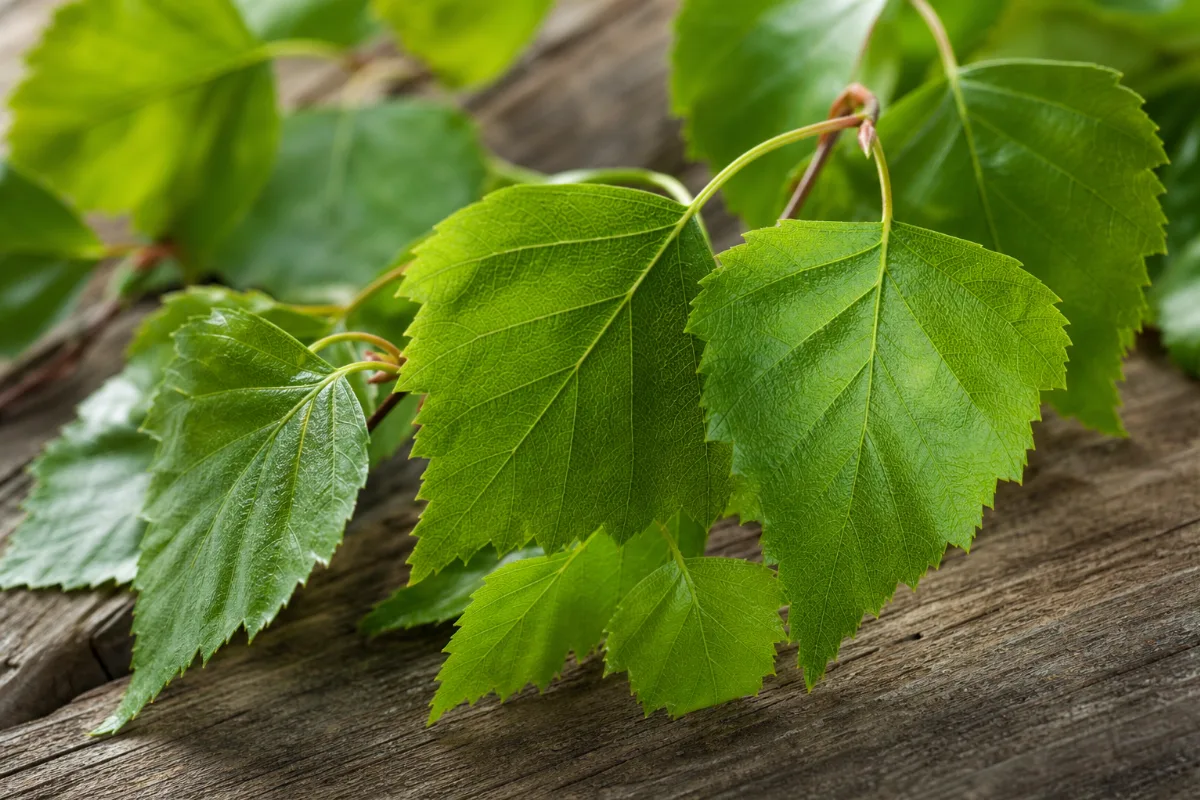
Herbs & Botanicals · Traditional urinary flushing herb
Birch Leaf
Betula pendula and Betula pubescens · also called Silver birch leaf, downy birch leaf, Betulae folium
Birch leaf is the dried leaf of the silver or downy birch tree, usually drunk as a tea. In the EU it is a traditional herbal medicine to increase urine and flush the urinary tract in minor complaints. That status rests on long use, not on trials, and we found no human trial. The key caution: do not use it if you are allergic to birch pollen or have heart or kidney disease where fluids are limited.
General information, not medical advice. Last substantive update · Not medically reviewed. A named clinician has not signed off on this page. How this page is made
About Birch Leaf
Birch leaf is a traditional European tea for flushing the urinary tract. Human evidence of benefit is missing. The main cautions are birch pollen allergy, heart or kidney disease with fluid limits, pregnancy, aspirin sensitivity and some medicines.
What it is
Birch leaf is the dried leaf of the silver birch (Betula pendula) or downy birch (Betula pubescens), or hybrids of the two. It is usually drunk as a tea, and extracts are also made.
Only the leaf is meant here. Birch bark and sweet birch oil are different products with their own cautions.
How it may work
The leaf is rich in flavonoids, mainly hyperoside, and in chlorogenic acid. These are antioxidants in lab tests. In a tea study, compounds from the tea reached the urine, and the tea lowered inflammation signals and bacterial sticking in cell tests.
A 2025 pilot in healthy rats did not confirm a diuretic effect. So how, or whether, the leaf increases urine is not shown.
What the research shows
The EU regulator allows birch leaf as a traditional herbal medicine to flush the urinary tract, based only on long use. ESCOP says clinical studies in urinary infection and cystitis exist, but its public summary gives no results and we could not read the full monograph.
Other work is from labs and animals: a cell test of joint-related T cells, a chemical-injury liver model and a rat brain model. None of these shows a benefit in people.
At a glance
Traditional uses history, not proof
- Leaf tea to flush the urinary tract in minor urinary complaints (EU traditional use)
- Folk remedy for rheumatic and joint complaints
- Listed by ESCOP for kidney gravel and as a helper in urinary infections
Studied for research
- Urinary flushing (traditional; a rat study did not confirm a diuretic effect), insufficient
- Urinary inflammation and bacteria (cell tests and urine metabolites), insufficient
- Joint and rheumatic complaints (cell tests only), insufficient
- Liver protection (chemical-injury animal model), insufficient
- Brain oxidative stress (rat model), insufficient
Main compounds
- Hyperoside (PubChem CID 5281643), the main marker flavonoid
- Chlorogenic acid (CID 1794427)
- Quercetin glycosides, and salicylic acid in a lab analysis
Common forms
- Dried leaf tea
- Powdered leaf
- Dry extract
- Liquid extract from fresh leaves
Research links: EMA/HMPC: EU herbal monograph on birch leaf (PDF) · ESCOP: Betulae folium summary · Peron 2025: birch leaf extract in rats (PubMed) · Popowski 2024: birch leaf tea and the urinary tract (PubMed) · Research Library · Genes & Biomarkers Library
The plant and its history
- Accepted scientific name
- Betula pendula Roth (GBIF ACCEPTED, exact match, confidence 99) and Betula pubescens Ehrh. (GBIF ACCEPTED, exact match, confidence 99); the EU monograph also covers hybrids of the two
- Naming authority
- Roth; Ehrh.
- Common names
- Birch leaf (English); Silver birch leaf (B. pendula) (English); Downy birch leaf (B. pubescens) (English); Betulae folium (Latin (pharmacopoeia name)); Birkenblaetter (German)
- Botanical family
- Betulaceae (birch family)
- Classification
- Plantae > Not pulled > Not pulled > Not pulled > Betulaceae > Betula > Betula pendula
- Native range
- Not covered in the sources read.
- Habitat
- Not covered in the sources read.
- What the plant looks like
- Roots: Not covered.; Stems: Not covered.; Leaves: The leaf is the medicinal part.; Flowers: Not covered. Birch pollen is a major hay-fever allergen.; Fruit: Not covered.; Seeds: Not covered.; Cultivation: Not covered.
- Harvest and processing
- Not covered in the sources read. The EU monograph says the dried material should meet the European Pharmacopoeia leaf monograph.
- Look-alikes and adulterants
- Name: Betula lenta (sweet birch) bark and oil; Note: A different species and part, rich in methyl salicylate; not the same as birch leaf.; Name: Other Betula species; Note: The EU monograph covers only B. pendula, B. pubescens and their hybrids.
- Sustainability and conservation
- Not covered in the sources read.
Traditional use and history history, not clinical proof
| Tradition or era | Documented use | Source |
|---|---|---|
| European folk medicine | Leaf tea for passing water, urinary complaints and rheumatic or joint complaints. | s-ema-hmpc |
| Modern EU regulation | Registered as a traditional herbal medicine for flushing the urinary tract (2014 monograph, first adopted 2008). | s-ema-hmpc |
Traditional use shows how a plant was used. It does not show that a supplement works or is safe today.
What is inside, and how it may work
What the plant contains and how those compounds act in cells and animals. Laboratory and animal mechanisms are not proven effects in people.
Main compounds
| Compound | Family | Where it is concentrated | Activity studied | Level of evidence |
|---|---|---|---|---|
| Hyperoside PubChem 5281643 | Flavonol glycoside (quercetin) | Leaf | Main marker compound; 15.85 mg/g of dry residue in one hydroalcoholic extract. Antioxidant in tests. 14 9 17 | Lab |
| Chlorogenic acid PubChem 1794427 | Phenolic acid | Leaf | Second marker compound (8.77 mg/g in the same extract). 14 9 | Lab |
| Quercetin glycosides PubChem 5280343 | Flavonoids | Leaf | Present in aqueous leaf extract; linked to the T-cell effect in a dish. 6 9 | Lab |
| Salicylic acid and other polyphenol acids | Phenolic acids | Leaf | Listed in a leaf extract analysis; relevant to salicylate sensitivity. 15 | Lab |
| Betulin and betulinic acid (triterpenes) PubChem 72326 | Triterpenes | Mainly bark; leaf content not checked | Often linked to birch, but the leaf amount was not found in the sources read. 9 | Not established for leaf |
Mechanisms, receptors and pathways
| Target or pathway | Gene or receptor | What was found | Level |
|---|---|---|---|
| Diuretic action | Not shown | A 2025 rat pilot did not confirm a diuretic effect. The mechanism, if any, is unknown. Metabolite shifts suggested effects on corticosteroid and bile-acid metabolism. 11 | Animal research |
| Anti-inflammatory and anti-adhesive in urinary cell models | IL-6, IL-8 | Tea reduced IL-6 and IL-8 secretion and bacterial sticking to bladder cells. 12 | Lab |
| T-cell proliferation and apoptosis | CD4+ and CD8+ T cells | Extract slowed activated T cells and raised cell death in a dish. 6 | Lab |
| NF-kB and oxidative stress | NF-kB | Lowered oxidative stress and inflammation markers in a rat brain model. 15 | Animal research |
Absorption, metabolism and elimination
- Absorption
- After tea, phenolic metabolites (glucuronides and sulfates of caffeic acid, valerolactones from gut bacteria) appeared in urine.
- Distribution
- Not found.
- Metabolism
- Gut bacteria help convert leaf phenolics; liver conjugation (glucuronides, sulfates) was seen.
- Elimination
- Metabolites were detected in urine.
- Bioavailability
- No blood-level study of birch leaf was found in the sources read. Hyperoside as an isolated compound accumulates mainly in the kidney in animals.
Isolated compounds versus whole extracts
Hyperoside is the best-known single compound, but the leaf holds many flavonoids and phenolic acids and the pharmacology is credited to the whole extract. A review of isolated hyperoside raises kidney toxicity at long-term high doses; that is not shown for tea or whole-leaf products.
Nutritional composition
Birch leaf is not a food nutrient and no vitamin or mineral role was found. The leaf contains polyphenols, not a recognised nutrient.
6 not enough evidence
What is Birch Leaf good for?
The studied uses and how strong the human evidence is for each. For birch leaf, none is established in people.
Benefits, one by one
Each card is a research question, not a promise. Tap a goal to filter. Open a card to see the studies, doses and limits.
Flushing the urinary tract (traditional use)
Not enough evidenceIn the EU, birch leaf is a traditional herbal medicine to increase urine and flush the urinary tract as a helper in minor urinary complaints. This rests on long use only. A 2025 rat study did not confirm a diuretic effect.
3 studiesTeas, powder, dry and liquid extracts exist. Ask a doctor or pharmaci…
Studies, doses and limits
What the trials found
No controlled trial of birch leaf for urine flow was found in PubMed. ESCOP says controlled and open studies exist but gives no details in its public summary.
Results
In healthy rats, 3 days of a standardised leaf extract did not significantly change 24-hour urine volume or urinary sodium and potassium.
Effect sizes as reported
Not applicable.
Why this rating
Regulator status is traditional use only; the one animal study read did not show a diuretic effect; human trials could not be read.
Form and dose studied
Teas, powder, dry and liquid extracts exist. Ask a doctor or pharmacist about amounts.
Who was studied
Not tested in people with minor urinary complaints in any trial we could read.
Limits
Rat pilot, healthy animals, 3 days; the EU wording is 'flushing' as a helper, not treatment of infection.
Why researchers looked
Birch leaf tea has long been drunk in Europe as a water-passing, cleansing herb.
Traditional use
EU monograph: traditional use for 2 to 4 weeks with plenty of fluid; the status is based only on long-standing use.
Proposed mechanism Traditional use
The leaf is rich in flavonoids such as hyperoside. How it might affect urine is not shown.
A proposed mechanism does not show that the effect happens in people.
Needs plenty of fluid and is not for severe heart or kidney disease. See the Safety tab.
Urinary tract inflammation and bacteria (lab and early human metabolite work)
Not enough evidenceIn cell tests, birch leaf tea lowered inflammation signals and stopped a urinary-infection germ from sticking to bladder cells. Compounds from the tea were found in urine. No trial shows it treats infection.
3 studiesSilver birch leaf infusion in the lab and in the human check; amount …
Studies, doses and limits
What the trials found
The human part measured urine metabolites. The abstract reports no symptoms, infections or participant numbers. ESCOP mentions clinical studies in urinary infection and cystitis but its public summary gives no results.
Results
Reduced IL-6 and IL-8 secretion and bacterial adhesion in cell tests; tea metabolites detected in human urine.
Effect sizes as reported
Numbers are not in the abstract.
Why this rating
Lab tests and a metabolite check; no read trial shows an effect on infection or symptoms.
Form and dose studied
Silver birch leaf infusion in the lab and in the human check; amount not stated in the abstract.
Who was studied
Not reported.
Limits
Mostly cell tests. A finding that compounds reach urine does not prove benefit.
Why researchers looked
Researchers tested whether the tea's compounds reach the urinary tract and act there.
Traditional use
Used as a tea in European folk medicine for bladder and urinary complaints.
Proposed mechanism Lab
Phenolic compounds in the tea, including caffeic acid derivatives, appeared in urine after drinking it.
A proposed mechanism does not show that the effect happens in people.
A urinary infection with fever, pain on passing urine or blood in the urine needs a doctor. The EU monograph says to consult one in that case.
Kidney gravel and stones (traditional)
Not enough evidenceESCOP lists flushing the urinary tract in kidney gravel as a use. We found no trial.
1 studiesNot applicable.
Studies, doses and limits
What the trials found
No trial of birch leaf in kidney stones or gravel was found.
Results
Not available.
Effect sizes as reported
None.
Why this rating
Only a summary line from ESCOP; no study details.
Form and dose studied
Not applicable.
Who was studied
Not tested.
Limits
Public summary only; the full ESCOP monograph is paywalled.
Why researchers looked
Flushing herbs have been used to help small stones and gravel pass.
Traditional use
Listed by ESCOP as irrigation of the urinary tract, especially in inflammation and renal gravel.
Proposed mechanism Traditional use
Not shown.
A proposed mechanism does not show that the effect happens in people.
Severe pain, fever or blood in the urine can mean a stone or infection and needs a doctor.
Joint and rheumatic complaints (traditional; lab only)
Not enough evidenceLeaf extracts have been used for rheumatism and joint pain. In a dish, an extract slowed overactive immune T cells, but no joint trial was found.
1 studiesAqueous leaf extract in cell culture.
Studies, doses and limits
What the trials found
No trial in people with arthritis or other joint conditions was found in PubMed.
Results
At 160 micrograms/mL the extract cut growth of activated CD8+ T cells by 87% and CD4+ by 79% in the dish, comparable to methotrexate in that test.
Effect sizes as reported
As stated.
Why this rating
Cells in a dish only; no animal or human joint outcome read.
Form and dose studied
Aqueous leaf extract in cell culture.
Who was studied
Not tested in people.
Limits
Concentrations are laboratory concentrations; the result does not mean the tea works for joints.
Why researchers looked
Birch leaf is a traditional European remedy for rheumatic complaints.
Traditional use
The lab paper says leaf extracts have been used traditionally for rheumatoid arthritis and osteoarthritis.
Proposed mechanism Lab
Quercetin-type flavonoids in the extract may reduce activated T-cell growth in a dish.
A proposed mechanism does not show that the effect happens in people.
Do not stop prescribed arthritis medicine. Birch leaf contains salicylic acid; see Safety.
Liver protection (chemical-injury animal model)
Not enough evidenceA 2026 study found leaf extracts lowered liver damage markers in animals injured with a chemical. This has not been tested in people.
1 studies90% ethanol leaf extract in the study; not a tea.
Studies, doses and limits
What the trials found
No human liver study was found.
Results
In CCl4-injured animals, ALT fell from 193.0 U/L to 30.4 (B. pendula) or 117.4 (B. pubescens) at 200 mg/kg.
Effect sizes as reported
As stated.
Why this rating
One animal-and-lab study with an alcohol extract.
Form and dose studied
90% ethanol leaf extract in the study; not a tea.
Who was studied
Not tested in people.
Limits
Species and numbers of animals are not in the abstract; B. pubescens reduced liver cancer cell viability more than B. pendula in cell tests.
Why researchers looked
Birch leaf is rich in antioxidant polyphenols, so researchers tested it on the liver.
Traditional use
Not a main traditional use in the sources read.
Proposed mechanism Animal research
Antioxidant polyphenols may reduce chemical stress to liver cells in the model.
A proposed mechanism does not show that the effect happens in people.
An extract that lowers liver enzymes in a model is not proof of safety for a damaged liver.
Brain oxidative stress (rat Alzheimer's model)
Not enough evidenceIn rats given amyloid, a leaf extract lowered brain oxidative stress and inflammation markers. This has not been tested in people.
1 studiesLeaf extract, 200 mg/kg in rats for 15 days.
Studies, doses and limits
What the trials found
No human study was found.
Results
Improved spontaneous alternation behaviour in the rats.
Effect sizes as reported
Numbers are not in the abstract.
Why this rating
One rat study, 7 animals per group.
Form and dose studied
Leaf extract, 200 mg/kg in rats for 15 days.
Who was studied
Not tested in people.
Limits
Animal model only.
Why researchers looked
Leaf flavonoids and acids have antioxidant activity, so a brain model was tried.
Traditional use
Not a traditional use in the sources read.
Proposed mechanism Animal research
Reduced lipid peroxidation and inflammation markers (NF-kB pathway) in the model.
A proposed mechanism does not show that the effect happens in people.
None known; no human safety data.
Connections to the rest of health
How Birch Leaf connects to the rest of our health knowledge graph. Every link says what kind of connection it is. A safety link (for example to the liver) is a warning, not a benefit. A study that merely mentions a topic never creates a benefit link.
Explore every connection: goals, body systems, organs, symptoms, genes
A. Wellness goals
| Connected to | Kind of connection | Evidence status | Context | Studies |
|---|---|---|---|---|
| Detoxification Support | Traditional use | Not enough evidence | Flushing the urinary tract (traditional use): In the EU, birch leaf is a traditional herbal medicine to increase urine and flush the urinary tract as a helper in minor urinary complaints. This rests on long use only. A 2025 rat study did not confirm a diuretic effect. | 2 3 11 |
| Immune Support | Preliminary mechanism | Not enough evidence | Urinary tract inflammation and bacteria (lab and early human metabolite work): In cell tests, birch leaf tea lowered inflammation signals and stopped a urinary-infection germ from sticking to bladder cells. Compounds from the tea were found in urine. No trial shows it treats infection. | 12 3 2 |
| Joint Support | Traditional use | Not enough evidence | Joint and rheumatic complaints (traditional; lab only): Leaf extracts have been used for rheumatism and joint pain. In a dish, an extract slowed overactive immune T cells, but no joint trial was found. | 6 |
| Liver Support | Preliminary mechanism | Not enough evidence | Liver protection (chemical-injury animal model): A 2026 study found leaf extracts lowered liver damage markers in animals injured with a chemical. This has not been tested in people. | 1 |
| Brain Health | Preliminary mechanism | Not enough evidence | Brain oxidative stress (rat Alzheimer's model): In rats given amyloid, a leaf extract lowered brain oxidative stress and inflammation markers. This has not been tested in people. | 15 |
B. Body systems
| Connected to | Kind of connection | Evidence status | Context | Studies |
|---|---|---|---|---|
| Urinary System | Biological association | Not enough evidence | Studied for: Flushing the urinary tract (traditional use) Studied for: Urinary tract inflammation and bacteria (lab and early human metabolite work) | 2 3 11 12 |
| Kidney Urinary | Biological association | Not enough evidence | Studied for: Flushing the urinary tract (traditional use) Studied for: Kidney gravel and stones (traditional) | 2 3 11 |
| Musculoskeletal System | Biological association | Not enough evidence | Studied for: Joint and rheumatic complaints (traditional; lab only) | 6 |
| Immune System | Biological association | Not enough evidence | Studied for: Joint and rheumatic complaints (traditional; lab only) | 6 |
| Liver Biliary | Biological association | Not enough evidence | Studied for: Liver protection (chemical-injury animal model) | 1 |
| Nervous System | Biological association | Not enough evidence | Studied for: Brain oxidative stress (rat Alzheimer's model) | 15 |
E. Health conditions
| Connected to | Kind of connection | Evidence status | Context | Studies |
|---|---|---|---|---|
| Birch pollen allergy and pollen-food syndrome | Contraindication | Authoritative guidance | EU contraindication for birch pollen allergy; cross-reacting foods are well described for pollen. Preparation or compound: Birch leaf |
2 7 18 |
| Severe heart disease and fluid restriction | Contraindication | Authoritative guidance | Not for conditions where less fluid is advised. Preparation or compound: Birch leaf |
2 |
| Birch pollen allergy | Contraindication | Authoritative guidance | EU contraindication. Preparation or compound: Birch leaf |
2 |
| Minor urinary complaints | Traditional use | Not enough evidence | Traditional EU use; no human trial read. Preparation or compound: Birch leaf tea |
2 12 |
I. Biomarkers
| Connected to | Kind of connection | Evidence status | Context | Studies |
|---|---|---|---|---|
| 24-hour urine volume (healthy rats) | Biological association | Not enough evidence | Measured in trials: no-significant-change. A lab change is not the same as a health benefit. | 11 |
| IL-6 and IL-8 secretion (cell test) | Biological association | Not enough evidence | Measured in trials: lowered. A lab change is not the same as a health benefit. | 12 |
| Activated T-cell growth (cell test) | Biological association | Not enough evidence | Measured in trials: lowered. A lab change is not the same as a health benefit. | 6 |
| ALT liver enzyme (chemical-injury animals) | Biological association | Not enough evidence | Measured in trials: lowered. A lab change is not the same as a health benefit. | 1 |
K. Biological pathways
L. Active compounds
| Connected to | Kind of connection | Evidence status | Context | Studies |
|---|---|---|---|---|
| Hyperoside | Biological association | Lab | Main marker compound; 15.85 mg/g of dry residue in one hydroalcoholic extract. Antioxidant in tests. Preparation or compound: Leaf |
14 9 17 |
| Chlorogenic acid | Biological association | Lab | Second marker compound (8.77 mg/g in the same extract). Preparation or compound: Leaf |
14 9 |
| Quercetin glycosides | Biological association | Lab | Present in aqueous leaf extract; linked to the T-cell effect in a dish. Preparation or compound: Leaf |
6 9 |
| Salicylic acid and other polyphenol acids | Biological association | Lab | Listed in a leaf extract analysis; relevant to salicylate sensitivity. Preparation or compound: Leaf |
15 |
| Betulin and betulinic acid (triterpenes) | Biological association | Not established for leaf | Often linked to birch, but the leaf amount was not found in the sources read. Preparation or compound: Mainly bark; leaf content not checked |
9 |
Each connection is stored with the ingredient, the connected record, the kind of connection, the evidence status, the supporting studies, the preparation or compound involved, and a review date (last reviewed October 25, 2026).
Evidence at a glance: what changed in 3 lab markers
Tap a number to show only those markers. Counts are markers, not people.
The evidence
The research centre for Birch Leaf. Every record here was checked against PubMed or the publisher's page; we never list a study we have not verified.
Evidence by outcome
Bars show how many studies we found for each outcome, not how well it works. People are added up across trials only (reviews are not added, to avoid double counting).
How we rate evidence
High certainty
Several well-run trials or reviews agree; further research is unlikely to change the picture much.
Moderate certainty
Good trials point the same way, but some doubt remains.
Low certainty
Small, short or inconsistent trials. The finding could change with better research.
Very low certainty
Very little or very weak human data. Treat as a possibility only.
Mixed findings
Trials or reviews disagree with each other.
Not enough evidence
Not enough human research to say either way.
Evidence against
Good research found no benefit, or found harm.
We take the reviewers' own risk-of-bias and GRADE statements where they exist, and otherwise judge from study size, design, consistency, directness and whether a product matches what is sold. Many publications do not make evidence high. Method note: We started from our existing birch leaf summary, read the EU monograph in full, re-checked the PubMed abstracts it cited and added a few targeted searches. Plant names were checked in GBIF and compound IDs in PubChem. LiverTox could not be read and no LactMed record was found.
Study library: every study we checked 18
| Study | Design | People | Product, dose, length | Result |
|---|---|---|---|---|
| Dezso Bab 2026 Comparative Metabolite Profiling of Betula pendula Roth and Betula pubescens Ehrh. Leaf Extracts Reveals Antioxidant and Hepatoprotective Potential Molecules · PMID 42738697 · DOI |
Animal and lab animal |
Cells and CCl4-injured rodents | Ethanol (90%) leaf extracts of B. pendula and B. pubescens leaf 200 mg/kg in the animal test Not stated in the abstract · vs CCl4 only |
Both extracts contained flavonoids and polyphenols, more so for B. pendula. In CCl4-injured animals ALT fell from 193.0 U/L to 30.4 (B. pendula) and 117.4 (B. pubescens). Liver MDA fell from 717.1 to about 430 to 449. B. pubescens lowered viability of liver cancer cells (HepG2) more than B. pendula in the test. Not applicable Methods, limits and fundingOutcomes: Antioxidant tests, cell viability, ALT, liver MDA Limitations: Chemical-injury animal model with an alcohol extract; not a tea and not people. Species of rodent and numbers not in the abstract. Funding and conflicts: Not stated in the abstract Read: abstract |
| EMA Committee on Herbal Medicinal Products (HMPC) 2014 European Union herbal monograph on Betula pendula Roth and/or Betula pubescens Ehrh. as well as hybrids of both species, folium (EMA/HMPC/573241/2014) European Medicines Agency · Source |
Database or regulator record n/a |
n/a | n/a n/a n/a n/a · vs n/a |
Traditional herbal medicine to increase the amount of urine and flush the urinary tract as a helper in minor urinary complaints, based only on long-standing use. Not for people allergic to the herb or to birch pollen, or where less fluid is advised (for example severe heart or kidney disease). Enough fluid must be drunk. Not recommended in pregnancy and breastfeeding (safety not established) or under 12 years. Reported side effects: nausea, vomiting, diarrhoea, itching, rash, hives, allergic rhinitis (frequency unknown). No interactions and no overdose cases reported. Genotoxicity tests are inadequate and reproductive toxicity and cancer tests have not been done. Use is traditionally for 2 to 4 weeks, and a doctor should be seen if symptoms persist or fever, painful urination, spasms or blood in urine occur. Not applicable Methods, limits and fundingOutcomes: Identity or regulatory status Limitations: Full text of the 7-page PDF read on 2026-10-25. Traditional-use status rests on long use, not on trials. Amounts in the document are deliberately not repeated on this page. Funding and conflicts: n/a Read: full-text |
| ESCOP 2015 Betulae folium (Birch Leaf), ESCOP monograph summary page ESCOP (European Scientific Cooperative on Phytotherapy) · Source |
Database or regulator record n/a |
n/a | n/a n/a n/a n/a · vs n/a |
ESCOP lists irrigation of the urinary tract, especially in inflammation and kidney gravel, and help in bacterial urinary infections. It says lab tests show diuretic, anti-inflammatory and antioxidant properties, animal tests show diuretic and stomach-protecting effects, and that controlled and open clinical studies showed use as an anti-inflammatory and antimicrobial in urinary infections, cystitis and other inflammatory complaints. It also says rare mild adverse effects occurred in one human safety study and that the Ames test was assessed. Not applicable Methods, limits and fundingOutcomes: Identity or regulatory status Limitations: Only the summary paragraph on the public page was read; the full monograph is paywalled, so the clinical studies it mentions (size, design, results) are unknown. Funding and conflicts: n/a Read: summary-only |
| GBIF 2026 GBIF Backbone Taxonomy species match: Betula pendula GBIF API (checked 2026-10-25) · Source |
Database or regulator record n/a |
n/a | n/a n/a n/a n/a · vs n/a |
Betula pendula Roth returned ACCEPTED, exact match, confidence 99, family Betulaceae, key 5331916. Not applicable Methods, limits and fundingOutcomes: Identity or regulatory status Limitations: Taxonomy only. Funding and conflicts: n/a Read: full-text |
| GBIF 2026 GBIF Backbone Taxonomy species match: Betula pubescens GBIF API (checked 2026-10-25) · Source |
Database or regulator record n/a |
n/a | n/a n/a n/a n/a · vs n/a |
Betula pubescens Ehrh. returned ACCEPTED, exact match, confidence 99, family Betulaceae, key 9118014. Not applicable Methods, limits and fundingOutcomes: Identity or regulatory status Limitations: Taxonomy only. Funding and conflicts: n/a Read: full-text |
| Grundemann 2011 An aqueous birch leaf extract of Betula pendula inhibits the growth and cell division of inflammatory lymphocytes Journal of Ethnopharmacology · PMID 21619918 · DOI |
Lab in vitro lab |
Human primary lymphocytes in a dish | Aqueous Betula pendula leaf extract leaf 10 to 160 micrograms/mL in cell culture In vitro · vs Methotrexate (reference drug), untreated cells |
The extract reduced growth and division of activated, but not resting, T cells in a dose-dependent way (at 160 micrograms/mL CD8+ cells fell 87% and CD4+ cells 79%). The effect on cell death and cycle arrest was comparable to methotrexate in the test. The extract contained quercetin glycosides. Not applicable Methods, limits and fundingOutcomes: T-cell growth and division, apoptosis, cell cycle Limitations: Cells in a dish only. Says nothing about joint disease in people. Funding and conflicts: Not stated in the abstract Read: abstract |
| Kato 2025 Comprehensive review of pollen-food allergy syndrome: Pathogenesis, epidemiology, and treatment approaches Allergology International · PMID 39278756 · DOI |
Narrative review review |
People sensitised to pollen | n/a n/a n/a n/a · vs n/a |
Pollen-food allergy syndrome comes from cross-reaction between a pollen antigen and similar proteins in foods. Symptoms are usually in the mouth, but rhinitis, breathing, skin symptoms and anaphylaxis can occur. It occurs in many regions, including with alder and grass pollen. Not applicable Methods, limits and fundingOutcomes: Cross-reaction mechanism, symptoms Limitations: About pollen and foods. It does not report reactions to birch leaf tea or extracts. Funding and conflicts: Not stated in the abstract Read: abstract |
| Malhi 2020 Lithium therapy and its interactions Australian Prescriber · PMID 32675910 · DOI |
Narrative review review |
People taking lithium | Lithium with other medicines n/a n/a n/a · vs n/a |
Lithium clearance is easily changed by drugs that alter kidney function, including diuretics, ACE inhibitors, angiotensin receptor blockers and NSAIDs, so levels should be monitored. Not applicable Methods, limits and fundingOutcomes: Lithium clearance and levels Limitations: About prescription diuretics. Whether birch leaf changes lithium levels has not been studied. Funding and conflicts: Not stated in the abstract Read: abstract |
| NCBI PubChem 2026 PubChem compound records: hyperoside, quercetin, chlorogenic acid, betulinic acid, betulin PubChem PUG REST (checked 2026-10-25) · Source |
Database or regulator record n/a |
n/a | n/a n/a n/a n/a · vs n/a |
CIDs confirmed by API: hyperoside 5281643 (C21H20O12), quercetin 5280343 (C15H10O7), chlorogenic acid 1794427 (C16H18O9), betulinic acid 64971 (C30H48O3), betulin 72326 (C30H50O2). Not applicable Methods, limits and fundingOutcomes: Identity or regulatory status Limitations: Identifiers and formulas only. Betulin and betulinic acid are mainly known from birch bark; their content in leaf was not checked. Funding and conflicts: n/a Read: full-text |
| NIH 2026 NIH LiverTox, LactMed and NCCIH records for birch leaf (not found or not readable) Checked 2026-10-25 · Source |
Database or regulator record n/a |
n/a | n/a n/a n/a n/a · vs n/a |
The LiverTox book page tried returned a human-check screen and could not be read. The NCCIH address tried for birch returned not found. No LactMed record was located. No liver injury case from birch leaf turned up in a PubMed search. Not applicable Methods, limits and fundingOutcomes: Identity or regulatory status Limitations: Absence of a record is not proof of safety. Not retried (blocked pages). Funding and conflicts: n/a Read: not-read |
| Peron 2025 Investigating Systemic Metabolic Effects of Betula alba Leaf Extract in Rats via Urinary Metabolomics Metabolites · PMID 40710571 · DOI |
Animal pilot animal |
Healthy adult rats | Standardised Betula alba leaf extract (hyperoside 0.53%) leaf 25 or 50 mg/kg orally 3 days · vs Untreated |
No statistically significant change in 24 h urine volume or urinary sodium and potassium. The urinary metabolic profile did change (two glucocorticoids rose, and bile-related and glucuronidated compounds rose). The authors say the study did not confirm a diuretic effect. Not applicable Methods, limits and fundingOutcomes: 24 h urine volume, urinary sodium and potassium, urinary metabolome Limitations: Pilot study in healthy rats, 3 days. Not a test in people. Doses are animal doses and are not advice for people. Funding and conflicts: Not stated in the abstract Read: abstract |
| Popowski 2024 Evaluating birch leaf tea as a functional herbal beverage: Beneficial impact on the urinary tract, and metabolism in human organism Food Research International · PMID 38876582 · DOI |
Lab and human metabolite human-and-lab |
Cell tests plus a human urine metabolite check | Silver birch (Betula pendula) leaf infusion leaf Not stated in the abstract Not stated in the abstract · vs Not stated |
In cell tests the infusion reduced interleukin (IL-6, IL-8) secretion and the sticking of uropathogenic E. coli to bladder cells. After drinking it, phenolic metabolites (for example glucuronides and sulfates of caffeic acid) were found in urine. Not applicable Methods, limits and fundingOutcomes: IL-6 and IL-8 secretion, bacterial adhesion to bladder cells, urine metabolites Limitations: The abstract gives no participant numbers and no symptom results. It shows the tea's compounds are absorbed and reach urine, not that infections improve. Funding and conflicts: Not stated in the abstract Read: abstract |
| Pyevich 2001 Herbal diuretics and lithium toxicity American Journal of Psychiatry · PMID 11481175 · DOI |
Case report letter |
Case reports (letter) | Herbal diuretics (herbs not stated in the record read) n/a n/a n/a · vs n/a |
A letter titled 'Herbal diuretics and lithium toxicity' reports cases in people taking lithium. Not applicable Methods, limits and fundingOutcomes: Lithium toxicity Limitations: PubMed has no abstract for this letter; only the title and article type were read. We do not know which herbs were involved, so it is not evidence about birch leaf. Funding and conflicts: Not stated Read: title-only |
| Raudone 2014 Quality evaluation of different preparations of dry extracts of birch (Betula pendula Roth) leaves Natural Product Research · PMID 24934103 · DOI |
Lab chemistry lab |
Laboratory analysis | Dry extracts (spray-dried, freeze-dried) of Betula pendula leaves leaf n/a n/a · vs n/a |
Hyperoside and chlorogenic acid were the main compounds: 15.85 and 8.77 mg/g of dry residue in the hydroalcoholic extract. Spray-drying and freeze-drying gave similar content and antioxidant activity. The paper says birch leaf extracts have mild diuretic and anti-inflammatory activity but does not test that. Not applicable Methods, limits and fundingOutcomes: Phenolic content and antioxidant activity Limitations: Chemistry only; the diuretic statement is background, not a result. Funding and conflicts: Not stated in the abstract Read: abstract |
| Sevastre-Berghian 2023 Betula pendula Leaf Extract Targets the Interplay between Brain Oxidative Stress, Inflammation, and NFkB Pathways in Amyloid Abeta(1-42)-Treated Rats Antioxidants (Basel) · PMID 38136229 · DOI |
Animal research animal |
28 Wistar rats given amyloid beta into the brain |
Betula pendula leaf extract leaf 200 mg/kg orally (animal dose) 15 days · vs Untreated and vehicle groups |
The extract lowered lipid peroxidation and brain inflammation markers and improved spontaneous alternation in the rats. The chemical analysis listed several polyphenol acids including salicylic acid, and flavonoids including hyperoside and quercetin. Not applicable Methods, limits and fundingOutcomes: Oxidative stress, inflammation markers, maze behaviour Limitations: Rat model of Alzheimer's disease; 7 rats per group. Nothing is known in people. Funding and conflicts: Not stated in the abstract Read: abstract |
| Tuck 2021 Naturally-occurring dietary salicylates in the genesis of functional gastrointestinal symptoms in patients with irritable bowel syndrome: Pilot study JGH Open · PMID 34386594 · DOI |
Rct pilot crossover |
10 Adults with irritable bowel syndrome |
Low versus high dietary salicylate diet food 6.6 versus 27.9 g/day salicylate in food (as reported) 2 weeks each · vs Low-salicylate diet |
No overall difference in symptoms. The one participant with known aspirin sensitivity clearly got worse on the high-salicylate diet, and one other showed a similar trend. Not applicable Methods, limits and fundingOutcomes: Abdominal and other symptoms Limitations: Ten people, diet not herb. It shows salicylate-sensitive people can react to food salicylates, not that birch leaf does. Funding and conflicts: Not stated in the abstract Read: abstract |
| Xu 2022 Hyperoside: A Review of Its Structure, Synthesis, Pharmacology, Pharmacokinetics and Toxicity Molecules · PMID 35566359 · DOI |
Narrative review review |
Review of one compound | Hyperoside (isolated compound) n/a n/a n/a · vs n/a |
Hyperoside is found in several plants. It builds up mainly in the kidney in animals, and the authors say long-term high-dose use should be avoided because of kidney toxicity. Not applicable Methods, limits and fundingOutcomes: Pharmacology, kinetics, toxicity Limitations: Narrative review on the isolated compound, not on birch leaf. Whole-leaf products contain far less hyperoside than a high isolated dose; the review does not say what that means for tea. Funding and conflicts: Not stated in the abstract Read: abstract |
| de Jong 2021 Birch Pollen Related Pear Allergy: A Single-Blind Oral Challenge Trial with 2 Pear Cultivars Nutrients · PMID 33919631 · DOI |
Single blind challenge |
15 Birch-pollen-allergic adults with pear allergy history |
Two pear varieties (food challenge) fruit n/a Challenge · vs Other variety |
About 70% of birch-pollen-allergic people in Europe react to cross-reacting foods. 12 of 15 reacted to one pear and 14 of 15 to the other; the difference between varieties was not significant. Not applicable Methods, limits and fundingOutcomes: Allergic symptoms during pear challenge Limitations: Tests pears, not birch leaf. Small trial. Funding and conflicts: Not stated in the abstract Read: abstract |
What we do not know yet
- No human trial of birch leaf for urine flow, urinary infection, kidney gravel or joints that we could read.
- The clinical studies in ESCOP's monograph and its human safety study could not be read (paywalled).
- No data on salicylate-sensitive people, anticoagulants or lithium with birch leaf.
- LiverTox, LactMed and NCCIH records were not found or could not be read.
How new research is added
New studies are found by a saved PubMed search and placed in a review queue. A person reads each one before it changes any rating or safety wording.
Lab markers
What changed in blood or saliva tests during trials. A changed number is not the same as feeling or being healthier, and we give no "normal ranges".
Organ function 1
ALT liver enzyme (chemical-injury animals)
Lowered in trials
A liver enzyme that rises when liver cells are damaged.
Not enough evidenceResults and what it means
Why it was measured
Shows liver injury in the animal model.
Statistical vs. clinical meaning
Animal model result only.
Safety implication
Not a human liver safety study.
| Study | Result | People | Product |
|---|---|---|---|
| 1 | ALT 193.0 U/L with CCl4 alone; 30.4 with B. pendula and 117.4 with B. pubescens extract at 200 mg/kg | CCl4-injured animals | 90% ethanol leaf extracts |
Other 3
24-hour urine volume (healthy rats)
No-significant-change in trials
How much urine an animal passes in a day.
Not enough evidenceResults and what it means
Why it was measured
A diuretic herb should raise it.
Statistical vs. clinical meaning
A null result in healthy rats in a small pilot study; says little about people with fluid retention.
Safety implication
None found; the study did not test safety.
| Study | Result | People | Product |
|---|---|---|---|
| 11 | No statistically significant change in 24 h urine volume or urinary sodium and potassium after 3 days at 25 or 50 mg/kg | Healthy adult rats | Standardised B. alba leaf extract |
IL-6 and IL-8 secretion (cell test)
Lowered in trials
Messenger proteins cells release during inflammation.
Not enough evidenceResults and what it means
Why it was measured
Shows whether a tea lowers inflammation signals in a cell model.
Statistical vs. clinical meaning
Cell test only; not a measure in people.
Safety implication
None.
| Study | Result | People | Product |
|---|---|---|---|
| 12 | Significant reduction in IL-6 and IL-8 secretion; numbers not in the abstract | Cell model | Silver birch leaf infusion |
Activated T-cell growth (cell test)
Lowered in trials
How fast immune T cells divide in a dish.
Not enough evidenceResults and what it means
Why it was measured
Overactive T cells drive rheumatoid arthritis.
Statistical vs. clinical meaning
Cell test only; resting cells were not affected in the study.
Safety implication
Immune effects in people are unknown; people on immune-suppressing medicine should ask their doctor.
| Study | Result | People | Product |
|---|---|---|---|
| 6 | CD8+ growth cut 45% (40 micrograms/mL), 60% (80) and 87% (160); CD4+ 33%, 54% and 79% | Human primary lymphocytes in vitro | Aqueous B. pendula leaf extract |
Safety
What studies and official sources say about side effects, medicines and who should check first. Each point shows what kind of evidence it comes from.
Main points to know 5
- Not for people allergic to birch pollen or the leaf. The EU monograph lists hypersensitivity to the herb or to birch pollen as a contraindication, and reports itching, rash, hives and allergic rhinitis as side effects (frequency unknown). Birch-pollen allergy is common, and about 70% of birch-pollen-allergic people in Europe react to some cross-reacting foods. That food finding is about fruit and nuts, not leaf tea. Authoritative guidance 2 18 7
- Do not use where less fluid is advised. The EU monograph says not to use birch leaf in conditions where reduced fluid intake is recommended, for example severe heart or kidney disease, and requires enough fluid during use. It is not a treatment for swollen legs or other fluid build-up. Authoritative guidance 2
- Possible salicylate sensitivity (reasoned, not studied for the tea). A lab analysis of a birch leaf extract listed salicylic acid among its polyphenol acids. People with aspirin or salicylate sensitivity can react to food salicylates (a small pilot saw it in the one aspirin-sensitive person). No study tested birch leaf tea in salicylate-sensitive people, and the EU monograph does not list a salicylate warning. Caution is sensible if you react to aspirin. Lab 15 16 2
- Pregnancy, breastfeeding and children. The EU monograph says safety in pregnancy and breastfeeding is not established and use is not recommended; use under 12 years is not recommended because data are lacking; no fertility data exist. Authoritative guidance 2
- Limited safety testing. The EU monograph says adequate genotoxicity tests were not done and reproductive toxicity and cancer tests were not performed. It reports no interactions and no overdose. These are gaps, not proof of safety. Authoritative guidance 2
Side effects 3
| Effect | How often | Severity and recovery | Evidence |
|---|---|---|---|
| Nausea, vomiting, diarrhoea Frequency unknown. | Not established | Usually mild (not graded in the monograph) Not reported | Authoritative guidance 2 |
| Allergic reactions: itching, rash, hives, runny nose Frequency unknown. ESCOP says rare mild adverse effects occurred in one human safety study (details not read). | Not established | Not graded; allergic reactions can be serious in sensitised people Not reported | Authoritative guidance 2 |
| Fluid and salt imbalance if too little fluid is drunk or in heart or kidney disease The monograph's fluid warning is the basis; the one rat study saw no change in urinary sodium and potassium. | Not established | Not reported for birch leaf; reasoned from the 'flushing' action Not reported | Expert opinion 2 11 |
Liver
No liver injury from birch leaf was found. LiverTox could not be read (human-check screen) so its record, if any, was not checked, and a PubMed search found no case reports. A 2026 animal study found a leaf extract lowered liver enzymes after chemical injury, which is not a human safety result. 10 1
How often. No frequency of liver injury is available.
Monitoring. No monitoring advice was found. Stop and seek care for yellow skin or eyes, dark urine, or severe stomach pain.
- .
This is a safety connection. It is not evidence that Birch Leaf supports liver health.
Medicines and supplements 5
| With | Why it matters | Importance | Evidence | What to do |
|---|---|---|---|---|
| Lithium prescription | Diuretic herbs or drugs can change how the kidneys clear lithium; prescription diuretics are known to raise lithium levels. | Possible lithium toxicity if birch leaf really increases urine and sodium loss. Birch leaf has not been tested with lithium, and the one rat study saw no urine change. | Expert opinion Very low certainty 8 13 | Ask your prescriber or pharmacist before using it; lithium levels may need checking. |
| Prescription diuretics, and medicines for blood pressure, heart failure or kidney disease prescription | Possible added water or salt loss if the leaf has a diuretic effect. | Could add to dehydration, low sodium or low potassium. Not tested. | Expert opinion Very low certainty 2 11 | Ask a doctor or pharmacist. The EU monograph itself lists no interactions. |
| Aspirin, other salicylates and NSAIDs over-the-counter and prescription | The leaf contains salicylic acid in a lab analysis; adding to aspirin or salicylate-type medicines is theoretical. | Unknown. Aspirin-sensitive people may react. | Expert opinion Very low certainty 15 16 | If you are aspirin-sensitive or on aspirin or high-dose salicylates, ask a pharmacist first. |
| Anticoagulants and antiplatelet medicines (warfarin, apixaban, clopidogrel) prescription | No bleeding mechanism has been shown for birch leaf. Salicylic acid and flavonoids are present, so a theoretical effect cannot be ruled out. | No case report or study of birch leaf with blood thinners was found. | Gap Not enough evidence 2 15 | No evidence of a problem and none of safety. Tell your prescriber if you use it regularly. |
| Immune-suppressing medicines prescription | An extract slowed activated T cells in a dish. | Cell result only; no human interaction data. | Lab Not enough evidence 6 | Mention it to the prescriber if you take immune-suppressing medicine. |
Who should check first 6
| Situation | Advice | Evidence |
|---|---|---|
| Allergy to birch leaf or birch pollen | Do not use. This is an EU contraindication. Reactions can range from itching to, rarely, severe allergy. | Authoritative guidance 2 7 |
| Severe heart or kidney disease, or any condition where you are told to limit fluids | Do not use. Heart or kidney swelling needs medical care, not a flushing herb. | Authoritative guidance 2 |
| Pregnancy and breastfeeding | Not recommended; safety is not established. | Authoritative guidance 2 |
| Children under 12 | Not recommended; data are lacking. | Authoritative guidance 2 |
| Aspirin or salicylate sensitivity | Be cautious or avoid; reasoned from salicylic acid in the leaf and from food-salicylate findings, not from a birch leaf study. | Lab 15 16 |
| Taking lithium or a diuretic | Check with your prescriber or pharmacist first. | Expert opinion 8 |
Overdose, product quality and regulators
Summary. The EU monograph reports no overdose cases and no interactions, but also says genotoxicity, reproductive toxicity and cancer tests are inadequate or missing. ESCOP mentions an Ames test and a human safety study with rare mild adverse effects (public summary only).
Animal. Rat studies used leaf extracts for 3 and 15 days without toxicity being the focus; the abstracts do not report harm.
Human doses studied. Traditional use is for 2 to 4 weeks per the EU monograph. No long-term human data.
High dose or long term signals. None studied. A review of the isolated compound hyperoside says long-term high-dose use should be avoided because of kidney toxicity; this applies to high isolated doses, not tea.
Overdose response. No overdose case reported (EU monograph).
Genotoxicity. Adequate tests have not been performed (EU monograph); ESCOP mentions an Ames test.
Toxic plant parts. Leaf is the part used. Birch bark and the oil of sweet birch (a different species) contain far more methyl salicylate and are not covered here.
No contamination, adulteration or heavy metal data on birch leaf products were found.
Species and identity. The EU monograph covers B. pendula, B. pubescens and their hybrids, which are treated together. A 2026 study found the two species differ in polyphenol content and in effects on liver cancer cells in the dish. 2 1
Strength varies. Marker compounds vary with extract and drying method; dry extracts had hyperoside 15.85 mg/g of dry residue in one hydroalcoholic extract. 14
Heavy metals, pesticides, microbes. Not found for birch leaf in the sources read. 10
| Body | Action | Date |
|---|---|---|
| EMA / HMPC (EU) (European Union) | EU herbal monograph (final, 24 Nov 2014): traditional herbal medicine to increase the amount of urine to flush the urinary tract as a helper in minor urinary complaints, based only on long-standing use. Contraindications, warnings and pregnancy advice as described above. source | 2014-11-24 |
When to get medical help
- Swelling of the lips, tongue or throat, wheezing, trouble breathing or fainting (severe allergy): call emergency services
- Widespread hives or rash after use
- Fever, pain on passing urine, back or side pain, or blood in the urine (may be infection or a stone, not a job for a herb)
- Fast weight gain, new leg swelling or breathlessness while using it
- Yellow skin or eyes, dark urine, or severe stomach pain
Stop the supplement and contact a clinician or emergency service. In the US, Poison Control is 1-800-222-1222.
General information only, not medical advice. Ask a clinician or pharmacist before use, especially with medicines, in pregnancy or with a health condition. See the Natural Remedy Safety guide.
Frequently asked questions
What is birch leaf?
The dried leaf of the silver or downy birch, usually made into a tea. In the EU it is a traditional herbal medicine for flushing the urinary tract in minor complaints.
Does birch leaf work as a diuretic?
Can birch leaf treat a urinary infection?
Is it safe if I have birch pollen allergy?
Can people with heart or kidney disease use it?
Not if fluid is limited. The EU monograph says not to use it where less fluid is advised, such as severe heart or kidney disease, and says enough fluid must be drunk with it. It is not a treatment for swollen legs.
Is birch leaf a problem if I am sensitive to aspirin or salicylates?
Does it interact with lithium or other diuretics?
What about blood thinners?
Can I use it in pregnancy or while breastfeeding?
It is not recommended. The EU monograph says safety is not established. It is also not recommended under 12 years.
What are the side effects?
Nausea, vomiting, diarrhoea and allergic reactions such as itching, rash, hives and runny nose have been reported. How often is not known.
Does it help joint pain or rheumatism?
It is traditional for rheumatic complaints, but only a cell test exists: an extract slowed overactive T cells in a dish. No joint trial was found.
Explore by health goal
Detoxification SupportImmune SupportJoint SupportLiver SupportBrain Health
Editorial transparency
- Written by
- AlternativeMed editorial team. Research compiled with AI assistance, then checked against PubMed records.
- Medical review
- None. This page has not been reviewed by a physician or pharmacist.
- First published
- 2026-10-25
- Last substantive update
- 2026-10-25
- How we research
- We started from our existing birch leaf summary, read the EU monograph in full, re-checked the PubMed abstracts it cited and added a few targeted searches. Plant names were checked in GBIF and compound IDs in PubChem. LiverTox could not be read and no LactMed record was found.
- How we rate evidence
- See "How we rate evidence" in the Evidence tab.
- Independence
- No product is promoted on this page. No affiliate links are shown. Industry funding is flagged where an abstract shows it.
Sources 18
Each source was opened and checked. Where we read only the abstract, it says so. The small numbers in the text point here.
- Dezso Bab TH, Ielciu I, Hasas AD, et al.. Comparative Metabolite Profiling of Betula pendula Roth and Betula pubescens Ehrh. Leaf Extracts Reveals Antioxidant and Hepatoprotective Potential. Molecules. 2026. PMID 42738697. DOI 10.3390/molecules31173037. (abstract)
- EMA Committee on Herbal Medicinal Products (HMPC). European Union herbal monograph on Betula pendula Roth and/or Betula pubescens Ehrh. as well as hybrids of both species, folium (EMA/HMPC/573241/2014). European Medicines Agency. 2014. (full-text)
- ESCOP. Betulae folium (Birch Leaf), ESCOP monograph summary page. ESCOP (European Scientific Cooperative on Phytotherapy). 2015. (summary-only)
- GBIF. GBIF Backbone Taxonomy species match: Betula pendula. GBIF API (checked 2026-10-25). 2026. (full-text)
- GBIF. GBIF Backbone Taxonomy species match: Betula pubescens. GBIF API (checked 2026-10-25). 2026. (full-text)
- Grundemann C, Gruber CW, Hertrampf A, et al.. An aqueous birch leaf extract of Betula pendula inhibits the growth and cell division of inflammatory lymphocytes. Journal of Ethnopharmacology. 2011. PMID 21619918. DOI 10.1016/j.jep.2011.05.018. (abstract)
- Kato Y, Morikawa T, Fujieda S. Comprehensive review of pollen-food allergy syndrome: Pathogenesis, epidemiology, and treatment approaches. Allergology International. 2025. PMID 39278756. DOI 10.1016/j.alit.2024.08.007. (abstract)
- Malhi GS, Bell E, Outhred T, et al.. Lithium therapy and its interactions. Australian Prescriber. 2020. PMID 32675910. DOI 10.18773/austprescr.2020.024. (abstract)
- NCBI PubChem. PubChem compound records: hyperoside, quercetin, chlorogenic acid, betulinic acid, betulin. PubChem PUG REST (checked 2026-10-25). 2026. (full-text)
- NIH. NIH LiverTox, LactMed and NCCIH records for birch leaf (not found or not readable). Checked 2026-10-25. 2026. (not-read)
- Peron G, Yerkassymova A, Zengin G, et al.. Investigating Systemic Metabolic Effects of Betula alba Leaf Extract in Rats via Urinary Metabolomics. Metabolites. 2025. PMID 40710571. DOI 10.3390/metabo15070471. (abstract)
- Popowski D, Kruk A, Pawlowska KA, et al.. Evaluating birch leaf tea as a functional herbal beverage: Beneficial impact on the urinary tract, and metabolism in human organism. Food Research International. 2024. PMID 38876582. DOI 10.1016/j.foodres.2024.114481. (abstract)
- Pyevich D, Bogenschutz MP. Herbal diuretics and lithium toxicity. American Journal of Psychiatry. 2001. PMID 11481175. DOI 10.1176/appi.ajp.158.8.1329. (title-only)
- Raudone L, Raudonis R, Janulis V. Quality evaluation of different preparations of dry extracts of birch (Betula pendula Roth) leaves. Natural Product Research. 2014. PMID 24934103. DOI 10.1080/14786419.2014.925893. (abstract)
- Sevastre-Berghian AC, Ielciu I, Bab T, et al.. Betula pendula Leaf Extract Targets the Interplay between Brain Oxidative Stress, Inflammation, and NFkB Pathways in Amyloid Abeta(1-42)-Treated Rats. Antioxidants (Basel). 2023. PMID 38136229. DOI 10.3390/antiox12122110. (abstract)
- Tuck CJ, Malakar S, Barrett JS, et al.. Naturally-occurring dietary salicylates in the genesis of functional gastrointestinal symptoms in patients with irritable bowel syndrome: Pilot study. JGH Open. 2021. PMID 34386594. DOI 10.1002/jgh3.12578. (abstract)
- Xu S, Chen S, Xia W, et al.. Hyperoside: A Review of Its Structure, Synthesis, Pharmacology, Pharmacokinetics and Toxicity. Molecules. 2022. PMID 35566359. DOI 10.3390/molecules27093009. (abstract)
- de Jong NW, Terlouw S, van Boven FE, et al.. Birch Pollen Related Pear Allergy: A Single-Blind Oral Challenge Trial with 2 Pear Cultivars. Nutrients. 2021. PMID 33919631. DOI 10.3390/nu13041355. (abstract)