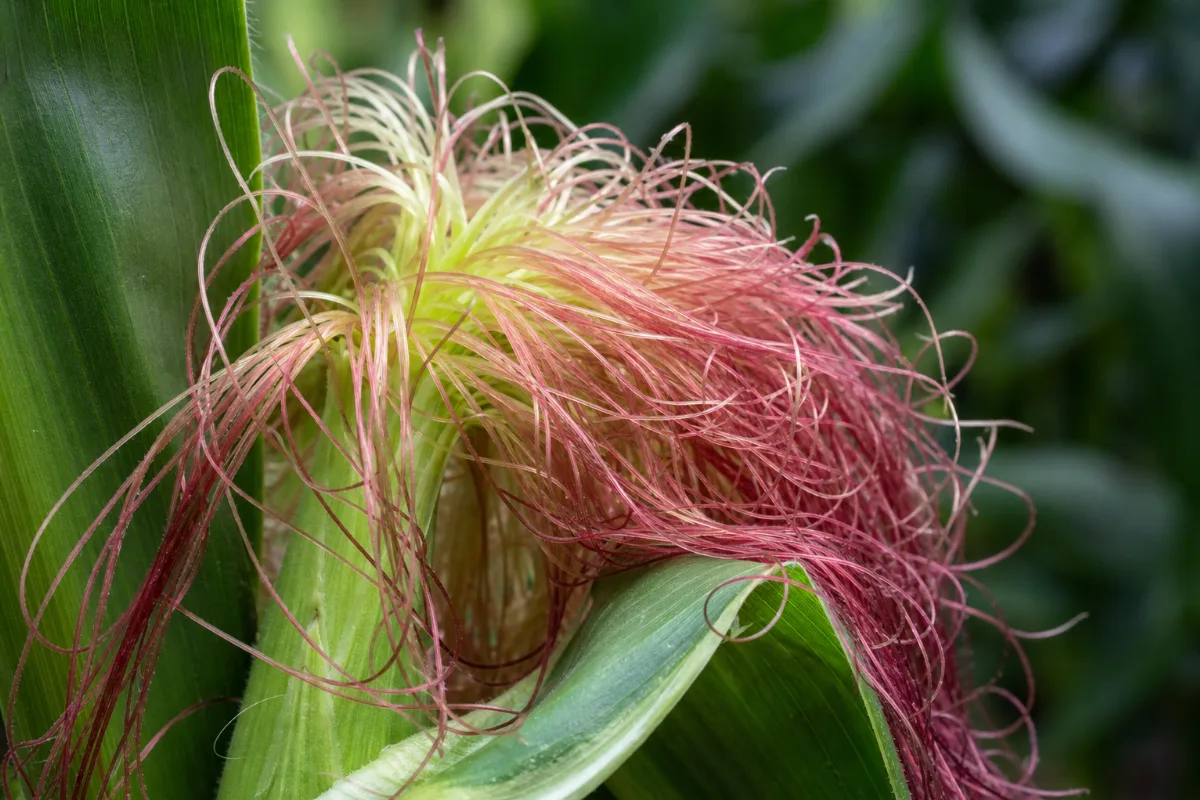
Herbs & Botanicals · Herbs · The silky threads of the corn ear, a traditional urinary tea with thin human research
Corn Silk
Zea mays L. (stigma and style, also called Maydis stigma) · also called Corn silk, maize silk, Stigma maydis, estigmas de maiz (Spanish)
Corn silk is the fine golden thread-like part of the female corn flower. It is made into a tea or extract and is traditionally used as a mild diuretic and for minor urinary complaints. Human research is small and mostly low quality, and the rat studies on potassium and kidneys give mixed results.
General information, not medical advice. Last substantive update · Not medically reviewed. A named clinician has not signed off on this page. How this page is made
About Corn Silk
Corn silk (Zea mays stigma) is a traditional urinary tea. The EU draft assessment accepts traditional use as plausible but says there are no good clinical trials. Human studies on blood pressure, blood sugar and blood fats are small, mostly add-on designs, and rated very low in quality. Safety in people is largely unstudied.
What it is
Corn silk is the style and stigma of Zea mays L., an accepted species in the grass family (Poaceae) according to GBIF. It is not the kernel, starch or oil.
The tea is a hot-water extract rich in polysaccharides and flavonoids. The EU assessment calls it a source of potassium salts, but gives no amount.
Traditional and current uses
Reviews list corn silk teas and supplements for urinary problems, and claimed use for blood sugar, fatigue and mood. The EU herbal committee is drafting a monograph for the tea for minor urinary complaints.
Human trials exist only for blood pressure, blood sugar and blood fats, and a five-herb stone mix.
Safety in short
No human safety trial was found. Rat and mouse studies found low toxicity. The main cautions are theory: potassium and fluid balance, kidney disease, and extra effects with blood pressure, diabetes or water pills. The EU draft does not recommend use in pregnancy or breastfeeding, or in children under 12.
If you take any regular medicine, ask a doctor or pharmacist about amounts and timing.
At a glance
Traditional uses history, not proof
- Minor urinary complaints and as a mild water pill (European herbal tea tradition).
- Water retention, kidney stones and bladder irritation (Chinese and other traditional medicine).
- Blood pressure, diabetes and gout (Chinese and Asian folk use).
- Night-time bedwetting in children (one family remedy report).
Studied for research
- Urinary comfort and diuretic effect, tradition and rats only, insufficient
- Blood pressure when added to medicine, very low certainty
- Blood sugar, small trials, very low certainty
- Cholesterol and triglycerides when added to treatment, very low certainty
- Kidney stones, five-herb mix only, insufficient
Main compounds
- Maysin: the main flavonoid in the extract tested in rats.
- Luteolin-type flavones, chrysoeriol and isorhamnetin.
- Mucilage polysaccharides in hot-water tea; potassium salts are said to be present but no amount was found.
Common forms
- Tea or decoction of dried silk
- Fresh or dried silk
- Capsule or powder
- Standardized or liquid extract
Research links: EU draft herbal monograph: Zea mays stigma (EMA) · Corn silk tea for hypertension: review and meta-analysis · Corn silk in healthcare: phytochemical and pharmacological review · Research Library · Genes & Biomarkers Library
The plant and its history
- Accepted scientific name
- Zea mays L.
- Naming authority
- L., Sp. Pl.: 971 (1753) (GBIF)
- Common names
- Corn silk (English); Maize silk (English); Maydis stigma / Stigma maydis (Latin (pharmacy name)); Estigmas de maiz, barbas de maiz (Spanish)
- Botanical family
- Poaceae (grass family), which includes wheat, rice and oats.
- Classification
- Plantae > Tracheophyta > Liliopsida > Poales > Poaceae > Zea > Zea mays
- Native range
- Not verified in the sources read.
- Habitat
- Not verified.
- What the plant looks like
- Roots: Not described in the sources read.; Stems: Not described in the sources read.; Leaves: Not described in the sources read.; Flowers: The silk is the female flower's styles and stigmas; EMA describes thin, silky, friable golden-yellow or reddish-brown filaments 0.5 to 20 cm long and 0.10 to 0.15 mm wide.; Fruit: The ear of corn; silk is separate from kernels.
- Cultivation
- Not verified.
- Harvest and processing
- EMA notes pharmacopoeial texts say styles and stigmas should be collected from unripe corn. A Serbian analysis showed polyphenol content varies between varieties.
- Look-alikes and adulterants
- Name: Corn kernels, corn starch, corn oil; Note: Different parts of the same crop; they are not corn silk and are not covered by the studies here.; Name: Other diuretic herbs (dandelion, horsetail); Note: Different plants; corn silk results cannot be assumed for them.
- Sustainability and conservation
- Not verified.
Traditional use and history history, not clinical proof
| Tradition or era | Documented use | Source |
|---|---|---|
| European herbal tea | Used for decades in Europe as a mild diuretic and for minor urinary complaints (EMA draft assessment). | s-ema-draft-assessment-report |
| Traditional Chinese, Native American and other medicine | Used for water retention, kidney stones, cystitis, gout, diabetes and high blood pressure; the 2012 review says Chinese, Native American and Turkish, American and French traditions. | p22890173 |
| Modern EU regulation | A traditional-use monograph is being drafted; 'well-established use' not met because of no good clinical trials. | s-ema-maydis-stigma |
Traditional use shows how a plant was used. It does not show that a supplement works or is safe today.
What is inside, and how it may work
What the plant contains and how those compounds act in cells and animals. Laboratory and animal mechanisms are not proven effects in people.
Main compounds
| Compound | Family | Where it is concentrated | Activity studied | Level of evidence |
|---|---|---|---|---|
| Maysin PubChem 70698181 | flavone C-glycoside | silk (fresh methanol extract) | Main flavonoid in a standardised extract used in rat studies; lab studies suggest anti-fat-cell and other effects (not read here). 2 9 | Animal research |
| Luteolin derivatives (including chrysoeriol) PubChem 5280445 | flavone | silk | Luteolin and chrysoeriol-type flavones are listed in alcohol extracts; antioxidant in the lab. 4 | Laboratory research |
| Chrysoeriol PubChem 5280666 | flavone | silk | Listed among alcohol-extract flavonoids. 4 | Laboratory research |
| Isorhamnetin PubChem 5281654 | flavonol | silk | Listed among alcohol-extract flavonoids. 4 | Laboratory research |
| Chlorogenic acid PubChem 1794427 | phenolic acid | silk | Reported in ethanol extracts. 4 | Laboratory research |
| Beta-sitosterol PubChem 222284 | plant sterol | silk | Named in the cancer review as a corn silk compound studied in cells. 8 | Laboratory research |
| Mucilage polysaccharides | polysaccharide | silk (hot-water extract) Carbohydrate about 56% of dry silk (one analysis cited by EMA) | Main part of the hot-water extract used as tea. 4 | Laboratory research |
| Potassium salts PubChem 813 | mineral | silk | Regarded as a source of potassium salts in Southeast Asian practice (EMA, second-hand). No amount was found in the sources read. 4 16 | Authoritative guidance |
Mechanisms, receptors and pathways
| Target or pathway | Gene or receptor | What was found | Level |
|---|---|---|---|
| Kidney handling of water, sodium and potassium | Not identified | Rat water extract raised urine and potassium excretion and lowered kidney filtering at high doses; other rodent studies found potassium-sparing action. 23 4 | Animal research |
| Starch-digesting enzymes | alpha-amylase, alpha-glucosidase | Mulberry leaf plus corn silk extracts blocked both enzymes in test tubes in a dose-dependent way. 22 | Laboratory research |
| Insulin and oxidative stress markers | Insulin, SOD, MDA | In diabetic animals corn silk raised insulin but did not beat control drugs for glucose or oxidative markers. 1 | Animal research |
| Cancer-cell signalling (Akt/PI3K, p53) | Akt, PI3K, p53, caspases | Corn silk compounds affected cancer cell lines in the lab; no human data. 8 | Laboratory research |
Absorption, metabolism and elimination
- Absorption
- No data (EMA: none available).
- Distribution
- No data.
- Metabolism
- No data.
- Elimination
- No data.
- Bioavailability
- Unknown in people.
Isolated compounds versus whole extracts
Tea is a hot-water extract rich in polysaccharides and some flavonoids. Alcohol extracts (such as the maysin-rich extracts in animal studies) have different chemistry. Human trials used tea, decoction, powder or unspecified water extract, so results do not transfer between forms.
Nutritional composition
Corn silk is not a normal food. EMA calls it a source of potassium salts, but no potassium amount was found in the sources read.
3 very low certainty5 not enough evidence
What is Corn Silk good for?
The main uses and how strong the evidence is. 'Very low' or 'insufficient' means the research is too thin to rely on. The human trials are small and often add the herb to medicines.
Benefits, one by one
Each card is a research question, not a promise. Tap a goal to filter. Open a card to see the studies, doses and limits.
Urinary comfort and water-passing (traditional, diuretic)
Not enough evidenceCorn silk tea is a long-standing European and Asian remedy for minor urinary complaints and as a mild 'water pill'. No human trial has tested it for this. The support is tradition plus rat studies.
4 studiesNot applicable: no amounts are given here. Ask a doctor or pharmacist…
Studies, doses and limits
What the trials found
No human trial of corn silk on urine output or urinary symptoms was found. The EU assessment states there are no well-designed clinical trials on diuretic activity and that the 'well-established use' standard is not met. It accepted 'traditional use' as plausible.
Results
In water-loaded rats a water extract raised urine volume only at the highest dose tested (500 mg/kg) and raised potassium in the urine at two high doses; kidney filtering fell at the top dose.
Effect sizes as reported
Rat study: urine 1.98 to 2.41 ml/5 h/100 g at the top dose (p<0.05). No human numbers exist.
Why this rating
Tradition and animal work only; rat results differ between studies.
Form and dose studied
Not applicable: no amounts are given here. Ask a doctor or pharmacist about amounts.
Who was studied
No human data. Rats were healthy adult males.
Limits
Rat doses were high; potassium findings conflict across rodent studies; no human study.
Why researchers looked
Teas and supplements are widely used for urinary problems, and rat studies were run to see if it raises urine output.
Traditional use
The EU herbal committee's draft assessment says herbal teas of corn silk have been used for decades in Europe as a mild diuretic. Reviews also list Chinese and Native American use.
Proposed mechanism Animal research
Water extracts increased urine in rats at high doses. Findings on potassium and sodium were not consistent between rat studies.
A proposed mechanism does not show that the effect happens in people.
People with kidney disease, low potassium, or fluid restrictions should ask a doctor first (see safety).
Kidney and urinary stones (five-herb mix only)
Not enough evidenceOne small trial of a five-herb liquid that contains corn silk saw smaller stones and more stones passed. Corn silk alone has not been tested for stones.
2 studiesNot applicable: no amounts are given here. Ask a doctor or pharmacist…
Studies, doses and limits
What the trials found
One randomized, single-blind, placebo-controlled trial in 54 people with urinary stones (27 each) given a liquid with five herbs (Tribulus, nettle, maidenhair fern, corn silk, melon) for 4 weeks on top of standard care.
Results
Stone size shrank more with the herbal liquid than placebo (P = 0.049). Complete stone expulsion happened in 12 of 27 versus 4 of 27 (P = 0.017). Urine chemistry other than 24-hour urine volume did not change.
Effect sizes as reported
12/27 vs 4/27 stones passed; stone size P = 0.049
Why this rating
One small single-blind trial of a five-herb mix; corn silk's own part is unknown.
Form and dose studied
Not applicable: no amounts are given here. Ask a doctor or pharmacist about amounts.
Who was studied
Adults with urinary stones, using standard treatment too.
Limits
Mixed herbs; single-blind; 4 weeks; abstract has no stone sizes in mm.
Why researchers looked
Corn silk is traditionally used for stones and gravel; Persian-medicine herbs were combined in a drop solution.
Traditional use
Listed with kidney stones, cystitis and gout in the rat safety paper's introduction.
Proposed mechanism Laboratory research
Lab work on corn silk polysaccharides suggests they may protect kidney cells from crystal damage (cell studies; not read here).
A proposed mechanism does not show that the effect happens in people.
Stones can block the urine flow. Do not delay care for severe pain, fever or blood in the urine.
Blood pressure (tea added to blood pressure medicine)
Very low certaintyFive small Chinese trials suggest corn silk tea added to blood pressure drugs may help a bit more than drugs alone. The trials were poor quality, so this is weak. It is not shown to work on its own.
3 studiesNot applicable: no amounts are given here. Ask a doctor or pharmacist…
Studies, doses and limits
What the trials found
A 2019 meta-analysis pooled 5 randomized trials (567 people) that compared corn silk tea plus usual blood pressure drugs with the drugs alone. A separate pilot in 40 volunteers is described second-hand by the EU assessment (single doses of a concentrated decoction lowered pressure in a dose-related way; the study was not designed for blood pressure).
Results
Tea plus drugs gave a higher response rate than drugs alone (RR 1.27, 95% CI 1.17 to 1.38) but the authors rate it 'limited evidence' because most trials were poorly designed. No evidence of fewer side effects.
Effect sizes as reported
RR 1.27 (95% CI 1.17 to 1.38) for blood pressure lowering response; add-on trials only
Why this rating
Reviewers describe poor methods; add-on design; pilot data seen second-hand only.
Form and dose studied
Not applicable: no amounts are given here. Ask a doctor or pharmacist about amounts.
Who was studied
Adults with high blood pressure already on drugs (mostly in China).
Limits
The tea alone was never tested against placebo; drugs differed; pilot not designed for blood pressure.
Why researchers looked
Chinese clinical practice uses corn silk tea for high blood pressure.
Traditional use
Used as a Chinese traditional medicine.
Proposed mechanism Pharmacological theory
Not known. Diuretic action is one theory; no human mechanism study was found.
A proposed mechanism does not show that the effect happens in people.
Do not replace blood pressure medicine. An extra effect could lower pressure too far in some people; ask a pharmacist.
Blood sugar (corn silk powder or water extract)
Very low certaintyA few small human trials report lower blood sugar with corn silk, but the write-ups are thin. A trial in healthy men found no effect after a meal. Animal results are inconsistent.
4 studiesNot applicable: no amounts are given here. Ask a doctor or pharmacist…
Studies, doses and limits
What the trials found
Two small trials in people with diabetes: a Pakistani trial of corn silk powder (abstract gives no numbers or group sizes) and a randomized Chinese trial of a water extract versus placebo in newly diagnosed type 2 diabetes (3 months). A randomized crossover in 18 healthy men found no change in after-meal glucose or insulin. The 2026 review of 8 animal studies found corn silk not better than control drugs for glucose.
Results
Both diabetes trials report lower HbA1c and glucose (P < .05 or 'highly significant'), but with no numbers in the abstracts. Healthy men: no difference from plain rice for glucose, insulin or blood pressure.
Effect sizes as reported
No numbers available in the abstracts
Why this rating
Thin abstracts, unclear blinding and sizes in the diabetes trials; one null trial in healthy people.
Form and dose studied
Not applicable: no amounts are given here. Ask a doctor or pharmacist about amounts.
Who was studied
Adults with type 2 diabetes in Pakistan and China; healthy men in Singapore.
Limits
Missing numbers; small; one trial's design is not described; effects could differ by extract.
Why researchers looked
Corn silk is traditionally used for diabetes in China and elsewhere.
Traditional use
Listed as a traditional diabetes remedy in trial papers.
Proposed mechanism Laboratory research
Corn silk extracts blocked starch-digesting enzymes in the lab; animal studies raised insulin but did not beat the control drugs for glucose.
A proposed mechanism does not show that the effect happens in people.
Blood sugar may drop further with diabetes drugs; check readings and ask a pharmacist. Do not change diabetes treatment.
After-meal blood sugar (mulberry leaf plus corn silk mix)
Not enough evidenceTwo small crossover trials of a mix of mulberry leaf and corn silk saw smaller glucose rises after a meal in some people. Corn silk's own share cannot be separated.
2 studiesNot applicable: no amounts are given here. Ask a doctor or pharmacist…
Studies, doses and limits
What the trials found
Randomized crossover trials: 28 adults with type 2 diabetes (continuous glucose monitor; peak and rise lower by roughly 0.9 to 1.0 mmol/L with the mix) and 11 people with prediabetes (no difference overall; overweight subgroup lower by 0.5 to 0.8 mmol/L).
Results
Peak glucose and glucose excursion were lower with the mix than with water or milk without it in type 2 diabetes; in prediabetes only the overweight subgroup improved.
Effect sizes as reported
Median differences about -0.5 to -1.0 mmol/L
Why this rating
Two small trials of a two-herb mix; subgroup finding; dairy-company-linked authors.
Form and dose studied
Not applicable: no amounts are given here. Ask a doctor or pharmacist about amounts.
Who was studied
Adults with type 2 diabetes (n=28) and prediabetes (n=11).
Limits
Combination, tiny, single meals, industry-linked authors, no long-term data.
Why researchers looked
Both are Chinese 'food and medicine' plants.
Traditional use
Mulberry leaf and corn silk are both used in traditional Chinese diets.
Proposed mechanism Laboratory research
The mix blocked alpha-amylase and alpha-glucosidase in the lab.
A proposed mechanism does not show that the effect happens in people.
May add to diabetes drug effects.
Blood fats (cholesterol, triglycerides) with decoction
Very low certaintyA 2019 review of 4 trials in people with chest pain (angina) suggests a corn silk decoction plus usual treatment improved blood fats. Most trials were not blinded, so the effect may be overstated.
1 studiesNot applicable: no amounts are given here. Ask a doctor or pharmacist…
Studies, doses and limits
What the trials found
One meta-analysis of 4 randomized trials in people with angina pectoris (decoction or modified decoction plus usual drug treatment versus usual treatment alone).
Results
Pooled results suggested higher HDL and lower total cholesterol, triglycerides and LDL; authors warn that lack of blinding may have overestimated this.
Effect sizes as reported
Direction only in abstract
Why this rating
Unblinded add-on trials; some 'modified' decoctions may contain other herbs.
Form and dose studied
Not applicable: no amounts are given here. Ask a doctor or pharmacist about amounts.
Who was studied
People with angina pectoris.
Limits
No numbers in abstract; add-on design.
Why researchers looked
Used in Chinese practice for blood fats and angina.
Traditional use
Corn silk decoction is a Chinese folk remedy.
Proposed mechanism Animal research
Not established; animal studies suggest effects on cholesterol metabolism.
A proposed mechanism does not show that the effect happens in people.
Cholesterol drugs and other treatments are still needed; ask a doctor.
Antioxidant, anti-fatigue, mood and other lab claims
Not enough evidenceReviews list antioxidant, anti-fatigue, antidepressant and anti-cancer actions of corn silk. These come from cell and animal studies and tradition. We found no human trials for them.
2 studiesNot applicable
Studies, doses and limits
What the trials found
None found. A 2012 review lists the uses as claims; a 2023 review describes effects on cancer cell lines in the lab and over-reaches on safety.
Results
Lab and animal findings only.
Effect sizes as reported
Not applicable
Why this rating
Lab and animal only.
Form and dose studied
Not applicable
Who was studied
Cells and animals.
Limits
No human evidence.
Why researchers looked
Corn silk is rich in flavonoids and other plant compounds that act as antioxidants in test tubes.
Traditional use
Fatigue and mood uses are 'claimed in several reports'.
Proposed mechanism Laboratory research
Flavonoids and terpenoids; cell and animal results.
A proposed mechanism does not show that the effect happens in people.
Do not use for cancer treatment.
Night-time bedwetting in a child (one case report)
Not enough evidenceOne child's bedwetting stopped after corn silk tea, as told in a 2016 case report. A single story cannot show cause.
1 studiesNot given.
Studies, doses and limits
What the trials found
A single case report, described second-hand in the EU assessment (not opened directly).
Results
Complete remission was reported in one 9-year-old girl.
Effect sizes as reported
One person
Why this rating
One case, possible placebo effect, second-hand source.
Form and dose studied
Not given.
Who was studied
One child.
Limits
N = 1; no control.
Why researchers looked
Reported by a physician-father after medicines had failed.
Traditional use
Native American family remedy.
Proposed mechanism Pharmacological theory
Unknown.
A proposed mechanism does not show that the effect happens in people.
The EU draft says use under 12 is not established. Ask a pediatrician.
Connections to the rest of health
How Corn Silk connects to the rest of our health knowledge graph. Every link says what kind of connection it is. A safety link (for example to the liver) is a warning, not a benefit. A study that merely mentions a topic never creates a benefit link.
Explore every connection: goals, body systems, organs, symptoms, genes
A. Wellness goals
| Connected to | Kind of connection | Evidence status | Context | Studies |
|---|---|---|---|---|
| Urinary Comfort | Traditional use | Not enough evidence | Urinary comfort and water-passing (traditional, diuretic): Corn silk tea is a long-standing European and Asian remedy for minor urinary complaints and as a mild 'water pill'. No human trial has tested it for this. The support is tradition plus rat studies. Night-time bedwetting in a child (one case report): One child's bedwetting stopped after corn silk tea, as told in a 2016 case report. A single story cannot show cause. | 11 23 4 6 |
| Urinary Comfort | Potential benefit | Not enough evidence | Kidney and urinary stones (five-herb mix only): One small trial of a five-herb liquid that contains corn silk saw smaller stones and more stones passed. Corn silk alone has not been tested for stones. | 17 24 |
| Blood Pressure Support | Potential benefit | Very low certainty | Blood pressure (tea added to blood pressure medicine): Five small Chinese trials suggest corn silk tea added to blood pressure drugs may help a bit more than drugs alone. The trials were poor quality, so this is weak. It is not shown to work on its own. | 19 15 4 |
| Blood Sugar Balance | Potential benefit | Very low certainty | Blood sugar (corn silk powder or water extract): A few small human trials report lower blood sugar with corn silk, but the write-ups are thin. A trial in healthy men found no effect after a meal. Animal results are inconsistent. After-meal blood sugar (mulberry leaf plus corn silk mix): Two small crossover trials of a mix of mulberry leaf and corn silk saw smaller glucose rises after a meal in some people. Corn silk's own share cannot be separated. | 18 3 10 1 21 22 |
| Cholesterol Balance | Potential benefit | Very low certainty | Blood fats (cholesterol, triglycerides) with decoction: A 2019 review of 4 trials in people with chest pain (angina) suggests a corn silk decoction plus usual treatment improved blood fats. Most trials were not blinded, so the effect may be overstated. | 20 |
| Healthy Aging | Preliminary mechanism | Not enough evidence | Antioxidant, anti-fatigue, mood and other lab claims: Reviews list antioxidant, anti-fatigue, antidepressant and anti-cancer actions of corn silk. These come from cell and animal studies and tradition. We found no human trials for them. | 11 8 |
B. Body systems
| Connected to | Kind of connection | Evidence status | Context | Studies |
|---|---|---|---|---|
| Urinary System | Biological association | Not enough evidence | Studied for: Urinary comfort and water-passing (traditional, diuretic) Studied for: Kidney and urinary stones (five-herb mix only) | 11 23 4 6 17 24 |
| Cardiovascular System | Biological association | Very low certainty | Studied for: Blood pressure (tea added to blood pressure medicine) Studied for: Blood fats (cholesterol, triglycerides) with decoction | 19 15 4 20 |
| Endocrine System | Biological association | Very low certainty | Studied for: Blood sugar (corn silk powder or water extract) Studied for: After-meal blood sugar (mulberry leaf plus corn silk mix) | 18 3 10 1 21 22 |
| Metabolism Weight | Biological association | Very low certainty | Studied for: Blood sugar (corn silk powder or water extract) | 18 3 10 1 |
| Nervous System | Biological association | Not enough evidence | Studied for: Antioxidant, anti-fatigue, mood and other lab claims | 11 8 |
C. Body parts and organs
| Connected to | Kind of connection | Evidence status | Context | Studies |
|---|---|---|---|---|
| Kidneys | Adverse effect or risk | Very low certainty | Rat kidney filtering fell and potassium excretion rose at a high dose; human effect unknown. Preparation or compound: Corn silk water extract |
23 |
| Kidneys | Traditional use | Not enough evidence | Traditional diuretic and urinary use; rat potassium and filtering changes; no human trial. Preparation or compound: Corn silk tea |
23 4 |
I. Biomarkers
| Connected to | Kind of connection | Evidence status | Context | Studies |
|---|---|---|---|---|
| Potassium | Drug or supplement interaction | Very low certainty | Rodent studies conflict on potassium loss or sparing; no human data. Preparation or compound: Corn silk water extract |
23 4 |
| Urine volume | Biological association | Not enough evidence | Measured in trials: raised. A lab change is not the same as a health benefit. | 23 17 |
| Potassium in urine / blood potassium | Biological association | Not enough evidence | Measured in trials: mixed. A lab change is not the same as a health benefit. | 23 4 |
| Stone size and stone passage (ultrasound) | Biological association | Not enough evidence | Measured in trials: lowered. A lab change is not the same as a health benefit. | 17 |
| Blood pressure | Biological association | Very low certainty | Measured in trials: lowered. A lab change is not the same as a health benefit. | 19 |
| HbA1c and fasting blood glucose | Biological association | Very low certainty | Measured in trials: lowered. A lab change is not the same as a health benefit. | 3 18 |
| Blood sugar after a meal | Biological association | Not enough evidence | Measured in trials: mixed. A lab change is not the same as a health benefit. | 10 21 22 |
| Cholesterol and triglycerides (lipid panel) | Biological association | Very low certainty | Measured in trials: lowered. A lab change is not the same as a health benefit. | 20 |
K. Biological pathways
| Connected to | Kind of connection | Evidence status | Context | Studies |
|---|---|---|---|---|
| Preliminary mechanism | Cell-line findings in a review; no human evidence. | 8 |
L. Active compounds
| Connected to | Kind of connection | Evidence status | Context | Studies |
|---|---|---|---|---|
| Maysin | Biological association | Animal | Main flavonoid in a standardised extract used in rat studies; lab studies suggest anti-fat-cell and other effects (not read here). Preparation or compound: silk (fresh methanol extract) |
2 9 |
| Luteolin derivatives (including chrysoeriol) | Biological association | In vitro | Luteolin and chrysoeriol-type flavones are listed in alcohol extracts; antioxidant in the lab. Preparation or compound: silk |
4 |
| Chrysoeriol | Biological association | In vitro | Listed among alcohol-extract flavonoids. Preparation or compound: silk |
4 |
| Isorhamnetin | Biological association | In vitro | Listed among alcohol-extract flavonoids. Preparation or compound: silk |
4 |
| Chlorogenic acid | Biological association | In vitro | Reported in ethanol extracts. Preparation or compound: silk |
4 |
| Beta-sitosterol | Biological association | In vitro | Named in the cancer review as a corn silk compound studied in cells. Preparation or compound: silk |
8 |
| Mucilage polysaccharides | Biological association | In vitro | Main part of the hot-water extract used as tea. Preparation or compound: silk (hot-water extract) |
4 |
| Potassium salts | Biological association | Authoritative guidance | Regarded as a source of potassium salts in Southeast Asian practice (EMA, second-hand). No amount was found in the sources read. Preparation or compound: silk |
4 16 |
Each connection is stored with the ingredient, the connected record, the kind of connection, the evidence status, the supporting studies, the preparation or compound involved, and a review date (last reviewed October 25, 2026).
The evidence
The research centre for Corn Silk. Every record here was checked against PubMed or the publisher's page; we never list a study we have not verified.
Evidence by outcome
Bars show how many studies we found for each outcome, not how well it works. People are added up across trials only (reviews are not added, to avoid double counting).
How we rate evidence
High certainty
Several well-run trials or reviews agree; further research is unlikely to change the picture much.
Moderate certainty
Good trials point the same way, but some doubt remains.
Low certainty
Small, short or inconsistent trials. The finding could change with better research.
Very low certainty
Very little or very weak human data. Treat as a possibility only.
Mixed findings
Trials or reviews disagree with each other.
Not enough evidence
Not enough human research to say either way.
Evidence against
Good research found no benefit, or found harm.
We take the reviewers' own risk-of-bias and GRADE statements where they exist, and otherwise judge from study size, design, consistency, directness and whether a product matches what is sold. Many publications do not make evidence high. Method note: We read PubMed abstracts for the trials, reviews and animal studies, and the EMA status page, draft monograph and draft assessment report in full. NCCIH, LiverTox and LactMed entries were not found.
Study library: every study we checked 24
| Study | Design | People | Product, dose, length | Result |
|---|---|---|---|---|
| Bohari 2026 Anti-Diabetic Potential of Corn (Zea mays L.) Silk: A Systematic Review and Meta-Analysis of Preclinical Studies. Prev Nutr Food Sci · PMID 41815193 · DOI |
Systematic review (animal studies) animal |
8 animal studies of diabetic models | Corn silk extracts stigma (silk) Varied Varied · vs Medicine controls |
Corn silk raised insulin in animals but was not more effective than the control drugs at lowering fasting glucose or oxidative stress markers. Results varied a lot between studies. Insulin SMD 1.61; fasting glucose SMD 0.99 (not better than drug) (Not in abstract) Methods, limits and fundingOutcomes: Fasting glucose, insulin, SOD, MDA Limitations: Animal studies only; very high heterogeneity (I2 68-85%). Funding and conflicts: No conflicts declared. Read: abstract |
| Caixeta 2025 Toxicological Assessment of a Standardized Dry Extract of Zea mays L. (Poaceae) Stigmas During Gestation: Effects on Maternal Parameters and Fetal Outcomes in Wistar Rats. Birth Defects Res · PMID 40984809 · DOI |
Animal research animal |
Pregnant Wistar rats, 10 per group | 41% ethanol spray-dried corn silk extract (1.698% flavonoids, maysin the main one) stigma (silk) 300, 600 or 1200 mg/kg a day in rats Gestation days 0 to 20 · vs Vehicle |
No maternal toxicity, genotoxicity or malformations. The highest dose (1200 mg/kg) increased losses before implantation, so it may interfere with early pregnancy in rats. Pre-implantation losses higher at 1200 mg/kg (Not in abstract) Methods, limits and fundingOutcomes: Maternal toxicity, reproduction, genotoxicity, fetal malformations Limitations: Rats; one extract type; effect on early pregnancy seen at the top dose only. Funding and conflicts: Not stated Read: abstract |
| Cheng 2024 Nontargeted metabolomic profiling analysis of patients with type 2 diabetes mellitus undergoing corn silk treatment. Medicine (Baltimore) · PMID 39151489 · DOI |
Controlled trial |
Newly diagnosed adults with type 2 diabetes (hospital in Qiqihar, China, 2020-2021); number not given in abstract | Corn silk water extract versus placebo stigma (silk) Not stated in abstract 3 months · vs Placebo |
HbA1c and fasting glucose fell more in the corn silk group than in the placebo group (P < .05). The authors report 73 blood metabolites that differed. Significant fall reported, size not in abstract (Not in abstract) Methods, limits and fundingOutcomes: HbA1c and fasting blood glucose; blood metabolites (lab profiling) Limitations: Sample size and numbers not in abstract; main aim was metabolite profiling, not a full efficacy trial; unclear what extract. Funding and conflicts: No conflicts declared. Read: abstract |
| European Medicines Agency 2025 EMA HMPC draft assessment report on Zea mays L., stigma (EMA/HMPC/509423/2023) European Medicines Agency · Source |
Authoritative guidance |
Draft assessment report (33 pages) | Corn silk (Zea mays L. stigma) stigma (silk) Not applicable Not applicable · vs Not applicable |
No well-designed clinical trials on diuretic activity; well-established use not met; traditional use judged plausible. Reviews rodent diuretic studies (some potassium-saving, some not). One VigiBase report of myositis in a man taking corn silk with several other medicines; cause unsure. No EudraVigilance reports. Includes a pilot blood pressure study in 40 volunteers (George and Idu 2015, second-hand) and a one-child bedwetting case report (second-hand). Methods, limits and fundingLimitations: Draft; secondary descriptions of primary studies were not checked against the originals. Read: full-text |
| European Medicines Agency 2025 EMA HMPC draft EU herbal monograph on Zea mays L., stigma (EMA/HMPC/509424/2023) European Medicines Agency · Source |
Authoritative guidance |
Draft traditional-use monograph (24 September 2025) | Corn silk (Zea mays L. stigma) stigma (silk) Not applicable Not applicable · vs Not applicable |
Traditional use of the herbal tea for relief of symptoms of minor urinary tract complaints, with enough fluid. Contraindication: hypersensitivity. Not recommended with reduced fluid intake, in children under 12, or in pregnancy and breastfeeding. Interactions: none reported. Undesirable effects: none known. No overdose reported. No tests on reproductive toxicity, genotoxicity or carcinogenicity. Methods, limits and fundingLimitations: Draft, consultation closed; 'none reported' reflects lack of data, not proven safety. Read: full-text |
| European Medicines Agency 2026 EMA: Maydis stigma (corn silk), herbal medicinal product status page European Medicines Agency · Source |
Authoritative guidance |
Regulator page | Corn silk (Zea mays L. stigma) stigma (silk) Not applicable Not applicable · vs Not applicable |
Status D, draft under discussion. Therapeutic area: urinary tract and genital disorders. Call for data 2023; draft monograph and draft assessment report out for consultation 15 Oct 2025 to 15 Jan 2026. Methods, limits and fundingLimitations: Draft; not final. Read in full. Read: full-text |
| GBIF 2026 GBIF Backbone Taxonomy: Zea mays L. (key 5290052) GBIF · Source |
Taxonomy record not applicable |
Taxon record | Corn silk (Zea mays L. stigma) stigma (silk) Not applicable Not applicable · vs Not applicable |
Accepted species Zea mays L., Sp. Pl.: 971 (1753); family Poaceae, order Poales. Verified via GBIF API. Methods, limits and fundingLimitations: Database record. Read: full-text |
| Gulati 2023 Anti-cancerous effect of corn silk: a critical review on its mechanism of action and safety evaluation. 3 Biotech · PMID 37361240 · DOI |
Narrative review in-vitro |
Review of cell and animal studies | Corn silk and its flavonoids stigma (silk) Not applicable Not applicable · vs Not applicable |
Describes effects of corn silk compounds on cancer cell lines. Says a rodent dose is 'safe for human consumption', which is an over-reach from animal data. No human cancer trials mentioned. Methods, limits and fundingOutcomes: Cancer-cell effects; safety Limitations: Cell and animal findings only; safety claim extrapolated from animals. Funding and conflicts: No conflicts declared. Read: abstract |
| Ha 2018 Acute and Subacute Toxicity Evaluation of Corn Silk Extract. Prev Nutr Food Sci · PMID 29662850 · DOI |
Animal research animal |
ICR mice | Corn silk extract rich in maysin stigma (silk) 2,000 mg/kg once; up to 500 mg/kg for 4 weeks 14 days and 4 weeks · vs Control |
No deaths or abnormal signs at the single high dose. After 4 weeks, no extract-related toxic effect up to 500 mg/kg. Lethal dose above 2,000 mg/kg in mice (Not applicable) Methods, limits and fundingOutcomes: Deaths, weight, blood and urine tests, organ tissue Limitations: Mice, one extract, short. Funding and conflicts: No conflicts declared. Read: abstract |
| Haldar 2019 Postprandial Glycemic and Insulinemic Effects of the Addition of Aqueous Extracts of Dried Corn Silk, Cumin Seed Powder or Tamarind Pulp, in Two Forms, Consumed with High Glycemic Index Rice. Foods · PMID 31554322 · DOI |
Controlled trial |
18 18 healthy Chinese men, average age 37.5 |
Corn silk water extract, taken as a drink or cooked into rice stigma (silk) Not stated in abstract Single meals, up to 9 sessions each (crossover) · vs Plain rice with plain water |
Compared with the plain-rice meal, adding the extracts (either form) did not change after-meal blood sugar, insulin or blood pressure. Insulin was lower when extracts were cooked into rice than when drunk. No difference vs control for glucose, insulin, blood pressure (Not in abstract) Methods, limits and fundingOutcomes: Blood sugar and insulin over 3 hours after the meal; blood pressure Limitations: Healthy men only; single meals; three ingredients tested together in one report. Funding and conflicts: No conflicts declared. Read: abstract |
| Hasanudin 2012 Corn silk (Stigma maydis) in healthcare: a phytochemical and pharmacological review. Molecules · PMID 22890173 · DOI |
Narrative review |
Review of reports on corn silk | Corn silk stigma (silk) Not applicable Not applicable · vs Not applicable |
Says corn silk is used in teas and supplements for urinary problems and has claimed diuretic, blood sugar, antidepressant and anti-fatigue uses; its flavonoids and terpenoids are thought to explain the actions. Abstract gives no trial data. Methods, limits and fundingOutcomes: Traditional uses, chemistry, lab and animal findings, toxicity Limitations: Narrative review; abstract only read; claims are from reports of mixed quality. Read: abstract |
| NCBI 2026 NCBI Taxonomy: Zea mays (taxid 4577) NCBI · Source |
Taxonomy record not applicable |
Taxon record | Corn silk (Zea mays L. stigma) stigma (silk) Not applicable Not applicable · vs Not applicable |
Zea mays has NCBI taxonomy ID 4577 (verified by NCBI search). Methods, limits and fundingLimitations: Database record; lineage page not opened. Read: full-text |
| NCCIH 2026 NCCIH page for corn silk: not found NCCIH · Source |
Authoritative guidance |
Searched | Corn silk (Zea mays L. stigma) stigma (silk) Not applicable Not applicable · vs Not applicable |
The address returned 404 and a web search found no NCCIH corn silk page. Methods, limits and fundingLimitations: Absence of a page, not a safety finding. Read: full-text |
| NIH 2026 LiverTox and LactMed: no corn silk record found NIH · Source |
Authoritative guidance |
Searched | Corn silk (Zea mays L. stigma) stigma (silk) Not applicable Not applicable · vs Not applicable |
A web search for corn silk with LiverTox, LactMed or NCCIH returned no record for corn silk. The LiverTox site could not be opened directly because of a bot-check page. Methods, limits and fundingLimitations: Not verified; a record might exist under another name. Read: summary-only |
| Original journal not verified 2015 George and Idu 2015: corn silk decoction, intraocular and blood pressure in 40 volunteers (described in EMA draft assessment report) Original journal not verified · Source |
Pilot study (as described by EMA) |
40 volunteers aged 42-54 with mild or moderate blood pressure readings | Corn silk (Zea mays L. stigma) stigma (silk) Not applicable Not applicable · vs Not applicable |
EMA says single doses of a concentrated decoction lowered blood pressure by roughly 5 to 18 percent in a dose-dependent way. EMA calls it a pilot study not designed to test blood pressure and notes the doses were higher than those used in EU practice. Methods, limits and fundingLimitations: Seen only second-hand through the EMA report; original paper not opened. Not designed for blood pressure. Read: summary-only |
| PubChem 2026 PubChem compound records: maysin, luteolin, chrysoeriol, isorhamnetin, chlorogenic acid, beta-sitosterol, potassium cation PubChem · Source |
Database record not applicable |
Compound records | Corn silk (Zea mays L. stigma) stigma (silk) Not applicable Not applicable · vs Not applicable |
CIDs verified by PubChem name lookup: maysin 70698181, luteolin 5280445, chrysoeriol 5280666, isorhamnetin 5281654, chlorogenic acid 1794427, beta-sitosterol 222284, potassium cation 813. Whether each compound occurs in corn silk comes from the EMA assessment report and the cancer review, not from PubChem. Methods, limits and fundingLimitations: Database record. Read: full-text |
| Samandarian 2023 Efficacy of an Oral Solution Containing Five Herbal Extracts in the Treatment of Urolithiasis: A Randomized, Single-blind, Placebo-controlled Clinical Trial. J Res Pharm Pract · PMID 38716323 · DOI |
Controlled trial |
54 54 people with kidney or urinary stones (27 herbal, 27 placebo), alongside standard treatment |
Five-herb liquid (Tribulus, nettle, maidenhair fern, corn silk, melon) mixed; corn silk is one of five 60 drops three times daily (as reported) 4 weeks · vs Placebo solution |
Apart from 24-hour urine volume, urine measures did not change. Stone size fell more with the herbal mix (P = 0.049) and more people passed stones completely (12 vs 4, P = 0.017). 12 vs 4 complete stone expulsions; stone size P = 0.049 (Not in abstract) Methods, limits and fundingOutcomes: 24-hour urine tests, stone size and number by ultrasound Limitations: Five herbs mixed, so corn silk's own share is unknown; single-blind; small; 4 weeks. Funding and conflicts: No conflicts declared. Read: abstract |
| Shahzad 2022 Investigation of phytochemical profiling and therapeutic effects of corn silk against diabetes in human male subjects. Pak J Pharm Sci · PMID 36861231 |
Clinical trial (design details not stated) |
Male patients with diabetes (hospital in Punjab, Pakistan); number not given in abstract | Corn silk powder stigma (silk), powder 1 g and 2 g groups (as reported) 60 days · vs Control group (details not stated) |
Abstract says random blood sugar and HbA1c were 'highly significant' by ANOVA. No numbers, no direction, no sample size, no mention of randomization or blinding. Not reported in abstract Methods, limits and fundingOutcomes: Random blood sugar every 7 days; HbA1c before and after Limitations: Abstract is too thin to judge: no numbers, group sizes, blinding or medicine use. Journal special issue; treat as very weak. Read: abstract |
| Shi 2019 Corn Silk Tea for Hypertension: A Systematic Review and Meta-Analysis of Randomized Controlled Trials. Evid Based Complement Alternat Med · PMID 30792743 · DOI |
Meta-analysis |
567 People with high blood pressure in 5 randomized trials (most trials poor quality) |
Corn silk tea added to usual blood pressure drugs stigma (silk) Not stated in abstract Not stated in abstract · vs Usual blood pressure drugs alone |
Tea plus drugs was rated 'might be more effective' than drugs alone, but only 'limited evidence' because most trials were poorly designed. No evidence of fewer adverse events. RR 1.27 (response to blood pressure lowering; tea plus drugs vs drugs alone) (95% CI 1.17 to 1.38) Methods, limits and fundingOutcomes: Blood pressure lowering response; adverse events Limitations: Poor methods in most trials; add-on design, so the tea alone was never tested; abstract does not give blood pressure numbers or blinding details. Read: abstract |
| Shi 2019 Corn silk decoction for blood lipid in patients with angina pectoris: A systematic review and meta-analysis. Phytother Res · PMID 31423665 · DOI |
Meta-analysis |
People with angina pectoris in 4 randomized trials | Corn silk decoction (or modified decoction) plus usual drug treatment stigma (silk) Not stated in abstract Not stated in abstract · vs Usual drug treatment alone |
Pooled results suggested better lipids with the decoction. The authors warn that lack of blinding in most trials may have overstated the effect and call for better trials. Direction only in abstract (numbers not given) (Not in abstract) Methods, limits and fundingOutcomes: Total cholesterol, triglycerides, LDL and HDL cholesterol Limitations: Most trials not blinded; some used a 'modified' decoction (other herbs possible); add-on design. Read: abstract |
| Sun 2025 Postprandial glycemic effects of lactose-hydrolyzed milk supplemented with mulberry leaf and corn silk extracts in adults with type 2 diabetes: A randomized crossover trial. Clin Nutr ESPEN · PMID 40187731 · DOI |
Controlled trial |
28 28 adults with type 2 diabetes (average age 55) |
Mulberry leaf plus corn silk extract mix, alone with bread or added to lactose-hydrolyzed milk leaf (mulberry) + stigma (corn silk), combination Not stated in abstract Single test meals, 7-day washout (crossover) · vs Water, or lactose-hydrolyzed milk without the extracts |
The extract mix was linked to a lower peak glucose and a smaller rise from baseline than water (both about 0.9 mmol/L lower, medians). With milk, the mix lowered 1-hour glucose, peak and rise by about 0.7 to 1.0 mmol/L. Median differences about -0.7 to -1.0 mmol/L (see results) (IQR ranges given in abstract; some cross zero) Methods, limits and fundingOutcomes: After-meal glucose by continuous glucose monitor over 2 hours Limitations: Combination of two herbs, so effects cannot be given to corn silk alone; single meals; 28 people. Several authors work at a dairy company institute (Yili address) although no conflict is declared. Funding and conflicts: Authors declare no conflict; dairy-industry affiliations noted in author list. Registration: ChiCTR2400086442 Read: abstract |
| Sun 2025 Effects of Mulberry Leaf and Corn Silk Extracts Against alpha-Amylase and alpha-Glucosidase In Vitro and on Postprandial Glucose in Prediabetic Individuals: A Randomized Crossover Trial. Nutrients · PMID 41228506 · DOI |
Controlled trial |
11 11 people with prediabetes (plus lab enzyme tests) |
Mulberry leaf plus corn silk extracts (with resistant dextrin or GOS) in milk leaf (mulberry) + stigma (corn silk), combination Not stated in abstract Single test meals (crossover) · vs Pure milk or lactose-hydrolyzed milk |
No significant differences in the whole group. In an overweight subgroup, the GOS-milk mix lowered 1-hour glucose by 0.84 mmol/L, peak by 0.54 and excursion by 0.62 versus pure milk. In the lab, the extracts blocked two starch-digesting enzymes. Overweight subgroup only: 1-h glucose -0.84 mmol/L (median difference) (IQR -1.05 to -0.49 (as reported)) Methods, limits and fundingOutcomes: After-meal glucose Limitations: Only 11 people; subgroup finding; mixture of herbs plus other added ingredients; authors include a dairy-industry institute. Funding and conflicts: Authors declare no conflict; dairy-industry affiliation noted. Read: abstract |
| Velazquez 2005 Zea mays L. extracts modify glomerular function and potassium urinary excretion in conscious rats. Phytomedicine · PMID 15957371 · DOI |
Animal research animal |
Water-loaded conscious adult male rats (about 12-13 per group) | Corn silk water extract stigma (silk) 25 to 500 mg/kg in rats 3 to 5 hours · vs Vehicle |
At the top dose the extract increased urine volume. Potassium loss in urine (kaliuresis) appeared at two high doses. Kidney filtering (creatinine clearance) fell at the top dose; sodium and uric acid excretion were unchanged. Urine volume 1.98 to 2.41 ml/5 h/100 g at 500 mg/kg (p<0.05); creatinine clearance fell from 294.6 to 241.7 microl/min/100 g (p<0.05) (Not in abstract) Methods, limits and fundingOutcomes: Urine volume, sodium, potassium, uric acid; creatinine clearance (kidney filtering) Limitations: Rats only, high doses, short exposure; other rodent studies in the EMA report found potassium-sparing results, so the potassium finding is mixed. Funding and conflicts: Not stated Read: abstract |
| Wang 2011 Subchronic toxicity study of corn silk with rats. J Ethnopharmacol · PMID 21397679 · DOI |
Animal research animal |
Male and female Wistar rats | Corn silk mixed into the diet stigma (silk) 0.5%, 2% and 8% of diet 90 days · vs Control diet |
Some differences were seen but none judged adverse. No-observed-adverse-effect level at least 8% of the diet. NOAEL at least 8% of diet (Not applicable) Methods, limits and fundingOutcomes: Health, weight, blood tests, organ weights, tissue appearance Limitations: Rats; not proof for people; diet exposure, not tea. Funding and conflicts: Not stated Read: abstract |
What we do not know yet
- What the evidence supports: nothing firmly. Traditional use is accepted by the EU draft; human trials are small and rated very low.
- What is uncertain: whether the tea alone lowers blood pressure or blood sugar, and what it does to potassium in people.
- Safety gaps: no human safety, interaction, allergy or liver data; NCCIH, LiverTox, LactMed, FDA and Commission E records not found or not read.
How new research is added
New studies are found by a saved PubMed search and are placed in a review queue. A person reads each one before it changes any evidence rating.
Lab markers
What changed in blood or saliva tests during trials. A changed number is not the same as feeling or being healthier, and we give no "normal ranges".
Metabolic 3
HbA1c and fasting blood glucose
Lowered in trials
HbA1c shows average blood sugar over about 3 months; fasting glucose is a morning blood sugar.
Very low certaintyResults and what it means
Why it was measured
Standard diabetes control measures.
Statistical vs. clinical meaning
Statistical significance without numbers; not proof of clinical benefit.
Safety implication
Risk of low sugar with diabetes drugs is unstudied.
| Study | Result | People | Product |
|---|---|---|---|
| 3 | Both fell more than placebo after 3 months (P < .05); numbers not in abstract. | Newly diagnosed type 2 diabetes | Corn silk water extract vs placebo |
| 18 | Random blood sugar and HbA1c reported as 'highly significant' over 60 days; direction and numbers not stated. | Male patients with diabetes | Corn silk powder |
Blood sugar after a meal
Mixed results in trials
Rise in blood glucose in the 1 to 3 hours after eating.
Not enough evidenceResults and what it means
Why it was measured
Marker of meal-related glucose spikes.
Statistical vs. clinical meaning
Small, mixed; combination product.
Safety implication
Could add to diabetes drug effect.
| Study | Result | People | Product |
|---|---|---|---|
| 10 | No change with corn silk extract versus plain rice. | 18 healthy men | Corn silk water extract |
| 21 | Peak and rise about 0.9 to 1.0 mmol/L lower with the mulberry plus corn silk mix. | 28 adults with type 2 diabetes | Mulberry leaf + corn silk extracts |
| 22 | No difference overall; overweight subgroup 1-hour glucose 0.84 mmol/L lower. | 11 with prediabetes | Mulberry leaf + corn silk extracts in milk |
Cholesterol and triglycerides (lipid panel)
Lowered in trials
Total, LDL, HDL cholesterol and triglycerides in blood.
Very low certaintyResults and what it means
Why it was measured
Heart disease risk markers.
Statistical vs. clinical meaning
Risk-marker change, not a heart outcome.
Safety implication
None found.
| Study | Result | People | Product |
|---|---|---|---|
| 20 | Pooled trials suggest lower total cholesterol, triglycerides and LDL and higher HDL; may be overestimated (no blinding). | People with angina, 4 trials | Corn silk decoction plus usual treatment |
Other 4
Urine volume
Raised in trials
How much urine is passed over a set time.
Not enough evidenceResults and what it means
Why it was measured
Used to show a diuretic (urine-increasing) effect.
Statistical vs. clinical meaning
Rat and mixed-herb data only; more urine is not a proven benefit.
Safety implication
More urine can mean more fluid and salt loss if drinking is poor.
| Study | Result | People | Product |
|---|---|---|---|
| 23 | Urine volume rose at the top rat dose only (about 1.98 to 2.41 ml per 5 hours per 100 g body weight). | Water-loaded adult male rats | Corn silk water extract, 500 mg/kg |
| 17 | 24-hour urine volume was the one urine measure that changed in the five-herb stone trial (direction and size not in abstract). | 54 people with urinary stones | Five-herb liquid including corn silk |
Potassium in urine / blood potassium
Mixed results in trials
Potassium lost in the urine; low blood potassium can cause weakness and heart rhythm problems.
Not enough evidenceResults and what it means
Why it was measured
Diuretic herbs can change how much potassium the kidneys keep.
Statistical vs. clinical meaning
Rodent results conflict; human effect unknown.
Safety implication
Reason for caution with potassium-affecting medicines and kidney disease.
| Study | Result | People | Product |
|---|---|---|---|
| 23 | Potassium excretion rose at 350 and 500 mg/kg in rats (p<0.01); kidney filtering fell at 500 mg/kg. | Rats | Corn silk water extract |
| 4 | EMA reviews other rodent studies: one says corn silk did not cause marked potassium loss like furosemide; some call the effect potassium-sparing. No human potassium measurement was found. | Rodents (second-hand) | Corn silk water extracts |
Stone size and stone passage (ultrasound)
Lowered in trials
Stone diameter measured by ultrasound and whether the stone was passed.
Not enough evidenceResults and what it means
Why it was measured
Direct measure of stone burden.
Statistical vs. clinical meaning
Small single-blind trial of a mixture; one trial.
Safety implication
Herbs may not suit large stones that need treatment.
| Study | Result | People | Product |
|---|---|---|---|
| 17 | Stone size fell more than placebo (P = 0.049); complete expulsion 12 vs 4 people (P = 0.017). | 54 people with urinary stones | Five-herb liquid including corn silk, 4 weeks |
Blood pressure
Lowered in trials
Pressure of blood in the arteries.
Very low certaintyResults and what it means
Why it was measured
Main measure in hypertension trials.
Statistical vs. clinical meaning
Statistical effect from poor-quality trials; not shown for tea alone.
Safety implication
Could add to the effect of blood pressure drugs.
| Study | Result | People | Product |
|---|---|---|---|
| 19 | Response rate RR 1.27 (95% CI 1.17 to 1.38) for tea plus drugs versus drugs alone; reviewers call the evidence limited. | 567 people in 5 trials | Corn silk tea plus blood pressure drugs |
Safety
What studies and official sources say about side effects, medicines and who should check first. Each point shows what kind of evidence it comes from.
Main points to know 4
- No human safety trials exist. The EU draft assessment found no clinical safety data, no reports in the European safety database, and one report from India of muscle inflammation (myositis) in a man who took corn silk with several other medicines; cause unsure. Absence of reports is not proof of safety. Authoritative guidance 4
- Possible effects on potassium, fluids and kidneys. In rats a water extract raised urine and potassium loss and lowered kidney filtering at high doses; other rodent studies suggest the opposite for potassium. No human measurement exists. People with kidney disease, heart rhythm problems, or on potassium-affecting medicines should ask first. Animal research 23 4
- Not recommended in pregnancy or breastfeeding. The EU draft says safety in pregnancy and breastfeeding is not established and use is not recommended. A rat study found no malformations but more early losses before implantation at the highest dose. Authoritative guidance 5 2
- May add to blood pressure and diabetes medicines. Trials that gave corn silk tea on top of blood pressure drugs saw larger drops, and small trials of corn silk or a corn silk mix reported lower blood sugar. So an added effect with those drugs is plausible but unstudied for safety. Meta-analysis 19 3 21
Side effects 3
| Effect | How often | Severity and recovery | Evidence |
|---|---|---|---|
| Muscle inflammation (myositis), one report Single VigiBase report, patient took corn silk with insulin, fenofibrate, rosuvastatin, a guarana product and vitamins. EMA says the cause is unsure. Seen second-hand only. | Not established | serious Not stated | Case report 4 |
| Low blood potassium (hypokalemia) and too much fluid loss A theoretical concern from rat potassium loss at high doses; no human case found; rodent results conflict. | Not established | moderate Not stated | Animal research 23 |
| No side effects found at the doses tested in trials The 2019 review found no evidence the tea plus drugs caused fewer side effects than drugs alone; abstracts of the other trials do not report side effects. | Not established | mild Not stated | Meta-analysis 19 |
Liver
No corn silk entry was found in LiverTox, and no case report of liver injury was found. In rats, 90 days in the diet and a mouse 4-week study gave no liver or blood-test problems. The pregnancy rat study also found no biochemical changes. Animal safety does not prove human liver safety. 14 24 9 2
How often. Unknown. Absence of reports is not proof of safety.
Monitoring. No agency monitoring advice found.
This is a safety connection. It is not evidence that Corn Silk supports liver health.
Medicines and supplements 6
| With | Why it matters | Importance | Evidence | What to do |
|---|---|---|---|---|
| Water pills (loop or thiazide diuretics) and potassium-sparing diuretics prescription | Corn silk may also raise urine and change potassium handling; rodent data conflict on whether it loses or spares potassium. | No human report. Could add to fluid loss or shift potassium; direction uncertain. | Pharmacological theory Very low certainty 23 4 | Tell your doctor or pharmacist before combining; potassium may need checking. |
| Blood pressure medicines (ACE inhibitors, ARBs, calcium channel blockers, others) prescription | Corn silk tea added to such drugs gave larger blood pressure responses in poor-quality trials. | Possible extra lowering; the trials did not report harms clearly. | Meta-analysis Very low certainty 19 | Check your blood pressure at home and ask a pharmacist; do not stop medicine. |
| Diabetes medicines (insulin, metformin, sulfonylureas) prescription | Small human trials reported lower HbA1c or glucose with corn silk; animal work raised insulin. | Possible extra lowering of blood sugar; not studied with drugs. | Controlled trial Very low certainty 3 18 1 | Watch for low blood sugar and ask a pharmacist. |
| Potassium supplements, potassium salt substitutes, and heart drugs sensitive to potassium (for example digoxin) prescription | Rat potassium changes (either direction) could matter for these. | No human data; theory only. | Pharmacological theory Very low certainty 23 | Ask a doctor before combining. |
| Other herbs or foods that lower blood sugar or pressure herbal | Possible added effects. | No data. | Pharmacological theory Very low certainty 19 | Avoid stacking several without advice. |
| Interactions reported by EMA regulatory | The draft EU monograph lists 'none reported'. | This reflects a lack of data, not proof of no interaction. | Authoritative guidance Not enough evidence 5 | Treat as unknown. |
Who should check first 6
| Situation | Advice | Evidence |
|---|---|---|
| Known allergy to corn silk | EMA lists hypersensitivity to the herb as a contraindication. | Authoritative guidance 5 |
| Conditions where reduced fluid intake is advised (for example some heart or kidney failure) | EMA says not recommended because the tea needs plenty of fluid. | Authoritative guidance 5 |
| Pregnancy and breastfeeding | Not recommended (safety not established). | Authoritative guidance 5 2 |
| Children under 12 | Use has not been established (EMA draft). | Authoritative guidance 5 |
| Corn (maize) allergy or pollen allergy | No source read covers allergy to corn silk specifically (not found). The sensible caution is to avoid it if you react to corn or corn pollen. | Pharmacological theory 5 |
| Kidney disease or on potassium-affecting medicines | Ask a doctor first. Rat findings show changed potassium and kidney filtering; no human data. | Animal research 23 |
Overdose, product quality and regulators
Summary. Animal studies found low toxicity. No human toxicity data.
Animal. Rats: no adverse effect level at least 8% of diet for 90 days (about 9 to 10 g/kg a day). Mice: no deaths at 2,000 mg/kg once; no toxic effect up to 500 mg/kg for 4 weeks with a maysin-rich extract. Pregnant rats: no maternal toxicity or malformations, but more pre-implantation loss at 1200 mg/kg.
Human doses studied. The trials used teas, powders and extracts at various amounts; no toxic human amount is known.
High dose or long term signals. Pre-implantation loss in pregnant rats at the top dose; kidney filtering fell in rats at a high single dose.
Overdose response. No case of overdose has been reported (EMA draft).
Genotoxicity. No genotoxicity in the pregnant-rat study; EMA notes reproductive, genotoxicity and carcinogenicity tests were not done for the traditional product.
Toxic plant parts. None known for the silk. The EU draft says the herbal substance has no constituents of known safety concern.
No adulteration or contamination report specific to corn silk was found.
Quality standards. The EMA assessment says no official quality standards (pharmacopoeia monographs) exist for Maydis stigma in EU pharmacopoeias. 4
Contamination data. No pesticide, mycotoxin or heavy-metal testing of corn silk products was found in the sources read. Not found. 4
| Body | Action | Date |
|---|---|---|
| European Medicines Agency, HMPC (European Union) | Draft traditional-use monograph (tea) for relief of minor urinary tract complaints; 'well-established use' not met; consultation closed 15 Jan 2026; status 'draft under discussion'. source | 2025-09-24 |
When to get medical help
- Swelling of lips or face, trouble breathing, or hives after taking it (possible allergy): get emergency help.
- Muscle weakness, cramps, or a racing or uneven heartbeat (possible low or high potassium): get medical help.
- Fever, pain passing urine, or blood in the urine, or urinary symptoms that last beyond about two weeks: see a doctor (this follows the EU draft warning).
- Severe back or side pain, vomiting, or being unable to pass urine (possible blocked stone): get urgent care.
- Very low blood sugar signs (shaking, sweating, confusion) if you take diabetes medicine.
Stop the supplement and contact a clinician or emergency service. In the US, Poison Control is 1-800-222-1222.
General information only, not medical advice. Ask a clinician or pharmacist before use, especially with medicines, in pregnancy or with a health condition. See the Natural Remedy Safety guide.
Frequently asked questions
Does corn silk work as a diuretic?
Does corn silk lower blood pressure?
Possibly a little when added to blood pressure medicine, based on five small, poor-quality trials. It was not tested alone and does not replace medicine.
Does corn silk lower blood sugar?
Can corn silk help kidney stones?
One small trial of a five-herb mix that included corn silk saw smaller stones and more stones passed. Corn silk alone is untested.
Does corn silk lower cholesterol?
A review of 4 trials in people with angina suggests it may, when added to usual treatment, but most trials were not blinded.
Does corn silk change potassium levels?
Does it interact with medicines?
Is corn silk safe in pregnancy or breastfeeding?
Can corn silk cause an allergic reaction?
The EU draft lists allergy to the herb as a contraindication. We found no study of corn silk allergy specifically, so people allergic to corn should be careful.
Does corn silk harm the liver?
Has any health agency approved corn silk?
Should I check with a doctor about how much to take?
Yes. This page does not give amounts. A doctor or pharmacist can advise, especially if you take medicines or have kidney, heart or blood sugar problems.
Explore by health goal
Urinary ComfortBlood Sugar BalanceBlood Pressure SupportCholesterol BalanceHealthy Aging
Editorial transparency
- Written by
- AlternativeMed editorial team. Research compiled with AI assistance, then checked against PubMed records.
- Medical review
- None. This page has not been reviewed by a physician or pharmacist.
- First published
- 2026-10-25
- Last substantive update
- 2026-10-25
- How we research
- We read PubMed abstracts for the trials, reviews and animal studies, and the EMA status page, draft monograph and draft assessment report in full. NCCIH, LiverTox and LactMed entries were not found.
- How we rate evidence
- See "How we rate evidence" in the Evidence tab.
- Independence
- No product is promoted on this page. No affiliate links are shown. If one is added later it will be labelled and kept apart from the evidence.
Sources 24
Each source was opened and checked. Where we read only the abstract, it says so. The small numbers in the text point here.
- Bohari B, Rimbawan R, Nasution Z, et al.. Anti-Diabetic Potential of Corn (Zea mays L.) Silk: A Systematic Review and Meta-Analysis of Preclinical Studies.. Prev Nutr Food Sci. 2026. PMID 41815193. DOI 10.3746/pnf.2025.211. (abstract)
- Caixeta GAB, Dos Santos Reis D, Soares KI, et al.. Toxicological Assessment of a Standardized Dry Extract of Zea mays L. (Poaceae) Stigmas During Gestation: Effects on Maternal Parameters and Fetal Outcomes in Wistar Rats.. Birth Defects Res. 2025. PMID 40984809. DOI 10.1002/bdr2.2526. (abstract)
- Cheng Y, Chao H, Liu J, et al.. Nontargeted metabolomic profiling analysis of patients with type 2 diabetes mellitus undergoing corn silk treatment.. Medicine (Baltimore). 2024. PMID 39151489. DOI 10.1097/MD.0000000000039396. (abstract)
- . EMA HMPC draft assessment report on Zea mays L., stigma (EMA/HMPC/509423/2023). European Medicines Agency. 2025. (full-text)
- . EMA HMPC draft EU herbal monograph on Zea mays L., stigma (EMA/HMPC/509424/2023). European Medicines Agency. 2025. (full-text)
- . EMA: Maydis stigma (corn silk), herbal medicinal product status page. European Medicines Agency. 2026. (full-text)
- . GBIF Backbone Taxonomy: Zea mays L. (key 5290052). GBIF. 2026. (full-text)
- Gulati A, Singh J, Rasane P, et al.. Anti-cancerous effect of corn silk: a critical review on its mechanism of action and safety evaluation.. 3 Biotech. 2023. PMID 37361240. DOI 10.1007/s13205-023-03673-1. (abstract)
- Ha AW, Kang HJ, Kim SL, et al.. Acute and Subacute Toxicity Evaluation of Corn Silk Extract.. Prev Nutr Food Sci. 2018. PMID 29662850. DOI 10.3746/pnf.2018.23.1.70. (abstract)
- Haldar S, Gan L, Tay SL, et al.. Postprandial Glycemic and Insulinemic Effects of the Addition of Aqueous Extracts of Dried Corn Silk, Cumin Seed Powder or Tamarind Pulp, in Two Forms, Consumed with High Glycemic Index Rice.. Foods. 2019. PMID 31554322. DOI 10.3390/foods8100437. (abstract)
- Hasanudin K, Hashim P, Mustafa S. Corn silk (Stigma maydis) in healthcare: a phytochemical and pharmacological review.. Molecules. 2012. PMID 22890173. DOI 10.3390/molecules17089697. (abstract)
- . NCBI Taxonomy: Zea mays (taxid 4577). NCBI. 2026. (full-text)
- . NCCIH page for corn silk: not found. NCCIH. 2026. (full-text)
- . LiverTox and LactMed: no corn silk record found. NIH. 2026. (summary-only)
- . George and Idu 2015: corn silk decoction, intraocular and blood pressure in 40 volunteers (described in EMA draft assessment report). Original journal not verified. 2015. (summary-only)
- . PubChem compound records: maysin, luteolin, chrysoeriol, isorhamnetin, chlorogenic acid, beta-sitosterol, potassium cation. PubChem. 2026. (full-text)
- Samandarian S, Soltani R, Hajhashemi V, et al.. Efficacy of an Oral Solution Containing Five Herbal Extracts in the Treatment of Urolithiasis: A Randomized, Single-blind, Placebo-controlled Clinical Trial.. J Res Pharm Pract. 2023. PMID 38716323. DOI 10.4103/jrpp.jrpp_11_24. (abstract)
- Shahzad MK, Amir Shahzad M, Qadeer U, et al.. Investigation of phytochemical profiling and therapeutic effects of corn silk against diabetes in human male subjects.. Pak J Pharm Sci. 2022. PMID 36861231. (abstract)
- Shi S, Li S, Li W, et al.. Corn Silk Tea for Hypertension: A Systematic Review and Meta-Analysis of Randomized Controlled Trials.. Evid Based Complement Alternat Med. 2019. PMID 30792743. DOI 10.1155/2019/2915498. (abstract)
- Shi S, Yu B, Li W, et al.. Corn silk decoction for blood lipid in patients with angina pectoris: A systematic review and meta-analysis.. Phytother Res. 2019. PMID 31423665. DOI 10.1002/ptr.6474. (abstract)
- Sun Y, Zhang Y, Niu X, et al.. Postprandial glycemic effects of lactose-hydrolyzed milk supplemented with mulberry leaf and corn silk extracts in adults with type 2 diabetes: A randomized crossover trial.. Clin Nutr ESPEN. 2025. PMID 40187731. DOI 10.1016/j.clnesp.2025.03.174. (abstract)
- Sun Y, Niu X, Wang Y, et al.. Effects of Mulberry Leaf and Corn Silk Extracts Against alpha-Amylase and alpha-Glucosidase In Vitro and on Postprandial Glucose in Prediabetic Individuals: A Randomized Crossover Trial.. Nutrients. 2025. PMID 41228506. DOI 10.3390/nu17213438. (abstract)
- Velazquez DV, Xavier HS, Batista JE, et al.. Zea mays L. extracts modify glomerular function and potassium urinary excretion in conscious rats.. Phytomedicine. 2005. PMID 15957371. DOI 10.1016/j.phymed.2003.12.010. (abstract)
- Wang C, Zhang T, Liu J, et al.. Subchronic toxicity study of corn silk with rats.. J Ethnopharmacol. 2011. PMID 21397679. DOI 10.1016/j.jep.2011.03.021. (abstract)