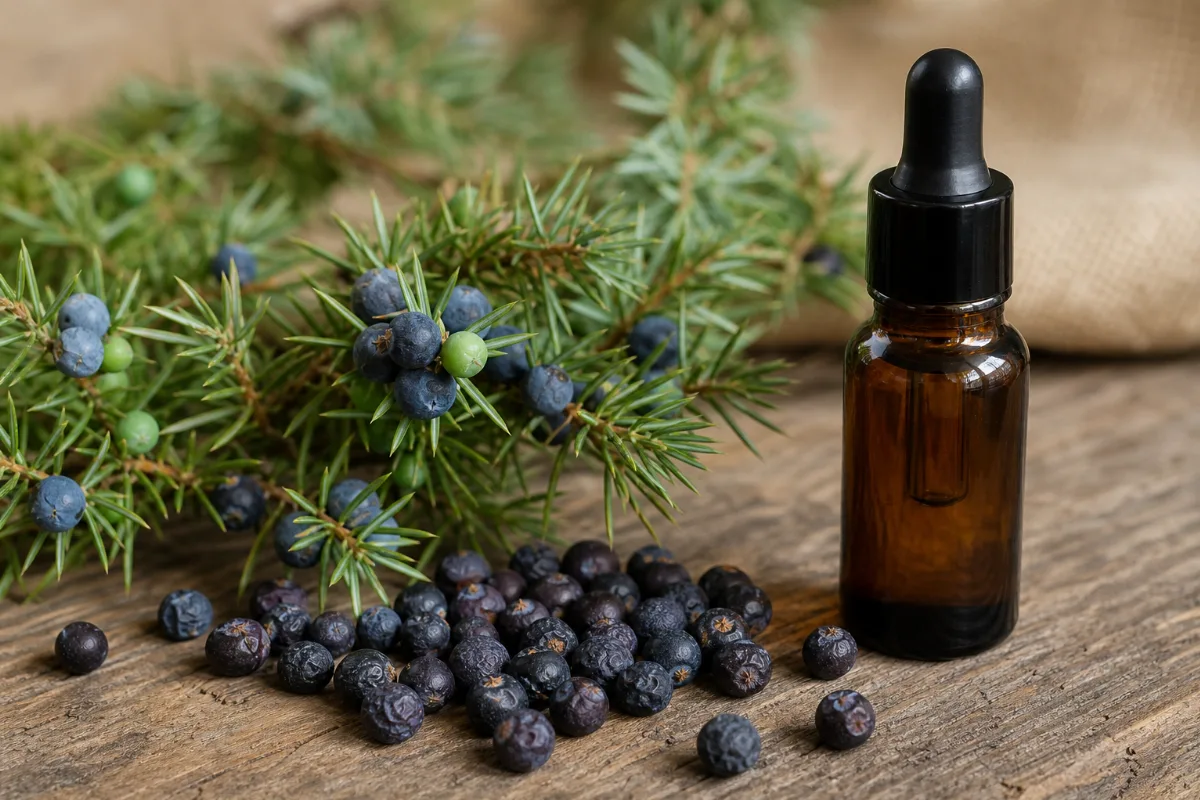
Essential Oils & Aromatherapy · Essential oil
Juniper Berry Oil
Juniperus communis L. · also called Juniper oil, juniper berry essential oil, common juniper oil
Juniper berry oil is the sharp, woody, pine-like oil distilled from the ripe berries of the common juniper shrub. It has been used in Europe for urinary and digestive complaints and in baths. Research is thin: the EU herbal committee says no clinical trials of the oil exist, and one small 2025 trial tested a swallowed medicine capsule. The main cautions: it is not for swallowing, the EU lists kidney disease and pregnancy as cautions, and it can irritate or cause allergy on skin.
General information, not medical advice. Last substantive update · Not medically reviewed. A named clinician has not signed off on this page. How this page is made
About Juniper Berry Oil
Juniper berry oil is a woody, pine-scented oil with a long European tradition for urine flow, indigestion and bath use. The EU herbal committee accepts it only as a traditional medicine and says no clinical trials of the oil exist. One small 2025 trial of a branded swallowed capsule found better indigestion scores than placebo. Safety comes first: do not swallow essential oil, the EU lists severe kidney disease and pregnancy as cautions, and the oil can irritate and sensitise skin.
What juniper berry oil is
The oil comes from Juniperus communis, an evergreen conifer shrub in the cypress family (Cupressaceae, per GBIF). It is steam-distilled from the ripe berry cones.
The oil is a mixture. The EMA lists alpha-pinene as the largest part (about 24 to 55%), with sabinene, myrcene, limonene and terpinen-4-ol. The mix varies by origin: a Spanish study found limonene far higher than usually reported.
Juniper oil is not the same as cade oil (from the wood of another species), savin oil (another species), cedarwood oil, or juniper berries and tea. It is not a food nutrient.
What people use it for, and how strong the evidence is
For indigestion, one randomized trial of 76 adults tested a branded swallowed juniper-oil capsule for 28 days and found better symptom scores than placebo, with similar side effects. It is a single small trial of a medicine product.
For urine flow, joint aches and bath use, the EU accepts tradition only. The EMA says no clinical trials of the oil are available, and animal results on urine flow are mixed.
The only trial with juniper scent used a virtual reality package, so the scent cannot be credited. Period pain was tested with berry capsules, not the oil, and with no placebo. Claims for anxiety, sleep, detox and weight loss have no human trial. Cancer, memory and germ-killing results are in rats or test tubes.
The research in one view
There are very few human studies. The EMA found none on the oil (2010), and our searches found only one trial since, of a swallowed oil capsule. Everything else is old tradition, regulator opinion, rats, or test tubes.
No trial of juniper oil as a scent or on the skin was found for any condition.
Oil, medicine, berry and look-alikes are different things
A licensed juniper oil medicine capsule is not the same as a bottle of essential oil, and a trial of one says nothing about the other.
Cade oil, from the wood of another juniper species, contains toxic phenols, and one case report describes a newborn who died after cade oil was put on the skin. Do not mix it up with berry oil. Savin (Juniperus sabina) is another species with a toxic oil.
The EMA says the oil should be made only from ripe berries, without needles or wood. Poison Control says it can be hard to know what is in an essential oil bottle.
What regulators say
The EU herbal committee (HMPC, 2010) accepts juniper oil as a traditional herbal medicine for minor urinary complaints and indigestion (swallowed) and minor muscle and joint pain (skin and bath), based only on long use. It lists severe kidney disease as a contraindication for the oral uses, does not recommend use in pregnancy or breastfeeding, and says use in children has not been established. A European list entry could not be granted because genotoxicity has not been studied.
EFSA's 2023 animal-feed opinion found the oil safe at stated low feed levels (lowest for cats) and said it should be treated as an irritant to skin and eyes and as a skin and respiratory sensitiser. That is about feed additives, not diffusers or skin products.
A 2001 cosmetic safety review found the data on juniper extracts and tar insufficient to support their safety in cosmetics.
We did not find or read a statement from IFRA, the EU cosmetics regulator, FDA, NCCIH, LiverTox or LactMed about this oil.
At a glance
Traditional uses history, not proof
- Accepted in the EU as a traditional herbal medicine for minor urinary complaints and indigestion (swallowed medicine forms) and minor muscle and joint pain (skin and bath forms), on long use alone (EMA, 2010).
- Older references call the oil a diuretic, carminative (gas-easing) and antiseptic (EMA assessment).
- Plant used traditionally for bladder catarrh, cystitis and missed periods (2022 review).
Studied for research
- Indigestion, a swallowed branded oil capsule, low
- Urine flow and urinary complaints, traditional only, insufficient
- Muscle and joint aches, traditional only, insufficient
- Period pain, berry capsules not oil, very-low
- Delirium around surgery, scent inside a virtual reality package, very-low
- Anxiety, memory, cancer, germs: rats and test tube only, insufficient
Main compounds
- alpha-Pinene, the largest component
- Sabinene, myrcene and limonene
- Terpinen-4-ol
- beta-Pinene
Common forms
- Essential oil (steam-distilled from ripe berry cones)
- Licensed traditional medicine forms in the EU (oral and bath), a separate regulated product
- Scent, diffuser and skin products
- Berry, tea or extract (a different product)
Research links: EMA: Community herbal monograph on juniper oil (PDF) · EMA: Assessment report on juniper oil (PDF) · Poison Control: Essential oils · EFSA opinion on juniper oil as feed flavouring (abstract) · Juniper-oil capsule for indigestion, 2025 trial (abstract) · 28-day rat kidney study (abstract) · GBIF: Juniperus communis · Research Library · Genes & Biomarkers Library
What it is and its history
- Accepted scientific name
- Juniperus communis
- Naming authority
- L.
- Common names
- Common juniper (English); Juniper (English); Enebro (Spanish); Genievre (French); Wachholder (German); Zimbro (Portuguese)
- Family or group
- Cupressaceae (the cypress family), conifers, per GBIF and the EMA assessment.
- Classification
- Plantae > Tracheophyta > Pinopsida > Pinales > Cupressaceae > Juniperus > Juniperus communis
- Native range
- The EMA assessment says the plant originates in northern Europe and mountain areas; the herbal substance is imported from Italy, the Adriatic coast and Albania. Other ranges were not checked.
- Habitat
- An evergreen shrub with needles in whorls of three, per the EMA assessment.
- What it looks like
- Part used: The oil is steam-distilled from the ripe, non-fermented 'berry cones' (the fleshy cone scales that look like berries), per the EMA monograph. This page does not describe how to recognise the plant.
- Look-alikes and adulterants
- Name: Juniperus oxycedrus (cade oil source); Note: Cade oil comes from wood and contains toxic phenols; a newborn died after skin exposure in one case report. GBIF accepted species key 2684451.; Name: Juniperus sabina (savin); Note: A different species with a toxic oil, embryotoxic in mice in the one study read. GBIF key 7963890.; Name: Juniperus virginiana (cedarwood); Note: Sold as cedarwood oil; the EMA assessment lists it among other juniper species used as fragrance oils. GBIF key 2684391.
- Sustainability and conservation
- Not checked (no IUCN or CITES source read).
Traditional use and history history, not clinical proof
| Tradition or era | Documented use | Source |
|---|---|---|
| European traditional medicine | The EMA assessment says the European tradition of juniper oil use is much older than 30 years. A 1967 reference (Martindale, quoting the 1949 British Pharmaceutical Codex) describes the oil as carminative and antiseptic, used for flatulence and colic, and as a diuretic. In Germany, soft capsules have been an authorised preparation for indigestion since 1976. | EMA assessment report 2010 |
| Traditional uses of the plant | A 2022 review says common juniper is traditionally used for renal suppression, acute and chronic cystitis, bladder catarrh, albuminuria, leucorrhea and amenorrhea. | Goncalves et al. 2022 (abstract) |
| Modern regulation | In 2010 the EU herbal committee (HMPC) adopted a monograph accepting juniper oil as a traditional herbal medicine for minor urinary complaints, indigestion and minor muscle and joint pain, based only on long-standing use. The EMA also says that no European list entry could be granted because genotoxicity has not been studied. | EMA monograph and assessment report 2010 |
Traditional use shows how it was used. It does not show that it works or is safe today.
What is inside, and how it may work
What it contains and how those compounds act in cells and animals. Laboratory and animal mechanisms are not proven effects in people.
Main compounds
| Compound | Family | Where it is concentrated | Activity studied | Level of evidence |
|---|---|---|---|---|
| alpha-Pinene PubChem 6654 | monoterpene hydrocarbon | Berry-cone oil About 24 to 55% (Ph. Eur. ranges quoted by the EMA) | The largest component by the quoted range. The EMA assessor says that for a good-quality oil alpha- and beta-pinene should ideally be low and terpinen-4-ol high, with minimal kidney irritation expected; this is the assessor's reading and it sits oddly with the quoted range. 18 7 | Regulatory report |
| Sabinene PubChem 18818 | monoterpene hydrocarbon | Berry-cone oil 1.4 to 28.8% | Listed as a main component. No activity of its own was read. 18 7 | Composition only |
| beta-Myrcene PubChem 31253 | monoterpene hydrocarbon | Berry-cone oil 7.3 to 22.0% | Listed as a main component. No activity of its own was read. 18 7 | Composition only |
| Limonene PubChem 22311 | monoterpene hydrocarbon | Berry-cone oil 2.3 to 10.9% in the Ph. Eur. range; 15 to 25% at three Spanish sites | Varies by origin. No activity of its own was read. 18 7 8 | Composition only |
| Terpinen-4-ol PubChem 11230 | monoterpene alcohol | Berry-cone oil 0.7 to 17.0% | Old texts credit it with the diuretic effect; in rats it increased urine flow by injection and did not change kidney structure by mouth over 28 days. 18 7 14 | In vivo animal |
| beta-Pinene PubChem 14896 | monoterpene hydrocarbon | Berry-cone oil | Listed as a main component; range not clearly read. 18 7 | Composition only |
Mechanisms, receptors and pathways
| Target or pathway | Gene or receptor | What was found | Level |
|---|---|---|---|
| Urine flow (diuresis) | Not specified | Old texts say terpinen-4-ol irritates kidney tissue and increases blood flow in the filters. The EMA says animal results are inconsistent and the effect is not purely water loss. 7 | In vivo animal |
| Acetylcholinesterase and antioxidant enzymes (rat hippocampus) | Acetylcholinesterase | Inhaled juniper oil lowered acetylcholinesterase activity and showed antioxidant effects in rats given amyloid beta. 4 | In vivo animal |
| Bacterial and cell growth (test tube) | Not specified | Oils slowed growth of several bacteria and of tumour cells, and also of normal cells, particularly liver cells. 8 | Laboratory research |
| Abortion in cattle (needles) | Not specified | Ground juniper needles caused abortion in 2 of 2 cows; the authors point to isocupressic acid in the needles. This concerns foliage, not berries or oil. 9 | In vivo animal |
Absorption, metabolism and elimination
- Absorption
- No data. The EMA says there are no data on human absorption, distribution, metabolism or elimination, and that the complex mixture makes a representative study hard.
- Distribution
- Not established.
- Metabolism
- Not established.
- Elimination
- Not established.
- Bioavailability
- Not established.
Isolated compounds versus whole extracts
Juniper oil, juniper berries, berry tea or extract, cade oil (another species' wood) and a fatty 'juniper oil' used in a diet are different things, and a finding for one does not carry over. Terpinen-4-ol alone was more active than the whole oil in one rat study, and the oil's makeup varies by origin and batch.
Nutritional composition
Juniper oil is not a food nutrient. EFSA notes that juniper berries and their preparations are recognised to flavour food; this does not make swallowing the essential oil safe.
1 low certainty2 very low certainty8 not enough evidence
What was looked at
The 11 benefits and uses checked for Juniper Berry Oil, each with how strong the evidence is. Tap one to open it.
- Indigestion and bloating (a branded juniper-oil medicine capsule, swallowed)Low certainty
- Urine flow and minor urinary complaints (traditional use)Not enough evidence
- Muscle and joint aches (skin or bath use, traditional)Not enough evidence
- Period pain (juniper berry capsules, not the oil)Very low certainty
- Confusion (delirium) and anxiety around surgery (juniper scent inside a virtual reality session)Very low certainty
- Anxiety, stress and sleep (an aromatherapy claim)Not enough evidence
- Memory and Alzheimer's-type changes (rats)Not enough evidence
- Colon cancer prevention (rats given a cancer-causing chemical)Not enough evidence
- Germ-killing and cell-growth effects in the test tubeNot enough evidence
- Blood sugar (limited non-clinical suggestion)Not enough evidence
- 'Detox' and weight loss (marketing claims)Not enough evidence
Lab markers tracked in the studies
Dyspepsia symptom score (belly discomfort, pressure, fullness)Urine output (rats)Postoperative delirium (CAM assessment)Period pain score (visual analogue scale)Brain enzyme activity (acetylcholinesterase, rats)
What is Juniper Berry Oil good for?
The uses people ask about and how strong the evidence is for each. Read the certainty label first: nothing is better than low, and the one trial of a juniper-oil product tested a swallowed medicine, not a scent or skin oil.
Benefits, one by one
Each card is a research question, not a promise. Tap a goal to filter. Open a card to see the studies, doses and limits.
Indigestion and bloating (a branded juniper-oil medicine capsule, swallowed)
Low certaintyOne 2025 trial of 76 adults with functional indigestion found better symptom scores after 4 weeks of a branded juniper-oil capsule than with placebo. It tested a swallowed medicine product, not a scent or skin oil, and it is the only human trial we found.
3 studiesNot covered. This page gives no amounts and no way to use the oil.
Studies, doses and limits
What the trials found
One randomized, double-blind, placebo-controlled trial: 39 people on the juniper product and 37 on placebo, once daily for 28 days.
Results
The composite score for upper belly discomfort, pressure and fullness fell more than with placebo (p < 0.001 at day 28). Doctor and patient ratings were better at days 14 and 28, and quality of life rose. Adverse events were infrequent, mostly in the digestive tract, and similar in both groups; no serious ones.
Effect sizes as reported
No effect sizes or score values in the abstract.
Why this rating
A single small trial of 4 weeks. The product is a branded oral capsule, so it tells us nothing about scent oils. The authors are from a contract-research company and the sponsor is not named in the abstract. Symptoms were self-reported.
Form and dose studied
Not covered. This page gives no amounts and no way to use the oil.
Who was studied
Adults with functional dyspepsia in Germany.
Limits
Only one trial and no repeat. The abstract gives no numbers for how big the change was, and does not describe kidney checks.
Why researchers looked
Juniper oil has long been used in Europe for indigestion and gas.
Traditional use
The EU herbal committee accepted juniper oil as a traditional medicine for indigestion and flatulence, 'exclusively based upon long-standing use'.
Proposed mechanism Preliminary mechanism
Not established. Older texts say terpenes in the oil act on the gut and kidneys, but the EMA report calls this tradition, not proof.
A proposed mechanism does not show that the effect happens in people.
Essential oil is not meant to be swallowed. The trial product is a regulated medicine, not a bottle of scent oil. Kidney and pregnancy cautions apply (see Safety).
Urine flow and minor urinary complaints (traditional use)
Not enough evidenceJuniper has a long reputation as a diuretic. The EU committee accepted it as a traditional medicine for flushing the urinary tract in minor complaints, but says no clinical trial of the oil exists. Animal results are mixed.
3 studiesNot covered. This page gives no amounts and no way to use the oil.
Studies, doses and limits
Results
No human result exists. In rats, the EMA table reports one oral study with the oil that found no significant diuresis, and an injection study in which the oil was less active than its component terpinen-4-ol.
Why this rating
No human trial of the oil. Animal results are inconsistent. A tradition that is also a safety question, because the oil's kidney effects are the thing the regulators are cautious about.
Form and dose studied
Not covered. This page gives no amounts and no way to use the oil.
Who was studied
Traditional medicine users in Europe (oral medicine form).
Limits
Tradition and animal experiments only. Sources that call the oil 'diuretic' are the same sources that warn about the kidney.
Why researchers looked
The EMA says the European tradition of use is much older than 30 years.
Traditional use
The EU monograph accepts the oral oil as a traditional product 'to increase the amount of urine' as an adjuvant in minor urinary tract complaints, and lists severe kidney disease as a contraindication.
Proposed mechanism Preliminary mechanism
Older texts suggest terpinen-4-ol irritates the kidney tissue and so increases urine flow. The EMA report says the diuretic effect in animals is 'not always consistent' and does not clearly come from the oil.
A proposed mechanism does not show that the effect happens in people.
Kidney: see Safety. The EU committee lists severe kidney disease as a reason not to use the swallowed medicine form.
Muscle and joint aches (skin or bath use, traditional)
Not enough evidenceThe EU committee accepted juniper oil in a bath or on the skin as a traditional aid for minor muscle and joint aches. It says this rests only on long use, and calls the claim 'close to a health claim for cosmetics'.
2 studiesNot covered. This page gives no amounts and no way to use the oil.
Studies, doses and limits
What the trials found
No trial of juniper oil on the skin for pain was found, and the EMA says no clinical trials of the oil are available.
Results
No result. The same monograph warns that allergic skin reactions have been reported and that a full bath should be used with caution in high blood pressure.
Why this rating
Tradition only; no human or even useful animal evidence for pain.
Form and dose studied
Not covered. This page gives no amounts and no way to use the oil.
Who was studied
Adolescents and adults in traditional medicine registration.
Limits
Skin safety is the live question here (see Safety).
Why researchers looked
The EU monograph includes a bath use of the oil.
Traditional use
Listed in the EU monograph for skin and bath use: 'adjuvant in the relief of minor muscular and articular pain', traditional use only.
Proposed mechanism Preliminary mechanism
Older texts say the oil improves blood supply to the skin. The EMA says this cutaneous indication may be hard to defend as a medicine.
A proposed mechanism does not show that the effect happens in people.
Skin: irritation and allergy are possible. Do not use on broken skin (Poison Control).
Period pain (juniper berry capsules, not the oil)
Very low certaintyA 2025 trial of 62 women compared juniper berry capsules with a standard period-pain drug. Pain fell in both groups. It used powdered berries, not essential oil, and had no placebo group.
2 studiesNot covered. This page gives no amounts and no way to use the oil.
Studies, doses and limits
What the trials found
One randomized double-blind trial in 62 women aged 18 to 35, over two menstrual cycles, against mefenamic acid (no placebo).
Results
Pain scores fell in both groups, juniper from 8.1 to 2.87 and mefenamic acid from 8.1 to 3.61 (p 0.012). Systemic symptoms and quality of life did not differ between groups. Doppler flow indices of the uterine arteries changed in the juniper group.
Effect sizes as reported
Pain scores fell in both groups.
Why this rating
Different product (berry capsules), no placebo, small, and both groups improved on their own scores. Because the preparation changed blood flow in the womb arteries, this finding is a reason for the pregnancy caution, not a reason to try it.
Form and dose studied
Not covered. This page gives no amounts and no way to use the oil.
Who was studied
Women aged 18 to 35 with period pain, India.
Limits
Cannot be applied to essential oil. No adverse event numbers in the abstract.
Why researchers looked
The trial comes from a Unani medicine institute in India.
Traditional use
A 2022 plant review lists amenorrhea (missed periods) and leucorrhea among traditional uses of juniper. These are traditions.
Proposed mechanism Preliminary mechanism
Not established. The trial measured blood flow in the womb arteries and found changes, which the authors report as a finding, not a proven mechanism.
A proposed mechanism does not show that the effect happens in people.
Pregnancy: the EU committee says use is not recommended (see Safety). This trial used a different product.
Confusion (delirium) and anxiety around surgery (juniper scent inside a virtual reality session)
Very low certaintyA 2026 trial of 342 older surgery patients found less delirium after a 20-minute scene with sound and juniper scent than after standard care alone (9.4% vs 19.2%). The scent was only one part, so nothing can be credited to juniper.
1 studiesNot covered. This page gives no amounts and no way to use the oil.
Studies, doses and limits
What the trials found
One randomized trial in 342 patients aged 60 or over having laparoscopic gut surgery in Beijing.
Results
Delirium in the first 3 days: 9.4% (16 of 170) with the multisensory session vs 19.2% (33 of 172) with standard care (p 0.010). Anxiety scores were lower (p 0.001). No serious adverse events during the intervention.
Effect sizes as reported
9.4% vs 19.2% delirium.
Why this rating
A combination of sight, sound and scent against no extra care, so juniper cannot be separated out. Blinding is not described. One hospital.
Form and dose studied
Not covered. This page gives no amounts and no way to use the oil.
Who was studied
Adults aged 60 and over having abdominal surgery.
Limits
No scent-only or sound-only group.
Why researchers looked
The authors say effective ways to prevent delirium after surgery remain unclear.
Proposed mechanism Preliminary mechanism
Not established. The authors suggest smell, sound and sight together may help the brain, which is a hypothesis.
A proposed mechanism does not show that the effect happens in people.
Scent exposure was limited to one 20-minute session. Safety of repeated or long exposure was not studied.
Anxiety, stress and sleep (an aromatherapy claim)
Not enough evidenceJuniper oil is often said to calm nerves or help sleep. We searched PubMed and found no trial of juniper oil alone for anxiety, stress or sleep in people.
2 studiesNot covered. This page gives no amounts and no way to use the oil.
Studies, doses and limits
Results
No result for juniper oil alone.
Why this rating
The claim has no human trial behind it that we could find.
Form and dose studied
Not covered. This page gives no amounts and no way to use the oil.
Limits
Absence of trials is not proof that nothing happens, but nothing can be claimed.
Why researchers looked
A rat paper says aromatherapy uses juniper oil against anxiety and tension.
Traditional use
A 2015 rat paper says that in aromatherapy juniper oil is used against anxiety, nervous tension and stress-related conditions. That is the authors' statement of use, not a finding.
Proposed mechanism Preliminary mechanism
None established.
A proposed mechanism does not show that the effect happens in people.
No safety data for calm or sleep use, and the skin, kidney and pregnancy cautions still apply.
Memory and Alzheimer's-type changes (rats)
Not enough evidenceIn rats given amyloid beta, breathing juniper oil for 21 days lowered an enzyme linked to memory loss and showed antioxidant effects. This is animal work only.
1 studiesNot covered. This page gives no amounts and no way to use the oil.
Studies, doses and limits
Results
Inhaled juniper volatile oil significantly decreased acetylcholinesterase activity and showed antioxidant activity in the hippocampus.
Effect sizes as reported
No numbers in the abstract.
Why this rating
Animal experiment; no sample size or numbers in the abstract. It does not show a benefit for people.
Form and dose studied
Not covered. This page gives no amounts and no way to use the oil.
Who was studied
Rats.
Limits
No human memory trial.
Why researchers looked
A rat model of Alzheimer's-type changes.
Proposed mechanism Preliminary mechanism
Lower acetylcholinesterase and antioxidant effects in the rats' hippocampus.
A proposed mechanism does not show that the effect happens in people.
None for this animal work.
Colon cancer prevention (rats given a cancer-causing chemical)
Not enough evidenceIn 32 rats given a colon-cancer chemical, juniper berry oil by mouth was followed by fewer and smaller tumours. This does not show that the oil prevents or treats cancer in people.
1 studiesNot covered. This page gives no amounts and no way to use the oil.
Studies, doses and limits
Results
Fewer adenomas and adenocarcinomas in treated rats; antioxidant defences improved.
Effect sizes as reported
No numbers in the abstract.
Why this rating
Rat study; the oil was swallowed, which is not advice for people.
Form and dose studied
Not covered. This page gives no amounts and no way to use the oil.
Who was studied
Rats.
Limits
No human data.
Why researchers looked
A rat study of a cancer-prevention idea.
Proposed mechanism Preliminary mechanism
Lower COX-2 and Ki-67 and higher caspase-3 in colon tissue.
A proposed mechanism does not show that the effect happens in people.
Do not swallow essential oil. This is animal evidence only.
Germ-killing and cell-growth effects in the test tube
Not enough evidenceIn the lab, juniper oil slowed several bacteria and some tumour cell lines. It also slowed growth of normal liver cells, so the authors advise caution. None of this shows a benefit in people.
2 studiesNot covered. This page gives no amounts and no way to use the oil.
Studies, doses and limits
Results
In oils from four Spanish sites, gram-positive bacteria were more sensitive than gram-negative; most oils showed anti-inflammatory activity in the lab; most oils also inhibited growth of non-tumour cells, particularly liver cells.
Why this rating
Test-tube work. The EMA also notes lab concentrations are often not physiologically relevant.
Form and dose studied
Not covered. This page gives no amounts and no way to use the oil.
Who was studied
Cells and bacteria.
Limits
No human or animal infection study of the oil.
Why researchers looked
Oils are often screened for antimicrobial activity.
Traditional use
A plant review lists antimicrobial and anti-inflammatory activity as lab findings.
Proposed mechanism Preliminary mechanism
Test-tube effects on bacteria and cells.
A proposed mechanism does not show that the effect happens in people.
The same lab work showed damage to normal liver cells in a dish. Not a finding in people.
Blood sugar (limited non-clinical suggestion)
Not enough evidenceThe EU monograph says there is limited non-clinical evidence that juniper may influence glucose levels in diabetes. The assessment says the oil itself has not been studied for this.
2 studiesNot covered. This page gives no amounts and no way to use the oil.
Studies, doses and limits
Results
No result for the oil.
Why this rating
Only a regulator's remark on non-clinical work; the oil was not studied.
Form and dose studied
Not covered. This page gives no amounts and no way to use the oil.
Limits
Listed here because it is also a theoretical medicine-interaction question.
Why researchers looked
The EU monograph mentions it as a question raised by non-clinical work.
Traditional use
Mentioned in the EMA monograph's preclinical section.
Proposed mechanism Preliminary mechanism
Not established.
A proposed mechanism does not show that the effect happens in people.
Anyone using diabetes medicines should ask a pharmacist (see Safety).
'Detox' and weight loss (marketing claims)
Not enough evidenceWebsites often link juniper oil to detox or weight loss. We found no human study for either.
1 studiesNot covered. This page gives no amounts and no way to use the oil.
Studies, doses and limits
Results
No result.
Why this rating
No supporting study. A diuretic effect would be water loss, not detox, and the regulators' kidney caution points the other way.
Form and dose studied
Not covered. This page gives no amounts and no way to use the oil.
Limits
Claim without evidence.
Why researchers looked
Product pages make this claim.
Proposed mechanism Preliminary mechanism
None established.
A proposed mechanism does not show that the effect happens in people.
A product that makes you pass more water is not harmless for the kidney (see Safety).
Connections to the rest of health
How Juniper Berry Oil connects to the rest of our health knowledge graph. Every link says what kind of connection it is. A safety link (for example to the liver) is a warning, not a benefit. A study that merely mentions a topic never creates a benefit link.
Explore every connection: goals, body systems, organs, symptoms, genes
A. Wellness goals
| Connected to | Kind of connection | Evidence status | Context | Studies |
|---|---|---|---|---|
| Digestive Support | Low certainty | Indigestion and bloating (a branded juniper-oil medicine capsule, swallowed): One 2025 trial of 76 adults with functional indigestion found better symptom scores after 4 weeks of a branded juniper-oil capsule than with placebo. It tested a swallowed medicine product, not a scent or skin oil, and it is the only human trial we found. | 1 6 7 | |
| Urinary Support | Traditional use | Not enough evidence | Urine flow and minor urinary complaints (traditional use): Juniper has a long reputation as a diuretic. The EU committee accepted it as a traditional medicine for flushing the urinary tract in minor complaints, but says no clinical trial of the oil exists. Animal results are mixed. | 6 7 10 |
| Pain Relief | Traditional use | Not enough evidence | Muscle and joint aches (skin or bath use, traditional): The EU committee accepted juniper oil in a bath or on the skin as a traditional aid for minor muscle and joint aches. It says this rests only on long use, and calls the claim 'close to a health claim for cosmetics'. | 6 7 |
| Joint Support | Traditional use | Not enough evidence | Muscle and joint aches (skin or bath use, traditional): The EU committee accepted juniper oil in a bath or on the skin as a traditional aid for minor muscle and joint aches. It says this rests only on long use, and calls the claim 'close to a health claim for cosmetics'. | 6 7 |
| Pain Relief | Very low certainty | Period pain (juniper berry capsules, not the oil): A 2025 trial of 62 women compared juniper berry capsules with a standard period-pain drug. Pain fell in both groups. It used powdered berries, not essential oil, and had no placebo group. | 2 10 | |
| Anxiety Support | Very low certainty | Confusion (delirium) and anxiety around surgery (juniper scent inside a virtual reality session): A 2026 trial of 342 older surgery patients found less delirium after a 20-minute scene with sound and juniper scent than after standard care alone (9.4% vs 19.2%). The scent was only one part, so nothing can be credited to juniper. | 11 | |
| Anxiety Support | Not enough evidence | Anxiety, stress and sleep (an aromatherapy claim): Juniper oil is often said to calm nerves or help sleep. We searched PubMed and found no trial of juniper oil alone for anxiety, stress or sleep in people. | 4 11 | |
| Stress Reduction | Not enough evidence | Anxiety, stress and sleep (an aromatherapy claim): Juniper oil is often said to calm nerves or help sleep. We searched PubMed and found no trial of juniper oil alone for anxiety, stress or sleep in people. | 4 11 | |
| Better Sleep | Not enough evidence | Anxiety, stress and sleep (an aromatherapy claim): Juniper oil is often said to calm nerves or help sleep. We searched PubMed and found no trial of juniper oil alone for anxiety, stress or sleep in people. | 4 11 | |
| Memory Support | Not enough evidence | Memory and Alzheimer's-type changes (rats): In rats given amyloid beta, breathing juniper oil for 21 days lowered an enzyme linked to memory loss and showed antioxidant effects. This is animal work only. | 4 | |
| Cancer Research | Not enough evidence | Colon cancer prevention (rats given a cancer-causing chemical): In 32 rats given a colon-cancer chemical, juniper berry oil by mouth was followed by fewer and smaller tumours. This does not show that the oil prevents or treats cancer in people. | 15 | |
| Infection Support | Not enough evidence | Germ-killing and cell-growth effects in the test tube: In the lab, juniper oil slowed several bacteria and some tumour cell lines. It also slowed growth of normal liver cells, so the authors advise caution. None of this shows a benefit in people. | 8 7 | |
| Blood Sugar Balance | Not enough evidence | Blood sugar (limited non-clinical suggestion): The EU monograph says there is limited non-clinical evidence that juniper may influence glucose levels in diabetes. The assessment says the oil itself has not been studied for this. | 6 7 | |
| Detoxification Support | Not enough evidence | 'Detox' and weight loss (marketing claims): Websites often link juniper oil to detox or weight loss. We found no human study for either. | 7 | |
| Weight Management | Not enough evidence | 'Detox' and weight loss (marketing claims): Websites often link juniper oil to detox or weight loss. We found no human study for either. | 7 |
B. Body systems
| Connected to | Kind of connection | Evidence status | Context | Studies |
|---|---|---|---|---|
| Digestive System | Biological association | Low certainty | Studied for: Indigestion and bloating (a branded juniper-oil medicine capsule, swallowed) Studied for: Colon cancer prevention (rats given a cancer-causing chemical) | 1 6 7 15 |
| Urinary System | Biological association | Not enough evidence | Studied for: Urine flow and minor urinary complaints (traditional use) | 6 7 10 |
| Kidney Urinary | Biological association | Not enough evidence | Studied for: Urine flow and minor urinary complaints (traditional use) | 6 7 10 |
| Musculoskeletal System | Biological association | Not enough evidence | Studied for: Muscle and joint aches (skin or bath use, traditional) | 6 7 |
| Skin | Biological association | Not enough evidence | Studied for: Muscle and joint aches (skin or bath use, traditional) | 6 7 |
| Reproductive System | Biological association | Very low certainty | Studied for: Period pain (juniper berry capsules, not the oil) | 2 10 |
| Nervous System | Biological association | Very low certainty | Studied for: Confusion (delirium) and anxiety around surgery (juniper scent inside a virtual reality session) Studied for: Anxiety, stress and sleep (an aromatherapy claim) | 11 4 |
| Immune System | Biological association | Not enough evidence | Studied for: Germ-killing and cell-growth effects in the test tube | 8 7 |
| Endocrine System | Biological association | Not enough evidence | Studied for: Blood sugar (limited non-clinical suggestion) | 6 7 |
| Whole Body | Biological association | Not enough evidence | Studied for: 'Detox' and weight loss (marketing claims) | 7 |
E. Health conditions
| Connected to | Kind of connection | Evidence status | Context | Studies |
|---|---|---|---|---|
| Kidney disease | Contested regulatory caution | Severe renal disease is a listed contraindication; the evidence behind the warning is described by the EMA as contradictory and not clinical. Severe renal disease is a listed contraindication; the EMA calls the underlying reports contradictory and not clinical. Preparation or compound: Juniper oil, swallowed medicine forms |
6 7 14 | |
| Pregnancy | Not enough evidence | Use not recommended; no reproductive toxicity data for the oil. Preparation or compound: Juniper oil, berry, fruit extract and needles (animal and old references) |
6 7 12 9 | |
| Contact dermatitis | Adverse effect or risk | Documented risk | Allergic and irritant skin reactions reported; EFSA classes it an irritant and sensitiser. Preparation or compound: Juniper oil on the skin |
6 7 5 |
I. Biomarkers
| Connected to | Kind of connection | Evidence status | Context | Studies |
|---|---|---|---|---|
| Dyspepsia symptom score (belly discomfort, pressure, fullness) | Biological association | Low certainty | Measured in trials: decrease. A lab change is not the same as a health benefit. | 1 |
| Urine output (rats) | Biological association | Not enough evidence | Measured in trials: increase. A lab change is not the same as a health benefit. | 7 |
| Postoperative delirium (CAM assessment) | Biological association | Very low certainty | Measured in trials: decrease. A lab change is not the same as a health benefit. | 11 |
| Period pain score (visual analogue scale) | Biological association | Very low certainty | Measured in trials: decrease. A lab change is not the same as a health benefit. | 2 |
| Brain enzyme activity (acetylcholinesterase, rats) | Biological association | Not enough evidence | Measured in trials: decrease. A lab change is not the same as a health benefit. | 4 |
J. Genes, receptors and enzymes
| Connected to | Kind of connection | Evidence status | Context | Studies |
|---|---|---|---|---|
| Acetylcholinesterase | Preliminary mechanism | In vivo animal | Lower activity in rat hippocampus after inhaled oil. | 4 |
L. Active compounds
| Connected to | Kind of connection | Evidence status | Context | Studies |
|---|---|---|---|---|
| alpha-Pinene | Biological association | Regulatory report | The largest component by the quoted range. The EMA assessor says that for a good-quality oil alpha- and beta-pinene should ideally be low and terpinen-4-ol high, with minimal kidney irritation expected; this is the assessor's reading and it sits oddly with the quoted range. Preparation or compound: Berry-cone oil |
18 7 |
| Sabinene | Biological association | Composition only | Listed as a main component. No activity of its own was read. Preparation or compound: Berry-cone oil |
18 7 |
| beta-Myrcene | Biological association | Composition only | Listed as a main component. No activity of its own was read. Preparation or compound: Berry-cone oil |
18 7 |
| Limonene | Biological association | Composition only | Varies by origin. No activity of its own was read. Preparation or compound: Berry-cone oil |
18 7 8 |
| Terpinen-4-ol | Biological association | In vivo animal | Old texts credit it with the diuretic effect; in rats it increased urine flow by injection and did not change kidney structure by mouth over 28 days. Preparation or compound: Berry-cone oil |
18 7 14 |
| beta-Pinene | Biological association | Composition only | Listed as a main component; range not clearly read. Preparation or compound: Berry-cone oil |
18 7 |
Each connection is stored with the ingredient, the connected record, the kind of connection, the evidence status, the supporting studies, the preparation or compound involved, and a review date (last reviewed October 25, 2026).
Evidence at a glance: what the research found for 11 outcomes
Each outcome below is one thing researchers measured. Certainty is how far the evidence can be trusted, not how well it works. The full studies are on the next tab.
The evidence
The research centre for Juniper Berry Oil. Every record here was checked against PubMed or the publisher's page; we never list a study we have not verified.
Evidence by outcome
Bars show how many studies we found for each outcome, not how well it works. People are added up across trials only (reviews are not added, to avoid double counting).
How we rate evidence
High certainty
Several well-run trials or reviews agree; further research is unlikely to change the picture much.
Moderate certainty
Good trials point the same way, but some doubt remains.
Low certainty
Small, short or inconsistent trials. The finding could change with better research.
Very low certainty
Very little or very weak human data. Treat as a possibility only.
Mixed findings
Trials or reviews disagree with each other.
Not enough evidence
Not enough human research to say either way.
Evidence against
Good research found no benefit, or found harm.
We take the reviewers' own risk-of-bias and GRADE statements where they exist, and otherwise judge from study size, design, consistency, directness and whether a product matches what is sold. Many publications do not make evidence high. Method note: We read the EMA monograph and assessment report in full, the abstracts of 13 PubMed papers and the Poison Control page, checked the plant name in GBIF and the compounds in PubChem. We did not find or read a LiverTox, LactMed, IFRA or FDA statement.
Study library: every study we checked 18
| Study | Design | People | Product, dose, length | Result |
|---|---|---|---|---|
| Albrecht 2025 Efficacy and safety of Roleca juniper 100 mg in the treatment of functional dyspepsia: A randomized, double-blind, placebo-controlled trial. Phytomedicine · PMID 41240546 · DOI |
Randomized double blind placebo controlled trial |
76 Adults with functional dyspepsia (Germany) |
Roleca Juniper 100 mg, a branded standardized juniper oil preparation taken by mouth once daily berry-cone oil in an oral product Not reported here 28 days · vs placebo |
39 patients got the juniper preparation and 37 got placebo. The composite symptom score fell from baseline (p 0.008) and fell more than with placebo at day 28 (p < 0.001). Doctor- and patient-rated improvement was better at day 14 and day 28 (both p 0.001 or lower). Quality of life scores rose. Adverse events were infrequent, mostly gastrointestinal, and similar between groups. No serious adverse events. Better than placebo on the composite symptom score; the abstract gives no effect sizes or score values Methods, limits and fundingOutcomes: Composite score of upper abdominal discomfort, pressure and fullness at day 28; global ratings; quality of life; adverse events Limitations: One trial of 76 people over 4 weeks of a branded medicine capsule swallowed by mouth, so it says nothing about scent or skin use of an essential oil. Self-reported symptoms. Authors are from a contract-research and consulting company; the abstract declares no competing interests but does not name the sponsor, so industry involvement cannot be ruled out. Abstract gives no numbers for the size of the effect. Funding and conflicts: No competing interests declared; sponsor not stated in the abstract; authors 1, 4, 5 and 6 are at Mediconomics GmbH. Registration: EU CT No. 2023-504750-35-01 Read: abstract |
| Banu 2025 Efficacy and safety of abhal (Juniperus communis L) on pain intensity, uterine artery doppler flow, and quality of life in primary dysmenorrhea: A double-blind, randomized controlled trial. J Ethnopharmacol · PMID 39842749 · DOI |
Double blind randomized trial against a standard drug (no placebo) |
62 Women aged 18 to 35 with period pain (India, Unani medicine institute) |
Juniper berry capsules, two at a time berry (not the essential oil) Not reported here days 1 to 3 of menstruation over two cycles · vs mefenamic acid (a standard period-pain drug) |
Pain scores fell in both groups (juniper 8.1 to 2.87; mefenamic acid 8.1 to 3.61; p 0.012 in the abstract). Systemic symptom and quality of life scores did not differ between groups. Both groups improved on their own scores from baseline. Doppler indices of the uterine arteries changed in the juniper group, with small to medium effect sizes. Both groups improved; no between-group difference in systemic symptoms or quality of life Methods, limits and fundingOutcomes: Pain on a visual analogue scale; systemic symptoms; quality of life; uterine artery Doppler Limitations: The product was powdered berries, not the essential oil. Compared with a drug, not with placebo, so improvement could be natural fluctuation or expectation. 62 women, 2 cycles. The abstract does not give adverse events. The Doppler finding shows the berry preparation changed uterine blood flow indices, which is a reason for the pregnancy caution, not proof of harm. Funding and conflicts: Authors declare no conflicts; institute of the Indian Ministry of Ayush. Read: abstract |
| Chaimae 2024 Fatal Neonatal Intoxication From Cutaneous Cade Oil: A Case of Multivisceral Failure. Cureus · PMID 39171036 · DOI |
Case report |
1 One newborn (Morocco) |
Cade oil on the skin (from Juniperus oxycedrus wood; a different oil) wood oil of another juniper species Not reported here |
A newborn exposed through the skin to cade oil was admitted in cardiovascular shock, progressed to multi-organ failure and died on the second day in hospital. The authors say cade oil contains toxic phenols such as guaiacol and cresol. One death Methods, limits and fundingOutcomes: Clinical course Limitations: A different juniper oil (Juniperus oxycedrus wood, not the berry oil of Juniperus communis). Included only so readers do not mix the two up. Funding and conflicts: No funding or conflicts declared. Read: abstract |
| Cioanca 2015 Anti-acetylcholinesterase and Antioxidant Activities of Inhaled Juniper Oil on Amyloid Beta (1-42)-Induced Oxidative Stress in the Rat Hippocampus. Neurochem Res · PMID 25743585 · DOI |
Animal experiment rat |
Rats given an amyloid beta injection into the brain | Juniper volatile oil inhaled (two strengths) volatile oil Not reported here 60 minutes daily for 21 days · vs no inhalation |
Inhaled juniper oil significantly lowered acetylcholinesterase activity in the rats' hippocampus and showed antioxidant effects. Enzyme activity lower; no numbers in the abstract Methods, limits and fundingOutcomes: Brain enzyme activities and oxidative stress markers in the hippocampus Limitations: Rats, not people. The abstract gives no sample size. The authors' suggestion about Alzheimer's disease is a hypothesis. Funding and conflicts: Not stated in the abstract. Read: abstract |
| EFSA Panel on Additives and Products or Substances used in Animal Feed (FEEDAP); Bampidis 2023 Safety and efficacy of feed additives consisting of an essential oil and tincture from the berries of Juniperus communis L. (juniper oil and juniper tincture) for use in all animal species (FEFANA asbl). EFSA J · PMID 37089171 · DOI |
Regulator scientific opinion (animal feed) animal |
Farm, companion and ornamental animals; consumers; environment | Juniper oil and juniper tincture as feed flavourings berry-cone essential oil Not reported here |
Juniper oil judged safe up to stated low levels in complete feed; the calculated safe level for cats (3 mg/kg of feed) was the lowest of the species listed (dogs 18 mg/kg, sheep, goats and horses 16 mg/kg, chickens for fattening 4 mg/kg). No concern for consumers or the environment at the highest safe levels. The additives 'should be considered as irritants to skin and eyes, and as skin and respiratory sensitisers'. Safe feed levels set; classed as skin and eye irritant and skin and respiratory sensitiser Methods, limits and fundingOutcomes: Safe levels in feed; consumer and environment safety; irritation and sensitisation Limitations: About food additives for animals, not diffusers, massage oils or baths. The full opinion was not opened; only the abstract was read. Funding and conflicts: Regulator; not applicable. Read: abstract |
| EMA Committee on Herbal Medicinal Products (HMPC) 2010 EMA/HMPC Community herbal monograph on Juniperus communis L., aetheroleum (final), EMA/HMPC/12402/2010, 25 November 2010 (PDF read in full 2026-10-25) European Medicines Agency · Source |
Regulator monograph n/a |
n/a | Juniper oil, oral and skin/bath medicine forms (traditional use) berry-cone essential oil Not reported here |
Traditional herbal medicinal product 'exclusively based upon long-standing use'. Oral uses: to increase urine flow as an adjuvant in minor urinary tract complaints, and for symptomatic relief of digestive disorders such as dyspepsia and flatulence. Skin/bath use: adjuvant in relief of minor muscular and joint pain. Contraindications: hypersensitivity; for the oral uses severe renal disease including infectious interstitial nephritis, pyelitis and pyelonephritis; for the urinary use conditions where reduced fluid intake is advised (e.g. severe cardiac disease). Not recommended in oedema due to limited heart and kidney function. Oral use under 18 years and skin use under 12 years 'not established'. In hypertension a full bath should be used with caution. Interactions: none reported. Pregnancy and lactation: safety not established, use not recommended. Undesirable effects: allergic skin reactions, frequency unknown. Overdose: urine smells of violets; renal irritation and kidney pain, strong diuresis, albuminuria, haematuria, purplish urine, gastrointestinal upsets, faster heartbeat and higher blood pressure; rarely convulsions, metrorrhagia (uterine bleeding) and abortion. Preclinical: limited non-clinical evidence that juniper may influence glucose levels in diabetes; adequate tests on reproductive toxicity, genotoxicity and carcinogenicity have not been performed. Methods, limits and fundingOutcomes: Accepted traditional uses, contraindications, warnings, interactions, pregnancy, side effects, overdose Limitations: A regulatory summary of traditional use, not a trial. Written in 2010. Dosing text exists in the monograph; this page does not repeat it. Funding and conflicts: Regulator; not applicable. Read: full-text |
| EMA Committee on Herbal Medicinal Products (HMPC); rapporteur Gert Laekeman 2010 EMA/HMPC Assessment report on Juniperus communis L., aetheroleum (final), EMA/HMPC/12401/2010, 25 November 2010 (PDF read 2026-10-25; some table text did not extract cleanly) European Medicines Agency · Source |
Regulator assessment report n/a |
n/a | Juniper oil (steam distillate of ripe, non-fermented berry cones) berry-cone essential oil Not reported here |
States that no clinical trials on juniper oil are available (clinical efficacy section: 'Not available'), no human pharmacokinetic data, no clinical safety data. Standard references 'give contradictory information, mostly based upon interpretation by the authors and not on clinical data'. Oil composition (Ph. Eur. ranges quoted): alpha-pinene about 24 to 55%, sabinene 1.4 to 28.8%, beta-myrcene 7.3 to 22.0%, limonene 2.3 to 10.9%, terpinen-4-ol 0.7 to 17.0%. Rat studies of diuresis were inconsistent; one oral rat study found no significant diuresis with the oil. Dermal: undiluted oil caused no irritation in hairless mice and swine but moderate irritation in rabbits under occlusion; no phototoxicity in hairless mice and swine. In people: full-strength oil for 24 h caused irritation in 2 of 20 subjects; 8% oil in petrolatum (48 h closed patch) caused no irritation, sensitisation or phototoxicity; in a study of 86 patients with allergic reactions, juniper berry oil caused allergic reactions in 6. Burning, redness, inflammation with blisters and swelling are reported after external application of the oil (Barnes 2007, cited). Seizures and kidney damage reports for large or long-term juniper intake are called vague, poorly documented and not meeting pharmacovigilance criteria. The assessor notes that the oil blamed for kidney toxicity may have been contaminated with turpentine oil ('falsification'), that findings reported for turpentine oil were 'copied several times without further analysis', and that contaminated oil could affect kidney function. An old British reference (Martindale 1967, citing the 1949 British Pharmaceutical Codex) says juniper oil irritates the genito-urinary tract during excretion, may cause contraction of the uterus, and should not be used in pregnancy or kidney disease. No data on reproductive or developmental toxicity of the oil; no genotoxicity data, so a European list entry could not be granted. Combining with diuretics is not recommended; no reports on drug interactions; no study of the oil on blood glucose. No serious adverse events or deaths reported. Cutaneous indication called 'close to a health claim for cosmetics'. Methods, limits and fundingOutcomes: Composition, history, non-clinical and clinical data, safety, conclusions Limitations: Regulator's literature review, not new research. The monograph and report were written in 2010. Extraction of some table cells was incomplete, so only statements read clearly are used. Funding and conflicts: Regulator; not applicable. Read: full-text |
| Esteban 2023 Yield, Chemical Composition and Bioactivity of Essential Oils from Common Juniper (Juniperus communis L.) from Different Spanish Origins. Molecules · PMID 37298924 · DOI |
Laboratory study laboratory |
Wild juniper shrubs at four sites in northern Spain (male and female plants) | Steam-distilled juniper essential oil tested on bacteria and cell lines oil (plant part not stated in the abstract) Not reported here |
Oil yield was 0.24 to 0.58% of dry weight. Limonene was 15 to 25% at three sites, 100 to 200% higher than usually reported for other European countries. Gram-positive bacteria were more sensitive than gram-negative. Most oils showed anti-inflammatory activity in the lab. The oils slowed growth of tumour cell lines, but most also slowed growth of non-tumour cells, particularly liver cells, so the authors advise care. Composition varied by origin; test-tube activity Methods, limits and fundingOutcomes: Oil yield, composition, antibacterial, anti-inflammatory and cell-growth tests Limitations: Test-tube work. Does not show an effect in people. The cell tests also showed damage to normal liver cells. Funding and conflicts: No conflict of interest; funders had no role. Read: abstract |
| Gardner 1998 Abortifacient effects of lodgepole pine (Pinus contorta) and common juniper (Juniperus communis) on cattle. Vet Hum Toxicol · PMID 9778758 |
Animal feeding trial cattle |
4 Pregnant cows (2 fed juniper, 2 fed pine) |
Ground dry needles (foliage) of common juniper by stomach tube needles, not berries or oil Not reported here 3 to 4 days until abortion |
Both cows fed juniper needles aborted after 3 and 4 days. Juniper material contained isocupressic acid (2.0% dry weight), which the authors identify as the abortifacient component of pine needles in cattle. 2 of 2 juniper-fed cows aborted Methods, limits and fundingOutcomes: Abortion and clinical signs Limitations: Two cows, large amounts of needles. Needles are not berries and not the essential oil. It does not show that the oil affects pregnancy in women. Funding and conflicts: Not stated in the abstract. Read: abstract |
| Goncalves 2022 Zimbro (Juniperus communis L.) as a Promising Source of Bioactive Compounds and Biomedical Activities: A Review on Recent Trends. Int J Mol Sci · PMID 35328621 · DOI |
Narrative review mixed |
Laboratory and animal literature on common juniper | Juniper extracts and compounds (all parts) whole plant Not reported here |
Says common juniper is traditionally used for renal suppression, acute and chronic cystitis, bladder catarrh, albuminuria, leucorrhea and amenorrhea, and describes lab and animal findings (antimicrobial, antioxidant, anti-inflammatory, blood sugar and fat lowering, nerve protection, cancer cell growth). The authors describe these as 'promising'; they are not clinical evidence. Methods, limits and fundingOutcomes: Traditional uses and reported activities Limitations: Narrative review; the abstract does not separate oil from berry or extract work. Funding and conflicts: No conflict of interest declared. Read: abstract |
| Luo 2026 Multisensory virtual reality reduces postoperative delirium in elderly patients undergoing laparoscopic gastrointestinal surgery: A single-centre randomised controlled trial. Eur J Anaesthesiol · PMID 41816832 · DOI |
Randomized controlled trial (not blinded to the scent; comparison was standard care only) |
342 Patients aged 60 or over having elective laparoscopic gut surgery (Beijing) |
20-minute virtual reality session with a nature-themed (biophilic) scene, sound and juniper essential oil scent before surgery essential oil scent, with sound and visuals Not reported here one 20-minute session · vs standard care alone |
Delirium occurred in 9.4% (16 of 170) of the virtual reality group and 19.2% (33 of 172) of the standard care group (p 0.010). Anxiety scores before and after surgery were lower in the virtual reality group (p 0.001). No serious adverse events during the intervention. Delirium 9.4% vs 19.2% Methods, limits and fundingOutcomes: Delirium in the first 3 days after surgery; anxiety; pain; blood pressure and heart rate Limitations: The scent was one of three added senses (sight, sound, smell) and the comparison group got nothing extra, so the trial cannot say whether juniper oil did anything. The abstract does not describe blinding. Single hospital. Funding and conflicts: Conflicts of interest: none declared. Registration: ChiCTR2300075624 Read: abstract |
| No authors listed (Cosmetic Ingredient Review expert panel) 2001 Final report on the safety assessment of Juniperus communis Extract, Juniperus oxycedrus Extract, Juniperus oxycedrus Tar, Juniperus phoenicea extract, and Juniperus virginiana Extract. Int J Toxicol · PMID 11558640 · DOI |
Safety review for cosmetic ingredients animal and human |
Animal and human skin tests | Juniper extracts, tar and oils used in cosmetics fruit extract; oils; tar Not reported here |
Most safety test data came from oils. Oils from J. communis and J. virginiana were not skin irritants in animals; J. communis oil was not phototoxic in animal tests; clinical tests showed no irritation or sensitisation with any of the tested oils but some sensitisation to the tar. Juniperus communis Extract (alcohol extract of the fruit) 'did affect fertility and was abortifacient' in albino rats. The panel concluded the data were insufficient to support the safety of these ingredients in cosmetics and asked for more data, including on pesticides, photosensitisation and reproductive toxicity. Safety not supported by enough data Methods, limits and fundingOutcomes: Irritation, sensitisation, phototoxicity, genotoxicity, fertility Limitations: Concerns extracts and tar as well as oils and is 25 years old. The rat fertility finding is for a fruit extract, not the essential oil. Funding and conflicts: Funding not stated in the abstract. Read: abstract |
| Pages 1989 Teratological evaluation of Juniperus sabina essential oil in mice. Planta Med · PMID 2748731 · DOI |
Animal experiment mouse |
Pregnant mice | Essential oil of a different species, Juniperus sabina (savin), injected under the skin oil of a different juniper species Not reported here days 6 to 15 of pregnancy · vs untreated mice |
The oil caused embryotoxicity (more affected litters) but no fetotoxicity. Higher doses caused weight loss in the mothers, and mothers that lost their whole litter showed liver toxicity, which the authors read as greater susceptibility during pregnancy. Embryotoxicity in mice Methods, limits and fundingOutcomes: Maternal weight, litters, embryo and fetus effects Limitations: Different species (savin juniper, not common juniper), injected, mice. Shown here only because the two are sometimes confused; it does not describe Juniperus communis oil. Funding and conflicts: Not stated in the abstract. Read: abstract |
| Schilcher 1997 [The potential nephrotoxic effects of essential juniper oil]. (Arzneimittelforschung; English abstract read) Arzneimittelforschung · PMID 9324932 |
Animal safety study (28 days) rat |
Male Sprague-Dawley rats | Juniper oil (CAS 73049-62-4), two batches, by mouth; also terpinen-4-ol oil Three dose levels per batch (not repeated here) 28 days · vs untreated rats |
Neither the oil (two batches) nor terpinen-4-ol changed kidney function or structure at the doses tested, and the authors called them non-toxic. No kidney changes at the doses tested Methods, limits and fundingOutcomes: Kidney function and structure Limitations: Rats, 28 days, by mouth. Does not cover long use, people with kidney disease, other batches or poor quality oil. The EMA cites it as a reason the kidney concern is contested. Funding and conflicts: Not stated in the abstract. Read: abstract |
| Yaman 2021 Chemopreventive efficacy of juniper berry oil (Juniperus communis L.) on azoxymethane-induced colon carcinogenesis in rat. Nutr Cancer · PMID 31617778 · DOI |
Animal experiment rat |
32 Male Wistar rats given a colon-cancer-causing chemical |
Juniper berry oil by mouth berry oil Not reported here 16 weeks · vs no oil |
In rats given the chemical, juniper berry oil by mouth was followed by fewer and smaller colon adenomas and adenocarcinomas, lower COX-2 and Ki-67 and higher caspase-3 in tissue. Fewer tumours in treated rats; no numbers in the abstract Methods, limits and fundingOutcomes: Colon tumours and tissue markers Limitations: Rats, 32 animals. A result in rats given a chemical does not show that the oil prevents cancer in people. Funding and conflicts: Not stated in the abstract. Read: abstract |
| n/a 2026 Poison Control (National Capital Poison Center): Essential oils: Poisonous when misused (page read 2026-10-25) n/a · Source |
Poison centre education page n/a |
n/a | n/a Not reported here |
General essential-oil page (not about juniper). Says misuse can cause serious poisoning; many oils can cause rashes and some are poisonous if absorbed through the skin or swallowed; aspirating an oil into the lungs can cause pneumonia; children have thin skin and immature livers and may be more susceptible; oils may interact with medications; bottles must be locked up out of sight and reach of children and pets (or discarded if young children are in the home); it can be hard to know the species, concentration or contaminants in a bottle; stop at once and gently wash off if a rash appears; do not use on damaged skin. Describes a toddler who swallowed a small amount of lavender extract and became extremely drowsy and confused for several hours. Gives no juniper case. Methods, limits and fundingOutcomes: Safety statements for essential oils in general Limitations: Not specific to juniper oil. Read: full-text |
| n/a 2026 GBIF Backbone Taxonomy: Juniperus communis L. (match API read 2026-10-25) n/a · Source |
Registry or database n/a |
n/a | n/a Not reported here |
Accepted species name Juniperus communis L., rank species, status ACCEPTED, match type exact, confidence 97, family Cupressaceae, order Pinales, class Pinopsida, species key 2684709. Related names checked the same way: Juniperus oxycedrus L. (key 2684451), Juniperus sabina L. (key 7963890) and Juniperus virginiana L. (key 2684391) are each accepted species. Methods, limits and fundingOutcomes: Accepted name and family Read: full-text |
| n/a 2026 PubChem compound records: alpha-pinene (CID 6654), beta-pinene (CID 14896), sabinene (CID 18818), myrcene (CID 31253), limonene (CID 22311), terpinen-4-ol (CID 11230) (PUG REST read 2026-10-25) n/a · Source |
Registry or database n/a |
n/a | n/a Not reported here |
Confirms names, CIDs and formulas: alpha-pinene, beta-pinene, sabinene, myrcene and limonene are C10H16; terpinen-4-ol is C10H18O. Methods, limits and fundingOutcomes: Compound identity Read: full-text |
What we do not know yet
- What the evidence supports: one small trial of a swallowed oil capsule for indigestion is low certainty; everything else is tradition, rats or test tubes.
- No trial of juniper oil as a scent or skin product, and none for anxiety, sleep, pain or urinary complaints.
- No clinical study of kidney effects of the oil in people.
- No human data on pregnancy or breastfeeding for the oil.
- No juniper-specific source on pets, asthma, headache or nausea.
- No LiverTox, LactMed, IFRA, SCCS, FDA or NCCIH statement was read.
How new research is added
New studies are found by a saved PubMed search and are placed in a review queue. A person reads each one before it is added.
Lab markers
What changed in blood or saliva tests during trials. A changed number is not the same as feeling or being healthier, and we give no "normal ranges".
Other 5
Dyspepsia symptom score (belly discomfort, pressure, fullness)
Decrease in trials
A patient-reported score for upper belly symptoms; lower is better.
Low certaintyResults and what it means
Why it was measured
The main outcome of the one juniper-oil trial.
Statistical vs. clinical meaning
Self-rated, one small trial, branded oral product.
Safety implication
A lower symptom score does not show the product is safe for the kidneys over longer periods.
| Study | Result | People | Product |
|---|---|---|---|
| 1 | Fell from baseline and more than with placebo at day 28 (p < 0.001 between groups); no score values in the abstract. |
Urine output (rats)
Increase in trials
Amount of urine passed by rats after juniper oil or its component terpinen-4-ol.
Not enough evidenceResults and what it means
Why it was measured
The basis of the traditional diuretic claim.
Statistical vs. clinical meaning
Animal results are inconsistent and do not transfer to people.
Safety implication
Stronger urine flow is itself the thing the kidney caution is about.
| Study | Result | People | Product |
|---|---|---|---|
| 7 | Mixed: no significant diuresis with oral oil in one rat study; an injection study found the oil less active than terpinen-4-ol. |
Postoperative delirium (CAM assessment)
Decrease in trials
Whether an older patient shows delirium on the Confusion Assessment Method, checked twice daily after surgery.
Very low certaintyResults and what it means
Period pain score (visual analogue scale)
Decrease in trials
A 0 to 10 line scale on which women mark their pain.
Very low certaintyBrain enzyme activity (acetylcholinesterase, rats)
Decrease in trials
An enzyme that breaks down a memory-related chemical messenger.
Not enough evidenceSafety
What studies and official sources say about side effects, medicines and who should check first. Each point shows what kind of evidence it comes from.
Main points to know 6
- Do not swallow essential oil. Juniper oil sold as medicine is a separate, regulated product.. Poison Control says some essential oils are poisonous if swallowed or absorbed, and that oil breathed into the lungs can cause pneumonia. The EU herbal committee accepts juniper oil as a traditional oral medicine, but only as a licensed product with a leaflet. Its overdose section says heavy or prolonged oral use can cause kidney irritation and pain, strong urine flow, protein or blood in the urine, stomach upset, faster heartbeat and higher blood pressure, and rarely convulsions. No juniper case report meeting medical reporting standards was found, and this page gives no amount. Authoritative guidance 16 6 7
- Kidneys: severe kidney disease is a listed reason not to use the swallowed medicine form. The evidence behind the warning is thin.. The EU monograph lists severe kidney disease (including infection of the kidney tissue and pelvis) as a contraindication for the oral uses, and does not recommend it for swelling caused by limited heart or kidney function. The EMA assessment says handbooks warn of kidney damage, but standard references 'give contradictory information, mostly based upon interpretation by the authors and not on clinical data'. It calls the reports of overdose and long use 'vague and of bad quality', says the findings may have been copied from turpentine oil, and says oil contaminated with turpentine-like material could affect the kidneys. A 28-day rat study found no change in kidney function or structure at the doses tested. No human kidney study of the oil exists. If you have kidney disease, ask your doctor before any juniper product. Authoritative guidance 6 7 14
- Pregnancy and breastfeeding: the EU committee says use is not recommended. The womb-stimulating claims come from old references and animal work.. The EU monograph says safety in pregnancy and breastfeeding has not been established and use is not recommended. Its overdose section lists uterine bleeding (metrorrhagia) and abortion as rare effects, citing handbooks. The EMA assessment quotes an old British reference (Martindale 1967, from the 1949 pharmaceutical codex) that juniper oil 'may cause contraction of the uterus' and should not be used in pregnancy, and finds no data on reproductive toxicity of the oil. In animals: an alcohol extract of the fruit reduced fertility and caused abortion in rats (cosmetic safety review), and ground juniper needles caused abortion in 2 of 2 pregnant cows, from a compound in the needles. A different juniper species (savin) oil was embryotoxic in mice. None of this tests the berry oil in women, and none proves harm; it is why regulators say avoid. Authoritative guidance 6 7 12 9 13
- Skin and breathing: allergy and irritation are reported. Do not put undiluted essential oil on skin.. The EU monograph says allergic skin reactions have been reported, frequency unknown. The assessment cites a patch test in which full-strength oil for 24 hours caused irritation in 2 of 20 people, diluted tests (5 to 8% in petrolatum) with no irritation, and a study of 86 patients with allergic reactions in which juniper berry oil caused allergic reactions in 6. It also cites burning, redness, blisters and swelling after external use. EFSA's 2023 opinion says the oil should be treated as an irritant to skin and eyes and as a skin and respiratory sensitiser. Animal tests showed no phototoxicity. Stop and wash off if a rash appears (Poison Control). Case series 6 7 5 12 16
- Children and pets: keep the bottle locked away.. The EU monograph says use in children under 18 (oral) and under 12 (skin and bath) has not been established because of a lack of data. Poison Control says children have thin skin and immature livers and may be more susceptible, and bottles must be kept away from children and pets. EFSA's feed opinion set the lowest calculated safe feed level for cats (3 mg/kg of feed) among the species listed; this is about food additives, not diffusers or skin. We found no case or study of juniper oil in pets. Authoritative guidance 6 7 16 5
- Not every 'juniper' oil is the same: look-alike oils and poor quality bottles carry other risks.. Cade oil, from the wood of another species (Juniperus oxycedrus), contains toxic phenols and one case report describes a newborn who died after cade oil was put on the skin. Savin (Juniperus sabina) oil is a different oil that was toxic to pregnant mice in the one study read. Cedarwood oils come from other species too. The EMA assessment says oil should be made only from ripe berries without needles or wood, and that contamination can affect the kidney. Poison Control says it can be hard to know what is in an essential oil bottle. Case report 3 13 7 16
Side effects 6
| Effect | How often | Severity and recovery | Evidence |
|---|---|---|---|
| Allergic or irritant skin reaction (redness, burning, blisters, swelling) The patch-test figures come from older sources quoted in the EMA report; we could not check them further. | Not known for the general public. Full-strength oil irritated 2 of 20 people in one 24-hour patch test; allergic reactions occurred in 6 of 86 allergic patients in another study (EMA assessment, old sources, not re-checked). | Blistering and swelling reported Not stated in the sources read | Case series 6 7 5 |
| Kidney irritation, kidney pain, protein or blood in the urine, strong urine flow (after overdose or prolonged oral use) Listed in the EU monograph overdose section. Some of this may come from oil contaminated with turpentine-like material, as the EMA assessor suggests. | Not established. The EMA calls the case reports vague and of bad quality. | Not graded Not stated | Authoritative guidance 6 7 |
| Faster heartbeat, higher blood pressure, stomach upset (overdose, oral) From the EU monograph overdose section. | Not established | Not graded Not stated | Authoritative guidance 6 7 |
| Convulsions, uterine bleeding, abortion (rare, large oral amounts) Source is old handbooks, not clinical data. See the pregnancy section. | Described as rare in handbooks cited by the EMA | Serious n/a | Authoritative guidance 6 7 |
| Stomach and bowel upset on a swallowed medicine capsule Branded oral capsule; not a scent oil. | Infrequent and similar to placebo in one 76-patient trial | Mild (not graded in abstract) Not stated | RCT 1 |
| Headache, nausea, asthma flare from scent EFSA classes the oil as a respiratory sensitiser, but no asthma study of juniper oil was found. Absence of a report is not proof of absence. | Not described for juniper oil in the sources read | n/a n/a | Insufficient 5 |
Liver
No liver injury linked to juniper berry oil was found in the sources read. LiverTox was not checked for this oil. In a lab study, juniper oils slowed growth of normal human liver cells in a dish, which is not a finding in people. A different oil, savin juniper, caused liver toxicity in pregnant mice. 8 13
How often. Not established.
This is a safety connection. It is not evidence that Juniper Berry Oil supports liver health.
Medicines and supplements 4
| With | Why it matters | Importance | Evidence | What to do |
|---|---|---|---|---|
| Water tablets and other diuretics diuretics | Both increase urine flow. | The EMA assessment says there are no reports of drug interactions, but that combining juniper with diuretic compounds is not recommended. | Authoritative guidance Low certainty 7 | Ask a pharmacist before combining. |
| Medicines that lower blood sugar diabetes-medicines | Theoretical: limited non-clinical evidence that juniper may influence glucose levels. | The EMA found no reports on clinical consequences and the oil itself has not been studied for blood sugar. | Theoretical Not enough evidence 6 7 | Tell a pharmacist if you use diabetes medicines and any juniper product. |
| Medicines or conditions that already strain the kidney kidney-medicines | Theoretical, based on the kidney caution. | No interaction study found. Listed only because of the contested kidney concern. | Theoretical Not enough evidence 6 7 | Ask a doctor or pharmacist. |
| Prescription and over-the-counter medicines in general unknown | Poison Control says essential oils may interact with medications. | General statement; the EU monograph says no interactions reported for juniper oil. | Authoritative guidance Not enough evidence 16 6 | Ask a pharmacist. |
Who should check first 6
| Situation | Advice | Evidence |
|---|---|---|
| Severe kidney disease, kidney infection or inflammation (for the oral medicine forms) | The EU monograph lists this as a contraindication. Do not use juniper oil products without a doctor's advice. | Authoritative guidance 6 |
| Swelling caused by limited heart or kidney function; conditions where less fluid is advised, such as severe heart disease | Not recommended (EU monograph). | Authoritative guidance 6 |
| Pregnancy or breastfeeding | Use is not recommended (EU monograph). Ask a midwife or doctor. | Authoritative guidance 6 7 |
| Known allergy to juniper or to essential oils; allergic or irritated skin | Avoid. Stop and wash off if a rash appears. | Authoritative guidance 6 16 |
| High blood pressure, for bath use | The EU monograph says a full bath should be used with caution in hypertension. Ask your doctor. | Authoritative guidance 6 |
| Broken or damaged skin | Poison Control says do not use essential oils on damaged skin. | Authoritative guidance 16 |
Overdose, product quality and regulators
Summary. No safe amount for people has been established and none is given here. Animal studies of very large doses exist but do not show what is safe for people.
Amounts. No safe amount is established, and this page gives none.
Onset and course. Not described in clinical sources beyond the overdose signs in the EU monograph.
Repeated use. The monograph and assessment list kidney irritation after prolonged oral use; the assessment calls the supporting reports poor quality.
Animal data. Reported in the EMA assessment: large oral doses were survived or fatal in rabbits; injected doses had different lethal levels in mice and guinea pigs; low blood pressure followed oil given to rabbits; undiluted oil did not irritate hairless mice and swine but moderately irritated rabbit skin; no phototoxicity in hairless mice and swine. A 28-day oral rat study found no kidney changes at the doses tested.
Toxic parts. The oil is the steam distillate of ripe berry cones. Needles and wood contain other compounds; ground needles made pregnant cows abort.
Not read. Full EFSA opinion, IFRA and EU cosmetic allergen lists, LiverTox, LactMed, NCCIH, veterinary papers on cats and dogs, and asthma studies.
Quality matters more than usual for this oil: the main kidney warning may partly come from contaminated oil.
Turpentine confusion and contamination. The EMA assessor says the oil blamed for kidney toxicity may have been contaminated with turpentine oil, that some sources use the word 'falsification', and that older findings for turpentine oil were copied to juniper oil without analysis. Contaminated oil could affect the kidney, so quality should be proven. 7
Needles, wood and unripe berries. The EMA says unripe berries should not be used and the oil should be made only from ripe berries, without needles or wood. 7
Composition varies. The European Pharmacopoeia ranges quoted by the EMA are wide (for example alpha-pinene about 24 to 55%, sabinene 1.4 to 28.8%). A Spanish study found limonene 15 to 25% at three sites, 100 to 200% higher than usually reported. 7 8
Unknown species, strength and contaminants. Poison Control says it can be hard to know the species, concentration or contaminants in an essential oil bottle. 16
Pesticides and other residues. The cosmetic safety review asked for impurity data, especially on pesticides, which it did not have. We found no study of juniper oil residues in shops. 12
| Body | Action | Date |
|---|---|---|
| European Medicines Agency (EMA), Committee on Herbal Medicinal Products (HMPC) (European Union) | Community herbal monograph (EMA/HMPC/12402/2010): juniper oil is a traditional herbal medicinal product for minor urinary tract complaints and dyspepsia (oral) and minor muscle and joint pain (skin/bath), based only on long use. Contraindicated in severe renal disease for the oral uses; not recommended in pregnancy and lactation; under-18 (oral) and under-12 (skin) not established; allergic skin reactions reported; overdose signs listed. source | 2010-11-25 |
| European Medicines Agency (EMA), HMPC assessment report (European Union) | Assessment report (EMA/HMPC/12401/2010): no clinical trials of the oil; no clinical safety data; contradictory references on kidney toxicity; possible turpentine confusion; no reproductive toxicity or genotoxicity data, so no European list entry; combining with diuretics not recommended. source | 2010-11-25 |
| European Food Safety Authority (EFSA), FEEDAP Panel (European Union) | Opinion on juniper oil and tincture as flavouring feed additives: safe up to stated feed levels (lowest for cats); no consumer or environment concern at those levels; irritant to skin and eyes and skin and respiratory sensitiser. source | 2023-04 |
| Cosmetic Ingredient Review (CIR) expert panel (United States) | Final report (2001) on juniper and related extracts and tar: available data insufficient to support their safety in cosmetics; asked for pesticide, photosensitisation, reproductive and genotoxicity data. source | 2001 |
| Poison Control (National Capital Poison Center) (United States) | General warnings on essential oils: poisoning if swallowed or absorbed, pneumonia if aspirated, allergy, children and pets. source | 2026-10-25 |
When to get medical help
- If a child, pet or adult may have swallowed essential oil, call poison control (US: 1-800-222-1222) or your local emergency number right away.
- Choking, coughing or trouble breathing after oil is swallowed can mean it has entered the lungs: seek emergency care.
- A seizure, collapse, or a very fast heartbeat after any essential oil needs emergency care.
- Blood in the urine, pain in the side or back, passing very little urine, or fever with burning urine: stop and see a doctor.
- Swelling of the face or throat, or a spreading, blistering rash after contact: urgent medical care. For a milder rash, stop and wash the oil off.
- Vaginal bleeding or cramping in pregnancy after using any juniper product: seek urgent medical care.
Stop using the product and contact a clinician or emergency service. In the US, Poison Control is 1-800-222-1222.
General information only, not medical advice. Ask a clinician or pharmacist before use, especially with medicines, in pregnancy or with a health condition. See the Natural Remedy Safety guide.
Frequently asked questions
Is juniper berry oil safe to swallow?
No. Do not swallow essential oil. Poison Control warns some oils are poisonous if swallowed and that oil entering the lungs can cause pneumonia. The EU accepts juniper oil as a traditional medicine only as a licensed product with a leaflet, and its overdose section lists kidney irritation and pain, blood in the urine and, rarely, convulsions. If anyone may have swallowed essential oil, call poison control (US: 1-800-222-1222) or your emergency number.
Does juniper berry oil damage the kidneys?
It is a listed caution, but the evidence is thin. The EU says severe kidney disease is a reason not to use the swallowed medicine form. The EMA assessment says references conflict, the case reports are vague, and old findings may be from turpentine-contaminated oil or copied from turpentine oil. A 28-day rat study found no kidney changes at the doses tested. There is no human kidney study. With kidney disease, ask your doctor.
Is juniper berry oil safe in pregnancy or breastfeeding?
Does juniper oil cause miscarriage?
Can juniper berry oil irritate or cause an allergy on the skin?
Yes, it can. The EU says allergic skin reactions have been reported, and EFSA says to treat the oil as an irritant to skin and eyes and a skin and respiratory sensitiser. In one old patch test, full-strength oil irritated 2 of 20 people. Stop and wash off if a rash appears. Do not use on broken skin.
Does juniper berry oil work as a diuretic or for urinary infections?
Does juniper berry oil help indigestion?
One 2025 trial of 76 adults found better symptom scores than placebo with a branded swallowed juniper-oil capsule over 4 weeks. It is one small trial of a medicine product, not a scent or skin oil, and the abstract gives no effect sizes.
Does juniper oil help anxiety, sleep, detox or weight loss?
Is juniper berry oil safe for children and pets?
Keep it away from both. The EU says use in children has not been established (under 18 swallowed, under 12 skin or bath). Poison Control says children may be more susceptible. EFSA's feed opinion set the lowest safe feed level for cats of the species listed, but that is about food additives, not diffusers. We found no study of juniper oil in pets.
Is juniper berry oil the same as cade oil, savin or cedarwood oil?
Does juniper berry oil interact with medicines?
Explore by health goal
Pain ReliefAnxiety SupportDigestive SupportUrinary SupportJoint SupportStress ReductionBetter SleepMemory SupportCancer ResearchInfection SupportBlood Sugar BalanceDetoxification SupportWeight Management
Editorial transparency
- Written by
- AlternativeMed editorial team. Research compiled with AI assistance, then checked against PubMed records.
- Medical review
- None. This page has not been reviewed by a physician or pharmacist.
- First published
- 2026-10-25
- Last substantive update
- 2026-10-25
- How we research
- We read the EMA monograph and assessment report in full, the abstracts of 13 PubMed papers and the Poison Control page, checked the plant name in GBIF and the compounds in PubChem. We did not find or read a LiverTox, LactMed, IFRA or FDA statement.
- How we rate evidence
- See "How we rate evidence" in the Evidence tab.
- Independence
- No product is promoted on this page. No affiliate links are shown. The one oil-capsule trial has authors at a contract-research company and its sponsor is not named in the abstract.
Sources 18
Each source was opened and checked. Where we read only the abstract, it says so. The small numbers in the text point here.
- Albrecht U, Madisch A, Stefenelli U, et al. Efficacy and safety of Roleca juniper 100 mg in the treatment of functional dyspepsia: A randomized, double-blind, placebo-controlled trial.. Phytomedicine. 2025. PMID 41240546. DOI 10.1016/j.phymed.2025.157542. (abstract)
- Banu T, Sultana A, Begum A, et al. Efficacy and safety of abhal (Juniperus communis L) on pain intensity, uterine artery doppler flow, and quality of life in primary dysmenorrhea: A double-blind, randomized controlled trial.. J Ethnopharmacol. 2025. PMID 39842749. DOI 10.1016/j.jep.2025.119388. (abstract)
- Chaimae S, Ech-Chebab M, Ayyad A, et al. Fatal Neonatal Intoxication From Cutaneous Cade Oil: A Case of Multivisceral Failure.. Cureus. 2024. PMID 39171036. DOI 10.7759/cureus.65133. (abstract)
- Cioanca O, Hancianu M, Mihasan M, et al. Anti-acetylcholinesterase and Antioxidant Activities of Inhaled Juniper Oil on Amyloid Beta (1-42)-Induced Oxidative Stress in the Rat Hippocampus.. Neurochem Res. 2015. PMID 25743585. DOI 10.1007/s11064-015-1550-0. (abstract)
- EFSA Panel on Additives and Products or Substances used in Animal Feed (FEEDAP); Bampidis V, et al. Safety and efficacy of feed additives consisting of an essential oil and tincture from the berries of Juniperus communis L. (juniper oil and juniper tincture) for use in all animal species (FEFANA asbl).. EFSA J. 2023. PMID 37089171. DOI 10.2903/j.efsa.2023.7977. (abstract)
- EMA Committee on Herbal Medicinal Products (HMPC). EMA/HMPC Community herbal monograph on Juniperus communis L., aetheroleum (final), EMA/HMPC/12402/2010, 25 November 2010 (PDF read in full 2026-10-25). European Medicines Agency. 2010. (full-text)
- EMA Committee on Herbal Medicinal Products (HMPC); rapporteur Gert Laekeman. EMA/HMPC Assessment report on Juniperus communis L., aetheroleum (final), EMA/HMPC/12401/2010, 25 November 2010 (PDF read 2026-10-25; some table text did not extract cleanly). European Medicines Agency. 2010. (full-text)
- Esteban LS, Mediavilla I, Xavier V, et al. Yield, Chemical Composition and Bioactivity of Essential Oils from Common Juniper (Juniperus communis L.) from Different Spanish Origins.. Molecules. 2023. PMID 37298924. DOI 10.3390/molecules28114448. (abstract)
- Gardner DR, Panter KE, James LF, et al. Abortifacient effects of lodgepole pine (Pinus contorta) and common juniper (Juniperus communis) on cattle.. Vet Hum Toxicol. 1998. PMID 9778758. (abstract)
- Goncalves AC, Flores-Felix JD, Coutinho P, et al. Zimbro (Juniperus communis L.) as a Promising Source of Bioactive Compounds and Biomedical Activities: A Review on Recent Trends.. Int J Mol Sci. 2022. PMID 35328621. DOI 10.3390/ijms23063197. (abstract)
- Luo W, Duan Y, Ni T, et al. Multisensory virtual reality reduces postoperative delirium in elderly patients undergoing laparoscopic gastrointestinal surgery: A single-centre randomised controlled trial.. Eur J Anaesthesiol. 2026. PMID 41816832. DOI 10.1097/EJA.0000000000002380. (abstract)
- No authors listed (Cosmetic Ingredient Review expert panel). Final report on the safety assessment of Juniperus communis Extract, Juniperus oxycedrus Extract, Juniperus oxycedrus Tar, Juniperus phoenicea extract, and Juniperus virginiana Extract.. Int J Toxicol. 2001. PMID 11558640. DOI 10.1080/10915810160233758. (abstract)
- Pages N, Fournier G, Chamorro G, et al. Teratological evaluation of Juniperus sabina essential oil in mice.. Planta Med. 1989. PMID 2748731. DOI 10.1055/s-2006-961908. (abstract)
- Schilcher H, Leuschner F. [The potential nephrotoxic effects of essential juniper oil]. (Arzneimittelforschung; English abstract read). Arzneimittelforschung. 1997. PMID 9324932. (abstract)
- Yaman T, Uyar A, Komuroglu AU, et al. Chemopreventive efficacy of juniper berry oil (Juniperus communis L.) on azoxymethane-induced colon carcinogenesis in rat.. Nutr Cancer. 2021. PMID 31617778. DOI 10.1080/01635581.2019.1673450. (abstract)
- n/a. Poison Control (National Capital Poison Center): Essential oils: Poisonous when misused (page read 2026-10-25). n/a. 2026. (full-text)
- n/a. GBIF Backbone Taxonomy: Juniperus communis L. (match API read 2026-10-25). n/a. 2026. (full-text)
- n/a. PubChem compound records: alpha-pinene (CID 6654), beta-pinene (CID 14896), sabinene (CID 18818), myrcene (CID 31253), limonene (CID 22311), terpinen-4-ol (CID 11230) (PUG REST read 2026-10-25). n/a. 2026. (full-text)
Where to buy
Check the label first. Whatever you buy, look for these:
- The botanical (Latin) name on the label and 100% pure oil
- A dark glass bottle and a batch number
- Essential oils are strong: dilute for skin, and do not swallow unless a qualified professional directs it
- Keep away from children and pets
Talk to a pharmacist or doctor before you start any supplement, especially if you take medicines. See the Safety tab for interactions.
Support our free guides: as an Amazon Associate we earn from qualifying purchases. Full disclosure.


