Essential Oils & Aromatherapy · Essential oil
Pine Oil
Pinus sylvestris L. and Pinus pinaster Aiton · also called Scots pine oil, pine needle oil, pine white oil
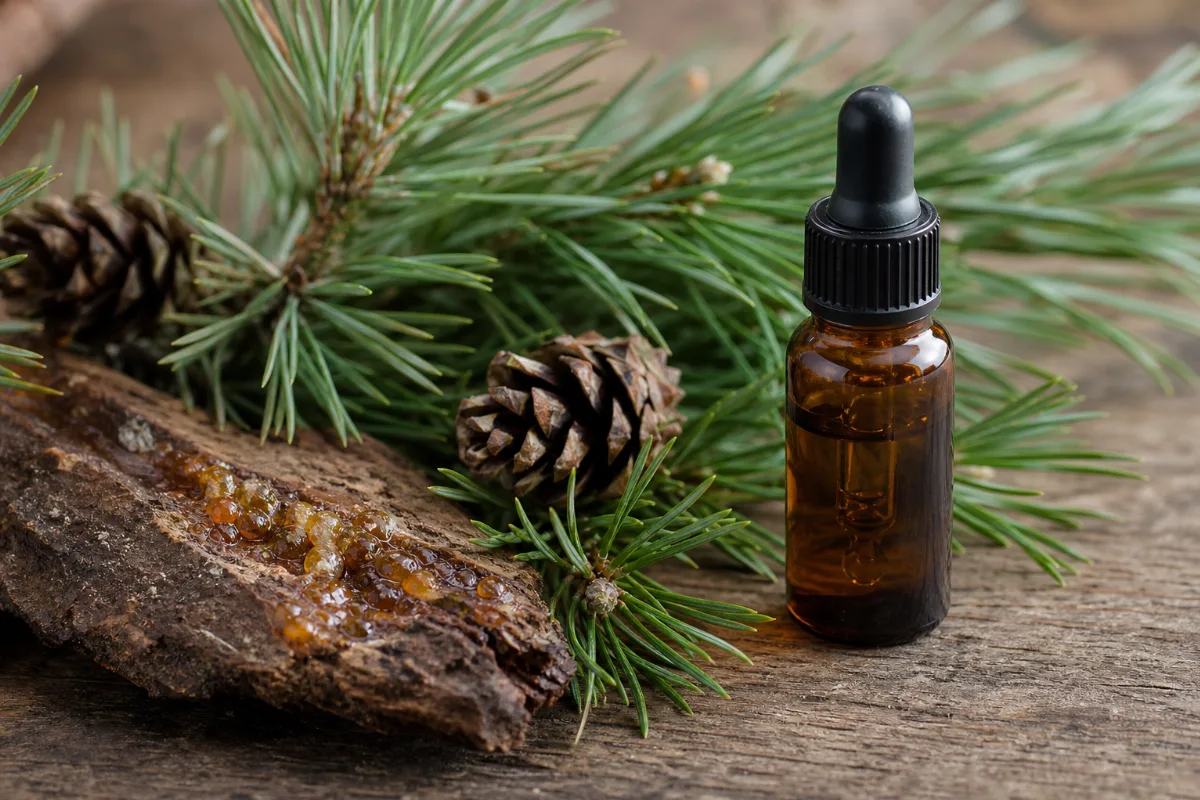
Pine oil is the sharp, forest-smelling oil distilled from pine needles, twigs or resin. People smell it for freshness and calm, but no good human trial shows a health benefit. The main caution: swallowing pine-oil products has poisoned people, including children, and pine materials can cause skin allergy and may bother the airways.
General information, not medical advice. Last substantive update · Not medically reviewed. A named clinician has not signed off on this page. How this page is made
About Pine Oil
Pine oil is the resinous scent of the forest, distilled from pine needles, twigs or resin. Safety comes first: swallowing pine-oil products has caused drowsiness, breathing failure and rare deaths, pine materials can cause skin allergy, and mouse and observational data urge caution with asthma. We found no good human trial showing pine essential oil helps with any health problem.
What pine oil is
Pine oil here means essential oil from Scots pine (Pinus sylvestris) or maritime pine (Pinus pinaster), both in the pine family (Pinaceae, per GBIF). Scots pine oil is steam-distilled from needles or twigs. EFSA describes pine white oil, also called turpentine oil, from the oleoresin of maritime pine.
The oil is a mixture. Alpha-pinene was 39.4% of one commercial Scots pine oil. Papers also name beta-pinene and delta-3-carene among needle compounds, and amounts change with the tree and site. Household pine-oil cleaners and turpentine are different products.
Pine oil is not a food or a nutrient. EFSA notes pine white oil is recognised as a trace food flavour, which is not the same as swallowing the oil.
What people use it for, and how strong the evidence is
For stress and calm, two small trials of phytoncide scent did not name the tree. One in 55 cancer survivors found lower stress scores and cortisol; one in 24 adults with mild memory problems found changed brain waves but no symptom result.
Pinene is also claimed to offset the memory effects of THC. A small human trial found it did not.
For breathing, a forest walk in a cypress forest lowered inflammation markers in 30 men, but that was not pine oil. Mouse and asthma-air studies point toward caution. Germ-killing and tumor-cell results come from dishes.
The research in one view
No human trial of Scots pine or maritime pine essential oil for any health use was found. The human trials that exist used phytoncide scents of unnamed source, a forest walk or a pure compound. All are small, short and rely on self-rating or markers.
Studies of pine oil for colds, cough, pain, skin or muscles were not found for this profile.
Oils, cleaners, turpentine and scents are different things
Most poisoning cases involve cleaners that contain pine oil and other ingredients, and some involve turpentine. Neither is the same as a Scots pine needle oil, but all deserve the same respect.
Quality varies. Authentic Scots pine oils had an excess of (+)-alpha-pinene while commercial oils labelled Pinus sylvestris had an excess of (-)-alpha-pinene, which the authors say can reveal mislabeling or adulteration (two authors work at a company with a business interest). Poison Control says it is hard to know the species, strength and contaminants in a bottle.
What regulators say
EFSA's 2023 opinions on pine white oil and a Pinus sylvestris bud tincture, both for animal feed, found them safe at stated low levels (lowest for cats), saw no consumer concern at those levels and said both should be treated as irritants and sensitisers. These are about feed, not diffusers or skin products.
We did not find or read a statement from IFRA, the EU cosmetics regulator, FDA, NCCIH or EMA about pine essential oil.
At a glance
Traditional uses history, not proof
- Recognised as a food flavour at trace levels by EFSA (pine white oil, Pinus pinaster).
- Turpentine from pine resin caused skin allergy in painters in the early 1900s (historical review).
- No traditional-medicine source was read for this page.
Studied for research
- Stress and cortisol, phytoncide scent in a hospital room, very-low
- Brain waves, phytoncide scent in mild cognitive impairment, very-low
- Memory effects of THC, alpha-pinene did not change them, against
- Lung-risk markers after a forest walk (cypress, not pine oil), insufficient
- Airway response in mice, mixed, insufficient
- Germ growth and tumor cells in a dish, insufficient
Main compounds
- Alpha-pinene, 39.4% of one commercial Scots pine oil
- Beta-pinene, named in needle oil studies
- Delta-3-carene, found in needles; oxidised form is a known turpentine allergen
Common forms
- Steam-distilled needle or twig oil (Scots pine)
- Oleoresin oil, called pine white oil or turpentine oil (maritime pine)
- Scent in a room or on a mask
- Household pine-oil cleaners (a different product)
Research links: Poison Control: Essential oils · Pine oil cleaner ingestion, 22 patients (abstract) · EFSA opinion on pine white oil (abstract) · Oxidised terpenes and turpentine allergy (abstract) · Scots pine oil and airways in mice (abstract) · GBIF: Pinus sylvestris · Research Library · Genes & Biomarkers Library
What it is and its history
- Accepted scientific name
- Pinus sylvestris (Scots pine) and Pinus pinaster (maritime pine)
- Naming authority
- L. and Aiton
- Common names
- Scots pine oil (English); Pine needle oil (English); Pine white oil (Pinus pinaster oleoresin oil, also called turpentine oil by EFSA) (English)
- Family or group
- Pinaceae (pine family), order Pinales, per GBIF.
- Classification
- Plantae > Tracheophyta > Pinopsida > Pinales > Pinaceae > Pinus > Pinus sylvestris
- Native range
- Not checked in a source read for this page.
- Habitat
- Not described in the sources read.
- What it looks like
- Part used: Scots pine oil is steam-distilled from needles or twigs (the 2022 Siberian and 2008 Lithuanian composition papers used needles or twigs). Pine white oil is from the oleoresin of Pinus pinaster (EFSA). This page does not describe how to recognise a tree.
- Look-alikes and adulterants
- Name: Turpentine oil; Note: A related pine oleoresin distillate. EFSA calls pine white oil (Pinus pinaster) also turpentine oil; turpentine has caused poisoning and allergy. It is not the same product as a Scots pine needle oil.; Name: Pine-oil cleaners; Note: A household product that contains pine oil and other ingredients. Most poisoning reports come from these.; Name: Pine tincture and pine pollen; Note: EFSA assessed a Pinus sylvestris bud tincture; pine pollen has its own page. Neither is an essential oil.
- Sustainability and conservation
- Not checked (no IUCN or CITES source read).
Traditional use and history history, not clinical proof
| Tradition or era | Documented use | Source |
|---|---|---|
| Food and flavour | EFSA says pine white oil was recognised to flavour food and that twigs of Pinus sylvestris are described to flavour food. | EFSA FEEDAP opinions (2023, abstracts) |
| Industrial | Turpentine caused occupational contact dermatitis in painters in the early 20th century. | Karlberg and Lepoittevin 2021 (abstract) |
Traditional use shows how it was used. It does not show that it works or is safe today.
What is inside, and how it may work
What it contains and how those compounds act in cells and animals. Laboratory and animal mechanisms are not proven effects in people.
Main compounds
| Compound | Family | Where it is concentrated | Activity studied | Level of evidence |
|---|---|---|---|---|
| Alpha-pinene PubChem 6654 | monoterpene hydrocarbon | Needle oil 39.4% of one commercial Scots pine oil (GC-MS, one study) | Main component of the oil tested in mice. Inhaled pure alpha-pinene had no effect alone or on THC in healthy adults. Mirror-image form differs between authentic and commercial Scots pine oils. 26 3 14 1 | Human data |
| Beta-pinene PubChem 14896 | monoterpene hydrocarbon | Needles Reported together with sabinene in one needle study; no separate value read. | Named as a needle oil component. No human effect of beta-pinene itself was read. 26 15 | Lab |
| Delta-3-carene PubChem 26049 | monoterpene hydrocarbon | Needles; present in some turpentines and absent or in traces in Iberian-type turpentine Varies by tree and site; no typical value read. | Its hydroperoxides were the main culprit in Scandinavian turpentine allergy. In human volunteers about 70% of inhaled 3-carene was taken up; irritation ratings rose at the highest exposure. 26 12 7 15 | Human data |
Mechanisms, receptors and pathways
| Target or pathway | Gene or receptor | What was found | Level |
|---|---|---|---|
| Contact allergy via oxidised terpenes | Not specified | Terpenes in turpentine can oxidise to hydroperoxides, which are skin sensitisers; delta-3-carene hydroperoxides were the main culprit in Scandinavian turpentine. 12 | Human clinical chemistry |
| Airway response and inflammation (mice) | Not specified | Inhaled Scots pine oil reduced airway hyperresponsiveness but raised myeloperoxidase and several cytokines. 3 | In vivo animal |
| Genetic damage in cells | Chromosomes | Pine needle oil caused chromosome aberrations and sister chromatid exchanges in human lymphocytes and mutations in fruit flies. 16 | In vitro and animal |
| Germ growth and tumor cell killing (dish) | Not specified | Slowed growth of 13 microbes; killed two tumor cell lines with oxidative stress and cell-death enzymes. 19 4 | Laboratory research |
| Brain activity (EEG) | Not specified | A phytoncide fragrance lowered beta power in some areas in 24 adults; meaning unclear. 13 | Human small |
Absorption, metabolism and elimination
- Absorption
- Only for 3-carene: about 70% of inhaled 3-carene was taken up in the lungs at higher exposures in volunteers.
- Distribution
- Long terminal half time in blood suggested affinity for body fat (3-carene).
- Metabolism
- 3-carene was fairly readily metabolised (blood clearance 0.9 liter per kg per hour).
- Elimination
- About 3% of the taken-up 3-carene left unchanged through the lungs; under 0.001% in urine.
- Bioavailability
- Not established for pine oil as a whole.
Isolated compounds versus whole extracts
Pine oil is a mixture whose makeup changes with species, site and plant part, and commercial oils may differ from authentic ones. Results for pure alpha-pinene or 3-carene do not describe the oil, and results for turpentine or cleaners do not describe a Scots pine needle oil.
Nutritional composition
Pine essential oil is not a food or a nutrient. EFSA notes pine white oil is recognised as a food flavour at trace levels, which is not the same as swallowing the oil.
2 very low certainty5 not enough evidence1 evidence against
What was looked at
The 8 benefits and uses checked for Pine Oil, each with how strong the evidence is. Tap one to open it.
- Stress markers (phytoncide scent in a hospital room, cancer survivors)Very low certainty
- Brain waves at rest (phytoncide fragrance, mild cognitive impairment)Very low certainty
- Does alpha-pinene reduce the memory effects of THC? (inhaled pure compound)Evidence against
- Lung-risk markers after a forest walk (Japanese cypress forest, not pine oil)Not enough evidence
- Airway response in mice (Scots pine oil inhaled)Not enough evidence
- Asthma symptoms and pinene in outdoor air (a possible harm)Not enough evidence
- Slowing growth of germs in a dish (Pinus sylvestris oil)Not enough evidence
- Killing tumor cells in a dish (Pinus sylvestris oil)Not enough evidence
Lab markers tracked in the studies
Stress score, cortisol and adrenalineNatural killer (NK) immune cellsResting EEG beta-wave powerWorking memory test performanceBlood inflammation markers (CRP, IL-6, fibrinogen, alpha1-antitrypsin)Blood oxygen saturation (SpO2)Peak expiratory flow (PEF)Airway hyperresponsiveness and inflammation chemicals (mice)
What is Pine Oil good for?
The uses people ask about and how strong the evidence is for each. Read the certainty label first: none is better than very-low, and several are about other products or lab work.
Benefits, one by one
Each card is a research question, not a promise. Tap a goal to filter. Open a card to see the studies, doses and limits.
Stress markers (phytoncide scent in a hospital room, cancer survivors)
Very low certaintyIn 55 women who had had gynecological cancer, a hospital room scented with phytoncide essential oil was followed by lower stress scores and cortisol than in the control group. The plant the scent came from is not named in the abstract.
1 studiesNot covered. This page gives no amounts and no way to use the oil.
Studies, doses and limits
What the trials found
One trial: 55 gynecological cancer survivors, 27 with the scented room and 28 as controls, over 8 weeks.
Results
Stress score fell by 9.31% (SD 45.98) only in the scent group (P=0.003). Adrenaline fell 5.29% and cortisol 24.94% (both P<0.001). Control values did not improve.
Effect sizes as reported
Stress and cortisol lower in the scent group
Why this rating
One small trial. The stress result has a very large spread, blinding is not described and a scent is hard to hide. The source tree is not named, so it cannot be credited to pine oil.
Form and dose studied
Not covered. This page gives no amounts and no way to use the oil.
Who was studied
Adult cancer survivors in Korea.
Limits
55 people; the abstract does not say who was blinded.
Why researchers looked
Pine and other tree scents are promoted for calm, and forest air is popular for stress.
Traditional use
No traditional-medicine source was read for this page.
Proposed mechanism Preliminary mechanism
Not established.
A proposed mechanism does not show that the effect happens in people.
Scented room study only; skin allergy and airway cautions in the Safety tab still apply.
Brain waves at rest (phytoncide fragrance, mild cognitive impairment)
Very low certaintyIn 24 adults with mild memory and thinking problems, one 30-minute session with a phytoncide-scented mask changed some brain-wave readings (EEG) compared with a water mask. No symptom or memory result is reported.
1 studiesNot covered. This page gives no amounts and no way to use the oil.
Studies, doses and limits
What the trials found
One randomized double-blind trial, registered as KCT0007317.
Results
Beta-wave power fell in the left occipital and left parietal areas compared with no odor (corrected P=0.009 and 0.047).
Effect sizes as reported
Lower beta power on EEG
Why this rating
24 people and one session. A brain-wave change is not a change in symptoms or memory, and the authors' reading that it shows relief of stress is an interpretation. The source tree is not named in the abstract.
Form and dose studied
Not covered. This page gives no amounts and no way to use the oil.
Who was studied
Adults with mild cognitive impairment, Korea.
Limits
One session, no symptom outcome.
Why researchers looked
Phytoncide is the name for tree-released scent compounds, studied in 'forest bathing'.
Traditional use
No traditional-medicine source was read for this page.
Proposed mechanism Preliminary mechanism
Not established.
A proposed mechanism does not show that the effect happens in people.
Single scented mask session; no safety problems reported in the abstract.
Does alpha-pinene reduce the memory effects of THC? (inhaled pure compound)
Evidence againstIn 19 healthy adults, inhaled alpha-pinene (the main molecule in pine oil) did nothing on its own and did not reduce THC's memory impairment. This goes against a popular claim.
1 studiesNot covered. This page gives no amounts and no way to use the oil.
Studies, doses and limits
What the trials found
One double-blind crossover study of six drug sessions each, using a vaporizer.
Results
Alpha-pinene alone produced no significant effects compared with placebo. Adding it to THC did not mitigate THC-induced memory impairment or change other effects.
Effect sizes as reported
No effect found
Why this rating
A controlled human trial found no effect, though it was small and used pure alpha-pinene by vaporizer, not pine oil.
Form and dose studied
Not covered. This page gives no amounts and no way to use the oil.
Who was studied
Healthy adults.
Limits
19 people; authors have links to cannabis and terpene companies; not a test of pine essential oil.
Why researchers looked
Cannabis-industry talk says pinene offsets THC's memory effects.
Traditional use
No traditional-medicine source was read for this page.
Proposed mechanism Preliminary mechanism
Not established.
A proposed mechanism does not show that the effect happens in people.
Cannabis and THC carry their own risks; this page does not advise using either.
Lung-risk markers after a forest walk (Japanese cypress forest, not pine oil)
Not enough evidenceIn 30 men at risk of COPD, a day trip to a cypress forest was followed by lower blood inflammation markers and higher oxygen saturation than a city day trip. The forest was cypress, and the trip included walking and clean air, so it says little about pine oil.
1 studiesNot covered. This page gives no amounts and no way to use the oil.
Studies, doses and limits
What the trials found
One randomized crossover trial, 30 men, one day each.
Results
Blood CRP, alpha1-antitrypsin, IL-6 and fibrinogen were lower, oxygen saturation higher, and fatigue and breathing symptoms lower after the forest trip. No numbers in the abstract.
Effect sizes as reported
Lower markers after forest day
Why this rating
Relevant to forest bathing, not to pine oil. The trip changes walking, place and mood, not just air.
Form and dose studied
Not covered. This page gives no amounts and no way to use the oil.
Who was studied
Men about 63 years old, Japan.
Limits
One day; self-rated symptoms; not pine.
Why researchers looked
Forest air is said to contain tree compounds (phytoncides) good for the lungs.
Traditional use
No traditional-medicine source was read for this page.
Proposed mechanism Preliminary mechanism
Not established.
A proposed mechanism does not show that the effect happens in people.
Not an essential oil trial. Airway cautions in the Safety tab apply to pine oil.
Airway response in mice (Scots pine oil inhaled)
Not enough evidenceIn mice with lung inflammation, inhaled Scots pine oil improved airway readings but raised several inflammation chemicals. The authors urge caution.
1 studiesNot covered. This page gives no amounts and no way to use the oil.
Studies, doses and limits
What the trials found
Animal experiment; no human trial of pine oil on the airways was found.
Results
Airway hyperresponsiveness fell, but myeloperoxidase and cytokines (IL-1 beta, KC, MCP-1, MIP-2, TNF-alpha) rose.
Effect sizes as reported
Mixed in mice
Why this rating
Mouse work only and the signal includes a possible harm.
Form and dose studied
Not covered. This page gives no amounts and no way to use the oil.
Who was studied
Mice.
Limits
Not people; one short experiment.
Why researchers looked
Pine oil is inhaled for blocked chests.
Traditional use
No traditional-medicine source was read for this page.
Proposed mechanism Preliminary mechanism
Alpha-pinene was 39.4% of the oil tested; how it acts was not settled.
A proposed mechanism does not show that the effect happens in people.
Mixed result: better airway readings but more inflammation chemicals. Use caution with lung disease.
Asthma symptoms and pinene in outdoor air (a possible harm)
Not enough evidenceIn 14 people with seasonal asthma, more pinene (and other plant gases) in outdoor air went with worse symptoms and lower peak flow. This suggests caution, not a benefit.
1 studiesNot covered. This page gives no amounts and no way to use the oil.
Studies, doses and limits
What the trials found
One observational study, 14 volunteers, ambient air over two seasons.
Results
Higher pinene, camphor, linalool, linalyl acetate, benzaldehyde and benzoic acid predicted respiratory symptoms including lower peak flow and more nasal congestion.
Effect sizes as reported
Pinene linked to more symptoms
Why this rating
Association in a small study with many variables; outdoor air, not indoor oil use.
Form and dose studied
Not covered. This page gives no amounts and no way to use the oil.
Who was studied
People with seasonal asthma, Australia.
Limits
14 volunteers; single author; erratum issued.
Why researchers looked
Essential oils are often called gentle for the lungs.
Traditional use
No traditional-medicine source was read for this page.
Proposed mechanism Preliminary mechanism
Not established.
A proposed mechanism does not show that the effect happens in people.
A reason for caution if you have asthma. This is not a test of pine oil diffusers.
Slowing growth of germs in a dish (Pinus sylvestris oil)
Not enough evidenceIn an agar-plate test, Scots pine oil slowed the growth of 13 fungi, yeasts and bacteria. A germ-killing effect in a dish does not show that the oil cleans air or heals anything.
1 studiesNot covered. This page gives no amounts and no way to use the oil.
Studies, doses and limits
What the trials found
Laboratory dish test only.
Results
Minimum concentrations that stopped growth were 0.5 to 2.5% (v/v); 2.5% was active against all 13.
Effect sizes as reported
Growth slowed in a dish
Why this rating
Lab dish result only.
Form and dose studied
Not covered. This page gives no amounts and no way to use the oil.
Who was studied
13 microbe species.
Limits
No human data.
Why researchers looked
Pine scent is linked with clean air.
Traditional use
No traditional-medicine source was read for this page.
Proposed mechanism Preliminary mechanism
Not established.
A proposed mechanism does not show that the effect happens in people.
Not a use for people.
Killing tumor cells in a dish (Pinus sylvestris oil)
Not enough evidenceA 2026 lab study found Scots pine oil killed two human tumor cell lines in a dish. This is not evidence of a treatment, and oils that kill tumor cells in a dish are usually toxic to healthy cells too.
1 studiesNot covered. This page gives no amounts and no way to use the oil.
Studies, doses and limits
What the trials found
Cell-line work only.
Results
24-hour IC50 values were 47.93 (U-87MG) and 71.63 (SH-SY5Y) micrograms per 100 microlitres.
Effect sizes as reported
Cell killing in a dish
Why this rating
Cell lines only.
Form and dose studied
Not covered. This page gives no amounts and no way to use the oil.
Who was studied
Human tumor cell lines.
Limits
No animal or human data.
Traditional use
No traditional-medicine source was read for this page.
Proposed mechanism Preliminary mechanism
The study reports oxidative stress and cell-death enzymes.
A proposed mechanism does not show that the effect happens in people.
Not a treatment; the oil also damaged cells in other lab tests (see Safety).
Connections to the rest of health
How Pine Oil connects to the rest of our health knowledge graph. Every link says what kind of connection it is. A safety link (for example to the liver) is a warning, not a benefit. A study that merely mentions a topic never creates a benefit link.
Explore every connection: goals, body systems, organs, symptoms, genes
A. Wellness goals
| Connected to | Kind of connection | Evidence status | Context | Studies |
|---|---|---|---|---|
| Stress Reduction | Very low certainty | Stress markers (phytoncide scent in a hospital room, cancer survivors): In 55 women who had had gynecological cancer, a hospital room scented with phytoncide essential oil was followed by lower stress scores and cortisol than in the control group. The plant the scent came from is not named in the abstract. | 11 | |
| Calm Relaxation | Very low certainty | Brain waves at rest (phytoncide fragrance, mild cognitive impairment): In 24 adults with mild memory and thinking problems, one 30-minute session with a phytoncide-scented mask changed some brain-wave readings (EEG) compared with a water mask. No symptom or memory result is reported. | 13 | |
| Memory Support | Evidence against | Does alpha-pinene reduce the memory effects of THC? (inhaled pure compound): In 19 healthy adults, inhaled alpha-pinene (the main molecule in pine oil) did nothing on its own and did not reduce THC's memory impairment. This goes against a popular claim. | 14 | |
| Lung Support | Not enough evidence | Lung-risk markers after a forest walk (Japanese cypress forest, not pine oil): In 30 men at risk of COPD, a day trip to a cypress forest was followed by lower blood inflammation markers and higher oxygen saturation than a city day trip. The forest was cypress, and the trip included walking and clean air, so it says little about pine oil. | 17 | |
| Breathing Support | Not enough evidence | Airway response in mice (Scots pine oil inhaled): In mice with lung inflammation, inhaled Scots pine oil improved airway readings but raised several inflammation chemicals. The authors urge caution. | 3 | |
| Breathing Support | Not enough evidence | Asthma symptoms and pinene in outdoor air (a possible harm): In 14 people with seasonal asthma, more pinene (and other plant gases) in outdoor air went with worse symptoms and lower peak flow. This suggests caution, not a benefit. | 9 | |
| Immune Support | Not enough evidence | Slowing growth of germs in a dish (Pinus sylvestris oil): In an agar-plate test, Scots pine oil slowed the growth of 13 fungi, yeasts and bacteria. A germ-killing effect in a dish does not show that the oil cleans air or heals anything. | 19 | |
| Longevity | Not enough evidence | Killing tumor cells in a dish (Pinus sylvestris oil): A 2026 lab study found Scots pine oil killed two human tumor cell lines in a dish. This is not evidence of a treatment, and oils that kill tumor cells in a dish are usually toxic to healthy cells too. | 4 |
B. Body systems
| Connected to | Kind of connection | Evidence status | Context | Studies |
|---|---|---|---|---|
| Nervous System | Biological association | Very low certainty | Studied for: Stress markers (phytoncide scent in a hospital room, cancer survivors) Studied for: Brain waves at rest (phytoncide fragrance, mild cognitive impairment) | 11 13 14 |
| Respiratory System | Biological association | Not enough evidence | Studied for: Lung-risk markers after a forest walk (Japanese cypress forest, not pine oil) Studied for: Airway response in mice (Scots pine oil inhaled) | 17 3 9 |
| Immune System | Biological association | Not enough evidence | Studied for: Slowing growth of germs in a dish (Pinus sylvestris oil) | 19 |
| Cells | Biological association | Not enough evidence | Studied for: Killing tumor cells in a dish (Pinus sylvestris oil) | 4 |
E. Health conditions
| Connected to | Kind of connection | Evidence status | Context | Studies |
|---|---|---|---|---|
| Contact dermatitis | Adverse effect or risk | Documented risk | EFSA sensitiser statements; turpentine above 2% positive in patch-test studies; delta-3-carene hydroperoxides named in turpentine allergy. EFSA sensitiser statements; turpentine above 2% positive in patch-test studies. Preparation or compound: Pine oil, turpentine and oxidised terpenes on skin |
5 22 12 |
| Asthma | Not enough evidence | Mouse study and 14-person observational study suggest caution; no test of pine oil in people with asthma. Mouse and small observational studies suggest caution. Preparation or compound: Pine oil, inhaled; pinene in air |
3 9 |
I. Biomarkers
| Connected to | Kind of connection | Evidence status | Context | Studies |
|---|---|---|---|---|
| Stress score, cortisol and adrenaline | Biological association | Very low certainty | Measured in trials: decrease. A lab change is not the same as a health benefit. | 11 |
| Natural killer (NK) immune cells | Biological association | Very low certainty | Measured in trials: increase. A lab change is not the same as a health benefit. | 11 |
| Resting EEG beta-wave power | Biological association | Very low certainty | Measured in trials: decrease. A lab change is not the same as a health benefit. | 13 |
| Working memory test performance | Biological association | Low certainty | Measured in trials: no-change. A lab change is not the same as a health benefit. | 14 |
| Blood inflammation markers (CRP, IL-6, fibrinogen, alpha1-antitrypsin) | Biological association | Very low certainty | Measured in trials: decrease. A lab change is not the same as a health benefit. | 17 |
| Blood oxygen saturation (SpO2) | Biological association | Very low certainty | Measured in trials: increase. A lab change is not the same as a health benefit. | 17 |
| Peak expiratory flow (PEF) | Biological association | Very low certainty | Measured in trials: decrease. A lab change is not the same as a health benefit. | 9 |
| Airway hyperresponsiveness and inflammation chemicals (mice) | Biological association | Not enough evidence | Measured in trials: mixed. A lab change is not the same as a health benefit. | 3 |
K. Biological pathways
| Connected to | Kind of connection | Evidence status | Context | Studies |
|---|---|---|---|---|
| Apoptosis (cell death) in tumor cell lines | Preliminary mechanism | In vitro | Increased caspase-3 and caspase-9 in a dish. | 4 |
L. Active compounds
| Connected to | Kind of connection | Evidence status | Context | Studies |
|---|---|---|---|---|
| Alpha-pinene | Biological association | Human | Main component of the oil tested in mice. Inhaled pure alpha-pinene had no effect alone or on THC in healthy adults. Mirror-image form differs between authentic and commercial Scots pine oils. Preparation or compound: Needle oil |
26 3 14 1 |
| Beta-pinene | Biological association | Lab | Named as a needle oil component. No human effect of beta-pinene itself was read. Preparation or compound: Needles |
26 15 |
| Delta-3-carene | Biological association | Human | Its hydroperoxides were the main culprit in Scandinavian turpentine allergy. In human volunteers about 70% of inhaled 3-carene was taken up; irritation ratings rose at the highest exposure. Preparation or compound: Needles; present in some turpentines and absent or in traces in Iberian-type turpentine |
26 12 7 15 |
Each connection is stored with the ingredient, the connected record, the kind of connection, the evidence status, the supporting studies, the preparation or compound involved, and a review date (last reviewed October 25, 2026).
Evidence at a glance: what changed in 2 lab markers
Tap a number to show only those markers. Counts are markers, not people.
The evidence
The research centre for Pine Oil. Every record here was checked against PubMed or the publisher's page; we never list a study we have not verified.
Evidence by outcome
Bars show how many studies we found for each outcome, not how well it works. People are added up across trials only (reviews are not added, to avoid double counting).
How we rate evidence
High certainty
Several well-run trials or reviews agree; further research is unlikely to change the picture much.
Moderate certainty
Good trials point the same way, but some doubt remains.
Low certainty
Small, short or inconsistent trials. The finding could change with better research.
Very low certainty
Very little or very weak human data. Treat as a possibility only.
Mixed findings
Trials or reviews disagree with each other.
Not enough evidence
Not enough human research to say either way.
Evidence against
Good research found no benefit, or found harm.
We take the reviewers' own risk-of-bias and GRADE statements where they exist, and otherwise judge from study size, design, consistency, directness and whether a product matches what is sold. Many publications do not make evidence high. Method note: We read the abstracts of 22 PubMed papers and the Poison Control page, checked plant names in GBIF and compounds in PubChem. We did not find or read a LiverTox, LactMed, IFRA or FDA statement.
Study library: every study we checked 26
| Study | Design | People | Product, dose, length | Result |
|---|---|---|---|---|
| Allenspach 2021 Authenticity control of pine sylvestris essential oil by chiral gas chromatographic analysis of alpha-pinene Sci Rep · PMID 34413399 · DOI |
Laboratory chemistry n/a |
Primary (authentic) and commercial pine oils | Primary and commercial oils labelled Pinus sylvestris essential oils Not given here |
Primary Pinus sylvestris oils had an excess of (+)-alpha-pinene, but commercial oils labelled Pinus sylvestris had an excess of (-)-alpha-pinene. The authors say chiral analysis can uncover mislabeling, the wrong plant material or adulteration. Commercial oils differed from authentic ones Methods, limits and fundingOutcomes: Mirror-image form (enantiomer) ratio of alpha-pinene Limitations: How many commercial oils were tested and how common this is are not in the abstract. Funding and conflicts: Two authors work at Systema Natura, which says the work may lead to products in which it has a business interest. Read: abstract |
| Brook 1989 Pine oil cleaner ingestion Ann Emerg Med · PMID 2705671 · DOI |
Hospital case series |
22 22 patients hospitalized in Los Angeles after swallowing pine oil cleaner |
Household pine oil cleaner, swallowed product Not given here |
Mucous membrane and stomach-gut irritation were most common. Among those who swallowed only pine oil cleaner, 59% developed central nervous system depression and three fell into a coma. Ataxia (unsteady walking) was frequent in children and did not occur in adults. Chemical pneumonitis developed in 3 of 5 children and 3 of 17 adults. Two adults later had bacterial pneumonia. No patient died, and most needed only gut decontamination and basic supportive care. Poisoning with drowsiness and lung injury; no deaths Methods, limits and fundingOutcomes: Signs of poisoning and outcome Limitations: A cleaner is not an essential oil: it contains other ingredients and the amount swallowed was unknown. From 1989. Funding and conflicts: Not reported in the abstract. Read: abstract |
| Csikos 2022 Pinus sylvestris L. and Syzygium aromaticum (L.) Merr. & L. M. Perry Essential Oils Inhibit Endotoxin-Induced Airway Hyperreactivity despite Aggravated Inflammatory Mechanisms in Mice Molecules · PMID 35744988 · DOI |
Animal experiment mouse |
Mice with endotoxin-induced lung inflammation | Commercial Scots pine essential oil (Pinus sylvestris), inhaled; alpha-pinene was 39.4% of the oil essential oil, inhaled Not given here 24-hour experiment, oil inhaled three times · vs Compared with untreated mice (as described) |
Pine and clove oils both reduced airway hyperresponsiveness, but myeloperoxidase activity and several inflammatory chemicals (IL-1 beta, KC, MCP-1, MIP-2, TNF-alpha) rose with both oils. The authors say these oils should be used with caution in lung diseases with inflammation. Better airway readings but more inflammation chemicals Methods, limits and fundingOutcomes: Airway function, lung tissue damage, inflammation markers Limitations: Mice, not people, and one short experiment. Result is mixed, and the authors themselves urge caution. Funding and conflicts: No conflict of interest reported. Read: abstract |
| Dervisoglu 2026 Chemical Profiling, Molecular Docking, and Mechanistic Anticancer Activity of Pinus sylvestris Essential Oil in SH-SY5Y and U-87MG Cells Molecules · PMID 41683447 · DOI |
Laboratory cell study cells |
Human brain tumor (U-87MG) and nerve-tissue tumor (SH-SY5Y) cell lines | Pinus sylvestris essential oil essential oil Not given here 24 hours · vs Untreated cells (as described) |
The oil killed both cell lines in a dose-dependent way (24-hour IC50 47.93 and 71.63 micrograms per 100 microlitres) and raised cell-death enzyme activity. Killed tumor cells in a dish Methods, limits and fundingOutcomes: Cell survival, oxidative stress, cell-death markers Limitations: Cells in a dish. Anything toxic to tumor cells in a dish is usually toxic to healthy cells too; this is not evidence of a treatment. Funding and conflicts: No conflict of interest reported. Read: abstract |
| EFSA FEEDAP Panel; Bampidis 2023 Safety and efficacy of a feed additive consisting of an essential oil obtained from the oleoresin of Pinus pinaster Aiton (pine white oil) for use in all animal species (FEFANA asbl) EFSA J · PMID 37077300 · DOI |
Regulatory scientific opinion n/a |
Animal feed additive assessment | Pine white oil (also called turpentine oil) from the oleoresin of Pinus pinaster, as a flavouring in feed oleoresin oil Not given here |
Safe in feed up to stated levels (35 mg/kg for pigs, hens, rabbits and some others; 50 mg/kg for cattle, horses, dogs and others; 20 mg/kg for cats). No consumer concern at those levels. The additive should be considered an irritant to skin and eyes and a skin and respiratory sensitiser. Pine white oil was recognised to flavour food. Irritant and sensitiser; safe in feed at stated low levels Methods, limits and fundingOutcomes: Safety for animals, consumers, users and environment Limitations: About a feed additive at feed levels, not diffusers or skin products. Only the abstract was read. Funding and conflicts: Opinion of the EFSA FEEDAP Panel. Read: abstract |
| EFSA FEEDAP Panel; Bampidis 2023 Safety and efficacy of a feed additive consisting of a tincture derived from the buds of Pinus sylvestris L. (pine tincture) for use in all animal species (FEFANA abl) EFSA J · PMID 37502016 · DOI |
Regulatory scientific opinion n/a |
Animal feed additive assessment | Tincture from Pinus sylvestris buds (not an essential oil) buds Not given here |
Safe at the proposed feed level for all species; no consumer concern; to be considered an irritant to skin and eyes and a dermal and respiratory sensitiser. Twigs of Pinus sylvestris are described as flavouring food. Irritant and sensitiser Methods, limits and fundingOutcomes: Safety for animals, consumers, users and environment Limitations: A bud tincture, a different product from the essential oil; used here only as a related hazard statement. Only the abstract was read. Funding and conflicts: Opinion of the EFSA FEEDAP Panel. Read: abstract |
| Falk 1991 Human exposure to 3-carene by inhalation: toxicokinetics, effects on pulmonary function and occurrence of irritative and CNS symptoms Toxicol Appl Pharmacol · PMID 1891768 · DOI |
Human exposure chamber study |
Volunteers exposed in a chamber | Inhaled 3-carene (one pine-oil terpene), three exposure levels pure compound Not given here 2 hours, three occasions · vs Lowest exposure (about 10 mg per cubic metre) |
About 70% of the inhaled 3-carene was taken up at the higher levels. It was fairly readily metabolized, less than 0.001% appeared in urine, and a long terminal half time suggests affinity to body fat. Irritation ratings were significantly higher at the highest level than at the other levels. The abstract calls the airway-resistance difference at the highest level not significant. High uptake; more irritation at the highest level Methods, limits and fundingOutcomes: Uptake, blood levels, lung function, irritation ratings Limitations: Number of volunteers not in the abstract. Industrial-hygiene exposure chamber, not aromatherapy. From 1991. Funding and conflicts: Not reported in the abstract. Read: abstract |
| Geier 2022 Contact sensitization to essential oils: IVDK data of the years 2010-2019 Contact Dermatitis · PMID 35417610 · DOI |
Registry analysis |
10930 Dermatitis patients patch-tested in German-speaking skin clinics |
12 essential oils patch-tested (pine oil is not among the six named with more than 1% positives) oils Not given here 2010 to 2019 |
908 of 10,930 patients (8.3%) reacted to at least one of 12 oils. Only six oils gave more than 1% positives: ylang ylang (3.9%), lemongrass (2.6%), jasmine absolute (1.8%), sandalwood (1.8%), clove (1.6%), neroli (1.1%). Reactions among oils and fragrances often went together. Masseurs and cosmeticians were over-represented. 8.3% reacted to at least one oil Methods, limits and fundingOutcomes: Positive patch tests Limitations: Clinic patients, not the public. The abstract does not say whether pine oil was one of the 12 tested, so no pine rate can be given. Funding and conflicts: Not reported in the abstract. Read: abstract |
| Gibbs 2019 Essential oils, asthma, thunderstorms, and plant gases: a prospective study of respiratory response to ambient biogenic volatile organic compounds (BVOCs) J Asthma Allergy · PMID 31417289 · DOI |
Observational study (not a trial) |
14 Volunteers with seasonal asthma, Australia |
Pinene and other plant gases in outdoor air (not an essential oil diffuser) ambient air Not given here Two seasons |
Higher pinene, camphor, linalool, linalyl acetate, benzaldehyde and benzoic acid in the air predicted worse respiratory symptoms, including lower peak flow and more nasal congestion (p between 0.0001 and 0.05). Pinene in air linked with more symptoms Methods, limits and fundingOutcomes: Peak expiratory flow and 11 symptom scores Limitations: 14 volunteers, single author, simple regression with many variables, outdoor air rather than pine oil use. It shows association, not cause. An erratum was published in 2020. Funding and conflicts: No conflict of interest reported. Read: abstract |
| Guzel 2015 A lethal danger in the home: turpentine poisoning Turk J Pediatr · PMID 26690600 |
Case report |
1 A 9-year-old boy, Turkey |
Turpentine oil preparation (pine oleoresin product used for hair care), swallowed by accident oil Not given here |
The boy drank from a glass holding a turpentine oil preparation. He had slow heart rate and low blood pressure, needed dopamine and fluids over two and a half days in hospital and recovered. The paper lists other reported signs of turpentine poisoning including blood in the urine, kidney failure, loss of vision, vomiting, severe coughing, throat swelling and even death. Low blood pressure and slow heart; recovered Methods, limits and fundingOutcomes: Signs and course Limitations: One case. Turpentine is a related pine product, not the same as pine essential oil. Funding and conflicts: Not reported in the abstract. Read: abstract |
| Heo 2023 Effects of phytoncide on immune cells and psychological stress of gynecological cancer survivors: randomized controlled trials J Exerc Rehabil · PMID 37435591 · DOI |
Randomized trial (two groups) |
55 Gynecological cancer survivors in an urban hospital in Korea (28 control, 27 phytoncide) |
Phytoncide essential oil scented in a hospital room (plant source not named in the abstract) essential oil scent Not given here 8 weeks of sessions · vs Control group, no scent (as described) |
Stress fell by 9.31% (SD 45.98) only in the scent group (P=0.003). Adrenaline fell 5.29% (SD 25.5) and cortisol 24.94% (SD 11.62), both P<0.001. NK-cell subsets rose in the scent group and not in controls. Stress and cortisol lower in the scent group; NK-cell subsets higher Methods, limits and fundingOutcomes: Stress level, adrenaline, cortisol, parasympathetic activity, natural killer (NK) cells Limitations: Small. The spread around the stress result is large (SD far bigger than the mean). The abstract does not say who was blinded, and a scent is hard to hide. The abstract does not name the pine or other tree the phytoncide came from. The authors' strong wording about immune benefit goes further than blood markers can show. Funding and conflicts: No conflict of interest reported. Read: abstract |
| Karlberg 2021 One hundred years of allergic contact dermatitis due to oxidized terpenes: What we can learn from old research on turpentine allergy Contact Dermatitis · PMID 34453446 · DOI |
Historical review |
A century of turpentine allergy research | Turpentine (pine oleoresin distillate) and its oxidised terpenes oleoresin distillate Not given here |
Turpentine caused occupational contact dermatitis in painters. The researchers concluded the main culprit in Scandinavian turpentine was delta-3-carene hydroperoxides (oxidised delta-3-carene), which explains its high sensitizing effect compared with French turpentine of the Iberian type, which has no or only traces of delta-3-carene. Ending industrial exposure stopped occupational sensitization. Patch-test studies showed monoterpene hydroperoxides are a common cause of contact allergy in the population. Oxidised terpenes are common skin allergens Methods, limits and fundingOutcomes: Which compounds cause turpentine allergy Limitations: Historical review about turpentine; the abstract names delta-3-carene hydroperoxides but does not name pinene hydroperoxides. Not a test of pine essential oil. Funding and conflicts: Not reported in the abstract. Read: abstract |
| Kim 2024 Effects of Phytoncide Fragrance on Resting-State Brain Activity in Mild Cognitive Impairment: A Randomized Double-Blind Controlled Study J Integr Complement Med · PMID 38530093 · DOI |
Randomized double blind controlled trial |
24 Community-dwelling adults with mild cognitive impairment, Korea |
Phytoncide fragrance on a dental mask (plant source not named in the abstract) fragrance Not given here One 30-minute session · vs Mask with water, no odor |
Beta-wave power fell in the left occipital and left parietal areas with the fragrance compared with no odor (corrected P=0.009 and 0.047). No symptom or memory test is reported in the abstract. Lower beta-wave power on EEG Methods, limits and fundingOutcomes: Brain electrical activity (EEG) at rest Limitations: 24 people, one session. An EEG change is not a symptom change; the authors' reading that it means relief from anxiety, depression or stress is an interpretation, not a measured result. Funding and conflicts: Registered (Clinical Trials Registry Korea, KCT0007317). No funding statement in the abstract. Registration: KCT0007317 Read: abstract |
| Kumar 2025 The Individual and Interactive Effects of Alpha-Pinene and Delta-9-Tetrahydrocannabinol in Healthy Adults Med Cannabis Cannabinoids · PMID 40734690 · DOI |
Double blind crossover (six sessions each) |
19 Healthy adults, mostly not recent cannabis users, Baltimore |
Pure alpha-pinene, alone and mixed with THC, inhaled by vaporizer (not a pine essential oil) pure compound Not given here Six sessions, order randomized · vs Placebo (ambient air) |
Alpha-pinene alone produced no significant effects compared with placebo. Adding alpha-pinene to THC did not reduce THC's memory impairment or change other effects. No effect of alpha-pinene Methods, limits and fundingOutcomes: Memory, thinking and movement tests, how people felt, vital signs Limitations: 19 healthy adults, laboratory sessions. It tested one purified compound by vaporizer, so it says little about smelling a pine oil. Pinene is the molecule often claimed to counter cannabis effects; this trial did not find that. Funding and conflicts: Authors report consulting for cannabis and terpene companies and one is a scientific advisor to a terpene company. Read: abstract |
| Kupcinskiene 2008 The essential oil qualitative and quantitative composition in the needles of Pinus sylvestris L. growing along industrial transects Environ Pollut · PMID 18372084 · DOI |
Laboratory chemistry plant |
Pinus sylvestris needles near a cement factory and an oil refinery, Lithuania | Needle volatile oil needles Not given here · vs Least polluted site |
The needle oils contained compounds including delta-3-carene, gamma-terpinene, sabinene plus beta-pinene, camphene and myrcene, and amounts changed with pollution (for example more delta-3-carene in one-year-old needles at the cement-factory site). Composition varies with growing site Methods, limits and fundingOutcomes: Composition of needle oil Limitations: Needles from polluted sites, not a commercial oil. Percentages are not in the abstract. Funding and conflicts: Not reported in the abstract. Read: abstract |
| Lazutka 2001 Genotoxicity of dill, peppermint and pine (Pinus sylvestris L.) essential oils in human lymphocytes and Drosophila melanogaster Food Chem Toxicol · PMID 11313115 · DOI |
Laboratory test cells and fruit fly |
Human white blood cells in a dish; fruit flies | Pinus sylvestris needle essential oil (with dill and peppermint oils) needle oil Not given here · vs Other oils tested |
Pine needle oil caused chromosome aberrations and sister chromatid exchanges in human lymphocytes in a dose-dependent way, and a dose-dependent increase in mutations in fruit flies. All oils were cytotoxic to the lymphocytes. Dose-dependent genetic damage in cells and flies Methods, limits and fundingOutcomes: Chromosome damage and mutation Limitations: Laboratory only; concentrations are not in the abstract and cell tests do not show harm from normal use. Published in 2001. Funding and conflicts: Not reported in the abstract. Read: abstract |
| Li 2025 Forest bathing improves inflammatory markers, SpO2, and subjective symptoms related to chronic obstructive pulmonary disease (COPD) in male subjects at risk of developing COPD J Occup Health · PMID 40673365 · DOI |
Randomized crossover trial |
30 Men aged about 63 at risk of COPD, Nagano, Japan |
Day trip to a Japanese cypress forest park (forest air and walking, not pine oil) forest walk Not given here One day trip in June 2024 · vs Day trip to a city area |
After the forest trip the blood markers were lower and oxygen saturation was higher than after the city trip; fatigue and breathing symptoms were lower and mood and sleep scores better. The abstract gives no numbers. Lower inflammation markers after a forest day Methods, limits and fundingOutcomes: Blood CRP, alpha1-antitrypsin, IL-6, fibrinogen; oxygen saturation; mood, fatigue, breathing symptoms, sleep Limitations: One day, 30 men, self-rated symptoms. The forest was Japanese cypress, not pine, and the trip also meant walking and clean air. It cannot show an effect of pine oil. Funding and conflicts: No conflict of interest reported. Read: abstract |
| Martz 2010 A lethal ingestion of a household cleaner containing pine oil and isopropanol J Anal Toxicol · PMID 20109303 · DOI |
Case report |
1 One woman found dead, British Columbia |
Household cleaner with pine oil and isopropanol, swallowed product Not given here |
Autopsy found a large volume of oily fluid in the stomach and heavy, hemorrhagic, necrotic lungs. Death was attributed to the combined toxicity of isopropanol and pine oil. Death from the combined toxicity Methods, limits and fundingOutcomes: Cause of death Limitations: One case, with a second poison (isopropanol) present, so the pine oil cannot be blamed alone. Funding and conflicts: Not reported in the abstract. Read: abstract |
| Motiejunaite 2004 Fungicidal properties of Pinus sylvestris L. for improvement of air quality Medicina (Kaunas) · PMID 15300001 |
Laboratory test (agar plates) microbe |
13 microorganism species grown on agar | Pine oil from Pinus sylvestris pine oil Not given here |
Minimum concentrations that stopped growth were 0.5 to 2.5% (volume to volume) across groups; 2.5% was the most active against all 13. Fungi were the most resistant and bacteria the least. Growth of microbes slowed in a dish Methods, limits and fundingOutcomes: Growth of fungi, yeast and bacteria Limitations: Laboratory dish test only. It does not show that pine oil cleans indoor air or helps anyone's health. Funding and conflicts: Not reported in the abstract. Read: abstract |
| Romanenko 2022 Variations in Essential Oils from South Siberian Conifers of the Pinaceae Family: New Data towards Identification and Quality Control Chem Biodivers · PMID 34918866 · DOI |
Laboratory chemistry plant |
50 Twig oils from five wild conifer species in South Siberia and Kazakhstan, including Pinus sylvestris |
Steam-distilled twig essential oils twigs Not given here |
Fifty oil samples from fresh twigs were analysed by GC-MS; the paper gives the composition, yield and mirror-image ratios of main components for each sample as reference profiles for quality, authenticity and safety. Reference composition data Methods, limits and fundingOutcomes: Composition of the oils Limitations: Twig oil from Siberia; composition numbers are not in the abstract. Funding and conflicts: Not reported in the abstract. Read: abstract |
| Welker 1999 Pine oil ingestion: a common cause of poisoning Chest · PMID 10593816 · DOI |
Case report with review |
1 One elderly woman with dementia, Washington DC |
Household cleaning solution containing pine oil, swallowed product Not given here |
She developed central nervous system depression and respiratory failure needing a breathing machine, and lung inflammation. She later developed hospital-acquired pneumonia, blood infection and multiple organ failure, and died. The authors say pine oil ingestions are among the most common accidental ingestions, are usually treated with supportive care and are rarely fatal. Breathing failure; death after complications Methods, limits and fundingOutcomes: Course of poisoning Limitations: One case. Death followed complications in an elderly patient with dementia. Product was a cleaner. Funding and conflicts: Not reported in the abstract. Read: abstract |
| de Groot 2016 Essential Oils, Part IV: Contact Allergy Dermatitis · PMID 27427818 · DOI |
Review |
Reports and patch-test studies of essential oils | Nearly 80 essential oils, including turpentine oils Not given here |
Nearly 80 essential oils have caused contact allergy. Of 55 tested in consecutive patients, nine showed more than 2% positive patch tests: laurel, turpentine, orange, tea tree, citronella, ylang-ylang, sandalwood, clove and costus root. Most reactions came from pure oils or high-concentration products. Co-reactivity among oils and with fragrance mix is frequent. Masseurs may get occupational dermatitis. Turpentine above 2% positive in patch tests Methods, limits and fundingOutcomes: Contact allergy to essential oils Limitations: The abstract does not say whether turpentine means the same material as pine essential oil. Relevance data were often missing. Funding and conflicts: Not reported in the abstract. Read: abstract |
| n/a 2026 Poison Control (National Capital Poison Center): Essential oils: Poisonous when misused (page read 2026-10-25) n/a · Source |
Poison centre education page n/a |
n/a | n/a |
General essential-oil page (not about pine). Says misuse can cause serious poisoning; many oils can cause rashes and some are poisonous if absorbed through the skin or swallowed; aspirating an oil into the lungs can cause pneumonia; children have thin skin and immature livers and may be more susceptible; oils may interact with medicines; if young children are in the home consider discarding bottles, otherwise lock them out of sight and reach of children and pets; it can be hard to know the species, concentration or contaminants in a bottle; the most common allergic reaction is a skin rash and use should stop if one occurs; diluting in a carrier oil is the best way to avoid a bad reaction from pure oils. Gives no pine-oil case. Methods, limits and fundingOutcomes: Safety statements for essential oils in general Limitations: Not specific to pine oil. Read: full-text |
| n/a 2026 GBIF Backbone Taxonomy: Pinus sylvestris L. (match API read 2026-10-25) n/a · Source |
Registry or database n/a |
n/a | n/a |
Accepted species name Pinus sylvestris L., status ACCEPTED, family Pinaceae, order Pinales, species key 5285637, match confidence 98. Methods, limits and fundingOutcomes: Accepted name and family Read: full-text |
| n/a 2026 GBIF Backbone Taxonomy: Pinus pinaster Aiton (match API read 2026-10-25) n/a · Source |
Registry or database n/a |
n/a | n/a |
Accepted species name Pinus pinaster Aiton, status ACCEPTED, family Pinaceae, order Pinales, species key 5285565, match confidence 98. Methods, limits and fundingOutcomes: Accepted name and family Read: full-text |
| n/a 2026 PubChem compound records: alpha-pinene (CID 6654), beta-pinene (CID 14896), 3-carene (CID 26049) (PUG REST read 2026-10-25) n/a · Source |
Registry or database n/a |
n/a | n/a |
Confirms names, CIDs and formula C10H16 (molecular weight 136.23) for alpha-pinene, beta-pinene and 3-carene. Methods, limits and fundingOutcomes: Compound identity Read: full-text |
What we do not know yet
- What the evidence supports: swallowing is dangerous (case reports), skin and airway cautions (regulator statements, animal and small observational data); benefit evidence is very-low or absent.
- No human trial of Pinus sylvestris or Pinus pinaster essential oil for any health use was found.
- No pine-specific source for pets, pregnancy, breastfeeding, epilepsy, sun sensitivity or drug interactions.
- Oxidised pinene allergy was not confirmed by the abstracts read.
- No LiverTox, LactMed, IFRA, SCCS or FDA statement was read.
How new research is added
New studies are found by a saved PubMed search and are placed in a review queue. A person reads each one before it is added.
Lab markers
What changed in blood or saliva tests during trials. A changed number is not the same as feeling or being healthier, and we give no "normal ranges".
Other 8
Stress score, cortisol and adrenaline
Decrease in trials
A rating of felt stress and blood or saliva levels of two stress hormones; lower usually means less strain.
Very low certaintyResults and what it means
Why it was measured
Main outcomes in the phytoncide room trial.
Statistical vs. clinical meaning
One small trial with unnamed source plant; hormone numbers shift with time of day and mood.
Safety implication
A lower marker does not show the oil is safe or helps any condition.
| Study | Result | People | Product |
|---|---|---|---|
| 11 | Stress score fell 9.31% (large spread), adrenaline 5.29% and cortisol 24.94% in the scent group only. |
Natural killer (NK) immune cells
Increase in trials
White blood cells that attack infected and abnormal cells; counts of NK-cell subsets are a lab marker, not a health result.
Very low certaintyResults and what it means
Why it was measured
Secondary outcome in the cancer-survivor trial.
Statistical vs. clinical meaning
A cell count going up has not been shown to mean better protection from illness.
Safety implication
No conclusion about immunity or cancer can be drawn.
| Study | Result | People | Product |
|---|---|---|---|
| 11 | NK-cell subsets rose in the scent group and not in controls (abstract gives no numbers). |
Resting EEG beta-wave power
Decrease in trials
A measure of fast electrical brain activity recorded from the scalp.
Very low certaintyResults and what it means
Why it was measured
The only outcome in the mild cognitive impairment trial.
Statistical vs. clinical meaning
Not a symptom; what an EEG change means for a person is not settled.
Safety implication
None established.
| Study | Result | People | Product |
|---|---|---|---|
| 13 | Beta power fell in the left occipital and parietal areas compared with no odor. |
Working memory test performance
No clear change in trials
Scores on timed memory and thinking tasks.
Low certaintyResults and what it means
Blood inflammation markers (CRP, IL-6, fibrinogen, alpha1-antitrypsin)
Decrease in trials
Proteins in the blood that rise with inflammation.
Very low certaintyResults and what it means
Blood oxygen saturation (SpO2)
Increase in trials
Percent of blood carrying oxygen, from a finger sensor.
Very low certaintyPeak expiratory flow (PEF)
Decrease in trials
How fast a person can blow air out; low values suggest narrowed airways.
Very low certaintyAirway hyperresponsiveness and inflammation chemicals (mice)
Mixed results in trials
How strongly the airways tighten, and levels of inflammation signals in lung tissue.
Not enough evidenceSafety
What studies and official sources say about side effects, medicines and who should check first. Each point shows what kind of evidence it comes from.
Main points to know 6
- Do not swallow pine oil. Swallowed pine-oil products have caused drowsiness, breathing failure, lung injury and deaths.. The evidence is mostly household pine-oil cleaner, which is not an essential oil and has other ingredients. Even so: in 22 hospitalized patients who swallowed pine oil cleaner, 59% of those who swallowed only the cleaner developed central nervous system depression and three fell into a coma; unsteady walking was a frequent sign in children, and chemical lung inflammation (pneumonitis) occurred in 3 of 5 children and 3 of 17 adults. No one in that series died. A later case report describes an elderly woman with CNS depression and respiratory failure who died after complications, and a coroner's report attributes a death to pine oil and isopropanol together. A 9-year-old who swallowed a turpentine oil preparation had slow heart rate and low blood pressure and recovered. Poison Control warns that oil sucked into the lungs can cause pneumonia. No safe amount is known and this page gives none. Case series 2 21 18 10 23
- Pine oil, turpentine and oxidised pine terpenes can cause skin allergy and irritation.. EFSA says pine white oil (Pinus pinaster) and a Pinus sylvestris bud tincture should be considered irritants to skin and eyes and sensitisers of skin and airways. A review of patch-test studies lists turpentine among nine oils with more than 2% positive reactions, mostly from pure oils or high-concentration products; whether that turpentine equals pine essential oil is not stated in the abstract. A historical review says the main culprit in Scandinavian turpentine was delta-3-carene hydroperoxides (oxidised delta-3-carene), and that monoterpene hydroperoxides are a common cause of contact allergy. The abstracts do not say that pinene itself oxidises into an allergen, so that point is not verified here. A large German clinic study tested 12 essential oils; its abstract does not list pine oil among the six that gave more than 1% positive tests. Stop and wash off if a rash appears (Poison Control). Regulatory and review 5 6 22 12 8 23
- Asthma and lung disease: use caution.. In mice with lung inflammation, inhaled Scots pine oil improved airway readings but increased inflammation chemicals; the authors urge caution in inflammation-related lung disease. In 14 people with seasonal asthma, more pinene in outdoor air predicted worse symptoms. In a chamber study, high exposure to 3-carene raised irritation ratings. EFSA calls the pine materials respiratory sensitisers. We found no test of pine essential oil in people with asthma, so no safe level is known. Animal and observational 3 9 7 5
- Children and pets: keep it out of reach.. Poison Control says children have thin skin and immature livers and may be more susceptible, and that bottles must be locked out of sight and reach of children and pets. In the cleaner series ataxia was a frequent sign in children. We found no pine-specific pet source. EFSA's feed opinion set a lower safe feed level for cats (20 mg/kg) than for dogs and many other species (35 to 50 mg/kg); that is about feed additives, not diffusers. Authoritative guidance 23 2 5
- Pregnancy and breastfeeding: no pine-oil source found.. We found no study or regulator statement on pine essential oil in pregnancy or breastfeeding. Not described does not mean safe. Ask a midwife, doctor or pharmacist. Gap 23
- Lab studies found genetic damage from a pine needle oil.. Pinus sylvestris needle oil caused chromosome damage in human white blood cells in a dish and mutations in fruit flies, in a dose-dependent way; it was cytotoxic. This is laboratory work from 2001 and does not show harm from normal use, but it is another reason not to swallow the oil. Laboratory 16
Side effects 5
| Effect | How often | Severity and recovery | Evidence |
|---|---|---|---|
| Skin irritation and allergic skin reaction (contact dermatitis) EFSA hazard statement and clinic patch-test data; not rates for the public. | No rate for pine essential oil found. Turpentine gave more than 2% positive patch tests in a review of clinic studies. | Not graded in the abstracts Not stated; contact allergy can persist (general knowledge, not from the abstracts) | Regulatory and review 5 22 12 |
| Drowsiness and loss of consciousness after swallowing pine-oil product Cleaner, not essential oil. | 59% of those who swallowed only pine oil cleaner had CNS depression in one series of 22; three had coma | Ranged from mild drowsiness to coma and respiratory failure Most patients recovered with supportive care; one reported death followed complications | Case series 2 21 |
| Chemical lung inflammation (pneumonitis) Aspirated oil can cause pneumonia (Poison Control). | 3 of 5 children and 3 of 17 adults in the cleaner series | Recovery was typically rapid and complete in that series; necrotic lungs in a fatal case Usually reversible in the series | Case series 2 18 23 |
| Stomach and gut irritation After swallowing cleaner. | The most common sign in 22 patients, with mucous membrane irritation | Mostly mild to moderate Not stated | Case series 2 |
| Eye, nose and airway irritation Industrial-style exposure, not aromatherapy. | Irritation ratings were significantly higher at the highest 3-carene exposure in a chamber study | Not graded Not stated | Human exposure 7 5 |
Liver
No liver injury linked to pine essential oil was described in the sources we read. LiverTox was not checked for this oil. Poison Control says children may be more sensitive because their livers are immature. 23
How often. Not established.
This is a safety connection. It is not evidence that Pine Oil supports liver health.
Medicines and supplements 5
| With | Why it matters | Importance | Evidence | What to do |
|---|---|---|---|---|
| Turpentine, other essential oils and fragrances allergy | Cross-reaction in patch tests | A review says co-reactivity with other essential oils and the fragrance mix is frequent. | Review Moderate certainty 22 | If you have reacted to turpentine, a perfume or an oil, tell a pharmacist or dermatologist before using another. |
| Medicines in general drug | Not studied for pine oil | Poison Control says essential oils may interact with medications; no pine-oil interaction was found. | Authoritative guidance Not enough evidence 23 | Ask a pharmacist before using any essential oil if you take prescription medicine. |
| THC (cannabis) drug | Inhaled alpha-pinene did not change THC effects in a human trial | No interaction found in 19 healthy adults; pure compound by vaporizer. | Clinical trial Low certainty 14 | None needed from this trial; it does not test pine oil. |
| Isopropanol in a cleaner product | Two poisons together | One death was attributed to the combined toxicity of pine oil and isopropanol. | Case report Not enough evidence 18 | Never swallow cleaning products. |
| Sedatives and alcohol drug | Not studied | Swallowed pine-oil products caused drowsiness; no study of combining them with sedatives was found. | Gap Not enough evidence 2 | Not assessed; ask a pharmacist. |
Who should check first 4
| Situation | Advice | Evidence |
|---|---|---|
| Known allergy to turpentine, pine, fragrances or essential oils | Avoid. Cross-reactions are common. | Review 22 12 |
| Asthma, COPD or other lung inflammation | Ask your doctor first; caution is urged by an animal study and an observational asthma study. | Animal and observational 3 9 |
| Young children in the home, and pets | Keep oil and pine cleaners locked away. Do not use on or around babies and young children without medical advice. | Authoritative guidance 23 2 |
| Pregnancy and breastfeeding | No safety data found; ask a midwife or doctor. | Gap 23 |
Overdose, product quality and regulators
Summary. Swallowing pine-oil products can cause CNS depression, breathing failure, lung inflammation and, rarely, death. No lethal or safe amount for pine essential oil is stated in the sources we read, and none is given here.
Amounts. No safe amount is established, and this page gives none.
Onset and course. In the series, signs developed after ingestion and most recovered with supportive care.
Repeated use. Repeated skin exposure is the route linked to sensitisation (masseurs and cosmeticians in clinic data).
Animal data. EFSA found pine white oil safe in feed only at low stated levels (lowest for cats). Mice inhaling Scots pine oil had more inflammation chemicals. Needle oil damaged chromosomes in human white blood cells in a dish and caused mutations in fruit flies.
Toxic parts. Which compounds cause the toxicity of swallowed cleaners is not stated in the abstracts. A fatal case measured 1-alpha-terpineol in body fluids.
Not read. Full EFSA opinions, full text of the reviews and case reports, IFRA standards, veterinary toxicology sources, Tisserand Institute oil-specific tables and poison-centre pet pages.
Commercial pine oils can differ from authentic ones, and cleaners are a different product.
Mislabelling. Commercial oils labelled Pinus sylvestris had an excess of (-)-alpha-pinene, while authentic primary oils had an excess of (+)-alpha-pinene; the authors say this can uncover mislabeling or adulteration. Two authors are employed by a company with an interest in products. 1
Unknown contents. Poison Control says it can be hard to know the species, concentration or contaminants in an essential oil bottle. 23
Cleaner is not oil. Pine-oil cleaners contain other ingredients; one fatal case also involved isopropanol. 18
| Body | Action | Date |
|---|---|---|
| European Food Safety Authority (EFSA), FEEDAP Panel (European Union) | Opinion on pine white oil (Pinus pinaster oleoresin, also called turpentine oil) as a feed flavouring: safe up to stated levels (20 mg/kg feed for cats, 35 or 50 for other species); no consumer concern at those levels; to be considered an irritant to skin and eyes and a skin and respiratory sensitiser; recognised to flavour food. source | 2023-04-17 |
| European Food Safety Authority (EFSA), FEEDAP Panel (European Union) | Opinion on a tincture from Pinus sylvestris buds (not an essential oil): safe at the proposed feed level; considered an irritant to skin and eyes and a dermal and respiratory sensitiser. source | 2023-07-26 |
When to get medical help
- If anyone, especially a child or pet, may have swallowed pine oil, pine-oil cleaner or turpentine, call poison control (US: 1-800-222-1222) or your local emergency number right away. Do not make them vomit.
- Seek urgent help for coughing or choking after swallowing, trouble breathing, unusual drowsiness or confusion, unsteady walking, or seizures.
- Stop use and wash off if a rash, swelling or burning appears; seek care if swelling spreads to the face or you have trouble breathing.
Stop using the product and contact a clinician or emergency service. In the US, Poison Control is 1-800-222-1222.
General information only, not medical advice. Ask a clinician or pharmacist before use, especially with medicines, in pregnancy or with a health condition. See the Natural Remedy Safety guide.
Frequently asked questions
Is pine oil safe to swallow?
No. Swallowed pine-oil cleaner has caused drowsiness, coma, lung inflammation and rare deaths, and Poison Control warns oil in the lungs can cause pneumonia. If anyone, especially a child or pet, may have swallowed it, call poison control (US: 1-800-222-1222) or your emergency number. No safe amount is known.
Can pine oil cause an allergic reaction?
What is oxidised pinene or carene allergy?
Terpenes in pine resin can oxidise to hydroperoxides that cause skin allergy. A historical review names oxidised delta-3-carene as the main allergen in Scandinavian turpentine. It does not say that pinene does the same, so that is not claimed here.
Is pine oil safe for people with asthma?
Does pine oil help with stress or sleep?
Does pinene cancel the memory effects of THC?
A controlled trial of 19 healthy adults found inhaled alpha-pinene did not reduce THC's memory impairment. It used a pure compound by vaporizer, and the authors have cannabis-industry links.
Does forest air or pine scent help the lungs?
A day in a Japanese cypress forest lowered inflammation markers in 30 men at risk of COPD, but walking and place also changed. It was not pine oil, and nothing shows pine oil helps the lungs.
Is pine oil safe in pregnancy or breastfeeding?
Unknown. We found no source on pine essential oil in pregnancy or breastfeeding. Ask a midwife or doctor.
Is pine oil safe for children?
Is pine oil safe for cats and dogs?
Is pine oil the same as pine-oil cleaner or turpentine?
Can pine oil be fake or mislabelled?
A lab study found commercial oils labelled Pinus sylvestris differed from authentic ones in the mirror-image form of alpha-pinene, pointing to mislabeling or adulteration. How common this is on shelves was not reported.
Explore by health goal
Breathing SupportStress ReductionCalm RelaxationMemory SupportLung SupportImmune SupportLongevity
Editorial transparency
- Written by
- AlternativeMed editorial team. Research compiled with AI assistance, then checked against PubMed records.
- Medical review
- None. This page has not been reviewed by a physician or pharmacist.
- First published
- 2026-10-25
- Last substantive update
- 2026-10-25
- How we research
- We read the abstracts of 22 PubMed papers and the Poison Control page, checked plant names in GBIF and compounds in PubChem. We did not find or read a LiverTox, LactMed, IFRA or FDA statement.
- How we rate evidence
- See "How we rate evidence" in the Evidence tab.
- Independence
- No product is promoted on this page. No affiliate links are shown. Industry links are labelled where the abstract gave them.
Sources 26
Each source was opened and checked. Where we read only the abstract, it says so. The small numbers in the text point here.
- Allenspach M, et al. Authenticity control of pine sylvestris essential oil by chiral gas chromatographic analysis of alpha-pinene. Sci Rep. 2021. PMID 34413399. DOI 10.1038/s41598-021-96356-x. (abstract)
- Brook MP, et al. Pine oil cleaner ingestion. Ann Emerg Med. 1989. PMID 2705671. DOI 10.1016/s0196-0644(89)80577-3. (abstract)
- Csikos E, et al. Pinus sylvestris L. and Syzygium aromaticum (L.) Merr. & L. M. Perry Essential Oils Inhibit Endotoxin-Induced Airway Hyperreactivity despite Aggravated Inflammatory Mechanisms in Mice. Molecules. 2022. PMID 35744988. DOI 10.3390/molecules27123868. (abstract)
- Dervisoglu G. Chemical Profiling, Molecular Docking, and Mechanistic Anticancer Activity of Pinus sylvestris Essential Oil in SH-SY5Y and U-87MG Cells. Molecules. 2026. PMID 41683447. DOI 10.3390/molecules31030470. (abstract)
- EFSA FEEDAP Panel; Bampidis V, et al. Safety and efficacy of a feed additive consisting of an essential oil obtained from the oleoresin of Pinus pinaster Aiton (pine white oil) for use in all animal species (FEFANA asbl). EFSA J. 2023. PMID 37077300. DOI 10.2903/j.efsa.2023.7952. (abstract)
- EFSA FEEDAP Panel; Bampidis V, et al. Safety and efficacy of a feed additive consisting of a tincture derived from the buds of Pinus sylvestris L. (pine tincture) for use in all animal species (FEFANA abl). EFSA J. 2023. PMID 37502016. DOI 10.2903/j.efsa.2023.8181. (abstract)
- Falk A, et al. Human exposure to 3-carene by inhalation: toxicokinetics, effects on pulmonary function and occurrence of irritative and CNS symptoms. Toxicol Appl Pharmacol. 1991. PMID 1891768. DOI 10.1016/s0041-008x(05)80002-x. (abstract)
- Geier J, et al. Contact sensitization to essential oils: IVDK data of the years 2010-2019. Contact Dermatitis. 2022. PMID 35417610. DOI 10.1111/cod.14126. (abstract)
- Gibbs JE. Essential oils, asthma, thunderstorms, and plant gases: a prospective study of respiratory response to ambient biogenic volatile organic compounds (BVOCs). J Asthma Allergy. 2019. PMID 31417289. DOI 10.2147/JAA.S193211. (abstract)
- Guzel A, et al. A lethal danger in the home: turpentine poisoning. Turk J Pediatr. 2015. PMID 26690600. (abstract)
- Heo SJ, et al. Effects of phytoncide on immune cells and psychological stress of gynecological cancer survivors: randomized controlled trials. J Exerc Rehabil. 2023. PMID 37435591. DOI 10.12965/jer.2346150.075. (abstract)
- Karlberg AT, et al. One hundred years of allergic contact dermatitis due to oxidized terpenes: What we can learn from old research on turpentine allergy. Contact Dermatitis. 2021. PMID 34453446. DOI 10.1111/cod.13962. (abstract)
- Kim J, et al. Effects of Phytoncide Fragrance on Resting-State Brain Activity in Mild Cognitive Impairment: A Randomized Double-Blind Controlled Study. J Integr Complement Med. 2024. PMID 38530093. DOI 10.1089/jicm.2023.0185. (abstract)
- Kumar L, et al. The Individual and Interactive Effects of Alpha-Pinene and Delta-9-Tetrahydrocannabinol in Healthy Adults. Med Cannabis Cannabinoids. 2025. PMID 40734690. DOI 10.1159/000547014. (abstract)
- Kupcinskiene E, et al. The essential oil qualitative and quantitative composition in the needles of Pinus sylvestris L. growing along industrial transects. Environ Pollut. 2008. PMID 18372084. DOI 10.1016/j.envpol.2008.02.001. (abstract)
- Lazutka JR, et al. Genotoxicity of dill, peppermint and pine (Pinus sylvestris L.) essential oils in human lymphocytes and Drosophila melanogaster. Food Chem Toxicol. 2001. PMID 11313115. DOI 10.1016/s0278-6915(00)00157-5. (abstract)
- Li Q, et al. Forest bathing improves inflammatory markers, SpO2, and subjective symptoms related to chronic obstructive pulmonary disease (COPD) in male subjects at risk of developing COPD. J Occup Health. 2025. PMID 40673365. DOI 10.1093/joccuh/uiaf041. (abstract)
- Martz W. A lethal ingestion of a household cleaner containing pine oil and isopropanol. J Anal Toxicol. 2010. PMID 20109303. DOI 10.1093/jat/34.1.49. (abstract)
- Motiejunaite O, et al. Fungicidal properties of Pinus sylvestris L. for improvement of air quality. Medicina (Kaunas). 2004. PMID 15300001. (abstract)
- Romanenko EP, et al. Variations in Essential Oils from South Siberian Conifers of the Pinaceae Family: New Data towards Identification and Quality Control. Chem Biodivers. 2022. PMID 34918866. DOI 10.1002/cbdv.202100755. (abstract)
- Welker JA, et al. Pine oil ingestion: a common cause of poisoning. Chest. 1999. PMID 10593816. DOI 10.1378/chest.116.6.1822. (abstract)
- de Groot AC, et al. Essential Oils, Part IV: Contact Allergy. Dermatitis. 2016. PMID 27427818. DOI 10.1097/DER.0000000000000197. (abstract)
- n/a. Poison Control (National Capital Poison Center): Essential oils: Poisonous when misused (page read 2026-10-25). n/a. 2026. (full-text)
- n/a. GBIF Backbone Taxonomy: Pinus sylvestris L. (match API read 2026-10-25). n/a. 2026. (full-text)
- n/a. GBIF Backbone Taxonomy: Pinus pinaster Aiton (match API read 2026-10-25). n/a. 2026. (full-text)
- n/a. PubChem compound records: alpha-pinene (CID 6654), beta-pinene (CID 14896), 3-carene (CID 26049) (PUG REST read 2026-10-25). n/a. 2026. (full-text)
Where to buy
Check the label first. Whatever you buy, look for these:
- The botanical (Latin) name on the label and 100% pure oil
- A dark glass bottle and a batch number
- Essential oils are strong: dilute for skin, and do not swallow unless a qualified professional directs it
- Keep away from children and pets
Talk to a pharmacist or doctor before you start any supplement, especially if you take medicines. See the Safety tab for interactions.
Support our free guides: as an Amazon Associate we earn from qualifying purchases. Full disclosure.


