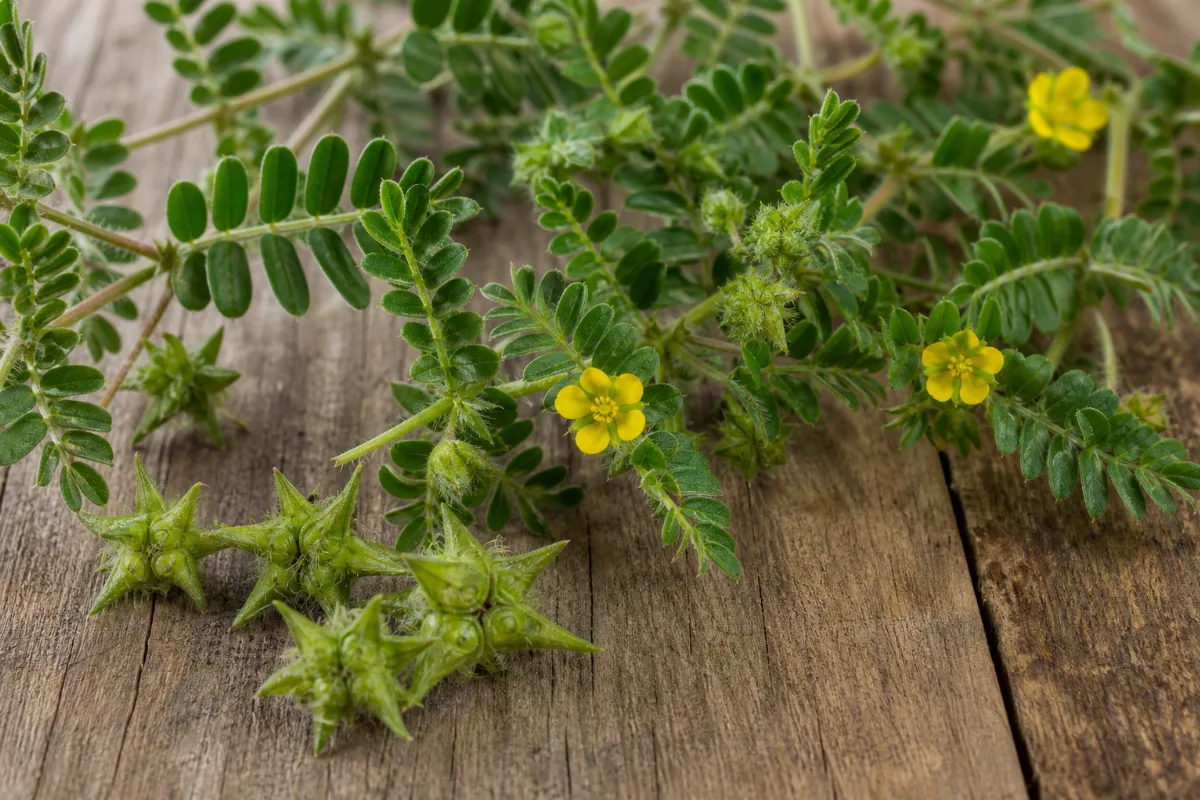
Herbs & Botanicals · Herbs · Spiny fruit and herb sold for libido and sport, with weak evidence
Tribulus
Tribulus terrestris L. · also called Tribulus, puncture vine, caltrop, Khar-i-khasak (Unani name)
Tribulus is a low, spiny plant whose fruit and herb are sold as capsules and extracts for sexual function and sport. Small trials suggest it may help erectile function and desire, but the evidence is weak. It has not been shown to raise testosterone in healthy men, and rare cases of serious liver and kidney injury have been reported.
General information, not medical advice. Last substantive update · Not medically reviewed. A named clinician has not signed off on this page. How this page is made
About Tribulus
Tribulus terrestris is a spiny plant sold worldwide for sexual function and sport. Small trials suggest benefits for erectile function and desire, but reviews rate the evidence low or very low. It does not reliably raise testosterone in healthy men. Safety is the bigger question: case reports of serious liver and kidney injury, poisoning in grazing sheep, and a European regulator that could not conclude it is safe.
What it is
Tribulus terrestris L. is a low plant in the family Zygophyllaceae. GBIF lists the name as accepted. The fruit has spiny burrs. Supplements use the fruit, the herb (aerial parts) or extracts of both.
The main chemicals are steroid saponins such as protodioscin. The amount and mix vary by country, plant part and stage of growth, and extracts are not all alike.
Traditional and current uses
Traditional Chinese, Ayurvedic and Unani medicine used it as a tonic, aphrodisiac and diuretic. Today it is mainly sold for libido, erectile function and as a testosterone booster for athletes.
The European Medicines Agency reviewed it in 2024 and found the traditional-use data too limited for a European herbal monograph. The only EU product it identified is a Bulgarian extract approved since 1981.
Sexual function and desire
A 2026 meta-analysis found higher erectile function scores than placebo and no difference in testosterone. A 2025 review of 10 studies found improvement in 3 of 5 studies that measured it and rated the evidence low.
In women, a review of five trials (279 women) found higher sexual function scores but rated certainty very low. Individual trials are small, and placebo groups also improved.
Testosterone and sport
Healthy men taking tribulus for four weeks showed no change in testosterone. Reviews in 2014, 2024 and 2025 found no reliable testosterone rise. Rugby players and CrossFit athletes did not gain extra strength or muscle.
Small studies found no change in doping tests (the testosterone to epitestosterone ratio), but one review mentions a report of a contaminated supplement that was not checked at the original source.
At a glance
Traditional uses history, not proof
- Traditional Chinese, Ayurvedic and Unani medicine: tonic, aphrodisiac and diuretic uses, mostly with the fruit.
- Unani medicine: the fruit (Khar-i-khasak) for blood pressure.
- Bulgaria: a standardised herb extract has been an approved medicine since 1981.
Studied for research
- Erectile function in men, low certainty
- Sexual desire in women, very low certainty
- Testosterone in healthy men: no reliable effect
- Sport performance: no clear benefit
- Blood sugar, cholesterol and blood pressure: very low certainty
Main compounds
- Protodioscin and other steroid saponins (furostanol and spirostanol types)
- Rutin (a flavonoid)
- Tribulosin, dominant in Vietnamese and Indian samples
Common forms
- Standardised herb extract (the Bulgarian Tribestan extract was used in the largest trial)
- Fruit powder (used in a blood pressure trial)
- Many capsule and mixed 'booster' products, whose contents vary
Research links: Public statement on Tribulus terrestris herba, EMA/HMPC (2024) · Systematic review on erectile dysfunction and testosterone (Nutrients, 2025) · Meta-analysis of randomized trials in erectile dysfunction (Int J Impot Res, 2026) · Systematic review for female sexual dysfunction (2020) · Research Library · Genes & Biomarkers Library
The plant and its history
- Accepted scientific name
- Tribulus terrestris L.
- Naming authority
- L., as returned by GBIF (accepted species, exact match, checked 2026-10-25)
- Synonyms
- Tribulus albus Poir.; Tribulus humifusus Schumach. & Thonn.; Tribulus albescens Schltr.; Tribulus acanthococcus F.Muell.
- Common names
- Puncture vine (English (EMA keyword list)); Caltrop (English (EMA keyword list)); Tribulus herb (English (EMA)); Khar-i-khasak (Unani medicine name used in p33793146)
- Botanical family
- Zygophyllaceae (GBIF; also stated in the 2014 review p24559105), order Zygophyllales.
- Classification
- Plantae > Tracheophyta > Magnoliopsida > Zygophyllales > Zygophyllaceae > Tribulus > Tribulus terrestris
- Native range
- Not verified here. A case report says it is a shrub found worldwide (p38328764); studies sampled it in south-east Europe, west Asia, Vietnam and India (p17719068) and as a pasture plant in Australia and South Africa (p6529397, p7194997).
- Habitat
- Grows as a pasture weed in dry areas, from the livestock studies (p6529397); no habitat description was read.
- What the plant looks like
- Roots: Not verified here.; Stems: Described as a shrub in a case report (p38328764).; Leaves: Not verified here.; Flowers: EMA describes the herb as flowering and fruit-bearing aerial parts.; Fruit: Spiny burr fruit (a paper on chemistry mentions burr shape, p17719068).
- Cultivation
- Not verified here.
- Harvest and processing
- The EMA herbal substance is the dried whole or broken flowering and fruit-bearing aerial parts. The only EU product is an 80% methanol dry extract (35-45:1) with at least 45% furostanol saponins as protodioscin.
- Look-alikes and adulterants
- Name: Other Tribulus species and Tribulus chemotypes; Note: NOT verified: no look-alike source was read. A chemistry paper found Vietnamese and Indian samples with a different saponin profile from European and west Asian samples (p17719068), so the label 'Tribulus terrestris' does not guarantee the same chemistry.
- Sustainability and conservation
- Not verified here.
Traditional use and history history, not clinical proof
| Tradition or era | Documented use | Source |
|---|---|---|
| Traditional Chinese, Ayurvedic and Unani medicine | Used as a tonic, aphrodisiac and diuretic; the fruit is the part most often described. A trial paper used the Unani fruit (Khar-i-khasak) for prehypertension. | p24559105 |
| EMA review of traditional use | The EMA found historical data limited, mostly for the fruit, and not enough documented traditional use of the herb to set a European monograph. | s-ema-tribulus-assessment |
| Bulgaria, from 1981 | A dry methanol extract of the herb has been approved as a medicine in Bulgaria since 1981 (EMA). | s-ema-tribulus-statement |
| Modern sports nutrition | Marketed to athletes as a testosterone booster; reviews found the claim unsupported. | p24559105 |
| Livestock history, Australia and South Africa | Known as a pasture plant linked to staggers and photosensitivity in sheep (1937 onward in New South Wales). | p6529397 |
Traditional use shows how a plant was used. It does not show that a supplement works or is safe today.
What is inside, and how it may work
What the plant contains and how those compounds act in cells and animals. Laboratory and animal mechanisms are not proven effects in people.
Main compounds
| Compound | Family | Where it is concentrated | Activity studied | Level of evidence |
|---|---|---|---|---|
| Protodioscin PubChem 441891 | furostanol steroidal saponin | Aerial parts and fruit (varies by region) Varies by region, plant part and growth stage (p17719068). The EU extract is standardised to at least 45% furostanol saponins as protodioscin (EMA). | The main saponin in European and west Asian samples. In rats, a higher-protodioscin extract raised testosterone and FSH where a low one did not (p33920217). In humans no consistent testosterone effect was found. 7 33 9 | Animal research |
| Pseudoprotodioscin PubChem 21637110 | steroidal saponin | Not specified | Measured in the saponin profile; no separate activity was read. 7 | Laboratory research |
| Dioscin PubChem 119245 | spirostanol saponin | Not specified | Measured in the saponin profile only. 7 | Laboratory research |
| Tribulosin PubChem 71312536 | steroidal saponin | High in Vietnamese and Indian samples | Marker of the non-European chemotype. 7 | Laboratory research |
| Diosgenin PubChem 99474 | sapogenin (steroid) | Not specified | Not measured in the studies read; listed as a related protodioscin-type sapogenin only. 44 | Laboratory research |
| Rutin PubChem 5280805 | flavonoid | Aerial parts | Included in the analysis of samples; no separate activity was read. 7 | Laboratory research |
Mechanisms, receptors and pathways
| Target or pathway | Gene or receptor | What was found | Level |
|---|---|---|---|
| Nitric oxide release | Not specified | A 2014 systematic review proposed nitric oxide release as a plausible explanation for effects seen, independent of testosterone. 27 | Animal research |
| Androgen pathway (luteinising hormone, FSH, testosterone) | Not specified | Healthy men showed no change in testosterone, androstenedione or LH (human). Diabetic rats showed higher testosterone and FSH only with a high-protodioscin extract (animal). 24 33 | Human data |
| Nigrostriatal dopamine system (sheep staggers) | Dopamine and DOPAC levels in the striatum | Sheep with staggers had 19% less dopamine and 30% less DOPAC in the striatum; the author interpreted this as a presynaptic dopamine disorder. 5 | Animal research |
| Liver and kidney crystal deposition | Not specified | Sheep fed Tribulus had crystal-like material in bile ducts and kidney tubules with liver and kidney damage. 3 | Animal research |
| Fungal toxin co-factor | Not specified | The liver disease geeldikkop needed both the plant and the fungal toxin sporidesmin. 16 | Animal research |
Absorption, metabolism and elimination
- Absorption
- No human study of Tribulus absorption was found. The EMA assessor says pharmacokinetic studies of the herb are not available and, from limited data on saponins, protodioscin was slowly absorbed with low oral bioavailability (second-hand; the underlying papers were not read).
- Distribution
- Not found in the sources read.
- Metabolism
- The EMA report says in sheep saponin glycosides are converted to glucuronides (second-hand).
- Elimination
- Not found.
- Bioavailability
- A rat paper developed a method to measure protodioscin in plasma, but the abstract gives no pharmacokinetic values (p26703445).
Isolated compounds versus whole extracts
Trials used standardised saponin extracts (for example a Bulgarian extract), unspecified extracts, and whole fruit powder (6 g/day). Results cannot be moved from one form to another. In rats, protodioscin content of the extract changed the hormone result (p33920217). Chemical profile also varies by origin (p17719068).
Nutritional composition
No nutrient content of the plant was verified.
4 low certainty7 very low certainty
What was looked at
The 11 benefits and uses checked for Tribulus, each with how strong the evidence is. Tap one to open it.
- Erectile function in men with mild to moderate erectile dysfunctionLow certainty
- Sexual desire and satisfaction in menLow certainty
- Erectile function in older men with low testosterone and urinary symptomsVery low certainty
- Low sexual desire in premenopausal womenVery low certainty
- Low sexual desire in postmenopausal womenVery low certainty
- Testosterone in healthy men and athletesLow certainty
- Strength, muscle and sport performanceLow certainty
- Exercise muscle damage and inflammation markersVery low certainty
- Blood sugar in type 2 diabetesVery low certainty
- Cholesterol and blood fatsVery low certainty
- Blood pressure in prehypertensionVery low certainty
Lab markers tracked in the studies
Erectile function score (IIEF)Female sexual function score (FSFI)Free and bioavailable testosterone in womenTotal testosterone in menUrinary testosterone/epitestosterone ratio and steroid profile (doping tests)Blood glucose, total cholesterol and LDLSystolic and diastolic blood pressureLDH, CRP and total antioxidant status after exercise
What is Tribulus good for?
The main studied uses and how strong the evidence is. Certainty is mostly low or very low.
Benefits, one by one
Each card is a research question, not a promise. Tap a goal to filter. Open a card to see the studies, doses and limits.
Erectile function in men with mild to moderate erectile dysfunction
Low certaintySeveral trials and two reviews found higher erectile function scores than with placebo, but the evidence is weak. Quality is low, products differ, and the largest trial used one branded extract made by the company that sells it.
4 studiesTrials used different extracts and tablets; see the studies. Not comp…
Studies, doses and limits
What the trials found
A 2026 meta-analysis of 8 studies found erectile function scores (IIEF) higher than with placebo, and total testosterone not different (p40360723). A 2025 systematic review of 10 studies (483 men) found erectile function improved in 3 of the 5 studies that measured it and rated the level of evidence low; half of the studies had low methodological quality (p40219032). The biggest single trial (180 men, 12 weeks) tested a branded Bulgarian extract, Tribestan, from the company Sopharma, and found a 2.70-point greater rise on the IIEF score than placebo (p28364864). A 2023 review of erectile dysfunction supplements listed Tribulus among ingredients that improved male sexual function but said no supplement had enough evidence to be first-line, and 80% of marketed Italian products matched no expected efficacy (p37686709).
Results
Higher erectile function scores than placebo in pooled analyses; no clear change in testosterone.
Effect sizes as reported
Meta-analysis versus placebo: IIEF-5 mean difference 3.23 (95% CI 1.89 to 4.58); IIEF-15 mean difference 14.44 (95% CI 5.75 to 23.14) (p40360723). Single trial: IIEF difference 2.70 (95% CI 1.40 to 4.01) (p28364864).
Why this rating
Reviewers rate the evidence low. Half of the studies were low quality, products and doses differ, the largest trial tested one branded product from its maker, and there is no long follow-up.
Form and dose studied
Trials used different extracts and tablets; see the studies. Not compared here.
Who was studied
Men aged 18-65 with mild to moderate erectile dysfunction; some also had high blood pressure, diabetes or metabolic syndrome.
Limits
Mixed products; small trials; short (up to 12 weeks); the main trial is industry-linked; the pooled result in the 2026 meta-analysis includes comparisons before and after treatment that are less reliable than placebo comparisons.
Why researchers looked
Tribulus fruit and herb have long been sold as an aphrodisiac and tonic, and saponins such as protodioscin were thought to act on sex hormones and blood vessels.
Traditional use
Used as a tonic and aphrodisiac in Chinese, Ayurvedic and Unani medicine; the European Medicines Agency found the traditional use data for the herb itself limited.
Proposed mechanism Preliminary mechanism
Tribulus saponins (protodioscin) were proposed to raise nitric oxide or testosterone. Human trials in men mostly found no testosterone rise, so a testosterone route is doubtful; a systematic review suggested nitric oxide release as an alternative explanation. This is a proposal from animal and lab work, not proven in people.
A proposed mechanism does not show that the effect happens in people.
No difference in adverse events in trials, but case reports of liver and kidney injury and priapism exist. See the safety section.
Sexual desire and satisfaction in men
Low certaintyIn the one large trial, men taking a branded Tribulus extract reported more desire, orgasmic function and satisfaction than men on placebo. This is one product from one trial, so the finding is weak.
1 studiesBranded extract Tribestan (Sopharma AD) in the trial.
Studies, doses and limits
What the trials found
In the 12-week trial of 180 men, desire (p=0.0038), intercourse satisfaction (p=0.0005), orgasmic function (p=0.0325) and overall satisfaction (p=0.0028) all favoured the Tribulus extract (p28364864). No separate review of desire alone was found.
Results
Better desire and satisfaction scores in one trial.
Effect sizes as reported
Only p-values are in the abstract (see results).
Why this rating
One trial of one branded product, linked to the company that makes it; no replication of this specific outcome in the reviews read.
Form and dose studied
Branded extract Tribestan (Sopharma AD) in the trial.
Who was studied
Men 18-65 with mild to moderate erectile dysfunction with or without low desire.
Limits
One 12-week trial; company-linked; p-values only.
Why researchers looked
Low desire often goes with erectile problems, and Tribulus is marketed for libido.
Traditional use
Aphrodisiac use is the main traditional claim.
Proposed mechanism Preliminary mechanism
Tribulus saponins (protodioscin) were proposed to raise nitric oxide or testosterone. Human trials in men mostly found no testosterone rise, so a testosterone route is doubtful; a systematic review suggested nitric oxide release as an alternative explanation. This is a proposal from animal and lab work, not proven in people.
A proposed mechanism does not show that the effect happens in people.
Same safety notes as erectile function.
Erectile function in older men with low testosterone and urinary symptoms
Very low certaintyIn one small trial of men with erectile dysfunction, urinary symptoms and low testosterone, erectile scores and testosterone rose in the Tribulus group. Prostate marker (PSA) and a liver enzyme (AST) also rose slightly.
2 studiesExtract details not stated in the abstract.
Studies, doses and limits
What the trials found
In 70 aging men (35 per group, 3 months), the Tribulus group had a rise in total testosterone and in IIEF-5 score (10.7 to 16.1), a small rise in AST (26.5 to 27.8) and total PSA (1.4 to 1.7), and no change in urinary symptom score (p30253697). The abstract reports before/after changes in the Tribulus group, not the difference from placebo. The 2025 systematic review said only 2 studies, both in men with hypogonadism, showed a rise in total testosterone of 60 to 70 ng/dL (p40219032).
Results
Higher erectile score and testosterone in men with low testosterone; no change in urinary symptoms; small rises in AST and PSA.
Effect sizes as reported
IIEF-5 10.7 to 16.1; total testosterone 2.2 to 2.7 (units not in the abstract); AST p=0.03; PSA p=0.007 (p30253697). Reviewer summary: total testosterone gain of 60 to 70 ng/dL in 2 studies (p40219032).
Why this rating
One small trial whose abstract gives only within-group changes, plus a review calling the testosterone gain low in clinical size and the evidence low.
Form and dose studied
Extract details not stated in the abstract.
Who was studied
Men 40-70 with erectile dysfunction, urinary symptoms and partial androgen deficiency.
Limits
Small; abstract lacks between-group comparison; extract not described; liver enzyme and PSA rises need follow-up.
Why researchers looked
Men with partial androgen deficiency are a group in which a testosterone effect might be seen.
Traditional use
Aging men's vitality tonic in traditional systems.
Proposed mechanism Animal research
Saponins are proposed to act on androgen pathways; evidence is mixed. Saponin content of the extract differed in a rat study, and testosterone was higher only with the high protodioscin extract (p33920217).
A proposed mechanism does not show that the effect happens in people.
PSA rise matters for men with prostate conditions; ask a doctor. AST rose slightly.
Low sexual desire in premenopausal women
Very low certaintyTwo small trials found higher sexual function scores with Tribulus than before treatment or placebo. Certainty is very low because the trials are small and short.
3 studiesExtracts differ across trials; the two trials report different amount…
Studies, doses and limits
What the trials found
In 40 premenopausal women with low desire, total FSFI and its domains improved with Tribulus (p<.001 for total and desire) and free (p=.046) and bioavailable (p<.048) testosterone rose; placebo did not improve lubrication or pain scores (p29172782). In another trial (67 randomized, 60 finished, 4 weeks) total FSFI (p<0.001), desire (p<0.001), arousal (p=0.037), lubrication (p<0.001), satisfaction (p<0.001) and pain (p=0.041) improved versus placebo, with similar side effects in both groups (p24773615). A systematic review of 5 trials (279 women) rated the certainty very low (GRADE) (p32736394).
Results
Higher FSFI scores; small rise in free testosterone in one trial.
Effect sizes as reported
p-values only in the abstracts read.
Why this rating
GRADE very low (reviewers). Small trials; some placebo groups also improved.
Form and dose studied
Extracts differ across trials; the two trials report different amounts, and the EMA summary of one conflicts with its abstract.
Who was studied
Premenopausal women with low sexual desire.
Limits
Small, short, different extracts, no long follow-up, no quality-of-life data.
Why researchers looked
Traditionally used for libido; testosterone is linked to desire in women.
Traditional use
General aphrodisiac use; not specific to women in the sources read.
Proposed mechanism Preliminary mechanism
The authors of one trial suggested a rise in free and bioavailable testosterone as the mechanism. This is an interpretation, not shown to cause the change.
A proposed mechanism does not show that the effect happens in people.
No serious adverse events reported in trials; not for pregnancy.
Low sexual desire in postmenopausal women
Very low certaintyOne small trial in postmenopausal women found improvements in desire, arousal and pain scores with Tribulus. Many women dropped out, and the placebo group also improved on one questionnaire.
2 studiesExtract details not stated in the abstract.
Studies, doses and limits
What the trials found
In 45 healthy postmenopausal women (120 days), 36 finished. FSFI improved in both groups, but QS-F desire (P<0.01), arousal/lubrication (P=0.02), pain (P=0.02) and anorgasmia (P<0.01) improved only with Tribulus. Free and bioavailable testosterone rose (P<0.05) (p27760089). Three women in each group stopped because of side effects; the EMA report records nausea. The 2020 review included this trial and rated overall certainty very low (p32736394).
Results
Better QS-F scores and higher free testosterone with Tribulus in one trial.
Effect sizes as reported
p-values only.
Why this rating
One small trial of 45 women, 20% dropout and the review's GRADE very low.
Form and dose studied
Extract details not stated in the abstract.
Who was studied
Healthy sexually active postmenopausal women 1 to 10 years after their last period (EMA summary).
Limits
Small; dropout; both groups improved on FSFI.
Why researchers looked
Sexual desire often falls after menopause and testosterone-related effects were proposed.
Traditional use
Not described in the sources read.
Proposed mechanism Preliminary mechanism
Free and bioavailable testosterone rose with Tribulus in this trial; this is a measured change, not proof that it caused the improved scores.
A proposed mechanism does not show that the effect happens in people.
Women with a history of hormone-sensitive cancer should ask a doctor first; no study addressed this.
Testosterone in healthy men and athletes
Low certaintyTribulus does not reliably raise testosterone in healthy men. Several trials and reviews found no change.
6 studiesDifferent extracts and amounts; see the studies.
Studies, doses and limits
What the trials found
In 21 healthy men (4 weeks) there was no difference in testosterone, androstenedione or luteinising hormone (p15994038). A 2014 systematic review concluded Tribulus appears ineffective for raising testosterone in humans (p24559105). A 2024 review of testosterone boosters found most failed to raise total testosterone, with Tribulus not among those judged effective (p37697053). The 2025 review found 8 of 10 studies with no significant androgen change (p40219032). A 6-week trial in 30 CrossFit men did report a difference in testosterone between groups, which the authors read as a possible testosterone booster (p34836225); the 2022 review of athletes found no clear hormone effect (p35954909).
Results
No consistent testosterone rise in healthy men; one small athlete trial differed.
Effect sizes as reported
Healthy men: 15.75 and 16.32 nmol/l (Tribulus) versus 17.74 nmol/l (placebo), not significant (p15994038).
Why this rating
Several small trials and reviews agree on no clear effect; the one positive athlete result is a single small single-blind trial. Rated low rather than against because reviews note limited, mixed data.
Form and dose studied
Different extracts and amounts; see the studies.
Who was studied
Healthy young men, recreational and elite athletes.
Limits
Small trials, mixed products, short follow-up.
Why researchers looked
Marketing for Tribulus says it boosts testosterone for muscle and sport.
Traditional use
Tonic and aphrodisiac use; the testosterone-boosting claim is modern marketing.
Proposed mechanism Animal research
Saponins were proposed to raise luteinising hormone and testosterone. Human trials in healthy men did not show it; rat results varied with protodioscin content of the extract (p33920217).
A proposed mechanism does not show that the effect happens in people.
Healthy men should not expect a testosterone rise.
Strength, muscle and sport performance
Low certaintyTrials in elite rugby players and CrossFit athletes found no extra gain in strength or muscle from Tribulus.
3 studiesNot compared.
Studies, doses and limits
What the trials found
In 22 elite rugby league players (5 weeks), strength and fat-free mass rose in both groups with no difference between them (p17530942). In 30 CrossFit men (6 weeks) there was no improvement in performance or body composition (p34836225). The 2022 review found no clear evidence of benefit for muscle damage markers (p35954909).
Results
No performance benefit.
Effect sizes as reported
No between-group difference (p17530942).
Why this rating
Consistent null results in small trials.
Form and dose studied
Not compared.
Who was studied
Elite rugby players; CrossFit-trained men.
Limits
Small, short; mostly men.
Why researchers looked
Sold to athletes for muscle gain.
Proposed mechanism Pharmacological theory
No proven pathway in humans.
A proposed mechanism does not show that the effect happens in people.
See doping and safety sections.
Exercise muscle damage and inflammation markers
Very low certaintyOne 6-week trial in CrossFit men found some blood markers differed from placebo, but the Tribulus group did not show clear falls. The result is mixed and probably from the same group of athletes as the performance trial.
2 studies770 mg/day in the trial.
Studies, doses and limits
What the trials found
In 30 athletes, LDH, CRP and total antioxidant status differed between groups at 6 weeks (LDH and CRP rose in placebo; antioxidant status was lower with Tribulus), yet the authors also say no significant decreases in damage or inflammation markers were seen and only a trend downward (p36498228). The review rated inflammatory and blood markers as moderately beneficial but said no clear benefit on muscle damage markers (p35954909).
Results
Mixed.
Effect sizes as reported
p<0.05 for LDH, CRP and TAS at the end; no numbers in the abstract.
Why this rating
One single-blind trial of 30; a possible duplicate cohort with the performance trial.
Form and dose studied
770 mg/day in the trial.
Who was studied
Trained CrossFit men.
Limits
Single-blind; small; contradictory wording in the abstract.
Why researchers looked
Saponins and flavonoids in the plant have antioxidant effects in the lab.
Proposed mechanism Laboratory research
Antioxidant action of plant compounds in lab models.
A proposed mechanism does not show that the effect happens in people.
None specific.
Blood sugar in type 2 diabetes
Very low certaintyOne trial in women with type 2 diabetes found lower blood sugar than placebo. Needs repeating.
2 studiesHydroalcoholic extract, 1000 mg/day in the trial.
Studies, doses and limits
What the trials found
In 98 women with type 2 diabetes (3 months) a hydroalcoholic extract lowered blood glucose versus placebo (P<.05). The abstract gives no numbers and does not say if HbA1c changed (p27255456).
Results
Lower blood glucose versus placebo.
Effect sizes as reported
Not given in the abstract.
Why this rating
One trial, abstract without numbers, women only.
Form and dose studied
Hydroalcoholic extract, 1000 mg/day in the trial.
Who was studied
Women with type 2 diabetes.
Limits
One centre; no numbers read.
Why researchers looked
Traditional use in diabetes and animal studies showing glucose lowering.
Traditional use
Used traditionally for diabetes in some systems (as stated in the trial introduction).
Proposed mechanism Animal research
Rat studies found lower glucose with Tribulus extracts, including both low and high protodioscin extracts (p33920217).
A proposed mechanism does not show that the effect happens in people.
Could add to the effect of diabetes medicines; ask a doctor or pharmacist.
Cholesterol and blood fats
Very low certaintyThe diabetes trial found lower total cholesterol and LDL; a review of athlete trials found improved lipid profile. Triglycerides and HDL did not change in the diabetes trial.
2 studiesNot compared.
Studies, doses and limits
What the trials found
Total cholesterol and LDL fell versus placebo in 98 women with diabetes; triglycerides and HDL did not (p27255456). The 2022 review of physically active men said lipid profile improved significantly (p35954909). The 180-man erectile trial measured lipids as a second outcome; the abstract does not give the result (p28364864).
Results
Lower LDL and total cholesterol in one trial.
Effect sizes as reported
Not in the abstracts.
Why this rating
Few trials; numbers not read.
Form and dose studied
Not compared.
Who was studied
Women with diabetes; active men.
Limits
Biomarker only.
Why researchers looked
Lipid changes were seen in animal studies and recorded as a second outcome in trials.
Proposed mechanism Animal research
Animal studies only; not shown in people.
A proposed mechanism does not show that the effect happens in people.
If taking statins, see the safety section (one rhabdomyolysis case).
Blood pressure in prehypertension
Very low certaintyA trial of powdered Tribulus fruit in adults with slightly raised blood pressure found a fall in blood pressure against placebo. It is a single trial of a whole-fruit powder.
1 studiesPowdered dried fruit in the trial.
Studies, doses and limits
What the trials found
Over 2 months, systolic pressure fell 7.7 mmHg and diastolic 5.5 mmHg with 6 g/day of powdered fruit versus 1.9 and 0.2 mmHg with placebo (p<0.001). No one in either group developed hypertension and safety tests were normal (p33793146).
Results
Lower blood pressure versus placebo.
Effect sizes as reported
-7.7/-5.5 mmHg versus -1.9/-0.2 mmHg.
Why this rating
One trial; participant numbers not in the abstract; whole fruit powder.
Form and dose studied
Powdered dried fruit in the trial.
Who was studied
Adults with prehypertension.
Limits
Single trial; abstract without n.
Why researchers looked
Unani medicine uses the fruit (Khar-i-khasak) for blood pressure.
Traditional use
Unani medicine.
Proposed mechanism Pharmacological theory
No mechanism was read in the sources used for this page.
A proposed mechanism does not show that the effect happens in people.
May add to blood pressure medicines; ask a doctor or pharmacist.
Connections to the rest of health
How Tribulus connects to the rest of our health knowledge graph. Every link says what kind of connection it is. A safety link (for example to the liver) is a warning, not a benefit. A study that merely mentions a topic never creates a benefit link.
Explore every connection: goals, body systems, organs, symptoms, genes
A. Wellness goals
| Connected to | Kind of connection | Evidence status | Context | Studies |
|---|---|---|---|---|
| Libido support | Potential benefit | Low certainty | Higher erectile function and desire scores in small trials. Erectile function in men with mild to moderate erectile dysfunction: Several trials and two reviews found higher erectile function scores than with placebo, but the evidence is weak. Quality is low, products differ, and the largest trial used one branded extract made by the company that sells it. Preparation or compound: Tribulus extracts |
34 15 17 39 25 37 1 41 |
| Mens Vitality | Potential benefit | Low certainty | Erectile function in men with mild to moderate erectile dysfunction: Several trials and two reviews found higher erectile function scores than with placebo, but the evidence is weak. Quality is low, products differ, and the largest trial used one branded extract made by the company that sells it. Sexual desire and satisfaction in men: In the one large trial, men taking a branded Tribulus extract reported more desire, orgasmic function and satisfaction than men on placebo. This is one product from one trial, so the finding is weak. | 34 39 15 25 13 |
| Hormone Balance | Potential benefit | Very low certainty | Erectile function in older men with low testosterone and urinary symptoms: In one small trial of men with erectile dysfunction, urinary symptoms and low testosterone, erectile scores and testosterone rose in the Tribulus group. Prostate marker (PSA) and a liver enzyme (AST) also rose slightly. | 13 39 |
| Womens Wellness | Potential benefit | Very low certainty | Low sexual desire in premenopausal women: Two small trials found higher sexual function scores with Tribulus than before treatment or placebo. Certainty is very low because the trials are small and short. Low sexual desire in postmenopausal women: One small trial in postmenopausal women found improvements in desire, arousal and pain scores with Tribulus. Many women dropped out, and the placebo group also improved on one questionnaire. | 37 1 17 41 |
| Menopause Support | Potential benefit | Very low certainty | Low sexual desire in postmenopausal women: One small trial in postmenopausal women found improvements in desire, arousal and pain scores with Tribulus. Many women dropped out, and the placebo group also improved on one questionnaire. | 41 17 |
| Mens Vitality | Demonstrated clinical effect | Low certainty | Testosterone in healthy men and athletes: Tribulus does not reliably raise testosterone in healthy men. Several trials and reviews found no change. | 24 27 20 39 10 11 |
| Hormone Balance | Demonstrated clinical effect | Low certainty | Testosterone in healthy men and athletes: Tribulus does not reliably raise testosterone in healthy men. Several trials and reviews found no change. | 24 27 20 39 10 11 |
| Muscle Recovery | Demonstrated clinical effect | Low certainty | Strength, muscle and sport performance: Trials in elite rugby players and CrossFit athletes found no extra gain in strength or muscle from Tribulus. | 28 10 11 |
| Physical Stamina | Demonstrated clinical effect | Low certainty | Strength, muscle and sport performance: Trials in elite rugby players and CrossFit athletes found no extra gain in strength or muscle from Tribulus. | 28 10 11 |
| Peak Performance | Demonstrated clinical effect | Low certainty | Strength, muscle and sport performance: Trials in elite rugby players and CrossFit athletes found no extra gain in strength or muscle from Tribulus. | 28 10 11 |
| Muscle Recovery | Preliminary mechanism | Very low certainty | Exercise muscle damage and inflammation markers: One 6-week trial in CrossFit men found some blood markers differed from placebo, but the Tribulus group did not show clear falls. The result is mixed and probably from the same group of athletes as the performance trial. | 12 11 |
| Inflammation Balance | Preliminary mechanism | Very low certainty | Exercise muscle damage and inflammation markers: One 6-week trial in CrossFit men found some blood markers differed from placebo, but the Tribulus group did not show clear falls. The result is mixed and probably from the same group of athletes as the performance trial. | 12 11 |
| Blood Sugar Balance | Potential benefit | Very low certainty | Blood sugar in type 2 diabetes: One trial in women with type 2 diabetes found lower blood sugar than placebo. Needs repeating. | 30 33 |
| Metabolic Health | Potential benefit | Very low certainty | Blood sugar in type 2 diabetes: One trial in women with type 2 diabetes found lower blood sugar than placebo. Needs repeating. | 30 33 |
| Cholesterol Balance | Potential benefit | Very low certainty | Cholesterol and blood fats: The diabetes trial found lower total cholesterol and LDL; a review of athlete trials found improved lipid profile. Triglycerides and HDL did not change in the diabetes trial. | 30 11 |
| Heart Health | Potential benefit | Very low certainty | Cholesterol and blood fats: The diabetes trial found lower total cholesterol and LDL; a review of athlete trials found improved lipid profile. Triglycerides and HDL did not change in the diabetes trial. Blood pressure in prehypertension: A trial of powdered Tribulus fruit in adults with slightly raised blood pressure found a fall in blood pressure against placebo. It is a single trial of a whole-fruit powder. | 30 11 32 |
| Blood Pressure Support | Potential benefit | Very low certainty | Blood pressure in prehypertension: A trial of powdered Tribulus fruit in adults with slightly raised blood pressure found a fall in blood pressure against placebo. It is a single trial of a whole-fruit powder. | 32 |
B. Body systems
| Connected to | Kind of connection | Evidence status | Context | Studies |
|---|---|---|---|---|
| Reproductive System | Biological association | Low certainty | Studied for: Erectile function in men with mild to moderate erectile dysfunction Studied for: Sexual desire and satisfaction in men | 34 39 15 25 13 37 1 17 41 |
| Endocrine System | Biological association | Low certainty | Studied for: Erectile function in men with mild to moderate erectile dysfunction Studied for: Erectile function in older men with low testosterone and urinary symptoms | 34 39 15 25 13 41 17 24 27 20 10 11 30 33 |
| Urinary System | Biological association | Very low certainty | Studied for: Erectile function in older men with low testosterone and urinary symptoms | 13 39 |
| Musculoskeletal System | Biological association | Low certainty | Studied for: Strength, muscle and sport performance Studied for: Exercise muscle damage and inflammation markers | 28 10 11 12 |
| Immune System | Biological association | Very low certainty | Studied for: Exercise muscle damage and inflammation markers | 12 11 |
| Metabolism Weight | Biological association | Very low certainty | Studied for: Blood sugar in type 2 diabetes Studied for: Cholesterol and blood fats | 30 33 11 |
| Cardiovascular System | Biological association | Very low certainty | Studied for: Cholesterol and blood fats Studied for: Blood pressure in prehypertension | 30 11 32 |
C. Body parts and organs
| Connected to | Kind of connection | Evidence status | Context | Studies |
|---|---|---|---|---|
| Liver | Adverse effect or risk | Very low certainty | Case reports of severe jaundice and liver injury; AST rose slightly in one trial; frequency unknown. Case reports of severe liver injury; frequency unknown. Preparation or compound: Tribulus supplements |
19 35 13 |
| Kidneys | Adverse effect or risk | Very low certainty | Case reports of acute kidney injury. Preparation or compound: Tribulus supplements |
19 29 35 |
I. Biomarkers
| Connected to | Kind of connection | Evidence status | Context | Studies |
|---|---|---|---|---|
| Blood glucose | Drug or supplement interaction | Very low certainty | Lowered glucose versus placebo in one trial; possible extra effect with diabetes medicines. Preparation or compound: Tribulus extract |
30 |
| Creatinine | Adverse effect or risk | Very low certainty | Creatinine rose in kidney injury cases. Preparation or compound: Tribulus supplements |
19 35 |
| Testosterone | Potential benefit | Low certainty | No reliable rise in healthy men; small within-group rises in men with low testosterone and free testosterone in women. Preparation or compound: Tribulus extracts |
24 39 37 |
| Erectile function score (IIEF) | Biological association | Low certainty | Measured in trials: raised. A lab change is not the same as a health benefit. | 34 15 13 |
| Female sexual function score (FSFI) | Biological association | Very low certainty | Measured in trials: raised. A lab change is not the same as a health benefit. | 37 1 41 17 |
| Free and bioavailable testosterone in women | Biological association | Very low certainty | Measured in trials: raised. A lab change is not the same as a health benefit. | 37 41 17 |
| Total testosterone in men | Biological association | Low certainty | Measured in trials: no-change. A lab change is not the same as a health benefit. | 24 34 39 13 |
| Urinary testosterone/epitestosterone ratio and steroid profile (doping tests) | Biological association | Low certainty | Measured in trials: no-change. A lab change is not the same as a health benefit. | 28 31 18 26 |
| Blood glucose, total cholesterol and LDL | Biological association | Very low certainty | Measured in trials: lowered. A lab change is not the same as a health benefit. | 30 |
| Systolic and diastolic blood pressure | Biological association | Very low certainty | Measured in trials: lowered. A lab change is not the same as a health benefit. | 32 |
| LDH, CRP and total antioxidant status after exercise | Biological association | Very low certainty | Measured in trials: mixed. A lab change is not the same as a health benefit. | 12 11 |
K. Biological pathways
| Connected to | Kind of connection | Evidence status | Context | Studies |
|---|---|---|---|---|
| Nitric oxide signalling | Preliminary mechanism | Animal | Proposed by a systematic review as an explanation for the sexual effects. | 27 |
| Luteinising hormone, FSH, testosterone | Preliminary mechanism | Human | No change in healthy men; higher FSH and testosterone in rats given a high-protodioscin extract. | 24 33 |
| Dopamine signalling in the striatum | Preliminary mechanism | Animal | Reduced dopamine and DOPAC in staggers-affected sheep. | 5 |
L. Active compounds
| Connected to | Kind of connection | Evidence status | Context | Studies |
|---|---|---|---|---|
| Protodioscin | Biological association | Animal | The main saponin in European and west Asian samples. In rats, a higher-protodioscin extract raised testosterone and FSH where a low one did not (p33920217). In humans no consistent testosterone effect was found. Preparation or compound: Aerial parts and fruit (varies by region) |
7 33 9 |
| Pseudoprotodioscin | Biological association | In vitro | Measured in the saponin profile; no separate activity was read. | 7 |
| Dioscin | Biological association | In vitro | Measured in the saponin profile only. | 7 |
| Tribulosin | Biological association | In vitro | Marker of the non-European chemotype. Preparation or compound: High in Vietnamese and Indian samples |
7 |
| Diosgenin | Biological association | In vitro | Not measured in the studies read; listed as a related protodioscin-type sapogenin only. | 44 |
| Rutin | Biological association | In vitro | Included in the analysis of samples; no separate activity was read. Preparation or compound: Aerial parts |
7 |
Each connection is stored with the ingredient, the connected record, the kind of connection, the evidence status, the supporting studies, the preparation or compound involved, and a review date (last reviewed October 25, 2026).
Evidence at a glance: what changed in 8 lab markers
Tap a number to show only those markers. Counts are markers, not people.
The evidence
The research centre for Tribulus. Every record here was checked against PubMed or the publisher's page; we never list a study we have not verified.
Evidence by outcome
Bars show how many studies we found for each outcome, not how well it works. People are added up across trials only (reviews are not added, to avoid double counting).
How we rate evidence
High certainty
Several well-run trials or reviews agree; further research is unlikely to change the picture much.
Moderate certainty
Good trials point the same way, but some doubt remains.
Low certainty
Small, short or inconsistent trials. The finding could change with better research.
Very low certainty
Very little or very weak human data. Treat as a possibility only.
Mixed findings
Trials or reviews disagree with each other.
Not enough evidence
Not enough human research to say either way.
Evidence against
Good research found no benefit, or found harm.
We take the reviewers' own risk-of-bias and GRADE statements where they exist, and otherwise judge from study size, design, consistency, directness and whether a product matches what is sold. Many publications do not make evidence high. Method note: We searched PubMed for tribulus reviews, trials, case reports and animal toxicity studies, read the abstracts, checked the plant name against GBIF and NCBI, and read the EMA public statement and assessment report in full. NCCIH and LactMed pages were not found; LiverTox could not be read. Numbers come only from abstracts or the EMA text.
Study library: every study we checked 44
| Study | Design | People | Product, dose, length | Result |
|---|---|---|---|---|
| Akhtari 2014 Tribulus terrestris for treatment of sexual dysfunction in women: randomized double-blind placebo-controlled study Daru · PMID 24773615 · DOI |
Controlled trial |
67 Women of reproductive age with low sexual desire |
Tribulus terrestris extract unspecified (EMA lists leaves) 7.5 mg/day (per abstract; the EMA assessment lists a different amount, so the dose is not stated on the page) 4 weeks · vs Placebo |
67 randomized; 60 completed (30 per group). After 4 weeks, total FSFI (p<0.001), desire (p<0.001), arousal (p=0.037), lubrication (p<0.001), satisfaction (p<0.001) and pain (p=0.041) improved more with Tribulus. Side effects were similar between groups. Significant improvement versus placebo Methods, limits and fundingOutcomes: FSFI total and domains Limitations: Short, small. Amount of extract differs between the abstract and the EMA summary of the same trial. Funding and conflicts: Not stated in the abstract. Read: abstract |
| Al-Mohamadi 2026 Sub-Acute Toxicity Evaluation and Antiurolithiatic Activity of Tribulus terrestris Ethanol Extract in Rats Journal of Experimental Pharmacology · PMID 42158402 · DOI |
Animal research animal |
Rats | Ethanol extract of Tribulus terrestris unspecified 500 and 1000 mg/kg by mouth (28 days) 28 days · vs Untreated rats |
No deaths or treatment-related toxicity, and normal tissue structure, in the 28-day study. No toxicity signal in rats Methods, limits and fundingOutcomes: Body weight, organ weights, blood tests, tissue pathology Limitations: Rats; one extract; short; not people. This contrasts with the sheep feeding study and human case reports. Funding and conflicts: No conflicts reported. Read: abstract |
| Aslani 2003 Experimental Tribulus terrestris poisoning in sheep: clinical, laboratory and pathological findings Veterinary Research Communications · PMID 12625403 · DOI |
Animal research animal |
11 11 sheep (6 fed Tribulus, 5 controls) |
Dried Tribulus terrestris plant as 80% of the feed unspecified 80% of diet Several weeks · vs Control feed |
Signs of liver-related light sensitivity from day 11 (red, crusted skin on muzzle, nose, ears, eyelids), depression, weight loss and jaundice. Blood tests showed higher bilirubin, urea nitrogen, creatinine and liver enzymes. Post-mortem: swollen discoloured livers, crystal-like material in bile ducts and kidney tubules, liver and kidney damage, and focal heart muscle necrosis. Liver, kidney and heart muscle damage in sheep fed mostly Tribulus Methods, limits and fundingOutcomes: Clinical signs, blood tests, post-mortem findings Limitations: Animal feeding trial with a very high share of plant in the diet; not equal to supplement use in people. Funding and conflicts: Not stated. Read: abstract |
| Bourke 1984 Staggers in sheep associated with the ingestion of Tribulus terrestris Australian Veterinary Journal · PMID 6529397 · DOI |
Animal research animal |
Sheep flocks in New South Wales, Australia | Grazing Tribulus terrestris unspecified Months of grazing |
Outbreaks (1937 to 1981-83) were linked to droughts when sheep grazed large areas of Tribulus for months. Many thousands of sheep were affected, with slowly developing, irreversible, uneven hind-limb weakness. The cause was not found by blood or tissue tests. Livestock neuromuscular disease linked to grazing Tribulus Methods, limits and fundingOutcomes: Outbreak history and signs Limitations: Observational farm history; cause not identified. Funding and conflicts: Not stated. Read: abstract |
| Bourke 1987 A novel nigrostriatal dopaminergic disorder in sheep affected by Tribulus terrestris staggers Research in Veterinary Science · PMID 3444981 |
Animal research animal |
30 Sheep with chronic staggers after grazing Tribulus |
Grazing Tribulus terrestris (staggers) unspecified Over 15 months of signs · vs Normal sheep |
Affected sheep had asymmetric hind limb muscle wasting, weakness, spontaneous circling, and lower striatal dopamine (19%) and DOPAC (30%) than normal sheep, interpreted as a primary nigrostriatal dopamine disorder. Dopamine system damage in sheep Methods, limits and fundingOutcomes: Muscle wasting, limb weakness, behaviour, brain dopamine Limitations: Animal; sheep grazing. Funding and conflicts: Not stated. Read: abstract |
| Campanelli 2016 Priapism caused by 'Tribulus terrestris' International Journal of Impotence Research · PMID 26631925 · DOI |
Case report |
1 36-year-old man |
Tribulus terrestris herbal supplement unspecified |
A 72-hour painful erection after taking the supplement, needing surgery (cavernoglandular shunt) and followed by poor sexual function. The EMA report notes the product and dose were unknown and overdose could not be excluded. Single case Methods, limits and fundingOutcomes: Priapism Limitations: Product and dose unknown. Funding and conflicts: Not stated. Read: abstract |
| Dinchev 2008 Distribution of steroidal saponins in Tribulus terrestris from different geographical regions Phytochemistry · PMID 17719068 · DOI |
Laboratory research in-vitro |
Plant samples from 9 countries (Bulgaria, Greece, Serbia, Macedonia, Turkey, Georgia, Iran, Vietnam, India) | Tribulus terrestris plant parts several parts · vs Compared by region |
Content varied by region, plant part and stage of growth. Samples from south-east Europe and west Asia shared a profile with protodioscin and prototribestin as main compounds. Vietnamese and Indian samples lacked prototribestin and tribestin and had a lot of tribulosin: probably a different chemotype. Large differences in saponin profile with origin Methods, limits and fundingOutcomes: Protodioscin, prototribestin, pseudoprotodioscin, dioscin, tribestin, tribulosin, rutin Limitations: Chemical analysis only; no health outcome. Funding and conflicts: Not stated. Read: abstract |
| European Medicines Agency 2025 EMA/HMPC Assessment report on Tribulus terrestris L., herba (final, EMA/HMPC/886105/2022) European Medicines Agency, HMPC · Source |
Authoritative guidance |
Full text read (78 pages): safety sections summarised. Clinical trials: nausea and gut complaints at similar rates to placebo. Eudravigilance 2007-2021: 13 spontaneous reports, none linked directly to Tribulus. A second database (Vigilyze) listed 20 cases, 2 fatal, both with many other drugs. Case reports: mainly liver and kidney effects not directly linked, priapism, gynaecomastia. Genotoxicity: water extract of the whole plant was positive in the Ames test after metabolic activation. No reproductive, carcinogenicity or pharmacokinetic data. Pregnancy and breastfeeding use not recommended. Contraindication: hypersensitivity. One drug-interaction report (dasatinib) not proven. Overall: it is not possible to conclude on clinical safety. Methods, limits and fundingRead: full-text | ||
| European Medicines Agency 2025 EMA/HMPC Public statement on Tribulus terrestris L., herba (final, EMA/HMPC/308436/2023) European Medicines Agency, HMPC · Source |
Authoritative guidance |
Adopted 20 November 2024; published 25 February 2025. HMPC concluded a European Union herbal monograph on Tribulus terrestris herba (dried aerial parts) cannot be established: the only EU product is a specific Bulgarian dry methanolic extract (DER 35-45:1, at least 45% furostanol saponins as protodioscin, approved in Bulgaria since 1981); published data on safety and efficacy were not available and traditional use of other preparations was not sufficiently documented. Methods, limits and fundingRead: full-text | ||
| Fernández-Lázaro 2021 The Effects of 6 Weeks of Tribulus terrestris L. Supplementation on Body Composition, Hormonal Response, Perceived Exertion, and CrossFit Performance: A Randomized, Single-Blind, Placebo-Controlled Study Nutrients · PMID 34836225 · DOI |
Controlled trial |
30 Healthy CrossFit-trained men |
Tribulus terrestris L. supplement unspecified 770 mg/day 6 weeks · vs Placebo |
No significant group-by-time effects except for testosterone and bench press (p<0.05). Authors: no improvement in performance or body composition; may act as a testosterone booster for recovery (their interpretation). No effect on performance or body composition; testosterone and bench press differed Methods, limits and fundingOutcomes: Body composition, testosterone, cortisol, CrossFit workout performance Limitations: 30 men; single-blind; no numbers in the abstract. Funding and conflicts: No conflict of interest declared. Read: abstract |
| Fernández-Lázaro 2022 Effects of Tribulus terrestris L. on Sport and Health Biomarkers in Physically Active Adult Males: A Systematic Review International Journal of Environmental Research and Public Health · PMID 35954909 · DOI |
Systematic review |
Physically active adult men | Tribulus terrestris L. supplements unspecified · vs Placebo |
7 studies from 340 records. Participants taking Tribulus showed significant improvements in lipid profile. Inflammatory and blood markers showed moderate beneficial effects, with no significant change in kidney markers and no positive effect on immune response. No toxicity was reported. No clear evidence of benefit on muscle damage markers or hormones. Lipid profile improved; no clear benefit on muscle damage or hormones Methods, limits and fundingOutcomes: Immune, blood, kidney, lipid, hormone and inflammation markers Limitations: Only 7 studies. The abstract gives no numbers. Funding and conflicts: No conflict of interest declared. Read: abstract |
| Fernández-Lázaro 2022 6-Week Supplementation with Tribulus terrestris L. to Trained Male CrossFit Athletes on Muscle, Inflammation, and Antioxidant Biomarkers: A Randomized, Single-Blind, Placebo-Controlled Trial International Journal of Environmental Research and Public Health · PMID 36498228 · DOI |
Controlled trial |
30 Trained male CrossFit athletes |
Tribulus terrestris L. supplement unspecified 770 mg/day 6 weeks · vs Placebo |
Significant differences between groups in LDH, CRP and TAS at the end (p<0.05): LDH and CRP rose in the placebo group while TAS was lower in the Tribulus group. The authors also state no significant decreases in muscle damage or inflammation markers were seen, only a downward trend. Mixed: markers differed from placebo, but no significant fall within the Tribulus group Methods, limits and fundingOutcomes: Lactate dehydrogenase (LDH), C-reactive protein (CRP), total antioxidant status (TAS) Limitations: Same dose, size and authors as the other CrossFit trial; probably the same 30 athletes, so do not count as two separate trials. Single-blind. Funding and conflicts: No conflict of interest declared. Read: abstract |
| GamalEl Din 2019 Tribulus terrestris versus placebo in the treatment of erectile dysfunction and lower urinary tract symptoms in patients with late-onset hypogonadism: A placebo-controlled study Urologia · PMID 30253697 · DOI |
Controlled trial |
70 Aging men with erectile dysfunction, lower urinary tract symptoms and partial androgen deficiency |
Tribulus terrestris (extract details not given in the abstract) unspecified Three times daily (amount not in the abstract) 3 months · vs Placebo (35 per group) |
In the Tribulus group, mean total testosterone rose from 2.2 to 2.7 (units not in the abstract) and IIEF-5 from 10.7 to 16.1 (both p<0.001). Mean AST rose from 26.5 to 27.8 (p=0.03) and total PSA from 1.4 to 1.7 (p=0.007). Urinary symptom score did not change (14.4 to 14.6). Before/after change in the Tribulus group; the abstract does not give the between-group comparison Methods, limits and fundingOutcomes: IIEF-5, total testosterone, PSA, AST, urinary symptom score Limitations: The abstract describes within-group changes, not Tribulus versus placebo differences. Product details missing (EMA also notes missing extract details). Small liver enzyme and PSA rises need follow-up. Funding and conflicts: Not stated in the abstract. Read: abstract |
| Huff 2024 Rhabdomyolysis Risk: The Dangers of Tribulus Terrestris, an Over-the-Counter Supplement American Journal of Case Reports · PMID 39012853 · DOI |
Case report |
1 71-year-old man on long-term atorvastatin |
Over-the-counter Tribulus terrestris supplement plus atorvastatin unspecified |
Rhabdomyolysis (muscle breakdown) with mild liver test rise; improved after stopping both and treatment with fluids. The authors state recent research suggests Tribulus is a moderate CYP3A4 inhibitor; that source was not identified or checked here. Single case; cause cannot be separated from statin Methods, limits and fundingOutcomes: Creatine phosphokinase, creatinine, liver tests Limitations: One case; the statin alone can cause rhabdomyolysis; the CYP3A4 claim was not verified. Funding and conflicts: No conflict of interest declared. Read: abstract |
| Kamenov 2017 Evaluation of the efficacy and safety of Tribulus terrestris in male sexual dysfunction-A prospective, randomized, double-blind, placebo-controlled clinical trial Maturitas · PMID 28364864 · DOI |
Controlled trial |
180 Men 18-65 with mild or moderate erectile dysfunction, with or without low desire; some with high blood pressure, diabetes or metabolic syndrome |
Tribestan (Sopharma AD, Bulgaria): dry herb extract 35-45:1, standardized to at least 112.5 mg furostanol saponins per 250 mg tablet unspecified in the abstract (EMA lists it as a dry methanolic extract of the herb) 6 tablets/day (3 x 2) 12 weeks · vs Placebo |
180 randomized (90 and 90); 86 per group finished. IIEF improved more with Tribulus than placebo (P<0.0001). Intercourse satisfaction (p=0.0005), orgasmic function (p=0.0325), sexual desire (p=0.0038) and overall satisfaction (p=0.0028) also favoured Tribulus. No difference in adverse events; no drug-related serious events. ITT difference in IIEF change: 2.70 points versus placebo (95% CI 1.40 to 4.01) Methods, limits and fundingOutcomes: IIEF score change at 12 weeks (primary); intercourse satisfaction, orgasm, desire, overall satisfaction; adverse events; lipids Limitations: Single 12-week trial of one branded product; results cannot be assumed for other products. Funding and conflicts: Funding not stated in the abstract. The tested product is made by Sopharma AD, the same company named in the abstract; treat as industry-linked. Read: abstract |
| Kellerman 1980 Photosensitivity in South Africa. II. The experimental production of the ovine hepatogenous photosensitivity disease geeldikkop (Tribulosis ovis) by the simultaneous ingestion of Tribulus terrestris plants and cultures of Pithomyces chartarum containing the mycotoxin sporidesmin Onderstepoort Journal of Veterinary Research · PMID 7194997 |
Animal research animal |
Sheep in South Africa | Tribulus terrestris pasture plus Pithomyces chartarum fungus containing sporidesmin unspecified · vs Sporidesmin alone |
Geeldikkop (liver-linked photosensitivity) was produced in sheep eating Tribulus pasture together with the toxic fungus; the same fungus on other pasture produced facial eczema. The plant seems to act as a carrier of the spores and to interact with the toxin. Plant plus fungal toxin together caused the disease Methods, limits and fundingOutcomes: Liver damage and light sensitivity Limitations: Animal; shows a fungal co-factor, so not proof that Tribulus alone is hepatotoxic. Funding and conflicts: Not stated. Read: abstract |
| Martimbianco 2020 Tribulus Terrestris for Female Sexual Dysfunction: A Systematic Review Revista Brasileira de Ginecologia e Obstetricia · PMID 32736394 · DOI |
Systematic review |
279 Premenopausal and postmenopausal women with sexual dysfunction |
Tribulus terrestris vs inactive or active comparators unspecified 1 to 3 months · vs Placebo or other |
5 randomized trials (279 women). After 1 to 3 months, women on Tribulus had significantly higher sexual function scores. Three months of treatment raised serum testosterone in premenopausal women. No serious adverse events were reported; quality of life was not measured. Certainty of evidence (GRADE): very low. Higher sexual function scores; certainty very low (GRADE) Methods, limits and fundingOutcomes: Female sexual function scores; testosterone; adverse events Limitations: No meta-analysis possible (too different). Cochrane risk of bias and GRADE used. Funding and conflicts: No conflicts of interest declared. Registration: PROSPERO CRD42019121130 Read: abstract |
| Minotti 2026 Impact of Tribulus terrestris supplementation on urinary steroid profiles: A short term pilot study Journal of Pharmaceutical and Biomedical Analysis · PMID 41005195 · DOI |
Case series |
15 15 recreational athletes (8 men, 7 women) who said they took a Tribulus extract daily |
Tribulus terrestris extract (self-reported use) unspecified 2 months of sampling · vs Before versus during use |
No statistically significant difference before versus during use in either sex despite large person-to-person variation. No significant change in urinary steroid profiles Methods, limits and fundingOutcomes: Urinary steroid profile (testosterone, epitestosterone, androstenedione and others) Limitations: Pilot; small; product and intake self-reported; no control group. Funding and conflicts: Authors declare no competing interests. Read: abstract |
| Mohy-Ud-Din 2024 Severe Liver and Renal Injury From Tribulus Terrestris ACG Case Reports Journal · PMID 38328764 · DOI |
Case report |
1 46-year-old man |
Tribulus terrestris supplements unspecified Daily (amount not in the abstract) 2 months |
Severe jaundice; total bilirubin peaked at 48 mg/dL with creatinine 7.1. Liver biopsy consistent with drug-induced liver injury. He had 3 plasmapheresis sessions, kidneys recovered and bilirubin fell to 1.1 mg/dL at follow-up. Single case; recovered Methods, limits and fundingOutcomes: Bilirubin, creatinine, liver biopsy Limitations: One case. Product contents and other exposures not described in the abstract. Funding and conflicts: Not stated. Read: abstract |
| Morgado 2024 Do "testosterone boosters" really increase serum total testosterone? A systematic review International Journal of Impotence Research · PMID 37697053 · DOI |
Systematic review |
Male athletes, men with late-onset hypogonadism, infertile men, healthy men | 27 proposed testosterone boosters (4 studies on Tribulus terrestris) unspecified · vs Placebo |
52 studies on 27 boosters; 4 studies concerned Tribulus terrestris. Most boosters failed to increase total testosterone. The exceptions named in the abstract were beta-hydroxy beta-methylbutyrate and betaine (male athletes), and Eurycoma longifolia, a pomegranate-cocoa blend and purified shilajit (hypogonadism), Eurycoma and Withania somnifera (healthy men), and a non-hormonal aromatase inhibitor (athletes). Tribulus was not among the products judged effective. Most boosters, Tribulus included, did not raise total testosterone Methods, limits and fundingOutcomes: Total testosterone versus placebo Limitations: Tribulus results are not given separately in the abstract. Funding and conflicts: Funding and conflicts not stated in the abstract. Read: abstract |
| NCCIH 2026 NCCIH page on Tribulus: not found NCCIH · Source |
Authoritative guidance |
Searched 2026-10-25: a guessed address (nccih.nih.gov/health/tribulus) returned 404 and no NCCIH Tribulus page was found. Marked not found; absence in a search is not proof that none exists. Methods, limits and fundingRead: summary-only | ||
| NIDDK LiverTox 2026 LiverTox (NIH) entry on Tribulus: not read NIDDK LiverTox · Source |
Authoritative guidance |
LiverTox could not be read: the page returned a browser-check (reCAPTCHA) screen to the tool. Whether a LiverTox entry exists was not confirmed, so liver wording here relies on case reports and the EMA report. NOT verified. Methods, limits and fundingRead: summary-only | ||
| NIH LactMed 2026 LactMed (NIH) entry on Tribulus: not found NIH LactMed · Source |
Authoritative guidance |
A search of the NCBI Bookshelf for LactMed and Tribulus returned no entry on 2026-10-25. Marked not found. The EMA report states no clinical information on breastfeeding exists. Methods, limits and fundingRead: summary-only | ||
| Neychev 2005 The aphrodisiac herb Tribulus terrestris does not influence the androgen production in young men Journal of Ethnopharmacology · PMID 15994038 · DOI |
Controlled trial |
21 Healthy men aged 20-36 |
Tribulus terrestris extract unspecified 10 or 20 mg per kg body weight per day in 3 intakes 4 weeks · vs Placebo |
3 groups of 7. No significant difference in testosterone (15.75 and 16.32 nmol/l in the two Tribulus groups versus 17.74 nmol/l in controls), androstenedione or luteinizing hormone; all within normal range. No significant difference (p>0.05) Methods, limits and fundingOutcomes: Testosterone, androstenedione, luteinizing hormone Limitations: Very small groups; healthy men with normal hormones. Funding and conflicts: Not stated in the abstract. Read: abstract |
| Petre 2023 Dietary Supplements for Erectile Dysfunction: Analysis of Marketed Products, Systematic Review, Meta-Analysis and Rational Use Nutrients · PMID 37686709 · DOI |
Meta-analysis |
Men with erectile dysfunction; plus an analysis of supplements sold in Italy | Dietary supplements for erectile dysfunction, including Tribulus terrestris unspecified · vs Placebo |
The meta-analysis identified Panax ginseng, Tribulus terrestris and L-arginine as ingredients able to improve male sexual function. None of the studies gave enough evidence to call any supplement a first-line therapy. Of marketed Italian products scored, 2 (8%) matched the highest expected-efficacy group, 3 (12%) the lower group and 20 (80%) matched no expected efficacy; most are blends with ingredients at negligible doses or without evidence. Tribulus listed among ingredients that improved male sexual function in the pooled analysis; no Tribulus-specific numbers in the abstract Methods, limits and fundingOutcomes: Erectile function; marketed product scoring Limitations: Tribulus-specific numbers, doses and trial quality are not in the abstract. Not a Tribulus-only review. Funding and conflicts: All authors declared no competing interest. Read: abstract |
| Pokrywka 2014 Insights into Supplements with Tribulus Terrestris used by Athletes Journal of Human Kinetics · PMID 25114736 · DOI |
Systematic review |
Athletes | Tribulus terrestris supplements unspecified |
Review of clinical trials: few reliable data. Tribulus alone does not improve androgen levels or performance in athletes; combinations did raise testosterone in a few studies but which ingredient caused it is unknown. One anti-doping study reported a Tribulus supplement contaminated with a banned steroid (second-hand statement, not checked at the original). Toxicology studies were in animals only, with one accidental human poisoning. The Australian Institute of Sport does not recommend it for athletes. Not shown to help athletes; one report of banned-steroid contamination (not verified at source) Methods, limits and fundingOutcomes: Marketing claims versus evidence Limitations: Narrative review; contamination statement is not checked at the original. Funding and conflicts: Not stated in the abstract. Read: abstract |
| Qureshi 2014 A systematic review on the herbal extract Tribulus terrestris and the roots of its putative aphrodisiac and performance enhancing effect Journal of Dietary Supplements · PMID 24559105 · DOI |
Systematic review |
Healthy people and animals | Tribulus terrestris as a sole or combined supplement unspecified Varied · vs Placebo or untreated |
11 studies (one a patent application) met the criteria. Trials differed too much for a meta-analysis. A limited number of animal studies showed higher testosterone, but in humans a rise was seen only when Tribulus was part of a combined supplement. Authors: Tribulus appears ineffective for raising testosterone in humans; marketing claims are unsubstantiated. They suggest nitric oxide release as a possible explanation for effects seen. Evidence suggests ineffective for raising testosterone in humans Methods, limits and fundingOutcomes: Testosterone Limitations: Old (search to August 2013); few studies; mixed designs. Funding and conflicts: Not stated in the abstract. Read: abstract |
| Rogerson 2007 The effect of five weeks of Tribulus terrestris supplementation on muscle strength and body composition during preseason training in elite rugby league players Journal of Strength and Conditioning Research · PMID 17530942 · DOI |
Controlled trial |
22 Elite young male rugby league players (mean age 19.8) |
Tribulus terrestris extract unspecified 450 mg per day 5 weeks · vs Placebo |
Strength and fat-free mass rose in both groups with no difference between groups. No difference in urinary T/E ratio; the ratio stayed within the World Anti-Doping Agency limit of 4:1. No between-group difference Methods, limits and fundingOutcomes: Strength, fat-free mass, urinary testosterone/epitestosterone (T/E) ratio Limitations: Only 22 players; short. Funding and conflicts: Not stated in the abstract. Read: abstract |
| Ryan 2015 Acute kidney injury and hyperbilirubinemia in a young male after ingestion of Tribulus terrestris Clinical Nephrology · PMID 25295577 · DOI |
Case report |
1 Young healthy man |
Tribulus terrestris supplement unspecified |
Severe hyperbilirubinemia followed by acute kidney failure, with bile-containing casts in the kidney tubules on biopsy (kidney acute tubular necrosis). Single case Methods, limits and fundingOutcomes: Bilirubin, kidney biopsy Limitations: One case; outcome and dose not in the abstract. Funding and conflicts: Not stated. Read: abstract |
| Samani 2016 Efficacy of the Hydroalcoholic Extract of Tribulus terrestris on the Serum Glucose and Lipid Profile of Women With Diabetes Mellitus: A Double-Blind Randomized Placebo-Controlled Clinical Trial Journal of Evidence-Based Complementary & Alternative Medicine · PMID 27255456 · DOI |
Controlled trial |
98 Women with type 2 diabetes |
Hydroalcoholic extract of Tribulus terrestris unspecified 1000 mg/day 3 months · vs Placebo |
Significant blood glucose lowering versus placebo (P<.05). Total cholesterol and LDL fell versus placebo; no significant effect on triglycerides or HDL. The authors call the effect preliminary. Glucose, total cholesterol and LDL lower than placebo; numbers not in the abstract Methods, limits and fundingOutcomes: Fasting glucose, 2-hour glucose, HbA1c, lipids Limitations: The abstract gives no numbers and does not say whether HbA1c changed. Women only; single trial; small trial from one centre. Funding and conflicts: Not stated in the abstract. Read: abstract |
| Saudan 2008 Short term impact of Tribulus terrestris intake on doping control analysis of endogenous steroids Forensic Science International · PMID 18282674 · DOI |
Case series |
2 Two female volunteers (to test an athletes' claim after positive doping tests) |
Tribulus terrestris supplement unspecified 500 mg three times a day 2 days |
No parameter changed significantly or went above the WADA cut-off limits. The study followed two athletes who tested positive for exogenous testosterone or precursors and blamed Tribulus. No effect on the doping tests measured Methods, limits and fundingOutcomes: Urinary T/E ratio, carbon isotope ratio of steroids, DHEA, LH Limitations: Only two people and two days; cannot rule out effects of other products. Funding and conflicts: Not stated in the abstract. Read: abstract |
| Siddiqui 2021 Efficacy of Khar-i-khasak (Tribulus terrestris Linn.) in prehypertension: a randomized, double-blind, placebo-controlled trial Journal of Complementary & Integrative Medicine · PMID 33793146 · DOI |
Controlled trial |
Adults with prehypertension (Bengaluru, India) | Powdered dried fruit of Tribulus terrestris (Unani medicine, Khar-i-khasak) fruit 6 g/day in 3 divided doses 2 months · vs Placebo powder |
Both pressures fell more than with placebo (p<0.001). Mean fall in systolic/diastolic: 7.7/5.5 mmHg with Tribulus versus 1.9/0.2 mmHg with placebo. No one progressed to hypertension in either group. Safety tests stayed within normal limits. Systolic -7.7 versus -1.9 mmHg; diastolic -5.5 versus -0.2 mmHg Methods, limits and fundingOutcomes: Systolic and diastolic blood pressure Limitations: Number of participants not in the abstract. Whole fruit powder, not an extract; do not compare with extract trials. Funding and conflicts: Not stated in the abstract (an Unani medicine institute). Read: abstract |
| Stefanescu 2021 Tribulus terrestris Efficacy and Safety Concerns in Diabetes and Erectile Dysfunction, Assessed in an Experimental Model Plants · PMID 33920217 · DOI |
Animal research animal |
Diabetic rats | Two Tribulus extracts: low or high protodioscin content unspecified 12 weeks · vs Diabetic control group |
Both extracts lowered blood glucose. FSH and testosterone were higher only with the high-protodioscin extract, and testosterone was partly linked to protodioscin content. Hormone effect depended on protodioscin content of the extract Methods, limits and fundingOutcomes: Glucose, insulin, LH, FSH, testosterone Limitations: Rats; not people. Funding and conflicts: No conflict of interest declared. Read: abstract |
| Suharyani 2026 Tribulus terrestris for management of patients with erectile dysfunction: a systematic review and meta-analysis of randomized trials International Journal of Impotence Research · PMID 40360723 · DOI |
Meta-analysis |
Men with erectile dysfunction | Tribulus terrestris supplements (various) unspecified · vs Placebo |
8 studies. Versus placebo, the improvement on IIEF-5 was a mean difference of 3.23 points and on IIEF-15 was 14.44 points. Total testosterone was not significantly different between groups. No difference in adverse events was seen between Tribulus and placebo. IIEF-5 mean difference 3.23 versus placebo; IIEF-15 mean difference 14.44 versus placebo (IIEF-5 95% CI 1.89 to 4.58; IIEF-15 95% CI 5.75 to 23.14) Methods, limits and fundingOutcomes: IIEF-5 and IIEF-15 scores (erectile function questionnaires); total testosterone; adverse events Limitations: The abstract does not give total participant numbers, risk of bias or heterogeneity. Pooled products differ. The authors describe the safety profile as relatively good, not proven. Funding and conflicts: No competing interests declared. Read: abstract |
| Talasaz 2010 Tribulus terrestris-induced severe nephrotoxicity in a young healthy male Nephrology Dialysis Transplantation · PMID 20667992 · DOI |
Case report |
1 Young Iranian man who took the plant to prevent kidney stones |
Tribulus terrestris plant extract as herbal water unspecified Herbal water 2 days |
Seizure, very high liver enzymes and creatinine after 2 days; improved and liver enzymes normalized after stopping. Single case; recovered after stopping Methods, limits and fundingOutcomes: Seizure, liver enzymes, creatinine Limitations: One case; preparation and amount unknown. Funding and conflicts: Not stated. Read: abstract |
| Turfan 2012 [A sudden rise in INR due to combination of Tribulus terrestris, Avena sativa, and Panax ginseng (Clavis Panax)] Turk Kardiyoloji Dernegi Arsivi · PMID 22864323 · DOI |
Case series |
2 Two patients taking warfarin (valve replacement; atrial fibrillation) |
Herbal mixture of Tribulus terrestris, Avena sativa and Panax ginseng unspecified About 1 month |
Very high INR found at routine checks after using the mixture for about a month; warfarin was stopped and re-evaluated. Two cases; a three-herb mixture, so Tribulus cannot be singled out Methods, limits and fundingOutcomes: INR Limitations: Mixture; no way to tell which herb, if any, caused it. Funding and conflicts: Not stated. Read: abstract |
| Vale 2018 Efficacy of Tribulus Terrestris for the treatment of premenopausal women with hypoactive sexual desire disorder: a randomized double-blinded, placebo-controlled trial Gynecological Endocrinology · PMID 29172782 · DOI |
Controlled trial |
40 Premenopausal women with low libido |
Tribulus terrestris (details not in the abstract) unspecified · vs Placebo |
Total FSFI and desire, arousal, lubrication, orgasm, pain and satisfaction domains improved with Tribulus (p<.001 for total and desire). Placebo did not improve lubrication and pain scores. Free (p=.046) and bioavailable (p<.048) testosterone rose with Tribulus. Improved FSFI domains with Tribulus; placebo also improved some domains Methods, limits and fundingOutcomes: FSFI, QS-F, testosterone Limitations: Small trial; dose and duration not in the abstract. Funding and conflicts: Not stated in the abstract. Read: abstract |
| Vatankulu 2012 [Three case reports of the use of herbal combinations resulted in stent thrombosis] Turk Kardiyoloji Dernegi Arsivi · PMID 22864325 · DOI |
Case series |
3 Three people with coronary stents on dual antiplatelet drugs |
Herbal mixture of Tribulus terrestris, Avena sativa and Panax ginseng unspecified About 3 months |
All three presented with chest pain and blocked or narrowed stents, reopened with a balloon. The authors suspect an interaction with clopidogrel but did not prove it. Three cases; possible interaction only Methods, limits and fundingOutcomes: Stent blockage Limitations: Mixture; no test of cause. Funding and conflicts: Not stated. Read: abstract |
| Vilar Neto 2025 Effects of Tribulus (Tribulus terrestris L.) Supplementation on Erectile Dysfunction and Testosterone Levels in Men-A Systematic Review of Clinical Trials Nutrients · PMID 40219032 · DOI |
Systematic review |
483 Men aged 16-70: healthy (5 studies), oligozoospermia (1), erectile dysfunction (1), erectile dysfunction with hypogonadism (2), unexplained infertility (1) |
Tribulus terrestris L. supplements (various products) unspecified 400 to 750 mg/day (as stated in the abstract) 1 to 3 months · vs Mostly placebo |
10 studies (9 clinical trials, 1 quasi-experimental study without a control) with 15 to 172 participants each. Erectile dysfunction improved in 3 of the 5 studies that measured it. 8 of 10 studies found no significant change in androgens; the neutral studies enrolled men who did not have low testosterone at the start. Two studies (men with hypogonadism) showed a within-group rise in total testosterone of 60-70 ng/dL. Authors: low level of evidence for erectile dysfunction; no robust evidence for raising testosterone. Methods, limits and fundingOutcomes: Erectile function; total testosterone Limitations: Half of the studies had low methodological quality (Jadad score). Small studies; mixed products and doses. Funding and conflicts: No conflicts of interest declared. Read: abstract |
| Walker 1992 Some effects of feeding Tribulus terrestris, Ipomoea lonchophylla and the seed of Abelmoschus ficulneus on fetal development and the outcome of pregnancy in sheep Reproduction, Fertility and Development · PMID 1438942 · DOI |
Animal research animal |
Pregnant ewes and fetuses | Dried Tribulus terrestris plant material mixed with lucerne chaff unspecified From day 103-112 of pregnancy to term · vs Lucerne alone |
Feeding forb plants did not change length of pregnancy or maternal blood gases or glucose. Fetal breathing movements were lower in each forb-fed group (including Tribulus) than in lucerne-fed ewes; the authors suggest these plants may contain substances that affect fetal brain development. Lower fetal breathing movements; pregnancy outcome not affected Methods, limits and fundingOutcomes: Fetal blood gases, fetal breathing movements, length of pregnancy Limitations: Sheep; small; effects on human pregnancy unknown. Funding and conflicts: Not stated (research support, non-US government). Read: abstract |
| de Souza 2016 Efficacy of Tribulus terrestris for the treatment of hypoactive sexual desire disorder in postmenopausal women: a randomized, double-blinded, placebo-controlled trial Menopause · PMID 27760089 · DOI |
Controlled trial |
45 Healthy, sexually active postmenopausal women with low libido |
Tribulus terrestris (extract details not given in the abstract; EMA lists aerial parts, 250 mg three times daily) aerial part (per EMA report) 750 mg/day (per abstract) 120 days · vs Placebo |
45 randomized; 36 completed (3 per group stopped because of side effects). FSFI improved in both groups, lubrication only with Tribulus. QS-F showed improvements in desire (P<0.01), arousal/lubrication (P=0.02), pain (P=0.02) and anorgasmia (P<0.01) only in the Tribulus group. Free and bioavailable testosterone rose with Tribulus (P<0.05). Improvement in several QS-F domains with Tribulus; placebo group improved on FSFI too Methods, limits and fundingOutcomes: FSFI and QS-F questionnaires; free and bioavailable testosterone Limitations: Small; one in six dropped out; both groups improved on FSFI. Funding and conflicts: Not stated in the abstract. Read: abstract |
| p26703445 A new quantitation method of protodioscin by HPLC-ESI-MS/MS in rat plasma and its application to the pharmacokinetic study · Source |
Animal research animal |
Methods, limits and fundingRead: abstract | ||
| s-gbif-tribulus-terrestris GBIF backbone: Tribulus terrestris L. · Source |
Database plant |
Methods, limits and fundingRead: full-text | ||
| s-pubchem-tribulus-compounds PubChem compound records for Tribulus saponins and rutin · Source |
Database chemistry |
Methods, limits and fundingRead: full-text |
What we do not know yet
- What the evidence supports: small gains in erectile function scores, rated low.
- What is uncertain: whether any benefit is large or lasting, which extract works, and desire in women.
- What is not supported: a testosterone rise in healthy men and sport gains.
- What is unknown: how often liver and kidney injury occurs and how it interacts with medicines.
- Pregnancy, breastfeeding, children and hormone-sensitive conditions are unstudied.
How new research is added
New studies are found by a saved PubMed search and are placed in a review queue. A person reads each one before it changes any evidence rating or safety wording.
Lab markers
What changed in blood or saliva tests during trials. A changed number is not the same as feeling or being healthier, and we give no "normal ranges".
Hormonal 2
Free and bioavailable testosterone in women
Raised in trials
The part of testosterone that is not tightly bound to proteins and can act on tissues.
Very low certaintyResults and what it means
Why it was measured
Testosterone is linked to sexual desire in women, and the studies tracked it.
Statistical vs. clinical meaning
A hormone rise is a lab marker. It does not show that desire improved because of it, and the actual values were not read.
Safety implication
Hormone-sensitive conditions: no studies; ask a doctor.
Total testosterone in men
No clear change in trials
The main male sex hormone in blood.
Low certaintyResults and what it means
Why it was measured
Marketing says Tribulus raises it.
Statistical vs. clinical meaning
A small rise in men with low testosterone may not matter clinically; healthy men showed no change.
Safety implication
Not measuring testosterone is fine for healthy men; men on testosterone treatment should tell their doctor.
| Study | Result | People | Product |
|---|---|---|---|
| 24 | No difference: 15.75 and 16.32 nmol/l versus 17.74 nmol/l in controls (p>0.05) | 21 healthy men | Tribulus extract, 4 weeks |
| 34 | Total testosterone not significantly different from placebo | Men with erectile dysfunction | Tribulus |
| 39 | 8 of 10 studies no significant change; 2 studies in hypogonadal men showed a within-group rise of 60 to 70 ng/dL | Men, 10 studies | Tribulus 400-750 mg/day |
| 13 | Total testosterone 2.2 to 2.7 in the Tribulus group (units not in the abstract) | 70 older men with low testosterone | Tribulus, 3 months |
Metabolic 1
Blood glucose, total cholesterol and LDL
Lowered in trials
Blood sugar and blood fats measured in a blood sample.
Very low certaintyResults and what it means
Why it was measured
Used to track diabetes control and heart risk.
Statistical vs. clinical meaning
Biomarker changes are not the same as fewer complications.
Safety implication
Possible added effect with diabetes medicines.
| Study | Result | People | Product |
|---|---|---|---|
| 30 | Glucose, total cholesterol and LDL lower than placebo (P<.05); no effect on triglycerides or HDL; numbers not in the abstract | 98 women with type 2 diabetes | Hydroalcoholic extract, 3 months |
Inflammatory 1
LDH, CRP and total antioxidant status after exercise
Mixed results in trials
Blood markers of muscle damage (LDH), inflammation (CRP) and antioxidant capacity (TAS).
Very low certaintyResults and what it means
Why it was measured
Track recovery from hard training.
Statistical vs. clinical meaning
The marker differences are statistical and the abstract is internally mixed.
Safety implication
None.
| Study | Result | People | Product |
|---|---|---|---|
| 12 | LDH, CRP and TAS differed between groups at 6 weeks (p<0.05) yet no significant decrease in damage or inflammation markers within the Tribulus group | 30 CrossFit men | 770 mg/day, 6 weeks |
Other 4
Erectile function score (IIEF)
Raised in trials
A questionnaire (IIEF-5 or IIEF-15) that scores a man's erectile function. Higher means better.
Low certaintyResults and what it means
Why it was measured
It is the standard way to track erectile dysfunction in trials.
Statistical vs. clinical meaning
A questionnaire score is a symptom report, not a measure of blood flow or testosterone. The pooled change may or may not be big enough for men to notice.
Safety implication
Not applicable.
| Study | Result | People | Product |
|---|---|---|---|
| 34 | IIEF-5 mean difference 3.23 (95% CI 1.89 to 4.58) and IIEF-15 14.44 (95% CI 5.75 to 23.14) higher than placebo | Men with erectile dysfunction, 8 studies | Tribulus supplements |
| 15 | IIEF change 2.70 points greater than placebo (95% CI 1.40 to 4.01) | 180 men, mild or moderate ED | Tribestan branded extract, 12 weeks |
| 13 | IIEF-5 10.7 to 16.1 in the Tribulus group | 70 older men with low testosterone | Tribulus, 3 months |
Female sexual function score (FSFI)
Raised in trials
A questionnaire scoring desire, arousal, lubrication, orgasm, satisfaction and pain. Higher means better.
Very low certaintyResults and what it means
Why it was measured
Standard symptom score for women's sexual function.
Statistical vs. clinical meaning
Symptom scores can improve with placebo too. Reviewers rate certainty very low.
Safety implication
None found.
| Study | Result | People | Product |
|---|---|---|---|
| 37 | Total FSFI improved (p<.001) with Tribulus in premenopausal women; placebo did not improve lubrication or pain | 40 premenopausal women | Tribulus |
| 1 | Total FSFI improved versus placebo (p<0.001) after 4 weeks | 60 women completed | Tribulus extract |
| 41 | FSFI improved in both Tribulus and placebo groups | 36 postmenopausal women finished | Tribulus, 120 days |
Urinary testosterone/epitestosterone ratio and steroid profile (doping tests)
No clear change in trials
Measures used by anti-doping labs to detect extra testosterone.
Low certaintyResults and what it means
Why it was measured
Some athletes said Tribulus caused positive doping tests.
Statistical vs. clinical meaning
Small studies found no doping marker change. This does not guarantee a given product is clean (see contamination in safety).
Safety implication
Athletes in tested sport should check their sport's rules.
| Study | Result | People | Product |
|---|---|---|---|
| 28 | No between-group difference in urinary T/E ratio; stayed within the WADA limit of 4:1 | 22 elite rugby players | Tribulus, 5 weeks |
| 31 | No significant change in T/E ratio, isotope ratio, DHEA or LH after 2 days | 2 female volunteers | Tribulus, 2 days |
| 18 | No significant difference in urinary steroid profiles before versus during use | 15 recreational athletes | Tribulus extract, self-reported |
Systolic and diastolic blood pressure
Lowered in trials
Pressure in the arteries, in mmHg.
Very low certaintyResults and what it means
Why it was measured
Prehypertension raises later risk of heart disease.
Statistical vs. clinical meaning
One trial; blood pressure fall is a surrogate for long-term outcomes.
Safety implication
Could add to blood pressure medicines.
| Study | Result | People | Product |
|---|---|---|---|
| 32 | Systolic -7.7 and diastolic -5.5 mmHg with Tribulus fruit powder versus -1.9 and -0.2 mmHg with placebo | Adults with prehypertension (n not in the abstract) | 6 g/day fruit powder, 2 months |
Safety
What studies and official sources say about side effects, medicines and who should check first. Each point shows what kind of evidence it comes from.
Main points to know 6
- Rare but severe liver and kidney injury reported, with no known frequency. Three published case reports describe serious harm after Tribulus: a man with severe jaundice (bilirubin 48 mg/dL) and kidney failure after 2 months of supplements, a young man with jaundice then acute kidney failure with bile casts in the kidney, and a man with seizure and very high liver enzymes and creatinine after 2 days of a herbal water. Two recovered after stopping. No frequency of these problems is known, because case reports cannot show how often something happens. The European assessment says such cases are anecdotal and not clearly linked to Tribulus, with no clear plant part or dose. Case report 19 29 35 8
- Livestock poisoning: liver, kidney and nerve damage in sheep that graze it. Sheep fed mostly dried Tribulus developed light-sensitive skin, jaundice, liver and kidney damage and heart muscle damage. In Australia, drought-time grazing of Tribulus was linked to 'staggers', an irreversible hind-leg weakness in thousands of sheep, with lower dopamine in the brain's striatum. In South Africa the liver disease geeldikkop needed both the plant and a fungal toxin. These are animal studies of grazing on the whole plant. They do not show the same risk for people taking supplements, but the European regulator cites them as a reason for caution. Animal research 3 4 5 16 8
- Regulators could not conclude the herb is proven safe. The EMA's herbal committee (HMPC) could not set an EU herbal monograph for Tribulus herb. It said that from clinical data it is not possible to conclude on clinical safety, and no pharmacokinetic, reproductive or cancer-risk studies exist for the herb. Authoritative guidance 9 8
- Not recommended in pregnancy or breastfeeding. The EMA states safety in pregnancy and breastfeeding has not been established and use is not recommended. A sheep study found the plant did not change length of pregnancy but fetal breathing movements were lower in plant-fed ewes. Authoritative guidance 8 40
- Possible effects with diabetes, blood pressure and other medicines. One trial found lower blood sugar and another lower blood pressure, so extra lowering is possible with medicines for these. A case report of rhabdomyolysis involved a statin. Two case series involved a three-herb mixture and warfarin or antiplatelet drugs. None of this proves a cause. Pharmacological theory 30 32 14 36 38
- Products vary a lot, and some may be mixtures. Saponin content depends on region, plant part and growth stage, and extracts differ. One review mentions a report of a Tribulus supplement contaminated with a banned steroid (second-hand, not checked at the original). Laboratory research 7 26 33
Side effects 8
| Effect | How often | Severity and recovery | Evidence |
|---|---|---|---|
| Nausea, abdominal pain, diarrhoea, dizziness, nervousness (mostly mild) In the postmenopausal trial 3 women in each group left because of side effects (p27760089). | No difference in adverse events from placebo in the 2026 meta-analysis and the 180-man trial (p40360723, p28364864). The EMA report cites a trial in which about 13% of women taking Tribulus had diarrhoea or nervousness and 10% dizziness or nausea (Postigo 2015, not read at source). | mild Not stated | Controlled trial 34 15 41 8 |
| Slightly higher liver enzyme (AST) and prostate marker (PSA) Small changes within usual ranges as reported; the EMA called them minimal but statistically significant. | AST 26.5 to 27.8 (p=0.03) and total PSA 1.4 to 1.7 (p=0.007) in 35 men taking Tribulus for 3 months (p30253697) | unknown Not stated | Controlled trial 13 8 |
| Serious liver injury (jaundice) and kidney injury Frequency unknown. | Not established | severe Recovered after stopping in the case reports where outcome is stated | Case report 19 29 35 |
| Seizure One case with herbal water for kidney stones. | Not established | severe Improved after stopping | Case report 35 |
| Prolonged painful erection (priapism) Product and dose unknown; overdose not excluded. | Not established | severe Needed surgery; poor sexual function afterwards | Case report 6 8 |
| Breast enlargement with low sex hormones (gynaecomastia) Described via the EMA report (Jameel 2003); the original paper was not read. | Not established | moderate Hormones and swelling resolved 2 months after stopping, as described in the EMA report | Case report 8 |
| Muscle breakdown (rhabdomyolysis) with a statin The statin may be the cause. | Not established | severe Improved after stopping both | Case report 14 |
| Reports to European safety databases Spontaneous reports cannot show cause or frequency. | 13 spontaneous reports 2007-2021, none linked directly to Tribulus; a second database listed 20 cases, 2 fatal with many other drugs, plus single cases of swelling, hives, constipation, muscle pain, sweating, raised liver tests, raised CPK, insomnia, agitation, high blood pressure and acne (EMA report) | mixed Not stated | Authoritative guidance 8 |
Liver
Liver injury has been reported in case reports (severe jaundice with kidney failure; very high liver enzymes with seizure; mild liver enzyme rise with rhabdomyolysis), and in trials AST rose slightly in one. In sheep the plant caused liver damage and jaundice. The EMA says the case reports are anecdotal, without defined plant part or dose, and not directly linked. A LiverTox entry could not be read, so no official liver rating is stated here. 19 29 35 14 13 3 8 22
How often. No frequency is known. Absence of larger series does not mean liver injury is rare.
Monitoring. No agency monitoring advice was found. Yellow skin or eyes, dark urine, pale stools, itching, severe tiredness or reduced urine are reasons to stop and get medical care the same day.
- Mohy-Ud-Din 2024 (1 patients). 46-year-old man; daily supplements for 2 months; bilirubin peak 48 mg/dL; creatinine 7.1; biopsy features of drug-induced liver injury Other possible causes: Other exposures not described in the abstract 19
- Ryan 2015 (1 patients). Young healthy man; severe hyperbilirubinemia then acute kidney failure; bile casts in kidney tubules Other possible causes: Not described in the abstract 29
- Talasaz 2010 (1 patients). Seizure, very high liver enzymes and creatinine after 2 days of herbal water Other possible causes: Preparation unknown 35
- Huff 2024 (1 patients). 71-year-old man on atorvastatin; rhabdomyolysis with mild transaminitis Other possible causes: Statin 14
This is a safety connection. It is not evidence that Tribulus supports liver health.
Medicines and supplements 7
| With | Why it matters | Importance | Evidence | What to do |
|---|---|---|---|---|
| Diabetes medicines (insulin, metformin, sulfonylureas and others) prescription | A trial found lower blood sugar than placebo in women with type 2 diabetes, so effects could add up. | Possible low blood sugar. Not tested together. | Pharmacological theory Very low certainty 30 | Ask the prescriber or pharmacist; check blood sugar if you take it. |
| Blood pressure medicines prescription | A trial found lower blood pressure than placebo in prehypertension. | Possible extra fall in pressure. Not tested together. | Pharmacological theory Very low certainty 32 | Ask the prescriber or pharmacist. |
| Atorvastatin and other statins, and other medicines broken down by CYP3A4 prescription | A case report authors state Tribulus is a moderate CYP3A4 inhibitor, but the source for that statement was not identified. The EMA says no interaction or pharmacokinetic studies exist. | One case of rhabdomyolysis with a statin; cause not shown. | Case report Very low certainty 14 8 | Tell your doctor if you take a statin and have muscle pain or dark urine. |
| Warfarin and antiplatelet drugs (clopidogrel) prescription | Two warfarin patients had a high INR and three stent patients had blocked stents while using a mixture of Tribulus, oat (Avena sativa) and Panax ginseng. The mixture, not Tribulus alone, was involved. | Cannot be attributed to Tribulus. | Case report Not enough evidence 36 38 8 | Do not combine herbal mixtures with blood thinners without medical advice. |
| Dasatinib (cancer drug) prescription | One treatment failure was suspected, but the medicine had been stored near an oven. The EMA said an interaction was not proven. | Not shown. | Case report Not enough evidence 8 | Tell the cancer team about all supplements. |
| Testosterone, anabolic steroids, hormone therapy and hormonal birth control prescription | In women's trials free testosterone rose; in men results are mixed. No interaction study exists. | Unknown. | Pharmacological theory Very low certainty 37 41 39 | Ask a doctor if on hormone treatment. |
| Other herbal mixtures, including 'testosterone booster' products supplement | Many products combine Tribulus with other ingredients, which cannot be separated in results. | Unknown. | Authoritative guidance Not enough evidence 27 25 | Check the full ingredient list. |
Who should check first 6
| Situation | Advice | Evidence |
|---|---|---|
| Allergy to Tribulus | Do not use (EMA lists hypersensitivity as the contraindication). | Authoritative guidance 8 |
| Pregnancy and breastfeeding | Not recommended (EMA); safety not established. | Authoritative guidance 8 |
| Existing liver or kidney disease | Ask a doctor before use because of the case reports; no agency states a formal contraindication. | Case report 19 29 |
| Hormone-sensitive conditions (prostate disease, breast, ovarian or uterine cancers or endometriosis) | Ask a doctor before use. No trial studied these groups. A trial in older men found a small PSA rise, and women's trials found a rise in free testosterone. | Pharmacological theory 13 37 41 |
| Taking insulin or other blood sugar medicines, blood pressure medicines, statins or blood thinners | Ask the prescriber or pharmacist first. | Pharmacological theory 30 32 14 |
| Children and teenagers | No studies; the EMA calls use in children not relevant. Trials included men from 16 in one review but no child data were read. | Authoritative guidance 8 39 |
Overdose, product quality and regulators
Summary. Rats showed no toxicity in a 28-day study at the amounts tested, but sheep that ate mostly Tribulus developed liver, kidney, heart and nerve damage, and human case reports show serious liver and kidney injury. No lethal dose in people is known.
Animal. Rats fed an ethanol extract for 28 days: no deaths or toxicity (p42158402). The EMA report cites an older study of a methanolic extract (second-hand): oral LD50 above 10,000 mg/kg in mice. Sheep fed 80% Tribulus: liver, kidney and heart muscle damage (p12625403).
Human doses studied. Trials used extracts in the hundreds of milligrams a day for up to 3 months, and 6 g/day of fruit powder for 2 months (p40219032, p33793146). See the study records for details.
High dose or long term signals. No long-term human studies beyond about 3 months. The EMA says overdose has not been reported but cannot be excluded in the priapism and gynaecomastia cases.
Overdose response. No overdose case reported (EMA).
Genotoxicity. The EMA report describes a lab study in which a water extract of the whole plant was mutagenic in one bacterial strain after metabolic activation, while methanol and chloroform extracts and a kidney cell test were not. No adequate genotoxicity test of the herb is available.
Toxic plant parts. Livestock poisoning involved eating the whole dried plant. The EMA report quotes the EFSA 2012 list of concerns (alkaloids such as harmane, protodioscin-type saponins, and toxic effects on the nervous system in sheep); this was not read at source.
Content differs widely between plants and products, and mixtures are common. One review reports banned-steroid contamination in a Tribulus supplement, not verified at the original.
Saponin content varies. Protodioscin and related saponins varied by country, plant part and stage of growth. Vietnamese and Indian samples had a different chemical profile (high tribulosin) from European and west Asian samples. 7
Protodioscin level changes effects. In diabetic rats, only the extract with high protodioscin raised testosterone and FSH. 33
Banned steroid contamination. A review says one anti-doping study reported a Tribulus supplement contaminated with a banned steroid. This was not checked at the original. 26
Marketed mixtures. Of products sold in Italy for erectile dysfunction, 80% matched no expected efficacy; many are blends with ingredients at tiny amounts. Not a Tribulus-only study. 25
Poor characterisation. The EMA says non-registered Tribulus products on the EU market may not be sufficiently characterised. 9
| Body | Action | Date |
|---|---|---|
| European Medicines Agency, HMPC (herbal committee) (European Union) | Public statement adopted 20 Nov 2024 (published 25 Feb 2025): a European herbal monograph on Tribulus terrestris herba cannot be established. The only EU product is a specific Bulgarian extract; data on safety and efficacy were not available and the traditional-use data were insufficient. The assessment report concludes it is not possible to conclude on clinical safety and that use in pregnancy and breastfeeding is not recommended. source | 2024-11-20 |
When to get medical help
- Yellow skin or eyes, dark urine, pale stools or severe itching: stop it and get medical care the same day.
- Much less urine, swelling or sudden tiredness: stop and get care (possible kidney injury).
- Seizure, confusion or fainting: call emergency services.
- Erection lasting more than 4 hours: go to an emergency department.
- Muscle pain with dark urine, especially if you take a statin: seek care the same day.
- Shaking, sweating or confusion if you take diabetes medicines (low blood sugar).
Stop the supplement and contact a clinician or emergency service. In the US, Poison Control is 1-800-222-1222.
General information only, not medical advice. Ask a clinician or pharmacist before use, especially with medicines, in pregnancy or with a health condition. See the Natural Remedy Safety guide.
Frequently asked questions
Does tribulus help erectile dysfunction?
Does tribulus raise testosterone?
Will tribulus build muscle or improve sport performance?
Is tribulus good for women's libido or menopause?
Can tribulus damage the liver or kidneys?
Why is tribulus toxic to sheep and does that apply to people?
Is tribulus safe in pregnancy or breastfeeding?
Can tribulus interact with my medicines?
Is tribulus safe if I have prostate or hormone-sensitive conditions?
Unknown. No trial studied people with hormone-sensitive cancers, and in older men a small PSA rise was seen in one trial. Ask your doctor first.
Will tribulus cause a positive doping test?
Are all tribulus products the same?
Explore by health goal
Mens VitalityLibido SupportHormone BalanceWomens WellnessMuscle RecoveryHeart HealthMenopause SupportPhysical StaminaPeak PerformanceInflammation BalanceBlood Sugar BalanceMetabolic HealthCholesterol BalanceBlood Pressure Support
Editorial transparency
- Written by
- AlternativeMed editorial team. Research compiled with AI assistance, then checked against PubMed records.
- Medical review
- None. This page has not been reviewed by a physician or pharmacist.
- First published
- 2026-10-25
- Last substantive update
- 2026-10-25
- How we research
- We searched PubMed for tribulus reviews, trials, case reports and animal toxicity studies, read the abstracts, checked the plant name against GBIF and NCBI, and read the EMA public statement and assessment report in full. NCCIH and LactMed pages were not found; LiverTox could not be read. Numbers come only from abstracts or the EMA text.
- How we rate evidence
- See "How we rate evidence" in the Evidence tab.
- Independence
- No product is promoted on this page. No affiliate links are shown. One large trial tested a branded product from the company that sells it and is flagged as industry-linked.
Sources 44
Each source was opened and checked. Where we read only the abstract, it says so. The small numbers in the text point here.
- Akhtari E, Raisi F, Keshavarz M, et al.. Tribulus terrestris for treatment of sexual dysfunction in women: randomized double-blind placebo-controlled study. Daru. 2014. PMID 24773615. DOI 10.1186/2008-2231-22-40. (abstract)
- Al-Mohamadi A, M Taj Eldin I, Ibrahim D, et al.. Sub-Acute Toxicity Evaluation and Antiurolithiatic Activity of Tribulus terrestris Ethanol Extract in Rats. Journal of Experimental Pharmacology. 2026. PMID 42158402. DOI 10.2147/JEP.S609388. (abstract)
- Aslani MR, Movassaghi AR, Mohri M, et al.. Experimental Tribulus terrestris poisoning in sheep: clinical, laboratory and pathological findings. Veterinary Research Communications. 2003. PMID 12625403. DOI 10.1023/a:1022010707704. (abstract)
- Bourke CA. Staggers in sheep associated with the ingestion of Tribulus terrestris. Australian Veterinary Journal. 1984. PMID 6529397. DOI 10.1111/j.1751-0813.1984.tb07156.x. (abstract)
- Bourke CA. A novel nigrostriatal dopaminergic disorder in sheep affected by Tribulus terrestris staggers. Research in Veterinary Science. 1987. PMID 3444981. (abstract)
- Campanelli M, De Thomasis R, Tenaglia RL. Priapism caused by 'Tribulus terrestris'. International Journal of Impotence Research. 2016. PMID 26631925. DOI 10.1038/ijir.2015.30. (abstract)
- Dinchev D, Janda B, Evstatieva L, et al.. Distribution of steroidal saponins in Tribulus terrestris from different geographical regions. Phytochemistry. 2008. PMID 17719068. DOI 10.1016/j.phytochem.2007.07.003. (abstract)
- European Medicines Agency, HMPC. EMA/HMPC Assessment report on Tribulus terrestris L., herba (final, EMA/HMPC/886105/2022). European Medicines Agency, HMPC. 2025. (full-text)
- European Medicines Agency, HMPC. EMA/HMPC Public statement on Tribulus terrestris L., herba (final, EMA/HMPC/308436/2023). European Medicines Agency, HMPC. 2025. (full-text)
- Fernández-Lázaro D, Mielgo-Ayuso J, Del Valle Soto M, et al.. The Effects of 6 Weeks of Tribulus terrestris L. Supplementation on Body Composition, Hormonal Response, Perceived Exertion, and CrossFit Performance: A Randomized, Single-Blind, Placebo-Controlled Study. Nutrients. 2021. PMID 34836225. DOI 10.3390/nu13113969. (abstract)
- Fernández-Lázaro D, Fernandez-Lazaro CI, Seco-Calvo J, et al.. Effects of Tribulus terrestris L. on Sport and Health Biomarkers in Physically Active Adult Males: A Systematic Review. International Journal of Environmental Research and Public Health. 2022. PMID 35954909. DOI 10.3390/ijerph19159533. (abstract)
- Fernández-Lázaro D, Seco-Calvo J, Pascual-Fernández J, et al.. 6-Week Supplementation with Tribulus terrestris L. to Trained Male CrossFit Athletes on Muscle, Inflammation, and Antioxidant Biomarkers: A Randomized, Single-Blind, Placebo-Controlled Trial. International Journal of Environmental Research and Public Health. 2022. PMID 36498228. DOI 10.3390/ijerph192316158. (abstract)
- GamalEl Din SF, Abdel Salam MA, Mohamed MS, et al.. Tribulus terrestris versus placebo in the treatment of erectile dysfunction and lower urinary tract symptoms in patients with late-onset hypogonadism: A placebo-controlled study. Urologia. 2019. PMID 30253697. DOI 10.1177/0391560318802160. (abstract)
- Huff R, Karpinska-Leydier K, Maddineni G, et al.. Rhabdomyolysis Risk: The Dangers of Tribulus Terrestris, an Over-the-Counter Supplement. American Journal of Case Reports. 2024. PMID 39012853. DOI 10.12659/AJCR.943492. (abstract)
- Kamenov Z, Fileva S, Kalinov K, et al.. Evaluation of the efficacy and safety of Tribulus terrestris in male sexual dysfunction-A prospective, randomized, double-blind, placebo-controlled clinical trial. Maturitas. 2017. PMID 28364864. DOI 10.1016/j.maturitas.2017.01.011. (abstract)
- Kellerman TS, Van der Westhuizen GC, Coetzer JA, et al.. Photosensitivity in South Africa. II. The experimental production of the ovine hepatogenous photosensitivity disease geeldikkop (Tribulosis ovis) by the simultaneous ingestion of Tribulus terrestris plants and cultures of Pithomyces chartarum containing the mycotoxin sporidesmin. Onderstepoort Journal of Veterinary Research. 1980. PMID 7194997. (abstract)
- Martimbianco ALC, Pacheco RL, Vilarino FL, et al.. Tribulus Terrestris for Female Sexual Dysfunction: A Systematic Review. Revista Brasileira de Ginecologia e Obstetricia. 2020. PMID 32736394. DOI 10.1055/s-0040-1712123. (abstract)
- Minotti L, Marchei E, Biava M, et al.. Impact of Tribulus terrestris supplementation on urinary steroid profiles: A short term pilot study. Journal of Pharmaceutical and Biomedical Analysis. 2026. PMID 41005195. DOI 10.1016/j.jpba.2025.117160. (abstract)
- Mohy-Ud-Din N, Jonassaint N. Severe Liver and Renal Injury From Tribulus Terrestris. ACG Case Reports Journal. 2024. PMID 38328764. DOI 10.14309/crj.0000000000001267. (abstract)
- Morgado A, Tsampoukas G, Sokolakis I, et al.. Do "testosterone boosters" really increase serum total testosterone? A systematic review. International Journal of Impotence Research. 2024. PMID 37697053. DOI 10.1038/s41443-023-00763-9. (abstract)
- NCCIH. NCCIH page on Tribulus: not found. NCCIH. 2026. (summary-only)
- NIDDK LiverTox. LiverTox (NIH) entry on Tribulus: not read. NIDDK LiverTox. 2026. (summary-only)
- NIH LactMed. LactMed (NIH) entry on Tribulus: not found. NIH LactMed. 2026. (summary-only)
- Neychev VK, Mitev VI. The aphrodisiac herb Tribulus terrestris does not influence the androgen production in young men. Journal of Ethnopharmacology. 2005. PMID 15994038. DOI 10.1016/j.jep.2005.05.017. (abstract)
- Petre GC, Francini-Pesenti F, Vitagliano A, et al.. Dietary Supplements for Erectile Dysfunction: Analysis of Marketed Products, Systematic Review, Meta-Analysis and Rational Use. Nutrients. 2023. PMID 37686709. DOI 10.3390/nu15173677. (abstract)
- Pokrywka A, Obminski Z, Malczewska-Lenczowska J, et al.. Insights into Supplements with Tribulus Terrestris used by Athletes. Journal of Human Kinetics. 2014. PMID 25114736. DOI 10.2478/hukin-2014-0037. (abstract)
- Qureshi A, Naughton DP, Petroczi A. A systematic review on the herbal extract Tribulus terrestris and the roots of its putative aphrodisiac and performance enhancing effect. Journal of Dietary Supplements. 2014. PMID 24559105. DOI 10.3109/19390211.2014.887602. (abstract)
- Rogerson S, Riches CJ, Jennings C, et al.. The effect of five weeks of Tribulus terrestris supplementation on muscle strength and body composition during preseason training in elite rugby league players. Journal of Strength and Conditioning Research. 2007. PMID 17530942. DOI 10.1519/R-18395.1. (abstract)
- Ryan M, Lazar I, Nadasdy GM, et al.. Acute kidney injury and hyperbilirubinemia in a young male after ingestion of Tribulus terrestris. Clinical Nephrology. 2015. PMID 25295577. DOI 10.5414/CN108324. (abstract)
- Samani NB, Jokar A, Soveid M, et al.. Efficacy of the Hydroalcoholic Extract of Tribulus terrestris on the Serum Glucose and Lipid Profile of Women With Diabetes Mellitus: A Double-Blind Randomized Placebo-Controlled Clinical Trial. Journal of Evidence-Based Complementary & Alternative Medicine. 2016. PMID 27255456. DOI 10.1177/2156587216650775. (abstract)
- Saudan C, Baume N, Emery C, et al.. Short term impact of Tribulus terrestris intake on doping control analysis of endogenous steroids. Forensic Science International. 2008. PMID 18282674. DOI 10.1016/j.forsciint.2008.01.003. (abstract)
- Siddiqui MA, Itrat M, Mobeen A, et al.. Efficacy of Khar-i-khasak (Tribulus terrestris Linn.) in prehypertension: a randomized, double-blind, placebo-controlled trial. Journal of Complementary & Integrative Medicine. 2021. PMID 33793146. DOI 10.1515/jcim-2020-0322. (abstract)
- Stefanescu R, Farczadi L, Hutanu A, et al.. Tribulus terrestris Efficacy and Safety Concerns in Diabetes and Erectile Dysfunction, Assessed in an Experimental Model. Plants. 2021. PMID 33920217. DOI 10.3390/plants10040744. (abstract)
- Suharyani S, Amanda B, Angellee J, et al.. Tribulus terrestris for management of patients with erectile dysfunction: a systematic review and meta-analysis of randomized trials. International Journal of Impotence Research. 2026. PMID 40360723. DOI 10.1038/s41443-025-01086-7. (abstract)
- Talasaz AH, Abbasi MR, Abkhiz S, et al.. Tribulus terrestris-induced severe nephrotoxicity in a young healthy male. Nephrology Dialysis Transplantation. 2010. PMID 20667992. DOI 10.1093/ndt/gfq457. (abstract)
- Turfan M, Tasal A, Ergun F, et al.. [A sudden rise in INR due to combination of Tribulus terrestris, Avena sativa, and Panax ginseng (Clavis Panax)]. Turk Kardiyoloji Dernegi Arsivi. 2012. PMID 22864323. DOI 10.5543/tkda.2012.45793. (abstract)
- Vale FBC, Zanolla Dias de Souza K, Rezende CR, et al.. Efficacy of Tribulus Terrestris for the treatment of premenopausal women with hypoactive sexual desire disorder: a randomized double-blinded, placebo-controlled trial. Gynecological Endocrinology. 2018. PMID 29172782. DOI 10.1080/09513590.2017.1409711. (abstract)
- Vatankulu MA, Tasal A, Erdogan E, et al.. [Three case reports of the use of herbal combinations resulted in stent thrombosis]. Turk Kardiyoloji Dernegi Arsivi. 2012. PMID 22864325. DOI 10.5543/tkda.2012.84565. (abstract)
- Vilar Neto JO, de Moraes WMAM, Pinto DV, et al.. Effects of Tribulus (Tribulus terrestris L.) Supplementation on Erectile Dysfunction and Testosterone Levels in Men-A Systematic Review of Clinical Trials. Nutrients. 2025. PMID 40219032. DOI 10.3390/nu17071275. (abstract)
- Walker D, Bird A, Flora T, et al.. Some effects of feeding Tribulus terrestris, Ipomoea lonchophylla and the seed of Abelmoschus ficulneus on fetal development and the outcome of pregnancy in sheep. Reproduction, Fertility and Development. 1992. PMID 1438942. DOI 10.1071/rd9920135. (abstract)
- de Souza KZ, Vale FB, Geber S. Efficacy of Tribulus terrestris for the treatment of hypoactive sexual desire disorder in postmenopausal women: a randomized, double-blinded, placebo-controlled trial. Menopause. 2016. PMID 27760089. DOI 10.1097/GME.0000000000000766. (abstract)
- . A new quantitation method of protodioscin by HPLC-ESI-MS/MS in rat plasma and its application to the pharmacokinetic study. . . (abstract)
- . GBIF backbone: Tribulus terrestris L.. . . (full-text)
- . PubChem compound records for Tribulus saponins and rutin. . . (full-text)


