Herbs & Botanicals · Traditional urinary flushing herb
Restharrow
Ononis spinosa · also called Spiny restharrow, restharrow root, Ononidis radix, Hauhechelwurzel
Restharrow is a spiny European plant. Its dried root is drunk as a tea to flush the urinary tract. In the EU it is a traditional herbal medicine for minor complaints, based on long use. We found no trial of the root on its own in people. The key caution: do not use it if your doctor limits your fluids, for example with heart or kidney disease or swelling from them.
General information, not medical advice. Last substantive update · Not medically reviewed. A named clinician has not signed off on this page. How this page is made
About Restharrow
Restharrow is a traditional European tea for flushing the urinary tract. Human evidence is missing, and the animal data are old. The main cautions are heart or kidney disease with fluid limits, pregnancy and breastfeeding, children, lithium or diuretics, and urinary symptoms that need a doctor.
What it is
Restharrow (Ononis spinosa) is a thorny perennial plant of the pea family, native to Europe, western Asia and North Africa. The dried root is the medicinal part.
The root is usually drunk as a tea. It also appears in extracts, mostly inside mixed diuretic products with herbs such as birch leaf, goldenrod and nettle.
How it may work
The root contains isoflavones such as ononin and formononetin, triterpenes such as alpha-onocerin, saponins, and a little essential oil. Older papers credit the saponins, potassium salts, flavonoids or the oil for the diuretic effect, and they disagree.
In the lab, root isoflavonoids blocked an enzyme called hyaluronidase-1, which researchers offer as one possible explanation for the diuretic reputation. This is a lab finding, not proof.
What the research shows
The EU regulator allows the root tea as a traditional medicine because it has been used for a long time. Its assessment report found no clinical efficacy studies. The animal data it reviews are mostly old, with a 1981 rat study as the newest detailed one.
Recent studies are lab work on inflammation and on bacteria sticking to bladder cells. Two small human studies used products that mix restharrow with other herbs, so they say little about restharrow. In one, the herb capsule did worse than the drug on urinary symptoms.
At a glance
Traditional uses history, not proof
- Root tea to increase urine and flush the urinary tract in minor urinary complaints (EU traditional use)
- Handbook use for lower urinary tract inflammation and kidney gravel (not accepted by the EU regulator)
- Mild diuretic in German and Polish handbooks
Studied for research
- Urinary flushing (traditional; old animal studies only), insufficient
- Urinary infection and inflammation (cell tests only), insufficient
- Kidney gravel and stones (multi-herb products only), insufficient
- Ureteral stent symptoms (five-herb product versus a drug), insufficient
- Inflammation, pain and wound healing (lab and animal only), insufficient
- Liver protection (no effect in a mouse model), against
Main compounds
- Ononin (PubChem CID 442813) and formononetin (CID 5280378), isoflavones
- Genistein (CID 5280961), a mildly oestrogen-like isoflavone
- alpha-Onocerin (CID 11453544), a triterpene
- Small amount of essential oil (mainly trans-anethole, CID 637563)
Common forms
- Cut dried root as a tea
- Extracts, only inside multi-herb products
- Mixed diuretic teas
Research links: EMA/HMPC: EU herbal monograph on restharrow root (PDF) · EMA: assessment report on restharrow root (PDF) · Nechita 2026: review of Ononis spinosa (PubMed) · Deipenbrock 2020: root extract and E. coli adhesion (PubMed) · Research Library · Genes & Biomarkers Library
The plant and its history
- Accepted scientific name
- Ononis spinosa L. (GBIF ACCEPTED, exact match, confidence 99)
- Naming authority
- L.
- Common names
- Restharrow (English); Spiny restharrow (English); Restharrow root (Ononidis radix) (English); Hauhechelwurzel (German); Bugrane, arrete-boeuf (French); Gatuna (Spanish)
- Botanical family
- Fabaceae (legume or pea family)
- Classification
- Plantae > Tracheophyta > Magnoliopsida > Fabales > Fabaceae > Ononis > Ononis spinosa
- Native range
- Europe, western Asia and northern Africa (per the EMA assessment report; POWO not checked).
- Habitat
- Semi-arid grasslands, dry meadows and pastures (EMA report).
- What the plant looks like
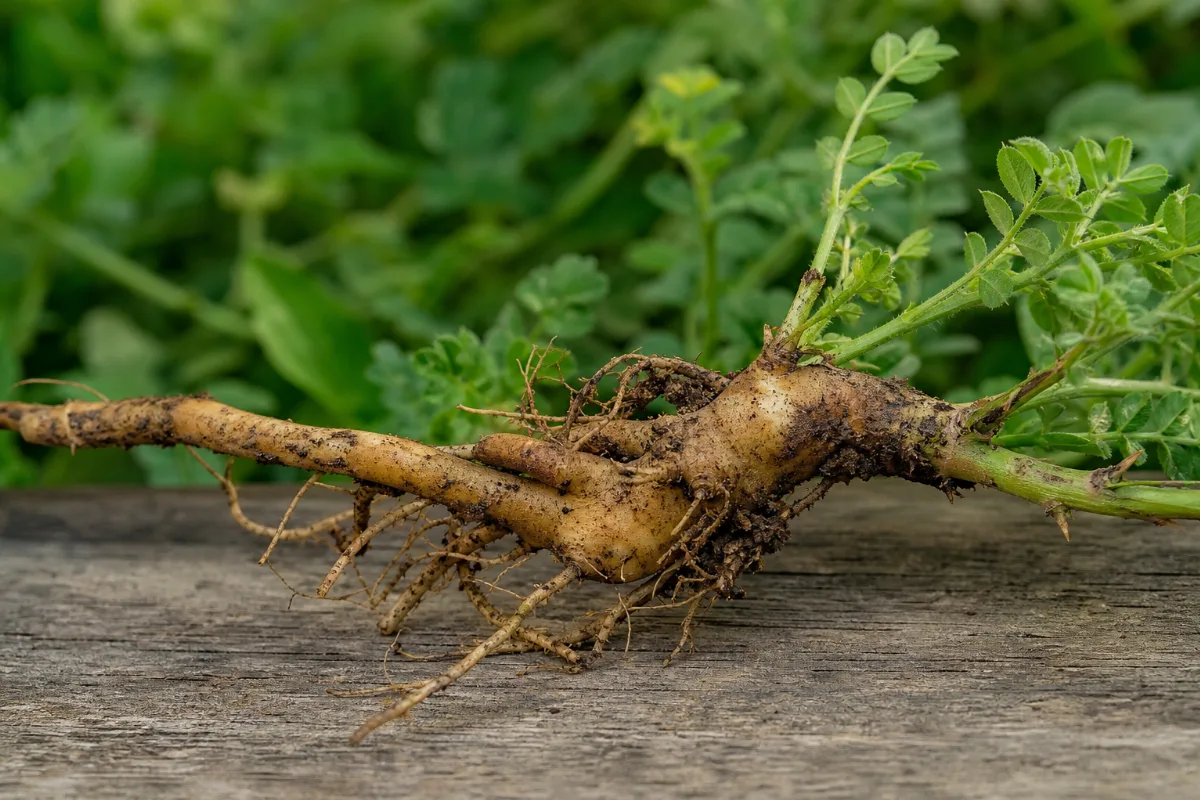
- Roots: Dried root is flattened, twisted, greyish to dark brown with deep grooves and a radiating pattern when cut; bitter taste resembling liquorice (EMA report).; Stems: Spreading, hairy branches ending in straight thorns.; Leaves: Lower leaves with three leaflets, upper leaves single.; Flowers: Pinkish-white pea-type flowers from June to July.; Fruit: Small seed pods.; Seeds: Not covered.; Cultivation: Commercial root is usually wild-collected in south-east Europe (EMA report).
- Harvest and processing
- Root is dried and cut; the European Pharmacopoeia monograph 1879 defines whole or cut dried root (referenced in the EMA documents; the Pharmacopoeia text itself was not read).
- Look-alikes and adulterants
- Name: Ononis arvensis (field restharrow); Note: Named as a source in some older and former-USSR literature; the EMA says only O. spinosa root is on the EU market.
- Sustainability and conservation
- Not covered in the sources read.
Traditional use and history history, not clinical proof
| Tradition or era | Documented use | Source |
|---|---|---|
| European folk and pharmacopoeial medicine | Root tea as a diuretic ("water-passing") herb. Literature support goes back at least to the early 20th century; animal experiments date from 1891 (EMA assessment). | s-ema-ar |
| Modern German and Polish handbooks | Irrigation therapy for lower urinary tract inflammation and for kidney gravel; used as a mild diuretic. | s-ema-ar |
| EU regulation, 2014 | Accepted by the HMPC as a traditional herbal medicine to flush the urinary tract in minor complaints. | s-ema-hmpc |
| Name | "Ononis" comes from the Greek for donkey, which was said to eat the plant (EMA report). | s-ema-ar |
Traditional use shows how a plant was used. It does not show that a supplement works or is safe today.
What is inside, and how it may work
What the plant contains and how those compounds act in cells and animals. Laboratory and animal mechanisms are not proven effects in people.
Main compounds
| Compound | Family | Where it is concentrated | Activity studied | Level of evidence |
|---|---|---|---|---|
| Ononin PubChem 442813 | Isoflavone glycoside (formononetin 7-O-glucoside) | Root | Main isoflavone marker named in the 2026 review; inhibits hyaluronidase and elastase in the lab. 11 6 12 | Lab |
| Formononetin PubChem 5280378 | Isoflavone | Root | Used as the marker in some extract specifications (EMA report). Plant oestrogen-like activity of isoflavones in general; not studied here. 5 12 | Lab |
| Genistein PubChem 5280961 | Isoflavone | Root 1.7 to 3.8 mg per 100 g of herbal substance (EMA report) | Reported in the literature as mildly oestrogen-like; a compendium claims diuretic action comparable to furosemide (cited second-hand, not read). 5 12 | Lab |
| alpha-Onocerin PubChem 11453544 | Triterpene (seco-triterpenoid) | Root 4.1 mg per g of herbal substance (EMA report) | Reduced IL-8 and TNF-alpha release from stimulated human neutrophils in a lab study. 13 5 12 | Lab |
| trans-Anethole (main essential oil component) PubChem 637563 | Phenylpropanoid | Root Essential oil 0.02 to 0.2% of the root (EMA report) | The old literature debated whether the essential oil contributes to diuresis; not settled. 5 12 | Lab |
| Triterpene saponins, sterols, phenolic acids, tannins | Mixed classes | Root | Saponins are described as the supposed diuretic principle in the older literature; the root also contains salicylic acid among its phenolic acids (EMA report), amounts not given. 5 11 | Lab |
Mechanisms, receptors and pathways
| Target or pathway | Gene or receptor | What was found | Level |
|---|---|---|---|
| Diuretic action | Not shown | Old rat, mouse and rabbit studies suggest increased urine; the cause is disputed (saponins, potassium salts, flavonoids, essential oil, genistein). Root isoflavonoids inhibit hyaluronidase-1 in a lab assay, offered as a possible explanation. 5 1 | Animal research |
| Anti-inflammatory signalling | TLR4; IL-8; TNF-alpha | Organic root extract and alpha-onocerin lowered IL-8 and TNF-alpha in stimulated human neutrophils; part of the effect was the extract binding LPS. 13 11 | Lab |
| Anti-adhesive effect in the bladder | Not FimH-mediated | Hot-water extract reduced E. coli adhesion to and invasion of bladder cells without killing the bacteria. 2 | Lab |
| Leukotriene pathway | 5-lipoxygenase | A methanolic extract inhibited 5-lipoxygenase in vitro (EMA report, 1992 paper, not opened). 5 | Lab |
| Wound-healing enzymes | Hyaluronidase; elastase | Ononin and sativanone glucoside inhibited both enzymes in a dish. 6 | Lab |
Absorption, metabolism and elimination
- Absorption
- No restharrow-specific data (EMA report).
- Distribution
- Not found.
- Metabolism
- Not found. Isoflavone glycosides are generally converted by gut bacteria, but this was not studied for restharrow.
- Elimination
- Not found.
- Bioavailability
- None known.
Isolated compounds versus whole extracts
The tea is a mixture of isoflavones, saponins, triterpenes, salts and a little essential oil. Lab results with isolated compounds or organic-solvent extracts (alpha-onocerin, sativanone, ononin) cannot be assumed to apply to the tea. The EU conclusions cover only the dried root as a tea, not extracts or combination products.
Nutritional composition
Restharrow is not a food nutrient and no vitamin or mineral role was found. The root is not a meaningful nutrient source. Its potassium salts were raised as a possible reason for diuresis in old literature.
7 not enough evidence1 evidence against
What is Restharrow good for?
The studied uses and how strong the human evidence is for each. For restharrow, none is established in people.
Benefits, one by one
Each card is a research question, not a promise. Tap a goal to filter. Open a card to see the studies, doses and limits.
Flushing the urinary tract (traditional use)
Not enough evidenceIn the EU, restharrow root tea is a traditional herbal medicine to increase urine and flush the urinary tract in minor complaints. This rests on long use. We found no trial in people. Old rat and rabbit studies suggest a mild diuretic effect.
4 studiesCut dried root is the EU form (tea). Extracts exist only inside combi…
Studies, doses and limits
What the trials found
The EMA assessment found no clinical efficacy studies, no dose-response studies and no human pharmacology. It quotes a 1988 handbook (Weiss) saying urine output rose by more than 20% in normal subjects; we could not trace or read that source, so we do not rely on it.
Results
In a 1981 rat study (as reported by the EMA, 4 rats per group), 5-hour urine was 21.4 mL after an aqueous root extract versus 15.1 mL after water and 17.9 mL after theophylline, with more sodium and potassium in the urine. An ethanolic extract raised urine volume by 103% in mice and rats over 2 hours, but not when injected. A rabbit infusion study raised urine output by 26%. The EMA calls the data limited and mostly old.
Effect sizes as reported
Rat numbers as stated; no human effect size exists.
Why this rating
Regulator status is traditional use only; the animal data are old, small and not repeated in modern trials; nothing was read in people.
Form and dose studied
Cut dried root is the EU form (tea). Extracts exist only inside combination products. Ask a doctor or pharmacist about amounts.
Who was studied
No trial in people with minor urinary complaints.
Limits
Old animal studies from secondary reports; we read the EMA summary of them, not the originals. The EU wording is flushing as a helper, not treatment of infection or stones.
Why researchers looked
Restharrow has been drunk as a water-passing tea in Europe for a very long time, and was tested on animals from the 1890s on.
Traditional use
EU monograph: traditional use only, as a tea, adults and adolescents over 12, with plenty of fluid. Literature goes back at least to the early 20th century (EMA assessment).
Proposed mechanism Lab
Saponins, potassium salts, flavonoids, isoflavones such as genistein and the essential oil have each been suggested as the cause; older papers disagree, and a lab study found some root isoflavonoids block an enzyme (hyaluronidase-1) that may be linked to diuresis.
A proposed mechanism does not show that the effect happens in people.
Needs plenty of fluid and must not be used where fluids are restricted (heart or kidney disease, oedema). See the Safety tab.
Urinary tract infection and inflammation (lab only)
Not enough evidenceIn dish tests, restharrow root extract reduced bacteria sticking to bladder cells and lowered inflammation signals. These are lab results. No trial shows the tea treats or prevents infection.
4 studiesHot-water root extract and organic root extracts in the lab; not the …
Studies, doses and limits
What the trials found
No human trial of infection or inflammation was found.
Results
Water extract: concentration-dependent drop in E. coli sticking and invasion in bladder cells (125 to 1000 micrograms/mL), with no change in bacterial growth. Dichloromethane extract (25 to 100 micrograms/mL): less IL-8 and TNF-alpha from stimulated human neutrophils.
Effect sizes as reported
No numbers for the size of effect beyond the concentration ranges given.
Why this rating
Two cell-culture studies only; the strongest anti-inflammatory result used an organic-solvent extract, not a tea.
Form and dose studied
Hot-water root extract and organic root extracts in the lab; not the same as a tea.
Who was studied
Cells in a dish.
Limits
Cell tests cannot show benefit in the body. The authors of both papers say the traditional use is rationalised, which is not the same as shown.
Why researchers looked
Restharrow is a traditional urinary herb, so researchers tested whether its extracts act on urinary germs and inflammation.
Traditional use
Used traditionally for lower urinary tract inflammation; the EMA did not accept an infection or inflammation claim.
Proposed mechanism Lab
Hot-water root extract reduced uropathogenic E. coli adhesion to bladder cells without killing the bacteria; an organic extract and two isolated compounds blocked TLR4-type inflammation signals in human white blood cells.
A proposed mechanism does not show that the effect happens in people.
A urinary infection with fever, pain passing urine or blood in the urine needs a doctor. The EU monograph says to see a doctor if symptoms last over 1 week or worsen.
Kidney gravel and ureteral stones (combination products only)
Not enough evidenceOld herbal books list restharrow for kidney gravel. The EMA did not accept that. Two recent studies tested products that contain restharrow plus other herbs, so their results cannot be credited to restharrow.
3 studiesCapsule product with several ingredients; amounts not given in the ab…
Studies, doses and limits
What the trials found
A 2024 retrospective study of 159 people with distal ureteral stones used a product with boldine, Phyllanthus niruri and Ononis spinosa together with tamsulosin.
Results
Stone expulsion 84.8% with the combination plus tamsulosin versus 52.5% with tamsulosin alone; mean time to expulsion 16.33 versus 19.33 days; less pain medicine needed in the combination group.
Effect sizes as reported
As stated for the combination plus tamsulosin; not attributable to restharrow.
Why this rating
Retrospective, not randomised, three herbs plus a drug; restharrow alone was not tested.
Form and dose studied
Capsule product with several ingredients; amounts not given in the abstract.
Who was studied
Adults with stones of 10 mm or less.
Limits
Selection of who received which treatment may differ in a retrospective study. The EMA report says renal gravel claims were not supported by the pharmacology data.
Why researchers looked
German and other handbooks list restharrow for preventing and treating kidney gravel.
Traditional use
Handbooks and ESCOP (as quoted by the EMA) list kidney gravel; the HMPC monograph only supports flushing in minor urinary complaints.
Proposed mechanism Traditional use
No mechanism for stone passage is shown.
A proposed mechanism does not show that the effect happens in people.
Stones with colic, fever or blocked urine are medical emergencies; herbal products must not replace care.
Ureteral stent symptoms (five-herb product versus tamsulosin)
Not enough evidenceIn a small open-label trial, a capsule with five herbs including restharrow was compared with tamsulosin for discomfort from a urinary stent. Both groups improved; tamsulosin did better on urinary symptoms.
1 studiesOne capsule a day of a mixed extract (as in the abstract).
Studies, doses and limits
What the trials found
One randomised, open-label trial of 60 people, 30 per group, for 1 month.
Results
Both groups improved from baseline. The urinary symptom score favoured tamsulosin at days 7 and 21; pain, general health, work, sexual and other scores did not differ significantly.
Effect sizes as reported
Urinary symptom domain change -6.1 vs -4.6 at day 7 and -5.2 vs -4.4 at day 21 (as in the abstract); no placebo group.
Why this rating
Small, open label, no placebo, a five-herb product.
Form and dose studied
One capsule a day of a mixed extract (as in the abstract).
Who was studied
Adults with a double J stent.
Limits
The authors suggest the combination "could be as effective" as tamsulosin, yet the one significant difference favoured tamsulosin; the abstract does not say how many herbs drove any effect.
Why researchers looked
Doctors wanted a non-drug option for the urinary symptoms caused by a double J stent.
Traditional use
Not a traditional use of restharrow alone.
Proposed mechanism Traditional use
Not shown.
A proposed mechanism does not show that the effect happens in people.
Stent symptoms such as fever, heavy bleeding or loin pain need a urologist.
Inflammation (lab and animal only)
Not enough evidenceRoot extracts lowered inflammation signals in human white blood cells and reduced swelling in some rat tests. The EMA did not accept an inflammation claim. Nothing was tested in people.
4 studiesOrganic-solvent extracts and fractions; not a tea.
Studies, doses and limits
What the trials found
No human study found.
Results
IL-8 and TNF-alpha release fell with 25 to 100 micrograms/mL of an organic extract. In rats, an ethanol extract cut carrageenan paw oedema by 46% when injected (500 mg/kg) but not at the lower amount; a root fraction cut it by 28.1 to 32.2%, with no effect on ear oedema or an arthritis model.
Effect sizes as reported
As stated; animal and cell numbers only.
Why this rating
Cell and animal results, partly with injected or organic extracts; one animal model showed no effect.
Form and dose studied
Organic-solvent extracts and fractions; not a tea.
Who was studied
Not tested in people.
Limits
Results depend on the extract and model; mixed in animals.
Why researchers looked
Handbooks describe restharrow as anti-inflammatory, so extracts were tested in cells and animals.
Traditional use
Used traditionally for inflammatory conditions of the lower urinary tract; the EMA monograph does not include an inflammation claim.
Proposed mechanism Lab
Isoflavonoids and the triterpene alpha-onocerin reduced IL-8 and TNF-alpha in stimulated neutrophils, probably by affecting TLR4 signalling; a methanolic extract blocked 5-lipoxygenase in vitro (EMA).
A proposed mechanism does not show that the effect happens in people.
Do not stop prescribed anti-inflammatory or immune medicines for a herb.
Pain relief (mouse studies, mixed)
Not enough evidenceA water extract acted like aspirin in a mouse pain test. An ethanol extract worked when injected but not when swallowed. Not tested in people.
3 studiesWater or ethanol extracts in mice.
Studies, doses and limits
What the trials found
No human study found.
Results
Tail-flick test in mice: a water extract was equal to aspirin at some times and above aspirin at one amount. The EMA reports that an ethanol extract reduced pain reaction by up to 80% when injected but had no effect when swallowed in one test.
Effect sizes as reported
No effect-size statistics in the abstract.
Why this rating
Mouse studies with different extracts; a result that depends on injection versus swallowing.
Form and dose studied
Water or ethanol extracts in mice.
Who was studied
Mice only.
Limits
Plant part not clear in the water-extract abstract; results are mixed.
Why researchers looked
Researchers tested whether the root has pain-relieving effects.
Traditional use
Not a listed traditional indication in the EU monograph.
Proposed mechanism Animal research
Not shown.
A proposed mechanism does not show that the effect happens in people.
None found.
Wound healing and skin (lab and animal only)
Not enough evidenceA root fraction sped up wound closure in rodents, and two root isoflavonoids blocked enzymes involved in tissue breakdown. This has not been tested in people.
3 studiesEthyl acetate fraction applied in rodents; not a tea or capsule.
Studies, doses and limits
What the trials found
No human study found.
Results
Active fraction: 33.4% tensile strength on the incision wound model and 51.4% smaller wound area at day 12 on the excision model; ononin inhibited hyaluronidase by 31.66% and elastase by 45.58% at 100 micrograms/mL.
Effect sizes as reported
As stated.
Why this rating
One animal-and-lab study of a fraction from a subspecies, plus a review of lab work.
Form and dose studied
Ethyl acetate fraction applied in rodents; not a tea or capsule.
Who was studied
Not tested in people.
Limits
Subspecies leiosperma was used. Method details are not in the abstract.
Why researchers looked
The root has a folk use on skin, so an extract was tested in wound models.
Traditional use
Wound-healing and dermatological activity are listed in the 2026 review; not part of the EU monograph.
Proposed mechanism Lab
Ononin and sativanone-7-O-glucoside inhibited hyaluronidase and elastase in the lab; isoflavonoids inhibit hyaluronidase-1.
A proposed mechanism does not show that the effect happens in people.
None found. Do not put extracts on open wounds without medical advice.
Liver protection (no effect in a mouse model)
Evidence againstA water extract did not protect mice from liver injury caused by a chemical. This is a null result in animals, not evidence of liver harm or safety.
1 studiesWater extract in mice.
Studies, doses and limits
What the trials found
No human liver study found.
Results
No significant effect on raised AST, ALT or bilirubin in carbon tetrachloride-injured mice.
Effect sizes as reported
p > 0.05 for each marker (as in the abstract).
Why this rating
One mouse study found no protective effect.
Form and dose studied
Water extract in mice.
Who was studied
Mice only.
Limits
One small mouse study; it does not test whether the herb itself harms the liver.
Why researchers looked
Researchers tested whether the root protects the liver.
Traditional use
Not a traditional use.
Proposed mechanism Animal research
None.
A proposed mechanism does not show that the effect happens in people.
No liver injury from restharrow was found in our searches, but LiverTox could not be read.
Connections to the rest of health
How Restharrow connects to the rest of our health knowledge graph. Every link says what kind of connection it is. A safety link (for example to the liver) is a warning, not a benefit. A study that merely mentions a topic never creates a benefit link.
Explore every connection: goals, body systems, organs, symptoms, genes
A. Wellness goals
| Connected to | Kind of connection | Evidence status | Context | Studies |
|---|---|---|---|---|
| Detoxification Support | Traditional use | Not enough evidence | Flushing the urinary tract (traditional use): In the EU, restharrow root tea is a traditional herbal medicine to increase urine and flush the urinary tract in minor complaints. This rests on long use. We found no trial in people. Old rat and rabbit studies suggest a mild diuretic effect. Kidney gravel and ureteral stones (combination products only): Old herbal books list restharrow for kidney gravel. The EMA did not accept that. Two recent studies tested products that contain restharrow plus other herbs, so their results cannot be credited to restharrow. | 4 5 7 1 3 11 |
| Immune Support | Preliminary mechanism | Not enough evidence | Urinary tract infection and inflammation (lab only): In dish tests, restharrow root extract reduced bacteria sticking to bladder cells and lowered inflammation signals. These are lab results. No trial shows the tea treats or prevents infection. | 2 13 11 5 |
| Detoxification Support | Preliminary mechanism | Not enough evidence | Ureteral stent symptoms (five-herb product versus tamsulosin): In a small open-label trial, a capsule with five herbs including restharrow was compared with tamsulosin for discomfort from a urinary stent. Both groups improved; tamsulosin did better on urinary symptoms. | 9 |
| Inflammation Balance | Preliminary mechanism | Not enough evidence | Inflammation (lab and animal only): Root extracts lowered inflammation signals in human white blood cells and reduced swelling in some rat tests. The EMA did not accept an inflammation claim. Nothing was tested in people. Pain relief (mouse studies, mixed): A water extract acted like aspirin in a mouse pain test. An ethanol extract worked when injected but not when swallowed. Not tested in people. | 13 6 5 11 14 |
| Healthy Skin | Preliminary mechanism | Not enough evidence | Wound healing and skin (lab and animal only): A root fraction sped up wound closure in rodents, and two root isoflavonoids blocked enzymes involved in tissue breakdown. This has not been tested in people. | 6 1 11 |
| Liver Support | Preliminary mechanism | Evidence against | Liver protection (no effect in a mouse model): A water extract did not protect mice from liver injury caused by a chemical. This is a null result in animals, not evidence of liver harm or safety. | 14 |
B. Body systems
| Connected to | Kind of connection | Evidence status | Context | Studies |
|---|---|---|---|---|
| Urinary System | Biological association | Not enough evidence | Studied for: Flushing the urinary tract (traditional use) Studied for: Urinary tract infection and inflammation (lab only) | 4 5 7 1 2 13 11 3 9 |
| Kidney Urinary | Biological association | Not enough evidence | Studied for: Flushing the urinary tract (traditional use) Studied for: Kidney gravel and ureteral stones (combination products only) | 4 5 7 1 3 11 |
| Pain Inflammation | Biological association | Not enough evidence | Studied for: Inflammation (lab and animal only) Studied for: Pain relief (mouse studies, mixed) | 13 6 5 11 14 |
| Integumentary System | Biological association | Not enough evidence | Studied for: Wound healing and skin (lab and animal only) | 6 1 11 |
| Hepatic System | Biological association | Evidence against | Studied for: Liver protection (no effect in a mouse model) | 14 |
E. Health conditions
| Connected to | Kind of connection | Evidence status | Context | Studies |
|---|---|---|---|---|
| Heart failure and oedema from weak heart function | Contraindication | Authoritative guidance | EU contraindication where reduced fluid intake is recommended; assessment report names oedema from impaired cardiac function. Preparation or compound: Restharrow root tea |
4 5 |
| Severe kidney disease with fluid limits | Contraindication | Authoritative guidance | EU contraindication. Preparation or compound: Restharrow root tea |
4 5 |
| Heart failure and oedema | Contraindication | Authoritative guidance | EU contraindication where fluids are restricted. Preparation or compound: Restharrow root tea |
4 5 |
| Minor urinary complaints | Traditional use | Not enough evidence | Traditional EU use; no human trial read. Preparation or compound: Restharrow root tea |
4 2 |
I. Biomarkers
| Connected to | Kind of connection | Evidence status | Context | Studies |
|---|---|---|---|---|
| 24-hour or short-term urine volume (rats, mice, rabbits) | Biological association | Not enough evidence | Measured in trials: raised. A lab change is not the same as a health benefit. | 5 |
| Sodium and potassium in urine (rats) | Biological association | Not enough evidence | Measured in trials: raised. A lab change is not the same as a health benefit. | 5 |
| E. coli adhesion to bladder cells (cell test) | Biological association | Not enough evidence | Measured in trials: lowered. A lab change is not the same as a health benefit. | 2 |
| Stone expulsion rate (combination product plus tamsulosin) | Biological association | Not enough evidence | Measured in trials: raised. A lab change is not the same as a health benefit. | 3 |
| Urinary symptom score for stent symptoms (USSQ) | Biological association | Not enough evidence | Measured in trials: mixed. A lab change is not the same as a health benefit. | 9 |
| IL-8 and TNF-alpha release (human neutrophils in a dish) | Biological association | Not enough evidence | Measured in trials: lowered. A lab change is not the same as a health benefit. | 13 |
| Hyaluronidase-1 enzyme activity (lab) | Biological association | Not enough evidence | Measured in trials: lowered. A lab change is not the same as a health benefit. | 1 |
| Paw swelling after carrageenan (rats) | Biological association | Not enough evidence | Measured in trials: lowered. A lab change is not the same as a health benefit. | 6 |
| AST, ALT and bilirubin (chemical-injury mice) | Biological association | Evidence against | Measured in trials: no-significant-change. A lab change is not the same as a health benefit. | 14 |
J. Genes, receptors and enzymes
K. Biological pathways
| Connected to | Kind of connection | Evidence status | Context | Studies |
|---|---|---|---|---|
| TLR4 signalling / IL-8 | Preliminary mechanism | Lab | Reduced in neutrophil and receptor-cell tests with root extracts. | 13 |
L. Active compounds
| Connected to | Kind of connection | Evidence status | Context | Studies |
|---|---|---|---|---|
| Genistein | Lab | Reported as mildly oestrogen-like; no restharrow study. Preparation or compound: Isoflavone in the root |
5 12 | |
| Ononin | Biological association | Lab | Main isoflavone marker named in the 2026 review; inhibits hyaluronidase and elastase in the lab. Preparation or compound: Root |
11 6 12 |
| Formononetin | Biological association | Lab | Used as the marker in some extract specifications (EMA report). Plant oestrogen-like activity of isoflavones in general; not studied here. Preparation or compound: Root |
5 12 |
| Genistein | Biological association | Lab | Reported in the literature as mildly oestrogen-like; a compendium claims diuretic action comparable to furosemide (cited second-hand, not read). Preparation or compound: Root |
5 12 |
| alpha-Onocerin | Biological association | Lab | Reduced IL-8 and TNF-alpha release from stimulated human neutrophils in a lab study. Preparation or compound: Root |
13 5 12 |
| trans-Anethole (main essential oil component) | Biological association | Lab | The old literature debated whether the essential oil contributes to diuresis; not settled. Preparation or compound: Root |
5 12 |
| Triterpene saponins, sterols, phenolic acids, tannins | Biological association | Lab | Saponins are described as the supposed diuretic principle in the older literature; the root also contains salicylic acid among its phenolic acids (EMA report), amounts not given. Preparation or compound: Root |
5 11 |
Each connection is stored with the ingredient, the connected record, the kind of connection, the evidence status, the supporting studies, the preparation or compound involved, and a review date (last reviewed October 25, 2026).
Evidence at a glance: what changed in 8 lab markers
Tap a number to show only those markers. Counts are markers, not people.
The evidence
The research centre for Restharrow. Every record here was checked against PubMed or the publisher's page; we never list a study we have not verified.
Evidence by outcome
Bars show how many studies we found for each outcome, not how well it works. People are added up across trials only (reviews are not added, to avoid double counting).
How we rate evidence
High certainty
Several well-run trials or reviews agree; further research is unlikely to change the picture much.
Moderate certainty
Good trials point the same way, but some doubt remains.
Low certainty
Small, short or inconsistent trials. The finding could change with better research.
Very low certainty
Very little or very weak human data. Treat as a possibility only.
Mixed findings
Trials or reviews disagree with each other.
Not enough evidence
Not enough human research to say either way.
Evidence against
Good research found no benefit, or found harm.
We take the reviewers' own risk-of-bias and GRADE statements where they exist, and otherwise judge from study size, design, consistency, directness and whether a product matches what is sold. Many publications do not make evidence high. Method note: We started from our existing restharrow summary, read the EU monograph and assessment report in full, re-checked the PubMed abstracts and ran one species search. Plant names were checked in GBIF and compound IDs in PubChem. LiverTox, LactMed and NCCIH records were not found.
Study library: every study we checked 14
| Study | Design | People | Product, dose, length | Result |
|---|---|---|---|---|
| Addotey 2018 Isoflavonoids with inhibiting effects on human hyaluronidase-1 and norneolignan clitorienolactone B from Ononis spinosa L. root extract Fitoterapia · PMID 30176279 · DOI |
Lab in vitro lab |
Cell-surface enzyme assay | Hot-water, hydroalcoholic and dichloromethane extracts; isolated isoflavonoids root extract IC50 1.36 mg/mL (water), 0.73 mg/mL (hydroalcoholic), 190 micrograms/mL (dichloromethane) In vitro · vs Glycyrrhizinic acid (positive control) |
Water and hydroalcoholic extracts gave moderate Hyal-1 inhibition; the dichloromethane extract was stronger. Four isoflavonoids (onogenin, sativanone, medicarpin, calycosin-D) inhibited the enzyme by 22 to 61% at 250 micromolar. The authors propose this as a possible explanation for the diuretic reputation. Not applicable Methods, limits and fundingOutcomes: Human hyaluronidase-1 (Hyal-1) inhibition Limitations: Enzyme assay only. A possible mechanism, not evidence of a diuretic effect in people. Funding and conflicts: Not stated in the abstract Read: abstract |
| Deipenbrock 2020 Aqueous Root Extract from Ononis spinosa Exerts Anti-adhesive Activity against Uropathogenic Escherichia coli Planta Medica · PMID 31968378 · DOI |
Lab in vitro lab |
Uropathogenic E. coli (UTI89) and human T24 bladder cells in a dish | Hot-water extract root 125 to 1000 micrograms/mL in cell tests Co-incubation or pre-incubation · vs Untreated cells |
The extract did not slow bacterial growth, but reduced bacterial adhesion to bladder cells in a concentration-dependent way, and so reduced invasion into the cells. It did not act through FimH-mediated adhesion. Extract contained isoflavones, isoflavanones, pterocarpans and saponins. Not applicable Methods, limits and fundingOutcomes: Bacterial growth, adhesion to and invasion of bladder cells Limitations: Bladder cell line and bacteria in a dish only. Does not show that drinking the tea prevents or treats infection. Funding and conflicts: No conflict of interest declared Read: abstract |
| Di Mauro 2024 Efficacy and Safety of Boldine Combined with Phyllanthus niruri and Ononis spinosa in Medical Expulsive Therapy for Distal Ureteral Stones with Renal Colic: A Single-Center, Retrospective Cohort Study Medicina (Kaunas) · PMID 39336496 · DOI |
Retrospective cohort |
159 Adults with renal colic and a distal ureteral stone of 10 mm or less |
Boldine + Phyllanthus niruri + Ononis spinosa product plus tamsulosin not stated not stated not stated · vs Tamsulosin alone |
Stone expulsion 84.8% with the combination plus tamsulosin versus 52.5% with tamsulosin alone. Mean time to expulsion 16.33 +/- 4.75 versus 19.33 +/- 6.42 days. Analgesia needed 2.42 +/- 2.56 versus 6.25 +/- 3.05 (units as in the abstract). Drug-related side effects were similar between groups. 84.8% vs 52.5% stone expulsion (combination vs tamsulosin alone) Methods, limits and fundingOutcomes: Stone expulsion rate and time, analgesic need, adverse effects Limitations: Retrospective, single centre, not randomised, not blinded. A three-ingredient product plus a drug, so nothing can be credited to restharrow. Group sizes and restharrow content not in the abstract. Funding and conflicts: No conflicts declared in the abstract Read: abstract |
| EMA Committee on Herbal Medicinal Products (HMPC) 2014 Community herbal monograph on Ononis spinosa L., radix (EMA/HMPC/138317/2013), final European Medicines Agency · Source |
Database or regulator record n/a |
n/a | n/a n/a n/a n/a · vs n/a |
Traditional herbal medicinal product (tea of the comminuted root) to increase the amount of urine and flush the urinary tract as an adjuvant in minor urinary complaints, based exclusively on long-standing use. Contraindicated where reduced fluid intake is recommended (e.g. severe cardiac or renal disease) and in hypersensitivity. Not recommended under 12 years or in pregnancy and lactation. Interactions: none reported. Side effects: none known. Genotoxicity tests inadequate; reproductive toxicity and carcinogenicity not tested. Not applicable Methods, limits and fundingOutcomes: Identity or regulatory status Limitations: Full text of the 5-page PDF read on 2026-10-25. Traditional-use status rests on long use, not on trials. The monograph covers the dried root as a tea only, not extracts or combination products. Dosing text in the monograph is not reproduced here. Funding and conflicts: n/a Read: full-text |
| EMA Committee on Herbal Medicinal Products (HMPC) 2014 Assessment report on Ononis spinosa L., radix (EMA/HMPC/138316/2013), final European Medicines Agency · Source |
Database or regulator record n/a |
n/a | n/a n/a n/a n/a · vs n/a |
Reviews old animal diuretic studies (mostly early 20th century, plus a 1981 rat study), limited lab anti-inflammatory and antimicrobial data, and finds no clinical efficacy studies, no human pharmacokinetics and no clinical safety data. Notes that an in vitro genotoxicity paper (species not specified) showed more micronuclei, that genistein is reported to be mildly oestrogen-like, and that adequate genotoxicity testing is lacking. Lists constituents and market products, mostly combination products. Not applicable Methods, limits and fundingOutcomes: Identity, history, pharmacology, toxicology and clinical data review Limitations: Full text of the 23-page PDF read on 2026-10-25. Many cited sources (old German and Polish papers, handbooks, a 1981 Spanish rat study, Weiss 1988, Melzig 2001) were not opened by us; they are quoted as reported by the EMA. The report is from 2014. Funding and conflicts: n/a Read: full-text |
| Ergene Oz 2018 Isoflavonoids as wound healing agents from Ononidis Radix Journal of Ethnopharmacology · PMID 28989011 · DOI |
Animal and lab animal |
Rodent wound and inflammation models; enzyme assays | Ethyl acetate extract and fractions from Ononis spinosa subsp. leiosperma root not stated in the abstract not stated · vs Not stated in the abstract |
The active fraction improved wound healing (33.4% tensile strength on the incision model; 51.4% wound area reduction on day 12 on the excision model) and reduced capillary permeability by 40.3% and carrageenan paw oedema by 28.1 to 32.2%. It had no effect on ear oedema or arthritis models. Ononin and sativanone-7-O-glucoside inhibited hyaluronidase and elastase in vitro. Not applicable Methods, limits and fundingOutcomes: Wound closure, tensile strength, hydroxyproline, paw oedema, capillary permeability, enzyme inhibition Limitations: Animal and lab work with an ethyl acetate fraction of a subspecies, not a tea. Not tested in people. Funding and conflicts: Not stated in the abstract Read: abstract |
| European Medicines Agency 2017 Ononidis radix - herbal medicinal product (EMA public summary page) European Medicines Agency (web page) · Source |
Database or regulator record n/a |
n/a | n/a n/a n/a n/a · vs n/a |
Summary of the HMPC conclusions: on the basis of long-standing use, restharrow root can be used for minor urinary complaints to increase urine production to flush the urinary tract; only for adults and adolescents over 12; with plenty of liquid; see a doctor if symptoms last longer than 1 week or worsen. Evidence is traditional use, not clinical trials. Not applicable Methods, limits and fundingOutcomes: Identity or regulatory status Limitations: Public summary page read on 2026-10-25 (first part). It says combinations are not covered. A later revision of the monograph was mentioned in earlier notes but was not read. Funding and conflicts: n/a Read: summary-only |
| GBIF 2026 GBIF Backbone Taxonomy species match: Ononis spinosa GBIF API (checked 2026-10-25) · Source |
Database or regulator record n/a |
n/a | n/a n/a n/a n/a · vs n/a |
Ononis spinosa L. returned ACCEPTED, exact match, confidence 99, family Fabaceae, order Fabales, usage key 2977149. Not applicable Methods, limits and fundingOutcomes: Identity or regulatory status Limitations: Taxonomy only. Funding and conflicts: n/a Read: full-text |
| Gallo 2026 A randomized controlled trial comparing alpha-blocker (tamsulosin) and a phyto-complex (Solidago virga-aurea, Phyllantus niruri, Epilobium angustifolium, Peumus boldus and Ononis spinosa) in the treatment of ureteral stent-related symptoms Urologia · PMID 42244389 · DOI |
Rct open label |
60 Adults with a double J ureteral stent |
Five-plant extract combination including Ononis spinosa mixed one capsule daily (as in the abstract) 1 month · vs Tamsulosin 0.4 mg daily |
Both treatments improved from baseline. The only significant difference between groups was in the urinary symptoms domain at days 7 and 21 (change -6.1 +/- 5.5 versus -4.6 +/- 5.1, and -5.2 +/- 6.7 versus -4.4 +/- 5.9), in favour of tamsulosin. No significant differences in pain, general health, work, sexual score or additional problems. The authors suggest the combination could be as effective as tamsulosin. Not applicable Methods, limits and fundingOutcomes: Ureteral Symptom Score Questionnaire (USSQ) domains at days 1, 7 and 21 Limitations: Open label (not blinded), 30 per group, no placebo, five-herb product so nothing can be credited to restharrow. The abstract does not say which group the first number in each pair belongs to beyond the order given. Funding and conflicts: No conflicts declared in the abstract Read: abstract |
| NIH / NCCIH / 2026 LiverTox, NCCIH and LactMed records for restharrow: not found or not read Searches on 2026-10-25 · Source |
Database or regulator record n/a |
n/a | n/a n/a n/a n/a · vs n/a |
The NCCIH address tried (nccih.nih.gov/health/restharrow) returned 404. A Bookshelf search for restharrow or Ononis returned 16 hits, which were not opened, so no LiverTox or LactMed record can be cited. No claim is made either way. Not applicable Methods, limits and fundingOutcomes: Identity or regulatory status Limitations: Not a source of evidence. Absence of a record is not proof of safety. Funding and conflicts: n/a Read: summary-only |
| Nechita 2026 Phytochemical Constituents and Biological Activities of Ononis spinosa: A Comprehensive Review Plants (Basel) · PMID 42122901 · DOI |
Narrative review lab |
34 34 studies (1997 to 2024) from 308 records |
Ononis spinosa extracts and isolated compounds root and other parts varied varied · vs varied |
Constituents are mostly isoflavonoids (e.g. ononin and other formononetin derivatives), triterpenes and phenolic acids. Effects reported are anti-inflammatory, antibacterial, antifungal, antioxidant, wound-healing, and diuretic and anti-adhesive effects in urinary models, all from in vitro and in vivo (lab and animal) studies. The authors call for well-designed clinical studies. Not applicable Methods, limits and fundingOutcomes: Chemistry and biological activities Limitations: Abstract read only. A narrative review of lab and animal work; no human efficacy data. No conflicts declared. Funding and conflicts: No conflicts declared Read: abstract |
| PubChem (NCBI) 2026 PubChem compound records: ononin, formononetin, genistein, alpha-onocerin, anethole PubChem PUG REST (checked 2026-10-25) · Source |
Database or regulator record n/a |
n/a | n/a n/a n/a n/a · vs n/a |
Ononin CID 442813 (C22H22O9); formononetin CID 5280378 (C16H12O4); genistein CID 5280961 (C15H10O5); (+)-onocerin CID 11453544 (C30H50O2); anethole CID 637563 (C10H12O). Not applicable Methods, limits and fundingOutcomes: Identity or regulatory status Limitations: Names matched by PubChem name lookup; identity of the stereo form of anethole was not checked. Funding and conflicts: n/a Read: full-text |
| Spiegler 2020 Root Extracts From Ononis spinosa Inhibit IL-8 Release via Interactions With Toll-Like Receptor 4 and Lipopolysaccharide Frontiers in Pharmacology · PMID 32595508 · DOI |
Lab in vitro lab |
Human neutrophils and TLR4-transfected HEK293 cells | Dichloromethane extract (isoflavonoids, triterpenes) and an aqueous extract; isolated alpha-onocerin and clitorienolactone B root 25 to 100 micrograms/mL In vitro · vs Untreated stimulated cells |
The dichloromethane extract and two isolated compounds reduced IL-8 and TNF-alpha release from LPS-stimulated human neutrophils. Effects fit a block of TLR4 signalling, partly through the extract binding LPS itself. An aqueous extract also showed anti-inflammatory effects. Not applicable Methods, limits and fundingOutcomes: IL-8 and TNF-alpha release, adhesion molecule expression Limitations: Cells in a dish; the strongest extract is an organic-solvent extract, not a tea. Does not show an effect in people. Funding and conflicts: Not stated in the abstract Read: abstract |
| Yilmaz 2006 Analgesic and hepatotoxic effects of Ononis spinosa L. Phytotherapy Research · PMID 16619345 · DOI |
Animal research animal |
Mice | Water extract root (as named in the abstract: Ononis spinosa) 50 and 100 mg/kg in mice Single treatments · vs Aspirin; carbon tetrachloride-injured mice |
The water extract showed pain-relief effects in the tail-flick test equal to aspirin at some times. It had no significant effect on raised AST, ALT or bilirubin in carbon tetrachloride-injured mice, so the authors report no liver-protective effect. Not applicable Methods, limits and fundingOutcomes: Tail-flick pain threshold; AST, ALT and bilirubin after carbon tetrachloride Limitations: Mouse study; the plant part is not clear in the abstract and the text of the abstract was partly garbled in the copy read. The title mentions hepatotoxicity but the abstract reports a lack of protection, not liver harm. Funding and conflicts: Not stated in the abstract Read: abstract |
What we do not know yet
- No trial of restharrow root or tea on its own in people for any use.
- The animal diuretic studies are old and were read only through the EMA report.
- No interaction, genotoxicity or hormone-effect study of restharrow itself.
- LiverTox, LactMed and NCCIH records for restharrow were not found.
How new research is added
New studies are found by a saved PubMed search and placed in a review queue. A person reads each one before it changes any rating or safety wording.
Lab markers
What changed in blood or saliva tests during trials. A changed number is not the same as feeling or being healthier, and we give no "normal ranges".
Other 9
24-hour or short-term urine volume (rats, mice, rabbits)
Raised in trials
How much urine an animal passes over a few hours.
Not enough evidenceResults and what it means
Why it was measured
A diuretic herb should raise it.
Statistical vs. clinical meaning
Old animal studies reported second-hand; several have small groups. They match the traditional use but are not human data.
Safety implication
No safety findings; the 14-day ethanolic extract study in rats and mice showed no visible toxic effect (EMA).
| Study | Result | People | Product |
|---|---|---|---|
| 5 | Rats: 21.4 mL in 5 h with aqueous root extract versus 15.1 mL with water and 17.9 mL with theophylline (1981 study as reported). Mice and rats: +103% over 2 h with an ethanolic extract (1993 study). Rabbits: +26% with an infusion (1937 study). | Wistar rats, mice and rabbits | Aqueous or ethanolic root extracts |
Sodium and potassium in urine (rats)
Raised in trials
Salt and potassium lost in the urine.
Not enough evidenceResults and what it means
Why it was measured
Shows whether the herb flushes salts as well as water.
Statistical vs. clinical meaning
One small old rat study; another extract showed no change. Mixed.
Safety implication
Suggests a diuretic could shift salts; this is why heart, kidney and lithium cautions exist, but no human data.
| Study | Result | People | Product |
|---|---|---|---|
| 5 | Over 5 h: sodium 23.55 mg (aqueous extract) versus 6 mg (water) and 16 mg (theophylline); potassium 62.20 mg versus 43.87 and 60.95 mg. A 1993 ethanol extract did not change sodium or potassium elimination. | Male Wistar rats, 4 per group | Aqueous root extract |
E. coli adhesion to bladder cells (cell test)
Lowered in trials
How many bacteria stick to bladder cells in a dish.
Not enough evidenceResults and what it means
Why it was measured
Sticking to the bladder wall is an early step in urinary infection.
Statistical vs. clinical meaning
Cell test only.
Safety implication
None.
| Study | Result | People | Product |
|---|---|---|---|
| 2 | Concentration-dependent reduction in adhesion and invasion at 125 to 1000 micrograms/mL; no effect on bacterial growth | Human T24 bladder cells and E. coli UTI89 | Hot-water root extract |
Stone expulsion rate (combination product plus tamsulosin)
Raised in trials
The share of people who pass a ureteral stone.
Not enough evidenceResults and what it means
Why it was measured
The main goal of expulsive therapy.
Statistical vs. clinical meaning
Cannot be credited to restharrow; retrospective.
Safety implication
Drug-related side effects were comparable between groups.
| Study | Result | People | Product |
|---|---|---|---|
| 3 | 84.8% versus 52.5% with tamsulosin alone | 159 adults with distal ureteral stones, retrospective | Boldine + Phyllanthus niruri + Ononis spinosa product plus tamsulosin |
Urinary symptom score for stent symptoms (USSQ)
Mixed results in trials
A questionnaire score of urinary symptoms caused by a stent.
Not enough evidenceResults and what it means
Why it was measured
Measures day-to-day discomfort.
Statistical vs. clinical meaning
Open label, small, five-herb product.
Safety implication
No safety data in the abstract.
| Study | Result | People | Product |
|---|---|---|---|
| 9 | Improved with both treatments; tamsulosin improved more at days 7 and 21 (-6.1 vs -4.6; -5.2 vs -4.4) | 60 adults with a double J stent | Five-herb extract capsule including Ononis spinosa versus tamsulosin |
IL-8 and TNF-alpha release (human neutrophils in a dish)
Lowered in trials
Messenger proteins that white blood cells release during inflammation.
Not enough evidenceResults and what it means
Why it was measured
Shows whether an extract calms inflammation signals in a cell model.
Statistical vs. clinical meaning
Cell test only; partly caused by the extract binding LPS.
Safety implication
None.
| Study | Result | People | Product |
|---|---|---|---|
| 13 | Concentration-dependent inhibition at 25 to 100 micrograms/mL; alpha-onocerin and clitorienolactone B also active | LPS-stimulated human neutrophils | Dichloromethane root extract and isolated compounds |
Hyaluronidase-1 enzyme activity (lab)
Lowered in trials
An enzyme that breaks down hyaluronic acid in tissue.
Not enough evidenceResults and what it means
Why it was measured
Linked to wound healing and a proposed diuretic mechanism.
Statistical vs. clinical meaning
Enzyme assay only.
Safety implication
None.
| Study | Result | People | Product |
|---|---|---|---|
| 1 | Four isoflavonoids inhibited Hyal-1 by 22 to 61% at 250 micromolar; extract IC50 190 micrograms/mL (dichloromethane) | Enzyme assay | Root extracts and isolated isoflavonoids |
Paw swelling after carrageenan (rats)
Lowered in trials
How much a rat paw swells after an irritant.
Not enough evidenceResults and what it means
Why it was measured
A standard test for anti-inflammatory activity.
Statistical vs. clinical meaning
Animal model; mixed across models.
Safety implication
None.
| Study | Result | People | Product |
|---|---|---|---|
| 6 | 28.1 to 32.2% inhibition with the active root fraction; no effect on TPA ear oedema or adjuvant arthritis | Rats | Ethyl acetate fraction of root |
AST, ALT and bilirubin (chemical-injury mice)
No-significant-change in trials
Blood markers that rise with liver injury.
Evidence againstResults and what it means
Why it was measured
Shows whether an extract protects the liver.
Statistical vs. clinical meaning
Null result in one mouse study.
Safety implication
Does not test harm from the herb itself.
| Study | Result | People | Product |
|---|---|---|---|
| 14 | No significant effect on raised AST, ALT or bilirubin (p > 0.05) | Carbon tetrachloride-injured mice | Water extract |
Safety
What studies and official sources say about side effects, medicines and who should check first. Each point shows what kind of evidence it comes from.
Main points to know 7
- Not where fluids must be limited. The EU monograph says not to use restharrow root where reduced fluid intake is recommended, for example severe heart or kidney disease. The assessment report adds oedema (swelling) due to weak heart or kidney function, and dehydration. The tea is meant to be taken with plenty of fluid, which is unsafe in those conditions. Authoritative guidance 4 5
- Not for swollen legs from heart or kidney disease. Flushing therapy is not a treatment for fluid retention caused by the heart or kidneys. Tell your doctor about new swelling, fast weight gain or breathlessness. Authoritative guidance 5
- Not recommended in pregnancy, breastfeeding or under 12 years. Safety in pregnancy and breastfeeding has not been established, and use under 12 is not recommended because of a lack of data. No fertility data exist. Authoritative guidance 4 7
- Urinary symptoms may need medical care. The EU monograph says to see a doctor if symptoms last longer than 1 week, or if complaints worsen or fever, painful or difficult urination, spasm or blood in the urine appear. The herb is for minor complaints only. Authoritative guidance 4 7
- Lithium and diuretic medicines: ask first. Nothing has been reported, but no interaction study exists. Medicines and herbs that change urine output and salt balance can affect lithium and other drugs. Expert opinion 4 5
- The root contains plant oestrogen-like isoflavones. The root contains genistein, which the literature describes as mildly oestrogen-like. No study of restharrow itself was found, so any hormone effect is unknown. People with hormone-sensitive conditions can ask a doctor. Lab 5 11
- Genetic safety testing is incomplete. Adequate genotoxicity tests have not been done. One lab study (species of Ononis not stated) found more chromosome fragments in human blood cells. Reproductive and cancer tests are missing. The EMA considered the long use and chemistry reassuring but did not add the root to its official list for this reason. Lab 4 5
Side effects 3
| Effect | How often | Severity and recovery | Evidence |
|---|---|---|---|
| No adverse effects known from the tea The EU monograph says none known and no overdose reported, but also that there are no clinical safety data, so unreported effects cannot be excluded. | Not established | Not applicable Not applicable | Authoritative guidance 4 |
| Allergic reaction to the plant Hypersensitivity is a listed contraindication. No case report was found. Restharrow is in the legume (pea) family; whether legume-allergic people react is not known. | Not established | Not graded Not reported | Authoritative guidance 4 |
| Side effects in the combination-product studies In a 159-person study, headache, dizziness, nausea, vomiting, low blood pressure on standing, backache and runny nose were reported as comparable between the group that also had the herbal combination and the group on tamsulosin alone; these were drug-related effects and cannot be assigned to restharrow. | Not established | Not graded Not reported | Human data 3 |
Liver
No liver injury from restharrow was found. LiverTox could not be matched to a restharrow record, so no liver claim is made either way. A mouse study found a water extract did not protect against chemical liver injury; that is not evidence of harm. 10 14
How often. No frequency of liver injury is available.
Monitoring. No monitoring advice was found. Stop and seek care for yellow skin or eyes, dark urine or severe stomach pain.
- .
This is a safety connection. It is not evidence that Restharrow supports liver health.
Medicines and supplements 5
| With | Why it matters | Importance | Evidence | What to do |
|---|---|---|---|---|
| Lithium prescription | Medicines that raise urine output and salt loss can change how the kidneys clear lithium. Restharrow raised sodium in the urine in one old rat study. | Possible lithium level changes if the root really acts as a diuretic. No report of this with restharrow. | Expert opinion Very low certainty 5 4 | Ask your prescriber or pharmacist before using it; lithium levels may need checking. |
| Prescription diuretics, and medicines for blood pressure, heart failure or kidney disease prescription | Added fluid and salt loss is possible when a diuretic herb is combined with diuretic drugs; fluid targets for heart and kidney disease conflict with flushing advice. | Possible dehydration, low blood pressure or low potassium. No restharrow study. | Expert opinion Very low certainty 4 5 | Ask your prescriber or pharmacist first. The EU monograph reports no interactions, but also that none were studied. |
| Oestrogen-containing or hormone-blocking medicines prescription | Genistein in the root is described as mildly oestrogen-like; no restharrow study exists. | Unknown. | Lab Not enough evidence 5 | People on hormone therapy or with hormone-sensitive conditions can ask their doctor. |
| Other diuretic herbs in the same tea or capsule herbal | Restharrow is often sold mixed with birch leaf, goldenrod, nettle, horsetail and others. | Effects add up and cannot be separated; cautions of every ingredient apply. | Expert opinion Very low certainty 5 | Read the full ingredient list and check each herb. |
| Blood thinners, other medicines prescription | No study or case report. | Unknown. | Gap Not enough evidence 4 | Tell your prescriber about any regular herbal use. |
Who should check first 7
| Situation | Advice | Evidence |
|---|---|---|
| Allergy to restharrow | Do not use. The EU monograph lists hypersensitivity. | Authoritative guidance 4 |
| Any condition where you are told to limit fluids (for example severe heart or kidney disease) | Do not use. This is an EU contraindication. | Authoritative guidance 4 7 |
| Swelling (oedema) from weak heart or kidney function, or dehydration | Do not use for flushing. Named in the assessment report and compendia. | Authoritative guidance 5 |
| Pregnancy and breastfeeding | Not recommended; safety is not established. | Authoritative guidance 4 |
| Children under 12 | Not recommended; there are no adequate data. The assessment report says diuretics in self-medication are not appropriate for children. | Authoritative guidance 4 5 |
| Urinary symptoms with fever, pain on passing urine, spasm or blood in the urine, or lasting more than 1 week | See a doctor instead of self-treating. | Authoritative guidance 4 |
| Taking lithium or a diuretic | Ask a prescriber or pharmacist first. | Expert opinion 5 |
Overdose, product quality and regulators
Summary. The EMA found no overdose cases and no toxic reactions in the literature, but toxicology data are limited, and genotoxicity, reproductive toxicity and cancer tests are inadequate or missing.
Animal. An ethanolic extract given daily for 14 days to rats and mice showed no visible toxic effect (reported by the EMA from a 1993 paper). Studies of aqueous (tea-type) preparations are lacking.
Human doses studied. No human safety study of the root was found. The EU use is short-term (up to 1 week before seeing a doctor), and the EMA notes the effect may weaken with continued use.
High dose or long term signals. None studied.
Overdose response. No case of overdose has been reported (EU monograph).
Genotoxicity. An in vitro study of an aqueous Ononis root extract in human blood cells showed 5 to 6 times more micronuclei at low concentrations, but the species was not specified, so the EMA says it is hard to apply to O. spinosa. Adequate genotoxicity tests have not been performed.
Toxic plant parts. The dried root is the part used. Other parts were not assessed. The plant has spiny shoots.
No contamination, adulteration or heavy-metal data on restharrow products were found.
Species and identity. The European Pharmacopoeia and EU market use Ononis spinosa root. Older literature, especially from the former USSR, also uses Ononis arvensis; the EMA says only O. spinosa is on the EU market. 5
Mixed products. Most restharrow in the EU is in multi-herb teas and extract products, which are not covered by the EU conclusions. 5 7
Wild collection. Commercial material is reported to be usually wild-collected in south-east Europe, so quality control matters; no contamination study was found. 5
| Body | Action | Date |
|---|---|---|
| EMA / HMPC (EU) (European Union) | Community herbal monograph (final, 25 Mar 2014): traditional herbal medicinal product (tea of comminuted root) to increase urine and flush the urinary tract as an adjuvant in minor urinary complaints, based exclusively on long-standing use. No list entry because genotoxicity data are inadequate. source | 2014-03-25 |
| EMA public summary page (European Union) | States the HMPC conclusions for patients: minor urinary complaints, adults and adolescents over 12, plenty of liquid, see a doctor if symptoms last over 1 week. source | 2017 |
When to get medical help
- Swelling of the lips, tongue or throat, wheezing, trouble breathing or fainting (possible allergy).
- Fever, shivering, pain or burning on passing urine, or blood in the urine.
- Severe back or side pain, or being unable to pass urine.
- Fast weight gain, new swelling of the legs or breathlessness while using it.
- Dizziness, fainting, very little urine or great thirst (possible dehydration).
- Yellow skin or eyes, or dark urine.
Stop the supplement and contact a clinician or emergency service. In the US, Poison Control is 1-800-222-1222.
General information only, not medical advice. Ask a clinician or pharmacist before use, especially with medicines, in pregnancy or with a health condition. See the Natural Remedy Safety guide.
Frequently asked questions
What is restharrow?
Does restharrow work as a diuretic?
Can restharrow treat a urinary infection?
Does it help kidney stones or gravel?
Can people with heart or kidney disease use it?
Does it interact with lithium or diuretics?
Can I use it in pregnancy or while breastfeeding?
It is not recommended. Safety has not been established, and no fertility data exist.
Is it safe for children?
Does the isoflavone content affect hormones?
What are the side effects and is it safe long term?
Is restharrow bad for the liver?
Explore by health goal
Detoxification SupportInflammation BalanceImmune SupportHealthy SkinLiver Support
Editorial transparency
- Written by
- AlternativeMed editorial team. Research compiled with AI assistance, then checked against PubMed records.
- Medical review
- None. This page has not been reviewed by a physician or pharmacist.
- First published
- 2026-10-25
- Last substantive update
- 2026-10-25
- How we research
- We started from our existing restharrow summary, read the EU monograph and assessment report in full, re-checked the PubMed abstracts and ran one species search. Plant names were checked in GBIF and compound IDs in PubChem. LiverTox, LactMed and NCCIH records were not found.
- How we rate evidence
- See "How we rate evidence" in the Evidence tab.
- Independence
- No product is promoted on this page. No affiliate links are shown. Industry funding is flagged where an abstract shows it.
Sources 14
Each source was opened and checked. Where we read only the abstract, it says so. The small numbers in the text point here.
- Addotey JN, Lengers I, Jose J, et al.. Isoflavonoids with inhibiting effects on human hyaluronidase-1 and norneolignan clitorienolactone B from Ononis spinosa L. root extract. Fitoterapia. 2018. PMID 30176279. DOI 10.1016/j.fitote.2018.08.013. (abstract)
- Deipenbrock M, Sendker J, Hensel A. Aqueous Root Extract from Ononis spinosa Exerts Anti-adhesive Activity against Uropathogenic Escherichia coli. Planta Medica. 2020. PMID 31968378. DOI 10.1055/a-1089-8645. (abstract)
- Di Mauro E, Saldutto P, La Rocca R, et al.. Efficacy and Safety of Boldine Combined with Phyllanthus niruri and Ononis spinosa in Medical Expulsive Therapy for Distal Ureteral Stones with Renal Colic: A Single-Center, Retrospective Cohort Study. Medicina (Kaunas). 2024. PMID 39336496. DOI 10.3390/medicina60091455. (abstract)
- EMA Committee on Herbal Medicinal Products (HMPC). Community herbal monograph on Ononis spinosa L., radix (EMA/HMPC/138317/2013), final. European Medicines Agency. 2014. (full-text)
- EMA Committee on Herbal Medicinal Products (HMPC). Assessment report on Ononis spinosa L., radix (EMA/HMPC/138316/2013), final. European Medicines Agency. 2014. (full-text)
- Ergene Oz B, Saltan Iscan G, Kupeli Akkol E, et al.. Isoflavonoids as wound healing agents from Ononidis Radix. Journal of Ethnopharmacology. 2018. PMID 28989011. DOI 10.1016/j.jep.2017.09.029. (abstract)
- European Medicines Agency. Ononidis radix - herbal medicinal product (EMA public summary page). European Medicines Agency (web page). 2017. (summary-only)
- GBIF. GBIF Backbone Taxonomy species match: Ononis spinosa. GBIF API (checked 2026-10-25). 2026. (full-text)
- Gallo G, Cicione A, Nacchia A, et al.. A randomized controlled trial comparing alpha-blocker (tamsulosin) and a phyto-complex (Solidago virga-aurea, Phyllantus niruri, Epilobium angustifolium, Peumus boldus and Ononis spinosa) in the treatment of ureteral stent-related symptoms. Urologia. 2026. PMID 42244389. DOI 10.1177/03915603261454171. (abstract)
- NIH / NCCIH / NLM. LiverTox, NCCIH and LactMed records for restharrow: not found or not read. Searches on 2026-10-25. 2026. (summary-only)
- Nechita VI, Tarau AP, Suster AI, et al.. Phytochemical Constituents and Biological Activities of Ononis spinosa: A Comprehensive Review. Plants (Basel). 2026. PMID 42122901. DOI 10.3390/plants15091409. (abstract)
- PubChem (NCBI). PubChem compound records: ononin, formononetin, genistein, alpha-onocerin, anethole. PubChem PUG REST (checked 2026-10-25). 2026. (full-text)
- Spiegler V, Gierlikowska B, Saenger T, et al.. Root Extracts From Ononis spinosa Inhibit IL-8 Release via Interactions With Toll-Like Receptor 4 and Lipopolysaccharide. Frontiers in Pharmacology. 2020. PMID 32595508. DOI 10.3389/fphar.2020.00889. (abstract)
- Yilmaz BS, Ozbek H, Citoglu GS, et al.. Analgesic and hepatotoxic effects of Ononis spinosa L.. Phytotherapy Research. 2006. PMID 16619345. DOI 10.1002/ptr.1891. (abstract)