Herbs & Botanicals · Herbs · A traditional urinary 'flushing' herb with almost no human trials
Couch Grass (Elymus repens, Agropyron repens)
Elymus repens (L.) Gould, syn. Agropyron repens (L.) P.Beauv. (rhizome) · also called Quackgrass, twitch grass, Agropyri repentis rhizoma, Graminis rhizoma, chiendent, Queckenwurzelstock
Couch grass is a creeping grass. The herbal part is its underground stem (rhizome), used for generations as a tea or liquid extract to flush the urinary tract. It contains sugars (the fructan triticin and sugar alcohols), phenolic acid esters, silicon and traces of volatile oil. The EU accepts it as a traditional herbal medicine on long use alone.
General information, not medical advice. Last substantive update · Not medically reviewed. A named clinician has not signed off on this page. How this page is made
About Couch Grass (Elymus repens, Agropyron repens)
Couch grass rhizome is a traditional European urinary herb. The EU accepts it for flushing the urinary tract in minor complaints on long use alone. Controlled human trials are missing, the diuretic effect of tea is unconfirmed, and the rest is animal or lab work. It needs plenty of fluid and is not for people told to limit fluids.
What it is
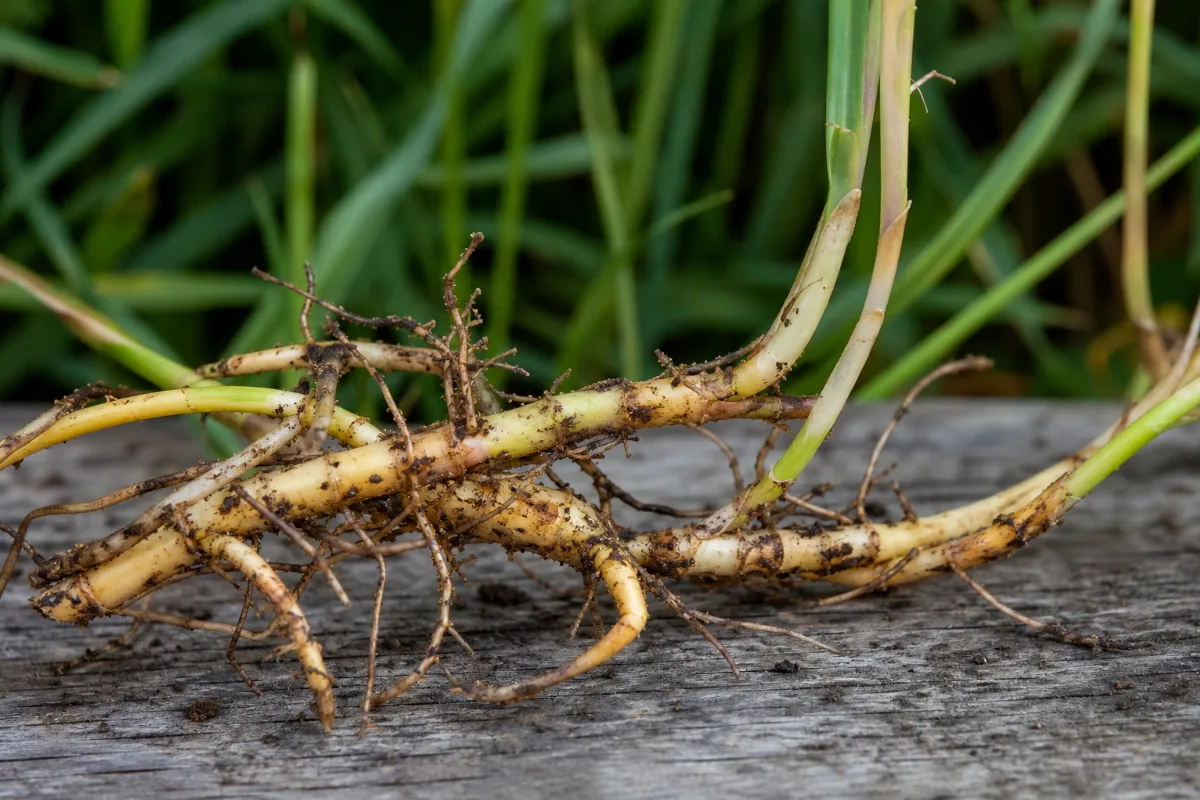
Couch grass is the creeping grass Elymus repens (L.) Gould, accepted in GBIF in the grass family Poaceae. The older name Agropyron repens is a synonym, but the European Pharmacopoeia still uses it, so labels use either name. The herb is the cut, dried rhizome (underground stem).
Other names include quackgrass and twitch grass. The EU assessment notes that Elymus and Agropyron plants hybridise and are hard to tell apart in the field.
Traditional and current uses
For decades couch grass has been drunk as a tea or taken as a liquid extract in Europe to 'flush' the bladder and kidneys, often blended with birch, goldenrod, horsetail, dandelion or nettle. The 2022 EU monograph accepts one use: a traditional herbal medicine to increase urine and flush the urinary tract as an adjuvant in minor complaints.
The monograph says this rests exclusively on long-standing use. In Morocco a water extract has also been used for diabetes. Tradition is not proof of benefit.
What is in it and how it works
The rhizome is mostly sugars: the fructan triticin (about 12% of dry weight in a cold water extract), fructose and sugar alcohols such as mannitol. It also has phenolic acid esters, silicon and traces of volatile oil. The EU assessors say no constituent with known therapeutic activity or active marker can be recognised.
In a dish, one fat-soluble compound, a hexadecyl ester of p-coumaric acid, reduced E. coli attachment to bladder cells. It is found in alcohol-type extracts, not water teas. Nothing is known about how the body absorbs any compound.
What the research shows
The EU found no well-controlled human trials. Two uncontrolled studies of a 20% alcohol liquid extract (99 and 313 people) reported fewer urinary symptoms. A randomised but unblinded study of 50 adults found fewer stones with couch grass extract plus potassium citrate than with potassium citrate alone, and a small unblinded study in 50 children also reported fewer stones. None can show that couch grass itself works.
Rat studies point to lower blood sugar and fats and a modest anti-inflammatory effect, but these have not been tested in people. A rat study of the infusion found no help on stone risk factors. A 2026 review calls the findings limited and says clinical validation is lacking.
At a glance
Traditional uses history, not proof
- Tea or extract of the rhizome to increase urine and flush the urinary tract.
- Folk use for bladder irritation and 'gravel' or kidney stones.
- Ingredient in European diuretic and 'blood-cleansing' tea blends.
- Water extract used in Morocco as an antidiabetic remedy.
Studied for research
- Flushing the urinary tract (traditional use), insufficient
- Bladder and prostate-related urinary symptoms, insufficient
- Kidney stones in adults and children (small unblinded studies), very-low
- Kidney stone risk in rats, insufficient
- E. coli adhesion to bladder cells (lab), insufficient
- Blood sugar and blood fats (rats), insufficient
- Inflammation (rats), insufficient
Main compounds
- Triticin (fructan sugars)
- Mannitol and inositol (sugar alcohols)
- p-Coumaric acid esters
- Silicon (silicates)
- Trace volatile oil and anthraquinones
Common forms
- Dried rhizome tea (infusion or decoction)
- Liquid extract (alcohol 20-25%)
- Tincture (alcohol 40%)
- Blends with other urinary herbs
Research links: EU herbal monograph: Agropyron repens rhizome (2022) · EMA assessment report: Agropyron repens rhizome (2022) · Brardi 2012: couch grass plus potassium citrate in kidney stones · Saparkhanovich 2026: review of Elymus repens · Research Library · Genes & Biomarkers Library
The plant and its history
- Accepted scientific name
- Elymus repens (L.) Gould, accepted in GBIF (key 5290299, exact match). The old name Agropyron repens (L.) P.Beauv. is a synonym, but the European Pharmacopoeia still uses it, so labels use either name.
- Naming authority
- (L.) Gould
- Synonyms
- Agropyron repens (L.) P.Beauv.; Elytrigia repens (L.) Nevski; Elytrigia repens (L.) Desv.; Triticum repens (older name used in some papers)
- Common names
- Couch grass (English); Quackgrass (English); Twitch grass (English); Grama de las boticas (rizoma) (Spanish); Chiendent (rhizome de) (French); Queckenwurzelstock (German); Gramigna (rizoma) (Italian)
- Botanical family
- Poaceae (grass family)
- Classification
- Plantae > Tracheophyta > Liliopsida > Poales > Poaceae > Elymus > Elymus repens (L.) Gould
- Native range
- Not verified in the sources read. The EU assessment says only that commercial material is mostly supplied from Eastern and South-Eastern Europe.
- Habitat
- Not verified in the sources read.
- What the plant looks like
- Roots: Fine branched roots at the nodes of the rhizome; these are removed in the pharmacopoeia material.; Stems: Rhizome: shiny yellowish to light brown or yellowish-brown pieces, hollow, lengthwise-furrowed, about 2-3 mm thick; nodes carry root remains and fibre-like scales (EMA, citing Wichtl 1994). Bland, slightly sweet taste.; Leaves: Not verified; Flowers: Not verified; Fruit: Not verified
- Cultivation
- Not verified in the sources read.
- Harvest and processing
- Pharmacopoeia material is the whole or cut, washed and dried rhizome with the adventitious roots removed (EMA, citing Ph. Eur. 1306).
- Look-alikes and adulterants
- Name: Other Elymus or Agropyron grasses; Note: The EU assessment says Elymus and Agropyron groups are closely related, hybridise and are hard to separate in the field.
- Sustainability and conservation
- Not assessed here.
Traditional use and history history, not clinical proof
| Tradition or era | Documented use | Source |
|---|---|---|
| European folk medicine | Used for many decades as a 'flushing' herb for the urinary tract, often in tea blends (for example with birch, goldenrod, horsetail, dandelion, nettle). | s-ema-ar |
| Germany, 1950s to 1990s | The usual daily amount was lowered several times after regulatory action tied to the Commission E monograph; the EMA reports no justification was available. | s-ema-ar |
| Morocco | Rhizome water extract traditionally used as an antidiabetic (as cited by the rat-study authors and EMA). | p16099613 |
| Current literature (2026) | A 2026 review stresses that the name needs care (Elymus repens versus Agropyron repens), lists diuretic, stone-related, anti-inflammatory and blood-sugar activities from lab and animal work, and says clinical validation and standardisation are lacking. | p42278456 |
| EU regulation (2011 monograph, revised 2022) | Accepted as a traditional herbal medicine for minor urinary complaints on the basis of at least 30 years of use (15 in the EU). No well-established-use status. | s-ema-monograph |
Traditional use shows how a plant was used. It does not show that a supplement works or is safe today.
What is inside, and how it may work
What the plant contains and how those compounds act in cells and animals. Laboratory and animal mechanisms are not proven effects in people.
Main compounds
| Compound | Family | Where it is concentrated | Activity studied | Level of evidence |
|---|---|---|---|---|
| Triticin (a fructan, a chain of fructose sugars) | polysaccharide | Rhizome; about 12% of dried weight in cold water extract (EMA, citing Arni and Percival 1951) about 12% | No activity shown. Breaks down in hot water into simple sugars. 9 | Authoritative guidance |
| Mannitol PubChem 6251 | sugar alcohol | Rhizome; 2-3% (EMA, citing Stoop 1996; may form during boiling) 2-3% | No activity shown for couch grass. 9 16 | Authoritative guidance |
| Inositol PubChem 892 | sugar alcohol | Rhizome | No activity shown for couch grass. 9 16 | Authoritative guidance |
| p-Coumaric acid and its fatty esters, including the hexadecyl ester PubChem 637542 | phenolic acid and esters | Rhizome; esters are fat-soluble and found in acetone or petroleum-ether-type extracts | The hexadecyl ester reduced E. coli attachment and invasion in bladder cells in a dish. 3 16 9 | Laboratory research |
| Tricin PubChem 5281702 | flavonoid | Rhizome extract (found while studying allelopathy) | No activity shown for couch grass in the sources read. 9 16 | Authoritative guidance |
| Silicon (silicic acid and silicates) | mineral | Rhizome; 0.34-0.43% silicon; a decoction of 3 g in a glass contained about 2.6 mg assimilable silicon (EMA) 0.34-0.43% | None shown. 9 | Authoritative guidance |
| Volatile oil (including carvacrol) and 'agropyrene' PubChem 10364 | essential oil | Rhizome; oil yield about 0.017% (EMA). Agropyrene, reported in 1947, could not be found when the distillation was repeated in 1989. 0.017% oil | Agropyrene was once reported to have antibiotic and antifungal activity; not reproduced. 9 16 | Authoritative guidance |
| Anthraquinones (emodin, chrysophanol, physcion) | anthraquinone | Rhizome; traces, total 0.2-0.7 mg/kg 0.2-0.7 mg/kg | None shown at these trace amounts. 9 | Authoritative guidance |
Mechanisms, receptors and pathways
| Target or pathway | Gene or receptor | What was found | Level |
|---|---|---|---|
| Diuretic (urine-increasing) effect | Not specified | A cold water macerate gave a diuretic index of 1.42 in rats; an infusion at 3 g/L failed to confirm any diuretic activity. EMA: no plausible animal data confirm a diuretic effect of tea. 9 | Animal research |
| Blocking bacterial attachment to bladder cells | Bacterial outer-membrane proteins (ethanol-water extract); not identified for the ester | An ethanol-water extract and a fat-soluble coumaric acid ester reduced E. coli attachment to human T24 bladder cells. 17 3 | Laboratory research |
| Blood glucose lowering | Not specified | Water extract lowered blood glucose in normal and diabetic rats without changing plasma insulin. 7 | Animal research |
| Blood fat lowering | Not specified | Water extract lowered triglycerides and cholesterol in rats. 14 | Animal research |
| Anti-inflammatory activity | Not specified | Modest paw swelling reduction and faster skin recovery in rats (EMA summary). 9 | Animal research |
Absorption, metabolism and elimination
- Absorption
- No data in people or animals (EMA).
- Distribution
- No data.
- Metabolism
- No data.
- Elimination
- No data.
- Bioavailability
- Unknown. EMA notes no constituent with known therapeutic activity has been identified, so there is no basis for pharmacokinetic study. It is unknown whether the fat-soluble coumaric esters reach the urinary tract.
Isolated compounds versus whole extracts
The only compound with a specific lab effect, the coumaric acid ester, is fat-soluble. It appears in alcohol or acetone extracts, not in water teas, so lab results on it do not describe tea. The EU monograph accepts tea, liquid extract and tincture without saying which is best, and no active marker is recognised.
Nutritional composition
The rhizome holds a lot of sugars (fructan, fructose, glucose) and sugar alcohols, and a little silicon, but it is not used as a nutrient source and no nutrient claims are made. A review mentions wild-food use in Poland, which we did not read.
1 very low certainty8 not enough evidence
What was looked at
The 9 benefits and uses checked for Couch Grass (Elymus repens, Agropyron repens), each with how strong the evidence is. Tap one to open it.
- Flushing the urinary tract (traditional use, minor urinary complaints)Not enough evidence
- Irritable bladder, cystitis and prostate-related urinary symptoms (liquid extract)Not enough evidence
- Kidney stones (two small human studies)Very low certainty
- Kidney stone risk in animalsNot enough evidence
- Blocking E. coli from sticking to bladder cells (laboratory only)Not enough evidence
- Blood sugar (rat studies only)Not enough evidence
- Blood fats and body weight (rat studies only)Not enough evidence
- Inflammation and skin allergy (rat studies only)Not enough evidence
- Reduced movement in mice (an unexplained old finding)Not enough evidence
Lab markers tracked in the studies
Share of people symptom-free (urinary)Stone number and size on imagingUrine uric acid excretionUrine volume (diuretic effect)Blood glucose (rats)Triglycerides and cholesterol (rats)
What is Couch Grass (Elymus repens, Agropyron repens) good for?
The studied uses and how strong the human evidence is. Almost every item rests on traditional use, uncontrolled studies or animal and lab work. Ask a doctor or pharmacist about amounts and suitability for you.
Benefits, one by one
Each card is a research question, not a promise. Tap a goal to filter. Open a card to see the studies, doses and limits.
Flushing the urinary tract (traditional use, minor urinary complaints)
Not enough evidenceIn the EU, couch grass rhizome tea or liquid extract is accepted as a traditional herbal medicine to increase urine and flush the urinary tract in minor urinary complaints. This rests only on long use. The EU assessors could not confirm that the tea actually increases urine, and they found no well-controlled human trials.
2 studiesTea, liquid extract (ethanol 20-25%) and tincture (ethanol 40%) are t…
Studies, doses and limits
What the trials found
No controlled human trial of urine flow was found by the EU assessors. Their conclusion: a diuretic effect of tea (infusion or decoction) cannot be confirmed from the available data.
Results
Traditional only. Not shown to work in people.
Why this rating
Accepted by regulators on long-standing use alone; assessors found no well-controlled trials and weak animal data.
Form and dose studied
Tea, liquid extract (ethanol 20-25%) and tincture (ethanol 40%) are the EU traditional forms; amounts are in the EU monograph and are not repeated here.
Who was studied
Adults (and adolescents for the tea). Not recommended for children under 12 (tea) or under 18 (extract, tincture).
Limits
Tradition is not proof. The EU text says plenty of fluid is needed, and the tea is not for people told to limit fluids.
Why researchers looked
A long European folk use as a 'water' herb: the idea is that more urine helps wash through the bladder and kidneys.
Traditional use
Used for many decades in European folk medicine, often in tea blends with other urinary herbs. A 2022 EU monograph accepts it as a traditional herbal medicine for this one use.
Proposed mechanism Animal research
Not established. In rats, a cold water macerate raised urine output slightly (diuretic index 1.42), but an infusion at 3 g per litre did not, and a macerate is not the traditional form (EMA).
A proposed mechanism does not show that the effect happens in people.
See the safety tab: fluids, heart or kidney disease, pregnancy, breastfeeding.
Irritable bladder, cystitis and prostate-related urinary symptoms (liquid extract)
Not enough evidenceTwo uncontrolled studies of an alcohol liquid extract (99 and 313 people) reported fewer urinary symptoms. With no comparison group, nobody can tell whether the extract or time did it. The EU assessors said efficacy cannot be judged from these.
3 studies20% ethanol liquid extract of the rhizome; study duration 12 days and…
Studies, doses and limits
What the trials found
Barsom (1981, open observation, 99 people with urinary problems from prostate enlargement, prostatitis or cystitis): complaints fell in 44.4 to 100% of people and 96% rated results good or very good. Hautmann and Scheithe (2000, surveillance, 313 people): at the end, 32% with irritable bladder, 44% urethritis, 53% cystitis and 42% prostatitis were symptom-free. No side effects were reported in either (as summarised by EMA).
Results
Positive in uncontrolled studies; cannot be interpreted.
Effect sizes as reported
Hautmann 2000: symptom-free 32% (irritable bladder), 44% (urethritis), 53% (cystitis), 42% (prostatitis). Barsom 1981: complaints fell in 44.4 to 100% of people. No confidence intervals given.
Why this rating
No placebo or comparison group in either study; open design; we read only the EMA summary, not the original papers.
Form and dose studied
20% ethanol liquid extract of the rhizome; study duration 12 days and 28 to 31 days.
Who was studied
99 and 313 adults with mixed urinary diagnoses, mostly men in the first study.
Limits
Uncontrolled, short, mixed diagnoses, original papers not found in PubMed.
Why researchers looked
Liquid extract was used for bladder irritation, so small observation studies were run.
Traditional use
Part of the same traditional urinary use.
Proposed mechanism Laboratory research
Not established. In a dish, a fat-soluble compound from the rhizome reduced E. coli attachment to bladder cells (see the lab entry).
A proposed mechanism does not show that the effect happens in people.
No side effects reported in the 412 people treated. Fever, painful urination, spasms or blood in the urine need a doctor.
Kidney stones (two small human studies)
Very low certaintyA small unblinded adult trial of couch grass extract plus potassium citrate, and a small unblinded study of 50 children, reported fewer or smaller stones. Design problems mean no conclusion can be drawn about couch grass.
3 studiesBrardi: dry couch grass extract in a food supplement (CalcoMEV) plus …
Studies, doses and limits
What the trials found
Brardi 2012 (randomised, unblinded, 50 adults, 5 months): couch grass extract plus potassium citrate beat potassium citrate alone for stone number and size and for urine uric acid. There was no couch-grass-only group and no placebo, so the effect of couch grass itself cannot be separated. Alosy 2019 (50 children aged 5 to 14, 60 days, as summarised by EMA): about 88% of treated children had fewer stones versus about 12% of controls; EMA said inclusion criteria were undefined, care in the control group was unclear and the study was not blinded.
Results
Positive, but not interpretable for couch grass alone.
Effect sizes as reported
Brardi 2012: stone number -1.0 +/- 0.2 vs 0.0 +/- 0.2; largest stone diameter -3.6 +/- 0.9 mm vs 0.0 +/- 0.8 mm; urine uric acid -164.7 +/- 45.3 vs -38 +/- 42 mg/24 h. Urine citrate, oxalate, calcium and pH not different.
Why this rating
Two small unblinded studies with no placebo; one tested a combination with potassium citrate; EMA drew no conclusion.
Form and dose studied
Brardi: dry couch grass extract in a food supplement (CalcoMEV) plus potassium citrate. Alosy: extract capsules in children.
Who was studied
Adults with stones and a metabolic reason for potassium citrate (Brardi); children aged 5 to 14 (Alosy).
Limits
Unblinded; combination product; no couch-grass-alone arm; children's study poorly described. Authors' competing interests not shown in the abstract.
Why researchers looked
Couch grass is traditionally taken for 'gravel' and stones, so small studies were run.
Traditional use
Used in folk medicine for stones.
Proposed mechanism Animal research
Not established. In rats, a couch grass infusion did not improve stone risk factors (see the animal entry).
A proposed mechanism does not show that the effect happens in people.
No adverse events were recorded in the 25 adults on the combination or in the children (as summarised by EMA); the sample is too small to judge safety.
Kidney stone risk in animals
Not enough evidenceIn rats, a couch grass infusion did not improve urine stone risk factors. A four-herb mixture that included couch grass reduced crystal deposits in rats, but the couch grass part cannot be separated out. Animal findings only.
3 studiesInfusion (Grases); four-herb extract (Crescenti).
Studies, doses and limits
What the trials found
No human data in this entry. Grases 1995 (rats on three diets, couch grass infusion): the authors say no positive effect on the main stone risk factors can be assigned to couch grass. Crescenti 2015 (rats given ethylene glycol; four-herb extract with couch grass): fewer calcium oxalate deposits at 125 mg/kg and fewer microcalcifications at all doses tested.
Results
Mixed: no effect for couch grass alone in one rat study; benefit for a mixture in another.
Effect sizes as reported
No effect sizes for couch grass alone.
Why this rating
Rats only; the positive study used a mixture and has company-laboratory authors.
Form and dose studied
Infusion (Grases); four-herb extract (Crescenti).
Who was studied
Rats.
Limits
Animal findings do not predict human results.
Why researchers looked
To check the stone idea in a controlled way before people try it.
Traditional use
Same traditional stone use.
Proposed mechanism Animal research
Not established; the mixture probably acts partly by raising urine volume.
A proposed mechanism does not show that the effect happens in people.
None applicable.
Blocking E. coli from sticking to bladder cells (laboratory only)
Not enough evidenceIn dishes, an alcohol-type extract of the rhizome and one fat-soluble compound reduced E. coli attachment to human bladder cells. It is not known whether this happens in a person, and water-based teas did not show it.
4 studiesAcetone or ethanol-water extracts, not teas.
Studies, doses and limits
What the trials found
No human trial. Beydokhti 2017: only an acetone extract worked (above 250 micrograms/mL), and the ester was the active compound. Rafsanjany 2013: one of five active plants out of 20 tested (IC25 630, IC50 1040 micrograms/mL). Boertz 2025 tested a four-herb water tea that includes couch grass; the effect came from birch leaf compounds, not from couch grass.
Results
Positive in cell cultures; no human result.
Effect sizes as reported
Rafsanjany 2013: IC25 630 micrograms/mL and IC50 1040 micrograms/mL for adhesion to T24 bladder cells.
Why this rating
Cell culture only; the active compound is fat-soluble and probably absent from water teas; unknown whether it reaches the urine.
Form and dose studied
Acetone or ethanol-water extracts, not teas.
Limits
Lab only; no data in people.
Why researchers looked
Urinary infections often start when bacteria attach to the bladder wall, so researchers tested old urinary herbs for that effect.
Traditional use
Same traditional urinary use.
Proposed mechanism Laboratory research
Laboratory finding: the hexadecyl ester of p-coumaric acid cut bacterial attachment and invasion; an ethanol-water extract acted on bacterial outer-membrane proteins.
A proposed mechanism does not show that the effect happens in people.
None applicable.
Blood sugar (rat studies only)
Not enough evidenceA water extract of the rhizome lowered blood sugar in normal and diabetic rats. No human trial was found, so it should not be taken as evidence of an effect in people.
2 studiesWater extract of rhizome, 20 mg/kg in rats.
Studies, doses and limits
What the trials found
No human trial found. Eddouks 2005: a single dose lowered blood glucose in diabetic rats and daily dosing for 2 weeks normalised it (p<0.001); glucose also fell in normal rats.
Results
Lower blood glucose in rats.
Effect sizes as reported
p<0.001 for glucose in diabetic rats after 2 weeks; no effect on insulin.
Why this rating
Animal evidence only, one research group.
Form and dose studied
Water extract of rhizome, 20 mg/kg in rats.
Who was studied
Rats.
Limits
No human data; rat results often do not carry over.
Why researchers looked
Couch grass water extract is a folk antidiabetic remedy in Morocco, so researchers tested it in rats.
Traditional use
Traditional in Morocco as an antidiabetic (EMA, citing the rat authors).
Proposed mechanism Animal research
Not established. Insulin levels did not change, so the effect seems independent of insulin release.
A proposed mechanism does not show that the effect happens in people.
A herb that lowers blood sugar could in theory add to diabetes medicines; no human data exist (see safety tab).
Blood fats and body weight (rat studies only)
Not enough evidenceThe same water extract lowered triglycerides and cholesterol in rats, mainly diabetic ones. No human data were found.
2 studiesWater extract of rhizome, 20 mg/kg in rats.
Studies, doses and limits
What the trials found
No human trial found. Maghrani 2004: triglycerides fell in normal rats at 4 days and 1 week (P<0.05) and in diabetic rats; cholesterol fell in diabetic rats (P<0.001 at 2 weeks); body weight fell in diabetic rats at 2 weeks (P<0.05).
Results
Lower blood fats in rats.
Effect sizes as reported
P values only in the abstract.
Why this rating
Animal evidence only; one research group; the effect faded in normal rats by 2 weeks.
Form and dose studied
Water extract of rhizome, 20 mg/kg in rats.
Who was studied
Rats.
Limits
No human data.
Why researchers looked
Followed up the blood-sugar rat work to see if blood fats moved too.
Traditional use
Same Moroccan folk use.
Proposed mechanism Animal research
Not established.
A proposed mechanism does not show that the effect happens in people.
None applicable.
Inflammation and skin allergy (rat studies only)
Not enough evidenceExtracts gave a modest effect on paw swelling in rats and a couch grass cream sped up skin recovery in a rat skin-allergy model. No human data.
1 studiesEthanol extract by mouth; extract cream on skin (rats).
Studies, doses and limits
What the trials found
No human data. As summarised by EMA: 80% ethanol extract at 100 mg/kg cut rat paw swelling by 14% (indometacin 45%); a dry-extract cream shortened recovery by 4 to 5 days in a rat skin-allergy model, less than a steroid cream.
Results
Weak anti-inflammatory signal in rats.
Effect sizes as reported
14% vs 45% for indometacin (paw swelling).
Why this rating
Animal evidence only, read through the EMA summary, not the original papers.
Form and dose studied
Ethanol extract by mouth; extract cream on skin (rats).
Who was studied
Rats.
Limits
No human data.
Why researchers looked
A few lab tests of whether the rhizome calms inflammation.
Traditional use
Not a main traditional use in the EU monograph.
Proposed mechanism Animal research
Not established; one rat study measured catalase and lipid peroxidation markers.
A proposed mechanism does not show that the effect happens in people.
None applicable.
Reduced movement in mice (an unexplained old finding)
Not enough evidenceA 1958 mouse experiment found that a strong rhizome infusion reduced movement on a rotating rod, much like valerian. It has never been repeated, and rabbits fed the rhizome showed no such effect.
1 studies10% infusion, by mouth or injection (mice).
Studies, doses and limits
What the trials found
No human data. The assessors call a 10% infusion very strong (about 25 g in a glass of water for a person).
Results
Reduced rod performance in mice, not repeated.
Effect sizes as reported
No numbers in the summary.
Why this rating
One old animal test, never repeated.
Form and dose studied
10% infusion, by mouth or injection (mice).
Who was studied
Mice.
Limits
Not shown to cause drowsiness in people; no data.
Why researchers looked
A single old test; EMA notes it inspired speculation but remained unclarified.
Proposed mechanism Animal research
Unknown. EMA suggests the high sugar and sugar-alcohol load of a strong infusion may have caused metabolic problems in mice.
A proposed mechanism does not show that the effect happens in people.
No study has looked at driving or machine use; the monograph says no data.
Connections to the rest of health
How Couch Grass (Elymus repens, Agropyron repens) connects to the rest of our health knowledge graph. Every link says what kind of connection it is. A safety link (for example to the liver) is a warning, not a benefit. A study that merely mentions a topic never creates a benefit link.
Explore every connection: goals, body systems, organs, symptoms, genes
A. Wellness goals
| Connected to | Kind of connection | Evidence status | Context | Studies |
|---|---|---|---|---|
| Blood sugar balance | Preliminary mechanism | Not enough evidence | Rat studies only. Blood sugar (rat studies only): A water extract of the rhizome lowered blood sugar in normal and diabetic rats. No human trial was found, so it should not be taken as evidence of an effect in people. Preparation or compound: Water extract of rhizome |
7 9 |
| Cholesterol Balance | Preliminary mechanism | Not enough evidence | Blood fats and body weight (rat studies only): The same water extract lowered triglycerides and cholesterol in rats, mainly diabetic ones. No human data were found. | 14 9 |
| Inflammation Balance | Preliminary mechanism | Not enough evidence | Inflammation and skin allergy (rat studies only): Extracts gave a modest effect on paw swelling in rats and a couch grass cream sped up skin recovery in a rat skin-allergy model. No human data. | 9 |
B. Body systems
| Connected to | Kind of connection | Evidence status | Context | Studies |
|---|---|---|---|---|
| Urinary system | Traditional use | Not enough evidence | EU traditional use to flush the urinary tract in minor complaints; no good trials. EU traditional use for flushing the urinary tract; no good trials. Preparation or compound: Rhizome tea, liquid extract or tincture |
8 9 |
| Urinary System | Biological association | Not enough evidence | Studied for: Flushing the urinary tract (traditional use, minor urinary complaints) Studied for: Irritable bladder, cystitis and prostate-related urinary symptoms (liquid extract) | 8 9 2 13 5 1 12 6 3 17 4 |
| Endocrine System | Biological association | Not enough evidence | Studied for: Blood sugar (rat studies only) | 7 9 |
| Cardiovascular System | Biological association | Not enough evidence | Studied for: Blood fats and body weight (rat studies only) | 14 9 |
| Integumentary System | Biological association | Not enough evidence | Studied for: Inflammation and skin allergy (rat studies only) | 9 |
| Nervous System | Biological association | Not enough evidence | Studied for: Reduced movement in mice (an unexplained old finding) | 9 |
C. Body parts and organs
| Connected to | Kind of connection | Evidence status | Context | Studies |
|---|---|---|---|---|
| Kidneys | Contraindication | Not enough evidence | Not recommended in severe kidney failure or where fluids must be limited. Preparation or compound: Rhizome preparations |
8 9 |
| Heart | Contraindication | Not enough evidence | Not recommended in severe heart failure or where fluids must be limited. Preparation or compound: Rhizome preparations |
9 |
| Liver | Adverse effect or risk | Not enough evidence | Two old liver injury reports in mixtures; link not confirmed. Preparation or compound: Multi-herb mixtures containing couch grass |
19 |
| Kidneys | Potential benefit | Very low certainty | Small unblinded stone studies; EMA drew no conclusion. Preparation or compound: Extract plus potassium citrate |
5 9 |
I. Biomarkers
| Connected to | Kind of connection | Evidence status | Context | Studies |
|---|---|---|---|---|
| Share of people symptom-free (urinary) | Biological association | Not enough evidence | Measured in trials: lowered. A lab change is not the same as a health benefit. | 13 |
| Stone number and size on imaging | Biological association | Very low certainty | Measured in trials: lowered. A lab change is not the same as a health benefit. | 5 1 |
| Urine uric acid excretion | Biological association | Very low certainty | Measured in trials: lowered. A lab change is not the same as a health benefit. | 5 |
| Urine volume (diuretic effect) | Biological association | Not enough evidence | Measured in trials: mixed. A lab change is not the same as a health benefit. | 9 |
| Blood glucose (rats) | Biological association | Not enough evidence | Measured in trials: lowered. A lab change is not the same as a health benefit. | 7 |
| Triglycerides and cholesterol (rats) | Biological association | Not enough evidence | Measured in trials: lowered. A lab change is not the same as a health benefit. | 14 |
L. Active compounds
| Connected to | Kind of connection | Evidence status | Context | Studies |
|---|---|---|---|---|
| Triticin (a fructan, a chain of fructose sugars) | Biological association | Authoritative guidance | No activity shown. Breaks down in hot water into simple sugars. Preparation or compound: Rhizome; about 12% of dried weight in cold water extract (EMA, citing Arni and Percival 1951) |
9 |
| Mannitol | Biological association | Authoritative guidance | No activity shown for couch grass. Preparation or compound: Rhizome; 2-3% (EMA, citing Stoop 1996; may form during boiling) |
9 16 |
| Inositol | Biological association | Authoritative guidance | No activity shown for couch grass. Preparation or compound: Rhizome |
9 16 |
| p-Coumaric acid and its fatty esters, including the hexadecyl ester | Biological association | In vitro | The hexadecyl ester reduced E. coli attachment and invasion in bladder cells in a dish. Preparation or compound: Rhizome; esters are fat-soluble and found in acetone or petroleum-ether-type extracts |
3 16 9 |
| Tricin | Biological association | Authoritative guidance | No activity shown for couch grass in the sources read. Preparation or compound: Rhizome extract (found while studying allelopathy) |
9 16 |
| Silicon (silicic acid and silicates) | Biological association | Authoritative guidance | None shown. Preparation or compound: Rhizome; 0.34-0.43% silicon; a decoction of 3 g in a glass contained about 2.6 mg assimilable silicon (EMA) |
9 |
| Volatile oil (including carvacrol) and 'agropyrene' | Biological association | Authoritative guidance | Agropyrene was once reported to have antibiotic and antifungal activity; not reproduced. Preparation or compound: Rhizome; oil yield about 0.017% (EMA). Agropyrene, reported in 1947, could not be found when the distillation was repeated in 1989. |
9 16 |
| Anthraquinones (emodin, chrysophanol, physcion) | Biological association | Authoritative guidance | None shown at these trace amounts. Preparation or compound: Rhizome; traces, total 0.2-0.7 mg/kg |
9 |
Each connection is stored with the ingredient, the connected record, the kind of connection, the evidence status, the supporting studies, the preparation or compound involved, and a review date (last reviewed October 25, 2026).
Evidence at a glance: what changed in 6 lab markers
Tap a number to show only those markers. Counts are markers, not people.
The evidence
The research centre for Couch Grass (Elymus repens, Agropyron repens). Every record here was checked against PubMed or the publisher's page; we never list a study we have not verified.
Evidence by outcome
Bars show how many studies we found for each outcome, not how well it works. People are added up across trials only (reviews are not added, to avoid double counting).
How we rate evidence
High certainty
Several well-run trials or reviews agree; further research is unlikely to change the picture much.
Moderate certainty
Good trials point the same way, but some doubt remains.
Low certainty
Small, short or inconsistent trials. The finding could change with better research.
Very low certainty
Very little or very weak human data. Treat as a possibility only.
Mixed findings
Trials or reviews disagree with each other.
Not enough evidence
Not enough human research to say either way.
Evidence against
Good research found no benefit, or found harm.
We take the reviewers' own risk-of-bias and GRADE statements where they exist, and otherwise judge from study size, design, consistency, directness and whether a product matches what is sold. Many publications do not make evidence high. Method note: We started from our existing summary, then read in full the EU herbal monograph and assessment report, read the PubMed abstract of every PubMed study cited, and checked plant names in GBIF and NCBI Taxonomy and compounds in PubChem. Three human studies (1981, 2000, 2019) were not found in PubMed and are reported only as summarised by the EU assessors. Not found: an NCCIH page and LiverTox or LactMed entries. Certainty ratings are the compiler's reading, not formal grades. No study is cited that we could not verify.
Study library: every study we checked 19
| Study | Design | People | Product, dose, length | Result |
|---|---|---|---|---|
| Alosy et al. 2019 Study of Agropyron repens extract capsules in 50 children with kidney stones (Alosy et al. 2019), as summarised by EMA Cited in EMA assessment report (original not found in PubMed) · Source |
Non blinded comparison |
50 50 children aged 5 to 14 with kidney stones, Iraq |
Agropyron repens extract capsules dissolved in water (strength not given in EU terms) rhizome (per EMA) 5 mg/kg (as summarised by EMA) 60 days · vs 'Normal care' (not described) |
EMA reports the number of stones fell in about 88% of treated children versus about 12% of controls, with fewer colic, blood-in-urine and infection reports in the treated group. Fewer stones reported Methods, limits and fundingOutcomes: Number and size of stones on ultrasound; colic, blood in urine, infections Limitations: EMA: inclusion criteria not defined, control care unclear, small, not blinded, laboratory data unavailable; judged not enough for monograph development. We did not read the original. Funding and conflicts: Not known Read: summary-only |
| Barsom 1981 Open observation of a couch grass liquid extract in micturition disorders (Barsom 1981), as summarised by EMA Cited in EMA assessment report (original not found in PubMed) · Source |
Uncontrolled observation |
99 99 people (87 men, 12 women) with urinary problems from prostate enlargement, prostatitis or cystitis |
20% ethanol liquid extract of couch grass rhizome rhizome 60 drops three times daily (as summarised by EMA) 28 to 31 days |
EMA reports that complaints such as urgency, painful or difficult urination, night-time urination fell in 44.4 to 100% of people, urine markers of inflammation normalised, and 96% rated results good or very good. No side effects recorded. Symptom improvement in an open study Methods, limits and fundingOutcomes: Urinary complaints; urine tests Limitations: Pilot observation, not a well-controlled study (EMA). We did not read the original. Funding and conflicts: Not known Read: summary-only |
| Beydokhti 2017 Traditionally used medicinal plants against uncomplicated urinary tract infections: Hexadecyl coumaric acid ester from the rhizomes of Agropyron repens (L.) P. Beauv. with antiadhesive activity against uropathogenic E. coli. Fitoterapia · PMID 28040531 · DOI |
Laboratory research in-vitro |
Uropathogenic E. coli and human T24 bladder cells in a dish | Rhizome extracts of different polarity; isolated hexadecyl coumaric acid ester rhizome Above 250 micrograms/mL for the acetone extract · vs Untreated cells |
Only the acetone extract (above 250 micrograms/mL) cut E. coli attachment to bladder cells; the water-friendly extracts did not. The responsible compound was the hexadecyl ester of p-coumaric acid, which also reduced bacterial invasion. Extracts were not toxic to the bacteria or the cells. Less bacterial attachment in a dish Methods, limits and fundingOutcomes: Bacterial attachment to bladder cells Limitations: Cell culture only. The compound is fat-soluble, so it may be present in alcohol-type extracts but not in water teas, and nobody has shown it reaches the urinary tract. Funding and conflicts: Not stated in the abstract Read: abstract |
| Boertz 2025 Complex Standard Formulation as an Example for Synergism and Improved Antibacterial Activity Against Uropathogenic Escherichia coli for Urinary Tract Infections. Planta Med · PMID 40112859 · DOI |
Laboratory research in-vitro |
Uropathogenic E. coli and bladder cells or spheroids in a dish | Water extract of a four-herb German tea mixture (birch leaf, couch grass, goldenrod, restharrow) made together or separately mixed (couch grass: rhizome) · vs Separate extracts mixed afterwards |
The combined (co-extracted) tea reduced fimbriae activity; the mixture of separately made extracts did not. The effect was traced to birch leaf compounds (dammarane triterpenes) extracted in the presence of goldenrod. Couch grass was not identified as the active part. Lab effect of the combination, not of couch grass Methods, limits and fundingOutcomes: Activity of type-1 fimbriae; bacterial gene expression Limitations: Cell culture; a mixture, so the result says little about couch grass alone. No conflict of interest declared. Funding and conflicts: None declared Read: abstract |
| Brardi 2012 Effects of the association of potassium citrate and agropyrum repens in renal stone treatment: results of a prospective randomized comparison with potassium citrate. Arch Ital Urol Androl · PMID 22908773 |
Controlled trial |
50 50 adults with kidney stones and a metabolic reason to use potassium citrate, Italy |
Potassium citrate plus dry extract of couch grass (CalcoMEV food supplement), on top of other stone medicines as needed rhizome (extract; part not stated in abstract) 24 mEq potassium citrate and 100 mg dry extract twice daily (as reported) 5 months · vs Potassium citrate alone with the same diet advice and medicines |
At 5 months the couch grass plus potassium citrate group had a larger fall in stone number (-1.0 +/- 0.2 vs 0.0 +/- 0.2), in largest stone diameter (-3.6 +/- 0.9 mm vs 0.0 +/- 0.8 mm) and in urine uric acid (-164.7 +/- 45.3 vs -38 +/- 42 mg/24 h). Urine citrate, oxalate, calcium and pH did not differ. Better stone count and size in the combination group Methods, limits and fundingOutcomes: Number and size of stones; urine chemistry Limitations: Unblinded, 25 per group, no couch-grass-alone arm and no placebo, so the effect of couch grass itself cannot be separated. EMA assessors said no conclusion on couch grass can be drawn. Extract was not pharmaceutical grade (EMA). Authors' competing interests not shown in the abstract. Funding and conflicts: Not stated in the abstract Read: abstract |
| Crescenti 2015 [Antiurolithiasic effect of a plant mixture of Herniaria glabra, Agropyron repens, Equisetum arvense and Sambucus nigra (Herbensurina) in the prevention of experimentally induced nephrolithiasis in rats]. Arch Esp Urol · PMID 26634575 |
Animal research animal |
36 male Wistar rats given ethylene glycol to form kidney crystals (Spanish-language paper) | Four-herb plant extract formulation (Herbensurina), including Agropyron repens mixed 30 to 500 mg/kg groups 18 days · vs Placebo |
Rats given 125 mg/kg of the mixture had fewer calcium oxalate crystal deposits than controls; all doses reduced microcalcifications; urine volume was higher at 125 and 500 mg/kg. Couch grass was one of four herbs, so its own part is unknown. Fewer crystals in rats with the mixture Methods, limits and fundingOutcomes: Calcium oxalate deposits, microcalcifications, diuresis Limitations: Rats; mixture; made by a company laboratory, which is a possible conflict (Laboratorios Deiters is listed as an author affiliation). Funding and conflicts: Industry-linked authors (company laboratory in the author list) Read: abstract |
| Eddouks 2005 Hypoglycaemic effect of Triticum repens P. Beauv. in normal and diabetic rats. J Ethnopharmacol · PMID 16099613 · DOI |
Animal research animal |
Normal rats and streptozotocin-diabetic rats, Morocco | Water extract of Triticum repens (couch grass) rhizome rhizome 20 mg/kg by mouth Single dose and 2 weeks daily · vs Untreated rats |
Blood glucose fell after one dose in diabetic rats (p<0.001) and was normalised after 2 weeks of daily dosing (p<0.001); it also fell in normal rats (p<0.001). Insulin did not change, so the effect seems independent of insulin release. Lower blood sugar in rats Methods, limits and fundingOutcomes: Blood glucose, plasma insulin Limitations: Rats only; no human trial found. Funding and conflicts: Not stated in the abstract Read: abstract |
| European Medicines Agency 2022 European Union herbal monograph on Agropyron repens (L.) P. Beauv., rhizoma, Final - Revision 1 (EMA/HMPC/114726/2021) EMA · Source |
Authoritative guidance authoritative-guidance |
Adolescents, adults and elderly (tea); adults only (liquid extract, tincture) | Couch grass rhizome: comminuted herb for tea, liquid extract (ethanol 20-25%), tincture (ethanol 40%) rhizome Set out in the monograph; not repeated on this page Traditionally 2 to 4 weeks |
Traditional herbal medicinal product to increase the amount of urine to achieve flushing of the urinary tract as an adjuvant in minor urinary complaints; based only on long-standing use. Only listed contraindication: hypersensitivity. Not recommended with reduced fluid intake advised by a doctor, in pregnancy or breastfeeding, under 12 (tea) or under 18 (extract, tincture). Interactions: none reported. Undesirable effects: none known. No case of overdose reported. Traditional use only; no efficacy conclusion Methods, limits and fundingOutcomes: Traditional-use indication, safety statements Limitations: Monograph states the use rests exclusively on long-standing use. Safety statements reflect lack of data as much as proven safety. Funding and conflicts: Regulator document Read: full-text |
| European Medicines Agency 2022 Assessment report on Agropyron repens (L.) P. Beauv., rhizoma, Revision 1 (EMA/HMPC/113793/2021) EMA · Source |
Authoritative guidance authoritative-guidance |
All evidence reviewed by HMPC: market use, folk-medicine literature, animal and lab work, small clinical studies, pharmacovigilance | Couch grass rhizome preparations (tea, macerate, liquid extract, dry extract, combinations) rhizome Varies by study Varies · vs Varies |
No well-controlled clinical trials found. Two uncontrolled studies of a 20% ethanol liquid extract (99 and 313 people) and two small comparison studies (50 adults with a combination product; 50 children) reported fewer symptoms or stones, but the assessors said no conclusion on efficacy can be drawn. A diuretic effect of tea (infusion or decoction) could not be confirmed. No systematic toxicity studies. Three WHO-database (VigiLyze) reports 2011-2020, two of them old French liver cases in herb mixtures; causality to couch grass not confirmed. Use in pregnancy and breastfeeding not recommended. Safe at traditional doses except in severe kidney or heart disease (e.g. renal or heart failure). No efficacy conclusion; traditional use accepted Methods, limits and fundingOutcomes: Efficacy and safety assessment Limitations: Assessors note most clinical data are uncontrolled and the animal diuretic data are weak. Funding and conflicts: Regulator document Read: full-text |
| European Medicines Agency 2022 Agropyri repentis rhizoma - herbal medicinal product (EMA public summary page) EMA · Source |
Authoritative guidance authoritative-guidance |
Public landing page for the couch grass rhizome monograph | Couch grass rhizome rhizome |
Listed in our existing summary as read. The page returned HTTP 200 on 2026-10-25 but its text was not re-read for this profile; the monograph and assessment report themselves were read in full. Landing page only Methods, limits and fundingOutcomes: Index page for the monograph, assessment report and opinion Limitations: Not re-opened; carried over from our earlier summary. Funding and conflicts: Regulator document Read: summary-only |
| GBIF Secretariat 2026 GBIF Backbone Taxonomy: Elymus repens (L.) Gould (usage key 5290299) GBIF species match API · Source |
Database record not applicable |
Plant name check | Elymus repens whole plant |
Status ACCEPTED, exact match, confidence 100. Family Poaceae, order Poales. Agropyron repens (L.) P.Beauv. is listed as a synonym (key 186727101 points to accepted usage 211421002 in a second record; one other record lists Agropyron repens (L.) Beauv. as ACCEPTED, which shows the naming is still mixed). Synonyms also include Elytrigia repens (L.) Desv. and Elytrigia repens (L.) Nevski. Name record Methods, limits and fundingOutcomes: Accepted name, family and synonyms Limitations: API checked 2026-10-25. Read: full-text |
| Grases 1995 Effect of Herniaria hirsuta and Agropyron repens on calcium oxalate urolithiasis risk in rats. J Ethnopharmacol · PMID 7623486 · DOI |
Animal research animal |
Wistar rats on standard, high-sugar and high-protein diets | Agropyron repens herb infusion (and Herniaria hirsuta infusion) rhizome (per EMA assessment) 3 g herb per litre as drinking fluid (per EMA assessment) 7 days per diet · vs Rats drinking water |
The authors concluded that possible effects of the Agropyron repens infusion cannot be assigned to any positive effect on the main stone risk factors. The Herniaria infusion raised urine citrate only with the high-protein diet. No benefit shown for couch grass Methods, limits and fundingOutcomes: Urine risk factors for calcium oxalate stones Limitations: Rats; infusion weaker than that used in people (EMA comment). Old study. Funding and conflicts: Not stated in the abstract Read: abstract |
| Hautmann 2000 Post-marketing surveillance of a couch grass liquid extract in irritable bladder, urethritis, cystitis and prostatitis (Hautmann and Scheithe 2000), as summarised by EMA Cited in EMA assessment report (original not found in PubMed) · Source |
Surveillance study |
313 313 people with urinary symptoms (irritable bladder, urethritis, cystitis, prostatitis) |
20% ethanol liquid extract of couch grass rhizome rhizome 50 to 60 drops (as summarised by EMA) 12 days |
At the end, 32% of people with irritable bladder, 44% with urethritis, 53% with cystitis and 42% with prostatitis were symptom-free. No side effects reported. Symptom-free proportions as summarised by EMA Methods, limits and fundingOutcomes: Urinary symptoms; side effects Limitations: Uncontrolled; EMA says it meets criteria for a surveillance study but not for judging efficacy. We did not read the original paper. Funding and conflicts: Not known Read: summary-only |
| Maghrani 2004 Effects of an aqueous extract of Triticum repens on lipid metabolism in normal and recent-onset diabetic rats. J Ethnopharmacol · PMID 15013198 · DOI |
Animal research animal |
Normal rats and rats made diabetic with streptozotocin, Morocco | Water extract of Triticum repens (an older name for couch grass) rhizome rhizome 20 mg/kg by mouth Single dose and up to 2 weeks · vs Untreated rats |
Triglycerides fell in normal rats at 4 days and 1 week (P<0.05) and in diabetic rats after a single and repeated doses (P<0.01 and P<0.001). Cholesterol fell in diabetic rats (strongly at 6 h, P<0.001). Body weight fell in diabetic rats at 2 weeks (P<0.05). Lower lipids in rats Methods, limits and fundingOutcomes: Plasma triglycerides, cholesterol, body weight Limitations: Rats only; no human data. Triticum repens is treated as couch grass by the EMA assessment. Funding and conflicts: Not stated in the abstract Read: abstract |
| NCBI 2026 NCBI Taxonomy: Elymus repens (taxid 52152) NCBI Taxonomy (E-utilities) · Source |
Database record not applicable |
Plant name check | Elymus repens whole plant |
Elymus repens, rank species, taxid 52152 (E-utilities esearch and esummary, 2026-10-25). Name record Methods, limits and fundingOutcomes: Taxonomy id and rank Limitations: Only id and rank were read. Read: full-text |
| NCBI PubChem 2026 PubChem compound records checked by name: p-coumaric acid (CID 637542), mannitol (6251), inositol (892), tricin (5281702), carvacrol (10364) PubChem PUG REST · Source |
Database record not applicable |
Compound identity check | Constituents reported in the EMA assessment rhizome |
Each name returned the CID listed (formulas C9H8O3, C6H14O6, C6H12O6, C17H14O7, C10H14O). No PubChem record was found for the name 'hexadecyl 4-hydroxycinnamate' (the coumaric acid ester). Identity check only Methods, limits and fundingOutcomes: CID and formula Limitations: Names come from the EMA assessment, not from our own analysis of a product. Read: full-text |
| Rafsanjany 2013 Antiadhesion as a functional concept for protection against uropathogenic Escherichia coli: in vitro studies with traditionally used plants with antiadhesive activity against uropathognic Escherichia coli. J Ethnopharmacol · PMID 23211661 · DOI |
Laboratory research in-vitro |
Uropathogenic E. coli strain 2980 and human T24 bladder cells; 20 shortlisted plants | Ethanol-water (1:1) extract of Agropyron repens rhizome (and other plants) rhizome Test concentrations 1 to 2000 micrograms/mL · vs Untreated |
Of 20 plants tested, five reduced adhesion. The couch grass rhizome extract cut bacterial adhesion (IC25 630 micrograms/mL, IC50 1040 micrograms/mL) by acting on bacterial outer-membrane proteins. Combined with an Orthosiphon extract the effect was synergistic. No toxicity to bacteria or cells. Lab antiadhesion Methods, limits and fundingOutcomes: Bacterial adhesion to bladder cells (flow cytometry) Limitations: Cell culture only; no human data. Funding and conflicts: Not stated in the abstract Read: abstract |
| Saparkhanovich 2026 Elymus repens (L.) Gould Phytochemistry Pharmacological Activities and Therapeutic Potential with Future Perspectives. Int J Mol Sci · PMID 42278456 · DOI |
Narrative review in-vitro |
Review of name, distribution, traditional use, constituents and lab/animal findings for Elymus repens | Elymus repens (couch grass), various preparations rhizome and other parts |
Authors say findings on lowering kidney stones and easing related symptoms are 'limited', that a favourable safety profile is indicated by historical use as tea and water preparations, and that standardisation and clinical validation are lacking. Abstract gives no trial numbers. Narrative review; no pooled effect Methods, limits and fundingOutcomes: Phytochemistry, traditional use, biological activities Limitations: Abstract only. Authors' safety statement rests on history of use, not on safety testing, and conflicts with the EU view that safety data are scarce. No conflicts declared. Funding and conflicts: None declared Read: abstract |
| WHO Uppsala Monitoring Centre 2022 WHO VigiLyze safety reports on Elymus repens 2011-2020, as summarised by EMA Cited in EMA assessment report · Source |
Case report |
Three spontaneous reports, including two older French cases of liver injury in herb mixtures | Elymus repens products, one unidentified plant part; two cases were multi-herb mixtures with medicines |
One man (50, Morocco, 2014) had abdominal pain that did not stop after he stopped the product; role judged possible. A woman (59) taking four herbs including Elymus repens with captopril and hydrochlorothiazide had jaundice and fulminant hepatitis and died (event 1998, reported 2011). A woman (36) taking senna, Elymus repens and horsetail with zolpidem and other medicines for a short time had leukopenia, jaundice, hepatitis and rash (2000, reported 2011). EMA said a link to couch grass was not confirmed in any case. Spontaneous reports; causality unconfirmed Methods, limits and fundingOutcomes: Adverse events Limitations: No narratives, doses or timelines; mixtures and medicines are confounders. Read: summary-only |
What we do not know yet
- What the evidence supports: a traditional EU urinary use; no controlled human trial shows a benefit.
- No placebo-controlled trial of couch grass tea, or of couch grass alone in kidney stones.
- Nothing shows the tea increases urine in people.
- No studies on interactions with diuretics, potassium or diabetes medicines, or on grass-pollen or gluten allergy.
- No safety data for pregnancy, breastfeeding or children; no NCCIH, LiverTox or LactMed entry found.
How new research is added
New studies are found by a saved PubMed search and placed in a review queue. A person reads each one before it changes any evidence rating or safety wording. New publications never change ratings automatically.
Lab markers
What changed in blood or saliva tests during trials. A changed number is not the same as feeling or being healthier, and we give no "normal ranges".
Other 6
Share of people symptom-free (urinary)
Lowered in trials
The proportion of people with no remaining urinary symptoms at the end of the study.
Not enough evidenceResults and what it means
Why it was measured
It is the simplest way the surveillance study judged the extract.
Statistical vs. clinical meaning
Without a comparison group, many of these people might have improved anyway.
Safety implication
None reported.
| Study | Result | People | Product |
|---|---|---|---|
| 13 | Symptom-free: 32% irritable bladder, 44% urethritis, 53% cystitis, 42% prostatitis (as summarised by EMA) | 313 adults with urinary symptoms | 20% ethanol liquid extract of couch grass rhizome, 12 days, no comparison group |
Stone number and size on imaging
Lowered in trials
How many stones, and the largest stone width, found on ultrasound or X-ray.
Very low certaintyResults and what it means
Why it was measured
Fewer or smaller stones are the target of stone treatment.
Statistical vs. clinical meaning
Both studies were unblinded; the adult one tested a combination.
Safety implication
None reported.
| Study | Result | People | Product |
|---|---|---|---|
| 5 | Stone number -1.0 +/- 0.2 vs 0.0 +/- 0.2; largest diameter -3.6 +/- 0.9 mm vs 0.0 +/- 0.8 mm at 5 months | 50 adults with kidney stones | Couch grass extract + potassium citrate vs potassium citrate alone |
| 1 | Stone number fell in about 88% of treated children vs about 12% of controls (as summarised by EMA) | 50 children aged 5 to 14 | Couch grass extract capsules vs usual care, 60 days |
Urine uric acid excretion
Lowered in trials
Uric acid passed in urine over 24 hours.
Very low certaintyResults and what it means
Why it was measured
A urine chemistry value that matters in some kinds of stones.
Statistical vs. clinical meaning
The change cannot be assigned to couch grass because the comparison group had no placebo and the treatments differed in more than the extract. Urine citrate, oxalate, calcium and pH did not differ.
Safety implication
None reported.
| Study | Result | People | Product |
|---|---|---|---|
| 5 | -164.7 +/- 45.3 vs -38 +/- 42 mg/24 h | 50 adults with kidney stones | Couch grass extract + potassium citrate vs potassium citrate alone |
Urine volume (diuretic effect)
Mixed results in trials
How much urine animals produce.
Not enough evidenceResults and what it means
Why it was measured
The main traditional claim is to increase urine.
Statistical vs. clinical meaning
Rat data; EMA says a diuretic effect of tea cannot be confirmed.
Safety implication
None.
| Study | Result | People | Product |
|---|---|---|---|
| 9 | Cold water macerate in rats: diuretic index 1.42 vs water; an infusion at 3 g/L did not confirm a diuretic effect | Rats | Water macerate or infusion of rhizome |
Blood glucose (rats)
Lowered in trials
Sugar in the blood.
Not enough evidenceResults and what it means
Why it was measured
Used to test the folk antidiabetic idea.
Statistical vs. clinical meaning
Animal result only.
Safety implication
A glucose-lowering herb could add to diabetes medicines; not studied in people.
| Study | Result | People | Product |
|---|---|---|---|
| 7 | Fell after one dose in diabetic rats (p<0.001) and was normalised after 2 weeks of daily dosing (p<0.001); also fell in normal rats (p<0.001); plasma insulin unchanged | Normal and streptozotocin-diabetic rats | Water extract of Triticum repens rhizome, 20 mg/kg |
Triglycerides and cholesterol (rats)
Lowered in trials
Fats carried in the blood.
Not enough evidenceResults and what it means
Why it was measured
Checked alongside blood sugar.
Statistical vs. clinical meaning
Animal result only; the effect in normal rats faded by 2 weeks.
Safety implication
None known.
| Study | Result | People | Product |
|---|---|---|---|
| 14 | Triglycerides lower in normal rats at 4 days and 1 week (P<0.05) and in diabetic rats after one and repeated doses (P<0.01, P<0.001); cholesterol lower in diabetic rats (P<0.001 at 2 weeks) | Normal and diabetic rats | Water extract of Triticum repens rhizome, 20 mg/kg |
Safety
What studies and official sources say about side effects, medicines and who should check first. Each point shows what kind of evidence it comes from.
Main points to know 7
- Needs plenty of fluid; not for people told to limit fluids. The EU monograph says enough fluid must be drunk for the herb to increase urine, so it is not recommended where a doctor has advised reduced fluid intake. The assessment report names severe heart or kidney disease (for example heart or kidney failure) as the situation to avoid. It is not approved to treat swelling (oedema) from heart or kidney disease. Authoritative guidance 8 9
- Pregnancy and breastfeeding: not recommended. There are no reproductive or developmental studies, so the EU monograph does not recommend use in pregnancy or breastfeeding. Authoritative guidance 8 9
- Children and teenagers. The tea is not recommended under 12 and liquid extracts or tinctures under 18, because there are not enough data. One small study in children with kidney stones exists but EMA judged it too weak for safety conclusions. Authoritative guidance 8 9 1
- Very little safety testing. Systematic studies of toxicity, cancer risk and reproduction have not been done. Safety rests mainly on long traditional use, and one surveillance study of 313 people that reported no side effects. Authoritative guidance 9 13
- See a doctor for fever, pain on passing urine, spasms or blood in the urine. The EU monograph says these signs mean a doctor should be consulted. The herb is only for minor urinary complaints. Authoritative guidance 8
- Liquid extracts and tinctures contain alcohol. The EU liquid extract uses 20-25% alcohol and the tincture 40%; the monograph requires an alcohol label. This matters for people who avoid alcohol, are pregnant, or take medicines that clash with alcohol. Authoritative guidance 8
- Allergy. The only contraindication in the EU monograph is hypersensitivity to the herb. No source we read says anything about grass-pollen or gluten (wheat) allergy and the rhizome; that question is not answered by the evidence. Authoritative guidance 8 9
Side effects 3
| Effect | How often | Severity and recovery | Evidence |
|---|---|---|---|
| None known (EU monograph); none reported in the 313-person surveillance study A lack of reports is not proof of safety: the studies were uncontrolled and short (12 days), and the EMA says total exposure is unknown. | Not established | not applicable not applicable | Authoritative guidance 8 13 |
| Abdominal pain (one spontaneous report) Man aged 50, Morocco, 2014; plant part unidentified; role of the herb judged 'possible' because symptoms persisted after stopping. | Not established | not stated Did not resolve after stopping the product | Case report 19 |
| Liver injury with jaundice (two old reports in multi-herb mixtures) Both cases involved other herbs and medicines; EMA said a link to couch grass was not confirmed. See the liver section. | Not established | serious; one fatal not stated | Case report 19 |
Liver
No LiverTox entry for couch grass was found (a search of NCBI Bookshelf returned nothing relevant, and we did not retry). The EMA assessment lists two spontaneous reports to the WHO database from France, both in 2011 about events in 1998 and 2000. A 59-year-old woman taking four herbs including Elymus repens with captopril and hydrochlorothiazide had jaundice and fulminant hepatitis and died. A 36-year-old woman taking senna, Elymus repens and horsetail with zolpidem and other medicines had jaundice, hepatitis, rash and low white cells. The reports had no narratives, and EMA said a cause-and-effect link to couch grass was not confirmed. 19 9
How often. No frequency data. Total exposure is unknown.
Monitoring. No agency monitoring advice found. People with liver disease or on liver-affecting medicines should ask a doctor or pharmacist first, particularly before using multi-herb mixtures.
- .
- .
This is a safety connection. It is not evidence that Couch Grass (Elymus repens, Agropyron repens) supports liver health.
Medicines and supplements 5
| With | Why it matters | Importance | Evidence | What to do |
|---|---|---|---|---|
| Prescription and over-the-counter medicines in general prescription | The EU monograph says no interactions have been reported and the assessment says they are not known. That reflects a lack of study, not proof of safety. | Authoritative guidance Not enough evidence 8 9 | Ask a pharmacist before combining with regular medicines. | |
| Water tablets (diuretics such as hydrochlorothiazide, furosemide, spironolactone) and other herbal diuretics prescription | Theory only: two things that raise urine flow could add together and shift body water and salts. | No study, case report or regulator statement was found on this combination. In the small stone trial, couch grass extract was used together with a thiazide plus amiloride and with allopurinol, and EMA reports no adverse events, but that trial was not designed to test interactions. | Pharmacological theory Not enough evidence 5 9 | People on diuretics, or with heart or kidney disease, should ask their doctor before using a diuretic herb. |
| Potassium supplements or potassium-sparing medicines; medicines needing steady salt and water balance (for example lithium or digoxin) prescription | Theory only: changes in urine output can affect potassium and the levels of some medicines. | Nothing was found for couch grass itself. The stone trial used potassium citrate alongside the extract; no problem was recorded in the abstract. | Pharmacological theory Not enough evidence 5 | Check with a doctor or pharmacist if you take any of these. |
| Diabetes medicines and insulin prescription | A water extract lowered blood glucose in rats without changing insulin. | No human data. The rat finding is the only reason to mention it. | Animal research Not enough evidence 7 | If you have diabetes, tell your care team before using couch grass and monitor as advised. |
| Alcohol-sensitive medicines (liquid extract and tincture only) prescription | Liquid extracts contain 20-25% alcohol and the tincture 40% (EU forms). | General alcohol caution; nothing specific to couch grass. | Authoritative guidance Not enough evidence 8 | Ask a pharmacist if you take a medicine that must not be taken with alcohol. |
Who should check first 4
| Situation | Advice | Evidence |
|---|---|---|
| Allergy (hypersensitivity) to the herb | Do not use (only contraindication in the EU monograph). | Authoritative guidance 8 |
| Conditions where reduced fluid intake is advised (for example severe heart or kidney failure) | Not recommended: the tea needs adequate fluid, and the assessment names severe kidney and heart disease as exclusions. | Authoritative guidance 8 9 |
| Pregnancy and breastfeeding | Not recommended: safety not established. | Authoritative guidance 8 9 |
| Children under 12 (tea) and under 18 (liquid extract, tincture) | Not recommended: use not established for lack of data. | Authoritative guidance 8 9 |
Overdose, product quality and regulators
Summary. No systematic toxicity studies exist. There is no known toxic amount and no known toxic constituent, but the data are thin.
Animal. Rabbits fed couch grass rhizome in place of hay for 25 weeks (Wilson 1945, via EMA) gained slightly more weight than controls; one animal in each group died of old age. No acute or repeated-dose toxicity studies were done.
Human doses studied. Studies lasted 12 to 60 days (see the benefit entries); the EU monograph says traditional use is over 2 to 4 weeks.
High dose or long term signals. No signal found, and no long-term data either. The EU assessors recommend no list entry because toxicity data are missing.
Overdose response. No case of overdose has been reported (EU monograph).
Genotoxicity. A 1:1 liquid extract (20% ethanol) was not mutagenic in the Ames test (Schimmer 1994, via EMA). Carcinogenicity and reproductive toxicity: no data.
Toxic plant parts. No toxic part was identified. The EU monograph covers the rhizome only; the roots are removed in the pharmacopoeia material and other parts (leaf, seed, pollen) are not covered.
Few quality data. The EU assessment notes where the herb comes from and that species are hard to tell apart; it gives no contamination test results.
Source and identity. Commercial material in the EU mostly comes from Eastern and South-Eastern Europe. Elymus and Agropyron plants hybridise and are hard to separate in the field, and the European Pharmacopoeia still uses the name Agropyron repens, so product labels can use either name. 9
Preparation and microbes. Cold macerates are not a traditional form partly because of pharmacopoeial microbiological requirements (EMA comment). 9
Food supplements. The extract in the stone trial was in a food supplement of 'not pharmaceutical quality' (EMA), so products are not all of the same standard. 9 5
| Body | Action | Date |
|---|---|---|
| European Medicines Agency (HMPC) (European Union) | EU herbal monograph (Revision 1, adopted 30 March 2022): traditional herbal medicinal product to increase urine to flush the urinary tract as an adjuvant in minor urinary complaints; use based exclusively on long-standing use. No well-established-use category. source | 2022-03-30 |
| European Medicines Agency (HMPC) (European Union) | Assessment report (Revision 1): no well-controlled clinical trials; diuretic effect of tea not confirmed; no EU list entry recommended for lack of toxicity data. source | 2022 |
When to get medical help
- Fever, pain or burning on passing urine, cramping spasms or blood in the urine while using it: see a doctor (EU monograph).
- Swollen legs, sudden weight gain or breathlessness in someone with heart or kidney disease who starts drinking more fluid.
- Yellow skin or eyes, dark urine, severe tiredness or upper-right belly pain: stop and seek medical care (liver warning from old mixture reports).
- Swelling of the lips or face, wheeze, hives or trouble breathing after use (allergy).
Stop the supplement and contact a clinician or emergency service. In the US, Poison Control is 1-800-222-1222.
General information only, not medical advice. Ask a clinician or pharmacist before use, especially with medicines, in pregnancy or with a health condition. See the Natural Remedy Safety guide.
Frequently asked questions
What is couch grass?
Does couch grass work for bladder or urinary problems?
It is a traditional remedy, and the EU accepts it only as that: a herb to increase urine and flush the urinary tract in minor complaints, based on long use. The EU assessors found no well-controlled human trials. Two uncontrolled studies of a liquid extract reported fewer symptoms, but with no comparison group they cannot show that the herb did it.
Does it really make you pass more urine?
This has not been proven. The EU assessors said a diuretic effect of tea made as an infusion or decoction cannot be confirmed. One rat test of a cold water macerate showed a mild effect, but a macerate is not the traditional form, and an infusion did not confirm it.
Can couch grass help kidney stones?
Possibly, but the evidence is very weak. A 50-adult trial found fewer and smaller stones with couch grass extract plus potassium citrate than with potassium citrate alone, but it was unblinded and had no couch-grass-only group. A small children's study had similar problems. A rat study of the infusion found no benefit on stone risk factors. See a doctor for stones: they can be painful and need proper care.
Does it prevent or treat urinary tract infections?
There is no human evidence. In cell dishes, an alcohol-type extract and one fat-soluble compound reduced E. coli attachment to bladder cells. That compound is probably not in water teas, and it is not known whether it reaches the urine. A urinary infection with fever, pain or blood in the urine needs a doctor.
What are the side effects?
Do I need to drink extra water with it?
Yes, according to the EU monograph: enough fluid is needed for the herb to increase urine. For that reason it is not recommended for people whose doctor has told them to limit fluids. Ask a doctor or pharmacist about amounts and suitability for you.
Who should not use couch grass?
People allergic to it, people who have been told to limit fluids (for example with severe heart or kidney failure), and, because there are no safety data, pregnant or breastfeeding women and children (tea under 12; liquid extract and tincture under 18) are advised not to. It is not an approved treatment for swelling from heart or kidney disease.
Does it interact with medicines or water tablets?
The EU monograph says no interactions have been reported, but nobody has studied them. In theory, taking it with water tablets (diuretics) or other diuretic herbs could add up, and a rat study found a blood-sugar-lowering effect that might matter for diabetes medicines. These are theories, not documented problems. Ask a pharmacist before combining.
Is couch grass safe for the liver?
Does it lower blood sugar or cholesterol?
I am allergic to grass pollen or wheat. Can I use it?
Explore by health goal
Editorial transparency
- Written by
- AlternativeMed editorial team. Research compiled with AI assistance, then checked against PubMed records.
- Medical review
- None. This page has not been reviewed by a physician or pharmacist.
- First published
- 2026-10-25
- Last substantive update
- 2026-10-25
- How we research
- We started from our existing summary, then read in full the EU herbal monograph and assessment report, read the PubMed abstract of every PubMed study cited, and checked plant names in GBIF and NCBI Taxonomy and compounds in PubChem. Three human studies (1981, 2000, 2019) were not found in PubMed and are reported only as summarised by the EU assessors. Not found: an NCCIH page and LiverTox or LactMed entries. Certainty ratings are the compiler's reading, not formal grades. No study is cited that we could not verify.
- How we rate evidence
- See "How we rate evidence" in the Evidence tab.
- Independence
- No product is promoted on this page. No affiliate links are shown. If one is added later it will be labelled and kept apart from the evidence.
Sources 19
Each source was opened and checked. Where we read only the abstract, it says so. The small numbers in the text point here.
- Alosy et al.. Study of Agropyron repens extract capsules in 50 children with kidney stones (Alosy et al. 2019), as summarised by EMA. Cited in EMA assessment report (original not found in PubMed). 2019. (summary-only)
- Barsom. Open observation of a couch grass liquid extract in micturition disorders (Barsom 1981), as summarised by EMA. Cited in EMA assessment report (original not found in PubMed). 1981. (summary-only)
- Beydokhti SS, Sendker J, Brandt S, Hensel A. Traditionally used medicinal plants against uncomplicated urinary tract infections: Hexadecyl coumaric acid ester from the rhizomes of Agropyron repens (L.) P. Beauv. with antiadhesive activity against uropathogenic E. coli.. Fitoterapia. 2017. PMID 28040531. DOI 10.1016/j.fitote.2016.12.010. (abstract)
- Boertz S, Dey M, Herrmann F, et al.. Complex Standard Formulation as an Example for Synergism and Improved Antibacterial Activity Against Uropathogenic Escherichia coli for Urinary Tract Infections.. Planta Med. 2025. PMID 40112859. DOI 10.1055/a-2563-7503. (abstract)
- Brardi S, Imperiali P, Cevenini G, et al.. Effects of the association of potassium citrate and agropyrum repens in renal stone treatment: results of a prospective randomized comparison with potassium citrate.. Arch Ital Urol Androl. 2012. PMID 22908773. (abstract)
- Crescenti A, Puiggros F, Colome A, et al.. [Antiurolithiasic effect of a plant mixture of Herniaria glabra, Agropyron repens, Equisetum arvense and Sambucus nigra (Herbensurina) in the prevention of experimentally induced nephrolithiasis in rats].. Arch Esp Urol. 2015. PMID 26634575. (abstract)
- Eddouks M, Maghrani M, Michel JB. Hypoglycaemic effect of Triticum repens P. Beauv. in normal and diabetic rats.. J Ethnopharmacol. 2005. PMID 16099613. DOI 10.1016/j.jep.2005.06.019. (abstract)
- European Medicines Agency, Committee on Herbal Medicinal Products (HMPC). European Union herbal monograph on Agropyron repens (L.) P. Beauv., rhizoma, Final - Revision 1 (EMA/HMPC/114726/2021). EMA. 2022. (full-text)
- European Medicines Agency, Committee on Herbal Medicinal Products (HMPC). Assessment report on Agropyron repens (L.) P. Beauv., rhizoma, Revision 1 (EMA/HMPC/113793/2021). EMA. 2022. (full-text)
- European Medicines Agency. Agropyri repentis rhizoma - herbal medicinal product (EMA public summary page). EMA. 2022. (summary-only)
- GBIF Secretariat. GBIF Backbone Taxonomy: Elymus repens (L.) Gould (usage key 5290299). GBIF species match API. 2026. (full-text)
- Grases F, Ramis M, Costa-Bauza A, et al.. Effect of Herniaria hirsuta and Agropyron repens on calcium oxalate urolithiasis risk in rats.. J Ethnopharmacol. 1995. PMID 7623486. DOI 10.1016/0378-8741(94)01218-o. (abstract)
- Hautmann C, Scheithe K. Post-marketing surveillance of a couch grass liquid extract in irritable bladder, urethritis, cystitis and prostatitis (Hautmann and Scheithe 2000), as summarised by EMA. Cited in EMA assessment report (original not found in PubMed). 2000. (summary-only)
- Maghrani M, Lemhadri A, Zeggwagh NA, et al.. Effects of an aqueous extract of Triticum repens on lipid metabolism in normal and recent-onset diabetic rats.. J Ethnopharmacol. 2004. PMID 15013198. DOI 10.1016/j.jep.2003.10.011. (abstract)
- NCBI. NCBI Taxonomy: Elymus repens (taxid 52152). NCBI Taxonomy (E-utilities). 2026. (full-text)
- NCBI PubChem. PubChem compound records checked by name: p-coumaric acid (CID 637542), mannitol (6251), inositol (892), tricin (5281702), carvacrol (10364). PubChem PUG REST. 2026. (full-text)
- Rafsanjany N, Lechtenberg M, Petereit F, Hensel A. Antiadhesion as a functional concept for protection against uropathogenic Escherichia coli: in vitro studies with traditionally used plants with antiadhesive activity against uropathognic Escherichia coli.. J Ethnopharmacol. 2013. PMID 23211661. DOI 10.1016/j.jep.2012.11.035. (abstract)
- Saparkhanovich ZK, Asilbekovna SE, Ilyasovna TM, et al.. Elymus repens (L.) Gould Phytochemistry Pharmacological Activities and Therapeutic Potential with Future Perspectives.. Int J Mol Sci. 2026. PMID 42278456. DOI 10.3390/ijms27114928. (abstract)
- WHO Uppsala Monitoring Centre, via EMA assessment. WHO VigiLyze safety reports on Elymus repens 2011-2020, as summarised by EMA. Cited in EMA assessment report. 2022. (summary-only)
Where to buy
Check the label first. Whatever you buy, look for these:
- The plant part and the extract type or ratio on the label
- A standardized amount of the active compounds, where relevant
- A third-party testing mark (USP, NSF or ConsumerLab)
- Interactions: ask a pharmacist if you take medicines, are pregnant or have a medical condition
Talk to a pharmacist or doctor before you start any supplement, especially if you take medicines. See the Safety tab for interactions.
Support our free guides: as an Amazon Associate we earn from qualifying purchases. Full disclosure.


