Herbs & Botanicals · Deadly poisonous plant
Colchicum
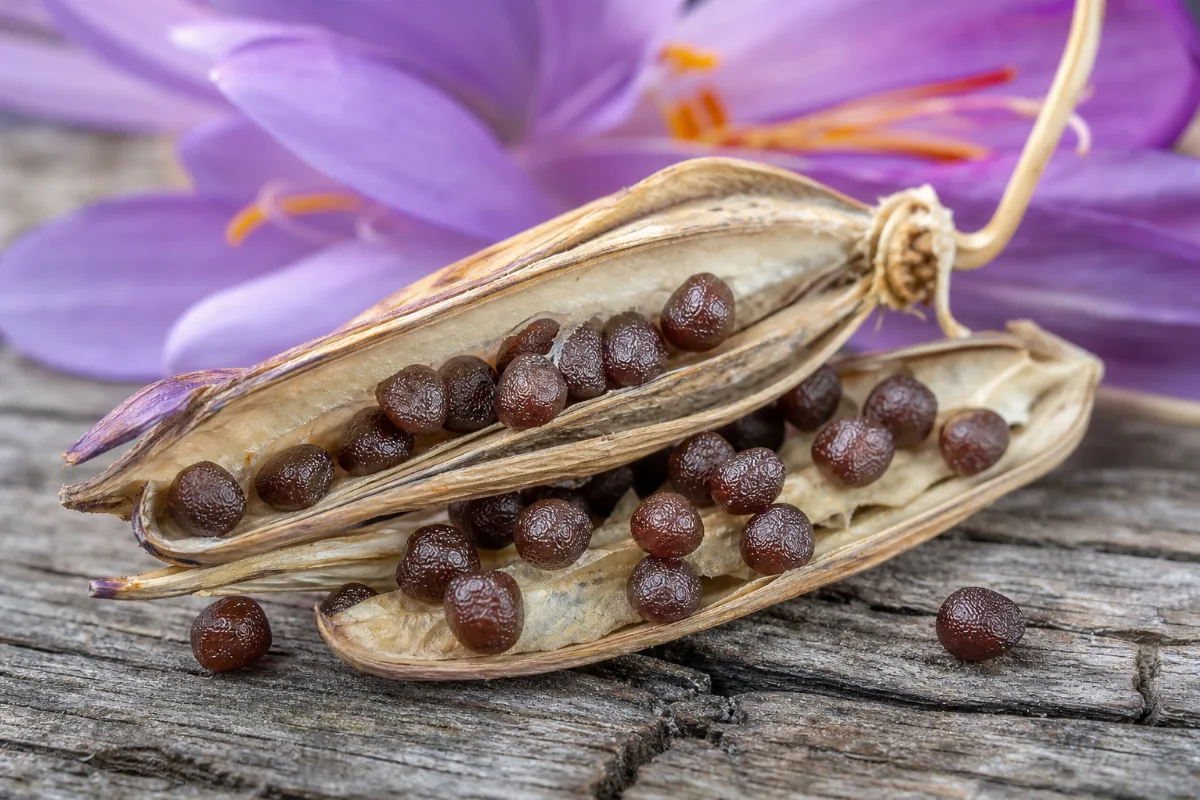
Colchicum autumnale · also called Autumn crocus, meadow saffron, colchicum
Colchicum, or autumn crocus, is a deadly poisonous plant. Eating its corm or leaves has caused organ failure and deaths, often after it was mistaken for wild garlic. It is the source of colchicine, a prescription drug for gout, familial Mediterranean fever and pericarditis, and trials back the drug, not the plant. Do not eat or self-treat with it; if anyone may have, call Poison Control at 1-800-222-1222 (US) or emergency services.
General information, not medical advice. Last substantive update · Not medically reviewed. A named clinician has not signed off on this page. How this page is made
About Colchicum
Colchicum autumnale (autumn crocus, meadow saffron) contains colchicine, which is both a useful prescription drug and a poison. The plant has caused deadly poisonings, often when its leaves were mistaken for wild garlic. Trials support the purified drug for pericarditis (moderate certainty), gout flares and familial Mediterranean fever (low), not the plant. Interactions with clarithromycin, statins and grapefruit make the drug risky too. Ask a doctor or pharmacist.
The danger comes first
Eating autumn crocus corm or leaves has caused severe, multi-organ poisoning. In a fatal case report, a 76-year-old with liver and kidney disease ate it instead of wild garlic, vomited, developed heart and breathing failure, and died on day 3. A 58-year-old with the same mix-up survived after a week of intensive care.
There is no specific antidote; care is supportive. A review says there is no clear boundary between non-toxic, toxic and lethal amounts. If anyone may have eaten it, call Poison Control at 1-800-222-1222 (US) or emergency services right away, even if they feel fine.
What it is
Colchicum autumnale is a meadow plant in the family Colchicaceae. Its corm and leaves contain colchicine. It is not the saffron crocus (Crocus sativus), which is a different plant, and it is not an onion or garlic relative.
Look-alikes: wild garlic and lily of the valley
Without flowers, the leaves resemble wild garlic (ramsons), and they share habitats. Confusion has repeatedly poisoned people. In a French poison centre review of 2,197 plant-for-food mix-ups, Colchicum was 3.3% of cases. Lily of the valley is another toxic look-alike. A folk 'garlic smell' test is something we could not verify, so do not rely on it.
What makes it distinctive
Colchicine binds tubulin and disrupts cell division. That is why the drug calms inflammation and why the poison harms many organs. The gap between helpful and harmful is narrow, and a plant has no fixed colchicine amount.
What the research shows
All the evidence is for the purified drug. For pericarditis, the ICAP trial of 240 people found recurrence in 16.7% on colchicine vs 37.5% on placebo, and a Cochrane review of 4 trials agreed (moderate certainty). For an acute gout flare, a Cochrane review found low-quality evidence it may help. In familial Mediterranean fever the Cochrane review found tiny old trials (low to very low certainty). Side effects are mainly diarrhea.
Statements about the plant are limited to case reports, poison-centre data and a livestock report.
At a glance
Traditional uses history, not proof
- Painful, swollen joints (the source of the colchicine drug)
- The corm and seed in older European medicine; no safe preparation is described in the sources we read
- Not a food: leaves look like wild garlic but are deadly
Studied for research
- Gout flares (purified colchicine drug): low certainty
- Familial Mediterranean fever (drug): low certainty
- Pericarditis (drug added to a pain medicine): moderate certainty
- The plant itself: no trials; rated against as a self-treatment
Main compounds
- Colchicine (the toxic and drug alkaloid)
Common forms
- Purified colchicine tablets (prescription medicine, not the plant)
- Raw corm, leaf or seed (dangerous)
- Hay or forage contaminated with the plant (poisons livestock)
Research links: PubMed: Colchicum autumnale · Cochrane: colchicine for acute gout (2021) · Cochrane: colchicine for pericarditis (2014) · Review: colchicine poisoning (Clin Toxicol 2010) · Case report: fatal autumn crocus poisoning (Crit Care 2004) · Research Library · Genes & Biomarkers Library
The plant and its history
- Accepted scientific name
- Colchicum autumnale L.
- Naming authority
- L.
- Common names
- autumn crocus (en); meadow saffron (en); naked ladies (en); colchicum (en)
- Botanical family
- Colchicaceae (the meadow saffron family). The class is added for completeness and was not verified in a source.
- Classification
- Plantae > Tracheophyta > Liliopsida > Liliales > Colchicaceae > Colchicum > Colchicum autumnale
- Native range
- Not verified in the sources read (the Swiss and Hungarian reports place it in European meadows).
- Habitat
- Meadows and pastures; it can grow in hay and forage.
- What the plant looks like
- Roots: Corm (underground storage organ).; Stems: Not verified.; Leaves: Spring leaves look like wild garlic (ramsons).; Flowers: Not verified in the sources read (flowers in autumn, hence the name).; Fruit: Not verified.
- Cultivation
- Not verified.
- Harvest and processing
- Not described; we do not describe any preparation.
- Look-alikes and adulterants
- Name: Wild garlic / ramsons (Allium ursinum); Note: Leaves mistaken for each other in spring; fatal cases documented. Not the same as garlic or onion.; Name: Lily of the valley (Convallaria majalis); Note: Another toxic plant with similar leaves; see /herbs-botanicals/lily-of-the-valley.; Name: Saffron crocus (Crocus sativus); Note: Different plant and family (Iridaceae); the culinary spice. Not the same as meadow saffron. See /herbs-botanicals/saffron.; Name: Glory lily (Gloriosa superba); Note: Another colchicine-containing plant; the sources we read did not cover it (NOT verified).
- Sustainability and conservation
- Not assessed.
Traditional use and history history, not clinical proof
| Tradition or era | Documented use | Source |
|---|---|---|
| Medieval and modern Europe | A 2026 UK paediatric paper states colchicine from autumn crocus has been used for centuries to treat arthritis; no other history source was read. | p41663238 |
| Modern medicine | The purified drug is licensed in the UK for gout and familial Mediterranean fever; pericarditis is off-label. | p41663238 |
Traditional use shows how a plant was used. It does not show that a supplement works or is safe today.
What is inside, and how it may work
What the plant contains and how those compounds act in cells and animals. Laboratory and animal mechanisms are not proven effects in people.
Main compounds
| Compound | Family | Where it is concentrated | Activity studied | Level of evidence |
|---|---|---|---|---|
| Colchicine PubChem 6167 | tropolone alkaloid | corm and leaves (documented in poisonings) not reported | Binds tubulin, disrupting cell division and the cell skeleton; the basis of both the drug's anti-inflammatory action and its toxicity. 4 14 | Review |
Mechanisms, receptors and pathways
| Target or pathway | Gene or receptor | What was found | Level |
|---|---|---|---|
| Tubulin / microtubules | tubulin | Colchicine binds tubulin, impairing protein assembly, endocytosis, exocytosis, cell movement and mitosis, and interrupts heart muscle conduction and contraction. Toxicity is an extension of the mechanism. 4 | Review |
Absorption, metabolism and elimination
- Absorption
- Readily absorbed by mouth, with extensive first-pass metabolism (drug).
- Distribution
- Widely distributed; binds intracellular elements.
- Metabolism
- Mainly liver; CYP3A4 and P-glycoprotein are involved.
- Elimination
- Enterohepatic recirculation and kidney excretion.
- Bioavailability
- Not given.
Isolated compounds versus whole extracts
All the human trial evidence is for purified colchicine tablets, in measured form under medical care. The plant has unknown, variable colchicine content and has caused deaths. Drug results must not be applied to the plant.
Nutritional composition
No nutrient content applies; this is a poisonous plant and a prescription drug source.
1 moderate certainty2 low certainty2 evidence against
What was looked at
The 5 benefits and uses checked for Colchicum, each with how strong the evidence is. Tap one to open it.
- Gout flares (purified colchicine drug)Low certainty
- Familial Mediterranean fever (purified colchicine drug)Low certainty
- The autumn crocus plant itself (any use)Evidence against
- Pericarditis (inflammation around the heart; purified colchicine drug)Moderate certainty
- The autumn crocus plant and the heartEvidence against
Lab markers tracked in the studies
Pain relief at 24 to 36 hours in an acute gout flareNumber of people with FMF attacksRecurrence of pericarditis
What is Colchicum good for?
Uses of the purified colchicine drug and how strong the human evidence is. None of this applies to the plant. This is information, not a recommendation: do not self-treat with autumn crocus.
Benefits, one by one
Each card is a research question, not a promise. Tap a goal to filter. Open a card to see the studies, doses and limits.
Gout flares (purified colchicine drug)
Low certaintyFor an acute gout flare, a Cochrane review found low-quality evidence that low-dose purified colchicine may help more than placebo. This is the drug, prescribed by a doctor. It is not a reason to use the plant.
2 studiesPurified prescription tablets only. No amounts are given here. A doct…
Studies, doses and limits
What the trials found
The 2021 Cochrane review included 4 trials (803 people). One placebo-controlled trial found more people had a good pain response with low-dose colchicine than placebo. The AGREE trial (184 people) found 37.8% vs 15.5% responders at 24 hours, and a higher-dose arm caused much more diarrhea and vomiting without better results than the low dose.
Results
Treatment success at 32 to 36 hours 418 vs 172 per 1000 (low-dose colchicine vs placebo). In AGREE, 37.8% vs 15.5% reached 50% pain relief at 24 hours without rescue medicine.
Effect sizes as reported
RR 2.43 (95% CI 1.05 to 5.64) in the Cochrane review's main comparison.
Why this rating
The Cochrane authors rated the main comparison low quality because it rests on one small trial and has bias and imprecision problems. No trial compared colchicine with steroids.
Form and dose studied
Purified prescription tablets only. No amounts are given here. A doctor sets any dose.
Who was studied
Adults with an acute gout flare, ages about 51 to 70 in the reviewed trials.
Limits
Only 4 trials; short; the larger trial funding is not stated in the abstract we read.
Why researchers looked
Colchicine is a long-used first-line drug for gout flares, but the trial evidence is smaller than most people assume.
Traditional use
Colchicum has been used in medicine since antiquity for painful joints; the purified drug came from that plant (history is in the science file).
Proposed mechanism Pharmacological theory
Colchicine binds tubulin and disrupts the cell skeleton, which dampens the white blood cells that drive a gout flare.
A proposed mechanism does not show that the effect happens in people.
Colchicum autumnale is a deadly poisonous plant. The evidence below is for the purified prescription drug colchicine, not for the plant. Never eat, brew or self-treat with autumn crocus. Poison Control (US) 1-800-222-1222.
Familial Mediterranean fever (purified colchicine drug)
Low certaintyColchicine is the standard drug for familial Mediterranean fever (FMF), an inherited cause of repeated fevers. Yet the Cochrane review found only tiny, old trials, rated low or very low certainty. Newer guidance concerns people who do not respond to colchicine.
2 studiesPurified prescription tablets, under specialist care. No amounts are …
Studies, doses and limits
What the trials found
The 2022 Cochrane review of FMF found 10 trials in 312 people; six used colchicine. In one crossover study of 10 people, fewer people had attacks on colchicine than on placebo; a second study of 20 people found no clear difference. No trial reported on amyloidosis, the serious long-term complication. A 2025 systematic review for EULAR/PReS recommendations found that a once-daily and a twice-daily schedule were equivalent, and that biologic drugs (especially IL-1 blockers) work for people who do not respond to colchicine.
Results
RR 0.21 for attacks at 3 months in one 10-person study; no difference in another 20-person study. Certainty low to very low.
Effect sizes as reported
RR 0.21 (95% CI 0.05 to 0.95) in the 10-person study.
Why this rating
Cochrane rated the evidence low or very low; old, small, poorly designed trials. Colchicine's role in FMF is nevertheless established clinical practice.
Form and dose studied
Purified prescription tablets, under specialist care. No amounts are given here.
Who was studied
Children and adults with FMF (ages 3 to 53 in the Cochrane review).
Limits
Tiny crossover trials; amyloid prevention not tested in RCTs.
Why researchers looked
FMF is a genetic condition; colchicine is the first-line preventive drug in practice.
Traditional use
The disease and the drug are modern medicine; there is no traditional plant use for FMF.
Proposed mechanism Pharmacological theory
Colchicine dampens inflammatory white blood cell activity; the exact FMF mechanism was not covered by the sources we read.
A proposed mechanism does not show that the effect happens in people.
Colchicum autumnale is a deadly poisonous plant. The evidence below is for the purified prescription drug colchicine, not for the plant. Never eat, brew or self-treat with autumn crocus. Poison Control (US) 1-800-222-1222.
The autumn crocus plant itself (any use)
Evidence againstNo trial tested the plant, corm, leaf or seed for any condition. The drug's evidence cannot be carried over, because the amount of colchicine in a plant is unpredictable and the gap between a helpful and a deadly amount is small.
1 studiesNone. We do not describe any way to use the plant.
Studies, doses and limits
What the trials found
No controlled study of the plant was found. Reviews of colchicine poisoning describe a narrow therapeutic index and no clear boundary between non-toxic, toxic and lethal amounts, with multi-organ failure when it goes wrong.
Results
No human efficacy data for the plant.
Why this rating
Deaths and organ failure from eating the plant are documented; no benefit is documented. We rate the plant 'against' as a self-treatment.
Why researchers looked
People sometimes assume the plant works like the drug.
Traditional use
Corm and seed were used in older European medicine; no source we read gives a safe preparation.
Proposed mechanism Pharmacological theory
The plant contains colchicine, which is why it is poisonous.
A proposed mechanism does not show that the effect happens in people.
Colchicum autumnale is a deadly poisonous plant. The evidence below is for the purified prescription drug colchicine, not for the plant. Never eat, brew or self-treat with autumn crocus. Poison Control (US) 1-800-222-1222.
Pericarditis (inflammation around the heart; purified colchicine drug)
Moderate certaintyFor acute and recurrent pericarditis, colchicine added to a standard anti-inflammatory medicine cut repeat episodes in trials. This is the strongest drug evidence on the page, and it is for the prescription tablet, not the plant.
2 studiesPurified prescription tablets added to an NSAID, under a doctor's car…
Studies, doses and limits
What the trials found
The 2014 Cochrane review pooled 4 RCTs (564 people): added to an NSAID, colchicine cut recurrences over 18 months in recurrent pericarditis (HR 0.37) and in acute pericarditis (HR 0.40), with moderate-quality evidence and a number needed to treat of about 4. The ICAP trial (240 people, NEJM 2013) found incessant or recurrent pericarditis in 16.7% on colchicine vs 37.5% on placebo. More people on colchicine stopped treatment because of side effects in the Cochrane pooled data (RR 1.87).
Results
ICAP: 16.7% vs 37.5% (relative risk reduction 0.56; NNT 4). Symptoms still present at 72 hours: 19.2% vs 40.0%.
Effect sizes as reported
Cochrane: HR 0.37 (0.24 to 0.58) recurrent; HR 0.40 (0.27 to 0.61) acute.
Why this rating
The Cochrane authors rated the main outcomes moderate quality; the evidence is from a limited number of small trials, and ICAP had partial company funding (Acarpia).
Form and dose studied
Purified prescription tablets added to an NSAID, under a doctor's care. No amounts given here.
Who was studied
Adults with a first or repeated episode of pericarditis. People with many resistant recurrences were not in the trials.
Limits
Few small trials; follow-up 18 months; 2014 review.
Why researchers looked
Pericarditis often comes back; colchicine was tested to stop recurrences.
Traditional use
No traditional use of the plant for pericarditis was found in the sources read.
Proposed mechanism Pharmacological theory
Colchicine reduces inflammatory cell activity; the exact pericardial mechanism was not covered in the sources read.
A proposed mechanism does not show that the effect happens in people.
Colchicum autumnale is a deadly poisonous plant. The evidence below is for the purified prescription drug colchicine, not for the plant. Never eat, brew or self-treat with autumn crocus. Poison Control (US) 1-800-222-1222.
The autumn crocus plant and the heart
Evidence againstEating the plant is dangerous for the heart: documented fatal cases involved heart damage and cardiac arrest. Nothing supports using the plant for heart or circulation.
2 studiesNone.
Studies, doses and limits
What the trials found
A fatal case report of a 76-year-old who ate autumn crocus in place of wild garlic described heart dilatation and cardiac arrest on day 3.
Results
No effect sizes; a single fatal case.
Why this rating
Harm documented, no benefit documented.
Limits
Case report.
Why researchers looked
Safety question, not a benefit.
Proposed mechanism Pharmacological theory
Colchicine disrupts heart muscle cell conduction and contraction at toxic amounts.
A proposed mechanism does not show that the effect happens in people.
Colchicum autumnale is a deadly poisonous plant. The evidence below is for the purified prescription drug colchicine, not for the plant. Never eat, brew or self-treat with autumn crocus. Poison Control (US) 1-800-222-1222.
Connections to the rest of health
How Colchicum connects to the rest of our health knowledge graph. Every link says what kind of connection it is. A safety link (for example to the liver) is a warning, not a benefit. A study that merely mentions a topic never creates a benefit link.
Explore every connection: goals, body systems, organs, symptoms, genes
A. Wellness goals
| Connected to | Kind of connection | Evidence status | Context | Studies |
|---|---|---|---|---|
| Joint Support | Demonstrated clinical effect | Low certainty | Gout flares (purified colchicine drug): For an acute gout flare, a Cochrane review found low-quality evidence that low-dose purified colchicine may help more than placebo. This is the drug, prescribed by a doctor. It is not a reason to use the plant. | 12 19 |
| Inflammation Balance | Demonstrated clinical effect | Low certainty | Gout flares (purified colchicine drug): For an acute gout flare, a Cochrane review found low-quality evidence that low-dose purified colchicine may help more than placebo. This is the drug, prescribed by a doctor. It is not a reason to use the plant. Familial Mediterranean fever (purified colchicine drug): Colchicine is the standard drug for familial Mediterranean fever (FMF), an inherited cause of repeated fevers. Yet the Cochrane review found only tiny, old trials, rated low or very low certainty. Newer guidance concerns people who do not respond to colchicine. | 12 19 21 16 1 7 |
| Heart Health | Demonstrated clinical effect | Moderate certainty | Pericarditis (inflammation around the heart; purified colchicine drug): For acute and recurrent pericarditis, colchicine added to a standard anti-inflammatory medicine cut repeat episodes in trials. This is the strongest drug evidence on the page, and it is for the prescription tablet, not the plant. | 1 7 |
B. Body systems
| Connected to | Kind of connection | Evidence status | Context | Studies |
|---|---|---|---|---|
| Musculoskeletal System | Biological association | Low certainty | Studied for: Gout flares (purified colchicine drug) | 12 19 |
| Immune System | Biological association | Low certainty | Studied for: Familial Mediterranean fever (purified colchicine drug) | 21 16 |
| Cardiovascular System | Biological association | Moderate certainty | Studied for: Pericarditis (inflammation around the heart; purified colchicine drug) | 1 7 |
E. Health conditions
| Connected to | Kind of connection | Evidence status | Context | Studies |
|---|---|---|---|---|
| Plant poisoning | Documented | Documented deaths and organ failure. Corm and leaves; look-alike with wild garlic. Preparation or compound: Colchicum autumnale corm and leaves |
3 10 | |
| Gout | Low certainty | Prescription medicine; plant not shown safe. Preparation or compound: Purified colchicine (drug) |
12 | |
| Pericarditis | Moderate certainty | Prescription medicine. Purified colchicine tablets plus a pain medicine; not the plant. Preparation or compound: Purified colchicine (drug) |
1 7 |
I. Biomarkers
| Connected to | Kind of connection | Evidence status | Context | Studies |
|---|---|---|---|---|
| Pain relief at 24 to 36 hours in an acute gout flare | Biological association | Low certainty | Measured in trials: lowered. A lab change is not the same as a health benefit. | 19 12 |
| Number of people with FMF attacks | Biological association | Low certainty | Measured in trials: mixed. A lab change is not the same as a health benefit. | 21 |
| Recurrence of pericarditis | Biological association | Moderate certainty | Measured in trials: lowered. A lab change is not the same as a health benefit. | 7 1 |
J. Genes, receptors and enzymes
K. Biological pathways
L. Active compounds
| Connected to | Kind of connection | Evidence status | Context | Studies |
|---|---|---|---|---|
| Colchicine | Biological association | Review | Binds tubulin, disrupting cell division and the cell skeleton; the basis of both the drug's anti-inflammatory action and its toxicity. Preparation or compound: corm and leaves (documented in poisonings) |
4 14 |
Each connection is stored with the ingredient, the connected record, the kind of connection, the evidence status, the supporting studies, the preparation or compound involved, and a review date (last reviewed October 25, 2026).
Evidence at a glance: what changed in 3 lab markers
Tap a number to show only those markers. Counts are markers, not people.
The evidence
The research centre for Colchicum. Every record here was checked against PubMed or the publisher's page; we never list a study we have not verified.
Evidence by outcome
Bars show how many studies we found for each outcome, not how well it works. People are added up across trials only (reviews are not added, to avoid double counting).
How we rate evidence
High certainty
Several well-run trials or reviews agree; further research is unlikely to change the picture much.
Moderate certainty
Good trials point the same way, but some doubt remains.
Low certainty
Small, short or inconsistent trials. The finding could change with better research.
Very low certainty
Very little or very weak human data. Treat as a possibility only.
Mixed findings
Trials or reviews disagree with each other.
Not enough evidence
Not enough human research to say either way.
Evidence against
Good research found no benefit, or found harm.
We take the reviewers' own risk-of-bias and GRADE statements where they exist, and otherwise judge from study size, design, consistency, directness and whether a product matches what is sold. Many publications do not make evidence high. Method note: We started from our earlier summary and checked PubMed records, GBIF and PubChem. Most sources were read as abstracts; the Medsafe bulletin was not re-opened. Regulators other than those named were not opened and are marked unverified. No study is cited that we could not verify.
Study library: every study we checked 22
| Study | Design | People | Product, dose, length | Result |
|---|---|---|---|---|
| Alabed 2014 Colchicine for pericarditis Cochrane Database Syst Rev · PMID 25164988 · DOI |
Systematic review |
564 Adults with acute or recurrent pericarditis; 4 RCTs |
purified colchicine tablets (prescription medicine, not the plant), added to an anti-inflammatory pain medicine (NSAID) not given here (prescription medicine) 18 months follow-up · vs NSAID alone |
Moderate-quality evidence that colchicine added to an NSAID cut recurrences over 18 months in recurrent pericarditis (HR 0.37) and acute pericarditis (HR 0.40). Symptom relief at 72 hours was more likely (low quality). Side effects were mainly stomach upset; more people stopped treatment because of side effects. HR 0.37 recurrent; HR 0.40 acute; RR 1.87 stopping for side effects (0.24 to 0.58 (recurrent); 0.27 to 0.61 (acute)) Methods, limits and fundingLimitations: Few small trials; people with many resistant recurrences were not studied. Funding and conflicts: None known (as stated in the record) Read: abstract |
| Barmettler 2025 Colchicum autumnale poisoning in a dairy farm in Switzerland: a glimpse at the milk safety aspect Ital J Food Saf · PMID 40905265 · DOI |
Case report animal |
Dairy cattle fed hay or grass containing autumn crocus, Switzerland | Colchicum autumnale in forage leaf (in forage) not given here (prescription medicine) not given here |
Cattle became ill. Colchicine was found in bulk milk 2 weeks after the incident and not at 5 weeks. There are no legal limits or withdrawal times for colchicine in milk. Positive at 2 weeks, negative at 5 weeks Methods, limits and fundingLimitations: One farm; animal and food-safety report, not human health data. Read: abstract |
| Brvar 2004 Case report: fatal poisoning with Colchicum autumnale Crit Care · PMID 14975056 · DOI |
Case report |
1 76-year-old man with liver and kidney disease who ate autumn crocus instead of wild garlic |
Colchicum autumnale plant leaf (eaten) not given here (prescription medicine) not given here |
Nausea, vomiting and diarrhea after 12 hours, then breathing failure, heart damage, muscle breakdown, clotting problems, and worsening kidney and liver function. Treatment was supportive. He died on day 3. Pre-existing liver and kidney disease probably made it worse. One death Methods, limits and fundingLimitations: Single case. Read: abstract |
| Finkelstein 2010 Colchicine poisoning: the dark side of an ancient drug Clin Toxicol (Phila) · PMID 20586571 · DOI |
Systematic review |
Published literature on colchicine poisoning to January 2010 | colchicine (drug and overdose) drug; plant exposure not the focus not given here (prescription medicine) not given here |
Narrow therapeutic index with no clear line between non-toxic, toxic and lethal. Toxicity is an extension of how the drug works (it disrupts cell division and the cell skeleton), leading to multi-organ failure. CYP3A4 and P-glycoprotein inhibitors (clarithromycin, erythromycin, ketoconazole, ciclosporin, grapefruit juice) can raise levels; statins may raise muscle risk. Crosses the placenta without evidence of fetal toxicity; in breast milk, considered compatible with lactation. No effect size Methods, limits and fundingLimitations: 2010 review; literature search to January 2010. Read: abstract |
| GBIF 2026 Colchicum autumnale L. (species match) GBIF API · Source |
Database record |
Accepted name Colchicum autumnale L.; family Colchicaceae; order Liliales (API call 2026-10-25). Methods, limits and fundingRead: api | ||
| Hung 2005 Fatal interaction between clarithromycin and colchicine in patients with renal insufficiency: a retrospective study Clin Infect Dis · PMID 16007523 · DOI |
Cohort study |
116 116 hospital patients given clarithromycin and colchicine |
colchicine (drug) with clarithromycin drug not given here (prescription medicine) not given here · vs sequential rather than overlapping use |
10.2% (9 of 88) who received both at the same time died, versus 3.6% (1 of 28) who received them one after another. Longer overlap, kidney impairment and low blood counts were linked to death. The authors advise not prescribing the two together. Death 10.2% vs 3.6%; kidney impairment RR 9.1 (1.75 to 47.06 (kidney impairment)) Methods, limits and fundingLimitations: Retrospective, one hospital system. Read: abstract |
| Imazio 2013 A randomized trial of colchicine for acute pericarditis (ICAP) N Engl J Med · PMID 23992557 · DOI |
RCT |
240 Adults with a first episode of acute pericarditis |
purified colchicine tablets (prescription medicine, not the plant) added to aspirin or ibuprofen not given here (prescription medicine) 3 months · vs placebo |
Incessant or recurrent pericarditis occurred in 16.7% on colchicine vs 37.5% on placebo (number needed to treat 4). Symptoms persisting at 72 hours: 19.2% vs 40.0%. No serious adverse events were seen. RRR 0.56; NNT 4 (0.30 to 0.72) Methods, limits and fundingLimitations: One trial of 240 people; partly funded by a company (Acarpia). Funding and conflicts: Acarpia and a regional health authority funded the trial Read: abstract |
| Indraratna 2018 Use of colchicine in pregnancy: a systematic review and meta-analysis Rheumatology (Oxford) · PMID 29029311 · DOI |
Meta-analysis |
Pregnant women taking colchicine, 4 studies in the meta-analysis | colchicine (drug) drug not given here (prescription medicine) not given here · vs women not taking colchicine |
No increase in miscarriage or major malformation. In FMF, no difference in birthweight or gestation; outside FMF, colchicine was linked to lower birthweight and earlier birth. Authors say FMF treatment should not be withheld in pregnancy on this basis. No increase in malformations Methods, limits and fundingLimitations: Four studies, mostly FMF; the findings apply to a prescribed drug under supervision, not to the plant. Read: abstract |
| Kazi 2026 Paediatric colchicine poisoning in the UK: a 10-year retrospective case series from the National Poisons Information Service Arch Dis Child · PMID 41663238 · DOI |
Case series |
57 Children under 18 with colchicine exposure, UK 2011 to 2021 |
colchicine (drug) drug not given here (prescription medicine) not given here |
57 cases; about half had symptoms at presentation; 12 (21.1%) developed systemic toxicity, 7 multiple organ failure, 4 died (all mixed overdoses). Children can look well at first and then get worse. 4 deaths in 57 Methods, limits and fundingLimitations: Telephone enquiries only; outcome known in 13 of 57. Read: abstract |
| Kovacs-Abraham 2026 Successful management of accidental colchicine intoxication after ingestion of Colchicum autumnale: a case report Toxics · PMID 42043136 · DOI |
Case report |
1 58-year-old man who mistook autumn crocus for wild garlic |
Colchicum autumnale plant leaf (eaten) not given here (prescription medicine) not given here |
Moderate kidney and liver impairment after eating the plant; intensive care, lipid emulsion, vitamin K and N-acetylcysteine; discharged well after 7 days. Early recognition mattered. Recovered Methods, limits and fundingLimitations: Single case; this one survived. Read: abstract |
| M-Hamvas 2025 Histological features detected for separation of the edible leaves of Allium ursinum L. from the poisonous leaves of Convallaria majalis L. and Colchicum autumnale L. Plants (Basel) · PMID 40805725 · DOI |
Lab botany plant |
Leaves of three species grown in one garden in Hungary | leaf anatomy leaf not given here (prescription medicine) not given here |
The leaves look similar without flowers and have repeatedly led to serious human and animal poisonings. Microscope features separate them (for example, wild garlic leaves have pores only on the underside), but this is a lab method, not a field test. No numbers Methods, limits and fundingLimitations: Needs a microscope; not usable for foragers. Read: abstract |
| McKenzie 2021 Colchicine for acute gout Cochrane Database Syst Rev · PMID 34438469 · DOI |
Systematic review |
803 Adults with acute gout; 4 trials |
purified colchicine tablets (prescription medicine, not the plant) not given here (prescription medicine) not given here · vs placebo, NSAID, or a Chinese herbal mixture |
Low-quality evidence from one trial: low-dose colchicine may improve treatment success versus placebo. Success at 32 to 36 hours: 418 vs 172 per 1000. Higher doses may also help but with more side effects. No trial compared colchicine with steroids. RR 2.43 for treatment success (low-dose vs placebo) (1.05 to 5.64) Methods, limits and fundingLimitations: Few, small trials; low-quality evidence for the main comparison. Read: abstract |
| Medsafe (New Zealand) 2011 Colchicine: Prescriber Update 32(1) Medsafe (New Zealand) · Source |
Authoritative guidance |
Regulator bulletin: treatment of colchicine poisoning is supportive; higher risk with kidney or liver impairment and with interacting medicines. Cited from our earlier summary; not re-opened. Methods, limits and fundingLimitations: 2011 bulletin; summary-only Read: summary-only | ||
| PubChem 2026 Colchicine, PubChem CID 6167 PubChem · Source |
Database record n/a |
Formula C22H25NO6 (API call 2026-10-25). Methods, limits and fundingRead: api | ||
| Rousseau 2022 [Colchicum poisoning by confusion with wild garlic (Allium ursinum)] Rev Med Interne · PMID 35597736 · DOI |
Case report |
1 Adult poisoned after mistaking autumn crocus for wild garlic (French emergency department) |
Colchicum autumnale plant leaf (eaten) not given here (prescription medicine) not given here |
Presentation matches colchicine drug poisoning; can be fatal after a large ingestion. The plants grow near each other and look alike in spring. Doctors should ask about recent wild plants in anyone with severe diarrhoea and abnormal blood tests. No numbers Methods, limits and fundingLimitations: Single case; read in the abstract only (French). Read: abstract |
| Sag 2025 Efficacy and safety of treatments in familial Mediterranean fever and its complications: a systematic review informing the EULAR/PReS recommendations for familial Mediterranean fever Ann Rheum Dis · PMID 40562663 · DOI |
Systematic review |
1798 Children and adults with FMF; 42 studies on efficacy and safety |
colchicine and biologic drugs not given here (prescription medicine) not given here · vs various |
Reviews biologic drugs for people who do not respond to colchicine. An RCT showed once-daily and twice-daily colchicine schedules were equivalent. Evidence on amyloidosis was entirely observational. Results were combined in words, not numbers. No pooled effect size Methods, limits and fundingLimitations: Heterogeneous studies; qualitative synthesis. Funding and conflicts: Some authors disclose drug-company consulting (not colchicine specific) Read: abstract |
| Schwier 2022 A systematic review of the drug-drug interaction between statins and colchicine: patient characteristics, etiologies, and clinical management strategies Pharmacotherapy · PMID 35175631 · DOI |
Systematic review |
38 21 articles, mostly case reports; 38 patients with adverse events |
colchicine (drug) with statins drug not given here (prescription medicine) not given here |
Of 38 patients, 66% developed muscle disease (myopathy), 26% rhabdomyolysis; most were on simvastatin or atorvastatin; 62% of case-report patients had kidney disease. Risk factors in one case-control study: kidney disease or cirrhosis, higher colchicine intake, other interacting drugs. 66% myopathy; 26% rhabdomyolysis Methods, limits and fundingLimitations: Mostly case reports, which cannot give how often it happens. Read: abstract |
| Stewart 2020 Adverse events during oral colchicine use: a systematic review and meta-analysis of randomised controlled trials Arthritis Res Ther · PMID 32054504 · DOI |
Meta-analysis |
8659 Adults in 35 double-blind trials, mostly gout, cirrhosis and pericarditis |
oral colchicine not given here (prescription medicine) not given here · vs placebo or active drug |
Diarrhoea 17.9% vs 13.1%; any stomach or bowel event 17.6% vs 13.1%. Liver, muscle and blood events were not clearly higher in these trials (small, imprecise). Diarrhoea RR 2.4; any GI event RR 1.7 (1.6 to 3.7; 1.3 to 2.3) Methods, limits and fundingLimitations: Trial populations exclude very sick people; rare serious harms need big numbers. Read: abstract |
| Terkeltaub 2010 High versus low dosing of oral colchicine for early acute gout flare: twenty-four-hour outcome of the first multicenter, randomized, double-blind, placebo-controlled, parallel-group, dose-comparison colchicine study Arthritis Rheum · PMID 20131255 · DOI |
RCT |
184 Adults with an early gout flare |
purified colchicine tablets (prescription medicine, not the plant) not given here (prescription medicine) 24 hours · vs placebo |
Responders (50% or more pain relief at 24 hours without rescue medicine): 37.8% low-dose, 32.7% high-dose, 15.5% placebo. The higher-dose arm had much more diarrhea and vomiting; the low-dose arm looked like placebo for side effects. 37.8% vs 15.5% responders (low-dose vs placebo), P = 0.005 Methods, limits and fundingLimitations: Short (24-hour) primary outcome; funding not stated in the abstract. Funding and conflicts: funding and conflicts of interest not stated in the abstract Read: abstract |
| Torrents 2024 Food confusion between edible and poisonous plants: a 22-year retrospective of the Southeastern France Poison Control Center Toxins (Basel) · PMID 39728810 · DOI |
Case series |
2197 2,197 plant-for-food mix-ups in southeastern France, 2002 to 2023 |
various plants including Colchicum autumnale various not given here (prescription medicine) not given here |
Colchicum autumnale was 3.3% of mix-ups (third most common named plant). Most cases were mild (0.5% severe, one death overall, involving aconite), but the authors say deaths and serious harm can occur. 3.3% of mix-ups Methods, limits and fundingLimitations: One regional poison centre; most cases mild, so it does not describe worst cases. Read: abstract |
| Yin 2022 Interventions for reducing inflammation in familial Mediterranean fever Cochrane Database Syst Rev · PMID 35349164 · DOI |
Systematic review |
312 People aged 3 to 53 with familial Mediterranean fever; 10 RCTs |
purified colchicine tablets (prescription medicine, not the plant) not given here (prescription medicine) not given here · vs placebo or other drugs |
Six of 10 trials used colchicine. Older colchicine trials were small and had design problems. One crossover study (10 people) found fewer people with attacks on colchicine; another (20 people) found no clear difference. Certainty low to very low. No trial reported on amyloidosis. RR 0.21 for attacks at 3 months in one 10-person study (0.05 to 0.95) Methods, limits and fundingLimitations: Tiny, old trials; low and very-low certainty. Read: abstract |
| none 2026 EMA/HMPC, NCCIH, LiverTox, LactMed, FDA label: not opened none |
Gap note |
Not opened or not found in this round; regulatory wording is therefore marked NOT verified. Methods, limits and fundingRead: none |
What we do not know yet
- No trial of the plant, corm or seed for any use.
- Gout and FMF trials are few and small.
- Seed use and toxicity are not described in the sources read.
- EMA/HMPC, FDA, NCCIH, LiverTox and LactMed were not opened.
- Grapefruit and statin interactions are case-report or mechanism level.
How new research is added
New studies are found by a saved PubMed search and placed in a review queue. A person reads each one before it changes any rating or safety wording.
Lab markers
What changed in blood or saliva tests during trials. A changed number is not the same as feeling or being healthier, and we give no "normal ranges".
Other 3
Pain relief at 24 to 36 hours in an acute gout flare
Lowered in trials
The share of people reporting at least half their pain gone at one day.
Low certaintyResults and what it means
Why it was measured
The main outcome in the colchicine gout trials.
Statistical vs. clinical meaning
A self-reported symptom, not a lab marker; short follow-up.
Safety implication
Higher-dose arms had far more diarrhea and vomiting.
Number of people with FMF attacks
Mixed results in trials
How many people had at least one attack during the trial.
Low certaintyResults and what it means
Why it was measured
The main way colchicine has been judged in FMF.
Statistical vs. clinical meaning
Very small studies; results disagree.
Safety implication
Loose stools and diarrhea were reported.
| Study | Result | People | Product |
|---|---|---|---|
| 21 | RR 0.21 in one 10-person study; RR 0.78 (no clear difference) in a second 20-person study. | People with FMF | oral colchicine tablets vs placebo |
Recurrence of pericarditis
Lowered in trials
Pericarditis returning or never settling after the first episode.
Moderate certaintyResults and what it means
Why it was measured
The main outcome in the pericarditis trials.
Statistical vs. clinical meaning
Clinical outcome, not a lab number.
Safety implication
More stopped treatment for side effects in pooled data (RR 1.87).
Safety
What studies and official sources say about side effects, medicines and who should check first. Each point shows what kind of evidence it comes from.
Main points to know 4
- Deadly poisonous plant: do not eat any part. Colchicum autumnale (autumn crocus, meadow saffron) contains colchicine. Eating the corm or leaves has caused severe, multi-organ poisoning and deaths. There is no specific antidote; treatment is supportive. If anyone may have eaten it, call Poison Control (US 1-800-222-1222) or emergency services right away, even if they feel well. Case report 3 10 4 13
- Mistaken for wild garlic (ramsons) or onion. Without flowers, the spring leaves look like wild garlic and have caused real poisonings, including a fatal one. The garlic-smell test is a folk idea we could not verify. Never eat a foraged plant you cannot identify with certainty. Case report 3 15 10 11 20
- Narrow gap between helpful and harmful. A review of colchicine poisoning says there is no clear line between non-toxic, toxic and lethal amounts. With a plant, the amount of colchicine is unknown. Systematic review 4
- Colchicine tablets are a prescription drug. Purified colchicine is a regulated medicine for gout, familial Mediterranean fever and (off-label in many places) pericarditis. It must be used only as prescribed. This page gives no dosing. Authoritative guidance 9 4
Side effects 5
| Effect | How often | Severity and recovery | Evidence |
|---|---|---|---|
| Diarrhoea, nausea, vomiting, stomach pain Often the first sign of toxicity too; early plant poisoning looks like a stomach bug. | Diarrhoea 17.9% vs 13.1% on placebo or comparator in 35 trials (drug) | mild to severe usually reversible | Meta-analysis 18 |
| Multi-organ failure (heart, lungs, kidney, liver, blood) Fatal case: heart damage, breathing failure, muscle breakdown, clotting problems, then cardiac arrest on day 3. | Not quantified for the plant | life-threatening may be fatal | Case report 3 10 4 |
| Low blood counts (bone marrow suppression) and infection Leukopenia with infection was a cause of death in the case report. | Haematology events 0.6% vs 0.4% in trials of the drug | serious variable | Meta-analysis 18 3 |
| Muscle damage Statin interaction raises the risk. | Muscle events 4.2% vs 3.3% in trials; much higher with statins in case reports | moderate to severe usually reversible | Meta-analysis 18 17 |
| Poisoning in children Children can look well at first and then worsen. | 57 UK paediatric cases over 10 years, 4 deaths (all mixed overdoses) | severe may be fatal | Case series 9 |
Liver
Moderate liver impairment occurred in a patient who recovered after eating autumn crocus, and liver function worsened in a fatal case with pre-existing liver disease. Trial pooling found adverse liver events in 1.9% of colchicine users vs 1.1% of comparators, a difference that was not clear (RR 1.6, CI 0.9 to 3.0). LiverTox was not opened in this round. 10 3 18
How often. Not established for the plant.
Monitoring. Any suspected ingestion needs emergency assessment. Liver tests are part of hospital care for poisoning.
- p42043136
- p14975056
This is a safety connection. It is not evidence that Colchicum supports liver health.
Medicines and supplements 4
| With | Why it matters | Importance | Evidence | What to do |
|---|---|---|---|---|
| Clarithromycin (and other macrolides such as erythromycin) drug | These antibiotics block CYP3A4 and P-glycoprotein, which clear colchicine, so levels rise. | In 88 hospital patients on both at the same time, 10.2% died vs 3.6% of those given them one after another; kidney impairment multiplied the risk. | Observational cohort Moderate certainty 6 4 | The authors say the two should not be prescribed together. Tell the prescriber about every medicine. |
| Statins, especially simvastatin and atorvastatin drug | Both are processed by CYP3A4 and P-glycoprotein; muscle damage can occur. | Systematic review of mostly case reports: of 38 patients with problems, 66% had myopathy and 26% rhabdomyolysis; many had kidney disease. | Case reports Low certainty 17 4 | Ask a doctor or pharmacist before combining. Report muscle pain or weakness. |
| Grapefruit juice food | Named in a toxicology review as a CYP3A4 and P-glycoprotein inhibitor that can raise colchicine levels. | No study of size was read; stated as a mechanism. | Narrative review Not enough evidence 4 | Ask the prescriber about grapefruit while on colchicine. |
| Other CYP3A4 or P-glycoprotein inhibitors (ketoconazole, ciclosporin and others) drug | Named in the same review as raising colchicine concentrations. | Not quantified in the sources read. | Narrative review Low certainty 4 | Check any new medicine against colchicine with a pharmacist. |
Who should check first 5
| Situation | Advice | Evidence |
|---|---|---|
| Eating, brewing or tasting any part of autumn crocus | Never. Documented poisonings and deaths. | Case report 3 10 |
| Kidney or liver impairment (even with the tablet) | Higher risk of severe toxicity; only a specialist should decide. | Case report 3 6 13 |
| Children | Colchicine tablets and the plant are dangerous for children; keep out of reach. | Case series 9 |
| Taking clarithromycin or other strong CYP3A4/P-gp inhibitors | See interactions; prescriber decision only. | Observational cohort 6 |
| Pregnancy and breastfeeding (the plant) | Avoid the plant entirely. The purified drug has been used in pregnancy for FMF under medical care (meta-analysis: no increase in miscarriage or major malformations; a toxicology review calls it compatible with breastfeeding; LactMed not opened, NOT verified). That does not apply to the plant. | Meta-analysis 8 4 |
Overdose, product quality and regulators
Summary. Colchicine binds tubulin and disrupts cell division and the cell skeleton, so toxicity reaches nearly every organ. A review describes a narrow therapeutic index and no clear boundary between non-toxic, toxic and lethal amounts. Early signs are stomach upset, then organ failure over days.
Animal. Cattle poisoned by autumn crocus in forage: colchicine was found in bulk milk at 2 weeks and not at 5 weeks.
Human doses studied. We give no amounts. Reported lethal amounts vary and are not repeated here.
High dose or long term signals. Not established for long-term plant exposure.
Overdose response. Call Poison Control (US 1-800-222-1222) or emergency services. Care is supportive; the patient who survived received intensive care.
Genotoxicity. Colchicine stops cell division (antimitotic); the sources read did not rate genotoxicity.
Toxic plant parts. Corm and leaves are documented in human cases; seed was not described in any source read. Treat all parts as toxic.
The main hazard is mix-up, not adulteration: leaves can be taken for wild garlic and plant matter can contaminate hay.
Look-alike harvests. Leaves of Colchicum, lily of the valley and wild garlic share habitats and look alike before flowering; confusion has caused serious poisonings. 11 3 15
Hay, forage and milk. Autumn crocus in forage poisoned cattle; colchicine was detected in bulk milk after 2 weeks and not after 5. No legal limit or withdrawal time exists. 2
| Body | Action | Date |
|---|---|---|
| UK licensing (as described in a 2026 paediatric case series) (United Kingdom) | Colchicine is licensed for gout and familial Mediterranean fever; pericarditis is off-label. source | 2026 |
When to get medical help
- Nausea, vomiting or severe diarrhea within hours of eating any wild plant or suspected wild garlic
- Burning in the mouth or throat, then abdominal pain and bloody diarrhea
- Fever, breathing trouble, confusion, drowsiness or a very fast or slow heartbeat
- Muscle pain, weakness or dark urine
- Any suspected ingestion by a child or pet: call Poison Control (US 1-800-222-1222) or emergency services without waiting for symptoms
Stop the supplement and contact a clinician or emergency service. In the US, Poison Control is 1-800-222-1222.
General information only, not medical advice. Ask a clinician or pharmacist before use, especially with medicines, in pregnancy or with a health condition. See the Natural Remedy Safety guide.
Frequently asked questions
Is autumn crocus safe?
Is the plant the same as the colchicine drug?
Is it the same as saffron?
No. The saffron spice comes from Crocus sativus, a different plant. See the Saffron page. Autumn crocus is Colchicum autumnale and is poisonous.
Can it be mistaken for wild garlic?
What should I do if someone may have eaten it?
What are the signs of poisoning?
Does colchicine help gout?
Does colchicine help pericarditis?
Does colchicine help familial Mediterranean fever?
Does colchicine interact with medicines?
Is it safe in pregnancy or breastfeeding?
Can it poison pets and milk?
Yes. Autumn crocus in hay poisoned cattle, and colchicine was found in milk two weeks later.
Explore by health goal
Editorial transparency
- Written by
- AlternativeMed editorial team. Research compiled with AI assistance, then checked against PubMed records.
- Medical review
- None. This page has not been reviewed by a physician or pharmacist.
- First published
- 2026-10-25
- Last substantive update
- 2026-10-25
- How we research
- We started from our earlier summary and checked PubMed records, GBIF and PubChem. Most sources were read as abstracts; the Medsafe bulletin was not re-opened. Regulators other than those named were not opened and are marked unverified. No study is cited that we could not verify.
- How we rate evidence
- See "How we rate evidence" in the Evidence tab.
- Independence
- No product is promoted on this page. No affiliate links are shown.
Sources 22
Each source was opened and checked. Where we read only the abstract, it says so. The small numbers in the text point here.
- Alabed S, Cabello JB, Irving GJ et al.. Colchicine for pericarditis. Cochrane Database Syst Rev. 2014. PMID 25164988. DOI 10.1002/14651858.CD010652.pub2. (abstract)
- Barmettler K, Fah A, Naegeli H et al.. Colchicum autumnale poisoning in a dairy farm in Switzerland: a glimpse at the milk safety aspect. Ital J Food Saf. 2025. PMID 40905265. DOI 10.4081/ijfs.2025.13828. (abstract)
- Brvar M, Ploj T, Kozelj G et al.. Case report: fatal poisoning with Colchicum autumnale. Crit Care. 2004. PMID 14975056. DOI 10.1186/cc2427. (abstract)
- Finkelstein Y, Aks SE, Hutson JR et al.. Colchicine poisoning: the dark side of an ancient drug. Clin Toxicol (Phila). 2010. PMID 20586571. DOI 10.3109/15563650.2010.495348. (abstract)
- GBIF API. Colchicum autumnale L. (species match). GBIF API. 2026. (api)
- Hung IF, Wu AK, Cheng VC et al.. Fatal interaction between clarithromycin and colchicine in patients with renal insufficiency: a retrospective study. Clin Infect Dis. 2005. PMID 16007523. DOI 10.1086/431592. (abstract)
- Imazio M, Brucato A, Cemin R et al.. A randomized trial of colchicine for acute pericarditis (ICAP). N Engl J Med. 2013. PMID 23992557. DOI 10.1056/NEJMoa1208536. (abstract)
- Indraratna PL, Virk S, Gurram D et al.. Use of colchicine in pregnancy: a systematic review and meta-analysis. Rheumatology (Oxford). 2018. PMID 29029311. DOI 10.1093/rheumatology/kex353. (abstract)
- Kazi B, Gray L, Thanacoody HKR. Paediatric colchicine poisoning in the UK: a 10-year retrospective case series from the National Poisons Information Service. Arch Dis Child. 2026. PMID 41663238. DOI 10.1136/archdischild-2025-328646. (abstract)
- Kovacs-Abraham Z, Aczel T, Lakner B et al.. Successful management of accidental colchicine intoxication after ingestion of Colchicum autumnale: a case report. Toxics. 2026. PMID 42043136. DOI 10.3390/toxics14040309. (abstract)
- M-Hamvas M, Totik A, Freytag C et al.. Histological features detected for separation of the edible leaves of Allium ursinum L. from the poisonous leaves of Convallaria majalis L. and Colchicum autumnale L.. Plants (Basel). 2025. PMID 40805725. DOI 10.3390/plants14152377. (abstract)
- McKenzie BJ, Wechalekar MD, Johnston RV et al.. Colchicine for acute gout. Cochrane Database Syst Rev. 2021. PMID 34438469. DOI 10.1002/14651858.CD006190.pub3. (abstract)
- Medsafe (New Zealand). Colchicine: Prescriber Update 32(1). Medsafe (New Zealand). 2011. (summary-only)
- PubChem. Colchicine, PubChem CID 6167. PubChem. 2026. (api)
- Rousseau G, Clement J, Fezard JB et al.. [Colchicum poisoning by confusion with wild garlic (Allium ursinum)]. Rev Med Interne. 2022. PMID 35597736. DOI 10.1016/j.revmed.2022.04.022. (abstract)
- Sag E, Oton T, Carmona L, Ozen S. Efficacy and safety of treatments in familial Mediterranean fever and its complications: a systematic review informing the EULAR/PReS recommendations for familial Mediterranean fever. Ann Rheum Dis. 2025. PMID 40562663. DOI 10.1016/j.ard.2025.05.020. (abstract)
- Schwier NC, Cornelio CK, Boylan PM. A systematic review of the drug-drug interaction between statins and colchicine: patient characteristics, etiologies, and clinical management strategies. Pharmacotherapy. 2022. PMID 35175631. DOI 10.1002/phar.2674. (abstract)
- Stewart S, Yang KCK, Atkins K et al.. Adverse events during oral colchicine use: a systematic review and meta-analysis of randomised controlled trials. Arthritis Res Ther. 2020. PMID 32054504. DOI 10.1186/s13075-020-2120-7. (abstract)
- Terkeltaub RA, Furst DE, Bennett K et al.. High versus low dosing of oral colchicine for early acute gout flare: twenty-four-hour outcome of the first multicenter, randomized, double-blind, placebo-controlled, parallel-group, dose-comparison colchicine study. Arthritis Rheum. 2010. PMID 20131255. DOI 10.1002/art.27327. (abstract)
- Torrents R, Reynoard J, Glaizal M et al.. Food confusion between edible and poisonous plants: a 22-year retrospective of the Southeastern France Poison Control Center. Toxins (Basel). 2024. PMID 39728810. DOI 10.3390/toxins16120552. (abstract)
- Yin X, Tian F, Wu B, Xu T. Interventions for reducing inflammation in familial Mediterranean fever. Cochrane Database Syst Rev. 2022. PMID 35349164. DOI 10.1002/14651858.CD010893.pub4. (abstract)
- none. EMA/HMPC, NCCIH, LiverTox, LactMed, FDA label: not opened. none. 2026. (none)


