Herbs & Botanicals · Poisonous heart-drug plant
Foxglove
Digitalis purpurea · also called Purple foxglove, digitalis, woolly foxglove (Digitalis lanata)
Do not use foxglove leaf, tea or supplements. The gap between a medicinal and a toxic amount is very small. Foxglove has caused heart block and death, often after being mistaken for comfrey or borage. Its story as a heart medicine is history (William Withering, 1785) and prescription drugs such as digoxin, which are a different thing from the plant.
General information, not medical advice. Last substantive update · Not medically reviewed. A named clinician has not signed off on this page. How this page is made
About Foxglove
Foxglove is a garden plant whose compounds gave rise to heart medicines. The plant itself is poisonous and not a remedy.
Safety first
Do not use foxglove leaf, tea or supplements. Every part of the plant is poisonous, possibly deadly if swallowed. The poison centre compares drinking the tea to taking an unregulated dose of heart medicine.
Poisoning: nausea, vomiting, diarrhoea, weakness and dizziness come first, then slow heartbeat, heart block or dangerous rhythms, sometimes hours or days later. A woman died after drinking tea she thought was comfrey; nine people were poisoned by 'comfrey' tea in Taiwan; others were poisoned by meals made with leaves thought to be borage.
What to do: do not make the person vomit. If any of the plant was swallowed, go to the emergency room now. If you are not sure, call your poison centre (US: 1-800-222-1222). Keep children away from the plant; the poison centre notes flowers and berries attract them.
What it is
Foxglove is mainly Digitalis purpurea (purple foxglove). Woolly foxglove, Digitalis lanata, is a separate species. Both are in the plant family Plantaginaceae in GBIF. The main compounds are cardiac glycosides such as digitoxin and gitoxin.
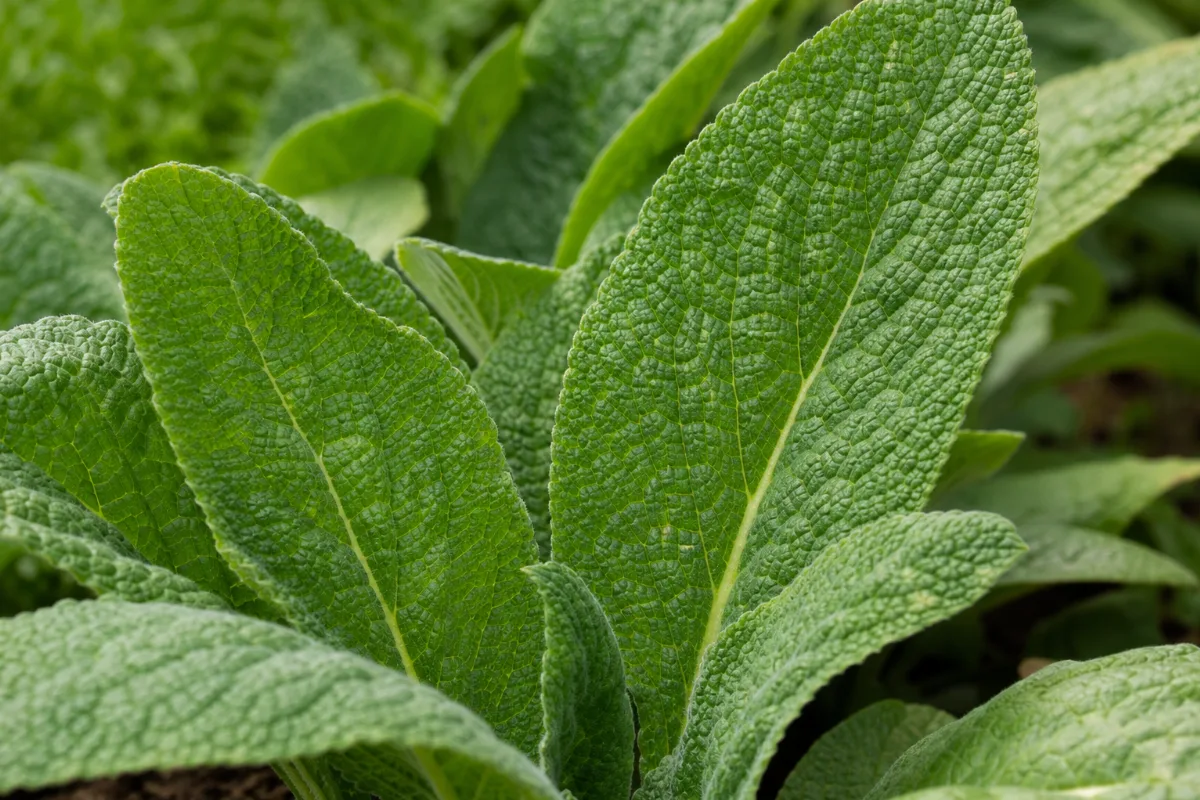
Before flowering, foxglove leaves look like comfrey and borage. That look-alike confusion is behind most poisoning reports.
The prescription drugs are a different thing
Digoxin and digitoxin are purified medicines used under medical supervision. In the DIG trial (about 6,800 people) digoxin did not change deaths but cut hospital stays for worsening heart failure. In DIGIT-HF (2025) digitoxin lowered a combined measure of death or heart-failure hospital stay, with more serious adverse events (4.7% vs 2.8%). A 2026 meta-analysis found fewer hospital stays but no difference in deaths.
In atrial fibrillation, digoxin slowed the heart rate in the first hours but worked less well than beta blockers, and long-term effects are unclear. None of this shows the plant is safe or useful.
Interactions (for the prescription drug, as context)
For digoxin, St John's wort and rifampin lowered blood levels and clarithromycin raised them in healthy volunteers. Echinacea and one ginkgo product showed no change. MedlinePlus also lists antacids, neomycin, activated charcoal, calcium supplements and some acid reducers. No study tested the plant with any drug; the concern that it could add to heart medicines is theoretical. Ask a pharmacist about your own medicines.
Regulatory status
United States: prescription digoxin (Lanoxin) is an FDA-approved medicine, approved in 1997 in a category for a drug already marketed without an approved application. We found no approved foxglove herbal product. A 1997 FDA warning about plantain products possibly contaminated with woolly foxglove was seen only in a search summary and is not verified.
EMA/HMPC: no herbal monograph found (the search could not be opened, so absence is not confirmed). NCCIH: no foxglove page found. LiverTox, LactMed, Commission E, WHO and Health Canada: not verified.
At a glance
Traditional uses history, not proof
- Historic account of the foxglove (Withering, 1785)
- Heart conditions (history, not a recommended use)
Studied for research
- Prescription digoxin and digitoxin in heart failure: mixed (context only)
- Prescription digoxin in atrial fibrillation: low (context only)
- Foxglove leaf, tea or supplements: against (poisoning)
Main compounds
- Digitoxin
- Digoxin
- Gitoxin
Common forms
- Fresh or dried leaf (poisonous)
- Tea (poisoning reports)
- Leaf in cooked food (poisoning reports)
- Prescription digoxin (a medicine, not the plant)
Research links: National Capital Poison Center: Foxglove · Fatal foxglove-for-comfrey case (PubMed) · Foxglove tea outbreak (PubMed) · DIG trial of digoxin (PubMed) · Research Library · Genes & Biomarkers Library
The plant and its history
- Accepted scientific name
- Digitalis purpurea L. (purple foxglove); Digitalis lanata Ehrh. (woolly foxglove) is a separate species
- Naming authority
- GBIF species match, read 2026-10-25: D. purpurea L. ACCEPTED key 5414995; D. lanata Ehrh. ACCEPTED key 5414989; both family Plantaginaceae. NCBI Taxonomy not queried.
- Common names
- Foxglove, purple foxglove, digitalis (English); Woolly foxglove (D. lanata) (English)
- Botanical family
- Plantaginaceae (plantain family in GBIF)
- Classification
- Plantae > Plantaginaceae > Digitalis > Digitalis purpurea
- Native range
- Not verified in the sources read.
- Habitat
- Garden plant bought from nurseries (reports from Italy, Switzerland).
- What the plant looks like
- Roots: Not verified.; Stems: Not verified.; Leaves: Look like comfrey and borage leaves when the plant is not in bloom (case reports).; Flowers: Flowers and berries attract children (poison centre).; Fruit: Not verified.
- Cultivation
- Not covered.
- Harvest and processing
- Not covered.
- Look-alikes and adulterants
- Name: Comfrey (Symphytum officinale); Note: Leaves resemble foxglove when not in bloom; mistaken in two tea reports.; Name: Borage (Borago officinalis); Note: Mistaken for foxglove in several meal-poisoning reports.; Name: Plantain (Plantago species); Note: A 1998 NEJM report concerns plantain supplements contaminated with Digitalis lanata; details not read.
- Sustainability and conservation
- Not covered.
Traditional use and history history, not clinical proof
| Tradition or era | Documented use | Source |
|---|---|---|
| William Withering, 1785 | Published an account of the foxglove; digitalis in some form has remained a mainstay of heart-failure and atrial-fibrillation treatment since, though use has declined with newer drugs. | p20123317 |
| FDA approval of digoxin tablets, 1997 | Lanoxin (digoxin) was approved 1997-09-30 under a category for drugs already marketed without an approved application. | s-drugsatfda-lanoxin |
| Modern digitoxin trial, 2025 | The DIGIT-HF trial tested the purified compound digitoxin in heart failure. | p40879434 |
Traditional use shows how a plant was used. It does not show that a supplement works or is safe today.
What is inside, and how it may work
What the plant contains and how those compounds act in cells and animals. Laboratory and animal mechanisms are not proven effects in people.
Main compounds
| Compound | Family | Where it is concentrated | Activity studied | Level of evidence |
|---|---|---|---|---|
| Digitoxin PubChem 441207 | cardiac glycoside | Leaf; described as the main glycoside of Digitalis purpurea | Acts on the heart; long half-life. 12 6 5 13 | Case report |
| Digoxin PubChem 2724385 | cardiac glycoside | Not verified in the sources read (the plant source of the medicine was not checked) | Prescription heart medicine; blood test used to detect foxglove poisoning. 2 10 13 | Controlled trial |
| Gitoxin PubChem 91540 | cardiac glycoside | Leaf (identified in plasma in one case) | May be responsible for toxicity in one case; can read as digoxin on tests. 12 13 | Case report |
Mechanisms, receptors and pathways
| Target or pathway | Gene or receptor | What was found | Level |
|---|---|---|---|
| Heart rhythm and conduction | Not applicable (cellular mechanism not read in these sources) | In poisoning, human cases show slow heartbeat, AV block and ventricular arrhythmias. 20 12 7 | Human data |
| Potassium balance | Not applicable | High potassium occurred in the fatal case (7.6 mEq/L) and mildly in the outbreak. 20 7 | Human data |
Absorption, metabolism and elimination
- Absorption
- Not covered.
- Distribution
- Not covered.
- Metabolism
- Not covered.
- Elimination
- One tea case estimated the digoxin-test half-life at 76 hours, reflecting digitoxin's long half-life.
- Bioavailability
- Not covered.
Isolated compounds versus whole extracts
The prescription drugs are single purified compounds at controlled amounts, tested in large trials. The leaf holds a mix of glycosides in unknown amounts. Testing a purified drug says nothing about the safety of the leaf or tea.
Nutritional composition
Not a nutrient. Not a food. Do not eat or drink any part.
1 mixed findings1 low certainty1 not enough evidence1 evidence against
What is Foxglove good for?
The plant has no tested benefit. What you may read about foxglove and the heart is history and the prescription drugs, shown here as context and rated honestly.
Benefits, one by one
Each card is a research question, not a promise. Tap a goal to filter. Open a card to see the studies, doses and limits.
Foxglove in history (William Withering, 1785)
Not enough evidenceFoxglove has a place in medical history: William Withering published his account of it in 1785, and compounds of the digitalis family have been used as heart medicines since. That history is not a reason to use the plant.
2 studiesNot applicable. Prescription drugs are dosed by doctors; no amount of…
Studies, doses and limits
What the trials found
No trial of the plant exists; this item is history.
Results
History only.
Effect sizes as reported
None.
Why this rating
History is not evidence of safety or benefit of the plant. A 2010 review notes digitalis in one form or another stayed a mainstay for heart failure and atrial fibrillation.
Form and dose studied
Not applicable. Prescription drugs are dosed by doctors; no amount of the plant is recommended.
Who was studied
Not applicable
Limits
The only source read for the history is one review abstract (Weisse 2010); no primary historical text was read.
Why researchers looked
Withering's 1785 report on the foxglove is a landmark in the history of heart medicine.
Traditional use
Historical use of the plant for 'dropsy' and heart conditions is part of the story told by cardiology reviews. We did not read Withering's original text.
Proposed mechanism Pharmacological theory
Not applicable.
A proposed mechanism does not show that the effect happens in people.
Foxglove leaf, tea and supplements are poisonous. See the Safety tab first.
Prescription digoxin and digitoxin in heart failure (context, not the plant)
Mixed findingsPurified medicines from the digitalis family are prescribed by doctors for heart failure and abnormal rhythms. In big trials they did not clearly reduce deaths, but fewer people went to hospital for heart failure. None of this applies to the leaf, tea or supplements.
3 studiesNot applicable. Prescription drugs are dosed by doctors; no amount of…
Studies, doses and limits
What the trials found
The 1997 DIG trial (about 6,800 people) found digoxin did not change death but cut hospital stays for worsening heart failure. The 2025 DIGIT-HF trial (1,212 analysed) found digitoxin lowered a combined outcome of death or heart-failure hospital stay, with serious adverse events 4.7% vs 2.8%. A 2026 meta-analysis of 6 trials (8,488 people) found fewer heart-failure hospital stays but no difference in death.
Results
DIG: death 34.8% vs 35.1%; heart-failure hospitalisation 26.8% vs 34.7%. DIGIT-HF: primary event 39.5% vs 44.1%.
Effect sizes as reported
DIG death RR 0.99 (0.91 to 1.07); hospitalisation RR 0.72 (0.66 to 0.79). DIGIT-HF HR 0.82 (0.69 to 0.98). Meta-analysis death HR 0.98 (0.92 to 1.04); hospitalisation HR 0.79 (0.67 to 0.94).
Why this rating
Consistent fewer heart-failure hospital stays in trials, but no clear effect on death and more serious adverse events with the drug in DIGIT-HF. The drugs are given under medical supervision.
Form and dose studied
Not applicable. Prescription drugs are dosed by doctors; no amount of the plant is recommended.
Who was studied
Adults with heart failure, mostly reduced ejection fraction
Limits
The DIG trial was on older background treatment; DIGIT-HF compared with placebo on modern treatment; the digitoxin-vs-digoxin comparison was indirect.
Why researchers looked
Digoxin (and more recently digitoxin) were tested against placebo in large trials.
Traditional use
The drugs descend from the foxglove story; the plant itself is an unregulated and uncontrolled source.
Proposed mechanism Pharmacological theory
Cardiac glycosides act on the heart; the sources read here describe results, not mechanism.
A proposed mechanism does not show that the effect happens in people.
These are prescription medicines with their own risks (rhythm problems, interactions). Never replace a prescription with a plant. Foxglove leaf, tea and supplements are poisonous. See the Safety tab first.
Prescription digoxin in atrial fibrillation (context, not the plant)
Low certaintyDigoxin can slow a fast heartbeat in atrial fibrillation in the first hours, but it works less well than beta blockers, and its long-term effects are unclear. This is about the medicine only.
1 studiesNot applicable. Prescription drugs are dosed by doctors; no amount of…
Studies, doses and limits
What the trials found
A 2018 review of 28 randomised trials (2,223 people, all at high risk of bias) found digoxin lowered heart rate versus placebo by about 12 beats per minute within 6 hours, was less effective than beta blockers, and showed no clear effect on death or serious adverse events.
Results
Heart rate versus placebo: about 12 bpm lower; versus beta blockers about 20.7 bpm higher.
Effect sizes as reported
TSA-adjusted: placebo -17.2 to -6.76; beta blockers 14.2 to 27.2
Why this rating
All included trials were at high risk of bias with short follow-up; the authors say long-term effect is unclear.
Form and dose studied
Not applicable. Prescription drugs are dosed by doctors; no amount of the plant is recommended.
Who was studied
Adults with atrial fibrillation or flutter
Limits
Short follow-up; high risk of bias.
Why researchers looked
Digoxin is used for rate control in atrial fibrillation and flutter.
Traditional use
Same family of medicines as the foxglove story.
Proposed mechanism Pharmacological theory
Not covered in the sources read.
A proposed mechanism does not show that the effect happens in people.
Prescription medicine with serious toxicity if levels are too high. Foxglove leaf, tea and supplements are poisonous. See the Safety tab first.
Foxglove leaf, tea or supplements as a remedy
Evidence againstNo evidence supports taking the plant. Every report we found describes poisoning, including a death after a 'comfrey' tea that was really foxglove.
7 studiesNot applicable. Prescription drugs are dosed by doctors; no amount of…
Studies, doses and limits
What the trials found
No trial exists. Case reports and a nine-person outbreak describe nausea, vomiting, dizziness, slow or blocked heartbeat, high potassium, and one death. Digoxin blood tests were very high in all reported cases.
Results
Digoxin levels 4.4 to 151.2 ng/mL across reports (poisoning, not therapy).
Effect sizes as reported
None.
Why this rating
The only human evidence is poisoning. A tea or meal with a few leaves has caused serious heart-rhythm problems; the plant is not a controlled medicine and its compounds differ from the drugs.
Form and dose studied
Not applicable. Prescription drugs are dosed by doctors; no amount of the plant is recommended.
Who was studied
Adults and families who mistook foxglove for comfrey or borage; one intentional ingestion
Limits
Case reports cannot give how often harm happens.
Why researchers looked
Foxglove's heart-drug history leads some people to think the plant is a natural heart remedy.
Traditional use
Not established in the sources read. Poison-centre material describes only poisoning.
Proposed mechanism Pharmacological theory
Cardiac glycosides in the leaf act on the heart; in poisoning that means rhythm problems (human case evidence).
A proposed mechanism does not show that the effect happens in people.
Do not use foxglove leaf, tea or supplements. Poison-centre advice: do not induce vomiting; go to the emergency room if any was swallowed; call poison control if unsure.
Connections to the rest of health
How Foxglove connects to the rest of our health knowledge graph. Every link says what kind of connection it is. A safety link (for example to the liver) is a warning, not a benefit. A study that merely mentions a topic never creates a benefit link.
Explore every connection: goals, body systems, organs, symptoms, genes
A. Wellness goals
| Connected to | Kind of connection | Evidence status | Context | Studies |
|---|---|---|---|---|
| Heart Health | Traditional use | Not enough evidence | Foxglove in history (William Withering, 1785): Foxglove has a place in medical history: William Withering published his account of it in 1785, and compounds of the digitalis family have been used as heart medicines since. That history is not a reason to use the plant. | 18 11 |
| Heart Health | Demonstrated clinical effect | Mixed findings | Prescription digoxin and digitoxin in heart failure (context, not the plant): Purified medicines from the digitalis family are prescribed by doctors for heart failure and abnormal rhythms. In big trials they did not clearly reduce deaths, but fewer people went to hospital for heart failure. None of this applies to the leaf, tea or supplements. Prescription digoxin in atrial fibrillation (context, not the plant): Digoxin can slow a fast heartbeat in atrial fibrillation in the first hours, but it works less well than beta blockers, and its long-term effects are unclear. This is about the medicine only. | 2 1 17 14 |
| Heart Health | Adverse effect or risk | Evidence against | Foxglove leaf, tea or supplements as a remedy: No evidence supports taking the plant. Every report we found describes poisoning, including a death after a 'comfrey' tea that was really foxglove. | 11 20 7 12 5 6 8 |
B. Body systems
| Connected to | Kind of connection | Evidence status | Context | Studies |
|---|---|---|---|---|
| Digestive system | Adverse effect or risk | Documented | Nausea, vomiting and diarrhoea are early signs. Preparation or compound: Foxglove leaf |
7 5 |
| Cardiovascular System | Biological association | Not enough evidence | Studied for: Foxglove in history (William Withering, 1785) Studied for: Prescription digoxin and digitoxin in heart failure (context, not the plant) | 18 11 2 1 17 14 20 7 12 5 6 8 |
C. Body parts and organs
L. Active compounds
| Connected to | Kind of connection | Evidence status | Context | Studies |
|---|---|---|---|---|
| Digitoxin | Biological association | Case report | Acts on the heart; long half-life. Preparation or compound: Leaf; described as the main glycoside of Digitalis purpurea |
12 6 5 13 |
| Digoxin | Biological association | Rct | Prescription heart medicine; blood test used to detect foxglove poisoning. Preparation or compound: Not verified in the sources read (the plant source of the medicine was not checked) |
2 10 13 |
| Gitoxin | Biological association | Case report | May be responsible for toxicity in one case; can read as digoxin on tests. Preparation or compound: Leaf (identified in plasma in one case) |
12 13 |
Each connection is stored with the ingredient, the connected record, the kind of connection, the evidence status, the supporting studies, the preparation or compound involved, and a review date (last reviewed October 25, 2026).
The evidence
The research centre for Foxglove. Every record here was checked against PubMed or the publisher's page; we never list a study we have not verified.
Evidence by outcome
Bars show how many studies we found for each outcome, not how well it works. People are added up across trials only (reviews are not added, to avoid double counting).
How we rate evidence
High certainty
Several well-run trials or reviews agree; further research is unlikely to change the picture much.
Moderate certainty
Good trials point the same way, but some doubt remains.
Low certainty
Small, short or inconsistent trials. The finding could change with better research.
Very low certainty
Very little or very weak human data. Treat as a possibility only.
Mixed findings
Trials or reviews disagree with each other.
Not enough evidence
Not enough human research to say either way.
Evidence against
Good research found no benefit, or found harm.
We take the reviewers' own risk-of-bias and GRADE statements where they exist, and otherwise judge from study size, design, consistency, directness and whether a product matches what is sold. Many publications do not make evidence high. Method note: We read our existing herb summary, searched PubMed, read the abstract of each PubMed record cited (one is title-only), and checked names in GBIF and compounds in PubChem. Regulator pages that could not be opened are marked not verified.
Study library: every study we checked 20
| Study | Design | People | Product, dose, length | Result |
|---|---|---|---|---|
| Bavendiek 2025 Digitoxin in Patients with Heart Failure and Reduced Ejection Fraction (DIGIT-HF) N Engl J Med · PMID 40879434 · DOI |
Controlled trial |
1240 Adults with chronic heart failure and reduced ejection fraction on standard treatment |
Prescription digitoxin (the medicine, not the plant) not applicable Starting dose 0.07 mg daily (as reported; not advice) Median follow-up 36 months · vs placebo |
Primary event: 39.5% digitoxin vs 44.1% placebo. Death from any cause 27.2% vs 29.5%. At least one serious adverse event: 4.7% vs 2.8%. HR primary 0.82; HR death 0.86 (Primary 0.69 to 0.98; death 0.69 to 1.07) Methods, limits and fundingOutcomes: Death or hospital stay for worsening heart failure Limitations: Abstract read only. Death alone was not clearly reduced. Funding listed as German government and others. Funding and conflicts: German Federal Ministry of Research, Technology, and Space and others Read: abstract |
| Digitalis Investigation Group 1997 The effect of digoxin on mortality and morbidity in patients with heart failure N Engl J Med · PMID 9036306 · DOI |
Controlled trial |
6800 Adults with heart failure (ejection fraction 0.45 or less), plus 988 with higher ejection fraction in an ancillary trial |
Prescription digoxin (the medicine, not the plant) not applicable Median 0.25 mg/day (as reported; not advice) Average follow-up 37 months · vs placebo |
Deaths: 34.8% digoxin vs 35.1% placebo (risk ratio 0.99). Hospitalisation for worsening heart failure: 26.8% vs 34.7% (risk ratio 0.72). RR death 0.99; RR heart-failure hospitalisation 0.72 (Death 0.91 to 1.07; hospitalisation 0.66 to 0.79) Methods, limits and fundingOutcomes: Death; hospital stays Limitations: Abstract read only. Trial was on top of diuretics and ACE inhibitors; modern heart-failure treatment differs. Read: abstract |
| GBIF 2026 GBIF species match: Digitalis purpurea L. and Digitalis lanata Ehrh. api.gbif.org · Source |
Database record |
Name check | Taxonomy not applicable Not given here Not given here |
Digitalis purpurea L. ACCEPTED (key 5414995), family Plantaginaceae. Digitalis lanata Ehrh. ACCEPTED (key 5414989), family Plantaginaceae. Both exact matches. Methods, limits and fundingOutcomes: Accepted names Limitations: Read 2026-10-25. Read: full-text |
| Gurley 2008 Gauging the clinical significance of P-glycoprotein-mediated herb-drug interactions: comparative effects of St. John's wort, Echinacea, clarithromycin, and rifampin on digoxin pharmacokinetics Mol Nutr Food Res · PMID 18214850 · DOI |
Controlled trial |
18 Healthy volunteers (crossover) |
Prescription digoxin 0.25 mg with St John's wort, Echinacea, rifampin or clarithromycin not applicable Not given here Not given here |
St John's wort and rifampin significantly lowered digoxin exposure; clarithromycin raised it; Echinacea had no effect. Methods, limits and fundingOutcomes: Digoxin blood levels Limitations: Abstract read only. Healthy volunteers, single digoxin doses. Read: abstract |
| Iraci 2023 Of mixed vegetables and cardiac arrhythmias - Digitalis purpurea confused with Borago officinalis: A case series of accidental digitoxin intoxications J Cardiol Cases · PMID 37521578 · DOI |
Case series |
2 Two women aged 35 and 60 (Germany) |
Foxglove leaves in home-made mixed vegetables leaf Not given here Not given here |
Severe vomiting, nausea and malaise about 2 hours after the meal. Digitoxin levels 40.9 and above 50 ng/mL (therapeutic range 8 to 18 ng/mL given in the paper). One had an advanced AV block and long-lasting slow heartbeat. Both recovered fully after monitored care and activated charcoal. Methods, limits and fundingOutcomes: Poisoning course Limitations: Abstract read only. Read: abstract |
| Lehmann 2021 A case of intoxication with tea made from Digitalis purpurea Glob Cardiol Sci Pract · PMID 34036088 · DOI |
Case report |
1 34-year-old woman, intentional ingestion (Switzerland) |
Purple foxglove leaf tea leaf Not given here Not given here |
Abdominal pain, vomiting and slow heartbeat 17 hours after drinking the tea. Plasma digoxin 3.53 nmol/L at 21 hours (therapeutic range 0.77 to 1.50 given). Estimated digoxin half-life 76 hours, reflecting digitoxin. She stayed stable and needed no antibody treatment. Methods, limits and fundingOutcomes: Poisoning course Limitations: Abstract read only. Intentional ingestion. Read: abstract |
| Lin 2010 An outbreak of foxglove leaf poisoning J Chin Med Assoc · PMID 20171590 · DOI |
Case series |
9 Nine patients who drank alleged 'comfrey' tea (Taiwan) |
Foxglove leaf herbal tea leaf Not given here Not given here |
All began with nausea, vomiting, diarrhoea and dizziness. Three developed significant heart toxicity with mild high potassium. Peak serum digoxin by immunoassay ranged 4.4 to 139.5 ng/mL. Pacing was needed in severe cases; antibody therapy had no effect in this series. All recovered. Methods, limits and fundingOutcomes: Poisoning course Limitations: Abstract read only. Read: abstract |
| Maffè 2009 Digitalis must be banished from the table: a rare case of acute accidental Digitalis intoxication of a whole family J Cardiovasc Med (Hagerstown) · PMID 19491701 · DOI |
Case series |
3 Three family members (Italy) |
Potato dumplings flavoured with borage mixed with foxglove leaves leaf Not given here Not given here |
Marked slow-rhythm problems; good recovery with digoxin-specific antibody Fab fragments. Methods, limits and fundingOutcomes: Poisoning course Limitations: Abstract read only. Read: abstract |
| Mauro 2003 Impact of ginkgo biloba on the pharmacokinetics of digoxin Am J Ther · PMID 12845387 · DOI |
Controlled trial |
8 Healthy volunteers (crossover) |
Prescription digoxin with ginkgo not applicable Not given here Not given here |
No significant change in digoxin exposure with the ginkgo product used. Methods, limits and fundingOutcomes: Digoxin blood levels Limitations: Abstract read only. Eight people; one product. Read: abstract |
| MedlinePlus (US National Library of Medicine) 2026 Digoxin medlineplus.gov · Source |
Authoritative guidance |
Patient drug information | Prescription digoxin not applicable Not given here Not given here |
Prescribed for heart failure and abnormal heart rhythms. Lists as interactions: antacids, St John's wort, neomycin, activated charcoal, calcium supplements and some acid reducers (esomeprazole, lansoprazole, omeprazole). Tell the doctor about pregnancy or breastfeeding. Overdose: call poison control (US 1-800-222-1222). Methods, limits and fundingOutcomes: Uses, warnings, interactions Limitations: Patient leaflet, not a full label. Read: full-text |
| National Capital Poison Center 2026 Foxglove: Toxic to the heart poison.org · Source |
Authoritative guidance |
Public poison-centre article (undated; copyright 2012-2026) | Foxglove (Digitalis purpurea) whole plant Not given here Not given here |
All parts of the plant are poisonous, possibly deadly if swallowed. Do not induce vomiting. If you are certain a part was swallowed go to the emergency room immediately; if not sure call 1-800-222-1222 (US). Tea from the leaves is described as an unregulated dose of heart medicine. Digitalis in foxglove is detected by digoxin tests. Flowers and berries attract children. Methods, limits and fundingOutcomes: Poisoning advice Limitations: Undated article; US advice. Read: full-text |
| Negroni 2019 A Case Report of Accidental Intoxication following Ingestion of Foxglove Confused with Borage: High Digoxinemia without Major Complications Case Rep Cardiol · PMID 31871798 · DOI |
Case report |
1 55-year-old woman (Italy) |
Foxglove leaves in a savory pie leaf Not given here Not given here |
Weakness, fatigue, nausea, vomiting; five leaves from a plant bought as borage. Digoxin level 10.4 ug/L; two days later an advanced and then a second-degree AV block. Gitoxin found by LC-MS; the authors warn that tests can read related compounds as digoxin. Methods, limits and fundingOutcomes: Poisoning course Limitations: Abstract read only. One case; full text partly read via the graph summary. Read: abstract |
| PubChem 2026 PubChem: digitoxin, digoxin, gitoxin pubchem.ncbi.nlm.nih.gov · Source |
Database record |
Compound record check by name | Compounds not applicable Not given here Not given here |
Digitoxin CID 441207 C41H64O13; digoxin CID 2724385 C41H64O14; gitoxin CID 91540 C41H64O14. Methods, limits and fundingOutcomes: IDs and formulas Limitations: Matched by name only. Read: full-text |
| Sethi 2018 Digoxin for atrial fibrillation and atrial flutter: a systematic review with meta-analysis and trial sequential analysis of randomised clinical trials PLoS One · PMID 29518134 · DOI |
Meta-analysis |
2223 Adults with atrial fibrillation or flutter, 28 trials |
Prescription digoxin (medicine) not applicable Not given here Not given here |
All trials at high risk of bias, short follow-up. No clear effect on death or serious adverse events. Digoxin lowered heart rate within 6 hours versus placebo (about 12 beats per minute) but was less effective than beta blockers. Heart rate vs placebo: mean difference -12.0 bpm (TSA-adjusted -17.2 to -6.76) Methods, limits and fundingOutcomes: Death, serious harms, quality of life, heart rate Limitations: Abstract read only. Long-term effects unknown; the authors judged the body of evidence weak. Funding and conflicts: No competing interests declared Read: abstract |
| Slifman 1998 Contamination of botanical dietary supplements by Digitalis lanata N Engl J Med · PMID 9738088 · DOI |
Case series |
US patient(s) who took 'plantain' supplements | Botanical supplements contaminated with woolly foxglove (Digitalis lanata) leaf Not given here Not given here |
Title only: the report concerns contamination of botanical supplements with Digitalis lanata. No abstract was available and the full text could not be opened, so no details are stated. Methods, limits and fundingOutcomes: Contamination Limitations: TITLE ONLY. Details NOT verified. Read: title-only |
| US Food and Drug Administration 2024 Drugs@FDA: Lanoxin (digoxin) tablets, NDA 020405 accessdata.fda.gov · Source |
Authoritative guidance |
Regulator record | Prescription digoxin not applicable Not given here Not given here |
Listed as an FDA-approved prescription product; original approval 09/30/1997, classified 'Type 7 - Drug Already Marketed without Approved NDA' (it had been sold before without an approved application). Latest supplement 04/29/2024. Methods, limits and fundingOutcomes: Regulatory status Limitations: Read through a web summary of the page, 2026-10-25. Read: full-text |
| Wang 2026 Cardiac glycosides in patients with heart failure and reduced ejection fraction: a systematic review and meta-analysis Front Cardiovasc Med · PMID 41908038 · DOI |
Meta-analysis |
8488 Adults with reduced ejection fraction heart failure, 6 randomised trials |
Prescription digoxin and digitoxin (medicines) not applicable Not given here Not given here |
Hospitalisation for heart failure lower (HR 0.79); no difference in all-cause death (HR 0.98). No clear advantage of digitoxin over digoxin on indirect comparison. HR hospitalisation 0.79; HR death 0.98 (Hospitalisation 0.67 to 0.94; death 0.92 to 1.04) Methods, limits and fundingOutcomes: All-cause death; hospital stay for heart failure Limitations: Abstract read only; digitoxin vs digoxin was an indirect comparison. PROSPERO CRD420251142262. Funding and conflicts: No commercial conflicts declared Read: abstract |
| Weisse 2010 A fond farewell to the foxglove? The decline in the use of digitalis J Card Fail · PMID 20123317 · DOI |
Narrative review |
Historical and clinical overview | Digitalis (as a drug class) not applicable Not given here Not given here |
Since William Withering's report on the foxglove in 1785, digitalis in one form or another has remained a mainstay for congestive heart failure and for heart-rate control in atrial fibrillation; its use has declined with newer drugs. Methods, limits and fundingOutcomes: History and role in heart failure and atrial fibrillation Limitations: Abstract read only. Narrative opinion article. Read: abstract |
| Wendt 2022 Poisoning by Plants Dtsch Arztebl Int · PMID 35140011 · DOI |
Narrative review |
Review of plant poisoning, poison-centre data (Germany) | Poisonous plants including foxglove whole plant Not given here Not given here |
Foxglove (Digitalis) is on the list of highly poisonous plants doctors should know. Plant poisoning was 15% of poison-centre child inquiries in Erfurt 2011 to 2020. Digitalis antibodies are a specific antidote for foxglove poisoning; poison information centres should be contacted. Methods, limits and fundingOutcomes: Plant poisoning management Limitations: Abstract read only. Read: abstract |
| Wu 2017 Fatal cardiac glycoside poisoning due to mistaking foxglove for comfrey Clin Toxicol (Phila) · PMID 28463019 · DOI |
Case report |
1 55-year-old woman who drank 'comfrey' tea (Taiwan) |
Foxglove (Digitalis purpurea) leaf tea leaf Not given here Not given here |
Nausea, vomiting and weakness 8 hours after the tea; slow heartbeat, high potassium (7.6 mEq/L), then ventricular tachycardia and fibrillation. Serum digoxin 151.2 ng/mL. Died on day 7 despite antibody fragments and VA-ECMO. Methods, limits and fundingOutcomes: Outcome of poisoning Limitations: Abstract read only. One case. Read: abstract |
What we do not know yet
- No trial of foxglove leaf, tea or supplements.
- How often poisoning happens is unknown.
- No pregnancy, breastfeeding or child-specific data for the plant.
- EMA/HMPC, LiverTox, LactMed, WHO and Health Canada not verified; NCCIH page not found.
- The 1998 NEJM contamination report and the 1997 FDA plantain warning were not read.
How new research is added
New studies are found by a saved PubMed search and placed in a review queue. A person reads each one before it changes any rating or safety wording.
Lab markers
What changed in blood or saliva tests during trials. A changed number is not the same as feeling or being healthier, and we give no "normal ranges".
Safety
What studies and official sources say about side effects, medicines and who should check first. Each point shows what kind of evidence it comes from.
Main points to know 4
- Do not use foxglove leaf, tea or supplements. Every part of foxglove is poisonous. The gap between an amount that acts on the heart and an amount that poisons it is very small, and the plant is not a controlled medicine. Case reports describe heart block, dangerous rhythms and one death after people drank foxglove tea they believed was comfrey. The benefit story is history plus prescription drugs, not the plant. Case report 11 20 7 12
- Foxglove is mistaken for comfrey and borage. Before it flowers, foxglove leaves look like comfrey and borage. Nine people in Taiwan were poisoned by 'comfrey' tea, a woman died after another 'comfrey' tea, and a family in Italy and two women in Germany were poisoned by meals made with leaves thought to be borage. In one case the plant was bought from a nursery as borage. Case series 7 20 12 5 8
- The prescription drugs are a different thing. Digoxin and digitoxin are purified medicines used under medical supervision for heart conditions. The leaf has uncontrolled and different amounts of related compounds (one case found gitoxin; another report points to digitoxin as the main compound). The medicines are not evidence that the plant is safe or useful. Authoritative guidance 10 12 6
- Symptoms can be delayed and can return. Poisoning began with nausea, vomiting, weakness and dizziness. Serious rhythm problems appeared later in some cases (an AV block two days after admission in one report; symptoms 17 hours after a tea in another). Anyone who swallowed foxglove needs medical monitoring even if they feel fine. Case report 12 6 7 11
Side effects 5
| Effect | How often | Severity and recovery | Evidence |
|---|---|---|---|
| Nausea, vomiting, diarrhoea, abdominal pain, dizziness and weakness Usually the first signs. No frequency data. | Not established | moderate Recovered in most reported cases | Case series 7 12 5 6 |
| Slow heartbeat and heart block (AV block) Pacing was needed in severe cases of the Taiwan outbreak (3 of 9 had significant heart toxicity). | Not established | severe Recovered with monitoring or treatment in several reports; fatal in one | Case series 12 5 7 8 6 |
| Ventricular tachycardia and fibrillation Developed after hospital arrival, with high potassium (7.6 mEq/L) and digoxin level 151.2 ng/mL. | Not established | life-threatening Fatal in one reported case | Case report 20 |
| High blood potassium (hyperkalaemia) Mild in the outbreak, 7.6 mEq/L in the fatal case. | Not established | moderate to severe Not stated beyond the cases | Case series 20 7 |
| Long-lasting toxicity The long half-life of digitoxin means effects can last for days. | Not established | moderate Half-life estimated at 76 hours in one tea case | Case report 6 |
Liver
No liver injury was reported in the foxglove poisoning sources read. We did not find a LiverTox entry for foxglove (not verified). The main target of poisoning is the heart. 20 7
How often. No data.
Monitoring. Not applicable. Medical care after ingestion focuses on heart rhythm, digoxin level and potassium (case reports).
This is a safety connection. It is not evidence that Foxglove supports liver health.
Medicines and supplements 6
| With | Why it matters | Importance | Evidence | What to do |
|---|---|---|---|---|
| Prescription digoxin, digitoxin or other heart-glycoside medicines drug | Both contain related compounds that act on the heart. | Adding the plant to a prescription could add to the effect; this is a theoretical concern. No study of the plant with digoxin was found. | Pharmacological theory Not enough evidence 10 11 | Never combine. Tell a doctor or poison centre about any plant swallowed. |
| Digoxin (the medicine, for context): St John's wort and rifampin drug | P-glycoprotein induction lowers digoxin blood levels. | St John's wort and rifampin significantly lowered digoxin exposure in healthy volunteers. This describes the medicine, not the plant. | Controlled trial Moderate certainty 4 10 | People taking digoxin should ask a pharmacist before starting any supplement. |
| Digoxin (context): clarithromycin drug | P-glycoprotein inhibition raised digoxin levels. | Clarithromycin significantly increased digoxin exposure in healthy volunteers. | Controlled trial Moderate certainty 4 | Pharmacist or doctor should check. |
| Digoxin (context): Echinacea and ginkgo herb | No change in digoxin levels in healthy volunteers. | Echinacea had no effect; ginkgo (one product, 8 people) had no significant effect. | Controlled trial Low certainty 4 9 | Small studies of single products; do not generalise. |
| Digoxin (context): antacids, neomycin, activated charcoal, calcium supplements, some acid reducers drug | Listed by MedlinePlus as products to discuss with the prescriber. | Authoritative leaflet list; mechanisms not given in the page. | Authoritative guidance Moderate certainty 10 | Do not start any of these with digoxin without asking the prescriber. |
| Foxglove tea or leaf and any other herb herb | Not studied. | No interaction study of the plant exists. | Pharmacological theory Not enough evidence 11 | Not applicable: do not use the plant. |
Who should check first 5
| Situation | Advice | Evidence |
|---|---|---|
| Everyone: swallowing any part of the plant | Avoid completely. All parts are poisonous. | Authoritative guidance 11 19 |
| People with heart disease or taking heart medicines | Do not use; the plant could add to prescription effects (theoretical, no study). | Pharmacological theory 10 11 |
| Children | Keep children away: the poison centre says flowers and berries attract children and advises not growing foxglove where children or pets play. | Authoritative guidance 11 19 |
| Pregnancy and breastfeeding | No safety data for the plant were found in the sources read. Do not use. (For the prescription medicine, MedlinePlus says to tell the doctor about pregnancy or breastfeeding.) | Authoritative guidance 10 |
| Anyone using a plant for tea, cooking or medicine without expert identification | The poison centre advises against making teas, foods or herbal medicines from wild or garden plants unless you are an expert. | Authoritative guidance 11 |
Overdose, product quality and regulators
Summary. Foxglove is highly poisonous. Case reports show serious heart toxicity from tea or leaves in meals, with digoxin-test readings up to 151.2 ng/mL in a fatal case. Purple foxglove's main glycoside appears to be digitoxin, which lasts a long time in the body.
Animal. Not reviewed; lab and animal studies are not the basis of this page.
Human doses studied. No safe amount exists. Reports describe small exposures causing poisoning, for example leaves (five, per one report) in a savory pie. This is not advice.
High dose or long term signals. Heart block, ventricular arrhythmias, high potassium and death in case reports.
Overdose response. Emergency care. Poison-centre advice: do not induce vomiting; go to the emergency room if any plant was swallowed; if unsure call poison control (US 1-800-222-1222). Hospital treatment in reports included monitoring, activated charcoal, pacing and digoxin-specific antibody fragments (helpful in some cases, no effect in the Taiwan outbreak; fatal case despite them).
Genotoxicity. Not covered.
Toxic plant parts. All parts are poisonous (poison centre). Leaves caused the reported poisonings.
Contamination and look-alikes are real: foxglove leaf looks like comfrey and borage before flowering. A 1998 NEJM report is titled as contamination of botanical dietary supplements with Digitalis lanata (woolly foxglove).
Look-alike confusion. Foxglove was mistaken for comfrey (Taiwan, 2 reports) and borage (Italy, Germany). One plant bought at a garden nursery as borage was foxglove. 7 20 12 5 8
Supplement contamination. A 1998 NEJM report concerns botanical supplements contaminated with Digitalis lanata. We could not open it; only the title is known. 15
Digoxin tests. Digoxin blood tests detect digitalis from foxglove, and related compounds such as gitoxin can read as digoxin, so results need clinical interpretation. 11 12
| Body | Action | Date |
|---|---|---|
| US Food and Drug Administration (Drugs@FDA) (United States) | Prescription digoxin (Lanoxin, NDA 020405) is an FDA-approved medicine, approved 1997-09-30 under a category for a drug that was already marketed without an approved application. This concerns the medicine only, not the plant. source | 1997-09-30 |
| National Capital Poison Center (US) (United States) | Poison-centre article: all parts poisonous; do not induce vomiting; emergency room if swallowed; call 1-800-222-1222 if unsure. source |
When to get medical help
- If any foxglove (leaf, flower, seed, tea or a meal made with it) was swallowed: do not make the person vomit and go to the emergency room now. If you are not sure, call your poison centre (US: 1-800-222-1222).
- Nausea, vomiting, diarrhoea, weakness, dizziness, a very slow or irregular pulse or fainting after eating a plant thought to be comfrey, borage or another leaf: emergency care at once. Serious rhythm problems can come hours or days later.
- A child has chewed any part of a foxglove plant: call poison control or go to emergency care.
Stop the supplement and contact a clinician or emergency service. In the US, Poison Control is 1-800-222-1222.
General information only, not medical advice. Ask a clinician or pharmacist before use, especially with medicines, in pregnancy or with a health condition. See the Natural Remedy Safety guide.
Frequently asked questions
Is foxglove safe to use as tea or a supplement?
Why is foxglove linked to heart medicine?
What are the signs of foxglove poisoning?
What should I do if someone swallowed foxglove?
Do not make them vomit. Go to the emergency room if you are sure any was swallowed. If unsure, call your poison centre (US: 1-800-222-1222).
Why is it mistaken for comfrey or borage?
Do the heart drugs prove foxglove works?
Does digoxin work for heart failure?
Is digitoxin better than digoxin?
What medicines interact with digoxin?
Is foxglove safe in pregnancy, breastfeeding or for children?
Can a digoxin blood test detect foxglove poisoning?
Explore by health goal
Editorial transparency
- Written by
- AlternativeMed editorial team. Research compiled with AI assistance, then checked against PubMed records.
- Medical review
- None. This page has not been reviewed by a physician or pharmacist.
- First published
- 2026-10-25
- Last substantive update
- 2026-10-25
- How we research
- We read our existing herb summary, searched PubMed, read the abstract of each PubMed record cited (one is title-only), and checked names in GBIF and compounds in PubChem. Regulator pages that could not be opened are marked not verified.
- How we rate evidence
- See "How we rate evidence" in the Evidence tab.
- Independence
- No product is promoted on this page. No affiliate links are shown.
Sources 20
Each source was opened and checked. Where we read only the abstract, it says so. The small numbers in the text point here.
- Bavendiek U, Großhennig A, Schwab J, et al.. Digitoxin in Patients with Heart Failure and Reduced Ejection Fraction (DIGIT-HF). N Engl J Med. 2025. PMID 40879434. DOI 10.1056/NEJMoa2415471. (abstract)
- Digitalis Investigation Group. The effect of digoxin on mortality and morbidity in patients with heart failure. N Engl J Med. 1997. PMID 9036306. DOI 10.1056/NEJM199702203360801. (abstract)
- GBIF. GBIF species match: Digitalis purpurea L. and Digitalis lanata Ehrh.. api.gbif.org. 2026. (full-text)
- Gurley BJ, Swain A, Williams DK, et al.. Gauging the clinical significance of P-glycoprotein-mediated herb-drug interactions: comparative effects of St. John's wort, Echinacea, clarithromycin, and rifampin on digoxin pharmacokinetics. Mol Nutr Food Res. 2008. PMID 18214850. DOI 10.1002/mnfr.200700081. (abstract)
- Iraci F, Herdeg C, Holzwarth M, et al.. Of mixed vegetables and cardiac arrhythmias - Digitalis purpurea confused with Borago officinalis: A case series of accidental digitoxin intoxications. J Cardiol Cases. 2023. PMID 37521578. DOI 10.1016/j.jccase.2023.04.007. (abstract)
- Lehmann A, Späni S, Harings-Kaim A, et al.. A case of intoxication with tea made from Digitalis purpurea. Glob Cardiol Sci Pract. 2021. PMID 34036088. DOI 10.21542/gcsp.2021.2. (abstract)
- Lin CC, Yang CC, Phua DH, et al.. An outbreak of foxglove leaf poisoning. J Chin Med Assoc. 2010. PMID 20171590. DOI 10.1016/S1726-4901(10)70009-5. (abstract)
- Maffè S, Cucchi L, Zenone F, et al.. Digitalis must be banished from the table: a rare case of acute accidental Digitalis intoxication of a whole family. J Cardiovasc Med (Hagerstown). 2009. PMID 19491701. DOI 10.2459/JCM.0b013e32832c2314. (abstract)
- Mauro VF, Mauro LS, Kleshinski JF, et al.. Impact of ginkgo biloba on the pharmacokinetics of digoxin. Am J Ther. 2003. PMID 12845387. DOI 10.1097/00045391-200307000-00003. (abstract)
- MedlinePlus (US National Library of Medicine). Digoxin. medlineplus.gov. 2026. (full-text)
- National Capital Poison Center. Foxglove: Toxic to the heart. poison.org. 2026. (full-text)
- Negroni MS, Marengo A, Caruso D, et al.. A Case Report of Accidental Intoxication following Ingestion of Foxglove Confused with Borage: High Digoxinemia without Major Complications. Case Rep Cardiol. 2019. PMID 31871798. DOI 10.1155/2019/9707428. (abstract)
- PubChem. PubChem: digitoxin, digoxin, gitoxin. pubchem.ncbi.nlm.nih.gov. 2026. (full-text)
- Sethi NJ, Nielsen EE, Safi S, et al.. Digoxin for atrial fibrillation and atrial flutter: a systematic review with meta-analysis and trial sequential analysis of randomised clinical trials. PLoS One. 2018. PMID 29518134. DOI 10.1371/journal.pone.0193924. (abstract)
- Slifman NR, Obermeyer WR, Aloi BK, et al.. Contamination of botanical dietary supplements by Digitalis lanata. N Engl J Med. 1998. PMID 9738088. DOI 10.1056/NEJM199809173391204. (title-only)
- US Food and Drug Administration. Drugs@FDA: Lanoxin (digoxin) tablets, NDA 020405. accessdata.fda.gov. 2024. (full-text)
- Wang D, Xu X, Lu J, et al.. Cardiac glycosides in patients with heart failure and reduced ejection fraction: a systematic review and meta-analysis. Front Cardiovasc Med. 2026. PMID 41908038. DOI 10.3389/fcvm.2026.1746467. (abstract)
- Weisse AB. A fond farewell to the foxglove? The decline in the use of digitalis. J Card Fail. 2010. PMID 20123317. DOI 10.1016/j.cardfail.2009.08.001. (abstract)
- Wendt S, Lübbert C, Begemann K. Poisoning by Plants. Dtsch Arztebl Int. 2022. PMID 35140011. DOI 10.3238/arztebl.m2022.0124. (abstract)
- Wu IL, Yu JH, Lin CC, et al.. Fatal cardiac glycoside poisoning due to mistaking foxglove for comfrey. Clin Toxicol (Phila). 2017. PMID 28463019. DOI 10.1080/15563650.2017.1317350. (abstract)