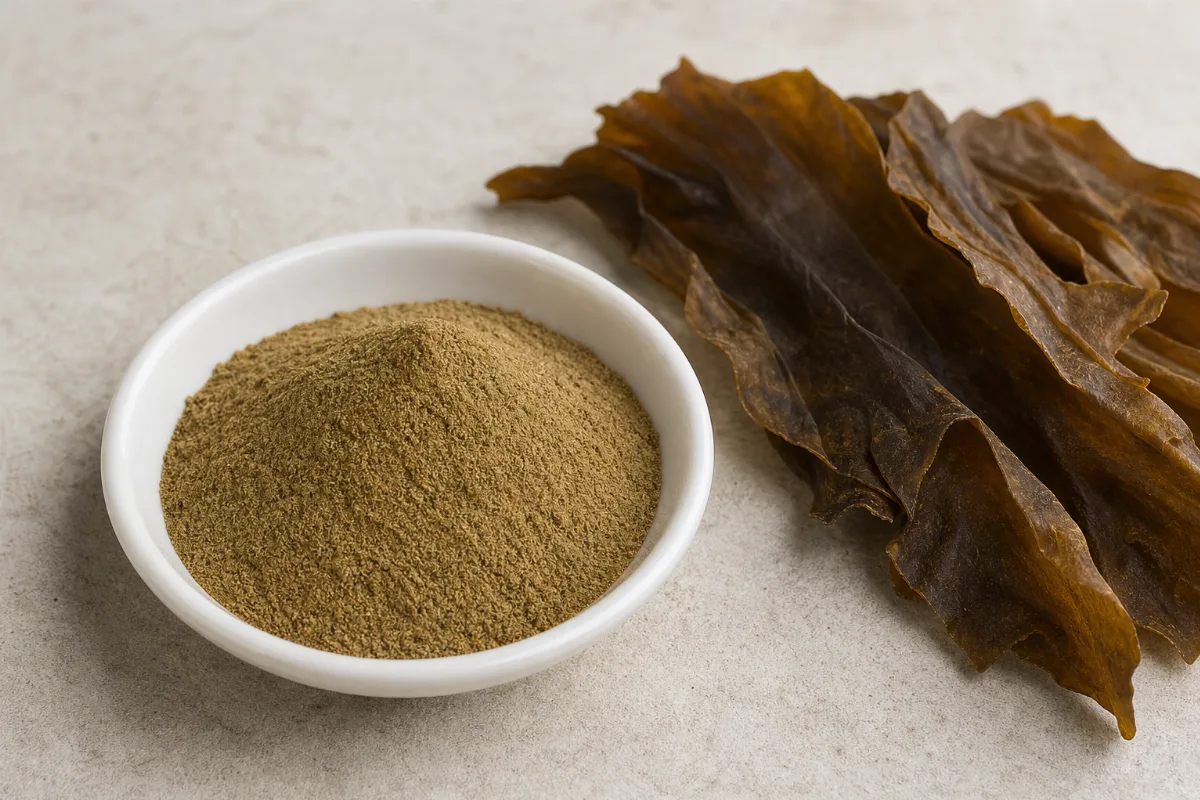
Seaweed & Algae · Seaweed extract
Fucoidan
Sulfated polysaccharide from brown seaweeds · also called Fucoidin, fucan, mekabu fucoidan
Fucoidan is a sugar-like compound found in the cell walls of brown seaweeds such as kombu, wakame and mozuku. It is sold as capsules, powders and drinks. Small human studies show modest and inconsistent effects on immune markers, and single trials looked at prostate symptoms and muscle strength, while most cancer and blood sugar findings come from labs and animals. The main cautions are a possible extra bleeding risk with blood thinners and high iodine and metals in some kelp-based products.
General information, not medical advice. Last substantive update · Not medically reviewed. A named clinician has not signed off on this page. How this page is made
About Fucoidan
Fucoidan is a sugar-like compound taken from brown seaweeds and sold as a supplement. It is not a food with a nutrition label. The human research is small, mostly short, and often linked to makers. Most strong-sounding claims come from the lab or from animals.
What it is
Fucoidan is a sulfated polysaccharide, a long sugar-like chain, found in the cell walls of many brown seaweeds, according to Memorial Sloan Kettering. It is sold as capsules, extracts and powders, and as drinks. Studies used extracts from Undaria, Cladosiphon okamuranus (mozuku) and others.
One 2026 review says fucoidan's structure depends on the seaweed species, the environment and the extraction method, so one product cannot stand for all. Unlike a fruit or a bean, fucoidan has no USDA nutrition entry and no official serving size, so no nutrition per portion can be given.
What the research shows
A 2026 systematic review found only 5 human studies. It saw modest and inconsistent effects on inflammation and immune markers, no serious side effects, and said no firm conclusion on effectiveness was possible. A pilot trial of 40 healthy adults found higher NK cell activity, clearly versus placebo in men only. The supplier of the fucoidan was linked to that trial.
Single trials went further. In 95 men with prostate enlargement, a symptom score fell 3.40 points with Undaria fucoidan versus 0.93 with placebo, but urine flow and PSA did not differ and the authors include employees of the maker. In 60 older adults, oligo-fucoidan improved grip strength and walking distance, but muscle mass did not change. In 20 adults doing resistance training, a blend gave no extra strength gain.
Cancer and blood sugar are mostly lab and animal findings. A 2026 review says anticancer evidence is largely preclinical. A pooled analysis of 47 rodent studies saw blood sugar fall, which does not show the same in people.
Extract versus whole seaweed
All the results above are for fucoidan extracts, not for eating seaweed. Whole brown seaweeds such as kombu and wakame are foods with their own iodine and arsenic content, and the amount of fucoidan in them was not measured in the sources read. Results for an extract do not apply to the food, and the reverse is also true.
At a glance
Traditional uses history, not proof
- Brown seaweeds are eaten as food in several cuisines
- Long use of the seaweed as food is not proof that a fucoidan extract treats any condition
Studied for research
- Immune function and inflammation, low certainty (small, inconsistent human studies)
- Cancer, insufficient evidence in people (mostly lab and animal work)
- Prostate symptoms (BPH), low certainty (one company-linked trial)
- Muscle strength in older adults, low certainty (one small trial)
- Exercise and body composition, very low certainty (20 people)
- Blood sugar, insufficient for people (rodent studies only)
Main compounds
- Fucoidan (sulfated polysaccharide)
- Iodine (in kelp-based products)
Common forms
- Capsules, powders and drinks made from brown seaweeds such as Undaria, Fucus, Laminaria or Cladosiphon (mozuku)
- Oligo-fucoidan, a low-molecular-weight form
- Whole brown seaweed is a different product and is not covered by these results
Research links: 2026 review: fucoidan in human immune and inflammation studies · 2026 trial: Undaria fucoidan and prostate symptoms · Memorial Sloan Kettering: Fucoidan (About Herbs) · Research Library · Genes & Biomarkers Library
What it is and its history
- Accepted scientific name
- Fucoidan (a sulfated polysaccharide from brown seaweeds)
- Naming authority
- Not a species. It is a compound, so there is no scientific plant name.
- Common names
- Fucoidan (English); Fucoidin (English); Fucan (English); Mekabu fucoidan (from Undaria) (English)
- Family or group
- Brown seaweeds (the class that holds kombu, wakame and mozuku). One review also says fucoidan is found in sea cucumbers.
- Cultivation
- Not researched.
- Harvest and processing
- Fucoidan is extracted and purified from brown seaweed. One 2026 review says its structure and activity depend on the seaweed species, the environment and the extraction method, which makes standardisation hard.
- Look-alikes and adulterants
- Name: Whole brown seaweed (kombu, wakame, mozuku); Note: The food source. Whole seaweed brings iodine, arsenic and other nutrients and metals that a purified extract may or may not carry.; Name: Fucoxanthin; Note: A brown seaweed pigment, a different compound with its own page.; Name: Alginate and carrageenan; Note: Other seaweed polysaccharides with their own pages.
- Sustainability and conservation
- Not assessed.
Photographs
What is inside, and how it may work
What it contains and how those compounds act in cells and animals. Laboratory and animal mechanisms are not proven effects in people.
Main compounds
| Compound | Family | Where it is concentrated | Activity studied | Level of evidence |
|---|---|---|---|---|
| Fucoidan | sulfated polysaccharide | Cell walls of brown seaweeds Not found in the sources read | Immune, anti-inflammatory, anticoagulant and anticancer activity in lab and animal work; modest, inconsistent effects in small human studies. 1 14 6 | Mixed |
| Iodine (in kelp-based products) | mineral | Whole brown seaweed Kombu 3522 micrograms per gram, wakame 27, nori 5.0 in one study; not measured for fucoidan products | Needed for the thyroid; excess can upset it. 8 13 | Human data |
Mechanisms, receptors and pathways
| Target or pathway | Gene or receptor | What was found | Level |
|---|---|---|---|
| Clotting-control protein antithrombin III | Antithrombin III | In a lab assay, Ascophyllum nodosum fucoidan competed with heparin for binding to antithrombin III (IC50 about 50.55 micrograms per mL). 10 | Lab |
| Immune cells (NK cells) | Not specified in the sources read | MSK attributes immune effects to NK cell stimulation in lab work. A pilot human trial saw higher NK cell activity, mostly in men. 14 9 | Mixed |
| Cancer cell pathways | Not specified | Reviews describe effects on cell death, autophagy and the tumour surroundings in cell and animal studies. This is not shown in people. 5 | Lab |
Absorption, metabolism and elimination
- Absorption
- Not found in the sources read.
- Distribution
- Not found in the sources read.
- Metabolism
- Not found in the sources read.
- Elimination
- Not found in the sources read.
- Bioavailability
- Not established in the sources read. One review lists bioavailability as a challenge for fucoidan products.
Isolated compounds versus whole extracts
All the benefit and safety results here are for fucoidan extracts. Whole brown seaweeds are foods with different content: they bring iodine and arsenic, and their fucoidan amount was not measured. Results for an extract do not apply to eating seaweed, and food results do not apply to a purified extract.
Nutritional composition
Fucoidan is a seaweed extract sold as capsules, powders and drinks, not a food eaten in portions. USDA FoodData Central has no entry for it, and no official serving size was found, so no nutrition per portion is given. Whole brown seaweeds that contain it (for example kombu, wakame and mozuku) are foods with their own pages; in one small study of whole seaweeds, kombu had 3522 micrograms of iodine per gram, wakame 27 and nori 5.0. Fucoidan content of foods was not measured in the sources read.
3 low certainty1 very low certainty2 not enough evidence
What was looked at
The 6 benefits and uses checked for Fucoidan, each with how strong the evidence is. Tap one to open it.
- Immune function and inflammation (fucoidan extracts)Low certainty
- Cancer (lab and animal work, not proven in people)Not enough evidence
- Prostate symptoms (benign prostatic hyperplasia)Low certainty
- Muscle strength in older adultsLow certainty
- Exercise training and body compositionVery low certainty
- Blood sugar (rodent studies only)Not enough evidence
Lab markers tracked in the studies
NK cell activity (a measure of natural killer immune cells)Inflammatory markers (cytokines)Prostate symptom score (IPSS)Grip strength and walking distance
What is Fucoidan good for?
The main studied uses and how strong the human evidence is for each. All results are for fucoidan extracts, not for eating seaweed, and most trials are small.
Benefits, one by one
Each card is a research question, not a promise. Tap a goal to filter. Open a card to see the studies, doses and limits.
Immune function and inflammation (fucoidan extracts)
Low certaintyA 2026 review of 5 human studies found modest and inconsistent effects of fucoidan on inflammation and immune markers, with no serious side effects. One small pilot trial of a mozuku fucoidan drink found higher NK cell activity in men. These are supplements, not seaweed as food.
3 studiesFucoidan extracts (a mozuku, Cladosiphon okamuranus, drink in the pil…
Studies, doses and limits
What the trials found
The 2026 review included 3 randomised trials and 2 open-label studies in people with cancer, lasting 2 to 24 weeks. Single trials reported falls in some inflammatory cytokines, sex-specific changes in NK cell activity and gut microbiota changes, but these were not consistently repeated. In the mozuku pilot trial (40 healthy adults, a fucoidan drink for 12 weeks), NK cell activity was higher at 8 weeks than at the start, and higher than placebo in men.
Results
A modest, patchy signal in small studies. The authors of the review say no firm conclusion on effectiveness is possible.
Effect sizes as reported
Review: no pooled numbers. Pilot trial: NK cell activity higher at 8 weeks in the fucoidan group and in men versus placebo; no numbers in the abstract.
Why this rating
Low to very low: few and small studies, different products and people, little replication. The pilot trial was linked to the supplier of the fucoidan.
Form and dose studied
Fucoidan extracts (a mozuku, Cladosiphon okamuranus, drink in the pilot trial; other products in the review). Not whole seaweed.
Who was studied
Healthy adults, people with metabolic risk, people with cancer.
Limits
NK cell activity is a lab marker, not proof of fewer infections or illnesses. Products and doses differed between studies.
Why researchers looked
Lab and animal work shows fucoidan acting on immune cells, so researchers tested it in people.
Traditional use
Fucoidan is taken from brown seaweeds that are eaten as food in some cuisines. Long use of the seaweed as food is not proof that a fucoidan extract treats any condition.
Proposed mechanism Lab and animal
Not shown in people. MSK says immune effects have been attributed to NK cell stimulation in lab studies.
A proposed mechanism does not show that the effect happens in people.
See the Safety tab for blood thinners, iodine and heavy metals.
Cancer (lab and animal work, not proven in people)
Not enough evidenceMost of the anticancer findings for fucoidan come from cells and animals. The 2026 review of human studies called tumour results inconclusive, and a 2026 review of combination strategies says evidence is largely preclinical. Fucoidan is not a cancer treatment.
3 studiesFucoidan extracts, usually combined with chemotherapy in the lab work.
Studies, doses and limits
What the trials found
In the 2026 human review, studies in people with cancer reported short-term falls in inflammatory markers and stable quality of life, but tumour-related outcomes were inconclusive. The combination-strategy review says the evidence is derived largely from preclinical studies and that clinical validation is still needed. MSK lists small human reports (for example fucoidan alongside chemotherapy or other cancer care) whose primary papers were not read here.
Results
No proof that fucoidan treats or slows cancer in people.
Effect sizes as reported
No numbers in the abstracts.
Why this rating
Insufficient for people: few small human studies, tumour outcomes inconclusive. Mechanism findings are lab and animal only.
Form and dose studied
Fucoidan extracts, usually combined with chemotherapy in the lab work.
Who was studied
People with cancer in the human studies; cell and animal models in the rest.
Limits
Mostly preclinical. The human studies were small and some were open-label (no placebo).
Why researchers looked
Lab studies saw fucoidan slow cancer cells or help drugs work, so it is studied as a possible add-on.
Traditional use
Fucoidan is taken from brown seaweeds that are eaten as food in some cuisines. Long use of the seaweed as food is not proof that a fucoidan extract treats any condition.
Proposed mechanism Lab and animal
In cells and animals, reviews describe effects on cell death, autophagy and the tissue around tumours. These are lab findings and were not shown to work the same way in people.
A proposed mechanism does not show that the effect happens in people.
Talk to your cancer care team before taking any supplement. Fucoidan may add to the effect of blood thinners (see Safety).
Prostate symptoms (benign prostatic hyperplasia)
Low certaintyOne 2026 trial of 95 men with moderate prostate enlargement found a bigger fall in the symptom score with Undaria fucoidan than with placebo over 90 days. Urine flow, residual urine and PSA did not differ. It is one trial, linked to the maker.
1 studiesUndaria pinnatifida fucoidan supplement; the amount was not in the ab…
Studies, doses and limits
What the trials found
In 95 men aged 45 to 80 with moderate symptoms (score 8 to 19), the total symptom score fell by 3.40 points with fucoidan and 0.93 with placebo at day 90 (p=0.0015). A fall of 3 points or more was reached by 51.1% versus 28.9% (p=0.0314). Urine flow, residual urine volume and PSA did not differ significantly between groups. The product was well tolerated.
Results
A small benefit on a symptom questionnaire; measured outcomes did not change more than with placebo.
Effect sizes as reported
IPSS change -3.40 vs -0.93 at day 90; 51.1% vs 28.9% improved by 3 points or more.
Why this rating
Low: one trial of 90 days, symptom questionnaire only, and the authors include employees of the product's maker.
Form and dose studied
Undaria pinnatifida fucoidan supplement; the amount was not in the abstract.
Who was studied
Men aged 45 to 80 with moderate benign prostatic hyperplasia.
Limits
Single trial. Secondary measures did not differ. Short follow-up.
Why researchers looked
Men with an enlarged prostate have urinary symptoms, and a seaweed extract was tested as a possible help.
Traditional use
Fucoidan is taken from brown seaweeds that are eaten as food in some cuisines. Long use of the seaweed as food is not proof that a fucoidan extract treats any condition.
Proposed mechanism Not reported
Not established in the abstract.
A proposed mechanism does not show that the effect happens in people.
See Safety. A men's urinary problem needs a doctor's check, not self-treatment with a supplement.
Muscle strength in older adults
Low certaintyA 2026 trial of 60 adults aged 60 and over found better grip strength and walking distance with oligo-fucoidan than placebo over 12 weeks. Muscle mass did not change. One arm also had other nutrients.
1 studiesLow-molecular-weight oligo-fucoidan supplement, alone or with BCAA an…
Studies, doses and limits
What the trials found
Three groups of about 20: oligo-fucoidan, oligo-fucoidan with BCAA and vitamin D, and placebo. Grip strength improved with oligo-fucoidan (p<0.001, effect size r=0.82; 64.7% beat the minimal clinically important difference) and six-minute walk distance improved (p<0.001). Muscle mass did not change significantly. No adverse events were reported.
Results
Better strength and walking in the short term, but no change in how much muscle people had.
Effect sizes as reported
Grip strength r=0.82; 64.7% beat the minimal clinically important difference; no significant muscle mass change.
Why this rating
Low: one small 12-week trial, partly funded by the supplement company that supplied the product (which says it had no role in design or analysis).
Form and dose studied
Low-molecular-weight oligo-fucoidan supplement, alone or with BCAA and vitamin D.
Who was studied
Community-dwelling adults aged 60 and over.
Limits
Small groups; one arm had extra nutrients; short follow-up.
Why researchers looked
Fucoidan was tested as a possible help for age-related muscle loss.
Traditional use
Fucoidan is taken from brown seaweeds that are eaten as food in some cuisines. Long use of the seaweed as food is not proof that a fucoidan extract treats any condition.
Proposed mechanism Not reported
Not established in the abstract.
A proposed mechanism does not show that the effect happens in people.
No adverse events were reported in the trial.
Exercise training and body composition
Very low certaintyA 6-week trial of 20 healthy adults found no extra gain in squat strength from a fucoidan blend, but peak power and body composition changed in the fucoidan group. It is tiny and was supported by the maker.
1 studiesA fucoidan blend, 1 g a day in the trial.
Studies, doses and limits
What the trials found
Twenty adults did resistance training for 6 weeks with a fucoidan blend or a placebo. Squat strength rose in both groups (p<0.001) with no effect of treatment (p=0.48). Peak power in a Wingate test rose in the fucoidan group only (p<0.05), and body composition changed more with fucoidan (more lean mass, less body fat; p<0.05).
Results
Mixed: no extra strength gain, some differences in power and body composition.
Effect sizes as reported
Strength: no treatment effect (p=0.48). Other outcomes p<0.05 in the fucoidan group.
Why this rating
Very low: 20 people, 6 weeks, a blend rather than fucoidan alone, and support from the maker.
Form and dose studied
A fucoidan blend, 1 g a day in the trial.
Who was studied
Apparently healthy adults doing resistance training.
Limits
Tiny trial; many outcomes tested; the result was not in the main strength outcome.
Why researchers looked
Mouse studies suggested fucoidan might help muscle and endurance, so a small human trial was run.
Traditional use
Fucoidan is taken from brown seaweeds that are eaten as food in some cuisines. Long use of the seaweed as food is not proof that a fucoidan extract treats any condition.
Proposed mechanism Not reported
Not established in the abstract.
A proposed mechanism does not show that the effect happens in people.
None specific in the abstract.
Blood sugar (rodent studies only)
Not enough evidenceA pooled analysis of 47 rodent studies found large blood sugar falls with fucoidan in diabetic animals. No pooled human trial result was found, so this does not show an effect in people.
2 studiesBrown-algae fucoidan given to diabetic rodents.
Studies, doses and limits
What the trials found
No human trial of fucoidan for blood sugar was read. A single rat study (25 rats) of Sargassum angustifolium fucoidan also saw glucose fall with dose over 28 days. MSK mentions a small study in overweight adults (from its own list) that was not read at primary-paper level.
Results
Animal findings do not show that fucoidan lowers blood sugar in people.
Effect sizes as reported
Rodents: pooled effect size -2.26 (95% CI -2.78 to -1.75), substantial differences between studies.
Why this rating
Insufficient for people: rodent studies only, with large differences between them.
Form and dose studied
Brown-algae fucoidan given to diabetic rodents.
Who was studied
Diabetic rodents; no human data pooled.
Limits
Animals only; heterogeneity; no human trial read.
Why researchers looked
Brown seaweed compounds act on sugar-handling pathways in animals.
Traditional use
Fucoidan is taken from brown seaweeds that are eaten as food in some cuisines. Long use of the seaweed as food is not proof that a fucoidan extract treats any condition.
Proposed mechanism Animal research
Seen in animals; the human pathway is not shown.
A proposed mechanism does not show that the effect happens in people.
People with diabetes who take glucose-lowering medicine should ask their prescriber before using any supplement.
Connections to the rest of health
How Fucoidan connects to the rest of our health knowledge graph. Every link says what kind of connection it is. A safety link (for example to the liver) is a warning, not a benefit. A study that merely mentions a topic never creates a benefit link.
Explore every connection: goals, body systems, organs, symptoms, genes
A. Wellness goals
| Connected to | Kind of connection | Evidence status | Context | Studies |
|---|---|---|---|---|
| Immune Support | Low certainty | Immune function and inflammation (fucoidan extracts): A 2026 review of 5 human studies found modest and inconsistent effects of fucoidan on inflammation and immune markers, with no serious side effects. One small pilot trial of a mozuku fucoidan drink found higher NK cell activity in men. These are supplements, not seaweed as food. | 1 9 14 | |
| Inflammation Balance | Low certainty | Immune function and inflammation (fucoidan extracts): A 2026 review of 5 human studies found modest and inconsistent effects of fucoidan on inflammation and immune markers, with no serious side effects. One small pilot trial of a mozuku fucoidan drink found higher NK cell activity in men. These are supplements, not seaweed as food. | 1 9 14 | |
| Immune Support | Not enough evidence | Cancer (lab and animal work, not proven in people): Most of the anticancer findings for fucoidan come from cells and animals. The 2026 review of human studies called tumour results inconclusive, and a 2026 review of combination strategies says evidence is largely preclinical. Fucoidan is not a cancer treatment. | 5 1 14 | |
| Mens Vitality | Low certainty | Prostate symptoms (benign prostatic hyperplasia): One 2026 trial of 95 men with moderate prostate enlargement found a bigger fall in the symptom score with Undaria fucoidan than with placebo over 90 days. Urine flow, residual urine and PSA did not differ. It is one trial, linked to the maker. | 12 | |
| Mobility Support | Low certainty | Muscle strength in older adults: A 2026 trial of 60 adults aged 60 and over found better grip strength and walking distance with oligo-fucoidan than placebo over 12 weeks. Muscle mass did not change. One arm also had other nutrients. Exercise training and body composition: A 6-week trial of 20 healthy adults found no extra gain in squat strength from a fucoidan blend, but peak power and body composition changed in the fucoidan group. It is tiny and was supported by the maker. | 2 3 | |
| Blood Sugar Balance | Not enough evidence | Blood sugar (rodent studies only): A pooled analysis of 47 rodent studies found large blood sugar falls with fucoidan in diabetic animals. No pooled human trial result was found, so this does not show an effect in people. | 11 4 |
B. Body systems
| Connected to | Kind of connection | Evidence status | Context | Studies |
|---|---|---|---|---|
| Immune System | Biological association | Low certainty | Studied for: Immune function and inflammation (fucoidan extracts) Studied for: Cancer (lab and animal work, not proven in people) | 1 9 14 5 |
| Urinary System | Biological association | Low certainty | Studied for: Prostate symptoms (benign prostatic hyperplasia) | 12 |
| Musculoskeletal System | Biological association | Low certainty | Studied for: Muscle strength in older adults Studied for: Exercise training and body composition | 2 3 |
| Endocrine System | Biological association | Not enough evidence | Studied for: Blood sugar (rodent studies only) | 11 4 |
C. Body parts and organs
E. Health conditions
| Connected to | Kind of connection | Evidence status | Context | Studies |
|---|---|---|---|---|
| Benign prostatic hyperplasia | Preliminary | One 90-day trial saw a bigger fall in symptom score than placebo; other measures did not differ. Preparation or compound: Undaria pinnatifida fucoidan |
12 |
I. Biomarkers
| Connected to | Kind of connection | Evidence status | Context | Studies |
|---|---|---|---|---|
| NK cell activity (a measure of natural killer immune cells) | Biological association | Very low certainty | Measured in trials: higher in a small pilot trial, not consistent across studies. A lab change is not the same as a health benefit. | 9 1 |
| Inflammatory markers (cytokines) | Biological association | Low certainty | Measured in trials: lower in some single trials, not consistent. A lab change is not the same as a health benefit. | 1 |
| Prostate symptom score (IPSS) | Biological association | Low certainty | Measured in trials: lower (better) than placebo. A lab change is not the same as a health benefit. | 12 |
| Grip strength and walking distance | Biological association | Low certainty | Measured in trials: higher than placebo. A lab change is not the same as a health benefit. | 2 |
K. Biological pathways
L. Active compounds
| Connected to | Kind of connection | Evidence status | Context | Studies |
|---|---|---|---|---|
| Fucoidan | Biological association | Mixed findings | Immune, anti-inflammatory, anticoagulant and anticancer activity in lab and animal work; modest, inconsistent effects in small human studies. Preparation or compound: Cell walls of brown seaweeds |
1 14 6 |
| Iodine (in kelp-based products) | Biological association | Human | Needed for the thyroid; excess can upset it. Preparation or compound: Whole brown seaweed |
8 13 |
Each connection is stored with the ingredient, the connected record, the kind of connection, the evidence status, the supporting studies, the preparation or compound involved, and a review date (last reviewed October 26, 2026).
Evidence at a glance: what the research found for 6 outcomes
Each outcome below is one thing researchers measured. Certainty is how far the evidence can be trusted, not how well it works. The full studies are on the next tab.
The evidence
The research centre for Fucoidan. Every record here was checked against PubMed or the publisher's page; we never list a study we have not verified.
Evidence by outcome
Bars show how many studies we found for each outcome, not how well it works. People are added up across trials only (reviews are not added, to avoid double counting).
How we rate evidence
High certainty
Several well-run trials or reviews agree; further research is unlikely to change the picture much.
Moderate certainty
Good trials point the same way, but some doubt remains.
Low certainty
Small, short or inconsistent trials. The finding could change with better research.
Very low certainty
Very little or very weak human data. Treat as a possibility only.
Mixed findings
Trials or reviews disagree with each other.
Not enough evidence
Not enough human research to say either way.
Evidence against
Good research found no benefit, or found harm.
We take the reviewers' own risk-of-bias and GRADE statements where they exist, and otherwise judge from study size, design, consistency, directness and whether a product matches what is sold. Many publications do not make evidence high. Method note: We started from our existing fucoidan summary, re-read PubMed abstracts for each study cited, and read the Memorial Sloan Kettering, American Thyroid Association and Scientific Reports pages. Only abstracts were read for most studies. Items we could not verify are flagged in the research gaps.
Study library: every study we checked 14
| Study | Design | People | Product, dose, length | Result |
|---|---|---|---|---|
| Anari 2026 Fucoidan as an anti-inflammatory and immunomodulatory agent in humans: a systematic review of clinical evidence and translational potential. Food Funct · PMID 42806726 · DOI |
Systematic review |
5 clinical studies (3 randomised trials, 2 open-label studies in people with cancer), 2 to 24 weeks | Fucoidan supplements (brown seaweed, products varied) Brown seaweed extract Varied 2 to 24 weeks · vs Placebo in the randomised trials |
Fucoidan was well tolerated with no serious adverse events. Single trials reported falls in some inflammatory cytokines, sex-specific changes in NK cell activity and gut microbiota changes, but these were not consistently repeated. In people with cancer, inflammatory markers fell in the short term and quality of life stayed stable, but tumour outcomes were inconclusive. No pooled numbers (no meta-analysis, because the studies differed too much) (Not applicable) Methods, limits and fundingOutcomes: Inflammation, immune, metabolic and tumour-related outcomes, quality of life, safety Limitations: Only 5 studies, different products and people, little replication. The authors say no firm conclusion on effectiveness is possible. Funding and conflicts: Funding is not stated in the abstract. Read: abstract |
| Chang 2026 The effects of Oligo-Fucoidan on muscle function in community-dwelling older adults: A double-blind, randomized, placebo-controlled trial. Arch Gerontol Geriatr · PMID 41124892 · DOI |
Randomised controlled trial |
60 Community-dwelling adults aged 60 and over |
Low-molecular-weight oligo-fucoidan, alone or with branched-chain amino acids (BCAA) and vitamin D Brown seaweed extract 12 weeks · vs Placebo |
Grip strength improved with oligo-fucoidan (p<0.001, effect size r=0.82; 64.7% beat the minimal clinically important difference). Six-minute walk distance improved (p<0.001). Muscle mass did not change significantly. No adverse events were reported. Grip strength effect size r=0.82 (Not given in the abstract) Methods, limits and fundingOutcomes: Grip strength, calf size, lean mass index, sit-to-stand, 6-minute walk, knee strength Limitations: Three arms of about 20 people over 12 weeks. One arm also had BCAA and vitamin D, so that arm cannot show the effect of fucoidan alone. Funding and conflicts: Industry link: Hi-Q Marine Biotech International Ltd supplied the products and partly funded the study; it says it had no role in design, data or writing. Read: abstract |
| Cousins 2025 Investigating fucoidan blend supplementation and resistance training in humans: a parallel randomized controlled trial design. Sci Rep · PMID 41249370 · DOI |
Randomised controlled trial |
20 Apparently healthy adults (9 men, 11 women) doing resistance training |
Fucoidan blend Brown seaweed extract 1 g a day 6 weeks · vs Placebo, 1 g a day |
Squat strength rose in both groups (p<0.001) with no effect of treatment (p=0.48). Peak power rose in the fucoidan group only (p<0.05). There was a treatment effect on body composition (p<0.05): more lean mass and less body fat in the fucoidan group. Strength: no treatment effect (p=0.48) (Not given in the abstract) Methods, limits and fundingOutcomes: One-repetition-max squat strength, anaerobic (Wingate) performance, body composition, blood measures Limitations: Only 20 people for 6 weeks. Mixed results across outcomes. A blend, so the effect of fucoidan alone is unclear. Funding and conflicts: Industry link: the study was supported by Marinova Pty Ltd (the abstract also says the authors declare no competing interests). Read: abstract |
| Dehghani 2026 Evaluation of the effects of fucoidan extracted from sargassum angustifolium on coagulation factors and biochemical parameters in male Wistar rats. Hematol Transfus Cell Ther · PMID 41172682 · DOI |
Animal study rat |
25 Male Wistar rats (control, sham and three dose groups) |
Sargassum angustifolium fucoidan Brown seaweed extract 100, 150 or 200 mg per kg body weight 28 days · vs Control and sham groups |
Fucoidan did not significantly change the clotting tests. Glucose fell with dose, and transferrin, iron and ferritin rose. No numbers in the abstract (Not applicable) Methods, limits and fundingOutcomes: Prothrombin time, thrombin time, partial thromboplastin time; glucose, iron markers Limitations: One small rat study of one species of fucoidan. It cannot be applied to people or to other fucoidan products. Funding and conflicts: The authors declare no conflicts of interest. Read: abstract |
| Jang 2026 Fucoidan-Based Combination Strategies in Cancer Therapy: Biological Basis, Current Evidence, and Future Perspectives. Int J Mol Sci · PMID 42653373 · DOI |
Narrative review mixed-lab-animal |
Mostly cell and animal studies of fucoidan combined with cancer drugs | Fucoidan (brown seaweed) Brown seaweed extract Varied Varied · vs Varied |
The review says current evidence comes largely from preclinical (lab and animal) studies. It describes fucoidan as a possible add-on partner to conventional treatment rather than a stand-alone anticancer agent, and says standardisation and clinical validation are still needed. No numbers in the abstract (Not applicable) Methods, limits and fundingOutcomes: Anticancer effects of combinations, mechanisms Limitations: A narrative review of mostly lab and animal work. It does not show benefit in people. Funding and conflicts: The author declares no conflicts of interest. Read: abstract |
| Ko 2026 Navigating the challenges in fucoidan industrialization: factors affecting biological activity and strategies for application of functional material. Food Sci Biotechnol · PMID 41695817 · DOI |
Narrative review n/a |
Review of fucoidan structure, extraction and use | Fucoidan (brown seaweed) Brown seaweed extract |
The review says fucoidan's structure depends on the seaweed species, the environment and the extraction method, which makes standardisation hard. It names composition variability, regulatory concerns and cost as barriers. No numbers in the abstract (Not applicable) Methods, limits and fundingOutcomes: Standardisation and industrial challenges Limitations: A review of production issues, not a safety or benefit study. Funding and conflicts: The authors declare no competing interests. Read: abstract |
| Morris 2026 Algae-Derived Bioactive Compounds as Platforms for Translational Biotechnology and Health Applications. BioTech (Basel) · PMID 42200944 · DOI |
Narrative review n/a |
Review of algae-derived compounds, including sulphated polysaccharides | Algae-derived bioactives Brown seaweed extract |
The review says variation in the sea can cause heavy-metal build-up, inconsistent extract composition and regulatory complexity, which limit use of algae-derived compounds in products. No numbers in the abstract (Not applicable) Methods, limits and fundingOutcomes: Translation constraints Limitations: A broad review, not specific to fucoidan safety. It does not give measured metal levels for any fucoidan product. Funding and conflicts: No conflicts declared; funders had no role in the study. Read: abstract |
| Notario Barandiaran 2024 Exposure to iodine, essential and non-essential trace element through seaweed consumption in humans. Sci Rep · PMID 38871780 · DOI |
Feeding study |
11 11 volunteers who ate nori, kombu and wakame |
Whole edible seaweeds (nori, kombu, wakame), not fucoidan extracts Brown seaweed extract Short feeding study · vs Before versus after eating |
Urinary iodine and total arsenic rose after eating seaweed, most after kombu (iodine) and wakame (arsenic). In the full text, iodine was 3522 micrograms per gram in the kombu tested, against 5.0 for nori and 27 for wakame; total arsenic was highest in wakame (45.91 micrograms per gram). Kombu iodine 3522 ug/g; nori 5.0; wakame 27 (full text, seaweeds as tested) (Not applicable) Methods, limits and fundingOutcomes: Urinary iodine, arsenic and other elements; element levels in the seaweeds Limitations: Whole seaweed, not fucoidan. Only 11 people. Iodine and arsenic levels in purified fucoidan products were not measured in this study. Funding and conflicts: Funding not read. Read: abstract and full text |
| Tomori 2021 Effects of Ingesting Fucoidan Derived from Cladosiphon okamuranus Tokida on Human NK Cells: A Randomized, Double-Blind, Parallel-Group, Placebo-Controlled Pilot Study. Mar Drugs · PMID 34203925 · DOI |
Randomised controlled trial pilot |
40 Healthy adults, mean age about 46 (20 per group) |
Okinawa mozuku (Cladosiphon okamuranus) fucoidan, taken as a drink Brown seaweed extract 3.0 g a day 12 weeks · vs Placebo drink (citric acid, sucralose, caramel) |
No clinically relevant adverse events. NK cell activity was higher at 8 weeks than at the start in the fucoidan group, and higher than placebo in men at 8 weeks. No numbers in the abstract (Not applicable) Methods, limits and fundingOutcomes: NK cell activity, blood and biochemical tests, safety Limitations: Small pilot (40 people). The rise was against the group's own starting value, and the clear difference from placebo was in men only. NK cell activity is a lab marker, not an illness. Funding and conflicts: Industry link: two authors received compensation from South Product, which also supplied the fucoidan. Read: abstract |
| Wang 2026 Heparin microarray-based specific interaction assay of marine sulfated polysaccharides with antithrombin III. Commun Chem · PMID 41946916 · DOI |
Laboratory assay lab |
Lab assay (no animals or people) | Fucoidan from Ascophyllum nodosum, compared with heparin and other sulfated sugars Brown seaweed extract · vs Heparin and enoxaparin as reference |
Fucoidan from Ascophyllum nodosum competed with heparin for antithrombin III binding (IC50 about 50.55 micrograms per mL). The aim was a new lab method to compare anticoagulant candidates. IC50 50.55 +/- 2.79 micrograms per mL (Not applicable) Methods, limits and fundingOutcomes: Competition with heparin for binding to antithrombin III (a clotting-control protein) Limitations: A test-tube method study. It does not show a blood-thinning effect in animals or people. Funding and conflicts: The authors declare no competing interests. Read: abstract |
| Watanuki 2026 Fucoidan Treatment Improves Diabetic Hyperglycemia and Dyslipidemia in Rodents: A Systematic Review and Meta-Analysis. Nutrients · PMID 41978205 · DOI |
Systematic review meta analysis rodent |
47 studies of diabetic rodents (blood glucose) | Fucoidan from brown algae Brown seaweed extract Varied Varied · vs Vehicle |
The pooled effect on blood glucose was -2.26 standardised units, with substantial differences between studies. Diabetic blood fats also improved. Pooled effect size for blood glucose -2.26 (95% CI -2.78 to -1.75) Methods, limits and fundingOutcomes: Blood glucose and blood fats in diabetic rodents Limitations: Rodents only. Substantial heterogeneity. No human data pooled. Funding and conflicts: No conflicts declared by the authors. Read: abstract |
| Wimmer 2026 Fucoidan from Undaria pinnatifida Improves Benign Prostatic Hyperplasia Symptoms in Men: A Randomized, Double-Blind, Placebo-Controlled Study. Res Rep Urol · PMID 42488927 · DOI |
Randomised controlled trial |
95 Men aged 45 to 80 with moderate benign prostatic hyperplasia (symptom score 8 to 19) |
Undaria pinnatifida fucoidan Brown seaweed extract 90 days · vs Placebo |
The total symptom score improved more with fucoidan than placebo by day 60 (p=0.0234) and day 90 (p=0.0015). Mean fall from the start: 3.40 points with fucoidan versus 0.93 with placebo. A drop of at least 3 points was reached by 51.1% versus 28.9% (p=0.0314); a drop of at least 2 points by 60.0% versus 42.2%. Urine flow, residual urine and PSA did not differ between groups. Well tolerated. IPSS change -3.40 vs -0.93 at day 90 (Not given in the abstract) Methods, limits and fundingOutcomes: International Prostate Symptom Score (IPSS), quality of life, urine flow, residual urine volume, PSA Limitations: One trial, 90 days. Symptom score only; the measured outcomes (urine flow, PSA) did not differ. Funding and conflicts: Industry link: two authors were employees of Marinova Pty Ltd, a maker of the product, when the study was planned and run. Read: abstract |
| s-ata-iodine American Thyroid Association: statement on the potential risks of excess iodine ingestion and exposure · Source |
Health agency n/a |
Methods, limits and fundingRead: full-text | ||
| s-msk-fucoidan Memorial Sloan Kettering Cancer Center: Fucoidan (About Herbs) · Source |
Health agency n/a |
Methods, limits and fundingRead: full-text |
What we do not know yet
- Every human trial of fucoidan read here was small and most were linked to a maker; independent repeat trials are needed.
- No human trial of fucoidan for cancer outcomes, blood sugar or bleeding risk was found at primary-paper level.
- Iodine and heavy-metal content of fucoidan supplements, and long-term safety, were not found.
- Pregnancy, breastfeeding, children, seaweed allergy, liver safety, history and chemistry details were not researched.
- FDA GRAS notices and any EFSA view could not be read.
How new research is added
New studies are found by a saved PubMed search and placed in a review queue before the page changes.
Lab markers
What changed in blood or saliva tests during trials. A changed number is not the same as feeling or being healthier, and we give no "normal ranges".
Other 4
NK cell activity (a measure of natural killer immune cells)
Higher in a small pilot trial, not consistent across studies in trials
A lab test of how well natural killer cells, part of the immune system, kill target cells.
Very low certaintyResults and what it means
Why it was measured
To see whether fucoidan changes immune activity in healthy people.
Statistical vs. clinical meaning
A hint that fucoidan may change an immune lab test. It does not show that people get ill less often.
Safety implication
None found in these studies; no serious adverse events were reported.
| Study | Result | People | Product |
|---|---|---|---|
| 9 | NK cell activity higher at 8 weeks than at the start in the fucoidan group, and higher than placebo in men at 8 weeks; no numbers in the abstract | 40 healthy adults (20 per group) | Mozuku (Cladosiphon okamuranus) fucoidan drink, 3.0 g a day, 12 weeks |
| 1 | Sex-specific changes in NK cell activity in a single trial, not consistently replicated across the 5 studies | 5 clinical studies | Fucoidan supplements |
Inflammatory markers (cytokines)
Lower in some single trials, not consistent in trials
Blood proteins that rise and fall with inflammation.
Low certaintyResults and what it means
Why it was measured
Fucoidan is often described as anti-inflammatory, so studies check these markers.
Statistical vs. clinical meaning
Modest changes in some markers in some studies. The review calls the evidence limited, heterogeneous and inconsistent.
Safety implication
None found.
| Study | Result | People | Product |
|---|---|---|---|
| 1 | Reductions in selected pro-inflammatory cytokines in individual trials, and short-term reductions in inflammatory markers in people with cancer; not consistently replicated | 5 clinical studies, 2 to 24 weeks | Fucoidan supplements |
Prostate symptom score (IPSS)
Lower (better) than placebo in trials
A questionnaire that scores urinary symptoms such as weak stream and getting up at night.
Low certaintyResults and what it means
Why it was measured
To see whether men with an enlarged prostate felt better.
Statistical vs. clinical meaning
A small improvement in how symptoms feel. Urine flow, residual urine and PSA did not differ.
Safety implication
Well tolerated in the trial. PSA did not differ, but any prostate symptom needs a doctor's check.
| Study | Result | People | Product |
|---|---|---|---|
| 12 | Total score fell 3.40 points with fucoidan versus 0.93 with placebo at day 90 (p=0.0015) | 95 men aged 45 to 80 with moderate benign prostatic hyperplasia | Undaria pinnatifida fucoidan, 90 days |
Grip strength and walking distance
Higher than placebo in trials
Hand-squeeze strength and distance walked in six minutes, simple tests of physical function.
Low certaintyResults and what it means
Why it was measured
To see whether oligo-fucoidan helps older adults' physical function.
Statistical vs. clinical meaning
Better function over 12 weeks with no change in muscle mass.
Safety implication
No adverse events reported in the trial.
| Study | Result | People | Product |
|---|---|---|---|
| 2 | Grip strength p<0.001 (effect size r=0.82); six-minute walk p<0.001; no significant change in muscle mass | 60 adults aged 60 and over | Oligo-fucoidan alone or with BCAA and vitamin D, 12 weeks |
Safety
What studies and official sources say about side effects, medicines and who should check first. Each point shows what kind of evidence it comes from.
Main points to know 3
- Possible extra bleeding risk with blood thinners. Memorial Sloan Kettering warns that fucoidan may add to the effect of blood thinners such as warfarin and heparin and so raise bleeding risk, because of anticoagulant and antithrombotic activity seen in lab work. No human bleeding trial was read. A lab test found fucoidan competing with heparin for a clotting-control protein, while one rat study found no change in clotting tests. If you take a blood thinner or have surgery coming up, ask your prescriber or surgeon first. Authoritative guidance and lab 14 10 4
- Iodine from kelp-based products can be very high. Brown seaweeds can hold a lot of iodine (one kombu tested had 3522 micrograms per gram). The American Thyroid Association advises against iodine and kelp supplements with more than 500 micrograms of iodine a day. Iodine in fucoidan products was not measured in the sources read, so ask the maker, and ask a clinician if you have thyroid disease or are pregnant. Authoritative guidance 13 8
- Seaweed can carry arsenic and other metals, and extracts vary. In a small feeding study, urinary arsenic rose after eating seaweed, most after wakame. Reviews say metal build-up and uneven extract composition limit algae products. No measured metal levels for fucoidan supplements were found. Observational and review 8 7 6
Side effects 2
| Effect | How often | Severity and recovery | Evidence |
|---|---|---|---|
| Diarrhea (one report that improved on stopping) MSK also says no major side effects have been reported. | Not found in the sources read. | mild in the report Improved right after fucoidan was stopped, per MSK. | Case report 14 |
| No serious adverse events in the human trials reviewed These trials were small, short and mostly linked to makers. Absence of reported harm is not proof of safety over years. | 5 clinical studies of 2 to 24 weeks in the 2026 review; single trials of 12 weeks (40 people), 90 days (95 men) and 12 weeks (60 older adults) reported no adverse events or good tolerance | none serious reported Not applicable | Randomised trials 1 9 12 2 |
Liver
No liver injury from fucoidan was found in the sources read. A liver-safety source (such as LiverTox) was not searched for fucoidan.
How often. No frequency was found.
Monitoring. No agency monitoring advice was found.
This is a safety connection. It is not evidence that Fucoidan supports liver health.
Medicines and supplements 3
| With | Why it matters | Importance | Evidence | What to do |
|---|---|---|---|---|
| Blood thinners (warfarin, heparin and similar) prescription | Fucoidan binds clotting-control proteins in the lab (a heparin-competition assay) and is described as anticoagulant and antithrombotic. A rat study of one fucoidan found no change in clotting tests after 28 days. | MSK says fucoidan may increase bleeding risk with anticoagulants. No human bleeding trial or case report was read, so the size of the risk in people is not known. | Lab animal and agency statement Low certainty 14 10 4 | Tell your prescriber and surgeon if you take or plan to take fucoidan, especially before surgery or with warfarin or heparin. |
| Hormonal breast cancer drugs (letrozole, tamoxifen) prescription | MSK reports a small study in breast cancer patients in which fucoidan alongside letrozole or tamoxifen was well tolerated with no clinically significant interaction. The primary paper was not read. | Agency statement Very low certainty 14 | Ask your cancer care team before adding any supplement. | |
| Thyroid medicines and thyroid disease (through iodine in kelp-based products) condition | Some brown seaweeds and kelp supplements carry large amounts of iodine, which can upset the thyroid. | The ATA advises against iodine and kelp supplements above 500 micrograms of iodine a day. Iodine content of fucoidan products was not measured in the sources read. | Authoritative guidance Low certainty 13 8 | Check with the maker about iodine and ask your doctor if you have thyroid disease or take thyroid medicine. |
Who should check first 3
| Situation | Advice | Evidence |
|---|---|---|
| Taking blood thinners, or surgery planned | Ask your prescriber or surgeon before using a fucoidan product. This is a precaution drawn from MSK's bleeding warning, not a rule shown in trials. | Authoritative guidance 14 |
| Thyroid disease, or pregnancy, when a product comes from kelp | Ask a clinician. Kelp-based products can carry a lot of iodine. | Authoritative guidance 13 |
| Cancer treatment | Ask your cancer care team before taking any supplement. | Authoritative guidance 14 |
Overdose, product quality and regulators
Summary. No toxicity from fucoidan as a seaweed extract was established in the sources read. The points to know are the possible bleeding effect with blood thinners, iodine in kelp-based products and metal content.
Animal. One rat study (25 rats, 28 days, Sargassum angustifolium fucoidan) saw no change in clotting tests and a fall in glucose with dose. It is not a full toxicology study.
Human doses studied. Trials gave from 1 g a day for 6 weeks up to 3.0 g a day for 12 weeks. These describe what was studied, not advice.
Overdose response. Not found in the sources read.
Genotoxicity. Not researched.
Seaweed takes up iodine, arsenic and other metals from sea water, and fucoidan extracts differ by seaweed species, place and method of extraction.
Iodine and arsenic in whole seaweed. In 11 volunteers, urinary iodine and total arsenic rose after eating nori, kombu and wakame. In the seaweeds tested, iodine was 3522 micrograms per gram in kombu, 27 in wakame and 5.0 in nori; total arsenic was highest in wakame (45.91 micrograms per gram). This is whole seaweed, not fucoidan. 8
Metals and uneven composition in algae products. Reviews say heavy-metal accumulation and inconsistent extract composition limit algae-derived products, and that fucoidan's structure depends on the seaweed, its environment and the extraction method. 7 6
| Body | Action | Date |
|---|---|---|
| American Thyroid Association (United States) | Advises against iodine and kelp supplements with more than 500 micrograms of iodine a day; says over 1,100 micrograms a day is not recommended. source | 2013-06-05 |
| Memorial Sloan Kettering Cancer Center (United States) | Says it is generally safe to use fucoidan in food, advises talking with healthcare providers before supplements, and warns of a possible additive bleeding risk with anticoagulants. source | 2026-10-26 |
When to get medical help
- Unusual or heavy bleeding, black or bloody stools, or blood in urine while taking fucoidan with a blood thinner: seek urgent medical help
- Symptoms that worry you after a kelp-based product, such as a racing heart, new tremor or unexplained weight loss: see a doctor, because excess iodine can upset the thyroid
Stop using the product and contact a clinician or emergency service. In the US, Poison Control is 1-800-222-1222.
General information only, not medical advice. Ask a clinician or pharmacist before use, especially with medicines, in pregnancy or with a health condition. See the Natural Remedy Safety guide.
Frequently asked questions
What is fucoidan?
Does fucoidan boost the immune system?
Does fucoidan treat or prevent cancer?
Does fucoidan help prostate symptoms?
One 2026 trial of 95 men saw a symptom score fall by 3.40 points with Undaria fucoidan versus 0.93 with placebo. Urine flow and PSA did not differ, and the authors include employees of the maker. Any urinary problem needs a doctor's check.
Does fucoidan build muscle or strength?
Does fucoidan lower blood sugar?
It did in diabetic rodents (47 studies pooled), but no human trial was read, so we cannot say it does in people.
Is fucoidan a blood thinner?
Does fucoidan contain iodine, and does it matter for the thyroid?
Kelp-based products can hold a lot of iodine (3522 micrograms per gram in one kombu tested), and the American Thyroid Association advises against kelp supplements with more than 500 micrograms of iodine a day. Iodine in fucoidan products was not measured in the sources read, so ask the maker and ask a clinician if you have thyroid disease.
Can seaweed products carry heavy metals?
What side effects have been reported?
Is fucoidan safe in pregnancy or for children?
This was not researched for fucoidan itself. Kelp-based products can be high in iodine, so ask a midwife, doctor or paediatrician first.
Explore by health goal
Immune SupportMobility SupportInflammation BalanceMens VitalityBlood Sugar Balance
Editorial transparency
- Written by
- AlternativeMed editorial team. Research compiled with AI assistance, then checked against the sources listed.
- Medical review
- None. This page has not been reviewed by a physician or pharmacist.
- First published
- 2026-10-26
- Last substantive update
- 2026-10-26
- How we research
- We started from our existing fucoidan summary, re-read PubMed abstracts for each study cited, and read the Memorial Sloan Kettering, American Thyroid Association and Scientific Reports pages. Only abstracts were read for most studies. Items we could not verify are flagged in the research gaps.
- How we rate evidence
- See "How we rate evidence" in the Evidence tab.
- Independence
- No product is promoted on this page. No affiliate links are shown. Several trials cited were linked to fucoidan makers, and this is stated where each is used.
Sources 14
Each source was opened and checked. Where we read only the abstract, it says so. The small numbers in the text point here.
- Anari ES, et al. (5 authors). Fucoidan as an anti-inflammatory and immunomodulatory agent in humans: a systematic review of clinical evidence and translational potential.. Food Funct. 2026. PMID 42806726. DOI 10.1039/d6fo01559j. (abstract)
- Chang YC, Liu HW, Hsieh TJ, Chang SJ. The effects of Oligo-Fucoidan on muscle function in community-dwelling older adults: A double-blind, randomized, placebo-controlled trial.. Arch Gerontol Geriatr. 2026. PMID 41124892. DOI 10.1016/j.archger.2025.106055. (abstract)
- Cousins SD, et al. (11 authors). Investigating fucoidan blend supplementation and resistance training in humans: a parallel randomized controlled trial design.. Sci Rep. 2025. PMID 41249370. DOI 10.1038/s41598-025-24066-9. (abstract)
- Dehghani A, Khoshvaghti A, Obeidi N. Evaluation of the effects of fucoidan extracted from sargassum angustifolium on coagulation factors and biochemical parameters in male Wistar rats.. Hematol Transfus Cell Ther. 2026. PMID 41172682. DOI 10.1016/j.htct.2025.106073. (abstract)
- Jang Y. Fucoidan-Based Combination Strategies in Cancer Therapy: Biological Basis, Current Evidence, and Future Perspectives.. Int J Mol Sci. 2026. PMID 42653373. DOI 10.3390/ijms27167370. (abstract)
- Ko KY, et al. (6 authors). Navigating the challenges in fucoidan industrialization: factors affecting biological activity and strategies for application of functional material.. Food Sci Biotechnol. 2026. PMID 41695817. DOI 10.1007/s10068-025-01937-5. (abstract)
- Morris H, et al. (12 authors). Algae-Derived Bioactive Compounds as Platforms for Translational Biotechnology and Health Applications.. BioTech (Basel). 2026. PMID 42200944. DOI 10.3390/biotech15020034. (abstract)
- Notario Barandiaran L, et al.. Exposure to iodine, essential and non-essential trace element through seaweed consumption in humans.. Sci Rep. 2024. PMID 38871780. DOI 10.1038/s41598-024-64556-w. (abstract and full text)
- Tomori M, Nagamine T, Miyamoto T, Iha M. Effects of Ingesting Fucoidan Derived from Cladosiphon okamuranus Tokida on Human NK Cells: A Randomized, Double-Blind, Parallel-Group, Placebo-Controlled Pilot Study.. Mar Drugs. 2021. PMID 34203925. DOI 10.3390/md19060340. (abstract)
- Wang F, et al. (6 authors). Heparin microarray-based specific interaction assay of marine sulfated polysaccharides with antithrombin III.. Commun Chem. 2026. PMID 41946916. DOI 10.1038/s42004-026-01999-4. (abstract)
- Watanuki K, et al. (5 authors). Fucoidan Treatment Improves Diabetic Hyperglycemia and Dyslipidemia in Rodents: A Systematic Review and Meta-Analysis.. Nutrients. 2026. PMID 41978205. DOI 10.3390/nu18071155. (abstract)
- Wimmer BC, et al. (6 authors). Fucoidan from Undaria pinnatifida Improves Benign Prostatic Hyperplasia Symptoms in Men: A Randomized, Double-Blind, Placebo-Controlled Study.. Res Rep Urol. 2026. PMID 42488927. DOI 10.2147/RRU.S597883. (abstract)
- . American Thyroid Association: statement on the potential risks of excess iodine ingestion and exposure. . . (full-text)
- . Memorial Sloan Kettering Cancer Center: Fucoidan (About Herbs). . . (full-text)
Where to buy
Check the label first. Whatever you buy, look for these:
- The iodine amount: seaweed can be very high in iodine, which matters for thyroid conditions
- Heavy metal testing information from the maker
- Origin and harvest area
- Organic or tested labeling
Talk to a pharmacist or doctor before you start any supplement, especially if you take medicines. See the Safety tab for interactions.
Support our free guides: as an Amazon Associate we earn from qualifying purchases. Full disclosure.


