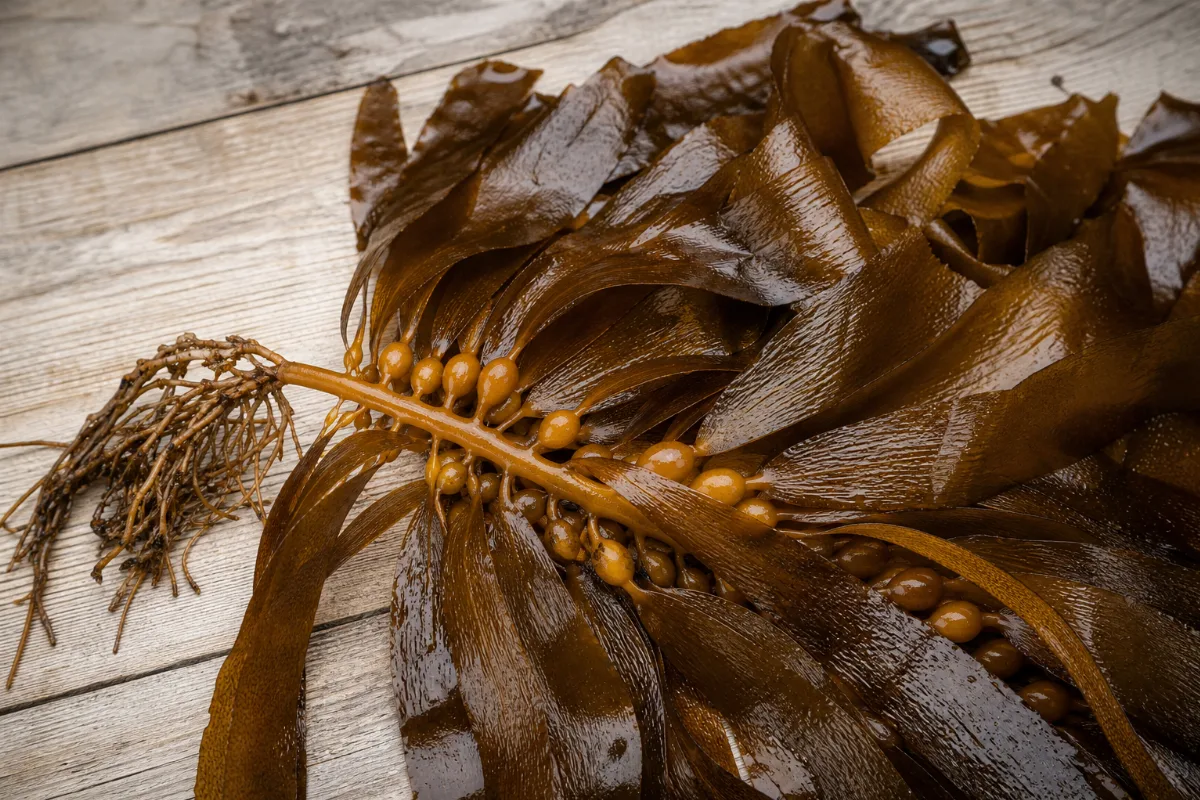
Herbs & Botanicals · Iodine-rich brown seaweed
Kelp
Saccharina japonica, Ascophyllum nodosum, Macrocystis pyrifera (brown seaweeds) · also called Kelp, brown seaweed, kombu, kunbu, rockweed, knotted wrack, giant kelp
Kelp is a group of large brown seaweeds, eaten as food and sold as powder, tablets or extract for thyroid support and weight loss. It is one of the richest natural sources of iodine, and that is the main thing to know. Human evidence of benefit is weak or thin. Too much iodine can make the thyroid overactive or underactive, and some kelp products have carried arsenic, so ask a doctor before using it if you have a thyroid problem, take thyroid medicine, or are pregnant.
General information, not medical advice. Last substantive update · Not medically reviewed. A named clinician has not signed off on this page. How this page is made
About Kelp
Kelp is a group of brown seaweeds that are very rich in iodine. Human evidence of benefit is weak. Safety is the bigger story: iodine can disturb the thyroid in either direction, some products carry arsenic, and pregnant people, children, older adults and people with thyroid disease are most at risk.
What it is
"Kelp" is used for several large brown seaweeds: true kelps such as kombu (Saccharina or Laminaria japonica), giant kelp, and also rockweeds such as Ascophyllum nodosum that are often sold as kelp. Bladderwrack is a different seaweed.
Kelp is eaten as food and made into powder, tablets, extracts and slimming blends. Its main compounds are iodine, alginate (a gel-forming fibre), fucoidan, fucoxanthin and polyphenols called phlorotannins.
What the research shows
The clearest human finding is about the thyroid, and it points to a risk. Kelp capsules raised TSH in healthy adults within weeks. For benefits, the trials are small. An iodine-reduced kelp lowered body fat in men in one 8-week trial; alginate did not make people feel fuller; a rockweed blend lowered insulin after a meal in 23 people; a polyphenol extract slightly reduced DNA damage in a subgroup. A review of edible seaweeds says more human studies are needed.
Fucoidan, fucoxanthin and other compounds show lab effects, but there is little in people and what exists is inconsistent.
At a glance
Traditional uses history, not proof
- Food in East Asia (kombu)
- Goitre and thyroid complaints
- Slimming products
Studied for research
- Iodine source, low
- Thyroid support, insufficient (and a safety concern)
- Weight and body fat, low
- Fullness from alginate fibre, insufficient
- Fucoxanthin and body fat, very low
- Blood sugar and insulin, low
- Antioxidant effects, low
- Cholesterol, very low
- Fucoidan with cancer treatment, insufficient
Main compounds
- Iodine
- Alginate
- Fucoidan
- Fucoxanthin
- Phlorotannins (polyphenols)
Common forms
- Dried whole seaweed
- Powder
- Tablets or capsules
- Extracts and isolated fibre
- Slimming or thyroid blends
Research links: American Thyroid Association: excess iodine statement · Iodine content of kelp and seaweed products (PubMed) · Kelp and thyroid function trial (PubMed) · Arsenic case report with kelp supplements (PubMed) · Iodine-induced thyroid dysfunction, review (PubMed) · NHS: Iodine · Research Library · Genes & Biomarkers Library
The plant and its history
- Accepted scientific name
- Brown seaweeds sold as kelp (class Phaeophyceae): mainly Saccharina japonica (kombu), Ascophyllum nodosum (rockweed, knotted wrack), Macrocystis pyrifera (giant kelp), Laminaria digitata and Saccharina latissima
- Naming authority
- Names with authorities from GBIF on 2026-10-25: Ascophyllum nodosum (L.) Le Jol.; Macrocystis pyrifera (L.) C.Agardh; Laminaria digitata (Huds.) J.V.Lamour.; Saccharina latissima (L.) C.E.Lane et al.; Saccharina japonica (Aresch.) C.E.Lane et al. 2006.
- Synonyms
- Laminaria japonica Aresch. (the name GBIF treats as accepted; Saccharina japonica is its synonym); Hafgygia japonica; Laminaria ochotensis
- Common names
- Kelp (English); Kombu (Japanese); Kunbu (Chinese); Rockweed, knotted wrack (English (Ascophyllum)); Giant kelp (English (Macrocystis))
- Botanical family
- Laminariaceae (true kelps) and Fucaceae (rockweeds), brown algae
- Classification
- Chromista > Ochrophyta > Phaeophyceae (brown algae) > Laminariales (true kelps) and Fucales (Ascophyllum) > Laminariaceae (Laminaria, Saccharina, Macrocystis); Fucaceae (Ascophyllum) > Saccharina, Laminaria, Macrocystis, Ascophyllum > see accepted_name
- Native range
- Cold and temperate coastal seas; not verified in detail from sources read.
- Habitat
- Rocky coasts and underwater beds (general description; not verified from a source read).
- What the plant looks like
- Roots: A seaweed has no true roots; it grips rock with a holdfast.; Stems: A stalk-like stipe and broad blades (kelp) or branching fronds (rockweed).; Leaves: No true leaves; the blades are the seaweed body (thallus).; Flowers: No flowers; seaweeds reproduce with spores.; Fruit: No fruit or seed.
- Cultivation
- Some kelps are farmed (kombu is cultivated in East Asia); others are wild-harvested. Not verified from a source read.
- Harvest and processing
- Dried whole, powdered, extracted, or processed into alginate, fucoidan and fucoxanthin products. Iodine can be removed by processing (Aoe 2021 used an iodine-reduced kelp).
- Look-alikes and adulterants
- Name: Bladderwrack (Fucus vesiculosus); Note: A different brown seaweed sometimes sold as brown kelp; see the bladderwrack page. Same iodine and metal concerns.; Name: Hijiki (Sargassum fusiforme); Note: A brown seaweed with high inorganic arsenic; UK advice was to avoid it (Rose 2007).; Name: Rockweed (Ascophyllum) sold as kelp; Note: Not a true kelp (order Fucales), but common in "kelp" supplements.
- Sustainability and conservation
- Not assessed here.
Traditional use and history history, not clinical proof
| Tradition or era | Documented use | Source |
|---|---|---|
| East Asia (as stated in a 2021 product survey) | Seaweeds and kelps have long been common in the East Asian diet; in recent years they have entered the global food market. | p33889064 |
| Europe (related seaweed, as summarised in the EU assessment of bladderwrack) | Brown seaweeds were used for goitre and thyroid complaints and in slimming regimens; this is traditional use, not proof. | s-ema-ar-fucus-vesiculosus |
| Modern supplements | Sold as iodine, thyroid and weight-management supplements; claims about the discovery of iodine in kelp ash and other history are NOT verified here. | p33889064 |
Traditional use shows how a plant was used. It does not show that a supplement works or is safe today.
What is inside, and how it may work
What the plant contains and how those compounds act in cells and animals. Laboratory and animal mechanisms are not proven effects in people.
Main compounds
| Compound | Family | Where it is concentrated | Activity studied | Level of evidence |
|---|---|---|---|---|
| Iodine PubChem 807 | mineral (halogen) | Whole seaweed Mean iodine in oarweed 7,800, sugar kelp 4,469 and kombu 2,276 micrograms per gram (Aakre 2021). | Needed to make thyroid hormones; excess disturbs the thyroid. 1 10 9 | Human data |
| Alginate (alginic acid) | polysaccharide | Cell wall Aoe 2021: 6 g of iodine-reduced kelp powder corresponded to 3 g of alginate. | Gel-forming fibre; no effect on fullness in a 10-day trial. 23 5 | Human data |
| Fucoidan | sulphated polysaccharide | Cell wall | Lab: antioxidant and other effects; slowed clotting in lab tests (Fucus); small cancer studies inconsistent. 27 12 | Human data |
| Fucoxanthin PubChem 5281239 | carotenoid pigment | Whole seaweed | Raised resting energy use and lowered weight in one combination-product trial. 2 20 | Human data |
| Phlorotannins (built from phloroglucinol) PubChem 359 | polyphenols | Whole seaweed | Absorbed in part: metabolites found in urine and plasma; no change in inflammation markers. 7 20 | Human data |
| Laminarin and mannitol PubChem 439306 | storage sugar and sugar alcohol | Whole seaweed | Not studied in people in the sources read. 20 | None |
Mechanisms, receptors and pathways
| Target or pathway | Gene or receptor | What was found | Level |
|---|---|---|---|
| Thyroid hormone system (iodine uptake) | Sodium-iodide symporter and the TSH feedback loop | Kelp and rockweed capsules raised TSH in healthy adults; iodine-reduced kelp did not raise thyroid hormones; case reports describe over- and underactivity. Extra iodine can switch the thyroid on or off depending on the person. 9 10 5 16 | Human data |
| Stomach emptying and fullness | Gut hormones ghrelin, CCK, GLP-1, PYY | Alginate did not change them in 10 days. 23 | Human data |
| Carbohydrate digestion and insulin | Alpha-amylase and alpha-glucosidase (lab idea) | A rockweed blend lowered the insulin response to one meal in 23 people; the enzyme idea is from lab work. 24 | Human data |
| Oxidative DNA damage | Not specified | Small drop in a subgroup on a polyphenol extract; no change in CRP or cytokines. 7 | Human data |
| Cancer cell effects of fucoidan | Not specified | Positive in cell culture; clinical studies are inconsistent. 27 | Laboratory research |
Absorption, metabolism and elimination
- Absorption
- About 33% of the iodine in a rockweed capsule was absorbed, versus about 59% from potassium iodide; urinary iodine rose with intake. Phlorotannin metabolites appear in blood and urine after a seaweed extract.
- Distribution
- Not studied in people for any kelp compound in the sources read.
- Metabolism
- Phlorotannins are converted to sulphate and glucuronide metabolites (Baldrick 2018). Fucoidan, alginate: not described in the abstracts read.
- Elimination
- Excess iodine leaves mostly in urine; thyroid tests normalised after stopping in the trials and reports.
- Bioavailability
- Iodine from rockweed about a third of the dose (Combet 2014). No figure for other compounds.
Isolated compounds versus whole extracts
Fucoidan, fucoxanthin and alginate are sold as isolated extracts; most of the lab findings use these. Human trials here used iodine-reduced kelp powder, rockweed capsules and blends, a combination product and extracted alginate, and none compared forms. The iodine, the substance with the clearest effect in people, is in the whole seaweed and in most powders, and was deliberately reduced in one trial.
Nutritional composition
Kelp is eaten as a food in East Asia and as noodles, snacks and flakes elsewhere. A single portion of whole dried kelp can exceed the upper iodine level (Aakre 2021), so food use is also not always low risk. Kelp also supplies fibre and trace minerals; the amounts were not checked here.
4 low certainty2 very low certainty4 not enough evidence
What was looked at
The 10 benefits and uses checked for Kelp, each with how strong the evidence is. Tap one to open it.
- A source of dietary iodineLow certainty
- Thyroid support (traditional)Not enough evidence
- Weight and body fatLow certainty
- Feeling full (alginate fibre)Not enough evidence
- Fucoxanthin (brown seaweed pigment) and body fatVery low certainty
- Blood sugar and insulin after mealsLow certainty
- Antioxidant effects, DNA damage and inflammationLow certainty
- Cholesterol and blood fatsVery low certainty
- Fucoidan alongside cancer treatmentNot enough evidence
- Other lab and animal findingsNot enough evidence
Lab markers tracked in the studies
TSH (thyroid-stimulating hormone)Urinary iodineBody fat percentageBody mass index (BMI)Body weightFullness and gut hormones (ghrelin, CCK, GLP-1, PYY)Insulin after a carbohydrate mealBlood glucose after a carbohydrate mealDNA damage in blood cellsCRP and inflammatory cytokinesTotal and LDL cholesterolLiver fat and liver enzymes
What is Kelp good for?
The main proposed uses and how strong the human evidence is for each. "Low" means a few small studies; "insufficient" means too little evidence to judge; "very low" means a single weak study. None of these uses is well supported.
Benefits, one by one
Each card is a research question, not a promise. Tap a goal to filter. Open a card to see the studies, doses and limits.
A source of dietary iodine
Low certaintyBrown seaweeds such as kelp are among the richest natural sources of iodine, which the thyroid needs. In a small trial in women with low iodine intake, two weeks of a rockweed seaweed capsule raised their urine iodine. The problem is the amount: iodine per product ranged from tiny to many times the upper safe limit, and labels were often wrong.
4 studiesProducts in the studies were different seaweeds, powders, extracts an…
Studies, doses and limits
What the trials found
Combet 2014: 42 healthy women in the UK with low dairy and seafood intake took capsules of Ascophyllum nodosum (a rockweed sold as kelp) for 2 weeks. Urinary iodine rose from 78 to 140 micrograms per litre (P<0.001). TSH also rose, from 1.5 to 2.1 mIU/l (P<0.001), with two women above the normal range afterwards. Aakre 2021 tested 96 Norwegian macroalgae products: iodine in one portion of whole seaweed ranged from 128 to 62,400 micrograms and in supplements from 5 to 5,600 micrograms per daily dose, and 54 products would exceed the tolerable upper level in one portion or dose. The authors call them unreliable iodine sources. The American Thyroid Association warns that kelp supplements can hold several thousand times the upper limit.
Results
Seaweed iodine raised urine iodine within 2 weeks in a low-iodine group; product iodine content is very uneven.
Effect sizes as reported
Combet 2014: urinary iodine 78 to 140 micrograms per litre (P<0.001); TSH 1.5 to 2.1 mIU/l (P<0.001). Aakre 2021: iodine per portion 128 to 62,400 micrograms.
Why this rating
One small before-and-after trial without a placebo group, in a group that was short of iodine, plus a product survey. It shows iodine can come from seaweed, not that kelp is a safe or better way to get it.
Form and dose studied
Products in the studies were different seaweeds, powders, extracts and extracted fibres; no single product is supported by the evidence. This page does not suggest amounts.
Who was studied
Healthy women with low dietary iodine (trial); consumers of kelp products (survey).
Limits
Small, short, no placebo in the main part, rockweed rather than true kelp, and TSH rose, which is the thyroid under pressure. Iodine intake from kelp cannot be predicted from the label.
Why researchers looked
The thyroid builds its hormones from iodine, and people who eat little fish or dairy can run low. Seaweed is a natural, food-based source.
Traditional use
Seaweed has long been part of the East Asian diet, which is the setting for much of the interest in kelp as a food.
Proposed mechanism Human data
Iodine in seaweed is partly absorbed. In one study about a third of the seaweed iodine was taken up, compared with about three fifths from a potassium iodide tablet.
A proposed mechanism does not show that the effect happens in people.
This is also the main safety issue with kelp. See the Safety tab: too much iodine can make the thyroid overactive or underactive.
Thyroid support (traditional)
Not enough evidenceKelp is sold for thyroid support because of its iodine. No trial has tested it in people with thyroid disease. In healthy adults, kelp capsules pushed TSH up, and case reports describe overactive and underactive thyroid after kelp products. For most people this is a risk more than a benefit.
4 studiesProducts in the studies were different seaweeds, powders, extracts an…
Studies, doses and limits
What the trials found
No trial of kelp in thyroid patients was found. Clark 2003: in 36 healthy adults, kelp capsules for 4 weeks raised TSH (low dose P=0.04, high dose P=0.002) and total T3 fell in the high-dose group. Aoe 2021 gave iodine-reduced Laminaria japonica to 50 overweight adults for 8 weeks and saw no rise in thyroid hormones. The American Thyroid Association says there is no known thyroid benefit of routine iodine intake above the recommended allowance.
Results
No evidence of benefit in thyroid disease. TSH rose on ordinary kelp in healthy adults; an iodine-reduced kelp did not raise thyroid hormones.
Effect sizes as reported
Clark 2003: TSH rose in both kelp groups within 4 weeks; returned to baseline after stopping.
Why this rating
Nothing tests kelp as a treatment for thyroid disease, and what exists in healthy people points to harm signals rather than benefit.
Form and dose studied
Products in the studies were different seaweeds, powders, extracts and extracted fibres; no single product is supported by the evidence. This page does not suggest amounts.
Who was studied
Healthy adults (trials).
Limits
Species not named in Clark 2003; Aoe 2021 used a special low-iodine kelp, so it does not describe ordinary kelp products.
Why researchers looked
Iodine deficiency causes goitre (an enlarged thyroid), so iodine-rich seaweed was long used for neck swelling and thyroid complaints.
Traditional use
Seaweeds were used for goitre in several traditions; in the EU assessment of bladderwrack (a related seaweed) this is listed as traditional use.
Proposed mechanism Pharmacological theory
Where iodine is truly lacking, adding it helps the thyroid. Where it is not, more iodine does not help and can disturb the thyroid.
A proposed mechanism does not show that the effect happens in people.
Do not start kelp for a thyroid problem without a doctor. Both overactive and underactive thyroid are possible.
Weight and body fat
Low certaintyKelp and its fibre are sold for weight loss. The results are mixed and small. An 8-week trial of iodine-reduced kelp lowered body fat in men, but not in women. Pooled trials of many seaweed products show a small average drop in BMI. Neither tells us what an ordinary kelp supplement does.
3 studiesProducts in the studies were different seaweeds, powders, extracts an…
Studies, doses and limits
What the trials found
Aoe 2021: 50 overweight Japanese adults took iodine-reduced Laminaria japonica powder tablets or placebo for 8 weeks. Body fat percentage fell significantly in men on kelp; weight (P=0.065) and BMI (P=0.072) did not reach significance; no significant change in women. Lagowska 2025 pooled 11 trials of seaweed products in people with overweight or obesity: BMI SMD -0.40 (95% CI -0.65 to -0.16) and fat mass percentage SMD -1.48 (95% CI -2.66 to -0.30), seen with refined or extracted brown seaweed taken for at least 8 weeks, with mixed products and no kelp singled out. Cherry 2019 concludes more human studies are needed.
Results
Small, inconsistent effects: lower body fat in men in one trial; a small average BMI drop across mixed seaweed products.
Effect sizes as reported
Aoe 2021: body fat percentage lower in men (significant), BMI P=0.072. Lagowska 2025: BMI SMD -0.40 (-0.65 to -0.16).
Why this rating
One small RCT with a special low-iodine kelp and a sex-split result, plus a pooled analysis of mixed products. Effects are small and not shown for ordinary kelp supplements.
Form and dose studied
Products in the studies were different seaweeds, powders, extracts and extracted fibres; no single product is supported by the evidence. This page does not suggest amounts.
Who was studied
Overweight or obese adults.
Limits
Two authors of Aoe 2021 work for a kelp processor and a contract research firm. A standardized mean difference is not kilograms. Abstracts only.
Why researchers looked
Kelp is rich in alginate, a fibre that thickens in the stomach, so it was thought to help people feel full. Its iodine was also thought to speed up metabolism, which has not been shown.
Traditional use
Used in slimming products across Europe and Asia; the EU gives a related seaweed, bladderwrack, a traditional-use label for use with a reduced-calorie diet.
Proposed mechanism Pharmacological theory
The fibre idea is tested by the alginate trial below. The thyroid-speeding idea is not supported; iodine excess can slow or disturb the thyroid.
A proposed mechanism does not show that the effect happens in people.
Kelp for weight loss carries the iodine and metal risks on the Safety tab.
Feeling full (alginate fibre)
Not enough evidenceAlginate is the gel-forming fibre in brown seaweed. In a 10-day trial in 48 overweight adults, alginate capsules did not slow stomach emptying, change gut hormones or reduce how much people ate at a meal.
1 studiesProducts in the studies were different seaweeds, powders, extracts an…
Studies, doses and limits
What the trials found
Odunsi 2010: 48 overweight or obese adults took sodium alginate from Laminaria digitata or placebo before meals for 10 days. No difference in stomach emptying, stomach volume, the hormones ghrelin, CCK, GLP-1 and PYY, satiation, or calorie intake at a free-choice meal. The authors say this questions short-term alginate for weight loss.
Results
No effect on fullness or food intake in a short trial.
Effect sizes as reported
No numeric differences reported in the abstract; all comparisons were not significant.
Why this rating
One short, small, negative trial. Absence of an effect over 10 days does not rule out a longer-term effect, but nothing supports a benefit.
Form and dose studied
Products in the studies were different seaweeds, powders, extracts and extracted fibres; no single product is supported by the evidence. This page does not suggest amounts.
Who was studied
Overweight or obese adults without eating disorders.
Limits
Extracted alginate, not whole kelp; only 10 days.
Why researchers looked
Alginate turns to a gel in stomach acid, which should slow digestion and make people feel fuller.
Traditional use
Alginate from brown seaweed is widely used in foods and in heartburn medicines; it is marketed as a weight-loss supplement.
Proposed mechanism Human data
The proposed effect is on stomach emptying and fullness signals. This trial found no such effect.
A proposed mechanism does not show that the effect happens in people.
Fibre supplements can interfere with how medicines are absorbed in general; no kelp-specific study of this was found.
Fucoxanthin (brown seaweed pigment) and body fat
Very low certaintyFucoxanthin is the orange-brown pigment of brown seaweeds. One 16-week trial of a commercial product combining a brown seaweed extract with pomegranate seed oil reported weight and liver fat loss in obese women. It was a combination product, in one study, so it is a hint and not proof about kelp.
1 studiesProducts in the studies were different seaweeds, powders, extracts an…
Studies, doses and limits
What the trials found
Abidov 2010: 151 obese premenopausal women without diabetes (113 with fatty liver) took Xanthigen (brown seaweed extract with 1.6 to 2.4 mg fucoxanthin plus pomegranate seed oil) or placebo for 16 weeks. The higher-strength product lowered body weight by about 5 kg and also body fat, liver fat, liver enzymes, triglycerides and CRP versus placebo; fucoxanthin raised resting energy expenditure in the fatty-liver group.
Results
Weight and liver-fat loss reported on a combination product in one trial.
Effect sizes as reported
Body weight loss about 5.5 kg (NAFLD group) and 4.9 kg (normal liver fat group), P<0.05 versus placebo.
Why this rating
A single trial of a commercial combination product; no replication was found in the sources read, and the abstract does not give a conflict-of-interest statement.
Form and dose studied
Products in the studies were different seaweeds, powders, extracts and extracted fibres; no single product is supported by the evidence. This page does not suggest amounts.
Who was studied
Obese premenopausal women without diabetes.
Limits
Cannot separate the seaweed from the pomegranate oil. Not kelp itself. Possible industry link NOT verified.
Why researchers looked
Fucoxanthin showed fat-burning effects in lab work, which led to a trial of a fucoxanthin product.
Traditional use
No traditional use; a modern supplement ingredient made from brown seaweed.
Proposed mechanism Laboratory research
Lab ideas about fat metabolism are not shown to apply to people eating kelp, which contains only small amounts.
A proposed mechanism does not show that the effect happens in people.
Not a reason to take kelp; kelp is mainly valued for iodine, and iodine excess is the risk.
Blood sugar and insulin after meals
Low certaintyIn a small single-dose study, a brown seaweed blend (rockweed species, including bladderwrack) lowered the insulin response to a bread meal by about 12 percent, without a clear change in blood glucose. Pooled trials of seaweed products found no clear effect on glucose metabolism.
2 studiesProducts in the studies were different seaweeds, powders, extracts an…
Studies, doses and limits
What the trials found
Paradis 2011: 23 healthy adults took two capsules of a blend of Ascophyllum nodosum and Fucus vesiculosus or placebo before a 50 g carbohydrate bread meal in a crossover design. Insulin incremental area under the curve fell 12.1% (P=0.04) and an insulin sensitivity index rose 7.9% (P<0.05); the glucose response did not change significantly (P=0.24). Lagowska 2025 found no significant effect on glucose metabolism across pooled trials of seaweed products.
Results
Lower insulin response after one meal in 23 people; no glucose effect; pooled trials show no clear glucose effect.
Effect sizes as reported
Paradis 2011: insulin iAUC -12.1% (P=0.04); glucose P=0.24.
Why this rating
One small single-dose crossover trial of a blend that is not kelp itself, and a pooled result of no effect.
Form and dose studied
Products in the studies were different seaweeds, powders, extracts and extracted fibres; no single product is supported by the evidence. This page does not suggest amounts.
Who was studied
Healthy men and women (single-dose trial).
Limits
Single meal, healthy people, product blend; nothing in people with diabetes.
Why researchers looked
Brown seaweed compounds blocked starch-digesting enzymes in the lab, so a trial tested a blend before a carbohydrate meal.
Traditional use
No specific traditional use.
Proposed mechanism Laboratory research
Lab studies suggest seaweed compounds slow carbohydrate digestion; the human data are thin.
A proposed mechanism does not show that the effect happens in people.
Anyone using diabetes medicines should not add kelp for blood sugar without asking a doctor; no kelp-with-diabetes-drug study was found.
Antioxidant effects, DNA damage and inflammation
Low certaintyBrown seaweeds are rich in polyphenols (phlorotannins). In an 8-week trial in 80 adults with overweight, an Ascophyllum nodosum polyphenol extract slightly reduced DNA damage in blood cells, but only in the obese subgroup, and did not change inflammation markers.
2 studiesProducts in the studies were different seaweeds, powders, extracts an…
Studies, doses and limits
What the trials found
Baldrick 2018: 80 adults aged 30 to 65 with BMI 25 or more took a capsule with 100 mg of seaweed polyphenol or placebo daily for 8 weeks (crossover). DNA damage decreased modestly, only in obese participants. No significant changes in CRP, antioxidant status or inflammatory cytokines. Metabolites of phlorotannins were identified as markers of seaweed intake.
Results
A small DNA-damage drop in a subgroup; no change in inflammation or antioxidant markers.
Effect sizes as reported
Not given in the abstract.
Why this rating
One crossover trial with a subgroup-only finding and no clinical outcome.
Form and dose studied
Products in the studies were different seaweeds, powders, extracts and extracted fibres; no single product is supported by the evidence. This page does not suggest amounts.
Who was studied
Adults with overweight or obesity.
Limits
An extract, not whole kelp. Author list includes employees of a seaweed ingredient company. Marker changes are not health outcomes.
Why researchers looked
Lab studies show seaweed polyphenols act as antioxidants, so a trial looked at DNA damage and inflammation markers.
Traditional use
No specific traditional use.
Proposed mechanism Human data
Phlorotannin metabolites were found in blood and urine, which shows some absorption, but how they act in the body is not known.
A proposed mechanism does not show that the effect happens in people.
No safety signal reported in the abstract.
Cholesterol and blood fats
Very low certaintyPooled trials of seaweed products found small falls in total and LDL cholesterol. The products were mixed and kelp was not singled out, so this does not show what kelp does.
3 studiesProducts in the studies were different seaweeds, powders, extracts an…
Studies, doses and limits
What the trials found
Lagowska 2025 (11 trials of edible seaweed products in adults with overweight or obesity) reported falls in total cholesterol and LDL. Aoe 2021 measured blood lipids after 8 weeks of iodine-reduced kelp, but the abstract does not give a lipid result. Abidov 2010 reported lower triglycerides on a fucoxanthin and pomegranate oil product.
Results
Small average falls in total and LDL cholesterol across mixed seaweed trials; nothing specific to kelp.
Effect sizes as reported
No numeric values for the lipid results in the abstract of Lagowska 2025.
Why this rating
Pooled mixed products, abstract-level detail, no kelp-specific trial result for lipids.
Form and dose studied
Products in the studies were different seaweeds, powders, extracts and extracted fibres; no single product is supported by the evidence. This page does not suggest amounts.
Who was studied
Adults with overweight or obesity.
Limits
Abstracts only; products mixed.
Why researchers looked
Seaweed fibres bind bile acids and fats in the gut in lab work.
Traditional use
No specific traditional use.
Proposed mechanism Pharmacological theory
Fibre-related effect on fat absorption is a theory.
A proposed mechanism does not show that the effect happens in people.
None specific.
Fucoidan alongside cancer treatment
Not enough evidenceFucoidan is a sulphated sugar from brown seaweed. A 2022 review found only four small studies in cancer patients with inconsistent results. It cannot be called an established add-on, and people in cancer treatment should ask their care team before any seaweed supplement.
1 studiesProducts in the studies were different seaweeds, powders, extracts an…
Studies, doses and limits
What the trials found
Wu 2022 reviewed four studies of fucoidan supplements in 118 people, mostly with metastatic colorectal or gastric cancer. Two reported longer survival or longer chemotherapy periods; other outcomes were positive but not significant. The authors call the effects inconsistent and say cause and effect could not be confirmed.
Results
Inconsistent small studies; no established benefit.
Effect sizes as reported
No numbers in the abstract.
Why this rating
Four small, mixed, mostly non-randomized studies.
Form and dose studied
Products in the studies were different seaweeds, powders, extracts and extracted fibres; no single product is supported by the evidence. This page does not suggest amounts.
Who was studied
Adults with advanced cancer.
Limits
Fucoidan source and product vary; not specific to kelp.
Why researchers looked
Fucoidan slowed cancer cells in lab dishes, which led to small studies in patients.
Traditional use
No traditional use as a medicine for cancer.
Proposed mechanism Laboratory research
Lab and animal findings only for most proposed mechanisms.
A proposed mechanism does not show that the effect happens in people.
Seaweed products can affect thyroid function and carry metals; people on cancer treatment should check with their team.
Other lab and animal findings
Not enough evidenceBrown seaweed compounds (fucoidan, fucoxanthin, phlorotannins, laminarin) show antioxidant, anti-inflammatory and other effects in lab dishes and animals. This is early research. It has not been shown to help people.
1 studiesProducts in the studies were different seaweeds, powders, extracts an…
Studies, doses and limits
What the trials found
Cherry 2019 concludes that human intervention studies and mechanistic evidence are needed to support health claims for seaweeds and their bioactive components.
Results
Lab and animal only.
Why this rating
No human evidence of benefit from these compounds as found in kelp.
Form and dose studied
Products in the studies were different seaweeds, powders, extracts and extracted fibres; no single product is supported by the evidence. This page does not suggest amounts.
Limits
Cell and animal results often do not carry over to people.
Why researchers looked
Brown seaweeds are rich in unusual compounds that behave interestingly in the lab.
Proposed mechanism Laboratory research
Cell and animal studies only.
A proposed mechanism does not show that the effect happens in people.
None specific.
Connections to the rest of health
How Kelp connects to the rest of our health knowledge graph. Every link says what kind of connection it is. A safety link (for example to the liver) is a warning, not a benefit. A study that merely mentions a topic never creates a benefit link.
Explore every connection: goals, body systems, organs, symptoms, genes
A. Wellness goals
| Connected to | Kind of connection | Evidence status | Context | Studies |
|---|---|---|---|---|
| Thyroid Support | Low certainty | A source of dietary iodine: Brown seaweeds such as kelp are among the richest natural sources of iodine, which the thyroid needs. In a small trial in women with low iodine intake, two weeks of a rockweed seaweed capsule raised their urine iodine. The problem is the amount: iodine per product ranged from tiny to many times the upper safe limit, and labels were often wrong. | 10 1 3 8 | |
| Metabolic Health | Low certainty | A source of dietary iodine: Brown seaweeds such as kelp are among the richest natural sources of iodine, which the thyroid needs. In a small trial in women with low iodine intake, two weeks of a rockweed seaweed capsule raised their urine iodine. The problem is the amount: iodine per product ranged from tiny to many times the upper safe limit, and labels were often wrong. | 10 1 3 8 | |
| Thyroid Support | Traditional use | Not enough evidence | Thyroid support (traditional): Kelp is sold for thyroid support because of its iodine. No trial has tested it in people with thyroid disease. In healthy adults, kelp capsules pushed TSH up, and case reports describe overactive and underactive thyroid after kelp products. For most people this is a risk more than a benefit. | 9 5 3 12 |
| Weight Management | Low certainty | Weight and body fat: Kelp and its fibre are sold for weight loss. The results are mixed and small. An 8-week trial of iodine-reduced kelp lowered body fat in men, but not in women. Pooled trials of many seaweed products show a small average drop in BMI. Neither tells us what an ordinary kelp supplement does. Feeling full (alginate fibre): Alginate is the gel-forming fibre in brown seaweed. In a 10-day trial in 48 overweight adults, alginate capsules did not slow stomach emptying, change gut hormones or reduce how much people ate at a meal. | 5 15 8 23 2 | |
| Metabolic Health | Low certainty | Weight and body fat: Kelp and its fibre are sold for weight loss. The results are mixed and small. An 8-week trial of iodine-reduced kelp lowered body fat in men, but not in women. Pooled trials of many seaweed products show a small average drop in BMI. Neither tells us what an ordinary kelp supplement does. Fucoxanthin (brown seaweed pigment) and body fat: Fucoxanthin is the orange-brown pigment of brown seaweeds. One 16-week trial of a commercial product combining a brown seaweed extract with pomegranate seed oil reported weight and liver fat loss in obese women. It was a combination product, in one study, so it is a hint and not proof about kelp. | 5 15 8 2 24 | |
| Gut Health | Not enough evidence | Feeling full (alginate fibre): Alginate is the gel-forming fibre in brown seaweed. In a 10-day trial in 48 overweight adults, alginate capsules did not slow stomach emptying, change gut hormones or reduce how much people ate at a meal. | 23 | |
| Liver Support | Very low certainty | Fucoxanthin (brown seaweed pigment) and body fat: Fucoxanthin is the orange-brown pigment of brown seaweeds. One 16-week trial of a commercial product combining a brown seaweed extract with pomegranate seed oil reported weight and liver fat loss in obese women. It was a combination product, in one study, so it is a hint and not proof about kelp. | 2 | |
| Blood Sugar Balance | Low certainty | Blood sugar and insulin after meals: In a small single-dose study, a brown seaweed blend (rockweed species, including bladderwrack) lowered the insulin response to a bread meal by about 12 percent, without a clear change in blood glucose. Pooled trials of seaweed products found no clear effect on glucose metabolism. | 24 15 | |
| Cellular Protection | Low certainty | Antioxidant effects, DNA damage and inflammation: Brown seaweeds are rich in polyphenols (phlorotannins). In an 8-week trial in 80 adults with overweight, an Ascophyllum nodosum polyphenol extract slightly reduced DNA damage in blood cells, but only in the obese subgroup, and did not change inflammation markers. | 7 8 | |
| Inflammation Balance | Low certainty | Antioxidant effects, DNA damage and inflammation: Brown seaweeds are rich in polyphenols (phlorotannins). In an 8-week trial in 80 adults with overweight, an Ascophyllum nodosum polyphenol extract slightly reduced DNA damage in blood cells, but only in the obese subgroup, and did not change inflammation markers. | 7 8 | |
| Cholesterol Balance | Very low certainty | Cholesterol and blood fats: Pooled trials of seaweed products found small falls in total and LDL cholesterol. The products were mixed and kelp was not singled out, so this does not show what kelp does. | 15 5 2 | |
| Heart Health | Very low certainty | Cholesterol and blood fats: Pooled trials of seaweed products found small falls in total and LDL cholesterol. The products were mixed and kelp was not singled out, so this does not show what kelp does. | 15 5 2 | |
| Immune Support | Not enough evidence | Fucoidan alongside cancer treatment: Fucoidan is a sulphated sugar from brown seaweed. A 2022 review found only four small studies in cancer patients with inconsistent results. It cannot be called an established add-on, and people in cancer treatment should ask their care team before any seaweed supplement. | 27 | |
| Cellular Protection | Not enough evidence | Other lab and animal findings: Brown seaweed compounds (fucoidan, fucoxanthin, phlorotannins, laminarin) show antioxidant, anti-inflammatory and other effects in lab dishes and animals. This is early research. It has not been shown to help people. | 8 | |
| Inflammation Balance | Not enough evidence | Other lab and animal findings: Brown seaweed compounds (fucoidan, fucoxanthin, phlorotannins, laminarin) show antioxidant, anti-inflammatory and other effects in lab dishes and animals. This is early research. It has not been shown to help people. | 8 |
B. Body systems
| Connected to | Kind of connection | Evidence status | Context | Studies |
|---|---|---|---|---|
| Endocrine System | Adverse effect or risk | Moderate certainty | Iodine excess can disturb thyroid hormones. Preparation or compound: Kelp (iodine) |
16 3 |
| Endocrine System | Biological association | Low certainty | Studied for: A source of dietary iodine Studied for: Thyroid support (traditional) | 10 1 3 8 9 5 12 |
| Hormone Health | Biological association | Not enough evidence | Studied for: Thyroid support (traditional) | 9 5 3 12 |
| Metabolism Weight | Biological association | Low certainty | Studied for: Weight and body fat Studied for: Feeling full (alginate fibre) | 5 15 8 23 2 24 |
| Digestive System | Biological association | Not enough evidence | Studied for: Feeling full (alginate fibre) Studied for: Fucoxanthin (brown seaweed pigment) and body fat | 23 2 |
| Immune System | Biological association | Low certainty | Studied for: Antioxidant effects, DNA damage and inflammation Studied for: Fucoidan alongside cancer treatment | 7 8 27 |
| Cardiovascular System | Biological association | Very low certainty | Studied for: Cholesterol and blood fats | 15 5 2 |
C. Body parts and organs
| Connected to | Kind of connection | Evidence status | Context | Studies |
|---|---|---|---|---|
| Thyroid | Adverse effect or risk | Moderate certainty | Raised TSH in healthy adults; overactive and underactive thyroid in case reports. Raised TSH in healthy adults; thyroid dysfunction in case reports. Preparation or compound: Kelp (iodine) |
9 10 14 11 3 |
E. Health conditions
| Connected to | Kind of connection | Evidence status | Context | Studies |
|---|---|---|---|---|
| Arsenic poisoning | Adverse effect or risk | Very low certainty | One case report; contamination surveys of seaweed. Preparation or compound: Contaminated kelp supplement |
4 25 |
G. Root causes and contributing factors
| Connected to | Kind of connection | Evidence status | Context | Studies |
|---|---|---|---|---|
| Excess Iodine | Moderate certainty | Many kelp products exceed the upper intake level in one portion. Preparation or compound: Kelp |
1 3 |
I. Biomarkers
| Connected to | Kind of connection | Evidence status | Context | Studies |
|---|---|---|---|---|
| TSH (thyroid-stimulating hormone) | Biological association | Moderate certainty | Measured in trials: raised. A lab change is not the same as a health benefit. | 9 10 5 |
| Urinary iodine | Biological association | Moderate certainty | Measured in trials: raised. A lab change is not the same as a health benefit. | 10 9 |
| Body fat percentage | Biological association | Low certainty | Measured in trials: lowered. A lab change is not the same as a health benefit. | 5 |
| Body mass index (BMI) | Biological association | Low certainty | Measured in trials: lowered. A lab change is not the same as a health benefit. | 15 |
| Body weight | Biological association | Very low certainty | Measured in trials: lowered. A lab change is not the same as a health benefit. | 2 5 |
| Fullness and gut hormones (ghrelin, CCK, GLP-1, PYY) | Biological association | Low certainty | Measured in trials: unchanged. A lab change is not the same as a health benefit. | 23 |
| Insulin after a carbohydrate meal | Biological association | Low certainty | Measured in trials: lowered. A lab change is not the same as a health benefit. | 24 |
| Blood glucose after a carbohydrate meal | Biological association | Low certainty | Measured in trials: unchanged. A lab change is not the same as a health benefit. | 24 15 |
| DNA damage in blood cells | Biological association | Low certainty | Measured in trials: lowered. A lab change is not the same as a health benefit. | 7 |
| CRP and inflammatory cytokines | Biological association | Low certainty | Measured in trials: unchanged. A lab change is not the same as a health benefit. | 7 |
| Total and LDL cholesterol | Biological association | Very low certainty | Measured in trials: lowered. A lab change is not the same as a health benefit. | 15 |
| Liver fat and liver enzymes | Biological association | Very low certainty | Measured in trials: lowered. A lab change is not the same as a health benefit. | 2 |
K. Biological pathways
| Connected to | Kind of connection | Evidence status | Context | Studies |
|---|---|---|---|---|
| Thyroid hormone synthesis and the TSH feedback loop | Preliminary mechanism | Human | Iodine from kelp raised TSH in two human studies; thyroid dysfunction in case reports. | 9 10 11 |
| Phlorotannin metabolism (sulphation and glucuronidation) | Preliminary mechanism | Human | Metabolites found after a rockweed polyphenol extract. | 7 |
L. Active compounds
| Connected to | Kind of connection | Evidence status | Context | Studies |
|---|---|---|---|---|
| Iodine | Biological association | Human | Needed to make thyroid hormones; excess disturbs the thyroid. Preparation or compound: Whole seaweed |
1 10 9 |
| Alginate (alginic acid) | Biological association | Human | Gel-forming fibre; no effect on fullness in a 10-day trial. Preparation or compound: Cell wall |
23 5 |
| Fucoidan | Biological association | Human | Lab: antioxidant and other effects; slowed clotting in lab tests (Fucus); small cancer studies inconsistent. Preparation or compound: Cell wall |
27 12 |
| Fucoxanthin | Biological association | Human | Raised resting energy use and lowered weight in one combination-product trial. Preparation or compound: Whole seaweed |
2 20 |
| Phlorotannins (built from phloroglucinol) | Biological association | Human | Absorbed in part: metabolites found in urine and plasma; no change in inflammation markers. Preparation or compound: Whole seaweed |
7 20 |
| Laminarin and mannitol | Biological association | None | Not studied in people in the sources read. Preparation or compound: Whole seaweed |
20 |
Each connection is stored with the ingredient, the connected record, the kind of connection, the evidence status, the supporting studies, the preparation or compound involved, and a review date (last reviewed October 25, 2026).
The evidence
The research centre for Kelp. Every record here was checked against PubMed or the publisher's page; we never list a study we have not verified.
Evidence by outcome
Bars show how many studies we found for each outcome, not how well it works. People are added up across trials only (reviews are not added, to avoid double counting).
How we rate evidence
High certainty
Several well-run trials or reviews agree; further research is unlikely to change the picture much.
Moderate certainty
Good trials point the same way, but some doubt remains.
Low certainty
Small, short or inconsistent trials. The finding could change with better research.
Very low certainty
Very little or very weak human data. Treat as a possibility only.
Mixed findings
Trials or reviews disagree with each other.
Not enough evidence
Not enough human research to say either way.
Evidence against
Good research found no benefit, or found harm.
We take the reviewers' own risk-of-bias and GRADE statements where they exist, and otherwise judge from study size, design, consistency, directness and whether a product matches what is sold. Many publications do not make evidence high. Method note: We started from our earlier evidence summary for kelp, read the American Thyroid Association statement in full, and read PubMed abstracts for every study cited. Records for several thyroid and arsenic papers were reused from our bladderwrack page, where they were checked the same day. Plant names were checked in GBIF and NCBI Taxonomy and compounds in PubChem. Not read: LiverTox kelp chapter (blocked), NIH iodine fact sheet (blocked), NCCIH, FDA, WHO, EFSA and LactMed. All studies were read as abstracts only. Certainty ratings are the compiler's reading.
Study library: every study we checked 27
| Study | Design | People | Product, dose, length | Result |
|---|---|---|---|---|
| Aakre 2021 Commercially available kelp and seaweed products - valuable iodine source or risk of excess intake? Food & Nutrition Research · PMID 33889064 · DOI |
Product survey product-analysis |
96 96 macroalgae products on the Norwegian market (43 whole seaweeds, 39 foods, 14 supplements) |
Dried kelp and other seaweed products, foods and supplements whole seaweed |
Iodine in one portion of whole seaweed ranged from 128 to 62,400 micrograms; in supplements from 5 to 5,600 micrograms per daily dose. Highest species averages: oarweed 7,800, sugar kelp 4,469 and kombu 2,276 micrograms per gram. For 54 products one portion or dose would exceed the tolerable upper level for iodine. Labels on species and iodine were inadequate or inaccurate for several products. The authors call these products unreliable iodine sources. Iodine content varies enormously and is often above the upper intake level Methods, limits and fundingOutcomes: Iodine content (ICP-MS) and labelling accuracy Limitations: Norwegian market only; a survey of products, not of people. Abstract read; no health outcomes were measured. Funding and conflicts: Authors declare no competing interest (abstract) Read: abstract |
| Abidov 2010 The effects of Xanthigen in the weight management of obese premenopausal women with non-alcoholic fatty liver disease and normal liver fat. Diabetes, Obesity and Metabolism · PMID 19840063 · DOI |
Controlled trial |
151 Obese premenopausal women without diabetes, with fatty liver (n=113) or normal liver fat (n=38) |
Xanthigen: brown seaweed extract containing fucoxanthin plus pomegranate seed oil seaweed extract plus seed oil (combination) Capsules with 1.6 to 2.4 mg fucoxanthin (product amounts, not a recommendation) 16 weeks · vs Placebo |
The higher-strength product lowered body weight by about 5 kg, along with body fat, liver fat, liver enzymes, triglycerides and CRP, compared with placebo. Fucoxanthin raised resting energy expenditure in the fatty-liver group. Weight and liver fat fell on a fucoxanthin plus pomegranate oil product Methods, limits and fundingOutcomes: Body weight, body and liver fat, liver enzymes, triglycerides, CRP, resting energy expenditure Limitations: A combination product, so the seaweed part cannot be separated from pomegranate seed oil. Women only; no conflict-of-interest statement in the abstract and the product is a commercial supplement, so industry links cannot be ruled out. Not replicated in the sources we read. Not a result for kelp itself. Funding and conflicts: Not stated in the abstract (commercial product; possible industry link NOT verified) Read: abstract |
| American Thyroid Association 2024 ATA statement on the potential risks of excess iodine ingestion and exposure thyroid.org · Source |
Authoritative guidance n/a |
Public and clinicians | Iodine and kelp supplements whole seaweed |
Says many iodine, potassium iodide and kelp supplements contain iodine in amounts up to several thousand times the tolerable upper limit (1,100 micrograms a day for adults in the US). The ATA advises against iodine or kelp supplements that give more than 500 micrograms of iodine a day, for children, adults and during pregnancy and breastfeeding. Infants, the elderly, pregnant and breastfeeding women and people with pre-existing thyroid disease are named as susceptible. It says there is no known thyroid benefit of routine iodine doses above the recommended daily allowance, and that long use above the upper limit should be monitored by a physician. Methods, limits and fundingLimitations: A statement first issued in 2013 and last updated in 2024. Full text read on 2026-10-25. Not kelp-specific beyond the supplement warning. Read: full-text |
| Amster 2007 Case report: potential arsenic toxicosis secondary to herbal kelp supplement. Environmental Health Perspectives · PMID 17450231 · DOI |
Case report |
1 A 54-year-old woman with 2 years of hair loss, memory loss, rash, fatigue, nausea and vomiting; plus 9 kelp products bought in health food stores |
Daily kelp supplements (species not stated in the abstract) whole seaweed Daily (amount not stated in the abstract) Symptoms over 2 years; resolved within weeks of stopping |
Urine arsenic was 83.6 micrograms per gram creatinine (the abstract gives normal as under 50). Her kelp supplement had 8.5 mg/kg arsenic. Symptoms resolved within weeks of stopping and arsenic became undetectable in blood and urine. Of 9 kelp products from local stores, 8 had arsenic above the US FDA tolerance level of 0.5 to 2 ppm for certain foods. None of the products mentioned possible arsenic or other heavy metal contamination. One case; 8 of 9 products above an FDA food tolerance level Methods, limits and fundingOutcomes: Urine arsenic, arsenic in the product, symptoms; arsenic in 9 kelp products Limitations: One patient. The product was 'kelp', not confirmed to be bladderwrack. Nine products is a small, non-random shop sample. The paper drew published letters of comment (not read). Only the abstract was read. Read: abstract |
| Aoe 2021 Effects of Daily Kelp (Laminaria japonica) Intake on Body Composition, Serum Lipid Levels, and Thyroid Hormone Levels in Healthy Japanese Adults: A Randomized, Double-Blind Study. Marine Drugs · PMID 34206160 · DOI |
Controlled trial |
50 Overweight Japanese adults (BMI 25 to under 30) |
Iodine-reduced kelp (Laminaria japonica) powder tablets whole seaweed Tablets giving about 3 g alginate a day; product amount is not a recommendation 8 weeks · vs Kelp-free placebo tablets |
Body fat percentage fell significantly in men on kelp compared with placebo. Weight (P=0.065) and BMI (P=0.072) showed a similar but non-significant trend in men. No significant changes in women. Thyroid hormone levels did not rise on this iodine-reduced kelp (the abstract gives iodine from kelp as 1.03 mg a day). Lower body fat percentage in men only, with no thyroid hormone rise Methods, limits and fundingOutcomes: Body fat, weight, BMI, blood lipids, thyroid hormones Limitations: Small trial in a country with high seaweed intake. The kelp had its iodine reduced, so it says little about ordinary kelp products. Sex-split result; the women showed nothing. Authors include employees of a kelp processor and a contract research firm (companies had no control over the report, per the paper). Funding and conflicts: Two authors work for a kelp processing manufacturer and one for the contract research firm; stated to have had no control over interpretation or publication Read: abstract |
| Arbaizar 2011 Fucus vesiculosus induced hyperthyroidism in a patient undergoing concomitant treatment with lithium (Spanish-language report). Actas Espanolas de Psiquiatria · PMID 22127913 |
Case report |
1 A 60-year-old man with bipolar disorder treated with lithium |
Herbal laxative preparation containing Fucus vesiculosus (EU assessment: also senna-type laxative herbs in the tablet) thallus (whole seaweed body) |
He developed hyperthyroidism that went away after the herbal preparation was stopped. The authors conclude Fucus vesiculosus may cause hyperthyroidism because of its high iodine content and that herbal products should be considered when treating patients. One case Methods, limits and fundingOutcomes: Thyroid function Limitations: One man on several medicines, using a mixed product. The EU assessment describes the product as containing other laxative herbs as well, so bladderwrack cannot be singled out as the only cause. Only the abstract was read; the title is translated from Spanish. Read: abstract |
| Baldrick 2018 Impact of a (poly)phenol-rich extract from the brown algae Ascophyllum nodosum on DNA damage and antioxidant activity in an overweight or obese population: a randomized controlled trial. American Journal of Clinical Nutrition · PMID 30321272 · DOI |
Controlled trial |
80 Adults aged 30 to 65 with BMI 25 or more |
Ascophyllum nodosum polyphenol extract capsules whole seaweed extract One daily capsule with 100 mg seaweed polyphenol (not a recommendation) 8 weeks (crossover) · vs Maltodextrin placebo |
A modest decrease in DNA damage, but only in the obese subgroup. No significant change in CRP, antioxidant status or inflammatory cytokines. Seaweed phlorotannin metabolites were found in urine and plasma, so some polyphenols are absorbed. Small DNA-damage drop in a subgroup; no change in inflammation markers Methods, limits and fundingOutcomes: Lymphocyte DNA damage, antioxidant status, CRP, inflammatory cytokines, polyphenol metabolites Limitations: The effect appeared in a subset, which makes it weaker. Extract, not whole kelp. Some authors are from a seaweed ingredient company (CyberColloids Ltd.), per the author list in the abstract record. Funding and conflicts: One author affiliation is CyberColloids Ltd., a seaweed company; funding statement not in the abstract Read: abstract |
| Cherry 2019 Risks and benefits of consuming edible seaweeds. Nutrition Reviews · PMID 30840077 · DOI |
Review |
Edible seaweeds in general | Edible seaweeds, extracts and seaweed foods various |
Narrative review. It says more human intervention studies are needed to judge the nutritional benefits of seaweeds and their bioactive parts, and that mechanistic evidence is needed to support health claims. It covers the risks of excess iodine and arsenic. Evidence of benefit is thin; iodine and arsenic are the named risks Methods, limits and fundingOutcomes: Composition, benefits in humans, adverse effects including iodine and arsenic Limitations: Narrative, not systematic; abstract only; one author works for a seaweed products company (VOYA Products), per the author list. Funding and conflicts: One author is from VOYA Products Limited, a seaweed company Read: abstract |
| Clark 2003 Effects of kelp supplementation on thyroid function in euthyroid subjects. Endocrine Practice · PMID 14583417 · DOI |
Controlled trial |
36 Healthy adults with normal thyroid function |
Kelp capsules (a commercial kelp supplement; the abstract does not say which seaweed species) whole seaweed Low dose: 2 kelp plus 2 alfalfa capsules a day. High dose: 4 kelp capsules a day. Product amounts are not a recommendation. 4 weeks, with follow-up at week 6 · vs Placebo (4 alfalfa capsules a day) |
TSH rose significantly in both kelp groups (low dose P = 0.04; high dose P = 0.002) but not on placebo. Free thyroxine did not change on kelp. Total T3 fell in the high-dose group (P = 0.04). The TRH stimulation test showed a larger TSH response after high-dose kelp (P = 0.0002). Urine iodine rose with dose. Metabolic rate did not change. Values returned to baseline 2 weeks after stopping, except TSH in the high-dose group, which was then lower than baseline. Kelp raised TSH in healthy adults within 4 weeks Methods, limits and fundingOutcomes: TSH, free thyroxine, total T3, response to a TRH stimulation test, urine iodine, basal metabolic rate Limitations: Only the abstract was read. Small groups (36 people in 3 groups). The species of seaweed is not named in the abstract, so this is kelp-type evidence, not proof for bladderwrack alone. The EU assessment adds that the results were not corrected for multiple testing. Four weeks only. Kelp-type seaweed, species not named. Read: abstract |
| Combet 2014 Low-level seaweed supplementation improves iodine status in iodine-insufficient women. British Journal of Nutrition · PMID 25006699 · DOI |
Intervention trial |
42 Healthy non-pregnant women of childbearing age with low dairy and seafood intake, no thyroid disease |
Encapsulated Ascophyllum nodosum (Seagreens), a rockweed sold as kelp whole seaweed Low-level daily capsule (amount is not a recommendation) 2 weeks · vs Potassium iodide supplement (bioavailability part, n=22); before and after comparison (n=42) |
About 33% of the seaweed iodine was taken up, against about 59% from potassium iodide. Urinary iodine rose from 78 to 140 micrograms per litre (P<0.001). TSH rose from 1.5 to 2.1 mIU/l (P<0.001), with two women above the normal range afterwards but normal free thyroxine. Other thyroid hormones did not change. The authors conclude it works as an iodine source in an iodine-insufficient group. Seaweed raised iodine status and nudged TSH upward within 2 weeks Methods, limits and fundingOutcomes: Urinary iodine, iodine bioavailability, TSH and thyroid hormones Limitations: No placebo group for the main part (before and after design); short; women with low iodine intake, so not a result for people who already get enough iodine. Funding and conflicts: Not stated in the abstract Read: abstract |
| Di Matola 2014 Thyroid dysfunction following a kelp-containing marketed diet. BMJ Case Reports · PMID 25355748 · DOI |
Case report |
1 A 45-year-old woman with no previous thyroid disease |
A marketed weight-loss diet containing kelp whole seaweed Hyperthyroidism lasted 2 months |
Signs of hyperthyroidism appeared soon after the diet began, lasted 2 months and were followed by an overt underactive thyroid (hypothyroidism). After 3 months of levothyroxine, normal thyroid function returned. The authors say consumers of kelp-containing diets should be told of the risk of thyroid dysfunction even without thyroid disease. One case: overactive then underactive thyroid Methods, limits and fundingOutcomes: Thyroid function, scan and ultrasound Limitations: One patient, a multi-ingredient diet; kelp not confirmed to be bladderwrack. Only the abstract was read. Read: abstract |
| European Medicines Agency 2014 Assessment report on Fucus vesiculosus L., thallus (EMA/HMPC/313675/2012) European Medicines Agency · Source |
Regulatory document n/a |
Not applicable (document review of the evidence on bladderwrack thallus) | Bladderwrack thallus (powdered herbal substance) and its constituents thallus (whole seaweed body) |
Concludes that iodine-containing bladderwrack preparations can influence thyroid function; no clinical studies of bladderwrack alone for weight loss; the few combination-product studies could not be used; traditional use can be granted for the powder; no List entry because genotoxicity data are lacking; heavy-metal and iodine control are essential; regular thyroid monitoring (for example every 4 months) is 'highly recommendable'. Methods, limits and fundingLimitations: Dated 2014. Safety statements on contraindications and kidney, anaemia and children rest on secondary references (Verhelst 2010, Barnes 2007, De Smet 1993/1997 and others) that we did not open. A later addendum may exist but was not read. This is a document about bladderwrack (Fucus vesiculosus), a different brown seaweed; it is used here only for shared iodine and metal concerns and lab findings, not as kelp-specific evidence. Read: full-text |
| GBIF Secretariat 2026 GBIF Backbone Taxonomy: Saccharina japonica, Ascophyllum nodosum, Macrocystis pyrifera, Laminaria digitata, Saccharina latissima gbif.org · Source |
Reference database n/a |
n/a | Taxonomy records whole seaweed |
Saccharina japonica (usageKey 4377197) is listed as a SYNONYM of Laminaria japonica J.E.Areschoug (usageKey 5422368, accepted, family Laminariaceae). Ascophyllum nodosum (L.) Le Jol., usageKey 3196524, accepted, family Fucaceae, order Fucales. Macrocystis pyrifera (L.) C.Agardh, 5422328, accepted, Laminariaceae. Laminaria digitata (Huds.) J.V.Lamour., 5422479, accepted. Saccharina latissima (L.) C.E.Lane et al., 4377207, accepted. All class Phaeophyceae, phylum Ochrophyta, kingdom Chromista. Retrieved 2026-10-25. Methods, limits and fundingLimitations: GBIF treats Laminaria japonica as the accepted name; other databases and papers use Saccharina japonica. Both names appear in the literature. Read: full-text |
| Gherbon 2019 Transient Hyperthyroidism following the ingestion of complementary medications containing kelp seaweed: A case-report. Medicine (Baltimore) · PMID 31517826 · DOI |
Case report |
1 A 70-year-old woman with obesity and high blood pressure, no previous thyroid disease |
Slimming tablets containing kelp seaweeds (species not given in the abstract) whole seaweed About 3 months before symptoms |
She had a fast heartbeat, insomnia, anxiety and weight loss of 6 kg in 3 months. Hyperthyroidism was found. After stopping the tablets and taking methimazole for 3 months, thyroid function returned to normal. One case Methods, limits and fundingOutcomes: Thyroid function and symptoms Limitations: One patient, kelp-type tablets, not confirmed bladderwrack. Only the abstract was read. Read: abstract |
| Lagowska 2025 Effects of dietary seaweed on obesity-related metabolic status: a systematic review and meta-analysis of randomized controlled trials. Nutrition Reviews · PMID 38749056 · DOI |
Meta-analysis |
Adults with overweight or obesity in 11 randomized trials (10 parallel, 1 crossover) | Edible seaweed, refined or extracted products, of several types (not bladderwrack alone) thallus (various species) At least 8 weeks gave the effects Various (at least 8 weeks for the effects seen) · vs Control |
BMI standardized mean difference -0.40 (95% CI -0.65 to -0.16); fat mass percentage SMD -1.48 (95% CI -2.66 to -0.30); total cholesterol and LDL fell. The BMI result was seen with refined or extracted brown seaweed given for at least 8 weeks. No significant effect on glucose metabolism. PROSPERO CRD42022378484. Small average reduction in BMI and fat mass percentage across seaweed products (BMI SMD -0.40 (-0.65 to -0.16); fat mass SMD -1.48 (-2.66 to -0.30)) Methods, limits and fundingOutcomes: BMI, fat mass, cholesterol, glucose metabolism Limitations: Only 11 trials of mixed seaweed products; bladderwrack is not singled out in the abstract. The abstract gives no risk-of-bias or GRADE statement. A standardized mean difference is not kilograms. Only the abstract was read. Read: abstract |
| Leung 2012 Iodine-induced thyroid dysfunction. Current Opinion in Endocrinology, Diabetes and Obesity · PMID 22820214 · DOI |
Review |
People exposed to excess iodine | Excess iodine from supplements, medicines, contrast dye and seaweed iodine |
Excess iodine is generally well tolerated, but people with underlying thyroid disease or other risk factors may develop thyroid dysfunction after acute or chronic exposure. Named sources include iodine supplementation, iodinated contrast dye, amiodarone, and excess seaweed consumption. Dysfunction may be subclinical or overt and may be underactive or overactive. Iodine excess can cause both underactive and overactive thyroid, mainly in vulnerable people Methods, limits and fundingOutcomes: Mechanisms and risk factors of iodine-induced hypothyroidism and hyperthyroidism Limitations: A review; abstract read only. Not specific to kelp. Funding and conflicts: Authors declare no conflicts of interest Read: abstract |
| Memorial Sloan Kettering Cancer Center 2022 Bladder wrack (About Herbs, Botanicals and Other Products) mskcc.org · Source |
Authoritative guidance n/a |
Patients and healthcare professionals | Bladderwrack extracts and products thallus (whole seaweed body) |
Says claims of benefit have not been confirmed in clinical studies; no evidence it treats obesity by stimulating the thyroid; small studies show only marginal metabolic effects, no more than placebo for osteoarthritis (as MSK reports), topical skin benefit needs confirming. Warns bladderwrack from polluted waters may harm the kidneys because of arsenic, cadmium and mercury. Lists possible effects on CYP450 drugs and, in an animal model, on amiodarone; clinical relevance unknown. One case of haemorrhagic cystitis in a 33-year-old woman using a 20-herb slimming product. Methods, limits and fundingLimitations: A hospital information page, not a systematic review. The page date shown here is approximate (the page was fetched in 2026). Its references were not opened. This is a document about bladderwrack (Fucus vesiculosus), a different brown seaweed; it is used here only for shared iodine and metal concerns and lab findings, not as kelp-specific evidence. Read: full-text |
| Mussig 2006 Iodine-induced thyrotoxicosis after ingestion of kelp-containing tea. Journal of General Internal Medicine · PMID 16808731 · DOI |
Case report |
1 A 39-year-old woman with a multinodular goitre |
Herbal tea containing kelp whole seaweed 4 weeks |
She developed typical signs of hyperthyroidism after 4 weeks of a kelp-containing herbal tea given for an enlarged thyroid. Tea was stopped and antithyroid treatment was started. The authors advise patients with thyroid disease to avoid complementary medicines that contain iodine. One case Methods, limits and fundingOutcomes: Thyroid function Limitations: One patient with existing goitre, a mixed tea, kelp not confirmed to be bladderwrack. Only the abstract was read. Read: abstract |
| NCBI 2026 NCBI Taxonomy: Saccharina japonica (taxid 88149), Ascophyllum nodosum (52969), Macrocystis pyrifera (35122) ncbi.nlm.nih.gov/taxonomy · Source |
Reference database n/a |
n/a | Taxonomy records whole seaweed |
All three names exist as species of brown algae in NCBI Taxonomy. Retrieved with the E-utilities summary service on 2026-10-25. Methods, limits and fundingLimitations: Identifier lookup only. Read: id-lookup-only |
| NCBI PubChem 2026 PubChem compound records: iodine (CID 807), fucoxanthin (CID 5281239), laminaran (CID 439306), mannitol (CID 6251), phloroglucinol (CID 359) pubchem.ncbi.nlm.nih.gov · Source |
Reference database n/a |
n/a | Compound records whole seaweed |
Iodine I2; fucoxanthin C42H58O6; laminaran C18H32O16; mannitol C6H14O6; phloroglucinol C6H6O3 (building block of phlorotannins). No single PubChem compound record was found by name for fucoidan or alginic acid, which are large mixed polymers. Retrieved 2026-10-25. Methods, limits and fundingLimitations: Identifiers only. Read: full-text |
| NIDDK LiverTox: Kelp (chapter listed in NCBI Bookshelf, NBK601838) NCBI Bookshelf · Source |
Regulatory document n/a |
n/a | Kelp (a different seaweed group) thallus (whole seaweed body) |
A LiverTox chapter titled 'Kelp' exists (found by a Bookshelf search). The page was blocked by a browser check and the text was not read, so no liver conclusion is drawn from it. Methods, limits and fundingLimitations: Not read (blocked by a browser check again on 2026-10-25). Listed only so the reader knows where to look. Read: not-read |
| National Health Service (UK) 2022 Vitamins and minerals: Iodine nhs.uk · Source |
Authoritative guidance n/a |
UK public | Iodine supplements (general) thallus (whole seaweed body) |
States that taking high doses of iodine for a long time could change how the thyroid works, and that 0.5 mg or less a day of iodine supplements is unlikely to cause harm. Methods, limits and fundingLimitations: A general iodine page, not about bladderwrack. Page date is approximate. Read: page-text |
| Odunsi 2010 Effect of alginate on satiation, appetite, gastric function, and selected gut satiety hormones in overweight and obesity. Obesity (Silver Spring) · PMID 19960001 · DOI |
Controlled trial |
48 Overweight or obese adults |
Sodium alginate from Laminaria digitata capsules extracted fibre (alginate) Capsules before meals (not a recommendation) 10 days · vs Matching placebo |
No treatment effect on stomach emptying or volume, gut hormones (ghrelin, CCK, GLP-1, PYY), satiation or calorie intake at a free-choice meal. The authors say the results question the use of short-term alginate for weight loss. No effect of alginate on fullness or food intake Methods, limits and fundingOutcomes: Stomach emptying, stomach volume, satiation, calorie intake at a meal, gut hormones Limitations: Short (10 days), 48 people, alginate only, not whole kelp. Funding and conflicts: Authors report no conflicts of interest Read: abstract |
| Paradis 2011 A randomised crossover placebo-controlled trial investigating the effect of brown seaweed (Ascophyllum nodosum and Fucus vesiculosus) on postchallenge plasma glucose and insulin levels in men and women. Applied Physiology, Nutrition, and Metabolism · PMID 22087795 · DOI |
Controlled trial |
23 Healthy men and women aged 19 to 59 |
Commercial blend of Ascophyllum nodosum and Fucus vesiculosus capsules (InSea2) whole seaweed extract blend Two 250 mg capsules once, before a bread meal (a test dose, not a recommendation) Single occasion, 1-week washout · vs Placebo capsules (crossover) |
Insulin incremental area under the curve fell 12.1% (P=0.04) and an insulin sensitivity index rose 7.9% (P<0.05). The glucose response did not change significantly (P=0.24). No adverse events. Lower insulin response after a carbohydrate meal; no glucose effect Methods, limits and fundingOutcomes: Plasma glucose and insulin over 3 hours after 50 g of carbohydrate Limitations: Only 23 people, a single dose on one occasion, a mixed rockweed product that includes bladderwrack. Not a long-term result and not in people with diabetes. Funding and conflicts: Not stated in the abstract Read: abstract |
| Rose 2007 Arsenic in seaweed--forms, concentration and dietary exposure. Food and Chemical Toxicology · PMID 17336439 · DOI |
Product survey product-analysis |
31 31 retail dried seaweed samples, five varieties, bought in London and online |
Dried retail seaweed (hijiki and four other varieties) whole seaweed |
Arsenic was found in all samples (total 18 to 124 mg/kg). Inorganic arsenic, the more harmful form, was only found in the nine hijiki samples (67 to 96 mg/kg). The other varieties had under 0.3 mg/kg inorganic arsenic (the detection limit). The UK Food Standards Agency advised consumers to avoid hijiki. All seaweed contained arsenic; the inorganic form was only found in hijiki Methods, limits and fundingOutcomes: Total and inorganic arsenic before and after preparation Limitations: Five varieties; the abstract does not say which ones besides hijiki, so kelp-specific levels are not known. 2007 data. Funding and conflicts: Government laboratory (Defra); no competing interest stated in the abstract Read: abstract |
| Taylor 2022 Exposure to arsenolipids and inorganic arsenic from marine-sourced dietary supplements. Chemosphere · PMID 35182530 · DOI |
Review |
32 32 marine-sourced supplements (fish oils, krill oil, seaweed products) and 1,997 pregnant women in the New Hampshire Birth Cohort Study |
Marine-sourced dietary supplements including seaweed products (bladderwrack not named in the abstract) various |
Inorganic arsenic, the known toxic form, was only detectable in the seaweed samples, and was elevated (8,900 ng per g) in one product. Fish-oil users had higher urinary arsenic than non-users. Inorganic arsenic found only in the seaweed products tested; one product elevated Methods, limits and fundingOutcomes: Arsenic species in supplements; urinary arsenic in women who used fish oil Limitations: Seaweed products in general, not bladderwrack specifically. Few seaweed samples in the study. Only the abstract was read. Read: abstract |
| Wu 2022 Effectiveness of Fucoidan on Supplemental Therapy in Cancer Patients: A Systematic Review. Healthcare (Basel) · PMID 35628061 · DOI |
Systematic review |
118 Adults with mostly metastatic colorectal and gastric cancer (4 studies) |
Fucoidan supplements (brown seaweed sulphated sugar; species mix not stated in the abstract) extracted compound |
Four studies (one randomized, three quasi-experimental; 118 people). Two reported longer survival or longer chemotherapy periods. Other outcomes were positive but not significant. The review calls the results inconsistent and says cause and effect cannot be confirmed. Inconsistent; cannot confirm a benefit Methods, limits and fundingOutcomes: Disease progression, inflammation, nutrition, adverse effects, quality of life Limitations: Very small, mixed studies; no meta-analysis possible; fucoidan not specific to kelp. Funding and conflicts: Authors declare no conflicts of interest Read: abstract |
What we do not know yet
- No trial of kelp in people with thyroid disease.
- No placebo-controlled trial of ordinary kelp for weight loss.
- No kelp-specific figures for lead, cadmium or mercury in the sources read.
- No human data on kelp with blood thinners, kidney disease or potassium.
- The LiverTox kelp chapter, NCCIH, FDA, WHO and LactMed documents were not read.
How new research is added
New studies are found by a saved PubMed search and placed in a review queue. A person reads each one before it changes any rating or safety wording.
Lab markers
What changed in blood or saliva tests during trials. A changed number is not the same as feeling or being healthier, and we give no "normal ranges".
Hormonal 1
TSH (thyroid-stimulating hormone)
Raised in trials
A hormone from the brain that tells the thyroid how hard to work. It goes up when the thyroid is under pressure or underactive and down when it is overactive.
Moderate certaintyResults and what it means
Why it was measured
The key safety marker for iodine-rich seaweed.
Statistical vs. clinical meaning
A change in a blood test, not an illness. Authors of the trials say the long-term meaning is unknown.
Safety implication
A rising TSH on an iodine-rich product is a reason to stop and talk to a doctor.
| Study | Result | People | Product |
|---|---|---|---|
| 9 | TSH rose with low-dose (P=0.04) and high-dose (P=0.002) kelp over 4 weeks; no significant rise on placebo. | 36 healthy adults | Kelp capsules (species not named), 4 weeks |
| 10 | TSH rose from 1.5 to 2.1 mIU/l (P<0.001); two women ended above the normal range, with normal free thyroxine. | 42 healthy women with low iodine intake | Ascophyllum nodosum capsules, 2 weeks |
| 5 | Thyroid hormone levels did not rise on iodine-reduced Laminaria japonica powder. | 50 overweight adults in Japan | Iodine-reduced kelp, 8 weeks |
Metabolic 3
Body mass index (BMI)
Lowered in trials
Weight divided by height squared; a rough measure of body size.
Low certaintyResults and what it means
Why it was measured
Used by pooled trials of seaweed products.
Statistical vs. clinical meaning
A standardized difference, not kilograms; products were mixed and kelp is not singled out.
Safety implication
None specific.
| Study | Result | People | Product |
|---|---|---|---|
| 15 | BMI SMD -0.40 (95% CI -0.65 to -0.16) across 11 trials of mixed seaweed products, with refined or extracted brown seaweed for at least 8 weeks. | Adults with overweight or obesity | Various seaweed products |
Body weight
Lowered in trials
Total weight in kilograms.
Very low certaintyResults and what it means
Why it was measured
Main outcome in weight trials.
Statistical vs. clinical meaning
One combination-product trial and one non-significant trend.
Safety implication
None specific.
| Study | Result | People | Product |
|---|---|---|---|
| 2 | About 5 kg lower than placebo on a fucoxanthin plus pomegranate seed oil product over 16 weeks. | 151 obese premenopausal women | Brown seaweed extract with fucoxanthin plus pomegranate seed oil |
| 5 | Trend in men, not significant (P=0.065). | 50 overweight adults | Iodine-reduced kelp, 8 weeks |
Blood glucose after a carbohydrate meal
Unchanged in trials
The rise in blood sugar after eating.
Low certaintyResults and what it means
Why it was measured
Main marker for blood sugar control.
Statistical vs. clinical meaning
Null in both sources.
Safety implication
None.
Other 8
Urinary iodine
Raised in trials
How much iodine the body is passing out in urine. It follows recent iodine intake closely.
Moderate certaintyResults and what it means
Why it was measured
Shows that iodine from the seaweed is really absorbed.
Statistical vs. clinical meaning
A marker of intake, not of health. It does not say whether the amount is good or too much.
Safety implication
High values with an overactive or underactive thyroid are a reason for a doctor to review all iodine sources.
Body fat percentage
Lowered in trials
The share of body weight that is fat, measured by a body composition scale or scan.
Low certaintyResults and what it means
Why it was measured
The main outcome of the kelp weight trial.
Statistical vs. clinical meaning
A small change in one sex group in one trial.
Safety implication
None specific; weigh against the iodine and metal risks of ordinary kelp.
| Study | Result | People | Product |
|---|---|---|---|
| 5 | Fell significantly in men on iodine-reduced kelp versus placebo; no significant change in women. | 50 overweight Japanese adults | Iodine-reduced Laminaria japonica, 8 weeks |
Fullness and gut hormones (ghrelin, CCK, GLP-1, PYY)
Unchanged in trials
Hormones the gut releases around meals that signal hunger or fullness.
Low certaintyResults and what it means
Why it was measured
Tests whether alginate really makes people feel full.
Statistical vs. clinical meaning
No effect seen in a short trial.
Safety implication
None.
| Study | Result | People | Product |
|---|---|---|---|
| 23 | No difference from placebo in stomach emptying, gut hormones, fullness or calorie intake at a meal. | 48 overweight or obese adults | Alginate from Laminaria digitata, 10 days |
Insulin after a carbohydrate meal
Lowered in trials
How much insulin the body releases after a meal with carbohydrate.
Low certaintyResults and what it means
Why it was measured
A sign of how well the body handles carbohydrate.
Statistical vs. clinical meaning
A lab marker after a single meal.
Safety implication
None specific.
| Study | Result | People | Product |
|---|---|---|---|
| 24 | Insulin incremental area under the curve fell 12.1% (P=0.04); an insulin sensitivity index rose 7.9% (P<0.05). | 23 healthy adults | Ascophyllum nodosum plus Fucus vesiculosus blend, single dose |
DNA damage in blood cells
Lowered in trials
A lab measure of broken DNA strands in white blood cells.
Low certaintyResults and what it means
Why it was measured
A research marker of oxidative stress.
Statistical vs. clinical meaning
A subgroup finding on a research marker; not a disease outcome.
Safety implication
None specific.
| Study | Result | People | Product |
|---|---|---|---|
| 7 | Modest decrease, only in the obese subgroup. | 80 adults with BMI 25 or more | Ascophyllum nodosum polyphenol extract, 8 weeks |
CRP and inflammatory cytokines
Unchanged in trials
Blood markers of general inflammation.
Low certaintyResults and what it means
Total and LDL cholesterol
Lowered in trials
Blood fats linked to heart disease risk.
Very low certaintyResults and what it means
Why it was measured
Standard heart-risk markers.
Statistical vs. clinical meaning
Pooled mixed products, not kelp specific.
Safety implication
None specific.
| Study | Result | People | Product |
|---|---|---|---|
| 15 | Total cholesterol and LDL fell in pooled trials of mixed seaweed products (numbers not in the abstract we read). | Adults with overweight or obesity | Various seaweed products |
Liver fat and liver enzymes
Lowered in trials
Fat stored in the liver and blood enzymes that rise when the liver is stressed.
Very low certaintyResults and what it means
Why it was measured
Markers in the fucoxanthin trial.
Statistical vs. clinical meaning
A single combination-product trial.
Safety implication
None established; kelp itself was not tested.
| Study | Result | People | Product |
|---|---|---|---|
| 2 | Liver fat content and liver enzymes fell on the fucoxanthin plus pomegranate oil product versus placebo. | 113 obese women with fatty liver | Xanthigen, 16 weeks |
Safety
What studies and official sources say about side effects, medicines and who should check first. Each point shows what kind of evidence it comes from.
Main points to know 7
- Iodine: too much can make the thyroid overactive or underactive. Kelp is one of the richest food sources of iodine, and the amount in a product is often not on the label or is wrong. In a Norwegian survey of 96 seaweed products, iodine in a single portion or daily dose ranged from a few micrograms to tens of thousands, and for 54 products one portion would pass the upper intake level. In 36 healthy adults, kelp capsules raised TSH within 4 weeks. Case reports describe an overactive thyroid after kelp tablets, kelp tea and a kelp diet, and one woman went from overactive to underactive. A review says excess iodine, including from excess seaweed, can cause both under and overactive thyroid, mostly in vulnerable people. The American Thyroid Association advises against kelp or iodine supplements above 500 micrograms of iodine a day, and says no known thyroid benefit comes from taking more than the recommended allowance. Controlled trial 1 9 10 14 18 11 16 3
- People with thyroid disease and thyroid medicines. People who already have an overactive or underactive thyroid, an autoimmune thyroid disease, a goitre or nodules, or who take levothyroxine or antithyroid medicines are the group most at risk. The American Thyroid Association and a review of iodine-induced thyroid dysfunction both name people with existing thyroid disease as susceptible. Kelp adds a large and unpredictable amount of iodine that can undo medical treatment. No trial of kelp in thyroid patients exists. Do not use kelp for a thyroid problem, or with thyroid medicines, without the doctor who manages them. Authoritative guidance 3 16 18
- Heavy metals and product quality. Seaweed takes up arsenic and other metals from seawater. In a UK survey, every one of 31 retail dried seaweed samples contained arsenic; the more harmful inorganic form was found only in hijiki, a different seaweed, and not in the other varieties tested (the abstract does not name them). A case report linked a woman's arsenic poisoning to a daily kelp supplement, and 8 of 9 kelp products from health stores had arsenic above a US food reference level; none of the labels mentioned contamination. A study of 32 marine supplements found inorganic arsenic only in the seaweed products. No lead, cadmium or mercury figures for kelp were found in the sources we could read. Memorial Sloan Kettering and the EU, writing about bladderwrack, name cadmium and mercury too. Labels also frequently misname the seaweed or misstate its iodine. Case report 25 4 26 1 17 12
- Blood thinners and surgery. No human study of kelp and bleeding or blood-thinning medicines was found. Fucoidan from a related brown seaweed (bladderwrack) slowed clotting in lab tests, according to the EU assessment of that seaweed. A recent evidence review of food and herb interactions with oral anticoagulants does not mention kelp in its abstract. The caution is theoretical, but it matters for people taking warfarin or other blood thinners and for those before surgery: tell the prescriber about any seaweed product. Laboratory research 12
- Kidney disease and potassium. We did not find a source we could open that addresses kelp in kidney disease or its potassium content. Memorial Sloan Kettering warns that seaweed from polluted water may harm the kidneys through arsenic, cadmium and mercury (written about bladderwrack). People with kidney disease are often told to watch potassium and metals; this has not been verified for kelp here. Ask a kidney doctor or dietitian before using kelp products. Not verified 17
- Pregnancy, breastfeeding and children. Iodine is needed in pregnancy, but excess is a risk. The American Thyroid Association names infants, older adults, pregnant and breastfeeding women and people with thyroid disease as more vulnerable to excess iodine and advises against kelp or iodine supplements above 500 micrograms of iodine a day for children, adults and during pregnancy and breastfeeding. Kelp supplements often contain far more than that. A prenatal vitamin with a set amount of potassium iodide is the ATA route for pregnancy iodine, not kelp. No LactMed record was read. Authoritative guidance 3 1
- Medicines to check. The strongest warning is for thyroid medicines and other iodine sources (amiodarone, iodine contrast dye). Lithium has one case report with a bladderwrack laxative, a related seaweed. Other herb and drug interactions for kelp have not been studied; ask a pharmacist. Review 16 6 3
Side effects 4
| Effect | How often | Severity and recovery | Evidence |
|---|---|---|---|
| Overactive thyroid (hyperthyroidism) Symptoms in the reports included fast heartbeat, insomnia, anxiety and weight loss. No frequency is known. | Not established | serious Reversed after stopping in the reports; treatment was needed in some | Case report 14 18 11 |
| Underactive thyroid (hypothyroidism) One woman had an overactive thyroid for 2 months followed by an underactive one. The review lists hypothyroidism as a known result of iodine excess in vulnerable people. | Not established | moderate Treated with levothyroxine in one case | Case report 11 16 |
| Raised TSH (a blood test sign of thyroid strain) Seen in healthy adults within 2 to 4 weeks; two of 42 women went above the normal range. | Not established | mild Back to baseline after stopping in the first trial | Controlled trial 9 10 |
| Arsenic poisoning (hair loss, rash, memory problems, nausea, fatigue) Linked to a contaminated kelp supplement in one woman; the report has been disputed by a trade group (not read). Frequency unknown. | Not established | serious Symptoms resolved within weeks of stopping in the one case | Case report 4 |
Liver
No report of liver injury from kelp was found in the sources we read. The NIH LiverTox database has a chapter titled Kelp, but its page was blocked by a browser check again and could not be read, so we cannot say what it concludes. Not finding a report is not proof of liver safety. 21
How often. No frequency can be given.
Monitoring. No agency monitoring advice for the liver was found. Stop and seek care for yellow skin or eyes, dark urine or pale stools.
This is a safety connection. It is not evidence that Kelp supports liver health.
Medicines and supplements 6
| With | Why it matters | Importance | Evidence | What to do |
|---|---|---|---|---|
| Thyroid medicines (levothyroxine, antithyroid drugs) prescription | Kelp adds iodine that the thyroid takes up, which can change hormone balance and undo treatment. | Kelp raised TSH in healthy adults and case reports describe thyroid dysfunction. The ATA and a review name people with thyroid disease as vulnerable. No kelp-with-medicine trial exists. | Authoritative guidance Moderate certainty 3 16 9 | Do not combine without the doctor who manages the thyroid. Thyroid tests may need to be repeated. |
| Other iodine sources: amiodarone, iodine contrast dye, iodine or potassium iodide supplements, other seaweed prescription | Iodine adds up across sources. | The review names amiodarone, contrast dye and excess seaweed as sources that can cause thyroid dysfunction. | Review Moderate certainty 16 3 | Tell any doctor ordering contrast dye or prescribing amiodarone that you use kelp. |
| Lithium prescription | Lithium can itself affect the thyroid; extra iodine may add to this. | One case report: a man on lithium developed hyperthyroidism after a laxative containing bladderwrack (a related seaweed) that cleared after stopping it. How often this happens is unknown. No kelp case was found. | Case report Very low certainty 6 | Ask the prescriber before using any iodine-rich seaweed with lithium. |
| Warfarin, aspirin, clopidogrel and other blood thinners prescription | Fucoidan from a related brown seaweed slowed clotting in lab tests. | No human study of kelp and bleeding was found; the lab finding may not apply to eating kelp. | Laboratory research Very low certainty 12 | Tell the prescriber, especially before surgery. Report unusual bruising or bleeding. |
| Medicines broken down by liver CYP450 enzymes prescription | A hospital information page on bladderwrack lists a possible effect on these enzymes. | Clinical relevance is not known; nothing was found for kelp. | Laboratory research Very low certainty 17 | Ask a pharmacist if you take several medicines. |
| Blood-pressure, potassium-affecting and kidney medicines prescription | Not established. Seaweed potassium and metals could matter in kidney disease; this was not verified. | No source read addresses this for kelp. | Not verified Not enough evidence 17 | People with kidney disease should ask their kidney team before using kelp. |
Who should check first 6
| Situation | Advice | Evidence |
|---|---|---|
| Overactive or underactive thyroid, Graves disease, Hashimoto thyroiditis, goitre, thyroid nodules, or taking thyroid medicines | Do not use kelp supplements unless the thyroid doctor approves. Both directions of thyroid problem are possible. | Authoritative guidance 3 16 18 |
| Pregnancy and breastfeeding | Ask the midwife or doctor. The ATA names pregnant and breastfeeding women as vulnerable to excess iodine and advises against kelp supplements above its stated limit. | Authoritative guidance 3 |
| Infants, children and older adults | Avoid kelp supplements unless a doctor advises; the ATA lists infants and older adults as vulnerable. | Authoritative guidance 3 |
| Kidney disease | Ask a kidney doctor first. This is a precaution from a related-seaweed warning about metals; kelp potassium was not verified. | Not verified 17 |
| Taking blood thinners or facing surgery | Tell the prescriber or surgeon about any seaweed product. This is a lab-based precaution. | Laboratory research 12 |
| Already getting a lot of iodine (iodine supplements, multivitamins with iodine, amiodarone, contrast dye, frequent seaweed meals) | Do not add kelp supplements. | Review 16 1 |
Overdose, product quality and regulators
Summary. The main toxicity is from iodine excess and from metals in the seaweed, not from the seaweed itself. No kelp animal toxicity study was read.
Animal. No animal toxicity study of kelp was read within the budget.
Human doses studied. Trials used iodine-reduced kelp for 8 weeks and rockweed capsules for 2 to 4 weeks; the iodine intake from kelp in the Japanese trial was stated as 1.03 mg a day without a rise in thyroid hormones. Product amounts in studies are not a recommendation.
High dose or long term signals. Case reports of thyroid dysfunction after kelp tablets or tea; one arsenic case after daily kelp supplements. Long-term safety of ordinary kelp supplements has not been studied.
Overdose response. Large iodine intakes can cause thyroid dysfunction; see urgent signs below.
Genotoxicity. Not tested in the sources read.
Toxic plant parts. The whole seaweed body (thallus) is used. Toxicity of other parts is not applicable; metals and iodine concentrate in the thallus.
Seaweed concentrates iodine and metals from seawater. Content depends on species, place, season and processing, and labels are often wrong.
Arsenic in retail seaweed. All 31 retail dried seaweed samples contained arsenic (18 to 124 mg/kg total). Inorganic arsenic was found only in hijiki (67 to 96 mg/kg); other varieties tested had under 0.3 mg/kg, the detection limit. 25
Arsenic in kelp supplements. A case report linked arsenic poisoning to a daily kelp supplement (8.5 mg/kg arsenic in it). 8 of 9 kelp products from health stores had arsenic above a US FDA food tolerance level; none mentioned contamination. 4
Inorganic arsenic in seaweed supplements. A review found inorganic arsenic only in the seaweed products among 32 marine supplements, 8,900 ng per g in one. 26
Iodine and labels. Labels often misnamed species or misstated iodine; iodine ranged from 5 to 5,600 micrograms per daily dose in supplements. 1
Lead, cadmium, mercury. No kelp-specific figures were found. Memorial Sloan Kettering and the EU mention arsenic, cadmium and mercury for bladderwrack, a related seaweed. 17 12
| Body | Action | Date |
|---|---|---|
| American Thyroid Association (United States) | Statement on the risks of excess iodine: advises against iodine and kelp supplements above 500 micrograms of iodine a day for children, adults and during pregnancy and breastfeeding; warns kelp supplements can contain several thousand times the upper limit; names vulnerable groups. source | 2024-03-03 (first issued 2013) |
| NHS (UK) (United Kingdom) | General iodine page: long-term high iodine intake could change how the thyroid works. source | 2022 |
When to get medical help
- Racing or pounding heartbeat, tremor, anxiety, trouble sleeping, sweating or weight loss while using kelp: stop it and see a doctor soon (possible overactive thyroid).
- Unusual tiredness, feeling cold, weight gain, or a swelling in the neck: see a doctor (possible underactive thyroid or goitre).
- Hair loss, rash, memory problems, nausea and vomiting that do not clear: stop the product and ask for a check for heavy metals such as arsenic.
- Unusual bruising, nosebleeds or bleeding that is hard to stop, especially with blood thinners: stop the product and call your doctor.
- Swelling of the face, lips or throat, trouble breathing or widespread hives: call emergency services now (possible allergy).
- Pregnant or breastfeeding and taking kelp: speak to your midwife or doctor soon.
Stop the supplement and contact a clinician or emergency service. In the US, Poison Control is 1-800-222-1222.
General information only, not medical advice. Ask a clinician or pharmacist before use, especially with medicines, in pregnancy or with a health condition. See the Natural Remedy Safety guide.
Frequently asked questions
What is kelp?
Is kelp good for the thyroid?
Not necessarily. Iodine is needed for the thyroid, but kelp contains very uneven and sometimes huge amounts. Kelp capsules raised TSH in healthy adults, and case reports describe both overactive and underactive thyroid. No trial shows kelp helps thyroid disease. Ask your doctor before using it.
Can kelp cause an overactive or underactive thyroid?
Does kelp help you lose weight?
Can kelp contain arsenic or other metals?
Yes, seaweed can. All 31 retail seaweed samples in a UK survey contained arsenic, though the harmful inorganic form was found only in hijiki. A case report linked arsenic poisoning to a kelp supplement, and 8 of 9 kelp products tested were above a US food reference level. No lead or cadmium figures for kelp were found in the sources we read.
Is kelp safe in pregnancy and breastfeeding?
Iodine is needed in pregnancy, but too much is a risk. The American Thyroid Association names pregnant and breastfeeding women as more vulnerable and advises against kelp supplements above its stated limit. Ask your midwife or doctor before using kelp.
Can kelp interact with medicines?
Does kelp thin the blood?
No human study was found. Fucoidan from a related seaweed slowed clotting in lab tests. If you take blood thinners or have surgery planned, tell your doctor about any seaweed product.
Is kelp safe with kidney disease?
We could not verify this. A hospital page on bladderwrack warns seaweed from polluted water may harm the kidneys through metals. Kelp potassium was not checked here. Ask your kidney doctor or dietitian first.
Does kelp help blood sugar or cholesterol?
Is fucoidan from kelp a cancer treatment?
No. A 2022 review found only four small studies in cancer patients with inconsistent results. People in cancer treatment should ask their care team before taking any seaweed supplement.
When should I stop kelp and see a doctor?
Stop and see a doctor for a racing heartbeat, tremor, anxiety, sweating or weight loss (possible overactive thyroid), for tiredness, feeling cold or a neck swelling, or for hair loss, rash and memory problems that do not clear (possible arsenic). Emergency services for swelling of the face or throat.
Explore by health goal
Metabolic HealthWeight ManagementThyroid SupportCellular ProtectionInflammation BalanceGut HealthLiver SupportBlood Sugar BalanceCholesterol BalanceHeart HealthImmune Support
Editorial transparency
- Written by
- AlternativeMed editorial team. Research compiled with AI assistance, then checked against PubMed records.
- Medical review
- None. This page has not been reviewed by a physician or pharmacist.
- First published
- 2026-10-25
- Last substantive update
- 2026-10-25
- How we research
- We started from our earlier evidence summary for kelp, read the American Thyroid Association statement in full, and read PubMed abstracts for every study cited. Records for several thyroid and arsenic papers were reused from our bladderwrack page, where they were checked the same day. Plant names were checked in GBIF and NCBI Taxonomy and compounds in PubChem. Not read: LiverTox kelp chapter (blocked), NIH iodine fact sheet (blocked), NCCIH, FDA, WHO, EFSA and LactMed. All studies were read as abstracts only. Certainty ratings are the compiler's reading.
- How we rate evidence
- See "How we rate evidence" in the Evidence tab.
- Independence
- No product is promoted on this page. No affiliate links are shown.
Sources 27
Each source was opened and checked. Where we read only the abstract, it says so. The small numbers in the text point here.
- Aakre I, Solli DD, Markhus MW, et al.. Commercially available kelp and seaweed products - valuable iodine source or risk of excess intake?. Food & Nutrition Research. 2021. PMID 33889064. DOI 10.29219/fnr.v65.7584. (abstract)
- Abidov M, Ramazanov Z, Seifulla R, Grachev S.. The effects of Xanthigen in the weight management of obese premenopausal women with non-alcoholic fatty liver disease and normal liver fat.. Diabetes, Obesity and Metabolism. 2010. PMID 19840063. DOI 10.1111/j.1463-1326.2009.01132.x. (abstract)
- American Thyroid Association. ATA statement on the potential risks of excess iodine ingestion and exposure. thyroid.org. 2024. (full-text)
- Amster E, Tiwary A, Schenker MB. Case report: potential arsenic toxicosis secondary to herbal kelp supplement.. Environmental Health Perspectives. 2007. PMID 17450231. DOI 10.1289/ehp.9495. (abstract)
- Aoe S, Yamanaka C, Ohtoshi H, et al.. Effects of Daily Kelp (Laminaria japonica) Intake on Body Composition, Serum Lipid Levels, and Thyroid Hormone Levels in Healthy Japanese Adults: A Randomized, Double-Blind Study.. Marine Drugs. 2021. PMID 34206160. DOI 10.3390/md19070352. (abstract)
- Arbaizar B, Llorca J. Fucus vesiculosus induced hyperthyroidism in a patient undergoing concomitant treatment with lithium (Spanish-language report).. Actas Espanolas de Psiquiatria. 2011. PMID 22127913. (abstract)
- Baldrick FR, McFadden K, Ibars M, et al.. Impact of a (poly)phenol-rich extract from the brown algae Ascophyllum nodosum on DNA damage and antioxidant activity in an overweight or obese population: a randomized controlled trial.. American Journal of Clinical Nutrition. 2018. PMID 30321272. DOI 10.1093/ajcn/nqy147. (abstract)
- Cherry P, O'Hara C, Magee PJ, et al.. Risks and benefits of consuming edible seaweeds.. Nutrition Reviews. 2019. PMID 30840077. DOI 10.1093/nutrit/nuy066. (abstract)
- Clark CD, Bassett B, Burge MR. Effects of kelp supplementation on thyroid function in euthyroid subjects.. Endocrine Practice. 2003. PMID 14583417. DOI 10.4158/EP.9.5.363. (abstract)
- Combet E, Ma ZF, Cousins F, et al.. Low-level seaweed supplementation improves iodine status in iodine-insufficient women.. British Journal of Nutrition. 2014. PMID 25006699. DOI 10.1017/S0007114514001573. (abstract)
- Di Matola T, Zeppa P, Gasperi M, et al.. Thyroid dysfunction following a kelp-containing marketed diet.. BMJ Case Reports. 2014. PMID 25355748. DOI 10.1136/bcr-2014-206330. (abstract)
- European Medicines Agency, Committee on Herbal Medicinal Products (HMPC). Assessment report on Fucus vesiculosus L., thallus (EMA/HMPC/313675/2012). European Medicines Agency. 2014. (full-text)
- GBIF Secretariat. GBIF Backbone Taxonomy: Saccharina japonica, Ascophyllum nodosum, Macrocystis pyrifera, Laminaria digitata, Saccharina latissima. gbif.org. 2026. (full-text)
- Gherbon A, Frandes M, Lungeanu D, et al.. Transient Hyperthyroidism following the ingestion of complementary medications containing kelp seaweed: A case-report.. Medicine (Baltimore). 2019. PMID 31517826. DOI 10.1097/MD.0000000000017058. (abstract)
- Lagowska K, Jurgonski A, Mori M, et al.. Effects of dietary seaweed on obesity-related metabolic status: a systematic review and meta-analysis of randomized controlled trials.. Nutrition Reviews. 2025. PMID 38749056. DOI 10.1093/nutrit/nuae042. (abstract)
- Leung AM, Braverman LE.. Iodine-induced thyroid dysfunction.. Current Opinion in Endocrinology, Diabetes and Obesity. 2012. PMID 22820214. DOI 10.1097/MED.0b013e3283565bb2. (abstract)
- Memorial Sloan Kettering Cancer Center. Bladder wrack (About Herbs, Botanicals and Other Products). mskcc.org. 2022. (full-text)
- Mussig K, Thamer C, Bares R, et al.. Iodine-induced thyrotoxicosis after ingestion of kelp-containing tea.. Journal of General Internal Medicine. 2006. PMID 16808731. DOI 10.1111/j.1525-1497.2006.00416.x. (abstract)
- NCBI. NCBI Taxonomy: Saccharina japonica (taxid 88149), Ascophyllum nodosum (52969), Macrocystis pyrifera (35122). ncbi.nlm.nih.gov/taxonomy. 2026. (id-lookup-only)
- NCBI PubChem. PubChem compound records: iodine (CID 807), fucoxanthin (CID 5281239), laminaran (CID 439306), mannitol (CID 6251), phloroglucinol (CID 359). pubchem.ncbi.nlm.nih.gov. 2026. (full-text)
- NIDDK, LiverTox. LiverTox: Kelp (chapter listed in NCBI Bookshelf, NBK601838). NCBI Bookshelf. . (not-read)
- National Health Service (UK). Vitamins and minerals: Iodine. nhs.uk. 2022. (page-text)
- Odunsi ST, Vazquez-Roque MI, Camilleri M, et al.. Effect of alginate on satiation, appetite, gastric function, and selected gut satiety hormones in overweight and obesity.. Obesity (Silver Spring). 2010. PMID 19960001. DOI 10.1038/oby.2009.421. (abstract)
- Paradis ME, Couture P, Lamarche B.. A randomised crossover placebo-controlled trial investigating the effect of brown seaweed (Ascophyllum nodosum and Fucus vesiculosus) on postchallenge plasma glucose and insulin levels in men and women.. Applied Physiology, Nutrition, and Metabolism. 2011. PMID 22087795. DOI 10.1139/h11-115. (abstract)
- Rose M, Lewis J, Langford N, et al.. Arsenic in seaweed--forms, concentration and dietary exposure.. Food and Chemical Toxicology. 2007. PMID 17336439. DOI 10.1016/j.fct.2007.01.007. (abstract)
- Taylor VF, Karagas MR. Exposure to arsenolipids and inorganic arsenic from marine-sourced dietary supplements.. Chemosphere. 2022. PMID 35182530. DOI 10.1016/j.chemosphere.2022.133930. (abstract)
- Wu CJ, Yeh TP, Wang YJ, et al.. Effectiveness of Fucoidan on Supplemental Therapy in Cancer Patients: A Systematic Review.. Healthcare (Basel). 2022. PMID 35628061. DOI 10.3390/healthcare10050923. (abstract)
Where to buy
Check the label first. Whatever you buy, look for these:
- The plant part and the extract type or ratio on the label
- A standardized amount of the active compounds, where relevant
- A third-party testing mark (USP, NSF or ConsumerLab)
- Interactions: ask a pharmacist if you take medicines, are pregnant or have a medical condition
Talk to a pharmacist or doctor before you start any supplement, especially if you take medicines. See the Safety tab for interactions.
Support our free guides: as an Amazon Associate we earn from qualifying purchases. Full disclosure.


