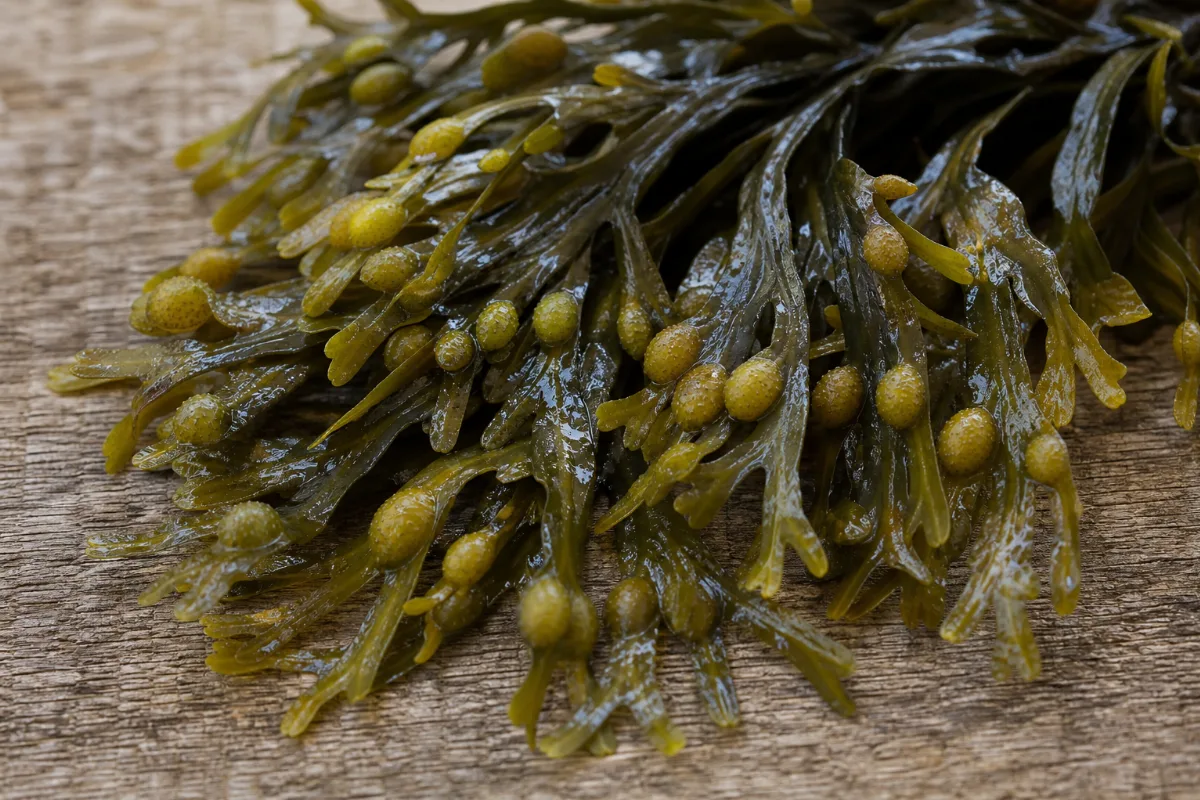
Herbs & Botanicals · Herbs · A brown seaweed sold for weight loss, with weak evidence and real thyroid and metal risks
Bladderwrack
Fucus vesiculosus L. (whole seaweed body, the thallus) · also called Bladder wrack, popweed, sea oak, Blasentang (German), fucus vesiculeux (French), Fucus (Spanish). Not the same as kelp.
Bladderwrack is a brown seaweed from cold Atlantic and Pacific shores. It is dried and sold as powder, capsules or extract, mainly for weight loss and thyroid support. It is rich in iodine, and fucoidan and polyphenols are its other main compounds. The EU gives the powder a traditional-use label for weight loss with a reduced-calorie diet, which means long use, not proof. Safety comes first with this seaweed: iodine can upset the thyroid, products can carry arsenic and other metals, and it is not recommended in pregnancy, breastfeeding or under 18.
General information, not medical advice. Last substantive update · Not medically reviewed. A named clinician has not signed off on this page. How this page is made
About Bladderwrack
Bladderwrack (Fucus vesiculosus) is a brown seaweed rich in iodine, sold for weight loss and thyroid support. Human evidence of benefit is weak or absent. Safety is the bigger story: iodine can disturb the thyroid, seaweed products can contain arsenic and other metals, and the EU advises against use in pregnancy, breastfeeding and under 18.
What it is
Bladderwrack grows on rocky cold-water shores. It has a flat, forking body with air bubbles that keep it afloat. It is a seaweed, not a land plant, and it is a different seaweed from kelp.
The dried powder is meant to contain 0.03 to 0.2 percent iodine. It also holds fucoidan (a sulphated sugar), alginate and polyphenols.
What the research shows
The EU found no clinical studies of bladderwrack alone for weight loss. Trials of bladderwrack-containing extracts or whole seaweed in people with overweight, prediabetes or diabetes found no effect on glucose, and one found no effect on weight. One trial saw a small HDL rise. A case report of three women found longer menstrual cycles. A very small gel study found thinner skin. Pooled analyses of seaweeds in general show small effects, but they do not isolate bladderwrack.
At a glance
Traditional uses history, not proof
- Goitre and thyroid complaints (China, France, UK)
- Slimming diets (Europe)
- Joint complaints, rheumatism and skin conditions
Studied for research
- Weight loss, insufficient
- Thyroid conditions, insufficient (and a safety concern)
- Blood sugar, mixed
- Cholesterol, very low
- Menstrual cycle, very low
- Skin (topical), very low
- Knee osteoarthritis, insufficient
Main compounds
- Iodine
- Fucoidan
- Phlorotannins (polyphenols)
- Alginate
Common forms
- Dried powder
- Capsules or tablets
- Extracts
- Combination slimming products
- Topical extract
Research links: EU herbal monograph on bladderwrack (European Medicines Agency) · EU assessment report on bladderwrack (European Medicines Agency) · Memorial Sloan Kettering: Bladder wrack · Kelp and thyroid function trial (PubMed) · Arsenic case report with kelp supplements (PubMed) · NHS: Iodine · Research Library · Genes & Biomarkers Library
The plant and its history
- Accepted scientific name
- Fucus vesiculosus L.
- Naming authority
- L. (Linnaeus), 1753 (GBIF authorship 'L.'; the publication reference was not returned by the GBIF API).
- Synonyms
- Fucus divaricatus L., 1753; Fucus inflatus L.; Fucus balticus C.Agardh; Fucus excisus Forssk., 1775; Fucus lutarius (Chauv.) Kuetz.; Fucus vesiculosus f. balticus (C.Agardh) Dannenberg, 1927; Fucus axillaris f. balticus (C.Agardh) Kjellman, 1880
- Common names
- Bladderwrack (English); Bladder wrack (English); Popweed (English); Sea oak or marine oak (Quercia marina in Italian) (English / Italian); Fucus (Spanish (name used in the EU monograph)); Blasentang (German); Fucus vesiculeux (French); Blaaswier (Dutch); Bodelha (Portuguese); Blaastang (Norwegian); Blastang (Swedish); Morszczyn pecherzykowaty (Polish)
- Botanical family
- Fucaceae (the rockweeds), order Fucales, class Phaeophyceae (brown algae). Brown algae sit in the kingdom Chromista in the GBIF classification, so bladderwrack is a seaweed, not a land plant.
- Classification
- Chromista > Ochrophyta > Phaeophyceae (brown algae) > Fucales > Fucaceae > Fucus > Fucus vesiculosus
- Native range
- Rocky shores in cold and temperate seas: mostly the North American and Western European coasts of the North Atlantic and the Pacific (EU assessment, citing Verhelst 2010). A rat study paper adds northern Russia, the Baltic Sea, Greenland, the Azores and the Canary Islands.
- Habitat
- Rocky shores between the tides (general description; the EU assessment says 'rocky shores in areas with cold and temperate climate').
- What the plant looks like
- Roots: A seaweed has no true roots; it grips rocks with a disc-like holdfast. General description, not checked in the sources read.; Stems: A flat, branching ribbon-like body (the thallus) with a central rib, forking in pairs, 20 to 100 cm long (EU assessment).; Leaves: No leaves. The flat branches have oval air-filled bladders in the thin parts, which make the seaweed float upright (EU assessment).; Flowers: No flowers; seaweeds reproduce with spores or gametes. General statement, not checked in the sources read.; Fruit: No fruit or seed.
- Cultivation
- Mostly wild-harvested from shore beds. Harvest timing and place affect iodine and metal content; the EU assessment says the seaweed is harvested at the start of summer.
- Harvest and processing
- The thallus is dried and powdered or extracted. The European Pharmacopoeia sets 0.03 to 0.2 percent iodine for the dried powder (EU assessment).
- Look-alikes and adulterants
- Name: Kelp (for example Laminaria or Saccharina species); Note: A different group of brown seaweeds. Memorial Sloan Kettering says bladderwrack should not be confused with kelp; the thyroid trial and arsenic case report in this file used 'kelp' products.; Name: Knotted wrack (Ascophyllum nodosum); Note: A relative that is often combined with bladderwrack in extract products; one trial here used both together.; Name: Sargassum fusiforme (hijiki); Note: Another brown seaweed, compared with bladderwrack in one diabetes trial.
- Sustainability and conservation
- Not assessed here. No IUCN or national protection status was read; this page does not claim it is or is not protected.
Traditional use and history history, not clinical proof
| Tradition or era | Documented use | Source |
|---|---|---|
| Ancient Rome (as summarised by the EMA assessment report) | Bladderwrack was known to the Romans and used against joint complaints. | s-ema-ar-fucus-vesiculosus |
| China from the 16th century | Used to treat goitre caused by iodine deficiency. | s-ema-ar-fucus-vesiculosus |
| France and the United Kingdom, 17th century | Used for goitre and other thyroid complaints; in the UK also for corpulency (fatness). | s-ema-ar-fucus-vesiculosus |
| United States and 18th century Europe | Used for psoriasis and as a strengthener (US), and for asthma, goitre and skin diseases (18th century). Rheumatism and slimming baths are also mentioned; the slimming baths claim is described as questionable. | s-ema-ar-fucus-vesiculosus |
| France, modern times | A hard capsule of bladderwrack powder has been on the market since 1981 as a traditional adjuvant to slimming diets; no pharmacovigilance actions were taken against that product (per the French entry in the EU assessment). | s-ema-ar-fucus-vesiculosus |
| European Union, 2014 | The EU herbal committee adopted a traditional-use monograph for the powder as an adjuvant to a reduced-calorie diet in overweight adults, after serious conditions have been excluded by a doctor. The EU found no well-established-use evidence. | s-ema-monograph-fucus-vesiculosus |
| Modern oral uses listed by the EU assessment | Weight loss aid, gastritis, constipation, atherosclerosis prevention and many others; the assessment says most human information is unclear or conflicting. | s-ema-ar-fucus-vesiculosus |
Traditional use shows how a plant was used. It does not show that a supplement works or is safe today.
What is inside, and how it may work
What the plant contains and how those compounds act in cells and animals. Laboratory and animal mechanisms are not proven effects in people.
Main compounds
| Compound | Family | Where it is concentrated | Activity studied | Level of evidence |
|---|---|---|---|---|
| Iodine (mostly bound in organic substances) PubChem 807 | mineral (halogen) | Whole thallus 0.03 to 0.2 percent of the dried powder (European Pharmacopoeia, as stated in the EU assessment). Real products vary. | Needed to make thyroid hormones; too much can disturb the thyroid. The main reason for both traditional use and the main safety concern. 3 5 6 | Human data |
| Fucoidan | sulphated polysaccharide (fucose-rich) | Thallus (cell wall) Not stated in the sources read. | In the lab, fucoidan from Fucus vesiculosus delayed clotting and blocked platelets, and showed anti-inflammatory and immune effects. In rats, purified fucoidan collected mainly in kidneys and spleen. 5 20 | Laboratory research |
| Alginic acid (alginate) | polysaccharide (gel-forming fibre) | Thallus About 12 percent (estimate quoted in the EU assessment). | Swells in water; the reason for the FDA swallowing advice quoted by the EU. 5 | Unspecified |
| Laminarin PubChem 439306 | storage polysaccharide (glucan) | Thallus Not stated. | Listed as a constituent in the EU assessment; no activity discussed. 5 16 | Unspecified |
| Phlorotannins (including fucophlorethols) | polyphenols made of phloroglucinol units | Thallus Polyphenols about 15 percent (British Herbal Compendium, as quoted in the EU assessment). | In the lab, phlorotannins blocked starch-digesting enzymes and fucophlorethols blocked CYP1A and aromatase; one phlorotannin lowered blood glucose in animals. 5 | Laboratory research |
| Phloroglucinol PubChem 359 | simple phenol (building block of phlorotannins) | Thallus Not stated. | Used as a positive control in the lab CYP1A tests summarised by the EU. 5 16 | Laboratory research |
| Fucoxanthin PubChem 5281239 | carotenoid pigment | Thallus Not stated. | A brown-seaweed pigment listed in the EU assessment; its effects are not covered by the studies in this file. 5 16 | Unspecified |
| Fucosterol PubChem 5281328 | sterol | Thallus Not stated. | Listed in the EU assessment; Memorial Sloan Kettering proposes it may compete with cholesterol, an idea tied to the menstrual case report. 5 12 16 | Unspecified |
| Mannitol PubChem 6251 | sugar alcohol | Thallus Not stated. | Listed as a constituent in the EU assessment. 5 16 | Unspecified |
| Arsenic, cadmium, mercury and other metals (contaminants) | heavy metals taken up from seawater | Whole thallus 8.5 mg/kg arsenic in the single supplement linked to illness in one case report; 8 of 9 shop products above an FDA food tolerance level. | Toxic; not a nutrient. See the Safety tab. 1 22 5 12 | Human data |
| Vitamins and other minerals | nutrients | Whole thallus No amounts given in the sources read. | The EU assessment lists bromide, sodium, potassium, calcium, magnesium, iron, zinc, selenium, vitamins C, B1, B2, B3, B6, folic acid, choline and vitamin K among constituents. 5 | Unspecified |
Mechanisms, receptors and pathways
| Target or pathway | Gene or receptor | What was found | Level |
|---|---|---|---|
| Thyroid hormone system (iodine uptake) | Sodium-iodide symporter (SLC5A5) and the TSH axis | Kelp supplements raised TSH in healthy adults and increased the TSH response to a TRH test; iodine in the urine rose with dose. The EU reads this as a possible slowing of thyroid function. A case report authors proposed that excess kelp iodine blocked the sodium-iodide symporter, causing an overactive then underactive thyroid. 3 4 5 | Human data |
| Blood clotting and platelets | Thrombin, factor Xa, platelet aggregation | Fucoidan from Fucus vesiculosus lengthened clotting times, inhibited thrombin and factor Xa and blocked platelet aggregation in test tubes. One reported comparison found 1 mg of fucoidan had anticoagulant activity equal to about 9.4 units of heparin in a lab assay. No human bleeding data. 5 | Laboratory research |
| Starch and sugar digestion | Alpha-amylase, alpha-glucosidase | Phlorotannins from Fucus vesiculosus inhibited these digestive enzymes in the lab, and one phlorotannin lowered glucose after a sugar load in animals. Human trials of bladderwrack did not show a glucose effect. 5 8 25 | Laboratory research |
| Estrogen and progesterone signalling | Estrogen receptors, aromatase (CYP19A1) | Extracts reduced estradiol in human ovarian cells and competed with estradiol and progesterone for binding to their receptors; fucophlorethols inhibited aromatase; in rats, cycles lengthened. A human case report found longer cycles and a hormone shift in one woman. 5 21 | Laboratory research |
| Drug-handling enzymes | CYP1A | Three fucophlorethols from Fucus inhibited CYP1A in rat liver cells with IC50 values of about 18 to 34 micrograms per ml. The EU says the finding has no direct consequence for its monograph. 5 12 | Laboratory research |
| Blood pressure enzyme | Angiotensin-converting enzyme (ACE) | Memorial Sloan Kettering says bladderwrack and related seaweeds show blood-pressure-lowering effects through ACE inhibition. The level of evidence is not stated on the page. 12 | Unspecified |
| Cholesterol-related enzyme | Trans-sialidase | A bladderwrack extract reduced trans-sialidase activity in human blood plasma tested in the lab. A link to cholesterol was assumed by analogy with garlic; cholesterol itself was not measured. 5 | Laboratory research |
| Allergy and immune signalling | IgE release, mast cell histamine release | Fucus fucoidan and extracts reduced IgE release from B cells and histamine release from mast cells in the lab, and fucoidan increased the viability of immune cells. 5 | Laboratory research |
Absorption, metabolism and elimination
- Absorption
- The iodine in bladderwrack is absorbed: urine iodine rose with dose in the kelp trial, and the EU takes this to mean the iodine is bioavailable. Purified Fucus fucoidan given by mouth to rats was absorbed slowly.
- Distribution
- In rats, fucoidan collected mainly in the kidneys, then the spleen, and was also found in the liver. No human tissue data.
- Metabolism
- Not studied in people. Fucoidan is a large sugar polymer; how the body processes it was not described in the abstracts read.
- Elimination
- Iodine is passed out in the urine in a dose-dependent way. Thyroid test changes mostly returned to baseline 2 weeks after stopping kelp in the trial.
- Bioavailability
- No bioavailability figure for any bladderwrack compound in people was found. For fucoidan in rats, the mean residence time was 6.79 hours after a single oral dose.
Isolated compounds versus whole extracts
Most lab findings (clotting, hormone, enzyme effects) are from purified fucoidan or isolated phlorotannins, not from the dried seaweed people take. Human trials used whole dried seaweed, polyphenol extracts, mixed seaweeds or kelp, and none compared forms. Iodine, the substance with the clearest human effect, is present whatever the form unless it is removed during extraction, and that is not stated on product labels. The EU report itself says results from concentrated compounds should be kept apart from the traditional powder.
Nutritional composition
Bladderwrack is mainly used as a supplement, not a staple food, and no USDA food composition data were checked. The key nutrient is iodine. The European Pharmacopoeia limit of 0.03 to 0.2 percent iodine in dried powder works out (simple arithmetic, not a measurement of any product) to roughly 300 to 2,000 micrograms of iodine in each gram of powder. The EU caps total iodine from bladderwrack medicines at 400 micrograms a day and cites an EFSA upper limit of 600 micrograms a day for adults from all sources; the NHS says 0.5 mg or less a day of iodine supplements is unlikely to cause harm. Other nutrients are listed in the EU assessment without amounts. These figures are regulator limits, not advice on how much to take.
1 mixed findings4 very low certainty5 not enough evidence
What was looked at
The 10 benefits and uses checked for Bladderwrack, each with how strong the evidence is. Tap one to open it.
- Weight loss as an add-on to a reduced-calorie dietNot enough evidence
- Underactive thyroid and goitre (traditional use)Not enough evidence
- Blood sugar and type 2 diabetesMixed findings
- Cholesterol and blood fatsVery low certainty
- Inflammation and other metabolic markersVery low certainty
- Menstrual cycle length and hormonesVery low certainty
- Skin thickness and elasticity (topical extract)Very low certainty
- Knee osteoarthritisNot enough evidence
- Constipation and digestion (traditional use)Not enough evidence
- Antioxidant, anti-cancer, immune and other laboratory findingsNot enough evidence
Lab markers tracked in the studies
TSH (thyroid-stimulating hormone)Free thyroxine (free T4)Total T3 (triiodothyronine)Urine iodineHDL cholesterolLDL cholesterolBlood glucoseC-peptideInterleukin-6 (IL-6)Body weight and BMIMenstrual cycle lengthEstradiol (17-beta-estradiol)ProgesteroneSkin thickness
What is Bladderwrack good for?
The main proposed uses and how strong the human evidence is for each. "Insufficient" means too little evidence to judge; "very low" means a very small or weak study. None of these uses is well supported.
Benefits, one by one
Each card is a research question, not a promise. Tap a goal to filter. Open a card to see the studies, doses and limits.
Weight loss as an add-on to a reduced-calorie diet
Not enough evidenceBladderwrack is sold mainly for weight loss, but no trial of bladderwrack on its own has tested this. The EU allows a traditional-use label for the powder, based only on long use, not on proof. One 12-week trial of a bladderwrack and knotted wrack extract found no effect on body weight. Pooled trials of other seaweed products show a small average drop in BMI, but they do not tell us what bladderwrack does.
6 studiesProducts in the trials were extracts and mixed seaweeds; no single pr…
Studies, doses and limits
What the trials found
The EU assessment report found no clinical studies of bladderwrack alone for weight management. It looked at one trial of a commercial combination product (pomegranate seed oil plus an unnamed brown seaweed extract, with a stated conflict of interest, no exact p-values and no correction for multiple testing) and judged it unusable for bladderwrack. In Vodouhe 2022, 56 overweight or obese adults with prediabetes took 500 mg a day of a brown seaweed extract (Ascophyllum nodosum plus Fucus vesiculosus) or placebo for 12 weeks together with diet advice: no effect on body weight or blood glucose. A 2025 meta-analysis of 11 trials of edible seaweed products found a small average fall in BMI (standardized mean difference -0.40, 95% CI -0.65 to -0.16) and fat mass percentage when refined or extracted brown seaweed was used for at least 8 weeks, but the products were mixed and bladderwrack is not singled out. Memorial Sloan Kettering says evidence is lacking for weight loss.
Results
Bladderwrack alone: no trial. A bladderwrack-containing extract: no weight effect in one 12-week trial. Mixed seaweed products: small average BMI drop in pooled trials.
Effect sizes as reported
Vodouhe 2022: no effect on body weight (no numbers in the abstract). Lagowska 2025 (mixed seaweeds): BMI SMD -0.40 (95% CI -0.65 to -0.16); fat mass SMD -1.48 (95% CI -2.66 to -0.30).
Why this rating
There is no trial of bladderwrack alone. The one trial that included it in a mixed extract was null for weight. The pooled seaweed result combines different products and is not a result for bladderwrack. The EU gave traditional-use status without efficacy evidence.
Form and dose studied
Products in the trials were extracts and mixed seaweeds; no single product is supported by evidence. This page does not suggest amounts.
Who was studied
Overweight or obese adults, some with prediabetes.
Limits
Mixed products, short trials, abstracts only, no long-term weight data for bladderwrack. Iodine content differs between products and is not stated on most labels.
Why researchers looked
Bladderwrack contains iodine, which the thyroid uses to make hormones that set the body's pace. That led to the old idea that it burns fat faster. Its gel-like fibres were also thought to fill the stomach.
Traditional use
Used in Europe as a slimming aid for centuries. The EU listing says it may be used 'as an adjuvant to reduced calorie diet' in overweight adults, after serious conditions have been ruled out by a doctor, and rests only on long-standing use.
Proposed mechanism Pharmacological theory
The thyroid-stimulating idea is not supported. In the one placebo-controlled trial of kelp capsules in healthy adults, the iodine raised TSH, which the EU reads as a possible slowing of thyroid function rather than a speeding up, and metabolic rate did not change. The fibre and polyphenol explanations are lab ideas only.
A proposed mechanism does not show that the effect happens in people.
Weight-loss use is the main reason people take bladderwrack, and it is also where the main harms arise: iodine can disturb the thyroid, and the product can carry arsenic or other metals. See the Safety tab before using it.
Underactive thyroid and goitre (traditional use)
Not enough evidenceBladderwrack is rich in iodine and has long been used for goitre and for an underactive thyroid caused by too little iodine. No trial has tested it in people with thyroid disease. In healthy adults, a trial of kelp capsules raised TSH, which shows the thyroid was affected, and several case reports describe an overactive thyroid after kelp or bladderwrack products. This is a use to treat with caution, not a benefit.
8 studiesNot assessed. Iodine in seaweed products varies widely; the European …
Studies, doses and limits
What the trials found
Memorial Sloan Kettering says use for underactive thyroid caused by iodine deficiency has not been studied in clinical trials and the amounts used are unclear. In Clark 2003, 36 healthy adults with normal thyroid function took kelp capsules or placebo for 4 weeks: TSH rose in both kelp groups, total T3 fell with the higher amount, and the response to a TRH test grew; values mostly returned to baseline 2 weeks after stopping. The authors say longer-term effects are not known. The product was kelp, not confirmed bladderwrack. Case reports (Gherbon 2019, Mussig 2006, Di Matola 2014, Arbaizar 2011) describe overactive thyroid after kelp or bladderwrack-containing products, and in one case an overactive phase followed by an underactive one.
Results
No evidence of benefit for thyroid disease. Evidence of thyroid effects, and reports of harm, in people with and without thyroid disease.
Effect sizes as reported
Clark 2003: TSH rose significantly in both kelp groups (P = 0.04 and P = 0.002); exact values are not given in the abstract.
Why this rating
No trial in people with a thyroid condition. The only controlled trial was in healthy adults, used kelp, and shows an effect on thyroid tests rather than a treatment benefit.
Form and dose studied
Not assessed. Iodine in seaweed products varies widely; the European Pharmacopoeia sets 0.03 to 0.2 percent iodine in bladderwrack powder.
Who was studied
Healthy adults (trial); individual patients (case reports).
Limits
Short trial, abstract only, no patients, kelp rather than bladderwrack.
Why researchers looked
Goitre (a swollen thyroid) can be caused by lack of iodine, and seaweed is one of the richest natural sources of iodine.
Traditional use
The EU assessment says bladderwrack was used in China from the 16th century and in France and the UK from the 17th century for goitre and thyroid complaints. It is also sold as a natural iodine source.
Proposed mechanism Pharmacological theory
Iodine is a building block of thyroid hormones. Too little causes goitre and an underactive thyroid. Too much can also disturb the thyroid, causing an overactive or underactive gland, especially in people with existing thyroid disease.
A proposed mechanism does not show that the effect happens in people.
Anyone with a thyroid condition, a goitre, or thyroid medicines should not use bladderwrack without asking their doctor. The EU says it should not be taken with iodine products or thyroid medicines.
Blood sugar and type 2 diabetes
Mixed findingsLab studies suggest bladderwrack compounds can slow sugar-digesting enzymes. In people, small trials of bladderwrack or bladderwrack-containing extracts did not lower blood glucose. A pooled analysis of many brown seaweed trials found better after-meal glucose and HbA1c, but it mixes many seaweeds and products.
6 studiesWhole dried seaweed (5 g) and polyphenol extracts (500 to 2000 mg) we…
Studies, doses and limits
What the trials found
Geurts 2024: 36 adults with type 2 diabetes took 5 g a day of dried Sargassum, dried Fucus vesiculosus, or a control seaweed (Porphyra) for 5 weeks on top of usual treatment; weekly average glucose did not differ between groups (Fucus group 10.1 to 9.2 mmol/L). Vodouhe 2022 (mixed brown seaweed extract, 56 people, 12 weeks): no effect on blood glucose, with a small fall in C-peptide. Murray 2021 (Fucus vesiculosus extract, 34 people, 12 weeks): no change in glucose or insulin. A 2023 meta-analysis of 23 studies of brown seaweeds found lower after-meal glucose, HbA1c and insulin resistance index (HOMA-IR) but no change in fasting glucose or insulin; Fucus vesiculosus was one of several species reported as effective, with no bladderwrack-only result in the abstract. A 2025 meta-analysis in people with overweight found no significant effect on glucose metabolism.
Results
The three trials that used bladderwrack found no effect on glucose. Pooled brown-seaweed analyses give a mixed picture.
Effect sizes as reported
Geurts 2024: Fucus group weekly average glucose 10.1 mmol/L to 9.2 mmol/L (p = 0.9 within group; between-group difference not significant). Pooled analyses: no numbers in the abstracts used.
Why this rating
Trials of bladderwrack itself were small and null. Pooled results for brown seaweed in general lean positive for some markers but combine different seaweeds, amounts and designs, and the abstracts give no certainty grading.
Form and dose studied
Whole dried seaweed (5 g) and polyphenol extracts (500 to 2000 mg) were used in separate trials; not recommendations.
Who was studied
Adults with type 2 diabetes or prediabetes, and overweight adults.
Limits
Tiny groups (10 people on Fucus in the diabetes trial), short duration, abstracts only, control seaweed was not inactive.
Why researchers looked
Brown seaweed polyphenols and fibres can slow starch and sugar digestion in the lab, so they were tested for blood sugar control.
Traditional use
Not a classic traditional use; modern research interest.
Proposed mechanism Laboratory research
In test tubes, polyphenols from Fucus vesiculosus (phlorotannins) blocked alpha-amylase and alpha-glucosidase, enzymes that digest starch. In animals, a phlorotannin lowered blood glucose after a sugar load (summarised in the EU assessment). Whether this happens in people is not shown.
A proposed mechanism does not show that the effect happens in people.
If you use diabetes medicines, ask your doctor or pharmacist before using bladderwrack. No interaction study exists. Iodine and metal content also matter; see Safety.
Cholesterol and blood fats
Very low certaintyOne 12-week placebo-controlled trial of a bladderwrack extract in 34 overweight adults found a small rise in HDL (the 'good' cholesterol) and no change in LDL, total cholesterol or triglycerides. That one result is too weak to rely on.
3 studiesPolyphenol-rich extract in one trial; not a recommendation.
Studies, doses and limits
What the trials found
Murray 2021: 34 overweight or obese adults with raised LDL cholesterol took a polyphenol-rich Fucus vesiculosus extract (2000 mg a day) or placebo for 12 weeks. HDL cholesterol rose 9.5% on the extract versus no change on placebo (P = .045). LDL, total cholesterol, triglycerides, glucose, insulin and inflammation markers did not change. The authors say the extract did not change cardiovascular risk factors and a larger trial is needed. A 2025 pooled analysis of mixed seaweed products found lower total and LDL cholesterol, but not for bladderwrack alone.
Results
HDL up slightly in one small trial; no other lipid change.
Effect sizes as reported
HDL +9.5% (baseline 1.28, week 12 1.35 mmol/L) versus placebo (P = .045).
Why this rating
One small trial with one borderline result among many outcomes tested.
Form and dose studied
Polyphenol-rich extract in one trial; not a recommendation.
Who was studied
Overweight or obese adults with raised LDL.
Limits
34 people, abstract only, funding not stated in the abstract.
Why researchers looked
Seaweed fibres and polyphenols may affect fat absorption and blood fats in the lab.
Traditional use
Herbal books list bladderwrack for 'hypercholesterolaemia' and the prevention of atherosclerosis; the EU assessment found no clinical evidence for this.
Proposed mechanism Laboratory research
A test-tube study cited by the EU assessment found a bladderwrack extract reduced an enzyme activity (trans-sialidase) that the authors linked to cholesterol build-up in cells, by analogy with garlic. The EU notes cholesterol was not measured, so this is a hypothesis only.
A proposed mechanism does not show that the effect happens in people.
An extract's iodine and arsenic content were not reported in the abstract.
Inflammation and other metabolic markers
Very low certaintyIn two 12-week placebo-controlled trials, bladderwrack-containing extracts caused few changes in inflammation markers. One saw a smaller rise in interleukin-6 and a slightly lower heart rate; the other saw no change. The authors of the first call the effects marginal.
2 studiesExtracts in both trials; not a recommendation.
Studies, doses and limits
What the trials found
Vodouhe 2022 (mixed Ascophyllum and Fucus extract, 56 people): a smaller rise in IL-6 than on placebo (P = 0.02), a small difference in C-peptide (P = 0.002) and in heart rate (P = 0.01); no effect on weight or blood glucose. Murray 2021 (Fucus extract, 34 people): no change in IL-2, IL-6, IL-8, IL-10 or TNF-alpha.
Results
Mixed: one marginal change, one null result.
Effect sizes as reported
Vodouhe 2022: IL-6 rose 1.3 to 1.5 pg/L on seaweed versus 1.4 to 2.2 pg/L on placebo (P = 0.02).
Why this rating
Two small trials point different ways; the changes are small and the clinical meaning is unknown.
Form and dose studied
Extracts in both trials; not a recommendation.
Who was studied
Overweight or obese adults.
Limits
Small, short, many outcomes, abstracts only.
Why researchers looked
Brown seaweed polyphenols and fucoidan reduce inflammation signals in cells and animals.
Proposed mechanism Laboratory research
Lab studies of fucoidan and phlorotannins show effects on inflammatory signals. These findings are from cells and animals and the EU assessment judged most of them not relevant to the traditional use.
A proposed mechanism does not show that the effect happens in people.
No safety signal was reported in the abstracts, but the abstracts do not describe side effects.
Menstrual cycle length and hormones
Very low certaintyOne case report of three women found that powdered bladderwrack lengthened their menstrual cycles, and in one woman it lowered estradiol and raised progesterone. There is no controlled trial. Because bladderwrack changes hormones in this way and carries iodine, women who are pregnant, trying to conceive or on hormone treatment should be careful.
3 studiesDried bladderwrack powder; amounts as reported, not advice.
Studies, doses and limits
What the trials found
Skibola 2004 reports three pre-menopausal women with menstrual problems who took dried powdered bladderwrack (700 mg a day, and 1.4 g a day in some cycles). Cycle length rose by 5.5 to 14 days. In one woman, estradiol fell from 626 to 164 pg/ml (P = 0.04), then to 92.5 pg/ml on the higher amount, and progesterone rose from 0.58 to 8.4 ng/ml (P = 0.1), then to 16.8 ng/ml (P = 0.002). The EU assessment calls the value of these data limited and notes the iodine the amounts could supply. Memorial Sloan Kettering describes it as a small study in which women reported improvement.
Results
Longer cycles in all three women; large hormone shifts in one woman.
Effect sizes as reported
Cycle length +5.5 to +14 days (n = 3); estradiol 626 to 92.5 pg/ml in one woman.
Why this rating
Three women, no control group, no blinding, hormones measured in one woman.
Form and dose studied
Dried bladderwrack powder; amounts as reported, not advice.
Who was studied
Three pre-menopausal women with menstrual problems.
Limits
Case report only. Not repeated in a trial that we found.
Why researchers looked
Seaweed-eating populations have lower rates of some hormone-dependent cancers, which led the author to test bladderwrack for effects on sex hormones.
Traditional use
Herbal sources mention bladderwrack for menopausal complaints and breast complaints; no clinical support.
Proposed mechanism Animal research
In lab cell tests, extracts competed with estradiol for receptors, lowered estradiol in human ovarian cells and blocked an enzyme (aromatase) that makes estrogen; in rats cycles lengthened. Memorial Sloan Kettering also describes a cholesterol-lowering idea. None of this is shown in people beyond the case report.
A proposed mechanism does not show that the effect happens in people.
The EU advises against use in pregnancy and breastfeeding. A change in cycle is also a reason to stop and ask a doctor.
Skin thickness and elasticity (topical extract)
Very low certaintyA very small study of 10 women applied a bladderwrack extract gel to one cheek and a plain gel to the other for 5 weeks. The extract side showed thinner skin and more stretch, which the authors read as a possible anti-ageing effect. The EU says whether this is useful is still to be shown.
2 studiesTopical 1% aqueous extract gel; this is not the oral supplement.
Studies, doses and limits
What the trials found
The EU assessment summarises Fujimura 2002: 10 women aged 23 to 36 applied a 1% aqueous Fucus vesiculosus gel or a placebo gel twice a day for 5 weeks in a half-face double-blind design. Skin thickness was lower on the extract side (about -0.1 mm, P < 0.005) and distension was higher (P < 0.05). The original paper was not opened; the figures are as given in the EU assessment. Memorial Sloan Kettering also notes a small study suggesting benefit and says more studies are needed.
Results
Thinner, more distensible skin on the treated cheek in 10 women.
Effect sizes as reported
Skin thickness -0.096 mm (morning) and -0.109 mm (evening); final distension +0.007 mm and +0.010 mm (as summarised by the EU).
Why this rating
Ten women, a topical product, one short study, not repeated, summary-level reading only.
Form and dose studied
Topical 1% aqueous extract gel; this is not the oral supplement.
Who was studied
Ten healthy women.
Limits
Original paper not read; very small; cosmetic outcome.
Why researchers looked
Bladderwrack extract is used in cosmetics for its iodine and mineral content.
Traditional use
Used on the skin as a wrap for cellulite, wounds and rheumatism (EU assessment).
Proposed mechanism Preliminary mechanism
Not established.
A proposed mechanism does not show that the effect happens in people.
Topical safety was not reported in the EU summary. Oral supplement risks do not apply to a gel, but this page does not assess skin products.
Knee osteoarthritis
Not enough evidenceThe only human data are an open-label pilot of a product that combined three brown algae, including bladderwrack. It reported a better osteoarthritis score, but the EU found the value limited. Memorial Sloan Kettering says bladderwrack was no more effective than placebo. Evidence is not enough to say either way.
2 studiesA commercial three-algae preparation; not bladderwrack alone.
Studies, doses and limits
What the trials found
The EU assessment describes Myers 2010 as an open-label pilot of a commercial preparation with three brown algae including Fucus vesiculosus in a limited number of patients; the osteoarthritis score fell, but a one-tailed test and no correction for multiple testing were used and the score may not be validated. The two sources disagree: Memorial Sloan Kettering says bladderwrack was no more effective than placebo for osteoarthritis. The original papers were not opened, so only what both sources agree on is stated here: the data are small and weak.
Results
Weak and conflicting secondary reports.
Why this rating
Combination product, open-label pilot, and the two summaries disagree.
Form and dose studied
A commercial three-algae preparation; not bladderwrack alone.
Who was studied
Patients with knee osteoarthritis (numbers not given in the sources read).
Limits
Both original papers unread.
Why researchers looked
Seaweed was used in folk medicine for joint complaints (the EU assessment says the Romans used it for joint problems).
Traditional use
Rheumatism and arthritis uses are listed in European herbal books.
Proposed mechanism Laboratory research
Lab studies of fucoidan show effects on inflammation signals; not shown in people.
A proposed mechanism does not show that the effect happens in people.
Do not replace prescribed joint treatment.
Constipation and digestion (traditional use)
Not enough evidenceBladderwrack is an ingredient in some herbal laxative mixtures and is used traditionally for constipation. No trial of bladderwrack for constipation was found. In the one reported mixed laxative product that caused harm, the other ingredients cannot be ruled out.
2 studiesMixed herbal laxatives and teas.
Studies, doses and limits
What the trials found
No clinical study of bladderwrack for constipation was found in the sources read. The FDA advice quoted in the EU assessment warns that kelp-type products taken in bulk laxatives or weight-control products swell and can block the throat if not taken with a full glass of water.
Results
No human data.
Why this rating
No studies.
Form and dose studied
Mixed herbal laxatives and teas.
Limits
Only traditional-use statements.
Why researchers looked
Seaweed contains gel-forming fibre (alginates) that swells with water.
Traditional use
The EU assessment lists constipation and colitis among reported oral uses, and Belgian herbal teas combine bladderwrack with senna in laxative mixtures.
Proposed mechanism Pharmacological theory
Gel-forming fibre may soften and bulk stools; this is an idea, not tested here.
A proposed mechanism does not show that the effect happens in people.
Swelling products need plenty of water. Laxative herbs mixed with bladderwrack have been linked to hyperthyroidism in a man taking lithium.
Antioxidant, anti-cancer, immune and other laboratory findings
Not enough evidenceMany lab and animal studies describe antioxidant, anti-inflammatory, anticoagulant, anti-cancer and immune effects of bladderwrack and compounds in it such as fucoidan and phlorotannins. None has been shown in people. The EU says these findings are not relevant to the traditional weight-loss use.
2 studiesPurified fucoidan and extracts in lab work, not the whole seaweed sup…
Studies, doses and limits
Results
Lab and animal findings only.
Why this rating
No human studies.
Form and dose studied
Purified fucoidan and extracts in lab work, not the whole seaweed supplement.
Who was studied
Cells and animals.
Limits
Findings cannot be carried over to people.
Why researchers looked
Brown seaweeds are rich in sulphated sugars (fucoidan) and polyphenols that are active in test tubes.
Proposed mechanism Laboratory research
Fucoidan from Fucus vesiculosus slowed blood clotting, blocked platelets and inhibited several inflammation signals in cells and animals. Rats given purified fucoidan by mouth showed it collecting mainly in kidneys and spleen.
A proposed mechanism does not show that the effect happens in people.
The lab blood-thinning effect is a reason for caution with anticoagulant and antiplatelet drugs and before surgery; see Safety.
Connections to the rest of health
How Bladderwrack connects to the rest of our health knowledge graph. Every link says what kind of connection it is. A safety link (for example to the liver) is a warning, not a benefit. A study that merely mentions a topic never creates a benefit link.
Explore every connection: goals, body systems, organs, symptoms, genes
A. Wellness goals
| Connected to | Kind of connection | Evidence status | Context | Studies |
|---|---|---|---|---|
| Weight Management | Traditional use | Not enough evidence | Weight loss as an add-on to a reduced-calorie diet: Bladderwrack is sold mainly for weight loss, but no trial of bladderwrack on its own has tested this. The EU allows a traditional-use label for the powder, based only on long use, not on proof. One 12-week trial of a bladderwrack and knotted wrack extract found no effect on body weight. Pooled trials of other seaweed products show a small average drop in BMI, but they do not tell us what bladderwrack does. | 25 11 3 5 6 12 |
| Metabolic Health | Traditional use | Not enough evidence | Weight loss as an add-on to a reduced-calorie diet: Bladderwrack is sold mainly for weight loss, but no trial of bladderwrack on its own has tested this. The EU allows a traditional-use label for the powder, based only on long use, not on proof. One 12-week trial of a bladderwrack and knotted wrack extract found no effect on body weight. Pooled trials of other seaweed products show a small average drop in BMI, but they do not tell us what bladderwrack does. | 25 11 3 5 6 12 |
| Thyroid Support | Traditional use | Not enough evidence | Underactive thyroid and goitre (traditional use): Bladderwrack is rich in iodine and has long been used for goitre and for an underactive thyroid caused by too little iodine. No trial has tested it in people with thyroid disease. In healthy adults, a trial of kelp capsules raised TSH, which shows the thyroid was affected, and several case reports describe an overactive thyroid after kelp or bladderwrack products. This is a use to treat with caution, not a benefit. | 3 9 14 4 2 5 6 12 |
| Blood Sugar Balance | Biological association | Mixed findings | Blood sugar and type 2 diabetes: Lab studies suggest bladderwrack compounds can slow sugar-digesting enzymes. In people, small trials of bladderwrack or bladderwrack-containing extracts did not lower blood glucose. A pooled analysis of many brown seaweed trials found better after-meal glucose and HbA1c, but it mixes many seaweeds and products. | 8 25 13 10 11 5 |
| Metabolic Health | Biological association | Mixed findings | Blood sugar and type 2 diabetes: Lab studies suggest bladderwrack compounds can slow sugar-digesting enzymes. In people, small trials of bladderwrack or bladderwrack-containing extracts did not lower blood glucose. A pooled analysis of many brown seaweed trials found better after-meal glucose and HbA1c, but it mixes many seaweeds and products. Inflammation and other metabolic markers: In two 12-week placebo-controlled trials, bladderwrack-containing extracts caused few changes in inflammation markers. One saw a smaller rise in interleukin-6 and a slightly lower heart rate; the other saw no change. The authors of the first call the effects marginal. | 8 25 13 10 11 5 |
| Cholesterol Balance | Potential benefit | Very low certainty | Cholesterol and blood fats: One 12-week placebo-controlled trial of a bladderwrack extract in 34 overweight adults found a small rise in HDL (the 'good' cholesterol) and no change in LDL, total cholesterol or triglycerides. That one result is too weak to rely on. | 13 11 5 |
| Heart Health | Potential benefit | Very low certainty | Cholesterol and blood fats: One 12-week placebo-controlled trial of a bladderwrack extract in 34 overweight adults found a small rise in HDL (the 'good' cholesterol) and no change in LDL, total cholesterol or triglycerides. That one result is too weak to rely on. | 13 11 5 |
| Inflammation Balance | Biological association | Very low certainty | Inflammation and other metabolic markers: In two 12-week placebo-controlled trials, bladderwrack-containing extracts caused few changes in inflammation markers. One saw a smaller rise in interleukin-6 and a slightly lower heart rate; the other saw no change. The authors of the first call the effects marginal. | 25 13 |
| Womens Wellness | Biological association | Very low certainty | Menstrual cycle length and hormones: One case report of three women found that powdered bladderwrack lengthened their menstrual cycles, and in one woman it lowered estradiol and raised progesterone. There is no controlled trial. Because bladderwrack changes hormones in this way and carries iodine, women who are pregnant, trying to conceive or on hormone treatment should be careful. | 21 5 12 |
| Hormone Balance | Biological association | Very low certainty | Menstrual cycle length and hormones: One case report of three women found that powdered bladderwrack lengthened their menstrual cycles, and in one woman it lowered estradiol and raised progesterone. There is no controlled trial. Because bladderwrack changes hormones in this way and carries iodine, women who are pregnant, trying to conceive or on hormone treatment should be careful. | 21 5 12 |
| Healthy Skin | Potential benefit | Very low certainty | Skin thickness and elasticity (topical extract): A very small study of 10 women applied a bladderwrack extract gel to one cheek and a plain gel to the other for 5 weeks. The extract side showed thinner skin and more stretch, which the authors read as a possible anti-ageing effect. The EU says whether this is useful is still to be shown. | 5 12 |
| Joint Support | Traditional use | Not enough evidence | Knee osteoarthritis: The only human data are an open-label pilot of a product that combined three brown algae, including bladderwrack. It reported a better osteoarthritis score, but the EU found the value limited. Memorial Sloan Kettering says bladderwrack was no more effective than placebo. Evidence is not enough to say either way. | 5 12 |
| Digestive Support | Traditional use | Not enough evidence | Constipation and digestion (traditional use): Bladderwrack is an ingredient in some herbal laxative mixtures and is used traditionally for constipation. No trial of bladderwrack for constipation was found. In the one reported mixed laxative product that caused harm, the other ingredients cannot be ruled out. | 5 2 |
| Inflammation Balance | Preliminary mechanism | Not enough evidence | Antioxidant, anti-cancer, immune and other laboratory findings: Many lab and animal studies describe antioxidant, anti-inflammatory, anticoagulant, anti-cancer and immune effects of bladderwrack and compounds in it such as fucoidan and phlorotannins. None has been shown in people. The EU says these findings are not relevant to the traditional weight-loss use. | 5 20 |
| Immune Support | Preliminary mechanism | Not enough evidence | Antioxidant, anti-cancer, immune and other laboratory findings: Many lab and animal studies describe antioxidant, anti-inflammatory, anticoagulant, anti-cancer and immune effects of bladderwrack and compounds in it such as fucoidan and phlorotannins. None has been shown in people. The EU says these findings are not relevant to the traditional weight-loss use. | 5 20 |
B. Body systems
| Connected to | Kind of connection | Evidence status | Context | Studies |
|---|---|---|---|---|
| Endocrine system | Drug or supplement interaction | Low certainty | Interactions with lithium and thyroid medicines; hormone changes in a case report. Preparation or compound: Bladderwrack |
2 21 6 |
| Cardiovascular system | Drug or supplement interaction | Not enough evidence | Lab blood-thinning and platelet effects; blood pressure drugs listed by EU; no clinical bleeding data. Preparation or compound: Fucoidan, Fucus extracts |
5 |
| Reproductive system | Contraindication | Not enough evidence | Longer menstrual cycles in a case report; not recommended in pregnancy and breastfeeding. Preparation or compound: Bladderwrack powder |
21 6 |
| Metabolism and weight | Traditional use | Not enough evidence | EU traditional-use status for slimming diets; no trial of bladderwrack alone. EU traditional-use status; no trial of bladderwrack alone. Preparation or compound: Bladderwrack powder (traditional use) |
5 6 |
| Metabolism Weight | Biological association | Not enough evidence | Studied for: Weight loss as an add-on to a reduced-calorie diet Studied for: Blood sugar and type 2 diabetes | 25 11 3 5 6 12 8 13 10 |
| Endocrine System | Biological association | Not enough evidence | Studied for: Underactive thyroid and goitre (traditional use) Studied for: Blood sugar and type 2 diabetes | 3 9 14 4 2 5 6 12 8 25 13 10 11 21 |
| Cardiovascular System | Biological association | Very low certainty | Studied for: Cholesterol and blood fats Studied for: Inflammation and other metabolic markers | 13 11 5 25 20 |
| Reproductive System | Biological association | Very low certainty | Studied for: Menstrual cycle length and hormones | 21 5 12 |
| Integumentary System | Biological association | Very low certainty | Studied for: Skin thickness and elasticity (topical extract) | 5 12 |
| Musculoskeletal System | Biological association | Not enough evidence | Studied for: Knee osteoarthritis | 5 12 |
| Digestive System | Biological association | Not enough evidence | Studied for: Constipation and digestion (traditional use) | 5 2 |
| Immune System | Biological association | Not enough evidence | Studied for: Antioxidant, anti-cancer, immune and other laboratory findings | 5 20 |
C. Body parts and organs
| Connected to | Kind of connection | Evidence status | Context | Studies |
|---|---|---|---|---|
| Thyroid | Adverse effect or risk | Moderate certainty | Raised TSH in healthy adults; overactive and underactive thyroid in case reports; EU says avoid with thyroid disease. Raised TSH in healthy adults; thyroid dysfunction in case reports. Preparation or compound: Bladderwrack and kelp (iodine) |
3 9 4 5 |
| Kidneys | Adverse effect or risk | Not enough evidence | Caution in kidney disease; contamination worry; rats showed fucoidan collects in kidneys. Preparation or compound: Contaminated bladderwrack; fucoidan |
5 12 20 |
G. Root causes and contributing factors
| Connected to | Kind of connection | Evidence status | Context | Studies |
|---|---|---|---|---|
| Medication side effects | Drug or supplement interaction | Low certainty | Iodine adds to the effects of other medicines on the thyroid. Preparation or compound: Bladderwrack with lithium or thyroid medicines |
2 6 |
I. Biomarkers
| Connected to | Kind of connection | Evidence status | Context | Studies |
|---|---|---|---|---|
| TSH | Adverse effect or risk | Moderate certainty | TSH rose in a 4-week trial of 36 healthy adults. Preparation or compound: Kelp capsules |
3 |
| TSH (thyroid-stimulating hormone) | Biological association | Moderate certainty | Measured in trials: raised. A lab change is not the same as a health benefit. | 3 5 6 |
| Free thyroxine (free T4) | Biological association | Low certainty | Measured in trials: no-change. A lab change is not the same as a health benefit. | 3 |
| Total T3 (triiodothyronine) | Biological association | Low certainty | Measured in trials: lowered. A lab change is not the same as a health benefit. | 3 5 |
| Urine iodine | Biological association | Moderate certainty | Measured in trials: raised. A lab change is not the same as a health benefit. | 3 5 |
| HDL cholesterol | Biological association | Very low certainty | Measured in trials: raised. A lab change is not the same as a health benefit. | 13 |
| LDL cholesterol | Biological association | Very low certainty | Measured in trials: no-change. A lab change is not the same as a health benefit. | 13 |
| Blood glucose | Biological association | Low certainty | Measured in trials: no-change. A lab change is not the same as a health benefit. | 8 25 13 10 |
| C-peptide | Biological association | Very low certainty | Measured in trials: lowered. A lab change is not the same as a health benefit. | 25 |
| Interleukin-6 (IL-6) | Biological association | Very low certainty | Measured in trials: mixed. A lab change is not the same as a health benefit. | 25 13 |
| Body weight and BMI | Biological association | Not enough evidence | Measured in trials: mixed. A lab change is not the same as a health benefit. | 25 11 |
| Menstrual cycle length | Biological association | Very low certainty | Measured in trials: raised. A lab change is not the same as a health benefit. | 21 5 |
| Estradiol (17-beta-estradiol) | Biological association | Very low certainty | Measured in trials: lowered. A lab change is not the same as a health benefit. | 21 |
| Progesterone | Biological association | Very low certainty | Measured in trials: raised. A lab change is not the same as a health benefit. | 21 |
| Skin thickness | Biological association | Very low certainty | Measured in trials: lowered. A lab change is not the same as a health benefit. | 5 |
J. Genes, receptors and enzymes
| Connected to | Kind of connection | Evidence status | Context | Studies |
|---|---|---|---|---|
| SLC5A5 (sodium-iodide symporter) | Preliminary mechanism | Human | Proposed by case-report authors as the target of excess kelp iodine; not tested directly. | 4 |
| CYP1A (CYP1A1 and CYP1A2) | Preliminary mechanism | In vitro | Fucophlorethols inhibited CYP1A in cells. | 5 |
| CYP19A1 (aromatase) | Preliminary mechanism | In vitro | Fucophlorethols inhibited aromatase in the lab. | 5 |
| Estrogen receptors alpha and beta (ESR1, ESR2) | Preliminary mechanism | In vitro | A Fucus extract competed with estradiol for receptor binding in cells. | 5 |
| ACE (angiotensin-converting enzyme) | Preliminary mechanism | Unspecified | Said by Memorial Sloan Kettering to be inhibited by seaweeds; evidence level not stated. | 12 |
| Alpha-amylase and alpha-glucosidase (AMY, GAA/MGAM) | Preliminary mechanism | In vitro | Phlorotannins inhibited these enzymes in test tubes. | 5 |
K. Biological pathways
| Connected to | Kind of connection | Evidence status | Context | Studies |
|---|---|---|---|---|
| Thyroid hormone synthesis and the TSH feedback loop | Preliminary mechanism | Human | Iodine from bladderwrack raised TSH in a human trial; overactive and underactive thyroid in case reports. | 3 4 |
| Coagulation cascade (thrombin, factor Xa) and platelet aggregation | Preliminary mechanism | In vitro | Fucoidan from Fucus vesiculosus inhibited clotting steps in the lab. | 5 |
L. Active compounds
| Connected to | Kind of connection | Evidence status | Context | Studies |
|---|---|---|---|---|
| Iodine (mostly bound in organic substances) | Biological association | Human | Needed to make thyroid hormones; too much can disturb the thyroid. The main reason for both traditional use and the main safety concern. Preparation or compound: Whole thallus |
3 5 6 |
| Fucoidan | Biological association | In vitro | In the lab, fucoidan from Fucus vesiculosus delayed clotting and blocked platelets, and showed anti-inflammatory and immune effects. In rats, purified fucoidan collected mainly in kidneys and spleen. Preparation or compound: Thallus (cell wall) |
5 20 |
| Alginic acid (alginate) | Biological association | Unspecified | Swells in water; the reason for the FDA swallowing advice quoted by the EU. Preparation or compound: Thallus |
5 |
| Laminarin | Biological association | Unspecified | Listed as a constituent in the EU assessment; no activity discussed. Preparation or compound: Thallus |
5 16 |
| Phlorotannins (including fucophlorethols) | Biological association | In vitro | In the lab, phlorotannins blocked starch-digesting enzymes and fucophlorethols blocked CYP1A and aromatase; one phlorotannin lowered blood glucose in animals. Preparation or compound: Thallus |
5 |
| Phloroglucinol | Biological association | In vitro | Used as a positive control in the lab CYP1A tests summarised by the EU. Preparation or compound: Thallus |
5 16 |
| Fucoxanthin | Biological association | Unspecified | A brown-seaweed pigment listed in the EU assessment; its effects are not covered by the studies in this file. Preparation or compound: Thallus |
5 16 |
| Fucosterol | Biological association | Unspecified | Listed in the EU assessment; Memorial Sloan Kettering proposes it may compete with cholesterol, an idea tied to the menstrual case report. Preparation or compound: Thallus |
5 12 16 |
| Mannitol | Biological association | Unspecified | Listed as a constituent in the EU assessment. Preparation or compound: Thallus |
5 16 |
| Arsenic, cadmium, mercury and other metals (contaminants) | Biological association | Human | Toxic; not a nutrient. See the Safety tab. Preparation or compound: Whole thallus |
1 22 5 12 |
| Vitamins and other minerals | Biological association | Unspecified | The EU assessment lists bromide, sodium, potassium, calcium, magnesium, iron, zinc, selenium, vitamins C, B1, B2, B3, B6, folic acid, choline and vitamin K among constituents. Preparation or compound: Whole thallus |
5 |
Each connection is stored with the ingredient, the connected record, the kind of connection, the evidence status, the supporting studies, the preparation or compound involved, and a review date (last reviewed October 25, 2026).
Evidence at a glance: what changed in 14 lab markers
Tap a number to show only those markers. Counts are markers, not people.
The evidence
The research centre for Bladderwrack. Every record here was checked against PubMed or the publisher's page; we never list a study we have not verified.
Evidence by outcome
Bars show how many studies we found for each outcome, not how well it works. People are added up across trials only (reviews are not added, to avoid double counting).
How we rate evidence
High certainty
Several well-run trials or reviews agree; further research is unlikely to change the picture much.
Moderate certainty
Good trials point the same way, but some doubt remains.
Low certainty
Small, short or inconsistent trials. The finding could change with better research.
Very low certainty
Very little or very weak human data. Treat as a possibility only.
Mixed findings
Trials or reviews disagree with each other.
Not enough evidence
Not enough human research to say either way.
Evidence against
Good research found no benefit, or found harm.
We take the reviewers' own risk-of-bias and GRADE statements where they exist, and otherwise judge from study size, design, consistency, directness and whether a product matches what is sold. Many publications do not make evidence high. Method note: We started from our earlier evidence summary for bladderwrack, read the full text of the EU herbal monograph and assessment report (2014), read the Memorial Sloan Kettering and NHS pages, and read PubMed abstracts for every study cited. Plant names were checked in GBIF and NCBI Taxonomy and compounds in PubChem. Not found or not read: NCCIH (404), LiverTox kelp chapter (blocked), LactMed (no record), FDA, EFSA and WHO documents. All studies were read as abstracts only. Certainty ratings are the compiler's reading.
Study library: every study we checked 25
| Study | Design | People | Product, dose, length | Result |
|---|---|---|---|---|
| Amster 2007 Case report: potential arsenic toxicosis secondary to herbal kelp supplement. Environmental Health Perspectives · PMID 17450231 · DOI |
Case report |
1 A 54-year-old woman with 2 years of hair loss, memory loss, rash, fatigue, nausea and vomiting; plus 9 kelp products bought in health food stores |
Daily kelp supplements (species not stated in the abstract) whole seaweed Daily (amount not stated in the abstract) Symptoms over 2 years; resolved within weeks of stopping |
Urine arsenic was 83.6 micrograms per gram creatinine (the abstract gives normal as under 50). Her kelp supplement had 8.5 mg/kg arsenic. Symptoms resolved within weeks of stopping and arsenic became undetectable in blood and urine. Of 9 kelp products from local stores, 8 had arsenic above the US FDA tolerance level of 0.5 to 2 ppm for certain foods. None of the products mentioned possible arsenic or other heavy metal contamination. One case; 8 of 9 products above an FDA food tolerance level Methods, limits and fundingOutcomes: Urine arsenic, arsenic in the product, symptoms; arsenic in 9 kelp products Limitations: One patient. The product was 'kelp', not confirmed to be bladderwrack. Nine products is a small, non-random shop sample. The paper drew published letters of comment (not read). Only the abstract was read. Read: abstract |
| Arbaizar 2011 Fucus vesiculosus induced hyperthyroidism in a patient undergoing concomitant treatment with lithium (Spanish-language report). Actas Espanolas de Psiquiatria · PMID 22127913 |
Case report |
1 A 60-year-old man with bipolar disorder treated with lithium |
Herbal laxative preparation containing Fucus vesiculosus (EU assessment: also senna-type laxative herbs in the tablet) thallus (whole seaweed body) |
He developed hyperthyroidism that went away after the herbal preparation was stopped. The authors conclude Fucus vesiculosus may cause hyperthyroidism because of its high iodine content and that herbal products should be considered when treating patients. One case Methods, limits and fundingOutcomes: Thyroid function Limitations: One man on several medicines, using a mixed product. The EU assessment describes the product as containing other laxative herbs as well, so bladderwrack cannot be singled out as the only cause. Only the abstract was read; the title is translated from Spanish. Read: abstract |
| Clark 2003 Effects of kelp supplementation on thyroid function in euthyroid subjects. Endocrine Practice · PMID 14583417 · DOI |
Controlled trial |
36 Healthy adults with normal thyroid function |
Kelp capsules (a commercial kelp supplement; the abstract does not say which seaweed species) whole seaweed Low dose: 2 kelp plus 2 alfalfa capsules a day. High dose: 4 kelp capsules a day. Product amounts are not a recommendation. 4 weeks, with follow-up at week 6 · vs Placebo (4 alfalfa capsules a day) |
TSH rose significantly in both kelp groups (low dose P = 0.04; high dose P = 0.002) but not on placebo. Free thyroxine did not change on kelp. Total T3 fell in the high-dose group (P = 0.04). The TRH stimulation test showed a larger TSH response after high-dose kelp (P = 0.0002). Urine iodine rose with dose. Metabolic rate did not change. Values returned to baseline 2 weeks after stopping, except TSH in the high-dose group, which was then lower than baseline. Kelp raised TSH in healthy adults within 4 weeks Methods, limits and fundingOutcomes: TSH, free thyroxine, total T3, response to a TRH stimulation test, urine iodine, basal metabolic rate Limitations: Only the abstract was read. Small groups (36 people in 3 groups). The species of seaweed is not named in the abstract, so this is kelp-type evidence, not proof for bladderwrack alone. The EU assessment adds that the results were not corrected for multiple testing. Four weeks only. Read: abstract |
| Di Matola 2014 Thyroid dysfunction following a kelp-containing marketed diet. BMJ Case Reports · PMID 25355748 · DOI |
Case report |
1 A 45-year-old woman with no previous thyroid disease |
A marketed weight-loss diet containing kelp whole seaweed Hyperthyroidism lasted 2 months |
Signs of hyperthyroidism appeared soon after the diet began, lasted 2 months and were followed by an overt underactive thyroid (hypothyroidism). After 3 months of levothyroxine, normal thyroid function returned. The authors say consumers of kelp-containing diets should be told of the risk of thyroid dysfunction even without thyroid disease. One case: overactive then underactive thyroid Methods, limits and fundingOutcomes: Thyroid function, scan and ultrasound Limitations: One patient, a multi-ingredient diet; kelp not confirmed to be bladderwrack. Only the abstract was read. Read: abstract |
| European Medicines Agency 2014 Assessment report on Fucus vesiculosus L., thallus (EMA/HMPC/313675/2012) European Medicines Agency · Source |
Regulatory document n/a |
Not applicable (document review of the evidence on bladderwrack thallus) | Bladderwrack thallus (powdered herbal substance) and its constituents thallus (whole seaweed body) |
Concludes that iodine-containing bladderwrack preparations can influence thyroid function; no clinical studies of bladderwrack alone for weight loss; the few combination-product studies could not be used; traditional use can be granted for the powder; no List entry because genotoxicity data are lacking; heavy-metal and iodine control are essential; regular thyroid monitoring (for example every 4 months) is 'highly recommendable'. Methods, limits and fundingLimitations: Dated 2014. Safety statements on contraindications and kidney, anaemia and children rest on secondary references (Verhelst 2010, Barnes 2007, De Smet 1993/1997 and others) that we did not open. A later addendum may exist but was not read. Read: full-text |
| European Medicines Agency 2014 Community herbal monograph on Fucus vesiculosus L., thallus (EMA/HMPC/313674/2012) European Medicines Agency · Source |
Regulatory document n/a |
Adults (traditional-use herbal medicine); not recommended under 18 | Powdered bladderwrack thallus in solid oral forms thallus (whole seaweed body) |
Traditional-use indication only: adjuvant to a reduced-calorie diet for weight loss in overweight adults, after serious conditions have been excluded by a doctor, based exclusively on long-standing use. Contraindication: hypersensitivity. Not recommended under 18 or in pregnancy and breastfeeding. Do not combine with other bladderwrack products, iodine products or thyroid medicines. One lithium case report. Total iodine from these medicines must not exceed 400 micrograms a day. Reproductive toxicity, genotoxicity and carcinogenicity tests have not been done. Methods, limits and fundingLimitations: Traditional-use status is not proof the product works. The monograph is from 2014. Read: full-text |
| GBIF Secretariat 2026 GBIF Backbone Taxonomy: Fucus vesiculosus L. (usageKey 8222574) gbif.org · Source |
Reference database n/a |
n/a | Taxonomy record thallus (whole seaweed body) |
Accepted species, authority L., kingdom Chromista, phylum Ochrophyta, class Phaeophyceae, order Fucales, family Fucaceae, genus Fucus. Many synonyms and forms listed. Match confidence 99, exact match. API retrieved 2026-10-25. Methods, limits and fundingLimitations: GBIF places brown algae in kingdom Chromista, so bladderwrack is not a land plant. Read: full-text |
| Geurts 2024 The Effect of Sargassum fusiforme and Fucus vesiculosus on Continuous Glucose Levels in Overweight Patients with Type 2 Diabetes Mellitus: A Feasibility Randomized, Double-Blind, Placebo-Controlled Trial. Nutrients · PMID 38931192 · DOI |
Controlled trial |
36 Overweight adults with type 2 diabetes on their usual treatment (36 randomized to Sargassum, Fucus or control; 12 Sargassum and 10 Fucus participants reported in the results) |
Dried whole brown seaweeds: Sargassum fusiforme or Fucus vesiculosus (natural form) thallus (whole seaweed body) 5 g of dried seaweed a day (trial amount; not a recommendation); control 0.5 g dried Porphyra 5 weeks · vs 0.5 g dried Porphyra (control) |
Weekly average glucose in the Fucus group went from 10.1 to 9.2 mmol/L (p = 0.9) and in the Sargassum group from 8.2 to 9.0 mmol/L (p = 0.2). Differences between groups were not significant, for glucose or any secondary outcome. No difference in average glucose between groups Methods, limits and fundingOutcomes: Change in weekly average glucose by continuous glucose monitor; weight, lipids, diet Limitations: A feasibility pilot with very few people per group (10 in the Fucus group). Five weeks. The control was another seaweed, not an inactive placebo. Only the abstract was read. Funding and conflicts: Authors declare no conflict of interest (abstract) Read: abstract |
| Gherbon 2019 Transient Hyperthyroidism following the ingestion of complementary medications containing kelp seaweed: A case-report. Medicine (Baltimore) · PMID 31517826 · DOI |
Case report |
1 A 70-year-old woman with obesity and high blood pressure, no previous thyroid disease |
Slimming tablets containing kelp seaweeds (species not given in the abstract) whole seaweed About 3 months before symptoms |
She had a fast heartbeat, insomnia, anxiety and weight loss of 6 kg in 3 months. Hyperthyroidism was found. After stopping the tablets and taking methimazole for 3 months, thyroid function returned to normal. One case Methods, limits and fundingOutcomes: Thyroid function and symptoms Limitations: One patient, kelp-type tablets, not confirmed bladderwrack. Only the abstract was read. Read: abstract |
| Kim 2023 Brown Seaweed Consumption as a Promising Strategy for Blood Glucose Management: A Comprehensive Meta-Analysis. Nutrients · PMID 38068845 · DOI |
Meta-analysis |
People in 23 studies of brown seaweed intake and blood glucose markers (number of people not given in the abstract) | Brown seaweeds of several kinds (Laminaria digitata, Undaria pinnatifida, Ascophyllum nodosum, Fucus vesiculosus and others), pooled thallus (various species) Subgroup: 1000 mg or more versus less Various · vs Control treatments |
Pooled results favoured seaweed for after-meal glucose, HbA1c and HOMA-IR (insulin resistance index). Fasting glucose and insulin did not change significantly. Higher amounts (1000 mg or more) did better than lower. Several species, including Fucus vesiculosus, were reported as more effective than control. Better after-meal glucose, HbA1c and HOMA-IR; no change in fasting glucose or insulin Methods, limits and fundingOutcomes: Postprandial glucose, HbA1c, HOMA-IR, fasting glucose, insulin Limitations: The abstract gives no numbers, no certainty rating and no result for bladderwrack alone. Brown seaweeds are pooled across species and forms, and the trials included foods and extracts. Only the abstract was read. Read: abstract |
| Lagowska 2025 Effects of dietary seaweed on obesity-related metabolic status: a systematic review and meta-analysis of randomized controlled trials. Nutrition Reviews · PMID 38749056 · DOI |
Meta-analysis |
Adults with overweight or obesity in 11 randomized trials (10 parallel, 1 crossover) | Edible seaweed, refined or extracted products, of several types (not bladderwrack alone) thallus (various species) At least 8 weeks gave the effects Various (at least 8 weeks for the effects seen) · vs Control |
BMI standardized mean difference -0.40 (95% CI -0.65 to -0.16); fat mass percentage SMD -1.48 (95% CI -2.66 to -0.30); total cholesterol and LDL fell. The BMI result was seen with refined or extracted brown seaweed given for at least 8 weeks. No significant effect on glucose metabolism. PROSPERO CRD42022378484. Small average reduction in BMI and fat mass percentage across seaweed products (BMI SMD -0.40 (-0.65 to -0.16); fat mass SMD -1.48 (-2.66 to -0.30)) Methods, limits and fundingOutcomes: BMI, fat mass, cholesterol, glucose metabolism Limitations: Only 11 trials of mixed seaweed products; bladderwrack is not singled out in the abstract. The abstract gives no risk-of-bias or GRADE statement. A standardized mean difference is not kilograms. Only the abstract was read. Read: abstract |
| Memorial Sloan Kettering Cancer Center 2022 Bladder wrack (About Herbs, Botanicals and Other Products) mskcc.org · Source |
Authoritative guidance n/a |
Patients and healthcare professionals | Bladderwrack extracts and products thallus (whole seaweed body) |
Says claims of benefit have not been confirmed in clinical studies; no evidence it treats obesity by stimulating the thyroid; small studies show only marginal metabolic effects, no more than placebo for osteoarthritis (as MSK reports), topical skin benefit needs confirming. Warns bladderwrack from polluted waters may harm the kidneys because of arsenic, cadmium and mercury. Lists possible effects on CYP450 drugs and, in an animal model, on amiodarone; clinical relevance unknown. One case of haemorrhagic cystitis in a 33-year-old woman using a 20-herb slimming product. Methods, limits and fundingLimitations: A hospital information page, not a systematic review. The page date shown here is approximate (the page was fetched in 2026). Its references were not opened. Read: full-text |
| Murray 2021 Twelve weeks' treatment with a polyphenol-rich seaweed extract increased HDL cholesterol with no change in other biomarkers of chronic disease risk in overweight adults: A placebo-controlled randomized trial. Journal of Nutritional Biochemistry · PMID 34015499 · DOI |
Controlled trial |
34 Overweight and obese adults (21 women, 13 men) with raised LDL cholesterol |
Polyphenol-rich Fucus vesiculosus extract thallus (whole seaweed body) 2000 mg a day (trial amount; not a recommendation) 12 weeks · vs Placebo |
HDL cholesterol rose 9.5% on the extract (1.28 to 1.35 mmol/L) versus no change on placebo (P = .045). No change in LDL, total cholesterol, triglycerides, glucose, insulin, IL-2, IL-6, IL-8, IL-10, TNF-alpha, cognition or mood. The authors say the extract did not change cardiovascular risk factors and a larger trial is needed. HDL +9.5% (only outcome that differed) (Reported as 9.5% (-2.3, 12.9)) Methods, limits and fundingOutcomes: HDL, LDL and total cholesterol, triglycerides, glucose, insulin, inflammation markers, cognition, mood Limitations: 34 people; many outcomes tested, one barely significant. Only the abstract was read; funding and conflicts not stated in the abstract. Read: abstract |
| Mussig 2006 Iodine-induced thyrotoxicosis after ingestion of kelp-containing tea. Journal of General Internal Medicine · PMID 16808731 · DOI |
Case report |
1 A 39-year-old woman with a multinodular goitre |
Herbal tea containing kelp whole seaweed 4 weeks |
She developed typical signs of hyperthyroidism after 4 weeks of a kelp-containing herbal tea given for an enlarged thyroid. Tea was stopped and antithyroid treatment was started. The authors advise patients with thyroid disease to avoid complementary medicines that contain iodine. One case Methods, limits and fundingOutcomes: Thyroid function Limitations: One patient with existing goitre, a mixed tea, kelp not confirmed to be bladderwrack. Only the abstract was read. Read: abstract |
| NCBI 2026 NCBI Taxonomy: Fucus vesiculosus (taxid 49266) ncbi.nlm.nih.gov/taxonomy · Source |
Reference database n/a |
n/a | Taxonomy record thallus (whole seaweed body) |
The NCBI Taxonomy search returned taxid 49266 for the exact name 'Fucus vesiculosus' on 2026-10-25. Methods, limits and fundingLimitations: Only the ID lookup succeeded; the full record was not fetched (rate limit). Read: id-lookup-only |
| NCBI PubChem 2026 PubChem compound records: phloroglucinol (CID 359), fucoxanthin (CID 5281239), fucosterol (CID 5281328), mannitol (CID 6251), laminarin (CID 439306), iodine (CID 807), iodide ion (CID 30165) pubchem.ncbi.nlm.nih.gov · Source |
Reference database n/a |
n/a | Compound identifiers thallus (whole seaweed body) |
CIDs and formulas were confirmed through the PubChem name lookup on 2026-10-25. Fucoidan, alginic acid and phlorotannins are mixtures or polymers and are listed without a single CID. Methods, limits and fundingLimitations: Identifiers only; PubChem does not say which compounds are in bladderwrack. Read: full-text |
| NIDDK LiverTox: Kelp (chapter listed in NCBI Bookshelf, NBK601838) NCBI Bookshelf · Source |
Regulatory document n/a |
n/a | Kelp (a different seaweed group) thallus (whole seaweed body) |
A LiverTox chapter titled 'Kelp' exists (found by a Bookshelf search). The page was blocked by a browser check and the text was not read, so no liver conclusion is drawn from it. Methods, limits and fundingLimitations: Not read. Listed only so the reader knows where to look. Read: not-read |
| NIH LactMed LactMed (drugs and lactation database): no bladderwrack record found NCBI Bookshelf · Source |
Regulatory document n/a |
n/a | n/a thallus (whole seaweed body) |
A Bookshelf search for bladderwrack, Fucus vesiculosus and kelp with LactMed returned no identifiable LactMed record for bladderwrack. Methods, limits and fundingLimitations: A quick search only; the LactMed site itself was not browsed (browser checks block automated access). Read: not-found |
| National Health Service (UK) 2022 Vitamins and minerals: Iodine nhs.uk · Source |
Authoritative guidance n/a |
UK public | Iodine supplements (general) thallus (whole seaweed body) |
States that taking high doses of iodine for a long time could change how the thyroid works, and that 0.5 mg or less a day of iodine supplements is unlikely to cause harm. Methods, limits and fundingLimitations: A general iodine page, not about bladderwrack. Page date is approximate. Read: page-text |
| Pozharitskaya 2018 Pharmacokinetic and Tissue Distribution of Fucoidan from Fucus vesiculosus after Oral Administration to Rats. Marine Drugs · PMID 29669995 · DOI |
Animal pharmacokinetic animal |
Rats | Purified fucoidan isolated from Fucus vesiculosus (not the whole seaweed) thallus (fucoidan fraction) Single oral dose (rat dose) Single dose |
Fucoidan collected mainly in the kidneys and spleen, and was also found in the liver. It was absorbed slowly and stayed in the blood a relatively long time (mean residence time 6.79 hours). Highest tissue levels in kidneys, then spleen Methods, limits and fundingOutcomes: Fucoidan levels in blood and tissues, measured by anti-factor Xa (blood-thinning) activity Limitations: Rats, purified fucoidan, a measuring method based on blood-thinning activity. Says nothing about whole bladderwrack in people. Only the abstract was read. Read: abstract |
| Skibola 2004 The effect of Fucus vesiculosus, an edible brown seaweed, upon menstrual cycle length and hormonal status in three pre-menopausal women: a case report. BMC Complementary and Alternative Medicine · PMID 15294021 · DOI |
Case report |
3 Three pre-menopausal women with abnormal menstrual cycles and/or menstrual-related disease histories |
Dried powdered bladderwrack (Fucus vesiculosus) thallus (whole seaweed body) 700 mg a day, and 1.4 g a day in some cycles (amounts as reported; not a recommendation) Several menstrual cycles · vs Each woman's own cycles before treatment |
Cycle length rose by 5.5 to 14 days. In one woman, 17-beta-estradiol fell from 626 to 164 pg/ml (P = 0.04) and then to 92.5 pg/ml (P = 0.03) on the higher amount, and progesterone rose from 0.58 to 8.4 ng/ml (P = 0.1) and then to 16.8 ng/ml (P = 0.002). Longer cycles in all three women; hormone data from one woman Methods, limits and fundingOutcomes: Menstrual cycle length; estradiol and progesterone in one woman Limitations: Three women, no control group, no blinding, hormone results from one person only. The author states controlled trials are needed. The EU assessment calls the value of these data limited and notes the iodine the amounts could supply. Only the abstract was read. Read: abstract |
| Taylor 2022 Exposure to arsenolipids and inorganic arsenic from marine-sourced dietary supplements. Chemosphere · PMID 35182530 · DOI |
Review |
32 32 marine-sourced supplements (fish oils, krill oil, seaweed products) and 1,997 pregnant women in the New Hampshire Birth Cohort Study |
Marine-sourced dietary supplements including seaweed products (bladderwrack not named in the abstract) various |
Inorganic arsenic, the known toxic form, was only detectable in the seaweed samples, and was elevated (8,900 ng per g) in one product. Fish-oil users had higher urinary arsenic than non-users. Inorganic arsenic found only in the seaweed products tested; one product elevated Methods, limits and fundingOutcomes: Arsenic species in supplements; urinary arsenic in women who used fish oil Limitations: Seaweed products in general, not bladderwrack specifically. Few seaweed samples in the study. Only the abstract was read. Read: abstract |
| US National Center for Complementary and Integrative Health NCCIH page for bladderwrack: not found (HTTP 404 on 2026-10-25) nccih.nih.gov · Source |
Regulatory document n/a |
n/a | n/a thallus (whole seaweed body) |
No NCCIH page for bladderwrack was found at the expected address. Methods, limits and fundingLimitations: A single address was tried. Absence of a page is not a safety finding. Read: not-found |
| Ventura 2020 Safety evidence on the administration of Fucus vesiculosus L. (bladderwrack) extract and lamotrigine: data from pharmacokinetic studies in the rat. Drug and Chemical Toxicology · PMID 30332899 · DOI |
Animal pharmacokinetic animal |
Rats | Fucus vesiculosus extract given with the epilepsy drug lamotrigine thallus (whole seaweed body) Extract 575 mg/kg by mouth (rat dose) Single dose; and 14 days of pretreatment · vs Water instead of extract |
Giving the extract at the same time as lamotrigine caused no significant change. After 14 days of pretreatment, peak lamotrigine levels were significantly lower and overall exposure was slightly lower. The authors conclude no significant clinical impact is expected. Lower peak lamotrigine level after repeated extract in rats Methods, limits and fundingOutcomes: Blood levels of lamotrigine over 96 hours Limitations: Rats, not people. Extract not defined as a retail product. Only the abstract was read. Not a basis for advice about lamotrigine in people. Read: abstract |
| Vodouhe 2022 Marginal Impact of Brown Seaweed Ascophyllum nodosum and Fucus vesiculosus Extract on Metabolic and Inflammatory Response in Overweight and Obese Prediabetic Subjects. Marine Drugs · PMID 35323474 · DOI |
Controlled trial |
56 Overweight or obese adults with dysglycemia and insulin resistance (completers) |
Brown seaweed extract rich in polyphenols (Ascophyllum nodosum and Fucus vesiculosus combined) plus individual advice for moderate weight loss thallus (whole seaweed body) 500 mg a day (trial amount; not a recommendation) 12 weeks · vs Placebo plus the same diet advice |
No effect on blood glucose and no effect on body weight. Small differences versus placebo: plasma C-peptide at 120 minutes of a glucose test (P = 0.002), heart rate (about 3 beats per minute lower, P = 0.01), and a smaller rise in interleukin-6 (P = 0.02). The authors call the impact marginal. No effect on weight or glucose; small changes in C-peptide, heart rate and IL-6 Methods, limits and fundingOutcomes: Blood glucose, body weight and composition, blood pressure, heart rate, lipids, gut integrity, oxidative and inflammatory markers Limitations: A mixture of two brown seaweeds, so results cannot be given to bladderwrack alone. Many outcomes tested without clear correction. Only the abstract was read. Funding and conflicts: Authors declare no conflict of interest (abstract) Read: abstract |
What we do not know yet
- No placebo-controlled trial of bladderwrack alone for weight loss.
- No trial in people with thyroid disease, and no data on how often thyroid problems occur.
- Iodine and metal content of current products is unpublished in the sources read.
- No human data on bleeding, surgery, pregnancy or breastfeeding.
- The LiverTox kelp chapter, NCCIH, FDA and WHO documents were not read or not found.
How new research is added
New studies are found by a saved PubMed search and placed in a review queue. A person reads each one before it changes any rating or safety wording.
Lab markers
What changed in blood or saliva tests during trials. A changed number is not the same as feeling or being healthier, and we give no "normal ranges".
Hormonal 3
TSH (thyroid-stimulating hormone)
Raised in trials
A hormone from the brain that tells the thyroid how hard to work. It goes up when the thyroid is under pressure or underactive and down when it is overactive.
Moderate certaintyResults and what it means
Why it was measured
The key safety marker for iodine-rich seaweed.
Statistical vs. clinical meaning
A change in a blood test, not an illness. The authors say longer-term clinical effects are unknown.
Safety implication
Rising TSH on an iodine-rich product is a reason to stop and talk to a doctor.
| Study | Result | People | Product |
|---|---|---|---|
| 3 | TSH rose significantly with low-dose (P = 0.04) and high-dose (P = 0.002) kelp for 4 weeks; no significant change on placebo. | 36 healthy adults | Kelp capsules (species not named), 4 weeks |
Estradiol (17-beta-estradiol)
Lowered in trials
The main form of estrogen in pre-menopausal women.
Very low certaintyResults and what it means
Why it was measured
Explains the hormone idea behind the cycle effect.
Statistical vs. clinical meaning
One woman.
Safety implication
Estrogen-lowering is not necessarily wanted, particularly while trying to conceive.
| Study | Result | People | Product |
|---|---|---|---|
| 21 | 626 +/- 91 to 164 +/- 30 pg/ml (P = 0.04), then 92.5 +/- 3.5 pg/ml (P = 0.03) on the higher amount, in one woman. | One woman of three | Dried bladderwrack powder |
Progesterone
Raised in trials
A hormone made after ovulation that prepares the womb for pregnancy.
Very low certaintyResults and what it means
Why it was measured
Companion measure to estradiol.
Statistical vs. clinical meaning
One woman; the first step was not statistically significant.
Safety implication
As above.
| Study | Result | People | Product |
|---|---|---|---|
| 21 | 0.58 +/- 0.14 to 8.4 +/- 2.6 ng/ml (P = 0.1), then 16.8 +/- 0.7 ng/ml (P = 0.002) on the higher amount, in one woman. | One woman of three | Dried bladderwrack powder |
Metabolic 3
HDL cholesterol
Raised in trials
The 'good' cholesterol that carries cholesterol back to the liver.
Very low certaintyResults and what it means
Why it was measured
Heart-risk marker.
Statistical vs. clinical meaning
Small, borderline, and one of many outcomes tested; an HDL rise has not been shown to prevent heart disease.
Safety implication
None reported in the abstract.
| Study | Result | People | Product |
|---|---|---|---|
| 13 | +9.5% on Fucus vesiculosus extract (1.28 to 1.35 mmol/L) versus no change on placebo (P = .045). | 34 overweight or obese adults with raised LDL | Fucus vesiculosus extract, 12 weeks |
LDL cholesterol
No clear change in trials
The 'bad' cholesterol linked to clogged arteries.
Very low certaintyResults and what it means
Why it was measured
The main treatment target for heart risk.
Statistical vs. clinical meaning
Null result in the only bladderwrack trial.
Safety implication
None reported.
| Study | Result | People | Product |
|---|---|---|---|
| 13 | No change in LDL, total cholesterol or triglycerides. | 34 overweight or obese adults with raised LDL | Fucus vesiculosus extract, 12 weeks |
Blood glucose
No clear change in trials
The amount of sugar in the blood.
Low certaintyResults and what it means
Why it was measured
The main marker for diabetes control.
Statistical vs. clinical meaning
Three small null trials of bladderwrack-containing products.
Safety implication
No hypoglycaemia is described in the abstracts; none of them tested interactions with diabetes medicine.
| Study | Result | People | Product |
|---|---|---|---|
| 8 | Weekly average glucose, Fucus group: 10.1 to 9.2 mmol/L; no significant difference between groups. | 36 adults with type 2 diabetes (10 on Fucus in results) | 5 g dried Fucus vesiculosus daily for 5 weeks |
| 25 | No effect on blood glucose. | 56 overweight adults with prediabetes | Ascophyllum + Fucus extract, 12 weeks |
| 13 | No change in glucose. | 34 overweight adults | Fucus vesiculosus extract, 12 weeks |
Inflammatory 1
Interleukin-6 (IL-6)
Mixed results in trials
A signal released by immune cells that rises with inflammation.
Very low certaintyResults and what it means
Why it was measured
Marker of low-grade inflammation.
Statistical vs. clinical meaning
Conflicting results in two small trials.
Safety implication
None.
Other 7
Free thyroxine (free T4)
No clear change in trials
The main thyroid hormone circulating in the blood that is not bound to proteins.
Low certaintyResults and what it means
Why it was measured
Checked alongside TSH.
Statistical vs. clinical meaning
Healthy adults kept their T4 normal; this can differ in people with thyroid disease.
Safety implication
Case reports show overactive thyroid can still occur in individuals.
| Study | Result | People | Product |
|---|---|---|---|
| 3 | Free T4 did not change on kelp (it fell slightly on placebo). | 36 healthy adults | Kelp capsules, 4 weeks |
Total T3 (triiodothyronine)
Lowered in trials
The active thyroid hormone that acts on the body's cells.
Low certaintyResults and what it means
Why it was measured
Reflects thyroid hormone action.
Statistical vs. clinical meaning
The EU assessment reads TSH up and T3 down as a possible slowing of thyroid function from the iodine.
Safety implication
Another reason for thyroid checks if bladderwrack is used.
| Study | Result | People | Product |
|---|---|---|---|
| 3 | Fell significantly in the high-dose kelp group (P = 0.04); not in the low-dose or placebo groups. | 36 healthy adults | 4 kelp capsules a day, 4 weeks |
Urine iodine
Raised in trials
How much iodine the body is passing out in 24 hours; a rough sign of iodine intake.
Moderate certaintyResults and what it means
Why it was measured
Shows the iodine in the product was absorbed.
Statistical vs. clinical meaning
Confirms the iodine is bioavailable (the EU's reading).
Safety implication
Intake from the supplement adds to iodine from food and salt.
| Study | Result | People | Product |
|---|---|---|---|
| 3 | 24-hour urine iodine rose with dose in both kelp groups. | 36 healthy adults | Kelp capsules, 4 weeks |
C-peptide
Lowered in trials
A by-product released when the body makes insulin; shows how much insulin the pancreas has made.
Very low certaintyResults and what it means
Why it was measured
A secondary marker of insulin handling.
Statistical vs. clinical meaning
Statistically clear in this trial but small, and the authors call it marginal.
Safety implication
None.
| Study | Result | People | Product |
|---|---|---|---|
| 25 | Plasma C-peptide at 120 minutes of a glucose test fell from 3218 to 2865 pmol/L on seaweed versus 3004 to 2954 on placebo (P = 0.002). | 56 overweight adults with prediabetes | Ascophyllum + Fucus extract, 12 weeks |
Body weight and BMI
Mixed results in trials
Body weight, and body mass index (weight relative to height).
Not enough evidenceResults and what it means
Why it was measured
The target outcome of the traditional slimming use.
Statistical vs. clinical meaning
A standardized difference is not kilograms; and the pooled trials are not about bladderwrack.
Safety implication
See Safety.
Menstrual cycle length
Raised in trials
Days from the start of one period to the start of the next.
Very low certaintyResults and what it means
Why it was measured
Main outcome of the case report.
Statistical vs. clinical meaning
Three women with irregular cycles and no control group.
Safety implication
A changed cycle is a reason to ask a doctor.
| Study | Result | People | Product |
|---|---|---|---|
| 21 | Cycle length rose by 5.5 to 14 days in three women (for example 16.3 to 26.0 days in one; the EU assessment table gives P-values). | Three pre-menopausal women | Dried bladderwrack powder |
Skin thickness
Lowered in trials
How thick the skin layer measures on the cheek.
Very low certaintyResults and what it means
Why it was measured
Used as an ageing marker in the topical study.
Statistical vs. clinical meaning
A tiny physical change in 10 people with unknown real-world importance.
Safety implication
Not assessed.
| Study | Result | People | Product |
|---|---|---|---|
| 5 | About -0.1 mm on the extract cheek versus the placebo cheek (P < 0.005), as summarised by the EU. | 10 women | 1% aqueous Fucus vesiculosus gel, 5 weeks |
Safety
What studies and official sources say about side effects, medicines and who should check first. Each point shows what kind of evidence it comes from.
Main points to know 7
- Iodine: bladderwrack can upset the thyroid, in both directions. Bladderwrack is rich in iodine, and the amount in a product is rarely on the label. The EU herbal committee concluded that iodine-containing bladderwrack products can influence thyroid function. In a placebo-controlled trial of 36 healthy adults, kelp capsules raised TSH within 4 weeks (the EU reads this as possible slowing of the thyroid). Case reports describe overactive thyroid after kelp or bladderwrack products, including one case that was overactive and then underactive. The EU says to avoid bladderwrack with iodine products and thyroid medicines, and the EU assessment lists overactive thyroid, Graves disease, Hashimoto thyroiditis, partial removal of the thyroid, and too much iodine as reasons not to use it (these lists come from secondary references we did not open). It recommends thyroid checks, for example every 4 months, if it is used. If you have any thyroid problem, or take thyroid medicine, do not use bladderwrack without your doctor. Controlled trial 3 9 14 4 5 6 19
- Heavy metals, especially arsenic, can contaminate seaweed products. Seaweed takes up metals from seawater. Memorial Sloan Kettering warns that bladderwrack from polluted waters may harm the kidneys because of arsenic, cadmium and mercury. A case report describes a woman whose hair loss, memory loss, rash, tiredness, nausea and vomiting cleared within weeks of stopping a daily kelp supplement containing 8.5 mg/kg arsenic; of 9 kelp products bought in shops, 8 had arsenic above a US FDA food tolerance level, and none warned about it. A study of marine-sourced supplements found inorganic arsenic only in the seaweed products, and it was high in one. The EU says the quality of bladderwrack products must be guaranteed, especially for heavy metals. Lead was not named in the sources we read. Labels rarely show metal testing. Case report 1 22 5 12
- Blood thinners, surgery and bleeding: a lab effect with no human proof. In lab tests, fucoidan from Fucus vesiculosus delayed clotting and blocked platelets, and bladderwrack extracts prolonged clotting times (EU assessment). No study in people has tested whether bladderwrack causes bleeding, and no report of it was found in the sources read. The EU lists blood-thinning medicines as a possible interaction; another reference it cites considers an effect on warfarin-type drugs unlikely. None of the sources we read gives advice on stopping bladderwrack before surgery. Because of the lab clotting effects, the iodine effect on thyroid tests, and the missing evidence, tell your surgeon and anaesthetist if you use it. Laboratory research 5 20
- Diabetes medicines: no interaction study exists. Lab studies show Fucus polyphenols can block sugar-digesting enzymes, and an animal study showed lower glucose. The three human trials of bladderwrack-containing products (people with diabetes, prediabetes or overweight) did not find a glucose-lowering effect in their abstracts. No trial tested bladderwrack with diabetes drugs for low blood sugar. If you take diabetes medicine, ask your doctor or pharmacist before using it. Pharmacological theory 8 25 13 5
- Pregnancy, breastfeeding and children: not recommended. The EU monograph says safety in pregnancy and breastfeeding has not been established and that use is not recommended, and that use under 18 is not recommended. The assessment report lists pregnancy, lactation and children under five as contraindications (via secondary references we did not open). The iodine can affect the baby's thyroid and arsenic exposure is a worry for pregnant women who use marine supplements. No LactMed record for bladderwrack was found. Authoritative guidance 6 5 22 18
- Kidney problems. The EU assessment lists kidney disease as a reason for caution (from Verhelst 2010, not opened). Memorial Sloan Kettering warns contaminated bladderwrack may cause kidney toxicity. In rats, purified fucoidan from Fucus collected mainly in the kidneys. No human kidney study of bladderwrack was found. People with kidney disease should ask their doctor first. Authoritative guidance 5 12 20
- Medicines to check: lithium, thyroid medicines, amiodarone and others. A man taking lithium developed hyperthyroidism while using a laxative tablet that contained bladderwrack; it cleared when the tablet was stopped. The EU lists lithium, thyroid medicines, blood-pressure medicines, blood thinners and iodine-containing medicines as possible interaction groups. A rat study found lower peak blood levels of lamotrigine after two weeks of extract, and the authors expect no significant clinical effect. See the interactions list for the type of evidence behind each. Case report 2 24 5 6 12
Side effects 10
| Effect | How often | Severity and recovery | Evidence |
|---|---|---|---|
| Overactive thyroid (hyperthyroidism) Symptoms in one report: fast heartbeat, insomnia, anxiety and weight loss. No frequency is known. | Not established | serious Reversed after stopping in the reports; treatment was needed in some | Case report 9 14 2 5 |
| Overactive thyroid followed by underactive thyroid Kelp-containing diet product; one woman with no previous thyroid disease. | Not established | serious Normal thyroid function returned after 3 months of levothyroxine in the single case | Case report 4 |
| Higher TSH on blood tests Kelp, not confirmed bladderwrack. | Significant rise in both kelp groups of 36 healthy adults | moderate Mostly back to baseline 2 weeks after stopping | Controlled trial 3 5 |
| Arsenic poisoning from a contaminated seaweed supplement Symptoms: hair loss, memory loss, rash, fatigue, nausea, vomiting. The product was kelp. | Not established | serious Symptoms cleared within weeks of stopping in the case | Case report 1 |
| Low blood platelets and red-cell problems linked to arsenic in kelp Pye 1992 case described in the EU assessment (autoimmune low platelets after 6 weeks of kelp). The original paper was not opened. | Not established | serious Not stated in our sources | Case report 5 |
| Haemorrhagic cystitis (bleeding bladder inflammation) One 33-year-old woman used a slimming product with 20 herbs including bladderwrack; bladderwrack cannot be singled out. | Not established | moderate Not stated in the page we read | Case report 12 |
| Aggravated acne, palpitations, fast heart rate, tremor, blood pressure changes, higher metabolism Listed by the EU monograph for amounts above those recommended. Source of this list is not given. | Not established | moderate Not stated | Authoritative guidance 6 |
| Choking or blocked gullet if swallowed dry FDA advice quoted in the EU assessment: swelling kelp products should be taken with a full glass of water. | Not established | moderate Not applicable | Authoritative guidance 5 |
| Longer or changed menstrual cycles Described as an effect, not necessarily a harm; also a sign the hormone balance is shifting. | All 3 women in one case report | mild Not reported | Case report 21 |
| Allergic reaction The EU monograph lists hypersensitivity as a contraindication. The EU monograph says no undesirable effects are known. | Not established | moderate Not applicable | Authoritative guidance 6 |
Liver
No report of liver injury from bladderwrack was found in the sources we read. The NIH LiverTox database has a chapter titled Kelp, but its page was blocked by a browser check and could not be read, so we cannot say what it concludes. Not finding a report is not proof of liver safety, and bladderwrack can carry heavy metals and iodine. 17 5
How often. No frequency can be given.
Monitoring. No agency monitoring advice for the liver was found. Stop and seek care for yellow skin or eyes, dark urine or pale stools.
This is a safety connection. It is not evidence that Bladderwrack supports liver health.
Medicines and supplements 10
| With | Why it matters | Importance | Evidence | What to do |
|---|---|---|---|---|
| Thyroid medicines (levothyroxine, antithyroid drugs) and other iodine products prescription | Bladderwrack adds iodine that the thyroid takes up and can change hormone balance. | The EU monograph says bladderwrack should not be taken with iodine preparations or thyroid medicines. Kelp raised TSH in healthy adults and several case reports describe thyroid dysfunction. | Authoritative guidance Moderate certainty 6 3 5 | Do not combine without your doctor. Thyroid tests may need to be repeated. |
| Lithium prescription | Lithium can itself affect the thyroid; extra iodine may add to this. | One case report: a man on lithium with a bladderwrack laxative tablet developed hyperthyroidism that cleared after stopping the tablet. How often this happens is not known. | Case report Very low certainty 2 6 5 | Tell the doctor who prescribes lithium. Do not start bladderwrack without asking. |
| Amiodarone and other iodine-containing medicines or contrast agents prescription | Amiodarone contains a lot of iodine. In a murine (mouse or rat) study, bladderwrack lowered amiodarone availability (Memorial Sloan Kettering); the EU lists iodine-containing medicines as a possible interaction. | Clinical relevance is not known. | Animal research Very low certainty 12 5 | Ask your doctor or pharmacist. |
| Warfarin, aspirin, clopidogrel and other blood thinners or antiplatelet drugs prescription | Fucoidan from Fucus vesiculosus slowed clotting and blocked platelets in lab tests. | The EU lists blood-diluting agents as a possible interaction; another reference cited says an effect on vitamin K antagonists is unlikely. No human study of bleeding was found. | Laboratory research Very low certainty 5 | Tell the doctor who manages your blood thinner before starting; keep your usual blood tests. |
| Blood-pressure medicines prescription | Seaweed extracts blocked ACE, an enzyme that raises blood pressure, in lab work (Memorial Sloan Kettering); the EU lists antihypertensives as possible interactions and gives a precaution for hypertension. | No human interaction study. Overdose effects listed by the EU include blood pressure changes. | Pharmacological theory Very low certainty 12 5 6 | Tell your prescriber; monitor your blood pressure. |
| Diabetes medicines prescription | Fucus polyphenols blocked starch-digesting enzymes in the lab; animals showed lower glucose. | In human trials bladderwrack did not lower glucose in the abstracts read. No trial combined it with diabetes drugs. | Pharmacological theory Very low certainty 8 25 5 | Ask your doctor or pharmacist; keep monitoring blood sugar. |
| Lamotrigine (epilepsy medicine) prescription | Unknown. In rats, two weeks of extract lowered peak lamotrigine levels and slightly lowered total exposure. | The rat study authors expect no significant clinical impact. | Animal research Very low certainty 24 | Do not change epilepsy medicine; ask your doctor. |
| Medicines broken down by liver CYP450 enzymes prescription | Fucus compounds (fucophlorethols) inhibited the enzyme CYP1A in cells. | Memorial Sloan Kettering says bladderwrack may affect these drugs; clinical relevance is not known. The EU says the lab finding has no direct consequence for its monograph. | Laboratory research Very low certainty 12 5 | Ask your pharmacist if you take narrow-margin medicines. |
| Iron supplements supplement | The EU assessment says fucoidan may reduce stomach absorption of iron (from Barnes 2007, not opened) and advises caution in anaemia. | No human data in our sources. | Authoritative guidance Very low certainty 5 | Ask a pharmacist about timing. |
| Other herbal or seaweed products with iodine (kelp, other bladderwrack products) herbal | Iodine from several products adds together. | The EU monograph says other herbal preparations containing Fucus vesiculosus should not be taken together. | Authoritative guidance Moderate certainty 6 | Use only one iodine-containing product and ask a doctor. |
Who should check first 10
| Situation | Advice | Evidence |
|---|---|---|
| Overactive thyroid, Graves disease, Hashimoto thyroiditis, goitre or any thyroid disease, or taking thyroid medicines | Do not use. The EU assessment lists hyperthyroidism, Graves disease, Hashimoto thyroiditis and partial thyroid removal as contraindications (from secondary references we did not open), and the monograph says do not combine with thyroid medicines. | Authoritative guidance 5 6 14 |
| Pregnancy and breastfeeding | Not recommended. Safety has not been established. | Authoritative guidance 6 5 |
| Children and teenagers under 18 | Not recommended (EU monograph); the assessment lists children under five as a contraindication. | Authoritative guidance 6 5 |
| Allergy to the seaweed or to halogens such as iodine | Do not use. Hypersensitivity is the contraindication in the EU monograph. | Authoritative guidance 6 5 |
| Kidney disease | Caution; ask your doctor. The EU assessment gives a precaution; contaminated products may harm the kidneys. | Authoritative guidance 5 12 |
| Anaemia, high blood pressure | Caution listed by the EU assessment; ask your doctor. | Authoritative guidance 5 |
| Too much iodine already (for example from other supplements, medicines or contrast dye) | Do not add bladderwrack. The EU lists excess iodine as a contraindication. | Authoritative guidance 5 19 |
| Cancer, tuberculosis | The EU assessment lists 'malicious diseases' and tuberculosis as contraindications through secondary references we did not open; ask your doctor. | Authoritative guidance 5 |
| Planned surgery | No source we read gives timing advice. Tell the surgical team you use it, because of the lab clotting effects and thyroid test changes. | Pharmacological theory 5 |
| Trouble swallowing | Swelling seaweed products can block the throat; the FDA advice quoted by the EU is to take them with a full glass of water or avoid them. | Authoritative guidance 5 |
Overdose, product quality and regulators
Summary. Toxicity data for the whole seaweed are thin. Reproductive toxicity, genotoxicity and carcinogenicity tests have not been done (EU monograph), which is why the EU could not create a List entry. The main risks come from iodine and from metals.
Animal. The EU assessment cites a rat and mouse study (Zaragoza 2008) in which bladderwrack powder extracts caused no relevant signs of toxicity at the doses tested. The EU notes more toxicity studies would be useful.
Human doses studied. Trials in this file used from 500 mg to 5 g a day of extracts or dried seaweed for 5 to 12 weeks (not recommendations). The EU caps total iodine from bladderwrack medicines at 400 micrograms a day and its Pharmacopoeia limit for bladderwrack powder is 0.03 to 0.2 percent iodine. The assessment cites an EFSA upper limit for total iodine of 600 micrograms a day for adults and notes other bodies use different figures (we did not open the EFSA document). The NHS says 0.5 mg or less a day of iodine supplements is unlikely to cause harm.
High dose or long term signals. Long use raises the risk of an overactive thyroid; the EU assessment cites sources warning of latent hyperthyroidism, and one source mentions that iodine in Fucus can cause a thyrotoxic crisis. Amounts above those recommended, per the EU monograph, may cause acne, palpitations, tremor and blood pressure changes.
Overdose response. Taking more than recommended can change TSH. Very high iodine intake is the concern; the EU assessment says a single dose of 2,000 to 3,000 mg of iodine is probably lethal, far above anything in supplements.
Genotoxicity. Not tested (EU monograph).
Toxic plant parts. The whole seaweed body (thallus) is the part used. Toxicity of other parts was not reviewed. Harm is mostly from what the seaweed absorbs (iodine, arsenic, other metals).
Seaweed concentrates iodine and metals from seawater, and the content varies by where and when it was harvested and how it was processed. Product labels rarely say.
Arsenic in kelp supplements. In a case report, 8 of 9 kelp products from health stores had arsenic above a US FDA tolerance level of 0.5 to 2 ppm for certain foods; the one linked to illness had 8.5 mg/kg. None of the labels mentioned possible contamination. 1
Inorganic arsenic in seaweed supplements. A study of 32 marine-sourced supplements found inorganic arsenic only in the seaweed products, and 8,900 ng per g in one. 22
Cadmium and mercury. Memorial Sloan Kettering says bladderwrack from polluted waters may contain arsenic, cadmium and mercury and may cause kidney toxicity. The EU says bladderwrack can concentrate various heavy metals. No numbers were found in the sources read. 12 5
Iodine content varies. The European Pharmacopoeia allows 0.03 to 0.2 percent iodine in bladderwrack powder. The EU assessment says iodine content is variable in seaweeds, which makes intake hard to predict. 5 6
Look-alikes and mixed seaweeds. Products sold as 'kelp' or 'bladderwrack' may be other brown seaweeds. Memorial Sloan Kettering says bladderwrack should not be confused with kelp. Several trials used mixtures (for example with knotted wrack). No adulteration testing of bladderwrack products was found. 12 25
| Body | Action | Date |
|---|---|---|
| European Medicines Agency, Committee on Herbal Medicinal Products (HMPC) (European Union) | Community herbal monograph on Fucus vesiculosus L., thallus (EMA/HMPC/313674/2012): traditional-use indication only, as an adjuvant to a reduced-calorie diet in overweight adults after serious conditions are excluded by a doctor; contraindication: hypersensitivity; not recommended under 18, in pregnancy or in breastfeeding; do not combine with other bladderwrack products, iodine products or thyroid medicines; total iodine from these medicines must not exceed 400 micrograms a day. source | 2014-05-06 |
| European Medicines Agency, HMPC (European Union) | Assessment report (EMA/HMPC/313675/2012): bladderwrack iodine can influence thyroid function; benefit-risk positive only if total iodine stays below 600 micrograms a day; quality control of metals essential; no clinical studies of bladderwrack alone; no List entry because of missing genotoxicity data; recommends thyroid monitoring every 4 months. source | 2014-05-06 |
| UK NHS (United Kingdom) | Iodine page: high doses of iodine for a long time could change how the thyroid works; 0.5 mg or less a day of iodine supplements is unlikely to cause harm. source |
When to get medical help
- Racing or pounding heartbeat, tremor, anxiety, trouble sleeping, sweating or weight loss while using bladderwrack: stop it and see a doctor soon (possible overactive thyroid).
- Unusual tiredness, feeling cold, weight gain or a swelling in the neck after stopping or using it: see a doctor (possible underactive thyroid; one case report went from overactive to underactive).
- Hair loss, rash, memory problems, nausea and vomiting that do not clear: stop the product and ask for a check for heavy metals such as arsenic.
- Passing blood or pain when passing urine: see a doctor (a case of haemorrhagic cystitis was reported with a herbal slimming product).
- Unusual bruising, nosebleeds or bleeding that is hard to stop, especially with blood thinners: stop bladderwrack and call your doctor.
- Trouble swallowing, a feeling of food stuck, or choking after taking capsules or powder: seek medical help; swelling seaweed can block the gullet.
- Swelling of the face, lips or throat, trouble breathing or widespread hives: call emergency services now (possible allergy).
- Yellow skin or eyes, dark urine or pale stools: seek medical care (no bladderwrack liver case was found, but a check is always sensible).
Stop the supplement and contact a clinician or emergency service. In the US, Poison Control is 1-800-222-1222.
General information only, not medical advice. Ask a clinician or pharmacist before use, especially with medicines, in pregnancy or with a health condition. See the Natural Remedy Safety guide.
Frequently asked questions
What is bladderwrack?
Does bladderwrack help you lose weight?
Is bladderwrack safe for the thyroid?
Not always. It is rich in iodine, and kelp capsules raised TSH in healthy adults within 4 weeks. Case reports describe overactive thyroid, and one an overactive then underactive thyroid. The EU says not to take it with thyroid medicines or iodine products. Ask a doctor first if you have any thyroid problem.
Can bladderwrack contain arsenic or other metals?
Does it interact with medicines?
Does bladderwrack thin the blood?
Can I take it with diabetes medicine?
Is it safe in pregnancy or breastfeeding, or for children?
Is it bad for the kidneys?
Does bladderwrack help blood sugar or cholesterol?
Does it change periods or hormones?
Explore by health goal
Metabolic HealthInflammation BalanceWeight ManagementThyroid SupportBlood Sugar BalanceCholesterol BalanceHeart HealthWomens WellnessHormone BalanceHealthy SkinJoint SupportDigestive SupportImmune Support
Editorial transparency
- Written by
- AlternativeMed editorial team. Research compiled with AI assistance, then checked against PubMed records.
- Medical review
- None. This page has not been reviewed by a physician or pharmacist.
- First published
- 2026-10-25
- Last substantive update
- 2026-10-25
- How we research
- We started from our earlier evidence summary for bladderwrack, read the full text of the EU herbal monograph and assessment report (2014), read the Memorial Sloan Kettering and NHS pages, and read PubMed abstracts for every study cited. Plant names were checked in GBIF and NCBI Taxonomy and compounds in PubChem. Not found or not read: NCCIH (404), LiverTox kelp chapter (blocked), LactMed (no record), FDA, EFSA and WHO documents. All studies were read as abstracts only. Certainty ratings are the compiler's reading.
- How we rate evidence
- See "How we rate evidence" in the Evidence tab.
- Independence
- No product is promoted on this page. No affiliate links are shown.
Sources 25
Each source was opened and checked. Where we read only the abstract, it says so. The small numbers in the text point here.
- Amster E, Tiwary A, Schenker MB. Case report: potential arsenic toxicosis secondary to herbal kelp supplement.. Environmental Health Perspectives. 2007. PMID 17450231. DOI 10.1289/ehp.9495. (abstract)
- Arbaizar B, Llorca J. Fucus vesiculosus induced hyperthyroidism in a patient undergoing concomitant treatment with lithium (Spanish-language report).. Actas Espanolas de Psiquiatria. 2011. PMID 22127913. (abstract)
- Clark CD, Bassett B, Burge MR. Effects of kelp supplementation on thyroid function in euthyroid subjects.. Endocrine Practice. 2003. PMID 14583417. DOI 10.4158/EP.9.5.363. (abstract)
- Di Matola T, Zeppa P, Gasperi M, et al.. Thyroid dysfunction following a kelp-containing marketed diet.. BMJ Case Reports. 2014. PMID 25355748. DOI 10.1136/bcr-2014-206330. (abstract)
- European Medicines Agency, Committee on Herbal Medicinal Products (HMPC). Assessment report on Fucus vesiculosus L., thallus (EMA/HMPC/313675/2012). European Medicines Agency. 2014. (full-text)
- European Medicines Agency, Committee on Herbal Medicinal Products (HMPC). Community herbal monograph on Fucus vesiculosus L., thallus (EMA/HMPC/313674/2012). European Medicines Agency. 2014. (full-text)
- GBIF Secretariat. GBIF Backbone Taxonomy: Fucus vesiculosus L. (usageKey 8222574). gbif.org. 2026. (full-text)
- Geurts KAM, Meijer S, Roeters van Lennep JE, et al.. The Effect of Sargassum fusiforme and Fucus vesiculosus on Continuous Glucose Levels in Overweight Patients with Type 2 Diabetes Mellitus: A Feasibility Randomized, Double-Blind, Placebo-Controlled Trial.. Nutrients. 2024. PMID 38931192. DOI 10.3390/nu16121837. (abstract)
- Gherbon A, Frandes M, Lungeanu D, et al.. Transient Hyperthyroidism following the ingestion of complementary medications containing kelp seaweed: A case-report.. Medicine (Baltimore). 2019. PMID 31517826. DOI 10.1097/MD.0000000000017058. (abstract)
- Kim YR, Park MJ, Park SY, et al.. Brown Seaweed Consumption as a Promising Strategy for Blood Glucose Management: A Comprehensive Meta-Analysis.. Nutrients. 2023. PMID 38068845. DOI 10.3390/nu15234987. (abstract)
- Lagowska K, Jurgonski A, Mori M, et al.. Effects of dietary seaweed on obesity-related metabolic status: a systematic review and meta-analysis of randomized controlled trials.. Nutrition Reviews. 2025. PMID 38749056. DOI 10.1093/nutrit/nuae042. (abstract)
- Memorial Sloan Kettering Cancer Center. Bladder wrack (About Herbs, Botanicals and Other Products). mskcc.org. 2022. (full-text)
- Murray M, Dordevic AL, Cox K, et al.. Twelve weeks' treatment with a polyphenol-rich seaweed extract increased HDL cholesterol with no change in other biomarkers of chronic disease risk in overweight adults: A placebo-controlled randomized trial.. Journal of Nutritional Biochemistry. 2021. PMID 34015499. DOI 10.1016/j.jnutbio.2021.108777. (abstract)
- Mussig K, Thamer C, Bares R, et al.. Iodine-induced thyrotoxicosis after ingestion of kelp-containing tea.. Journal of General Internal Medicine. 2006. PMID 16808731. DOI 10.1111/j.1525-1497.2006.00416.x. (abstract)
- NCBI. NCBI Taxonomy: Fucus vesiculosus (taxid 49266). ncbi.nlm.nih.gov/taxonomy. 2026. (id-lookup-only)
- NCBI PubChem. PubChem compound records: phloroglucinol (CID 359), fucoxanthin (CID 5281239), fucosterol (CID 5281328), mannitol (CID 6251), laminarin (CID 439306), iodine (CID 807), iodide ion (CID 30165). pubchem.ncbi.nlm.nih.gov. 2026. (full-text)
- NIDDK, LiverTox. LiverTox: Kelp (chapter listed in NCBI Bookshelf, NBK601838). NCBI Bookshelf. . (not-read)
- NIH LactMed. LactMed (drugs and lactation database): no bladderwrack record found. NCBI Bookshelf. . (not-found)
- National Health Service (UK). Vitamins and minerals: Iodine. nhs.uk. 2022. (page-text)
- Pozharitskaya ON, Shikov AN, Faustova NM, et al.. Pharmacokinetic and Tissue Distribution of Fucoidan from Fucus vesiculosus after Oral Administration to Rats.. Marine Drugs. 2018. PMID 29669995. DOI 10.3390/md16040132. (abstract)
- Skibola CF. The effect of Fucus vesiculosus, an edible brown seaweed, upon menstrual cycle length and hormonal status in three pre-menopausal women: a case report.. BMC Complementary and Alternative Medicine. 2004. PMID 15294021. DOI 10.1186/1472-6882-4-10. (abstract)
- Taylor VF, Karagas MR. Exposure to arsenolipids and inorganic arsenic from marine-sourced dietary supplements.. Chemosphere. 2022. PMID 35182530. DOI 10.1016/j.chemosphere.2022.133930. (abstract)
- US National Center for Complementary and Integrative Health. NCCIH page for bladderwrack: not found (HTTP 404 on 2026-10-25). nccih.nih.gov. . (not-found)
- Ventura S, Rodrigues M, Falcao A, et al.. Safety evidence on the administration of Fucus vesiculosus L. (bladderwrack) extract and lamotrigine: data from pharmacokinetic studies in the rat.. Drug and Chemical Toxicology. 2020. PMID 30332899. DOI 10.1080/01480545.2018.1518454. (abstract)
- Vodouhe M, Marois J, Guay V, et al.. Marginal Impact of Brown Seaweed Ascophyllum nodosum and Fucus vesiculosus Extract on Metabolic and Inflammatory Response in Overweight and Obese Prediabetic Subjects.. Marine Drugs. 2022. PMID 35323474. DOI 10.3390/md20030174. (abstract)
Where to buy
Check the label first. Whatever you buy, look for these:
- The plant part and the extract type or ratio on the label
- A standardized amount of the active compounds, where relevant
- A third-party testing mark (USP, NSF or ConsumerLab)
- Interactions: ask a pharmacist if you take medicines, are pregnant or have a medical condition
Talk to a pharmacist or doctor before you start any supplement, especially if you take medicines. See the Safety tab for interactions.
Support our free guides: as an Amazon Associate we earn from qualifying purchases. Full disclosure.


