Seaweed & Algae · Seaweed
Mozuku
Cladosiphon okamuranus · also called Okinawa mozuku, mozuku seaweed
Mozuku is a thin, slippery brown seaweed from Okinawa, often eaten cold in a small dish or in soup. Its slimy coating is rich in fucoidan, and the only human trials used fucoidan extracts: a small trial raised an immune-cell test at 8 weeks. The most important cautions are that its iodine has not been measured and that fucoidan may add to blood thinners.
General information, not medical advice. Last substantive update · Not medically reviewed. A named clinician has not signed off on this page. How this page is made
About Mozuku
Mozuku is a brown seaweed, Cladosiphon okamuranus, eaten as a food in Okinawa. Its fucoidan has been studied, but nearly all human results are for extracts, and little is known about mozuku as eaten. This page is short because little research exists, and says plainly what is missing.
What it is
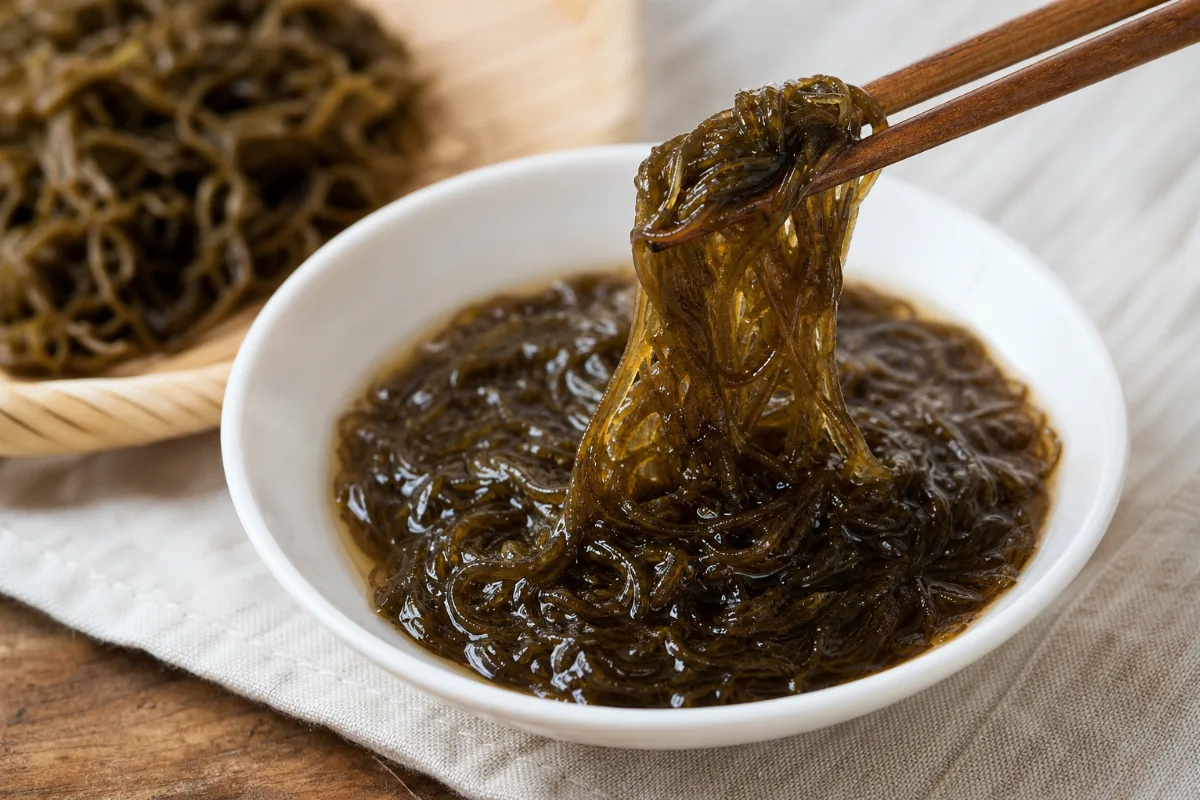
Mozuku (Okinawa mozuku) is a soft, thin, slippery brown alga, Cladosiphon okamuranus. It is eaten as a whole food, often cold in a small dish with a vinegar-based dressing, or in soup, according to the earlier page we hold. Its strands are coated in a gel that is rich in fucoidan, a sulfated sugar chain found in brown seaweeds.
In a lab study of the living seaweed, fucoidan (made of fucose, glucuronic acid and sulfate) was found in the cell wall, in different forms in young and old growth. Taxonomy, range and farming were not read from a source.
What is in it
We could not give a nutrient table. USDA FoodData Central could not be searched (it was rate-limited), the earlier page says there is no entry, and no published table of calories, protein, sodium or iodine for mozuku was found. We will not guess numbers.
What was found: in a fat analysis of five Japanese seaweeds, mozuku fats grouped with hijiki and laver and apart from kombu and sea mustard. The amount of fucoidan in a plate of mozuku was not measured in any source read. Fresh, brined and dried mozuku differ in water and salt, so label values are not comparable.
What the research shows
No trial of eating whole mozuku was found. In a 12-week trial, 40 healthy adults drank either a placebo or a drink with 3.0 g a day of mozuku fucoidan. No adverse events were seen, and NK cell activity (a lab test of an immune cell) was higher at 8 weeks than at the start in the fucoidan group, and higher than placebo in men only. An open-label study of 11 cancer survivors taking 3 g for 6 months found a rise in men but not women, and it had no control group.
A 2026 systematic review of five fucoidan trials from several seaweeds found modest, inconsistent effects and inconclusive cancer outcomes. In 259 volunteers, fucoidan was found in urine after 3 g, so some is absorbed. Skin disease, germ and virus findings come from mice and lab dishes using extracts or a silver-bound product, and show nothing about eating mozuku in people.
Food versus extracts
Every human result on this page is for fucoidan, a single compound taken out of the seaweed and given as a drink or capsule at 3 g. A plate of mozuku is a different product, and the amount of fucoidan it holds was not measured. Safety statements and benefit results do not carry over in either direction, and nothing on this page says an extract is safe to take.
At a glance
Traditional uses history, not proof
- Eaten as a cold side dish or in soup in Okinawan cooking
- Long use as food is not proof that it treats any condition
Studied for research
- Nutrient content, low certainty (cell wall chemistry only; no nutrient table found)
- Immune-cell (NK) activity, very low certainty (fucoidan extract, 40 healthy adults)
- Inflammation, low certainty (review of five fucoidan studies, not mozuku alone)
- Fucoidan absorption, low certainty (259 volunteers, extract)
- Skin disease, germs and viruses, insufficient evidence (mice and lab dishes)
Main compounds
- Fucoidan (sulfated sugar chain in the cell wall)
- Cellulose and hemicellulose
- Fats, including polyunsaturated fatty acids
Common forms
- Fresh mozuku in brine, eaten cold
- Salted or dried mozuku
- In soup
- Fucoidan extract in a drink (used in one trial; not the same as the food)
Research links: 2021 trial: mozuku fucoidan and NK cells in healthy adults · 2026 systematic review: fucoidan and inflammation in humans · 2024 feeding study: iodine and arsenic from nori, kombu and wakame · Memorial Sloan Kettering: fucoidan, anticoagulants · American Thyroid Association statement on excess iodine · Research Library · Genes & Biomarkers Library
What it is and its history
- Accepted scientific name
- Cladosiphon okamuranus Tokida
- Naming authority
- Name as used in the studies read; the accepted-name status was not checked in GBIF
- Common names
- Mozuku (Japanese); Okinawa mozuku (English); Mozuku seaweed (English); Mozuku (Spanish (same word))
- Family or group
- A brown alga (class Phaeophyceae). It is a seaweed, not a fish or an animal.
- Classification
- Not checked > Not checked > Phaeophyceae > Not checked > Not checked > Cladosiphon > Cladosiphon okamuranus
- Native range
- Not verified from a source read. The studies read link it to Okinawa, Japan.
- Habitat
- Not verified from a source read.
- What it looks like
- Stems: Soft thin strands (thalli), coated in a slimy gel, per the earlier page.
- Cultivation
- Not verified from a source read. A 2026 PubMed title describes how light quality affects its early development, which suggests it is grown on purpose; that abstract was not read.
- Harvest and processing
- Sold fresh in brine, salted or dried, per the earlier page; no source read.
- Look-alikes and adulterants
- Name: Kombu; Note: Another brown seaweed with its own page; much higher iodine in a feeding study.; Name: Wakame; Note: Another brown seaweed with its own page.; Name: Hijiki; Note: A brown seaweed singled out for inorganic arsenic.
Photographs
What is inside, and how it may work
What it contains and how those compounds act in cells and animals. Laboratory and animal mechanisms are not proven effects in people.
Main compounds
| Compound | Family | Where it is concentrated | Activity studied | Level of evidence |
|---|---|---|---|---|
| Fucoidan | sulfated polysaccharide | Cell wall Amount per portion of mozuku not found. Made of fucose, glucuronic acid and sulfate. | Studied as an extract for immune markers; several lab and animal findings. 6 11 | Human data |
| Lipids (fats), including polyunsaturated fatty acids | lipid | Whole seaweed Not given in the abstract. Mozuku lipids grouped with hijiki and laver, apart from kombu and sea mustard. | Compared between five seaweeds; no health claim. 3 | Laboratory |
| Cellulose and hemicellulose | carbohydrate | Cell wall About 80% of recovered cell wall was in the hot-water fraction. | Structural. 6 | Laboratory |
Mechanisms, receptors and pathways
| Target or pathway | Gene or receptor | What was found | Level |
|---|---|---|---|
| Natural killer cell activity | Not specified | NK cell activity rose in a small human trial of a mozuku fucoidan drink (men only versus placebo). No mechanism was shown. 11 | Human data |
| Gut environment (mucin, IgA, gut bacteria) | Not specified | In psoriasis-prone mice a fucoidan diet changed gut bacteria and raised ileal and faecal mucin and cecal IgA. 8 | Animal research |
| IL-22 and eosinophil signalling in skin | IL-22 | In an atopic dermatitis model the extract lowered IL-22 and skin thickening. 2 | Animal research |
| Silver-sulfate fucoidan against microbes and viruses | Not specified | Silver ions bound to fucoidan sulfate groups blocked bacteria and virus infection of human cells in a dish. 5 | Laboratory research |
Absorption, metabolism and elimination
- Absorption
- Some fucoidan is absorbed: urinary fucoidan rose from about 4 to about 24 ng/mL after 3 g in 259 volunteers.
- Distribution
- Not found.
- Metabolism
- A review says mammals lack the enzymes that break fucoidan down.
- Elimination
- Appears in urine.
- Bioavailability
- Not established. Low levels in blood and urine.
Isolated compounds versus whole extracts
Every human result here is for a fucoidan extract (3 g a day in a drink, or 3 g), not for a plate of mozuku. The amount of fucoidan in mozuku as eaten was not found, so the trial results should not be read as results for the food.
Nutritional composition
No USDA FoodData Central entry for mozuku could be checked: the USDA search was rate-limited on 2026-10-26, and the earlier page says there is none. No published table of calories, protein, sodium, vitamin K or iodine for mozuku was found in the sources read, and no official serving size was found, so no nutrient table or portion is given. What was read: fucoidan sits in the cell wall and is made of fucose, glucuronic acid and sulfate; mozuku fats grouped with hijiki and laver in a five-seaweed comparison. For scale, one feeding study measured iodine at 3522 ug/g in kombu, 27 in wakame and 5.0 in nori; mozuku was not included. Fresh, brined and dried products differ in water and salt, so label values are not comparable.
3 low certainty1 very low certainty2 not enough evidence
What was looked at
The 6 benefits and uses checked for Mozuku, each with how strong the evidence is. Tap one to open it.
- What is in mozuku (nutrient content)Low certainty
- Natural killer (NK) cell activity (an immune-cell test)Very low certainty
- Does the body absorb mozuku fucoidan?Low certainty
- Inflammation and immune function (fucoidan, from reviews)Low certainty
- Psoriasis-like and eczema-like skin disease (mice)Not enough evidence
- Germs and viruses, including COVID-19 (lab and ideas)Not enough evidence
Lab markers tracked in the studies
Natural killer (NK) cell activityFucoidan level in blood or urine
What is Mozuku good for?
The main studied uses and how strong the evidence is for each. Every human result is for a fucoidan extract, not for mozuku as eaten.
Benefits, one by one
Each card is a research question, not a promise. Tap a goal to filter. Open a card to see the studies, doses and limits.
What is in mozuku (nutrient content)
Low certaintyMozuku is a thin, slippery brown seaweed whose cell walls hold fucoidan, a sulfated sugar chain. No table of calories, protein, iodine or sodium for mozuku was found, so none is given here.
2 studiesFresh mozuku, mozuku in brine, salted or dried (as described by the e…
Studies, doses and limits
What the trials found
No trial. Two lab studies: one of the cell wall of living mozuku and one comparing the fats of five Japanese seaweeds.
Results
In growing mozuku, fucoidan (made of fucose, glucuronic acid and sulfate) was found in the cell wall. It was abundant in young thalli in a hot-water fraction and rich in old thalli in a hemicellulose fraction, where it strengthens the wall. In a fat analysis of five Japanese seaweeds, mozuku fats grouped with hijiki and laver and apart from kombu and sea mustard.
Effect sizes as reported
No nutrient amounts for mozuku in the abstracts. The cell wall study reports about 80% of recovered wall in the hot-water fraction.
Why this rating
Low: the lab chemistry itself is sound, but it gives no amount of fucoidan in a plate of mozuku, and no iodine, sodium, protein or vitamin values were found.
Form and dose studied
Fresh mozuku, mozuku in brine, salted or dried (as described by the earlier page; values not read).
Limits
No USDA FoodData Central entry could be checked for mozuku (the USDA search was rate-limited on 2026-10-26); the earlier page says there is none. No source with measured nutrient values was found.
Why researchers looked
Mozuku is eaten in Okinawa and people want to know what its slimy coating is made of.
Traditional use
Okinawa mozuku is eaten as a cold side dish or in soup. Long use as food is not proof that it treats any condition.
Proposed mechanism Laboratory measurement
These are lab measurements of the seaweed, not health effects.
A proposed mechanism does not show that the effect happens in people.
Iodine, arsenic and blood-thinner cautions are on the Safety tab.
Natural killer (NK) cell activity (an immune-cell test)
Very low certaintyIn a small 12-week trial, a drink with fucoidan from Okinawa mozuku raised a blood test of NK cell activity at 8 weeks compared with the person's own start. Against placebo it was higher only in men. This was an extract in a drink, not mozuku as food, and the test is a lab marker, not illness.
3 studiesFucoidan extract from Cladosiphon okamuranus in a drink. Not mozuku a…
Studies, doses and limits
What the trials found
One randomised, double-blind, placebo-controlled pilot study of 40 healthy adults (20 per group) for 12 weeks, plus one open-label study of 11 cancer survivors for 6 months. A 2026 systematic review of five fucoidan trials from several seaweeds found the NK results were sex-specific and not consistently replicated.
Results
Healthy adults: NK activity was significantly higher at 8 weeks than at the start in the fucoidan group, and significantly higher than placebo in men only. No adverse events from the test product were seen. Cancer survivors: no significant change overall; a rise in men, not women.
Effect sizes as reported
No numbers for NK activity in the abstracts. Dose 3.0 g a day of fucoidan (healthy adults) and 3 g for 6 months (cancer survivors).
Why this rating
Very low: a 40-person pilot and an 11-person open-label study, a subgroup (men) result, a lab marker rather than infections or illness, an extract rather than the food, and not clearly replicated.
Form and dose studied
Fucoidan extract from Cladosiphon okamuranus in a drink. Not mozuku as food.
Who was studied
Healthy adults around 47 years old; cancer survivors.
Limits
Cannot show that mozuku helps fight infection. The product comes from a company that employs authors (noted on the earlier page we hold; not shown in the abstract).
Why researchers looked
NK cells are immune cells that attack infected and abnormal cells, so researchers use their activity as an immune marker.
Traditional use
Mozuku is a food. Fucoidan extracts are newer products and are not traditional.
Proposed mechanism Author proposed
The authors suggest fucoidan can activate immune cells. The abstract does not prove a mechanism.
A proposed mechanism does not show that the effect happens in people.
No adverse events were reported in the trial. Blood-thinner cautions for fucoidan are on the Safety tab.
Does the body absorb mozuku fucoidan?
Low certaintyAfter 3 g of fucoidan, fucoidan in urine rose from about 4 to about 24 ng/mL in 259 Japanese volunteers, so some is absorbed. People who ate mozuku regularly had higher starting levels.
3 studiesFucoidan 3 g (extract). Not mozuku as food.
Studies, doses and limits
What the trials found
One study in 259 volunteers who took 3 g of fucoidan and gave urine samples, plus serum levels in 11 cancer survivors taking 3 g a day.
Results
Urinary fucoidan rose significantly at 3, 6 and 9 hours. Starting levels were lower in people who were H. pylori-negative and rarely ate mozuku than in those who regularly did. Absorption differed with H. pylori status and age in some groups. In cancer survivors serum fucoidan peaked between 30 and 198 ng/ml.
Effect sizes as reported
Urine: 3.7 +/- 3.4 ng/mL before; 15.3, 24.4 and 24.2 ng/mL at 3, 6 and 9 hours.
Why this rating
Low: it shows that some fucoidan is absorbed, not that it does anything. Group comparisons were made after the fact and the dose was an extract.
Form and dose studied
Fucoidan 3 g (extract). Not mozuku as food.
Who was studied
Japanese volunteers; cancer survivors.
Limits
Absorption is not a health benefit. Amounts from a plate of mozuku were not measured.
Why researchers looked
Researchers wanted to know whether a large sugar chain like fucoidan gets into the body at all.
Traditional use
Mozuku is a regular food in Okinawa.
Proposed mechanism Review of animal and human data
A review says mammals lack the enzymes that break fucoidan down; high-weight fucoidans are absorbed across gut cells in rats and found at low levels in blood and urine.
A proposed mechanism does not show that the effect happens in people.
None specific.
Inflammation and immune function (fucoidan, from reviews)
Low certaintyA 2026 review of five human fucoidan studies found modest, inconsistent effects on inflammation and immunity, no serious side effects, and no clear answer for cancer outcomes.
1 studiesFucoidan supplements from several brown seaweeds.
Studies, doses and limits
What the trials found
One systematic review of five clinical studies (three randomised controlled trials, two open-label studies in people with cancer), 2 to 24 weeks. It includes fucoidan from several seaweeds, not mozuku alone.
Results
Single trials reported lower levels of some inflammatory markers, sex-specific NK changes and gut bacteria changes, not consistently repeated. Studies in cancer patients saw short-term falls in inflammatory markers and stable quality of life; tumour outcomes were inconclusive. Fucoidan was generally well tolerated.
Effect sizes as reported
No pooled numbers (no meta-analysis).
Why this rating
Low: five small studies, different products and groups, inconsistent results; the review itself says no definite conclusion can be drawn.
Form and dose studied
Fucoidan supplements from several brown seaweeds.
Who was studied
Healthy adults, people with metabolic risk, people with cancer.
Limits
Not about eating mozuku. Supplement products differ in make-up.
Why researchers looked
Fucoidan is sold as an anti-inflammatory and immune supplement, based mostly on lab and animal work.
Traditional use
Not traditional; fucoidan extracts are modern products.
Proposed mechanism Not established
Not established in people.
A proposed mechanism does not show that the effect happens in people.
See the Safety tab for bleeding risk with blood thinners.
Psoriasis-like and eczema-like skin disease (mice)
Not enough evidenceMozuku fucoidan eased skin symptoms in mice bred to have psoriasis-like disease and in a mouse model of atopic dermatitis. These were extracts in animals. No human trial was found.
2 studiesFucoidan extract. Not the food.
Studies, doses and limits
Results
Psoriasis-prone mice on a fucoidan diet had less skin disease and less face scratching. In the atopic dermatitis model the extract reduced skin thickening, eosinophils and cytokines, and the authors say the effect was comparable to corticosteroids in their animals.
Effect sizes as reported
No numbers in the abstracts.
Why this rating
Insufficient for people: animals and cells only, extracts, amounts not in the abstracts.
Form and dose studied
Fucoidan extract. Not the food.
Who was studied
Mice.
Limits
Cannot be used to say anything about skin disease in people. Nothing here is advice to treat skin disease with an extract.
Why researchers looked
Fucoidan affects immune signals, so researchers tested it in immune-driven skin disease models.
Traditional use
Not a traditional use.
Proposed mechanism Animal research
In mice the fucoidan diet changed gut bacteria and raised mucin and IgA; in the dermatitis model it lowered IL-22 and eosinophil build-up.
A proposed mechanism does not show that the effect happens in people.
Do not replace prescribed skin treatments.
Germs and viruses, including COVID-19 (lab and ideas)
Not enough evidenceIn a dish, a silver-bound version of mozuku fucoidan slowed some bacteria and blocked coronavirus and flu virus from infecting human cells. A review also suggests seaweed might help against COVID-19, but this is an idea, not a result in people.
2 studiesSilver-bound fucoidan (lab product).
Studies, doses and limits
Results
Plain fucoidan only weakly slowed E. coli at much higher concentrations. The silver version slowed E. coli, S. epidermidis and a mould and blocked infection of human cells by SARS-CoV-2 and influenza A at lower concentrations than plain fucoidan. The review warns that overeating seaweed should be avoided because of iodine.
Effect sizes as reported
No numbers in the abstracts.
Why this rating
Insufficient: lab dish work on a chemically changed extract, and a hypothesis paper. Neither is a test of eating mozuku in people.
Form and dose studied
Silver-bound fucoidan (lab product).
Who was studied
Cell lines.
Limits
Silver fucoidan is not a food. Nothing here shows that mozuku protects against any infection.
Why researchers looked
Fucoidan has antiviral activity in the lab and researchers looked at how to make it stronger.
Traditional use
Not a traditional use.
Proposed mechanism In vitro and hypothesis
The lab study says silver ions bound to the sulfate groups of fucoidan gave strong antimicrobial activity and boosted the antiviral effect. The review proposes ACE-inhibiting peptides and fibres in seaweed.
A proposed mechanism does not show that the effect happens in people.
Do not use mozuku or fucoidan in place of vaccines or medical care for infection.
Connections to the rest of health
How Mozuku connects to the rest of our health knowledge graph. Every link says what kind of connection it is. A safety link (for example to the liver) is a warning, not a benefit. A study that merely mentions a topic never creates a benefit link.
Explore every connection: goals, body systems, organs, symptoms, genes
A. Wellness goals
| Connected to | Kind of connection | Evidence status | Context | Studies |
|---|---|---|---|---|
| Immune Support | Preliminary | A small trial of a mozuku fucoidan drink raised an NK-cell test; a review found effects modest and inconsistent. A lab marker, not illness. Preparation or compound: Fucoidan extract |
11 1 | |
| Immune Support | Very low certainty | Natural killer (NK) cell activity (an immune-cell test): In a small 12-week trial, a drink with fucoidan from Okinawa mozuku raised a blood test of NK cell activity at 8 weeks compared with the person's own start. Against placebo it was higher only in men. This was an extract in a drink, not mozuku as food, and the test is a lab marker, not illness. | 11 7 1 | |
| Immune Support | Low certainty | Inflammation and immune function (fucoidan, from reviews): A 2026 review of five human fucoidan studies found modest, inconsistent effects on inflammation and immunity, no serious side effects, and no clear answer for cancer outcomes. | 1 | |
| Skin Health | Not enough evidence | Psoriasis-like and eczema-like skin disease (mice): Mozuku fucoidan eased skin symptoms in mice bred to have psoriasis-like disease and in a mouse model of atopic dermatitis. These were extracts in animals. No human trial was found. | 8 2 | |
| Immune Support | Not enough evidence | Germs and viruses, including COVID-19 (lab and ideas): In a dish, a silver-bound version of mozuku fucoidan slowed some bacteria and blocked coronavirus and flu virus from infecting human cells. A review also suggests seaweed might help against COVID-19, but this is an idea, not a result in people. | 5 9 |
B. Body systems
| Connected to | Kind of connection | Evidence status | Context | Studies |
|---|---|---|---|---|
| Endocrine system | Adverse effect or risk | Documented risk | Too much iodine can upset the thyroid. Mozuku iodine was not measured in the sources read. Preparation or compound: Iodine in seaweed |
12 15 |
| Blood and clotting | Drug or supplement interaction | Documented risk | MSK says fucoidan may increase bleeding risk with anticoagulants. No source on whole mozuku was found. Preparation or compound: Fucoidan products |
13 |
| Digestive System | Biological association | Low certainty | Studied for: What is in mozuku (nutrient content) Studied for: Does the body absorb mozuku fucoidan? | 6 3 10 4 7 |
| Immune System | Biological association | Very low certainty | Studied for: Natural killer (NK) cell activity (an immune-cell test) Studied for: Inflammation and immune function (fucoidan, from reviews) | 11 7 1 5 9 |
| Integumentary System | Biological association | Not enough evidence | Studied for: Psoriasis-like and eczema-like skin disease (mice) | 8 2 |
I. Biomarkers
| Connected to | Kind of connection | Evidence status | Context | Studies |
|---|---|---|---|---|
| Natural killer (NK) cell activity | Biological association | Very low certainty | Measured in trials: raised. A lab change is not the same as a health benefit. | 11 7 |
| Fucoidan level in blood or urine | Biological association | Low certainty | Measured in trials: raised. A lab change is not the same as a health benefit. | 10 7 |
K. Biological pathways
L. Active compounds
| Connected to | Kind of connection | Evidence status | Context | Studies |
|---|---|---|---|---|
| Fucoidan | Biological association | Human | Studied as an extract for immune markers; several lab and animal findings. Preparation or compound: Cell wall |
6 11 |
| Lipids (fats), including polyunsaturated fatty acids | Biological association | Laboratory | Compared between five seaweeds; no health claim. Preparation or compound: Whole seaweed |
3 |
| Cellulose and hemicellulose | Biological association | Laboratory | Structural. Preparation or compound: Cell wall |
6 |
Each connection is stored with the ingredient, the connected record, the kind of connection, the evidence status, the supporting studies, the preparation or compound involved, and a review date (last reviewed October 26, 2026).
Evidence at a glance: what changed in 2 lab markers
Tap a number to show only those markers. Counts are markers, not people.
The evidence
The research centre for Mozuku. Every record here was checked against PubMed or the publisher's page; we never list a study we have not verified.
Evidence by outcome
Bars show how many studies we found for each outcome, not how well it works. People are added up across trials only (reviews are not added, to avoid double counting).
How we rate evidence
High certainty
Several well-run trials or reviews agree; further research is unlikely to change the picture much.
Moderate certainty
Good trials point the same way, but some doubt remains.
Low certainty
Small, short or inconsistent trials. The finding could change with better research.
Very low certainty
Very little or very weak human data. Treat as a possibility only.
Mixed findings
Trials or reviews disagree with each other.
Not enough evidence
Not enough human research to say either way.
Evidence against
Good research found no benefit, or found harm.
We take the reviewers' own risk-of-bias and GRADE statements where they exist, and otherwise judge from study size, design, consistency, directness and whether a product matches what is sold. Many publications do not make evidence high. Method note: We started from our existing mozuku summary, re-read the PubMed abstracts for the trials, the review, the animal and lab studies, read the 2024 Scientific Reports article in full, and read the American Thyroid Association, NHS and Memorial Sloan Kettering pages. Items we could not verify are flagged in the research gaps.
Study library: every study we checked 15
| Study | Design | People | Product, dose, length | Result |
|---|---|---|---|---|
| Anari 2026 Fucoidan as an anti-inflammatory and immunomodulatory agent in humans: a systematic review of clinical evidence and translational potential. Food Funct · PMID 42806726 · DOI |
Systematic review Human; fucoidans |
Five clinical studies (three randomised controlled trials, two open-label studies in people with cancer) | Fucoidan supplements from several brown seaweeds Extracts Varied 2 to 24 weeks · vs Placebo in the RCTs |
Fucoidan was well tolerated with no serious adverse events. Single trials reported falls in some inflammatory markers, sex-specific NK changes and gut microbiota changes, not consistently replicated. Cancer patients had short-term falls in inflammatory markers and stable quality of life; tumour outcomes were inconclusive. The authors conclude effects are modest, limited and inconsistent, with no definitive conclusion. No pooled effect (no meta-analysis) (Not stated in the abstract) Methods, limits and fundingOutcomes: Inflammation, immune function, metabolic and tumour outcomes, safety Limitations: Only five studies, mixed products and groups. Not about mozuku alone. Funding and conflicts: Not stated in the abstract. Read: abstract |
| Chen 2021 Immunomodulation and mechanisms of fucoidan from Cladosiphon okamuranus ameliorates atopic dermatitis symptoms. Int J Biol Macromol · PMID 34416266 · DOI |
Animal and cell study Mouse and cell lines |
Mast-type cells in a dish and a mouse model of atopic dermatitis | Fucoidan from Cladosiphon okamuranus (COP) Extract Not given in the abstract Not given in the abstract · vs Corticosteroids and untreated animals |
COP reduced degranulation in cells and improved atopic dermatitis in animals, with less skin thickening, fewer eosinophils and lower IL-22. The authors say the effect was comparable to corticosteroids, without the weight loss seen with steroids in their animals. Not numeric in the abstract (Not stated in the abstract) Methods, limits and fundingOutcomes: Cell degranulation, skin thickening, eosinophils, cytokines Limitations: Cells and animals; extract. Funding and conflicts: Not stated in the abstract. Read: abstract |
| Gowda 2022 Analysis of Antioxidant Lipids in Five Species of Dietary Seaweeds by Liquid Chromatography/Mass Spectrometry. Antioxidants (Basel) · PMID 36009257 · DOI |
Laboratory analysis Five seaweed species including mozuku |
Five Japanese dietary seaweeds (kombu, sea mustard, hijiki, mozuku, laver) | Lipid profiling by LC/MS Whole seaweed · vs Between species |
304 lipid molecular species were found. Kombu and sea mustard had different lipid make-up from hijiki, mozuku and laver. Kombu was highest in polyunsaturated fatty acids. Mozuku is named only in that grouping. 304 lipid species across five seaweeds (Not stated in the abstract) Methods, limits and fundingOutcomes: Lipid molecular species Limitations: Lab chemistry of five seaweeds; the abstract gives no mozuku amounts and no health outcome. Funding and conflicts: Not stated in the abstract. Read: abstract |
| Imbs 2020 Is the transformation of fucoidans in human body possible? Int J Biol Macromol · PMID 31622701 · DOI |
Narrative review Review; rat and human |
Review of rat and human absorption work | Fucoidans in general |
The review says mammals lack enzymes that break fucoidan down, high-weight fucoidans are absorbed across rat gut cells and show low levels in blood and urine, and that in people living in Okinawa Prefecture the Cladosiphon okamuranus alga is digested and its fucoidan absorbed. Not numeric (Not stated in the abstract) Methods, limits and fundingOutcomes: Whether fucoidan is digested or absorbed Limitations: A narrative review, abstract only. Funding and conflicts: Not stated in the abstract. Read: abstract |
| Iwata 2024 Incorporation of Silver into Sulfate Groups Enhances Antimicrobial and Antiviral Effects of Fucoidan. Mar Drugs · PMID 39590766 · DOI |
Laboratory experiment Cell lines, bacteria, virus |
Bacteria, a mould and human cells in a dish | Yakult Fucoidan (from Cladosiphon okamuranus) and a silver-bound version (Ag-Fuc) Chemically changed extract · vs Plain fucoidan |
Plain fucoidan weakly slowed E. coli growth at much higher concentrations. The silver version slowed E. coli, S. epidermidis and a mould at concentrations close to those that blocked viruses, and blocked SARS-CoV-2 and influenza A infection of human cells at lower concentrations than plain fucoidan. Not numeric in the abstract (Not stated in the abstract) Methods, limits and fundingOutcomes: Growth of E. coli, S. epidermidis and a mould; infection of human cells by SARS-CoV-2 and influenza A Limitations: Lab only, and the active product is a silver compound made from the extract, not mozuku. Funding and conflicts: Funding not stated in the abstract. The fucoidan used is a commercial product (named Yakult Fucoidan in the abstract); author affiliations were not read. Read: abstract |
| Miwa 2023 The Cell Wall Characterization of Brown Alga Cladosiphon okamuranus during Growth. Plants (Basel) · PMID 37765437 · DOI |
Laboratory analysis Cladosiphon okamuranus |
Young and old thalli (seaweed bodies) of Cladosiphon okamuranus | Cell wall fractions Whole seaweed · vs Young versus old thalli |
About 80% of the recovered cell wall was in the hot-water fraction. Fucoidan (fucose, glucuronic acid and sulfate) was highly sulfated and abundant in young thalli in the hot-water fraction, and was rich in old thalli in a hemicellulose fraction where it strengthens the wall. Fucose : glucuronic acid : sulfate ratios given in the abstract (Not stated in the abstract) Methods, limits and fundingOutcomes: Cell wall polysaccharides and fucoidan Limitations: Lab chemistry of the living seaweed; no food amounts, no health outcome. Funding and conflicts: Not stated in the abstract. Read: abstract |
| Nagamine 2020 Activation of NK cells in male cancer survivors by fucoidan extracted from Cladosiphon okamuranus. Mol Clin Oncol · PMID 31814980 · DOI |
Open label single arm Human; Cladosiphon okamuranus fucoidan |
11 11 cancer survivors with performance status 0 or 1 |
Fucoidan from Cladosiphon okamuranus Extract (not the whole seaweed) 3 g 6 months |
No significant change in mean NK activity across all subjects. Analysed by sex, NK activity rose significantly in men, not in women. Serum fucoidan rose, peaking between 30 and 198 ng/ml. Tumour markers stayed in range in those whose primary tumours were removed; baseline markers were raised in three people, and went up in two and down in one. Serum fucoidan peak 30 to 198 ng/ml; NK activity up in men only (Not stated in the abstract) Methods, limits and fundingOutcomes: NK cell activity, serum fucoidan, tumour markers Limitations: 11 people, no control group, open-label, sex analysis after the fact. Cannot show any effect on cancer. Funding and conflicts: Funding and conflicts not stated in the abstract. Read: abstract |
| Takahashi 2020 Improvement of Psoriasis by Alteration of the Gut Environment by Oral Administration of Fucoidan from Cladosiphon Okamuranus. Mar Drugs · PMID 32164223 · DOI |
Animal study Mouse |
Mice with a mutation that causes psoriasis-like skin disease (m-Traf3ip2 mice) | Fucoidan from Cladosiphon okamuranus in the diet Extract Not given in the abstract Not given in the abstract · vs Mice on a normal diet |
A fucoidan diet eased psoriasis-like symptoms and reduced face scratching. It changed gut bacteria and increased mucin in the ileum and faeces and IgA in the cecum. Not numeric in the abstract (Not stated in the abstract) Methods, limits and fundingOutcomes: Skin symptoms, face scratching, gut bacteria, mucin, IgA Limitations: Mice with a gene mutation, an extract, not people. Funding and conflicts: Not stated in the abstract. Read: abstract |
| Tamama 2021 Potential benefits of dietary seaweeds as protection against COVID-19. Nutr Rev · PMID 33341894 · DOI |
Narrative hypothesis review Review |
Review of seaweed components | Dietary seaweeds in general Food |
The author proposes that seaweed components such as fucoidan and ACE-inhibiting peptides might help, says seaweeds might confer protection through several mechanisms, and warns that overconsumption of seaweeds should be avoided because of their high iodine. Not applicable (Not stated in the abstract) Methods, limits and fundingOutcomes: Possible protection against COVID-19 Limitations: A hypothesis paper. It tested nothing in people and does not mention mozuku in the abstract. Funding and conflicts: Not stated in the abstract. Read: abstract |
| Tomori 2020 Are Helicobacter pylori Infection and Fucoidan Consumption Associated with Fucoidan Absorption? Mar Drugs · PMID 32365934 · DOI |
Cross sectional intervention Human; fucoidan |
259 259 Japanese volunteers |
Fucoidan (3 g) Extract 3 g, once Urine collected before and at 3, 6 and 9 hours · vs Before versus after |
Urinary fucoidan rose from 3.7 +/- 3.4 ng/mL at baseline to 15.3 +/- 18.8, 24.4 +/- 35.1 and 24.2 +/- 35.2 ng/mL at 3, 6 and 9 hours. Baseline levels were lower in H. pylori-negative people who rarely ate mozuku than in those who ate it regularly. In some groups, absorption differed by H. pylori status and age. Urinary fucoidan about 4 ng/mL before and about 24 ng/mL after 3 g (Not stated in the abstract) Methods, limits and fundingOutcomes: Urinary fucoidan, H. pylori titre, how often people ate mozuku Limitations: A measurement of absorption, not of any health effect. Groups were compared after the fact. Funding and conflicts: Funding and conflicts not stated in the abstract. Read: abstract |
| Tomori 2021 Effects of Ingesting Fucoidan Derived from Cladosiphon okamuranus Tokida on Human NK Cells: A Randomized, Double-Blind, Parallel-Group, Placebo-Controlled Pilot Study. Mar Drugs · PMID 34203925 · DOI |
Randomised controlled trial Human; Cladosiphon okamuranus fucoidan |
40 40 healthy adults (placebo group 45.5 +/- 7.8 years; fucoidan group 47.0 +/- 7.6 years) |
Fucoidan from Okinawa mozuku, in a drink Extract (not the whole seaweed) 3.0 g a day 12 weeks · vs Placebo drink (citric acid, sucralose, caramel) |
No clinically relevant adverse events were seen. NK cell activity was significantly higher at 8 weeks than before in the fucoidan group. Compared with the placebo group it was significantly higher in men only at 8 weeks. NK activity higher at 8 weeks than own baseline; versus placebo only in men (subgroup). No numbers in the abstract. (Not stated in the abstract) Methods, limits and fundingOutcomes: NK cell activity, blood, biochemical and immune tests, adverse events Limitations: Pilot, 20 per group. Lab marker, not illness. The sex result is a subgroup result. Extract in a drink, not mozuku as food. Funding and conflicts: Funding not stated in the abstract. The earlier page we hold says two authors work for the company that sells the product; this was not re-checked in the abstract. Read: abstract |
| s-ata-2013 American Thyroid Association: ATA statement on the potential risks of excess iodine ingestion and exposure · Source |
Health agency n/a |
Methods, limits and fundingRead: full-text | ||
| s-msk-fucoidan Memorial Sloan Kettering Cancer Center: Fucoidan (About Herbs) · Source |
Health agency n/a |
Methods, limits and fundingRead: full-text | ||
| s-nhs-iodine NHS: Vitamins and minerals - Iodine · Source |
Health agency n/a |
Methods, limits and fundingRead: full-text | ||
| s-notario-2024 Exposure to iodine, essential and non-essential trace element through seaweed consumption in humans (Notario Barandiaran LN, Taylor VF, Karagas MR; Sci Rep 2024; doi 10.1038/s41598-024-64556-w) · Source |
Feeding study Human (11 volunteers); nori, kombu, wakame |
Methods, limits and fundingRead: full-text |
What we do not know yet
- No trial of eating whole mozuku on any health outcome was found; the human trials used fucoidan extracts.
- No iodine, sodium, arsenic, cadmium or nutrient values for mozuku were found, and USDA FoodData Central could not be searched.
- No source on whole mozuku with blood thinners, thyroid medicine or diabetes medicine was found.
- No pregnancy, breastfeeding, children, allergy or food-safety advice specific to mozuku was found.
- Taxonomy, range, farming and history were not read from a source.
How new research is added
New studies are found by a saved PubMed search and placed in a review queue before the page changes.
Lab markers
What changed in blood or saliva tests during trials. A changed number is not the same as feeling or being healthier, and we give no "normal ranges".
Other 2
Natural killer (NK) cell activity
Raised in trials
A blood test of how strongly NK cells, a type of immune cell, can attack target cells in the lab.
Very low certaintyResults and what it means
Why it was measured
It is used as a general marker of immune function in small trials.
Statistical vs. clinical meaning
A change in a lab marker. It does not show fewer infections or any effect on cancer.
Safety implication
No adverse events reported in the healthy-adult trial.
| Study | Result | People | Product |
|---|---|---|---|
| 11 | Higher at 8 weeks than at 0 weeks (fucoidan group); higher than placebo in men only at 8 weeks; no numbers in the abstract | 40 healthy adults | Mozuku fucoidan drink, 3.0 g a day, 12 weeks |
| 7 | No significant change overall; significant rise in men, not women | 11 cancer survivors, open-label | Fucoidan, 3 g, 6 months |
Fucoidan level in blood or urine
Raised in trials
How much fucoidan can be measured in blood or urine after someone takes it.
Low certaintyResults and what it means
Why it was measured
It shows whether fucoidan gets into the body.
Statistical vs. clinical meaning
Shows some absorption. It does not show a benefit.
Safety implication
None found for this measure.
Safety
What studies and official sources say about side effects, medicines and who should check first. Each point shows what kind of evidence it comes from.
Main points to know 4
- Iodine: the mozuku value is not known. Brown seaweeds can hold a lot of iodine. In a feeding study, kombu had 3522 ug/g, wakame 27 and nori 5.0, and urinary iodine rose after eating them. Mozuku was not tested, so we cannot say where it falls. The American Thyroid Association says more than 1,100 mcg of iodine a day is not recommended and may cause thyroid dysfunction. Laboratory measurement and authoritative guidance 15 12
- Blood thinners: fucoidan products may add to the effect. Memorial Sloan Kettering says that because of its anti-thrombotic effects, fucoidan may increase bleeding risk with anticoagulants such as warfarin and heparin. That page is about fucoidan products. No source on whole mozuku and blood thinners was found. Tell your prescriber. Authoritative guidance 13
- Arsenic and metals in mozuku: not measured. Most seaweeds hold mostly organic arsenic, which the authors of one study call less toxic or of unknown toxicity, while hijiki holds concerning inorganic arsenic. No arsenic or cadmium values for mozuku were found. Laboratory measurement 15
- Fucoidan extracts are not the food. Safety statements about fucoidan supplements, including the one in the small trial with no adverse events, do not carry over to mozuku as food, and food safety findings do not carry over to extracts. Expert judgement 11 1
Side effects 3
| Effect | How often | Severity and recovery | Evidence |
|---|---|---|---|
| Too much iodine can disturb the thyroid (overactive or underactive thyroid, goitre) ATA: more than 1,100 mcg a day may cause thyroid dysfunction. NHS: high doses of iodine for long periods could change how the thyroid works. | Not found for mozuku as food. | can be serious over time Not described in the sources read. | Authoritative guidance 12 14 |
| Diarrhoea (with fucoidan products) From a page on fucoidan products, not mozuku as food. | Not stated. | mild MSK says it improved after stopping fucoidan. | Authoritative guidance 13 |
| No adverse events in the healthy-adult trial of mozuku fucoidan A 2026 review of five trials also reported no serious adverse events. Small trials cannot rule out rare problems. | 0 reported in 40 adults over 12 weeks. | not applicable Not applicable | Randomised controlled trial 11 |
Liver
No liver injury from mozuku or fucoidan was found in the sources read. A liver-safety source (such as LiverTox) was not searched.
How often. No frequency was found.
Monitoring. No agency monitoring advice was found.
This is a safety connection. It is not evidence that Mozuku supports liver health.
Medicines and supplements 3
| With | Why it matters | Importance | Evidence | What to do |
|---|---|---|---|---|
| Blood thinners (warfarin, heparin) and other anticoagulants prescription | Fucoidan shows anti-thrombotic activity; MSK says it may increase bleeding risk with anticoagulants. | Stated for fucoidan products. Whole mozuku has not been studied with blood thinners. | Authoritative guidance Low certainty 13 | Tell your prescriber if you take a blood thinner and eat mozuku often or take fucoidan. |
| Thyroid medicines (levothyroxine, antithyroid drugs) and thyroid disease prescription | Iodine acts on the thyroid itself. Mozuku iodine was not measured and no interaction study was found. | No source on mozuku with thyroid medicine was read. | None found Not enough evidence 12 | If you have thyroid disease or take thyroid medicine, ask your clinician before eating seaweed often. |
| Medicines and surgery (general) prescription | A pharmacist can check any medicine, especially before surgery. | None found Not enough evidence 13 | Tell the care team about regular mozuku or fucoidan before an operation, because of the bleeding note above. |
Who should check first 2
| Situation | Advice | Evidence |
|---|---|---|
| Thyroid disease, or taking thyroid medicine | Ask your clinician before eating seaweed often. This page does not tell anyone to eat or avoid mozuku for a thyroid problem. | Expert guidance 12 14 |
| Taking a blood thinner, or before surgery | Ask your prescriber about fucoidan products and regular mozuku. | Expert guidance 13 |
Overdose, product quality and regulators
Summary. For mozuku as food the safety points are the unknown iodine, the unknown metals, raw-food handling and, for fucoidan products, the bleeding note. No natural toxin report for Cladosiphon okamuranus was found in the sources read.
Animal. The mouse studies of fucoidan reported benefits, not toxicity, and were not safety studies.
High dose or long term signals. Not found. The longest human study read was 6 months in 11 cancer survivors.
Overdose response. Not found.
Genotoxicity. Not researched.
Mozuku grows in the sea and is eaten as a raw ready-to-eat food, often sold in brine.
Iodine. No iodine value for mozuku was found. In one feeding study kombu had 3522 ug/g, wakame 27 and nori 5.0. The text says earlier work found boiling cut iodine in kombu by up to 99% after 15 minutes; whether that holds for mozuku is unknown. 15
Arsenic and metals. No arsenic or cadmium values for mozuku were found. The same study found total arsenic highest in wakame (45.91 ug/g); it says earlier work found boiling cut total arsenic by 43 to 50%. 15
Bacteria and storage. No mozuku-specific food-safety source was found. General rules for raw ready-to-eat foods apply.
Sodium. Mozuku is often sold in brine, which we could not source. Read the label.
| Body | Action | Date |
|---|---|---|
| American Thyroid Association (United States) | Statement: more than 1,100 mcg of iodine a day (Tolerable Upper Limit) is not recommended and may cause thyroid dysfunction; advises against iodine and kelp supplements over 500 mcg a day; higher intakes encouraged in pregnancy and breastfeeding. source | 2013-06-05 |
| Memorial Sloan Kettering Cancer Center (United States) | Fucoidan page: because of anti-thrombotic effects it may increase bleeding risk with anticoagulants such as warfarin and heparin; lists diarrhoea as an adverse reaction. source | 2026-05-14 |
| NHS (United Kingdom) | Taking high doses of iodine for long periods could change how the thyroid works. source | 2020-08-03 |
When to get medical help
Stop using the product and contact a clinician or emergency service. In the US, Poison Control is 1-800-222-1222.
General information only, not medical advice. Ask a clinician or pharmacist before use, especially with medicines, in pregnancy or with a health condition. See the Natural Remedy Safety guide.
Frequently asked questions
What is mozuku?
Mozuku is a thin, slippery brown seaweed, Cladosiphon okamuranus, eaten in Okinawa. It is often served cold with a vinegar dressing or in soup. Its slimy coating is rich in fucoidan.
Is mozuku good for you?
How much iodine is in mozuku?
Not known. No iodine value for mozuku was found. In one study kombu had 3522 ug/g, wakame 27 and nori 5.0, so brown seaweeds vary a lot. Do not assume mozuku is low.
Does mozuku help the immune system?
One small trial gave a mozuku fucoidan drink to 40 healthy adults and found higher NK cell activity at 8 weeks, but versus placebo only in men. NK activity is a lab marker, not proof of fewer infections.
Does mozuku fight cancer?
Can I eat mozuku if I take warfarin?
No source on whole mozuku and warfarin was found. Memorial Sloan Kettering says fucoidan may add to the effect of anticoagulants, so ask your prescriber.
What is the difference between mozuku and fucoidan supplements?
Mozuku is the whole seaweed. Fucoidan is one sugar chain taken out of it. The trials used the extract, and the amount of fucoidan in a plate of mozuku was not measured.
Does the body absorb fucoidan?
Does mozuku contain arsenic or heavy metals?
No values for mozuku were found. One study says most seaweeds hold mostly organic arsenic and that hijiki holds concerning inorganic arsenic.
Is mozuku safe in pregnancy or for children?
No advice specific to mozuku was found, and its iodine is unknown. The American Thyroid Association says more than 1,100 mcg of iodine a day is not recommended for adults. Ask your midwife, doctor or child's clinician.
Does mozuku protect against COVID-19 or viruses?
Does mozuku help with weight loss, heart health or diabetes?
No source on whole mozuku for these was found, so we cannot say.
Explore by health goal
Editorial transparency
- Written by
- AlternativeMed editorial team. Research compiled with AI assistance, then checked against the sources listed.
- Medical review
- None. This page has not been reviewed by a physician or pharmacist.
- First published
- 2026-10-26
- Last substantive update
- 2026-10-26
- How we research
- We started from our existing mozuku summary, re-read the PubMed abstracts for the trials, the review, the animal and lab studies, read the 2024 Scientific Reports article in full, and read the American Thyroid Association, NHS and Memorial Sloan Kettering pages. Items we could not verify are flagged in the research gaps.
- How we rate evidence
- See "How we rate evidence" in the Evidence tab.
- Independence
- No product is promoted on this page. No affiliate links are shown. The fucoidan used in the lab study of silver fucoidan is a commercial product; the earlier page notes that two authors of the NK trial work for the company that sells its fucoidan, which we did not re-check in the abstract.
Sources 15
Each source was opened and checked. Where we read only the abstract, it says so. The small numbers in the text point here.
- Anari ES, Wang T, Fang Z, Zhang P, Celentano A. Fucoidan as an anti-inflammatory and immunomodulatory agent in humans: a systematic review of clinical evidence and translational potential.. Food Funct. 2026. PMID 42806726. DOI 10.1039/d6fo01559j. (abstract)
- Chen BR, Hsu KT, Hsu WH, Lee BH, Li TL, Chan YL, Wu CJ. Immunomodulation and mechanisms of fucoidan from Cladosiphon okamuranus ameliorates atopic dermatitis symptoms.. Int J Biol Macromol. 2021. PMID 34416266. DOI 10.1016/j.ijbiomac.2021.08.001. (abstract)
- Gowda SGB, Yifan C, Gowda D, Tsuboi Y, Chiba H, Hui SP. Analysis of Antioxidant Lipids in Five Species of Dietary Seaweeds by Liquid Chromatography/Mass Spectrometry.. Antioxidants (Basel). 2022. PMID 36009257. DOI 10.3390/antiox11081538. (abstract)
- Imbs TI, Zvyagintseva TN, Ermakova SP. Is the transformation of fucoidans in human body possible?. Int J Biol Macromol. 2020. PMID 31622701. DOI 10.1016/j.ijbiomac.2019.10.018. (abstract)
- Iwata A, Yamamoto-Fujimura M, Fujiwara S, Tajima S, Shigeyama T, Tsukimoto M, Ibuki T, Kataoka-Kato A. Incorporation of Silver into Sulfate Groups Enhances Antimicrobial and Antiviral Effects of Fucoidan.. Mar Drugs. 2024. PMID 39590766. DOI 10.3390/md22110486. (abstract)
- Miwa Y, Awanthi MGG, Soga K, Tanaka A, Ito M, Numata Y, Sato Y, Konishi T. The Cell Wall Characterization of Brown Alga Cladosiphon okamuranus during Growth.. Plants (Basel). 2023. PMID 37765437. DOI 10.3390/plants12183274. (abstract)
- Nagamine T, Kadena K, Tomori M, Nakajima K, Iha M. Activation of NK cells in male cancer survivors by fucoidan extracted from Cladosiphon okamuranus.. Mol Clin Oncol. 2020. PMID 31814980. DOI 10.3892/mco.2019.1943. (abstract)
- Takahashi M, Takahashi K, Abe S, Yamada K, Suzuki M, Masahisa M, Endo M, Abe K, Inoue R, Hoshi H. Improvement of Psoriasis by Alteration of the Gut Environment by Oral Administration of Fucoidan from Cladosiphon Okamuranus.. Mar Drugs. 2020. PMID 32164223. DOI 10.3390/md18030154. (abstract)
- Tamama K. Potential benefits of dietary seaweeds as protection against COVID-19.. Nutr Rev. 2021. PMID 33341894. DOI 10.1093/nutrit/nuaa126. (abstract)
- Tomori M, Nagamine T, Iha M. Are Helicobacter pylori Infection and Fucoidan Consumption Associated with Fucoidan Absorption?. Mar Drugs. 2020. PMID 32365934. DOI 10.3390/md18050235. (abstract)
- Tomori M, Nagamine T, Miyamoto T, Iha M. Effects of Ingesting Fucoidan Derived from Cladosiphon okamuranus Tokida on Human NK Cells: A Randomized, Double-Blind, Parallel-Group, Placebo-Controlled Pilot Study.. Mar Drugs. 2021. PMID 34203925. DOI 10.3390/md19060340. (abstract)
- . American Thyroid Association: ATA statement on the potential risks of excess iodine ingestion and exposure. . . (full-text)
- . Memorial Sloan Kettering Cancer Center: Fucoidan (About Herbs). . . (full-text)
- . NHS: Vitamins and minerals - Iodine. . . (full-text)
- . Exposure to iodine, essential and non-essential trace element through seaweed consumption in humans (Notario Barandiaran LN, Taylor VF, Karagas MR; Sci Rep 2024; doi 10.1038/s41598-024-64556-w). . . (full-text)
Where to buy
Check the label first. Whatever you buy, look for these:
- The iodine amount: seaweed can be very high in iodine, which matters for thyroid conditions
- Heavy metal testing information from the maker
- Origin and harvest area
- Organic or tested labeling
Talk to a pharmacist or doctor before you start any supplement, especially if you take medicines. See the Safety tab for interactions.
Support our free guides: as an Amazon Associate we earn from qualifying purchases. Full disclosure.


