Seaweed & Algae · Seaweed
Fucoxanthin
Fucoxanthin (a carotenoid pigment) · also called Brown seaweed carotenoid, fucoxantina
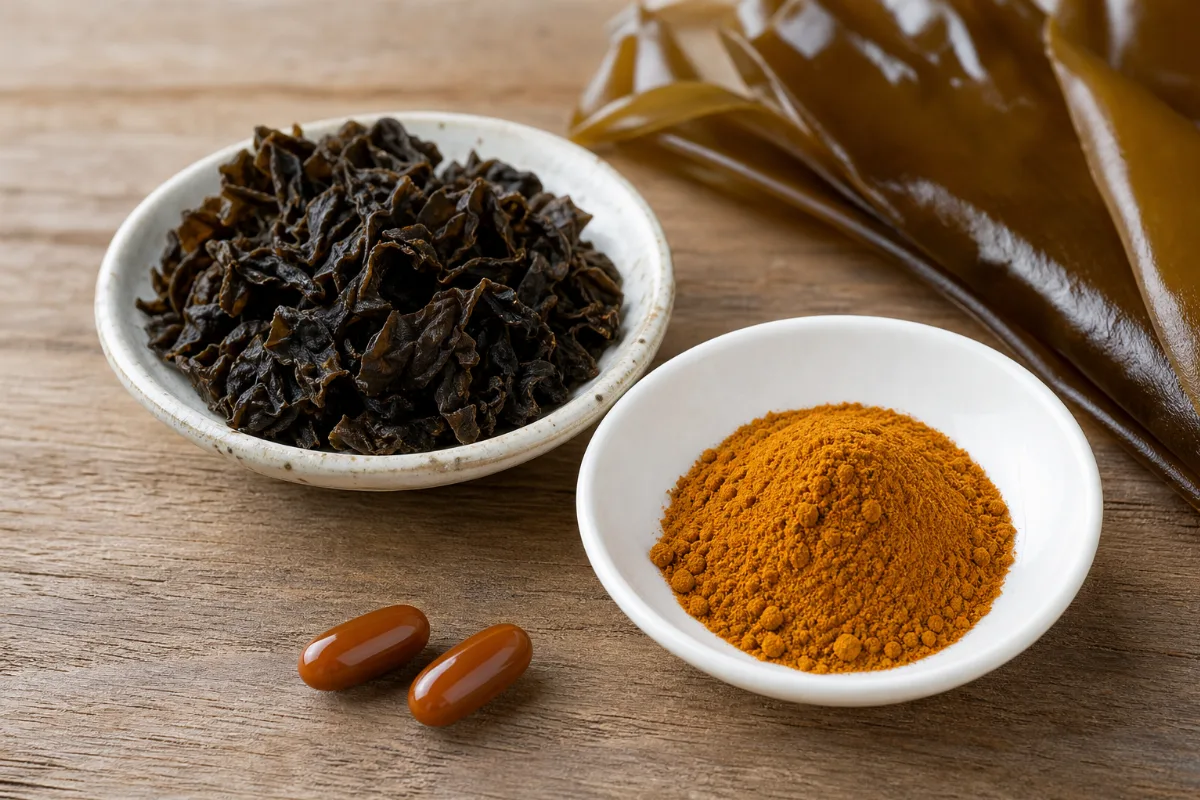
Fucoxanthin is the orange-brown pigment of brown seaweeds such as wakame and kombu, and of some microalgae. It is sold in capsules for weight loss. In people the results are mixed: the one clear weight loss came from a mix with pomegranate seed oil, and fucoxanthin alone did not change visceral fat. The main cautions are iodine and arsenic in some brown-seaweed products, and thyroid disease.
General information, not medical advice. Last substantive update · Not medically reviewed. A named clinician has not signed off on this page. How this page is made
About Fucoxanthin
Fucoxanthin is a pigment, not a food. It gives brown seaweeds their color. Eating wakame or kombu gives a small amount, and capsules give more. Trials of weight loss are small and mixed, and the safety worries are about the seaweed products it comes in.
What it is
Fucoxanthin is a carotenoid, an orange-brown pigment found in brown seaweeds (the large seaweeds such as wakame, kombu and hijiki) and in diatoms, which are tiny algae. It has an unusual structure that lets it work as an antioxidant in lab tests.
It is sold as a supplement, often as a brown seaweed extract or an oil with a set fucoxanthin amount. Some products mix it with other ingredients such as pomegranate seed oil, fucoidan or guarana. There is no standard nutrient table for it, because it is a compound and not a food.
What the research shows
The weight-loss idea comes from animal and cell work. In people, one 16-week trial in 151 obese women found that a product with 2.4 mg of fucoxanthin plus pomegranate seed oil lowered weight by about 5 kg and also lowered body fat and liver fat. It tested a mix, and we found no independent repeat. A trial of akamoku seaweed oil with 1 or 2 mg of fucoxanthin found no change in visceral fat, and a 12-week trial of a diatom extract found no extra weight loss.
Other human results are smaller still: one trial of 28 adults with metabolic syndrome reported lower blood pressure and waist size, one trial found a small HbA1c fall at 2 mg a day, and two sponsor-linked trials of a diatom extract reported some better memory and attention scores. A 2026 review says enriched extracts did better than single compounds in weight-loss trials, and a 2025 review says human trials of algae compounds show modest weight loss.
Claims about cancer, inflammation and antioxidant effects rest on cells and animals only.
How much is absorbed
In animals and cells, fucoxanthin is changed into fucoxanthinol in the gut and then taken up. In five healthy volunteers who ate wakame for a week, blood fucoxanthinol was low and no fucoxanthin was found. The authors suggest fiber in the seaweed may block uptake. A review says taking fucoxanthin with edible oil may raise absorption, based mainly on animal work. We did not find a per-serving value for fucoxanthin in wakame or kombu.
Food versus supplement
Eating wakame or kombu gives a small amount of fucoxanthin with fiber and iodine. Extracts, oils and capsules are different products, and trial results for one do not carry to another. The trials here used a pomegranate-oil mix, an akamoku oil, a diatom extract and a fucoidan mix. None of them is the same as eating seaweed.
At a glance
Traditional uses history, not proof
- Brown seaweeds that contain it are old foods in East Asia
- Eating them for fucoxanthin is a modern idea; long use as food is not proof it treats any condition
Studied for research
- Weight and body fat, mixed certainty (a combination product helped; fucoxanthin alone and a diatom extract did not)
- Metabolic syndrome measures, very low certainty (one trial of 28 people)
- Blood sugar (HbA1c), insufficient evidence (a side finding in one trial)
- Liver fat, very low certainty (mixtures only)
- Thinking and memory, very low certainty (diatom extracts, sponsor-linked)
- Antioxidant, anti-inflammatory and anticancer effects, lab or animal only
Main compounds
- Fucoxanthin
- Fucoxanthinol (the form that reaches the blood)
- Brown seaweed fiber, iodine and fucoidan (in whole seaweed, not in a pure extract)
Common forms
- Eating brown seaweed such as wakame, kombu or hijiki (a small, poorly absorbed amount of fucoxanthin)
- Seaweed extracts and oils standardised for fucoxanthin, used in trials
- Combination products, for example with pomegranate seed oil or with fucoidan
- Diatom (microalgae) extracts, a different source with its own EFSA safety opinion
Research links: 2010 trial: Xanthigen (fucoxanthin plus pomegranate seed oil) and weight · 2017 trial: fucoxanthin-enriched akamoku oil, HbA1c and visceral fat · 2011 review: fucoxanthin metabolism and safety · Research Library · Genes & Biomarkers Library
What it is and its history
- Accepted scientific name
- Fucoxanthin
- Naming authority
- A carotenoid pigment (PubChem CID 5281239, formula C42H58O6, molecular weight 658.9).
- Common names
- Fucoxanthin (English); Brown seaweed carotenoid (English); Fucoxantina (Spanish)
- Family or group
- Fucoxanthin is a carotenoid with an unusual allene bond in its structure, found in brown seaweeds and diatoms. It is not a food on its own, so it has no plant family.
- Habitat
- Brown seaweeds (the macroalgae, such as wakame, kombu and hijiki) and diatoms (microalgae) according to a 2011 review.
- Cultivation
- Not verified from a source read. A 2022 systematic review on microalgae culture factors exists but was not read.
- Harvest and processing
- Fucoxanthin is extracted from brown seaweeds or grown in diatoms such as Phaeodactylum tricornutum. A trial used akamoku seaweed oil with 1% fucoxanthin, and a commercial diatom extract in oil is the subject of an EFSA opinion. How extracts are purified was not read from a source.
- Look-alikes and adulterants
- Name: Whole brown seaweed (wakame, kombu, hijiki); Note: The seaweed holds fucoxanthin with fiber, iodine and other compounds. A food is not the same as a fucoxanthin extract.; Name: Fucoidan; Note: A different compound (a sulfated polysaccharide) from brown seaweed. One trial combined it with fucoxanthin.; Name: Diatom (microalgae) extract; Note: A different source of fucoxanthin with its own EFSA safety opinion.
Photographs
What is inside, and how it may work
What it contains and how those compounds act in cells and animals. Laboratory and animal mechanisms are not proven effects in people.
Main compounds
| Compound | Family | Where it is concentrated | Activity studied | Level of evidence |
|---|---|---|---|---|
| Fucoxanthin PubChem 5281239 | carotenoid | Brown seaweed and diatoms Not found per serving. Five people eating wakame took in 6.1 mg of fucoxanthin a day for a week (from a review of the study). | In cells and animals it acts as an antioxidant and changes fat metabolism. Human trials are small and mixed. 11 16 | Lab |
| Fucoxanthinol PubChem 11273547 | carotenoid metabolite | Made in the gut and cells Blood level was 0.8 nmol/L after a week of wakame in five people (review). | The form that appears in blood after fucoxanthin is eaten. Its blood level rose with higher fucoxanthin in one trial. 11 9 16 | Human data |
Mechanisms, receptors and pathways
| Target or pathway | Gene or receptor | What was found | Level |
|---|---|---|---|
| Fat-cell metabolism and UCP1 | UCP1 | Rodent studies suggest fucoxanthin turns on UCP1, a protein that makes heat in fat tissue. A 2026 review lists it among compounds tested for weight loss in people but not among the six it says raise UCP1 in human fat cells. One trial tied a lower HbA1c to the G/G form of the UCP1 gene. The authors call this possible, not proved. 3 9 11 | Animal research |
| Fatty liver and the leptin-adiponectin pathway | Leptin, adiponectin, SIRT1/PGC-1 (as named by the authors) | A mouse and cell study inside the fatty liver trial paper suggested a fucoidan plus fucoxanthin mixture acts on this pathway. This is lab work, not shown in people. 12 | Lab |
| Antioxidant and anti-inflammatory activity | Not specified in the sources read | Reviews describe antioxidant and anti-inflammatory effects in cells and animals. 11 10 | Lab |
Absorption, metabolism and elimination
- Absorption
- In animals and cells fucoxanthin is turned into fucoxanthinol in the gut and taken up. In five healthy volunteers who ate wakame (Undaria pinnatifida) for a week, taking in 6.1 mg of fucoxanthin a day, blood fucoxanthinol was low (0.8 nmol/L) and no fucoxanthin was found. The authors suggest fiber in the seaweed may block uptake. A review says taking fucoxanthin with edible oil or fat may raise absorption.
- Distribution
- Not found in people.
- Metabolism
- Fucoxanthin is turned into fucoxanthinol by gut and cell enzymes (animal and cell work).
- Elimination
- Not found.
- Bioavailability
- Low from brown seaweed in people, per a 2011 review. In one trial blood fucoxanthinol rose with the fucoxanthin amount.
Isolated compounds versus whole extracts
Eating brown seaweed gives a small and poorly absorbed amount of fucoxanthin, together with fiber, iodine and sometimes metals. The trials here used different products: a combination with pomegranate seed oil, an akamoku seaweed oil, a diatom extract, and a fucoidan mix. Results from one do not carry to another, and none is the same as eating seaweed.
Nutritional composition
Fucoxanthin is a compound, not a food, so there is no USDA FoodData Central entry or standard nutrient table for it. Nutrient values for the seaweeds that contain it (wakame, kombu, hijiki) are on their own pages. The only intake figure we read is from a review: five volunteers who ate wakame took in 6.1 mg of fucoxanthin a day for a week. We did not find a per-serving fucoxanthin value for wakame or kombu; the content varies with species, season and processing. Whole brown seaweed can also hold very large amounts of iodine (16 to 8,165 mcg per gram across 12 seaweeds). These are study figures, not advice.
1 mixed findings3 very low certainty2 not enough evidence
What was looked at
The 6 benefits and uses checked for Fucoxanthin, each with how strong the evidence is. Tap one to open it.
- Weight and body fatMixed findings
- Metabolic syndrome: blood pressure, waist and triglyceridesVery low certainty
- Blood sugar (HbA1c)Not enough evidence
- Liver fat and liver enzymesVery low certainty
- Thinking, memory and mood (diatom extracts)Very low certainty
- Antioxidant, anti-inflammatory, anticancer and other lab findingsNot enough evidence
Lab markers tracked in the studies
Body weightVisceral fat areaHbA1cBlood pressureLiver enzymes (ALT and AST)
What is Fucoxanthin good for?
The main studied uses and how strong the human evidence is for each. Most trials tested mixtures or diatom extracts, not fucoxanthin on its own.
Benefits, one by one
Each card is a research question, not a promise. Tap a goal to filter. Open a card to see the studies, doses and limits.
Weight and body fat
Mixed findingsFucoxanthin is sold for weight loss. In people the results are mixed. A combination product with pomegranate seed oil was linked to about 5 kg of weight loss in one 16-week trial. Fucoxanthin alone, in oil, did not change visceral fat in an 8-week trial, and a diatom extract gave no extra weight loss in a 12-week trial.
5 studiesStudy figures only, not advice: 2.4 mg in a combination product (16 w…
Studies, doses and limits
What the trials found
Three trials. (1) 151 obese women, 16 weeks, a combination of seaweed extract with 2.4 mg fucoxanthin plus pomegranate seed oil: weight fell 5.5 kg and 4.9 kg in the two groups, with lower body fat. (2) 60 adults, 8 weeks, akamoku oil with 0, 1 or 2 mg fucoxanthin a day: no significant change in visceral fat, resting energy expenditure or other obesity measures. (3) 37 women, 12 weeks, a diatom extract with 4.4 mg fucoxanthin on top of a diet and exercise plan: no extra weight or fat loss. A 2026 review lists fucoxanthin among compounds tested in weight-loss trials and says enriched extracts beat single compounds; a 2025 review says human trials of algae compounds show modest weight loss.
Results
Mixed. The one clear weight loss came from a product that also holds pomegranate seed oil, so it cannot be credited to fucoxanthin. Fucoxanthin alone and a diatom extract did not add weight loss.
Effect sizes as reported
Combination product: weight -5.5 +/- 1.4 kg (fatty liver group) and -4.9 +/- 1.2 kg (normal liver fat group). Akamoku oil: no difference in visceral fat. Diatom extract: no extra loss versus placebo.
Why this rating
Three small trials point in different directions, and the positive one tested a mix. No independent repeat of the combination trial was found. Mostly animal evidence supports the idea.
Form and dose studied
Study figures only, not advice: 2.4 mg in a combination product (16 weeks), 1 or 2 mg in seaweed oil (8 weeks), 4.4 mg in a diatom extract (12 weeks).
Who was studied
Obese women (151), Japanese adults with BMI over 22 (60), overweight women on exercise and diet (37).
Limits
Small trials. The positive trial used a commercial combination. Two of the three trials are sponsor-linked or have an unclear funder. Different sources of fucoxanthin were used.
Why researchers looked
Lab and animal work suggested fucoxanthin changes how fat cells burn energy, so researchers tested it in people.
Traditional use
Brown seaweeds such as wakame and kombu are old foods in East Asia. Eating them for fucoxanthin is a modern idea, and long use as food is not proof of any effect.
Proposed mechanism Animal and lab
In animals and cells fucoxanthin is thought to act on fat tissue and fat-burning genes. This has not been shown in people.
A proposed mechanism does not show that the effect happens in people.
Brown-seaweed products can carry iodine and arsenic. See the Safety tab.
Metabolic syndrome: blood pressure, waist and triglycerides
Very low certaintyOne small 12-week trial in 28 adults with metabolic syndrome reported lower weight, waist size, blood pressure and triglycerides after fucoxanthin. It has not been repeated.
1 studies12 mg of fucoxanthin a day for 12 weeks (study figure, not advice). T…
Studies, doses and limits
What the trials found
28 adults with metabolic syndrome took 12 mg of fucoxanthin a day or placebo for 12 weeks. The report lists lower body weight, BMI, waist, systolic and diastolic blood pressure and triglycerides, and higher insulin secretion.
Results
Small changes in the fucoxanthin group: for example systolic blood pressure 126.1 to 120.8 mmHg and waist 101.2 to 98.9 cm. The abstract gives before-and-after values and does not clearly show the difference from placebo.
Effect sizes as reported
Weight 80.6 to 79.16 kg; BMI 31.1 to 30.3; systolic 126.1 to 120.8 mmHg; diastolic 81.5 to 78.6 mmHg; triglycerides 2.2 to 2.1 mmol/L (all p below 0.01 in the fucoxanthin group).
Why this rating
One small trial with an unclear comparison to placebo, no repeat, and a dose (12 mg) much higher than the other trials.
Form and dose studied
12 mg of fucoxanthin a day for 12 weeks (study figure, not advice). The source of the fucoxanthin was not stated in the abstract.
Who was studied
Adults with metabolic syndrome.
Limits
28 people, short, funding not stated in the abstract, not repeated.
Why researchers looked
Metabolic syndrome is a cluster of weight, blood pressure, blood fat and blood sugar problems. Fucoxanthin was tested for all of these at once.
Traditional use
No traditional use for this was found.
Proposed mechanism Human biomarker
Not established in people. The authors report higher first-phase and total insulin secretion.
A proposed mechanism does not show that the effect happens in people.
If you take blood pressure or diabetes medicine, ask your clinician before trying any supplement.
Blood sugar (HbA1c)
Not enough evidenceIn an 8-week trial, HbA1c was a little lower at 2 mg a day than with no fucoxanthin, mostly in people with one gene form. It was a side finding and needs repeating.
2 studiesFucoxanthin-enriched akamoku oil, 0, 1 or 2 mg a day for 8 weeks (stu…
Studies, doses and limits
What the trials found
60 Japanese adults took akamoku oil with 0, 1 or 2 mg of fucoxanthin a day for 8 weeks. Obesity measures did not change. HbA1c was lower in the 2 mg group than the 0 mg group (p below 0.05), and the fall was bigger in people with the G/G form of UCP1.
Results
A small HbA1c fall at 2 mg a day, clearer in one gene subgroup. Not shown in people with diabetes.
Effect sizes as reported
HbA1c lower at 2 mg a day than 0 mg (p below 0.05). Exact size is in the full paper; the abstract does not give it.
Why this rating
A secondary result in one single-blind trial of 60 people, in a gene subgroup. A trial of a fucoidan plus fucoxanthin combination also reported lower HbA1c (see the Benefits tab), but it is a different product.
Form and dose studied
Fucoxanthin-enriched akamoku oil, 0, 1 or 2 mg a day for 8 weeks (study figures, not advice).
Who was studied
Normal-weight and obese Japanese adults carrying a gene variant, not people with diabetes.
Limits
Single-blinded, small, a side finding. Funding not stated in the abstract.
Why researchers looked
Animal work suggested fucoxanthin improves insulin sensitivity.
Traditional use
No traditional use for this was found.
Proposed mechanism Human biomarker
The authors tie the HbA1c fall to higher blood fucoxanthinol and to a variant of the UCP1 gene. This is their interpretation.
A proposed mechanism does not show that the effect happens in people.
Do not use fucoxanthin to replace diabetes care.
Liver fat and liver enzymes
Very low certaintyTwo trials of combination products reported less liver fat and better liver enzymes. Neither tested fucoxanthin alone.
2 studiesCombination products only. Not a fucoxanthin-alone result.
Studies, doses and limits
What the trials found
(1) 151 obese women with fatty liver disease or normal liver fat took a seaweed extract with 2.4 mg fucoxanthin plus pomegranate seed oil for 16 weeks: liver fat and liver enzymes (fatty liver group) fell. (2) 42 adults with fatty liver disease took a combination of low molecular weight fucoidan and fucoxanthin or placebo for 24 weeks: ALT, AST, cholesterol, triglycerides, fasting glucose and HbA1c were lower, as was a liver fat score and liver fibrosis.
Results
Both trials were positive, but both tested mixtures. We cannot say how much, if any, came from fucoxanthin.
Effect sizes as reported
Not given as numbers in the abstract of the fucoidan trial; the Xanthigen trial reports lower liver fat and liver enzymes (fatty liver group only).
Why this rating
Combination products, small trials, no independent repeat. The first trial's funding is not shown in its abstract.
Form and dose studied
Combination products only. Not a fucoxanthin-alone result.
Who was studied
Obese premenopausal women (151); adults with fatty liver disease (42).
Limits
Mixtures, small samples, short, not repeated.
Why researchers looked
Fatty liver disease is common and has few treatments, and animal studies suggested fucoxanthin lowers liver fat.
Traditional use
No traditional use for this was found.
Proposed mechanism Animal and lab
The authors of the fatty liver trial suggest a leptin and adiponectin pathway, from mouse and cell work in the same paper.
A proposed mechanism does not show that the effect happens in people.
Brown-seaweed products can carry iodine and arsenic. See the Safety tab.
Thinking, memory and mood (diatom extracts)
Very low certaintyTwo sponsor-linked trials of a diatom extract reported some better test scores. One mixed the extract with caffeine from guarana. These are not brown seaweed products.
2 studiesDiatom (Phaeodactylum tricornutum) extract, a different source from b…
Studies, doses and limits
What the trials found
(1) 43 adults averaging 64 years who felt their memory was declining took 1100 mg a day of a diatom extract with 8.8 mg fucoxanthin or placebo for 12 weeks. The authors report some better word recall, reaction times and attention scores, but most differences were over time rather than between groups. (2) 61 young video-game players took the diatom extract plus 500 mg of guarana (40 to 44 mg caffeine) for 30 days and showed some better reaction time, reasoning and mood.
Results
Some test scores moved the right way, with limited differences between groups.
Effect sizes as reported
Not given as numbers in the abstracts.
Why this rating
Small sponsor-linked trials, many tests, and one trial mixed with caffeine.
Form and dose studied
Diatom (Phaeodactylum tricornutum) extract, a different source from brown seaweed.
Who was studied
Older adults with perceived decline (43); young gamers (61).
Limits
Small, short, sponsor-linked, multiple comparisons, a caffeine confound in one trial.
Why researchers looked
Lab work suggested fucoxanthin may protect nerve cells.
Traditional use
No traditional use for this was found.
Proposed mechanism None found
Not established in people.
A proposed mechanism does not show that the effect happens in people.
The older-adult trial reports no negative effects on clinical blood panels or perceived side effects.
Antioxidant, anti-inflammatory, anticancer and other lab findings
Not enough evidenceReviews list many effects of fucoxanthin in cells and animals. None of these has been shown to help people.
2 studiesNot applicable.
Studies, doses and limits
Results
Lab or animal findings only. Do not read them as benefits for people.
Why this rating
No human outcome data for these uses.
Who was studied
Cells and animals.
Limits
Narrative reviews; the 2022 review's wording is stronger than the human evidence.
Why researchers looked
Fucoxanthin is an unusual carotenoid and behaves in lab tests as an antioxidant and as an anti-inflammatory.
Traditional use
No traditional use for this was found.
Proposed mechanism Animal and lab
Cell and animal work only.
A proposed mechanism does not show that the effect happens in people.
Not applicable.
Connections to the rest of health
How Fucoxanthin connects to the rest of our health knowledge graph. Every link says what kind of connection it is. A safety link (for example to the liver) is a warning, not a benefit. A study that merely mentions a topic never creates a benefit link.
Explore every connection: goals, body systems, organs, symptoms, genes
A. Wellness goals
| Connected to | Kind of connection | Evidence status | Context | Studies |
|---|---|---|---|---|
| Weight Management | Mixed findings | Weight and body fat: Fucoxanthin is sold for weight loss. In people the results are mixed. A combination product with pomegranate seed oil was linked to about 5 kg of weight loss in one 16-week trial. Fucoxanthin alone, in oil, did not change visceral fat in an 8-week trial, and a diatom extract gave no extra weight loss in a 12-week trial. | 1 9 4 3 7 | |
| Metabolic Health | Mixed findings | Weight and body fat: Fucoxanthin is sold for weight loss. In people the results are mixed. A combination product with pomegranate seed oil was linked to about 5 kg of weight loss in one 16-week trial. Fucoxanthin alone, in oil, did not change visceral fat in an 8-week trial, and a diatom extract gave no extra weight loss in a 12-week trial. Liver fat and liver enzymes: Two trials of combination products reported less liver fat and better liver enzymes. Neither tested fucoxanthin alone. | 1 9 4 3 7 12 | |
| Metabolic Health | Very low certainty | Metabolic syndrome: blood pressure, waist and triglycerides: One small 12-week trial in 28 adults with metabolic syndrome reported lower weight, waist size, blood pressure and triglycerides after fucoxanthin. It has not been repeated. | 8 | |
| Blood Pressure | Very low certainty | Metabolic syndrome: blood pressure, waist and triglycerides: One small 12-week trial in 28 adults with metabolic syndrome reported lower weight, waist size, blood pressure and triglycerides after fucoxanthin. It has not been repeated. | 8 | |
| Blood Sugar Balance | Not enough evidence | Blood sugar (HbA1c): In an 8-week trial, HbA1c was a little lower at 2 mg a day than with no fucoxanthin, mostly in people with one gene form. It was a side finding and needs repeating. | 9 12 | |
| Liver Support | Very low certainty | Liver fat and liver enzymes: Two trials of combination products reported less liver fat and better liver enzymes. Neither tested fucoxanthin alone. | 1 12 | |
| Cognitive Performance | Very low certainty | Thinking, memory and mood (diatom extracts): Two sponsor-linked trials of a diatom extract reported some better test scores. One mixed the extract with caffeine from guarana. These are not brown seaweed products. | 14 6 | |
| Memory Support | Very low certainty | Thinking, memory and mood (diatom extracts): Two sponsor-linked trials of a diatom extract reported some better test scores. One mixed the extract with caffeine from guarana. These are not brown seaweed products. | 14 6 | |
| Antioxidant Support | Not enough evidence | Antioxidant, anti-inflammatory, anticancer and other lab findings: Reviews list many effects of fucoxanthin in cells and animals. None of these has been shown to help people. | 11 10 | |
| Inflammation Balance | Not enough evidence | Antioxidant, anti-inflammatory, anticancer and other lab findings: Reviews list many effects of fucoxanthin in cells and animals. None of these has been shown to help people. | 11 10 |
B. Body systems
| Connected to | Kind of connection | Evidence status | Context | Studies |
|---|---|---|---|---|
| Metabolism and weight | Preliminary or mixed | Mixed human findings: a mix helped in one trial; fucoxanthin alone and a diatom extract did not add weight loss. Preparation or compound: Fucoxanthin products |
1 9 4 | |
| Metabolism Weight | Biological association | Mixed findings | Studied for: Weight and body fat Studied for: Metabolic syndrome: blood pressure, waist and triglycerides | 1 9 4 3 7 8 |
| Heart Circulation | Biological association | Very low certainty | Studied for: Metabolic syndrome: blood pressure, waist and triglycerides | 8 |
| Blood Sugar Support | Biological association | Not enough evidence | Studied for: Blood sugar (HbA1c) | 9 12 |
| Hepatic System | Biological association | Very low certainty | Studied for: Liver fat and liver enzymes | 1 12 |
| Nervous System | Biological association | Very low certainty | Studied for: Thinking, memory and mood (diatom extracts) | 14 6 |
| Cellular | Biological association | Not enough evidence | Studied for: Antioxidant, anti-inflammatory, anticancer and other lab findings | 11 10 |
C. Body parts and organs
| Connected to | Kind of connection | Evidence status | Context | Studies |
|---|---|---|---|---|
| Thyroid | Adverse effect or risk | Documented risk | Brown seaweed can carry very high iodine, which can harm the thyroid. No iodine data were found for purified fucoxanthin. Brown seaweed can carry very high iodine; no iodine data were found for purified fucoxanthin. Preparation or compound: Brown-seaweed products |
15 13 |
G. Root causes and contributing factors
| Connected to | Kind of connection | Evidence status | Context | Studies |
|---|---|---|---|---|
| Heavy metal exposure | Adverse effect or risk | Documented risk | A kelp supplement was tied to arsenic poisoning in one case, and 8 of 9 kelp supplements tested had arsenic above a US reference level. A kelp supplement was tied to arsenic poisoning in one case; 8 of 9 kelp supplements had arsenic above a US reference level. Preparation or compound: Kelp supplements |
2 |
I. Biomarkers
| Connected to | Kind of connection | Evidence status | Context | Studies |
|---|---|---|---|---|
| Body weight | Biological association | Mixed findings | Measured in trials: mixed. A lab change is not the same as a health benefit. | 1 4 8 |
| Visceral fat area | Biological association | Low certainty | Measured in trials: no change. A lab change is not the same as a health benefit. | 9 |
| HbA1c | Biological association | Not enough evidence | Measured in trials: lowered. A lab change is not the same as a health benefit. | 9 |
| Blood pressure | Biological association | Very low certainty | Measured in trials: lowered. A lab change is not the same as a health benefit. | 8 |
| Liver enzymes (ALT and AST) | Biological association | Very low certainty | Measured in trials: lowered. A lab change is not the same as a health benefit. | 12 1 |
J. Genes, receptors and enzymes
K. Biological pathways
L. Active compounds
| Connected to | Kind of connection | Evidence status | Context | Studies |
|---|---|---|---|---|
| Fucoxanthin | Biological association | Lab | In cells and animals it acts as an antioxidant and changes fat metabolism. Human trials are small and mixed. Preparation or compound: Brown seaweed and diatoms |
11 16 |
| Fucoxanthinol | Biological association | Human | The form that appears in blood after fucoxanthin is eaten. Its blood level rose with higher fucoxanthin in one trial. Preparation or compound: Made in the gut and cells |
11 9 16 |
Each connection is stored with the ingredient, the connected record, the kind of connection, the evidence status, the supporting studies, the preparation or compound involved, and a review date (last reviewed October 26, 2026).
The evidence
The research centre for Fucoxanthin. Every record here was checked against PubMed or the publisher's page; we never list a study we have not verified.
Evidence by outcome
Bars show how many studies we found for each outcome, not how well it works. People are added up across trials only (reviews are not added, to avoid double counting).
How we rate evidence
High certainty
Several well-run trials or reviews agree; further research is unlikely to change the picture much.
Moderate certainty
Good trials point the same way, but some doubt remains.
Low certainty
Small, short or inconsistent trials. The finding could change with better research.
Very low certainty
Very little or very weak human data. Treat as a possibility only.
Mixed findings
Trials or reviews disagree with each other.
Not enough evidence
Not enough human research to say either way.
Evidence against
Good research found no benefit, or found harm.
We take the reviewers' own risk-of-bias and GRADE statements where they exist, and otherwise judge from study size, design, consistency, directness and whether a product matches what is sold. Many publications do not make evidence high. Method note: We started from our earlier fucoxanthin summary, re-opened each PubMed study (record and abstract), read the American Thyroid Association statement and the full text of a 2011 review for the animal safety and absorption numbers, and checked the compound in PubChem. Only abstracts were read for the trials. Items we could not verify are listed in the research gaps.
Study library: every study we checked 16
| Study | Design | People | Product, dose, length | Result |
|---|---|---|---|---|
| Abidov 2010 The effects of Xanthigen in the weight management of obese premenopausal women with non-alcoholic fatty liver disease and normal liver fat. Diabetes Obes Metab · PMID 19840063 · DOI |
Randomised controlled trial |
151 151 non-diabetic, obese premenopausal women: 113 with fatty liver disease (liver fat above 11%) and 38 with normal liver fat |
Xanthigen: brown seaweed extract (containing fucoxanthin) plus pomegranate seed oil, a combination product Brown seaweed extract Xanthigen-600/2.4 mg (300 mg pomegranate seed oil + 300 mg seaweed extract with 2.4 mg fucoxanthin); a lower Xanthigen-400/1.6 mg and a fucoxanthin-alone arm were used for resting energy expenditure 16 weeks · vs Placebo |
Weight fell by 5.5 kg (fatty liver group) and 4.9 kg (normal liver fat group) with the combination, p below 0.05. Body fat fell by 3.5 kg and 3.6 kg. Liver fat, liver enzymes (fatty liver group only), triglycerides and C-reactive protein also fell. In 41 women with fatty liver disease, fucoxanthin (more than 2.4 mg) and the lower-dose combination raised resting energy expenditure compared with placebo. Weight -5.5 +/- 1.4 kg (fatty liver group), -4.9 +/- 1.2 kg (normal liver fat group); body fat -3.5 +/- 1.9 kg and -3.6 +/- 0.7 kg (Not given in the abstract) Methods, limits and fundingOutcomes: Body weight, body fat, liver fat, liver enzymes, blood fats, resting energy expenditure Limitations: A combination product, so the results cannot be credited to fucoxanthin alone. Women only. The abstract does not name a funder; the authors call it a promising food supplement. No independent repeat was found. Funding and conflicts: Not stated in the abstract. Commercial product tested. Read: abstract |
| Amster 2007 Case report: potential arsenic toxicosis secondary to herbal kelp supplement. Environ Health Perspect · PMID 17450231 · DOI |
Case report plus product testing |
1 A 54-year-old woman with two years of hair loss, memory loss, rash, fatigue, nausea and vomiting; nine kelp supplements bought from health food stores |
Herbal kelp supplement Kelp Daily supplement; product contained 8.5 mg/kg arsenic Two years |
Her urine arsenic was 83.6 mcg/g creatinine (normal below 50). Her kelp supplement held 8.5 ppm arsenic. Her symptoms resolved within weeks of stopping, and her blood and urine arsenic became undetectable. Eight of nine kelp products tested had arsenic above the FDA tolerance level of 0.5 to 2 ppm for certain foods. None of the labels mentioned arsenic. Urine arsenic 83.6 mcg/g creatinine; product 8.5 ppm; 8 of 9 products above 0.5 to 2 ppm (Not applicable) Methods, limits and fundingOutcomes: Urine arsenic, symptoms, arsenic in nine kelp products Limitations: One case plus a small product test (2007). It concerns kelp supplements, not purified fucoxanthin. Funding and conflicts: Not stated in the abstract. Read: abstract |
| Coulter 2026 Phytocompounds That Target White Adipose Tissue for Weight Loss: A Review Spanning From Ucp1 Induction in Rodents to Human Clinical Trials. Obes Rev · PMID 42298764 · DOI |
Narrative review mixed |
Review of 16 natural compounds that raise Ucp1 in rodent fat cells and what happened in humans | Plant and algae compounds, including fucoxanthin Various |
Fucoxanthin is one of eight compounds listed as evaluated in clinical trials for weight loss. It is not among the six the authors say raise UCP1 in human fat cells (resveratrol, naringenin, curcumin, menthol, genistein, artepillin C). The authors say naringenin and curcumin stimulate weight loss in multiple trials and that extracts enriched in an active component stimulate more weight loss than any single component. Not applicable (review) (Not applicable) Methods, limits and fundingOutcomes: Ucp1 induction in rodent and human fat cells; weight loss in clinical trials Limitations: Review of many compounds; the abstract does not give a fucoxanthin result. Funding and conflicts: Authors declare no conflicts. Read: abstract |
| Dickerson 2024 Effects of Supplementation with Microalgae Extract from Phaeodactylum tricornutum (Mi136) to Support Benefits from a Weight Management Intervention in Overweight Women. Nutrients · PMID 38613023 · DOI |
Randomised controlled trial |
37 37 overweight women (average age 28.6, body fat 41%) on a supervised exercise and diet programme |
Microalgae (diatom) extract of Phaeodactylum tricornutum standardised to fucoxanthin Microalgae extract Extract with 4.4 mg of fucoxanthin a day 12 weeks · vs Placebo |
No extra weight loss or fat loss compared with placebo. The authors report preserved bone mass, a rise in bone density, and greater improvements in steps per day, resting heart rate, aerobic capacity, blood lipid profile and quality of life. No additional weight or fat loss versus placebo (Not given in the abstract) Methods, limits and fundingOutcomes: Body weight, fat loss, bone mass, blood fats, fitness, quality of life Limitations: Small trial of a diatom extract, not a brown seaweed. The other findings were secondary and not the planned main result. Sponsor-linked. Funding and conflicts: Two authors are sponsor-affiliated (Microphyt). One author states no financial conflict with the sponsor. Registered NCT04761406. Read: abstract |
| EFSA Panel on Nutrition 2023 Safety of an ethanolic extract of the dried biomass of the microalga Phaeodactylum tricornutum as a novel food pursuant to Regulation (EU) 2015/2283. EFSA J · PMID 37448447 · DOI |
Regulatory opinion animal-and-regulatory |
EU safety assessment of a diatom extract with standardised fucoxanthin, proposed as a food supplement for adults other than pregnant and breastfeeding women | Ethanolic extract of Phaeodactylum tricornutum in medium-chain triglyceride oil Microalgae biomass extract Applicant proposed 437 mg a day |
EFSA concluded the safety of the extract under the proposed uses has not been established. It said a consistent and safe production process was not shown, the composition information was incomplete, there is no history of use of the source, and a 90-day animal study showed adverse effects, some at the lowest dose tested (750 mg/kg a day, set as the LOAEL). Possible light-sensitising compounds (pheophorbide A and pyropheophorbide A) left a low margin of exposure. There were no genotoxicity concerns. LOAEL 750 mg/kg body weight a day (90-day animal study) (Not applicable) Methods, limits and fundingOutcomes: Safety of the novel food Limitations: About one diatom extract, not brown seaweed fucoxanthin or capsules sold as fucoxanthin. Funding and conflicts: Regulatory body opinion. Read: abstract |
| Leonard 2023 Effects of Dietary Supplementation of a Microalgae Extract Containing Fucoxanthin Combined with Guarana on Cognitive Function and Gaming Performance. Nutrients · PMID 37111136 · DOI |
Randomised controlled trial |
61 61 experienced video-game players, average age 21.7 |
Diatom extract (Phaeodactylum tricornutum, 1% fucoxanthin) plus guarana, which contains caffeine Microalgae extract plus guarana 440 mg or 880 mg of extract plus 500 mg of guarana (40 to 44 mg caffeine) Once, then 30 days · vs Placebo |
The authors report some evidence of better reaction times, reasoning, learning, attention shifting and mood, strongest after 30 days. Not reported as numbers in the abstract (Not given in the abstract) Methods, limits and fundingOutcomes: Reaction time, reasoning, learning, attention shifting, mood Limitations: Combined with caffeine from guarana, so fucoxanthin cannot be credited. Young gamers only. Sponsor-linked. Funding and conflicts: Two authors are sponsor-affiliated (Microphyt). Registered NCT04851899. Read: abstract |
| Limijadi 2025 Marine-Algal-Derived Postbiotics Modulating the Gut Microbiota-Adipose Tissue Axis in Obesity: A New Frontier. Nutrients · PMID 41374064 · DOI |
Narrative review mixed |
Review of in vitro, animal and human studies of marine algae compounds (fucoidan, alginate, carrageenan, fucoxanthin and others) | Marine algal compounds, including fucoxanthin Algae |
The authors say animal studies consistently show lower weight and better insulin sensitivity with algae supplements, and that human trials are limited, confirm safety and show modest weight loss. Fucoxanthin is listed among carotenoids and polyphenols that act on fat cells in lab work. Not applicable (review) (Not applicable) Methods, limits and fundingOutcomes: Gut bacteria, short-chain fatty acids, fat tissue inflammation, weight Limitations: Covers many algae compounds together, not fucoxanthin alone. Narrative review. Funding and conflicts: Authors declare no conflicts. Read: abstract |
| Lopez-Ramos 2023 Effect of Fucoxanthin on Metabolic Syndrome, Insulin Sensitivity, and Insulin Secretion. J Med Food · PMID 37405785 · DOI |
Randomised controlled trial |
28 28 adults with metabolic syndrome |
Fucoxanthin (source not stated in the abstract) 12 mg of fucoxanthin once a day 12 weeks · vs Placebo |
After fucoxanthin, the authors report lower body weight (80.6 to 79.16 kg), BMI (31.1 to 30.3), waist (101.2 to 98.9 cm), systolic blood pressure (126.1 to 120.8 mmHg), diastolic blood pressure (81.5 to 78.6 mmHg) and triglycerides (2.2 to 2.1 mmol/L), and higher first-phase and total insulin secretion. Insulin sensitivity (Matsuda index) is not listed among the changes. Weight -1.4 kg, waist -2.3 cm, systolic blood pressure -5.3 mmHg over 12 weeks (before and after, in the fucoxanthin group) (Not given in the abstract) Methods, limits and fundingOutcomes: Weight, BMI, waist, blood pressure, triglycerides, insulin sensitivity and secretion Limitations: Only 28 people. The abstract reports before-and-after values and does not clearly separate the comparison with placebo. Funding not stated in the abstract. One small trial, not repeated. Funding and conflicts: Not stated in the abstract. Registered NCT03613740. Read: abstract |
| Mikami 2017 Reduction of HbA1c levels by fucoxanthin-enriched akamoku oil possibly involves the thrifty allele of uncoupling protein 1 (UCP1): a randomised controlled trial in normal-weight and obese Japanese adults. J Nutr Sci · PMID 28620480 · DOI |
Randomised controlled trial single blind |
60 60 normal-weight and obese Japanese adults (BMI over 22) carrying a gene variant linked to lifestyle-related problems |
Fucoxanthin-enriched akamoku (a brown seaweed) oil Brown seaweed oil 0, 1 or 2 mg of fucoxanthin a day 8 weeks · vs 0 mg (oil without fucoxanthin) |
No significant differences in obesity-related measures, including visceral fat and resting energy expenditure. HbA1c was lower in the 2 mg group than in the 0 mg group (p below 0.05), and the fall tracked with higher blood fucoxanthinol. The fall was larger in people with the G/G form of the UCP1 gene. No change in visceral fat area; HbA1c lower at 2 mg a day than at 0 mg (p below 0.05) (Not given in the abstract) Methods, limits and fundingOutcomes: Visceral fat area, resting energy expenditure, HbA1c, blood fucoxanthin metabolites Limitations: Single-blinded, 20 people per group, short. The HbA1c finding is a secondary result and was clearer in a gene subgroup, so it needs repeating. Funding and conflicts: Not stated in the abstract. Read: abstract |
| Mumu 2022 Fucoxanthin: A Promising Phytochemical on Diverse Pharmacological Targets. Front Pharmacol · PMID 35983376 · DOI |
Narrative review mixed |
Review of mostly lab and animal findings | Fucoxanthin from algae and edible seaweeds Algae and seaweeds |
The authors gather lab and animal findings on many properties of fucoxanthin and on its bioavailability and stability. The abstract says the compound has been 'proved' to have many benefits, which is stronger than the human trials support. Not applicable (review) (Not applicable) Methods, limits and fundingOutcomes: Antimicrobial, antioxidant, anti-inflammatory, skin, anti-obesity, antidiabetic and liver effects; bioavailability and stability Limitations: Narrative review; not a systematic search. Its wording is stronger than the human evidence. Funding and conflicts: Authors declare no commercial conflict. Read: abstract |
| Peng 2011 Fucoxanthin, a marine carotenoid present in brown seaweeds and diatoms: metabolism and bioactivities relevant to human health. Mar Drugs · PMID 22072997 · DOI |
Narrative review mixed |
Review of mostly animal and cell studies, with a few human absorption data | Fucoxanthin Brown seaweeds and diatoms |
The authors review how fucoxanthin is absorbed and used, its safety in animals, and many lab and animal effects. They note that bioavailability from brown seaweed is low in humans and that taking it with edible oil or lipid may raise absorption. Details of the animal safety tests and the five-volunteer wakame study were read in the full text on PubMed Central. Not applicable (review) (Not applicable) Methods, limits and fundingOutcomes: Metabolism, safety, antioxidant, anti-inflammatory, anticancer, anti-obesity, antidiabetic and other activities Limitations: A 2011 narrative review; not a systematic review. Most findings are from cells and animals. Funding and conflicts: Not stated in the abstract. Read: full-text |
| Shih 2021 Fucoidan and Fucoxanthin Attenuate Hepatic Steatosis and Inflammation of NAFLD through Modulation of Leptin/Adiponectin Axis. Mar Drugs · PMID 33809062 · DOI |
Randomised controlled trial plus animal and cell |
42 42 adults with non-alcoholic fatty liver disease, plus a mouse model and a liver cell line |
Combination of low molecular weight fucoidan and high stability fucoxanthin (LMF-HSFx) Brown seaweed extracts 24 weeks · vs Placebo |
In the 42 patients the combination lowered ALT, AST, total cholesterol, triglycerides, fasting glucose and HbA1c (relative values), lowered the liver fat score (CAP), reduced liver fibrosis and lowered IL-6 and interferon-gamma. The mouse and cell parts supported a leptin and adiponectin pathway. Several markers lower versus placebo; exact sizes not in the abstract (Not given in the abstract) Methods, limits and fundingOutcomes: Liver enzymes, cholesterol, triglycerides, blood sugar, HbA1c, liver fat score (CAP), liver fibrosis, inflammation markers Limitations: A fucoidan plus fucoxanthin combination, so the effect cannot be assigned to fucoxanthin alone. Small. Human, mouse and cell findings are mixed in one paper. Funding and conflicts: Authors declare no conflict of interest. Read: abstract |
| Teas 2004 Variability of iodine content in common commercially available edible seaweeds. Thyroid · PMID 15588380 · DOI |
Laboratory analysis n/a |
12 12 species of commercial seaweed and harvester samples from the US, Canada, Tasmania and Namibia |
Edible seaweeds (including kelp) Whole seaweed |
Iodine ranged from 16 mcg/g (nori) to over 8,000 mcg/g in processed kelp granules made from Laminaria digitata (8165 +/- 373). Juvenile Namibian kelp blades held more iodine than sun-bleached blades. Iodine is water-soluble in cooking. The authors say some Asian seaweed dishes may exceed the tolerable upper level of 1,100 mcg a day. 16 to 8,165 mcg of iodine per gram across species (Not applicable) Methods, limits and fundingOutcomes: Iodine content Limitations: Laboratory analysis of whole seaweeds from 2004. It does not test fucoxanthin extracts or capsules. Funding and conflicts: Not stated in the abstract. Read: abstract |
| Yoo 2024 Effects of Supplementation with a Microalgae Extract from Phaeodactylum tricornutum Containing Fucoxanthin on Cognition and Markers of Health in Older Individuals with Perceptions of Cognitive Decline. Nutrients · PMID 39275314 · DOI |
Randomised controlled trial |
43 43 active adults, average age 64, who felt their memory or thinking was declining |
Microalgae (diatom) extract of Phaeodactylum tricornutum with fucoxanthin Microalgae extract 1100 mg a day of extract containing 8.8 mg of fucoxanthin 12 weeks · vs Placebo |
The authors report significant or near-significant effects on word recall, picture recognition reaction time, Stroop test, choice reaction time and digit vigilance. Most differences were seen over time rather than between groups. They also report no negative effects on clinical blood panels or perceived side effects. Some test scores better (p below 0.05 or p 0.05 to 0.10); mostly changes over time within groups (Not given in the abstract) Methods, limits and fundingOutcomes: Word recall, reaction times, attention tests, blood panels, sleep perception Limitations: Small, short, sponsor-linked trial of a diatom extract. Many tests were run, and the between-group differences were limited. Funding and conflicts: Two authors are sponsor-affiliated (Microphyt) and state a conflict of interest. Registered NCT05759910. Read: abstract |
| s-ata-iodine American Thyroid Association: ATA statement on the potential risks of excess iodine ingestion and exposure (June 5, 2013) · Source |
Authoritative guidance |
Methods, limits and fundingRead: full-text | ||
| s-pubchem-fucoxanthin PubChem compound record: Fucoxanthin (CID 5281239) · Source |
Reference database n/a |
Methods, limits and fundingRead: full-text |
What we do not know yet
- No independent repeat of the combination-product weight trial was found, and no large trial of fucoxanthin alone.
- Iodine and heavy metals in fucoxanthin capsules and extracts have not been reported in the sources we read.
- No safety studies in pregnancy, breastfeeding or children, and no drug interaction studies, were found.
- Human trials ran 8 to 24 weeks; long-term safety is unknown.
- No per-serving fucoxanthin value for wakame, kombu or hijiki was found.
- US, Canadian and EU regulatory status for brown-seaweed fucoxanthin was not read.
How new research is added
New studies are found by a saved PubMed search and placed in a review queue before the page changes.
Lab markers
What changed in blood or saliva tests during trials. A changed number is not the same as feeling or being healthier, and we give no "normal ranges".
Metabolic 2
Body weight
Mixed results in trials
How much a person weighs. It is a simple measure used in weight-loss trials.
Mixed findingsResults and what it means
Why it was measured
It is the main outcome in weight-loss trials.
Statistical vs. clinical meaning
Small and inconsistent across products. Only the combination product showed a clear fall.
Safety implication
None specific.
| Study | Result | People | Product |
|---|---|---|---|
| 1 | Weight -5.5 +/- 1.4 kg (fatty liver group) and -4.9 +/- 1.2 kg (normal liver fat group), p below 0.05 | 151 obese premenopausal women | Brown seaweed extract with 2.4 mg fucoxanthin plus pomegranate seed oil, 16 weeks |
| 4 | No additional weight loss versus placebo | 37 overweight women on an exercise and diet plan | Diatom extract with 4.4 mg fucoxanthin, 12 weeks |
| 8 | Weight 80.6 to 79.16 kg in the fucoxanthin group (p below 0.01) | 28 adults with metabolic syndrome | 12 mg fucoxanthin a day, 12 weeks |
HbA1c
Lowered in trials
A blood test that shows average blood sugar over about three months.
Not enough evidenceResults and what it means
Why it was measured
It is the standard long-term blood sugar marker.
Statistical vs. clinical meaning
A side finding in one small trial.
Safety implication
Do not replace diabetes care.
| Study | Result | People | Product |
|---|---|---|---|
| 9 | HbA1c lower at 2 mg a day than 0 mg (p below 0.05); larger fall with the G/G form of UCP1 | 60 Japanese adults, not people with diabetes | Fucoxanthin-enriched akamoku oil, 8 weeks |
Other 3
Visceral fat area
No change in trials
The fat stored deep in the belly around the organs.
Low certaintyResults and what it means
Why it was measured
Visceral fat is linked to heart and metabolic risk.
Statistical vs. clinical meaning
A null result for fucoxanthin on its own in a short trial.
Safety implication
None specific.
| Study | Result | People | Product |
|---|---|---|---|
| 9 | No significant change in visceral fat area, and no change in resting energy expenditure | 60 adults with BMI over 22 | Fucoxanthin-enriched akamoku oil, 0, 1 or 2 mg a day, 8 weeks |
Blood pressure
Lowered in trials
The force of blood on artery walls. Systolic is the top number and diastolic the bottom.
Very low certaintyResults and what it means
Why it was measured
High blood pressure raises heart and stroke risk.
Statistical vs. clinical meaning
A small fall in one small trial, with an unclear comparison to placebo.
Safety implication
People on blood pressure medicine should ask a clinician first.
| Study | Result | People | Product |
|---|---|---|---|
| 8 | Systolic 126.1 to 120.8 mmHg and diastolic 81.5 to 78.6 mmHg in the fucoxanthin group (p below 0.01) | 28 adults with metabolic syndrome | 12 mg fucoxanthin a day, 12 weeks |
Liver enzymes (ALT and AST)
Lowered in trials
Enzymes in the blood that rise when liver cells are stressed or damaged.
Very low certaintyResults and what it means
Why it was measured
They are routine markers of liver health and fatty liver disease.
Statistical vs. clinical meaning
Both results are for mixtures.
Safety implication
No liver injury was reported in the abstracts. A liver-safety database (LiverTox) was not searched.
| Study | Result | People | Product |
|---|---|---|---|
| 12 | ALT and AST lower (relative values) versus placebo; exact sizes not in the abstract | 42 adults with fatty liver disease | Fucoidan plus fucoxanthin combination, 24 weeks |
| 1 | Liver enzymes lower in the fatty liver group only | 113 obese women with fatty liver disease | Seaweed extract with 2.4 mg fucoxanthin plus pomegranate seed oil, 16 weeks |
Safety
What studies and official sources say about side effects, medicines and who should check first. Each point shows what kind of evidence it comes from.
Main points to know 4
- Brown-seaweed products can carry a lot of iodine. Whole brown seaweed and kelp products can hold very large amounts of iodine: from 16 mcg per gram in nori to over 8,000 mcg per gram in processed kelp granules. The American Thyroid Association advises against iodine or kelp supplements with more than 500 mcg of iodine a day, for children, adults and during pregnancy and lactation. People with thyroid disease are more at risk. We found no iodine data for purified fucoxanthin products, so check the label and ask the maker for a test report. Authoritative guidance and lab analysis 13 15
- Metals such as arsenic have been found in kelp supplements. A woman developed hair loss, memory loss, rash and fatigue and was found to have high arsenic after two years of a daily kelp supplement. Her symptoms cleared after she stopped. In the same report, 8 of 9 kelp supplements bought in health food stores had arsenic above a US reference level. This is about kelp, not fucoxanthin products, and no testing of fucoxanthin products was found. Case report and product testing 2
- Long-term safety in people is unknown. The human trials we read ran 8 to 24 weeks. One 12-week trial of a diatom extract reported no negative effects on clinical blood panels or perceived side effects. Animal tests found no deaths at very high doses, but some doses raised cholesterol in rodents. Clinical trial and animal 14 11
- A diatom (microalgae) extract was not cleared as safe in the EU. In 2023 EFSA said the safety of an ethanolic extract of the diatom Phaeodactylum tricornutum, standardised for fucoxanthin, had not been established. It cited a 90-day animal study with adverse effects at the lowest dose, incomplete composition data and possible light-sensitising compounds. This is a different source from brown seaweed. Authoritative guidance 5
Side effects 4
| Effect | How often | Severity and recovery | Evidence |
|---|---|---|---|
| No consistent side effects were reported in the short human trials read The other trial abstracts do not list side effects, which is not the same as showing none. | Not given. One 12-week trial of a diatom extract reported no negative effects on clinical blood panels or perceived side effects. | not reported Not applicable | Clinical trial 14 |
| Raised blood cholesterol at high doses in rodents Animal data, with far higher doses than the human trials. | Seen at 50 mg/kg a day for 28 days in rats and 1000 mg/kg a day for 30 days in mice, according to a review. It also raised HDL cholesterol. | not graded Not described | Animal research 11 |
| Thyroid problems from too much iodine (from brown-seaweed products, not from fucoxanthin itself) ATA says more than 1,100 mcg of iodine a day may cause thyroid dysfunction. | Not given | can be significant in people with thyroid disease Not described in the sources read | Authoritative guidance 15 13 |
| Arsenic poisoning symptoms from a contaminated kelp supplement Kelp supplement, not a fucoxanthin product. | One case; 8 of 9 products tested had arsenic above a US food reference level | disabling in the case Symptoms resolved within weeks of stopping | Case report 2 |
Liver
Two trials of combination products reported better liver enzymes. No liver injury from fucoxanthin was reported in the abstracts read. A liver-safety database (LiverTox) was not searched for fucoxanthin. 1 12
How often. No frequency found.
Monitoring. No agency monitoring advice found.
This is a safety connection. It is not evidence that Fucoxanthin supports liver health.
Medicines and supplements 5
| With | Why it matters | Importance | Evidence | What to do |
|---|---|---|---|---|
| Thyroid medicines and treatments for thyroid disease prescription | Brown seaweed and kelp can supply very large amounts of iodine, which can upset thyroid function. | The American Thyroid Association says people with existing thyroid disease are susceptible to harm from too much iodine. We found no iodine data for fucoxanthin products themselves. | Authoritative guidance Low certainty 15 13 | If you have thyroid disease or take thyroid medicine, ask your clinician before using any brown-seaweed product. |
| Blood pressure medicines prescription | One small trial reported lower blood pressure after fucoxanthin, so an added effect is possible in theory. | No interaction study was found. This is a theoretical concern from one small trial. | Theoretical Very low certainty 8 | Ask your clinician or pharmacist before combining. |
| Diabetes medicines prescription | One trial reported a small HbA1c fall and another reported higher insulin secretion, so an added effect on blood sugar is possible in theory. | No interaction study was found. This is a theoretical concern. | Theoretical Very low certainty 9 8 | Ask your clinician or pharmacist before combining, and do not use it in place of diabetes care. |
| Caffeine and other stimulants in combination products supplement | Some fucoxanthin products are mixed with guarana, which contains caffeine. | In one trial 500 mg of guarana supplied 40 to 44 mg of caffeine. The caffeine, not the fucoxanthin, may explain some effects. | Trial observation Very low certainty 6 | Read the label of any mixed product. |
| Other medicines other | Not studied. | Proper evidence not found for warfarin, statins or other medicines in the sources we read. | Absence of evidence Not enough evidence | Ask a pharmacist. |
Who should check first 4
| Situation | Advice | Evidence |
|---|---|---|
| Thyroid disease, or a history of thyroid problems | Seaweed and kelp products can contain too much iodine. Ask your clinician before using brown-seaweed extracts or capsules. | Authoritative guidance 15 |
| Pregnancy and breastfeeding | The American Thyroid Association advises against kelp or iodine supplements with more than 500 mcg of iodine a day during pregnancy and lactation. In the EU application for a diatom extract, pregnant and breastfeeding women were excluded from the proposed users. We found no safety study of fucoxanthin in pregnancy. Ask your midwife or doctor. | Authoritative guidance 15 5 |
| Children and teenagers | No trial in children was found. The American Thyroid Association advises against iodine or kelp supplements with more than 500 mcg of iodine a day for children. | Authoritative guidance 15 |
| Surgery or planned procedures | No study was found on fucoxanthin and surgery. Tell your care team about any supplement. | Absence of evidence |
Overdose, product quality and regulators
Summary. In animals, purified fucoxanthin showed low toxicity in the studies a 2011 review describes. Human long-term safety is unknown.
Animal. Rats: 50% lethal dose above 2000 mg/kg body weight; a 13-week no-observed-adverse-effect level of 200 mg/kg. Mice: no deaths at 1000 and 2000 mg/kg single doses, and no obvious toxicity at 500 and 1000 mg/kg for 30 days. Cholesterol rose at high doses in rodents.
Human doses studied. Trials used 1 to 12 mg of fucoxanthin a day for 8 to 24 weeks (study figures, not advice).
High dose or long term signals. A review reports raised blood cholesterol in rodents at 50 mg/kg (rats, 28 days) and 1000 mg/kg (mice, 30 days).
Overdose response. Not found.
Genotoxicity. The 2011 review says fucoxanthin was not mutagenic in the tests it describes. EFSA found no genotoxicity concern for a diatom extract.
Iodine and arsenic vary a lot between brown-seaweed products. No test results for fucoxanthin capsules or extracts were found.
Iodine in seaweed. Across 12 seaweeds, iodine ranged from 16 mcg/g (nori) to 8,165 mcg/g (processed kelp granules). It also varied between blades of the same kelp and is water-soluble, so cooking lowers it. 13
Arsenic in kelp supplements. 8 of 9 kelp supplements tested had arsenic above a US reference level of 0.5 to 2 ppm; one product had 8.5 ppm. No label mentioned arsenic. 2
| Body | Action | Date |
|---|---|---|
| American Thyroid Association (United States) | Advises against iodine or kelp supplements with more than 500 mcg of iodine a day. Tolerable upper limit for iodine 1,100 mcg a day. source | 2013-06-05 |
| EFSA (NDA Panel) (European Union) | Safety of a Phaeodactylum tricornutum ethanolic extract (standardised for fucoxanthin) as a novel food was not established. source | 2023-07-12 |
When to get medical help
- Trouble breathing, swelling of the lips, face or throat, or widespread hives after taking a seaweed product: call 911 or your local emergency number
- Hair loss, rash, vomiting, memory problems and tiredness that began after starting a kelp or seaweed supplement: stop it and see a clinician, who can test for arsenic
- A racing heart, new neck swelling, or marked tiredness or weight change in someone who takes seaweed or iodine products: see a clinician about thyroid tests
Stop using the product and contact a clinician or emergency service. In the US, Poison Control is 1-800-222-1222.
General information only, not medical advice. Ask a clinician or pharmacist before use, especially with medicines, in pregnancy or with a health condition. See the Natural Remedy Safety guide.
Frequently asked questions
What is fucoxanthin?
Does fucoxanthin burn fat?
Why can't the weight loss be credited to fucoxanthin?
The one clear weight loss came from a product that also holds pomegranate seed oil, and no independent repeat was found. The trial authors call it a promising food supplement.
Is fucoxanthin the same as eating seaweed?
No. Seaweed gives a small amount of fucoxanthin with fiber and iodine, and absorption looks low. Extracts and capsules are different products with different trial results.
How well is fucoxanthin absorbed?
Poorly from seaweed. In five people eating wakame for a week, blood fucoxanthinol was low and fucoxanthin was not found. A review says oil may raise absorption, mainly from animal work.
Is fucoxanthin safe?
Can people with thyroid disease use it?
Can it lower blood sugar or blood pressure?
Is a diatom (microalgae) fucoxanthin extract the same as a seaweed one?
No. EFSA said in 2023 that it could not conclude one diatom extract was safe, citing animal findings, incomplete composition data and possible light-sensitising compounds. That is a different source from brown seaweed.
Is it safe in pregnancy or for children?
Does fucoxanthin help memory?
Explore by health goal
Metabolic HealthWeight ManagementBlood PressureBlood Sugar BalanceLiver SupportCognitive PerformanceMemory SupportAntioxidant SupportInflammation Balance
Editorial transparency
- Written by
- AlternativeMed editorial team. Research compiled with AI assistance, then checked against the sources listed.
- Medical review
- None. This page has not been reviewed by a physician or pharmacist.
- First published
- 2026-10-26
- Last substantive update
- 2026-10-26
- How we research
- We started from our earlier fucoxanthin summary, re-opened each PubMed study (record and abstract), read the American Thyroid Association statement and the full text of a 2011 review for the animal safety and absorption numbers, and checked the compound in PubChem. Only abstracts were read for the trials. Items we could not verify are listed in the research gaps.
- How we rate evidence
- See "How we rate evidence" in the Evidence tab.
- Independence
- No product is promoted on this page. No affiliate links are shown. Several diatom-extract trials list authors affiliated with the product sponsor; this is stated where they are used.
Sources 16
Each source was opened and checked. Where we read only the abstract, it says so. The small numbers in the text point here.
- Abidov M, Ramazanov Z, Seifulla R, Grachev S. The effects of Xanthigen in the weight management of obese premenopausal women with non-alcoholic fatty liver disease and normal liver fat.. Diabetes Obes Metab. 2010. PMID 19840063. DOI 10.1111/j.1463-1326.2009.01132.x. (abstract)
- Amster E, Tiwary A, Schenker MB. Case report: potential arsenic toxicosis secondary to herbal kelp supplement.. Environ Health Perspect. 2007. PMID 17450231. DOI 10.1289/ehp.9495. (abstract)
- Coulter AA, Greenway FL, Ramanathan G, Hubbard JR, Rebello CJ. Phytocompounds That Target White Adipose Tissue for Weight Loss: A Review Spanning From Ucp1 Induction in Rodents to Human Clinical Trials.. Obes Rev. 2026. PMID 42298764. DOI 10.1111/obr.70173. (abstract)
- Dickerson B, Maury J, Jenkins V, Nottingham K, et al.. Effects of Supplementation with Microalgae Extract from Phaeodactylum tricornutum (Mi136) to Support Benefits from a Weight Management Intervention in Overweight Women.. Nutrients. 2024. PMID 38613023. DOI 10.3390/nu16070990. (abstract)
- EFSA Panel on Nutrition, Novel Foods and Food Allergens (NDA), Turck D, et al.. Safety of an ethanolic extract of the dried biomass of the microalga Phaeodactylum tricornutum as a novel food pursuant to Regulation (EU) 2015/2283.. EFSA J. 2023. PMID 37448447. DOI 10.2903/j.efsa.2023.8072. (abstract)
- Leonard M, Maury J, Dickerson B, Gonzalez DE, et al.. Effects of Dietary Supplementation of a Microalgae Extract Containing Fucoxanthin Combined with Guarana on Cognitive Function and Gaming Performance.. Nutrients. 2023. PMID 37111136. DOI 10.3390/nu15081918. (abstract)
- Limijadi EKS, Tjandra KC, Permatasari HK, Augusta PS, et al.. Marine-Algal-Derived Postbiotics Modulating the Gut Microbiota-Adipose Tissue Axis in Obesity: A New Frontier.. Nutrients. 2025. PMID 41374064. DOI 10.3390/nu17233774. (abstract)
- Lopez-Ramos A, Gonzalez-Ortiz M, Martinez-Abundis E, Perez-Rubio KG. Effect of Fucoxanthin on Metabolic Syndrome, Insulin Sensitivity, and Insulin Secretion.. J Med Food. 2023. PMID 37405785. DOI 10.1089/jmf.2022.0103. (abstract)
- Mikami N, Hosokawa M, Miyashita K, Sohma H, et al.. Reduction of HbA1c levels by fucoxanthin-enriched akamoku oil possibly involves the thrifty allele of uncoupling protein 1 (UCP1): a randomised controlled trial in normal-weight and obese Japanese adults.. J Nutr Sci. 2017. PMID 28620480. DOI 10.1017/jns.2017.1. (abstract)
- Mumu M, Das A, Emran TB, Mitra S, et al.. Fucoxanthin: A Promising Phytochemical on Diverse Pharmacological Targets.. Front Pharmacol. 2022. PMID 35983376. DOI 10.3389/fphar.2022.929442. (abstract)
- Peng J, Yuan JP, Wu CF, Wang JH. Fucoxanthin, a marine carotenoid present in brown seaweeds and diatoms: metabolism and bioactivities relevant to human health.. Mar Drugs. 2011. PMID 22072997. DOI 10.3390/md9101806. (full-text)
- Shih PH, Shiue SJ, Chen CN, Cheng SW, et al.. Fucoidan and Fucoxanthin Attenuate Hepatic Steatosis and Inflammation of NAFLD through Modulation of Leptin/Adiponectin Axis.. Mar Drugs. 2021. PMID 33809062. DOI 10.3390/md19030148. (abstract)
- Teas J, Pino S, Critchley A, Braverman LE. Variability of iodine content in common commercially available edible seaweeds.. Thyroid. 2004. PMID 15588380. DOI 10.1089/thy.2004.14.836. (abstract)
- Yoo C, Maury J, Gonzalez DE, Ko J, et al.. Effects of Supplementation with a Microalgae Extract from Phaeodactylum tricornutum Containing Fucoxanthin on Cognition and Markers of Health in Older Individuals with Perceptions of Cognitive Decline.. Nutrients. 2024. PMID 39275314. DOI 10.3390/nu16172999. (abstract)
- . American Thyroid Association: ATA statement on the potential risks of excess iodine ingestion and exposure (June 5, 2013). . . (full-text)
- . PubChem compound record: Fucoxanthin (CID 5281239). . . (full-text)
Where to buy
Check the label first. Whatever you buy, look for these:
- The iodine amount: seaweed can be very high in iodine, which matters for thyroid conditions
- Heavy metal testing information from the maker
- Origin and harvest area
- Organic or tested labeling
Talk to a pharmacist or doctor before you start any supplement, especially if you take medicines. See the Safety tab for interactions.
Support our free guides: as an Amazon Associate we earn from qualifying purchases. Full disclosure.


