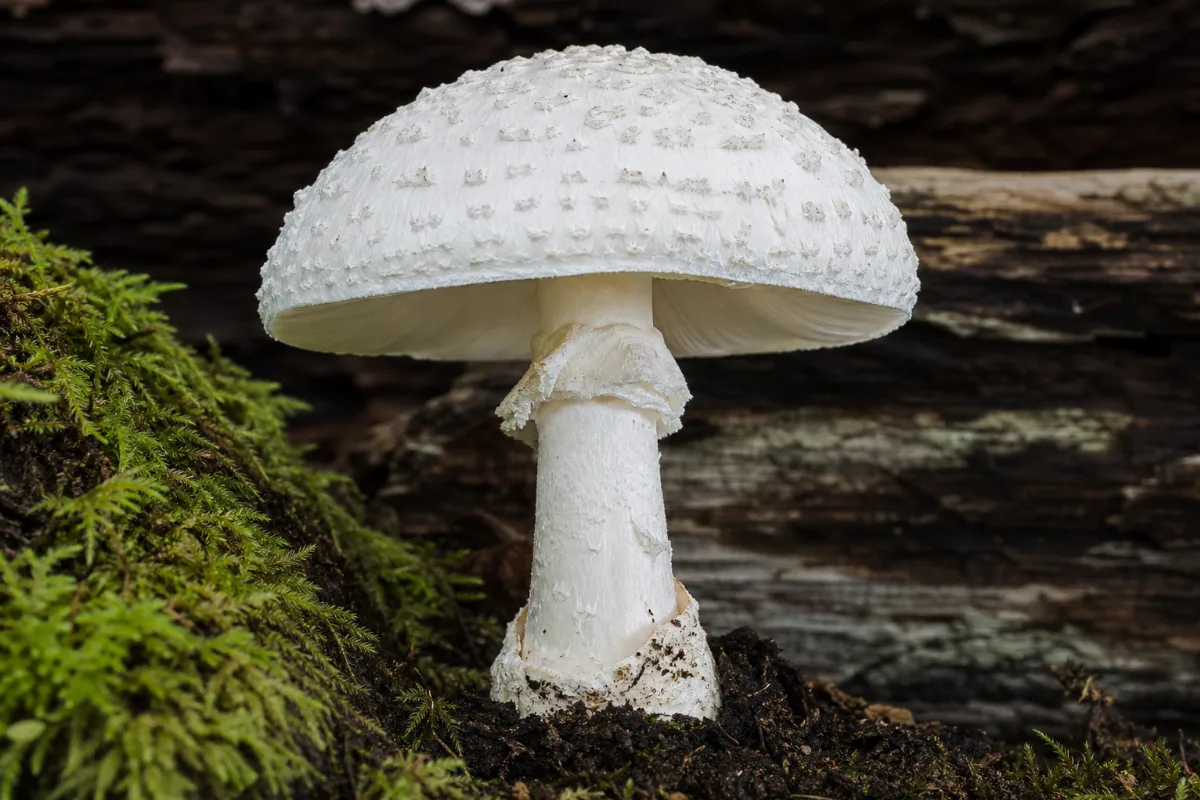
Mushrooms · Poisonous mushroom
Amanita smithiana
Amanita smithiana · also called Smith's Amanita; Smith's Lepidella
Amanita smithiana is a poisonous wild mushroom from western North America. Case reports describe stomach illness within hours, then kidney failure days later that needed dialysis. There is no antidote and no health benefit. If anyone may have eaten it, call a poison centre right away, even with no symptoms.
General information, not medical advice. Last substantive update · Not medically reviewed. A named clinician has not signed off on this page. How this page is made
About Amanita smithiana
Amanita smithiana is a poisonous wild mushroom. Case reports describe nausea and vomiting within hours, then acute kidney failure one to several days after the meal. There is no antidote. In the cases we read, kidney function came back after dialysis, but dialysis is still a serious illness. No trial supports any use.
Danger first: what it is and why it poisons
Amanita smithiana is a wild mushroom of the genus Amanita, recorded in North America. It is not a food, not a medicine and not a supplement. Reports describe stomach illness within hours of the meal, and then acute kidney failure that appears one to several days after eating.
A 2009 US case report calls it a new pattern of poisoning in the Pacific Northwest, in which kidney failure is the main problem. A 55-year-old man had nausea and vomiting within 6 hours; dialysis started on day 4 and the dialysis catheter was removed 39 days after the meal. A 63-year-old man in Canada arrived with no urine output two days after a wild-mushroom soup and went home 15 days after eating. If anyone may have eaten it, call a poison centre right away.
What the reports say about timing
Reports differ on exact hours, so these are ranges, not a guide to when it is safe. The stomach phase began 20 minutes to 12 hours after eating in four US patients, and 10 to 12 hours in three European patients poisoned by related white amanitas. A 2025 review gives 30 minutes to 3 hours, and a 2015 case report summarises 2 to 12 hours with a median of 6.
The kidney phase appeared about a day after the first illness in one US case and 4 to 6 days after eating in four US patients. Feeling better in between is not a sign of safety. Tell a clinician about any wild-mushroom meal even if it was days ago.
The toxin and how it differs from other mushroom poisons
A 2025 review names the toxin as an allenic norleucine. A 2006 review says it is probably 2-amino-4,5-hexadienoic acid, and PubChem lists the two names as the same chemical. A 2013 case report says the structure was unknown to its authors, so sources differ on how settled this is.
It is not amatoxin, the death-cap poison, and not orellanine, the deadly webcap poison. In one case, treatments for suspected amatoxin poisoning did not stop the kidney failure. Kidney biopsies in patients poisoned by related white amanitas showed inflamed kidney tissue and dead tubule cells.
Wild mushrooms cannot be sorted by eye
Reports describe people who believed they were eating a prized edible wild mushroom, and a 2026 review says most mushroom poisoning happens when toxic species are mistaken for edible ones. A poison centre says even very experienced gatherers find it hard to tell, and that an animal eating a mushroom is no proof it is safe for people.
A 2026 laboratory paper says the Amanita species that damage the kidney look very much alike, and built a DNA test for specialists. This page gives no description of the mushroom and no way to tell safe from unsafe wild mushrooms on purpose.
Related white amanitas and Amanita proxima
In laboratory tests of herbarium specimens, the same toxin was found in Amanita boudieri, A. gracilior and A. echinocephala, and poisonings by white amanitas looked similar. Amanita proxima, from the Mediterranean area, causes a similar illness but did not test positive for the smithiana toxin.
For A. proxima, reports include an 11-year-old boy who needed dialysis and recovered, and two French cases with severe heart changes that did well with symptomatic care. A French poison-centre study counted A. proxima/smithiana poisoning in 4 of 275 cases of newly recognised mushroom syndromes (2015-2022). Do not assume what is true for one species holds for the other.
What research exists
All the human research we found is case reports, small series and narrative reviews of poisoning. There is no trial and no measured amount of the toxin in the mushroom. Reviews describe deaths as rare and say most patients recover kidney function, but reports of people who were written up cannot tell us how often the illness goes badly.
The 1990s reports often could not confirm the species and relied on symptoms. Later reports used leftover food and a simple laboratory test, which another paper calls not entirely specific.
Law and regulators
We did not search for any food or drug regulator statement about this mushroom. Laws differ by country and change. Nothing on this page is legal advice.
At a glance
Traditional uses history, not proof
- No traditional, food or medicinal use is described in the sources we read.
- In case reports it was eaten by mistake, by people who believed they had a prized edible wild mushroom.
Studied for research
- Mood, focus, sleep or mind effects: not studied, not enough evidence
- Use as a food or supplement: evidence against; poisoning reports only
- All human research is about poisoning, not benefit
Main compounds
- Allenic norleucine, named as the toxin by a 2025 review (probably 2-amino-4,5-hexadienoic acid, says a 2006 review)
- Not amatoxin (death cap) and not orellanine (deadly webcap)
Common forms
- Wild mushroom, eaten by mistake in the reports (cooking does not remove the toxin)
Research links: Poison Control (US): get help online or call 1-800-222-1222 · Delayed kidney failure after A. smithiana: case report and review (abstract) · Four patients with kidney failure after suspected A. smithiana (abstract) · Laboratory confirmation of A. smithiana poisoning (abstract) · Other white amanitas that cause reversible kidney failure (abstract) · University of Kansas Poison Control Center: poisonous mushrooms · Research Library · Genes & Biomarkers Library
What it is and its history
- Accepted scientific name
- Amanita smithiana
- Naming authority
- Bas (1969)
- Common names
- Smith's Amanita (English); Smith's Lepidella (English)
- Family or group
- Amanitaceae, a family of fungi (this is a mushroom, not a plant). Part concerned: the fruiting body (the mushroom).
- Classification
- Fungi > Basidiomycota > Agaricomycetes > Agaricales > Amanitaceae > Amanita > Amanita smithiana
- Native range
- GBIF holds 414 occurrence records, all in North America: United States 346, Canada 41, Mexico 8. Case reports place it in the Pacific Northwest (US) and British Columbia (Canada). A paper cites a Taiwan case as possibly this or a related species.
- Habitat
- Not checked.
- What it looks like
- Part used: The fruiting body (the mushroom). This page does not describe how to recognise the mushroom, on purpose.
- Look-alikes and adulterants
- Name: Prized edible wild mushrooms; Note: In case reports people believed they were eating a prized edible wild mushroom (the pine mushroom, matsutake). We give no comparison and no way of telling them apart.; Name: Other white Amanita species; Note: Laboratory tests found the same toxin in other white Amanita specimens (A. boudieri, A. gracilior, A. echinocephala), and a 2026 paper says the Amanita species that cause kidney injury are very similar to one another.
- Sustainability and conservation
- Not checked.
Traditional use and history history, not clinical proof
| Tradition or era | Documented use | Source |
|---|---|---|
| Medical literature, 1990s | Kidney failure after wild-mushroom meals was reported in the Pacific Northwest in the 1990s and linked to this species; a 2006 review dates the syndrome from 1992 in the US and Canada. | Saviuc and Danel 2006; Warden and Benjamin 1998; Leathem 1997 |
| Taxonomy | Described scientifically in 1969 by Bas (GBIF: Persoonia 5(4): 418). | GBIF |
| 2009 onward | A 2009 case report describes a new pattern of mushroom poisoning in the Pacific Northwest in which kidney failure is the main problem; a 2021 review counts the species among newly identified kidney-damaging mushrooms. | West 2009; Diaz 2021 |
| Traditional use | No traditional, food or medicinal use is described in the sources we read. | n/a |
Traditional use shows how it was used. It does not show that it works or is safe today.
What is inside, and how it may work
What it contains and how those compounds act in cells and animals. Laboratory and animal mechanisms are not proven effects in people.
Main compounds
| Compound | Family | Where it is concentrated | Activity studied | Level of evidence |
|---|---|---|---|---|
| Allenic norleucine (2-amino-4,5-hexadienoic acid) PubChem 152248 | amino-acid-type compound | Not stated in the sources we read | A 2025 review names allenic norleucine as the toxin of A. smithiana, causing stomach illness and delayed kidney failure. A 2006 review says the toxin is probably 2-amino-4,5-hexadienoic acid. PubChem lists 'Allenic Norleucine' as a synonym of that chemical. A 2013 case report says the structure of the toxin was unknown to its authors and that it can be seen as a spot on thin-layer chromatography, so the sources do not fully agree on how settled the identity is. 19 11 10 1 | Review |
| Amatoxin (not present as the cause) | cyclic peptide | A 2015 case report states that the causal toxin is different from amatoxin, the death-cap poison. In the 2009 US case, treatments for suspected amatoxin poisoning did not help. 5 13 | Case report |
Mechanisms, receptors and pathways
| Target or pathway | Gene or receptor | What was found | Level |
|---|---|---|---|
| Kidney tubules and surrounding tissue | Not established | In patients poisoned by related white amanitas, kidney biopsies showed acute interstitial nephritis and tubular necrosis. How the toxin causes this was not described in the abstracts read. 6 | Human biopsy |
Absorption, metabolism and elimination
- Absorption
- Not established.
- Distribution
- Not established.
- Metabolism
- Not established.
- Elimination
- Not established. The toxin was detected in leftover cooked soup, but no blood or urine measurements were found.
- Bioavailability
- Not established.
Isolated compounds versus whole extracts
The mushroom and the isolated toxin are different things. Every human report in the sources we read is a poisoning from eating the wild mushroom.
Nutritional composition
This mushroom is not a food or nutrient. It is poisonous.
1 not enough evidence1 evidence against
What was looked at
The 2 benefits and uses checked for Amanita smithiana, each with how strong the evidence is. Tap one to open it.
What is Amanita smithiana good for?
The uses people ask about and how strong the human evidence is for each. None is proven for this mushroom. Read this together with the Safety tab.
Benefits, one by one
Each card is a research question, not a promise. Tap a goal to filter. Open a card to see the studies, doses and limits.
Mood, focus, sleep or mind effects
Not enough evidenceNo study has tested this mushroom for mood, focus, sleep or any mind effect. The human reports are about poisoning, not benefit. Nothing here suggests it helps.
3 studiesNot covered. This page gives no amounts or ways of using the mushroom…
Studies, doses and limits
What the trials found
No trial and no controlled study of any kind. Human information comes from case reports and small case series of people who were poisoned.
Results
Nothing measured as a benefit.
Why this rating
No study of benefit exists. Case reports can show harm but cannot show that a mushroom helps.
Form and dose studied
Not covered. This page gives no amounts or ways of using the mushroom, and no trial tested it.
Who was studied
People who ate it by mistake; no clinical group has been studied.
Limits
Case reports favour people who were sick enough to be written up. Nothing is known about what other people ate.
Why researchers looked
Researchers study this mushroom only to understand and treat poisoning. Nobody has studied it as a remedy.
Traditional use
No traditional use for mood, focus or sleep is described in the sources we read.
Proposed mechanism Case report
The poison is not known to act on the brain. Reports describe stomach illness and delayed kidney injury, not mind effects.
A proposed mechanism does not show that the effect happens in people.
This is a poisonous wild mushroom. Eating it can cause stomach illness and then kidney failure that may need dialysis. Call a poison centre right away if anyone may have eaten it.
Use as a food or supplement
Evidence againstThis is not a food and not a supplement. Reports describe people who ate it by mistake and ended up in kidney failure. There is no benefit to describe, and the evidence is against eating it.
7 studiesNot covered. This page gives no amounts or ways of using the mushroom…
Studies, doses and limits
What the trials found
Case reports and small series, from North America, Europe and Taiwan, describe stomach illness within hours and kidney failure days later. Nothing suggests safe eating.
Results
In the cases we read, kidney function came back with supportive care including dialysis for days to weeks. Reports like these favour cases that were written up, so they cannot say how often the poisoning goes badly.
Why this rating
Every human report we found is a poisoning. No source describes the mushroom as safe to eat.
Form and dose studied
Not covered. This page gives no amounts or ways of using the mushroom, and no trial tested it.
Who was studied
People who ate it by mistake; no clinical group has been studied.
Limits
Case reports and small series only. The species was confirmed in some reports and only suspected in others. The mushrooms eaten were different in each case, so strength is unknown.
Why researchers looked
Researchers write about people who ate it thinking it was an edible mushroom, so doctors can recognise the illness early.
Traditional use
No traditional food or medicine use is described in the sources we read. In the case reports it was eaten by mistake.
Proposed mechanism Review
A review names the toxin as an allenic norleucine. Another review says it is probably 2-amino-4,5-hexadienoic acid. Neither abstract says exactly how it injures the kidney, though biopsies in related white-amanita cases showed inflamed kidney tissue and dead tubule cells.
A proposed mechanism does not show that the effect happens in people.
This is a poisonous wild mushroom. Eating it can cause stomach illness and then kidney failure that may need dialysis. Call a poison centre right away if anyone may have eaten it.
Connections to the rest of health
How Amanita smithiana connects to the rest of our health knowledge graph. Every link says what kind of connection it is. A safety link (for example to the liver) is a warning, not a benefit. A study that merely mentions a topic never creates a benefit link.
Explore every connection: goals, body systems, organs, symptoms, genes
B. Body systems
| Connected to | Kind of connection | Evidence status | Context | Studies |
|---|---|---|---|---|
| Kidney and urinary | Adverse effect or risk | Low certainty | Delayed acute kidney failure after the meal; reversible with dialysis in reported cases. Preparation or compound: Wild mushroom (allenic norleucine toxin) |
13 12 1 |
| Digestive system | Adverse effect or risk | Low certainty | Nausea and vomiting, usually within hours of the meal. Preparation or compound: Wild mushroom |
13 12 |
| Liver | Adverse effect or risk | Low certainty | Mild, short-lived liver enzyme rises in reported cases. Preparation or compound: Wild mushroom |
13 6 |
L. Active compounds
| Connected to | Kind of connection | Evidence status | Context | Studies |
|---|---|---|---|---|
| Allenic norleucine (2-amino-4,5-hexadienoic acid) | Biological association | Review | A 2025 review names allenic norleucine as the toxin of A. smithiana, causing stomach illness and delayed kidney failure. A 2006 review says the toxin is probably 2-amino-4,5-hexadienoic acid. PubChem lists 'Allenic Norleucine' as a synonym of that chemical. A 2013 case report says the structure of the toxin was unknown to its authors and that it can be seen as a spot on thin-layer chromatography, so the sources do not fully agree on how settled the identity is. | 19 11 10 1 |
| Amatoxin (not present as the cause) | Biological association | Case report | A 2015 case report states that the causal toxin is different from amatoxin, the death-cap poison. In the 2009 US case, treatments for suspected amatoxin poisoning did not help. | 5 13 |
Each connection is stored with the ingredient, the connected record, the kind of connection, the evidence status, the supporting studies, the preparation or compound involved, and a review date (last reviewed October 25, 2026).
Evidence at a glance: what the research found for 2 outcomes
Each outcome below is one thing researchers measured. Certainty is how far the evidence can be trusted, not how well it works. The full studies are on the next tab.
The evidence
The research centre for Amanita smithiana. Every record here was checked against PubMed or the publisher's page; we never list a study we have not verified.
Evidence by outcome
Bars show how many studies we found for each outcome, not how well it works. People are added up across trials only (reviews are not added, to avoid double counting).
How we rate evidence
High certainty
Several well-run trials or reviews agree; further research is unlikely to change the picture much.
Moderate certainty
Good trials point the same way, but some doubt remains.
Low certainty
Small, short or inconsistent trials. The finding could change with better research.
Very low certainty
Very little or very weak human data. Treat as a possibility only.
Mixed findings
Trials or reviews disagree with each other.
Not enough evidence
Not enough human research to say either way.
Evidence against
Good research found no benefit, or found harm.
We take the reviewers' own risk-of-bias and GRADE statements where they exist, and otherwise judge from study size, design, consistency, directness and whether a product matches what is sold. Many publications do not make evidence high. Method note: We searched PubMed and read the abstracts of 15 papers, read two of them in full on Europe PMC, read two US poison-centre pages, and checked the scientific name in GBIF and the chemical name in PubChem. Index Fungorum was not opened. Where a statement could not be checked it is left out or marked unverified.
Study library: every study we checked 20
| Study | Design | People | Product, dose, length | Result |
|---|---|---|---|---|
| Apperley 2013 Laboratory confirmation of Amanita smithiana mushroom poisoning. Clin Toxicol (Phila) · PMID 23506521 · DOI |
Case report |
1 One 63-year-old man in British Columbia (Canada) who ate a soup of wild mushrooms he had picked |
n/a |
He arrived with no urine output and stomach symptoms two days after the soup, in acute kidney failure needing haemodialysis. After nine days of supportive treatment he recovered kidney function and went home 15 days after the meal. Thin-layer chromatography found the A. smithiana toxin in leftover soup. The authors say the chemical structure of the toxin was unknown to them and that it shows up as a characteristic spot on the test. Methods, limits and fundingOutcomes: Kidney failure and laboratory confirmation of the toxin Limitations: A single case. The test is a simple separation method; another report calls it not entirely specific for the toxin. Funding and conflicts: Not stated in the abstract. Read: abstract |
| Besancon 2012 [Occurrence of severe cardiac alterations in Amanita proxima poisoning: two original observations]. Ann Fr Anesth Reanim · PMID 22465651 · DOI |
Case report |
2 Two people on the French Mediterranean coast poisoned by a white mushroom (Amanita proxima syndrome) who also developed heart problems (article in French; English abstract read) |
n/a |
Both had the usual "proximien" picture (early stomach trouble, mild liver cell injury, late kidney impairment) plus severe heart changes that appeared later. Both did well with symptomatic treatment. The authors suggest A. proxima may have a potential severe heart toxicity and advise an early, careful heart check. Methods, limits and fundingOutcomes: Kidney, liver and heart effects Limitations: Two cases; heart effects are reported for A. proxima only, not A. smithiana. Funding and conflicts: Not stated in the abstract. Read: abstract |
| Bruneau 2025 Emerging mycotoxic syndromes in France: Epidemiological trends and public health implications (2015-2022). Toxicon · PMID 41083025 · DOI |
Observational study |
275 French poison-centre records 2015-2022 of "new" mushroom syndromes (275 cases) |
n/a |
Of 275 cases of the "new" syndromes, 4 (1.5%) were Amanita proxima/smithiana poisoning. Most cases overall were mild (78.2%), 21% moderate and 0.7% severe. Rare eye problems (ocular sequelae) were noted after A. proxima in one description of atypical presentations. The abstract was read only up to a seasonal-pattern sentence (the rest was cut off in our copy). Methods, limits and fundingOutcomes: How common the syndromes are; severity Limitations: The percentages are for all four syndromes together, not for A. proxima/smithiana alone. Only four cases of interest. Funding and conflicts: Not stated in the abstract. Read: abstract (partly cut off in the copy read) |
| Diaz 2021 Nephrotoxic Mushroom Poisoning: Global Epidemiology, Clinical Manifestations, and Management. Wilderness Environ Med · PMID 34629291 · DOI |
Review n/a |
Narrative review of mushrooms that damage the kidney (global) | n/a |
Names Amanita smithiana in the United States and Canada, and Amanita proxima in Europe, as newly identified nephrotoxic mushrooms. Says kidney replacement therapy including haemodialysis is often needed, and that kidney transplant is reserved for cases where other kidney-replacement treatment fails. The most common kidney-damaging mushrooms overall are Cortinarius species. Methods, limits and fundingOutcomes: Which mushrooms cause kidney failure; treatment Limitations: Narrative review; search method is described only as internet search engines. Funding and conflicts: Not stated in the abstract. Read: abstract |
| Kang 2015 Severe but reversible acute kidney injury resulting from Amanita punctata poisoning. Kidney Res Clin Pract · PMID 26779427 · DOI |
Case report |
1 One 73-year-old woman in Korea who ate about 100 g of boiled Amanita punctata (a species considered edible locally) |
n/a |
Stomach symptoms came within 24 hours, then a quiet period, then acute kidney injury with raised liver and pancreatic enzymes. Kidney function recovered with supportive care. The full text summarises A. smithiana poisoning as stomach symptoms 2 to 12 hours after eating (median 6), then kidney injury 2 to 6 days later, with 100% kidney recovery in earlier cases it cited. It says liver enzymes can be raised but mildly, that thin-layer chromatography for the toxin is not entirely specific, and it defines "Amanita nephrotoxic syndrome" as early stomach symptoms, mild hepatitis and severe but reversible kidney injury. Methods, limits and fundingOutcomes: Kidney injury and recovery; background on the A. smithiana syndrome (read in the full text) Limitations: Not about A. smithiana itself: the case was A. punctata. The A. smithiana figures are a secondary summary of earlier reports. Funding and conflicts: Not stated in the abstract. Read: abstract + full text (Europe PMC) |
| Kirchmair 2012 Amanita poisonings resulting in acute, reversible renal failure: new cases, new toxic Amanita mushrooms. Nephrol Dial Transplant · PMID 21965588 · DOI |
Case series |
3 Three people (one German, two Portuguese) who ate completely white wild mushrooms, plus laboratory tests of 20 Amanita species in herbarium collections |
n/a |
Nausea and vomiting began 10 to 12 hours after the meal, followed by severe acute kidney failure and mild hepatitis. Kidney biopsies showed acute interstitial nephritis (inflammation of the tissue between kidney tubes) and tubular necrosis (death of tubule cells). Two patients had temporary haemodialysis and all recovered kidney function fully. The A. smithiana toxin was detected in herbarium specimens of Amanita boudieri, A. gracilior and A. echinocephala, but not in A. proxima, which also causes kidney failure. The authors say the picture differs from the delayed, often irreversible kidney failure of the Cortinarius orellanus group. Methods, limits and fundingOutcomes: Symptoms, kidney biopsy, recovery; presence of the A. smithiana toxin by thin-layer chromatography Limitations: Three patients; herbarium specimens are old and the test is not the same as measuring the toxin in a meal. The species eaten by the patients was inferred. Funding and conflicts: Not stated in the abstract. Read: abstract |
| Lai 2026 Development of Loop-Mediated Isothermal Amplification (LAMP) Methods for Rapid Identification of Nephrotoxic Amanita Species. Mycobiology · PMID 42064967 · DOI |
Laboratory method n/a |
Laboratory DNA test development (China) for five Amanita species in section Roanokenses that can cause acute kidney injury | n/a |
The authors state that mushrooms causing acute kidney injury belong to Amanita section Roanokenses and that these species look very much alike, which is a challenge for non-specialists to identify. They built a loop-mediated isothermal amplification (LAMP) DNA test for five of these species, with a detection limit of 10 pg per reaction and about one hour to a result, 100 times more sensitive than conventional PCR. This is a laboratory tool for specialists. It is not something a person can use to check a mushroom at home. Methods, limits and fundingOutcomes: Speed and sensitivity of a DNA test for identifying nephrotoxic Amanita Limitations: Laboratory method paper; it does not report poisoning cases. We do not know from the abstract which five species were included. Funding and conflicts: No conflict of interest reported. Read: abstract |
| Leathem 1997 Renal failure caused by mushroom poisoning. J Toxicol Clin Toxicol · PMID 9022655 · DOI |
Case series |
4 Four people in the Pacific Northwest (US) and south-western British Columbia (Canada) who ate wild mushrooms they took for the pine mushroom |
n/a |
Stomach symptoms started 5 to 8 hours after eating and went on for several days. Three of four were in kidney failure 5 to 6 days after eating; one elderly person with diabetes had kidney problems the day after. All had dialysis and supportive care and regained kidney function. The authors suggest the mushroom may have been Amanita smithiana because symptoms and timing matched earlier cases and, in one case, cell structures seen on microscopy of stem ends matched those described for the species. Methods, limits and fundingOutcomes: Symptoms, kidney failure, treatment, recovery Limitations: Four cases; identification was by symptoms and microscopy of leftover stem ends in one case, not by a toxin test. Funding and conflicts: Not stated in the abstract. Read: abstract |
| Marquant 2011 [Amanita proxima poisoning in a child]. Arch Pediatr · PMID 21982976 · DOI |
Case report |
2 An 11-year-old boy and his mother in France who ate Amanita proxima (article in French; English abstract read) |
n/a |
The abstract describes moderate stomach symptoms, then severe acute kidney failure and sometimes liver cell injury. The boy needed dialysis and recovered fully. His mother, who ate less, had only blood-test changes in the kidneys and liver. The authors call this the first child case of the syndrome. Methods, limits and fundingOutcomes: Stomach, kidney and liver effects; recovery Limitations: Two people. This is A. proxima, a different species from A. smithiana. Funding and conflicts: Not stated in the abstract. Read: abstract |
| Saviuc 2006 New syndromes in mushroom poisoning. Toxicol Rev · PMID 17192123 · DOI |
Review n/a |
Review of "new" mushroom poisoning syndromes described since the 1990s | n/a |
Says the A. smithiana/A. proxima syndrome is an acute tubulopathy (kidney tube injury) that appears earlier and does not have the same poor outlook as the Cortinarius (orellanine) syndrome. Reports date from 1992 in the US and Canada with A. smithiana, from France, Spain and Italy with A. proxima, and from Japan with A. pseudoporphyria. Onset of symptoms in these new syndromes is generally more than 6 hours after eating. The authors say the responsible toxin is "probably 2-amino-4,5-hexadienoic acid". Treatment is mainly supportive. Methods, limits and fundingOutcomes: Syndromes, timing, toxin, treatment Limitations: Narrative review from 2006; the toxin is described as "probably", not proven in this abstract. Funding and conflicts: Not stated in the abstract. Read: abstract |
| Tuğcan 2025 Mushroom poisoning: An updated review. Turk J Emerg Med · PMID 39882097 · DOI |
Review n/a |
Narrative review of poisonous mushroom syndromes (emergency medicine, Turkey) | n/a |
The review lists "allenic norleucine" as the toxin of A. smithiana causing stomach illness and delayed kidney failure. In the full text it says stomach symptoms may begin 30 minutes to 3 hours after eating, with kidney failure after 12 to 24 hours; mortality is rare, most patients recover kidney function completely, and dialysis may be needed in the acute period. It also says poisonous species cannot be told from some edible ones by shape, and that amatoxin-containing mushrooms cause more than 90% of deaths from mushroom poisoning. Methods, limits and fundingOutcomes: Clinical syndromes by toxin; timing; treatment (A. smithiana points read in the full text) Limitations: Narrative review; the A. smithiana timing is taken from other papers and differs from the ranges in case reports. Funding and conflicts: No conflict of interest declared. Read: abstract + full text (Europe PMC) |
| Warden 1998 Acute renal failure associated with suspected Amanita smithiana mushroom ingestions: a case series. Acad Emerg Med · PMID 9715243 · DOI |
Case series |
4 Four people in the Pacific Northwest (US) with acute kidney failure after eating wild white-capped mushrooms; the species was suspected, not confirmed |
n/a |
Stomach symptoms began 20 minutes to 12 hours after the meal. The patients arrived in kidney failure 4 to 6 days after eating (blood urea nitrogen 72-91 mg/dL, creatinine 12-13.9 mg/dL). All four believed they had eaten the prized pine mushroom (matsutake). All needed dialysis for at least several weeks and returned to baseline kidney function. One had mild existing kidney weakness; the others had no known kidney risk. Methods, limits and fundingOutcomes: Timing of symptoms, kidney tests, treatment, recovery Limitations: Four people; the mushroom was described by the patients, not confirmed by laboratory tests ("suspected" in the title). Funding and conflicts: Not stated in the abstract. Read: abstract |
| West 2009 Amanita smithiana mushroom ingestion: a case of delayed renal failure and literature review. J Med Toxicol · PMID 19191214 · DOI |
Case report |
1 One 55-year-old man in the Pacific Northwest (US) who ate three raw wild mushrooms in a salad, plus a literature review |
n/a |
Severe nausea and vomiting began within 6 hours. Liver enzymes were mildly raised on arrival (AST 56 U/L, ALT 131 U/L) and peaked about 24 hours after the meal. Treatment started for suspected amatoxin poisoning (N-acetylcysteine, penicillin, milk thistle extract) did not stop the kidney failure. Dialysis began on day 4 (creatinine 6.5 mg/dL); creatinine peaked on day 7 at 10.2 mg/dL. He went home on day 10 for outpatient dialysis, and the dialysis catheter was removed 39 days after the meal (creatinine 1.4 mg/dL). A mycologist identified the mushroom as Amanita smithiana. The authors describe a new pattern in the Pacific Northwest in which kidney failure is the main problem. Methods, limits and fundingOutcomes: Course of stomach, liver and kidney injury; treatment; recovery Limitations: A single case; case reports favour cases that were written up. The review part is narrative. Funding and conflicts: Not stated in the abstract. Read: abstract |
| Yaneva 2026 Recent Advances in Toxic Wild Mushroom Distribution and Social Epidemiology. Int J Environ Res Public Health · PMID 42074351 · DOI |
Review n/a |
Narrative review of wild-mushroom poisoning patterns in Asia, Europe and the Americas (Bulgaria) | n/a |
Says most poisoning happens when toxic species are mistaken for edible ones while foraging, that new toxic species have been recognised in recent years, and that amatoxin-containing Amanita species remain the leading cause of severe and fatal poisoning worldwide. Methods, limits and fundingOutcomes: Causes and patterns of poisoning Limitations: Concise review; the abstract does not mention A. smithiana by name. Funding and conflicts: No conflicts of interest declared. Read: abstract |
| Yang 2006 Acute renal failure caused by mushroom poisoning. J Formos Med Assoc · PMID 16520846 · DOI |
Case report |
2 A 54-year-old man and his 52-year-old wife in Taiwan who ate white mushrooms collected while mountain climbing |
n/a |
Both arrived with no urine output (anuric acute kidney failure) one day after eating. The authors say the cause was possibly A. smithiana or a related species. They recovered fully after haemodialysis and supportive treatment. Methods, limits and fundingOutcomes: Kidney failure and recovery Limitations: Two cases; the species was not confirmed ("possibly"). Funding and conflicts: Not stated in the abstract. Read: abstract |
| n/a 2026 Poison Control (US): Need immediate assistance? (page read 25 October 2026) n/a · Source |
Authoritative guidance n/a |
n/a | n/a |
Says that if someone may have been poisoned you can get help online or call a poison center at 1-800-222-1222, free, confidential and open 24 hours a day, 7 days a week; and that if the person collapses, has a seizure, has trouble breathing or cannot be awakened, call 911 immediately. The page also says its online tool does not handle every situation and suggests calling instead for babies under 6 months, adults over 79, pregnancy and several other cases. Methods, limits and fundingOutcomes: What to do after a possible poisoning Limitations: US numbers only. The page is general; it is not about this mushroom. Read: full-text |
| n/a 2026 University of Kansas Health System Poison Control Center: Poisonous Mushrooms (page read 25 October 2026) n/a · Source |
Authoritative guidance n/a |
n/a | n/a |
Says even very experienced gatherers can find it hard to tell whether a mushroom is safe; amanitas are very poisonous and can cause death and look very similar to non-poisonous mushrooms; symptoms may not develop for a couple of days and serious damage may already have occurred; an animal eating a mushroom does not mean it is safe for humans; cooking, canning, pickling, freezing and drying do not remove toxins; save a piece of the mushroom if you can and do not wait for symptoms before calling. Methods, limits and fundingOutcomes: General advice on wild mushrooms Limitations: A state poison-centre page; general advice about poisonous mushrooms, not about A. smithiana. Read: full-text |
| n/a 2026 GBIF Backbone Taxonomy and occurrence records: Amanita smithiana Bas (key 5452160, read through the GBIF API on 25 October 2026) n/a · Source |
Registry or database n/a |
n/a | n/a |
Accepted name Amanita smithiana Bas, published in Persoonia 5(4): 418 (1969). Family Amanitaceae, order Agaricales, phylum Basidiomycota. No synonyms listed. English names listed: Smith's Amanita and Smith's Lepidella. 414 occurrence records, all in North America: the United States (346), Canada (41) and Mexico (8) among records with a country. Methods, limits and fundingOutcomes: Accepted name, family, authority, common names, where it has been recorded Limitations: GBIF records are what people have submitted; they show where it has been recorded, not its full range. Index Fungorum was not opened. Read: registry (API) |
| n/a 2026 PubChem: 2-Amino-4,5-hexadienoic acid (CID 152248, read through the PubChem API on 25 October 2026) n/a · Source |
Registry or database n/a |
n/a | n/a |
PubChem lists the formula C6H9NO2, the name 2-aminohexa-4,5-dienoic acid, and "Allenic Norleucine" among its synonyms. This confirms that the two names refer to one chemical in PubChem; it does not show that the compound causes the poisoning. That claim comes from the reviews. Methods, limits and fundingOutcomes: Chemical identity of the compound some papers name as the toxin Limitations: A chemical database entry, not a toxicity study. Read: registry (API) |
| n/a 2026 GBIF Backbone Taxonomy: Amanita proxima Dumee (key 5451653, read through the GBIF API on 25 October 2026) n/a · Source |
Registry or database n/a |
n/a | n/a |
GBIF matched Amanita proxima Dumee as an accepted species name (exact match). Methods, limits and fundingOutcomes: Accepted name of the related Mediterranean species Limitations: Only the name match was read. Read: registry (API) |
What we do not know yet
- No clinical trial of this mushroom for any use.
- No measured amount of the poison in the mushroom is available in the sources we read.
- Nothing is known about long-term effects after recovery.
- No poison-centre count of how many people are poisoned or have lasting kidney damage.
- Several reports describe suspected, not confirmed, A. smithiana.
How new research is added
New studies are found by a saved PubMed search and placed in a review queue. A person reads each one before it changes this page.
Lab markers
What changed in blood or saliva tests during trials. A changed number is not the same as feeling or being healthier, and we give no "normal ranges".
Safety
What studies and official sources say about side effects, medicines and who should check first. Each point shows what kind of evidence it comes from.
Main points to know 7
- If anyone may have eaten it, call a poison centre now. Do not wait for symptoms. In the US call Poison Help at 1-800-222-1222 (free, confidential, 24 hours). Call 911 if the person collapses, has a seizure, has trouble breathing or cannot be woken. Outside the US, call your local poison centre or emergency number. A poison centre says to keep a piece of the mushroom if you can and not to wait for symptoms, because they may not show for days. Authoritative guidance 16 17
- Poisoning can cause kidney failure that needs dialysis. Case reports describe stomach illness within hours, then acute kidney failure one to several days after the meal. Dialysis for days to weeks was needed in the reports we read. Case series 13 12 8 1
- Feeling better after the first illness is not a sign of safety. The kidney injury shows up after the stomach illness has eased. Reports give 4 to 6 days after eating before some people arrived in kidney failure. Tell a clinician about any wild-mushroom meal even if it was days ago. Case series 12 8 5
- There is no antidote. Treatment is supportive care and kidney replacement (dialysis) while the kidneys recover. In one case, treatments given for suspected death-cap-type poisoning did not stop the kidney failure. Case report 13 11 4
- Cooking does not make it safe. In one case the toxin was still found in leftover cooked mushroom soup. A poison centre says cooking, canning, pickling, freezing and drying do not remove mushroom toxins. Case report 1 17
- Wild mushrooms cannot be sorted safe or unsafe from text, photos or apps. Reports describe people who were sure they were eating a prized edible wild mushroom. A poison centre says even very experienced gatherers find it hard to tell. This page gives no identification help on purpose. Authoritative guidance 17 14 7
- Related white mushrooms may cause the same illness. Laboratory tests found the same toxin in herbarium specimens of other white Amanita species, and poisonings by them looked similar. A different species, Amanita proxima, causes a similar illness but did not test positive for the smithiana toxin. Case series 6 9
Side effects 5
| Effect | How often | Severity and recovery | Evidence |
|---|---|---|---|
| Nausea, vomiting and stomach illness Reviews give other ranges (30 minutes to 3 hours; 2 to 12 hours with a median of 6), so treat all timings as rough. | Reported in every case we read; onset from 20 minutes to 12 hours (four US patients), within 6 hours (one US case), 10 to 12 hours (three European patients with related white amanitas) | moderate Eases within days | Case series 12 13 6 8 |
| Acute kidney failure Kidney failure appeared about 1 day after the first illness in one US case, 2 days after eating in another, and 4 to 6 days after eating in four US patients. | All patients in the case reports we read; frequency in people who eat the mushroom is not known | severe Kidney function returned to baseline in the reported cases, with dialysis for days to weeks | Case series 13 12 8 1 15 6 |
| Mild liver injury In one case, liver enzymes were mildly raised on arrival and peaked about 24 hours after the meal. | Reported in single cases and in the related white-amanita syndrome | mild Short-lived in the reports | Case report 13 6 |
| Needing dialysis Reports are of people who survived and were written up. | All four US patients in one series and the Canadian and Taiwanese patients in single reports | severe Temporary in the reported cases (catheter removed 39 days after the meal in one case) | Case series 12 13 1 15 |
| Heart problems (Amanita proxima only) Not reported for A. smithiana in the sources we read. | Two cases in one French report | severe Both did well with symptomatic care | Case report 2 |
Liver
Mild, short-lived liver enzyme rises are reported with this poisoning and with the related white-amanita syndrome. One US case showed the enzymes peaking about a day after the meal. This is not the severe liver failure of death-cap-type poisoning. 13 6
How often. Not known. Only single cases and small series were found.
- US case report (Oregon). AST 56 U/L and ALT 131 U/L on arrival, peak at about 24 hours; the main problem was kidney failure. 13
- European series, related white amanitas. Mild hepatitis with severe but reversible kidney failure. 6
This is a safety connection. It is not evidence that Amanita smithiana supports liver health.
Medicines and supplements 2
| With | Why it matters | Importance | Evidence | What to do |
|---|---|---|---|---|
| Treatments given for death-cap-type mushroom poisoning (acetylcysteine, penicillin, milk thistle extract) treatment | These were given in one case because a liver-toxic mushroom was suspected. | They did not stop the kidney failure in that case. This is one report, not a trial. | Case report Not enough evidence 13 | Do not try treatments at home. Follow the poison centre and the hospital team. |
| Medicines, alcohol and supplements prescription and non-prescription | No interaction study was found. | Not studied. Kidney failure changes how the body clears many medicines, so the hospital team needs the full list. | None found Not enough evidence | Tell the emergency team about every medicine and supplement the person takes. |
Who should check first 4
| Situation | Advice | Evidence |
|---|---|---|
| Anyone | It is poisonous. There is no safe amount and no health reason to eat it. | Case series 13 12 1 |
| Children | No child case of A. smithiana was found. A related species (Amanita proxima) caused kidney failure needing dialysis in an 11-year-old, who recovered fully. Call a poison centre at once for any child who may have eaten a wild mushroom. | Case report 9 |
| Pregnancy and breastfeeding | No study was found. Anyone pregnant or breastfeeding who may have eaten a wild mushroom should call a poison centre now. | None found |
| People with existing kidney problems | In a US series one patient had mild existing kidney weakness and another had controlled high blood pressure; all recovered. No study compares risk by kidney health. Anyone with kidney disease who may have eaten a wild mushroom needs medical help at once. | Case series 12 |
Overdose, product quality and regulators
Summary. The poison is a compound named allenic norleucine by a 2025 review (another review says probably 2-amino-4,5-hexadienoic acid). It is not amatoxin, the death-cap poison, and not orellanine, the poison of the deadly webcap. It causes stomach illness and then kidney failure.
Amounts. No safe amount is known. No source we read measured how much toxin a mushroom holds.
Onset and course. Stomach symptoms come first, then kidney failure one to several days after the meal (reports range up to 4 to 6 days). Reviews describe recovery in most patients, with dialysis in the acute period. Mortality is described as rare in a 2025 review.
Repeated use. No data on repeated exposure were found.
Animal data. No animal data were read.
Toxic parts. Not established in the sources we read.
Not read. The original chemistry papers that identified the toxin, any poison-centre case counts, and any long-term follow-up after recovery.
This is a wild mushroom, not a product. No supplement or food product containing it was found in the sources we read.
Misidentification. Reports of the poisoning describe people who believed they were eating a prized edible wild mushroom. A 2026 review says most mushroom poisoning happens when toxic species are mistaken for edible ones. 12 8 14
Hard for experts, too. A 2026 laboratory paper says the Amanita species that cause kidney injury look highly similar to one another, which is a challenge for non-specialists, and built a DNA test for specialists. 7
| Body | Action | Date |
|---|---|---|
| Poison Control (US national poison help service) (United States) | Says to call a poison center at 1-800-222-1222 for a possible poisoning (free, confidential, 24/7) and to call 911 for collapse, seizure, trouble breathing or inability to be awakened. This is guidance, not a law. source | 2026-10-25 |
| University of Kansas Health System Poison Control Center (United States) | Says amanitas are very poisonous, that cooking, canning, pickling, freezing or drying do not remove toxins, that animals eating a mushroom is no sign of safety, and to call immediately without waiting for symptoms. General advice, not specific to A. smithiana. source | 2026-10-25 |
When to get medical help
- If anyone may have eaten this mushroom, or any wild mushroom they could not be sure about, call a poison centre right away, even with no symptoms. In the US: 1-800-222-1222.
- Call 911 (US) or your local emergency number if the person collapses, has a seizure, has trouble breathing or cannot be woken.
- Outside the US, call your local poison centre or emergency number.
- Stomach illness (nausea, vomiting) after a wild-mushroom meal needs medical advice the same day, even if it eases.
- Passing very little or no urine in the days after a wild-mushroom meal is an emergency. Reports describe people arriving with no urine output.
- Keep a piece of the mushroom, if you can, and tell clinicians what was eaten, when, and how many people shared it.
If someone may be poisoned or in a crisis, contact a clinician or emergency service straight away. In the US, Poison Control is 1-800-222-1222.
General information only, not medical advice. Ask a clinician or pharmacist before use, especially with medicines, in pregnancy or with a health condition. See the Natural Remedy Safety guide.
Frequently asked questions
Is Amanita smithiana poisonous?
What should I do if someone has eaten it?
Call a poison centre right away, even if the person feels fine. In the US call Poison Help on 1-800-222-1222, free and open 24 hours a day, and call 911 for collapse, seizure, trouble breathing or if they cannot be woken. Outside the US call your local poison centre or emergency number. Keep a piece of the mushroom if you can.
Why is feeling better after the first illness not safe?
Can it kill you?
Is there an antidote?
Does cooking make it safe?
Can I tell safe wild mushrooms from poisonous ones myself?
Is it the same as the death cap or the deadly webcap?
Do other white mushrooms cause the same illness?
Is there any proven health use?
Can children be poisoned?
Explore by health goal
Editorial transparency
- Written by
- AlternativeMed editorial team. Research compiled with AI assistance, then checked against PubMed records and poison-centre pages.
- Medical review
- None. This page has not been reviewed by a physician or pharmacist.
- First published
- 2026-10-25
- Last substantive update
- 2026-10-25
- How we research
- We searched PubMed and read the abstracts of 15 papers, read two of them in full on Europe PMC, read two US poison-centre pages, and checked the scientific name in GBIF and the chemical name in PubChem. Index Fungorum was not opened. Where a statement could not be checked it is left out or marked unverified.
- How we rate evidence
- See "How we rate evidence" in the Evidence tab.
- Independence
- No product is promoted on this page. No affiliate links are shown. This page gives no dose, preparation, identification or picking advice.
Sources 20
Each source was opened and checked. Where we read only the abstract, it says so. The small numbers in the text point here.
- Apperley S, Kroeger P, Kirchmair M, Kiaii M, Holmes DT, Garber I. Laboratory confirmation of Amanita smithiana mushroom poisoning.. Clin Toxicol (Phila). 2013. PMID 23506521. DOI 10.3109/15563650.2013.778995. (abstract)
- Besancon A, Schmitt C, Glaizal M, Tichadou L, Klouche K, Hayek-Lanthois M, de Haro L. [Occurrence of severe cardiac alterations in Amanita proxima poisoning: two original observations].. Ann Fr Anesth Reanim. 2012. PMID 22465651. DOI 10.1016/j.annfar.2012.01.021. (abstract)
- Bruneau C, Poilane M, Lecot J, French PCC research group, Landreau A, Le Roux G. Emerging mycotoxic syndromes in France: Epidemiological trends and public health implications (2015-2022).. Toxicon. 2025. PMID 41083025. DOI 10.1016/j.toxicon.2025.108623. (abstract (partly cut off in the copy read))
- Diaz JH. Nephrotoxic Mushroom Poisoning: Global Epidemiology, Clinical Manifestations, and Management.. Wilderness Environ Med. 2021. PMID 34629291. DOI 10.1016/j.wem.2021.09.002. (abstract)
- Kang E, Cheong KY, Lee MJ, Kim S, Shin GT, Kim H, Park IW. Severe but reversible acute kidney injury resulting from Amanita punctata poisoning.. Kidney Res Clin Pract. 2015. PMID 26779427. DOI 10.1016/j.krcp.2015.05.007. (abstract + full text (Europe PMC))
- Kirchmair M, Carrilho P, Pfab R, Haberl B, Felgueiras J, Carvalho F, Cardoso J, Melo I, Vinhas J, Neuhauser S. Amanita poisonings resulting in acute, reversible renal failure: new cases, new toxic Amanita mushrooms.. Nephrol Dial Transplant. 2012. PMID 21965588. DOI 10.1093/ndt/gfr511. (abstract)
- Lai M, Duan P, He Z, Zhang P, Chen Z. Development of Loop-Mediated Isothermal Amplification (LAMP) Methods for Rapid Identification of Nephrotoxic Amanita Species.. Mycobiology. 2026. PMID 42064967. DOI 10.1080/12298093.2026.2657154. (abstract)
- Leathem AM, Purssell RA, Chan VR, Kroeger PD. Renal failure caused by mushroom poisoning.. J Toxicol Clin Toxicol. 1997. PMID 9022655. DOI 10.3109/15563659709001168. (abstract)
- Marquant E, Rousset-Rouvière C, Bosdure E, de Haro L, Paut O, Tsimaratos M, Dubus JC. [Amanita proxima poisoning in a child].. Arch Pediatr. 2011. PMID 21982976. DOI 10.1016/j.arcped.2011.08.029. (abstract)
- Saviuc P, Danel V. New syndromes in mushroom poisoning.. Toxicol Rev. 2006. PMID 17192123. DOI 10.2165/00139709-200625030-00004. (abstract)
- Tuğcan MO, Akpınar AA. Mushroom poisoning: An updated review.. Turk J Emerg Med. 2025. PMID 39882097. DOI 10.4103/tjem.tjem_129_24. (abstract + full text (Europe PMC))
- Warden CR, Benjamin DR. Acute renal failure associated with suspected Amanita smithiana mushroom ingestions: a case series.. Acad Emerg Med. 1998. PMID 9715243. DOI 10.1111/j.1553-2712.1998.tb02508.x. (abstract)
- West PL, Lindgren J, Horowitz BZ. Amanita smithiana mushroom ingestion: a case of delayed renal failure and literature review.. J Med Toxicol. 2009. PMID 19191214. DOI 10.1007/BF03160979. (abstract)
- Yaneva G, Dimitrova T, Cherneva D, Iliev I, Mihalev K, Georgieva S. Recent Advances in Toxic Wild Mushroom Distribution and Social Epidemiology.. Int J Environ Res Public Health. 2026. PMID 42074351. DOI 10.3390/ijerph23040411. (abstract)
- Yang WS, Lin CH, Huang JW, Fang CC. Acute renal failure caused by mushroom poisoning.. J Formos Med Assoc. 2006. PMID 16520846. DOI 10.1016/S0929-6646(09)60317-X. (abstract)
- n/a. Poison Control (US): Need immediate assistance? (page read 25 October 2026). n/a. 2026. (full-text)
- n/a. University of Kansas Health System Poison Control Center: Poisonous Mushrooms (page read 25 October 2026). n/a. 2026. (full-text)
- n/a. GBIF Backbone Taxonomy and occurrence records: Amanita smithiana Bas (key 5452160, read through the GBIF API on 25 October 2026). n/a. 2026. (registry (API))
- n/a. PubChem: 2-Amino-4,5-hexadienoic acid (CID 152248, read through the PubChem API on 25 October 2026). n/a. 2026. (registry (API))
- n/a. GBIF Backbone Taxonomy: Amanita proxima Dumee (key 5451653, read through the GBIF API on 25 October 2026). n/a. 2026. (registry (API))


