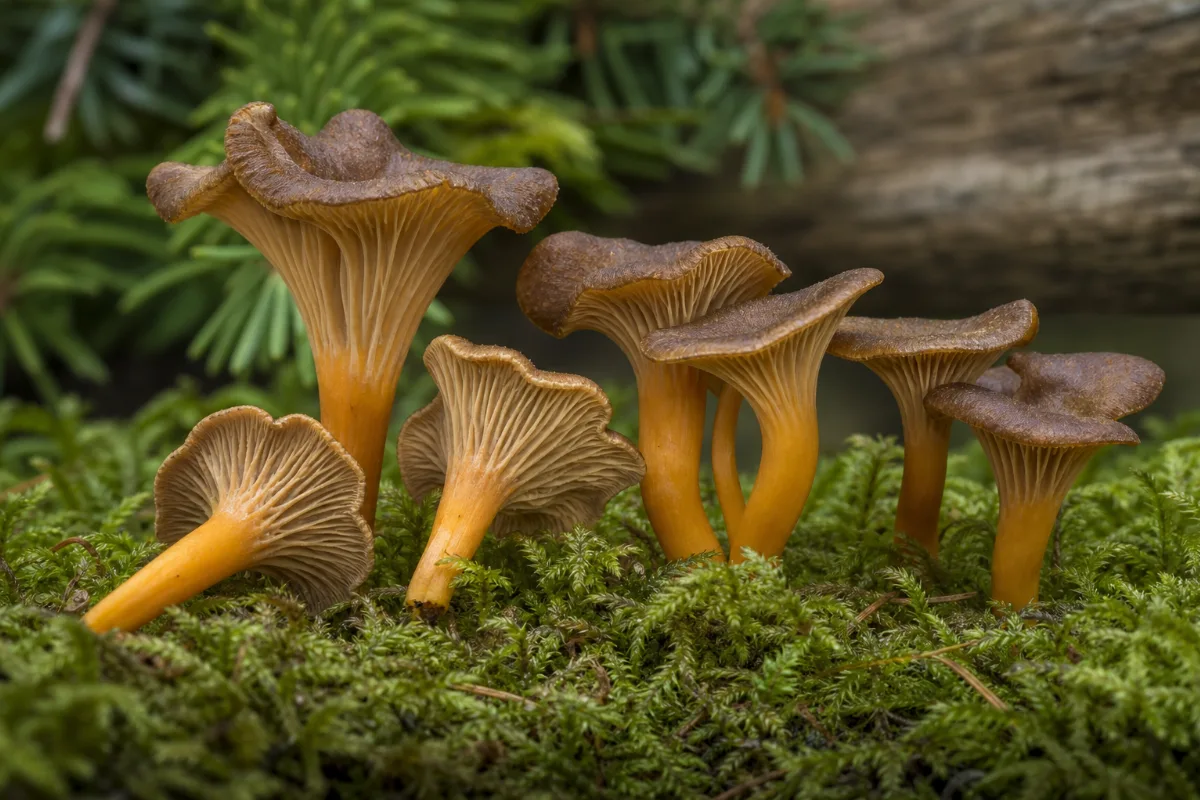
Mushrooms · Wild culinary mushroom
Yellow foot
Craterellus tubaeformis (Cantharellus tubaeformis in older papers) · also called Funnel chanterelle, yellowfoot (the names overlap with a relative, Craterellus lutescens), trattkantarell (Swedish)
Yellow foot, or funnel chanterelle, is a wild forest mushroom eaten for its flavour, mostly in Scandinavia. It is a food, not a remedy: the only human trial is a small 1999 study of vitamin D absorption, and the lab findings are early ideas. The most serious caution is mistaken identity. A deadly webcap that is mistaken for it has caused permanent kidney failure. Wild yellow foot also takes up metals and radioactive caesium from the soil, so where it grew matters.
General information, not medical advice. Last substantive update · Not medically reviewed. A named clinician has not signed off on this page. How this page is made
About Yellow foot
Yellow foot is a wild mushroom eaten for its flavour. There is almost no human research on health effects. The real concerns are a deadly look-alike, metals and radioactive caesium taken up from soil, and missing safety information for medicines, pregnancy and allergy, which is a gap and not a reassurance.
What it is
Yellow foot here means Craterellus tubaeformis, also called funnel chanterelle. It is a fungus in the family Hydnaceae (GBIF accepted name), picked wild in autumn and eaten in Scandinavia, Finland and Estonia and mentioned in guidebooks in several other countries.
The names are confusing. A 2025 Scandinavian paper lists Craterellus tubaeformis as funnel chanterelle and a related species, Craterellus lutescens, as yellow foot, and says the two can easily be confused. English books and sellers use the names differently, so a label may mean either species.
What research has tested
One small trial tested whether people absorb vitamin D from the mushroom. In 27 volunteers with low blood vitamin D, freeze-dried ground funnel chanterelle raised blood vitamin D about as much as a vitamin D2 supplement of the same size (P = 0.032 against no supplement, and no difference from the supplement, P = 0.317). It lasted three weeks and measured only a blood marker.
Everything else is laboratory work: the sugar chains in the cell wall, test-tube antioxidant tests, taste compounds, and a cell study in which an ethanol extract lowered two inflammation signals in mouse cells. These are early ideas, not evidence that yellow foot prevents or treats anything.
Metals and radioactive caesium
Wild mushrooms take up metals and caesium from the soil, so the place matters. Funnel chanterelle from two sites in northern Poland contained cadmium at 0.44 to 0.75, lead at 0.64 to 0.72 and arsenic at 0.19 to 0.29 mg per kg dry weight, and the authors said the soil at each site shapes what the mushrooms contain. A Turkish study of 14 wild species, including this one, found lead above legal limits in some samples but did not say which.
After the 1986 Chernobyl accident, funnel chanterelle was among the species with relatively high radiocaesium in German samples, and levels fell over the next two years. A Polish paper says blanching and pickling remove radiocaesium and other alkali elements from chanterelle flesh. In Sweden, interest in this mushroom fell after Chernobyl and later returned. We did not find yellow-foot-only caesium figures or any official safe-intake level, so these results are thin and cannot be applied to your area.
Forms and what is known about them
Yellow foot is eaten fresh and cooked, dried or frozen. The vitamin D trial used a freeze-dried, ground mushroom, and the lab studies used extracts made with hot water, alkali, pressurised water or ethanol. No sold supplement or extract was found in what we read. This page gives no amounts and does not recommend any product.
Rules and official statements
We did not find or read a statement about yellow foot or funnel chanterelle from the Swedish Food Agency, the Swedish Radiation Safety Authority, EFSA, the US Food and Drug Administration, the European Medicines Agency, NCCIH, LiverTox or LactMed. The absence of a statement is not a safety guarantee.
At a glance
Traditional uses history, not proof
- In Norway and Sweden, peasants once avoided wild mushrooms; city foragers took up the funnel chanterelle from the end of the 1970s, and it is now one of the most popular edible mushrooms there (Svanberg 2025).
- Served in home cooking, soups and sauces, often with game such as elk or reindeer, and also in fine-dining restaurants; sold fresh and dried at markets (Svanberg 2025).
Studied for research
- Taste and minerals as a food (no health effect shown), insufficient
- Vitamin D2: one 1999 trial of 27 volunteers, low
- Cell-wall sugars and test-tube antioxidant tests, insufficient
- Inflammation signals in mouse cells (lab only), insufficient
Main compounds
- Cell-wall polysaccharides, including alpha-mannan and alpha-galactan chains and beta-glucan-type chains
- Free amino acids that give an umami taste
- Vitamin D2 (ergocalciferol), absorbed in the 1999 trial
- Potassium, which the mushroom concentrates from soil
Common forms
- Fresh, cooked mushroom (the usual food)
- Dried or frozen mushroom (Svanberg 2025)
- Blanched or pickled mushroom (Polish cooking, as described by Falandysz 2016)
- Freeze-dried, ground mushroom (used in the vitamin D trial)
- Laboratory extracts (not sold products in what we read)
Research links: Vitamin D absorption from wild Cantharellus tubaeformis, 27 volunteers (abstract) · How funnel chanterelle became a Scandinavian favourite (open access) · Long-term outcome after deadly webcap poisoning (abstract) · Deadly webcap in a married couple, Denmark (abstract) · Measuring the kidney toxin orellanine in a funnel chanterelle stew (abstract) · Toxic elements in Cantharellus mushrooms from Poland and China (open access) · Radiocaesium in mushrooms after Chernobyl, Germany (abstract) · Research Library · Genes & Biomarkers Library
What it is and its history
- Accepted scientific name
- Craterellus tubaeformis
- Naming authority
- (Fr.) Quél. (GBIF)
- Synonyms
- Cantharellus tubaeformis (older genus, used in several of the papers read)
- Common names
- Funnel chanterelle (English); Yellow foot (assigned name for this page; see note) (English); Trattkantarell (Swedish); Traktkantarell (Norwegian)
- Family or group
- Hydnaceae (a fungus family), not a plant
- Classification
- Fungi > Basidiomycota > Agaricomycetes > Cantharellales > Hydnaceae > Craterellus > Craterellus tubaeformis
- Native range
- Eaten in Sweden, Norway, Finland and Estonia; guidebooks from Denmark, France, Germany, Britain, Spain, Switzerland and the USA mention it (Svanberg 2025). A full range was not checked.
- Habitat
- A forest mushroom picked wild. Details are not given here by design.
- What it looks like
- Fruiting body: Not described here by design. No identification characters are given.
- Cultivation
- Not checked in the sources read.
- Harvest and processing
- Eaten fresh, dried or frozen (Svanberg 2025). Polish cooks blanch and pickle chanterelles, which removes alkali elements and radiocaesium (Falandysz 2016 abstract).
- Look-alikes and adulterants
- Name: Deadly webcap (Cortinarius rubellus); Note: Mistaken for funnel chanterelle in Sweden and Norway, and can grow among them (Svanberg 2025). Kidney toxin orellanine (Herrmann 2012). Causes permanent kidney failure (Hedman 2017; Vejrup 2026).; Name: Yellow foot (Craterellus lutescens), the edible relative; Note: Called also edible and popular by the same paper, which says the two can easily be confused. It is a naming issue rather than a danger, but findings for one species may not apply to the other.; Name: Jelly baby (Leotia lubrica); Note: Named in the 2025 paper as a mushroom the funnel chanterelle can be confused with; the paper calls it tasteless.
- Sustainability and conservation
- Not checked. The 2025 paper's authors give an opinion about harvesting that is not a conservation assessment.
Traditional use and history history, not clinical proof
| Tradition or era | Documented use | Source |
|---|---|---|
| Preindustrial Norway and Sweden | Peasants refused to touch edible mushrooms even in famines, although authorities encouraged mushroom gathering from the eighteenth century. | p40426182 |
| Scandinavia from the late 1970s | City foragers discovered the funnel chanterelle; newspapers mentioned it 19 times in 1978 and 56 times in 1987. Interest dropped after the 1986 Chernobyl accident (caesium-137 in mushrooms) and then returned. In a 2017 questionnaire of 100 gatherers it came third in popularity after golden chanterelle and penny bun. It is now served in restaurants, often with game, and sold fresh and dried at markets. | p40426182 |
Traditional use shows how it was used. It does not show that it works or is safe today.
What is inside, and how it may work
What it contains and how those compounds act in cells and animals. Laboratory and animal mechanisms are not proven effects in people.
Main compounds
| Compound | Family | Where it is concentrated | Activity studied | Level of evidence |
|---|---|---|---|---|
| Cell-wall polysaccharides (alpha-mannan and alpha-galactan chains; beta-glucan-type chains) | polysaccharide | Fruiting body Hot pressurised water extracted beta-glucans with yields above 62% at 210 degrees C or higher (laboratory method). | Structure described; test-tube antioxidant activity only. 1 12 2 | Laboratory research |
| Free amino acids (umami amino acids among the main five) | amino acid | Fruiting body Not given in the abstract. | Taste. Free amino acids fell as cooking temperature rose (another paper). 8 13 | Other |
| Vitamin D2 (ergocalciferol) | vitamin | Fruiting body Not stated in the abstract; the trial supplied 14 micrograms of D2 a day in the study diet. | Raised blood vitamin D in a small trial. 11 | Human trial |
| Potassium (and natural potassium-40) | mineral | Fruiting body Not given for this species in the abstract. | Mushrooms concentrate potassium from soil; the dose from potassium-40 was very low. 9 | Other |
Mechanisms, receptors and pathways
| Target or pathway | Gene or receptor | What was found | Level |
|---|---|---|---|
| Inflammatory signals in macrophage cells | Nitric oxide, interleukin-6 (not tumour necrosis factor-alpha) | An ethanol extract lowered nitric oxide and interleukin-6 in stimulated RAW264.7 cells. 10 | Laboratory research |
| Test-tube antioxidant tests | Not applicable | Hot pressurised water extracts had the highest antioxidant capacity at 170 degrees C. This is a chemical test and not an effect in the body. 12 | Laboratory research |
| Vitamin D absorption | Not studied | Vitamin D2 was absorbed from freeze-dried mushroom in a small trial; the route was not studied. 11 | Human trial |
Absorption, metabolism and elimination
- Absorption
- Vitamin D2 from freeze-dried, homogenised mushroom raised serum 25-hydroxyvitamin D about as much as a supplement of the same size in 27 volunteers (Outila 1999).
- Distribution
- Not found.
- Metabolism
- Not found.
- Elimination
- Not found.
- Bioavailability
- Vitamin D2 bioavailability from this mushroom was shown in one small trial. Other compounds were not studied.
Isolated compounds versus whole extracts
All the laboratory extracts (hot water, alkali, pressurised water, ethanol) are made by methods not used in cooking. The one human trial used a freeze-dried, ground whole mushroom. Findings from extracts cannot be assumed for a cooked meal.
Nutritional composition
No full nutrient table for yellow foot was read. The papers describe taste amino acids (low 5-prime-nucleotides), potassium uptake, and vitamin D2 given in a 1999 trial. Cooking changed taste compounds in sous vide tests.
1 low certainty3 not enough evidence
What was looked at
The 4 benefits and uses checked for Yellow foot, each with how strong the evidence is. Tap one to open it.
- As a food (taste and minerals)Not enough evidence
- Vitamin D2 (blood vitamin D)Low certainty
- Cell-wall sugars and test-tube antioxidant testsNot enough evidence
- Inflammation signals in mouse cellsNot enough evidence
Lab markers tracked in the studies
Blood vitamin D (25-hydroxyvitamin D)Interleukin-6 and nitric oxide (mouse cell culture)
What is Yellow foot good for?
What yellow foot has been studied for and how strong the evidence is. Apart from one small vitamin D absorption trial, none of it has been tested in people. Read this together with the Safety tab.
Benefits, one by one
Each card is a research question, not a promise. Tap a goal to filter. Open a card to see the studies, doses and limits.
As a food (taste and minerals)
Not enough evidenceYellow foot is a wild forest mushroom eaten for its flavour, mostly in Scandinavia. The papers we read describe its taste chemistry and say it concentrates potassium. They do not show that eating it changes anyone's health. We found no full nutrient table for this species.
4 studiesEaten fresh and cooked, dried or frozen (Svanberg 2025). This page gi…
Studies, doses and limits
Results
Finnish samples: umami amino acids were among the five main free amino acids, and umami-boosting 5-prime-nucleotides were low (Manninen 2018). Cooking lowered free amino acids as temperature rose (Rotola-Pukkila 2019). Spanish samples: yellow foot was named a bioindicator of potassium-40, so it takes up potassium from soil, and the authors said these mushrooms could be a potential source of potassium (Melgar 2021).
Effect sizes as reported
Composition and taste only; no health effect measured
Why this rating
The papers describe what is in the mushroom. None shows that eating it has a health benefit, and no complete nutrient table for the species was read.
Form and dose studied
Eaten fresh and cooked, dried or frozen (Svanberg 2025). This page gives no amounts.
Limits
Taste chemistry is not nutrition. Figures come from small sets of wild samples in Finland and Spain and change with where the mushroom grew.
Why researchers looked
It is a popular wild food, so most research asks what is in it and how cooking changes the taste.
Traditional use
Peasants in older Norway and Sweden avoided wild mushrooms. City foragers took up this one from the end of the 1970s, and it is now served at home and in restaurants, often with game meat (Svanberg 2025).
Proposed mechanism Other
Not a mechanism claim. The papers measure taste compounds and minerals in the fruiting body.
A proposed mechanism does not show that the effect happens in people.
Wild-picked yellow foot can be mixed up with a deadly kidney-poisoning look-alike and can carry metals and radioactive caesium from the soil. See the Safety tab first.
Vitamin D2 (blood vitamin D)
Low certaintyOne small 1999 trial in Finland fed volunteers with low blood vitamin D freeze-dried, ground wild funnel chanterelle for three weeks. Their blood vitamin D rose about as much as in volunteers who took a vitamin D2 supplement of the same size. It shows the vitamin is absorbed from the mushroom. It does not show a benefit for bones or health.
1 studiesThe trial used freeze-dried, homogenised mushroom. Vitamin D2 in wild…
Studies, doses and limits
What the trials found
Twenty-seven volunteers with serum 25-hydroxyvitamin D below 60 nmol/L (average 38.5) were randomly put into three groups of nine: mushroom, a vitamin D2 supplement of the same size, or nothing. After three weeks both the mushroom group (P = 0.032) and the supplement group (P = 0.004) differed from the no-supplement group, and the mushroom and supplement groups did not differ from each other (P = 0.317).
Results
Mushroom group versus no supplement: P = 0.032. Mushroom versus D2 supplement: P = 0.317 (no difference found). Only blood levels were measured.
Effect sizes as reported
Blood vitamin D rose about as much as with a supplement of the same size
Why this rating
It was a randomised trial, but it had only nine people per group, lasted three weeks, used a freeze-dried and ground mushroom rather than the usual cooked food, and measured only a blood marker. The finding has not been repeated in what we found.
Form and dose studied
The trial used freeze-dried, homogenised mushroom. Vitamin D2 in wild mushrooms depends on light and varies, so this page gives no amounts.
Who was studied
Adult volunteers with low blood vitamin D in Finland
Limits
Absorption is not a health outcome. Bone health, deficiency treatment and long-term effects were not studied. Wild mushrooms vary, and the trial did not use a cooked meal.
Why researchers looked
Mushrooms exposed to light make vitamin D2 from a sterol, so researchers asked whether people absorb it.
Traditional use
No traditional use for this purpose was found.
Proposed mechanism Human trial
Vitamin D2 (ergocalciferol) in the mushroom is absorbed and raises the blood marker 25-hydroxyvitamin D (Outila 1999). The study does not explain how.
A proposed mechanism does not show that the effect happens in people.
Do not treat a wild mushroom as a vitamin D supplement. People who think they are low in vitamin D should ask a doctor or pharmacist.
Cell-wall sugars and test-tube antioxidant tests
Not enough evidenceLaboratory papers have mapped the long sugar chains in the mushroom's cell walls, including beta-glucan-type chains, and tested extracts in test tubes for antioxidant activity. Nothing was tested in animals or people.
3 studiesHot-water, alkali and pressurised-water extracts made in laboratories…
Studies, doses and limits
Results
Hot-water extract: mainly alpha-mannose and alpha-galactose chains bound to protein. Alkali extracts: mainly beta-glucose chains (Beltrame 2019). Hot pressurised water gave the highest beta-glucan yield at 210 degrees C or higher and the highest antioxidant capacity at 170 degrees C (Rodriguez-Seoane 2018). In a four-mushroom polysaccharide study the abstract names other species for the best antioxidant and cancer-cell results (Deveci 2024).
Effect sizes as reported
Chemistry and test-tube results only
Why this rating
Only structure and test-tube tests. No animal study and no human trial. The extraction methods are laboratory methods, not cooking.
Form and dose studied
Hot-water, alkali and pressurised-water extracts made in laboratories. No retail extract was found in what we read.
Limits
Test-tube antioxidant scores do not predict an effect in people. Only abstracts were read for these papers.
Why researchers looked
Mushroom sugar chains such as beta-glucans are often studied for immune and antioxidant effects, so researchers described them in this species.
Traditional use
No traditional medicinal use was found.
Proposed mechanism Laboratory research
Test-tube antioxidant assays measure chemical reducing power, not what happens in the body (Rodriguez-Seoane 2018; Deveci 2024).
A proposed mechanism does not show that the effect happens in people.
No safety information for extracts was found.
Inflammation signals in mouse cells
Not enough evidenceIn one laboratory study, an ethanol extract of this mushroom lowered two inflammation signals in mouse immune cells grown in a dish. This is an early idea only. It does not mean eating the mushroom reduces inflammation in people.
1 studiesEthanol extract made in a laboratory.
Studies, doses and limits
Results
Ethanol extracts of five species, including Craterellus tubaeformis, lowered nitric oxide and interleukin-6 but not tumour necrosis factor-alpha in stimulated RAW264.7 cells.
Effect sizes as reported
Selective lowering of two signals in a cell line
Why this rating
One cell-line study with an ethanol extract. No animals and no people.
Form and dose studied
Ethanol extract made in a laboratory.
Limits
Cells in a dish do not show what happens in a body, and an ethanol extract is not food. Only the abstract was read.
Why researchers looked
Researchers screened 27 wild Irish fungi for anti-inflammatory activity.
Traditional use
No traditional use for inflammation was found.
Proposed mechanism Laboratory research
In stimulated mouse macrophage cells the extract lowered nitric oxide and interleukin-6 but not tumour necrosis factor-alpha (O'Callaghan 2015).
A proposed mechanism does not show that the effect happens in people.
None reported in the abstract.
Connections to the rest of health
How Yellow foot connects to the rest of our health knowledge graph. Every link says what kind of connection it is. A safety link (for example to the liver) is a warning, not a benefit. A study that merely mentions a topic never creates a benefit link.
Explore every connection: goals, body systems, organs, symptoms, genes
B. Body systems
| Connected to | Kind of connection | Evidence status | Context | Studies |
|---|---|---|---|---|
| Digestive System | Biological association | Not enough evidence | Studied for: As a food (taste and minerals) | 8 13 9 17 |
| Bones Joints Muscles | Biological association | Low certainty | Studied for: Vitamin D2 (blood vitamin D) | 11 |
| Immune System | Biological association | Not enough evidence | Studied for: Cell-wall sugars and test-tube antioxidant tests Studied for: Inflammation signals in mouse cells | 1 12 2 10 |
C. Body parts and organs
I. Biomarkers
| Connected to | Kind of connection | Evidence status | Context | Studies |
|---|---|---|---|---|
| Vitamin D | Low certainty | Raised blood vitamin D in one small trial. Preparation or compound: Freeze-dried wild Cantharellus tubaeformis (vitamin D2) |
11 | |
| Blood vitamin D (25-hydroxyvitamin D) | Biological association | Low certainty | Measured in trials: increase. A lab change is not the same as a health benefit. | 11 |
| Interleukin-6 and nitric oxide (mouse cell culture) | Biological association | Not enough evidence | Measured in trials: decrease. A lab change is not the same as a health benefit. | 10 |
K. Biological pathways
| Connected to | Kind of connection | Evidence status | Context | Studies |
|---|---|---|---|---|
| Vitamin D metabolism | Preliminary mechanism | Human trial | Mushroom vitamin D2 raised blood 25-hydroxyvitamin D in a small trial. | 11 |
| Inflammatory signalling in macrophage cells | Preliminary mechanism | In vitro | Lowered nitric oxide and interleukin-6 in a mouse cell line with an ethanol extract. | 10 |
L. Active compounds
| Connected to | Kind of connection | Evidence status | Context | Studies |
|---|---|---|---|---|
| Cell-wall polysaccharides (alpha-mannan and alpha-galactan chains; beta-glucan-type chains) | Biological association | In vitro | Structure described; test-tube antioxidant activity only. Preparation or compound: Fruiting body |
1 12 2 |
| Free amino acids (umami amino acids among the main five) | Biological association | Other | Taste. Free amino acids fell as cooking temperature rose (another paper). Preparation or compound: Fruiting body |
8 13 |
| Vitamin D2 (ergocalciferol) | Biological association | Human trial | Raised blood vitamin D in a small trial. Preparation or compound: Fruiting body |
11 |
| Potassium (and natural potassium-40) | Biological association | Other | Mushrooms concentrate potassium from soil; the dose from potassium-40 was very low. Preparation or compound: Fruiting body |
9 |
Each connection is stored with the ingredient, the connected record, the kind of connection, the evidence status, the supporting studies, the preparation or compound involved, and a review date (last reviewed October 25, 2026).
Evidence at a glance: what the research found for 4 outcomes
Each outcome below is one thing researchers measured. Certainty is how far the evidence can be trusted, not how well it works. The full studies are on the next tab.
The evidence
The research centre for Yellow foot. Every record here was checked against PubMed or the publisher's page; we never list a study we have not verified.
Evidence by outcome
Bars show how many studies we found for each outcome, not how well it works. People are added up across trials only (reviews are not added, to avoid double counting).
How we rate evidence
High certainty
Several well-run trials or reviews agree; further research is unlikely to change the picture much.
Moderate certainty
Good trials point the same way, but some doubt remains.
Low certainty
Small, short or inconsistent trials. The finding could change with better research.
Very low certainty
Very little or very weak human data. Treat as a possibility only.
Mixed findings
Trials or reviews disagree with each other.
Not enough evidence
Not enough human research to say either way.
Evidence against
Good research found no benefit, or found harm.
We take the reviewers' own risk-of-bias and GRADE statements where they exist, and otherwise judge from study size, design, consistency, directness and whether a product matches what is sold. Many publications do not make evidence high. Method note: We read PubMed records and abstracts for 17 papers (one randomised trial, four food-chemistry and extraction papers, two cell and test-tube studies, six metal, caesium and potassium analyses, one kidney-toxin method paper, a Swedish case series, a Danish case report and a Scandinavian ethnobiology study), plus the GBIF taxonomy record. The 2025 ethnobiology paper and the 2017 Polish metals paper were also read in full text. Regulator pages (Swedish Food Agency, Swedish Radiation Safety Authority, EFSA, FDA, EMA, NCCIH, LiverTox, LactMed) gave no usable statement for this species. Certainty ratings are the compiler's own reading.
Study library: every study we checked 18
| Study | Design | People | Product, dose, length | Result |
|---|---|---|---|---|
| Beltrame 2019 Structural investigation of cell wall polysaccharides extracted from wild Finnish mushroom Craterellus tubaeformis (Funnel Chanterelle). Food Chem · PMID 31377617 · DOI |
Lab analysis Craterellus tubaeformis (Cantharellus tubaeformis in older papers) |
Wild Finnish funnel chanterelle fruiting bodies | Hot water, 2% KOH and 25% KOH extracts of Craterellus tubaeformis fruiting body |
The hot-water extract was mainly alpha-mannose and alpha-galactose chains attached to proteins. The alkali extracts were mainly beta-glucose chains with short branches. Stronger alkali gave smaller molecules with lower heat stability. Structure only; no health effect tested Methods, limits and fundingOutcomes: Sugar composition, molecular weight and structure of three cell-wall polysaccharide fractions Limitations: Chemical structure work. It did not test any effect in cells, animals or people. Funding and conflicts: Not stated in the abstract. Read: abstract |
| Deveci 2024 Characterization of Polysaccharide Extracts of Four Edible Mushrooms and Determination of In Vitro Antioxidant, Enzyme Inhibition and Anticancer Activities. ACS Omega · PMID 38911755 · DOI |
Laboratory research Craterellus tubaeformis (Cantharellus tubaeformis in older papers) |
Test-tube and cell-line work on polysaccharide extracts of four mushrooms (Clavariadelphus truncatus, Craterellus tubaeformis, Hygrophorus pudorinus, Macrolepiota procera) | Polysaccharide extract of Craterellus tubaeformis (and three other mushrooms) fruiting body |
The abstract names the best antioxidant results in Macrolepiota procera and Clavariadelphus truncatus polysaccharides, and the strongest cancer-cell results in C. truncatus and H. pudorinus. It does not report a standout result for Craterellus tubaeformis. No standout result for yellow foot in the abstract Methods, limits and fundingOutcomes: Sugar composition and test-tube antioxidant, enzyme-blocking and cell-killing tests Limitations: Test-tube and cell work. No animals or people. Only the abstract was read, so the yellow foot figures are not known to us. Funding and conflicts: Authors declare no competing financial interests. Read: abstract |
| Falandysz 2016 Evaluation of the activity concentrations of (137) Cs and (40)K in some Chanterelle mushrooms from Poland and China. Environ Sci Pollut Res Int · PMID 27438876 · DOI |
Lab analysis Cantharellus cibarius mainly; C. tubaeformis among those studied |
Cantharellus cibarius, C. tubaeformis and C. minor collected in Poland (1997 to 2013) and Yunnan, China (2013) | Gamma spectrometry (HPGe detector) of caesium-137 and potassium-40 fruiting body |
In C. cibarius from Poland caesium-137 varied from 64 to 1600 Bq/kg dry weight in 1997 to 2004 and 4.2 to 1400 in 2006 to 2013, with no clear downward trend. In Chinese Cantharellus it was below about 1.2. The abstract gives these figures for C. cibarius, not for C. tubaeformis. It adds that blanching and pickling, as done in Polish cooking, remove alkali elements and radiocaesium from the flesh. Caesium-137 depends strongly on where the mushrooms grew Methods, limits and fundingOutcomes: Activity concentrations of caesium-137 and potassium-40 Limitations: The numbers in the abstract are for the golden chanterelle, the yellow foot figures were not given there. Dry weight. Funding and conflicts: Not stated in the abstract. Read: abstract |
| Falandysz 2017 Toxic elements and bio-metals in Cantharellus mushrooms from Poland and China. Environ Sci Pollut Res Int · PMID 28316048 · DOI |
Lab analysis Cantharellus tubaeformis (Craterellus tubaeformis) |
Cantharellus cibarius, C. tubaeformis and C. minor from Poland and China; C. tubaeformis from two sites in Pomerania, Poland (collected 2007 to 2008) | ICP-MS measurement of toxic and essential elements in fruiting bodies fruiting body |
In the full text, C. tubaeformis from the two Pomeranian sites contained cadmium at 0.44 to 0.75, lead at 0.64 to 0.72 and arsenic at 0.19 to 0.29 mg per kg dry weight. Cadmium was similar to that in C. cibarius. C. tubaeformis had lower cobalt, nickel and zinc than C. cibarius. The abstract says the soil background at the collection site shapes what the mushrooms contain. Metal levels depend on the site; figures are for two Polish sites Methods, limits and fundingOutcomes: Elements in mg per kg dry weight Limitations: Two sites, one country, 2007 to 2008, dry weight (fresh weight is much lower). No safety limit comparison was made in the parts we read. Funnel chanterelle was not the main subject. Funding and conflicts: Not stated in the parts read. Read: abstract and full text (Europe PMC) |
| GBIF Secretariat 2026 GBIF Backbone Taxonomy: Craterellus tubaeformis (Fr.) Quel. (usage key 2554536) and Craterellus lutescens (Fr.) Fr. (usage key 8871787) GBIF species API · Source |
Database record Craterellus tubaeformis (Cantharellus tubaeformis in older papers) |
Taxonomy record | n/a |
Both names are ACCEPTED species in the genus Craterellus, family Hydnaceae, order Cantharellales (class Agaricomycetes, phylum Basidiomycota). The query for the older name Cantharellus tubaeformis matched only the genus Craterellus at a higher rank, so GBIF did not resolve that older name as a synonym in our check. Methods, limits and fundingOutcomes: Accepted name and family Limitations: Index Fungorum was not checked. A synonym list was not retrieved. Funding and conflicts: n/a Read: API response read 2026-10-25 |
| Hedman 2017 Long-term clinical outcome for patients poisoned by the fungal nephrotoxin orellanine. BMC Nephrol · PMID 28372584 · DOI |
Case series Cortinarius species (deadly webcap), not yellow foot |
28 28 of 39 people poisoned by deadly webcap (Cortinarius) in Sweden, 1979 to 2012, plus matched controls |
Not an intervention: accidental eating of deadly webcap fruiting body |
22 of 28 developed acute kidney injury needing dialysis. Serum creatinine peaked at 1329 micromol/L on average. No acute damage was seen in other organs. After an average follow-up of 16.9 years, 23 were alive and five had died. The authors say the species may be mistaken for other edible mushrooms and that long-term outlook for those who lost kidney function is similar to other patients in dialysis care. Irreversible kidney damage in most of those followed Methods, limits and fundingOutcomes: Kidney damage, dialysis, transplantation and long-term survival Limitations: Case series from one country. The abstract does not say which edible mushroom was mistaken in each case. Funding and conflicts: Not stated in the abstract. Read: abstract |
| Herrmann 2012 Analysis of the mushroom nephrotoxin orellanine and its glucosides. J Nat Prod · PMID 23046414 · DOI |
Lab analysis Cortinarius rubellus (deadly webcap) and Cantharellus tubaeformis |
Deadly webcap (Cortinarius rubellus) and a stew made from Cantharellus tubaeformis with one webcap added | Method to measure the kidney toxin orellanine in mushrooms, food and blood plasma fruiting body |
The paper says orellanine is a kidney toxin in some Cortinaceae mushrooms and that eating them after confusing them with edible mushrooms such as Cantharellus tubaeformis has caused several deaths ("casualties" in the abstract). The method could detect orellanine in a stew that held a single webcap among the funnel chanterelles. A single webcap could be detected in a mushroom stew Methods, limits and fundingOutcomes: Detection of orellanine Limitations: A method paper by a national food agency and university team. It does not give human case data. Funding and conflicts: Not stated in the abstract. Read: abstract |
| Manninen 2018 Free amino acids and 5'-nucleotides in Finnish forest mushrooms. Food Chem · PMID 29277224 · DOI |
Lab analysis Craterellus tubaeformis (Cantharellus tubaeformis in older papers) |
Four Nordic forest mushroom species including Craterellus tubaeformis | Fruiting bodies analysed for free amino acids and 5-prime-nucleotides fruiting body |
Umami amino acids were among the five major free amino acids in all samples. The content of umami-enhancing 5-prime-nucleotides was low in all four species. The authors say these taste compounds had not been studied before in Craterellus tubaeformis. Taste chemistry only Methods, limits and fundingOutcomes: Taste-related amino acids and nucleotides Limitations: Describes flavour compounds. No nutrition or health outcome. Funding and conflicts: Not stated in the abstract. Read: abstract |
| Melgar 2021 Natural radioactivity and total K content in wild-growing or cultivated edible mushrooms and soils from Galicia (NW, Spain). Environ Sci Pollut Res Int · PMID 34018117 · DOI |
Lab analysis Craterellus tubaeformis (Cantharellus tubaeformis in older papers) |
Wild and cultivated edible mushrooms and soils from Galicia, Spain | Gamma spectroscopy of natural potassium-40 and total potassium in mushrooms fruiting body |
Mushrooms in general concentrated potassium-40 from the soil (transfer factors above 1). Cantharellus cibarius, Craterellus tubaeformis, Hydnum repandum and Tricholoma portentosum were called bioindicators of potassium-40 by most transfer factors. The estimated yearly dose from potassium-40 for the average consumption of the analysed mushrooms was 0.15 microsieverts, which the authors called very low, and they said these mushrooms could be a potential source of potassium. Potassium-rich; very low natural radiation dose from potassium-40 Methods, limits and fundingOutcomes: Activity of potassium-40, transfer factors from soil, estimated radiation dose Limitations: Natural potassium-40 only, not caesium. A species-by-species potassium figure for yellow foot is not in the abstract. Funding and conflicts: Not stated in the abstract. Read: abstract |
| O'Callaghan 2015 Anti-inflammatory effects of wild Irish mushroom extracts in RAW264.7 mouse macrophage cells. J Med Food · PMID 25136763 · DOI |
Laboratory research Craterellus tubaeformis (Cantharellus tubaeformis in older papers) |
Mouse macrophage cell line (RAW264.7) treated with extracts of 27 wild Irish fungal samples | Ethanol and hot-water extracts of wild fungi, including Craterellus tubaeformis fruiting body |
Ethanol extracts of five species, including Craterellus tubaeformis, lowered nitric oxide and interleukin-6 but not tumour necrosis factor-alpha in the stimulated cells. The authors said this supports the anti-inflammatory potential of mushroom extracts. Selective lowering of two inflammation signals in a cell line Methods, limits and fundingOutcomes: Interleukin-6, tumour necrosis factor-alpha and nitric oxide made by cells after a bacterial toxin Limitations: Mouse cells in a dish. No people, no animals. An ethanol extract is not the cooked food. Funding and conflicts: Not stated in the abstract. Read: abstract |
| Outila 1999 Bioavailability of vitamin D from wild edible mushrooms (Cantharellus tubaeformis) as measured with a human bioassay. Am J Clin Nutr · PMID 9925129 · DOI |
Controlled trial Craterellus tubaeformis (Cantharellus tubaeformis in older papers) |
27 Volunteers with serum 25-hydroxyvitamin D below 60 nmol/L (mean 38.5), randomly split into 3 groups of 9 |
Freeze-dried, homogenised Cantharellus tubaeformis (wild) mixed into lunch, supplying vitamin D2 fruiting body 14 micrograms of vitamin D2 a day (trial design detail, not advice) 3 weeks, weekdays only · vs Group 2: vitamin D2 supplement of the same size; group 3: nothing |
At 3 weeks, serum 25-hydroxyvitamin D differed from the no-supplement group for the mushroom group (P = 0.032) and for the supplement group (P = 0.004). The mushroom group and the supplement group did not differ (P = 0.317). The authors concluded that vitamin D2 was well absorbed from freeze-dried, homogenised mushrooms. Mushroom raised blood vitamin D about as well as a D2 supplement of the same size Methods, limits and fundingOutcomes: Serum 25-hydroxyvitamin D at 3 weeks Limitations: Nine people per group, 3 weeks, a blood-test outcome only. The mushroom was freeze-dried and homogenised, not the usual cooked food. Abstract only; blinding is not stated. Funding and conflicts: Not stated in the abstract. Read: abstract |
| Rodríguez-Seoane 2018 Pressurized hot water extraction of β-glucans from Cantharellus tubaeformis. Electrophoresis · PMID 29460953 · DOI |
Lab analysis Craterellus tubaeformis (Cantharellus tubaeformis in older papers) |
Cantharellus tubaeformis (source and place not stated in the abstract) | Pressurised hot water extracts, 80 to 240 degrees C Cantharellus tubaeformis |
Yields above 62% and the highest beta-glucan yields came at 210 degrees C or higher. The highest test-tube antioxidant capacity was at 170 degrees C, and the highest phenolic content at the harshest setting. Method development; antioxidant result is a test-tube measure Methods, limits and fundingOutcomes: Extraction yield, beta-glucans, phenolic compounds and test-tube antioxidant capacity Limitations: An industrial extraction method tested in a laboratory. It does not describe how food is cooked and says nothing about health effects. Funding and conflicts: Not stated in the abstract. Read: abstract |
| Rotola-Pukkila 2019 The effect of cooking on umami compounds in wild and cultivated mushrooms. Food Chem · PMID 30583411 · DOI |
Lab analysis Craterellus tubaeformis (Cantharellus tubaeformis in older papers) |
Five mushroom species including Cantharellus tubaeformis (wild) and cultivated Agaricus bisporus | Fresh and sous vide cooked mushrooms and cooking juice fruiting body |
Free amino acid content decreased as cooking temperature rose. The umami nucleotide 5-prime-GMP was found only in cooked samples. The abstract gives its highest value in another species, not yellow foot. Cooking changes taste compounds Methods, limits and fundingOutcomes: Free amino acids and 5-prime-nucleotides after cooking Limitations: Taste chemistry. Species-specific figures for yellow foot were not in the abstract. Funding and conflicts: Not stated in the abstract. Read: abstract |
| Rückert 1987 [Increased levels of cesium-137 and cesium-134 in 34 mushroom species following the reactor accident at Chernobyl]. Z Lebensm Unters Forsch · PMID 3660949 · DOI |
Lab analysis Cantharellus tubaeformis among 34 species |
85 wild mushroom samples of 34 species from northern Baden, Germany, collected September to December 1986 | Gamma spectrometry of caesium-137, caesium-134 and potassium-40 fruiting body |
Except for one sample, radiocaesium was below the Common Market limit of 600 Bq/kg. Relatively high levels were also found in Cantharellus tubaeformis (together with Xerocomus badius and X. chrysenteron). Samples from the Black Forest were more contaminated than those from the Rhine Valley. C. tubaeformis was among the species with relatively high caesium in 1986 Methods, limits and fundingOutcomes: Radiocaesium after the Chernobyl accident Limitations: An old study (1987) from one German region right after the accident. The abstract gives no figure for yellow foot alone. German article; abstract in English read. Funding and conflicts: Not stated in the abstract. Read: abstract |
| Rückert 1990 [Radioactivity levels in mushrooms collected in the area of Karlsruhe during 1987 and 1988]. Z Lebensm Unters Forsch · PMID 2382512 · DOI |
Lab analysis Cantharellus tubaeformis among several species |
Wild mushrooms from the Northern Black Forest and Rhine Valley, 1986 to 1988 | Gamma spectrometry of caesium-134, caesium-137, silver-110m and potassium-40 fruiting body |
Radiocaesium fell from 1986 to 1988 in pooled data. Accumulation of caesium was seen particularly in Laccaria amethystina, Xerocomus badius, Xerocomus chrysenteron, Cantharellus tubaeformis, Laccaria laccata and Russula ochroleuca, with maximum values (across these species) of 3600 (1986), 2000 (1987) and 1200 (1988) Bq/kg. Caesium fell over the three years; C. tubaeformis was among the accumulating species Methods, limits and fundingOutcomes: Radiocaesium over time Limitations: Old study from one German region. The maximum values are for the group of accumulating species, not for yellow foot alone. German article; abstract read. Funding and conflicts: Not stated in the abstract. Read: abstract |
| Sesli 2008 Evaluation of trace metal contents of some wild edible mushrooms from Black sea region, Turkey. J Hazard Mater · PMID 18433997 · DOI |
Lab analysis Cantharellus tubaeformis among 14 species |
14 wild edible mushroom species from the Black Sea region, Turkey, including Cantharellus tubaeformis | Atomic absorption measurement of trace metals fruiting body |
Across all species, lead was 0.9 to 2.6 mg/kg and the authors said lead in some samples was above legal limits. The abstract does not give a separate figure for Cantharellus tubaeformis. Lead above legal limits in some samples of the 14 species Methods, limits and fundingOutcomes: Iron, copper, manganese, zinc, aluminium, lead in mg per kg Limitations: Species-by-species numbers for yellow foot are not in the abstract, so it cannot be said whether it was one of the samples above the limit. Funding and conflicts: Not stated in the abstract. Read: abstract |
| Svanberg 2025 How funnel chanterelle (Craterellus tubaeformis) became an urban forager favorite in Scandinavia. J Ethnobiol Ethnomed · PMID 40426182 · DOI |
Ethnobiology study Craterellus tubaeformis (Cantharellus tubaeformis in older papers) |
100 Questionnaire to 100 mushroom gatherers (2017), newspaper archives, cookery books and the authors' observations in Sweden and Norway |
Not an intervention: historical and cultural study of the funnel chanterelle, Craterellus tubaeformis fruiting body |
City foragers focused on the funnel chanterelle from the end of the 1970s; it is now among the most popular edible mushrooms in Sweden and Norway and is served in restaurants. The full text says foragers sometimes mistake it for the deadly poisonous webcap Cortinarius rubellus, which can grow among funnel chanterelles; patients are treated in Sweden every year for this mistake, and in Norway; and trained volunteer experts have had to discard whole baskets when webcaps were found among them. It also says Swedish interest fell after the 1986 Chernobyl accident because of high caesium-137 in mushrooms and then returned. In its Swedish and Norwegian list, the English name "yellow foot" belongs to a different species, Craterellus lutescens. Cultural history and a statement of the look-alike danger Methods, limits and fundingOutcomes: How the mushroom became popular in Scandinavia; how it is used; what gatherers say Limitations: Not a health study. The authors call the mushroom easy to identify; that is their opinion and this page does not repeat it as advice. Opinions of gatherers are self-reported. Funding and conflicts: The authors declare no competing interests. Read: abstract and PMC full text |
| Vejrup 2026 [Acute dialysis-requiring and irreversible renal failure in a married couple after ingestion of deadly webcap]. Ugeskr Laeger · PMID 42740553 · DOI |
Case report Cortinarius species (deadly webcap), not yellow foot |
2 A married couple in Denmark |
Not an intervention: accidental eating of deadly webcap fruiting body |
The couple were admitted with severe acute kidney failure and gastroenteritis 10 days after eating the mushroom. Treatment is symptomatic only. Both developed end-stage kidney disease needing lifelong dialysis or a transplant. The abstract says deadly webcap is sometimes mistaken for chanterelles. Irreversible kidney failure in both patients Methods, limits and fundingOutcomes: Kidney failure after eating deadly webcap Limitations: Two patients. The abstract is in English but the article is in Danish; only the abstract was read. It names chanterelles in general, not yellow foot. Funding and conflicts: Not stated in the abstract. Read: abstract |
What we do not know yet
- No trial of eating yellow foot as a normal cooked food for any health outcome was found.
- The 1999 vitamin D trial has not been repeated in what we found.
- No regulator statement for this species was read.
- No data on medicines, pregnancy, breastfeeding, children or allergy.
- Yellow-foot-only figures for caesium were not in the abstracts read, and metal figures come from a few sites in Poland.
- The English name yellow foot is used for more than one species, so some data may belong to a relative.
How new research is added
New studies are found by a saved PubMed search and placed in a review queue. A person reads each one before it changes any evidence rating or safety wording. New publications never change ratings automatically.
Lab markers
What changed in blood or saliva tests during trials. A changed number is not the same as feeling or being healthier, and we give no "normal ranges".
Other 2
Blood vitamin D (25-hydroxyvitamin D)
Increase in trials
The blood level doctors measure to check vitamin D status.
Low certaintyResults and what it means
Why it was measured
The standard test of vitamin D status.
Statistical vs. clinical meaning
A blood marker rose. Whether this means better bone or general health was not tested.
Safety implication
None found in the trial.
| Study | Result | People | Product |
|---|---|---|---|
| 11 | Freeze-dried wild Cantharellus tubaeformis raised serum 25-hydroxyvitamin D compared with no supplement (P = 0.032), by about the same amount as a vitamin D2 supplement of the same size (no difference, P = 0.317). | 27 adults with serum 25-hydroxyvitamin D below 60 nmol/L | Freeze-dried homogenised yellow foot in lunch, 3 weeks (weekdays) |
Interleukin-6 and nitric oxide (mouse cell culture)
Decrease in trials
Chemical signals that immune cells release; in the study they were measured in cells in a dish, not in blood.
Not enough evidenceResults and what it means
Why it was measured
Used in laboratories as a quick screen for anti-inflammatory activity.
Statistical vs. clinical meaning
A screening result. It has not been tested in animals or people.
Safety implication
None.
| Study | Result | People | Product |
|---|---|---|---|
| 10 | An ethanol extract of Craterellus tubaeformis lowered nitric oxide and interleukin-6 in stimulated mouse macrophage cells, but not tumour necrosis factor-alpha. | RAW264.7 mouse cell line | Ethanol extract of wild-collected fungi |
Safety
What studies and official sources say about side effects, medicines and who should check first. Each point shows what kind of evidence it comes from.
Main points to know 5
- A deadly kidney-poisoning mushroom is mistaken for funnel chanterelle. Foragers in Sweden and Norway sometimes mistake the deadly webcap (Cortinarius rubellus) for the funnel chanterelle, and it can grow among them. Patients are treated in Sweden for this mistake every year, and cases are reported in Norway (Svanberg 2025). In a Swedish series of 28 people who ate deadly webcap, 22 needed dialysis, and no acute damage was seen in other organs (Hedman 2017). A Danish couple fell ill with kidney failure and gastroenteritis 10 days after eating it, and both ended up needing lifelong dialysis or a transplant (Vejrup 2026). There is no antidote described in the abstracts read: treatment is symptomatic. Volunteer experts in Norway have had to discard whole baskets of funnel chanterelle when a webcap was found among them (Svanberg 2025). Never eat a wild mushroom unless a qualified local expert has confirmed it. This page does not teach identification, and pictures or phone apps are not enough. Case series 17 6 18 7
- Kidney warning signs can appear days after the meal. The first stomach upset can be followed by kidney failure days later. In the Danish case report, the couple were admitted 10 days after eating the mushroom. Tell clinicians exactly what was eaten. Case report 18
- Wild yellow foot takes up metals and radioactive caesium from the soil. Mushrooms of this group take up metals and caesium from the ground where they grow. Funnel chanterelle from two sites in northern Poland held cadmium at 0.44 to 0.75, lead at 0.64 to 0.72 and arsenic at 0.19 to 0.29 mg per kg dry weight (Falandysz 2017). After the 1986 Chernobyl accident, Cantharellus tubaeformis was among the species with relatively high radiocaesium in German samples (Rückert 1987, 1990). How much you take in depends on where the mushrooms grew. We found no safe-intake figure for this species. Lab analysis 4 14 15 16 3
- The name yellow foot covers more than one species. The Swedish and Norwegian list in a 2025 paper gives funnel chanterelle as Craterellus tubaeformis and yellow foot as Craterellus lutescens, an edible relative. English sources use the names differently. A label or recipe that says yellow foot may mean either species, so safety and nutrition findings for one may not apply to the other. Other 17 5
- No data for medicines, pregnancy, breastfeeding, children or allergy. We found no report, trial or label statement about this mushroom with medicines, in pregnancy, during breastfeeding, in children, or about allergy to it. That means unknown, not safe. Gap
Side effects 3
| Effect | How often | Severity and recovery | Evidence |
|---|---|---|---|
| Acute kidney injury needing dialysis after eating deadly webcap by mistake This harm comes from the look-alike, not from yellow foot itself. Cortinarius poisoning can start with gastroenteritis, and kidney symptoms may appear days later. | 22 of 28 followed patients in one Swedish series | severe Most developed lasting kidney failure; the Danish couple both ended with end-stage kidney disease | Case series 6 18 |
| Metals (cadmium, lead, arsenic) and radioactive caesium taken in with wild mushrooms The papers measure the mushrooms, not illness in people. Lead above legal limits was reported in some samples of 14 wild species including C. tubaeformis, but the abstract gives no figure for it alone (Sesli 2008). | Not a rate; levels depend on the site | unknown Not described | Lab analysis 4 14 15 |
| Any direct side effect of eating correctly identified yellow foot No trial reported side effects, and no poisoning report naming yellow foot itself as the cause was found in what we read. Absence of reports is not proof of safety. | None found | unknown n/a | Gap |
Liver
No report of liver injury from yellow foot was found in the sources read. We did not find a LiverTox entry. This is a gap, not a safety guarantee. In the webcap series the abstract says no signs of acute damage were present in other organs than the kidney. 6
How often. No rate can be given.
This is a safety connection. It is not evidence that Yellow foot supports liver health.
Medicines and supplements 3
| With | Why it matters | Importance | Evidence | What to do |
|---|---|---|---|---|
| Prescription medicines in general prescription | Unknown. No report, trial or label statement was found. | Gap Not enough evidence | Ask a pharmacist or doctor if you take regular medicines and eat wild mushrooms often. | |
| Vitamin D supplements supplement | The mushroom supplies vitamin D2, and the 1999 trial raised blood vitamin D in people with low levels. Whether adding it to a vitamin D supplement matters was not studied. | Unknown. No interaction report was found. | Gap Not enough evidence 11 | If you take vitamin D, ask a doctor or pharmacist about total intake. |
| Kidney medicines or existing kidney disease condition | Not studied. The kidney danger described is from the deadly look-alike, not from yellow foot. | Unknown. | Gap Not enough evidence | People with kidney disease should ask their kidney team before eating wild mushrooms, because a mix-up is more serious for them. |
Who should check first 4
| Situation | Advice | Evidence |
|---|---|---|
| Any wild mushroom that has not been confirmed by a qualified local expert | Do not eat it. Deadly webcap has been mistaken for funnel chanterelle, and its kidney damage is often permanent. This page does not teach how to tell them apart. | Case series 17 6 18 |
| A mixed basket in which a deadly look-alike may be present | Throw the whole basket away or have an expert check it. Experts in Norway discard whole baskets for this reason. | Observational 17 |
| Pregnancy, breastfeeding and young children | No safety data were found. Ask a doctor or midwife. A look-alike poisoning is dangerous at any age. | Gap |
| Known allergy to mushrooms | No yellow foot allergy report was found. If you have reacted to mushrooms before, ask an allergy specialist. | Gap |
Overdose, product quality and regulators
Summary. Yellow foot is a long-used food in Scandinavia, and none of the papers read describes it as poisonous. The documented dangers are a deadly look-alike, metals and caesium from soil.
Animal. No animal toxicity study of yellow foot was found.
Human doses studied. No safety trial. This page gives no amounts and none are advised.
High dose or long term signals. No long-term safety study. Metals and caesium build up in mushrooms, so frequent large meals from contaminated areas are the concern the papers raise. We found no safe-intake figure for this species.
Overdose response. Not described.
Genotoxicity. Not read.
Toxic or hazardous parts. Fungus: the fruiting body is eaten. The deadly webcap's kidney toxin is orellanine, and a lab method found it in a stew made with one webcap added to funnel chanterelles (Herrmann 2012).
Metals and radiocaesium in wild yellow foot depend on the site. The evidence for this exact species is thin: a few sets of samples from Poland, Germany, Turkey and Spain.
Metals in funnel chanterelle, Poland. From two sites in Pomerania collected in 2007 to 2008: cadmium 0.44 to 0.75, lead 0.64 to 0.72 and arsenic 0.19 to 0.29 mg per kg dry weight. Cadmium was similar to golden chanterelle. The authors say the soil at the site shapes what the mushrooms contain. No safety limit comparison was made in the parts read. Fresh mushrooms contain far more water, so fresh-weight values are lower. 4
Lead across 14 wild species, Turkey. Lead was 0.9 to 2.6 mg/kg across all 14 species, which included Cantharellus tubaeformis, and the authors said some samples were above legal limits. The abstract does not say which. 16
Radiocaesium after Chernobyl, Germany. In autumn 1986 Cantharellus tubaeformis was among the species with relatively high radiocaesium (Rückert 1987). Over 1986 to 1988 it was listed among species that accumulate caesium, with maximum values in the group of 3600 (1986), 2000 (1987) and 1200 (1988) Bq/kg (Rückert 1990). Levels fell over the years. Figures for yellow foot alone are not in the abstracts. 14 15
Radiocaesium today in Poland. A 2016 paper measured caesium-137 in Cantharellus cibarius from Poland at 4.2 to 1400 Bq/kg dry weight in 2006 to 2013 with no clear downward trend. Funnel chanterelle was included in the study but the abstract gives no figure for it. Blanching and pickling, as done in Polish cooking, remove alkali elements and radiocaesium from the flesh. 3
Natural potassium-40, Spain. Craterellus tubaeformis was among species that concentrate natural potassium-40. The yearly dose from potassium-40 for the average consumption analysed was 0.15 microsieverts, which the authors called very low. 9
Swedish attitude after Chernobyl. A 2025 paper says interest in the mushroom fell after 1986 because of caesium-137 and then returned. It says the Swedish Radiation Safety Authority still runs measurement projects; we did not read that authority's own data. 17
| Body | Action | Date |
|---|
When to get medical help
- Vomiting, belly cramps or diarrhoea within hours of eating a wild mushroom: get medical advice the same day, and tell the clinicians exactly what was eaten.
- Stomach upset, then days later much less urine, swelling, back or side pain or extreme tiredness: this can be a kidney warning after a poisonous fungus. Get emergency care at once. Symptoms can come 10 days after the meal (Danish case report).
- Keep any leftover mushrooms, or a photo and the pick location, to help doctors identify what was eaten.
- In an emergency call your local emergency number or poison centre.
If someone may be poisoned or in a crisis, contact a clinician or emergency service straight away. In the US, Poison Control is 1-800-222-1222.
General information only, not medical advice. Ask a clinician or pharmacist before use, especially with medicines, in pregnancy or with a health condition. See the Natural Remedy Safety guide.
Frequently asked questions
What is yellow foot?
Are yellow foot and funnel chanterelle the same mushroom?
Is it safe to eat?
What is the deadly look-alike?
Can I tell them apart from a description or an app?
No. This page gives no identification help, and a description or phone app is not enough. Norwegian volunteer experts discard whole baskets when a webcap turns up among funnel chanterelles. Ask a qualified local expert, such as a mycological society.
Does yellow foot have health benefits?
Is it a good source of vitamin D?
It contains vitamin D2, and in one small 1999 trial of 27 people it raised blood vitamin D about as much as a D2 supplement of the same size. The trial was short and used a freeze-dried, ground mushroom. Wild mushroom vitamin D varies, so it is not a dependable source. Ask a doctor or pharmacist if you think you are low in vitamin D.
Does yellow foot contain heavy metals?
Is wild yellow foot radioactive?
Like many wild mushrooms it can hold radioactive caesium from fallout, and natural potassium-40. After Chernobyl, funnel chanterelle was among the German species with relatively high radiocaesium. A Spanish study put the yearly dose from natural potassium-40 at 0.15 microsieverts, which the authors called very low. Yellow-foot-only caesium figures were not found.
Does cooking change it?
Does it interact with medicines?
We found no report, trial or label statement about medicines and yellow foot. That means unknown, not safe. Ask a pharmacist or doctor if you take regular medicines.
Is it safe in pregnancy, breastfeeding or for children, and can it cause allergy?
We found no safety data for pregnancy, breastfeeding or children, and no report of allergy to this species. Look-alike poisoning is dangerous at any age. Ask a doctor or midwife.
Explore by health goal
Editorial transparency
- Written by
- AlternativeMed editorial team. Research compiled with AI assistance, then checked against PubMed records.
- Medical review
- None. This page has not been reviewed by a physician or pharmacist.
- First published
- 2026-10-25
- Last substantive update
- 2026-10-25
- How we research
- We read PubMed records and abstracts for 17 papers (one randomised trial, four food-chemistry and extraction papers, two cell and test-tube studies, six metal, caesium and potassium analyses, one kidney-toxin method paper, a Swedish case series, a Danish case report and a Scandinavian ethnobiology study), plus the GBIF taxonomy record. The 2025 ethnobiology paper and the 2017 Polish metals paper were also read in full text. Regulator pages (Swedish Food Agency, Swedish Radiation Safety Authority, EFSA, FDA, EMA, NCCIH, LiverTox, LactMed) gave no usable statement for this species. Certainty ratings are the compiler's own reading.
- How we rate evidence
- See "How we rate evidence" in the Evidence tab.
- Independence
- No product is promoted on this page. No affiliate links are shown. This page is information, not a recommendation to eat or pick yellow foot.
Sources 18
Each source was opened and checked. Where we read only the abstract, it says so. The small numbers in the text point here.
- Beltrame G, Trygg J, Rahkila J, et al. Structural investigation of cell wall polysaccharides extracted from wild Finnish mushroom Craterellus tubaeformis (Funnel Chanterelle).. Food Chem. 2019. PMID 31377617. DOI 10.1016/j.foodchem.2019.125255. (abstract)
- Deveci E, Tel-Çayan G, Çayan F, et al. Characterization of Polysaccharide Extracts of Four Edible Mushrooms and Determination of In Vitro Antioxidant, Enzyme Inhibition and Anticancer Activities.. ACS Omega. 2024. PMID 38911755. DOI 10.1021/acsomega.4c00322. (abstract)
- Falandysz J, Zalewska T, Apanel A, et al. Evaluation of the activity concentrations of (137) Cs and (40)K in some Chanterelle mushrooms from Poland and China.. Environ Sci Pollut Res Int. 2016. PMID 27438876. DOI 10.1007/s11356-016-7205-0. (abstract)
- Falandysz J, Chudzińska M, Barałkiewicz D, et al. Toxic elements and bio-metals in Cantharellus mushrooms from Poland and China.. Environ Sci Pollut Res Int. 2017. PMID 28316048. DOI 10.1007/s11356-017-8554-z. (abstract and full text (Europe PMC))
- GBIF Secretariat. GBIF Backbone Taxonomy: Craterellus tubaeformis (Fr.) Quel. (usage key 2554536) and Craterellus lutescens (Fr.) Fr. (usage key 8871787). GBIF species API. 2026. (API response read 2026-10-25)
- Hedman H, Holmdahl J, Mölne J, et al. Long-term clinical outcome for patients poisoned by the fungal nephrotoxin orellanine.. BMC Nephrol. 2017. PMID 28372584. DOI 10.1186/s12882-017-0533-6. (abstract)
- Herrmann A, Hedman H, Rosén J, et al. Analysis of the mushroom nephrotoxin orellanine and its glucosides.. J Nat Prod. 2012. PMID 23046414. DOI 10.1021/np300135k. (abstract)
- Manninen H, Rotola-Pukkila M, Aisala H, et al. Free amino acids and 5'-nucleotides in Finnish forest mushrooms.. Food Chem. 2018. PMID 29277224. DOI 10.1016/j.foodchem.2017.12.014. (abstract)
- Melgar MJ, García MÁ. Natural radioactivity and total K content in wild-growing or cultivated edible mushrooms and soils from Galicia (NW, Spain).. Environ Sci Pollut Res Int. 2021. PMID 34018117. DOI 10.1007/s11356-021-14423-2. (abstract)
- O'Callaghan YC, O'Brien NM, Kenny O, et al. Anti-inflammatory effects of wild Irish mushroom extracts in RAW264.7 mouse macrophage cells.. J Med Food. 2015. PMID 25136763. DOI 10.1089/jmf.2014.0012. (abstract)
- Outila TA, Mattila PH, Piironen VI, et al. Bioavailability of vitamin D from wild edible mushrooms (Cantharellus tubaeformis) as measured with a human bioassay.. Am J Clin Nutr. 1999. PMID 9925129. DOI 10.1093/ajcn/69.1.95. (abstract)
- Rodríguez-Seoane P, González-Muñoz MJ, Falqué E, et al. Pressurized hot water extraction of β-glucans from Cantharellus tubaeformis.. Electrophoresis. 2018. PMID 29460953. DOI 10.1002/elps.201700399. (abstract)
- Rotola-Pukkila M, Yang B, Hopia A. The effect of cooking on umami compounds in wild and cultivated mushrooms.. Food Chem. 2019. PMID 30583411. DOI 10.1016/j.foodchem.2018.11.044. (abstract)
- Rückert G, Diehl JF. [Increased levels of cesium-137 and cesium-134 in 34 mushroom species following the reactor accident at Chernobyl].. Z Lebensm Unters Forsch. 1987. PMID 3660949. DOI 10.1007/BF01850085. (abstract)
- Rückert G, Diehl JF, Heilgeist M. [Radioactivity levels in mushrooms collected in the area of Karlsruhe during 1987 and 1988].. Z Lebensm Unters Forsch. 1990. PMID 2382512. DOI 10.1007/BF01214069. (abstract)
- Sesli E, Tuzen M, Soylak M. Evaluation of trace metal contents of some wild edible mushrooms from Black sea region, Turkey.. J Hazard Mater. 2008. PMID 18433997. DOI 10.1016/j.jhazmat.2008.03.020. (abstract)
- Svanberg I, Løvaas M, Ståhlberg S. How funnel chanterelle (Craterellus tubaeformis) became an urban forager favorite in Scandinavia.. J Ethnobiol Ethnomed. 2025. PMID 40426182. DOI 10.1186/s13002-025-00789-x. (abstract and PMC full text)
- Vejrup AL, Langkilde RZ, Thuesen AD. [Acute dialysis-requiring and irreversible renal failure in a married couple after ingestion of deadly webcap].. Ugeskr Laeger. 2026. PMID 42740553. DOI 10.61409/V11250893. (abstract)


