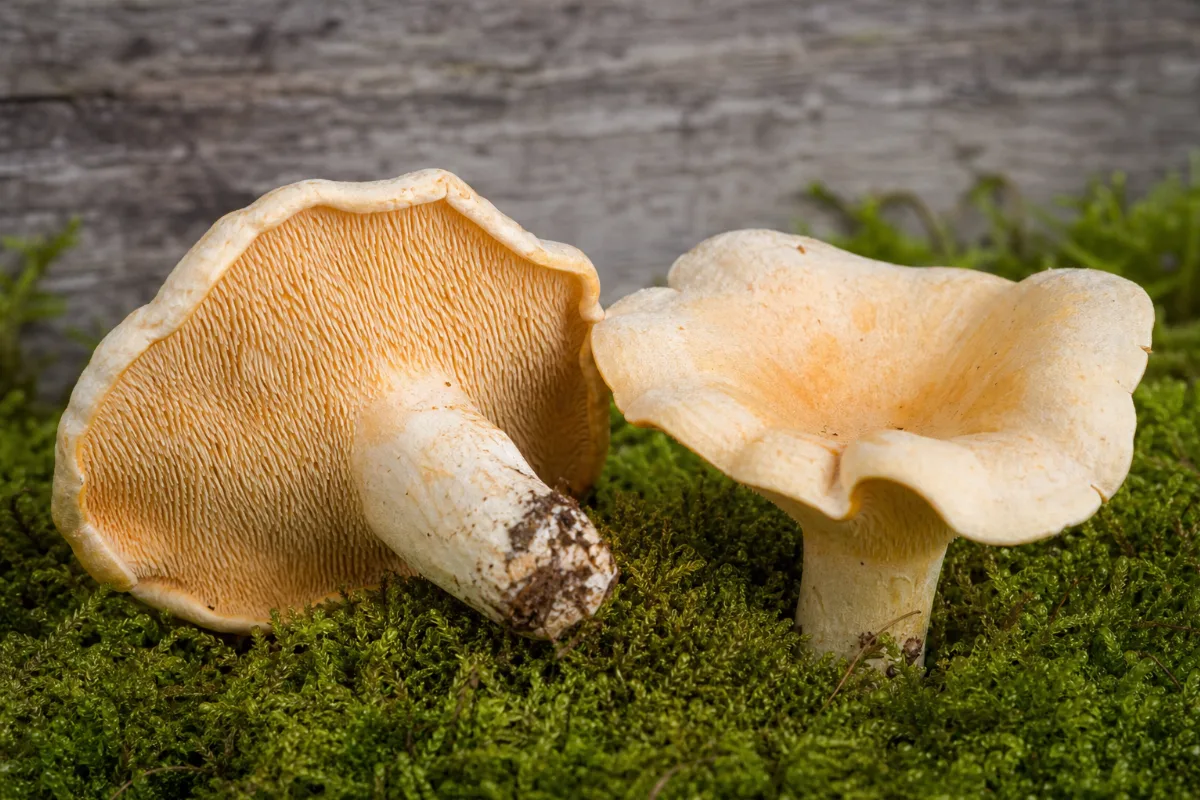
Mushrooms · Wild culinary mushroom
Hedgehog Mushroom
Hydnum repandum (and the closely related Hydnum rufescens) · also called Sweet tooth, wood hedgehog, hedgehog fungus, pied de mouton (names listed by GBIF)
Hedgehog mushroom, also called sweet tooth, is a wild mushroom with soft spines under the cap instead of gills. It is eaten for its mild, nutty taste. It is a food, not a supplement: we found no human study of any kind, only lab tests on extracts. The main cautions are that wild mushrooms must be identified by an expert, and that wild ones can carry radioactive caesium and metals from the soil.
General information, not medical advice. Last substantive update · Not medically reviewed. A named clinician has not signed off on this page. How this page is made
About Hedgehog Mushroom
Hedgehog mushroom (sweet tooth, Hydnum repandum) is a wild food with soft spines under the cap. There are no human studies of eating it or of any extract, so no health benefit is shown. Lab tests on extracts report antioxidant, antibacterial and cell-growth effects, which do not show an effect in people. Wild ones can carry radioactive caesium and metals from the soil, depending on where they grew, and wild mushrooms must be identified by an expert.
What it is
Hydnum repandum is a fungus in the family Hydnaceae. It lives in partnership with tree roots, and its spore-bearing surface is made of soft teeth rather than gills. Only the fruiting body (the mushroom itself) is eaten.
The name is tangled. GBIF lists Hydnum repandum and Hydnum rufescens as two accepted species, and a 2018 genetic study treats them as separate, each with its own reference specimen. Older papers sometimes call H. rufescens a variety of H. repandum, and some papers do not say which they used. A result for one should not be assumed for the other.
As a food
A mushroom society cookbook describes a mild flavour like chanterelle and suggests sauteeing in butter, casseroles or pickling. It advises keeping only young, firm, pale ones, because older ones darken and taste bitter. A Turkish research paper describes a sweet, nutty taste and a crunchy texture.
We found no verified nutrient table. Older figures quoted in one paper for the dried mushroom are about 27% protein, 3% fat, 9% ash, 7.6% crude fibre and 53% carbohydrate; we could not open the original. We found no source naming a traditional medicine use.
What the research shows
No human trial was found. The work is lab tests on solvent extracts of dried mushrooms. Extracts neutralised free radicals in test tubes. An ethanol extract slowed two human cancer cell lines and several bacteria in dishes, and a hexane extract blocked the starch-digesting enzyme alpha-amylase in a test tube almost as strongly as acarbose. One 1996 study reported that mice fed a powder or extract for 60 days swam longer.
None of this shows an effect in people. A food portion holds much less than a concentrated solvent extract, and no study compares the two.
Fruiting body, mycelium and extracts
The mushroom is eaten as the fruiting body. In one lab, its mycelium was grown in a dish to find the best growth conditions, which says nothing about health. We found no mycelium-on-grain product, powder or capsule studied for this species, so nothing can be said about supplement quality.
Legal and regulatory status
A Spanish paper cites a European food limit for caesium of 600 Bq per kg fresh weight and found none of its samples above it. We did not read statements from the FDA, EFSA, EMA, LiverTox, LactMed or WHO on this mushroom, so none is stated here. Rules differ by country and change.
At a glance
Traditional uses history, not proof
- A research paper calls it an edible and medicinal mushroom and a valuable food and income source for rural communities; it is sold in local markets in Turkey (Peksen 2013).
- A mushroom society cookbook names it as one of only two commonly eaten tooth fungi and describes sauteed, casserole and pickled dishes (MSSF).
- We found no source naming a people, place or period of traditional medicine use.
Studied for research
- Taste and nutrition as a food, no verified nutrient table (insufficient evidence)
- Antioxidant activity in test tubes, laboratory only (insufficient)
- Polysaccharides and beta-glucans, chemistry only (insufficient)
- Cancer cells and tumours in dishes and mice, laboratory and animal only (insufficient)
- Bacteria and biofilms in dishes, laboratory only (insufficient)
- Starch-digesting enzyme in a test tube, laboratory only (insufficient)
- Stamina in mice, one old animal study (insufficient)
Main compounds
- Phenolic acids such as protocatechuic acid and quinic acid
- Flavonoids such as myricetin and apigenin
- Repandiol, a DNA-damaging compound found in test tubes
- Alpha-linolenic acid, an omega-3 fat (reported as tentative)
Common forms
- Fresh or cooked fruiting body (sauteed, in casseroles)
- Pickled in vinegar and spices, or frozen after sauteeing (MSSF)
- Drying is discouraged by one cookbook
- Laboratory solvent extracts exist only in research; no commercial supplement was found
Research links: Mycological Society of San Francisco: hedgehog mushrooms (cookbook) · Radiocaesium in British fungi (abstract) · Radiocaesium in Galicia, Spain (abstract) · Metals in Black Sea region mushrooms (abstract) · Antibiofilm study in a dish (abstract) · Naming of Hydnum species (abstract) · Research Library · Genes & Biomarkers Library
What it is and its history
- Accepted scientific name
- Hydnum repandum L.
- Naming authority
- L. 1753 (GBIF)
- Synonyms
- Dentinum repandum (L.) Gray; Sarcodon repandus (L.) Quél.; Hydnum repandum var. album (Quél.) Rea
- Common names
- Hedgehog mushroom (English); Sweet tooth (English); Wood hedgehog (English); Pied de mouton (French); Lengua de gato (Spanish); Semmel-Stoppelpilz (German)
- Family or group
- Hydnaceae (a fungus family; the spore-bearing surface is made of teeth or spines), not a plant
- Classification
- Fungi > Basidiomycota > Agaricomycetes > Cantharellales > Hydnaceae > Hydnum > Hydnum repandum
- Native range
- A Turkish paper says it is widely distributed in North America and Europe, citing a general web source; we did not verify this in a taxonomic source.
- Habitat
- Lives in partnership with tree roots (ectomycorrhizal), under conifer or hardwood trees, alone or in groups. A Turkish paper lists pine, hornbeam, beech and oak forests; a cookbook says it is found occasionally in groups under conifers or hardwood trees.
- What it looks like
- Fruiting body: The spore-bearing surface has soft teeth (spines) instead of gills. The cookbook describes H. repandum as large, fleshy and buff-coloured with white teeth, and notes that firm teeth mean a young specimen. This is not an identification guide.
- Cultivation
- Mycelium (the thread-like body) has been grown in a dish; it grew best at pH 5.5 and 20 to 25 °C and not at 30 °C (Peksen 2013). We found no commercial cultivation source.
- Harvest and processing
- A cookbook advises keeping only young, firm, pale specimens, cleaning with light brushing and a little water (not wetting the underside), sauteeing and freezing, and discourages drying because they become fragile and grainy and are tough and tasteless when soaked again.
- Sustainability and conservation
- Not checked.
Traditional use and history history, not clinical proof
| Tradition or era | Documented use | Source |
|---|---|---|
| Rural food use (Turkey and elsewhere) | A research paper calls it an edible and medicinal mushroom, a valuable food and an important source of income for rural communities, sold in local markets in Turkey. It does not name a traditional medicine use. | p24311862 |
| Modern mycological societies | A mushroom society cookbook names Hydnum repandum and H. umbilicatum as the only two commonly eaten tooth fungi and describes sauteed, casserole and pickled dishes. | s-mssf-hedgehog |
Traditional use shows how it was used. It does not show that it works or is safe today.
What is inside, and how it may work
What it contains and how those compounds act in cells and animals. Laboratory and animal mechanisms are not proven effects in people.
Main compounds
| Compound | Family | Where it is concentrated | Activity studied | Level of evidence |
|---|---|---|---|---|
| Repandiol PubChem 127295 | diepoxide | Fruiting body Amount in a mushroom not reported in the abstracts. | Cytotoxic to tumour cells in a dish; cross-links DNA in a test tube, less efficiently than two reference diepoxides. 21 12 | Laboratory research |
| Protocatechuic acid PubChem 72 | phenolic acid | Fruiting body 75.23 mg per 100 g dry weight (one analysis, origin not stated). | Part of the antioxidant phenolic content in lab extracts; no human effect shown. 20 | Laboratory research |
| Quinic acid, myricetin, apigenin and other phenolics | phenolic acids and flavonoids | Fruiting body Quinic acid 531.37 to 676.07 ng/mL in polar extracts (Serbia). Myricetin and apigenin reported as abundant in an ethanol extract (amount not in the abstract). | Antioxidant and antimicrobial activity in lab tests. 18 4 | Laboratory research |
| Alpha-linolenic acid PubChem 5280934 | omega-3 fatty acid | Fruiting body 41.1% of the fatty acids, tentative; total lipid is low. | Nutritional only; no health effect tested. 5 | Lab analysis |
| Indole compounds (indole, melatonin, serotonin, tryptamine, L-tryptophan) | indoles | Fruiting body Five of twelve indoles tested were found; amounts not in the abstract. | Listed as antioxidant components; no human effect shown. 20 | Lab analysis |
Mechanisms, receptors and pathways
| Target or pathway | Gene or receptor | What was found | Level |
|---|---|---|---|
| DNA cross-linking | guanine bases on opposite DNA strands | Repandiol formed interstrand cross-links in a DNA fragment in a test tube, less efficiently than diepoxyoctane or diepoxybutane. 12 | Laboratory research |
| Cancer cell growth | not stated | An ethanol extract slowed MCF-7 and HT-29 cell growth in a dish, and repandiol was cytotoxic to tumour cells. 4 21 | Laboratory research |
| Starch digestion | alpha-amylase | A hexane extract blocked alpha-amylase by 95.75% in a test tube. 26 | Laboratory research |
| Bacterial biofilms | not stated | An ethanol extract limited biofilms and showed synergy with kanamycin and ampicillin in a dish. 4 | Laboratory research |
| Fatigue markers | serum lactate dehydrogenase, glycogen | Mice given powder or extract for 60 days had higher glycogen and lower post-exercise lactic acid and urea nitrogen. 10 | Animal research |
Absorption, metabolism and elimination
- Absorption
- Not found in the sources read.
- Distribution
- Not found in the sources read.
- Metabolism
- Not found in the sources read.
- Elimination
- Not found in the sources read.
- Bioavailability
- Not established.
Isolated compounds versus whole extracts
The papers used solvent extracts (ethanol, methanol, hexane, hot water) and one isolated compound (repandiol). Eating the whole cooked mushroom is different from all of these. No study compares the food with an extract, and no study tested the food in people.
Nutritional composition
This is a food mushroom, not a nutrient. No verified nutrient table (such as USDA) was read, and an earlier check found no USDA entry (summary-only). Older protein and carbohydrate figures are quoted second-hand.
7 not enough evidence
What was looked at
The 7 benefits and uses checked for Hedgehog Mushroom, each with how strong the evidence is. Tap one to open it.
- As a food: taste and nutritionNot enough evidence
- Antioxidant activity (laboratory)Not enough evidence
- Polysaccharides and beta-glucans (food chemistry)Not enough evidence
- Cancer cells and tumours (laboratory and animal)Not enough evidence
- Bacteria and biofilms (laboratory)Not enough evidence
- Starch-digesting enzyme (blood sugar, laboratory)Not enough evidence
- Stamina and fatigue (mice)Not enough evidence
What is Hedgehog Mushroom good for?
The uses people ask about and how strong the evidence is for each. For this mushroom there is no human evidence at all. Read this together with the Safety tab.
Benefits, one by one
Each card is a research question, not a promise. Tap a goal to filter. Open a card to see the studies, doses and limits.
As a food: taste and nutrition
Not enough evidenceHedgehog mushroom is a wild mushroom eaten for its mild, nutty taste. Its underside has soft spines instead of gills. We found no official nutrient table. Older figures quoted in one paper put the dried mushroom at about 27% protein, and a 2026 lab study reported a lot of an omega-3 fat, with the authors calling that tentative.
4 studiesFresh, sauteed, pickled or frozen fruiting body as food. Dried weight…
Studies, doses and limits
What the trials found
No human study of eating it was found. Cookbook and lab papers describe it. A mushroom society cookbook describes a mild chanterelle-like flavour and cooking by sauteeing, casseroles and pickling, and says young firm ones taste best while older ones darken and turn bitter. A Turkish paper describes a sweet, nutty taste and crunchy texture. Older nutrient figures quoted in that paper (from Ertan and Gulyavuz 1993, original not opened): 27.07% crude protein, 3.16% fat, 9.16% ash, 7.60% crude cellulose and 53.01% carbohydrate, on a dry basis. A 2026 Turkish study reported alpha-linolenic acid at 41.1% of the fatty acids, and says that value is tentative until confirmed by mass spectrometry. Total fat in mushrooms is low, so that is a small amount in absolute terms. Beta-glucan was measured in a 2017 Polish study that included this mushroom, but the abstract gives no value for it.
Results
Dry-weight protein about 27% (quoted second-hand). Alpha-linolenic acid 41.1% of the fatty acids (tentative, one site).
Effect sizes as reported
Descriptive nutrient figures; no health effect
Why this rating
No trial and no verified nutrient table. The protein and carbohydrate figures are quoted second-hand from a 1993 analysis we could not open, and the omega-3 result is called tentative by its authors.
Form and dose studied
Fresh, sauteed, pickled or frozen fruiting body as food. Dried weights are not the same as fresh.
Who was studied
Not a study of people
Limits
Figures come from one analysis each, from different places and methods; they are not typical values. They do not show a health effect.
Why researchers looked
It is a wild food that one paper says is sold in local markets in Turkey, so most papers measure what it contains.
Traditional use
One research paper calls it a valuable food and an important source of income for rural communities (Peksen 2013). We found no source describing a traditional medicine use.
Proposed mechanism Not applicable
Not a mechanism claim. Nutrient content only.
A proposed mechanism does not show that the effect happens in people.
The food role is not a supplement benefit. Wild mushrooms can carry radiocaesium and metals from the soil, and some can be confused with poisonous kinds. See the Safety tab.
Antioxidant activity (laboratory)
Not enough evidenceIn test tubes, extracts of hedgehog mushroom neutralise free radicals, and the strength tracks how many phenolic compounds the extract contains. This has not been tested in people, and it does not show that eating the mushroom does anything for your health.
5 studiesSolvent extracts of dried fruiting bodies made in labs. These are not…
Studies, doses and limits
What the trials found
No human trial of any kind was found for this mushroom. Four lab papers on dried fruiting body extracts: a Serbian study (ethanol and methanol extracts about 27 to 28 mg gallic acid equivalents per g dry weight; antioxidant scores that followed phenolic content), a Turkish study (methanol extract best in one test among five mushrooms), a Polish chemical analysis (protocatechuic acid 75.23 mg per 100 g dry weight; five of twelve indole compounds found including serotonin, melatonin and tryptamine), and an older Spanish processing study in which frozen samples kept their test-tube activity while canned lost some, with Hydnum lowest of seven raw samples.
Results
Serbia: total phenolics 27.44 and 28.29 mg GAE per g (ethanol, methanol). FRAP 57.29 to 199.96 mg AAE per g. Poland: protocatechuic acid 75.23 mg per 100 g dry weight.
Effect sizes as reported
Test-tube antioxidant activity only
Why this rating
Laboratory extracts only. Antioxidant test-tube scores do not predict effects in people.
Form and dose studied
Solvent extracts of dried fruiting bodies made in labs. These are not food and no commercial extract was found.
Who was studied
Laboratory (no people)
Limits
Different solvents, countries and methods give numbers that cannot be compared. A food portion contains far less than a concentrated extract.
Why researchers looked
Antioxidant assays are cheap, so many labs run them on wild mushrooms.
Traditional use
No traditional use found.
Proposed mechanism Laboratory research
Phenolic acids such as protocatechuic acid and quinic acid, and flavonoids such as myricetin and apigenin, were found in the extracts. In tests the antioxidant score followed the amount of phenolics (lab finding only).
A proposed mechanism does not show that the effect happens in people.
No safety issue is linked to this finding itself. See the Safety tab for wild-harvest cautions.
Polysaccharides and beta-glucans (food chemistry)
Not enough evidenceMushrooms contain long-chain sugars (polysaccharides, including beta-glucans) that are often linked to immune claims. For hedgehog mushroom we found one extraction study and no beta-glucan value in the abstracts we read. No immune effect has been tested in people.
2 studiesHot-water laboratory extraction of freeze-dried fruiting body.
Studies, doses and limits
What the trials found
No human trial of any kind was found for this mushroom. A 2025 extraction study of three wild mushrooms worked out the best hot-water conditions to get carbohydrate out of Hydnum repandum; the experimental total carbohydrate in its table was 23.89 mg per g of freeze-dried mushroom. Total carbohydrate is a rough stand-in and not a beta-glucan measurement. A 2017 Polish study measured beta-glucan in eight wild mushrooms including this one (range 13.5 to 40.9 g per 100 g dry mass across species), but the abstract gives no value for Hydnum.
Results
Total carbohydrate in hot-water extract 23.89 mg per g (freeze-dried mushroom, optimised extraction).
Effect sizes as reported
No immune effect tested
Why this rating
Chemical measurements only; no immune outcome was measured in cells, animals or people in the papers we read.
Form and dose studied
Hot-water laboratory extraction of freeze-dried fruiting body.
Who was studied
Laboratory (no people)
Limits
No beta-glucan figure for Hydnum was seen; a total carbohydrate number says little about immune activity.
Why researchers looked
Beta-glucans are the best-known active group in medicinal mushrooms, so chemists try to measure and extract them.
Traditional use
No traditional use found.
Proposed mechanism Laboratory research
Hot-water extracts hold carbohydrate that is mostly water-soluble material; its biological meaning is not shown (lab finding).
A proposed mechanism does not show that the effect happens in people.
None linked to this finding.
Cancer cells and tumours (laboratory and animal)
Not enough evidenceIn a dish, an alcohol extract slowed the growth of two human cancer cell lines, and a compound from the mushroom called repandiol was toxic to tumour cells. A mouse result from 1973 is quoted in one paper. None of this has been tested in people, and a compound that kills cells in a dish can also harm normal cells.
5 studiesEthanol extract and an isolated compound; no commercial product found.
Studies, doses and limits
What the trials found
No human trial of any kind was found for this mushroom. An ethanol extract slowed the growth of MCF-7 (breast) and HT-29 (colon) cell lines. Repandiol, isolated from the mushroom, showed potent cytotoxic activity against various tumour cells. A 2019 Canadian screening paper lists the mushroom among nine species with antiproliferative, immunostimulatory and/or anti-inflammatory activity but the abstract does not say which. A paper on growing the mycelium repeats an older report (Ohtsuka 1973, not opened) that culture extract showed 70% inhibition and fruiting-body extract 90% inhibition against two mouse tumours.
Results
Lab and mouse results only; no human figures.
Effect sizes as reported
Cell and animal results only
Why this rating
No human data. Cell-dish and old mouse results are weak evidence and this is not a cancer treatment.
Form and dose studied
Ethanol extract and an isolated compound; no commercial product found.
Who was studied
Cell lines in a dish; mice (quoted second-hand)
Limits
The mouse figures are quoted from a paper we could not open. Repandiol is a single compound, not the mushroom.
Why researchers looked
Many wild mushrooms are screened for cell-killing compounds.
Traditional use
No traditional use found.
Proposed mechanism Laboratory research
Repandiol, a diepoxide, is cytotoxic to tumour cells and links the two strands of DNA in a test tube (lab finding).
A proposed mechanism does not show that the effect happens in people.
Repandiol also cross-links DNA in a test tube. The amount in a portion of mushroom is not reported and we found no report of harm. This is unknown, not shown safe.
Bacteria and biofilms (laboratory)
Not enough evidenceExtracts of hedgehog mushroom stopped the growth of several bacteria in dishes, and one extract worked together with two antibiotics against biofilms. This does not mean eating the mushroom treats infection.
3 studiesEthanol and methanol extracts of the fruiting body.
Studies, doses and limits
What the trials found
No human trial of any kind was found for this mushroom. An ethanol extract acted against methicillin-resistant Staphylococcus aureus, S. epidermidis, E. coli and Pseudomonas aeruginosa and their biofilms, and showed synergy with kanamycin and ampicillin. Two other lab papers on Turkish mushrooms found strong activity against E. coli, Pseudomonas aeruginosa, Staphylococcus aureus, S. epidermidis and Streptococcus pyogenes.
Results
Dish tests only.
Effect sizes as reported
Antibacterial activity in a dish
Why this rating
Plate and dish tests with solvent extracts; no animal or human infection data.
Form and dose studied
Ethanol and methanol extracts of the fruiting body.
Who was studied
Bacterial cultures
Limits
Concentrations in dishes are not the concentrations reached after eating.
Why researchers looked
Resistant bacteria are a big research problem, so mushroom extracts are screened for anything that blocks them.
Traditional use
No traditional use found.
Proposed mechanism Laboratory research
Flavonoids (myricetin and apigenin) were abundant in the extract that worked (lab finding).
A proposed mechanism does not show that the effect happens in people.
None linked to this finding.
Starch-digesting enzyme (blood sugar, laboratory)
Not enough evidenceA hexane extract of hedgehog mushroom blocked a starch-digesting enzyme (alpha-amylase) in a test tube almost as strongly as the diabetes drug acarbose. That is a test-tube result only. We found no study of blood sugar in people.
1 studiesHexane extract (a solvent not used for food).
Studies, doses and limits
What the trials found
No human trial of any kind was found for this mushroom. In a Turkish screening of five mushrooms, the hexane extract of Hydnum repandum blocked alpha-amylase by 95.75% compared with 96.68% for acarbose in the same test. The abstract does not give the extract concentration, and the abstract does not report the methanol extract result.
Results
alpha-amylase block 95.75% (hexane extract) versus acarbose 96.68% in the same test tube.
Effect sizes as reported
Test-tube enzyme block
Why this rating
Enzyme test in a tube only; nothing in cells, animals or people.
Form and dose studied
Hexane extract (a solvent not used for food).
Who was studied
Laboratory (no people)
Limits
A hexane extract is not food, and the amount tested is not in the abstract.
Why researchers looked
Blocking this enzyme is one way diabetes drugs lower the sugar spike after a meal, so mushrooms are screened for it.
Traditional use
No traditional use found.
Proposed mechanism Laboratory research
Inhibition of alpha-amylase by a hexane extract in a test tube (lab finding).
A proposed mechanism does not show that the effect happens in people.
Because the effect is a lab finding, no medicine interaction is shown. Anyone on diabetes medicine should ask a pharmacist before using any concentrated mushroom product.
Stamina and fatigue (mice)
Not enough evidenceA 1996 Chinese study fed mice a hedgehog mushroom powder or extract for 60 days and reported they swam longer and had lower fatigue markers. It is the only animal study of this kind we found, and nothing has been tested in people.
1 studiesPowder or extract fed to mice; no amounts in the abstract.
Studies, doses and limits
What the trials found
No human trial of any kind was found for this mushroom. In mice fed hedgehog hydnum powder or extract for 60 days, serum lactate dehydrogenase and liver and muscle glycogen were higher than in control mice. After exercise, their rise in blood lactic acid and urea nitrogen was lower, and they swam longer before drowning (P < 0.05).
Results
Longer swimming time (P < 0.05); number of mice not given in the English abstract.
Effect sizes as reported
Better stamina measures in mice
Why this rating
One old mouse study; the species, amount and number of animals are not given in the English abstract; not repeated in anything we read.
Form and dose studied
Powder or extract fed to mice; no amounts in the abstract.
Who was studied
Mice
Limits
A 1996 paper in Chinese with an English abstract; the abstract does not name the species.
Why researchers looked
Researchers tested whether the mushroom changes fatigue measures in animals.
Traditional use
No traditional use found.
Proposed mechanism Animal research
Not established. Higher stored glycogen and lower lactic acid after exercise were measured in mice (animal finding).
A proposed mechanism does not show that the effect happens in people.
None linked to this finding.
Connections to the rest of health
How Hedgehog Mushroom connects to the rest of our health knowledge graph. Every link says what kind of connection it is. A safety link (for example to the liver) is a warning, not a benefit. A study that merely mentions a topic never creates a benefit link.
Explore every connection: goals, body systems, organs, symptoms, genes
A. Wellness goals
| Connected to | Kind of connection | Evidence status | Context | Studies |
|---|---|---|---|---|
| Cellular Protection | Not enough evidence | Antioxidant activity (laboratory): In test tubes, extracts of hedgehog mushroom neutralise free radicals, and the strength tracks how many phenolic compounds the extract contains. This has not been tested in people, and it does not show that eating the mushroom does anything for your health. | 18 26 20 14 9 | |
| Immune Support | Not enough evidence | Polysaccharides and beta-glucans (food chemistry): Mushrooms contain long-chain sugars (polysaccharides, including beta-glucans) that are often linked to immune claims. For hedgehog mushroom we found one extraction study and no beta-glucan value in the abstracts we read. No immune effect has been tested in people. Bacteria and biofilms (laboratory): Extracts of hedgehog mushroom stopped the growth of several bacteria in dishes, and one extract worked together with two antibiotics against biofilms. This does not mean eating the mushroom treats infection. | 9 13 4 16 7 | |
| Blood Sugar Balance | Not enough evidence | Starch-digesting enzyme (blood sugar, laboratory): A hexane extract of hedgehog mushroom blocked a starch-digesting enzyme (alpha-amylase) in a test tube almost as strongly as the diabetes drug acarbose. That is a test-tube result only. We found no study of blood sugar in people. | 26 | |
| Physical Stamina | Not enough evidence | Stamina and fatigue (mice): A 1996 Chinese study fed mice a hedgehog mushroom powder or extract for 60 days and reported they swam longer and had lower fatigue markers. It is the only animal study of this kind we found, and nothing has been tested in people. | 10 | |
| Reduce Fatigue | Not enough evidence | Stamina and fatigue (mice): A 1996 Chinese study fed mice a hedgehog mushroom powder or extract for 60 days and reported they swam longer and had lower fatigue markers. It is the only animal study of this kind we found, and nothing has been tested in people. | 10 |
B. Body systems
| Connected to | Kind of connection | Evidence status | Context | Studies |
|---|---|---|---|---|
| Digestive System | Biological association | Not enough evidence | Studied for: As a food: taste and nutrition | 17 5 13 23 |
| Immune System | Biological association | Not enough evidence | Studied for: Polysaccharides and beta-glucans (food chemistry) Studied for: Cancer cells and tumours (laboratory and animal) | 9 13 4 21 3 17 12 16 7 |
| Endocrine System | Biological association | Not enough evidence | Studied for: Starch-digesting enzyme (blood sugar, laboratory) | 26 |
| Musculoskeletal System | Biological association | Not enough evidence | Studied for: Stamina and fatigue (mice) | 10 |
E. Health conditions
| Connected to | Kind of connection | Evidence status | Context | Studies |
|---|---|---|---|---|
| Pregnancy and breastfeeding | Contraindication | Not enough evidence | No safety data found. Preparation or compound: Any form |
24 |
G. Root causes and contributing factors
| Connected to | Kind of connection | Evidence status | Context | Studies |
|---|---|---|---|---|
| Environmental toxins | Low certainty | Takes up radiocaesium from soil; large site-to-site differences. Preparation or compound: Wild-picked fruiting body |
2 6 22 | |
| Heavy metal exposure | Low certainty | Below reference doses in two Turkish studies; depends on site. Preparation or compound: Wild-picked fruiting body |
19 8 |
J. Genes, receptors and enzymes
| Connected to | Kind of connection | Evidence status | Context | Studies |
|---|---|---|---|---|
| Alpha-amylase | Preliminary mechanism | In vitro | Blocked by a hexane extract in a test tube. | 26 |
K. Biological pathways
| Connected to | Kind of connection | Evidence status | Context | Studies |
|---|---|---|---|---|
| DNA (guanine cross-links) | Preliminary mechanism | In vitro | Repandiol cross-links DNA strands in a test tube. | 12 |
L. Active compounds
| Connected to | Kind of connection | Evidence status | Context | Studies |
|---|---|---|---|---|
| Repandiol | Biological association | In vitro | Cytotoxic to tumour cells in a dish; cross-links DNA in a test tube, less efficiently than two reference diepoxides. Preparation or compound: Fruiting body |
21 12 |
| Protocatechuic acid | Biological association | In vitro | Part of the antioxidant phenolic content in lab extracts; no human effect shown. Preparation or compound: Fruiting body |
20 |
| Quinic acid, myricetin, apigenin and other phenolics | Biological association | In vitro | Antioxidant and antimicrobial activity in lab tests. Preparation or compound: Fruiting body |
18 4 |
| Alpha-linolenic acid | Biological association | Lab analysis | Nutritional only; no health effect tested. Preparation or compound: Fruiting body |
5 |
| Indole compounds (indole, melatonin, serotonin, tryptamine, L-tryptophan) | Biological association | Lab analysis | Listed as antioxidant components; no human effect shown. Preparation or compound: Fruiting body |
20 |
Each connection is stored with the ingredient, the connected record, the kind of connection, the evidence status, the supporting studies, the preparation or compound involved, and a review date (last reviewed October 25, 2026).
Evidence at a glance: what the research found for 7 outcomes
Each outcome below is one thing researchers measured. Certainty is how far the evidence can be trusted, not how well it works. The full studies are on the next tab.
The evidence
The research centre for Hedgehog Mushroom. Every record here was checked against PubMed or the publisher's page; we never list a study we have not verified.
Evidence by outcome
Bars show how many studies we found for each outcome, not how well it works. People are added up across trials only (reviews are not added, to avoid double counting).
How we rate evidence
High certainty
Several well-run trials or reviews agree; further research is unlikely to change the picture much.
Moderate certainty
Good trials point the same way, but some doubt remains.
Low certainty
Small, short or inconsistent trials. The finding could change with better research.
Very low certainty
Very little or very weak human data. Treat as a possibility only.
Mixed findings
Trials or reviews disagree with each other.
Not enough evidence
Not enough human research to say either way.
Evidence against
Good research found no benefit, or found harm.
We take the reviewers' own risk-of-bias and GRADE statements where they exist, and otherwise judge from study size, design, consistency, directness and whether a product matches what is sold. Many publications do not make evidence high. Method note: We searched PubMed for Hydnum and read the records and abstracts for 23 papers (lab and chemistry studies, environmental measurements of radiocaesium and metals, one mouse study and one taxonomy paper), read a mushroom society cookbook page in full, read two papers in full text (Peksen 2013 and Khalil 2025), and checked species names in GBIF. Index Fungorum and poison-centre pages could not be opened. Only abstracts were read for most papers, so numbers come from abstracts. Certainty ratings are the compiler's own reading.
Study library: every study we checked 26
| Study | Design | People | Product, dose, length | Result |
|---|---|---|---|---|
| Alonso 2003 The concentrations and bioconcentration factors of copper and zinc in edible mushrooms. Archives of Environmental Contamination and Toxicology · PMID 12520390 · DOI |
Environmental measurement n/a |
238 samples of up to 28 edible mushroom species from Lugo, Spain | Voltammetry of dried mushrooms Fruiting body Not shown here |
All species bioaccumulated copper and zinc, but some individual samples of Hydnum repandum, Cantharellus cibarius and Coprinus comatus were bioexclusors (concentration factor below 1). The authors conclude that eating these mushrooms is not a toxicological risk for copper and zinc and that they supply nutritional needs. Copper and zinc not a risk in this study Methods, limits and fundingOutcomes: Copper and zinc and their bioconcentration Limitations: Only copper and zinc; one region. Abstract read only. Funding and conflicts: Not stated in the abstract Read: abstract |
| Barnett 1999 Radiocaesium activity concentrations in the fruit-bodies of macrofungi in Great Britain and an assessment of dietary intake habits. Science of the Total Environment · PMID 10466232 · DOI |
Environmental measurement n/a |
425 samples of 37 species in Great Britain plus a questionnaire answered by over 200 people | Radiocaesium in dried fruit-bodies; consumption survey Fruiting body Not shown here |
The highest caesium-137 concentration was 30.5 kBq per kg dry weight, in a Hydnum repandum sample collected in Wales. Mycorrhizal species were significantly higher than saprotrophic or parasitic ones, and transfer from soil varied over three orders of magnitude. For over 95% of respondents the estimated annual dose was below 1 microsievert. One Hydnum sample was the highest of 425 Methods, limits and fundingOutcomes: Caesium-137 and estimated dose from eating wild fungi Limitations: 1999 UK data; most respondents ate only one species, generally field mushroom (Agaricus campestris), not hedgehog. Abstract read only. Funding and conflicts: Not stated in the abstract Read: abstract |
| Deo 2019 Antiproliferative, Immunostimulatory, and Anti-Inflammatory Activities of Extracts Derived from Mushrooms Collected in Haida Gwaii, British Columbia (Canada). International Journal of Medicinal Mushrooms · PMID 31679298 · DOI |
Lab study lab |
17 wild mushroom species from Haida Gwaii, Canada; cell tests | Four crude extracts (ethanol, methanol, water, sodium hydroxide) Fruiting body Not shown here |
The authors list Hydnum repandum among nine species for which they describe antiproliferative, immunostimulatory and/or anti-inflammatory activities not reported before. The abstract does not say which activity was found for Hydnum repandum. Some laboratory activity of unstated type Methods, limits and fundingOutcomes: Antiproliferative, immunostimulatory and anti-inflammatory screening Limitations: Screening in cells only. The abstract does not say what H. repandum did, so no detail is given. Abstract read only. Funding and conflicts: Not stated in the abstract Read: abstract |
| Dizeci 2021 The Remarkable Antibiofilm Activity of the Sweet Tooth Mushroom, Hydnum repandum (Agaricomycetes), Displaying Synergetic Interactions with Antibiotics. International Journal of Medicinal Mushrooms · PMID 34595891 · DOI |
Lab study lab |
Cultured human cancer cell lines (MCF-7 breast, HT-29 colon) and bacterial strains in a dish | Ethanol extract of Hydnum repandum Fruiting body Not shown here |
The extract held much myricetin and apigenin and slowed the growth of MCF-7 and HT-29 cells. It acted against methicillin-resistant Staphylococcus aureus, S. epidermidis, Escherichia coli and Pseudomonas aeruginosa and their biofilms. With the antibiotics kanamycin and ampicillin it showed synergy. Minimum biofilm eradication concentrations were lower for the extract than for the antibiotics. Antimicrobial and cell-growth effects in a dish Methods, limits and fundingOutcomes: Antiproliferative, antimicrobial and antibiofilm activity Limitations: Laboratory only. The abstract gives no concentrations that could be reached in the body. Abstract read only. Funding and conflicts: Not stated in the abstract Read: abstract |
| Elmastaş 2026 Wild Edible Mushrooms, Including 10 Ramaria Taxa, Show Predominantly Unsaturated and Nutritionally Favorable Fatty-Acid Profiles. Lipids · PMID 42878627 · DOI |
Lab analysis lab |
14 wild edible mushroom taxa from Ordu, Türkiye including Hydnum repandum | Fatty acids by gas chromatography (GC-FID), dried fruiting body Fruiting body Not shown here |
Total lipid was low across the 14 taxa (1.8 to 4.1 g per 100 g dry weight). Hydnum repandum and Cantharellus cibarius carried alpha-linolenic acid (an omega-3 fat) at 41.1% and 40.3% of fatty acids, with near-balanced omega-6 to omega-3 ratios. The authors call these two values tentative pending mass-spectrometry confirmation. Alpha-linolenic acid 41.1% of fatty acids (tentative) Methods, limits and fundingOutcomes: Fatty-acid profile and lipid-quality indices Limitations: Tentative per the authors; one site; fat is a small part of the mushroom, so 41.1% of a small amount is small in absolute terms. Abstract read only. Funding and conflicts: Not stated in the abstract Read: abstract |
| García 2015 Radiocaesium activity concentrations in macrofungi from Galicia (NW Spain): Influence of environmental and genetic factors. Ecotoxicology and Environmental Safety · PMID 25700093 · DOI |
Environmental measurement n/a |
54 wild and cultivated mushroom samples and 18 soil samples from Galicia, Spain, 2010 | Gamma spectroscopy of dried mushrooms Fruiting body Not shown here |
Wild mushrooms averaged 249.2 Bq per kg dry weight. Hydnum repandum was the greatest accumulator of all wild species (1016.4 Bq per kg dry weight). No sample reached the 600 Bq per kg fresh weight limit the authors cite from European legislation (about 6000 Bq per kg dry weight). The authors conclude the mushrooms from those areas posed no toxicological risk from radiocaesium. Highest accumulator among the wild species sampled; below the cited limit Methods, limits and fundingOutcomes: Caesium-137 activity concentration Limitations: One region, one year. The limit is quoted from the abstract; the legal text was not opened. Abstract read only. Funding and conflicts: Not stated in the abstract Read: abstract |
| Karakas 2023 Phenolic Content, Antibacterial and Antioxidant Potential of Several Edible Agaricomycetes Mushrooms Sold in Public Bazaar in Bolu, Turkey. International Journal of Medicinal Mushrooms · PMID 36734918 · DOI |
Lab study lab |
Thirteen wild edible mushrooms sold in a Turkish bazaar, including Hydnum repandum | Mushroom extracts Fruiting body Not shown here |
H. repandum strongly inhibited the Gram-positive bacteria Staphylococcus aureus, S. epidermidis and Streptococcus pyogenes in a dish. The authors rated its antioxidant capacity and polyphenol content as quite outstanding, though Boletus edulis and Lactarius deliciosus ranked higher on the lowest-IC50 measure. Antibacterial activity in a dish Methods, limits and fundingOutcomes: Antibacterial activity against 10 human pathogens; antioxidant tests Limitations: Laboratory only; extracts, not food; abstract read only. Funding and conflicts: Not stated in the abstract Read: abstract |
| Keskin 2022 Wild mushrooms from Ilgaz Mountain National Park (Western Black Sea, Turkey): element concentrations and their health risk assessment. Environmental Science and Pollution Research · PMID 35013958 · DOI |
Environmental measurement n/a |
Edible, inedible and poisonous mushrooms from Ilgaz Mountain National Park, Turkey | Elemental analysis Fruiting body Not shown here |
Daily intake and health risk values for the edible species except three were within the legal limits; iron in two other species and cadmium in Russula grata exceeded limits. Hydnum repandum was one of the edible species tested and is not named among those over the limit. Hydnum repandum not named among the species over limits Methods, limits and fundingOutcomes: Metals, daily intake and health risk index Limitations: The abstract does not give Hydnum-specific values. One park. Abstract read only. Funding and conflicts: Not stated in the abstract Read: abstract |
| Khalil 2025 Optimized Extraction of Bioactive Polysaccharides from Wild Mushrooms: Toward Enhanced Yield and Antioxidant Activity. Molecules · PMID 41375242 · DOI |
Lab study lab |
Wild Suillus luteus, Tricholoma equestre and Hydnum repandum fruiting bodies; laboratory extraction | Hot-water extraction of freeze-dried fruiting body Fruiting body Not shown here |
The study worked out the best extraction conditions for each species. For Hydnum repandum the best conditions for total carbohydrate were a 149.76 liquid-to-solid ratio at 70.01 °C for 3.00 h. In the full text, the experimental total carbohydrate at those conditions was 23.89 mg per g (predicted 23.921). The authors say the extract's antioxidant activity depends strongly on the species. Extraction method study; no health effect tested Methods, limits and fundingOutcomes: Total carbohydrate yield and antioxidant activity of hot-water extracts Limitations: About extraction method, not about eating the mushroom. Total carbohydrate is a rough stand-in for polysaccharides and is not a beta-glucan measurement. Full text (PMC) read; 23.89 mg per g comes from its validation table. Funding and conflicts: Not stated in the abstract Read: full text |
| Lu 1996 [Effect of hedgehog hydnum on the delay of fatigue in mice]. Sheng Li Xue Bao (Acta Physiologica Sinica) · PMID 8758699 |
Animal study mouse |
Mice | Hedgehog hydnum powder or extract (the abstract does not name the species) Not shown in the abstract 60 days · vs Control mice |
Mice fed the powder or extract for 60 days had higher serum lactate dehydrogenase activity and higher liver and muscle glycogen than control mice (P < 0.05 or P < 0.01). After exercise, their rise in blood lactic acid and urea nitrogen was lower, and they swam longer before drowning (P < 0.05). The authors conclude it raised physical stamina in mice. Longer swimming time and lower fatigue markers in mice Methods, limits and fundingOutcomes: Fatigue-related blood and tissue measures and swimming time Limitations: Mice only. The English abstract does not name the species, give the amount, or say how many mice were used. A 1996 paper; not repeated in the sources we read. Funding and conflicts: Not stated in the abstract Read: abstract |
| Melgar 2021 Natural radioactivity and total K content in wild-growing or cultivated edible mushrooms and soils from Galicia (NW, Spain). Environmental Science and Pollution Research · PMID 34018117 · DOI |
Environmental measurement n/a |
Wild and cultivated mushrooms and soils from Galicia, Spain | Gamma spectroscopy Fruiting body Not shown here |
Mushrooms concentrated potassium-40. Hydnum repandum was among four species that could be treated as bioindicators of 40K. The annual dose from potassium-40 for average consumption of the mushrooms analysed was 0.15 microsievert per year, which the authors call very low and not a toxicological risk. They also note the mushrooms could be a potassium source in the diet. Very low natural radiation dose Methods, limits and fundingOutcomes: Potassium-40 (natural radioactivity) and total potassium Limitations: Average consumption, not heavy consumption; one region. Abstract read only. Funding and conflicts: Not stated in the abstract Read: abstract |
| Millard 2004 DNA interstrand cross-linking by a mycotoxic diepoxide. Biochimie · PMID 15358058 · DOI |
Lab study lab |
DNA fragments in a test tube | Repandiol isolated from Hydnum repandum and also made synthetically Fruiting body Not shown here |
Repandiol formed links between the two strands of a DNA fragment (between guanine bases). It was significantly less efficient at this than the two reference diepoxides (diepoxyoctane and diepoxybutane). Cross-links DNA in a test tube, less efficiently than two reference chemicals Methods, limits and fundingOutcomes: DNA cross-linking Limitations: Test tube only; no cells, animals or people; the amount in a food portion is not given. Abstract read only. Funding and conflicts: Not stated in the abstract Read: abstract |
| Mirończuk-Chodakowska 2017 Quantitative evaluation of 1,3,1,6 β-D-glucan contents in wild-growing species of edible Polish mushrooms. Roczniki Panstwowego Zakladu Higieny · PMID 28895671 |
Lab analysis lab |
Eight wild edible Polish mushrooms including Hydnum repandum, plus cultivated Agaricus bisporus | Dried fruiting body, colorimetric beta-glucan method Fruiting body Not shown here |
Across the nine species, mean total beta-glucan ranged from 13.5 to 40.9 g per 100 g dry mass. The abstract lists Hydnum repandum as one of the species tested but does not give its own value. No Hydnum-specific value in the abstract Methods, limits and fundingOutcomes: Total beta-glucan and 1,3-1,6 beta-glucan content Limitations: We did not see the species table, so no beta-glucan figure for Hydnum is given. A beta-glucan content is not a health effect. Abstract read only. Funding and conflicts: Not stated in the abstract Read: abstract |
| Murcia 2002 Antioxidant activity of edible fungi (truffles and mushrooms): losses during industrial processing. Journal of Food Protection · PMID 12380748 · DOI |
Lab study lab |
Two truffles and five mushrooms including Hydnum repandum, raw, frozen and canned | Raw, frozen and canned samples Fruiting body Not shown here |
Frozen samples lost little antioxidant activity (no significant difference from raw). Canned samples lost some. Among the raw samples, Hydnum had the lowest antioxidant capacity of the seven (Trolox equivalent ranking). After 30 days of storage, canned Hydnum was one of the samples without high or medium activity. Freezing kept test-tube antioxidant activity; canning lowered it Methods, limits and fundingOutcomes: Antioxidant activity after freezing and canning Limitations: Test-tube antioxidant measures only; it is one of seven species and a 2002 study. Abstract read only. Funding and conflicts: Not stated in the abstract Read: abstract |
| Niskanen 2018 Identifying and naming the currently known diversity of the genus Hydnum, with an emphasis on European and North American taxa. Mycologia · PMID 30215579 · DOI |
Taxonomy n/a |
Genus Hydnum, genetic study | DNA barcodes and morphology |
The study recognises 49 Hydnum species worldwide and describes 22 as new. It proposes epitypes (reference specimens) for both H. repandum and H. rufescens, treating them as separate species. H. repandum and H. rufescens are separate species Methods, limits and fundingOutcomes: Species of Hydnum worldwide Limitations: A taxonomy paper; it says nothing about health or food. Abstract read only. Funding and conflicts: Not stated in the abstract Read: abstract |
| Ozen 2011 Screening of antioxidant, antimicrobial activities and chemical contents of edible mushrooms wildly grown in the black sea region of Turkey. Combinatorial Chemistry and High Throughput Screening · PMID 20958253 · DOI |
Lab study lab |
Twelve wild edible mushrooms from the Black Sea region, methanol extracts | Methanol extracts Fruiting body Not shown here |
Hydnum repandum was among the species whose extracts beat alpha-tocopherol and BHT in antioxidant tests. H. repandum showed strong antimicrobial activity, especially on E. coli, and was more effective on Pseudomonas aeruginosa than on the other strains. Antibacterial activity on plates; strong antioxidant test scores Methods, limits and fundingOutcomes: Antioxidant tests and disc-diffusion antibacterial tests Limitations: Laboratory only; solvent extracts; abstract read only. Funding and conflicts: Not stated in the abstract Read: abstract |
| Peksen 2013 Favourable culture conditions for mycelial growth of Hydnum repandum, a medicinal mushroom. African Journal of Traditional, Complementary and Alternative Medicines · PMID 24311862 · DOI |
Lab study lab |
Hydnum repandum mycelium grown in a dish from fruiting bodies collected in Sinop, Turkey | Mycelium culture Mycelium (lab culture) Not shown here |
Best growth at pH 5.5 and 20 to 25 °C; growth dropped sharply at 15 °C and none occurred at 30 °C. In the introduction the authors repeat an older nutrient analysis (Ertan and Gulyavuz 1993): 27.07% crude protein, 3.16% fat, 9.16% ash, 7.60% crude cellulose and 53.01% carbohydrate, and a 1973 mouse report (Ohtsuka) of tumour inhibition. They also describe the taste as sweet and nutty with a crunchy texture. Culture conditions only; the nutrient and mouse figures are quoted second-hand Methods, limits and fundingOutcomes: Mycelial growth under different pH, temperature, carbon and nitrogen sources Limitations: The paper is about growing mycelium, not health. The nutrient figures and the 1973 mouse report are quoted from other papers we did not open. Full text (PMC) read. Funding and conflicts: Not stated in the abstract Read: full text |
| Rašeta 2025 Antioxidant proficiency in Serbian mushrooms: a comparative study on Hydnum repandum L. 1753 from mycorrhizal and edible niches. Natural Product Research · PMID 38598360 · DOI |
Lab study lab |
Dried Hydnum repandum from Serbia; laboratory extracts only | Hydnum repandum extracts (chloroform, acetone, 70% ethanol, 80% methanol, hot water) Fruiting body Not shown here |
Quinic acid was the main compound in polar solvents (531.37 to 676.07 ng/mL). Total phenolics were 27.44 ± 0.32 (ethanol) and 28.29 ± 3.62 (methanol) mg gallic acid equivalents per g dry weight. FRAP ranged 57.29 to 199.96 mg ascorbic acid equivalents per g; DPPH IC50 91.40 to 372.55 ug/mL. The acetone extract was strongest. Activity tracked phenolic content. Test-tube antioxidant activity that follows phenolic content Methods, limits and fundingOutcomes: Total phenolics, protein, and antioxidant test-tube assays (DPPH, ABTS, FRAP); LC-MS/MS profile Limitations: Laboratory extracts made with solvents, not food. Test-tube antioxidant scores do not show a health effect in people. Abstract read only. Funding and conflicts: Not stated in the abstract Read: abstract |
| Sarikurkcu 2020 Metal concentration and health risk assessment of wild mushrooms collected from the Black Sea region of Turkey. Environmental Science and Pollution Research · PMID 32363460 · DOI |
Environmental measurement n/a |
Wild mushrooms from hazelnut gardens in Arsin, Trabzon, Turkey | Elemental analysis of dried mushrooms Fruiting body Not shown here |
Daily intakes of all elements measured were below the reference dose in Fistulina hepatica, Hydnum repandum, Macrolepiota procera and Tapinella atrotomentosa. Other species, including Cantharellus cibarius and Ganoderma lucidum, had high risk index values especially for cadmium, cobalt and lead. Hydnum repandum below reference doses at this site Methods, limits and fundingOutcomes: Cd, Co, Cu, Fe, Mn, Ni, Pb, Zn; daily intake and health risk index Limitations: Low-pollution gardens in one region; many species; abstract read only. A different site could give different results. Funding and conflicts: Not stated in the abstract Read: abstract |
| Sułkowska-Ziaja 2015 Antioxidant components of selected indigenous edible mushrooms of the obsolete order Aphyllophorales. Revista Iberoamericana de Micologia · PMID 24657542 · DOI |
Lab analysis lab |
Dried Hydnum repandum and Sparassis crispa; chemical analysis | Dried fruiting body, analysed by RP-HPLC Fruiting body Not shown here |
In Hydnum repandum the main phenolic acid was protocatechuic acid (75.23 mg per 100 g dry weight). Eight of ten phenolic acids tested were present. Five of twelve indole compounds were found: indole, melatonin, serotonin, tryptamine and L-tryptophan. Ergosterol was reported for Sparassis crispa, not for Hydnum repandum. Amounts of antioxidant compounds measured; no health effect tested Methods, limits and fundingOutcomes: Phenolic acids, indole compounds, sterols Limitations: Chemical analysis of one sample type. The abstract does not state where the mushroom grew. Presence of a compound does not show a benefit. Abstract read only. Funding and conflicts: Not stated in the abstract Read: abstract |
| Takahashi 1992 Repandiol, a new cytotoxic diepoxide from the mushrooms Hydnum repandum and H. repandum var. album. Chemical and Pharmaceutical Bulletin · PMID 1294319 · DOI |
Lab study lab |
Isolated compound tested on tumour cells in a dish | Repandiol, an isolated compound Fruiting body Not shown here |
Repandiol was isolated and its structure worked out; it showed potent cytotoxic activity against various tumour cells. Toxic to tumour cells in a dish Methods, limits and fundingOutcomes: Structure and cytotoxic activity Limitations: An isolated compound, not the mushroom. The abstract does not say how much repandiol is in a mushroom or a portion. Abstract read only. Funding and conflicts: Not stated in the abstract Read: abstract |
| Tucaković 2018 137Cs in mushrooms from Croatia sampled 15-30 years after Chernobyl. Journal of Environmental Radioactivity · PMID 29150187 · DOI |
Environmental measurement n/a |
55 wild mushroom samples of 14 species from north and north-west Croatia | Gamma measurement of caesium-137 in dried mushrooms Fruiting body Not shown here |
Mycorrhizal species (those partnered with tree roots) had far more caesium-137 (0.95 to 1210 Bq per kg dry weight; mean 154) than saprotrophic species (1.05 to 36.8; mean 8.90). Comparing Boletus species and Hydnum repandum, accumulation was, in general order of magnitude, higher in Hydnum repandum. The authors stress that one sample's value is very site-specific. Higher caesium-137 than boletes in this study; large range Methods, limits and fundingOutcomes: Caesium-137 activity concentration Limitations: Site-specific; the abstract gives no separate Hydnum range. Abstract read only. Funding and conflicts: Not stated in the abstract Read: abstract |
| n/a 2000 Mycological Society of San Francisco: Wild About Mushrooms, Hedgehog Mushrooms (cookbook chapter) n/a · Source |
Authoritative guidance n/a |
n/a | n/a |
Says only Hydnum repandum and H. umbilicatum are commonly eaten; H. repandum is large, fleshy, buff and found under conifers or hardwood trees, with tooth-like spore-bearing structures; young ones are firm and taste best; older ones darken and taste bitter, so use only firm blond specimens. Describes a mild chanterelle-like flavour, sauteeing in butter, casseroles, pickling in vinegar and spices, and freezing after sauteeing. Discourages drying. Does not discuss look-alikes, allergy or raw eating. Methods, limits and fundingOutcomes: Says only Hydnum repandum and H. umbilicatum are commonly eaten; H. repandum is large, fleshy, buff and found under conifers or hardwood trees, with tooth-like spore-bearing structures; young ones are firm and taste best; older ones darken and taste bitter, so use only firm blond specimens. Describes a mild chanterelle-like flavour, sauteeing in butter, casseroles, pickling in vinegar and spices, and freezing after sauteeing. Discourages drying. Does not discuss look-alikes, allergy or raw eating. Limitations: A club cookbook, not a safety or nutrition study; it says nothing on look-alikes, allergy, or eating raw. Funding and conflicts: Independent source; no product sold Read: full text |
| n/a 2026 PubMed search record: Hydnum (title/abstract), 58 records; a second search for Hydnum repandum or hedgehog mushroom with poisoning, allergy, toxicity or case report; a third for randomized, clinical trial or volunteers; run 2026-10-25 n/a · Source |
Search record n/a |
n/a | n/a |
The search for Hydnum in titles and abstracts returned 58 records, nearly all taxonomy, ecology, chemistry, lab or environmental papers. The search for human trial terms returned 0 records. The search for poisoning, allergy, toxicity or case report returned 5 records; reading them showed none reports harm from eating Hydnum (they concern hallucinogens, Cordyceps, a metals study and repandiol). So we found no human trial, no case report of poisoning or allergy, and no liver, pregnancy or medicine-interaction report for this mushroom. Methods, limits and fundingOutcomes: The search for Hydnum in titles and abstracts returned 58 records, nearly all taxonomy, ecology, chemistry, lab or environmental papers. The search for human trial terms returned 0 records. The search for poisoning, allergy, toxicity or case report returned 5 records; reading them showed none reports harm from eating Hydnum (they concern hallucinogens, Cordyceps, a metals study and repandiol). So we found no human trial, no case report of poisoning or allergy, and no liver, pregnancy or medicine-interaction report for this mushroom. Limitations: Absence in PubMed is not proof of safety. Wild-mushroom poisonings are often reported in other literature or to poison centres, which we did not search. Funding and conflicts: Independent source; no product sold Read: search results |
| n/a 2026 GBIF Backbone Taxonomy API record for Hydnum repandum (key 2554716) and Hydnum rufescens (key 2544165), checked 2026-10-25 n/a · Source |
Database record n/a |
n/a | n/a |
Hydnum repandum L. (published in Species Plantarum 2: 1178, 1753) is ACCEPTED in family Hydnaceae, order Cantharellales, phylum Basidiomycota. Hydnum rufescens Pers. is also listed as an ACCEPTED species. GBIF lists synonyms of H. repandum including Dentinum repandum (L.) Gray and Sarcodon repandus (L.) Quel., and English names Wood Hedgehog, Hedgehog Fungus and Sweet Tooth; French Pied de mouton; Spanish Lengua de gato. Methods, limits and fundingOutcomes: Hydnum repandum L. (published in Species Plantarum 2: 1178, 1753) is ACCEPTED in family Hydnaceae, order Cantharellales, phylum Basidiomycota. Hydnum rufescens Pers. is also listed as an ACCEPTED species. GBIF lists synonyms of H. repandum including Dentinum repandum (L.) Gray and Sarcodon repandus (L.) Quel., and English names Wood Hedgehog, Hedgehog Fungus and Sweet Tooth; French Pied de mouton; Spanish Lengua de gato. Limitations: A name database record; it says nothing about health or safety. Index Fungorum could not be opened (access blocked). Funding and conflicts: Independent source; no product sold Read: full text |
| Çayan 2021 HPLC-DAD characterization of phenolic profile and in vitro antioxidant, anticholinesterase, and antidiabetic activities of five mushroom species from Turkey. 3 Biotech · PMID 34055565 · DOI |
Lab study lab |
Five wild mushroom species from Turkey including Hydnum repandum; laboratory extracts only | Hexane and methanol extracts of Hydnum repandum and four other species Fruiting body Not shown here |
H. repandum methanol extract gave the best result among the five in the beta-carotene-linoleic acid antioxidant test (IC50 12.04 ± 0.24 ug/mL). H. repandum hexane extract blocked the starch-digesting enzyme alpha-amylase by 95.75 ± 0.16%, close to the drug acarbose (96.68 ± 0.08%) in the same test. Gallic acid was found in all five mushrooms. Enzyme blocking in a test tube; no effect shown in people Methods, limits and fundingOutcomes: Antioxidant, enzyme-blocking (acetylcholinesterase, butyrylcholinesterase, alpha-amylase, alpha-glucosidase) and phenolic compounds Limitations: Laboratory only. The abstract does not give the extract concentration used. Block of an enzyme in a test tube is not a blood-sugar result. Abstract read only. Funding and conflicts: Not stated in the abstract Read: abstract |
What we do not know yet
- No human trial of hedgehog mushroom as food or extract.
- Dangerous look-alikes were not covered by any source we could open.
- No verified nutrient table; older protein and carbohydrate figures are quoted second-hand.
- No data on pregnancy, breastfeeding, children, allergy or medicine interactions.
- FDA, EFSA, EMA, LiverTox, LactMed and poison-centre statements were not read.
How new research is added
New studies are found by a saved PubMed search and placed in a review queue. A person reads each one before it changes any evidence rating or safety wording. New publications never change ratings automatically.
Lab markers
What changed in blood or saliva tests during trials. A changed number is not the same as feeling or being healthier, and we give no "normal ranges".
Safety
What studies and official sources say about side effects, medicines and who should check first. Each point shows what kind of evidence it comes from.
Main points to know 5
- Wild mushrooms can be confused with poisonous kinds; this page gives no identification help. Hedgehog mushroom is picked wild. Wild fungi must not be identified from a description, a photo or an app. Only an expert who can examine the actual mushroom locally can say whether it is safe. The cookbook we read does not discuss look-alikes, and we did not find a source we could open that lists them, so we do not say there are none. Do not eat any wild mushroom you are not certain about. General caution 23 24
- Wild hedgehog mushrooms can carry radioactive caesium from the soil, in some places a lot. Fungi that partner with tree roots take up caesium-137 left from the Chernobyl accident and weapons testing. In Great Britain the highest caesium-137 of 425 samples of 37 species (30.5 kBq per kg dry weight) was in a Hydnum repandum collected in Wales. In Galicia, Spain, Hydnum repandum was the greatest accumulator of all wild species sampled (1016.4 Bq per kg dry weight, below the limit the authors cite). In Croatia it accumulated more than boletes. One sample's value depends strongly on the site, so where it grew matters. For typical eaters the estimated yearly dose was very small. Environmental measurement 2 6 22
- Metals depend on where it grew, and results for this species were reassuring in two Turkish studies. In hazelnut gardens in Turkey, daily intakes of all measured metals from Hydnum repandum were below the reference dose, while some other wild species (including chanterelle and Ganoderma lucidum) had high risk values for cadmium, cobalt and lead. A second Turkish park study found most edible species within legal limits and did not name Hydnum among those over. In Spain, copper and zinc were not a risk. Only abstracts were read, and one site or region cannot speak for all. Environmental measurement 19 8 1
- A compound called repandiol damages DNA in a test tube; its amount in food is unknown. Repandiol, found in the mushroom, is toxic to tumour cells and links the two strands of DNA in a test tube, though less efficiently than two reference chemicals. The papers do not give how much is in a mushroom or a portion. We found no report of harm from eating the mushroom. This is unknown, not shown safe. Laboratory research 21 12
- There is no human safety data: no trial, no allergy, pregnancy, child or medicine-interaction information. A PubMed search found no human trial and no case report of poisoning, allergy, or liver injury linked to Hydnum. That is not proof of safety: there is simply no study, and wild-mushroom poisonings are often reported elsewhere. Ask a doctor or pharmacist about medicines, pregnancy or breastfeeding before eating wild mushrooms or trying any extract. Insufficient 24
Side effects 2
| Effect | How often | Severity and recovery | Evidence |
|---|---|---|---|
| No adverse effects reported in the sources we read No report is not the same as no risk. | Not known; no trial or case report was found | unknown Not applicable | Insufficient 24 |
| Intake of radioactive caesium or metals from heavily contaminated sites Site-specific. Some individual samples were very high. | Depends on site; most estimated yearly doses were very small | unknown Not applicable | Environmental measurement 2 6 19 |
Liver
No report of liver injury linked to Hydnum was found in a PubMed search on 2026-10-25. We could not read the LiverTox entry (none was looked for or found), so no statement from it is used. Eating a wild mushroom you have misidentified is a different matter: some poisonous mushrooms can damage the liver, which is why identification matters. 24
How often. No cases found; the true frequency is unknown.
Monitoring. No agency advice was read. Get urgent medical help for yellow skin or eyes, dark urine, pale stools or severe belly pain after eating a wild mushroom.
This is a safety connection. It is not evidence that Hedgehog Mushroom supports liver health.
Medicines and supplements 4
| With | Why it matters | Importance | Evidence | What to do |
|---|---|---|---|---|
| Blood thinners (warfarin-type) and antiplatelet medicines prescription | No source we read tested or reported an interaction. | Insufficient Not enough evidence 24 | No known problem, but not tested; ask a pharmacist if you plan to eat it regularly. | |
| Immunosuppressants prescription | No source tested or reported an interaction. | Insufficient Not enough evidence 24 3 | Ask a pharmacist, especially before using any extract. | |
| Diabetes medicines prescription | A hexane extract blocked the starch-digesting enzyme alpha-amylase in a test tube. | A test-tube finding; no study in people. It does not show an effect from eating the mushroom. | Laboratory research Very low certainty 26 | Theoretical only. Ask a pharmacist before using a concentrated extract. |
| Medicines in general prescription | Not studied. | No pharmacokinetic or interaction study of this mushroom was found. | Insufficient Not enough evidence 24 | If you take medicine and plan to use any mushroom extract, ask a pharmacist. |
Who should check first 5
| Situation | Advice | Evidence |
|---|---|---|
| Not certain what the mushroom is | Do not eat it. Wild mushrooms must be identified by an expert who has the actual mushroom in hand. | General caution 23 |
| Pregnancy and breastfeeding | No safety data was found for eating it or any extract. Ask a doctor or midwife; this is unknown, not shown safe. | Insufficient 24 |
| Children | No data was found. Be especially careful with wild mushrooms around children. | Insufficient 24 |
| Picked near known contamination (old fallout areas, roads, industry, mines) | Radiocaesium and metals vary a lot by site. Ask your local food or environmental authority if there is advice for your area. | Environmental measurement 2 6 19 |
| Allergy to mushrooms | We found no allergy report for this species, but we did not search allergy sources. If you react to other mushrooms, ask an allergy doctor first. | Insufficient 24 |
Overdose, product quality and regulators
Summary. No poisoning from Hydnum repandum itself was found in the PubMed search. The compound repandiol is cytotoxic and cross-links DNA in test tubes. Poisoning from a mistaken identity is the larger practical risk with any wild mushroom.
Animal. Only one mouse study (stamina) was found, and it did not report toxicity in its abstract.
Human doses studied. No human studies. No amounts are given or advised here.
High dose or long term signals. Not studied. Radiocaesium intake rises with the amount of mycorrhizal mushrooms eaten, according to the British survey.
Overdose response. No description found. If someone is unwell after eating wild mushrooms, treat it as an emergency.
Genotoxicity. Repandiol cross-links DNA in a test tube. Not tested in cells or animals in the papers read.
Toxic or hazardous parts. Fungus: only the fruiting body is eaten. No source compared parts.
The risks that have actually been measured are radioactive caesium and metals taken up from the soil by wild-picked mushrooms. We found no supplement product, so there are no supplement-quality findings (such as mycelium on grain).
Radioactive caesium-137. The highest caesium-137 of 425 British samples was in a Hydnum repandum from Wales (30.5 kBq per kg dry weight); in Galicia it was the highest of the wild species (1016.4 Bq per kg dry weight, below the cited 600 Bq per kg fresh weight limit); in Croatia it was higher than boletes. Values vary by site over orders of magnitude. 2 6 22
Natural potassium-40. Hydnum repandum concentrated natural radioactive potassium-40 more than most species, but the yearly dose from average consumption of the mushrooms analysed was 0.15 microsievert, called very low by the authors. 11
Metals (Cd, Co, Cu, Fe, Mn, Ni, Pb, Zn). Intakes from Hydnum repandum were below reference doses in two Turkish studies; other species had high cadmium, cobalt, lead or iron. Only abstracts were read. 19 8
Extracts and supplements. We found no commercial extract, powder or mycelium-on-grain product studied for this species, so nothing can be said about label accuracy. 24
| Body | Action | Date |
|---|---|---|
| European legislation on radiocaesium in foods (as cited in a Spanish paper) (European Union) | A Spanish paper cites a limit of 600 Bq per kg fresh weight (about 6000 Bq per kg dry weight) for caesium in food and found no sample over it. source | 2015 |
When to get medical help
- After eating any wild mushroom you are not sure about: call your local poison control centre or emergency number straight away, even if you feel well. Keep a sample or photo if you can.
- Severe vomiting or diarrhoea, severe belly pain, confusion or fits after eating a wild mushroom: get emergency help now.
- Yellow skin or eyes, dark urine or pale stools after eating a wild mushroom: get medical help now.
- Swelling of the face or throat, wheeze or trouble breathing after eating a mushroom: call emergency services.
If someone may be poisoned or in a crisis, contact a clinician or emergency service straight away. In the US, Poison Control is 1-800-222-1222.
General information only, not medical advice. Ask a clinician or pharmacist before use, especially with medicines, in pregnancy or with a health condition. See the Natural Remedy Safety guide.
Frequently asked questions
What is hedgehog mushroom?
Is it a supplement?
Is hedgehog mushroom safe to eat?
Can wild hedgehog mushrooms be radioactive?
Some can carry radioactive caesium from the soil. In Great Britain the highest of 425 samples was a hedgehog mushroom from Wales. In Spain it was the greatest accumulator of the wild species sampled, and in Croatia it accumulated more than boletes. It depends strongly on where it grew; estimated yearly doses for typical eaters were very small.
Does it contain heavy metals?
What is repandiol?
Does it have health benefits?
Does it fight cancer?
Is hedgehog mushroom the same as Hydnum rufescens?
Why does it sometimes taste bitter, and how should it be cooked?
A mushroom society cookbook says older ones darken and taste bitter, so use only young, firm, pale ones. It describes sauteeing in butter, casseroles and pickling, and discourages drying. We found no source on eating it raw.
Is it safe in pregnancy or for children?
Unknown. We found no data for pregnancy, breastfeeding or children. Ask a doctor or midwife rather than assume it is safe.
Explore by health goal
Immune SupportCellular ProtectionBlood Sugar BalancePhysical StaminaReduce Fatigue
Editorial transparency
- Written by
- AlternativeMed editorial team. Research compiled with AI assistance, then checked against PubMed records.
- Medical review
- None. This page has not been reviewed by a physician or pharmacist.
- First published
- 2026-10-25
- Last substantive update
- 2026-10-25
- How we research
- We searched PubMed for Hydnum and read the records and abstracts for 23 papers (lab and chemistry studies, environmental measurements of radiocaesium and metals, one mouse study and one taxonomy paper), read a mushroom society cookbook page in full, read two papers in full text (Peksen 2013 and Khalil 2025), and checked species names in GBIF. Index Fungorum and poison-centre pages could not be opened. Only abstracts were read for most papers, so numbers come from abstracts. Certainty ratings are the compiler's own reading.
- How we rate evidence
- See "How we rate evidence" in the Evidence tab.
- Independence
- No product is promoted on this page. No affiliate links are shown. This page is information, not a recommendation to eat wild mushrooms.
Sources 26
Each source was opened and checked. Where we read only the abstract, it says so. The small numbers in the text point here.
- Alonso J, García MA, Pérez-López M, et al. The concentrations and bioconcentration factors of copper and zinc in edible mushrooms.. Archives of Environmental Contamination and Toxicology. 2003. PMID 12520390. DOI 10.1007/s00244-002-2051-0. (abstract)
- Barnett CL, Beresford NA, Self PL, et al. Radiocaesium activity concentrations in the fruit-bodies of macrofungi in Great Britain and an assessment of dietary intake habits.. Science of the Total Environment. 1999. PMID 10466232. DOI 10.1016/s0048-9697(99)00085-6. (abstract)
- Deo GS, Khatra J, Buttar S, et al. Antiproliferative, Immunostimulatory, and Anti-Inflammatory Activities of Extracts Derived from Mushrooms Collected in Haida Gwaii, British Columbia (Canada).. International Journal of Medicinal Mushrooms. 2019. PMID 31679298. DOI 10.1615/IntJMedMushrooms.2019031193. (abstract)
- Dizeci N, Karaca B, Onar O, Cihan AC. The Remarkable Antibiofilm Activity of the Sweet Tooth Mushroom, Hydnum repandum (Agaricomycetes), Displaying Synergetic Interactions with Antibiotics.. International Journal of Medicinal Mushrooms. 2021. PMID 34595891. DOI 10.1615/IntJMedMushrooms.2021040148. (abstract)
- Elmastaş M, Zorlu A, Türkekul İ, et al. Wild Edible Mushrooms, Including 10 Ramaria Taxa, Show Predominantly Unsaturated and Nutritionally Favorable Fatty-Acid Profiles.. Lipids. 2026. PMID 42878627. DOI 10.1002/lipd.70087. (abstract)
- García MA, Alonso J, Melgar MJ. Radiocaesium activity concentrations in macrofungi from Galicia (NW Spain): Influence of environmental and genetic factors.. Ecotoxicology and Environmental Safety. 2015. PMID 25700093. DOI 10.1016/j.ecoenv.2015.02.005. (abstract)
- Karakas FP, Turker AU, Bozat BG. Phenolic Content, Antibacterial and Antioxidant Potential of Several Edible Agaricomycetes Mushrooms Sold in Public Bazaar in Bolu, Turkey.. International Journal of Medicinal Mushrooms. 2023. PMID 36734918. DOI 10.1615/IntJMedMushrooms.2022046526. (abstract)
- Keskin F, Sarikurkcu C, Demirak A, et al. Wild mushrooms from Ilgaz Mountain National Park (Western Black Sea, Turkey): element concentrations and their health risk assessment.. Environmental Science and Pollution Research. 2022. PMID 35013958. DOI 10.1007/s11356-021-18011-2. (abstract)
- Khalil ASE, Lukasiewicz M. Optimized Extraction of Bioactive Polysaccharides from Wild Mushrooms: Toward Enhanced Yield and Antioxidant Activity.. Molecules. 2025. PMID 41375242. DOI 10.3390/molecules30234647. (full text)
- Lu YH, Xin CL, Zhou YF, et al. [Effect of hedgehog hydnum on the delay of fatigue in mice].. Sheng Li Xue Bao (Acta Physiologica Sinica). 1996. PMID 8758699. (abstract)
- Melgar MJ, García MÁ. Natural radioactivity and total K content in wild-growing or cultivated edible mushrooms and soils from Galicia (NW, Spain).. Environmental Science and Pollution Research. 2021. PMID 34018117. DOI 10.1007/s11356-021-14423-2. (abstract)
- Millard JT, Katz JL, Goda J, et al. DNA interstrand cross-linking by a mycotoxic diepoxide.. Biochimie. 2004. PMID 15358058. DOI 10.1016/j.biochi.2004.03.010. (abstract)
- Mirończuk-Chodakowska I, Witkowska AM, Zujko ME, et al. Quantitative evaluation of 1,3,1,6 β-D-glucan contents in wild-growing species of edible Polish mushrooms.. Roczniki Panstwowego Zakladu Higieny. 2017. PMID 28895671. (abstract)
- Murcia MA, Martínez-Tomé M, Jiménez AM, et al. Antioxidant activity of edible fungi (truffles and mushrooms): losses during industrial processing.. Journal of Food Protection. 2002. PMID 12380748. DOI 10.4315/0362-028x-65.10.1614. (abstract)
- Niskanen T, Liimatainen K, Nuytinck J, Kirk P. Identifying and naming the currently known diversity of the genus Hydnum, with an emphasis on European and North American taxa.. Mycologia. 2018. PMID 30215579. DOI 10.1080/00275514.2018.1477004. (abstract)
- Ozen T, Darcan C, Aktop O, et al. Screening of antioxidant, antimicrobial activities and chemical contents of edible mushrooms wildly grown in the black sea region of Turkey.. Combinatorial Chemistry and High Throughput Screening. 2011. PMID 20958253. DOI 10.2174/138620711794474079. (abstract)
- Peksen A, Kibar B, Yakupoglu G. Favourable culture conditions for mycelial growth of Hydnum repandum, a medicinal mushroom.. African Journal of Traditional, Complementary and Alternative Medicines. 2013. PMID 24311862. DOI 10.4314/ajtcam.v10i6.4. (full text)
- Rašeta M, Mišković J, Berežni S, et al. Antioxidant proficiency in Serbian mushrooms: a comparative study on Hydnum repandum L. 1753 from mycorrhizal and edible niches.. Natural Product Research. 2025. PMID 38598360. DOI 10.1080/14786419.2024.2341300. (abstract)
- Sarikurkcu C, Akata I, Guven G, et al. Metal concentration and health risk assessment of wild mushrooms collected from the Black Sea region of Turkey.. Environmental Science and Pollution Research. 2020. PMID 32363460. DOI 10.1007/s11356-020-09025-3. (abstract)
- Sułkowska-Ziaja K, Muszyńska B, Szewczyk A. Antioxidant components of selected indigenous edible mushrooms of the obsolete order Aphyllophorales.. Revista Iberoamericana de Micologia. 2015. PMID 24657542. DOI 10.1016/j.riam.2013.10.011. (abstract)
- Takahashi A, Endo T, Nozoe S. Repandiol, a new cytotoxic diepoxide from the mushrooms Hydnum repandum and H. repandum var. album.. Chemical and Pharmaceutical Bulletin. 1992. PMID 1294319. DOI 10.1248/cpb.40.3181. (abstract)
- Tucaković I, Barišić D, Grahek Ž, et al. 137Cs in mushrooms from Croatia sampled 15-30 years after Chernobyl.. Journal of Environmental Radioactivity. 2018. PMID 29150187. DOI 10.1016/j.jenvrad.2017.11.004. (abstract)
- n/a. Mycological Society of San Francisco: Wild About Mushrooms, Hedgehog Mushrooms (cookbook chapter). n/a. 2000. (full text)
- n/a. PubMed search record: Hydnum (title/abstract), 58 records; a second search for Hydnum repandum or hedgehog mushroom with poisoning, allergy, toxicity or case report; a third for randomized, clinical trial or volunteers; run 2026-10-25. n/a. 2026. (search results)
- n/a. GBIF Backbone Taxonomy API record for Hydnum repandum (key 2554716) and Hydnum rufescens (key 2544165), checked 2026-10-25. n/a. 2026. (full text)
- Çayan F, Tel-Çayan G, Deveci E, et al. HPLC-DAD characterization of phenolic profile and in vitro antioxidant, anticholinesterase, and antidiabetic activities of five mushroom species from Turkey.. 3 Biotech. 2021. PMID 34055565. DOI 10.1007/s13205-021-02819-3. (abstract)


