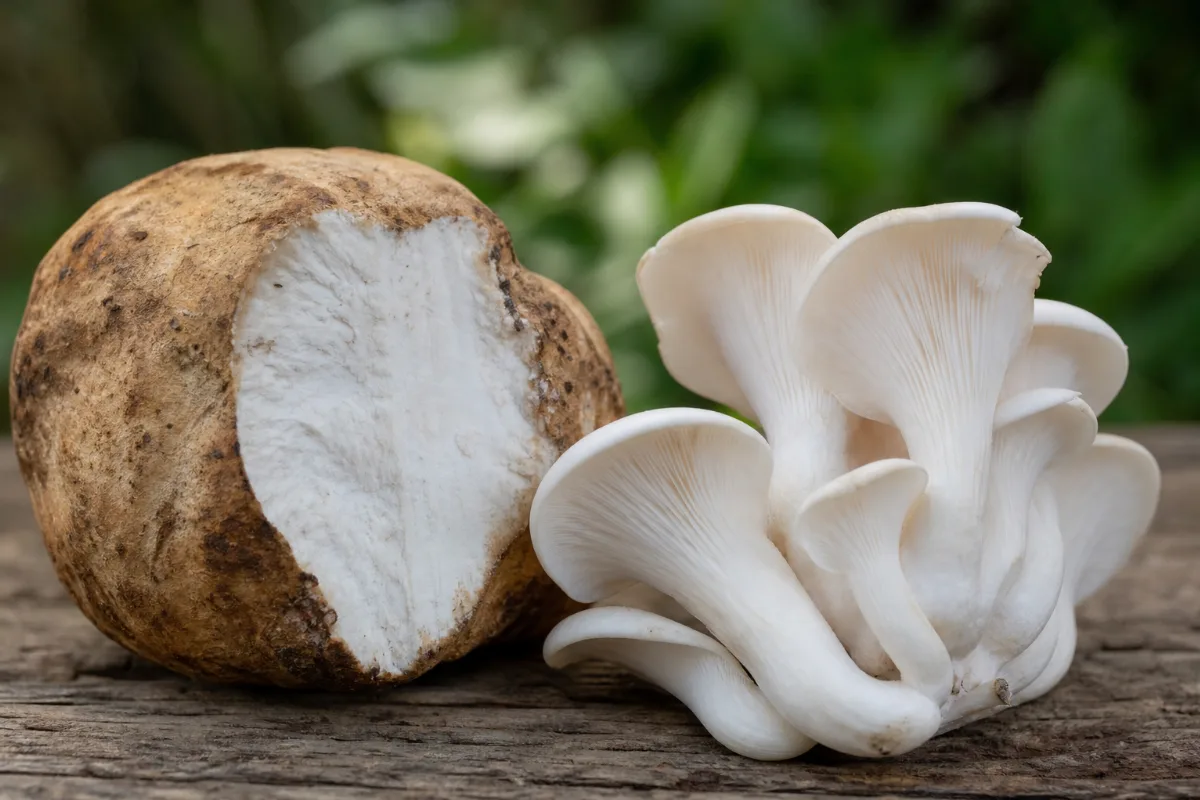
Mushrooms · Culinary and medicinal fungus
King tuber mushroom
Pleurotus tuber-regium (older name Lentinus tuber-regium) · also called King tuber oyster mushroom, tuber-regium, usu (southern Nigeria, in 'usu milk')
King tuber mushroom is an oyster-type mushroom whose hard underground part, the sclerotium, is eaten in parts of West Africa and Asia and used in traditional medicine in Nigeria. All the health research we found is in animals or laboratory dishes, and no study has tested it in people. The sclerotium is mostly fibre, with some protein. The most important caution is that we do not know whether it is safe as a medicine, and related oyster mushrooms can cause allergy.
General information, not medical advice. Last substantive update · Not medically reviewed. A named clinician has not signed off on this page. The Nigerian traditional-use statements are credited to the papers that report them and should be reviewed against Nigerian sources. How this page is made
About King tuber mushroom
King tuber mushroom (Pleurotus tuber-regium) is an oyster-type mushroom. Its hard underground part, the sclerotium, is eaten and used as a remedy in parts of Nigeria. Research is only in animals and the laboratory, so we cannot say that it helps any health problem in people. Safety in people has not been studied, and related oyster mushrooms can cause allergy.
What it is
King tuber mushroom is an oyster-type fungus in the family Pleurotaceae. GBIF lists Pleurotus tuber-regium (Fr.) Singer as the accepted name and Lentinus tuber-regium as an older name. Many papers spell it tuberregium.
It makes a hard, tuber-like mass underground, the sclerotium, and a cap-and-stem mushroom grows from it. Both are eaten. Products and studies use different parts, so results for one part do not carry over to another.
Traditional and current uses
In southern Nigeria, water infusions of the sclerotium called 'usu' milk are used for diabetes, according to the authors of a rabbit study. A survey in three regions of Nigeria lists it among the main medicinal mushrooms and among the mushrooms used as both food and medicine. The uses reported in that survey, such as skin problems, high blood pressure, fever and diabetes, were for mushrooms as a group, not king tuber alone.
Mushrooms there are mostly sun-dried and cooked in soups or with meat and vegetables, and are often eaten with fufu or gari. This tradition is described as the sources state it. It should be checked with Nigerian sources, and nothing here is advice to use it as a medicine.
What the research shows
Every health result is from animals or the laboratory: LDL cholesterol was about 20% lower in mice on the highest sterol extract dose, a water extract lowered blood glucose in diabetic rabbits, and extracts lowered liver and kidney markers in rats given poisons. Eye pressure fell in cats but not in healthy monkeys.
These are the kind of findings that often fail in people. A 2025 review of the mushroom lists antioxidant, antidiabetic and liver-protective effects from such studies and says more work is needed on dosage and quality control. We found no trial in people.
The sclerotium, the cap and the laboratory extracts are different
The research used different materials: sterol and triterpene extracts, a hot-water extract, a beta-glucan-rich fraction, a mycelium polysaccharide and prepared fibre. None of these is the same as eating the mushroom. The food itself is mostly insoluble fibre with some protein, and its make-up varies with strain and what it grew on.
A product label may not say which part is used. Check for the Latin name Pleurotus tuber-regium, the part used and a lot number, and ask a pharmacist.
Legal and regulatory status
We found no statement about king tuber mushroom from the FDA, the European Medicines Agency, LiverTox, LactMed or WHO in the sources we read, and we did not search them in depth. That is not proof that no statement exists. Supplements are not approved as medicines to treat disease.
At a glance
Traditional uses history, not proof
- Water infusions of the sclerotium, called 'usu' milk, are used for diabetes in southern Nigeria, according to the authors of a rabbit study.
- In a Nigerian survey it was named among the principal medicinal mushrooms and among the mushrooms used as both food and medicine; the uses listed in the survey are for mushrooms as a group.
- Eaten as a food in parts of Africa and Asia, usually dried and cooked in soups or with meat or vegetables.
Studied for research
- Blood fats (cholesterol) in mice, zebrafish and rabbits, insufficient (no human trial)
- Blood sugar in diabetic rabbits, insufficient
- Immune response in mice, insufficient
- Liver and kidney markers in poisoned rats, insufficient
- Eye pressure in cats, with no effect in monkeys, insufficient
- Colitis in mice (mycelium polysaccharide), insufficient
- As a food: fibre and protein content, composition only
Main compounds
- Beta-glucan-type dietary fibre
- Sterols (ergosterol, sitosterol) and triterpenes
- Flavonoids and phenolic acids
Common forms
- Fresh or dried sclerotium, cooked as food
- Water infusion ('usu' milk) or hot-water extract
- Fruiting body (cap and stem) grown on straw or sawdust
- Laboratory extracts (sterols, triterpenes) and mycelium polysaccharide, used in research only
Research links: Review of king tuber mushroom (abstract) · Mouse toxicity study (abstract) · Mercury in Nigerian market sclerotia (abstract) · Nigerian mushroom practices survey (abstract) · Diabetic rabbit study (abstract) · Mouse cholesterol study (abstract) · Research Library · Genes & Biomarkers Library
What it is and its history
- Accepted scientific name
- Pleurotus tuber-regium (Fr.) Singer
- Naming authority
- (Fr.) Singer (GBIF; published in Lilloa 22: 271, 1949 [1951])
- Synonyms
- Lentinus tuber-regium (Fr.) Fr. (older name; GBIF lists it as a synonym); Pleurotus tuberregium (spelling variant used in many papers)
- Common names
- King tuber mushroom (English); King tuber oyster mushroom (English); Royal king mushroom (used in a 2021 eye-pressure paper's title) (English); Usu (in the context of 'usu milk', a sclerotium infusion, southern Nigeria) (local name as given by one paper)
- Family or group
- Pleurotaceae (the oyster mushroom family)
- Classification
- Fungi > Basidiomycota > Agaricomycetes > Agaricales > Pleurotaceae > Pleurotus > Pleurotus tuber-regium
- Native range
- Eaten in Nigeria and other parts of Africa and Asia according to the papers read; a 2026 paper reports first records for Vietnam. The full natural range was not checked.
- Habitat
- Grows on wood. The sclerotium forms underground as a hard dark mass from which the cap-and-stem fruiting body grows. Not checked beyond the papers read.
- What it looks like
- Sclerotium: A hard, tuber-like mass of fungal tissue (the part traditionally eaten and used as medicine in Nigeria).; Fruiting body: An edible cap-and-stem mushroom grown on straw or sawdust in the cultivation studies read.
- Cultivation
- Grown in studies on paddy straw, sugarcane bagasse, sawdust and Rhodes grass straw; rice husk did not support growth (Aswathy 2024). A breeding study made a faster-growing strain using ultraviolet light (Bamigboye 2019).
- Harvest and processing
- In a Nigerian survey, mushrooms in general were mostly sun-dried, or washed then sun-dried (48.7% and 27.8%).
- Look-alikes and adulterants
- Name: Other mushrooms; Note: No source read describes look-alikes of king tuber sclerotia. For any wild fungus, do not eat it unless an expert has identified it.
- Sustainability and conservation
- Not checked.
Traditional use and history history, not clinical proof
| Tradition or era | Documented use | Source |
|---|---|---|
| Southern Nigeria | Water infusions and decoctions of the sclerotia, called 'usu' milk, are used for diabetes, according to the authors of a rabbit study. | p30727935 |
| Nigeria (survey in three of six regions) | Pleurotus tuber-regium is listed among the principal medicinal mushrooms and among the main dual-use food-and-medicine mushrooms. Mushrooms as a group are used for skin problems, high blood pressure, as a blood tonic, for fever and measles, and for diabetes. Women and children are the main collectors. Cultural note for review: this is Nigerian community practice credited as the source states, and the page should be checked with Nigerian sources. | p37560888 |
| Africa and Asia (food) | The sclerotium and fruiting bodies are eaten in parts of Africa and Asia, as listed in the nutrition studies read. | p38562248 |
Traditional use shows how it was used. It does not show that it works or is safe today.
What is inside, and how it may work
What it contains and how those compounds act in cells and animals. Laboratory and animal mechanisms are not proven effects in people.
Main compounds
| Compound | Family | Where it is concentrated | Activity studied | Level of evidence |
|---|---|---|---|---|
| Dietary fibre rich in glucose-based (beta-glucan type) polysaccharide | polysaccharide | Sclerotium Total dietary fibre 81.7 to 96.3% of dry matter across three sclerotia; glucose 89.7 to 94.5% of the non-starch polysaccharide (Wong 2005, pooled, not king tuber alone). | A beta-glucan-rich fraction activated mouse macrophage cells in dishes. 18 11 | Laboratory research |
| Sterols (ergosterol, beta-sitosterol, stigmasterol) | sterol | Sclerotium In one ethanol extract: ergosterol 55.2%, beta-sitosterol 30.6%, stigmasterol 14.2% (open-access full text of Wang 2025). A water extract reported sitosterol 82.0% and stigmasterol 12.5% of seven phytosterols (Onuekwuzu 2019). The two reports differ in extract type and sterol mix. | Lowered LDL cholesterol in mice at high dose (animal). 17 13 | Animal research |
| Triterpenes | triterpene | Sclerotium Amounts not extracted from the abstract. | Bound bile salts in the test tube; reduced lipid build-up in zebrafish. 16 | Laboratory research |
| Flavonoids and phenolic acids (isoquercetin, luteolin, quercetin, kaempferol and others) | polyphenol | Sclerotium (water extract) 31 flavonoids by gas chromatography in one water extract; isoquercetin 28.5%, luteolin 24.3%, quercetin 18.8%, kaempferol 11.3% of the flavonoids. | Antioxidant in laboratory tests; lab antioxidant tests do not show a health effect in people. 13 15 | Animal research |
Mechanisms, receptors and pathways
| Target or pathway | Gene or receptor | What was found | Level |
|---|---|---|---|
| Bile-salt binding | Not applicable | Triterpenes bound bile salts in the test tube, a way some plant sterols and fibres are thought to lower cholesterol. 16 | Laboratory research |
| Macrophage activation | Not identified in the abstract | A beta-glucan fraction raised nitric oxide, TNF-alpha and phagocytosis in mouse macrophages. 11 | Laboratory research |
| Antioxidant enzymes | Catalase, glutathione peroxidase, superoxide dismutase | Kidney levels of these enzymes rose in gentamicin-treated rats given the extract. 10 | Animal research |
| Gut bacteria | Not applicable | A mycelium polysaccharide shifted gut bacteria and raised short-chain fatty acids in colitis mice. 7 | Animal research |
Absorption, metabolism and elimination
- Absorption
- Not found in the sources read.
- Distribution
- Not found in the sources read.
- Metabolism
- Not found in the sources read.
- Elimination
- Not found in the sources read.
- Bioavailability
- Not established.
Isolated compounds versus whole extracts
The studies used different materials: a sterol extract, a triterpene extract, a hot-water extract, a beta-glucan-rich fraction, a mycelium polysaccharide and prepared fibre. None of them is the same as eating the sclerotium, and results from one cannot be carried over to another.
Nutritional composition
As a food, the sclerotium analysed was mostly insoluble fibre (74.77 g per 100 g) with 11.03 g protein per 100 g, and fruiting bodies grown on paddy straw had 24.29 g protein per 100 g. No USDA entry was found. These come from single laboratory analyses of cultivated material.
7 not enough evidence
What was looked at
The 7 benefits and uses checked for King tuber mushroom, each with how strong the evidence is. Tap one to open it.
- Blood fats (cholesterol)Not enough evidence
- Blood sugar (diabetes models)Not enough evidence
- Immune responseNot enough evidence
- Liver and kidney protection (poisoned animals)Not enough evidence
- Eye pressureNot enough evidence
- Gut inflammation (mycelium polysaccharide)Not enough evidence
- As a food: fibre and proteinNot enough evidence
Lab markers tracked in the studies
LDL cholesterol (in animals)Blood glucose (in rabbits)Antibody titres (IgG, IgG1, IgG2a) in miceALT and AST (liver enzymes, in rats)Creatinine and urea (kidney markers, in rats)Eye pressure (in cats and monkeys)
What is King tuber mushroom good for?
The uses people ask about and how strong the human evidence is for each. There is no human evidence for any of them. Read this together with the Safety tab.
Benefits, one by one
Each card is a research question, not a promise. Tap a goal to filter. Open a card to see the studies, doses and limits.
Blood fats (cholesterol)
Not enough evidenceSterol and triterpene extracts of the sclerotium lowered LDL cholesterol and fat build-up in mice and zebrafish, and a water extract improved blood fats in diabetic rabbits. No human trial exists.
3 studiesThe studies used laboratory extracts (ethanol sterol extract, triterp…
Studies, doses and limits
What the trials found
No human trial of any kind was found in PubMed or Europe PMC searches on the mushroom's names.
Results
Mice on a high-fat, high-sugar diet given the highest sterol dose had 20.0% lower LDL cholesterol, 17.2% lower body weight and 30.9% lower liver weight than model mice; total and HDL cholesterol did not change significantly. A triterpene extract reduced lipid build-up in zebrafish on a high-fat diet. In alloxan-diabetic rabbits a water extract lowered LDL, VLDL and triglyceride and raised HDL.
Effect sizes as reported
Animal effects only (LDL about 20% lower in mice at the top dose)
Why this rating
Only mice, zebrafish and rabbits were studied, in small groups with laboratory extracts. This cannot show an effect in people.
Form and dose studied
The studies used laboratory extracts (ethanol sterol extract, triterpene extract, water extract), not the food. No amounts are suggested here.
Who was studied
Mice, zebrafish and rabbits; no people
Limits
Three different extracts, small animal groups, no human data, and the two sterol compositions reported disagree (ergosterol-rich in one, sitosterol-rich in the other).
Why researchers looked
The sclerotium holds sterols and triterpenes, and in the test tube these bind bile salts, a route by which some plant sterols are thought to lower cholesterol.
Traditional use
No traditional use for cholesterol was found in the sources read.
Proposed mechanism Laboratory research
In the lab the triterpene extract bound bile salts (sodium glycocholate, taurocholate and cholate). This is a laboratory finding, not proof of an effect in people.
A proposed mechanism does not show that the effect happens in people.
No human safety data. Do not use a mushroom extract in place of cholesterol medicine; ask a doctor.
Blood sugar (diabetes models)
Not enough evidenceA water extract of the sclerotium lowered blood glucose in rabbits made diabetic with a chemical. It is a traditional drink in southern Nigeria, but no person has been studied.
2 studiesThe 'usu' milk is a traditional water infusion; the study used a labo…
Studies, doses and limits
What the trials found
No human trial of any kind was found in PubMed or Europe PMC searches on the mushroom's names.
Results
In alloxan-diabetic rabbits, oral extract significantly lowered blood glucose and triglyceride compared with diabetic controls (p < 0.05); metformin was the comparison drug. The abstract gives no glucose values.
Effect sizes as reported
Animal effect only; no numbers given in the abstract
Why this rating
One rabbit study with a chemically induced diabetes model and no human data.
Form and dose studied
The 'usu' milk is a traditional water infusion; the study used a laboratory aqueous extract at rabbit doses. No amount is suggested for people.
Who was studied
Rabbits; traditional use in southern Nigeria
Limits
Single study; no group sizes in the abstract; alloxan diabetes is not the same as type 2 diabetes in people; no human data.
Why researchers looked
Infusions and decoctions of the sclerotia (called 'usu' milk) are used in southern Nigeria for diabetes, according to the rabbit paper's authors.
Traditional use
Traditionally prepared sclerotium infusions are used in southern Nigeria for diabetes (Onuekwuzu 2019). A Nigerian survey lists mushrooms as a group among remedies for diabetes (13.1%), not king tuber alone (Ndifon 2023).
Proposed mechanism Animal research
The extract was rich in flavonoids and phytosterols in gas-chromatography analysis; the authors link the effect to them. That is a suggestion from one animal study.
A proposed mechanism does not show that the effect happens in people.
People with diabetes who take glucose-lowering medicines should ask a doctor before using any such extract. Nothing is known about interactions.
Immune response
Not enough evidenceA hot-water extract and a beta-glucan fraction raised antibody levels in immunised mice and switched on immune cells in a dish. No human data.
1 studiesA hot aqueous extract and a beta-glucan-rich fraction were studied, n…
Studies, doses and limits
What the trials found
No human trial of any kind was found in PubMed or Europe PMC searches on the mushroom's names.
Results
In immunised mice, the extracts raised total IgG, IgG1 and IgG2a antibody titres by as much as 2 to 4 times compared with untreated mice, and the 200 mg per kg extract increased the antibody response in mice suppressed with dexamethasone.
Effect sizes as reported
Antibody titres up to 2 to 4 times higher in mice
Why this rating
Mouse and cell studies only. Higher antibody titres in mice do not show fewer infections in people, and a stronger immune response is not always helpful.
Form and dose studied
A hot aqueous extract and a beta-glucan-rich fraction were studied, not the food.
Who was studied
Mice and mouse cells
Limits
No human trials; extracts were studied at mouse doses; the abstract does not say which part of the mushroom was used.
Why researchers looked
The sclerotium is rich in beta-glucan-type fibre, a kind of molecule that some mushrooms use to affect immune cells in the lab.
Traditional use
No traditional immune use was found in the sources read.
Proposed mechanism Laboratory research
The beta-glucan fraction raised nitric oxide, TNF-alpha and phagocytosis in mouse macrophage cells in dishes. This is a laboratory finding.
A proposed mechanism does not show that the effect happens in people.
Anyone taking immune-suppressing medicines (after a transplant, for example) should ask a doctor before using an immune-active extract. No interaction study exists.
Liver and kidney protection (poisoned animals)
Not enough evidenceWater extracts lowered liver and kidney damage markers in rats given liver or kidney poisons. This is animal work and not a treatment for human liver or kidney disease.
2 studiesHot aqueous extract in the first study; the second study's extract pa…
Studies, doses and limits
What the trials found
No human trial of any kind was found in PubMed or Europe PMC searches on the mushroom's names.
Results
In rats given carbon tetrachloride or paracetamol, the hot-water extract significantly lowered raised AST, ALT and ALP (AST down by as much as 73.00% and 99.37% at 100 and 250 mg per kg in paracetamol rats). After high-dose gentamicin, creatinine and urea fell by as much as 48.36% and 41.53%. A second rat study with arsenic and chromium also reported lower liver and kidney markers, but it has an erratum and inconsistent figures.
Effect sizes as reported
Large drops in damage markers in poisoned rats
Why this rating
Both studies are in rats given poisons, and the organ markers measured are surrogates. They do not show benefit for a person with liver or kidney disease.
Form and dose studied
Hot aqueous extract in the first study; the second study's extract part is unclear.
Who was studied
Rats
Limits
No group sizes in the abstracts; one paper has a published erratum; no human data.
Why researchers looked
Extracts contain antioxidant compounds, and researchers tested whether they protect organs from chemical damage in rats.
Traditional use
No traditional liver or kidney use was found in the sources read.
Proposed mechanism Animal research
The authors link the effect to antioxidant enzymes in the kidney, which rose with the extract. This is an animal finding.
A proposed mechanism does not show that the effect happens in people.
People with liver or kidney disease should not treat this as a remedy. Ask a doctor before using any mushroom extract.
Eye pressure
Not enough evidenceEye drops of a sclerotium preparation lowered steroid-raised eye pressure in cats but not in four healthy monkeys. Nothing in people.
2 studiesA sclerotium preparation applied to the eye; the monkey study used an…
Studies, doses and limits
What the trials found
No human trial of any kind was found in PubMed or Europe PMC searches on the mushroom's names.
Results
In 12 cats with eye pressure raised by dexamethasone drops (mean 23.2 mm Hg), 2 weeks of the preparation brought it to 15.6 mm Hg, similar to latanoprost (14.4 mm Hg); P < 0.0001 against the raised level. In four healthy monkeys given the extract twice daily for 4 days there was no difference between treated and control eyes and no adverse effect on slit-lamp examination.
Effect sizes as reported
Lower pressure in cats; no change in monkeys
Why this rating
One small cat study and one monkey study disagree, and neither studied glaucoma in people. Putting any mushroom preparation in the eye is not tested in people.
Form and dose studied
A sclerotium preparation applied to the eye; the monkey study used an aqueous extract of 50 mg per mL. Not suitable for self-treatment.
Who was studied
Cats and monkeys
Limits
Twelve cats, four monkeys; steroid-induced pressure rise, not glaucoma; no human data.
Why researchers looked
The cat work grew from earlier Nigerian animal reports that the aqueous extract lowers eye pressure.
Traditional use
No traditional eye use was found in the sources read.
Proposed mechanism Other
No mechanism was established in the abstracts.
A proposed mechanism does not show that the effect happens in people.
Do not put homemade mushroom preparations in the eye. Anyone with raised eye pressure or glaucoma needs an eye doctor.
Gut inflammation (mycelium polysaccharide)
Not enough evidenceA polysaccharide made from cultured mycelium eased chemically induced colitis in mice. It was not the sclerotium that people eat, and nothing was tested in people.
1 studiesPolysaccharide extracted from mycelium grown in culture; not the scle…
Studies, doses and limits
What the trials found
No human trial of any kind was found in PubMed or Europe PMC searches on the mushroom's names.
Results
In mice with colitis caused by dextran sodium sulfate, the polysaccharide improved symptoms and gut damage, lowered inflammatory cytokines and myeloperoxidase, lowered oxidative-stress factors, and shifted gut bacteria.
Effect sizes as reported
Improved colitis in mice; no numbers in the abstract
Why this rating
A single mouse model with a different material (cultured mycelium) from the traditional food. It cannot show an effect on human bowel disease.
Form and dose studied
Polysaccharide extracted from mycelium grown in culture; not the sclerotium.
Who was studied
Mice
Limits
No numbers in the abstract; mycelium, not sclerotium; no human data.
Why researchers looked
Fibre-like polysaccharides can change gut bacteria in animals, so researchers tried a mycelium polysaccharide in colitis mice.
Traditional use
No traditional gut use was found in the sources read.
Proposed mechanism Animal research
In mice the polysaccharide changed gut bacteria and raised short-chain fatty acids. This is an animal finding.
A proposed mechanism does not show that the effect happens in people.
People with bowel disease should not rely on a mushroom supplement. Ask a doctor.
As a food: fibre and protein
Not enough evidenceThe sclerotium is mostly insoluble fibre with some protein, and the fibre is rich in glucose-based (beta-glucan type) polysaccharide. Fruiting bodies are higher in protein. These are food measurements, not proof of a health benefit.
5 studiesThe traditional food is the sclerotium, often dried and cooked; the s…
Studies, doses and limits
What the trials found
No human trial of any kind was found in PubMed or Europe PMC searches on the mushroom's names.
Results
A wild-strain sclerotium held 11.03 g protein and 74.77 g insoluble dietary fibre per 100 g (as the paper lists them). Fruiting bodies grown on paddy straw held 24.29 g protein per 100 g, on sawdust 19.92 and on sugarcane bagasse 16.45. Prepared sclerotial fibre was 81.7 to 96.3% of dry matter across three sclerotia, with glucose making up 89.7 to 94.5% of the non-starch polysaccharide. In a test-tube gut model the fibres bound little calcium (4.79 to 5.91%) and magnesium (3.16 to 4.18%) in the simulated small intestine.
Effect sizes as reported
Food composition numbers, not a health effect
Why this rating
These are laboratory measurements of composition. No study measured how people respond to eating it. Values depend on strain, which part is analysed and what it was grown on.
Form and dose studied
The traditional food is the sclerotium, often dried and cooked; the studies analysed dried, cultivated material and prepared fibre.
Who was studied
Food analysis; survey of people in Nigeria
Limits
Some fibre numbers are pooled across three sclerotia; the basis of the percentages (as analysed or dry matter) is not always clear; no market sample analysis.
Why researchers looked
The sclerotium and the fruiting body are eaten in parts of Africa and Asia, so researchers measured what they contain.
Traditional use
Eaten in Nigeria, usually dried in the sun (48.7% of interviewees across all mushrooms), and cooked in soups or with meat or vegetables, often served with fufu or gari (Ndifon 2023).
Proposed mechanism Laboratory research
Beta-glucan-type fibre can bind minerals or feed gut bacteria in the lab, but the test-tube gut model found low mineral binding.
A proposed mechanism does not show that the effect happens in people.
See the Safety tab: no safe-preparation guidance was found, and mercury in market sclerotia was measured in only one region.
Connections to the rest of health
How King tuber mushroom connects to the rest of our health knowledge graph. Every link says what kind of connection it is. A safety link (for example to the liver) is a warning, not a benefit. A study that merely mentions a topic never creates a benefit link.
Explore every connection: goals, body systems, organs, symptoms, genes
A. Wellness goals
| Connected to | Kind of connection | Evidence status | Context | Studies |
|---|---|---|---|---|
| Cholesterol Balance | Not enough evidence | Blood fats (cholesterol): Sterol and triterpene extracts of the sclerotium lowered LDL cholesterol and fat build-up in mice and zebrafish, and a water extract improved blood fats in diabetic rabbits. No human trial exists. | 17 16 13 | |
| Blood Sugar Balance | Traditional use | Not enough evidence | Blood sugar (diabetes models): A water extract of the sclerotium lowered blood glucose in rabbits made diabetic with a chemical. It is a traditional drink in southern Nigeria, but no person has been studied. | 13 8 |
| Immune Support | Not enough evidence | Immune response: A hot-water extract and a beta-glucan fraction raised antibody levels in immunised mice and switched on immune cells in a dish. No human data. | 11 | |
| Liver Support | Not enough evidence | Liver and kidney protection (poisoned animals): Water extracts lowered liver and kidney damage markers in rats given liver or kidney poisons. This is animal work and not a treatment for human liver or kidney disease. | 10 12 |
B. Body systems
| Connected to | Kind of connection | Evidence status | Context | Studies |
|---|---|---|---|---|
| Allergy | Adverse effect or risk | Not enough evidence | Food allergy and spore asthma case reports for oyster mushroom; none found for king tuber. Preparation or compound: Related oyster mushroom (a different Pleurotus species) |
14 5 |
| Cardiovascular System | Biological association | Not enough evidence | Studied for: Blood fats (cholesterol) | 17 16 13 |
| Blood Sugar Support | Biological association | Not enough evidence | Studied for: Blood sugar (diabetes models) | 13 8 |
| Immune System | Biological association | Not enough evidence | Studied for: Immune response | 11 |
| Hepatic System | Biological association | Not enough evidence | Studied for: Liver and kidney protection (poisoned animals) | 10 12 |
| Kidney Urinary | Biological association | Not enough evidence | Studied for: Liver and kidney protection (poisoned animals) | 10 12 |
| Digestive System | Biological association | Not enough evidence | Studied for: Gut inflammation (mycelium polysaccharide) Studied for: As a food: fibre and protein | 7 4 3 18 19 8 |
C. Body parts and organs
E. Health conditions
| Connected to | Kind of connection | Evidence status | Context | Studies |
|---|---|---|---|---|
| Mushroom allergy | Adverse effect or risk | Not enough evidence | Food allergy and spore asthma case reports for oyster mushroom; none found for king tuber. Preparation or compound: Related oyster mushroom (a different Pleurotus species) |
14 5 |
| Heavy-metal exposure | Adverse effect or risk | Low certainty | Mercury was low in five Nigerian markets; other metals were not measured. Preparation or compound: Market sclerotia |
9 3 |
I. Biomarkers
| Connected to | Kind of connection | Evidence status | Context | Studies |
|---|---|---|---|---|
| LDL cholesterol (in animals) | Biological association | Not enough evidence | Measured in trials: lowered. A lab change is not the same as a health benefit. | 17 13 |
| Blood glucose (in rabbits) | Biological association | Not enough evidence | Measured in trials: lowered. A lab change is not the same as a health benefit. | 13 |
| Antibody titres (IgG, IgG1, IgG2a) in mice | Biological association | Not enough evidence | Measured in trials: raised. A lab change is not the same as a health benefit. | 11 |
| ALT and AST (liver enzymes, in rats) | Biological association | Not enough evidence | Measured in trials: lowered. A lab change is not the same as a health benefit. | 10 12 |
| Creatinine and urea (kidney markers, in rats) | Biological association | Not enough evidence | Measured in trials: lowered. A lab change is not the same as a health benefit. | 10 |
| Eye pressure (in cats and monkeys) | Biological association | Not enough evidence | Measured in trials: lowered. A lab change is not the same as a health benefit. | 1 2 |
K. Biological pathways
L. Active compounds
| Connected to | Kind of connection | Evidence status | Context | Studies |
|---|---|---|---|---|
| Dietary fibre rich in glucose-based (beta-glucan type) polysaccharide | Biological association | In vitro | A beta-glucan-rich fraction activated mouse macrophage cells in dishes. Preparation or compound: Sclerotium |
18 11 |
| Sterols (ergosterol, beta-sitosterol, stigmasterol) | Biological association | Animal | Lowered LDL cholesterol in mice at high dose (animal). Preparation or compound: Sclerotium |
17 13 |
| Triterpenes | Biological association | In vitro | Bound bile salts in the test tube; reduced lipid build-up in zebrafish. Preparation or compound: Sclerotium |
16 |
| Flavonoids and phenolic acids (isoquercetin, luteolin, quercetin, kaempferol and others) | Biological association | Animal | Antioxidant in laboratory tests; lab antioxidant tests do not show a health effect in people. Preparation or compound: Sclerotium (water extract) |
13 15 |
Each connection is stored with the ingredient, the connected record, the kind of connection, the evidence status, the supporting studies, the preparation or compound involved, and a review date (last reviewed October 25, 2026).
Evidence at a glance: what changed in 6 lab markers
Tap a number to show only those markers. Counts are markers, not people.
The evidence
The research centre for King tuber mushroom. Every record here was checked against PubMed or the publisher's page; we never list a study we have not verified.
Evidence by outcome
Bars show how many studies we found for each outcome, not how well it works. People are added up across trials only (reviews are not added, to avoid double counting).
How we rate evidence
High certainty
Several well-run trials or reviews agree; further research is unlikely to change the picture much.
Moderate certainty
Good trials point the same way, but some doubt remains.
Low certainty
Small, short or inconsistent trials. The finding could change with better research.
Very low certainty
Very little or very weak human data. Treat as a possibility only.
Mixed findings
Trials or reviews disagree with each other.
Not enough evidence
Not enough human research to say either way.
Evidence against
Good research found no benefit, or found harm.
We take the reviewers' own risk-of-bias and GRADE statements where they exist, and otherwise judge from study size, design, consistency, directness and whether a product matches what is sold. Many publications do not make evidence high. Method note: We read PubMed records and abstracts for 19 papers (one narrative review, 10 animal studies, 5 food or laboratory analyses, a Nigerian survey and 2 allergy case reports), the open-access full text of 3 papers for figures and group sizes, and checked the species name in GBIF. Regulator pages were not read in depth. Numbers come from abstracts or the full-text tables named. Certainty ratings are the compiler's own reading.
Study library: every study we checked 20
| Study | Design | People | Product, dose, length | Result |
|---|---|---|---|---|
| Akinlabi 2021 The Royal King Culinary-Medicinal Mushroom, Pleurotus tuber-regium Sclerotium (Agaricomycetes), a Potential Source of Drug for Interocular Pressure Management. International Journal of Medicinal Mushrooms · PMID 34369731 · DOI |
Animal research animal |
12 12 cats; one group given topical dexamethasone to raise eye pressure |
Sclerotium preparation applied to the eye (compared with 0.005% latanoprost drops) Sclerotium 2 weeks of treatment · vs Untreated cats; latanoprost |
Dexamethasone raised eye pressure to a mean of 23.2 mm Hg (baseline 12.8). After 2 weeks, the mushroom preparation and latanoprost brought it to 15.6 and 14.4 mm Hg (P < 0.0001), with no significant difference between them. Eye pressure 23.2 to about 15 mm Hg in cats given eye-pressure-raising steroid Methods, limits and fundingOutcomes: Eye pressure (mm Hg) over 24 hours Limitations: Twelve cats; steroid-induced pressure rise, not glaucoma; the abstract does not describe eye safety checks. Funding and conflicts: Not stated in the abstract Read: abstract |
| Akinlabi 2021 Report: The effects of topical pleurotus tuberregium (PT) aqueous extract on intraocular pressure in monkeys. PLoS ONE · PMID 34428229 · DOI |
Animal research animal |
4 4 normal (healthy-eyed) monkeys |
Aqueous extract drops (2 x 20 microlitres of 50 mg per mL) in the right eye, saline in the left Sclerotium (as named in the cat work) Twice daily 4 days · vs Saline drops in the other eye |
No significant difference in eye pressure between treated and control eyes, and no adverse effects or toxicity on slit-lamp examination. No change in eye pressure Methods, limits and fundingOutcomes: Eye pressure and slit-lamp eye examination Limitations: Four animals, 4 days, healthy eyes. The authors suggest species differences or treatment length may explain the gap with the cat result. Funding and conflicts: Authors declared no competing interests Read: abstract |
| Aswathy 2024 Comparative studies on the cultivation, yield, and nutritive value of an edible mushroom, Pleurotus tuber-regium (Rumph. ex Fr.) Singer, grown under different agro waste substrates. 3 Biotech · PMID 38562248 · DOI |
Lab analysis food-chemistry |
Fruiting bodies grown in India on paddy straw, sugarcane bagasse and sawdust | Cultivated fruiting bodies, analysed for composition Fruiting body |
Fruiting bodies grown on paddy straw had the highest protein, 24.29 g per 100 g (sawdust 19.92, sugarcane bagasse 16.45; mycelium 18.07), as listed in the paper's table. The authors say growing material should contain as little toxic metal as possible because mushrooms can take up metals. Protein about 16 to 24 g per 100 g depending on what the fruiting body grew on Methods, limits and fundingOutcomes: Yield and nutrient content by growing material Limitations: Composition of cultivated fruiting bodies, not a health study; values depend on growing material. Table figures and the metal remark were read in the open-access full text. Funding and conflicts: Not stated in the abstract Read: abstract and full-text table |
| Bamigboye 2019 Development of high yielding strain of Pleurotus tuber-regium: fructification, nutritional and phylogenetic studies. Journal of Food Science and Technology · PMID 31413387 · DOI |
Lab analysis food-chemistry |
Wild strain and a UV-induced mutant strain grown on sawdust and Rhodes grass straw | Cultivated sclerotia, analysed for composition Sclerotium |
In the paper's table, the wild-strain sclerotium had 11.03% protein, 0.76% fat and 74.77% insoluble dietary fibre; no starch was detected. The aim of the paper was to breed a higher-yielding strain. Mostly insoluble fibre, about 11% protein Methods, limits and fundingOutcomes: Sclerotia yield and proximate composition Limitations: Composition of one wild strain and its mutant; basis of the percentages is not stated clearly (moisture 9%); not a health study. Funding and conflicts: Not stated in the abstract Read: abstract and full-text table |
| Branicka 2021 A case of anaphylactic reaction following oyster mushroom (Pleurotus ostreatus) inhalation. International Journal of Occupational Medicine and Environmental Health · PMID 33630827 · DOI |
Case report case-report |
1 A 32-year-old woman who ran an oyster mushroom farm |
Breathing oyster mushroom spores indoors while picking and packing Spores Several exposures over a month |
She had breathlessness within 10 to 30 minutes of exposure, with weakness, rapid pulse and hives. The mushroom skin test gave a 12 mm wheal and total IgE was 78 iu/mL; she was diagnosed with occupational anaphylaxis and work-related asthma. The authors say constant exposure of indoor growers to Pleurotus ostreatus spores raises the risk of respiratory allergy. One case of occupational anaphylaxis and asthma with a different Pleurotus species Methods, limits and fundingOutcomes: Breathlessness, hives, skin test and IgE Limitations: Single case; oyster mushroom, not king tuber. Funding and conflicts: Not stated in the abstract Read: abstract |
| Edoh 2023 Evaluation of the toxicity of crude aqueous Pleurotus tuber-regium (Fr.) Singer extract in mice. Journal of Complementary and Integrative Medicine · PMID 36450279 · DOI |
Animal research animal |
Mice given a single crude water extract and watched for 14 days | Crude aqueous (cold water, 24 h) extract Up to 5,000 mg per kg by mouth (mouse dose) 14-day observation · vs Untreated mice |
The LD50 was above 5,000 mg per kg, with no physical signs of toxicity and no deaths over 14 days. ALT, AST, ALP, blood urea nitrogen and creatinine did not rise significantly. White blood cell counts were significantly higher in treated mice. Screening found alkaloids, cardiac glycosides, saponins, phenolics, tannins, steroids, flavonoids and terpenoids; anthraquinones were absent. No deaths or toxic signs at the top mouse dose; white blood cells higher Methods, limits and fundingOutcomes: Deaths and toxic signs (LD50), liver and kidney blood tests, blood counts Limitations: A single mouse study of one crude extract; short and acute; says nothing about long-term use, people, pregnancy or medicine interactions. The authors' wording that the mushroom has 'no toxic principles' goes beyond what a 14-day mouse test can show. Funding and conflicts: Not stated in the abstract Read: abstract |
| Mo 2024 Polysaccharide from Pleurotus tuber-regium mycelium improves DSS-induced colitis in mice by regulating inflammatory cytokines, oxidative stress and gut microbiota. Food & Function · PMID 38489162 · DOI |
Animal research animal |
Mice with colitis caused by dextran sodium sulfate (DSS) | Polysaccharide extracted from cultured mycelium (not the sclerotium) Mycelium · vs Colitis mice without treatment |
The polysaccharide improved clinical symptoms and gut damage, lowered inflammatory cytokines and myeloperoxidase, lowered oxidative-stress factors, changed gut bacteria toward more beneficial types and raised short-chain fatty acids. Improved colitis scores in mice Methods, limits and fundingOutcomes: Colitis symptoms, gut damage, cytokines, oxidative-stress markers, gut bacteria, short-chain fatty acids Limitations: Mouse chemical-colitis model; mycelium polysaccharide, not the food sclerotium; abstract gives no numbers. Funding and conflicts: Not stated in the abstract Read: abstract |
| Ndifon 2023 Mushroom-Related Ethnomycological, Ethnomedical, and Socio-Economic Practices in Nigeria. International Journal of Medicinal Mushrooms · PMID 37560888 · DOI |
Observational survey |
Interviewees in three of Nigeria's six geopolitical regions (questionnaires) | Traditional use of wild and local mushrooms Several |
75.6% of interviewees ate mushrooms. The authors list Pleurotus tuber-regium among the principal medicinal mushrooms and among the main dual-use (food and medicine) mushrooms. Mushrooms were used for skin problems (21.5%), high blood pressure (12.3%), as a blood tonic (9.2%), for fever and measles (13.8%) and for diabetes (13.1%); these percentages are for mushrooms as a group, not king tuber alone. Common preservation was sun-drying (48.7%), and mushrooms were eaten with fufu or gari, or in soups. Survey of local practice, group of mushrooms Methods, limits and fundingOutcomes: How mushrooms are eaten, used as medicine and preserved Limitations: Self-reported use across all mushrooms; it records what people say they do, not whether it works. Funding and conflicts: Not stated in the abstract Read: abstract |
| Nnorom 2012 Occurrence and accumulation of mercury in two species of wild grown Pleurotus mushrooms from Southeastern Nigeria. Ecotoxicology and Environmental Safety · PMID 22818845 · DOI |
Lab analysis lab-analysis |
Sclerotia of P. tuber-regium bought in five markets in Abia and Imo States, Nigeria (and wild oyster mushroom caps) | Measurement of mercury in market sclerotia Sclerotium |
Sclerotia from the five markets contained 3.3 to 180 ng of mercury per g dry weight. A 300 g meal of fresh sclerotia would give 0.39 to 1.2 micrograms of mercury; eaten daily for a week this would be 0.76% to 2.3% of the PTWI. The authors concluded eating the sclerotia from the areas studied posed no toxicological risk. Only mercury was measured. Low mercury in the markets sampled Methods, limits and fundingOutcomes: Mercury concentration and estimated weekly intake against the provisional tolerable weekly intake (PTWI) Limitations: Mercury only (no lead, cadmium or arsenic in this abstract); one region of Nigeria; 2012; five markets. Funding and conflicts: Not stated in the abstract Read: abstract |
| Nworu 2014 Hepato- and nephroprotective activities of a Nigerian local king tuber oyster mushroom, Pleurotus tuberregium (higher Basidiomycetes), in chemically induced organ toxicities in rats. International Journal of Medicinal Mushrooms · PMID 25271859 · DOI |
Animal research animal |
Rats given carbon tetrachloride or paracetamol (liver damage) or gentamicin (kidney damage) | Hot aqueous extract of the mushroom (APTR), by mouth Mushroom (part not stated in the abstract) 100 and 250 mg per kg (rat doses) Short-term · vs Untreated damaged rats |
The extract significantly reduced the raised AST, ALT and ALP in both liver-damage models (AST lower by as much as 73.00% and 99.37% at the two doses in paracetamol-treated rats). After repeated high-dose gentamicin it lowered creatinine and urea by as much as 48.36% and 41.53% and raised kidney catalase, glutathione peroxidase and superoxide dismutase. Large drops in damage markers in chemically poisoned rats Methods, limits and fundingOutcomes: Serum AST, ALT, ALP (liver); creatinine and urea and kidney antioxidant enzymes (kidney) Limitations: Rat poisoning models; the abstract gives no group sizes; protection against a chemical poison given to animals does not show a benefit for human liver or kidney disease. Funding and conflicts: Not stated in the abstract Read: abstract |
| Nworu 2015 Immunomodulatory and immunorestorative activities of beta-D-glucan-rich extract and polysaccharide fraction of mushroom, Pleurutus tuberregium. Pharmaceutical Biology · PMID 25857364 · DOI |
Animal research animal |
Immunised mice (normal and made immune-suppressed with dexamethasone) and RAW264.7 mouse macrophage cells | Hot aqueous extract (APTR) and a beta-glucan-enriched polysaccharide fraction (BGP) Mushroom (part not stated in the abstract) APTR 100, 200 or 400 mg per kg; BGP 100 or 200 mg per kg (mouse doses) Short-term, alternate-day · vs Untreated mice |
Immunised mice given the extracts had total IgG, IgG1 and IgG2a titres up to 2 to 4 times higher than untreated mice. In mice suppressed with dexamethasone, the extract at 200 mg per kg raised the secondary antibody titre compared with dexamethasone alone. In dishes, the beta-glucan fraction raised nitric oxide and TNF-alpha expression and phagocytosis in macrophages. Antibody titres up to 2 to 4 times higher in mice; cell activation in dishes Methods, limits and fundingOutcomes: Antibody titres (total IgG, IgG1, IgG2a), haemagglutination titre, macrophage nitric oxide and TNF-alpha, phagocytosis Limitations: Mouse and cell work only; antibody titres after immunisation do not show fewer infections in people. Funding and conflicts: Not stated in the abstract Read: abstract |
| Ogbomida 2018 Bioactive profiling and therapeutic potential of mushroom (Pleurotus tuberregium) extract on Wistar albino rats (Ratus norvegicus) exposed to arsenic and chromium toxicity. Toxicology Reports · PMID 29854610 · DOI |
Animal research animal |
Wistar rats exposed to arsenic and chromium | Mushroom extract (part not clearly stated in the abstract) · vs Rats given arsenic and chromium without treatment |
In rats given arsenic and chromium, the treated group had lower ALP, ALT and AST, lower creatinine and urea, and changes in oxidative-stress markers (the abstract lists decreases in MDA, GSH, SOD and GST). The abstract's own food analysis table is internally inconsistent (carbohydrate 80.24 and moisture 21.16 sum above 100), and an erratum was published in 2020. Lower liver and kidney markers in poisoned rats Methods, limits and fundingOutcomes: Liver and kidney markers (ALT, AST, ALP, creatinine, urea), antioxidant markers, blood counts Limitations: Rat study with a published erratum and inconsistent composition numbers; it does not show a treatment for metal poisoning in people, and the authors' claim that it may be useful in man is not supported by human data. Funding and conflicts: Not stated in the abstract Read: abstract |
| Onuekwuzu 2019 Anti-Diabetic Effect of a Flavonoid and Sitosterol - Rich Aqueous Extract of Pleurotus tuberregium Sclerotia in Alloxan-Induced Diabetic Rabbits. Endocrine, Metabolic & Immune Disorders - Drug Targets · PMID 30727935 · DOI |
Animal research animal |
Normal rabbits and rabbits made diabetic with alloxan | Aqueous extract of the sclerotia (the traditional 'usu' milk), by mouth Sclerotium 100, 200 and 300 mg per kg (rabbit doses; metformin 50 mg per kg as comparator) · vs Diabetic control and metformin |
Against diabetic controls, the extract significantly lowered blood glucose, triglyceride, VLDL, LDL and non-HDL cholesterol and the kidney and liver weights, and raised HDL cholesterol. Total cholesterol was not significantly changed. Gas chromatography found 31 flavonoids (mainly isoquercetin 28.5%, luteolin 24.3%, quercetin 18.8%, kaempferol 11.3%) and 7 phytosterols (sitosterol 82.0%, stigmasterol 12.5%). Lower glucose and LDL, higher HDL in alloxan-diabetic rabbits (p < 0.05) Methods, limits and fundingOutcomes: Fasting blood glucose, blood fats, organ weights Limitations: Rabbit study; the abstract gives no group sizes and no numeric glucose values; alloxan diabetes differs from human type 2 diabetes. Funding and conflicts: Not stated in the abstract Read: abstract |
| Rangkakulnuwat 2023 Trehalose phosphorylase as a novel potential allergen in a case of allergic reaction due to oyster mushroom (Pleurotus ostreatus) ingestion. Journal of Allergy and Clinical Immunology: Global · PMID 37780800 · DOI |
Case report case-report |
1 One person with an allergic reaction to oyster mushroom (a different species in the same genus) |
Eating oyster mushroom (Pleurotus ostreatus), confirmed by an oral food challenge Fruiting body |
The authors call it, to their knowledge, the first case report of an allergic reaction from eating oyster mushroom, confirmed by an oral food challenge, and identify trehalose phosphorylase as a potential allergen. One confirmed ingestion allergy case with a different Pleurotus species Methods, limits and fundingOutcomes: Allergic reaction and the protein involved Limitations: A single case with oyster mushroom, not king tuber; it shows allergy is possible in this genus, not that king tuber causes it. Funding and conflicts: Not stated in the abstract Read: abstract |
| Ugbogu 2025 The King Tuber Medicinal Mushroom Pleurotus tuberregium (Agaricomycetes): A Review on Nutritional Composition, Phytochemistry, Pharmacological Activities, and Toxicity Profile. International Journal of Medicinal Mushrooms · PMID 40752025 · DOI |
Narrative review review |
Published laboratory and animal studies of the mushroom | Extracts and compounds of Pleurotus tuberregium Several parts |
The authors list antioxidant, anticancer, antidiabetic, anti-inflammatory, antimicrobial and liver-and-kidney protective effects from biochemical studies, and name flavonoids and phenolic acids as bioactive compounds. They say further studies are needed to set effective, quality-controlled dosages and to study mechanisms. Narrative review; no pooled figures Methods, limits and fundingOutcomes: Nutrition, chemistry, reported pharmacological activities, toxicity Limitations: Only the abstract was read. A narrative review that calls for more work; it does not report human trials in the abstract. Funding and conflicts: Not stated in the abstract Read: abstract |
| Wang 2022 Extraction of a Triterpene Solution and Evaluation of the Hypolipidemic Efficacy of the Pleurotus tuber-regium (Fr.) Sing Sclerotium. Foods · PMID 36141009 · DOI |
Animal research animal |
Test-tube bile-salt binding and zebrafish fed a high-fat diet | Total triterpene extract of the sclerotium Sclerotium Zebrafish tolerated up to 500 micrograms per mL · vs Untreated fish |
The triterpenes bound bile salts in the test tube. In zebrafish on a high-fat diet they reduced lipid build-up, with an effect that rose with dose. Lab binding and a fish result, no numbers extracted Methods, limits and fundingOutcomes: Binding to bile salts (sodium glycocholate, taurocholate, cholate); lipid build-up in zebrafish Limitations: Zebrafish and test-tube work only; the abstract gives no figures; no mammal or human data. Funding and conflicts: Not stated in the abstract Read: abstract |
| Wang 2025 Exploration of Hypolipidemic Effects of Sterols from Pleurotus tuber-regium (Fr.) Sing Sclerotium. Foods · PMID 40724318 · DOI |
Animal research animal |
30 30 C57BL mice (half male, half female) fed a high-fat, high-sugar diet, in five groups |
Sterol extract of the sclerotium (ethanol reflux and saponification), given by gavage in soybean oil Sclerotium 300, 400 and 500 mg per kg per day (the paper's labels; mouse doses, not for people) · vs Blank control and high-fat model group |
Against the high-fat model group, the high-dose group had 17.2% lower body weight, 30.9% lower liver weight and 20.0% lower serum LDL cholesterol (p < 0.05). Total cholesterol (5.59 vs 5.68 mmol/L) and HDL cholesterol (0.98 vs 0.93 mmol/L) did not change significantly. LDL cholesterol 20.0% lower at the highest mouse dose; total and HDL cholesterol unchanged Methods, limits and fundingOutcomes: Body weight, liver weight, serum LDL cholesterol, total and HDL cholesterol Limitations: Mouse study with small groups; a laboratory extract, not a food; no human data. Funding and conflicts: The paper states no conflicts of interest; funding was read in the abstract only as not stated. Read: abstract (methods and conflicts statement also read in the open-access full text) |
| Wong 2005 Dietary fibers from mushroom sclerotia: 1. Preparation and physicochemical and functional properties. Journal of Agricultural and Food Chemistry · PMID 16302753 · DOI |
Lab analysis food-chemistry |
Three sclerotia (Pleurotus tuberregium, Polyporus rhinocerus, Wolfiporia cocos) analysed in the laboratory | Dietary fibre prepared from the sclerotia by an enzyme method Sclerotium |
Total dietary fibre was 81.7 to 96.3% of dry matter across the three sclerotia, of which 86.6 to 94.3% was non-starch polysaccharide. Glucose made up 89.7 to 94.5% of that polysaccharide, with very little resistant glycogen (3.77 to 3.94%). The results are pooled across three species, not for king tuber alone. Very fibre-rich; glucose-based (beta-glucan type) polysaccharide Methods, limits and fundingOutcomes: Total dietary fibre, non-starch polysaccharide, beta-glucan content, physical properties Limitations: Chemistry of prepared fibre, not a food-eating or health study; the abstract pools three sclerotia. Funding and conflicts: Not stated in the abstract (non-US government research support listed in the record) Read: abstract |
| Wong 2005 Dietary fibers from mushroom sclerotia: 2. In vitro mineral binding capacity under sequential simulated physiological conditions of the human gastrointestinal tract. Journal of Agricultural and Food Chemistry · PMID 16302754 · DOI |
Lab analysis food-chemistry |
Same three sclerotial fibres in a simulated stomach, small intestine and colon | Dietary fibre prepared from the sclerotia Sclerotium |
Under simulated small-intestine conditions the fibres bound little calcium (4.79 to 5.91%) and magnesium (3.16 to 4.18%). In the simulated colon, bound calcium was largely released again (34.2 to 72.3%). Pooled across the three sclerotia. Low mineral binding in a test-tube gut model Methods, limits and fundingOutcomes: Binding of calcium, magnesium, copper, iron and zinc under simulated gut conditions Limitations: Laboratory simulation of the gut, not a study in people; pooled across three sclerotia. Funding and conflicts: Not stated in the abstract Read: abstract |
| n/a 2026 GBIF Backbone Taxonomy: Pleurotus tuber-regium (Fr.) Singer, species record 2545411 n/a · Source |
Database record fungus |
n/a | n/a |
GBIF lists Pleurotus tuber-regium (Fr.) Singer (published in Lilloa 22: 271, 1949 [1951]) as an ACCEPTED species in the family Pleurotaceae, order Agaricales. It lists Lentinus tuber-regium (Fr.) Fr. as a synonym of it. Methods, limits and fundingOutcomes: Accepted name, authority, synonyms, classification Limitations: A taxonomy database; it does not describe safety or health effects. Index Fungorum was not opened. Funding and conflicts: Independent public database Read: API record (queried 2026-10-25) |
What we do not know yet
- No human trial or human safety study of any kind.
- No pregnancy, breastfeeding or children's data.
- No test of lead, cadmium, arsenic, pesticides or mould toxins in king tuber sold for food or supplements.
- No interaction study with any medicine.
- No source on safe preparation of the sclerotium for eating.
- Regulator statements were not searched in depth.
How new research is added
New studies are found by a saved PubMed search and placed in a review queue. A person reads each one before it changes any evidence rating or safety wording. New publications never change ratings automatically.
Lab markers
What changed in blood or saliva tests during trials. A changed number is not the same as feeling or being healthier, and we give no "normal ranges".
Metabolic 2
LDL cholesterol (in animals)
Lowered in trials
The 'bad' cholesterol carried in the blood.
Not enough evidenceResults and what it means
Why it was measured
Used to judge cholesterol-lowering effects.
Statistical vs. clinical meaning
Statistically significant in animals only; no human measurement.
Safety implication
Not a clinical outcome and not measured in people.
| Study | Result | People | Product |
|---|---|---|---|
| 17 | LDL cholesterol 20.0% lower in the high-dose group than in high-fat model mice (p < 0.05); total and HDL cholesterol not significantly changed. | 30 mice on a high-fat, high-sugar diet | Sterol extract of the sclerotium, 300 to 500 mg per kg per day (mouse doses) |
| 13 | Significantly lower LDL, VLDL and non-HDL cholesterol and triglyceride, higher HDL, against diabetic control rabbits (p < 0.05). | Alloxan-diabetic rabbits | Aqueous sclerotium extract, 100 to 300 mg per kg (rabbit doses) |
Blood glucose (in rabbits)
Lowered in trials
The amount of sugar in the blood.
Not enough evidenceResults and what it means
Why it was measured
Used to judge blood-sugar-lowering effects.
Statistical vs. clinical meaning
Animal only; no numbers in the abstract.
Safety implication
No human data; low blood sugar risk with diabetes medicines is unstudied.
| Study | Result | People | Product |
|---|---|---|---|
| 13 | Blood glucose significantly lower than in diabetic control rabbits (p < 0.05); the abstract gives no values. | Alloxan-diabetic rabbits | Aqueous sclerotium extract, 100 to 300 mg per kg (rabbit doses) |
Organ function 1
Creatinine and urea (kidney markers, in rats)
Lowered in trials
Waste products that build up in the blood when kidneys are damaged.
Not enough evidenceResults and what it means
Why it was measured
Used to judge kidney damage.
Statistical vs. clinical meaning
Statistically significant in poisoned rats only.
Safety implication
Not measured in people.
| Study | Result | People | Product |
|---|---|---|---|
| 10 | Creatinine and urea lowered by as much as 48.36% and 41.53% after repeated high-dose gentamicin. | Gentamicin-treated rats | Hot aqueous extract, 100 and 250 mg per kg (rat doses) |
Other 3
Antibody titres (IgG, IgG1, IgG2a) in mice
Raised in trials
Blood levels of antibodies made after vaccination-like immunisation.
Not enough evidenceResults and what it means
Why it was measured
Used in mouse studies to judge how strongly the immune system responds.
Statistical vs. clinical meaning
Statistically significant in mice; not a measure of protection from infection.
Safety implication
Not a clinical outcome; no human data.
| Study | Result | People | Product |
|---|---|---|---|
| 11 | Total IgG, IgG1 and IgG2a titres up to 2 to 4 times higher than in untreated immunised mice. | Immunised mice | Hot aqueous extract (100 to 400 mg per kg) or beta-glucan fraction (100 or 200 mg per kg), mouse doses |
ALT and AST (liver enzymes, in rats)
Lowered in trials
Enzymes that rise in the blood when liver cells are damaged.
Not enough evidenceResults and what it means
Why it was measured
Used to judge liver injury.
Statistical vs. clinical meaning
Statistically significant in poisoned rats only.
Safety implication
Not measured in people.
| Study | Result | People | Product |
|---|---|---|---|
| 10 | AST, ALT and ALP significantly lower than in rats given paracetamol or carbon tetrachloride (AST down by as much as 73.00% and 99.37%). | Poisoned rats | Hot aqueous extract, 100 and 250 mg per kg (rat doses) |
Eye pressure (in cats and monkeys)
Lowered in trials
The fluid pressure inside the eye, raised in glaucoma.
Not enough evidenceResults and what it means
Why it was measured
Used to judge eye-drop effects.
Statistical vs. clinical meaning
Mixed in animals: lower in steroid-treated cats, no change in healthy monkeys.
Safety implication
No adverse effects were seen in the monkeys' eyes.
| Study | Result | People | Product |
|---|---|---|---|
| 1 | Mean pressure 23.2 mm Hg with dexamethasone fell to 15.6 mm Hg with the preparation (P < 0.0001); latanoprost 14.4. | 12 cats | Topical sclerotium preparation for 2 weeks |
| 2 | No significant difference between treated and control eyes in four healthy monkeys. | 4 normal monkeys | Topical aqueous extract, 4 days |
Safety
What studies and official sources say about side effects, medicines and who should check first. Each point shows what kind of evidence it comes from.
Main points to know 4
- There are no human safety studies for the medicinal use. No trial in people, no case report of harm and no safety statement from a health agency was found for king tuber mushroom. That is not proof of safety. It means we do not know. The mushroom is a traditional food in parts of Nigeria, but no source we read describes how it is safely prepared. Absence of evidence 8 15
- Animal safety tests are limited. In mice, one crude water extract caused no deaths or toxic signs at 5,000 mg per kg over 14 days and did not raise liver or kidney blood tests, but it raised white blood cell counts. Four monkeys given eye drops for 4 days had no eye adverse effects. A 14-day mouse test cannot show long-term, pregnancy or medicine-interaction safety. Animal study 6 2
- Mushrooms in this genus can cause allergy. Case reports describe a food allergy to oyster mushroom (Pleurotus ostreatus) and severe breathing and skin reactions in a woman who breathed oyster mushroom spores on a farm. These are a different species in the same genus. They show that allergy is possible for people who handle or eat Pleurotus mushrooms. No allergy report for king tuber itself was found. Case report 14 5
- Wild or market products can carry metals. A study of sclerotia bought in five Nigerian markets found low mercury (3.3 to 180 ng per g dry weight). A growing study warns that mushrooms can take up toxic metals from what they grow on. No test of lead, cadmium or arsenic in king tuber for sale was found. Laboratory analysis 9 3
Side effects 3
| Effect | How often | Severity and recovery | Evidence |
|---|---|---|---|
| Allergic reaction (itching, hives, breathlessness) Reports are for oyster mushroom, a related species in the same genus. No king tuber report was found. | Not established | mild to severe Not described for king tuber | Case report 14 5 |
| Higher white blood cell counts (in mice) Meaning for people is unknown. | Seen in mice given the crude water extract | unknown Not reported | Animal study 6 |
| No eye irritation or toxicity on examination (in four monkeys) Four animals for 4 days only. | 4 of 4 animals | none seen Not applicable | Animal study 2 |
Liver
No case report of liver injury from king tuber mushroom was found. In mice, one crude water extract did not raise liver enzymes (ALT, AST, ALP) over 14 days. In rats given liver poisons, a water extract lowered those enzymes. None of this was tested in people, and the LiverTox database was not read. 6 10
How often. No human data, so no frequency can be given.
Monitoring. No agency monitoring advice was read. Stop and get medical help for yellow skin or eyes, dark urine, pale stools, itching or severe stomach pain.
This is a safety connection. It is not evidence that King tuber mushroom supports liver health.
Medicines and supplements 4
| With | Why it matters | Importance | Evidence | What to do |
|---|---|---|---|---|
| Diabetes medicines (insulin, metformin, sulfonylureas) prescription | A water extract lowered blood glucose in diabetic rabbits, so an added effect is a theoretical question. | No interaction study exists in animals or people. | Theoretical Not enough evidence 13 | If you take medicines for diabetes, ask a doctor or pharmacist before using king tuber extracts. |
| Immune-suppressing medicines (for example after a transplant, or for autoimmune disease) prescription | A water extract and a beta-glucan fraction raised antibody levels in mice, and the extract raised the antibody response in mice weakened by the steroid dexamethasone. | No interaction study exists in animals or people. | Theoretical Not enough evidence 11 | Ask a doctor before using an immune-active mushroom extract if you take these medicines. |
| Cholesterol medicines prescription | Sterol and triterpene extracts lowered LDL cholesterol in mice. | No interaction study exists. | Theoretical Not enough evidence 17 | Ask a doctor or pharmacist if you take cholesterol medicines. |
| Blood thinners (warfarin-type) and other medicines prescription | No clotting study was found. | Nothing is known either way. | None Not enough evidence | No interaction data were found. Tell your pharmacist about any supplement you add. |
Who should check first 4
| Situation | Advice | Evidence |
|---|---|---|
| Known mushroom allergy or asthma triggered by mushrooms or mould spores | Avoid it and ask an allergy doctor. Related oyster mushrooms have caused food allergy and spore-related asthma. | Case report 14 5 |
| Pregnancy and breastfeeding | No pregnancy or breastfeeding data were found, so there is no evidence of safety. Ask a doctor before using it as a supplement. Eating it as a traditional food is a separate matter that no source we read tested. | Absence of evidence 15 |
| Children | No data in children were found. Ask a paediatrician before using any extract. | Absence of evidence 15 |
| Diabetes treated with medicines, or a weak immune system | Ask a doctor first. Animal work suggests effects on blood sugar and immune response; the effects in people are unknown. | Animal study 13 11 |
Overdose, product quality and regulators
Summary. The only toxicity test found is a mouse study of one crude water extract.
Animal. Mice given the crude aqueous extract had an LD50 above 5,000 mg per kg by mouth, with no deaths or physical toxic signs over 14 days and no significant rise in ALT, AST, ALP, blood urea nitrogen or creatinine; white blood cells rose significantly. Four monkeys given eye drops for 4 days showed no adverse effects.
Overdose response. No source we read describes poisoning from king tuber.
Genotoxicity. Not found in the sources read.
Toxic or hazardous parts. Fungus: the sclerotium (underground hard mass), fruiting body and mycelium are used. No toxic part was identified in the sources read. A phytochemical screen of the extract found alkaloids, cardiac glycosides, saponins, tannins and others; the abstract does not link them to harm.
The sources read give some information about mercury and about growing material, and none about the pesticides, mould toxins or other metals in king tuber sold as food or as a supplement.
Mercury in market sclerotia. Sclerotia bought in five markets in Abia and Imo States, Nigeria, held 3.3 to 180 ng of mercury per g dry weight. The authors estimated that a 300 g meal of fresh sclerotia would be 0.39 to 1.2 micrograms of mercury and, if eaten daily for a week, 0.76% to 2.3% of the provisional tolerable weekly intake. They judged it posed no risk in the areas studied. Only mercury was measured, in 2012. 9
Growing material. A 2024 growing study says mushrooms can take up toxic metals (cadmium, aluminium, nickel, lead, mercury) and that growing material should have as little toxic metal as possible. 3
Cultivated sclerotium versus wild. Composition differs between wild and bred strains and by growing material, so products can differ. No analysis of retail products was found. 4 3
Wild harvest. Wild fungi cannot be identified safely from text or an app. Poisonous look-alikes exist for many mushrooms. We found no source that describes look-alikes of king tuber sclerotia, so do not eat anything you picked yourself unless an expert has identified it.
Preparation. No source we read describes how the sclerotium is safely prepared for eating; the Nigerian survey says mushrooms are commonly sun-dried and cooked in soups, but it does not cover king tuber alone. 8
| Body | Action | Date |
|---|---|---|
| Peer-reviewed review (Ugbogu 2025) (Nigeria / international) | Not a regulator. The reviewers say further work is needed to set effective, quality-controlled dosages and to study mechanisms. source | 2025 |
When to get medical help
- Swelling of the lips, tongue or throat, wheezing, trouble breathing or a spreading rash after eating or handling a mushroom: call emergency services.
- Repeated vomiting, severe stomach pain or diarrhoea after eating a mushroom you picked yourself: get medical help and keep a sample for identification.
- Yellow skin or eyes, dark urine, pale stools or severe itching: get medical help.
- Eye pain, redness or sudden vision change: see an eye doctor; do not put mushroom preparations in the eye.
If someone may be poisoned or in a crisis, contact a clinician or emergency service straight away. In the US, Poison Control is 1-800-222-1222.
General information only, not medical advice. Ask a clinician or pharmacist before use, especially with medicines, in pregnancy or with a health condition. See the Natural Remedy Safety guide.
Frequently asked questions
What is king tuber mushroom?
Is king tuber the same as the king oyster mushroom?
No. King oyster is a different species (Pleurotus eryngii) with a thick stem. King tuber is Pleurotus tuber-regium and is known for its underground sclerotium. Both are in the same genus as the common oyster mushroom.
What is 'usu' milk?
It is the name a Nigerian rabbit study gives to a traditional water infusion of the sclerotium, used for diabetes in southern Nigeria. The study tested a laboratory water extract in rabbits, not the home drink in people.
Does king tuber mushroom help with diabetes?
Can it lower cholesterol?
Does it boost the immune system?
In mice a hot-water extract and a beta-glucan fraction raised antibody levels, and the fraction activated mouse immune cells in dishes. This does not show fewer infections in people, and the effect on people is unknown.
Is king tuber mushroom safe?
Can it cause allergy?
It might. Oyster mushroom, a related species, has caused a confirmed food allergy and, in a mushroom farm worker, breathing trouble and hives after breathing spores. No report for king tuber was found, but anyone with mushroom or spore allergy should avoid it. Get emergency help for swelling or trouble breathing.
Is it safe in pregnancy or breastfeeding, or for children?
No data were found for pregnancy, breastfeeding or children, so there is no evidence of safety. Ask a doctor before using it as a supplement.
Does it interact with medicines?
Does it contain heavy metals?
Is the whole mushroom the same as the extracts in the studies?
Explore by health goal
Cholesterol BalanceBlood Sugar BalanceImmune SupportLiver Support
Editorial transparency
- Written by
- AlternativeMed editorial team. Research compiled with AI assistance, then checked against PubMed records.
- Medical review
- None. This page has not been reviewed by a physician or pharmacist.
- First published
- 2026-10-25
- Last substantive update
- 2026-10-25
- How we research
- We read PubMed records and abstracts for 19 papers (one narrative review, 10 animal studies, 5 food or laboratory analyses, a Nigerian survey and 2 allergy case reports), the open-access full text of 3 papers for figures and group sizes, and checked the species name in GBIF. Regulator pages were not read in depth. Numbers come from abstracts or the full-text tables named. Certainty ratings are the compiler's own reading.
- How we rate evidence
- See "How we rate evidence" in the Evidence tab.
- Independence
- No product is promoted on this page. No affiliate links are shown. This page is information, not a recommendation to use king tuber mushroom.
Sources 20
Each source was opened and checked. Where we read only the abstract, it says so. The small numbers in the text point here.
- Akinlabi GA, Erhabor BO, Isikhuemhen OS. The Royal King Culinary-Medicinal Mushroom, Pleurotus tuber-regium Sclerotium (Agaricomycetes), a Potential Source of Drug for Interocular Pressure Management.. International Journal of Medicinal Mushrooms. 2021. PMID 34369731. DOI 10.1615/IntJMedMushrooms.2021038417. (abstract)
- Akinlabi GA, Kaufman PL, Kiland JA. Report: The effects of topical pleurotus tuberregium (PT) aqueous extract on intraocular pressure in monkeys.. PLoS ONE. 2021. PMID 34428229. DOI 10.1371/journal.pone.0256422. (abstract)
- Aswathy S, Shyamalagowri S, Hari S, Kanimozhi M, Meenambiga SS, Thenmozhi M, Karthiyayini R, Suresh D, Manjunathan J. Comparative studies on the cultivation, yield, and nutritive value of an edible mushroom, Pleurotus tuber-regium (Rumph. ex Fr.) Singer, grown under different agro waste substrates.. 3 Biotech. 2024. PMID 38562248. DOI 10.1007/s13205-024-03968-x. (abstract and full-text table)
- Bamigboye CO, Oloke JK, Dames JF. Development of high yielding strain of Pleurotus tuber-regium: fructification, nutritional and phylogenetic studies.. Journal of Food Science and Technology. 2019. PMID 31413387. DOI 10.1007/s13197-019-03786-7. (abstract and full-text table)
- Branicka O, Rozlucka L, Gawlik R. A case of anaphylactic reaction following oyster mushroom (Pleurotus ostreatus) inhalation.. International Journal of Occupational Medicine and Environmental Health. 2021. PMID 33630827. DOI 10.13075/ijomeh.1896.01610. (abstract)
- Edoh SP, Sani D, Mbah CE, Yusuf H, Jolayemi KO, Ibrahim MK. Evaluation of the toxicity of crude aqueous Pleurotus tuber-regium (Fr.) Singer extract in mice.. Journal of Complementary and Integrative Medicine. 2023. PMID 36450279. DOI 10.1515/jcim-2022-0306. (abstract)
- Mo C, Liu R, Yang Z, Ma A. Polysaccharide from Pleurotus tuber-regium mycelium improves DSS-induced colitis in mice by regulating inflammatory cytokines, oxidative stress and gut microbiota.. Food & Function. 2024. PMID 38489162. DOI 10.1039/d3fo05583c. (abstract)
- Ndifon EM, Emeka CPO, Inyang P. Mushroom-Related Ethnomycological, Ethnomedical, and Socio-Economic Practices in Nigeria.. International Journal of Medicinal Mushrooms. 2023. PMID 37560888. DOI 10.1615/IntJMedMushrooms.2023049043. (abstract)
- Nnorom IC, Jarzynska G, Falandysz J, Drewnowska M, Okoye I, Oji-Nnorom CG. Occurrence and accumulation of mercury in two species of wild grown Pleurotus mushrooms from Southeastern Nigeria.. Ecotoxicology and Environmental Safety. 2012. PMID 22818845. DOI 10.1016/j.ecoenv.2012.06.024. (abstract)
- Nworu CS, Ihim SA, Ugwu LE, Laiyemo KA, Akah PA. Hepato- and nephroprotective activities of a Nigerian local king tuber oyster mushroom, Pleurotus tuberregium (higher Basidiomycetes), in chemically induced organ toxicities in rats.. International Journal of Medicinal Mushrooms. 2014. PMID 25271859. DOI 10.1615/intjmedmushrooms.v16.i4.10. (abstract)
- Nworu CS, Ihim SA, Okoye FB, Esimone CO, Adikwu MU, Akah PA. Immunomodulatory and immunorestorative activities of beta-D-glucan-rich extract and polysaccharide fraction of mushroom, Pleurutus tuberregium.. Pharmaceutical Biology. 2015. PMID 25857364. DOI 10.3109/13880209.2014.991838. (abstract)
- Ogbomida ET, Omofonmwan K, Aganmwonyi I, Fasipe IP, Enuneku A, Ezemonye LIN. Bioactive profiling and therapeutic potential of mushroom (Pleurotus tuberregium) extract on Wistar albino rats (Ratus norvegicus) exposed to arsenic and chromium toxicity.. Toxicology Reports. 2018. PMID 29854610. DOI 10.1016/j.toxrep.2018.03.004. (abstract)
- Onuekwuzu IM, Chidinma IC, Chigozie IJ. Anti-Diabetic Effect of a Flavonoid and Sitosterol - Rich Aqueous Extract of Pleurotus tuberregium Sclerotia in Alloxan-Induced Diabetic Rabbits.. Endocrine, Metabolic & Immune Disorders - Drug Targets. 2019. PMID 30727935. DOI 10.2174/1871530319666190206213843. (abstract)
- Rangkakulnuwat P, Aluksanasuwan S, Somsuan K, Chiangjong W, Walker A, Thongklang N, Lao-Araya M. Trehalose phosphorylase as a novel potential allergen in a case of allergic reaction due to oyster mushroom (Pleurotus ostreatus) ingestion.. Journal of Allergy and Clinical Immunology: Global. 2023. PMID 37780800. DOI 10.1016/j.jacig.2023.100095. (abstract)
- Ugbogu EA, Israel CL, Akubugwo EI, Arunsi UO, Nwaru EC, Owumi S, Nwankwo V. The King Tuber Medicinal Mushroom Pleurotus tuberregium (Agaricomycetes): A Review on Nutritional Composition, Phytochemistry, Pharmacological Activities, and Toxicity Profile.. International Journal of Medicinal Mushrooms. 2025. PMID 40752025. DOI 10.1615/IntJMedMushrooms.2025060085. (abstract)
- Wang C, Liu Y, Lan Y, Yuan J. Extraction of a Triterpene Solution and Evaluation of the Hypolipidemic Efficacy of the Pleurotus tuber-regium (Fr.) Sing Sclerotium.. Foods. 2022. PMID 36141009. DOI 10.3390/foods11182881. (abstract)
- Wang C, Liu Y, Duan Y, Lin H. Exploration of Hypolipidemic Effects of Sterols from Pleurotus tuber-regium (Fr.) Sing Sclerotium.. Foods. 2025. PMID 40724318. DOI 10.3390/foods14142498. (abstract (methods and conflicts statement also read in the open-access full text))
- Wong KH, Cheung PC. Dietary fibers from mushroom sclerotia: 1. Preparation and physicochemical and functional properties.. Journal of Agricultural and Food Chemistry. 2005. PMID 16302753. DOI 10.1021/jf0510788. (abstract)
- Wong KH, Cheung PC. Dietary fibers from mushroom sclerotia: 2. In vitro mineral binding capacity under sequential simulated physiological conditions of the human gastrointestinal tract.. Journal of Agricultural and Food Chemistry. 2005. PMID 16302754. DOI 10.1021/jf0510790. (abstract)
- n/a. GBIF Backbone Taxonomy: Pleurotus tuber-regium (Fr.) Singer, species record 2545411. n/a. 2026. (API record (queried 2026-10-25))
Where to buy
Check the label first. Whatever you buy, look for these:
- Fruiting body versus mycelium on grain: the label should say which
- The extract type and the beta-glucan amount, if stated
- A third-party testing mark
- Interactions: ask a pharmacist if you take medicines or blood thinners
Talk to a pharmacist or doctor before you start any supplement, especially if you take medicines. See the Safety tab for interactions.
Support our free guides: as an Amazon Associate we earn from qualifying purchases. Full disclosure.


