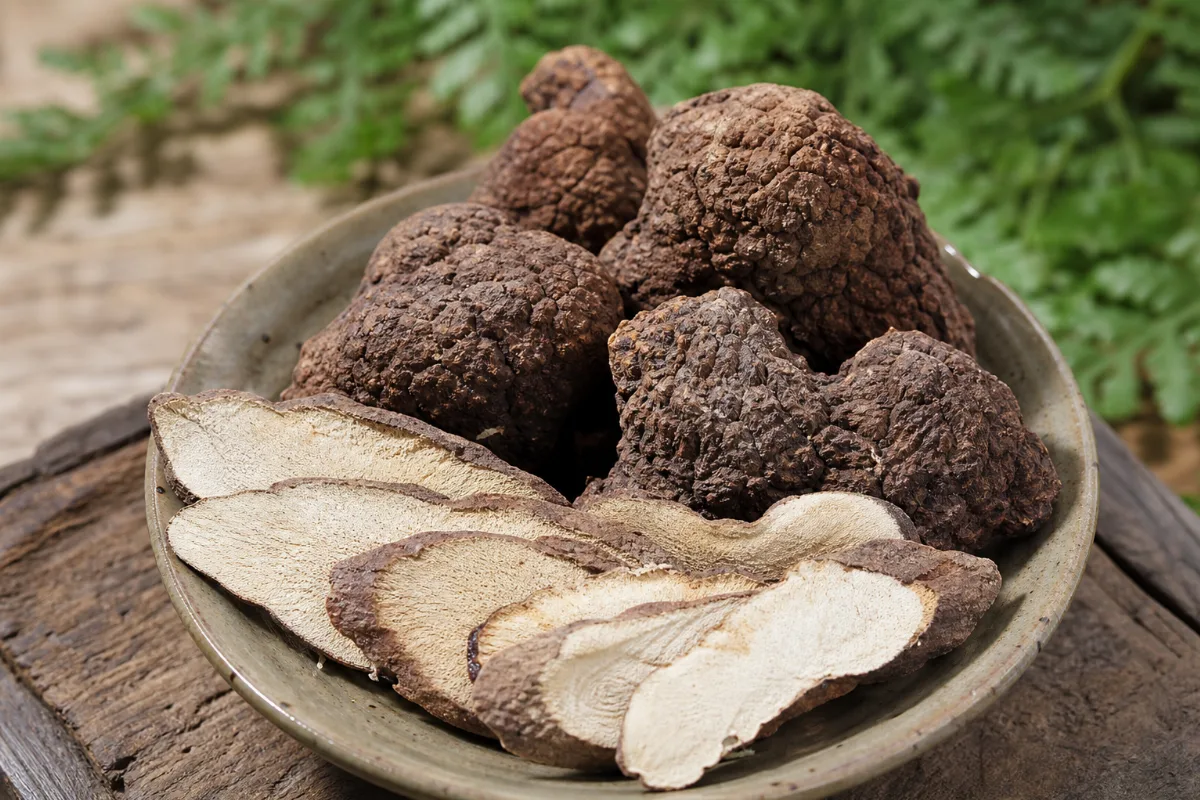
Mushrooms · Medicinal fungus (sclerotium)
Zhu ling
Polyporus umbellatus (older name Grifola umbellata) · also called Zhuling, polyporus
Zhu ling is the dark, hard underground lump (sclerotium) of a fungus. Chinese medicine uses it to help the body pass urine and clear swelling. Almost all the research is in animals and labs, with very little in people. Because it acts like a water pill, ask a doctor or pharmacist before combining it with any heart, blood pressure or kidney medicine.
General information, not medical advice. Last substantive update · Not medically reviewed. A named clinician has not signed off on this page. How this page is made
About Zhu ling
Zhu ling is a rare Chinese medicine fungus used mainly as a diuretic. Research is mostly animal and lab work; the few human studies test a multi-herb formula or a purified polysaccharide drug, not the mushroom on its own.
What it is
Zhu ling is the sclerotium, a hardened underground mass, of the fungus Polyporus umbellatus. It is dark brown to black outside and white inside. The fungus depends on the honey fungus Armillaria to grow, which makes cultivation hard.
Wild supply has declined, so products can differ in what they really contain.
Formulas and drugs are not the same as the mushroom
Zhuling decoction is a multi-herb formula. One trial added it to usual care in 96 people with heart failure and water-pill resistance and saw more urine output. The result cannot be credited to zhu ling alone.
In China a purified polysaccharide is licensed as a drug, per a review. Research on it does not show that the dried mushroom or a tea works.
What the research shows
Reviews describe diuretic, kidney, immune, anticancer and liver effects in animals and cells. They also say most of it used crude, poorly described extracts.
For hepatitis B, a Cochrane review found a positive effect of the polysaccharide on two virus markers but judged the evidence too weak to recommend any herb.
At a glance
Traditional uses history, not proof
- Used in traditional Chinese medicine for edema, scanty urine, urinary dysfunction, vaginal discharge, jaundice and diarrhea (Zhao 2013).
- Usually sliced and used inside multi-herb formulas, and prepared as a hot-water decoction.
Studied for research
- Passing urine and fluid (animals; no trial of zhu ling alone), insufficient
- Zhuling decoction formula in heart failure (one trial), very low
- Hepatitis B with a purified polysaccharide drug, very low
- Immune, cancer and antioxidant lab findings, insufficient
Main compounds
- Polysaccharides, the best studied immune-active part
- Ergosterol and ergone, steroids linked to the diuretic effect
- Polyporusterones (steroids)
- Anthraquinones such as emodin
Common forms
- Dried sclerotium slices (traditional, in formulas)
- Hot-water decoction or extract
- Purified polysaccharide drug (capsule or injection in China)
- Mycelium or fermentation products and multi-herb formulas
Research links: A review of traditional uses and pharmacology (Zhao 2013) · Review of Polyporus umbellatus (Ren 2025) · Cochrane review: Chinese herbs for chronic hepatitis B · Research Library · Genes & Biomarkers Library
What it is and its history
- Accepted scientific name
- Polyporus umbellatus (Pers.) Fr.
- Naming authority
- (Pers.) Fr. (GBIF)
- Synonyms
- Grifola umbellata (Pers.) Pilat (older name; a synonym in GBIF)
- Common names
- Zhu ling (Chinese (pinyin)); Zhuling (Chinese (pinyin)); Polyporus (English (trade name in Chinese medicine))
- Family or group
- Polyporaceae (a fungus family; shelf and bracket fungi), not a plant
- Classification
- Fungi > Basidiomycota > Agaricomycetes > Polyporales > Polyporaceae > Polyporus > Polyporus umbellatus
- Native range
- Not checked in the sources read.
- Habitat
- Ren 2025 says it cannot survive without the support of the honey fungus Armillaria mellea, which invades the sclerotium and supplies nutrients.
- What it looks like
- Sclerotium: Ren 2025 describes the sclerotium as irregular, multibranched and tuberous, with a dark brown to black surface and a white inside. This is the part used in Chinese medicine.
- Cultivation
- Hard: it depends on Armillaria, and Ren 2025 says wild populations have declined for lack of resource protection. Mycelium and fermentation products are grown in tanks.
- Harvest and processing
- Not checked in the sources read.
- Look-alikes and adulterants
- Name: Other polypore fungi; Note: Wild fungi cannot be identified safely from text or an app. Do not forage this for use as medicine.; Name: Fungi named in the older genus Grifola; Note: The older name Grifola umbellata starts with the same genus name as other fungi; check the full Latin name on a label.
- Sustainability and conservation
- Ren 2025 reports a decline in wild production; a claim of legal protection in China was second-hand and was not verified.
Traditional use and history history, not clinical proof
| Tradition or era | Documented use | Source |
|---|---|---|
| Traditional Chinese medicine | Used for edema, scanty urine, vaginal discharge, urinary dysfunction, jaundice and diarrhea. | p23811047 |
| Modern China (drug development) | A purified polysaccharide capsule and injection are described as approved drugs in China, used since 1990. | p31030753 |
| Long use in Chinese medicine (about 2,500 years per one source) | Second-hand from Liu 2026; the Chinese Pharmacopoeia was not opened. NOT verified. | s-liu-2026-fungi |
Traditional use shows how it was used. It does not show that it works or is safe today.
What is inside, and how it may work
What it contains and how those compounds act in cells and animals. Laboratory and animal mechanisms are not proven effects in people.
Main compounds
| Compound | Family | Where it is concentrated | Activity studied | Level of evidence |
|---|---|---|---|---|
| Polysaccharides (PUPs) | polysaccharide | Sclerotium, fruiting body, mycelium, fermentation liquid Total polysaccharide up to 33.79 mg per g in 47 sclerotium samples (summary-only). | Immune cell activation in cells and mice; antioxidant and liver-protecting claims in lab work. 9 10 | Laboratory research |
| Ergosterol and ergone (steroids) | sterol | Sclerotium Ergosterol up to 2170 microgram per g in 47 sclerotium samples (summary-only). | Ergone is described as the main diuretic compound in animals; well absorbed, mainly excreted in faeces. 14 11 | Animal research |
| Polyporusterones (steroids) | steroid | Sclerotium Not verified. | Lab anti-inflammatory and xanthine-oxidase binding; computer predictions for polyporusterone E. 11 2 | Laboratory research |
| Anthraquinones (emodin, chrysophanol) | anthraquinone | Sclerotium Not verified. | Review warns of liver and kidney toxicity for emodin at long-term high doses. 11 | Review |
Mechanisms, receptors and pathways
| Target or pathway | Gene or receptor | What was found | Level |
|---|---|---|---|
| Macrophage activation | TLR4 | Polysaccharide activates macrophages through TLR4 in cells and mice. 11 9 | Laboratory research |
| Diuresis | aldosterone / kidney tubule reabsorption | Ergone is described as opposing aldosterone and altering reabsorption in animals. 11 | Animal research |
| Computer-predicted targets for Zhuling decoction | HMGCR, HSD11B1, NOS2, NR3C1, NR3C2 | Database and docking prediction only. 2 | In silico |
| Xanthine oxidase binding | XOD | Polyporusterones A and B showed binding in lab work. 11 | Laboratory research |
Absorption, metabolism and elimination
- Absorption
- Zhao 2013 reports ergosterol and ergone had high distribution and absorption in plasma (animals).
- Distribution
- Not found in the sources read.
- Metabolism
- Not found in the sources read.
- Elimination
- The two main steroids were mainly excreted by faeces (Zhao 2013).
- Bioavailability
- Not established for any whole product.
Isolated compounds versus whole extracts
Dried sclerotium, hot-water extract, purified polysaccharide (a licensed drug in China per one review), mycelium or fermentation products and multi-herb formulas such as Zhuling decoction are different materials. Evidence for one does not carry over to the others. This page keeps formula findings and polysaccharide-drug findings separate from the single ingredient.
Nutritional composition
The young fruiting body is eaten in some places. No measured nutrient values were read, so no nutrition claim is made.
2 very low certainty7 not enough evidence
What was looked at
The 9 benefits and uses checked for Zhu ling, each with how strong the evidence is. Tap one to open it.
- Passing more urine (zhu ling on its own)Not enough evidence
- Zhuling decoction (a formula) for water-pill resistance in heart failureVery low certainty
- Kidney protectionNot enough evidence
- Hepatitis B (purified polysaccharide drug, not the mushroom)Very low certainty
- Other liver claims (hepatitis E preprint, liver protection)Not enough evidence
- Immune cell activationNot enough evidence
- Cancer (lab and animal findings only)Not enough evidence
- Antioxidant, anti-inflammatory and gout-related lab findingsNot enough evidence
- As a foodNot enough evidence
Lab markers tracked in the studies
Urine output over 24 hoursNT-proBNP (a blood marker of heart strain)HBeAg and HBV DNA (hepatitis B activity markers)ALT (a liver enzyme)
What is Zhu ling good for?
The uses people ask about and how strong the human evidence is for each. None is proven. Read this together with the Safety tab.
Benefits, one by one
Each card is a research question, not a promise. Tap a goal to filter. Open a card to see the studies, doses and limits.
Passing more urine (zhu ling on its own)
Not enough evidenceThis is the classic use in Chinese medicine. Extracts made the body pass more urine in animals. We found no controlled trial of zhu ling on its own in people.
2 studiesTraditionally the dried, sliced sclerotium in a hot-water decoction, …
Studies, doses and limits
What the trials found
No controlled human trial of zhu ling alone was found. The only human trials we found use a formula or a product that also contains a drug (see the next entries).
Results
Animal work: an 8-day extract produced a diuretic effect like furosemide, with more sodium, potassium and chloride lost than with furosemide (reported by Ren 2025).
Effect sizes as reported
Not measured in people
Why this rating
Animals and tradition only; no human trial of the single ingredient.
Form and dose studied
Traditionally the dried, sliced sclerotium in a hot-water decoction, used inside formulas. Extracts in the animal studies were not the same as a shop product.
Who was studied
Animals; traditional use in people
Limits
Animal diuresis does not show that zhu ling helps people with swelling or heart, liver or kidney disease. Water pills change salt balance and should be supervised.
Why researchers looked
Zhu ling is listed in Chinese medicine for swelling, scanty urine and urinary complaints, so the diuretic effect is the most studied property.
Traditional use
Traditional uses named in a review include edema, scanty urine, urinary dysfunction, vaginal discharge, jaundice and diarrhea.
Proposed mechanism Animal research
Reviews name ergosterol-related steroids, mainly a compound called ergone, as the diuretic part, and say it may work by opposing the hormone aldosterone and by changing water reabsorption in the kidney tubules. This comes from animal and lab work.
A proposed mechanism does not show that the effect happens in people.
A real diuretic effect means possible loss of salt and potassium. See the Safety tab.
Zhuling decoction (a formula) for water-pill resistance in heart failure
Very low certaintyOne hospital trial of 96 people with heart failure added a formula called Zhuling decoction to usual care and saw more urine output and better heart-failure scores. It is a formula with several ingredients, so the result cannot be credited to zhu ling alone.
2 studiesA traditional formula (its ingredient list is not in the abstract).
Studies, doses and limits
What the trials found
Randomised trial, 96 hospital patients with heart failure and diuretic resistance, 48 per group. Both groups had conventional treatment; one group also had Zhuling decoction.
Results
Day 7 urine output: a difference of 1325 mL (as printed in the abstract) in favour of the formula group (P = 0.018). The formula group also had greater improvements in NT-proBNP and NYHA class, and a larger improvement in quality-of-life score at day 30 (P < 0.001).
Effect sizes as reported
Greater urine output and better scores with the formula added to standard care
Why this rating
One single-hospital trial; blinding is not stated in the abstract; the formula has several ingredients; safety results are not in the abstract.
Form and dose studied
A traditional formula (its ingredient list is not in the abstract).
Who was studied
Hospital patients with heart failure and diuretic resistance, China
Limits
The 2022 trial cannot tell us what zhu ling does on its own. People with heart failure should not add a formula without their cardiology team, because fluid and salt balance matter.
Why researchers looked
Zhuling decoction is a classical formula used for water retention; the trial asked whether it helps when usual water pills are not working well enough.
Traditional use
The formula is named after zhu ling, but contains other herbs.
Proposed mechanism In silico
Not established. A 2024 computer analysis predicted that several steroids (including polyporusterone E) and alisol compounds might act on certain human proteins; this is a prediction, not a test.
A proposed mechanism does not show that the effect happens in people.
The abstract says liver, kidney and electrolytes were checked but gives no results.
Kidney protection
Not enough evidenceRat studies report less kidney scarring with zhu ling extracts or its polysaccharide. No trial in people was found.
2 studiesCrude extracts and a purified polysaccharide in animals.
Studies, doses and limits
Results
Reviewers say most work used crude extracts in animals.
Effect sizes as reported
Not measured in people
Why this rating
Animal and lab work only.
Form and dose studied
Crude extracts and a purified polysaccharide in animals.
Who was studied
Rats
Limits
Animal kidney results often do not carry over to people. People with kidney disease should talk to their kidney doctor before trying any herb.
Why researchers looked
Linked to the traditional use for kidney and urinary complaints.
Traditional use
Used in Chinese medicine for urinary problems and swelling.
Proposed mechanism Animal research
Reviews describe effects on scarring (fibrosis) pathways in rats given chemicals that damage the kidney. These are animal findings.
A proposed mechanism does not show that the effect happens in people.
Anthraquinones such as emodin, found in the sclerotium, are reported at high long-term doses to harm liver and kidney; the amount in products is not known.
Hepatitis B (purified polysaccharide drug, not the mushroom)
Very low certaintyIn China a purified polysaccharide made from zhu ling is a licensed drug said to be used for hepatitis B, mostly in small or older studies. Reviews call the evidence weak. This is not the same thing as the mushroom or tea.
4 studiesPurified polysaccharide capsule or injection, alone or with other dru…
Studies, doses and limits
What the trials found
A 2001 Cochrane review found that the polysaccharide had a positive effect on HBeAg and HBV DNA versus non-specific treatment or placebo, but quality was adequate in only 1 of 9 trials and the evidence was called too weak to recommend any single herb. A small 1993 trial of 90 people compared the polysaccharide, Salvia, or both; the polysaccharide alone had the lowest HBeAg conversion (16.7%) and there was no placebo group. A 2019 review of 11,703 reported cases in China concluded it was effective in most reports.
Results
Xiong 1993 (90 patients, 3 months): ALT normalised in 80.0% (Salvia plus polysaccharide), 40.0% (Salvia) and 53.3% (polysaccharide); HBeAg turned negative in 56.7%, 50.0% and 16.7%.
Effect sizes as reported
Positive lab-marker changes in small or uncontrolled studies
Why this rating
Old, small trials; no placebo group in the 1993 trial; the large 2019 review does not separate controlled from uncontrolled reports.
Form and dose studied
Purified polysaccharide capsule or injection, alone or with other drugs. Not the same as the dried sclerotium or a tea.
Who was studied
People with chronic hepatitis B, China
Limits
Hepatitis B needs proper medical care. Nothing here supports using the mushroom instead of antiviral treatment.
Why researchers looked
Zhu ling is used traditionally for jaundice and its polysaccharide has been developed as a drug.
Traditional use
Traditional use for jaundice.
Proposed mechanism Laboratory research
Described as immune-stimulating and liver-protecting; mechanisms come from lab and animal work.
A proposed mechanism does not show that the effect happens in people.
Interactions with other hepatitis drugs are unstudied for the whole mushroom. See the Safety tab.
Other liver claims (hepatitis E preprint, liver protection)
Not enough evidenceA 2026 preprint reports better liver tests in viral hepatitis. It has not been peer reviewed and we do not know which studies it used. Animal work also reports liver protection.
2 studiesPreparation not recorded.
Studies, doses and limits
What the trials found
Preprint abstract only.
Results
Improved liver tests were reported; no figures read.
Effect sizes as reported
Unknown
Why this rating
A preprint, read only through our earlier summary.
Form and dose studied
Preparation not recorded.
Who was studied
People with viral hepatitis (preprint)
Limits
Not peer reviewed; sources unknown.
Why researchers looked
Liver is a common target of zhu ling research.
Traditional use
Used for jaundice.
Proposed mechanism Laboratory research
Not established.
A proposed mechanism does not show that the effect happens in people.
None specific.
Immune cell activation
Not enough evidenceThe polysaccharide switches on immune cells (macrophages) in dishes and mice. This is a lab finding, not a health result in people.
3 studiesPurified polysaccharides.
Studies, doses and limits
Results
A 3:1 mix of reishi and zhu ling polysaccharides raised macrophage and NK-cell activity in mice; it was not zhu ling alone.
Effect sizes as reported
Not measured in people
Why this rating
Cells and mice only.
Form and dose studied
Purified polysaccharides.
Who was studied
Cells; mice
Limits
Immune markers in cells do not show fewer infections.
Why researchers looked
Polysaccharides from fungi are often tested for immune effects.
Traditional use
Not a traditional use.
Proposed mechanism Laboratory research
Reviews say the polysaccharide acts through the TLR4 receptor on macrophages in cells and mice.
A proposed mechanism does not show that the effect happens in people.
Immune stimulation is a theoretical concern with immunosuppressant medicines.
Cancer (lab and animal findings only)
Not enough evidenceCell and animal studies report effects of the polysaccharide and some steroids on cancer cells. No human trial of zhu ling for cancer was found. It is not a cancer treatment.
2 studiesPurified polysaccharide; isolated steroids.
Studies, doses and limits
What the trials found
A 2019 review says the polysaccharide drug has been used for lung and liver cancers in China, with reports of benefit when combined with other treatments; it gives no controlled figures in the abstract.
Results
No numbers read.
Effect sizes as reported
Unknown
Why this rating
Lab, animal and uncontrolled reports.
Form and dose studied
Purified polysaccharide; isolated steroids.
Who was studied
Cell lines; rats; reported cases in China
Limits
Do not use in place of cancer treatment. Tell your cancer team about any supplement.
Why researchers looked
Often cited in reviews; the polysaccharide has been used alongside other treatment in China.
Traditional use
Not a classic use.
Proposed mechanism Laboratory research
Reviews describe cell death effects in cancer cell lines and a bladder cancer model in rats.
A proposed mechanism does not show that the effect happens in people.
Supplements can interact with cancer treatment.
Antioxidant, anti-inflammatory and gout-related lab findings
Not enough evidenceLab work reports free-radical scavenging, anti-inflammatory activity and binding to an enzyme linked to uric acid (xanthine oxidase). None of this has been tested in people.
2 studiesIsolated compounds and purified polysaccharide.
Studies, doses and limits
Results
Lab only.
Why this rating
Lab only.
Form and dose studied
Isolated compounds and purified polysaccharide.
Who was studied
Lab systems
Limits
Lab activity is a long way from a health benefit.
Why researchers looked
Compounds in the sclerotium are screened for many lab activities.
Traditional use
Not a traditional use.
Proposed mechanism Laboratory research
Reviews report lab binding of polyporusterones A and B to xanthine oxidase and radical scavenging by the polysaccharide.
A proposed mechanism does not show that the effect happens in people.
None specific.
As a food
Not enough evidenceThe young fruiting body above ground is eaten in some places. We found no measured nutrient values, so we make no nutrition claim. The medicine itself is the underground sclerotium.
2 studiesYoung fruiting body.
Studies, doses and limits
Results
No numbers found; an earlier source states values we could not check.
Why this rating
No measured values read.
Form and dose studied
Young fruiting body.
Limits
Not a nutrient source on this evidence.
Why researchers looked
Reviews mention the food value.
Traditional use
Eaten as a food in some places.
Proposed mechanism N/a
n/a
A proposed mechanism does not show that the effect happens in people.
Do not forage wild fungi from text or an app.
Connections to the rest of health
How Zhu ling connects to the rest of our health knowledge graph. Every link says what kind of connection it is. A safety link (for example to the liver) is a warning, not a benefit. A study that merely mentions a topic never creates a benefit link.
Explore every connection: goals, body systems, organs, symptoms, genes
A. Wellness goals
| Connected to | Kind of connection | Evidence status | Context | Studies |
|---|---|---|---|---|
| Immune Support | Preliminary mechanism | Not enough evidence | Immune cell activation: The polysaccharide switches on immune cells (macrophages) in dishes and mice. This is a lab finding, not a health result in people. | 9 5 11 |
B. Body systems
| Connected to | Kind of connection | Evidence status | Context | Studies |
|---|---|---|---|---|
| Urinary System | Biological association | Not enough evidence | Studied for: Passing more urine (zhu ling on its own) Studied for: Zhuling decoction (a formula) for water-pill resistance in heart failure | 14 11 13 2 |
| Cardiovascular System | Biological association | Very low certainty | Studied for: Zhuling decoction (a formula) for water-pill resistance in heart failure | 13 2 |
| Hepatic System | Biological association | Very low certainty | Studied for: Hepatitis B (purified polysaccharide drug, not the mushroom) Studied for: Other liver claims (hepatitis E preprint, liver protection) | 8 12 4 10 1 14 |
| Immune System | Biological association | Very low certainty | Studied for: Hepatitis B (purified polysaccharide drug, not the mushroom) Studied for: Immune cell activation | 8 12 4 10 9 5 11 |
C. Body parts and organs
| Connected to | Kind of connection | Evidence status | Context | Studies |
|---|---|---|---|---|
| Kidneys | Very low certainty | Fluid and salt shifts; no human safety study. Preparation or compound: Zhu ling extracts (diuretic) |
11 | |
| Liver | Very low certainty | Flagged by a review at long-term high doses; amount in products unknown. Preparation or compound: Emodin-type anthraquinones |
11 |
I. Biomarkers
| Connected to | Kind of connection | Evidence status | Context | Studies |
|---|---|---|---|---|
| Urine output over 24 hours | Biological association | Very low certainty | Measured in trials: raised. A lab change is not the same as a health benefit. | 13 |
| NT-proBNP (a blood marker of heart strain) | Biological association | Very low certainty | Measured in trials: lowered. A lab change is not the same as a health benefit. | 13 |
| HBeAg and HBV DNA (hepatitis B activity markers) | Biological association | Very low certainty | Measured in trials: lowered. A lab change is not the same as a health benefit. | 12 8 |
| ALT (a liver enzyme) | Biological association | Very low certainty | Measured in trials: lowered. A lab change is not the same as a health benefit. | 12 |
J. Genes, receptors and enzymes
| Connected to | Kind of connection | Evidence status | Context | Studies |
|---|---|---|---|---|
| TLR4 | Preliminary mechanism | In vitro | Polysaccharide effects on macrophages in cells and mice. | 11 |
L. Active compounds
| Connected to | Kind of connection | Evidence status | Context | Studies |
|---|---|---|---|---|
| Polysaccharides (PUPs) | Biological association | In vitro | Immune cell activation in cells and mice; antioxidant and liver-protecting claims in lab work. Preparation or compound: Sclerotium, fruiting body, mycelium, fermentation liquid |
9 10 |
| Ergosterol and ergone (steroids) | Biological association | Animal | Ergone is described as the main diuretic compound in animals; well absorbed, mainly excreted in faeces. Preparation or compound: Sclerotium |
14 11 |
| Polyporusterones (steroids) | Biological association | In vitro | Lab anti-inflammatory and xanthine-oxidase binding; computer predictions for polyporusterone E. Preparation or compound: Sclerotium |
11 2 |
| Anthraquinones (emodin, chrysophanol) | Biological association | Review | Review warns of liver and kidney toxicity for emodin at long-term high doses. Preparation or compound: Sclerotium |
11 |
Each connection is stored with the ingredient, the connected record, the kind of connection, the evidence status, the supporting studies, the preparation or compound involved, and a review date (last reviewed October 25, 2026).
Evidence at a glance: what changed in 4 lab markers
Tap a number to show only those markers. Counts are markers, not people.
The evidence
The research centre for Zhu ling. Every record here was checked against PubMed or the publisher's page; we never list a study we have not verified.
Evidence by outcome
Bars show how many studies we found for each outcome, not how well it works. People are added up across trials only (reviews are not added, to avoid double counting).
How we rate evidence
High certainty
Several well-run trials or reviews agree; further research is unlikely to change the picture much.
Moderate certainty
Good trials point the same way, but some doubt remains.
Low certainty
Small, short or inconsistent trials. The finding could change with better research.
Very low certainty
Very little or very weak human data. Treat as a possibility only.
Mixed findings
Trials or reviews disagree with each other.
Not enough evidence
Not enough human research to say either way.
Evidence against
Good research found no benefit, or found harm.
We take the reviewers' own risk-of-bias and GRADE statements where they exist, and otherwise judge from study size, design, consistency, directness and whether a product matches what is sold. Many publications do not make evidence high. Method note: We read PubMed records and abstracts for 10 papers (a Cochrane review, two narrative reviews, one randomised formula trial, one small 1993 trial, one 1992 clinical report, one 2019 review, two animal or lab studies and one computer analysis), the full text of one 2025 review, and carried over two summary-only sources (a 2026 chemical analysis and an unreviewed preprint). Names were checked in the GBIF database.
Study library: every study we checked 14
| Study | Design | People | Product, dose, length | Result |
|---|---|---|---|---|
| Authors not recorded 2026 Polyporus umbellatus in hepatitis E: meta-analysis and network pharmacology (preprint, not peer reviewed). Research Square preprint · Source · DOI |
Preprint n/a |
Preprint combining a meta-analysis and computer modelling | Polyporus umbellatus (preparation not recorded) not recorded Not shown here |
Reported improved liver tests in viral hepatitis. Our earlier record says this was read from the abstract only and the included studies are unknown. Unreviewed preliminary report (n/a) Methods, limits and fundingOutcomes: Liver tests in viral hepatitis Limitations: Summary-only: not re-opened for this page. Not peer reviewed; the underlying studies are not known to us. Funding and conflicts: Not checked Read: summary-only |
| Chen 2024 Network Pharmacology and Molecular Docking Validation to Explore the Pharmacological Mechanism of Zhuling Decoction against Nephrotic Syndrome. Current Pharmaceutical Design · PMID 38910482 · DOI |
Computer modelling in-silico |
Database and computer analysis (no patients, no animals) | Zhuling decoction (computer-predicted ingredients) formula Not shown here |
Computer screening named polyporusterone E, cerevisterol, alisol B and alisol B 23-acetate as principal potential ingredients, and predicted binding to HMGCR, HSD11B1, NOS2, NR3C1 and NR3C2. The abstract says the formula is "clinically proven" for nephrotic syndrome, but this paper tested no patients. Computer prediction only (n/a) Methods, limits and fundingOutcomes: Predicted ingredients and targets in nephrotic syndrome Limitations: Predictions from databases and docking are hypotheses, not evidence that the formula works. The abstract line calling the formula clinically proven is not supported by anything in the paper itself. Funding and conflicts: Not stated in the abstract Read: abstract |
| GBIF Secretariat 2026 GBIF Backbone Taxonomy: Polyporus umbellatus (Pers.) Fr. (accepted, key 5246840); Grifola umbellata (Pers.) Pilat (synonym, key 2546824). GBIF species match API (checked 2026-10-25) · Source |
Taxonomy record n/a |
n/a | n/a Not shown here |
Polyporus umbellatus (Pers.) Fr. is the accepted name in the family Polyporaceae. Grifola umbellata (Pers.) Pilat is listed as a synonym. Methods, limits and fundingOutcomes: Accepted name, synonyms, family Limitations: Database record; the name could change in later releases. Funding and conflicts: Public database Read: full text |
| Guo 2019 The efficacy of Polyporus Umbellatus polysaccharide in treating hepatitis B in China. Progress in Molecular Biology and Translational Science · PMID 31030753 · DOI |
Narrative review |
Chinese-language and English reports (over 100 publications, 11,703 cases) of PUPS in hepatitis B and cancers | P. umbellatus polysaccharide (PUPS) capsule and injection, alone or with other drugs purified polysaccharide Not shown here Reports covered 27 years · vs Mono- and combination therapy reports |
Says PUPS capsule and injection are approved drugs in China (SFDA) used since 1990 for hepatitis B and lung and liver cancers. Searched PubMed, VIP, CNKI and Wanfang. Evaluated 11,703 reported cases from over 100 publications. Concludes PUPS showed effectiveness in most reported cases and that combinations (with hepatitis B vaccine, interferon, acyclovir, iRNA) did better than either drug alone. Favourable conclusion from reported cases; not a controlled analysis (n/a) Methods, limits and fundingOutcomes: Efficacy and problems of PUPS treatment in China Limitations: The abstract does not say how many reports were controlled trials, and does not give pooled effect sizes or bias ratings. Many of the reports may be uncontrolled. The conclusions are the review authors; the drug is a purified polysaccharide, not zhu ling mushroom. Funding and conflicts: Research support, non-US government (per the record) Read: abstract |
| Huang 2019 GPP (Composition of Ganoderma Lucidum Poly-saccharides and Polyporus Umbellatus Poly-saccharides) Enhances Innate Immune Function in Mice. Nutrients · PMID 31261807 · DOI |
Animal and lab animal |
RAW264.7 macrophage cells and mice | Combination of Ganoderma lucidum and P. umbellatus polysaccharides in a 3:1 ratio (GPP) purified polysaccharides Not shown here 30 days (mice) · vs Control mice |
The combination raised macrophage phagocytic ability, nitric oxide and iNOS and TNF-alpha expression in cells, and improved macrophage phagocytosis and NK-cell activity in mice. The combination was in the non-toxic grade in mice. Immune cell activity raised in cells and mice (n/a) Methods, limits and fundingOutcomes: Macrophage phagocytosis, nitric oxide, NK-cell activity, acute toxicity Limitations: A mix of two mushroom polysaccharides, not P. umbellatus alone. Animal and cell work only. Funding not stated in the abstract. Funding and conflicts: Not stated in the abstract Read: abstract |
| Kim 2026 Toxicological Characterization of Polyporus umbellatus Extract: Genotoxicity and 2-Week Repeated-Dose Toxicity Study. Journal of Medicinal Food · PMID 42670976 · DOI |
Animal and lab toxicology animal |
Cells, bacteria, mice and F344 rats | Aqueous P. umbellatus extract Not shown here 2 weeks (rats) · vs Untreated or vehicle groups per assay |
The extract significantly increased structural chromosomal aberrations in cultured hamster lung cells (short-term with and without metabolic activation, and continuous treatment). It did not increase mutant colonies in bacterial tests and did not increase micronucleated cells in the bone marrow of mice. In rats given the extract by gavage for 2 weeks there was no death, no treatment-related clinical signs, weight loss or gross lesions, and no consistent blood-test toxicity pattern. Isolated changes in male kidney weight, female salivary gland weight and male creatine kinase were not seen as definite adverse effects. The authors say long-term studies are still needed. Mixed: chromosome changes in a cell test, no damage in two other tests, no clear toxicity in 2 weeks in rats (n/a) Methods, limits and fundingOutcomes: Chromosome damage in cells, bacterial mutation, mouse bone marrow micronuclei, 2-week toxicity in rats Limitations: Short animal study and cell tests; says nothing about people. Funding not stated in the abstract. Funding and conflicts: Not stated in the abstract Read: abstract |
| Li 1992 Clinical study of rapid bladder filling agent (Chinese-language article). Zhongguo Zhong Xi Yi Jie He Za Zhi · PMID 1298469 |
Clinical study |
211 211 people having an ultrasound scan of the bladder (plus 1,180 clinical observations) |
Rapid Bladder Filling Agent: P. umbellatus, Poria cocos and furosemide Not shown here Single sessions · vs Control group (not described in the abstract) |
Shortest filling time was 30.35 +/- 7.9 minutes in the agent group versus 145.6 +/- 50.1 minutes in the control group. The authors say the agent shortened waiting time, acted quickly but briefly, and had no adverse effect. Faster bladder filling for a scan with the combination (Not given) Methods, limits and fundingOutcomes: Largest urine volume per unit time and time to bladder filling on ultrasound Limitations: The product contained the drug furosemide, so the effect cannot be credited to zhu ling. Control group, blinding and funding are not described in the abstract. This is a scan-preparation product, not a health treatment. Funding and conflicts: Not stated in the abstract Read: abstract |
| Liu 2001 Chinese medicinal herbs for chronic hepatitis B. Cochrane Database of Systematic Reviews · PMID 11279742 · DOI |
Systematic review |
936 Patients with chronic hepatitis B; 9 randomised trials of 10 herbs |
Chinese medicinal herbs, including Polyporus umbellatus polysaccharide varied Not shown here At least 3 months follow-up · vs Placebo, no intervention, non-specific treatment or interferon |
Nine randomised trials with 936 patients; quality was adequate in only one trial and there was funnel plot asymmetry. Compared with non-specific treatment or placebo, Polyporus umbellatus polysaccharide showed a positive effect on serum HBeAg and HBV DNA. The reviewers concluded that some herbs may work but that the evidence is too weak to recommend any single herb. Positive effect on HBeAg and HBV DNA for the polysaccharide in the included trial(s); evidence too weak to recommend (n/a) Methods, limits and fundingOutcomes: Clearance of HBsAg, HBeAg, HBV DNA; ALT normalisation Limitations: Review published in 2001, so newer trials are not covered. Only one of nine trials had adequate quality. The abstract does not give the numbers for the polysaccharide. Funding and conflicts: Cochrane review; funding not stated in the abstract Read: abstract |
| Liu 2021 Polysaccharides from Polyporus umbellatus: A review on their extraction, modification, structure, and bioactivities. International Journal of Biological Macromolecules · PMID 34419536 · DOI |
Narrative review n/a |
Literature review of P. umbellatus polysaccharides (PUPs) | P. umbellatus polysaccharides (from sclerotia, fruiting body, mycelia and fermentation liquid) sclerotium, fruiting body, mycelium, fermentation liquid Not shown here |
Says PUPs are the main pharmacologically active ingredients and show antioxidant, immunomodulatory, antitumor, anti-proliferative and hepatoprotective activity in vivo and in vitro. Notes PUPs have been isolated from different sources of the fungus (sclerotia, fruiting body, mycelia, fermentation liquid). Also states that the fungus is known in traditional Chinese medicine for diuresis and dampness infiltration. Lab and animal findings for a purified polysaccharide; not human outcomes (n/a) Methods, limits and fundingOutcomes: Extraction, structure and biological activities of PUPs Limitations: Abstract only was read. A purified polysaccharide is not the same material as the whole sclerotium. Funding and conflicts: Not stated in the abstract Read: abstract |
| Liu 2026 Genetic-geographic-chemical framework of Polyporus umbellatus reveals lineage-specific chemotypes for elite medicinal line breeding. Journal of Fungi 12(1):39 · Source |
Chemical analysis n/a |
47 47 sclerotium samples from China |
P. umbellatus sclerotium samples sclerotium Not shown here |
Total polysaccharide ranged up to 33.79 mg per g and ergosterol up to 2170 microgram per g, with large differences between places. States in its introduction that a polysaccharide preparation is approved in China for chronic hepatitis B; the reference behind that line was not opened. Content varies a lot between samples and places (n/a) Methods, limits and fundingOutcomes: Polysaccharide and ergosterol content by origin Limitations: Summary-only: figures and statements come from our earlier reading of this open-access paper (carried over from the existing record) and were not re-opened for this page. Dry-weight basis not seen. Funding and conflicts: Not checked Read: summary-only |
| Ren 2025 Polyporus umbellatus, a precious rare fungus with good pharmaceutical and food value (PMID 39834535, PMC11742960). Engineering in Life Sciences · Source · DOI |
Narrative review n/a |
Literature review | P. umbellatus sclerotium, polysaccharides, steroids, anthraquinones sclerotium mainly Not shown here |
Describes the sclerotium (dark brown to black outside, white inside) and says the fungus cannot survive without the support of Armillaria mellea. Reports that an 8-day extract produced a diuretic effect like furosemide in a comparison experiment, with more sodium, potassium and chloride excreted than with furosemide (animal work). Names emodin and chrysophanol among the compounds and says long-term, high-dose emodin may cause liver and kidney toxicity. Says wild sclerotia are mainly used for medicine and that wild production has declined for lack of resource protection. Says most polysaccharide studies reported low or no toxicity. Also states that the fungus has "no or little side effect"; we found no study behind that line and do not rely on it. Narrative review; mostly animal and lab studies (n/a) Methods, limits and fundingOutcomes: Cultivation, ingredients, pharmacology, outlook Limitations: Full text read on 2026-10-25. Authors of a review, not a trial; several statements are not backed by a visible measurement. Review in a journal that publishes open access. Funding and conflicts: Not checked Read: full text |
| Xiong 1993 Therapeutic effect of combined therapy of Salvia miltiorrhizae and Polyporus umbellatus polysaccharide in the treatment of chronic hepatitis B (Chinese-language article). Zhongguo Zhong Xi Yi Jie He Za Zhi (Chinese Journal of Integrated Traditional and Western Medicine) · PMID 8111209 |
Controlled trial |
90 90 patients with chronic hepatitis B, HBV replication markers positive and ALT abnormal |
Salvia miltiorrhiza (SM) and P. umbellatus polysaccharide (PUP), alone or together purified polysaccharide Not shown here 3 months of treatment, follow-up to 9 months · vs Three groups of 30: SM plus PUP, SM alone, PUP alone (no placebo group) |
At 3 months ALT had normalised in 80.0% (SM plus PUP), 40.0% (SM) and 53.3% (PUP). HBeAg turned negative in 56.7%, 50.0% and 16.7%. At 9 months after treatment ALT was normal in 83.3%, 43.8% and 56.3%, and HBeAg negative in 66.7%, 56.3% and 25.0%. The authors concluded the combination might be more potent than either alone. The PUP-only group had the lowest HBeAg conversion; no placebo group, so the trial cannot show PUP works (n/a) Methods, limits and fundingOutcomes: ALT normalisation and HBeAg negative conversion Limitations: Small 1993 trial with no placebo group; blinding and funding not stated in the abstract. It tests a combination with Salvia and a purified polysaccharide. Funding and conflicts: Not stated in the abstract Read: abstract |
| Yunhu 2022 Effectiveness of Zhuling decoction on diuretic resistance in patients with heart failure: a randomized, controlled trial. Journal of Traditional Chinese Medicine · PMID 35610014 · DOI |
Controlled trial |
96 96 hospital patients with heart failure and diuretic resistance (July 2018 to August 2020), Taicang, China |
Zhuling decoction (a traditional formula; the abstract does not list its ingredients) plus conventional treatment formula Not shown here Day 7 primary endpoint; follow-up to day 30 · vs Conventional treatment alone (48 per group) |
Urine output rose in both groups by day 7, with a difference of 1325 mL (as printed in the abstract) in favour of the formula group (P = 0.018). The formula group also had greater improvements in NT-proBNP and NYHA class. At day 30 both groups had better quality-of-life scores, with a significantly greater improvement in the formula group (P < 0.001). The abstract says safety was checked with adverse reactions, liver and kidney tests and electrolytes, but does not give those results. Greater urine output and better heart-failure scores with the formula added to standard care (Not given in the abstract) Methods, limits and fundingOutcomes: Urine output change day 1 to day 7; NT-proBNP; NYHA class; Minnesota Living with Heart Failure score Limitations: Single-centre, open design not described in the abstract (blinding not stated). The formula has several ingredients, so the result cannot be credited to zhu ling alone. Safety results are not in the abstract. Funding and conflicts: Not stated in the abstract Read: abstract |
| Zhao 2013 Traditional uses, phytochemistry, pharmacology, pharmacokinetics and quality control of Polyporus umbellatus (Pers.) Fries: a review. Journal of Ethnopharmacology · PMID 23811047 · DOI |
Narrative review n/a |
Literature review of Polyporus umbellatus (zhuling) | Polyporus umbellatus (crude extracts and isolated compounds) sclerotium (per the review) Not shown here |
Names traditional uses for edema, scanty urine, vaginal discharge, urinary dysfunction, jaundice and diarrhea. Lists steroids, polysaccharides, anthraquinones and nucleosides. Reports diuretic, kidney-protecting, anticancer, immune, liver-protecting, anti-inflammatory and antioxidant activity in crude extracts and isolated compounds. Ergosterol and ergone were well absorbed and mainly excreted in faeces. Says most pharmacology used crude, poorly characterised extracts in animals and that clinical studies are needed to find side effects or toxicity. Mostly animal and lab findings; no human outcome data (n/a) Methods, limits and fundingOutcomes: Traditional uses, chemistry, pharmacology, pharmacokinetics, quality control Limitations: Narrative review; the abstract (the only part read) does not rate study quality. Most work was in animals. Funding and conflicts: Not stated in the abstract Read: abstract |
What we do not know yet
- No controlled human trial of zhu ling on its own for any use.
- Safety in people, including pregnancy, breastfeeding, children and long-term use, is unknown.
- The Zhuling decoction trial does not list ingredients or safety results in its abstract.
- Modern placebo-controlled trials of the polysaccharide for hepatitis B are missing.
How new research is added
New studies are found by a saved PubMed search and placed in a review queue. A person reads each one before it changes any evidence rating or safety statement.
Lab markers
What changed in blood or saliva tests during trials. A changed number is not the same as feeling or being healthier, and we give no "normal ranges".
Organ function 1
ALT (a liver enzyme)
Lowered in trials
A blood test that rises when liver cells are damaged.
Very low certaintyResults and what it means
Why it was measured
Tracks liver inflammation.
Statistical vs. clinical meaning
Small trial without placebo.
Safety implication
Normal ALT does not mean the virus is gone.
| Study | Result | People | Product |
|---|---|---|---|
| 12 | ALT normalised in 80.0%, 40.0% and 53.3% of the three groups at 3 months. | 90 patients with chronic hepatitis B | Salvia plus polysaccharide, Salvia, or polysaccharide alone |
Other 3
Urine output over 24 hours
Raised in trials
How much urine the body passes in a day. Doctors use it to judge whether water pills are working.
Very low certaintyResults and what it means
Why it was measured
In heart failure, more urine means less fluid built up in the body.
Statistical vs. clinical meaning
One trial; the formula has several ingredients.
Safety implication
More urine can mean loss of salt and potassium; blood tests are usually needed.
| Study | Result | People | Product |
|---|---|---|---|
| 13 | Difference of 1325 mL between day 1 and day 7 in favour of the formula group (P = 0.018), as printed in the abstract. | 96 hospital patients with heart failure and diuretic resistance | Zhuling decoction plus conventional treatment versus conventional treatment alone |
NT-proBNP (a blood marker of heart strain)
Lowered in trials
A blood test that rises when the heart is under strain. Doctors use it to follow heart failure.
Very low certaintyResults and what it means
Why it was measured
A common marker in heart failure trials.
Statistical vs. clinical meaning
Reported without figures in the abstract.
Safety implication
A marker, not survival or fewer hospital stays.
| Study | Result | People | Product |
|---|---|---|---|
| 13 | The formula group had a greater improvement than the control group; the numbers are not in the abstract. | 96 patients with heart failure | Zhuling decoction plus conventional treatment versus conventional treatment alone |
HBeAg and HBV DNA (hepatitis B activity markers)
Lowered in trials
Blood tests that show whether the hepatitis B virus is active and multiplying.
Very low certaintyResults and what it means
Why it was measured
Standard way to follow hepatitis B treatment.
Statistical vs. clinical meaning
Weak and old evidence; reviewers do not recommend any single herb.
Safety implication
A drug-like polysaccharide, not a food or tea; use only under hepatitis care.
| Study | Result | People | Product |
|---|---|---|---|
| 12 | HBeAg turned negative in 56.7% (Salvia plus polysaccharide), 50.0% (Salvia) and 16.7% (polysaccharide) after 3 months. | 90 patients with chronic hepatitis B | Salvia miltiorrhiza and P. umbellatus polysaccharide, alone or together; no placebo group |
| 8 | A positive effect of the polysaccharide on serum HBeAg and HBV DNA versus non-specific treatment or placebo; numbers not in the abstract. | Patients in 9 trials of herbs for chronic hepatitis B | P. umbellatus polysaccharide among 10 herbs |
Safety
What studies and official sources say about side effects, medicines and who should check first. Each point shows what kind of evidence it comes from.
Main points to know 5
- No human safety study of zhu ling on its own was found. Animal tests report low toxicity for the polysaccharide, and a 2026 two-week rat study found no clear toxic pattern. That is not proof of safety in people. One review says the fungus has "no or little side effect", but we found no study behind that line. Animal research 6 11
- It is a diuretic: possible loss of salt and potassium. In animals, an extract made the body pass more sodium, potassium and chloride than furosemide did. Ask a pharmacist before combining it with water pills, blood pressure, heart or kidney medicines. This is a careful inference; no interaction study was found. Animal research 11
- A cell test showed chromosome changes. An aqueous extract increased structural chromosome changes in cultured cells, but did not cause bacterial mutations or damage in mouse bone marrow. What this means for people is unknown, and the authors call for long-term studies. Lab 6
- Formulas and the polysaccharide drug are different products. Research on Zhuling decoction (a multi-herb formula) and on the purified polysaccharide drug does not show that the dried mushroom or a tea is safe or useful. Safety findings for one do not carry over to the others. Mixed 13 4
- Compounds called anthraquinones are present. Emodin and chrysophanol are reported in the sclerotium. A review says long-term high-dose emodin may harm the liver and kidneys. How much is in zhu ling products is not established. Review 11
Side effects 3
| Effect | How often | Severity and recovery | Evidence |
|---|---|---|---|
| Fluid and salt loss (possible dehydration, low potassium) Inferred from the diuretic effect; not a reported human side effect. | Not measured in people for zhu ling; seen as higher electrolyte loss in animals | unknown Not described | Animal research 11 |
| No side effects reported in a bladder-filling product trial That product also contained the drug furosemide; the report is old and short. | Reported as none in a 1992 report | n/a n/a | Human uncontrolled 7 |
| Adverse effects of the Zhuling decoction trial Results not read. | Safety was checked but the abstract does not give the results | unknown unknown | Human rct 13 |
Liver
We found no published case report of liver injury from zhu ling. We did not open a LiverTox entry for it. The anthraquinone emodin, present in the sclerotium, is reported by one review to be liver-toxic at long-term high doses; the amount in products is unknown. 11
How often. No rate could be found; absence of reports is not proof of safety.
Monitoring. No agency monitoring advice was read. People with liver disease should ask their doctor before using any herbal product.
This is a safety connection. It is not evidence that Zhu ling supports liver health.
Medicines and supplements 4
| With | Why it matters | Importance | Evidence | What to do |
|---|---|---|---|---|
| Water pills (diuretics), blood pressure and heart medicines prescription | A diuretic effect shown in animals could add to the effect of these medicines and shift salt and potassium levels. | Not tested in people. Inferred from animal electrolyte data. | Pharmacological theory Very low certainty 11 | Ask your prescriber or pharmacist before using zhu ling. Do not stop prescribed medicines. |
| Kidney medicines or kidney disease prescription | Fluid and electrolyte shifts matter in kidney disease. | No study found; precaution only. | Pharmacological theory Very low certainty 11 | Ask your kidney doctor first. |
| Immunosuppressant medicines prescription | The polysaccharide activates immune cells in the lab. | No study found; a theoretical concern only. | Pharmacological theory Very low certainty 9 | Ask the prescribing team before using it. |
| Hepatitis B medicines such as interferon prescription | In China the purified polysaccharide drug has been given with interferon, vaccine and other antivirals. | A 2019 review says combinations did better than either alone in reported cases; this is not advice for the mushroom and does not replace antiviral care. | Human reports Very low certainty 4 | Do not substitute for hepatitis treatment. Ask your liver specialist. |
Who should check first 5
| Situation | Advice | Evidence |
|---|---|---|
| Pregnancy and breastfeeding | No safety data were found. Ask a doctor before using zhu ling. | No data |
| Heart failure, kidney disease or taking water pills | Fluid and salt balance matter. Use only with the care team; the heart failure trial used a formula in hospital patients. | Pharmacological theory 13 11 |
| Low blood pressure, dehydration, vomiting or diarrhoea | A diuretic effect could add to fluid loss. Ask a doctor first (precaution; no study found). | Pharmacological theory 11 |
| Children | No data were found. Do not give to children without medical advice. | No data |
| Mushroom or fungus allergy | No allergy reports for zhu ling were found. Stop and seek help if you get rash, swelling or trouble breathing. | No data |
Overdose, product quality and regulators
Summary. In a 2026 study, an aqueous extract caused no deaths, clinical signs or consistent blood-test toxicity in rats over 2 weeks, but it increased chromosome changes in cultured cells. Long-term toxicity has not been studied.
Animal. Kim 2026: chromosome changes in cultured hamster lung cells; no bacterial mutation; no bone marrow micronuclei in mice; no clear toxicity in rats over 2 weeks. Huang 2019: a reishi and zhu ling polysaccharide mix was in the non-toxic grade in mice.
Human doses studied. No amounts are given or advised on this page.
High dose or long term signals. Long-term safety is not known. Emodin is flagged by one review for liver and kidney risk at long-term high doses.
Overdose response. No overdose description was found. Seek medical help for the urgent signs below.
Genotoxicity. Mixed: positive for chromosome changes in cells, negative in bacteria and in mouse bone marrow (Kim 2026).
Toxic or hazardous parts. Fungus: the underground sclerotium is the medicine; the young fruiting body is eaten in some places. No toxic part was identified in the sources read.
Zhu ling is rare, and products can differ a lot. We found no heavy-metal or pesticide testing for it.
Which material is in the product. Products range from dried sclerotium slices to hot-water extracts, purified polysaccharide drugs, fermentation or mycelium products and multi-herb formulas. Their chemistry differs; the polysaccharide from mycelium is reported to differ in size and sugar makeup from the fruiting body. 9 11
Large differences between places. In 47 Chinese sclerotium samples, polysaccharide content reached up to 33.79 mg per g and ergosterol up to 2170 microgram per g, with big differences between places (summary-only). 10
Wild supply and sustainability. A review says wild sclerotia are mainly used for medicine, wild production has declined, and the fungus depends on honey mushroom (Armillaria) to grow, which makes cultivation hard. This raises quality and substitution questions. 11
| Body | Action | Date |
|---|
When to get medical help
- Severe dizziness, fainting, muscle cramps, a racing or irregular heartbeat, or very little urine after using a water-pill-type herb: get medical help.
- Worsening swelling, shortness of breath or chest pain in someone with heart failure: get medical help straight away; do not rely on an herb.
- Yellow skin or eyes, dark urine or pale stools: see a doctor.
- Rash, swelling of the lips or face, or trouble breathing: emergency care.
If someone may be poisoned or in a crisis, contact a clinician or emergency service straight away. In the US, Poison Control is 1-800-222-1222.
General information only, not medical advice. Ask a clinician or pharmacist before use, especially with medicines, in pregnancy or with a health condition. See the Natural Remedy Safety guide.
Frequently asked questions
What is zhu ling?
Is zhu ling a mushroom or a plant?
It is a fungus. The part used is a hardened underground mass called a sclerotium, not the cap and stem. The young above-ground fruiting body is eaten as food in some places.
What is the old name Grifola umbellata?
It is an older scientific name for the same fungus. The accepted name in the GBIF database is Polyporus umbellatus.
Does zhu ling work as a water pill?
What is Zhuling decoction and does it work?
It is a multi-herb formula named after zhu ling. One trial of 96 hospital patients with heart failure found more urine output when it was added to usual care. Because it has several ingredients, the result cannot be credited to zhu ling alone.
Is zhu ling helpful for hepatitis B?
Is it good for the kidneys?
Can zhu ling fight cancer?
Is it safe?
Does it interact with medicines?
No interaction study was found. Because it acts like a diuretic in animals, ask a pharmacist before combining it with water pills, blood pressure, heart or kidney medicines. This is a careful inference, not a documented interaction.
Can I use it in pregnancy or breastfeeding, or give it to children?
No safety data were found for pregnancy, breastfeeding or children. Ask a doctor first.
Is it endangered, and can I pick it myself?
A review says wild production has declined. Wild fungi cannot be identified safely from text or an app, so do not forage it.
Explore by health goal
Editorial transparency
- Written by
- AlternativeMed editorial team. Research compiled with AI assistance, then checked against PubMed records.
- Medical review
- None. This page has not been reviewed by a physician or pharmacist.
- First published
- 2026-10-25
- Last substantive update
- 2026-10-25
- How we research
- We read PubMed records and abstracts for 10 papers (a Cochrane review, two narrative reviews, one randomised formula trial, one small 1993 trial, one 1992 clinical report, one 2019 review, two animal or lab studies and one computer analysis), the full text of one 2025 review, and carried over two summary-only sources (a 2026 chemical analysis and an unreviewed preprint). Names were checked in the GBIF database.
- How we rate evidence
- See "How we rate evidence" in the Evidence tab.
- Independence
- No product is promoted on this page. No affiliate links are shown. This page is information, not a recommendation to use zhu ling.
Sources 14
Each source was opened and checked. Where we read only the abstract, it says so. The small numbers in the text point here.
- Authors not recorded. Polyporus umbellatus in hepatitis E: meta-analysis and network pharmacology (preprint, not peer reviewed).. Research Square preprint. 2026. DOI 10.21203/rs.3.rs-9600371/v1. (summary-only)
- Chen N, Chu Y, Su S, Zhang Q. Network Pharmacology and Molecular Docking Validation to Explore the Pharmacological Mechanism of Zhuling Decoction against Nephrotic Syndrome.. Current Pharmaceutical Design. 2024. PMID 38910482. DOI 10.2174/0113816128305808240529115047. (abstract)
- GBIF Secretariat. GBIF Backbone Taxonomy: Polyporus umbellatus (Pers.) Fr. (accepted, key 5246840); Grifola umbellata (Pers.) Pilat (synonym, key 2546824).. GBIF species match API (checked 2026-10-25). 2026. (full text)
- Guo Z, Zang Y, Zhang L. The efficacy of Polyporus Umbellatus polysaccharide in treating hepatitis B in China.. Progress in Molecular Biology and Translational Science. 2019. PMID 31030753. DOI 10.1016/bs.pmbts.2019.03.012. (abstract)
- Huang Q, Li L, Chen H, Liu Q. GPP (Composition of Ganoderma Lucidum Poly-saccharides and Polyporus Umbellatus Poly-saccharides) Enhances Innate Immune Function in Mice.. Nutrients. 2019. PMID 31261807. DOI 10.3390/nu11071480. (abstract)
- Kim YW, Park SM, Choi MS, Yang H. Toxicological Characterization of Polyporus umbellatus Extract: Genotoxicity and 2-Week Repeated-Dose Toxicity Study.. Journal of Medicinal Food. 2026. PMID 42670976. DOI 10.1177/1096620X261481643. (abstract)
- Li QD, Wang SQ, Sun CM. Clinical study of rapid bladder filling agent (Chinese-language article).. Zhongguo Zhong Xi Yi Jie He Za Zhi. 1992. PMID 1298469. (abstract)
- Liu JP, McIntosh H, Lin H. Chinese medicinal herbs for chronic hepatitis B.. Cochrane Database of Systematic Reviews. 2001. PMID 11279742. DOI 10.1002/14651858.CD001940. (abstract)
- Liu GK, Yang TX, Wang JR. Polysaccharides from Polyporus umbellatus: A review on their extraction, modification, structure, and bioactivities.. International Journal of Biological Macromolecules. 2021. PMID 34419536. DOI 10.1016/j.ijbiomac.2021.08.101. (abstract)
- Liu Y, et al. Genetic-geographic-chemical framework of Polyporus umbellatus reveals lineage-specific chemotypes for elite medicinal line breeding.. Journal of Fungi 12(1):39. 2026. (summary-only)
- Ren S, Liu H, Sang Q, et al. Polyporus umbellatus, a precious rare fungus with good pharmaceutical and food value (PMID 39834535, PMC11742960).. Engineering in Life Sciences. 2025. DOI 10.1002/elsc.202400048. (full text)
- Xiong LL. Therapeutic effect of combined therapy of Salvia miltiorrhizae and Polyporus umbellatus polysaccharide in the treatment of chronic hepatitis B (Chinese-language article).. Zhongguo Zhong Xi Yi Jie He Za Zhi (Chinese Journal of Integrated Traditional and Western Medicine). 1993. PMID 8111209. (abstract)
- Yunhu C, Lihua F, Tao Z, et al. Effectiveness of Zhuling decoction on diuretic resistance in patients with heart failure: a randomized, controlled trial.. Journal of Traditional Chinese Medicine. 2022. PMID 35610014. DOI 10.19852/j.cnki.jtcm.20220311.003. (abstract)
- Zhao YY. Traditional uses, phytochemistry, pharmacology, pharmacokinetics and quality control of Polyporus umbellatus (Pers.) Fries: a review.. Journal of Ethnopharmacology. 2013. PMID 23811047. DOI 10.1016/j.jep.2013.06.031. (abstract)
Where to buy
Check the label first. Whatever you buy, look for these:
- Fruiting body versus mycelium on grain: the label should say which
- The extract type and the beta-glucan amount, if stated
- A third-party testing mark
- Interactions: ask a pharmacist if you take medicines or blood thinners
Talk to a pharmacist or doctor before you start any supplement, especially if you take medicines. See the Safety tab for interactions.
Support our free guides: as an Amazon Associate we earn from qualifying purchases. Full disclosure.


