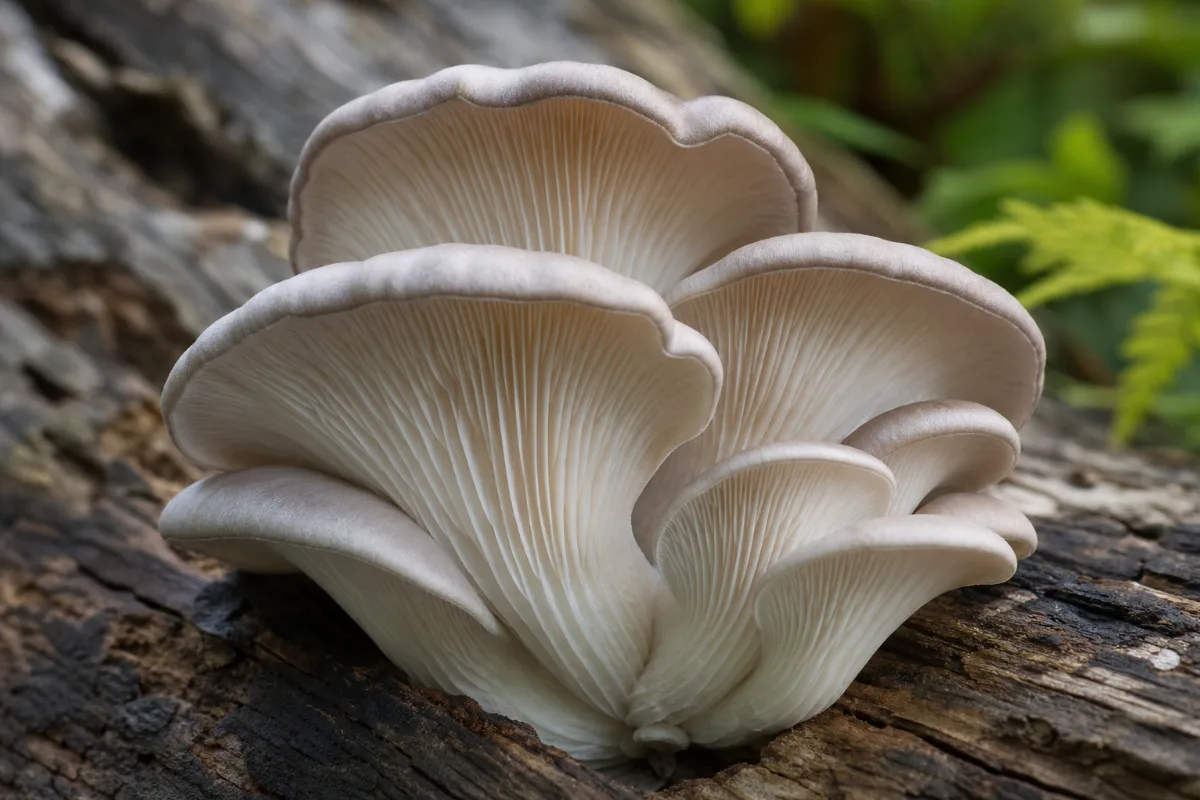
Mushrooms · Culinary mushroom
Phoenix oyster mushroom
Pleurotus pulmonarius (Pleurotus sajor-caju is a name often used for the same cultivated strains) · also called Lung oyster, Italian oyster, Indian oyster, phoenix mushroom, gray oyster
Phoenix oyster is a pale, quick-growing cooking mushroom of the oyster family, sold fresh, dried and as home grow kits. We found no human trial of it; the health findings come from mice and test tubes. The main caution is allergy: spores from the common oyster mushroom have caused asthma and severe reactions in people who grow, pack or sell it. Cook it, and do not pick wild mushrooms unless an expert checks them in person.
General information, not medical advice. Last substantive update · Not medically reviewed. A named clinician has not signed off on this page. How this page is made
About Phoenix oyster mushroom
Phoenix oyster (Pleurotus pulmonarius) is a pale oyster-family cooking mushroom, grown commercially and in home kits. We found no human trial of it. The findings on pain, memory and a liver-cancer model are from mice, and the blood-sugar studies were published under a different name, P. sajor-caju. The main cautions are spore allergy (reported for the common and king oyster mushrooms), metal uptake from the growing material, and the danger of confusing wild mushrooms.
What it is
Phoenix oyster is Pleurotus pulmonarius, a fungus of the family Pleurotaceae and an accepted name in GBIF. Wikipedia lists Indian oyster, Italian oyster, phoenix mushroom and lung oyster as common names, and says it is closely related to the common oyster mushroom but has a paler, smaller cap.
The name Pleurotus sajor-caju is a trap. Wikipedia says commercial strains of phoenix oyster are often labelled P. sajor-caju. GBIF, however, lists P. sajor-caju as a synonym of a different fungus, Lentinus sajor-caju. So a paper or label using that name may describe either. We show those results under their own name and do not count them for phoenix oyster. The common grey oyster, Pleurotus ostreatus, is covered on the oyster mushroom page.
Traditional and current uses
We did not read a source that describes a traditional medicinal use of phoenix oyster, so we do not describe one. Today it is mainly a cooking mushroom, bought fresh or dried or grown from kits.
What the research shows
We found no human trial. A PubMed search for the species with randomized, clinical trial or volunteer terms found nothing in people.
A glucan pulled from the mushroom with hot water cut pain behaviour and white-cell movement in mice when injected. A glucan-rich extract improved a memory test in mice on a high-fat diet. A hot-water extract given before human liver-cancer cells were grafted into mice greatly reduced tumours, with no obvious side effects. None of this shows an effect in people, and none used the cooked mushroom.
Blood-sugar and weight findings in mice and rats are from studies of P. sajor-caju, a name GBIF assigns to a different fungus. The chemistry is better measured than the benefits: protein, fibre, potassium, ergothioneine and metals vary with the strain and with what the mushroom was grown on.
Mushroom, extract and mycelium are different
The mouse studies used a purified glucan, a glucan-rich extract or a hot-water extract, not the cooked mushroom. A result for one form cannot be applied to another. We did not read a study of mycelium grown on grain for this species. Growing material changes what the fruiting body contains.
Legal and regulatory status
Phoenix oyster is sold as food. We did not read a regulator statement (such as EMA, EFSA, FDA or NCCIH) about it as a remedy, so none is stated here. Rules differ by country and change.
At a glance
Traditional uses history, not proof
- No source we read describes a traditional medicinal use of phoenix oyster, so none is described here.
- Wikipedia describes it as a commonly cultivated oyster mushroom in Europe and North America.
Studied for research
- Food value: protein, fibre and potassium measured in dried mushrooms, insufficient (food chemistry, not a health effect)
- Pain and inflammation (a purified glucan injected into mice), insufficient
- Memory in obese mice (a glucan-rich extract), insufficient
- Blood sugar and weight (animal studies under the name P. sajor-caju), insufficient
- A liver-cancer model in mice (a hot-water extract), insufficient
- Antioxidants and ergothioneine (laboratory measurements), insufficient
Main compounds
- Beta-glucan, a cell-wall sugar chain
- Ergothioneine, an antioxidant amino acid
- Polysaccharides, phenolic acids and the sugar trehalose
Common forms
- Fresh or cooked mushroom (food)
- Dried mushroom or powder
- Hot-water extracts or purified glucan (used in the mouse studies)
- Mycelium (not studied for this species in the papers we read)
Research links: Pain and inflammation in mice, glucan, 2008 (abstract) · Memory in mice on a high-fat diet, 2022 (abstract) · Liver-cancer model in mice, 2014 (abstract) · Metals and nutrients by growing material, 2026 (abstract) · Anaphylaxis from oyster mushroom spores, case report (abstract) · Allergy after eating oyster mushroom, case report (abstract) · Research Library · Genes & Biomarkers Library
What it is and its history
- Accepted scientific name
- Pleurotus pulmonarius (Fr.) Quél.
- Naming authority
- (Fr.) Quél. (first published as Agaricus pulmonarius by Fries, 1821; moved to Pleurotus by Quélet, 1872, per GBIF and Wikipedia)
- Synonyms
- Pleurotus sajor-caju (Fr.) Singer: GBIF lists this as a synonym of a different fungus, Lentinus sajor-caju (Fr.) Fr. (family Polyporaceae), not of P. pulmonarius.; Wikipedia says commercially available strains of this species are often labelled P. sajor-caju. So papers and sellers using that name may be studying phoenix oyster, Lentinus sajor-caju, or either; the name cannot settle it.
- Common names
- Phoenix oyster (English); Lung oyster (English); Italian oyster (English); Indian oyster (English); Gray oyster (English)
- Family or group
- Pleurotaceae (a fungus family), not a plant
- Classification
- Fungi > Basidiomycota > Agaricomycetes > Agaricales > Pleurotaceae > Pleurotus > Pleurotus pulmonarius
- Native range
- Wikipedia says it is widespread in temperate and subtropical forests throughout the world.
- Habitat
- A wood-decay fungus. In the eastern United States it is generally found on hardwoods, and in the west it can also grow on conifers (Wikipedia). It prefers warmer weather than the common oyster and appears later in the summer (Wikipedia).
- What it looks like
- Fruiting body: Wikipedia says the cap is much paler and smaller than that of the common oyster mushroom and develops more of a stem. We do not teach identification.
- Cultivation
- Wikipedia says it is commonly cultivated in Europe and North America, on grain spawn moved to straw, wood chips, sawdust and other plant material. The 2026 Malaysian study grew it on rubberwood sawdust, coconut waste and paddy husk. It is sold fresh, dried and as home grow kits.
- Harvest and processing
- The Thai study found ergothioneine and phenolics peaked at the middle stage of maturity in all five oyster species it studied, including this one, and polysaccharide and general composition rose with maturity.
- Look-alikes and adulterants
- Name: Common oyster mushroom (Pleurotus ostreatus); Note: A very similar, closely related edible species (Wikipedia). The two have separate studies.; Name: Pleurotus populinus; Note: Wikipedia names this North American species, restricted to aspen and cottonwood.; Name: Clitocybe species; Note: Wikipedia says it may resemble a Clitocybe, some of which are poisonous, when growing on top of wood. Do not identify wild mushrooms from text or an app.; Name: Jack-o'-lantern (Omphalotus); Note: A project summary of published reports says poisoning usually follows mistaking it for oyster mushrooms or chanterelles. We did not reopen those reports.
- Sustainability and conservation
- Not assessed here.
Traditional use and history history, not clinical proof
| Tradition or era | Documented use | Source |
|---|---|---|
| 1821 and 1872 (scientific naming) | First published as Agaricus pulmonarius by Elias Magnus Fries in 1821; Lucien Quélet moved it to Pleurotus in 1872 (Wikipedia; GBIF gives the 1872 publication). | Wikipedia; GBIF |
| Modern cultivation | Wikipedia describes it as a commonly cultivated oyster mushroom in Europe and North America, grown on straw, sawdust and similar materials. | Wikipedia (secondary source; not checked against a primary source) |
| Traditional medicine | No traditional medicinal use of phoenix oyster was found in the sources read, so none is described. | Not applicable |
Traditional use shows how it was used. It does not show that it works or is safe today.
What is inside, and how it may work
What it contains and how those compounds act in cells and animals. Laboratory and animal mechanisms are not proven effects in people.
Main compounds
| Compound | Family | Where it is concentrated | Activity studied | Level of evidence |
|---|---|---|---|---|
| Beta-glucan, (1-3),(1-6)-linked | polysaccharide | Fruiting body cell wall (hot-water extract) Structure: a (1-3)-linked beta-D-glucose chain with a single glucose side unit on every third unit (NMR and methylation analysis, 2008). No content figure in the abstract. | Reduced inflammation and pain behaviour in mice when injected (2008). No human data. 13 | Animal research |
| Ergothioneine PubChem 5351619 | amino-acid antioxidant | Fruiting body 761.03 to 1253.52 ug/g dry weight across three maturity stages in commercial lots from northern Thailand (full text). | An antioxidant in the test tube. No human trial shows a health effect from ergothioneine in this mushroom. 8 | Laboratory research |
| Polysaccharides from the wild Tibetan strain | polysaccharide | Fruiting body (hot-water extract) Free-radical scavenging EC50 0.051 (ABTS), 3.322 (DPPH) and 2.87 (hydroxyl) mg/mL; cell toxicity IC50 1.501 mg/mL (HepG2 liver cancer cells) and 2.183 mg/mL (MDA-MB-468 breast cancer cells). | Antioxidant in the test tube and toxic to cancer cell lines at high concentrations. A cell-dish result, not a treatment. 4 | Laboratory research |
| Phenolic acids (vanillic and protocatechuic) | phenolic acids | Fruiting body Higher on coconut waste in the 2026 Malaysian study; the abstract gives no figures. | Antioxidant in the test tube. 5 | Laboratory research |
| Trehalose (a mushroom sugar) PubChem 7427 | disaccharide | Fruiting body Highest on paddy husk based growing materials (2026 abstract); no figures in the abstract. | A food sugar. Nothing on health effects. 5 | Food chemistry |
Mechanisms, receptors and pathways
| Target or pathway | Gene or receptor | What was found | Level |
|---|---|---|---|
| Inflammatory chemical signals (cytokines) and white-cell movement (mice) | Not specified in the abstract | The authors suggest the injected glucan lowers inflammatory pain possibly by inhibiting pro-inflammatory cytokines. 13 | Animal research |
| PI3K/AKT growth signalling and Ki-67 (mouse tumours) | PI3K/AKT | Less AKT pathway signalling and fewer dividing tumour cells in treated mice in the liver-cancer model. 14 | Animal research |
| Hippocampus nerve-cell and microglia markers (mice) | NeuN and Iba-1 (markers) | The extract reduced nerve-cell loss and changes in the hippocampus of high-fat-fed mice and their male offspring. 1 | Animal research |
| Fat hormone, glucose uptake and inflammation genes (mice; name P. sajor-caju) | Adiponectin, GLUT-4, NF-kB | Treated mice had higher adiponectin and GLUT-4 gene activity and lower inflammatory-marker genes. Not counted for phoenix oyster because of the unsettled name. 6 | Animal research |
| Alpha-glucosidase (digestive enzyme) | Not applicable | Extracts of all five oyster species, including this one, blocked the enzyme in the test tube. 8 | Laboratory research |
Absorption, metabolism and elimination
- Absorption
- Not found.
- Distribution
- Not found.
- Metabolism
- Not found.
- Elimination
- Not found.
- Bioavailability
- Not established for ergothioneine or glucans from this mushroom in the sources read.
Isolated compounds versus whole extracts
No study tested the whole cooked mushroom against a health outcome. The pain study used a purified glucan injected into mice; the memory study a glucan-rich extract fed to mice; the cancer model a hot-water extract fed to mice. A result for one form cannot be applied to another, or to the food.
Nutritional composition
Papers report protein at about 17 to 26% of the dried mushroom, much fibre, and potassium as the main mineral. No USDA entry for this species was read, and values come from single strains and growing materials. Dried and fresh weights are not the same: fresh mushrooms are mostly water.
6 not enough evidence
What was looked at
The 6 benefits and uses checked for Phoenix oyster mushroom, each with how strong the evidence is. Tap one to open it.
- As a food: protein, fibre and mineralsNot enough evidence
- Inflammation and pain (mouse research on a purified glucan)Not enough evidence
- Memory in mice on a high-fat diet (mouse research on an extract)Not enough evidence
- Blood sugar and weight (animal studies published as P. sajor-caju)Not enough evidence
- A liver-cancer model in mice (prevention and added to cisplatin)Not enough evidence
- Antioxidants and ergothioneine in the mushroom (laboratory measurements)Not enough evidence
Lab markers tracked in the studies
Protein in the dried mushroomShort-term object-recognition memory (mice)Pain behaviour in mice (writhing and formalin licking)Glucose tolerance and blood glucose (mice and rats; P. sajor-caju)Tumour incidence in mice (liver-cancer cell model)Ergothioneine in the dried mushroom
What is Phoenix oyster mushroom good for?
The uses people ask about and how strong the human evidence is for each. There is none for phoenix oyster. Read this together with the Safety tab.
Benefits, one by one
Each card is a research question, not a promise. Tap a goal to filter. Open a card to see the studies, doses and limits.
As a food: protein, fibre and minerals
Not enough evidencePhoenix oyster is a cooking mushroom. Lab measurements of dried mushrooms show a fair amount of protein and fibre, and potassium as the main mineral. That describes what is in the mushroom. It is not a health benefit, and no study shows that eating it changes anyone's health.
2 studiesDried fruiting bodies were analysed in both papers, so per-gram figur…
Studies, doses and limits
Results
A 2026 study of one strain grown on four materials in Malaysia found protein at 17.4 to 22.3% of dry weight (highest on coconut waste), and potassium the main mineral in all four. A 2025 paper on a wild strain from Tibet reported 26.3% protein and said protein, ash and fibre were higher than in the common oyster mushroom it compared with. These are single strains, dried, in two labs.
Why this rating
There is no health claim to rate. The numbers are real laboratory measurements, but each belongs to one strain and one growing method, and they differ between papers.
Form and dose studied
Dried fruiting bodies were analysed in both papers, so per-gram figures are not the same as a serving of fresh mushroom. This page gives no amounts.
Limits
Two papers, two strains, different growing materials. Fresh or cooked mushrooms hold much more water than dried ones.
Why researchers looked
Oyster mushrooms are widely grown, so researchers measure what is in them and how the growing material changes it.
Traditional use
We found no source describing a traditional medicinal use of phoenix oyster, so none is described here.
Proposed mechanism Food chemistry
Not a health mechanism. The amounts depend on the strain and on what the mushroom was grown on.
A proposed mechanism does not show that the effect happens in people.
Mushrooms also take up metals from what they grow on. See the Safety tab.
Inflammation and pain (mouse research on a purified glucan)
Not enough evidenceA sugar chain called a beta-glucan, pulled out of phoenix oyster with hot water, reduced signs of inflammation and pain behaviour in mice when injected. That is a purified lab product given by injection, not the mushroom as eaten. No person has been tested.
1 studiesA glucan extracted with hot water and then purified, injected in mice…
Studies, doses and limits
Results
In mice given an irritant, the glucan cut movement of white blood cells to the injured tissue by 82% (ID50 1.19 mg/kg). In another test, mice given it by injection into the belly cavity (3 mg/kg) had 85% fewer writhes. In the formalin test the late, inflammatory phase of licking was reduced by 96% and the early phase by 43%.
Effect sizes as reported
Large reductions in mice after injection; no human effect size exists
Why this rating
One mouse study of a purified glucan given by injection. It cannot be applied to eating the mushroom or to people. It has not been repeated in people.
Form and dose studied
A glucan extracted with hot water and then purified, injected in mice. Not a food, powder or capsule.
Who was studied
Mice
Limits
Animal study, injected route, single research group. Only the abstract was read.
Why researchers looked
Beta-glucans from fungal cell walls are known to act on immune cells, so researchers tested this one in pain and inflammation models.
Proposed mechanism Animal research
The authors suggest the glucan may work by blocking inflammatory signalling chemicals (cytokines). This is their suggestion and it was not tested in people.
A proposed mechanism does not show that the effect happens in people.
No safety data in people.
Memory in mice on a high-fat diet (mouse research on an extract)
Not enough evidenceA beta-glucan-rich extract of phoenix oyster improved a short-term memory test in mice fed a high-fat diet. It also changed brain-region features under the microscope in those mice and in their male pups. No person has been tested.
1 studiesA beta-glucan-rich extract of the mushroom, fed to mice for 3 months.…
Studies, doses and limits
Results
The extract significantly improved short-term object-recognition memory in high-fat-fed female mice and reduced nerve-cell loss and changes in the hippocampus in those mice and in their male offspring. The abstract gives no figures.
Effect sizes as reported
No numbers in the abstract; no human data
Why this rating
Mouse study with a mushroom extract fed for 3 months. It cannot be applied to people or to eating the mushroom. Not repeated.
Form and dose studied
A beta-glucan-rich extract of the mushroom, fed to mice for 3 months. Not a food.
Who was studied
Female ICR mice and their offspring
Limits
Animal study; one research group; abstract only; no figures in the abstract.
Why researchers looked
Obesity may change behaviour and brain structure, and researchers asked whether a mushroom glucan could soften this in mice.
Proposed mechanism Animal research
The authors looked at nerve-cell and immune-cell markers in a brain region called the hippocampus. They report changes but do not show how the extract caused them.
A proposed mechanism does not show that the effect happens in people.
No safety data in people.
Blood sugar and weight (animal studies published as P. sajor-caju)
Not enough evidenceThree animal studies tested extracts of a mushroom called Pleurotus sajor-caju. Glucan-rich extracts improved glucose handling and lowered weight gain in mice on a high-fat diet, and an extract lowered blood sugar in rats. The name is a problem: GBIF lists P. sajor-caju as a synonym of a different fungus, Lentinus sajor-caju. These results cannot be counted as phoenix oyster results.
4 studiesGlucan-rich or aqueous extracts given to mice and rats. Not the cooke…
Studies, doses and limits
Results
Mice on a high-fat diet given the glucan-rich extract for 16 weeks had better glucose tolerance and less high blood sugar and insulin, with lower inflammatory markers (2012). In a second mouse paper the extract reduced body weight, blood fats and liver enzymes (2013). In rats, a single dose of 750 mg/kg lowered blood glucose by 23.5% in normal rats, and 21 days of the extract improved fasting glucose, body weight and urine sugar in diabetic rats (2015).
Effect sizes as reported
Reductions in mice and rats; no human effect size exists
Why this rating
Animal studies only, with extracts at high amounts per body weight. The species name does not match phoenix oyster in GBIF, so they may describe a different fungus. Abstracts only.
Form and dose studied
Glucan-rich or aqueous extracts given to mice and rats. Not the cooked mushroom. This page gives no amounts for people.
Who was studied
C57BL/6J mice (high-fat diet), normal and diabetic rats
Limits
Name unsettled; animal only; extracts, not food; the same Malaysian group wrote the two mouse papers.
Why researchers looked
Oyster-type mushrooms are high in fibre and glucans, so researchers tested them in diet-induced diabetes and obesity models.
Traditional use
The 2012 abstract says the mushroom has been useful in preventing diabetes 'for thousands of years'; it gives no source and we could not check it.
Proposed mechanism Animal research
The mouse authors report changes in genes for fat-hormone (adiponectin), glucose uptake (GLUT-4), inflammation (NF-kB pathway) and fat breakdown. These are their findings in mice, not shown in people.
A proposed mechanism does not show that the effect happens in people.
People on diabetes medicine should not change treatment because of a mushroom. Ask a doctor or pharmacist.
A liver-cancer model in mice (prevention and added to cisplatin)
Not enough evidenceA hot-water extract of phoenix oyster given to mice for 2 weeks before human liver-cancer cells were injected greatly reduced the tumours that grew. It also worked together with a low amount of the drug cisplatin. This is a laboratory model of prevention, not a treatment, and it has not been tested in any person.
1 studiesA hot-water extract. Not the cooked mushroom.
Studies, doses and limits
Results
Oral extract started 2 weeks before the cancer cells inhibited tumour incidence and size by 93.1% in nude mice. No obvious side effects were seen in body weight or organ tissue. The extract plus a low cisplatin amount worked better than either alone.
Effect sizes as reported
93.1% inhibition of tumour take in nude mice
Why this rating
One mouse study with human cancer cells grafted into mice that have no working immune system. The mushroom was given before the cancer cells, which does not copy cancer care. Abstract only.
Form and dose studied
A hot-water extract. Not the cooked mushroom.
Who was studied
Nude mice with Huh7 human liver-cancer cells
Limits
Not a treatment claim. Anyone in cancer care should tell their team about any mushroom product.
Why researchers looked
Natural antioxidants are being explored as add-ons to cancer care, and this extract scored highest on antioxidant tests among three edible mushrooms.
Proposed mechanism Animal research
The authors report fewer dividing tumour cells (less Ki-67 staining) and switching off of a growth signal called PI3K/AKT in the treated mice. This is a finding in mouse tumours.
A proposed mechanism does not show that the effect happens in people.
Mushroom products may interact with cancer treatment in ways nobody has studied. Ask the cancer team first.
Antioxidants and ergothioneine in the mushroom (laboratory measurements)
Not enough evidenceLaboratory tests show phoenix oyster extracts have antioxidant activity in the test tube, and a Thai study measured a lot of ergothioneine, an antioxidant amino acid found in mushrooms. These are measurements of what is in the mushroom. No study shows that eating it improves any health outcome.
3 studiesDried fruiting body extracts in the laboratory. This page gives no am…
Studies, doses and limits
Results
In five commercial oyster species grown in northern Thailand, phoenix oyster held 761.03 to 1253.52 ug ergothioneine per g dry weight depending on maturity, more than the common oyster mushroom (395.28 to 845.34) but less than golden oyster (1290.15 to 2380.33). All extracts blocked a sugar-digesting enzyme and showed antioxidant activity in tests. The 2026 Malaysian paper found the highest antioxidant activity in mushrooms grown on paddy husk and coconut waste.
Why this rating
Test-tube and food-chemistry work on a handful of lots. It does not show an effect in people.
Form and dose studied
Dried fruiting body extracts in the laboratory. This page gives no amounts for people.
Limits
Levels change with maturity stage, drying and growing material. Only one Thai set of commercial lots was measured for ergothioneine.
Why researchers looked
Oxidative damage is linked to ageing and disease, so food scientists measure antioxidants in mushrooms.
Proposed mechanism Laboratory research
Test-tube tests (such as DPPH and ABTS) show a chemical can neutralise reactive molecules. That does not show a benefit in the body.
A proposed mechanism does not show that the effect happens in people.
None specific.
Connections to the rest of health
How Phoenix oyster mushroom connects to the rest of our health knowledge graph. Every link says what kind of connection it is. A safety link (for example to the liver) is a warning, not a benefit. A study that merely mentions a topic never creates a benefit link.
Explore every connection: goals, body systems, organs, symptoms, genes
A. Wellness goals
| Connected to | Kind of connection | Evidence status | Context | Studies |
|---|---|---|---|---|
| Inflammation Balance | Preliminary mechanism | Not enough evidence | Inflammation and pain (mouse research on a purified glucan): A sugar chain called a beta-glucan, pulled out of phoenix oyster with hot water, reduced signs of inflammation and pain behaviour in mice when injected. That is a purified lab product given by injection, not the mushroom as eaten. No person has been tested. | 13 |
| Memory Support | Preliminary mechanism | Not enough evidence | Memory in mice on a high-fat diet (mouse research on an extract): A beta-glucan-rich extract of phoenix oyster improved a short-term memory test in mice fed a high-fat diet. It also changed brain-region features under the microscope in those mice and in their male pups. No person has been tested. | 1 |
| Blood Sugar Balance | Preliminary mechanism | Not enough evidence | Blood sugar and weight (animal studies published as P. sajor-caju): Three animal studies tested extracts of a mushroom called Pleurotus sajor-caju. Glucan-rich extracts improved glucose handling and lowered weight gain in mice on a high-fat diet, and an extract lowered blood sugar in rats. The name is a problem: GBIF lists P. sajor-caju as a synonym of a different fungus, Lentinus sajor-caju. These results cannot be counted as phoenix oyster results. | 6 7 10 15 |
| Weight Management | Preliminary mechanism | Not enough evidence | Blood sugar and weight (animal studies published as P. sajor-caju): Three animal studies tested extracts of a mushroom called Pleurotus sajor-caju. Glucan-rich extracts improved glucose handling and lowered weight gain in mice on a high-fat diet, and an extract lowered blood sugar in rats. The name is a problem: GBIF lists P. sajor-caju as a synonym of a different fungus, Lentinus sajor-caju. These results cannot be counted as phoenix oyster results. | 6 7 10 15 |
B. Body systems
| Connected to | Kind of connection | Evidence status | Context | Studies |
|---|---|---|---|---|
| Brain and memory | Preliminary mechanism | Not enough evidence | Mouse study only. Preparation or compound: Glucan-rich extract |
1 |
| Digestive System | Biological association | Not enough evidence | Studied for: As a food: protein, fibre and minerals Studied for: Blood sugar and weight (animal studies published as P. sajor-caju) | 5 4 6 7 10 15 |
| Immune System | Biological association | Not enough evidence | Studied for: Inflammation and pain (mouse research on a purified glucan) Studied for: A liver-cancer model in mice (prevention and added to cisplatin) | 13 14 |
| Nervous System | Biological association | Not enough evidence | Studied for: Memory in mice on a high-fat diet (mouse research on an extract) | 1 |
| Endocrine System | Biological association | Not enough evidence | Studied for: Blood sugar and weight (animal studies published as P. sajor-caju) | 6 7 10 15 |
C. Body parts and organs
G. Root causes and contributing factors
| Connected to | Kind of connection | Evidence status | Context | Studies |
|---|---|---|---|---|
| Contaminants in mushrooms | Very low certainty | Cadmium, lead and chromium varied with growing material in one laboratory study. Preparation or compound: Phoenix oyster grown on different materials |
5 |
I. Biomarkers
| Connected to | Kind of connection | Evidence status | Context | Studies |
|---|---|---|---|---|
| Protein in the dried mushroom | Biological association | Not enough evidence | Measured in trials: measured (not an effect). A lab change is not the same as a health benefit. | 5 4 |
| Short-term object-recognition memory (mice) | Biological association | Not enough evidence | Measured in trials: improved (in mice only). A lab change is not the same as a health benefit. | 1 |
| Pain behaviour in mice (writhing and formalin licking) | Biological association | Not enough evidence | Measured in trials: lowered (in mice only). A lab change is not the same as a health benefit. | 13 |
| Glucose tolerance and blood glucose (mice and rats; P. sajor-caju) | Biological association | Not enough evidence | Measured in trials: improved (in animals only). A lab change is not the same as a health benefit. | 6 10 |
| Tumour incidence in mice (liver-cancer cell model) | Biological association | Not enough evidence | Measured in trials: lowered (in mice only). A lab change is not the same as a health benefit. | 14 |
| Ergothioneine in the dried mushroom | Biological association | Not enough evidence | Measured in trials: measured (not an effect). A lab change is not the same as a health benefit. | 8 |
J. Genes, receptors and enzymes
| Connected to | Kind of connection | Evidence status | Context | Studies |
|---|---|---|---|---|
| Adiponectin and GLUT-4 (P. sajor-caju mouse study) | Preliminary mechanism | Animal | Higher gene activity in treated mice; name unsettled. | 6 |
K. Biological pathways
| Connected to | Kind of connection | Evidence status | Context | Studies |
|---|---|---|---|---|
| PI3K/AKT signalling | Preliminary mechanism | Animal | Reduced in treated mice in a liver-cancer cell model. | 14 |
L. Active compounds
| Connected to | Kind of connection | Evidence status | Context | Studies |
|---|---|---|---|---|
| Beta-glucan, (1-3),(1-6)-linked | Biological association | Animal | Reduced inflammation and pain behaviour in mice when injected (2008). No human data. Preparation or compound: Fruiting body cell wall (hot-water extract) |
13 |
| Ergothioneine | Biological association | In vitro | An antioxidant in the test tube. No human trial shows a health effect from ergothioneine in this mushroom. Preparation or compound: Fruiting body |
8 |
| Polysaccharides from the wild Tibetan strain | Biological association | In vitro | Antioxidant in the test tube and toxic to cancer cell lines at high concentrations. A cell-dish result, not a treatment. Preparation or compound: Fruiting body (hot-water extract) |
4 |
| Phenolic acids (vanillic and protocatechuic) | Biological association | In vitro | Antioxidant in the test tube. Preparation or compound: Fruiting body |
5 |
| Trehalose (a mushroom sugar) | Biological association | Food chemistry | A food sugar. Nothing on health effects. Preparation or compound: Fruiting body |
5 |
Each connection is stored with the ingredient, the connected record, the kind of connection, the evidence status, the supporting studies, the preparation or compound involved, and a review date (last reviewed October 25, 2026).
Evidence at a glance: what the research found for 6 outcomes
Each outcome below is one thing researchers measured. Certainty is how far the evidence can be trusted, not how well it works. The full studies are on the next tab.
The evidence
The research centre for Phoenix oyster mushroom. Every record here was checked against PubMed or the publisher's page; we never list a study we have not verified.
Evidence by outcome
Bars show how many studies we found for each outcome, not how well it works. People are added up across trials only (reviews are not added, to avoid double counting).
How we rate evidence
High certainty
Several well-run trials or reviews agree; further research is unlikely to change the picture much.
Moderate certainty
Good trials point the same way, but some doubt remains.
Low certainty
Small, short or inconsistent trials. The finding could change with better research.
Very low certainty
Very little or very weak human data. Treat as a possibility only.
Mixed findings
Trials or reviews disagree with each other.
Not enough evidence
Not enough human research to say either way.
Evidence against
Good research found no benefit, or found harm.
We take the reviewers' own risk-of-bias and GRADE statements where they exist, and otherwise judge from study size, design, consistency, directness and whether a product matches what is sold. Many publications do not make evidence high. Method note: We read PubMed records and abstracts for 14 papers: five case reports, six animal studies and three composition papers (two read in full text through Europe PMC), plus the GBIF species records and an encyclopedia article for names. One further source about look-alike poisoning is a summary we did not reopen. EMA, EFSA, FDA, NCCIH and LactMed were not read, and a LiverTox search found no entry. Certainty ratings are the compiler's own reading.
Study library: every study we checked 18
| Study | Design | People | Product, dose, length | Result |
|---|---|---|---|---|
| Ahmad Tarmizi 2022 Beta-Glucan-Rich Extract of Gray Oyster Mushroom, Pleurotus pulmonarius, Improves Object Recognition Memory and Hippocampus Morphology in Mice Fed a High-Fat Diet. Journal of Medicinal Food · PMID 35085010 · DOI |
Animal study animal |
Female ICR mice and their offspring | Beta-glucan-rich extract (bgPp) fed with normal or high-fat diet fruiting body (extract) Not shown here 3 months · vs Normal diet and high-fat diet without extract |
The extract significantly improved short-term object-recognition memory in high-fat-fed mice and eased the nerve-cell loss and microscope changes in the hippocampus of those mice and of their male offspring. No figures in the abstract. Methods, limits and fundingOutcomes: Object-recognition memory; hippocampus nerve-cell and microglia markers Limitations: Mouse study; abstract only; the mushroom is called 'gray oyster mushroom' in the title. Funding and conflicts: Not stated in the abstract Read: abstract |
| Baldassarre 2016 Occupational asthma in a fruit and vegetables vendor. Medicina del Lavoro · PMID 27015024 |
Case report |
1 A 40-year-old atopic woman who ran a market stall for 26 years |
Spores of fresh Pleurotus ostreatus spores Not shown here 3-year history of symptoms |
Severe mixed respiratory deficit, a positive prick-to-prick test with fresh P. ostreatus, and poor air exchange at her stall. She was advised to stop handling and selling mushrooms and had no more asthma symptoms over seven years of follow-up. Methods, limits and fundingOutcomes: Spirometry, skin prick tests, work-site inspection Limitations: One case of the common oyster mushroom, not phoenix oyster. Funding and conflicts: Not applicable Read: abstract |
| Branicka 2021 A case of anaphylactic reaction following oyster mushroom (Pleurotus ostreatus) inhalation. International Journal of Occupational Medicine and Environmental Health · PMID 33630827 · DOI |
Case report |
1 A healthy 32-year-old woman who opened an oyster mushroom farm |
Oyster mushroom spores in the air spores Not shown here Exposures of 10 to 30 minutes |
Breathlessness during the first harvest, then repeatedly; while sorting mushrooms she also had weakness, fast pulse and hives. Spirometry showed airflow obstruction. A prick-to-prick test with oyster mushroom was positive (12 mm wheal) and total IgE was raised (78 iu/ml). Diagnosed as occupational anaphylaxis and work-related asthma. Methods, limits and fundingOutcomes: Breathlessness, hives, spirometry, skin tests, IgE Limitations: One case of the common oyster mushroom, not phoenix oyster. Funding and conflicts: Not applicable Read: abstract |
| Jiang 2025 Identification and Nutrient Composition of a Wild Pleurotus pulmonarius Strain from Tibet, and the Antioxidant and Cytotoxic Activities of Polysaccharides from This Fungus. Foods · PMID 40238420 · DOI |
Composition analysis fungus |
One wild strain (X21185) from the Tibetan Plateau, cultivated | Fruiting body analysis; hot-water polysaccharides tested in test tubes and cancer cell lines fruiting body; extracted polysaccharides Not shown here · vs Common oyster mushroom, king oyster and egg values from the literature |
Protein 26.3% in the cultivated fruiting body. Protein, ash and dietary fibre were reported higher than in the common oyster mushroom it was compared with. The polysaccharides scavenged free radicals in the test tube and were toxic to liver-cancer and breast-cancer cell lines at high concentrations (IC50 1.501 and 2.183 mg/mL). Methods, limits and fundingOutcomes: Protein, fibre, amino acids, antioxidant tests, cell toxicity Limitations: One new wild strain; laboratory work only; comparison values come from other papers. Funding and conflicts: Not stated in the abstract Read: full text (open access, via Europe PMC) |
| Kalinowska 2026 Substrate-Driven Modulation of Nutritional Composition and Bioactive Compound Profile in Pleurotus pulmonarius Cultivated on Diversified Agri-Waste. Foods · PMID 42450522 · DOI |
Composition analysis fungus |
Pleurotus pulmonarius fruiting bodies, three bags per growing material, Malaysia | Dried fruiting bodies analysed for minerals, protein, fatty acids, phenolics and antioxidant tests fruiting body Not shown here · vs Four growing materials compared with rubberwood sawdust |
Protein 17.4 to 22.3% of dry weight, highest on coconut waste; potassium the main mineral on all four materials; antioxidant activity highest on coconut waste and paddy husk. The paper also reports cadmium 0.134 to 0.725 and lead 0.527 to 0.753 ug/g dry weight (see Safety tab). Methods, limits and fundingOutcomes: Protein, minerals, antioxidant activity, cadmium and lead Limitations: One strain, four growing materials, dried samples; a food analysis, not a health study. Funding and conflicts: Not stated in the abstract Read: full text (open access, via Europe PMC) |
| Kanagasabapathy 2012 Glucan-rich polysaccharides from Pleurotus sajor-caju (Fr.) Singer prevents glucose intolerance, insulin resistance and inflammation in C57BL/6J mice fed a high-fat diet. BMC Complementary and Alternative Medicine · PMID 23259700 · DOI |
Animal study animal |
42 C57BL/6J mice, 7 groups of 6 |
Glucan-rich polysaccharide extract of P. sajor-caju (three amounts) plus metformin as a comparison fruiting body (extract) Not shown here 16 weeks · vs Normal diet and high-fat diet; metformin |
Treated groups improved glucose tolerance, had less high blood sugar and insulin, did not develop insulin resistance, and had lower inflammatory-marker gene expression. No figures in the abstract. Methods, limits and fundingOutcomes: Glucose tolerance, glucose, insulin, genes for inflammation, GLUT-4 and adiponectin Limitations: Mouse study published under the name P. sajor-caju, which GBIF lists as a synonym of Lentinus sajor-caju, so it is not counted as phoenix oyster. Abstract only. Funding and conflicts: Not stated in the abstract Read: abstract |
| Kanagasabapathy 2013 Beta-Glucan-Rich Extract from Pleurotus sajor-caju (Fr.) Singer Prevents Obesity and Oxidative Stress in C57BL/6J Mice Fed on a High-Fat Diet. Evidence-Based Complementary and Alternative Medicine · PMID 23737819 · DOI |
Animal study animal |
C57BL/6J mice | Beta-glucan-rich extract of P. sajor-caju (three amounts) plus metformin as a comparison fruiting body (extract) Not shown here · vs Normal diet and high-fat diet; metformin |
Treated groups had lower body weight, blood fats and liver enzymes, higher antioxidant enzyme activity and changes in genes for fat breakdown. The authors conclude it may help in obesity (in mice). Methods, limits and fundingOutcomes: Body weight, blood fats, liver enzymes, antioxidant enzymes, fat-metabolism genes Limitations: Mouse study published under the name P. sajor-caju (a different fungus in GBIF); same research group as the 2012 paper; abstract only. Funding and conflicts: Not stated in the abstract Read: abstract |
| Kumla 2025 Centesimal Composition, Bioactive Compounds, Antioxidant and alpha-Glucosidase Inhibitory Activities of Commercial Edible Oyster Mushrooms at Different Maturity Stages in Northern Thailand. Foods · PMID 41154046 · DOI |
Composition analysis fungus |
Five commercial oyster species (P. citrinopileatus, P. cornucopiae, P. djamor, P. ostreatus, P. pulmonarius) at three maturity stages | Fruiting body extracts fruiting body Not shown here · vs Different species and stages |
Ergothioneine in P. pulmonarius was 761.03 to 1253.52 ug/g dry weight (full text), against 395.28 to 845.34 in P. ostreatus and 1290.15 to 2380.33 in P. citrinopileatus. The middle maturity stage had the most ergothioneine and phenolics in all five species. All extracts showed antioxidant activity and blocked the enzyme alpha-glucosidase in the test tube. Methods, limits and fundingOutcomes: Composition, polysaccharides, ergothioneine, phenolics, antioxidant tests, alpha-glucosidase inhibition Limitations: Laboratory work on commercial lots from one region; no health outcome. The specific ergothioneine figures come from the full text, not the abstract. Funding and conflicts: Not stated in the abstract Read: full text (open access, via Europe PMC) |
| Mori 1998 Mushroom worker's lung resulting from indoor cultivation of Pleurotus osteatus. Occupational Medicine · PMID 10024747 · DOI |
Case report |
2 Two workers growing oyster mushroom indoors |
Basidiospores of Pleurotus ostreatus (spelled 'osteatus' in the title) spores Not shown here |
An outbreak of allergic alveolitis in two workers, with high antibody titres and precipitins against the spores. The authors advise protection from spores. Methods, limits and fundingOutcomes: Extrinsic allergic alveolitis; antibodies to spores Limitations: Two cases of the common oyster mushroom, 1998. Funding and conflicts: Not applicable Read: abstract |
| Ng 2015 Hypoglycemic and Antidiabetic Effect of Pleurotus sajor-caju Aqueous Extract in Normal and Streptozotocin-Induced Diabetic Rats. BioMed Research International · PMID 26682215 · DOI |
Animal study animal |
Normal and streptozotocin-induced diabetic rats | Aqueous extract of P. sajor-caju, single and repeated amounts fruiting body (aqueous extract) Not shown here Single dose; 21 days repeated in diabetic rats · vs Untreated control rats |
750 mg/kg lowered blood glucose by 23.5% in normal rats at 6 hours and gave a maximum fall of 41.3% (normal) and 36.5% (diabetic rats) in the glucose test. Over 21 days diabetic rats had better fasting glucose, body weight and urine sugar. Methods, limits and fundingOutcomes: Blood glucose, oral glucose tolerance, body weight, urine sugar, HbA1c Limitations: Rats; published under the name P. sajor-caju; abstract only; the authors' conclusion about 'alternative medicine' in diabetes goes beyond a rat study. Funding and conflicts: Not stated in the abstract Read: abstract |
| Rangkakulnuwat 2023 Trehalose phosphorylase as a novel potential allergen in a case of allergic reaction due to oyster mushroom (Pleurotus ostreatus) ingestion. Journal of Allergy and Clinical Immunology: Global · PMID 37780800 · DOI |
Case report |
1 One person with an allergic reaction after eating oyster mushroom |
Eaten Pleurotus ostreatus fruiting body Not shown here |
The authors say it is the first reported allergic reaction from eating oyster mushroom confirmed by an oral food challenge, and name trehalose phosphorylase as a novel potential allergen. Methods, limits and fundingOutcomes: Oral food challenge; IgE immunoblotting and mass spectrometry Limitations: One case; abstract is brief; common oyster mushroom, not phoenix oyster. Funding and conflicts: Not applicable Read: abstract |
| Saikai 2002 Hypersensitivity pneumonitis induced by the spore of Pleurotus Eryngii (Eringi). Internal Medicine · PMID 12132527 · DOI |
Case report |
1 A 54-year-old woman, previously 42 months in a Bunashimeji mushroom factory |
Spores of Pleurotus eryngii (king oyster) spores Not shown here Two months in the new factory |
The authors report the first hypersensitivity pneumonitis from king oyster two months after she moved to the new factory. A lung-cell marker (SP-D) had been raised before. Methods, limits and fundingOutcomes: Hypersensitivity pneumonitis, serum SP-D Limitations: One case of king oyster, not phoenix oyster. Funding and conflicts: Not applicable Read: abstract |
| Smiderle 2008 Anti-inflammatory and analgesic properties in a rodent model of a (1-->3),(1-->6)-linked beta-glucan isolated from Pleurotus pulmonarius. European Journal of Pharmacology · PMID 18789924 · DOI |
Animal study animal |
Mice (acetic acid writhing and formalin tests) | Purified (1-3),(1-6)-beta-glucan from hot-water extract, injected fruiting body (extract) Not shown here Single doses in each test · vs Untreated control animals |
White-cell migration to injured tissue reduced by 82% (ID50 1.19 mg/kg); 85% fewer writhes after 3 mg/kg; formalin test late phase reduced 96% and early phase 43%. The authors suggest the effect may involve inhibiting inflammatory cytokines. Methods, limits and fundingOutcomes: Leukocyte migration, writhing, formalin licking Limitations: Injected purified glucan in mice; abstract only; the authors' explanation was not tested directly. Funding and conflicts: Not stated in the abstract Read: abstract |
| Xu 2014 Water extract from Pleurotus pulmonarius with antioxidant activity exerts in vivo chemoprophylaxis and chemosensitization for liver cancer. Nutrition and Cancer · PMID 25072857 · DOI |
Animal study animal |
Nude mice given Huh7 human liver-cancer cells | Hot-water extract of P. pulmonarius by mouth; also with a low amount of cisplatin fruiting body (hot-water extract) Not shown here Started 2 weeks before the cancer cells · vs Untreated mice |
Tumour incidence and size inhibited by 93.1%; fewer dividing tumour cells and less PI3K/AKT signalling; synergy with low-amount cisplatin; no obvious side effects by body weight or organ tissue. Of three edible mushrooms this had the highest antioxidant activity. Methods, limits and fundingOutcomes: Tumour incidence and size, Ki-67, PI3K/AKT signalling, body weight and organ tissue Limitations: Mouse model of prevention, not treatment; abstract only; funding not stated. Funding and conflicts: Not stated in the abstract Read: abstract |
| n/a 2026 GBIF Backbone Taxonomy: Pleurotus sajor-caju (Fr.) Singer, key 2545486 (synonym of Lentinus sajor-caju, key 9031899) GBIF · Source |
Taxonomy record fungus |
n/a | Not applicable Not shown here |
Pleurotus sajor-caju is a SYNONYM; the accepted name is Lentinus sajor-caju (Fr.) Fr., family Polyporaceae. Checked through the GBIF API on 2026-10-25. Methods, limits and fundingOutcomes: Identity Limitations: A taxonomy database, not a medical source. Papers and sellers may use the older name for strains that are in fact Pleurotus pulmonarius (see the identity file). Funding and conflicts: Public database Read: API record |
| n/a 2026 Wikipedia: Pleurotus pulmonarius (article text read through the Wikipedia API) Wikipedia · Source |
Secondary source fungus |
n/a | Not applicable Not shown here |
Gives Indian oyster, Italian oyster, phoenix mushroom and lung oyster as common names; says it is closely related to P. ostreatus, with a paler and smaller cap; says commercially available strains are often labelled P. sajor-caju, a synonym of Lentinus sajor-caju; says it may resemble a Clitocybe, some of which are poisonous; says it is widespread in temperate and subtropical forests and commonly cultivated. Methods, limits and fundingOutcomes: Names, habitat, look-alikes, cultivation Limitations: Encyclopedia article; used only for names, habitat, cultivation and look-alike notes, never for numbers. Its medical-research paragraph was not used. Funding and conflicts: Independent public encyclopedia Read: full text |
| n/a 2026 Project profile of the jack-o'-lantern mushroom (Omphalotus), summarising published reports of poisoning from mistaking it for oyster mushrooms and chanterelles n/a · Source |
Secondary summary fungus |
n/a | n/a Not shown here |
The project's earlier profile says published reports describe poisoning usually following the mistaking of jack-o'-lantern for oyster mushrooms and chanterelles. The sources it cites were not re-opened for this page. Methods, limits and fundingOutcomes: Look-alike poisoning Limitations: Summary-only: not re-read for this page. English Wikipedia's own jack-o'-lantern article, which we did read, only mentions chanterelles. Funding and conflicts: n/a Read: summary-only |
| n/a 2026 GBIF Backbone Taxonomy: Pleurotus pulmonarius (Fr.) Quél., species key 2526548 GBIF · Source |
Taxonomy record n/a |
n/a | Not applicable Not shown here |
Status ACCEPTED (exact match); family Pleurotaceae; order Agaricales; published in Mém. Soc. Émul. Montbéliard, Sér. 2 5: 11 (1872). Checked through the GBIF API on 2026-10-25. Methods, limits and fundingOutcomes: Identity Limitations: A taxonomy database, not a medical source. Index Fungorum was not opened. Funding and conflicts: Public database Read: API record |
What we do not know yet
- No human trial of phoenix oyster was found.
- No spore-allergy report names phoenix oyster; the reports are for common oyster and king oyster.
- The blood-sugar and weight studies used the name P. sajor-caju, which GBIF lists as a different fungus.
- No study of eating phoenix oyster raw was found.
- No study of liver safety, medicine interactions, pregnancy, breastfeeding or children was found.
- The metal study covers one strain on four growing materials, not shop-bought mushrooms.
- No regulator statement was read.
How new research is added
New studies are found by a saved PubMed search and placed in a review queue. A person reads each one before it changes any evidence rating or safety wording. New publications never change ratings automatically.
Lab markers
What changed in blood or saliva tests during trials. A changed number is not the same as feeling or being healthier, and we give no "normal ranges".
Other 6
Protein in the dried mushroom
Measured (not an effect) in trials
The share of the dried mushroom that is protein, measured in the laboratory.
Not enough evidenceResults and what it means
Why it was measured
To describe the food value of the mushroom, and to see how the growing material changes it.
Statistical vs. clinical meaning
A food measurement. It says nothing about health effects.
Safety implication
None directly.
| Study | Result | People | Product |
|---|---|---|---|
| 5 | Protein 173.77 to 223.30 mg/g dry weight (17.4 to 22.3%); highest on coconut waste. | One strain, three bags per growing material | Four growing materials: coconut waste, paddy husk, paddy husk plus sawdust, rubberwood sawdust |
| 4 | Protein 26.3% in one wild Tibetan strain. | One strain, cultivated fruiting bodies | Standard food-composition analysis |
Short-term object-recognition memory (mice)
Improved (in mice only) in trials
A mouse test in which animals spend more time with a new object than a familiar one if they remember the familiar one.
Not enough evidenceResults and what it means
Why it was measured
To test whether the extract protects memory in mice made obese by diet.
Statistical vs. clinical meaning
Animal result only.
Safety implication
None reported in the abstract.
| Study | Result | People | Product |
|---|---|---|---|
| 1 | Significantly better short-term object-recognition memory with the extract in high-fat-fed mice; no figures in the abstract. | Female ICR mice | Beta-glucan-rich extract with normal or high-fat diet for 3 months |
Pain behaviour in mice (writhing and formalin licking)
Lowered (in mice only) in trials
Counts of stretching movements after an irritant, and of paw licking after formalin, used to measure pain in mice.
Not enough evidenceResults and what it means
Why it was measured
To test whether the glucan reduces inflammatory pain in a rodent model.
Statistical vs. clinical meaning
Large effects in mice after injection; no human result.
Safety implication
None described in the abstract.
| Study | Result | People | Product |
|---|---|---|---|
| 13 | 85% fewer writhes at 3 mg/kg; late-phase licking down 96% and early phase down 43%; white-cell movement to injured tissue down 82%. | Mice | Purified beta-glucan injected into the belly cavity |
Glucose tolerance and blood glucose (mice and rats; P. sajor-caju)
Improved (in animals only) in trials
How quickly an animal clears sugar from the blood after a sugar dose, and its blood sugar level.
Not enough evidenceResults and what it means
Why it was measured
To test whether the extract protects against diet-induced diabetes in animals.
Statistical vs. clinical meaning
Animal results under an unsettled species name.
Safety implication
None reported in the abstracts.
| Study | Result | People | Product |
|---|---|---|---|
| 6 | Better glucose tolerance and less high blood sugar and insulin after 16 weeks; no numbers in the abstract. | C57BL/6J mice (n=6 per group) | Glucan-rich extract of P. sajor-caju with high-fat diet |
| 10 | Blood glucose down 23.5% in normal rats 6 hours after a single dose; a maximum fall of 41.3% in normal and 36.5% in diabetic rats during a glucose test; fasting glucose, weight and urine sugar improved over 21 days in diabetic rats. | Normal and streptozotocin-induced diabetic rats | Aqueous extract of P. sajor-caju |
Tumour incidence in mice (liver-cancer cell model)
Lowered (in mice only) in trials
How often and how large a tumour grew after human liver-cancer cells were put into mice.
Not enough evidenceResults and what it means
Why it was measured
To test the extract as a preventive and as an add-on to a cancer drug in a laboratory model.
Statistical vs. clinical meaning
Mouse model only; not a human outcome.
Safety implication
No obvious side effect by body weight or organ tissue in these mice.
| Study | Result | People | Product |
|---|---|---|---|
| 14 | 93.1% inhibition of tumour incidence and size; extra benefit with a low cisplatin amount. | Nude mice with Huh7 cells | Hot-water extract of P. pulmonarius by mouth, started 2 weeks before the cancer cells |
Ergothioneine in the dried mushroom
Measured (not an effect) in trials
The amount of ergothioneine, an antioxidant amino acid, measured in the dried mushroom.
Not enough evidenceResults and what it means
Why it was measured
To describe the mushroom's antioxidant content, not to measure a body effect.
Statistical vs. clinical meaning
A food-chemistry value; no health outcome.
Safety implication
None.
| Study | Result | People | Product |
|---|---|---|---|
| 8 | 761.03 to 1253.52 ug/g dry weight across three maturity stages; the middle stage was highest in all five species. | Commercial lots, northern Thailand | Fruiting body extracts |
Safety
What studies and official sources say about side effects, medicines and who should check first. Each point shows what kind of evidence it comes from.
Main points to know 5
- Spores can cause asthma, lung inflammation and even anaphylaxis in people who grow, pack or sell oyster mushrooms. Case reports describe a woman who developed breathlessness, hives and a reaction diagnosed as occupational anaphylaxis and asthma after exposure to common oyster mushroom (Pleurotus ostreatus) on her own farm, two workers with lung inflammation (allergic alveolitis) from growing it indoors, a market-stall vendor who developed asthma from its spores, and a worker with lung inflammation from king oyster spores. No report we read names phoenix oyster, but it is a close relative in the same genus and is grown and sold the same way, often from home kits. How often this happens is not known. Case report 3 9 2 12
- Allergy after eating oyster mushroom is reported, rarely. One case report describes an allergic reaction after eating common oyster mushroom (Pleurotus ostreatus), confirmed by a supervised food challenge, and names a possible allergen protein. Phoenix oyster was not tested. If you have a mushroom allergy, ask a doctor or allergy specialist first. Case report 11
- Cook it: no source says phoenix oyster is safe raw. We found no study of eating phoenix oyster raw, so we cannot call raw safe. Cooked is the usual safer default for cultivated mushrooms. This is general food-safety advice, not a finding from a phoenix oyster study. Cooking does not help everyone with a mushroom allergy. Expert opinion
- Wild mushrooms can be mistaken for dangerous look-alikes. Wikipedia says phoenix oyster, growing on wood, may resemble a Clitocybe, some of which are poisonous. A project summary of published reports says poisonings with the jack-o'-lantern mushroom usually follow mistaking it for oyster mushrooms or chanterelles; we did not reopen those original reports. Never eat a wild mushroom because of a picture, a description or an app. Only an expert who checks it in person can identify it. Secondary summary 16 17
- Metals can build up from what the mushroom is grown on. In a 2026 study of one strain grown on four materials, cadmium in the dried mushrooms ranged from 0.134 to 0.725 ug/g and lead from 0.527 to 0.753 ug/g. Two lots were above the 0.5 cadmium limit the paper quotes, and chromium was about four times the quoted limit in three of the four lots. Concentrated powders and extracts could carry more. Ask sellers for test reports. Lab 5
Side effects 5
| Effect | How often | Severity and recovery | Evidence |
|---|---|---|---|
| Breathlessness, wheeze or work-related asthma from spores Species was P. ostreatus. Species in the case reports are P. ostreatus (common oyster) and P. eryngii (king oyster); none names phoenix oyster. | Single case reports; frequency unknown | moderate to severe In the market-stall vendor, symptoms stopped after she stopped handling and selling mushrooms (7 years of follow-up) | Case report 3 2 |
| Hives, weakness and fast pulse with breathlessness (anaphylaxis) after exposure to spores A 32-year-old woman on her own oyster mushroom farm; her skin test with the mushroom was positive. | One case; frequency unknown | severe Not described in the abstract | Case report 3 |
| Lung inflammation from spores (extrinsic allergic alveolitis or hypersensitivity pneumonitis) Affects people who work with the mushrooms or breathe spores indoors. | Two workers (common oyster) and one worker (king oyster); frequency unknown | moderate to severe Not described in the abstracts | Case report 9 12 |
| Allergic reaction after eating The mushroom was P. ostreatus, confirmed by an oral food challenge. | One case report; frequency unknown | Not described in the abstract Not described | Case report 11 |
| No side effects were noted in the one mouse study that checked The abstract says no obvious side effect was seen by body weight or organ tissue. This does not show safety in people. | Mice given a hot-water extract | none reported n/a | Animal research 14 |
Liver
No case of liver injury from phoenix oyster was found. A search of the LiverTox book on PubMed found no Pleurotus or oyster mushroom chapter (the only hit was a Lion's mane bibliography), so absence of a report is not proof of safety. A mouse study noted no obvious organ changes with a hot-water extract. 14
How often. Unknown; no liver database entry found.
Monitoring. No monitoring advice was found.
This is a safety connection. It is not evidence that Phoenix oyster mushroom supports liver health.
Medicines and supplements 4
| With | Why it matters | Importance | Evidence | What to do |
|---|---|---|---|---|
| Any medicine (no interaction study found) none-found | We found no interaction study for phoenix oyster with any medicine, so nothing can be ruled in or out. | None Not enough evidence | Ask a pharmacist before taking a concentrated mushroom product with prescription medicines. | |
| Diabetes medicines prescription | Extracts of oyster-family mushrooms, including phoenix oyster, blocked a sugar-digesting enzyme in the test tube, and extracts under the name P. sajor-caju lowered blood sugar in rats. Nothing in people shows the cooked mushroom does this. | Theoretical, from the test tube and animals only. | Laboratory research Not enough evidence 8 10 | People on diabetes medicine should ask their care team before adding a concentrated extract or powder. Do not change diabetes treatment because of a mushroom. |
| Cancer treatment, including cisplatin prescription | A hot-water extract increased the effect of a low cisplatin amount against grafted liver-cancer cells in mice. Nobody has studied this in people. | Unknown. It could in theory change how a treatment works. | Animal research Not enough evidence 14 | Anyone in cancer care should tell their team about any mushroom product before using it. |
| Immune-suppressing medicines and blood thinners none-found | Nothing can be ruled in or out. | None Not enough evidence | Ask a pharmacist or doctor before using a concentrated product if you take these medicines. |
Who should check first 5
| Situation | Advice | Evidence |
|---|---|---|
| Known mushroom allergy, or a past reaction to oyster mushrooms | Avoid phoenix oyster and ask a doctor or allergy specialist. Reactions after eating and from spores are reported for the common oyster mushroom. | Case report 11 3 |
| Asthma, or a past lung reaction to mould or mushroom spores | Be careful with grow kits and home cultivation, where spores gather in a small space. Ask a doctor first. | Case report 9 2 3 |
| Pregnancy and breastfeeding | No study of phoenix oyster was found, and LactMed has no entry we could find. Ask a doctor or midwife, especially before any extract or powder. | None |
| Children | No study of phoenix oyster in children was found. Ask a doctor before giving a child any mushroom supplement. | None |
| Taking diabetes medicine or being in cancer care | See the interactions above. Tell your care team before using any concentrated mushroom product. | Laboratory research 8 14 |
Overdose, product quality and regulators
Summary. Phoenix oyster is a cultivated food mushroom. No toxicity study in people was found. The one mouse cancer-model study noted no obvious side effects by body weight and organ tissue. Concentrated extracts are not assumed to be harmless.
Animal. The mouse studies we read reported benefits and did not describe toxicity in their abstracts, except the cancer-model abstract that noted no obvious side effect.
High dose or long term signals. No long-term safety study was found.
Overdose response. No overdose description was found. Seek medical help for the urgent signs below.
Genotoxicity. Not read.
Toxic or hazardous parts. Fungus. The fruiting body is eaten. Spores can cause breathing allergy in people who handle the mushroom.
Mushrooms take up what is in what they grow on. In a 2026 study of one phoenix oyster strain on four growing materials, cadmium, lead and chromium all varied with the material.
Cadmium, lead and chromium in dried fruiting bodies by growing material. Cadmium 0.134 to 0.725 ug/g (rubberwood sawdust 0.725, paddy husk 0.548, coconut waste 0.134, paddy husk plus sawdust 0.138). Lead 0.527 to 0.753 ug/g. Chromium 4.044 to 4.683 ug/g on three materials and 0.433 on the fourth. The paper compares these dry-weight values with limits it quotes (cadmium 0.5, lead 1.0, chromium 1.0 mg/kg). Its text says toxic metals were within the limits except chromium (about four times the limit), yet its own table shows two lots above 0.5 for cadmium. We did not check whether those limits apply to fresh or dry weight. 5
| Body | Action | Date |
|---|
When to get medical help
- Trouble breathing, wheeze, swelling of the lips, face or throat, hives, a fast pulse or collapse after eating or handling these mushrooms: call emergency services.
- A cough, fever and breathlessness that keep coming back after working with mushrooms or grow kits: see a doctor and mention the mushrooms.
- If you ate a wild mushroom you cannot identify, call a poison centre right away (in the US, Poison Help 1-800-222-1222) and do not wait for symptoms.
If someone may be poisoned or in a crisis, contact a clinician or emergency service straight away. In the US, Poison Control is 1-800-222-1222.
General information only, not medical advice. Ask a clinician or pharmacist before use, especially with medicines, in pregnancy or with a health condition. See the Natural Remedy Safety guide.
Frequently asked questions
What is phoenix oyster mushroom?
Does phoenix oyster have health benefits?
Is phoenix oyster safe to eat?
Can the spores cause asthma or allergy?
They can in related mushrooms. Case reports describe asthma, hives, one severe allergic reaction and lung inflammation in people who grow, pack or sell the common oyster mushroom or king oyster. No report names phoenix oyster, but home kits release spores in a small room. Seek urgent care for breathing trouble or swelling.
Can I eat phoenix oyster raw?
Cook it. We found no study on eating it raw, so we cannot call raw safe. Cooked is the safer default for cultivated mushrooms. Cooking does not help everyone with a mushroom allergy.
Is phoenix oyster the same as Pleurotus sajor-caju?
How is it different from the regular oyster mushroom?
Does it lower blood sugar?
Does it fight cancer?
No. A hot-water extract reduced tumours when given to mice before human liver-cancer cells were grafted in, but that is a laboratory model, not a treatment, and nobody has tested it in people. Tell your cancer team about any mushroom product.
Can it contain heavy metals?
Mushrooms take up metals from what they grow on. In a 2026 study of one strain, cadmium, lead and chromium varied with the growing material, and two lots were above the 0.5 cadmium limit the paper quotes. Buy from a trusted source and ask sellers of powders and extracts for test reports.
Are phoenix oyster mushrooms safe in pregnancy or breastfeeding?
No study was found, and we could not find an entry in LactMed. Ask a doctor or midwife, especially before any extract or powder.
Explore by health goal
Inflammation BalanceMemory SupportBlood Sugar BalanceWeight Management
Editorial transparency
- Written by
- AlternativeMed editorial team. Research compiled with AI assistance, then checked against PubMed records.
- Medical review
- None. This page has not been reviewed by a physician or pharmacist.
- First published
- 2026-10-25
- Last substantive update
- 2026-10-25
- How we research
- We read PubMed records and abstracts for 14 papers: five case reports, six animal studies and three composition papers (two read in full text through Europe PMC), plus the GBIF species records and an encyclopedia article for names. One further source about look-alike poisoning is a summary we did not reopen. EMA, EFSA, FDA, NCCIH and LactMed were not read, and a LiverTox search found no entry. Certainty ratings are the compiler's own reading.
- How we rate evidence
- See "How we rate evidence" in the Evidence tab.
- Independence
- No product is promoted on this page. No affiliate links are shown. This page is information, not a recommendation to use phoenix oyster.
Sources 18
Each source was opened and checked. Where we read only the abstract, it says so. The small numbers in the text point here.
- Ahmad Tarmizi NAK, Kushairi N, Phan CW, et al. Beta-Glucan-Rich Extract of Gray Oyster Mushroom, Pleurotus pulmonarius, Improves Object Recognition Memory and Hippocampus Morphology in Mice Fed a High-Fat Diet.. Journal of Medicinal Food. 2022. PMID 35085010. DOI 10.1089/jmf.2021.K.0121. (abstract)
- Baldassarre A, Dragonieri S, Luisi V, et al. Occupational asthma in a fruit and vegetables vendor.. Medicina del Lavoro. 2016. PMID 27015024. (abstract)
- Branicka O, Rozłucka L, Gawlik R. A case of anaphylactic reaction following oyster mushroom (Pleurotus ostreatus) inhalation.. International Journal of Occupational Medicine and Environmental Health. 2021. PMID 33630827. DOI 10.13075/ijomeh.1896.01610. (abstract)
- Jiang H, Gao L, Hu X, et al. Identification and Nutrient Composition of a Wild Pleurotus pulmonarius Strain from Tibet, and the Antioxidant and Cytotoxic Activities of Polysaccharides from This Fungus.. Foods. 2025. PMID 40238420. DOI 10.3390/foods14071198. (full text (open access, via Europe PMC))
- Kalinowska M, Smolewska M, Gołębiewska E, et al. Substrate-Driven Modulation of Nutritional Composition and Bioactive Compound Profile in Pleurotus pulmonarius Cultivated on Diversified Agri-Waste.. Foods. 2026. PMID 42450522. DOI 10.3390/foods15132404. (full text (open access, via Europe PMC))
- Kanagasabapathy G, Kuppusamy UR, Abd Malek SN, et al. Glucan-rich polysaccharides from Pleurotus sajor-caju (Fr.) Singer prevents glucose intolerance, insulin resistance and inflammation in C57BL/6J mice fed a high-fat diet.. BMC Complementary and Alternative Medicine. 2012. PMID 23259700. DOI 10.1186/1472-6882-12-261. (abstract)
- Kanagasabapathy G, Malek SN, Mahmood AA, et al. Beta-Glucan-Rich Extract from Pleurotus sajor-caju (Fr.) Singer Prevents Obesity and Oxidative Stress in C57BL/6J Mice Fed on a High-Fat Diet.. Evidence-Based Complementary and Alternative Medicine. 2013. PMID 23737819. DOI 10.1155/2013/185259. (abstract)
- Kumla J, Lumyong S, Suwannarach N. Centesimal Composition, Bioactive Compounds, Antioxidant and alpha-Glucosidase Inhibitory Activities of Commercial Edible Oyster Mushrooms at Different Maturity Stages in Northern Thailand.. Foods. 2025. PMID 41154046. DOI 10.3390/foods14203511. (full text (open access, via Europe PMC))
- Mori S, Nakagawa-Yoshida K, Tsuchihashi H, et al. Mushroom worker's lung resulting from indoor cultivation of Pleurotus osteatus.. Occupational Medicine. 1998. PMID 10024747. DOI 10.1093/occmed/48.7.465. (abstract)
- Ng SH, Mohd Zain MS, Zakaria F, et al. Hypoglycemic and Antidiabetic Effect of Pleurotus sajor-caju Aqueous Extract in Normal and Streptozotocin-Induced Diabetic Rats.. BioMed Research International. 2015. PMID 26682215. DOI 10.1155/2015/214918. (abstract)
- Rangkakulnuwat P, Aluksanasuwan S, Somsuan K, et al. Trehalose phosphorylase as a novel potential allergen in a case of allergic reaction due to oyster mushroom (Pleurotus ostreatus) ingestion.. Journal of Allergy and Clinical Immunology: Global. 2023. PMID 37780800. DOI 10.1016/j.jacig.2023.100095. (abstract)
- Saikai T, Tanaka H, Fuji M, et al. Hypersensitivity pneumonitis induced by the spore of Pleurotus Eryngii (Eringi).. Internal Medicine. 2002. PMID 12132527. DOI 10.2169/internalmedicine.41.571. (abstract)
- Smiderle FR, Olsen LM, Carbonero ER, et al. Anti-inflammatory and analgesic properties in a rodent model of a (1-->3),(1-->6)-linked beta-glucan isolated from Pleurotus pulmonarius.. European Journal of Pharmacology. 2008. PMID 18789924. DOI 10.1016/j.ejphar.2008.08.028. (abstract)
- Xu WW, Li B, Lai ET, et al. Water extract from Pleurotus pulmonarius with antioxidant activity exerts in vivo chemoprophylaxis and chemosensitization for liver cancer.. Nutrition and Cancer. 2014. PMID 25072857. DOI 10.1080/01635581.2014.936950. (abstract)
- n/a. GBIF Backbone Taxonomy: Pleurotus sajor-caju (Fr.) Singer, key 2545486 (synonym of Lentinus sajor-caju, key 9031899). GBIF. 2026. (API record)
- n/a. Wikipedia: Pleurotus pulmonarius (article text read through the Wikipedia API). Wikipedia. 2026. (full text)
- n/a. Project profile of the jack-o'-lantern mushroom (Omphalotus), summarising published reports of poisoning from mistaking it for oyster mushrooms and chanterelles. n/a. 2026. (summary-only)
- n/a. GBIF Backbone Taxonomy: Pleurotus pulmonarius (Fr.) Quél., species key 2526548. GBIF. 2026. (API record)
Where to buy
Check the label first. Whatever you buy, look for these:
- Fruiting body versus mycelium on grain: the label should say which
- The extract type and the beta-glucan amount, if stated
- A third-party testing mark
- Interactions: ask a pharmacist if you take medicines or blood thinners
Talk to a pharmacist or doctor before you start any supplement, especially if you take medicines. See the Safety tab for interactions.
Support our free guides: as an Amazon Associate we earn from qualifying purchases. Full disclosure.


