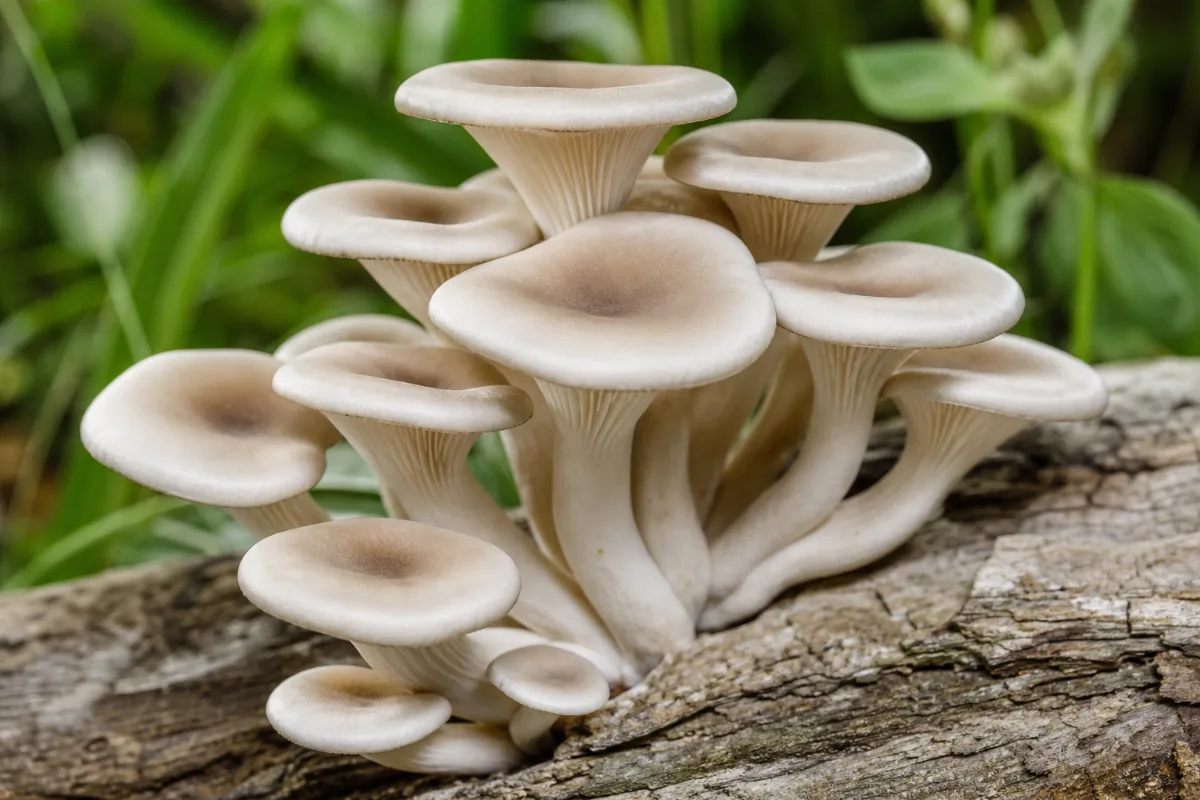
Mushrooms · Culinary mushroom
Elm oyster mushroom
Hypsizygus ulmarius · also called Elm mushroom, elm leech, Pleurotus ulmarius (older name)
Elm oyster is a large, meaty cultivated mushroom that is eaten as food. We found no human study of it for any health outcome. The research is lab, mouse and rat work, mostly on purified extracts. Never eat a wild mushroom unless an expert has identified it in person.
General information, not medical advice. Last substantive update · Not medically reviewed. A named clinician has not signed off on this page. How this page is made
About Elm oyster mushroom
Elm oyster mushroom (Hypsizygus ulmarius) is a large cultivated oyster-type mushroom eaten as food. We found no human study of it for any health outcome. What exists is lab, mouse and rat work, mainly on purified extracts. No allergy report, interaction study or human safety trial was found for this species. None of this is a cure for any condition.
What it is
Elm oyster is a fungus, not a plant. The accepted name is Hypsizygus ulmarius, in the family Lyophyllaceae. Older papers call it Pleurotus ulmarius, so you may see both names. It is in the same genus as beech mushroom (shimeji), and not the same genus as the common oyster mushroom (Pleurotus ostreatus).
Reviews describe it as grown on farms in India, China, Japan and other Asian countries on wheat straw, sawdust and other farm waste, with high yield. No traditional medicinal use was found in the sources read.
As a food
In dried powder from mushrooms grown on wheat straw in one Turkish study, protein was 14.63 g, ash 7.67 g and fat 2.23 g per 100 g, and potassium was the main mineral. Adding spent tea or coffee grounds to the growing straw changed protein, minerals and antioxidant results. In India, sun-dried mushrooms kept the most fibre and protein. A review gives higher protein figures. The amounts depend on what it grows on, how it is dried and the strain.
What the research shows
No randomised trial or other human study of elm oyster mushroom was found. The findings are from chemical tests and cells (antioxidant activity, an iron complex acting on breast cancer cells), mice (memory in a premature-ageing model, paw swelling, a transplanted lymphoma) and rats (blood glucose in diabetic rats). A 2025 review says clinical trials are needed.
Lab and animal results often fail to hold up in people. Most of these studies used purified polysaccharides or crude extracts, not a serving of mushroom. Treat them as a reason for more research, not as a benefit.
At a glance
Traditional uses history, not proof
- A cultivated food mushroom, grown on wheat straw, sawdust and other farm waste in India, China, Japan and other Asian countries (review).
- No traditional medicinal use was found in the sources read.
Studied for research
- As a food: protein, fibre and minerals (composition only)
- Antioxidant activity in the lab, insufficient
- Memory in mice made to age early, very low
- Blood sugar in diabetic rats, very low
- Swelling and tumours in mice, very low
Main compounds
- Polysaccharides, including beta-glucans
- Phenolic compounds
- Protein, ash and minerals, mainly potassium
- Ergothioneine and glutathione, reported by a review (no amounts found)
Common forms
- Fresh or cooked mushroom (food)
- Dried mushroom
- Purified polysaccharide or ethanol extracts (research use in rats, mice and cells)
- Mycelium on grain (no study found)
Research links: PubMed: Elm oyster mushroom review (2025) · PubMed: Elm oyster polysaccharide in diabetic rats (2026) · PubMed: Elm oyster polysaccharide and memory in aged mice (2025) · GBIF: Hypsizygus ulmarius · Research Library · Genes & Biomarkers Library
What it is and its history
- Accepted scientific name
- Hypsizygus ulmarius
- Naming authority
- (Bull.) Redhead (GBIF)
- Synonyms
- Pleurotus ulmarius (Bull.) P.Kumm. (synonym in GBIF); Agaricus ulmarius Bull. (synonym in GBIF); Lyophyllum ulmarium (Bull.) Kuhner (synonym in GBIF)
- Common names
- Elm oyster mushroom (English); Elm mushroom; elm leech (English (GBIF vernacular names)); Marbled elm mushroom (English (from our earlier summary; not checked in a source)); Ulmen-Rasling (German (GBIF)); Pleurote de l'orme (French (GBIF))
- Family or group
- Lyophyllaceae (a fungus family), not a plant. The same genus as beech mushroom (shimeji); not the same genus as the common oyster mushroom (Pleurotus).
- Classification
- Fungi > Basidiomycota > Agaricomycetes > Agaricales > Lyophyllaceae > Hypsizygus > Hypsizygus ulmarius
- Native range
- Not checked in the sources read.
- Habitat
- The name refers to elm trees, where it grows wild (name meaning only; not a source on habitat).
- What it looks like
- Fruiting body: A review describes large fruiting bodies with a meaty flavour. No identification details are given here on purpose.
- Cultivation
- Reviews describe it as grown on farms in India, China, Japan and other Asian countries on wheat straw, sawdust and other farm waste, with high yield. Cotton seed hull added to wheat straw gave the highest yield in one Indian study (Aditya 2025).
- Harvest and processing
- Sold fresh or dried. Drying method changes protein, fibre and antioxidant results (Singh 2024).
- Look-alikes and adulterants
- Name: Other mushrooms, including poisonous ones; Note: The sources read give no look-alike list. Shops sell cultivated mushrooms. Do not pick wild mushrooms without expert identification in person.
- Sustainability and conservation
- Not checked.
Traditional use and history history, not clinical proof
| Tradition or era | Documented use | Source |
|---|---|---|
| Modern cultivation | A review says it was first cultivated in India by a researcher cited as Rai and is now grown in China, Japan and other Asian countries. No traditional medicinal use was found in the sources read. | p39897838 |
Traditional use shows how it was used. It does not show that it works or is safe today.
What is inside, and how it may work
What it contains and how those compounds act in cells and animals. Laboratory and animal mechanisms are not proven effects in people.
Main compounds
| Compound | Family | Where it is concentrated | Activity studied | Level of evidence |
|---|---|---|---|---|
| Polysaccharides (including beta-glucans) | polysaccharide | Fruiting body A purified fruiting-body polysaccharide was mostly glucose and galactose with small amounts of xylose, rhamnose, fucose and mannose (molecular weight about 2,076 Da as stated in the abstract) | Used in the rat and mouse studies. A review says beta-glucans may activate immune cells, but that is described, not shown in people. 5 1 | Animal research |
| Phenolic compounds | phenolic | Fruiting body and mycelium Total phenol 4.92 mg gallic-acid equivalents per g in the control dried mushroom | Present at higher concentration in the extracts; the authors think they contribute to antioxidant activity. 8 3 | Laboratory research |
| Protein, ash and minerals | nutrients | Fruiting body Protein 14.63, ash 7.67, fat 2.23 g per 100 g dried powder; potassium 30,457 mg per kg (control) | Food composition. Potassium is the main mineral. 3 | Food composition |
| Ergothioneine and glutathione | antioxidants | Fruiting body No amount found | A review reports their presence, citing another paper. We did not find the amounts. 1 | Review only |
| Secondary metabolites (GC-MS list) | various | Fruiting body 20 each in hexane and methanol extracts | Listed only; no activity was tested in that paper. 2 | Chemical profile |
Mechanisms, receptors and pathways
| Target or pathway | Gene or receptor | What was found | Level |
|---|---|---|---|
| Antioxidant enzymes and brain mitochondrial enzymes (mouse) | SOD, catalase, glutathione peroxidase, acetylcholinesterase, NADH dehydrogenase | A purified polysaccharide raised antioxidant enzymes and restored brain mitochondrial enzymes in early-aged mice. 5 | Animal research |
| Carbohydrate-handling enzymes (rat) | Glucokinase, glucose-6-phosphatase, fructose-1,6-bisphosphatase | The polysaccharide shifted sugar-handling enzymes in diabetic rats. 6 | Animal research |
| Cancer cell cycle (cells) | Not specified in the abstract | An iron-polysaccharide complex arrested breast cancer cells at G2/M and collapsed mitochondrial membrane potential in dishes. 7 | Laboratory research |
Absorption, metabolism and elimination
- Absorption
- Not found in the sources read.
- Distribution
- Not found in the sources read.
- Metabolism
- Not found in the sources read.
- Elimination
- Not found in the sources read.
- Bioavailability
- Not studied for elm oyster compounds.
Isolated compounds versus whole extracts
Fresh or cooked mushroom (food), dried powder, crude ethanol extracts, purified polysaccharide and a lab-made iron complex are different things. The mouse and rat results came from purified polysaccharides or crude extracts, and the cell results from a chemically modified complex. None carries over to eating a serving, and no study of mycelium on grain was found.
Nutritional composition
No food-database entry was found for elm oyster. In dried powder from one study, per 100 g: protein 14.6 g, fat 2.2 g, ash 7.7 g and carbohydrate 45.6 g; the main mineral was potassium. Values change with what the mushroom grows on and how it is dried, and the review gives higher protein figures. Cooked values were not read.
3 very low certainty4 not enough evidence
What was looked at
The 7 benefits and uses checked for Elm oyster mushroom, each with how strong the evidence is. Tap one to open it.
- The mushroom as a foodNot enough evidence
- Antioxidant activity in the labNot enough evidence
- Memory and brain ageing (mouse model)Very low certainty
- Blood sugar (rat study)Very low certainty
- Swelling and inflammation (mouse study)Very low certainty
- Tumours in mice and cancer cells in dishesNot enough evidence
- Liver injury from alcohol (rats, relayed by a review)Not enough evidence
Lab markers tracked in the studies
Protein in the dried fruiting bodyRadical scavenging in chemical tests (DPPH, ABTS, hydroxyl)Antioxidant enzymes (SOD, catalase, glutathione peroxidase) in early-aged miceLearning and memory tests in early-aged miceBlood glucose in diabetic ratsSugar-handling enzymes in diabetic ratsPaw swelling in miceClotting times (APTT, TT) in test-tube plasma
What is Elm oyster mushroom good for?
The uses researchers have looked at and how strong the evidence is. None has been tested in people, so every rating is low. Read this together with the Safety tab.
Benefits, one by one
Each card is a research question, not a promise. Tap a goal to filter. Open a card to see the studies, doses and limits.
The mushroom as a food
Not enough evidenceElm oyster is a cultivated, meaty oyster-type mushroom. In dried powder from one Turkish study, protein was about 14.6 g, ash 7.7 g and fat 2.2 g per 100 g, and potassium was the main mineral. A review gives higher protein figures. The numbers change with what the mushroom is grown on and how it is dried.
4 studiesFresh, cooked or dried mushroom as food. No amounts are advised here.
Studies, doses and limits
What the trials found
No human study of elm oyster mushroom for a health outcome was found.
Results
Dried wheat-straw-grown fruiting bodies, per 100 g: protein 14.63 g, ash 7.67 g, crude lipid 2.23 g, carbohydrate 45.6 g (Atila 2026). Sun-dried fruiting bodies had 22.49% protein and 16.94% fibre (Singh 2024). A review gives 23.6% protein and 12.9% fibre on a dry-weight basis.
Effect sizes as reported
Food composition only
Why this rating
A composition table shows what is in the food, not what it does for health. Values differ between papers because of growing material, drying and strain.
Form and dose studied
Fresh, cooked or dried mushroom as food. No amounts are advised here.
Limits
Lab food analyses; abstracts for two of the papers. Protein figures disagree between papers.
Why researchers looked
It is an easy-to-grow food mushroom, so researchers have measured what is in it.
Traditional use
No traditional medicinal use was found in the sources read. Reviewers describe it as widely grown in China, Japan and other Asian countries.
Proposed mechanism Food composition
Protein, fibre and minerals are present in the fruiting body. Their presence is a composition fact, not proof of a health effect.
A proposed mechanism does not show that the effect happens in people.
Eat it as an ordinary food. See the Safety tab.
Antioxidant activity in the lab
Not enough evidenceExtracts of the fruiting body and of mycelium grown in the lab mopped up free radicals in chemical tests. This is a test-tube result. It does not show an antioxidant effect in the body.
4 studiesCrude ethanol extracts and dried powders used in labs.
Studies, doses and limits
What the trials found
No human study of elm oyster mushroom for a health outcome was found.
Results
Ethanol extracts at 1000 micrograms per mL: fruiting body scavenged 88% of DPPH, 85% of hydroxyl and 71% of ABTS radicals; mycelium 85%, 65% and 70% (Greeshma 2016). In another paper the result depended on the assay used, and growing on tea or coffee waste changed it (Atila 2026).
Effect sizes as reported
Percent radical scavenging in chemical assays
Why this rating
Chemical assays are not body tests. Results change with substrate, drying and assay.
Form and dose studied
Crude ethanol extracts and dried powders used in labs.
Who was studied
Chemical assays
Limits
Test-tube work. A review also lists ergothioneine and glutathione as antioxidant compounds, but we did not find amounts for this species.
Why researchers looked
Mushrooms contain phenols and polysaccharides that react in antioxidant tests.
Traditional use
No traditional medicinal use was found in the sources read.
Proposed mechanism In vitro
Polysaccharides and phenolic compounds were the most abundant compounds in the extracts. The authors think they may explain the activity.
A proposed mechanism does not show that the effect happens in people.
None found.
Memory and brain ageing (mouse model)
Very low certaintyIn mice made to age early with D-galactose, a purified polysaccharide from the fruiting body raised antioxidant enzymes in blood and brain and improved learning and memory tests. This is one mouse model of premature ageing, and people have not been tested.
1 studiesPurified polysaccharide given to mice. No human amounts are implied.
Studies, doses and limits
What the trials found
No human study of elm oyster mushroom for a health outcome was found.
Results
Learning and memory improved, and antioxidant and mitochondrial enzymes returned toward normal; the effect was larger at the higher of two doses (Govindan 2025). The abstract gives no numbers or group sizes.
Effect sizes as reported
Not given as numbers in the abstract
Why this rating
One mouse study of a purified extract, with no human data and no replication found.
Form and dose studied
Purified polysaccharide given to mice. No human amounts are implied.
Who was studied
Mice with D-galactose-induced early ageing
Limits
Premature ageing made by injections is not natural ageing or dementia.
Why researchers looked
Oxidative stress in the brain is a proposed part of age-related memory decline, so antioxidant mushroom extracts are tested in this mouse model.
Traditional use
No traditional medicinal use was found in the sources read.
Proposed mechanism Animal research
The authors report raised antioxidant enzymes, lower oxidation markers, lower acetylcholinesterase activity and restored brain mitochondrial enzymes.
A proposed mechanism does not show that the effect happens in people.
None found.
Blood sugar (rat study)
Very low certaintyIn rats made diabetic with chemicals, a purified polysaccharide from the fruiting body lowered blood glucose in a dose-dependent way and shifted sugar-handling enzymes. This is a rat result for a purified extract. It is not a diabetes treatment and it does not show that eating the mushroom changes blood sugar.
2 studiesPurified polysaccharide given to rats by mouth.
Studies, doses and limits
What the trials found
No human study of elm oyster mushroom for a health outcome was found.
Results
Blood glucose fell dose-dependently over 30 days compared with untreated diabetic rats; glibenclamide was the comparison medicine. The abstract gives no numbers.
Effect sizes as reported
Not given as numbers in the abstract
Why this rating
One rat study of a purified extract. No human data.
Form and dose studied
Purified polysaccharide given to rats by mouth.
Who was studied
Streptozotocin and nicotinamide diabetic rats
Limits
Chemically induced diabetes differs from human type 2 diabetes. Group sizes not in the abstract.
Why researchers looked
Mushroom polysaccharides are tested for effects on glucose in diabetic animals.
Traditional use
No traditional medicinal use was found in the sources read.
Proposed mechanism Animal research
The authors report more glycolytic enzymes, fewer gluconeogenic enzymes and more antioxidant enzymes. A review also says the polysaccharide mildly blocked the sugar-digesting enzymes alpha-amylase and alpha-glucosidase in the lab.
A proposed mechanism does not show that the effect happens in people.
If you use diabetes medicine, keep taking it as directed. See Safety.
Swelling and inflammation (mouse study)
Very low certaintyEthanol extracts of the fruiting body and of lab-grown mycelium reduced paw swelling in mice. The mycelium extract worked better. This is a mouse result and does not show an effect on inflammation in people.
1 studiesCrude ethanol extracts given to mice.
Studies, doses and limits
What the trials found
No human study of elm oyster mushroom for a health outcome was found.
Results
In swelling models using carrageenan and formalin, both extracts were active and the mycelium extract more so; diclofenac was the comparison drug (Greeshma 2016). The abstract gives no numbers.
Effect sizes as reported
Not given as numbers in the abstract
Why this rating
One 2016 mouse study of crude extracts.
Form and dose studied
Crude ethanol extracts given to mice.
Who was studied
Mice
Limits
Crude extract. Group sizes not in the abstract. Mycelium is not the same as the fruiting body sold as food.
Why researchers looked
Mushroom phenols and polysaccharides are tested against inflammation in animal models.
Traditional use
No traditional medicinal use was found in the sources read.
Proposed mechanism Animal research
Not clear. The authors suggest polysaccharides and phenolic compounds may be responsible.
A proposed mechanism does not show that the effect happens in people.
None found.
Tumours in mice and cancer cells in dishes
Not enough evidenceExtracts caused a significant antitumor effect in mice carrying a transplanted lymphoma, and a lab-made iron complex of the polysaccharide stopped growth of breast cancer cells in dishes. These are early lab findings. They are not evidence that the mushroom treats or prevents cancer in people.
2 studiesCrude extracts (mice) and a chemically made iron complex (cells).
Studies, doses and limits
What the trials found
No human study of elm oyster mushroom for a health outcome was found.
Results
Ethanol extracts of fruiting body and mycelium showed significant antitumor activity in mice with transplanted Dalton's lymphoma (Greeshma 2016). The iron-polysaccharide complex inhibited triple-negative breast cancer cell lines in dishes (Govindan 2026).
Effect sizes as reported
Not given as numbers in the abstracts
Why this rating
Transplanted tumours and cell lines are early screens. The iron complex is a chemically modified lab compound, not the food.
Form and dose studied
Crude extracts (mice) and a chemically made iron complex (cells).
Who was studied
Mice; human cancer cell lines
Limits
Results from a model do not carry over to people. No human data.
Why researchers looked
Mushroom extracts are screened against cancer cell lines and transplanted tumours.
Traditional use
No traditional medicinal use was found in the sources read.
Proposed mechanism In vitro
The iron complex stopped the cancer cell cycle at the G2/M stage and collapsed mitochondrial membrane potential, the authors say, probably through reactive oxygen species.
A proposed mechanism does not show that the effect happens in people.
Do not use mushrooms to replace cancer care. Tell your cancer team about any supplement.
Liver injury from alcohol (rats, relayed by a review)
Not enough evidenceA review reports that elm oyster mushroom or its polysaccharide lowered liver-injury markers in rats given alcohol. We read only the review's description, not the original study.
1 studiesNot specified.
Studies, doses and limits
What the trials found
No human study of elm oyster mushroom for a health outcome was found.
Results
Reported by the review as lower ALT, AST, ALP and LDH in alcohol-treated rats. Not checked in the original paper.
Effect sizes as reported
No numbers
Why this rating
Second-hand report of an animal study that we did not open.
Who was studied
Rats
Limits
Summary-only. Do not drink alcohol more because of this.
Why researchers looked
Antioxidant mushroom extracts are tested for liver protection in alcohol-treated rats.
Traditional use
No traditional medicinal use was found in the sources read.
Proposed mechanism Animal research
The review says liver enzymes and oxidation markers improved in alcohol-intoxicated rats.
A proposed mechanism does not show that the effect happens in people.
Alcohol harms the liver. This does not change that.
Connections to the rest of health
How Elm oyster mushroom connects to the rest of our health knowledge graph. Every link says what kind of connection it is. A safety link (for example to the liver) is a warning, not a benefit. A study that merely mentions a topic never creates a benefit link.
Explore every connection: goals, body systems, organs, symptoms, genes
A. Wellness goals
| Connected to | Kind of connection | Evidence status | Context | Studies |
|---|---|---|---|---|
| Digestive Support | Not enough evidence | The mushroom as a food: Elm oyster is a cultivated, meaty oyster-type mushroom. In dried powder from one Turkish study, protein was about 14.6 g, ash 7.7 g and fat 2.2 g per 100 g, and potassium was the main mineral. A review gives higher protein figures. The numbers change with what the mushroom is grown on and how it is dried. | 3 9 10 1 | |
| Cellular Protection | Preliminary mechanism | Not enough evidence | Antioxidant activity in the lab: Extracts of the fruiting body and of mycelium grown in the lab mopped up free radicals in chemical tests. This is a test-tube result. It does not show an antioxidant effect in the body. Tumours in mice and cancer cells in dishes: Extracts caused a significant antitumor effect in mice carrying a transplanted lymphoma, and a lab-made iron complex of the polysaccharide stopped growth of breast cancer cells in dishes. These are early lab findings. They are not evidence that the mushroom treats or prevents cancer in people. | 8 3 10 1 7 |
| Memory Support | Preliminary mechanism | Very low certainty | Memory and brain ageing (mouse model): In mice made to age early with D-galactose, a purified polysaccharide from the fruiting body raised antioxidant enzymes in blood and brain and improved learning and memory tests. This is one mouse model of premature ageing, and people have not been tested. | 5 |
| Brain Health | Preliminary mechanism | Very low certainty | Memory and brain ageing (mouse model): In mice made to age early with D-galactose, a purified polysaccharide from the fruiting body raised antioxidant enzymes in blood and brain and improved learning and memory tests. This is one mouse model of premature ageing, and people have not been tested. | 5 |
| Blood Sugar Balance | Preliminary mechanism | Very low certainty | Blood sugar (rat study): In rats made diabetic with chemicals, a purified polysaccharide from the fruiting body lowered blood glucose in a dose-dependent way and shifted sugar-handling enzymes. This is a rat result for a purified extract. It is not a diabetes treatment and it does not show that eating the mushroom changes blood sugar. | 6 1 |
| Inflammation Balance | Preliminary mechanism | Very low certainty | Swelling and inflammation (mouse study): Ethanol extracts of the fruiting body and of lab-grown mycelium reduced paw swelling in mice. The mycelium extract worked better. This is a mouse result and does not show an effect on inflammation in people. | 8 |
| Liver Support | Preliminary mechanism | Not enough evidence | Liver injury from alcohol (rats, relayed by a review): A review reports that elm oyster mushroom or its polysaccharide lowered liver-injury markers in rats given alcohol. We read only the review's description, not the original study. | 1 |
B. Body systems
| Connected to | Kind of connection | Evidence status | Context | Studies |
|---|---|---|---|---|
| Immune system | Adverse effect or risk | Not enough evidence | No case reported for elm oyster. Preparation or compound: Mushroom allergy (reported with related mushrooms) |
|
| Digestive System | Biological association | Not enough evidence | Studied for: The mushroom as a food | 3 9 10 1 |
| Cellular | Biological association | Not enough evidence | Studied for: Antioxidant activity in the lab Studied for: Tumours in mice and cancer cells in dishes | 8 3 10 1 7 |
| Nervous System | Biological association | Very low certainty | Studied for: Memory and brain ageing (mouse model) | 5 |
| Metabolic | Biological association | Very low certainty | Studied for: Blood sugar (rat study) | 6 1 |
| Immune System | Biological association | Very low certainty | Studied for: Swelling and inflammation (mouse study) | 8 |
| Liver | Biological association | Not enough evidence | Studied for: Liver injury from alcohol (rats, relayed by a review) | 1 |
I. Biomarkers
| Connected to | Kind of connection | Evidence status | Context | Studies |
|---|---|---|---|---|
| Protein in the dried fruiting body | Biological association | Not enough evidence | Measured in trials: varies with growing material and drying. A lab change is not the same as a health benefit. | 3 10 |
| Radical scavenging in chemical tests (DPPH, ABTS, hydroxyl) | Biological association | Not enough evidence | Measured in trials: scavenging seen in the tube. A lab change is not the same as a health benefit. | 8 |
| Antioxidant enzymes (SOD, catalase, glutathione peroxidase) in early-aged mice | Biological association | Very low certainty | Measured in trials: raised (in mice). A lab change is not the same as a health benefit. | 5 |
| Learning and memory tests in early-aged mice | Biological association | Very low certainty | Measured in trials: improved (in mice). A lab change is not the same as a health benefit. | 5 |
| Blood glucose in diabetic rats | Biological association | Very low certainty | Measured in trials: lowered (in rats). A lab change is not the same as a health benefit. | 6 |
| Sugar-handling enzymes in diabetic rats | Biological association | Very low certainty | Measured in trials: shifted toward more glycolysis and less gluconeogenesis (in rats). A lab change is not the same as a health benefit. | 6 |
| Paw swelling in mice | Biological association | Very low certainty | Measured in trials: reduced (in mice). A lab change is not the same as a health benefit. | 8 |
| Clotting times (APTT, TT) in test-tube plasma | Biological association | Not enough evidence | Measured in trials: lengthened (in vitro). A lab change is not the same as a health benefit. | 7 |
L. Active compounds
| Connected to | Kind of connection | Evidence status | Context | Studies |
|---|---|---|---|---|
| Polysaccharides (including beta-glucans) | Biological association | Animal | Used in the rat and mouse studies. A review says beta-glucans may activate immune cells, but that is described, not shown in people. Preparation or compound: Fruiting body |
5 1 |
| Phenolic compounds | Biological association | In vitro | Present at higher concentration in the extracts; the authors think they contribute to antioxidant activity. Preparation or compound: Fruiting body and mycelium |
8 3 |
| Protein, ash and minerals | Biological association | Food composition | Food composition. Potassium is the main mineral. Preparation or compound: Fruiting body |
3 |
| Ergothioneine and glutathione | Biological association | Review only | A review reports their presence, citing another paper. We did not find the amounts. Preparation or compound: Fruiting body |
1 |
| Secondary metabolites (GC-MS list) | Biological association | Chemical profile | Listed only; no activity was tested in that paper. Preparation or compound: Fruiting body |
2 |
Each connection is stored with the ingredient, the connected record, the kind of connection, the evidence status, the supporting studies, the preparation or compound involved, and a review date (last reviewed October 25, 2026).
Evidence at a glance: what the research found for 7 outcomes
Each outcome below is one thing researchers measured. Certainty is how far the evidence can be trusted, not how well it works. The full studies are on the next tab.
The evidence
The research centre for Elm oyster mushroom. Every record here was checked against PubMed or the publisher's page; we never list a study we have not verified.
Evidence by outcome
Bars show how many studies we found for each outcome, not how well it works. People are added up across trials only (reviews are not added, to avoid double counting).
How we rate evidence
High certainty
Several well-run trials or reviews agree; further research is unlikely to change the picture much.
Moderate certainty
Good trials point the same way, but some doubt remains.
Low certainty
Small, short or inconsistent trials. The finding could change with better research.
Very low certainty
Very little or very weak human data. Treat as a possibility only.
Mixed findings
Trials or reviews disagree with each other.
Not enough evidence
Not enough human research to say either way.
Evidence against
Good research found no benefit, or found harm.
We take the reviewers' own risk-of-bias and GRADE statements where they exist, and otherwise judge from study size, design, consistency, directness and whether a product matches what is sold. Many publications do not make evidence high. Method note: We screened 24 PubMed records for the species name and common name by title, then read PubMed records and abstracts for 9 papers: one narrative review, two nutrient-composition studies of grown mushrooms, a drying study, a cultivation and chemistry paper, three mouse or rat studies and one lab study of a modified polysaccharide. We also read the review and one composition paper in full text, and the GBIF name record. Most papers were read as abstracts, not full text.
Study library: every study we checked 10
| Study | Design | People | Product, dose, length | Result |
|---|---|---|---|---|
| Aditya 2025 A comprehensive review on multifunctional bioactive properties of elm oyster mushroom Hypsizygus ulmarius (Bull.) Redhead (Agaricomycetes): Current research, challenges and future trends. Heliyon · PMID 39897838 · DOI |
Narrative review n/a |
Review of nutrition, bioactive molecules and cultivation of Hypsizygus ulmarius | Elm oyster mushroom fruiting bodies and extracts (many sources) Fruiting body Not shown here |
Abstract and full text read. The authors call the mushroom a source of nutrients and bioactive chemicals with immunomodulatory, antioxidant, anti-inflammatory and potential anti-cancer properties that offer opportunities for future research. Their own conclusion says the therapeutic and health-promoting properties must be proven by extensive clinical trials. On a dry-weight basis they list about 23.6% protein, 2.2% fat, 52.4% carbohydrate and 12.9% fibre. They also describe a liver-protection finding in alcohol-treated rats and glucose-lowering findings in diabetic rats, both from other authors' animal studies, and lovastatin measured in laboratory cultures of the fungus. Methods, limits and fundingOutcomes: Nutrition, antioxidant, anti-inflammatory, immune and other activities reported in the literature Limitations: A narrative review, not a systematic one. It relays results from other papers, mostly lab and animal work, and describes no human trial. Funding and conflicts: None declared Read: full text |
| Aditya 2025 Cultivation technology optimization and identification of secondary metabolites from elm oyster mushroom Hypsizygus ulmarius (Bull.) Redhead (Agaricomycetes) through GC-MS metabolomic profiling from India. Mycologia · PMID 40111001 · DOI |
Cultivation and chemistry study n/a |
Elm oyster mushrooms grown on wheat straw with cotton seed hull in northern India | Freeze-dried first-flush fruiting bodies; hexane and methanol extracts Fruiting body Not shown here One growing cycle · vs Between substrates |
Abstract read. Wheat straw with 10% cotton seed hull gave the highest yield. GC-MS found 20 secondary metabolites in each of the hexane and methanol extracts. The authors say these have therapeutic uses valuable for industry, but no activity was tested. Methods, limits and fundingOutcomes: Yield, FTIR, particle size, GC-MS secondary metabolites Limitations: A cultivation and chemical-listing paper. No biological or health outcome was tested. Funding and conflicts: None declared Read: abstract |
| Atila 2026 Nutritional and Compositional Profile of Hypsizygus ulmarius Fruiting Bodies as Affected by Spent Tea Leaves and Spent Coffee Grounds Supplementation. Food Science & Nutrition · PMID 42494619 · DOI |
Food composition study n/a |
Elm oyster mushrooms grown on wheat straw, alone or mixed with 10, 20 or 30% spent tea leaves or spent coffee grounds (3 replicates each) | Dried, powdered fruiting bodies grown on wheat straw (control) or on straw plus tea or coffee waste Fruiting body Not shown here One growing cycle per bag · vs Wheat straw alone (control) |
Full text read. Wheat-straw control mushrooms: moisture 89.94%; and, in the dried powder, ash 7.67, protein 14.63, crude lipid 2.23 and carbohydrate 45.6 g per 100 g. Potassium was the main mineral (30,457 mg per kg in the control), followed by phosphorus, magnesium, sodium and calcium. Iron was 61.2 and zinc 52.2 mg per kg in the control. Adding spent tea or coffee changed the values: 30% spent tea raised protein to 17.37 g per 100 g and 20 to 30% spent coffee raised several minerals. Linoleic acid was the main fatty acid. Antioxidant results depended on which assay was used. Methods, limits and fundingOutcomes: Protein, ash, fat, minerals, amino acids, fatty acids, antioxidant assays Limitations: Measures what is in the mushroom, not what it does in people. Values depend on the growing material. Small number of replicates. Antioxidant lab assays are not health outcomes. Funding and conflicts: The authors declare no conflicts of interest. Read: full text |
| GBIF 2026 GBIF Backbone Taxonomy: Hypsizygus ulmarius (Bull.) Redhead (species key 9113338), checked 2026-10-25 GBIF API · Source |
Taxonomy record n/a |
n/a | n/a Not shown here |
Hypsizygus ulmarius (Bull.) Redhead is the accepted name (family Lyophyllaceae, order Agaricales, phylum Basidiomycota). Synonyms listed include Agaricus ulmarius Bull., Pleurotus ulmarius (Bull.) P.Kumm. and Lyophyllum ulmarium (Bull.) Kuhner. English names listed include Elm Oyster, Elm Leech and Elm Mushroom. Methods, limits and fundingOutcomes: See results Limitations: Index Fungorum was not opened. Funding and conflicts: Public database Read: api record |
| Govindan 2025 A heteropolysaccharide from Hypsizygus ulmarius fruit bodies attenuates D-galactose-induced cognitive decline by enhancing mitochondrial function and improving antioxidant activity in mice. Fitoterapia · PMID 40499661 · DOI |
Animal study animal (mouse) |
Mice made to age early by D-galactose injections | Purified heteropolysaccharide from the fruiting body (HUP); alpha-tocopherol (vitamin E) as comparison Fruiting body (purified polysaccharide) Not shown here Not shown in the abstract · vs D-galactose mice given alpha-tocopherol |
Abstract read. In the polysaccharide groups, antioxidant enzymes and antioxidants rose in serum and brain, oxidation markers fell, and learning and memory improved in the early-aged mice. Acetylcholinesterase activity, which was increased, was reduced, and brain mitochondrial enzymes (NADH dehydrogenase, malate dehydrogenase, isocitrate dehydrogenase) returned to normal levels. The authors say the effect grew with the higher of two doses. Methods, limits and fundingOutcomes: Antioxidant enzymes, lipid and protein oxidation markers, organ indices, learning and memory, acetylcholinesterase, brain mitochondrial enzymes Limitations: Mouse model of premature ageing made by D-galactose, which is not natural ageing or dementia. Purified extract. Group sizes not shown in the abstract. Funding and conflicts: Authors declare no competing interests Read: abstract |
| Govindan 2026 Modulation of oxidative biomarkers and carbohydrate metabolic enzyme activity by Hypsizygus ulmarius polysaccharide in streptozotocin/nicotinamide-induced diabetic rats. Fitoterapia · PMID 41946413 · DOI |
Animal study animal (rat) |
Rats made diabetic with streptozotocin and nicotinamide | Purified polysaccharide from the fruiting body (HUP), by mouth; glibenclamide (a diabetes medicine) as comparison Fruiting body (purified polysaccharide) Not shown here 30 days · vs Glibenclamide-treated diabetic rats |
Abstract read. The polysaccharide lowered blood glucose in a dose-dependent way, raised antioxidant enzymes and vitamin C, and reduced lipid peroxidation in diabetic rats. It increased glycolytic enzymes and decreased gluconeogenic enzymes. The authors conclude it has promise as a functional food or therapeutic agent. Group sizes are not in the abstract. Methods, limits and fundingOutcomes: Blood glucose, glycosylated haemoglobin, antioxidant enzymes, lipid peroxidation, carbohydrate-handling enzymes Limitations: Rat study of a purified polysaccharide, not of the mushroom as eaten. Group sizes not shown in the abstract. The authors' wording about therapeutic promise goes beyond a rat result. Funding and conflicts: Authors declare no competing interests Read: abstract |
| Govindan 2026 Exploring the Therapeutic Potential of an Iron(III)-Polysaccharide Complex Derived from Hypsizygus ulmarius. Anti-Cancer Agents in Medicinal Chemistry · PMID 42300318 · DOI |
Lab study in vitro |
Chemical tests, bacteria, blood plasma clotting tests and human triple-negative breast cancer cell lines | A lab-made iron(III) complex of the mushroom polysaccharide (HUP-Fe(III)); not a food Fruiting body (chemically modified polysaccharide) Not shown here · vs Native polysaccharide in antioxidant tests |
Abstract read. The complex held 7.56% iron and was a better radical scavenger than the plain polysaccharide. It stopped growth of some bacteria and cancer cells in dishes (cell-cycle arrest at G2/M). The clotting times APTT and TT were significantly longer and PT was unchanged. The authors call it a safe, multifunctional candidate for further study as an iron supplement, but the abstract shows no safety testing in animals or people. Methods, limits and fundingOutcomes: Antioxidant, antibacterial, anti-inflammatory (membrane stability), clotting times, cancer cell viability Limitations: Cells and test tubes only, using a chemically modified compound that does not exist in the mushroom as eaten. The clotting finding is a laboratory test, not a bleeding result. Funding and conflicts: No conflict declared Read: abstract |
| Greeshma 2016 Antioxidant, Anti-Inflammatory, and Antitumor Activities of Cultured Mycelia and Fruiting Bodies of the Elm Oyster Mushroom, Hypsizygus ulmarius (Agaricomycetes). International Journal of Medicinal Mushrooms · PMID 27481157 · DOI |
Animal and lab study animal (mouse) and chemical assays |
Chemical antioxidant tests; mice with paw swelling; mice with a transplanted lymphoma tumour (Dalton's lymphoma ascites) | Ethanol extracts of the fruiting body and of cultured mycelium; diclofenac as comparison for swelling Fruiting body and cultured mycelium Not shown here Not shown in the abstract · vs Diclofenac (swelling model) |
Abstract read. At 1000 micrograms per mL, the fruiting-body extract scavenged 88% of DPPH, 85% of hydroxyl and 71% of ABTS radicals, and the mycelium extract 85%, 65% and 70%. In paw swelling models the mycelium extract was more active than the fruiting-body extract. Both extracts showed significant antitumor activity in mice with a transplanted lymphoma. Polysaccharides and phenolic compounds were the most abundant compounds found. Methods, limits and fundingOutcomes: Radical scavenging, paw swelling after carrageenan or formalin, tumour effect Limitations: Crude ethanol extracts, which differ from the mushroom as food. Mixed lab and mouse work. Antitumor result is in a transplanted-tumour mouse model and is not a treatment claim. Funding and conflicts: No conflict stated in the abstract Read: abstract |
| Nwaru 2026 Quantitative Screening of Vitamins, Minerals, and Proximate Compositions of the Elm Oyster Mushroom Hysizygus ulmarius (Agaricomycetes) Cultivated in Nigeria. International Journal of Medicinal Mushrooms · PMID 41251784 · DOI |
Food composition study n/a |
Elm oyster mushrooms grown on oak, mahogany or pine sawdust in Nigeria | Fruiting bodies grown on three sawdusts Fruiting body Not shown here One growing cycle · vs Between sawdusts |
Abstract read. Pine sawdust gave the fastest spawn run (10 days). Oak and mahogany sawdust gave more mushroom per kilogram of substrate than pine. Ash, crude fibre (10.80 to 11.10%), fat, carbohydrate, vitamins and minerals (calcium, magnesium, sodium, potassium, phosphorus) differed between sawdusts. The authors say the mushroom shows promise as a food. The vitamin units in the abstract are given as mg per g, which looks like a typing slip, so we use no vitamin numbers. Methods, limits and fundingOutcomes: Yield, vitamins B1, B2, B3 and C, minerals, ash, fibre, fat, carbohydrate Limitations: Abstract only. Shows that nutrient content depends on the growing wood. It does not test any health outcome. Funding and conflicts: No conflict declared Read: abstract |
| Singh 2024 Impact of Substrate Disinfection on Yield and Efficiency of Drying Methods for Quality Preservation of Elm Oyster Mushroom Hypsizygus ulmarius (Agaricomycetes) and Its Medicinal Value. International Journal of Medicinal Mushrooms · PMID 38523451 · DOI |
Food composition study n/a |
Elm oyster mushrooms grown on differently disinfected substrates, then sun, oven or cabinet dried | Dried fruiting bodies Fruiting body Not shown here Storage observed for two months · vs Between drying methods |
Abstract read. Sun-dried mushrooms kept the most fibre (16.94%) and protein (22.49%). Oven drying kept the most ash (5.52%). Cabinet drying gave the highest fat and carbohydrate and the strongest DPPH antioxidant result. Drying controlled bacterial growth for two months, after which significant bacterial growth was seen. Methods, limits and fundingOutcomes: Yield, nutrient content, DPPH antioxidant assay, bacterial growth in storage Limitations: Abstract only. Lab food-quality work. Shows that drying method changes nutrient values and that stored dried mushroom can grow bacteria after two months. Funding and conflicts: No conflict stated in the abstract Read: abstract |
What we do not know yet
- No human trial of any health outcome for elm oyster mushroom.
- No allergy, interaction, pregnancy, breastfeeding or children data.
- No heavy-metal, pesticide or mycotoxin analysis found.
- Most findings come from purified extracts that do not match a serving of mushroom.
- Amounts of ergothioneine and beta-glucan in the fruiting body were not found.
How new research is added
New studies are found by a saved PubMed search and placed in a review queue. A person reads each one before it changes any evidence rating or safety wording. Newer evidence can change the ratings.
Lab markers
What changed in blood or saliva tests during trials. A changed number is not the same as feeling or being healthier, and we give no "normal ranges".
Other 8
Protein in the dried fruiting body
Varies with growing material and drying in trials
Protein measured in the mushroom itself, not in a person's blood.
Not enough evidenceResults and what it means
Why it was measured
To describe the food value of the mushroom.
Statistical vs. clinical meaning
Shows the food varies a lot with how it is grown and dried. It does not show a health effect.
Safety implication
None.
Radical scavenging in chemical tests (DPPH, ABTS, hydroxyl)
Scavenging seen in the tube in trials
Chemical tests of how well an extract neutralises free radicals in a tube.
Not enough evidenceResults and what it means
Why it was measured
A standard screening test for antioxidant activity.
Statistical vs. clinical meaning
Test-tube activity does not show an effect in the body.
Safety implication
None.
| Study | Result | People | Product |
|---|---|---|---|
| 8 | Fruiting body extract: DPPH 88%, hydroxyl 85%, ABTS 71%; mycelium extract: 85%, 65%, 70% at 1000 micrograms per mL. | Chemical assays | Ethanol extracts |
Antioxidant enzymes (SOD, catalase, glutathione peroxidase) in early-aged mice
Raised (in mice) in trials
Enzymes that clear reactive oxygen in the blood and brain of the study mice.
Very low certaintyResults and what it means
Why it was measured
To see whether the extract counters the oxidative damage in the D-galactose model.
Statistical vs. clinical meaning
A mouse result for a purified extract, with no human test.
Safety implication
None.
| Study | Result | People | Product |
|---|---|---|---|
| 5 | Enzymic and non-enzymic antioxidants rose in serum and brain; lipid and protein oxidation markers fell. | D-galactose mice | Polysaccharide from the fruiting body |
Learning and memory tests in early-aged mice
Improved (in mice) in trials
Behavioural tests of learning and memory in the study mice.
Very low certaintyResults and what it means
Why it was measured
The main outcome of the mouse ageing model.
Statistical vs. clinical meaning
Mouse behaviour is not human memory.
Safety implication
None.
| Study | Result | People | Product |
|---|---|---|---|
| 5 | Learning and memory improved and acetylcholinesterase activity fell. The abstract gives no numbers. | D-galactose mice | Polysaccharide from the fruiting body |
Blood glucose in diabetic rats
Lowered (in rats) in trials
Sugar level in the blood of the study rats.
Very low certaintyResults and what it means
Why it was measured
The main marker of the diabetes model.
Statistical vs. clinical meaning
Statistically described as a significant effect in rats. Not tested in people.
Safety implication
See Safety on diabetes medicines.
| Study | Result | People | Product |
|---|---|---|---|
| 6 | Reduced dose-dependently compared with untreated diabetic rats. | STZ and nicotinamide diabetic rats | Purified polysaccharide for 30 days |
Sugar-handling enzymes in diabetic rats
Shifted toward more glycolysis and less gluconeogenesis (in rats) in trials
Liver enzymes that build up or break down sugar (glucokinase, glucose-6-phosphatase and others).
Very low certaintyResults and what it means
Why it was measured
To see how the extract changes sugar handling.
Statistical vs. clinical meaning
A mechanism clue in rats only.
Safety implication
None.
| Study | Result | People | Product |
|---|---|---|---|
| 6 | Glucokinase and phosphoglucoisomerase rose; glucose-6-phosphatase and fructose-1,6-bisphosphatase fell. | Diabetic rats | Purified polysaccharide |
Paw swelling in mice
Reduced (in mice) in trials
Swelling of a mouse paw after an irritant is injected.
Very low certaintyResults and what it means
Why it was measured
A standard screen for anti-inflammatory activity.
Statistical vs. clinical meaning
A standard screening model, not human inflammation.
Safety implication
None.
| Study | Result | People | Product |
|---|---|---|---|
| 8 | Both extracts reduced swelling in carrageenan and formalin models; mycelium extract more than fruiting body. | Mice | Ethanol extracts, diclofenac as comparison |
Clotting times (APTT, TT) in test-tube plasma
Lengthened (in vitro) in trials
Laboratory tests of how long blood plasma takes to clot.
Not enough evidenceResults and what it means
Why it was measured
The authors checked whether a lab-made iron complex affects clotting.
Statistical vs. clinical meaning
A test-tube finding for a chemically modified compound. It is not a bleeding result and does not describe the food.
Safety implication
Raises a question only for people on blood thinners who might take purified products. Ask a doctor or pharmacist.
| Study | Result | People | Product |
|---|---|---|---|
| 7 | APTT and TT were significantly prolonged and PT was unaffected with the iron-polysaccharide complex. | Plasma in laboratory tests | Lab-made iron(III) complex of the polysaccharide |
Safety
What studies and official sources say about side effects, medicines and who should check first. Each point shows what kind of evidence it comes from.
Main points to know 3
- No human safety data exists for this species. We found no allergy report, interaction study, pregnancy data or human trial for elm oyster mushroom (Hypsizygus ulmarius). Absence of reports is not proof of safety. It is usually eaten as a cooked food; the research on extracts is in animals and cells only. No data 1
- Wild mushrooms can be deadly. Do not pick and eat one without an expert in person. Elm oyster is grown on farms. Poisonous wild mushrooms can look like edible ones. Buy cultivated mushrooms from a trusted seller. If you pick wild mushrooms, have an expert identify every one in person before you eat it. Photos and apps are not enough. General precaution
- Mushroom allergy and spore lung disease are known for related mushrooms. Related mushrooms (beech mushroom, which is the same genus, and oyster mushroom) have caused food allergy, asthma and lung inflammation from breathing spores in farm workers. No such report was found for elm oyster, but the risk may be shared. See the beech mushroom page (same genus) and the oyster mushroom page (related genus Pleurotus) for the allergy and spore-lung reports on those mushrooms. Related species
Side effects 3
| Effect | How often | Severity and recovery | Evidence |
|---|---|---|---|
| Allergic reaction to eating the mushroom No case was found for elm oyster. Cases exist for related mushrooms. People with mould or mushroom allergy should ask an allergy doctor. | Not established | can be severe (anaphylaxis) in other mushrooms Unknown for this species | No data |
| Cough, wheeze or breathlessness from breathing in spores when growing or packing mushrooms Not studied in elm oyster growers. If you grow it, ask an occupational health doctor about breathing symptoms. | Not established | moderate to severe in reports on related mushrooms Usually settles when exposure stops (for related mushrooms) | Related species |
| Stomach upset No human report was found for this species. | Not established | unknown Unknown | No data |
Liver
No case of liver injury linked to elm oyster mushroom was found in the PubMed records screened, and LiverTox was not read. In rats, polysaccharide products were reported to lower liver-injury markers in alcohol and diabetes models. That is a lab finding, not proof of safety or protection in people. 1
How often. No rate could be found.
Monitoring. No agency monitoring advice was read. Anyone with liver disease should ask a doctor or pharmacist before taking mushroom extracts. Yellow skin or eyes, dark urine or pale stools need medical advice.
This is a safety connection. It is not evidence that Elm oyster mushroom supports liver health.
Medicines and supplements 5
| With | Why it matters | Importance | Evidence | What to do |
|---|---|---|---|---|
| Prescription medicines, herbs and supplements in general none-found | No interaction study of elm oyster mushroom was found. | Unknown. | No data Not enough evidence 1 | Tell your doctor or pharmacist about any mushroom extract or powder you take. |
| Diabetes medicines (including glibenclamide and insulin) prescription | A purified polysaccharide lowered blood glucose in diabetic rats, and a review says it mildly blocked sugar-digesting enzymes in the lab. This is a theoretical reason for caution, not a reported interaction. | Unknown in people. Eating the mushroom as food has no reported problem in the sources read. | Animal and theory Very low certainty 6 1 | If you take diabetes medicine, do not change it. Ask the prescriber before using any concentrated mushroom extract. |
| Blood thinners and bleeding disorders prescription | A lab-made iron-polysaccharide complex of this mushroom lengthened the clotting times APTT and TT in plasma tests. The complex is not the food, and the abstract reports no bleeding result. | Unknown. A reason to ask before taking purified products, not a finding about eating the mushroom. | Laboratory research Not enough evidence 7 | If you take warfarin or another blood thinner, or are due for surgery, ask a doctor or pharmacist before using any concentrated extract. |
| Medicines that suppress the immune system prescription | A review describes beta-glucans from the mushroom as immune-activating. This is a theoretical reason for caution only. | No interaction report was found. | Pharmacological theory Very low certainty 1 | If you take immune-suppressing medicine, ask the prescriber before using concentrated mushroom products. |
| Cholesterol-lowering statin medicines prescription | A review says lovastatin, a statin, was measured in laboratory cultures of the fungus. Whether the mushroom you eat contains any was not shown in what we read. | No source read shows an effect of eating elm oyster on statin treatment. | Insufficient Very low certainty 1 | No reason to change statin treatment because of a food mushroom; ask your pharmacist if unsure. |
Who should check first 5
| Situation | Advice | Evidence |
|---|---|---|
| Known mushroom or mould allergy, or a past reaction to any mushroom | Take care and ask an allergy doctor before eating it. Related mushrooms have caused reactions. | Related species |
| Pregnancy and breastfeeding | No source we read addresses elm oyster in pregnancy or breastfeeding. Cooked mushroom in an ordinary meal is a different matter from extracts; ask a doctor, midwife or pharmacist about extracts. | No data |
| Children | No source we read tested elm oyster in children. Ask a doctor before giving extracts. | No data |
| Diabetes treated with medicine, blood thinners, or immune-suppressing medicines | Ask the prescriber or pharmacist before using extracts or concentrated powders (see the interactions above). | Pharmacological theory 6 7 |
| Foraging wild mushrooms | Never eat a wild mushroom unless an expert has identified it in person. | General precaution |
Overdose, product quality and regulators
Summary. Elm oyster is a cultivated food mushroom. No poisoning from the cultivated mushroom was described in the sources read, and no formal toxicity study was found.
Animal. Rat and mouse studies used polysaccharide or crude extracts and did not report toxicity in their abstracts. One lab paper calls an iron complex safe, but its abstract shows no safety test in animals or people.
Human doses studied. There are no human dosing studies. No amounts are advised.
High dose or long term signals. Long-term safety of extracts is not known.
Overdose response. For trouble breathing, swelling of the face or lips, or faintness after eating mushrooms, call emergency services.
Genotoxicity. Not found in the sources read.
Toxic or hazardous parts. The cultivated fruiting body is the food. Wild look-alike mushrooms are not covered by the sources read, and this page gives no identification help: do not pick wild mushrooms without expert identification in person.
We found no standard, heavy-metal analysis or pesticide screen for elm oyster mushroom or its supplements. What is in the mushroom depends on what it grows on and how it is dried.
Growing material changes the mushroom. Mushrooms grown on wheat straw with added spent tea or coffee had different protein, ash, minerals (including iron, zinc, phosphorus and copper) and antioxidant results than straw-only mushrooms. In Nigeria, the wood used (oak, mahogany or pine sawdust) changed yield, minerals and vitamins. 3 9
Drying and storage. Dried elm oyster mushrooms held bacterial growth down for two months, after which significant bacterial growth was seen. Sun, oven and cabinet drying gave different nutrient and antioxidant results. 10
Supplements. No product analysis of elm oyster supplements was found. Fruiting-body powder, extract and mycelium on grain are different products, and nothing here applies to mycelium on grain.
| Body | Action | Date |
|---|
When to get medical help
- Trouble breathing, swelling of the face or lips, hives or faintness after eating mushrooms: call emergency services.
- Repeated cough, wheeze or breathlessness at work around mushrooms: see a doctor and mention the mushrooms.
- Vomiting, severe belly pain or confusion after eating a wild mushroom: call a poison centre or emergency services at once and keep a sample if you can.
If someone may be poisoned or in a crisis, contact a clinician or emergency service straight away. In the US, Poison Control is 1-800-222-1222.
General information only, not medical advice. Ask a clinician or pharmacist before use, especially with medicines, in pregnancy or with a health condition. See the Natural Remedy Safety guide.
Frequently asked questions
What is elm oyster mushroom?
Is elm oyster the same as oyster mushroom?
No. The common oyster mushroom is Pleurotus ostreatus. Elm oyster is a different genus (Hypsizygus), the same genus as beech mushroom (shimeji). Results for one do not transfer to the others.
Is elm oyster mushroom safe to eat?
It is grown and eaten as a food. We found no human safety study and no allergy report for this species, which is not proof of safety. Buy cultivated mushrooms from a trusted seller.
Can elm oyster mushroom cause an allergic reaction?
We found no case for this species. Related mushrooms have caused food allergy and, in growers, lung inflammation from spores. If you have mushroom or mould allergy, ask an allergy doctor. Call emergency services for trouble breathing or swelling.
Can I pick elm oyster mushrooms in the wild?
This page gives no identification advice. Never eat a wild mushroom unless an expert has identified it in person, because poisonous mushrooms can look like edible ones.
Does elm oyster mushroom have health benefits?
Does elm oyster mushroom lower blood sugar?
A purified polysaccharide lowered blood glucose in rats made diabetic with chemicals. There is no human trial, so we cannot say eating the mushroom does the same.
Does elm oyster mushroom help memory?
In mice made to age early, a purified polysaccharide improved learning and memory tests. Nobody has tested it in people.
Does elm oyster mushroom fight cancer?
Does elm oyster mushroom interact with medicines?
Is elm oyster mushroom safe in pregnancy, breastfeeding or for children?
The sources we read do not address this. Cooked mushroom in an ordinary meal is a different matter from extracts. Ask a doctor, midwife or pharmacist about extracts.
Explore by health goal
Cellular ProtectionDigestive SupportMemory SupportBrain HealthBlood Sugar BalanceInflammation BalanceLiver Support
Editorial transparency
- Written by
- AlternativeMed editorial team. Research compiled with AI assistance, then checked against PubMed records.
- Medical review
- None. This page has not been reviewed by a physician or pharmacist.
- First published
- 2026-10-25
- Last substantive update
- 2026-10-25
- How we research
- We screened 24 PubMed records for the species name and common name by title, then read PubMed records and abstracts for 9 papers: one narrative review, two nutrient-composition studies of grown mushrooms, a drying study, a cultivation and chemistry paper, three mouse or rat studies and one lab study of a modified polysaccharide. We also read the review and one composition paper in full text, and the GBIF name record. Most papers were read as abstracts, not full text.
- How we rate evidence
- See "How we rate evidence" in the Evidence tab.
- Independence
- No product is promoted on this page. No affiliate links are shown. This page is information, not a recommendation to eat or use elm oyster mushroom.
Sources 10
Each source was opened and checked. Where we read only the abstract, it says so. The small numbers in the text point here.
- Aditya, Neeraj, Bhatia JN, et al. A comprehensive review on multifunctional bioactive properties of elm oyster mushroom Hypsizygus ulmarius (Bull.) Redhead (Agaricomycetes): Current research, challenges and future trends.. Heliyon. 2025. PMID 39897838. DOI 10.1016/j.heliyon.2024.e41418. (full text)
- Aditya, Neeraj, Bhatia JN, et al. Cultivation technology optimization and identification of secondary metabolites from elm oyster mushroom Hypsizygus ulmarius (Bull.) Redhead (Agaricomycetes) through GC-MS metabolomic profiling from India.. Mycologia. 2025. PMID 40111001. DOI 10.1080/00275514.2025.2452307. (abstract)
- Atila F, Cetin M, Aksu D. Nutritional and Compositional Profile of Hypsizygus ulmarius Fruiting Bodies as Affected by Spent Tea Leaves and Spent Coffee Grounds Supplementation.. Food Science & Nutrition. 2026. PMID 42494619. DOI 10.1002/fsn3.72141. (full text)
- GBIF. GBIF Backbone Taxonomy: Hypsizygus ulmarius (Bull.) Redhead (species key 9113338), checked 2026-10-25. GBIF API. 2026. (api record)
- Govindan S, Shanmugam J, Unni D, et al. A heteropolysaccharide from Hypsizygus ulmarius fruit bodies attenuates D-galactose-induced cognitive decline by enhancing mitochondrial function and improving antioxidant activity in mice.. Fitoterapia. 2025. PMID 40499661. DOI 10.1016/j.fitote.2025.106669. (abstract)
- Govindan S, Shanmugam J, Rajendran G, et al. Modulation of oxidative biomarkers and carbohydrate metabolic enzyme activity by Hypsizygus ulmarius polysaccharide in streptozotocin/nicotinamide-induced diabetic rats.. Fitoterapia. 2026. PMID 41946413. DOI 10.1016/j.fitote.2026.107233. (abstract)
- Govindan S, Nagarajan A, Sukumaran A, et al. Exploring the Therapeutic Potential of an Iron(III)-Polysaccharide Complex Derived from Hypsizygus ulmarius.. Anti-Cancer Agents in Medicinal Chemistry. 2026. PMID 42300318. DOI 10.2174/0118715206452456260216060400. (abstract)
- Greeshma P, Ravikumar KS, Neethu MN, et al. Antioxidant, Anti-Inflammatory, and Antitumor Activities of Cultured Mycelia and Fruiting Bodies of the Elm Oyster Mushroom, Hypsizygus ulmarius (Agaricomycetes).. International Journal of Medicinal Mushrooms. 2016. PMID 27481157. DOI 10.1615/IntJMedMushrooms.v18.i3.60. (abstract)
- Nwaru EC, Nwafor FI, Ogwo N, et al. Quantitative Screening of Vitamins, Minerals, and Proximate Compositions of the Elm Oyster Mushroom Hysizygus ulmarius (Agaricomycetes) Cultivated in Nigeria.. International Journal of Medicinal Mushrooms. 2026. PMID 41251784. DOI 10.1615/IntJMedMushrooms.2025060652. (abstract)
- Singh N, Jandaik S. Impact of Substrate Disinfection on Yield and Efficiency of Drying Methods for Quality Preservation of Elm Oyster Mushroom Hypsizygus ulmarius (Agaricomycetes) and Its Medicinal Value.. International Journal of Medicinal Mushrooms. 2024. PMID 38523451. DOI 10.1615/IntJMedMushrooms.2024052836. (abstract)
Where to buy
Check the label first. Whatever you buy, look for these:
- Fruiting body versus mycelium on grain: the label should say which
- The extract type and the beta-glucan amount, if stated
- A third-party testing mark
- Interactions: ask a pharmacist if you take medicines or blood thinners
Talk to a pharmacist or doctor before you start any supplement, especially if you take medicines. See the Safety tab for interactions.
Support our free guides: as an Amazon Associate we earn from qualifying purchases. Full disclosure.


