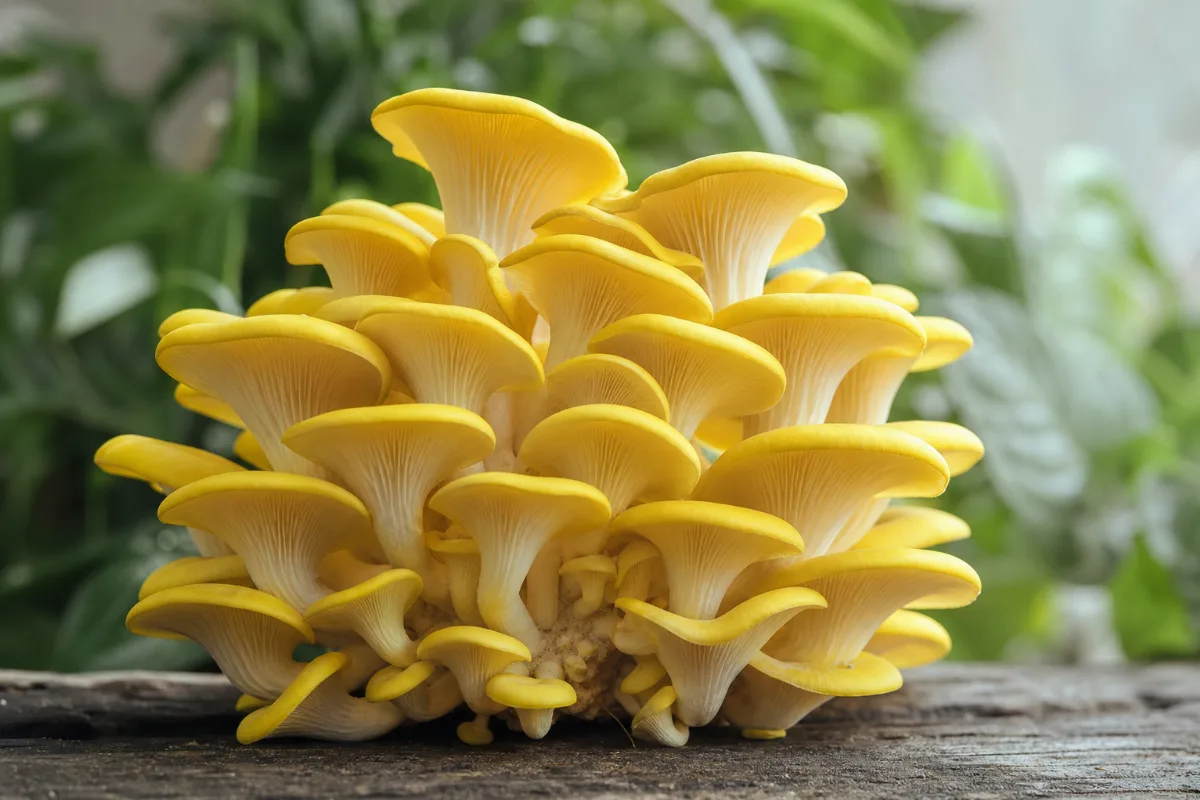
Mushrooms · Culinary mushroom
Golden oyster and other coloured oysters
Pleurotus citrinopileatus (golden oyster); Pleurotus djamor (pink oyster) · also called Yellow oyster, pink oyster, salmon oyster
Golden oyster and pink oyster are bright, quick-growing cooking mushrooms, often sold as home grow kits. There is one small human trial, on vitamin D from UV-treated golden oyster; most other research is in cells and mice. The main caution is allergy: breathing spores in a small growing room has caused asthma in workers growing related mushrooms. Cook them, as there is no study on eating them raw.
General information, not medical advice. Last substantive update · Not medically reviewed. A named clinician has not signed off on this page. How this page is made
About Golden oyster and other coloured oysters
Golden oyster and pink oyster are quick-growing oyster-family mushrooms eaten cooked and sold as grow kits. Human research is one small 4-week trial showing that UV-treated golden oyster raised blood vitamin D2. Findings on memory, blood sugar, liver and gut bacteria come from cells, test tubes or mice. The main cautions are spore asthma for growers, rare food allergy, no information on eating them raw (so cook them), and no data for pregnancy.
What they are
Golden oyster is Pleurotus citrinopileatus and pink oyster is Pleurotus djamor. Both are fungi of the family Pleurotaceae and both are accepted names in GBIF. Some papers call the golden oyster Pleurotus cornucopiae var. citrinopileatus, although GBIF lists P. cornucopiae as a separate species. Names for coloured oysters are trade names: a 2025 study of the pink oyster group describes a new species within it.
Golden oyster is a wood-decay fungus native to eastern Asia and grows mainly on hardwoods such as elm. It escaped into North American forests around 2010 and is now found in 25 US states and 1 Canadian province. The common grey oyster, including the darker strains some shops call blue oyster, is covered on the oyster mushroom page.
Traditional and current uses
We did not read a source that describes a traditional medicinal use of golden or pink oyster, so we do not describe one. Today both are mainly cooking mushrooms, grown from kits or bought fresh or dried.
What the research shows
The one human trial gave healthy adults golden oyster that had been treated with pulsed ultraviolet light so it made vitamin D2. After 4 weeks, blood vitamin D2 had risen in both mushroom groups, and a bone-related hormone fell in the larger-serving group. It had 36 people and has not been repeated. A lab paper shows vitamin D2 in golden oyster depends on UV time, so mushrooms not UV-treated may hold little.
Everything else is laboratory or animal work. A golden oyster extract protected mouse nerve cells and reduced drug-induced memory loss in mice. A mycelium tablet lowered blood glucose in diabetic mice, but it combined two mushrooms and added metals. Golden oyster extracts protected liver cells in a dish, and extracts of a pink oyster variety blocked a sugar-digesting enzyme and killed some cancer cells in a dish at high concentrations. None of this shows an effect in people.
The chemistry is better measured than the benefits. A five-species Thai study measured protein, antioxidants and ergothioneine in golden and pink oyster at three growth stages. The pink oyster cell wall holds an alpha-glucan, which differs from the beta-glucan often named on labels.
Mushroom, extract and mycelium are different
The vitamin D trial used the whole mushroom, UV-treated. The memory and liver studies used extracts, the sugar study used a mycelium tablet with added metals, and the prebiotic study used a glucan broken down in the lab. A result for one form cannot be applied to another. Drying changed the ergothioneine and antioxidant measures in two lab studies.
Legal and regulatory status
Golden and pink oyster are sold as food. We did not read any regulator statement (such as EMA, FDA or NCCIH) about them as a remedy, so none is stated here. Rules differ by country and change.
At a glance
Traditional uses history, not proof
- No source we read describes a traditional medicinal use of golden or pink oyster, so none is described here.
- Golden oyster was brought to North America in the early 2000s and sold in grow kits; it escaped into forests around 2010 (Current Biology 2025).
Studied for research
- Vitamin D2 in the blood, with UV-treated golden oyster (one small trial), low
- Memory and brain-cell protection (cell and mouse work only), insufficient
- Blood sugar (mouse and test-tube work only), insufficient
- Liver cells and gut bacteria (cell work only), insufficient
- Gut bacteria from the cell-wall glucan (test tube only), insufficient
- Antioxidant and cell-dish activity of pink oyster extracts, insufficient
Main compounds
- Ergothioneine, an antioxidant amino acid
- Alpha-(1-3)-glucan, a cell-wall sugar (not the usual beta-glucan)
- Polysaccharide-peptides, plus vitamin D2 after UV light
Common forms
- Fresh or cooked mushroom (food)
- Dried mushroom or powder
- Extracts used in the laboratory studies
- Mycelium tablets (used in mouse work)
- UV-treated mushroom (used in the vitamin D trial)
Research links: Vitamin D trial in healthy adults, 2025 (abstract) · Mouse memory study, 2025 (abstract) · Occupational asthma, Pleurotus cornucopiae (abstract) · Food allergy to oyster mushroom (abstract) · Five oyster species in Thailand (abstract) · Golden oyster as an invasive species (abstract) · Research Library · Genes & Biomarkers Library
What it is and its history
- Accepted scientific name
- Pleurotus citrinopileatus (golden oyster) and Pleurotus djamor (pink oyster)
- Naming authority
- P. citrinopileatus Singer; P. djamor (Rumph. ex Fr.) Boedijn
- Synonyms
- Pleurotus cornucopiae var. citrinopileatus is used for the golden oyster in some papers; GBIF lists P. cornucopiae (Paulet) Quel. as a separate accepted species.; Pleurotus salmoneostramineus Lj.N.Vassiljeva is a synonym of P. djamor in GBIF.
- Common names
- Golden oyster (English); Yellow oyster (English); Pink oyster (English); Salmon oyster (English)
- Family or group
- Pleurotaceae (a fungus family), not a plant
- Classification
- Fungi > Basidiomycota > Agaricomycetes > Agaricales > Pleurotaceae > Pleurotus > Pleurotus citrinopileatus; Pleurotus djamor
- Native range
- The golden oyster is native to eastern Asia according to a 2025 Current Biology paper; the Mol Neurobiol abstract names Japan, Korea, Russia and China. The Pleurotus djamor complex is widely distributed in tropical and subtropical regions (MycoKeys 2025).
- Habitat
- The golden oyster is a white-rot wood decay fungus that grows mainly on hardwoods such as elm (Current Biology 2025).
- What it looks like
- Fruiting body: A 2025 taxonomy paper describes the pink oyster group as having a more or less reddish cap. We do not teach identification.
- Cultivation
- The golden oyster is widely cultivated, sold in grow kits, and escaped into North American forests around 2010 (Current Biology 2025). A Thai study grew a pink oyster variety on sawdust at 25 to 28 C, with fruiting bodies maturing in 4 to 5 days.
- Harvest and processing
- Drying method changed the antioxidant content and measured ergothioneine of golden oyster in two lab studies. UV light made vitamin D2, and too much UV reduced it.
- Look-alikes and adulterants
- Name: Toxic wild look-alikes; Note: No source we read describes look-alikes of golden or pink oyster, so none is listed. Do not identify wild fungi from text or an app.
- Sustainability and conservation
- Ecology note: invasive golden oyster lowered fungal species richness in elm wood in Wisconsin (Current Biology 2025). Not a conservation concern for the species.
Traditional use and history history, not clinical proof
| Tradition or era | Documented use | Source |
|---|---|---|
| North America, early 2000s onward | The golden oyster was imported into North America in the early 2000s, sold in mushroom-growing kits, escaped into forests around 2010, and by 2025 was found in 25 US states and 1 Canadian province. | Veerabahu et al., Curr Biol 2025 (PubMed 40675152) |
| Traditional medicine | No traditional medicinal use of golden or pink oyster was found in the sources read, so none is described. | Not applicable |
Traditional use shows how it was used. It does not show that it works or is safe today.
What is inside, and how it may work
What it contains and how those compounds act in cells and animals. Laboratory and animal mechanisms are not proven effects in people.
Main compounds
| Compound | Family | Where it is concentrated | Activity studied | Level of evidence |
|---|---|---|---|---|
| Ergothioneine | amino-acid antioxidant | Fruiting body Up to 4.03 mg/g dry weight from one golden oyster sample under optimised lab extraction (Foods 2024). In a five-species Thai study the middle growth stage had the most ergothioneine in all species; our earlier notes say golden oyster was highest of the five (summary-only, full text not reopened). | An antioxidant in the test tube. No human trial shows a health effect from ergothioneine in these mushrooms. 20 8 | Laboratory research |
| Alpha-(1-3)-glucan | polysaccharide | Fruiting body cell wall About 552 kDa; (1-3) links make up 86.4% in pink oyster and 82.1% in golden oyster glucan in the papers read. | Chemistry paper for pink oyster; fermentation by probiotic strains of the short chains from golden oyster in the test tube. 1 7 | Laboratory research |
| Polysaccharide-peptides (PSI, PSII) | polysaccharide-protein | Fruiting body extract Not given in the abstract. | Liver-cell protection and gut-bacteria shifts in cells and test tubes. 6 | Laboratory research |
| Vitamin D2 (ergocalciferol) | vitamin | Fruiting body, after UV exposure 60.88 micrograms per 100 g after 5 minutes of UV and 47.31 after 15 minutes in one golden oyster lab study (basis fresh or dry not stated). | Raised blood 25(OH)D2 in a small trial of UV-treated golden oyster. 13 5 | Human data |
| Protein and fibre (as food) | macronutrients | Fruiting body A pink oyster variety held 25.00% protein, 19.10% fibre, 15.99% carbohydrate, 7.59% ash and 2.07% fat per 100 g dry weight (Sci Rep 2025). Solar-dried golden oyster held 29.00% protein (IJMM 2026). No USDA entry was read for either mushroom. | Nutrition; depends on strain, growing material, stage and drying. 12 13 | Composition |
Mechanisms, receptors and pathways
| Target or pathway | Gene or receptor | What was found | Level |
|---|---|---|---|
| Acetylcholinesterase and antioxidant defences (mouse brain) | Not specified in the abstract | A golden oyster extract prevented scopolamine-induced memory impairment in mice and the authors call it a natural acetylcholinesterase inhibitor. 15 | Animal research |
| Calcium signalling and CREB (rat neurons) | NMDA receptor, CREB, Bdnf gene | A commercial golden oyster extract raised Bdnf mRNA in a calcium-dependent way; ergothioneine alone did not. 3 | Laboratory research |
| Alpha-glucosidase (digestive enzyme) | Not applicable | Extracts of a pink oyster variety and of five oyster species blocked the enzyme in the test tube. 12 8 | Laboratory research |
| Adiponectin pathway and gut bacteria (liver cells, fermentation) | Adiponectin pathway | Golden oyster polysaccharide-peptides activated the adiponectin pathway in liver cells and shifted gut bacteria in fermentation. 6 | Laboratory research |
Absorption, metabolism and elimination
- Absorption
- Vitamin D2 from UV-treated golden oyster was absorbed in the human trial (blood 25(OH)D2 rose). Nothing else was found.
- Distribution
- Not found.
- Metabolism
- Not found.
- Elimination
- Not found.
- Bioavailability
- Not established for ergothioneine or glucans from these mushrooms in the sources read.
Isolated compounds versus whole extracts
The only human trial used the whole fruiting body, UV-treated. The memory, liver and prebiotic studies used extracts, isolated polysaccharides or a mycelium tablet with added metals, so they cannot be applied to the cooked mushroom. A pink oyster glucan is alpha-linked, which differs from the beta-glucan on many supplement labels.
Nutritional composition
Both are eaten as cooked food. A Thai study of five oyster species found composition rose as the mushrooms matured and that ergothioneine and phenolics peaked at the middle stage. The abstract gives no per-species numbers, and no USDA entry was read.
1 low certainty5 not enough evidence
What was looked at
The 6 benefits and uses checked for Golden oyster and other coloured oysters, each with how strong the evidence is. Tap one to open it.
- Vitamin D2 level in the blood (golden oyster treated with UV light)Low certainty
- Memory and brain-cell protection (cell and mouse research only)Not enough evidence
- Blood sugar (mouse and test-tube research only)Not enough evidence
- Liver cells and gut bacteria (cell and test-tube research only)Not enough evidence
- Prebiotic potential of the cell-wall glucan (test tube only)Not enough evidence
- Antioxidant and cell-dish activity of pink oyster extractsNot enough evidence
Lab markers tracked in the studies
Blood vitamin D2 (25-hydroxy D2)Intact parathyroid hormone (I-PTH)Bdnf gene activity (brain growth factor) in nerve cellsBlood glucose in diabetic miceAlpha-glucosidase inhibition (test-tube enzyme)ALT and AST release from liver cells
What is Golden oyster and other coloured oysters good for?
The uses people ask about and how strong the human evidence is for each. None is proven. Read this together with the Safety tab.
Benefits, one by one
Each card is a research question, not a promise. Tap a goal to filter. Open a card to see the studies, doses and limits.
Vitamin D2 level in the blood (golden oyster treated with UV light)
Low certaintyIn one small 4-week trial, healthy adults ate golden oyster that had been treated with ultraviolet light so it made vitamin D2. Their blood level of vitamin D2 went up and, in the larger-serving group, a bone-related hormone (PTH) went down. Ordinary shop mushrooms were not tested.
2 studiesGolden oyster fruiting bodies treated with pulsed ultraviolet light, …
Studies, doses and limits
What the trials found
In a 4-week randomised trial of 36 healthy adults in Taiwan, serum 25(OH)D2 rose from 1.47 to 9.50 ng/mL in a smaller-serving group and from 1.94 to 21.82 ng/mL in a larger-serving group. Intact parathyroid hormone fell 37.6% in the larger-serving group. No adverse effects were reported.
Results
25(OH)D2 up in both mushroom groups (p = 0.001 and p = 0.002); I-PTH down 37.6% in the larger-serving group.
Effect sizes as reported
Blood vitamin D2 level rose; no bone or fracture outcome was measured
Why this rating
One small randomised trial (36 people, 4 weeks) in healthy adults, using a specially treated mushroom. It measured blood markers, not bone health, and has not been repeated. A lab paper confirms that vitamin D2 in golden oyster depends on UV exposure time, so shop mushrooms that were not UV-treated may hold little.
Form and dose studied
Golden oyster fruiting bodies treated with pulsed ultraviolet light, eaten as food.
Who was studied
Healthy adults in Taiwan
Limits
The abstract does not say whether total vitamin D (D2 plus D3) rose, and it gives no results for people who are deficient. UV-treated mushrooms are a specific product.
Why researchers looked
Mushrooms make vitamin D2 when exposed to ultraviolet light, so they are studied as a plant-based source.
Traditional use
No traditional medicinal use of golden or pink oyster was found in the sources read.
Proposed mechanism Human mechanistic
Ultraviolet light turns a natural fungal sterol into vitamin D2, which the body can absorb. This is how the authors explain the rise; the trial did not test it separately.
A proposed mechanism does not show that the effect happens in people.
No adverse effects were reported in the trial. See the Safety tab for allergy.
Memory and brain-cell protection (cell and mouse research only)
Not enough evidenceIn the laboratory, a golden oyster extract protected mouse nerve cells from damage and reduced memory loss in mice given a drug that impairs memory. Another extract raised the activity of a brain growth-factor gene in rat nerve cells. No human has been tested.
2 studiesExtracts of golden oyster in cells and mice (a commercial extract in …
Studies, doses and limits
What the trials found
No human trial was found. In mice, 28 days of the extract prevented scopolamine-induced memory loss. In rat nerve cells, a commercial golden oyster extract raised Bdnf gene activity.
Results
Mouse and cell results only; the abstracts give no effect sizes for people.
Effect sizes as reported
No human data
Why this rating
Cell and mouse studies only. The extracts differ between papers and are not the cooked mushroom. The memory-loss model uses an artificial drug.
Form and dose studied
Extracts of golden oyster in cells and mice (a commercial extract in the rat-cell study).
Who was studied
Cell lines, rat neurons, mice
Limits
Cannot be applied to people. Do not use as a substitute for care for memory problems.
Why researchers looked
Golden oyster is rich in ergothioneine and other compounds that protect cells in the test tube, so researchers tried it in brain models.
Traditional use
No traditional medicinal use of golden or pink oyster was found in the sources read.
Proposed mechanism Animal research
The mouse paper calls the extract a natural acetylcholinesterase inhibitor (an enzyme that breaks down a memory chemical). The rat-cell paper links the gene effect to calcium signals in neurons and says ergothioneine alone did not explain it. Both are authors' explanations in animals or cells.
A proposed mechanism does not show that the effect happens in people.
No safety data in people.
Blood sugar (mouse and test-tube research only)
Not enough evidenceA tablet made from golden oyster and lion's mane mycelium, grown with added chromium, zinc and germanium, lowered blood glucose in diabetic mice. Extracts of a pink oyster variety slowed a sugar-digesting enzyme in the test tube. Nothing has been tested in people.
3 studiesMycelium tablet (mice); solvent and hot-water extracts of fruiting bo…
Studies, doses and limits
What the trials found
No human trial. In diabetic mice a high dose of a mycelium tablet lowered blood glucose by 29.1% after 3 weeks. A pink oyster variety extract inhibited the enzyme at concentrations comparable with acarbose in the test tube. A five-species Thai study found all extracts, including golden oyster and pink oyster, inhibited the enzyme.
Results
Mice: glucose down 29.1% from before treatment. Test tube: enzyme inhibition comparable with acarbose for one pink oyster variety extract.
Effect sizes as reported
Lab and mouse data only
Why this rating
Mouse and test-tube studies only. The mouse tablet is a combination of two mycelia with added metals, not the mushroom as eaten. No human blood-sugar test was found.
Form and dose studied
Mycelium tablet (mice); solvent and hot-water extracts of fruiting bodies (test tube).
Who was studied
Diabetic mice, enzyme tests, fat-cell lines
Limits
Cannot be applied to people. People who use diabetes medicines should ask their care team before adding any concentrated mushroom product.
Why researchers looked
Oyster mushrooms contain fibre, glucans and phenolic compounds that block sugar-digesting enzymes in the lab.
Traditional use
No traditional medicinal use of golden or pink oyster was found in the sources read.
Proposed mechanism Laboratory research
In the test tube the extracts block alpha-glucosidase, an enzyme that breaks down starch; this is also how the drug acarbose works. The mouse paper links the glucose fall to changes in gut bacteria and antioxidant enzymes (authors' explanation).
A proposed mechanism does not show that the effect happens in people.
No human safety data. Ask a doctor or pharmacist before combining with diabetes medicines.
Liver cells and gut bacteria (cell and test-tube research only)
Not enough evidenceTwo protein-sugar compounds from golden oyster protected a human liver cell line and shifted gut bacteria in a test-tube fermentation. This is cell work only.
2 studiesPolysaccharide-peptides PSI and PSII extracted from golden oyster.
Studies, doses and limits
What the trials found
No human or animal result in the sources read. In HepG2 liver cells the extracts lowered triglyceride and the release of ALT and AST. In a fermentation with human gut bacteria they raised short-chain fatty acids and shifted bacteria.
Results
Cell and test-tube changes; no effect sizes quoted here.
Effect sizes as reported
Cell and test-tube data only
Why this rating
Cell line and test-tube work, with isolated extracts that are not the mushroom. No living person or animal was tested in the paper we read.
Form and dose studied
Polysaccharide-peptides PSI and PSII extracted from golden oyster.
Who was studied
HepG2 cells, human gut bacteria in a fermentation
Limits
Cannot be applied to people.
Why researchers looked
Mushroom polysaccharides feed gut bacteria, and researchers ask whether the products they make help the liver.
Traditional use
No traditional medicinal use of golden or pink oyster was found in the sources read.
Proposed mechanism Laboratory research
The authors suggest the compounds are fermented by gut bacteria into short-chain fatty acids that then affect the liver. This is their hypothesis based on cell and test-tube results.
A proposed mechanism does not show that the effect happens in people.
None assessed.
Prebiotic potential of the cell-wall glucan (test tube only)
Not enough evidenceThe cell wall of golden oyster and pink oyster holds an alpha-linked glucan, not the beta-glucan usually quoted on labels. After the golden oyster glucan was chemically broken into short sugar chains, probiotic strains grew on it in the test tube.
2 studiesIsolated glucan and acid-made short sugar chains.
Studies, doses and limits
What the trials found
No human data. The glucan from both mushrooms is a (1-3)-alpha-glucan of about 552 kDa, as reported in two papers. The 2026 paper reports a strong bifidogenic effect in the test tube.
Results
Test-tube growth of probiotic strains.
Effect sizes as reported
Chemistry and test-tube data only
Why this rating
Two chemistry papers; only the 2026 paper tested fermentation, and it did so after an acid breakdown that does not happen in cooking.
Form and dose studied
Isolated glucan and acid-made short sugar chains.
Who was studied
Test tube
Limits
Cannot be applied to cooked or raw mushrooms or to people.
Why researchers looked
Short fungal sugars may feed useful gut bacteria, as some other prebiotics do.
Traditional use
No traditional medicinal use of golden or pink oyster was found in the sources read.
Proposed mechanism Laboratory research
The authors measured growth of probiotic strains on the short sugar chains and compared it with inulin and fructooligosaccharides. No human gut was tested.
A proposed mechanism does not show that the effect happens in people.
None assessed.
Antioxidant and cell-dish activity of pink oyster extracts
Not enough evidenceExtracts of a pink oyster variety showed antioxidant activity in test tubes and were toxic to lung and colon cancer cells at high concentrations, but also toxic to immune-type cells. This is laboratory work and not a treatment.
2 studiesSolvent extracts of a pink oyster variety.
Studies, doses and limits
What the trials found
No human data. In the Thai paper the 50% ethyl acetate extract had the strongest antioxidant activity and reduced the survival of lung and colon cancer cells at concentrations far higher than the reference drug doxorubicin. It was also toxic to macrophages.
Results
Cell-dish results only.
Effect sizes as reported
Cell and test-tube data only
Why this rating
Cell dish and test-tube data from a single paper on one variety.
Form and dose studied
Solvent extracts of a pink oyster variety.
Who was studied
Cell lines
Limits
Not a cancer treatment, and the extract also harmed immune-type cells in the dish.
Why researchers looked
Researchers screen mushroom extracts for antioxidant and anti-cancer activity.
Traditional use
No traditional medicinal use of golden or pink oyster was found in the sources read.
Proposed mechanism Laboratory research
The test-tube antioxidant tests show the extract can neutralise reactive molecules. The cell toxicity was weaker than the reference cancer drug and also affected macrophages, so it is not selective.
A proposed mechanism does not show that the effect happens in people.
None assessed in animals or people.
Connections to the rest of health
How Golden oyster and other coloured oysters connects to the rest of our health knowledge graph. Every link says what kind of connection it is. A safety link (for example to the liver) is a warning, not a benefit. A study that merely mentions a topic never creates a benefit link.
Explore every connection: goals, body systems, organs, symptoms, genes
A. Wellness goals
| Connected to | Kind of connection | Evidence status | Context | Studies |
|---|---|---|---|---|
| Bone Health | Potential benefit | Low certainty | Vitamin D2 level in the blood (golden oyster treated with UV light): In one small 4-week trial, healthy adults ate golden oyster that had been treated with ultraviolet light so it made vitamin D2. Their blood level of vitamin D2 went up and, in the larger-serving group, a bone-related hormone (PTH) went down. Ordinary shop mushrooms were not tested. | 5 13 |
| Memory Support | Preliminary mechanism | Not enough evidence | Memory and brain-cell protection (cell and mouse research only): In the laboratory, a golden oyster extract protected mouse nerve cells from damage and reduced memory loss in mice given a drug that impairs memory. Another extract raised the activity of a brain growth-factor gene in rat nerve cells. No human has been tested. | 15 3 |
| Brain Health | Preliminary mechanism | Not enough evidence | Memory and brain-cell protection (cell and mouse research only): In the laboratory, a golden oyster extract protected mouse nerve cells from damage and reduced memory loss in mice given a drug that impairs memory. Another extract raised the activity of a brain growth-factor gene in rat nerve cells. No human has been tested. | 15 3 |
| Blood Sugar Balance | Preliminary mechanism | Not enough evidence | Blood sugar (mouse and test-tube research only): A tablet made from golden oyster and lion's mane mycelium, grown with added chromium, zinc and germanium, lowered blood glucose in diabetic mice. Extracts of a pink oyster variety slowed a sugar-digesting enzyme in the test tube. Nothing has been tested in people. | 18 12 8 |
| Liver Support | Preliminary mechanism | Not enough evidence | Liver cells and gut bacteria (cell and test-tube research only): Two protein-sugar compounds from golden oyster protected a human liver cell line and shifted gut bacteria in a test-tube fermentation. This is cell work only. | 6 9 |
| Gut Health | Preliminary mechanism | Not enough evidence | Liver cells and gut bacteria (cell and test-tube research only): Two protein-sugar compounds from golden oyster protected a human liver cell line and shifted gut bacteria in a test-tube fermentation. This is cell work only. Prebiotic potential of the cell-wall glucan (test tube only): The cell wall of golden oyster and pink oyster holds an alpha-linked glucan, not the beta-glucan usually quoted on labels. After the golden oyster glucan was chemically broken into short sugar chains, probiotic strains grew on it in the test tube. | 6 9 7 1 |
| Microbiome Balance | Preliminary mechanism | Not enough evidence | Prebiotic potential of the cell-wall glucan (test tube only): The cell wall of golden oyster and pink oyster holds an alpha-linked glucan, not the beta-glucan usually quoted on labels. After the golden oyster glucan was chemically broken into short sugar chains, probiotic strains grew on it in the test tube. | 7 1 |
| Cellular Protection | Preliminary mechanism | Not enough evidence | Antioxidant and cell-dish activity of pink oyster extracts: Extracts of a pink oyster variety showed antioxidant activity in test tubes and were toxic to lung and colon cancer cells at high concentrations, but also toxic to immune-type cells. This is laboratory work and not a treatment. | 12 8 |
B. Body systems
| Connected to | Kind of connection | Evidence status | Context | Studies |
|---|---|---|---|---|
| Bones and vitamin D | Potential benefit | Low certainty | Higher blood vitamin D2 and lower PTH in one small trial; no bone outcome. Preparation or compound: UV-treated golden oyster |
5 |
| Brain and memory | Preliminary mechanism | Not enough evidence | Cell and mouse findings only. Preparation or compound: Golden oyster extracts |
15 3 |
| Musculoskeletal System | Biological association | Low certainty | Studied for: Vitamin D2 level in the blood (golden oyster treated with UV light) | 5 13 |
| Nervous System | Biological association | Not enough evidence | Studied for: Memory and brain-cell protection (cell and mouse research only) | 15 3 |
| Endocrine System | Biological association | Not enough evidence | Studied for: Blood sugar (mouse and test-tube research only) | 18 12 8 |
| Digestive System | Biological association | Not enough evidence | Studied for: Liver cells and gut bacteria (cell and test-tube research only) Studied for: Prebiotic potential of the cell-wall glucan (test tube only) | 6 9 7 1 |
| Hepatic System | Biological association | Not enough evidence | Studied for: Liver cells and gut bacteria (cell and test-tube research only) | 6 9 |
| Immune System | Biological association | Not enough evidence | Studied for: Antioxidant and cell-dish activity of pink oyster extracts | 12 8 |
C. Body parts and organs
G. Root causes and contributing factors
| Connected to | Kind of connection | Evidence status | Context | Studies |
|---|---|---|---|---|
| Contaminants in mushrooms | Very low certainty | Fluoride built up in fruiting bodies grown on contaminated material. Preparation or compound: Pleurotus grown on fluoride-rich substrate |
2 |
I. Biomarkers
| Connected to | Kind of connection | Evidence status | Context | Studies |
|---|---|---|---|---|
| Blood vitamin D2 (25-hydroxy D2) | Biological association | Low certainty | Measured in trials: raised. A lab change is not the same as a health benefit. | 5 |
| Intact parathyroid hormone (I-PTH) | Biological association | Low certainty | Measured in trials: lowered. A lab change is not the same as a health benefit. | 5 |
| Bdnf gene activity (brain growth factor) in nerve cells | Biological association | Not enough evidence | Measured in trials: raised. A lab change is not the same as a health benefit. | 3 |
| Blood glucose in diabetic mice | Biological association | Not enough evidence | Measured in trials: lowered. A lab change is not the same as a health benefit. | 18 |
| Alpha-glucosidase inhibition (test-tube enzyme) | Biological association | Not enough evidence | Measured in trials: lowered. A lab change is not the same as a health benefit. | 12 8 |
| ALT and AST release from liver cells | Biological association | Not enough evidence | Measured in trials: lowered. A lab change is not the same as a health benefit. | 6 |
J. Genes, receptors and enzymes
| Connected to | Kind of connection | Evidence status | Context | Studies |
|---|---|---|---|---|
| BDNF | Preliminary mechanism | In vitro | Raised gene activity in rat nerve cells with a golden oyster extract. | 3 |
K. Biological pathways
| Connected to | Kind of connection | Evidence status | Context | Studies |
|---|---|---|---|---|
| Parathyroid hormone (PTH) | Preliminary mechanism | Human mechanistic | Lower in the larger-serving group of a small trial of UV-treated golden oyster. | 5 |
L. Active compounds
| Connected to | Kind of connection | Evidence status | Context | Studies |
|---|---|---|---|---|
| Ergothioneine | Biological association | In vitro | An antioxidant in the test tube. No human trial shows a health effect from ergothioneine in these mushrooms. Preparation or compound: Fruiting body |
20 8 |
| Alpha-(1-3)-glucan | Biological association | In vitro | Chemistry paper for pink oyster; fermentation by probiotic strains of the short chains from golden oyster in the test tube. Preparation or compound: Fruiting body cell wall |
1 7 |
| Polysaccharide-peptides (PSI, PSII) | Biological association | In vitro | Liver-cell protection and gut-bacteria shifts in cells and test tubes. Preparation or compound: Fruiting body extract |
6 |
| Vitamin D2 (ergocalciferol) | Biological association | Human | Raised blood 25(OH)D2 in a small trial of UV-treated golden oyster. Preparation or compound: Fruiting body, after UV exposure |
13 5 |
| Protein and fibre (as food) | Biological association | Composition | Nutrition; depends on strain, growing material, stage and drying. Preparation or compound: Fruiting body |
12 13 |
Each connection is stored with the ingredient, the connected record, the kind of connection, the evidence status, the supporting studies, the preparation or compound involved, and a review date (last reviewed October 25, 2026).
Evidence at a glance: what changed in 6 lab markers
Tap a number to show only those markers. Counts are markers, not people.
The evidence
The research centre for Golden oyster and other coloured oysters. Every record here was checked against PubMed or the publisher's page; we never list a study we have not verified.
Evidence by outcome
Bars show how many studies we found for each outcome, not how well it works. People are added up across trials only (reviews are not added, to avoid double counting).
How we rate evidence
High certainty
Several well-run trials or reviews agree; further research is unlikely to change the picture much.
Moderate certainty
Good trials point the same way, but some doubt remains.
Low certainty
Small, short or inconsistent trials. The finding could change with better research.
Very low certainty
Very little or very weak human data. Treat as a possibility only.
Mixed findings
Trials or reviews disagree with each other.
Not enough evidence
Not enough human research to say either way.
Evidence against
Good research found no benefit, or found harm.
We take the reviewers' own risk-of-bias and GRADE statements where they exist, and otherwise judge from study size, design, consistency, directness and whether a product matches what is sold. Many publications do not make evidence high. Method note: We read PubMed records and abstracts for 20 papers: one randomised trial, four case reports, seven laboratory or animal studies and a review, three food-chemistry papers, a field survey and a commentary on golden oyster's spread, a naming study, and a contamination study. We also used the GBIF species records. Where earlier notes gave numbers from full texts we did not reopen, we did not use them. EMA, FDA, NCCIH, LiverTox and LactMed were not read. Only abstracts were read, so numbers come from abstracts. Certainty ratings are the compiler's own reading.
Study library: every study we checked 22
| Study | Design | People | Product, dose, length | Result |
|---|---|---|---|---|
| Adamczyk 2025 (1->3)-alpha-d-Glucan from the Pink Oyster Mushroom (Pleurotus djamor): Structural Features. Foods · PMID 40238547 · DOI |
Laboratory research fungus |
Chemical analysis of pink oyster fruiting bodies (strain B123) | Water-insoluble alkali-soluble glucan from pink oyster Fruiting body Laboratory |
The polymer is a (1-3)-linked alpha-glucan (86.4% (1-3)-linked glucose) with a molecular weight of 552 kDa. The abstract does not test any health effect. Structure only; no health effect tested Methods, limits and fundingOutcomes: Chemical structure of the cell-wall glucan Limitations: A chemistry paper. It matters mainly because label claims often talk about beta-glucans, and this is a different, alpha-linked glucan. Funding and conflicts: No conflicts declared Read: abstract |
| De 2026 Bioaccumulation and nutritional impact of fluoride in Pleurotus ostreatus and Pleurotus djamor with human health risk assessment. Biometals · PMID 42043773 · DOI |
Lab and field fungus |
Pleurotus ostreatus and Pleurotus djamor grown on fluoride-enriched substrates and in fluoride-affected farms in West Bengal, India | Mushrooms grown on fluoride-rich straw or water Fruiting body Growing trials · vs Substrates without added fluoride |
Both species took up fluoride from the substrate. Field mushrooms from fluoride-rich straw and groundwater held 96.6 and 46 mg/kg dry weight in two sets. Both species exceeded the non-carcinogenic risk threshold for children when grown the traditional way under contaminated conditions. Calcium helped in P. ostreatus but P. djamor grew less well. Mushrooms reflect their growing material Methods, limits and fundingOutcomes: Fluoride in fruiting bodies and a health risk assessment Limitations: Applies to mushrooms grown on contaminated material in one region. It does not say that shop-bought mushrooms are contaminated. Funding and conflicts: No competing interests declared Read: abstract |
| Fukuchi 2021 Aminothioneine, a product derived from golden oyster mushrooms (Pleurotus cornucopiae var. citrinopileatus), activates Ca(2+) signal-mediated brain-derived neurotrophic factor expression in cultured cortical neurons. Biochemistry and Biophysics Reports · PMID 34977362 · DOI |
Laboratory research cell |
Primary rat cortical neuron cultures | Aminothioneine, a food product made from golden oyster extract (more than 1% ergothioneine) Extract of fruiting body Cell culture · vs Ergothioneine alone |
The extract increased Bdnf mRNA in rat neurons. Ergothioneine alone did not, so the authors say other components of the extract are responsible. The effect depended on NMDA-receptor calcium signalling. Gene activity raised in cultured cells Methods, limits and fundingOutcomes: Bdnf gene (brain growth-factor) activity and signalling in neurons Limitations: Cell culture only; a commercial extract that is not the mushroom as cooked. Authors' speculation about daily intake in people is untested. Funding and conflicts: No competing interests declared Read: abstract |
| Hibbett 2026 Invasion biology: The golden oyster mushroom in North America. Current Biology · PMID 41494517 · DOI |
Commentary fungus |
Commentary on two recent studies | Not applicable |
The golden oyster is native to Asia and expanding rapidly across North America; two recent studies describe the genetic diversity of naturalised populations and their effect on native fungal communities. Context for the ecology study Methods, limits and fundingOutcomes: Golden oyster as an invasive species Limitations: A short commentary. Funding and conflicts: No competing interests declared Read: abstract |
| Hsu 2025 Effects of Consuming Pulsed UV Light-Treated Pleurotus citrinopileatus on Vitamin D Nutritional Status in Healthy Adults. Foods · PMID 39856927 · DOI |
Controlled trial |
36 36 healthy adults in Taiwan |
Golden oyster fruiting bodies treated with pulsed ultraviolet light to raise vitamin D2 Fruiting body (food) Two daily amounts of the treated mushroom (a small and a large serving); amounts not repeated here 4 weeks · vs Control group with no mushroom |
Serum 25(OH)D2 rose from 1.47 to 9.50 ng/mL in the smaller-serving group (p = 0.001) and from 1.94 to 21.82 ng/mL in the larger-serving group (p = 0.002). I-PTH fell 37.6% in the larger-serving group (26.26 to 16.38 pg/mL). No adverse effects were reported. Vitamin D2 level in the blood rose in both mushroom groups; PTH fell only in the larger-serving group Methods, limits and fundingOutcomes: Serum 25(OH)D2 and 25(OH)D3, intact parathyroid hormone (I-PTH), routine blood chemistry Limitations: Small (36 people in three groups), 4 weeks, healthy adults, ultraviolet-treated mushroom (an ordinary shop mushroom is not the same). The abstract does not state whether total vitamin D (D2 plus D3) rose, or any clinical outcome. Funding and conflicts: No conflicts declared in the PubMed record Read: abstract |
| Huang 2022 In Vitro Hepatoprotective and Human Gut Microbiota Modulation of Polysaccharide-Peptides in Pleurotus citrinopileatus. Frontiers in Cellular and Infection Microbiology · PMID 35669115 · DOI |
Laboratory research cell |
HepG2 human liver cell line and a test-tube fermentation with human gut bacteria | Two polysaccharide-peptides (PSI and PSII) extracted from golden oyster Fruiting body extract 40 and 50 micrograms per mL in cells Cell and fermentation experiments · vs Untreated cells |
In liver cells the extracts raised viability and antioxidant enzyme activity and lowered triglyceride and ALT and AST release. In the fermentation they raised short-chain fatty acids and shifted gut bacteria. Favourable changes in cells and test tubes Methods, limits and fundingOutcomes: Liver cell viability, triglyceride and liver-enzyme release, short-chain fatty acids, gut bacteria Limitations: Cells and a test tube only. No animal or human data. Isolated extracts, not the mushroom. Funding and conflicts: No competing interests declared Read: abstract |
| Komaniecka 2026 A water-insoluble polysaccharide from Pleurotus citrinopileatus has a (1 -> 3)-alpha-d-glucan structure and can serve as a source of oligosaccharides with a prebiotic potential. Carbohydrate Polymers · PMID 42586653 · DOI |
Laboratory research in-vitro |
Test-tube fermentation with probiotic strains | Alpha-glucan from golden oyster fruiting bodies, broken down into short sugar chains (oligosaccharides) Fruiting body Laboratory · vs Fructooligosaccharides and inulin as reference prebiotics |
The glucan was mostly glucose with about 82.1% (1-3) links and a size of about 552 kDa. After acid breakdown, the short sugar chains supported growth of all tested probiotic strains with a strong bifidogenic effect in the test tube. Growth of probiotic strains in a test tube Methods, limits and fundingOutcomes: Chemical structure; growth of probiotic strains on the short sugar chains Limitations: Test tube only, after chemical breakdown that does not happen in cooking. Nothing was tested in animals or people. Funding and conflicts: No competing interests declared Read: abstract |
| Kumla 2025 Centesimal Composition, Bioactive Compounds, Antioxidant and alpha-Glucosidase Inhibitory Activities of Commercial Edible Oyster Mushrooms at Different Maturity Stages in Northern Thailand. Foods · PMID 41154046 · DOI |
Composition analysis fungus |
Five commercial oyster mushroom species grown in northern Thailand (P. citrinopileatus, P. cornucopiae, P. djamor, P. ostreatus, P. pulmonarius) | Fruiting bodies at young, middle and mature stages Fruiting body Laboratory |
Composition and polysaccharide content rose as the mushrooms matured in all species. The middle stage had the most ergothioneine and phenolics in all five. All extracts showed antioxidant and alpha-glucosidase inhibitory activity. The authors say this is the first report of ergothioneine in P. cornucopiae and P. djamor. Species-by-species numbers were not in the abstract. Food chemistry; no health outcome Methods, limits and fundingOutcomes: Protein, fibre, polysaccharide, ergothioneine, phenolics, antioxidant activity and alpha-glucosidase inhibition by species and maturity Limitations: Laboratory analysis of one region's farms. The abstract gives no per-species numbers, so we do not quote them. Funding and conflicts: No conflicts declared Read: abstract |
| Liu 2025 Research Progress on the Isolation, Purification, Structural Characteristics and Biological Activity Mechanism of Pleurotus citrinopileatus Polysaccharides. Molecules · PMID 40649332 · DOI |
Narrative review review |
Review of laboratory and animal work on golden oyster polysaccharides | Golden oyster polysaccharides Fruiting body |
The review says these polysaccharides show immune-modulating, blood-sugar-lowering and anti-tumour effects, with repeating units based on glucose and galactose. The abstract does not describe human trials. Summarises mostly lab and animal findings Methods, limits and fundingOutcomes: Structure and reported activity of polysaccharides Limitations: A narrative review, not a systematic one; the abstract gives no certainty rating or human data. Funding and conflicts: No competing interests declared Read: abstract |
| Michils 1991 Occupational asthma to spores of Pleurotus cornucopiae. European Respiratory Journal · PMID 1756849 |
Case report |
1 A young man working in a factory growing Pleurotus cornucopiae |
Spores in the workplace air Spores A few months of work before asthma began |
He developed severe asthma a few months after starting work. Tests showed specific IgE and IgG against spore extracts, and one main allergen (10.5 kd) was isolated. One case of work-related asthma Methods, limits and fundingOutcomes: Asthma, IgE and IgG against spore extracts Limitations: A single case from 1991. Pleurotus cornucopiae is closely related to the golden oyster, and some sources treat the golden oyster as a variety of it. Whether the same applies to golden oyster spores was not tested. Funding and conflicts: Not applicable Read: abstract |
| Mori 1998 Mushroom worker's lung resulting from indoor cultivation of Pleurotus osteatus. Occupational Medicine · PMID 10024747 · DOI |
Case report |
2 Two workers in an indoor oyster mushroom farm in Japan |
Spores of the oyster mushroom (the title spells the species Pleurotus osteatus) Spores |
Indoor cultivation led to an outbreak of extrinsic allergic alveolitis in two workers, with high antibody titres and precipitins against the spores. The authors say workers should protect themselves from spores. Two cases of work-related lung inflammation Methods, limits and fundingOutcomes: Extrinsic allergic alveolitis (lung inflammation), antibodies to spores Limitations: Two cases only; Pleurotus ostreatus, not golden or pink oyster. Funding and conflicts: Not applicable Read: abstract |
| Phonemany 2025 Identification and therapeutic efficacy of Pleurotus djamor var fuscopruinosus. Scientific Reports · PMID 40442098 · DOI |
Laboratory research cell |
Lung and colon cancer cell lines, macrophages, fat cells; enzyme tests | Extracts (ethyl acetate, methanol, hot water) of a pink oyster variety newly reported in Thailand Fruiting body Laboratory · vs Doxorubicin, acarbose and metformin as reference drugs |
Dry weight held 25.00% protein, 19.10% fibre, 15.99% carbohydrate, 7.59% ash and 2.07% fat. Extracts showed antioxidant activity in test tubes, killed lung and colon cancer cells at high concentrations (far weaker than doxorubicin), and blocked a sugar-digesting enzyme about as well as acarbose in the test tube. Laboratory activity only; the authors say safety and animal tests are still needed Methods, limits and fundingOutcomes: Nutrition table; antioxidant tests; cell toxicity; alpha-glucosidase inhibition; glucose uptake in fat cells Limitations: Cell dishes and enzyme tests. The cancer-cell and macrophage results show some toxicity to normal-type cells too. The abstract lists moisture as 30.25% alongside dry-weight values, so the basis for some figures is unclear. A variety, not necessarily the pink oyster sold in shops. Funding and conflicts: No competing interests declared Read: abstract |
| Rajina 2026 Retention of Antioxidants and Vitamin D2 in the Golden Oyster Mushroom Pleurotus citrinopileatus (Agaricomycetes) under Different Drying and UV Exposure Conditions. International Journal of Medicinal Mushrooms · PMID 42868550 · DOI |
Composition analysis fungus |
Golden oyster dried by sun, solar and oven methods | Dried golden oyster, then exposed to ultraviolet light for 5 to 30 minutes Fruiting body Laboratory |
Solar drying kept the most antioxidant activity, phenols and protein (29.00%). Vitamin D2 was 60.88 micrograms per 100 g after 5 minutes of UV and 47.31 after 15 minutes, with none detectable beyond 15 minutes. Drying and UV change what is measured Methods, limits and fundingOutcomes: Antioxidant measures, nutrition, vitamin D2 after UV Limitations: Laboratory food analysis; the abstract does not say whether amounts are per fresh or dry weight. Funding and conflicts: No conflicts declared Read: abstract |
| Rangkakulnuwat 2023 Trehalose phosphorylase as a novel potential allergen in a case of allergic reaction due to oyster mushroom (Pleurotus ostreatus) ingestion. Journal of Allergy and Clinical Immunology: Global · PMID 37780800 · DOI |
Case report |
1 A child with an allergic reaction after eating oyster mushroom |
Oyster mushroom (Pleurotus ostreatus), eaten Fruiting body Oral food challenge Single challenge |
The authors say this is the first case report of an allergic reaction from eating oyster mushroom confirmed by an oral food challenge. Trehalose phosphorylase was identified as a potential new allergen. One confirmed food-allergy case Methods, limits and fundingOutcomes: Allergic reaction confirmed by oral food challenge; IgE immunoblot Limitations: A single case, Pleurotus ostreatus. The abstract does not describe the age or symptoms, so we do not either. Funding and conflicts: Not stated Read: abstract |
| Ryu 2025 Golden Oyster Mushroom Extract Ameliorates Oxidative Stress-Induced Cell Death in Neurons and Scopolamine-Induced Cholinergic System Impairment in Mice. Molecular Neurobiology · PMID 40682719 · DOI |
Animal study mouse |
Mouse nerve-cell line (HT-22) and C57BL mice given scopolamine to impair memory | Golden oyster mushroom extract (preparation not stated in the abstract) Three daily amounts tested in mice (not repeated here) Mice: 28 days; cells: acute exposure · vs Tacrine (a drug) as positive control; untreated cells and mice |
The extract was non-toxic to cells at the tested concentrations and prevented oxidative cell death. In mice it prevented scopolamine-induced memory loss and cholinergic changes. The authors call it a natural acetylcholinesterase inhibitor. Protective in cells and mice; no human data Methods, limits and fundingOutcomes: Cell survival after hydrogen peroxide or glutamate; mouse memory tests; cholinergic and antioxidant markers; brain tissue changes Limitations: Cells and mice only. Extract preparation not given in the abstract. Scopolamine is an artificial memory-impairment model, not dementia. Funding and conflicts: No competing interests declared Read: abstract |
| Saikai 2002 Hypersensitivity pneumonitis induced by the spore of Pleurotus Eryngii (Eringi). Internal Medicine · PMID 12132527 · DOI |
Case report |
1 A 54-year-old woman moving between mushroom factories |
Spores of king oyster (Pleurotus eryngii) Spores Two months after moving to a new factory |
She developed hypersensitivity pneumonitis from king oyster spores two months after changing factories. The authors describe it as the first such case from an edible mushroom. One case of spore-related lung inflammation Methods, limits and fundingOutcomes: Hypersensitivity pneumonitis, serum SP-D Limitations: A single case; king oyster, a related Pleurotus species. Funding and conflicts: Not applicable Read: abstract |
| Veerabahu 2025 Invasive golden oyster mushrooms are disrupting native fungal communities as they spread throughout North America. Current Biology · PMID 40675152 · DOI |
Field survey fungus |
Dead elm trees in south-central Wisconsin; citizen-science records | Wild golden oyster growing in forests Field survey · vs Elm wood without golden oyster |
Where golden oyster was present the fungal community changed and species richness fell. It was imported to North America in the early 2000s, escaped into forests around 2010, and was found in 25 states and 1 Canadian province. Ecological harm to native wood fungi; says nothing about eating it Methods, limits and fundingOutcomes: Fungal community make-up and species count in wood; range of the golden oyster in North America Limitations: An ecology survey. One of the authors is vice president of a nonprofit (MushroomObserver) that is declared as an interest. Funding and conflicts: One author declared a role at a nonprofit; no commercial conflict stated Read: abstract |
| Yang 2025 Hypoglycemic Effect of Pleurotus citrinopileatus and Hericium erinaceus Buccal Tablets on Diabetic Mice. Biology (Basel) · PMID 41300379 · DOI |
Animal study mouse |
Diabetic mice | Buccal (cheek) tablets made from golden oyster and lion's mane mycelium grown in liquid with added chromium, zinc and germanium Fermented mycelium, not fruiting body High dose of 6 g/kg in mice 3 weeks · vs Negative control mice |
High-dose tablets lowered blood glucose by 29.1% compared with before treatment, lowered total cholesterol, triglyceride and LDL, raised HDL, and shifted gut bacteria. Two mushrooms were combined and metals were added. Lower blood glucose in diabetic mice Methods, limits and fundingOutcomes: Blood glucose, blood fats, antioxidant enzymes, gut bacteria Limitations: Mice only. A combination product of two mycelia with added metals, so the effect cannot be given to golden oyster alone, and does not describe the mushroom as eaten. Funding and conflicts: No conflicts declared Read: abstract |
| Zeng 2025 Taxonomy and phylogeny of the Pleurotus djamor complex with descriptions of a new species from China. MycoKeys · PMID 41426200 · DOI |
Taxonomy fungus |
DNA and shape study of the pink oyster group | Not applicable |
The Pleurotus djamor complex is spread through tropical and subtropical regions and is known for its more or less reddish cap. The authors describe a new species, P. sinensis, with white to pinkish-buff or flesh-pink caps. Names in this group are still being sorted out Methods, limits and fundingOutcomes: Species relationships in the Pleurotus djamor complex Limitations: A naming paper. It shows that 'pink oyster' on a label may cover more than one species. Funding and conflicts: No competing interests declared Read: abstract |
| Zhang 2024 Effects of Drying Process and High Hydrostatic Pressure on Extraction of Antioxidant Ergothioneine from Pleurotus citrinopileatus Singer. Foods · PMID 38540867 · DOI |
Composition analysis fungus |
Golden oyster fruiting bodies bought in Beijing | Natural-ventilation, freeze-dried and hot-air dried golden oyster; water extraction under high pressure Fruiting body Laboratory · vs Ascorbic acid as a reference antioxidant |
Natural-ventilation drying raised ergothioneine content. Under optimised extraction conditions the highest yield was 4.03 mg/g dry weight. Purified ergothioneine scavenged free radicals strongly in the test tube, compared with vitamin C. Drying and extraction method changes the measured amount Methods, limits and fundingOutcomes: Ergothioneine yield by drying method; antioxidant activity of the purified compound Limitations: A method-optimising paper; the high yield comes from a special lab extraction, not from cooking or eating the mushroom. Funding and conflicts: No conflicts declared Read: abstract |
| n/a 2026 GBIF Backbone Taxonomy: Pleurotus citrinopileatus Singer, species key 2526504 GBIF · Source |
Taxonomy record fungus |
n/a | Not applicable |
Status ACCEPTED (exact match); family Pleurotaceae; order Agaricales. Checked through the GBIF API on 2026-10-25. Methods, limits and fundingOutcomes: Identity Limitations: A taxonomy database, not a medical source. Index Fungorum was not opened. Funding and conflicts: Public database Read: API record |
| n/a 2026 GBIF Backbone Taxonomy: Pleurotus djamor (Rumph. ex Fr.) Boedijn, species key 2526599 GBIF · Source |
Taxonomy record fungus |
n/a | Not applicable |
Status ACCEPTED (exact match); family Pleurotaceae; order Agaricales. Pleurotus salmoneostramineus Lj.N.Vassiljeva is listed as a synonym of it. P. cornucopiae (Paulet) Quél. (key 7830030) is a separate accepted species. Checked through the GBIF API on 2026-10-25. Methods, limits and fundingOutcomes: Identity Limitations: A taxonomy database, not a medical source. Index Fungorum was not opened. Funding and conflicts: Public database Read: API record |
What we do not know yet
- Only one human trial was found, on vitamin D2 from UV-treated golden oyster. None of pink oyster.
- No spore-allergy report names golden or pink oyster; the reports are for related species.
- No study of eating either mushroom raw was found.
- No study of liver safety, medicine interactions, pregnancy or breastfeeding was found.
- Memory, blood-sugar and liver findings are from cells, test tubes or mice only.
- No regulator statement was read.
How new research is added
New studies are found by a saved PubMed search and placed in a review queue. A person reads each one before it changes any evidence rating or safety wording. New publications never change ratings automatically.
Lab markers
What changed in blood or saliva tests during trials. A changed number is not the same as feeling or being healthier, and we give no "normal ranges".
Other 6
Blood vitamin D2 (25-hydroxy D2)
Raised in trials
A blood test for the vitamin D2 form that plants and fungi make. It shows how much vitamin D2 from food or supplements is in the blood.
Low certaintyResults and what it means
Why it was measured
To see whether UV-treated golden oyster actually raises vitamin D2 in the body.
Statistical vs. clinical meaning
Statistically significant in a small trial; shows the mushroom is a source of vitamin D2 when UV-treated. Does not show a better bone or health outcome.
Safety implication
No adverse effects were reported.
| Study | Result | People | Product |
|---|---|---|---|
| 5 | 1.47 to 9.50 ng/mL (smaller serving group, p = 0.001) and 1.94 to 21.82 ng/mL (larger serving group, p = 0.002), a 10.2-fold rise in the larger group. | 36 healthy adults, 4 weeks | Pulsed-UV-treated golden oyster, two serving sizes, against a control group |
Intact parathyroid hormone (I-PTH)
Lowered in trials
A hormone from the parathyroid glands that rises when vitamin D or calcium are low. It helps control calcium in the blood.
Low certaintyResults and what it means
Why it was measured
A fall in I-PTH can accompany better vitamin D status.
Statistical vs. clinical meaning
A change in a blood marker in healthy adults; no clinical result.
Safety implication
None reported.
| Study | Result | People | Product |
|---|---|---|---|
| 5 | Fell 37.6% (26.26 to 16.38 pg/mL) in the larger serving group. | 36 healthy adults, 4 weeks | Pulsed-UV-treated golden oyster at the larger serving |
Bdnf gene activity (brain growth factor) in nerve cells
Raised in trials
How active the gene for BDNF is in cells. BDNF is a protein that helps nerve cells survive and connect.
Not enough evidenceResults and what it means
Why it was measured
BDNF is studied in memory and ageing.
Statistical vs. clinical meaning
Cell-dish result only; nothing shows the same happens in a living person.
Safety implication
None assessed.
| Study | Result | People | Product |
|---|---|---|---|
| 3 | A commercial golden oyster extract raised Bdnf mRNA in rat cortical neurons; ergothioneine alone did not. | Rat neuron cell cultures | Aminothioneine, a golden oyster extract, in culture |
Blood glucose in diabetic mice
Lowered in trials
The amount of sugar in the blood of mice made diabetic for the experiment.
Not enough evidenceResults and what it means
Why it was measured
The standard first test of whether a substance might help with blood sugar.
Statistical vs. clinical meaning
An animal result only, with a two-mushroom product containing added metals.
Safety implication
Not assessed in people.
| Study | Result | People | Product |
|---|---|---|---|
| 18 | Blood glucose fell 29.1% compared with before treatment after 3 weeks of the high-dose tablet; total cholesterol, triglyceride and LDL also fell and HDL rose. | Diabetic mice | Buccal tablet of golden oyster and lion's mane mycelium grown with added chromium, zinc and germanium |
Alpha-glucosidase inhibition (test-tube enzyme)
Lowered in trials
How strongly an extract blocks an enzyme that breaks starch into sugar. Blocking it slows sugar release in the gut.
Not enough evidenceResults and what it means
Why it was measured
A quick lab screen for foods that might lower blood sugar after meals.
Statistical vs. clinical meaning
A test-tube screen; it does not show that eating the mushroom changes blood sugar.
Safety implication
None assessed.
| Study | Result | People | Product |
|---|---|---|---|
| 12 | The hot-water, ethyl acetate and methanol extracts of a pink oyster variety blocked the enzyme; the abstract says activity was comparable with acarbose. | Enzyme tests | Solvent extracts of the pink oyster variety |
| 8 | All extracts of five oyster species, including golden oyster and pink oyster, showed alpha-glucosidase inhibitory activity, highest at the middle growth stage. | Enzyme tests | Extracts of fruiting bodies at three maturity stages |
ALT and AST release from liver cells
Lowered in trials
Liver enzymes that leak out of damaged liver cells. In a blood test they signal liver injury; here they were measured in the fluid around cultured cells.
Not enough evidenceResults and what it means
Why it was measured
To see whether an extract protects liver cells from fat-related damage in a dish.
Statistical vs. clinical meaning
Cell-dish only.
Safety implication
None assessed.
| Study | Result | People | Product |
|---|---|---|---|
| 6 | Extracellular ALT and AST fell and intracellular triglyceride fell after treatment with 40 and 50 micrograms per mL of the extracts. | HepG2 human liver cell line | Polysaccharide-peptides PSI and PSII from golden oyster |
Safety
What studies and official sources say about side effects, medicines and who should check first. Each point shows what kind of evidence it comes from.
Main points to know 4
- Spores can cause asthma and lung inflammation in people who grow Pleurotus mushrooms. Case reports describe severe asthma in a worker growing Pleurotus cornucopiae (a close relative of golden oyster, and treated as the same species by some authors), lung inflammation in two workers growing oyster mushroom indoors, and hypersensitivity pneumonitis in a worker with king oyster. Golden and pink oyster are sold as home grow kits, which put spores in the air of a small room. Nobody has studied how often this happens with kits. Case report 10 11 16
- Food allergy to oyster mushroom is reported. One case report describes an allergic reaction to eating oyster mushroom (Pleurotus ostreatus) confirmed by a food challenge. Golden and pink oyster were not tested, but they are in the same genus. Case report 14
- Cook pink and golden oyster; no source says they are safe raw. We found no study on eating either mushroom raw, so we cannot say raw is safe or unsafe. As with other cultivated mushrooms, cooked is the safer default. This is general food-safety advice, not a finding from a pink or golden oyster study. Expert opinion
- Wild picking needs an expert. Never eat a wild mushroom because of a description or an app. Golden oyster has escaped into forests in North America, so wild finds may be this species, but no source we read helps tell it from toxic look-alikes. Expert opinion 17
Side effects 4
| Effect | How often | Severity and recovery | Evidence |
|---|---|---|---|
| Work-related asthma, wheeze and breathlessness from spores Species were Pleurotus cornucopiae and P. ostreatus, not tested with pink oyster. | Single case reports; frequency unknown | moderate to severe Not described in the abstract | Case report 10 |
| Extrinsic allergic alveolitis or hypersensitivity pneumonitis (lung inflammation from spores) Affects people who work with the mushrooms or breathe spores indoors. | Two workers (oyster) and one worker (king oyster); frequency unknown | moderate to severe Not described in the abstract | Case report 11 16 |
| Allergic reaction after eating The case was oyster mushroom (Pleurotus ostreatus). | One case report; frequency unknown | Not described in the abstract Not described | Case report 14 |
| No adverse effects were reported in the one human trial A small short trial that was not designed to find rare harms. | 36 healthy adults for 4 weeks | none reported n/a | Controlled trial 5 |
Liver
No case of liver injury from golden or pink oyster was found in the sources read. We did not search LiverTox, so the absence of a report is not proof of safety.
How often. Unknown; not searched in a liver database.
Monitoring. No monitoring advice was found.
This is a safety connection. It is not evidence that Golden oyster and other coloured oysters supports liver health.
Medicines and supplements 2
| With | Why it matters | Importance | Evidence | What to do |
|---|---|---|---|---|
| Any medicine (no interaction study found) none-found | We found no interaction study for golden or pink oyster with any medicine, so nothing can be ruled in or out. | None Not enough evidence | Ask a pharmacist before taking a concentrated mushroom product with prescription medicines. | |
| Diabetes medicines prescription | Laboratory extracts of oyster mushrooms blocked a sugar-digesting enzyme, as the drug acarbose does. Nothing in people shows the mushroom as food does this. | Theoretical and from the test tube only. A mouse study with a mycelium tablet also lowered blood glucose. | Laboratory research Not enough evidence 12 8 18 | People on diabetes medicine should ask their care team before adding a concentrated extract or tablet. Do not change diabetes treatment because of a mushroom. |
Who should check first 4
| Situation | Advice | Evidence |
|---|---|---|
| Known mushroom allergy, or a past reaction to oyster mushrooms | Avoid golden and pink oyster and ask a doctor or allergy specialist; reactions after eating and from spores are reported for related Pleurotus species. | Case report 14 10 |
| Asthma, or a past lung reaction to mould or mushroom spores | Be careful with grow kits and home cultivation, where spores collect in a small space. Ask a doctor first. | Case report 11 16 |
| Pregnancy and breastfeeding | No study was found. Ask a doctor or midwife about supplements; cooked mushrooms in a normal meal are a question for a clinician. | None |
| Children | No study of golden or pink oyster in children was found. Ask a doctor before giving a child any mushroom supplement. | None |
Overdose, product quality and regulators
Summary. Golden and pink oyster are cultivated food mushrooms. No toxicity study in people was found. The one human trial reported no adverse effects over 4 weeks. The Thai study of pink oyster extracts found moderate toxicity to immune-type cells in a dish at high concentrations, which is why concentrated extracts are not assumed to be harmless.
Animal. The mouse studies we read reported benefits and did not describe toxicity in their abstracts.
Human doses studied. The vitamin D trial used mushroom as food for 4 weeks. This page gives no amounts and advises none.
High dose or long term signals. No long-term safety study was found.
Overdose response. No overdose description was found. Seek medical help for the urgent signs below.
Genotoxicity. Not read.
Toxic or hazardous parts. Fungus. The fruiting body is eaten. Spores cause breathing allergy in people who handle the mushroom.
Mushrooms take up what is in what they grow on. A 2026 study of Pleurotus ostreatus and Pleurotus djamor (pink oyster) found fluoride built up in fruiting bodies from fluoride-rich straw and water. We did not read a test of shop-bought golden or pink oyster for metals.
Fluoride in mushrooms grown on contaminated material. Both species accumulated fluoride from fluoride-enriched substrates. Mushrooms from fluoride-rich straw and groundwater in West Bengal held 96.6 mg/kg and 46 mg/kg dry weight in two sets. Both species exceeded the non-carcinogenic risk threshold for children when grown the traditional way under contaminated conditions. Pink oyster grew less well when calcium was added. 2
| Body | Action | Date |
|---|
When to get medical help
- Trouble breathing, wheeze, swelling of the lips, face or throat, hives, or collapse after eating or handling these mushrooms: call emergency services.
- A cough, fever and breathlessness that come back after working with mushrooms or growing kits: see a doctor and mention the mushrooms.
- If you ate a wild mushroom you cannot identify, call a poison centre right away (in the US, Poison Help 1-800-222-1222) and do not wait for symptoms.
If someone may be poisoned or in a crisis, contact a clinician or emergency service straight away. In the US, Poison Control is 1-800-222-1222.
General information only, not medical advice. Ask a clinician or pharmacist before use, especially with medicines, in pregnancy or with a health condition. See the Natural Remedy Safety guide.
Frequently asked questions
What are golden oyster and pink oyster mushrooms?
Do they have health benefits?
Are golden and pink oyster safe to eat?
Can the spores cause asthma or allergy?
Do I have to cook pink oyster, or can I eat it raw?
Cook it. We found no study on eating pink or golden oyster raw, so we cannot call raw safe. Cooked is the safer default for cultivated mushrooms. Cooking does not help everyone with a mushroom allergy.
How are they different from the regular oyster mushroom?
Does golden oyster give you vitamin D?
Does golden oyster help memory?
Do they lower blood sugar?
Are they safe in pregnancy or breastfeeding?
No study was found, and we did not check LactMed. Ask a doctor or midwife, especially before any extract or powder.
Can they interact with medicines?
Explore by health goal
Gut HealthBone HealthMemory SupportBrain HealthBlood Sugar BalanceLiver SupportMicrobiome BalanceCellular Protection
Editorial transparency
- Written by
- AlternativeMed editorial team. Research compiled with AI assistance, then checked against PubMed records.
- Medical review
- None. This page has not been reviewed by a physician or pharmacist.
- First published
- 2026-10-25
- Last substantive update
- 2026-10-25
- How we research
- We read PubMed records and abstracts for 20 papers: one randomised trial, four case reports, seven laboratory or animal studies and a review, three food-chemistry papers, a field survey and a commentary on golden oyster's spread, a naming study, and a contamination study. We also used the GBIF species records. Where earlier notes gave numbers from full texts we did not reopen, we did not use them. EMA, FDA, NCCIH, LiverTox and LactMed were not read. Only abstracts were read, so numbers come from abstracts. Certainty ratings are the compiler's own reading.
- How we rate evidence
- See "How we rate evidence" in the Evidence tab.
- Independence
- No product is promoted on this page. No affiliate links are shown. This page is information, not a recommendation to use golden or pink oyster.
Sources 22
Each source was opened and checked. Where we read only the abstract, it says so. The small numbers in the text point here.
- Adamczyk P, Komaniecka I, Siwulski M, et al. (1->3)-alpha-d-Glucan from the Pink Oyster Mushroom (Pleurotus djamor): Structural Features.. Foods. 2025. PMID 40238547. DOI 10.3390/foods14071272. (abstract)
- De A, Sarkar J, Das D, et al. Bioaccumulation and nutritional impact of fluoride in Pleurotus ostreatus and Pleurotus djamor with human health risk assessment.. Biometals. 2026. PMID 42043773. DOI 10.1007/s10534-026-00820-y. (abstract)
- Fukuchi M, Watanabe K, Mitazaki S, et al. Aminothioneine, a product derived from golden oyster mushrooms (Pleurotus cornucopiae var. citrinopileatus), activates Ca(2+) signal-mediated brain-derived neurotrophic factor expression in cultured cortical neurons.. Biochemistry and Biophysics Reports. 2021. PMID 34977362. DOI 10.1016/j.bbrep.2021.101185. (abstract)
- Hibbett DS, Prabhu P, Tabima JF. Invasion biology: The golden oyster mushroom in North America.. Current Biology. 2026. PMID 41494517. DOI 10.1016/j.cub.2025.11.039. (abstract)
- Hsu CC, Chen CM, Ju YM, et al. Effects of Consuming Pulsed UV Light-Treated Pleurotus citrinopileatus on Vitamin D Nutritional Status in Healthy Adults.. Foods. 2025. PMID 39856927. DOI 10.3390/foods14020259. (abstract)
- Huang Y, Gao Y, Pi X, et al. In Vitro Hepatoprotective and Human Gut Microbiota Modulation of Polysaccharide-Peptides in Pleurotus citrinopileatus.. Frontiers in Cellular and Infection Microbiology. 2022. PMID 35669115. DOI 10.3389/fcimb.2022.892049. (abstract)
- Komaniecka I, Choma A, Waśko A, et al. A water-insoluble polysaccharide from Pleurotus citrinopileatus has a (1 -> 3)-alpha-d-glucan structure and can serve as a source of oligosaccharides with a prebiotic potential.. Carbohydrate Polymers. 2026. PMID 42586653. DOI 10.1016/j.carbpol.2026.125624. (abstract)
- Kumla J, Lumyong S, Suwannarach N. Centesimal Composition, Bioactive Compounds, Antioxidant and alpha-Glucosidase Inhibitory Activities of Commercial Edible Oyster Mushrooms at Different Maturity Stages in Northern Thailand.. Foods. 2025. PMID 41154046. DOI 10.3390/foods14203511. (abstract)
- Liu Z, Wang H. Research Progress on the Isolation, Purification, Structural Characteristics and Biological Activity Mechanism of Pleurotus citrinopileatus Polysaccharides.. Molecules. 2025. PMID 40649332. DOI 10.3390/molecules30132816. (abstract)
- Michils A, De Vuyst P, Nolard N, et al. Occupational asthma to spores of Pleurotus cornucopiae.. European Respiratory Journal. 1991. PMID 1756849. (abstract)
- Mori S, Nakagawa-Yoshida K, Tsuchihashi H, et al. Mushroom worker's lung resulting from indoor cultivation of Pleurotus osteatus.. Occupational Medicine. 1998. PMID 10024747. DOI 10.1093/occmed/48.7.465. (abstract)
- Phonemany M, Sysouphanthong P, Rujanapun N, et al. Identification and therapeutic efficacy of Pleurotus djamor var fuscopruinosus.. Scientific Reports. 2025. PMID 40442098. DOI 10.1038/s41598-025-02900-4. (abstract)
- Rajina, Jarial RS, Jarial K, et al. Retention of Antioxidants and Vitamin D2 in the Golden Oyster Mushroom Pleurotus citrinopileatus (Agaricomycetes) under Different Drying and UV Exposure Conditions.. International Journal of Medicinal Mushrooms. 2026. PMID 42868550. DOI 10.1615/IntJMedMushrooms.2026063593. (abstract)
- Rangkakulnuwat P, Aluksanasuwan S, Somsuan K, et al. Trehalose phosphorylase as a novel potential allergen in a case of allergic reaction due to oyster mushroom (Pleurotus ostreatus) ingestion.. Journal of Allergy and Clinical Immunology: Global. 2023. PMID 37780800. DOI 10.1016/j.jacig.2023.100095. (abstract)
- Ryu HS, Sanjay, Choi SK, et al. Golden Oyster Mushroom Extract Ameliorates Oxidative Stress-Induced Cell Death in Neurons and Scopolamine-Induced Cholinergic System Impairment in Mice.. Molecular Neurobiology. 2025. PMID 40682719. DOI 10.1007/s12035-025-05223-7. (abstract)
- Saikai T, Tanaka H, Fuji M, et al. Hypersensitivity pneumonitis induced by the spore of Pleurotus Eryngii (Eringi).. Internal Medicine. 2002. PMID 12132527. DOI 10.2169/internalmedicine.41.571. (abstract)
- Veerabahu A, Banik MT, Lindner DL, et al. Invasive golden oyster mushrooms are disrupting native fungal communities as they spread throughout North America.. Current Biology. 2025. PMID 40675152. DOI 10.1016/j.cub.2025.06.049. (abstract)
- Yang Z, Zhang K, Liang Y, et al. Hypoglycemic Effect of Pleurotus citrinopileatus and Hericium erinaceus Buccal Tablets on Diabetic Mice.. Biology (Basel). 2025. PMID 41300379. DOI 10.3390/biology14111591. (abstract)
- Zeng L, Xu YH, Wan LL, et al. Taxonomy and phylogeny of the Pleurotus djamor complex with descriptions of a new species from China.. MycoKeys. 2025. PMID 41426200. DOI 10.3897/mycokeys.126.162530. (abstract)
- Zhang C, Xie Y, Liu D, et al. Effects of Drying Process and High Hydrostatic Pressure on Extraction of Antioxidant Ergothioneine from Pleurotus citrinopileatus Singer.. Foods. 2024. PMID 38540867. DOI 10.3390/foods13060878. (abstract)
- n/a. GBIF Backbone Taxonomy: Pleurotus citrinopileatus Singer, species key 2526504. GBIF. 2026. (API record)
- n/a. GBIF Backbone Taxonomy: Pleurotus djamor (Rumph. ex Fr.) Boedijn, species key 2526599. GBIF. 2026. (API record)
Where to buy
Check the label first. Whatever you buy, look for these:
- Fruiting body versus mycelium on grain: the label should say which
- The extract type and the beta-glucan amount, if stated
- A third-party testing mark
- Interactions: ask a pharmacist if you take medicines or blood thinners
Talk to a pharmacist or doctor before you start any supplement, especially if you take medicines. See the Safety tab for interactions.
Support our free guides: as an Amazon Associate we earn from qualifying purchases. Full disclosure.


