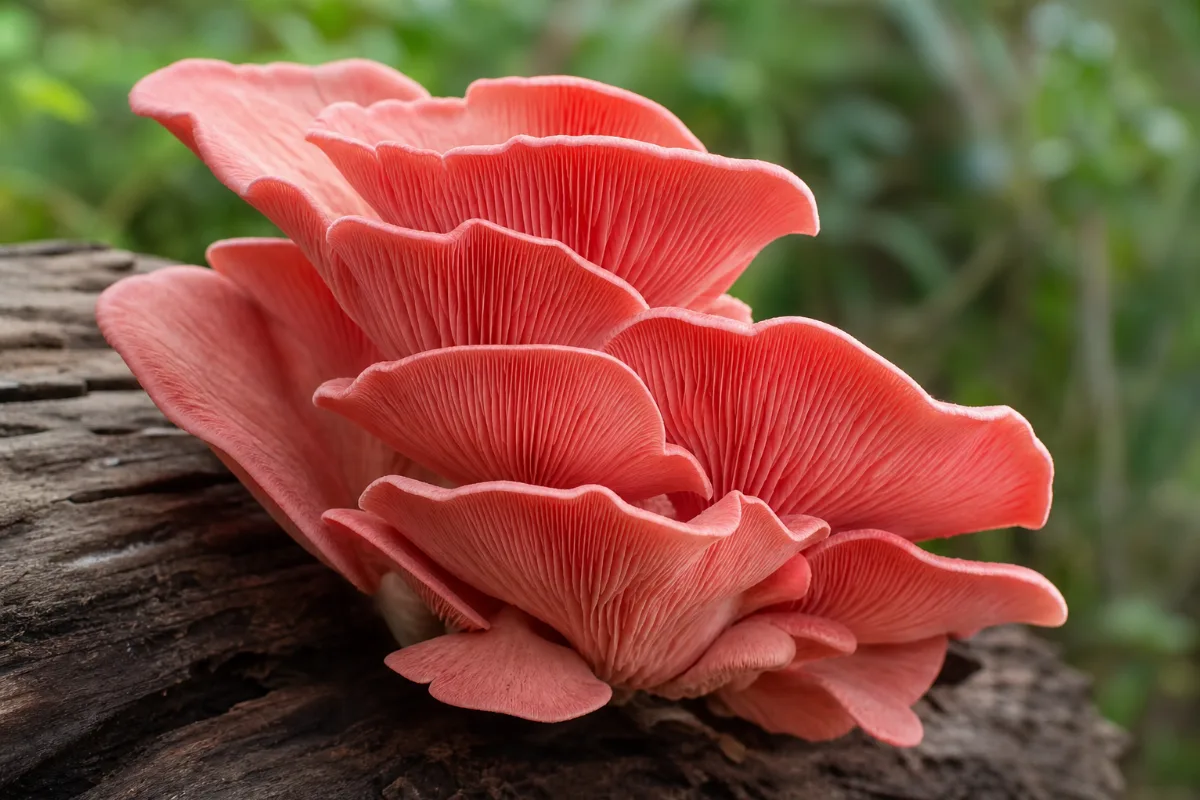
Mushrooms · Culinary mushroom
Pink oyster mushroom
Pleurotus djamor · also called Salmon oyster, flamingo oyster
Pink oyster is a bright, salmon-pink cooking mushroom that grows fast and is often sold as a home grow kit. Studies so far measure what is in it and test extracts in dishes and animals; we found no trial in people. The main caution is allergy: spores from related oyster mushrooms have caused asthma and lung problems in people who grow them. Cook it.
General information, not medical advice. Last substantive update · Not medically reviewed. A named clinician has not signed off on this page. How this page is made
About Pink oyster mushroom
Pink oyster is a quick-growing, salmon-pink oyster mushroom eaten cooked and sold as grow kits. We found no human trial. What exists is food measurements (protein, fibre, ergothioneine), test-tube and cell-dish work, and single rat and rabbit studies. The main cautions are spore asthma for growers, rare food allergy, no information on eating it raw (so cook it), mushrooms taking up fluoride and metals from contaminated growing material, and no data for pregnancy.
What it is
Pink oyster is the fungus Pleurotus djamor, in the family Pleurotaceae. GBIF lists the name as accepted, with the varieties fuscopruinosus and cyathiformis as synonyms. 'Pink oyster' is also a trade name: a 2025 study of the Pleurotus djamor complex describes a new species, Pleurotus sinensis, so a pink oyster from a shop may be a close relative.
It is a wood-decay fungus found in tropical and subtropical regions. It grows fast: in one Thai study fruiting bodies matured in 4 to 5 days on sawdust. It has been grown on banana leaves, sugarcane waste, wheat straw and quinoa stalk. The common grey oyster is covered on the oyster mushroom page.
Traditional and current uses
We did not read a source that describes a traditional medicinal use of pink oyster, so we do not describe one. Today it is mainly a cooking mushroom, grown from kits or bought fresh or dried. Researchers also study it as a protein source: the mycelium grown on carrot juice waste performed well in vegan burgers in a sensory test.
What the research shows
We found no trial of pink oyster in people. The best-measured facts are about the food itself. Dried pink oyster held about 18 to 25 percent protein and 18 to 19 percent fibre in two labs, with little fat, and the amounts changed with strain, growing material and drying. In a Thai study of five oyster species, pink oyster held 768.58 to 1226.73 micrograms of ergothioneine per gram of dry weight, more than the common oyster and less than golden oyster, and the middle growth stage had the most.
Everything else is laboratory or animal work. Digested pink oyster powder shifted gut bacteria in a test-tube colon model. A hot-water polysaccharide boosted the engulfing activity of immune-type cells and slowed some cell lines in a dish, and extracts of a pink oyster variety blocked a sugar-digesting enzyme and were toxic to lung and colon cancer cells, but also to immune-type cells. A freeze-dried culture changed behaviour in rat tests, and a mycelium protein reduced a parasite in infected rabbits. None of this shows an effect in people.
The pink oyster cell wall holds an alpha-glucan, which differs from the beta-glucan often named on supplement labels. No health effect of that glucan was tested.
Mushroom, extract and mycelium are different
Most food measurements are for the dried fruiting body. The cell and enzyme studies used solvent or hot-water extracts, the rat and rabbit studies used laboratory mycelium products, and the fermentation study used digested powder. A result for one form cannot be applied to another. Drying and harvest stage changed the measured amounts.
Legal and regulatory status
Pink oyster is sold as food. We did not read any regulator statement (such as EMA, FDA or NCCIH) about it as a remedy, so none is stated here. Rules differ by country and change.
At a glance
Traditional uses history, not proof
- No source we read describes a traditional medicinal use of pink oyster, so none is described here.
- Today it is mainly a cooking mushroom, grown from kits or on farm waste and sold fresh or dried.
Studied for research
- Food value: protein and fibre in the cooked mushroom, low (food measurements only)
- Ergothioneine and other antioxidants (laboratory measurements), insufficient
- Gut bacteria (test-tube colon model only), insufficient
- Immune cells and cancer cells (cell dishes only), insufficient
- Blood sugar (enzyme test in a tube only), insufficient
- Stress and mood behaviour (rat study only), insufficient
- Germs and parasites (plate and rabbit work only), insufficient
Main compounds
- Ergothioneine, an antioxidant amino acid
- Alpha-(1-3)-glucan, a cell-wall sugar (not the usual beta-glucan)
- Polysaccharides, phenolic compounds, protein and fibre
Common forms
- Fresh or cooked mushroom (food)
- Dried mushroom or powder
- Extracts used in the laboratory studies
- Mycelium grown in liquid or on waste (used in animal work and as a protein ingredient)
Research links: Food composition of pink oyster on banana and sugarcane waste, 2024 (abstract) · Five oyster species in Thailand, 2025 (abstract) · Gut bacteria in a colon model, 2024 (abstract) · Anaphylaxis and asthma from oyster mushroom spores (abstract) · Food allergy to oyster mushroom (abstract) · Fluoride in pink oyster grown on contaminated material (abstract) · Research Library · Genes & Biomarkers Library
What it is and its history
- Accepted scientific name
- Pleurotus djamor
- Naming authority
- (Rumph. ex Fr.) Boedijn
- Synonyms
- Pleurotus djamor var. fuscopruinosus Corner and Pleurotus djamor var. cyathiformis Corner are listed in GBIF as synonyms of the accepted name.; Lentinus djamor var. roseus (Corner) Z.S.Bi & T.H.Li is also a GBIF synonym; papers write the pink form as P. djamor var. roseus.
- Common names
- Pink oyster (English); Salmon oyster (English); Flamingo oyster (English)
- Family or group
- Pleurotaceae (a fungus family), not a plant
- Classification
- Fungi > Basidiomycota > Agaricomycetes > Agaricales > Pleurotaceae > Pleurotus > Pleurotus djamor
- Native range
- The Pleurotus djamor complex is widely distributed in tropical and subtropical regions (MycoKeys 2025). Wild isolates were identified from the north-western Himalayas of India (2024).
- Habitat
- A wood-decay fungus. Cultivated on sawdust, sugarcane and banana waste, wheat straw and quinoa stalk in the papers read.
- What it looks like
- Fruiting body: A 2025 taxonomy paper describes the group as having a more or less reddish cap, and the new species P. sinensis as white to pinkish buff or flesh-pink. We do not teach identification.
- Cultivation
- A Thai study grew a pink oyster variety on sawdust at 25 to 28 C and 70 to 80% humidity, with fruiting bodies maturing in 4 to 5 days. A Brazilian study grew it for 120 days on banana leaf and sugarcane bagasse. Pink oyster is also sold as home grow kits.
- Harvest and processing
- Harvest stage changed the measured compounds in a Thai study: the middle stage had the most ergothioneine and phenolics, while composition and polysaccharide content rose as the mushrooms matured. Mycelium (grown in liquid) has been tested as a protein ingredient.
- Look-alikes and adulterants
- Name: Toxic wild look-alikes; Note: No source we read describes look-alikes of pink oyster, so none is listed. Do not identify wild fungi from text or an app.
- Sustainability and conservation
- Not a conservation concern in the sources read.
Traditional use and history history, not clinical proof
| Tradition or era | Documented use | Source |
|---|---|---|
| Traditional medicine | No traditional medicinal use of pink oyster was found in the sources read, so none is described. | Not applicable |
| Current use | Cooking mushroom, home grow kits, and a subject of food-science and laboratory research on farm-waste cultivation, protein from mycelium, and extracts. | Medeiros 2024 (PubMed 38647869); Juhrich 2025 (PubMed 41404982) |
Traditional use shows how it was used. It does not show that it works or is safe today.
What is inside, and how it may work
What it contains and how those compounds act in cells and animals. Laboratory and animal mechanisms are not proven effects in people.
Main compounds
| Compound | Family | Where it is concentrated | Activity studied | Level of evidence |
|---|---|---|---|---|
| Ergothioneine | amino-acid antioxidant | Fruiting body 768.58 to 1226.73 ug/g dry weight across three growth stages in one Thai strain (Foods 2025). | An antioxidant in the test tube. No human trial shows a health effect from ergothioneine in pink oyster. 11 | Laboratory research |
| Alpha-(1-3)-glucan | polysaccharide | Fruiting body cell wall (1-3) links made up 86.4% of the glucan; molecular weight 552 kDa (Foods 2025). | Chemistry only. It is alpha-linked, unlike the beta-glucan usually named on supplement labels. 1 | Composition |
| Hot-water polysaccharide (PDP) | polysaccharide | Fruiting body extract 69.6% carbohydrate, 6.86% protein, 6.17% uronic acid at a 6.09% yield (Food Sci Biotechnol 2026). | Raised macrophage engulfing and slowed some cell lines in a dish. 7 | Laboratory research |
| Phenolic compounds | phenolics | Fruiting body Twelve phenolics were found across five oyster species; the digested powder held epicatechin 3.03, gallic acid 2.71 and quercetin 3-glucoside 2.40 mg/L in the colon model. | Antioxidant in tubes; the middle growth stage had the most. 11 2 | Laboratory research |
| Protein and fibre (as food) | macronutrients | Fruiting body 17.80 to 18.77% protein and 18.02 to 19.32% fibre (Brazil); 25.00% protein and 19.10% fibre per 100 g dry weight (Thailand). No USDA entry was read. | Nutrition; depends on strain, growing material and drying. 12 15 | Composition |
Mechanisms, receptors and pathways
| Target or pathway | Gene or receptor | What was found | Level |
|---|---|---|---|
| Alpha-glucosidase (digestive enzyme) | Not applicable | Extracts of a pink oyster variety and of five oyster species blocked the enzyme in the test tube. 15 11 | Laboratory research |
| Macrophage phagocytosis | Not specified in the abstract | A hot-water polysaccharide increased macrophage engulfing in a dish. 7 | Laboratory research |
| Gut bacterial fermentation | Not applicable | Digested pink oyster powder shifted bacterial groups and raised short-chain fatty acids in a colon model. 2 | Laboratory research |
| Serotonergic, noradrenergic, GABAergic pathways (proposed) | Not measured in the abstract | The rat-study authors propose these pathways for the behaviour changes; the abstract does not show they were measured. 6 | Animal research |
Absorption, metabolism and elimination
- Absorption
- Not found for any pink oyster compound.
- Distribution
- Not found.
- Metabolism
- Not found.
- Elimination
- Not found.
- Bioavailability
- Not established for ergothioneine or glucans from pink oyster in the sources read.
Isolated compounds versus whole extracts
No study used the whole cooked mushroom in people. The cell, enzyme and animal studies used solvent or hot-water extracts, a polysaccharide fraction or laboratory mycelium products, so they cannot be applied to eating the mushroom. The pink oyster glucan is alpha-linked, which differs from the beta-glucan on many supplement labels.
Nutritional composition
Pink oyster is eaten as a cooked food. Labs in Brazil, Thailand and India measured protein, fibre and ergothioneine, and the values changed with strain, growing material, stage and drying. A Thai five-species study found golden oyster held the most ergothioneine of the five and pink oyster more than the common oyster. No USDA entry was read.
1 low certainty6 not enough evidence
What was looked at
The 7 benefits and uses checked for Pink oyster mushroom, each with how strong the evidence is. Tap one to open it.
- Food value: protein and fibre (cooked mushroom)Low certainty
- Ergothioneine and other antioxidants (laboratory measurements)Not enough evidence
- Gut bacteria (test-tube colon model only)Not enough evidence
- Immune cells and cancer cells (cell-dish work only)Not enough evidence
- Blood sugar (enzyme test in a tube only)Not enough evidence
- Stress and mood behaviour (rat study only)Not enough evidence
- Germs and parasites (dish and rabbit work only)Not enough evidence
Lab markers tracked in the studies
Protein and fibre in the dried mushroomErgothioneine in the dried mushroomShort-chain fatty acids in a colon modelAlpha-glucosidase inhibition (test tube)Macrophage engulfing activity (cell dish)Parasite egg (oocyst) load in rabbit feces
What is Pink oyster mushroom good for?
The uses people ask about and how strong the evidence is for each. None is proven in people. Read this together with the Safety tab.
Benefits, one by one
Each card is a research question, not a promise. Tap a goal to filter. Open a card to see the studies, doses and limits.
Food value: protein and fibre (cooked mushroom)
Low certaintyLabs in Brazil, Thailand and India measured what pink oyster contains. Dried fruiting bodies held about 18 to 25 percent protein and 18 to 19 percent fibre, with very little fat. These are food measurements. No study tested whether eating it improves health.
3 studiesDried pink oyster fruiting body (food analysis).
Studies, doses and limits
What the trials found
No human trial of pink oyster was found. In Brazil, dried pink oyster grown on banana leaf and sugarcane waste held 17.80 to 18.77% protein, 18.02 to 19.32% fibre and 0.28 to 0.4% lipid. In Thailand, a strain grown on sawdust held 25.00% protein, 19.10% fibre and 2.07% fat per 100 g dry weight. A study of wild isolates from the Himalayas found more protein and fibre than a cultivated strain, without giving numbers in the abstract.
Results
Protein about 18 to 25% and fibre about 18 to 19% of dry weight in two labs; values differ with strain, growing material and drying.
Effect sizes as reported
Composition only; no health outcome
Why this rating
Three separate labs measured protein and fibre, so these nutrients are real. But numbers differ with strain, substrate and drying, the figures are for dried mushroom, and no study tested a health effect of eating it.
Form and dose studied
Dried pink oyster fruiting body (food analysis).
Who was studied
No people; laboratory analysis
Limits
Dry-weight figures are not the same as a cooked portion. Wild and farmed mushrooms differ.
Why researchers looked
Pink oyster grows fast on farm waste, so researchers ask whether it can be a cheap, nutritious food.
Traditional use
No traditional medicinal use of pink oyster was found in the sources read.
Proposed mechanism Composition
It is a food, so protein, fibre and carbohydrate supply nutrients in the usual way. Nothing special is claimed or tested.
A proposed mechanism does not show that the effect happens in people.
See the Safety tab for allergy and spores. Cook it.
Ergothioneine and other antioxidants (laboratory measurements)
Not enough evidencePink oyster contains ergothioneine, an antioxidant amino acid found in mushrooms, and plant-type phenolic compounds. In test-tube tests the extracts mopped up free radicals. Nobody has shown that eating pink oyster raises antioxidant levels or improves health in people.
3 studiesDried fruiting body and solvent extracts, laboratory.
Studies, doses and limits
What the trials found
No human study. In a Thai study of five oyster species at three growth stages, dried pink oyster held 768.58 to 1226.73 micrograms of ergothioneine per gram, depending on stage. That was more than the common oyster (395.28 to 845.34) and less than golden oyster (1290.15 to 2380.33). The middle stage had the most ergothioneine and phenolics in every species. Extracts also showed antioxidant activity in Brazilian and Thai tests.
Results
Ergothioneine 768.58 to 1226.73 ug/g dry weight in one Thai strain; antioxidant activity in every extract tested.
Effect sizes as reported
Laboratory amounts only
Why this rating
Laboratory measurements from single farms and strains. Antioxidant tests in a tube do not show a benefit in people, and no human study of ergothioneine from pink oyster exists.
Form and dose studied
Dried fruiting body and solvent extracts, laboratory.
Who was studied
No people
Limits
One strain on rubber-tree sawdust in northern Thailand; other growing material gives other numbers.
Why researchers looked
Mushrooms are one of the few foods that hold ergothioneine, and antioxidant tests are a common first look at a food.
Traditional use
No traditional medicinal use of pink oyster was found in the sources read.
Proposed mechanism Laboratory research
Antioxidant tests measure how well an extract neutralises free radicals in a tube. They do not show what happens in the body.
A proposed mechanism does not show that the effect happens in people.
No safety data for extracts. See the Safety tab.
Gut bacteria (test-tube colon model only)
Not enough evidenceDigested pink oyster powder shifted the mix of bacteria and raised short-chain fatty acids in a test-tube model of the human colon. This is a laboratory model, not a trial in people.
1 studiesDigested pink oyster powder in a colon fermentation model.
Studies, doses and limits
What the trials found
No human trial. In the model, over 48 hours of fermentation, digested pink oyster powder raised Lactobacillus/Enterococcus (1.12% to 4.83% of bacteria), Bifidobacterium (0.59% to 1.85%) and Ruminococcus albus/R. flavefaciens (0.37% to 1.88%), reduced Clostridium histolyticum (2.89% to 1.22%), and increased lactic acid and short-chain fatty acids.
Results
Beneficial-type bacterial groups up and one group down in a test-tube fermentation.
Effect sizes as reported
Shifts in relative abundance; no health outcome
Why this rating
One test-tube study. It did not measure digestion, symptoms or health in any person.
Form and dose studied
Digested pink oyster powder in a colon fermentation model.
Who was studied
No people
Limits
A model of the gut, not a gut. The number of stool donors is not in the abstract.
Why researchers looked
Mushroom fibre and sugars can feed gut bacteria, so mushrooms are tested as possible prebiotic foods.
Traditional use
No traditional medicinal use of pink oyster was found in the sources read.
Proposed mechanism Laboratory research
The authors say bacteria ferment the mushroom's fibre and sugars to short-chain fatty acids and lactic acid, which lower the pH. That is their explanation of the test-tube result.
A proposed mechanism does not show that the effect happens in people.
Not assessed in people.
Immune cells and cancer cells (cell-dish work only)
Not enough evidenceExtracts of pink oyster boosted the engulfing activity of immune-type cells and slowed the growth of mouse and human cancer cells in a dish. They also harmed ordinary-type cells. None of this has been tested in an animal or person for treatment.
3 studiesHot-water, ethyl acetate and methanol extracts of fruiting bodies, in…
Studies, doses and limits
What the trials found
No human trial. A hot-water polysaccharide extract inhibited growth of 53.09% of mouse fibroblasts and 57.58% of mouse melanoma cells at 100 ug/mL and increased macrophage phagocytosis. An ethyl acetate extract of a pink oyster variety was toxic to lung (IC50 245.73 ug/mL) and colon (IC50 382.03) cancer cells, but also moderately toxic to RAW 264.7 immune-type cells (IC50 213.08), and weaker than the drug doxorubicin. A methanol extract on wheat straw cut breast cancer cell viability to 2.2% at 400 ug/mL.
Results
Cell growth slowed and macrophage engulfing rose in dishes; ordinary-type and immune-type cells were also affected.
Effect sizes as reported
Laboratory concentrations only
Why this rating
Cell dishes only, with concentrations that cannot be translated into what a person eats. The extracts were also toxic to non-cancer cells. No animal or human test was found.
Form and dose studied
Hot-water, ethyl acetate and methanol extracts of fruiting bodies, in cell dishes.
Who was studied
Mouse and human cell lines
Limits
Not a treatment. Do not use pink oyster in place of cancer care.
Why researchers looked
Mushroom polysaccharides are the usual focus of immune research.
Traditional use
No traditional medicinal use of pink oyster was found in the sources read.
Proposed mechanism Laboratory research
The authors link the immune result to macrophage phagocytosis, the way these cells engulf particles. It is their explanation of a cell result.
A proposed mechanism does not show that the effect happens in people.
The extract was toxic to immune-type cells in the dish, so concentrated extracts are not assumed harmless.
Blood sugar (enzyme test in a tube only)
Not enough evidencePink oyster extracts blocked a sugar-digesting enzyme (alpha-glucosidase) in a test tube, at strengths similar to the diabetes drug acarbose. Nobody has tested whether eating pink oyster changes blood sugar.
2 studiesSolvent and hot-water extracts of fruiting bodies.
Studies, doses and limits
What the trials found
No human or animal trial. Extracts of a pink oyster variety blocked alpha-glucosidase (IC50 357.63 ug/mL for methanol, 473.87 ethyl acetate, 582.91 hot water) compared with 635.70 for acarbose, and increased glucose use in fat cells. In the Thai five-species study every extract, including pink oyster, blocked the enzyme most at the middle growth stage.
Results
Enzyme inhibition at laboratory concentrations comparable to acarbose in the tube.
Effect sizes as reported
IC50 values in a test tube
Why this rating
Enzyme and cell tests only. A tube result may not happen in the body, and no study measured blood sugar in an animal or person.
Form and dose studied
Solvent and hot-water extracts of fruiting bodies.
Who was studied
Enzyme assay; fat-cell line
Limits
A different variety (fuscopruinosus) in one paper. People using diabetes medicines should not treat this as a reason to change treatment.
Why researchers looked
Blocking this enzyme slows starch digestion, so the enzyme test is a common first screen of foods.
Traditional use
No traditional medicinal use of pink oyster was found in the sources read.
Proposed mechanism Laboratory research
The enzyme breaks starch into sugar in the gut. Blocking it in a tube shows possible activity; the body may behave differently.
A proposed mechanism does not show that the effect happens in people.
Ask a doctor or pharmacist before adding concentrated products to diabetes medicine.
Stress and mood behaviour (rat study only)
Not enough evidenceIn rats, a freeze-dried pink oyster culture changed behaviour in tests used to study anxiety and low mood. This is rat behaviour. It does not show anything about anxiety or depression in people.
1 studiesFreeze-dried culture (mycelium), by mouth, in rats.
Studies, doses and limits
What the trials found
No human trial. Rats fed pink oyster culture lyophilizate for 3 weeks spent more time in the open arms of a maze at 100 mg/kg and were less immobile in a forced swim test at 250 to 500 mg/kg.
Results
Behaviour changed in two rat tests at some amounts, not all.
Effect sizes as reported
Behaviour scores in rats; no figures quoted
Why this rating
One rat study. Maze and swim tests are weak stand-ins for human anxiety and depression, and the product was a laboratory culture, not the cooked mushroom.
Form and dose studied
Freeze-dried culture (mycelium), by mouth, in rats.
Who was studied
Male Wistar rats
Limits
Not a treatment for anxiety or depression. Do not stop or replace any medicine.
Why researchers looked
Some mushrooms are studied for stress, so researchers compared three mushroom cultures with the antidepressant fluoxetine in rats.
Traditional use
No traditional medicinal use of pink oyster was found in the sources read.
Proposed mechanism Animal research
The authors propose serotonin, noradrenaline, GABA and anti-inflammatory pathways. These were not shown in the abstract.
A proposed mechanism does not show that the effect happens in people.
No safety data in people.
Germs and parasites (dish and rabbit work only)
Not enough evidencePink oyster extracts stopped some bacteria growing on agar plates, and a mycelium protein extract reduced a parasite in infected rabbits. Neither result applies to eating the mushroom or to treating infection in people.
2 studiesMethanol extracts of fruiting body (plates); aqueous mycelium extract…
Studies, doses and limits
What the trials found
No human trial. Methanol extracts were active against most bacteria tested (not S. mutans or S. typhi) and a skin fungus on plates (zones 8.7 to 33.3 mm), and weak against a yeast. In rabbits infected with Eimeria, a single 80 ug/kg protein dose from pink oyster mycelium cut the parasite load by 74.4% by day 5 against saline, similar to the veterinary drug toltrazuril (71.3%).
Results
Microbes inhibited on plates; parasite load reduced in rabbits.
Effect sizes as reported
Plate zones and a 74.4% reduction in oocysts in rabbits
Why this rating
Plate tests and one rabbit study with a mycelium extract. Not tested in people, and the rabbit parasite does not infect humans in the same way.
Form and dose studied
Methanol extracts of fruiting body (plates); aqueous mycelium extract (rabbits).
Who was studied
Bacteria and fungi on plates; infected rabbits
Limits
Not an antibiotic or an infection treatment. See a doctor for infections.
Why researchers looked
Fungi make compounds that stop other microbes, so extracts are screened.
Traditional use
No traditional medicinal use of pink oyster was found in the sources read.
Proposed mechanism Laboratory research
Not established in the abstracts.
A proposed mechanism does not show that the effect happens in people.
No safety data in people.
Connections to the rest of health
How Pink oyster mushroom connects to the rest of our health knowledge graph. Every link says what kind of connection it is. A safety link (for example to the liver) is a warning, not a benefit. A study that merely mentions a topic never creates a benefit link.
Explore every connection: goals, body systems, organs, symptoms, genes
A. Wellness goals
| Connected to | Kind of connection | Evidence status | Context | Studies |
|---|---|---|---|---|
| Digestive Support | Low certainty | Food value: protein and fibre (cooked mushroom): Labs in Brazil, Thailand and India measured what pink oyster contains. Dried fruiting bodies held about 18 to 25 percent protein and 18 to 19 percent fibre, with very little fat. These are food measurements. No study tested whether eating it improves health. | 12 15 8 | |
| Cellular Protection | Preliminary mechanism | Not enough evidence | Ergothioneine and other antioxidants (laboratory measurements): Pink oyster contains ergothioneine, an antioxidant amino acid found in mushrooms, and plant-type phenolic compounds. In test-tube tests the extracts mopped up free radicals. Nobody has shown that eating pink oyster raises antioxidant levels or improves health in people. | 11 12 15 |
| Gut Health | Preliminary mechanism | Not enough evidence | Gut bacteria (test-tube colon model only): Digested pink oyster powder shifted the mix of bacteria and raised short-chain fatty acids in a test-tube model of the human colon. This is a laboratory model, not a trial in people. | 2 |
| Immune Support | Preliminary mechanism | Not enough evidence | Immune cells and cancer cells (cell-dish work only): Extracts of pink oyster boosted the engulfing activity of immune-type cells and slowed the growth of mouse and human cancer cells in a dish. They also harmed ordinary-type cells. None of this has been tested in an animal or person for treatment. Germs and parasites (dish and rabbit work only): Pink oyster extracts stopped some bacteria growing on agar plates, and a mycelium protein extract reduced a parasite in infected rabbits. Neither result applies to eating the mushroom or to treating infection in people. | 7 15 9 5 |
| Blood Sugar Balance | Preliminary mechanism | Not enough evidence | Blood sugar (enzyme test in a tube only): Pink oyster extracts blocked a sugar-digesting enzyme (alpha-glucosidase) in a test tube, at strengths similar to the diabetes drug acarbose. Nobody has tested whether eating pink oyster changes blood sugar. | 15 11 |
| Stress Reduction | Preliminary mechanism | Not enough evidence | Stress and mood behaviour (rat study only): In rats, a freeze-dried pink oyster culture changed behaviour in tests used to study anxiety and low mood. This is rat behaviour. It does not show anything about anxiety or depression in people. | 6 |
| Mood Balance | Preliminary mechanism | Not enough evidence | Stress and mood behaviour (rat study only): In rats, a freeze-dried pink oyster culture changed behaviour in tests used to study anxiety and low mood. This is rat behaviour. It does not show anything about anxiety or depression in people. | 6 |
B. Body systems
| Connected to | Kind of connection | Evidence status | Context | Studies |
|---|---|---|---|---|
| Gut bacteria | Preliminary mechanism | Not enough evidence | Shifts in bacterial groups in a test-tube colon model only. Preparation or compound: Digested pink oyster powder |
2 |
| Immune cells | Preliminary mechanism | Not enough evidence | Raised macrophage engulfing in a cell dish; no animal or human data. Preparation or compound: Hot-water polysaccharide extract |
7 |
| Digestive System | Biological association | Low certainty | Studied for: Food value: protein and fibre (cooked mushroom) Studied for: Gut bacteria (test-tube colon model only) | 12 15 8 2 |
| Whole Body Balance | Biological association | Not enough evidence | Studied for: Ergothioneine and other antioxidants (laboratory measurements) | 11 12 15 |
| Immune System | Biological association | Not enough evidence | Studied for: Immune cells and cancer cells (cell-dish work only) Studied for: Germs and parasites (dish and rabbit work only) | 7 15 9 5 |
| Endocrine System | Biological association | Not enough evidence | Studied for: Blood sugar (enzyme test in a tube only) | 15 11 |
| Nervous System | Biological association | Not enough evidence | Studied for: Stress and mood behaviour (rat study only) | 6 |
C. Body parts and organs
G. Root causes and contributing factors
| Connected to | Kind of connection | Evidence status | Context | Studies |
|---|---|---|---|---|
| Contaminants in mushrooms | Very low certainty | Fluoride, cadmium and lead built up in fruiting bodies grown on contaminated material. Preparation or compound: Pleurotus grown on fluoride- or metal-contaminated substrate |
4 19 |
I. Biomarkers
| Connected to | Kind of connection | Evidence status | Context | Studies |
|---|---|---|---|---|
| Protein and fibre in the dried mushroom | Biological association | Low certainty | Measured in trials: measured. A lab change is not the same as a health benefit. | 12 15 |
| Ergothioneine in the dried mushroom | Biological association | Not enough evidence | Measured in trials: measured. A lab change is not the same as a health benefit. | 11 |
| Short-chain fatty acids in a colon model | Biological association | Not enough evidence | Measured in trials: raised. A lab change is not the same as a health benefit. | 2 |
| Alpha-glucosidase inhibition (test tube) | Biological association | Not enough evidence | Measured in trials: inhibited. A lab change is not the same as a health benefit. | 15 |
| Macrophage engulfing activity (cell dish) | Biological association | Not enough evidence | Measured in trials: raised. A lab change is not the same as a health benefit. | 7 |
| Parasite egg (oocyst) load in rabbit feces | Biological association | Not enough evidence | Measured in trials: lowered. A lab change is not the same as a health benefit. | 5 |
J. Genes, receptors and enzymes
K. Biological pathways
| Connected to | Kind of connection | Evidence status | Context | Studies |
|---|---|---|---|---|
| Macrophages | Preliminary mechanism | In vitro | Engulfing activity raised by a polysaccharide extract in a dish. | 7 |
L. Active compounds
| Connected to | Kind of connection | Evidence status | Context | Studies |
|---|---|---|---|---|
| Ergothioneine | Biological association | In vitro | An antioxidant in the test tube. No human trial shows a health effect from ergothioneine in pink oyster. Preparation or compound: Fruiting body |
11 |
| Alpha-(1-3)-glucan | Biological association | Composition | Chemistry only. It is alpha-linked, unlike the beta-glucan usually named on supplement labels. Preparation or compound: Fruiting body cell wall |
1 |
| Hot-water polysaccharide (PDP) | Biological association | In vitro | Raised macrophage engulfing and slowed some cell lines in a dish. Preparation or compound: Fruiting body extract |
7 |
| Phenolic compounds | Biological association | In vitro | Antioxidant in tubes; the middle growth stage had the most. Preparation or compound: Fruiting body |
11 2 |
| Protein and fibre (as food) | Biological association | Composition | Nutrition; depends on strain, growing material and drying. Preparation or compound: Fruiting body |
12 15 |
Each connection is stored with the ingredient, the connected record, the kind of connection, the evidence status, the supporting studies, the preparation or compound involved, and a review date (last reviewed October 25, 2026).
Evidence at a glance: what changed in 3 lab markers
Tap a number to show only those markers. Counts are markers, not people.
The evidence
The research centre for Pink oyster mushroom. Every record here was checked against PubMed or the publisher's page; we never list a study we have not verified.
Evidence by outcome
Bars show how many studies we found for each outcome, not how well it works. People are added up across trials only (reviews are not added, to avoid double counting).
How we rate evidence
High certainty
Several well-run trials or reviews agree; further research is unlikely to change the picture much.
Moderate certainty
Good trials point the same way, but some doubt remains.
Low certainty
Small, short or inconsistent trials. The finding could change with better research.
Very low certainty
Very little or very weak human data. Treat as a possibility only.
Mixed findings
Trials or reviews disagree with each other.
Not enough evidence
Not enough human research to say either way.
Evidence against
Good research found no benefit, or found harm.
We take the reviewers' own risk-of-bias and GRADE statements where they exist, and otherwise judge from study size, design, consistency, directness and whether a product matches what is sold. Many publications do not make evidence high. Method note: We read PubMed records and abstracts for 19 papers: five case reports, two contamination studies, five food-composition or chemistry papers, six laboratory or animal studies, and a naming study, plus the GBIF species record. The ergothioneine figures come from the open-access full text of one Thai paper. EMA, FDA, NCCIH, LiverTox and LactMed were not read. Otherwise only abstracts were read, so numbers come from abstracts. Certainty ratings are the compiler's own reading.
Study library: every study we checked 20
| Study | Design | People | Product, dose, length | Result |
|---|---|---|---|---|
| Adamczyk 2025 (1->3)-alpha-D-Glucan from the Pink Oyster Mushroom (Pleurotus djamor): Structural Features. Foods · PMID 40238547 · DOI |
Composition analysis fungus |
Pink oyster strain B123 fruiting bodies | Alkali-extracted cell-wall fraction Fruiting body (cell wall) Laboratory |
Glucose units linked by alpha bonds, with scanty mannose and xylose. (1->3)-linked glucose made up 86.4% of the polymer, with a molecular weight of 552 kDa. The authors say alpha-glucans have many applications, including as a therapeutic agent, a heavy metal sorbent and in plastics; this paper tested none of them. Structure described; no health outcome Methods, limits and fundingOutcomes: Chemical structure of the glucan Limitations: Chemistry only. The alpha-glucan differs from the beta-glucan often named on supplement labels, and no health effect was tested. Funding and conflicts: Not stated in abstract Read: abstract |
| Andrade 2024 Unveiling the Potential Prebiotic Effects of Edible Mushroom Pleurotus djamor During In Vitro Colonic Fermentation. Journal of Agricultural and Food Chemistry · PMID 39570775 · DOI |
Laboratory research fungus |
Test-tube model of the human colon (in vitro colonic fermentation) | Digested pink oyster powder Fruiting body (powder) 48 hours of fermentation · vs Fermentation without the powder is not described in the abstract |
Digested powder raised Lactobacillus/Enterococcus (1.12% to 4.83%), Bifidobacterium (0.59% to 1.85%) and Ruminococcus albus/R. flavefaciens (0.37% to 1.88%), reduced Clostridium histolyticum (2.89% to 1.22%), increased lactic acid and short-chain fatty acids, and lowered pH. Phenolics found included epicatechin (3.03 mg/L), gallic acid (2.71) and quercetin 3-glucoside (2.40). The authors conclude it has prebiotic effects. Shifts in bacterial groups in a test tube Methods, limits and fundingOutcomes: Gut bacterial groups, lactic acid and short-chain fatty acids, pH, phenolics Limitations: Test-tube fermentation, not people. The abstract does not state how many stool donors were used. No health outcome measured. Funding and conflicts: Not stated in abstract Read: abstract |
| Branicka 2021 A case of anaphylactic reaction following oyster mushroom (Pleurotus ostreatus) inhalation. International Journal of Occupational Medicine and Environmental Health · PMID 33630827 · DOI |
Case report |
1 A healthy 32-year-old woman who opened an oyster mushroom farm |
Oyster mushroom (Pleurotus ostreatus) spores in the air of the farm Spores Symptoms after 10 to 30 minutes of exposure, several times |
She had breathlessness during harvest and, a month later, breathlessness with weakness, fast pulse and hives after 10 minutes of sorting. Spirometry showed airflow obstruction. Standard skin prick tests were negative, but a prick-to-prick test with oyster mushroom was positive (12 mm wheal) and total IgE was raised (78 iu/ml). She was diagnosed with occupational anaphylaxis and work-related asthma. The authors say spores are highly potent allergens. One case of occupational anaphylaxis from spores Methods, limits and fundingOutcomes: Breathlessness, urticaria, spirometry, skin tests, IgE Limitations: A single case, Pleurotus ostreatus, not pink oyster. Funding and conflicts: Not stated in abstract Read: abstract |
| De 2026 Bioaccumulation and nutritional impact of fluoride in Pleurotus ostreatus and Pleurotus djamor with human health risk assessment. Biometals · PMID 42043773 · DOI |
Lab and field fungus |
Pleurotus ostreatus and Pleurotus djamor grown on fluoride-enriched substrates and in fluoride-affected farms in West Bengal, India | Mushrooms grown on fluoride-rich straw or water Fruiting body Growing trials · vs Substrates without added fluoride |
Both species took up fluoride from the substrate. Field mushrooms from fluoridated straw and fluoride-rich groundwater held 96.6 mg/kg (Set 1N) and 46 mg/kg (Set 4N) dry weight. Accumulation was higher in P. ostreatus than P. djamor. Both species exceeded the non-carcinogenic risk threshold for children when grown the traditional way under contaminated conditions. Calcium helped P. ostreatus, but P. djamor grew less well. Mushrooms reflect their growing material Methods, limits and fundingOutcomes: Fluoride in fruiting bodies; health risk assessment Limitations: Applies to mushrooms grown on contaminated material in one region. It does not say shop-bought mushrooms are contaminated. Funding and conflicts: Not stated in abstract Read: abstract |
| Dunstand-Guzman 2026 Anticoccidial in vitro and in vivo effect of Pleurotus djamor against Eimeria spp. of the rabbit Oryctolagus cuniculi. Veterinary Parasitology · PMID 42574928 · DOI |
Animal study rabbit |
Rabbit parasite (Eimeria) oocysts in vitro, then infected rabbits for 7 days | Aqueous extract of pink oyster mycelium supernatant (protein extract) Mycelium 80 ug/kg of mushroom protein once (rabbits) 7 days · vs Saline (control) and toltrazuril (a veterinary drug) |
In vitro at 10 ug/mL protein, 30.3% of oocysts were viable against 93% in controls (toltrazuril 23.1%). In rabbits, parasite load fell 74.4% by day 5 versus controls (toltrazuril 71.3%), with less intestinal damage on day 7. Reduced parasite load in infected rabbits Methods, limits and fundingOutcomes: Viable oocysts in vitro; oocyst load in feces; intestinal damage Limitations: A mycelium protein extract in rabbits with a rabbit parasite. Says nothing about eating the mushroom or about human health. Funding and conflicts: Not stated in abstract Read: abstract |
| Emil 2025 Effects of dietary supplementation with arboreal medicinal mushrooms on stress coping strategies, depressive and anxiety-like behavior of rats. Journal of Pharmacy and Pharmacology · PMID 40974039 · DOI |
Animal study rat |
Male Wistar rats | Freeze-dried (lyophilised) cultures of lion's mane, Fomitopsis officinalis or pink oyster (PDJ) Lyophilizate from in vitro cultures (mycelium) 0, 100, 250 or 500 mg/kg by mouth 3 weeks · vs Fluoxetine 20 mg/kg; no-mushroom group |
Pink oyster at 100 mg/kg increased open-arm entries and time in the elevated plus maze (anxiolytic-like), and at 250 to 500 mg/kg reduced immobility and increased climbing or swimming in the forced swim test. The authors call these dose-specific antidepressant-like effects and propose serotonin, noradrenaline, GABA and anti-inflammatory pathways. Behaviour changes in rats Methods, limits and fundingOutcomes: Open field, elevated plus maze and forced swim behaviour Limitations: Rat behaviour tests, not depression or anxiety in people. Culture lyophilizate, not the cooked mushroom. The pathways are the authors' proposal and were not measured in this abstract. Funding and conflicts: Not stated in abstract Read: abstract |
| Govindan 2026 Polysaccharide from Pleurotus djamor: extraction optimization with response surface methodology, preliminary structure, antioxidant, immunomodulatory and antitumor potentials. Food Science and Biotechnology · PMID 41766971 · DOI |
Laboratory research cell |
Mouse fibroblast (L929) and mouse melanoma (B16-F10) cells; macrophages; chemical antioxidant tests | Hot-water polysaccharide extract of pink oyster (PDP) 100 ug/mL for cell growth test Laboratory |
Best extraction gave a 6.09% yield. The extract held 69.6% carbohydrate, 6.86% protein and 6.17% uronic acid. It scavenged free radicals in chemical tests, inhibited growth of 53.09% of fibroblasts and 57.58% of melanoma cells at 100 ug/mL, and increased macrophage phagocytosis. Active in a dish; no human or animal data Methods, limits and fundingOutcomes: Extraction yield, composition, antioxidant tests, cell growth, macrophage phagocytosis Limitations: Cells and chemical tests only. The extract slowed growth of normal-type mouse fibroblasts as well as melanoma cells. Funding and conflicts: Not stated in abstract Read: abstract |
| Guleria 2024 Taxonomic Identification and Nutritional Profiling of Wild Isolates of the Pink Oyster Mushroom Pleurotus djamor (Agaricomycetes) from Northwestern Himalayas (India). International Journal of Medicinal Mushrooms · PMID 38884265 · DOI |
Composition analysis fungus |
Two wild isolates of pink oyster from the north-western Himalayas and a commercially cultivated strain | Pink oyster fruiting bodies Fruiting body Laboratory · vs Commercially cultivated pink oyster |
DNA matched P. djamor at 96.80 and 95.27% for the two wild isolates. The commercial strain was faster (spawn run 17.75 days) and had the highest biological efficiency (73.92%). The wild isolates had more moisture, protein and crude fibre than the commercial strain; the abstract gives no figures. Wild isolates differed from the cultivated strain in nutrition Methods, limits and fundingOutcomes: DNA identity (ITS), growth time, biological efficiency, nutrition Limitations: Two isolates only, and the abstract gives no nutrition numbers. The authors call the wild isolates a superfood; that is their opinion and is not tested. Funding and conflicts: Not stated in abstract Read: abstract |
| Inci 2023 Antimicrobial, Antioxidant, Cytotoxicity and DNA Protective Properties of the Pink Oyster Mushroom, Pleurotus djamor (Agaricomycetes). International Journal of Medicinal Mushrooms · PMID 36749057 · DOI |
Laboratory research cell |
Bacteria, a skin fungus and a yeast on agar; human breast cancer cells; DNA damage tests | Pink oyster grown on wheat straw, quinoa stalk or both; methanol extracts Fruiting body Extract 25 mg/mL (DNA tests), 400 ug/mL (cancer cells) Laboratory · vs Control groups (not detailed in abstract) |
Extracts were active against most bacteria tested (not S. mutans or S. typhi) and a dermatophyte (zones 8.7 to 33.3 mm) but weak against Candida tropicalis. At 400 ug/mL the wheat straw extract cut breast cancer cell viability to 2.2%. Extracts inhibited UV- and hydrogen peroxide-induced DNA damage at 25 mg/mL. Lab activity against microbes, cancer cells and DNA damage Methods, limits and fundingOutcomes: Zones of bacterial growth inhibition, antioxidant status, cancer cell viability, DNA protection Limitations: Laboratory only, with very high concentrations. Not an antibiotic or anticancer treatment. Funding and conflicts: Not stated in abstract Read: abstract |
| Juhrich 2025 Pleurotus djamor Mycelium: Sustainable Production of a Promising Protein Source from Carrot Side Streams. Journal of Agricultural and Food Chemistry · PMID 41404982 · DOI |
Composition analysis fungus |
106 fungal strains grown on liquid carrot side streams | Pink oyster mycelium grown in carrot juice waste Mycelium Fermentation |
Pink oyster mycelium gave about 15 g/L biomass with 31.0% protein (orange carrot medium) or 21.6 g per 100 g (black carrot medium). In burger patties and vegan sausage analogues it outperformed vegetable proteins in sensory tests. Mycelium as a food ingredient Methods, limits and fundingOutcomes: Biomass, protein, use in burgers and sausage analogues Limitations: A food-technology study of mycelium, not the fruiting body, and not a health study. Funding and conflicts: Not stated in abstract Read: abstract |
| Kumla 2025 Centesimal Composition, Bioactive Compounds, Antioxidant and alpha-Glucosidase Inhibitory Activities of Commercial Edible Oyster Mushrooms at Different Maturity Stages in Northern Thailand. Foods · PMID 41154046 · DOI |
Composition analysis fungus |
Five commercial oyster species (P. citrinopileatus, P. cornucopiae, P. djamor, P. ostreatus, P. pulmonarius) at young, middle and mature stages, northern Thailand | Fruiting bodies of five oyster species at three stages Fruiting body Laboratory |
Composition and polysaccharide content rose as the mushrooms matured in all species. The middle stage had the most ergothioneine, total phenolics and individual phenolics in all five species. Twelve phenolic compounds were found. All extracts had antioxidant activity and blocked alpha-glucosidase, most at the middle stage. The authors say it is the first report of ergothioneine and alpha-glucosidase inhibition in P. cornucopiae and P. djamor. In the full text, ergothioneine in dry pink oyster ranged from 768.58 to 1226.73 ug/g across the three stages, against 395.28 to 845.34 in P. ostreatus and 1290.15 to 2380.33 in golden oyster (P. citrinopileatus), the highest of the five. Harvest stage changed the measured compounds; no health outcome Methods, limits and fundingOutcomes: Composition, polysaccharides, ergothioneine, phenolics, antioxidant and alpha-glucosidase inhibition Limitations: Laboratory analysis of commercial mushrooms from one region. Strain, growing material and stage change the numbers; the ergothioneine figures come from the open-access full text, the rest from the abstract. Funding and conflicts: Not stated in abstract Read: abstract and the ergothioneine results (open-access full text, PMC12564318) |
| Medeiros 2024 Nutritional and antioxidant potential of Pleurotus djamor (Rumph. ex Fr.) Boedijn produced on agronomic wastes banana leaves and sugarcane bagasse substrates. Brazilian Journal of Microbiology · PMID 38647869 · DOI |
Composition analysis fungus |
Pink oyster (Pleurotus djamor) grown 120 days on banana leaf and sugarcane bagasse mixes | Pink oyster, dried at 45 C for three days (oven) Fruiting body Laboratory |
The mushrooms held 17.80 to 18.77% protein, 18.02 to 19.32% dietary fibre and 0.28 to 0.4% lipid, with a maximum of 258.42 calories and no significant difference between substrate groups. Phenolics and flavonoids were high, highest on sugarcane bagasse. NMR showed heteropolysaccharides, beta-glucans, alpha-glucans and oligosaccharides. All extracts had antioxidant activity. Measured food composition; no health outcome Methods, limits and fundingOutcomes: Protein, fibre, fat, calories, phenolics, flavonoids, antioxidant activity of 70:30 ethanol/water extracts Limitations: Laboratory food analysis of dried mushrooms from one study; values depend on the growing material and drying. The abstract does not give units of the calorie figure or the basis (dry or fresh) of each value beyond the drying step. Funding and conflicts: Not stated in abstract Read: abstract |
| Michils 1991 Occupational asthma to spores of Pleurotus cornucopiae. European Respiratory Journal · PMID 1756849 |
Case report |
1 A young man working in a factory growing Pleurotus cornucopiae |
Spores in the workplace air Spores A few months of work before asthma began |
He developed severe asthma a few months after starting work. Tests showed specific IgE and IgG against spore extracts, and one discriminant antigen (10.5 kd) was isolated. One case of work-related asthma Methods, limits and fundingOutcomes: Asthma, IgE and IgG against spore extracts Limitations: A single case from 1991 for a different Pleurotus species. Whether pink oyster spores act the same way was not tested. Funding and conflicts: Not applicable Read: abstract |
| Mori 1998 Mushroom worker's lung resulting from indoor cultivation of Pleurotus osteatus. Occupational Medicine · PMID 10024747 · DOI |
Case report |
2 Two workers at an indoor oyster mushroom farm |
Spores of the oyster mushroom (the title spells the species Pleurotus osteatus) Spores |
Indoor cultivation led to an outbreak of extrinsic allergic alveolitis (lung inflammation) in two workers, with high antibody titres and precipitins against the spores. The authors say workers should protect themselves from the spores. Two cases of work-related lung inflammation Methods, limits and fundingOutcomes: Extrinsic allergic alveolitis; antibodies to spores Limitations: Two cases only; Pleurotus ostreatus, not pink oyster. Funding and conflicts: Not applicable Read: abstract |
| Phonemany 2025 Identification and therapeutic efficacy of Pleurotus djamor var fuscopruinosus. Scientific Reports · PMID 40442098 · DOI |
Laboratory research cell |
Pleurotus djamor var. fuscopruinosus, newly reported in Thailand: dried fruiting body extracts and cell lines | Solvent extracts (ethyl acetate, methanol, hot water) of fruiting body Fruiting body Extract concentrations in micrograms per mL (cells and enzyme tests) Laboratory · vs Doxorubicin, acarbose and metformin as reference compounds |
Per 100 g dry weight: 25.00% protein, 15.99% carbohydrate, 19.10% fibre, 7.59% ash, 2.07% fat. The 50% ethyl acetate extract was toxic to lung (A549, IC50 245.73 ug/mL) and colon (SW480, IC50 382.03 ug/mL) cancer cells but less potent than doxorubicin (14.96), and also moderately toxic to RAW 264.7 immune-type cells (IC50 213.08 ug/mL). The methanol, ethyl acetate and hot-water extracts blocked alpha-glucosidase (IC50 357.63, 473.87 and 582.91 ug/mL) comparably to acarbose (635.70). The authors say safety and in vivo work are still needed. Extracts were active in cell dishes and test tubes; no animal or human data Methods, limits and fundingOutcomes: Nutrition, antioxidant activity, cell toxicity, alpha-glucosidase inhibition, glucose use in fat cells Limitations: Cell and enzyme work with extracts, on a variety (var. fuscopruinosus) that is not necessarily the pink oyster sold in shops. Concentrations are laboratory concentrations. The extract was toxic to immune-type cells as well as cancer cells. Funding and conflicts: Not stated in abstract Read: abstract |
| Rangkakulnuwat 2023 Trehalose phosphorylase as a novel potential allergen in a case of allergic reaction due to oyster mushroom (Pleurotus ostreatus) ingestion. Journal of Allergy and Clinical Immunology: Global · PMID 37780800 · DOI |
Case report |
1 One person with an allergic reaction after eating oyster mushroom |
Oyster mushroom (Pleurotus ostreatus), eaten Fruiting body Oral food challenge Single challenge |
The authors say this is the first case report of an allergic reaction to eating oyster mushroom confirmed by an oral food challenge. Trehalose phosphorylase was identified as a novel potential allergen. One confirmed food-allergy case Methods, limits and fundingOutcomes: Allergic reaction confirmed by oral food challenge; IgE immunoblot Limitations: A single case of Pleurotus ostreatus. The abstract does not describe the person's age or symptoms, so we do not either. Funding and conflicts: Not stated Read: abstract |
| Saikai 2002 Hypersensitivity pneumonitis induced by the spore of Pleurotus Eryngii (Eringi). Internal Medicine · PMID 12132527 · DOI |
Case report |
1 A 54-year-old woman moving between mushroom factories |
Spores of king oyster (Pleurotus eryngii) Spores Two months after moving to the new factory |
She developed hypersensitivity pneumonitis from king oyster spores two months after changing factories. The authors call it the first such case from an edible mushroom. One case of spore-related lung inflammation Methods, limits and fundingOutcomes: Hypersensitivity pneumonitis; serum SP-D Limitations: A single case; king oyster, a related Pleurotus species. Funding and conflicts: Not applicable Read: abstract |
| Zeng 2025 Taxonomy and phylogeny of the Pleurotus djamor complex with descriptions of a new species from China. MycoKeys · PMID 41426200 · DOI |
Taxonomy fungus |
Specimens of the Pleurotus djamor complex | Not applicable Fruiting body |
The P. djamor complex is widely distributed in tropical and subtropical regions and is known for a more or less reddish cap. The authors describe a new species, Pleurotus sinensis, with a white to pinkish buff or flesh-pink cap. Pink oysters are a group of related species Methods, limits and fundingOutcomes: Species relationships (ITS, tef1a, rpb2 genes) and a new species Limitations: A naming paper. It does not test whether shop-bought pink oyster is P. djamor or a relative. Funding and conflicts: Not applicable Read: abstract |
| de Oliveira 2022 The protective role of selenium against uptake and accumulation of cadmium and lead in white oyster (Pleurotus ostreatus) and pink oyster (Pleurotus djamor) mushrooms. Food Additives and Contaminants Part A · PMID 35113771 · DOI |
Lab and field fungus |
White oyster and pink oyster grown on substrate with added cadmium, lead and selenium | Mushrooms grown with metals and Se(IV) or Se(VI) Fruiting body Growing trials · vs Growth without selenium |
Both mushrooms bioaccumulated selenium (19 to 205 ug/g), cadmium (4.5 to 18.8 ug/g) and lead (1.6 to 7.0 ug/g). Selenium(IV) or (VI) cut cadmium by 4 to 89%, while selenium(VI) raised lead by 9 to 187%. The authors propose selenium(VI) to reduce cadmium and make selenium-enriched mushrooms. Mushrooms take up metals from their growing material Methods, limits and fundingOutcomes: Uptake of selenium, cadmium and lead; protein-bound metals Limitations: Metals were added deliberately to the growing material. It says what the mushrooms can absorb, not what shop-bought mushrooms contain. Funding and conflicts: Not stated in abstract Read: abstract |
| n/a 2026 GBIF Backbone Taxonomy: Pleurotus djamor (Rumph. ex Fr.) Boedijn, species key 2526599 GBIF · Source |
Taxonomy record fungus |
n/a | Not applicable |
Status ACCEPTED (exact match); family Pleurotaceae; order Agaricales; phylum Basidiomycota. Checked through the GBIF API on 2026-10-25. Synonyms listed include Pleurotus djamor var. fuscopruinosus Corner, P. djamor var. cyathiformis Corner and Lentinus djamor var. roseus. Methods, limits and fundingOutcomes: Identity Limitations: A taxonomy database, not a medical source. Index Fungorum was not opened. Funding and conflicts: Public database Read: API record |
What we do not know yet
- No human trial of pink oyster was found.
- No spore-allergy report names pink oyster; the reports are for related species.
- No study of eating it raw was found, and no source we read states that it must be cooked.
- No study of liver safety, medicine interactions, pregnancy or breastfeeding was found.
- Immune, blood-sugar, mood and parasite findings are from cells, test tubes, rats or rabbits only.
- No test of shop-bought pink oyster for metals was found, and no regulator statement was read.
How new research is added
New studies are found by a saved PubMed search and placed in a review queue. A person reads each one before it changes any evidence rating or safety wording. New publications never change ratings automatically.
Lab markers
What changed in blood or saliva tests during trials. A changed number is not the same as feeling or being healthier, and we give no "normal ranges".
Other 6
Protein and fibre in the dried mushroom
Measured in trials
The share of the dried mushroom that is protein or fibre, measured in a food laboratory.
Low certaintyResults and what it means
Why it was measured
It shows how much of these nutrients the food supplies.
Statistical vs. clinical meaning
A food fact, not a health result.
Safety implication
None.
| Study | Result | People | Product |
|---|---|---|---|
| 12 | 17.80 to 18.77% protein and 18.02 to 19.32% fibre in dried pink oyster grown on banana leaf and sugarcane bagasse. | Laboratory samples, Brazil | Dried at 45 C for three days |
| 15 | 25.00% protein, 19.10% fibre, 2.07% fat per 100 g dry weight. | Laboratory samples, Thailand | Variety fuscopruinosus grown on sawdust |
Ergothioneine in the dried mushroom
Measured in trials
The amount of ergothioneine, an antioxidant amino acid found in mushrooms, in a gram of dried mushroom.
Not enough evidenceResults and what it means
Why it was measured
Mushrooms are a dietary source of ergothioneine.
Statistical vs. clinical meaning
Shows the food contains it; does not show a benefit.
Safety implication
None.
| Study | Result | People | Product |
|---|---|---|---|
| 11 | 768.58 to 1226.73 micrograms per gram dry weight across young, middle and mature stages; highest at the middle stage. | One strain on rubber-tree sawdust, northern Thailand | Fruiting bodies |
Short-chain fatty acids in a colon model
Raised in trials
Small acids that gut bacteria make when they ferment fibre. In a test tube they show that bacteria used the food.
Not enough evidenceResults and what it means
Why it was measured
Used as a sign that a food feeds gut bacteria.
Statistical vs. clinical meaning
A laboratory sign only.
Safety implication
Not assessed.
| Study | Result | People | Product |
|---|---|---|---|
| 2 | Lactic acid and short-chain fatty acids rose and pH fell over 48 hours; the abstract gives no figures for these. | Test-tube colon fermentation | Digested pink oyster powder |
Alpha-glucosidase inhibition (test tube)
Inhibited in trials
How well an extract blocks an enzyme that digests starch. A lower IC50 means a stronger block.
Not enough evidenceResults and what it means
Why it was measured
A screen for foods that might slow sugar absorption.
Statistical vs. clinical meaning
A tube result only.
Safety implication
Not assessed in people.
| Study | Result | People | Product |
|---|---|---|---|
| 15 | IC50 357.63 (methanol), 473.87 (ethyl acetate), 582.91 (hot water) ug/mL against 635.70 for acarbose. | Enzyme test | Extracts of pink oyster variety fuscopruinosus |
Macrophage engulfing activity (cell dish)
Raised in trials
How actively immune-type cells called macrophages engulf particles in a dish.
Not enough evidenceResults and what it means
Why it was measured
A common first test for immune effects of polysaccharides.
Statistical vs. clinical meaning
A cell result only.
Safety implication
Not assessed.
| Study | Result | People | Product |
|---|---|---|---|
| 7 | The extract increased macrophage phagocytosis; the abstract gives no figure for it. | Macrophage cells | Hot-water polysaccharide extract of pink oyster |
Parasite egg (oocyst) load in rabbit feces
Lowered in trials
The number of parasite eggs in rabbit droppings, used to judge infection in rabbits.
Not enough evidenceResults and what it means
Why it was measured
Standard animal-health measure of coccidiosis.
Statistical vs. clinical meaning
An animal-health result, not human.
Safety implication
Not assessed in people.
| Study | Result | People | Product |
|---|---|---|---|
| 5 | 74.4% fewer oocysts than the saline group at day 5 (toltrazuril: 71.3%). | Infected rabbits | Single 80 ug/kg protein dose of pink oyster mycelium extract |
Safety
What studies and official sources say about side effects, medicines and who should check first. Each point shows what kind of evidence it comes from.
Main points to know 4
- Spores can cause asthma, anaphylaxis and lung inflammation in people who grow Pleurotus mushrooms. Case reports describe severe asthma in a worker growing Pleurotus cornucopiae, lung inflammation in two workers growing oyster mushroom indoors, lung inflammation in a worker with king oyster, and anaphylaxis with asthma in a woman who opened an oyster mushroom farm. None names pink oyster, but pink oyster is the same genus and is sold as a home grow kit, which puts spores in the air of a small room. How often this happens with kits is not known. Case report 13 14 17 3
- Food allergy to oyster mushroom is reported. One case report describes an allergic reaction to eating oyster mushroom (Pleurotus ostreatus), confirmed by a food challenge. Pink oyster was not tested but is in the same genus. People with a mushroom allergy should ask a doctor or allergy specialist first. Case report 16
- Cook pink oyster; no source we read says it is safe raw. We found no study on eating pink oyster raw, so we cannot say raw is safe or unsafe. Cooked is the safer default for cultivated mushrooms. This is general food-safety advice, not a finding from a pink oyster study. Expert opinion
- Wild picking needs an expert. Never eat a wild mushroom because of a description or an app. Pink oysters are a group of related species, and no source we read helps tell wild ones from toxic look-alikes. Expert opinion 18
Side effects 4
| Effect | How often | Severity and recovery | Evidence |
|---|---|---|---|
| Work-related asthma, wheeze and breathlessness from spores Species were Pleurotus cornucopiae and Pleurotus ostreatus, not pink oyster. | Single case reports; frequency unknown | moderate to severe Not described in the abstracts | Case report 13 3 |
| Anaphylaxis (hives, weakness, fast pulse, breathlessness) after breathing spores A woman running an oyster mushroom farm; Pleurotus ostreatus spores. | One case report; frequency unknown | severe Not described in the abstract | Case report 3 |
| Extrinsic allergic alveolitis or hypersensitivity pneumonitis (lung inflammation from spores) Affects people who work with mushrooms or breathe spores indoors. | Two workers (oyster) and one worker (king oyster); frequency unknown | moderate to severe Not described in the abstracts | Case report 14 17 |
| Allergic reaction after eating The case was oyster mushroom (Pleurotus ostreatus). | One case report; frequency unknown | Not described in the abstract Not described | Case report 16 |
Liver
No case of liver injury from pink oyster was found in the sources read. We did not search LiverTox, so the absence of a report is not proof of safety.
How often. Unknown; not searched in a liver database.
Monitoring. No monitoring advice was found.
This is a safety connection. It is not evidence that Pink oyster mushroom supports liver health.
Medicines and supplements 2
| With | Why it matters | Importance | Evidence | What to do |
|---|---|---|---|---|
| Any medicine (no interaction study found) none-found | We found no interaction study for pink oyster with any medicine, so nothing can be ruled in or out. | None Not enough evidence | Ask a pharmacist before taking a concentrated mushroom product with prescription medicines. | |
| Diabetes medicines prescription | Laboratory extracts of pink oyster blocked a sugar-digesting enzyme in a tube, as the drug acarbose does. Nothing in animals or people shows that the mushroom as food does this. | Theoretical and from the test tube only. | Laboratory research Not enough evidence 15 11 | People on diabetes medicine should ask their care team before adding a concentrated extract. Do not change diabetes treatment because of a mushroom. |
Who should check first 4
| Situation | Advice | Evidence |
|---|---|---|
| Known mushroom allergy, or a past reaction to oyster mushrooms | Avoid pink oyster and ask a doctor or allergy specialist; reactions after eating and from spores are reported for related Pleurotus species. | Case report 16 3 |
| Asthma, or a past lung reaction to mould or mushroom spores | Be careful with grow kits and home cultivation, where spores collect in a small space. Ask a doctor first. | Case report 14 17 13 |
| Pregnancy and breastfeeding | No study was found. Ask a doctor or midwife about supplements; for cooked mushrooms in a normal meal, ask your clinician. | None |
| Children | No study of pink oyster in children was found. Ask a doctor before giving a child any mushroom supplement. | None |
Overdose, product quality and regulators
Summary. Pink oyster is a cultivated food mushroom. No toxicity study in animals or people was found. In cell dishes, extracts were toxic to immune-type cells (RAW 264.7) as well as cancer cells, which is why concentrated extracts are not assumed to be harmless.
Animal. The rat and rabbit studies we read described effects, not toxicity, in their abstracts.
Human doses studied. No human study. This page gives no amounts and advises none.
High dose or long term signals. No long-term safety study was found.
Overdose response. No overdose description was found. Seek medical help for the urgent signs below.
Genotoxicity. Not read.
Toxic or hazardous parts. Fungus. The fruiting body is eaten. Spores cause breathing allergy in people who handle the mushroom.
Mushrooms take up what is in what they grow on. A 2026 study found fluoride built up in pink oyster and oyster mushroom grown on fluoride-rich straw and water, and a 2022 study found both took up cadmium and lead that had been added to the growing material. We did not read a test of shop-bought pink oyster for metals.
Fluoride in mushrooms grown on contaminated material. Both species accumulated fluoride from fluoride-enriched substrates. Mushrooms from fluoridated straw and fluoride-rich groundwater in West Bengal held 96.6 mg/kg and 46 mg/kg dry weight in two sets, and accumulation was higher in P. ostreatus than in P. djamor. Both exceeded the non-carcinogenic risk threshold for children when grown the traditional way under contaminated conditions. 4
Cadmium and lead with added metals. Pink oyster and white oyster accumulated cadmium (4.5 to 18.8 ug/g) and lead (1.6 to 7.0 ug/g) when metals were added to the substrate. Adding selenium(IV) or (VI) cut cadmium by 4 to 89%, while selenium(VI) raised lead by 9 to 187%. 19
| Body | Action | Date |
|---|
When to get medical help
- Trouble breathing, wheeze, swelling of the lips, face or throat, hives, a fast pulse or collapse after eating or handling these mushrooms: call emergency services.
- A cough, fever and breathlessness that come back after working with mushrooms or grow kits: see a doctor and mention the mushrooms.
- If you ate a wild mushroom you cannot identify, call a poison centre right away (in the US, Poison Help 1-800-222-1222) and do not wait for symptoms.
If someone may be poisoned or in a crisis, contact a clinician or emergency service straight away. In the US, Poison Control is 1-800-222-1222.
General information only, not medical advice. Ask a clinician or pharmacist before use, especially with medicines, in pregnancy or with a health condition. See the Natural Remedy Safety guide.
Frequently asked questions
What is pink oyster mushroom?
Does pink oyster have health benefits?
Is pink oyster safe to eat?
Can the spores cause asthma or allergy?
Do I have to cook pink oyster, or can I eat it raw?
Cook it. We found no study on eating pink oyster raw, and no source we read states that it must be cooked, so we cannot call raw safe. Cooked is the safer default for cultivated mushrooms. Cooking may not help everyone with a mushroom allergy.
How is it different from the regular oyster mushroom?
Does pink oyster contain antioxidants?
Is pink oyster a good source of protein?
Does it help gut health?
Not shown in people. Digested pink oyster powder shifted gut bacteria and raised short-chain fatty acids in a test-tube colon model. No person was tested.
Does it lower blood sugar or fight cancer?
Can it interact with medicines?
Is it safe in pregnancy or breastfeeding?
No study was found, and we did not check LactMed. Ask a doctor or midwife, especially before any extract or powder.
Explore by health goal
Immune SupportDigestive SupportCellular ProtectionGut HealthBlood Sugar BalanceStress ReductionMood Balance
Editorial transparency
- Written by
- AlternativeMed editorial team. Research compiled with AI assistance, then checked against PubMed records.
- Medical review
- None. This page has not been reviewed by a physician or pharmacist.
- First published
- 2026-10-25
- Last substantive update
- 2026-10-25
- How we research
- We read PubMed records and abstracts for 19 papers: five case reports, two contamination studies, five food-composition or chemistry papers, six laboratory or animal studies, and a naming study, plus the GBIF species record. The ergothioneine figures come from the open-access full text of one Thai paper. EMA, FDA, NCCIH, LiverTox and LactMed were not read. Otherwise only abstracts were read, so numbers come from abstracts. Certainty ratings are the compiler's own reading.
- How we rate evidence
- See "How we rate evidence" in the Evidence tab.
- Independence
- No product is promoted on this page. No affiliate links are shown. This page is information, not a recommendation to use pink oyster.
Sources 20
Each source was opened and checked. Where we read only the abstract, it says so. The small numbers in the text point here.
- Adamczyk P, et al. (1->3)-alpha-D-Glucan from the Pink Oyster Mushroom (Pleurotus djamor): Structural Features.. Foods. 2025. PMID 40238547. DOI 10.3390/foods14071272. (abstract)
- Andrade GM, et al. Unveiling the Potential Prebiotic Effects of Edible Mushroom Pleurotus djamor During In Vitro Colonic Fermentation.. Journal of Agricultural and Food Chemistry. 2024. PMID 39570775. DOI 10.1021/acs.jafc.4c06620. (abstract)
- Branicka O, et al. A case of anaphylactic reaction following oyster mushroom (Pleurotus ostreatus) inhalation.. International Journal of Occupational Medicine and Environmental Health. 2021. PMID 33630827. DOI 10.13075/ijomeh.1896.01610. (abstract)
- De A, et al. Bioaccumulation and nutritional impact of fluoride in Pleurotus ostreatus and Pleurotus djamor with human health risk assessment.. Biometals. 2026. PMID 42043773. DOI 10.1007/s10534-026-00820-y. (abstract)
- Dunstand-Guzman E, et al. Anticoccidial in vitro and in vivo effect of Pleurotus djamor against Eimeria spp. of the rabbit Oryctolagus cuniculi.. Veterinary Parasitology. 2026. PMID 42574928. DOI 10.1016/j.vetpar.2026.110883. (abstract)
- Emil T, et al. Effects of dietary supplementation with arboreal medicinal mushrooms on stress coping strategies, depressive and anxiety-like behavior of rats.. Journal of Pharmacy and Pharmacology. 2025. PMID 40974039. DOI 10.1093/jpp/rgaf082. (abstract)
- Govindan S, et al. Polysaccharide from Pleurotus djamor: extraction optimization with response surface methodology, preliminary structure, antioxidant, immunomodulatory and antitumor potentials.. Food Science and Biotechnology. 2026. PMID 41766971. DOI 10.1007/s10068-025-02085-6. (abstract)
- Guleria S, et al. Taxonomic Identification and Nutritional Profiling of Wild Isolates of the Pink Oyster Mushroom Pleurotus djamor (Agaricomycetes) from Northwestern Himalayas (India).. International Journal of Medicinal Mushrooms. 2024. PMID 38884265. DOI 10.1615/IntJMedMushrooms.2024053282. (abstract)
- Inci S, et al. Antimicrobial, Antioxidant, Cytotoxicity and DNA Protective Properties of the Pink Oyster Mushroom, Pleurotus djamor (Agaricomycetes).. International Journal of Medicinal Mushrooms. 2023. PMID 36749057. DOI 10.1615/IntJMedMushrooms.2022046706. (abstract)
- Juhrich LC, et al. Pleurotus djamor Mycelium: Sustainable Production of a Promising Protein Source from Carrot Side Streams.. Journal of Agricultural and Food Chemistry. 2025. PMID 41404982. DOI 10.1021/acs.jafc.5c11223. (abstract)
- Kumla J, et al. Centesimal Composition, Bioactive Compounds, Antioxidant and alpha-Glucosidase Inhibitory Activities of Commercial Edible Oyster Mushrooms at Different Maturity Stages in Northern Thailand.. Foods. 2025. PMID 41154046. DOI 10.3390/foods14203511. (abstract and the ergothioneine results (open-access full text, PMC12564318))
- Medeiros RL, et al. Nutritional and antioxidant potential of Pleurotus djamor (Rumph. ex Fr.) Boedijn produced on agronomic wastes banana leaves and sugarcane bagasse substrates.. Brazilian Journal of Microbiology. 2024. PMID 38647869. DOI 10.1007/s42770-024-01336-8. (abstract)
- Michils A, et al. Occupational asthma to spores of Pleurotus cornucopiae.. European Respiratory Journal. 1991. PMID 1756849. (abstract)
- Mori S, et al. Mushroom worker's lung resulting from indoor cultivation of Pleurotus osteatus.. Occupational Medicine. 1998. PMID 10024747. DOI 10.1093/occmed/48.7.465. (abstract)
- Phonemany M, et al. Identification and therapeutic efficacy of Pleurotus djamor var fuscopruinosus.. Scientific Reports. 2025. PMID 40442098. DOI 10.1038/s41598-025-02900-4. (abstract)
- Rangkakulnuwat P, et al. Trehalose phosphorylase as a novel potential allergen in a case of allergic reaction due to oyster mushroom (Pleurotus ostreatus) ingestion.. Journal of Allergy and Clinical Immunology: Global. 2023. PMID 37780800. DOI 10.1016/j.jacig.2023.100095. (abstract)
- Saikai T, et al. Hypersensitivity pneumonitis induced by the spore of Pleurotus Eryngii (Eringi).. Internal Medicine. 2002. PMID 12132527. DOI 10.2169/internalmedicine.41.571. (abstract)
- Zeng L, et al. Taxonomy and phylogeny of the Pleurotus djamor complex with descriptions of a new species from China.. MycoKeys. 2025. PMID 41426200. DOI 10.3897/mycokeys.126.162530. (abstract)
- de Oliveira AP, et al. The protective role of selenium against uptake and accumulation of cadmium and lead in white oyster (Pleurotus ostreatus) and pink oyster (Pleurotus djamor) mushrooms.. Food Additives and Contaminants Part A. 2022. PMID 35113771. DOI 10.1080/19440049.2022.2026494. (abstract)
- n/a. GBIF Backbone Taxonomy: Pleurotus djamor (Rumph. ex Fr.) Boedijn, species key 2526599. GBIF. 2026. (API record)
Where to buy
Check the label first. Whatever you buy, look for these:
- Fruiting body versus mycelium on grain: the label should say which
- The extract type and the beta-glucan amount, if stated
- A third-party testing mark
- Interactions: ask a pharmacist if you take medicines or blood thinners
Talk to a pharmacist or doctor before you start any supplement, especially if you take medicines. See the Safety tab for interactions.
Support our free guides: as an Amazon Associate we earn from qualifying purchases. Full disclosure.


