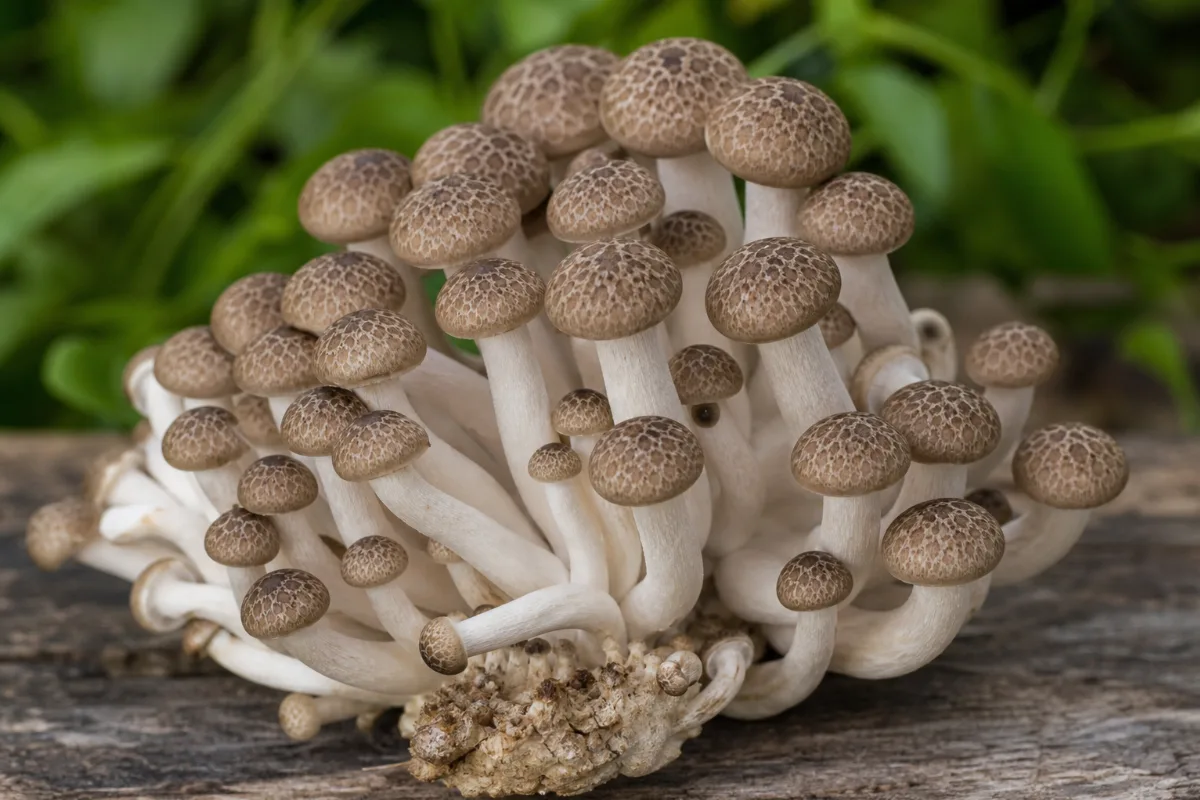
Mushrooms · Culinary mushroom
Beech mushroom (shimeji)
Hypsizygus marmoreus · also called Shimeji, buna-shimeji, bunashimeji, brown or white clamshell mushroom, seafood mushroom
Beech mushroom, also called shimeji, is a small cultivated mushroom that is eaten cooked, because it is bitter raw. We found no human study of it for any health outcome. The research is lab and animal work. Mushroom farm workers have developed lung inflammation from its spores, and one mould-allergic teenager had anaphylaxis after seafood-type mushrooms.
General information, not medical advice. Last substantive update · Not medically reviewed. A named clinician has not signed off on this page. How this page is made
About Beech mushroom (shimeji)
Beech mushroom (Hypsizygus marmoreus), also called shimeji, is a cultivated food mushroom eaten cooked. We found no human study of it for any health outcome. What exists is lab, worm, mouse and rat work, mainly on extracts. The documented harms are an allergy reaction in one mould-allergic patient and lung inflammation from breathing in spores on mushroom farms. None of this is a cure for any condition.
What it is
Beech mushroom is a fungus, not a plant. The accepted name is Hypsizygus marmoreus, in the family Lyophyllaceae. Brown and white types exist. Some sources use the name Hypsizygus tessellatus; GBIF lists a similarly named species, H. tessulatus, as a separate species, so the two names should not be treated as the same without checking.
The word shimeji covers more than one mushroom. A cooking site says there are over 20 kinds and names hon-shimeji, buna-shimeji and bunapi-shimeji. Check the Latin name on any label.
As a food
Per 100 g raw, USDA lists about 3 g of fibre (1.96 g of it beta-glucan), 2 g of protein, 376 mg of potassium, 6.4 mg of niacin and 5.4 mg of ergothioneine. The record does not show the values after cooking, and no study shows that eating it prevents or treats anything.
What the research shows
No randomised trial or other human study of beech mushroom for a health outcome was found. The findings are from cells (antioxidant, anti-inflammatory and herpes virus activity), worms (lifespan), mice (gut protection with a purified extract, and lower cholesterol and plaque on a 3% mushroom diet) and rats (a garlic-based liver extract that used a mushroom enzyme). A 2024 review calls the species valued for nutritional and healing properties, but its abstract gives no human results.
Lab and animal results often fail to hold up in people. Treat these findings as a reason for more research, not as a benefit.
At a glance
Traditional uses history, not proof
- A food in Japanese and East Asian cooking: stir-fries, noodle dishes, miso soups and hot pots (cooking website).
- No traditional medicinal use was found in the sources read.
Studied for research
- As a food: fibre, protein, ergothioneine (nutrition facts only)
- Antioxidant and anti-inflammatory activity in the lab, insufficient
- Gut protection during chemotherapy in mice, very low
- Cholesterol and artery plaque in mice, very low
- Herpes virus in cell cultures, insufficient
Main compounds
- Beta-glucan and fibre, about 3 g fibre per 100 g raw
- Ergothioneine, an antioxidant found in mushrooms
- Phenolic compounds, higher in the brown type
- Hypsin, a protein reported to be antifungal in lab work
Common forms
- Fresh mushroom, cooked (food)
- Dried mushroom
- Hot-water extracts (research use in mice and cells)
- Mycelium on grain (no study found)
Research links: PubMed: Anaphylaxis in a mould-allergic patient (2025) · PubMed: Bunashimeji hypersensitivity pneumonitis, farm workers (2005) · PubMed: Beech mushroom review (2024) · USDA FoodData Central: Mushroom, beech · Research Library · Genes & Biomarkers Library
What it is and its history
- Accepted scientific name
- Hypsizygus marmoreus
- Naming authority
- (Peck) H.E.Bigelow (GBIF)
- Synonyms
- Agaricus marmoreus Peck (synonym in GBIF); Clitocybe marmorea (Peck) Sacc. (synonym in GBIF); Clitocybe submarmorea Murrill (synonym in GBIF); Hypsizigus marmoreus (Peck) Bigelow (spelling variant in GBIF; used in older papers)
- Common names
- Beech mushroom (English); Shimeji / buna-shimeji / bunashimeji (Japanese); Brown clamshell mushroom; white clamshell mushroom (English (trade names, from our nutrient summary)); Seafood mushroom (English (trade name; also appears in the allergy case report))
- Family or group
- Lyophyllaceae (a fungus family), not a plant
- Classification
- Fungi > Agaricales > Lyophyllaceae > Hypsizygus > Hypsizygus marmoreus
- Native range
- Not checked in the sources read.
- Habitat
- Not checked in the sources read.
- What it looks like
- Fruiting body: Brown and white types exist (Jeong 2024).
- Cultivation
- A cooking website says most shimeji mushrooms are grown on indoor farms. Jeong 2024 says beech mushrooms are commercially used in South Korea.
- Harvest and processing
- Sold fresh in bunches; used in stir-fries, soups and hot pots (cooking website).
- Look-alikes and adulterants
- Name: Other shimeji types and wild mushrooms; Note: The sources read give no look-alike list. Shops sell cultivated mushrooms; do not pick wild mushrooms without expert identification.
- Sustainability and conservation
- Not checked.
Traditional use and history history, not clinical proof
| Tradition or era | Documented use | Source |
|---|---|---|
| Japanese and East Asian cooking | A cooking website describes shimeji as a mushroom for stir-fries, noodle dishes, miso soups and hot pots that cooks quickly, and bitter if eaten raw. No traditional medicinal use was found in the sources read. | s-joc-shimeji |
Traditional use shows how it was used. It does not show that it works or is safe today.
What is inside, and how it may work
What it contains and how those compounds act in cells and animals. Laboratory and animal mechanisms are not proven effects in people.
Main compounds
| Compound | Family | Where it is concentrated | Activity studied | Level of evidence |
|---|---|---|---|---|
| Beta-glucan and other fibre | polysaccharide | Fruiting body 1.96 g beta-glucan and 3.14 g total fibre per 100 g raw (USDA) | Food fibre; the extract in the mouse gut study was mainly glucose and galactose sugars. 18 1 | Food composition |
| Ergothioneine | amino acid derivative | Fruiting body 5.38 mg per 100 g raw (USDA) | An antioxidant found in mushrooms; no health outcome has been shown for beech mushroom. 18 | Food composition |
| Phenolic compounds | phenolics | Fruiting body (higher in brown type) | Linked by the authors to antioxidant and anti-inflammatory activity in the lab. 5 19 | Laboratory research |
| Hypsin (protein) and terpenoids | protein; terpenoids | Fruiting body | A gene for the antifungal, antiproliferative protein hypsin and four terpene synthase genes were found in the genome. Bioactivity relayed from the paper's introduction; original papers were not opened. 9 | Genome study |
| Trans,trans-5,8-docosadienoic acid, calcium salt | fatty acid salt | Fruiting body extract (at low pH) | Destroyed sheep red blood cells in a lab test when the extract's pH was lowered. Relevance to eating the mushroom is not known. 13 11 | Laboratory research |
Mechanisms, receptors and pathways
| Target or pathway | Gene or receptor | What was found | Level |
|---|---|---|---|
| Gut barrier, cytokines and gut bacteria | Not specified in the abstract | A polysaccharide extract lowered IL-1 beta, IL-6 and TNF-alpha, raised barrier proteins and mucin, and restored bacterial diversity in cisplatin-treated mice. 1 | Animal research |
| Antioxidant stress pathway (worms) | skn-1, sod-1, sod-3, gst-4 in roundworms | The extract needed the SKN-1 gene to lengthen worm life. 19 | Animal research |
| Mould-mushroom cross-allergy | Alt a 1 of Alternaria alternata; a 12 kDa mushroom protein | IgE bound a 12 kDa protein in H. marmoreus, and an Alternaria extract inhibited the binding in one patient. The authors call this speculative. 12 | Human lab measure |
| Virus polymerase (computer prediction) | HSV-1 DNA polymerase | Docking predicted eritanidine could bind the polymerase. 8 | In silico |
Absorption, metabolism and elimination
- Absorption
- Not found in the sources read.
- Distribution
- Not found in the sources read.
- Metabolism
- Not found in the sources read.
- Elimination
- Not found in the sources read.
- Bioavailability
- Not studied for beech mushroom compounds.
Isolated compounds versus whole extracts
Fresh or cooked mushroom (food), dried mushroom, hot-water polysaccharide extracts (used in mouse and cell studies), and mycelium on grain are different things. The mouse gut results used a purified extract, the cholesterol mouse study used a 3% dried mushroom diet, and the garlic liver study used the mushroom only for an enzyme. None carries over to eating a serving, and no study of mycelium on grain was found.
Nutritional composition
Per 100 g raw, USDA lists about 3 g fibre, 2 g protein, 376 mg potassium, 6.4 mg niacin, 0.21 mg riboflavin, 5.4 mg ergothioneine and 0.37 microgram vitamin D2. The record does not say whether the mushroom was exposed to UV light. The raw record does not tell us the values after cooking.
2 very low certainty5 not enough evidence
What was looked at
The 7 benefits and uses checked for Beech mushroom (shimeji), each with how strong the evidence is. Tap one to open it.
- The mushroom as a foodNot enough evidence
- Antioxidant and anti-inflammatory activity in the labNot enough evidence
- Lifespan and stress resistance in wormsNot enough evidence
- Gut-lining protection during chemotherapy (mouse study)Very low certainty
- Cholesterol and artery plaque (mouse study)Very low certainty
- Activity against herpes simplex virus in cell culturesNot enough evidence
- Liver injury in rats (garlic extract made with a beech mushroom enzyme)Not enough evidence
Lab markers tracked in the studies
Ergothioneine and glutathione in the raw foodFree-radical scavenging (DPPH test)Lifespan of roundwormsSerum total cholesterol in miceArtery plaque area in miceGut inflammatory cytokines (IL-1 beta, IL-6, TNF-alpha) in miceHerpes simplex virus infection in cultured cellsLiver enzymes AST and ALT in rats
What is Beech mushroom (shimeji) good for?
The uses researchers have looked at and how strong the evidence is. None has been tested in people, so every rating is low. Read this together with the Safety tab.
Benefits, one by one
Each card is a research question, not a promise. Tap a goal to filter. Open a card to see the studies, doses and limits.
The mushroom as a food
Not enough evidenceCooked beech mushroom is a low-calorie food. Per 100 g raw, USDA lists about 3 g of fibre, 2 g of protein, potassium, niacin and riboflavin, plus the antioxidant compounds ergothioneine and glutathione. We found no study showing that eating it prevents or treats anything.
2 studiesFresh or cooked mushroom (food). No amounts are advised here.
Studies, doses and limits
What the trials found
No human study of beech mushroom for a health outcome was found in PubMed (163 records for the species name or common names were screened by title). A 2024 review calls the species valued for nutritional and healing properties but its abstract gives no human results.
Results
Per 100 g raw: 2.18 g protein, 3.14 g fibre (1.96 g listed as beta-glucan), 376 mg potassium, 5.38 mg ergothioneine, 9.8 mg glutathione, 0.37 microgram vitamin D2
Effect sizes as reported
Food composition only
Why this rating
A food record shows what is in the mushroom, not what it does for health.
Form and dose studied
Fresh or cooked mushroom (food). No amounts are advised here.
Limits
One raw sample record. Cooking changes some nutrients. No health outcome studied.
Why researchers looked
It is a popular culinary mushroom, so its nutrient content has been measured.
Traditional use
No traditional medicinal use was found in the sources read. It is a cultivated food, valued for its flavour.
Proposed mechanism Food composition
Fibre (including beta-glucan), ergothioneine and glutathione are present in the raw mushroom. Their presence is a composition fact, not proof of an effect.
A proposed mechanism does not show that the effect happens in people.
Eat it cooked: cooking sources say it is bitter raw. See the Safety tab for allergy and spore points.
Antioxidant and anti-inflammatory activity in the lab
Not enough evidenceExtracts of white and brown beech mushrooms calmed inflammation signals in lab tests and scavenged free radicals weakly. The brown type scored higher. This was done in dishes and test tubes, not in people.
1 studiesLab extracts of the fruiting body. Not a serving of mushroom.
Studies, doses and limits
Results
Extracts at 50 microgram per mL showed strong anti-inflammatory properties in lab assays; weak DPPH free-radical scavenging; antimicrobial activity against some bacteria and yeasts.
Effect sizes as reported
Not reported in numbers in the abstract
Why this rating
Laboratory work on extracts only.
Form and dose studied
Lab extracts of the fruiting body. Not a serving of mushroom.
Limits
Test-tube results do not predict effects in people.
Why researchers looked
Mushrooms contain phenolic compounds and polysaccharides that can act on oxidation and inflammation in the lab.
Proposed mechanism Laboratory research
Phenolic compounds were measured in both types, higher in brown. The abstract does not name which inflammation markers changed.
A proposed mechanism does not show that the effect happens in people.
None specific.
Lifespan and stress resistance in worms
Not enough evidenceA beech mushroom extract lengthened the life of laboratory roundworms and helped them resist stress. This does not show any effect on human ageing.
1 studiesExtract of the mushroom.
Studies, doses and limits
Results
Longer worm lifespan, better movement, less ageing pigment, better oxidative and heat stress tolerance
Effect sizes as reported
Not given in the abstract
Why this rating
A worm study of an extract.
Form and dose studied
Extract of the mushroom.
Who was studied
Roundworms
Limits
Worms are very different from people.
Why researchers looked
Researchers use roundworms to screen foods for antioxidant effects.
Proposed mechanism Animal research
Antioxidant enzymes (SOD and CAT) rose and the worm stress-gene pathway SKN-1 was needed. The authors link the effect to phenolic compounds.
A proposed mechanism does not show that the effect happens in people.
None.
Gut-lining protection during chemotherapy (mouse study)
Very low certaintyIn mice given the cancer drug cisplatin, a polysaccharide extract from beech mushroom reduced gut damage, diarrhoea and inflammation and shifted the gut bacteria. This is a mouse result for a purified extract and says nothing yet about people.
1 studiesHot-water polysaccharide extract in mice. Not a serving of mushroom.
Studies, doses and limits
Results
Less weight loss and diarrhoea, better gut tissue, lower inflammatory cytokines, more Akkermansia muciniphila and Bifidobacterium pseudolongum in mice
Effect sizes as reported
Not given as numbers in the abstract
Why this rating
One mouse study of a purified extract. No human data.
Form and dose studied
Hot-water polysaccharide extract in mice. Not a serving of mushroom.
Who was studied
Mice
Limits
A correction was later published for this paper. Mice are not people having chemotherapy.
Why researchers looked
Cisplatin often damages the gut lining, and mushroom polysaccharides have antioxidant and immune activity.
Proposed mechanism Animal research
The extract (mostly glucose and galactose sugars) lowered IL-1 beta, IL-6 and TNF-alpha, raised gut-barrier proteins and mucin, and restored bacterial diversity in mice.
A proposed mechanism does not show that the effect happens in people.
People having chemotherapy should not use mushroom extracts in place of or alongside treatment without asking their care team.
Cholesterol and artery plaque (mouse study)
Very low certaintyMice bred to get artery plaque and fed a diet with 3% dried beech mushroom (bunashimeji) powder had lower total cholesterol and less plaque than mice on a normal diet. The effect was larger than for eringi or maitake in the same study. No human trial exists.
1 studiesDried mushroom powder as 3% of a mouse diet. No human amounts are imp…
Studies, doses and limits
Results
Serum total cholesterol significantly lower at 8 to 16 weeks of age; plaque area smaller; triglycerides unchanged
Effect sizes as reported
Not given as numbers in the abstract
Why this rating
One 2008 mouse study; no human data.
Form and dose studied
Dried mushroom powder as 3% of a mouse diet. No human amounts are implied.
Who was studied
Male apoE-deficient mice
Limits
Special mice bred for plaque, 10 weeks.
Why researchers looked
Edible mushrooms are tested for effects on blood fats in animals.
Proposed mechanism Animal research
The authors say the effect is partly through lower serum total cholesterol and that other mechanisms need study.
A proposed mechanism does not show that the effect happens in people.
People on cholesterol medicines should keep taking them as directed.
Activity against herpes simplex virus in cell cultures
Not enough evidenceHot-water extracts of three mushrooms, including beech mushroom, reduced herpes simplex virus infection in cultured cells, including a drug-resistant strain. This is a dish result only.
1 studiesHot-water extracts made at 121 C under pressure; lab use only.
Studies, doses and limits
Results
Significantly reduced infection and viral gene expression in both a wild-type and a drug-resistant HSV-1 strain in cells
Effect sizes as reported
Not given in the abstract
Why this rating
Cell and computer work; no animals or people.
Form and dose studied
Hot-water extracts made at 121 C under pressure; lab use only.
Who was studied
Cell cultures
Limits
The abstract does not separate beech results from the other mushrooms in detail.
Why researchers looked
Researchers look for new compounds that work against drug-resistant herpes virus.
Proposed mechanism In silico
Computer modelling predicted that eritadenine could bind the virus polymerase. This is a prediction, not a measurement.
A proposed mechanism does not show that the effect happens in people.
Not a treatment for cold sores or any infection.
Liver injury in rats (garlic extract made with a beech mushroom enzyme)
Not enough evidenceA garlic-based extract made with an enzyme from buna-shimeji reduced liver injury in rats given a toxic chemical. The mushroom only supplied the enzyme, so this says almost nothing about eating the mushroom.
1 studiesGarlic extract treated with a mushroom enzyme.
Studies, doses and limits
Results
Smaller rise in AST and ALT after CCl4 injury in rats
Effect sizes as reported
Not given in the abstract
Why this rating
A rat study of a combination extract in which the mushroom was a tool.
Form and dose studied
Garlic extract treated with a mushroom enzyme.
Who was studied
Rats
Limits
Combination product; not the mushroom itself.
Why researchers looked
Researchers looked for food-based antioxidants that protect the liver.
Proposed mechanism Animal research
The mushroom's arginase turned garlic arginine into ornithine; the garlic amino acid with ornithine or arginine worked better than the garlic amino acid alone.
A proposed mechanism does not show that the effect happens in people.
None.
Connections to the rest of health
How Beech mushroom (shimeji) connects to the rest of our health knowledge graph. Every link says what kind of connection it is. A safety link (for example to the liver) is a warning, not a benefit. A study that merely mentions a topic never creates a benefit link.
Explore every connection: goals, body systems, organs, symptoms, genes
A. Wellness goals
| Connected to | Kind of connection | Evidence status | Context | Studies |
|---|---|---|---|---|
| Digestive Support | Not enough evidence | The mushroom as a food: Cooked beech mushroom is a low-calorie food. Per 100 g raw, USDA lists about 3 g of fibre, 2 g of protein, potassium, niacin and riboflavin, plus the antioxidant compounds ergothioneine and glutathione. We found no study showing that eating it prevents or treats anything. | 18 7 | |
| Inflammation Balance | Preliminary mechanism | Not enough evidence | Antioxidant and anti-inflammatory activity in the lab: Extracts of white and brown beech mushrooms calmed inflammation signals in lab tests and scavenged free radicals weakly. The brown type scored higher. This was done in dishes and test tubes, not in people. | 5 |
| Cellular Protection | Preliminary mechanism | Not enough evidence | Antioxidant and anti-inflammatory activity in the lab: Extracts of white and brown beech mushrooms calmed inflammation signals in lab tests and scavenged free radicals weakly. The brown type scored higher. This was done in dishes and test tubes, not in people. | 5 |
| Longevity | Preliminary mechanism | Not enough evidence | Lifespan and stress resistance in worms: A beech mushroom extract lengthened the life of laboratory roundworms and helped them resist stress. This does not show any effect on human ageing. | 19 |
| Gut Health | Preliminary mechanism | Very low certainty | Gut-lining protection during chemotherapy (mouse study): In mice given the cancer drug cisplatin, a polysaccharide extract from beech mushroom reduced gut damage, diarrhoea and inflammation and shifted the gut bacteria. This is a mouse result for a purified extract and says nothing yet about people. | 1 |
| Microbiome Balance | Preliminary mechanism | Very low certainty | Gut-lining protection during chemotherapy (mouse study): In mice given the cancer drug cisplatin, a polysaccharide extract from beech mushroom reduced gut damage, diarrhoea and inflammation and shifted the gut bacteria. This is a mouse result for a purified extract and says nothing yet about people. | 1 |
| Cholesterol Balance | Preliminary mechanism | Very low certainty | Cholesterol and artery plaque (mouse study): Mice bred to get artery plaque and fed a diet with 3% dried beech mushroom (bunashimeji) powder had lower total cholesterol and less plaque than mice on a normal diet. The effect was larger than for eringi or maitake in the same study. No human trial exists. | 10 |
| Heart Health | Preliminary mechanism | Very low certainty | Cholesterol and artery plaque (mouse study): Mice bred to get artery plaque and fed a diet with 3% dried beech mushroom (bunashimeji) powder had lower total cholesterol and less plaque than mice on a normal diet. The effect was larger than for eringi or maitake in the same study. No human trial exists. | 10 |
| Immune Support | Preliminary mechanism | Not enough evidence | Activity against herpes simplex virus in cell cultures: Hot-water extracts of three mushrooms, including beech mushroom, reduced herpes simplex virus infection in cultured cells, including a drug-resistant strain. This is a dish result only. | 8 |
| Liver Support | Preliminary mechanism | Not enough evidence | Liver injury in rats (garlic extract made with a beech mushroom enzyme): A garlic-based extract made with an enzyme from buna-shimeji reduced liver injury in rats given a toxic chemical. The mushroom only supplied the enzyme, so this says almost nothing about eating the mushroom. | 20 |
B. Body systems
| Connected to | Kind of connection | Evidence status | Context | Studies |
|---|---|---|---|---|
| Immune system | Adverse effect or risk | Low certainty | One case of anaphylaxis; skin tests positive to many mushrooms. One anaphylaxis case with positive skin tests to many mushrooms. Preparation or compound: Cooked mushroom in a mould-allergic person |
12 |
| Digestive System | Biological association | Not enough evidence | Studied for: The mushroom as a food Studied for: Gut-lining protection during chemotherapy (mouse study) | 18 7 1 |
| Immune System | Biological association | Not enough evidence | Studied for: Antioxidant and anti-inflammatory activity in the lab Studied for: Activity against herpes simplex virus in cell cultures | 5 8 |
| Cardiovascular System | Biological association | Very low certainty | Studied for: Cholesterol and artery plaque (mouse study) | 10 |
| Hepatic System | Biological association | Not enough evidence | Studied for: Liver injury in rats (garlic extract made with a beech mushroom enzyme) | 20 |
C. Body parts and organs
| Connected to | Kind of connection | Evidence status | Context | Studies |
|---|---|---|---|---|
| Lungs | Adverse effect or risk | Moderate certainty | Hypersensitivity pneumonitis in farm workers; improved after avoiding spores. Hypersensitivity pneumonitis in case reports and a farm survey. Preparation or compound: Inhaled bunashimeji spores (workers) |
2 14 15 16 |
I. Biomarkers
| Connected to | Kind of connection | Evidence status | Context | Studies |
|---|---|---|---|---|
| Ergothioneine and glutathione in the raw food | Biological association | Not enough evidence | Measured in trials: present in the food. A lab change is not the same as a health benefit. | 18 |
| Free-radical scavenging (DPPH test) | Biological association | Not enough evidence | Measured in trials: weak. A lab change is not the same as a health benefit. | 5 |
| Lifespan of roundworms | Biological association | Not enough evidence | Measured in trials: raised (in worms). A lab change is not the same as a health benefit. | 19 |
| Serum total cholesterol in mice | Biological association | Very low certainty | Measured in trials: lowered (in mice). A lab change is not the same as a health benefit. | 10 |
| Artery plaque area in mice | Biological association | Very low certainty | Measured in trials: lowered (in mice). A lab change is not the same as a health benefit. | 10 |
| Gut inflammatory cytokines (IL-1 beta, IL-6, TNF-alpha) in mice | Biological association | Very low certainty | Measured in trials: lowered (in mice). A lab change is not the same as a health benefit. | 1 |
| Herpes simplex virus infection in cultured cells | Biological association | Not enough evidence | Measured in trials: lowered (in cells). A lab change is not the same as a health benefit. | 8 |
| Liver enzymes AST and ALT in rats | Biological association | Not enough evidence | Measured in trials: smaller rise (in rats). A lab change is not the same as a health benefit. | 20 |
J. Genes, receptors and enzymes
| Connected to | Kind of connection | Evidence status | Context | Studies |
|---|---|---|---|---|
| SKN-1 (worm) | Preliminary mechanism | Animal | Needed for the extract's lifespan effect in roundworms. | 19 |
L. Active compounds
| Connected to | Kind of connection | Evidence status | Context | Studies |
|---|---|---|---|---|
| Beta-glucan and other fibre | Biological association | Food composition | Food fibre; the extract in the mouse gut study was mainly glucose and galactose sugars. Preparation or compound: Fruiting body |
18 1 |
| Ergothioneine | Biological association | Food composition | An antioxidant found in mushrooms; no health outcome has been shown for beech mushroom. Preparation or compound: Fruiting body |
18 |
| Phenolic compounds | Biological association | In vitro | Linked by the authors to antioxidant and anti-inflammatory activity in the lab. Preparation or compound: Fruiting body (higher in brown type) |
5 19 |
| Hypsin (protein) and terpenoids | Biological association | Genome study | A gene for the antifungal, antiproliferative protein hypsin and four terpene synthase genes were found in the genome. Bioactivity relayed from the paper's introduction; original papers were not opened. Preparation or compound: Fruiting body |
9 |
| Trans,trans-5,8-docosadienoic acid, calcium salt | Biological association | In vitro | Destroyed sheep red blood cells in a lab test when the extract's pH was lowered. Relevance to eating the mushroom is not known. Preparation or compound: Fruiting body extract (at low pH) |
13 11 |
Each connection is stored with the ingredient, the connected record, the kind of connection, the evidence status, the supporting studies, the preparation or compound involved, and a review date (last reviewed October 25, 2026).
Evidence at a glance: what the research found for 7 outcomes
Each outcome below is one thing researchers measured. Certainty is how far the evidence can be trusted, not how well it works. The full studies are on the next tab.
The evidence
The research centre for Beech mushroom (shimeji). Every record here was checked against PubMed or the publisher's page; we never list a study we have not verified.
Evidence by outcome
Bars show how many studies we found for each outcome, not how well it works. People are added up across trials only (reviews are not added, to avoid double counting).
How we rate evidence
High certainty
Several well-run trials or reviews agree; further research is unlikely to change the picture much.
Moderate certainty
Good trials point the same way, but some doubt remains.
Low certainty
Small, short or inconsistent trials. The finding could change with better research.
Very low certainty
Very little or very weak human data. Treat as a possibility only.
Mixed findings
Trials or reviews disagree with each other.
Not enough evidence
Not enough human research to say either way.
Evidence against
Good research found no benefit, or found harm.
We take the reviewers' own risk-of-bias and GRADE statements where they exist, and otherwise judge from study size, design, consistency, directness and whether a product matches what is sold. Many publications do not make evidence high. Method note: We screened 163 PubMed records for the species and its common names by title, then read PubMed records and abstracts for 17 papers: one narrative review, six lab or animal studies, a genome paper, two lab papers on a blood-cell-breaking compound, five papers on lung disease in farm workers (two of them case reports), one case report of anaphylaxis and one product survey. We also read the allergy case report and the mould-toxin survey in full text, the USDA food record and the GBIF name records. Most papers were read as abstracts, not full text.
Study library: every study we checked 21
| Study | Design | People | Product, dose, length | Result |
|---|---|---|---|---|
| Abusidu 2026 Hypsizygus marmoreus polysaccharides protect against cisplatin-induced intestinal mucositis via modulation of gut microbiota, inflammation, and intestinal barrier function. Frontiers in Nutrition · PMID 42039883 · DOI |
Animal study animal (mouse) |
Mice given the cancer drug cisplatin (abstract does not give group sizes) | Hot-water polysaccharide extract of H. marmoreus (HMP), 16% yield, mainly glucose (52.44%) and galactose (21.05%), 752.96 kDa Fruiting body (extract) Not shown here · vs Untreated cisplatin mice |
Cisplatin caused weight loss, diarrhoea, gut damage and a disturbed gut-bacteria mix. HMP treatment improved the gut tissue, raised gut barrier proteins and mucin, lowered IL-1 beta, IL-6 and TNF-alpha, and restored bacterial diversity (Akkermansia muciniphila and Bifidobacterium pseudolongum increased). In a test tube the extract scavenged free radicals in a dose-dependent way. Methods, limits and fundingOutcomes: Weight loss, diarrhoea, gut damage, inflammatory cytokines, gut barrier proteins, gut bacteria Limitations: Mouse study of a purified extract, not a serving of mushroom. Whether it protects people having chemotherapy is unknown. A published correction exists for this paper; its content was not read. Funding and conflicts: The authors declare no commercial or financial relationships that could be a conflict. Read: abstract |
| Akagami 2023 A case of bunashimeji mushroom-induced hypersensitivity pneumonitis diagnosed by inhalational provocation test in a hospital room. Respirology Case Reports · PMID 37032708 · DOI |
Case report human (case report) |
1 A 66-year-old woman who had worked as a mushroom farmer for more than 40 years |
Inhaled bunashimeji spores or fruiting-body material Spores and bodies Not shown here 2 months of symptoms |
She had 2 months of dry cough and breathlessness, with scarring-type changes on a chest scan and raised lung-stress blood markers. An inhalation challenge was positive for bunashimeji and antibody tests were positive. Steroid treatment and avoiding the mushroom improved her scan and lung function. Methods, limits and fundingOutcomes: Lung tests, antibodies, inhalation challenge Limitations: One worker with decades of exposure. This is about breathing in spores, not eating the mushroom. Funding and conflicts: One co-author is a journal editor and was excluded from decisions; no other conflicts stated. Read: abstract |
| GBIF 2026 GBIF Backbone Taxonomy: Hypsizygus marmoreus (Peck) H.E.Bigelow (species key 2530653), checked 2026-10-25 GBIF API · Source |
Taxonomy record n/a |
n/a | n/a Not shown here |
Hypsizygus marmoreus (Peck) H.E.Bigelow is the accepted name (family Lyophyllaceae, order Agaricales). Synonyms listed: Agaricus marmoreus Peck, Clitocybe marmorea (Peck) Sacc., Clitocybe submarmorea Murrill, Hypsizigus marmoreus (Peck) Bigelow. Methods, limits and fundingOutcomes: See results Limitations: A database record; names only, no health information. Funding and conflicts: Open database Read: full text |
| GBIF 2026 GBIF Backbone Taxonomy: Hypsizygus tessulatus (Bull.) Singer (species key 9015458), checked 2026-10-25 GBIF API · Source |
Taxonomy record n/a |
n/a | n/a Not shown here |
GBIF lists Hypsizygus tessulatus (Bull.) Singer as its own accepted species, not as a synonym of H. marmoreus. A search for the spelling 'tessellatus' matched a synonym of a different species (Ossicaulis lignatilis). So the name 'tessellatus' that some sources use for the beech mushroom is not a GBIF synonym of H. marmoreus. Methods, limits and fundingOutcomes: See results Limitations: A database record. It does not say why some papers use the other name. Index Fungorum was not checked. Funding and conflicts: Open database Read: full text |
| Jeong 2024 Metabolite Profiles and Biological Activities of Different Phenotypes of Beech Mushrooms (Hypsizygus marmoreus). Foods · PMID 39456387 · DOI |
Lab study lab |
White and brown beech mushrooms (commercial, South Korea) | Beech mushroom extracts (white and brown types) Fruiting body Not shown here Lab assays |
Forty-two compounds were measured in white and 47 in brown mushrooms. Major volatiles were hexanal, pentanal, 1-hexanol and 1-pentanol. Brown mushrooms had more phenolics. Extracts acted against bacterial and yeast pathogens, scavenged free radicals only weakly (DPPH test), and at 50 microgram per mL showed strong anti-inflammatory properties in the lab. Brown extracts scored higher than white on all three. Methods, limits and fundingOutcomes: Volatile and phenolic compounds; antimicrobial, free-radical scavenging and anti-inflammatory assays Limitations: Laboratory results only. A dish or test-tube result does not show an effect in people. Funding and conflicts: The authors declare no conflicts of interest. Read: abstract |
| Just One Cookbook 2026 Shimeji mushroom (cooking website page), read 2026-10-25 justonecookbook.com · Source |
Cooking website n/a |
n/a | n/a Not shown here |
The page says shimeji are bitter raw and should be eaten cooked, not raw. It names hon-shimeji, buna-shimeji and bunapi-shimeji as the most common varieties in Japanese cooking and says there are over 20 species of shimeji. Methods, limits and fundingOutcomes: See results Limitations: A cooking website, not a scientific or safety source. It gives no harm data for raw mushrooms. Funding and conflicts: Commercial recipe site Read: full text |
| Kala 2024 Beech Mushroom (Hypsizygus marmoreus, Agaricomycetes) Cultivation and Outstanding Health-Promoting Properties: A Review. International Journal of Medicinal Mushrooms · PMID 38505900 · DOI |
Narrative review human-and-lab |
Literature review, mainly Asian research | Hypsizygus marmoreus Fruiting body Not shown here |
The abstract says the species is valued for nutritional and healing properties, that research on its therapeutic effect comes mainly from Asian countries, and that its active substances and their levels have not been studied extensively. No numbers are given in the abstract. Methods, limits and fundingOutcomes: Dietary and therapeutic potential Limitations: Narrative review read as an abstract only. It does not report human trial results in the abstract. Funding and conflicts: Not stated in the abstract; the record lists no conflict statement. Read: abstract |
| Loymunkong 2026 Metabolomic Profiles and Anti-Herpes Simplex Virus (Wild-Type and Drug-Resistant) Properties of Water-Based Extracts of Lentinula edodes, Hypsizygus marmoreus and Pleurotus eryngii. Molecules · PMID 42357489 · DOI |
Lab study lab (cells) and computer model |
Cell cultures infected with herpes simplex virus 1 (wild-type and drug-resistant strains) | Water extracts (121 C, high pressure) of fresh and dried fruiting bodies of three mushrooms including H. marmoreus Fruiting body (extract) Not shown here Lab assays · vs Untreated infected cells |
All extracts significantly reduced viral infection and gene expression in both strains. In this paper the dried shiitake extract had the highest levels of selected compounds and was the one examined for host-gene effects. Computer modelling predicted that eritanidine (eritadenine) could bind the virus polymerase, a prediction only. Methods, limits and fundingOutcomes: Virus plaques and viral gene expression; computer docking of compounds Limitations: Cell-dish and computer work. The abstract does not separate beech mushroom results from the other two mushrooms in detail. No animal or human data. Funding and conflicts: The authors declare no conflicts of interest. Read: abstract |
| Min 2018 Genomic discovery of the hypsin gene and biosynthetic pathways for terpenoids in Hypsizygus marmoreus. BMC Genomics · PMID 30382831 · DOI |
Genome study genome |
A reference strain, sequenced | Hypsizygus marmoreus genome Not shown here |
The genome is 42.7 Mbp with 16,627 gene models. A gene for hypsin, a protein described as antifungal and antiproliferative, and four terpene synthase genes were found. The abstract says medicinal effects of hypsin and hypsiziprenol 'have been reported' but gives no data. Methods, limits and fundingOutcomes: Genome sequence, hypsin gene, terpene synthase genes Limitations: A gene-sequence paper. It shows what the fungus can make, not what it does in people. Funding and conflicts: The authors declare no competing interests. Read: abstract |
| Mori 2008 Antiatherosclerotic effect of the edible mushrooms Pleurotus eryngii (Eringi), Grifola frondosa (Maitake), and Hypsizygus marmoreus (Bunashimeji) in apolipoprotein E-deficient mice. Nutrition Research · PMID 19083429 · DOI |
Animal study animal (mouse) |
Male apoE-deficient mice (prone to artery plaque), 6 weeks old | Diet with 3% dried Bunashimeji (H. marmoreus) powder, compared with 3% dried Eringi and Maitake powders Dried mushroom powder Not shown here 10 weeks · vs Normal diet |
Serum total cholesterol in the Bunashimeji group was significantly lower than in the control group at 8, 10, 12, 14 and 16 weeks of age. Triglycerides did not differ in any group. Plaque in the aorta was smaller in all three mushroom groups, and Bunashimeji had the strongest effect of the three. Methods, limits and fundingOutcomes: Serum total cholesterol, triglycerides, aortic plaque area Limitations: Mice bred to develop artery plaque, 3% of the diet, 10 weeks. It cannot show an effect on heart disease in people. Funding and conflicts: Research support from a non-US government source is listed; no conflict statement in the abstract. Read: abstract |
| Oda 2019 Structural analyses of a hemolytic compound found in an extract of Hypsizygus marmoreus fruiting bodies at a low pH. Bioscience Trends · PMID 30700653 · DOI |
Lab study lab |
Lab chemistry | Extract of H. marmoreus fruiting bodies at low pH Fruiting body (extract) Not shown here Lab assays |
The compound was identified as a calcium salt of trans,trans-5,8-docosadienoic acid, a fatty acid. The authors say it is the first low-molecular-weight haemolytic compound reported from this mushroom. Methods, limits and fundingOutcomes: Structure of the haemolytic compound Limitations: Chemistry only; no tests in animals or people. Funding and conflicts: No conflict statement in the record. Read: abstract |
| Ru 2025 A Case Report of Anaphylaxis Induced by Mushroom (Hypsizygus marmoreus) in a Mold-Allergic Patient. Journal of Asthma and Allergy · PMID 41450873 · DOI |
Case report human (case report) |
1 A 17-year-old woman with mould allergy (Peking Union Medical College Hospital) |
Seafood mushrooms or fried mushrooms (exact type unknown), tested later with eight mushrooms Fruiting body Not shown here Followed for one year |
She had 3 episodes of anaphylaxis within 30 minutes to 1 hour of eating seafood or fried mushrooms (exact type unknown), with abdominal pain, facial swelling, breathlessness, generalised redness and sometimes vomiting. Skin-prick tests were positive to all eight mushrooms tested, including beech (white and brown), seafood mushroom, enoki, king oyster, oyster, button and shiitake. Her blood IgE to Alternaria mould was 7.94 kUA/L. Her IgE bound a 12 kDa protein in H. marmoreus, and an Alternaria extract blocked that binding. She avoided mushrooms for a year with no further episodes. The authors call the cross-reaction speculative and say cooked mushrooms were not tested. Methods, limits and fundingOutcomes: Allergy tests, IgE binding to mushroom proteins Limitations: One person; the culprit meal was not identified and she reacted to many mushrooms. Cooking was not tested, so we cannot say whether it changes the risk. Funding and conflicts: No conflicts of interest declared; funded by Chinese national and Beijing science foundations. Read: full text |
| Saito 2018 pH-Dependent exhibition of hemolytic activity by an extract of Hypsizygus marmoreus fruiting bodies. Bioscience Trends · PMID 29848881 · DOI |
Lab study lab |
Sheep red blood cells in the lab | Extract of H. marmoreus fruiting bodies Fruiting body (extract) Not shown here Lab assays · vs Neutral-pH extract |
An extract at neutral pH did not break sheep red blood cells, but lowering the pH made it strongly haemolytic, most at pH 5.5. The activity seemed to come from a fat-like compound released from an inactive precursor. Methods, limits and fundingOutcomes: Red-blood-cell breakage (haemolysis) Limitations: A laboratory test on animal blood cells. It is not known whether this matters when the mushroom is eaten. Funding and conflicts: No conflict statement in the record. Read: abstract |
| Tanaka 2000 Mushroom worker's lung caused by spores of Hypsizigus marmoreus (Bunashimeji): elevated serum surfactant protein D levels. Chest · PMID 11083713 · DOI |
Case report human (case report) |
2 Two patients with occupational lung disease |
Inhaled bunashimeji spores Spores Not shown here Serial follow-up |
Two workers had hypersensitivity pneumonitis from bunashimeji spores, confirmed by antibodies and cell tests. Their SP-D levels were high at diagnosis and fell after steroids and leaving the job. In one who returned to the same job, symptoms and SP-D came back. Methods, limits and fundingOutcomes: Antibodies, lung-stress blood marker SP-D Limitations: Two cases. Spores in the workplace, not food. Funding and conflicts: No conflict statement in the record. Read: abstract |
| Tsushima 2005 Hypersensitivity pneumonitis due to Bunashimeji mushrooms in the mushroom industry. International Archives of Allergy and Immunology · PMID 15961953 · DOI |
Cross sectional |
114 114 employees of bunashimeji farms: office workers, pickers and packers with or without masks |
Workplace exposure to bunashimeji spores Spores Not shown here Single survey · vs Office workers |
Respiratory symptoms, KL-6 and sensitisation were higher in pickers and packers than in office workers. Four employees were judged to have hypersensitivity pneumonitis. Methods, limits and fundingOutcomes: Respiratory symptoms, blood markers KL-6 and SP-D, spore sensitisation, lung scans Limitations: Workplace survey; says nothing about eating the mushroom. The abstract does not give percentages. Funding and conflicts: No conflict statement in the record. Read: abstract |
| Tsushima 2006 Therapeutic effects for hypersensitivity pneumonitis induced by Japanese mushroom (Bunashimeji). American Journal of Industrial Medicine · PMID 16948148 · DOI |
Comparative study |
22 22 bunashimeji-farm workers with hypersensitivity pneumonitis |
Quitting work, mask alone, or mask plus prednisolone Not shown here 3 months of follow-up · vs Other management groups |
Complete avoidance lowered the immune test (LST). Masks alone were not enough for workers with high KL-6/SP-D and severe scan changes. The authors conclude that stopping exposure was the best treatment. Methods, limits and fundingOutcomes: Blood markers, scans, lung fluid cells Limitations: Small, non-randomised comparison of 3 management choices in farm workers. Funding and conflicts: No conflict statement in the record. Read: abstract |
| Tsushima 2008 Airway inflammation in employees involved in cultivating Japanese mushrooms (bunashimeji). Respirology · PMID 18410262 · DOI |
Cross sectional and lab human and lab |
Sensitised and non-sensitised employees of bunashimeji farms, plus lab airway cells | Bunashimeji spores Spores Not shown here Single assessment · vs Non-sensitised employees |
Spore solutions raised inflammatory signals (IL-8, ENA-78) in cultured human airway cells. Among sensitised workers, those with abnormal chest scans had more neutrophils in induced sputum. The authors conclude that inhaled spores can directly cause toxic inflammation in the airways, whether or not a person is sensitised. Methods, limits and fundingOutcomes: Sputum cells, chest scans, inflammatory signals in cultured airway cells Limitations: Workplace and lab study of spores, not food. Funding and conflicts: No conflict statement in the record. Read: abstract |
| USDA 2021 USDA FoodData Central: Mushroom, beech (Foundation Foods, FDC 2003603), published 2021-10-28 FoodData Central (API record read 2026-10-25) · Source |
Food composition record n/a |
Raw beech mushroom | Hypsizygus marmoreus fruiting body, raw Not shown here |
Per 100 g raw: about 33 to 40 kcal (two energy methods), 89.8 g water, 2.18 g protein, 0.45 g fat, 3.14 g total fibre, of which 1.96 g is listed as beta-glucan, 376 mg potassium, 6.4 mg niacin, 0.21 mg riboflavin, 5.38 mg ergothioneine, 9.8 mg glutathione, 0.37 microgram vitamin D2 (0.14 microgram vitamin D4). Methods, limits and fundingOutcomes: See results Limitations: A food record for the raw mushroom. It does not say how the mushroom was grown or whether it was exposed to light, and it says nothing about health effects. Funding and conflicts: Public database Read: full text |
| Xu 2023 Hypsizygus marmoreus extract exhibited antioxidant effects to promote longevity and stress resistance in Caenorhabditis elegans. Food & Function · PMID 37818984 · DOI |
Animal study animal (nematode) |
Caenorhabditis elegans (a roundworm used in labs) | Hypsizygus marmoreus extract (HME) Fruiting body extract Not shown here · vs Untreated worms |
The extract increased worm lifespan, improved movement, reduced an ageing pigment (lipofuscin), and helped worms withstand oxidative and heat stress. Antioxidant enzyme activity rose. The effect needed the worm gene skn-1. The authors link it to phenolic compounds. Methods, limits and fundingOutcomes: Lifespan, movement, stress resistance, antioxidant enzymes Limitations: A worm study. It cannot show a longevity effect in people. Funding and conflicts: Not stated in the abstract. Read: abstract |
| Yamaguchi 2021 Combined Effects of Amino Acids in Garlic and Buna-Shimeji (Hypsizygus marmoreus) on Suppression of CCl4-Induced Hepatic Injury in Rats. Foods · PMID 34199038 · DOI |
Animal study animal (rat) |
Rats given carbon tetrachloride (CCl4) to injure the liver | Garlic amino acid (ACSO) with ornithine or arginine; an extract made from garlic using arginase from buna-shimeji Garlic extract treated with an enzyme from H. marmoreus Not shown here · vs Untreated injured rats |
Giving the garlic amino acid with ornithine or arginine suppressed the rise in liver enzymes (AST, ALT) after CCl4 more than the garlic amino acid alone. An extract made from garlic and buna-shimeji also suppressed CCl4 liver injury. Methods, limits and fundingOutcomes: AST, ALT, lipid-peroxidation marker, liver enzyme activities Limitations: A rat study of a garlic-based extract in which buna-shimeji only supplied an enzyme. It says almost nothing about eating beech mushroom. Funding and conflicts: The authors declare no conflict of interest. Read: abstract |
| Zhao 2026 Occurrence and Dietary Risk Assessment of Alternaria Toxin in Edible Mushrooms: An Application of a Hydrophilic Solid-Phase Microextraction Fiber. Foods · PMID 42279778 · DOI |
Product analysis product |
63 63 market mushrooms of 6 species from Guiyang, China (9 were beech mushrooms) |
Mushrooms bought in markets, March 2025 Fruiting body Not shown here Single survey · vs Other mushroom species |
All 63 samples held at least one of the four toxins. Averages were low (tentoxin 1.86 microgram per kg; alternariol 1.61 microgram per kg). Total toxin in the 9 beech samples averaged 4.84 microgram per kg, not significantly different from other species. The authors' screening found alternariol above their threshold in 51% of samples, and the average value for beech was the highest of the species (hazard quotient 2.04, with a quotient above 1 meaning above their screening threshold). Methods, limits and fundingOutcomes: Four Alternaria mould toxins (alternariol, AME, altenuene, tentoxin) Limitations: One city, one month, small numbers per species. A screening estimate based on the authors' assumed intake and thresholds, not a finding that anyone was harmed. Funding and conflicts: The authors declare no conflicts of interest. Read: full text |
What we do not know yet
- No human trial of any health outcome for beech mushroom.
- Whether cooking changes the allergy risk is unknown.
- No safety study of eating it raw.
- No interaction, pregnancy, breastfeeding or children data, and no study of supplement quality.
- Lab and animal findings come mostly from extracts that do not match a serving of mushroom.
How new research is added
New studies are found by a saved PubMed search and placed in a review queue. A person reads each one before it changes any evidence rating or safety wording. Newer evidence can change the ratings.
Lab markers
What changed in blood or saliva tests during trials. A changed number is not the same as feeling or being healthier, and we give no "normal ranges".
Other 8
Ergothioneine and glutathione in the raw food
Present in the food in trials
Two antioxidant compounds measured in the raw mushroom by USDA. This is food content, not a level in the blood.
Not enough evidenceResults and what it means
Why it was measured
Mushrooms are one of the main food sources of ergothioneine.
Statistical vs. clinical meaning
Shows what is in the food. No study measured blood levels after eating beech mushroom.
Safety implication
None found.
| Study | Result | People | Product |
|---|---|---|---|
| 18 | 5.38 mg ergothioneine and 9.8 mg glutathione per 100 g raw. | Raw beech mushroom (food record) | None |
Free-radical scavenging (DPPH test)
Weak in trials
A chemical test of how well an extract neutralises a coloured free radical. It is a lab test, not a measure in a body.
Not enough evidenceResults and what it means
Lifespan of roundworms
Raised (in worms) in trials
How long laboratory worms live after being fed an extract.
Not enough evidenceResults and what it means
Serum total cholesterol in mice
Lowered (in mice) in trials
Total cholesterol in the blood of the study mice.
Very low certaintyResults and what it means
Why it was measured
A standard blood fat measure.
Statistical vs. clinical meaning
Statistically significant in mice; not tested in people.
Safety implication
None.
| Study | Result | People | Product |
|---|---|---|---|
| 10 | Significantly lower than controls at 8, 10, 12, 14 and 16 weeks of age in the bunashimeji group. | Male apoE-deficient mice | 3% dried bunashimeji powder in the diet for 10 weeks |
Artery plaque area in mice
Lowered (in mice) in trials
The area of fatty plaque in a cross-section of the main artery leaving the heart, measured after the study.
Very low certaintyResults and what it means
Why it was measured
Shows how far artery disease developed in the mice.
Statistical vs. clinical meaning
A mouse result.
Safety implication
None.
| Study | Result | People | Product |
|---|---|---|---|
| 10 | Plaque was significantly smaller in the three mushroom groups; bunashimeji had the strongest effect. | Male apoE-deficient mice | 3% dried mushroom powder in the diet |
Gut inflammatory cytokines (IL-1 beta, IL-6, TNF-alpha) in mice
Lowered (in mice) in trials
Signalling proteins that rise with inflammation.
Very low certaintyResults and what it means
Why it was measured
To see whether the extract calmed cisplatin-induced gut inflammation.
Statistical vs. clinical meaning
A mouse result for a purified extract.
Safety implication
None.
| Study | Result | People | Product |
|---|---|---|---|
| 1 | HMP treatment suppressed these cytokines in cisplatin-treated mice. | Mice with cisplatin gut damage | H. marmoreus polysaccharide extract |
Herpes simplex virus infection in cultured cells
Lowered (in cells) in trials
How much virus grew in infected cell cultures, measured by plaque counts and viral gene activity.
Not enough evidenceResults and what it means
Why it was measured
A first screen for antiviral activity.
Statistical vs. clinical meaning
A cell-dish result.
Safety implication
None.
| Study | Result | People | Product |
|---|---|---|---|
| 8 | All three mushroom extracts significantly reduced viral infection and gene expression in wild-type and drug-resistant strains. | Cell cultures | Hot-water extracts of three mushrooms including beech |
Liver enzymes AST and ALT in rats
Smaller rise (in rats) in trials
Enzymes that leak into the blood when liver cells are damaged.
Not enough evidenceResults and what it means
Why it was measured
A standard sign of liver injury.
Statistical vs. clinical meaning
A rat study of a combination product.
Safety implication
None.
| Study | Result | People | Product |
|---|---|---|---|
| 20 | The rise after CCl4 injury was suppressed by the garlic amino acid with ornithine or arginine, and by extracts made from garlic and buna-shimeji. | Rats given CCl4 | Garlic and buna-shimeji enzyme extract |
Safety
What studies and official sources say about side effects, medicines and who should check first. Each point shows what kind of evidence it comes from.
Main points to know 3
- Eat it cooked: beech mushroom is bitter raw. A cooking website says shimeji are bitter raw and should be eaten cooked, not raw. We found no safety study on eating beech mushroom raw, so the reason is taste in that source, not a documented harm. Non scientific source 6
- Allergy: a person with mould allergy had anaphylaxis after seafood mushrooms. A 17-year-old with mould allergy had 3 episodes of anaphylaxis after eating seafood or fried mushrooms (exact type unknown). Skin-prick tests were positive to eight mushrooms, including beech. Her antibodies bound a 12 kDa beech mushroom protein, and Alternaria mould extract blocked that binding. The authors say this is speculative and that cooked mushrooms were not tested. She avoided mushrooms for a year with no further episodes. Case report 12
- Spores in mushroom farms can inflame the lungs. Bunashimeji farm workers have developed hypersensitivity pneumonitis (lung inflammation from breathing in spores): 2 cases in 2000, a 66-year-old farmer in 2023, and 4 of 114 employees judged to have it in a 2005 survey. A 22-worker comparison found that quitting the job was the best treatment and masks alone were not enough for workers with severe changes. This is about breathing in spores at work, not eating the mushroom. Case series 2 14 15 17 16
Side effects 4
| Effect | How often | Severity and recovery | Evidence |
|---|---|---|---|
| Food allergy, including anaphylaxis, in people with mould allergy The culprit mushroom was not identified; she reacted to many mushrooms on skin tests. | One reported case; the frequency is unknown. | severe (anaphylaxis) Episodes settled within 1 to 3 hours with hospital treatment | Case report 12 |
| Hypersensitivity pneumonitis from breathing in spores (workers) Occupational, not from eating. | 4 of 114 farm employees in one survey; 22 patients in a treatment comparison. | moderate to serious (cough, breathlessness, lung scan changes) Improved with steroids and avoiding the spores; returned in a worker who went back to the same job | Case series 2 14 15 16 |
| Airway inflammation and sputum from chronic spore inhalation Spores directly inflamed cultured airway cells. | Sensitised and non-sensitised farm workers were studied; the abstract gives no rate. | mild to moderate Not stated | Cross sectional 17 |
| Bitter taste when raw From a cooking website. | Not applicable | mild (taste) Not applicable | Non scientific source 6 |
Liver
No case of liver injury linked to eating beech mushroom was found in the PubMed records screened, and LiverTox was not read for this species. That is an absence of reports in what we read, not proof of safety.
How often. No rate could be found.
Monitoring. No agency monitoring advice was read. Anyone with liver disease should ask a doctor or pharmacist before taking mushroom extracts. Yellow skin or eyes, dark urine or pale stools need medical advice.
This is a safety connection. It is not evidence that Beech mushroom (shimeji) supports liver health.
Medicines and supplements 1
| With | Why it matters | Importance | Evidence | What to do |
|---|---|---|---|---|
| Prescription medicines, herbs and supplements in general none-found | No interaction study of beech mushroom was found. | Unknown. The only medicines mentioned in the sources read were in the allergy case report (prednisone, aspirin, mycophenolate and warfarin), which was a patient history and not an interaction finding. | No data Not enough evidence 12 | Tell your doctor or pharmacist about any mushroom extract or powder you take, especially with immune-suppressing medicines, blood thinners or chemotherapy. |
Who should check first 5
| Situation | Advice | Evidence |
|---|---|---|
| Mould allergy, or a past reaction to any mushroom | Take care. The one anaphylaxis report involved a person with mould allergy who tested positive to many mushrooms. Ask an allergy doctor before eating beech mushroom. | Case report 12 |
| Pregnancy and breastfeeding | No source we read addresses beech mushroom supplements or food in pregnancy or breastfeeding. Cooked mushroom in an ordinary meal is a different matter from extracts; ask a doctor, midwife or pharmacist about extracts. | No data |
| Children | No source we read tested beech mushroom in children. Ask a doctor before giving extracts. | No data |
| People who grow or pack beech mushrooms | Ask a doctor about a long-lasting cough or breathlessness. Hypersensitivity pneumonitis has been reported. | Case series 14 15 16 |
| Having cancer treatment, taking immune-suppressing medicines, or liver or kidney disease | Ask the care team or pharmacist before using extracts. No source describes a specific problem, but there is no human safety research. | No data |
Overdose, product quality and regulators
Summary. Beech mushroom is a cultivated food eaten cooked. The harms found in the sources are allergy (one case report) and lung inflammation from breathing in spores at work. Poisoning in the usual sense was not described.
Animal. Mouse and rat studies used extracts or mushroom powder in diets and did not report toxicity in their abstracts.
Human doses studied. There are no human dosing studies. No amounts are advised.
High dose or long term signals. Long-term safety of extracts is not known. Chronic spore inhalation at work caused airway inflammation.
Overdose response. For trouble breathing, swelling of the face or lips or faintness after eating mushrooms, call emergency services.
Genotoxicity. Not found in the sources we read.
Toxic or hazardous parts. The cultivated fruiting body is the food. A lab extract of the fruiting body broke sheep red blood cells only when its pH was lowered, and a fatty-acid calcium salt was identified; whether this matters when the mushroom is eaten is not known. Wild look-alike mushrooms are not covered by the sources read: do not pick wild mushrooms without expert identification.
We found no standard for beech mushroom supplements. One survey of market mushrooms in a Chinese city found Alternaria mould toxins in every sample, at low levels.
Alternaria mould toxins. Of 63 market mushrooms (6 species) in Guiyang, China, all held at least one of four Alternaria toxins. The 9 beech samples averaged 4.84 microgram per kg total, similar to other species. The authors' screening put alternariol above their threshold in 51% of samples. A screening estimate, not a finding of harm. 21
Name and species. One cooking site says there are over 20 kinds of shimeji and names hon-shimeji, buna-shimeji and bunapi-shimeji. A label that says only shimeji may not be this species; check the Latin name. 6
Supplements. No product analysis of beech mushroom supplements was found. Fruiting-body powder, hot-water extract and mycelium on grain are different products, and nothing here applies to mycelium on grain.
| Body | Action | Date |
|---|---|---|
| USDA FoodData Central (United States) | Lists beech mushroom as a food with a nutrient profile. It makes no health claims. source | 2021-10-28 |
When to get medical help
- Trouble breathing, swelling of the face or lips, hives, severe belly pain or feeling faint after eating mushrooms: call emergency services.
- A cough or breathlessness that lasts for weeks in someone who works with mushrooms: see a doctor.
If someone may be poisoned or in a crisis, contact a clinician or emergency service straight away. In the US, Poison Control is 1-800-222-1222.
General information only, not medical advice. Ask a clinician or pharmacist before use, especially with medicines, in pregnancy or with a health condition. See the Natural Remedy Safety guide.
Frequently asked questions
What is beech mushroom?
Is shimeji the same as beech mushroom?
Not always. Beech mushroom (buna-shimeji) is one kind of shimeji. A cooking website says over 20 kinds are sold under that name and names hon-shimeji and bunapi-shimeji too, so check the Latin name, Hypsizygus marmoreus.
Can I eat beech mushroom raw?
It is best not to. A cooking website says shimeji are bitter raw and should be cooked. We found no safety study on eating it raw, so we cannot say whether raw is harmful beyond the taste.
Is beech mushroom safe to eat?
Can beech mushroom cause an allergic reaction?
It can in some people. One 17-year-old with mould allergy had three anaphylaxis episodes after eating seafood or fried mushrooms, and her skin tests were positive to eight mushrooms. The reaction may be a cross-reaction with Alternaria mould, which the authors call speculative. Call emergency services for trouble breathing or swelling.
Can growing or packing beech mushrooms harm the lungs?
Does beech mushroom have health benefits?
Does beech mushroom lower cholesterol?
It did in mice bred to get artery plaque and fed 3% dried beech mushroom powder. There is no human trial, so we cannot say it does in people.
Does beech mushroom fight viruses?
Hot-water extracts reduced herpes simplex virus infection in cultured cells, including a drug-resistant strain. That is a dish result only. It is not a treatment for cold sores or any infection.
Does beech mushroom interact with medicines?
We found no interaction study. If you take immune-suppressing medicines, blood thinners or chemotherapy, tell your doctor or pharmacist before using any mushroom extract or powder.
Is beech mushroom safe in pregnancy, breastfeeding or for children?
The sources we read do not address this. Cooked mushroom in an ordinary meal is a different matter from extracts. Ask a doctor, midwife or pharmacist about extracts.
What is in beech mushroom nutritionally?
Per 100 g raw, USDA lists about 3 g of fibre, 2 g of protein, potassium, niacin, riboflavin and 5.4 mg of ergothioneine. That is a food record, not proof of a health effect.
Explore by health goal
Digestive SupportInflammation BalanceCellular ProtectionLongevityGut HealthMicrobiome BalanceCholesterol BalanceHeart HealthImmune SupportLiver Support
Editorial transparency
- Written by
- AlternativeMed editorial team. Research compiled with AI assistance, then checked against PubMed records.
- Medical review
- None. This page has not been reviewed by a physician or pharmacist.
- First published
- 2026-10-25
- Last substantive update
- 2026-10-25
- How we research
- We screened 163 PubMed records for the species and its common names by title, then read PubMed records and abstracts for 17 papers: one narrative review, six lab or animal studies, a genome paper, two lab papers on a blood-cell-breaking compound, five papers on lung disease in farm workers (two of them case reports), one case report of anaphylaxis and one product survey. We also read the allergy case report and the mould-toxin survey in full text, the USDA food record and the GBIF name records. Most papers were read as abstracts, not full text.
- How we rate evidence
- See "How we rate evidence" in the Evidence tab.
- Independence
- No product is promoted on this page. No affiliate links are shown. This page is information, not a recommendation to eat or use beech mushroom.
Sources 21
Each source was opened and checked. Where we read only the abstract, it says so. The small numbers in the text point here.
- Abusidu M, Alioui Y, Al-Tibi L, et al. Hypsizygus marmoreus polysaccharides protect against cisplatin-induced intestinal mucositis via modulation of gut microbiota, inflammation, and intestinal barrier function.. Frontiers in Nutrition. 2026. PMID 42039883. DOI 10.3389/fnut.2026.1774118. (abstract)
- Akagami T, Nakagome K, Takagi S, et al. A case of bunashimeji mushroom-induced hypersensitivity pneumonitis diagnosed by inhalational provocation test in a hospital room.. Respirology Case Reports. 2023. PMID 37032708. DOI 10.1002/rcr2.1134. (abstract)
- GBIF. GBIF Backbone Taxonomy: Hypsizygus marmoreus (Peck) H.E.Bigelow (species key 2530653), checked 2026-10-25. GBIF API. 2026. (full text)
- GBIF. GBIF Backbone Taxonomy: Hypsizygus tessulatus (Bull.) Singer (species key 9015458), checked 2026-10-25. GBIF API. 2026. (full text)
- Jeong SW, Yeo HJ, Ha NI, et al. Metabolite Profiles and Biological Activities of Different Phenotypes of Beech Mushrooms (Hypsizygus marmoreus).. Foods. 2024. PMID 39456387. DOI 10.3390/foods13203325. (abstract)
- Just One Cookbook. Shimeji mushroom (cooking website page), read 2026-10-25. justonecookbook.com. 2026. (full text)
- Kala K, Lazur J, Karnafal J, et al. Beech Mushroom (Hypsizygus marmoreus, Agaricomycetes) Cultivation and Outstanding Health-Promoting Properties: A Review.. International Journal of Medicinal Mushrooms. 2024. PMID 38505900. DOI 10.1615/IntJMedMushrooms.2023052257. (abstract)
- Loymunkong C, Pientong C, Ekalaksananan T, et al. Metabolomic Profiles and Anti-Herpes Simplex Virus (Wild-Type and Drug-Resistant) Properties of Water-Based Extracts of Lentinula edodes, Hypsizygus marmoreus and Pleurotus eryngii.. Molecules. 2026. PMID 42357489. DOI 10.3390/molecules31122091. (abstract)
- Min B, Kim S, Oh YL, et al. Genomic discovery of the hypsin gene and biosynthetic pathways for terpenoids in Hypsizygus marmoreus.. BMC Genomics. 2018. PMID 30382831. DOI 10.1186/s12864-018-5159-y. (abstract)
- Mori K, Kobayashi C, Tomita T, et al. Antiatherosclerotic effect of the edible mushrooms Pleurotus eryngii (Eringi), Grifola frondosa (Maitake), and Hypsizygus marmoreus (Bunashimeji) in apolipoprotein E-deficient mice.. Nutrition Research. 2008. PMID 19083429. DOI 10.1016/j.nutres.2008.03.010. (abstract)
- Oda Y, Saito K, Nakata M, et al. Structural analyses of a hemolytic compound found in an extract of Hypsizygus marmoreus fruiting bodies at a low pH.. Bioscience Trends. 2019. PMID 30700653. DOI 10.5582/bst.2019.01008. (abstract)
- Ru Y, Li J, Yi X, et al. A Case Report of Anaphylaxis Induced by Mushroom (Hypsizygus marmoreus) in a Mold-Allergic Patient.. Journal of Asthma and Allergy. 2025. PMID 41450873. DOI 10.2147/JAA.S559995. (full text)
- Saito K, Hazama S, Oda Y, et al. pH-Dependent exhibition of hemolytic activity by an extract of Hypsizygus marmoreus fruiting bodies.. Bioscience Trends. 2018. PMID 29848881. DOI 10.5582/bst.2018.01108. (abstract)
- Tanaka H, Sugawara H, Saikai T, et al. Mushroom worker's lung caused by spores of Hypsizigus marmoreus (Bunashimeji): elevated serum surfactant protein D levels.. Chest. 2000. PMID 11083713. DOI 10.1378/chest.118.5.1506. (abstract)
- Tsushima K, Fujimoto K, Yoshikawa S, et al. Hypersensitivity pneumonitis due to Bunashimeji mushrooms in the mushroom industry.. International Archives of Allergy and Immunology. 2005. PMID 15961953. DOI 10.1159/000086337. (abstract)
- Tsushima K, Furuya S, Yoshikawa S, et al. Therapeutic effects for hypersensitivity pneumonitis induced by Japanese mushroom (Bunashimeji).. American Journal of Industrial Medicine. 2006. PMID 16948148. DOI 10.1002/ajim.20380. (abstract)
- Tsushima K, Yasuo M, Tanabe T, et al. Airway inflammation in employees involved in cultivating Japanese mushrooms (bunashimeji).. Respirology. 2008. PMID 18410262. DOI 10.1111/j.1440-1843.2008.01275.x. (abstract)
- USDA. USDA FoodData Central: Mushroom, beech (Foundation Foods, FDC 2003603), published 2021-10-28. FoodData Central (API record read 2026-10-25). 2021. (full text)
- Xu Q, Zheng B, Li T, et al. Hypsizygus marmoreus extract exhibited antioxidant effects to promote longevity and stress resistance in Caenorhabditis elegans.. Food & Function. 2023. PMID 37818984. DOI 10.1039/d3fo02578k. (abstract)
- Yamaguchi Y, Hirata Y, Saito T, et al. Combined Effects of Amino Acids in Garlic and Buna-Shimeji (Hypsizygus marmoreus) on Suppression of CCl4-Induced Hepatic Injury in Rats.. Foods. 2021. PMID 34199038. DOI 10.3390/foods10071491. (abstract)
- Zhao Z, Sun L, Liu J, et al. Occurrence and Dietary Risk Assessment of Alternaria Toxin in Edible Mushrooms: An Application of a Hydrophilic Solid-Phase Microextraction Fiber.. Foods. 2026. PMID 42279778. DOI 10.3390/foods15111992. (full text)
Where to buy
Check the label first. Whatever you buy, look for these:
- Fruiting body versus mycelium on grain: the label should say which
- The extract type and the beta-glucan amount, if stated
- A third-party testing mark
- Interactions: ask a pharmacist if you take medicines or blood thinners
Talk to a pharmacist or doctor before you start any supplement, especially if you take medicines. See the Safety tab for interactions.
Support our free guides: as an Amazon Associate we earn from qualifying purchases. Full disclosure.


