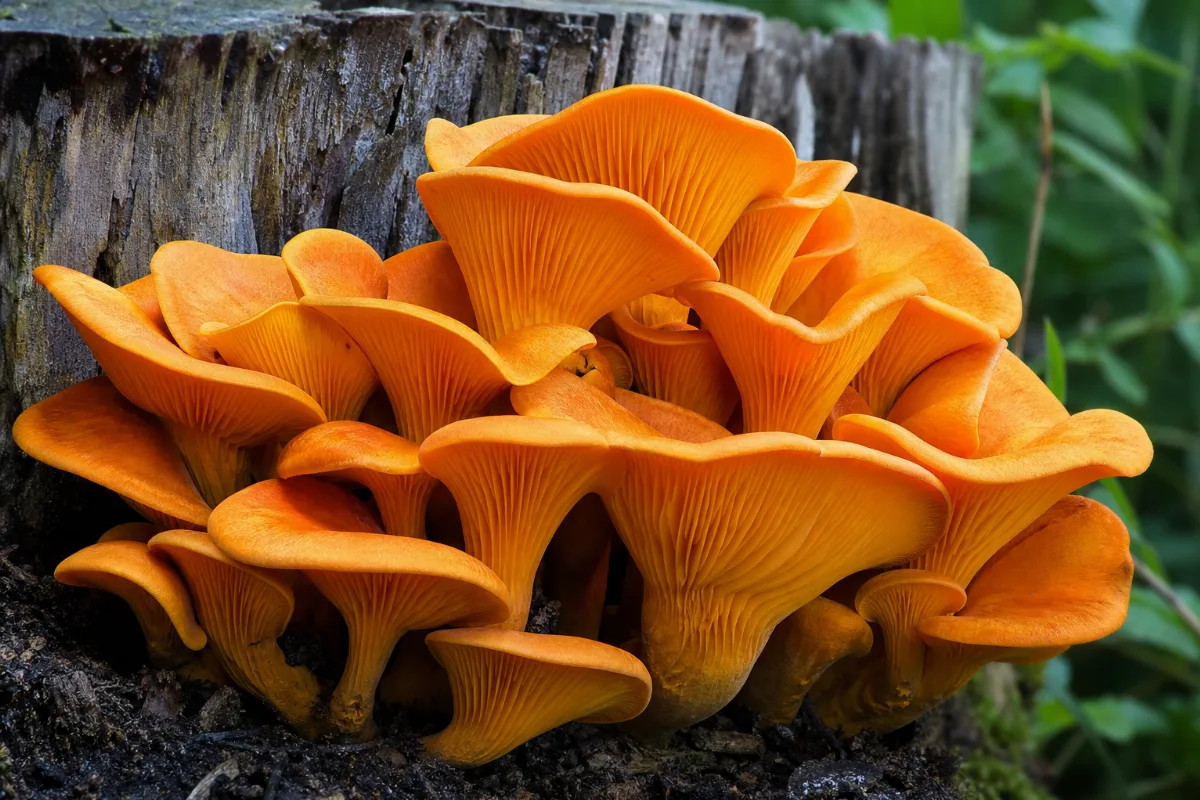
Mushrooms · Poisonous mushroom
Jack-o'-lantern mushroom
Omphalotus olearius · also called Jack-o-lantern mushroom, Omphalotus illudens (North American name), Clitocybe illudens (older name)
The jack-o'-lantern is a poisonous wild mushroom. Eating it causes hours of vomiting, stomach cramps and diarrhoea, and people have needed hospital care. It is not a food and not a remedy, and cooking or drying does not make it safe. Its toxin, illudin S, damages DNA; a cancer drug made from that toxin is a separate, purified drug with modest results. If anyone has eaten it, call a poison centre or emergency services now.
General information, not medical advice. Last substantive update · Not medically reviewed. A named clinician has not signed off on this page. How this page is made
About Jack-o'-lantern mushroom
The jack-o'-lantern is a poisonous mushroom that grows on wood. Case reports from hospitals describe vomiting, stomach cramps and diarrhoea within hours, with recovery in about a day or two in the small series read. The toxin, illudin S, damages DNA. Research on illudins is drug research on purified molecules, not a benefit of the mushroom. The safe rule is simple: do not eat it, and call a poison centre if anyone has.
The danger first
Do not eat it. Case series report nausea, vomiting, stomach cramps and diarrhoea after eating jack-o'-lantern mushrooms. In 18 recorded cases in South Sardinia the first symptoms came after about 3.5 hours on average, and the average hospital stay was 2 days. A China report says symptoms begin 1 to 6 hours after the meal.
Cooking or drying will not help. Penn State Extension says only an expert can tell poisonous from edible mushrooms, that you should not forage your own unless you are an expert, and that no amount of cooking or drying destroys toxins. This page gives no identification help and no way to prepare it.
If someone has eaten it
Call a poison centre or emergency services now. In the United States the National Capital Poison Center says to use its online tool or call 1-800-222-1222, and to call 911 if the person collapses, has a seizure, has trouble breathing or cannot be woken. In other countries use your local poison centre or emergency number.
Do not wait for the illness to pass. In two small hospital series, doctors gave intravenous fluids, kept patients under observation, and checked liver tests and potassium. Those are decisions for clinicians.
What poisoning looks like in the reports
In 7 adults treated in one US emergency department, all had nausea and vomiting with cramping, 3 had diarrhoea, 4 had weakness and dizziness, and 2 were sweating. Three had mildly raised liver tests and one had low potassium. All were well enough to go home the next day. In another series of 14 people, 8 vomited, 5 had diarrhoea and recovery was complete within 18 hours.
These are small series of people who ate it by mistake. They cannot tell you how a particular person will react. In the whole Sardinian series of 164 mushroom poisonings no deaths or severe complications were seen, but that does not make any wild mushroom safe.
How poisonings happen
A 2026 report from China says the main cause is mistaking Omphalotus for edible wild mushrooms. In Sardinia it was the most common toxic species behind recorded cases (18 of 81 toxic-species cases). The safe answer is not to learn a checklist from a web page. Only an expert, in person, can tell wild mushrooms apart.
The toxin: illudin S
The poison is a compound called illudin S, with a close relative, illudin M. Papers describe it binding DNA and blocking DNA copying, which injures the lining of the gut. In lab tests illudin S caused mutations in bacteria and in mammalian cells. We found no study of long-term effects after a poisoning.
Illudin S was measured at 6.98 to 86.1 mg per kg dry weight in a related Chinese species, and a range of 8.7 to 92.4 for O. olearius is quoted from another paper that we did not open.
The cancer drug made from it is not the mushroom
Chemists changed illudin S into a drug called irofulven. In two small phase II trials with no comparison group, about 13% of evaluable patients had a partial response, and one set of authors called the activity modest. The drug caused visual symptoms in 27% of 277 patients and cone-cell damage in a small case series. A 2022 paper says the drug was withdrawn from clinical trials in 2012; we read that second-hand.
This is research on a purified, modified drug given in cancer clinics. It is not a benefit of eating the mushroom, and it is not a reason to try any home remedy.
What it is
The jack-o'-lantern is a fungus, Omphalotus olearius, in the family Omphalotaceae. GBIF lists the name as accepted, and also lists Omphalotus illudens, the North American name, as a separate accepted species; some sources treat the two names as the same species. It grows on wood. Related Omphalotus species in Asia and Australia also contain illudins.
What the research shows on benefits
None for eating it. The research is on the pure toxin in dishes, on a drug made from it, and on lab extracts. All of it is lab or drug-trial work, and none of it supports eating the mushroom for any purpose.
Legal and regulatory status
No food-safety regulator statement specific to this mushroom was read. Irofulven is not an approved medicine in what we found, but we opened no regulator page. Rules differ by country and change.
At a glance
Traditional uses history, not proof
- No traditional medicine use was found in the sources we read.
Studied for research
- Cancer drug research with irofulven, made from its toxin (drug research, not the mushroom), low certainty
- Cancer cell and virus tests with the pure toxin, very-low (laboratory only)
- Lab extract tests, very-low (laboratory only)
- No benefit of eating the mushroom has been shown
Main compounds
- Illudin S and illudin M (toxins)
- Irofulven, a drug made in the lab from illudin S (not in the mushroom)
Common forms
- Not a food or a remedy. No preparation is given or advised.
- Purified compounds and a modified drug are studied in laboratories and cancer clinics only
Research links: Poisoning with the North American jack o'lantern mushroom (abstract) · Jack o'lantern mushroom poisoning, emergency department series (abstract) · Mushroom poisonings in South Sardinia 2011 to 2021 (open access) · Omphalotus yunnanensis and illudin S, Toxins 2026 (open access) · Penn State Extension: preparing and preserving mushrooms · Poison Control (National Capital Poison Center) · Research Library · Genes & Biomarkers Library
What it is and its history
- Accepted scientific name
- Omphalotus olearius
- Naming authority
- (DC.) Singer (GBIF)
- Synonyms
- Omphalotus illudens (Schwein.) Bresinsky & Besl: GBIF lists this as a separate accepted species (the North American jack-o'-lantern); other sources, including a mycologist's page, treat it as the same species or a former name; Clitocybe illudens (an older name, per the mycologist's page)
- Common names
- Jack-o'-lantern mushroom (English); Jack-o-lantern mushroom (English)
- Family or group
- Omphalotaceae (a fungus family), not a plant
- Classification
- Fungi > Basidiomycota > Agaricomycetes > Agaricales > Omphalotaceae > Omphalotus > Omphalotus olearius
- Native range
- Not checked as a range. Papers read mention Europe (O. olearius, Sardinia, Turkey), North America (O. illudens), and related species in Asia and Australia.
- Habitat
- Growing on wood (stumps and tree roots), per Tom Volk's page, which says it often fruits in large clusters in autumn on old hardwood stumps.
- What it looks like
- Fruiting body: Not described here. Wild mushrooms must be identified in person by an expert, so no field description is given.
- Look-alikes and adulterants
- Name: Edible wild mushrooms; Note: Poisonings are mostly mistaken identity. A 2026 China report names oyster-type and chanterelle-type mushrooms as the usual mistaken-for foods. No identification advice is given on this page; consult an expert in person.
Traditional use and history history, not clinical proof
| Tradition or era | Documented use | Source |
|---|---|---|
| Name history | A mycologist's page says the European species O. olearius was formerly known as O. illudens or Clitocybe illudens. GBIF lists O. illudens separately, so the two names are still used. | s-volk-omphalotus |
| Drug research | Illudins were described in the 1990 cancer-cell literature as natural products of Omphalotus illudens and related fungi, and later used as the starting point for the semi-synthetic drug irofulven. | p2402017 |
| Traditional medicine | No traditional medicine use was found in the sources we read. |
Traditional use shows how it was used. It does not show that it works or is safe today.
What is inside, and how it may work
What it contains and how those compounds act in cells and animals. Laboratory and animal mechanisms are not proven effects in people.
Main compounds
| Compound | Family | Where it is concentrated | Activity studied | Level of evidence |
|---|---|---|---|---|
| Illudin S | sesquiterpenoid (illudane) toxin | Fruiting body 8.7 to 92.4 mg per kg dry weight quoted for O. olearius in a 2026 paper (second-hand, original not opened); 6.98 to 86.1 in a related species measured in that paper. | Main toxin in the Asian species studied; binds DNA and blocks DNA copying; mutagenic in lab tests; sole antiviral component found in a cell assay. 10 5 9 | Laboratory and case reports |
| Illudin M | sesquiterpenoid (illudane) toxin | Fruiting body and lab-grown mycelium Not detected in the new species in the 2026 paper; produced in lab flasks for drug research. | Related to illudin S; reacts with thiols; a starting point for drug derivatives. 11 1 10 | Laboratory |
| Irofulven (HMAF, MGI 114) | semi-synthetic derivative of illudin S | Not present in the mushroom Not applicable (made in the lab from illudin S). | Experimental cancer drug with modest activity in phase II trials; visual side effects. 12 17 16 15 8 | Clinical trial |
Mechanisms, receptors and pathways
| Target or pathway | Gene or receptor | What was found | Level |
|---|---|---|---|
| DNA alkylation and blocked DNA replication | DNA (adenine N3, guanine N7 per the 2026 paper) | Illudin S is described as damaging DNA and blocking DNA copying, injuring the cells that line the gut; this explains the gut symptoms. 10 | Laboratory |
| Genotoxicity | Bacterial and mammalian cell mutation tests | Illudin S and two derivatives were mutagenic in bacteria and hamster cells; human sulfotransferases did not change this. 5 | Laboratory |
| Glutathione reaction and cell uptake | Glutathione; energy-dependent transport in sensitive cells | Lowering glutathione made illudin S more toxic in HL60 cells; sensitive cells take illudin S up by a transport process that resistant cells lack. 11 6 | Laboratory |
Absorption, metabolism and elimination
- Absorption
- Not found for people who ate the mushroom. Onset of symptoms was about 3.5 hours on average in 18 Sardinian cases.
- Distribution
- Not found.
- Metabolism
- Not found for the mushroom.
- Elimination
- Not found.
- Bioavailability
- Not established.
Isolated compounds versus whole extracts
Poisoning is from the whole mushroom. The cancer drug irofulven is a chemically modified, purified molecule and has different effects (including eye problems) and no link to eating the mushroom.
Nutritional composition
Not a food. No nutrition information is given.
1 low certainty3 very low certainty
What was looked at
The 4 benefits and uses checked for Jack-o'-lantern mushroom, each with how strong the evidence is. Tap one to open it.
What is Jack-o'-lantern mushroom good for?
There is no benefit of eating this mushroom. These are the research areas that exist, and every one is laboratory or drug-trial work on purified molecules. Read this together with the Safety tab.
Benefits, one by one
Each card is a research question, not a promise. Tap a goal to filter. Open a card to see the studies, doses and limits.
Irofulven, a cancer drug made from illudin S (drug research, not the mushroom)
Low certaintyThe mushroom makes a toxin called illudin S. Chemists modified it into a drug called irofulven, which was tested in people with cancer under hospital supervision. The results were modest. This is research on a purified, changed drug and says nothing good about eating the mushroom.
4 studiesNot applicable. The mushroom must not be eaten, and no amounts are gi…
Studies, doses and limits
What the trials found
Phase II trials of irofulven (not the mushroom) were done in cancer patients. We found no human study of the mushroom for any benefit.
Results
In 42 men with advanced prostate cancer (single-arm, no comparison group), 4 of 32 evaluable patients (13%) had a partial response and 27 (84%) had stable disease; median time before progression was 3.2 months. In 61 women with recurrent ovarian cancer (single-arm), 7 of 55 evaluable (12.7%) had partial responses and 30 (54.6%) stable disease; the authors called the activity modest. The drug caused blood-count falls, nausea, vomiting and weakness, and eye problems (see the Safety tab).
Effect sizes as reported
Partial response in about 13% of evaluable patients in each of two single-arm phase II trials
Why this rating
Two small single-arm phase II trials in cancer patients with modest activity. The full text of one source says the drug was withdrawn from clinical trials in 2012 for efficacy reasons (second-hand); a newer phase II trial was mentioned there without a result. None of this concerns the mushroom.
Who was studied
Adults with advanced cancer treated in cancer clinics. Not children, not healthy people.
Limits
Single-arm trials without comparison groups. Purified, modified drug under specialist care. Not a food, not a supplement, and not a reason to eat any wild mushroom.
Why researchers looked
Illudins kill fast-dividing cells, so chemists tried to turn them into cancer drugs.
Traditional use
No traditional medicine use of this mushroom was found in the sources we read.
Proposed mechanism Review and trial reports
Irofulven is changed inside the body into a form that damages DNA in cancer cells.
A proposed mechanism does not show that the effect happens in people.
The drug caused eye damage in some patients and the natural toxin damages DNA in lab tests. See the Safety tab.
Illudins in cancer cell tests (laboratory only)
Very low certaintyIn dishes, purified illudins killed some types of cancer cell after short exposure, partly because those cells take the toxin in more readily. This is how the drug research began. It is cell-culture work only.
2 studiesNot applicable. The mushroom must not be eaten, and no amounts are gi…
Studies, doses and limits
Results
With short exposure (2 hours or less), illudins were selectively toxic to human myeloid leukaemia, epidermoid, lung, ovarian and breast carcinoma cell lines; with long exposure (48 hours or more) they were toxic to most tumour cells. Lowering glutathione in HL60 cells made illudin S more toxic.
Effect sizes as reported
Selective cell kill in several cancer cell lines (cell culture only)
Why this rating
Cell-culture work with purified compounds from the 1990s; no animal or human result for the mushroom.
Who was studied
Cell lines only.
Limits
Purified compounds, not the mushroom. The same chemistry that kills cancer cells in a dish also damages healthy gut cells in poisoning.
Why researchers looked
Researchers wanted to know why illudins hit some cancer cells harder than others.
Traditional use
No traditional medicine use of this mushroom was found in the sources we read.
Proposed mechanism Laboratory
Sensitive cells take up illudin S by an energy-dependent transport process that resistant cells lack; illudins also react with glutathione.
A proposed mechanism does not show that the effect happens in people.
Illudin S is a strong DNA-damaging toxin; see the Safety tab.
Antiviral readings in cell culture (illudin S)
Very low certaintyIn one cell test, extracts of the mushroom slowed herpes simplex virus, and the researchers traced the effect to illudin S, the same toxin that makes people ill. A toxin that damages DNA is not a usable remedy.
1 studiesNot applicable. The mushroom must not be eaten, and no amounts are gi…
Studies, doses and limits
Results
Crude extracts of Omphalotus illudens fruiting bodies were active in a herpes simplex virus type 1 cell assay, and illudin S was the only antiviral component found.
Effect sizes as reported
Activity in one cell assay (no numbers in the abstract)
Why this rating
One cell-culture assay from 2003. No animal or human data.
Who was studied
Cell culture.
Limits
Single assay; the active compound is a toxin that damages DNA and cannot be used safely as a food or remedy.
Why researchers looked
Researchers screen fungal extracts for anything that stops viruses in cells.
Traditional use
No traditional medicine use of this mushroom was found in the sources we read.
Proposed mechanism Laboratory
Illudin S damages DNA and blocks DNA copying, which can also stop virus growth in cultured cells.
A proposed mechanism does not show that the effect happens in people.
Do not use the mushroom for any infection. See the Safety tab.
Antioxidant and cancer cell tests of lab extracts
Very low certaintySolvent extracts of one Turkish strain, grown as mushroom or as lab mycelium, scavenged free radicals in test tubes and slowed some cancer cell lines. They were also toxic to brine shrimp. Nothing is known in animals or people.
1 studiesNot applicable. The mushroom must not be eaten, and no amounts are gi…
Studies, doses and limits
Results
Lab-grown mycelium extract had the highest antioxidant activity in five of six methods. The strongest effects on cancer cells were the mycelium extract on A549 lung cells and the culture-liquid extract on Caco2 colon cells. All extracts were toxic to brine shrimp larvae.
Effect sizes as reported
Cell and test-tube results; no numbers given in the abstract
Why this rating
One laboratory study of one strain. No animal or human data, and the extracts were toxic to a test animal.
Who was studied
Cell lines and brine shrimp.
Limits
Solvent extracts of lab-grown material are not the wild mushroom; healthy-cell results were not given in the abstract.
Why researchers looked
Many fungi are screened for antioxidant and anti-cancer activity.
Traditional use
No traditional medicine use of this mushroom was found in the sources we read.
Proposed mechanism Laboratory
Not established. The abstract reports activity in chemical antioxidant tests and in cell growth tests.
A proposed mechanism does not show that the effect happens in people.
Toxicity to brine shrimp in the same study is a warning sign, not a benefit.
Connections to the rest of health
How Jack-o'-lantern mushroom connects to the rest of our health knowledge graph. Every link says what kind of connection it is. A safety link (for example to the liver) is a warning, not a benefit. A study that merely mentions a topic never creates a benefit link.
Explore every connection: goals, body systems, organs, symptoms, genes
E. Health conditions
| Connected to | Kind of connection | Evidence status | Context | Studies |
|---|---|---|---|---|
| Food poisoning | Moderate certainty | Case series report vomiting, cramps and diarrhoea after eating it. Preparation or compound: Wild jack-o'-lantern mushroom (illudin S) |
18 2 7 | |
| Acute gastroenteritis | Moderate certainty | A 2026 report describes the poisoning as acute gastroenteritis. Preparation or compound: Wild jack-o'-lantern mushroom (illudin S) |
10 |
L. Active compounds
| Connected to | Kind of connection | Evidence status | Context | Studies |
|---|---|---|---|---|
| Illudin S | Biological association | Laboratory and case reports | Main toxin in the Asian species studied; binds DNA and blocks DNA copying; mutagenic in lab tests; sole antiviral component found in a cell assay. Preparation or compound: Fruiting body |
10 5 9 |
| Illudin M | Biological association | Laboratory | Related to illudin S; reacts with thiols; a starting point for drug derivatives. Preparation or compound: Fruiting body and lab-grown mycelium |
11 1 10 |
| Irofulven (HMAF, MGI 114) | Biological association | Clinical trial | Experimental cancer drug with modest activity in phase II trials; visual side effects. Preparation or compound: Not present in the mushroom |
12 17 16 15 8 |
Each connection is stored with the ingredient, the connected record, the kind of connection, the evidence status, the supporting studies, the preparation or compound involved, and a review date (last reviewed October 25, 2026).
Evidence at a glance: what the research found for 4 outcomes
Each outcome below is one thing researchers measured. Certainty is how far the evidence can be trusted, not how well it works. The full studies are on the next tab.
The evidence
The research centre for Jack-o'-lantern mushroom. Every record here was checked against PubMed or the publisher's page; we never list a study we have not verified.
Evidence by outcome
Bars show how many studies we found for each outcome, not how well it works. People are added up across trials only (reviews are not added, to avoid double counting).
How we rate evidence
High certainty
Several well-run trials or reviews agree; further research is unlikely to change the picture much.
Moderate certainty
Good trials point the same way, but some doubt remains.
Low certainty
Small, short or inconsistent trials. The finding could change with better research.
Very low certainty
Very little or very weak human data. Treat as a possibility only.
Mixed findings
Trials or reviews disagree with each other.
Not enough evidence
Not enough human research to say either way.
Evidence against
Good research found no benefit, or found harm.
We take the reviewers' own risk-of-bias and GRADE statements where they exist, and otherwise judge from study size, design, consistency, directness and whether a product matches what is sold. Many publications do not make evidence high. Method note: We read PubMed records for 15 papers: abstracts for all, plus the open-access full text for the Sardinian poisoning series, the 2026 Toxins paper and part of the 2022 illudin M paper. We also read Penn State Extension, Poison Control and a mycologist's page, and checked both species names in GBIF. Index Fungorum, regulator pages and the 2002 case account were not read. Certainty ratings are the compiler's own reading.
Study library: every study we checked 20
| Study | Design | People | Product, dose, length | Result |
|---|---|---|---|---|
| Chaverra-Munoz 2022 Optimization of the production process for the anticancer lead compound illudin M: improving titers in shake-flasks. Microbial Cell Factories · PMID 35643529 · DOI |
Laboratory process study fungus culture (laboratory) |
Cultured Omphalotus mycelium in liquid medium (laboratory flasks) | Liquid culture of Omphalotus strains to make illudin M mycelium in liquid culture Not shown here Eight-day cultures · vs Earlier culture conditions |
The abstract says illudin M and S are base molecules for new anticancer agents because of strong activity against some resistant tumour cell lines, and that natural illudins are non-specifically toxic so the molecule needs improving. It also says a semi-synthetic illudin S derivative (irofulven) entered phase II trials for castration-resistant metastatic prostate cancer. The authors raised illudin M output in flasks about 25-fold, with the best process reaching about 940 mg per litre. Process engineering result, not a health result Methods, limits and fundingOutcomes: Illudin M amount produced in flask culture Limitations: Biotechnology paper about producing a molecule in the lab; the "withdrawn from trials in 2012" statement is in the full text and cites another source, so it is second-hand here. Funding and conflicts: Funding not stated in the abstract Read: abstract and part of the full text |
| French 1988 Poisoning with the North American Jack O'Lantern mushroom, Omphalotus illudens. Journal of Toxicology. Clinical Toxicology · PMID 3290510 · DOI |
Case series human (accidental poisoning) |
14 14 people who ate jack o'lantern mushrooms (North America) |
Wild Omphalotus illudens eaten as food fruiting body Not shown here Recovery within 18 hours |
Vomiting occurred in 8 of the 14, diarrhoea in 5 and weakness in 2. Tiredness, a feeling of weakness and feeling cold occurred in 8. Recovery was complete within 18 hours. Vomiting in 8 of 14; complete recovery within 18 hours Methods, limits and fundingOutcomes: Symptoms and recovery Limitations: Small case series from 1988; abstract only; cases are people who ate it by mistake, so counts are not a rate for everyone who eats it. Funding and conflicts: Funding not stated in the abstract Read: abstract |
| GBIF 2026 GBIF Backbone Taxonomy: Omphalotus olearius (DC.) Singer (key 2538088), checked 2026-10-25 GBIF API · Source |
Taxonomy record n/a |
n/a | n/a Not shown here |
GBIF returns Omphalotus olearius (DC.) Singer as ACCEPTED (key 2538088), kingdom Fungi, order Agaricales, family Omphalotaceae. Methods, limits and fundingOutcomes: As stated in the source Limitations: A database record. Index Fungorum was not checked. Funding and conflicts: Public or independent information source Read: record |
| GBIF 2026 GBIF Backbone Taxonomy: Omphalotus illudens (Schwein.) Bresinsky & Besl (key 2538084), checked 2026-10-25 GBIF API · Source |
Taxonomy record n/a |
n/a | n/a Not shown here |
GBIF returns Omphalotus illudens (Schwein.) Bresinsky & Besl as a separate ACCEPTED species (key 2538084), kingdom Fungi, order Agaricales, family Omphalotaceae. Methods, limits and fundingOutcomes: As stated in the source Limitations: A database record. Index Fungorum was not checked; other sources treat the two names as one species. Funding and conflicts: Public or independent information source Read: record |
| Glatt 2014 Sulfotransferase-independent genotoxicity of illudin S and its acylfulvene derivatives in bacterial and mammalian cells. Archives of Toxicology · PMID 23881331 · DOI |
Laboratory genotoxicity study bacteria and hamster cells |
Bacteria (Salmonella strains) and hamster V79 cells | Illudin S, HMAF and acylfulvene (purified compounds) purified compounds Not shown here · vs Cells with and without human sulfotransferase enzymes |
All three compounds were mutagenic in standard bacterial strains and caused gene mutations and sister chromatid exchange in hamster cells. Illudin S was 40 to 600 times more genotoxic than the semi-synthetic acylfulvenes tested, and was positive at 0.3 nM in one test. The authors conclude that illudin S, HMAF and acylfulvene are potent genotoxicants. Illudin S positive in mutation tests in bacteria and mammalian cells Methods, limits and fundingOutcomes: Mutations and sister chromatid exchange Limitations: Cells and bacteria, not people; no data on long-term effects after a single mushroom meal. Funding and conflicts: Funding not stated in the abstract Read: abstract |
| Kelner 1990 Preclinical evaluation of illudins as anticancer agents: basis for selective cytotoxicity. Journal of the National Cancer Institute · PMID 2402017 · DOI |
Laboratory cell study cell lines |
Cultured human and animal tumour cell lines (including HL60 leukaemia cells) | Illudin S and illudin M (purified natural compounds from Omphalotus illudens and related fungi) purified compounds (not mushroom) Not shown here Exposure times of 2 hours and over 48 hours · vs Cells relatively resistant to illudin S |
With prolonged exposure (48 hours or more) illudins were toxic to most tumour cells. With short exposure (2 hours or less) they were selectively toxic to human myeloid leukaemia, epidermoid, lung, ovarian and breast carcinoma cells. The authors link this selectivity to an energy-dependent uptake mechanism present in sensitive cells and absent in resistant cells. Selective cell kill after short exposure in several cancer cell types, in cell culture Methods, limits and fundingOutcomes: Cell kill after short and long exposure; uptake of illudin S by cells Limitations: Cell-culture work with purified compounds; says nothing about eating the mushroom or about people. Funding and conflicts: Funding not stated in the abstract Read: abstract |
| La Rosa 2024 Epidemiology and clinical aspect of mushroom poisonings in South Sardinia: A 10-year retrospective analysis (2011-2021). Food Science and Nutrition · PMID 38268883 · DOI |
Retrospective case series human (poisoning cases) |
164 164 mushroom poisoning cases recorded by Mycological Inspectorates in South Sardinia, Italy, 2011 to 2021 |
Wild mushrooms eaten (many species) fruiting body Not shown here 10 years of records · vs Other species in the same records |
Species were identified in 162 of 164 cases. Omphalotus olearius and Agaricus xanthodermus were the most common toxic species (22% and 18% of the toxic-species cases). In the full text table, 18 cases were linked to Omphalotus olearius, with symptoms starting after a mean of 3.5 hours and a mean hospital stay of 2 days; symptoms were colic, cramps, diarrhoea, nausea, sweating, tremor and vomiting. Across all species, no deaths or severe complications were observed. 18 cases linked to Omphalotus olearius; mean onset 3.5 hours; mean stay 2 days; no deaths in the whole series Methods, limits and fundingOutcomes: Cases by species, symptoms, timing, hospital stay and outcome Limitations: Retrospective records from one region; the Omphalotus figures come from a table in the full text, not the abstract; counts are cases that reached the inspectorate. Funding and conflicts: Authors declare no conflict of interest Read: abstract and full text |
| Lee 2005 Cone damage in patients receiving high-dose irofulven treatment. Archives of Ophthalmology · PMID 15642808 · DOI |
Case series human (cancer patients) |
4 4 cancer patients with eye changes after high-dose irofulven |
Irofulven (a drug derived from illudin S) drug (not mushroom) Not shown here · vs Healthy post-mortem eyes |
All 4 patients had electroretinogram changes consistent with abnormal cone cell responses and relatively normal rod responses. In the one retina studied, about half the normal number of macular cones were present. The authors concluded that high-dose irofulven causes cone-specific damage with relative sparing of rods. Cone cell damage in 4 of 4 patients on high-dose drug Methods, limits and fundingOutcomes: Eye examinations, electroretinogram, retina tissue in one patient Limitations: Four patients; concerns the cancer drug; shows what a purified illudin derivative can do to a tissue, not what a mushroom meal does. Funding and conflicts: Funding not stated in the abstract Read: abstract |
| Lehmann 2003 Illudin S, the sole antiviral compound in mature fruiting bodies of Omphalotus illudens. Journal of Natural Products · PMID 14510611 · DOI |
Laboratory cell study cell culture |
Crude extracts of Omphalotus illudens fruiting bodies tested on cultured cells infected with herpes simplex virus type 1 | Crude fruiting-body extracts, then purified illudin S fruiting body extract Not shown here |
Crude extracts of the fruiting bodies were active in the HSV-1 antiviral cell assay. Bioactivity-guided isolation led to illudin S as the only antiviral component in the extracts. Antiviral activity in a cell assay traced to illudin S Methods, limits and fundingOutcomes: Antiviral activity in a cell-culture assay Limitations: Cell assay only; illudin S is the same compound that damages the gut in poisoning, so a cell-culture antiviral effect says nothing about benefit in people. Funding and conflicts: Funding not stated in the abstract Read: abstract |
| Li 2026 Omphalotus yunnanensis: A New Poisonous Mushroom Discovered from China Based on Morphological, Molecular and Toxin-Detection Evidence. Toxins (Basel) · PMID 41591186 · DOI |
Species description with toxin analysis human reports and fungus analysis |
Chinese poisoning incidents with Omphalotus species, and fruiting bodies of a newly described white Omphalotus species (a different species from jack-o'-lantern) | Dried fruiting bodies analysed by UPLC-MS/MS fruiting body Not shown here · vs Other Omphalotus species (ranges quoted from other papers) |
The paper states that Omphalotus poisonings in China cause acute gastroenteritis with nausea, vomiting, abdominal cramps and diarrhoea 1 to 6 hours after eating, and that the main cause is mistaking Omphalotus for edible mushrooms. It says illudins damage the gut lining by binding DNA and blocking DNA copying. Illudin S was found in the new species at 6.98 to 86.1 mg per kg dry weight with no illudin M. The Discussion quotes a range of 8.7 to 92.4 mg per kg dry weight for O. olearius from another paper that we did not open. Illudin S in the new species 6.98 to 86.1 mg per kg dry weight; O. olearius range quoted second-hand Methods, limits and fundingOutcomes: Illudin S and illudin M content; poisoning background Limitations: Describes a different species; the O. olearius figures and symptom statements are the authors' summary of other papers. Funding and conflicts: State Key Laboratory of Trauma and Chemical Poisoning and National Natural Science Foundation of China; authors declare no conflicts of interest Read: abstract and full text (open access) |
| McMorris 1990 On the mechanism of toxicity of illudins: the role of glutathione. Chemical Research in Toxicology · PMID 2103329 · DOI |
Laboratory chemistry and cell study cell culture |
Chemical reactions of illudin M and S with thiols; HL60 leukaemia cells | Purified illudin M and illudin S purified compounds Not shown here · vs Cells with higher or lower glutathione |
Illudin M and S react with thiol-containing molecules, including glutathione. In HL60 cells, lowering glutathione made illudin S more toxic and raising it made it less toxic. The authors discuss what this means for general toxicity. Glutathione level changed illudin S toxicity in cultured cells Methods, limits and fundingOutcomes: Reaction with thiols; cell toxicity as glutathione changed Limitations: Test-tube and cell work from 1990; shows a mechanism, not what happens after a person eats the mushroom. Funding and conflicts: Funding not stated in the abstract Read: abstract |
| McMorris 1999 Discovery and development of sesquiterpenoid derived hydroxymethylacylfulvene: a new anticancer drug. Bioorganic and Medicinal Chemistry · PMID 10400341 · DOI |
Review article chemistry |
Chemistry and early development of HMAF (irofulven, MGI 114) | HMAF, made from illudin S by treatment with dilute sulfuric acid and paraformaldehyde drug (not mushroom) Not shown here |
The abstract says HMAF is derived from illudin S, is less cytotoxic than illudin S but much more selective for malignant cells than for normal cells, is believed to be activated inside the body by reduction, and was then being tested in phase II trials against solid tumours. Describes how the drug was made and why Methods, limits and fundingOutcomes: Origin of the drug; selectivity; stage of testing in 1999 Limitations: A 1999 chemistry review by the drug's discoverer; out of date on later trials. Funding and conflicts: Funding not stated in the abstract Read: abstract |
| National Capital Poison Center 2026 Poison Control (web POISON CONTROL) National Capital Poison Center · Source |
Guidance page n/a |
n/a | n/a Not shown here |
The home page says to use the online tool or call a poison center at 1-800-222-1222 (United States), calls the options free, expert and confidential, and says to call 911 if the person collapses, has a seizure, has trouble breathing or cannot be woken. Read 2026-10-25. Methods, limits and fundingOutcomes: As stated in the source Limitations: United States service; the Center is a private non-profit, not a government agency. Numbers in other countries differ and were not looked up. Funding and conflicts: Public or independent information source Read: home page read |
| Penn State Extension 2026 Preparing and Preserving Mushrooms Penn State Extension (university extension service) · Source |
Guidance page n/a |
n/a | n/a Not shown here |
The page says only an expert can tell poisonous from edible mushrooms, that unless you are an expert you should not forage your own, and that no matter how much you cook or dry them you will not destroy their toxins. Read 2026-10-25. Methods, limits and fundingOutcomes: As stated in the source Limitations: General mushroom guidance, not specific to Omphalotus. Funding and conflicts: Public or independent information source Read: page read in full |
| Raymond 2004 Characterization and multiparameter analysis of visual adverse events in irofulven single-agent phase I and II trials. Clinical Cancer Research · PMID 15569987 · DOI |
Pooled analysis of trials human (cancer patients) |
277 277 cancer patients in single-agent phase I and II irofulven trials |
Irofulven (a drug derived from illudin S) drug (not mushroom) Not shown here Trial schedules of days 1 and 15 every 4 weeks, days 1, 8 and 15 every 4 weeks, or days 1 and 8 every 3 weeks · vs Lower versus higher drug amounts |
74 patients (27%) had visual symptoms: flashing lights (12%), blurred vision (9%) and light sensitivity (8%). Grade 3 effects occurred in 4%. Most mild effects were reversible. Abnormal electroretinogram results were seen in 24 of 39 patients tested (62%) and abnormal visual fields in 15 of 26 (58%). 27% of 277 patients had visual symptoms on the drug Methods, limits and fundingOutcomes: Visual symptoms and eye tests Limitations: Concerns the cancer drug, not the mushroom; no eye effects of the mushroom itself were found in what we read. Funding and conflicts: Funding not stated in the abstract Read: abstract |
| Schilder 2010 A phase 2 evaluation of irofulven as second-line treatment of recurrent or persistent intermediately platinum-sensitive ovarian or primary peritoneal cancer: a Gynecologic Oncology Group trial. International Journal of Gynecological Cancer · PMID 21495215 · DOI |
Single arm phase 2 trial human (cancer patients) |
61 61 women enrolled (55 evaluable) with recurrent ovarian or primary peritoneal cancer |
Irofulven by drip on days 1 and 8 of a 21-day cycle drug (not mushroom) Not shown here Median 3 cycles (range 1 to 21) |
Of 55 evaluable patients, 7 (12.7%) had partial responses and 30 (54.6%) had stable disease. Median progression-free survival was 6.4 months and overall survival 22.1 months or more. Grade 4 blood toxicity was limited to reversible low neutrophils and platelets. The authors called the drug well tolerated but of modest activity as a single agent. Partial response in 12.7% of 55 evaluable patients; authors: modest activity Methods, limits and fundingOutcomes: Response by RECIST; progression-free and overall survival; toxicity Limitations: Single-arm, no comparison group; modest activity; purified drug in a cancer-clinic setting. Funding and conflicts: Gynecologic Oncology Group trial; funding not stated in the abstract Read: abstract |
| Senzer 2005 Irofulven demonstrates clinical activity against metastatic hormone-refractory prostate cancer in a phase 2 single-agent trial. American Journal of Clinical Oncology · PMID 15685033 · DOI |
Single arm phase 2 trial human (cancer patients) |
42 42 men (median age 73) with metastatic hormone-refractory prostate cancer, no earlier chemotherapy |
Irofulven (a semi-synthetic drug derived from illudin S) given by drip on days 1 to 5 of a 28-day course drug (not mushroom) Not shown here Median 3 courses |
Of 32 patients evaluable for efficacy, 4 (13%) had a partial response (median duration 2.9 months) and 27 (84%) had stable disease. Median progression-free survival was 3.2 months (95% CI 2.3 to 4.2). Grade 4 blood toxicities occurred in 1 patient each (low platelets, anaemia, low neutrophils). Common grade 3 side effects: weakness (19%), vomiting (14%), nausea (12%), infection (10%). The authors concluded the drug showed activity and an acceptable safety profile and warranted further study, mainly in combinations. Partial response in 13% of 32 evaluable patients (Median progression-free survival 3.2 months, 95% CI 2.3 to 4.2) Methods, limits and fundingOutcomes: Sustained PSA fall of 50% or more; response; progression-free survival; side effects Limitations: Single-arm, no comparison group; small; the drug is a modified, purified molecule given under cancer-clinic supervision, not a mushroom. Funding and conflicts: Funding not stated in the abstract Read: abstract |
| Vanden Hoek 1991 Jack o'lantern mushroom poisoning. Annals of Emergency Medicine · PMID 2024797 · DOI |
Case series human (accidental poisoning) |
7 7 adults treated in an emergency department after eating jack o'lantern mushrooms |
Wild jack o'lantern mushrooms eaten as food fruiting body Not shown here Overnight observation; discharged next day |
All 7 had nausea and vomiting with abdominal cramping; 3 had diarrhoea; 4 had weakness and dizziness; 2 were sweating. All 7 were given intravenous fluids and oral activated charcoal and admitted overnight. Three had mildly raised liver tests and one had low potassium needing replacement. All went home the next day with normal follow-up tests. The authors recommend that people with this poisoning be observed and rehydrated and have baseline liver tests and potassium checked. 7 of 7 recovered; 3 of 7 had mildly raised liver tests; 1 of 7 had low potassium Methods, limits and fundingOutcomes: Symptoms, blood tests, hospital care and outcome Limitations: Seven adults in one hospital, 1991; abstract only. The treatments described were given by clinicians and are not home advice. Funding and conflicts: Funding not stated in the abstract Read: abstract |
| Volk 1997 Tom Volk's Fungus of the Month, October 1997: Omphalotus olearius University of Wisconsin-La Crosse (personal mycology pages) · Source |
Guidance page n/a |
n/a | n/a Not shown here |
A mycologist's page that says O. olearius was formerly called O. illudens or Clitocybe illudens, and that poisoning usually shows as severe cramps, vomiting and diarrhoea that can last up to a few days. Read 2026-10-25. Methods, limits and fundingOutcomes: As stated in the source Limitations: An informal 1997 page by one mycologist; not peer reviewed. Funding and conflicts: Public or independent information source Read: page read in full |
| Yamac 2022 Comparative Analysis of Antioxidant and Anticancer Activities of Fruiting Bodies, Mycelial Biomass and Culture Liquid of Omphalotus olearius OBCC 2503 (Agaricomycetes) from Turkey. International Journal of Medicinal Mushrooms · PMID 36374830 · DOI |
Laboratory extract study cell lines and brine shrimp |
Ethyl acetate extracts of one Turkish strain (OBCC 2503): fruiting body, lab-grown mycelium and culture liquid; human cancer cell lines (A549, Caco2, MCF-7) and healthy cell lines; brine shrimp larvae | Ethyl acetate extracts (a solvent extraction in the lab) fruiting body, mycelium and culture liquid Not shown here · vs Healthy cell lines and between extract types |
Mycelial biomass from the lab showed the highest antioxidant activity in five of six methods, then the culture liquid. The strongest effects on cancer cells were from the mycelial extract on A549 lung cells and the culture-liquid extract on Caco2 colon cells. The culture liquid was more effective than the mycelium by IC50. The extracts were also toxic to brine shrimp larvae, highest for culture liquid and lowest for mycelium. Lab extracts slowed growth of some cancer cell lines and were toxic to brine shrimp Methods, limits and fundingOutcomes: Antioxidant tests (six methods); cell growth (WST-1); brine shrimp toxicity Limitations: Test-tube work on solvent extracts of one strain; healthy cells were also tested but the abstract does not give the numbers; the extracts were toxic to brine shrimp; no animal or human data. Funding and conflicts: Funding not stated in the abstract Read: abstract |
What we do not know yet
- No human study of eating or taking the mushroom for any benefit was found.
- Case series are small and old; no long-term follow-up, and nothing on pregnancy, children or medicine interactions.
- The 2002 personal account in Wilderness & Environmental Medicine has no abstract and was not read.
- The illudin S range for O. olearius, and the 2012 withdrawal of irofulven from trials, were read second-hand.
- No regulator or drug-agency statement was read.
How new research is added
New studies are found by a saved PubMed search and placed in a review queue. A person reads each one before it changes any evidence rating or safety wording. New publications never change ratings automatically.
Lab markers
What changed in blood or saliva tests during trials. A changed number is not the same as feeling or being healthier, and we give no "normal ranges".
Safety
What studies and official sources say about side effects, medicines and who should check first. Each point shows what kind of evidence it comes from.
Main points to know 6
- Poisonous: it causes hours of vomiting, cramps and diarrhoea. Case series report nausea, vomiting, stomach cramps and diarrhoea after eating it. In 18 cases in Sardinia the first symptoms came after about 3.5 hours on average, and the mean hospital stay was 2 days. A China report says symptoms begin 1 to 6 hours after the meal. A mycologist's page says the illness can last up to a few days. Case series 7 10 2 18 19
- If someone has eaten it, call a poison centre or emergency services now. The US National Capital Poison Center says to use its online tool or call a poison center at 1-800-222-1222 (United States), and to call 911 if the person collapses, has a seizure, has trouble breathing or cannot be woken. Outside the United States, call your local poison centre or emergency number. Do not wait for it to pass. Authoritative guidance 13
- Cooking or drying does not make a poisonous mushroom safe. Penn State Extension says only an expert can tell poisonous from edible mushrooms, that you should not forage your own unless you are an expert, and that no amount of cooking or drying destroys toxins. This page gives no identification help, because it cannot be done safely from words or photos. Authoritative guidance 14
- Most poisonings are mistaken identity. A 2026 report from China says the main cause of Omphalotus poisoning is mistaking it for edible wild mushrooms (it names oyster-type and chanterelle-type mushrooms). In Sardinia it was the most common toxic species behind recorded cases (18 of 81 toxic-species cases). Case series 10 7
- The toxin, illudin S, damages DNA. Illudin S and a related compound, illudin M, are the toxins of this genus. Papers describe illudin S binding DNA and blocking DNA copying, which injures the cells lining the gut. In lab tests illudin S was a strong genotoxicant (it caused mutations in bacteria and mammalian cells). We found no study of long-term effects after a single poisoning. Laboratory 10 5 11
- The anticancer drug made from it is not the mushroom. Irofulven, a drug modified from illudin S, caused visual symptoms (flashing lights, blurred vision, light sensitivity) in 27% of 277 cancer patients and cone-cell damage in a case series. This was a purified drug given in cancer clinics. It shows how strong the toxin is; it is not evidence of any effect of eating the mushroom. Clinical trial safety data 15 8
Side effects 5
| Effect | How often | Severity and recovery | Evidence |
|---|---|---|---|
| Nausea, vomiting and stomach cramps Hospital series report recovery after fluids and observation. Counts are from people who ate it by mistake. | All 7 adults in one emergency-department series; vomiting in 8 of 14 in another | moderate; needs medical attention Recovered within about a day in the small series | Case series 18 2 7 |
| Diarrhoea Also listed among the symptoms in the Sardinian records. | 3 of 7 and 5 of 14 in two small series | moderate Recovered in the series read | Case series 18 2 |
| Weakness, dizziness, feeling cold, sweating Tremor and sweating were also recorded in Sardinia. | Weakness or dizziness in 4 of 7; sweating in 2 of 7; tiredness, weakness and feeling cold in 8 of 14 | mild to moderate Recovered in the series read | Case series 18 2 |
| Mildly raised liver tests See the liver section. | 3 of 7 in one series | mild Normal at follow-up in that series | Case series 18 |
| Low blood potassium Vomiting and diarrhoea can drain potassium and fluid. | 1 of 7 in one series | needed replacement in hospital Corrected in hospital | Case series 18 |
Liver
In one emergency-department series of 7 adults, 3 had mildly raised liver tests that were normal at follow-up. The authors recommend baseline liver tests for people with this poisoning. No liver failure was described in the abstracts we read. 18
How often. 3 of 7 in one small series.
Monitoring. Doctors in that series checked liver tests and potassium. This is for clinicians to decide, not for self-care.
This is a safety connection. It is not evidence that Jack-o'-lantern mushroom supports liver health.
Medicines and supplements 1
| With | Why it matters | Importance | Evidence | What to do |
|---|---|---|---|---|
| Prescription medicines, alcohol and other mushrooms or supplements prescription | No interaction study was found. Absence of evidence is not proof of safety, and the mushroom must not be eaten. | None found Not enough evidence | Do not eat it. If someone has eaten it, tell the poison centre or doctor about every medicine they take. |
Who should check first 5
| Situation | Advice | Evidence |
|---|---|---|
| Everyone | Do not eat it. It is a poisonous mushroom, not a food or a remedy. | Case series 7 18 2 |
| Anyone who cannot be certain what a wild mushroom is | Do not eat it. Only an expert can separate poisonous from edible mushrooms, and cooking or drying will not destroy toxins (Penn State Extension). | Authoritative guidance 14 |
| Pregnancy and breastfeeding | Do not eat it. No study of this mushroom in pregnancy or breastfeeding was found. Illudin S damaged DNA in lab tests, which is a further reason to avoid any exposure. | None found 5 |
| Children | Keep children away from wild mushrooms. In the Sardinian records, children and adolescents tended to be poisoned by eating wild mushrooms unintentionally. Call a poison centre if a child has eaten any part of one. | Case series 7 13 |
| Pets | No source on pets was read. If an animal has eaten a wild mushroom, call a vet or an animal poison service. | None found |
Overdose, product quality and regulators
Summary. Jack-o'-lantern mushrooms cause gut poisoning with vomiting, cramps and diarrhoea. In the series we read, adults recovered within about a day or two with fluids and observation, and the Sardinian series had no deaths. The toxins, illudins, damage DNA.
Animal. Illudin S was mutagenic in bacteria and caused mutations and chromosome changes in hamster cells; it was 40 to 600 times more genotoxic than the drug derivatives tested. Extracts of lab-grown material were toxic to brine shrimp larvae.
Human doses studied. No dose studies in people. No amounts are advised or given here.
High dose or long term signals. No long-term follow-up of poisoned people was found, and no cancer-risk study. The genotoxicity results are from cells and bacteria only.
Overdose response. Treatment in the hospital series was fluids, observation, blood tests, potassium replacement where needed and, in one series, oral activated charcoal. These are clinician decisions. Call a poison centre or emergency services; do not treat at home.
Genotoxicity. Illudin S, HMAF and acylfulvene were mutagenic in standard bacterial strains and caused gene mutations and sister chromatid exchange in hamster cells.
Toxic or hazardous parts. Fungus: the fruiting body (cap and stem) contains illudins. Dried material is also toxic; drying does not remove the toxins. Illudin S was measured at 8.7 to 92.4 mg per kg dry weight in O. olearius (second-hand range quoted in a 2026 paper) and 6.98 to 86.1 in a related species.
| Body | Action | Date |
|---|---|---|
| National Capital Poison Center (web POISON CONTROL), United States (United States) | Says to use the online tool or call a poison center at 1-800-222-1222, and to call 911 if the person collapses, has a seizure, has trouble breathing or cannot be woken. Free, expert and confidential, per the site. source | 2026-10-25 |
| Penn State Extension (university food-safety guidance) (United States) | Says only an expert can tell poisonous from edible mushrooms, not to forage your own unless you are an expert, and that cooking or drying will not destroy toxins. source | 2026-10-25 |
When to get medical help
- If anyone has eaten a wild mushroom they cannot identify, or a jack-o'-lantern, call a poison centre now (United States: 1-800-222-1222) or your local emergency number. Do not wait for symptoms, and do not wait for them to pass.
- Call emergency services at once if the person collapses, has a seizure, has trouble breathing, cannot be woken, or is confused.
- Repeated vomiting or diarrhoea, bad stomach cramps, dizziness, heavy sweating, passing very little urine, or signs of dehydration after any wild mushroom meal: get medical help now.
- Yellow skin or eyes, dark urine or unusual bleeding in the days after a wild mushroom meal: get medical help now.
If someone may be poisoned or in a crisis, contact a clinician or emergency service straight away. In the US, Poison Control is 1-800-222-1222.
General information only, not medical advice. Ask a clinician or pharmacist before use, especially with medicines, in pregnancy or with a health condition. See the Natural Remedy Safety guide.
Frequently asked questions
What is the jack-o'-lantern mushroom?
Is the jack-o'-lantern mushroom poisonous?
What happens if someone eats one?
How soon do symptoms start and how long do they last?
Can it kill you?
Does cooking or drying make it safe?
No. Penn State Extension says no amount of cooking or drying destroys mushroom toxins. Only an expert can tell poisonous from edible mushrooms.
What is the poison in it?
Is it used to make a cancer drug?
Does it have any health benefit?
Is it safe in pregnancy or for children?
Why do people get poisoned by it?
Who should I call?
In the United States, call 1-800-222-1222 (National Capital Poison Center) or use its online tool, and call 911 if the person collapses, has a seizure, has trouble breathing or cannot be woken. Elsewhere, call your local poison centre or emergency number.
Explore by health goal
Editorial transparency
- Written by
- AlternativeMed editorial team. Research compiled with AI assistance, then checked against PubMed records.
- Medical review
- None. This page has not been reviewed by a physician or pharmacist.
- First published
- 2026-10-25
- Last substantive update
- 2026-10-25
- How we research
- We read PubMed records for 15 papers: abstracts for all, plus the open-access full text for the Sardinian poisoning series, the 2026 Toxins paper and part of the 2022 illudin M paper. We also read Penn State Extension, Poison Control and a mycologist's page, and checked both species names in GBIF. Index Fungorum, regulator pages and the 2002 case account were not read. Certainty ratings are the compiler's own reading.
- How we rate evidence
- See "How we rate evidence" in the Evidence tab.
- Independence
- No product is promoted on this page. No affiliate links are shown. This page is a warning, not a recommendation to eat wild mushrooms.
Sources 20
Each source was opened and checked. Where we read only the abstract, it says so. The small numbers in the text point here.
- Chaverra-Munoz L, Briem T, Huttel S. Optimization of the production process for the anticancer lead compound illudin M: improving titers in shake-flasks.. Microbial Cell Factories. 2022. PMID 35643529. DOI 10.1186/s12934-022-01827-z. (abstract and part of the full text)
- French AL, Garrettson LK. Poisoning with the North American Jack O'Lantern mushroom, Omphalotus illudens.. Journal of Toxicology. Clinical Toxicology. 1988. PMID 3290510. DOI 10.3109/15563658808995399. (abstract)
- GBIF. GBIF Backbone Taxonomy: Omphalotus olearius (DC.) Singer (key 2538088), checked 2026-10-25. GBIF API. 2026. (record)
- GBIF. GBIF Backbone Taxonomy: Omphalotus illudens (Schwein.) Bresinsky & Besl (key 2538084), checked 2026-10-25. GBIF API. 2026. (record)
- Glatt H, Pietsch KE, Sturla SJ, Meinl W. Sulfotransferase-independent genotoxicity of illudin S and its acylfulvene derivatives in bacterial and mammalian cells.. Archives of Toxicology. 2014. PMID 23881331. DOI 10.1007/s00204-013-1097-2. (abstract)
- Kelner MJ, McMorris TC, Taetle R. Preclinical evaluation of illudins as anticancer agents: basis for selective cytotoxicity.. Journal of the National Cancer Institute. 1990. PMID 2402017. DOI 10.1093/jnci/82.19.1562. (abstract)
- La Rosa L, Corrias S, Pintor I, Cosentino S. Epidemiology and clinical aspect of mushroom poisonings in South Sardinia: A 10-year retrospective analysis (2011-2021).. Food Science and Nutrition. 2024. PMID 38268883. DOI 10.1002/fsn3.3793. (abstract and full text)
- Lee MS, Gupta N, Penson RT, Loewenstein J. Cone damage in patients receiving high-dose irofulven treatment.. Archives of Ophthalmology. 2005. PMID 15642808. DOI 10.1001/archopht.123.1.29. (abstract)
- Lehmann VK, Huang A, Ibanez-Calero S, Wilson GR. Illudin S, the sole antiviral compound in mature fruiting bodies of Omphalotus illudens.. Journal of Natural Products. 2003. PMID 14510611. DOI 10.1021/np030205w. (abstract)
- Li ZF, Zhang J, Min XD, Zhang HS, et al. Omphalotus yunnanensis: A New Poisonous Mushroom Discovered from China Based on Morphological, Molecular and Toxin-Detection Evidence.. Toxins (Basel). 2026. PMID 41591186. DOI 10.3390/toxins18010040. (abstract and full text (open access))
- McMorris TC, Kelner MJ, Wang W, Moon S. On the mechanism of toxicity of illudins: the role of glutathione.. Chemical Research in Toxicology. 1990. PMID 2103329. DOI 10.1021/tx00018a013. (abstract)
- McMorris TC. Discovery and development of sesquiterpenoid derived hydroxymethylacylfulvene: a new anticancer drug.. Bioorganic and Medicinal Chemistry. 1999. PMID 10400341. DOI 10.1016/s0968-0896(99)00016-4. (abstract)
- National Capital Poison Center. Poison Control (web POISON CONTROL). National Capital Poison Center. 2026. (home page read)
- Penn State Extension. Preparing and Preserving Mushrooms. Penn State Extension (university extension service). 2026. (page read in full)
- Raymond E, Kahatt C, Rigolet MH, Sutherland W. Characterization and multiparameter analysis of visual adverse events in irofulven single-agent phase I and II trials.. Clinical Cancer Research. 2004. PMID 15569987. DOI 10.1158/1078-0432.CCR-04-0869. (abstract)
- Schilder RJ, Blessing JA, Shahin MS, et al. A phase 2 evaluation of irofulven as second-line treatment of recurrent or persistent intermediately platinum-sensitive ovarian or primary peritoneal cancer: a Gynecologic Oncology Group trial.. International Journal of Gynecological Cancer. 2010. PMID 21495215. DOI 10.1111/igc.0b013e3181e8df36. (abstract)
- Senzer N, Arsenau J, Richards D, et al. Irofulven demonstrates clinical activity against metastatic hormone-refractory prostate cancer in a phase 2 single-agent trial.. American Journal of Clinical Oncology. 2005. PMID 15685033. DOI 10.1097/01.coc.0000139019.17349.ed. (abstract)
- Vanden Hoek TL, Erickson T, Hryhorczuk D, Narasimhan K. Jack o'lantern mushroom poisoning.. Annals of Emergency Medicine. 1991. PMID 2024797. DOI 10.1016/s0196-0644(05)81617-8. (abstract)
- Volk TJ. Tom Volk's Fungus of the Month, October 1997: Omphalotus olearius. University of Wisconsin-La Crosse (personal mycology pages). 1997. (page read in full)
- Yamac M, Ozturk SE, Canturk Z, Dikmen M. Comparative Analysis of Antioxidant and Anticancer Activities of Fruiting Bodies, Mycelial Biomass and Culture Liquid of Omphalotus olearius OBCC 2503 (Agaricomycetes) from Turkey.. International Journal of Medicinal Mushrooms. 2022. PMID 36374830. DOI 10.1615/IntJMedMushrooms.2022045033. (abstract)


