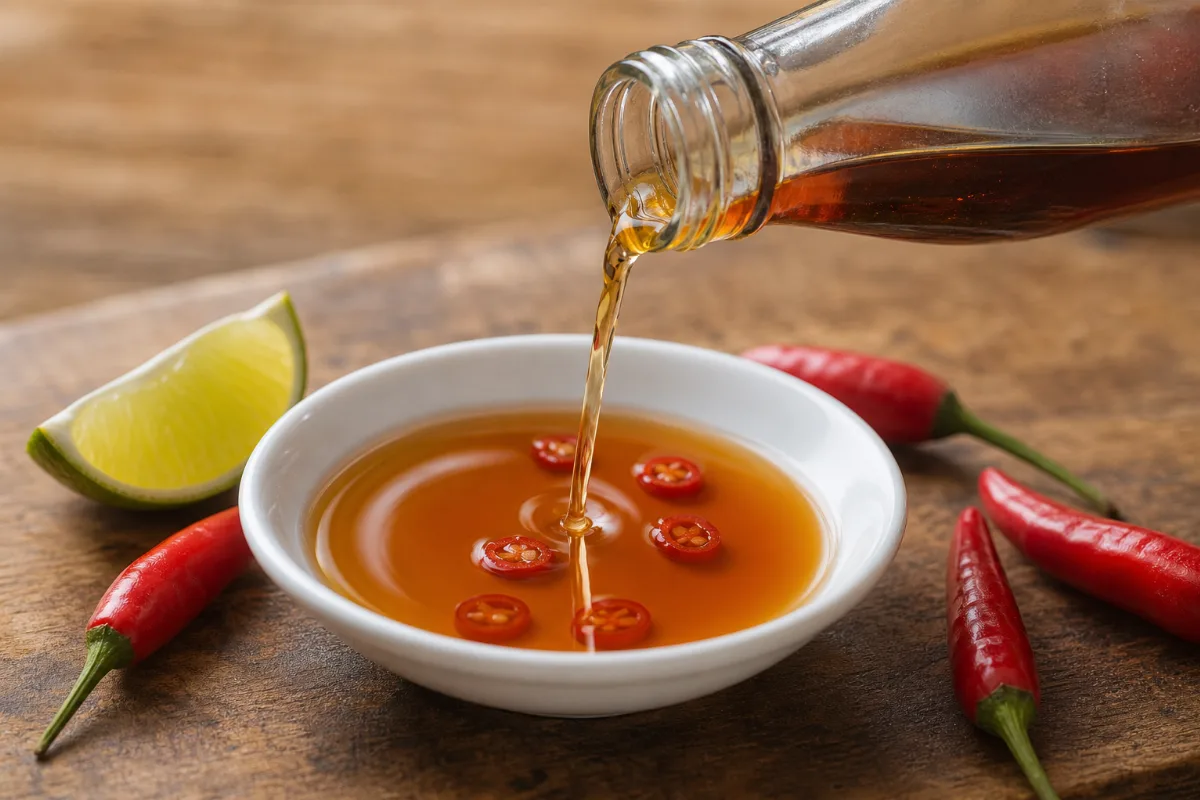
Fermented Foods · Fermented condiment
Fish Sauce
Fermented fish and salt (not a single species) · also called Salsa de pescado; Yulu (a Chinese type)
Fish sauce is a thin, brown, salty liquid made by fermenting fish with salt. It is used in small amounts for savory flavour. In a 2025 survey of 38 commercial sauces, sodium ranged from 5037 to 12,637 mg per 100 mL. We found no trial of plain fish sauce on any health outcome. The main cautions are sodium, fish allergy, histamine and tyramine with MAOI antidepressants, and two older studies linking fermented fish sauce to cancer in southern China.
General information, not medical advice. Last substantive update · Not medically reviewed. A named clinician has not signed off on this page. How this page is made
About Fish Sauce
Fish sauce is a thin, brown, very salty liquid made by fermenting fish with salt. It is a seasoning, not a proven remedy. The firm facts are about sodium, histamine and allergy. The only trials were of fish sauce with iron or thiamine added.
What it is
Fish sauce is made by fermenting fish with a lot of salt. Reviews say enzymes in the fish and salt-tolerant microbes break proteins into amino acids and short peptides, which give the savory (umami) taste. One study followed a skipjack tuna sauce for 60 days. Another, on anchovy sauce, shows that makers can cut amine levels with activated carbon.
No USDA nutrition values for fish sauce were read, so we show no calories, protein or percent daily value. The only nutrient figures read are for sodium, from a 2025 survey of 38 commercial sauces sold in Taiwan.
Sodium: the main point
In the 2025 survey, sodium ranged from 5037 to 12,637 mg per 100 mL. A tablespoon is about 15 mL, so by simple arithmetic it holds roughly 760 to 1,900 mg. WHO recommends adults take in less than 2000 mg of sodium a day, and lists fish sauce among high-sodium condiments.
Nearly 40% of the products, especially Thai and Korean ones, were outside the permitted labelling tolerance for sodium, so a label may understate the real amount. A 2026 review explains that salt is part of how these ferments stay safe and develop flavour, which is why cutting salt in fish sauce is hard.
What the research shows
No trial of plain fish sauce on a health outcome was found. The trials that exist used fish sauce with something added. In Vietnam, iron-fortified sauce reduced iron deficiency anaemia in anaemic women (20.3% against 58.3% after 6 months) and iron deficiency in rural women over 18 months (22.3% to 4.0%). In Cambodia, thiamine-fortified sauce raised red-cell thiamine in women, children and infants, and breast milk thiamine in the pregnancy trial.
These trials measured blood levels and used sauces made for the studies. They do not show that ordinary fish sauce is a good source of iron or thiamine. Funding is not stated in the abstracts.
Claims that fish sauce is rich in protein or good for the gut or immunity were not backed by any human study we found.
Plain, fortified and traditional sauces
The iron and thiamine results are for sauces with those nutrients added. The cancer studies are for traditional fermented fish sauce in southern China. The sodium, histamine and additive numbers are for commercial products on sale in 2014 to 2025 surveys. They are different things, so one result should not be read onto the others.
At a glance
Traditional uses history, not proof
- Used as a seasoning in Thai, Vietnamese, Korean and other cooking
- Long use as a seasoning is not proof that it treats any condition
Studied for research
- Sodium content, high certainty that the products tested are very high in sodium (a caution, not a benefit)
- Iron status, moderate certainty for iron-fortified fish sauce only (Vietnamese women)
- Thiamine (vitamin B1) blood levels, moderate certainty for thiamine-fortified fish sauce only (Cambodia)
- Protein, gut health and immunity claims, insufficient evidence
- Using savory seasonings to cut salt in other foods, insufficient evidence
- Stomach and oesophageal cancer, low certainty of a possible harm signal (observational)
Main compounds
- Sodium (from salt)
- Histamine and tyramine (biogenic amines)
- Amino acids and short peptides (umami taste)
- Nitrosated compounds
- Fish allergen parvalbumin (broken down in one lab study)
- Preservatives in some products
- Added iron or thiamine (fortified products only)
Common forms
- Commercial fish sauces from Thailand, South Korea, Taiwan and Vietnam (a 2025 laboratory survey)
- Chinese Yulu and Vietnamese traditional fish sauces (laboratory surveys of amines)
- Iron- or thiamine-fortified fish sauce made for trials
- No USDA values were read for fish sauce
- Shrimp paste, oyster sauce and fish extracts or supplements are different products and are not covered
Research links: 2025 study: sodium, histamine and additives in 38 commercial fish sauces · 2003 trial: iron-fortified fish sauce in anaemic Vietnamese women · WHO sodium reduction fact sheet · Research Library · Genes & Biomarkers Library
What it is and its history
- Accepted scientific name
- Fish sauce (a fermented fish and salt condiment; not a single species)
- Common names
- Fish sauce (English); Salsa de pescado (Spanish); Yulu (Chinese (name used in one study of fermented fish sauce))
- Native range
- Not verified from a source read.
- Harvest and processing
- Fish is fermented with a lot of salt for months. Reviews say enzymes in the fish and salt-tolerant microbes break proteins into amino acids and peptides, which give the savory taste. A 60-day tuna sauce study sampled every 20 days. Modern production uses temperature, pH and starter cultures to control safety, according to a 2026 review.
- Look-alikes and adulterants
- Name: Soy sauce and tamari; Note: A different fermented seasoning made from soybeans, with its own page. Not fish.; Name: Fermented hot sauce; Note: A fermented pepper sauce, not fish.; Name: Shrimp paste and oyster sauce; Note: Other seafood seasonings that were not researched here. They may differ in sodium and allergens.
- Sustainability and conservation
- Not assessed.
Photographs
What is inside, and how it may work
What it contains and how those compounds act in cells and animals. Laboratory and animal mechanisms are not proven effects in people.
Main compounds
| Compound | Family | Where it is concentrated | Activity studied | Level of evidence |
|---|---|---|---|---|
| Sodium (from salt) | mineral | Whole sauce 5037 to 12,637 mg per 100 mL across 38 commercial products (laboratory survey) | High sodium raises blood pressure (WHO). 8 21 | Human data |
| Histamine | biogenic amine | Whole sauce Up to 539.85 ppm in South Korean sauces; more than 50 mg/kg in 20 of 35 Yulu samples; found in all 15 Vietnamese samples | Dietary histamine causes reactions in people with histamine intolerance, according to a review. 8 10 13 7 | Human data |
| Tyramine | biogenic amine | Whole sauce More than 100 mg/kg in 21 of 35 Yulu samples | Tyramine can raise blood pressure in people taking MAOI antidepressants. 10 6 | Human data |
| Amino acids and short peptides | protein breakdown products | Whole sauce Not given in the abstracts | Give the savory (umami) taste. No health effect was shown. 12 3 | Lab |
| N-nitrosamines and N-(nitrosomethyl)urea (NMU) | nitrosated compounds | Formed in fermented fish or in the stomach with nitrite Not given in the abstracts | A review names N-nitrosamine formation as a safety concern; NMU formed in stomachs of pigs and volunteers given fish sauce and nitrite. 3 4 | Human data |
| Parvalbumin (fish allergen) | protein | Fish muscle Undetectable by day 60 in one tuna sauce | A major fish allergen; fermentation degraded it in one lab study. 1 | Lab |
| Preservatives (benzoates, sorbates, dehydroacetic acid) and triacetin | food additives | Added to some products Dehydroacetic acid up to 3.22 g/kg in one Taiwanese sample | Found above legal limits or not listed in some products. 8 | Lab |
| Added iron (NaFeEDTA) or thiamine (fortified products only) | added nutrients | Added to special products Iron 10 mg per 10 mL in one trial; thiamine 2 or 8 g/L in the Cambodian trials | Raised iron status and blood thiamine in trials; not found in ordinary fish sauce. 16 17 18 19 | Human data |
Mechanisms, receptors and pathways
| Target or pathway | Gene or receptor | What was found | Level |
|---|---|---|---|
| Fermentation: proteolysis and lipolysis | Not applicable | A 2026 review says endogenous enzymes and salt-tolerant microbes break down proteins and fats, releasing amino acids, peptides and fatty acids that give aroma and taste. 3 12 | Lab |
| Salt and the ferment | Not applicable | A 2026 review says salt changes water activity and osmotic pressure and shapes which microbes grow, so reducing salt in these ferments needs careful control. 15 | Lab |
| Biogenic amine formation | Not applicable | Histamine and other amines form as fish proteins break down. A processing study found activated carbon cut histamine by 61% and tyramine by 96% in anchovy sauce. 3 9 | Lab |
| Nitrosation in the stomach | Not applicable | Fish sauce with nitrite formed NMU in the stomachs of mini-pigs and volunteers, depending on nitrite and acidity. Cancer was not measured. 4 | Human data |
| Allergen breakdown | Not applicable | Parvalbumin became undetectable during 60 days of tuna sauce fermentation, with lower antibody binding. 1 | Lab |
Absorption, metabolism and elimination
- Absorption
- Iron added as NaFeEDTA to fish sauce was absorbed at about 3.3% (adult women, 10 per study). Fish sauce did not significantly change iron absorption from rice meals.
- Distribution
- Not found.
- Metabolism
- Not found.
- Elimination
- Not found.
- Bioavailability
- Only for added iron, as above. Nothing found for the natural nutrients.
Isolated compounds versus whole extracts
The iron and thiamine trials are for purpose-made fortified fish sauce. The cancer studies are for traditional fermented fish sauce in southern China. The sodium, histamine and additive numbers are for commercial products on sale. These are not interchangeable.
Nutritional composition
No USDA FoodData Central value for fish sauce was read, so no calories, protein or percent daily value are given. The only nutrient figures read are from a 2025 survey of 38 commercial products sold in Taiwan: sodium 5037 to 12,637 mg per 100 mL, and by our arithmetic roughly 760 to 1,900 mg in a tablespoon (about 15 mL). Fish sauce is used in small amounts, but the sodium in a spoonful is large next to WHO's daily guide of less than 2000 mg. Check the label of the bottle you buy. This is information, not a serving recommendation.
1 high certainty2 moderate certainty1 low certainty2 not enough evidence
What was looked at
The 6 benefits and uses checked for Fish Sauce, each with how strong the evidence is. Tap one to open it.
- Sodium content (a caution, not a benefit)High certainty
- Iron status (iron-fortified fish sauce only)Moderate certainty
- Thiamine (vitamin B1) levels (thiamine-fortified fish sauce only)Moderate certainty
- Protein, gut health and immunity claimsNot enough evidence
- Using savory seasonings to cut salt in other foodsNot enough evidence
- Stomach and food-pipe (oesophageal) cancer (a possible harm signal)Low certainty
Lab markers tracked in the studies
HaemoglobinSerum ferritinRed-cell thiamine diphosphate (eTDP)Breast milk thiamineStomach (gastric) cancer deathsOesophageal squamous cell carcinoma
What is Fish Sauce good for?
The studied uses and how strong the human evidence is for each. Most results are for fortified fish sauce, or are laboratory measurements. No trial of plain fish sauce was found.
Benefits, one by one
Each card is a research question, not a promise. Tap a goal to filter. Open a card to see the studies, doses and limits.
Sodium content (a caution, not a benefit)
High certaintyFish sauce is very salty. In a 2025 laboratory survey of 38 commercial fish sauces from four Asian countries, sodium ranged from 5037 to 12,637 mg per 100 mL. By simple arithmetic, a tablespoon (about 15 mL) would hold roughly 760 to 1,900 mg of sodium. WHO recommends adults take in less than 2000 mg of sodium a day.
2 studiesCommercial fish sauces from Thailand, South Korea, Taiwan and Vietnam…
Studies, doses and limits
What the trials found
No trial was read that tested fish sauce on blood pressure. The sodium numbers come from a laboratory survey, and the link between high sodium and blood pressure comes from WHO.
Results
Fish sauce is a high-sodium seasoning. How it affects any one person's blood pressure was not tested in the sources read.
Effect sizes as reported
Sodium 5037 to 12,637 mg per 100 mL across 38 products; nearly 40% of products were outside the permitted labelling tolerance for sodium (120% or less of the label), especially Thai and Korean products. Arithmetic for 15 mL: about 760 to 1,900 mg.
Why this rating
High that the products tested are very high in sodium (laboratory measurement). Not tested as a cause of high blood pressure in people eating fish sauce.
Form and dose studied
Commercial fish sauces from Thailand, South Korea, Taiwan and Vietnam sold in Taiwan. No USDA values were read.
Who was studied
General adult diet.
Limits
One survey of 38 products. Brands and batches differ, and the label can be wrong: the survey found sodium labelling errors in about 40% of products.
Why researchers looked
Salt is needed to make and keep fish sauce, so its sodium is the first thing food scientists and health bodies check.
Traditional use
Fish sauce is a seasoning made by fermenting fish with salt. It is eaten in small amounts in many cuisines. Long use as a seasoning is not proof that it treats any condition.
Proposed mechanism Laboratory analysis and agency guidance
Salt is part of how the sauce is made. WHO says high sodium raises blood pressure, which raises the risk of cardiovascular disease.
A proposed mechanism does not show that the effect happens in people.
People told to limit sodium should count fish sauce as a salty ingredient. See the Safety tab.
Iron status (iron-fortified fish sauce only)
Moderate certaintyIn Vietnam, three trials used fish sauce with added iron (as NaFeEDTA). In 152 women with anaemia, iron deficiency anaemia fell to 20.3% against 58.3% on unfortified sauce after 6 months. In 576 women in rural villages, iron deficiency fell from 22.3% to 4.0% over 18 months. These results are for fortified sauce, not ordinary fish sauce.
3 studiesFish sauce with iron added as NaFeEDTA (10 mg iron per 10 mL in one t…
Studies, doses and limits
What the trials found
Two randomised trials in Vietnamese women (152 women with anaemia for 6 months; 576 women in 21 villages for 18 months) and one absorption study in 5 groups of 10 women.
Results
Women who ate iron-fortified fish sauce had higher haemoglobin and ferritin and less iron deficiency than women on unfortified sauce. The product was a purpose-made fortified sauce.
Effect sizes as reported
152 anaemic women, 6 months: haemoglobin 116.3 vs 107.6 g/L; ferritin 30.9 vs 14.6 micrograms/L; iron deficiency 32.8% vs 62.5%; iron deficiency anaemia 20.3% vs 58.3%. 576 women, 18 months: iron deficiency 22.3% to 4.0% and anaemia 24.7% to 8.5% in the fortified villages. Absorption: 3.3% (NaFeEDTA) vs 3.1% (FeSO4) from fish sauce.
Why this rating
Moderate for fortified fish sauce in these Vietnamese groups: randomised trials, but one was randomised by village and the sauces were made for the studies. Not applicable to ordinary fish sauce, which has no added iron.
Form and dose studied
Fish sauce with iron added as NaFeEDTA (10 mg iron per 10 mL in one trial; 500 mg iron per litre in the other). No amounts to eat are advised here.
Who was studied
Women of childbearing age in Vietnam, some with anaemia.
Limits
Fortified product only. Funding is not stated in the abstracts. Trials are from 2003 and 2005. A related Swiss absorption study used small groups.
Why researchers looked
Many people in some countries eat fish sauce every day, so it has been tested as a way to carry added iron.
Traditional use
Fish sauce is a seasoning made by fermenting fish with salt. It is eaten in small amounts in many cuisines. Long use as a seasoning is not proof that it treats any condition.
Proposed mechanism Human absorption study
The iron was added to the sauce as NaFeEDTA. In a small absorption study the added iron was absorbed from fish sauce at about 3% of the dose, and fish sauce did not significantly change iron absorption from a rice meal.
A proposed mechanism does not show that the effect happens in people.
A salty seasoning is not an advisable way to treat low iron. Ask a clinician about iron.
Thiamine (vitamin B1) levels (thiamine-fortified fish sauce only)
Moderate certaintyIn rural Cambodia, two randomised trials gave households fish sauce with added thiamine for 6 months. Women and children had higher blood thiamine than those on a sauce without it. In the pregnancy trial, breast milk thiamine and infants' blood thiamine were higher too. These are blood levels, not disease outcomes, and the sauce was fortified.
2 studiesFish sauce fortified with thiamine, 2 g/L or 8 g/L, eaten as the hous…
Studies, doses and limits
What the trials found
A trial in 90 pregnant women (30 per group) and a trial in 276 non-pregnant women and their children aged 1 to 5 years, both double-blind, 6 months, Prey Veng province, Cambodia.
Results
Red-cell thiamine was higher with fortified sauce in women, children and infants. The authors of the pregnancy trial say the sauce has potential to prevent infantile beriberi in this population; beriberi itself was not measured.
Effect sizes as reported
Pregnancy trial: mother's red-cell thiamine 193 nM (control), 282 nM (2 g/L), 254 nM (8 g/L); infants 187 nM (control) vs 257 nM (8 g/L). Household trial: women 184 nmol/L (control) vs 259 and 257; children 213 nmol/L vs 259 and 257.
Why this rating
Moderate that fortified sauce raised blood thiamine levels in these groups (double-blind randomised trials). Low for any effect on illness, which was not measured. Not applicable to ordinary fish sauce.
Form and dose studied
Fish sauce fortified with thiamine, 2 g/L or 8 g/L, eaten as the household normally used it.
Who was studied
Rural Cambodian women, pregnant or breastfeeding women, infants and children aged 1 to 5.
Limits
Blood levels only. Fortified product. Funding is not stated in the abstracts. Fish sauce use was not controlled.
Why researchers looked
Thiamine-poor white rice is a staple in some places, and low thiamine in breastfeeding mothers puts infants at risk of beriberi. Fish sauce is eaten widely in Cambodia, so it was tested as a carrier.
Traditional use
Fish sauce is a seasoning made by fermenting fish with salt. It is eaten in small amounts in many cuisines. Long use as a seasoning is not proof that it treats any condition.
Proposed mechanism Human trial biomarker
Thiamine was added to the sauce at 2 g/L or 8 g/L. The trials measured thiamine diphosphate in red blood cells.
A proposed mechanism does not show that the effect happens in people.
See Safety: sodium is high whatever is added.
Protein, gut health and immunity claims
Not enough evidenceFermentation breaks fish protein into amino acids and short peptides that give the savory (umami) taste. No study in people was found showing that eating fish sauce improves protein status, gut health or immunity.
2 studiesNot applicable.
Studies, doses and limits
Results
No human results exist in the sources read.
Why this rating
No human studies. Review abstracts describe flavour chemistry, not health outcomes.
Limits
Reviews of food chemistry only. Protein and calorie values for fish sauce were not read.
Why researchers looked
People sometimes say fish sauce is rich in protein or good for the gut because it comes from fermented fish.
Traditional use
Fish sauce is a seasoning made by fermenting fish with salt. It is eaten in small amounts in many cuisines. Long use as a seasoning is not proof that it treats any condition.
Proposed mechanism Food science review
Reviews say proteolysis releases amino acids, peptides and fatty acids, which give flavour. That explains the taste; it does not show a health effect.
A proposed mechanism does not show that the effect happens in people.
Fish allergy and sodium apply; see Safety.
Using savory seasonings to cut salt in other foods
Not enough evidenceA 2026 review says amino acid and peptide seasonings, a family that includes fish sauces, can change the taste of plant-based foods and may help reduce sodium and fat. This is a statement in a review abstract, not a trial result. Fish sauce itself is very high in sodium.
2 studiesNot applicable.
Studies, doses and limits
Results
Not tested in people with fish sauce in the sources read.
Why this rating
Review statement only, about a family of seasonings. No trial was read, and fish sauce adds sodium of its own.
Limits
Review abstract. A separate 2026 review notes that cutting salt in fish sauce itself is hard because salt shapes the microbes, flavour and safety of the ferment.
Why researchers looked
Food scientists look for savory flavours that let cooks use less salt.
Traditional use
Fish sauce is a seasoning made by fermenting fish with salt. It is eaten in small amounts in many cuisines. Long use as a seasoning is not proof that it treats any condition.
Proposed mechanism Food science review
Umami-active amino acids and peptides make food taste more savory; the review proposes this may allow less sodium and fat.
A proposed mechanism does not show that the effect happens in people.
See Safety for sodium.
Stomach and food-pipe (oesophageal) cancer (a possible harm signal)
Low certaintyTwo older studies from southern China linked eating fermented fish sauce to higher cancer risk: a 2000 study of townships in Fujian linked it to stomach cancer deaths, and a 2002 study of 1,248 cases linked it to oesophageal cancer (OR 3.21). These are observational, so they cannot prove cause, and they were done in a region with other risk factors.
3 studiesFermented fish sauce as eaten in southern China. Amounts and brands a…
Studies, doses and limits
What the trials found
One ecological study (11,000 people in 55 townships) and one hospital-based case-control study (1,248 cases and 1,248 matched controls).
Results
Both studies found an association with higher risk. They cannot show that fish sauce caused it, and they were published in 2000 and 2002.
Effect sizes as reported
Gastric cancer mortality vs monthly fish sauce: r = 0.7356 (men), 0.5246 (women). Oesophageal cancer: OR 3.21 (95% CI 2.45 to 4.19); with current smoking OR 15.5 (8.14 to 29.3) against neither habit.
Why this rating
Low: two observational studies from one region, with possible other causes. A harm signal, not an established cause. No cohort study or trial was read.
Form and dose studied
Fermented fish sauce as eaten in southern China. Amounts and brands are not given in the abstracts.
Who was studied
Adults in Fujian and Chaoshan, China.
Limits
Ecological and case-control designs; recall of past eating; other local foods and smoking. The results may not apply to products sold elsewhere today.
Why researchers looked
Researchers looked at fish sauce because fermented fish can form nitrosated compounds, and some of these are cancer-causing in lab work.
Traditional use
Fish sauce is a seasoning made by fermenting fish with salt. It is eaten in small amounts in many cuisines. Long use as a seasoning is not proof that it treats any condition.
Proposed mechanism Laboratory and human mechanism
A 2000 lab-and-volunteer study found that a nitrosated compound (NMU) forms in the stomach when fish sauce meets nitrite. Cancer was not measured in that study.
A proposed mechanism does not show that the effect happens in people.
See Safety. This is a signal to take seriously, not a diagnosis.
Connections to the rest of health
How Fish Sauce connects to the rest of our health knowledge graph. Every link says what kind of connection it is. A safety link (for example to the liver) is a warning, not a benefit. A study that merely mentions a topic never creates a benefit link.
Explore every connection: goals, body systems, organs, symptoms, genes
A. Wellness goals
| Connected to | Kind of connection | Evidence status | Context | Studies |
|---|---|---|---|---|
| Blood Pressure Support | High certainty | Sodium content (a caution, not a benefit): Fish sauce is very salty. In a 2025 laboratory survey of 38 commercial fish sauces from four Asian countries, sodium ranged from 5037 to 12,637 mg per 100 mL. By simple arithmetic, a tablespoon (about 15 mL) would hold roughly 760 to 1,900 mg of sodium. WHO recommends adults take in less than 2000 mg of sodium a day. | 8 21 | |
| Heart Health | High certainty | Sodium content (a caution, not a benefit): Fish sauce is very salty. In a 2025 laboratory survey of 38 commercial fish sauces from four Asian countries, sodium ranged from 5037 to 12,637 mg per 100 mL. By simple arithmetic, a tablespoon (about 15 mL) would hold roughly 760 to 1,900 mg of sodium. WHO recommends adults take in less than 2000 mg of sodium a day. | 8 21 | |
| Reduce Fatigue | Moderate certainty | Iron status (iron-fortified fish sauce only): In Vietnam, three trials used fish sauce with added iron (as NaFeEDTA). In 152 women with anaemia, iron deficiency anaemia fell to 20.3% against 58.3% on unfortified sauce after 6 months. In 576 women in rural villages, iron deficiency fell from 22.3% to 4.0% over 18 months. These results are for fortified sauce, not ordinary fish sauce. Thiamine (vitamin B1) levels (thiamine-fortified fish sauce only): In rural Cambodia, two randomised trials gave households fish sauce with added thiamine for 6 months. Women and children had higher blood thiamine than those on a sauce without it. In the pregnancy trial, breast milk thiamine and infants' blood thiamine were higher too. These are blood levels, not disease outcomes, and the sauce was fortified. | 16 17 5 18 19 | |
| Healthy Aging | Moderate certainty | Iron status (iron-fortified fish sauce only): In Vietnam, three trials used fish sauce with added iron (as NaFeEDTA). In 152 women with anaemia, iron deficiency anaemia fell to 20.3% against 58.3% on unfortified sauce after 6 months. In 576 women in rural villages, iron deficiency fell from 22.3% to 4.0% over 18 months. These results are for fortified sauce, not ordinary fish sauce. Thiamine (vitamin B1) levels (thiamine-fortified fish sauce only): In rural Cambodia, two randomised trials gave households fish sauce with added thiamine for 6 months. Women and children had higher blood thiamine than those on a sauce without it. In the pregnancy trial, breast milk thiamine and infants' blood thiamine were higher too. These are blood levels, not disease outcomes, and the sauce was fortified. | 16 17 5 18 19 | |
| Gut Health | Not enough evidence | Protein, gut health and immunity claims: Fermentation breaks fish protein into amino acids and short peptides that give the savory (umami) taste. No study in people was found showing that eating fish sauce improves protein status, gut health or immunity. | 3 12 | |
| Immune Support | Not enough evidence | Protein, gut health and immunity claims: Fermentation breaks fish protein into amino acids and short peptides that give the savory (umami) taste. No study in people was found showing that eating fish sauce improves protein status, gut health or immunity. | 3 12 | |
| Heart Health | Not enough evidence | Using savory seasonings to cut salt in other foods: A 2026 review says amino acid and peptide seasonings, a family that includes fish sauces, can change the taste of plant-based foods and may help reduce sodium and fat. This is a statement in a review abstract, not a trial result. Fish sauce itself is very high in sodium. | 12 15 | |
| Blood Pressure Support | Not enough evidence | Using savory seasonings to cut salt in other foods: A 2026 review says amino acid and peptide seasonings, a family that includes fish sauces, can change the taste of plant-based foods and may help reduce sodium and fat. This is a statement in a review abstract, not a trial result. Fish sauce itself is very high in sodium. | 12 15 | |
| Healthy Aging | Low certainty | Stomach and food-pipe (oesophageal) cancer (a possible harm signal): Two older studies from southern China linked eating fermented fish sauce to higher cancer risk: a 2000 study of townships in Fujian linked it to stomach cancer deaths, and a 2002 study of 1,248 cases linked it to oesophageal cancer (OR 3.21). These are observational, so they cannot prove cause, and they were done in a region with other risk factors. | 2 11 4 |
B. Body systems
| Connected to | Kind of connection | Evidence status | Context | Studies |
|---|---|---|---|---|
| Cardiovascular System | Biological association | High certainty | Studied for: Sodium content (a caution, not a benefit) Studied for: Using savory seasonings to cut salt in other foods | 8 21 12 15 |
| Blood And Immune | Biological association | Moderate certainty | Studied for: Iron status (iron-fortified fish sauce only) | 16 17 5 |
| Nervous System | Biological association | Moderate certainty | Studied for: Thiamine (vitamin B1) levels (thiamine-fortified fish sauce only) | 18 19 |
| Digestive System | Biological association | Not enough evidence | Studied for: Protein, gut health and immunity claims Studied for: Stomach and food-pipe (oesophageal) cancer (a possible harm signal) | 3 12 2 11 4 |
| Immune System | Biological association | Not enough evidence | Studied for: Protein, gut health and immunity claims | 3 12 |
C. Body parts and organs
E. Health conditions
| Connected to | Kind of connection | Evidence status | Context | Studies |
|---|---|---|---|---|
| Food allergy | Adverse effect or risk | Documented risk | Fish is a major food allergen (FDA). Fish sauce is made from fish. Preparation or compound: Fish protein in fish sauce |
20 1 |
| High blood pressure | Adverse effect or risk | Documented risk | Fish sauce is very high in sodium; WHO says high sodium raises blood pressure. Preparation or compound: Sodium in fish sauce |
21 8 |
I. Biomarkers
| Connected to | Kind of connection | Evidence status | Context | Studies |
|---|---|---|---|---|
| Haemoglobin | Biological association | Moderate certainty | Measured in trials: raised. A lab change is not the same as a health benefit. | 16 17 |
| Serum ferritin | Biological association | Moderate certainty | Measured in trials: raised. A lab change is not the same as a health benefit. | 16 17 |
| Red-cell thiamine diphosphate (eTDP) | Biological association | Moderate certainty | Measured in trials: raised. A lab change is not the same as a health benefit. | 18 19 |
| Breast milk thiamine | Biological association | Low certainty | Measured in trials: raised. A lab change is not the same as a health benefit. | 18 |
| Stomach (gastric) cancer deaths | Biological association | Low certainty | Measured in trials: higher with more fish sauce. A lab change is not the same as a health benefit. | 2 |
| Oesophageal squamous cell carcinoma | Biological association | Low certainty | Measured in trials: higher odds with fish sauce eating. A lab change is not the same as a health benefit. | 11 |
K. Biological pathways
| Connected to | Kind of connection | Evidence status | Context | Studies |
|---|---|---|---|---|
| Sodium | Preliminary mechanism | Human | Fish sauce is a very high-sodium seasoning; WHO links high sodium to raised blood pressure. | 8 21 |
| Iron (added to fortified sauce) | Preliminary mechanism | Human | Iron-fortified fish sauce raised iron status in Vietnamese women in trials. | 16 17 |
| Thiamine (added to fortified sauce) | Preliminary mechanism | Human | Thiamine-fortified fish sauce raised red-cell thiamine in Cambodian women and children. | 18 19 |
| Histamine and tyramine | Preliminary mechanism | Lab | Measured in laboratory surveys of commercial fish sauces. | 8 10 13 |
L. Active compounds
| Connected to | Kind of connection | Evidence status | Context | Studies |
|---|---|---|---|---|
| Sodium (from salt) | Biological association | Human | High sodium raises blood pressure (WHO). Preparation or compound: Whole sauce |
8 21 |
| Histamine | Biological association | Human | Dietary histamine causes reactions in people with histamine intolerance, according to a review. Preparation or compound: Whole sauce |
8 10 13 7 |
| Tyramine | Biological association | Human | Tyramine can raise blood pressure in people taking MAOI antidepressants. Preparation or compound: Whole sauce |
10 6 |
| Amino acids and short peptides | Biological association | Lab | Give the savory (umami) taste. No health effect was shown. Preparation or compound: Whole sauce |
12 3 |
| N-nitrosamines and N-(nitrosomethyl)urea (NMU) | Biological association | Human | A review names N-nitrosamine formation as a safety concern; NMU formed in stomachs of pigs and volunteers given fish sauce and nitrite. Preparation or compound: Formed in fermented fish or in the stomach with nitrite |
3 4 |
| Parvalbumin (fish allergen) | Biological association | Lab | A major fish allergen; fermentation degraded it in one lab study. Preparation or compound: Fish muscle |
1 |
| Preservatives (benzoates, sorbates, dehydroacetic acid) and triacetin | Biological association | Lab | Found above legal limits or not listed in some products. Preparation or compound: Added to some products |
8 |
| Added iron (NaFeEDTA) or thiamine (fortified products only) | Biological association | Human | Raised iron status and blood thiamine in trials; not found in ordinary fish sauce. Preparation or compound: Added to special products |
16 17 18 19 |
Each connection is stored with the ingredient, the connected record, the kind of connection, the evidence status, the supporting studies, the preparation or compound involved, and a review date (last reviewed October 26, 2026).
Evidence at a glance: what changed in 4 lab markers
Tap a number to show only those markers. Counts are markers, not people.
The evidence
The research centre for Fish Sauce. Every record here was checked against PubMed or the publisher's page; we never list a study we have not verified.
Evidence by outcome
Bars show how many studies we found for each outcome, not how well it works. People are added up across trials only (reviews are not added, to avoid double counting).
How we rate evidence
High certainty
Several well-run trials or reviews agree; further research is unlikely to change the picture much.
Moderate certainty
Good trials point the same way, but some doubt remains.
Low certainty
Small, short or inconsistent trials. The finding could change with better research.
Very low certainty
Very little or very weak human data. Treat as a possibility only.
Mixed findings
Trials or reviews disagree with each other.
Not enough evidence
Not enough human research to say either way.
Evidence against
Good research found no benefit, or found harm.
We take the reviewers' own risk-of-bias and GRADE statements where they exist, and otherwise judge from study size, design, consistency, directness and whether a product matches what is sold. Many publications do not make evidence high. Method note: We started from our existing fish sauce summary and re-read the sources it used (PubMed abstracts, the WHO sodium fact sheet and the US FDA food allergy page), then searched PubMed for more. Only abstracts were read for studies. The StatPearls tyramine page could not be opened, so no statement from it is used. Items we could not verify are flagged in the research gaps.
Study library: every study we checked 21
| Study | Design | People | Product, dose, length | Result |
|---|---|---|---|---|
| Amalia 2026 Allergenic protein behavior, parvalbumin (PA) contained in skipjack tuna (Katsuwonus pelamis) during the fish sauce processing stage Food Sci Technol Int · PMID 42506887 · DOI |
Laboratory analysis n/a |
Skipjack tuna fish sauce sampled every 20 days during a 60-day fermentation | Skipjack tuna sauce during fermentation 60 days · vs Earlier fermentation days |
Parvalbumin bands became thinner and undetectable by day 60, and antibody (IgG) binding fell. Histamine content correlated with changes in pH and total acidity. The authors conclude that traditional fish sauce processing effectively degrades the allergen in this tuna sauce. No numbers in the abstract (Not applicable) Methods, limits and fundingOutcomes: Parvalbumin (a major fish allergen) bands, IgG binding, histamine, pH, acidity, soluble peptides Limitations: A lab study of one tuna sauce. It used IgG binding, not blood or challenge tests from allergic people. It does not show that fish sauce is safe for a person with fish allergy. Funding and conflicts: Funding is not stated in the abstract. Read: abstract |
| Cai 2000 Fish sauce and gastric cancer: an ecological study in Fujian Province, China World J Gastroenterol · PMID 11819672 · DOI |
Ecological study |
11000 11,000 local residents aged 45 to 74 from 55 townships in 10 counties of Fujian Province, China |
Fish sauce as eaten (monthly consumption by questionnaire) · vs Lower consumption |
Monthly fish sauce consumption was significantly correlated with gastric cancer mortality (r = 0.7356 in men and 0.5246 in women, P < 0.01). In the multivariate analysis, fish sauce still showed an association. There was no significant positive correlation with oesophageal, liver or colon cancer. The authors call for further studies. Correlation r = 0.7356 (men), 0.5246 (women), P < 0.01 (Not given in the abstract) Methods, limits and fundingOutcomes: Gastric cancer mortality compared with fish sauce consumption Limitations: An ecological study (townships compared), so it cannot show that fish sauce causes cancer. Other factors may differ between townships. Published in 2000. Funding and conflicts: Funding is not stated in the abstract. Read: abstract |
| Dai 2026 Microbial and enzymatic synergy in fermented fish: impacts on flavor, texture, and safety with multi-omics and AI insights Food Chem X · PMID 42382800 · DOI |
Narrative review n/a |
Review of fermented fish production | Fermented fish (general) |
The review says proteolysis and lipolysis release amino acids, peptides and fatty acids that give flavour precursors. It names biogenic amine and N-nitrosamine formation as key safety concerns and discusses ways to reduce them with process control and starter cultures. No numbers in the abstract (Not applicable) Methods, limits and fundingOutcomes: Flavour, texture and safety of fermented fish Limitations: A food-science review of fermented fish in general, not fish sauce only and not a health study. Funding and conflicts: The authors declare no competing financial interests. Read: abstract |
| Deng 2000 Formation of N-(Nitrosomethyl)urea in stomachs of experimental pigs and human volunteers given fish sauce in vivo J Agric Food Chem · PMID 10888574 · DOI |
Laboratory analysis human and pig |
Mini-pigs with a stomach cannula and human volunteers (number not given in the abstract) | Fish sauce (20 to 30 mL) with nitrite, injected into the stomach of pigs or taken by mouth by volunteers 20 to 30 mL fish sauce plus nitrite Gastric juice sampled 30 minutes later |
NMU formed in the stomach of both pigs and volunteers, depending on nitrite and acidity. The authors conclude that NMU forms in the stomach even at natural amounts of nitrite. The abstract says NMU was found earlier in carcinogenic nitrosated fish sauce. No concentrations in the abstract (Not applicable) Methods, limits and fundingOutcomes: Formation of N-(nitrosomethyl)urea (NMU) in gastric juice Limitations: A mechanism study of a compound formed in the stomach. It did not measure cancer, and the number of volunteers is not in the abstract. It does not show harm from fish sauce eaten in ordinary meals. Funding and conflicts: Funding is not stated in the abstract. Read: abstract |
| Fidler 2003 Iron absorption from fish sauce and soy sauce fortified with sodium iron EDTA Am J Clin Nutr · PMID 12885708 · DOI |
Randomised controlled trial |
50 Five separate iron-absorption studies in adult women, 10 women per study |
Fish sauce or soy sauce (10 g) fortified with 5 mg iron as NaFeEDTA or FeSO4, given with test meals 10 g sauce with 5 mg iron Single test meals; absorption measured at 14 days · vs FeSO4-fortified sauce; meals without sauce |
Iron absorption from NaFeEDTA and FeSO4 fortified fish sauce was 3.3% and 3.1%, not significantly different. Soy sauce reduced iron absorption from a rice meal (8.5% without, 6.0% with), while fish sauce did not significantly affect it. Fish sauce: 3.3% (NaFeEDTA) vs 3.1% (FeSO4); soy sauce reduced rice-meal absorption 8.5% to 6.0% (P < 0.02); fish sauce no significant change (Not given in the abstract) Methods, limits and fundingOutcomes: Iron absorption (isotope incorporation into red blood cells) Limitations: Small studies (10 women each) using single test meals. Fortified product. Plain fish sauce effect on iron absorption was reported as not significant. Funding and conflicts: Funding is not stated in the abstract. Registration: None Read: abstract |
| Flockhart 2012 Dietary restrictions and drug interactions with monoamine oxidase inhibitors: an update J Clin Psychiatry · PMID 22951238 · DOI |
Narrative review |
Review of MAOI antidepressants, tyramine-containing foods and drug interactions | MAOI antidepressants with tyramine-containing foods and serotonergic or sympathomimetic drugs |
The review says hypertensive crisis and serotonin syndrome can occur in rare cases from interactions between MAOIs and tyramine-containing foods and from interactions with serotonergic and sympathomimetic drugs. It does not name fish sauce in the abstract. No numbers in the abstract (Not applicable) Methods, limits and fundingOutcomes: Hypertensive crisis and serotonin syndrome Limitations: A 2012 review abstract. It does not name fish sauce, so the link to fish sauce rests on the tyramine finding in lab surveys. Funding and conflicts: Funding is not stated in the abstract. Read: abstract |
| Hrubisko 2021 Histamine Intolerance - The More We Know the Less We Know. A Review Nutrients · PMID 34209583 · DOI |
Narrative review |
Review of histamine intolerance | Dietary histamine and low-histamine diets |
The review says histamine intolerance is a food intolerance caused by accumulated or ingested histamine, that symptoms vary in the same person, and that diagnosis is hard and needs a multidisciplinary approach. A low-histamine diet is described as the gold standard, with a good response taken as confirmation. It does not name fish sauce in the abstract. No numbers in the abstract (Not applicable) Methods, limits and fundingOutcomes: Diagnosis and treatment of histamine intolerance Limitations: A narrative review. The abstract does not name fish sauce or list foods. Funding and conflicts: The authors declare no conflict of interest. Read: abstract |
| Huang 2025 Comparative Analysis of Chemical Composition and Food Safety of Commercial Fish Sauces from Four Asian Countries Foods · PMID 40941250 · DOI |
Laboratory analysis n/a |
38 38 commercial fish sauces from Thailand, South Korea, Taiwan and Vietnam, sold in Taiwan |
Commercial fish sauce, analysed in the laboratory · vs Labelled values and regulatory limits |
Sodium ranged from 5037 to 12,637 mg per 100 mL. Nearly 40% of products, mainly Thai and Korean, exceeded the permitted labelling tolerance for sodium (120% or less). Some products had unauthorised or excessive benzoates and sorbates. Three of seven Taiwanese samples had dehydroacetic acid above 1 g/kg. Four Vietnamese samples contained triacetin, an unlisted additive. South Korean sauces had histamine up to 539.85 +/- 318.88 ppm, with several above the Taiwanese limit of 400 ppm. Vietnamese sauces had the highest total nitrogen and lowest pH. Sodium 5037 to 12,637 mg/100 mL; histamine up to 539.85 ppm (South Korean sauces); about 40% of products over the sodium labelling tolerance (Not applicable) Methods, limits and fundingOutcomes: Nitrogen compounds, biogenic amines, preservatives, sodium, metabolite profile Limitations: A laboratory survey of products sold in Taiwan, not a study in people. The abstract does not give how many products were tested per country beyond what is stated, and results cannot be assumed for other brands or later batches. Funding and conflicts: The authors declare no conflicts of interest. Read: abstract |
| In 2024 Effect of activated carbon-based two-stage adsorption on biogenic amine reduction and quality of anchovy fish sauce at industrial scale Food Chem · PMID 38968713 · DOI |
Laboratory analysis n/a |
Anchovy fish sauce treated at industrial scale | Anchovy fish sauce treated with activated carbon and diatomite 2% activated carbon and 0.9% diatomite, 27 C, 97 minutes 97 minutes · vs Untreated sauce |
The treatment reduced tryptamine by 100%, cadaverine by 10%, histamine by 61% and tyramine by 96%, with minimal change in taste-related amino nitrogen, total nitrogen, free amino acids and colour. Histamine -61%, tyramine -96%, tryptamine -100%, cadaverine -10% (Not applicable) Methods, limits and fundingOutcomes: Biogenic amines (tryptamine, cadaverine, histamine, tyramine) and taste-related measures Limitations: A processing study. It shows that amines are present and can be reduced in manufacturing. It does not describe products you buy, and it is not a study in people. Funding and conflicts: The authors declare no competing financial interests. Read: abstract |
| Jiang 2014 Biogenic amines in commercially produced Yulu, a Chinese fermented fish sauce Food Addit Contam Part B Surveill · PMID 24779975 · DOI |
Laboratory analysis n/a |
35 35 commercial Yulu (Chinese fermented fish sauce) samples from three provinces of China |
Commercial Yulu fish sauce, analysed in the laboratory · vs FDA suggested histamine limit for seafood (50 mg/kg) |
Putrescine, cadaverine, histamine and tyramine were the major biogenic amines (more than 100 mg/kg). Twenty samples had more than 50 mg/kg histamine, the limit the FDA suggests for seafood products. Twenty-one had more than 100 mg/kg tyramine, and 10 had more than 1000 mg/kg total biogenic amines. 20 of 35 samples over 50 mg/kg histamine; 21 of 35 over 100 mg/kg tyramine; 10 of 35 over 1000 mg/kg total biogenic amines (Not applicable) Methods, limits and fundingOutcomes: Seven biogenic amines Limitations: A 2014 laboratory survey of one Chinese fish sauce type. Not a study in people, and no harm was reported. Products on sale today may differ. Funding and conflicts: Funding is not stated in the abstract. Read: abstract |
| Ke 2002 Novel epidemiologic evidence for the association between fermented fish sauce and esophageal cancer in South China Int J Cancer · PMID 11992412 · DOI |
Case control study |
2496 1,248 people with squamous cell carcinoma of the oesophagus and the same number of age- and sex-matched controls, Chaoshan area, China |
Fermented fish sauce eating (yes or no, and amount) · vs People who did not eat fermented fish sauce |
Eating fermented fish sauce went with higher odds of oesophageal cancer, with a dose-response pattern. Fish sauce eating together with current smoking gave an odds ratio of 15.5 compared with neither habit. The joint effect with smoking was more than additive; no joint effect with alcohol was found. The authors say further study is needed to show a causal link. OR 3.21 for eating vs not eating; fish sauce plus smoking OR 15.5; p for trend < 0.001 (OR 3.21: 95% CI 2.45 to 4.19; plus smoking: 8.14 to 29.3) Methods, limits and fundingOutcomes: Odds of oesophageal squamous cell carcinoma Limitations: A hospital-based case-control study, which can show a link but not cause, and which depends on people recalling what they ate. Southern China, where other local foods may also matter. Funding and conflicts: Funding is not stated in the abstract. Read: abstract |
| Martin-Miguelez 2026 From Heritage to Innovation: A Review of the Safety and Production of Aminopeptide Seasonings Compr Rev Food Sci Food Saf · PMID 42751761 · DOI |
Narrative review n/a |
Review of aminopeptide seasonings (including Mediterranean fish sauces, African legume ferments and Asian soy pastes) | Aminopeptide seasonings made by fermentation or enzyme breakdown of protein |
The review says proteolysis creates free amino acids and short peptides that give umami taste. It describes modern safety controls (temperature, pH, water activity, vacuum processing, protective cultures). It also says these seasonings can change the taste of plant-based foods, which may help reduce sodium and fat. No numbers in the abstract (Not applicable) Methods, limits and fundingOutcomes: Production, safety and sensory properties Limitations: A review of many seasonings, mostly about production and safety. The sodium and fat reduction point is a statement in the abstract, not a trial result. Funding and conflicts: The authors declare no conflicts of interest. Read: abstract |
| Pham 2025 Histamine and biogenic amines in Vietnamese traditional fish sauce by hydrophilic interaction liquid chromatography-tandem mass spectrometry Food Addit Contam Part B Surveill · PMID 40105692 · DOI |
Laboratory analysis n/a |
25 15 Vietnamese traditional fish sauce samples and 10 broth samples from fermentation tanks |
Vietnamese traditional fish sauce and tank broth, analysed in the laboratory · vs European Union maximum level for histamine |
Histamine was found in all samples, and in some at high levels. In fish sauce samples collected from supermarkets, histamine levels were lower than the maximum level set by European Union regulations. Histamine present in all samples; supermarket samples below the EU maximum level (numbers not given in the abstract) (Not applicable) Methods, limits and fundingOutcomes: Eight biogenic amines, including histamine Limitations: A method paper with a small sample. Numbers were not in the abstract. Not a study in people. Funding and conflicts: Funding is not stated in the abstract. Read: abstract |
| Reichstadter 2020 Simultaneous determination of mercury, cadmium and lead in fish sauce using Diffusive Gradients in Thin-films technique Talanta · PMID 32498878 · DOI |
Laboratory analysis n/a |
Fish sauces from local retail stores (number not given in the abstract) | Fish sauce, analysed for mercury, cadmium and lead |
The authors developed and tested a method to measure mercury, cadmium and lead in fish sauce and used it on retail samples. The abstract states that fish can contain high amounts of metals, some hazardous to health. It gives no results for the retail samples. No measured levels in the abstract (Not applicable) Methods, limits and fundingOutcomes: A method to measure mercury, cadmium and lead in fish sauce Limitations: A method paper. No levels of metals in the products are given in the abstract, so no statement about how much metal fish sauce contains can be made. Funding and conflicts: The authors declare no competing financial interests. Read: abstract |
| Shen 2026 Advances in Salt Reduction in Salt-Dependent Traditional Fermented Foods: From Microecological Responses to Flavor and Safety Control Compr Rev Food Sci Food Saf · PMID 42643123 · DOI |
Narrative review n/a |
Review of soy sauce, fish sauce, shrimp paste, doubanjiang, kimchi, suancai and fermented olives | Salt-dependent traditional fermented foods including fish sauce |
Salt shapes the microbes, flavour and safety of these foods, and the health risks of excess sodium make salt reduction a priority. Successful salt reduction needs coordinated control of microbes, flavour, safety and process stability. No numbers in the abstract (Not applicable) Methods, limits and fundingOutcomes: How salt changes microbes, flavour, safety and process stability Limitations: A food-science review of several foods, not a study of health outcomes. Funding and conflicts: The authors declare no conflicts of interest. Read: abstract |
| Thuy 2003 Regular consumption of NaFeEDTA-fortified fish sauce improves iron status and reduces the prevalence of anemia in anemic Vietnamese women Am J Clin Nutr · PMID 12885710 · DOI |
Randomised controlled trial |
152 152 anaemic women (haemoglobin 81 to 119 g/L) in Vietnam |
Fish sauce fortified with iron as NaFeEDTA (10 mg Fe per 10 mL) or unfortified fish sauce 10 mL fish sauce with a noodle or rice meal, 6 days a week 6 months · vs Fish sauce with no added iron |
After 6 months, haemoglobin and ferritin were higher and transferrin receptor lower in the iron group. The prevalence of iron deficiency anaemia was 20.3% in the iron group and 58.3% in the control group. Haemoglobin 116.3 vs 107.6 g/L (P < 0.0001); ferritin 30.9 vs 14.6 micrograms/L (P = 0.0002); iron deficiency 32.8% vs 62.5%; iron deficiency anaemia 20.3% vs 58.3% (Ferritin 95% CI 23.4 to 40.6 (fortified) vs 11.3 to 19.0 (control)) Methods, limits and fundingOutcomes: Haemoglobin, serum ferritin, serum transferrin receptor, prevalence of iron deficiency and iron deficiency anaemia Limitations: The product was fortified fish sauce, not ordinary fish sauce. The women were anaemic and in Vietnam. Six months only. Funding and conflicts: Funding is not stated in the abstract. Registration: None Read: abstract |
| Van Thuy 2005 The use of NaFeEDTA-fortified fish sauce is an effective tool for controlling iron deficiency in women of childbearing age in rural Vietnam J Nutr · PMID 16251617 · DOI |
Randomised controlled trial |
576 576 women of childbearing age in 21 rural Vietnamese villages (288 per group) |
Fish sauce fortified with NaFeEDTA (500 mg Fe per litre) or unfortified fish sauce Supplied to all families; amount eaten not stated in the abstract 18 months · vs Unfortified fish sauce |
Fortification had a significant effect on haemoglobin and log ferritin in the fortified villages, with no significant change in the control villages. Iron deficiency fell from 22.3% to 4.0% and anaemia from 24.7% to 8.5% in the fortified group. Haemoglobin group x time P = 0.039; ferritin P < 0.0001; iron deficiency 22.3% to 4.0%; anaemia 24.7% to 8.5% (Not given in the abstract) Methods, limits and fundingOutcomes: Haemoglobin, serum ferritin, iron deficiency and anaemia prevalence Limitations: Fortified product, randomised by village (not by person), in rural Vietnam. Funding and conflicts: Funding is not stated in the abstract. Registration: None Read: abstract |
| Whitfield 2016 Perinatal Consumption of Thiamine-Fortified Fish Sauce in Rural Cambodia: A Randomized Clinical Trial JAMA Pediatr · PMID 27532780 · DOI |
Randomised controlled trial |
90 90 pregnant women in Prey Veng province, Cambodia (30 per group) |
Fish sauce fortified with thiamine at 2 g/L (low) or 8 g/L (high), or a control sauce with no thiamine Ad libitum (as much as the household used) 6 months, through pregnancy and early breastfeeding · vs Control fish sauce with no thiamine |
Women who ate thiamine-fortified fish sauce had higher eTDP and breast milk thiamine, and their infants had higher eTDP, more clearly in the high group. Maternal eTDP: control 193 nM, low 282 nM, high 254 nM (P < 0.05); infant eTDP: high 257 nM vs control 187 nM; breast milk thiamine 14.4 (control), 20.7 (low), 17.7 (high) micrograms/dL (Maternal eTDP: control 164 to 222 nM; low 235 to 310 nM; high 225 to 284 nM) Methods, limits and fundingOutcomes: Maternal red-cell thiamine diphosphate (eTDP), breast milk thiamine, infant eTDP Limitations: Blood and milk levels, not disease. It was a fortified product and a small trial in rural Cambodia. The abstract does not describe side effects. Funding and conflicts: Funding is not stated in the abstract. Registration: ClinicalTrials.gov NCT02221063 Read: abstract |
| Whitfield 2017 Household Consumption of Thiamin-Fortified Fish Sauce Increases Erythrocyte Thiamin Concentrations among Rural Cambodian Women and Their Children Younger Than 5 Years of Age: A Randomized Controlled Efficacy Trial J Pediatr · PMID 27939124 · DOI |
Randomised controlled trial |
276 276 non-pregnant, non-breastfeeding women (18 to 45 years) and their families in Prey Veng, Cambodia |
Fish sauce fortified with thiamin at 2 g/L (low) or 8 g/L (high), or control fish sauce Ad libitum 6 months · vs Control fish sauce with no thiamin |
Fish sauce consumption did not differ between groups. Women's eTDP was higher in the low and high groups than in control, and so was children's eTDP. Women's eTDP: low 259, high 257, control 184 nmol/L (P < 0.001); children's: low 259, high 257, control 213 nmol/L (P < 0.001) (Women: low 245 to 274; high 237 to 276; control 169 to 198 nmol/L) Methods, limits and fundingOutcomes: Erythrocyte thiamin diphosphate (eTDP) in women and in children aged 12 to 59 months Limitations: Blood thiamin levels, not disease. Fortified product in rural Cambodia. Funding and conflicts: Funding is not stated in the abstract. Registration: ClinicalTrials.gov NCT02221063 Read: abstract |
| s-fda-allergens US FDA: Food Allergies · Source |
Health agency n/a |
Methods, limits and fundingRead: full-text | ||
| s-who-sodium World Health Organization: Sodium reduction (fact sheet) · Source |
Health agency n/a |
Methods, limits and fundingRead: full-text |
What we do not know yet
- No trial of plain fish sauce on any health outcome was found; the trials used fish sauce with iron or thiamine added.
- No USDA values were read for fish sauce; calories, protein, vitamins and minerals other than sodium are missing.
- The cancer studies are from 2000 and 2002 in southern China and are observational; no newer cohort study was read.
- Levels of mercury, cadmium, lead and arsenic in fish sauce were not established.
- No study tested fish sauce on people with fish allergy, histamine intolerance or an MAOI; those points rest on lab surveys and general reviews.
- Pregnancy, breastfeeding and children advice naming fish sauce was not found. Purines and gout, iodine and thyroid, kidney disease and wheat or gluten in some sauces were not researched.
How new research is added
New studies are found by a saved PubMed search and placed in a review queue before the page changes.
Lab markers
What changed in blood or saliva tests during trials. A changed number is not the same as feeling or being healthier, and we give no "normal ranges".
Organ function 1
Haemoglobin
Raised in trials
The red blood cell protein that carries oxygen. Low levels are one sign of anaemia.
Moderate certaintyResults and what it means
Why it was measured
It is the standard blood test for anaemia.
Statistical vs. clinical meaning
A higher average haemoglobin with iron-fortified sauce in women who were low in iron. Does not apply to ordinary fish sauce.
Safety implication
None specific.
| Study | Result | People | Product |
|---|---|---|---|
| 16 | Haemoglobin 116.3 +/- 8.7 vs 107.6 +/- 11.0 g/L after 6 months (P < 0.0001), iron-fortified vs unfortified fish sauce | 152 anaemic Vietnamese women | 10 mL fish sauce with 10 mg iron (NaFeEDTA), 6 days a week, 6 months |
| 17 | Significant effect of fortified fish sauce on haemoglobin (group x time P = 0.039); anaemia fell from 24.7% to 8.5% | 576 women in 21 rural Vietnamese villages | Fish sauce with 500 mg iron per litre, 18 months |
Other 5
Serum ferritin
Raised in trials
A blood marker of the body's iron stores. Low ferritin means low stores.
Moderate certaintyResults and what it means
Why it was measured
To see whether the added iron reached the body's stores.
Statistical vs. clinical meaning
Iron stores rose in women who ate iron-fortified sauce. Ordinary fish sauce has no added iron.
Safety implication
None specific.
| Study | Result | People | Product |
|---|---|---|---|
| 16 | Ferritin 30.9 (95% CI 23.4 to 40.6) vs 14.6 (11.3 to 19.0) micrograms/L (P = 0.0002); iron deficiency 32.8% vs 62.5% | 152 anaemic Vietnamese women | Iron-fortified vs unfortified fish sauce, 6 months |
| 17 | Log ferritin significantly raised in the fortified group (P < 0.0001); iron deficiency 22.3% to 4.0% | 576 women, rural Vietnam | Iron-fortified fish sauce, 18 months |
Red-cell thiamine diphosphate (eTDP)
Raised in trials
The active form of vitamin B1 measured inside red blood cells. Low levels point to low thiamine status.
Moderate certaintyResults and what it means
Why it was measured
To see whether thiamine added to fish sauce reaches the blood.
Statistical vs. clinical meaning
Blood thiamine was higher with fortified sauce. Whether this prevents illness was not measured.
Safety implication
None reported in the abstracts.
| Study | Result | People | Product |
|---|---|---|---|
| 18 | Mothers: 193 nM (control) vs 282 nM (2 g/L) and 254 nM (8 g/L); infants 187 nM (control) vs 257 nM (8 g/L) (P < 0.05) | 90 pregnant women in Cambodia, then their infants | Thiamine-fortified fish sauce, 6 months through pregnancy and early lactation |
| 19 | Women 259 and 257 vs 184 nmol/L; children 259 and 257 vs 213 nmol/L (P < 0.001) | 276 non-pregnant women and their children aged 12 to 59 months | Thiamin-fortified fish sauce, 6 months |
Breast milk thiamine
Raised in trials
The amount of vitamin B1 in a breastfeeding mother's milk.
Low certaintyResults and what it means
Why it was measured
A baby's thiamine comes from the mother's milk, and low levels are linked to infant beriberi.
Statistical vs. clinical meaning
Higher milk thiamine in the fortified groups in one small trial. The abstract does not give a statistical test for this measure.
Safety implication
None reported in the abstract.
| Study | Result | People | Product |
|---|---|---|---|
| 18 | 14.4 (control), 20.7 (2 g/L) and 17.7 (8 g/L) micrograms/dL | Breastfeeding women in a trial that began in pregnancy, Cambodia | Thiamine-fortified fish sauce for 6 months |
Stomach (gastric) cancer deaths
Higher with more fish sauce in trials
The number of deaths from stomach cancer in a group of people.
Low certaintyResults and what it means
Why it was measured
It was the outcome of an ecological study comparing townships.
Statistical vs. clinical meaning
A link between townships, not between individuals. It cannot show cause.
Safety implication
A possible harm signal; see Safety.
| Study | Result | People | Product |
|---|---|---|---|
| 2 | Monthly fish sauce consumption correlated with gastric cancer mortality: r = 0.7356 (men) and 0.5246 (women), P < 0.01; no significant positive correlation with oesophageal, liver or colon cancer | 11,000 residents aged 45 to 74 in 55 townships, Fujian Province | Observational (questionnaire on fish sauce frequency and amount) |
Oesophageal squamous cell carcinoma
Higher odds with fish sauce eating in trials
A cancer of the lining of the food pipe.
Low certaintyResults and what it means
Why it was measured
It was the outcome of a case-control study comparing patients with matched controls.
Statistical vs. clinical meaning
A strong association in one region, and a bigger one together with smoking. It cannot show cause.
Safety implication
A possible harm signal; see Safety.
| Study | Result | People | Product |
|---|---|---|---|
| 11 | OR 3.21 (95% CI 2.45 to 4.19) for eating vs not eating fermented fish sauce, with a dose-response trend (p < 0.001); OR 15.5 (8.14 to 29.3) with current smoking | 1,248 cases and 1,248 age- and sex-matched controls, Chaoshan, China | Observational (past eating habits) |
Safety
What studies and official sources say about side effects, medicines and who should check first. Each point shows what kind of evidence it comes from.
Main points to know 5
- Fish sauce is very high in sodium. In a 2025 survey of 38 commercial fish sauces, sodium ranged from 5037 to 12,637 mg per 100 mL, and nearly 40% of products were outside the permitted labelling tolerance for sodium. By arithmetic, a tablespoon (about 15 mL) holds roughly 760 to 1,900 mg. WHO recommends adults take in less than 2000 mg of sodium a day and links high sodium to raised blood pressure, cardiovascular disease, gastric cancer and kidney disease. WHO names fish sauce among high-sodium condiments. Laboratory analysis and agency guidance 8 21
- Fish is a major food allergen. The US FDA lists fish among the nine major food allergens. Reactions range from hives and lip swelling to life-threatening anaphylaxis. Fish sauce is made from fish. A 2026 lab study of one tuna sauce found the main fish allergen (parvalbumin) became undetectable by day 60 of fermentation, but it used antibody binding, not allergic patients, so it does not show that fish sauce is safe for a person with fish allergy. Authoritative guidance and laboratory analysis 20 1
- Histamine and other biogenic amines can be high. Histamine was found in all 15 Vietnamese fish sauces tested in 2025, though supermarket samples were below the EU maximum level. In 38 sauces sold in Taiwan, South Korean sauces had up to 539.85 ppm histamine, with several above the Taiwanese limit of 400 ppm. In 35 Chinese Yulu sauces, 20 had more than 50 mg/kg histamine. People who react to histamine-rich foods may want to ask a clinician before using fish sauce; no study was read that tested this. Laboratory analysis 8 13 10 7
- MAOI antidepressants and tyramine. A review says rare hypertensive crises can occur when MAOI medicines meet tyramine-containing foods. Its abstract does not name fish sauce. In 35 Chinese Yulu fish sauces, 21 had more than 100 mg/kg tyramine. No case of a crisis from fish sauce was found. Ask your prescriber or pharmacist. Laboratory analysis and review 6 10
- Possible link with stomach and oesophageal cancer (observational). An ecological study in Fujian linked monthly fish sauce intake to stomach cancer deaths, and a case-control study in Chaoshan linked fermented fish sauce to oesophageal cancer (OR 3.21), more strongly together with smoking. A 2000 study found a nitrosated compound (NMU) forms in the stomach from fish sauce and nitrite. These studies cannot prove cause and are from one region. Observational 2 11 4
Side effects 3
| Effect | How often | Severity and recovery | Evidence |
|---|---|---|---|
| High sodium intake: raised blood pressure and, over time, higher cardiovascular risk WHO's statements are about sodium in general. No trial of fish sauce on blood pressure was read. | Not established | depends on total sodium intake and on the person's health Not described for fish sauce in the sources read. | Authoritative guidance 21 8 |
| Allergic reactions in people with fish allergy, from hives and swelling to anaphylaxis No reaction data for fish sauce were read. The FDA statement covers fish as a food. | Not established | can be severe (anaphylaxis) Not described for fish sauce in the sources read. | Authoritative guidance 20 1 |
| Reactions to histamine-rich food in people with histamine intolerance The review abstract does not name fish sauce. Fish sauce histamine levels come from laboratory surveys. | Not established | variable; diagnosis is difficult, according to a review Not described. | Review and laboratory analysis 7 8 10 |
Liver
No liver injury from eating fish sauce was found in the sources read. Liver safety was not specifically searched in LiverTox.
How often. No frequency was found.
Monitoring. No agency monitoring advice was found.
This is a safety connection. It is not evidence that Fish Sauce supports liver health.
Medicines and supplements 2
| With | Why it matters | Importance | Evidence | What to do |
|---|---|---|---|---|
| MAOI antidepressants (monoamine oxidase inhibitors) prescription | MAOIs block the breakdown of tyramine, so tyramine-rich foods can raise blood pressure sharply. Fermented fish sauces contain tyramine: 21 of 35 Chinese Yulu samples had more than 100 mg/kg. | A 2012 review says hypertensive crisis occurs in rare cases with tyramine-containing foods. Its abstract does not name fish sauce, and no case linked to fish sauce was read. Levels differ widely between products, and a processing study shows tyramine can be cut by 96% with activated carbon. | Laboratory analysis and review Low certainty 6 10 9 | Ask your prescriber or pharmacist before using fish sauce on an MAOI. |
| Blood pressure medicines and sodium or salt advice prescription | Fish sauce adds a lot of sodium, and high sodium raises blood pressure (WHO). | No study of fish sauce with blood pressure medicines was read. This is a general sodium point. | Authoritative guidance Low certainty 21 8 | If you have been told to limit salt, count fish sauce in your daily sodium and ask your clinician how it fits. |
Who should check first 6
| Situation | Advice | Evidence |
|---|---|---|
| Known or suspected fish allergy | Do not assume fish sauce is safe. Ask an allergist about your own case. For trouble breathing or swelling of the face, lips or throat, call 911 or your local emergency number. | Authoritative guidance 20 1 |
| Taking an MAOI antidepressant | Ask your prescriber or pharmacist before eating fish sauce. | Laboratory analysis and review 6 10 |
| Told to limit sodium (high blood pressure, heart disease, kidney disease) | Treat fish sauce as a very salty ingredient and ask your clinician or dietitian about it. | Authoritative guidance 21 8 |
| Histamine intolerance | Ask a clinician or dietitian. Fish sauce had measurable histamine in all laboratory surveys read. | Review and laboratory analysis 7 8 13 |
| Pregnancy and breastfeeding | No official advice naming fish sauce was found. The sodium points apply to everyone, and mercury and other contaminants in fish sauce were not established. Ask your midwife, doctor or dietitian. Two Cambodian trials gave thiamine-fortified fish sauce to pregnant and breastfeeding women, but their abstracts report blood and milk thiamine, not safety. | Gap in evidence 18 21 14 |
| Children | WHO says children aged 2 to 15 years should have the adult sodium recommendation adjusted down for their energy needs. No fish sauce advice for children was found. Fish allergy can start in childhood; see the allergy entry. | Authoritative guidance 21 20 |
Overdose, product quality and regulators
Summary. No toxicity from fish sauce used as a seasoning was found in the sources read, other than the points in key safety. Sodium, biogenic amines, additives and nitrosated compounds are the safety topics in the literature.
Animal. A 2000 study gave fish sauce and nitrite into the stomach of mini-pigs; a nitrosated compound (NMU) formed. Cancer was not measured.
High dose or long term signals. Long-term intake was linked to stomach and oesophageal cancer in two observational studies from southern China. See key safety.
Overdose response. Not found.
Genotoxicity. Not researched beyond the nitrosated compound study.
Surveys found additives and amines in some products. Metals in fish sauce were not established.
Preservatives and additives. In 38 commercial sauces, several had unauthorised or excessive benzoates and sorbates. Three of seven Taiwanese samples had dehydroacetic acid above 1 g/kg (highest 3.22 g/kg). Four Vietnamese samples contained triacetin, an unlisted additive. 8
Histamine and other biogenic amines. Histamine, tyramine, putrescine and cadaverine were measured in several surveys. A review names biogenic amine and N-nitrosamine formation as key safety concerns of fermented fish. 8 10 13 3
Mercury, cadmium and lead. A 2020 paper developed a method to measure these metals in fish sauce, and says fish can contain high amounts of metals. The abstract gives no results, so how much metal fish sauce contains was not established. 14
Labelling accuracy. Nearly 40% of the 38 products exceeded the permitted labelling tolerance for sodium. 8
| Body | Action | Date |
|---|---|---|
| World Health Organization (International) | Sodium reduction: adults should take in less than 2000 mg sodium (less than 5 g salt) a day. High sodium raises blood pressure and risk of cardiovascular disease, gastric cancer and kidney disease. Fish sauce is named among high-sodium condiments. source | 2026-05-11 |
| US FDA (United States) | Food Allergies: fish is one of nine major food allergens; the species of fish must be declared on packaged foods. source | 2026-03-11 |
When to get medical help
- Trouble breathing, wheezing, swelling of the lips, face, tongue or throat, or fainting after eating fish sauce: call 911 or your local emergency number.
- A sudden severe headache, chest pain, a pounding heartbeat or a very high blood pressure reading while taking an MAOI antidepressant: get emergency help.
Stop using the product and contact a clinician or emergency service. In the US, Poison Control is 1-800-222-1222.
General information only, not medical advice. Ask a clinician or pharmacist before use, especially with medicines, in pregnancy or with a health condition. See the Natural Remedy Safety guide.
Frequently asked questions
What is fish sauce?
Is fish sauce high in sodium?
Yes. A 2025 survey of 38 commercial sauces found 5037 to 12,637 mg of sodium per 100 mL. By simple arithmetic, a tablespoon (about 15 mL) holds roughly 760 to 1,900 mg, against WHO's advice of less than 2000 mg a day for adults. Nearly 40% of the products were outside the permitted labelling tolerance for sodium.
Is fish sauce good for you?
Can iron-fortified or thiamine-fortified fish sauce help?
In Vietnam, iron-fortified fish sauce lowered iron deficiency anaemia in anaemic women (20.3% against 58.3% on plain sauce after 6 months). In Cambodia, thiamine-fortified sauce raised red-cell thiamine in women and children. These were sauces made for the trials, and the results are blood levels. Ordinary fish sauce has no added iron or thiamine.
Does fish sauce help the gut or the immune system?
Is fish sauce safe with a fish allergy?
Is fish sauce a problem for histamine intolerance?
Can I eat fish sauce if I take an MAOI antidepressant?
Does fish sauce cause cancer?
Does fish sauce contain mercury, heavy metals or additives?
Additives: yes in some products. A 2025 survey found unauthorised or excessive preservatives in several sauces and an unlisted additive in four. Metals: a 2020 paper built a method to measure mercury, cadmium and lead in fish sauce, but the abstract gives no levels. So how much is in fish sauce was not established.
Is fish sauce safe in pregnancy or for children?
No official advice naming fish sauce was found. The high sodium applies to everyone. WHO says children's sodium targets should be adjusted down for their energy needs. Ask your midwife, doctor or dietitian.
Explore by health goal
Healthy AgingBlood Pressure SupportHeart HealthReduce FatigueGut HealthImmune Support
Editorial transparency
- Written by
- AlternativeMed editorial team. Research compiled with AI assistance, then checked against the sources listed.
- Medical review
- None. This page has not been reviewed by a physician or pharmacist.
- First published
- 2026-10-26
- Last substantive update
- 2026-10-26
- How we research
- We started from our existing fish sauce summary and re-read the sources it used (PubMed abstracts, the WHO sodium fact sheet and the US FDA food allergy page), then searched PubMed for more. Only abstracts were read for studies. The StatPearls tyramine page could not be opened, so no statement from it is used. Items we could not verify are flagged in the research gaps.
- How we rate evidence
- See "How we rate evidence" in the Evidence tab.
- Independence
- No product is promoted on this page. No affiliate links are shown. The iron and thiamine trials do not state their funding in the abstracts we read.
Sources 21
Each source was opened and checked. Where we read only the abstract, it says so. The small numbers in the text point here.
- Amalia U, Romadhon R, Purnamayati L. Allergenic protein behavior, parvalbumin (PA) contained in skipjack tuna (Katsuwonus pelamis) during the fish sauce processing stage. Food Sci Technol Int. 2026. PMID 42506887. DOI 10.1177/10820132261471700. (abstract)
- Cai L, Yu SZ, Ye WM, Yi YN. Fish sauce and gastric cancer: an ecological study in Fujian Province, China. World J Gastroenterol. 2000. PMID 11819672. DOI 10.3748/wjg.v6.i5.671. (abstract)
- Dai L, Chen L, Xiao Y, Zheng S, et al.. Microbial and enzymatic synergy in fermented fish: impacts on flavor, texture, and safety with multi-omics and AI insights. Food Chem X. 2026. PMID 42382800. DOI 10.1016/j.fochx.2026.104119. (abstract)
- Deng D, Xin H. Formation of N-(Nitrosomethyl)urea in stomachs of experimental pigs and human volunteers given fish sauce in vivo. J Agric Food Chem. 2000. PMID 10888574. DOI 10.1021/jf990967q. (abstract)
- Fidler MC, Davidsson L, Walczyk T, Hurrell RF. Iron absorption from fish sauce and soy sauce fortified with sodium iron EDTA. Am J Clin Nutr. 2003. PMID 12885708. DOI 10.1093/ajcn/78.2.274. (abstract)
- Flockhart DA. Dietary restrictions and drug interactions with monoamine oxidase inhibitors: an update. J Clin Psychiatry. 2012. PMID 22951238. DOI 10.4088/JCP.11096su1c.03. (abstract)
- Hrubisko M, Danis R, Huorka M, Wawruch M. Histamine Intolerance - The More We Know the Less We Know. A Review. Nutrients. 2021. PMID 34209583. DOI 10.3390/nu13072228. (abstract)
- Huang YR, Wu PC, Lo CJ, Lee YC, et al.. Comparative Analysis of Chemical Composition and Food Safety of Commercial Fish Sauces from Four Asian Countries. Foods. 2025. PMID 40941250. DOI 10.3390/foods14173134. (abstract)
- In JJ, Shim KB, Lee JB, Bae YJ, et al.. Effect of activated carbon-based two-stage adsorption on biogenic amine reduction and quality of anchovy fish sauce at industrial scale. Food Chem. 2024. PMID 38968713. DOI 10.1016/j.foodchem.2024.140169. (abstract)
- Jiang W, Xu Y, Li C, Dong X, et al.. Biogenic amines in commercially produced Yulu, a Chinese fermented fish sauce. Food Addit Contam Part B Surveill. 2014. PMID 24779975. DOI 10.1080/19393210.2013.831488. (abstract)
- Ke L, Yu P, Zhang ZX. Novel epidemiologic evidence for the association between fermented fish sauce and esophageal cancer in South China. Int J Cancer. 2002. PMID 11992412. DOI 10.1002/ijc.10293. (abstract)
- Martin-Miguelez JM, de la Rosa Moron J, Rodriguez Valeron N, Alia A, et al.. From Heritage to Innovation: A Review of the Safety and Production of Aminopeptide Seasonings. Compr Rev Food Sci Food Saf. 2026. PMID 42751761. DOI 10.1111/1541-4337.70624. (abstract)
- Pham DT, Salifu A, Nguyen HT, Nguyen Thi PA, et al.. Histamine and biogenic amines in Vietnamese traditional fish sauce by hydrophilic interaction liquid chromatography-tandem mass spectrometry. Food Addit Contam Part B Surveill. 2025. PMID 40105692. DOI 10.1080/19393210.2025.2475924. (abstract)
- Reichstadter M, Divis P, Abdulbur-Alfakhoury E, Gao Y. Simultaneous determination of mercury, cadmium and lead in fish sauce using Diffusive Gradients in Thin-films technique. Talanta. 2020. PMID 32498878. DOI 10.1016/j.talanta.2020.121059. (abstract)
- Shen S, Shao Z, Atta-Delgado MX, Chen X, et al.. Advances in Salt Reduction in Salt-Dependent Traditional Fermented Foods: From Microecological Responses to Flavor and Safety Control. Compr Rev Food Sci Food Saf. 2026. PMID 42643123. DOI 10.1111/1541-4337.70630. (abstract)
- Thuy PV, Berger J, Davidsson L, Khan NC, et al.. Regular consumption of NaFeEDTA-fortified fish sauce improves iron status and reduces the prevalence of anemia in anemic Vietnamese women. Am J Clin Nutr. 2003. PMID 12885710. DOI 10.1093/ajcn/78.2.284. (abstract)
- Van Thuy P, Berger J, Nakanishi Y, Khan NC, et al.. The use of NaFeEDTA-fortified fish sauce is an effective tool for controlling iron deficiency in women of childbearing age in rural Vietnam. J Nutr. 2005. PMID 16251617. DOI 10.1093/jn/135.11.2596. (abstract)
- Whitfield KC, Karakochuk CD, Kroeun H, Hampel D, et al.. Perinatal Consumption of Thiamine-Fortified Fish Sauce in Rural Cambodia: A Randomized Clinical Trial. JAMA Pediatr. 2016. PMID 27532780. DOI 10.1001/jamapediatrics.2016.2065. (abstract)
- Whitfield KC, Karakochuk CD, Kroeun H, Sokhoing L, et al.. Household Consumption of Thiamin-Fortified Fish Sauce Increases Erythrocyte Thiamin Concentrations among Rural Cambodian Women and Their Children Younger Than 5 Years of Age: A Randomized Controlled Efficacy Trial. J Pediatr. 2017. PMID 27939124. DOI 10.1016/j.jpeds.2016.10.066. (abstract)
- . US FDA: Food Allergies. . . (full-text)
- . World Health Organization: Sodium reduction (fact sheet). . . (full-text)
Where to buy
Check the label first. Whatever you buy, look for these:
- Live and active cultures on the label, if that is what you want
- Refrigerated or shelf-stable, since shelf-stable versions may be heat treated
- Added sugar and sodium
- A best-by date
Talk to a pharmacist or doctor before you start any supplement, especially if you take medicines. See the Safety tab for interactions.
Support our free guides: as an Amazon Associate we earn from qualifying purchases. Full disclosure.


