Fermented Foods · Fermented condiment
Gochujang and Doenjang
Korean fermented soybean pastes (soybean, Glycine max) · also called Kochujang, Korean chili paste, Korean soybean paste, meju paste
Gochujang is a red, spicy Korean paste and doenjang is a brown soybean paste; both are fermented, salty and made from soybeans. Human research is thin: one small gochujang trial had no placebo group, and most other findings are from surveys, labs or animals. The main cautions are salt, soy allergy, amines such as histamine and tyramine (including MAOI medicines), and bacteria and mould in some doenjang.
General information, not medical advice. Last substantive update · Not medically reviewed. A named clinician has not signed off on this page. How this page is made
About Gochujang and Doenjang
Gochujang and doenjang are Korean fermented pastes made from soybeans, with gochujang also holding red chili. They are salty seasonings and not proven remedies. The research is thin, and the documented cautions are salt, soy allergy, amines and, in some doenjang, bacteria and aflatoxin.
What they are
Gochujang and doenjang are Korean fermented pastes used by the spoonful in cooking. A review describes gochujang as a fermented paste of red chili powder, glutinous rice powder, pureed soybeans and salt, with garlic, onion and a little sugar syrup, fermented a long time in earthen vessels. Doenjang is made by fermenting cooked, crushed soybeans or soybean blocks (meju) with brine, sometimes with grains.
Traditionally both were made once a year in large clay pots and eaten through the year. A DNA study of doenjang found about 200 bacterial species across 11 samples, with commercial brands looking like Japanese miso, which the authors take to mean added starter cultures.
Salt and nutrients
No nutrient values per spoonful were found for either paste in a source read, so none are given here. What the sources do show is salt. Lab doenjang was made with 9% to 18% salt, and gochujang is described as high in salt. WHO recommends adults take in less than 2000 mg of sodium a day. FDA says 5% Daily Value or less of sodium per serving is low and 20% or more is high.
Read the Nutrition Facts label for sodium, sugar and protein. Lower-salt doenjang is not automatically lower in amines: in lab batches, less salt gave more of them.
What the research shows
Only one trial of gochujang itself was found. In 59 postmenopausal women, menopause symptom scores fell over 8 weeks in all three gochujang groups, with no difference between them and no placebo group. The authors say efficacy cannot be established. No adverse events were reported.
Pooled trials of fermented soy products in general found small falls in fasting glucose (6.39 mg/dL) and total cholesterol (5.0 mg/dL), and slightly lower BMI and waist size. A review of reviews judged the benefits of fermented soy inconclusive, with possible harm in some studies.
The rest is surveys and animals. A large Korean survey found mixed links between fermented soy paste and obesity. Another found lower odds of raised inflammation marker hs-CRP with more fermented foods at ages 20 to 64. In rats, gochujang's salt did not raise blood pressure like table salt. None of this proves cause or applies to people.
Food versus other forms
The trial and surveys are about the pastes or fermented foods eaten as food. The pooled glucose and cholesterol results are for fermented soy in general, and the blood pressure study is in rats. Fermented foods are not the same as probiotic supplements: an expert panel defines them as foods made through desired microbial growth and enzymatic conversions of food components, and separates them from probiotics. Whether live microbes remain in a product you buy depends on processing, which was not shown in the sources read.
At a glance
Traditional uses history, not proof
- Used by the spoonful in Korean stews, dips, marinades and noodle dishes
- Long use as food is not proof that they treat any condition
Studied for research
- Menopause symptoms, insufficient evidence (one trial with no placebo group)
- Body measures, blood sugar and cholesterol, low certainty (fermented soy in general)
- Obesity, very-low certainty (survey, mixed by sex)
- Type 2 diabetes, insufficient evidence
- Inflammation marker hs-CRP, very-low certainty (survey)
- Blood pressure, insufficient evidence (rats only)
- Fermented soy and health overall, mixed
Main compounds
- Salt (sodium chloride)
- Isoflavone aglycones (as the trial authors state)
- Capsaicinoids (gochujang)
- Biogenic amines (histamine, tyramine)
- Aflatoxins (contaminant in some meju and doenjang)
Common forms
- Gochujang (red chili-soybean paste), eaten as food
- Doenjang (soybean paste), eaten as food
- Meju (soybean brick that starts doenjang)
- Probiotic supplements are different products and are not covered
Research links: 2026 trial: gochujang and menopause symptoms · 2025 review: fermented soy and metabolic outcomes · 2023 study: safety of Korean small-maker doenjang · Research Library · Genes & Biomarkers Library
What it is and its history
- Accepted scientific name
- Not a single species: Korean fermented soybean and chili-soybean pastes
- Naming authority
- Foods rather than plants; no botanical authority applies. The soybean is Glycine max.
- Common names
- Gochujang (Korean (also spelt kochujang)); Korean chili paste (English); Doenjang (Korean); Korean soybean paste (English); Meju (soybean brick used to start doenjang) (Korean)
- Family or group
- Fermented soy foods (jang).
- Native range
- Korea (not checked beyond the reviews' descriptions).
- What it looks like
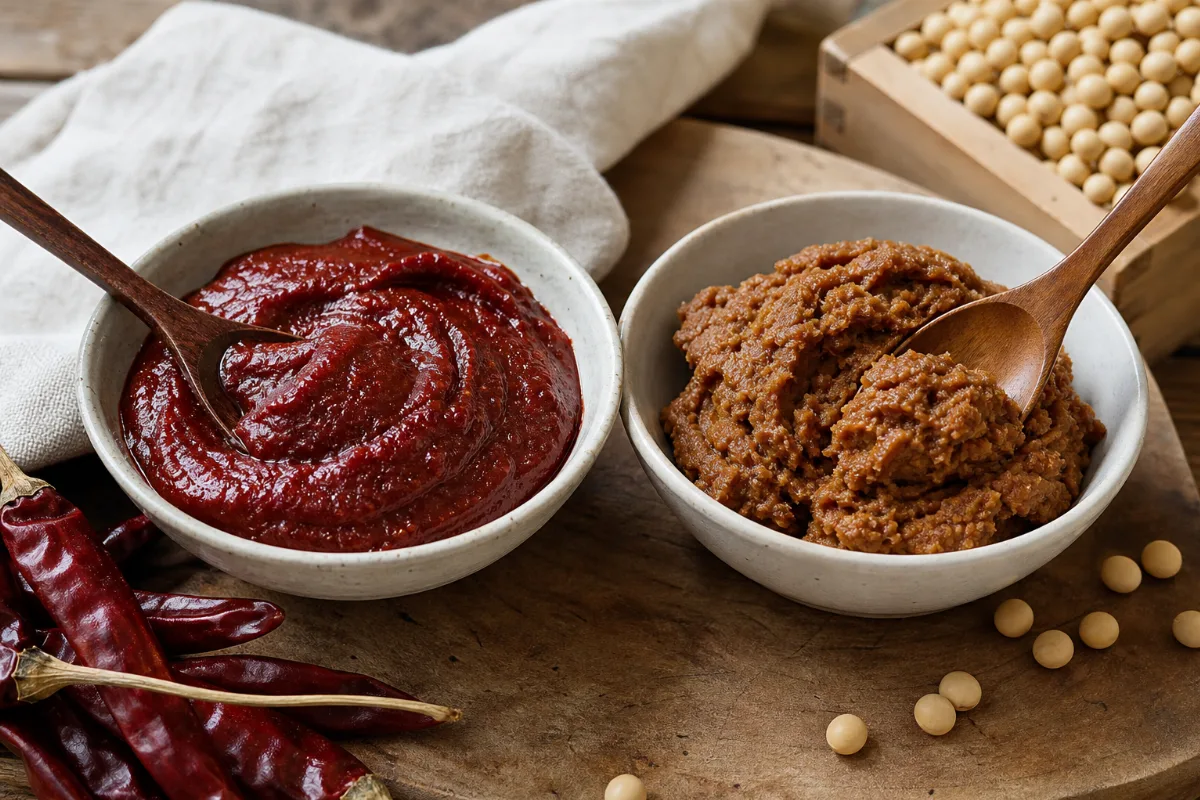
- Fruit: Gochujang is a red paste; doenjang is a brown paste (colours from general description, not a source read).
- Harvest and processing
- A review says gochujang is a fermented paste of red chili powder, glutinous rice powder, pureed soybeans and salt, with garlic, onion and a little sugar syrup, fermented a long time in earthen vessels. It says doenjang is made by fermenting cooked, crushed soybeans or soybean blocks (meju) with natural bacteria and fungi in brine, sometimes with grains. Traditionally the pastes were made once a year in large clay pots and eaten through the year.
- Look-alikes and adulterants
- Name: Miso; Note: A Japanese fermented soybean paste. One study found commercial doenjang microbes resembled miso's, but no head-to-head health study was read.; Name: Soy sauce; Note: The liquid left from soybean fermentation; a different product.
Photographs
Traditional use and history history, not clinical proof
| Tradition or era | Documented use | Source |
|---|---|---|
| p27733844 |
Traditional use shows how it was used. It does not show that it works or is safe today.
What is inside, and how it may work
What it contains and how those compounds act in cells and animals. Laboratory and animal mechanisms are not proven effects in people.
Main compounds
| Compound | Family | Where it is concentrated | Activity studied | Level of evidence |
|---|---|---|---|---|
| Sodium chloride (salt) | mineral | Added during making Not found per spoonful. Lab doenjang batches used 9%, 12%, 15% and 18% salt; the rat study fed gochujang at 8% sodium chloride in the diet. | High sodium raises blood pressure (WHO). 19 2 13 | Human guidance |
| Isoflavone aglycones | isoflavone | Soybean Not found. | The gochujang trial authors say gochujang is rich in them; the trial did not test their effect. 3 | Author statement |
| Capsaicinoids | alkaloid-like compounds | Red chili powder (gochujang) Not found. | Named by the trial authors as present; not tested in the trial. 3 | Author statement |
| Biogenic amines (histamine, tyramine, others) | amines | Formed in fermentation Doenjang, 36 small-maker products: total 67.68 to 2556.68 mg/kg; histamine 0.97 to 1289.02; tyramine 3.23 to 101.23 mg/kg. | At high levels linked with migraine, raised blood pressure and fast heartbeat in sensitive people. 1 15 | Lab and review |
| Aflatoxins | mycotoxins | Meju (soybean brick) Not given in the abstract. | Mould poisons that can contaminate meju and doenjang. 16 | Lab |
Mechanisms, receptors and pathways
| Target or pathway | Gene or receptor | What was found | Level |
|---|---|---|---|
| Renin-angiotensin-aldosterone system (rats) | Not applicable | In rats, gochujang changed blood and kidney markers of this blood-pressure pathway compared with table salt. 13 | Animal research |
| Microbes and fermentation | Not applicable | Lab doenjang with less salt had more microbial activity and more amines. Commercial doenjang was dominated by Tetragenococcus and Staphylococcus; local products held more Bacillus or lactic acid bacteria. 2 12 | Lab |
Absorption, metabolism and elimination
- Absorption
- Not found for these pastes.
- Distribution
- Not found.
- Metabolism
- Not found.
- Elimination
- Not found.
- Bioavailability
- Not found.
Isolated compounds versus whole extracts
The menopause trial and the Korean surveys are about the pastes or fermented foods eaten as food. The blood-pressure study is in rats. The pooled glucose and cholesterol results are for fermented soy in general. Probiotic supplements are different products; the ISAPP panel defines fermented foods as foods made through desired microbial growth and enzymatic conversions of food components, and separates them from probiotics.
Nutritional composition
No nutrient values per portion for gochujang or doenjang were read from USDA FoodData Central or another source (the public USDA key was rate-limited on 2026-10-26, and the earlier page said USDA has no entry for either paste), so none are given. The only quantity read is salt: lab doenjang used 9% to 18% solar salt, the rat study fed gochujang at 8% sodium chloride in the diet, and WHO recommends adults take in less than 2000 mg of sodium a day. Check the Nutrition Facts label for sodium, protein and sugar. Miso is a related paste that USDA does list, but it was not read here.
1 mixed findings1 low certainty2 very low certainty4 not enough evidence
What was looked at
The 8 benefits and uses checked for Gochujang and Doenjang, each with how strong the evidence is. Tap one to open it.
- Menopause symptoms (gochujang eaten for 8 weeks)Not enough evidence
- Body measures, blood sugar and cholesterol (fermented soy products in general)Low certainty
- Obesity (fermented soybean paste in a large Korean survey)Very low certainty
- Type 2 diabetes (Korean fermented soy products)Not enough evidence
- Inflammation marker hs-CRP (fermented foods in a Korean survey)Very low certainty
- Blood pressure (gochujang in rats)Not enough evidence
- Gut bacteria and short-chain fatty acids (gochujang trial, exploratory)Not enough evidence
- Fermented soy foods and health overall (review of reviews)Mixed findings
Lab markers tracked in the studies
Kupperman Menopausal Index (KMI) scoreFasting plasma glucoseTotal cholesterolHigh-sensitivity C-reactive protein (hs-CRP)Systolic blood pressure (rats)
What is Gochujang and Doenjang good for?
The main studied uses and how strong the human evidence is for each. Many results are for fermented soy in general, or from surveys and rats, not for these two pastes.
Benefits, one by one
Each card is a research question, not a promise. Tap a goal to filter. Open a card to see the studies, doses and limits.
Menopause symptoms (gochujang eaten for 8 weeks)
Not enough evidenceIn an 8-week trial, 59 postmenopausal women ate gochujang and their symptom scores fell. All three groups ate gochujang and none got a placebo, so the trial cannot tell whether gochujang caused the fall.
1 studiesCommercial and two research gochujang formulations eaten as food. The…
Studies, doses and limits
What the trials found
A randomised, double-blind trial compared three gochujang products (high-microorganism, low-microorganism and a commercial one) in 59 postmenopausal women with moderate-to-severe symptoms. The Kupperman Menopausal Index (KMI) score fell in every group. There was no significant difference between groups, and no placebo or no-gochujang group.
Results
Symptom scores were lower after 8 weeks in all groups, but without a placebo group the trial cannot show efficacy. Percent body fat also fell in all groups. No adverse events were reported.
Effect sizes as reported
KMI change: high-microorganism -3.65, low-microorganism -4.10, commercial -3.42 (all within-group, p < 0.0001); no significant between-group difference.
Why this rating
One small trial with no placebo group. The authors themselves say efficacy cannot be established. Placebo-controlled trials are still needed.
Form and dose studied
Commercial and two research gochujang formulations eaten as food. The amounts are not given in the abstract.
Who was studied
Postmenopausal women with moderate-to-severe symptoms, in Korea.
Limits
Small, 8 weeks, no placebo. Gut microbiota and fatty-acid results were exploratory.
Why researchers looked
Gochujang has been said to hold isoflavone aglycones and capsaicinoids (the trial authors' words), so it was tried for menopause symptoms.
Traditional use
Both pastes are everyday seasonings in Korean cooking. Long use as food is not proof that they treat any condition.
Proposed mechanism Hypothesis
Not shown. The trial authors say gochujang is rich in isoflavone aglycones and capsaicinoids and has biological activities relevant to menopause, but the trial did not test that.
A proposed mechanism does not show that the effect happens in people.
No adverse events were reported in 59 women over 8 weeks. Gochujang is salty and contains soy; see the Safety tab.
Body measures, blood sugar and cholesterol (fermented soy products in general)
Low certaintyAcross 15 trials, people eating fermented soy products had slightly lower body mass index, waist size, fasting blood sugar and total cholesterol than controls. These are fermented soy foods as a group, not gochujang or doenjang specifically.
1 studiesFermented soy products (type not listed in the abstract). Not gochuja…
Studies, doses and limits
What the trials found
A 2025 systematic review and meta-analysis of 15 randomised trials found small differences in favour of fermented soy on several measures, and no significant change in the others. The abstract does not say which fermented soy products were studied.
Results
The pooled changes are small. Other measures reviewed did not change significantly.
Effect sizes as reported
BMI -0.14 kg/m2; waist -1.50 cm; visceral fat -692.17 mm2; fasting plasma glucose -6.39 mg/dL; total cholesterol -5.0 mg/dL.
Why this rating
Pooled randomised trials are a better design than surveys. But the products are fermented soy in general, several intervals sit close to zero, and the abstract does not state trial quality. It is indirect for gochujang and doenjang.
Form and dose studied
Fermented soy products (type not listed in the abstract). Not gochujang or doenjang alone.
Who was studied
Adults in trials (details not in the abstract).
Limits
Indirect; small average changes; product mix unknown.
Why researchers looked
Fermented soy foods are common in Asian diets, so researchers pooled trials of them for body weight and metabolic markers.
Traditional use
Both pastes are everyday seasonings in Korean cooking. Long use as food is not proof that they treat any condition.
Proposed mechanism Not reported
Not shown in the review abstract.
A proposed mechanism does not show that the effect happens in people.
Salt in the pastes is a separate concern; see the Safety tab.
Obesity (fermented soybean paste in a large Korean survey)
Very low certaintyIn 131,477 Korean adults, more fermented soybean paste went with a lower chance of general obesity in men but a higher chance of abdominal obesity in women. The direction differs by sex, and a survey cannot show cause.
1 studiesFermented soybean paste intake by questionnaire; not split into gochu…
Studies, doses and limits
What the trials found
A cross-sectional analysis of the KoGES-HEXA study used a food questionnaire. Non-fermented soy foods such as tofu and soy milk went with less obesity. Fermented soy paste gave mixed results: lower odds of general obesity in men and higher odds of abdominal obesity in women.
Results
Mixed. The paste results go in opposite directions in men and women, and the abstract gives no figures for them.
Effect sizes as reported
Non-fermented soy, 7 or more servings a week versus none: abdominal obesity OR 0.71 (men) and 0.82 (women). Paste numbers are not given in the abstract.
Why this rating
One survey with a food questionnaire, one point in time, mixed results. It cannot show that paste changes weight.
Form and dose studied
Fermented soybean paste intake by questionnaire; not split into gochujang and doenjang in the abstract.
Who was studied
Korean adults (health examinees).
Limits
Cannot show cause; people who eat more paste differ in other ways.
Why researchers looked
Researchers asked whether eating soy foods is linked to obesity in Korea, where the pastes are daily foods.
Traditional use
Both pastes are everyday seasonings in Korean cooking. Long use as food is not proof that they treat any condition.
Proposed mechanism Not examined
Not examined.
A proposed mechanism does not show that the effect happens in people.
The survey says nothing about the salt content.
Type 2 diabetes (Korean fermented soy products)
Not enough evidenceA 2010 review said Korean fermented soy pastes such as doenjang and kochujang may help prevent or slow type 2 diabetes, but it also said human trials were lacking. This is weak, old and mixed evidence.
1 studiesDoenjang, kochujang and other fermented soy foods in studies of many …
Studies, doses and limits
What the trials found
The review pooled animal studies, clinical studies and population studies. It named doenjang and kochujang (gochujang) among Korean products with possible benefit, but said the lack of human intervention trials does not allow definitive conclusions.
Results
The authors judged that fermented soy products may help, with no firm proof.
Effect sizes as reported
No pooled numbers in the abstract.
Why this rating
A narrative review from 2010 mixing animal and human work. No new trial of these pastes was read.
Form and dose studied
Doenjang, kochujang and other fermented soy foods in studies of many types.
Who was studied
Animals and people (not separated in the abstract).
Limits
Old, narrative, mixed species.
Why researchers looked
Type 2 diabetes is less common in some Asian populations, and fermented soy is part of those diets.
Traditional use
Both pastes are everyday seasonings in Korean cooking. Long use as food is not proof that they treat any condition.
Proposed mechanism Hypothesis
The review suggests changes in isoflavones and small peptides during fermentation may help insulin handling. This is a hypothesis.
A proposed mechanism does not show that the effect happens in people.
Sodium in the pastes is a separate concern; see the Safety tab.
Inflammation marker hs-CRP (fermented foods in a Korean survey)
Very low certaintyIn 17,984 Korean adults, people who ate more fermented foods, a group that includes pastes and sauces, had lower odds of a raised inflammation marker (hs-CRP) if they were under 65. In people 65 and over, sodium changed the picture.
1 studiesFermented foods of ten groups combined, eaten as food.
Studies, doses and limits
What the trials found
A national survey (KNHANES 2015-2018) grouped fermented foods into ten groups, one of them jang (pastes and sauces). Intake of all fermented foods together was compared with raised hs-CRP.
Results
Lower odds of raised hs-CRP at ages 20-39 and 40-64. At 65 and over there were significant interactions with sodium intake.
Effect sizes as reported
Highest versus lowest intake quarter: ages 20-39 OR 0.699 (0.542-0.901); ages 40-64 OR 0.817 (0.691-0.967).
Why this rating
A single cross-sectional survey; cannot show cause. The jang group is one of ten and is not reported separately in the abstract.
Form and dose studied
Fermented foods of ten groups combined, eaten as food.
Who was studied
Korean adults 20 and over, by age group.
Limits
Cross-sectional; food-questionnaire based; paste-specific effects unknown.
Why researchers looked
Fermented foods have been proposed to ease low-grade inflammation, but they are also salty.
Traditional use
Both pastes are everyday seasonings in Korean cooking. Long use as food is not proof that they treat any condition.
Proposed mechanism Not examined
Not examined.
A proposed mechanism does not show that the effect happens in people.
Sodium changed the link in older adults; see the Safety tab.
Blood pressure (gochujang in rats)
Not enough evidenceIn rats, a high-salt diet made with gochujang did not raise blood pressure the way the same amount of table salt did. This is animal work only and does not mean salty pastes are safe for people's blood pressure.
2 studiesGochujang in the diet at 8% sodium chloride, in rats.
Studies, doses and limits
What the trials found
Sprague-Dawley rats were fed a normal diet, a high-salt diet or a diet in which gochujang supplied the same salt. The high-salt group's systolic blood pressure rose; the gochujang group's did not.
Results
Systolic blood pressure rose with table salt and did not rise with the same amount of salt in gochujang, in rats.
Effect sizes as reported
No figures in the abstract.
Why this rating
Animal-only evidence. Human blood pressure was not tested.
Form and dose studied
Gochujang in the diet at 8% sodium chloride, in rats.
Who was studied
Rats.
Limits
Animal study; no human blood pressure data.
Why researchers looked
Gochujang is salty, so researchers asked whether its salt acts differently from table salt.
Traditional use
Both pastes are everyday seasonings in Korean cooking. Long use as food is not proof that they treat any condition.
Proposed mechanism Animal research
In rats, gochujang changed kidney markers of the renin-angiotensin-aldosterone system (a blood-pressure control pathway). This is an animal finding.
A proposed mechanism does not show that the effect happens in people.
Do not read this as permission for more salt. WHO says high sodium raises blood pressure in people.
Gut bacteria and short-chain fatty acids (gochujang trial, exploratory)
Not enough evidenceIn the gochujang trial, gut bacteria shifted in all three groups and stool short-chain fatty acids fell. These were exploratory results, and the authors found no strong evidence of differences between the formulations.
1 studiesThree gochujang formulations eaten for 8 weeks.
Studies, doses and limits
What the trials found
The 59-woman trial analysed gut microbiota and fecal short-chain fatty acids as exploratory outcomes, reclassified after the study.
Results
Gut bacteria composition shifted within each group; fecal short-chain fatty acids declined in all groups; no robust formulation-specific differences.
Effect sizes as reported
No figures in the abstract.
Why this rating
Exploratory, post hoc, no placebo group, small trial.
Form and dose studied
Three gochujang formulations eaten for 8 weeks.
Who was studied
59 postmenopausal women.
Limits
No placebo group; exploratory.
Why researchers looked
Fermented foods are often studied for their effect on gut microbes.
Traditional use
Both pastes are everyday seasonings in Korean cooking. Long use as food is not proof that they treat any condition.
Proposed mechanism Not examined
Not shown.
A proposed mechanism does not show that the effect happens in people.
No adverse events were reported.
Fermented soy foods and health overall (review of reviews)
Mixed findingsA 2026 review of reviews found soy foods overall looked more helpful than harmful, but for fermented soy products the benefits were inconclusive, and a few studies hinted at possible harm.
1 studiesFermented and non-fermented soy foods as eaten.
Studies, doses and limits
What the trials found
An umbrella review gathered 23 meta-analyses of observational studies and 1 of randomised trials. It judged soy food intake more beneficial than harmful, especially for cancer and heart and metabolic disease. But for fermented soy products it judged the benefits inconclusive and noted that some studies suggested possible adverse effects.
Results
Mixed: benefits inconclusive for fermented soy products, with possible adverse effects in some studies.
Effect sizes as reported
Not a single number.
Why this rating
Reviews of mostly observational studies. The abstract does not name gochujang or doenjang.
Form and dose studied
Fermented and non-fermented soy foods as eaten.
Who was studied
Adults in many studies.
Limits
Observational reviews; paste-specific data are missing.
Why researchers looked
Soy foods are widely eaten, so researchers pooled the reviews of them across many outcomes.
Traditional use
Both pastes are everyday seasonings in Korean cooking. Long use as food is not proof that they treat any condition.
Proposed mechanism Not examined
Not examined.
A proposed mechanism does not show that the effect happens in people.
Possible adverse effects are not described in the abstract.
Connections to the rest of health
How Gochujang and Doenjang connects to the rest of our health knowledge graph. Every link says what kind of connection it is. A safety link (for example to the liver) is a warning, not a benefit. A study that merely mentions a topic never creates a benefit link.
Explore every connection: goals, body systems, organs, symptoms, genes
A. Wellness goals
| Connected to | Kind of connection | Evidence status | Context | Studies |
|---|---|---|---|---|
| Womens Wellness | Not enough evidence | Menopause symptoms (gochujang eaten for 8 weeks): In an 8-week trial, 59 postmenopausal women ate gochujang and their symptom scores fell. All three groups ate gochujang and none got a placebo, so the trial cannot tell whether gochujang caused the fall. | 3 | |
| Healthy Weight Metabolism | Low certainty | Body measures, blood sugar and cholesterol (fermented soy products in general): Across 15 trials, people eating fermented soy products had slightly lower body mass index, waist size, fasting blood sugar and total cholesterol than controls. These are fermented soy foods as a group, not gochujang or doenjang specifically. | 9 | |
| Blood Sugar Balance | Low certainty | Body measures, blood sugar and cholesterol (fermented soy products in general): Across 15 trials, people eating fermented soy products had slightly lower body mass index, waist size, fasting blood sugar and total cholesterol than controls. These are fermented soy foods as a group, not gochujang or doenjang specifically. Type 2 diabetes (Korean fermented soy products): A 2010 review said Korean fermented soy pastes such as doenjang and kochujang may help prevent or slow type 2 diabetes, but it also said human trials were lacking. This is weak, old and mixed evidence. | 9 6 | |
| Cholesterol Balance | Low certainty | Body measures, blood sugar and cholesterol (fermented soy products in general): Across 15 trials, people eating fermented soy products had slightly lower body mass index, waist size, fasting blood sugar and total cholesterol than controls. These are fermented soy foods as a group, not gochujang or doenjang specifically. | 9 | |
| Healthy Weight Metabolism | Very low certainty | Obesity (fermented soybean paste in a large Korean survey): In 131,477 Korean adults, more fermented soybean paste went with a lower chance of general obesity in men but a higher chance of abdominal obesity in women. The direction differs by sex, and a survey cannot show cause. | 4 | |
| Healthy Aging | Very low certainty | Inflammation marker hs-CRP (fermented foods in a Korean survey): In 17,984 Korean adults, people who ate more fermented foods, a group that includes pastes and sauces, had lower odds of a raised inflammation marker (hs-CRP) if they were under 65. In people 65 and over, sodium changed the picture. | 11 | |
| Immune Support | Very low certainty | Inflammation marker hs-CRP (fermented foods in a Korean survey): In 17,984 Korean adults, people who ate more fermented foods, a group that includes pastes and sauces, had lower odds of a raised inflammation marker (hs-CRP) if they were under 65. In people 65 and over, sodium changed the picture. | 11 | |
| Heart Health | Not enough evidence | Blood pressure (gochujang in rats): In rats, a high-salt diet made with gochujang did not raise blood pressure the way the same amount of table salt did. This is animal work only and does not mean salty pastes are safe for people's blood pressure. | 13 19 | |
| Gut Digestive Health | Not enough evidence | Gut bacteria and short-chain fatty acids (gochujang trial, exploratory): In the gochujang trial, gut bacteria shifted in all three groups and stool short-chain fatty acids fell. These were exploratory results, and the authors found no strong evidence of differences between the formulations. | 3 | |
| Preventive Wellness | Mixed findings | Fermented soy foods and health overall (review of reviews): A 2026 review of reviews found soy foods overall looked more helpful than harmful, but for fermented soy products the benefits were inconclusive, and a few studies hinted at possible harm. | 7 |
B. Body systems
| Connected to | Kind of connection | Evidence status | Context | Studies |
|---|---|---|---|---|
| Reproductive System | Biological association | Not enough evidence | Studied for: Menopause symptoms (gochujang eaten for 8 weeks) | 3 |
| Endocrine System | Biological association | Low certainty | Studied for: Body measures, blood sugar and cholesterol (fermented soy products in general) Studied for: Type 2 diabetes (Korean fermented soy products) | 9 6 |
| Cardiovascular System | Biological association | Low certainty | Studied for: Body measures, blood sugar and cholesterol (fermented soy products in general) Studied for: Blood pressure (gochujang in rats) | 9 13 19 |
| Metabolic System | Biological association | Very low certainty | Studied for: Obesity (fermented soybean paste in a large Korean survey) | 4 |
| Immune System | Biological association | Very low certainty | Studied for: Inflammation marker hs-CRP (fermented foods in a Korean survey) | 11 |
| Digestive System | Biological association | Not enough evidence | Studied for: Gut bacteria and short-chain fatty acids (gochujang trial, exploratory) | 3 |
| Whole Body | Biological association | Mixed findings | Studied for: Fermented soy foods and health overall (review of reviews) | 7 |
E. Health conditions
| Connected to | Kind of connection | Evidence status | Context | Studies |
|---|---|---|---|---|
| Food allergy | Adverse effect or risk | Documented risk | Soybeans are a major food allergen. Both pastes contain soybeans, a major food allergen. Preparation or compound: Soy in both pastes |
17 |
| High blood pressure | Adverse effect or risk | Documented risk | WHO says high sodium raises blood pressure. WHO says high sodium raises blood pressure; the pastes are salty. Preparation or compound: Sodium in the pastes |
19 |
| Menopause symptoms | Preliminary | Symptom scores fell in all groups of one trial that had no placebo group. Preparation or compound: Gochujang |
3 |
I. Biomarkers
| Connected to | Kind of connection | Evidence status | Context | Studies |
|---|---|---|---|---|
| Kupperman Menopausal Index (KMI) score | Biological association | Not enough evidence | Measured in trials: lowered. A lab change is not the same as a health benefit. | 3 |
| Fasting plasma glucose | Biological association | Low certainty | Measured in trials: lowered. A lab change is not the same as a health benefit. | 9 |
| Total cholesterol | Biological association | Low certainty | Measured in trials: lowered. A lab change is not the same as a health benefit. | 9 |
| High-sensitivity C-reactive protein (hs-CRP) | Biological association | Very low certainty | Measured in trials: lower odds of a raised level. A lab change is not the same as a health benefit. | 11 |
| Systolic blood pressure (rats) | Biological association | Not enough evidence | Measured in trials: no rise versus high-salt table salt (rats). A lab change is not the same as a health benefit. | 13 |
K. Biological pathways
| Connected to | Kind of connection | Evidence status | Context | Studies |
|---|---|---|---|---|
| Renin-angiotensin-aldosterone system | Preliminary mechanism | Animal | Changed in rats fed gochujang compared with table salt. | 13 |
L. Active compounds
| Connected to | Kind of connection | Evidence status | Context | Studies |
|---|---|---|---|---|
| Biogenic amines (histamine, tyramine) | Adverse effect or risk | Documented risk | Wide differences between small-maker products. Preparation or compound: Doenjang |
1 15 |
| Sodium chloride (salt) | Biological association | Human guidance | High sodium raises blood pressure (WHO). Preparation or compound: Added during making |
19 2 13 |
| Isoflavone aglycones | Biological association | Author statement | The gochujang trial authors say gochujang is rich in them; the trial did not test their effect. Preparation or compound: Soybean |
3 |
| Capsaicinoids | Biological association | Author statement | Named by the trial authors as present; not tested in the trial. Preparation or compound: Red chili powder (gochujang) |
3 |
| Biogenic amines (histamine, tyramine, others) | Biological association | Lab and review | At high levels linked with migraine, raised blood pressure and fast heartbeat in sensitive people. Preparation or compound: Formed in fermentation |
1 15 |
| Aflatoxins | Biological association | Lab | Mould poisons that can contaminate meju and doenjang. Preparation or compound: Meju (soybean brick) |
16 |
Each connection is stored with the ingredient, the connected record, the kind of connection, the evidence status, the supporting studies, the preparation or compound involved, and a review date (last reviewed October 26, 2026).
The evidence
The research centre for Gochujang and Doenjang. Every record here was checked against PubMed or the publisher's page; we never list a study we have not verified.
Evidence by outcome
Bars show how many studies we found for each outcome, not how well it works. People are added up across trials only (reviews are not added, to avoid double counting).
How we rate evidence
High certainty
Several well-run trials or reviews agree; further research is unlikely to change the picture much.
Moderate certainty
Good trials point the same way, but some doubt remains.
Low certainty
Small, short or inconsistent trials. The finding could change with better research.
Very low certainty
Very little or very weak human data. Treat as a possibility only.
Mixed findings
Trials or reviews disagree with each other.
Not enough evidence
Not enough human research to say either way.
Evidence against
Good research found no benefit, or found harm.
We take the reviewers' own risk-of-bias and GRADE statements where they exist, and otherwise judge from study size, design, consistency, directness and whether a product matches what is sold. Many publications do not make evidence high. Method note: We started from our existing summary of these pastes, re-read PubMed abstracts for every study cited, read the full text of the doenjang safety study and a review of Korean fermented foods, and read pages from FDA and WHO. Items we could not verify are flagged in the research gaps.
Study library: every study we checked 19
| Study | Design | People | Product, dose, length | Result |
|---|---|---|---|---|
| Bahuguna 2023 Safety Analysis of Korean Cottage Industries' Doenjang, a Traditional Fermented Soybean Product: A Special Reference to Biogenic Amines. Foods · PMID 38002142 · DOI |
Laboratory analysis n/a |
36 36 doenjang products from small makers in different parts of South Korea |
Doenjang (fermented soybean paste) Paste |
Total biogenic amines in the products ranged widely. All samples contained tryptamine, putrescine, cadaverine, histamine and tyramine. Five products carried B. cereus, and three of them were above the Korean standard of 4 log CFU/g. Total biogenic amines 67.68 to 2556.68 mg/kg. Full text: histamine 0.97 to 1289.02 mg/kg, with 9 samples above the suggested 500 ppm toxic limit; tyramine 3.23 to 101.23 mg/kg, with 97.22% below the suggested 100 to 800 mg/kg toxicity level; B. cereus in 13.88% (5 of 36) of samples (Not applicable) Methods, limits and fundingOutcomes: Biogenic amines, Bacillus cereus and yeast counts Limitations: Small-maker products only, bought once; not a sample of what is on shelves elsewhere. Lab measurements, not reports of illness. The authors call for constant monitoring. Funding and conflicts: Funding is not stated in the abstract. Read: abstract and full text (Europe PMC) |
| Chun 2020 The effect of salt concentrations on the fermentation of doenjang, a traditional Korean fermented soybean paste. Food Microbiol · PMID 31703874 · DOI |
Laboratory analysis n/a |
Four lab-made batches of doenjang with 9%, 12%, 15% and 18% solar salt | Doenjang made at different salt levels Paste |
Lower-salt batches (9% and 12%) had more microbial activity, and more biogenic amine production than the higher-salt batches. Not numeric in the abstract (Not applicable) Methods, limits and fundingOutcomes: pH, microbes, metabolites and biogenic amines during fermentation Limitations: Lab batches, not products on sale. The authors aim at developing low-salt doenjang. Funding and conflicts: Funding is not stated in the abstract. Read: abstract |
| Han 2026 Effects of gochujang formulations on menopausal symptoms and gut microbiota in postmenopausal women: an 8-week randomized, double-blind trial. Front Nutr · PMID 42787012 · DOI |
Randomized controlled trial |
59 59 postmenopausal women with moderate-to-severe symptoms (Kupperman Menopausal Index 15 or more) |
Gochujang eaten as a food: two formulations (high-microorganism, low-microorganism) and a commercial gochujang Fermented chili-soybean paste, eaten 8 weeks · vs Commercial gochujang (no placebo) |
All three gochujang groups had lower KMI scores after 8 weeks, with no significant difference between groups. There was no placebo group, so the trial could not show that gochujang works. Percent body fat and fecal short-chain fatty acids fell in all groups. No adverse events occurred. KMI change: high-microorganism -3.65; low-microorganism -4.10; commercial -3.42 (all p < 0.0001 within group); no significant between-group difference (High-microorganism -4.97 to -2.33; low-microorganism -5.98 to -2.22; commercial -4.34 to -2.50) Methods, limits and fundingOutcomes: Total Kupperman Menopausal Index (KMI) score; gut microbiota; body composition; metabolic markers; safety Limitations: No placebo or no-gochujang group, so changes cannot be credited to gochujang (the authors say efficacy cannot be established). Small trial, 8 weeks. Gut microbiota and fecal fatty-acid results were exploratory and reclassified after the fact. Funding and conflicts: Funding is not stated in the abstract. Registration: KCT0011085 (Korean clinical research registry) Read: abstract |
| Kim 2025 Association of Consumption of Non-fermented and Fermented Soy Foods with Obesity in Korean Adults: Analysis of Data from the KoGES-HEXA Study. J Obes Metab Syndr · PMID 40619208 · DOI |
Cross sectional |
131477 131,477 Korean adults (47,828 men, 83,649 women), Korean Genome and Epidemiology Study-Health Examinees |
Fermented soy paste and non-fermented soy foods, by food-frequency questionnaire Foods eaten |
More fermented soy paste went with lower odds of general obesity in men and higher odds of abdominal obesity in women. Non-fermented soy foods (for example tofu and soy milk) went with lower odds of obesity. Fermented paste: lower odds of general obesity in men, higher odds of abdominal obesity in women (numbers not in the abstract). Non-fermented soy, 7 or more servings a week versus none: abdominal obesity OR 0.71 men, 0.82 women (Non-fermented soy: men 0.57 to 0.87; women 0.70 to 0.94) Methods, limits and fundingOutcomes: General obesity (BMI 25 or more) and abdominal obesity (waist 90 cm men, 85 cm women) Limitations: Observational, from a food questionnaire; cannot show cause. Paste intake is not split into gochujang and doenjang in the abstract. The authors say more cohort studies are needed. Funding and conflicts: Funding is not stated in the abstract. Read: abstract |
| Kim 2025 Variation in heat resistance and biofilm formation of Bacillus cereus spores in various fermented soybean foods. Int J Food Microbiol · PMID 39437681 · DOI |
Laboratory analysis n/a |
Two B. cereus strains (ATCC 10987 and CH3) added to Korean fermented soybean foods | Cheonggukjang, doenjang and gochujang, and the stews made from them Pastes and stews |
Spores were more heat resistant in the pastes (especially doenjang and gochujang, with low water activity and high salt) than in the stews. Spores in a biofilm were up to 6.5 times more resistant in the stews. Biofilm spores up to 6.5-fold higher D100 than loose spores (Not applicable) Methods, limits and fundingOutcomes: Heat resistance (D100 value) of B. cereus spores Limitations: Lab study with spores added on purpose. It gives no cooking advice. Funding and conflicts: Funding is not stated in the abstract. Read: abstract |
| Kwon 2010 Antidiabetic effects of fermented soybean products on type 2 diabetes. Nutr Res · PMID 20116654 · DOI |
Narrative review mixed |
Animal studies, clinical trials and population studies of fermented soybean products | Fermented soy products, including doenjang and kochujang (gochujang) Fermented soy foods |
The authors say fermented soy products may help prevent or slow type 2 diabetes, but the lack of human trials does not allow firm conclusions. No pooled numbers in the abstract (Not applicable) Methods, limits and fundingOutcomes: Type 2 diabetes prevention and progression; insulin resistance and secretion Limitations: A 2010 narrative review that mixes animal, clinical and population studies. It is not a pooled analysis and is now old. Funding and conflicts: Funding is not stated in the abstract. Read: abstract |
| Li 2026 Soy Foods Consumption and Multiple Health Outcomes: An Umbrella Review of Meta-Analyses. Mol Nutr Food Res · PMID 41327897 · DOI |
Systematic review meta analysis |
23 meta-analyses of observational studies (39 outcomes) and 1 meta-analysis of randomised trials (4 outcomes) | Soy foods, fermented and non-fermented Soy foods eaten |
Overall, soy food intake looked more beneficial than harmful, especially for cancer and heart and metabolic diseases. For fermented soy products the benefits were inconclusive, and some studies pointed to possible adverse effects. Not a single number (Not applicable) Methods, limits and fundingOutcomes: Many health outcomes Limitations: A review of reviews, mostly of observational studies. The abstract does not separate gochujang or doenjang. Funding and conflicts: Funder named in the record: a national financial project. Role not stated in the abstract. Read: abstract |
| Mah 2019 Bacterial Production and Control of Biogenic Amines in Asian Fermented Soybean Foods. Foods · PMID 30823593 · DOI |
Narrative review n/a |
Reports on biogenic amines in Asian fermented soybean foods | Asian fermented soybean foods Foods |
Most products were within safe levels, but certain products had vasoactive amines above toxic levels. The authors say few countries have rules for amines in these foods. Not applicable (Not applicable) Methods, limits and fundingOutcomes: Biogenic amines and ways to reduce them Limitations: A review; the abstract does not name gochujang. Funding and conflicts: Funding is not stated in the abstract. Read: abstract |
| Maleki Sedgi 2025 Effect of fermented soybean on metabolic outcomes, anthropometric indices, and body composition: a systematic review and meta-analysis of clinical trials. Food Funct · PMID 39763426 · DOI |
Systematic review meta analysis |
15 randomised controlled trials of fermented soy products | Fermented soy products (type of product not listed in the abstract) eaten or given in trials Fermented soy foods |
Small but statistically significant differences favouring fermented soy on body mass index, waist, visceral fat, fasting glucose and total cholesterol; other measures were not significant. BMI WMD -0.14 kg/m2; waist -1.50 cm; visceral fat -692.17 mm2; fasting plasma glucose -6.39 mg/dL; total cholesterol -5.0 mg/dL (BMI -0.28 to -0.01; waist -2.94 to -0.07; visceral fat -1011.58 to -372.77; glucose -10.38 to -2.40; total cholesterol -6.60 to -3.39) Methods, limits and fundingOutcomes: Body mass index, waist circumference, visceral fat, fasting glucose, total cholesterol and other measures Limitations: Fermented soy products in general, not gochujang or doenjang; the abstract does not list product types, trial quality or between-trial differences. Several intervals are close to zero. Funding and conflicts: Funding is not stated in the abstract. Read: abstract |
| Marco 2021 The International Scientific Association for Probiotics and Prebiotics (ISAPP) consensus statement on fermented foods. Nat Rev Gastroenterol Hepatol · PMID 33398112 · DOI |
Consensus statement n/a |
Expert panel of 13 authors | Fermented foods Foods |
The panel defined fermented foods as foods made through desired microbial growth and enzymatic conversions of food components, and separated them from probiotics. Not applicable (Not applicable) Methods, limits and fundingOutcomes: Definition of fermented foods and how they differ from probiotics Limitations: A consensus statement, not a trial. The abstract does not name gochujang or doenjang. Funding and conflicts: Research support is listed in the record; funders and roles are not stated in the abstract. Read: abstract |
| Na 2026 The Association Between Fermented Food Intake and Hs-CRP Across Age Groups in Korean Adults: Effect Modification by Sodium Intake. Nutrients · PMID 42075080 · DOI |
Cross sectional |
17984 17,984 Korean adults, KNHANES 2015-2018 |
Ten groups of fermented foods, including jang (fermented pastes and sauces), by intake quartile Foods eaten |
Higher fermented food intake went with lower odds of raised hs-CRP at ages 20-39 and 40-64. At 65 and over, the link changed with sodium intake. Highest versus lowest quarter: ages 20-39 OR 0.699; ages 40-64 OR 0.817. Age 65+: interaction with total sodium p = 0.042 (Ages 20-39: 0.542 to 0.901; ages 40-64: 0.691 to 0.967) Methods, limits and fundingOutcomes: High-sensitivity C-reactive protein (hs-CRP, an inflammation marker) of 1 mg/L or more Limitations: Cross-sectional survey; cannot show cause. The jang group (which includes gochujang and doenjang) is one of ten groups and is not reported separately in the abstract. Funding and conflicts: Funder named in the record: National Research Foundation of Korea. Role not stated in the abstract. Read: abstract |
| Nam 2012 Microbial community analysis of Korean soybean pastes by next-generation sequencing. Int J Food Microbiol · PMID 22305887 · DOI |
Laboratory analysis n/a |
11 Nine local and two commercial brands of doenjang |
Doenjang Paste |
Doenjang held many bacterial species (208). Bacillus dominated in some regions and lactic acid bacteria in others. Commercial brands were dominated by Tetragenococcus and Staphylococcus, like Japanese miso, which the authors take to mean added starter cultures. 208 species across 11 samples (Not applicable) Methods, limits and fundingOutcomes: Bacterial communities Limitations: Only 11 samples, DNA sequencing. It does not show which microbes are alive in a product you buy. Funding and conflicts: Funding is not stated in the abstract. Read: abstract |
| Park 2024 A traditional Korean fermented food, Gochujang exerts anti-hypertensive effects, regardless of its high salt content by regulating renin-angiotensin-aldosterone system in SD rats. Heliyon · PMID 38726141 · DOI |
Animal study rat |
Sprague-Dawley rats in three diet groups: normal salt, high salt, and high-salt gochujang | Gochujang mixed into the diet to supply 8% sodium chloride, versus table salt at 8% Fermented chili-soybean paste |
Rats on the high-salt diet had higher systolic blood pressure than rats on the normal diet. Rats given the same amount of salt as gochujang did not. Not given as a number in the abstract (Not given in the abstract) Methods, limits and fundingOutcomes: Systolic blood pressure and kidney salt-handling markers Limitations: Rats only. Not a human study. It does not show that eating more salty paste is safe for people. Funding and conflicts: Funding is not stated in the abstract. Read: abstract |
| Patra 2016 Kimchi and Other Widely Consumed Traditional Fermented Foods of Korea: A Review. Front Microbiol · PMID 27733844 · DOI |
Narrative review n/a |
Review of Korean fermented foods | Chongkukjang, doenjang, ganjang, gochujang and kimchi Foods |
The full text describes gochujang as a fermented paste of red chili powder, glutinous rice powder, pureed soybeans and salt, with garlic and onion and a little sugar syrup, fermented a long time in earthen vessels. Doenjang is cooked, crushed soybeans or soybean blocks (meju) fermented with brine, sometimes with grains. Not applicable (Not applicable) Methods, limits and fundingOutcomes: Preparation and processing of Korean fermented foods Limitations: The review focuses on kimchi. Its gochujang description rests on a cooking source, not a food analysis. Funding and conflicts: Funding is not stated in the abstract. Read: abstract and full text (Europe PMC) |
| Saha Turna 2024 A review of biogenic amines in fermented foods: Occurrence and health effects. Heliyon · PMID 38304783 · DOI |
Narrative review n/a |
Reports on biogenic amines in fermented foods | Fermented foods in general Foods |
Some fermented foods can contain amines above documented toxic doses. High amine intake is linked with migraine, raised blood pressure and fast heartbeat. Toxicity can occur at levels 100 times lower than suggested toxic doses depending on a person's sensitivity, alcohol and certain medications. Not applicable (Not applicable) Methods, limits and fundingOutcomes: Health effects and toxic doses of histamine, tyramine and phenylethylamine Limitations: A review of fermented foods in general; the abstract does not name gochujang or doenjang. Funding and conflicts: Funding is not stated in the abstract. Read: abstract |
| Woo 2025 Mycotoxin and microbiome profiling for aflatoxin control in the Korean traditional fermented soybean paste Doenjang. J Hazard Mater · PMID 40024121 · DOI |
Laboratory analysis n/a |
323 323 meju (fermented soybean brick) and doenjang samples |
Meju and doenjang Brick and paste |
The authors describe severe aflatoxin contamination. Samples free of aflatoxin had richer microbial diversity. Their backslopping fermentation method cut aflatoxin by more than 95%. Backslopping at more than 2.5%: aflatoxin reduced by more than 95% (Not applicable) Methods, limits and fundingOutcomes: Aflatoxin and microbial diversity; a backslopping method to cut aflatoxin Limitations: The abstract gives no levels or share of samples above any legal limit. The reduction method was tested by the authors, and is not a standard for products sold. Funding and conflicts: Funding is not stated in the abstract. Read: abstract |
| s-fda-allergens US FDA: Food Allergies · Source |
Health agency n/a |
Methods, limits and fundingRead: full-text | ||
| s-fda-sodium US FDA: Sodium in Your Diet · Source |
Health agency n/a |
Methods, limits and fundingRead: full-text | ||
| s-who-sodium WHO: Sodium reduction fact sheet · Source |
Health agency n/a |
Methods, limits and fundingRead: full-text |
What we do not know yet
- Only one trial of gochujang was found, with no placebo group; no trial of doenjang eaten as food was read.
- Pooled results cover fermented soy in general, not these pastes.
- No source gave nutrient content or sodium per spoonful, so none is shown.
- Histamine, tyramine and Bacillus cereus data come from 36 small-maker doenjang products, and gochujang was not tested in that study.
- Pregnancy, breastfeeding, children, kidney disease, gout, gluten in commercial pastes and thyroid medicine were not researched or found.
How new research is added
New studies are found by a saved PubMed search and placed in a review queue before the page changes.
Lab markers
What changed in blood or saliva tests during trials. A changed number is not the same as feeling or being healthier, and we give no "normal ranges".
Metabolic 2
Fasting plasma glucose
Lowered in trials
Blood sugar after a night without food.
Low certaintyResults and what it means
Why it was measured
A common marker for diabetes risk in diet trials.
Statistical vs. clinical meaning
A small average fall from fermented soy in general, not shown for gochujang or doenjang.
Safety implication
None specific.
| Study | Result | People | Product |
|---|---|---|---|
| 9 | -6.39 mg/dL (95% CI -10.38 to -2.40) with fermented soy versus controls | Adults in pooled randomised trials | Fermented soy products (type not listed in the abstract) |
Total cholesterol
Lowered in trials
All the cholesterol carried in the blood.
Low certaintyResults and what it means
Why it was measured
A common heart-risk marker in diet trials.
Statistical vs. clinical meaning
A small average fall from fermented soy in general, not shown for these pastes.
Safety implication
None specific.
| Study | Result | People | Product |
|---|---|---|---|
| 9 | -5.0 mg/dL (95% CI -6.60 to -3.39) with fermented soy versus controls | Adults in pooled randomised trials | Fermented soy products (type not listed in the abstract) |
Inflammatory 1
High-sensitivity C-reactive protein (hs-CRP)
Lower odds of a raised level in trials
A blood marker of low-grade inflammation.
Very low certaintyResults and what it means
Why it was measured
The survey used raised hs-CRP (1 mg/L or more) as its outcome.
Statistical vs. clinical meaning
A link seen in a survey, not a test of the pastes.
Safety implication
Sodium changed the link in people 65 and over.
| Study | Result | People | Product |
|---|---|---|---|
| 11 | Ages 20-39: OR 0.699 (0.542-0.901); ages 40-64: OR 0.817 (0.691-0.967), highest versus lowest quarter of fermented food intake | 17,984 Korean adults | Fermented foods of ten groups, including jang, from questionnaires |
Other 2
Kupperman Menopausal Index (KMI) score
Lowered in trials
A symptom checklist score in which higher means more menopause symptoms.
Not enough evidenceResults and what it means
Why it was measured
It is the main outcome of the gochujang trial.
Statistical vs. clinical meaning
Scores fell in every group, but with no placebo group the fall cannot be credited to gochujang.
Safety implication
None specific beyond the salt and soy cautions on the Safety tab.
| Study | Result | People | Product |
|---|---|---|---|
| 3 | KMI -3.65 (high-microorganism), -4.10 (low-microorganism), -3.42 (commercial) after 8 weeks; no significant difference between groups | 59 postmenopausal women | Gochujang eaten for 8 weeks, three formulations, no placebo |
Systolic blood pressure (rats)
No rise versus high-salt table salt (rats) in trials
The pressure in the large arteries when the heart beats, measured in animals here.
Not enough evidenceResults and what it means
Why it was measured
Used to compare table salt with gochujang salt in rats.
Statistical vs. clinical meaning
Animal-only; no human data.
Safety implication
Do not use this to justify extra salt.
| Study | Result | People | Product |
|---|---|---|---|
| 13 | Systolic pressure rose in rats on a high-salt diet but not in rats given the same salt as gochujang | Sprague-Dawley rats | Gochujang supplying 8% sodium chloride in the diet |
Safety
What studies and official sources say about side effects, medicines and who should check first. Each point shows what kind of evidence it comes from.
Main points to know 7
- Soy allergy. Both pastes are made from soybeans, which FDA lists as one of the nine major food allergens. Reactions can be severe. If you have a soy allergy, ask an allergist before eating them. For trouble breathing or swelling of the face, lips or throat, call 911 or your local emergency number. Authoritative guidance 17
- Salt (sodium). Both pastes are salty foods. The gochujang rat study's title calls it 'high salt content', and lab batches of doenjang were made with 9% to 18% salt. WHO says diets high in sodium raise blood pressure, which increases the risk of heart disease, stomach cancer and kidney disease, and recommends adults take in less than 2000 mg of sodium a day. No sodium amount per spoonful was found in a source read, so none is given here. Check the Nutrition Facts label: FDA says 5% Daily Value or less per serving is low and 20% or more is high. Authoritative guidance 19 18 13
- Histamine and tyramine in doenjang. In 36 doenjang products from small Korean makers, histamine ranged from 0.97 to 1289.02 mg/kg and 9 products were over the 500 ppm limit the authors cite as toxic. Tyramine ranged from 3.23 to 101.23 mg/kg and 97.22% of samples were under the suggested 100 to 800 mg/kg toxicity level. A review says some fermented foods can hold amines above toxic doses, with symptoms such as migraine, raised blood pressure and fast heartbeat, and that people differ in sensitivity. Lower-salt lab batches made more amines, so 'lower salt' does not mean 'lower amines'. Laboratory analysis 1 15 8 2
- Bacillus cereus in doenjang. Bacillus cereus, a food-poisoning bacterium, was found in 5 of 36 small-maker doenjang products (13.88%), and in 3 of them above the Korean standard of 4 log CFU/g. In a lab study, B. cereus spores added to pastes (especially doenjang and gochujang) were more heat resistant than in stews, because of low water and high salt. No cooking advice from an official source was read. Laboratory analysis 1 5
- Aflatoxin in meju and doenjang. A 2025 study of 323 meju and doenjang samples described severe aflatoxin contamination. Samples without aflatoxin had richer microbial diversity. The abstract gives no levels, and no official limit for these pastes was read. Laboratory analysis 16
- MAOI antidepressants. No study of gochujang or doenjang and MAOI antidepressants was found. A review says amines in fermented foods can cause harm at levels well below the usual toxic doses in people who take certain medicines. If you take an MAOI, ask your prescriber or pharmacist about these pastes. Review 15
- Pregnancy, breastfeeding and children. No official statement on these pastes in pregnancy or breastfeeding was found. FDA notes that sodium limits are lower for children under 14. Ask your midwife, doctor or dietitian. Authoritative guidance 18
Side effects 4
| Effect | How often | Severity and recovery | Evidence |
|---|---|---|---|
| Allergic reaction to soy, from itching and hives to anaphylaxis Both pastes contain soybeans; FDA requires soy to be named on packaged food labels. | Not established | can be severe (anaphylaxis) Not described in the source read. | Authoritative guidance 17 |
| Extra sodium from salty pastes No sodium per spoonful was found for these pastes. | Not established | depends on total sodium in the day's food Blood pressure effects of high sodium are discussed by WHO. | Authoritative guidance 19 18 |
| Headache, raised blood pressure or fast heartbeat from amines (histamine, tyramine) in sensitive people Symptoms are described for fermented foods in general; no report of symptoms from these pastes was read. | Histamine over 500 ppm in 9 of 36 small-maker doenjang products | not graded in the sources read Not described. | Laboratory analysis and review 1 15 |
| Food poisoning from Bacillus cereus No illness from these pastes was reported in the studies read. | 5 of 36 (13.88%) doenjang products carried it; 3 were above the Korean standard | not described in the sources read Not described. | Laboratory analysis 1 5 |
Liver
No liver injury linked to eating these pastes was found in the sources read. Aflatoxin contamination of meju and doenjang was reported in one study; the abstract does not describe health effects. 16
How often. No frequency was found.
Monitoring. No agency monitoring advice was found.
This is a safety connection. It is not evidence that Gochujang and Doenjang supports liver health.
Medicines and supplements 3
| With | Why it matters | Importance | Evidence | What to do |
|---|---|---|---|---|
| MAOI antidepressants (monoamine oxidase inhibitors) prescription | Fermented foods can contain tyramine and other amines; MAOIs slow their breakdown. | A 2024 review says amine toxicity can occur at levels up to 100 times below the usual toxic doses, depending on a person's sensitivity, alcohol and certain medications. It does not name these pastes. Doenjang products in one study were mostly under a suggested tyramine toxicity level, but not all. | Review (general fermented foods) and laboratory analysis Low certainty 15 1 8 | Ask your prescriber or pharmacist before eating doenjang or gochujang on an MAOI. This is general advice, and no case report with these pastes was read. |
| Alcohol food | The review lists alcohol as a factor that can raise sensitivity to amines. | Stated for fermented foods in general in the abstract. | Review Low certainty 15 | If you get headaches or flushing after fermented foods, mention it to your doctor or pharmacist. |
| Blood pressure medicines and low-sodium diets prescription | Sodium raises blood pressure in many people. | WHO says high sodium raises blood pressure. No study of these pastes and blood pressure medicines was read. | Authoritative guidance (sodium in general) Low certainty 19 | Ask your doctor or pharmacist what sodium limit fits your care, especially with high blood pressure, heart or kidney disease. |
Who should check first 3
| Situation | Advice | Evidence |
|---|---|---|
| Known or suspected soy allergy | Avoid both pastes and read labels. Ask an allergist. | Authoritative guidance 17 |
| Wheat allergy or coeliac disease | A review lists no wheat in gochujang, but no source on commercial recipes was read. Check the ingredient list. | Label reading 14 17 |
| A low-sodium limit set by your care team (for example high blood pressure, heart or kidney disease) | Check the label and ask your care team how these pastes fit your limit. | Authoritative guidance 19 18 |
Overdose, product quality and regulators
Summary. No toxicity of gochujang or doenjang eaten as ordinary food was reported in the studies read. The documented concerns are salt, amines, Bacillus cereus and aflatoxin in some doenjang and meju.
Animal. The rat study fed gochujang at 8% sodium chloride; blood pressure did not rise as with table salt. It did not test safety.
High dose or long term signals. Not found for gochujang or doenjang.
Overdose response. Not found.
Genotoxicity. Not researched.
Safety checks in studies of small-maker doenjang found wide differences between products.
Biogenic amines. 36 small-maker doenjang products: total biogenic amines 67.68 to 2556.68 mg/kg; histamine 0.97 to 1289.02 mg/kg (9 over 500 ppm); tyramine 3.23 to 101.23 mg/kg. 1
Bacillus cereus. Found in 5 of 36 products (13.88%); 3 were above the Korean standard of 4 log CFU/g. Spores resisted heat more in doenjang and gochujang than in stews. 1 5
Aflatoxin. 323 meju and doenjang samples: severe aflatoxin contamination reported; samples with richer microbial diversity were free of it more often. 16
Salt level and amines. In lab batches, lower salt (9% and 12%) gave more microbial activity and more biogenic amines. 2
| Body | Action | Date |
|---|---|---|
| US FDA (United States) | Food Allergies: soybeans (and wheat) are among the nine major food allergens. source | 2026-03-11 |
| WHO (International) | Sodium reduction fact sheet: adults should take in less than 2000 mg of sodium (under 5 g of salt) a day. source | 2026-05-11 |
| US FDA (United States) | Sodium in Your Diet: Daily Value under 2,300 mg a day; 5% DV or less per serving is low and 20% or more is high; limits for children under 14 are lower. source | 2024-03-05 |
When to get medical help
- Trouble breathing, wheezing, swelling of the lips, face, tongue or throat, or fainting after eating: call 911 or your local emergency number.
- Severe headache with a pounding heartbeat or a sudden rise in blood pressure after eating fermented food while on an MAOI: seek urgent care.
- Repeated vomiting or severe diarrhoea after eating: seek medical care.
Stop using the product and contact a clinician or emergency service. In the US, Poison Control is 1-800-222-1222.
General information only, not medical advice. Ask a clinician or pharmacist before use, especially with medicines, in pregnancy or with a health condition. See the Natural Remedy Safety guide.
Frequently asked questions
What are gochujang and doenjang?
Gochujang is a red Korean paste made from red chili powder, glutinous rice powder, pureed soybeans and salt, per a review. Doenjang is a brown paste of fermented, crushed soybeans in brine. Both are used by the spoonful in stews, dips and marinades.
Are gochujang and doenjang healthy?
Are they high in salt?
Can gochujang help with menopause symptoms?
Symptom scores fell in all three groups of an 8-week trial in 59 postmenopausal women, with no significant difference between formulations. With no placebo group, the authors say efficacy cannot be established.
Do they help with weight or blood sugar?
Does gochujang lower blood pressure?
Can I eat them with a soy allergy?
Both pastes are made from soybeans, a major food allergen under US law. Ask an allergist. For trouble breathing or swelling of the face, lips or throat, call 911 or your local emergency number.
Do they contain histamine or tyramine?
Are they safe with an MAOI antidepressant?
Is there a food poisoning risk?
What about aflatoxin?
A 2025 study of 323 meju and doenjang samples reported severe aflatoxin contamination, and less where microbial diversity was higher. The abstract gives no levels or legal limit.
Are they safe in pregnancy or for children?
No official statement on these pastes was found. FDA says sodium limits are lower for children under 14. Ask your midwife, doctor or dietitian.
Explore by health goal
Healthy Weight MetabolismBlood Sugar BalanceWomens WellnessCholesterol BalanceHealthy AgingImmune SupportHeart HealthGut Digestive HealthPreventive Wellness
Editorial transparency
- Written by
- AlternativeMed editorial team. Research compiled with AI assistance, then checked against the sources listed.
- Medical review
- None. This page has not been reviewed by a physician or pharmacist.
- First published
- 2026-10-26
- Last substantive update
- 2026-10-26
- How we research
- We started from our existing summary of these pastes, re-read PubMed abstracts for every study cited, read the full text of the doenjang safety study and a review of Korean fermented foods, and read pages from FDA and WHO. Items we could not verify are flagged in the research gaps.
- How we rate evidence
- See "How we rate evidence" in the Evidence tab.
- Independence
- No product is promoted on this page. No affiliate links are shown. Funding of most studies is not stated in the abstracts.
Sources 19
Each source was opened and checked. Where we read only the abstract, it says so. The small numbers in the text point here.
- Bahuguna A, Kumar V, Bodkhe G, Ramalingam S, et al.. Safety Analysis of Korean Cottage Industries' Doenjang, a Traditional Fermented Soybean Product: A Special Reference to Biogenic Amines.. Foods. 2023. PMID 38002142. DOI 10.3390/foods12224084. (abstract and full text (Europe PMC))
- Chun B, Kim K, Jeong S, Jeon C. The effect of salt concentrations on the fermentation of doenjang, a traditional Korean fermented soybean paste.. Food Microbiol. 2020. PMID 31703874. DOI 10.1016/j.fm.2019.103329. (abstract)
- Han A, Ryu M, Yang H, Jeong D, et al.. Effects of gochujang formulations on menopausal symptoms and gut microbiota in postmenopausal women: an 8-week randomized, double-blind trial.. Front Nutr. 2026. PMID 42787012. DOI 10.3389/fnut.2026.1849944. (abstract)
- Kim B, Shin H, Song S. Association of Consumption of Non-fermented and Fermented Soy Foods with Obesity in Korean Adults: Analysis of Data from the KoGES-HEXA Study.. J Obes Metab Syndr. 2025. PMID 40619208. DOI 10.7570/jomes25018. (abstract)
- Kim S, Mah J. Variation in heat resistance and biofilm formation of Bacillus cereus spores in various fermented soybean foods.. Int J Food Microbiol. 2025. PMID 39437681. DOI 10.1016/j.ijfoodmicro.2024.110939. (abstract)
- Kwon D, Daily J, Kim H, Park S. Antidiabetic effects of fermented soybean products on type 2 diabetes.. Nutr Res. 2010. PMID 20116654. DOI 10.1016/j.nutres.2009.11.004. (abstract)
- Li W, Wei X, Zhang J, Wang L, et al.. Soy Foods Consumption and Multiple Health Outcomes: An Umbrella Review of Meta-Analyses.. Mol Nutr Food Res. 2026. PMID 41327897. DOI 10.1002/mnfr.70255. (abstract)
- Mah J, Park Y, Jin Y, Lee J. Bacterial Production and Control of Biogenic Amines in Asian Fermented Soybean Foods.. Foods. 2019. PMID 30823593. DOI 10.3390/foods8020085. (abstract)
- Maleki Sedgi F, Mozaffari N, Pashaei M, Hajizadeh-Sharafabad F. Effect of fermented soybean on metabolic outcomes, anthropometric indices, and body composition: a systematic review and meta-analysis of clinical trials.. Food Funct. 2025. PMID 39763426. DOI 10.1039/d4fo02668c. (abstract)
- Marco M, Sanders M, Ganzle M, Arrieta M, et al.. The International Scientific Association for Probiotics and Prebiotics (ISAPP) consensus statement on fermented foods.. Nat Rev Gastroenterol Hepatol. 2021. PMID 33398112. DOI 10.1038/s41575-020-00390-5. (abstract)
- Na W, Sohn C. The Association Between Fermented Food Intake and Hs-CRP Across Age Groups in Korean Adults: Effect Modification by Sodium Intake.. Nutrients. 2026. PMID 42075080. DOI 10.3390/nu18081264. (abstract)
- Nam Y, Lee S, Lim S. Microbial community analysis of Korean soybean pastes by next-generation sequencing.. Int J Food Microbiol. 2012. PMID 22305887. DOI 10.1016/j.ijfoodmicro.2012.01.013. (abstract)
- Park J, Han A, Mun E, Cha Y, et al.. A traditional Korean fermented food, Gochujang exerts anti-hypertensive effects, regardless of its high salt content by regulating renin-angiotensin-aldosterone system in SD rats.. Heliyon. 2024. PMID 38726141. DOI 10.1016/j.heliyon.2024.e30451. (abstract)
- Patra J, Das G, Paramithiotis S, Shin H. Kimchi and Other Widely Consumed Traditional Fermented Foods of Korea: A Review.. Front Microbiol. 2016. PMID 27733844. DOI 10.3389/fmicb.2016.01493. (abstract and full text (Europe PMC))
- Saha Turna N, Chung R, McIntyre L. A review of biogenic amines in fermented foods: Occurrence and health effects.. Heliyon. 2024. PMID 38304783. DOI 10.1016/j.heliyon.2024.e24501. (abstract)
- Woo S, Park S, Lee S, Sul W, et al.. Mycotoxin and microbiome profiling for aflatoxin control in the Korean traditional fermented soybean paste Doenjang.. J Hazard Mater. 2025. PMID 40024121. DOI 10.1016/j.jhazmat.2025.137777. (abstract)
- . US FDA: Food Allergies. . . (full-text)
- . US FDA: Sodium in Your Diet. . . (full-text)
- . WHO: Sodium reduction fact sheet. . . (full-text)
Where to buy
Check the label first. Whatever you buy, look for these:
- Live and active cultures on the label, if that is what you want
- Refrigerated or shelf-stable, since shelf-stable versions may be heat treated
- Added sugar and sodium
- A best-by date
Talk to a pharmacist or doctor before you start any supplement, especially if you take medicines. See the Safety tab for interactions.
Support our free guides: as an Amazon Associate we earn from qualifying purchases. Full disclosure.


