Legumes · Legume
Tofu
Glycine max (soybean curd) · also called Bean curd, soybean curd, doufu
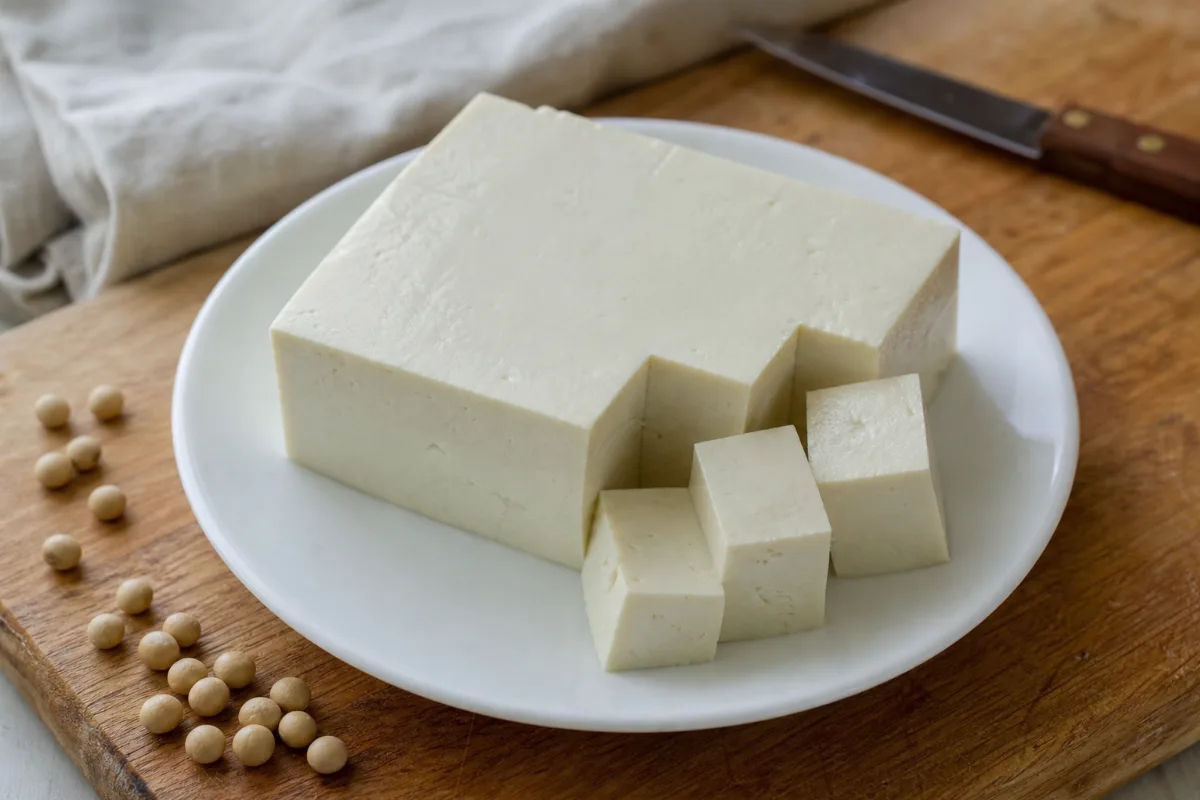
Tofu is a soft curd made from soybeans. It gives plant protein, and calcium-set tofu has a lot of calcium. Soy protein in place of other protein lowers LDL cholesterol a little in trials, and people who eat tofu weekly had less heart disease in large studies, which cannot prove cause. The main cautions are soy allergy, MAOI antidepressants, thyroid medicine questions and soy in pregnancy above food amounts.
General information, not medical advice. Last substantive update · Not medically reviewed. A named clinician has not signed off on this page. How this page is made
About Tofu
Tofu is a soft curd made from soybeans. It is a source of plant protein, and tofu set with calcium is a source of calcium. It is a food, not a proven remedy: the cholesterol findings come from studies of soy protein and plant protein, and the heart disease finding is observational.
What it is
Tofu is a curd made from soybeans (Glycine max), set with a mineral setting agent. USDA lists tofu 'prepared with calcium sulfate' and tofu 'prepared with calcium sulfate and magnesium chloride (nigari)'. A 2025 lab study found that the setting agent changes how firm the tofu is and how its protein is released.
USDA data for raw regular tofu set with calcium sulfate, per 100 g: 76 kcal, 8.08 g protein, 4.78 g fat, 1.87 g carbohydrate, 0.3 g fibre, 350 mg calcium, 5.36 mg iron, 30 mg magnesium, 97 mg phosphorus and 7 mg sodium. A half cup (124 g) has about 94 kcal, 10 g protein, 434 mg calcium and 6.7 mg iron.
Calcium-set or nigari-set: the label matters
The two USDA tofu items differ a lot. Regular tofu set with calcium sulfate has 350 mg of calcium and 5.36 mg of iron per 100 g. The firm tofu set with calcium sulfate and magnesium chloride (nigari) has 201 mg of calcium, 1.61 mg of iron and 37 mg of magnesium per 100 g. Firmness, brand and water content also change the numbers.
Calcium on the label is not the same as calcium your body takes up. A lab digestion study of 25 plant foods found tofu released under 10% of its calcium in the model, and it did not say which setting agent the tofu used. No study in people was read. If calcium or iron is why you eat tofu, check the nutrition label.
What the research shows
The firmest findings are about soy protein and plant protein, not tofu alone. Soy protein in place of other protein lowered LDL by about 4.76 mg/dL across 43 trials, and plant protein in place of animal protein lowered it by 0.16 mmol/L across 112 trials. These are swaps, and the changes are small.
Tofu itself has been studied in cohorts. In about 210,700 US adults, eating tofu at least once a week went with a moderately lower risk of coronary heart disease (HR 0.82). Soy milk did not show a significant link. A 2017 pooled analysis found a borderline link between tofu and cardiovascular disease. These studies can show a link, not cause.
Isoflavones, the estrogen-like plant compounds in soy, have mostly been tested as preparations. They gave a small, mixed benefit for menopause symptoms and no significant effect on hot flushes. In 40 trials in postmenopausal women they did not significantly change womb lining, vaginal cells, FSH or estradiol. Breast cancer links are observational.
Food versus supplements
The heart disease results are for tofu eaten as food. The cholesterol results are for soy protein or plant protein in many forms. The menopause, hormone and breast cancer results are mostly for isoflavones, as supplements or mixed with foods. NCCIH says soy supplements have not been shown to lower breast cancer risk and that effects may differ between soy products. Soy protein powders and isoflavone supplements are different products from tofu.
At a glance
Traditional uses history, not proof
- Eaten as a staple food in many cuisines
- Long use as food is not proof that it treats any condition
Studied for research
- Protein, calcium and iron, high certainty for the nutrient content, which depends on the setting agent
- Cholesterol, moderate certainty for soy and plant protein swaps, indirect for tofu
- Heart disease, low certainty (observational)
- Menopause symptoms, mixed (isoflavone preparations, not tofu)
- Hormone and estrogen measures, moderate certainty of no clear estrogen-like effect (isoflavone studies)
- Breast cancer risk and survival, low certainty (observational)
- Bone health, insufficient evidence for tofu
Main compounds
- Soy protein
- Calcium (from the setting agent)
- Iron
- Isoflavones (genistein, daidzein, glycitein)
- Magnesium and phosphorus
Common forms
- Regular and firm tofu, raw or cooked, as food (USDA values read)
- Tofu set with calcium sulfate or with calcium sulfate and nigari (both USDA items read)
- Silken, fried, smoked and flavoured tofu (nutrient values not read)
- Soy protein powders and isoflavone supplements are different products and are not covered
Research links: 2019 review: soy protein and LDL cholesterol (43 trials) · 2020 study: tofu and coronary heart disease · 2023 review: soy and levothyroxine · Research Library · Genes & Biomarkers Library
What it is and its history
- Accepted scientific name
- Glycine max (L.) Merr.
- Naming authority
- (L.) Merr. (GBIF accepted; the plant whose seeds are made into tofu)
- Common names
- Tofu (English); Bean curd (English); Soybean curd (English); Doufu (Chinese (pinyin)); Tofu (Spanish)
- Family or group
- Fabaceae (the legume or pea family), as given by GBIF. Tofu itself is a processed food, a curd made from soybeans, not a plant.
- Classification
- Plantae > Tracheophyta > Magnoliopsida > Fabales > Fabaceae > Glycine > Glycine max
- Native range
- Not verified from a source read.
- Habitat
- Not verified from a source read.
- What it looks like
- Roots: Not verified.; Stems: Not verified.; Leaves: Not verified.; Flowers: Not verified.; Fruit: Tofu is made from mature soybean seeds. USDA gives household portions of 0.5 cup (124 g) and 0.25 block (116 g) for regular tofu set with calcium sulfate.
- Cultivation
- Not verified from a source read.
- Harvest and processing
- Tofu is a soybean curd set with a mineral setting agent. USDA lists tofu 'prepared with calcium sulfate' and 'prepared with calcium sulfate and magnesium chloride (nigari)'. A 2025 lab study made tofu with calcium sulfate, magnesium chloride or both and found they changed texture, water holding and protein release. The wider making process, and silken, fried, smoked, pressed and flavoured types, were not read from a source.
- Look-alikes and adulterants
- Name: Edamame, tempeh, soy milk and soy sauce; Note: Other soy foods with their own pages; they differ in nutrients, tyramine and processing.; Name: Fermented tofu; Note: A fermented, preserved product that is not the same as fresh tofu.; Name: Soy protein and isoflavone supplements; Note: Supplements are not tofu, and several of the trials read used them.
- Sustainability and conservation
- Not assessed.
Photographs
What is inside, and how it may work
What it contains and how those compounds act in cells and animals. Laboratory and animal mechanisms are not proven effects in people.
Main compounds
| Compound | Family | Where it is concentrated | Activity studied | Level of evidence |
|---|---|---|---|---|
| Soy protein | protein | Seed (curd) USDA: 8.08 g per 100 g (calcium sulfate item); 9.04 g (calcium sulfate and nigari firm item) | In pooled trials, soy protein in place of other protein lowered LDL cholesterol a little; it is also the source of the soy allergen. 25 24 1 | Human data |
| Calcium | mineral | Curd (from the setting agent) USDA per 100 g: 350 mg (calcium sulfate item); 201 mg (calcium sulfate and nigari firm item) | Amount depends on the setting agent; a lab digestion study found tofu calcium bioaccessibility under 10%. 25 24 11 | Lab |
| Iron | mineral | Curd USDA per 100 g: 5.36 mg (calcium sulfate item); 1.61 mg (calcium sulfate and nigari firm item) | Amount differs about threefold between the two USDA items; absorption was not studied in the sources read. 25 24 | Human data |
| Genistein PubChem 5280961 | isoflavone | Soybean seed Not read for tofu. Total isoflavones in tofu-type soybean seeds: 0.16 to 0.25% (lab analysis of seeds, not tofu). | NCCIH describes isoflavones as compounds similar in structure to estrogen. 23 16 21 | Human data |
| Daidzein PubChem 5281708 | isoflavone | Soybean seed Not read for tofu. | A major soybean isoflavone, with genistein and glycitein (Wu 2004). 23 16 | Human data |
| Glycitein PubChem 5317750 | isoflavone | Soybean seed Not read for tofu. | The third soybean isoflavone aglycone measured in the 2004 lab study. 23 16 | Lab |
Mechanisms, receptors and pathways
| Target or pathway | Gene or receptor | What was found | Level |
|---|---|---|---|
| Estrogen receptors and isoflavones | Not specified in the sources read | NCCIH describes isoflavones as similar in structure to estrogen. The 2025 authors suggest, from trial results showing no estrogen-like effect on four measures, that isoflavones likely act as selective estrogen receptor modulators. This is their interpretation, not a tested mechanism. 21 15 | Human data |
| Tyramine in stored soy products | Monoamine oxidase (the enzyme MAOI drugs block) | A 1999 lab analysis found clinically significant tyramine in tofu stored for a week. A 2018 review explains that tyramine in foods is produced by certain micro-organisms. With an MAOI, tyramine can raise blood pressure. 13 4 | Lab |
| Setting agent and tofu structure | Not applicable | Calcium sulfate, magnesium chloride or both changed the water holding, hardness and protein release of lab-made tofu. Lab food science only. 7 | Lab |
Absorption, metabolism and elimination
- Absorption
- Not found for tofu nutrients in people. A lab digestion model found tofu calcium bioaccessibility under 10%, tied by the authors to oxalate and phytate in some of the foods tested; the abstract does not say which tofu setting agent was used.
- Distribution
- Not found.
- Metabolism
- Not found.
- Elimination
- Not found.
- Bioavailability
- Not established for tofu calcium or iron in people in the sources read.
Isolated compounds versus whole extracts
The cohort results are for tofu as food. The cholesterol results are for soy protein or plant protein in many forms. The menopause, hormone and breast cancer results are mostly for isoflavones, as supplements or mixed with foods. Soy protein powders and isoflavone supplements are different products and are not covered by food results here.
Nutritional composition
Nutrition from USDA FoodData Central (SR Legacy, April 2018 release; values read 2026-10-26 from a saved copy of the data feed, because the public API key was rate-limited). Raw regular tofu prepared with calcium sulfate (FDC 172476), per 100 g: 76 kcal, 8.08 g protein, 4.78 g fat (0.691 g saturated), 1.87 g carbohydrate, 0.3 g fibre, 350 mg calcium, 5.36 mg iron, 30 mg magnesium, 97 mg phosphorus, 121 mg potassium, 7 mg sodium, 0.8 mg zinc, 0.605 mg manganese, 0.193 mg copper, 8.9 micrograms selenium. One typical USDA portion of 0.5 cup (124 g, the 100 g values multiplied by 1.24): about 94 kcal, 10.0 g protein, 5.9 g fat, 2.3 g carbohydrate, 434 mg calcium, 6.7 mg iron, 120 mg phosphorus, 150 mg potassium and 8.7 mg sodium. Firm tofu prepared with calcium sulfate and magnesium chloride (nigari) (FDC 172448), per 100 g: 78 kcal, 9.04 g protein, 4.17 g fat, 2.85 g carbohydrate, 0.9 g fibre, 201 mg calcium, 1.61 mg iron, 37 mg magnesium, 121 mg phosphorus, 148 mg potassium, 12 mg sodium; its 0.5 cup portion is 126 g (about 98 kcal, 11.4 g protein, 253 mg calcium, 2.0 mg iron). The two items differ a lot in calcium and iron because of the setting agent, firmness and brand, so check the label. Silken, fried, smoked, flavoured and fermented tofu were not read.
1 high certainty2 moderate certainty1 mixed findings2 low certainty1 not enough evidence
What was looked at
The 7 benefits and uses checked for Tofu, each with how strong the evidence is. Tap one to open it.
- Plant protein, calcium and iron (nutrient content)High certainty
- Cholesterol (soy protein and plant protein swaps)Moderate certainty
- Heart disease (observational)Low certainty
- Menopause symptoms (isoflavone preparations)Mixed findings
- Hormone and estrogen measures (isoflavone studies)Moderate certainty
- Breast cancer risk and survival (observational)Low certainty
- Bone healthNot enough evidence
Lab markers tracked in the studies
LDL cholesterolTotal cholesterolCoronary heart disease eventsEstradiol (an estrogen hormone)FSH (follicle-stimulating hormone)Endometrial thickness (womb lining)
What is Tofu good for?
The main studied uses and how strong the human evidence is for each. Most results are for soy protein, plant protein or isoflavones in general, not for tofu on its own.
Benefits, one by one
Each card is a research question, not a promise. Tap a goal to filter. Open a card to see the studies, doses and limits.
Plant protein, calcium and iron (nutrient content)
High certaintyTofu set with calcium sulfate has 8.08 g of protein, 350 mg of calcium and 5.36 mg of iron per 100 g, by USDA data. Half a cup (124 g) has about 10 g of protein and 434 mg of calcium. Values change a lot with the setting agent: a firm tofu set with calcium sulfate and nigari has 201 mg of calcium and 1.61 mg of iron per 100 g.
3 studiesRaw regular and firm tofu from USDA tables. Silken, fried, smoked or …
Studies, doses and limits
What the trials found
No trial was read showing that eating tofu corrects low calcium, iron or protein. One lab digestion study found that the calcium in tofu was released at under 10% in the digestion model, which the authors tie to oxalate and phytate in some of the foods tested. That study did not say which setting agent the tofu used.
Results
Tofu is a source of protein, and calcium-set tofu has a lot of calcium on paper. How much your body takes up from it was not shown in people in the sources read.
Effect sizes as reported
USDA, calcium-sulfate tofu per 100 g: protein 8.08 g, calcium 350 mg, iron 5.36 mg. Calcium sulfate with nigari firm tofu per 100 g: protein 9.04 g, calcium 201 mg, iron 1.61 mg.
Why this rating
High that the food contains these nutrients (USDA data). Not tested as a treatment for any shortfall, and the amount your body absorbs was not established in the sources read.
Form and dose studied
Raw regular and firm tofu from USDA tables. Silken, fried, smoked or flavoured tofu were not read.
Who was studied
General adult diet.
Limits
Nutrient facts, not trials. The two USDA items differ by about 150 mg of calcium per 100 g, so a label matters.
Why researchers looked
People eat tofu as a plant protein and, when it is set with calcium, as a calcium source.
Traditional use
Tofu is eaten as a food in many cuisines. Long use as food is not proof that it treats any condition.
Proposed mechanism Nutrient database
These are nutrient amounts in the food, taken from USDA tables.
A proposed mechanism does not show that the effect happens in people.
Soy is a major food allergen; see the Safety tab.
Cholesterol (soy protein and plant protein swaps)
Moderate certaintyIn trials, soy protein in place of other protein lowered LDL ('bad') cholesterol by about 4.76 mg/dL, and plant protein in place of animal protein lowered it by about 0.16 mmol/L. The trials did not test tofu on its own, and the change is small.
3 studiesSoy protein foods and products in the soy analysis; plant protein of …
Studies, doses and limits
What the trials found
A pooled analysis of 43 trials of soy protein (median 25 g a day for a median 6 weeks) found LDL 4.76 mg/dL lower and total cholesterol 6.41 mg/dL lower than with non-soy protein. A pooled analysis of 112 trials found plant protein in place of animal protein lowered LDL by 0.16 mmol/L, rated moderate-quality evidence by its authors. Neither analysis separated tofu from other soy or plant protein.
Results
A small, fairly consistent fall in LDL when soy or plant protein replaces other protein. It describes a swap, not an add-on.
Effect sizes as reported
Soy protein: LDL -4.76 mg/dL (95% CI -6.71 to -2.80), about 3 to 4%. Plant protein: LDL -0.16 mmol/L (-0.20 to -0.12); non-HDL -0.18 mmol/L; apoB -0.05 g/L.
Why this rating
Moderate for the swap, based on the 112-trial analysis, which its authors rate moderate-quality by GRADE. Indirect for tofu, which was not tested on its own, so this is not a promise about tofu. The soy analysis is by authors including one at a soy industry body (Soy Nutrition Institute).
Form and dose studied
Soy protein foods and products in the soy analysis; plant protein of many kinds in the other. Not tofu alone.
Who was studied
Adults, mostly with raised or high-normal cholesterol (baseline LDL 110 to 201 mg/dL in the soy analysis).
Limits
Short trials (median 6 weeks). Moderate to high differences between trials. The result applies to replacing other protein, not adding tofu to an unchanged diet.
Why researchers looked
Tofu is a common soy food, and soy protein has been studied for cholesterol for many years.
Traditional use
Tofu is eaten as a food in many cuisines. Long use as food is not proof that it treats any condition.
Proposed mechanism Authoritative guidance
Not shown for tofu. NCCIH says that replacing other protein with soy protein may lower cholesterol to a small extent, and that isoflavones may not have the same effect.
A proposed mechanism does not show that the effect happens in people.
See the Safety tab for soy allergy and medicine cautions.
Heart disease (observational)
Low certaintyIn three large US studies, people who ate tofu once a week or more had about 18% lower risk of coronary heart disease than people who ate it less than once a month. This is a link, not proof that tofu is the cause.
2 studiesTofu as food.
Studies, doses and limits
What the trials found
In US nurses and health professionals (about 210,700 people, 8,359 heart disease cases), tofu once a week or more was linked to lower coronary heart disease than less than once a month (HR 0.82, 95% CI 0.70 to 0.95). Soy milk was not significantly linked (HR 0.87, CI 0.69 to 1.10). In women, the tofu link was stronger in younger women and in postmenopausal women not using hormones. A 2017 pooled analysis of 10 cohort and 7 case-control studies found soy intake linked to 16% lower cardiovascular disease risk, mostly in case-control studies and in Asian populations, and a borderline link for tofu (SRR 0.80, CI 0.64 to 1.00).
Results
A moderately lower risk in people who ate more tofu, in observational data only.
Effect sizes as reported
Tofu weekly versus monthly: coronary heart disease HR 0.82 (0.70 to 0.95). Tofu and cardiovascular disease: SRR 0.80 (0.64 to 1.00), borderline.
Why this rating
Low: observational only, food-questionnaire based, with no trial of tofu and heart disease events. The cohort study reported no conflicts and NIH support.
Form and dose studied
Tofu as food.
Who was studied
Mostly US adults who were health professionals; the pooled analysis includes Asian populations.
Limits
Cannot show cause. Soy milk was not significantly linked. The 2017 pooled tofu result is borderline and covers cardiovascular disease, not heart disease alone.
Why researchers looked
Tofu is a main soy food in Western diets, and researchers asked whether eating it is linked to heart disease.
Traditional use
Tofu is eaten as a food in many cuisines. Long use as food is not proof that it treats any condition.
Proposed mechanism Not established
Not established. The studies are observational and cannot show why people who eat tofu may do better; people who eat tofu may also differ in other ways.
A proposed mechanism does not show that the effect happens in people.
None specific beyond the general soy cautions.
Menopause symptoms (isoflavone preparations)
Mixed findingsA 2025 pooled analysis of soy isoflavone preparations found a small overall improvement in menopause symptoms in perimenopausal women, but no significant effect on hot flushes. The studies used isoflavone preparations, not tofu.
2 studiesSoy isoflavone preparations, not tofu.
Studies, doses and limits
What the trials found
Across 12 trials, isoflavones gave a small overall improvement (7 trials, 533 women, Hedges' g -0.25, 95% CI -0.42 to -0.08) and helped headache, psychosocial symptoms, palpitation and depression scores, but showed no significant effect on hot flushes, sweating, insomnia, fatigue or vasomotor symptoms. NCCIH says soy isoflavone supplements or soy protein may reduce hot flash frequency and severity, but the effect may be small and results are not completely consistent.
Results
A small, mixed effect from isoflavone preparations. No trial of tofu was read.
Effect sizes as reported
Overall symptoms Hedges' g -0.25 (-0.42 to -0.08); depression -0.72 (-1.17 to -0.28); hot flushes not significant.
Why this rating
Mixed: small overall benefit, no clear effect on hot flushes, small samples, and the product studied is an isoflavone preparation rather than tofu.
Form and dose studied
Soy isoflavone preparations, not tofu.
Who was studied
Perimenopausal women.
Limits
Small samples (the authors ask for caution). Not tofu. Funding is not stated in the abstract.
Why researchers looked
Isoflavones in soy are similar in structure to estrogen, so researchers asked whether they ease menopause symptoms.
Traditional use
Tofu is eaten as a food in many cuisines. Long use as food is not proof that it treats any condition.
Proposed mechanism Authoritative guidance
NCCIH describes isoflavones as compounds similar in structure to estrogen. Whether this explains any effect was not shown in the sources read.
A proposed mechanism does not show that the effect happens in people.
See Safety for hormone-sensitive conditions.
Hormone and estrogen measures (isoflavone studies)
Moderate certaintyIn 40 trials in postmenopausal women, soy isoflavones did not significantly change the lining of the womb, vaginal cells, FSH or estradiol compared with controls. So in these measures, isoflavones did not act like the hormone estrogen. In premenopausal women, an older analysis found small changes in FSH, LH and cycle length.
2 studiesSoy isoflavones, soy foods and protein in various forms.
Studies, doses and limits
What the trials found
The 2025 analysis (40 trials, 3,285 postmenopausal women, median 75 mg isoflavones a day for 24 weeks) found no significant effect on endometrial thickness, vaginal maturation index, FSH or estradiol (certainty high to moderate by the authors' GRADE). A 2009 analysis of 47 trials found no change in estradiol, estrone or SHBG in premenopausal women, but FSH and LH were about 20% lower and the menstrual cycle about one day longer; postmenopausal estradiol rose about 14%, not significantly.
Results
No significant estrogen-like effect on four standard measures in postmenopausal women. Modest changes in premenopausal women whose clinical meaning is unknown.
Effect sizes as reported
Estradiol +1.61 pmol/L (-1.17 to 4.38); FSH -0.02 IU/L (-2.39 to 2.35); endometrial thickness -0.22 mm (-0.45 to 0.01).
Why this rating
Moderate for the postmenopausal result (authors' GRADE high to moderate), which is a no-effect finding. It is for isoflavones as food or supplement, not tofu alone, and is low-certainty for the premenopausal changes.
Form and dose studied
Soy isoflavones, soy foods and protein in various forms.
Who was studied
Postmenopausal women (2025); pre- and postmenopausal women (2009).
Limits
Not tofu trials. The doses and forms vary. Clinical meaning of the premenopausal changes is not known.
Why researchers looked
Because isoflavones look like estrogen in structure, people worry that soy foods may act like estrogen in the body.
Traditional use
Tofu is eaten as a food in many cuisines. Long use as food is not proof that it treats any condition.
Proposed mechanism Authors interpretation
The 2025 authors suggest, from their results, that isoflavones likely act as selective estrogen receptor modulators, not as estrogen. That is the authors' interpretation, not a tested mechanism.
A proposed mechanism does not show that the effect happens in people.
See Safety for hormone-sensitive conditions.
Breast cancer risk and survival (observational)
Low certaintyObservational studies link higher soy isoflavone intake with lower breast cancer risk, and soy eaten before a breast cancer diagnosis with slightly better survival. These are links, not proof, and they are not about tofu alone. Soy supplements have not been shown to lower risk.
3 studiesSoy foods and isoflavones from food.
Studies, doses and limits
What the trials found
A 2022 pooled analysis of prospective studies found a link between higher isoflavone intake and lower breast cancer occurrence in pre- and postmenopausal women. A 2019 analysis of 12 articles (37,275 women with breast cancer) found soy eaten before diagnosis linked to better overall survival (HR 0.84, CI 0.71 to 0.98), with no significant link for soy after diagnosis (HR 0.80, CI 0.62 to 1.04). NCCIH says the link with lower risk is seen in Asian and Asian-American women, that Western intakes may be too low to show it, and that supplements have not been shown to lower risk.
Results
Promising but limited, observational links; no trial of tofu.
Effect sizes as reported
Before diagnosis, overall survival HR 0.84 (0.71 to 0.98); after diagnosis HR 0.80 (0.62 to 1.04, not significant).
Why this rating
Low: observational only, soy and isoflavones mixed together, no trial of tofu.
Form and dose studied
Soy foods and isoflavones from food.
Who was studied
Women, mostly in Asian populations for the risk link.
Limits
Cannot show cause. The 2022 authors' wording that isoflavones 'can reduce' risk goes beyond observational data.
Why researchers looked
Women in countries where soy foods are eaten daily have lower breast cancer rates, so researchers asked if soy is the reason.
Traditional use
Tofu is eaten as a food in many cuisines. Long use as food is not proof that it treats any condition.
Proposed mechanism Not established
Not established.
A proposed mechanism does not show that the effect happens in people.
See Safety for hormone-sensitive conditions. Ask your cancer care team about your own diet.
Bone health
Not enough evidenceNCCIH says soy isoflavones probably help bone density in postmenopausal women. No study of tofu itself and bone was read, so for tofu the evidence is insufficient.
1 studiesIsoflavones (agency statement). Not tofu.
Studies, doses and limits
What the trials found
NCCIH's fact sheet says soy isoflavones probably have a beneficial effect on bone density in postmenopausal women. The studies behind that statement were not read here, and none was about tofu.
Results
Insufficient evidence for tofu.
Effect sizes as reported
No numbers read.
Why this rating
Only a general agency statement about isoflavones was read; no study of tofu and bone.
Form and dose studied
Isoflavones (agency statement). Not tofu.
Who was studied
Postmenopausal women.
Limits
Secondary source only. Not tofu.
Why researchers looked
Tofu set with calcium has a lot of calcium, and isoflavones have been studied for bone loss after menopause.
Traditional use
Tofu is eaten as a food in many cuisines. Long use as food is not proof that it treats any condition.
Proposed mechanism Not established
Not described in the sources read.
A proposed mechanism does not show that the effect happens in people.
None specific.
Connections to the rest of health
How Tofu connects to the rest of our health knowledge graph. Every link says what kind of connection it is. A safety link (for example to the liver) is a warning, not a benefit. A study that merely mentions a topic never creates a benefit link.
Explore every connection: goals, body systems, organs, symptoms, genes
A. Wellness goals
| Connected to | Kind of connection | Evidence status | Context | Studies |
|---|---|---|---|---|
| Preventive Wellness | High certainty | Plant protein, calcium and iron (nutrient content): Tofu set with calcium sulfate has 8.08 g of protein, 350 mg of calcium and 5.36 mg of iron per 100 g, by USDA data. Half a cup (124 g) has about 10 g of protein and 434 mg of calcium. Values change a lot with the setting agent: a firm tofu set with calcium sulfate and nigari has 201 mg of calcium and 1.61 mg of iron per 100 g. | 25 24 11 | |
| Cholesterol Balance | Demonstrated clinical effect | Moderate certainty | Cholesterol (soy protein and plant protein swaps): In trials, soy protein in place of other protein lowered LDL ('bad') cholesterol by about 4.76 mg/dL, and plant protein in place of animal protein lowered it by about 0.16 mmol/L. The trials did not test tofu on its own, and the change is small. | 1 6 21 |
| Heart Health | Demonstrated clinical effect | Moderate certainty | Cholesterol (soy protein and plant protein swaps): In trials, soy protein in place of other protein lowered LDL ('bad') cholesterol by about 4.76 mg/dL, and plant protein in place of animal protein lowered it by about 0.16 mmol/L. The trials did not test tofu on its own, and the change is small. | 1 6 21 |
| Heart Health | Low certainty | Heart disease (observational): In three large US studies, people who ate tofu once a week or more had about 18% lower risk of coronary heart disease than people who ate it less than once a month. This is a link, not proof that tofu is the cause. | 9 17 | |
| Menopause Support | Mixed findings | Menopause symptoms (isoflavone preparations): A 2025 pooled analysis of soy isoflavone preparations found a small overall improvement in menopause symptoms in perimenopausal women, but no significant effect on hot flushes. The studies used isoflavone preparations, not tofu. | 8 21 | |
| Womens Wellness | Mixed findings | Menopause symptoms (isoflavone preparations): A 2025 pooled analysis of soy isoflavone preparations found a small overall improvement in menopause symptoms in perimenopausal women, but no significant effect on hot flushes. The studies used isoflavone preparations, not tofu. | 8 21 | |
| Hormone Balance | Moderate certainty | Hormone and estrogen measures (isoflavone studies): In 40 trials in postmenopausal women, soy isoflavones did not significantly change the lining of the womb, vaginal cells, FSH or estradiol compared with controls. So in these measures, isoflavones did not act like the hormone estrogen. In premenopausal women, an older analysis found small changes in FSH, LH and cycle length. | 15 5 | |
| Womens Wellness | Moderate certainty | Hormone and estrogen measures (isoflavone studies): In 40 trials in postmenopausal women, soy isoflavones did not significantly change the lining of the womb, vaginal cells, FSH or estradiol compared with controls. So in these measures, isoflavones did not act like the hormone estrogen. In premenopausal women, an older analysis found small changes in FSH, LH and cycle length. | 15 5 | |
| Womens Wellness | Low certainty | Breast cancer risk and survival (observational): Observational studies link higher soy isoflavone intake with lower breast cancer risk, and soy eaten before a breast cancer diagnosis with slightly better survival. These are links, not proof, and they are not about tofu alone. Soy supplements have not been shown to lower risk. | 2 12 21 | |
| Bone Health | Not enough evidence | Bone health: NCCIH says soy isoflavones probably help bone density in postmenopausal women. No study of tofu itself and bone was read, so for tofu the evidence is insufficient. | 21 |
B. Body systems
| Connected to | Kind of connection | Evidence status | Context | Studies |
|---|---|---|---|---|
| Musculoskeletal System | Biological association | High certainty | Studied for: Plant protein, calcium and iron (nutrient content) Studied for: Bone health | 25 24 11 21 |
| Cardiovascular System | Biological association | Moderate certainty | Studied for: Cholesterol (soy protein and plant protein swaps) Studied for: Heart disease (observational) | 1 6 21 9 17 |
| Heart Circulation | Biological association | Low certainty | Studied for: Heart disease (observational) | 9 17 |
| Reproductive System | Biological association | Mixed findings | Studied for: Menopause symptoms (isoflavone preparations) Studied for: Hormone and estrogen measures (isoflavone studies) | 8 21 15 5 2 12 |
| Endocrine System | Biological association | Mixed findings | Studied for: Menopause symptoms (isoflavone preparations) Studied for: Hormone and estrogen measures (isoflavone studies) | 8 21 15 5 |
C. Body parts and organs
E. Health conditions
| Connected to | Kind of connection | Evidence status | Context | Studies |
|---|---|---|---|---|
| Food allergy | Adverse effect or risk | Documented risk | Soybeans are a major food allergen; challenge-verified soy allergy was about 0.3% in a European review. Soybeans are a major food allergen; about 0.3% of people in Europe had challenge-verified soy allergy. Preparation or compound: Soy protein in tofu |
18 14 |
| High cholesterol | Preliminary | Soy protein in place of other protein lowers LDL a little in pooled trials; not a treatment. Preparation or compound: Soy protein |
1 6 |
I. Biomarkers
| Connected to | Kind of connection | Evidence status | Context | Studies |
|---|---|---|---|---|
| LDL cholesterol | Biological association | Moderate certainty | Measured in trials: lowered. A lab change is not the same as a health benefit. | 1 6 |
| Total cholesterol | Biological association | Low certainty | Measured in trials: lowered. A lab change is not the same as a health benefit. | 1 |
| Coronary heart disease events | Biological association | Low certainty | Measured in trials: lower risk (association). A lab change is not the same as a health benefit. | 9 17 |
| Estradiol (an estrogen hormone) | Biological association | Moderate certainty | Measured in trials: no significant change. A lab change is not the same as a health benefit. | 15 5 |
| FSH (follicle-stimulating hormone) | Biological association | Moderate certainty | Measured in trials: no significant change (postmenopausal); lowered (premenopausal). A lab change is not the same as a health benefit. | 15 5 |
| Endometrial thickness (womb lining) | Biological association | Moderate certainty | Measured in trials: no significant change. A lab change is not the same as a health benefit. | 15 |
K. Biological pathways
| Connected to | Kind of connection | Evidence status | Context | Studies |
|---|---|---|---|---|
| Calcium | Preliminary mechanism | Lab | Calcium-set tofu is a calcium source on paper; the amount depends on the setting agent. | 25 24 |
| Soy isoflavones | Preliminary mechanism | Human | Plant compounds similar in structure to estrogen; trials show no significant estrogen-like effect on four measures in postmenopausal women. | 21 15 |
| LDL cholesterol | Preliminary mechanism | Human | Soy protein in place of other protein lowers LDL a little. | 1 |
L. Active compounds
| Connected to | Kind of connection | Evidence status | Context | Studies |
|---|---|---|---|---|
| Soy protein | Biological association | Human | In pooled trials, soy protein in place of other protein lowered LDL cholesterol a little; it is also the source of the soy allergen. Preparation or compound: Seed (curd) |
25 24 1 |
| Calcium | Biological association | Lab | Amount depends on the setting agent; a lab digestion study found tofu calcium bioaccessibility under 10%. Preparation or compound: Curd (from the setting agent) |
25 24 11 |
| Iron | Biological association | Human | Amount differs about threefold between the two USDA items; absorption was not studied in the sources read. Preparation or compound: Curd |
25 24 |
| Genistein | Biological association | Human | NCCIH describes isoflavones as compounds similar in structure to estrogen. Preparation or compound: Soybean seed |
23 16 21 |
| Daidzein | Biological association | Human | A major soybean isoflavone, with genistein and glycitein (Wu 2004). Preparation or compound: Soybean seed |
23 16 |
| Glycitein | Biological association | Lab | The third soybean isoflavone aglycone measured in the 2004 lab study. Preparation or compound: Soybean seed |
23 16 |
Each connection is stored with the ingredient, the connected record, the kind of connection, the evidence status, the supporting studies, the preparation or compound involved, and a review date (last reviewed October 26, 2026).
Evidence at a glance: what changed in 2 lab markers
Tap a number to show only those markers. Counts are markers, not people.
The evidence
The research centre for Tofu. Every record here was checked against PubMed or the publisher's page; we never list a study we have not verified.
Evidence by outcome
Bars show how many studies we found for each outcome, not how well it works. People are added up across trials only (reviews are not added, to avoid double counting).
How we rate evidence
High certainty
Several well-run trials or reviews agree; further research is unlikely to change the picture much.
Moderate certainty
Good trials point the same way, but some doubt remains.
Low certainty
Small, short or inconsistent trials. The finding could change with better research.
Very low certainty
Very little or very weak human data. Treat as a possibility only.
Mixed findings
Trials or reviews disagree with each other.
Not enough evidence
Not enough human research to say either way.
Evidence against
Good research found no benefit, or found harm.
We take the reviewers' own risk-of-bias and GRADE statements where they exist, and otherwise judge from study size, design, consistency, directness and whether a product matches what is sold. Many publications do not make evidence high. Method note: We started from our existing tofu summary, re-checked nutrition against saved USDA FoodData Central data, read the health agency pages (NCCIH, FDA, MedlinePlus, NIDDK) and re-read PubMed abstracts for reviews, cohort studies and lab analyses. Only abstracts were read for studies. Items we could not verify are flagged in the research gaps.
Study library: every study we checked 25
| Study | Design | People | Product, dose, length | Result |
|---|---|---|---|---|
| Blanco Mejia 2019 A Meta-Analysis of 46 Studies Identified by the FDA Demonstrates that Soy Protein Decreases Circulating LDL and Total Cholesterol Concentrations in Adults. J Nutr · PMID 31006811 · DOI |
Systematic review meta analysis |
43 of 46 controlled trials in adults, baseline LDL 110 to 201 mg/dL (41 gave LDL data) | Soy protein (many forms, not tofu alone) in place of non-soy protein Soy protein foods and products Median 25 g of soy protein a day (trial detail, not advice) Median 6 weeks · vs Non-soy protein |
Soy protein lowered LDL by 4.76 mg/dL and total cholesterol by 6.41 mg/dL compared with non-soy protein. About 75% of trials showed a fall in LDL, but only a minority were individually significant. The authors describe this as about 3 to 4% lower LDL. LDL -4.76 mg/dL; total cholesterol -6.41 mg/dL (differences between trials were moderate to high, I2 55% and 74%) (LDL -6.71 to -2.80 mg/dL; total cholesterol -9.30 to -3.52 mg/dL) Methods, limits and fundingOutcomes: LDL cholesterol and total cholesterol Limitations: Soy protein in many forms, not tofu on its own. Trials were short. Large differences between trials. Funding and conflicts: Registered NCT03468127. Listed as non-US government research support. One author is listed at the Soy Nutrition Institute, a soy industry body; specific funding is not stated in the abstract. Registration: NCT03468127 Read: abstract |
| Boutas 2022 Soy Isoflavones and Breast Cancer Risk: A Meta-analysis. In Vivo · PMID 35241506 · DOI |
Systematic review meta analysis |
Prospective studies of soy isoflavone intake and breast cancer in pre- and post-menopausal women (number of studies not given in the abstract) | Soy isoflavones from food Soy isoflavones from food · vs Lower intake |
The pooled prospective studies showed an inverse link between isoflavone intake and breast cancer in pre- and post-menopausal women. The abstract does not give numbers. Inverse link; numbers not given in the abstract (Not given in the abstract) Methods, limits and fundingOutcomes: Breast cancer occurrence Limitations: Observational, so it cannot prove cause. The authors' conclusion that isoflavones 'can reduce' risk goes further than observational data allow. NCCIH notes the link is seen in Asian and Asian-American women and that supplements have not been shown to lower risk. Funding and conflicts: Funding is not stated in the abstract. Read: abstract |
| Gatta 2023 Interference or Noninterference Between Soy and Levothyroxine: That Is the Question. A Narrative Review of Literature. Endocr Pract · PMID 37633413 · DOI |
Narrative review |
Case reports, case series and original studies up to November 2022 | Soy products (including soy isoflavones) taken with levothyroxine Soy products with levothyroxine |
Few data, mainly case reports, suggested soy products might interfere with levothyroxine tablet absorption. The only prospective randomised crossover study showed no difference when levothyroxine and soy isoflavones were taken together. There was too little data on liquid levothyroxine to conclude anything. The authors judge any interference likely to have little clinical impact and say the question remains unanswered. No numbers in the abstract (Not applicable) Methods, limits and fundingOutcomes: Levothyroxine absorption Limitations: A narrative review of mostly case reports. Not tofu specific. Funding and conflicts: Funding is not stated in the abstract. Read: abstract |
| Gillman 2018 A reassessment of the safety profile of monoamine oxidase inhibitors: elucidating tired old tyramine myths. J Neural Transm · PMID 30255284 · DOI |
Narrative review |
Review of over 150 recent papers on foods, tyramine and MAOIs | Foods including soy sauces (tofu is not named in the abstract) Foods and MAOIs (review) |
Modern foods usually contain much less tyramine than in the past, and few foods now have problematic levels. The review says the risk from the blood pressure rise has been overstated and that MAOIs are of comparable safety to many newer drugs. It also says people differ in how strongly they react, so doctors' judgement and some care are still required. No numbers in the abstract (Not applicable) Methods, limits and fundingOutcomes: Tyramine in modern foods and blood pressure responses with MAOIs Limitations: A narrative review by one author. Tofu is not named in the abstract. Funding and conflicts: Funding is not stated in the abstract. Read: abstract |
| Hooper 2009 Effects of soy protein and isoflavones on circulating hormone concentrations in pre- and post-menopausal women: a systematic review and meta-analysis. Hum Reprod Update · PMID 19299447 · DOI |
Systematic review meta analysis |
47 randomised or residential crossover trials (11 premenopausal, 35 postmenopausal, 1 perimenopausal) | Soy foods, soy protein or isoflavones Soy foods, soy protein or isoflavones Trial detail not given in the abstract At least 4 weeks · vs Control diets |
In premenopausal women soy or isoflavones did not change estradiol, estrone or SHBG, but lowered FSH and LH by about 20% and lengthened the menstrual cycle by about one day. In postmenopausal women there were no significant effects, with a small non-significant rise in estradiol of about 14%. The authors say the clinical meaning of these modest changes is not yet known. FSH and LH about 20% lower (premenopausal); cycle length +1.05 days; estradiol about +14% (postmenopausal, not significant) (Cycle length 0.13 to 1.97 days) Methods, limits and fundingOutcomes: Estradiol, estrone, SHBG, FSH, LH, menstrual cycle length Limitations: 2009 review. Soy foods, protein and isoflavones are mixed together; not tofu alone. Funding and conflicts: Funding is not stated in the abstract. Read: abstract |
| Li 2017 Effect of Plant Protein on Blood Lipids: A Systematic Review and Meta-Analysis of Randomized Controlled Trials. J Am Heart Assoc · PMID 29263032 · DOI |
Systematic review meta analysis |
112 randomised trials (at least 3 weeks) | Plant protein of many kinds (soy and others) in place of animal protein Plant protein foods and products Trial detail not given in the abstract At least 3 weeks · vs Animal protein |
Plant protein in place of animal protein lowered LDL, non-HDL cholesterol and apoB. The authors rate the evidence as moderate quality (GRADE) and ask for more high-quality trials. LDL -0.16 mmol/L; non-HDL -0.18 mmol/L; apoB -0.05 g/L (LDL -0.20 to -0.12; non-HDL -0.22 to -0.14; apoB -0.06 to -0.03) Methods, limits and fundingOutcomes: LDL cholesterol, non-HDL cholesterol, apolipoprotein B Limitations: Plant protein of many kinds, not tofu on its own. A swap result: it does not describe adding tofu on top of an unchanged diet. Funding and conflicts: Registered NCT02037321. Funding is not stated in the abstract. Registration: NCT02037321 Read: abstract |
| Li 2025 Compound Salt-Based Coagulants for Tofu Gel Production: Balancing Quality and Protein Digestibility. Gels (Basel) · PMID 40710686 · DOI |
Laboratory analysis n/a |
Lab-made tofu gels set with calcium sulfate, magnesium chloride, or both | Tofu set with calcium sulfate (CaSO4), magnesium chloride (MgCl2) or both Lab-made tofu · vs Each coagulant against the others |
The setting agent changed the tofu. The mixed calcium sulfate and magnesium chloride tofu held the most water and was the hardest. Magnesium chloride tofu showed better protein release in the lab digestion model. These are lab food-science results, not human results. Water-holding capacity: mixed 99.16%, magnesium chloride 96.82%, calcium sulfate 93.73% (Not applicable) Methods, limits and fundingOutcomes: Water holding, cooking loss, texture, protein digestibility in a lab digestion model Limitations: Lab-made tofu and a lab digestion model, not people. No calcium or iron content of the tofu is given in the abstract. Funding and conflicts: Funding is not stated in the abstract. Read: abstract |
| Luan 2025 Effects of soy isoflavones on menopausal symptoms in perimenopausal women: a systematic review and meta-analysis. PeerJ · PMID 40718787 · DOI |
Systematic review meta analysis |
12 trials in perimenopausal women (7 trials, 533 women, for overall symptoms) | Soy isoflavone preparations (not tofu) Soy isoflavone preparations Trial detail not given in the abstract Not given in the abstract · vs Control groups |
Soy isoflavones gave a small overall improvement in symptoms. They helped headache, psychosocial symptoms, palpitation and depression scores, but showed no significant effect on hot flushes, excessive sweating, insomnia, fatigue or vasomotor symptoms. The authors warn that the samples were small. Overall symptoms Hedges' g -0.25; headache -0.38; psychosocial -0.29; palpitation -0.42; depression -0.72 (Overall -0.42 to -0.08; headache -0.60 to -0.17; psychosocial -0.48 to -0.10; palpitation -0.63 to -0.22; depression -1.17 to -0.28) Methods, limits and fundingOutcomes: Overall menopausal symptoms and individual symptoms Limitations: Isoflavone preparations, not tofu. Small samples. Funding and conflicts: Funding is not stated in the abstract. Read: abstract |
| Ma 2020 Isoflavone Intake and the Risk of Coronary Heart Disease in US Men and Women: Results From 3 Prospective Cohort Studies. Circulation · PMID 32200662 · DOI |
Cohort prospective |
210700 74,241 women (Nurses' Health Study), 94,233 women (Nurses' Health Study II) and 42,226 men (Health Professionals Follow-Up Study) free of heart disease and cancer at the start; 8,359 coronary heart disease cases |
Tofu and soy milk eaten as food, from food-frequency questionnaires Tofu or soy foods as eaten Compared 1 or more servings a week with less than 1 serving a month (observational, not advice) Up to about 28 years of follow-up · vs Low intake |
Higher isoflavone intake was linked to a moderately lower risk of coronary heart disease. Tofu was linked to lower risk, soy milk was not significantly linked. In women the link for tofu was stronger in younger women before menopause and in postmenopausal women not using hormones. Tofu 1 or more servings a week versus less than 1 a month: HR 0.82; soy milk HR 0.87 (not significant); isoflavones top versus bottom fifth HR 0.87 (Tofu 0.70 to 0.95; soy milk 0.69 to 1.10; isoflavones 0.81 to 0.94) Methods, limits and fundingOutcomes: Coronary heart disease (non-fatal heart attack and coronary death) Limitations: Observational: it shows a link, not cause. Food questionnaires. Mostly US health professionals. Total participants is the sum of the three cohorts. Funding and conflicts: Listed as NIH-funded research support. The authors report no conflicts of interest. Read: abstract |
| Messina 2006 Effects of soy protein and soybean isoflavones on thyroid function in healthy adults and hypothyroid patients: a review of the relevant literature. Thyroid · PMID 16571087 |
Narrative review |
14 trials of soy foods or isoflavones in presumably healthy people (thyroid was not the main outcome in any), plus literature on hypothyroid patients | Soy foods, soy protein or isoflavones Soy foods, soy protein or isoflavones |
In iodine-replete healthy adults the trials gave little evidence that soy foods or isoflavones harm thyroid function. Some evidence suggests soy foods may lower the absorption of thyroid hormone medicine and so raise the dose needed. The authors say hypothyroid adults need not avoid soy foods, and that there is a theoretical concern, from lab and animal data, for people with weak thyroid function or marginal iodine intake. They advise making sure iodine intake is adequate. No numbers in the abstract (Not applicable) Methods, limits and fundingOutcomes: Thyroid function in healthy adults; thyroid hormone needs in hypothyroid patients Limitations: A 2006 narrative review. With only one exception the 14 trials showed no effect or very modest changes. Funding and conflicts: Funding is not stated in the abstract. Read: abstract |
| Muleya 2024 A comparison of the bioaccessible calcium supplies of various plant-based products relative to bovine milk. Food Res Int · PMID 38129068 · DOI |
Laboratory analysis n/a |
25 plant-based products from 5 food groups, tested in a lab digestion model | Tofu among 25 plant-based foods Tofu among plant foods · vs Skimmed milk |
Bioaccessible calcium was lowest (below 10%) in spinach, plant-based beverages, tofu, dried figs and tahini. The authors link this to oxalate and phytate in some of the products and to poorly soluble fortification calcium in the drinks. Only three products were good sources once serving size was counted: kale, finger millet and fortified white bread. Tofu bioaccessible calcium below 10% (skimmed milk about 30%) (Not applicable) Methods, limits and fundingOutcomes: Total and bioaccessible calcium (the share released in a lab digestion model) Limitations: Lab digestion model, not people. The abstract does not say which setting agent the tofu used, so it cannot show whether calcium-set tofu differs from other tofu. Funding and conflicts: Funding is not stated in the abstract. Read: abstract |
| Qiu 2019 Soy and isoflavones consumption and breast cancer survival and recurrence: a systematic review and meta-analysis. Eur J Nutr · PMID 30382332 · DOI |
Systematic review meta analysis |
37275 12 articles; 37,275 women with breast cancer |
Soy and isoflavone intake from food Soy and isoflavone intake from food · vs Lowest intake |
Soy intake before diagnosis was linked to slightly better overall survival (not clearly for breast cancer specific survival). No significant link was found for intake after diagnosis. Both before and after diagnosis, soy isoflavone intake was linked to a lower risk of recurrence. The authors call the evidence limited. Before diagnosis: overall survival HR 0.84; breast cancer specific survival HR 0.89 (not significant). After diagnosis: overall survival HR 0.80 and breast cancer specific survival HR 0.83 (neither significant) (Before diagnosis: overall survival 0.71 to 0.98; breast cancer specific 0.74 to 1.07. After: 0.62 to 1.04 and 0.64 to 1.07) Methods, limits and fundingOutcomes: Overall survival, breast cancer specific survival, recurrence Limitations: Observational. Soy and isoflavones, not tofu alone. Funding and conflicts: Funding is not stated in the abstract. Read: abstract |
| Shulman 1999 Refining the MAOI diet: tyramine content of pizzas and soy products. J Clin Psychiatry · PMID 10192596 |
Laboratory analysis n/a |
Pizzas, soy sauces and other soybean products tested in the lab | Soy products including tofu Tofu and other soy products |
No significant tyramine in pizzas. Soy products varied widely: clinically significant tyramine levels were found in tofu stored for a week, and high tyramine in one soy sauce. The authors advised avoiding all soybean products, especially soy sauce and tofu, for people on MAOIs. No numbers in the abstract (Not applicable) Methods, limits and fundingOutcomes: Tyramine content (a level of 6 mg or less was considered safe by the authors) Limitations: A 1999 lab analysis, not a trial and not a report of harm. Product and storage differ. A newer review says tyramine risk was often overstated. Funding and conflicts: Funding is not stated in the abstract. Read: abstract |
| Spolidoro 2023 Prevalence estimates of eight big food allergies in Europe: Updated systematic review and meta-analysis. Allergy · PMID 37405695 · DOI |
Systematic review meta analysis |
93 studies in Europe, all ages (soy among eight allergens) | Not applicable (prevalence study) Soy allergy (all soy foods) |
Self-reported lifetime soy allergy was 0.5% and food-challenge-verified soy allergy (point prevalence) was 0.3%. Cow's milk allergy was much more common (5.7% self-reported). The authors found little change in prevalence over the decade. Soy self-reported lifetime prevalence 0.5%; challenge-verified point prevalence 0.3% (Self-reported 0.3 to 0.7%; challenge-verified 0.1 to 0.4%) Methods, limits and fundingOutcomes: Prevalence of food allergy, including soy Limitations: Europe only. Most studies were at moderate risk of bias. Not specific to tofu. Funding and conflicts: Registered PROSPERO CRD42021266657. Funding is not stated in the abstract. Registration: CRD42021266657 Read: abstract |
| Viscardi 2025 Effect of Soy Isoflavones on Measures of Estrogenicity: A Systematic Review and Meta-Analysis of Randomized Controlled Trials. Adv Nutr · PMID 39433088 · DOI |
Systematic review meta analysis |
3285 40 randomised trials (52 comparisons) in postmenopausal women |
Soy isoflavones (food or supplement) versus non-isoflavone controls Soy isoflavones Median 75 mg of isoflavones a day (trial detail, not advice) At least 3 months, median 24 weeks · vs Non-isoflavone controls |
Soy isoflavones had no statistically significant effect on any of the four measures. The authors rate the certainty as high to moderate and conclude that isoflavones do not show estrogen-like effects on these measures. Endometrial thickness -0.22 mm; vaginal maturation index 2.31; FSH -0.02 IU/L; estradiol 1.61 pmol/L (none significant) (Endometrial thickness -0.45 to 0.01; VMI -2.14 to 6.75; FSH -2.39 to 2.35; estradiol -1.17 to 4.38) Methods, limits and fundingOutcomes: Endometrial thickness, vaginal maturation index, FSH, estradiol Limitations: Postmenopausal women only. Isoflavone amounts and forms differed; this is not a tofu trial. The abstract's wording about promoting soy foods is the authors' view. Funding and conflicts: Registered PROSPERO CRD42023439239. Listed as non-US government research support; specific funders are not stated in the abstract. Registration: CRD42023439239 Read: abstract |
| Wu 2004 LC/UV/ESI-MS analysis of isoflavones in Edamame and Tofu soybeans. J Agric Food Chem · PMID 15137811 |
Laboratory analysis n/a |
30 30 soybean seed varieties |
Raw soybean seeds of edamame-type and tofu-type varieties Soybean seeds of tofu-type varieties |
Total isoflavones ranged from 0.02 to 0.12% in the edamame varieties and from 0.16 to 0.25% in the tofu varieties. The paper measured soybean seeds, not finished tofu. Edamame varieties 0.02 to 0.12%; tofu varieties 0.16 to 0.25% (Not applicable) Methods, limits and fundingOutcomes: Total isoflavone aglycones (daidzein, genistein, glycitein) in the seeds Limitations: A lab method paper on soybean seeds, not on tofu itself. Not a health result. Funding and conflicts: Listed as US government (PHS) and non-US government research support; specific funders are not given in the abstract. Read: abstract |
| Yan 2017 Association between consumption of soy and risk of cardiovascular disease: A meta-analysis of observational studies. Eur J Prev Cardiol · PMID 28067550 · DOI |
Systematic review meta analysis |
10 prospective cohort and 7 case-control studies; 17,269 cardiovascular events | Soy foods (tofu, soy milk and others) eaten as food Tofu or soy foods as eaten · vs Lower intake |
Higher soy intake was linked to less cardiovascular disease, stroke and coronary heart disease. The link was mainly seen in case-control studies and in Asian populations. For tofu, the link with cardiovascular disease was borderline. Soy isoflavones were not linked to these outcomes. Soy and cardiovascular disease SRR 0.84; tofu and cardiovascular disease SRR 0.80; stroke 0.82; coronary heart disease 0.83 (Soy 0.75 to 0.94; tofu 0.64 to 1.00; stroke 0.68 to 0.99; coronary heart disease 0.72 to 0.95) Methods, limits and fundingOutcomes: Cardiovascular disease, stroke and coronary heart disease Limitations: Observational, with large differences between studies (I2 71%). The tofu result is borderline and is for cardiovascular disease overall, not heart disease alone. Funding and conflicts: Funding is not stated in the abstract. Read: abstract |
| s-fda-allergens US FDA: Food Allergies · Source |
Health agency n/a |
Methods, limits and fundingRead: full-text | ||
| s-gbif-glycine-max GBIF Backbone: Glycine max (L.) Merr. (usageKey 5359660) · Source |
Reference database n/a |
Methods, limits and fundingRead: full-text | ||
| s-medlineplus-foodallergy MedlinePlus: Food allergy · Source |
Health agency n/a |
Methods, limits and fundingRead: full-text | ||
| s-nccih-soy NCCIH (US National Institutes of Health): Soy: Usefulness and Safety · Source |
Health agency n/a |
Methods, limits and fundingRead: full-text | ||
| s-niddk-gas NIDDK: Eating, Diet, and Nutrition for Gas in the Digestive Tract · Source |
Health agency n/a |
Methods, limits and fundingRead: full-text | ||
| s-pubchem-isoflavones PubChem: genistein (CID 5280961), daidzein (CID 5281708), glycitein (CID 5317750) · Source |
Reference database n/a |
Methods, limits and fundingRead: full-text | ||
| s-usda-fdc-172448 USDA FoodData Central: Tofu, firm, prepared with calcium sulfate and magnesium chloride (nigari) (FDC 172448, SR Legacy, April 2018) · Source |
Reference database n/a |
Methods, limits and fundingRead: full-text | ||
| s-usda-fdc-172476 USDA FoodData Central: Tofu, raw, regular, prepared with calcium sulfate (FDC 172476, SR Legacy, April 2018) · Source |
Reference database n/a |
Methods, limits and fundingRead: full-text |
What we do not know yet
- No trial of tofu on its own was found for cholesterol, menopause symptoms, hormones or bone; most results are for soy protein, plant protein or isoflavones.
- The heart disease results are observational and cannot show cause.
- Whether the calcium and iron in tofu are absorbed as the numbers suggest was not shown in people, and the lab study did not say which setting agent the tofu used.
- Soy-peanut allergy overlap, kidney disease advice, choking risk for young children, oxalate, purines (gout), FODMAP, contamination, shelf life and silken, fried or fermented tofu values were not researched.
- The NCCIH statements on bone, blood pressure and type 2 diabetes were not checked against the studies they cite.
How new research is added
New studies are found by a saved PubMed search and placed in a review queue before the page changes.
Lab markers
What changed in blood or saliva tests during trials. A changed number is not the same as feeling or being healthier, and we give no "normal ranges".
Hormonal 2
Estradiol (an estrogen hormone)
No significant change in trials
The main estrogen hormone in the blood.
Moderate certaintyResults and what it means
Why it was measured
To see whether soy isoflavones act like estrogen in the body.
Statistical vs. clinical meaning
No clear estrogen-like effect on this measure in postmenopausal women.
Safety implication
Relevant to the question of hormone-sensitive conditions; see Safety.
| Study | Result | People | Product |
|---|---|---|---|
| 15 | Estradiol +1.61 pmol/L (95% CI -1.17 to 4.38), not significant | 3,285 postmenopausal women in 40 trials | Soy isoflavones, median 75 mg a day, median 24 weeks |
| 5 | Premenopausal: no change in estradiol or estrone. Postmenopausal: about +14%, not significant (p = 0.07) | 47 trials | Soy foods, protein or isoflavones, 4 weeks or more |
FSH (follicle-stimulating hormone)
No significant change (postmenopausal); lowered (premenopausal) in trials
A pituitary hormone that rises after menopause.
Moderate certaintyResults and what it means
Why it was measured
Estrogen-like action would be expected to lower FSH.
Statistical vs. clinical meaning
Clinical meaning of the premenopausal change is not known.
Safety implication
None established.
Metabolic 2
LDL cholesterol
Lowered in trials
The 'bad' cholesterol carried in the blood. Higher levels are linked to more heart disease.
Moderate certaintyResults and what it means
Why it was measured
It is the usual blood marker used in diet trials for heart risk.
Statistical vs. clinical meaning
A small average fall, from a protein swap, in short trials; tofu alone was not tested.
Safety implication
None specific.
| Study | Result | People | Product |
|---|---|---|---|
| 1 | LDL -4.76 mg/dL (95% CI -6.71 to -2.80) with soy protein versus non-soy protein | Adults in 41 trials with LDL data (baseline 110 to 201 mg/dL) | Soy protein, median 25 g a day, median 6 weeks |
| 6 | LDL -0.16 mmol/L (95% CI -0.20 to -0.12); non-HDL -0.18; apoB -0.05 g/L | 112 randomised trials | Plant protein in place of animal protein, at least 3 weeks |
Total cholesterol
Lowered in trials
All the cholesterol carried in the blood, good and bad together.
Low certaintyResults and what it means
Why it was measured
A common routine blood test used in diet trials.
Statistical vs. clinical meaning
A small fall with soy protein. Differences between trials were large (I2 74%).
Safety implication
None specific.
| Study | Result | People | Product |
|---|---|---|---|
| 1 | Total cholesterol -6.41 mg/dL (95% CI -9.30 to -3.52) with soy protein versus non-soy protein | 43 trials in adults | Soy protein, median 25 g a day, median 6 weeks |
Other 2
Coronary heart disease events
Lower risk (association) in trials
Non-fatal heart attacks and deaths from coronary heart disease, counted over many years.
Low certaintyResults and what it means
Why it was measured
The outcome that matters most, but only seen in long observational studies.
Statistical vs. clinical meaning
A link, not proof of cause.
Safety implication
None specific.
| Study | Result | People | Product |
|---|---|---|---|
| 9 | Tofu once a week or more versus less than once a month: HR 0.82 (0.70 to 0.95) | About 210,700 US adults, 8,359 cases | Tofu eaten as food (observational) |
| 17 | Tofu and cardiovascular disease: SRR 0.80 (0.64 to 1.00), borderline | 10 cohort and 7 case-control studies | Tofu as food (observational) |
Endometrial thickness (womb lining)
No significant change in trials
How thick the lining of the womb is on scan; estrogen thickens it.
Moderate certaintyResults and what it means
Why it was measured
A safety check for estrogen-like effects.
Statistical vs. clinical meaning
No thickening seen; the confidence interval only just crosses zero, in the direction of thinner lining.
Safety implication
Reassuring on this measure for isoflavones; not a tofu trial.
| Study | Result | People | Product |
|---|---|---|---|
| 15 | Endometrial thickness -0.22 mm (95% CI -0.45 to 0.01), not significant (p = 0.059) | Postmenopausal women | Soy isoflavones, median 24 weeks |
Safety
What studies and official sources say about side effects, medicines and who should check first. Each point shows what kind of evidence it comes from.
Main points to know 4
- Soy is a major food allergen. The US FDA lists soybeans among the nine major food allergens, and MedlinePlus lists soy among common food allergies, mostly in children. Reactions range from hives and lip swelling to anaphylaxis. A 2023 European review put challenge-verified soy allergy at about 0.3% of people. If you have a soy allergy, tofu is not safe for you. Authoritative guidance 18 20 14
- MAOI antidepressants and tyramine. NCCIH reports that soy products high in tyramine, such as tofu and soy sauce, have been linked with dangerously high blood pressure in people taking MAOIs. A 1999 lab study found clinically significant tyramine in tofu stored for a week. A 2018 review says modern foods contain far less tyramine than in the past and that the risk has been overstated, but that people differ. If you take an MAOI, ask your prescriber or pharmacist about tofu, especially how long it has been stored. Authoritative guidance 21 13 4
- Thyroid medicine (levothyroxine) and soy. A 2023 review found mainly case reports suggesting soy may interfere with levothyroxine tablets, and one randomised crossover study that found no difference. The authors think any effect has little clinical impact. A 2006 review says hypothyroid adults need not avoid soy foods but should make sure iodine intake is adequate. Do not change a thyroid medicine on your own; ask your prescriber. Case reports and review 3 10
- Pregnancy and breastfeeding. NCCIH says soy in amounts greater than those commonly found in foods may be unsafe in pregnancy, and that little is known about such larger amounts while breastfeeding. It does not say that ordinary tofu in food is unsafe. Authoritative guidance 21
Side effects 2
| Effect | How often | Severity and recovery | Evidence |
|---|---|---|---|
| Allergic reactions to soy, from mild itching and hives to anaphylaxis Prevalence data are for soy in general, not tofu specifically. | Europe, all ages: self-reported lifetime soy allergy 0.5% (95% CI 0.3 to 0.7); food-challenge-verified soy allergy 0.3% (0.1 to 0.4) | can be severe (anaphylaxis) Not described for soy in the sources read. | Observational 14 18 20 |
| Bloating, constipation, diarrhea and nausea NCCIH's list is for soy products and supplements in general; NIDDK names legumes (beans, peas, lentils) and does not name tofu in the part read. | No frequency given in NCCIH. NIDDK lists legumes among foods that can cause gas. | mild Not described. | Authoritative guidance 21 22 |
Liver
No liver injury from eating tofu was found in the sources read. A liver-safety source (such as LiverTox) was not searched for tofu.
How often. No frequency was found.
Monitoring. No agency monitoring advice was found.
This is a safety connection. It is not evidence that Tofu supports liver health.
Medicines and supplements 3
| With | Why it matters | Importance | Evidence | What to do |
|---|---|---|---|---|
| MAOI antidepressants (monoamine oxidase inhibitors) prescription | Tyramine in some soy products can raise blood pressure when an MAOI is blocking its breakdown. A 1999 lab analysis found clinically significant tyramine in tofu stored for a week. | NCCIH reports dangerously high blood pressure with high-tyramine soy products such as tofu and soy sauce and MAOIs. A 2018 review says modern foods contain much less tyramine and that the risk has been overstated, though people differ. Tofu is not named in the 2018 abstract. | Case reports and lab analysis Low certainty 21 13 4 | Ask your prescriber or pharmacist before eating tofu on an MAOI, and tell them how fresh it is and how it is stored. |
| Levothyroxine (thyroid hormone tablets) prescription | Soy products may reduce absorption of levothyroxine tablets; this is based on case reports. | A 2023 review found mainly case reports and one randomised crossover study with no difference, and judged any effect to have little clinical impact. A 2006 review says soy foods may raise the dose of thyroid hormone needed, but hypothyroid adults need not avoid soy. | Case reports Very low certainty 3 10 | Do not change your medicine yourself. Ask your prescriber whether timing matters for you. |
| Medicines for diabetes, blood pressure or cholesterol prescription | Soy has been studied for small changes in cholesterol and blood pressure; a large change in diet could in theory add to a medicine's effect. | No source read tied tofu to a specific interaction with these medicines. This is a general caution, not a documented interaction. | Theoretical Not enough evidence 21 | Tell your clinician or pharmacist if you make a big change to what you eat. |
Who should check first 5
| Situation | Advice | Evidence |
|---|---|---|
| Known or suspected soy allergy | Avoid tofu and other soy foods and read labels. Ask an allergist about your own case. For trouble breathing or swelling of the face, lips or throat, call 911 or your local emergency number. | Authoritative guidance 18 20 |
| Taking an MAOI antidepressant | Ask your prescriber or pharmacist about tofu before eating it. | Authoritative guidance 21 |
| Pregnancy or breastfeeding | Ordinary tofu in food is not singled out as unsafe by the source read. NCCIH says soy in amounts greater than those found in foods may be unsafe in pregnancy. Ask your midwife, doctor or dietitian about your own diet. | Authoritative guidance 21 |
| Breast cancer or another hormone-sensitive condition | Ask your cancer care team how soy foods fit your care. The studies read are observational and none is a trial of tofu. | Observational 12 2 21 |
| Kidney disease | Tofu has potassium (121 mg per 100 g) and phosphorus (97 mg per 100 g) by USDA data (calcium-sulfate item). No tofu-specific kidney advice was read; ask your kidney team or dietitian how it fits your limits. | Reference data 25 |
Overdose, product quality and regulators
Summary. No toxicity from tofu as ordinary food was found in the sources read. The safety points are allergy, the MAOI question and medicine timing.
Animal. Not reviewed.
High dose or long term signals. NCCIH says soy protein supplements have been used safely in research for up to 16 weeks and extracts with concentrated isoflavones for up to 6 months. These are supplements, not tofu. NCCIH says soy in pregnancy may be unsafe in amounts above those in foods.
Overdose response. Not found.
Genotoxicity. Not researched.
Contamination (heavy metals, pesticides, mould, genetic modification) and spoilage of tofu were not researched. The one storage fact read is the tyramine finding in tofu stored for a week.
Storage and tyramine. A 1999 lab analysis found clinically significant tyramine in tofu stored for a week. It was a lab analysis, not a report of harm. 13
| Body | Action | Date |
|---|---|---|
| US FDA (United States) | Food Allergies: soybeans are one of nine major food allergens; soy must be named on packaged food labels. source | 2026-03-11 |
| NCCIH (US National Institutes of Health) (United States) | Soy: Usefulness and Safety. Some people are allergic; high-tyramine soy products such as tofu and soy sauce and MAOIs have been reported to cause dangerously high blood pressure; soy above food amounts may be unsafe in pregnancy; little is known about larger amounts while breastfeeding. source | 2025-04 |
| MedlinePlus (US National Library of Medicine) (United States) | Food allergy: soy is among common food allergies, mostly in children; call 911 or the local emergency number for serious or whole-body reactions after eating any food. source | 2024-10-29 |
When to get medical help
- Trouble breathing, wheezing, swelling of the lips, face, tongue or throat, widespread hives, repeated vomiting, dizziness or collapse after eating tofu or another soy food (possible anaphylaxis): use epinephrine if prescribed, then call 911 or your local emergency number
- Signs of dangerously high blood pressure after eating tofu while taking an MAOI: seek urgent medical help
Stop using the product and contact a clinician or emergency service. In the US, Poison Control is 1-800-222-1222.
General information only, not medical advice. Ask a clinician or pharmacist before use, especially with medicines, in pregnancy or with a health condition. See the Natural Remedy Safety guide.
Frequently asked questions
What is tofu?
Is tofu a good source of protein and calcium?
Is calcium-set tofu different from nigari tofu?
The two USDA items differ: 350 mg of calcium and 5.36 mg of iron per 100 g for regular tofu set with calcium sulfate, versus 201 mg and 1.61 mg for a firm tofu set with calcium sulfate and nigari. A lab study found the setting agent changes texture and protein release. Check the label, because brands differ.
Does tofu lower cholesterol?
Does eating tofu protect the heart?
Who should avoid tofu because of soy allergy?
Does tofu act like estrogen?
Is tofu safe with breast cancer or other hormone-sensitive conditions?
Does tofu affect thyroid medicine or the thyroid?
Case reports suggest soy might reduce absorption of levothyroxine tablets, but a randomised crossover study found no difference and a 2023 review thought any effect small. A 2006 review says hypothyroid adults need not avoid soy but should have enough iodine. Ask your prescriber before changing anything.
Can I eat tofu if I take an MAOI antidepressant?
Is tofu safe in pregnancy?
NCCIH says soy in amounts greater than those commonly found in foods may be unsafe in pregnancy, and little is known about larger amounts while breastfeeding. It does not single out ordinary tofu. Ask your midwife or doctor.
Explore by health goal
Womens WellnessHeart HealthPreventive WellnessCholesterol BalanceMenopause SupportHormone BalanceBone Health
Editorial transparency
- Written by
- AlternativeMed editorial team. Research compiled with AI assistance, then checked against the sources listed.
- Medical review
- None. This page has not been reviewed by a physician or pharmacist.
- First published
- 2026-10-26
- Last substantive update
- 2026-10-26
- How we research
- We started from our existing tofu summary, re-checked nutrition against saved USDA FoodData Central data, read the health agency pages (NCCIH, FDA, MedlinePlus, NIDDK) and re-read PubMed abstracts for reviews, cohort studies and lab analyses. Only abstracts were read for studies. Items we could not verify are flagged in the research gaps.
- How we rate evidence
- See "How we rate evidence" in the Evidence tab.
- Independence
- No product is promoted on this page. No affiliate links are shown. One cholesterol analysis cited includes an author listed at a soy industry body (Soy Nutrition Institute); this is stated where it is used.
Sources 25
Each source was opened and checked. Where we read only the abstract, it says so. The small numbers in the text point here.
- Blanco Mejia S, Messina M, Li SS, et al.. A Meta-Analysis of 46 Studies Identified by the FDA Demonstrates that Soy Protein Decreases Circulating LDL and Total Cholesterol Concentrations in Adults.. J Nutr. 2019. PMID 31006811. DOI 10.1093/jn/nxz020. (abstract)
- Boutas I, Kontogeorgi A, Dimitrakakis C, Kalantaridou SN. Soy Isoflavones and Breast Cancer Risk: A Meta-analysis.. In Vivo. 2022. PMID 35241506. DOI 10.21873/invivo.12737. (abstract)
- Gatta E, Maltese V, Cavadini M, Anelli V, et al.. Interference or Noninterference Between Soy and Levothyroxine: That Is the Question. A Narrative Review of Literature.. Endocr Pract. 2023. PMID 37633413. DOI 10.1016/j.eprac.2023.08.009. (abstract)
- Gillman PK. A reassessment of the safety profile of monoamine oxidase inhibitors: elucidating tired old tyramine myths.. J Neural Transm. 2018. PMID 30255284. DOI 10.1007/s00702-018-1932-y. (abstract)
- Hooper L, Ryder JJ, Kurzer MS, Lampe JW. Effects of soy protein and isoflavones on circulating hormone concentrations in pre- and post-menopausal women: a systematic review and meta-analysis.. Hum Reprod Update. 2009. PMID 19299447. DOI 10.1093/humupd/dmp010. (abstract)
- Li SS, Blanco Mejia S, Lytvyn L, et al.. Effect of Plant Protein on Blood Lipids: A Systematic Review and Meta-Analysis of Randomized Controlled Trials.. J Am Heart Assoc. 2017. PMID 29263032. DOI 10.1161/JAHA.117.006659. (abstract)
- Li Z, Zhang S, Gao Z, Guo X. Compound Salt-Based Coagulants for Tofu Gel Production: Balancing Quality and Protein Digestibility.. Gels (Basel). 2025. PMID 40710686. DOI 10.3390/gels11070524. (abstract)
- Luan H, Liu Q, Guo Y, Fan H. Effects of soy isoflavones on menopausal symptoms in perimenopausal women: a systematic review and meta-analysis.. PeerJ. 2025. PMID 40718787. DOI 10.7717/peerj.19715. (abstract)
- Ma L, Liu G, Ding M, Zong G, et al.. Isoflavone Intake and the Risk of Coronary Heart Disease in US Men and Women: Results From 3 Prospective Cohort Studies.. Circulation. 2020. PMID 32200662. DOI 10.1161/CIRCULATIONAHA.119.041306. (abstract)
- Messina M, Redmond G. Effects of soy protein and soybean isoflavones on thyroid function in healthy adults and hypothyroid patients: a review of the relevant literature.. Thyroid. 2006. PMID 16571087. (abstract)
- Muleya M, Bailey EF, Bailey EH. A comparison of the bioaccessible calcium supplies of various plant-based products relative to bovine milk.. Food Res Int. 2024. PMID 38129068. DOI 10.1016/j.foodres.2023.113795. (abstract)
- Qiu S, Jiang C. Soy and isoflavones consumption and breast cancer survival and recurrence: a systematic review and meta-analysis.. Eur J Nutr. 2019. PMID 30382332. DOI 10.1007/s00394-018-1853-4. (abstract)
- Shulman KI, Walker SE. Refining the MAOI diet: tyramine content of pizzas and soy products.. J Clin Psychiatry. 1999. PMID 10192596. (abstract)
- Spolidoro GCI, Ali MM, Amera YT, Nyassi S, et al.. Prevalence estimates of eight big food allergies in Europe: Updated systematic review and meta-analysis.. Allergy. 2023. PMID 37405695. DOI 10.1111/all.15801. (abstract)
- Viscardi G, Back S, Ahmed A, Yang S, et al.. Effect of Soy Isoflavones on Measures of Estrogenicity: A Systematic Review and Meta-Analysis of Randomized Controlled Trials.. Adv Nutr. 2025. PMID 39433088. DOI 10.1016/j.advnut.2024.100327. (abstract)
- Wu Q, Wang M, Sciarappa WJ, Simon JE. LC/UV/ESI-MS analysis of isoflavones in Edamame and Tofu soybeans.. J Agric Food Chem. 2004. PMID 15137811. (abstract)
- Yan Z, Zhang X, Li C, Jiao S, et al.. Association between consumption of soy and risk of cardiovascular disease: A meta-analysis of observational studies.. Eur J Prev Cardiol. 2017. PMID 28067550. DOI 10.1177/2047487316686441. (abstract)
- . US FDA: Food Allergies. . . (full-text)
- . GBIF Backbone: Glycine max (L.) Merr. (usageKey 5359660). . . (full-text)
- . MedlinePlus: Food allergy. . . (full-text)
- . NCCIH (US National Institutes of Health): Soy: Usefulness and Safety. . . (full-text)
- . NIDDK: Eating, Diet, and Nutrition for Gas in the Digestive Tract. . . (full-text)
- . PubChem: genistein (CID 5280961), daidzein (CID 5281708), glycitein (CID 5317750). . . (full-text)
- . USDA FoodData Central: Tofu, firm, prepared with calcium sulfate and magnesium chloride (nigari) (FDC 172448, SR Legacy, April 2018). . . (full-text)
- . USDA FoodData Central: Tofu, raw, regular, prepared with calcium sulfate (FDC 172476, SR Legacy, April 2018). . . (full-text)
Where to buy
Check the label first. Whatever you buy, look for these:
- A recent packed-on date: very old dried beans cook unevenly
- Organic or not, and the country of origin
- Whether you want dried or canned
- Soak and cook thoroughly; some raw beans are unsafe
Talk to a pharmacist or doctor before you start any supplement, especially if you take medicines. See the Safety tab for interactions.
Support our free guides: as an Amazon Associate we earn from qualifying purchases. Full disclosure.


