Legumes · Legume
Navy Beans
Phaseolus vulgaris · also called Navy bean, haricot beans, pea beans, judias blancas (Spanish)
Navy beans are small, white, oval dried beans, eaten cooked or from a can. They give fibre, plant protein and folate. Studies of pulses and beans as a group link them to slightly lower LDL cholesterol, but the few trials of navy beans alone are small. The main cautions: raw or undercooked beans can cause severe vomiting, beans cause gas in some people, and bean allergy is possible.
General information, not medical advice. Last substantive update · Not medically reviewed. A named clinician has not signed off on this page. How this page is made
About Navy Beans
Navy beans are a high-fibre, folate-rich food. They are a healthy food, not a proven remedy: the health findings come from studies of pulses or legumes in general, and the few navy bean trials are small. Cook dried beans fully.
What it is
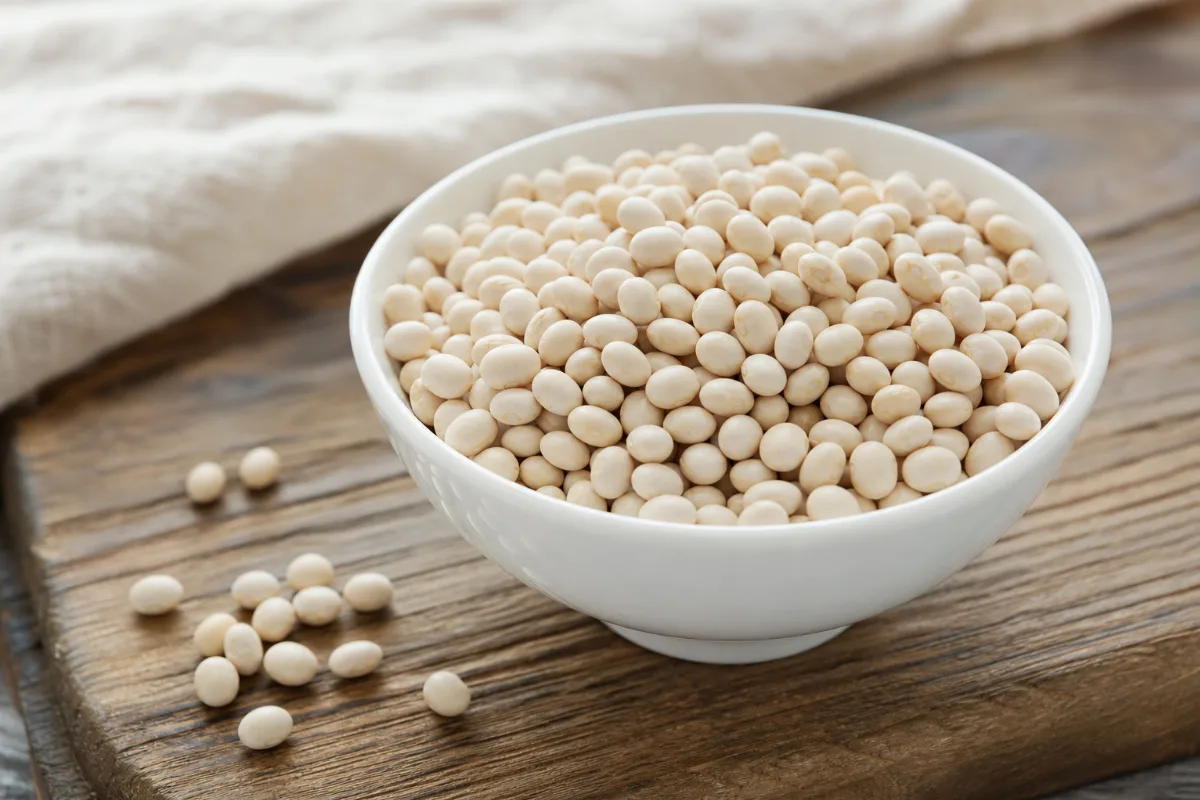
Navy beans (Phaseolus vulgaris) are small, white, oval seeds of the common bean plant, a member of the legume family. People eat the dry seeds cooked, or buy them already cooked in cans.
USDA data for cooked navy beans, boiled without salt: 140 kcal per 100 g. One cup (182 g) has about 255 kcal, 15 g protein, 19.1 g fibre, 255 micrograms folate (DFE), 708 mg potassium, 4.3 mg iron, 96.5 mg magnesium and 0.96 mg manganese, with almost no sodium and very little vitamin K (1.1 micrograms). Dry beans have about 12 g water per 100 g instead of 64 g, so raw and cooked figures cannot be compared. Canned beans were not read.
What the research shows
The firmest facts are about nutrients: fibre feeds gut bacteria and is linked to lower cholesterol, and beans are a folate food. These are not trials of navy beans.
Pooled trials of pulses (beans, chickpeas, lentils and peas) found LDL cholesterol 0.14 to 0.17 mmol/L lower, a very small weight loss of about 0.34 kg, and lower blood sugar markers with large differences between trials. Cohort studies link more legumes to lower high blood pressure risk (RR 0.84) and a little less cardiovascular disease and death from any cause (HR 0.94). Cohort studies cannot prove cause.
Studies of navy beans themselves are small: a 14-person pilot of canned navy beans, a single-meal blood sugar test, a 38-child pilot of navy bean powder, and feasibility trials in colorectal cancer survivors. Most of the navy bean trials come from one research group. None shows that navy beans treat or prevent any disease.
Cooking dried beans safely
Raw and undercooked beans contain a lectin (phytohaemagglutinin). The FDA says it can cause nausea, severe vomiting and diarrhea, and that soaking beans for at least 5 hours then boiling them in fresh water for at least 30 minutes removes it. The FDA page names kidney beans; navy beans are the same species. Canned and properly cooked beans have low levels.
Harvard says beans simmered at low heat, for example in a slow cooker, or undercooked beans will not remove all lectins. In a 2018 outbreak in France, 200 diners became ill after chili con carne made with undercooked raw kidney beans.
Whole beans versus powders and extracts
The cholesterol, blood sugar and weight results come from trials of whole pulses. Some navy bean trials used cooked navy bean powder mixed into foods. Extracts, such as white kidney bean extract, are different products and were not read.
Amounts
This page gives no amounts to eat. Ask a doctor, pharmacist or dietitian what is right for you, especially if you take warfarin, have kidney problems or have a food allergy.
At a glance
Traditional uses history, not proof
- Eaten as a food, cooked from dry or bought canned
- Long use as food is not proof that it treats any condition
Studied for research
- Fibre for bowel health, high certainty for the nutrient, no navy bean trial
- Folate, high certainty for the nutrient
- Cholesterol, moderate certainty (trials of pulses as a group)
- Blood sugar, low certainty (trials of pulses as a group)
- Body weight, low certainty (very small effect, pulses as a group)
- Blood pressure, low certainty (observational, legumes as a group)
- Heart disease and early death, low certainty (observational)
- Colorectal cancer, insufficient evidence (small pilots)
Main compounds
- Fibre
- Folate
- Potassium
- Magnesium
- Iron
- Phytohaemagglutinin (a lectin, in raw beans)
Common forms
- Dried beans, soaked and boiled until fully cooked
- Canned navy beans (already cooked; sodium varies)
- Cooked navy bean powder (used in some trials)
- White kidney bean extract is a different product and is not covered
Research links: 2026 review: whole pulses and cholesterol · FDA: natural toxins in food (raw beans) · National Kidney Foundation: beans · Research Library · Genes & Biomarkers Library
What it is and its history
- Accepted scientific name
- Phaseolus vulgaris
- Naming authority
- L. (GBIF accepted name)
- Common names
- Navy beans (English); Navy bean (English); Haricot beans (English); Pea beans (English); Judias blancas (Spanish)
- Family or group
- Fabaceae (the legume or pea family), as given by GBIF and by the existing nutrient summary.
- Classification
- Plantae > Tracheophyta > Magnoliopsida > Fabales > Fabaceae > Phaseolus > Phaseolus vulgaris
- Native range
- Not verified from a source read.
- Habitat
- Not verified from a source read.
- What it looks like
- Roots: Not verified.; Stems: Not verified.; Leaves: Not verified.; Flowers: Not verified.; Fruit: The small, white, oval dry seeds are eaten (existing nutrient summary). USDA gives household portions of 1 cup cooked = 182 g and 1 cup dry = 208 g.
- Cultivation
- Not verified from a source read.
- Harvest and processing
- Sold dried, canned (already cooked) or ground into cooked bean powder (existing nutrient summary). Canned and powder nutrient values were not read.
- Look-alikes and adulterants
- Name: Kidney beans; Note: Same species. The FDA lectin guidance and the French outbreak report are about kidney beans.; Name: White beans (cannellini and great northern); Note: Other white beans with their own page; USDA figures here are for navy beans only.; Name: White kidney bean extract; Note: A supplement product made from beans, different from cooked beans; not covered here.
- Sustainability and conservation
- Not assessed.
Photographs
What is inside, and how it may work
What it contains and how those compounds act in cells and animals. Laboratory and animal mechanisms are not proven effects in people.
Main compounds
| Compound | Family | Where it is concentrated | Activity studied | Level of evidence |
|---|---|---|---|---|
| Fibre (dietary fibre) | carbohydrate | Seed USDA: 10.5 g per 100 g cooked; 15.3 g per 100 g dry | The National Kidney Foundation says fibre in beans helps you feel full, lowers bad cholesterol, slows the rise in blood sugar after a meal and feeds good gut bacteria. 28 30 29 | Human data |
| Folate (vitamin B9) PubChem 135398658 | vitamin | Seed USDA: 140 micrograms DFE per 100 g cooked; 364 per 100 g dry | Helps tissues grow and cells work and helps form red blood cells (MedlinePlus). The CID is that of folic acid, the man-made form. 22 30 29 | Human data |
| Potassium, magnesium, iron, manganese, copper | minerals | Seed USDA per 100 g cooked: potassium 389 mg, magnesium 53 mg, iron 2.36 mg, manganese 0.527 mg, copper 0.21 mg | The National Kidney Foundation says the potassium and magnesium in beans help heart function and blood pressure control, and that bean iron provides almost a third of the recommended intake. 28 30 | Human data |
| Phytohaemagglutinin (a lectin) | protein (lectin) | Seed (raw) Not given for navy beans in the sources read | At high levels in raw or undercooked beans it can cause nausea, severe vomiting and diarrhea (FDA); it can make red blood cells clump together (Harvard). Cooking destroys it. 19 21 16 | Human data |
Mechanisms, receptors and pathways
| Target or pathway | Gene or receptor | What was found | Level |
|---|---|---|---|
| Fibre, cholesterol and blood sugar | Not specified | The National Kidney Foundation says bean fibre lowers bad cholesterol and slows the rise in blood sugar after a meal. Pooled trials of pulses found small falls in LDL cholesterol and some blood sugar markers, but the abstracts do not prove the fibre is the cause. 28 7 3 14 | Human data |
| Fermentation of bean carbohydrates in the large intestine | Not specified | NIDDK says carbohydrates not fully digested in the stomach and small intestine reach the large intestine, where bacteria break them down and make gas. In a laboratory fermentation test, processing did not change gas production from navy beans. 27 12 | Human data |
| Lectin toxicity of raw beans | Carbohydrate-binding proteins (lectins) | Lectins bind carbohydrates and resist digestion; the bean lectin PHA causes severe vomiting and diarrhea at high levels in raw beans. Wet cooking inactivates most lectins. 19 21 | Human data |
| Lectins and mineral absorption | Not specified | Harvard says animal and cell studies found active lectins can interfere with absorption of calcium, iron, phosphorus and zinc, and that human research is very limited. This is lab and animal evidence only. 21 | Animal and cell |
Absorption, metabolism and elimination
- Absorption
- Not found for navy beans.
- Distribution
- Not found.
- Metabolism
- Not found.
- Elimination
- Not found.
- Bioavailability
- The National Kidney Foundation says the potassium and phosphorus in beans are not absorbed as well as from animal sources or additives. No navy-bean-specific absorption study was read.
Isolated compounds versus whole extracts
The cholesterol, blood sugar and weight results come from trials of whole pulses, mostly cooked or dried beans, chickpeas and lentils. The navy bean studies used cooked beans, canned beans or cooked navy bean powder mixed into foods. White kidney bean extract and other supplements are different products and were not read.
Nutritional composition
Nutrition from USDA FoodData Central (Beans, navy, mature seeds, cooked, boiled, without salt, FDC 173746, SR Legacy, April 2018 release; values read 2026-10-26 from a saved copy of the data feed). Per 100 g cooked: 140 kcal, 8.23 g protein, 0.62 g fat (0.098 g saturated), 26.05 g carbohydrate, 10.5 g fibre, 0.37 g total sugars, about 64 g water, 69 mg calcium, 2.36 mg iron, 53 mg magnesium, 144 mg phosphorus, 389 mg potassium, 0 mg sodium, 1.03 mg zinc, 0.527 mg manganese, 0.21 mg copper, 0.237 mg thiamin, 0.138 mg vitamin B6, 140 micrograms folate (DFE), 0.9 mg vitamin C, 0.6 micrograms vitamin K. One cup of cooked navy beans (182 g): about 255 kcal, 15 g protein, 19.1 g fibre, 1.1 g fat, 0.7 g sugars, 255 micrograms folate (DFE), 708 mg potassium, 4.3 mg iron, 96.5 mg magnesium, 126 mg calcium, 0.96 mg manganese, 0.38 mg copper, 0.43 mg thiamin and 1.1 micrograms vitamin K. Dry, uncooked beans (FDC 173745) per 100 g: 337 kcal, 22.33 g protein, 15.3 g fibre, 364 micrograms folate (DFE), 1,185 mg potassium and 2.5 micrograms vitamin K; dry and cooked columns cannot be compared because the cooked beans hold about 64 g water per 100 g against about 12 g in the dry beans. Cup figures are the 100 g values multiplied by the USDA gram weight. Figures vary with variety and cooking time. Canned beans, flour and powder values were not read, and no figure for plant compounds such as polyphenols was read.
2 high certainty1 moderate certainty4 low certainty1 very low certainty1 not enough evidence
What was looked at
The 9 benefits and uses checked for Navy Beans, each with how strong the evidence is. Tap one to open it.
- Fibre for bowel healthHigh certainty
- LDL cholesterol (pulses as a group, plus small navy bean studies)Moderate certainty
- Blood sugar (pulses as a group)Low certainty
- Body weight and waist size (pulses as a group)Low certainty
- Folate (vitamin B9)High certainty
- Blood pressure (legumes, observational)Low certainty
- Heart disease and early death (legumes, observational)Low certainty
- Colorectal cancer risk and recoveryNot enough evidence
- Gut bacteria (colorectal cancer survivors)Very low certainty
Lab markers tracked in the studies
LDL cholesterolHDL cholesterolFasting blood glucoseHbA1c or fructosamineBlood glucose after a mealBody weightWaist circumferenceRisk of developing high blood pressureDeath from any causeDietary fibre intakeGut bacterial diversitySerum amyloid A (inflammation marker)
What is Navy Beans good for?
The main studied uses and how strong the human evidence is for each. Most results are for pulses or legumes as a group, not for eating navy beans alone.
Benefits, one by one
Each card is a research question, not a promise. Tap a goal to filter. Open a card to see the studies, doses and limits.
Fibre for bowel health
High certaintyCooked navy beans have 10.5 g of fibre per 100 g and about 19 g in one cup (182 g), by USDA data. The National Kidney Foundation lists fibre among the nutrients in beans and says it helps you feel full, lowers 'bad' cholesterol, slows the rise in blood sugar after a meal and feeds good gut bacteria. This is a nutrient fact, not a trial of navy beans. Beans also cause gas in some people (see Safety).
3 studiesCooked navy beans (USDA); cooked navy bean powder in the trial.
Studies, doses and limits
What the trials found
In a 4-week trial of 29 colorectal cancer survivors, eating 35 g a day of cooked navy bean powder raised fibre intake at weeks 2 and 4 compared with baseline and control (P<=0.01), with no major gut problems reported. This shows the powder is a practical way to raise fibre intake, not that it improves bowel health.
Results
Navy beans are a high-fibre food by USDA data, and a small trial found fibre intake rose when people ate navy bean powder.
Effect sizes as reported
Fibre 10.5 g per 100 g cooked (USDA).
Why this rating
The fibre content is a measured nutrient fact (USDA). No trial of navy beans for bowel health was found, so no health effect is claimed.
Form and dose studied
Cooked navy beans (USDA); cooked navy bean powder in the trial.
Who was studied
Adults, including colorectal cancer survivors.
Limits
USDA values vary with variety and cooking time. The trial was a small pilot.
Why researchers looked
Beans are a well-known fibre food, so people ask what the fibre does for the gut.
Traditional use
Navy beans are eaten as a food, cooked from dry or bought canned. Long use as food is not proof that it treats any condition.
Proposed mechanism Unknown
Not tested here. The National Kidney Foundation page describes what fibre does in general terms.
A proposed mechanism does not show that the effect happens in people.
Extra fibre from beans can cause gas and bloating in some people.
LDL cholesterol (pulses as a group, plus small navy bean studies)
Moderate certaintyPooled trials of pulses, including beans, found a small fall in LDL ('bad') cholesterol of about 0.14 to 0.17 mmol/L. Reviewers rated the certainty moderate to high for the 2026 analysis, and results were similar across pulse types. Trials that used navy beans specifically were small: a 14-person canned navy bean study saw LDL fall in men but not in women, and a 38-child pilot found higher HDL but no LDL result in its abstract.
4 studiesWhole pulses as food; navy bean studies used canned beans or cooked b…
Studies, doses and limits
What the trials found
A 2014 meta-analysis of 26 trials (1,037 adults) found pulse diets (median 130 g a day, at least 3 weeks) lowered LDL by 0.17 mmol/L (95% CI 0.09 to 0.25). A 2026 update of 38 trials (2,095 adults, median 6 weeks) found LDL fell by 0.14 mmol/L (0.08 to 0.19), non-HDL by 0.22, apoB by 0.08 g/L and HDL by 0.03 mmol/L, with similar results across pulse types and an inverse dose-response for beans up to 1 cup a day. Small navy bean studies: 14 overweight adults eating 5 cups a week of canned navy beans for 4 weeks had LDL down 18% in men and little change in women; in 38 children aged 8 to 13, 17.5 g a day of navy bean powder for 4 weeks gave higher HDL than control and was tolerated.
Results
Pulses give a small average fall in LDL cholesterol. Navy beans alone have only small pilot studies.
Effect sizes as reported
LDL -0.17 mmol/L (2014, 26 trials); -0.14 mmol/L (2026, 38 trials).
Why this rating
The 2026 reviewers rate certainty moderate to high for pulses as a group. We rate moderate rather than high because navy beans were not analysed alone and the navy bean studies are tiny pilots.
Form and dose studied
Whole pulses as food; navy bean studies used canned beans or cooked bean powder.
Who was studied
Adults; one pilot in children aged 8 to 13.
Limits
LDL is a blood marker, not heart attacks or strokes. Navy beans were not analysed separately in the abstracts. The canned bean study was 14 people with no clear control group.
Why researchers looked
Beans are high in fibre and plant protein, so researchers test whether eating them changes blood cholesterol.
Traditional use
Navy beans are eaten as a food, cooked from dry or bought canned. Long use as food is not proof that it treats any condition.
Proposed mechanism Unknown
Not established in these trials. The National Kidney Foundation says fibre in beans lowers 'bad' cholesterol, but the trials did not test the cause.
A proposed mechanism does not show that the effect happens in people.
None specific. People taking cholesterol medicines should not change them without their doctor.
Blood sugar (pulses as a group)
Low certaintyPooled trials of pulses found lower fasting blood glucose and lower long-term markers (HbA1c or fructosamine) when pulses were part of low-glycaemic-index diets. The trials differed a lot, and a 2020 review rated the evidence very low quality. One single-meal study found navy beans lowered the peak blood sugar after a meal in healthy young men, but not the average over 2 hours.
3 studiesPulses as food (navy beans: whole, puréed or powder in a single meal).
Studies, doses and limits
What the trials found
A 2009 meta-analysis of 41 trials found pulses alone lowered fasting glucose (SMD -0.82, 95% CI -1.36 to -0.27) and pulses in low-GI diets lowered HbA1c or fructosamine (-0.28, -0.42 to -0.14), with high unexplained differences between trials. A 2020 review of 18 trials of at least 6 weeks found significant effects only in the 5 trials in type 2 diabetes (fasting glucose, HbA1c, insulin or 2-hour glucose, depending on the trial) and rated the overall evidence very low. In healthy young men, whole, puréed and powdered navy beans all lowered peak blood glucose compared with whole-wheat flour (P<0.05), with no difference in the mean over 120 minutes.
Results
Pulses may modestly improve blood sugar markers, but the trials are inconsistent. Navy beans alone have only a single-meal study.
Effect sizes as reported
Fasting glucose SMD -0.82 (pulses alone); HbA1c or fructosamine SMD -0.28 (low-GI diets).
Why this rating
High unexplained differences between trials and very low quality in the 2020 review. Navy beans alone were tested only in single meals.
Form and dose studied
Pulses as food (navy beans: whole, puréed or powder in a single meal).
Who was studied
People with and without diabetes; healthy young men for the navy bean meal.
Limits
The meal study was in healthy men, not people with diabetes, and the number of men is not given in the abstract.
Why researchers looked
Beans are digested slowly, so researchers test whether eating them changes blood sugar.
Traditional use
Navy beans are eaten as a food, cooked from dry or bought canned. Long use as food is not proof that it treats any condition.
Proposed mechanism Unknown
Not established in these studies. The 2009 review calls pulses a good source of slowly digestible carbohydrate, fibre and vegetable protein.
A proposed mechanism does not show that the effect happens in people.
People taking blood sugar medicines should ask their clinic before changing their diet.
Body weight and waist size (pulses as a group)
Low certaintyPooled trials found people eating pulses lost slightly more weight than people not eating them, about 0.34 kg on average over about 6 weeks. That is very small. A 14-person study found waist size fell by about 2 cm after 4 weeks of eating 5 cups a week of canned navy beans, but it had no clear control group.
2 studiesPulses as food; canned navy beans in the pilot.
Studies, doses and limits
What the trials found
A 2016 meta-analysis of 21 trials (940 adults) found diets with pulses (median 132 g a day) gave a weight difference of -0.34 kg (95% CI -0.63 to -0.04, P=0.03) over a median of 6 weeks, including in diets not meant to cut calories. In 14 overweight or obese adults eating canned navy beans for 4 weeks, waist circumference fell by 2.5 cm in women and 2.1 cm in men (P<0.001).
Results
Pulse diets gave a very small extra weight loss in short trials. The navy bean waist result is a before-and-after pilot.
Effect sizes as reported
Body weight -0.34 kg; waist -2.1 to -2.5 cm in 14 people.
Why this rating
A very small effect in short trials of pulses, with no long-term follow-up. The navy bean study is too small to carry weight.
Form and dose studied
Pulses as food; canned navy beans in the pilot.
Who was studied
Adults; overweight and obese adults in the pilot.
Limits
Long-term weight effects were not tested. Navy beans alone were tested only in a 14-person pilot.
Why researchers looked
Beans are filling foods rich in fibre and protein, so researchers ask whether they help weight control.
Traditional use
Navy beans are eaten as a food, cooked from dry or bought canned. Long use as food is not proof that it treats any condition.
Proposed mechanism Unknown
Not established in these studies.
A proposed mechanism does not show that the effect happens in people.
None specific.
Folate (vitamin B9)
High certaintyCooked navy beans have 140 micrograms of folate (DFE) per 100 g, about 255 micrograms in a cup (182 g), by USDA data. MedlinePlus names dried beans and peas as natural folate foods and advises women who may become pregnant to take a folic acid supplement as well as eating folate foods, to lower the risk of some birth defects. This is a nutrient fact, not a navy bean trial.
2 studiesCooked navy beans (USDA).
Studies, doses and limits
What the trials found
No trial of navy beans and folate status was found. The evidence is the USDA content value and MedlinePlus statements about folate foods and folic acid.
Results
Navy beans are a folate food; the folic acid advice for pregnancy applies to supplements as well as food.
Effect sizes as reported
Folate 140 micrograms DFE per 100 g cooked (USDA).
Why this rating
The content is a measured nutrient fact (USDA) and the roles of folate come from a health-agency page. High for the nutrient, not for any effect of navy beans.
Form and dose studied
Cooked navy beans (USDA).
Who was studied
General population; women who may become pregnant.
Limits
Values vary with variety and cooking. MedlinePlus does not name navy beans specifically.
Why researchers looked
Folate is a B vitamin needed for cell growth, and beans are a common source.
Traditional use
Navy beans are eaten as a food, cooked from dry or bought canned. Long use as food is not proof that it treats any condition.
Proposed mechanism Unknown
MedlinePlus says folate helps tissues grow and cells work and helps form red blood cells.
A proposed mechanism does not show that the effect happens in people.
None specific.
Blood pressure (legumes, observational)
Low certaintyIn long-term studies, people who ate the most legumes had about 16% lower risk of developing high blood pressure than people who ate the least (RR 0.84). This is an association, not proof, and it is about legumes as a group, not navy beans alone.
2 studiesLegumes as food.
Studies, doses and limits
What the trials found
A 2026 meta-analysis of 12 prospective studies found high versus low legume intake linked to lower risk of hypertension (RR 0.84, 95% CI 0.77 to 0.93, I2=65%; 10 studies, 309,853 participants) and RR 0.88 per 100 g a day. A 2019 umbrella review of cohorts found pulses with or without other legumes linked to lower hypertension incidence (RR 0.91, 0.86 to 0.97), graded very low certainty.
Results
Higher legume intake was linked to a lower chance of developing high blood pressure.
Effect sizes as reported
RR 0.84 (high vs low); RR 0.91 (2019 review).
Why this rating
Observational; the 2019 review rates the certainty very low. People who eat more legumes may differ in other ways.
Form and dose studied
Legumes as food.
Who was studied
Adults in cohort studies.
Limits
Not about navy beans alone. Mixed quality and some sign of publication bias.
Why researchers looked
Beans contain potassium and magnesium, and people ask whether eating them affects blood pressure.
Traditional use
Navy beans are eaten as a food, cooked from dry or bought canned. Long use as food is not proof that it treats any condition.
Proposed mechanism Unknown
Not established. Observational.
A proposed mechanism does not show that the effect happens in people.
None specific.
Heart disease and early death (legumes, observational)
Low certaintyIn long-term studies, people eating more legumes had slightly lower risk of cardiovascular disease and of dying from any cause (about 6% lower in the highest group). These links do not prove cause and are not about navy beans alone.
3 studiesLegumes as food.
Studies, doses and limits
What the trials found
A 2019 review of 28 cohort studies found the highest pulse and legume intake linked to lower cardiovascular disease incidence (RR 0.92, 95% CI 0.85 to 0.99) and coronary heart disease (RR 0.90, 0.83 to 0.99), but no link with heart attack, stroke or diabetes incidence or with cardiovascular, heart disease or stroke deaths; certainty low for cardiovascular disease and very low for the rest. A 2023 review of 32 cohorts (1,141,793 people, 93,373 deaths) found higher legume intake linked to lower death from any cause (HR 0.94, 0.91 to 0.98) and from stroke (HR 0.91, 0.84 to 0.99), with no significant link to cardiovascular, heart disease or cancer deaths; certainty low to moderate. Harvard's lectins page also says large population studies link legumes to lower rates of cardiovascular disease and type 2 diabetes.
Results
Small average reductions in some outcomes, none in others. Observational data cannot show that legumes cause these differences.
Effect sizes as reported
CVD incidence RR 0.92; CHD RR 0.90; all-cause death HR 0.94; stroke death HR 0.91.
Why this rating
Observational; the reviews rate certainty low, very low or low to moderate depending on the outcome. Legumes as a group, not navy beans alone.
Form and dose studied
Legumes as food.
Who was studied
Adults in cohort studies.
Limits
People who eat more legumes may differ in other ways. Mixed results across outcomes.
Why researchers looked
Researchers follow large groups for years to see whether legume eaters live longer or have less heart disease.
Traditional use
Navy beans are eaten as a food, cooked from dry or bought canned. Long use as food is not proof that it treats any condition.
Proposed mechanism Unknown
Not established. Observational.
A proposed mechanism does not show that the effect happens in people.
None specific.
Colorectal cancer risk and recovery
Not enough evidenceResearchers have tested navy beans in people who have had colorectal cancer, because beans are rich in fibre. The studies were small feasibility trials that showed navy bean powder is easy to eat. They did not show that navy beans prevent cancer or help survival. A 2026 scoping review calls the evidence too limited for firm conclusions and notes that five navy bean trials came from one research group.
2 studiesCooked navy bean powder in study foods.
Studies, doses and limits
What the trials found
In a 4-week trial of 29 survivors, 35 g a day of cooked navy bean powder was feasible and raised fibre intake, with no major gut problems reported. A 2026 scoping review of 15 human studies found hints of modestly lower colorectal cancer risk with higher pulse intake in one pooled case-control study, but the findings were mixed and weakened after adjusting for lifestyle, and survivorship studies were short feasibility and mechanism trials.
Results
Navy bean powder was easy to eat in small pilots. Whether beans change cancer risk is not shown.
Effect sizes as reported
No cancer outcome was measured in the trials read.
Why this rating
Small pilots, mostly from one research group, measuring feasibility and markers rather than cancer. The scoping review says firm conclusions are not possible.
Form and dose studied
Cooked navy bean powder in study foods.
Who was studied
Colorectal cancer survivors.
Limits
Only 29 people in the trial read. The scoping review does not rate study quality.
Why researchers looked
Fibre-rich foods are studied for gut and colon health, so a research group tested navy bean powder in colorectal cancer survivors.
Traditional use
Navy beans are eaten as a food, cooked from dry or bought canned. Long use as food is not proof that it treats any condition.
Proposed mechanism Unknown
Not established. The trials looked at feasibility and markers, not cancer outcomes.
A proposed mechanism does not show that the effect happens in people.
People with cancer should ask their care team about diet changes.
Gut bacteria (colorectal cancer survivors)
Very low certaintyIn a 28-day pilot trial, eating cooked navy bean powder changed the make-up and diversity of gut bacteria compared with baseline. Changes in gut bacteria are a marker, not a health benefit, and the study had only 29 people.
1 studiesCooked navy bean powder.
Studies, doses and limits
What the trials found
In 29 overweight or obese colorectal cancer survivors, 35 g a day of cooked navy bean powder for 28 days increased gut bacterial diversity and changed gut microbial composition compared with baseline. Only rice bran, not navy bean, lowered the Firmicutes:Bacteroidetes ratio and raised short-chain fatty acids in stool at 14 days.
Results
Navy bean powder changed gut bacteria in a small pilot. The health meaning is not known.
Effect sizes as reported
Increased gut bacterial diversity vs baseline.
Why this rating
One small pilot measuring bacteria, not health outcomes.
Form and dose studied
Cooked navy bean powder.
Who was studied
Overweight or obese adults with a history of colorectal cancer.
Limits
The abstract describes the diversity result against baseline.
Why researchers looked
Beans are fermented by gut bacteria, so researchers look at how bean powder changes stool bacteria and chemicals.
Traditional use
Navy beans are eaten as a food, cooked from dry or bought canned. Long use as food is not proof that it treats any condition.
Proposed mechanism Unknown
Fibre and plant compounds are fermented by gut bacteria. The abstract says navy bean powder contains phytochemicals fermented by colon bacteria; this was not tested as a mechanism.
A proposed mechanism does not show that the effect happens in people.
None specific.
Connections to the rest of health
How Navy Beans connects to the rest of our health knowledge graph. Every link says what kind of connection it is. A safety link (for example to the liver) is a warning, not a benefit. A study that merely mentions a topic never creates a benefit link.
Explore every connection: goals, body systems, organs, symptoms, genes
A. Wellness goals
| Connected to | Kind of connection | Evidence status | Context | Studies |
|---|---|---|---|---|
| Digestive Support | Demonstrated clinical effect | High certainty | Fibre for bowel health: Cooked navy beans have 10.5 g of fibre per 100 g and about 19 g in one cup (182 g), by USDA data. The National Kidney Foundation lists fibre among the nutrients in beans and says it helps you feel full, lowers 'bad' cholesterol, slows the rise in blood sugar after a meal and feeds good gut bacteria. This is a nutrient fact, not a trial of navy beans. Beans also cause gas in some people (see Safety). | 30 28 5 |
| Cholesterol Balance | Moderate certainty | LDL cholesterol (pulses as a group, plus small navy bean studies): Pooled trials of pulses, including beans, found a small fall in LDL ('bad') cholesterol of about 0.14 to 0.17 mmol/L. Reviewers rated the certainty moderate to high for the 2026 analysis, and results were similar across pulse types. Trials that used navy beans specifically were small: a 14-person canned navy bean study saw LDL fall in men but not in women, and a 38-child pilot found higher HDL but no LDL result in its abstract. | 7 3 9 6 | |
| Heart Health | Moderate certainty | LDL cholesterol (pulses as a group, plus small navy bean studies): Pooled trials of pulses, including beans, found a small fall in LDL ('bad') cholesterol of about 0.14 to 0.17 mmol/L. Reviewers rated the certainty moderate to high for the 2026 analysis, and results were similar across pulse types. Trials that used navy beans specifically were small: a 14-person canned navy bean study saw LDL fall in men but not in women, and a 38-child pilot found higher HDL but no LDL result in its abstract. | 7 3 9 6 | |
| Blood Sugar Balance | Low certainty | Blood sugar (pulses as a group): Pooled trials of pulses found lower fasting blood glucose and lower long-term markers (HbA1c or fructosamine) when pulses were part of low-glycaemic-index diets. The trials differed a lot, and a 2020 review rated the evidence very low quality. One single-meal study found navy beans lowered the peak blood sugar after a meal in healthy young men, but not the average over 2 hours. | 14 4 2 | |
| Weight Management | Low certainty | Body weight and waist size (pulses as a group): Pooled trials found people eating pulses lost slightly more weight than people not eating them, about 0.34 kg on average over about 6 weeks. That is very small. A 14-person study found waist size fell by about 2 cm after 4 weeks of eating 5 cups a week of canned navy beans, but it had no clear control group. | 8 9 | |
| Womens Wellness | Demonstrated clinical effect | High certainty | Folate (vitamin B9): Cooked navy beans have 140 micrograms of folate (DFE) per 100 g, about 255 micrograms in a cup (182 g), by USDA data. MedlinePlus names dried beans and peas as natural folate foods and advises women who may become pregnant to take a folic acid supplement as well as eating folate foods, to lower the risk of some birth defects. This is a nutrient fact, not a navy bean trial. | 30 22 |
| Blood Pressure Support | Low certainty | Blood pressure (legumes, observational): In long-term studies, people who ate the most legumes had about 16% lower risk of developing high blood pressure than people who ate the least (RR 0.84). This is an association, not proof, and it is about legumes as a group, not navy beans alone. | 10 15 | |
| Heart Health | Low certainty | Blood pressure (legumes, observational): In long-term studies, people who ate the most legumes had about 16% lower risk of developing high blood pressure than people who ate the least (RR 0.84). This is an association, not proof, and it is about legumes as a group, not navy beans alone. Heart disease and early death (legumes, observational): In long-term studies, people eating more legumes had slightly lower risk of cardiovascular disease and of dying from any cause (about 6% lower in the highest group). These links do not prove cause and are not about navy beans alone. | 10 15 18 21 | |
| Healthy Aging | Low certainty | Heart disease and early death (legumes, observational): In long-term studies, people eating more legumes had slightly lower risk of cardiovascular disease and of dying from any cause (about 6% lower in the highest group). These links do not prove cause and are not about navy beans alone. | 15 18 21 | |
| Healthy Aging | Not enough evidence | Colorectal cancer risk and recovery: Researchers have tested navy beans in people who have had colorectal cancer, because beans are rich in fibre. The studies were small feasibility trials that showed navy bean powder is easy to eat. They did not show that navy beans prevent cancer or help survival. A 2026 scoping review calls the evidence too limited for firm conclusions and notes that five navy bean trials came from one research group. | 5 11 | |
| Digestive Support | Very low certainty | Gut bacteria (colorectal cancer survivors): In a 28-day pilot trial, eating cooked navy bean powder changed the make-up and diversity of gut bacteria compared with baseline. Changes in gut bacteria are a marker, not a health benefit, and the study had only 29 people. | 13 |
B. Body systems
| Connected to | Kind of connection | Evidence status | Context | Studies |
|---|---|---|---|---|
| Digestive System | Biological association | High certainty | Studied for: Fibre for bowel health Studied for: Colorectal cancer risk and recovery | 30 28 5 11 13 |
| Cardiovascular System | Biological association | Moderate certainty | Studied for: LDL cholesterol (pulses as a group, plus small navy bean studies) Studied for: Blood pressure (legumes, observational) | 7 3 9 6 10 15 18 21 |
| Endocrine System | Biological association | Low certainty | Studied for: Blood sugar (pulses as a group) | 14 4 2 |
| Metabolism Weight | Biological association | Low certainty | Studied for: Blood sugar (pulses as a group) Studied for: Body weight and waist size (pulses as a group) | 14 4 2 8 9 |
| Reproductive System | Biological association | High certainty | Studied for: Folate (vitamin B9) | 30 22 |
C. Body parts and organs
E. Health conditions
| Connected to | Kind of connection | Evidence status | Context | Studies |
|---|---|---|---|---|
| Food poisoning from raw beans | Adverse effect or risk | Documented risk | Raw or undercooked beans can cause severe vomiting and diarrhea from a lectin; soaking and boiling removes it. Preparation or compound: Raw or undercooked beans (lectin PHA) |
19 21 16 |
| Food allergy | Adverse effect or risk | Documented risk | Beans and other legumes can cause allergic reactions, with cross-reactions between legumes. Preparation or compound: Bean proteins |
1 23 |
| Kidney disease | Drug or supplement interaction | Documented risk | Most people with chronic kidney disease not on dialysis need not limit beans; dialysis needs a dietitian plan. Preparation or compound: Navy beans as a potassium and phosphorus food |
28 24 |
I. Biomarkers
| Connected to | Kind of connection | Evidence status | Context | Studies |
|---|---|---|---|---|
| LDL cholesterol | Biological association | Moderate certainty | Measured in trials: lowered. A lab change is not the same as a health benefit. | 7 3 9 |
| HDL cholesterol | Biological association | Very low certainty | Measured in trials: mixed. A lab change is not the same as a health benefit. | 6 3 |
| Fasting blood glucose | Biological association | Low certainty | Measured in trials: lowered. A lab change is not the same as a health benefit. | 14 4 |
| HbA1c or fructosamine | Biological association | Low certainty | Measured in trials: lowered. A lab change is not the same as a health benefit. | 14 |
| Blood glucose after a meal | Biological association | Low certainty | Measured in trials: lowered. A lab change is not the same as a health benefit. | 2 |
| Body weight | Biological association | Low certainty | Measured in trials: lowered. A lab change is not the same as a health benefit. | 8 |
| Waist circumference | Biological association | Very low certainty | Measured in trials: lowered. A lab change is not the same as a health benefit. | 9 |
| Risk of developing high blood pressure | Biological association | Low certainty | Measured in trials: lowered. A lab change is not the same as a health benefit. | 10 15 |
| Death from any cause | Biological association | Low certainty | Measured in trials: lowered. A lab change is not the same as a health benefit. | 18 |
| Dietary fibre intake | Biological association | Low certainty | Measured in trials: raised. A lab change is not the same as a health benefit. | 5 6 |
| Gut bacterial diversity | Biological association | Very low certainty | Measured in trials: raised. A lab change is not the same as a health benefit. | 13 |
| Serum amyloid A (inflammation marker) | Biological association | Not enough evidence | Measured in trials: mixed. A lab change is not the same as a health benefit. | 5 |
K. Biological pathways
| Connected to | Kind of connection | Evidence status | Context | Studies |
|---|---|---|---|---|
| Fibre | Preliminary mechanism | Human | Navy beans are a high-fibre food; fibre is linked to lower cholesterol and slower blood sugar rise. | 28 30 |
| Folate | Preliminary mechanism | Human | Navy beans contain folate; folic acid is advised before and in early pregnancy. | 22 30 |
| Potassium | Preliminary mechanism | Human | Navy beans contain potassium, relevant for kidney disease. | 28 30 |
L. Active compounds
| Connected to | Kind of connection | Evidence status | Context | Studies |
|---|---|---|---|---|
| Fibre (dietary fibre) | Biological association | Human | The National Kidney Foundation says fibre in beans helps you feel full, lowers bad cholesterol, slows the rise in blood sugar after a meal and feeds good gut bacteria. Preparation or compound: Seed |
28 30 29 |
| Folate (vitamin B9) | Biological association | Human | Helps tissues grow and cells work and helps form red blood cells (MedlinePlus). The CID is that of folic acid, the man-made form. Preparation or compound: Seed |
22 30 29 |
| Potassium, magnesium, iron, manganese, copper | Biological association | Human | The National Kidney Foundation says the potassium and magnesium in beans help heart function and blood pressure control, and that bean iron provides almost a third of the recommended intake. Preparation or compound: Seed |
28 30 |
| Phytohaemagglutinin (a lectin) | Biological association | Human | At high levels in raw or undercooked beans it can cause nausea, severe vomiting and diarrhea (FDA); it can make red blood cells clump together (Harvard). Cooking destroys it. Preparation or compound: Seed (raw) |
19 21 16 |
Each connection is stored with the ingredient, the connected record, the kind of connection, the evidence status, the supporting studies, the preparation or compound involved, and a review date (last reviewed October 26, 2026).
The evidence
The research centre for Navy Beans. Every record here was checked against PubMed or the publisher's page; we never list a study we have not verified.
Evidence by outcome
Bars show how many studies we found for each outcome, not how well it works. People are added up across trials only (reviews are not added, to avoid double counting).
How we rate evidence
High certainty
Several well-run trials or reviews agree; further research is unlikely to change the picture much.
Moderate certainty
Good trials point the same way, but some doubt remains.
Low certainty
Small, short or inconsistent trials. The finding could change with better research.
Very low certainty
Very little or very weak human data. Treat as a possibility only.
Mixed findings
Trials or reviews disagree with each other.
Not enough evidence
Not enough human research to say either way.
Evidence against
Good research found no benefit, or found harm.
We take the reviewers' own risk-of-bias and GRADE statements where they exist, and otherwise judge from study size, design, consistency, directness and whether a product matches what is sold. Many publications do not make evidence high. Method note: We started from our existing navy beans summary, re-checked nutrition against USDA FoodData Central values, read the health agency pages (FDA, National Kidney Foundation, NIDDK, MedlinePlus, NHS, Harvard) and searched PubMed for reviews, trials and safety reports. Only abstracts were read for studies. Items we could not verify are flagged in the research gaps.
Study library: every study we checked 30
| Study | Design | People | Product, dose, length | Result |
|---|---|---|---|---|
| Abu Risha 2024 Legume Allergens Pea, Chickpea, Lentil, Lupine and Beyond. Curr Allergy Asthma Rep · PMID 38990406 · DOI |
Narrative review |
Review of reports of allergy to legumes other than peanut and soy | Beans, pea, lentils, chickpea, lupine, cowpea, pigeon pea and fenugreek Legumes as food |
These 'non-priority' legumes, including beans, can cause mild-to-severe allergic reactions. Severe reactions were described particularly for peas and lupine. Most reactions come from IgE cross-reaction with similar proteins, for example between peanut and lupine. Most studies are case reports, so large studies are needed. No numbers in the abstract (Not applicable) Methods, limits and fundingOutcomes: Allergic reactions and cross-reactions between legumes Limitations: A narrative review based largely on case reports. Navy beans are not named in the abstract. Funding and conflicts: Funding is not stated in the abstract; full text not read. Read: abstract |
| Anderson 2014 The acute effect of commercially available pulse powders on postprandial glycaemic response in healthy young men. Br J Nutr · PMID 25327223 · DOI |
Controlled trial |
Healthy young men (three randomised within-subject experiments; navy beans were Experiment 1) | Whole, puréed and powdered navy beans, matched for available carbohydrate Navy beans as food (whole, purée, powder) Matched for available carbohydrate (single serving) Single meal; blood glucose measured for 2 hours and again after a pizza meal · vs Whole-wheat flour |
Compared with whole-wheat flour, the navy bean treatments lowered the peak blood glucose, but not the mean blood glucose over 120 minutes. Pulse form (whole, purée, powder) did not predict the effect. Peak blood glucose lower with navy beans (P<0.05); mean over 120 min not different (Not given in the abstract) Methods, limits and fundingOutcomes: Blood glucose over 120 minutes and after a later meal Limitations: Single meal in healthy young men; not long-term and not people with diabetes. Number of men not given in the abstract. Funding and conflicts: The PubMed record lists non-U.S. government research support; other funding is not stated in the abstract. Read: abstract |
| Back 2026 Effect of Different Types of Whole Dietary Pulses on Established Therapeutic Lipid Targets for Cardiovascular Risk Reduction: An Updated Systematic Review and Dose-Response Meta-Analysis of Randomized Controlled Trials. J Am Heart Assoc · PMID 42132198 · DOI |
Systematic review meta analysis |
2095 2,095 adults in 38 randomised trials (52 comparisons) |
Whole dietary pulses of different types, including beans Pulses as food Median 130 g/day (0.5 to 0.67 cup/day; trial detail, not advice) Median 6 weeks (trials of at least 3 weeks) · vs Control diets |
Whole pulses lowered LDL, non-HDL and apoB, with a trivial fall in HDL. Results were similar across pulse types. For beans there was an inverse dose-response up to 1 cup/day. The authors rate certainty moderate-to-high for all outcomes except apoB (very low). LDL -0.14 mmol/L; non-HDL -0.22 mmol/L; apoB -0.08 g/L; HDL -0.03 mmol/L (LDL -0.14 (95% CI -0.19 to -0.08); non-HDL -0.22 (-0.30 to -0.14); apoB -0.08 (-0.13 to -0.03); HDL -0.03 (-0.05 to -0.01)) Methods, limits and fundingOutcomes: LDL cholesterol (primary), non-HDL cholesterol, apoB, HDL cholesterol Limitations: Pulse types pooled; navy beans were not analysed separately in the abstract. Blood markers, not heart attacks or strokes. Funding and conflicts: The PubMed record lists non-U.S. government research support; other funders are not stated in the abstract. Registration: PROSPERO CRD42023432826 Read: abstract |
| Bielefeld 2020 The Effects of Legume Consumption on Markers of Glycaemic Control in Individuals with and without Diabetes Mellitus: A Systematic Literature Review of Randomised Controlled Trials. Nutrients · PMID 32708949 · DOI |
Systematic review |
18 randomised trials of at least 6 weeks (5 in type 2 diabetes, 12 without diabetes, 1 prediabetes) | Legumes as food Legumes as food Not given in the abstract At least 6 weeks · vs Control diets |
Only the studies in type 2 diabetes (5) reported significant effects: three reduced fasting glucose, two reduced HbA1c, one reduced fasting insulin and one reduced 2-hour post-meal glucose. The authors rate the overall quality of evidence as very low. No pooled estimate in the abstract (Not given) Methods, limits and fundingOutcomes: Fasting glucose, fasting insulin, HbA1c, HOMA-IR, 2-hour post-meal glucose Limitations: No pooled analysis. Very low overall quality (GRADE). Legumes as a group, not navy beans alone. Funding and conflicts: Funding is not stated in the abstract; full text not read. Read: abstract |
| Borresen 2016 A Randomized Controlled Trial to Increase Navy Bean or Rice Bran Consumption in Colorectal Cancer Survivors. Nutr Cancer · PMID 27689688 · DOI |
Controlled trial |
29 29 colorectal cancer survivors who completed the trial |
Cooked navy bean powder in study foods (rice bran arm also tested) Cooked navy bean powder 35 g/day of navy bean powder (trial detail, not advice) 4 weeks · vs Study foods without navy bean or rice bran |
Eating navy bean powder was feasible, fibre intake rose, and no major gut problems were reported. Telomere length was linked with age and HDL at baseline and with a better serum amyloid A at week 4. Fibre intake higher than baseline and control at weeks 2 and 4 (P<=0.01) (Not given in the abstract) Methods, limits and fundingOutcomes: Feasibility, fibre intake, inflammation markers, telomere length, gut symptoms Limitations: A feasibility pilot with 29 people. It was not designed to show whether navy beans prevent cancer. Funding and conflicts: The PubMed record lists U.S. National Institutes of Health extramural support. Read: abstract |
| Borresen 2017 A Pilot Randomized Controlled Clinical Trial to Assess Tolerance and Efficacy of Navy Bean and Rice Bran Supplementation for Lowering Cholesterol in Children. Glob Pediatr Health · PMID 28345013 · DOI |
Controlled trial |
38 38 children aged 8 to 13 at risk of heart disease because of abnormal blood lipids (9 control, 10 navy bean, 9 rice bran, 10 combined) |
Cooked navy bean powder in a muffin or smoothie (rice bran arms also tested) Cooked navy bean powder 17.5 g navy bean powder daily in the navy bean arm (trial detail, not advice) 4 weeks · vs Muffin or smoothie without navy bean or rice bran |
The navy bean powder was tolerated and raised fibre intake. HDL cholesterol was higher than control at week 4. The authors say longer and higher intakes are probably needed to change several lipid measures. HDL higher than control at week 4 (P=.02); fibre intake up (P=.02) (Not given in the abstract) Methods, limits and fundingOutcomes: Tolerance, fibre intake, blood lipids Limitations: Very small pilot; powder, not whole beans. Only HDL differed in the abstract; no LDL result is reported there. Funding and conflicts: No funder is stated in the abstract; the authors are the same group that ran other navy bean trials (see the cancer scoping review). Read: abstract |
| Ha 2014 Effect of dietary pulse intake on established therapeutic lipid targets for cardiovascular risk reduction: a systematic review and meta-analysis of randomized controlled trials. CMAJ · PMID 24710915 · DOI |
Systematic review meta analysis |
1037 1,037 adults in 26 randomised trials |
Diets emphasising pulses (beans, chickpeas, lentils and peas) Pulses as food Median 130 g/day (about 1 serving; trial detail, not advice) At least 3 weeks · vs Isocaloric diets without pulses |
Pulse diets lowered LDL cholesterol. No effect was seen on apolipoprotein B or non-HDL cholesterol. LDL mean difference -0.17 mmol/L (95% CI -0.25 to -0.09 mmol/L) Methods, limits and fundingOutcomes: LDL cholesterol, apolipoprotein B, non-HDL cholesterol Limitations: Pulses as a group, not navy beans alone. The authors call for longer, higher-quality trials. Funding and conflicts: The PubMed record lists non-U.S. government research support; other funders are not stated in the abstract. Registration: NCT01594567 Read: abstract |
| Kim 2016 Effects of dietary pulse consumption on body weight: a systematic review and meta-analysis of randomized controlled trials. Am J Clin Nutr · PMID 27030531 · DOI |
Systematic review meta analysis |
940 940 adults in 21 randomised trials |
Diets containing whole dietary pulses (beans, lentils, chickpeas, dry peas) Pulses as food Median 132 g/day (about 1 serving; trial detail, not advice) Median 6 weeks (trials of at least 3 weeks) · vs Diets without pulses |
Pulse diets gave a small extra weight loss, including in diets not meant to cut calories. Six trials suggested a lower body fat percentage. Body weight -0.34 kg (95% CI -0.63 to -0.04 kg; P=0.03) Methods, limits and fundingOutcomes: Body weight, waist circumference, body fat Limitations: Very small and short term. Pulses as a group, not navy beans alone. Long-term weight effects not tested. Funding and conflicts: Funding is not stated in the abstract; full text not read. Registration: NCT01594567 Read: abstract |
| Luhovyy 2015 Canned Navy Bean Consumption Reduces Metabolic Risk Factors Associated with Obesity. Can J Diet Pract Res · PMID 26067245 · DOI |
Uncontrolled intervention |
14 14 overweight and obese adults |
Ready-to-eat canned navy beans added to the usual diet Navy beans, canned, as food 5 cups per week (trial detail, not advice) 4 weeks |
Waist circumference fell in both sexes. In men, pulse rate, total cholesterol and LDL fell; in women, pulse rate rose and cholesterol was little changed. There was a trend (P=0.06) towards a lower glucose response. Waist -2.5 cm (women) and -2.1 cm (men), P<0.001; men: pulse rate -6.5%, total cholesterol -11.5%, LDL -18% (Not given in the abstract) Methods, limits and fundingOutcomes: Waist circumference, pulse rate, total and LDL cholesterol, glucose response to a glucose load Limitations: Only 14 people and, as far as the abstract shows, no control group. Results differed by sex. A before-and-after pilot, not proof. Funding and conflicts: The PubMed record lists non-U.S. government research support; other funding is not stated in the abstract. Read: abstract |
| Metoudi 2026 Legume and soy consumption and the risk of hypertension: a systematic review and dose-response meta-analysis of prospective studies. BMJ Nutr Prev Health · PMID 42539997 · DOI |
Systematic review meta analysis |
309853 309,853 participants and 86,098 cases of hypertension in 10 prospective studies of legumes (observational) |
High versus low intake of legumes (soy analysed separately) Legumes as food Prospective follow-up (searched to June 2025) · vs Low intake |
Higher legume intake was linked to lower risk of high blood pressure. The authors judged causality 'probable' by World Cancer Research Fund criteria, but the data are observational. Legumes high vs low RR 0.84; per 100 g/day RR 0.88 (RR 0.84 (95% CI 0.77-0.93, I2=65%); per 100 g/day 0.88 (0.80-0.97)) Methods, limits and fundingOutcomes: Risk of developing high blood pressure Limitations: Observational. High differences between studies (I2 65%) and some sign of publication bias. Legumes as a group, not navy beans alone. Funding and conflicts: Funding is not stated in the abstract; full text not read. Read: abstract |
| Mohd Nawi 2026 Pulses and Cancer Outcomes: A Scoping Review of Human Studies on Risk Reduction. Nutrients · PMID 42451068 · DOI |
Scoping review |
15 human studies (five case-control, five 4-week randomised trials, one 8-week crossover trial, one controlled feeding study, two prospective cohorts, one other) | Pulses and legumes as food, including navy beans Pulses as food Studies from 2014 to December 2025 |
Data from one pooled case-control study suggest modestly lower colorectal cancer risk with higher pulse-dominant legume intake, but results were mixed and often weakened after adjusting for lifestyle. Survivorship studies were short feasibility and mechanism trials in colorectal cancer survivors. Five of the navy bean interventions came from a single research group. The authors say firm causal conclusions are not possible. No pooled estimate (Not applicable) Methods, limits and fundingOutcomes: Cancer risk and related markers Limitations: Scoping review: maps studies, does not rate their quality or pool results. Funding and conflicts: Funding is not stated in the abstract; full text not read. Read: abstract |
| Rose 2021 Pulse processing affects gas production by gut bacteria during in vitro fecal fermentation. Food Res Int · PMID 34399455 · DOI |
Laboratory fermentation laboratory (no animals or people) |
Laboratory fermentation by human gut bacteria (no people given the food) | Navy beans, Pardina lentils and green peas, unprocessed and processed Navy beans, processed in the laboratory 24 hours of fermentation · vs Unprocessed samples |
Processing did not change the gas production from navy beans. For lentils and green peas, germination reduced gas production, but it also reduced production of beneficial gut by-products. No change in gas from navy beans with processing (Not given in the abstract) Methods, limits and fundingOutcomes: Gas produced by gut bacteria in a test tube Limitations: A laboratory test. It does not show what happens in a person's gut. Funding and conflicts: The PubMed record lists U.S. government (non-PHS) research support. Read: abstract |
| Sheflin 2017 Dietary supplementation with rice bran or navy bean alters gut bacterial metabolism in colorectal cancer survivors. Mol Nutr Food Res · PMID 27461523 · DOI |
Controlled trial |
29 29 overweight or obese colorectal cancer survivors |
Cooked navy bean powder in a daily meal and snack (rice bran arm also tested) Cooked navy bean powder 35 g/day of navy bean powder (trial detail, not advice) 28 days · vs Study foods without navy bean or rice bran |
Gut bacterial diversity and make-up changed with rice bran and with navy bean powder compared with baseline. Only rice bran led to a lower Firmicutes:Bacteroidetes ratio and more short-chain fatty acids in stool at 14 days. Increased gut bacterial diversity vs baseline at 28 days (Not given in the abstract) Methods, limits and fundingOutcomes: Gut bacteria and their by-products in stool Limitations: Small pilot of cancer survivors. Changes in gut bacteria are not a health outcome. Funding and conflicts: The PubMed record lists non-U.S. government research support; other funding is not stated in the abstract. Registration: NCT01929122 Read: abstract |
| Sievenpiper 2009 Effect of non-oil-seed pulses on glycaemic control: a systematic review and meta-analysis of randomised controlled experimental trials in people with and without diabetes. Diabetologia · PMID 19526214 · DOI |
Systematic review meta analysis |
41 randomised trials in people with and without diabetes | Non-oil-seed pulses (chickpeas, beans, peas, lentils and others), alone or in low-glycaemic-index or high-fibre diets Pulses as food Trial detail not given in the abstract At least 7 days · vs Control diets |
Pulses alone (11 trials) lowered fasting glucose and insulin. Pulses in low-GI diets (19 trials) lowered HbA1c or fructosamine. Pulses in high-fibre diets (11 trials) lowered fasting glucose and glycosylated proteins. Heterogeneity was high and mostly unexplained. Standardised mean differences: fasting glucose -0.82 (pulses alone); glycosylated proteins -0.28 (low-GI diets) (Fasting glucose -0.82 (95% CI -1.36 to -0.27); insulin -0.49 (-0.93 to -0.04); glycosylated proteins -0.28 (-0.42 to -0.14)) Methods, limits and fundingOutcomes: Fasting blood glucose, insulin, glycosylated blood proteins (HbA1c or fructosamine) Limitations: Pulses as a group, not navy beans alone. High unexplained heterogeneity. Published in 2009. Funding and conflicts: Funding is not stated in the abstract; PubMed lists non-U.S. government research support. Read: abstract |
| Viguiliouk 2019 Associations between Dietary Pulses Alone or with Other Legumes and Cardiometabolic Disease Outcomes: An Umbrella Review and Updated Systematic Review and Meta-analysis of Prospective Cohort Studies. Adv Nutr · PMID 31728500 · DOI |
Systematic review meta analysis |
Adults in 28 unique prospective cohort studies (observational) | Highest versus lowest intake of dietary pulses, with or without other legumes Pulses and legumes as food Prospective follow-up · vs Lowest intake |
Higher intake was linked to lower incidence of cardiovascular disease, coronary heart disease, high blood pressure and obesity. There was no link with heart attack, stroke or diabetes incidence, or with cardiovascular, heart disease or stroke deaths. The authors rate certainty low for cardiovascular disease and very low for all other outcomes. CVD RR 0.92; CHD RR 0.90; hypertension RR 0.91; obesity RR 0.87 (CVD 0.92 (95% CI 0.85-0.99); CHD 0.90 (0.83-0.99); hypertension 0.91 (0.86-0.97); obesity 0.87 (0.81-0.94)) Methods, limits and fundingOutcomes: Incidence and death from cardiovascular disease, heart disease, stroke, diabetes, high blood pressure and obesity Limitations: Observational: cannot show cause. Pulses and other legumes as a group, not navy beans alone. Funding and conflicts: The PubMed record lists non-U.S. government research support; other funding is not stated in the abstract. Registration: NCT03555734 Read: abstract |
| Watier-Grillot 2023 From Foodborne Disease Outbreak (FBDO) to Investigation: The Plant Toxin Trap, Brittany, France, 2018. Toxins (Basel) · PMID 37505726 · DOI |
Outbreak investigation |
205 200 people ill among about 1,700 customers of a military dining facility; case-control survey of 92 cases and 113 controls |
Chili con carne made with undercooked raw kidney beans (not navy beans) Kidney beans Outbreak on 5 July 2018, median incubation 3.3 hours · vs 113 controls |
Acute gastroenteritis hit about 12% of diners. The chili con carne was the likely source. Phytohaemagglutinin, a plant lectin, was found in it above the potentially toxic level (400 HAU/gram). The raw kidney beans used had very high activity (66,667 HAU/gram) and were undercooked, so the lectin was not fully destroyed. Attack rate 12% (200 of 1,700) (Not given in the abstract) Methods, limits and fundingOutcomes: Illness and the cause of the outbreak Limitations: Kidney beans, not navy beans. They are the same species, but this study did not test navy beans. Funding and conflicts: Funding is not stated in the abstract. Read: abstract |
| Winham 2011 Perceptions of flatulence from bean consumption among adults in 3 feeding studies. Nutr J · PMID 22104320 · DOI |
Controlled trial |
Adults in three feeding studies (17 and 29 in two crossover trials, 80 in a parallel trial) | Half a cup a day of pinto beans, black-eyed peas or baked beans (navy beans were not named) Cooked beans and peas as food Half a cup a day (trial detail, not advice) 8 or 12 weeks · vs Canned carrots or a control soup |
Fewer than half of the people reported more flatulence from pinto or baked beans in the first week of each trial. Only 19% reported more with black-eyed peas. Between 3% and 11% reported more flatulence even on the control diets. The authors conclude that worries about flatulence from beans may be exaggerated and that people respond differently to different beans. Under 50% reported more flatulence in week 1 (pinto, baked beans) (Not given in the abstract) Methods, limits and fundingOutcomes: Self-reported flatulence, stool changes and bloating Limitations: Self-reported symptoms. Navy beans were not named; baked beans may or may not be navy beans. Funding and conflicts: Funding is not stated in the abstract; full text not read. Read: abstract |
| Zargarzadeh 2023 Legume Consumption and Risk of All-Cause and Cause-Specific Mortality: A Systematic Review and Dose-Response Meta-Analysis of Prospective Studies. Adv Nutr · PMID 36811595 · DOI |
Systematic review meta analysis |
1141793 1,141,793 adults in 32 cohorts, 93,373 deaths (observational) |
Highest versus lowest legume intake Legumes as food Prospective follow-up · vs Lowest intake |
Higher legume intake was linked to lower death from any cause and from stroke. No significant link with deaths from cardiovascular disease, heart disease or cancer. The authors rate certainty low to moderate. All-cause death HR 0.94; stroke death HR 0.91 (All-cause 0.94 (95% CI 0.91-0.98); stroke 0.91 (0.84-0.99); CVD 0.99 (0.91-1.09); cancer 0.85 (0.72-1.01)) Methods, limits and fundingOutcomes: Death from any cause and from stroke, cardiovascular disease, heart disease and cancer Limitations: Observational: cannot show cause. Legumes as a group, not navy beans alone. Funding and conflicts: The PubMed record lists non-U.S. government research support; other funding is not stated in the abstract. Read: abstract |
| s-fda-natural-toxins FDA: Natural Toxins in Food · Source |
Health agency n/a |
Methods, limits and fundingRead: full-text | ||
| s-gbif-phaseolus-vulgaris GBIF species match: Phaseolus vulgaris · Source |
Reference database n/a |
Methods, limits and fundingRead: full-text | ||
| s-harvard-lectins Harvard T.H. Chan School of Public Health, The Nutrition Source: Lectins · Source |
Health agency n/a |
Methods, limits and fundingRead: full-text | ||
| s-medlineplus-folate MedlinePlus: Folate in diet · Source |
Health agency n/a |
Methods, limits and fundingRead: full-text | ||
| s-medlineplus-foodallergy MedlinePlus: Food allergy · Source |
Health agency n/a |
Methods, limits and fundingRead: full-text | ||
| s-medlineplus-potassium MedlinePlus: Potassium in diet · Source |
Health agency n/a |
Methods, limits and fundingRead: full-text | ||
| s-medlineplus-vitk MedlinePlus: Vitamin K in diet · Source |
Health agency n/a |
Methods, limits and fundingRead: full-text | ||
| s-nhs-warfarin NHS: Warfarin · Source |
Health agency n/a |
Methods, limits and fundingRead: full-text | ||
| s-niddk-gas NIDDK: Eating, Diet, & Nutrition for Gas in the Digestive Tract · Source |
Health agency n/a |
Methods, limits and fundingRead: full-text | ||
| s-nkf-beans National Kidney Foundation: Beans · Source |
Health agency n/a |
Methods, limits and fundingRead: full-text | ||
| s-usda-fdc-173745 USDA FoodData Central: Beans, navy, mature seeds, raw (FDC 173745) · Source |
Reference database n/a |
Methods, limits and fundingRead: full-text | ||
| s-usda-fdc-173746 USDA FoodData Central: Beans, navy, mature seeds, cooked, boiled, without salt (FDC 173746) · Source |
Reference database n/a |
Methods, limits and fundingRead: full-text |
What we do not know yet
- No trial of cooked navy beans on their own was found for cholesterol, blood sugar or weight over weeks; the small pilots read are mixed.
- The pooled trials and cohorts mix beans, lentils, chickpeas, peas and other legumes; a navy-bean-only figure was not in the abstracts read.
- How common bean allergy is, FODMAP rating, oxalate value, choking risk for young children, canned bean sodium, pesticide residues and heavy metals were not researched.
- Most navy bean trials come from one research group; independent replication was not found.
How new research is added
New studies are found by a saved PubMed search and placed in a review queue before the page changes.
Lab markers
What changed in blood or saliva tests during trials. A changed number is not the same as feeling or being healthier, and we give no "normal ranges".
Metabolic 3
LDL cholesterol
Lowered in trials
The 'bad' cholesterol carried in the blood. Higher levels are linked to more heart disease.
Moderate certaintyResults and what it means
Why it was measured
It is the usual blood marker used in diet trials for heart risk.
Statistical vs. clinical meaning
A small fall in a blood marker from pulses as a group. It does not show fewer heart attacks, and navy beans were not analysed alone.
Safety implication
None specific.
| Study | Result | People | Product |
|---|---|---|---|
| 7 | LDL cholesterol mean difference -0.17 mmol/L (95% CI -0.25 to -0.09); no effect on apoB or non-HDL | 1,037 adults in 26 trials | Diets emphasising pulses, median 130 g/day, at least 3 weeks |
| 3 | LDL -0.14 mmol/L (95% CI -0.19 to -0.08); non-HDL -0.22 (-0.30 to -0.14); apoB -0.08 g/L (-0.13 to -0.03) | 2,095 adults in 38 trials | Whole dietary pulses, median 130 g/day, median 6 weeks |
| 9 | In men LDL -18% and total cholesterol -11.5%; in women LDL and total cholesterol little changed | 14 overweight or obese adults | 5 cups a week of canned navy beans for 4 weeks (no clear control group) |
HDL cholesterol
Mixed results in trials
The 'good' cholesterol that carries cholesterol back to the liver.
Very low certaintyResults and what it means
Why it was measured
It is measured alongside LDL in diet trials.
Statistical vs. clinical meaning
Opposite small results in a children's pilot and a large pooled analysis, so no firm conclusion.
Safety implication
None specific.
| Study | Result | People | Product |
|---|---|---|---|
| 6 | HDL cholesterol higher than control at week 4 (P=.02) | 38 children aged 8 to 13 with abnormal lipids (10 in the navy bean arm) | 17.5 g navy bean powder a day for 4 weeks |
| 3 | HDL -0.03 mmol/L (95% CI -0.05 to -0.01), described by the authors as trivial | 2,095 adults in 38 trials | Whole dietary pulses, median 6 weeks |
Body weight
Lowered in trials
Weight in kilograms measured in a trial.
Low certaintyResults and what it means
Why it was measured
A basic measure used in diet trials.
Statistical vs. clinical meaning
A very small average change in short trials of pulses, not navy beans alone.
Safety implication
None specific.
| Study | Result | People | Product |
|---|---|---|---|
| 8 | Body weight -0.34 kg (95% CI -0.63 to -0.04), P=0.03, median 6 weeks | 940 adults in 21 trials | Diets with whole pulses, median 132 g/day |
Other 9
Fasting blood glucose
Lowered in trials
Blood sugar measured after not eating overnight.
Low certaintyResults and what it means
Why it was measured
A basic marker of blood sugar control used in diet trials.
Statistical vs. clinical meaning
A lower marker in some trials of pulses; large differences between trials and very low overall quality in the 2020 review.
Safety implication
None specific.
| Study | Result | People | Product |
|---|---|---|---|
| 14 | Pulses alone: standardised mean difference -0.82 (95% CI -1.36 to -0.27); pulses in high-fibre diets -0.32 (-0.49 to -0.15); high unexplained heterogeneity | 11 trials of pulses alone and 11 of high-fibre diets | Pulses as food, at least 7 days |
| 4 | Fasting glucose lowered in three of the five trials in type 2 diabetes; no significant effects in the other populations; overall quality very low | 18 trials of at least 6 weeks | Legumes as food |
HbA1c or fructosamine
Lowered in trials
Long-term blood sugar markers that reflect the last weeks to months.
Low certaintyResults and what it means
Why it was measured
They show longer-term blood sugar control.
Statistical vs. clinical meaning
Lower markers in pulse diets, but trials differed widely.
Safety implication
None specific.
| Study | Result | People | Product |
|---|---|---|---|
| 14 | Pulses in low-GI diets: SMD -0.28 (95% CI -0.42 to -0.14); pulses in high-fibre diets -0.27 (-0.45 to -0.09) | 19 trials of low-GI diets and 11 of high-fibre diets | Pulses as food, at least 7 days |
Blood glucose after a meal
Lowered in trials
How high blood sugar rises in the hours after eating.
Low certaintyResults and what it means
Why it was measured
A quick test of how a food affects blood sugar.
Statistical vs. clinical meaning
A single-meal result in healthy young men, not people with diabetes.
Safety implication
None specific.
| Study | Result | People | Product |
|---|---|---|---|
| 2 | Peak blood glucose lower than with whole-wheat flour (P<0.05); mean over 120 minutes not different | Healthy young men (navy bean experiment) | Whole, puréed or powdered navy beans, matched for carbohydrate, single meal |
Waist circumference
Lowered in trials
The measurement around the waist, a rough guide to belly fat.
Very low certaintyResults and what it means
Why it was measured
It is often measured in weight trials.
Statistical vs. clinical meaning
One small before-and-after pilot.
Safety implication
None specific.
| Study | Result | People | Product |
|---|---|---|---|
| 9 | Waist -2.5 cm in women and -2.1 cm in men (P<0.001) | 14 overweight or obese adults | 5 cups a week of canned navy beans for 4 weeks (no clear control group) |
Risk of developing high blood pressure
Lowered in trials
How many people in a long-term study go on to develop high blood pressure.
Low certaintyResults and what it means
Why it was measured
A common outcome in cohort studies of diet.
Statistical vs. clinical meaning
An association in observational studies, not proof that legumes lower blood pressure.
Safety implication
None specific.
| Study | Result | People | Product |
|---|---|---|---|
| 10 | Legumes high vs low RR 0.84 (95% CI 0.77-0.93); per 100 g/day RR 0.88 (0.80-0.97) | 309,853 participants in 10 cohorts | Legumes as food (observational) |
| 15 | Hypertension incidence RR 0.91 (95% CI 0.86-0.97), certainty very low | Prospective cohorts, 83,284 cases | Pulses with or without other legumes (observational) |
Death from any cause
Lowered in trials
How many people in a long-term study die during follow-up, whatever the cause.
Low certaintyResults and what it means
Why it was measured
The broadest outcome in cohort studies.
Statistical vs. clinical meaning
An association in observational studies, not proof that eating legumes extends life.
Safety implication
None specific.
| Study | Result | People | Product |
|---|---|---|---|
| 18 | Highest vs lowest legume intake HR 0.94 (95% CI 0.91-0.98); per 50 g/day HR 0.94 (0.89-0.99); no significant link to CVD, heart disease or cancer deaths | 1,141,793 adults in 32 cohorts | Legumes as food (observational) |
Dietary fibre intake
Raised in trials
How much fibre a person eats, measured with food records.
Low certaintyResults and what it means
Why it was measured
It checks whether a bean food actually raises fibre intake.
Statistical vs. clinical meaning
Two small pilot trials show the powder raises fibre intake; this is an expected result, not a health outcome.
Safety implication
None specific.
| Study | Result | People | Product |
|---|---|---|---|
| 5 | Fibre intake higher at weeks 2 and 4 than baseline and control (P<=0.01); no major gut problems reported | 29 colorectal cancer survivors | 35 g/day cooked navy bean powder for 4 weeks |
| 6 | Total fibre intake increased from baseline to week 4 in the navy bean arm (P=.02) | 38 children aged 8 to 13 | 17.5 g/day cooked navy bean powder for 4 weeks |
Gut bacterial diversity
Raised in trials
How many different kinds of bacteria are found in stool.
Very low certaintyResults and what it means
Why it was measured
Researchers look at gut bacteria as a possible link between fibre and gut health.
Statistical vs. clinical meaning
A marker change in one small pilot, with no known health meaning.
Safety implication
None specific.
| Study | Result | People | Product |
|---|---|---|---|
| 13 | Increased gut bacterial diversity and altered composition vs baseline at 28 days; no lower Firmicutes:Bacteroidetes ratio or higher short-chain fatty acids with navy bean (unlike rice bran) | 29 overweight or obese colorectal cancer survivors | 35 g/day cooked navy bean powder for 28 days |
Serum amyloid A (inflammation marker)
Mixed results in trials
A blood protein that rises with inflammation.
Not enough evidenceResults and what it means
Why it was measured
It was measured as a marker of inflammation in the survivors' trial.
Statistical vs. clinical meaning
The abstract does not report a clear effect of navy beans on this marker.
Safety implication
None specific.
| Study | Result | People | Product |
|---|---|---|---|
| 5 | Telomere length correlated with improved serum amyloid A at week 4 (P<=0.05); the abstract gives no direct navy bean versus control result for SAA | 29 colorectal cancer survivors | 35 g/day cooked navy bean powder for 4 weeks |
Safety
What studies and official sources say about side effects, medicines and who should check first. Each point shows what kind of evidence it comes from.
Main points to know 4
- Raw or undercooked beans can make you seriously ill. Raw and undercooked beans contain a lectin called phytohaemagglutinin (PHA). The FDA says that at high levels in raw beans it can cause nausea, severe vomiting and diarrhea, and that soaking beans for at least 5 hours and then boiling them in fresh water for at least 30 minutes removes and destroys it. Canned and properly cooked beans have low levels. The FDA page names kidney beans; navy beans are the same species (Phaseolus vulgaris), so we apply the same caution, but the FDA does not name navy beans. Harvard says that raw beans simmered at low heat, for example in a slow cooker, or undercooked beans will not remove all lectins. In a 2018 outbreak in France, 200 diners fell ill after chili con carne made with undercooked raw kidney beans, and the beans had very high lectin activity. Authoritative guidance 19 21 16
- Gas and bloating are common with beans. NIDDK lists legumes (beans, peas and lentils) among foods whose carbohydrates are not fully digested, so bacteria in the large intestine break them down and make gas. In three feeding studies of half a cup a day of pinto beans, black-eyed peas or baked beans, fewer than half of people reported more flatulence from pinto or baked beans in the first week, and 3% to 11% reported more even on control diets; the authors say worries about flatulence may be exaggerated. In a laboratory test, processing did not change the gas that gut bacteria made from navy beans. Harvard says people with a sensitive gut such as irritable bowel syndrome may react more strongly to lectin-rich foods. A dietitian can help you test your own limits. Authoritative guidance 27 17 12 21
- Bean allergy is possible and can be severe. A 2024 review says beans and other legumes besides peanut and soy can cause mild-to-severe allergic reactions, and that most reactions come from cross-reactions with similar proteins, for example between peanut and lupine. Severe reactions were described particularly for peas and lupine. Most of the evidence is case reports, so how common bean allergy is could not be found. If you have a peanut or other legume allergy, ask an allergist before trying beans. MedlinePlus says anaphylaxis is a medical emergency: call 911 (or your local emergency number). Narrative review 1 23
- Kidney disease, dialysis and oxalate stones: plan with a dietitian. The National Kidney Foundation says most people with chronic kidney disease who are not on dialysis, and people after a transplant, do not have to limit beans for potassium or phosphorus, because plant sources of these minerals are absorbed less well. People on dialysis should work with a kidney dietitian. If you have had calcium oxalate kidney stones, talk to your doctor or a kidney dietitian about limiting oxalates, because many beans are high in oxalates (the page does not give a figure for navy beans). The NKF table lists navy beans at 354 mg of potassium and 131 mg of phosphorus per half cup cooked. Authoritative guidance 28 24 30
Side effects 4
| Effect | How often | Severity and recovery | Evidence |
|---|---|---|---|
| Nausea, severe vomiting and diarrhea from raw or undercooked beans (lectin poisoning) Kidney beans, not navy beans; the same species. Proper cooking removes the risk. | In the 2018 French outbreak with undercooked raw kidney beans: 200 ill among about 1,700 diners (12%); median onset 3.3 hours after the meal | can be severe (FDA: severe vomiting) Not stated in the sources read | Authoritative guidance 19 16 |
| Gas, bloating and flatulence Self-reported symptoms in three feeding studies of pinto beans, black-eyed peas and baked beans. Navy beans were not named. | Fewer than half reported more flatulence from pinto or baked beans in week 1 of feeding trials; 3% to 11% reported more even on control diets | mild to moderate Not stated in the abstract | Controlled trial 17 27 |
| Allergic reactions to beans, from mild to severe Navy beans are not named in the abstract; cross-reaction with peanut and other legumes is described. | Not found; the review is based largely on case reports | mild to severe Not stated in the abstract | Narrative review 1 |
| Possible lower absorption of some minerals from raw, active lectins Harvard says this is from animal and cell studies, that human research on lectin intake is very limited, and that cooking inactivates most lectins. | Not known in people | Not established Not stated | Animal and cell 21 |
Liver
No liver injury from eating cooked navy beans was found. A liver-safety source (such as LiverTox) was not searched for this food page.
How often. No frequency was found.
Monitoring. No agency monitoring advice was found.
This is a safety connection. It is not evidence that Navy Beans supports liver health.
Medicines and supplements 3
| With | Why it matters | Importance | Evidence | What to do |
|---|---|---|---|---|
| Warfarin (blood thinner) prescription | Vitamin K helps blood clot, and warfarin works against vitamin K. Cooked navy beans contain very little vitamin K: 0.6 micrograms per 100 g (USDA), and 2.5 micrograms per 100 g for dry, uncooked beans. | The NHS says foods high in vitamin K such as broccoli, spinach and other green leafy vegetables can affect warfarin, and it does not name beans. MedlinePlus says sudden changes in vitamin K intake can change how the medicine works. No study of navy beans and warfarin was read. | Authoritative guidance Low certainty 26 25 30 29 | Keep your diet steady and follow your warfarin clinic's advice. Do not change your medicine on your own. |
| Medicines or conditions that raise blood potassium (for example kidney disease, ACE inhibitors, ARBs, potassium-sparing diuretics) prescription | MedlinePlus says people with kidney problems, particularly on dialysis, should not eat too many potassium-rich foods. Cooked navy beans contain 389 mg of potassium per 100 g (USDA). | The National Kidney Foundation says most people with chronic kidney disease not on dialysis do not need to limit beans, but those on dialysis should plan with a dietitian. The link to specific medicines is our reading of two separate facts; neither page names it. | Authoritative guidance Low certainty 28 24 30 | If you have kidney disease or take a medicine that raises potassium, ask a clinician or pharmacist about potassium-rich foods. |
| Diabetes medicines (including insulin) prescription | Pooled trials of pulses found lower fasting glucose and HbA1c in some analyses, so a bean-rich diet could in theory add to the effect of blood sugar medicines. | No source read states an interaction between navy beans and any diabetes medicine; this is a theoretical point only. | Theoretical Not enough evidence 14 4 | If you take diabetes medicines and plan a big change in how many beans you eat, tell your clinic. |
Who should check first 7
| Situation | Advice | Evidence |
|---|---|---|
| Raw, soaked-only or slow-cooked dried beans | Do not eat dried beans raw or undercooked. Follow the FDA steps: soak at least 5 hours, then boil in fresh water for at least 30 minutes. Low heat in a slow cooker does not remove all lectins (Harvard). | Authoritative guidance 19 21 |
| Known or suspected bean, peanut or other legume allergy | Ask an allergist before trying navy beans. For trouble breathing or swelling of the face or throat, call emergency services. | Narrative review 1 23 |
| Dialysis, or a history of calcium oxalate kidney stones | Plan bean intake with a kidney dietitian or doctor. | Authoritative guidance 28 |
| Taking warfarin | Navy beans are very low in vitamin K (USDA), but keep your diet steady and follow your warfarin clinic's advice. | Authoritative guidance 26 25 30 |
| Irritable bowel syndrome or a gut that reacts to beans | A dietitian can help you test beans safely. Harvard says eating less or less often of the foods that cause digestive problems may be a reasonable solution. | Authoritative guidance 21 27 |
| Pregnancy and breastfeeding | No warning against fully cooked beans was found in the sources read, and beans are a natural folate food (MedlinePlus). MedlinePlus advises women who may become pregnant to take a folic acid supplement as well as eating folate foods. Cook beans fully. Ask your doctor or midwife about your own diet. | Authoritative guidance 22 19 |
| Babies and young children | In a pilot of 38 children aged 8 to 13, navy bean powder in a muffin or smoothie for 4 weeks was tolerated. Choking risk with whole beans in young children and bean allergy in babies were not covered by the sources read; ask a health visitor or paediatrician. | Controlled trial 6 |
Overdose, product quality and regulators
Summary. Cooked navy beans are an ordinary food. The one clear hazard is the lectin in raw or undercooked beans, which cooking removes.
Animal. Not reviewed. Harvard describes lectin effects on minerals and gut cells from animal and cell studies; these are not about cooked navy beans.
Human doses studied. Navy bean powder (17.5 g a day in children aged 8 to 13, 35 g a day in adults) and 5 cups a week of canned navy beans were studied for 4 weeks. The abstracts report no major gut problems with the powder.
Overdose response. Not found.
Genotoxicity. Not researched.
Toxic or hazardous parts. The raw or undercooked dried seeds contain the lectin phytohaemagglutinin. The FDA says properly cooked and canned beans have low levels.
Raw beans carry a natural toxin that cooking removes. Canned bean sodium, pesticide residues, heavy metals and mould toxins were not researched for navy beans.
Lectin in raw beans. The FDA says PHA is found in raw or undercooked beans, and that soaking for at least 5 hours then boiling in fresh water for at least 30 minutes removes and destroys it. Canned and properly cooked beans have low levels. Harvard says lectins are water-soluble and mostly on the outer surface, so soaking and wet cooking inactivate most of them. 19 21
Canned beans. The USDA values on this page are for beans boiled without salt. Canned beans are already cooked, but their sodium was not read from a source, so no figure is given. Check the label. 30
| Body | Action | Date |
|---|---|---|
| FDA (US) (United States) | Natural Toxins in Food: the lectin phytohaemagglutinin in raw or undercooked beans can cause nausea, severe vomiting and diarrhea; soaking at least 5 hours then boiling in fresh water for at least 30 minutes removes and destroys it; canned and properly cooked kidney beans have low levels. Navy beans are not named. source | 2024-09-26 |
| National Kidney Foundation (US) (United States) | Beans: most people with chronic kidney disease not on dialysis and after a transplant do not have to limit beans for potassium or phosphorus; dialysis needs a plan with a kidney dietitian; many beans are high in oxalates (calcium oxalate stones). source | |
| MedlinePlus (US National Library of Medicine) (United States) | Folate in diet: folate is in beans and dried beans and peas; women who may become pregnant are advised to take a folic acid supplement in addition to fortified foods to reduce the risk of some birth defects. source | 2025-02-03 |
| MedlinePlus (US National Library of Medicine) (United States) | Potassium in diet: people with kidney problems, particularly on dialysis, should not eat too many potassium-rich foods. source | 2026-04-30 |
| NHS (UK) (United Kingdom) | Warfarin page: foods high in vitamin K such as broccoli, spinach and other green leafy vegetables can affect how warfarin works; you can still eat them but ask your warfarin clinic. Beans are not named. source | 2026-02-24 |
| Harvard T.H. Chan School of Public Health (United States) | Lectins: raw legumes have the highest lectin amounts; wet cooking or soaking inactivates most; low-heat slow cooking or undercooking does not remove all; effects on minerals and gut are from animal and cell studies; legume-rich diets are linked in population studies to lower cardiovascular disease and type 2 diabetes. source | 2022-01 |
When to get medical help
- Trouble breathing, swelling of the lips, face or throat, widespread hives, repeated vomiting or collapse after eating beans (possible anaphylaxis): call emergency services (MedlinePlus)
- Severe vomiting or diarrhea within a few hours of eating raw or undercooked beans (the FDA describes severe vomiting from raw bean lectin): seek medical care, and drink fluids
- Signs of serious bleeding while taking warfarin, such as blood in urine or stool, unexplained bruising or nosebleeds, or a sudden bad headache with confusion: call your clinic or emergency services
Stop using the product and contact a clinician or emergency service. In the US, Poison Control is 1-800-222-1222.
General information only, not medical advice. Ask a clinician or pharmacist before use, especially with medicines, in pregnancy or with a health condition. See the Natural Remedy Safety guide.
Frequently asked questions
What are navy beans good for?
Can raw navy beans make you sick?
Yes. Raw or undercooked beans contain a lectin that can cause nausea, severe vomiting and diarrhea. The FDA says soaking beans at least 5 hours and boiling them in fresh water for at least 30 minutes removes it. The FDA page names kidney beans; navy beans are the same species. Harvard says a slow cooker on low heat does not remove all lectins.
Are canned navy beans already safe to eat?
Do navy beans lower cholesterol?
Are navy beans good for blood sugar or diabetes?
Pooled trials of pulses found lower fasting glucose and long-term markers, but the trials varied a lot and a 2020 review rated the evidence very low. In a single-meal study, navy beans lowered the peak blood sugar in healthy young men compared with whole-wheat flour. Ask your clinic before changing diabetes care.
Do navy beans help with weight loss?
Why do beans cause gas?
NIDDK says some carbohydrates in beans are not fully digested, so bacteria in the large intestine break them down and make gas. In three feeding studies, fewer than half of people reported more flatulence from pinto or baked beans in the first week. A dietitian can help if you have irritable bowel syndrome.
Can you be allergic to navy beans?
Yes, bean allergy is possible, ranging from mild to severe, with cross-reactions between legumes such as peanut. Most evidence is case reports, so how common it is is not known. Ask an allergist if you have a legume allergy. For trouble breathing or swelling of the face or throat, call emergency services.
Are navy beans OK with kidney disease?
The National Kidney Foundation says most people with chronic kidney disease not on dialysis, and after a transplant, do not have to limit beans for potassium or phosphorus. If you are on dialysis, plan with a kidney dietitian. If you have had calcium oxalate stones, ask about oxalates, since many beans are high in them.
Are navy beans safe in pregnancy?
No warning against fully cooked beans was found in the sources read, and beans are a natural folate food. MedlinePlus advises women who may become pregnant to take a folic acid supplement as well as eating folate foods. Cook dried beans fully, and ask your doctor or midwife about your own diet.
Do navy beans help prevent colon cancer?
Are navy beans safe with warfarin?
Explore by health goal
Heart HealthDigestive SupportHealthy AgingCholesterol BalanceBlood Sugar BalanceWeight ManagementWomens WellnessBlood Pressure Support
Editorial transparency
- Written by
- AlternativeMed editorial team. Research compiled with AI assistance, then checked against the sources listed.
- Medical review
- None. This page has not been reviewed by a physician or pharmacist.
- First published
- 2026-10-26
- Last substantive update
- 2026-10-26
- How we research
- We started from our existing navy beans summary, re-checked nutrition against USDA FoodData Central values, read the health agency pages (FDA, National Kidney Foundation, NIDDK, MedlinePlus, NHS, Harvard) and searched PubMed for reviews, trials and safety reports. Only abstracts were read for studies. Items we could not verify are flagged in the research gaps.
- How we rate evidence
- See "How we rate evidence" in the Evidence tab.
- Independence
- No product is promoted on this page. No affiliate links are shown.
Sources 30
Each source was opened and checked. Where we read only the abstract, it says so. The small numbers in the text point here.
- Abu Risha M, Rick EM, Plum M, Jappe U. Legume Allergens Pea, Chickpea, Lentil, Lupine and Beyond.. Curr Allergy Asthma Rep. 2024. PMID 38990406. DOI 10.1007/s11882-024-01165-7. (abstract)
- Anderson GH, Liu Y, Smith CE, et al.. The acute effect of commercially available pulse powders on postprandial glycaemic response in healthy young men.. Br J Nutr. 2014. PMID 25327223. DOI 10.1017/S0007114514003031. (abstract)
- Back S, Yang S, Rossi A, et al.. Effect of Different Types of Whole Dietary Pulses on Established Therapeutic Lipid Targets for Cardiovascular Risk Reduction: An Updated Systematic Review and Dose-Response Meta-Analysis of Randomized Controlled Trials.. J Am Heart Assoc. 2026. PMID 42132198. DOI 10.1161/JAHA.125.046659. (abstract)
- Bielefeld D, Grafenauer S, Rangan A. The Effects of Legume Consumption on Markers of Glycaemic Control in Individuals with and without Diabetes Mellitus: A Systematic Literature Review of Randomised Controlled Trials.. Nutrients. 2020. PMID 32708949. DOI 10.3390/nu12072123. (abstract)
- Borresen EC, Brown DG, Harbison G, et al.. A Randomized Controlled Trial to Increase Navy Bean or Rice Bran Consumption in Colorectal Cancer Survivors.. Nutr Cancer. 2016. PMID 27689688. DOI 10.1080/01635581.2016.1224370. (abstract)
- Borresen EC, Jenkins-Puccetti N, Schmitz K, et al.. A Pilot Randomized Controlled Clinical Trial to Assess Tolerance and Efficacy of Navy Bean and Rice Bran Supplementation for Lowering Cholesterol in Children.. Glob Pediatr Health. 2017. PMID 28345013. DOI 10.1177/2333794X17694231. (abstract)
- Ha V, Sievenpiper JL, de Souza RJ, et al.. Effect of dietary pulse intake on established therapeutic lipid targets for cardiovascular risk reduction: a systematic review and meta-analysis of randomized controlled trials.. CMAJ. 2014. PMID 24710915. DOI 10.1503/cmaj.131727. (abstract)
- Kim SJ, de Souza RJ, Choo VL, et al.. Effects of dietary pulse consumption on body weight: a systematic review and meta-analysis of randomized controlled trials.. Am J Clin Nutr. 2016. PMID 27030531. DOI 10.3945/ajcn.115.124677. (abstract)
- Luhovyy BL, Mollard RC, Panahi S, et al.. Canned Navy Bean Consumption Reduces Metabolic Risk Factors Associated with Obesity.. Can J Diet Pract Res. 2015. PMID 26067245. DOI 10.3148/cjdpr-2014-030. (abstract)
- Metoudi M, Sadler I, Kassam S, Aune D. Legume and soy consumption and the risk of hypertension: a systematic review and dose-response meta-analysis of prospective studies.. BMJ Nutr Prev Health. 2026. PMID 42539997. DOI 10.1136/bmjnph-2025-001449. (abstract)
- Mohd Nawi MN, Ibrahim N, Bee Yong T, et al.. Pulses and Cancer Outcomes: A Scoping Review of Human Studies on Risk Reduction.. Nutrients. 2026. PMID 42451068. DOI 10.3390/nu18132064. (abstract)
- Rose DJ, Poudel R, Van Haute MJ, et al.. Pulse processing affects gas production by gut bacteria during in vitro fecal fermentation.. Food Res Int. 2021. PMID 34399455. DOI 10.1016/j.foodres.2021.110453. (abstract)
- Sheflin AM, Borresen EC, Kirkwood JS, et al.. Dietary supplementation with rice bran or navy bean alters gut bacterial metabolism in colorectal cancer survivors.. Mol Nutr Food Res. 2017. PMID 27461523. DOI 10.1002/mnfr.201500905. (abstract)
- Sievenpiper JL, Kendall CW, Esfahani A, et al.. Effect of non-oil-seed pulses on glycaemic control: a systematic review and meta-analysis of randomised controlled experimental trials in people with and without diabetes.. Diabetologia. 2009. PMID 19526214. DOI 10.1007/s00125-009-1395-7. (abstract)
- Viguiliouk E, Glenn AJ, Nishi SK, et al.. Associations between Dietary Pulses Alone or with Other Legumes and Cardiometabolic Disease Outcomes: An Umbrella Review and Updated Systematic Review and Meta-analysis of Prospective Cohort Studies.. Adv Nutr. 2019. PMID 31728500. DOI 10.1093/advances/nmz113. (abstract)
- Watier-Grillot S, Larreche S, Mazuet C, et al.. From Foodborne Disease Outbreak (FBDO) to Investigation: The Plant Toxin Trap, Brittany, France, 2018.. Toxins (Basel). 2023. PMID 37505726. DOI 10.3390/toxins15070457. (abstract)
- Winham DM, Hutchins AM. Perceptions of flatulence from bean consumption among adults in 3 feeding studies.. Nutr J. 2011. PMID 22104320. DOI 10.1186/1475-2891-10-128. (abstract)
- Zargarzadeh N, Mousavi SM, Santos HO, et al.. Legume Consumption and Risk of All-Cause and Cause-Specific Mortality: A Systematic Review and Dose-Response Meta-Analysis of Prospective Studies.. Adv Nutr. 2023. PMID 36811595. DOI 10.1016/j.advnut.2022.10.009. (abstract)
- . FDA: Natural Toxins in Food. . . (full-text)
- . GBIF species match: Phaseolus vulgaris. . . (full-text)
- . Harvard T.H. Chan School of Public Health, The Nutrition Source: Lectins. . . (full-text)
- . MedlinePlus: Folate in diet. . . (full-text)
- . MedlinePlus: Food allergy. . . (full-text)
- . MedlinePlus: Potassium in diet. . . (full-text)
- . MedlinePlus: Vitamin K in diet. . . (full-text)
- . NHS: Warfarin. . . (full-text)
- . NIDDK: Eating, Diet, & Nutrition for Gas in the Digestive Tract. . . (full-text)
- . National Kidney Foundation: Beans. . . (full-text)
- . USDA FoodData Central: Beans, navy, mature seeds, raw (FDC 173745). . . (full-text)
- . USDA FoodData Central: Beans, navy, mature seeds, cooked, boiled, without salt (FDC 173746). . . (full-text)
Where to buy
Check the label first. Whatever you buy, look for these:
- A recent packed-on date: very old dried beans cook unevenly
- Organic or not, and the country of origin
- Whether you want dried or canned
- Soak and cook thoroughly; some raw beans are unsafe
Talk to a pharmacist or doctor before you start any supplement, especially if you take medicines. See the Safety tab for interactions.
Support our free guides: as an Amazon Associate we earn from qualifying purchases. Full disclosure.


