Legumes · Legume
Kidney Beans
Phaseolus vulgaris · also called Red kidney beans, white kidney beans (cannellini), frijoles rojos (Spanish)
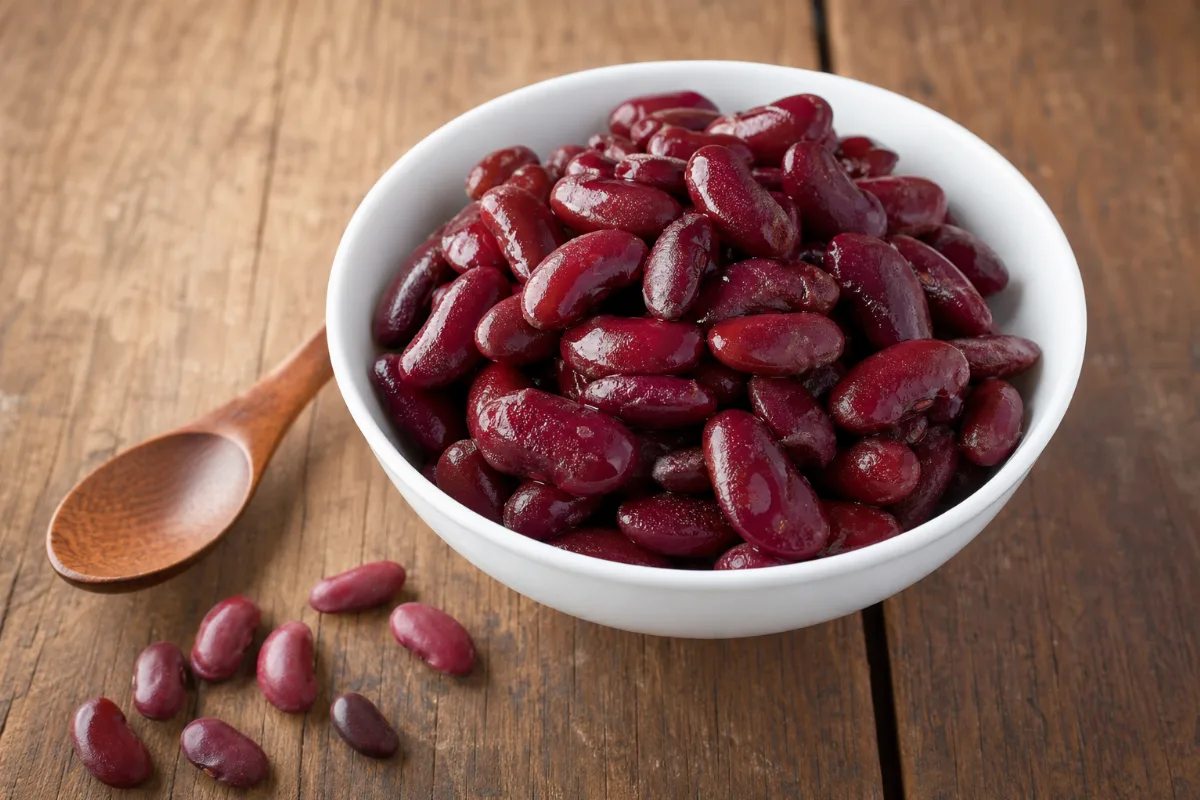
Kidney beans are the kidney-shaped seeds of the common bean plant, eaten cooked from dried or canned. They give fibre, plant protein and folate. Raw or undercooked red kidney beans are poisonous because of a natural lectin, so they must be cooked as regulators describe, or bought canned. Studies of beans and other pulses link them to slightly lower LDL cholesterol, but kidney beans have not been tested alone.
General information, not medical advice. Last substantive update · Not medically reviewed. A named clinician has not signed off on this page. How this page is made
About Kidney Beans
Kidney beans are a nutritious food with fibre, protein and folate. Raw or undercooked red kidney beans are poisonous, so cooking matters. They are a healthy food, not a proven remedy: the health findings come from studies of pulses or legumes in general.
What it is
Kidney beans (Phaseolus vulgaris) are the kidney-shaped seeds of the common bean plant, a legume. Red kidney beans and white kidney beans (cannellini) are two colours of the same species. They are eaten cooked, from dried or canned.
USDA data for cooked red kidney beans (boiled, no salt): 127 kcal per 100 g. One cup (177 g) has about 225 kcal, 15.3 g protein, 13.1 g fibre, 230 micrograms folate (DFE), 713 mg potassium and 5.2 mg iron. Canned values were not read.
What the research shows
Pooled trials of pulses (beans, chickpeas, lentils and peas) found LDL cholesterol 0.14 to 0.17 mmol/L lower, lower fasting blood sugar markers, and a very small weight loss of about 0.34 kg. Randomised trials of legumes found no clear overall change in blood pressure. Cohort studies link more legumes to lower risk of high blood pressure (RR 0.84), a little less cardiovascular disease and death from any cause (HR 0.94). Cohort studies cannot prove cause.
No trial of red kidney beans on their own was found for any of these.
At a glance
Traditional uses history, not proof
- Eaten cooked in stews, chilli, salads and rice dishes
- Long use as food is not proof that it treats any condition
Studied for research
- Fibre, protein and folate, high certainty for the nutrients, no kidney-bean trial
- Cholesterol, moderate certainty (trials of pulses as a group)
- Blood sugar, low certainty (pulses as a group)
- Blood pressure, mixed (null in trials, lower risk in cohorts)
- Body weight, low certainty (very small effect)
- Heart disease and early death, low certainty (observational)
Main compounds
- Fibre
- Folate
- Plant protein
- Phytohaemagglutinin (lectin, destroyed by proper cooking)
Common forms
- Dried beans, soaked and boiled
- Canned beans, already cooked
- White kidney beans (cannellini) are another colour of the same species
- White kidney bean extract is a different product and is not covered
Research links: Health Canada: lectins in dry legumes · 2026 review: whole pulses and cholesterol · 2023 outbreak report: undercooked kidney beans in France · Research Library · Genes & Biomarkers Library
What it is and its history
- Accepted scientific name
- Phaseolus vulgaris
- Naming authority
- L. (as given by the existing nutrient summary; not re-checked in GBIF)
- Common names
- Kidney beans (English); Red kidney beans (English); White kidney beans (cannellini) (English); Frijoles rojos, habichuelas rojas (Spanish)
- Family or group
- Fabaceae (the legume or pea family); not source-read for this page.
- Classification
- Plantae > Tracheophyta > Magnoliopsida > Fabales > Fabaceae > Phaseolus > Phaseolus vulgaris
- Native range
- Not verified from a source read.
- Habitat
- Not verified from a source read.
- What it looks like
- Roots: Not verified.; Stems: Not verified.; Leaves: Not verified.; Flowers: Not verified.; Fruit: The kidney-shaped seeds are eaten after cooking (existing nutrient summary).
- Cultivation
- Not verified from a source read.
- Harvest and processing
- Sold dried or canned (existing nutrient summary). Dried beans must be soaked and boiled; canned beans are already cooked.
- Look-alikes and adulterants
- Name: Other common beans (black, pinto, navy); Note: Same species, Phaseolus vulgaris. Our earlier summary says the lectin risk is highest in red kidney beans; this was not independently re-read.; Name: White kidney bean extract supplement; Note: An extract is not the cooked food and is not covered here.; Name: Canned kidney beans; Note: Already cooked; nutrient values differ and usually include salt.
- Sustainability and conservation
- Not assessed.
Photographs
What is inside, and how it may work
What it contains and how those compounds act in cells and animals. Laboratory and animal mechanisms are not proven effects in people.
Main compounds
| Compound | Family | Where it is concentrated | Activity studied | Level of evidence |
|---|---|---|---|---|
| Phytohaemagglutinin (PHA) | lectin (protein) | Seed About 223 mg of active lectin per gram dry weight in raw dark red kidney beans (laboratory, ELISA) | Causes poisoning when raw or undercooked beans are eaten; destroyed by proper cooking. 11 13 7 | Human data |
| Dietary fibre | carbohydrate | Seed USDA: 7.4 g per 100 g cooked red; 24.9 g per 100 g raw (all types) | Nutrient fact; effects in people are discussed in the Benefits tab for pulses as a group. 20 19 | Human data |
| Folate | vitamin | Seed USDA: 130 micrograms DFE per 100 g cooked red | A B vitamin; nutrient fact only. 20 | Human data |
| Resistant starch and fermentable sugars | carbohydrate | Seed Not measured in the sources read | Named in our earlier summary as the likely source of gas; not re-read from a source for this page. | Unknown |
Mechanisms, receptors and pathways
| Target or pathway | Gene or receptor | What was found | Level |
|---|---|---|---|
| Lectin poisoning | Not applicable | PHA is a lectin that is inactivated by thorough cooking of well-soaked beans (UK review abstract). Raw beans in an outbreak had very high haemagglutination activity. 7 13 | Human data |
| How beans lower LDL cholesterol | Not established | Not established in the sources read. Fibre and diet swaps are suggested but not proven. 3 | Unknown |
Absorption, metabolism and elimination
- Absorption
- Not found.
- Distribution
- Not found.
- Metabolism
- Not found.
- Elimination
- Not found.
- Bioavailability
- Not established in the sources read.
Isolated compounds versus whole extracts
The cholesterol, blood sugar and weight results come from trials of whole cooked pulses. White kidney bean extract supplements, bean flours and isolated lectin are different products and were not read here.
Nutritional composition
Nutrition from USDA FoodData Central (SR Legacy, April 2018 release), values read 2026-10-26 from a saved copy of the data. Cooked red kidney beans, boiled without salt (FDC 175194), per 100 g: 127 kcal, 8.67 g protein, 0.5 g fat, 22.8 g carbohydrate, 7.4 g fibre, 0.32 g sugars, 28 mg calcium, 2.94 mg iron, 45 mg magnesium, 142 mg phosphorus, 403 mg potassium, 2 mg sodium, 1.07 mg zinc, 0.477 mg manganese, 0.242 mg copper, 130 micrograms folate (DFE), 8.4 micrograms vitamin K. One cup cooked (177 g): about 225 kcal, 15.3 g protein, 13.1 g fibre, 230 micrograms folate, 713 mg potassium and 5.2 mg iron. Raw kidney beans, all types (FDC 175193), per 100 g of dry beans: 333 kcal, 23.58 g protein, 24.9 g fibre, 394 micrograms folate, 1406 mg potassium. Canned beans differ and usually contain salt; their values were not read.
1 high certainty1 moderate certainty1 mixed findings3 low certainty
What was looked at
The 6 benefits and uses checked for Kidney Beans, each with how strong the evidence is. Tap one to open it.
- Fibre, folate and plant proteinHigh certainty
- LDL cholesterol (pulses and beans)Moderate certainty
- Blood sugar (pulses as a group)Low certainty
- Blood pressure (legumes)Mixed findings
- Body weight (pulses as a group)Low certainty
- Heart disease and early death (legumes, observational)Low certainty
Lab markers tracked in the studies
LDL cholesterolFasting blood glucoseSystolic blood pressureBody weightDeath from any cause
What is Kidney Beans good for?
The main studied uses and how strong the human evidence is for each. Most results are for pulses or legumes as a group, not for kidney beans alone.
Benefits, one by one
Each card is a research question, not a promise. Tap a goal to filter. Open a card to see the studies, doses and limits.
Fibre, folate and plant protein
High certaintyCooked red kidney beans give 7.4 g of fibre, 8.67 g of protein and 130 micrograms of folate (DFE) per 100 g, by USDA data. One cup (177 g) has about 13 g of fibre and 230 micrograms of folate. These are nutrient facts about the food, not trials of kidney beans.
1 studiesCooked red kidney beans, boiled without salt. Canned beans differ and…
Studies, doses and limits
What the trials found
USDA FoodData Central lists the nutrient values for cooked red kidney beans (boiled, no salt). No trial of kidney beans was needed or read for these figures.
Results
The food contains meaningful fibre, protein and folate.
Effect sizes as reported
Per 100 g cooked: fibre 7.4 g, protein 8.67 g, folate 130 micrograms DFE.
Why this rating
The amounts are measured food values. What they do for health in a person was not tested here.
Form and dose studied
Cooked red kidney beans, boiled without salt. Canned beans differ and usually contain salt.
Limits
Nutrient values vary with variety and cooking. Canned values were not read.
Why researchers looked
Beans are a main plant source of fibre and protein.
Traditional use
Kidney beans are eaten cooked in stews, chilli, salads and rice dishes. Long use as food is not proof that they treat any condition.
Proposed mechanism Composition
Not applicable: this is food composition.
A proposed mechanism does not show that the effect happens in people.
Raw or undercooked red kidney beans are poisonous. Gas is common in some people.
LDL cholesterol (pulses and beans)
Moderate certaintyIn pooled trials, diets with about one serving a day of pulses, including beans, lowered LDL ('bad') cholesterol by about 0.14 to 0.17 mmol/L compared with diets without pulses. The trials covered beans, chickpeas, lentils and peas, not kidney beans alone.
2 studiesWhole cooked pulses as food, median 130 g a day in the trials.
Studies, doses and limits
What the trials found
A 2014 meta-analysis of 26 trials (1,037 adults) found LDL lower by 0.17 mmol/L (95% CI 0.09 to 0.25) at a median 130 g a day. A 2026 update of 38 trials (2,095 adults, median 6 weeks) found LDL lower by 0.14 mmol/L (0.08 to 0.19) and non-HDL cholesterol lower by 0.22. For beans there was a straight-line dose-response up to 1 cup a day. The authors rate GRADE moderate-to-high for all but apoB.
Results
LDL cholesterol fell a little. This is a blood marker, not fewer heart attacks.
Effect sizes as reported
LDL -0.14 to -0.17 mmol/L; non-HDL -0.22 mmol/L; HDL -0.03 mmol/L (a small fall).
Why this rating
Many randomised trials agree, and the 2026 review grades moderate-to-high. We keep 'moderate' because the trials mix pulses and none is a kidney-bean-only result.
Form and dose studied
Whole cooked pulses as food, median 130 g a day in the trials.
Who was studied
Adults.
Limits
Pulses as a group. Short trials (median 6 weeks). Marker only. HDL also fell slightly.
Why researchers looked
Beans are rich in fibre and replace other foods in the diet, so researchers test whether LDL cholesterol falls.
Traditional use
Kidney beans are eaten cooked in stews, chilli, salads and rice dishes. Long use as food is not proof that they treat any condition.
Proposed mechanism Unknown
Not established. Fibre and diet swaps are suggested but not proven here.
A proposed mechanism does not show that the effect happens in people.
Cook red kidney beans properly. See Safety.
Blood sugar (pulses as a group)
Low certaintyPooled trials of pulses found lower fasting blood sugar and lower long-term sugar markers, and most single-meal studies found lower after-meal sugar than with wheat or white rice. Results differed a lot between trials, and kidney beans were not tested alone.
2 studiesPulses as food, alone or in low-GI or high-fibre diets.
Studies, doses and limits
What the trials found
A 2009 meta-analysis of 41 trials found pulses lowered fasting glucose and insulin (pulses alone) and HbA1c or fructosamine (low-GI diets), with high unexplained heterogeneity. A 2026 review of 40 single-meal studies found lower after-meal glucose in 28 and lower insulin in 16 of 24, compared with other starchy foods.
Results
Lower blood sugar markers in many trials, with large differences between trials.
Effect sizes as reported
Fasting glucose SMD -0.82 (pulses alone); glycosylated proteins SMD -0.28 (low-GI diets).
Why this rating
Benefits are consistent in direction but the differences between trials are large and unexplained, and the evidence is for pulses as a group.
Form and dose studied
Pulses as food, alone or in low-GI or high-fibre diets.
Who was studied
People with and without diabetes.
Limits
High heterogeneity. The 2026 review was funded by German federal agriculture bodies. Not a treatment for diabetes.
Why researchers looked
Beans digest slowly and are rich in fibre, so researchers test blood sugar after beans and over weeks.
Traditional use
Kidney beans are eaten cooked in stews, chilli, salads and rice dishes. Long use as food is not proof that they treat any condition.
Proposed mechanism Unknown
Not established. The studies are of whole diets.
A proposed mechanism does not show that the effect happens in people.
People on diabetes medicines should talk to their clinic before changing their diet.
Blood pressure (legumes)
Mixed findingsTrials of legumes found no clear overall change in blood pressure. Studies that follow people over time link higher legume intake to a lower risk of developing high blood pressure. Kidney beans were not tested alone.
2 studiesLegumes as food.
Studies, doses and limits
What the trials found
A 2023 meta-analysis of 16 randomised trials (1,092 people) found no significant overall effect: systolic -1.06 mm Hg (95% CI -2.57 to 0.44), diastolic -0.48 (-1.06 to 0.10), certainty low. Systolic fell 2.79 mm Hg in people with overweight or obesity. A 2026 meta-analysis of 12 prospective studies found high versus low legume intake had a relative risk of 0.84 (0.77 to 0.93) for hypertension.
Results
Mixed: no clear effect in trials; a lower risk in observational studies.
Effect sizes as reported
Trials: systolic -1.06 mm Hg (not significant). Cohorts: RR 0.84.
Why this rating
Randomised trials are null overall; the cohort link cannot prove cause.
Form and dose studied
Legumes as food.
Who was studied
Adults.
Limits
The overweight/obesity result is a subgroup finding. Cohort studies cannot show cause.
Why researchers looked
Large studies ask whether people who eat more legumes have lower blood pressure.
Traditional use
Kidney beans are eaten cooked in stews, chilli, salads and rice dishes. Long use as food is not proof that they treat any condition.
Proposed mechanism Unknown
Not established. The studies are of whole diets.
A proposed mechanism does not show that the effect happens in people.
None specific.
Body weight (pulses as a group)
Low certaintyPooled trials found people eating pulses lost slightly more weight than people not eating them, about 0.34 kg on average over about 6 weeks. That is very small, and the trials were of pulses in general, not kidney beans alone.
2 studiesPulses as food.
Studies, doses and limits
What the trials found
A 2016 meta-analysis of 21 trials (940 adults) found weight lower by 0.34 kg (95% CI 0.04 to 0.63) at a median 132 g a day over a median 6 weeks, also in diets not meant to cut calories. Body fat percentage may have fallen in 6 trials. A 2026 review of single-meal studies found hunger fell in 3 of 5 studies and satiety was significantly higher in only 1 of 6.
Results
A very small extra weight loss in short trials.
Effect sizes as reported
Body weight -0.34 kg (95% CI -0.63 to -0.04), P=0.03.
Why this rating
Small effect, short trials, pulses as a group. Long-term effect unknown.
Form and dose studied
Pulses as food.
Who was studied
Adults.
Limits
Short trials. Pulses as a group.
Why researchers looked
Fibre and protein may add to fullness, so researchers test weight in pulse diets.
Traditional use
Kidney beans are eaten cooked in stews, chilli, salads and rice dishes. Long use as food is not proof that they treat any condition.
Proposed mechanism Unknown
Not established. The studies are of whole diets.
A proposed mechanism does not show that the effect happens in people.
None specific.
Heart disease and early death (legumes, observational)
Low certaintyIn studies that follow people over time, those who ate the most legumes had a little less cardiovascular disease, coronary heart disease and death from any cause. This is an association, not proof, and it is about legumes in general.
2 studiesLegumes as food, highest versus lowest intake.
Studies, doses and limits
What the trials found
A 2019 umbrella review of 28 cohort studies found higher pulse intake linked to less cardiovascular disease (RR 0.92, 95% CI 0.85 to 0.99) and coronary heart disease (RR 0.90, 0.83 to 0.99), with no link to heart attack, stroke or diabetes incidence; GRADE low or very low. A 2023 meta-analysis of 32 cohorts (1,141,793 people, 93,373 deaths) found death from any cause lower (HR 0.94, 0.91 to 0.98) and stroke death lower (HR 0.91, 0.84 to 0.99), with no link to cardiovascular, coronary or cancer death; certainty low to moderate.
Results
Slightly lower risks in observational studies.
Effect sizes as reported
All-cause death HR 0.94; cardiovascular disease RR 0.92; coronary heart disease RR 0.90.
Why this rating
Observational designs; people who eat more legumes may differ in other ways; the 2019 review grades certainty low to very low.
Form and dose studied
Legumes as food, highest versus lowest intake.
Who was studied
Adults in cohort studies.
Limits
Observational; legumes as a group, not kidney beans alone.
Why researchers looked
Large population studies ask whether people who eat more legumes live longer or have less heart disease.
Traditional use
Kidney beans are eaten cooked in stews, chilli, salads and rice dishes. Long use as food is not proof that they treat any condition.
Proposed mechanism Unknown
Not established. The studies are observational.
A proposed mechanism does not show that the effect happens in people.
None specific.
Connections to the rest of health
How Kidney Beans connects to the rest of our health knowledge graph. Every link says what kind of connection it is. A safety link (for example to the liver) is a warning, not a benefit. A study that merely mentions a topic never creates a benefit link.
Explore every connection: goals, body systems, organs, symptoms, genes
A. Wellness goals
| Connected to | Kind of connection | Evidence status | Context | Studies |
|---|---|---|---|---|
| Digestive Support | High certainty | Fibre, folate and plant protein: Cooked red kidney beans give 7.4 g of fibre, 8.67 g of protein and 130 micrograms of folate (DFE) per 100 g, by USDA data. One cup (177 g) has about 13 g of fibre and 230 micrograms of folate. These are nutrient facts about the food, not trials of kidney beans. | 20 | |
| Cholesterol Balance | Moderate certainty | LDL cholesterol (pulses and beans): In pooled trials, diets with about one serving a day of pulses, including beans, lowered LDL ('bad') cholesterol by about 0.14 to 0.17 mmol/L compared with diets without pulses. The trials covered beans, chickpeas, lentils and peas, not kidney beans alone. | 3 2 | |
| Heart Health | Moderate certainty | LDL cholesterol (pulses and beans): In pooled trials, diets with about one serving a day of pulses, including beans, lowered LDL ('bad') cholesterol by about 0.14 to 0.17 mmol/L compared with diets without pulses. The trials covered beans, chickpeas, lentils and peas, not kidney beans alone. | 3 2 | |
| Blood Sugar Balance | Low certainty | Blood sugar (pulses as a group): Pooled trials of pulses found lower fasting blood sugar and lower long-term sugar markers, and most single-meal studies found lower after-meal sugar than with wheat or white rice. Results differed a lot between trials, and kidney beans were not tested alone. | 10 8 | |
| Blood Pressure Support | Mixed findings | Blood pressure (legumes): Trials of legumes found no clear overall change in blood pressure. Studies that follow people over time link higher legume intake to a lower risk of developing high blood pressure. Kidney beans were not tested alone. | 6 5 | |
| Weight Management | Low certainty | Body weight (pulses as a group): Pooled trials found people eating pulses lost slightly more weight than people not eating them, about 0.34 kg on average over about 6 weeks. That is very small, and the trials were of pulses in general, not kidney beans alone. | 4 8 | |
| Heart Health | Low certainty | Heart disease and early death (legumes, observational): In studies that follow people over time, those who ate the most legumes had a little less cardiovascular disease, coronary heart disease and death from any cause. This is an association, not proof, and it is about legumes in general. | 12 15 | |
| Longevity | Low certainty | Heart disease and early death (legumes, observational): In studies that follow people over time, those who ate the most legumes had a little less cardiovascular disease, coronary heart disease and death from any cause. This is an association, not proof, and it is about legumes in general. | 12 15 |
B. Body systems
| Connected to | Kind of connection | Evidence status | Context | Studies |
|---|---|---|---|---|
| Metabolism Weight | Biological association | High certainty | Studied for: Fibre, folate and plant protein Studied for: Body weight (pulses as a group) | 20 4 8 |
| Cardiovascular System | Biological association | Moderate certainty | Studied for: LDL cholesterol (pulses and beans) Studied for: Blood pressure (legumes) | 3 2 6 5 12 15 |
| Blood Sugar Support | Biological association | Low certainty | Studied for: Blood sugar (pulses as a group) | 10 8 |
C. Body parts and organs
E. Health conditions
| Connected to | Kind of connection | Evidence status | Context | Studies |
|---|---|---|---|---|
| Food poisoning (natural food toxins) | Adverse effect or risk | Documented risk | Raw or undercooked red kidney beans can cause lectin poisoning; boiling or canning removes the risk. Raw or undercooked red kidney beans can cause lectin poisoning. Preparation or compound: Raw or undercooked red kidney beans (PHA lectin) |
7 13 18 |
| Food allergy | Adverse effect or risk | Documented risk | Legume allergy is described in children's clinic studies. Preparation or compound: Bean protein |
9 1 |
I. Biomarkers
| Connected to | Kind of connection | Evidence status | Context | Studies |
|---|---|---|---|---|
| LDL cholesterol | Biological association | Moderate certainty | Measured in trials: lowered. A lab change is not the same as a health benefit. | 3 2 |
| Fasting blood glucose | Biological association | Low certainty | Measured in trials: lowered. A lab change is not the same as a health benefit. | 10 |
| Systolic blood pressure | Biological association | Low certainty | Measured in trials: unchanged. A lab change is not the same as a health benefit. | 6 |
| Body weight | Biological association | Low certainty | Measured in trials: lowered. A lab change is not the same as a health benefit. | 4 |
| Death from any cause | Biological association | Low certainty | Measured in trials: lowered. A lab change is not the same as a health benefit. | 15 |
K. Biological pathways
L. Active compounds
| Connected to | Kind of connection | Evidence status | Context | Studies |
|---|---|---|---|---|
| Phytohaemagglutinin (PHA) | Biological association | Human | Causes poisoning when raw or undercooked beans are eaten; destroyed by proper cooking. Preparation or compound: Seed |
11 13 7 |
| Dietary fibre | Biological association | Human | Nutrient fact; effects in people are discussed in the Benefits tab for pulses as a group. Preparation or compound: Seed |
20 19 |
| Folate | Biological association | Human | A B vitamin; nutrient fact only. Preparation or compound: Seed |
20 |
| Resistant starch and fermentable sugars | Biological association | Unknown | Named in our earlier summary as the likely source of gas; not re-read from a source for this page. Preparation or compound: Seed |
Each connection is stored with the ingredient, the connected record, the kind of connection, the evidence status, the supporting studies, the preparation or compound involved, and a review date (last reviewed October 26, 2026).
The evidence
The research centre for Kidney Beans. Every record here was checked against PubMed or the publisher's page; we never list a study we have not verified.
Evidence by outcome
Bars show how many studies we found for each outcome, not how well it works. People are added up across trials only (reviews are not added, to avoid double counting).
How we rate evidence
High certainty
Several well-run trials or reviews agree; further research is unlikely to change the picture much.
Moderate certainty
Good trials point the same way, but some doubt remains.
Low certainty
Small, short or inconsistent trials. The finding could change with better research.
Very low certainty
Very little or very weak human data. Treat as a possibility only.
Mixed findings
Trials or reviews disagree with each other.
Not enough evidence
Not enough human research to say either way.
Evidence against
Good research found no benefit, or found harm.
We take the reviewers' own risk-of-bias and GRADE statements where they exist, and otherwise judge from study size, design, consistency, directness and whether a product matches what is sold. Many publications do not make evidence high. Method note: We started from our existing kidney beans summary, re-checked nutrition against a saved copy of USDA FoodData Central, read the Health Canada, FDA and Food Safety Information Council pages and PubMed abstracts. Only abstracts were read for studies. Items we could not verify are flagged in the research gaps.
Study library: every study we checked 20
| Study | Design | People | Product, dose, length | Result |
|---|---|---|---|---|
| Atwah 2025 The prevalence of outgrowing non-priority legume allergies in children. Pediatr Allergy Immunol · PMID 41424376 · DOI |
Retrospective cohort |
203 203 children aged 5 to 15 with IgE-mediated allergy to lentils, chickpeas, peas or beans (Evelina London) |
Allergy to beans, peas, lentils and chickpeas Seed Median follow-up 7 years |
By age 15 about a third (32.9%) of children with a bean allergy had outgrown it (13% by age 5, 24.5% by age 10). Resolution by 15 was 23.5% for peas, 21% for lentils and 19.3% for chickpeas. Children with low skin-prick and IgE results were more likely to outgrow it. Beans outgrown: 13% by age 5, 24.5% by 10, 32.9% by 15 Methods, limits and fundingOutcomes: Resolution of allergy by age Limitations: Retrospective, one hospital. Only children already diagnosed. 'Beans' are not specified as kidney beans. Funding and conflicts: Funding not stated in the abstract. Read: abstract |
| Back 2026 Effect of Different Types of Whole Dietary Pulses on Established Therapeutic Lipid Targets for Cardiovascular Risk Reduction: An Updated Systematic Review and Dose-Response Meta-Analysis of Randomized Controlled Trials. J Am Heart Assoc · PMID 42132198 · DOI |
Systematic review meta analysis |
2095 38 trials (52 comparisons), adults |
Whole dietary pulses, analysed by type including beans Pulses as food Median 130 g/day (0.5 to 0.67 cup/day) Median 6 weeks; trials of at least 3 weeks · vs Diets without pulses |
LDL, non-HDL cholesterol and apoB fell; HDL fell slightly. Results were similar across pulse types. For beans, a straight-line dose-response was seen up to 1 cup a day. GRADE was moderate-to-high for all outcomes except apoB (very low). LDL -0.14 mmol/L; non-HDL -0.22; apoB -0.08 g/L; HDL -0.03 (LDL -0.19 to -0.08; non-HDL -0.30 to -0.14; apoB -0.13 to -0.03; HDL -0.05 to -0.01) Methods, limits and fundingOutcomes: LDL, non-HDL, HDL cholesterol, apoB Limitations: Beans are a subgroup of mixed pulses; red kidney beans were not analysed alone in the abstract. Research support is listed as non-US government. Funding and conflicts: Funding details not given in the abstract. Registration: PROSPERO CRD42023432826 Read: abstract |
| Ha 2014 Effect of dietary pulse intake on established therapeutic lipid targets for cardiovascular risk reduction: a systematic review and meta-analysis of randomized controlled trials. CMAJ · PMID 24710915 · DOI |
Systematic review meta analysis |
1037 26 randomised trials, adults |
Diets emphasising pulses (beans, chickpeas, lentils, peas) Pulses as food Median 130 g/day At least 3 weeks · vs Isocaloric diets without pulses |
LDL cholesterol fell. No effect on apoB or non-HDL cholesterol. LDL mean difference -0.17 mmol/L (95% CI -0.25 to -0.09) Methods, limits and fundingOutcomes: LDL cholesterol, apolipoprotein B, non-HDL cholesterol Limitations: Pulses as a group, not kidney beans alone. The authors call for longer, higher-quality trials. Funding and conflicts: Canadian Institutes of Health Research listed as a grant agency. Registration: NCT01594567 Read: abstract |
| Kim 2016 Effects of dietary pulse consumption on body weight: a systematic review and meta-analysis of randomized controlled trials. Am J Clin Nutr · PMID 27030531 · DOI |
Systematic review meta analysis |
940 21 randomised trials, adults |
Diets containing whole pulses (beans, lentils, chickpeas, dry peas) Pulses as food Median 132 g/day (about 1 serving) Median 6 weeks; trials of at least 3 weeks · vs Diets without pulses |
Small extra weight loss with pulses, also in diets not meant to cut calories. Body fat percentage may have fallen in 6 trials. Body weight -0.34 kg (95% CI -0.63 to -0.04, P=0.03) Methods, limits and fundingOutcomes: Body weight, waist circumference, body fat Limitations: Pulses as a group. Short trials. Long-term effect not known. Funding and conflicts: Funding not stated in the abstract. Registration: NCT01594567 Read: abstract |
| Metoudi 2026 Legume and soy consumption and the risk of hypertension: a systematic review and dose-response meta-analysis of prospective studies. BMJ Nutr Prev Health · PMID 42539997 · DOI |
Systematic review meta analysis cohort |
309853 12 prospective cohort studies; 10 for legumes (86,098 cases) |
Legume intake (high versus low) Legumes as food Prospective follow-up · vs Lowest intake group |
Higher legume intake went with lower risk of hypertension. The authors rate causality as probable by WCRF criteria, but observational data cannot prove cause. Heterogeneity was substantial (I2 65%). High versus low RR 0.84; per 100 g/day RR 0.88 (0.77 to 0.93; per 100 g/day 0.80 to 0.97) Methods, limits and fundingOutcomes: New high blood pressure (hypertension) Limitations: Observational. Legumes (and soy) as groups, not kidney beans alone. Publication-bias signal for legumes (Egger p=0.04) which the authors attribute to two outlying studies. Funding and conflicts: Funding not stated in the abstract. Read: abstract |
| Reyneke 2023 The Effect of Non-Oil Seed Legume Intake on Blood Pressure: A Systematic Review and Meta-Analysis of Randomized Controlled Trials. Adv Nutr · PMID 37031751 · DOI |
Systematic review meta analysis |
1092 16 randomised trials, adults aged 17 to 75 |
Non-oil-seed legumes, whole or powdered Legumes as food 450 to 3150 g per week 4 to 52 weeks · vs Comparator diets |
No significant overall effect on blood pressure (certainty low). In people with overweight or obesity, systolic pressure was lower. Systolic MD -1.06 mm Hg; diastolic MD -0.48 mm Hg; overweight/obese subgroup systolic -2.79 mm Hg (Systolic -2.57 to 0.44; diastolic -1.06 to 0.10; subgroup -4.68 to -0.90) Methods, limits and fundingOutcomes: Systolic and diastolic blood pressure Limitations: Legumes as a group. The subgroup finding came from a subgroup analysis. The authors call for larger, higher-quality trials. Funding and conflicts: Funding not stated in the abstract. Registration: PROSPERO CRD42021237732 Read: abstract |
| Rodhouse 1990 Red kidney bean poisoning in the UK: an analysis of 50 suspected incidents between 1976 and 1989. Epidemiol Infect · PMID 2249712 · DOI |
Case series |
50 suspected UK incidents, 1976 to 1989 | Red kidney beans, raw or inadequately cooked Seed Onset 1 to 7 hours |
Nine incidents were confirmed by finding haemagglutinin (lectin) in the beans, with nausea, vomiting and diarrhoea within 1 to 7 hours. A further 23 were diagnosed from symptoms, onset time and how the beans were prepared. The lectin is inactivated by thorough cooking of well-soaked beans. In many incidents the beans were eaten raw or after an inadequate heat process. 9 confirmed by lab, 23 further by history, of 50 suspected Methods, limits and fundingOutcomes: Nausea, vomiting, diarrhoea; haemagglutinin in beans Limitations: Case series from 1976 to 1989 reports. Cannot give how common poisoning is. Funding and conflicts: Funding not stated in the abstract. Read: abstract |
| Schiemann 2026 Acute Effects of Non-Oil-Seed Pulses on Parameters of Cardiometabolic Health: A Systematic Review of Human Intervention Studies. Nutr Rev · PMID 41317035 · DOI |
Systematic review |
40 human intervention studies of single meals | Non-oil-seed pulses and pulse products Pulses as food Single meals After-meal responses · vs Meals made with other starchy foods (mainly wheat products or white rice) |
Pulses gave lower after-meal glucose in 28 of 40 studies and lower insulin in 16 of 24. Hunger fell in 3 of 5 studies; satiety was significantly greater in 1 of 6 studies and fullness in 3 of 6. Few studies looked at blood fats or blood vessel function, and mostly found no effect. Counts of studies, no pooled number in the abstract Methods, limits and fundingOutcomes: After-meal glucose, insulin, hunger, fullness Limitations: Single-meal studies; many pulse types and products, not kidney beans alone. Funding and conflicts: Funded by German federal agriculture ministries (a Protein Crop Strategy programme). Registration: PROSPERO CRD42023471539 Read: abstract |
| Serra 2026 IgE-Mediated Legume Allergy in Children: Insights from a Single-Center Experience in Italy. Nutrients · PMID 42280453 · DOI |
Retrospective case series |
55 55 Italian children allergic to at least one of pea, lentil, chickpea, common bean or soy |
Legume allergy (pea, lentil, chickpea, common bean, soy) Seed Children under 18; 2022 to 2024 |
Pea (70.9%) and lentil (69.1%) were the commonest allergies. Anaphylaxis at the first reaction in 12.7%, most often to pea. Multi-legume allergy in 74.5%; peanut allergy as well in 25.5%. Of 34 food challenges, 23.5% were positive. Peanut co-allergy 25.5%; positive challenges 23.5% of 34 Methods, limits and fundingOutcomes: Allergy patterns, anaphylaxis, food challenges Limitations: Retrospective, single clinic, small sample. Common bean (the kidney bean species) was one of five index legumes, but results for it alone were not in the abstract. Funding and conflicts: Funding not stated in the abstract. Read: abstract |
| Sievenpiper 2009 Effect of non-oil-seed pulses on glycaemic control: a systematic review and meta-analysis of randomised controlled experimental trials in people with and without diabetes. Diabetologia · PMID 19526214 · DOI |
Systematic review meta analysis |
41 randomised trials in people with and without diabetes | Non-oil-seed pulses (chickpeas, beans, peas, lentils and others), alone or in low-GI or high-fibre diets Pulses as food Trial detail not given in the abstract At least 7 days · vs Control diets |
Pulses alone lowered fasting glucose and insulin. Pulses in low-GI diets lowered HbA1c or fructosamine. Pulses in high-fibre diets lowered fasting glucose and glycosylated proteins. Heterogeneity was high and mostly unexplained. Standardised mean differences: fasting glucose -0.82 (pulses alone); glycosylated proteins -0.28 (low-GI diets) (Fasting glucose -1.36 to -0.27; insulin -0.93 to -0.04; glycosylated proteins -0.42 to -0.14) Methods, limits and fundingOutcomes: Fasting glucose, insulin, glycosylated proteins (HbA1c or fructosamine) Limitations: Pulses as a group, not kidney beans alone. High unexplained heterogeneity. Published in 2009. Funding and conflicts: Funding not stated in the abstract. Read: abstract |
| Thompson 2025 Toward Standardized Measurement of Active Phytohemagglutinin in Common Bean, Phaseolus vulgaris, L. Foods · PMID 41464957 · DOI |
Laboratory measurement n/a (laboratory) |
Laboratory analysis of dark red kidney beans and canned beans | Dark red kidney beans (raw) and commercially cooked canned beans Seed Four raw seeds, one can (94 g dry matter) · vs Raw versus canned |
Dark red kidney beans held 223 mg of active lectin per gram dry weight by ELISA, about 544 mg in four seeds. Commercially cooked canned beans had more than 99% less PHA (4.9 micrograms per gram dry weight). A whole can would give about 0.46 mg, roughly 1,000-fold less than the amount estimated to be linked to poisoning. The authors say that four to five soaked raw dark red kidney bean seeds are reported to cause poisoning. 223 mg/g dry weight (raw dark red); canned >99% lower Methods, limits and fundingOutcomes: Active PHA by ELISA and haemagglutination assay Limitations: A laboratory methods paper, not a trial in people. Estimates are for one market class of beans. Funding and conflicts: Agricultural Research Service listed as a funder. Read: abstract |
| Viguiliouk 2019 Associations between Dietary Pulses Alone or with Other Legumes and Cardiometabolic Disease Outcomes: An Umbrella Review and Updated Systematic Review and Meta-analysis of Prospective Cohort Studies. Adv Nutr · PMID 31728500 · DOI |
Umbrella review cohort |
28 prospective cohort studies | Dietary pulses with or without other legumes (highest versus lowest intake) Pulses as food Prospective follow-up · vs Lowest intake group |
Higher intake was linked to less cardiovascular disease, coronary heart disease, hypertension and obesity. No link to heart attack, stroke or diabetes incidence, or to heart/stroke deaths. GRADE low for cardiovascular disease and very low for all other outcomes. RR: cardiovascular disease 0.92; coronary heart disease 0.90; hypertension 0.91; obesity 0.87 (CVD 0.85-0.99; CHD 0.83-0.99; hypertension 0.86-0.97; obesity 0.81-0.94) Methods, limits and fundingOutcomes: Cardiovascular disease, coronary heart disease, stroke, diabetes, hypertension, obesity Limitations: Observational; certainty low or very low. Pulses as a group. Funding and conflicts: CIHR listed in the abstract. Registration: NCT03555734 Read: abstract |
| Watier-Grillot 2023 From Foodborne Disease Outbreak (FBDO) to Investigation: The Plant Toxin Trap, Brittany, France, 2018. Toxins (Basel) · PMID 37505726 · DOI |
Outbreak investigation case control |
1700 Dining facility at a French military base; 200 reported ill of 1,700 (attack rate 12%); 92 cases and 113 controls |
Chili con carne made with undercooked raw kidney beans Seed Median incubation 3.3 hours · vs Controls from the same facility |
Chili con carne was the very likely source. PHA was found above the potentially toxic dose (400 HAU per gram). The raw kidney beans showed very high haemagglutination activity (66,667 HAU per gram); they had been undercooked and the PHA was not completely destroyed. Attack rate 12%; chili PHA above 400 HAU/g; raw beans 66,667 HAU/g Methods, limits and fundingOutcomes: Gastroenteritis; phytohaemagglutinin (PHA) in food Limitations: Single outbreak. The authors note that PHA outbreaks are poorly documented. Funding and conflicts: Funding not stated in the abstract. Read: abstract |
| Winham 2011 Perceptions of flatulence from bean consumption among adults in 3 feeding studies. Nutr J · PMID 22104320 · DOI |
Controlled trial |
Adults in three feeding trials (n = 17, 29 and 80) | Half a cup a day of pinto beans, baked beans or black-eyed peas Beans as food 1/2 cup a day 8 or 12 weeks · vs Canned carrots or a control soup |
Fewer than half reported more flatulence from pinto or baked beans in the first week of each trial; 19% with black-eyed peas. A small share (3 to 11%) reported more flatulence on control diets. Under 50% (pinto, baked beans); 19% (black-eyed peas) Methods, limits and fundingOutcomes: Self-reported flatulence, stool changes, bloating Limitations: Kidney beans were not used. Self-reported symptoms. Small trials. Funding and conflicts: Funding not stated in the abstract. Read: abstract |
| Zargarzadeh 2023 Legume Consumption and Risk of All-Cause and Cause-Specific Mortality: A Systematic Review and Dose-Response Meta-Analysis of Prospective Studies. Adv Nutr · PMID 36811595 · DOI |
Systematic review meta analysis cohort |
1141793 32 cohorts, 93,373 deaths |
Legume intake (higher versus lower) Legumes as food Prospective follow-up · vs Lower intake |
Higher legume intake was linked to lower death from any cause and from stroke, and not to cardiovascular, coronary heart disease or cancer death. Certainty was judged low to moderate. All-cause HR 0.94; stroke HR 0.91; cardiovascular death HR 0.99; cancer death HR 0.85 (not significant); per 50 g/day all-cause HR 0.94 (All-cause 0.91-0.98; stroke 0.84-0.99; cardiovascular 0.91-1.09; cancer 0.72-1.01; per 50 g/day 0.89-0.99) Methods, limits and fundingOutcomes: Death from all causes, stroke, cardiovascular disease, heart disease, cancer Limitations: Observational. Legumes as a group. Diet and lifestyle differences between high and low eaters are possible. Funding and conflicts: Funding not stated in the abstract. Read: abstract |
| s-fda-natural-toxins FDA: Natural Toxins in Food · Source |
Regulator n/a |
Methods, limits and fundingRead: full-text | ||
| s-fsic-kidney-beans Food Safety Information Council (Australia): Kidney beans · Source |
Non profit guidance n/a |
Methods, limits and fundingRead: full-text | ||
| s-healthcanada-lectins Health Canada: Lectins in dry legumes · Source |
Regulator n/a |
Methods, limits and fundingRead: full-text | ||
| s-usda-fdc-175193 USDA FoodData Central: Beans, kidney, all types, mature seeds, raw (FDC 175193) · Source |
Reference database n/a |
Methods, limits and fundingRead: saved-copy | ||
| s-usda-fdc-175194 USDA FoodData Central: Beans, kidney, red, mature seeds, cooked, boiled, without salt (FDC 175194) · Source |
Reference database n/a |
Methods, limits and fundingRead: saved-copy |
What we do not know yet
- No trial of red kidney beans on their own was found for cholesterol, blood sugar, blood pressure, weight or heart disease.
- The pooled trials and cohorts mix beans, lentils, chickpeas, peas and other legumes.
- Pregnancy, breastfeeding, young children, warfarin, kidney disease and potassium, gout, FODMAP rating and phytates were not researched from a source.
- The FDA Bad Bug Book chapter on PHA could not be read. Regulators give different boiling times and this page does not pick one.
How new research is added
New studies are found by a saved PubMed search and placed in a review queue before the page changes.
Lab markers
What changed in blood or saliva tests during trials. A changed number is not the same as feeling or being healthier, and we give no "normal ranges".
Metabolic 3
LDL cholesterol
Lowered in trials
The 'bad' cholesterol carried in the blood. Higher levels are linked to more heart disease.
Moderate certaintyResults and what it means
Why it was measured
It is the usual blood marker used in diet trials for heart risk.
Statistical vs. clinical meaning
A small fall in a blood marker from pulses as a group. It does not show fewer heart attacks.
Safety implication
None specific.
| Study | Result | People | Product |
|---|---|---|---|
| 3 | LDL mean difference -0.17 mmol/L (95% CI -0.25 to -0.09); no effect on apoB or non-HDL | 1,037 adults in 26 trials | Diets emphasising pulses (beans, chickpeas, lentils, peas), median 130 g/day, at least 3 weeks |
| 2 | LDL -0.14 mmol/L (95% CI -0.19 to -0.08); non-HDL -0.22 (-0.30 to -0.14); apoB -0.08 g/L (-0.13 to -0.03); HDL -0.03 (-0.05 to -0.01) | 2,095 adults in 38 trials | Whole dietary pulses, median 130 g/day, median 6 weeks; beans showed a straight-line dose-response up to 1 cup/day |
Fasting blood glucose
Lowered in trials
Blood sugar measured after a night without food.
Low certaintyResults and what it means
Why it was measured
It shows day-to-day blood sugar control.
Statistical vs. clinical meaning
A lower marker in pooled trials with high unexplained heterogeneity.
Safety implication
None specific.
| Study | Result | People | Product |
|---|---|---|---|
| 10 | Pulses alone: standardised mean difference -0.82 (95% CI -1.36 to -0.27); in high-fibre diets -0.32 (-0.49 to -0.15) | 41 trials, people with and without diabetes | Non-oil-seed pulses, at least 7 days |
Body weight
Lowered in trials
Weight in kilograms measured in a trial.
Low certaintyResults and what it means
Why it was measured
A basic measure used in diet trials.
Statistical vs. clinical meaning
A very small average change.
Safety implication
None specific.
| Study | Result | People | Product |
|---|---|---|---|
| 4 | Body weight -0.34 kg (95% CI -0.63 to -0.04), P=0.03, median 6 weeks | 940 adults in 21 trials | Diets with whole pulses, median 132 g/day, versus diets without pulses |
Other 2
Systolic blood pressure
Unchanged in trials
The top number of a blood pressure reading.
Low certaintyResults and what it means
Why it was measured
High blood pressure raises heart and stroke risk.
Statistical vs. clinical meaning
No clear overall change in trials.
Safety implication
None specific.
| Study | Result | People | Product |
|---|---|---|---|
| 6 | Mean difference -1.06 mm Hg (95% CI -2.57 to 0.44), not significant; in people with overweight or obesity -2.79 mm Hg (-4.68 to -0.90) | 1,092 people in 16 trials | Legumes, 450 to 3150 g per week, 4 to 52 weeks |
Death from any cause
Lowered in trials
Risk of dying from any cause during follow-up.
Low certaintyResults and what it means
Why it was measured
The broadest measure of long-term health in population studies.
Statistical vs. clinical meaning
An association in observational data; it does not prove beans extend life.
Safety implication
None specific.
| Study | Result | People | Product |
|---|---|---|---|
| 15 | Higher versus lower legume intake HR 0.94 (95% CI 0.91 to 0.98); per 50 g/day HR 0.94 (0.89 to 0.99) | 32 cohorts, 1,141,793 people, 93,373 deaths | Legume intake, observational |
Safety
What studies and official sources say about side effects, medicines and who should check first. Each point shows what kind of evidence it comes from.
Main points to know 5
- Raw or undercooked red kidney beans can poison you. Red kidney beans contain a natural lectin, phytohaemagglutinin (PHA). Raw or undercooked beans can cause severe nausea, then vomiting and diarrhoea, usually within 1 to 3 hours (Health Canada); UK cases began within 1 to 7 hours. A UK review of 50 suspected incidents found many beans were eaten raw or after an inadequate heat process. In a 2018 French outbreak, 200 of 1,700 diners fell ill after chilli made with undercooked raw kidney beans. The Food Safety Information Council (Australia) says as few as four or five raw beans can cause severe stomach ache, vomiting and diarrhoea, and that improperly cooked beans can be more toxic than raw ones. Case series and regulator 7 13 18 17 11
- What regulators say about cooking dry beans. Health Canada: soak dry kidney beans at least 5 hours, throw away the soaking water, then boil vigorously for at least 10 minutes. The Food Safety Information Council says soak at least 5 hours and boil briskly for at least 10 minutes. The FDA says soak at least 5 hours and boil in fresh water for at least 30 minutes. These agencies give different boiling times, and this page does not choose between them. Health Canada and the Australian council say slow cookers do not get hot enough. Canned kidney beans are already cooked and need no further cooking to remove the toxin. Regulator 18 16 17
- Canned beans have very little active lectin. A 2025 laboratory study found dark red kidney beans held about 223 mg of active lectin per gram dry weight (about 544 mg in four raw seeds), while commercially cooked canned beans had more than 99% less. A whole can would give roughly 1,000 times less than the amount estimated to be linked to poisoning. This is laboratory evidence, not a trial in people. Laboratory 11 16
- Legume allergy exists. Beans are legumes. In a clinic study of 55 Italian children allergic to a legume (pea, lentil, chickpea, common bean or soy), 74.5% were allergic to more than one legume and 25.5% to peanut as well. In a London study of 203 children, about a third (32.9%) with a bean allergy had outgrown it by age 15. These are clinic studies of children already allergic, so they do not show how common bean allergy is. Ask an allergist if you suspect one. Observational 9 1
- Gas and bloating. Beans can cause gas in some people. In three feeding trials of other beans (pinto, baked beans, black-eyed peas), fewer than half of the people reported more flatulence in the first week, and 3 to 11% reported more even on control diets. Kidney beans were not in those trials. Clinical trial 14
Side effects 3
| Effect | How often | Severity and recovery | Evidence |
|---|---|---|---|
| Nausea, severe vomiting and diarrhoea after raw or undercooked red kidney beans (PHA poisoning) Death is not described in the sources read. | UK: 50 suspected incidents 1976 to 1989, 9 confirmed by finding the lectin in the beans. France 2018: 200 of 1,700 diners ill (attack rate 12%), median onset 3.3 hours. | unpleasant and can be serious; usually passes within a short time (Health Canada) Symptoms usually pass within a short time (Health Canada) | Case series and regulator 7 13 18 |
| Allergic reactions to beans, from hives to anaphylaxis Clinic studies; they do not show how common bean allergy is. | In 55 children with legume allergy, anaphylaxis at first reaction in 12.7% (most often to pea); 23.5% of 34 food challenges positive | can be severe 32.9% of children with a bean allergy had outgrown it by age 15 (London clinic study) | Observational 9 1 |
| Gas and bloating Kidney beans were not used. | Under 50% in the first week with pinto or baked beans (other beans) | mild Not studied for kidney beans | Clinical trial 14 |
Liver
No liver injury from eating kidney beans was found in the sources read. Liver-safety databases were not searched for this page.
How often. No frequency was found.
Monitoring. No agency monitoring advice was found.
This is a safety connection. It is not evidence that Kidney Beans supports liver health.
Medicines and supplements 2
| With | Why it matters | Importance | Evidence | What to do |
|---|---|---|---|---|
| Warfarin (blood thinner) prescription | Foods with vitamin K can change how warfarin works. Cooked red kidney beans contain 8.4 micrograms of vitamin K per 100 g (USDA saved copy). | No source linking kidney beans to warfarin was read. This entry is our reading of a nutrient value, not a documented interaction. | Not found Not enough evidence 20 | Keep your food pattern steady and ask your warfarin clinic. Do not change your medicine on your own. |
| Medicines or conditions that limit potassium (kidney disease, some blood pressure medicines) prescription | Cooked red kidney beans contain 403 mg of potassium per 100 g (about 713 mg in a cup), by USDA. | No source on kidney beans and potassium limits was read. This is our reading of a nutrient value, not a documented interaction. | Not found Not enough evidence 20 | If you have kidney disease or take a medicine that raises potassium, ask a clinician or pharmacist about potassium-rich foods. |
Who should check first 2
| Situation | Advice | Evidence |
|---|---|---|
| Raw or undercooked red kidney beans | Do not eat them. Boil dry beans as the regulators describe, or use canned beans. Do not use a slow cooker for dry red kidney beans (Health Canada, Food Safety Information Council). | Regulator 18 17 16 |
| Known or suspected legume allergy | Ask an allergist before eating beans. For trouble breathing or swelling of the face or throat, call emergency services. | Observational 9 1 |
Overdose, product quality and regulators
Summary. The toxic part is the raw bean's lectin PHA. Heat destroys it when done properly. Properly cooked and canned beans are an ordinary food.
Animal. Not reviewed.
Human doses studied. No dose study. Raw dark red kidney beans held about 544 mg of PHA in four seeds (laboratory estimate), and four to five soaked raw seeds are reported to cause poisoning (2025 paper).
Overdose response. Not found beyond poisoning reports.
Genotoxicity. Not researched.
Toxic or hazardous parts. Raw seeds (lectin). Other plant parts were not read.
Under-processing is the main hazard, not outside contamination. Pesticides, heavy metals and canned-bean salt were not researched.
Active lectin in raw and canned beans. Raw dark red kidney beans held about 223 mg active lectin per gram dry weight; commercially cooked canned beans had more than 99% less, about 4.9 micrograms per gram. 11
Under-heating in a real outbreak. Raw beans in the French outbreak showed 66,667 HAU per gram of haemagglutination activity; the chilli served still held PHA above the potentially toxic level of 400 HAU per gram. 13
| Body | Action | Date |
|---|---|---|
| Health Canada (Canada) | Lectins in dry legumes: illness usually follows undercooked red kidney beans, with symptoms 1 to 3 hours later. Soak at least 5 hours and discard the water, boil vigorously at least 10 minutes. Slow cookers and crock pots do not reach high enough temperatures. Canning heat treatment is adequate. source | |
| FDA (USA) (United States) | Natural toxins in food: PHA in raw or undercooked beans can cause nausea, severe vomiting and diarrhoea; canned and properly cooked kidney beans have low PHA. Soak at least 5 hours, then boil in fresh water for at least 30 minutes. source | |
| Food Safety Information Council (Australia) | As few as four or five raw beans can cause severe stomach ache, vomiting and diarrhoea. Soak at least five hours and boil briskly at least 10 minutes in fresh water. Do not cook beans at a low temperature such as in a slow cooker. Tinned beans need no further cooking. source |
When to get medical help
- Trouble breathing, swelling of the lips, face or throat, widespread hives, repeated vomiting or collapse after eating beans (possible anaphylaxis): call emergency services
- Severe or repeated vomiting and diarrhoea after eating kidney beans that may have been undercooked, especially with signs of dehydration (very dry mouth, little urine, dizziness): get medical help
Stop using the product and contact a clinician or emergency service. In the US, Poison Control is 1-800-222-1222.
General information only, not medical advice. Ask a clinician or pharmacist before use, especially with medicines, in pregnancy or with a health condition. See the Natural Remedy Safety guide.
Frequently asked questions
Can raw kidney beans make you ill?
Yes. Raw or undercooked red kidney beans contain a lectin (PHA) that causes severe nausea, vomiting and diarrhoea, usually within 1 to 3 hours (Health Canada). The Food Safety Information Council says as few as four or five raw beans can do it. Properly cooked and canned beans are an ordinary food.
How do regulators say to cook dry kidney beans?
Health Canada and the Food Safety Information Council (Australia): soak at least 5 hours, discard the water, then boil vigorously for at least 10 minutes. The FDA says soak at least 5 hours, then boil in fresh water for at least 30 minutes. The agencies differ on boiling time. Slow cookers are not recommended for dry red kidney beans.
Are canned kidney beans safe to eat?
What are the symptoms of kidney bean poisoning?
What has been found in outbreaks?
Do kidney beans lower cholesterol?
Do kidney beans help blood sugar?
Do kidney beans lower blood pressure?
Can kidney beans help with weight loss?
Only a little. Pooled trials of pulses found about 0.34 kg extra weight loss over around 6 weeks. Kidney beans were not tested alone.
Do kidney beans cause gas?
They can in some people. In trials of other beans, fewer than half of people reported more flatulence in the first week. Kidney beans were not in those trials.
Can you be allergic to kidney beans?
What nutrients are in kidney beans?
Cooked red kidney beans give fibre, protein, folate, iron, potassium, copper and manganese. One cup (177 g) has about 225 kcal, 13 g of fibre and 230 micrograms of folate, by USDA data. Canned beans differ and usually contain salt.
Explore by health goal
Heart HealthDigestive SupportCholesterol BalanceBlood Sugar BalanceBlood Pressure SupportWeight ManagementLongevity
Editorial transparency
- Written by
- AlternativeMed editorial team. Research compiled with AI assistance, then checked against the sources listed.
- Medical review
- None. This page has not been reviewed by a physician or pharmacist.
- First published
- 2026-10-26
- Last substantive update
- 2026-10-26
- How we research
- We started from our existing kidney beans summary, re-checked nutrition against a saved copy of USDA FoodData Central, read the Health Canada, FDA and Food Safety Information Council pages and PubMed abstracts. Only abstracts were read for studies. Items we could not verify are flagged in the research gaps.
- How we rate evidence
- See "How we rate evidence" in the Evidence tab.
- Independence
- No product is promoted on this page. No affiliate links are shown.
Sources 20
Each source was opened and checked. Where we read only the abstract, it says so. The small numbers in the text point here.
- Atwah A, Swan K, Fox AT, et al.. The prevalence of outgrowing non-priority legume allergies in children.. Pediatr Allergy Immunol. 2025. PMID 41424376. DOI 10.1111/pai.70269. (abstract)
- Back S, Yang S, Rossi A, et al.. Effect of Different Types of Whole Dietary Pulses on Established Therapeutic Lipid Targets for Cardiovascular Risk Reduction: An Updated Systematic Review and Dose-Response Meta-Analysis of Randomized Controlled Trials.. J Am Heart Assoc. 2026. PMID 42132198. DOI 10.1161/JAHA.125.046659. (abstract)
- Ha V, Sievenpiper JL, de Souza RJ, et al.. Effect of dietary pulse intake on established therapeutic lipid targets for cardiovascular risk reduction: a systematic review and meta-analysis of randomized controlled trials.. CMAJ. 2014. PMID 24710915. DOI 10.1503/cmaj.131727. (abstract)
- Kim SJ, de Souza RJ, Choo VL, et al.. Effects of dietary pulse consumption on body weight: a systematic review and meta-analysis of randomized controlled trials.. Am J Clin Nutr. 2016. PMID 27030531. DOI 10.3945/ajcn.115.124677. (abstract)
- Metoudi M, Sadler I, Kassam S, et al.. Legume and soy consumption and the risk of hypertension: a systematic review and dose-response meta-analysis of prospective studies.. BMJ Nutr Prev Health. 2026. PMID 42539997. DOI 10.1136/bmjnph-2025-001449. (abstract)
- Reyneke GL, Beck EJ, Lambert K, et al.. The Effect of Non-Oil Seed Legume Intake on Blood Pressure: A Systematic Review and Meta-Analysis of Randomized Controlled Trials.. Adv Nutr. 2023. PMID 37031751. DOI 10.1016/j.advnut.2023.04.002. (abstract)
- Rodhouse JC, Haugh CA, Roberts D, et al.. Red kidney bean poisoning in the UK: an analysis of 50 suspected incidents between 1976 and 1989.. Epidemiol Infect. 1990. PMID 2249712. DOI 10.1017/s095026880004810x. (abstract)
- Schiemann TB, Diekmann C, Egert S, et al.. Acute Effects of Non-Oil-Seed Pulses on Parameters of Cardiometabolic Health: A Systematic Review of Human Intervention Studies.. Nutr Rev. 2026. PMID 41317035. DOI 10.1093/nutrit/nuaf190. (abstract)
- Serra B, Barni S, Valleriani C, et al.. IgE-Mediated Legume Allergy in Children: Insights from a Single-Center Experience in Italy.. Nutrients. 2026. PMID 42280453. DOI 10.3390/nu18111810. (abstract)
- Sievenpiper JL, Kendall CW, Esfahani A, et al.. Effect of non-oil-seed pulses on glycaemic control: a systematic review and meta-analysis of randomised controlled experimental trials in people with and without diabetes.. Diabetologia. 2009. PMID 19526214. DOI 10.1007/s00125-009-1395-7. (abstract)
- Thompson HJ, Neil ES, McGinley JN, et al.. Toward Standardized Measurement of Active Phytohemagglutinin in Common Bean, Phaseolus vulgaris, L.. Foods. 2025. PMID 41464957. DOI 10.3390/foods14244247. (abstract)
- Viguiliouk E, Glenn AJ, Nishi SK, et al.. Associations between Dietary Pulses Alone or with Other Legumes and Cardiometabolic Disease Outcomes: An Umbrella Review and Updated Systematic Review and Meta-analysis of Prospective Cohort Studies.. Adv Nutr. 2019. PMID 31728500. DOI 10.1093/advances/nmz113. (abstract)
- Watier-Grillot S, Larreche S, Mazuet C, et al.. From Foodborne Disease Outbreak (FBDO) to Investigation: The Plant Toxin Trap, Brittany, France, 2018.. Toxins (Basel). 2023. PMID 37505726. DOI 10.3390/toxins15070457. (abstract)
- Winham DM, Hutchins AM. Perceptions of flatulence from bean consumption among adults in 3 feeding studies.. Nutr J. 2011. PMID 22104320. DOI 10.1186/1475-2891-10-128. (abstract)
- Zargarzadeh N, Mousavi SM, Santos HO, et al.. Legume Consumption and Risk of All-Cause and Cause-Specific Mortality: A Systematic Review and Dose-Response Meta-Analysis of Prospective Studies.. Adv Nutr. 2023. PMID 36811595. DOI 10.1016/j.advnut.2022.10.009. (abstract)
- . FDA: Natural Toxins in Food. . . (full-text)
- . Food Safety Information Council (Australia): Kidney beans. . . (full-text)
- . Health Canada: Lectins in dry legumes. . . (full-text)
- . USDA FoodData Central: Beans, kidney, all types, mature seeds, raw (FDC 175193). . . (saved-copy)
- . USDA FoodData Central: Beans, kidney, red, mature seeds, cooked, boiled, without salt (FDC 175194). . . (saved-copy)
Where to buy
Check the label first. Whatever you buy, look for these:
- A recent packed-on date: very old dried beans cook unevenly
- Organic or not, and the country of origin
- Whether you want dried or canned
- Soak and cook thoroughly; some raw beans are unsafe
Talk to a pharmacist or doctor before you start any supplement, especially if you take medicines. See the Safety tab for interactions.
Support our free guides: as an Amazon Associate we earn from qualifying purchases. Full disclosure.


