Legumes · Legume
Split Peas
Pisum sativum · also called Dried split peas, yellow split peas, green split peas, guisantes partidos (Spanish)
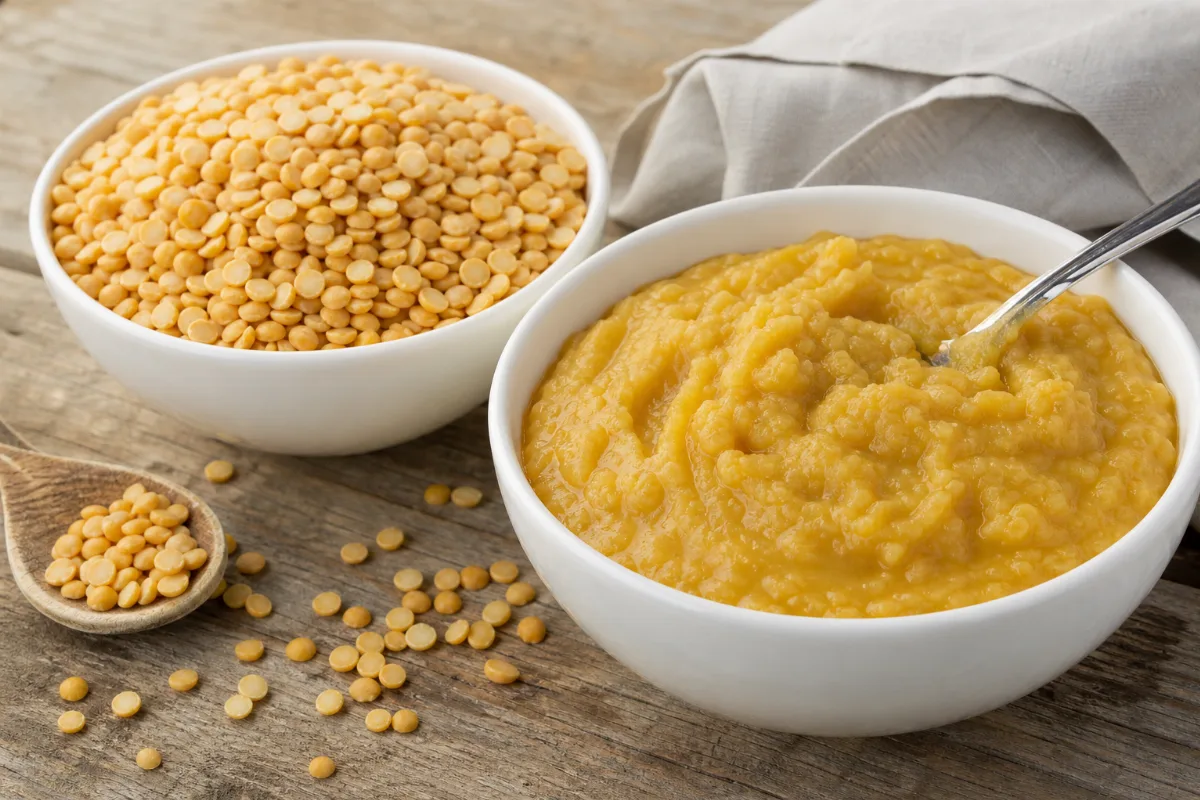
Split peas are mature, dried pea seeds, boiled until soft, as in soup. They give fibre, plant protein and folate. Studies of pulses and legumes in general link them to slightly lower cholesterol and blood pressure risk, but split peas on their own have not been tested, and one trial of a yellow and green pea mix did not clearly lower LDL cholesterol. The main cautions are pea allergy (sometimes severe in children), gas in people with a sensitive gut, and checking with your clinic if you have kidney disease or take warfarin.
General information, not medical advice. Last substantive update · Not medically reviewed. A named clinician has not signed off on this page. How this page is made
About Split Peas
Split peas are a filling dried pea with fibre, plant protein and folate. They are a healthy food, not a proven remedy: the health findings come from studies of pulses or legumes in general.
What it is
Split peas are mature, dried seeds of the pea plant (Pisum sativum), a member of the legume family, boiled until soft. GBIF now lists Pisum sativum as a synonym of Lathyrus oleraceus, but food sources still use the older name. How the seeds are dried and split was not read from a source.
USDA data for cooked, boiled split peas without salt: 118 kcal per 100 g. One cup (196 g) has about 231 kcal, 16.3 g protein, 16.3 g fibre, 127 micrograms folate (DFE), 710 mg potassium, 194 mg phosphorus, 2.5 mg iron and 70.6 mg magnesium. Dry split pea values were not read, so dry and cooked figures are never compared.
What the research shows
The firmest facts are about nutrients: fibre helps bowel function and soluble fibre is linked to lower cholesterol, and folate is a B vitamin. These are not trials of split peas.
Pooled trials of pulses (beans, chickpeas, lentils and dried peas) found LDL cholesterol 0.14 to 0.17 mmol/L lower, lower fasting blood sugar and a very small weight loss of about 0.34 kg. Cohort studies link more legumes to lower blood pressure risk (RR 0.84) and a little less heart disease and death from any cause. Cohort studies cannot prove cause.
The one randomised trial that tested peas themselves (a yellow and green mix, 6 weeks, 180 adults) did not find a clear LDL drop versus rice. The only split-pea study read used split pea flour in bread for single meals.
Food versus flour, powders and extracts
The cholesterol, blood sugar and weight results come from trials of whole pulses, mostly dried beans, chickpeas and lentils. The bread trial used split pea flour. Pea protein powders and extracts are different products. We did not read trials of them and make no claim about them.
Amounts
This page gives no amounts to eat. Ask a doctor, pharmacist or dietitian what is right for you, especially if you take warfarin, have kidney problems or have a food allergy.
At a glance
Traditional uses history, not proof
- Eaten as a food, boiled until soft
- Long use as food is not proof that it treats any condition
Studied for research
- Fibre for bowel health, high certainty for the nutrient, no split pea trial
- Protein and folate, high certainty for the nutrients
- Cholesterol, low certainty (trials of pulses as a group); one pea trial mixed
- Blood pressure, low certainty (observational, legumes as a group)
- Blood sugar, low certainty (trials of pulses as a group)
- Body weight, low certainty (very small effect, pulses as a group)
- Heart disease and early death, low certainty (observational)
Main compounds
- Fibre
- Protein
- Folate (vitamin B9)
- Raffinose-family sugars
- Potassium and phosphorus
Common forms
- Cooked, boiled split peas without salt (the USDA record used here)
- Split pea flour in bread (one small trial; not the same as the whole food)
- Dry split peas and canned soup values were not read
- Pea protein powder is a different product and is not covered
Research links: 2026 review: whole pulses and cholesterol · 2024 trial: peas and beans versus rice for cholesterol · 2026 study: legume allergy in children · Research Library · Genes & Biomarkers Library
What it is and its history
- Accepted scientific name
- Lathyrus oleraceus
- Naming authority
- Lam. (GBIF accepted; Pisum sativum L. is its synonym)
- Synonyms
- Name: Pisum sativum L.; Note: The name still used in most food and nutrition sources, including the trials read; GBIF treats it as a synonym of Lathyrus oleraceus Lam.
- Common names
- Split peas (English); Dried split peas (English); Yellow split peas (English); Green split peas (English); Guisantes partidos (Spanish)
- Family or group
- Fabaceae (the legume or pea family), as given by GBIF.
- Classification
- Plantae > Tracheophyta > Fabales > Fabaceae > Lathyrus > Lathyrus oleraceus
- Native range
- Not verified from a source read.
- Habitat
- Not verified from a source read.
- What it looks like
- Roots: Not verified.; Stems: Not verified.; Leaves: Not verified.; Flowers: Not verified.; Fruit: USDA calls the food "Peas, split, mature seeds"; a 2022 trial abstract describes split yellow pea (Pisum sativum) flour. Household portion for cooked split peas: 1 cup = 196 g (USDA).
- Cultivation
- Not verified from a source read.
- Harvest and processing
- USDA records the food as mature seeds, cooked, boiled, without salt. How the seeds are dried, peeled or split was not read from a source.
- Look-alikes and adulterants
- Name: Green peas (fresh or frozen vegetable); Note: The same species eaten fresh; different nutrient values. See the Green Peas page.; Name: Lentils; Note: A different pulse with its own page.; Name: Pea protein powder and pea flour; Note: Made from peas but different products from the cooked whole food; not covered by the trials of whole pulses.
- Sustainability and conservation
- Not assessed.
Photographs
What is inside, and how it may work
What it contains and how those compounds act in cells and animals. Laboratory and animal mechanisms are not proven effects in people.
Main compounds
| Compound | Family | Where it is concentrated | Activity studied | Level of evidence |
|---|---|---|---|---|
| Fibre (dietary fibre) | carbohydrate | Seed USDA: 8.3 g per 100 g cooked, boiled | Peas are named as a soluble fibre food by MedlinePlus; soluble fibre helps lower cholesterol and insoluble fibre adds stool bulk. 23 30 | Human data |
| Protein | protein | Seed USDA: 8.34 g per 100 g cooked, boiled | A plant protein source. Pea proteins are also the recognised allergens (see Safety). 30 15 | Human data |
| Folate (vitamin B9) | vitamin | Seed USDA: 65 micrograms DFE per 100 g cooked (calculated value) | MedlinePlus names dried beans and peas as folate foods. 24 30 | Human data |
| Raffinose-family sugars (RFOs: raffinose, stachyose, verbascose) | oligosaccharide | Seed Not measured for split peas; a laboratory paper found verbascose stood out in 34 pea (Pisum sativum) seed collections and total sugars were higher in peas than beans | Described as antinutritional factors because of their negative effect on digestion; they are related to the gas pulses can cause. 14 | Lab |
| Potassium and phosphorus | mineral | Seed USDA: potassium 362 mg and phosphorus 99 mg per 100 g cooked | Relevant for people on potassium or phosphorus limits for kidney disease. 30 25 29 | Human data |
Mechanisms, receptors and pathways
| Target or pathway | Gene or receptor | What was found | Level |
|---|---|---|---|
| Soluble fibre and cholesterol | 23 | Human data | |
| Slowly digested carbohydrate | 16 | Human data | |
| Gas from fermentable sugars | 14 21 | Lab and guidance |
Absorption, metabolism and elimination
- Absorption
- For phosphorus: a 2021 review found human data suggest at least 50% of phytate-phosphorus is absorbed; the National Kidney Foundation says plant phosphorus is absorbed less than animal and additive phosphorus. Not studied for split peas.
- Distribution
- Not found.
- Metabolism
- Not found.
- Elimination
- Not found.
- Bioavailability
- Not established for most split pea nutrients in the sources read.
Isolated compounds versus whole extracts
The cholesterol, blood sugar and weight results come from trials of whole pulses, mostly dried beans, chickpeas and lentils. The one split-pea study read used split yellow pea flour in bread, which is a different product from cooked whole split peas. Pea protein powders and extracts were not read and are not covered.
Nutritional composition
Nutrition from USDA FoodData Central: Peas, split, mature seeds, cooked, boiled, without salt (FDC 172429, SR Legacy; record last updated 4/1/2019; values read 2026-10-26 from the FoodData Central web data feed). Per 100 g: 118 kcal, 8.34 g protein, 0.39 g fat, 21.1 g carbohydrate, 8.3 g fibre, 14 mg calcium, 1.29 mg iron, 36 mg magnesium, 99 mg phosphorus, 362 mg potassium, 2 mg sodium, 1.0 mg zinc, 0.181 mg copper, 0.396 mg manganese, 0.19 mg thiamin (B1), 65 micrograms folate (DFE), 5 micrograms vitamin K. One cup of cooked split peas (196 g): about 231 kcal, 16.3 g protein, 16.3 g fibre, 127 micrograms folate, 710 mg potassium, 194 mg phosphorus, 2.5 mg iron and 70.6 mg magnesium. Several of these values are calculated or taken from other tables, and they vary with variety, growing place and cooking. Dry split pea values and canned soup values were not read, so dry and cooked rows must not be compared.
2 high certainty1 mixed findings6 low certainty1 very low certainty1 not enough evidence
What was looked at
The 11 benefits and uses checked for Split Peas, each with how strong the evidence is. Tap one to open it.
- Fibre for bowel healthHigh certainty
- Cholesterol (pulses as a group)Low certainty
- Cholesterol in a trial of peasMixed findings
- Blood pressure (legume intake, observational)Low certainty
- Blood sugar (pulses as a group)Low certainty
- Body weight (pulses as a group)Low certainty
- Heart disease (legumes, observational)Low certainty
- Death from any cause (legumes, observational)Low certainty
- Blood sugar after a meal (split pea flour bread)Not enough evidence
- Fullness and hunger (split pea flour bread)Very low certainty
- Protein and folate as nutrientsHigh certainty
Lab markers tracked in the studies
LDL cholesterolFasting blood glucoseNew high blood pressure (hypertension)Body weightDeath from any causeCardiovascular disease and coronary heart disease
What is Split Peas good for?
The main studied uses and how strong the human evidence is for each. Most results are for pulses or legumes as a group, not for eating split peas on their own.
Benefits, one by one
Each card is a research question, not a promise. Tap a goal to filter. Open a card to see the studies, doses and limits.
Fibre for bowel health
High certaintyCooked split peas have 8.3 g of fibre per 100 g and about 16.3 g in one cup (196 g), by USDA data. MedlinePlus lists peas among soluble fibre foods, and says soluble fibre helps lower cholesterol and insoluble fibre adds bulk to stool. This is a nutrient fact, not a trial of split peas. Pulses can also cause gas in sensitive people (see Safety).
2 studiesCooked, boiled split peas without salt (USDA). Dry split peas were no…
Studies, doses and limits
What the trials found
MedlinePlus says soluble fibre is found in oat bran, barley, nuts, seeds, beans, lentils, peas and some fruits and vegetables, and that research has shown soluble fibre helps lower cholesterol. It says insoluble fibre adds bulk to the stool. USDA lists 8.3 g of total fibre per 100 g of cooked, boiled split peas.
Results
The fibre role is well accepted and split peas contain fibre. USDA does not split the 8.3 g into soluble and insoluble. No trial of eating split peas for bowel function was read.
Effect sizes as reported
USDA: 8.3 g fibre per 100 g cooked split peas; about 16.3 g per cup (196 g).
Why this rating
High for the role of fibre and for cooked split peas containing it (health-agency statement and USDA data). No split-pea bowel trial was read.
Form and dose studied
Cooked, boiled split peas without salt (USDA). Dry split peas were not read, so dry and cooked figures are never compared.
Who was studied
General adult diet.
Limits
A nutrient fact, not a trial of split peas. How much of the fibre is soluble was not read.
Why researchers looked
Split peas are a fibre-rich pulse, so people ask what the fibre does for the gut.
Traditional use
Split peas are eaten as a food, for example boiled until soft. Long use as food is not proof that it treats any condition.
Proposed mechanism Authoritative guidance
Soluble fibre attracts water and forms a gel that slows digestion; insoluble fibre adds bulk to stool and helps food pass more quickly (MedlinePlus).
A proposed mechanism does not show that the effect happens in people.
Fibre-rich pulses can cause gas and bloating in people with a sensitive gut or irritable bowel syndrome; see the Safety tab.
Cholesterol (pulses as a group)
Low certaintyPooled trials of pulses and legumes (beans, chickpeas, lentils and peas) found a small drop in LDL ("bad") cholesterol of about 0.14 to 0.17 mmol/L. These trials did not test split peas on their own, so the result for split peas is not known.
3 studiesPulses as food (trial detail: median about 130 g a day, not advice). …
Studies, doses and limits
What the trials found
A 2014 meta-analysis of 26 trials (1,037 adults) found diets emphasising pulses, at a median of 130 g a day, lowered LDL cholesterol by 0.17 mmol/L (95% CI -0.25 to -0.09), with no effect on apoB or non-HDL cholesterol. A 2026 update of 38 trials (2,095 adults, median 6 weeks) found LDL -0.14 mmol/L (95% CI -0.19 to -0.08), non-HDL -0.22 and apoB -0.08 g/L, with a very small fall in HDL cholesterol (-0.03), and similar results across pulse types. A 2024 review of 24 trials of legumes eaten for at least 6 weeks (1,938 adults) found LDL -0.16 mmol/L (95% CI -0.24 to -0.08), with moderate certainty.
Results
Eating pulses as part of the diet slightly lowered LDL cholesterol in short trials. Split peas were not tested separately; the 2026 authors say studies on dried peas, chickpeas and lentils are still needed.
Effect sizes as reported
LDL -0.17 mmol/L (2014; 26 trials); LDL -0.14, non-HDL -0.22, apoB -0.08 g/L, HDL -0.03 (2026; 38 trials); LDL -0.16 (2024; 24 trials).
Why this rating
The 2026 review rates its certainty as moderate to high for pulses as a group, but we rate it low for split peas because split peas were not tested separately and the trials were short (median 6 weeks). LDL is also a marker, not a heart attack count.
Form and dose studied
Pulses as food (trial detail: median about 130 g a day, not advice). Not split peas specifically.
Who was studied
Adults in randomised trials.
Limits
Pulses are mostly dried beans, chickpeas and lentils. Short trials. Cholesterol is a marker, not a measure of heart attacks or strokes.
Why researchers looked
Pulses are high in fibre and protein, so researchers test whether eating them changes blood fats.
Traditional use
Split peas are eaten as a food, for example boiled until soft. Long use as food is not proof that it treats any condition.
Proposed mechanism Authoritative guidance
Not established in the abstracts read. MedlinePlus says soluble fibre helps lower cholesterol, and split peas contain fibre.
A proposed mechanism does not show that the effect happens in people.
No safety signal for cholesterol; gas and allergy cautions are on the Safety tab.
Cholesterol in a trial of peas
Mixed findingsIn a 6-week trial of 180 adults with mild high cholesterol, a daily portion of a yellow and green pea mix did not lower LDL cholesterol clearly compared with rice (the confidence range includes no effect). A bean mix did lower it. Blood pressure, blood sugar and triglycerides did not change with peas.
1 studiesAbout 120 g of a yellow and green pea mix a day in cooked foods in th…
Studies, doses and limits
What the trials found
In the 2024 randomised trial (60 adults per group), LDL cholesterol was lower with beans (-0.21; 95% CI -0.39 to -0.03) but not with peas (-0.11; 95% CI -0.29 to 0.07) compared with rice after 6 weeks. For peas, systolic blood pressure changed by -1.39 (95% CI -5.18 to 2.40) and diastolic by -1.89 (95% CI -4.65 to 0.88); glucose, insulin and triglycerides did not change. Units are not given in the abstract. Gut effects were transient and mostly not related to the study foods.
Results
Peas did not clearly lower LDL cholesterol or blood pressure in this trial. The abstract does not say whether the peas were split.
Effect sizes as reported
Peas vs rice: LDL -0.11 (95% CI -0.29 to 0.07); beans vs rice: LDL -0.21 (-0.39 to -0.03).
Why this rating
One 6-week trial in adults with mild high cholesterol. It disagrees with the pooled pulse result for LDL, but its range includes small effects.
Form and dose studied
About 120 g of a yellow and green pea mix a day in cooked foods in the trial (trial detail, not advice).
Who was studied
Adults with mild high cholesterol in two Canadian cities.
Limits
Single trial, 6 weeks, single-blind. The pea mix is not described as split peas. Funding is not stated in the abstract.
Why researchers looked
Researchers asked whether peas, on their own, lower cholesterol the way pulses as a group appear to.
Traditional use
Split peas are eaten as a food, for example boiled until soft. Long use as food is not proof that it treats any condition.
Proposed mechanism Unknown
Not established. The authors suggest that fibre may not explain the effect of beans.
A proposed mechanism does not show that the effect happens in people.
Gut effects were transient and mostly not related to the study foods (abstract).
Blood pressure (legume intake, observational)
Low certaintyIn studies that follow people over time, those who ate the most legumes had about 16% lower risk of developing high blood pressure (relative risk 0.84). That is an association, not proof, and it is about legumes in general, not split peas alone. The 2024 pea trial did not find a clear blood pressure change.
2 studiesLegumes as food. The studies group beans, lentils, chickpeas, peas an…
Studies, doses and limits
What the trials found
A 2026 meta-analysis of 12 prospective studies found the highest legume intake had a relative risk of 0.84 (95% CI 0.77 to 0.93) for hypertension compared with the lowest (10 studies; 86,098 cases among 309,853 people); per 100 g a day the relative risk was 0.88 (0.80 to 0.97). An earlier umbrella review of 28 cohort studies found pulses with or without other legumes linked to lower hypertension incidence, relative risk 0.91 (0.86 to 0.97), graded very low certainty.
Results
Higher legume intake went with lower risk of high blood pressure in cohort studies. Observational data cannot show that legumes are the cause.
Effect sizes as reported
Legumes high vs low RR 0.84 (95% CI 0.77-0.93); pulses with or without other legumes RR 0.91 (0.86-0.97).
Why this rating
Observational only. The 2019 review grades the certainty very low; the 2026 authors call causality probable by their criteria, but the study design cannot prove it. Split peas are not singled out in either paper.
Form and dose studied
Legumes as food. The studies group beans, lentils, chickpeas, peas and other legumes.
Who was studied
Adults in cohort studies.
Limits
People who eat more legumes may differ in other ways (diet, activity). Two authors of the 2026 paper received support from Plant-Based Health Professionals UK.
Why researchers looked
Large population studies ask whether people who eat more legumes develop high blood pressure less often.
Traditional use
Split peas are eaten as a food, for example boiled until soft. Long use as food is not proof that it treats any condition.
Proposed mechanism Unknown
Not established. The studies are observational.
A proposed mechanism does not show that the effect happens in people.
None specific.
Blood sugar (pulses as a group)
Low certaintyPooled trials of pulses (chickpeas, beans, peas, lentils) found lower fasting blood glucose, and lower long-term markers (HbA1c or fructosamine) when pulses were part of low glycaemic index diets. The trials varied a lot and did not test split peas on their own.
2 studiesPulses as food (trial detail not given in the 2009 abstract; average …
Studies, doses and limits
What the trials found
A 2009 meta-analysis of 41 trials of at least 7 days in people with and without diabetes found pulses alone (11 trials) lowered fasting glucose (standardised mean difference -0.82, 95% CI -1.36 to -0.27) and insulin (-0.49). Pulses in low-GI diets (19 trials) lowered HbA1c or fructosamine (-0.28, -0.42 to -0.14). Heterogeneity was high and mostly unexplained. A 2024 review of 24 trials of legumes eaten for at least 6 weeks found fasting glucose lower by 0.18 mmol/L (95% CI -0.30 to -0.06), with moderate certainty.
Results
Eating pulses was linked to lower fasting glucose in pooled trials. Differences between trials were large. Split peas were not tested separately; the one split-pea-flour bread trial (see the bread trial under other uses) found no significant change in blood sugar after a meal.
Effect sizes as reported
Fasting glucose SMD -0.82 (2009); fasting glucose -0.18 mmol/L (2024).
Why this rating
Pooled trials of pulses as a group, with high unexplained differences, and no split-pea-only trial of longer-term blood sugar.
Form and dose studied
Pulses as food (trial detail not given in the 2009 abstract; average about 86 g a day in the 2024 review, not advice).
Who was studied
People with and without diabetes in randomised trials.
Limits
Pulses as a group; high heterogeneity; older (2009) main review. Not tested in people on diabetes medicines specifically.
Why researchers looked
Pulses are digested slowly, so researchers test whether eating them changes blood sugar.
Traditional use
Split peas are eaten as a food, for example boiled until soft. Long use as food is not proof that it treats any condition.
Proposed mechanism Unknown
The 2009 abstract describes pulses as a good source of slowly digestible carbohydrate, fibre and vegetable protein. Not tested here as a mechanism.
A proposed mechanism does not show that the effect happens in people.
People on diabetes medicines should ask their clinic before changing their diet a lot.
Body weight (pulses as a group)
Low certaintyDiets with pulses gave a very small extra weight loss, about 0.34 kg over roughly 6 weeks. This was not tested with split peas alone.
2 studiesPulses as food (trial detail: median 132 g a day, not advice).
Studies, doses and limits
What the trials found
A 2016 meta-analysis of 21 randomised trials (940 adults, at least 3 weeks) found diets containing whole pulses (median 132 g a day) gave a weight reduction of -0.34 kg (95% CI -0.63 to -0.04) over a median of 6 weeks compared with diets without pulses, in both weight-loss and weight-maintaining diets. Six trials suggested body fat percentage may fall. A 2019 umbrella review of cohort studies found pulses with or without other legumes linked to lower obesity incidence (RR 0.87, 95% CI 0.81 to 0.94), graded very low certainty.
Results
A very small weight effect in short trials. Long-term effect is unknown. No split-pea weight trial was read.
Effect sizes as reported
Weight -0.34 kg (95% CI -0.63 to -0.04); obesity incidence RR 0.87 (0.81-0.94, very low certainty, observational).
Why this rating
Pooled trials of pulses as a group, very small effect, short duration; observational results are very low certainty.
Form and dose studied
Pulses as food (trial detail: median 132 g a day, not advice).
Who was studied
Adults in randomised trials.
Limits
A very small effect; pulses as a group; long-term weight effects unknown.
Why researchers looked
Pulses are filling and high in fibre, so researchers test whether they help with weight.
Traditional use
Split peas are eaten as a food, for example boiled until soft. Long use as food is not proof that it treats any condition.
Proposed mechanism Unknown
Not established in the abstract.
A proposed mechanism does not show that the effect happens in people.
None specific.
Heart disease (legumes, observational)
Low certaintyIn long-term studies, people who ate the most legumes had about 6% less cardiovascular disease and 10% less coronary heart disease than those who ate the least, but no difference in stroke. This is an association, not proof, and it is about legumes in general, not split peas alone.
2 studiesLegumes as food (grouped).
Studies, doses and limits
What the trials found
A 2023 meta-analysis of 26 observational studies found the highest legume intake linked to less cardiovascular disease (RR 0.94, 95% CI 0.89 to 0.99) and coronary heart disease (RR 0.90, 0.85 to 0.96), but not stroke (RR 1.00, 0.93 to 1.08); the benefit seemed to level off at about 400 g a week. A 2019 umbrella review of 28 cohort studies found pulses with or without other legumes linked to less cardiovascular disease (RR 0.92, 0.85 to 0.99; low certainty) and coronary heart disease (RR 0.90, 0.83 to 0.99; very low), with no link to heart attack, stroke or diabetes.
Results
Higher legume intake went with a little less heart disease in cohort studies, but not with less stroke. Observational data cannot show cause.
Effect sizes as reported
CVD RR 0.94; CHD RR 0.90; stroke RR 1.00 (2023); CVD RR 0.92, CHD RR 0.90 (2019).
Why this rating
Observational only; the 2019 review grades the certainty low for CVD and very low for the other outcomes. Split peas are not singled out.
Form and dose studied
Legumes as food (grouped).
Who was studied
Adults in cohort and case-control studies.
Limits
People who eat more legumes may differ in other ways. Legumes as a group.
Why researchers looked
Large population studies ask whether eating more legumes goes with fewer heart problems.
Traditional use
Split peas are eaten as a food, for example boiled until soft. Long use as food is not proof that it treats any condition.
Proposed mechanism Unknown
Not established. The studies are observational.
A proposed mechanism does not show that the effect happens in people.
None specific.
Death from any cause (legumes, observational)
Low certaintyIn 32 cohorts, higher legume intake was linked to about 6% lower risk of death from any cause (HR 0.94) and from stroke, but not to heart-disease or cancer deaths. This is an association, not proof.
1 studiesLegumes as food (grouped).
Studies, doses and limits
What the trials found
A 2023 meta-analysis of 32 cohorts (1,141,793 people, 93,373 deaths) found higher versus lower legume intake linked to lower death from any cause (HR 0.94, 95% CI 0.91 to 0.98) and from stroke (HR 0.91, 0.84 to 0.99). Per 50 g a day the all-cause HR was 0.94 (0.89 to 0.99). There was no significant link with cardiovascular disease death (HR 0.99), coronary heart disease death (HR 0.93) or cancer death (HR 0.85, 0.72 to 1.01). The authors judged certainty low to moderate.
Results
Higher legume intake went with a little lower risk of death in cohorts. It does not prove legumes extend life.
Effect sizes as reported
All-cause HR 0.94 (95% CI 0.91-0.98); stroke death HR 0.91 (0.84-0.99).
Why this rating
Observational; certainty low to moderate by the authors; legumes as a group, not split peas.
Form and dose studied
Legumes as food (grouped).
Who was studied
Adults in 32 cohorts.
Limits
People who eat more legumes may differ in other ways.
Why researchers looked
Researchers ask whether people who eat more legumes live longer.
Traditional use
Split peas are eaten as a food, for example boiled until soft. Long use as food is not proof that it treats any condition.
Proposed mechanism Unknown
Not established. The studies are observational.
A proposed mechanism does not show that the effect happens in people.
None specific.
Blood sugar after a meal (split pea flour bread)
Not enough evidenceIn 24 healthy adults, bread made with 20% split yellow pea flour did not significantly change blood glucose or insulin after the meal compared with white wheat bread. This was flour in bread, not whole split peas.
1 studiesBread with 20% split yellow pea flour (trial detail, not advice).
Studies, doses and limits
What the trials found
In a 2022 randomised crossover trial, 24 healthy adults ate white pan bread with 20% split yellow pea (Pisum sativum) flour (untreated, or heat-treated in two ways) or 100% white wheat bread, each giving 50 g of available carbohydrate. Glucose and insulin responses over 120 minutes did not differ significantly between the breads.
Results
No significant difference in the blood glucose or insulin response. The trial cannot say anything about whole split peas.
Effect sizes as reported
No significant difference in glucose or insulin (figures not given in the abstract).
Why this rating
One small acute trial of single meals in healthy adults, using bread with pea flour.
Form and dose studied
Bread with 20% split yellow pea flour (trial detail, not advice).
Who was studied
24 healthy adults.
Limits
Single meals; healthy adults; flour in bread, not whole split peas.
Why researchers looked
Researchers tested whether adding pea flour to bread changes the blood sugar rise after eating it.
Traditional use
Split peas are eaten as a food, for example boiled until soft. Long use as food is not proof that it treats any condition.
Proposed mechanism Unknown
Not established.
A proposed mechanism does not show that the effect happens in people.
None specific.
Fullness and hunger (split pea flour bread)
Very low certaintyIn the same trial, the pea-flour breads gave about 18% higher fullness and 16 to 18% lower hunger and desire to eat ratings than white wheat bread over the test meal. This was flour in bread, in healthy adults, in one small trial.
1 studiesBread with 20% split yellow pea flour (trial detail, not advice).
Studies, doses and limits
What the trials found
In the 2022 trial (24 healthy adults), pea-containing breads resulted in 18% higher fullness and 16 to 18% lower hunger, desire to eat and prospective food consumption ratings compared with 100% white wheat bread. Aroma, flavour, colour and overall acceptability did not differ.
Results
The pea breads left people feeling fuller for a short time. Hunger ratings are not a measure of weight loss.
Effect sizes as reported
Fullness +18%; hunger, desire to eat and prospective consumption -16 to -18% (vs wheat bread).
Why this rating
One small crossover trial of single test meals with self-rated appetite scores.
Form and dose studied
Bread with 20% split yellow pea flour (trial detail, not advice).
Who was studied
24 healthy adults.
Limits
Self-rated appetite for a single meal; flour in bread, not whole split peas.
Why researchers looked
Pulses are said to help people feel full, so the trial also measured appetite.
Traditional use
Split peas are eaten as a food, for example boiled until soft. Long use as food is not proof that it treats any condition.
Proposed mechanism Unknown
Not established.
A proposed mechanism does not show that the effect happens in people.
None specific.
Protein and folate as nutrients
High certaintyCooked split peas have 8.34 g of protein and 65 micrograms of folate (DFE) per 100 g, by USDA data. MedlinePlus names dried beans and peas as folate foods. These are nutrient facts, not trials of split peas.
2 studiesCooked, boiled split peas without salt (USDA).
Studies, doses and limits
What the trials found
USDA: 8.34 g protein and 65 micrograms folate (DFE, a calculated value) per 100 g of cooked, boiled split peas without salt; one cup (196 g) has about 16.3 g protein and 127 micrograms folate. MedlinePlus lists dried beans and peas (legumes) among natural folate foods and says women planning pregnancy should take folic acid. No trial of split peas for protein or folate status was read.
Results
Split peas supply protein and folate; whether this changes anyone's health was not tested.
Effect sizes as reported
USDA: protein 8.34 g and folate 65 micrograms per 100 g cooked.
Why this rating
High for the nutrient content (USDA). Not a health outcome trial.
Form and dose studied
Cooked, boiled split peas without salt (USDA).
Who was studied
General diet.
Limits
A nutrient fact. Dry split peas were not read.
Why researchers looked
People eat split peas as a plant source of protein and folate.
Traditional use
Split peas are eaten as a food, for example boiled until soft. Long use as food is not proof that it treats any condition.
Proposed mechanism Authoritative guidance
Folate is a B vitamin (vitamin B9); MedlinePlus describes it as occurring naturally in foods such as dark green leafy vegetables, dried beans and peas, and citrus fruit.
A proposed mechanism does not show that the effect happens in people.
None specific; see Safety for pregnancy, kidney and warfarin notes.
Connections to the rest of health
How Split Peas connects to the rest of our health knowledge graph. Every link says what kind of connection it is. A safety link (for example to the liver) is a warning, not a benefit. A study that merely mentions a topic never creates a benefit link.
Explore every connection: goals, body systems, organs, symptoms, genes
A. Wellness goals
| Connected to | Kind of connection | Evidence status | Context | Studies |
|---|---|---|---|---|
| Digestive Support | Demonstrated clinical effect | High certainty | Fibre for bowel health: Cooked split peas have 8.3 g of fibre per 100 g and about 16.3 g in one cup (196 g), by USDA data. MedlinePlus lists peas among soluble fibre foods, and says soluble fibre helps lower cholesterol and insoluble fibre adds bulk to stool. This is a nutrient fact, not a trial of split peas. Pulses can also cause gas in sensitive people (see Safety). | 23 30 |
| Cholesterol Balance | Low certainty | Cholesterol (pulses as a group): Pooled trials of pulses and legumes (beans, chickpeas, lentils and peas) found a small drop in LDL ("bad") cholesterol of about 0.14 to 0.17 mmol/L. These trials did not test split peas on their own, so the result for split peas is not known. Cholesterol in a trial of peas: In a 6-week trial of 180 adults with mild high cholesterol, a daily portion of a yellow and green pea mix did not lower LDL cholesterol clearly compared with rice (the confidence range includes no effect). A bean mix did lower it. Blood pressure, blood sugar and triglycerides did not change with peas. | 8 3 9 4 | |
| Heart Health | Low certainty | Cholesterol (pulses as a group): Pooled trials of pulses and legumes (beans, chickpeas, lentils and peas) found a small drop in LDL ("bad") cholesterol of about 0.14 to 0.17 mmol/L. These trials did not test split peas on their own, so the result for split peas is not known. Cholesterol in a trial of peas: In a 6-week trial of 180 adults with mild high cholesterol, a daily portion of a yellow and green pea mix did not lower LDL cholesterol clearly compared with rice (the confidence range includes no effect). A bean mix did lower it. Blood pressure, blood sugar and triglycerides did not change with peas. | 8 3 9 4 | |
| Blood Pressure Support | Low certainty | Blood pressure (legume intake, observational): In studies that follow people over time, those who ate the most legumes had about 16% lower risk of developing high blood pressure (relative risk 0.84). That is an association, not proof, and it is about legumes in general, not split peas alone. The 2024 pea trial did not find a clear blood pressure change. | 13 17 | |
| Blood Sugar Balance | Low certainty | Blood sugar (pulses as a group): Pooled trials of pulses (chickpeas, beans, peas, lentils) found lower fasting blood glucose, and lower long-term markers (HbA1c or fructosamine) when pulses were part of low glycaemic index diets. The trials varied a lot and did not test split peas on their own. Blood sugar after a meal (split pea flour bread): In 24 healthy adults, bread made with 20% split yellow pea flour did not significantly change blood glucose or insulin after the meal compared with white wheat bread. This was flour in bread, not whole split peas. | 16 9 7 | |
| Weight Management | Low certainty | Body weight (pulses as a group): Diets with pulses gave a very small extra weight loss, about 0.34 kg over roughly 6 weeks. This was not tested with split peas alone. Fullness and hunger (split pea flour bread): In the same trial, the pea-flour breads gave about 18% higher fullness and 16 to 18% lower hunger and desire to eat ratings than white wheat bread over the test meal. This was flour in bread, in healthy adults, in one small trial. | 10 17 7 | |
| Heart Health | Low certainty | Heart disease (legumes, observational): In long-term studies, people who ate the most legumes had about 6% less cardiovascular disease and 10% less coronary heart disease than those who ate the least, but no difference in stroke. This is an association, not proof, and it is about legumes in general, not split peas alone. | 12 17 | |
| Healthy Aging | Low certainty | Death from any cause (legumes, observational): In 32 cohorts, higher legume intake was linked to about 6% lower risk of death from any cause (HR 0.94) and from stroke, but not to heart-disease or cancer deaths. This is an association, not proof. | 20 |
B. Body systems
| Connected to | Kind of connection | Evidence status | Context | Studies |
|---|---|---|---|---|
| Digestive System | Biological association | High certainty | Studied for: Fibre for bowel health | 23 30 |
| Cardiovascular System | Biological association | Low certainty | Studied for: Cholesterol (pulses as a group) Studied for: Cholesterol in a trial of peas | 8 3 9 4 13 17 12 |
| Endocrine System | Biological association | Low certainty | Studied for: Blood sugar (pulses as a group) Studied for: Blood sugar after a meal (split pea flour bread) | 16 9 7 |
| Metabolism Weight | Biological association | Low certainty | Studied for: Blood sugar (pulses as a group) Studied for: Body weight (pulses as a group) | 16 9 10 17 7 |
| Whole Body | Biological association | Low certainty | Studied for: Death from any cause (legumes, observational) | 20 |
| Nutrition | Biological association | High certainty | Studied for: Protein and folate as nutrients | 30 24 |
| Blood And Immune | Biological association | High certainty | Studied for: Protein and folate as nutrients | 30 24 |
C. Body parts and organs
| Connected to | Kind of connection | Evidence status | Context | Studies |
|---|---|---|---|---|
| Gut | Adverse effect or risk | Documented risk | Gas and bloating from fermentable sugars in pulses in people with a sensitive gut. Preparation or compound: Pulses |
21 11 14 |
| Kidneys | Adverse effect or risk | Documented risk | Cooked split peas contain potassium and phosphorus; people with kidney disease should ask their kidney team. Preparation or compound: Cooked split peas (potassium and phosphorus) |
25 30 29 |
E. Health conditions
| Connected to | Kind of connection | Evidence status | Context | Studies |
|---|---|---|---|---|
| Food allergy | Adverse effect or risk | Documented risk | Pea is a recognised legume allergen; in one children's clinic study it caused half of the severe legume reactions. Preparation or compound: Pea protein in split peas |
15 2 1 |
I. Biomarkers
| Connected to | Kind of connection | Evidence status | Context | Studies |
|---|---|---|---|---|
| LDL cholesterol | Biological association | Low certainty | Measured in trials: lowered. A lab change is not the same as a health benefit. | 8 3 4 |
| Fasting blood glucose | Biological association | Low certainty | Measured in trials: lowered. A lab change is not the same as a health benefit. | 16 9 |
| New high blood pressure (hypertension) | Biological association | Low certainty | Measured in trials: lowered. A lab change is not the same as a health benefit. | 13 17 |
| Body weight | Biological association | Low certainty | Measured in trials: lowered. A lab change is not the same as a health benefit. | 10 |
| Death from any cause | Biological association | Low certainty | Measured in trials: lowered. A lab change is not the same as a health benefit. | 20 |
| Cardiovascular disease and coronary heart disease | Biological association | Low certainty | Measured in trials: lowered. A lab change is not the same as a health benefit. | 12 17 |
K. Biological pathways
L. Active compounds
| Connected to | Kind of connection | Evidence status | Context | Studies |
|---|---|---|---|---|
| Fibre (dietary fibre) | Biological association | Human | Peas are named as a soluble fibre food by MedlinePlus; soluble fibre helps lower cholesterol and insoluble fibre adds stool bulk. Preparation or compound: Seed |
23 30 |
| Protein | Biological association | Human | A plant protein source. Pea proteins are also the recognised allergens (see Safety). Preparation or compound: Seed |
30 15 |
| Folate (vitamin B9) | Biological association | Human | MedlinePlus names dried beans and peas as folate foods. Preparation or compound: Seed |
24 30 |
| Raffinose-family sugars (RFOs: raffinose, stachyose, verbascose) | Biological association | Lab | Described as antinutritional factors because of their negative effect on digestion; they are related to the gas pulses can cause. Preparation or compound: Seed |
14 |
| Potassium and phosphorus | Biological association | Human | Relevant for people on potassium or phosphorus limits for kidney disease. Preparation or compound: Seed |
30 25 29 |
Each connection is stored with the ingredient, the connected record, the kind of connection, the evidence status, the supporting studies, the preparation or compound involved, and a review date (last reviewed October 26, 2026).
The evidence
The research centre for Split Peas. Every record here was checked against PubMed or the publisher's page; we never list a study we have not verified.
Evidence by outcome
Bars show how many studies we found for each outcome, not how well it works. People are added up across trials only (reviews are not added, to avoid double counting).
How we rate evidence
High certainty
Several well-run trials or reviews agree; further research is unlikely to change the picture much.
Moderate certainty
Good trials point the same way, but some doubt remains.
Low certainty
Small, short or inconsistent trials. The finding could change with better research.
Very low certainty
Very little or very weak human data. Treat as a possibility only.
Mixed findings
Trials or reviews disagree with each other.
Not enough evidence
Not enough human research to say either way.
Evidence against
Good research found no benefit, or found harm.
We take the reviewers' own risk-of-bias and GRADE statements where they exist, and otherwise judge from study size, design, consistency, directness and whether a product matches what is sold. Many publications do not make evidence high. Method note: We started from our existing split peas page, re-checked nutrition at USDA FoodData Central, read the health agency pages (NHS, MedlinePlus, National Kidney Foundation, a Cambridge hospital leaflet) and re-read PubMed abstracts for reviews, trials and allergy studies. Only abstracts were read for studies. Items we could not verify are flagged in the research gaps.
Study library: every study we checked 30
| Study | Design | People | Product, dose, length | Result |
|---|---|---|---|---|
| Abu Risha 2024 Legume Allergens Pea, Chickpea, Lentil, Lupine and Beyond. Curr Allergy Asthma Rep · PMID 38990406 · DOI |
Narrative review |
Review of legume allergens (pea, chickpea, lentil, lupine and others) | Not an intervention Legumes |
Non-priority legumes (beans, pea, lentils, chickpea, lupine and others) can cause mild to severe allergic reactions. Severe reactions have been described particularly for peas and lupine. Most reactions come from IgE cross-reactions between similar proteins, for example peanut and lupine. The authors say most studies are case reports and larger studies are needed. Not applicable (Not applicable) Methods, limits and fundingOutcomes: Which legumes cause allergy and why Limitations: A narrative review; most evidence is case reports. Funding and conflicts: The PubMed record lists German research grants; other funding is not stated in the abstract. Read: abstract |
| Atwah 2025 The prevalence of outgrowing non-priority legume allergies in children. Pediatr Allergy Immunol · PMID 41424376 · DOI |
Retrospective record review |
203 203 children aged 5 to 15 at one London children's hospital with IgE-mediated allergy to lentils, chickpeas, peas or beans |
Not an intervention (clinic records) Legumes Median follow-up 7 years |
The share who had outgrown a pea allergy was 8.3% by age 5, 20.1% by age 10 and 23.5% by age 15. Children with low skin-prick and IgE results were more likely to outgrow it. Pea allergy outgrown: 23.5% by age 15 (Not given in the abstract) Methods, limits and fundingOutcomes: How many children outgrew the allergy, by age Limitations: Hospital clinic records, children who were already allergic. Not the general population. Funding and conflicts: Funding is not stated in the abstract. Read: abstract |
| Back 2026 Effect of Different Types of Whole Dietary Pulses on Established Therapeutic Lipid Targets for Cardiovascular Risk Reduction: An Updated Systematic Review and Dose-Response Meta-Analysis of Randomized Controlled Trials. J Am Heart Assoc · PMID 42132198 · DOI |
Systematic review meta analysis |
2095 2,095 adults in 38 randomised trials (52 comparisons) |
Whole dietary pulses Pulses (edible seeds), as food Median 130 g/day (0.5 to 0.67 cup; trial detail, not advice) Median 6 weeks (at least 3 weeks) · vs Diets without the pulse |
Whole dietary pulses lowered LDL, non-HDL cholesterol and apoB, and lowered HDL cholesterol very slightly. Results were similar across pulse types. Certainty (GRADE) was moderate-to-high for all outcomes except apoB (very low). The authors say studies on chickpeas, dried peas and lentils are still needed. LDL -0.14 mmol/L; non-HDL -0.22 mmol/L; apoB -0.08 g/L; HDL -0.03 mmol/L (LDL -0.14 (95% CI -0.19 to -0.08); non-HDL -0.22 (-0.30 to -0.14); apoB -0.08 (-0.13 to -0.03); HDL -0.03 (-0.05 to -0.01)) Methods, limits and fundingOutcomes: LDL cholesterol (primary), non-HDL cholesterol, apoB, HDL cholesterol and other lipids Limitations: Pulses as a group; dried peas were not analysed separately in the abstract and the authors call for more studies on them. Short trials (median 6 weeks). LDL is a marker, not a count of heart attacks. Funding and conflicts: Registered PROSPERO CRD42023432826. Funding is not stated in the abstract. Registration: PROSPERO CRD42023432826 Read: abstract |
| Bell 2024 A Comparison of Dry Bean and Pea Consumption on Serum Cholesterol: A Randomized Controlled Trial in Adults with Mild Hypercholesterolemia. J Nutr · PMID 39357673 · DOI |
Controlled trial |
180 Adults with mild high cholesterol in two Canadian cities (60 per group; 3 arms) |
A mixture of yellow and green peas (the abstract does not say whether they were split or how they were cooked), or a bean mixture, versus rice Peas as food (cooked foods) About 120 g (about 0.75 cup) as the pea portion in the trial (trial detail, not advice) 6 weeks · vs White parboiled rice, in identical foods |
Beans lowered LDL cholesterol compared with rice; the pea group did not clearly differ from rice. Total and non-HDL cholesterol were lower with beans. Triglycerides, glucose, insulin and blood pressure did not change. Gut effects were transient and mostly not related to the study foods. LDL: peas -0.11, beans -0.21 (units not stated in the abstract); systolic blood pressure with peas -1.39 (Peas LDL 95% CI -0.29 to 0.07 (includes no effect); beans -0.39 to -0.03; peas systolic BP -5.18 to 2.40; diastolic -1.89 (-4.65 to 0.88)) Methods, limits and fundingOutcomes: LDL cholesterol (primary); other blood fats, glucose, insulin, blood pressure; gut effects Limitations: Single-blind trial, 6 weeks, adults with mild high cholesterol. The pea mix is not described as split peas. Units for the cholesterol figures are not stated in the abstract. Funding and conflicts: Registered NCT01661543. Funding is not stated in the abstract. Registration: NCT01661543 Read: abstract |
| Calvo 2021 Perspective: Plant-based Whole-Grain Foods for Chronic Kidney Disease: The Phytate-Phosphorus Conundrum. Adv Nutr · PMID 34192744 · DOI |
Narrative review |
Perspective on phytate-phosphorus in plant foods for chronic kidney disease | Review of human diet studies of phytate-rich plant foods Whole grains, legumes, pulses and nuts |
Review of human interventions suggests at least 50% of phytate-phosphorus is absorbed, which is less than from animal protein-bound phosphorus but more than the 10 to 30% often assumed. Food processing and gut bacteria may also release phosphorus. At least 50% absorbed (Not applicable) Methods, limits and fundingOutcomes: How much phosphorus from plant foods is absorbed Limitations: A perspective article; not a trial and not about split peas specifically. Funding and conflicts: Funding is not stated in the abstract. Read: abstract |
| Choi 2004 Purine-rich foods, dairy and protein intake, and the risk of gout in men. N Engl J Med · PMID 15014182 · DOI |
Prospective cohort |
47150 47,150 US men with no history of gout, followed for 12 years (730 new gout cases) |
Intake of purine-rich foods, protein and dairy from food-frequency questionnaires Meat, seafood, purine-rich vegetables, dairy 12 years · vs Lowest quintile of intake |
Higher meat intake (RR 1.41) and seafood intake (RR 1.51) were linked to more gout; dairy to less (RR 0.56). Purine-rich vegetables and total protein were not linked to more gout. The abstract does not say which vegetables were counted. Meat RR 1.41; seafood RR 1.51; dairy RR 0.56; purine-rich vegetables no link (Meat 1.07 to 1.86; seafood 1.17 to 1.95; dairy 0.42 to 0.74) Methods, limits and fundingOutcomes: New cases of gout Limitations: Men only; the abstract does not say whether peas or other legumes were counted as purine-rich vegetables. Observational. Funding and conflicts: The PubMed record lists NIH grants; no industry funding stated in the abstract. Read: abstract |
| Fahmi 2022 Acute Effects of Split Pea-Enriched White Pan Bread on Postprandial Glycemic and Satiety Responses in Healthy Volunteers-A Randomized Crossover Trial. Foods · PMID 35407088 · DOI |
Controlled trial |
24 24 healthy adults (randomised crossover) |
White pan bread in which 20% of the flour was split yellow pea flour (untreated, or heat-treated two ways), versus 100% white wheat bread Split yellow pea (Pisum sativum) flour in bread, not whole split peas Bread giving 50 g of available carbohydrate (trial detail, not advice) Single test meals; blood sampled to 120 minutes · vs 100% white wheat bread |
No significant difference in glucose or insulin responses between the breads. The pea breads gave higher fullness (18%) and lower hunger, desire to eat and prospective food consumption (16 to 18%) than the wheat bread. Taste and acceptability did not differ. Fullness +18%; hunger, desire to eat and prospective consumption -16 to -18% (versus wheat bread) (Not given in the abstract) Methods, limits and fundingOutcomes: Blood glucose and insulin after the meal; fullness, hunger and desire to eat Limitations: 24 healthy adults, single meals, bread made with pea flour (not whole split peas or split pea soup). Short-term appetite ratings only. Funding and conflicts: The PubMed record lists a Natural Sciences and Engineering Research Council grant; any industry funding is not stated in the abstract. Read: abstract |
| Ha 2014 Effect of dietary pulse intake on established therapeutic lipid targets for cardiovascular risk reduction: a systematic review and meta-analysis of randomized controlled trials. CMAJ · PMID 24710915 · DOI |
Systematic review meta analysis |
1037 1,037 adults in 26 randomised trials |
Diets emphasising dietary pulses (beans, chickpeas, lentils and peas) Pulses (edible seeds), as food; peas are not analysed separately in the abstract Median 130 g/day (trial detail, not advice) At least 3 weeks · vs Isocaloric diet without pulses |
Diets emphasising pulses lowered LDL cholesterol. No effect was seen on apolipoprotein B or non-HDL cholesterol. The authors say longer, higher-quality trials are needed. LDL cholesterol mean difference -0.17 mmol/L (95% CI -0.25 to -0.09 mmol/L) Methods, limits and fundingOutcomes: LDL cholesterol, apolipoprotein B, non-HDL cholesterol Limitations: Pulses as a group (mostly beans, chickpeas and lentils), not split peas alone. The abstract does not break results down by pulse type. Funding and conflicts: Registered NCT01594567. The PubMed record lists a Canadian Institutes of Health Research grant; other funding is not stated in the abstract. Registration: NCT01594567 Read: abstract |
| Hossain 2024 Legume intakes on cardiometabolic profile and gut microbiome function: systematic review and meta-analyses of randomised controlled trials. Eur J Nutr · PMID 39739131 · DOI |
Systematic review meta analysis |
1938 1,938 adults in 24 randomised trials (33 comparisons; 30 papers) |
Legumes (beans, lentils, chickpeas, peas and others) added to the diet Legumes as food Daily average 86 g (range 2 to 251) (trial detail, not advice) At least 6 weeks · vs Control foods (70% of comparisons isoenergetic) |
Higher legume intake improved total cholesterol, LDL cholesterol and fasting blood glucose with moderate certainty (GRADE); not all outcomes improved. No eligible trial reported microbiome outcomes. Results differed with the type and format of the legume. Total cholesterol -0.23 mmol/L; LDL -0.16 mmol/L; fasting glucose -0.18 mmol/L (Total cholesterol -0.23 (95% CI -0.33 to -0.13); LDL -0.16 (-0.24 to -0.08); fasting glucose -0.18 (-0.30 to -0.06)) Methods, limits and fundingOutcomes: Cardiometabolic risk factors and gut microbiome outcomes Limitations: Legumes as a group; split peas are not analysed separately in the abstract. Control foods that were matched for calories may hide some effects. Funding and conflicts: Registered PROSPERO CRD42023456953. Funding is not stated in the abstract. Registration: PROSPERO CRD42023456953 Read: abstract |
| Kim 2016 Effects of dietary pulse consumption on body weight: a systematic review and meta-analysis of randomized controlled trials. Am J Clin Nutr · PMID 27030531 · DOI |
Systematic review meta analysis |
940 940 adults in 21 randomised trials |
Diets containing whole dietary pulses (beans, lentils, chickpeas and dry peas) Pulses as food Median 132 g/day, about 1 serving a day (trial detail, not advice) Median 6 weeks (at least 3 weeks) · vs Diets without pulses |
Pulse diets gave a small extra weight loss, both in weight-loss diets and in weight-maintaining diets. Six trials suggested body fat percentage may fall. Weight -0.34 kg (95% CI -0.63 to -0.04 kg; P = 0.03) Methods, limits and fundingOutcomes: Body weight, waist circumference, body fat Limitations: Pulses as a group, not split peas alone. A very small effect over a short time. Long-term effect unknown. Funding and conflicts: Registered NCT01594567. Funding is not stated in the abstract. Registration: NCT01594567 Read: abstract |
| Laito 2022 Effect of oat or rice flour on pulse-induced gastrointestinal symptoms and breath hydrogen in subjects sensitive to pulses and controls - a randomised cross-over trial with two parallel groups. Br J Nutr · PMID 35086570 · DOI |
Controlled trial |
42 21 adults with a sensitive gut or irritable bowel syndrome and 21 controls (randomised crossover) |
Oat flour or rice flour eaten with pulses Pulses as food (the abstract does not name the pulse) Trial detail not given in the abstract 4 days per treatment · vs Rice flour |
The sensitive-gut group reported more symptoms than controls after both meals. Symptoms did not differ between oat and rice meals in the first 3 days. Breath hydrogen was higher after the oat meal. The sensitive group's symptoms were not explained by breath hydrogen. An online survey suggested gut symptoms hold back pulse use in sensitive people. Not applicable (Not given in the abstract) Methods, limits and fundingOutcomes: Gut symptoms and breath hydrogen Limitations: Small trial; the study compared oat with rice flour, not pulses with no pulses. The pulse is not named, so it is not about split peas specifically. Funding and conflicts: Funding is not stated in the abstract. Read: abstract |
| Mendes 2023 Intake of legumes and cardiovascular disease: A systematic review and dose-response meta-analysis. Nutr Metab Cardiovasc Dis · PMID 36411221 · DOI |
Systematic review meta analysis |
26 observational studies (21 prospective cohorts and 5 case-control studies) | Highest versus lowest intake of legumes Legumes as food Prospective follow-up and case-control · vs Lowest intake |
Higher legume intake was linked to less CVD and CHD but not to stroke. The benefit seemed to level off at about 400 g a week. CVD RR 0.94; CHD RR 0.90; stroke RR 1.00 (CVD 0.89 to 0.99; CHD 0.85 to 0.96; stroke 0.93 to 1.08) Methods, limits and fundingOutcomes: Cardiovascular disease (CVD), coronary heart disease (CHD), stroke Limitations: Observational; legumes as a group, not split peas alone. The abstract does not give GRADE certainty. Funding and conflicts: Registered PROSPERO CRD42021247565. Funding is not stated in the abstract. Registration: PROSPERO CRD42021247565 Read: abstract |
| Metoudi 2026 Legume and soy consumption and the risk of hypertension: a systematic review and dose-response meta-analysis of prospective studies. BMJ Nutr Prev Health · PMID 42539997 · DOI |
Systematic review meta analysis |
Adults in 12 prospective studies (legumes: 10 studies, 309,853 people, 86,098 cases) | Highest versus lowest intake of legumes (and, separately, soy) Legumes as food Prospective follow-up · vs Lowest intake |
Higher legume intake went with lower risk of developing hypertension; the authors rate causality as probable by World Cancer Research Fund criteria, but cohort studies cannot prove cause. Legumes high vs low RR 0.84; per 100 g/day RR 0.88 (RR 0.84 (95% CI 0.77 to 0.93); per 100 g/day 0.88 (0.80 to 0.97)) Methods, limits and fundingOutcomes: New high blood pressure (hypertension) Limitations: Observational. Legumes as a group, not split peas alone. Heterogeneity was substantial (I2 65%). Signs of publication bias for legumes. Funding and conflicts: Two authors (MM and IS) received financial support from Plant-Based Health Professionals UK for their work (funding statement read in the open full text). Flagged as a possible interest. Read: abstract |
| Rodríguez Madrera 2026 Quantitative Assessment of Soluble Carbohydrates in Two Panels of Pulses (Phaseolus vulgaris and Pisum sativum) Using Ultrasound-Assisted Extraction (UAE) and HPLC. Foods · PMID 41596988 · DOI |
Laboratory analysis laboratory (no animals or people) |
Two panels of seed collections: common beans (12) and peas (34, Pisum sativum) | Ultrasound-assisted extraction and HPLC measurement of soluble carbohydrates Dried seeds of beans and peas |
Raffinose-family sugars (RFOs) are described as antinutritional factors because of their negative effect on digestion. In peas, verbascose stood out and total sugar content was higher than in beans. Not applicable (Not applicable) Methods, limits and fundingOutcomes: Raffinose-family sugars (verbascose, stachyose, raffinose) and other sugars Limitations: Laboratory measurement of seeds, not a human study. Amounts vary by variety. Funding and conflicts: The PubMed record lists Spanish, European Union and UK research funders; no industry funding is stated in the abstract. Read: abstract |
| Serra 2026 IgE-Mediated Legume Allergy in Children: Insights from a Single-Center Experience in Italy. Nutrients · PMID 42280453 · DOI |
Retrospective case series |
55 55 Italian children (under 18) allergic to at least one of pea, lentil, chickpea, common bean or soy, seen 2022 to 2024 |
Not an intervention (clinic records) Legumes Retrospective, January 2022 to January 2024 |
Pea (70.9%) and lentil (69.1%) were the most common allergies. Pea caused 50% of the anaphylaxis to index legumes. Three in four children were allergic to more than one legume, and 25.5% also had peanut allergy. Of 34 food challenges, 23.5% were positive, including one pea anaphylaxis. Pea allergy in 70.9% of children with legume allergy; pea caused 50% of index-legume anaphylaxis (Not given in the abstract) Methods, limits and fundingOutcomes: Which legumes caused allergy, severity, co-allergies, food challenges Limitations: Small single clinic of children who were already allergic. Cannot show how common pea allergy is in the general population. Split peas are not tested separately; pea is the species. Funding and conflicts: Research received no external funding. Two authors report personal fees from Sanofi and other companies (conflict-of-interest statement read in the open full text). Flagged. Read: abstract |
| Sievenpiper 2009 Effect of non-oil-seed pulses on glycaemic control: a systematic review and meta-analysis of randomised controlled experimental trials in people with and without diabetes. Diabetologia · PMID 19526214 · DOI |
Systematic review meta analysis |
41 randomised trials in people with and without diabetes | Non-oil-seed pulses (chickpeas, beans, peas, lentils and others), alone or in low-glycaemic-index or high-fibre diets Pulses as food Trial detail not given in the abstract At least 7 days · vs Control diets |
Pulses alone (11 trials) lowered fasting glucose and insulin. Pulses in low-GI diets (19 trials) lowered HbA1c or fructosamine. Pulses in high-fibre diets (11 trials) lowered fasting glucose and glycosylated proteins. Heterogeneity was high and mostly unexplained. Standardised mean differences: fasting glucose -0.82 (pulses alone); glycosylated proteins -0.28 (low-GI diets) (Fasting glucose -0.82 (95% CI -1.36 to -0.27); insulin -0.49 (-0.93 to -0.04); glycosylated proteins -0.28 (-0.42 to -0.14)) Methods, limits and fundingOutcomes: Fasting blood glucose, insulin, glycosylated blood proteins (HbA1c or fructosamine) Limitations: Pulses as a group, not split peas alone. High unexplained heterogeneity. Published in 2009. Funding and conflicts: Funding is not stated in the abstract. Read: abstract |
| Viguiliouk 2019 Associations between Dietary Pulses Alone or with Other Legumes and Cardiometabolic Disease Outcomes: An Umbrella Review and Updated Systematic Review and Meta-analysis of Prospective Cohort Studies. Adv Nutr · PMID 31728500 · DOI |
Umbrella review meta analysis |
28 prospective cohort studies (umbrella review plus update) | Highest versus lowest intake of dietary pulses with or without other legumes Pulses and legumes as food Prospective follow-up · vs Lowest intake |
Higher intake was linked to less cardiovascular disease, coronary heart disease, hypertension and obesity. No link to heart attack, stroke or diabetes, or to heart or stroke deaths. Certainty (GRADE) was low for cardiovascular disease and very low for the other outcomes. CVD RR 0.92; CHD RR 0.90; hypertension RR 0.91; obesity RR 0.87 (CVD 0.85 to 0.99; CHD 0.83 to 0.99; hypertension 0.86 to 0.97; obesity 0.81 to 0.94) Methods, limits and fundingOutcomes: Heart disease, hypertension, obesity, diabetes and mortality Limitations: Observational; very low certainty for most outcomes. Pulses with other legumes, not split peas alone. Funding and conflicts: The PubMed record lists a CIHR grant; other funding is not stated in the abstract. Registered NCT03555734. Registration: NCT03555734 Read: abstract |
| Whelan 2024 Dietary management of irritable bowel syndrome: considerations, challenges, and solutions. Lancet Gastroenterol Hepatol · PMID 39521003 · DOI |
Narrative review |
Adults with irritable bowel syndrome | Dietary management of irritable bowel syndrome, including the low-FODMAP diet |
Diet is a cornerstone of IBS management and the low-FODMAP diet has evidence of efficacy, but whole-diet restriction can be hard to deliver safely. The review raises concern about a possible role of restrictive diets in eating-disorder risk. Not applicable (Not applicable) Methods, limits and fundingOutcomes: Evidence for diet in IBS and the risks of restrictive diets Limitations: A narrative review. It does not rate split peas. Funding and conflicts: The PubMed record lists an NIDDK grant; other funding is not stated in the abstract. Read: abstract |
| Wyman 2026 Impacts of Fungal Infection and Mycotoxin Contamination on Nutritional Quality and Safety of Protein-Rich Pulses. Food Saf (Tokyo) · PMID 42800994 · DOI |
Narrative review |
Review of fungal infections and mycotoxin contamination in pulses | Review of reports on fungi in pulses Pulse seeds |
The main finding is that fungal infections tend to decrease the nutritional composition of pulse seeds. The authors say plant-based protein sources are understudied and note many research gaps. Not applicable (Not applicable) Methods, limits and fundingOutcomes: Effects of fungal infection on the nutritional quality of pulses Limitations: A review of pulses in general; the abstract gives no limits or figures for split peas. Funding and conflicts: Funding is not stated in the abstract. Read: abstract |
| Zargarzadeh 2023 Legume Consumption and Risk of All-Cause and Cause-Specific Mortality: A Systematic Review and Dose-Response Meta-Analysis of Prospective Studies. Adv Nutr · PMID 36811595 · DOI |
Systematic review meta analysis |
1141793 1,141,793 adults in 32 cohorts (93,373 deaths) |
Highest versus lowest intake of legumes; 50 g/day increase Legumes as food Prospective follow-up · vs Lowest intake |
Higher legume intake went with lower death from any cause and from stroke, but not with heart-disease deaths, coronary heart disease deaths or cancer deaths. Certainty was judged low to moderate. All-cause HR 0.94; stroke death HR 0.91; per 50 g/day HR 0.94 (All-cause 0.91 to 0.98; stroke 0.84 to 0.99; per 50 g/day 0.89 to 0.99) Methods, limits and fundingOutcomes: Death from any cause and from heart disease, stroke or cancer Limitations: Observational; legumes as a group, not split peas alone. Funding and conflicts: Funding is not stated in the abstract. Read: abstract |
| s-cuh-low-fodmap Cambridge University Hospitals (NHS): Low FODMAP diet, reducing fermentable carbohydrates in your diet (patient leaflet) · Source |
Health agency n/a |
Methods, limits and fundingRead: full-text | ||
| s-gbif-pisum-sativum GBIF Backbone: Pisum sativum L. (synonym of Lathyrus oleraceus Lam., accepted usageKey 5347846) · Source |
Reference database n/a |
Methods, limits and fundingRead: full-text | ||
| s-medlineplus-fiber MedlinePlus: Insoluble vs. soluble fiber · Source |
Health agency n/a |
Methods, limits and fundingRead: full-text | ||
| s-medlineplus-folate MedlinePlus: Folic acid in the diet · Source |
Health agency n/a |
Methods, limits and fundingRead: full-text | ||
| s-medlineplus-potassium MedlinePlus: Potassium in diet · Source |
Health agency n/a |
Methods, limits and fundingRead: full-text | ||
| s-medlineplus-vitk MedlinePlus: Vitamin K · Source |
Health agency n/a |
Methods, limits and fundingRead: full-text | ||
| s-nhs-pregnancy-diet NHS: Have a healthy diet in pregnancy · Source |
Health agency n/a |
Methods, limits and fundingRead: full-text | ||
| s-nhs-warfarin NHS: Warfarin · Source |
Health agency n/a |
Methods, limits and fundingRead: full-text | ||
| s-nkf-phosphorus National Kidney Foundation: Smart eating for kidney health, understanding phosphorus in foods · Source |
Health agency n/a |
Methods, limits and fundingRead: full-text | ||
| s-usda-fdc-172429 USDA FoodData Central: Peas, split, mature seeds, cooked, boiled, without salt (FDC 172429) · Source |
Reference database n/a |
Methods, limits and fundingRead: full-text |
What we do not know yet
- No trial of eating split peas on their own (for example as soup) was found for cholesterol, blood pressure, blood sugar, weight or heart disease.
- The pooled trials and cohorts mix beans, lentils, chickpeas, dried peas and other legumes; a split-pea-only result was not in the abstracts read.
- Pea allergy was described only in children's clinic studies; how common it is in the general population was not found.
- Lectins, choking risk for young children, breastfeeding advice, pesticide residues, heavy metals, oxalate, purines (gout) and cooking and soaking effects were not researched or could not be read.
How new research is added
New studies are found by a saved PubMed search and placed in a review queue before the page changes.
Lab markers
What changed in blood or saliva tests during trials. A changed number is not the same as feeling or being healthier, and we give no "normal ranges".
Metabolic 2
LDL cholesterol
Lowered in trials
The "bad" cholesterol carried in the blood. Higher levels are linked to more heart disease.
Low certaintyResults and what it means
Why it was measured
It is the usual blood marker used in diet trials for heart risk.
Statistical vs. clinical meaning
A small fall in a blood marker from pulses as a group. It does not show fewer heart attacks, and split peas were not tested alone. One pea-only trial did not find a clear fall.
Safety implication
None specific.
| Study | Result | People | Product |
|---|---|---|---|
| 8 | LDL cholesterol mean difference -0.17 mmol/L (95% CI -0.25 to -0.09); no effect on apoB or non-HDL | 1,037 adults in 26 trials | Diets emphasising pulses (beans, chickpeas, lentils, peas), median 130 g/day, at least 3 weeks |
| 3 | LDL -0.14 mmol/L (95% CI -0.19 to -0.08); non-HDL -0.22 (-0.30 to -0.14); apoB -0.08 g/L (-0.13 to -0.03); HDL -0.03 (-0.05 to -0.01) | 2,095 adults in 38 trials | Whole dietary pulses, median 130 g/day, median 6 weeks |
| 4 | Peas vs rice: LDL -0.11 (95% CI -0.29 to 0.07), not clearly different; beans vs rice: -0.21 (-0.39 to -0.03). Units not stated in the abstract | 180 adults with mild high cholesterol | About 120 g of a yellow and green pea mix, 6 weeks |
Body weight
Lowered in trials
Weight in kilograms, measured in trials.
Low certaintyResults and what it means
Why it was measured
A common outcome in diet trials.
Statistical vs. clinical meaning
A very small difference over about 6 weeks; the long-term effect is unknown.
Safety implication
None specific.
| Study | Result | People | Product |
|---|---|---|---|
| 10 | Weight -0.34 kg (95% CI -0.63 to -0.04); P = 0.03 | 940 adults in 21 trials | Diets with whole pulses (median 132 g/day) vs diets without, median 6 weeks |
Other 4
Fasting blood glucose
Lowered in trials
Blood sugar measured after not eating for several hours.
Low certaintyResults and what it means
Why it was measured
It is a common marker of blood sugar control in diet trials.
Statistical vs. clinical meaning
A small difference in a blood marker from pulses as a group; the effect in people on diabetes medicines was not studied here.
Safety implication
People on diabetes medicines should ask their clinic about big diet changes.
| Study | Result | People | Product |
|---|---|---|---|
| 16 | Standardised mean difference -0.82 (95% CI -1.36 to -0.27) for pulses alone; high heterogeneity | 41 randomised trials | Non-oil-seed pulses, at least 7 days |
| 9 | Fasting glucose -0.18 mmol/L (95% CI -0.30 to -0.06), moderate certainty | 24 trials, 1,938 adults | Legumes, at least 6 weeks, daily average 86 g |
New high blood pressure (hypertension)
Lowered in trials
How many people develop high blood pressure during follow-up in a long-term study.
Low certaintyResults and what it means
Why it was measured
It is a clinical outcome tracked in large cohort studies.
Statistical vs. clinical meaning
An association in observational studies, not proof, and not about split peas alone.
Safety implication
None specific.
| Study | Result | People | Product |
|---|---|---|---|
| 13 | Highest vs lowest legume intake RR 0.84 (95% CI 0.77 to 0.93); per 100 g/day RR 0.88 (0.80 to 0.97) | 10 prospective studies, 309,853 people | Legumes as food |
| 17 | Pulses with or without other legumes RR 0.91 (95% CI 0.86 to 0.97), very low certainty | 28 cohort studies | Pulses and other legumes as food |
Death from any cause
Lowered in trials
How many people in a long-term study die during follow-up, whatever the cause.
Low certaintyResults and what it means
Why it was measured
The broadest outcome in cohort studies.
Statistical vs. clinical meaning
An association in observational studies, not proof that eating legumes extends life.
Safety implication
None specific.
| Study | Result | People | Product |
|---|---|---|---|
| 20 | Highest vs lowest legume intake HR 0.94 (95% CI 0.91-0.98); per 50 g/day HR 0.94 (0.89-0.99); no significant link to CVD, heart disease or cancer deaths | 1,141,793 adults in 32 cohorts | Legumes as food (not split peas alone) |
Cardiovascular disease and coronary heart disease
Lowered in trials
New cases of heart and blood vessel disease during follow-up.
Low certaintyResults and what it means
Why it was measured
A clinical outcome tracked in large cohort studies.
Statistical vs. clinical meaning
An association in observational studies, not proof, and not about split peas alone.
Safety implication
None specific.
| Study | Result | People | Product |
|---|---|---|---|
| 12 | CVD RR 0.94 (95% CI 0.89-0.99); CHD RR 0.90 (0.85-0.96); stroke RR 1.00 (0.93-1.08) | 26 observational studies | Highest vs lowest legume intake |
| 17 | CVD RR 0.92 (0.85-0.99, low certainty); CHD RR 0.90 (0.83-0.99, very low); no link to MI, stroke or diabetes | 28 cohort studies | Pulses with or without other legumes |
Safety
What studies and official sources say about side effects, medicines and who should check first. Each point shows what kind of evidence it comes from.
Main points to know 4
- Pea allergy is real, and can be severe in children. Pea is a legume, and legume allergy is common in children who already have allergies. In a clinic study of 55 Italian children with legume allergy, pea was the most common (70.9%) and caused half of the anaphylaxis to the legumes studied. Most of these children were allergic to more than one legume, and 25.5% also had peanut allergy. In a London study of 203 children, about 1 in 4 (23.5%) had outgrown a pea allergy by age 15. A 2024 review says severe reactions have been described particularly for peas and lupine, that most reactions come from cross-reactions between similar proteins (for example peanut and lupine), and that most data are case reports. These clinic studies cannot say how common pea allergy is in the general population. Split peas are peas, so the same caution applies. Ask an allergist before trying split peas if a legume allergy is known or suspected. Observational 15 2 1
- Gas and bloating, especially in people with a sensitive gut. Pulses can cause gas and bloating. In a small trial (21 people with a sensitive gut, 21 controls) the sensitive group reported more symptoms than controls after pulse meals. Pulses contain raffinose-family sugars that a laboratory paper describes as hard to digest. A hospital leaflet from Cambridge University Hospitals names split peas among the beans and pulses to avoid for an initial four to six weeks of a temporary low-FODMAP diet run with a dietitian. The low-FODMAP diet has evidence in irritable bowel syndrome but is hard to follow safely without help. The pulse in the trial is not named in its abstract. Ask a dietitian before cutting foods out for long. Guidance and small trial 21 11 14 18
- Potassium and phosphorus if you have kidney disease. Cooked split peas have 362 mg of potassium and 99 mg of phosphorus per 100 g (USDA), about 710 mg and 194 mg in a cup (196 g). MedlinePlus says people with kidney problems, particularly on dialysis, should not eat too many potassium-rich foods, and does not name peas. The National Kidney Foundation says plant sources of phosphorus are absorbed less than animal sources and that phosphate additives are absorbed at more than 90%. A 2021 review found human data suggest at least 50% of phytate-phosphorus is absorbed. Ask your kidney team or a kidney dietitian before changing what you eat. Authoritative guidance 30 25 29 5
- Warfarin and vitamin K. USDA lists only a small amount of vitamin K in cooked split peas (5 micrograms per 100 g, a value taken from another food table). The NHS names broccoli, spinach and other green leafy vegetables, not peas, as high-vitamin-K foods that can affect warfarin, and says to ask your warfarin clinic. MedlinePlus says to keep vitamin K intake steady, because sudden changes can change how the medicine works. No study of split peas and warfarin was read. Authoritative guidance 28 26 30
Side effects 2
| Effect | How often | Severity and recovery | Evidence |
|---|---|---|---|
| Allergic reactions to pea, from hives and vomiting to anaphylaxis Clinic studies of children already allergic. They do not show how common pea allergy is. | In 55 children with legume allergy: pea allergy 70.9%; anaphylaxis at first reaction 12.7% (most often to pea); 23.5% of 34 food challenges positive | can be severe (anaphylaxis) 23.5% of children with pea allergy had outgrown it by age 15 (London clinic study) | Observational 15 2 |
| Gas, bloating and other gut symptoms from pulses The pulse in the trial is not named, so it is not about split peas specifically. | Not given for split peas. In one trial the sensitive-gut group reported more symptoms than controls after pulse meals. | usually mild to moderate; severe symptoms were not reported in the abstract Not studied | Controlled trial 11 21 |
Liver
No liver injury from eating split peas was found. A liver-safety source (such as LiverTox) was not searched for this food page.
How often. No frequency was found.
Monitoring. No agency monitoring advice was found.
This is a safety connection. It is not evidence that Split Peas supports liver health.
Medicines and supplements 2
| With | Why it matters | Importance | Evidence | What to do |
|---|---|---|---|---|
| Warfarin (blood thinner) prescription | Vitamin K helps blood clot, and warfarin works by lowering vitamin K activity. Cooked split peas contain 5 micrograms of vitamin K per 100 g (USDA, a value taken from another table). | The NHS says high-vitamin-K foods such as broccoli, spinach and other green leafy vegetables can affect warfarin and names no peas; MedlinePlus says sudden changes in vitamin K intake can change the effect. Split peas are low in vitamin K by the USDA figure, but no study of split peas and warfarin was read. | Authoritative guidance Low certainty 28 26 30 | Keep your vitamin K intake steady and ask your warfarin clinic. Do not change your medicine on your own. |
| Medicines that raise blood potassium (ACE inhibitors, ARBs, potassium-sparing diuretics) prescription | MedlinePlus lists these medicines, with poor kidney function, among common causes of too much potassium in the blood. Cooked split peas contain 362 mg of potassium per 100 g (USDA). | MedlinePlus does not name peas or split peas. This is our reading of two facts, not a finding about split peas. It matters mainly for people with kidney disease. | Authoritative guidance Not enough evidence 25 30 | If you take one of these medicines or have kidney disease, ask your doctor, pharmacist or kidney dietitian whether potassium-rich foods fit you. |
Who should check first 7
| Situation | Advice | Evidence |
|---|---|---|
| Known or suspected pea or other legume allergy | Avoid split peas until an allergist has advised you. For trouble breathing or swelling of the face or throat, call emergency services. | Observational 15 2 1 |
| Taking warfarin | Keep vitamin K intake steady and follow your warfarin clinic's advice. Do not stop or change medicine on your own. | Authoritative guidance 28 26 |
| Kidney disease with a potassium or phosphorus limit | Ask your kidney team whether split peas fit your limits. Neither MedlinePlus nor the National Kidney Foundation page names split peas. | Authoritative guidance 25 30 29 5 |
| Irritable bowel syndrome or a gut that reacts to pulses | A dietitian can help you test split peas safely. The Cambridge hospital leaflet lists split peas among foods to avoid for an initial four to six weeks of a temporary low-FODMAP diet, with a dietitian. Cutting out foods for a long time without help can cause problems (Lancet Gastroenterology and Hepatology review). | Guidance and review 21 18 11 |
| Pregnancy and breastfeeding | No source read gives split-pea-specific advice. The NHS lists beans and pulses among protein foods in pregnancy and says to take a folic acid supplement as well as eating well; MedlinePlus says women planning pregnancy should take folic acid. Breastfeeding advice for split peas was not found. Ask your doctor or midwife. | Authoritative guidance 27 24 |
| Babies and young children | Pea allergy is mostly described in children, and it can be severe. Choking risk for dry or whole split peas and the best texture for young children were not found in a source we could read; ask a health visitor or paediatrician. | Observational 15 2 |
| Gout | In a study of 47,150 men, meat and seafood were linked to more gout, while purine-rich vegetables and total protein were not. The abstract does not say whether peas were counted, so no claim is made for split peas. Ask your doctor. | Observational 6 |
Overdose, product quality and regulators
Summary. No toxicity from split peas as an ordinary cooked food was found in the sources read. The cautions are for people with allergy, a sensitive gut, warfarin or kidney disease.
Animal. Not reviewed.
Human doses studied. Pea portions of about 120 g a day were eaten for 6 weeks in a randomised trial; gut effects were transient and mostly not related to the study foods (abstract).
Overdose response. Not found.
Genotoxicity. Not researched.
A 2026 review says fungal infection tends to lower the nutritional quality of pulse seeds. No limits, figures or outbreak data for split peas were read. Lectins, pesticide residues and heavy metals were not researched.
Fungal infection and mould in dry pulses. A 2026 review of fungal infection and mycotoxins in pulses says the main finding is that fungal infections tend to decrease the nutritional composition of pulse seeds, and that pulses are understudied. The abstract gives no limits or figures for split peas. 19
Lectins in dry legumes. Health Canada has a page on lectins in legumes. We could not open it on 2026-10-26, so we state nothing from it. No source read describes lectin poisoning from split peas.
Salt in canned or ready-made soup. No USDA record for canned split pea soup was read, so no sodium figure is given for it. USDA lists 2 mg of sodium per 100 g for cooked split peas boiled without salt. 30
| Body | Action | Date |
|---|---|---|
| NHS (UK) (United Kingdom) | Warfarin page: foods high in vitamin K such as broccoli, spinach and other green leafy vegetables can affect how warfarin works; you can still eat them but ask your warfarin clinic. Peas are not named. source | 2026-02-24 |
| NHS (UK) (United Kingdom) | Healthy diet in pregnancy page: beans and pulses are listed as protein foods; take a folic acid supplement as well as eating well. Split peas are not named. source | 2023-04-21 |
| MedlinePlus (US National Library of Medicine) (United States) | Potassium page: people with kidney problems, particularly on dialysis, should not eat too many potassium-rich foods. Vitamin K page: keep vitamin K intake steady if you take warfarin. Peas are not named on either page. source | 2026-04-30 |
| National Kidney Foundation (United States) | Phosphorus page: animal sources are absorbed better than plant sources; phosphate additives are absorbed at more than 90%; check labels for phosphorus additives. Split peas are not named. source |
When to get medical help
- Trouble breathing, swelling of the lips, face or throat, widespread hives, repeated vomiting or collapse after eating peas or split peas (possible anaphylaxis): call emergency services
- Signs of serious bleeding while taking warfarin, such as blood in urine or stool, unexplained bruising or nosebleeds, coughing or vomiting blood, or a sudden bad headache with confusion (NHS lists these on its warfarin page)
- Severe or lasting stomach pain, swelling or vomiting after eating pulses: seek medical care
Stop using the product and contact a clinician or emergency service. In the US, Poison Control is 1-800-222-1222.
General information only, not medical advice. Ask a clinician or pharmacist before use, especially with medicines, in pregnancy or with a health condition. See the Natural Remedy Safety guide.
Frequently asked questions
What are split peas good for?
Do split peas lower cholesterol?
Do split peas lower blood pressure?
Do split peas help with blood sugar?
Do split peas help with weight loss?
Can you be allergic to split peas?
If I am allergic to peanuts, can I eat split peas?
Why do split peas cause gas?
Pulses contain raffinose-family sugars that are hard to digest, and in a small trial people with a sensitive gut had more symptoms after pulse meals. A Cambridge hospital leaflet lists split peas among foods to avoid for an initial four to six weeks of a temporary low-FODMAP diet. A dietitian can help you test your own limits.
Are split peas OK with kidney disease?
Ask your kidney team. Cooked split peas contain potassium (362 mg per 100 g) and phosphorus (99 mg per 100 g) by USDA. MedlinePlus says people with kidney problems, particularly on dialysis, should not eat too many potassium-rich foods. The National Kidney Foundation says plant phosphorus is absorbed less than animal and additive phosphorus.
Are split peas safe with warfarin?
Are split peas the same as green peas?
Explore by health goal
Heart HealthCholesterol BalanceBlood Sugar BalanceWeight ManagementDigestive SupportBlood Pressure SupportHealthy Aging
Editorial transparency
- Written by
- AlternativeMed editorial team. Research compiled with AI assistance, then checked against the sources listed.
- Medical review
- None. This page has not been reviewed by a physician or pharmacist.
- First published
- 2026-10-26
- Last substantive update
- 2026-10-26
- How we research
- We started from our existing split peas page, re-checked nutrition at USDA FoodData Central, read the health agency pages (NHS, MedlinePlus, National Kidney Foundation, a Cambridge hospital leaflet) and re-read PubMed abstracts for reviews, trials and allergy studies. Only abstracts were read for studies. Items we could not verify are flagged in the research gaps.
- How we rate evidence
- See "How we rate evidence" in the Evidence tab.
- Independence
- No product is promoted on this page. No affiliate links are shown.
Sources 30
Each source was opened and checked. Where we read only the abstract, it says so. The small numbers in the text point here.
- Abu Risha M, Rick EM, Plum M, et al.. Legume Allergens Pea, Chickpea, Lentil, Lupine and Beyond.. Curr Allergy Asthma Rep. 2024. PMID 38990406. DOI 10.1007/s11882-024-01165-7. (abstract)
- Atwah A, Swan K, Fox AT, et al.. The prevalence of outgrowing non-priority legume allergies in children.. Pediatr Allergy Immunol. 2025. PMID 41424376. DOI 10.1111/pai.70269. (abstract)
- Back S, Yang S, Rossi A, et al.. Effect of Different Types of Whole Dietary Pulses on Established Therapeutic Lipid Targets for Cardiovascular Risk Reduction: An Updated Systematic Review and Dose-Response Meta-Analysis of Randomized Controlled Trials.. J Am Heart Assoc. 2026. PMID 42132198. DOI 10.1161/JAHA.125.046659. (abstract)
- Bell RC, Zahradka P, Aliani M, et al.. A Comparison of Dry Bean and Pea Consumption on Serum Cholesterol: A Randomized Controlled Trial in Adults with Mild Hypercholesterolemia.. J Nutr. 2024. PMID 39357673. DOI 10.1016/j.tjnut.2024.09.011. (abstract)
- Calvo MS, Uribarri J. Perspective: Plant-based Whole-Grain Foods for Chronic Kidney Disease: The Phytate-Phosphorus Conundrum.. Adv Nutr. 2021. PMID 34192744. DOI 10.1093/advances/nmab066. (abstract)
- Choi HK, Atkinson K, Karlson EW, et al.. Purine-rich foods, dairy and protein intake, and the risk of gout in men.. N Engl J Med. 2004. PMID 15014182. DOI 10.1056/NEJMoa035700. (abstract)
- Fahmi R, Blewett H, Stebbing JA, et al.. Acute Effects of Split Pea-Enriched White Pan Bread on Postprandial Glycemic and Satiety Responses in Healthy Volunteers-A Randomized Crossover Trial.. Foods. 2022. PMID 35407088. DOI 10.3390/foods11071002. (abstract)
- Ha V, Sievenpiper JL, de Souza RJ, et al.. Effect of dietary pulse intake on established therapeutic lipid targets for cardiovascular risk reduction: a systematic review and meta-analysis of randomized controlled trials.. CMAJ. 2014. PMID 24710915. DOI 10.1503/cmaj.131727. (abstract)
- Hossain MA, Soni K, Agyei D, et al.. Legume intakes on cardiometabolic profile and gut microbiome function: systematic review and meta-analyses of randomised controlled trials.. Eur J Nutr. 2024. PMID 39739131. DOI 10.1007/s00394-024-03576-8. (abstract)
- Kim SJ, de Souza RJ, Choo VL, et al.. Effects of dietary pulse consumption on body weight: a systematic review and meta-analysis of randomized controlled trials.. Am J Clin Nutr. 2016. PMID 27030531. DOI 10.3945/ajcn.115.124677. (abstract)
- Laito S, Valkonen N, Laaksonen O, et al.. Effect of oat or rice flour on pulse-induced gastrointestinal symptoms and breath hydrogen in subjects sensitive to pulses and controls - a randomised cross-over trial with two parallel groups.. Br J Nutr. 2022. PMID 35086570. DOI 10.1017/S0007114522000332. (abstract)
- Mendes V, Niforou A, Kasdagli MI, et al.. Intake of legumes and cardiovascular disease: A systematic review and dose-response meta-analysis.. Nutr Metab Cardiovasc Dis. 2023. PMID 36411221. DOI 10.1016/j.numecd.2022.10.006. (abstract)
- Metoudi M, Sadler I, Kassam S, et al.. Legume and soy consumption and the risk of hypertension: a systematic review and dose-response meta-analysis of prospective studies.. BMJ Nutr Prev Health. 2026. PMID 42539997. DOI 10.1136/bmjnph-2025-001449. (abstract)
- Rodríguez Madrera R, Campa Negrillo A, Ferreira Fernández JJ. Quantitative Assessment of Soluble Carbohydrates in Two Panels of Pulses (Phaseolus vulgaris and Pisum sativum) Using Ultrasound-Assisted Extraction (UAE) and HPLC.. Foods. 2026. PMID 41596988. DOI 10.3390/foods15020391. (abstract)
- Serra B, Barni S, Valleriani C, et al.. IgE-Mediated Legume Allergy in Children: Insights from a Single-Center Experience in Italy.. Nutrients. 2026. PMID 42280453. DOI 10.3390/nu18111810. (abstract)
- Sievenpiper JL, Kendall CW, Esfahani A, et al.. Effect of non-oil-seed pulses on glycaemic control: a systematic review and meta-analysis of randomised controlled experimental trials in people with and without diabetes.. Diabetologia. 2009. PMID 19526214. DOI 10.1007/s00125-009-1395-7. (abstract)
- Viguiliouk E, Glenn AJ, Nishi SK, et al.. Associations between Dietary Pulses Alone or with Other Legumes and Cardiometabolic Disease Outcomes: An Umbrella Review and Updated Systematic Review and Meta-analysis of Prospective Cohort Studies.. Adv Nutr. 2019. PMID 31728500. DOI 10.1093/advances/nmz113. (abstract)
- Whelan K, Ford AC, Burton-Murray H, et al.. Dietary management of irritable bowel syndrome: considerations, challenges, and solutions.. Lancet Gastroenterol Hepatol. 2024. PMID 39521003. DOI 10.1016/S2468-1253(24)00238-3. (abstract)
- Wyman EM, Branstad-Spates E, Rajasekaran K, et al.. Impacts of Fungal Infection and Mycotoxin Contamination on Nutritional Quality and Safety of Protein-Rich Pulses.. Food Saf (Tokyo). 2026. PMID 42800994. DOI 10.14252/foodsafetyfscj.D-25-00005. (abstract)
- Zargarzadeh N, Mousavi SM, Santos HO, et al.. Legume Consumption and Risk of All-Cause and Cause-Specific Mortality: A Systematic Review and Dose-Response Meta-Analysis of Prospective Studies.. Adv Nutr. 2023. PMID 36811595. DOI 10.1016/j.advnut.2022.10.009. (abstract)
- . Cambridge University Hospitals (NHS): Low FODMAP diet, reducing fermentable carbohydrates in your diet (patient leaflet). . . (full-text)
- . GBIF Backbone: Pisum sativum L. (synonym of Lathyrus oleraceus Lam., accepted usageKey 5347846). . . (full-text)
- . MedlinePlus: Insoluble vs. soluble fiber. . . (full-text)
- . MedlinePlus: Folic acid in the diet. . . (full-text)
- . MedlinePlus: Potassium in diet. . . (full-text)
- . MedlinePlus: Vitamin K. . . (full-text)
- . NHS: Have a healthy diet in pregnancy. . . (full-text)
- . NHS: Warfarin. . . (full-text)
- . National Kidney Foundation: Smart eating for kidney health, understanding phosphorus in foods. . . (full-text)
- . USDA FoodData Central: Peas, split, mature seeds, cooked, boiled, without salt (FDC 172429). . . (full-text)
Where to buy
Check the label first. Whatever you buy, look for these:
- A recent packed-on date: very old dried beans cook unevenly
- Organic or not, and the country of origin
- Whether you want dried or canned
- Soak and cook thoroughly; some raw beans are unsafe
Talk to a pharmacist or doctor before you start any supplement, especially if you take medicines. See the Safety tab for interactions.
Support our free guides: as an Amazon Associate we earn from qualifying purchases. Full disclosure.


