Legumes · Legume
Black Beans
Phaseolus vulgaris · also called Turtle beans, frijoles negros (Spanish)
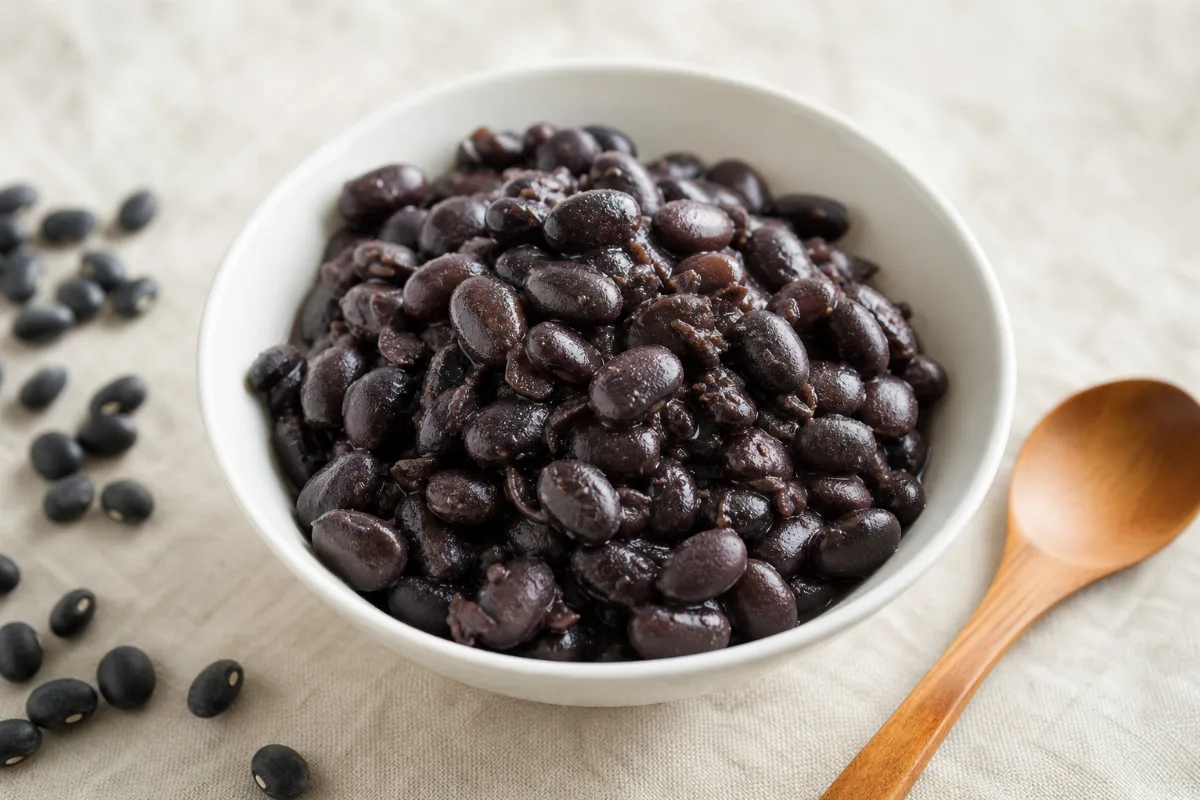
Black beans are the glossy black seeds of the common bean plant, eaten cooked from dried or canned beans. They give fibre, plant protein, folate and potassium. Pooled studies of beans and other pulses link them to slightly lower cholesterol, and a few small meal trials of black beans with rice found a smaller blood sugar rise, but black beans alone are not well studied. The most important caution: dried beans must be fully cooked, because raw or undercooked beans can cause lectin poisoning. Other cautions are bean allergy, gas and kidney limits on potassium.
General information, not medical advice. Last substantive update · Not medically reviewed. A named clinician has not signed off on this page. How this page is made
About Black Beans
Black beans are the black-coated seeds of the common bean plant, eaten cooked. They are rich in fibre, plant protein and folate. They are a healthy food, not a proven remedy: the cholesterol and blood sugar findings come mostly from studies of pulses in general, plus small black-bean meal trials. Dried beans must be fully cooked.
What it is
Black beans (Phaseolus vulgaris) are the glossy black seeds of the common bean plant, in the legume family. GBIF lists Phaseolus vulgaris as the accepted name. They are sold dried or canned and are eaten cooked.
USDA data for boiled black beans without salt: 132 kcal per 100 g. One cup (172 g) has about 227 kcal, 15.2 g protein, 15 g fibre, 256 micrograms folate (DFE), 3.6 mg iron, 611 mg potassium and 241 mg phosphorus. Dry raw beans are much denser (341 kcal and 21.6 g protein per 100 g) because they hold little water, so compare cooked with cooked.
What the research shows
The firmest facts are about nutrients: fibre helps bowel function and soluble fibre is linked to lower cholesterol, and folate is a B vitamin. These are not trials of black beans.
Pooled trials of pulses found LDL cholesterol 0.14 to 0.17 mmol/L lower, a very small weight loss of about 0.34 kg, and lower blood sugar markers. Small crossover trials of one black bean meal found a smaller blood sugar rise with black beans and rice than with rice alone, lower insulin in adults with metabolic syndrome, and mixed results for blood vessel stiffness. In 35 older adults black beans filled people up about as much as beef. Pooled trials of legumes found no clear change in blood pressure, and the heart disease link comes from observational studies, which cannot prove cause.
Black beans alone are not well studied: the pooled reviews did not separate them, and the black-bean trials were single meals in 8 to 35 people. Some may have bean-industry links, which the abstracts do not say.
Food versus extracts and products
The black bean trials used cooked whole black beans, often with rice. The seed coat pigment (anthocyanin) results are from cells in a dish, using concentrated hull extracts. Black bean flour, powders, refried beans and canned products are different products; we did not read trials of them and make no claim about them.
Portions
The NHS counts 80 g of pulses and beans as one portion of 5 A DAY, and pulses count only once a day however much you eat. This page gives no amounts to eat. Ask a doctor, pharmacist or dietitian what is right for you, especially if you have a food allergy, kidney disease or take medicine for blood sugar, cholesterol or clotting.
At a glance
Traditional uses history, not proof
- Eaten cooked as a staple food from dried or canned beans
- Long use as food is not proof that it treats any condition
Studied for research
- Fibre for bowel health, high certainty for the nutrient, no black bean trial
- Folate, high certainty for the nutrient
- Cholesterol, low certainty (pulses as a group plus one tiny meal trial)
- Blood sugar and insulin, low certainty (pulses as a group plus small black-bean meal trials)
- Blood vessels and blood pressure, mixed results
- Body weight and fullness, low certainty (very small effect)
- Protein and amino acids, moderate certainty for one narrow finding
- Heart disease, low certainty (observational, legumes as a group)
- Pigments and antioxidants, very low certainty (lab and one pilot)
- Gut bacteria and cancer, insufficient evidence
Main compounds
- Dietary fibre
- Folate
- Plant protein
- Minerals (potassium, iron, magnesium)
- Anthocyanins (seed coat)
- Lectins (PHA)
Common forms
- Cooked whole black beans (from dried beans) as food
- Canned black beans (values not read)
- Refried or seasoned black beans (not read)
- Hull extracts, flours and powders are different products and are not covered
Research links: 2026 review: whole pulses and cholesterol · 2017 trial: black beans with rice and blood sugar · FDA: natural toxins in food (raw beans) · Research Library · Genes & Biomarkers Library
What it is and its history
- Accepted scientific name
- Phaseolus vulgaris
- Naming authority
- L. (GBIF accepted name, usage key 5350452)
- Common names
- Black beans (English); Turtle beans (English); Frijoles negros (Spanish)
- Family or group
- Fabaceae (the legume or pea family), as given by GBIF.
- Classification
- Plantae > Tracheophyta > Magnoliopsida > Fabales > Fabaceae > Phaseolus > Phaseolus vulgaris
- Native range
- Not verified from a source read.
- Habitat
- Not verified from a source read.
- What it looks like
- Roots: Not verified.; Stems: Not verified.; Leaves: Not verified.; Flowers: Not verified.; Fruit: The seeds are eaten after cooking; black beans are picked for their glossy black seed coat (existing nutrient summary). USDA gives a household portion of 1 cup cooked = 172 g.
- Cultivation
- Not verified from a source read.
- Harvest and processing
- Sold dried, cooked at home, canned, or as refried or seasoned products (existing nutrient summary). USDA cooked values are for beans boiled without salt; canned and prepared products differ and were not read.
- Look-alikes and adulterants
- Name: Other common beans (pinto, kidney, navy and others); Note: Same species, Phaseolus vulgaris, with different seed colours; pooled trials mix them. Black beans are also not the same as black-eyed peas (Vigna unguiculata) or black gram (urad dal).
Photographs
What is inside, and how it may work
What it contains and how those compounds act in cells and animals. Laboratory and animal mechanisms are not proven effects in people.
Main compounds
| Compound | Family | Where it is concentrated | Activity studied | Level of evidence |
|---|---|---|---|---|
| Dietary fibre | carbohydrate | Seed USDA: 8.7 g per 100 g cooked; 15.5 g per 100 g dry | Beans are named as a soluble fibre food by MedlinePlus; soluble fibre helps lower cholesterol and insoluble fibre adds stool bulk. 29 35 34 | Human data |
| Folate | B vitamin | Seed USDA: 149 micrograms DFE per 100 g cooked; 444 micrograms per 100 g dry | Needed to make red blood cells and DNA; dried beans are named as a folate food by MedlinePlus. 31 35 | Human data |
| Plant protein | protein | Seed USDA: 8.86 g per 100 g cooked; 21.6 g per 100 g dry | A trial found less essential amino acid reached the blood from black beans than from pork or eggs per equal ounce-equivalent portion. 35 34 5 | Human data |
| Minerals (iron, potassium, magnesium, phosphorus, zinc, copper, manganese) | mineral | Seed USDA per 100 g cooked: iron 2.1 mg, potassium 355 mg, magnesium 70 mg, phosphorus 140 mg, zinc 1.12 mg, copper 0.209 mg, manganese 0.444 mg | Nutrient content only; absorption from beans was not read (see antinutrients). 35 | Human data |
| Anthocyanins | plant pigment (flavonoid) | Seed coat (hull) 12.1 to 21.4 mg per g in crude hull extracts of three Mexican cultivars (cell study) | Hull extracts reduced reactive oxygen species made by cultured macrophage cells. Not shown in people eating the beans. 6 | Lab |
| Lectins (phytohaemagglutinin, PHA) and other antinutrients | protein and plant chemicals | Seed Not found for black beans | Lectins in raw or undercooked beans cause vomiting and diarrhoea; phytic acid, tannins and trypsin inhibitors can hinder mineral and protein use. Cooking reduces them. 25 28 10 | Human data |
Mechanisms, receptors and pathways
| Target or pathway | Gene or receptor | What was found | Level |
|---|---|---|---|
| Soluble fibre and cholesterol | Not specified in the sources read | MedlinePlus says soluble fibre attracts water, forms a gel, slows digestion and helps lower cholesterol. This is the general role of fibre, not shown for black beans specifically. 29 | Human data |
| Slowly digested carbohydrate | Not specified | The 2009 meta-analysis abstract describes pulses as a good source of slowly digestible carbohydrate, fibre and vegetable protein, and a way to lower the glycaemic index of a diet. 18 | Human data |
| Fermentation of fibre and resistant starch by gut bacteria | Not specified | Harvard says gut bacteria ferment resistant starch and oligosaccharides, making short-chain fatty acids such as butyrate and also gas, which causes bloating and cramps in some people. 27 | Human data |
| Cellular oxidative stress | Not specified | Anthocyanin-rich hull extracts reduced hydrogen-peroxide-induced reactive oxygen species in cultured macrophages. 6 | Lab |
| Antinutrients and mineral absorption | Not specified | A 2026 review says phytic acid, tannins, lectins and trypsin inhibitors in legumes can hinder mineral absorption and protein breakdown; processing reduces them to different degrees. 10 | Review |
Absorption, metabolism and elimination
- Absorption
- Not found for black bean nutrients. One trial measured essential amino acids in the blood after black beans: 3.02 g from two ounce-equivalent portions, less than pork or eggs.
- Distribution
- Not found.
- Metabolism
- Not found.
- Elimination
- Not found.
- Bioavailability
- Amino acid availability from black beans was lower than from pork or eggs per equal ounce-equivalent portion; lysine and threonine digestion from black beans did not differ between young and older adults. Mineral absorption was not measured in a black-bean trial read.
Isolated compounds versus whole extracts
The black bean trials used cooked whole black beans as food, often with rice. The pooled cholesterol, blood sugar and weight results are for whole pulses as a group. Hull extracts were tested only in cells. Black bean flour, powders, refried beans and canned products are different products and were not read.
Nutritional composition
Nutrition from USDA FoodData Central (SR Legacy, April 2018 release; values read 2026-10-26 from a saved copy of the data feed held with the project). Boiled black beans without salt (FDC 173735), per 100 g: 132 kcal, 8.86 g protein, 0.54 g fat, 23.71 g carbohydrate, 0.32 g sugars, 8.7 g fibre, about 66 g water, 27 mg calcium, 2.1 mg iron, 70 mg magnesium, 140 mg phosphorus, 355 mg potassium, 1 mg sodium, 1.12 mg zinc, 149 micrograms folate (DFE), 0.244 mg thiamin and 3.3 micrograms vitamin K. One cup of boiled black beans (172 g): about 227 kcal, 15.2 g protein, 15 g fibre, 256 micrograms folate, 3.6 mg iron, 611 mg potassium and 241 mg phosphorus (the per-100-g values multiplied by 1.72). Dry raw black beans (FDC 173734), per 100 g: 341 kcal, 21.6 g protein, 15.5 g fibre, 5.02 mg iron, 444 micrograms folate; dry beans look very different from cooked ones because cooked beans hold a lot of water, so compare like with like. Values vary with variety, growing place and cooking. Canned black bean values were not read; canned beans usually contain added salt.
2 high certainty1 moderate certainty1 mixed findings4 low certainty1 very low certainty2 not enough evidence
What was looked at
The 11 benefits and uses checked for Black Beans, each with how strong the evidence is. Tap one to open it.
- Fibre for bowel healthHigh certainty
- Folate (vitamin B9)High certainty
- CholesterolLow certainty
- Blood sugar and insulinLow certainty
- Blood vessel function and blood pressureMixed findings
- Body weight and fullnessLow certainty
- Heart disease riskLow certainty
- Protein and amino acidsModerate certainty
- Gut bacteria and digestionNot enough evidence
- Dark seed-coat pigments (anthocyanins) and antioxidant effectsVery low certainty
- Cancer riskNot enough evidence
Lab markers tracked in the studies
LDL cholesterolBlood glucose (after a meal and fasting)Insulin (after a meal)Blood pressureBody weightFullness hormones (CCK and PYY)
What is Black Beans good for?
The main studied uses and how strong the human evidence is for each. Most results are for pulses or beans as a group, plus a few small black-bean meal trials.
Benefits, one by one
Each card is a research question, not a promise. Tap a goal to filter. Open a card to see the studies, doses and limits.
Fibre for bowel health
High certaintyCooked black beans have 8.7 g of fibre per 100 g and about 15 g in one cup (172 g), by USDA data. MedlinePlus lists beans among soluble fibre foods. This is a nutrient fact, not a trial of black beans. Beans can cause gas in sensitive people (see Safety).
2 studiesCooked black beans as food.
Studies, doses and limits
What the trials found
MedlinePlus says soluble fibre is found in oat bran, barley, nuts, seeds, beans, lentils, peas and some fruits and vegetables, and that research has shown soluble fibre helps lower cholesterol. USDA lists 8.7 g of total fibre per 100 g of boiled black beans without salt (15.5 g per 100 g of dry raw beans). Black beans are not singled out by MedlinePlus.
Results
The fibre role is well accepted and black beans contain fibre. USDA does not split the fibre into soluble and insoluble. No trial of eating black beans for bowel function was read.
Effect sizes as reported
USDA: 8.7 g fibre per 100 g cooked; about 15 g per cup (172 g).
Why this rating
High for the role of fibre and for black beans containing it (health-agency statement and USDA data). No black-bean bowel trial was read.
Form and dose studied
Cooked black beans as food.
Who was studied
General adult diet.
Limits
A nutrient fact, not a trial of black beans. How much of the fibre is soluble was not read.
Why researchers looked
Beans are a well-known fibre food, so people ask what the fibre does for the gut.
Traditional use
Black beans are eaten cooked, from dried or canned beans. Long use as food is not proof that it treats any condition.
Proposed mechanism Authoritative guidance
Soluble fibre attracts water and forms a gel that slows digestion; insoluble fibre adds bulk to stool (MedlinePlus).
A proposed mechanism does not show that the effect happens in people.
Fibre-rich beans can cause gas and bloating in some people; see the Safety tab.
Folate (vitamin B9)
High certaintyCooked black beans have 149 micrograms of folate (DFE) per 100 g, about 256 micrograms in a cup (172 g), by USDA data. MedlinePlus lists dried beans among folate foods. This is a nutrient fact, not a trial of black beans.
2 studiesCooked black beans as food. Folic acid supplements are a different pr…
Studies, doses and limits
What the trials found
MedlinePlus lists dried beans (cooked pinto, navy, kidney and lima) among folate foods, says any woman who is pregnant should be sure to get enough folate, and says low folate is linked to birth defects. Black beans are not named on that page. USDA lists 149 micrograms folate (DFE) per 100 g of boiled black beans (444 micrograms per 100 g dry).
Results
Black beans are a food source of folate. No trial was read showing that eating black beans corrects a folate deficiency.
Effect sizes as reported
USDA: 149 micrograms DFE per 100 g cooked; about 256 micrograms per cup (172 g).
Why this rating
High that black beans contain folate and that folate matters (MedlinePlus, USDA). Not tested as a treatment for deficiency.
Form and dose studied
Cooked black beans as food. Folic acid supplements are a different product.
Who was studied
General adult diet; pregnancy is covered on the Safety tab.
Limits
A nutrient fact. Canned and cooked values differ; canned black beans were not read.
Why researchers looked
Folate is needed for red blood cells and DNA, and beans are one of the richer common food sources.
Traditional use
Black beans are eaten cooked, from dried or canned beans. Long use as food is not proof that it treats any condition.
Proposed mechanism Authoritative guidance
Folate works with vitamin B12 to help form red blood cells and is needed to make DNA (MedlinePlus).
A proposed mechanism does not show that the effect happens in people.
None specific.
Cholesterol
Low certaintyPooled trials of pulses (beans, chickpeas, lentils and peas) found a small drop in LDL ("bad") cholesterol of about 0.14 to 0.17 mmol/L. A 2026 update found a similar drop for beans, growing with amount up to a cup a day. Black beans on their own are not well studied: one tiny single-meal trial saw lower LDL six hours after black beans than after rice.
4 studiesCooked beans and pulses as food (trial detail: median 130 g a day poo…
Studies, doses and limits
What the trials found
A 2014 meta-analysis of 26 trials (1,037 adults) found diets emphasising pulses at a median of 130 g a day lowered LDL by 0.17 mmol/L (95% CI -0.25 to -0.09). A 2026 update of 38 trials (2,095 adults, median 6 weeks) found LDL -0.14 mmol/L, non-HDL -0.22 and apoB -0.08 g/L, with a very small fall in HDL (-0.03); results were similar across pulse types, and for beans LDL fell by 0.25 mmol/L for each half cup a day, up to 1 cup a day (95% CI -0.48 to -0.02). In a pilot single-meal trial of 8 healthy adults, LDL was lower 6 hours after black beans than after white rice (p < 0.05).
Results
Eating pulses as part of the diet slightly lowered LDL cholesterol in short trials. The only black-bean result is a tiny single-meal pilot.
Effect sizes as reported
LDL -0.17 mmol/L (2014; 26 trials); LDL -0.14, non-HDL -0.22, apoB -0.08 g/L, HDL -0.03 (2026; 38 trials); beans: LDL -0.25 mmol/L per 0.5 cup a day.
Why this rating
The pooled reviews rate whole pulses moderate to high (GRADE, except apoB very low), but we rate black beans low: black beans were not separated in the reviews and the one black-bean result is an 8-person single-meal pilot. LDL is a marker, not a heart attack count.
Form and dose studied
Cooked beans and pulses as food (trial detail: median 130 g a day pooled; not advice).
Who was studied
Adults in randomised trials; healthy adults in the black-bean pilot.
Limits
Mostly mixed pulses. Short trials. Cholesterol is a marker, not a measure of heart attacks or strokes. The black-bean pilot may have bean-industry links (funding not stated).
Why researchers looked
Beans are high in fibre and plant protein, so researchers test whether eating them changes blood fats.
Traditional use
Black beans are eaten cooked, from dried or canned beans. Long use as food is not proof that it treats any condition.
Proposed mechanism Authoritative guidance
Not established in the abstracts read. MedlinePlus says soluble fibre helps lower cholesterol, and beans contain fibre.
A proposed mechanism does not show that the effect happens in people.
No safety signal for cholesterol; gas, allergy and cooking cautions are on the Safety tab.
Blood sugar and insulin
Low certaintyPooled trials of pulses found lower fasting blood sugar, and 28 of 40 single-meal studies found lower after-meal glucose than white rice or wheat foods. Three small black-bean trials agree: black beans with rice gave a lower after-meal glucose rise than rice alone in healthy women and in adults with type 2 diabetes, and a black bean meal gave lower insulin in adults with metabolic syndrome. These are meal tests, not long-term treatment trials.
5 studiesCooked black beans with rice as food (trial detail: 50 g available ca…
Studies, doses and limits
What the trials found
A 2009 meta-analysis of 41 trials of at least 7 days found pulses alone (11 trials) lowered fasting glucose (standardised mean difference -0.82, 95% CI -1.36 to -0.27) and insulin (-0.49), and pulses in low-GI diets (19 trials) lowered HbA1c or fructosamine (-0.28). A 2026 systematic review of 40 single-meal studies found lower glucose in 28 and lower insulin in 16 of 24 than with wheat products or white rice. Black beans: in 12 healthy women, a black bean and rice meal gave a lower after-meal glucose curve than rice alone (incremental AUC p = 0.027 across meals; lower at 60, 90 and 120 minutes). In 17 adults with type 2 diabetes, the black bean and rice meal gave a lower incremental glucose area than rice alone. In 12 adults with metabolic syndrome, insulin was lower after a black bean meal than after fibre-matched or antioxidant-matched meals (p < 0.0001).
Results
Beans eaten with rice gave a smaller after-meal blood sugar rise than rice alone in three small crossover trials. Long-term blood sugar control with black beans was not tested.
Effect sizes as reported
Fasting glucose SMD -0.82 (2009, pulses alone); glucose lower in 28 of 40 meal studies (2026); black bean and rice meal lower than rice at 60, 90 and 120 minutes (12 women).
Why this rating
Several consistent small black-bean meal trials plus pooled pulse trials, but the black-bean trials had 12 to 17 people, tested one meal, and the pooled trials differed widely and mixed pulse types. Meal tests do not show long-term control.
Form and dose studied
Cooked black beans with rice as food (trial detail: 50 g available carbohydrate per meal; not advice).
Who was studied
Healthy women, adults with type 2 diabetes (most on metformin), adults with metabolic syndrome.
Limits
Single-meal studies. Small. Pooled results are for pulses as a group with large unexplained differences. Not a treatment for diabetes. Some trials may have bean-industry links (funding not stated).
Why researchers looked
Beans are digested slowly, so researchers test whether eating them changes blood sugar.
Traditional use
Black beans are eaten cooked, from dried or canned beans. Long use as food is not proof that it treats any condition.
Proposed mechanism Unknown
The 2009 abstract describes pulses as a good source of slowly digestible carbohydrate, fibre and vegetable protein. Not tested here as a mechanism.
A proposed mechanism does not show that the effect happens in people.
People on diabetes medicine should ask their clinician or pharmacist before big diet changes.
Blood vessel function and blood pressure
Mixed findingsTwo tiny single-meal trials looked at how stiff blood vessels were hours after eating black beans. The results were mixed. Pooled trials of beans and other legumes found no clear overall change in blood pressure.
3 studiesCooked black beans as food (single meal of 3/4 cup in the pilot trial…
Studies, doses and limits
What the trials found
In 8 healthy adults, six hours after eating black beans, pulse wave velocity was lower than after pinto beans, augmentation pressure was lower than after rice and pinto beans, and wave reflection was lower than after rice, navy and pinto beans (p < 0.05). In 9 adults with arterial stiffness, systolic blood pressure rose about 4% two hours after white rice but not after black beans or whole wheat; black beans did not change arterial stiffness (augmentation index), while whole wheat did. A 2023 meta-analysis of 16 trials (1,092 people) of legumes found no significant overall effect on blood pressure (systolic -1.06 mm Hg, 95% CI -2.57 to 0.44; certainty low), with a lower systolic pressure in people with overweight or obesity (-2.79 mm Hg).
Results
Black beans did not clearly change arterial stiffness in one trial and lowered some measures in another. Pooled legume trials show no clear blood pressure effect overall.
Effect sizes as reported
Systolic blood pressure -1.06 mm Hg (not significant) in 16 trials of legumes; subgroup with overweight or obesity -2.79 mm Hg.
Why this rating
Two pilot single-meal trials of 8 and 9 people gave different answers, and the pooled legume trials were not significant (rated low certainty by the reviewers).
Form and dose studied
Cooked black beans as food (single meal of 3/4 cup in the pilot trials; not advice).
Who was studied
8 healthy adults; 9 adults with arterial stiffness; pooled trials of mixed legumes.
Limits
Very small pilot trials with many comparisons and hours of follow-up only. Pooled trials mix legume types. Possible bean-industry links (funding not stated).
Why researchers looked
Dark beans are rich in plant pigments and fibre, so researchers test whether a meal of black beans changes blood vessel stiffness and blood pressure.
Traditional use
Black beans are eaten cooked, from dried or canned beans. Long use as food is not proof that it treats any condition.
Proposed mechanism Unknown
Not established. The 2021 pilot trial reported better results for the darker-coloured beans (black and red kidney); why was not tested.
A proposed mechanism does not show that the effect happens in people.
None specific.
Body weight and fullness
Low certaintyPooled trials found diets with pulses gave a very small extra weight loss of about 0.34 kg over about 6 weeks. In single-meal trials, black beans made older adults feel as full as beef did, and gave higher fullness hormones than a meal with added fibre. These are not trials of weight loss with black beans.
3 studiesCooked black beans and pulses as food (trial detail: median 132 g a d…
Studies, doses and limits
What the trials found
A 2016 meta-analysis of 21 trials (940 people) found diets with pulses (median 132 g a day, median 6 weeks) gave -0.34 kg more weight loss (95% CI -0.63 to -0.04). In 35 older adults, a breakfast with black beans (135 g) raised fullness and satisfaction and lowered hunger, and appetite scores, lunch intake and 24-hour energy intake did not differ from a beef breakfast or a red kidney bean breakfast. In 12 adults with metabolic syndrome, all meals made people feel similarly full, but the black bean meal gave higher CCK and PYY than a meal with added fibre.
Results
Beans filled people up about as much as beef in older adults. The average pooled weight effect was very small.
Effect sizes as reported
Weight -0.34 kg (2016, 21 trials); black beans versus beef: no significant difference in appetite, lunch intake or 24-hour energy intake (35 older adults).
Why this rating
The pooled reviewers found low heterogeneity, but the weight difference is tiny and the pooled trials mix pulses. The black-bean results are single-meal trials of 12 and 35 people.
Form and dose studied
Cooked black beans and pulses as food (trial detail: median 132 g a day pooled; not advice).
Who was studied
Adults in trials; older adults of normal weight; adults with metabolic syndrome.
Limits
Very small average effect. Short trials. Fullness after one meal does not show weight change. Possible bean-industry links (funding not stated).
Why researchers looked
Beans are high in fibre and protein, which can make people feel full, so researchers test whether they change eating or weight.
Traditional use
Black beans are eaten cooked, from dried or canned beans. Long use as food is not proof that it treats any condition.
Proposed mechanism Preliminary human
Fibre and protein may add to fullness. In one pilot trial the black bean meal raised the gut hormones CCK and PYY, which are involved in feeling full.
A proposed mechanism does not show that the effect happens in people.
None specific.
Heart disease risk
Low certaintyHarvard's Nutrition Source reports that a pooled analysis of mostly observational studies linked eating legumes about 4 times a week with a 14% lower risk of coronary artery disease. That is an association in people who eat legumes, not proof that beans cause it, and it covers legumes as a group.
1 studiesLegumes as food.
Studies, doses and limits
What the trials found
Harvard's Nutrition Source summarises a meta-analysis of mostly observational studies that found eating legumes about 4 times a week was associated with a 14% reduced risk of coronary artery disease. It also summarises a meta-analysis of trials in which replacing red meat with plant protein such as legumes lowered several cardiovascular risk factors. This is a secondary summary; the original papers were not read.
Results
Eating legumes is linked with lower heart disease risk in observational studies. Observational studies cannot show cause.
Effect sizes as reported
Coronary artery disease risk 14% lower with legumes about 4 times a week (as summarised by Harvard).
Why this rating
Mostly observational studies, legumes as a group, read through a secondary summary. People who eat more beans may differ in other ways.
Form and dose studied
Legumes as food.
Who was studied
Adult cohorts (as summarised).
Limits
The original meta-analyses were not read. Black beans are not separated.
Why researchers looked
Large groups of people have been followed to see whether those who eat more legumes get less heart disease.
Traditional use
Black beans are eaten cooked, from dried or canned beans. Long use as food is not proof that it treats any condition.
Proposed mechanism Authoritative guidance
Not established. Harvard says fibre, folate and plant chemicals in legumes may benefit heart health.
A proposed mechanism does not show that the effect happens in people.
None specific.
Protein and amino acids
Moderate certaintyCooked black beans have 8.86 g of protein per 100 g (about 15.2 g per cup) by USDA data. A trial of equal ounce-equivalent portions found black beans gave less essential amino acid in the blood than pork or eggs. Another trial found older adults digested two key amino acids from black beans as well as young adults did.
3 studiesCooked black beans as food (trial detail: two ounce-equivalent portio…
Studies, doses and limits
What the trials found
USDA lists 8.86 g protein per 100 g of boiled black beans and 21.6 g per 100 g dry. In two crossover trials (30 young and 25 older adults), two ounce-equivalent portions of pork (7.36 g essential amino acids) and eggs (5.38 g) gave more essential amino acids in the blood than black beans (3.02 g) and almonds (1.85 g; p < 0.0001); black beans and almonds did not differ. In 10 young and 10 older adults, the digestion ratio for lysine and threonine from 20 g of black bean protein did not differ by age (P = 0.849), while it was 19% lower in older adults for sorghum (P = 0.041).
Results
Black beans gave less amino acid availability than pork or eggs per equal ounce-equivalent portion. Age did not change digestion of lysine and threonine from black beans.
Effect sizes as reported
Essential amino acids after the meal: black beans 3.02 g, pork 7.36 g, eggs 5.38 g, almonds 1.85 g (per two ounce-equivalents).
Why this rating
Randomised crossover trials with clear measurements, but they measure blood amino acids after one meal, not muscle or health outcomes, and the portions contained different amounts of protein.
Form and dose studied
Cooked black beans as food (trial detail: two ounce-equivalent portions; 20 g of protein; not advice).
Who was studied
Young and older healthy adults.
Limits
Meal-level measures only. Ounce-equivalent portions of different foods differ in protein content.
Why researchers looked
People who eat little meat ask whether beans supply enough usable protein.
Traditional use
Black beans are eaten cooked, from dried or canned beans. Long use as food is not proof that it treats any condition.
Proposed mechanism Controlled trial
Beans contain protein, but it differs from animal protein in amino acid balance and digestibility. The trials measured amino acids in the blood after a meal.
A proposed mechanism does not show that the effect happens in people.
None specific.
Gut bacteria and digestion
Not enough evidenceA 2026 review says pulses show promise for gut bacteria and short-chain fatty acids, but most of the evidence is from lab and animal studies. No trial of black beans on gut bacteria was found.
2 studiesCooked beans as food.
Studies, doses and limits
What the trials found
A 2026 narrative review of lab, animal and human work says pulses may promote beneficial gut bacteria, short-chain fatty acid production and gut barrier function, and that current evidence is largely preclinical. Harvard's Nutrition Source says resistant starch and non-digestible carbohydrates in legumes feed gut bacteria that make short-chain fatty acids.
Results
Promising but mostly lab and animal evidence; no black-bean human trial read.
Why this rating
A narrative review that says the evidence is largely preclinical, and no black-bean human trial was read.
Form and dose studied
Cooked beans as food.
Limits
Mixed lab, animal and human studies. Black beans not singled out.
Why researchers looked
The fibre and starch in beans that reach the large intestine feed gut bacteria, so researchers ask whether this helps.
Traditional use
Black beans are eaten cooked, from dried or canned beans. Long use as food is not proof that it treats any condition.
Proposed mechanism Authoritative guidance
Gut bacteria ferment resistant starch and fibre into short-chain fatty acids such as butyrate (Harvard summary); this also makes gas.
A proposed mechanism does not show that the effect happens in people.
The same fermentation causes gas and bloating in some people; see the Safety tab.
Dark seed-coat pigments (anthocyanins) and antioxidant effects
Very low certaintyThe black seed coat contains anthocyanins. In a 2026 lab study, extracts of black bean hulls reduced reactive oxygen species made by cultured cells. In one small human meal trial, blood antioxidant capacity differed over time after a black bean meal. This shows nothing yet about health benefits from eating black beans.
2 studiesHull extracts in cells; whole cooked black beans in the meal trial.
Studies, doses and limits
What the trials found
A 2026 cell study of hull extracts from three Mexican black bean cultivars found anthocyanin content of 12.1 to 21.4 mg per g in crude extracts and up to 98.8 mg per g after fractionation; the extracts reduced reactive oxygen species made by RAW 264.7 macrophages, most strongly for the Chiapas cultivar. In 12 adults with metabolic syndrome, plasma antioxidant capacity differed over 5 hours after meals (p = 0.002; antioxidant-matched > black bean > fibre-matched), and oxidised LDL did not differ by meal.
Results
Hull extracts affected cells in a dish. In people, one pilot meal trial showed a change in blood antioxidant capacity but no change in oxidised LDL.
Effect sizes as reported
Cell study: anthocyanins 12.1 to 98.8 mg per g of extract; meal trial: plasma antioxidant capacity differed over time (p = 0.002).
Why this rating
Lab evidence on concentrated hull extracts, plus one 12-person pilot with a blood marker (antioxidant capacity) that is not a health outcome.
Form and dose studied
Hull extracts in cells; whole cooked black beans in the meal trial.
Who was studied
Cultured cells; 12 adults with metabolic syndrome.
Limits
Extracts are not a serving of beans. Cell results do not show benefit in people.
Why researchers looked
Dark pigments act as antioxidants in the lab, so researchers ask whether they matter when people eat the beans.
Traditional use
Black beans are eaten cooked, from dried or canned beans. Long use as food is not proof that it treats any condition.
Proposed mechanism Laboratory research
Hull extracts reduced hydrogen-peroxide-induced reactive oxygen species in cultured macrophage cells in a dish.
A proposed mechanism does not show that the effect happens in people.
None specific.
Cancer risk
Not enough evidenceHarvard's Nutrition Source says nutrients in legumes may have anti-cancer effects in animal and cell studies, and that human evidence is less conclusive. High-fibre diets are linked with lower colorectal cancer risk, but beans were not tested on their own.
1 studiesLegumes as food.
Studies, doses and limits
What the trials found
Harvard's Nutrition Source says there is less conclusive evidence from human studies on legumes and cancer protection than from animal and cell studies, and that the World Cancer Research Fund says foods containing dietary fibre decrease the risk of colorectal cancer. Black beans were not studied separately. This is a secondary summary.
Results
No clear human evidence for black beans and cancer.
Why this rating
Human evidence for legumes is described as less conclusive, and no black-bean cancer study was read.
Form and dose studied
Legumes as food.
Limits
Secondary summary only; original studies were not read.
Why researchers looked
Fibre and plant chemicals in beans have been studied for links to cancer.
Traditional use
Black beans are eaten cooked, from dried or canned beans. Long use as food is not proof that it treats any condition.
Proposed mechanism Authoritative guidance
Not established in humans. Harvard cites animal and cell studies on legume nutrients.
A proposed mechanism does not show that the effect happens in people.
None specific.
Connections to the rest of health
How Black Beans connects to the rest of our health knowledge graph. Every link says what kind of connection it is. A safety link (for example to the liver) is a warning, not a benefit. A study that merely mentions a topic never creates a benefit link.
Explore every connection: goals, body systems, organs, symptoms, genes
A. Wellness goals
| Connected to | Kind of connection | Evidence status | Context | Studies |
|---|---|---|---|---|
| Digestive Support | Demonstrated clinical effect | High certainty | Fibre for bowel health: Cooked black beans have 8.7 g of fibre per 100 g and about 15 g in one cup (172 g), by USDA data. MedlinePlus lists beans among soluble fibre foods. This is a nutrient fact, not a trial of black beans. Beans can cause gas in sensitive people (see Safety). | 29 35 |
| Women S Wellness | Demonstrated clinical effect | High certainty | Folate (vitamin B9): Cooked black beans have 149 micrograms of folate (DFE) per 100 g, about 256 micrograms in a cup (172 g), by USDA data. MedlinePlus lists dried beans among folate foods. This is a nutrient fact, not a trial of black beans. | 31 35 |
| Cholesterol Balance | Low certainty | Cholesterol: Pooled trials of pulses (beans, chickpeas, lentils and peas) found a small drop in LDL ("bad") cholesterol of about 0.14 to 0.17 mmol/L. A 2026 update found a similar drop for beans, growing with amount up to a cup a day. Black beans on their own are not well studied: one tiny single-meal trial saw lower LDL six hours after black beans than after rice. | 8 3 4 29 | |
| Heart Health | Low certainty | Cholesterol: Pooled trials of pulses (beans, chickpeas, lentils and peas) found a small drop in LDL ("bad") cholesterol of about 0.14 to 0.17 mmol/L. A 2026 update found a similar drop for beans, growing with amount up to a cup a day. Black beans on their own are not well studied: one tiny single-meal trial saw lower LDL six hours after black beans than after rice. Blood vessel function and blood pressure: Two tiny single-meal trials looked at how stiff blood vessels were hours after eating black beans. The results were mixed. Pooled trials of beans and other legumes found no clear overall change in blood pressure. | 8 3 4 29 24 15 | |
| Blood Sugar Balance | Low certainty | Blood sugar and insulin: Pooled trials of pulses found lower fasting blood sugar, and 28 of 40 single-meal studies found lower after-meal glucose than white rice or wheat foods. Three small black-bean trials agree: black beans with rice gave a lower after-meal glucose rise than rice alone in healthy women and in adults with type 2 diabetes, and a black bean meal gave lower insulin in adults with metabolic syndrome. These are meal tests, not long-term treatment trials. | 18 16 22 19 13 | |
| Blood Pressure Support | Mixed findings | Blood vessel function and blood pressure: Two tiny single-meal trials looked at how stiff blood vessels were hours after eating black beans. The results were mixed. Pooled trials of beans and other legumes found no clear overall change in blood pressure. | 4 24 15 | |
| Healthy Weight | Low certainty | Body weight and fullness: Pooled trials found diets with pulses gave a very small extra weight loss of about 0.34 kg over about 6 weeks. In single-meal trials, black beans made older adults feel as full as beef did, and gave higher fullness hormones than a meal with added fibre. These are not trials of weight loss with black beans. | 11 7 14 | |
| Heart Health | Low certainty | Heart disease risk: Harvard's Nutrition Source reports that a pooled analysis of mostly observational studies linked eating legumes about 4 times a week with a 14% lower risk of coronary artery disease. That is an association in people who eat legumes, not proof that beans cause it, and it covers legumes as a group. | 27 | |
| Energy Vitality | Demonstrated clinical effect | Moderate certainty | Protein and amino acids: Cooked black beans have 8.86 g of protein per 100 g (about 15.2 g per cup) by USDA data. A trial of equal ounce-equivalent portions found black beans gave less essential amino acid in the blood than pork or eggs. Another trial found older adults digested two key amino acids from black beans as well as young adults did. | 35 5 9 |
| Gut Health | Not enough evidence | Gut bacteria and digestion: A 2026 review says pulses show promise for gut bacteria and short-chain fatty acids, but most of the evidence is from lab and animal studies. No trial of black beans on gut bacteria was found. | 12 27 | |
| Healthy Aging | Very low certainty | Dark seed-coat pigments (anthocyanins) and antioxidant effects: The black seed coat contains anthocyanins. In a 2026 lab study, extracts of black bean hulls reduced reactive oxygen species made by cultured cells. In one small human meal trial, blood antioxidant capacity differed over time after a black bean meal. This shows nothing yet about health benefits from eating black beans. | 6 13 | |
| Healthy Aging | Not enough evidence | Cancer risk: Harvard's Nutrition Source says nutrients in legumes may have anti-cancer effects in animal and cell studies, and that human evidence is less conclusive. High-fibre diets are linked with lower colorectal cancer risk, but beans were not tested on their own. | 27 |
B. Body systems
| Connected to | Kind of connection | Evidence status | Context | Studies |
|---|---|---|---|---|
| Digestive System | Biological association | High certainty | Studied for: Fibre for bowel health Studied for: Gut bacteria and digestion | 29 35 12 27 |
| Blood | Biological association | High certainty | Studied for: Folate (vitamin B9) | 31 35 |
| Reproductive System | Biological association | High certainty | Studied for: Folate (vitamin B9) | 31 35 |
| Cardiovascular System | Biological association | Low certainty | Studied for: Cholesterol Studied for: Blood vessel function and blood pressure | 8 3 4 29 24 15 27 |
| Endocrine System | Biological association | Low certainty | Studied for: Blood sugar and insulin | 18 16 22 19 13 |
| Metabolism Weight | Biological association | Low certainty | Studied for: Blood sugar and insulin Studied for: Body weight and fullness | 18 16 22 19 13 11 7 14 |
| Muscular System | Biological association | Moderate certainty | Studied for: Protein and amino acids | 35 5 9 |
| Cellular Health | Biological association | Very low certainty | Studied for: Dark seed-coat pigments (anthocyanins) and antioxidant effects | 6 13 |
C. Body parts and organs
E. Health conditions
| Connected to | Kind of connection | Evidence status | Context | Studies |
|---|---|---|---|---|
| Food poisoning from raw beans | Adverse effect or risk | Documented risk | Raw or undercooked beans contain PHA, which can cause vomiting and diarrhoea; proper cooking removes it. Documented cases are for red kidney beans. Preparation or compound: Raw or undercooked dried beans (PHA lectin) |
25 28 20 |
| Food allergy | Adverse effect or risk | Documented risk | Beans are a recognised non-priority legume allergen in children's clinic studies; black beans are not named separately. Preparation or compound: Bean proteins in cooked beans |
2 17 1 |
| Kidney disease | Documented risk | Black beans contain potassium and phosphorus; people on restricted diets should ask their kidney team. Preparation or compound: Potassium and phosphorus in black beans |
30 35 |
I. Biomarkers
| Connected to | Kind of connection | Evidence status | Context | Studies |
|---|---|---|---|---|
| LDL cholesterol | Biological association | Low certainty | Measured in trials: lowered. A lab change is not the same as a health benefit. | 8 3 4 |
| Blood glucose (after a meal and fasting) | Biological association | Low certainty | Measured in trials: lowered. A lab change is not the same as a health benefit. | 18 16 22 19 |
| Insulin (after a meal) | Biological association | Low certainty | Measured in trials: lowered. A lab change is not the same as a health benefit. | 13 18 |
| Blood pressure | Biological association | Low certainty | Measured in trials: no-change. A lab change is not the same as a health benefit. | 15 24 |
| Body weight | Biological association | Low certainty | Measured in trials: lowered. A lab change is not the same as a health benefit. | 11 |
| Fullness hormones (CCK and PYY) | Biological association | Very low certainty | Measured in trials: raised. A lab change is not the same as a health benefit. | 14 |
K. Biological pathways
| Connected to | Kind of connection | Evidence status | Context | Studies |
|---|---|---|---|---|
| Fibre | Preliminary mechanism | Human | Black beans are a fibre food; soluble fibre is linked to lower cholesterol. | 29 35 |
| Folate | Preliminary mechanism | Human | Black beans are a food source of folate. | 31 35 |
| Potassium | Preliminary mechanism | Human | Black beans are a potassium food; relevant to kidney diets. | 30 35 |
L. Active compounds
| Connected to | Kind of connection | Evidence status | Context | Studies |
|---|---|---|---|---|
| Dietary fibre | Biological association | Human | Beans are named as a soluble fibre food by MedlinePlus; soluble fibre helps lower cholesterol and insoluble fibre adds stool bulk. Preparation or compound: Seed |
29 35 34 |
| Folate | Biological association | Human | Needed to make red blood cells and DNA; dried beans are named as a folate food by MedlinePlus. Preparation or compound: Seed |
31 35 |
| Plant protein | Biological association | Human | A trial found less essential amino acid reached the blood from black beans than from pork or eggs per equal ounce-equivalent portion. Preparation or compound: Seed |
35 34 5 |
| Minerals (iron, potassium, magnesium, phosphorus, zinc, copper, manganese) | Biological association | Human | Nutrient content only; absorption from beans was not read (see antinutrients). Preparation or compound: Seed |
35 |
| Anthocyanins | Biological association | Lab | Hull extracts reduced reactive oxygen species made by cultured macrophage cells. Not shown in people eating the beans. Preparation or compound: Seed coat (hull) |
6 |
| Lectins (phytohaemagglutinin, PHA) and other antinutrients | Biological association | Human | Lectins in raw or undercooked beans cause vomiting and diarrhoea; phytic acid, tannins and trypsin inhibitors can hinder mineral and protein use. Cooking reduces them. Preparation or compound: Seed |
25 28 10 |
Each connection is stored with the ingredient, the connected record, the kind of connection, the evidence status, the supporting studies, the preparation or compound involved, and a review date (last reviewed October 26, 2026).
The evidence
The research centre for Black Beans. Every record here was checked against PubMed or the publisher's page; we never list a study we have not verified.
Evidence by outcome
Bars show how many studies we found for each outcome, not how well it works. People are added up across trials only (reviews are not added, to avoid double counting).
How we rate evidence
High certainty
Several well-run trials or reviews agree; further research is unlikely to change the picture much.
Moderate certainty
Good trials point the same way, but some doubt remains.
Low certainty
Small, short or inconsistent trials. The finding could change with better research.
Very low certainty
Very little or very weak human data. Treat as a possibility only.
Mixed findings
Trials or reviews disagree with each other.
Not enough evidence
Not enough human research to say either way.
Evidence against
Good research found no benefit, or found harm.
We take the reviewers' own risk-of-bias and GRADE statements where they exist, and otherwise judge from study size, design, consistency, directness and whether a product matches what is sold. Many publications do not make evidence high. Method note: We started from our existing black beans summary, re-checked nutrition against USDA FoodData Central data, read the health agency pages (FDA, Health Canada, MedlinePlus, NHS, Harvard Nutrition Source) and re-read PubMed abstracts for reviews, trials and allergy studies. Only abstracts were read for studies. Items we could not verify are flagged in the research gaps.
Study library: every study we checked 35
| Study | Design | People | Product, dose, length | Result |
|---|---|---|---|---|
| Abu Risha 2024 Legume Allergens Pea, Chickpea, Lentil, Lupine and Beyond. Curr Allergy Asthma Rep · PMID 38990406 · DOI |
Narrative review mixed |
Review of legume allergen sources | Not applicable Beans, pea, lentils, chickpea, lupine, cowpea, pigeon pea, fenugreek |
These 'non-priority' legumes, including beans, can cause mild to severe allergic reactions. Severe reactions were described especially for peas and lupine. Exercise-linked anaphylaxis has been highlighted for soy, lentils and chickpea. Most reactions come from cross-reaction between similar proteins, for example peanut and lupine. Most studies are case reports. Not applicable (Not applicable) Methods, limits and fundingOutcomes: Allergic reactions to legumes other than peanut and soy Limitations: Mostly case reports; geographic differences; better tests are needed. Funding and conflicts: Funding is not stated in the abstract. Read: abstract |
| Atwah 2025 The prevalence of outgrowing non-priority legume allergies in children. Pediatr Allergy Immunol · PMID 41424376 · DOI |
Retrospective cohort |
203 203 children aged 5 to 15 with IgE-mediated allergy to lentils, chickpeas, peas or beans (Evelina London Children's Hospital) |
Not applicable (allergy follow-up) Lentils, chickpeas, peas and beans (beans not split by type in the abstract) Median follow-up 7 years |
Of children with food allergy, 6.3% were allergic to these legumes, with lentils most common. By age 15 about 32.9% of children allergic to beans had outgrown it (21% for lentils, 19.3% for chickpeas, 23.5% for peas). Low skin-prick and blood IgE results made outgrowing more likely. Bean allergy outgrown: 13% by age 5, 24.5% by age 10, 32.9% by age 15 (Not applicable) Methods, limits and fundingOutcomes: Resolution of the allergy over time Limitations: Children already allergic and seen in one hospital. 'Beans' were not split by type, so black beans are not named. Funding and conflicts: Funding is not stated in the abstract. Read: abstract |
| Back 2026 Effect of Different Types of Whole Dietary Pulses on Established Therapeutic Lipid Targets for Cardiovascular Risk Reduction: An Updated Systematic Review and Dose-Response Meta-Analysis of Randomized Controlled Trials. J Am Heart Assoc · PMID 42132198 · DOI |
Systematic review meta analysis |
38 trials (52 comparisons), 2,095 adults | Whole dietary pulses (beans, chickpeas, dried peas, lentils) Pulses as food Median 130 g a day (0.5 to 0.67 cup) Median 6 weeks (trials of at least 3 weeks) · vs Control diets |
Whole pulses lowered LDL, non-HDL and apoB and very slightly lowered HDL. Results were similar across pulse types. For beans there was a straight-line link between amount and LDL fall up to 1 cup a day. GRADE certainty was moderate to high for all outcomes except apoB (very low). LDL -0.14 mmol/L; non-HDL -0.22 mmol/L; apoB -0.08 g/L; HDL -0.03 mmol/L; beans: LDL -0.25 mmol/L per 0.5 cup a day (LDL -0.19 to -0.08; non-HDL -0.30 to -0.14; apoB -0.13 to -0.03; HDL -0.05 to -0.01; beans LDL -0.48 to -0.02 per 0.5 cup) Methods, limits and fundingOutcomes: LDL cholesterol (primary), non-HDL, apoB, HDL Limitations: Pulses as a group; black beans were not reported separately in the abstract. LDL is a blood marker, not a count of heart attacks. Funding and conflicts: Funding is not stated in the abstract. Registration: PROSPERO CRD42023432826 Read: abstract |
| Clark 2021 Black beans and red kidney beans induce positive postprandial vascular responses in healthy adults: A pilot randomized cross-over study. Nutr Metab Cardiovasc Dis · PMID 32917495 · DOI |
Controlled trial |
8 8 healthy adults |
Black, navy, pinto or red kidney beans, or white rice Cooked beans as food 3/4 cup of beans or rice, single meal Measured before and at 1, 2 and 6 hours · vs White rice and other beans |
Six hours after black beans, pulse wave velocity was lower than after pinto beans, augmentation pressure was lower than after rice and pinto beans, and wave reflection was lower than after rice, navy and pinto beans. LDL cholesterol was lower 6 hours after black beans than after rice (all p < 0.05). Several measures of blood vessel stiffness lower after black beans than after some comparison foods; LDL lower than after rice at 6 hours (p < 0.05 (intervals not given in the abstract)) Methods, limits and fundingOutcomes: Vascular tone (primary), blood pressure, pulse wave velocity, serum biochemistry Limitations: Pilot study of 8 healthy people, single meals only, many comparisons, single-blinded. Not a test of long-term eating. Funding and conflicts: Funding is not stated in the abstract. Bean and pulse research is often supported by industry or commodity groups, so check the full paper. Read: abstract |
| Connolly 2023 Effects of Consuming Ounce-Equivalent Portions of Animal- vs. Plant-Based Protein Foods, as Defined by the Dietary Guidelines for Americans on Essential Amino Acids Bioavailability in Young and Older Adults: Two Cross-Over Randomized Controlled Trials. Nutrients · PMID 37447197 · DOI |
Controlled trial |
55 Two trials: 30 young adults (average 26 years) and 25 older adults (average 64 years) |
Standard meal with two ounce-equivalents of lean pork, whole eggs, black beans or sliced almonds Cooked black beans as food Two ounce-equivalent portions of each protein food, single meal Blood sampled for 5 hours · vs Pork, eggs and almonds |
Pork (7.36 g EAA) and eggs (5.38 g) gave more EAA than black beans (3.02 g) and almonds (1.85 g) in young and older adults (p < 0.0001). Black beans and almonds did not differ. Age did not change the result. Black beans 3.02 g EAA versus pork 7.36 g and eggs 5.38 g per two ounce-equivalents (Not given in the abstract) Methods, limits and fundingOutcomes: Essential amino acid (EAA) availability in the blood after the meal Limitations: Measures amino acid availability after one meal, not muscle or health outcomes. Ounce-equivalent portions of different foods contain different amounts of protein. Funding and conflicts: Funding is not stated in the abstract. Read: abstract |
| Escobedo 2026 Purified and HPCCC Fractionated Anthocyanin-Rich Extracts from Black Bean Hulls Modulate H(2)O(2)-Induced Intracellular ROS Generation in RAW 264.7 Cells. Molecules · PMID 42883334 · DOI |
Laboratory research cells (in vitro) |
Cultured RAW 264.7 macrophage cells, extracts of three black bean cultivars from southern Mexico | Anthocyanin-rich extracts of black bean hulls (crude, purified and fractionated) Seed coat (hull) extract, not the whole bean Cell experiment · vs Untreated and stressed cells |
Purifying the extracts raised phenolic and anthocyanin content. Anthocyanin content was 12.1 to 21.4 mg per g in crude extracts, 27.4 to 85.5 mg per g in purified extracts and 48 to 98.8 mg per g in fractionated extracts. The extracts reduced the ROS made by the cells in a cultivar-dependent way; the Chiapas cultivar was most effective. Anthocyanin content 12.1 to 98.8 mg per g of extract depending on step; reduced cell ROS (Not applicable) Methods, limits and fundingOutcomes: Reactive oxygen species (ROS) made by cells after a hydrogen peroxide stress Limitations: Cells in a dish, concentrated hull extracts, not people eating beans. Funding and conflicts: Funding is not stated in the abstract. Read: abstract |
| Fluit 2025 Beans Improve Satiety to an Effect that Is Not Significantly Different from Beef in Older Adults: A Randomized, Crossover Trial. J Nutr · PMID 39954740 · DOI |
Controlled trial |
35 35 older adults (average age 72.4) |
Breakfast tortilla with black beans (135 g), red kidney beans (135 g) or beef (80 g) Cooked black beans as food 1 serving at one breakfast Appetite rated over the following hours; 24-hour food records · vs Beef and red kidney bean meals |
Fullness and satisfaction rose and hunger fell after the black bean, kidney bean and beef meals. Appetite scores, lunch intake and 24-hour energy intake did not differ between the meals. No significant difference between black beans and beef on appetite, lunch intake or 24-hour energy intake (Not given in the abstract) Methods, limits and fundingOutcomes: Fullness, satisfaction, hunger, lunch intake, 24-hour energy intake Limitations: One meal per treatment in older adults of normal weight. It shows beans filled people up about as much as beef, not that beans cause weight loss. Funding and conflicts: Funding is not stated in the abstract. Bean and pulse research is often supported by industry or commodity groups, so check the full paper. Registration: NCT05499819 Read: abstract |
| Ha 2014 Effect of dietary pulse intake on established therapeutic lipid targets for cardiovascular risk reduction: a systematic review and meta-analysis of randomized controlled trials. CMAJ · PMID 24710915 · DOI |
Systematic review meta analysis |
26 randomised trials, 1,037 adults | Diets emphasising pulses (beans, chickpeas, lentils and peas) Pulses as food Median 130 g a day (about 1 serving) At least 3 weeks · vs Isocaloric diets without pulses |
LDL cholesterol was lower with pulses. Apolipoprotein B and non-HDL cholesterol did not change. LDL mean difference -0.17 mmol/L (-0.25 to -0.09 mmol/L) Methods, limits and fundingOutcomes: LDL cholesterol, apolipoprotein B, non-HDL cholesterol Limitations: Mixed pulses, not black beans alone. The authors call for longer, higher-quality trials. Funding and conflicts: Funding is not stated in the abstract. Registration: NCT01594567 Read: abstract |
| Hinssen 2026 Differences in amino acid digestibility between young and older adults: a randomized crossover study using the dual tracer method. Am J Clin Nutr · PMID 42162915 · DOI |
Controlled trial |
20 10 young adults (average 21.8 years) and 10 older adults (average 72.8 years) |
20 g of labelled protein from milk, sorghum or black beans Cooked black beans as food 20 g protein on each of 3 test days Blood sampled over 8 hours · vs Milk and sorghum |
For sorghum, the lysine and threonine digestion ratio was 19% lower in older adults (P = 0.041). It did not differ between young and older adults for milk (P = 0.277) or black beans (P = 0.849). No significant age difference for black beans (P = 0.849) (Not given in the abstract) Methods, limits and fundingOutcomes: Digestibility of the amino acids lysine and threonine Limitations: 20 people. Shows digestion of two amino acids only, not overall protein quality. Funding and conflicts: Funding is not stated in the abstract. Registration: NCT05534464 Read: abstract |
| Janahar 2026 Nutritional and Functional Attributes of Legumes: A Review of Processing Methods and Their Impacts. J Food Sci · PMID 42494153 · DOI |
Narrative review mixed |
Review of how processing changes legumes | Legumes and processing methods (soaking, germination, fermentation, heating) Legume seeds |
Phytic acid, tannins, lectins and trypsin inhibitors can hinder mineral absorption and protein breakdown. Fermentation cut phytates, tannins and saponins by more than 60%. Soaking raised soluble fibre by as much as 33% but leached out some phenolics and minerals. Heating neutralised heat-sensitive antinutrients but may reduce antioxidant capacity by 50% to 95% depending on the legume. Fermentation: more than 60% less phytates, tannins and saponins; soaking: up to 33% more soluble fibre; heating: antioxidant capacity down 50% to 95% (Not applicable) Methods, limits and fundingOutcomes: Antinutrients (phytic acid, tannins, lectins, trypsin inhibitors) and nutrients Limitations: A review of processing, not a trial in people. Black beans are not singled out in the abstract. Funding and conflicts: Funding is not stated in the abstract. Read: abstract |
| Kim 2016 Effects of dietary pulse consumption on body weight: a systematic review and meta-analysis of randomized controlled trials. Am J Clin Nutr · PMID 27030531 · DOI |
Systematic review meta analysis |
21 randomised trials, 940 participants | Diets containing whole dietary pulses (beans, lentils, chickpeas, dry peas) Pulses as food Median 132 g a day (about 1 serving) Median 6 weeks (trials of at least 3 weeks) · vs Diets without pulses |
Weight was slightly lower with pulses, in both weight-loss and weight-maintaining diets. Six trials suggested possible lower body fat percentage. Body weight -0.34 kg (-0.63 to -0.04 kg) Methods, limits and fundingOutcomes: Body weight, waist circumference, body fat Limitations: A very small average difference. Mixed pulses. Short trials. Funding and conflicts: Funding is not stated in the abstract. Read: abstract |
| Lazarte 2026 Transitioning Towards Sustainable Diets: Pulses, Their Role in Modulating Gut Microbiota and Metabolic Health. Nutrients · PMID 42588194 · DOI |
Narrative review mixed |
Narrative review of lab, animal and human studies of pulses | Pulses Pulses as food |
Pulses show promise for beneficial gut bacteria, short-chain fatty acid production and gut barrier function. The abstract says current evidence is largely from preclinical studies. Not applicable (Not applicable) Methods, limits and fundingOutcomes: Gut microbiota, short-chain fatty acids, metabolic health Limitations: Review mixing lab, animal and human work. Black beans are not singled out in the abstract. Funding and conflicts: Funding is not stated in the abstract. Read: abstract |
| Reverri 2015 Black Beans, Fiber, and Antioxidant Capacity Pilot Study: Examination of Whole Foods vs. Functional Components on Postprandial Metabolic, Oxidative Stress, and Inflammation in Adults with Metabolic Syndrome. Nutrients · PMID 26225995 · DOI |
Controlled trial |
12 12 adults with metabolic syndrome |
Black bean meal, fibre-matched meal, or antioxidant-capacity-matched meal Cooked whole black beans as food One test meal each Blood fasting and 5 hours after the meal · vs Fibre-matched and antioxidant-matched meals |
Insulin was lower after the black bean meal than after the fibre-matched or antioxidant-matched meals (p < 0.0001). Plasma antioxidant capacity differed over time (p = 0.002; antioxidant-matched > black bean > fibre-matched). Oxidised LDL did not differ by meal. Triglycerides and interleukin-6 rose after all meals (p < 0.0001). After-meal insulin lower with black beans (p < 0.0001); oxidised LDL not different (Not given in the abstract) Methods, limits and fundingOutcomes: After-meal insulin, plasma antioxidant capacity, oxidised LDL, triglycerides, interleukin-6 Limitations: 12 people, one meal each, pilot study. The effect was only partly explained by fibre or antioxidant content. Funding and conflicts: Funding is not stated in the abstract. Bean and pulse research is often supported by industry or commodity groups, so check the full paper. Read: abstract |
| Reverri 2017 Assessing beans as a source of intrinsic fiber on satiety in men and women with metabolic syndrome. Appetite · PMID 28735851 · DOI |
Controlled trial |
12 12 men and women with metabolic syndrome |
Meals with no added fibre, added (extrinsic) fibre, or whole black beans as the fibre source Cooked whole black beans as food One test meal each Five hours after the meal · vs Meal with no added fibre; meal with added fibre |
All meals made people feel full to a similar degree. The added-fibre meal reduced the wish to keep eating compared with the bean or no-fibre meals. The black bean meal gave higher CCK and PYY and lower insulin than the no-fibre meal. The no-fibre meal tended to be more satisfying than the bean meal. CCK higher after the black bean meal than after added-fibre and no-fibre meals; insulin lower than after the no-fibre meal (p < 0.0001) (Not given in the abstract) Methods, limits and fundingOutcomes: Fullness ratings, blood glucose, insulin, gut hormones cholecystokinin (CCK) and PYY Limitations: 12 people, pilot, one meal each. Hormone changes do not show lasting weight change. Funding and conflicts: Funding is not stated in the abstract. Bean and pulse research is often supported by industry or commodity groups, so check the full paper. Read: abstract |
| Reyneke 2023 The Effect of Non-Oil Seed Legume Intake on Blood Pressure: A Systematic Review and Meta-Analysis of Randomized Controlled Trials. Adv Nutr · PMID 37031751 · DOI |
Systematic review meta analysis |
16 randomised trials, 1,092 participants | Non-oil seed legumes (whole or powdered) Legumes as food Weekly legume amounts of 450 to 3,150 g 4 to 52 weeks · vs Comparator diets |
No significant overall effect on blood pressure. Certainty was low for both. In people with overweight or obesity, systolic pressure was lower. SBP -1.06 mm Hg; DBP -0.48 mm Hg (not significant); SBP in overweight/obese subgroup -2.79 mm Hg (SBP -2.57 to 0.44; DBP -1.06 to 0.10; subgroup SBP -4.68 to -0.90) Methods, limits and fundingOutcomes: Systolic and diastolic blood pressure Limitations: Mixed legumes, not black beans alone. The subgroup finding was one of several subgroup checks. Funding and conflicts: Funding is not stated in the abstract. Registration: PROSPERO CRD42021237732 Read: abstract |
| Schiemann 2026 Acute Effects of Non-Oil-Seed Pulses on Parameters of Cardiometabolic Health: A Systematic Review of Human Intervention Studies. Nutr Rev · PMID 41317035 · DOI |
Systematic review |
40 human intervention studies of after-meal effects | Non-oil-seed pulses and pulse products Pulses as food or pulse products Varied Single meals (acute) · vs Mainly wheat-flour products or white rice |
28 of 40 studies reported lower glucose and 16 of 24 lower insulin responses than starchy control foods. 3 of 5 studies found less hunger. Only 1 of 6 satiety studies found a significantly greater increase in satiety; 3 of 6 found greater fullness. Fats and vascular function were studied in few studies, which mostly reported no significant effects. Lower glucose response in 28 of 40 studies; lower insulin response in 16 of 24 (Not applicable) Methods, limits and fundingOutcomes: After-meal glucose, insulin, hunger, satiety, fats, vascular function Limitations: Narrative systematic review without pooled numbers in the abstract. Pulse types and products varied. Single-meal studies do not show long-term effects. Funding and conflicts: Funding is not stated in the abstract. Read: abstract |
| Serra 2026 IgE-Mediated Legume Allergy in Children: Insights from a Single-Center Experience in Italy. Nutrients · PMID 42280453 · DOI |
Retrospective cohort |
55 55 children under 18 allergic to at least one of pea, lentil, chickpea, common bean or soy (one Italian centre, 2022 to 2024) |
Not applicable (allergy clinic cohort) Pea, lentil, chickpea, common bean, soy Retrospective |
Pea (70.9%) and lentil (69.1%) were the most common allergies. 74.5% were allergic to more than one legume. 12.7% had anaphylaxis at the first reaction, most often to pea. 25.5% also had peanut allergy. Of 34 food challenges, 23.5% were positive. Common bean was one of five index legumes; its own rate is not given in the abstract (Not applicable) Methods, limits and fundingOutcomes: Features of legume allergy Limitations: Small single-centre retrospective study of children already allergic. Black beans (a common bean) are not named separately. Funding and conflicts: Funding is not stated in the abstract. Read: abstract |
| Sievenpiper 2009 Effect of non-oil-seed pulses on glycaemic control: a systematic review and meta-analysis of randomised controlled experimental trials in people with and without diabetes. Diabetologia · PMID 19526214 · DOI |
Systematic review meta analysis |
41 randomised trials in people with and without diabetes | Non-oil-seed pulses (chickpeas, beans, peas, lentils and others), alone or in low-GI or high-fibre diets Pulses as food Trial detail not given in the abstract At least 7 days · vs Control diets |
Pulses alone (11 trials) lowered fasting glucose and insulin. Pulses in low-GI diets (19 trials) lowered HbA1c or fructosamine. Pulses in high-fibre diets (11 trials) lowered fasting glucose and glycosylated proteins. Differences between trials were large and mostly unexplained. Standardised mean differences: fasting glucose -0.82 (pulses alone); glycosylated proteins -0.28 (low-GI diets) (Fasting glucose -0.82 (-1.36 to -0.27); insulin -0.49 (-0.93 to -0.04); glycosylated proteins -0.28 (-0.42 to -0.14); high-fibre diets: fasting glucose -0.32 (-0.49 to -0.15)) Methods, limits and fundingOutcomes: Fasting blood glucose, insulin, glycosylated proteins (HbA1c or fructosamine) Limitations: Pulses as a group, not black beans alone. High unexplained heterogeneity. Published in 2009. Funding and conflicts: Funding is not stated in the abstract. Read: abstract |
| Thompson 2012 Bean and rice meals reduce postprandial glycemic response in adults with type 2 diabetes: a cross-over study. Nutr J · PMID 22494488 · DOI |
Controlled trial |
17 17 adults with type 2 diabetes (35 to 70 years; 14 on metformin, 3 on diet and exercise) |
Pinto, black or dark red kidney beans with white rice, or white rice alone (50 g available carbohydrate each) Cooked black beans as food One test meal each Capillary glucose at baseline and every 30 minutes to 180 minutes · vs White rice |
All three bean and rice meals gave lower after-meal glucose than rice alone at 90, 120 and 150 minutes. The incremental glucose area was lower for pinto and black bean meals than for rice alone, but not for kidney beans. Black bean and rice meal: lower incremental glucose AUC than rice alone (Not given in the abstract) Methods, limits and fundingOutcomes: Blood glucose after the meal Limitations: 17 people, single meals, not a test of long-term blood sugar control or of replacing medicine. Funding and conflicts: Funding is not stated in the abstract. Read: abstract |
| Watier-Grillot 2023 From Foodborne Disease Outbreak (FBDO) to Investigation: The Plant Toxin Trap, Brittany, France, 2018. Toxins (Basel) · PMID 37505726 · DOI |
Outbreak report |
200 200 people reported ill out of 1,700 at a military dining facility (attack rate 12%); 92 cases and 113 controls surveyed |
Chili con carne made with undercooked raw red kidney beans Red kidney beans, undercooked Illness began a median of 3.3 hours after lunch · vs Controls who did not eat it |
Chili con carne was the very likely source. PHA was found in it above the potentially toxic level (400 HAU/g). The raw kidney beans used had very high haemagglutinating activity (66,667 HAU/g), were undercooked, and the PHA was not fully destroyed. 200 ill of 1,700 (12%); median incubation 3.3 hours (Not applicable) Methods, limits and fundingOutcomes: Gastroenteritis and phytohaemagglutinin (PHA) in the food Limitations: About red kidney beans, not black beans. An outbreak investigation, not a trial. Funding and conflicts: Funding is not stated in the abstract. Read: abstract |
| Winham 2011 Perceptions of flatulence from bean consumption among adults in 3 feeding studies. Nutr J · PMID 22104320 · DOI |
Controlled trial |
86 Adults in three feeding studies (17 and 29 in the two crossover studies, 40 per arm in the third) |
1/2 cup a day of pinto beans, baked beans or black-eyed peas (black beans were not tested) Cooked beans as food 1/2 cup a day 8 or 12 weeks · vs Canned carrots or control soup |
Fewer than 50% reported more gas from pinto or baked beans in the first week of each trial; 19% did with black-eyed peas. 3% to 11% reported more gas even on control diets. The authors conclude concern about gas from beans may be exaggerated and that people differ by bean type. Under 50% more gas with pinto or baked beans in week 1; 19% with black-eyed peas; 3 to 11% on control (Not applicable) Methods, limits and fundingOutcomes: Reported flatulence, stool changes and bloating on weekly questionnaires Limitations: Black beans were not one of the beans tested. Self-reported questionnaires. Funding and conflicts: Funding is not stated in the abstract. Read: abstract |
| Winham 2017 Glycemic Response to Black Beans and Chickpeas as Part of a Rice Meal: A Randomized Cross-Over Trial. Nutrients · PMID 28976933 · DOI |
Controlled trial |
12 12 healthy adult women aged 18 to 65 |
Black beans with white rice, chickpeas with white rice, or plain white rice (50 g available carbohydrate each) Cooked black beans as food One test meal each Blood sampled fasting and at 30, 60, 90 and 120 minutes · vs Plain white rice |
After-meal glucose differed by meal. Glucose was lower after the black bean and rice meal than after rice alone at 60, 90 and 120 minutes. Incremental glucose AUC differed by treatment (p = 0.027); black bean meal lower than rice at 60 min (p = 0.026), 90 min (p = 0.001), 120 min (p = 0.024) (Not given in the abstract) Methods, limits and fundingOutcomes: Blood glucose and insulin (incremental area under the curve) Limitations: 12 healthy women, single meals. The insulin result is not stated in the abstract. Funding and conflicts: Funding is not stated in the abstract. Read: abstract |
| Wyman 2026 Impacts of Fungal Infection and Mycotoxin Contamination on Nutritional Quality and Safety of Protein-Rich Pulses. Food Saf (Tokyo) · PMID 42800994 · DOI |
Narrative review mixed |
Review of fungal infection and mycotoxins in pulse crops | Pulses and the moulds that infect them Pulse seeds |
Fungal infections tend to decrease the nutritional composition of pulse seeds, and there are consistent gaps in pulse research on this topic. Plant-based protein sources have been understudied. Not applicable (Not applicable) Methods, limits and fundingOutcomes: Fungal infection, mycotoxins, nutritional quality Limitations: Pulses in general; black beans are not named in the abstract. Funding and conflicts: Funding is not stated in the abstract. Read: abstract |
| Zahradka 2025 Distinct Effects of Wheat and Black Bean Consumption on Postprandial Vascular Responses in People with Arterial Stiffness: A Pilot Randomized Cross-Over Study. Nutrients · PMID 40218917 · DOI |
Controlled trial |
9 9 adults aged 50 to 64 with established arterial stiffness (3 men, 6 women) |
Black beans, whole wheat kernels or white rice Cooked black beans as food 3/4 cup, single meal Measured before and 2 hours after · vs White rice and whole wheat |
Blood pressure rose about 4% after white rice but not after wheat or beans. Arterial stiffness (augmentation index) fell from 26.1% to 16.2% two hours after whole wheat, but not after beans or white rice. All foods slightly lowered heart rate. Other measures were little changed. Systolic blood pressure +4% after rice, no rise after beans; augmentation index unchanged after beans (Not given in the abstract) Methods, limits and fundingOutcomes: Peripheral and central blood pressure, augmentation index (arterial stiffness), heart rate Limitations: Only 9 people, one meal, 2 hours of follow-up. The abstract's conclusion that regular beans would help is not supported by a single-meal study. Black beans did not change arterial stiffness. Funding and conflicts: Funding is not stated in the abstract. Bean and pulse research is often supported by industry or commodity groups, so check the full paper. Registration: NCT05818358 Read: abstract |
| s-fda-natural-toxins FDA: Natural toxins in food · Source |
Health agency n/a |
Methods, limits and fundingRead: full-text | ||
| s-gbif-phaseolus-vulgaris GBIF species match: Phaseolus vulgaris · Source |
Taxonomy database n/a |
Methods, limits and fundingRead: full-text | ||
| s-harvard-legumes Harvard T.H. Chan School of Public Health, The Nutrition Source: Legumes · Source |
Health agency n/a |
Methods, limits and fundingRead: full-text | ||
| s-healthcanada-lectins Health Canada: Lectins in dry legumes · Source |
Health agency n/a |
Methods, limits and fundingRead: full-text | ||
| s-medlineplus-fiber MedlinePlus: Dietary fiber · Source |
Health agency n/a |
Methods, limits and fundingRead: full-text | ||
| s-medlineplus-potassium MedlinePlus: Potassium in diet · Source |
Health agency n/a |
Methods, limits and fundingRead: full-text | ||
| s-medlineplus-vitamins MedlinePlus: Vitamins · Source |
Health agency n/a |
Methods, limits and fundingRead: full-text | ||
| s-nhs-5aday NHS: 5 A DAY, what counts · Source |
Health agency n/a |
Methods, limits and fundingRead: full-text | ||
| s-nhs-pregnancy NHS: Have a healthy diet in pregnancy · Source |
Health agency n/a |
Methods, limits and fundingRead: full-text | ||
| s-usda-fdc-173734 USDA FoodData Central: Beans, black, mature seeds, raw (FDC 173734) · Source |
Reference database n/a |
Methods, limits and fundingRead: full-text | ||
| s-usda-fdc-173735 USDA FoodData Central: Beans, black, mature seeds, cooked, boiled, without salt (FDC 173735) · Source |
Reference database n/a |
Methods, limits and fundingRead: full-text |
What we do not know yet
- No long-term trial of black beans on their own was found for cholesterol, blood pressure, blood sugar or weight; the black-bean trials were single meals of 8 to 35 people.
- The pooled trials and cohorts mix beans, lentils, chickpeas, dried peas and other legumes; a black-bean-only result was not in the abstracts read.
- No black-bean-specific lectin level, poisoning report or official cooking time was read; the official steps are for red kidney beans.
- Black bean allergy was not separated from other beans in the studies read; how common it is in adults was not found.
- FODMAP rating, choking risk for young children, sprout safety, oxalate, purines (gout), canned bean sodium, heavy metals and pesticide residues were not researched for black beans.
How new research is added
New studies are found by a saved PubMed search and placed in a review queue before the page changes.
Lab markers
What changed in blood or saliva tests during trials. A changed number is not the same as feeling or being healthier, and we give no "normal ranges".
Metabolic 4
LDL cholesterol
Lowered in trials
The 'bad' cholesterol carried in the blood. Higher levels are linked to more heart disease.
Low certaintyResults and what it means
Why it was measured
It is the usual blood marker used in diet trials for heart risk.
Statistical vs. clinical meaning
A small average fall in short trials of pulses; the black-bean result is a single-meal pilot.
Safety implication
None specific.
| Study | Result | People | Product |
|---|---|---|---|
| 8 | LDL mean difference -0.17 mmol/L (95% CI -0.25 to -0.09); no effect on apoB or non-HDL | 1,037 adults in 26 trials | Diets emphasising pulses, median 130 g/day, at least 3 weeks |
| 3 | LDL -0.14 mmol/L (95% CI -0.19 to -0.08); non-HDL -0.22; apoB -0.08 g/L; HDL -0.03; beans: LDL -0.25 mmol/L per 0.5 cup a day (95% CI -0.48 to -0.02) | 2,095 adults in 38 trials | Whole pulses, median 130 g/day, median 6 weeks |
| 4 | LDL lower 6 hours after black beans than after white rice (p < 0.05) | 8 healthy adults | 3/4 cup black beans, single meal |
Blood glucose (after a meal and fasting)
Lowered in trials
The amount of sugar in the blood. After-meal glucose shows how steeply a meal raises it.
Low certaintyResults and what it means
Why it was measured
It is the usual marker for how a food affects blood sugar control.
Statistical vs. clinical meaning
After-meal glucose was lower in several small meal trials; long-term blood sugar control with black beans was not tested.
Safety implication
Ask your clinician before big diet changes if you take diabetes medicine.
| Study | Result | People | Product |
|---|---|---|---|
| 18 | Fasting glucose SMD -0.82 (95% CI -1.36 to -0.27) with pulses alone; HbA1c or fructosamine SMD -0.28 in low-GI diets | 41 trials | Pulses alone or in low-GI or high-fibre diets, at least 7 days |
| 16 | Lower glucose response than starchy control foods in 28 of 40 studies | 40 single-meal studies | Pulses and pulse products versus wheat products or white rice |
| 22 | After-meal glucose lower than rice alone at 60 min (p = 0.026), 90 min (p = 0.001) and 120 min (p = 0.024) | 12 healthy women | Black beans with white rice, 50 g available carbohydrate |
| 19 | Incremental glucose area lower with black bean and rice than with rice alone | 17 adults with type 2 diabetes | Black beans with white rice, 50 g available carbohydrate |
Insulin (after a meal)
Lowered in trials
A hormone that moves sugar from the blood into cells. After-meal insulin shows how hard the body works to handle a meal.
Low certaintyResults and what it means
Why it was measured
Lower after-meal insulin at the same food energy can mean a gentler blood sugar response.
Statistical vs. clinical meaning
Consistent direction but small trials and meal tests only.
Safety implication
None specific.
| Study | Result | People | Product |
|---|---|---|---|
| 13 | Insulin lower after the black bean meal than after fibre-matched or antioxidant-matched meals (p < 0.0001) | 12 adults with metabolic syndrome | Black bean meal, blood sampled to 5 hours |
| 18 | Insulin SMD -0.49 (95% CI -0.93 to -0.04) with pulses alone | 41 trials | Pulses alone, at least 7 days |
Body weight
Lowered in trials
The weight of the body, measured on a scale.
Low certaintyResults and what it means
Why it was measured
The simplest measure of whether a diet changes body size.
Statistical vs. clinical meaning
A very small average difference in short trials of mixed pulses.
Safety implication
None specific.
| Study | Result | People | Product |
|---|---|---|---|
| 11 | Weight -0.34 kg (95% CI -0.63 to -0.04) with pulse-containing diets | 21 trials, 940 people | Diets with pulses, median 132 g/day, median 6 weeks |
Other 2
Blood pressure
No clear change in trials
The force of blood on artery walls. High blood pressure raises the risk of heart attack and stroke.
Low certaintyResults and what it means
Why it was measured
A common marker in diet trials for heart risk.
Statistical vs. clinical meaning
No clear overall effect in pooled trials of legumes.
Safety implication
None specific.
| Study | Result | People | Product |
|---|---|---|---|
| 15 | Systolic -1.06 mm Hg (95% CI -2.57 to 0.44) and diastolic -0.48 mm Hg (-1.06 to 0.10); not significant; systolic -2.79 mm Hg in people with overweight or obesity | 16 trials, 1,092 people | Legumes (whole or powdered), 4 to 52 weeks |
| 24 | Systolic blood pressure rose about 4% after white rice but not after black beans | 9 adults with arterial stiffness | 3/4 cup black beans, 2 hours |
Fullness hormones (CCK and PYY)
Raised in trials
Gut hormones released after eating that are involved in feeling full.
Very low certaintyResults and what it means
Why it was measured
Used to see whether a food changes the body's fullness signals.
Statistical vs. clinical meaning
A pilot of 12 people over one meal; fullness ratings were similar across meals.
Safety implication
None specific.
| Study | Result | People | Product |
|---|---|---|---|
| 14 | CCK higher after the black bean meal than after added-fibre and no-fibre meals; PYY higher than after the added-fibre meal | 12 adults with metabolic syndrome | Whole black bean meal versus added-fibre and no-fibre meals, 5 hours |
Safety
What studies and official sources say about side effects, medicines and who should check first. Each point shows what kind of evidence it comes from.
Main points to know 5
- Raw or undercooked beans can cause lectin poisoning. The FDA says phytohaemagglutinin (PHA) is a lectin found in raw or undercooked beans. At high levels it can cause nausea, severe vomiting and diarrhoea. Canned and properly cooked beans have low levels that will not affect you. The FDA advises soaking beans for at least 5 hours, then boiling them in fresh water for at least 30 minutes. Health Canada says most reported illnesses involve improperly cooked red kidney beans, with symptoms 1 to 3 hours after eating (extreme nausea, then vomiting and diarrhoea, sometimes stomach pain) that usually pass quickly; its cooking steps are written for dry red kidney beans, and it says slow cookers do not reach a high enough temperature for them. In a French outbreak, 200 of about 1,700 diners fell ill after chili made with undercooked raw red kidney beans. No source read gives a lectin level for black beans or describes a black bean poisoning, so how fully the kidney bean figures apply to black beans was not confirmed. Cook dried black beans fully. Authoritative guidance 25 28 20
- Legume allergy is real and can be severe. Black beans are common beans (Phaseolus vulgaris), a legume. Legume allergy is reported from mild to severe. A London children's clinic study that grouped lentils, chickpeas, peas and beans found about 33% of children allergic to beans had outgrown it by age 15. An Italian clinic study of 55 children with legume allergy counted common bean among five index legumes; 12.7% had anaphylaxis at the first reaction (most often to pea) and 25.5% also had peanut allergy. A review says cross-reactions between similar legume proteins explain many reactions, for example between peanut and lupine. No study read separates black bean allergy from other beans. For trouble breathing or swelling of the face, lips or throat, call emergency services. Observational 2 17 1
- Gas and bloating. Beans contain fibre and resistant starch that gut bacteria ferment, which makes gas and can cause bloating and cramps in some people (Harvard). In three feeding studies of pinto beans, baked beans and black-eyed peas (black beans were not tested), fewer than half of people reported more gas in the first week, and 3% to 11% reported more gas even on control diets. People with a sensitive gut vary by bean type. Controlled trial 21 27
- Kidney disease: potassium and phosphorus. Cooked black beans contain 355 mg of potassium and 140 mg of phosphorus per 100 g, about 611 mg and 241 mg in a cup (172 g), by USDA data. MedlinePlus names beans as a good source of potassium and says people with kidney problems, particularly those on dialysis, should not eat too many potassium-rich foods. Ask your kidney team. Authoritative guidance 30 35
- Antinutrients and minerals. A 2026 review says phytic acid, tannins, lectins and trypsin inhibitors in legumes can hinder mineral absorption and protein breakdown. Soaking, germination and fermentation lower them, and heating neutralises the heat-sensitive ones. The abstract gives no measure of the effect in a normal mixed diet. Narrative review 10
Side effects 3
| Effect | How often | Severity and recovery | Evidence |
|---|---|---|---|
| Lectin (PHA) poisoning from raw or undercooked beans: nausea, severe vomiting, diarrhoea The cases and cooking steps are for red kidney beans. No black-bean case was read. | Outbreak with undercooked red kidney beans: about 200 ill of 1,700 diners (12%), median onset 3.3 hours after the meal. | unpleasant; usually short; rarely needs hospital care (Health Canada) Symptoms generally pass within a short time (Health Canada) | Authoritative guidance 25 28 20 |
| Allergic reactions to beans, from mild itching and hives to anaphylaxis Clinic studies of children already allergic. They do not show how common bean allergy is, and they do not name black beans. | In a London hospital, 6.3% of children with food allergies were allergic to lentils, chickpeas, peas or beans (203 children followed); about 33% of those allergic to beans had outgrown it by age 15. | can be severe (anaphylaxis) Some children outgrow it | Observational 2 17 |
| Gas, bloating and stomach discomfort Black beans were not among the beans tested. | In studies of other beans, fewer than 50% reported more gas in the first week; 3% to 11% reported more gas even on control diets. | mild Not studied | Controlled trial 21 |
Liver
No liver injury from eating black beans was found in the sources read. A liver-safety source (such as LiverTox) was not searched for food.
How often. No frequency was found.
Monitoring. No agency monitoring advice was found.
This is a safety connection. It is not evidence that Black Beans supports liver health.
Medicines and supplements 3
| With | Why it matters | Importance | Evidence | What to do |
|---|---|---|---|---|
| Medicines for diabetes prescription | Black bean meals lowered the after-meal blood sugar rise a little in small trials; a large change in diet could in theory add to a medicine's effect. | No source read tied black beans to a specific medicine interaction. This is a general caution, not a documented interaction. The type 2 diabetes meal trial included people taking metformin; its abstract does not mention side effects. | Theoretical Not enough evidence 19 22 | Ask your clinician or pharmacist before making big diet changes if you take diabetes medicine. |
| Warfarin (blood thinner) prescription | Vitamin K affects clotting and warfarin works against it. Boiled black beans have 3.3 micrograms of vitamin K per 100 g (USDA), a low amount. | No source read names black beans as a concern for warfarin. A steady diet matters with warfarin. | None found Not enough evidence 35 | Ask your warfarin clinic about any big change in diet. Do not change medicine on your own. |
| Potassium-affecting medicines and kidney medicines prescription | Beans contain potassium (355 mg per 100 g cooked) and MedlinePlus says people with kidney problems should limit potassium-rich foods. | No source read links black beans to a medicine-related high potassium level. This is a general caution. | Theoretical Not enough evidence 30 35 | If you have kidney disease or take medicine that changes potassium, ask your kidney team or pharmacist how beans fit your plan. |
Who should check first 3
| Situation | Advice | Evidence |
|---|---|---|
| Raw or undercooked dried beans | Do not eat dried black beans raw or undercooked. Soak and boil them fully first. Canned beans are already cooked (FDA). | Authoritative guidance 25 28 |
| Known or suspected bean or other legume allergy (including peanut allergy) | Avoid black beans until an allergist has advised you. People with peanut allergy sometimes react to other legumes; ask an allergist. For trouble breathing or swelling of the face or throat, call emergency services. | Observational 17 1 |
| Kidney disease, especially on dialysis | Ask your kidney team or dietitian how black beans fit your potassium and phosphorus limits. | Authoritative guidance 30 35 |
Overdose, product quality and regulators
Summary. Raw and undercooked beans contain the lectin PHA, which can cause vomiting and diarrhoea. Properly cooked and canned beans have low levels. No toxicity from properly cooked black beans as ordinary food was found in the sources read.
Animal. Not reviewed.
Human doses studied. Black bean trials gave about 3/4 cup of cooked beans in single meals and the abstracts do not mention side effects (trial detail, not advice).
Overdose response. Not found.
Genotoxicity. Not researched.
Toxic or hazardous parts. Raw or undercooked seeds: lectins (PHA). Cook dried beans; do not eat them raw.
A 2026 review says fungal infection and mycotoxins can lower the nutritional quality and safety of pulse seeds. Pesticide residues, heavy metals, canned bean sodium and black-bean-specific recalls were not researched.
Mould and mycotoxins in pulses. A 2026 review says fungal infections tend to decrease the nutritional composition of pulse seeds and that research on mycotoxins in pulses has consistent gaps. Black beans are not singled out in the abstract. 23
Cooking dry beans. The FDA says soaking beans for at least 5 hours and boiling them in fresh water for at least 30 minutes removes and destroys PHA. Health Canada's steps (soak at least 5 hours and discard the water, boil vigorously at least 10 minutes, avoid slow cookers) are written for dry red kidney beans, and canned red kidney beans need no further cooking. 25 28
| Body | Action | Date |
|---|---|---|
| FDA (United States) | Natural toxins in food: PHA lectin in raw or undercooked beans can cause nausea, severe vomiting and diarrhoea; soak at least 5 hours and boil in fresh water at least 30 minutes; canned and properly cooked beans carry low levels. source | 2024-09-26 |
| Health Canada (Canada) | Lectins in dry legumes: names soybeans, lentils, lima beans and kidney beans among legumes with lectins at varying levels; poisoning reports and cooking steps are for red kidney beans. Black beans are not named. source | |
| MedlinePlus (US National Library of Medicine) (United States) | Potassium page: beans named as a good potassium source; people with kidney problems, particularly on dialysis, should not eat too many potassium-rich foods. source | 2026-04-30 |
| NHS (UK) (United Kingdom) | 5 A DAY: 80 g of pulses and beans counts as one portion; pulses count only once a day. Pregnancy diet page: lists beans and pulses among protein foods and says to take a folic acid supplement as well as a healthy diet. source | 2026-06-09 |
When to get medical help
- Trouble breathing, swelling of the lips, face or throat, widespread hives, repeated vomiting or collapse after eating beans (possible anaphylaxis): call emergency services
- Severe or repeated vomiting or diarrhoea within a few hours of eating undercooked beans, especially with signs of dehydration (very dry mouth, little urine, dizziness): seek medical advice
Stop using the product and contact a clinician or emergency service. In the US, Poison Control is 1-800-222-1222.
General information only, not medical advice. Ask a clinician or pharmacist before use, especially with medicines, in pregnancy or with a health condition. See the Natural Remedy Safety guide.
Frequently asked questions
What are black beans good for?
Do black beans lower cholesterol?
Do black beans help with blood sugar?
Black beans with rice gave a smaller after-meal blood sugar rise than rice alone in two small trials (healthy women, and adults with type 2 diabetes), and pooled trials of pulses found lower fasting glucose with large differences between trials. These are meal tests, not a treatment for diabetes.
Do I need to cook dried black beans? Can raw beans make you sick?
Yes, cook them. Raw or undercooked beans contain the lectin PHA, which can cause nausea, severe vomiting and diarrhoea. The FDA says soaking for at least 5 hours and boiling in fresh water for at least 30 minutes removes and destroys it, and that canned and properly cooked beans have low levels. Health Canada's steps are written for red kidney beans, the beans linked to most poisonings; no black-bean poisoning source was read.
Can you be allergic to black beans?
If I am allergic to peanuts, can I eat black beans?
Why do black beans cause gas?
Are black beans OK with kidney disease?
Are black beans safe with warfarin or other medicines?
Do black beans help with weight loss or blood pressure?
Are the dark pigments in black beans good for you?
Not shown in people. The black seed coat contains anthocyanins, and extracts of the hulls reduced reactive oxygen species in cultured cells. We did not find a trial showing this helps people who eat the beans.
Explore by health goal
Heart HealthHealthy AgingDigestive SupportWomen S WellnessCholesterol BalanceBlood Sugar BalanceBlood Pressure SupportHealthy WeightEnergy VitalityGut Health
Editorial transparency
- Written by
- AlternativeMed editorial team. Research compiled with AI assistance, then checked against the sources listed.
- Medical review
- None. This page has not been reviewed by a physician or pharmacist.
- First published
- 2026-10-26
- Last substantive update
- 2026-10-26
- How we research
- We started from our existing black beans summary, re-checked nutrition against USDA FoodData Central data, read the health agency pages (FDA, Health Canada, MedlinePlus, NHS, Harvard Nutrition Source) and re-read PubMed abstracts for reviews, trials and allergy studies. Only abstracts were read for studies. Items we could not verify are flagged in the research gaps.
- How we rate evidence
- See "How we rate evidence" in the Evidence tab.
- Independence
- No product is promoted on this page. No affiliate links are shown.
Sources 35
Each source was opened and checked. Where we read only the abstract, it says so. The small numbers in the text point here.
- Abu Risha M, Rick EM, Plum M, et al.. Legume Allergens Pea, Chickpea, Lentil, Lupine and Beyond.. Curr Allergy Asthma Rep. 2024. PMID 38990406. DOI 10.1007/s11882-024-01165-7. (abstract)
- Atwah A, Swan K, Fox AT, et al.. The prevalence of outgrowing non-priority legume allergies in children.. Pediatr Allergy Immunol. 2025. PMID 41424376. DOI 10.1111/pai.70269. (abstract)
- Back S, Yang S, Rossi A, et al.. Effect of Different Types of Whole Dietary Pulses on Established Therapeutic Lipid Targets for Cardiovascular Risk Reduction: An Updated Systematic Review and Dose-Response Meta-Analysis of Randomized Controlled Trials.. J Am Heart Assoc. 2026. PMID 42132198. DOI 10.1161/JAHA.125.046659. (abstract)
- Clark JL, Taylor CG, Zahradka P. Black beans and red kidney beans induce positive postprandial vascular responses in healthy adults: A pilot randomized cross-over study.. Nutr Metab Cardiovasc Dis. 2021. PMID 32917495. DOI 10.1016/j.numecd.2020.07.042. (abstract)
- Connolly G, Hudson JL, Bergia RE, et al.. Effects of Consuming Ounce-Equivalent Portions of Animal- vs. Plant-Based Protein Foods, as Defined by the Dietary Guidelines for Americans on Essential Amino Acids Bioavailability in Young and Older Adults: Two Cross-Over Randomized Controlled Trials.. Nutrients. 2023. PMID 37447197. DOI 10.3390/nu15132870. (abstract)
- Escobedo A, Barcena S, Mojica L, et al.. Purified and HPCCC Fractionated Anthocyanin-Rich Extracts from Black Bean Hulls Modulate H(2)O(2)-Induced Intracellular ROS Generation in RAW 264.7 Cells.. Molecules. 2026. PMID 42883334. DOI 10.3390/molecules31193571. (abstract)
- Fluit MJ, Adams BF, Ribau ZJ, et al.. Beans Improve Satiety to an Effect that Is Not Significantly Different from Beef in Older Adults: A Randomized, Crossover Trial.. J Nutr. 2025. PMID 39954740. DOI 10.1016/j.tjnut.2025.02.008. (abstract)
- Ha V, Sievenpiper JL, de Souza RJ, et al.. Effect of dietary pulse intake on established therapeutic lipid targets for cardiovascular risk reduction: a systematic review and meta-analysis of randomized controlled trials.. CMAJ. 2014. PMID 24710915. DOI 10.1503/cmaj.131727. (abstract)
- Hinssen F, Tessier R, van Harskamp D, et al.. Differences in amino acid digestibility between young and older adults: a randomized crossover study using the dual tracer method.. Am J Clin Nutr. 2026. PMID 42162915. DOI 10.1016/j.ajcnut.2026.101361. (abstract)
- Janahar JJ, Balasubramaniam H, Zhang Y, et al.. Nutritional and Functional Attributes of Legumes: A Review of Processing Methods and Their Impacts.. J Food Sci. 2026. PMID 42494153. DOI 10.1111/1750-3841.71318. (abstract)
- Kim SJ, de Souza RJ, Choo VL, et al.. Effects of dietary pulse consumption on body weight: a systematic review and meta-analysis of randomized controlled trials.. Am J Clin Nutr. 2016. PMID 27030531. DOI 10.3945/ajcn.115.124677. (abstract)
- Lazarte CE, Rane R, Hållenius F, et al.. Transitioning Towards Sustainable Diets: Pulses, Their Role in Modulating Gut Microbiota and Metabolic Health.. Nutrients. 2026. PMID 42588194. DOI 10.3390/nu18152571. (abstract)
- Reverri EJ, Randolph JM, Steinberg FM, et al.. Black Beans, Fiber, and Antioxidant Capacity Pilot Study: Examination of Whole Foods vs. Functional Components on Postprandial Metabolic, Oxidative Stress, and Inflammation in Adults with Metabolic Syndrome.. Nutrients. 2015. PMID 26225995. DOI 10.3390/nu7085273. (abstract)
- Reverri EJ, Randolph JM, Kappagoda CT, et al.. Assessing beans as a source of intrinsic fiber on satiety in men and women with metabolic syndrome.. Appetite. 2017. PMID 28735851. DOI 10.1016/j.appet.2017.07.013. (abstract)
- Reyneke GL, Beck EJ, Lambert K, et al.. The Effect of Non-Oil Seed Legume Intake on Blood Pressure: A Systematic Review and Meta-Analysis of Randomized Controlled Trials.. Adv Nutr. 2023. PMID 37031751. DOI 10.1016/j.advnut.2023.04.002. (abstract)
- Schiemann TB, Diekmann C, Egert S, et al.. Acute Effects of Non-Oil-Seed Pulses on Parameters of Cardiometabolic Health: A Systematic Review of Human Intervention Studies.. Nutr Rev. 2026. PMID 41317035. DOI 10.1093/nutrit/nuaf190. (abstract)
- Serra B, Barni S, Valleriani C, et al.. IgE-Mediated Legume Allergy in Children: Insights from a Single-Center Experience in Italy.. Nutrients. 2026. PMID 42280453. DOI 10.3390/nu18111810. (abstract)
- Sievenpiper JL, Kendall CW, Esfahani A, et al.. Effect of non-oil-seed pulses on glycaemic control: a systematic review and meta-analysis of randomised controlled experimental trials in people with and without diabetes.. Diabetologia. 2009. PMID 19526214. DOI 10.1007/s00125-009-1395-7. (abstract)
- Thompson SV, Winham DM, Hutchins AM. Bean and rice meals reduce postprandial glycemic response in adults with type 2 diabetes: a cross-over study.. Nutr J. 2012. PMID 22494488. DOI 10.1186/1475-2891-11-23. (abstract)
- Watier-Grillot S, Larréché S, Mazuet C, et al.. From Foodborne Disease Outbreak (FBDO) to Investigation: The Plant Toxin Trap, Brittany, France, 2018.. Toxins (Basel). 2023. PMID 37505726. DOI 10.3390/toxins15070457. (abstract)
- Winham DM, Hutchins AM. Perceptions of flatulence from bean consumption among adults in 3 feeding studies.. Nutr J. 2011. PMID 22104320. DOI 10.1186/1475-2891-10-128. (abstract)
- Winham DM, Hutchins AM, Thompson SV. Glycemic Response to Black Beans and Chickpeas as Part of a Rice Meal: A Randomized Cross-Over Trial.. Nutrients. 2017. PMID 28976933. DOI 10.3390/nu9101095. (abstract)
- Wyman EM, Branstad-Spates E, Rajasekaran K, et al.. Impacts of Fungal Infection and Mycotoxin Contamination on Nutritional Quality and Safety of Protein-Rich Pulses.. Food Saf (Tokyo). 2026. PMID 42800994. DOI 10.14252/foodsafetyfscj.D-25-00005. (abstract)
- Zahradka P, Perera D, Charney J, et al.. Distinct Effects of Wheat and Black Bean Consumption on Postprandial Vascular Responses in People with Arterial Stiffness: A Pilot Randomized Cross-Over Study.. Nutrients. 2025. PMID 40218917. DOI 10.3390/nu17071159. (abstract)
- . FDA: Natural toxins in food. . . (full-text)
- . GBIF species match: Phaseolus vulgaris. . . (full-text)
- . Harvard T.H. Chan School of Public Health, The Nutrition Source: Legumes. . . (full-text)
- . Health Canada: Lectins in dry legumes. . . (full-text)
- . MedlinePlus: Dietary fiber. . . (full-text)
- . MedlinePlus: Potassium in diet. . . (full-text)
- . MedlinePlus: Vitamins. . . (full-text)
- . NHS: 5 A DAY, what counts. . . (full-text)
- . NHS: Have a healthy diet in pregnancy. . . (full-text)
- . USDA FoodData Central: Beans, black, mature seeds, raw (FDC 173734). . . (full-text)
- . USDA FoodData Central: Beans, black, mature seeds, cooked, boiled, without salt (FDC 173735). . . (full-text)
Where to buy
Check the label first. Whatever you buy, look for these:
- A recent packed-on date: very old dried beans cook unevenly
- Organic or not, and the country of origin
- Whether you want dried or canned
- Soak and cook thoroughly; some raw beans are unsafe
Talk to a pharmacist or doctor before you start any supplement, especially if you take medicines. See the Safety tab for interactions.
Support our free guides: as an Amazon Associate we earn from qualifying purchases. Full disclosure.


