Salts & Minerals · Salt
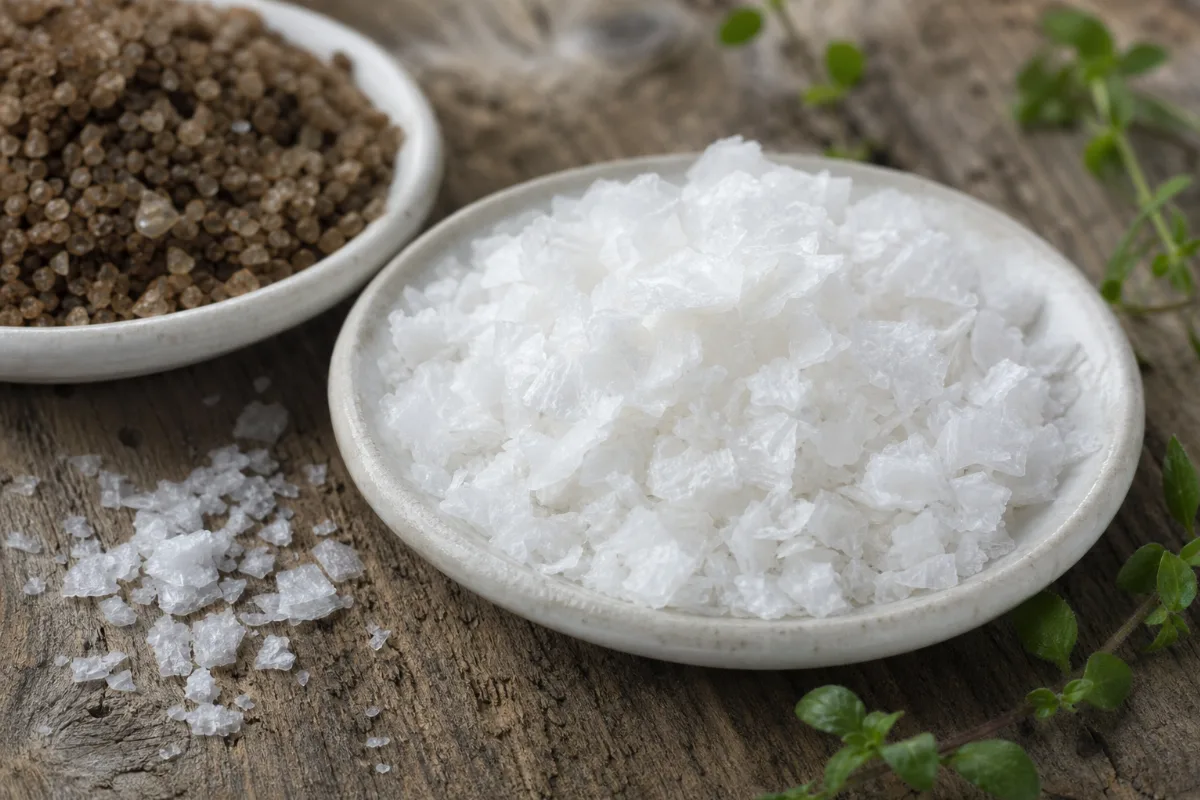
Flaky and smoked salts
Sodium chloride (NaCl) · also called Finishing salt, flake salt, flaky sea salt, smoked salt, smoked sea salt, fleur de sel
Flaky and smoked salts are finishing salts: crunchy flakes or smoke-flavoured crystals sprinkled on food. They are sodium chloride, like any salt. No study we found shows they are healthier than table salt. The key caution: sodium still raises blood pressure, and smoked salt may carry smoke chemicals that no source we read has measured.
General information, not medical advice. Last substantive update · Not medically reviewed. A named clinician has not signed off on this page. How this page is made
About Flaky and smoked salts
Flaky and smoked salts are finishing salts: sodium chloride sold for crunch and flavour. Trials show that sodium raises blood pressure whatever the salt, and no study has tested these salts against table salt. The extra minerals are small, no source measured their iodine, and no human research backs health claims. Smoked foods can carry PAHs, a family of smoke chemicals the EU treats as carcinogenic, but we found no measurement in smoked salt. Labs have found lead above the EU limit in every specialty salt in one test, and microplastics in sea salt. Swallowing a large amount of salt can poison, especially in children.
What it is
Flaky salt and smoked salt are cooking names, not single defined products. Finishing salts are sprinkled on food just before or after cooking. Harvard says larger, coarser granules do not dissolve as evenly but give a burst of flavour. Fleur de sel is one named finishing salt on Harvard's list.
Smoked salt is salt that has taken on smoke flavour. The sources we read do not describe how the smoke is added, and the Italian lab study gives no method for its smoked sample (it says smoking over wood fires may change the elements present). Harvard says sea salt is made by evaporating ocean or sea water and is less refined than table salt.
What the research shows
We found no trial of flaky or smoked salt. The strong evidence is about sodium in general. A 2020 BMJ review of 133 trials (12,197 adults) found lower sodium cut systolic pressure by 4.26 mm Hg and diastolic by 2.07 mm Hg on average. The DASH-Sodium trial found a step-by-step fall as sodium was lowered. A 2025 review of reviews links high salt with more cardiovascular disease and stroke, while the Cochrane trial evidence on events is weaker.
On minerals, Harvard says sea salt may carry small amounts of potassium, zinc and iron. In the Italian lab table, the iron in a gram of the Maldon-brand sample works out to about 0.002 mg. No trial tested whether the extra minerals change anyone's health.
On contaminants, a 2018 survey of 39 salt brands found microplastics in most, at up to 1,674 particles per kg in sea salts. A 2023 Australian survey found less in marine salt than in rock salt. Neither survey looked at flaky or smoked salt as a group.
Finishing salts, table salt and potassium salts
Table salt is refined, ground fine and often iodized. We did not find iodine measured in flaky or smoked salts. Low-sodium salts are different again: they replace part of the sodium with potassium. A Cochrane review found these slightly lower blood pressure, but they raise blood potassium slightly and the trials left out people who could be harmed by extra potassium. Flaky and smoked salts are not potassium salts.
Health-body statements
WHO (fact sheet dated 11 May 2026) recommends that adults have under 2,000 mg of sodium, under 5 g of salt, a day, suggests potassium-based substitutes in place of regular table salt, and says all salt consumed should be iodized. The NHS lists a 6 g a day adult maximum and less than 1 g for babies under 1 year; its page was due for review in April 2026 and may have changed. These are public-health limits, not advice for any one person.
A 2011 EU regulation sets maximum levels for PAHs in foods such as smoked meat and fish. The text we read does not list salt, and it has since been replaced by newer EU rules we did not read. We found no statement about smoked salt from FDA, EFSA or other food agencies, but we did not check them all.
At a glance
Traditional uses history, not proof
- Sprinkled on food just before or after cooking for crunch and flavour (Harvard).
- Sold as specialty salts with their own flake size, texture and flavour (Di Salvo 2023).
- No traditional or medical use is described in the sources read.
Studied for research
- Sodium and blood pressure (applies to all salts), high
- Heart disease and stroke from too much salt, low
- Using a finishing salt to eat less salt, insufficient
- Salt intake in chronic kidney disease, high
- Smoked salt as a healthier flavouring, insufficient
- Trace-mineral claims, evidence against
- Iodine from these salts, insufficient
Main compounds
- Sodium chloride
- Small amounts of other minerals (potassium, zinc, iron as Harvard says for sea salt)
- Trace elements, including lead and nickel, measured in lab studies
- Possibly smoke compounds such as PAHs in smoked salt (not measured in the sources read)
Common forms
- Flaky finishing salts and fleur de sel
- Smoked salts and smoked sea salt
- Other salts are sold with their own pages: pink, grey, kosher and iodized table salt
Research links: WHO: Sodium reduction (fact sheet) · Harvard Nutrition Source: Salt and Sodium · NHS: Salt in your diet · Gourmet table salts, including a smoked salt (abstract) · Smoke chemicals (PAHs) in smoked foods in Japan (abstract) · Microplastics in sea salt (abstract) · Research Library · Genes & Biomarkers Library
What it is and its history
- Accepted scientific name
- Sodium chloride (table-salt compound); finishing salts sold as flakes or smoked
- Synonyms
- flaky sea salt; flake salt; finishing salt; smoked salt; smoked sea salt; fleur de sel (a named finishing salt)
- Common names
- Flaky salt (English); Finishing salt (English); Smoked salt (English); Fleur de sel (French)
- Family or group
- Salt (sodium chloride)
- Harvest and processing
- Harvard describes sea salt as made by evaporating ocean or sea water and as less refined than table salt, with larger, coarser granules. How flakes form and how smoke is added were not described in the sources read, and the Italian lab study gives no method for its smoked salt (it says smoking over wood fires may change the elements present).
- Look-alikes and adulterants
- Name: Table salt; Note: Refined, ground fine and often iodized, with an anti-caking agent (Harvard).; Name: Kosher salt; Note: A coarse salt that does not typically contain iodine (Harvard).; Name: Coarse sea salt; Note: Larger crystals; about 1,560 mg sodium per teaspoon (Harvard).; Name: Himalayan pink salt; Note: A rock salt coloured by a small amount of iron oxide (Harvard); a different product with its own page.; Name: Smoke-flavoured salt blends; Note: Products with added flavourings may differ from salt that is only exposed to smoke. The sources read do not describe the range of products.
Photographs
Traditional use and history history, not clinical proof
| Tradition or era | Documented use | Source |
|---|---|---|
| Today's market | Flaky and smoked salts are sold as finishing salts, sprinkled on food to add crunch and flavour (Harvard describes coarse granules as a burst of flavour sprinkled before or after cooking). The Italian lab study describes specialty salts with their own flake size, textures, flavours and colours as a gastronomy niche that is growing. | s-harvard-salt |
| History of the product | No source we read gives the history of flake salts, fleur de sel or smoked salt (when they began or how they became popular). Any such history is NOT verified here. | p40807678 |
Traditional use shows how it was used. It does not show that it works or is safe today.
What is inside, and how it may work
What it contains and how those compounds act in cells and animals. Laboratory and animal mechanisms are not proven effects in people.
Main compounds
| Compound | Family | Where it is concentrated | Activity studied | Level of evidence |
|---|---|---|---|---|
| Sodium chloride PubChem 5234 | inorganic salt | Not given for these salts in the sources read. | The salt itself. Its sodium is the part that raises blood pressure at high intakes. 20 18 | Authoritative guidance |
| Benzo[a]pyrene and other PAHs PubChem 2336 | polycyclic aromatic hydrocarbons | Not measured in smoked salt in any source we could open. In smoked foods other than salt, medians up to 29 ug/kg benzo[a]pyrene were found in one Japanese study. | Contaminant concern, not an activity. The EU uses benzo(a)pyrene as a marker for carcinogenic PAHs in food. 17 16 | Product analysis |
| Trace elements including lead and nickel | trace elements | As printed in one Italian lab study (mg/kg): smoked salt lead 5.2, nickel 7.5, zinc 340.6; Maldon-brand sample lead 8.4, nickel 1.5, iron 2.3. | Contaminant concern, not an activity. See the Safety tab. 4 3 | Product analysis |
| Microplastic particles | plastic particles | 0 to 1,674 particles per kg in sea salts in a 39-brand survey. | Contaminant; health effects unknown. 9 11 | Product analysis |
Mechanisms, receptors and pathways
| Target or pathway | Gene or receptor | What was found | Level |
|---|---|---|---|
| Blood volume and blood pressure | Not applicable | WHO says high sodium raises blood pressure. The sources read for this page do not detail the full mechanism. 20 | Authoritative guidance |
| How smoke chemicals form | Not applicable | The EU text we read treats benzo(a)pyrene as a marker for carcinogenic PAHs in smoked foods. How smoking might transfer PAHs into salt was not described in the sources read. 17 | Not established |
Isolated compounds versus whole extracts
Flaky and smoked salts are sodium chloride with small amounts of other minerals and, in the case of smoked salt, possibly smoke compounds. Per teaspoon they range from about 1,560 to 2,320 mg sodium (Harvard), but the label per serving is the guide. They are not shown to be healthier than table salt, and table salt is usually the iodized one.
Nutritional composition
Sodium is an essential nutrient (WHO). Deficiency is extremely unlikely in healthy people, because sodium is in most foods. The sources read do not show flaky or smoked salts to be a meaningful source of any other nutrient.
2 high certainty1 low certainty3 not enough evidence1 evidence against
What was looked at
The 7 benefits and uses checked for Flaky and smoked salts, each with how strong the evidence is. Tap one to open it.
- Sodium and blood pressure (what applies to flaky and smoked salt too)High certainty
- Heart disease, stroke and deaths from too much saltLow certainty
- Using a flavourful finishing salt to eat less salt overallNot enough evidence
- Salt intake in chronic kidney diseaseHigh certainty
- Smoked salt as a healthier or 'natural' flavouringNot enough evidence
- Trace minerals (the 'natural minerals' claim)Evidence against
- Iodine from flaky or smoked saltNot enough evidence
Lab markers tracked in the studies
Systolic blood pressureDiastolic blood pressureAlbuminuria (protein in the urine)Blood potassium (with potassium-based salt substitutes)
What is Flaky and smoked salts good for?
The uses and claims people ask about, and how strong the human evidence is for each. The strongest evidence is about sodium in any salt. Read it together with the safety section.
Benefits, one by one
Each card is a research question, not a promise. Tap a goal to filter. Open a card to see the studies, doses and limits.
Sodium and blood pressure (what applies to flaky and smoked salt too)
High certaintyFlaky and smoked salts are sodium chloride. Many trials show that eating less sodium lowers blood pressure, in people with and without high blood pressure and in people already on medicines. This is the strongest evidence on this page, and it is about sodium in any salt. None of these trials tested flaky or smoked salt.
6 studiesSodium or salt in general. The trials did not test flaky or smoked sa…
Studies, doses and limits
What the trials found
A 2020 BMJ meta-analysis of 133 randomised trials (12,197 adults), a 2021 dose-response meta-analysis of 85 trials, the DASH-Sodium feeding trial (412 adults) and a 2024 meta-analysis of 35 trials in 2,885 people already taking blood-pressure medicines all found that lower sodium gave lower blood pressure.
Results
Lower sodium cut systolic pressure by 4.26 mm Hg and diastolic by 2.07 mm Hg on average (BMJ 2020). In DASH-Sodium on a typical diet, systolic pressure fell 2.1 mm Hg going from high to intermediate sodium and a further 4.6 mm Hg from intermediate to low. In people on medicines, each 100 mmol drop in daily urinary sodium cut systolic pressure by 6.81 mm Hg.
Effect sizes as reported
A few mm Hg on average; larger in older people, people with higher starting pressure and non-white populations (BMJ 2020).
Why this rating
Many randomised trials and several meta-analyses point the same way. The size of the effect varies by person.
Form and dose studied
Sodium or salt in general. The trials did not test flaky or smoked salt. No amounts are advised here.
Who was studied
Adults with and without high blood pressure, and people on blood-pressure medicines.
Limits
Trials are fairly short and food was often supplied. Some authors hold unpaid roles in salt-reduction campaign groups.
Why researchers looked
High blood pressure is a leading cause of heart disease and stroke. WHO says the main health effect of a high-sodium diet is raised blood pressure.
Proposed mechanism Authoritative guidance
WHO says excess sodium raises blood pressure. The trials measure the effect; the sources read do not go into the full mechanism.
A proposed mechanism does not show that the effect happens in people.
Flaky and smoked salts are sodium chloride, so what raises blood pressure is the sodium, not the shape of the crystal. See the Safety tab.
Heart disease, stroke and deaths from too much salt
Low certaintyLarge reviews link high salt intake with more heart disease and stroke. Whether cutting salt prevents heart attacks and deaths in trials is less clear, because the trials were few and the result depends on one of them. None of this tests flaky or smoked salt.
3 studiesDietary salt in general.
Studies, doses and limits
What the trials found
A 2025 review of 21 meta-analyses found high salt intake linked to more cardiovascular disease and stroke, and low sodium linked to fewer cardiovascular and all-cause deaths. A Cochrane review of 8 trials found weak evidence of fewer cardiovascular events and no clear reduction in all-cause death.
Results
High salt: cardiovascular disease RR 1.13 (95% CI 1.06 to 1.20), stroke OR 1.34 (1.19 to 1.51). Each 1 g a day more sodium went with 4% more cardiovascular risk and 6% more stroke risk. Cochrane: pooled cardiovascular events RR 0.77 (0.63 to 0.95) from six trials, driven by one retirement-home trial; all-cause death in people with high blood pressure RR 1.00 (0.86 to 1.15).
Effect sizes as reported
Modest relative increases per gram of sodium; imprecise in trials.
Why this rating
Much of the data is observational, which cannot prove cause, and the trials on events are few. The 2025 authors say the effects of both high and low intake are still debated.
Form and dose studied
Dietary salt in general.
Who was studied
Adults in many countries, with and without high blood pressure.
Limits
Mixed designs. Not specific to flaky or smoked salt.
Why researchers looked
Raised blood pressure is a major cause of heart disease and stroke. WHO links an estimated 1.7 million deaths in 2023 to too much sodium.
Proposed mechanism Authoritative guidance
Through raised blood pressure (WHO).
A proposed mechanism does not show that the effect happens in people.
Flaky and smoked salts are sodium chloride, so what raises blood pressure is the sodium, not the shape of the crystal. See the Safety tab.
Using a flavourful finishing salt to eat less salt overall
Not enough evidenceCooks often say a pinch of crunchy flakes on top tastes saltier, so less is needed. We found no study that tested this. Harvard says larger, coarser granules do not dissolve evenly but give a burst of flavour. Whether that lowers the sodium a person eats in a day is not known.
2 studiesNot applicable. No amounts are advised here.
Studies, doses and limits
What the trials found
No trial or study of flaky or smoked salt and total sodium intake was found. Harvard lists about 1,560 to 2,320 mg of sodium per teaspoon of fleur de sel, 1,560 mg for coarse sea salt and 2,300 mg for fine iodized table salt, and says the amount varies by brand. A teaspoon of a coarse salt holds less sodium mainly because the crystals take up more room; the label gives the true figure.
Results
No outcome data. Per-teaspoon sodium varies widely between salts and brands (Harvard).
Effect sizes as reported
Not measured.
Why this rating
No study of this idea was found. The per-teaspoon figures come from one education page and are not a health result.
Limits
Harvard's figures are approximate and vary by brand. Smoked salt is not listed.
Why researchers looked
Finishing salts are sold on the idea that a little goes a long way. This is a claim, not a tested result.
Proposed mechanism Pharmacological theory
Harvard says coarse granules dissolve less evenly and give a burst of flavour. Whether this changes how much salt people use was not found in the sources read.
A proposed mechanism does not show that the effect happens in people.
A pinch of finishing salt still adds sodium. See the Safety tab.
Salt intake in chronic kidney disease
High certaintyIn 21 trials, cutting salt lowered blood pressure and urine protein in people with chronic kidney disease, but also raised the chance of low-blood-pressure symptoms. Each person needs advice from their own kidney team. Flaky and smoked salts were not tested.
2 studiesSalt in general; no salt type was compared.
Studies, doses and limits
What the trials found
A 2021 Cochrane review pooled 21 randomised trials (1,197 people) in earlier-stage kidney disease, dialysis and after transplant.
Results
Cutting salt by about 4.2 g a day (1690 mg sodium) cut systolic/diastolic pressure by 6.91/3.91 mm Hg (high-certainty evidence) and albuminuria by 36% (high certainty). Symptomatic low blood pressure was more likely (RR 6.70, 95% CI 2.40 to 18.69; moderate certainty). Trials were too short (1 to 36 weeks) to test death, heart events or kidney decline.
Effect sizes as reported
About 7/4 mm Hg lower blood pressure and 36% less albuminuria.
Why this rating
Cochrane rated the blood pressure and albuminuria results as high certainty for the short term. Long-term effects are not known.
Form and dose studied
Salt in general; no salt type was compared.
Who was studied
Adults with chronic kidney disease at any stage.
Limits
Short trials. Bias risk was unclear or high in many.
Why researchers looked
Salt affects blood pressure and fluid balance, which matter more when the kidneys are weak.
Proposed mechanism Not established
The abstract does not give a mechanism.
A proposed mechanism does not show that the effect happens in people.
More low-blood-pressure symptoms were seen. Ask your own kidney team before changing salt.
Smoked salt as a healthier or 'natural' flavouring
Not enough evidenceSmoked salt is sold for taste. We found no human study of smoked salt, and no source that shows it is healthier than plain salt. It still contains sodium. Foods exposed to smoke can contain smoke-related chemicals called PAHs, and one lab analysis found more nickel in a smoked salt sample (see the Safety tab).
4 studiesSmoked salt as sold; how the smoke is applied was not described in th…
Studies, doses and limits
What the trials found
No human study of smoked salt was found. In a Japanese study of 87 smoked foods (fish, meat, egg and bonito products, not salt), benzo[a]pyrene and other PAHs were measured; its authors estimated intakes from smoked fish products to be of low concern. One Italian lab found nickel of 7.5 mg/kg in a smoked salt, against an average of 2.71 across ten salts.
Results
No outcome data for smoked salt in people. The PAH figures from smoked foods other than salt cannot be applied to smoked salt.
Why this rating
No human data, and no smoke-compound analysis of smoked salt was found in the sources read.
Form and dose studied
Smoked salt as sold; how the smoke is applied was not described in the sources read.
Limits
One smoked salt sample from one lab, with no stated smoking method.
Why researchers looked
Smoked salt is a flavouring. Any health claim for it is a seller claim without a source we could read.
Traditional use
No traditional or medical use is described in the sources read.
Proposed mechanism Pharmacological theory
None established. The 2023 Italian lab study suggests smoking over wood fires may introduce or modify elements in a smoked salt; this is the authors' idea, not a tested result.
A proposed mechanism does not show that the effect happens in people.
See the Safety tab for PAHs, nickel and lead.
Trace minerals (the 'natural minerals' claim)
Evidence againstSea and finishing salts are often sold for their minerals. Harvard says sea salt may carry small amounts of minerals such as potassium, zinc and iron. The lab figures we read show only tiny amounts of the nutrients, and a lot of the measured trace elements are not nutrients at all (such as lead). No study shows that the minerals in a pinch of finishing salt change anyone's health.
3 studiesFinishing salts as sold. No amounts are advised.
Studies, doses and limits
What the trials found
No human trial. Harvard describes sea salt minerals as small amounts. In the Italian lab study (as printed, mg/kg of salt) the Maldon-brand sample had iron 2.3, calcium 2,624 and the smoked sample had iron 1.8, calcium 2,932, zinc 340.6 and lead 5.2. The authors' suggestions about health uses of high-zinc or high-iron salts are their opinion.
Results
For scale, 1 g of salt at those levels would carry about 0.002 mg of iron (our arithmetic from the paper's numbers; the paper does not make this comparison).
Why this rating
The amounts reported are small for the nutrients, and the same samples carried lead above the EU limit.
Form and dose studied
Finishing salts as sold. No amounts are advised.
Limits
One product of each type from one region. Brands differ.
Why researchers looked
Flaky salts are marketed as less processed and richer in minerals than table salt.
Proposed mechanism Not established
None; the question is simply how much of each mineral is present.
A proposed mechanism does not show that the effect happens in people.
Lead above the EU limit was reported in every sample tested. See the Safety tab.
Iodine from flaky or smoked salt
Not enough evidenceIodine is added to a lot of table salt. Harvard notes kosher salt does not typically contain it, and the sources we read do not say whether flaky or smoked salts contain iodine. Do not count on them as an iodine source.
3 studiesNot applicable.
Studies, doses and limits
What the trials found
No measurement of iodine in flaky or smoked salt was found. A 2026 review says mild to moderate iodine deficiency has returned in the UK and that needs rise in pregnancy and breastfeeding.
Results
No data on these salts.
Why this rating
No iodine data for these salts were found.
Who was studied
Pregnant and breastfeeding women have higher needs (2026 review).
Limits
The review is about the UK and does not discuss these salts.
Why researchers looked
WHO says all salt consumed should be iodized, because iodine is needed for healthy brain development of the foetus and young child.
Proposed mechanism Not established
Not applicable.
A proposed mechanism does not show that the effect happens in people.
Check the label, and ask a clinician or dietitian if you are unsure about iodine.
Connections to the rest of health
How Flaky and smoked salts connects to the rest of our health knowledge graph. Every link says what kind of connection it is. A safety link (for example to the liver) is a warning, not a benefit. A study that merely mentions a topic never creates a benefit link.
Explore every connection: goals, body systems, organs, symptoms, genes
A. Wellness goals
| Connected to | Kind of connection | Evidence status | Context | Studies |
|---|---|---|---|---|
| Blood Pressure Support | Demonstrated clinical effect | High certainty | Sodium and blood pressure (what applies to flaky and smoked salt too): Flaky and smoked salts are sodium chloride. Many trials show that eating less sodium lowers blood pressure, in people with and without high blood pressure and in people already on medicines. This is the strongest evidence on this page, and it is about sodium in any salt. None of these trials tested flaky or smoked salt. Salt intake in chronic kidney disease: In 21 trials, cutting salt lowered blood pressure and urine protein in people with chronic kidney disease, but also raised the chance of low-blood-pressure symptoms. Each person needs advice from their own kidney team. Flaky and smoked salts were not tested. | 6 5 13 14 20 18 12 21 |
| Heart Health | Demonstrated clinical effect | High certainty | Sodium and blood pressure (what applies to flaky and smoked salt too): Flaky and smoked salts are sodium chloride. Many trials show that eating less sodium lowers blood pressure, in people with and without high blood pressure and in people already on medicines. This is the strongest evidence on this page, and it is about sodium in any salt. None of these trials tested flaky or smoked salt. | 6 5 13 14 20 18 |
| Heart Health | Biological association | Low certainty | Heart disease, stroke and deaths from too much salt: Large reviews link high salt intake with more heart disease and stroke. Whether cutting salt prevents heart attacks and deaths in trials is less clear, because the trials were few and the result depends on one of them. None of this tests flaky or smoked salt. | 10 1 20 |
| Blood Pressure Support | Not enough evidence | Using a flavourful finishing salt to eat less salt overall: Cooks often say a pinch of crunchy flakes on top tastes saltier, so less is needed. We found no study that tested this. Harvard says larger, coarser granules do not dissolve evenly but give a burst of flavour. Whether that lowers the sodium a person eats in a day is not known. | 18 20 |
B. Body systems
| Connected to | Kind of connection | Evidence status | Context | Studies |
|---|---|---|---|---|
| Cardiovascular system | Adverse effect or risk | High certainty | Sodium raises blood pressure; flaky and smoked salts were not tested separately. Preparation or compound: Sodium (any salt) |
20 6 |
| Kidney and urinary system | Contraindication | High certainty | Salt reduction lowers blood pressure and urine protein in kidney disease, with a risk of low-blood-pressure symptoms. Preparation or compound: Sodium (any salt) |
12 |
| Cardiovascular System | Biological association | High certainty | Studied for: Sodium and blood pressure (what applies to flaky and smoked salt too) Studied for: Heart disease, stroke and deaths from too much salt | 6 5 13 14 20 18 10 1 |
| Heart Circulation | Biological association | High certainty | Studied for: Sodium and blood pressure (what applies to flaky and smoked salt too) Studied for: Heart disease, stroke and deaths from too much salt | 6 5 13 14 20 18 10 1 |
| Kidney Urinary | Biological association | High certainty | Studied for: Salt intake in chronic kidney disease | 12 21 |
| Endocrine System | Biological association | Not enough evidence | Studied for: Iodine from flaky or smoked salt | 20 18 15 |
E. Health conditions
| Connected to | Kind of connection | Evidence status | Context | Studies |
|---|---|---|---|---|
| Essential hypertension | Adverse effect or risk | High certainty | High sodium raises blood pressure. Preparation or compound: Sodium (any salt) |
6 19 |
| Hypernatremia | Adverse effect or risk | Very low certainty | Reported in a newborn and an adolescent after swallowing too much salt. Preparation or compound: Large amounts of any salt |
8 7 |
| Iodine deficiency | Traditional use | Not enough evidence | No measured iodine content found; WHO says salt should be iodized. Preparation or compound: Flaky and smoked salts |
20 15 |
I. Biomarkers
| Connected to | Kind of connection | Evidence status | Context | Studies |
|---|---|---|---|---|
| Systolic blood pressure | Biological association | High certainty | Measured in trials: lowered. A lab change is not the same as a health benefit. | 6 13 14 |
| Diastolic blood pressure | Biological association | High certainty | Measured in trials: lowered. A lab change is not the same as a health benefit. | 6 14 |
| Albuminuria (protein in the urine) | Biological association | High certainty | Measured in trials: lowered. A lab change is not the same as a health benefit. | 12 |
| Blood potassium (with potassium-based salt substitutes) | Biological association | Moderate certainty | Measured in trials: raised. A lab change is not the same as a health benefit. | 2 |
K. Biological pathways
| Connected to | Kind of connection | Evidence status | Context | Studies |
|---|---|---|---|---|
| Fluid balance and blood pressure regulation | Preliminary mechanism | Authoritative guidance | Excess sodium raises blood pressure (WHO). | 20 |
L. Active compounds
| Connected to | Kind of connection | Evidence status | Context | Studies |
|---|---|---|---|---|
| Sodium chloride | Biological association | Authoritative guidance | The salt itself. Its sodium is the part that raises blood pressure at high intakes. | 20 18 |
| Benzo[a]pyrene and other PAHs | Biological association | Product analysis | Contaminant concern, not an activity. The EU uses benzo(a)pyrene as a marker for carcinogenic PAHs in food. | 17 16 |
| Trace elements including lead and nickel | Biological association | Product analysis | Contaminant concern, not an activity. See the Safety tab. | 4 3 |
| Microplastic particles | Biological association | Product analysis | Contaminant; health effects unknown. | 9 11 |
Each connection is stored with the ingredient, the connected record, the kind of connection, the evidence status, the supporting studies, the preparation or compound involved, and a review date (last reviewed October 25, 2026).
Evidence at a glance: what changed in 4 lab markers
Tap a number to show only those markers. Counts are markers, not people.
The evidence
The research centre for Flaky and smoked salts. Every record here was checked against PubMed or the publisher's page; we never list a study we have not verified.
Evidence by outcome
Bars show how many studies we found for each outcome, not how well it works. People are added up across trials only (reviews are not added, to avoid double counting).
How we rate evidence
High certainty
Several well-run trials or reviews agree; further research is unlikely to change the picture much.
Moderate certainty
Good trials point the same way, but some doubt remains.
Low certainty
Small, short or inconsistent trials. The finding could change with better research.
Very low certainty
Very little or very weak human data. Treat as a possibility only.
Mixed findings
Trials or reviews disagree with each other.
Not enough evidence
Not enough human research to say either way.
Evidence against
Good research found no benefit, or found harm.
We take the reviewers' own risk-of-bias and GRADE statements where they exist, and otherwise judge from study size, design, consistency, directness and whether a product matches what is sold. Many publications do not make evidence high. Method note: We searched PubMed and Europe PMC for smoked salt, flake salt, fleur de sel and PAHs in salt, read the abstracts or full texts of the sources listed, and read the WHO, NHS, MedlinePlus, Harvard and Poison Help pages and the 2011 EU PAH regulation in full. We checked PubChem for the chemical names. Certainty ratings are the compiler's own reading. Where the sodium and blood pressure evidence is rated high, that is for sodium in general, not for flaky or smoked salt. Lab studies of metals and microplastics use a few brand samples. No study is cited that we could not verify.
Study library: every study we checked 22
| Study | Design | People | Product, dose, length | Result |
|---|---|---|---|---|
| Adler 2014 Reduced dietary salt for the prevention of cardiovascular disease (Cochrane review) Cochrane Database of Systematic Reviews · PMID 25519688 · DOI |
Systematic review |
7284 8 randomised trials of at least 6 months in adults: 3 in people with normal blood pressure (n=3518) and 5 in people with high blood pressure or mixed groups (n=3766) |
n/a |
No clear reduction in all-cause death (for example in people with high blood pressure, end of trial RR 1.00, 95% CI 0.86 to 1.15). Weak evidence of benefit for cardiovascular events (pooled six trials RR 0.77, 95% CI 0.63 to 0.95, n=5912), driven by one trial in retirement-home residents where salt was cut in the kitchens. Advice to cut salt gave small falls in systolic pressure. Weak signal of fewer heart events; no clear effect on deaths Methods, limits and fundingOutcomes: Death and heart and blood vessel events after advice to cut salt or use low-sodium salt Limitations: Few trials, and the heart-event result depends on one trial. The abstract's total n is the sum of the two groups listed (3518 + 3766). Funding and conflicts: Authors report grants from public funders; one owns a trademark for a low-sodium diet (stated in the paper). Read: abstract |
| Brand 2022 Replacing salt with low-sodium salt substitutes (LSSS) for cardiovascular health in adults, children and pregnant women (Cochrane review) Cochrane Database of Systematic Reviews · PMID 35944931 · DOI |
Systematic review |
35053 26 randomised trials (34,961 adults and 92 children); no studies in pregnant women |
n/a |
Low-sodium salt substitutes probably lowered systolic pressure by 4.76 mm Hg (95% CI 3.50 to 6.01) and diastolic by 2.43 mm Hg (1.36 to 3.50) (moderate certainty), and probably raised blood potassium slightly (MD 0.12 mmol/L, 95% CI 0.07 to 0.18). All 26 trials excluded people for whom extra potassium is known to be harmful. Potassium-based substitutes lowered pressure and raised potassium slightly Methods, limits and fundingOutcomes: Blood pressure, heart events, blood potassium Limitations: About substitutes that contain potassium, which flaky and smoked salts are not. The effect in people at risk from extra potassium is unknown because they were left out. Funding and conflicts: Authors list public-funder support (statement partly read). Read: abstract |
| Chudy 2025 Sodium Chloride in Food Foods · PMID 40807678 · DOI |
Narrative review n/a |
Review of table salt for health, food technology and heritage | n/a |
The review covers salt production, composition and effects on the body, and notes new salt types with different colours and shapes. It reports that microplastics were present in salts of every origin, including rock salt, and cites an Italian analysis in which lead exceeded standards in all samples, lowest in a smoked salt (5.24 mg/kg). It says the microplastic health meaning is unclear and that more research is needed on salt types. Contaminants have been found in salts of all kinds Methods, limits and fundingOutcomes: Composition, contaminants and uses of salt Limitations: A review that relies on other people's measurements. It does not discuss flaky salt or smoke compounds. Funding and conflicts: No conflicts of interest declared. Read: full-text |
| Di Salvo 2023 Gourmet Table Salts: The Mineral Composition Showdown Toxics · PMID 37624210 · DOI |
Product analysis n/a |
10 specialty salts bought in southern Italy in May 2022 (one product each, three replicates): Atlantic grey, Baule volante, Guerande, Hawaiian pink, Hawaiian black, Himalayan pink, Maldon, Mozia, Persian blue and a smoked salt | n/a |
Lead exceeded the maximum level in all samples. As printed in the paper's tables (mg/kg): lead 5.2 in the smoked salt (the lowest of the ten, range 5.2 to 9.2) and 8.4 in the Maldon salt. Nickel was high in the smoked salt (7.5) and the Persian blue salt (12.4), against 1.5 in the Maldon salt and an average of 2.71 across the ten. The paper says the EU maximum for lead is 1.0 mg/kg for salts in general and 2.0 mg/kg for unrefined salts such as fior di sale and grey salt, and that every sample exceeded the limit. Mercury was very low in all. The paper notes smoking over wood fires may introduce or modify elements in smoked salt. Lead above the EU limit in every sample, and higher nickel in the smoked sample Methods, limits and fundingOutcomes: 12 mineral elements by ICP-MS and AAS Limitations: One product of each type, from one region, with no stated smoking method or origin for the smoked salt. The paper does not say the Maldon sample is a flake salt. The units follow the authors' tables, which come from a lab solution of 5 g salt in 100 mL. The paper's suggestions that some salts could help in disease are the authors' opinion and are not repeated here. Funding and conflicts: Authors declare no conflict of interest. Read: full-text |
| Filippini 2021 Blood Pressure Effects of Sodium Reduction: Dose-Response Meta-Analysis of Experimental Studies Circulation · PMID 33586450 · DOI |
Meta-analysis |
85 trials (65 in people with high blood pressure, 11 without, 9 mixed), sodium intake 0.4 to 7.6 g a day, follow-up 4 weeks to 36 months | n/a |
The pooled data fit an approximately linear relationship between sodium intake and both systolic and diastolic pressure, with no flattening at the lowest or highest intakes. The effect was steeper in people with high blood pressure. Length of trial, study design, blood-pressure medicine use and sex had little influence. The abstract gives no summary numbers. Roughly linear fall in blood pressure as sodium falls Methods, limits and fundingOutcomes: Systolic and diastolic blood pressure by achieved sodium intake Limitations: Abstract read only; it gives no pooled numbers. Trials of sodium in general, not of any salt type. Funding and conflicts: Not stated in the abstract text read. Read: abstract |
| Huang 2020 Effect of dose and duration of reduction in dietary sodium on blood pressure levels: systematic review and meta-analysis of randomised trials BMJ · PMID 32094151 · DOI |
Meta-analysis |
12197 133 randomised trials in adults, with and without high blood pressure |
n/a |
Reducing sodium (versus usual sodium) cut 24-hour urinary sodium by 130 mmol, systolic pressure by 4.26 mm Hg (95% CI 3.62 to 4.89) and diastolic pressure by 2.07 mm Hg (1.67 to 2.48). Each 50 mmol drop in 24-hour sodium excretion went with a 1.10 mm Hg (0.66 to 1.54) fall in systolic and 0.33 mm Hg (0.04 to 0.63) in diastolic pressure. Falls were seen in people with and without high blood pressure, and were larger in older people, non-white populations and people with higher starting pressure. Lower sodium gave lower blood pressure, with a dose-response pattern (SBP -4.26 (-4.89 to -3.62)) Methods, limits and fundingOutcomes: Systolic and diastolic blood pressure, 24-hour urinary sodium Limitations: Trials differ in length and design. The abstract does not say how the sodium was reduced in each trial. This is about sodium, not about any one type of salt. Funding and conflicts: No organisation supported the submitted work. Some authors declare outside links, including salt substitute supplied for trials (statement partly read). Read: abstract |
| Hull 2025 Salty Despair: An Adolescent's Suicide Attempt through Salt Overdose Psychopharmacology Bulletin · PMID 39744409 · DOI |
Case report |
1 One adolescent who swallowed about 4 dessertspoons (2 to 3 tablespoons) of kosher salt |
n/a |
The authors write that, depending on age and size, 2 to 4 tablespoons of salt swallowed rapidly can be lethal. This patient had a favourable outcome with no signs of neurological damage. Large amounts of salt swallowed at once can poison Methods, limits and fundingOutcomes: Case outcome; authors' comment on how much salt is dangerous Limitations: One case. The paper's own number is a general statement by the authors, not a measured dose. Funding and conflicts: Not stated in the abstract text read. Read: abstract |
| Kakoo Brioso 2022 Salt Poisoning Due to Inadequate Infant Formula Preparation: A Rare Cause of Hypernatremia and Massive Cerebral Hemorrhage in a Newborn Cureus · PMID 36721612 · DOI |
Case report |
1 One newborn given infant formula mixed with the wrong powder-to-water ratio |
n/a |
Blood sodium was 174 mmol/L. The baby had convulsive status epilepticus and bleeding in the brain. After careful correction of the sodium and seizure medicine the baby improved and was discharged. Too much sodium can cause severe harm in babies Methods, limits and fundingOutcomes: Blood sodium, seizures, brain bleeding, recovery Limitations: One case, about a formula mixing error rather than table salt itself. Funding and conflicts: No competing interests declared. Read: abstract |
| Kim 2018 Global Pattern of Microplastics (MPs) in Commercial Food-Grade Salts: Sea Salt as an Indicator of Seawater MP Pollution Environmental Science & Technology · PMID 30285421 · DOI |
Product analysis n/a |
39 39 salt brands from around the world, including 28 sea salt brands from 16 countries or regions |
n/a |
Microplastics were found at 0 to 1674 particles per kg in sea salts (excluding one outlier of 13,629), 0 to 148 in rock salt and 28 to 462 in lake salt. Counts were higher in sea salts made in Asian countries or regions, and rose with local seawater and river plastic pollution. Health effects were not studied. Sea salts held microplastics, in amounts that follow local sea pollution Methods, limits and fundingOutcomes: Microplastic particles per kg of salt Limitations: A brand survey. It did not look at flaky or smoked salt as a group. One author works for Greenpeace East Asia. Funding and conflicts: One author is affiliated with Greenpeace East Asia (stated in the paper). Read: abstract |
| Kong 2025 Dietary salt intake and cardiovascular outcomes: an umbrella review of meta-analyses and dose-response evidence Annals of Medicine · PMID 41243115 · DOI |
Systematic review |
21 meta-analyses (91 outcomes) of randomised and observational studies | n/a |
Low sodium intake went with lower risk of cardiovascular death (RR 0.83, 95% CI 0.73 to 0.95), stroke death (RR 0.74, 0.57 to 0.95) and all-cause death (RR 0.88, 0.82 to 0.93). High salt intake went with more cardiovascular disease (RR 1.13, 1.06 to 1.20), hypertension (OR 1.33, 1.24 to 1.42) and stroke (OR 1.34, 1.19 to 1.51). Each extra 1 g a day of sodium raised cardiovascular risk by 4% and stroke risk by 6%. High salt linked to more heart disease and stroke Methods, limits and fundingOutcomes: Cardiovascular disease, stroke, death and blood pressure by salt intake Limitations: A review of reviews that mixes trials with observational studies, which cannot show cause. The authors say the effects of both high and low intake are still debated. Funding and conflicts: No conflict of interest reported. Read: abstract |
| Kuttykattil 2023 Consuming microplastics? Investigation of commercial salts as a source of microplastics (MPs) in diet Environmental Science and Pollution Research · PMID 35907067 · DOI |
Product analysis n/a |
Commercial salts bought in Australia (marine and terrestrial) | n/a |
Of 90 suspected particles, 78.8% were confirmed as microplastics (23.2 micrometres to 3.9 mm). Coarse Himalayan pink salt had the highest load (174.04 particles/kg), then black salt (157.41). The average across Australian commercial salts was 85.19 per kg. Marine salt had less than terrestrial salt. The authors estimate about 155 particles a year from salt for an average Australian. Health effects are unknown. Microplastics found in commercial salts; marine salt lower than rock salt in this survey Methods, limits and fundingOutcomes: Microplastic particles per kg of salt Limitations: A small number of brands from one country. It did not report flaky or smoked salts as separate groups in the abstract. Funding and conflicts: No competing interests declared. Read: abstract |
| McMahon 2021 Altered dietary salt intake for people with chronic kidney disease (Cochrane review) Cochrane Database of Systematic Reviews · PMID 34164803 · DOI |
Systematic review |
1197 21 randomised trials in adults with chronic kidney disease (earlier stages, dialysis and after transplant), 1 to 36 weeks |
n/a |
Cutting salt by about 4.2 g a day (1690 mg sodium) cut systolic/diastolic pressure by 6.91/3.91 mm Hg (19 studies, 1405 participants; high-certainty evidence). Albuminuria fell by 36% (95% CI 26 to 44; high certainty). Lower salt may lead to symptomatic low blood pressure (RR 6.70, 95% CI 2.40 to 18.69; moderate certainty). Trials were too short to test death, heart events or kidney decline. Less salt lowered blood pressure and urine protein, with more low-blood-pressure symptoms Methods, limits and fundingOutcomes: Blood pressure, albuminuria, weight, fluid volume, side effects Limitations: Short trials. Bias risk was unclear or high in many. Salt type was not studied. Funding and conflicts: One author reports consultancy fees from Amgen unrelated to the work. Read: abstract |
| Sacks 2001 Effects on blood pressure of reduced dietary sodium and the Dietary Approaches to Stop Hypertension (DASH) diet. DASH-Sodium Collaborative Research Group New England Journal of Medicine · PMID 11136953 · DOI |
Controlled trial |
412 412 adults with and without high blood pressure, fed either a typical US diet or the DASH diet |
n/a |
On the typical diet, going from high to intermediate sodium cut systolic pressure by 2.1 mm Hg (P<0.001), and from intermediate to low a further 4.6 mm Hg (P<0.001). On the DASH diet the falls were 1.3 mm Hg (P=0.03) and 1.7 mm Hg (P<0.01). Effects were seen with and without high blood pressure. Less sodium gave lower systolic pressure on both diets Methods, limits and fundingOutcomes: Systolic blood pressure at high, intermediate and low sodium (30 days each, random order) Limitations: Food was supplied in a feeding study, which is different from real life. Each sodium level lasted 30 days. Funding and conflicts: Not stated in the abstract text read. Read: abstract |
| Song 2024 Blood Pressure-Lowering Medications, Sodium Reduction, and Blood Pressure Hypertension · PMID 39236753 · DOI |
Meta-analysis |
2885 35 trials (median 28 days) in adults with high blood pressure who stayed on steady blood-pressure medicines |
n/a |
For every 100 mmol drop in 24-hour urinary sodium, systolic pressure fell by 6.81 mm Hg (95% CI 4.96 to 8.66), diastolic by 3.85 mm Hg (2.26 to 5.43) and mean arterial pressure by 4.83 mm Hg (3.22 to 6.44). Effects were larger with beta-blockers, renin-angiotensin-aldosterone system inhibitors and dual therapy. Less sodium lowered pressure further, even on medicines Methods, limits and fundingOutcomes: Systolic, diastolic and mean arterial pressure per 100 mmol drop in 24-hour urinary sodium Limitations: Pooled trials differ in design. Not about any salt type. Funding and conflicts: Two authors hold unpaid roles in salt-reduction campaign groups (stated in the paper). Read: abstract |
| Taylor 2026 What Endocrinologists Should Know About Iodine: Population Deficiency, Individual Excess and Misinformation in the United Kingdom Clinical Endocrinology · PMID 42144726 · DOI |
Narrative review |
Review of iodine status in the UK | n/a |
The review says mild to moderate iodine deficiency has returned in the UK, especially in women of reproductive age, and that iodine requirements rise in pregnancy and breastfeeding. It also warns of very high iodine doses from kelp supplements. Iodine needs rise in pregnancy and breastfeeding Methods, limits and fundingOutcomes: Iodine deficiency and excess Limitations: A narrative review about the UK. Abstract only; it does not discuss flaky or smoked salt. Funding and conflicts: Not stated in the abstract text read. Read: abstract |
| Tsutsumi 2020 Concentrations of Polycyclic Aromatic Hydrocarbons in Smoked Foods in Japan Journal of Food Protection · PMID 31855450 · DOI |
Product analysis n/a |
87 87 smoked fish, smoked meat, smoked egg, dried bonito flake and bonito-stock products bought in Japan (no salt products) |
n/a |
The highest median benzo[a]pyrene (29 ug/kg) and sum of 16 PAHs (760 ug/kg) were in powder packets for soup stock, then dried bonito flakes (24 and 512 ug/kg). Less than 4% of the PAHs moved into home-made soup stock. Estimated intakes from smoked fish products suggested low concern for consumer health. Smoked foods can contain PAHs; the levels vary widely by product Methods, limits and fundingOutcomes: 16 polycyclic aromatic hydrocarbons (PAHs); estimated intake Limitations: These were not salt products, so the numbers cannot be applied to smoked salt. No smoked salt was tested. The intake estimate used smoked fish and Japanese eating patterns. Funding and conflicts: Not stated in the abstract text read. Read: abstract |
| n/a 2011 Commission Regulation (EU) No 835/2011 of 19 August 2011, polycyclic aromatic hydrocarbons in foodstuffs n/a · Source |
Regulation n/a |
n/a | n/a |
Says benzo(a)pyrene belongs to the polycyclic aromatic hydrocarbons (PAH) and is used as a marker for the occurrence and effect of carcinogenic PAH in food (based on a 2002 opinion of the former Scientific Committee on Food). Sets maximum levels for benzo(a)pyrene and for the sum of four PAH in foods including smoked meat (2.0 and 12.0 ug/kg from 1 September 2014), smoked fish and smoked sprats. The text read lists no maximum level for salt or smoked salt. Methods, limits and fundingOutcomes: See results Limitations: A 2011 amending regulation. A 2023 EU regulation repealed Regulation 1881/2006 (as cited by Di Salvo 2023), so the current limits were not read here. Absence from this text is not proof that no rule exists for smoked salt. Read: full-text |
| n/a 2023 Harvard T.H. Chan School of Public Health, The Nutrition Source: Salt and Sodium (last reviewed March 2023) n/a · Source |
Authoritative guidance n/a |
n/a | n/a |
Lists approximate sodium per teaspoon: iodized fine table salt 2,300 mg, coarse sea salt 1,560 mg, fine sea salt 2,120 mg, fleur de sel 1,560 to 2,320 mg, coarse kosher salt 1,920 mg; says sodium content varies by brand and to check the label. Says sea salt is mostly sodium chloride with sometimes small amounts of minerals such as potassium, zinc and iron, and that its impurities can include metals found in the ocean, like lead. Says larger, coarser granules do not dissolve as easily or evenly but give a burst of flavour, and are best sprinkled on foods before cooking or just after. Says kosher salt does not typically contain iodine. Says US Dietary Reference Intakes set no toxic level for sodium apart from chronic disease risk, with an adequate intake of 1,500 mg a day for people 14 and over and pregnant women. Reports that WCRF and AICR concluded that salt and salty foods are a probable cause of stomach cancer. Methods, limits and fundingOutcomes: See results Limitations: An education page, not a regulator. It does not mention smoked salt. The stomach cancer statement is Harvard's report of another body's conclusion; the original report was not read. Read: full-text |
| n/a 2023 NHS (UK): Salt in your diet (page last reviewed 17 April 2023; next review due 17 April 2026) n/a · Source |
Authoritative guidance n/a |
n/a | n/a |
Says too much salt can cause high blood pressure, which raises the risk of heart attacks and strokes. Lists a maximum of 6 g of salt a day for ages 11 and over, lower limits for younger children, and less than 1 g for babies under 1 year, who should not have much salt because their kidneys are not fully developed. Notes some dissolvable tablets, such as painkillers, vitamins or prescription medicines, may be high in salt, and to speak to your GP before changing any medicines. Methods, limits and fundingOutcomes: See results Limitations: The page was due for review in April 2026 and may have changed. It does not mention flaky or smoked salt. Read: full-text |
| n/a 2026 WHO: Sodium reduction (fact sheet, 11 May 2026) n/a · Source |
Authoritative guidance n/a |
n/a | n/a |
Says the main health effect of high-sodium diets is raised blood pressure, which raises the risk of cardiovascular diseases, gastric cancer, obesity, osteoporosis, Meniere's disease and kidney disease, and that an estimated 1.7 million deaths in 2023 were linked to too much sodium. Recommends adults have under 2000 mg sodium (under 5 g salt) a day. If table salt is used, suggests replacing regular table salt with lower-sodium potassium substitutes. Says all salt consumed should be iodized, which is essential for brain development of the foetus and young child. 1 g of salt is 400 mg of sodium. Methods, limits and fundingOutcomes: See results Limitations: A public-health fact sheet. It does not mention flaky or smoked salt. Read: full-text |
| n/a 2026 MedlinePlus (US National Library of Medicine): Sodium in diet n/a · Source |
Authoritative guidance n/a |
n/a | n/a |
Says too much sodium may lead to high blood pressure in some people and to serious fluid build-up in people with heart failure, cirrhosis of the liver or kidney disease. Says table salt is 40% sodium, healthy adults should limit sodium to 2,300 mg a day, adults with high blood pressure no more than 1,500 mg a day, and people with congestive heart failure, liver cirrhosis or kidney disease may need even less. Methods, limits and fundingOutcomes: See results Limitations: A general encyclopedia entry. It does not mention flaky or smoked salt. Read: full-text |
| n/a 2026 Poison Help (America's Poison Centers): home page, read 2026-10-25 n/a · Source |
Authoritative guidance n/a |
n/a | n/a |
Gives the US free, confidential poison help line 1-800-222-1222, 24 hours a day, and says to call 911 if a person has collapsed, had a seizure, has trouble breathing or cannot be awakened. Methods, limits and fundingOutcomes: See results Limitations: Read only for the phone numbers. It does not discuss salt. Read: full-text |
What we do not know yet
- What the evidence supports: sodium raising blood pressure is well supported for any salt (high); health claims for flaky or smoked salt itself have no human data; the trace-mineral claim is not supported; iodine is unmeasured.
- No smoke-compound (PAH) measurement of smoked salt was found in any source we could open.
- The lab data on lead and nickel are one product of each type from one lab, and the smoked salt's method and origin are not stated.
- Whether using a finishing salt changes how much sodium people eat in a day has not been tested in the sources read.
- No data on these salts in pregnancy, breastfeeding, children, allergy or medicine interactions. FDA, EFSA, current EU contaminant limits and national food agencies were not checked.
How new research is added
New studies are found by a saved PubMed search and are placed in a review queue. A person reads each one before it changes any evidence rating or safety wording. New publications never change ratings automatically.
Lab markers
What changed in blood or saliva tests during trials. A changed number is not the same as feeling or being healthier, and we give no "normal ranges".
Other 4
Systolic blood pressure
Lowered in trials
The top number of a blood pressure reading, the pressure in the arteries when the heart beats.
High certaintyResults and what it means
Why it was measured
To see whether sodium changes pressure in the arteries.
Statistical vs. clinical meaning
A few mm Hg on average; larger in some groups.
Safety implication
Applies to any salt. Falls were also seen in people on blood-pressure medicines.
| Study | Result | People | Product |
|---|---|---|---|
| 6 | Lower sodium cut systolic pressure by 4.26 mm Hg (95% CI 3.62 to 4.89) across 133 trials. | 12,197 adults | Reduced versus usual sodium |
| 13 | High to intermediate sodium: -2.1 mm Hg on a typical diet; intermediate to low: a further -4.6 mm Hg. | 412 adults | Three sodium levels for 30 days each |
| 14 | Systolic pressure fell 6.81 mm Hg (95% CI 4.96 to 8.66) per 100 mmol drop in daily urinary sodium. | 2,885 adults on steady medicines | Reduced sodium |
Diastolic blood pressure
Lowered in trials
The bottom number of a blood pressure reading, the pressure between heartbeats.
High certaintyResults and what it means
Why it was measured
To see whether sodium changes the resting pressure in the arteries.
Statistical vs. clinical meaning
A smaller drop than for systolic pressure.
Safety implication
See systolic pressure.
Albuminuria (protein in the urine)
Lowered in trials
Albumin, a blood protein, leaking into the urine. It is a sign of kidney strain.
High certaintyResults and what it means
Why it was measured
To see whether cutting salt reduces kidney strain in kidney disease.
Statistical vs. clinical meaning
A lab marker of kidney strain, not a final outcome such as kidney failure.
Safety implication
Cutting salt also raised the chance of low-blood-pressure symptoms in this review.
| Study | Result | People | Product |
|---|---|---|---|
| 12 | Albuminuria fell by 36% (95% CI 26 to 44) in six studies, five in earlier-stage kidney disease (high certainty). | 501 participants | Lower versus usual salt |
Blood potassium (with potassium-based salt substitutes)
Raised in trials
The level of potassium in the blood. Too much can disturb the heart rhythm.
Moderate certaintyResults and what it means
Why it was measured
Potassium-based salt substitutes can raise it, which matters for people with kidney disease or some medicines. Flaky and smoked salts are not potassium substitutes.
Statistical vs. clinical meaning
Small on average; the trials left out people for whom extra potassium is harmful.
Safety implication
Relevant only if someone swaps their salt for a potassium-based product.
| Study | Result | People | Product |
|---|---|---|---|
| 2 | Substitutes probably raised blood potassium slightly (MD 0.12 mmol/L, 95% CI 0.07 to 0.18) in 6 trials. | 784 participants | Potassium-containing salt substitute versus regular salt |
Safety
What studies and official sources say about side effects, medicines and who should check first. Each point shows what kind of evidence it comes from.
Main points to know 5
- Flaky and smoked salts are salt: too much sodium raises blood pressure. Flaky and smoked salts are sodium chloride. Harvard lists about 1,560 to 2,320 mg of sodium per teaspoon of fleur de sel and about 1,560 mg for coarse sea salt, against about 2,300 mg for fine iodized table salt, and says amounts vary by brand. A coarse salt holds less per spoon mostly because the crystals take up more room. WHO says the main health effect of a high-sodium diet is raised blood pressure, which raises the risk of heart disease, stomach cancer, kidney disease and other problems. A pinch on top of food still adds sodium. Authoritative guidance 20 18
- Smoked salt: smoke chemicals (PAHs) and metals are not well studied. Foods that are smoked can contain polycyclic aromatic hydrocarbons (PAHs). The EU uses benzo(a)pyrene as a marker for carcinogenic PAHs in food and sets maximum levels for smoked meat and fish. In a Japanese study of 87 smoked foods that were not salt, PAH levels varied widely between products. We found no measurement of PAHs in smoked salt in any source we could open, and the EU text we read lists no limit for salt. So how much smoke chemical a smoked salt holds is not known from our sources. One Italian lab also found more nickel in a smoked salt sample (7.5 mg/kg as printed) than the average of ten salts (2.71). Product analysis 17 16 4
- A large amount of salt swallowed at once can poison. Salt poisoning (severe high blood sodium) is documented. The authors of a 2025 case report say 2 to 4 tablespoons swallowed rapidly can be lethal, depending on age and size. A newborn given formula made with the wrong powder-to-water ratio reached a blood sodium of 174 mmol/L and had seizures and bleeding in the brain. This is a medical emergency. In the US call Poison Help on 1-800-222-1222; call 911 if the person collapses, has a seizure, has trouble breathing or cannot be awakened. Case report 7 8 22
- Lead above the EU limit was found in every specialty salt tested in one lab. An Italian lab tested ten specialty salts, including a Maldon-brand sample and a smoked salt, and found lead above the EU maximum in all of them. Lead was lowest in the smoked salt (5.24 mg/kg, as printed) and 8.42 in the Maldon-brand sample. This is one product of each type from one region. It shows that gourmet salts are not automatically clean, not that every flaky or smoked salt is unsafe. No study shows harm from normal cooking amounts. Product analysis 4 3
- Babies and young children cannot handle much salt. The NHS says babies should not have much salt because their kidneys are not fully developed and cannot process it, and lists less than 1 g of salt a day for babies under 1 year. The infant case above shows how a mistake with formula can harm. Flaky and smoked salts are not safer for babies than any other salt. Authoritative guidance 19 8
Side effects 6
| Effect | How often | Severity and recovery | Evidence |
|---|---|---|---|
| Raised blood pressure with high sodium intake Applies to any salt, including flaky and smoked salts. | On average, systolic pressure was about 4 mm Hg lower and diastolic about 2 mm Hg lower when sodium was reduced (133 trials); larger in older people and people with higher starting pressure. | moderate Pressure fell when sodium was reduced (trials). | Meta-analysis 6 5 20 |
| More heart disease and stroke with high salt intake Trial evidence on events is weaker than the evidence on blood pressure. | Cardiovascular disease RR 1.13 and stroke OR 1.34 for high versus lower salt intake in an umbrella review that includes observational data. | serious Not applicable. | Systematic review 10 1 |
| Stomach cancer risk with salt and salty foods From excess salt and salty foods in general. The original WCRF/AICR report was not read. | Not given. Harvard reports that WCRF and AICR concluded salt and salty foods are a probable cause of stomach cancer; WHO also lists gastric cancer. | serious Not applicable. | Authoritative guidance 18 20 |
| Severe high blood sodium (hypernatremia) after swallowing a large amount Seizures and brain bleeding were reported in the newborn. | Rare; known from case reports. | serious A newborn recovered with careful correction of sodium; the adolescent case recovered without neurological damage. | Case report 8 7 |
| Symptoms of low blood pressure when salt is cut sharply in kidney disease This is a risk of changing salt intake, not of eating flaky or smoked salt. | RR 6.70 (95% CI 2.40 to 18.69), 6 studies, 678 participants (moderate certainty). | moderate Not stated. | Systematic review 12 |
| Exposure to PAHs and other smoke chemicals from smoked salt What is known comes from other smoked foods. The EU treats benzo(a)pyrene as a marker of carcinogenic PAHs in food. Whether a pinch of smoked salt adds a meaningful amount is not known from our sources. | Not measured in smoked salt in any source we could open. | unknown Not applicable. | Product analysis 17 16 |
Medicines and supplements 4
| With | Why it matters | Importance | Evidence | What to do |
|---|---|---|---|---|
| Blood-pressure medicines (beta-blockers, renin-angiotensin system drugs and others) prescription | Sodium level changes how far blood pressure falls on medicines. | In 35 trials of people on steady blood-pressure medicines, each 100 mmol drop in daily urinary sodium cut systolic pressure by 6.81 mm Hg, with larger effects with beta-blockers and renin-angiotensin-aldosterone system inhibitors. | Meta-analysis Moderate certainty 14 | Tell your prescriber if you change how much salt you eat in a big way. Do not stop or change medicines because of salt. |
| Potassium-based salt substitutes, potassium-sparing medicines and kidney disease prescription | Potassium-based substitutes raise blood potassium slightly. | A Cochrane review found a slight rise in blood potassium (0.12 mmol/L) with substitutes. The trials left out people for whom extra potassium could be harmful, so the effect in them is unknown. Flaky and smoked salts are not potassium substitutes. | Systematic review Moderate certainty 2 | Ask a clinician or pharmacist before switching to a potassium-based salt if you have kidney disease or take medicines that raise potassium. |
| Dissolvable tablets (some painkillers, vitamins and prescription medicines) otc | Some dissolvable tablets contain a lot of sodium, which adds to the sodium in the diet. | The NHS says some dissolvable tablets may be high in salt and to speak to a GP before changing any medicine. | Authoritative guidance Low certainty 19 | Check the sodium on the label and ask a pharmacist; do not change medicines on your own. |
| Other medicines other | Not covered. | No source read describes interactions of flaky or smoked salt with other medicines. | Authoritative guidance Not enough evidence | Absence of a report is not proof of safety. Ask a pharmacist if you take regular medicines and change your salt a lot. |
Who should check first 6
| Situation | Advice | Evidence |
|---|---|---|
| Babies and young children | Babies should not have much salt (NHS). Ask a doctor or health visitor before adding any salt to a baby's food. Seek urgent care if a baby seems very sleepy or is not feeding after a formula mistake. | Authoritative guidance 19 8 |
| Pregnancy | No study of flaky or smoked salt in pregnancy was found. Harvard gives an adequate intake of 1,500 mg sodium a day for pregnant women, the same as for other adults 14 and over. A 2026 review notes iodine needs rise in pregnancy, and these salts are not shown to supply iodine. Ask your midwife or doctor. | Authoritative guidance 18 15 |
| Breastfeeding | No study of these salts was found. The 2026 iodine review notes higher iodine needs while breastfeeding. Ask your clinician. | Narrative review 15 |
| High blood pressure, heart failure, liver cirrhosis or kidney disease | MedlinePlus says adults with high blood pressure should have no more than 1,500 mg of sodium a day, and that people with heart failure, cirrhosis or kidney disease may need even less because of fluid build-up. Treat flaky and smoked salts like any other salt and ask your clinician about your own limit. In chronic kidney disease, cutting salt lowers blood pressure and urine protein but can cause low-blood-pressure symptoms. | Authoritative guidance 21 12 20 |
| Nickel allergy | The authors of the Italian lab study say a smoked salt sample with high nickel should not be recommended for people with systemic nickel allergy syndrome. This is their opinion from one sample, not a tested effect. If you have a nickel allergy, ask your doctor. | Product analysis 4 |
| Allergy (other) | No allergy reports for flaky or smoked salt were found in the sources read. Not described is not proof of none. Smoked salts may be made with other ingredients or flavourings; read the label. | Authoritative guidance |
Overdose, product quality and regulators
Summary. Salt is toxic in large amounts. The authors of a 2025 case report say 2 to 4 tablespoons swallowed rapidly can be lethal, depending on age and size. Children and infants are at higher risk. This applies to any salt, including flaky and smoked salts.
Animal. Not reviewed for this profile.
Human doses studied. No human trial of flaky or smoked salt was found.
High dose or long term signals. Long-term high sodium raises blood pressure (WHO). Harvard notes that US Dietary Reference Intakes set no toxic level for sodium apart from chronic disease risk.
Overdose response. Treat as an emergency. In the US call Poison Help on 1-800-222-1222; call 911 if the person collapses, has a seizure, has trouble breathing or cannot be awakened. In the newborn case, doctors corrected the sodium level carefully and used seizure medicine.
Genotoxicity. Not read for these salts. The EU text we read treats benzo(a)pyrene as a marker of carcinogenic PAHs in food; no PAH data for smoked salt were found.
Specialty salts are not free of contaminants. Labs have found microplastics and metals in them, and the smoked salt tested also carried more nickel than most. Studies are small, and none shows harm from normal cooking amounts.
Smoke chemicals (PAHs). The EU uses benzo(a)pyrene as a marker for carcinogenic PAHs in food and sets maximum levels for smoked meat and fish (2.0 ug/kg benzo(a)pyrene from September 2014 for smoked meat); the text we read has no limit listed for salt. In a Japanese study of 87 smoked foods (not salt), the highest medians were benzo[a]pyrene 29 ug/kg in soup-stock powder packets and 24 ug/kg in dried bonito flakes, and less than 4% of the PAHs passed into home-made soup stock. No PAH measurement of smoked salt was found in any source we could open. 17 16
Lead and nickel. In an Italian lab test of ten specialty salts, lead was above the EU maximum (1.0 mg/kg for salts in general, 2.0 mg/kg for unrefined salts such as fior di sale and grey salt, as quoted by the authors) in all of them. As printed: lead 5.2 in the smoked salt and 8.4 in the Maldon-brand sample; nickel 7.5 in the smoked salt and 1.5 in the Maldon-brand sample, against an average of 2.71 and a top value of 12.4. Mercury was very low. A 2025 review repeats that lead exceeded standards in all samples and was lowest in the smoked salt. 4 3
Microplastics. A 2018 survey of 39 salt brands found microplastics in sea salts at 0 to 1,674 particles per kg (excluding one outlier), in rock salt 0 to 148 and in lake salt 28 to 462. Counts rose with local sea pollution. A 2023 Australian survey found marine salt lower than rock salt, and estimated about 155 particles a year from salt for an average Australian. A 2025 review says microplastics were present in salts of every origin. Health effects are unknown, and neither survey reported flaky or smoked salt as a separate group. 9 11 3
Ocean metals in sea salt. Harvard says the impurities in sea salt can contain metals found in the ocean, like lead. 18
| Body | Action | Date |
|---|---|---|
| World Health Organization (WHO) (International) | Says high sodium raises blood pressure and the risk of heart disease, stomach cancer and kidney disease. Recommends adults have under 2,000 mg sodium (under 5 g salt) a day, suggests potassium-based substitutes in place of regular table salt, and says all salt consumed should be iodized. A published limit for populations, not advice for any one person. source | 2026-05-11 |
| NHS (United Kingdom) (United Kingdom) | Says too much salt can cause high blood pressure, lists a 6 g a day adult maximum, lower maximums for children by age and less than 1 g for babies under 1 year, and says babies cannot process much salt. source | 2023-04-17 |
| MedlinePlus (US National Library of Medicine) (United States) | Says healthy adults should limit sodium to 2,300 mg a day, adults with high blood pressure to no more than 1,500 mg, and that people with heart failure, cirrhosis or kidney disease may need less. source | 2026 |
| Harvard T.H. Chan School of Public Health (education page, not a regulator) (United States) | Lists sodium per teaspoon for several salts including fleur de sel, notes US Dietary Reference Intakes set no toxic level for sodium and an adequate intake of 1,500 mg a day for people 14 and over and pregnant women. source | 2023-03 |
| European Union: Commission Regulation (EU) No 835/2011 (PAH maximum levels) (European Union) | Says benzo(a)pyrene is used as a marker for carcinogenic PAH in food and sets maximum levels for benzo(a)pyrene and four PAH together in foods including smoked meat and smoked fish. The text read lists no maximum level for salt. source | 2011-08-19 |
When to get medical help
- Anyone who has swallowed a large amount of salt, or a baby given formula mixed with too much powder, who becomes very sleepy, stops feeding, vomits repeatedly or has a seizure: get emergency help now. In the US call Poison Help on 1-800-222-1222; call 911 if the person collapses, has a seizure, has trouble breathing or cannot be awakened.
- Call your local emergency number if you are not in the US. Do not wait for symptoms to settle.
- If you are on blood-pressure or kidney treatment and feel faint or dizzy after a big change in how much salt you eat, tell your clinician.
Stop using the product and contact a clinician or emergency service. In the US, Poison Control is 1-800-222-1222.
General information only, not medical advice. Ask a clinician or pharmacist before use, especially with medicines, in pregnancy or with a health condition. See the Natural Remedy Safety guide.
Frequently asked questions
What are flaky and smoked salts?
Is flaky or smoked salt healthier than table salt?
Does flaky salt have less sodium?
By the teaspoon it can, because larger crystals take up more room, so fewer fit in a spoon. Weight for weight it is still sodium chloride. The sodium per serving on the label is the figure to use.
Is smoked salt safe? Does it contain PAHs?
Foods that are smoked can contain PAHs, and the EU uses benzo(a)pyrene as a marker for carcinogenic PAHs in food. In a Japanese study of 87 smoked foods (not salt), levels varied widely. We found no PAH measurement of smoked salt in any source we could open, so we cannot say how much a smoked salt holds. Like any salt, the sodium is the better-documented concern.
Do these salts contain lead, nickel or microplastics?
Labs have found them in specialty salts. An Italian lab found lead above the EU limit in all ten salts tested, including a smoked salt (5.24 mg/kg, the lowest of the ten) and a Maldon-brand sample (8.42). The smoked salt also had more nickel than most (7.5 mg/kg). Microplastics were found in sea salts in a 39-brand survey. These are small surveys, and no study shows harm from normal cooking amounts.
Do flaky or smoked salts have extra minerals?
Does flaky or smoked salt contain iodine?
We found no source that measured iodine in these salts. WHO says all salt consumed should be iodized, and Harvard notes kosher salt does not typically contain iodine. A 2026 review says iodine deficiency has returned in the UK, with higher needs in pregnancy and breastfeeding. Check labels and ask a clinician or dietitian if you are unsure.
Is finishing salt better for blood pressure?
Is it safe with high blood pressure or kidney disease?
Treat it like any other salt. MedlinePlus says adults with high blood pressure should have no more than 1,500 mg of sodium a day, and people with heart failure, cirrhosis or kidney disease may need less. In kidney disease, cutting salt lowers blood pressure and urine protein but can cause low-blood-pressure symptoms, so ask your own clinician before changing salt.
Can salt be poisonous?
Yes, in large amounts. Salt poisoning has been reported in a newborn given formula mixed with too much powder (seizures and bleeding in the brain) and in a teenager. The authors of the teenager's case say 2 to 4 tablespoons swallowed rapidly can be lethal, depending on age and size. If this happens, call your poison centre or emergency number (in the US, 1-800-222-1222).
Are they safe in pregnancy, while breastfeeding or for babies?
Do I need a nickel-allergy warning for smoked salt?
One Italian lab found more nickel in a smoked salt sample than in most of ten salts, and its authors said such a salt should not be recommended for people with systemic nickel allergy syndrome. That is their opinion from one sample. If you have a nickel allergy, ask your doctor.
Explore by health goal
Editorial transparency
- Written by
- AlternativeMed editorial team. Research compiled with AI assistance, then checked against PubMed records.
- Medical review
- None. This page has not been reviewed by a physician or pharmacist.
- First published
- 2026-10-25
- Last substantive update
- 2026-10-25
- How we research
- We searched PubMed and Europe PMC for smoked salt, flake salt, fleur de sel and PAHs in salt, read the abstracts or full texts of the sources listed, and read the WHO, NHS, MedlinePlus, Harvard and Poison Help pages and the 2011 EU PAH regulation in full. We checked PubChem for the chemical names. Certainty ratings are the compiler's own reading. Where the sodium and blood pressure evidence is rated high, that is for sodium in general, not for flaky or smoked salt. Lab studies of metals and microplastics use a few brand samples. No study is cited that we could not verify.
- How we rate evidence
- See "How we rate evidence" in the Evidence tab.
- Independence
- No product is promoted on this page. No affiliate links are shown. This page is information, not a recommendation to buy or use any salt.
Sources 22
Each source was opened and checked. Where we read only the abstract, it says so. The small numbers in the text point here.
- Adler AJ, Taylor F, Martin N, et al. Reduced dietary salt for the prevention of cardiovascular disease (Cochrane review). Cochrane Database of Systematic Reviews. 2014. PMID 25519688. DOI 10.1002/14651858.CD009217.pub3. (abstract)
- Brand A, Visser ME, Schoonees A, et al. Replacing salt with low-sodium salt substitutes (LSSS) for cardiovascular health in adults, children and pregnant women (Cochrane review). Cochrane Database of Systematic Reviews. 2022. PMID 35944931. DOI 10.1002/14651858.CD015207. (abstract)
- Chudy S, Makowska A, Kowalski R. Sodium Chloride in Food. Foods. 2025. PMID 40807678. DOI 10.3390/foods14152741. (full-text)
- Di Salvo E, Tardugno R, Nava V, et al. Gourmet Table Salts: The Mineral Composition Showdown. Toxics. 2023. PMID 37624210. DOI 10.3390/toxics11080705. (full-text)
- Filippini T, Malavolti M, Whelton PK, et al. Blood Pressure Effects of Sodium Reduction: Dose-Response Meta-Analysis of Experimental Studies. Circulation. 2021. PMID 33586450. DOI 10.1161/CIRCULATIONAHA.120.050371. (abstract)
- Huang L, Trieu K, Yoshimura S, et al. Effect of dose and duration of reduction in dietary sodium on blood pressure levels: systematic review and meta-analysis of randomised trials. BMJ. 2020. PMID 32094151. DOI 10.1136/bmj.m315. (abstract)
- Hull A, Reddy A. Salty Despair: An Adolescent's Suicide Attempt through Salt Overdose. Psychopharmacology Bulletin. 2025. PMID 39744409. DOI 10.64719/pb.4515. (abstract)
- Kakoo Brioso E, Moscoso J, Vieira F, et al. Salt Poisoning Due to Inadequate Infant Formula Preparation: A Rare Cause of Hypernatremia and Massive Cerebral Hemorrhage in a Newborn. Cureus. 2022. PMID 36721612. DOI 10.7759/cureus.33045. (abstract)
- Kim JS, Lee HJ, Kim SK, Kim HJ. Global Pattern of Microplastics (MPs) in Commercial Food-Grade Salts: Sea Salt as an Indicator of Seawater MP Pollution. Environmental Science & Technology. 2018. PMID 30285421. DOI 10.1021/acs.est.8b04180. (abstract)
- Kong F, Liu Q, Zhou Q, et al. Dietary salt intake and cardiovascular outcomes: an umbrella review of meta-analyses and dose-response evidence. Annals of Medicine. 2025. PMID 41243115. DOI 10.1080/07853890.2025.2582065. (abstract)
- Kuttykattil A, Raju S, Vanka KS, et al. Consuming microplastics? Investigation of commercial salts as a source of microplastics (MPs) in diet. Environmental Science and Pollution Research. 2023. PMID 35907067. DOI 10.1007/s11356-022-22101-0. (abstract)
- McMahon EJ, Campbell KL, Bauer JD, et al. Altered dietary salt intake for people with chronic kidney disease (Cochrane review). Cochrane Database of Systematic Reviews. 2021. PMID 34164803. DOI 10.1002/14651858.CD010070.pub3. (abstract)
- Sacks FM, Svetkey LP, Vollmer WM, et al. Effects on blood pressure of reduced dietary sodium and the Dietary Approaches to Stop Hypertension (DASH) diet. DASH-Sodium Collaborative Research Group. New England Journal of Medicine. 2001. PMID 11136953. DOI 10.1056/NEJM200101043440101. (abstract)
- Song J, Chen L, Xiong H, et al. Blood Pressure-Lowering Medications, Sodium Reduction, and Blood Pressure. Hypertension. 2024. PMID 39236753. DOI 10.1161/HYPERTENSIONAHA.124.23382. (abstract)
- Taylor PN, Prentice M, Bath S, et al. What Endocrinologists Should Know About Iodine: Population Deficiency, Individual Excess and Misinformation in the United Kingdom. Clinical Endocrinology. 2026. PMID 42144726. DOI 10.1111/cen.70162. (abstract)
- Tsutsumi T, Adachi R, Matsuda R, et al. Concentrations of Polycyclic Aromatic Hydrocarbons in Smoked Foods in Japan. Journal of Food Protection. 2020. PMID 31855450. DOI 10.4315/JFP-19-486. (abstract)
- n/a. Commission Regulation (EU) No 835/2011 of 19 August 2011, polycyclic aromatic hydrocarbons in foodstuffs. n/a. 2011. (full-text)
- n/a. Harvard T.H. Chan School of Public Health, The Nutrition Source: Salt and Sodium (last reviewed March 2023). n/a. 2023. (full-text)
- n/a. NHS (UK): Salt in your diet (page last reviewed 17 April 2023; next review due 17 April 2026). n/a. 2023. (full-text)
- n/a. WHO: Sodium reduction (fact sheet, 11 May 2026). n/a. 2026. (full-text)
- n/a. MedlinePlus (US National Library of Medicine): Sodium in diet. n/a. 2026. (full-text)
- n/a. Poison Help (America's Poison Centers): home page, read 2026-10-25. n/a. 2026. (full-text)
Where to buy
Check the label first. Whatever you buy, look for these:
- Whether it is iodized if you rely on salt for iodine
- The origin and purity statement
- Food grade versus bath or cosmetic grade
- Sodium amount, which matters for blood pressure
Talk to a pharmacist or doctor before you start any supplement, especially if you take medicines. See the Safety tab for interactions.
Support our free guides: as an Amazon Associate we earn from qualifying purchases. Full disclosure.


