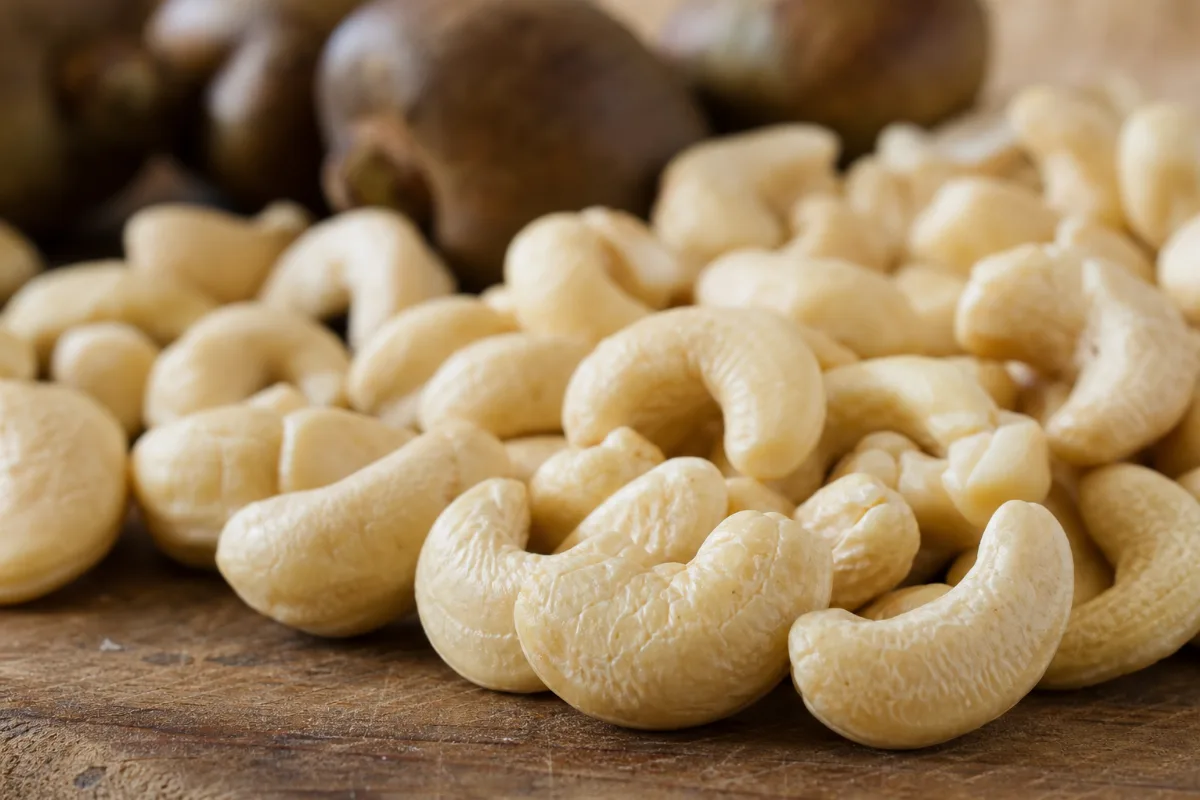
Nuts & Seeds · Nut
Cashews
Anacardium occidentale · also called Cashew nut, cashew kernel, anacardo (Spanish)
Cashews are the kernels of the cashew tree, a tree nut eaten raw, roasted or as butter. An ounce has about 157 calories and is a rich source of copper. Trials of cashews on cholesterol disagree, and a pooled analysis found a small fall in systolic blood pressure. The main cautions are tree nut allergy, which can be severe, and whole nuts for children under 5.
General information, not medical advice. Last substantive update · Not medically reviewed. A named clinician has not signed off on this page. How this page is made
About Cashews
Cashews are a mineral-rich tree nut. Trials of cashews on cholesterol and blood pressure are few and mixed, so they are best seen as a nutritious food rather than a proven remedy. The main safety issue is tree nut allergy.
What it is
The cashew (Anacardium occidentale) is a tree in the Anacardiaceae family. The part eaten is the kernel, a seed, usually sold shelled.
An ounce of raw cashews (28.35 g) provides about 157 calories, 12.4 g of fat, 5.2 g of protein and 0.9 g of fibre. It also gives about 0.62 mg of copper, 83 mg of magnesium and 1.6 mg of zinc (USDA). MedlinePlus lists nuts among good sources of copper and says people normally get enough from food.
What the research shows
Pooled trials of tree nuts in general show lower LDL cholesterol, and the amount of nuts mattered more than the type. For cashews alone the picture is mixed: one controlled-feeding trial found lower LDL and a later one found no change.
A pooled analysis of cashew trials found a small fall in systolic blood pressure of about 3.4 mmHg and no effect on lipids. In 300 adults with type 2 diabetes, cashews did not change blood sugar.
Large studies link higher nut intake with lower rates of heart disease and early death. Cashews are not separated from other nuts in these studies, and they show a link, not cause. Pooled trials of nuts found no weight gain.
Whole cashews versus oils, butters and extracts
Every cashew trial we read used whole cashews added to the diet. None tested cashew oil, an extract or a supplement, so the results say nothing about those products.
The nutrition figures are for raw, unsalted cashews. Roasted, salted or flavoured products differ, so check the label.
At a glance
Traditional uses history, not proof
- Eaten as a snack, in cooking and as nut butter
- No source we read documents traditional medicine uses of the cashew nut
Studied for research
- Blood cholesterol, mixed results for cashews
- Blood pressure, low certainty
- Heart disease and early death in diets high in nuts in general, low certainty
- Type 2 diabetes: blood sugar, insufficient evidence
- Body weight in diets with nuts, low certainty
Main compounds
- Fat, mostly unsaturated (about 24 g monounsaturated per 100 g)
- Copper, magnesium, zinc, manganese and phosphorus
- Protein (about 18 g per 100 g)
- Plant sterols (beta-sitosterol)
Common forms
- Raw shelled cashews (the form the nutrition figures describe)
- Roasted, oil-roasted, salted or flavoured cashews
- Cashew butter
- Pieces and meal used in cooking
Research links: NHS: Food allergy · Cashew trial on cholesterol (American Journal of Clinical Nutrition, 2017) · Cashews, lipids and blood pressure, meta-analysis (Complementary Therapies in Medicine, 2020) · USDA FoodData Central: raw cashew nuts · Research Library · Genes & Biomarkers Library
What it is and its history
- Accepted scientific name
- Anacardium occidentale
- Naming authority
- L. (GBIF accepted, usageKey 5421368)
- Common names
- Cashew (English); Cashew nut (English); Cashew kernel (English); Anacardo, nuez de la India, marañón (Spanish)
- Family or group
- Anacardiaceae (GBIF). The existing page says mango and pistachio belong to the same family; that was not checked here.
- Classification
- Plantae > Tracheophyta > Magnoliopsida > Sapindales > Anacardiaceae > Anacardium > Anacardium occidentale
- Native range
- Not verified from a source read.
- Habitat
- Not verified.
- What it looks like
- Roots: Not verified.; Stems: Not verified.; Leaves: Not verified.; Flowers: Not verified.; Fruit: The part eaten is the kernel, a seed, usually sold shelled (existing page summary, not re-verified).
- Cultivation
- Not verified from a source read.
- Harvest and processing
- Sold raw (shelled), roasted, salted or flavoured, as butter, and as pieces or meal (existing page summary, not re-verified). Whether 'raw' cashews have been heated was not verified.
- Look-alikes and adulterants
- Name: Pistachio (Pistacia vera); Note: A different nut that cross-reacts with cashew in allergy tests in some people; see the Safety tab.
- Sustainability and conservation
- Not assessed.
Photographs
Traditional use and history history, not clinical proof
| Tradition or era | Documented use | Source |
|---|---|---|
| Everyday food | Eaten as a snack and in cooking. No source we read documents its history or traditional medicine uses. | NOT verified (no source read) |
Traditional use shows how it was used. It does not show that it works or is safe today.
What is inside, and how it may work
What it contains and how those compounds act in cells and animals. Laboratory and animal mechanisms are not proven effects in people.
Main compounds
| Compound | Family | Where it is concentrated | Activity studied | Level of evidence |
|---|---|---|---|---|
| Monounsaturated fat (mostly oleic acid) | fat | Kernel 23.8 g per 100 g; oleic acid (18:1) 23.5 g per 100 g (USDA) | Supplies energy and unsaturated fat. Not tested here as a treatment. 18 | Composition data |
| Stearic acid | saturated fat | Kernel 3.22 g per 100 g of the 7.78 g saturated fat (USDA) | The authors of two trials say it is relatively neutral for blood lipids; this was their explanation, not something their data proved. 18 9 2 | Composition data with authors' explanation |
| Copper | mineral | Kernel 2.2 mg per 100 g; about 0.62 mg in an ounce (USDA) | MedlinePlus lists nuts among good sources of copper and says people normally get enough from food. 18 14 | Composition data |
| Plant sterols (beta-sitosterol and campesterol) | plant sterol | Kernel Beta-sitosterol 113 mg and campesterol 9.0 mg per 100 g (USDA) | Composition data only. No source we read tested them in cashews. 18 | Composition data |
| Allergen proteins (2S albumin Ana o 3) | protein | Kernel | Ana o 3-specific IgE was used as a diagnostic marker for cashew allergy in a 2024 clinic study of children. 6 | Clinical study |
Mechanisms, receptors and pathways
| Target or pathway | Gene or receptor | What was found | Level |
|---|---|---|---|
| PCSK9 (a protein involved in LDL handling) | PCSK9 | PCSK9 was lower after four weeks of cashews in a controlled-feeding trial, although LDL cholesterol did not change. What this means is unclear. 2 | Human biomarker |
| Stearic acid and blood lipids | The trial authors suggest the stearic acid in cashews could make them behave like other nuts for cholesterol. This is an explanation from the papers. 9 2 | Authors' explanation, not shown |
Absorption, metabolism and elimination
- Absorption
- Not researched.
- Distribution
- Not found.
- Metabolism
- Not found.
- Elimination
- Not found.
- Bioavailability
- Not established.
Isolated compounds versus whole extracts
Every cashew trial we read used whole cashews added to the diet. None used cashew oil, an extract, a powder or a supplement, so their results say nothing about those products. The tree nut pooled analysis mixed several kinds of nuts.
Nutritional composition
Per 100 g of raw cashews (USDA FoodData Central, SR Legacy record, last updated 2019): 553 kcal, 5.2 g water, 18.2 g protein, 43.8 g fat (7.78 g saturated, 23.8 g monounsaturated, 7.84 g polyunsaturated), 30.2 g carbohydrate of which 5.91 g are sugars, and 3.3 g fibre. One ounce (28.35 g, the portion USDA lists) gives about 157 kcal, 12.4 g fat, 5.2 g protein, 8.6 g carbohydrate and 0.9 g fibre. Copper stands out at about 0.62 mg an ounce, plus magnesium (83 mg), zinc (1.6 mg), manganese (0.47 mg), phosphorus (168 mg) and potassium (187 mg). Sodium is low in the raw nut (12 mg per 100 g). Vitamin K is 34.1 mcg per 100 g, about 10 mcg an ounce. Per-portion figures are the per-100 g values multiplied by 0.2835. Values vary with variety, growing place and storage. These figures are for raw, unsalted cashews; roasted, salted, oil-roasted and flavoured products differ, so check the label. No source we read compared raw and roasted cashews.
1 mixed findings3 low certainty2 not enough evidence
What was looked at
The 6 benefits and uses checked for Cashews, each with how strong the evidence is. Tap one to open it.
- Blood cholesterol (cashews, and tree nuts in general)Mixed findings
- Blood pressureLow certainty
- Heart disease and early death (nuts in general, not cashew-specific)Low certainty
- Type 2 diabetes: blood sugar and HDL cholesterolNot enough evidence
- Body weight (nuts in general)Low certainty
- Cancer, memory, mood, bones and other claimsNot enough evidence
Lab markers tracked in the studies
LDL cholesterolTotal cholesterolHDL cholesterolSystolic blood pressureBlood sugar measuresBody weight and BMI
What is Cashews good for?
The main studied uses and how strong the human evidence is for each. Most results are small changes in blood tests, or links seen in eating habits, not proof that cashews prevent or treat a disease.
Benefits, one by one
Each card is a research question, not a promise. Tap a goal to filter. Open a card to see the studies, doses and limits.
Blood cholesterol (cashews, and tree nuts in general)
Mixed findingsTree nuts as a group lower LDL cholesterol in pooled trials. For cashews specifically the trials disagree: one feeding trial found LDL lower and a later one found no change.
4 studiesWhole cashews eaten as part of the diet. No oil, extract or supplemen…
Studies, doses and limits
What the trials found
A 2015 pooled analysis of 61 trials of tree nuts (2,582 adults) found lower total cholesterol, LDL, ApoB and triglycerides, with the amount of nuts mattering more than the type. In one controlled-feeding trial of 51 adults with raised LDL, a cashew diet lowered LDL (-4.8% vs +1.2% with potato chips). A later controlled-feeding trial of 42 adults found no change in blood lipids. A 2020 pooled analysis of cashew trials (392 people) found no significant effect on lipids.
Results
Mixed for cashews. Lower LDL in one trial, no change in another and in the cashew-only pooled analysis. Tree nuts in general lowered LDL.
Effect sizes as reported
Tree nuts per serving a day: LDL -4.8 mg/dL (95% CI -5.5 to -4.2). Cashew feeding trial 1: LDL median -4.8% vs +1.2%. Cashew feeding trial 2: no significant difference. Cashew pooled analysis: no significant effect on lipids.
Why this rating
The tree-nut pooled result is consistent but is mostly not about cashews. The cashew-only trials point in different directions and are small. One cashew trial has industry-linked authors.
Form and dose studied
Whole cashews eaten as part of the diet. No oil, extract or supplement was tested.
Who was studied
Adults, including adults with raised LDL.
Limits
Blood-test outcomes, not heart attacks. Short trials. The control food differed between trials (potato chips versus no snack).
Why researchers looked
Cashews are rich in unsaturated fat and a snack many people eat, but they are higher in saturated fat than most tree nuts, so researchers asked whether they behave like other nuts.
Proposed mechanism Preliminary mechanism
The authors of two trials point to stearic acid, a saturated fat that is thought to be relatively neutral for blood lipids, as the reason cashews could act like other nuts. This is an explanation from the papers, not something shown by their data.
A proposed mechanism does not show that the effect happens in people.
Cashews are a tree nut; see the Safety tab for allergy.
Blood pressure
Low certaintyA pooled analysis of cashew trials found systolic blood pressure about 3 points lower, and one trial in people with type 2 diabetes saw a small fall. A tightly controlled 4-week trial saw no change.
3 studiesWhole cashews eaten as part of the diet.
Studies, doses and limits
What the trials found
The 2020 pooled analysis of cashew trials found systolic pressure 3.39 mmHg lower and no change in diastolic pressure. In a 12-week trial of 300 adults with type 2 diabetes in India, systolic pressure fell 4.9 mmHg with cashews versus 1.7 mmHg in the control group. The 4-week controlled-feeding trial of 42 adults found no blood pressure change.
Results
A small possible fall in systolic pressure; not seen in every trial.
Effect sizes as reported
Systolic WMD -3.39 mmHg (95% CI -6.13 to -0.65); diabetes trial -4.9 vs -1.7 mmHg (P = 0.04).
Why this rating
A few small trials, one pooled analysis of 392 people, and one tightly controlled trial that found nothing.
Form and dose studied
Whole cashews eaten as part of the diet.
Who was studied
Adults, including adults with type 2 diabetes.
Limits
Blood pressure readings, not strokes or heart attacks. The diabetes trial compared cashews with no cashews, not with another snack.
Why researchers looked
Nuts supply magnesium, potassium and unsaturated fats, which are linked with blood pressure in diet research.
Proposed mechanism Unknown
Not established.
A proposed mechanism does not show that the effect happens in people.
People on blood pressure medicines should keep following their own plan and ask their clinician.
Heart disease and early death (nuts in general, not cashew-specific)
Low certaintyIn large studies that followed people over time, those who ate more nuts had lower rates of heart disease and early death. These studies group all nuts together, so cashews are not singled out, and the link does not prove cause.
2 studiesUsual dietary nut intake (tree nuts and peanuts).
Studies, doses and limits
What the trials found
A 2016 meta-analysis of 20 prospective studies found that, per 28 g a day higher nut intake, the relative risk was 0.79 for cardiovascular disease, 0.71 for coronary heart disease and 0.78 for all-cause mortality; the stroke result was not clear. A 2022 umbrella review of 89 articles graded the evidence for cardiovascular disease as moderate quality for nuts overall.
Results
Lower risk with more nut intake overall. No source we read measured heart attacks or deaths in cashew eaters alone.
Effect sizes as reported
Per 28 g/day: cardiovascular disease RR 0.79 (0.70-0.88); coronary heart disease 0.71 (0.63-0.80); stroke 0.93 (0.83-1.05); all-cause mortality 0.78 (0.72-0.84).
Why this rating
Observational data, and people who eat nuts may differ in other ways. Cashews are not separated from other nuts and peanuts, so the certainty for cashews specifically is low even though the umbrella review rated nuts overall as moderate.
Form and dose studied
Usual dietary nut intake (tree nuts and peanuts).
Who was studied
Adults in cohort studies.
Limits
Association, not cause. No cashew-only outcome data.
Why researchers looked
Nuts are a regular part of heart-healthy eating patterns, so researchers have followed large groups to see if nut eaters have fewer heart problems.
Proposed mechanism Preliminary mechanism
Possible routes include unsaturated fat, fibre, minerals and plant compounds. These are ideas, not shown mechanisms.
A proposed mechanism does not show that the effect happens in people.
None specific to this finding. Nut allergy is a reason to avoid nuts.
Type 2 diabetes: blood sugar and HDL cholesterol
Not enough evidenceOne 12-week trial in adults with type 2 diabetes found no difference in blood sugar measures with cashews. HDL cholesterol rose slightly and systolic blood pressure fell a little.
1 studiesWhole cashews with standard diabetic-diet advice.
Studies, doses and limits
What the trials found
In a 12-week trial of 300 adults with type 2 diabetes in India, those given diabetic-diet advice plus cashews had no difference from the control group in blood sugar measures, body weight, BMI or most blood lipids.
Results
No blood sugar benefit shown. HDL cholesterol rose 1.7 mg/dL versus 0.1 mg/dL with control; systolic pressure fell more (the pressure result is covered on the Benefits tab for blood pressure).
Effect sizes as reported
HDL +1.7 vs +0.1 mg/dL (P = 0.01); no differences in glycaemic variables.
Why this rating
A single trial, in one country, comparing cashews with no cashews.
Form and dose studied
Whole cashews with standard diabetic-diet advice.
Who was studied
Adults with type 2 diabetes in India.
Limits
One trial only. No diabetes-prevention data for cashews.
Why researchers looked
Nuts are low in sugar and some nut trials have shown better blood sugar control, so researchers asked whether cashews help people with diabetes.
Proposed mechanism Unknown
Not established.
A proposed mechanism does not show that the effect happens in people.
People with diabetes should ask their care team how nuts fit into their own plan.
Body weight (nuts in general)
Low certaintyCashews are rich in calories, but pooled trials of nut-enriched diets did not find that people gained weight.
2 studiesWhole nuts as part of the diet.
Studies, doses and limits
What the trials found
A 2013 pooled analysis of 33 trials of nut-enriched diets found no significant effect on body weight, BMI or waist circumference compared with control diets. The 12-week cashew trial in people with type 2 diabetes also found no difference in body weight or BMI.
Results
No significant weight change. This is about nuts in general; the cashew-only evidence is a single trial.
Effect sizes as reported
Body weight -0.47 kg (95% CI -1.17 to 0.22); BMI -0.40 kg/m2 (-0.97 to 0.17); waist -1.25 cm (-2.82 to 0.31).
Why this rating
Mixed nuts, trials published to 2012, and wide intervals. Cashew-specific data are one trial.
Form and dose studied
Whole nuts as part of the diet.
Who was studied
Adults in trials.
Limits
Not cashew-specific. These trials do not tell you what happens if cashews are added on top of an unchanged diet over years.
Why researchers looked
Nuts are energy dense, so people worry that eating them adds weight.
Proposed mechanism Unknown
Not established.
A proposed mechanism does not show that the effect happens in people.
None specific.
Cancer, memory, mood, bones and other claims
Not enough evidenceWe did not find trials of cashews as a food for these uses in the sources we read.
1 studiesn/a
Studies, doses and limits
Results
Not enough evidence.
Why this rating
No cashew-specific human studies were found in the sources read.
Limits
Absence of evidence in the sources we read, not proof of no effect.
Why researchers looked
Nuts are often described online as good for the brain, bones and more.
Proposed mechanism Unknown
Not reviewed.
A proposed mechanism does not show that the effect happens in people.
None specific.
Connections to the rest of health
How Cashews connects to the rest of our health knowledge graph. Every link says what kind of connection it is. A safety link (for example to the liver) is a warning, not a benefit. A study that merely mentions a topic never creates a benefit link.
Explore every connection: goals, body systems, organs, symptoms, genes
A. Wellness goals
| Connected to | Kind of connection | Evidence status | Context | Studies |
|---|---|---|---|---|
| Cholesterol Balance | Mixed findings | Blood cholesterol (cashews, and tree nuts in general): Tree nuts as a group lower LDL cholesterol in pooled trials. For cashews specifically the trials disagree: one feeding trial found LDL lower and a later one found no change. | 4 9 2 8 | |
| Blood Pressure Support | Low certainty | Blood pressure: A pooled analysis of cashew trials found systolic blood pressure about 3 points lower, and one trial in people with type 2 diabetes saw a small fall. A tightly controlled 4-week trial saw no change. | 8 10 2 | |
| Heart Health | Low certainty | Heart disease and early death (nuts in general, not cashew-specific): In large studies that followed people over time, those who ate more nuts had lower rates of heart disease and early death. These studies group all nuts together, so cashews are not singled out, and the link does not prove cause. | 1 3 | |
| Blood Sugar Balance | Not enough evidence | Type 2 diabetes: blood sugar and HDL cholesterol: One 12-week trial in adults with type 2 diabetes found no difference in blood sugar measures with cashews. HDL cholesterol rose slightly and systolic blood pressure fell a little. | 10 | |
| Weight Management | Low certainty | Body weight (nuts in general): Cashews are rich in calories, but pooled trials of nut-enriched diets did not find that people gained weight. | 5 10 |
B. Body systems
| Connected to | Kind of connection | Evidence status | Context | Studies |
|---|---|---|---|---|
| Cardiovascular System | Biological association | Mixed findings | Studied for: Blood cholesterol (cashews, and tree nuts in general) Studied for: Blood pressure | 4 9 2 8 10 1 3 |
| Endocrine System | Biological association | Not enough evidence | Studied for: Type 2 diabetes: blood sugar and HDL cholesterol | 10 |
| Metabolism Weight | Biological association | Low certainty | Studied for: Body weight (nuts in general) | 5 10 |
| Whole Body | Biological association | Not enough evidence | Studied for: Cancer, memory, mood, bones and other claims | 1 |
E. Health conditions
| Connected to | Kind of connection | Evidence status | Context | Studies |
|---|---|---|---|---|
| Food allergy | Adverse effect or risk | Documented risk | Cashew is a tree nut. Allergy can be severe, with anaphylaxis from small amounts reported, and often goes with pistachio allergy. Cashew is a tree nut. Allergy can be severe and often goes with pistachio allergy. Preparation or compound: Cashew kernel |
15 19 7 6 |
| Oxalate nephropathy | Adverse effect or risk | Case report only | One case of kidney injury with calcium oxalate crystals in a man with chronic kidney disease. One case of kidney injury with calcium oxalate crystals in a man with chronic kidney disease eating 3-4 oz a day for a year. Preparation or compound: Cashew kernel, 3-4 oz a day for a year |
12 |
I. Biomarkers
| Connected to | Kind of connection | Evidence status | Context | Studies |
|---|---|---|---|---|
| LDL cholesterol | Biological association | Mixed findings | Measured in trials: lowered by tree nuts; mixed for cashews. A lab change is not the same as a health benefit. | 4 9 2 |
| Total cholesterol | Biological association | Mixed findings | Measured in trials: lowered by tree nuts; mixed for cashews. A lab change is not the same as a health benefit. | 4 9 8 |
| HDL cholesterol | Biological association | Low certainty | Measured in trials: slightly higher in one diabetes trial; otherwise no change. A lab change is not the same as a health benefit. | 10 9 |
| Systolic blood pressure | Biological association | Low certainty | Measured in trials: lowered slightly in pooled cashew trials; not in every trial. A lab change is not the same as a health benefit. | 8 10 2 |
| Blood sugar measures | Biological association | Low certainty | Measured in trials: no clear change. A lab change is not the same as a health benefit. | 10 2 |
| Body weight and BMI | Biological association | Low certainty | Measured in trials: no significant change. A lab change is not the same as a health benefit. | 5 10 |
L. Active compounds
| Connected to | Kind of connection | Evidence status | Context | Studies |
|---|---|---|---|---|
| Monounsaturated fat (mostly oleic acid) | Biological association | Composition data | Supplies energy and unsaturated fat. Not tested here as a treatment. Preparation or compound: Kernel |
18 |
| Stearic acid | Biological association | Composition data with authors' explanation | The authors of two trials say it is relatively neutral for blood lipids; this was their explanation, not something their data proved. Preparation or compound: Kernel |
18 9 2 |
| Copper | Biological association | Composition data | MedlinePlus lists nuts among good sources of copper and says people normally get enough from food. Preparation or compound: Kernel |
18 14 |
| Plant sterols (beta-sitosterol and campesterol) | Biological association | Composition data | Composition data only. No source we read tested them in cashews. Preparation or compound: Kernel |
18 |
| Allergen proteins (2S albumin Ana o 3) | Biological association | Clinical study | Ana o 3-specific IgE was used as a diagnostic marker for cashew allergy in a 2024 clinic study of children. Preparation or compound: Kernel |
6 |
Each connection is stored with the ingredient, the connected record, the kind of connection, the evidence status, the supporting studies, the preparation or compound involved, and a review date (last reviewed October 26, 2026).
Evidence at a glance: what the research found for 6 outcomes
Each outcome below is one thing researchers measured. Certainty is how far the evidence can be trusted, not how well it works. The full studies are on the next tab.
The evidence
The research centre for Cashews. Every record here was checked against PubMed or the publisher's page; we never list a study we have not verified.
Evidence by outcome
Bars show how many studies we found for each outcome, not how well it works. People are added up across trials only (reviews are not added, to avoid double counting).
How we rate evidence
High certainty
Several well-run trials or reviews agree; further research is unlikely to change the picture much.
Moderate certainty
Good trials point the same way, but some doubt remains.
Low certainty
Small, short or inconsistent trials. The finding could change with better research.
Very low certainty
Very little or very weak human data. Treat as a possibility only.
Mixed findings
Trials or reviews disagree with each other.
Not enough evidence
Not enough human research to say either way.
Evidence against
Good research found no benefit, or found harm.
We take the reviewers' own risk-of-bias and GRADE statements where they exist, and otherwise judge from study size, design, consistency, directness and whether a product matches what is sold. Many publications do not make evidence high. Method note: We started from our existing cashew summary, re-read the USDA FoodData Central record, and read PubMed abstracts and the NHS and MedlinePlus pages. Only abstracts were read for studies. Items we could not verify are flagged in the research gaps.
Study library: every study we checked 19
| Study | Design | People | Product, dose, length | Result |
|---|---|---|---|---|
| Aune 2016 Nut consumption and risk of cardiovascular disease, total cancer, all-cause and cause-specific mortality: a systematic review and dose-response meta-analysis of prospective studies. BMC Med · PMID 27916000 · DOI |
Systematic review and dose response meta analysis of cohort studies |
20 prospective studies (29 publications) of nut intake in adults | Usual dietary nut intake (tree nuts and peanuts) kernel (nut) Follow-up varied by study · vs Lower intake |
Higher nut intake went with lower risk of coronary heart disease, cardiovascular disease, total cancer and early death. The link for stroke was not clear. Results were similar for tree nuts and peanuts. Per 28 g a day: coronary heart disease RR 0.71 (95% CI 0.63-0.80); stroke 0.93 (0.83-1.05); cardiovascular disease 0.79 (0.70-0.88); total cancer 0.85 (0.76-0.94); all-cause mortality 0.78 (0.72-0.84) (0.70-0.88 (cardiovascular disease)) Methods, limits and fundingOutcomes: Cardiovascular disease, cancer, all-cause and cause-specific mortality Limitations: Observational: people who eat nuts may differ in other ways. Nuts pooled; cashews are not separated. Funding and conflicts: Not stated in the abstract read. Read: abstract |
| Baer 2019 Consumption of cashew nuts does not influence blood lipids or other markers of cardiovascular disease in humans: a randomized controlled trial. Am J Clin Nutr · PMID 30753323 · DOI |
Randomised crossover controlled feeding trial |
42 42 adults, weight-stable |
Whole cashews added to a controlled base diet kernel (nut) 42 g (1.5 servings) a day as set in the study 4 weeks per phase · vs Same base diet with no cashews (other foods reduced to keep calories equal) |
No significant differences in blood lipids, blood pressure, augmentation index, glucose, endothelin, adhesion molecules or clotting factors. PCSK9 fell after cashews, although LDL cholesterol did not change. No change in LDL cholesterol or blood pressure; PCSK9 lower (size not given in the abstract) Methods, limits and fundingOutcomes: Blood lipids, blood pressure, central pressure, glucose, endothelin, PCSK9, adhesion molecules, clotting and inflammatory factors Limitations: Short; healthy-weight-stable adults; a marker (PCSK9) changed without a change in LDL, and its meaning is unclear. Funding and conflicts: Authors are from USDA Agricultural Research Service; PubMed lists US government research support. No industry link seen in the abstract. Registration: NCT02628171 Read: abstract |
| Balakrishna 2022 Consumption of Nuts and Seeds and Health Outcomes Including Cardiovascular Disease, Diabetes and Metabolic Disease, Cancer, and Mortality: An Umbrella Review. Adv Nutr · PMID 36041171 · DOI |
Umbrella review of systematic reviews |
89 articles on nut consumption and health outcomes (23 meta-analyses on disease and mortality, 66 on biomarkers, 9 on allergy and adverse outcomes) | Nuts and seeds, culinary definition (tree nuts and peanuts) kernel (nut) · vs Lower or no intake |
Nut intake was linked with lower cardiovascular risk, with moderate-quality evidence. Links with diabetes incidence were mixed. Allergy and related adverse reactions to nuts were seen in 1-2% of adults, with large differences between studies. 28 g a day vs no nuts: 21% lower relative risk of cardiovascular disease; 11% fewer cancer deaths; 22% lower all-cause mortality (as reported in the abstract) Methods, limits and fundingOutcomes: Cardiovascular disease, cancer, diabetes, obesity, mortality, biomarkers, allergy Limitations: Nuts are pooled; cashews are not separated. The headline links are observational. Funding and conflicts: Not stated in the abstract read. Registration: PROSPERO CRD42021258300 Read: abstract |
| Del Gobbo 2015 Effects of tree nuts on blood lipids, apolipoproteins, and blood pressure: systematic review, meta-analysis, and dose-response of 61 controlled intervention trials. Am J Clin Nutr · PMID 26561616 · DOI |
Systematic review and meta analysis of controlled trials |
2582 61 trials (2,582 adults without prevalent cardiovascular disease) |
Tree nuts (walnuts, pistachios, macadamias, pecans, cashews, almonds, hazelnuts, Brazil nuts) kernel (nut) dose-standardised to one 1-oz (28.4 g) serving a day 3 to 26 weeks · vs Control diets |
Per serving a day, tree nuts lowered total cholesterol, LDL cholesterol, ApoB and triglycerides. The size of the effect depended more on the amount of nuts than on the type of nut; stronger effects were seen at 60 g a day or more. Per serving a day: total cholesterol -4.7 mg/dL (95% CI -5.3 to -4.0); LDL -4.8 mg/dL (-5.5 to -4.2); ApoB -3.7 mg/dL (-5.2 to -2.3); triglycerides -2.2 mg/dL (-3.8 to -0.5) (-5.5 to -4.2 mg/dL (LDL)) Methods, limits and fundingOutcomes: Total, LDL and HDL cholesterol, triglycerides, apolipoproteins, blood pressure, C-reactive protein Limitations: Tree nuts pooled; cashews were only some of the trials. Blood-test outcomes, not heart attacks. Funding and conflicts: PubMed lists NIH extramural support; two authors are from the Life Sciences Research Organization. No industry funding noted in the abstract. Read: abstract |
| Flores-Mateo 2013 Nut intake and adiposity: meta-analysis of clinical trials. Am J Clin Nutr · PMID 23595878 · DOI |
Systematic review and meta analysis of randomised trials |
33 clinical trials of nut-enriched diets (trials published before December 2012) | Nut-enriched diets (mixed nuts) kernel (nut) varied by trial varied by trial · vs Control diets |
Diets with nuts did not significantly change body weight, BMI or waist size compared with control diets, and the finding held up in sensitivity checks. Body weight -0.47 kg (95% CI -1.17 to 0.22); BMI -0.40 kg/m2 (-0.97 to 0.17); waist -1.25 cm (-2.82 to 0.31) (-1.17 to 0.22 kg (body weight)) Methods, limits and fundingOutcomes: Body weight, BMI, waist circumference Limitations: Mixed nuts, not cashews alone. Trials were fairly short and published up to 2012. Funding and conflicts: PubMed lists non-US government research support; no industry link seen in the abstract. Read: abstract |
| Goldberg 2024 Validation of the NUT CRACKER Diagnostic Algorithm and Prediction for Cashew and Pistachio Co-Allergy. J Allergy Clin Immunol Pract · PMID 38382880 · DOI |
Prospective validation study |
125 125 children (median age 7.8) with suspected tree nut allergy; severity markers studied in a combined cohort of 187 |
Cashew and pistachio food challenges and allergy tests kernel (nut) |
Many children with cashew allergy were allergic to pistachio too: 82 were allergic to both and 18 to cashew only. A test algorithm cut the number of food challenges needed by 72%. Dual cashew/pistachio allergic n = 82 vs cashew-only n = 18; positive predictive value 93.0%, negative predictive value 99.0% Methods, limits and fundingOutcomes: Cashew and pistachio co-allergy, diagnostic algorithm, markers of severity Limitations: Children seen in one allergy clinic in Israel, already suspected of tree nut allergy. This is about diagnosis, not how common cashew allergy is. Two authors are from Thermo Fisher Scientific, which makes allergy tests. Funding and conflicts: Industry-linked: two authors are from Thermo Fisher Scientific (an allergy-test maker); funder not stated in the abstract read. Read: abstract |
| Hasegawa 2009 Clinical features of four cases with cashew nut allergy and cross-reactivity between cashew nut and pistachio. Allergol Int · PMID 19240380 · DOI |
Case series (4 patients) |
4 4 people in Japan with a history of cashew allergy |
Cashew nut and pistachio (antibody tests) kernel (nut) |
Three of the four had anaphylaxis; two developed it within 10 minutes of eating only a few pieces. In two people, antibody binding to cashew and to pistachio was blocked by both nuts, pointing to cross-reactivity. Case series, no effect size Methods, limits and fundingOutcomes: Symptoms, IgE antibodies, cross-reactivity between cashew and pistachio Limitations: Four people only. Authors advise checking pistachio reactions when cashew allergy is suspected. Funding and conflicts: Not stated in the abstract read. Read: abstract |
| Jalali 2020 The effects of cashew nut intake on lipid profile and blood pressure: A systematic review and meta-analysis of randomized controlled trials. Complement Ther Med · PMID 32444052 · DOI |
Systematic review and meta analysis of randomised trials |
392 392 participants in the pooled trials |
Cashew nuts in the diet kernel (nut) varied by trial (not given in the abstract) varied by trial · vs Control diets |
No significant effect on blood lipids or diastolic pressure. Systolic pressure was lower with cashews, and omitting any one trial did not change that. Systolic blood pressure weighted mean difference -3.39 mmHg (95% CI -6.13 to -0.65, I2 0%); no significant effect on lipids or diastolic pressure (-6.13 to -0.65 mmHg (systolic)) Methods, limits and fundingOutcomes: Triglycerides, HDL, LDL, total cholesterol, systolic and diastolic blood pressure Limitations: Few trials and 392 people; the number of trials and their size are not given in the abstract read. Funding and conflicts: Authors declared no competing interests. Read: abstract |
| Mah 2017 Cashew consumption reduces total and LDL cholesterol: a randomized, crossover, controlled-feeding trial. Am J Clin Nutr · PMID 28356271 · DOI |
Randomised crossover controlled feeding trial |
51 51 men and women aged 21-73 with a median LDL cholesterol of 159 mg/dL at screening |
Whole cashews added to a typical American diet kernel (nut) 28-64 g a day as set in the study 28 days per diet, at least 2 weeks apart · vs Potato chips (isocaloric control diet) |
Median change from baseline was greater with cashews than with potato chips: total cholesterol -3.9% vs +0.8%, LDL -4.8% vs +1.2%, non-HDL -5.3% vs +1.7%. HDL and triglycerides did not differ. LDL cholesterol median change -4.8% (95% CI -12.6 to 3.1) with cashews vs +1.2% (95% CI -2.3 to 7.8) with control (-12.6% to 3.1% (cashew LDL change)) Methods, limits and fundingOutcomes: Total, LDL and non-HDL cholesterol, HDL, triglycerides Limitations: Compared with potato chips, not with no snack. Median changes with wide intervals. Short, in adults with raised LDL. Funding and conflicts: Industry-linked. One author is from The Kraft Heinz Co. and most others from Biofortis (a research company); the funder is not stated in the abstract read. Registration: NCT02769741 Read: abstract |
| Mohan 2018 Cashew Nut Consumption Increases HDL Cholesterol and Reduces Systolic Blood Pressure in Asian Indians with Type 2 Diabetes: A 12-Week Randomized Controlled Trial. J Nutr · PMID 29378038 · DOI |
Parallel randomised controlled trial |
300 300 adults with type 2 diabetes in India, average age 51, 55% men |
Standard diabetic-diet advice plus whole cashews kernel (nut) 30 g a day as set in the study 12 weeks · vs Standard diabetic-diet advice alone |
Systolic pressure fell more with cashews (-4.9 vs -1.7 mmHg, P = 0.04) and HDL cholesterol rose more (+1.7 vs +0.1 mg/dL, P = 0.01). No differences in body weight, BMI, other blood lipids or blood-sugar measures. Systolic -4.9 +/- 13.7 vs -1.7 +/- 11.6 mmHg; HDL +1.7 +/- 5.6 vs +0.1 +/- 4.6 mg/dL Methods, limits and fundingOutcomes: Blood sugar, body weight, blood pressure, blood lipids Limitations: Control group had no snack, so the comparison is cashews versus no cashews. One setting (India); 12 weeks; spread of results is wide compared with the differences. Funding and conflicts: Funder not stated in the abstract read. Registration: CTRI/2017/07/009022 Read: abstract |
| Musangi 2024 Aspergillus population diversity and its role in aflatoxin contamination of cashew nuts from coastal Kenya. PLoS One · PMID 38271327 · DOI |
Laboratory survey of stored raw cashews fungi (isolated from nuts) |
50 50 raw cashew samples from post-harvest storage in three counties on the Kenyan coast |
Raw cashew nuts in storage (mould and toxin-gene testing) kernel (nut) |
Sixty-three mould isolates were found. Of these 39.68% carried aflatoxin pathway genes and 22.22% were aflatoxigenic, all from the Flavi group. The authors say this shows the potential for aflatoxin or ochratoxin in cashews and call for control during storage and processing. 22.22% of isolates aflatoxigenic; toxin levels in the nuts themselves are not given in the abstract Methods, limits and fundingOutcomes: Aspergillus mould species and aflatoxin-producing potential Limitations: Kenya only; it tested moulds from stored raw nuts, and the abstract does not give toxin levels in finished products on shelves. Funding and conflicts: Conflict statement in the record is cut off after 'The authors have declared that no competing'; no industry link seen. Read: abstract |
| Ramrattan 2026 The Kidneys Went Nuts: Oxalate Nephropathy From Excessive Cashew Nut Consumption. Kidney Med · PMID 42211689 · DOI |
Case report |
1 A 78-year-old man with stable chronic kidney disease |
Cashew nuts eaten daily kernel (nut) 3-4 oz a day for about 1 year, per the report About 1 year |
His serum creatinine rose to 6.0 mg/dL from a baseline of 2.05 mg/dL. A kidney biopsy showed acute tubular injury with extensive calcium oxalate crystals. The authors traced it to daily cashew intake and call it an uncommon case. Single case; creatinine 6.0 vs baseline 2.05 mg/dL Methods, limits and fundingOutcomes: Kidney function and kidney biopsy Limitations: One person who already had kidney disease and ate a large daily amount. It cannot show that ordinary amounts harm the kidneys. Funding and conflicts: Not stated in the abstract read. Read: abstract |
| s-gbif-anacardium-occidentale GBIF Backbone: Anacardium occidentale L. (usageKey 5421368) · Source |
Reference database n/a |
Methods, limits and fundingRead: full-text | ||
| s-medlineplus-copper MedlinePlus: Copper in diet · Source |
Official health guidance n/a |
Methods, limits and fundingRead: full-text | ||
| s-nhs-food-allergy NHS: Food allergy · Source |
Official health guidance n/a |
Methods, limits and fundingRead: full-text | ||
| s-nhs-pregnancy-foods NHS: Foods to avoid in pregnancy · Source |
Official health guidance n/a |
Methods, limits and fundingRead: full-text | ||
| s-nhs-young-children-foods NHS: Foods to avoid giving babies and young children · Source |
Official health guidance n/a |
Methods, limits and fundingRead: full-text | ||
| s-usda-fdc-170162 USDA FoodData Central: Nuts, cashew nuts, raw (SR Legacy, FDC 170162) · Source |
Food composition database n/a |
Methods, limits and fundingRead: full-text | ||
| van der Valk 2014 Systematic review on cashew nut allergy. Allergy · PMID 24734868 · DOI |
Systematic review (mostly retrospective studies and case reports) |
40 articles that met selection criteria out of 255 found (one prospective study, six retrospective studies, seven case reports) | Cashew nut allergy kernel (nut) |
The review suggests cashew allergy is becoming more common, although the level of evidence for that is low. A minimal amount of cashew allergen may cause a severe reaction, and the authors call it an underestimated healthcare problem, especially in children. Narrative systematic review, no pooled effect Methods, limits and fundingOutcomes: Prevalence, allergens, cross-reactivity, diagnosis and management of cashew allergy Limitations: Low-level evidence (mostly case reports and retrospective studies); published 2014. Funding and conflicts: Not stated in the abstract read. Read: abstract |
What we do not know yet
- No trial has tested cashews for heart attacks, stroke or early death, and the cashew cholesterol trials disagree.
- The large studies of nut intake do not separate cashews from other nuts and peanuts.
- Breastfeeding, the cashew shell and oil, and the oxalate content of cashews were not researched.
- Roasted or salted cashews were not compared with raw cashews in any source we read.
- No source on medicine interactions with cashews as a food was found.
How new research is added
New studies are found by a saved PubMed search and placed in a review queue before the page changes.
Lab markers
What changed in blood or saliva tests during trials. A changed number is not the same as feeling or being healthier, and we give no "normal ranges".
Metabolic 5
LDL cholesterol
Lowered by tree nuts; mixed for cashews in trials
The so-called bad cholesterol carried in the blood.
Mixed findingsResults and what it means
Why it was measured
A common heart-risk marker.
Statistical vs. clinical meaning
A small blood-test change; no one knows whether it changes heart outcomes.
Safety implication
None specific.
| Study | Result | People | Product |
|---|---|---|---|
| 4 | -4.8 mg/dL per serving a day (95% CI -5.5 to -4.2) | Adults in 61 trials | Tree nuts pooled (cashews among them) |
| 9 | Median change -4.8% with cashews vs +1.2% with potato chips | 51 adults with raised LDL | Cashews, 28-64 g a day for 28 days |
| 2 | No change | 42 adults | Cashews, 42 g a day for 4 weeks |
Total cholesterol
Lowered by tree nuts; mixed for cashews in trials
All the cholesterol carried in the blood, good and bad together.
Mixed findingsResults and what it means
Why it was measured
A basic blood-fat measure.
Statistical vs. clinical meaning
A small change.
Safety implication
None specific.
HDL cholesterol
Slightly higher in one diabetes trial; otherwise no change in trials
The so-called good cholesterol carried in the blood.
Low certaintyResults and what it means
Why it was measured
A common heart-risk marker.
Statistical vs. clinical meaning
A very small change of unknown meaning.
Safety implication
None specific.
Blood sugar measures
No clear change in trials
The amount of sugar in the blood and how well it is controlled.
Low certaintyResults and what it means
Why it was measured
Used to watch blood sugar control in diabetes.
Statistical vs. clinical meaning
No effect found.
Safety implication
None specific.
Body weight and BMI
No significant change in trials
Weight and weight relative to height.
Low certaintyResults and what it means
Why it was measured
Nuts are energy dense, so weight gain is a common concern.
Statistical vs. clinical meaning
No weight gain shown in trials, though trials are short.
Safety implication
None specific.
Other 1
Systolic blood pressure
Lowered slightly in pooled cashew trials; not in every trial in trials
The upper number in a blood pressure reading.
Low certaintyResults and what it means
Why it was measured
High blood pressure is a major risk for heart disease and stroke.
Statistical vs. clinical meaning
A small change; not shown to prevent strokes or heart attacks.
Safety implication
None specific.
Safety
What studies and official sources say about side effects, medicines and who should check first. Each point shows what kind of evidence it comes from.
Main points to know 4
- Cashew is a tree nut and cashew allergy can be severe. The NHS lists cashews among the tree nuts that commonly cause food allergy. A 2014 review says a very small amount of cashew allergen can cause a severe reaction, and calls cashew allergy an underestimated problem, especially in children. In a small case series, two people developed anaphylaxis within 10 minutes of eating only a few pieces. Swelling of the lips, face or throat or trouble breathing needs emergency help. Authoritative guidance and case series 15 19 7
- Cashew allergy often goes with pistachio allergy. A case series of four people found IgE antibody binding to cashew and to pistachio was blocked by both nuts in two cases, pointing to cross-reactivity. In a clinic study of 125 children with suspected tree nut allergy, 82 were allergic to both cashew and pistachio and 18 to cashew only. An allergist can say which nuts are safe for you. Case series and clinical study 7 6
- Very large daily amounts were linked to kidney injury in one case. A 2026 case report describes a 78-year-old man with chronic kidney disease whose kidney function worsened sharply after about a year of eating 3 to 4 ounces of cashews daily; his biopsy showed calcium oxalate crystals. It is a single case and does not show that ordinary servings cause kidney problems. People with kidney disease or past kidney stones should ask their clinician. Case report 12
- Whole nuts are a choking risk for young children. The NHS says whole nuts should not be given to children under 5 because they can choke. Nuts can be given from the start of weaning if crushed or ground and added to food, and nut butter should be spread on food, not given on its own. Authoritative guidance 17
Side effects 3
| Effect | How often | Severity and recovery | Evidence |
|---|---|---|---|
| Allergic reaction, from itchy mouth or hives to anaphylaxis An umbrella review reports allergy and related adverse reactions to nuts in 1-2% of adults, with large differences between studies; that figure is for nuts in general, not cashews alone. | Not established | mild to life-threatening Mild symptoms may settle; anaphylaxis needs emergency treatment. | Authoritative guidance and case series 15 19 7 |
| Calcium oxalate kidney injury (one case report) Person already had chronic kidney disease and ate 3-4 oz daily for a year. | Not established | serious in the one reported case Not stated in the abstract read. | Case report 12 |
| Choking in young children (whole nuts) Official guidance, not a measured rate. | Not established | potentially life-threatening Not applicable. | Authoritative guidance 17 |
Liver
No liver injury linked to eating cashews was found in the sources read. LiverTox was not checked.
How often. No frequency found.
This is a safety connection. It is not evidence that Cashews supports liver health.
Medicines and supplements 1
| With | Why it matters | Importance | Evidence | What to do |
|---|---|---|---|---|
| Prescription and over-the-counter medicines prescription | No source we read describes a medicine interaction with cashews eaten as food. Raw cashews contain vitamin K (about 10 mcg an ounce, USDA), but we did not find a source linking cashews to warfarin, so we make no claim either way. | None found Not enough evidence 18 | A pharmacist can check your own medicines, especially if you take warfarin or have kidney disease. |
Who should check first 4
| Situation | Advice | Evidence |
|---|---|---|
| Known allergy to cashew or to tree nuts | Avoid cashews and ask an allergist which other nuts are safe. Follow your own emergency plan. | Authoritative guidance 15 6 |
| Chronic kidney disease or past kidney stones | Ask your clinician about cashews and other high-oxalate foods. This rests on one case report, not on a rule from a health body. | Case report 12 |
| Children under 5 and whole nuts | Do not give whole nuts to children under 5. Crushed or ground nuts mixed into food, and nut butter spread thinly, are described as options by the NHS. | Authoritative guidance 17 |
| Pregnancy | The NHS says peanuts and other nuts are safe to eat in pregnancy unless you have been told not to by a doctor or midwife, or you have an allergy. | Authoritative guidance 16 |
Overdose, product quality and regulators
Summary. Shelled cashew kernels are an ordinary food. The one toxicity concern in the sources read is mould and aflatoxin potential in stored raw nuts.
Animal. Not reviewed.
Human doses studied. Trials used 28-64 g a day for 4 to 12 weeks and the abstracts report no safety problems. The only harm signal found is the single kidney case report.
High dose or long term signals. One case report of oxalate kidney injury with 3-4 oz a day for about a year in a man with chronic kidney disease.
Overdose response. Not found.
Genotoxicity. Not reviewed.
Toxic or hazardous parts. Not researched. We did not read a source on the shell or other parts of the cashew plant, so we make no claim about them.
Nuts that are stored damp can grow moulds. A laboratory survey of 50 raw cashew samples from Kenyan storage facilities found some moulds capable of making aflatoxin, but the abstract does not give toxin levels in the nuts.
Aflatoxin-producing moulds in stored raw cashews, coastal Kenya (2024). Of 63 mould isolates, 22.22% were aflatoxigenic. The authors say this shows the potential for aflatoxin or ochratoxin and call for control in storage and processing. 11
| Body | Action | Date |
|---|---|---|
| NHS (UK) (United Kingdom) | Lists cashews among common allergenic tree nuts; says to call 999 for signs of a serious allergic reaction source | 2026-10-26 (page read) |
| NHS (UK) (United Kingdom) | Nuts are safe to eat in pregnancy unless you have an allergy or have been told otherwise source | 2026-10-26 (page read) |
| NHS (UK) (United Kingdom) | Whole nuts should not be given to children under 5 (choking) source | Page last reviewed 18 February 2026 |
When to get medical help
- Swelling of the lips, face, tongue or throat
- Trouble breathing, wheezing or a tight throat
- Feeling faint, dizzy or collapsing after eating
- Spreading hives, vomiting or severe stomach pain soon after eating cashews
- A child choking on a nut
- Much less urine, swelling, or new tiredness and nausea in someone with kidney disease who eats a lot of cashews
Stop using the product and contact a clinician or emergency service. In the US, Poison Control is 1-800-222-1222.
General information only, not medical advice. Ask a clinician or pharmacist before use, especially with medicines, in pregnancy or with a health condition. See the Natural Remedy Safety guide.
Frequently asked questions
What are cashews good for?
Do cashews lower cholesterol?
Do cashews lower blood pressure?
Do cashews help prevent heart disease?
Are cashews good for people with diabetes?
In one 12-week trial of 300 adults with type 2 diabetes, cashews did not change blood sugar measures. HDL cholesterol rose slightly. People with diabetes should ask their care team how nuts fit into their own plan.
Do cashews make you gain weight?
What nutrients do cashews contain?
How serious is cashew allergy?
If I am allergic to cashews, can I eat pistachios or other nuts?
Can cashews cause kidney problems?
One case report describes oxalate kidney injury in a 78-year-old man with chronic kidney disease who ate 3 to 4 ounces of cashews daily for about a year. It does not show harm from ordinary servings. People with kidney disease or past stones should ask their clinician.
Are cashews a choking risk for children?
Yes. The NHS says whole nuts should not be given to children under 5. Nuts can be given from the start of weaning if crushed or ground and added to food, and nut butter should be spread on food.
Are cashews safe in pregnancy, and do they interact with medicines?
The NHS says nuts are safe to eat in pregnancy unless you have an allergy or have been told otherwise. We found no source describing a medicine interaction with cashews as a food. A pharmacist can check your own medicines.
Explore by health goal
Cholesterol BalanceBlood Pressure SupportHeart HealthBlood Sugar BalanceWeight Management
Editorial transparency
- Written by
- AlternativeMed editorial team. Research compiled with AI assistance, then checked against the sources listed.
- Medical review
- None. This page has not been reviewed by a physician or pharmacist.
- First published
- 2026-10-26
- Last substantive update
- 2026-10-26
- How we research
- We started from our existing cashew summary, re-read the USDA FoodData Central record, and read PubMed abstracts and the NHS and MedlinePlus pages. Only abstracts were read for studies. Items we could not verify are flagged in the research gaps.
- How we rate evidence
- See "How we rate evidence" in the Evidence tab.
- Independence
- No product is promoted on this page. No affiliate links are shown.
Sources 19
Each source was opened and checked. Where we read only the abstract, it says so. The small numbers in the text point here.
- Aune D, Keum N, Giovannucci E, et al.. Nut consumption and risk of cardiovascular disease, total cancer, all-cause and cause-specific mortality: a systematic review and dose-response meta-analysis of prospective studies.. BMC Med. 2016. PMID 27916000. DOI 10.1186/s12916-016-0730-3. (abstract)
- Baer DJ, Novotny JA. Consumption of cashew nuts does not influence blood lipids or other markers of cardiovascular disease in humans: a randomized controlled trial.. Am J Clin Nutr. 2019. PMID 30753323. DOI 10.1093/ajcn/nqy242. (abstract)
- Balakrishna R, Bjornerud T, Bemanian M, Aune D, Fadnes LT. Consumption of Nuts and Seeds and Health Outcomes Including Cardiovascular Disease, Diabetes and Metabolic Disease, Cancer, and Mortality: An Umbrella Review.. Adv Nutr. 2022. PMID 36041171. DOI 10.1093/advances/nmac077. (abstract)
- Del Gobbo LC, Falk MC, Feldman R, et al.. Effects of tree nuts on blood lipids, apolipoproteins, and blood pressure: systematic review, meta-analysis, and dose-response of 61 controlled intervention trials.. Am J Clin Nutr. 2015. PMID 26561616. DOI 10.3945/ajcn.115.110965. (abstract)
- Flores-Mateo G, Rojas-Rueda D, Basora J, Ros E, Salas-Salvado J. Nut intake and adiposity: meta-analysis of clinical trials.. Am J Clin Nutr. 2013. PMID 23595878. DOI 10.3945/ajcn.111.031484. (abstract)
- Goldberg MR, Appel MY, Tobi K, et al.. Validation of the NUT CRACKER Diagnostic Algorithm and Prediction for Cashew and Pistachio Co-Allergy.. J Allergy Clin Immunol Pract. 2024. PMID 38382880. DOI 10.1016/j.jaip.2024.02.012. (abstract)
- Hasegawa M, Inomata N, Yamazaki H, et al.. Clinical features of four cases with cashew nut allergy and cross-reactivity between cashew nut and pistachio.. Allergol Int. 2009. PMID 19240380. DOI 10.2332/allergolint.08-OA-0010. (abstract)
- Jalali M, Karamizadeh M, Ferns GA, et al.. The effects of cashew nut intake on lipid profile and blood pressure: A systematic review and meta-analysis of randomized controlled trials.. Complement Ther Med. 2020. PMID 32444052. DOI 10.1016/j.ctim.2020.102387. (abstract)
- Mah E, Schulz JA, Kaden VN, et al.. Cashew consumption reduces total and LDL cholesterol: a randomized, crossover, controlled-feeding trial.. Am J Clin Nutr. 2017. PMID 28356271. DOI 10.3945/ajcn.116.150037. (abstract)
- Mohan V, Gayathri R, Jaacks LM, et al.. Cashew Nut Consumption Increases HDL Cholesterol and Reduces Systolic Blood Pressure in Asian Indians with Type 2 Diabetes: A 12-Week Randomized Controlled Trial.. J Nutr. 2018. PMID 29378038. DOI 10.1093/jn/nxx001. (abstract)
- Musangi CR, Juma BS, Mukhebi DW, Isoe EM, Kibiti CM, Mbinda WM. Aspergillus population diversity and its role in aflatoxin contamination of cashew nuts from coastal Kenya.. PLoS One. 2024. PMID 38271327. DOI 10.1371/journal.pone.0292519. (abstract)
- Ramrattan A, Shah OSM, Showkat A, Vo H, Caza T. The Kidneys Went Nuts: Oxalate Nephropathy From Excessive Cashew Nut Consumption.. Kidney Med. 2026. PMID 42211689. DOI 10.1016/j.xkme.2026.101375. (abstract)
- . GBIF Backbone: Anacardium occidentale L. (usageKey 5421368). . . (full-text)
- . MedlinePlus: Copper in diet. . . (full-text)
- . NHS: Food allergy. . . (full-text)
- . NHS: Foods to avoid in pregnancy. . . (full-text)
- . NHS: Foods to avoid giving babies and young children. . . (full-text)
- . USDA FoodData Central: Nuts, cashew nuts, raw (SR Legacy, FDC 170162). . . (full-text)
- van der Valk JP, Dubois AE, Gerth van Wijk R, Wichers HJ, de Jong NW. Systematic review on cashew nut allergy.. Allergy. 2014. PMID 24734868. DOI 10.1111/all.12401. (abstract)
Where to buy
Check the label first. Whatever you buy, look for these:
- Raw or roasted, and salted or unsalted
- A best-by date, since nuts and seeds turn rancid
- Tree nut and peanut allergy warnings
- A resealable bag, and cool storage once opened
Talk to a pharmacist or doctor before you start any supplement, especially if you take medicines. See the Safety tab for interactions.
Support our free guides: as an Amazon Associate we earn from qualifying purchases. Full disclosure.


