Nuts & Seeds · Nut
Brazil Nuts
Bertholletia excelsa · also called Para nut, castanha-do-Brasil, nuez de Brasil (Spanish)
Brazil nuts are the seeds of a tall Amazon tree, eaten whole, as butter or as flour. They are one of the richest foods in selenium, an essential trace mineral. Trials show they raise blood selenium, but evidence for any disease benefit is limited. The main cautions are too much selenium (a single ounce can pass official upper limits), tree nut allergy and mould (aflatoxin).
General information, not medical advice. Last substantive update · Not medically reviewed. A named clinician has not signed off on this page. How this page is made
About Brazil Nuts
Brazil nuts are a nutritious tree nut and the richest common food source of selenium. They are a food, not a proven remedy: the trials show a blood marker rising, and the main safety point is that the same selenium can pass official upper limits.
What it is
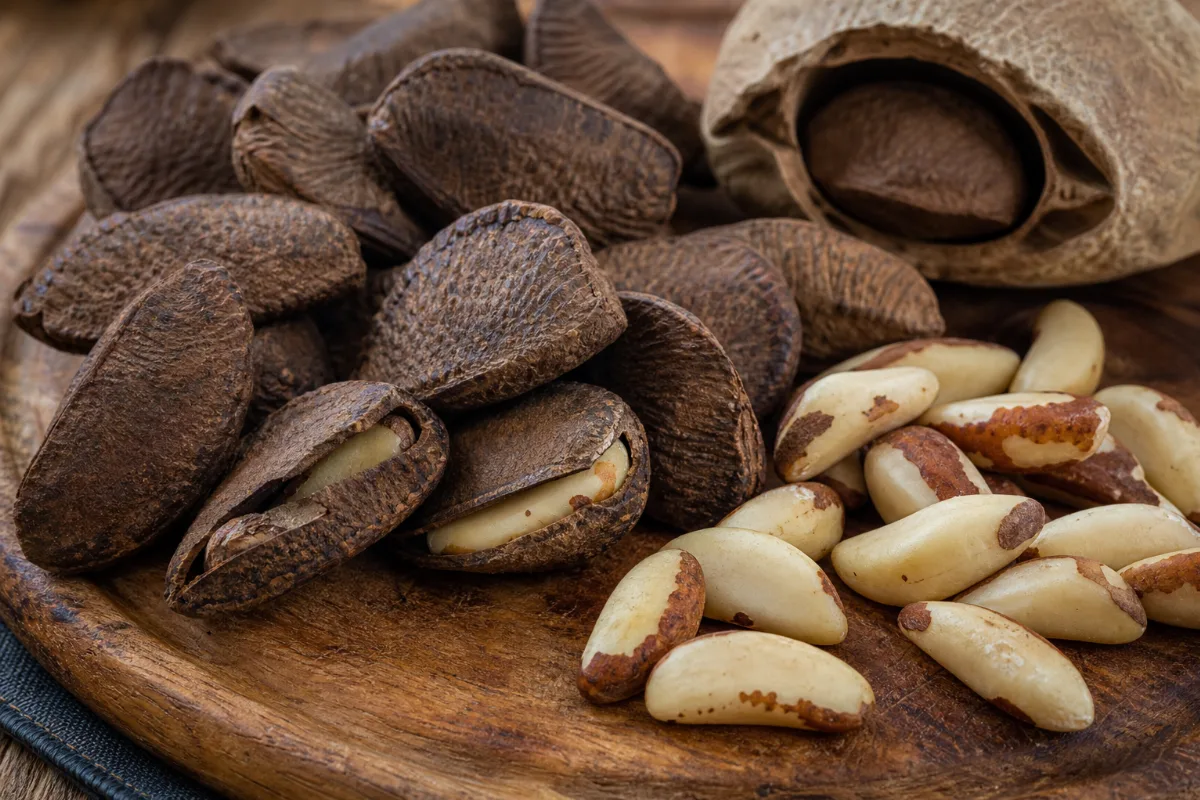
Brazil nuts are the seeds of Bertholletia excelsa, a large tree of the Amazon rainforest (family Lecythidaceae). The part eaten is the kernel inside a hard shell, and the nuts are also sold as butter, flour and oil.
USDA data for dried, unblanched kernels: 659 kcal per 100 g, with 67.1 g fat, 14.3 g protein and 7.5 g fibre. One ounce (28.35 g, about 6 kernels) has about 187 kcal, 107 mg magnesium and 544 micrograms of selenium. One 5 g kernel averages about 96 micrograms of selenium, but real nuts vary widely.
What the research shows
The firmest finding is about selenium: in trials of adults, eating Brazil nuts or nut butter raised blood selenium as much as a supplement. That is a blood measure.
On cholesterol, pooled analyses disagree. Tree nuts as a group lowered LDL slightly, but the results for Brazil nuts alone are mixed.
A pilot trial of older adults with mild memory impairment found some test gains, but only 20 people finished. For kidney disease, thyroid function and blood sugar the evidence is very thin. We found no trial showing Brazil nuts prevent heart attacks, cancer or thyroid disease.
Food versus butter, flour, oil and supplements
A 2025 trial used Brazil nut butter, and a 2015 trial used a partially defatted flour. Laboratory studies of the oil show phenolic compounds and plant sterols, but that does not show the whole nut does the same in people. Selenium supplements raise blood selenium about as much as the nuts, and both count toward the same upper limit.
Amounts
This page gives no amounts to eat. Ask a doctor, pharmacist or dietitian what is right for you, especially if you take a selenium supplement or have kidney disease.
At a glance
Traditional uses history, not proof
- Eaten as a snack and in cooking, and as nut butter, flour and oil
- Long use as food is not proof that they treat any condition
Studied for research
- Raising blood selenium, moderate certainty (blood marker)
- Blood cholesterol, mixed evidence
- Memory in older adults with mild impairment, very low certainty (one pilot trial)
- Antioxidant enzyme markers, low certainty
- Kidney disease markers, very low certainty
- Disease prevention (heart attacks, cancer, thyroid disease), insufficient evidence
Main compounds
- Selenium
- Vitamin E (alpha-tocopherol)
- Magnesium
- Copper
- Beta-sitosterol (plant sterol)
- Phenolic compounds (laboratory analyses of the oil)
Common forms
- Whole kernels, in shell or shelled
- Blanched kernels
- Brazil nut butter (used in a 2025 trial)
- Partially defatted flour (used in a 2015 trial)
- Oil (laboratory analyses only)
Research links: EFSA: tolerable upper intake level for selenium (2023) · Trial: Brazil nuts versus selenomethionine for selenium status · WHO: Mycotoxins fact sheet · Research Library · Genes & Biomarkers Library
What it is and its history
- Accepted scientific name
- Bertholletia excelsa
- Naming authority
- Bonpl. (GBIF accepted)
- Common names
- Brazil nut (English); Para nut (English); Castanha-do-Brasil (Portuguese); Nuez de Brasil (Spanish)
- Family or group
- Lecythidaceae (the Brazil nut family), as given by GBIF.
- Classification
- Plantae > Tracheophyta > Magnoliopsida > Ericales > Lecythidaceae > Bertholletia > Bertholletia excelsa
- Native range
- The Amazon rainforest (Silva Junior et al. abstract: native of the Amazon rainforest).
- Habitat
- Not verified from a source read.
- What it looks like
- Roots: Not verified.; Stems: Described as a very large tropical tree in the existing nutrient summary; not re-verified.; Leaves: Not verified.; Flowers: Not verified.; Fruit: The edible part is the kernel inside a hard shell; the existing nutrient summary says the nuts are sold in shell, shelled, blanched, or as butter, flour or oil.
- Cultivation
- Not verified from a source read. The abstracts describe wild Amazon collection and a non-timber forest product of economic importance (Abrantes et al.).
- Harvest and processing
- Sold in shell, shelled, blanched, or as butter, flour and oil (existing nutrient summary). Oil and defatted flour exist (Abrantes et al. 2024).
- Look-alikes and adulterants
- Name: Other tree nuts; Note: Brazil nuts are sometimes mixed with other nuts; the trial of a cashew and Brazil nut shake is not a Brazil-nut-only result.; Name: Peanut; Note: Peanut is a legume, not a tree nut, and is a separate allergy (existing nutrient summary; not re-checked).
- Sustainability and conservation
- Not researched.
Photographs
What is inside, and how it may work
What it contains and how those compounds act in cells and animals. Laboratory and animal mechanisms are not proven effects in people.
Main compounds
| Compound | Family | Where it is concentrated | Activity studied | Level of evidence |
|---|---|---|---|---|
| Selenium | trace mineral | Kernel USDA: 1,920 micrograms per 100 g; about 544 micrograms per ounce; varies widely by origin (2.07 to 68.15 mg/kg median by state) | Built into the antioxidant enzyme glutathione peroxidase (MedlinePlus). Raises blood selenium in trials. 22 20 13 | Human data |
| Selenomethionine (comparison supplement) PubChem 15103 | amino acid containing selenium | Used as a supplement in one trial; raised plasma selenium about as much as Brazil nuts. 15 | Human data | |
| Vitamin E (alpha-tocopherol) PubChem 14985 | vitamin | Kernel USDA: 5.65 mg per 100 g | A fat-soluble vitamin; no effect shown for Brazil nuts in the studies read. 22 | Nutrient data |
| Beta-sitosterol PubChem 222284 | plant sterol | Kernel oil Higher in pressurised-fluid oil extracts (laboratory) | Found in laboratory analyses of Brazil nut oil. No human result shows it acts when the whole nut is eaten. 1 | Lab |
| Gallic acid derivatives and other phenolic compounds | polyphenol | Kernel oil Higher in cold-pressed oil (laboratory) | Seen in laboratory oil analyses; antioxidant activity in the test tube only. 1 | Lab |
Mechanisms, receptors and pathways
| Target or pathway | Gene or receptor | What was found | Level |
|---|---|---|---|
| Selenium and glutathione peroxidase | Glutathione peroxidase (GPx), selenoprotein P (SELENOP) | Selenium from food is built into selenium proteins, and trials show GPx and selenoprotein P rise after Brazil nuts or nut butter. 20 14 7 | Human data |
| Hair loss as the early sign of excess selenium | Not specified | EFSA picked alopecia as the key effect of too much selenium and based its upper limit on it. 6 | Human data |
| Tree nut cholesterol effect | Not specified | Not established. Pooled tree nut trials found slightly lower LDL; the mechanism was not given in the abstract. 5 | Unknown |
Absorption, metabolism and elimination
- Absorption
- Selenium in Brazil nuts was absorbed well enough to raise plasma selenium by 64.2% in 12 weeks, similar to selenomethionine (61.0%).
- Distribution
- Not found.
- Metabolism
- Not found.
- Elimination
- Not found.
- Bioavailability
- In the New Zealand trial, 2 Brazil nuts a day raised plasma selenium as much as 100 micrograms of selenomethionine, even though measured intake from nuts averaged 53 micrograms.
Isolated compounds versus whole extracts
Nut butter, partially defatted flour and oil are different products from whole kernels. The 2025 trial used nut butter and the 2015 cholesterol trial used a flour. Selenium supplements (selenomethionine) raised blood selenium about as much as nuts, but the SELECT trial result that EFSA uses for its limit is from supplements. Lab results on oil do not tell us what eating the nut does.
Nutritional composition
Nutrition from USDA FoodData Central (Nuts, brazilnuts, dried, unblanched, FDC 170569, SR Legacy, last updated 4/1/2019, read 2026-10-26). Per 100 g: 659 kcal, 14.3 g protein, 67.1 g fat (16.1 g saturated, 23.9 g monounsaturated, 24.4 g polyunsaturated), 11.7 g carbohydrate, 7.5 g fibre, about 3.4 g water, 160 mg calcium, 2.43 mg iron, 376 mg magnesium, 725 mg phosphorus, 659 mg potassium, 3 mg sodium, 4.06 mg zinc, 1.74 mg copper, 1.22 mg manganese, 1,920 micrograms selenium, 5.65 mg vitamin E (alpha-tocopherol), 0.617 mg thiamin. One ounce (28.35 g, about 6 kernels): about 187 kcal, 19.0 g fat, 4.1 g protein, 2.1 g fibre, 107 mg magnesium, 544 micrograms selenium (the 100 g values times 0.2835). One kernel is listed as 5 g, about 96 micrograms of selenium by the USDA average, but real nuts differ widely. Values vary with variety, growing place, roasting and storage.
1 moderate certainty1 mixed findings1 low certainty3 very low certainty2 not enough evidence
What was looked at
The 8 benefits and uses checked for Brazil Nuts, each with how strong the evidence is. Tap one to open it.
- Raising blood seleniumModerate certainty
- Blood cholesterol and blood fatsMixed findings
- Memory and thinking in older adults with mild impairmentVery low certainty
- Antioxidant enzyme markers (glutathione peroxidase)Low certainty
- People with chronic kidney disease (oxidative stress and inflammation markers)Very low certainty
- Thyroid function in people on dialysisNot enough evidence
- Blood sugar and metabolic markersVery low certainty
- Preventing heart attacks, cancer or thyroid diseaseNot enough evidence
Lab markers tracked in the studies
Blood seleniumGlutathione peroxidase (GPx) activityLDL and total cholesterolVerbal fluency and constructional praxis scoresOxidative stress and inflammation markers in kidney diseaseFasting blood glucose
What is Brazil Nuts good for?
The main studied uses and how strong the human evidence is for each. Most results are blood markers, and some are for tree nuts as a group, nut butter or flour rather than whole Brazil nuts.
Benefits, one by one
Each card is a research question, not a promise. Tap a goal to filter. Open a card to see the studies, doses and limits.
Raising blood selenium
Moderate certaintyBrazil nuts are one of the richest food sources of selenium, an essential trace mineral. In randomised trials, eating them raised blood selenium about as much as a selenium pill. This is a blood measure, not proof of any disease benefit. The same richness is the main safety point: see the Safety tab.
4 studiesWhole kernels, and nut butter. Measured intake in the New Zealand tri…
Studies, doses and limits
What the trials found
In 59 New Zealand adults, 2 Brazil nuts a day for 12 weeks raised plasma selenium by 64.2%, compared with 61.0% for 100 micrograms of selenomethionine and 7.6% for placebo. In 86 vegans and omnivores, 55 micrograms of selenium a day as Brazil nut butter or as a supplement for two weeks both raised serum selenium and selenoprotein P, and were equally effective. A 2022 meta-analysis of eight randomised trials found a large rise in blood selenium (standardised mean difference 6.93, 95% CI 3.99 to 9.87).
Results
Every trial read found that eating Brazil nuts raised blood selenium. MedlinePlus names Brazil nuts as a very good source.
Effect sizes as reported
Plasma selenium +64.2% (2 nuts a day, 12 weeks) versus +7.6% placebo; meta-analysis SMD 6.93 (3.99 to 9.87).
Why this rating
Moderate for raising a blood marker: several randomised trials and a meta-analysis agree, but the trials are small and short, and the abstracts do not give heterogeneity. The effect on health outcomes is a separate question and is not shown. Selenium in the nuts varies a lot between nuts (see Safety).
Form and dose studied
Whole kernels, and nut butter. Measured intake in the New Zealand trial averaged 53 micrograms a day from 2 nuts, with a range of 20 to 84.
Who was studied
Adults in New Zealand; vegans and omnivores in Germany; older adults with mild memory impairment.
Limits
Blood markers only. Selenium content differs between nuts and origin, so the same number of nuts can give very different amounts. People who already have enough selenium are not helped by more.
Why researchers looked
People ask whether Brazil nuts are a practical way to get enough selenium, especially vegans, whose diets can be lower in it.
Traditional use
Brazil nuts are eaten as a snack and in cooking, and as nut butter, flour and oil. Long use as food is not proof that they treat any condition.
Proposed mechanism Authoritative guidance
Selenium is built into selenium-containing proteins, including the antioxidant enzyme glutathione peroxidase (MedlinePlus). More selenium in the diet raises blood selenium and these proteins.
A proposed mechanism does not show that the effect happens in people.
The selenium in Brazil nuts can exceed official upper limits. See the Safety tab.
Blood cholesterol and blood fats
Mixed findingsResults are mixed. A large pooled study of many tree nuts, with Brazil nuts included, found slightly lower LDL cholesterol. A small pooled study of Brazil nuts alone also found lower LDL, but a larger one found no significant change.
4 studiesWhole nuts; a partially defatted nut flour in one trial. Trials were …
Studies, doses and limits
What the trials found
A 2015 meta-analysis of 61 trials (2,582 adults) of tree nuts, Brazil nuts among them, found per daily serving LDL cholesterol 4.8 mg/dL lower (95% CI -5.5 to -4.2) and total cholesterol 4.7 mg/dL lower, and no difference by nut type. A 2021 meta-analysis of six Brazil nut studies (71 people) found LDL 9.27 mg/dL lower (95% CI -13.48 to -5.06). A 2022 meta-analysis of eight Brazil nut trials found no significant change in total cholesterol (SMD -0.22, 95% CI -0.57 to 0.14), HDL or LDL (SMD -0.15, 95% CI -0.43 to 0.13). In a 77-person trial of Brazil nut flour for 90 days, cholesterol fell within the nut group but the abstract reports no significant difference in lipids between nut and placebo groups.
Results
Mixed. The Brazil-nut-only pooled results disagree, and the larger, more recent one found no significant change.
Effect sizes as reported
Tree nuts: LDL -4.8 mg/dL per serving (-5.5 to -4.2). Brazil nuts: LDL -9.27 mg/dL (-13.48 to -5.06; 71 people) versus LDL SMD -0.15 (-0.43 to 0.13).
Why this rating
Mixed: pooled studies disagree and the Brazil-nut-only trials are small. The tree nut result is for nuts as a group.
Form and dose studied
Whole nuts; a partially defatted nut flour in one trial. Trials were short (weeks to 3 months).
Who was studied
Healthy adults and adults with high blood fats.
Limits
Small trials, short follow-up, cholesterol is a marker and not heart attacks or strokes. No source read shows Brazil nuts prevent heart disease.
Why researchers looked
Nuts in general are studied for heart health, so trials ask whether Brazil nuts change cholesterol.
Traditional use
Brazil nuts are eaten as a snack and in cooking, and as nut butter, flour and oil. Long use as food is not proof that they treat any condition.
Proposed mechanism Unknown
Not established. Brazil nut oil contains plant sterols such as beta-sitosterol in laboratory analyses; whether this explains any effect in people was not shown.
A proposed mechanism does not show that the effect happens in people.
Nuts are energy dense (USDA: 659 kcal per 100 g). Brazil nuts also carry the selenium caution.
Memory and thinking in older adults with mild impairment
Very low certaintyOne very small pilot trial found some memory-test gains with one Brazil nut a day for six months. It is too small to say Brazil nuts help memory.
2 studiesWhole nuts, one a day. The selenium in that dose was estimated above …
Studies, doses and limits
What the trials found
In a pilot trial of 31 older adults (mean age 77.7) with mild cognitive impairment, one Brazil nut a day (estimated 288.75 micrograms selenium) for 6 months raised selenium and red blood cell GPx activity (p=0.006). Verbal fluency (p=0.007) and constructional praxis (p=0.031) improved more than in controls. Only 11 of the nut group and 9 of the control group finished.
Results
Two of the memory and thinking tests improved more in the nut group. The authors call it preliminary.
Effect sizes as reported
Verbal fluency p=0.007; constructional praxis p=0.031 (between groups).
Why this rating
Very low: one pilot trial, 20 completers, no registration number read, and many tests were looked at.
Form and dose studied
Whole nuts, one a day. The selenium in that dose was estimated above the EFSA upper limit.
Who was studied
Older adults with mild cognitive impairment, mostly women.
Limits
Very small, one trial, one third dropped out.
Why researchers looked
Selenium is part of the body's antioxidant defences and oxidative stress is linked to cognitive decline, so researchers tested a selenium-rich food.
Traditional use
Brazil nuts are eaten as a snack and in cooking, and as nut butter, flour and oil. Long use as food is not proof that they treat any condition.
Proposed mechanism Hypothesis
Suggested by the authors: the antioxidant selenium enzyme system. This was not shown to cause the test changes.
A proposed mechanism does not show that the effect happens in people.
The selenium estimated in this trial was above the EFSA upper limit, so it should not be read as a model for daily eating.
Antioxidant enzyme markers (glutathione peroxidase)
Low certaintyEating Brazil nuts raises glutathione peroxidase, a selenium-dependent antioxidant enzyme, in blood. This is a lab marker. It does not show less disease.
4 studiesWhole nuts or nut butter, weeks to 6 months.
Studies, doses and limits
What the trials found
The 2022 meta-analysis of eight trials found higher GPx activity with Brazil nuts (SMD 0.53, 95% CI 0.07 to 0.99). In the New Zealand trial whole blood GPx rose 13.2% with Brazil nuts versus 5.3% with selenomethionine and 1.9% with placebo. A 2022 review of 24 studies says every study that measured antioxidant status found improvement. After a single shake with cashews and Brazil nuts, 15 adults with overweight or obesity showed lower lipid peroxidation at 4 hours but no better antioxidant status.
Results
GPx activity rises with regular Brazil nut eating in trials. A single mixed-nut meal did not improve antioxidant status.
Effect sizes as reported
GPx SMD 0.53 (0.07 to 0.99); whole blood GPx +13.2% vs +1.9% placebo.
Why this rating
Low for any health meaning: the enzyme change is consistent but it is a marker, and a link to fewer illnesses is not shown by the studies read.
Form and dose studied
Whole nuts or nut butter, weeks to 6 months.
Who was studied
Healthy adults and older adults with mild cognitive impairment.
Limits
Markers, small trials, mixed nuts in the acute study.
Why researchers looked
Glutathione peroxidase is a selenium enzyme, so it is a natural marker to check after selenium-rich food.
Traditional use
Brazil nuts are eaten as a snack and in cooking, and as nut butter, flour and oil. Long use as food is not proof that they treat any condition.
Proposed mechanism Authoritative guidance
Selenium is built into glutathione peroxidase (MedlinePlus), so more selenium can raise its activity.
A proposed mechanism does not show that the effect happens in people.
See the selenium cautions on the Safety tab.
People with chronic kidney disease (oxidative stress and inflammation markers)
Very low certaintyA 2025 review found Brazil nuts improved markers of oxidative stress and inflammation in people with chronic kidney disease. The studies were few and at moderate-to-high risk of bias. People with kidney disease should ask their care team.
2 studiesWhole nuts in the Brazil nut studies.
Studies, doses and limits
What the trials found
A systematic review of four studies (three trials, one cohort; 1,270 people with chronic kidney disease) found positive effects of Brazil nuts and baru almond oil on oxidative stress and inflammation markers. All four studies had moderate-to-high risk of bias and were different from each other. A wider 2022 review of 24 clinical trials said people on dialysis improved lipid markers, oxidative stress and inflammation with Brazil nut eating.
Results
Marker improvements in small, mixed-quality studies. Nothing was shown about kidney function or kidney failure.
Effect sizes as reported
Not pooled in the abstracts read.
Why this rating
Very low: few studies, all at moderate-to-high risk of bias, and the outcomes are markers.
Form and dose studied
Whole nuts in the Brazil nut studies.
Who was studied
Adults with chronic kidney disease, including people on haemodialysis.
Limits
Only a few small studies. Abstracts do not give numbers for the Brazil nut results.
Why researchers looked
People with kidney disease often have raised oxidative stress and inflammation and are often told to limit some foods, so nuts are studied carefully.
Traditional use
Brazil nuts are eaten as a snack and in cooking, and as nut butter, flour and oil. Long use as food is not proof that they treat any condition.
Proposed mechanism Hypothesis
Not established. The authors point to the antioxidant and anti-inflammatory profile of nuts.
A proposed mechanism does not show that the effect happens in people.
People with kidney disease should ask a clinician before eating Brazil nuts regularly.
Thyroid function in people on dialysis
Not enough evidenceA 2022 review says people on dialysis who ate Brazil nuts improved thyroid function. The abstract gives no numbers, and the underlying studies were small.
2 studiesWhole nuts; nut flour.
Studies, doses and limits
What the trials found
A 2022 review of 24 clinical trials says that people undergoing haemodialysis improved thyroid function, among other markers, with Brazil nut eating. A separate 77-person trial in people with high blood fats on lipid-lowering medicine reported that the placebo group had lower free T3 while the Brazil nut flour group did not, and the authors read this as a hint that Brazil nuts may help keep free T3.
Results
Hints of better thyroid markers in small studies. No numbers were available in the abstracts read.
Effect sizes as reported
Not available in the abstracts read.
Why this rating
Insufficient: review-level statements without numbers, and a trial in which the finding came from the placebo group changing.
Form and dose studied
Whole nuts; nut flour.
Who was studied
Adults on haemodialysis; adults with high blood fats.
Limits
No numbers; small studies; not tested in people with thyroid disease.
Why researchers looked
Selenium is needed to make and handle thyroid hormones, and people on dialysis often have low selenium.
Traditional use
Brazil nuts are eaten as a snack and in cooking, and as nut butter, flour and oil. Long use as food is not proof that they treat any condition.
Proposed mechanism Unknown
Selenium is part of enzymes that handle thyroid hormones. This was not tested in the studies read.
A proposed mechanism does not show that the effect happens in people.
Selenium and thyroid medicines are a question for a clinician.
Blood sugar and metabolic markers
Very low certaintyA review says healthy people improved fasting glucose with regular Brazil nuts, but one single-meal trial in people with overweight found no acute metabolic changes. A 2018 commentary also lists selenium-linked type 2 diabetes as a concern. Evidence is thin.
4 studiesWhole nuts; a mixed cashew and Brazil nut shake (single meal).
Studies, doses and limits
What the trials found
The 2022 review of 24 clinical trials says healthy people improved lipid markers and fasting glucose, and people with type 2 diabetes improved oxidative stress or DNA damage markers. In a randomised crossover trial of 15 adults with overweight or obesity, a shake with 30 g cashew nuts and 15 g Brazil nuts did not cause acute metabolic changes compared with a no-nut shake. A 2018 commentary names selenium-linked type 2 diabetes and weight gain among the concerns of eating Brazil nuts; its abstract gives no figures.
Results
Slight hints of better fasting glucose in a mostly non-randomised set of studies; no acute effect in the one single-meal trial; a safety concern is raised but not quantified.
Effect sizes as reported
Not available in the abstracts read.
Why this rating
Very low: most studies in the review were not randomised, no numbers in the abstract, and the single-meal trial used a mixed-nut shake.
Form and dose studied
Whole nuts; a mixed cashew and Brazil nut shake (single meal).
Who was studied
Healthy adults, adults with overweight or obesity, adults with type 2 diabetes.
Limits
No Brazil-nut-only randomised trial for blood sugar over weeks was read.
Why researchers looked
Nuts are studied for blood sugar and weight, and selenium has been discussed in diabetes research.
Traditional use
Brazil nuts are eaten as a snack and in cooking, and as nut butter, flour and oil. Long use as food is not proof that they treat any condition.
Proposed mechanism Unknown
Not established.
A proposed mechanism does not show that the effect happens in people.
Nuts are energy dense: USDA lists 659 kcal per 100 g. A selenium-and-diabetes concern is raised by one commentary and not quantified in the abstract.
Preventing heart attacks, cancer or thyroid disease
Not enough evidenceNo trial read shows that eating Brazil nuts prevents heart attacks, cancer or thyroid disease. Brazil nuts are often suggested to people with autoimmune thyroid disease, but the sources read do not test it.
3 studiesNot applicable.
Studies, doses and limits
What the trials found
A 2018 commentary says Brazil nuts are often suggested for people with autoimmune thyroid disease and reviews the concerns about eating them. MedlinePlus says some research suggests selenium may help prevent certain cancers, that more studies are needed, and that taking a selenium supplement on top of food sources is not currently recommended for these conditions. No trial of Brazil nuts for cancer, heart attacks or thyroid disease outcomes was found.
Results
No disease-prevention result for Brazil nuts. Selenium is needed in small amounts, and more is not shown to be better.
Why this rating
Insufficient: no outcome trial read.
Limits
The large SELECT trial tested selenium capsules, not Brazil nuts, and its detail is not covered here.
Why researchers looked
Selenium has been linked to cancer and thyroid health, so Brazil nuts as a selenium food are often promoted for them.
Traditional use
Brazil nuts are eaten as a snack and in cooking, and as nut butter, flour and oil. Long use as food is not proof that they treat any condition.
Proposed mechanism Unknown
Not applicable: no outcome was shown.
A proposed mechanism does not show that the effect happens in people.
EFSA used hair loss seen in the SELECT trial to set its upper limit (see Safety).
Connections to the rest of health
How Brazil Nuts connects to the rest of our health knowledge graph. Every link says what kind of connection it is. A safety link (for example to the liver) is a warning, not a benefit. A study that merely mentions a topic never creates a benefit link.
Explore every connection: goals, body systems, organs, symptoms, genes
A. Wellness goals
| Connected to | Kind of connection | Evidence status | Context | Studies |
|---|---|---|---|---|
| Memory Support | Very low certainty | Memory and thinking in older adults with mild impairment: One very small pilot trial found some memory-test gains with one Brazil nut a day for six months. It is too small to say Brazil nuts help memory. | 2 6 |
B. Body systems
| Connected to | Kind of connection | Evidence status | Context | Studies |
|---|---|---|---|---|
| Blood And Immune | Biological association | Moderate certainty | Studied for: Raising blood selenium Studied for: Antioxidant enzyme markers (glutathione peroxidase) | 15 14 7 20 16 4 |
| Endocrine System | Biological association | Moderate certainty | Studied for: Raising blood selenium Studied for: Thyroid function in people on dialysis | 15 14 7 20 16 3 12 6 |
| Cardiovascular System | Biological association | Mixed findings | Studied for: Blood cholesterol and blood fats Studied for: Preventing heart attacks, cancer or thyroid disease | 5 8 7 3 12 20 6 |
| Metabolism Weight | Biological association | Mixed findings | Studied for: Blood cholesterol and blood fats Studied for: Blood sugar and metabolic markers | 5 8 7 3 16 4 12 22 |
| Nervous System | Biological association | Very low certainty | Studied for: Memory and thinking in older adults with mild impairment | 2 6 |
| Urinary System | Biological association | Very low certainty | Studied for: People with chronic kidney disease (oxidative stress and inflammation markers) | 11 16 |
| Immune System | Biological association | Not enough evidence | Studied for: Preventing heart attacks, cancer or thyroid disease | 12 20 6 |
E. Health conditions
| Connected to | Kind of connection | Evidence status | Context | Studies |
|---|---|---|---|---|
| Food allergy | Adverse effect or risk | Documented risk | Tree nut allergy is often severe and can last for life. Preparation or compound: Brazil nut (tree nut) |
9 |
| Aflatoxin exposure | Adverse effect or risk | Documented risk | Aflatoxin can damage the liver and is linked to liver cancer. Preparation or compound: Mouldy Brazil nuts |
23 10 |
I. Biomarkers
| Connected to | Kind of connection | Evidence status | Context | Studies |
|---|---|---|---|---|
| Blood selenium | Biological association | Moderate certainty | Measured in trials: raised. A lab change is not the same as a health benefit. | 15 14 7 |
| Glutathione peroxidase (GPx) activity | Biological association | Low certainty | Measured in trials: raised. A lab change is not the same as a health benefit. | 7 2 15 |
| LDL and total cholesterol | Biological association | Mixed findings | Measured in trials: mixed. A lab change is not the same as a health benefit. | 7 8 5 3 |
| Verbal fluency and constructional praxis scores | Biological association | Very low certainty | Measured in trials: improved. A lab change is not the same as a health benefit. | 2 |
| Oxidative stress and inflammation markers in kidney disease | Biological association | Very low certainty | Measured in trials: improved. A lab change is not the same as a health benefit. | 11 16 |
| Fasting blood glucose | Biological association | Very low certainty | Measured in trials: improved. A lab change is not the same as a health benefit. | 16 4 12 |
J. Genes, receptors and enzymes
K. Biological pathways
L. Active compounds
| Connected to | Kind of connection | Evidence status | Context | Studies |
|---|---|---|---|---|
| Selenium | Adverse effect or risk | Documented risk | Official upper limits can be exceeded; hair and nail loss is the early sign of too much. Brazil nuts can pass official selenium upper limits; hair and nail loss is the early sign. Preparation or compound: Brazil nuts as a very rich selenium food |
6 20 22 |
| Selenium | Biological association | Human | Built into the antioxidant enzyme glutathione peroxidase (MedlinePlus). Raises blood selenium in trials. Preparation or compound: Kernel |
22 20 13 |
| Selenomethionine (comparison supplement) | Biological association | Human | Used as a supplement in one trial; raised plasma selenium about as much as Brazil nuts. | 15 |
| Vitamin E (alpha-tocopherol) | Biological association | Nutrient data | A fat-soluble vitamin; no effect shown for Brazil nuts in the studies read. Preparation or compound: Kernel |
22 |
| Beta-sitosterol | Biological association | Lab | Found in laboratory analyses of Brazil nut oil. No human result shows it acts when the whole nut is eaten. Preparation or compound: Kernel oil |
1 |
| Gallic acid derivatives and other phenolic compounds | Biological association | Lab | Seen in laboratory oil analyses; antioxidant activity in the test tube only. Preparation or compound: Kernel oil |
1 |
Each connection is stored with the ingredient, the connected record, the kind of connection, the evidence status, the supporting studies, the preparation or compound involved, and a review date (last reviewed October 26, 2026).
Evidence at a glance: what changed in 3 lab markers
Tap a number to show only those markers. Counts are markers, not people.
The evidence
The research centre for Brazil Nuts. Every record here was checked against PubMed or the publisher's page; we never list a study we have not verified.
Evidence by outcome
Bars show how many studies we found for each outcome, not how well it works. People are added up across trials only (reviews are not added, to avoid double counting).
How we rate evidence
High certainty
Several well-run trials or reviews agree; further research is unlikely to change the picture much.
Moderate certainty
Good trials point the same way, but some doubt remains.
Low certainty
Small, short or inconsistent trials. The finding could change with better research.
Very low certainty
Very little or very weak human data. Treat as a possibility only.
Mixed findings
Trials or reviews disagree with each other.
Not enough evidence
Not enough human research to say either way.
Evidence against
Good research found no benefit, or found harm.
We take the reviewers' own risk-of-bias and GRADE statements where they exist, and otherwise judge from study size, design, consistency, directness and whether a product matches what is sold. Many publications do not make evidence high. Method note: We started from our existing Brazil nuts summary, re-checked nutrition at USDA FoodData Central, read the health agency pages (NHS, MedlinePlus, WHO) and searched PubMed for trials, reviews and the EFSA opinion. Only abstracts were read for studies. Two pages (Health Canada and CDC) could not be opened and are flagged in the research gaps.
Study library: every study we checked 23
| Study | Design | People | Product, dose, length | Result |
|---|---|---|---|---|
| Barbosa Abrantes 2024 Brazil Nut Semi-Defatted Flour Oil: Impact of Extraction Using Pressurized Solvents on Lipid Profile, Bioactive Compounds Composition, and Oxidative Stability. Plants (Basel) · PMID 39409547 · DOI |
Laboratory analysis n/a |
Brazil nut kernel oil and semi-defatted flour oil, laboratory analysis | Brazil nut oil extracts Kernel |
Cold-pressed Brazil nut kernel oil had more total phenolic compounds and saturated fatty acids, higher antioxidant activity in the test tube and gallic acid derivatives. Oils extracted with pressurised fluids had more linoleic acid, beta-sitosterol and polyunsaturated fatty acids. Not applicable (Not applicable) Methods, limits and fundingOutcomes: Fatty acids, phenolic compounds, sterols, oxidative stability Limitations: Laboratory chemistry of oil extracts, not a study in people eating nuts. Funding and conflicts: Not stated in the abstract. Read: abstract |
| Cardoso 2016 Effects of Brazil nut consumption on selenium status and cognitive performance in older adults with mild cognitive impairment: a randomized controlled pilot trial. Eur J Nutr · PMID 25567069 · DOI |
Rct pilot |
31 31 older adults (mean age 77.7) with mild cognitive impairment; only 20 finished (11 nut group, 9 control) |
Brazil nuts Kernel One nut a day (estimated 288.75 micrograms selenium a day) 6 months · vs Control group (no nuts) |
Selenium levels rose in the nut group and not in the control group. Of the antioxidant markers, only red blood cell GPx activity differed between groups (p=0.006). Verbal fluency (p=0.007) and constructional praxis (a drawing test, p=0.031) improved more in the nut group. GPx p=0.006; verbal fluency p=0.007; constructional praxis p=0.031 (differences between groups) (Not given in the abstract) Methods, limits and fundingOutcomes: Blood selenium, red blood cell GPx activity, oxygen radical absorbance capacity, malondialdehyde, CERAD cognitive tests Limitations: Very small pilot; one third dropped out. The estimated selenium from one nut a day was above the EFSA upper limit. The authors call the cognitive result preliminary. Funding and conflicts: Not stated in the abstract. Read: abstract |
| Carvalho 2015 Intake of partially defatted Brazil nut flour reduces serum cholesterol in hypercholesterolemic patients--a randomized controlled trial. Nutr J · PMID 26077768 · DOI |
Rct double blind |
77 77 adults with high blood fats and high blood pressure, already on lipid-lowering medicine |
Partially defatted Brazil nut flour (a processed product, not whole nuts) Kernel (flour) 13 g a day (providing 227.5 micrograms selenium a day) 90 days · vs Dyed cassava flour (placebo); both groups got diet advice |
Total cholesterol, non-HDL cholesterol and apolipoprotein A-1 fell within the Brazil nut group. The abstract also says there were no statistical differences in blood pressure and serum lipids between the Brazil nut group and the placebo group. The placebo group had a drop in free T3 and a rise in Lp(a). Within nut group: total cholesterol -20.5 mg/dL (p=0.02); non-HDL -19.5 mg/dL (p=0.02); no between-group difference in lipids (Not given in the abstract) Methods, limits and fundingOutcomes: Lipids, apolipoproteins, thyroid hormones, blood pressure Limitations: Within-group changes are not the same as a difference from placebo. A flour, not whole nuts. The selenium dose was close to the EFSA upper limit. Funding and conflicts: Not stated in the abstract. Registration: NCT01990391 Read: abstract |
| Costa 2025 A shake with cashew and Brazil nuts decreased lipid peroxidation but did not improve antioxidant status in individuals with overweight or obesity: A randomized crossover clinical trial. Nutr Metab Cardiovasc Dis · PMID 40451677 · DOI |
Rct crossover |
15 15 adults with overweight or obesity |
Shake with 30 g cashew nuts plus 15 g Brazil nuts Kernel One shake, single meal 240 minutes · vs Shake without nuts |
The authors say the nut shake did not cause acute metabolic changes. Lipid peroxidation (malondialdehyde) was lower at 240 minutes and superoxide dismutase was lower at 120 minutes, but there were no differences when time and intervention were considered together. MDA 4.4 vs 5.0 micromoles per mg at 240 min (p<0.05) (Not given in the abstract) Methods, limits and fundingOutcomes: Glucose, lipid profile, oxidative stress markers after one meal Limitations: Single meal, 15 people, a mix of two nuts, so the result is not specific to Brazil nuts. Funding and conflicts: Not stated in the abstract. Read: abstract |
| Del Gobbo 2015 Effects of tree nuts on blood lipids, apolipoproteins, and blood pressure: systematic review, meta-analysis, and dose-response of 61 controlled intervention trials. Am J Clin Nutr · PMID 26561616 · DOI |
Systematic review meta analysis |
2582 2,582 adults without heart disease in 61 trials |
Tree nuts (walnuts, pistachios, macadamias, pecans, cashews, almonds, hazelnuts and Brazil nuts) Kernel Standardised to one 28.4 g serving a day (analysis unit, not advice) 3 to 26 weeks · vs Control diets |
Per daily serving, tree nuts lowered total cholesterol, LDL cholesterol, ApoB and triglycerides. No significant difference by nut type was seen. The authors say the dose of nuts mattered more than the type. LDL -4.8 mg/dL; total cholesterol -4.7 mg/dL; ApoB -3.7 mg/dL; triglycerides -2.2 mg/dL per serving a day (LDL -5.5 to -4.2; total cholesterol -5.3 to -4.0; ApoB -5.2 to -2.3; triglycerides -3.8 to -0.5) Methods, limits and fundingOutcomes: Total, LDL and HDL cholesterol, triglycerides, apolipoproteins, blood pressure, C-reactive protein Limitations: Tree nuts as a group; Brazil nuts were only some of the trials and a Brazil-nut-only result is not in the abstract. Short trials. Funding and conflicts: PubMed lists NIH extramural research support; industry funding is not stated in the abstract. Read: abstract |
| EFSA Panel on Nutrition 2023 Scientific opinion on the tolerable upper intake level for selenium. EFSA J · PMID 36698500 · DOI |
Regulatory opinion |
General population including pregnant and lactating women and children | Selenium from food and supplements Upper level 255 micrograms a day for adults |
EFSA chose hair loss (alopecia) as the key effect. It identified the lowest level with an effect as 330 micrograms a day in the SELECT trial and set the adult UL at 255 micrograms a day, including pregnant and lactating women. Adults are unlikely to exceed it except regular users of high-dose selenium supplements or regular consumers of Brazil nuts. Selenium from the natural content of foods does not raise concern for toddlers and children; selenium supplements for them should be used with caution. UL 255 micrograms a day (adults); LOAEL 330 micrograms a day (n/a) Methods, limits and fundingOutcomes: Tolerable upper intake level (UL) for selenium Limitations: Official opinion, not a trial. Child ULs are derived by body-weight scaling (values not read). Funding and conflicts: Official scientific panel opinion. Read: abstract |
| Godos 2022 Effect of Brazil Nuts on Selenium Status, Blood Lipids, and Biomarkers of Oxidative Stress and Inflammation: A Systematic Review and Meta-Analysis of Randomized Clinical Trials. Antioxidants (Basel) · PMID 35204285 · DOI |
Systematic review meta analysis |
Adults in 8 randomised trials of Brazil nuts | Brazil nuts as food Kernel Varied Varied · vs Control |
Brazil nuts raised blood selenium and glutathione peroxidase activity. Total, HDL and LDL cholesterol did not change significantly. Selenium SMD 6.93; GPx SMD 0.53; total cholesterol SMD -0.22; HDL SMD -0.04; LDL SMD -0.15 (Selenium 3.99 to 9.87; GPx 0.07 to 0.99; total cholesterol -0.57 to 0.14; HDL -0.28 to 0.19; LDL -0.43 to 0.13) Methods, limits and fundingOutcomes: Blood selenium, GPx activity, total, HDL and LDL cholesterol, oxidative stress and inflammation markers Limitations: Eight trials, mostly small. The abstract does not give study sizes or heterogeneity. The authors say more studies are needed on blood lipids. Funding and conflicts: Not stated in the abstract. Read: abstract |
| Hou 2021 The effect of Bertholletia excelsa on body weight, cholestrol, and c-reactive protein: A systematic review and meta-analysis of randomized controlled trials. Complement Ther Med · PMID 33271300 · DOI |
Systematic review meta analysis |
71 71 participants in 6 studies (general population) |
Brazil nuts as food Kernel Varied Varied · vs Control |
Pooled results showed lower triglycerides, total cholesterol and LDL cholesterol with Brazil nuts. The abstract does not report the result for body weight or C-reactive protein. Triglycerides WMD -8.23 mg/dL; cholesterol WMD -14.31 mg/dL; LDL WMD -9.27 mg/dL (TG -15.09 to -1.38 (I2 0%); cholesterol -23.38 to -5.24 (I2 47%); LDL -13.48 to -5.06 (I2 0%)) Methods, limits and fundingOutcomes: Body weight, C-reactive protein, triglycerides, total and LDL cholesterol Limitations: Only 71 people in total. It conflicts with a larger 2022 meta-analysis that found no significant lipid change. Funding and conflicts: Not stated in the abstract. Read: abstract |
| Jeong 2025 Update on Tree Nut and Seed Allergies: Prevalence, Clinical Characteristics, Diagnosis, and Management. Allergy Asthma Immunol Res · PMID 41330701 · DOI |
Narrative review |
People with tree nut and seed allergy | Tree nuts and seeds (not Brazil nut specifically) |
Tree nut and seed allergies are often severe, typically start in childhood and may last for life. Prevalence is rising. Clinical co-allergy between nuts is less common than lab co-sensitisation, and the highest overlap is between cashew and pistachio and between walnut and pecan. First-line treatment for anaphylaxis is intramuscular epinephrine. Avoiding the allergen and being ready with epinephrine are the mainstays; oral immunotherapy is emerging for some nuts. Not applicable (Not applicable) Methods, limits and fundingOutcomes: Prevalence, clinical features, diagnosis, management Limitations: Review of tree nuts in general; the abstract does not give figures for Brazil nut. Funding and conflicts: Not stated in the abstract. Read: abstract |
| Kluczkovski 2025 Climate Change and Severe Drought Impact on Aflatoxins and Fungi in Brazil Nuts: A Molecular Approach. Int J Mol Sci · PMID 41096860 · DOI |
Laboratory survey n/a |
Brazil nuts harvested in the 2023 off-season during severe drought | Brazil nuts (laboratory testing) Kernel |
All Brazil nut samples collected during extreme drought contained detectable aflatoxins, and 10% were above the legal limit of 10 micrograms per kg. Fungi from the Aspergillus and Penicillium groups were found. 100% of samples had detectable aflatoxin; 10% above 10 micrograms per kg (n/a) Methods, limits and fundingOutcomes: Aflatoxin concentrations and fungi Limitations: A laboratory study of nuts from one drought season. It does not describe normal years or nuts sold in shops. Funding and conflicts: Not stated in the abstract. Read: abstract |
| Lazzarin 2025 Nut consumption in chronic kidney disease: a systematic review. Front Nutr · PMID 41293182 · DOI |
Systematic review |
1270 1,270 people with chronic kidney disease in 4 studies (3 trials, 1 cohort) |
Nuts (Brazil nuts, baru almond oil, walnuts, total nuts) Kernel / oil Varied Varied · vs Varied |
Brazil nuts and baru almond oil showed positive effects on oxidative stress and inflammation markers. Walnuts lowered LDL cholesterol and blood pressure without electrolyte problems. Total nut intake was linked to lower all-cause death. All four studies had moderate-to-high risk of bias and were different from each other. Not pooled (Not given) Methods, limits and fundingOutcomes: Lipids, inflammation, oxidative stress, blood pressure, mortality Limitations: Only four studies, all at moderate-to-high risk of bias. Brazil nut findings are markers, not outcomes. The authors say further studies are needed. Funding and conflicts: Not stated in the abstract. Registration: PROSPERO CRD42024543880 Read: abstract |
| Mazokopakis 2018 Commentary: Health Concerns of Brazil Nut Consumption. J Altern Complement Med · PMID 28805450 · DOI |
Commentary |
Not applicable (review commentary) | Brazil nuts Kernel |
The authors say Brazil nuts are often suggested to people with autoimmune thyroid disease. Their abstract lists the main concerns they discuss: selenium toxicity, selenium-linked type 2 diabetes, weight gain, radioactivity, aflatoxins and allergic reactions. The abstract gives no figures. No figures in the abstract (n/a) Methods, limits and fundingOutcomes: Health concerns of eating Brazil nuts Limitations: Only the abstract was read; the commentary's data on each concern were not. Funding and conflicts: Not stated in the abstract. Read: abstract |
| Silva Junior 2017 Natural variation of selenium in Brazil nuts and soils from the Amazon region. Chemosphere · PMID 28923728 · DOI |
Laboratory survey n/a |
Brazil nuts and soils from the Brazilian Amazon | Brazil nuts (laboratory measurement) Kernel |
The median selenium in Brazil nuts ranged from 2.07 mg/kg in Mato Grosso state to 68.15 mg/kg in Amazonas state. Depending on origin, a single nut could provide 11% (Mato Grosso) to 288% (Amazonas) of the 70 microgram daily requirement of an adult man. Nuts from soils with more selenium, and less acidic soils, had more selenium. 11% to 288% of 70 micrograms per nut; 2.07 to 68.15 mg/kg (n/a) Methods, limits and fundingOutcomes: Selenium concentration in nuts and soil Limitations: Laboratory survey, not a human study. Funding and conflicts: Not stated in the abstract. Read: abstract |
| Simon 2025 Improving the selenium supply of vegans and omnivores with Brazil nut butter compared to a dietary supplement in a randomized controlled trial. Eur J Nutr · PMID 39891729 · DOI |
Controlled trial |
86 44 vegans and 42 omnivores |
Brazil nut butter versus a selenium supplement versus placebo Kernel (as nut butter) 55 micrograms of added selenium a day 2 weeks · vs Placebo |
Brazil nut butter and the supplement both significantly raised serum selenium and selenoprotein P; placebo groups did not change. The two were equally effective. The rise in selenoprotein P was larger in vegans than in omnivores. Vegans started with lower estimated selenium intake. Serum selenium and SELENOP rose significantly in both active groups (numbers not in the abstract) (Not given in the abstract) Methods, limits and fundingOutcomes: Serum selenium, GPX3, selenoprotein P (SELENOP) Limitations: Only two weeks, blood markers only. The nut product was nut butter, not whole nuts. Funding and conflicts: Not stated in the abstract. Registration: NCT05814874 Read: abstract |
| Thomson 2008 Brazil nuts: an effective way to improve selenium status. Am J Clin Nutr · PMID 18258628 · DOI |
Controlled trial |
59 59 adults in New Zealand |
Brazil nuts (2 a day) versus selenomethionine (100 micrograms selenium) versus placebo Kernel 2 nuts a day (thought to give about 100 micrograms selenium; measured intake averaged 53 micrograms, range 20 to 84) 12 weeks · vs Placebo; selenomethionine |
Plasma selenium rose 64.2% with Brazil nuts, 61.0% with selenomethionine and 7.6% with placebo. Brazil nuts and selenomethionine did not differ from each other in plasma selenium. Whole blood GPx activity rose more with Brazil nuts than with selenomethionine or placebo. Plasma selenium +64.2% (nuts) vs +61.0% (selenomethionine) vs +7.6% (placebo); whole blood GPx +13.2%, +5.3%, +1.9% (Plasma selenium change differed from placebo, p<0.0001 for both active groups) Methods, limits and fundingOutcomes: Plasma selenium, plasma and whole blood glutathione peroxidase (GPx) activity Limitations: Small, 12 weeks, blood markers rather than disease outcomes. Selenium in the nuts varied between people (20 to 84 micrograms a day). Funding and conflicts: Not stated in the abstract. The authors report research support from non-US government sources (PubMed publication type). Read: abstract |
| da Silva 2022 Effects of Regular Brazil Nut (Bertholletia excelsa H.B.K.) Consumption on Health: A Systematic Review of Clinical Trials. Foods · PMID 36141050 · DOI |
Systematic review |
24 clinical trials in healthy people and in people with obesity, type 2 diabetes, high blood fats, kidney dialysis, mild cognitive impairment and coronary artery disease; 15 were not randomised | Brazil nuts as food Kernel Varied Varied · vs Varied |
Every study that measured antioxidant status found it improved (higher selenium or GPx). Healthy people improved lipid markers and fasting glucose, people with obesity improved lipid markers, and people on dialysis improved lipid markers, oxidative stress, inflammation and thyroid function. Results in coronary artery disease were controversial. Not pooled (Not given) Methods, limits and fundingOutcomes: Antioxidant status, lipids, glucose, oxidative stress, inflammation, thyroid function, cognition Limitations: Fifteen of 24 studies were not randomised. Mostly small studies of blood markers. The authors' conclusion of benefit comes from markers, not disease outcomes. Funding and conflicts: Not stated in the abstract. Read: abstract |
| s-cdc-choking CDC: Choking hazards (infant and toddler nutrition) · Source |
Health agency n/a |
Methods, limits and fundingRead: not-read | ||
| s-gbif-bertholletia-excelsa GBIF Backbone: Bertholletia excelsa Bonpl. (usageKey 3083180) · Source |
Reference database n/a |
Methods, limits and fundingRead: full-text | ||
| s-healthcanada-ul Health Canada: Dietary reference intakes tables - reference values for elements · Source |
Health agency n/a |
Methods, limits and fundingRead: not-read | ||
| s-medlineplus-selenium MedlinePlus: Selenium in diet · Source |
Health agency n/a |
Methods, limits and fundingRead: full-text | ||
| s-nhs-others NHS: Vitamins and minerals - Others (selenium section) · Source |
Health agency n/a |
Methods, limits and fundingRead: full-text | ||
| s-usda-fdc-170569 USDA FoodData Central: Nuts, brazilnuts, dried, unblanched (FDC 170569) · Source |
Reference database n/a |
Methods, limits and fundingRead: full-text | ||
| s-who-mycotoxins WHO: Mycotoxins (fact sheet) · Source |
Health agency n/a |
Methods, limits and fundingRead: full-text |
What we do not know yet
- No trial was found that shows Brazil nuts prevent or treat a disease; the results are blood markers.
- Pooled Brazil-nut-only cholesterol analyses disagree, and the studies are small.
- The review-level statements on dialysis, thyroid and glucose have no numbers in their abstracts.
- No source read describes a direct interaction between Brazil nuts and a medicine.
- The Health Canada upper limit and the CDC choking page could not be opened, so they are not confirmed here.
- History of use, radioactivity figures and the effect of roasting were not researched.
How new research is added
New studies are found by a saved PubMed search and placed in a review queue before the page changes.
Lab markers
What changed in blood or saliva tests during trials. A changed number is not the same as feeling or being healthier, and we give no "normal ranges".
Other 6
Blood selenium
Raised in trials
The amount of selenium in blood plasma or serum, used to judge selenium status.
Moderate certaintyResults and what it means
Why it was measured
It shows whether a food raises the body's selenium.
Statistical vs. clinical meaning
Shows the nuts raise selenium status. It does not show a disease benefit.
Safety implication
Too much selenium has its own harms; see the Safety tab.
| Study | Result | People | Product |
|---|---|---|---|
| 15 | Plasma selenium +64.2% with 2 Brazil nuts a day for 12 weeks versus +7.6% with placebo | 59 New Zealand adults | Brazil nuts (measured intake averaged 53 micrograms selenium a day) |
| 14 | Serum selenium and selenoprotein P rose with nut butter, as with a supplement; placebo unchanged | 44 vegans and 42 omnivores | Brazil nut butter, 55 micrograms selenium a day for 2 weeks |
Glutathione peroxidase (GPx) activity
Raised in trials
How active the selenium-dependent antioxidant enzyme glutathione peroxidase is in blood.
Low certaintyResults and what it means
Why it was measured
It is a selenium enzyme, so it tracks selenium status.
Statistical vs. clinical meaning
A marker change, not proof of less disease.
Safety implication
None specific.
LDL and total cholesterol
Mixed results in trials
Cholesterol carried in LDL particles and the total in blood.
Mixed findingsResults and what it means
Why it was measured
Higher LDL cholesterol is a risk marker for heart disease.
Statistical vs. clinical meaning
Marker only. Pooled Brazil nut studies disagree.
Safety implication
None specific.
| Study | Result | People | Product |
|---|---|---|---|
| 7 | No significant change in total (SMD -0.22), HDL (SMD -0.04) or LDL cholesterol (SMD -0.15) | Adults in 8 randomised trials | Brazil nuts |
| 8 | LDL WMD -9.27 mg/dL (95% CI -13.48 to -5.06); total cholesterol WMD -14.31 mg/dL | 71 participants in 6 studies | Brazil nuts |
| 5 | LDL -4.8 mg/dL per daily serving (95% CI -5.5 to -4.2) | 2,582 adults in 61 trials | Tree nuts as a group, Brazil nuts included |
Verbal fluency and constructional praxis scores
Improved in trials
Test scores for word-finding (verbal fluency) and drawing shapes from a model (constructional praxis), from the CERAD battery.
Very low certaintyResults and what it means
Why it was measured
They are thinking tests used to track mild cognitive impairment.
Statistical vs. clinical meaning
A very small pilot, preliminary.
Safety implication
The selenium dose was estimated above the EFSA upper limit.
| Study | Result | People | Product |
|---|---|---|---|
| 2 | Verbal fluency improved more than control (p=0.007); constructional praxis (p=0.031) | 20 completers, mean age 77.7, mild cognitive impairment | One Brazil nut a day for 6 months |
Oxidative stress and inflammation markers in kidney disease
Improved in trials
Blood tests that show cell stress and inflammation.
Very low certaintyResults and what it means
Why it was measured
They are raised in chronic kidney disease.
Statistical vs. clinical meaning
Marker changes in mixed-quality studies.
Safety implication
Ask a clinician about eating Brazil nuts with kidney disease.
| Study | Result | People | Product |
|---|---|---|---|
| 11 | Positive effects of Brazil nuts and baru almond oil; all studies at moderate-to-high risk of bias | 1,270 people with chronic kidney disease in 4 studies | Brazil nuts (and baru almond oil) |
Fasting blood glucose
Improved in trials
Blood sugar measured after not eating overnight.
Very low certaintyResults and what it means
Why it was measured
A common marker for blood sugar control.
Statistical vs. clinical meaning
Hints only, in non-randomised studies.
Safety implication
A commentary lists selenium-linked diabetes as a concern; no figures read.
Safety
What studies and official sources say about side effects, medicines and who should check first. Each point shows what kind of evidence it comes from.
Main points to know 5
- Selenium: Brazil nuts can exceed official upper limits. Brazil nuts are among the richest food sources of selenium. USDA lists about 1,920 micrograms per 100 g, which is about 544 micrograms in one ounce (about 6 kernels) and about 96 micrograms in one 5 g kernel on average. EFSA sets the adult upper limit at 255 micrograms a day from food and supplements together, based on hair loss, and names regular Brazil nut consumers among adults who may exceed it. Real nuts vary hugely: a study of Amazon nuts found one nut could give anything from 11% to 288% of a 70 microgram daily requirement. Because of this, no safe number of nuts can be given here. Ask a clinician or pharmacist, especially if you also take a selenium supplement. Authoritative guidance 22 6 13
- Too much selenium (selenosis). MedlinePlus says too much selenium can cause hair loss, nail problems, nausea, irritability, fatigue and mild nerve damage. The NHS says the mildest form of selenosis is loss of hair and nails. Authoritative guidance 20 21
- Tree nut allergy can be severe. Brazil nut is a tree nut. A 2025 review says tree nut and seed allergies are often severe, typically start in childhood and may last for life, and that prompt epinephrine is the first-line treatment for anaphylaxis. If you have trouble breathing or swelling of the face, lips or throat after eating nuts, call emergency services. The review does not give Brazil-nut-specific cross-allergy figures. Review 9
- Mould and aflatoxin. WHO names Brazil nuts among the tree nuts frequently affected by aflatoxin-producing moulds. Aflatoxins can cause acute liver damage at large doses and WHO says there is evidence they can cause liver cancer in people. A 2025 laboratory study of Brazil nuts harvested in a severe drought found aflatoxin in every sample, and 10% were above the legal limit of 10 micrograms per kg. WHO advises discarding nuts that look mouldy, discoloured or shrivelled and buying them as fresh as possible. Authoritative guidance 23 10
- Young children and choking. Whole nuts are a recognised choking hazard for young children. This point is the common advice from child health bodies; the CDC page we tried to read could not be opened, so it is not confirmed here. Ask a paediatrician. Authoritative guidance 17
Side effects 4
| Effect | How often | Severity and recovery | Evidence |
|---|---|---|---|
| Hair and nail loss from too much selenium The SELECT result is for selenium supplements, not nuts. Nuts vary so much in selenium that the same effect cannot be mapped to a number of nuts. | EFSA's lowest effect level was 330 micrograms a day in the SELECT trial of selenium supplements | Mild at first (hair and nail loss); MedlinePlus also lists nausea, fatigue and mild nerve damage Not stated in the sources read | Authoritative guidance 6 20 21 |
| Allergic reactions, including anaphylaxis A tree nut allergy review. How common Brazil nut allergy is was not found. | Not established | Can be severe Not applicable | Review 9 |
| Exposure to aflatoxin from mouldy nuts The 2025 figure is from a laboratory study of nuts harvested in a drought, not nuts sold in shops in a normal year. | In one drought-year study of Brazil nuts, 10% of samples were above the 10 micrograms per kg legal limit | Large doses can damage the liver; long-term exposure is linked to liver cancer (WHO) Not stated | Authoritative guidance 23 10 |
| Weight gain USDA lists 659 kcal per 100 g. A 2018 commentary names weight gain among its concerns; its abstract gives no figures and no Brazil-nut-specific weight trial was read. | Not established | Not stated Not stated | None found 22 12 |
Liver
No liver injury from selenium in Brazil nuts was found in the sources read, and a liver-safety source (such as LiverTox) was not searched. Aflatoxin on mouldy nuts is a separate liver risk: WHO says large doses can damage the liver and aflatoxins are linked to liver cancer. 23
How often. No frequency was found.
Monitoring. No agency monitoring advice was found.
This is a safety connection. It is not evidence that Brazil Nuts supports liver health.
Medicines and supplements 2
| With | Why it matters | Importance | Evidence | What to do |
|---|---|---|---|---|
| Selenium supplements and multivitamins containing selenium supplement | Selenium from food and from supplements adds up toward the same upper limit. | EFSA names regular users of high-dose selenium supplements and regular Brazil nut consumers as the adults likely to exceed the limit. The NHS says 350 micrograms or less a day of selenium supplements is unlikely to cause harm. | Authoritative guidance High certainty 6 21 | Tell your pharmacist or doctor about any selenium supplement before eating Brazil nuts often. |
| Specific prescription medicines prescription | No source read describes a direct interaction between Brazil nuts as food and a particular medicine. Absence of a found warning is not proof of safety, and thyroid, kidney and cancer medicines were not specifically checked. | None found Not enough evidence | Ask a pharmacist if you take regular medicines and plan to eat Brazil nuts often. |
Who should check first 6
| Situation | Advice | Evidence |
|---|---|---|
| Known tree nut allergy | Avoid Brazil nuts and ask an allergist, including about cross-reactions. Call emergency services for breathing trouble or swelling of the face or throat. | Review 9 |
| Taking a selenium supplement or multivitamin with selenium | Ask a clinician or pharmacist, because food and supplements count toward the same limit. | Authoritative guidance 6 21 |
| Chronic kidney disease or dialysis | The few trials were small and at moderate-to-high risk of bias, so ask your kidney care team before eating Brazil nuts regularly. | Systematic review 11 |
| Young children | Whole nuts are a choking risk for young children, and EFSA advises caution with selenium supplements for toddlers and children. It says selenium from the natural content of foods does not raise concern. Ask a paediatrician. | Authoritative guidance 6 17 |
| Pregnancy and breastfeeding | EFSA's adult limit of 255 micrograms a day includes pregnant and lactating women. MedlinePlus lists recommended intakes of 60 micrograms in pregnancy and 70 while breastfeeding. Ask your doctor or midwife about eating Brazil nuts often. | Authoritative guidance 6 20 |
| Mouldy, discoloured or shrivelled nuts | Throw them away (WHO). | Authoritative guidance 23 |
Overdose, product quality and regulators
Summary. The known toxicity concern is selenium excess, not any other compound found in the nut. Official upper limits were set from hair loss in a supplement trial.
Animal. Not reviewed.
Human doses studied. Trials used 1 to 2 nuts a day, 55 micrograms of selenium a day as nut butter, and 13 g a day of defatted flour (227.5 micrograms selenium). The pilot memory trial's one nut a day was estimated at 288.75 micrograms.
High dose or long term signals. EFSA's lowest effect level for hair loss was 330 micrograms a day from supplements. A 2018 commentary also lists selenium-linked type 2 diabetes, weight gain and radioactivity as concerns; no figures are in its abstract.
Overdose response. Not found in the sources read.
Genotoxicity. Not researched. Aflatoxins are genotoxic in animals (WHO).
The main contamination concern is aflatoxin from moulds. Selenium content also varies between nuts. Radioactivity is raised in a commentary but no figures were read.
Aflatoxin. WHO lists Brazil nuts among tree nuts frequently affected by aflatoxins. A 2025 study found aflatoxin in all drought-year samples, 10% above the legal limit. 23 10
Selenium varies by origin. Median selenium ranged from 2.07 mg/kg in Mato Grosso to 68.15 mg/kg in Amazonas; soil selenium and soil acidity affected it. 13
Radioactivity. A 2018 commentary lists radioactivity among health concerns of Brazil nuts, but no figures are in its abstract. 12
| Body | Action | Date |
|---|---|---|
| EFSA (European Food Safety Authority) (European Union) | Tolerable upper intake level for selenium 255 micrograms a day for adults including pregnant and lactating women; names regular Brazil nut consumers as likely to exceed it source | 2023-01 |
| NHS (UK) (United Kingdom) | Selenium: Brazil nuts named as a source; 350 micrograms or less a day of supplements unlikely to cause harm; mildest selenosis is loss of hair and nails source | 2020-08-03 |
| MedlinePlus (US National Library of Medicine) (United States) | Brazil nuts a very good selenium source; selenosis signs; recommended intakes of 55 micrograms a day for adults, 60 in pregnancy and 70 while breastfeeding source | 2025-01-21 |
| WHO (International) | Mycotoxins fact sheet: Brazil nuts among tree nuts frequently affected by aflatoxins; advice to discard mouldy nuts and buy them fresh source | 2023-10-02 |
When to get medical help
- Trouble breathing, swelling of the lips, face or throat, or widespread hives after eating nuts: call emergency services.
- A child who is choking on a nut: call emergency services.
- Vomiting, stomach pain or jaundice (yellow skin or eyes) after eating nuts that were mouldy or tasted bitter.
- Hair or nail loss, nausea, fatigue or tingling in someone who eats many Brazil nuts or takes selenium supplements: stop and speak to a clinician.
Stop using the product and contact a clinician or emergency service. In the US, Poison Control is 1-800-222-1222.
General information only, not medical advice. Ask a clinician or pharmacist before use, especially with medicines, in pregnancy or with a health condition. See the Natural Remedy Safety guide.
Frequently asked questions
What are Brazil nuts good for?
Can you eat too many Brazil nuts?
What are the signs of too much selenium?
Do Brazil nuts lower cholesterol?
Do Brazil nuts help the thyroid?
Do Brazil nuts help memory?
Are Brazil nuts as good as a selenium supplement?
Is it safe to eat Brazil nuts in pregnancy?
Can I be allergic to Brazil nuts?
Yes. It is a tree nut, and tree nut allergies are often severe and may last for life. For trouble breathing or swelling of the face or throat, call emergency services.
Can Brazil nuts contain aflatoxin?
Are Brazil nuts safe with kidney disease?
Unknown. Trials in kidney disease were few, small and at moderate-to-high risk of bias. Ask your kidney care team.
Explore by health goal
Editorial transparency
- Written by
- AlternativeMed editorial team. Research compiled with AI assistance, then checked against the sources listed.
- Medical review
- None. This page has not been reviewed by a physician or pharmacist.
- First published
- 2026-10-26
- Last substantive update
- 2026-10-26
- How we research
- We started from our existing Brazil nuts summary, re-checked nutrition at USDA FoodData Central, read the health agency pages (NHS, MedlinePlus, WHO) and searched PubMed for trials, reviews and the EFSA opinion. Only abstracts were read for studies. Two pages (Health Canada and CDC) could not be opened and are flagged in the research gaps.
- How we rate evidence
- See "How we rate evidence" in the Evidence tab.
- Independence
- No product is promoted on this page. No affiliate links are shown.
Sources 23
Each source was opened and checked. Where we read only the abstract, it says so. The small numbers in the text point here.
- Barbosa Abrantes KK, Colombo Pimentel T, da Silva C, et al.. Brazil Nut Semi-Defatted Flour Oil: Impact of Extraction Using Pressurized Solvents on Lipid Profile, Bioactive Compounds Composition, and Oxidative Stability.. Plants (Basel). 2024. PMID 39409547. DOI 10.3390/plants13192678. (abstract)
- Cardoso BR, Apolinario D, Bandeira VS, Busse AL, et al.. Effects of Brazil nut consumption on selenium status and cognitive performance in older adults with mild cognitive impairment: a randomized controlled pilot trial.. Eur J Nutr. 2016. PMID 25567069. DOI 10.1007/s00394-014-0829-2. (abstract)
- Carvalho RF, Huguenin GV, Luiz RR, Moreira AS, et al.. Intake of partially defatted Brazil nut flour reduces serum cholesterol in hypercholesterolemic patients--a randomized controlled trial.. Nutr J. 2015. PMID 26077768. DOI 10.1186/s12937-015-0036-x. (abstract)
- Costa MAC, Rocha DMUP, Caldas APS, Bonifacio DB, et al.. A shake with cashew and Brazil nuts decreased lipid peroxidation but did not improve antioxidant status in individuals with overweight or obesity: A randomized crossover clinical trial.. Nutr Metab Cardiovasc Dis. 2025. PMID 40451677. DOI 10.1016/j.numecd.2025.104131. (abstract)
- Del Gobbo LC, Falk MC, Feldman R, Lewis K, et al.. Effects of tree nuts on blood lipids, apolipoproteins, and blood pressure: systematic review, meta-analysis, and dose-response of 61 controlled intervention trials.. Am J Clin Nutr. 2015. PMID 26561616. DOI 10.3945/ajcn.115.110965. (abstract)
- EFSA Panel on Nutrition, Novel Foods and Food Allergens (NDA), Turck D, Bohn T, Castenmiller J, et al.. Scientific opinion on the tolerable upper intake level for selenium.. EFSA J. 2023. PMID 36698500. DOI 10.2903/j.efsa.2023.7704. (abstract)
- Godos J, Giampieri F, Micek A, Battino M, et al.. Effect of Brazil Nuts on Selenium Status, Blood Lipids, and Biomarkers of Oxidative Stress and Inflammation: A Systematic Review and Meta-Analysis of Randomized Clinical Trials.. Antioxidants (Basel). 2022. PMID 35204285. DOI 10.3390/antiox11020403. (abstract)
- Hou L, Rashid M, Chhabra M, Chandrasekhar B, et al.. The effect of Bertholletia excelsa on body weight, cholestrol, and c-reactive protein: A systematic review and meta-analysis of randomized controlled trials.. Complement Ther Med. 2021. PMID 33271300. DOI 10.1016/j.ctim.2020.102636. (abstract)
- Jeong K, Lee S.. Update on Tree Nut and Seed Allergies: Prevalence, Clinical Characteristics, Diagnosis, and Management.. Allergy Asthma Immunol Res. 2025. PMID 41330701. DOI 10.4168/aair.2025.17.6.672. (abstract)
- Kluczkovski AM, Barroncas JS, Lemos H, Barros HL, et al.. Climate Change and Severe Drought Impact on Aflatoxins and Fungi in Brazil Nuts: A Molecular Approach.. Int J Mol Sci. 2025. PMID 41096860. DOI 10.3390/ijms26199592. (abstract)
- Lazzarin T, Ballarin RS, Azevedo PS, Cardoso BR, et al.. Nut consumption in chronic kidney disease: a systematic review.. Front Nutr. 2025. PMID 41293182. DOI 10.3389/fnut.2025.1659516. (abstract)
- Mazokopakis EE, Liontiris MI.. Commentary: Health Concerns of Brazil Nut Consumption.. J Altern Complement Med. 2018. PMID 28805450. DOI 10.1089/acm.2017.0159. (abstract)
- Silva Junior EC, Wadt LHO, Silva KE, Lima RMB, et al.. Natural variation of selenium in Brazil nuts and soils from the Amazon region.. Chemosphere. 2017. PMID 28923728. DOI 10.1016/j.chemosphere.2017.08.158. (abstract)
- Simon R, Lossow K, Pellowski D, et al.. Improving the selenium supply of vegans and omnivores with Brazil nut butter compared to a dietary supplement in a randomized controlled trial.. Eur J Nutr. 2025. PMID 39891729. DOI 10.1007/s00394-025-03587-z. (abstract)
- Thomson CD, Chisholm A, McLachlan SK, Campbell JM.. Brazil nuts: an effective way to improve selenium status.. Am J Clin Nutr. 2008. PMID 18258628. DOI 10.1093/ajcn/87.2.379. (abstract)
- da Silva A, Silveira BKS, de Freitas BVM, Hermsdorff HHM.. Effects of Regular Brazil Nut (Bertholletia excelsa H.B.K.) Consumption on Health: A Systematic Review of Clinical Trials.. Foods. 2022. PMID 36141050. DOI 10.3390/foods11182925. (abstract)
- . CDC: Choking hazards (infant and toddler nutrition). . . (not-read)
- . GBIF Backbone: Bertholletia excelsa Bonpl. (usageKey 3083180). . . (full-text)
- . Health Canada: Dietary reference intakes tables - reference values for elements. . . (not-read)
- . MedlinePlus: Selenium in diet. . . (full-text)
- . NHS: Vitamins and minerals - Others (selenium section). . . (full-text)
- . USDA FoodData Central: Nuts, brazilnuts, dried, unblanched (FDC 170569). . . (full-text)
- . WHO: Mycotoxins (fact sheet). . . (full-text)
Where to buy
Check the label first. Whatever you buy, look for these:
- Raw or roasted, and salted or unsalted
- A best-by date, since nuts and seeds turn rancid
- Tree nut and peanut allergy warnings
- A resealable bag, and cool storage once opened
Talk to a pharmacist or doctor before you start any supplement, especially if you take medicines. See the Safety tab for interactions.
Support our free guides: as an Amazon Associate we earn from qualifying purchases. Full disclosure.


