Legumes · Legume
Adzuki Beans
Vigna angularis · also called Azuki beans, red beans, aduki
Adzuki beans are small, dark red seeds of a legume plant, eaten cooked. They give folate, fibre and plant protein. Studies of pulses in general link them to slightly lower cholesterol, but adzuki beans on their own have been tested only in a few small human studies, and most health claims come from mouse studies. The main cautions are to cook dried beans fully, gas in sensitive people, legume allergy, and checking with your kidney team if you are on dialysis.
General information, not medical advice. Last substantive update · Not medically reviewed. A named clinician has not signed off on this page. How this page is made
About Adzuki Beans
Adzuki beans are small, dark red seeds of a legume plant, eaten cooked. They are a source of folate, fibre and plant protein. They are a healthy food, not a proven remedy: the cholesterol, blood sugar and weight findings come mostly from studies of pulses in general, and the few adzuki-specific human studies are small. Findings on adzuki saponins are from mice.
What it is
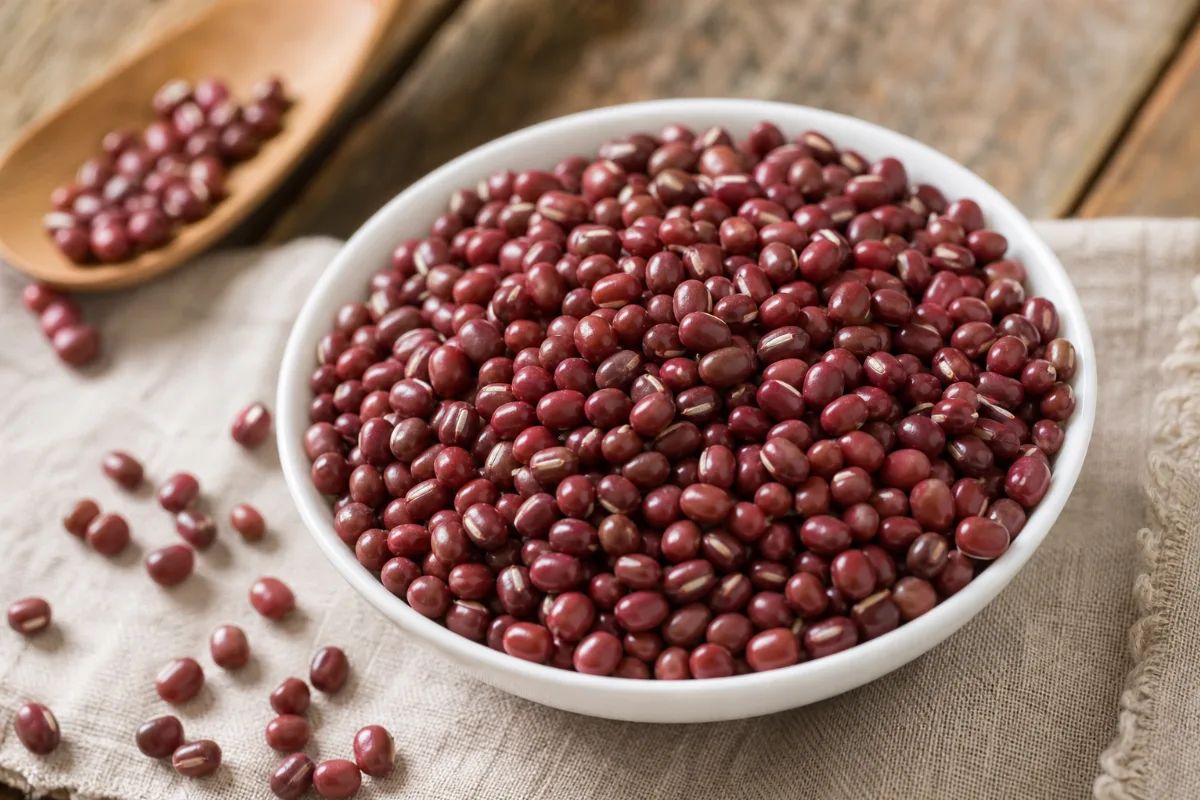
Adzuki beans (Vigna angularis) are small, dark red seeds of a legume plant in the Fabaceae family. GBIF lists Vigna angularis as the accepted name. They are sold dry or canned and are eaten cooked. This page covers the plain cooked bean; sweetened red bean paste, flour, sprouts and extracts are different products.
USDA data for boiled adzuki beans without salt: 128 kcal per 100 g. One cup (230 g) has about 294 kcal, 17.3 g protein, 16.8 g fibre, 278 micrograms folate (DFE), 4.6 mg iron, 1,224 mg potassium and 386 mg phosphorus. Dry beans are much denser (329 kcal and 19.87 g protein per 100 g) because they hold little water, so compare cooked with cooked.
What the research shows
The firmest facts are about nutrients: adzuki beans contain folate, fibre and plant protein. These are not trials of adzuki beans.
Pooled trials of pulses (beans, chickpeas, lentils and dried peas) found LDL cholesterol 0.14 to 0.17 mmol/L lower, a very small weight loss of about 0.34 kg, and lower blood sugar markers. Cohort studies link more legumes to a little less cardiovascular disease, lower risk of high blood pressure and lower risk of death from any cause. Cohort studies cannot prove cause.
Adzuki beans on their own have only a few small human studies: a 10-person test in which cooked adzuki bean meals gave a low blood sugar rise, a 4-week trial of an extruded adzuki food in 120 adults with type 2 diabetes (blood sugar control not clearly different from a standard diet, lower TNF-alpha but slightly higher IL-6), and an 8-week trial of an adzuki bean extract that reported no adverse effects and an HDL result. A 2024 review concludes that the effects of adzuki beans on type 2 diabetes in people remain undetermined.
Mouse and lab findings
In mice fed a high-fat diet, adding adzuki beans, or giving concentrated adzuki saponin extracts, reduced weight gain and blood fats and changed gut bacteria. This is animal and cell evidence using extracts. It does not show that eating adzuki beans does the same in people, and a 2024 review says animal results on obesity and blood fats are inconsistent.
Food versus extracts and other products
The pulse trials used whole cooked pulses. Adzuki-specific work includes a processed food (extruded adzuki) and an extract. Saponin concentrates were tested only in mice. Sweetened red bean paste, flour and sprouts are different foods that were not read. We make no claim about them.
Portions
The NHS counts 80 g of pulses and beans as one portion of 5 A DAY, and they count only once a day however much you eat. This page gives no amounts to eat. Ask a doctor, pharmacist or dietitian what is right for you, especially if you have a food allergy, kidney disease or take medicine for blood sugar, cholesterol or clotting.
At a glance
Traditional uses history, not proof
- Eaten cooked as a food, often in East Asian cooking
- Long use as food is not proof that it treats any condition
Studied for research
- Folate and fibre, high certainty for the nutrient content, no adzuki trial
- Cholesterol, low certainty (pulses as a group; one small trial of an adzuki extract)
- Blood sugar and insulin, low certainty (pulses as a group; two small adzuki studies)
- Body weight, low certainty (very small effect, pulses as a group)
- Heart disease and blood pressure, low certainty (observational, legumes as a group)
- Inflammation markers, mixed (one trial of a processed adzuki food)
- Obesity and blood fats, very low (mouse and cell studies only)
Main compounds
- Dietary fibre
- Folate
- Plant protein
- Potassium
- Saponins
- Lectins
Common forms
- Cooked whole adzuki beans as food
- Canned adzuki beans (not read)
- Sweetened red bean paste, flour and sprouts are different foods and are not covered
- Adzuki bean extracts and saponin concentrates are different products and are not covered
Research links: 2026 review: whole pulses and cholesterol · 2018 trial: extruded adzuki food in type 2 diabetes · 2024 review: adzuki beans and type 2 diabetes · Research Library · Genes & Biomarkers Library
What it is and its history
- Accepted scientific name
- Vigna angularis
- Naming authority
- (Willd.) Ohwi & H.Ohashi (GBIF accepted)
- Synonyms
- Name: Phaseolus angularis (Willd.) W.Wight; Note: Older name; GBIF matches it to Vigna angularis as a synonym.
- Common names
- Adzuki bean (English); Azuki bean (English); Red bean (English); Aduki (English)
- Family or group
- Fabaceae (the legume or pea family), per GBIF.
- Classification
- Plantae > Tracheophyta > Magnoliopsida > Fabales > Fabaceae > Vigna > Vigna angularis
- Native range
- Not verified from a source read. Our existing summary says it is grown mainly in East Asia (not re-verified).
- Habitat
- Not verified from a source read.
- What it looks like
- Roots: Not verified.; Stems: Not verified.; Leaves: Not verified.; Flowers: Not verified.; Fruit: The small, dark red seeds are eaten after cooking (existing summary). USDA gives a household portion of 1 cup cooked = 230 g.
- Cultivation
- Not verified from a source read.
- Harvest and processing
- Sold dry, canned, as sweetened red bean paste, as flour or as sprouts (existing summary). Only boiled and raw beans values were read; paste, flour and sprouts were not.
- Look-alikes and adulterants
- Name: Mung beans and other Vigna beans; Note: Related beans with their own pages; the allergen review calls adzuki "Red Mung bean (Azuki Bean)" in a table.; Name: Kidney beans and black beans (Phaseolus); Note: A different genus; FDA lectin cooking steps are written for kidney beans.; Name: Sweetened red bean paste; Note: A sweet processed food made from adzuki beans, different from the plain cooked bean.
- Sustainability and conservation
- Not assessed.
Photographs
What is inside, and how it may work
What it contains and how those compounds act in cells and animals. Laboratory and animal mechanisms are not proven effects in people.
Main compounds
| Compound | Family | Where it is concentrated | Activity studied | Level of evidence |
|---|---|---|---|---|
| Dietary fibre | carbohydrate | Seed USDA: 7.3 g per 100 g cooked; 12.7 g per 100 g dry | Contributes to the fibre content of the food; soluble versus insoluble split was not read. 27 26 | Human data |
| Folate | B vitamin | Seed USDA (earlier table): 121 micrograms DFE per 100 g cooked | Folate is a B vitamin; MedlinePlus lists dried beans as a folate food. 20 27 | Human data |
| Plant protein | protein | Seed USDA: 7.52 g per 100 g cooked; 19.87 g per 100 g dry | Source of plant protein. 27 26 | Human data |
| Potassium | mineral | Seed USDA: 532 mg per 100 g cooked; 1,254 mg per 100 g dry | Relevant for kidney diets; the NKF says plant potassium is absorbed less well. 27 25 | Human data |
| Triterpenoid saponins | saponin | Seed Not given | Concentrated adzuki saponin extracts reduced weight gain and blood fats in mice; human effects are unknown. 4 | Animal research |
| Polyphenols | polyphenol | Seed (extract) Not given | The adzuki extract trial used a polyphenol-containing extract; individual compounds were not named in the abstract. 8 | Human data |
| Lectins (phytohaemagglutinin) | protein | Raw seed Not given for adzuki beans | Raw legumes contain lectins that cooking inactivates; the FDA warning is about PHA in raw or undercooked beans (kidney beans named). 17 19 | Human data |
Mechanisms, receptors and pathways
| Target or pathway | Gene or receptor | What was found | Level |
|---|---|---|---|
| Slowly digested starch | Not specified | In a 10-person crossover test and in lab digestion tests, adzuki bean meals gave a low glycaemic response and were digested more slowly than other test foods. 16 | Human data |
| PPAR-alpha / PPAR-gamma fat-handling pathways | PPAR-alpha (ACOX1) and PPAR-gamma (FABP4), per the authors | In mice, saponin-rich adzuki extracts were associated with higher fat-burning and lower fat-making pathways and changed gut bacteria. Animal and cell evidence only. 4 | Animal research |
| Gut bacteria | Not specified | In mice on a high-fat diet, 15% adzuki bean changed gut bacteria (lower Firmicutes/Bacteroidetes ratio, more Bifidobacterium). Animal evidence only. 15 | Animal research |
Absorption, metabolism and elimination
- Absorption
- Not found for adzuki beans. The NKF says potassium and phosphorus from plant foods like beans are absorbed less well than from animal sources or additives.
- Distribution
- Not found.
- Metabolism
- Not found.
- Elimination
- Not found.
- Bioavailability
- Not established for adzuki nutrients in the sources read.
Isolated compounds versus whole extracts
The cholesterol, blood sugar and weight results here are for whole pulses as a group. Adzuki-specific human work used cooked beans (one 10-person test), an extruded adzuki food (one trial) and an adzuki bean extract (one trial). The saponin results are from mice using concentrated extracts. These are different products, and the results should not be mixed.
Nutritional composition
Nutrition from USDA FoodData Central, SR Legacy (April 2018 release). Boiled adzuki beans without salt (FDC 173728), per 100 g: 128 kcal, 7.52 g protein, 0.1 g fat (0.036 g saturated), 24.77 g carbohydrate, 7.3 g fibre, about 66 g water, 28 mg calcium, 532 mg potassium and 8 mg sodium; plus, from our earlier USDA table, 121 micrograms folate (DFE), 2 mg iron, 52 mg magnesium, 168 mg phosphorus, 1.8 mg zinc, 0.57 mg manganese, 0.3 mg copper and 0.12 mg thiamin. One cup (230 g) of boiled adzuki beans: about 294 kcal, 17.3 g protein, 16.8 g fibre, 278 micrograms folate, 4.6 mg iron, 1,224 mg potassium and 386 mg phosphorus (the per-100-g values multiplied by 2.3). Dry raw adzuki beans (FDC 173727), per 100 g: 329 kcal, 19.87 g protein, 12.7 g fibre and 1,254 mg potassium; dry beans look very different from cooked ones because cooked beans hold a lot of water, so compare cooked with cooked. Values vary with variety, growing place and cooking. The energy, protein, fat, carbohydrate, fibre, potassium, sodium and calcium values were re-read from a saved USDA copy on 2026-10-26; the folate and mineral values come from our earlier USDA table and could not be re-checked on the live USDA site today. Canned beans, sweetened red bean paste, flour and sprouts were not read.
2 high certainty1 mixed findings5 low certainty2 very low certainty
What was looked at
The 10 benefits and uses checked for Adzuki Beans, each with how strong the evidence is. Tap one to open it.
- Folate (vitamin B9)High certainty
- Fibre and plant protein (nutrient content)High certainty
- CholesterolLow certainty
- Blood sugar and insulinLow certainty
- Body weight (pulses as a group)Low certainty
- Inflammation markersMixed findings
- Heart disease (pulses and legumes, observational)Low certainty
- High blood pressure (pulses and legumes, observational)Very low certainty
- Living longer (legumes, observational)Low certainty
- Obesity and blood fats (animal and cell studies only)Very low certainty
Lab markers tracked in the studies
LDL cholesterolHDL cholesterolFasting blood glucoseGlycaemic response after a meal (glycaemic index)Body weightTNF-alphaIL-6
What is Adzuki Beans good for?
The main studied uses and how strong the human evidence is for each. Most results are for pulses or legumes as a group; adzuki beans themselves have only a few small studies.
Benefits, one by one
Each card is a research question, not a promise. Tap a goal to filter. Open a card to see the studies, doses and limits.
Folate (vitamin B9)
High certaintyCooked adzuki beans have 121 micrograms of folate (DFE) per 100 g, about 278 micrograms in a cup (230 g), by USDA data. MedlinePlus lists dried beans among folate foods. This is a nutrient fact, not a trial of adzuki beans.
2 studiesCooked adzuki beans as food.
Studies, doses and limits
What the trials found
MedlinePlus (review date 2 Feb 2025) says folate occurs naturally in dried beans and peas. USDA lists 121 micrograms DFE per 100 g of boiled adzuki beans.
Results
Adzuki beans are a food source of folate. No trial of adzuki beans and folate status was read.
Effect sizes as reported
USDA: 121 micrograms DFE per 100 g cooked; about 278 micrograms per cup (230 g).
Why this rating
High for the nutrient content (USDA data) and the role of folate (health-agency statement). No adzuki-specific trial was read.
Form and dose studied
Cooked adzuki beans as food.
Who was studied
General adult diet.
Limits
A nutrient fact, not a trial of adzuki beans. Folate value comes from our earlier USDA table and was not re-opened on the live USDA site (see Gaps).
Why researchers looked
Beans are a well-known folate food, so people ask how much they give.
Traditional use
Adzuki beans are eaten cooked as a food, often in East Asian cooking. Long use as food is not proof that it treats any condition.
Proposed mechanism Authoritative guidance
Folate is a B vitamin; MedlinePlus says taking the right amount of folic acid before and during pregnancy helps prevent neural tube defects.
A proposed mechanism does not show that the effect happens in people.
Folate from food is not the same as folic acid supplements; ask your doctor or midwife about pregnancy.
Fibre and plant protein (nutrient content)
High certaintyCooked adzuki beans have 7.3 g of fibre and 7.52 g of protein per 100 g, which is about 16.8 g of fibre and 17.3 g of protein in a cup (230 g), by USDA data. This is nutrient content, not a trial of adzuki beans.
2 studiesCooked adzuki beans as food.
Studies, doses and limits
What the trials found
USDA lists 7.3 g of total fibre and 7.52 g of protein per 100 g of boiled adzuki beans (12.7 g fibre and 19.87 g protein per 100 g dry).
Results
Adzuki beans contain fibre and plant protein. USDA does not split the fibre into soluble and insoluble in the data read. No trial of adzuki beans for bowel function was read.
Effect sizes as reported
USDA: 7.3 g fibre and 7.52 g protein per 100 g cooked; 16.8 g and 17.3 g per cup (230 g).
Why this rating
High for the nutrient content (USDA data). No adzuki-specific health trial was read.
Form and dose studied
Cooked adzuki beans as food.
Who was studied
General adult diet.
Limits
Content only. Dry beans have far more per 100 g because they hold little water, so compare cooked with cooked.
Why researchers looked
Pulses are known as fibre and protein foods.
Traditional use
Adzuki beans are eaten cooked as a food, often in East Asian cooking. Long use as food is not proof that it treats any condition.
Proposed mechanism Unknown
Not studied for adzuki beans in the sources read.
A proposed mechanism does not show that the effect happens in people.
Beans can cause gas in some people; see the Safety tab.
Cholesterol
Low certaintyPooled trials of whole pulses (beans, chickpeas, lentils and peas as a group) found LDL cholesterol about 0.14 to 0.17 mmol/L lower. No trial of cooked adzuki beans on cholesterol was found. One small trial of an adzuki bean extract (not the food) looked at HDL cholesterol only.
3 studiesWhole pulses as food (pooled trials); adzuki bean extract (one trial).
Studies, doses and limits
What the trials found
A 2026 meta-analysis of 38 trials (2,095 adults, median 6 weeks, median 130 g of pulses a day) found LDL 0.14 mmol/L lower, with similar results across pulse types; a 2014 meta-analysis of 26 trials found 0.17 mmol/L lower. An 8-week placebo-controlled trial of adzuki bean extract in people with moderate to high LDL reported no adverse effects and a slightly higher HDL than placebo at 4 weeks.
Results
Small average LDL falls for pulses as a group in short trials. For adzuki beans there is no food trial; the extract trial reports an HDL result, not an LDL result, in its abstract.
Effect sizes as reported
Pulses: LDL -0.14 mmol/L (95% CI -0.19 to -0.08) in 2026; -0.17 mmol/L (-0.25 to -0.09) in 2014. Adzuki extract: HDL +3.76 vs -0.08 mg/dL at 4 weeks.
Why this rating
The reviewers rated pulse lipid evidence moderate-to-high for pulses overall, but adzuki beans were not separated out, so certainty for adzuki beans is rated low. The extract trial is a single small study of a different product.
Form and dose studied
Whole pulses as food (pooled trials); adzuki bean extract (one trial).
Who was studied
Adults in trials, one with moderate to high LDL.
Limits
Pulses as a group; a blood marker, not heart attacks or strokes; the extract is not the food.
Why researchers looked
Pulses are fibre-rich foods, and guidelines ask whether they help cholesterol.
Traditional use
Adzuki beans are eaten cooked as a food, often in East Asian cooking. Long use as food is not proof that it treats any condition.
Proposed mechanism Animal research
Not established for adzuki beans. Mouse work on adzuki saponins points to fat-handling gene pathways and gut bacteria (animal evidence only).
A proposed mechanism does not show that the effect happens in people.
None specific.
Blood sugar and insulin
Low certaintyPooled trials of pulses found lower fasting glucose and lower long-term blood sugar markers, with large differences between trials. For adzuki beans a small 10-person test found a low blood sugar rise after a meal, but a 4-week trial of a processed adzuki food in 120 people with type 2 diabetes found no clear difference from a standard low-GI diet.
5 studiesPulses as food; cooked adzuki beans (single-meal test); extruded adzu…
Studies, doses and limits
What the trials found
A 2009 meta-analysis of 41 trials found pulses lowered fasting glucose and HbA1c-type markers; a 2020 review of 18 trials found effects only in the 5 trials in type 2 diabetes, with very low certainty. In a crossover test in 10 healthy adults, cooked adzuki beans had a low glycaemic index (21 to 51, reported together with lotus seed). In 120 adults with type 2 diabetes, an extruded adzuki food for 4 weeks improved blood sugar control about as much as a low-GI diet (no significant difference).
Results
Pulses as a group may lower blood sugar markers slightly. Adzuki beans themselves: a low-GI meal response in 10 healthy people, and no clear advantage over a standard diet in one trial in diabetes. A 2024 review concludes human effects of adzuki beans on type 2 diabetes remain undetermined.
Effect sizes as reported
Pulses alone: fasting glucose SMD -0.82 (95% CI -1.36 to -0.27) in 2009. Adzuki meals: glycaemic index 21 to 51.
Why this rating
Pulse-group trials are heterogeneous (very low certainty in the 2020 review); adzuki-specific human studies are one tiny test and one 4-week trial with no clear difference.
Form and dose studied
Pulses as food; cooked adzuki beans (single-meal test); extruded adzuki food (4-week trial).
Who was studied
Healthy adults and adults with type 2 diabetes.
Limits
Small, short studies. A single-meal blood sugar response is not a long-term benefit. Not a treatment for diabetes.
Why researchers looked
Pulses are slowly digested carbohydrate foods, so researchers ask whether they help blood sugar.
Traditional use
Adzuki beans are eaten cooked as a food, often in East Asian cooking. Long use as food is not proof that it treats any condition.
Proposed mechanism Laboratory research
Adzuki starch was digested more slowly than other test foods in lab tests (one small study).
A proposed mechanism does not show that the effect happens in people.
If you take diabetes medicine, ask your clinician before big diet changes.
Body weight (pulses as a group)
Low certaintyPooled trials found people eating pulses lost slightly more weight than people not eating them, about 0.34 kg over roughly 6 weeks. This was pulses as a group, not adzuki beans alone.
1 studiesPulses as food (trial detail: median 132 g a day, not advice).
Studies, doses and limits
What the trials found
A 2016 meta-analysis of 21 randomised trials (940 adults, median 6 weeks) found diets with about one serving a day (median 132 g) of pulses gave a weight change of -0.34 kg (95% CI -0.63 to -0.04) compared with diets without pulses.
Results
A modest weight change on average. Long-term effects are unknown. In mice, adzuki beans and adzuki saponin extracts reduced weight gain (see the animal entry).
Effect sizes as reported
Weight -0.34 kg (95% CI -0.63 to -0.04), median 6 weeks.
Why this rating
Randomised trials, but a very small and short-term effect, and adzuki beans were not separated.
Form and dose studied
Pulses as food (trial detail: median 132 g a day, not advice).
Who was studied
Adults in trials.
Limits
Short trials; pulses as a group; the average change is tiny.
Why researchers looked
Pulses are filling foods rich in fibre and protein, so researchers ask whether they help weight control.
Traditional use
Adzuki beans are eaten cooked as a food, often in East Asian cooking. Long use as food is not proof that it treats any condition.
Proposed mechanism Unknown
Not established in the abstract.
A proposed mechanism does not show that the effect happens in people.
None specific.
Inflammation markers
Mixed findingsIn a 4-week trial in 120 adults with type 2 diabetes, an extruded adzuki food went with a lower TNF-alpha than a standard diet, but also a small rise in IL-6. The picture is mixed and from one trial of a processed product.
1 studiesExtruded adzuki bean food (not plain cooked beans).
Studies, doses and limits
What the trials found
In the 2018 randomised trial, TNF-alpha was significantly lower with the adzuki food than with the control diet (adjusted p<0.01) while IL-6 rose slightly (adjusted p=0.004).
Results
Mixed results from one trial; the authors say more studies are needed.
Effect sizes as reported
TNF-alpha lower (adjusted p<0.01); IL-6 higher (adjusted p=0.004). Sizes not given in the abstract.
Why this rating
One trial of a processed adzuki food with one marker down and one up.
Form and dose studied
Extruded adzuki bean food (not plain cooked beans).
Who was studied
Adults with type 2 diabetes.
Limits
Single 4-week trial; processed product; compared with another diet.
Why researchers looked
Researchers measured inflammation markers alongside blood sugar in the diabetes trial.
Traditional use
Adzuki beans are eaten cooked as a food, often in East Asian cooking. Long use as food is not proof that it treats any condition.
Proposed mechanism Unknown
Not established.
A proposed mechanism does not show that the effect happens in people.
None specific.
Heart disease (pulses and legumes, observational)
Low certaintyIn large cohort studies, people who ate the most pulses or legumes had a little less cardiovascular disease and coronary heart disease. These are associations, not proof, and are not about adzuki beans alone.
2 studiesLegumes or pulses as food.
Studies, doses and limits
What the trials found
A 2023 meta-analysis of 26 observational studies found legume intake linked to CVD (RR 0.94) and CHD (RR 0.90) but not stroke (RR 1.00). A 2019 umbrella review rated certainty low for CVD and very low for the other outcomes.
Results
Small associations. Cohort studies cannot show cause, and diet patterns differ between high and low eaters.
Effect sizes as reported
CVD RR 0.94 (0.89 to 0.99); CHD RR 0.90 (0.85 to 0.96); stroke RR 1.00 (0.93 to 1.08).
Why this rating
Observational; the reviewers' own GRADE was low for CVD and very low for the rest.
Form and dose studied
Legumes or pulses as food.
Who was studied
Adults in cohort studies.
Limits
Association only; legumes as a group.
Why researchers looked
Legumes are eaten in many long-lived populations, so cohort studies compare intake with disease.
Traditional use
Adzuki beans are eaten cooked as a food, often in East Asian cooking. Long use as food is not proof that it treats any condition.
Proposed mechanism Unknown
Not established.
A proposed mechanism does not show that the effect happens in people.
None specific.
High blood pressure (pulses and legumes, observational)
Very low certaintyIn an umbrella review of cohort studies, people who ate the most pulses or legumes had a lower risk of developing high blood pressure (RR 0.91). An association, not proof, and not about adzuki beans alone.
1 studiesPulses or legumes as food.
Studies, doses and limits
What the trials found
The 2019 umbrella review found hypertension incidence RR 0.91 (95% CI 0.86 to 0.97) for the highest versus the lowest intake, with certainty graded very low.
Results
A small association graded very low certainty.
Effect sizes as reported
RR 0.91 (95% CI 0.86 to 0.97).
Why this rating
Observational and graded very low by the reviewers.
Form and dose studied
Pulses or legumes as food.
Who was studied
Adults in cohort studies.
Limits
Association only.
Why researchers looked
Pulses contain potassium and fibre, so researchers ask about blood pressure.
Traditional use
Adzuki beans are eaten cooked as a food, often in East Asian cooking. Long use as food is not proof that it treats any condition.
Proposed mechanism Unknown
Not established.
A proposed mechanism does not show that the effect happens in people.
None specific.
Living longer (legumes, observational)
Low certaintyHigher legume intake was linked to 6% lower risk of death from any cause per 50 g a day more. Observational, and about legumes as a group.
1 studiesLegumes as food.
Studies, doses and limits
What the trials found
A 2023 meta-analysis of 32 cohorts (1,141,793 people) found higher legume intake linked to lower all-cause mortality (HR 0.94; 95% CI 0.91 to 0.98) and stroke mortality (HR 0.91), but no link with CVD, CHD or cancer mortality.
Results
A small association; the reviewers rated certainty low to moderate.
Effect sizes as reported
All-cause HR 0.94 (0.91 to 0.98).
Why this rating
Observational; the reviewers rated certainty low to moderate; legumes as a group.
Form and dose studied
Legumes as food.
Who was studied
Adults in cohort studies.
Limits
Association only.
Why researchers looked
Cohort studies compare food intake with how long people live.
Traditional use
Adzuki beans are eaten cooked as a food, often in East Asian cooking. Long use as food is not proof that it treats any condition.
Proposed mechanism Unknown
Not established.
A proposed mechanism does not show that the effect happens in people.
None specific.
Obesity and blood fats (animal and cell studies only)
Very low certaintyIn mice, whole adzuki beans added to a high-fat diet, and concentrated adzuki saponin extracts, reduced weight gain and blood fats. These are animal and cell results with extracts, not evidence that eating adzuki beans does this in people.
3 studiesWhole bean in mouse feed and saponin extracts by gavage (not human do…
Studies, doses and limits
Results
Lower weight gain and blood lipids in mice. Not tested in people.
Effect sizes as reported
Mice: weight gain reduced by up to 20.37% with extracts.
Why this rating
Animal and cell evidence only; no human evidence.
Form and dose studied
Whole bean in mouse feed and saponin extracts by gavage (not human doses).
Who was studied
Mice and fat cells.
Limits
Mice; concentrated extracts; funders were Chinese research programmes.
Why researchers looked
Adzuki beans contain saponins and other plant compounds that lab researchers test.
Traditional use
Adzuki beans are eaten cooked as a food, often in East Asian cooking. Long use as food is not proof that it treats any condition.
Proposed mechanism Animal research
In mice the saponin extracts raised a fat-burning pathway (PPAR-alpha) and lowered a fat-making pathway (PPAR-gamma) and shifted gut bacteria (authors' interpretation).
A proposed mechanism does not show that the effect happens in people.
Extracts are not the food; no safety data in people were read.
Connections to the rest of health
How Adzuki Beans connects to the rest of our health knowledge graph. Every link says what kind of connection it is. A safety link (for example to the liver) is a warning, not a benefit. A study that merely mentions a topic never creates a benefit link.
Explore every connection: goals, body systems, organs, symptoms, genes
A. Wellness goals
| Connected to | Kind of connection | Evidence status | Context | Studies |
|---|---|---|---|---|
| Women S Wellness | Demonstrated clinical effect | High certainty | Folate (vitamin B9): Cooked adzuki beans have 121 micrograms of folate (DFE) per 100 g, about 278 micrograms in a cup (230 g), by USDA data. MedlinePlus lists dried beans among folate foods. This is a nutrient fact, not a trial of adzuki beans. | 20 27 |
| Digestive Support | Demonstrated clinical effect | High certainty | Fibre and plant protein (nutrient content): Cooked adzuki beans have 7.3 g of fibre and 7.52 g of protein per 100 g, which is about 16.8 g of fibre and 17.3 g of protein in a cup (230 g), by USDA data. This is nutrient content, not a trial of adzuki beans. | 27 26 |
| Cholesterol Balance | Low certainty | Cholesterol: Pooled trials of whole pulses (beans, chickpeas, lentils and peas as a group) found LDL cholesterol about 0.14 to 0.17 mmol/L lower. No trial of cooked adzuki beans on cholesterol was found. One small trial of an adzuki bean extract (not the food) looked at HDL cholesterol only. | 2 5 8 | |
| Heart Health | Low certainty | Cholesterol: Pooled trials of whole pulses (beans, chickpeas, lentils and peas as a group) found LDL cholesterol about 0.14 to 0.17 mmol/L lower. No trial of cooked adzuki beans on cholesterol was found. One small trial of an adzuki bean extract (not the food) looked at HDL cholesterol only. | 2 5 8 | |
| Blood Sugar Balance | Low certainty | Blood sugar and insulin: Pooled trials of pulses found lower fasting glucose and lower long-term blood sugar markers, with large differences between trials. For adzuki beans a small 10-person test found a low blood sugar rise after a meal, but a 4-week trial of a processed adzuki food in 120 people with type 2 diabetes found no clear difference from a standard low-GI diet. | 12 3 16 10 9 | |
| Healthy Weight | Low certainty | Body weight (pulses as a group): Pooled trials found people eating pulses lost slightly more weight than people not eating them, about 0.34 kg over roughly 6 weeks. This was pulses as a group, not adzuki beans alone. | 7 | |
| Healthy Aging | Mixed findings | Inflammation markers: In a 4-week trial in 120 adults with type 2 diabetes, an extruded adzuki food went with a lower TNF-alpha than a standard diet, but also a small rise in IL-6. The picture is mixed and from one trial of a processed product. | 10 | |
| Heart Health | Low certainty | Heart disease (pulses and legumes, observational): In large cohort studies, people who ate the most pulses or legumes had a little less cardiovascular disease and coronary heart disease. These are associations, not proof, and are not about adzuki beans alone. | 11 13 | |
| Blood Pressure Support | Very low certainty | High blood pressure (pulses and legumes, observational): In an umbrella review of cohort studies, people who ate the most pulses or legumes had a lower risk of developing high blood pressure (RR 0.91). An association, not proof, and not about adzuki beans alone. | 13 | |
| Healthy Aging | Low certainty | Living longer (legumes, observational): Higher legume intake was linked to 6% lower risk of death from any cause per 50 g a day more. Observational, and about legumes as a group. | 14 | |
| Healthy Weight | Very low certainty | Obesity and blood fats (animal and cell studies only): In mice, whole adzuki beans added to a high-fat diet, and concentrated adzuki saponin extracts, reduced weight gain and blood fats. These are animal and cell results with extracts, not evidence that eating adzuki beans does this in people. | 4 15 9 |
B. Body systems
| Connected to | Kind of connection | Evidence status | Context | Studies |
|---|---|---|---|---|
| Blood | Biological association | High certainty | Studied for: Folate (vitamin B9) | 20 27 |
| Reproductive System | Biological association | High certainty | Studied for: Folate (vitamin B9) | 20 27 |
| Digestive System | Biological association | High certainty | Studied for: Fibre and plant protein (nutrient content) | 27 26 |
| Cardiovascular System | Biological association | Low certainty | Studied for: Cholesterol Studied for: Heart disease (pulses and legumes, observational) | 2 5 8 11 13 14 |
| Endocrine System | Biological association | Low certainty | Studied for: Blood sugar and insulin | 12 3 16 10 9 |
| Metabolism Weight | Biological association | Low certainty | Studied for: Blood sugar and insulin Studied for: Body weight (pulses as a group) | 12 3 16 10 9 7 4 15 |
| Immune System | Biological association | Mixed findings | Studied for: Inflammation markers | 10 |
C. Body parts and organs
E. Health conditions
| Connected to | Kind of connection | Evidence status | Context | Studies |
|---|---|---|---|---|
| Food allergy | Adverse effect or risk | Documented risk | Legumes can cause allergic reactions and cross-react; adzuki allergy itself is not well described (one predicted allergen). Legumes can cause allergy and cross-react; adzuki allergy itself is not well described. Preparation or compound: Legume proteins in cooked beans |
1 6 |
| Kidney disease | Documented risk | Most people not on dialysis do not need to limit beans; dialysis and oxalate-stone history need individual advice. Preparation or compound: Potassium and phosphorus in beans |
25 | |
| Food poisoning | Adverse effect or risk | Documented risk | Raw or undercooked beans can cause nausea, severe vomiting and diarrhoea; cook fully. Preparation or compound: Raw or undercooked beans (lectin) |
17 |
I. Biomarkers
| Connected to | Kind of connection | Evidence status | Context | Studies |
|---|---|---|---|---|
| LDL cholesterol | Biological association | Low certainty | Measured in trials: lowered. A lab change is not the same as a health benefit. | 2 5 |
| HDL cholesterol | Biological association | Not enough evidence | Measured in trials: mixed. A lab change is not the same as a health benefit. | 8 2 |
| Fasting blood glucose | Biological association | Low certainty | Measured in trials: lowered in pulses as a group. A lab change is not the same as a health benefit. | 12 3 |
| Glycaemic response after a meal (glycaemic index) | Biological association | Low certainty | Measured in trials: low response. A lab change is not the same as a health benefit. | 16 |
| Body weight | Biological association | Low certainty | Measured in trials: lowered. A lab change is not the same as a health benefit. | 7 |
| TNF-alpha | Biological association | Not enough evidence | Measured in trials: lowered. A lab change is not the same as a health benefit. | 10 |
| IL-6 | Biological association | Not enough evidence | Measured in trials: raised slightly. A lab change is not the same as a health benefit. | 10 |
K. Biological pathways
| Connected to | Kind of connection | Evidence status | Context | Studies |
|---|---|---|---|---|
| Folate | Preliminary mechanism | Human | Adzuki beans are a food source of folate. | 20 27 |
| Fibre | Preliminary mechanism | Human | Adzuki beans contain fibre. | 27 |
| Potassium | Preliminary mechanism | Human | Adzuki beans are a potassium food; relevant to kidney diets. | 25 27 |
| PPAR-alpha and PPAR-gamma signalling | Preliminary mechanism | Animal | Altered by adzuki saponin extracts in mice. | 4 |
L. Active compounds
| Connected to | Kind of connection | Evidence status | Context | Studies |
|---|---|---|---|---|
| Dietary fibre | Biological association | Human | Contributes to the fibre content of the food; soluble versus insoluble split was not read. Preparation or compound: Seed |
27 26 |
| Folate | Biological association | Human | Folate is a B vitamin; MedlinePlus lists dried beans as a folate food. Preparation or compound: Seed |
20 27 |
| Plant protein | Biological association | Human | Source of plant protein. Preparation or compound: Seed |
27 26 |
| Potassium | Biological association | Human | Relevant for kidney diets; the NKF says plant potassium is absorbed less well. Preparation or compound: Seed |
27 25 |
| Triterpenoid saponins | Biological association | Animal | Concentrated adzuki saponin extracts reduced weight gain and blood fats in mice; human effects are unknown. Preparation or compound: Seed |
4 |
| Polyphenols | Biological association | Human | The adzuki extract trial used a polyphenol-containing extract; individual compounds were not named in the abstract. Preparation or compound: Seed (extract) |
8 |
| Lectins (phytohaemagglutinin) | Biological association | Human | Raw legumes contain lectins that cooking inactivates; the FDA warning is about PHA in raw or undercooked beans (kidney beans named). Preparation or compound: Raw seed |
17 19 |
Each connection is stored with the ingredient, the connected record, the kind of connection, the evidence status, the supporting studies, the preparation or compound involved, and a review date (last reviewed October 26, 2026).
Evidence at a glance: what changed in 4 lab markers
Tap a number to show only those markers. Counts are markers, not people.
The evidence
The research centre for Adzuki Beans. Every record here was checked against PubMed or the publisher's page; we never list a study we have not verified.
Evidence by outcome
Bars show how many studies we found for each outcome, not how well it works. People are added up across trials only (reviews are not added, to avoid double counting).
How we rate evidence
High certainty
Several well-run trials or reviews agree; further research is unlikely to change the picture much.
Moderate certainty
Good trials point the same way, but some doubt remains.
Low certainty
Small, short or inconsistent trials. The finding could change with better research.
Very low certainty
Very little or very weak human data. Treat as a possibility only.
Mixed findings
Trials or reviews disagree with each other.
Not enough evidence
Not enough human research to say either way.
Evidence against
Good research found no benefit, or found harm.
We take the reviewers' own risk-of-bias and GRADE statements where they exist, and otherwise judge from study size, design, consistency, directness and whether a product matches what is sold. Many publications do not make evidence high. Method note: We started from our existing adzuki bean summary, checked nutrition against a saved copy of USDA FoodData Central data, read the health agency pages (FDA, NIDDK, National Kidney Foundation, MedlinePlus, NHS, Harvard) and re-read PubMed abstracts for reviews, trials and animal studies. Only abstracts were read for studies, except one allergen table read in full text. Items we could not verify are flagged in the research gaps.
Study library: every study we checked 27
| Study | Design | People | Product, dose, length | Result |
|---|---|---|---|---|
| Abu Risha 2024 Legume Allergens Pea, Chickpea, Lentil, Lupine and Beyond. Curr Allergy Asthma Rep · PMID 38990406 · DOI |
Narrative review |
Literature on legume allergens, mostly case reports | Legumes (peanut and soy excluded) as allergen sources Legumes as food |
The review says "non-priority" legumes (beans, pea, lentil, chickpea, lupine and others) can cause mild to severe allergic reactions, that most reactions come from IgE cross-reaction between similar proteins, that exercise-linked anaphylaxis has been reported for some legumes, and that most studies are case reports. Reading the full text, its allergen table lists one allergen for the azuki bean (Vig an 6), identified only by computer prediction (in silico), with no azuki allergy case described. Not applicable (Not applicable) Methods, limits and fundingOutcomes: Allergic reactions and cross-reactivity between legumes Limitations: Narrative review based largely on case reports. Adzuki is not named in the abstract; the allergen table entry was read in the full text. Funding and conflicts: Not stated in the abstract. Read: abstract |
| Back 2026 Effect of Different Types of Whole Dietary Pulses on Established Therapeutic Lipid Targets for Cardiovascular Risk Reduction: An Updated Systematic Review and Dose-Response Meta-Analysis of Randomized Controlled Trials. J Am Heart Assoc · PMID 42132198 · DOI |
Systematic review meta analysis |
2095 2,095 adults in 38 randomised trials (52 comparisons) |
Whole dietary pulses (beans, chickpeas, dried peas, lentils) as food Pulses as food (adzuki not named in the abstract) Median 130 g a day (trial detail, not advice) Median 6 weeks (at least 3 weeks) · vs Diets without pulses |
Whole pulses lowered LDL cholesterol, non-HDL cholesterol and apoB, and trivially lowered HDL. Results by pulse type were similar. For beans, a linear fall in LDL was seen up to 1 cup a day. The reviewers rated certainty moderate-to-high for all outcomes except apoB (very low). LDL mean difference -0.14 mmol/L; non-HDL -0.22 mmol/L; apoB -0.08 g/L; HDL -0.03 mmol/L (LDL -0.19 to -0.08; non-HDL -0.30 to -0.14; apoB -0.13 to -0.03; HDL -0.05 to -0.01) Methods, limits and fundingOutcomes: LDL cholesterol (main), non-HDL, apoB, HDL and other lipids Limitations: Pulses as a group; adzuki beans are not named in the abstract. A blood marker, not heart attacks or strokes. Funding and conflicts: Abstract lists Research Support, Non-U.S. Gov't. Specific funders were not read; authors of pulse reviews are often linked to pulse-industry or government support, so this cannot be ruled out. Registration: PROSPERO CRD42023432826 Read: abstract |
| Bielefeld 2020 The Effects of Legume Consumption on Markers of Glycaemic Control in Individuals with and without Diabetes Mellitus: A Systematic Literature Review of Randomised Controlled Trials. Nutrients · PMID 32708949 · DOI |
Systematic review |
18 randomised trials (5 in type 2 diabetes, 12 without diabetes, 1 in prediabetes) | Legumes as food Legumes as food Not given in the abstract At least 6 weeks · vs Control diets |
Only the 5 trials in people with type 2 diabetes reported significant effects (lower fasting glucose in three, lower HbA1c in two, lower insulin in one, lower after-meal glucose in one). The reviewers rated the overall quality of evidence very low. No pooled estimate (Not applicable (narrative synthesis)) Methods, limits and fundingOutcomes: Fasting glucose, fasting insulin, HbA1c, HOMA-IR, 2-hour after-meal glucose Limitations: No pooled result; very low certainty; legumes as a group. Funding and conflicts: Funding not stated in the abstract. Read: abstract |
| Guo 2026 Dual Modulation of Lipid Metabolism by Adzuki Bean (Vigna angularis) Saponins Involving PPARα/γ Signaling and Gut Microbiota Remodeling in Obesogenic Diet-Induced Obese Mice. Foods · PMID 42794061 · DOI |
Animal study mouse and cell |
Fat cells in a dish (3T3-L1) and C57BL/6J mice on a high-fat, high-cholesterol diet | Two saponin-rich EXTRACTS made from adzuki beans (not the whole bean) Adzuki bean saponin extracts 30, 60 or 120 mg per kg a day by gavage (mouse study) 12 weeks · vs High-fat diet; orlistat as positive control |
In mice the extracts reduced weight gain (up to 20.37%), fat mass and blood lipids (total cholesterol, triglycerides, LDL) and raised HDL. The higher dose of one extract reduced weight gain more than the drug orlistat. The authors link this to changes in fat-burning and fat-making gene pathways and to gut bacteria. Weight gain reduced by up to 20.37% in mice (Not given in the abstract) Methods, limits and fundingOutcomes: Weight gain, fat mass, blood lipids, liver enzymes, gene pathways, gut bacteria Limitations: Cells and mice only, using concentrated extracts. It does not show eating adzuki beans does this in people. Funding and conflicts: The abstract lists the Henan Science and Technology Department. Read: abstract |
| Ha 2014 Effect of dietary pulse intake on established therapeutic lipid targets for cardiovascular risk reduction: a systematic review and meta-analysis of randomized controlled trials. CMAJ · PMID 24710915 · DOI |
Systematic review meta analysis |
1037 1,037 adults in 26 randomised trials |
Diets emphasising pulses (beans, chickpeas, lentils, peas) as food Pulses as food Median 130 g a day, about one serving (trial detail, not advice) At least 3 weeks · vs Isocaloric diets without pulses |
Pulse-rich diets lowered LDL cholesterol. No effect on apoB or non-HDL cholesterol. The authors say longer, higher-quality trials are needed. LDL mean difference -0.17 mmol/L (95% CI -0.25 to -0.09 mmol/L) Methods, limits and fundingOutcomes: LDL cholesterol, apoB, non-HDL cholesterol Limitations: Pulses as a group; older (searched to February 2014); adzuki beans not named in the abstract. Funding and conflicts: Abstract lists Research Support, Non-U.S. Gov't; funders not read. Registration: NCT01594567 Read: abstract |
| Jubel 2025 [Vegan beware! Allergenic potential of legumes]. Dermatologie (Heidelb) · PMID 40304764 · DOI |
Narrative review |
Literature review (published in German) | Legumes as food in vegan diets Legumes as food |
Peanut and soy are the best-known allergenic legumes, but lupin, lentil and pea can also trigger severe reactions, exercise-induced anaphylaxis has been described after legumes, and more reactions are expected as legume eating rises. Not applicable (Not applicable) Methods, limits and fundingOutcomes: Allergenic potential of legumes Limitations: Narrative review; adzuki not named in the abstract. Funding and conflicts: Not stated in the abstract. Read: abstract |
| Kim 2016 Effects of dietary pulse consumption on body weight: a systematic review and meta-analysis of randomized controlled trials. Am J Clin Nutr · PMID 27030531 · DOI |
Systematic review meta analysis |
940 940 adults in 21 randomised trials |
Diets containing whole pulses (beans, lentils, chickpeas, dry peas) as food Pulses as food Median 132 g a day, about one serving (trial detail, not advice) Median 6 weeks (at least 3 weeks) · vs Diets without a pulse intervention |
Diets with pulses gave a small weight reduction compared with diets without them, with low heterogeneity. Six trials also suggested lower body fat percentage. Body weight -0.34 kg (95% CI -0.63 to -0.04 kg; P = 0.03) Methods, limits and fundingOutcomes: Body weight, waist circumference, body fat Limitations: A very small average change over a short time. Pulses as a group; adzuki beans not named in the abstract. Funding and conflicts: Registered NCT01594567. Funding not stated in the abstract. Registration: NCT01594567 Read: abstract |
| Kitano-Okada 2019 Safety and efficacy of adzuki bean extract in subjects with moderate to high LDL-C: a randomized trial. Biosci Biotechnol Biochem · PMID 30782097 · DOI |
Controlled trial |
People with moderate to high LDL cholesterol (number of participants not given in the abstract) | Polyphenol-containing adzuki bean EXTRACT (not the cooked bean) Adzuki bean extract Not given in the abstract 8 weeks · vs Placebo |
No adverse effects were observed. HDL cholesterol rose slightly more with the extract than with placebo after 4 weeks; by week 8 the extract group was back at its starting level while the placebo group fell below its starting level. The authors call it a first step. An LDL result is not given in the abstract. Change in HDL-C at 4 weeks: +3.76 (SD 7.79) mg/dL with extract vs -0.08 (SD 6.03) with placebo; at week 8: +0.36 (SD 5.36) vs -3.17 (SD 7.79) (Not given in the abstract) Methods, limits and fundingOutcomes: Safety and blood lipids (HDL cholesterol reported in the abstract) Limitations: An extract, not food. Short, small-scale design; the abstract does not give the number of participants, the dose, or an LDL result. Funding and conflicts: Funding and any company link were not stated in the abstract; the extract maker may have been involved (not verified). Read: abstract |
| Kwan 2024 The Potential of the Adzuki Bean (Vigna angularis) and Its Bioactive Compounds in Managing Type 2 Diabetes and Glucose Metabolism: A Narrative Review. Nutrients · PMID 38276567 · DOI |
Narrative review human and animal |
Animal and human studies of adzuki bean and type 2 diabetes | Adzuki bean and its bioactive compounds Adzuki bean (various) |
Animal studies show a positive impact on type 2 diabetes, but human data are limited. For obesity and abnormal blood fats, animal results are inconsistent and even contradictory. The reviewers conclude the effects of adzuki beans on preventing or managing type 2 diabetes in humans remain undetermined and that human randomised trials are needed. Not applicable (Not applicable) Methods, limits and fundingOutcomes: Type 2 diabetes prevention and management, obesity, dyslipidaemia Limitations: Narrative review; mostly animal studies. Funding and conflicts: The abstract lists the USDA Pulse Crop Health Initiative as a funder (a pulse-focused programme), so industry or promotional interest in pulses cannot be ruled out. Read: abstract |
| Liu 2018 Convenient food made of extruded adzuki bean attenuates inflammation and improves glycemic control in patients with type 2 diabetes: a randomized controlled trial. Ther Clin Risk Manag · PMID 29785114 · DOI |
Controlled trial |
120 120 adults with type 2 diabetes randomised; 106 completed |
Extruded adzuki bean convenient food (a processed adzuki product eaten daily) Processed adzuki bean food Daily consumption (amount not given in the abstract) 4 weeks · vs Traditional low glycaemic index diabetic diet |
Blood sugar control improved in both groups from baseline with no significant difference between them. TNF-alpha was significantly lower in the adzuki group, while IL-6 rose slightly. In people with low starting insulin the difference in insulin secretion was only a trend (p=0.079). The authors say further studies are needed. TNF-alpha lower with adzuki (adjusted p<0.01); IL-6 slightly higher (adjusted p=0.004); glycaemic control not significantly different between groups (Not given in the abstract) Methods, limits and fundingOutcomes: Blood sugar control, insulin, HOMA and inflammation markers (TNF-alpha, IL-6) Limitations: A processed adzuki product, not plain cooked beans; compared with another diet, not with no treatment; 4 weeks; mixed inflammation results. Funding and conflicts: Funding not stated in the abstract. Read: abstract |
| Mendes 2023 Intake of legumes and cardiovascular disease: A systematic review and dose-response meta-analysis. Nutr Metab Cardiovasc Dis · PMID 36411221 · DOI |
Systematic review meta analysis |
26 observational studies (21 prospective cohorts, 5 case-control) | Legumes eaten as food (observational) Legumes as food Highest versus lowest intake; benefit levelled off around 400 g a week for coronary heart disease Cohort follow-up · vs Lowest intake group |
Higher legume intake was linked to a little less CVD and coronary heart disease, but not stroke. Risk ratios: CVD 0.94; CHD 0.90; stroke 1.00 (CVD 0.89 to 0.99; CHD 0.85 to 0.96; stroke 0.93 to 1.08) Methods, limits and fundingOutcomes: Cardiovascular disease, coronary heart disease, stroke Limitations: Observational association, legumes as a group; adzuki not singled out. Funding and conflicts: Abstract lists Research Support, Non-U.S. Gov't; funders not read. Registration: PROSPERO CRD42021247565 Read: abstract |
| Sievenpiper 2009 Effect of non-oil-seed pulses on glycaemic control: a systematic review and meta-analysis of randomised controlled experimental trials in people with and without diabetes. Diabetologia · PMID 19526214 · DOI |
Systematic review meta analysis |
41 randomised trials in people with and without diabetes | Non-oil-seed pulses (chickpeas, beans, peas, lentils and others), alone or in low-GI or high-fibre diets Pulses as food Not given in the abstract At least 7 days · vs Control diets |
Pulses alone (11 trials) lowered fasting glucose and insulin. Pulses in low-GI diets (19 trials) lowered HbA1c or fructosamine. Pulses in high-fibre diets (11 trials) lowered fasting glucose and glycosylated proteins. Differences between trials were high and mostly unexplained. Standardised mean differences: fasting glucose -0.82 (pulses alone); glycosylated proteins -0.28 (low-GI diets) (Fasting glucose -0.82 (-1.36 to -0.27); insulin -0.49 (-0.93 to -0.04); glycosylated proteins -0.28 (-0.42 to -0.14); high-fibre diets: fasting glucose -0.32 (-0.49 to -0.15)) Methods, limits and fundingOutcomes: Fasting glucose, insulin, glycosylated blood proteins (HbA1c or fructosamine) Limitations: Pulses as a group, not adzuki alone. High unexplained heterogeneity. Published 2009. Funding and conflicts: Funding not stated in the abstract. Read: abstract |
| Viguiliouk 2019 Associations between Dietary Pulses Alone or with Other Legumes and Cardiometabolic Disease Outcomes: An Umbrella Review and Updated Systematic Review and Meta-analysis of Prospective Cohort Studies. Adv Nutr · PMID 31728500 · DOI |
Systematic review meta analysis |
28 prospective cohort studies (umbrella review plus update) | Dietary pulses, with or without other legumes (eaten as food, observational) Pulses as food Highest versus lowest intake group Cohort follow-up · vs Lowest intake group |
Highest intake was linked to less CVD, coronary heart disease, hypertension and obesity. No link with heart attack, stroke or diabetes incidence, or with CVD, CHD or stroke mortality. The reviewers rated certainty low for CVD incidence and very low for all other outcomes. Risk ratios: CVD 0.92; CHD 0.90; hypertension 0.91; obesity 0.87 (CVD 0.85 to 0.99; CHD 0.83 to 0.99; hypertension 0.86 to 0.97; obesity 0.81 to 0.94) Methods, limits and fundingOutcomes: Cardiovascular disease, coronary heart disease, stroke, diabetes, hypertension and obesity incidence and mortality Limitations: Observational: cannot show cause. Pulses and legumes as groups; adzuki beans not singled out. Funding and conflicts: Abstract lists Research Support, Non-U.S. Gov't; funders not read. Registration: NCT03555734 Read: abstract |
| Zargarzadeh 2023 Legume Consumption and Risk of All-Cause and Cause-Specific Mortality: A Systematic Review and Dose-Response Meta-Analysis of Prospective Studies. Adv Nutr · PMID 36811595 · DOI |
Systematic review meta analysis |
1141793 32 cohorts, 1,141,793 participants and 93,373 deaths |
Legumes eaten as food (observational) Legumes as food Highest versus lowest intake; per 50 g a day increase Cohort follow-up · vs Lowest intake group |
Higher legume intake was linked to lower risk of death from any cause and from stroke. No link with CVD, coronary or cancer mortality. The reviewers rated certainty low to moderate. All-cause mortality HR 0.94; stroke mortality HR 0.91 (All-cause 0.91 to 0.98; stroke 0.84 to 0.99) Methods, limits and fundingOutcomes: All-cause, cardiovascular, coronary, stroke and cancer mortality Limitations: Observational; legumes as a group; adzuki not singled out. Funding and conflicts: Abstract lists Research Support, Non-U.S. Gov't; funders not read. Read: abstract |
| Zhao 2021 Adzuki Bean Alleviates Obesity and Insulin Resistance Induced by a High-Fat Diet and Modulates Gut Microbiota in Mice. Nutrients · PMID 34579118 · DOI |
Animal study mouse |
Mice on low-fat or high-fat diets for 12 weeks | High-fat diet with 15% adzuki bean added Adzuki bean (whole, in mouse feed) 15% of the diet (mouse study) 12 weeks · vs High-fat diet alone and low-fat diet |
Mice fed adzuki bean on a high-fat diet had less obesity, lipid build-up and liver damage, better insulin sensitivity, and changes in gut bacteria compared with the high-fat diet alone. Not summarised as numbers here (Not given in the abstract) Methods, limits and fundingOutcomes: Obesity, blood fats, liver, insulin sensitivity, gut bacteria Limitations: Mice, not people. Do not assume the same happens in humans. Funding and conflicts: The abstract lists the National Key Research and Development Program of China. Read: abstract |
| Zhu 2019 Acute Effects of Three Cooked Non-Cereal Starchy Foods on Postprandial Glycemic Responses and in Vitro Carbohydrate Digestion in Comparison with Whole Grains: A Randomized Trial. Nutrients · PMID 30875961 · DOI |
Controlled trial |
10 10 healthy adults (randomised crossover) |
Pre-soaked, cooked adzuki beans eaten as a single test meal, with five other starchy foods and white rice for comparison Cooked adzuki beans (food) Single meal (portion not given in the abstract) Single-meal tests · vs Rice and other starchy foods |
The adzuki bean and lotus seed meals had a low glycaemic index (21 to 51), while the other starchy foods did not differ from rice. In lab tests, adzuki starch was digested more slowly than other test foods. Glycaemic index of adzuki bean meals 21 to 51 (range across two cooking times, as reported with lotus seed) (Not given in the abstract) Methods, limits and fundingOutcomes: Glycaemic response after eating (glycaemic index) and in vitro starch digestion Limitations: Only 10 healthy people; one meal; reports a combined range for adzuki and lotus seed. It shows how the blood sugar rises after a meal, not long-term benefit. Funding and conflicts: Funding not stated in the abstract. Read: abstract |
| s-fda-natural-toxins FDA: Natural Toxins in Food · Source |
Health agency n/a |
Methods, limits and fundingRead: full-text | ||
| s-gbif-vigna-angularis GBIF Backbone: Vigna angularis (Willd.) Ohwi & H.Ohashi · Source |
Reference database n/a |
Methods, limits and fundingRead: full-text | ||
| s-harvard-lectins Harvard T.H. Chan School of Public Health, The Nutrition Source: Lectins · Source |
Health agency n/a |
Methods, limits and fundingRead: full-text | ||
| s-medlineplus-folate MedlinePlus: Folate in diet · Source |
Health agency n/a |
Methods, limits and fundingRead: full-text | ||
| s-medlineplus-foodallergy MedlinePlus: Food allergy · Source |
Health agency n/a |
Methods, limits and fundingRead: full-text | ||
| s-nhs-5aday NHS: 5 A DAY - what counts? · Source |
Health agency n/a |
Methods, limits and fundingRead: full-text | ||
| s-nhs-pregnancy NHS: Have a healthy diet in pregnancy · Source |
Health agency n/a |
Methods, limits and fundingRead: full-text | ||
| s-niddk-gas NIDDK: Gas in the digestive tract - eating, diet and nutrition · Source |
Health agency n/a |
Methods, limits and fundingRead: full-text | ||
| s-nkf-beans National Kidney Foundation: Beans · Source |
Health agency n/a |
Methods, limits and fundingRead: full-text | ||
| s-usda-fdc-173727 USDA FoodData Central: Beans, adzuki, mature seeds, raw (FDC 173727) · Source |
Reference database n/a |
Methods, limits and fundingRead: full-text | ||
| s-usda-fdc-173728 USDA FoodData Central: Beans, adzuki, mature seeds, cooked, boiled, without salt (FDC 173728) · Source |
Reference database n/a |
Methods, limits and fundingRead: partly re-read |
What we do not know yet
- No trial of eating cooked adzuki beans on cholesterol, blood pressure, weight or heart disease was found; the pooled reviews do not name adzuki beans.
- Adzuki-specific human work is small: a 10-person single-meal test, a 4-week trial of a processed adzuki food, and one extract trial whose abstract gives no participant number, dose or LDL result.
- Weight and blood fat findings for adzuki saponins come from mice and cells only.
- Adzuki-specific lectin levels, allergy cases, oxalate, vitamin K and FODMAP values, choking risk for young children, heavy metals and pesticide residues were not researched. The folate and mineral values come from our earlier USDA table and were not re-opened on the live USDA site.
How new research is added
New studies are found by a saved PubMed search and placed in a review queue before the page changes.
Lab markers
What changed in blood or saliva tests during trials. A changed number is not the same as feeling or being healthier, and we give no "normal ranges".
Metabolic 4
LDL cholesterol
Lowered in trials
The "bad" cholesterol carried in the blood. Higher levels are linked to more heart disease.
Low certaintyResults and what it means
Why it was measured
It is the usual blood marker used in diet trials for heart risk.
Statistical vs. clinical meaning
A small average fall in short trials of pulses as a group. Not tested for adzuki beans as food.
Safety implication
None specific.
| Study | Result | People | Product |
|---|---|---|---|
| 2 | LDL mean difference -0.14 mmol/L (95% CI -0.19 to -0.08) | 2,095 adults in 38 trials | Whole pulses, median 130 g/day, median 6 weeks |
| 5 | LDL mean difference -0.17 mmol/L (95% CI -0.25 to -0.09); no effect on apoB or non-HDL | 1,037 adults in 26 trials | Diets emphasising pulses, median 130 g/day |
HDL cholesterol
Mixed results in trials
The "good" cholesterol carried in the blood.
Not enough evidenceResults and what it means
Why it was measured
Reported in the adzuki extract trial and in the pulse meta-analysis.
Statistical vs. clinical meaning
Two sources point different ways and neither tests cooked adzuki beans. One small extract trial.
Safety implication
None specific.
| Study | Result | People | Product |
|---|---|---|---|
| 8 | Change in HDL-C at 4 weeks +3.76 (SD 7.79) mg/dL with adzuki extract vs -0.08 (SD 6.03) with placebo; by week 8 +0.36 vs -3.17 mg/dL | People with moderate to high LDL cholesterol (number not given in the abstract) | Adzuki bean extract, 8 weeks (an extract, not the food) |
| 2 | HDL mean difference -0.03 mmol/L (95% CI -0.05 to -0.01), called trivial by the reviewers | 2,095 adults in 38 trials | Whole pulses as food |
Fasting blood glucose
Lowered in pulses as a group in trials
Blood sugar after an overnight fast.
Low certaintyResults and what it means
Why it was measured
A standard marker of blood sugar control.
Statistical vs. clinical meaning
Pulses as a group; adzuki not separated out.
Safety implication
None specific.
| Study | Result | People | Product |
|---|---|---|---|
| 12 | Pulses alone lowered fasting glucose, SMD -0.82 (95% CI -1.36 to -0.27); high heterogeneity | 41 trials in people with and without diabetes | Pulses as food |
| 3 | Significant effects only in 5 trials in type 2 diabetes; overall quality very low | 18 trials | Legumes as food, at least 6 weeks |
Body weight
Lowered in trials
Weight in kilograms measured in a trial.
Low certaintyResults and what it means
Why it was measured
A basic measure used in diet trials.
Statistical vs. clinical meaning
A very small average change in short trials of pulses, not adzuki beans alone.
Safety implication
None specific.
| Study | Result | People | Product |
|---|---|---|---|
| 7 | Body weight -0.34 kg (95% CI -0.63 to -0.04), P = 0.03, median 6 weeks | 940 adults in 21 trials | Diets with whole pulses, median 132 g/day |
Inflammatory 2
TNF-alpha
Lowered in trials
A signalling protein linked to inflammation.
Not enough evidenceResults and what it means
Why it was measured
Measured as an inflammation marker in the diabetes trial.
Statistical vs. clinical meaning
One trial of a processed product, and IL-6 moved the other way.
Safety implication
None specific.
| Study | Result | People | Product |
|---|---|---|---|
| 10 | Lower with the extruded adzuki food than with the control diet (adjusted p<0.01) | 120 adults with type 2 diabetes (106 completed) | Extruded adzuki bean food, 4 weeks |
IL-6
Raised slightly in trials
A signalling protein involved in inflammation.
Not enough evidenceResults and what it means
Why it was measured
Measured as an inflammation marker in the diabetes trial.
Statistical vs. clinical meaning
One trial; direction opposite to TNF-alpha.
Safety implication
None specific.
| Study | Result | People | Product |
|---|---|---|---|
| 10 | Slightly higher with the extruded adzuki food (adjusted p=0.004) | 120 adults with type 2 diabetes (106 completed) | Extruded adzuki bean food, 4 weeks |
Other 1
Glycaemic response after a meal (glycaemic index)
Low response in trials
How much blood sugar rises after eating a food compared with a reference food.
Low certaintyResults and what it means
Why it was measured
Used to compare starchy foods.
Statistical vs. clinical meaning
One very small single-meal test. It does not show long-term benefit.
Safety implication
None specific.
| Study | Result | People | Product |
|---|---|---|---|
| 16 | Adzuki bean meals had a low glycaemic index (21 to 51, reported together with lotus seed); other starchy foods did not differ from rice | 10 healthy adults, crossover | Pre-soaked, cooked adzuki beans, two cooking times |
Safety
What studies and official sources say about side effects, medicines and who should check first. Each point shows what kind of evidence it comes from.
Main points to know 5
- Cook dried adzuki beans fully. The FDA says a lectin called phytohaemagglutinin in raw or undercooked beans can cause nausea, severe vomiting and diarrhoea at high levels, and that soaking beans for at least 5 hours then boiling in fresh water for at least 30 minutes destroys it. The FDA page is written about kidney beans, and no source read gives adzuki-specific steps or poisoning cases. Harvard says raw legumes have the most lectins and that raw beans simmered at low heat (for example in a slow cooker) will not remove all of them. Canned beans are already cooked. Authoritative guidance 17 19
- Allergy to adzuki beans is poorly documented, but legumes can cross-react. A 2024 review lists one predicted adzuki allergen (Vig an 6, identified by computer only) and describes no adzuki allergy cases. It says legumes such as beans, peas, lentils and lupine can cause mild to severe reactions and that most come from cross-reactions between similar proteins, for example between peanut and lupine. Most studies are case reports. If you have a legume or peanut allergy, ask an allergist. For trouble breathing or swelling of the face or throat, call emergency services. Narrative review 1 6 21
- Gas and bloating. NIDDK lists legumes (beans, peas, lentils) among foods that can lead to excess gas. Harvard says milder side effects of lectins include bloating and gas, and that people with a digestive sensitivity such as irritable bowel syndrome may react more. Authoritative guidance 24 19
- Kidney disease and kidney stones. The National Kidney Foundation says the potassium and phosphorus in beans are absorbed less well than from animal foods or additives, and most people with chronic kidney disease who are not on dialysis, or after a transplant, do not have to limit beans for those minerals. People on dialysis should plan with a kidney dietitian. It adds that many beans are high in oxalates, so people with a history of calcium oxalate stones should ask about them. An oxalate figure for adzuki beans was not read. Authoritative guidance 25
- Food, extract and sweet bean paste are different. The safety statements here are for plain cooked adzuki beans. An 8-week trial of an adzuki bean extract reported no adverse effects, but extracts, saponin concentrates, flours and sweetened red bean paste are different products and were not assessed for safety. Controlled trial 8
Side effects 4
| Effect | How often | Severity and recovery | Evidence |
|---|---|---|---|
| Lectin illness (nausea, severe vomiting, diarrhoea) from raw or undercooked beans No adzuki-specific case or lectin level was read. | Not given. The FDA page covers raw beans in general and kidney beans for the cooking steps. | can be severe but short-lived (stomach illness) Not stated on the page read | Authoritative guidance 17 19 |
| Gas, bloating and stomach discomfort NIDDK lists legumes in general; no adzuki trial reported symptom rates in the abstracts read. | Not quantified for adzuki beans. | mild Not studied | Authoritative guidance 24 19 |
| Allergic reactions to legumes, mild to severe Based largely on case reports for other legumes. | Adzuki allergy: no case described in the review read; one predicted allergen (computer prediction only). | can be severe (anaphylaxis) for some legumes Not studied for adzuki | Narrative review 1 6 |
| Adverse effects of adzuki bean extract in a trial Extract, not food; number of participants not given in the abstract. | None observed over 8 weeks. | none reported Not applicable | Controlled trial 8 |
Liver
No liver injury from eating adzuki beans was found in the sources read. A liver-safety source such as LiverTox was not searched for a food.
How often. No frequency was found.
Monitoring. No agency monitoring advice was found.
This is a safety connection. It is not evidence that Adzuki Beans supports liver health.
Medicines and supplements 3
| With | Why it matters | Importance | Evidence | What to do |
|---|---|---|---|---|
| Medicines for diabetes prescription | Pulses as a group lowered blood sugar markers a little in pooled trials; a large change in diet could in theory add to a medicine's effect. | No source read tied adzuki beans to a specific medicine interaction. A general caution, not a documented interaction; the 4-week adzuki trial in diabetes found no significant difference from a standard diet. | Theoretical Not enough evidence 12 10 | Ask your clinician or pharmacist before making big diet changes if you take diabetes medicine. |
| Warfarin (blood thinner) prescription | Vitamin K affects clotting and warfarin works against it. | A vitamin K value for adzuki beans was not read, and no source names adzuki beans as a warfarin concern. Steady diet matters with warfarin. | None found Not enough evidence | Ask your warfarin clinic about any big change in diet. Do not change medicine on your own. |
| Cholesterol medicines prescription | Pulses lowered LDL cholesterol a little in pooled trials. | No source read tied adzuki beans to a specific interaction. General caution only. | Theoretical Not enough evidence 2 | Ask your clinician before big diet changes. |
Who should check first 2
| Situation | Advice | Evidence |
|---|---|---|
| Known or suspected legume allergy (including peanut allergy) | Ask an allergist before eating adzuki beans. Legume allergens can cross-react, though adzuki allergy itself is not well described. For trouble breathing or swelling of the face or throat, call emergency services. | Narrative review 1 6 |
| Kidney disease on dialysis, or a history of calcium oxalate kidney stones | Ask your kidney team or dietitian how beans fit your plan. | Authoritative guidance 25 |
Overdose, product quality and regulators
Summary. No toxicity from cooked adzuki beans as ordinary food was found in the sources read. Raw or undercooked beans contain lectins (the FDA warns about raw or undercooked beans, with cooking steps for kidney beans).
Animal. Mouse studies of adzuki beans and saponin extracts reported benefits; safety endpoints were not summarised in the abstracts read.
Human doses studied. An adzuki extract trial reported no adverse effects over 8 weeks; a 4-week trial of an extruded adzuki food did not report safety problems in its abstract (trial detail, not advice).
Overdose response. Not found.
Genotoxicity. Not researched.
Toxic or hazardous parts. Raw or undercooked seeds: lectins (phytohaemagglutinin). Cook dried beans fully.
Heavy metals, pesticide residues, mould toxins and adzuki-specific recalls were not researched.
Cooking dried beans. The FDA says soaking at least 5 hours then boiling in fresh water for at least 30 minutes removes and destroys PHA in beans; the page names kidney beans. Harvard says boiling or stewing and soaking inactivate most lectins and that low-heat slow cooking or undercooking will not remove all. 17 19
| Body | Action | Date |
|---|---|---|
| FDA (United States) | Natural toxins page: raw or undercooked beans contain PHA that can cause nausea, severe vomiting and diarrhoea; soak at least 5 hours and boil in fresh water at least 30 minutes; page names kidney beans. source | 2024-09-26 |
| National Kidney Foundation (United States) | Beans fact sheet: most people with CKD not on dialysis or after transplant do not have to limit beans for potassium or phosphorus; dialysis needs a dietitian; ask about oxalates if you have had calcium oxalate stones. source | 2023-01-02 |
| NIDDK (US National Institutes of Health) (United States) | Gas in the digestive tract: legumes (beans, peas, lentils) can lead to excess gas. source | 2021-06 |
| MedlinePlus (US National Library of Medicine) (United States) | Folate in diet: folate occurs in dried beans and peas; folic acid before and during pregnancy helps prevent neural tube defects; women of childbearing age should take a folic acid supplement in addition to fortified foods. source | 2025-02-03 |
| NHS (UK) (United Kingdom) | 5 A DAY: 80 g of pulses and beans counts as one portion; counts only once a day. Pregnancy diet page: beans and pulses are protein sources; take a folic acid supplement as well as eating a healthy diet. source |
When to get medical help
- Trouble breathing, swelling of the lips, face or throat, widespread hives, repeated vomiting or collapse after eating beans (possible anaphylaxis): call emergency services
- Severe vomiting or diarrhoea after eating undercooked beans: seek medical advice
Stop using the product and contact a clinician or emergency service. In the US, Poison Control is 1-800-222-1222.
General information only, not medical advice. Ask a clinician or pharmacist before use, especially with medicines, in pregnancy or with a health condition. See the Natural Remedy Safety guide.
Frequently asked questions
What are adzuki beans good for?
Do adzuki beans lower cholesterol?
Do adzuki beans help with blood sugar?
Pooled trials of pulses found lower fasting glucose, with large differences between trials. In a 10-person test, cooked adzuki bean meals gave a low blood sugar rise. In a 4-week trial in 120 people with type 2 diabetes, a processed adzuki food did not clearly beat a standard low-GI diet. A 2024 review says the effect in people is undetermined. This is not a treatment for diabetes.
Do adzuki beans help with weight loss?
Do I need to cook adzuki beans?
Why do adzuki beans cause gas?
Can you be allergic to adzuki beans?
It is not well documented. A 2024 review lists one predicted adzuki allergen, found by computer only, and no adzuki allergy case. Legumes can cross-react, so ask an allergist if you have a legume or peanut allergy. For trouble breathing or swelling of the face or throat, call emergency services.
Are adzuki beans OK with kidney disease?
Ask your kidney team. The National Kidney Foundation says most people with kidney disease not on dialysis do not have to limit beans for potassium or phosphorus, but people on dialysis should plan with a kidney dietitian, and people with a history of calcium oxalate stones should ask about oxalates.
Are adzuki beans safe with medicines?
Is sweet red bean paste the same as adzuki beans?
Do adzuki beans reduce inflammation or help you live longer?
Are adzuki beans safe in pregnancy?
Explore by health goal
Heart HealthHealthy WeightHealthy AgingWomen S WellnessDigestive SupportCholesterol BalanceBlood Sugar BalanceBlood Pressure Support
Editorial transparency
- Written by
- AlternativeMed editorial team. Research compiled with AI assistance, then checked against the sources listed.
- Medical review
- None. This page has not been reviewed by a physician or pharmacist.
- First published
- 2026-10-26
- Last substantive update
- 2026-10-26
- How we research
- We started from our existing adzuki bean summary, checked nutrition against a saved copy of USDA FoodData Central data, read the health agency pages (FDA, NIDDK, National Kidney Foundation, MedlinePlus, NHS, Harvard) and re-read PubMed abstracts for reviews, trials and animal studies. Only abstracts were read for studies, except one allergen table read in full text. Items we could not verify are flagged in the research gaps.
- How we rate evidence
- See "How we rate evidence" in the Evidence tab.
- Independence
- No product is promoted on this page. No affiliate links are shown.
Sources 27
Each source was opened and checked. Where we read only the abstract, it says so. The small numbers in the text point here.
- Abu Risha M, Rick EM, Plum M, et al.. Legume Allergens Pea, Chickpea, Lentil, Lupine and Beyond.. Curr Allergy Asthma Rep. 2024. PMID 38990406. DOI 10.1007/s11882-024-01165-7. (abstract)
- Back S, Yang S, Rossi A, et al.. Effect of Different Types of Whole Dietary Pulses on Established Therapeutic Lipid Targets for Cardiovascular Risk Reduction: An Updated Systematic Review and Dose-Response Meta-Analysis of Randomized Controlled Trials.. J Am Heart Assoc. 2026. PMID 42132198. DOI 10.1161/JAHA.125.046659. (abstract)
- Bielefeld D, Grafenauer S, Rangan A. The Effects of Legume Consumption on Markers of Glycaemic Control in Individuals with and without Diabetes Mellitus: A Systematic Literature Review of Randomised Controlled Trials.. Nutrients. 2020. PMID 32708949. DOI 10.3390/nu12072123. (abstract)
- Guo Q, Luo J, Zhang X, et al.. Dual Modulation of Lipid Metabolism by Adzuki Bean (Vigna angularis) Saponins Involving PPARα/γ Signaling and Gut Microbiota Remodeling in Obesogenic Diet-Induced Obese Mice.. Foods. 2026. PMID 42794061. DOI 10.3390/foods15183276. (abstract)
- Ha V, Sievenpiper JL, de Souza RJ, et al.. Effect of dietary pulse intake on established therapeutic lipid targets for cardiovascular risk reduction: a systematic review and meta-analysis of randomized controlled trials.. CMAJ. 2014. PMID 24710915. DOI 10.1503/cmaj.131727. (abstract)
- Jubel JM, Novak N. [Vegan beware! Allergenic potential of legumes].. Dermatologie (Heidelb). 2025. PMID 40304764. DOI 10.1007/s00105-025-05505-0. (abstract)
- Kim SJ, de Souza RJ, Choo VL, et al.. Effects of dietary pulse consumption on body weight: a systematic review and meta-analysis of randomized controlled trials.. Am J Clin Nutr. 2016. PMID 27030531. DOI 10.3945/ajcn.115.124677. (abstract)
- Kitano-Okada T, Nagata R, Han KH, et al.. Safety and efficacy of adzuki bean extract in subjects with moderate to high LDL-C: a randomized trial.. Biosci Biotechnol Biochem. 2019. PMID 30782097. DOI 10.1080/09168451.2019.1574553. (abstract)
- Kwan SH, Gonzalez de Mejia E. The Potential of the Adzuki Bean (Vigna angularis) and Its Bioactive Compounds in Managing Type 2 Diabetes and Glucose Metabolism: A Narrative Review.. Nutrients. 2024. PMID 38276567. DOI 10.3390/nu16020329. (abstract)
- Liu Y, Wang Q, Li S, et al.. Convenient food made of extruded adzuki bean attenuates inflammation and improves glycemic control in patients with type 2 diabetes: a randomized controlled trial.. Ther Clin Risk Manag. 2018. PMID 29785114. DOI 10.2147/TCRM.S161649. (abstract)
- Mendes V, Niforou A, Kasdagli MI, et al.. Intake of legumes and cardiovascular disease: A systematic review and dose-response meta-analysis.. Nutr Metab Cardiovasc Dis. 2023. PMID 36411221. DOI 10.1016/j.numecd.2022.10.006. (abstract)
- Sievenpiper JL, Kendall CW, Esfahani A, et al.. Effect of non-oil-seed pulses on glycaemic control: a systematic review and meta-analysis of randomised controlled experimental trials in people with and without diabetes.. Diabetologia. 2009. PMID 19526214. DOI 10.1007/s00125-009-1395-7. (abstract)
- Viguiliouk E, Glenn AJ, Nishi SK, et al.. Associations between Dietary Pulses Alone or with Other Legumes and Cardiometabolic Disease Outcomes: An Umbrella Review and Updated Systematic Review and Meta-analysis of Prospective Cohort Studies.. Adv Nutr. 2019. PMID 31728500. DOI 10.1093/advances/nmz113. (abstract)
- Zargarzadeh N, Mousavi SM, Santos HO, et al.. Legume Consumption and Risk of All-Cause and Cause-Specific Mortality: A Systematic Review and Dose-Response Meta-Analysis of Prospective Studies.. Adv Nutr. 2023. PMID 36811595. DOI 10.1016/j.advnut.2022.10.009. (abstract)
- Zhao Q, Hou D, Fu Y, et al.. Adzuki Bean Alleviates Obesity and Insulin Resistance Induced by a High-Fat Diet and Modulates Gut Microbiota in Mice.. Nutrients. 2021. PMID 34579118. DOI 10.3390/nu13093240. (abstract)
- Zhu R, Fan Z, Han Y, et al.. Acute Effects of Three Cooked Non-Cereal Starchy Foods on Postprandial Glycemic Responses and in Vitro Carbohydrate Digestion in Comparison with Whole Grains: A Randomized Trial.. Nutrients. 2019. PMID 30875961. DOI 10.3390/nu11030634. (abstract)
- . FDA: Natural Toxins in Food. . . (full-text)
- . GBIF Backbone: Vigna angularis (Willd.) Ohwi & H.Ohashi. . . (full-text)
- . Harvard T.H. Chan School of Public Health, The Nutrition Source: Lectins. . . (full-text)
- . MedlinePlus: Folate in diet. . . (full-text)
- . MedlinePlus: Food allergy. . . (full-text)
- . NHS: 5 A DAY - what counts?. . . (full-text)
- . NHS: Have a healthy diet in pregnancy. . . (full-text)
- . NIDDK: Gas in the digestive tract - eating, diet and nutrition. . . (full-text)
- . National Kidney Foundation: Beans. . . (full-text)
- . USDA FoodData Central: Beans, adzuki, mature seeds, raw (FDC 173727). . . (full-text)
- . USDA FoodData Central: Beans, adzuki, mature seeds, cooked, boiled, without salt (FDC 173728). . . (partly re-read)
Where to buy
Check the label first. Whatever you buy, look for these:
- A recent packed-on date: very old dried beans cook unevenly
- Organic or not, and the country of origin
- Whether you want dried or canned
- Soak and cook thoroughly; some raw beans are unsafe
Talk to a pharmacist or doctor before you start any supplement, especially if you take medicines. See the Safety tab for interactions.
Support our free guides: as an Amazon Associate we earn from qualifying purchases. Full disclosure.


