Legumes · Legume
Winged Beans
Psophocarpus tetragonolobus · also called Winged bean, frilly four-angled bean, frijol alado (Spanish)
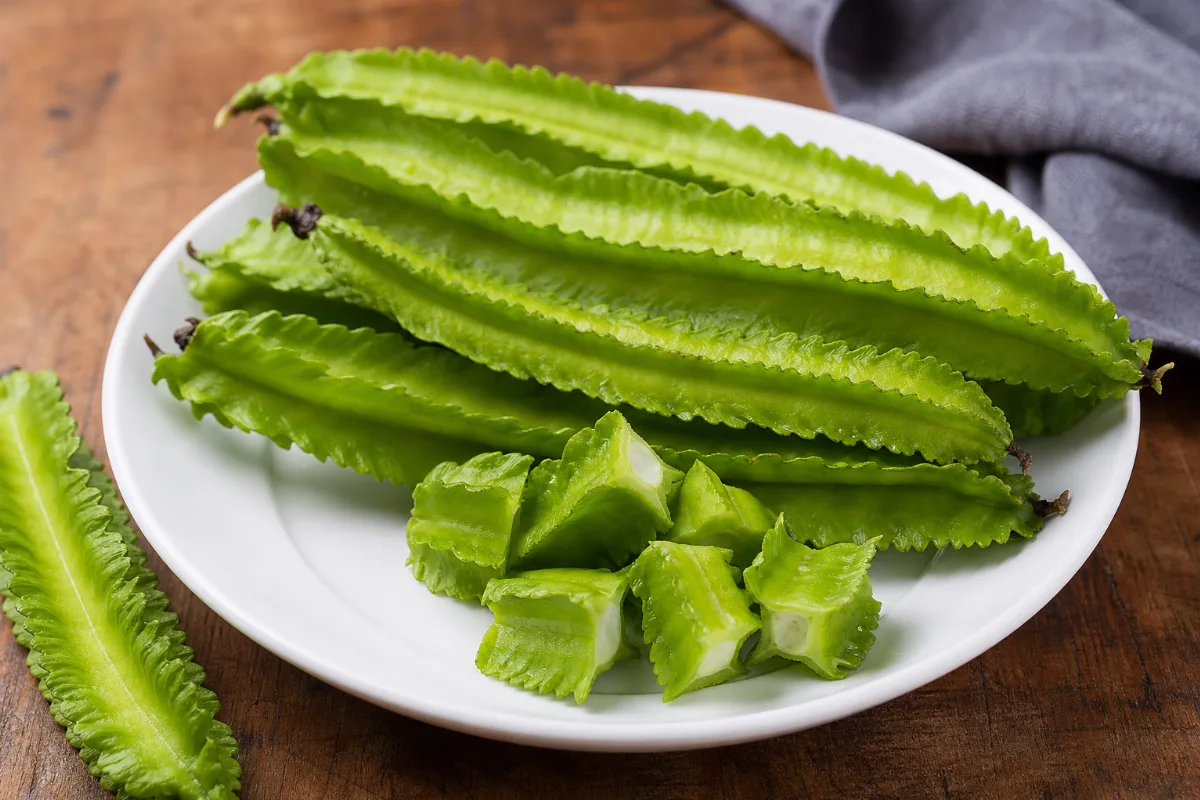
Winged beans are the four-sided, frilly-edged pods and the seeds of a tropical legume plant. Almost every part is eaten somewhere, and the seeds are rich in protein. No trial has tested winged beans on health, so the evidence is thin: the cholesterol and blood sugar findings are for pulses in general. The main caution is to cook the dry seeds thoroughly, because raw seeds hold natural compounds that heat reduces.
General information, not medical advice. Last substantive update · Not medically reviewed. A named clinician has not signed off on this page. How this page is made
About Winged Beans
Winged beans are a tropical legume eaten as young pods, leaves, flowers, tubers and seeds. The seeds are rich in protein. They are a food, not a proven remedy: health findings are for pulses in general, or come from rats and cell dishes. Dry seeds must be cooked thoroughly.
What it is
Winged bean (Psophocarpus tetragonolobus) is a climbing legume of the tropics, grown in Asia, New Guinea and parts of Africa. Reviews say all parts are edible when prepared: young pods raw, steamed, boiled or pickled, leaves like spinach, flowers in salads, tubers raw or cooked, and seeds roasted or ground. A 2019 review nicknames it "One Species Supermarket".
USDA data for boiled seeds without salt (carried over from an earlier read; the USDA service would not answer on the day): 147 kcal per 100 g. One cup (172 g) has about 253 kcal, 18.3 g protein, 10.0 g fat, 244 mg calcium, 7.4 mg iron and 482 mg potassium. Dry raw seeds are much denser (409 kcal and 29.65 g protein per 100 g) because cooked seeds are about two-thirds water. USDA lists no fibre for the cooked item. Young pods are different: PROTA lists 27 kcal and 2.6 g protein per 100 g.
What the research shows
No trial of winged beans on health outcomes was found. Pooled trials of whole pulses of many kinds found LDL cholesterol about 0.14 mmol/L lower, and earlier pooled trials found lower fasting blood sugar markers. Those reviews do not name winged beans.
The one human study of winged beans was a small crossover test in 19 healthy women: about 39% of the calcium in young pods was absorbed, compared with about 48% from ivy gourd and 55% from milk. A processed seed protein lowered blood pressure in rats, and an alcohol extract of pods reduced colon cancer cells in a dish. These are animal and lab findings on extracts and say little about eating the bean.
Food versus extracts
The pulse trials used ordinary whole pulses. The blood pressure finding used a processed seed protein, and the cancer-cell finding used an ethanol pod extract in a dish. Seed protein extracts and pod extracts are different products from the cooked bean. We read no trial of any winged bean extract in people and make no claim about them.
Portions
This page gives no amounts to eat. The USDA portion used for the numbers above is 1 cup of boiled seeds (172 g). Ask a doctor, pharmacist or dietitian what is right for you, especially if you have a food allergy, kidney disease or take medicine for blood sugar, blood pressure or cholesterol.
At a glance
Traditional uses history, not proof
- Young pods eaten raw, steamed, boiled, stir-fried or pickled in parts of Asia
- Tubers boiled or roasted, and leaves and flowers eaten, in some regions
- Long use as food is not proof that it treats any condition
Studied for research
- Protein and minerals, a nutrient fact (USDA numbers carried over)
- Cholesterol, insufficient (pulses as a group, no winged bean trial)
- Blood sugar, insufficient (pulses as a group, no winged bean trial)
- Calcium absorption from pods, low certainty (one small test)
- Blood pressure, very low (rats, seed protein extract)
- Cancer cells, very low (cells in a dish, pod extract)
Main compounds
- Protein
- Copper and manganese
- Lectins (reduced by heat)
- Trypsin inhibitors (reduced by heat)
- Tannins and phytate
- Seed oil
Common forms
- Boiled mature seeds (USDA values)
- Young pods (raw, steamed, boiled or pickled)
- Tubers (boiled)
- Leaves and flowers
- Seed protein extracts and pod extracts are different products and are not covered
Research links: 2026 review: whole pulses and cholesterol · 2008 test: calcium absorption from young pods · 2020 review of the plant, foods and anti-nutrients · Research Library · Genes & Biomarkers Library
What it is and its history
- Accepted scientific name
- Psophocarpus tetragonolobus
- Naming authority
- (L.) DC. (as written in the PubMed titles and abstracts read)
- Common names
- Winged bean (English); Winged beans (English); Frilly four-angled bean (English); One Species Supermarket (nickname in a 2019 review) (English); Frijol alado (Spanish)
- Family or group
- Fabaceae (the legume family), as stated in the sources read.
- Classification
- Plantae > Fabaceae > Psophocarpus > Psophocarpus tetragonolobus
- Native range
- Not verified from a source read. Sources say it is grown or eaten in tropical Asia, New Guinea, Myanmar, Thailand, Indonesia, India, Malaysia, Ghana and parts of Africa.
- Habitat
- A perennial herbaceous legume of humid tropical (equatorial) places, per the 2019 review.
- What it looks like
- Roots: Tuberous roots (Bassal 2020; PROTA says special cultivars are grown for tubers resembling small sweet potatoes).; Stems: A twining climber (the review says the pod "twines"; wording from a review abstract).; Leaves: Eaten cooked like spinach in places (Bassal 2020).; Flowers: Eaten in salads and to colour dishes (Bassal 2020).; Fruit: Four-angled, winged pods; young pods are the commonest food. Seeds are eaten ripe or unripe.
- Cultivation
- Grown as a vegetable legume in Thailand; fixes its own nitrogen (2019 review abstract). Little else was read.
- Harvest and processing
- Young pods raw, steamed, boiled, stir-fried or pickled; tubers roasted or boiled; mature seeds roasted or ground (Bassal 2020; Sriwichai 2021).
- Look-alikes and adulterants
- Name: Hyacinth beans and other tropical beans; Note: Other tropical beans on this site whose dry seeds also need thorough cooking.
- Sustainability and conservation
- Not assessed.
What is inside, and how it may work
What it contains and how those compounds act in cells and animals. Laboratory and animal mechanisms are not proven effects in people.
Main compounds
| Compound | Family | Where it is concentrated | Activity studied | Level of evidence |
|---|---|---|---|---|
| Protein | macronutrient | Seed USDA (not re-read today): 10.62 g per 100 g cooked; 29.65 g per 100 g raw | Nutrient. PROTA says improved cultivars exist with up to 37% protein in the seed. 18 19 17 | Composition |
| Lectins (hemagglutinins) | protein | Mainly seed and roots Haemagglutinin averaged 2.33 Hu/mgN in one lab study (range 0 to 4.0) | Bind to red blood cells in the lab; destroyed by heat. 2 13 | Lab |
| Trypsin and chymotrypsin inhibitors | protein | Seed 11,300 to 74,700 IU per g of seed in a review; not detected in boiled seeds in one lab study | Block digestive enzymes; destroyed by heat. 2 13 6 | Lab |
| Tannins and phytate | polyphenol and phosphorus store | Seed Tannins 0.03 to 7.5 mg per g; phytate 6.1 to 7.5 mg per g (review) | Reduce mineral and protein availability; only partly reduced by heat. 2 13 | Lab |
| Flavonoids and phenols (pods) | polyphenol | Pod (ethanol extract) Extract: 237.33 mg gallic acid equivalents per g phenols; kaempferol the main flavonoid | Cell effects in a dish only. 5 | Lab |
| Seed oil fatty acids | lipid | Seed Oleic and linoleic acids about 67% and saturated fatty acids about 29% of fatty acids (PROTA) | Composition only. 17 | Composition |
Mechanisms, receptors and pathways
| Target or pathway | Gene or receptor | What was found | Level |
|---|---|---|---|
| Heat destroys lectins and enzyme inhibitors | Not applicable | Heat destroys hemagglutinins and trypsin and chymotrypsin inhibitors: brief autoclaving of flour cut hemagglutinins by 75 to 96%, 30 minutes eliminated all three activities measured (with much protein becoming insoluble), boiled seeds had no detectable trypsin inhibitor and roasting destroyed 99.39% of it and all haemagglutinin. 2 13 6 | Lab |
| ACE enzyme blocking by seed peptides | ACE (angiotensin-converting enzyme) | Five peptides from a seed hydrolysate blocked ACE in lab and computer tests; the hydrolysate lowered blood pressure in rats. 4 | Animal research |
| Cell death and inflammation signals in a dish | IL-1 beta, IL-6, TNF-alpha | A pod extract triggered signs of apoptosis in colon cancer cells and lowered three inflammation signals in mouse macrophages. 5 | Lab |
Absorption, metabolism and elimination
- Absorption
- In 19 women, about 39% of calcium from young winged bean pods was absorbed in one test meal (calcium, not a plant compound).
- Distribution
- Not found.
- Metabolism
- Not found.
- Elimination
- Not found.
- Bioavailability
- Calcium from pods was absorbed less well than from ivy gourd or milk, partly because of phytate, oxalate and fibre (authors).
Isolated compounds versus whole extracts
The pulse cholesterol and blood sugar results are for whole pulses as a group. The only human study of winged bean tested cooked young pods in a calcium absorption test. The blood pressure and cancer-cell findings are for a processed seed protein and an ethanol pod extract, not the cooked bean, and were not tested in people.
Nutritional composition
Nutrition from USDA FoodData Central (SR Legacy, 2018 release), carried over from our earlier read; the data service refused requests on 2026-10-26 (rate limit) so these numbers were NOT re-read today. Winged beans, mature seeds, boiled without salt (FDC 172453), per 100 g: 147 kcal, 10.62 g protein, 5.84 g fat (0.825 g saturated), 142 mg calcium, 4.33 mg iron, 54 mg magnesium, 153 mg phosphorus, 280 mg potassium, 1.44 mg zinc, 0.773 mg copper, 1.199 mg manganese, 0.295 mg thiamin, 13 mg sodium. USDA lists no fibre for the cooked item. One cup (172 g) is about 253 kcal, 18.3 g protein, 10.0 g fat, 244 mg calcium, 7.4 mg iron, 482 mg potassium (the per-100-g values multiplied by 1.72), roughly 148% of the Daily Value for copper, 90% for manganese, 42% for thiamin and 41% for iron. Raw dry seeds (FDC 174283), per 100 g: 409 kcal, 29.65 g protein, 16.32 g fat, 25.9 g fibre, 440 mg calcium, 13.44 mg iron; cooked seeds are about 67% water and dry seeds about 8%, so compare like with like. USDA also lists vitamin D (5.654 micrograms raw, 2.025 cooked per 100 g), which is unusual for a plant food and could not be checked, so treat it with caution. Young pods are different (PROTA, per 100 g: 90 g water, 27 kcal, 2.6 g protein, 1.9 g fibre, 64 mg calcium, 15 mg vitamin C). Values vary with variety, growing place and cooking. No USDA values for pods or tubers were read.
1 moderate certainty1 low certainty2 very low certainty3 not enough evidence
What was looked at
The 7 benefits and uses checked for Winged Beans, each with how strong the evidence is. Tap one to open it.
- Protein and minerals (nutrient content)Moderate certainty
- Cholesterol (pulses as a group)Not enough evidence
- Blood sugar and insulin (pulses as a group)Not enough evidence
- Calcium absorption from young podsLow certainty
- Blood pressure (rat study of a processed seed protein)Very low certainty
- Cancer cells in a dish (pod extract)Very low certainty
- Pods, leaves, flowers and tubers as foodNot enough evidence
Lab markers tracked in the studies
LDL cholesterolFasting blood glucoseFractional calcium absorption
What is Winged Beans good for?
The studied uses and how strong the evidence is for each. There is very little human research on winged beans themselves.
Benefits, one by one
Each card is a research question, not a promise. Tap a goal to filter. Open a card to see the studies, doses and limits.
Protein and minerals (nutrient content)
Moderate certaintyBoiled winged bean seeds have 10.62 g of protein per 100 g by USDA data. A 172 g cup gives about 148% of the Daily Value for copper, 90% for manganese, 42% for thiamin and 41% for iron. This is the make-up of the food, not a trial of health effects. USDA figures were carried over, not re-read today.
4 studiesBoiled mature seeds (food).
Studies, doses and limits
What the trials found
No trial in people tested winged bean seeds for protein or mineral status. A 2019 review calls the plant a rich protein source with most parts edible when appropriately prepared (abstract only).
Results
Composition data only. Raw dry seeds are much denser (409 kcal and 29.65 g protein per 100 g) because cooked seeds are about two-thirds water.
Effect sizes as reported
USDA: 10.62 g protein and 147 kcal per 100 g cooked; 18.3 g protein per cup (172 g).
Why this rating
A nutrient-composition fact from a reference database, but the numbers were carried over and not re-read today, and content varies with variety and growing place. It says nothing about health benefit.
Form and dose studied
Boiled mature seeds (food).
Who was studied
General adult diet.
Limits
Seeds only; pods, leaves and tubers differ (PROTA lists young pods at 27 kcal and 2.6 g protein per 100 g). USDA lists a vitamin D value that is unusual for a plant food and could not be checked.
Why researchers looked
Winged beans are promoted as a protein-rich tropical crop, so people ask what the seeds contain.
Traditional use
Almost every part of the plant is eaten somewhere: young pods, leaves, flowers, tubers and ripe seeds. Long use as food is not proof that it treats any condition.
Proposed mechanism Composition
Not applicable: these are nutrients in the food.
A proposed mechanism does not show that the effect happens in people.
Raw dry seeds hold natural compounds that heat reduces; see the Safety tab.
Cholesterol (pulses as a group)
Not enough evidencePooled trials of whole pulses of many kinds found LDL cholesterol about 0.14 mmol/L lower. No trial tested winged beans, so this tells us little about this bean.
1 studiesWhole pulses as food (trial detail only, not advice).
Studies, doses and limits
What the trials found
A 2026 meta-analysis of 38 trials (2,095 people, median 6 weeks) found LDL fell by 0.14 mmol/L with whole pulses, with similar results across pulse types. The abstract does not name winged beans.
Results
A small average fall in LDL for pulses as a group. For winged beans themselves there is no human evidence.
Effect sizes as reported
LDL -0.14 mmol/L (95% CI -0.19 to -0.08); non-HDL -0.22 mmol/L; apoB -0.08 g/L.
Why this rating
The reviewers rate their evidence for pulses as moderate-to-high, but no winged bean trial was found, so for this bean we rate it insufficient.
Form and dose studied
Whole pulses as food (trial detail only, not advice).
Who was studied
Adults in trials of pulses.
Limits
Pulse-group result. Short trials (median 6 weeks). One author works at an industry body (Protein Industries Canada); funding is not in the abstract.
Why researchers looked
Beans and other pulses are often studied for cholesterol because of their fibre and protein.
Traditional use
Winged beans are eaten as a vegetable and a protein food in tropical Asia, New Guinea and parts of Africa.
Proposed mechanism Unknown
Not established for winged beans.
A proposed mechanism does not show that the effect happens in people.
None specific to cholesterol.
Blood sugar and insulin (pulses as a group)
Not enough evidencePooled trials of pulses of many kinds found lower fasting blood sugar and long-term blood sugar markers, with large differences between trials. No trial tested winged beans.
1 studiesPulses as food (trial detail not given in the abstract).
Studies, doses and limits
What the trials found
A 2009 meta-analysis of 41 trials found pulses alone lowered fasting glucose and insulin, and pulses within low-GI or high-fibre diets lowered HbA1c or fructosamine. Heterogeneity was high and unexplained for most outcomes.
Results
A possible benefit for pulses in general. Nothing is known for winged beans.
Effect sizes as reported
Standardised mean difference: fasting glucose -0.82 (95% CI -1.36 to -0.27) for pulses alone.
Why this rating
Pulse-group evidence with high unexplained heterogeneity, from 2009, and no winged bean trial.
Form and dose studied
Pulses as food (trial detail not given in the abstract).
Who was studied
People with and without diabetes.
Limits
Pulse-group result; not winged beans. Not a treatment for diabetes.
Why researchers looked
Pulses release carbohydrate slowly, so trials ask whether they help blood sugar control.
Traditional use
Winged beans are eaten as food, not as a diabetes remedy.
Proposed mechanism Unknown
Not established for winged beans.
A proposed mechanism does not show that the effect happens in people.
If you take diabetes medicine, ask your clinician before large diet changes.
Calcium absorption from young pods
Low certaintyIn one small crossover test in 19 healthy Thai women, about 39% of the calcium in a meal of young winged bean pods was absorbed, compared with about 48% from ivy gourd and 55% from milk. The authors call the pods a relatively good calcium source for a vegetable.
1 studiesYoung pods cooked and eaten with rice (test meal detail, not advice).
Studies, doses and limits
What the trials found
Randomised 3-way crossover, 19 women aged 20 to 45. Each meal had about 100 mg of calcium given with rice, labelled with a calcium isotope; absorption was read from a blood sample 5 hours later.
Results
Winged bean pods: 0.391 fractional absorption; ivy gourd 0.476; milk 0.552. The pods were absorbed less well than ivy gourd (P < 0.05) and than milk.
Effect sizes as reported
Fractional calcium absorption 0.391 (SD 0.128) winged bean; 0.476 (SD 0.109) ivy gourd; 0.552 (SD 0.119) milk.
Why this rating
One small single-meal test in healthy women. It measures absorption of calcium in one meal, not bone health, and has not been repeated in sources we read.
Form and dose studied
Young pods cooked and eaten with rice (test meal detail, not advice).
Who was studied
Healthy Thai women aged 20 to 45.
Limits
Small, single meal, pods only, funding not stated in the abstract. Not about seeds, tubers or leaves.
Why researchers looked
Calcium in plant foods can be bound by phytate, oxalate and fibre, so researchers measure how much is actually absorbed.
Traditional use
Young pods are the most common way winged beans are eaten, raw, steamed, boiled, stir-fried or pickled.
Proposed mechanism Authors hypothesis
The authors say lower absorption was partly explained by the phytate, oxalate and fibre in the vegetables.
A proposed mechanism does not show that the effect happens in people.
None reported in the abstract.
Blood pressure (rat study of a processed seed protein)
Very low certaintyA processed protein extract made from winged bean seeds lowered blood pressure in rats bred to have high blood pressure. This is animal and lab work on an extract, so it does not show that eating winged beans lowers blood pressure in people.
1 studiesEnzyme-digested seed protein, not food.
Studies, doses and limits
Results
Dose-dependent fall in blood pressure in spontaneously hypertensive rats. The abstract also says non-GMP-grade peptides were toxic in rats.
Effect sizes as reported
Numbers not given in the abstract.
Why this rating
Animal and lab work only, on a processed extract; no human evidence.
Form and dose studied
Enzyme-digested seed protein, not food.
Who was studied
Rats.
Limits
Rats and lab tests; extract is not the cooked bean; the abstract reports toxicity of some peptide preparations.
Why researchers looked
Protein pieces (peptides) from legumes can block ACE, an enzyme that raises blood pressure.
Traditional use
Not a traditional use.
Proposed mechanism Laboratory research
Five peptides from the hydrolysate blocked the ACE enzyme in lab and computer tests.
A proposed mechanism does not show that the effect happens in people.
Seed protein extracts are not covered by food safety sources read.
Cancer cells in a dish (pod extract)
Very low certaintyAn alcohol extract of winged bean pods reduced the number of living human colon cancer cells and lowered inflammation signals in mouse cells in a dish. This is not a treatment and says nothing about eating pods.
1 studiesEthanol extract of pods, not food.
Studies, doses and limits
Results
Dose-dependent loss of cell viability (IC50 117.86 micrograms/mL) and lower IL-1 beta, IL-6 and TNF-alpha in the dish.
Effect sizes as reported
IC50 117.86 micrograms/mL in HT-29 cells.
Why this rating
Cell study only; no animals or people. The authors say more studies are needed to confirm safety.
Form and dose studied
Ethanol extract of pods, not food.
Who was studied
Cells in a dish.
Limits
Cell study with an extract; no animal or human data.
Why researchers looked
Plant phenols and flavonoids are often screened against cancer cells in the lab.
Traditional use
Not a traditional use.
Proposed mechanism Laboratory research
The extract was high in phenols and flavonoids (mainly kaempferol) and caused signs of cell death in the cancer cells.
A proposed mechanism does not show that the effect happens in people.
The authors say additional studies are needed to confirm the safety of the extract.
Pods, leaves, flowers and tubers as food
Not enough evidenceWinged beans are eaten in many forms: young pods raw, steamed, boiled or pickled; leaves like spinach; flowers in salads; tubers boiled. No human study tested health effects of any of these.
3 studiesPods, leaves, flowers, tubers and seeds as food.
Studies, doses and limits
What the trials found
No health trial. Descriptions come from a review, a field study in Thailand and PROTA.
Results
A description of use, not an effect.
Why this rating
Descriptions of how people eat it, with no outcome data.
Form and dose studied
Pods, leaves, flowers, tubers and seeds as food.
Limits
Descriptive sources; two-hour tuber boiling is local practice, not an official time.
Why researchers looked
Researchers describe the plant as an underused crop with many edible parts.
Traditional use
Reviews describe the whole plant as edible when prepared. Long use as food is not proof of any health effect.
Proposed mechanism Not applicable
Not applicable.
A proposed mechanism does not show that the effect happens in people.
Tubers and seeds are cooked; see the Safety tab.
Connections to the rest of health
How Winged Beans connects to the rest of our health knowledge graph. Every link says what kind of connection it is. A safety link (for example to the liver) is a warning, not a benefit. A study that merely mentions a topic never creates a benefit link.
Explore every connection: goals, body systems, organs, symptoms, genes
A. Wellness goals
| Connected to | Kind of connection | Evidence status | Context | Studies |
|---|---|---|---|---|
| Balanced Nutrition | Moderate certainty | Protein and minerals (nutrient content): Boiled winged bean seeds have 10.62 g of protein per 100 g by USDA data. A 172 g cup gives about 148% of the Daily Value for copper, 90% for manganese, 42% for thiamin and 41% for iron. This is the make-up of the food, not a trial of health effects. USDA figures were carried over, not re-read today. | 18 19 17 9 | |
| Cholesterol Balance | Not enough evidence | Cholesterol (pulses as a group): Pooled trials of whole pulses of many kinds found LDL cholesterol about 0.14 mmol/L lower. No trial tested winged beans, so this tells us little about this bean. | 1 | |
| Heart Health | Not enough evidence | Cholesterol (pulses as a group): Pooled trials of whole pulses of many kinds found LDL cholesterol about 0.14 mmol/L lower. No trial tested winged beans, so this tells us little about this bean. | 1 | |
| Blood Sugar Balance | Not enough evidence | Blood sugar and insulin (pulses as a group): Pooled trials of pulses of many kinds found lower fasting blood sugar and long-term blood sugar markers, with large differences between trials. No trial tested winged beans. | 7 | |
| Balanced Nutrition | Low certainty | Calcium absorption from young pods: In one small crossover test in 19 healthy Thai women, about 39% of the calcium in a meal of young winged bean pods was absorbed, compared with about 48% from ivy gourd and 55% from milk. The authors call the pods a relatively good calcium source for a vegetable. | 3 | |
| Blood Pressure Support | Very low certainty | Blood pressure (rat study of a processed seed protein): A processed protein extract made from winged bean seeds lowered blood pressure in rats bred to have high blood pressure. This is animal and lab work on an extract, so it does not show that eating winged beans lowers blood pressure in people. | 4 | |
| Healthy Aging | Very low certainty | Cancer cells in a dish (pod extract): An alcohol extract of winged bean pods reduced the number of living human colon cancer cells and lowered inflammation signals in mouse cells in a dish. This is not a treatment and says nothing about eating pods. | 5 | |
| Traditional Use | Traditional use | Not enough evidence | Pods, leaves, flowers and tubers as food: Winged beans are eaten in many forms: young pods raw, steamed, boiled or pickled; leaves like spinach; flowers in salads; tubers boiled. No human study tested health effects of any of these. | 2 8 17 |
B. Body systems
| Connected to | Kind of connection | Evidence status | Context | Studies |
|---|---|---|---|---|
| Nutrition | Biological association | Moderate certainty | Studied for: Protein and minerals (nutrient content) Studied for: Pods, leaves, flowers and tubers as food | 18 19 17 9 2 8 |
| Cardiovascular System | Biological association | Not enough evidence | Studied for: Cholesterol (pulses as a group) Studied for: Blood pressure (rat study of a processed seed protein) | 1 4 |
| Endocrine System | Biological association | Not enough evidence | Studied for: Blood sugar and insulin (pulses as a group) | 7 |
| Musculoskeletal System | Biological association | Low certainty | Studied for: Calcium absorption from young pods | 3 |
| Digestive System | Biological association | Very low certainty | Studied for: Cancer cells in a dish (pod extract) | 5 |
C. Body parts and organs
| Connected to | Kind of connection | Evidence status | Context | Studies |
|---|---|---|---|---|
| Gut | Adverse effect or risk | Documented risk | Lectins and trypsin inhibitors in raw seeds, destroyed by heat; beans can cause extra gas. Raw dry seeds contain lectins and trypsin inhibitors that heat destroys; beans can also cause extra gas. Preparation or compound: Raw dry seeds; beans in general |
2 13 15 |
E. Health conditions
| Connected to | Kind of connection | Evidence status | Context | Studies |
|---|---|---|---|---|
| Food allergy | Documented risk (general) | Legumes can cause food allergy; no winged bean-specific source was read. Legumes can cause food allergy; no winged bean-specific source was found. Preparation or compound: Winged beans as food |
14 | |
| Kidney disease and kidney stones | Documented risk (general) | NKF guidance on potassium, phosphorus and oxalate in beans; no winged bean oxalate value was read. Preparation or compound: Beans in general |
16 | |
| Kidney disease | Documented risk (general) | Guidance on potassium, phosphorus and oxalates in beans; ask your kidney team. Preparation or compound: Beans in general |
16 |
I. Biomarkers
| Connected to | Kind of connection | Evidence status | Context | Studies |
|---|---|---|---|---|
| LDL cholesterol | Biological association | Not enough evidence | Measured in trials: lowered. A lab change is not the same as a health benefit. | 1 |
| Fasting blood glucose | Biological association | Not enough evidence | Measured in trials: lowered. A lab change is not the same as a health benefit. | 7 |
| Fractional calcium absorption | Biological association | Low certainty | Measured in trials: measured (no change claim). A lab change is not the same as a health benefit. | 3 |
K. Biological pathways
L. Active compounds
| Connected to | Kind of connection | Evidence status | Context | Studies |
|---|---|---|---|---|
| Protein | Biological association | Composition | Nutrient. PROTA says improved cultivars exist with up to 37% protein in the seed. Preparation or compound: Seed |
18 19 17 |
| Lectins (hemagglutinins) | Biological association | Lab | Bind to red blood cells in the lab; destroyed by heat. Preparation or compound: Mainly seed and roots |
2 13 |
| Trypsin and chymotrypsin inhibitors | Biological association | Lab | Block digestive enzymes; destroyed by heat. Preparation or compound: Seed |
2 13 6 |
| Tannins and phytate | Biological association | Lab | Reduce mineral and protein availability; only partly reduced by heat. Preparation or compound: Seed |
2 13 |
| Flavonoids and phenols (pods) | Biological association | Lab | Cell effects in a dish only. Preparation or compound: Pod (ethanol extract) |
5 |
| Seed oil fatty acids | Biological association | Composition | Composition only. Preparation or compound: Seed |
17 |
Each connection is stored with the ingredient, the connected record, the kind of connection, the evidence status, the supporting studies, the preparation or compound involved, and a review date (last reviewed October 26, 2026).
The evidence
The research centre for Winged Beans. Every record here was checked against PubMed or the publisher's page; we never list a study we have not verified.
Evidence by outcome
Bars show how many studies we found for each outcome, not how well it works. People are added up across trials only (reviews are not added, to avoid double counting).
How we rate evidence
High certainty
Several well-run trials or reviews agree; further research is unlikely to change the picture much.
Moderate certainty
Good trials point the same way, but some doubt remains.
Low certainty
Small, short or inconsistent trials. The finding could change with better research.
Very low certainty
Very little or very weak human data. Treat as a possibility only.
Mixed findings
Trials or reviews disagree with each other.
Not enough evidence
Not enough human research to say either way.
Evidence against
Good research found no benefit, or found harm.
We take the reviewers' own risk-of-bias and GRADE statements where they exist, and otherwise judge from study size, design, consistency, directness and whether a product matches what is sold. Many publications do not make evidence high. Method note: We started from our existing winged beans summary, re-read PubMed abstracts and the full texts of three plant reviews and studies, and read the FDA, Harvard, National Kidney Foundation, NIDDK and MedlinePlus pages. USDA numbers could not be re-read on the day and are flagged. Items we could not verify are listed in the research gaps.
Study library: every study we checked 19
| Study | Design | People | Product, dose, length | Result |
|---|---|---|---|---|
| Back 2026 Effect of Different Types of Whole Dietary Pulses on Established Therapeutic Lipid Targets for Cardiovascular Risk Reduction: An Updated Systematic Review and Dose-Response Meta-Analysis of Randomized Controlled Trials J Am Heart Assoc · PMID 42132198 · DOI |
Systematic review meta analysis |
2095 38 trials (52 comparisons), 2,095 people |
Whole dietary pulses of many kinds (winged beans are not named in the abstract) Whole pulses as food Median 130 g a day in the trials (trial detail, not advice) At least 3 weeks; median 6 weeks · vs Control diets |
Whole pulses lowered LDL cholesterol, non-HDL cholesterol and apoB, and lowered HDL cholesterol slightly. Results by pulse type were similar. GRADE was moderate-to-high for all outcomes except apoB (very low). LDL mean difference -0.14 mmol/L; non-HDL -0.22 mmol/L; apoB -0.08 g/L; HDL -0.03 mmol/L (LDL -0.14 (95% CI -0.19 to -0.08); non-HDL -0.22 (-0.30 to -0.14); apoB -0.08 (-0.13 to -0.03); HDL -0.03 (-0.05 to -0.01)) Methods, limits and fundingOutcomes: LDL cholesterol, non-HDL cholesterol, apoB, HDL cholesterol Limitations: Pulses as a group, not winged beans. The abstract says future studies on chickpeas, dried peas and lentils are warranted. Median trial length 6 weeks. Funding and conflicts: Funding is not shown in the abstract. One author is affiliated with Protein Industries Canada, an industry body; flagged for readers. Registration: PROSPERO CRD42023432826 Read: abstract |
| Bassal 2020 Psophocarpus tetragonolobus: An Underused Species with Multiple Potential Uses Plants (Basel) · PMID 33302439 · DOI |
Narrative review review |
Review of the plant, its foods, nutrients, anti-nutrients and laboratory studies | Winged bean, all plant parts Seeds, pods, leaves, flowers, tubers |
Says all parts can be eaten (pods raw or pickled, flowers in salad, leaves like spinach, tubers raw or cooked, seeds in several ways). Lists anti-nutritional factors in the plant: trypsin and chymotrypsin inhibitors, hemagglutinins (lectins), amylase inhibitors, phytates, flatulence factors, hydrogen cyanide, saponins and tannins. Says heat destroys hemagglutinins and the trypsin and chymotrypsin inhibitors. Reports lab and animal findings for extracts. Trypsin inhibitor activity 11,300 to 74,700 IU per g of seed; hemagglutinin loss of 75 to 96% after brief autoclaving of flour, and all three activities abolished after 30 minutes (with much protein becoming insoluble) (Not applicable) Methods, limits and fundingOutcomes: Uses, nutrients, anti-nutrients, laboratory pharmacology Limitations: A review of mostly laboratory and composition work. It does not report human poisoning cases and gives no cyanide figures. Funding and conflicts: Funded by the Lebanese University; authors declare no conflict of interest (full text). Read: full-text |
| Charoenkiatkul 2008 Calcium absorption from commonly consumed vegetables in healthy Thai women J Food Sci · PMID 19021804 · DOI |
Randomized crossover trial |
19 19 healthy Thai women aged 20 to 45 |
Winged bean young pods (Psophocarpus tetragonolobus), ivy gourd and milk, each with an average 100 mg calcium load, given with rice Young pods About 100 mg of calcium in each test meal (trial detail) Single meal, 3-way crossover · vs Ivy gourd and milk |
Calcium absorption was measured with a labelled-calcium test. Winged bean pods gave lower absorption than ivy gourd and milk, but the authors call the pods relatively good (71% to 86% of milk for the two vegetables). The gap was partly explained by phytate, oxalate and fibre. Fractional calcium absorption: winged bean 0.391, ivy gourd 0.476, milk 0.552 (Winged bean 0.391 +/- 0.128 (SD); ivy gourd 0.476 +/- 0.109; milk 0.552 +/- 0.119; winged bean vs ivy gourd P < 0.05) Methods, limits and fundingOutcomes: Fractional calcium absorption 5 hours after the meal Limitations: Single small meal test, one blood sample at 5 hours, young pods only, healthy women only. It measures absorption, not bone health. Funding and conflicts: Funding is not stated in the abstract. Read: abstract |
| Chay 2018 Blood-pressure lowering efficacy of winged bean seed hydrolysate in spontaneously hypertensive rats, peptide characterization and a toxicity study in Sprague-Dawley rats Food Funct · PMID 29469915 · DOI |
Animal study rat |
Spontaneously hypertensive rats | Winged bean seed protein hydrolysate (enzyme-digested seed protein) Seed protein hydrolysate |
The hydrolysate lowered blood pressure in a dose-dependent way in the rats, and five peptides blocked the ACE enzyme in lab tests. The abstract says non-GMP-grade peptides were toxic in rats and not fit for repeat-dose animal testing. Dose-dependent blood pressure fall in rats (numbers not in the abstract) (Not applicable) Methods, limits and fundingOutcomes: Blood pressure in rats; ACE inhibition in vitro Limitations: Rats and lab tests only. A processed protein extract, not the cooked bean. Funding and conflicts: Funding is not stated in the abstract. Read: abstract |
| Dhumtanom 2025 Therapeutic Potential of Winged Bean (Psophocarpus tetragonolobus) Pod Extract: Apoptosis Induction and Anti-Inflammatory Action in Colorectal Cancer Cells Biology (Basel) · PMID 41463421 · DOI |
Laboratory in-vitro |
Human colorectal cancer cells (HT-29) and mouse macrophage cells (RAW 264.7) in a dish | Ethanol extract of winged bean pods Pod, ethanol extract |
The extract was high in phenols and flavonoids. It lowered the number of living cancer cells and caused signs of cell death in a dose-dependent way, and lowered three inflammation signals (IL-1 beta, IL-6, TNF-alpha) in mouse cells. The authors say more studies are needed to confirm safety. IC50 117.86 micrograms/mL in HT-29 cells (Not applicable (cell study)) Methods, limits and fundingOutcomes: Cell viability, apoptosis, cytokine release Limitations: Cells in a dish only. No animals, no people. An ethanol extract is not the pod as eaten. Funding and conflicts: The authors declare no conflicts of interest. Funding is not shown in the abstract. Read: abstract |
| Saadi 2022 Mitigation of antinutritional factors and protease inhibitors of defatted winged bean-seed proteins using thermal and hydrothermal treatments: Denaturation/unfolding coupled hydrolysis mechanism Curr Res Food Sci · PMID 35106485 · DOI |
Laboratory food processing laboratory |
Defatted winged bean seed protein in the lab | Winged bean seed protein treated with steam (autoclave) or buffers Defatted seed protein |
Steam and pH treatments reduced protease inhibitor activity in the seed protein (for example one inhibitor fell by about 46 to 47% after one digest test), with changes in protein structure that make the protein easier to digest. Protease inhibitor reductions of roughly 46 to 58% in lab digests (full text) (Not applicable) Methods, limits and fundingOutcomes: Remaining protease inhibitor activity, protein structure Limitations: Lab work on a defatted seed protein, not on cooked beans, and it does not test people. Funding and conflicts: Funded by a Malaysian Ministry of Science, Technology and Innovation grant (full text acknowledgements). Read: full-text |
| Sievenpiper 2009 Effect of non-oil-seed pulses on glycaemic control: a systematic review and meta-analysis of randomised controlled experimental trials in people with and without diabetes Diabetologia · PMID 19526214 · DOI |
Systematic review meta analysis |
41 randomised trials in people with and without diabetes | Non-oil-seed pulses (chickpeas, beans, peas, lentils and others), alone or in low-GI or high-fibre diets Pulses as food Trial detail not given in the abstract At least 7 days · vs Control diets |
Pulses alone (11 trials) lowered fasting glucose and insulin. Pulses in low-GI diets (19 trials) lowered HbA1c or fructosamine. Pulses in high-fibre diets (11 trials) lowered fasting glucose and those markers. Heterogeneity was high and unexplained for most outcomes. Standardised mean differences: fasting glucose -0.82 (pulses alone); insulin -0.49; glycosylated proteins -0.28 (low-GI diets) (Fasting glucose -0.82 (-1.36 to -0.27); insulin -0.49 (-0.93 to -0.04); glycosylated proteins -0.28 (-0.42 to -0.14)) Methods, limits and fundingOutcomes: Fasting glucose, insulin, HbA1c or fructosamine Limitations: Pulses as a group, not winged beans. High unexplained heterogeneity. Published in 2009. Funding and conflicts: Funding is not stated in the abstract. Read: abstract |
| Sriwichai 2021 Dual-Purpose of the Winged Bean (Psophocarpus tetragonolobus (L.) DC.), the Neglected Tropical Legume, Based on Pod and Tuber Yields Plants (Basel) · PMID 34451791 · DOI |
Other n/a |
Ten winged bean accessions grown in field trials in Khon Kaen, Thailand | Winged bean pods and tubers Pods and tubers |
A crop-yield study that also measured the protein, fibre, energy and minerals of tubers. Its introduction says young pods are eaten raw, steamed, boiled, stir-fried or pickled, tubers are roasted or boiled, and that farmers in Ratchaburi province cut, wash and boil tubers for at least two hours. Two best accessions: tuber protein about 21%; pod yields 23.6 and 18.36 tonnes per hectare (Not applicable) Methods, limits and fundingOutcomes: Crop yields; tuber nutrient content Limitations: An agriculture study, not a health study. The two-hour boiling is a description of local farmers, not an official cooking time. Funding and conflicts: The full text says both "no external funding" and a Thailand Research Fund acknowledgement; no conflicts declared. The conflict between the two statements is flagged. Read: full-text |
| Tanzi 2019 Winged bean (Psophocarpus tetragonolobus (L.) DC.) for food and nutritional security: synthesis of past research and future direction Planta · PMID 30911885 · DOI |
Narrative review review |
Review of winged bean growing, breeding and use | Winged bean, all plant parts Pods, immature seeds, tubers, leaves, mature seeds |
Calls winged bean "One Species Supermarket" because green pods, immature seeds, tubers, leaves and mature seeds are all nutrient-dense, and a rich protein source with most parts edible when appropriately prepared. Wider use has been limited by slow structured crop improvement. Not applicable (Not applicable) Methods, limits and fundingOutcomes: Crop science and food security Limitations: A crop-science review; only the abstract was read. Not a health or safety review. Funding and conflicts: Funding is not stated in the abstract. Read: abstract |
| s-fda-natural-toxins US FDA: Natural toxins in food · Source |
Health agency n/a |
Methods, limits and fundingRead: full-text | ||
| s-harvard-lectins Harvard T.H. Chan School of Public Health, The Nutrition Source: Lectins · Source |
University education n/a |
Methods, limits and fundingRead: full-text | ||
| s-healthcanada-lectins Health Canada: Lectins in legumes · Source |
Health agency n/a |
Methods, limits and fundingRead: not-opened | ||
| s-igene-2006 Igene FU, Oboh SO, Aletor VA: Nutrient and anti-nutrient components of raw and processed winged bean seeds (Psophocarpus tetragonolobus), Indian J Anim Sci · Source |
Laboratory composition analysis n/a |
Methods, limits and fundingRead: abstract | ||
| s-medlineplus-foodallergy MedlinePlus: Food allergy · Source |
Health agency n/a |
Methods, limits and fundingRead: full-text | ||
| s-niddk-gas NIDDK: Gas in the digestive tract, eating, diet and nutrition · Source |
Health agency n/a |
Methods, limits and fundingRead: full-text | ||
| s-nkf-beans National Kidney Foundation: Beans · Source |
Non profit guidance n/a |
Methods, limits and fundingRead: full-text | ||
| s-prota PROTA (Plant Resources of Tropical Africa): Psophocarpus tetragonolobus · Source |
Plant reference n/a |
Methods, limits and fundingRead: full-text | ||
| s-usda-fdc-172453 USDA FoodData Central: Winged beans, mature seeds, cooked, boiled, without salt (FDC 172453) · Source |
Reference database n/a |
Methods, limits and fundingRead: secondary | ||
| s-usda-fdc-174283 USDA FoodData Central: Winged beans, mature seeds, raw (FDC 174283) · Source |
Reference database n/a |
Methods, limits and fundingRead: secondary |
What we do not know yet
- No trial of winged bean seeds, pods, leaves or tubers on cholesterol, blood sugar, blood pressure or any disease was found in people.
- No official cooking time for winged beans was found, and no report of poisoning from raw or undercooked seeds.
- Allergy to winged beans, lectin levels in pods and tubers, oxalate content, FODMAP rating, and pregnancy, breastfeeding and children guidance were not found.
- USDA nutrition values were carried over from an earlier read (the data service refused requests on the day), and Health Canada's lectin page could not be opened.
How new research is added
New studies are found by a saved PubMed search and placed in a review queue before the page changes.
Lab markers
What changed in blood or saliva tests during trials. A changed number is not the same as feeling or being healthier, and we give no "normal ranges".
Metabolic 1
LDL cholesterol
Lowered in trials
The 'bad' cholesterol carried in the blood. Higher levels are linked to more heart disease.
Not enough evidenceResults and what it means
Why it was measured
It is the usual blood marker used in diet trials for heart risk.
Statistical vs. clinical meaning
A small average fall for pulses as a group; no winged bean trial.
Safety implication
None specific.
| Study | Result | People | Product |
|---|---|---|---|
| 1 | LDL mean difference -0.14 mmol/L (95% CI -0.19 to -0.08) | 2,095 people in 38 trials | Whole pulses of many kinds, median 130 g/day, median 6 weeks (trial detail, not advice) |
Other 2
Fasting blood glucose
Lowered in trials
Blood sugar measured after not eating overnight.
Not enough evidenceResults and what it means
Why it was measured
A standard marker of blood sugar control.
Statistical vs. clinical meaning
Pulse-group result with high unexplained heterogeneity; nothing for winged beans.
Safety implication
If you take diabetes medicine, ask your clinician.
| Study | Result | People | Product |
|---|---|---|---|
| 7 | Standardised mean difference -0.82 (95% CI -1.36 to -0.27) for pulses alone (11 trials) | People with and without diabetes, 41 trials in total | Pulses alone, in low-GI or high-fibre diets |
Fractional calcium absorption
Measured (no change claim) in trials
The share of calcium in a test meal that reaches the blood, measured with a labelled calcium isotope.
Low certaintyResults and what it means
Why it was measured
It shows how much of a food's calcium the body can actually use.
Statistical vs. clinical meaning
Pods were absorbed less well than milk and ivy gourd but the authors judged them relatively good for a vegetable.
Safety implication
None reported.
| Study | Result | People | Product |
|---|---|---|---|
| 3 | 0.391 +/- 0.128 for winged bean pods vs 0.476 for ivy gourd and 0.552 for milk; winged bean vs ivy gourd P < 0.05 | 19 healthy Thai women | Single test meal with about 100 mg calcium from young winged bean pods, ivy gourd or milk, with rice |
Safety
What studies and official sources say about side effects, medicines and who should check first. Each point shows what kind of evidence it comes from.
Main points to know 4
- Cook dry winged bean seeds thoroughly. Reviews list lectins (hemagglutinins), trypsin and chymotrypsin inhibitors, tannins and phytate in the seed and say heat destroys the lectins and the inhibitors. Raw dry seeds should not be eaten. We found no official cooking time for winged beans and no report of people being poisoned by them. Do not copy kidney bean times: the US FDA wrote its soak-and-boil steps for kidney beans, and we found no source saying they suit winged beans. Authoritative guidance 2 13 10 11
- Slow cookers alone may not be enough for dry beans. Harvard says raw beans simmered at low heat, such as in a slow cooker, or undercooked will not remove all the lectins. This is general legume guidance, not tested on winged beans. Authoritative guidance 11
- Allergy to winged beans is not documented in sources read. We found no source on allergy to winged beans or cross-reaction with peanut or soy. Bean allergy in general is possible. If you have a legume allergy, ask an allergist first. None found 14
- Gas and bloating. NIDDK lists legumes among foods whose carbohydrates can cause extra gas. Nothing specific to winged beans was found. Authoritative guidance 15
Side effects 3
| Effect | How often | Severity and recovery | Evidence |
|---|---|---|---|
| Nausea, vomiting and diarrhea from lectins in raw or undercooked beans No human case of poisoning from winged beans was found. The lectin is described for kidney beans; winged bean lectin content varies by cultivar. | Not found for winged beans. The FDA calls bean lectin poisoning rare and describes it for red kidney beans. | unpleasant; can be severe with raw kidney beans Not stated for winged beans | Authoritative guidance 10 |
| Extra gas and bloating General for legumes. | Not found for winged beans. | mild to moderate Passes on its own | Authoritative guidance 15 |
| Allergic reaction (possible with any legume) General food allergy information only. | Not found for winged beans. | can be severe (anaphylaxis) Not applicable | Authoritative guidance 14 |
Liver
No liver injury from eating winged beans was found in the sources read. A liver-safety source (LiverTox) was not searched for this food.
How often. No frequency was found.
Monitoring. No agency monitoring advice was found.
This is a safety connection. It is not evidence that Winged Beans supports liver health.
Medicines and supplements 2
| With | Why it matters | Importance | Evidence | What to do |
|---|---|---|---|---|
| Medicines for diabetes or high blood pressure or cholesterol prescription | Pulse trials lowered blood sugar and cholesterol markers a little. A very large change in diet could in theory matter for medicine doses. | No source read tied winged beans to any medicine. This is a general caution only. | Theoretical Not enough evidence 7 1 | Ask your clinician or pharmacist before making big diet changes if you take these medicines. |
| Winged bean seed protein extracts or pod extracts (supplements) supplement | A rat study of a seed protein extract showed blood pressure lowering, and the abstract says some peptide preparations were toxic in rats. | Unknown for people. These extracts are not the cooked bean. | Animal research Very low certainty 4 5 | We read no human trial of extracts. Ask a doctor or pharmacist before using any extract or supplement. |
Who should check first 2
| Situation | Advice | Evidence |
|---|---|---|
| Raw or undercooked dry winged bean seeds | Do not eat raw dry seeds. Cook them thoroughly; official winged bean times were not found. | Authoritative guidance 2 13 10 |
| Known legume allergy (including peanut or soy allergy) | Ask an allergist before trying winged beans. No source on cross-reaction was found. | None found 14 |
Overdose, product quality and regulators
Summary. No poisoning from properly cooked winged beans was found in the sources read. The raw dry seed holds anti-nutrients that heat reduces. A review also lists hydrogen cyanide among the plant's anti-nutritional factors without giving figures.
Animal. A review reports a rat toxicity test of a pod extract at 2 g per kg with no rats killed (from the review, not the original). A seed peptide study says non-GMP-grade peptides were toxic in rats.
Human doses studied. No human dose-finding or poisoning data for winged beans were found. The calcium test meal used cooked young pods once.
High dose or long term signals. Not found.
Overdose response. Not found.
Genotoxicity. Not researched.
Toxic or hazardous parts. Raw dry seeds: lectins (hemagglutinins), trypsin and chymotrypsin inhibitors, tannins, phytate, saponins; trypsin inhibitor activity in seeds ranged from 11,300 to 74,700 IU per g in the review. Heat destroys the lectins and inhibitors: boiled seeds had no detectable trypsin inhibitor and roasting destroyed 99.39% of it and all haemagglutinin in one lab study; tannin and phytin were only partly reduced. Raw pods: several sources say they are eaten raw, but no lectin measurement in pods was found, so whether raw pods are a concern is unknown.
No winged bean-specific contamination data (mould, pesticides, heavy metals) were read.
Storage and mould. Not researched for winged beans.
| Body | Action | Date |
|---|---|---|
| US FDA (United States) | Natural toxins in food: lectin (phytohaemagglutinin) in raw or undercooked beans can cause nausea, severe vomiting and diarrhea; soaking at least 5 hours and boiling at least 30 minutes is given for kidney beans. Winged beans are not named. source | |
| National Kidney Foundation (US) (United States) | Beans: most people with chronic kidney disease not on dialysis need not limit beans for potassium or phosphorus; people on dialysis should plan beans with a kidney dietitian; people with calcium oxalate stones should ask about oxalates, which are high in many beans. source | 2023 |
When to get medical help
- Trouble breathing, swelling of the lips, face or throat, widespread hives or collapse after eating winged beans (possible anaphylaxis): call emergency services (911 in the US)
- Repeated vomiting or severe diarrhea after eating undercooked beans: seek medical advice
Stop using the product and contact a clinician or emergency service. In the US, Poison Control is 1-800-222-1222.
General information only, not medical advice. Ask a clinician or pharmacist before use, especially with medicines, in pregnancy or with a health condition. See the Natural Remedy Safety guide.
Frequently asked questions
What are winged beans?
What are winged beans good for?
Do winged beans lower cholesterol or blood sugar?
Can you eat winged beans raw?
How should I cook winged bean seeds?
Can raw winged beans make you sick?
Are winged beans a good source of calcium?
In one small test in 19 healthy Thai women, about 39% of the calcium in young pods was absorbed, less than from ivy gourd or milk, but the authors called the pods a relatively good calcium source among vegetables. It was a single-meal test.
Can you be allergic to winged beans?
We found no source on winged bean allergy or on cross-reaction with peanut or soy. Allergy to other legumes is common enough that you should ask an allergist if you have a legume allergy. For trouble breathing or swelling of the face or throat, call emergency services.
Do winged beans cause gas?
NIDDK lists legumes among foods whose carbohydrates can cause extra gas. Nothing specific to winged beans was found.
Are winged beans OK with kidney disease?
Ask your kidney team. The National Kidney Foundation says most people with chronic kidney disease not on dialysis do not need to limit beans for potassium or phosphorus, dialysis patients should plan beans with a dietitian, and people with a history of calcium oxalate stones should ask about oxalates. We read no oxalate value for winged beans.
Are winged beans safe in pregnancy or for children?
We found no official guidance on winged beans for pregnancy, breastfeeding or children. Ask your doctor, midwife or pharmacist.
Is the pod extract a cancer treatment?
No. An alcohol extract of pods reduced the number of living colon cancer cells in a dish, and the authors say more studies are needed to confirm safety. It was not tested in animals or people, and it says nothing about eating pods.
Explore by health goal
Balanced NutritionCholesterol BalanceHeart HealthBlood Sugar BalanceBlood Pressure SupportHealthy AgingTraditional Use
Editorial transparency
- Written by
- AlternativeMed editorial team. Research compiled with AI assistance, then checked against the sources listed.
- Medical review
- None. This page has not been reviewed by a physician or pharmacist.
- First published
- 2026-10-26
- Last substantive update
- 2026-10-26
- How we research
- We started from our existing winged beans summary, re-read PubMed abstracts and the full texts of three plant reviews and studies, and read the FDA, Harvard, National Kidney Foundation, NIDDK and MedlinePlus pages. USDA numbers could not be re-read on the day and are flagged. Items we could not verify are listed in the research gaps.
- How we rate evidence
- See "How we rate evidence" in the Evidence tab.
- Independence
- No product is promoted on this page. No affiliate links are shown.
Sources 19
Each source was opened and checked. Where we read only the abstract, it says so. The small numbers in the text point here.
- Back S, Yang S, Rossi A, et al.. Effect of Different Types of Whole Dietary Pulses on Established Therapeutic Lipid Targets for Cardiovascular Risk Reduction: An Updated Systematic Review and Dose-Response Meta-Analysis of Randomized Controlled Trials. J Am Heart Assoc. 2026. PMID 42132198. DOI 10.1161/JAHA.125.046659. (abstract)
- Bassal H, Merah O, Ali AM, Hijazi A, El Omar F. Psophocarpus tetragonolobus: An Underused Species with Multiple Potential Uses. Plants (Basel). 2020. PMID 33302439. DOI 10.3390/plants9121730. (full-text)
- Charoenkiatkul S, Kriengsinyos W, Tuntipopipat S, Suthutvoravut U, Weaver CM. Calcium absorption from commonly consumed vegetables in healthy Thai women. J Food Sci. 2008. PMID 19021804. DOI 10.1111/j.1750-3841.2008.00949.x. (abstract)
- Chay SY, Salleh A, Sulaiman NF. Blood-pressure lowering efficacy of winged bean seed hydrolysate in spontaneously hypertensive rats, peptide characterization and a toxicity study in Sprague-Dawley rats. Food Funct. 2018. PMID 29469915. DOI 10.1039/c7fo01769c. (abstract)
- Dhumtanom P, Wongta A, Wongwilai W, Okonogi S, Chaiyana W. Therapeutic Potential of Winged Bean (Psophocarpus tetragonolobus) Pod Extract: Apoptosis Induction and Anti-Inflammatory Action in Colorectal Cancer Cells. Biology (Basel). 2025. PMID 41463421. DOI 10.3390/biology14121646. (abstract)
- Saadi S, Saari N, Ghazali HM, Abdulkarim MS. Mitigation of antinutritional factors and protease inhibitors of defatted winged bean-seed proteins using thermal and hydrothermal treatments: Denaturation/unfolding coupled hydrolysis mechanism. Curr Res Food Sci. 2022. PMID 35106485. DOI 10.1016/j.crfs.2022.01.011. (full-text)
- Sievenpiper JL, Kendall CW, Esfahani A, et al.. Effect of non-oil-seed pulses on glycaemic control: a systematic review and meta-analysis of randomised controlled experimental trials in people with and without diabetes. Diabetologia. 2009. PMID 19526214. DOI 10.1007/s00125-009-1395-7. (abstract)
- Sriwichai S, Monkham T, Sanitchon J, Jogloy S, Chankaew S. Dual-Purpose of the Winged Bean (Psophocarpus tetragonolobus (L.) DC.), the Neglected Tropical Legume, Based on Pod and Tuber Yields. Plants (Basel). 2021. PMID 34451791. DOI 10.3390/plants10081746. (full-text)
- Tanzi AS, Eagleton GE, Ho WK, Wong QN, Mayes S, et al.. Winged bean (Psophocarpus tetragonolobus (L.) DC.) for food and nutritional security: synthesis of past research and future direction. Planta. 2019. PMID 30911885. DOI 10.1007/s00425-019-03141-2. (abstract)
- . US FDA: Natural toxins in food. . . (full-text)
- . Harvard T.H. Chan School of Public Health, The Nutrition Source: Lectins. . . (full-text)
- . Health Canada: Lectins in legumes. . . (not-opened)
- . Igene FU, Oboh SO, Aletor VA: Nutrient and anti-nutrient components of raw and processed winged bean seeds (Psophocarpus tetragonolobus), Indian J Anim Sci. . . (abstract)
- . MedlinePlus: Food allergy. . . (full-text)
- . NIDDK: Gas in the digestive tract, eating, diet and nutrition. . . (full-text)
- . National Kidney Foundation: Beans. . . (full-text)
- . PROTA (Plant Resources of Tropical Africa): Psophocarpus tetragonolobus. . . (full-text)
- . USDA FoodData Central: Winged beans, mature seeds, cooked, boiled, without salt (FDC 172453). . . (secondary)
- . USDA FoodData Central: Winged beans, mature seeds, raw (FDC 174283). . . (secondary)
Where to buy
Check the label first. Whatever you buy, look for these:
- A recent packed-on date: very old dried beans cook unevenly
- Organic or not, and the country of origin
- Whether you want dried or canned
- Soak and cook thoroughly; some raw beans are unsafe
Talk to a pharmacist or doctor before you start any supplement, especially if you take medicines. See the Safety tab for interactions.
Support our free guides: as an Amazon Associate we earn from qualifying purchases. Full disclosure.


