Legumes · Legume
Hyacinth Beans (Lablab)
Lablab purpureus · also called Lablab, lablab bean, bonavist bean, Indian butter bean, Egyptian bean
Hyacinth beans are the seeds and young pods of a climbing legume, eaten cooked in parts of Africa, Asia and the Caribbean. Cooked seeds give protein, iron, zinc and copper. No trial in people has tested this bean, so health claims are unproven. The most important caution: mature dry seeds contain natural cyanide-releasing compounds and lectins, so they must be boiled thoroughly with changes of water, never eaten raw or lightly cooked.
General information, not medical advice. Last substantive update · Not medically reviewed. A named clinician has not signed off on this page. How this page is made
About Hyacinth Beans (Lablab)
Hyacinth beans (lablab) are the seeds and young pods of a climbing legume, eaten cooked in parts of Africa, Asia and the Caribbean. They contain protein, iron, zinc and copper. They are a food that needs care, not a proven remedy: the mature dry seeds contain natural cyanide-releasing compounds and lectins that cooking reduces, and no trial of this bean in people was found.
What it is
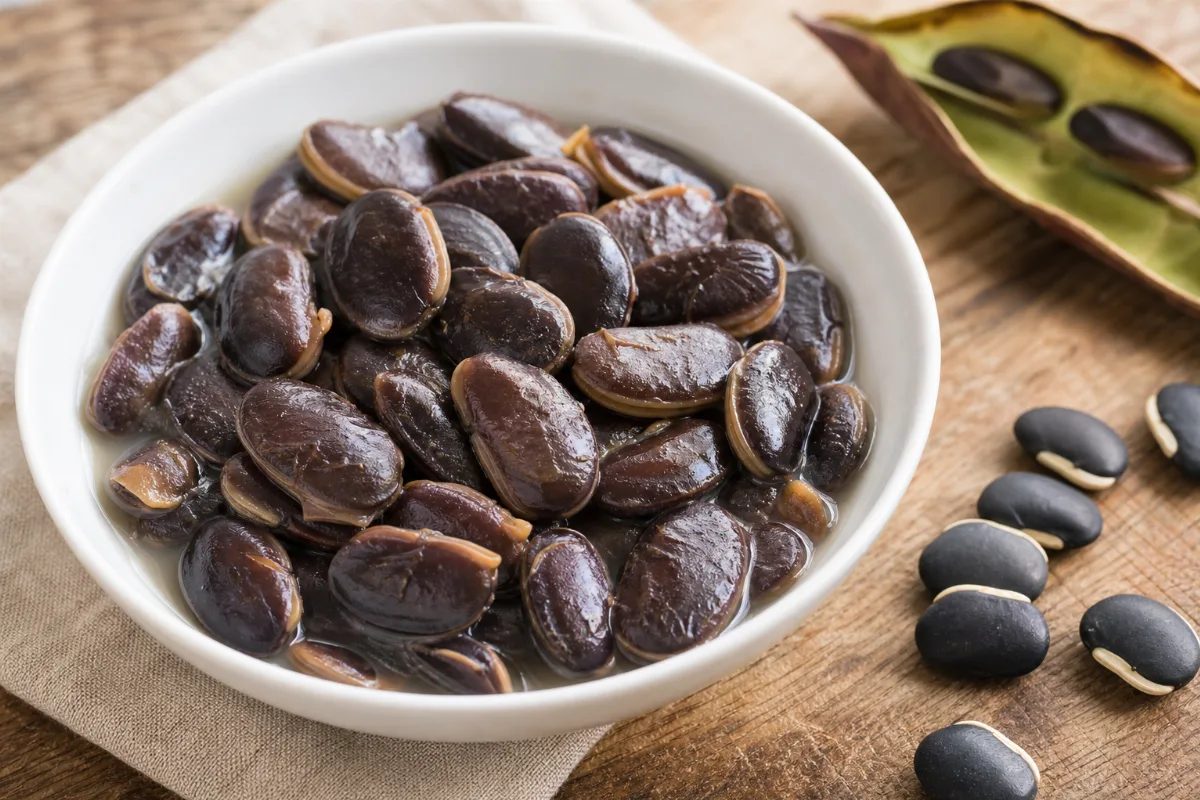
Hyacinth bean (Lablab purpureus) is a twining legume vine in the pea family. PROTA says it occurs wild in tropical Africa and India and was probably spread in Africa as early as 800 B.C. It is grown for its beans, flowers and leaves as food in Africa, Asia and the Caribbean, and also as an ornamental. In tropical Africa the most popular use is as a vegetable, the young green pods and immature seeds eaten boiled. In northern Nigeria and Kenya the dry seeds are eaten as a pulse, but they need prolonged cooking with several changes of water.
USDA data for mature seeds boiled without salt: 117 kcal per 100 g. One cup (194 g) has about 227 kcal, 15.8 g protein, 8.9 mg iron, 5.5 mg zinc, 0.66 mg copper, 0.52 mg thiamin and 654 mg potassium. USDA lists no fibre value for the cooked seeds (raw dry seeds: 25.6 g per 100 g). Dry raw seeds are much denser because they hold little water, so compare cooked with cooked. Young pods, canned and frozen beans were not read.
What the research shows
No trial of hyacinth beans in people was found (a PubMed search on 2026-10-26 returned none). So there is no direct evidence that eating them lowers cholesterol, blood sugar or anything else.
Pooled trials of whole pulses (beans, chickpeas, dried peas, lentils) found LDL cholesterol about 0.14 mmol/L lower, and an older pooled analysis found lower fasting blood sugar markers with large differences between trials. Hyacinth beans were not separated in either. Two recent narrative reviews describe phenolic plant chemicals and lab-level activities, but their abstracts name no human trial.
The firmest facts are about what the food contains, and about safety.
At a glance
Traditional uses history, not proof
- Young pods and immature seeds eaten boiled as a vegetable; dry seeds eaten as a pulse after prolonged cooking
- Folk uses listed in the Philippines, China and Namibia (for fever, digestion, flatulence and the heart); not proof that it treats anything
Studied for research
- Protein, iron, zinc, copper and thiamin, high certainty for the nutrient content, not a trial
- Cholesterol, insufficient evidence for this bean (pulses as a group lower LDL a little)
- Blood sugar, insufficient evidence for this bean (pulses as a group, high variation)
- Antioxidant and other lab claims, insufficient evidence (no human trial)
Main compounds
- Protein
- Iron, zinc and copper
- Thiamin
- Cyanogenic glycosides
- Lectins and trypsin inhibitors
- Tannins and phytate
- Phenolic compounds
Common forms
- Mature dry seeds, boiled thoroughly with several changes of water
- Young green pods and immature seeds, cooked as a vegetable (no nutrient values read)
- Leaves and flowers, eaten in places (not covered here)
- Extracts, powders and supplements are different products and are not covered
Research links: NC State Extension: lablab plant page (poison and edibility) · 2026 review: whole pulses and cholesterol · 2026 review: nutrition and health promise of lablab · Research Library · Genes & Biomarkers Library
What it is and its history
- Accepted scientific name
- Lablab purpureus
- Naming authority
- (L.) Sweet (as written in the 2025 review title; accepted-name status was not checked in GBIF or another database)
- Synonyms
- Name: Dolichos lablab; Note: NC State lists it as a previous name.; Name: Dolichos purpureus; Note: NC State lists it as a previous name.
- Common names
- Hyacinth bean (English); Lablab, lablab bean (English); Bonavist bean (English); Indian butter bean (English); Egyptian bean (English); Indian bean (English)
- Family or group
- Fabaceae (the legume or pea family), per NC State and Cornell.
- Classification
- Plantae > Fabaceae > Lablab > Lablab purpureus
- Native range
- PROTA: wild in tropical Africa (including Madagascar) and India; a north-eastern African origin is considered more likely. NC State gives tropical Africa.
- Habitat
- Not verified from a source read beyond a tropical legume (Cornell).
- What it looks like
- Roots: Not verified.; Stems: A twining, climbing vine 10 to 25 ft tall (NC State).; Leaves: Young leaves are eaten as a leafy vegetable in places (PROTA). Leaf shape not verified.; Flowers: Not verified in detail; the plant is grown as an ornamental vine as well as a food (NC State).; Fruit: Pods hold flat-oval seeds; young green pods and immature seeds are eaten cooked, and mature dry seeds after long cooking (PROTA, NC State). USDA household portion: 1 cup cooked seeds = 194 g.
- Cultivation
- Cornell calls it an annual or short-lived perennial tropical vine. No further cultivation facts were read.
- Harvest and processing
- Young pods and immature seeds are cooked as a vegetable; dry mature seeds need prolonged cooking with several changes of water (PROTA, NC State). Only boiled and raw mature seed values were read from USDA.
- Look-alikes and adulterants
- Name: Lima beans and winged beans; Note: Other beans on this site that also need proper cooking; their own pages cover them.; Name: Kidney beans; Note: The bean the FDA and Health Canada cooking steps are written for; different bean, different toxin.
- Sustainability and conservation
- Not assessed.
Photographs
Traditional use and history history, not clinical proof
| Tradition or era | Documented use | Source |
|---|---|---|
| Spread in Africa | PROTA says lablab was probably spread by people in Africa as early as 800 B.C. and that opinions differ on where it was first domesticated; a north-eastern African origin is considered more likely. | PROTA (s-prota-lablab) |
| Food in Africa, Asia and the Caribbean | Grown for its beans, flowers and leaves as food in Africa, Asia and the Caribbean (NC State). In tropical Africa the most popular use is as a vegetable (young pods and immature seeds, boiled); in northern Nigeria and Kenya the dry seeds are eaten as a pulse after prolonged cooking (PROTA). | NC State (s-ncsu-lablab); PROTA (s-prota-lablab) |
| Traditional medicine (Philippines, China, Namibia) | Listed as used in the Philippines and China as a stimulant, to reduce fever and flatulence, to stimulate digestion and as an antispasmodic, and in Namibia the root for heart conditions. Not proof of benefit. | NC State (s-ncsu-lablab) |
Traditional use shows how it was used. It does not show that it works or is safe today.
What is inside, and how it may work
What it contains and how those compounds act in cells and animals. Laboratory and animal mechanisms are not proven effects in people.
Main compounds
| Compound | Family | Where it is concentrated | Activity studied | Level of evidence |
|---|---|---|---|---|
| Cyanogenic glycosides | natural plant toxin | Seed (high in dry seeds per PROTA) No amount found in any source read | Can release cyanide; broken down by heat and cooking (PROTA, Cornell, NC State). 11 14 6 | Reference work |
| Lectins (haemagglutinins) and trypsin inhibitors | proteins | Seed No amount found | Reported in the seed by PROTA; lectins in raw beans are reduced by wet heat (Harvard). 14 8 | Reference work |
| Tannins and phytate | plant chemicals | Seed No amount found | Listed by PROTA as antinutritional factors; PROTA says the leaves are free of tannins. 14 | Reference work |
| Phenolic acids and flavonoids | polyphenols | Seeds and pods Immature pods had relatively higher antioxidant-associated phytochemicals than mature pods in one Bangladesh study (no figures read beyond the abstract) | Reviews link them to antioxidant and other activities; no human trial named. 3 5 1 | Lab unverified |
| Protein, iron, zinc, copper, thiamin | nutrients | Seed USDA cooked, per 100 g: protein 8.14 g, iron 4.58 mg, zinc 2.85 mg, copper 0.341 mg, thiamin 0.27 mg | Nutrient content only. 16 15 | Food composition |
Mechanisms, receptors and pathways
| Target or pathway | Gene or receptor | What was found | Level |
|---|---|---|---|
| Slowly digested carbohydrate (pulses in general) | Not specified | The 2009 meta-analysis abstract describes pulses as a source of slowly digestible carbohydrate, fibre and vegetable protein. This is the pulse-group explanation, not shown for hyacinth beans. 4 | Human data |
| Phenolic compounds | Not specified in the abstracts | Review abstracts say phenolics are associated with antioxidant, anti-inflammatory and antidiabetic properties. Whether this comes from lab, animal or human work was not read. 3 5 | Lab unverified |
Absorption, metabolism and elimination
- Absorption
- Not found.
- Distribution
- Not found.
- Metabolism
- Not found.
- Elimination
- Not found.
- Bioavailability
- Not established for hyacinth bean nutrients in the sources read. NKF says potassium and phosphorus in plant foods such as beans are absorbed less well than from animal foods.
Isolated compounds versus whole extracts
The pulse-group results are for whole pulses eaten as food. The lab-level claims in the reviews concern extracts and compounds. No human trial of cooked hyacinth beans, hyacinth bean extracts or supplements was found.
Nutritional composition
Nutrition from USDA FoodData Central (SR Legacy; values read 2026-10-26 from the downloaded SR Legacy data tables, file dated 2019-04-01). Hyacinth beans, mature seeds, boiled without salt (FDC 175211), per 100 g: 117 kcal, 8.14 g protein, 0.58 g fat (0.099 g saturated), 20.69 g carbohydrate, about 69 g water, 40 mg calcium, 4.58 mg iron, 82 mg magnesium, 120 mg phosphorus, 337 mg potassium, 7 mg sodium, 2.85 mg zinc, 0.341 mg copper, 0.482 mg manganese, 0.27 mg thiamin and 4 micrograms folate (DFE). USDA lists no fibre value and no vitamin K value for the cooked item. One cup (194 g, the USDA portion) is about 227 kcal, 15.8 g protein, 8.9 mg iron, 5.5 mg zinc, 0.66 mg copper, 0.52 mg thiamin, 654 mg potassium and 233 mg phosphorus (per-100-g values times 1.94). Raw dry seeds (FDC 175210), per 100 g: 344 kcal, 23.9 g protein, 25.6 g fibre, 5.1 mg iron, 9.3 mg zinc; dry seeds hold about 9 g of water against about 69 g in cooked seeds, so compare cooked with cooked. Young pods, canned and frozen beans were not read from USDA (PROTA gives separate values for fresh pods). Values vary with variety, growing place and cooking.
1 high certainty3 not enough evidence
What was looked at
The 4 benefits and uses checked for Hyacinth Beans (Lablab), each with how strong the evidence is. Tap one to open it.
- Protein, iron, zinc, copper and thiamin (nutrient content)High certainty
- Cholesterol (shown for pulses as a group, not this bean)Not enough evidence
- Blood sugar (shown for pulses as a group, not this bean)Not enough evidence
- Antioxidant, anti-inflammatory and other activities of plant compounds (lab-level claims)Not enough evidence
Lab markers tracked in the studies
LDL cholesterolFasting blood glucose
What is Hyacinth Beans (Lablab) good for?
The studied uses and how strong the human evidence is for each. No trial of hyacinth beans was found, so most results are for pulses as a group or are nutrient facts.
Benefits, one by one
Each card is a research question, not a promise. Tap a goal to filter. Open a card to see the studies, doses and limits.
Protein, iron, zinc, copper and thiamin (nutrient content)
High certaintyBoiled hyacinth bean seeds have 8.14 g of protein, 4.58 mg of iron, 2.85 mg of zinc, 0.341 mg of copper and 0.27 mg of thiamin per 100 g, by USDA data. This is what the food contains. No trial shows that eating it corrects a low level of any of them.
3 studiesMature seeds, boiled without salt (USDA item). Young pods, immature s…
Studies, doses and limits
What the trials found
USDA lists, per 100 g of mature seeds boiled without salt: 117 kcal, 8.14 g protein, 4.58 mg iron, 2.85 mg zinc, 0.341 mg copper, 0.482 mg manganese, 0.27 mg thiamin, 82 mg magnesium, 120 mg phosphorus and 337 mg potassium. One cup (194 g) is about 227 kcal, 15.8 g protein, 8.9 mg iron, 5.5 mg zinc, 0.66 mg copper and 0.52 mg thiamin. PROTA says the seed also contains phytate and tannins, which are usually discussed as reducing how well some minerals are absorbed; no source read measured this for hyacinth beans.
Results
The bean is a real source of protein and several minerals. How much of the iron and zinc the body absorbs from it was not read.
Effect sizes as reported
USDA, cooked: protein 8.14 g, iron 4.58 mg, zinc 2.85 mg, copper 0.341 mg, thiamin 0.27 mg per 100 g.
Why this rating
High that cooked seeds contain these nutrients (USDA data). Not tested as a treatment for any deficiency.
Form and dose studied
Mature seeds, boiled without salt (USDA item). Young pods, immature seeds, canned or frozen beans were not read.
Who was studied
General diet.
Limits
A single USDA entry (SR Legacy, 2019 file); values vary with variety, growing place and cooking. Mineral absorption not read.
Why researchers looked
People ask what nutrients a lesser-known bean gives, since it is a staple in parts of Africa and Asia.
Traditional use
Eaten cooked as a staple pulse and vegetable in parts of Africa, Asia and the Caribbean. Long use as food is not proof that it treats any condition.
Proposed mechanism Not applicable
Not applicable: this is food composition, not an effect.
A proposed mechanism does not show that the effect happens in people.
Mature seeds must be cooked thoroughly (see Safety).
Cholesterol (shown for pulses as a group, not this bean)
Not enough evidenceA 2026 pooled analysis of 38 trials found that eating whole pulses of many kinds lowered LDL cholesterol a little (about 0.14 mmol/L). No trial of hyacinth beans was found, so we cannot say the same holds for this bean.
1 studiesWhole pulses as food (trial detail: median 130 g a day, not advice).
Studies, doses and limits
What the trials found
Back 2026 pooled 38 trials (2,095 adults, median 6 weeks) of whole pulses (beans, chickpeas, dried peas, lentils). LDL cholesterol fell by 0.14 mmol/L (95% CI 0.08 to 0.19) and non-HDL by 0.22 mmol/L. Results by pulse type were similar. Hyacinth beans are not named in the abstract. A search of PubMed on 2026-10-26 for trials of hyacinth bean (Lablab purpureus) found none.
Results
A small fall in a blood marker for pulses in general. No result for hyacinth beans. LDL is a blood marker, not a heart attack or stroke outcome.
Effect sizes as reported
LDL -0.14 mmol/L (95% CI -0.19 to -0.08) for pulses as a group.
Why this rating
The pooled review rates certainty moderate to high for pulses as a group, but this bean was not tested, so for hyacinth beans the evidence is insufficient.
Form and dose studied
Whole pulses as food (trial detail: median 130 g a day, not advice).
Who was studied
Adults in trials.
Limits
Hyacinth beans were not separated. One author lists an industry body (Protein Industries Canada) as an affiliation. Cooked hyacinth beans have a different safety profile from most pulses (see Safety).
Why researchers looked
Pulses are fibre- and protein-rich foods, so researchers ask whether they lower blood fats.
Traditional use
Eaten cooked as a staple pulse and vegetable in parts of Africa, Asia and the Caribbean. Long use as food is not proof that it treats any condition.
Proposed mechanism Unknown
Not established in the abstract.
A proposed mechanism does not show that the effect happens in people.
See Safety: mature seeds need thorough boiling.
Blood sugar (shown for pulses as a group, not this bean)
Not enough evidenceA 2009 pooled analysis of 41 trials found that diets with pulses lowered fasting blood sugar and longer-term blood sugar markers, but results differed a lot between trials. No hyacinth bean trial was found.
1 studiesPulses as food.
Studies, doses and limits
What the trials found
Sievenpiper 2009 pooled 41 randomised trials in people with and without diabetes. Pulses alone (11 trials) lowered fasting glucose (-0.82, 95% CI -1.36 to -0.27) and insulin; pulses in low-GI diets (19 trials) lowered HbA1c or fructosamine. Differences between trials were high and unexplained for most outcomes. Hyacinth beans are not named.
Results
Promising for pulses as a group, with a lot of variation. Nothing specific to hyacinth beans.
Effect sizes as reported
Standardised mean difference for fasting glucose -0.82 (95% CI -1.36 to -0.27), pulses alone.
Why this rating
Pulse-group evidence only, with high unexplained variation, and a 2009 review. None for this bean.
Form and dose studied
Pulses as food.
Who was studied
Adults with and without diabetes in trials.
Limits
Hyacinth beans were not separated; funding is not stated in the abstract.
Why researchers looked
Pulses are slowly digested, so researchers ask whether they help blood sugar control.
Traditional use
Eaten cooked as a staple pulse and vegetable in parts of Africa, Asia and the Caribbean. Long use as food is not proof that it treats any condition.
Proposed mechanism Human data
The abstract describes pulses as a source of slowly digestible carbohydrate, fibre and vegetable protein that lowers the glycaemic index of a diet. This is the pulse-group explanation, not shown for hyacinth beans.
A proposed mechanism does not show that the effect happens in people.
If you take diabetes medicine, ask your clinician before big diet changes.
Antioxidant, anti-inflammatory and other activities of plant compounds (lab-level claims)
Not enough evidenceTwo recent review abstracts say hyacinth bean contains phenolic plant chemicals that are linked to antioxidant, anti-inflammatory and antidiabetic activity. These abstracts name no human trial, so this is not evidence that eating the bean does any of this.
3 studiesExtracts and compounds in the lab; not the cooked bean as eaten.
Studies, doses and limits
Results
Lab and review-level only. No effect in people was shown.
Effect sizes as reported
Not given in the abstracts.
Why this rating
No human trial found; only review abstracts that give no numbers. Lab or animal findings do not show effects of eating the cooked bean.
Form and dose studied
Extracts and compounds in the lab; not the cooked bean as eaten.
Limits
Only abstracts were read. Extracts and isolated compounds are different from the cooked bean.
Why researchers looked
Beans contain plant chemicals that show activity in the lab, so researchers explore them as possible food ingredients.
Traditional use
NC State lists traditional uses in the Philippines and China (as a stimulant, to reduce fever and flatulence, to stimulate digestion, as an antispasmodic) and in Namibia (the root, for heart conditions). Traditional use is not proof of benefit.
Proposed mechanism In vitro or animal unverified
Phenolic acids and flavonoids are said to be associated with antioxidant, antimicrobial, anti-inflammatory, antidiabetic and hepatoprotective properties. Which findings come from test tubes or animals was not read.
A proposed mechanism does not show that the effect happens in people.
We read no safety data on hyacinth bean extracts or supplements; this page does not cover them.
Connections to the rest of health
How Hyacinth Beans (Lablab) connects to the rest of our health knowledge graph. Every link says what kind of connection it is. A safety link (for example to the liver) is a warning, not a benefit. A study that merely mentions a topic never creates a benefit link.
Explore every connection: goals, body systems, organs, symptoms, genes
A. Wellness goals
| Connected to | Kind of connection | Evidence status | Context | Studies |
|---|---|---|---|---|
| Balanced Nutrition | High certainty | Protein, iron, zinc, copper and thiamin (nutrient content): Boiled hyacinth bean seeds have 8.14 g of protein, 4.58 mg of iron, 2.85 mg of zinc, 0.341 mg of copper and 0.27 mg of thiamin per 100 g, by USDA data. This is what the food contains. No trial shows that eating it corrects a low level of any of them. | 16 15 14 | |
| Heart Health | Not enough evidence | Cholesterol (shown for pulses as a group, not this bean): A 2026 pooled analysis of 38 trials found that eating whole pulses of many kinds lowered LDL cholesterol a little (about 0.14 mmol/L). No trial of hyacinth beans was found, so we cannot say the same holds for this bean. | 2 | |
| Blood Sugar Balance | Not enough evidence | Blood sugar (shown for pulses as a group, not this bean): A 2009 pooled analysis of 41 trials found that diets with pulses lowered fasting blood sugar and longer-term blood sugar markers, but results differed a lot between trials. No hyacinth bean trial was found. | 4 | |
| Healthy Aging | Not enough evidence | Antioxidant, anti-inflammatory and other activities of plant compounds (lab-level claims): Two recent review abstracts say hyacinth bean contains phenolic plant chemicals that are linked to antioxidant, anti-inflammatory and antidiabetic activity. These abstracts name no human trial, so this is not evidence that eating the bean does any of this. | 3 5 11 |
B. Body systems
| Connected to | Kind of connection | Evidence status | Context | Studies |
|---|---|---|---|---|
| Digestive System | Biological association | High certainty | Studied for: Protein, iron, zinc, copper and thiamin (nutrient content) | 16 15 14 |
| Cardiovascular System | Biological association | Not enough evidence | Studied for: Cholesterol (shown for pulses as a group, not this bean) | 2 |
| Endocrine System | Biological association | Not enough evidence | Studied for: Blood sugar (shown for pulses as a group, not this bean) | 4 |
| Metabolism Weight | Biological association | Not enough evidence | Studied for: Antioxidant, anti-inflammatory and other activities of plant compounds (lab-level claims) | 3 5 11 |
C. Body parts and organs
E. Health conditions
| Connected to | Kind of connection | Evidence status | Context | Studies |
|---|---|---|---|---|
| Food poisoning | Adverse effect or risk | Documented risk | NC State lists the seeds as a low-severity poison; cooking is said to break the cyanogenic compounds down. NC State lists mature dry seeds as a low-severity poison if not thoroughly boiled; no case reports were found. Preparation or compound: Undercooked mature dry seeds |
11 14 |
| Kidney disease | Documented risk | People on dialysis or with oxalate stones should ask their kidney team. People on dialysis or with calcium oxalate stones should ask their kidney team about beans. Preparation or compound: Potassium, phosphorus and oxalate in beans |
13 |
I. Biomarkers
| Connected to | Kind of connection | Evidence status | Context | Studies |
|---|---|---|---|---|
| LDL cholesterol | Biological association | Not enough evidence | Measured in trials: lowered (pulses as a group). A lab change is not the same as a health benefit. | 2 |
| Fasting blood glucose | Biological association | Not enough evidence | Measured in trials: lowered (pulses as a group). A lab change is not the same as a health benefit. | 4 |
K. Biological pathways
| Connected to | Kind of connection | Evidence status | Context | Studies |
|---|---|---|---|---|
| Iron | Preliminary mechanism | Food composition | Cooked seeds contain iron; see the Iron page. | 16 |
| Zinc | Preliminary mechanism | Food composition | Cooked seeds contain zinc. | 16 |
| Potassium | Preliminary mechanism | Food composition | Cooked seeds contain potassium; relevant to kidney diets. | 16 13 |
L. Active compounds
| Connected to | Kind of connection | Evidence status | Context | Studies |
|---|---|---|---|---|
| Cyanogenic glycosides | Biological association | Reference work | Can release cyanide; broken down by heat and cooking (PROTA, Cornell, NC State). Preparation or compound: Seed (high in dry seeds per PROTA) |
11 14 6 |
| Lectins (haemagglutinins) and trypsin inhibitors | Biological association | Reference work | Reported in the seed by PROTA; lectins in raw beans are reduced by wet heat (Harvard). Preparation or compound: Seed |
14 8 |
| Tannins and phytate | Biological association | Reference work | Listed by PROTA as antinutritional factors; PROTA says the leaves are free of tannins. Preparation or compound: Seed |
14 |
| Phenolic acids and flavonoids | Biological association | Lab unverified | Reviews link them to antioxidant and other activities; no human trial named. Preparation or compound: Seeds and pods |
3 5 1 |
| Protein, iron, zinc, copper, thiamin | Biological association | Food composition | Nutrient content only. Preparation or compound: Seed |
16 15 |
Each connection is stored with the ingredient, the connected record, the kind of connection, the evidence status, the supporting studies, the preparation or compound involved, and a review date (last reviewed October 26, 2026).
Evidence at a glance: what the research found for 4 outcomes
Each outcome below is one thing researchers measured. Certainty is how far the evidence can be trusted, not how well it works. The full studies are on the next tab.
The evidence
The research centre for Hyacinth Beans (Lablab). Every record here was checked against PubMed or the publisher's page; we never list a study we have not verified.
Evidence by outcome
Bars show how many studies we found for each outcome, not how well it works. People are added up across trials only (reviews are not added, to avoid double counting).
How we rate evidence
High certainty
Several well-run trials or reviews agree; further research is unlikely to change the picture much.
Moderate certainty
Good trials point the same way, but some doubt remains.
Low certainty
Small, short or inconsistent trials. The finding could change with better research.
Very low certainty
Very little or very weak human data. Treat as a possibility only.
Mixed findings
Trials or reviews disagree with each other.
Not enough evidence
Not enough human research to say either way.
Evidence against
Good research found no benefit, or found harm.
We take the reviewers' own risk-of-bias and GRADE statements where they exist, and otherwise judge from study size, design, consistency, directness and whether a product matches what is sold. Many publications do not make evidence high. Method note: We started from our existing hyacinth bean summary, re-checked nutrition against the USDA FoodData Central SR Legacy tables, re-read the NC State Extension, PROTA, Cornell, FDA, Harvard, NKF, NIDDK and MedlinePlus pages, and re-read PubMed abstracts for the reviews. Only abstracts were read for studies. Little research exists on this bean, so the page is short. Items we could not verify are flagged in the research gaps.
Study library: every study we checked 16
| Study | Design | People | Product, dose, length | Result |
|---|---|---|---|---|
| Akbar 2026 Nutritional, Phytochemical, Mineral, and Morphological Variations in Hyacinth Bean (Lablab purpureus L.) Cultivars at Different Developmental Stages. Food Sci Nutr · PMID 42441049 · DOI |
Laboratory composition study n/a |
Pods of six hyacinth bean varieties grown in Bangladesh, at three stages of ripeness | Hyacinth bean pods (not mature dry seeds) Pods |
Pod weight and dry matter rose with ripeness and moisture fell. Potassium was the main mineral measured (780.3 to 2346.0 mg per kg dry weight). Immature pods had relatively higher antioxidant-linked plant chemicals. Large differences were seen between varieties and ripeness stages. Qualitative; potassium 780.3 to 2346.0 mg/kg dry weight Methods, limits and fundingOutcomes: Pod size and weight, moisture, protein, fat, fibre, ash, total phenolics, flavonoids, vitamin C, calcium, potassium, phosphorus, iron Limitations: A composition study of pods, not seeds, and not a health trial. It did not measure cyanogenic glycosides or lectins in the abstract. Funding and conflicts: The authors declare no conflicts of interest. Read: abstract |
| Back 2026 Effect of Different Types of Whole Dietary Pulses on Established Therapeutic Lipid Targets for Cardiovascular Risk Reduction: An Updated Systematic Review and Dose-Response Meta-Analysis of Randomized Controlled Trials. J Am Heart Assoc · PMID 42132198 · DOI |
Systematic review meta analysis |
2095 38 trials (52 comparisons), 2,095 adults |
Whole dietary pulses of many types (beans, chickpeas, dried peas, lentils), not hyacinth beans specifically Whole pulses as food Median 130 g a day (trial detail, not advice) Median 6 weeks (trials of at least 3 weeks) · vs Diets without pulses |
Whole pulses lowered LDL cholesterol, non-HDL cholesterol and apoB, and slightly lowered HDL. Results by pulse type were similar. A straight-line link was shown for beans up to 1 cup a day. The authors rated certainty moderate to high for all outcomes except apoB (very low). They say future studies on chickpeas, dried peas and lentils are warranted. Hyacinth beans are not named in the abstract. LDL -0.14 mmol/L; non-HDL -0.22 mmol/L; apoB -0.08 g/L; HDL -0.03 mmol/L (LDL -0.19 to -0.08; non-HDL -0.30 to -0.14; apoB -0.13 to -0.03; HDL -0.05 to -0.01) Methods, limits and fundingOutcomes: LDL and other blood fats Limitations: Pulses as a group; hyacinth beans were not separated. Median 6 weeks, median 130 g a day (trial detail, not advice). Funding and conflicts: Support is listed as non-US government; one author lists Protein Industries Canada (an industry body) as an affiliation. Flagged as a possible industry link. Registration: PROSPERO CRD42023432826 Read: abstract |
| Morshed 2026 Beyond the Bean: Current Insights into the Nutritional Values, Bioactive Compounds, and Health Promise of Lablab purpureus. J Nutr · PMID 42323134 · DOI |
Narrative review mixed |
Review of the hyacinth bean literature (number of studies not stated in the abstract) | Lablab purpureus (hyacinth bean) plant parts and phenolic compounds Seeds and other plant parts |
The abstract says the bean has a phytochemical profile including phenolic acids and flavonoids, which are "associated with" antioxidant, antimicrobial, anti-inflammatory, antidiabetic and hepatoprotective properties, and that it is rich in protein, amino acids, fibre, vitamins and minerals. It names no human trial. It calls the bean underused in research and lists knowledge gaps and research priorities. Qualitative Methods, limits and fundingOutcomes: Nutrition, phytochemicals and reported therapeutic properties Limitations: Only the abstract was read, so which findings are lab, animal or human is not known. The abstract names no human trial. Funding and conflicts: The authors report no conflicts of interest. Read: abstract |
| Sievenpiper 2009 Effect of non-oil-seed pulses on glycaemic control: a systematic review and meta-analysis of randomised controlled experimental trials in people with and without diabetes. Diabetologia · PMID 19526214 · DOI |
Systematic review meta analysis |
41 randomised trials in people with and without diabetes | Non-oil-seed pulses (chickpeas, beans, peas, lentils and others), alone or in low-GI or high-fibre diets, not hyacinth beans specifically Pulses as food Trial detail not given in the abstract At least 7 days · vs Control diets |
Pulses alone (11 trials) lowered fasting glucose and insulin. Pulses in low-GI diets (19 trials) lowered HbA1c or fructosamine. Pulses in high-fibre diets (11 trials) lowered fasting glucose and glycosylated proteins. Differences between trials were high and mostly unexplained. Standardised mean differences: fasting glucose -0.82 (pulses alone); glycosylated proteins -0.28 (low-GI diets) (Fasting glucose -0.82 (-1.36 to -0.27); insulin -0.49 (-0.93 to -0.04); glycosylated proteins -0.28 (-0.42 to -0.14); high-fibre diets: fasting glucose -0.32 (-0.49 to -0.15)) Methods, limits and fundingOutcomes: Fasting glucose, insulin, glycosylated proteins (HbA1c or fructosamine) Limitations: Pulses as a group, hyacinth beans not separated. High unexplained heterogeneity. Published in 2009. Funding and conflicts: Funding is not stated in the abstract. Read: abstract |
| Zhou 2025 An underutilized bean: hyacinth bean [Lablab purpureus (L.) sweet]: bioactive compounds, functional activity, and future food prospect and applications. J Sci Food Agric · PMID 38961686 · DOI |
Narrative review mixed |
Review of the hyacinth bean literature (number of studies not stated in the abstract) | Lablab purpureus (hyacinth bean) bioactive compounds and processed products Beans and products |
The abstract says the bean is traditionally used medicinally in China and holds promise for further research and food use, that it contains a diverse array of bioactive compounds, and that eating the bean and its products is "associated with" a variety of health benefits, including protection against metabolic disease. It gives no numbers and names no trial. Qualitative Methods, limits and fundingOutcomes: Bioactive compounds and reported health properties Limitations: Only the abstract was read. It gives no trial, dose or numbers, so the strength of its claims cannot be judged. Funding and conflicts: Not stated in the abstract. Read: abstract |
| s-cornell-lablab Cornell University, Crops of the World Garden: Lablab (hyacinth bean) · Source |
Plant reference database n/a |
Methods, limits and fundingRead: full-text | ||
| s-fda-natural-toxins FDA: Natural Toxins in Food · Source |
Health agency n/a |
Methods, limits and fundingRead: full-text | ||
| s-harvard-lectins Harvard T.H. Chan School of Public Health, The Nutrition Source: Lectins · Source |
University guidance n/a |
Methods, limits and fundingRead: full-text | ||
| s-healthcanada-lectins Health Canada: Lectins in legumes · Source |
Health agency n/a |
Methods, limits and fundingRead: summary-only | ||
| s-medlineplus-foodallergy MedlinePlus: Food allergy · Source |
Health agency n/a |
Methods, limits and fundingRead: full-text | ||
| s-ncsu-lablab NC State Extension Plant Toolbox: Lablab purpureus (hyacinth bean) · Source |
Plant reference database n/a |
Methods, limits and fundingRead: full-text | ||
| s-niddk-gas NIDDK: Gas in the digestive tract, eating, diet and nutrition · Source |
Health agency n/a |
Methods, limits and fundingRead: full-text | ||
| s-nkf-beans National Kidney Foundation: Beans · Source |
Health agency n/a |
Methods, limits and fundingRead: full-text | ||
| s-prota-lablab PROTA (Plant Resources of Tropical Africa): Lablab purpureus · Source |
Plant reference database n/a |
Methods, limits and fundingRead: full-text | ||
| s-usda-fdc-175210 USDA FoodData Central: Hyacinth beans, mature seeds, raw (FDC 175210, SR Legacy) · Source |
Food composition database n/a |
Methods, limits and fundingRead: full-text | ||
| s-usda-fdc-175211 USDA FoodData Central: Hyacinth beans, mature seeds, cooked, boiled, without salt (FDC 175211, SR Legacy) · Source |
Food composition database n/a |
Methods, limits and fundingRead: full-text |
What we do not know yet
- No trial of hyacinth beans in people was found; every health result here is for pulses as a group or is a nutrient fact.
- No cyanide amount, cooking time or poisoning case report was found, so no cooking time is given.
- Allergy to this bean, FODMAP rating, oxalate and purine values, and advice for pregnancy, breastfeeding and young children were not found.
- The full text of the two reviews was not read, so lab, animal and human findings were not separated.
- Pods, canned and frozen beans, and heavy metals, pesticides and mycotoxins were not researched.
How new research is added
New studies are found by a saved PubMed search and placed in a review queue before the page changes.
Lab markers
What changed in blood or saliva tests during trials. A changed number is not the same as feeling or being healthier, and we give no "normal ranges".
Metabolic 2
LDL cholesterol
Lowered (pulses as a group) in trials
The 'bad' cholesterol carried in the blood. Higher levels are linked to more heart disease.
Not enough evidenceResults and what it means
Why it was measured
It is the usual blood marker used in diet trials for heart risk.
Statistical vs. clinical meaning
A small fall for pulses as a group. No trial of hyacinth beans.
Safety implication
None specific.
| Study | Result | People | Product |
|---|---|---|---|
| 2 | LDL -0.14 mmol/L (95% CI -0.19 to -0.08); non-HDL -0.22; apoB -0.08 g/L; HDL -0.03 | 2,095 adults in 38 trials | Whole pulses of many types, median 130 g/day (trial detail), median 6 weeks |
Fasting blood glucose
Lowered (pulses as a group) in trials
Blood sugar measured after not eating for several hours.
Not enough evidenceResults and what it means
Why it was measured
A common marker of blood sugar control.
Statistical vs. clinical meaning
Promising for pulses as a group, with large differences between trials. Nothing for hyacinth beans.
Safety implication
Ask your clinician before big diet changes if you take diabetes medicine.
| Study | Result | People | Product |
|---|---|---|---|
| 4 | Fasting glucose SMD -0.82 (95% CI -1.36 to -0.27) with pulses alone (11 trials); high heterogeneity | 41 trials in people with and without diabetes | Pulses alone or in low-GI or high-fibre diets, at least 7 days |
Safety
What studies and official sources say about side effects, medicines and who should check first. Each point shows what kind of evidence it comes from.
Main points to know 5
- Do not eat the mature dry seeds raw or lightly cooked. NC State Extension lists the seeds as a low-severity poison for people because of a cyanogenic glycoside, a natural chemical that can release cyanide. It says the seeds are toxic only if large amounts are eaten, and lists weakness, vomiting, labored breathing, twitching, stupor and convulsions from mature dried seeds. NC State and PROTA both say mature dried seeds are edible only after thorough or prolonged boiling with several changes of water; Cornell says the compounds are depleted by food preparation and cooking, and PROTA says they are broken down by heat. None of the sources read gives a cooking time in minutes, an amount of cyanide, or a poisoning case report for this bean, so this page gives no cooking time. For severe symptoms after eating beans, get medical help. Reference work 11 14 6
- Raw or undercooked beans: lectins and trypsin inhibitors. PROTA reports haemagglutinins (lectins), trypsin inhibitors, tannins and phytate in the seed. The FDA says the lectin in raw or undercooked red kidney beans can cause nausea, severe vomiting and diarrhea. Harvard says boiling inactivates most lectins but that raw beans simmered at low heat, such as in a slow cooker, will not remove all of them. So do not cook dry hyacinth beans only in a slow cooker. Authoritative guidance 14 7 8
- Do not copy kidney bean cooking times. The FDA gives its soak-and-boil times for red kidney beans and the lectin in them. We found no source that says those times are enough for hyacinth beans or for their cyanide-releasing compounds, which are a different problem. Follow local cooking practice for this bean (several changes of water, thorough boiling), and ask a food-safety source for your country if unsure. Authoritative guidance 7 11 14
- Gas and bloating. NIDDK lists beans, peas and lentils among foods whose carbohydrates can cause extra gas. No data specific to this bean were found. Authoritative guidance 12
- Kidney disease and kidney stones. The National Kidney Foundation says the potassium and phosphorus in beans are absorbed less well than from animal foods, and most people with chronic kidney disease not on dialysis do not need to limit beans for these minerals. People on dialysis should plan beans with a kidney dietitian, and people with a history of calcium oxalate stones should ask about oxalates, since many beans are high in them. No oxalate value for hyacinth beans was read. Authoritative guidance 13 16
Side effects 4
| Effect | How often | Severity and recovery | Evidence |
|---|---|---|---|
| Poisoning from undercooked mature seeds (cyanogenic glycoside): weakness, vomiting, labored breathing, twitching, stupor, convulsions A plant reference statement, not a clinical report. Cooking is said to break the compounds down. | Not found. NC State says toxic only if large quantities are eaten; no case report or rate was read. | listed by NC State as low-severity poison, with serious symptoms named Not found | Reference work 11 14 6 |
| Nausea, vomiting and diarrhea from lectins in raw or undercooked beans The FDA text is about kidney beans; PROTA lists lectins in hyacinth bean seed, so the concern is applied by analogy. | Not found for hyacinth beans. | can be severe in raw kidney beans per the FDA Not found | Authoritative guidance 7 8 |
| Gas and bloating General statement about legumes. | Not found for this bean. | mild Not found | Authoritative guidance 12 |
| Allergic reaction MedlinePlus names peanut and soy among common food allergens; how this bean relates to them was not found. | Not found. No source on allergy to hyacinth beans was read. | unknown for this bean; food allergy in general can be severe Not found | None found 10 |
Liver
No liver injury from eating hyacinth beans was found in the sources read. A liver-safety source (such as LiverTox) was not searched for food.
How often. No frequency was found.
Monitoring. No agency monitoring advice was found.
This is a safety connection. It is not evidence that Hyacinth Beans (Lablab) supports liver health.
Medicines and supplements 3
| With | Why it matters | Importance | Evidence | What to do |
|---|---|---|---|---|
| Medicines for diabetes or high cholesterol prescription | Pulses as a group lowered blood sugar and cholesterol markers a little in pooled trials; a large change in diet could in theory add to a medicine's effect. | No source read ties hyacinth beans to a specific medicine interaction. This is a general caution, not a documented interaction. | Theoretical Not enough evidence 4 2 | Ask your clinician or pharmacist before making big diet changes if you take diabetes or cholesterol medicine. |
| Warfarin (blood thinner) prescription | Vitamin K affects clotting and warfarin works against it. USDA lists no vitamin K value for boiled hyacinth beans. | No source read names this bean as a concern for warfarin, and its vitamin K content is not known from USDA. A steady diet matters with warfarin. | None found Not enough evidence 16 | Ask your warfarin clinic about any big change in diet. Do not change medicine on your own. |
| Supplements, powders and extracts of hyacinth bean supplement | Not studied. | We read no safety or interaction data on extracts or supplements, so none are covered. | None found Not enough evidence 3 | Ask a doctor or pharmacist before using any bean extract or supplement. |
Who should check first 3
| Situation | Advice | Evidence |
|---|---|---|
| Eating raw or undercooked mature dry seeds | Do not. Mature dried seeds are described as edible only after thorough boiling with changes of water. | Reference work 11 14 |
| Kidney disease on dialysis, or a history of calcium oxalate kidney stones | Ask your kidney team or dietitian how beans fit your plan. | Authoritative guidance 13 |
| Known allergy to peanut, soy or other legumes | Ask an allergist before trying hyacinth beans; no source read describes allergy or cross-reaction for this bean. For trouble breathing or swelling of the face or throat, call emergency services. | None found 10 |
Overdose, product quality and regulators
Summary. Mature dry seeds contain cyanogenic glycosides (PROTA: a high content in dry seeds) that cooking breaks down; NC State rates the poison severity low and says it matters only with large amounts. None of the sources read gives a cooking time in minutes, an amount of cyanide, or a poisoning case report for this bean, so this page gives no cooking time.
Animal. Not reviewed.
Overdose response. Not found. NC State lists weakness, vomiting, labored breathing, twitching, stupor and convulsions from mature dried seeds.
Genotoxicity. Not researched.
Toxic or hazardous parts. Mature dried seeds (cyanogenic glycoside, per NC State). PROTA also lists lectins, trypsin inhibitors, tannins and phytate in the seed, and says the leaves are free of tannins. Young pods and immature seeds are eaten cooked as a vegetable (NC State, PROTA); no source read tests whether eating them raw is safe.
Pesticide residues, heavy metals, mould and mycotoxins were not researched for this bean.
| Body | Action | Date |
|---|---|---|
| FDA (US) (United States) | Natural Toxins in Food: lectin in raw or undercooked beans can cause nausea, severe vomiting and diarrhea; soak at least 5 hours and boil in fresh water at least 30 minutes for kidney beans. Hyacinth beans are not named. source | 2024-09-26 |
| National Kidney Foundation (US) (United States) | Beans: most people with chronic kidney disease not on dialysis do not need to limit beans; dialysis patients plan with a kidney dietitian; people with calcium oxalate stones ask about oxalates. source |
When to get medical help
- Repeated vomiting, severe diarrhoea, difficulty breathing, twitching, confusion, drowsiness or convulsions after eating hyacinth beans or any undercooked beans: get emergency medical help
- Trouble breathing, swelling of the lips, face or throat, widespread hives or collapse after eating beans (possible anaphylaxis): call emergency services
Stop using the product and contact a clinician or emergency service. In the US, Poison Control is 1-800-222-1222.
General information only, not medical advice. Ask a clinician or pharmacist before use, especially with medicines, in pregnancy or with a health condition. See the Natural Remedy Safety guide.
Frequently asked questions
What are hyacinth beans?
Are hyacinth beans poisonous?
Mature dry seeds can be, if not cooked properly. NC State Extension lists the seeds as a low-severity poison because of a cyanogenic glycoside and says they are toxic only if large amounts are eaten. Mature dried seeds are described as edible after thorough boiling with several changes of water.
Can I eat hyacinth beans raw?
Can I use the kidney bean cooking times for hyacinth beans?
Can I cook dry hyacinth beans in a slow cooker?
Do hyacinth beans lower cholesterol?
Not shown for this bean. Pooled trials of whole pulses in general found LDL cholesterol about 0.14 mmol/L lower, but hyacinth beans were not tested or separated.
Do hyacinth beans help with blood sugar or diabetes?
Not shown for this bean. Pooled trials of pulses in general found lower fasting glucose and longer-term markers, with large differences between trials. This is not a treatment for diabetes.
Are hyacinth beans a good source of protein and iron?
Cooked seeds have 8.14 g of protein and 4.58 mg of iron per 100 g by USDA data. That is the food's content. No trial shows eating them corrects low iron, and how well the iron is absorbed was not read.
Are there proven health benefits of lablab extracts or supplements?
Do hyacinth beans cause gas?
Beans and other legumes can. NIDDK lists beans, peas and lentils among foods whose carbohydrates can cause extra gas. No data specific to this bean were found.
Are hyacinth beans OK with kidney disease or kidney stones?
Ask your kidney team. The National Kidney Foundation says most people with chronic kidney disease not on dialysis do not need to limit beans, dialysis patients should plan beans with a kidney dietitian, and people with calcium oxalate stones should ask about oxalates. No oxalate value for this bean was read.
Are hyacinth beans safe in pregnancy, for children, or with medicines?
No official guidance on this bean in pregnancy, breastfeeding or for children was found, and no source names a medicine interaction. Because undercooked mature seeds are a documented poison, cook them thoroughly and ask your doctor, midwife, pharmacist or child's clinician. Allergy to this bean was not described in any source read.
Explore by health goal
Balanced NutritionHeart HealthBlood Sugar BalanceHealthy Aging
Editorial transparency
- Written by
- AlternativeMed editorial team. Research compiled with AI assistance, then checked against the sources listed.
- Medical review
- None. This page has not been reviewed by a physician or pharmacist.
- First published
- 2026-10-26
- Last substantive update
- 2026-10-26
- How we research
- We started from our existing hyacinth bean summary, re-checked nutrition against the USDA FoodData Central SR Legacy tables, re-read the NC State Extension, PROTA, Cornell, FDA, Harvard, NKF, NIDDK and MedlinePlus pages, and re-read PubMed abstracts for the reviews. Only abstracts were read for studies. Little research exists on this bean, so the page is short. Items we could not verify are flagged in the research gaps.
- How we rate evidence
- See "How we rate evidence" in the Evidence tab.
- Independence
- No product is promoted on this page. No affiliate links are shown.
Sources 16
Each source was opened and checked. Where we read only the abstract, it says so. The small numbers in the text point here.
- Akbar GW, Bristy NN, Ismail T, et al.. Nutritional, Phytochemical, Mineral, and Morphological Variations in Hyacinth Bean (Lablab purpureus L.) Cultivars at Different Developmental Stages.. Food Sci Nutr. 2026. PMID 42441049. DOI 10.1002/fsn3.72086. (abstract)
- Back S, Yang S, Rossi A, et al.. Effect of Different Types of Whole Dietary Pulses on Established Therapeutic Lipid Targets for Cardiovascular Risk Reduction: An Updated Systematic Review and Dose-Response Meta-Analysis of Randomized Controlled Trials.. J Am Heart Assoc. 2026. PMID 42132198. DOI 10.1161/JAHA.125.046659. (abstract)
- Morshed MM, Banik S, Rashid MMO, et al.. Beyond the Bean: Current Insights into the Nutritional Values, Bioactive Compounds, and Health Promise of Lablab purpureus.. J Nutr. 2026. PMID 42323134. DOI 10.1016/j.tjnut.2026.101681. (abstract)
- Sievenpiper JL, Kendall CW, Esfahani A, et al.. Effect of non-oil-seed pulses on glycaemic control: a systematic review and meta-analysis of randomised controlled experimental trials in people with and without diabetes.. Diabetologia. 2009. PMID 19526214. DOI 10.1007/s00125-009-1395-7. (abstract)
- Zhou J, Wang W, Zhang Z, et al.. An underutilized bean: hyacinth bean [Lablab purpureus (L.) sweet]: bioactive compounds, functional activity, and future food prospect and applications.. J Sci Food Agric. 2025. PMID 38961686. DOI 10.1002/jsfa.13708. (abstract)
- . Cornell University, Crops of the World Garden: Lablab (hyacinth bean). . . (full-text)
- . FDA: Natural Toxins in Food. . . (full-text)
- . Harvard T.H. Chan School of Public Health, The Nutrition Source: Lectins. . . (full-text)
- . Health Canada: Lectins in legumes. . . (summary-only)
- . MedlinePlus: Food allergy. . . (full-text)
- . NC State Extension Plant Toolbox: Lablab purpureus (hyacinth bean). . . (full-text)
- . NIDDK: Gas in the digestive tract, eating, diet and nutrition. . . (full-text)
- . National Kidney Foundation: Beans. . . (full-text)
- . PROTA (Plant Resources of Tropical Africa): Lablab purpureus. . . (full-text)
- . USDA FoodData Central: Hyacinth beans, mature seeds, raw (FDC 175210, SR Legacy). . . (full-text)
- . USDA FoodData Central: Hyacinth beans, mature seeds, cooked, boiled, without salt (FDC 175211, SR Legacy). . . (full-text)
Where to buy
Check the label first. Whatever you buy, look for these:
- A recent packed-on date: very old dried beans cook unevenly
- Organic or not, and the country of origin
- Whether you want dried or canned
- Soak and cook thoroughly; some raw beans are unsafe
Talk to a pharmacist or doctor before you start any supplement, especially if you take medicines. See the Safety tab for interactions.
Support our free guides: as an Amazon Associate we earn from qualifying purchases. Full disclosure.


