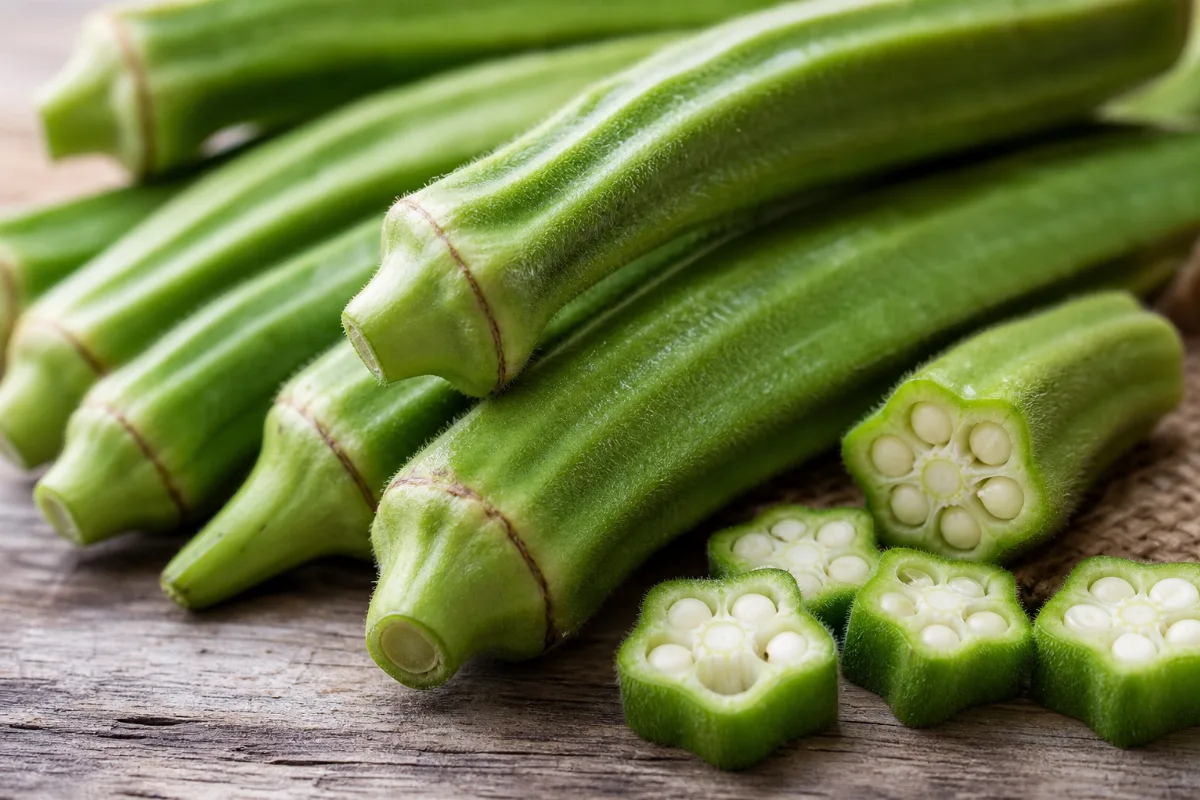
Vegetables · Vegetable
Okra
Abelmoschus esculentus · also called Lady's finger, gumbo, quimbombo (Spanish)
Okra is a green pod vegetable, also called lady's finger. It supplies fibre, vitamin C, vitamin K, folate, magnesium and manganese. Reviews of small trials, mostly in people with diabetes or prediabetes, found lower blood sugar markers with okra products, but the certainty is low to very low and it is not a treatment. The main cautions are warfarin (vitamin K), diabetes medicines, kidney stones (oxalate, weak evidence) and rare allergy.
General information, not medical advice. Last substantive update · Not medically reviewed. A named clinician has not signed off on this page. How this page is made
About Okra
Okra is a nutritious pod vegetable with fibre, vitamin C and vitamin K. It is a food, not a proven remedy: the blood sugar and cholesterol findings come from small trials of okra products, mostly in people with diabetes, rated low to very low certainty.
What it is
Okra (Abelmoschus esculentus) is a flowering plant in the mallow family. The green pods are eaten as a vegetable, and the pod releases a slippery gel called mucilage when it is cut and cooked. Reviewers describe it as native to Africa and used as traditional medicine in Africa and India.
USDA data for raw okra, per 100 g (one cup): 33 kcal, 3.2 g fibre, 1.93 g protein, 23.0 mg vitamin C, 31.3 micrograms vitamin K, 60 micrograms folate (DFE), 57 mg magnesium, 0.79 mg manganese, 299 mg potassium and 82 mg calcium. Cooked, frozen, canned and pickled values were not read.
What the research shows
Five meta-analyses pooled small trials of okra products, mostly in people with type 2 diabetes or prediabetes. All found lower fasting glucose and HbA1c than placebo or control. The 2026 review of 14 trials (836 people) rates the certainty very low for most outcomes and low for HbA1c, and six of its trials were poor quality.
Total cholesterol was lower in four reviews. LDL, triglycerides, blood pressure and insulin resistance gave mixed results, and one review found lower CRP.
The reviews pool many of the same trials, and their abstracts do not say whether fresh pods, powder, seed or capsules were used. We found no trial of okra water, okra fibre or okra mucilage in people.
Food versus powders, capsules and extracts
The trials do not describe their okra products in the abstracts, and one review gives doses in milligrams a day, which points to dried or capsule products (our reading). Results for those products do not carry over to eating fresh pods. The mouse study used a fermented mucilage fraction, which is neither food nor a human trial.
Amounts
This page gives no amounts to eat or take. Ask a doctor, pharmacist or dietitian what is right for you, especially if you take warfarin or diabetes medicines, or have kidney stones.
At a glance
Traditional uses history, not proof
- Eaten as a vegetable, cooked or raw
- Reviewers describe okra as used in traditional medicine in Africa and India
- Long use as food is not proof that it treats any condition
Studied for research
- Blood sugar markers (fasting glucose, HbA1c), low certainty, trials mostly in people with diabetes or prediabetes
- Insulin resistance (HOMA-IR), mixed results
- Cholesterol and blood fats, mixed results
- Blood pressure, mixed results
- Inflammation marker (CRP), very low certainty, one review
- Fibre and mucilage, insufficient evidence in people
- Lab and mouse findings, very low certainty
Main compounds
- Dietary fibre and mucilage
- Vitamin K (phylloquinone)
- Vitamin C
- Folate
- Magnesium
- Manganese
- Beta-carotene
- Oxalate
Common forms
- Fresh pods, cooked or raw, as food
- Frozen, canned or pickled pods as food
- Okra powder, capsules or extracts (the trials' product forms are not described in the abstracts)
Research links: 2026 review: okra in dysglycaemia and metabolic dysfunction · NHS: Warfarin · USDA FoodData Central: Okra, raw · Research Library · Genes & Biomarkers Library
What it is and its history
- Accepted scientific name
- Abelmoschus esculentus
- Naming authority
- (L.) Moench (GBIF accepted)
- Synonyms
- Hibiscus esculentus L.
- Common names
- Okra (English); Lady's finger (English); Gumbo (English); Quimbombo (Spanish)
- Family or group
- Malvaceae (the mallow family), as given by GBIF and by Kwok 2025.
- Classification
- Plantae > Tracheophyta > Magnoliopsida > Malvales > Malvaceae > Abelmoschus > Abelmoschus esculentus
- Native range
- Kwok 2025 describes okra as native to Africa. Not otherwise verified.
- Habitat
- Not verified from a source read.
- What it looks like
- Roots: Not verified.; Stems: Not verified.; Leaves: Not verified.; Flowers: Kwok 2025 calls it an annual flowering plant.; Fruit: The pods are the food. USDA gives a household portion of one cup (100 g) or 8 pods 3 inches long (95 g).
- Cultivation
- Not verified from a source read.
- Harvest and processing
- Eaten cooked or raw; the pod releases mucilage (a slippery gel) when cut and heated; sold fresh, frozen, canned or pickled, or as powder, capsules or extracts (existing nutrient summary; not re-checked in a source).
- Look-alikes and adulterants
- Name: Other mallow-family plants such as roselle (Hibiscus); Note: Okra was once classed in the genus Hibiscus (synonym Hibiscus esculentus). Studies of other Hibiscus plants do not apply to okra.; Name: Okra seed, powder and extract products; Note: The reviews do not say which forms the trials used; they are not assumed to apply to fresh pods.
- Sustainability and conservation
- Not assessed.
Photographs
Traditional use and history history, not clinical proof
| Tradition or era | Documented use | Source |
|---|---|---|
| Kwok CT et al. 2025, Foods (abstract read; PubMed 39856844) |
Traditional use shows how it was used. It does not show that it works or is safe today.
What is inside, and how it may work
What it contains and how those compounds act in cells and animals. Laboratory and animal mechanisms are not proven effects in people.
Main compounds
| Compound | Family | Where it is concentrated | Activity studied | Level of evidence |
|---|---|---|---|---|
| Dietary fibre | carbohydrate | Pod USDA: 3.2 g per 100 g raw | Contributes to the fibre content. The mucilage gel is a polysaccharide; only lab and mouse results were read. 18 1 | Lab |
| Vitamin K (phylloquinone) PubChem 5284607 | vitamin | Pod USDA: 31.3 micrograms per 100 g raw | Needed for blood-clotting proteins (MedlinePlus). Affects warfarin. 14 18 16 | Human data |
| Vitamin C (ascorbic acid) PubChem 54670067 | vitamin | Pod USDA: 23.0 mg per 100 g raw | Content only; no source on its role was read for this page. 18 | Nutrient database |
| Folate | vitamin | Pod USDA: 60 micrograms DFE per 100 g raw | Content only. 18 | Nutrient database |
| Magnesium and manganese | minerals | Pod USDA: magnesium 57 mg and manganese 0.788 mg per 100 g raw | Content only. 18 | Nutrient database |
| Beta-carotene PubChem 5280489 | carotenoid | Pod USDA: 416 micrograms per 100 g raw | Content only. 18 | Nutrient database |
| Oxalate (oxalic acid) PubChem 971 | organic acid | Pod 146 mg per 100 g in an undated university table with no named source | Weak evidence that okra is higher in oxalate; relevant to calcium oxalate stones. 19 17 | Reference table |
Mechanisms, receptors and pathways
| Target or pathway | Gene or receptor | What was found | Level |
|---|---|---|---|
| Vitamin K and blood clotting | Clotting factors II, VII, IX and X (named by MedlinePlus) | Vitamin K is used by the liver to make clotting proteins; warfarin works against this, so the vitamin K in food affects the medicine. 14 16 | Human data |
| Fermented okra mucilage fractions and glucose or inflammation | Not specified | In lab tests and mice, fractions made by fermenting okra mucilage protected cell membranes and, at 200 mg/kg, lowered paw swelling and blood glucose. Lab and mouse results for a processed fraction, not shown in people. 1 | Lab and mouse |
| How okra might lower blood sugar markers in people | Not established | The human trial reviews read do not test a mechanism; reviewers only suggest fibre and plant compounds may matter (Zhang K 2026 describes okra as rich in fibre, flavonoids and antioxidants). 11 | Hypothesis |
Absorption, metabolism and elimination
- Absorption
- Not found.
- Distribution
- Not found.
- Metabolism
- Not found.
- Elimination
- Not found.
- Bioavailability
- Not established for okra nutrients or compounds in the sources read.
Isolated compounds versus whole extracts
The blood sugar and cholesterol reviews pooled trials of okra products whose form the abstracts do not describe, and one gives milligram doses that suggest dried or capsule products. The mouse study used a fermented mucilage fraction. Neither tells us what eating fresh pods does.
Nutritional composition
Nutrition from USDA FoodData Central (Okra, raw, FDC 169260, SR Legacy, last updated 4/1/2019, read 2026-10-26). Per 100 g (one cup, 100 g): 33 kcal, 1.93 g protein, 0.19 g fat, 7.45 g carbohydrate (1.48 g sugars), 3.2 g fibre, 89.6 g water, 82 mg calcium, 0.62 mg iron, 57 mg magnesium, 299 mg potassium, 7 mg sodium, 0.109 mg copper, 0.788 mg manganese, 23.0 mg vitamin C, 0.2 mg thiamin, 0.215 mg vitamin B6, 60 micrograms folate (DFE), 36 micrograms vitamin A (RAE), 416 micrograms beta-carotene, 280 micrograms lutein plus zeaxanthin and 31.3 micrograms vitamin K. Eight pods 3 inches long weigh 95 g. Figures vary with variety and ripeness. Cooked, frozen, canned and pickled values were not read.
1 high certainty3 mixed findings1 low certainty2 very low certainty3 not enough evidence
What was looked at
The 10 benefits and uses checked for Okra, each with how strong the evidence is. Tap one to open it.
- Blood sugar markers (fasting glucose, HbA1c)Low certainty
- Insulin resistance (HOMA-IR)Mixed findings
- Cholesterol and blood fatsMixed findings
- Blood pressureMixed findings
- Inflammation marker (CRP)Very low certainty
- Body weight and BMINot enough evidence
- Fibre and the slippery gel (mucilage)Not enough evidence
- Okra water (pods soaked in water)Not enough evidence
- Vitamins and minerals in okraHigh certainty
- Other reported activities (lab and animal findings)Very low certainty
Lab markers tracked in the studies
Fasting blood glucoseHbA1c (average blood sugar over about 3 months)Insulin resistance score (HOMA-IR)Blood glucose 2 hours after a mealTotal cholesterolLDL cholesterolTriglyceridesHDL cholesterolSystolic blood pressureDiastolic blood pressureC-reactive protein (CRP)Body weight and BMIInsulin level
What is Okra good for?
The main studied uses and how strong the human evidence is for each. The trials were mostly in people with diabetes or prediabetes and used okra products whose form is not described, so they are not trials of eating fresh pods.
Benefits, one by one
Each card is a research question, not a promise. Tap a goal to filter. Open a card to see the studies, doses and limits.
Blood sugar markers (fasting glucose, HbA1c)
Low certaintyFive reviews of small trials, mostly in people with type 2 diabetes or prediabetes, found lower fasting glucose and HbA1c with okra products than with placebo or control. The certainty is low to very low, the trials were small and different from each other, and the abstracts do not say what form of okra was used. It is not a replacement for diabetes treatment.
5 studiesThe abstracts do not say whether the trials used fresh pods, powder, …
Studies, doses and limits
What the trials found
Zhang 2024 (8 randomised trials, 521 adults): fasting glucose -32.56 mg/dL and HbA1c -0.48% versus placebo. Fan 2025 (6 trials, type 2 diabetes): fasting glucose -21.72 mg/dL, HbA1c -0.42%. Jafari 2026 (14 trials, 836 people): fasting glucose -23.66 mg/dL, 2-hour after-meal glucose -22.39 mg/dL, HbA1c -0.30%; certainty low for HbA1c and very low for most other outcomes. Mokgalaboni 2026 (19 studies): fasting glucose SMD -0.70, HbA1c -0.77%. Bahari 2024 (9 trials): fasting glucose -39.58 mg/dL, HbA1c -0.46.
Results
All five reviews found lower fasting glucose and HbA1c. Sizes differ between reviews and the trials differ a lot (I2 84.7% for glucose in Zhang 2024).
Effect sizes as reported
HbA1c fell by about 0.3 to 0.8 percentage points and fasting glucose by about 22 to 40 mg/dL in the pooled results, depending on the review. The reviews pool many of the same trials.
Why this rating
The reviews agree in direction, but the trials are small, many were rated poor quality (6 of 14 in Jafari 2026), and Jafari 2026 rates certainty very low for most outcomes and low for HbA1c. The reviews overlap in the trials they pool.
Form and dose studied
The abstracts do not say whether the trials used fresh pods, powder, seed or capsules. One review gives its doses in milligrams a day, which points to dried or capsule products rather than fresh pods (our reading). No amounts are given on this page.
Who was studied
Mostly adults with type 2 diabetes or prediabetes in the trials; not shown for people without diabetes.
Limits
Small, short, varied trials; product forms not described in the abstracts; no trial of eating fresh okra pods was identified; no heart or kidney outcomes. The largest review calls okra at most a complementary approach.
Why researchers looked
People with diabetes look for foods that might help blood sugar, and okra is often named in traditional and online advice.
Traditional use
Okra pods are eaten as a vegetable. Reviewers describe okra as used in traditional medicine in Africa and India. Long use as food is not proof that it treats any condition.
Proposed mechanism Unknown
Not established. Reviewers suggest okra fibre and plant compounds may matter, but the human trials read do not test how it would work.
A proposed mechanism does not show that the effect happens in people.
If you take diabetes medicines, tell your clinician before using okra products; do not change medicines on your own. See the Safety tab.
Insulin resistance (HOMA-IR)
Mixed findingsHOMA-IR is a score for insulin resistance. Two reviews found it was lower with okra; three found no clear change. The results are mixed, and insulin levels did not change significantly in any review that reported them.
5 studiesThe abstracts do not say whether the trials used fresh pods, powder, …
Studies, doses and limits
What the trials found
Jafari 2026: HOMA-IR -0.59 (95% CI -1.01 to -0.18). Mokgalaboni 2026: HOMA-IR MD -0.61 (-1.07 to -0.15), with no significant change in insulin (p=0.5823). Zhang 2024: no notable effect on HOMA-IR. Fan 2025: HOMA-IR -0.31 (-1.37 to 0.75), not significant, and insulin not significant. Bahari 2024: no significant effect on insulin or HOMA-IR.
Results
Two reviews found lower HOMA-IR and three did not.
Effect sizes as reported
Jafari: -0.59; Mokgalaboni: -0.61; Fan: -0.31 (not significant).
Why this rating
Reviews disagree. Mokgalaboni 2026 notes the effect on insulin resistance remains controversial because only HOMA-IR improved and insulin did not.
Form and dose studied
The abstracts do not say whether the trials used fresh pods, powder, seed or capsules. One review gives its doses in milligrams a day, which points to dried or capsule products rather than fresh pods (our reading). No amounts are given on this page.
Who was studied
Adults with type 2 diabetes or prediabetes.
Limits
Reviews overlap in the trials they pool, so agreement between them is not independent confirmation. Okra products not described.
Why researchers looked
Insulin resistance is a core problem in type 2 diabetes, so reviewers checked whether okra changes it.
Traditional use
Okra pods are eaten as a vegetable. Reviewers describe okra as used in traditional medicine in Africa and India. Long use as food is not proof that it treats any condition.
Proposed mechanism Unknown
Not established.
A proposed mechanism does not show that the effect happens in people.
If you take diabetes medicines, tell your clinician before using okra products; do not change medicines on your own. See the Safety tab.
Cholesterol and blood fats
Mixed findingsSeveral reviews found lower total cholesterol with okra products in people with prediabetes or diabetes. LDL cholesterol and triglycerides fell in some reviews but not others, and HDL cholesterol mostly did not change. Certainty is very low to low.
4 studiesThe abstracts do not say whether the trials used fresh pods, powder, …
Studies, doses and limits
What the trials found
Total cholesterol was lower in four reviews: Zhang 2024 -9.70 mg/dL, Bahari 2024 -14.40 mg/dL, Jafari 2026 -12.58 mg/dL and Zhang K 2026 -14.16 mg/dL (the abstract prints this one without a minus sign; its interval is negative). LDL cholesterol was lower in Bahari 2024 (-7.90), Jafari 2026 (-8.55) and Zhang K 2026 (-8.51 mg/dL) but not in Zhang 2024. Triglycerides were lower in Zhang 2024 (-13.16) and Zhang K 2026 (-15.43) but not in Bahari 2024. HDL cholesterol was not significantly changed in Zhang 2024, Zhang K 2026 and Bahari 2024 (Bahari reports HDL rose only in a dose subgroup).
Results
Total cholesterol fell in all four reviews that reported it. LDL and triglyceride results disagree between reviews. HDL did not change overall.
Effect sizes as reported
Total cholesterol about -10 to -14 mg/dL; LDL about -8 mg/dL where it fell; triglycerides about -13 to -15 mg/dL where they fell.
Why this rating
Total cholesterol is consistent, other fats are not. Jafari 2026 rates certainty very low for most outcomes. Trials were mostly in people with diabetes or prediabetes.
Form and dose studied
The abstracts do not say whether the trials used fresh pods, powder, seed or capsules. One review gives its doses in milligrams a day, which points to dried or capsule products rather than fresh pods (our reading). No amounts are given on this page.
Who was studied
Adults with prediabetes, type 2 diabetes or (in Zhang K 2026) diabetic nephropathy.
Limits
No trial of heart attacks or stroke was found. Overlapping trials across reviews; okra products not described.
Why researchers looked
Heart-disease risk is higher in diabetes, so reviewers checked blood fats along with blood sugar.
Traditional use
Okra pods are eaten as a vegetable. Reviewers describe okra as used in traditional medicine in Africa and India. Long use as food is not proof that it treats any condition.
Proposed mechanism Unknown
Not established.
A proposed mechanism does not show that the effect happens in people.
Cholesterol medicines are not replaced by okra. Ask your clinician before changing treatment.
Blood pressure
Mixed findingsReviews disagree. One 2026 review found a small drop in diastolic (lower number) blood pressure, about 1 mmHg, and no change in systolic. A 2024 review found no change in either.
3 studiesThe abstracts do not say whether the trials used fresh pods, powder, …
Studies, doses and limits
What the trials found
Zhang K 2026 (10 studies): diastolic pressure -1.17 mmHg (95% CI -2.28 to -0.06), systolic not significant. Bahari 2024 (9 trials): no significant effect on systolic or diastolic pressure. Jafari 2026 rated the certainty for diastolic pressure as low.
Results
A very small possible drop in the lower number in one review, nothing in the other.
Effect sizes as reported
Diastolic -1.17 mmHg (Zhang K 2026).
Why this rating
Results disagree and the one positive result is borderline (the interval almost touches zero).
Form and dose studied
The abstracts do not say whether the trials used fresh pods, powder, seed or capsules. One review gives its doses in milligrams a day, which points to dried or capsule products rather than fresh pods (our reading). No amounts are given on this page.
Who was studied
People with prediabetes, type 2 diabetes or diabetic nephropathy.
Limits
Small effect, overlapping trials, products not described.
Why researchers looked
Blood pressure is a heart risk in diabetes, so reviewers checked it.
Traditional use
Okra pods are eaten as a vegetable. Reviewers describe okra as used in traditional medicine in Africa and India. Long use as food is not proof that it treats any condition.
Proposed mechanism Unknown
Not established.
A proposed mechanism does not show that the effect happens in people.
Okra is not a blood pressure treatment. Do not change blood pressure medicines on your own.
Inflammation marker (CRP)
Very low certaintyOne 2026 review found lower C-reactive protein (CRP, a blood marker of inflammation) with okra supplements. No other review read reported CRP, so this is a single finding.
1 studiesThe abstracts do not say whether the trials used fresh pods, powder, …
Studies, doses and limits
What the trials found
Zhang K 2026 (10 studies): CRP -2.28 mg/dL (95% CI -2.70 to -1.86) in people with prediabetes, type 2 diabetes or diabetic nephropathy.
Results
Lower CRP in one review.
Effect sizes as reported
CRP -2.28 mg/dL.
Why this rating
Reported by one review only; the abstract does not rate certainty.
Form and dose studied
The abstracts do not say whether the trials used fresh pods, powder, seed or capsules. One review gives its doses in milligrams a day, which points to dried or capsule products rather than fresh pods (our reading). No amounts are given on this page.
Who was studied
People with prediabetes, type 2 diabetes or diabetic nephropathy.
Limits
One review; a lab marker, not a symptom or outcome; the abstract does not describe the studies.
Why researchers looked
Inflammation is linked to heart disease and diabetes complications.
Traditional use
Okra pods are eaten as a vegetable. Reviewers describe okra as used in traditional medicine in Africa and India. Long use as food is not proof that it treats any condition.
Proposed mechanism Unknown
Not established.
A proposed mechanism does not show that the effect happens in people.
Ask your clinician about any inflammation test result.
Body weight and BMI
Not enough evidenceTwo reviews checked body weight and body mass index (BMI) and found no significant change with okra.
2 studiesThe abstracts do not say whether the trials used fresh pods, powder, …
Studies, doses and limits
What the trials found
Fan 2025: BMI -0.24 kg/m2 (95% CI -0.62 to 0.14) and body weight -0.83 kg (-2.55 to 0.87), neither significant. Bahari 2024: no significant change in body weight or BMI.
Results
No clear effect on weight or BMI.
Effect sizes as reported
Weight -0.83 kg (not significant).
Why this rating
Two small reviews found no significant change.
Form and dose studied
The abstracts do not say whether the trials used fresh pods, powder, seed or capsules. One review gives its doses in milligrams a day, which points to dried or capsule products rather than fresh pods (our reading). No amounts are given on this page.
Who was studied
People with type 2 diabetes or prediabetes.
Limits
Few trials; the products are not described.
Why researchers looked
Weight is part of metabolic health in diabetes.
Traditional use
Okra pods are eaten as a vegetable. Reviewers describe okra as used in traditional medicine in Africa and India. Long use as food is not proof that it treats any condition.
Proposed mechanism Unknown
Not established.
A proposed mechanism does not show that the effect happens in people.
Not applicable.
Fibre and the slippery gel (mucilage)
Not enough evidenceOkra is a source of fibre: USDA lists 3.2 g per 100 g raw pods. The slippery gel when okra is cut or cooked is mucilage. We found no human trial of okra fibre or mucilage; the studies read on mucilage are lab and mouse studies.
2 studiesRaw or cooked pods as food.
Studies, doses and limits
What the trials found
USDA: 3.2 g of fibre per 100 g raw okra (one cup, 100 g). A 2026 lab and mouse study of oligosaccharides made by fermenting okra mucilage is described under the lab and animal result below.
Results
Okra contains fibre. No human trial of its effect on digestion was read.
Effect sizes as reported
USDA: 3.2 g fibre, 89.6 g water per 100 g raw.
Why this rating
The fibre content is a measured fact; any effect on digestion or health in people is not tested in the studies read.
Form and dose studied
Raw or cooked pods as food.
Who was studied
Anyone eating okra.
Limits
The USDA record does not split soluble and insoluble fibre. No digestive outcomes were read.
Why researchers looked
People ask whether okra's fibre and gel help digestion or blood sugar.
Traditional use
Okra pods are eaten as a vegetable. Reviewers describe okra as used in traditional medicine in Africa and India. Long use as food is not proof that it treats any condition.
Proposed mechanism Hypothesis
Reviewers describe fibre and mucilage as possible actors, but this is a hypothesis.
A proposed mechanism does not show that the effect happens in people.
Not applicable.
Okra water (pods soaked in water)
Not enough evidenceSoaking okra in water overnight is a popular home idea for blood sugar. None of the reviews read describe testing okra water, so no benefit can be claimed.
2 studiesNot applicable.
Studies, doses and limits
What the trials found
The abstracts of the five blood sugar reviews do not mention okra water. No trial of okra water was read.
Results
No evidence for okra water was found.
Why this rating
No source read tests it.
Limits
Absence of evidence is not proof that it does nothing, only that it has not been shown.
Why researchers looked
Okra water is widely shared online as a blood sugar home remedy.
Traditional use
Okra pods are eaten as a vegetable. Reviewers describe okra as used in traditional medicine in Africa and India. Long use as food is not proof that it treats any condition.
Proposed mechanism Not tested
Not studied.
A proposed mechanism does not show that the effect happens in people.
Do not replace diabetes medicines with okra water. Ask your clinician.
Vitamins and minerals in okra
High certaintyRaw okra provides vitamin C (23 mg per 100 g), vitamin K (31.3 micrograms), folate (60 micrograms DFE), magnesium (57 mg) and manganese (0.79 mg). This is a nutrient fact from USDA, not a trial of okra.
2 studiesRaw pods as food. Cooking effects on these nutrients were not read.
Studies, doses and limits
What the trials found
USDA FoodData Central (Okra, raw): per 100 g, 33 kcal, 1.93 g protein, 7.45 g carbohydrate, 3.2 g fibre, 23.0 mg vitamin C, 31.3 micrograms vitamin K, 60 micrograms folate (DFE), 57 mg magnesium, 0.788 mg manganese, 299 mg potassium, 82 mg calcium. MedlinePlus says vitamin K is needed to make clotting factors II, VII, IX and X in the liver.
Results
Okra is a source of several vitamins and minerals; no trial shows a health effect from these amounts.
Effect sizes as reported
See the nutrition note.
Why this rating
High for the composition figures (USDA). There is no trial of okra for any nutrient status, and a varied diet usually supplies these nutrients.
Form and dose studied
Raw pods as food. Cooking effects on these nutrients were not read.
Who was studied
Anyone eating okra.
Limits
Nutrient content is not a health effect. Values vary with variety and ripeness.
Why researchers looked
People ask what nutrients okra supplies.
Traditional use
Okra pods are eaten as a vegetable. Reviewers describe okra as used in traditional medicine in Africa and India. Long use as food is not proof that it treats any condition.
Proposed mechanism Authoritative guidance
Vitamin K is used by the liver to make clotting proteins (MedlinePlus).
A proposed mechanism does not show that the effect happens in people.
People taking warfarin should keep vitamin K intake steady; see the Safety tab.
Other reported activities (lab and animal findings)
Very low certaintyReviews list many activities of okra, such as anti-inflammatory and antidiabetic effects. These come from lab and animal work. One 2026 study of a fermented okra mucilage fraction lowered paw swelling and blood glucose in mice. It does not show these effects in people eating okra.
2 studiesA fermented extract fraction, not a food.
Studies, doses and limits
What the trials found
Kwok 2025 (a narrative review) says okra shows many reported activities but research on active compounds and clinical effectiveness is limited. Ahmad 2026 (lab and mice): one fraction at 200 mg/kg cut paw swelling by 94.69% and lowered blood glucose by 86.91% in diabetic mice.
Results
Lab and mouse results only.
Effect sizes as reported
Mouse paw swelling -94.69%; mouse blood glucose -86.91% (one fraction).
Why this rating
Lab and mouse studies of processed fractions do not predict results in people eating okra.
Form and dose studied
A fermented extract fraction, not a food.
Limits
Not food, not human, no dose relevance.
Why researchers looked
Lab work asks which parts of okra might be active.
Traditional use
Okra pods are eaten as a vegetable. Reviewers describe okra as used in traditional medicine in Africa and India. Long use as food is not proof that it treats any condition.
Proposed mechanism In vitro and animal
Reported in lab tests and mice for a fermented mucilage fraction; not shown in people.
A proposed mechanism does not show that the effect happens in people.
Not applicable.
Connections to the rest of health
How Okra connects to the rest of our health knowledge graph. Every link says what kind of connection it is. A safety link (for example to the liver) is a warning, not a benefit. A study that merely mentions a topic never creates a benefit link.
Explore every connection: goals, body systems, organs, symptoms, genes
B. Body systems
| Connected to | Kind of connection | Evidence status | Context | Studies |
|---|---|---|---|---|
| Endocrine System | Biological association | Low certainty | Studied for: Blood sugar markers (fasting glucose, HbA1c) Studied for: Insulin resistance (HOMA-IR) | 10 3 6 8 2 |
| Blood Sugar Support | Biological association | Low certainty | Studied for: Blood sugar markers (fasting glucose, HbA1c) Studied for: Insulin resistance (HOMA-IR) | 10 3 6 8 2 |
| Cardiovascular System | Biological association | Mixed findings | Studied for: Cholesterol and blood fats Studied for: Blood pressure | 10 6 2 11 |
| Metabolism Weight | Biological association | Mixed findings | Studied for: Cholesterol and blood fats Studied for: Body weight and BMI | 10 6 2 11 3 |
| Immune System | Biological association | Very low certainty | Studied for: Inflammation marker (CRP) | 11 |
| Digestive System | Biological association | Not enough evidence | Studied for: Fibre and the slippery gel (mucilage) Studied for: Vitamins and minerals in okra | 18 1 14 |
| Blood And Immune | Biological association | High certainty | Studied for: Vitamins and minerals in okra | 18 14 |
| Cellular | Biological association | Very low certainty | Studied for: Other reported activities (lab and animal findings) | 7 1 |
C. Body parts and organs
I. Biomarkers
| Connected to | Kind of connection | Evidence status | Context | Studies |
|---|---|---|---|---|
| Fasting blood glucose | Biological association | Low certainty | Measured in trials: lowered. A lab change is not the same as a health benefit. | 10 3 6 8 2 |
| HbA1c (average blood sugar over about 3 months) | Biological association | Low certainty | Measured in trials: lowered. A lab change is not the same as a health benefit. | 10 3 6 8 2 |
| Insulin resistance score (HOMA-IR) | Biological association | Mixed findings | Measured in trials: mixed. A lab change is not the same as a health benefit. | 6 8 10 3 2 |
| Blood glucose 2 hours after a meal | Biological association | Very low certainty | Measured in trials: lowered. A lab change is not the same as a health benefit. | 6 |
| Total cholesterol | Biological association | Low certainty | Measured in trials: lowered. A lab change is not the same as a health benefit. | 10 2 6 11 |
| LDL cholesterol | Biological association | Very low certainty | Measured in trials: mixed. A lab change is not the same as a health benefit. | 2 6 11 10 |
| Triglycerides | Biological association | Very low certainty | Measured in trials: mixed. A lab change is not the same as a health benefit. | 10 11 2 |
| HDL cholesterol | Biological association | Low certainty | Measured in trials: no-change. A lab change is not the same as a health benefit. | 10 11 2 |
| Systolic blood pressure | Biological association | Low certainty | Measured in trials: no-change. A lab change is not the same as a health benefit. | 11 2 |
| Diastolic blood pressure | Biological association | Low certainty | Measured in trials: mixed. A lab change is not the same as a health benefit. | 11 2 6 |
| C-reactive protein (CRP) | Biological association | Very low certainty | Measured in trials: lowered. A lab change is not the same as a health benefit. | 11 |
| Body weight and BMI | Biological association | Not enough evidence | Measured in trials: no-change. A lab change is not the same as a health benefit. | 3 2 |
| Insulin level | Biological association | Low certainty | Measured in trials: no-change. A lab change is not the same as a health benefit. | 3 8 2 |
K. Biological pathways
| Connected to | Kind of connection | Evidence status | Context | Studies |
|---|---|---|---|---|
| Vitamin K | Preliminary mechanism | Human | Okra has a moderate amount; vitamin K is needed for clotting and affects warfarin. | 14 16 18 |
| HbA1c, fasting glucose and HOMA-IR | Preliminary mechanism | Human | Measured in the trials of okra products in people with diabetes or prediabetes. | 6 8 |
L. Active compounds
| Connected to | Kind of connection | Evidence status | Context | Studies |
|---|---|---|---|---|
| Dietary fibre | Biological association | Lab | Contributes to the fibre content. The mucilage gel is a polysaccharide; only lab and mouse results were read. Preparation or compound: Pod |
18 1 |
| Vitamin K (phylloquinone) | Biological association | Human | Needed for blood-clotting proteins (MedlinePlus). Affects warfarin. Preparation or compound: Pod |
14 18 16 |
| Vitamin C (ascorbic acid) | Biological association | Nutrient database | Content only; no source on its role was read for this page. Preparation or compound: Pod |
18 |
| Folate | Biological association | Nutrient database | Content only. Preparation or compound: Pod |
18 |
| Magnesium and manganese | Biological association | Nutrient database | Content only. Preparation or compound: Pod |
18 |
| Beta-carotene | Biological association | Nutrient database | Content only. Preparation or compound: Pod |
18 |
| Oxalate (oxalic acid) | Biological association | Reference table | Weak evidence that okra is higher in oxalate; relevant to calcium oxalate stones. Preparation or compound: Pod |
19 17 |
Each connection is stored with the ingredient, the connected record, the kind of connection, the evidence status, the supporting studies, the preparation or compound involved, and a review date (last reviewed October 26, 2026).
The evidence
The research centre for Okra. Every record here was checked against PubMed or the publisher's page; we never list a study we have not verified.
Evidence by outcome
Bars show how many studies we found for each outcome, not how well it works. People are added up across trials only (reviews are not added, to avoid double counting).
How we rate evidence
High certainty
Several well-run trials or reviews agree; further research is unlikely to change the picture much.
Moderate certainty
Good trials point the same way, but some doubt remains.
Low certainty
Small, short or inconsistent trials. The finding could change with better research.
Very low certainty
Very little or very weak human data. Treat as a possibility only.
Mixed findings
Trials or reviews disagree with each other.
Not enough evidence
Not enough human research to say either way.
Evidence against
Good research found no benefit, or found harm.
We take the reviewers' own risk-of-bias and GRADE statements where they exist, and otherwise judge from study size, design, consistency, directness and whether a product matches what is sold. Many publications do not make evidence high. Method note: We started from our existing okra summary, re-checked nutrition at USDA FoodData Central, read the health agency pages (NHS, MedlinePlus, NIDDK, FDA) and searched PubMed for reviews and case reports. Only abstracts were read for studies, and one allergy report had no abstract. Items we could not verify are flagged in the research gaps.
Study library: every study we checked 19
| Study | Design | People | Product, dose, length | Result |
|---|---|---|---|---|
| Ahmad 2026 Production of anti-inflammatory and antidiabetic oligosaccharides from okra mucilage through one-step microbial fermentation. PLoS One · PMID 42275391 · DOI |
Lab and animal study mouse and lab |
Lab tests and mice (including streptozotocin-induced diabetic mice) | Oligosaccharide fractions made by fermenting okra mucilage with a yeast (Pichia kudriavzevii) Mucilage (the slippery gel), after fermentation Not given in the abstract Short animal experiments · vs Standard drug or untreated groups |
In lab tests the fermented fractions protected red blood cell membranes. One fraction at 200 mg/kg reduced paw swelling by 94.69% in mice and lowered blood glucose by 86.91% in diabetic mice. These are lab and mouse results for a fermented product, not for eating okra. Mouse paw swelling -94.69%; mouse blood glucose -86.91% (one fraction, 200 mg/kg) (Not given in the abstract) Methods, limits and fundingOutcomes: Anti-inflammatory and blood glucose effects in the lab and in mice Limitations: Lab and mouse study of a processed fraction. It cannot show anything about people eating okra pods. Funding and conflicts: Authors declared no competing interests; funding not stated in the abstract. Read: abstract |
| Bahari 2024 The cardiometabolic benefits of okra-based treatment in prediabetes and diabetes: a systematic review and meta-analysis of randomized controlled trials. Front Nutr · PMID 39726865 · DOI |
Systematic review meta analysis |
People with prediabetes or diabetes in 9 randomised trials | Okra-based treatment, as described by the reviewers (the abstract gives a daily dose in milligrams, which points to dried or capsule products) Not given in the abstract Varied · vs Control groups in each trial |
Okra lowered total cholesterol, LDL cholesterol, fasting glucose and HbA1c. It did not significantly change triglycerides, HDL, insulin, HOMA-IR, systolic or diastolic blood pressure, body weight or BMI. The authors say more study is needed on the best dose and length. Total cholesterol WMD -14.40 mg/dL; LDL -7.90 mg/dL; fasting glucose -39.58 mg/dL; HbA1c -0.46 (unit printed as mg/dL in the abstract) (Total cholesterol -20.94 to -7.86; LDL -13.30 to -2.48; fasting glucose -61.60 to -17.56; HbA1c -0.79 to -0.13) Methods, limits and fundingOutcomes: Cholesterol, triglycerides, glucose, HbA1c, insulin, HOMA-IR, blood pressure, weight, BMI Limitations: Only 9 trials; certainty not rated in the abstract; the HbA1c unit is printed inconsistently in the abstract. Funding and conflicts: Authors declared no commercial or financial conflicts; funding not stated in the abstract. Read: abstract |
| Fan 2025 The Impact of Okra (Abelmoschus esculentus) Supplementation on Diabetes and Obesity Biomarkers in Type 2 Diabetes Patients: A Systematic Review and Meta-Analysis of Randomized Controlled Trials. Phytother Res · PMID 40867089 · DOI |
Systematic review meta analysis |
People with type 2 diabetes in 6 randomised trials | Okra (Abelmoschus esculentus) supplementation, as described by the reviewers Not given in the abstract Varied · vs Control groups in each trial |
Okra supplementation lowered fasting glucose and HbA1c. It did not significantly change insulin, HOMA-IR, body mass index or body weight. Fasting glucose WMD -21.72 mg/dL; HbA1c -0.42%; HOMA-IR -0.31 (not significant); body weight -0.83 kg (not significant) (Glucose -36.86 to -6.58 (p=0.005); HbA1c -0.64 to -0.19 (p<0.001); HOMA-IR -1.37 to 0.75 (p=0.566); weight -2.55 to 0.87 (p=0.338)) Methods, limits and fundingOutcomes: Fasting glucose, HbA1c, insulin, HOMA-IR, body mass index, body weight Limitations: Only 6 trials; the abstract does not describe the okra products or rate certainty. The authors name dose, duration and study design as possible reasons for earlier mixed results. Funding and conflicts: Authors declared no conflicts of interest; funding not stated in the abstract. Read: abstract |
| Gutierrez-Canales 2025 Allergy to okra with cross-reactivity to medlar. Ann Allergy Asthma Immunol · PMID 40139436 · DOI |
Case report |
Case report (letter) from an allergy department in Madrid; number of patients not available from the record | Okra and medlar Pod (okra) |
Only the title and publication type were read (the PubMed record has no abstract). The title reports an allergy to okra with cross-reactivity to medlar. Not available (Not available) Methods, limits and fundingOutcomes: Allergic reaction Limitations: No abstract to read. A case report shows it can happen, not how often. Funding and conflicts: Authors reported no conflict of interest. Read: abstract |
| Hall 2024 Delayed presentation of food protein-induced enterocolitis syndrome (FPIES) to okra in a toddler. Allergy Asthma Clin Immunol · PMID 38310247 · DOI |
Case report |
1 One girl, 34 months old, who ate okra daily |
Okra Pod Symptoms began at 14 months of age and developed over about 12 months |
A toddler who ate okra daily developed classic FPIES symptoms to okra from 14 months of age. FPIES is a food allergy that is not IgE-mediated and shows as delayed vomiting after the trigger food. The authors say this is the first case of FPIES to okra, and that it developed after the child had tolerated the food for a time. One case (Not applicable) Methods, limits and fundingOutcomes: Allergic-type reaction (FPIES) Limitations: A single case. It shows okra can trigger FPIES; it cannot say how often. Funding and conflicts: Authors declared no competing interests. Read: abstract |
| Jafari 2026 Therapeutic potential of okra (Abelmoschus esculentus) in dysglycaemia and metabolic dysfunction: A systematic review and meta-analysis across the diabetes spectrum. Exp Physiol · PMID 41823653 · DOI |
Systematic review meta analysis |
836 People across the diabetes spectrum in 14 randomised trials (836 people), published 2020 to 2025 |
Okra (Abelmoschus esculentus) supplementation, as described by the reviewers Not given in the abstract Varied · vs Control groups in each trial |
Okra supplementation lowered after-meal glucose, fasting glucose, HbA1c, HOMA-IR, LDL cholesterol and total cholesterol. The certainty of evidence was very low for most outcomes, and low for diastolic blood pressure and HbA1c. Six trials were rated good quality, two fair and six poor. The authors call okra a possible complementary approach and ask for research on dosing, safety and personalised use. 2-hour glucose WMD -22.39 mg/dL; fasting glucose -23.66 mg/dL; HbA1c -0.30%; HOMA-IR -0.59; LDL -8.55 mg/dL; total cholesterol -12.58 mg/dL (2-hour glucose -41.39 to -3.38; fasting glucose -34.20 to -13.12; HbA1c -0.59 to -0.02; HOMA-IR -1.01 to -0.18; LDL -14.42 to -2.68; total cholesterol -22.78 to -2.37) Methods, limits and fundingOutcomes: 2-hour after-meal glucose, fasting glucose, HbA1c, HOMA-IR, LDL and total cholesterol, blood pressure Limitations: Small, varied trials; six of 14 rated poor quality; certainty very low for most outcomes. The abstract does not describe the okra products. Funding and conflicts: No financial conflicts declared. One author holds an editorial position at the journal Systematic Reviews. Funding not stated in the abstract. Read: abstract |
| Kwok 2025 An Overview of the Current Scientific Evidence on the Biological Properties of Abelmoschus esculentus (L.) Moench (Okra). Foods · PMID 39856844 · DOI |
Narrative review |
Review of lab, animal and human research on okra | Okra (Abelmoschus esculentus), various preparations Not given in the abstract |
The review says okra shows many reported activities (antidiabetic, antihyperlipidemic, antifatigue, vasoprotective, hepatoprotective, antitumor, anti-inflammatory, antimicrobial) but that research on the active compounds and on clinical effectiveness is limited. It describes okra as native to Africa and used as traditional medicine in Africa and India. Not applicable (Not applicable) Methods, limits and fundingOutcomes: Reported biological activities of okra Limitations: A narrative overview, not a systematic search of trials; many listed activities come from lab and animal work. Funding and conflicts: Authors declared no conflicts of interest; funding not stated in the abstract. Read: abstract |
| Mokgalaboni 2026 Investigating the Impact of Abelmoschus esculentus on Glycemia and Insulin Resistance in Type 2 Diabetes and Prediabetes. Plants (Basel) · PMID 41829848 · DOI |
Systematic review meta analysis |
People with type 2 diabetes or prediabetes in 19 clinical studies | Okra (Abelmoschus esculentus), as described by the reviewers Not given in the abstract Varied · vs Control groups in each study |
Compared with control groups, okra lowered fasting glucose, HbA1c and HOMA-IR. It did not significantly change insulin. The authors say the effect on insulin resistance is still controversial because only HOMA-IR improved. They note the earlier trials were small and the findings contradictory. Fasting glucose SMD -0.70; HbA1c MD -0.77%; HOMA-IR MD -0.61; insulin not significant (p=0.5823) (Glucose -1.03 to -0.36 (p<0.0001); HbA1c -1.36 to -0.18 (p=0.0102); HOMA-IR -1.07 to -0.15) Methods, limits and fundingOutcomes: Fasting glucose, HbA1c, HOMA-IR, insulin Limitations: Includes small trials and a mix of study designs; the abstract does not rate certainty or describe the okra products. Funding and conflicts: Authors declared no conflicts of interest; funding not stated in the abstract. Read: abstract |
| Nyirenda 2025 An exploratory evaluation of the interaction risk between herbal products and pharmaceutical medicines used concurrently for disease management in Blantyre, Malawi. Pharm Biol · PMID 41259156 · DOI |
Cross sectional survey |
301 301 patients at a diabetes or hypertension clinic in Blantyre, Malawi |
Self-reported herbal products (including okra) used with prescription medicines Not given in the abstract Survey |
Patients reported using many herbal products, including okra, together with prescription medicines such as metformin, insulin, glibenclamide, hydrochlorothiazide, enalapril and amlodipine. Clinical outcomes were not independently checked. The authors say the literature review found meaningful potential for herb-drug interactions in some cases; the abstract does not say which herbs. Not applicable (Not applicable) Methods, limits and fundingOutcomes: Which herbal products people used together with prescribed medicines Limitations: A survey of what people use. It did not test any effect of okra on any medicine, and the abstract does not link okra to a specific interaction. Funding and conflicts: Authors reported no potential conflict of interest. Read: abstract |
| Zhang 2024 The Effects of Okra Consumption on Glycemic Parameters and Lipid Profile in Adults: A Systematic Review and Meta-Analysis. Food Sci Nutr · PMID 39723095 · DOI |
Systematic review meta analysis |
521 Adults in 8 randomised trials (521 people); the abstract does not say whether all had diabetes |
Okra products as described by the reviewers (the abstract does not say whether fresh pods, powder, seed or capsules) Not given in the abstract Varied · vs Placebo |
Compared with placebo, okra lowered fasting glucose, HbA1c, triglycerides and total cholesterol. It had no notable effect on HOMA-IR, HDL or LDL cholesterol. The authors say more large trials are needed because few trials were included. Fasting glucose WMD -32.56 mg/dL; HbA1c -0.48%; triglycerides -13.16 mg/dL; total cholesterol -9.70 mg/dL (Glucose -48.83 to -16.28 (I2 84.7%); HbA1c -0.81 to -0.16 (I2 5.5%); triglycerides -23.54 to -2.77 (I2 0%); total cholesterol -14.95 to -4.46 (I2 38.3%)) Methods, limits and fundingOutcomes: Fasting blood glucose, HbA1c, HOMA-IR, triglycerides, total, LDL and HDL cholesterol Limitations: Only 8 trials; very different results between trials for glucose (I2 84.7%); the abstract does not rate certainty or describe the okra products. Funding and conflicts: Authors declared no conflicts of interest; funding not stated in the abstract. Registration: PROSPERO CRD42024540121 Read: abstract |
| Zhang 2026 The effects of Okra supplementation on blood pressure, lipid profile, and inflammation in patients with prediabetes, type 2 diabetes, and diabetic nephropathy: a meta-analysis and systematic review. Nutr Diabetes · PMID 42366219 · DOI |
Systematic review meta analysis |
People with prediabetes, type 2 diabetes or diabetic nephropathy in 10 studies | Okra supplementation, as described by the reviewers Not given in the abstract Varied · vs Control groups |
Okra lowered total cholesterol, LDL cholesterol, triglycerides, diastolic blood pressure and CRP. There was no significant effect on systolic blood pressure or HDL cholesterol overall. The authors suggest a possible role as an add-on to reduce cardiovascular risk. Total cholesterol WMD -14.16 mg/dL (the abstract prints it without a minus sign; its interval is negative); LDL -8.51 mg/dL; triglycerides -15.43 mg/dL; diastolic pressure -1.17 mmHg; CRP -2.28 mg/dL (Total cholesterol -22.39 to -5.92; LDL -14.92 to -2.11; triglycerides -28.67 to -2.19; diastolic -2.28 to -0.06; CRP -2.70 to -1.86) Methods, limits and fundingOutcomes: Total, LDL and HDL cholesterol, triglycerides, blood pressure, C-reactive protein (CRP) Limitations: Only 10 studies, and the reviews overlap in the trials they pool. The abstract does not rate certainty or describe the okra products. The diastolic result is borderline (interval nearly touches zero). Funding and conflicts: Authors declared no competing interests; funding not stated in the abstract. Read: abstract |
| s-fda-produce FDA: Selecting and Serving Produce Safely · Source |
Health agency n/a |
Methods, limits and fundingRead: full-text | ||
| s-gbif-abelmoschus-esculentus GBIF Backbone: Abelmoschus esculentus (L.) Moench (usageKey 3152707) · Source |
Reference database n/a |
Methods, limits and fundingRead: full-text | ||
| s-medlineplus-vitk MedlinePlus: Vitamin K · Source |
Health agency n/a |
Methods, limits and fundingRead: full-text | ||
| s-medlineplus-warfarin MedlinePlus: Warfarin (drug information) · Source |
Health agency n/a |
Methods, limits and fundingRead: full-text | ||
| s-nhs-warfarin NHS: Warfarin · Source |
Health agency n/a |
Methods, limits and fundingRead: full-text | ||
| s-niddk-stones NIDDK: Eating, Diet, & Nutrition for Kidney Stones · Source |
Health agency n/a |
Methods, limits and fundingRead: full-text | ||
| s-usda-fdc-169260 USDA FoodData Central: Okra, raw (FDC 169260, SR Legacy) · Source |
Reference database n/a |
Methods, limits and fundingRead: full-text | ||
| s-uw-oxalate-table University of Washington course page: Oxalate foods (mg oxalate per 100 g) · Source |
Reference table n/a |
Methods, limits and fundingRead: full-text |
What we do not know yet
- No trial of eating fresh okra pods was identified; the review abstracts do not say which forms were tested.
- No human trial of okra water, okra fibre or okra mucilage was found.
- The five blood sugar reviews pool many of the same small trials, so their agreement is not independent proof.
- No study of okra with warfarin or diabetes medicines was found; the oxalate figure comes from an undated table with no named source.
- Allergy was found only in two case reports (one with no abstract). Pregnancy, breastfeeding, pesticide residues, heavy metals and the effect of cooking were not researched.
How new research is added
New studies are found by a saved PubMed search and placed in a review queue before the page changes.
Lab markers
What changed in blood or saliva tests during trials. A changed number is not the same as feeling or being healthier, and we give no "normal ranges".
Metabolic 5
HbA1c (average blood sugar over about 3 months)
Lowered in trials
A blood test showing average blood sugar over the past two to three months.
Low certaintyResults and what it means
Why it was measured
It is the main long-term measure of diabetes control.
Statistical vs. clinical meaning
Lower in all five reviews. Jafari 2026 rates the certainty low, the best rating given for any outcome in that review.
Safety implication
Not stated in the abstracts.
| Study | Result | People | Product |
|---|---|---|---|
| 10 | WMD -0.48% (-0.81 to -0.16; I2 5.5%) | Mostly people with type 2 diabetes or prediabetes | Okra products (form not stated in the abstract) |
| 3 | WMD -0.42% (-0.64 to -0.19) | Mostly people with type 2 diabetes or prediabetes | Okra products (form not stated in the abstract) |
| 6 | WMD -0.30% (-0.59 to -0.02); certainty rated low | Mostly people with type 2 diabetes or prediabetes | Okra products (form not stated in the abstract) |
| 8 | MD -0.77% (-1.36 to -0.18) | Mostly people with type 2 diabetes or prediabetes | Okra products (form not stated in the abstract) |
| 2 | -0.46 (-0.79 to -0.13); unit printed as mg/dL in the abstract | Mostly people with type 2 diabetes or prediabetes | Okra products (form not stated in the abstract) |
Total cholesterol
Lowered in trials
All cholesterol carried in the blood.
Low certaintyResults and what it means
Why it was measured
High cholesterol is a risk factor for heart disease.
Statistical vs. clinical meaning
Lower in all four reviews that reported it. A marker, not a heart-disease outcome.
Safety implication
Not stated in the abstracts.
| Study | Result | People | Product |
|---|---|---|---|
| 10 | WMD -9.70 mg/dL (-14.95 to -4.46) | Mostly people with type 2 diabetes or prediabetes | Okra products (form not stated in the abstract) |
| 2 | WMD -14.40 mg/dL (-20.94 to -7.86) | Mostly people with type 2 diabetes or prediabetes | Okra products (form not stated in the abstract) |
| 6 | WMD -12.58 mg/dL (-22.78 to -2.37) | Mostly people with type 2 diabetes or prediabetes | Okra products (form not stated in the abstract) |
| 11 | -14.16 mg/dL (-22.39 to -5.92); the abstract prints it without a minus sign | People with prediabetes, type 2 diabetes or diabetic nephropathy | Okra products (form not stated in the abstract) |
LDL cholesterol
Mixed results in trials
The cholesterol type most linked to artery narrowing.
Very low certaintyResults and what it means
Why it was measured
LDL is the main cholesterol target in heart-disease prevention.
Statistical vs. clinical meaning
Lower in three reviews and not in one.
Safety implication
Not stated in the abstracts.
| Study | Result | People | Product |
|---|---|---|---|
| 2 | WMD -7.90 mg/dL (-13.30 to -2.48) | Mostly people with type 2 diabetes or prediabetes | Okra products (form not stated in the abstract) |
| 6 | WMD -8.55 mg/dL (-14.42 to -2.68) | Mostly people with type 2 diabetes or prediabetes | Okra products (form not stated in the abstract) |
| 11 | WMD -8.51 mg/dL (-14.92 to -2.11) | People with prediabetes, type 2 diabetes or diabetic nephropathy | Okra products (form not stated in the abstract) |
| 10 | No notable effect | Mostly people with type 2 diabetes or prediabetes | Okra products (form not stated in the abstract) |
Triglycerides
Mixed results in trials
Fat carried in the blood.
Very low certaintyResults and what it means
Why it was measured
High triglycerides are linked to heart and metabolic disease.
Statistical vs. clinical meaning
Lower in two reviews and not in one.
Safety implication
Not stated in the abstracts.
| Study | Result | People | Product |
|---|---|---|---|
| 10 | WMD -13.16 mg/dL (-23.54 to -2.77) | Mostly people with type 2 diabetes or prediabetes | Okra products (form not stated in the abstract) |
| 11 | WMD -15.43 mg/dL (-28.67 to -2.19) | People with prediabetes, type 2 diabetes or diabetic nephropathy | Okra products (form not stated in the abstract) |
| 2 | No significant change | Mostly people with type 2 diabetes or prediabetes | Okra products (form not stated in the abstract) |
HDL cholesterol
No clear change in trials
The cholesterol type often called protective.
Low certaintyResults and what it means
Why it was measured
HDL is measured alongside other blood fats.
Statistical vs. clinical meaning
Three reviews found no clear change.
Safety implication
Not stated in the abstracts.
| Study | Result | People | Product |
|---|---|---|---|
| 10 | No notable effect | Mostly people with type 2 diabetes or prediabetes | Okra products (form not stated in the abstract) |
| 11 | No significant effect overall | People with prediabetes, type 2 diabetes or diabetic nephropathy | Okra products (form not stated in the abstract) |
| 2 | No significant change overall | Mostly people with type 2 diabetes or prediabetes | Okra products (form not stated in the abstract) |
Other 8
Fasting blood glucose
Lowered in trials
Blood sugar after not eating for several hours.
Low certaintyResults and what it means
Why it was measured
It is the standard day-to-day measure of blood sugar control.
Statistical vs. clinical meaning
Lower in all five reviews, but with large differences between trials and small trials of uncertain quality.
Safety implication
Not stated in the abstracts. See the Safety tab for diabetes medicines.
| Study | Result | People | Product |
|---|---|---|---|
| 10 | WMD -32.56 mg/dL (95% CI -48.83 to -16.28; I2 84.7%) versus placebo, 8 trials | Adults in 8 randomised trials (the abstract does not say whether all had diabetes) | Okra products (form not stated in the abstract) |
| 3 | WMD -21.72 mg/dL (-36.86 to -6.58), 6 trials in type 2 diabetes | Mostly people with type 2 diabetes or prediabetes | Okra products (form not stated in the abstract) |
| 6 | WMD -23.66 mg/dL (-34.20 to -13.12), 14 trials | Mostly people with type 2 diabetes or prediabetes | Okra products (form not stated in the abstract) |
| 8 | SMD -0.70 (-1.03 to -0.36), 19 studies | Mostly people with type 2 diabetes or prediabetes | Okra products (form not stated in the abstract) |
| 2 | WMD -39.58 mg/dL (-61.60 to -17.56), 9 trials | Mostly people with type 2 diabetes or prediabetes | Okra products (form not stated in the abstract) |
Insulin resistance score (HOMA-IR)
Mixed results in trials
A calculated score from fasting glucose and insulin that estimates insulin resistance.
Mixed findingsResults and what it means
Why it was measured
It shows whether the body responds well to insulin.
Statistical vs. clinical meaning
Two reviews lower, three not significant.
Safety implication
Not stated in the abstracts.
| Study | Result | People | Product |
|---|---|---|---|
| 6 | WMD -0.59 (-1.01 to -0.18) | Mostly people with type 2 diabetes or prediabetes | Okra products (form not stated in the abstract) |
| 8 | MD -0.61 (-1.07 to -0.15) | Mostly people with type 2 diabetes or prediabetes | Okra products (form not stated in the abstract) |
| 10 | No notable effect | Mostly people with type 2 diabetes or prediabetes | Okra products (form not stated in the abstract) |
| 3 | WMD -0.31 (-1.37 to 0.75), not significant | Mostly people with type 2 diabetes or prediabetes | Okra products (form not stated in the abstract) |
| 2 | No significant effect | Mostly people with type 2 diabetes or prediabetes | Okra products (form not stated in the abstract) |
Blood glucose 2 hours after a meal
Lowered in trials
Blood sugar measured two hours after eating or after a sugar drink.
Very low certaintyResults and what it means
Why it was measured
It shows how well the body handles a sugar load.
Statistical vs. clinical meaning
Reported by one review; Jafari 2026 rates certainty very low for most outcomes.
Safety implication
Not stated in the abstract.
| Study | Result | People | Product |
|---|---|---|---|
| 6 | WMD -22.39 mg/dL (-41.39 to -3.38), reported by one review only | Mostly people with type 2 diabetes or prediabetes | Okra products (form not stated in the abstract) |
Systolic blood pressure
No clear change in trials
The upper number in a blood pressure reading.
Low certaintyResults and what it means
Why it was measured
High blood pressure raises heart and stroke risk.
Statistical vs. clinical meaning
Two reviews, no clear change.
Safety implication
Not stated in the abstracts.
Diastolic blood pressure
Mixed results in trials
The lower number in a blood pressure reading.
Low certaintyResults and what it means
Why it was measured
High blood pressure raises heart and stroke risk.
Statistical vs. clinical meaning
One review found a very small fall, another found none. Jafari 2026 rated the certainty for diastolic pressure low.
Safety implication
Not stated in the abstracts.
C-reactive protein (CRP)
Lowered in trials
A blood marker that rises with inflammation.
Very low certaintyResults and what it means
Why it was measured
It is a general marker of inflammation linked to heart disease.
Statistical vs. clinical meaning
A single review.
Safety implication
Not stated in the abstract.
| Study | Result | People | Product |
|---|---|---|---|
| 11 | WMD -2.28 mg/dL (-2.70 to -1.86) | People with prediabetes, type 2 diabetes or diabetic nephropathy | Okra supplementation (form not stated in the abstract) |
Body weight and BMI
No clear change in trials
Weight and weight relative to height.
Not enough evidenceResults and what it means
Why it was measured
Weight affects blood sugar control.
Statistical vs. clinical meaning
Two small reviews found no change.
Safety implication
Not stated in the abstracts.
| Study | Result | People | Product |
|---|---|---|---|
| 3 | Weight -0.83 kg (-2.55 to 0.87); BMI -0.24 kg/m2 (-0.62 to 0.14); neither significant | People with type 2 diabetes | Okra supplementation (form not stated in the abstract) |
| 2 | No significant change in weight or BMI | People with prediabetes or diabetes | Okra supplementation (form not stated in the abstract) |
Insulin level
No clear change in trials
The amount of insulin in the blood.
Low certaintyResults and what it means
Why it was measured
Used with glucose to judge insulin resistance.
Statistical vs. clinical meaning
Three reviews, no clear change.
Safety implication
Not stated in the abstracts.
| Study | Result | People | Product |
|---|---|---|---|
| 3 | WMD 0.54 microunits/mL (-1.03 to 2.12), not significant | People with type 2 diabetes | Okra supplementation (form not stated in the abstract) |
| 8 | No significant change (p=0.5823) | People with type 2 diabetes or prediabetes | Okra supplementation (form not stated in the abstract) |
| 2 | No significant change | People with prediabetes or diabetes | Okra supplementation (form not stated in the abstract) |
Safety
What studies and official sources say about side effects, medicines and who should check first. Each point shows what kind of evidence it comes from.
Main points to know 5
- Warfarin: okra has a moderate amount of vitamin K, so keep intake steady and ask your clinic. USDA lists 31.3 micrograms of vitamin K per 100 g of raw okra. The NHS says foods high in vitamin K, such as broccoli, spinach and other green leafy vegetables, can affect how warfarin works; you can still eat them but should ask your warfarin clinic. MedlinePlus says to eat consistent amounts of vitamin K-containing food week to week, and that sudden changes in vitamin K intake can change the medicine's effect. Neither page names okra. Do not change a prescribed medicine on your own. Authoritative guidance 16 14 15 18
- Diabetes medicines: okra lowered blood sugar markers in trials, and no interaction study was found. Reviews of small trials found lower fasting glucose and HbA1c with okra products. We found no study that tested okra together with metformin or other diabetes medicines, and the trial abstracts do not report low blood sugar or other side effects. A survey in Malawi found people with diabetes or high blood pressure using okra and other herbal products together with prescribed medicines, but it did not test any outcome. If you take diabetes medicines, tell your clinician or pharmacist before using okra products, and do not change your medicines yourself. Expert opinion 6 8 9
- Kidney stones: one table lists okra as higher in oxalate; the evidence is weak. A university course table lists okra at 146 mg of oxalate per 100 g, below spinach (600 to 970) but above many vegetables. The page is dated 2006 and names no source. The kidney institute (NIDDK) page on stones names spinach, rhubarb, nuts and wheat bran but not okra. If you have had calcium oxalate stones, ask a clinician or dietitian about okra. Reference table 19 17
- Allergy is rare but has been reported. Case reports describe an allergy to okra with cross-reactivity to medlar, and a toddler who developed delayed vomiting (FPIES) after eating okra daily, a reaction that built up over about 12 months after the child first tolerated it. These show it can happen, not how often. Case report 4 5
- Powders, capsules and extracts are not the same as eating okra. The trials that found lower blood sugar markers used okra products whose form the abstracts do not describe. The 2026 reviewers call for research on dosing and safety. Long-term safety of okra supplements was not found. Ask a doctor or pharmacist before using them. Expert opinion 6 7
Side effects 3
| Effect | How often | Severity and recovery | Evidence |
|---|---|---|---|
| Delayed repeated vomiting after eating okra (FPIES) in a toddler One 34-month-old child who ate okra daily; symptoms began at 14 months. The abstract does not describe severity or recovery. | Not established | not stated Not stated in the abstract | Case report 5 |
| Allergy to okra with cross-reactivity to medlar Only the title was read; the PubMed record has no abstract. | Not established | not stated Not stated | Case report 4 |
| Side effects in the blood sugar trials None of the six review abstracts reports adverse effects, so the trials' safety is unknown from what was read. | Not established | not stated Not stated | Systematic review 10 3 6 8 2 11 |
Liver
No liver injury from eating okra was found. A liver-safety source (such as LiverTox) was not searched for this food page.
How often. No frequency was found.
Monitoring. No agency monitoring advice was found.
This is a safety connection. It is not evidence that Okra supports liver health.
Medicines and supplements 3
| With | Why it matters | Importance | Evidence | What to do |
|---|---|---|---|---|
| Warfarin (blood thinner) prescription | Vitamin K helps blood clot, and warfarin works by lowering vitamin K activity. Okra has a moderate amount (USDA: 31.3 micrograms per 100 g raw). | The NHS says foods high in vitamin K can affect warfarin and to ask your clinic; MedlinePlus says to eat consistent amounts of vitamin K-containing food. Neither page names okra, and no study of okra and warfarin was read. | Authoritative guidance Low certainty 16 14 15 18 | Ask your warfarin clinic. Keep your usual pattern of eating vegetables steady. Do not change your medicine on your own. The NHS says not to take vitamin K supplements while on warfarin. |
| Diabetes medicines (metformin, insulin, sulfonylureas) prescription | Okra products lowered fasting glucose and HbA1c in pooled trials, so an added effect on blood sugar is plausible. This is our reading; no source states it. | No study of okra with diabetes medicines was found. The trial abstracts do not report low blood sugar. | Expert opinion Not enough evidence 6 8 9 | Tell your clinician or pharmacist if you use okra products. Do not change medicines on your own. |
| Vitamin K supplements supplement | Same vitamin as in okra, in concentrated form. | The NHS says not to take vitamin K supplements while taking warfarin. | Authoritative guidance High certainty 16 | Ask a clinician or pharmacist first. |
Who should check first 5
| Situation | Advice | Evidence |
|---|---|---|
| Taking warfarin | Keep your usual pattern of vitamin K foods steady and follow your warfarin clinic's advice. Do not stop or change medicine on your own. | Authoritative guidance 16 14 15 |
| Taking diabetes medicines and thinking of okra products | Tell your clinician or pharmacist first. No interaction study was found, but okra products lowered blood sugar markers in trials. | Expert opinion 6 9 |
| History of calcium oxalate kidney stones | One undated table lists okra as higher in oxalate. Ask a clinician or dietitian about your stone type and diet. | Reference table 19 17 |
| Known allergy to okra or medlar, or FPIES to okra | Avoid okra and ask an allergist. Call emergency services for trouble breathing or swelling of the face or throat. | Case report 4 5 |
| Pregnancy, young children, older age, diabetes or weakened immunity (foodborne illness) | The FDA says pregnant women, young children, older adults and people with weakened immune systems (including people with diabetes) can be especially vulnerable to foodborne illness. Follow official food-safety advice for fresh produce. | Authoritative guidance 12 |
Overdose, product quality and regulators
Summary. No toxicity from okra eaten as food was found in the sources read. The cautions are specific to people with certain conditions or medicines.
Animal. Not reviewed for safety. One mouse study (200 mg/kg of a fermented fraction) reported benefits, not harms.
Human doses studied. The reviews pooled trials of okra products; the abstracts do not give the products or report harms.
High dose or long term signals. Not found. The reviewers call for research on dose and safety of okra supplements.
Overdose response. Not found.
Genotoxicity. Not researched.
Fresh produce can carry germs. Pesticide residues, heavy metals and processing contaminants in okra were not researched.
Food safety handling. The FDA says to wash produce under running water before preparing or eating it, not to use soap, detergent or commercial produce wash, and that pregnant women, young children, older adults and people with weakened immune systems (including diabetes) can be especially vulnerable to foodborne illness. 12
| Body | Action | Date |
|---|---|---|
| NHS (UK) (United Kingdom) | Warfarin page: foods high in vitamin K such as broccoli, spinach and other green leafy vegetables can affect how warfarin works; you can still eat them but ask your warfarin clinic; do not take vitamin K supplements. Okra is not named. source | 2026-02-24 |
| MedlinePlus (US National Library of Medicine) (United States) | Warfarin drug information: eat consistent amounts of vitamin K-containing food week to week; do not eat large amounts of leafy green vegetables or certain vegetable oils high in vitamin K. Okra is not named. source | 2026-03-15 |
| MedlinePlus (US National Library of Medicine) (United States) | Vitamin K page: vitamin K is needed for clotting factors; sudden changes in vitamin K intake can change warfarin's effect source | 2025-01-21 |
| NIDDK (US National Institutes of Health) (United States) | Kidney stone diet page lists nuts, peanuts, rhubarb, spinach and wheat bran among foods to consider avoiding after calcium oxalate stones. Okra is not named. source | 2017-05-01 |
| FDA (US Food and Drug Administration) (United States) | Produce safety page: wash produce under running water, no soap or produce wash; some groups are especially vulnerable to foodborne illness source | 2024-03-05 |
When to get medical help
- Trouble breathing, swelling of the lips, face or throat, or widespread hives after eating okra
- Repeated vomiting some hours after eating okra, especially in a young child (the FPIES case described this delayed vomiting)
- Signs of serious bleeding while taking warfarin, such as blood in urine or stool, unexplained bruising or nosebleeds
- Vomiting, diarrhoea, stomach pain or fever after eating fresh produce
Stop using the product and contact a clinician or emergency service. In the US, Poison Control is 1-800-222-1222.
General information only, not medical advice. Ask a clinician or pharmacist before use, especially with medicines, in pregnancy or with a health condition. See the Natural Remedy Safety guide.
Frequently asked questions
What is okra good for?
Does okra lower blood sugar?
Does okra water work for blood sugar?
Is it safe to eat okra with diabetes medicines?
Does okra lower cholesterol?
Does okra lower blood pressure?
Is okra safe with warfarin?
Does okra cause kidney stones?
Can I be allergic to okra?
Is okra safe in pregnancy?
No official statement on okra in pregnancy was found. The FDA says pregnant women are especially vulnerable to foodborne illness, so wash fresh pods under running water. Ask your doctor.
Is the slimy part of okra good for you?
The slippery gel is mucilage. We found no human trial of it; the studies read are lab and mouse work on a fermented fraction.
Explore by health goal
Editorial transparency
- Written by
- AlternativeMed editorial team. Research compiled with AI assistance, then checked against the sources listed.
- Medical review
- None. This page has not been reviewed by a physician or pharmacist.
- First published
- 2026-10-26
- Last substantive update
- 2026-10-26
- How we research
- We started from our existing okra summary, re-checked nutrition at USDA FoodData Central, read the health agency pages (NHS, MedlinePlus, NIDDK, FDA) and searched PubMed for reviews and case reports. Only abstracts were read for studies, and one allergy report had no abstract. Items we could not verify are flagged in the research gaps.
- How we rate evidence
- See "How we rate evidence" in the Evidence tab.
- Independence
- No product is promoted on this page. No affiliate links are shown.
Sources 19
Each source was opened and checked. Where we read only the abstract, it says so. The small numbers in the text point here.
- Ahmad A, Khan IU, Jamil Y, et al.. Production of anti-inflammatory and antidiabetic oligosaccharides from okra mucilage through one-step microbial fermentation.. PLoS One. 2026. PMID 42275391. DOI 10.1371/journal.pone.0351134. (abstract)
- Bahari H, Shahraki Jazinaki M, Rahnama I, et al.. The cardiometabolic benefits of okra-based treatment in prediabetes and diabetes: a systematic review and meta-analysis of randomized controlled trials.. Front Nutr. 2024. PMID 39726865. DOI 10.3389/fnut.2024.1454286. (abstract)
- Fan Y, Wu L, Zhang Y, et al.. The Impact of Okra (Abelmoschus esculentus) Supplementation on Diabetes and Obesity Biomarkers in Type 2 Diabetes Patients: A Systematic Review and Meta-Analysis of Randomized Controlled Trials.. Phytother Res. 2025. PMID 40867089. DOI 10.1002/ptr.70071. (abstract)
- Gutierrez-Canales P, Fernandez-Lozano C, de-la-Hoz-Caballer B, et al.. Allergy to okra with cross-reactivity to medlar.. Ann Allergy Asthma Immunol. 2025. PMID 40139436. DOI 10.1016/j.anai.2025.03.010. (abstract)
- Hall H, Anvari S, Schultz F, et al.. Delayed presentation of food protein-induced enterocolitis syndrome (FPIES) to okra in a toddler.. Allergy Asthma Clin Immunol. 2024. PMID 38310247. DOI 10.1186/s13223-024-00871-1. (abstract)
- Jafari A, Mardani H, Karimi MA, et al.. Therapeutic potential of okra (Abelmoschus esculentus) in dysglycaemia and metabolic dysfunction: A systematic review and meta-analysis across the diabetes spectrum.. Exp Physiol. 2026. PMID 41823653. DOI 10.1113/EP093293. (abstract)
- Kwok CT, Ng YF, Chan HL, et al.. An Overview of the Current Scientific Evidence on the Biological Properties of Abelmoschus esculentus (L.) Moench (Okra).. Foods. 2025. PMID 39856844. DOI 10.3390/foods14020177. (abstract)
- Mokgalaboni K, Phoswa WN, Hanser S, et al.. Investigating the Impact of Abelmoschus esculentus on Glycemia and Insulin Resistance in Type 2 Diabetes and Prediabetes.. Plants (Basel). 2026. PMID 41829848. DOI 10.3390/plants15050817. (abstract)
- Nyirenda KK, Mponda J, Chikowe I, et al.. An exploratory evaluation of the interaction risk between herbal products and pharmaceutical medicines used concurrently for disease management in Blantyre, Malawi.. Pharm Biol. 2025. PMID 41259156. DOI 10.1080/13880209.2025.2586351. (abstract)
- Zhang X, Miao J, Song Y, et al.. The Effects of Okra Consumption on Glycemic Parameters and Lipid Profile in Adults: A Systematic Review and Meta-Analysis.. Food Sci Nutr. 2024. PMID 39723095. DOI 10.1002/fsn3.4599. (abstract)
- Zhang K, Ma Y, Lu W, et al.. The effects of Okra supplementation on blood pressure, lipid profile, and inflammation in patients with prediabetes, type 2 diabetes, and diabetic nephropathy: a meta-analysis and systematic review.. Nutr Diabetes. 2026. PMID 42366219. DOI 10.1038/s41387-026-00443-9. (abstract)
- . FDA: Selecting and Serving Produce Safely. . . (full-text)
- . GBIF Backbone: Abelmoschus esculentus (L.) Moench (usageKey 3152707). . . (full-text)
- . MedlinePlus: Vitamin K. . . (full-text)
- . MedlinePlus: Warfarin (drug information). . . (full-text)
- . NHS: Warfarin. . . (full-text)
- . NIDDK: Eating, Diet, & Nutrition for Kidney Stones. . . (full-text)
- . USDA FoodData Central: Okra, raw (FDC 169260, SR Legacy). . . (full-text)
- . University of Washington course page: Oxalate foods (mg oxalate per 100 g). . . (full-text)


